Royal purple and tomato red make a naturally assertive crochet sweater pairing because neither color disappears quietly into the background. The real design decision is not whether the colors are noticeable, but how much visual territory each one receives. Royal purple can create a deep, cooler foundation, while tomato red can interrupt it with warmer cuffs, stripes, motifs, sleeves, or neckline details.
The 21 ideas below use different color balances, placements, textures, and sweater features so the palette does not become repetitive. The linked tutorials support the sweater construction concepts; the royal purple and tomato red schemes are independent color adaptations rather than claims about the colors used by the creators.
Quick List
- Royal Purple V Neck Crochet Sweater With Tomato Red Trim
- Tomato Red Off Shoulder Crochet Sweater With Royal Purple Edging
- Royal Purple Basketweave Crochet Sweater With Tomato Red Balloon Sleeves
- Royal Purple And Tomato Red Split Color Oversized Crochet Sweater
- Royal Purple Alpine Crochet Sweater With Tomato Red Ribbing
- Tomato Red Center Block Crochet Sweater With Royal Purple Framing
- Royal Purple And Tomato Red Wide Stripe Crochet Sweater
- Royal Purple Raglan Crochet Sweater With Tomato Red Scrap Accents
- Royal Purple And Tomato Red Granny Square Crochet Statement Sweater
- Royal Purple And Tomato Red Vertical Granny Stripe Crochet Sweater
- Royal Purple Lace Crochet Sweater With Tomato Red Borders
- Royal Purple Cable Crochet Sweater With Tomato Red Side Panels
- Royal Purple Crochet Sweater With A Tomato Red Turtleneck
- Royal Purple Waffle Crochet Sweater With A Tomato Red Raglan Yoke
- Tomato Red Chunky Crochet Sweater With Royal Purple Cuffs
- Royal Purple Slouchy Crochet Sweater With Tomato Red Sleeve Bands
- Royal Purple Relaxed Crochet Sweater With A Tomato Red Neckline
- Royal Purple Body And Tomato Red Sleeve Crochet Sweater
- Royal Purple And Tomato Red Raglan Yoke Crochet Sweater
- Royal Purple Crochet Sweater With Tomato Red Flared Sleeves
- Tomato Red Cropped Crochet Sweater With Royal Purple Ribbing
How to Balance Royal Purple and Tomato Red on a Crochet Sweater
Royal purple and tomato red are both visually forceful colors, so equal amounts can make a sweater feel divided rather than coordinated. One useful approach is to decide which shade should control the largest area before crocheting. The second shade can then define specific features such as cuffs, ribbing, a yoke, motif centers, broad stripes, or one complete set of sleeves.
The right ratio depends on the sweater construction. A textured sweater may need fewer color changes because cables, waffle stitches, or basketweave already create surface movement. A plain oversized pullover can handle much larger blocks of both colors because there is less stitch detail competing for attention.
Keep Royal Purple and Tomato Red Details Easy to Read
Different hues do not automatically provide strong light-and-dark separation. Before committing to a motif, stripe, or border layout, compare the two yarns next to each other and check whether important edges remain clear from normal viewing distance.
If royal purple and tomato red are similar in value, separating them with a small amount of cream, charcoal, or another neutral can make individual motifs easier to distinguish. Another option is to keep the two shades adjacent only in large areas, where the boundary is easier to read than tiny colorwork details.
Place Royal Purple and Tomato Red Around Real Sweater Features
Color changes look more deliberate when they correspond with the garment. A tomato red neckline on a royal purple sweater emphasizes the opening; royal purple cuffs on tomato red sleeves pull attention toward the hands; a contrasting hem creates a clear lower frame.
For granny squares, cables, balloon sleeves, raglan lines, or flared cuffs, let the construction help determine placement. The colors should clarify a feature you already want readers to notice rather than covering every available section simply because two strong shades are available.
1. Royal Purple V Neck Crochet Sweater With Tomato Red Trim
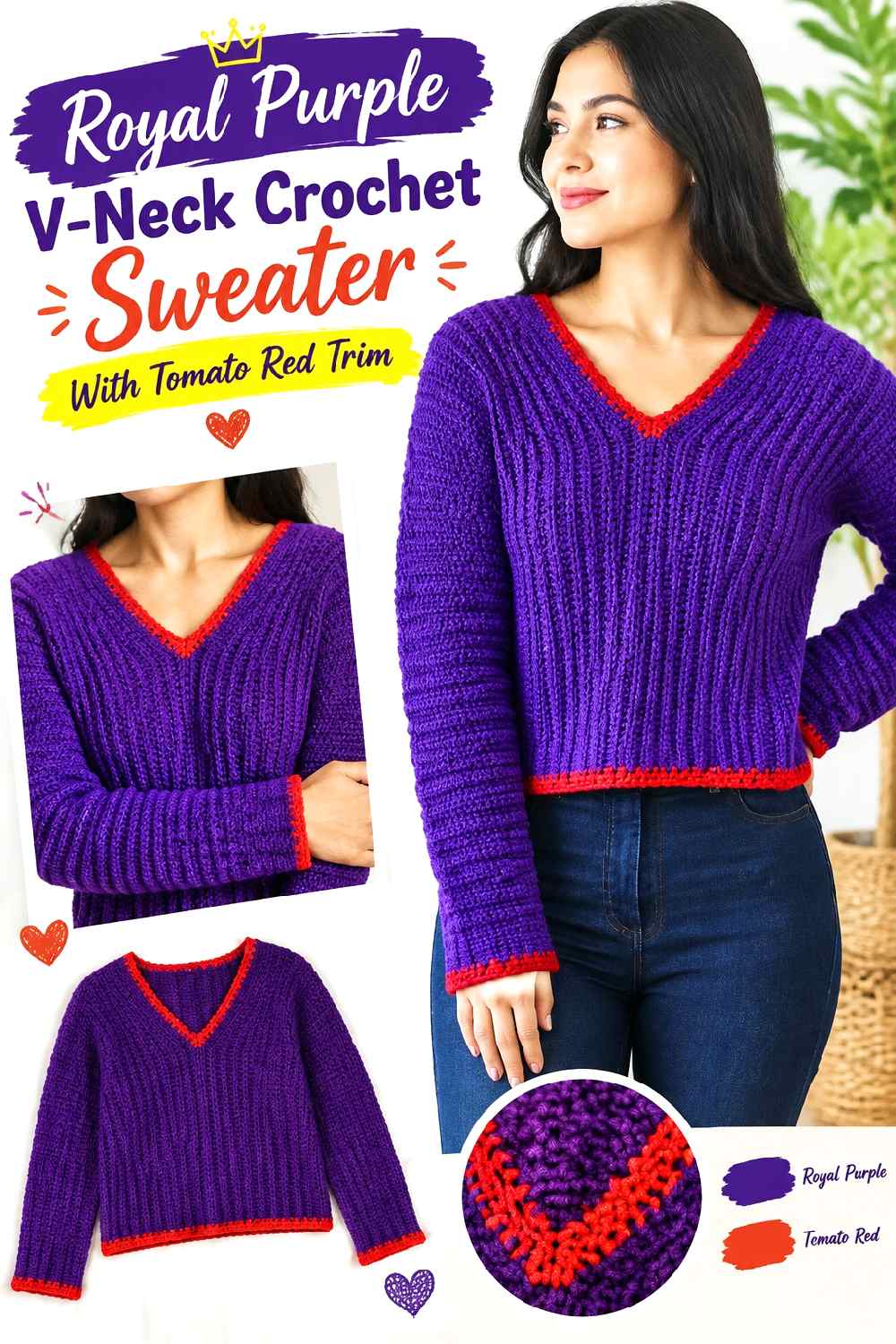
Let royal purple cover most of this V-neck sweater so the body reads as one strong field rather than two competing halves. Tomato red can outline the neckline, cuffs, and lower edge, turning those finishing areas into a connected frame. Because the V-shaped opening already directs attention toward the center front, a tomato red border there has more impact than scattering small red patches across the body.
Royal Purple Gives the V-Neck Crochet Sweater a Clear Main Field
Keeping royal purple across the front, back, and most of the sleeves lets the silhouette remain easy to read. This is especially useful on a roomy V-neck sweater, where the body already contains considerable visual area. Check the purple surface before adding more accents; if the stitch texture is visible enough on its own, the sweater may need only a controlled amount of red.
Tomato Red Can Trace the Royal Purple V-Neck Without Taking Over
Use tomato red where it can explain the sweater’s shape: around the V-neck, cuffs, or hem. Repeating the same red in two or three finishing areas makes the accent look connected. Avoid adding an isolated tomato red patch unless another part of the garment repeats it, because a single unrelated red area can make the otherwise deliberate frame feel accidental.
Creator Credit: forthefrills
2. Tomato Red Off Shoulder Crochet Sweater With Royal Purple Edging
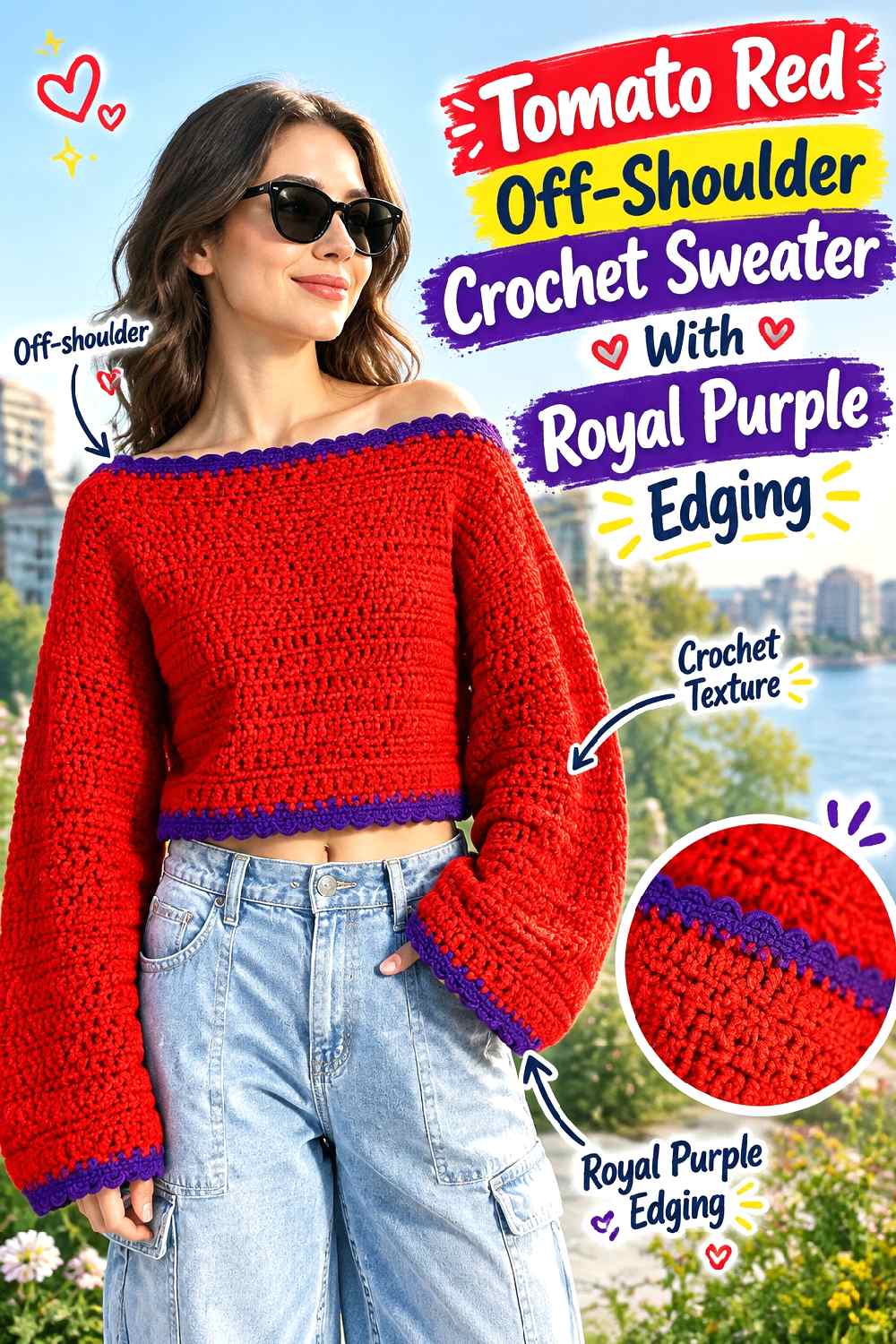
Tomato red can become the dominant body shade on an off-shoulder sweater, with royal purple controlling the upper edge and cuffs. The exposed neckline gives that purple band a prominent location without requiring much yarn coverage. This reverses the hierarchy of the first idea: the warmer shade fills the garment while royal purple supplies the darker visual anchors.
Tomato Red Keeps the Off-Shoulder Crochet Body Visually Continuous
Use tomato red across the main torso and sleeves when you want the sweater to read primarily as red. An uninterrupted body also prevents the off-shoulder neckline from competing with several additional color changes. Before adding purple elsewhere, look at the garment as a whole and identify which edges actually need stronger definition.
Royal Purple Makes the Tomato Red Shoulder Line More Defined
A royal purple neckline band can visually separate the exposed shoulder area from the tomato red sweater body. Repeating purple at the wrists can connect the top and bottom of the sleeves. If the purple band becomes very wide, it will begin functioning like a second major color block, so decide whether you want an accent or a near-equal two-color design.
Creator Credit: VivCrochets
3. Royal Purple Basketweave Crochet Sweater With Tomato Red Balloon Sleeves
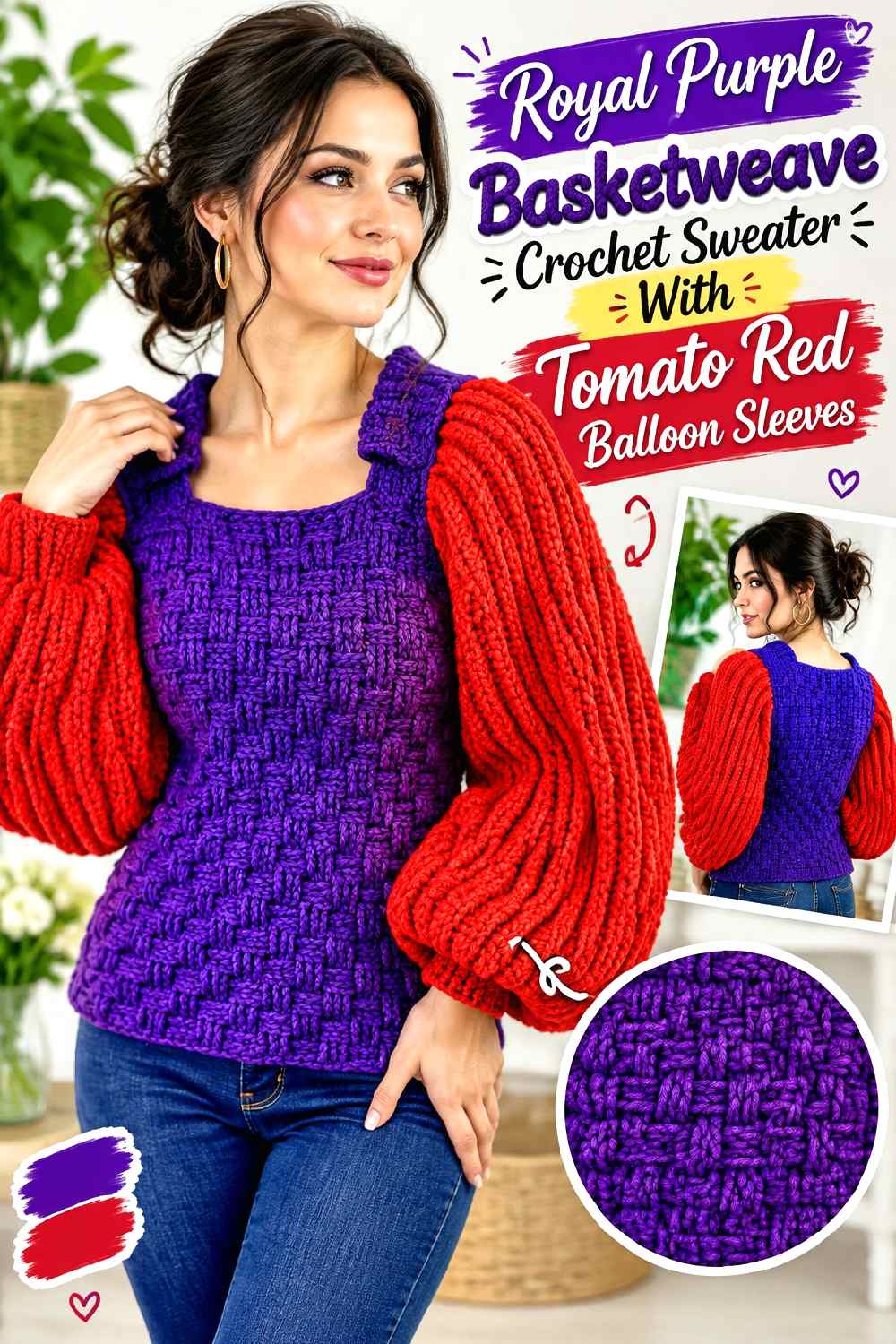
A basketweave surface already creates substantial visual texture, so royal purple works well as the stable body color while tomato red moves onto the balloon sleeves. This places the color change where the silhouette changes too. The result feels more intentional than inserting frequent stripes into heavily textured fabric.
Royal Purple Lets Basketweave Texture Stay Central to the Crochet Sweater
Before adding red to a textured body, work enough royal purple fabric to judge whether the basketweave remains clearly visible. Strong surface texture can create its own shadows and highlights, making additional body colors unnecessary. Keeping the torso predominantly purple allows the stitch structure rather than multiple color boundaries to provide the main detail.
Tomato Red Turns the Royal Purple Balloon Sleeves Into a Stronger Statement
Tomato red can begin near the upper sleeve, fill most of the balloon section, or appear closer to the cuff depending on how strongly you want to emphasize sleeve volume. A larger red area highlights the full sleeve shape; a smaller red cuff creates a quieter finish. Check both sleeves together so the tomato red distribution remains balanced across the garment.
Creator Credit: TCDDIY
4. Royal Purple And Tomato Red Split Color Oversized Crochet Sweater
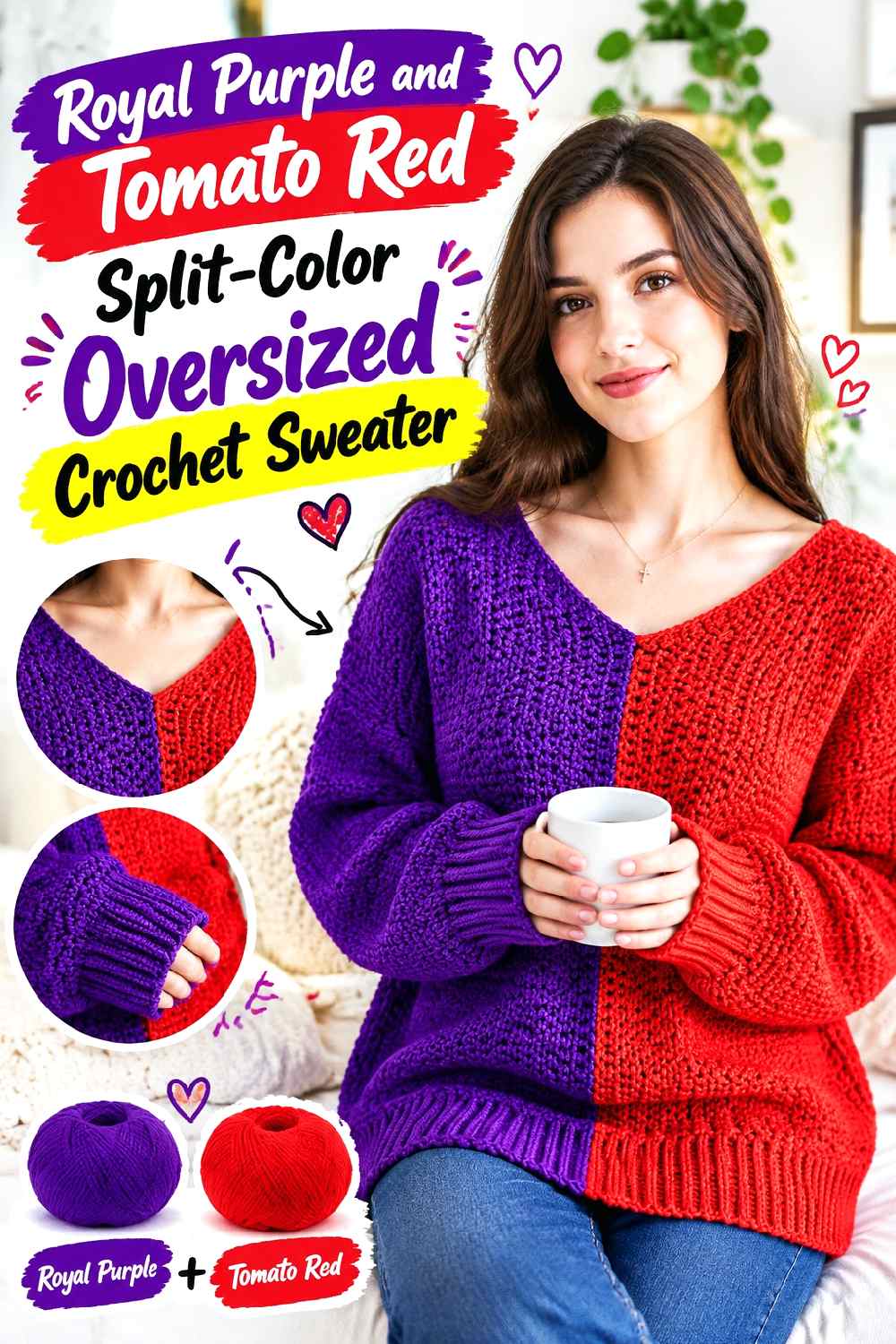
A broad oversized sweater gives both colors enough surface area to function as major blocks. Divide the garment vertically, diagonally, or by major panels rather than alternating frequent narrow bands. Large blocks preserve the relaxed silhouette while letting the royal purple and tomato red contrast become the main graphic feature.
Royal Purple Can Anchor One Side of the Tomato Red Crochet Sweater
If the sweater uses separate body sections or clearly defined areas, assign royal purple to one major portion instead of scattering it. A continuous block is easier to read from a distance and makes any asymmetry feel deliberate. Keep the division aligned through nearby features when possible so the palette does not look randomly interrupted at seams.
Tomato Red Needs Enough Space Beside Royal Purple to Read as a True Color Block
A tiny tomato red patch beside a large royal purple body behaves like an accent, not a split-color design. For a stronger statement, allow red enough visual area to balance the oversized proportions. Lay the planned sweater colors out in approximately the intended proportions before starting; skeins placed in equal amounts can give a misleading impression of the finished color balance.
Creator Credit: Amanda Love Santos
5. Royal Purple Alpine Crochet Sweater With Tomato Red Ribbing
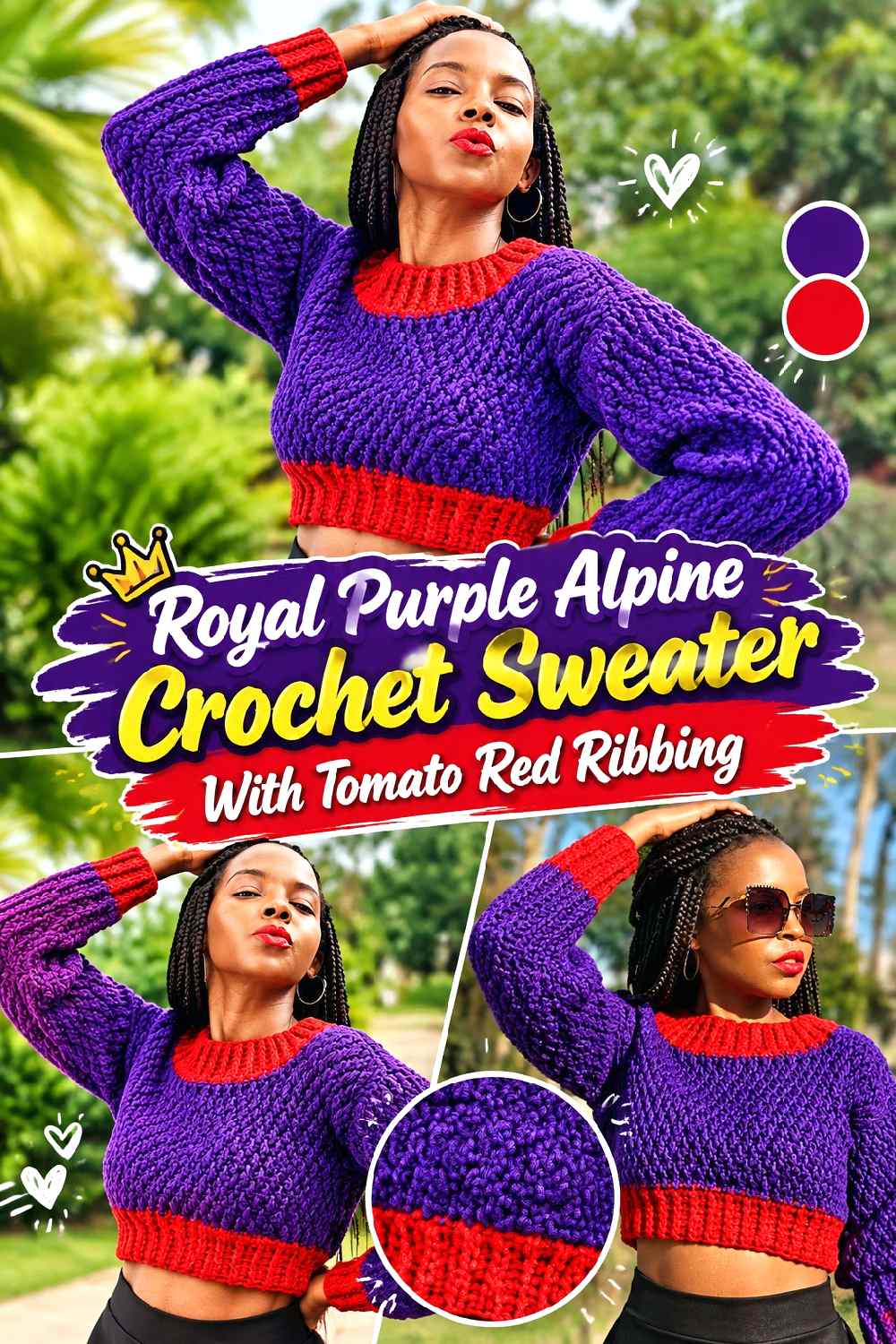
Alpine texture benefits from color placement that does not interrupt the raised surface too frequently. Royal purple can cover the textured body, while tomato red is reserved for ribbing at the neckline, cuffs, and hem. That makes the red function as finishing rather than competing surface pattern.
Royal Purple Keeps the Alpine Crochet Texture Easy to Follow
Work the raised texture primarily in royal purple and evaluate it in ordinary lighting before introducing another shade. If the purple yarn already produces strong stitch shadows, additional color changes through the alpine surface may obscure the pattern rather than improve it. A consistent main shade lets the crochet relief remain part of the statement.
Tomato Red Ribbing Gives the Royal Purple Sweater a Defined Outer Frame
Tomato red ribbing can mark the sweater edges without covering much of the textured fabric. Repeating the red around the neck, wrists, and lower body also distributes the warm shade around the entire garment. If that much red feels too dominant, keep two finishing areas purple and reserve tomato red for the neckline and cuffs.
Creator Credit: AC Crochets
6. Tomato Red Center Block Crochet Sweater With Royal Purple Framing
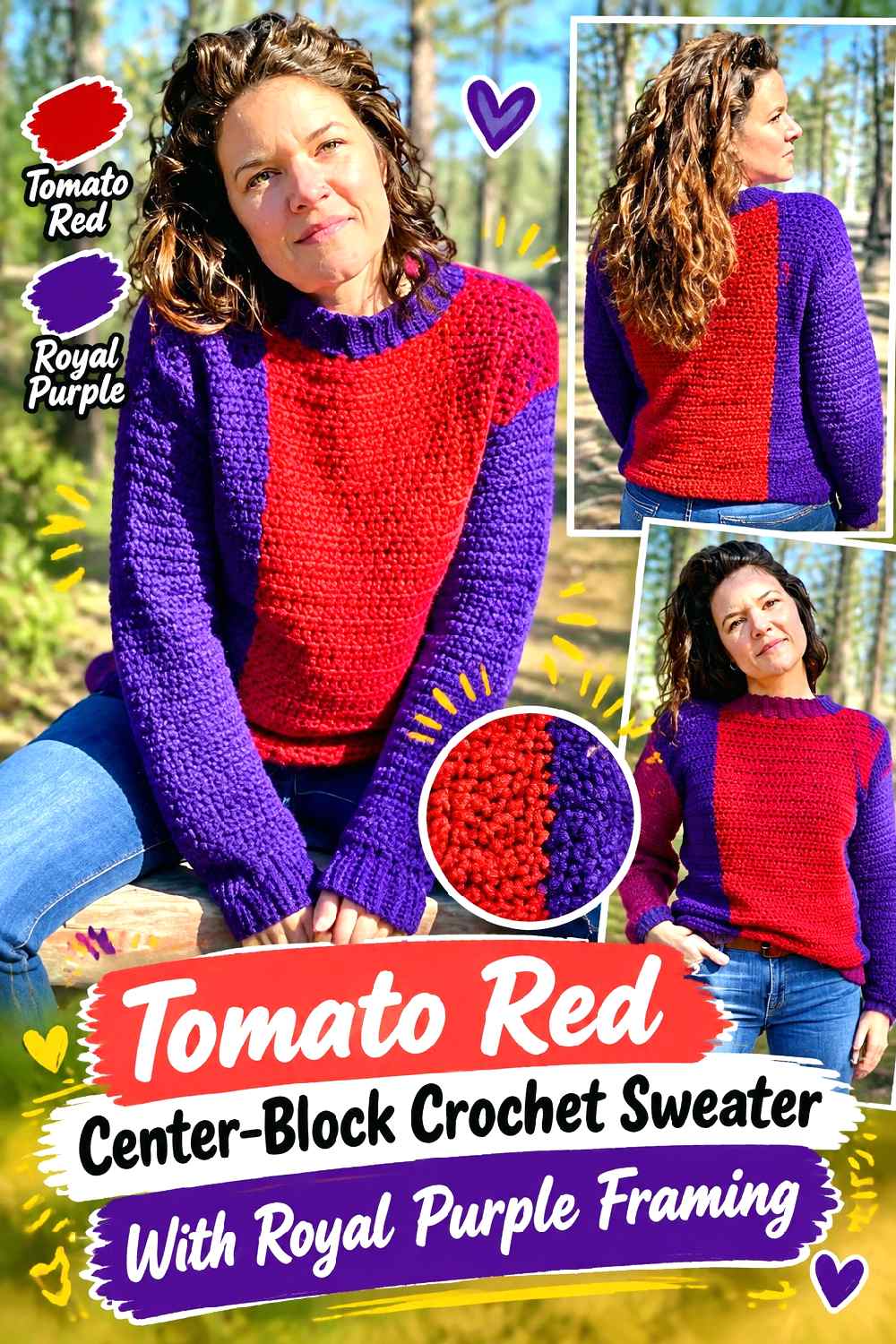
Instead of letting one color fill the whole body, concentrate tomato red through the middle of the sweater and use royal purple around the shoulders, sides, sleeves, and finishing. The result creates a strong central field surrounded by a darker visual frame.
Tomato Red Can Form the Main Center Block of the Crochet Sweater
Make the tomato red block large enough that it looks intentional rather than like an oversized stripe. Its exact width should relate to the construction and panel layout instead of an arbitrary number of stitches. Hold the developing section against the body periodically so the color transition appears where you expect once the sweater is worn.
Royal Purple Can Frame Tomato Red at the Shoulders, Sleeves, and Hem
Royal purple becomes most useful here when it surrounds the red rather than appearing as several unrelated patches. Purple shoulders can connect naturally with purple sleeves, while a matching hem or collar reinforces the outer frame. Avoid giving every edge a different color treatment; the cleaner the frame, the stronger the central tomato red area appears.
Creator Credit: Off the Beaten Hook
7. Royal Purple And Tomato Red Wide Stripe Crochet Sweater
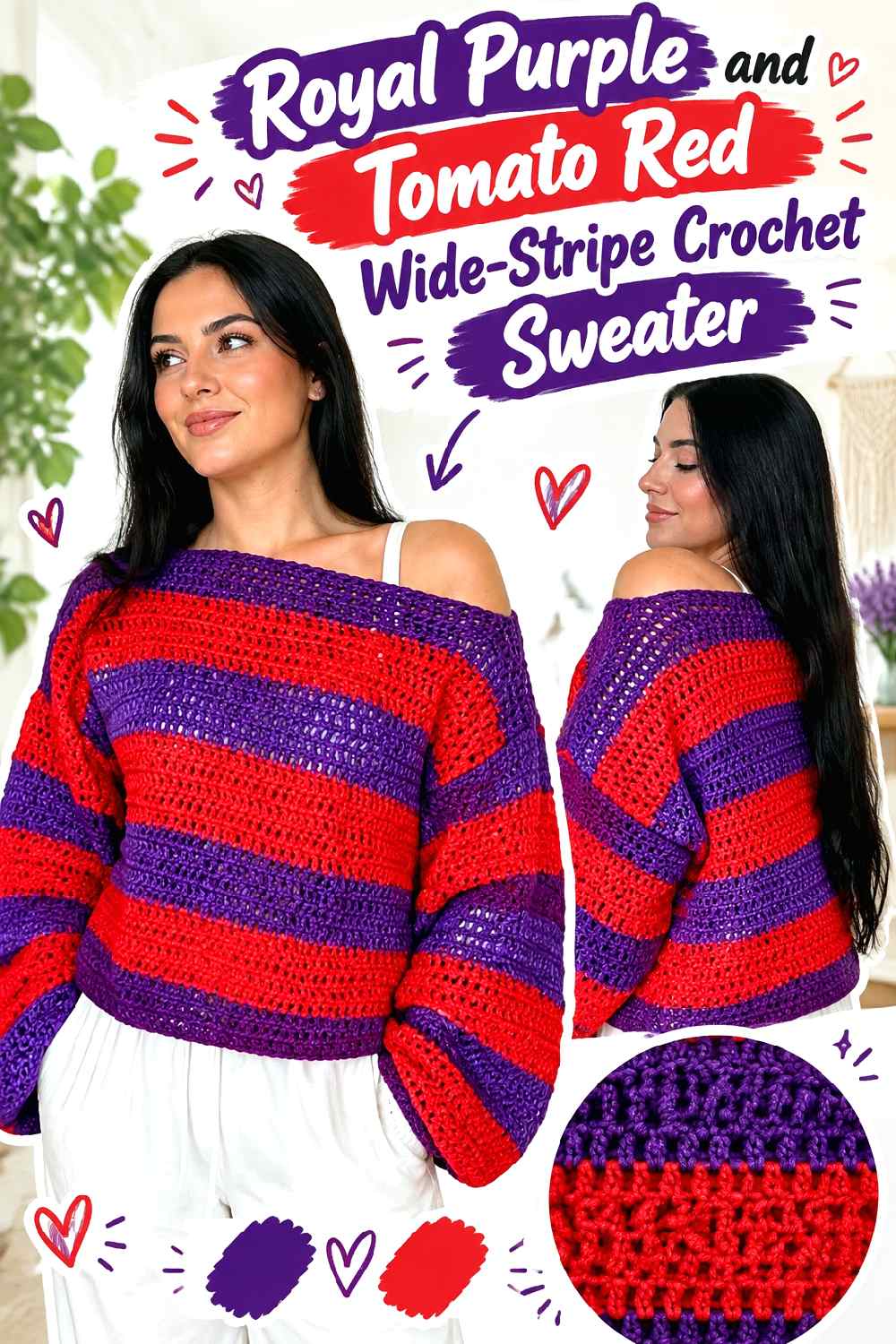
Wide stripes give both shades visible territory without creating constant color changes. Alternate royal purple and tomato red in broad bands across the body and sleeves, then decide whether the ribbing should repeat one of those colors or provide a neutral pause.
Royal Purple and Tomato Red Look More Controlled in Wider Crochet Stripes
Broad bands allow each color to register clearly before the next one appears. Very narrow repeats can turn these two strong shades into a visually busy surface, particularly across an entire sweater. Test several stripe widths on a swatch or simple sketch so you can judge the rhythm before committing to long garment sections.
Tomato Red Stripe Placement Should Relate to the Royal Purple Sleeve Layout
Do not plan the body stripes and sleeves independently. A red band that ends near the shoulder can either continue into the sleeve or deliberately break there, but the change should look planned. Compare both sleeves beside the body before final assembly so the royal purple and tomato red rhythm feels connected from front to back.
Creator Credit: ElyseCrochets 💌
8. Royal Purple Raglan Crochet Sweater With Tomato Red Scrap Accents
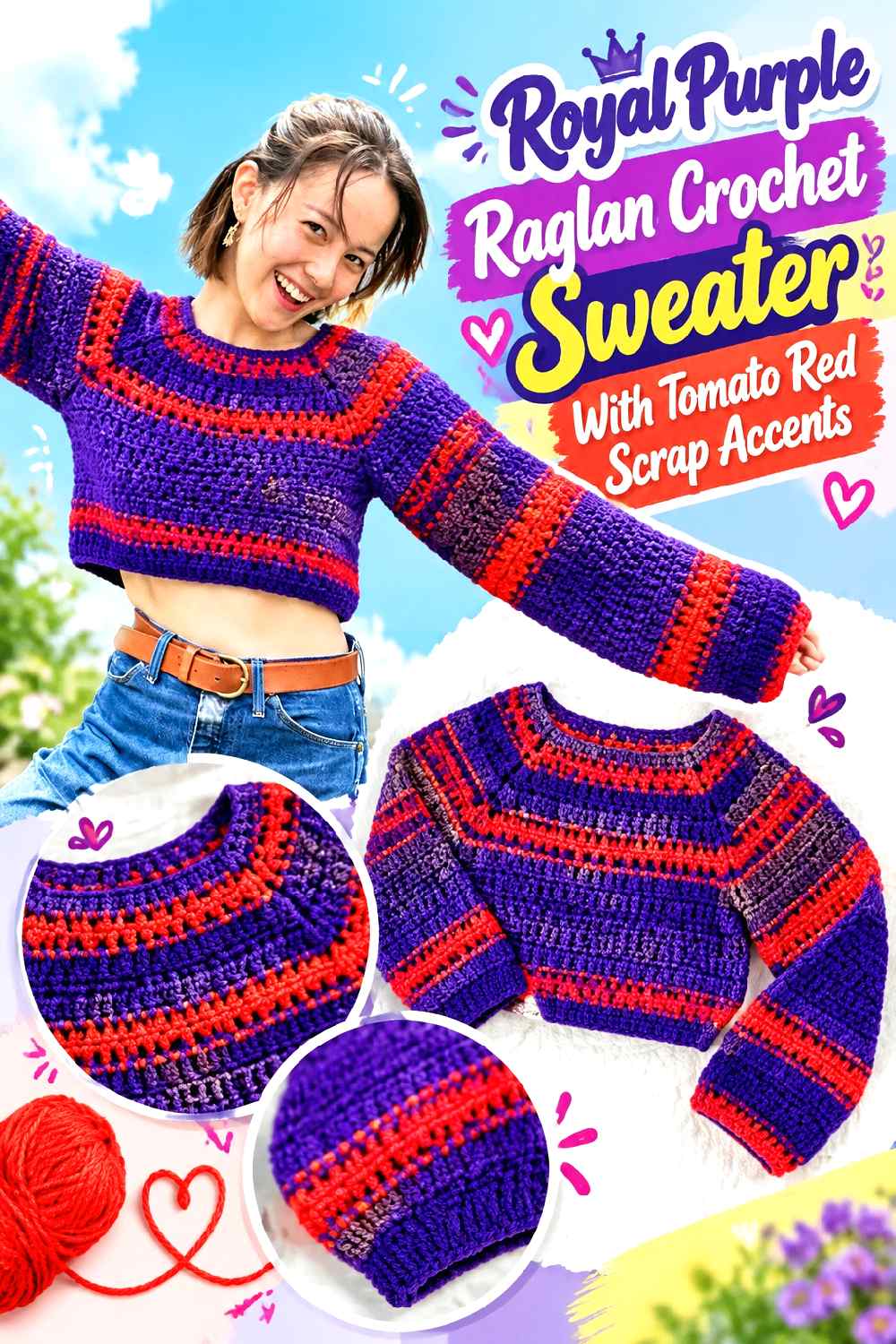
A top-down raglan provides natural zones for introducing tomato red while royal purple remains the visual anchor. Use red selectively around the yoke, lower sleeves, or occasional body bands rather than treating every leftover yarn section equally.
Royal Purple Can Stabilize a Tomato Red Scrap Crochet Sweater
When multiple yarn remnants are available, keeping royal purple as the recurring base prevents the garment from reading as completely random. Return to purple between tomato red and any optional supporting shades. That repetition gives the eye a predictable color to recognize even if the exact stripe widths or accent placements vary.
Tomato Red Works Better When Repeated Across the Royal Purple Raglan
A single tomato red band near the neckline can look disconnected from the rest of a scrappy sweater. Echo it farther down the body or sleeves so red becomes part of the overall sequence. The repeats do not need identical widths, but they should be visible enough that the connection feels intentional.
Creator Credit: made in the moment
9. Royal Purple And Tomato Red Granny Square Crochet Statement Sweater
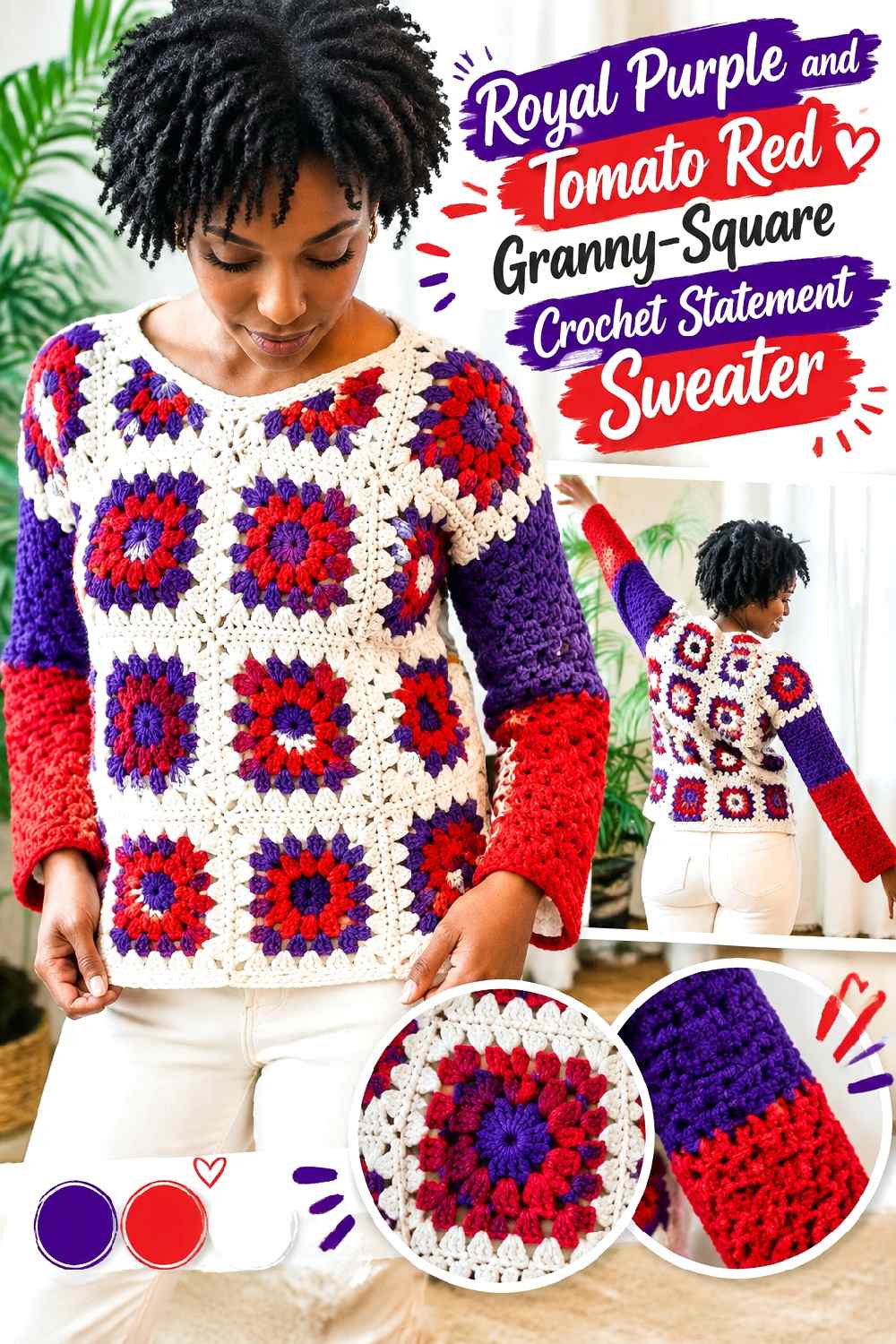
Granny squares give royal purple and tomato red many possible roles: centers, middle rounds, outer rounds, joining colors, or solid filler motifs. The key is to create a repeatable hierarchy rather than making every square entirely different.
Royal Purple Can Repeat Around Tomato Red Granny-Square Centers
Using tomato red in motif centers and royal purple farther outward gives each square a recognizable color progression. Reverse selected motifs only if you want deliberate variation. Too many different arrangements can weaken the connection among squares once dozens of motifs occupy the sweater.
Tomato Red and Royal Purple Joins Need a Clear Granny-Square Strategy
The joining color affects the entire garment because every seam becomes part of the visible grid. Royal purple joins create a darker framework around tomato red-heavy squares, while tomato red joins make the divisions more assertive. Lay several completed motifs together with a strand of each possible joining color between them before making the final choice.
Creator Credit: TL Yarn Crafts
10. Royal Purple And Tomato Red Vertical Granny Stripe Crochet Sweater
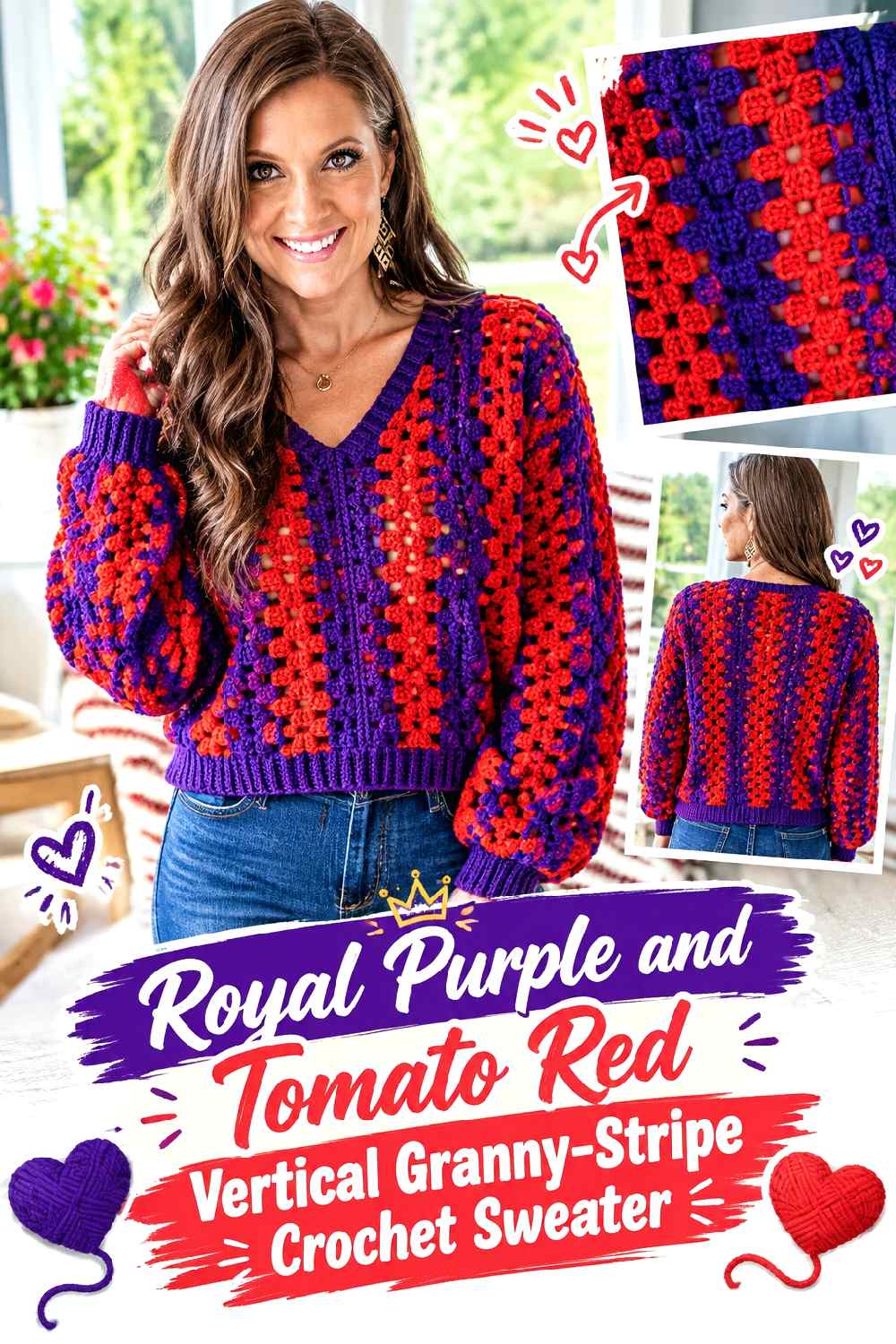
Vertical granny-style stripes give the palette a different direction from a conventional horizontal striped pullover. Alternate royal purple and tomato red through longer vertical sections so the eye follows the construction from sleeve toward body or from side toward center.
Royal Purple Vertical Stripes Can Visually Organize Tomato Red Sections
Use royal purple at consistent intervals so it acts as a repeating darker divider rather than another random stripe. This is particularly useful when tomato red occupies several broad areas. The purple repetition gives the sweater a rhythm that remains visible even when the granny stitch introduces small open spaces.
Tomato Red Needs Consistent Repetition Beside Royal Purple Granny Stripes
If tomato red appears only once, the sweater will read more like a purple garment with one red panel. Repeating red through several vertical areas creates an actual two-color stripe system. Compare the front and back arrangement before joining so one side does not unintentionally receive most of the warm color.
Creator Credit: MJ’s Off The Hook Designs
11. Royal Purple Lace Crochet Sweater With Tomato Red Borders
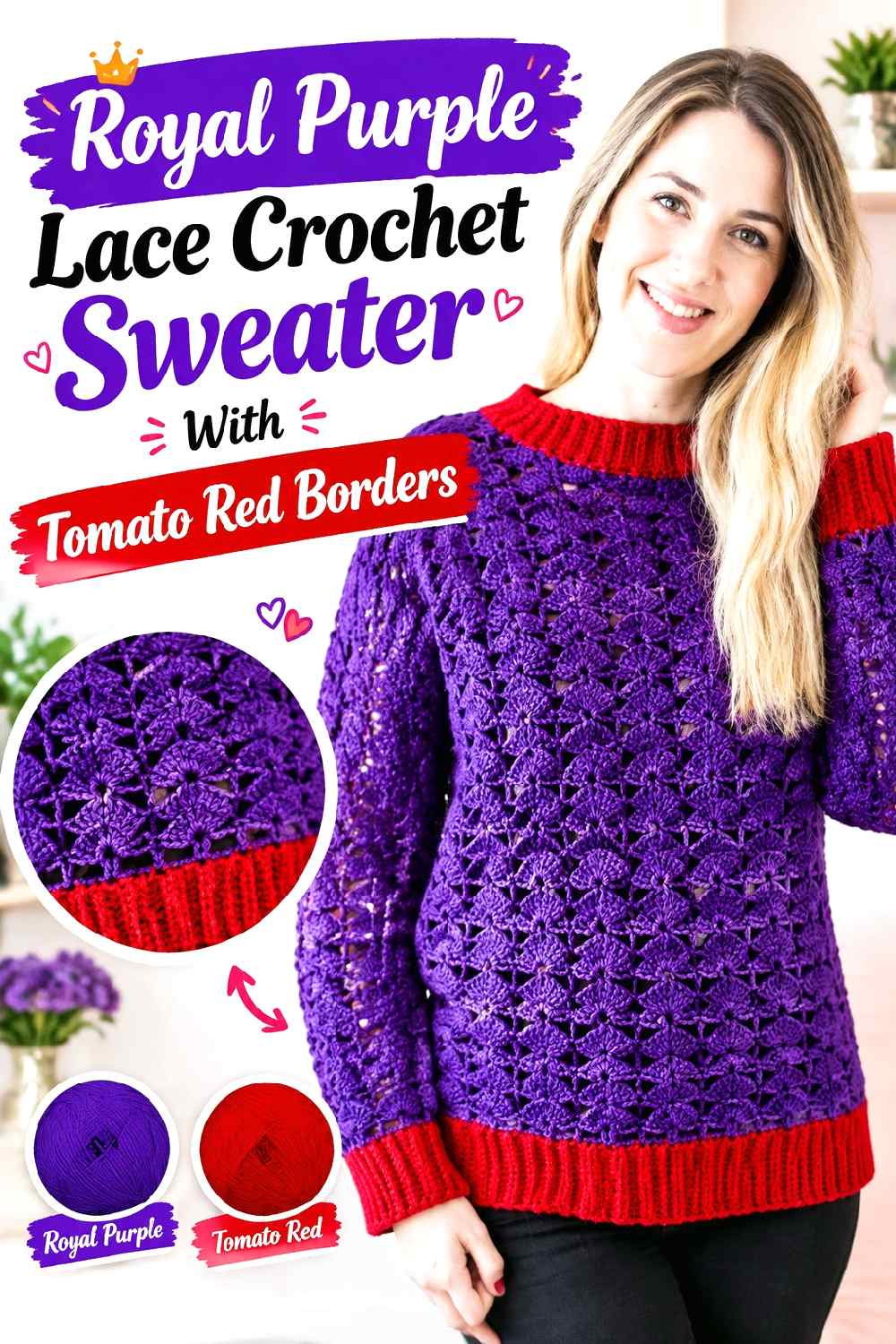
Open crochet gives color more breathing room because the underlayer remains visible through the stitches. Keep the lace body royal purple and use tomato red at the neckline, cuffs, and hem for a concentrated border treatment.
Royal Purple Lace Keeps Tomato Red From Filling Every Visual Space
An open royal purple fabric already creates contrast with whatever is worn beneath it. That means the sweater may need less tomato red than a dense pullover. Let the lace pattern breathe and reserve red for areas where a color change can clarify the edges.
Tomato Red Borders Should Stay Clear Against Royal Purple Lace
A narrow red edging can disappear against an intricate open texture, while an excessively wide border can overpower it. Work enough tomato red to create a readable boundary, then view the sweater from several feet away. The useful test is whether the red frames the lace rather than competing with its repeated openings.
Creator Credit: Coffee and Crocheting
12. Royal Purple Cable Crochet Sweater With Tomato Red Side Panels
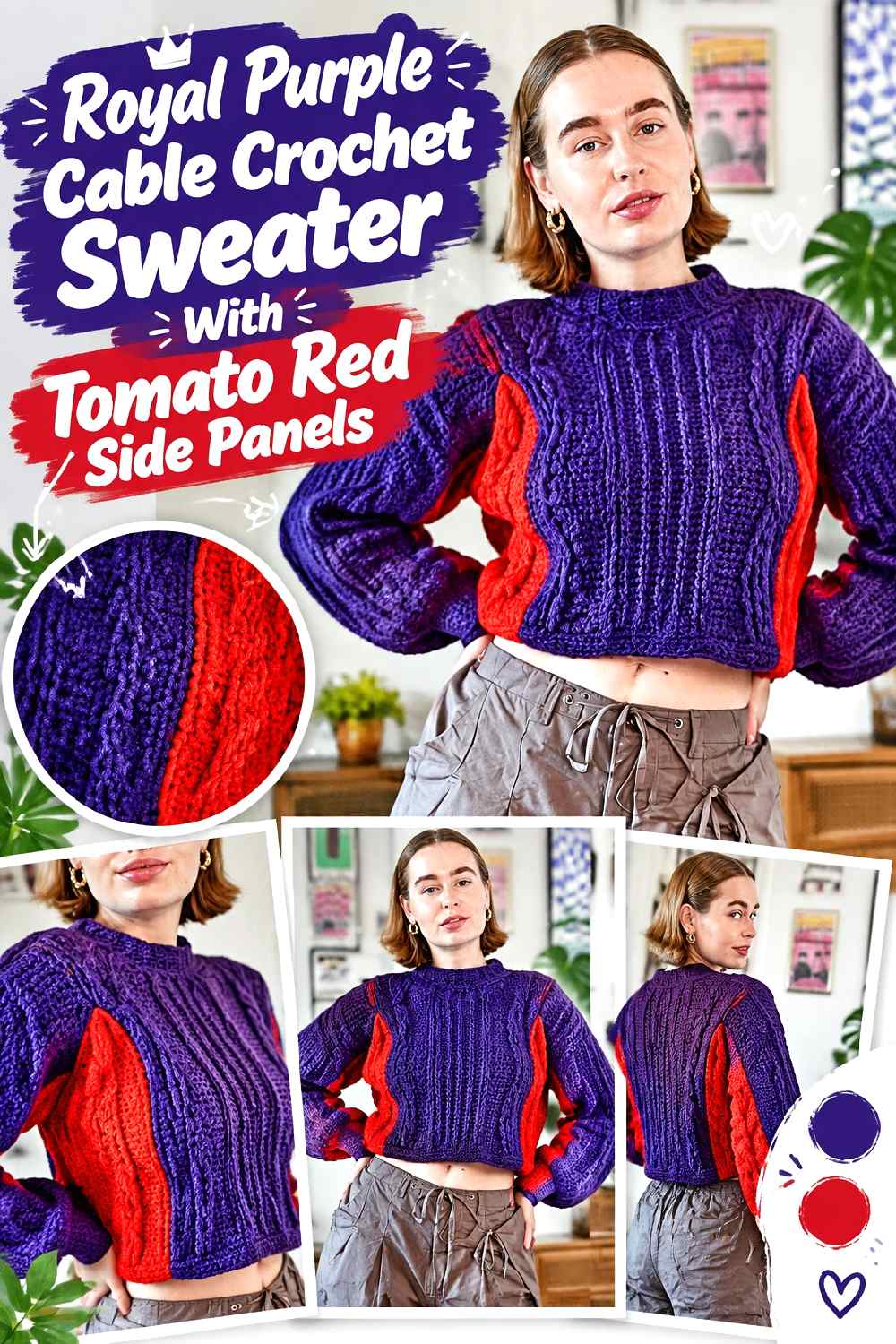
Raised cables are strongest when their shape remains easy to see. Work the main cable sections in royal purple and shift tomato red into flatter side panels, sleeve sections, or narrow areas between major textures.
Royal Purple Helps Crochet Cables Remain the Main Sweater Detail
Keeping the cables one continuous color prevents frequent color boundaries from breaking the vertical raised lines. If royal purple is dark enough that the cables lose definition in your chosen yarn, inspect a generous swatch before continuing. Stitch texture matters more here than forcing both colors into every panel.
Tomato Red Side Panels Can Separate Royal Purple Cable Sections
Flatter tomato red areas can create a clean contrast beside deeply textured purple cables. This gives both color and texture distinct jobs: purple carries relief, while red creates graphic separation. Repeat tomato red on both sides or in another balanced location so the side panels look intentional from the front and back.
Creator Credit: Katie Joslin
13. Royal Purple Crochet Sweater With A Tomato Red Turtleneck
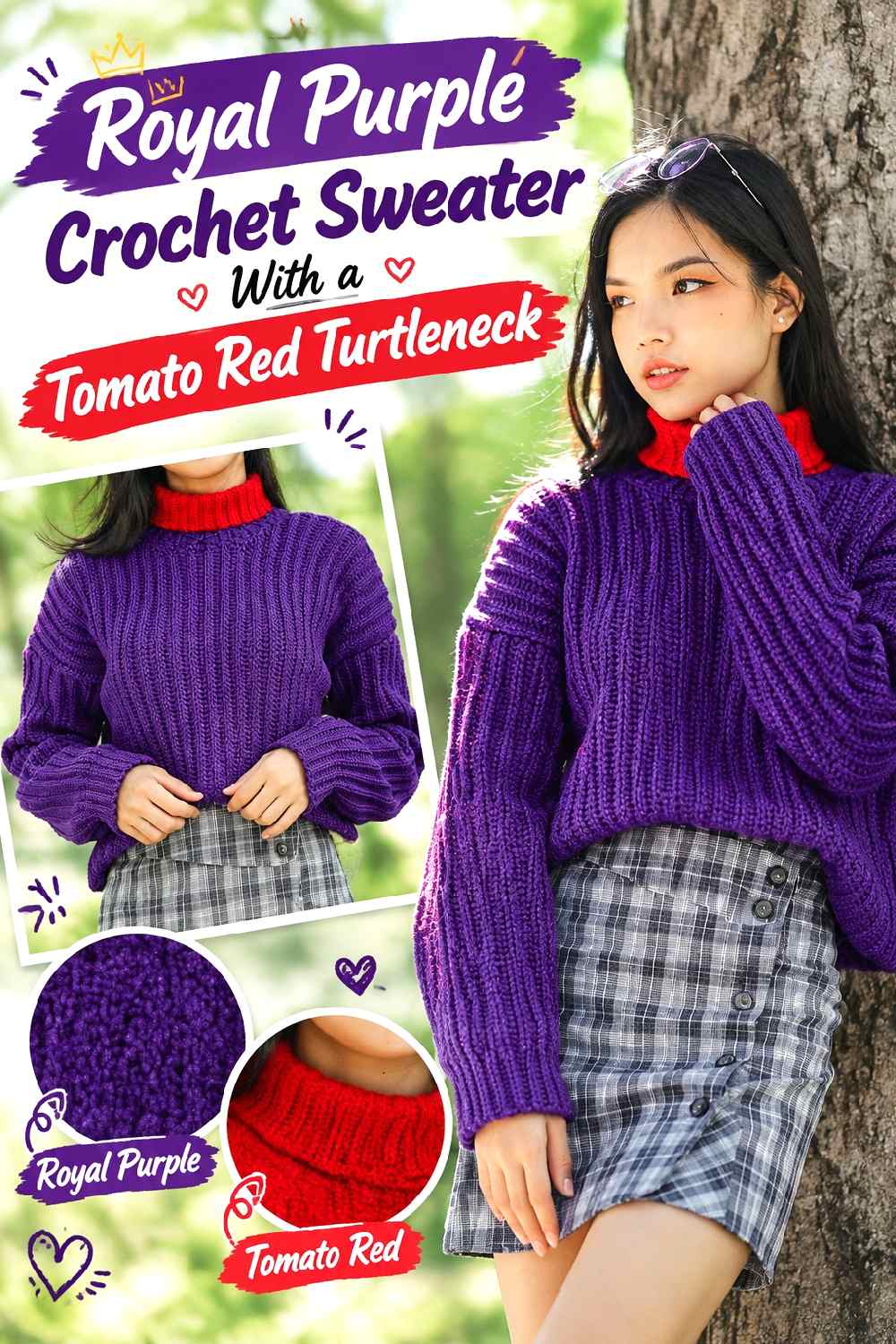
A turtleneck concentrates color very close to the face, so tomato red can become a powerful accent even when the rest of the sweater remains royal purple. Repeat red sparingly at the cuffs or hem if you want the collar to connect with another garment feature.
Royal Purple Gives the Tomato Red Turtleneck a Stronger Contrast Base
A largely purple body makes the red collar unmistakable without requiring additional colorwork through the torso. Keep the body visually simple if the neckline is intended to be the main feature. Dense texture and several extra color blocks could compete with the collar.
Tomato Red Should Be Tested at Full Turtleneck Height Against Royal Purple
Do not judge the red based on a narrow neckline row. A folded or tall collar presents much more color once finished. Hold or fold a representative section into approximately the final collar depth to see whether you still want the entire turtleneck red or prefer purple on the outer portion with a smaller red band.
Creator Credit: Chenda DIY
14. Royal Purple Waffle Crochet Sweater With A Tomato Red Raglan Yoke
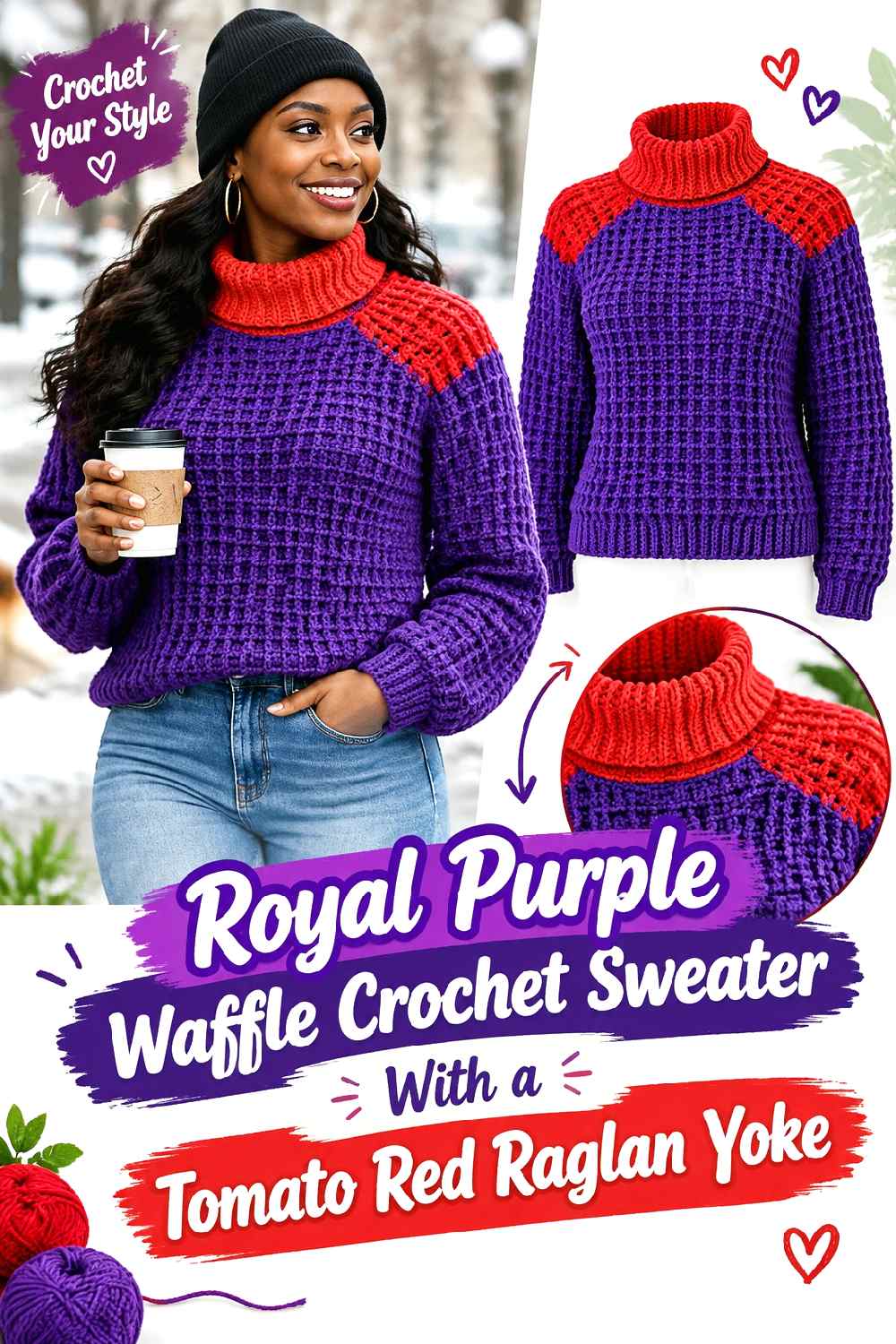
Waffle texture already makes the body visually dense. Concentrating tomato red around the upper raglan area lets the color provide a directional feature without interrupting the entire textured surface.
Royal Purple Keeps the Waffle Crochet Body Visually Consistent
Use royal purple through the majority of the waffle fabric when you want its raised grid to remain obvious. Frequent red changes inside a deeply textured stitch can make both the color sequence and the stitch pattern harder to read. A continuous purple body gives the texture enough uninterrupted space.
Tomato Red Can Mark the Royal Purple Raglan Yoke Without Covering the Whole Sweater
Place tomato red near the collar, along a yoke section, or in a broad upper band so the warm color naturally follows the shoulder area. Repeat a smaller red detail near the wrists if the yoke otherwise feels isolated. The accent should clarify the top-down structure rather than divide the sweater into unrelated pieces.
Creator Credit: Shyler crochets
15. Tomato Red Chunky Crochet Sweater With Royal Purple Cuffs
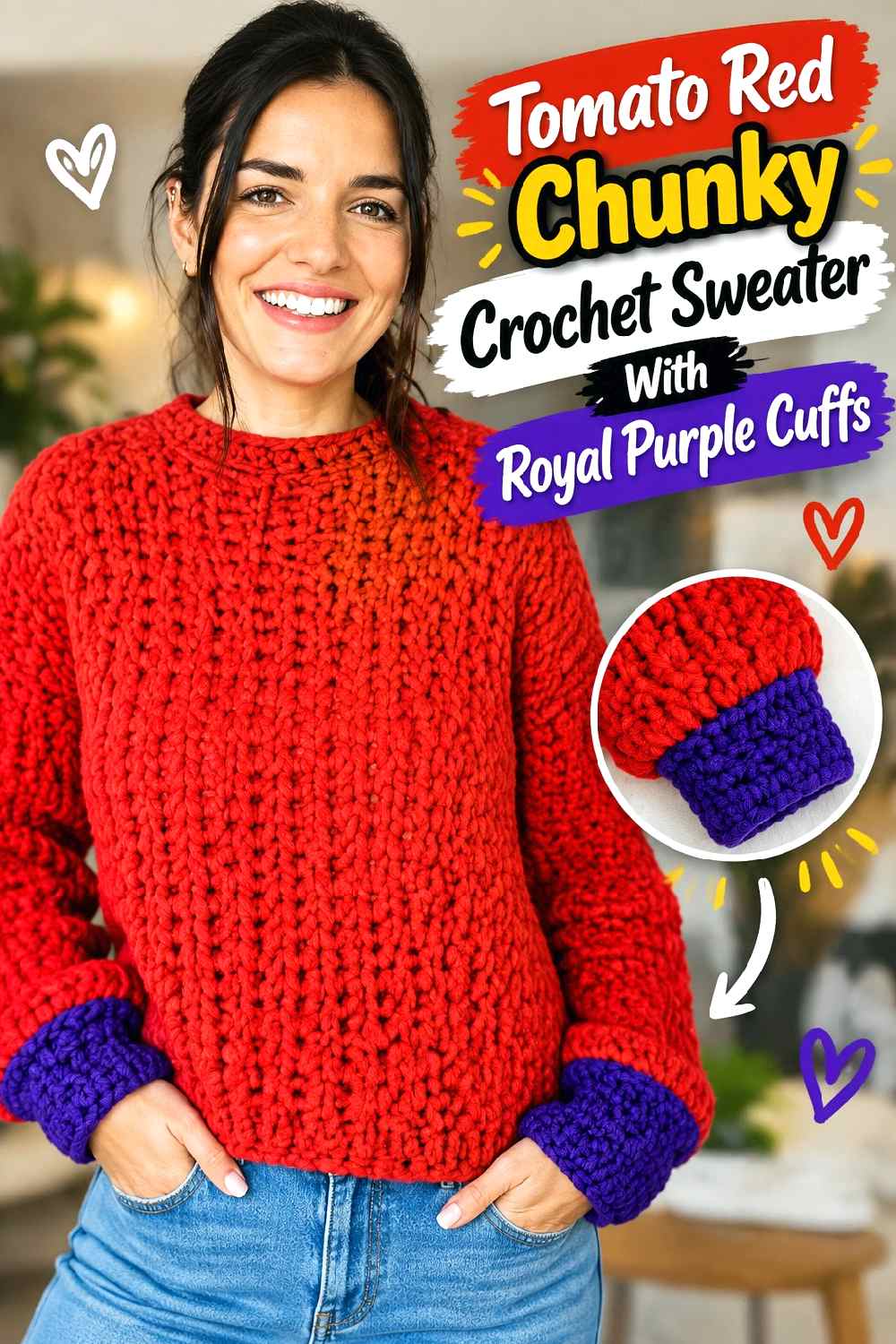
Large-scale stitches make every color boundary more visible, so a simple tomato red body with royal purple finishing can be more effective than complicated colorwork. Purple cuffs, hem, and possibly the collar create enough contrast to define the chunky silhouette.
Tomato Red Can Carry a Chunky Crochet Sweater Without Extra Color Blocks
Thick crochet already creates a strong visual scale. Let tomato red cover the broad body and sleeves so the large stitches remain the main surface feature. Before adding purple, check whether seams and edges are prominent enough on their own; chunky fabric can make excessive contrasting finishing look heavier than expected.
Royal Purple Cuffs Give the Tomato Red Chunky Sleeves a Controlled Ending
A royal purple cuff can visually pull in the sleeve and mark its endpoint. If the sleeves are generous, the darker cuff also separates their volume from the hands. Repeat the same purple somewhere on the torso—such as the neckline or lower band—so the cuffs do not appear as two isolated dark blocks.
Creator Credit: Cat Kemble
16. Royal Purple Slouchy Crochet Sweater With Tomato Red Sleeve Bands
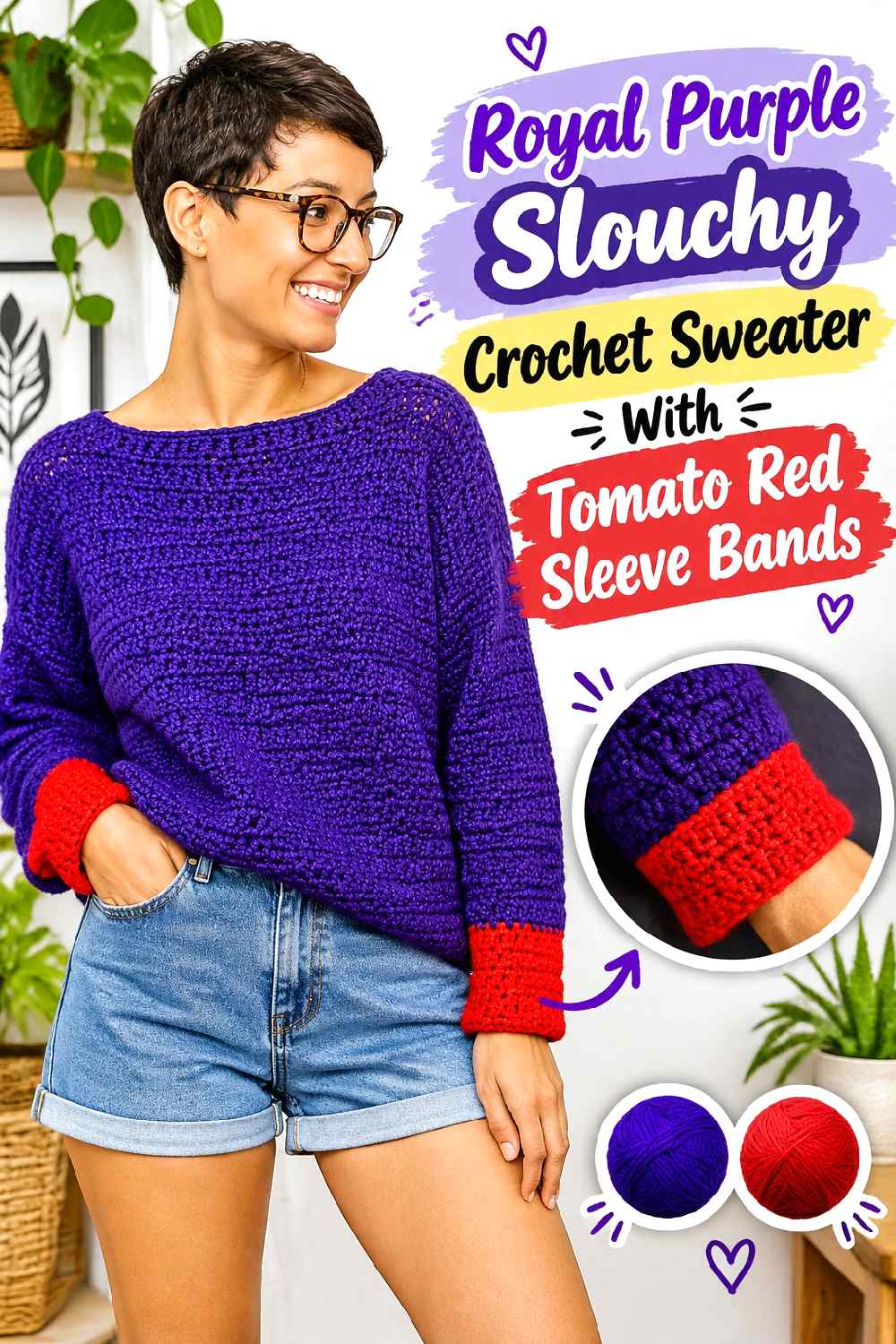
A relaxed sweater can support a quieter two-color scheme by keeping most of the body royal purple and placing tomato red only on the sleeves. Broad bands near the forearm or upper arm add interest while preserving the uncomplicated slouchy torso.
Royal Purple Lets the Slouchy Crochet Shape Remain More Important Than Color Changes
When the fit itself is relaxed and oversized, covering the main body in royal purple prevents the sweater from accumulating too many competing features. This is especially useful if the yarn has natural visual variation. Evaluate the garment from normal wearing distance rather than adding color simply because the body looks plain while lying flat.
Tomato Red Sleeve Bands Can Interrupt Royal Purple Without Fragmenting the Sweater
Use one or two meaningful red sections instead of many narrow sleeve stripes. Broad bands are easier to balance across both arms and create a stronger relationship with a roomy sweater. Make sure their starting points match unless deliberate asymmetry is part of the plan.
Creator Credit: JeggoCrochet
17. Royal Purple Relaxed Crochet Sweater With A Tomato Red Neckline
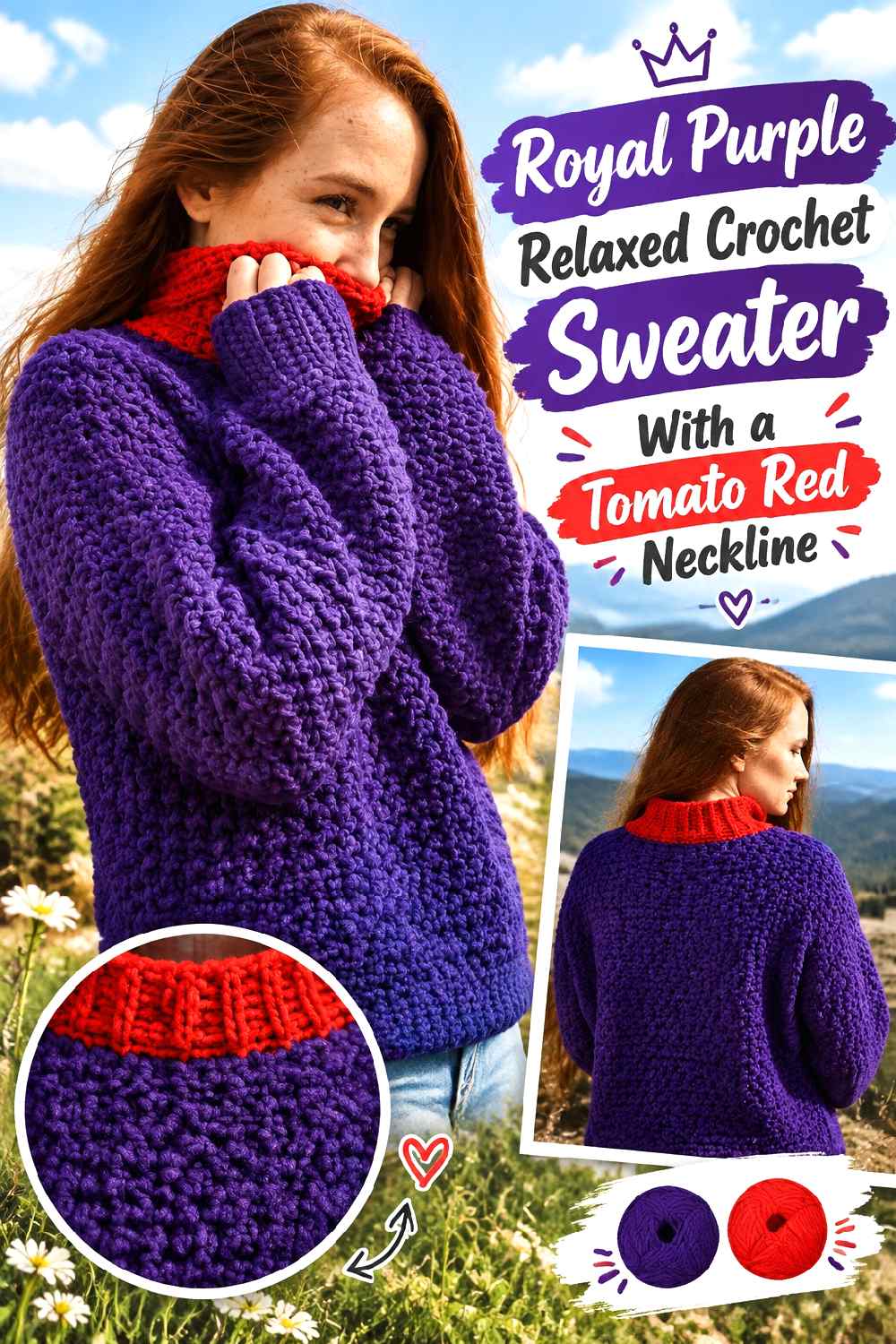
This scheme uses very little red. Royal purple fills the sweater, while tomato red appears around the neckline and perhaps as one discreet lower-edge repeat. It works when you want the two requested colors present without giving them equal visual weight.
Royal Purple Should Dominate the Relaxed Crochet Sweater Surface
Cover the torso and sleeves in royal purple so the garment reads immediately as a purple sweater. This also makes a small red detail more noticeable. If several additional colors are introduced, the neckline may lose its role as the intentional warm accent.
Tomato Red Can Turn a Royal Purple Neckline Into the Main Focal Point
Because the neckline sits centrally and high on the garment, even a relatively narrow tomato red finish can command attention. Check the width before extending it. If it becomes too deep, the red may begin reading as a yoke instead of an edge, changing the palette balance considerably.
Creator Credit: Hey Carrie
18. Royal Purple Body And Tomato Red Sleeve Crochet Sweater
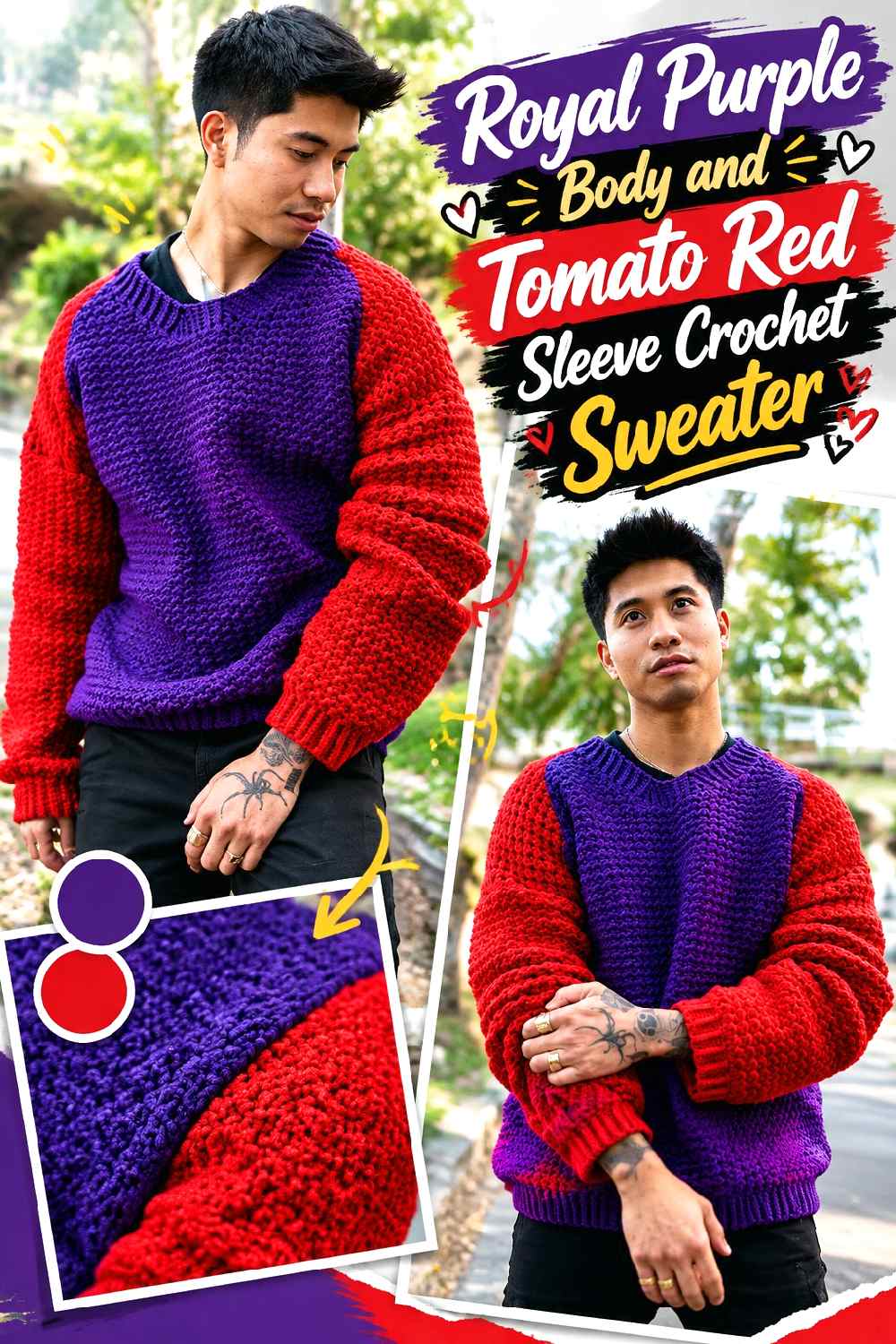
Rectangular or straightforward paneled sweater construction is well suited to assigning complete garment sections different colors. Make the body royal purple and both sleeves tomato red for one of the clearest two-color statements in the list.
Royal Purple Keeps the Crochet Body Unified Between Tomato Red Sleeves
Use one continuous purple field across the front and back so the torso visually connects from side to side. A royal purple neckline or hem can strengthen that unity. This placement is especially effective when the body construction is simple enough that a large solid color does not hide a major motif.
Tomato Red Sleeves Need a Royal Purple Transition That Looks Intentional
Where red sleeves meet the purple body becomes one of the most visible color boundaries. Check the shoulder and armhole area carefully during assembly so the transition remains even. You can keep the cuffs red for a complete sleeve block or switch back to royal purple to echo the body.
Creator Credit: it’s erin b.
19. Royal Purple And Tomato Red Raglan Yoke Crochet Sweater
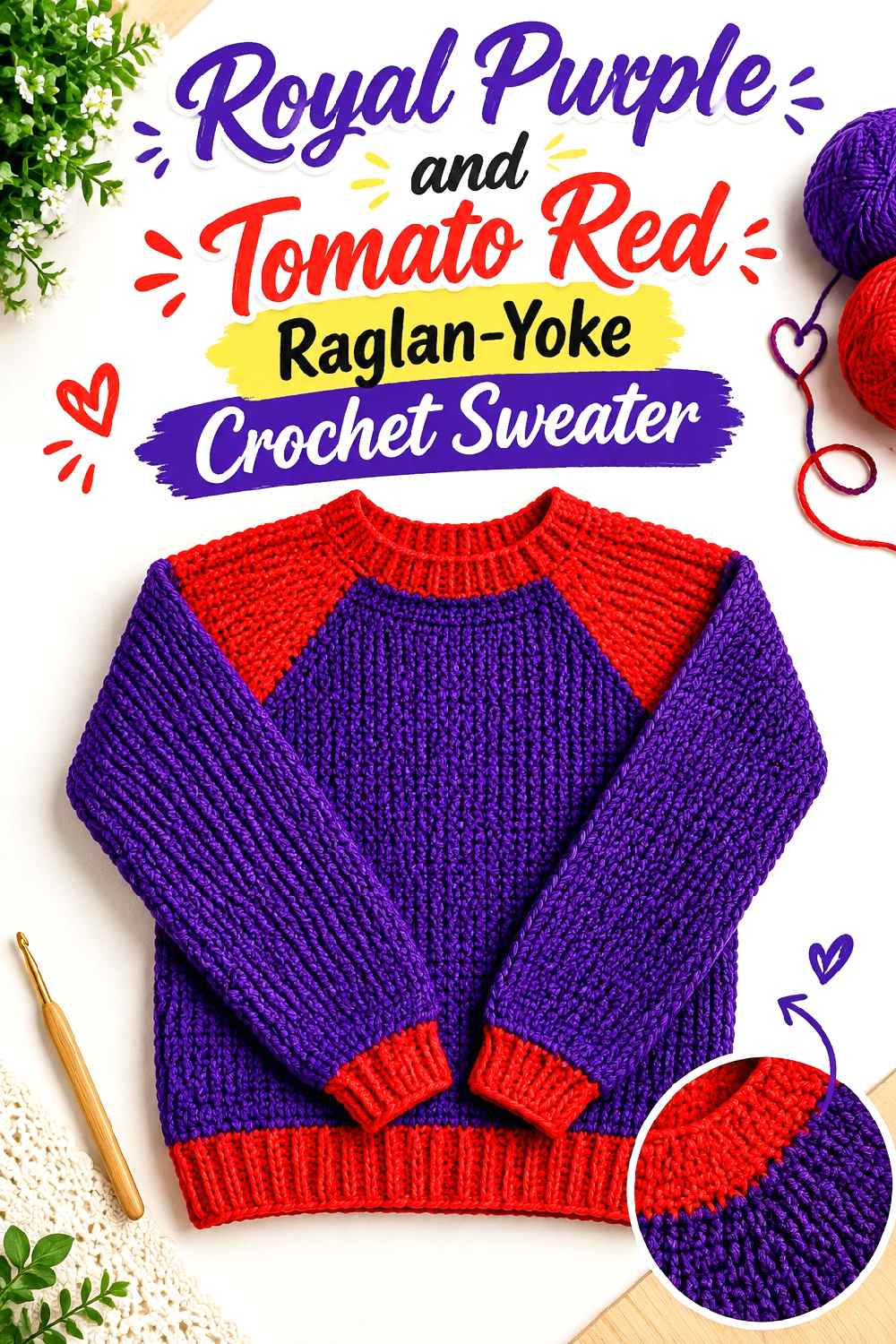
A raglan yoke provides a natural place to alternate the two colors before settling into a more dominant body shade. Start with royal purple near the neckline, bring tomato red into the developing yoke, then decide which color should occupy most of the torso.
Royal Purple Can Give the Tomato Red Raglan Yoke a Darker Starting Point
Beginning with purple at the neckline creates a defined upper edge before red enters farther down. Repeat purple between red sections if you want the yoke to feel striped rather than blocked. Keep the sequence readable rather than adding color changes so frequently that the raglan shaping becomes difficult to see.
Tomato Red Should Follow the Royal Purple Raglan Structure Deliberately
A tomato red section around the yoke naturally emphasizes the shoulders and upper chest. Keep its depth consistent around the garment unless asymmetry is intentional. When you separate the body and sleeves, check how the red placement continues into each section so the color relationship does not suddenly break at the underarms.
Creator Credit: Brenda DIY
20. Royal Purple Crochet Sweater With Tomato Red Flared Sleeves
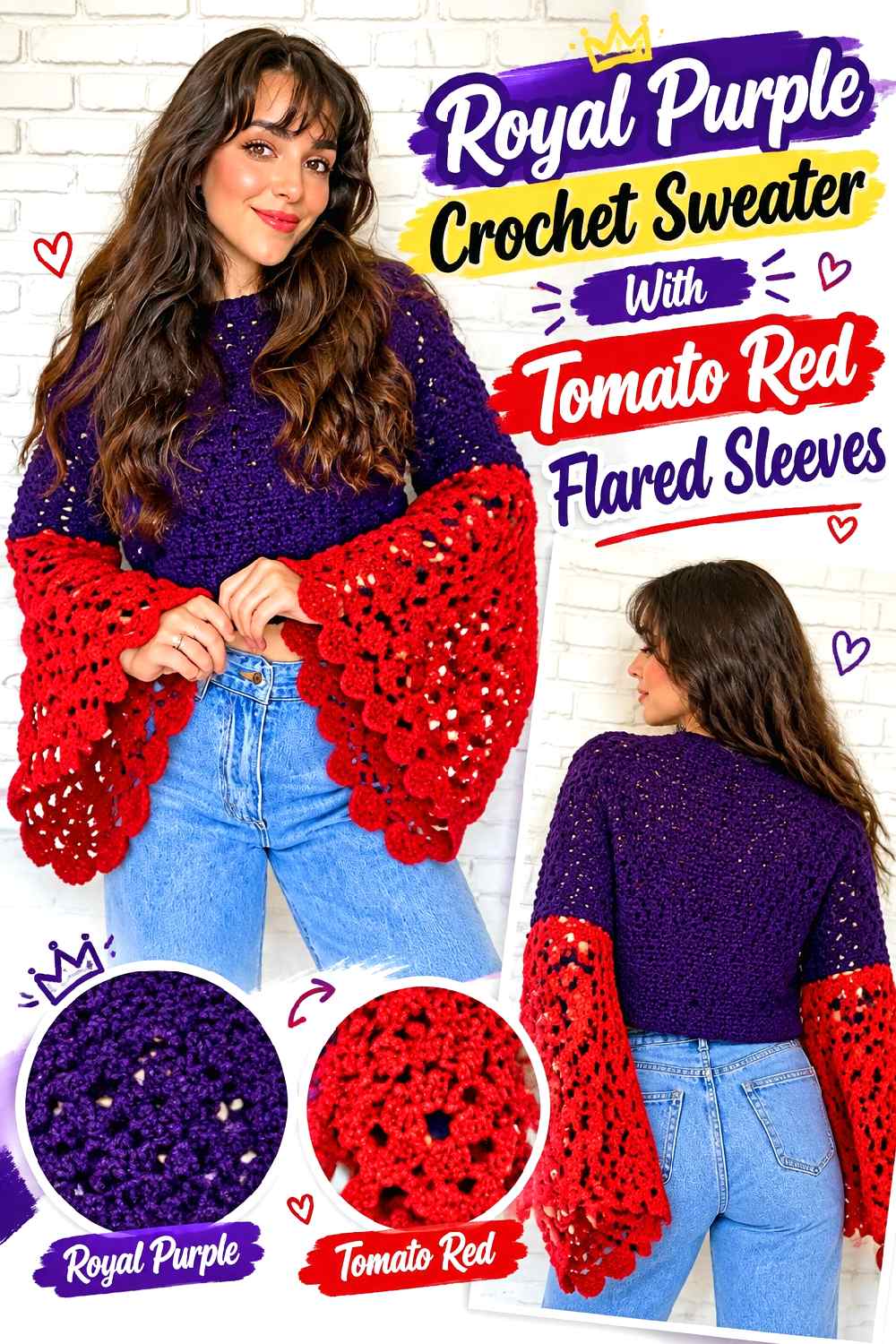
Flared sleeves provide enough surface area for tomato red to become a major statement without covering the torso. Keep the body and upper sleeves royal purple, then transition into red as the sleeve begins widening toward the wrist.
Royal Purple Keeps the Crochet Sweater Body Quieter Beside Tomato Red Flares
A solid purple torso gives the eye somewhere to rest before reaching the dramatic sleeve ends. Avoid adding several unrelated red torso motifs if the flare is intended to be the defining feature. The color change should support the silhouette rather than compete with it.
Tomato Red Can Intensify the Width of Royal Purple Flared Sleeves
Place the red where the sleeve starts visibly expanding so color and shape change together. A gradual purple-to-red transition creates a different result from switching directly into a large solid red flare, so test the desired boundary on one sleeve before completing both.
Creator Credit: Krystal Everdeen
21. Tomato Red Cropped Crochet Sweater With Royal Purple Ribbing
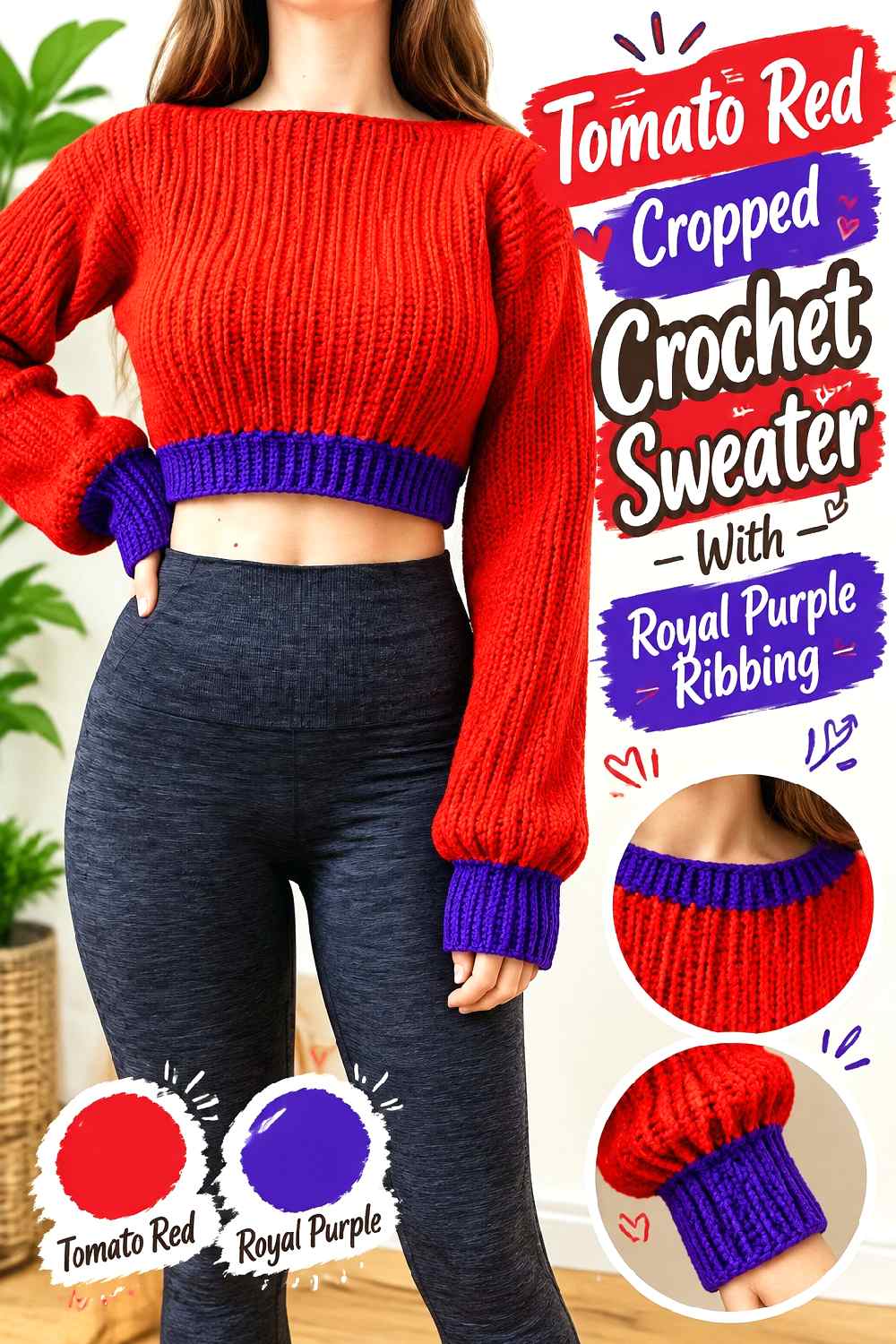
A cropped sweater gives every finishing detail more visual weight because the body is shorter. Tomato red can dominate the compact torso, while royal purple ribbing defines the neckline, cuffs, and abbreviated hem.
Tomato Red Makes the Cropped Crochet Body the Main Color Statement
Keep the main front and back tomato red so the shorter garment reads as one uninterrupted block. With less torso length available, too many additional color divisions can quickly make the sweater look segmented. Let the contrast come from the edges instead.
Royal Purple Ribbing Can Frame a Tomato Red Cropped Sweater From Top to Bottom
Use royal purple at the neckline, cuffs, and hem to create a repeated border system. The lower purple edge becomes especially noticeable on a cropped silhouette, so compare its depth with the neckline before making either one very wide. Similar visual weight at the top and bottom can keep the short body from feeling unbalanced.
Creator Credit: Madeleine Shirley
How the Royal Purple and Tomato Red Sweater Ideas Compare
For a predominantly royal purple sweater, the V-neck, alpine, lace, cable, waffle, slouchy, neckline-accent, and flared-sleeve ideas keep tomato red in supporting areas. They work when you want purple to remain unmistakably dominant.
For stronger red coverage, compare the off-shoulder, center-block, chunky, or cropped designs. The split-color, striped, granny-square, vertical-stripe, sleeve-block, and raglan-yoke ideas bring the shades closer to equal visual importance.
Texture should also influence the choice. Cables, waffle stitch, basketweave, and alpine crochet already create substantial surface detail, so simpler color placement helps preserve stitch visibility. Smooth panels, granny construction, stripes, and basic oversized shapes can accommodate larger or more frequent color changes without losing their main visual feature.
Conclusion
Royal purple and tomato red can create very different crochet statement sweaters even when the same two hues appear in every project. The largest difference comes from deciding which color dominates and then assigning the second shade a specific job.
Choose purple-led schemes when you want the red to emphasize cuffs, necklines, borders, flares, or yoke details. Increase the tomato red coverage for broader color blocking, complete sleeves, strong stripes, or a red-led cropped sweater. For textured cables, alpine stitches, waffle fabric, and basketweave, protect the stitch definition instead of forcing frequent color changes through every area.
Before committing to a full sweater, compare the yarns together in the stitch texture you plan to use and look at them from normal wearing distance. That simple check can reveal whether the two colors have enough separation and whether the proposed accent is actually behaving like an accent.
Frequently Asked Questions
Do royal purple and tomato red work together in a crochet sweater?
They can create a strong high-color combination when their roles are planned clearly. Giving one color more surface area and using the other on specific sweater features often creates a more controlled result than distributing both shades equally everywhere.
Should royal purple or tomato red dominate a crochet statement sweater?
Either can dominate. Royal purple produces a darker, cooler foundation for tomato red accents, while a tomato red body makes the sweater warmer and more visually immediate. Choose according to which color you want viewers to notice first.
How can I keep royal purple and tomato red crochet from looking too busy?
Reduce the number of color-change locations. Instead of alternating every few rows, assign colors to meaningful areas such as the body, sleeves, yoke, ribbing, granny-square centers, or borders. Larger uninterrupted sections usually make a bold two-color palette easier to read.
What if royal purple and tomato red are too similar in value?
Compare the yarns in grayscale or view them from farther away. If important motifs or edges merge, introduce stronger light-dark separation through placement or a small neutral divider rather than relying on hue difference alone.
Where should tomato red go on a mostly royal purple crochet sweater?
Useful locations include cuffs, neckline ribbing, hem bands, raglan sections, granny-square centers, sleeve bands, or complete statement sleeves. Pick a placement that corresponds with a real garment feature so the accent looks intentional.
Can I add a neutral to a royal purple and tomato red crochet sweater?
Yes. Cream, gray, black, or another suitable neutral can provide visual space between the two strong colors, particularly in granny squares or detailed colorwork. Keep the neutral secondary if royal purple and tomato red are meant to remain the identifying palette.
How should I substitute different royal purple or tomato red yarn shades?
Preserve the relationship rather than searching for an exact commercial shade name. Look for a purple with comparable depth and a warm red that remains clearly distinguishable from it. Swatch the substitutes together because the colors may interact differently once they become crochet fabric.