Fringe gives a crochet stole something a plain rectangle cannot: movement. It can soften an openwork wrap, make a chunky shawl feel more relaxed, emphasize the ends of a long rectangle, or turn a simple fabric into a stronger outfit accent.
For Fall 2026, the most useful way to approach the look is to choose the silhouette before the fringe. A broad rectangular stole layers differently from a pointed shawl, a pocket wrap has more visual weight at the ends, and a narrow stole can sit neatly over a jacket without covering the entire upper body.
The ideas below include full-width wraps, triangular shawls, motif-built stoles, pocket designs, and narrower scarf-width projects that can serve as slim stole bases. Those narrower tutorials are identified clearly, since widening a scarf can affect the stitch repeat, drape, yarn requirements, and overall balance. Use each original tutorial for its exact construction rather than assuming every design can be resized in the same way.
Quick List
- Crochet Lacy Rectangle Fringe Stole
- Crochet Openwork Pocket Fringe Wrap
- Crochet Knotted Boho Fringe Shawl
- Crochet Flower Texture Fringe Shawl
- Crochet Granny Motif Tassel Stole
- Crochet Chunky Granny Fringe Wrap
- Crochet Bobble Wrap With Fluffy Fringe
- Crochet Lightweight Bobble Edge Rectangle Stole
- Crochet Airy Mesh Fringe Stole
- Crochet Simple Draped Fringe Shawl
- Crochet Chunky Ombre Tassel Shawl
- Crochet Tunisian Knotted Fringe Slim Stole
- Crochet Lacy Long Fringe Slim Stole
- Crochet Looped Texture Fringe Slim Stole
- Crochet Granny Style Fringe Slim Stole
- Crochet Waffle Texture Fringe Slim Stole
- Crochet Cable Texture Fringe Slim Stole
Choose the Stole Shape Before You Choose the Fringe
A stole does not need to be oversized to make an impact. What matters more is how its shape interacts with the way you plan to wear it.
A broad rectangle gives you the most freedom for draping across both shoulders. Triangular shawls create a stronger center point and tend to direct attention downward. Narrower rectangles behave more like long accessories, so their fringe is often more visible because there is less fabric competing with it.
Pocket wraps add another consideration. The pockets, fringe, and lower ends all occupy the same visual area, so adding more decoration does not always improve the result. If the body already has a strong stitch pattern, comparatively restrained fringe may give it a cleaner finish.
Drape Matters More Than Fringe Length
Fringe hangs from the fabric, so the body of the stole has to carry its weight. An airy openwork rectangle and a dense waffle-textured piece will respond very differently even if both are given identical-looking fringe.
Before committing to a large amount of trim, attach a small test section to the finished or blocked fabric. Hold the project vertically and wear it around your shoulders. Check whether the edge stays relaxed, stretches noticeably, or begins to look crowded.
The same principle applies when changing yarn. A soft yarn may create flowing strands but less structure, while a more defined yarn can make texture and individual fringe bundles easier to see. Judge the combination in the actual crochet fabric rather than from the skein alone.
Be Careful When Turning a Scarf Tutorial Into a Stole
Several projects later in this collection are deliberately narrow. They are useful because Tunisian fabric, cables, waffle texture, loops, and granny-style construction offer visual directions not found in the wider wraps.
Making one wider, however, is a real adaptation. The stitch repeat may limit where the new width can be added, a thicker fabric can become much heavier across the shoulders, and additional width changes yarn requirements. Check the creator’s construction before altering the proportions.
For Fall 2026 styling, a narrow stole can also be the better choice when you want fringe and texture without a large amount of fabric beneath a coat or jacket.
1. Crochet Lacy Rectangle Fringe Stole
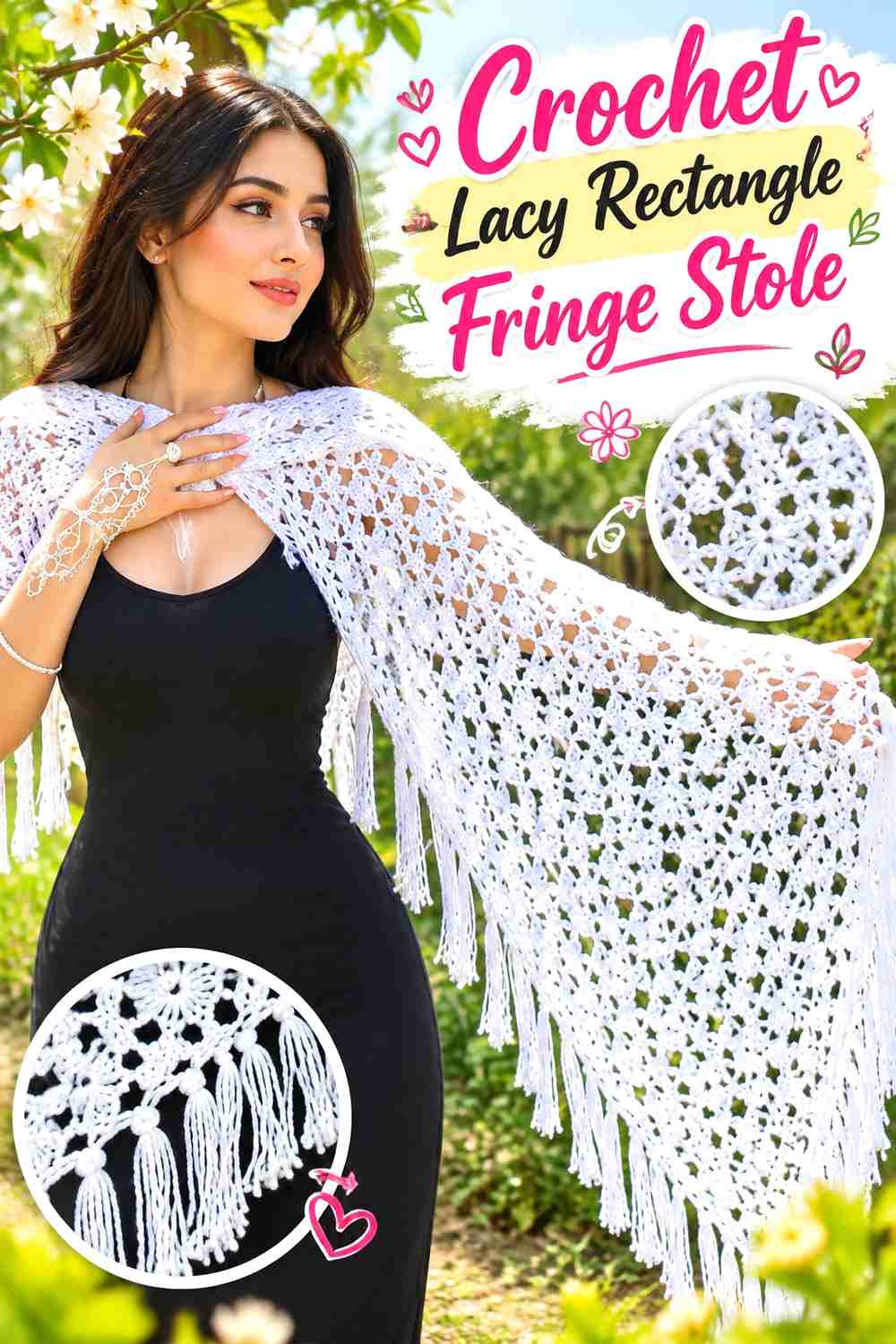
A long lacy rectangle is one of the most versatile starting points for a fringe stole because the shape does not dictate one fixed way to wear it. It can sit open across the shoulders, hang vertically at the front, or be gathered more closely around the neck. The source project also treats fringe as an optional finish, which makes this a useful choice when you want to decide how decorative the ends should be only after seeing the completed body.
Let the Openwork Create the Drape
Lace needs enough movement to fall naturally rather than behaving like a rigid panel. If you substitute yarn, look at how a sample bends and folds instead of judging it only by stitch definition. A beautiful open pattern can lose much of its stole-like quality if the finished fabric becomes too stiff.
Keep the End Treatment in Proportion
Because a rectangle already creates two obvious hanging ends, the fringe does not need to dominate them. Test a few bundles first and view the stole while worn. A lighter arrangement preserves more of the lace, while denser fringe shifts attention toward the lower edge.
Creator Credit: Bag-O-Day Crochet
2. Crochet Openwork Pocket Fringe Wrap
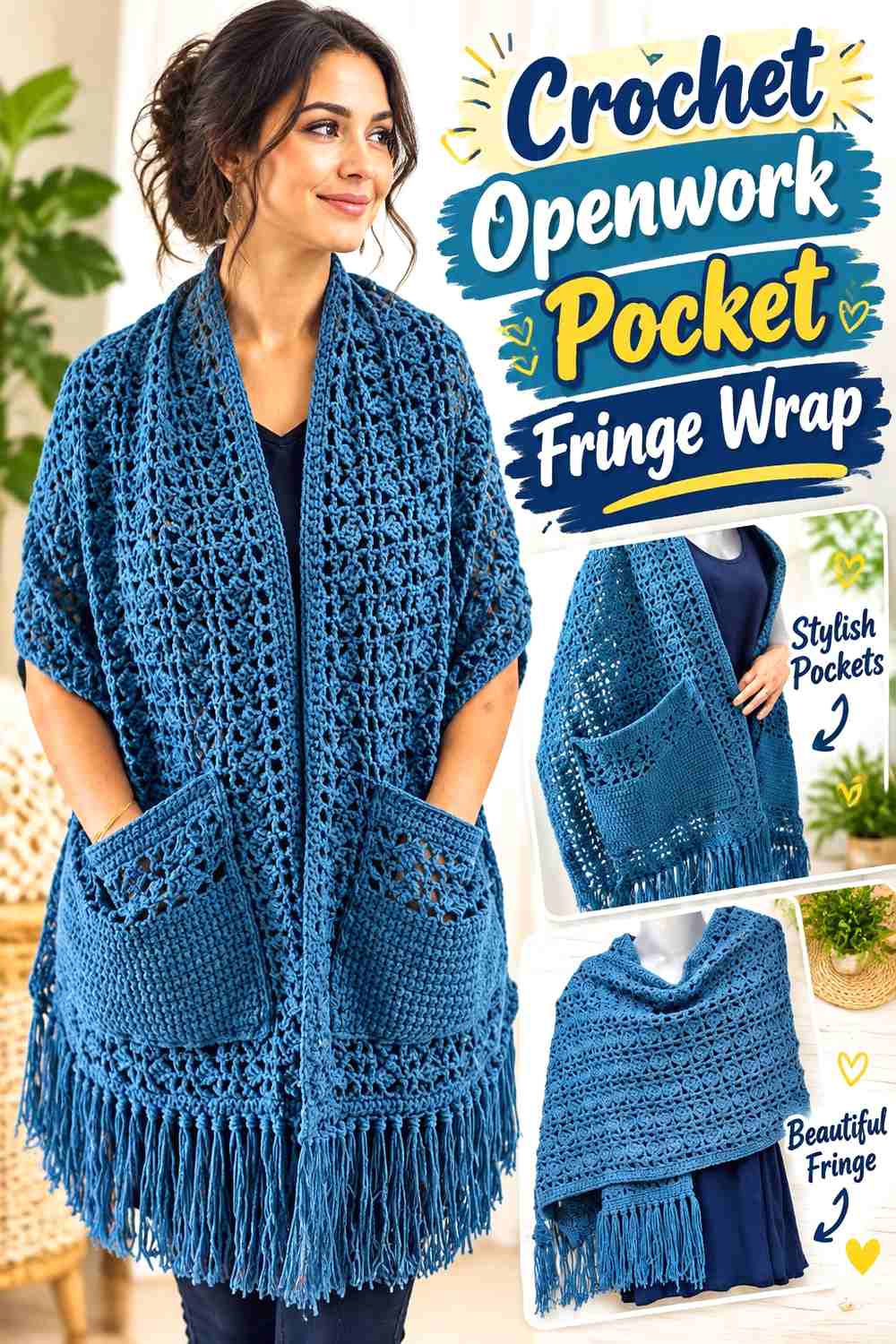
This design combines three noticeable features: a rectangular wrap, pockets, and fringe. That makes it more function-driven than a purely decorative stole and particularly useful if you prefer a wrap that stays visually substantial at the front. The open fabric keeps the body from looking as solid as many pocket shawls, while the fringe provides movement below the pocket area.
Pocket Placement Changes the Visual Weight
Pockets naturally draw attention to the lower sections of the wrap. Before adding extra embellishment, look at the entire end as one composition rather than treating the pocket and fringe as unrelated details. If both are visually heavy, the center of the stole can appear comparatively plain.
Check Function Before Increasing the Fringe
Longer or fuller fringe is not always more useful on a pocket wrap. Consider how close the strands will sit to your hands, bag, and outerwear when the pockets are being used. A decorative finish should not make the functional part of the design inconvenient.
Creator Credit: Let’s All Crochet
3. Crochet Knotted Boho Fringe Shawl
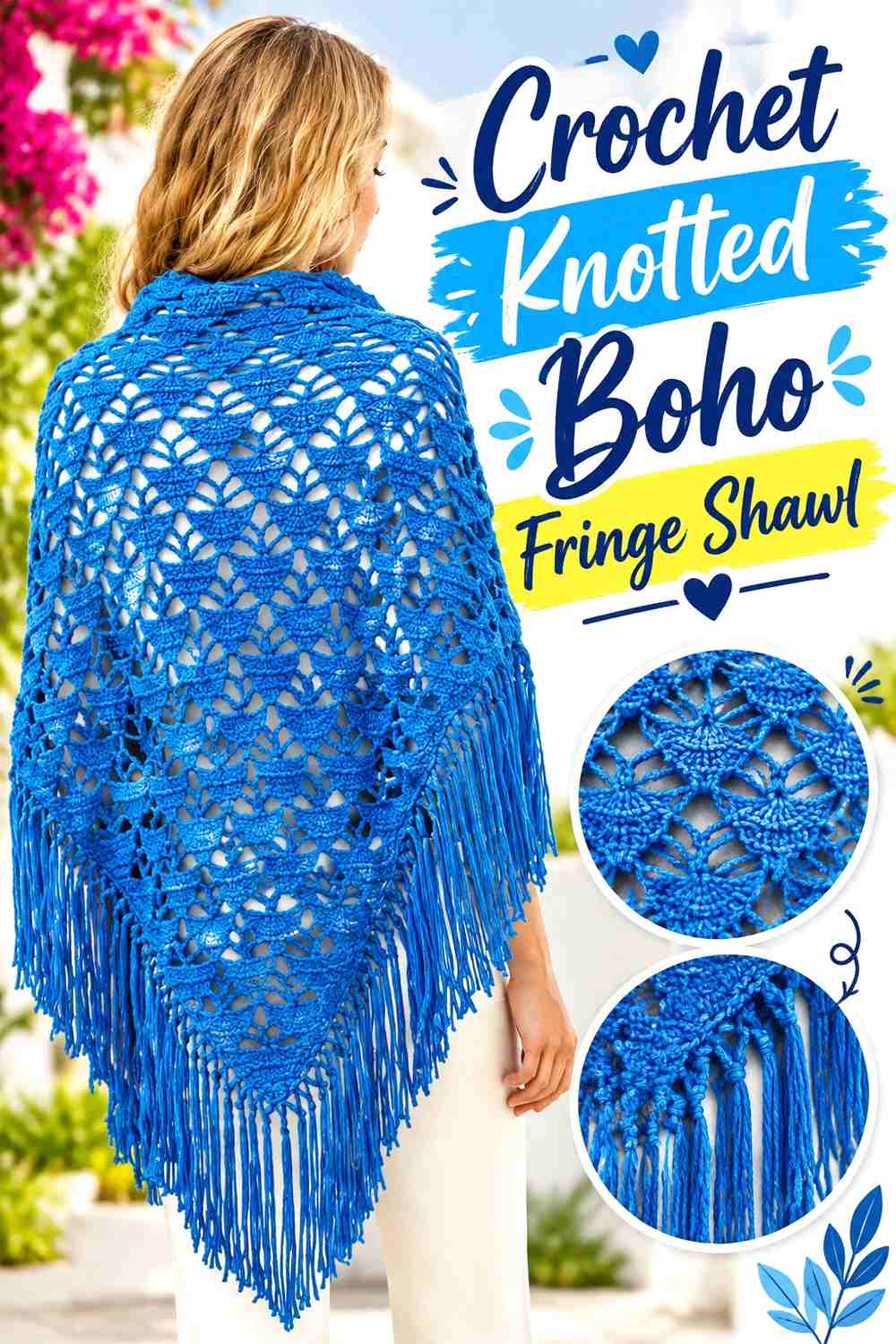
Knotted fringe turns the lower edge into a design element rather than a simple finishing detail. Paired with a triangular shawl, it creates a stronger center-focused silhouette than a traditional rectangular stole. This direction works especially well when you want the movement and texture of fringe to be noticeable even with a simple outfit underneath.
A Triangle Creates a Different Fall Silhouette
A pointed shawl concentrates more fabric at the back or front center depending on how it is worn. That can make it feel more dramatic than a narrow rectangle. Before choosing this shape, decide whether you want shoulder-to-shoulder coverage or a pronounced center point.
Knotted Fringe Needs Visual Space
Once fringe is knotted or arranged decoratively, it becomes part of the pattern. Avoid making the body, border, color changes, and fringe compete equally for attention. A restrained palette can give the knots and open spaces more room to register from a normal viewing distance.
Creator Credit: Marly Bird
4. Crochet Flower Texture Fringe Shawl
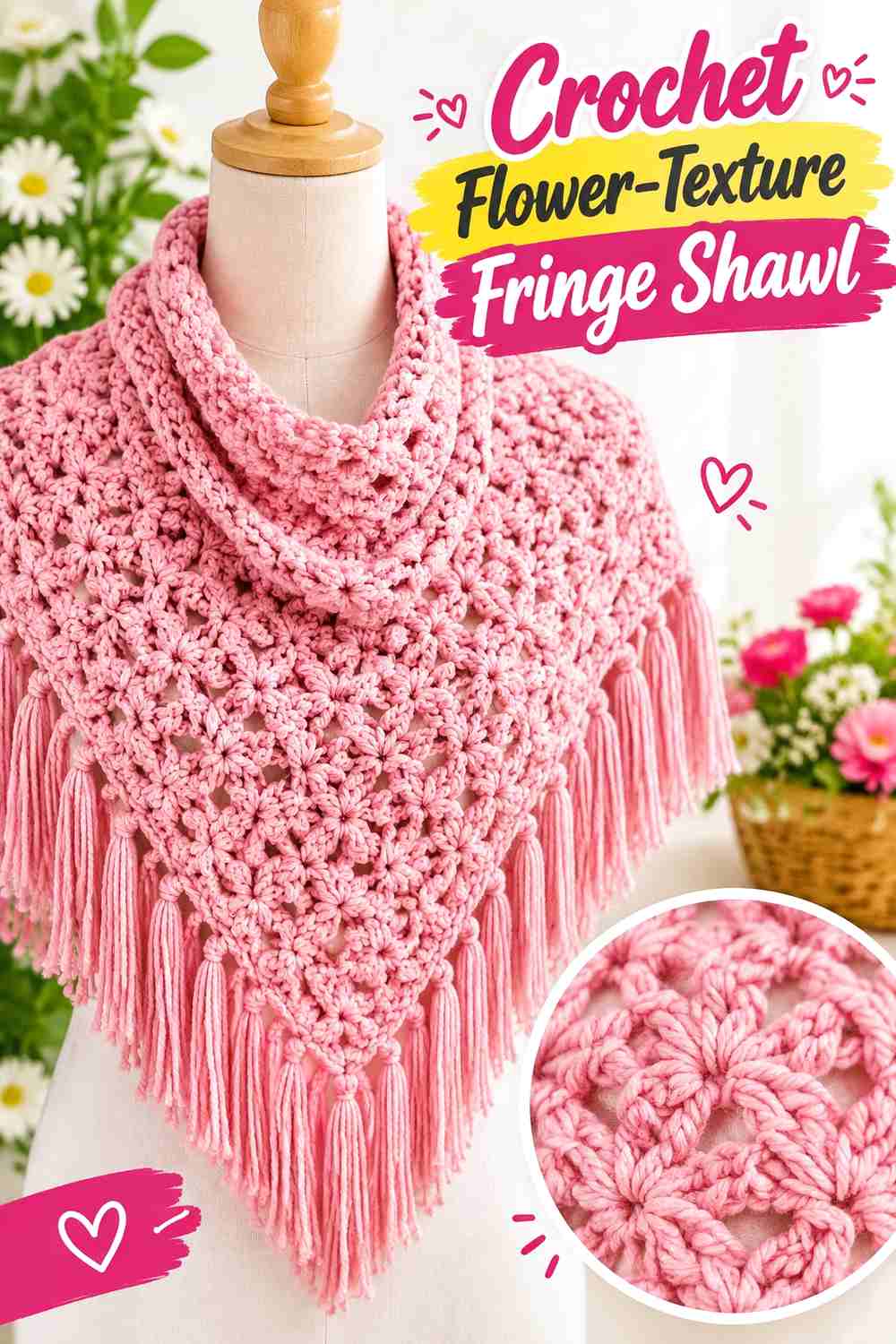
A flower-inspired open pattern gives this shawl more surface identity than a basic mesh. The triangular form already creates a statement shape, while the fringe provides a softer frame around the lower edge. It is a useful direction if you want a stole-like layer whose crochet pattern remains obvious rather than disappearing into a very dense fabric.
Give the Decorative Pattern Enough Contrast
Intricate openwork can be difficult to see in yarn with highly distracting color changes or a very fuzzy surface. If the flower-like structure is the reason you chose this option, make a sample and view it from several feet away. The motif should still be visible when the shawl is hanging rather than only when examined close up.
Avoid Hiding the Edge Under Too Much Fringe
The pattern already provides substantial visual detail. Very dense fringe can cover the transition between the body and lower edge, especially when the shawl is folded. Treat the trim as a frame for the crochet fabric instead of automatically making it the dominant feature.
Creator Credit: Knit and Crochet Design
5. Crochet Granny Motif Tassel Stole
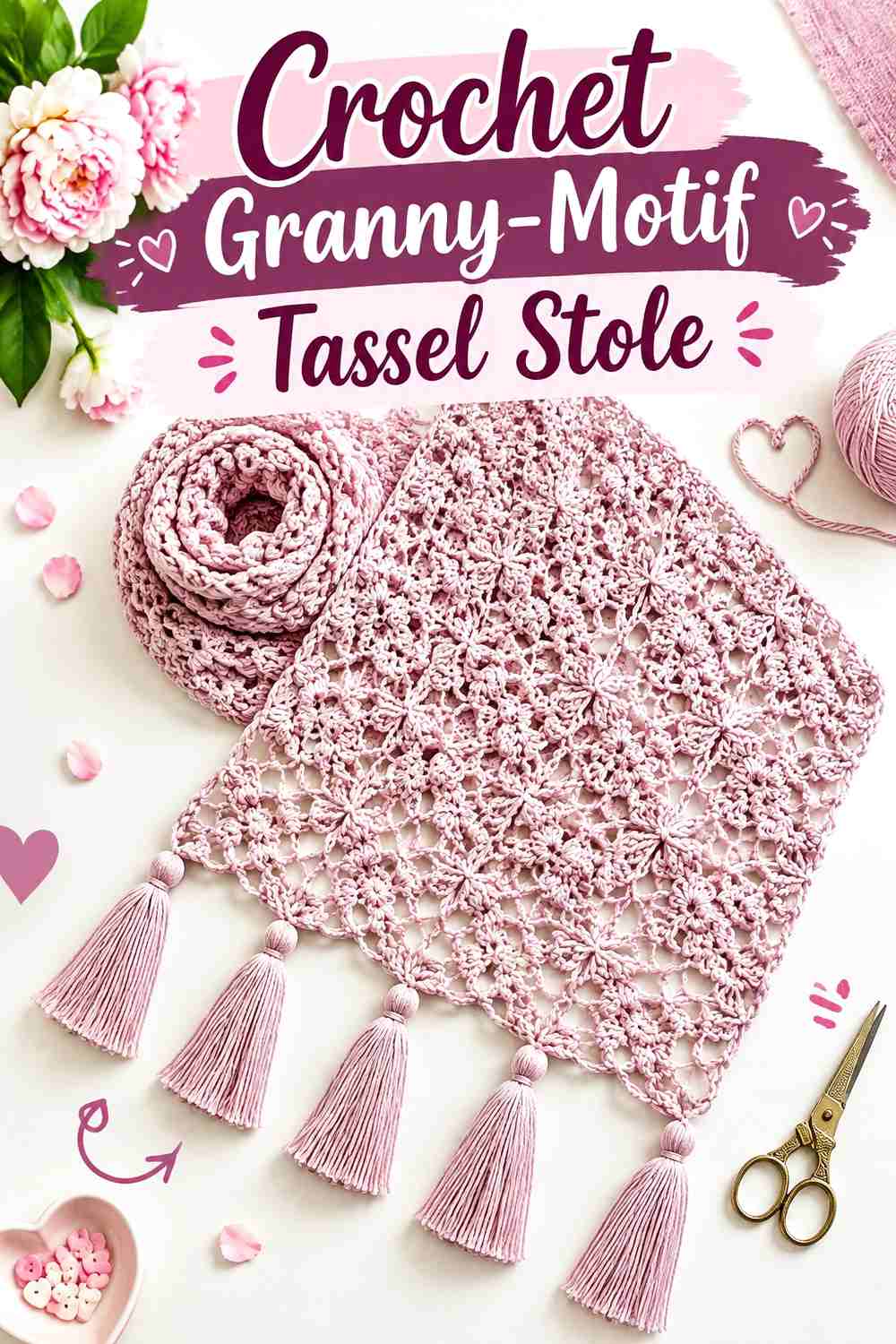
Instead of relying on a continuous stitch pattern, this stole direction uses joined crochet motifs. That immediately changes the planning process because motif placement, joining, color order, and the gaps between units all contribute to the finished appearance. Tassel-style finishing complements the modular construction without covering the individual motifs with a continuous curtain of fringe.
The Joins Become Part of the Design
On a motif-built stole, joins remain visible across a large area. Block and compare the motifs before final assembly so noticeable size differences do not accumulate across the rectangle. Also decide whether you want the joining color to disappear into the motifs or deliberately outline them.
Tassels Leave More of the Ends Visible
Widely spaced tassels provide movement without obscuring every section of the lower edge. That can be especially effective when the end motifs contain details you want to preserve. Compare the stole with a few temporary tassels before deciding that every available space needs one.
Creator Credit: Crochet Road
6. Crochet Chunky Granny Fringe Wrap
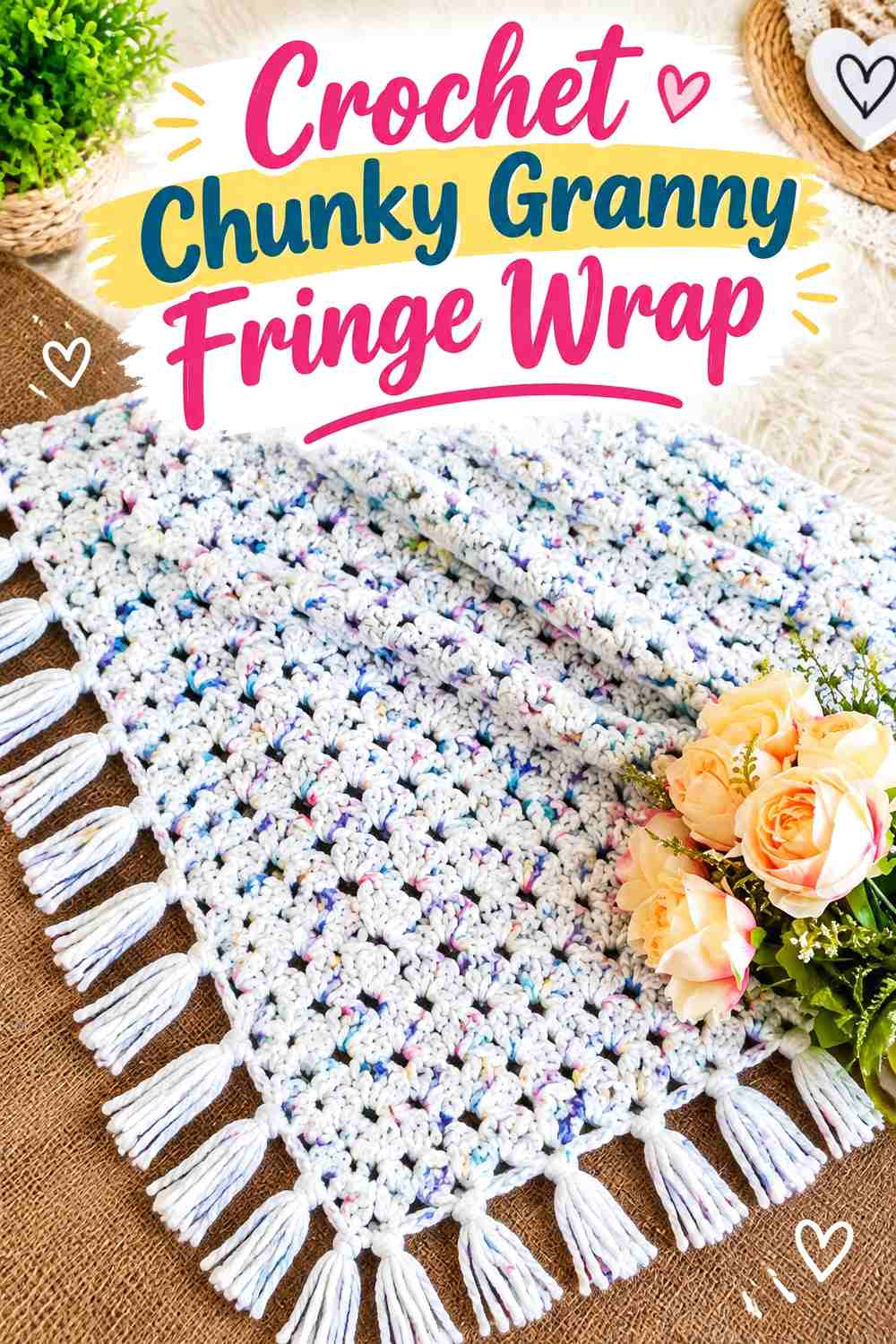
Chunkier crochet gives a granny-inspired shawl a very different personality from the lighter motif stole. The larger-looking fabric has more visual mass, and the triangular construction creates a substantial shoulder layer before the fringe is considered. This direction suits a fall outfit where the wrap itself is intended to be one of the main elements.
Chunky Fabric Can Become Bulky When Folded
A shawl may look balanced spread flat but feel much more substantial when gathered around the neck. Test the developing fabric in the way you expect to wear it. If it already creates plenty of volume, adding extra width simply for coverage may make the finished piece less flexible to style.
Match Fringe Density to the Heavier Body
Very fine, sparse fringe can look disconnected from a visually chunky shawl, but extremely dense bundles may make the points feel overloaded. Experiment with a small section so the strands continue the scale of the body without making the lower edge noticeably heavier.
Creator Credit: Selina Veronique Crochet
7. Crochet Bobble Wrap With Fluffy Fringe
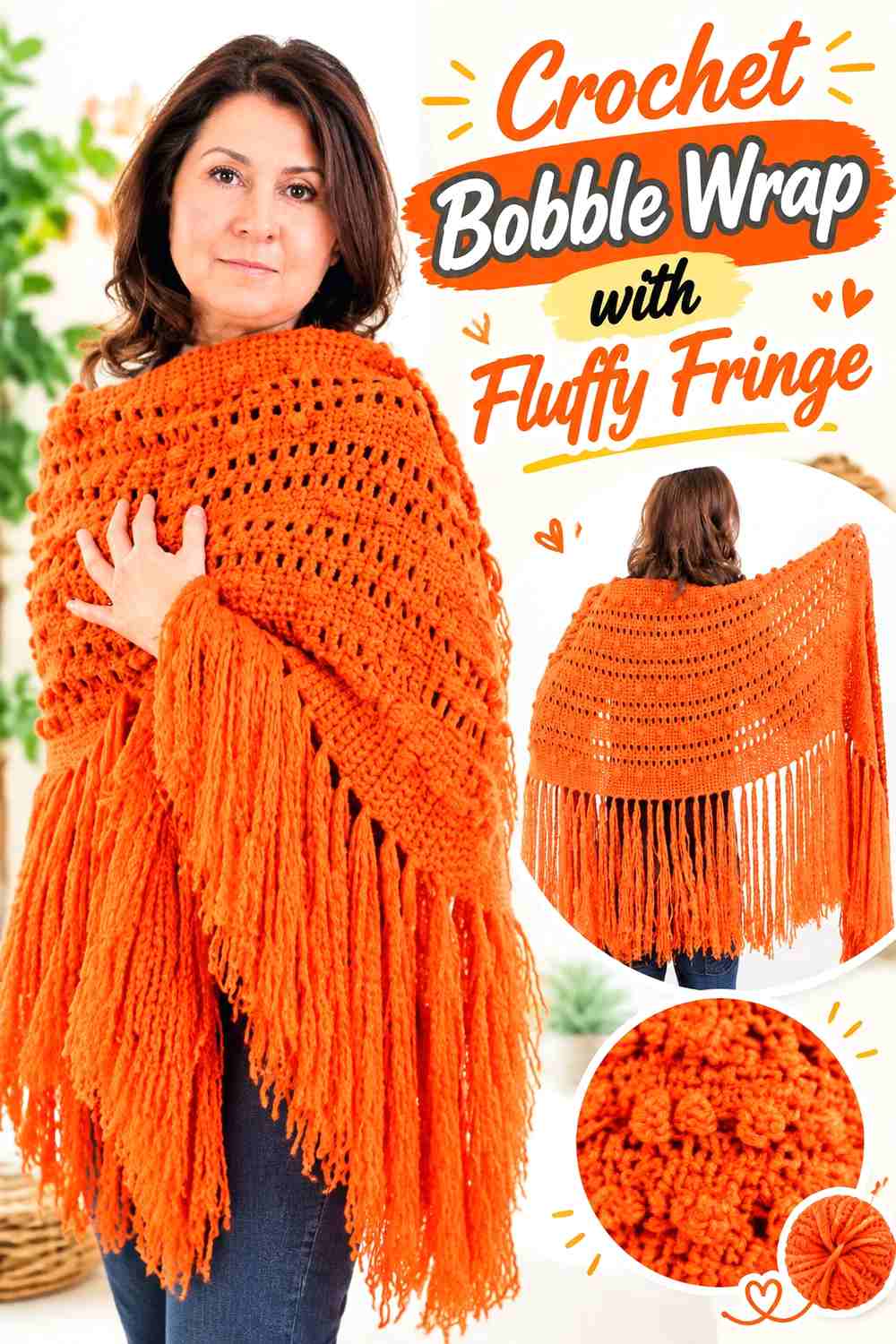
Bobble texture makes the body itself decorative, while the fluffy fringe extends the texture beyond the fabric. Unlike a stole where only two short ends move, this style uses fringe more expansively, creating a softer, more animated outline. It is one of the stronger options when you want texture rather than color blocking to carry the look.
Bobbles and Fringe Should Not Compete Equally
Raised bobbles already create highlights and shadows across the fabric. If the fringe is also extremely dense, the eye has no quiet area. When adapting the idea, decide whether the surface texture or the fluffy edge should be the first feature people notice.
Fringe Along More Than Two Edges Changes the Drape
An edge treatment running around a larger portion of the wrap behaves differently from fringe placed only at the ends. It can add movement around the shoulders and sides, but it also puts more loose strands near sleeves, bags, and jewelry. Wear-test a sample section before committing to the full perimeter.
Creator Credit: Crazy Cool Crochet
8. Crochet Lightweight Bobble Edge Rectangle Stole
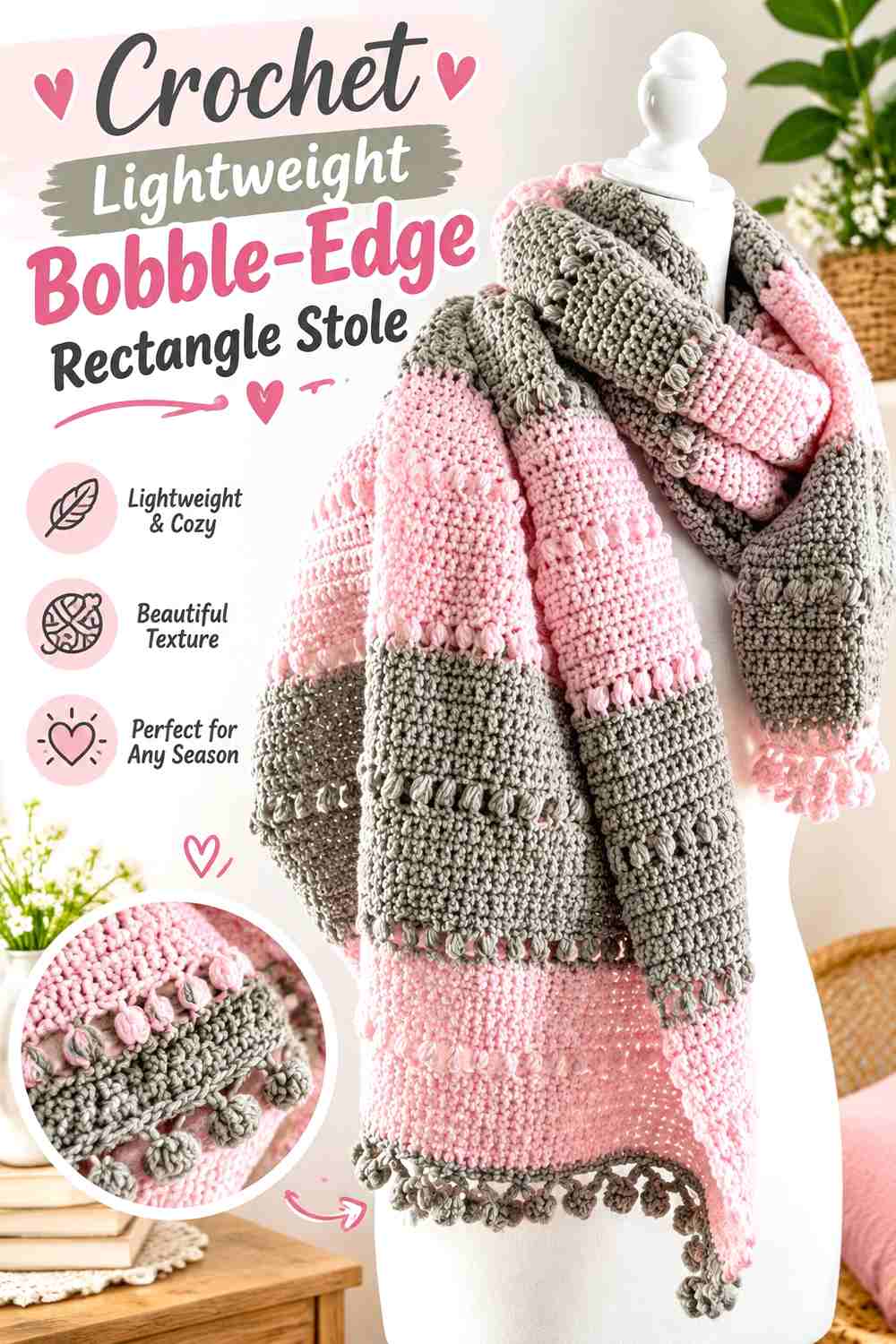
This rectangular shawl takes a more controlled approach to dimensional edging. Instead of relying only on long loose strands, bobble-style detail helps define the border and gives the lower edge a decorative rhythm. The straight shape also makes it useful for anyone who prefers a stole that can be worn symmetrically across both shoulders.
A Defined Border Can Look Neater Under Outerwear
Loose fringe creates movement, but a more structured edge keeps more of the detail close to the fabric. If you frequently layer wraps beneath or over jackets, compare how much free-hanging trim you actually want. A defined edge can provide texture without introducing the same amount of movement as long fringe.
Keep the Rectangle Flexible Enough to Rest on the Shoulders
Decorative edging cannot compensate for a body that is too stiff. When changing yarn or hook choice, evaluate the central fabric first. It should bend over the shoulder line comfortably before you invest time in a detailed lower finish.
Creator Credit: Pattern Princess
9. Crochet Airy Mesh Fringe Stole
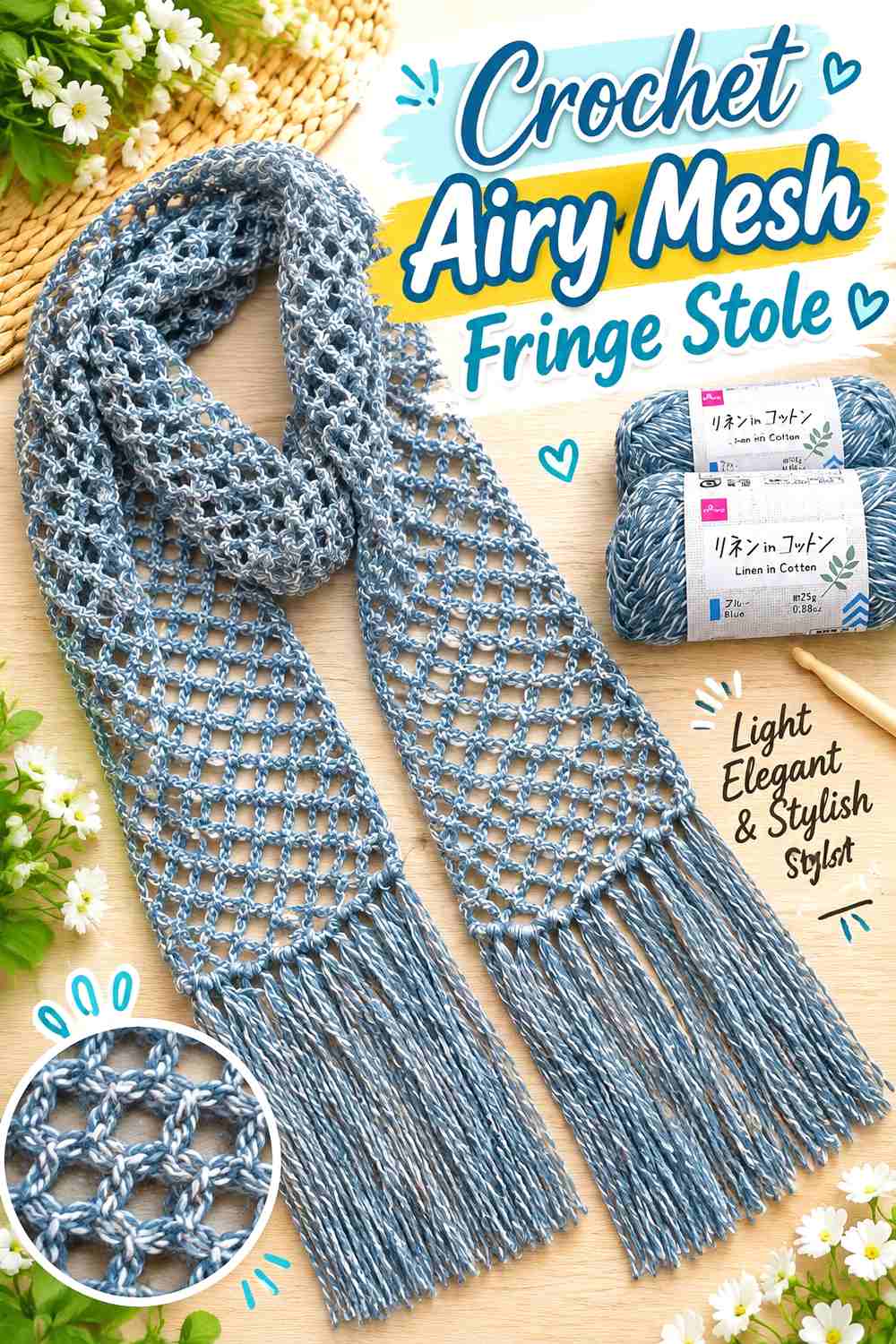
This narrow open-mesh stole offers a lighter interpretation of fringe. The source design comes from a warm-weather context, but its airy structure can also inspire a transitional fall accessory when made and styled appropriately. The combination of a slim rectangle and noticeable fringe is useful when you want movement without the coverage of a blanket-like wrap.
Open Mesh Makes Fringe More Prominent
When the body contains plenty of negative space, the solid strands at the ends become comparatively noticeable. Decide whether that contrast is what you want. Using fringe that visually relates to the body can keep the transition soft, while a strong contrasting treatment makes the ends the focal point.
Treat Fiber Substitution as a Fabric Decision
Changing from a lighter seasonal yarn to something warmer does not guarantee the same result. A different fiber or yarn thickness can close the mesh, alter the drape, and make the stole feel heavier. Make enough of the stitch pattern to judge the openness before planning a fall version.
Creator Credit: hotaru-ami-kids
10. Crochet Simple Draped Fringe Shawl
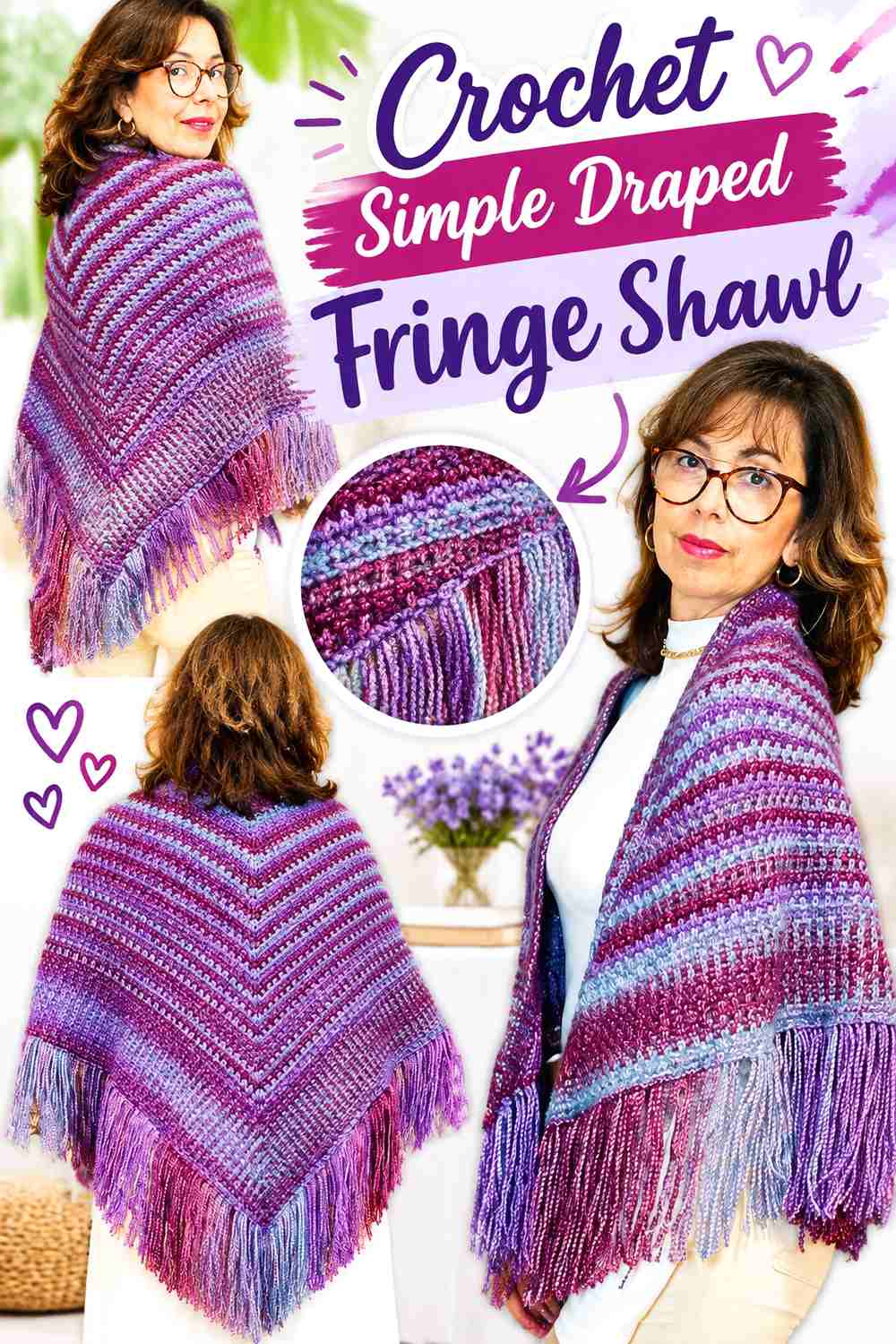
A straightforward triangular shawl leaves more visual room for the finishing details. Without competing pockets, bobbles, or joined motifs, the relationship between the main fabric and fringe becomes easier to control. This makes the idea useful when you want a clean fall layer that can be adapted through color and finishing rather than multiple construction features.
Decide Whether You Need More Coverage or More Movement
Increasing the body and increasing the fringe solve different styling problems. More crochet fabric provides additional shoulder coverage; more fringe creates a stronger moving edge. If the finished piece feels visually small, identify which quality is actually missing before changing it.
Simple Fabric Exposes Uneven Finishing
On a relatively quiet shawl, inconsistent fringe spacing or trimming is easier to notice because there are fewer competing details. Attach the strands methodically and view the shawl vertically before making final trimming decisions.
Creator Credit: ANITAWN
11. Crochet Chunky Ombre Tassel Shawl
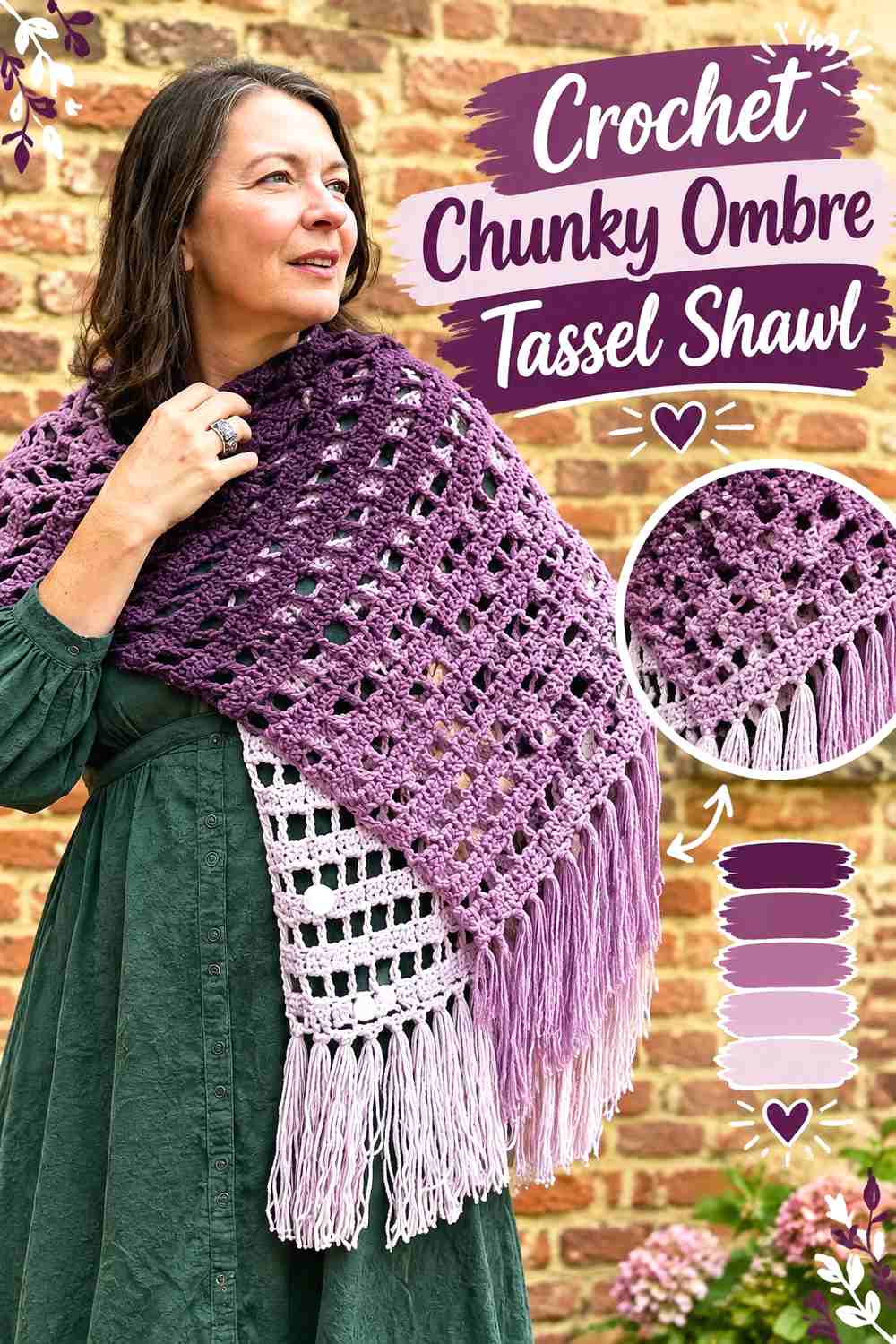
A gradient yarn can provide much of the visual interest before any additional decoration is added. Combined with an open, chunky shawl body and tassel-style finishing, it creates a fall layer that feels more graphic than a single-color rectangle while avoiding complicated motif placement.
Plan the Gradient Around the Finished Shape
Color changes that look evenly distributed in a skein may appear quite different once the shawl expands. Watch where the strongest color transitions are developing as the piece grows. If color placement is important to you, judge it on the actual shawl rather than trying to predict the entire result from the yarn cake.
Tassels Can Echo Instead of Interrupting the Color Story
The end treatment does not need to introduce another color. Repeating shades already present in the shawl can make the tassels feel connected to the body. A contrasting tassel is a stronger styling decision and will direct attention toward the corners.
Creator Credit: Ophelia Talks Crochet
12. Crochet Tunisian Knotted Fringe Slim Stole
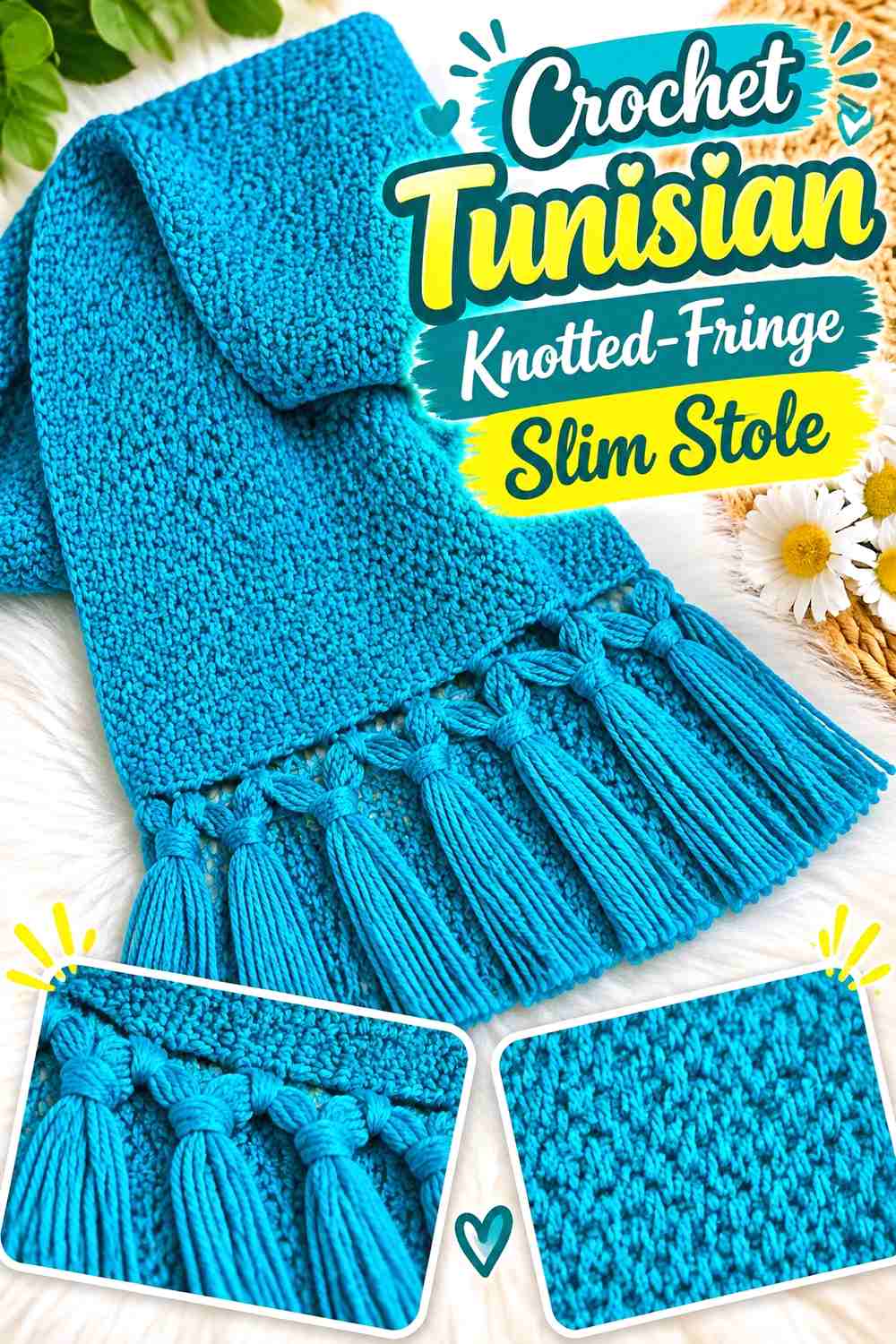
Tunisian crochet gives this narrow stole base a fabric character that stands apart from conventional crochet rectangles. The long shape and knotted fringe keep the silhouette clean while the stitch structure supplies subtle surface interest. It is a useful choice if you prefer a slim accessory rather than a broad shoulder wrap.
Widening Tunisian Fabric Requires More Planning
This source is a scarf-width project. Turning it into a broad stole can affect the number of working loops, tool requirements, material use, and the way the fabric behaves. Check the creator’s construction and your available Tunisian hook setup before assuming the width can simply be multiplied.
Knotted Fringe Creates a More Deliberate Finish
Knots organize the strands and give the lower edge more structure than freely hanging fringe. That works particularly well with a relatively orderly fabric. Keep the knotting consistent from one end to the other so the finishing reads as part of the design.
Creator Credit: I Heart Yarn
13. Crochet Lacy Long Fringe Slim Stole
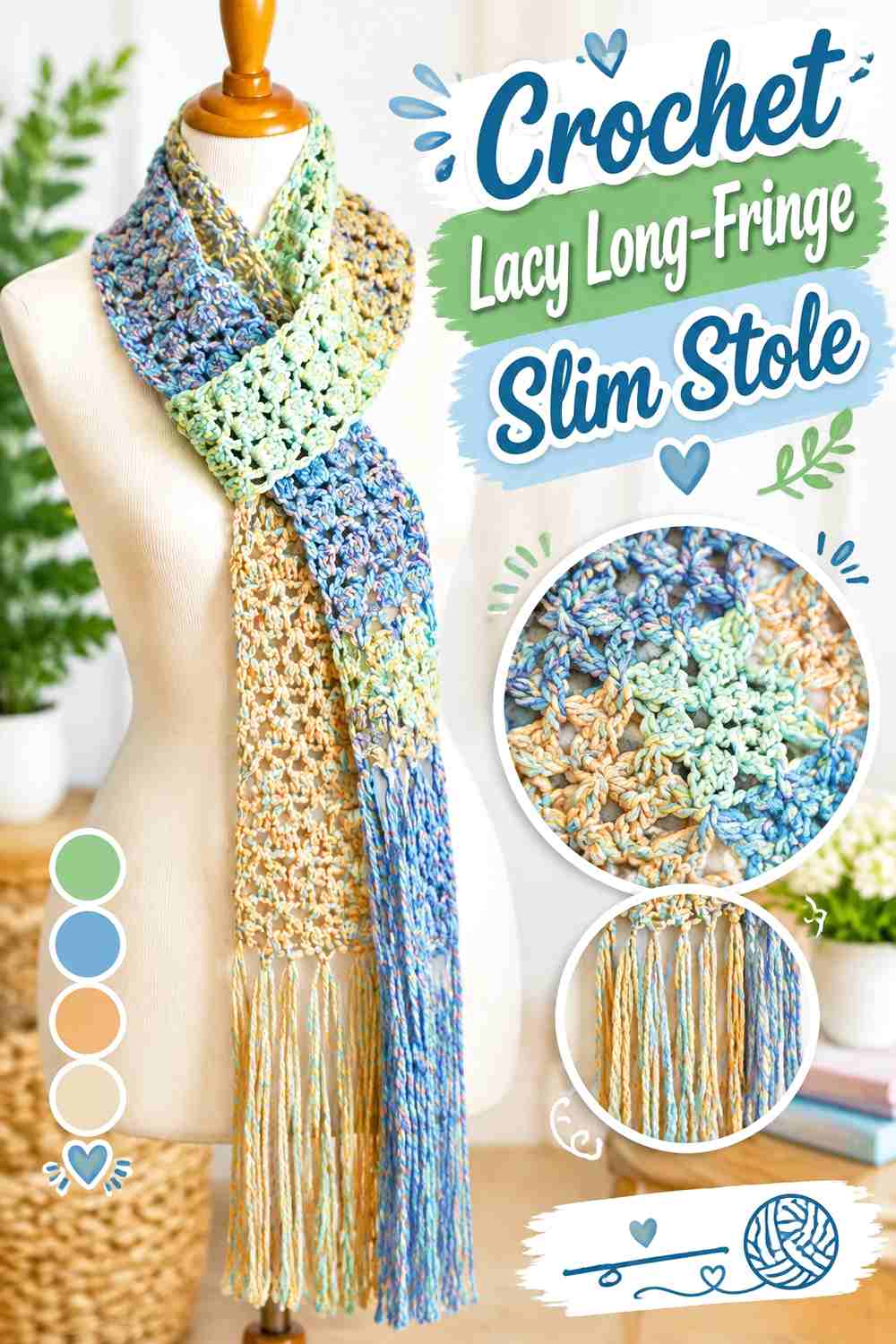
This narrow lace direction emphasizes vertical movement. The body is deliberately slim, and long fringe visually extends the ends, creating a lighter silhouette than a pocket wrap or chunky triangle. It is particularly useful when you want a crochet accent that can hang over a simple coat, sweater, or dress without covering most of the outfit.
Long Fringe Changes the Perceived Proportions
The eye includes the fringe when reading the overall length even though the strands are separate from the body. Before making the trim unusually long, hold temporary strands against the completed crochet and check where the ends fall when worn.
Widening the Lace Changes Its Character
A delicate scarflette can become a much stronger shoulder layer when extra width is added. That may be exactly what you want, but it is not a neutral change. More lace can alter the overall weight and how prominently the pattern appears, so treat a full stole as an adaptation rather than the same project in a different size.
Creator Credit: Fiber Flux
14. Crochet Looped Texture Fringe Slim Stole
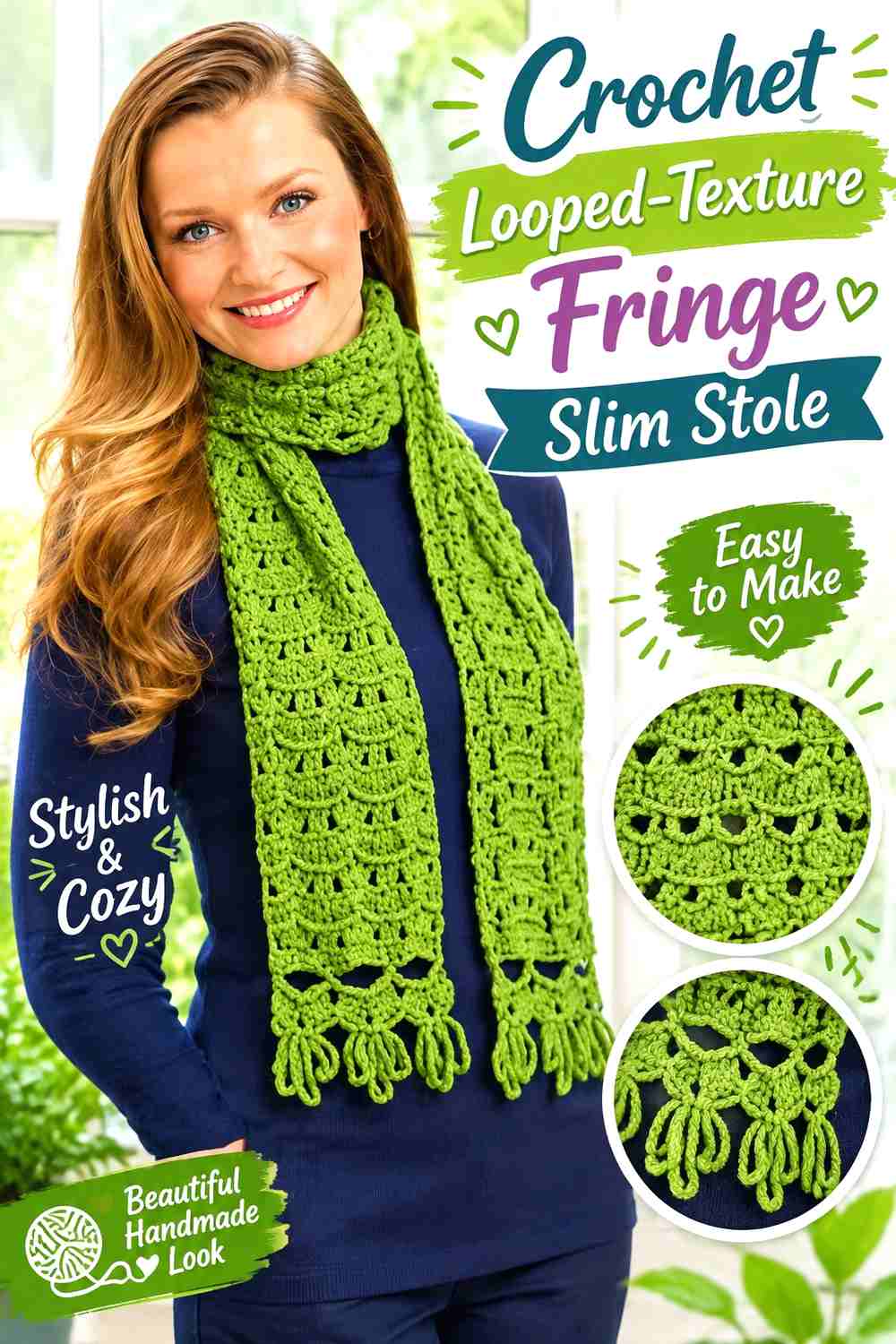
Here, movement is not limited to the ends. Looped texture across the scarf creates dimensional interest through the body, while fringe continues that idea at the edge. It is one of the more tactile options in the collection and can work as a narrow stole when you want the surface itself to be the statement.
Exposed Loops Need Thoughtful Styling
Raised loops are more likely to interact with bag hardware, jewelry, buttons, and rough outerwear than a flat crochet surface. Consider what you normally wear with the piece before making the texture a major part of an everyday fall accessory.
Do Not Overload an Already Active Surface
The loops give the body plenty of movement even when the stole is still. Extra-heavy fringe can make both ends feel crowded. Start with the texture itself as the focal point, then add only enough finishing to make the ends feel intentional.
Creator Credit: The Crochet Crowd
15. Crochet Granny Style Fringe Slim Stole
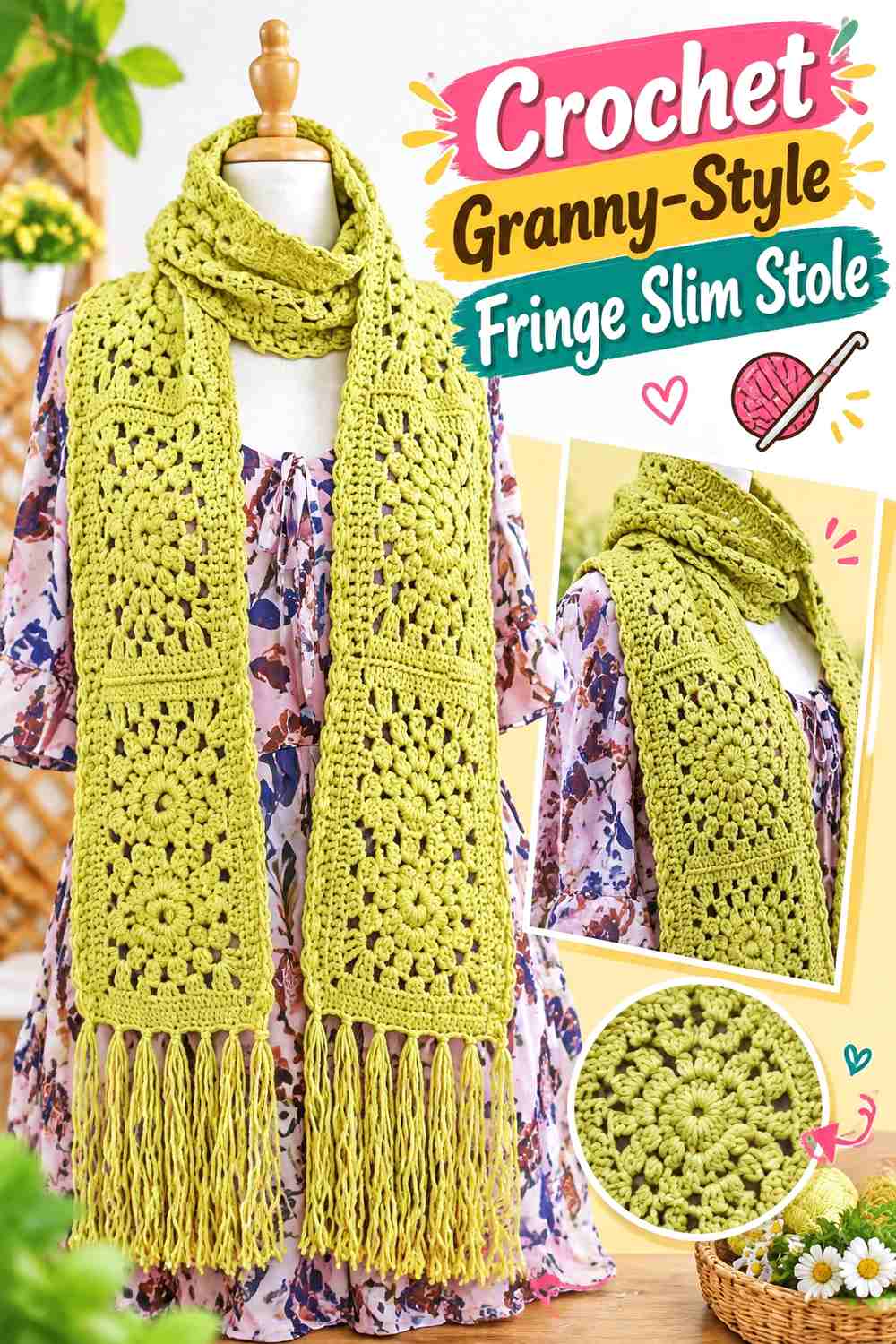
Granny-inspired fabric gives this slim accessory an unmistakably crocheted appearance. The repeated open clusters provide opportunities for color changes while the end fringe keeps the long rectangle relaxed rather than formal. This direction works especially well when you want a narrow stole whose color arrangement can be as noticeable as its texture.
Decide Whether Color or Fringe Gets Priority
Multiple body colors plus multicolored fringe can create a very lively result. If that is not the goal, simplify one of the two areas. Repeating the body colors in a restrained fringe connects the ends to the main fabric, while one solid fringe color can visually anchor a more colorful rectangle.
Test Fringe Weight Against the Open Edge
Open granny-style fabric does not respond like dense waffle or cable crochet. Attach a few representative bundles and hold the piece vertically. If the edge looks stretched or crowded, a lighter arrangement may preserve the openness that attracted you to the construction in the first place.
Creator Credit: Sirin’s Crochet
16. Crochet Waffle Texture Fringe Slim Stole
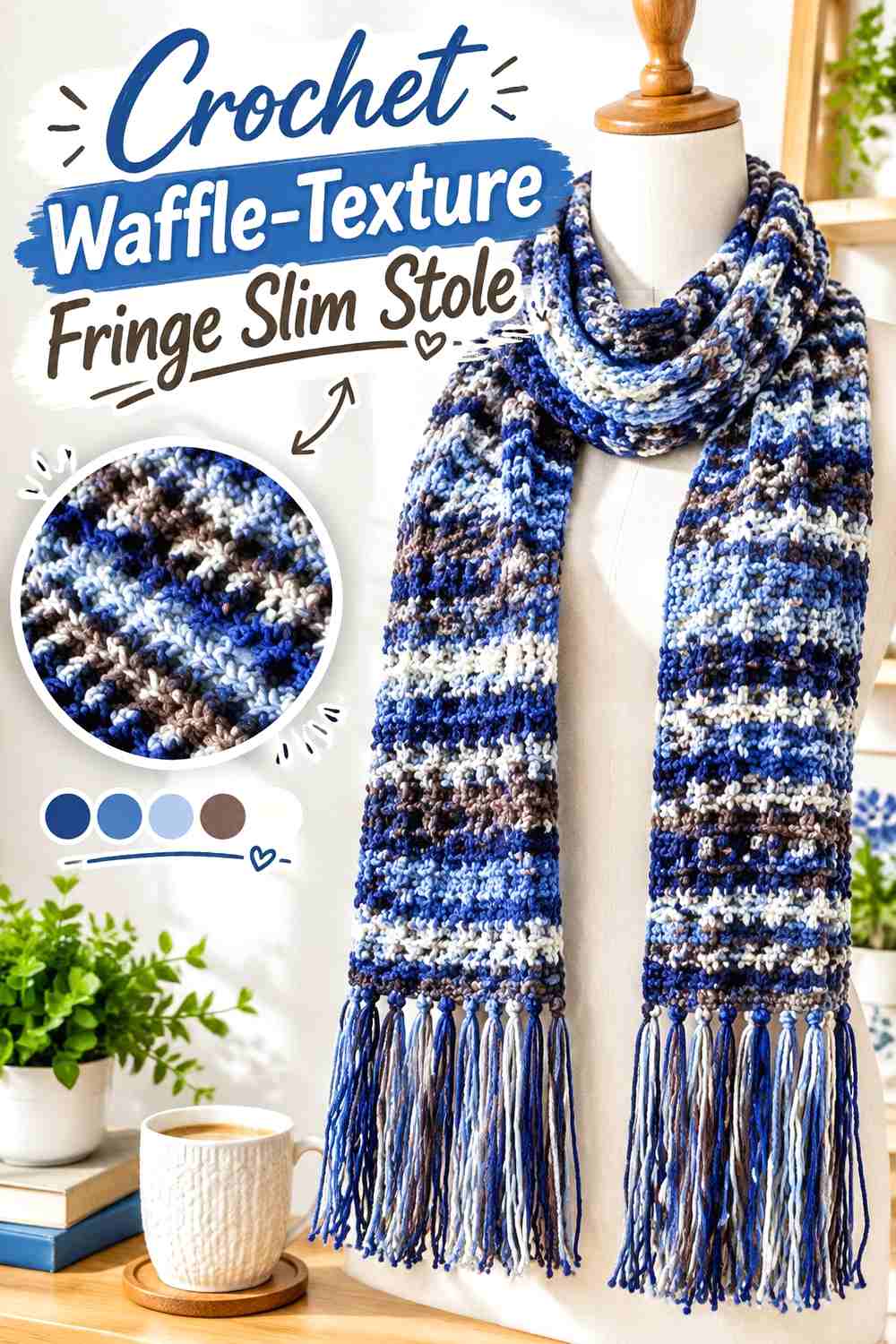
Waffle texture creates strong geometric relief before the fringe is added. That makes this narrow stole base noticeably denser-looking than lace, granny clusters, or open mesh. It is a useful fall direction when you want the body to look substantial and the end treatment to remain relatively traditional.
Extra Width Can Add Considerable Bulk
A textured scarf and a full shoulder stole do not behave identically. Before widening this construction, make enough fabric to fold it and feel how several layers sit together. A width that looks appealing when flat may become cumbersome when wrapped around the neck beneath a coat.
Let Straight Fringe Counterbalance the Grid
The waffle surface already provides a repeating visual pattern. A straightforward fringe finish gives the eye somewhere to rest and avoids adding another competing texture. If you experiment with contrasting fringe, attach a small section first because the color change will strongly emphasize the ends.
Creator Credit: Crouton Crackerjacks
17. Crochet Cable Texture Fringe Slim Stole
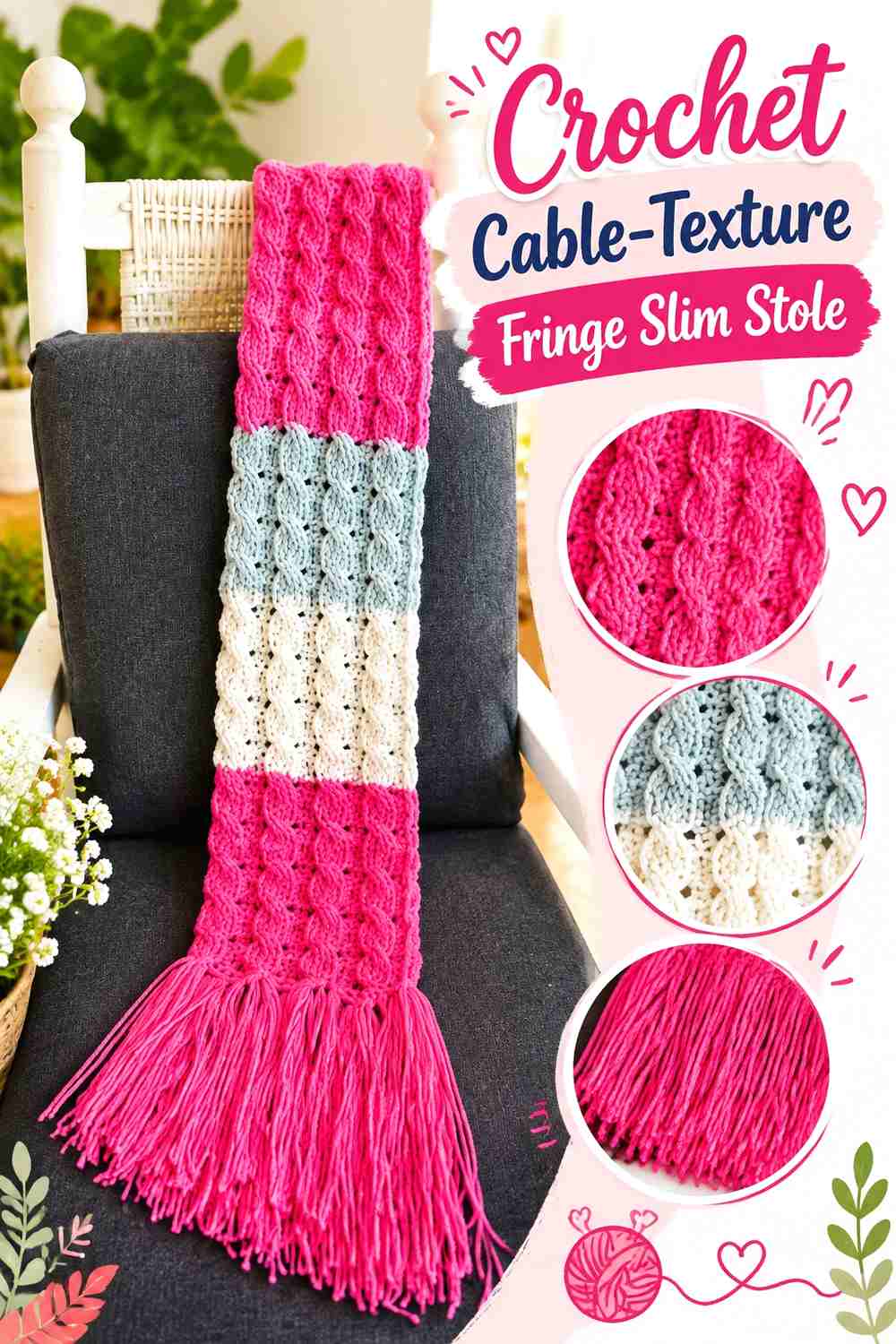
Crochet cables create one of the strongest surface patterns in the collection. Their raised lines make the fabric interesting even in one color, while fringe softens the short ends. This is another scarf-width tutorial that works most naturally as a slim stole inspiration; a much wider version would change the weight and visual scale considerably.
Protect the Cable Definition
The appeal of cable crochet depends on being able to read the raised structure. A yarn with very little stitch definition can blur those lines, while a highly variegated color can compete with their shadows. Make a sample before committing if the cable effect is your main reason for choosing this option.
Give Heavy Texture a Quieter Finish
The fringe does not need to be complicated when the body already contains substantial relief. A restrained end treatment keeps attention on the cables and prevents the lower sections from becoming visually dense. Judge the final balance with the piece hanging, since cables and fringe both look different under their own weight.
Creator Credit: Fiber Theory
Which Crochet Fringe Stole Style Should You Choose?
If you want classic shoulder coverage, start with the lacy rectangle, granny-motif stole, bobble wrap, or lightweight rectangle. Their broader shapes behave more like traditional stoles and can sit across both shoulders without depending on a center point.
For extra function, the openwork pocket wrap gives the ends a practical role as well as decorative fringe. For a pronounced boho silhouette, compare the knotted triangular shawl, chunky granny wrap, simple draped shawl, and ombre tassel design.
If texture matters most, the bobble, looped, waffle, cable, and Tunisian options offer distinctly different surfaces. The granny-motif and granny-style versions put more emphasis on recognizable crochet structure and color planning.
For a lighter accent over fall clothing, the airy mesh, long-fringe lace, Tunisian, and other slim stole bases use less visual space. They are also the projects where restraint matters most when widening the source construction—more width can quickly change a delicate accessory into a much heavier layer.
Conclusion
A chic crochet fringe stole for Fall 2026 does not depend on one particular stitch or fringe length. The strongest choice is the one where the fabric, shape, and trim work together.
Choose a lacy rectangle or lightweight wrap when drape is the priority. Pick granny motifs or flower-inspired openwork when you want the crochet construction to stay visually obvious. Bobbles, waffles, cables, and loops offer stronger texture, while pocket and triangular designs change the way the finished piece functions and sits on the body.
For a quieter look, keep the fringe secondary to the fabric. For a stronger boho finish, knotted strands, fluffy edges, or prominent tassels can become part of the design itself. And when using one of the narrower scarf tutorials as a stole base, confirm the creator’s exact construction before widening it rather than treating the change as purely cosmetic.
Use the original tutorials for project-specific construction and finishing details, then make your styling decisions around how you actually want the stole to layer with your fall wardrobe.
Frequently Asked Questions
What is the difference between a crochet stole and a crochet scarf?
A stole is generally worn as a shoulder layer and is often wider than a typical neck scarf, while a scarf is usually narrower and designed primarily to wrap or hang around the neck. There is no single universal width that separates the two, so how the finished piece drapes and is worn matters as much as its measurements.
Can I make a crochet scarf tutorial wider and use it as a stole?
Sometimes, but widening is not automatically as simple as adding stitches. You need to check the stitch repeat, construction direction, available hook or cable length for Tunisian crochet, yarn requirements, border treatment, and how the extra fabric affects drape. Use the original tutorial to determine how that specific design can be adapted.
Should I block a crochet stole before adding fringe?
It can be useful to establish the finished shape and fabric behavior before making final decisions about fringe placement and density. However, fiber and project requirements vary, so follow appropriate care instructions for the yarn and check the creator’s finishing guidance. If you plan to block first, account for any change in the edge before cutting all your fringe.
How do I choose fringe that does not overwhelm a crochet stole?
Start with a small test section rather than covering the entire edge. Hold or wear the stole vertically and compare the trim with the body. Dense or highly textured fabric can often visually support stronger fringe, while delicate lace may look more balanced with fewer strands or separated tassels.
Is long fringe practical on a fall stole worn with a coat?
It depends on how the stole and coat are worn together. Long strands create more movement, but they can also interact with buttons, zippers, handbags, jewelry, and sleeves. If the stole will be an everyday outer layer, test the proposed fringe length with your usual outerwear before committing to the full edge.
Which fringe stole shape provides the most shoulder coverage?
A broad rectangular wrap generally distributes fabric most evenly from shoulder to shoulder. Triangular shawls can also provide substantial coverage, but they concentrate more fabric toward a center point. Slim stole bases provide less coverage and work more as elongated outfit accents.