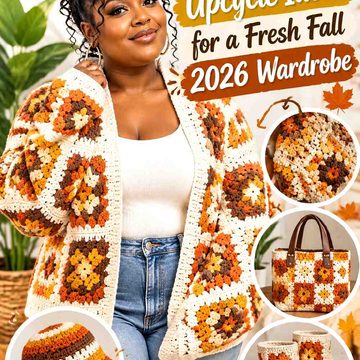
Bouclé yarn and bucket bags make an appealing fall pairing. The rounded silhouette already has a soft, relaxed feel, while looped or fuzzy yarn can give the surface the warm teddy-like texture associated with cooler-weather accessories.
There is one important planning detail, though: not every good bucket-bag construction was originally designed for bouclé. Several tutorials below use smoother yarn, cord, raffia, or other fibers. Those projects are included because their construction offers a useful starting point for a bouclé interpretation. Before substituting yarn, make a swatch and compare the resulting fabric with the original tutorial rather than assuming the same hook, gauge, dimensions, or yarn quantity will transfer directly.
Bouclé can also hide individual stitches, so construction choices matter. A simple cylindrical body may accommodate fuzzy texture more comfortably than an intricate stitch pattern, while straps, drawstrings, bases, and attachment points may benefit from a firmer material. Use the original tutorials for their exact construction details rather than treating these ideas as substitute patterns.
Quick List
- Crochet Bouclé Fur-Effect Drawstring Bucket Bag
- Crochet Bouclé Ruffle-Top Bucket Bag
- Crochet Bouclé Solid-Granny Bucket Bag
- Crochet Bouclé Mini Bucket Pouch
- Crochet Bouclé Oval-Base Chain-Strap Bucket Bag
- Crochet Bouclé Double-Layer Drawstring Bucket Bag
- Crochet Bouclé Textured Cord Bucket Bag
- Crochet Bouclé Pleated Crossbody Bucket Bag
- Crochet Bouclé Open-Weave Lined Bucket Bag
- Crochet Bouclé Pastel Color-Block Bucket Bag
- Crochet Bouclé Zigzag Crossbody Bucket Bag
- Crochet Bouclé Beaded Drawstring Bucket Bag
- Crochet Bouclé Mesh Bucket Bag
- Crochet Bouclé Puff-Flower Motif Bucket Bag
- Crochet Bouclé Floral Leather-Base Bucket Bag
How Bouclé Changes a Crochet Bucket Bag
Bouclé gets much of its character from loops, curls, and an irregular surface. That texture can make an otherwise plain bucket bag look plush without requiring complicated decorative stitches. The trade-off is reduced stitch definition. Small details that stand out clearly in smooth cotton or cord can disappear when worked in fuzzy yarn.
Structure matters too. A very soft bouclé may create a slouchier bag than the material used in the original tutorial. If maintaining the bucket silhouette is important, consider whether the project has a firm base, lining, dense fabric, or another structural element that can support the softer exterior.
The same issue applies to working openings and closures. A drawstring should still move comfortably through its channel, and attachment areas for handles or hardware should not become difficult to see beneath a deeply textured surface.
Choose the Base, Closure, and Strap Before the Texture
The cozy surface may be what first catches your attention, but the functional parts determine how the finished bag behaves. Round bases emphasize the classic bucket shape, oval bases can create a broader purse-like profile, and square-motif constructions produce a more geometric silhouette.
Closures create another major difference. A simple drawstring gives the familiar gathered top, whereas ruffles emphasize softness and decorative volume. A lining can keep smaller belongings from catching against textured crochet and may help a soft-sided bag retain its form.
Straps also deserve separate consideration when adapting a design to bouclé. A fuzzy strap can look cohesive, but a smoother crocheted cord, chain, webbing, or another appropriately reinforced option can provide a cleaner contrast and may stretch differently.
Swatch Bouclé Before Replacing the Tutorial Yarn
A yarn substitution is more than a color change. Bouclé of the same labeled weight as a smooth yarn can produce a fabric that looks, feels, and measures differently.
Work enough of a test piece to judge stitch visibility, density, flexibility, and the way the loops behave when rubbed or pulled. For motif-based bags, block and measure a test motif before deciding how many pieces will create the intended finished scale.
If a construction depends on small holes, sharply defined textured stitches, or a close-fitting component such as a prefabricated base, confirm that your substituted fabric still works with those features. Keeping some structural areas in a smoother yarn is also a reasonable design choice rather than forcing bouclé into every component.
1. Crochet Bouclé Fur-Effect Drawstring Bucket Bag
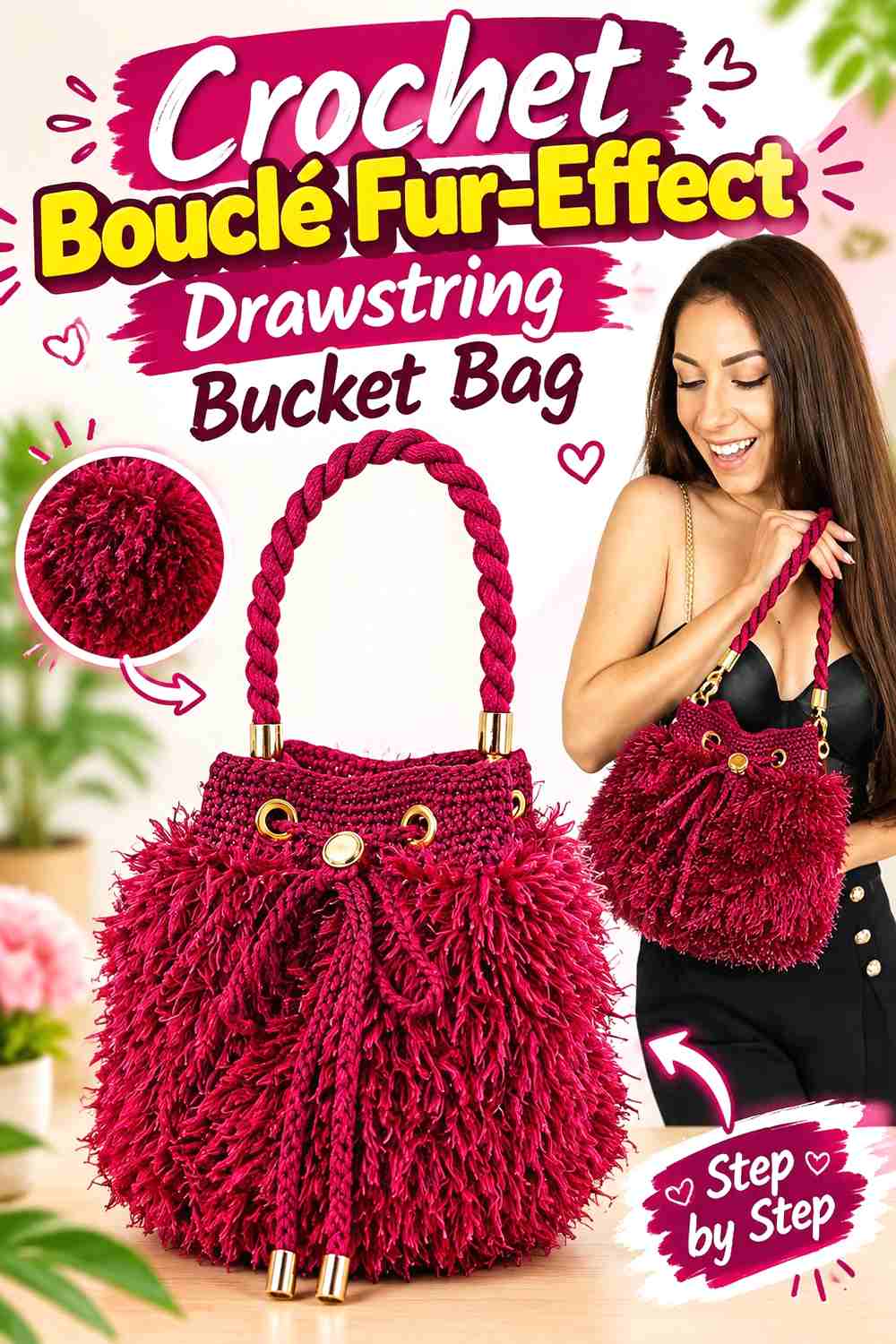
This is the closest match in the collection to the full plush-bucket concept. Katy Handmade’s tutorial creates a bucket bag with a fur-effect crochet body, a round base, drawstring closure, hardware, and handle. That makes it particularly useful when you want the fuzzy surface to be the main visual feature rather than a small accent. YouTube
Let the Fuzzy Surface Replace Complicated Stitch Detail
A deeply textured yarn already creates plenty of surface interest. Keeping the basic silhouette visually simple can prevent the bag from becoming overly busy and makes the plush finish easier to appreciate.
If you substitute a different bouclé, compare the density of your fabric with the tutorial’s finished look. Very open fabric can lose some of the substantial teddy effect, while fabric worked too firmly can make a soft yarn feel unexpectedly rigid.
Keep the Closure Area Easy to Operate
Fuzzy yarn around eyelets and drawstrings can make openings less distinct. Before committing to a full bouclé treatment, decide whether you want the closure band to blend into the body or whether a smoother contrasting yarn would make the functional area cleaner.
Hardware can provide the same visual break. It separates the fuzzy body from the handle and gives the upper edge more definition.
Creator Credit: Katy Handmade
2. Crochet Bouclé Ruffle-Top Bucket Bag
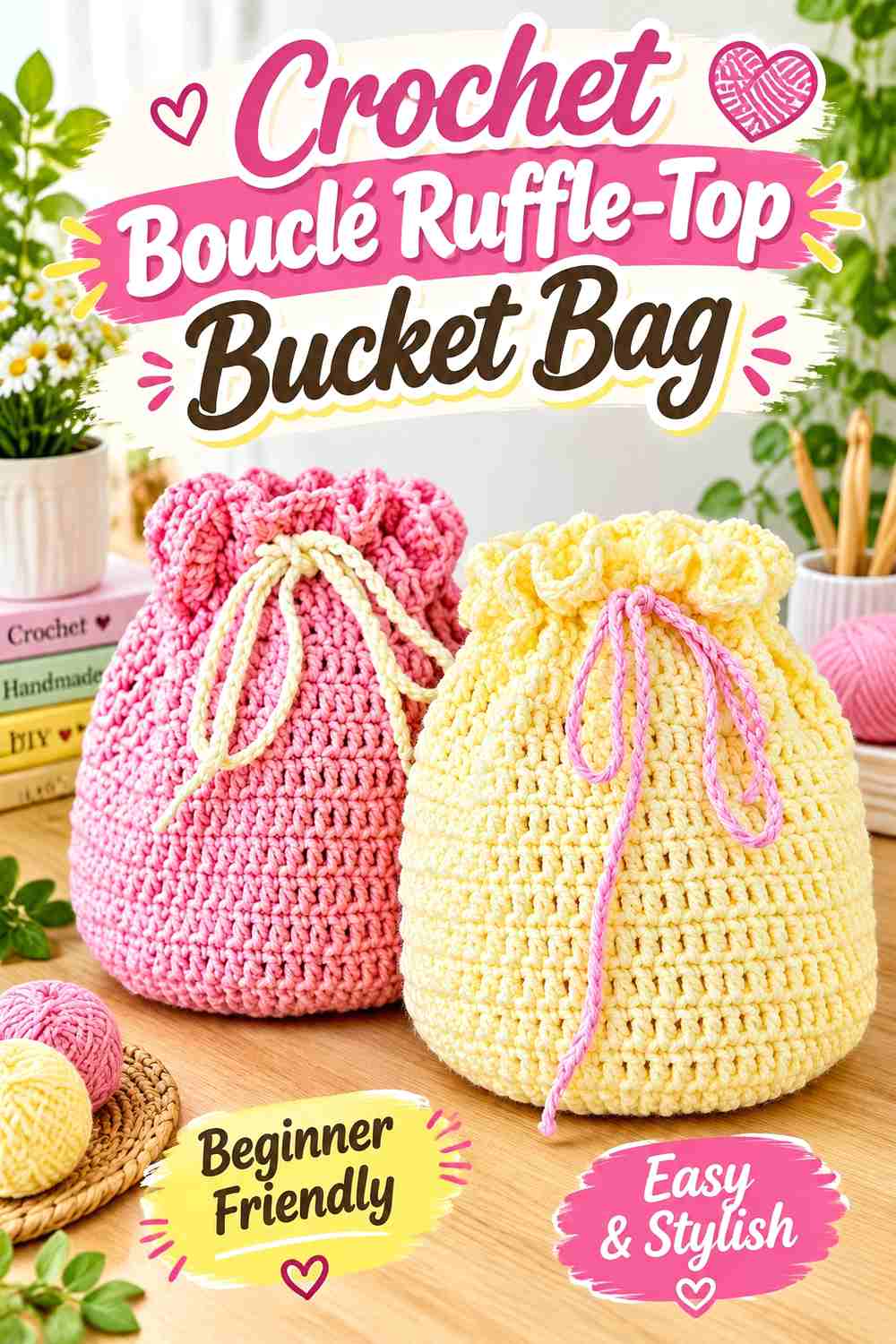
Alice’s Crochet Corner demonstrates a practical drawstring bucket bag that finishes with a ruffled upper section. The tutorial uses straightforward stitches and separates the body, ruffle, and drawstring into recognizable construction stages. That ruffled top makes this a useful candidate for a softer bouclé interpretation. YouTube
A Ruffled Top Amplifies the Soft Fall Look
Bouclé naturally creates visual volume, so pairing it with gathering can produce a noticeably fuller opening. That may be exactly what you want for a soft statement bag, but it is worth sampling before making the entire body.
A particularly bulky bouclé can make a small ruffle appear much larger than it would in smooth yarn. Compare the proportion of the top treatment with the height of the bag instead of automatically duplicating the original yarn substitution.
Separate Decorative Volume From Drawstring Function
The ruffle can be plush while the drawstring remains smooth. This gives you two advantages: the decorative portion keeps the bouclé texture, while the moving cord is less likely to catch against loops.
It is also an easy way to introduce a second fall texture, such as a firm crochet cord against a woolly-looking body.
Creator Credit: Alice’s Crochet Corner
3. Crochet Bouclé Solid-Granny Bucket Bag
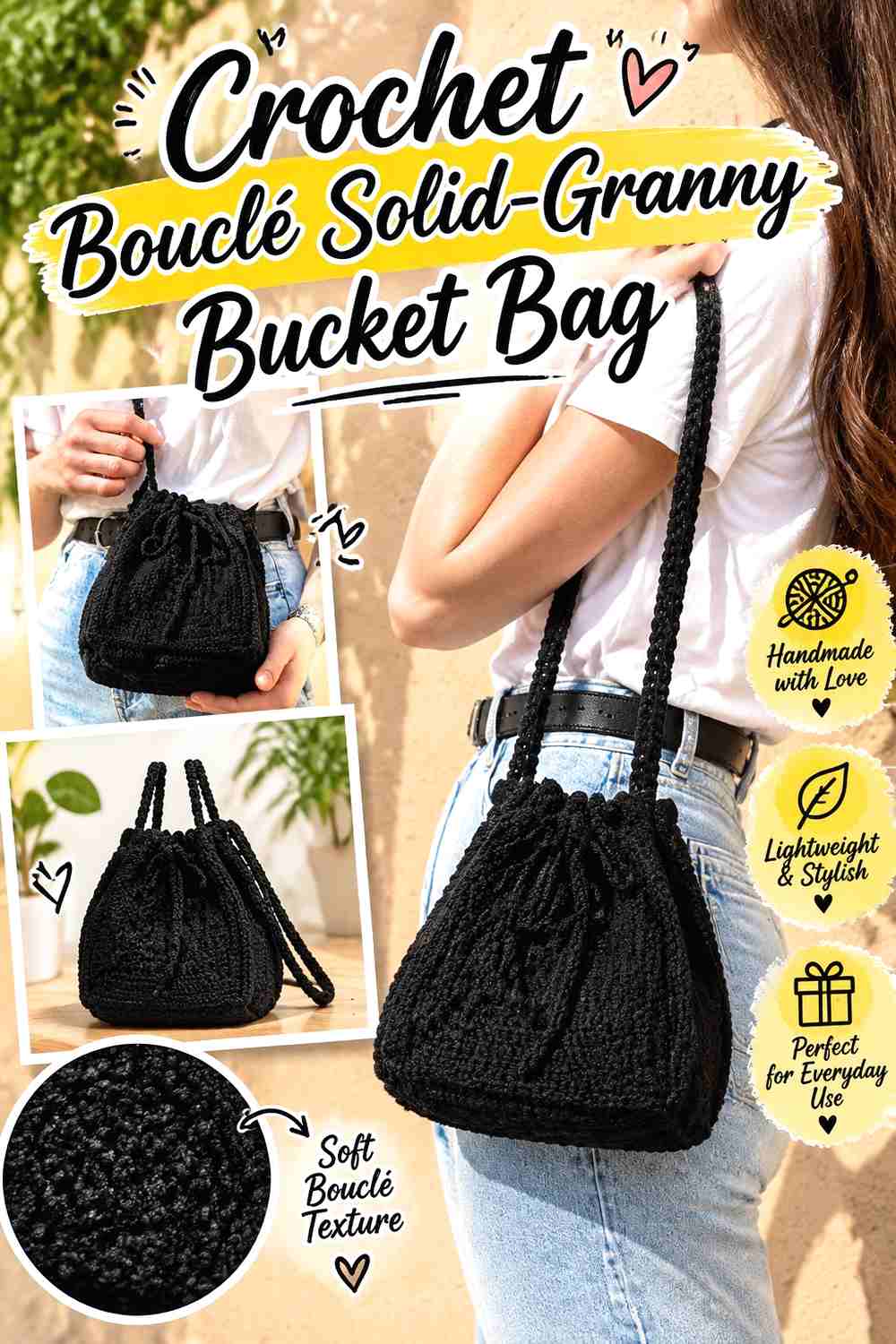
Teia Crochet builds this bucket bag from five compact solid granny-square tiles, then adds a shoulder strap and drawstring closure. Instead of building the entire body continuously from a round base, the bag gets its shape through joined geometric pieces. YouTube
Check Every Bouclé Square Before Joining
Motif construction makes size consistency especially important. Fuzzy yarn can make the edge of a square harder to read, and even small differences become noticeable when several pieces must meet.
Block or otherwise prepare the motifs consistently according to the yarn’s care requirements, then compare their dimensions before assembly. Matching the squares first is easier than trying to correct a distorted bucket after joining.
Use the Seams as Part of the Design
Bouclé can soften seam definition. If you want the five-piece geometry to remain obvious, a smooth coordinating yarn at the joins can outline each panel and prevent the texture from visually merging into one fuzzy mass.
If you prefer a cloudier, continuous surface, keeping the joins tonal makes the construction less prominent.
Creator Credit: Teia Crochet
4. Crochet Bouclé Mini Bucket Pouch
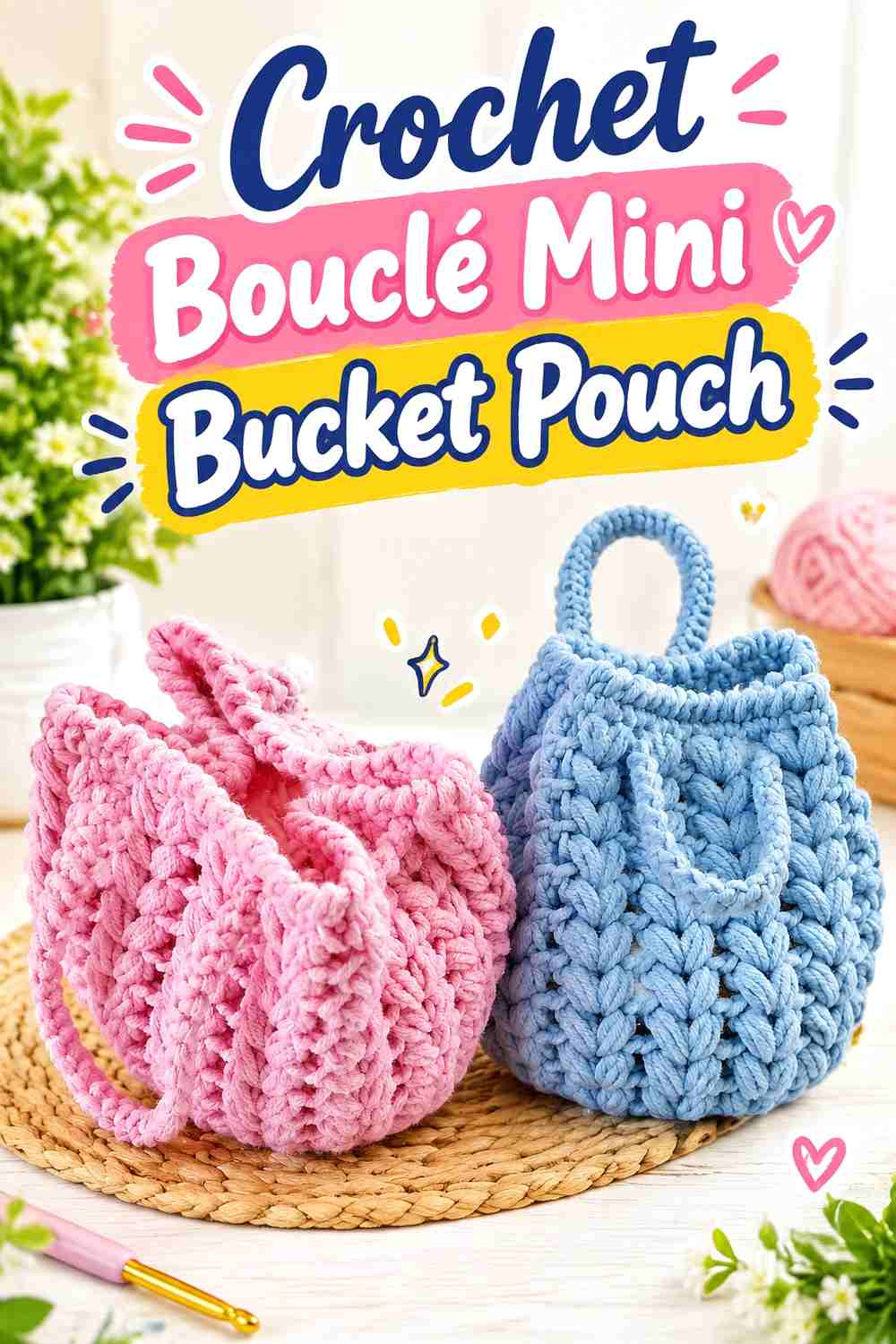
삐약콩 코바늘Ppiyakkong Crochet demonstrates a small-scale bucket bag, making this source useful for anyone who prefers a compact pouch rather than a full everyday handbag. The smaller silhouette also provides a practical way to explore the bucket shape without committing to a large textured exterior. YouTube
Small Scale Makes Bouclé Texture More Dominant
On a mini bag, the yarn surface occupies a larger share of the visual design. A highly looped bouclé can therefore make the piece look considerably fuller than a smooth-yarn version.
Before choosing an especially bulky yarn, consider whether you want a neat miniature bucket or a deliberately puffy pouch. Those are two different effects even when the underlying construction is similar.
Keep Small Openings Proportional
A thick upper edge can reduce the usable opening of a compact bag. Check the finished opening as you work rather than focusing only on exterior dimensions.
The same principle applies to a drawstring or strap: oversized cords can overwhelm a small bucket, while a slimmer contrasting cord can keep the closure visually lighter.
Creator Credit: 삐약콩 코바늘Ppiyakkong Crochet
5. Crochet Bouclé Oval-Base Chain-Strap Bucket Bag
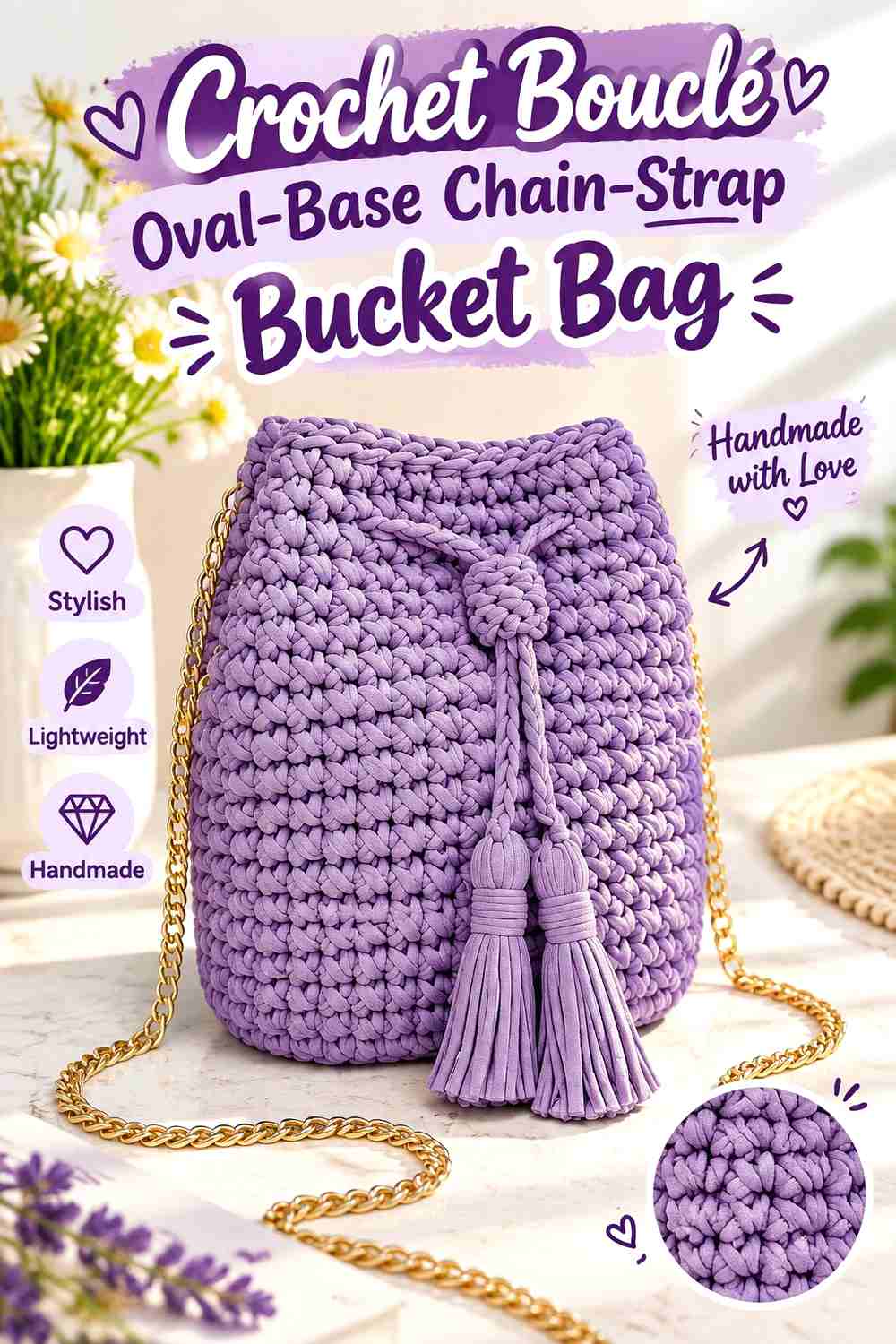
Made by Lunda’s bucket-bag tutorial uses an oval base and includes a cord closure, stopper, tassels, rings, and chain components. The oval foundation distinguishes it from the more cylindrical round-base options and gives the finished bag a wider purse-like orientation. YouTube
An Oval Base Changes More Than the Bottom Shape
A round base tends to create an evenly cylindrical bucket. An oval foundation spreads the interior across a wider profile, which may feel more familiar if you normally carry shoulder bags rather than deep cylindrical purses.
When adapting the body to bouclé, watch whether the softer fabric collapses inward along the longer sides. The original shape may need more structural support than a small round bucket.
Metallic Hardware Creates Useful Texture Contrast
Chain, rings, and a cord stopper can look particularly defined beside fuzzy crochet. Rather than trying to make every component plush, using contrasting hardware lets the bouclé remain the soft focal point.
Pay extra attention to attachment areas. The loops of bouclé should not make it difficult to identify or inspect the points carrying the strap.
Creator Credit: Made by Lunda
6. Crochet Bouclé Double-Layer Drawstring Bucket Bag
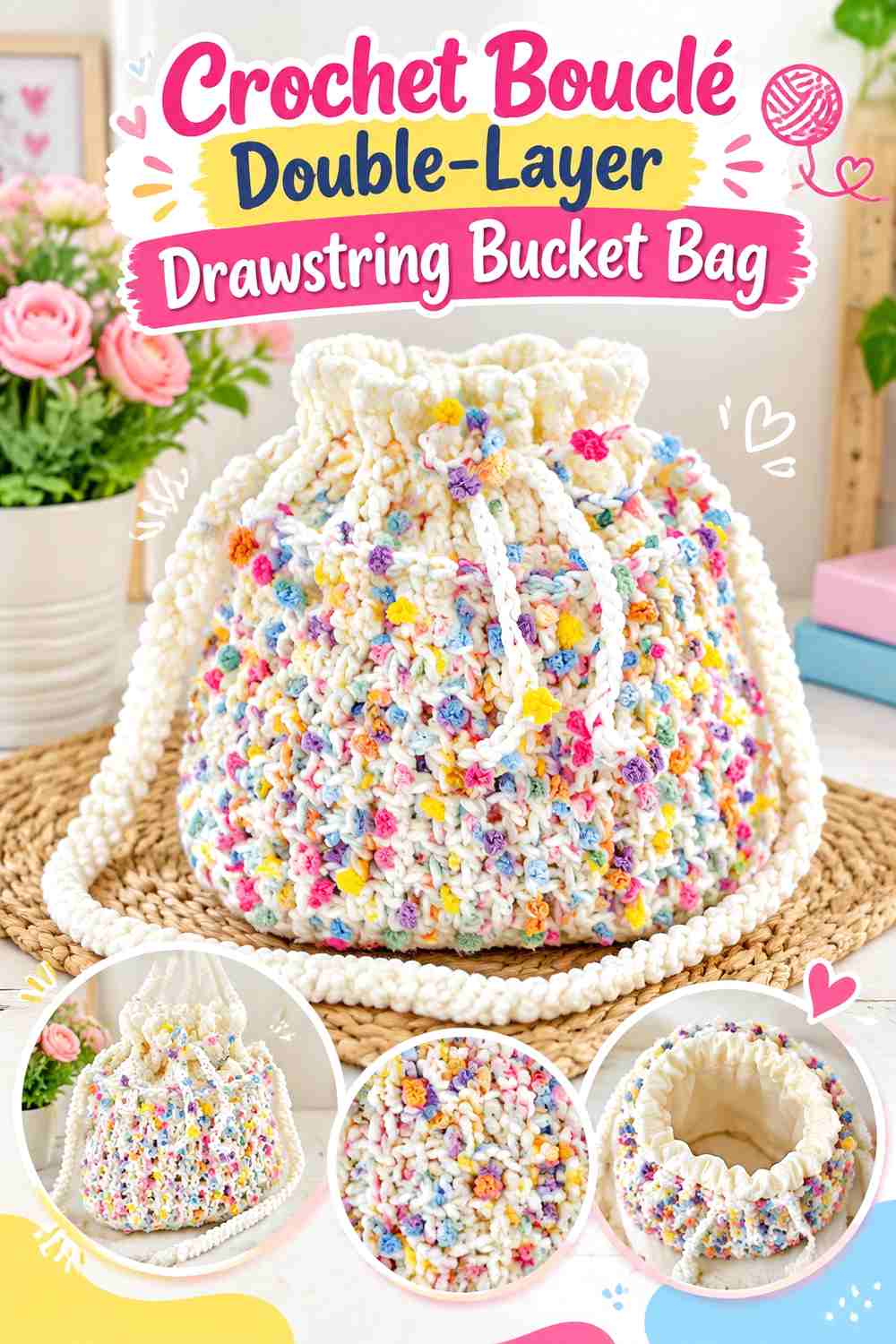
Vivi Crochet’s pouch tutorial works through a flat base, outside pouch, inside pouch, drawstring, and strap. The source itself uses a mix that includes mohair, wool, and acrylic plus an acrylic yarn, so it already demonstrates a softer fiber direction than many cord-based bucket bags. YouTube
An Inner Layer Can Keep the Exterior Soft
A double-layer concept is particularly interesting for bouclé because the two surfaces do not need to perform the same job. The exterior can provide the fuzzy appearance while an inner layer offers a smoother surface around belongings.
That separation can also keep small objects from becoming caught against prominent loops on the interior.
Treat the Strap as Its Own Material Decision
The yarn that gives a bag body a pleasant fluffy hand may not be your preferred material for a frequently handled strap. Compare stretch and abrasion at a swatch level before deciding to use the same bouclé everywhere.
A smoother strap can still coordinate through color while making the distinction intentional rather than looking like a compromise.
Creator Credit: Vivi Crochet 🌷
7. Crochet Bouclé Textured Cord Bucket Bag
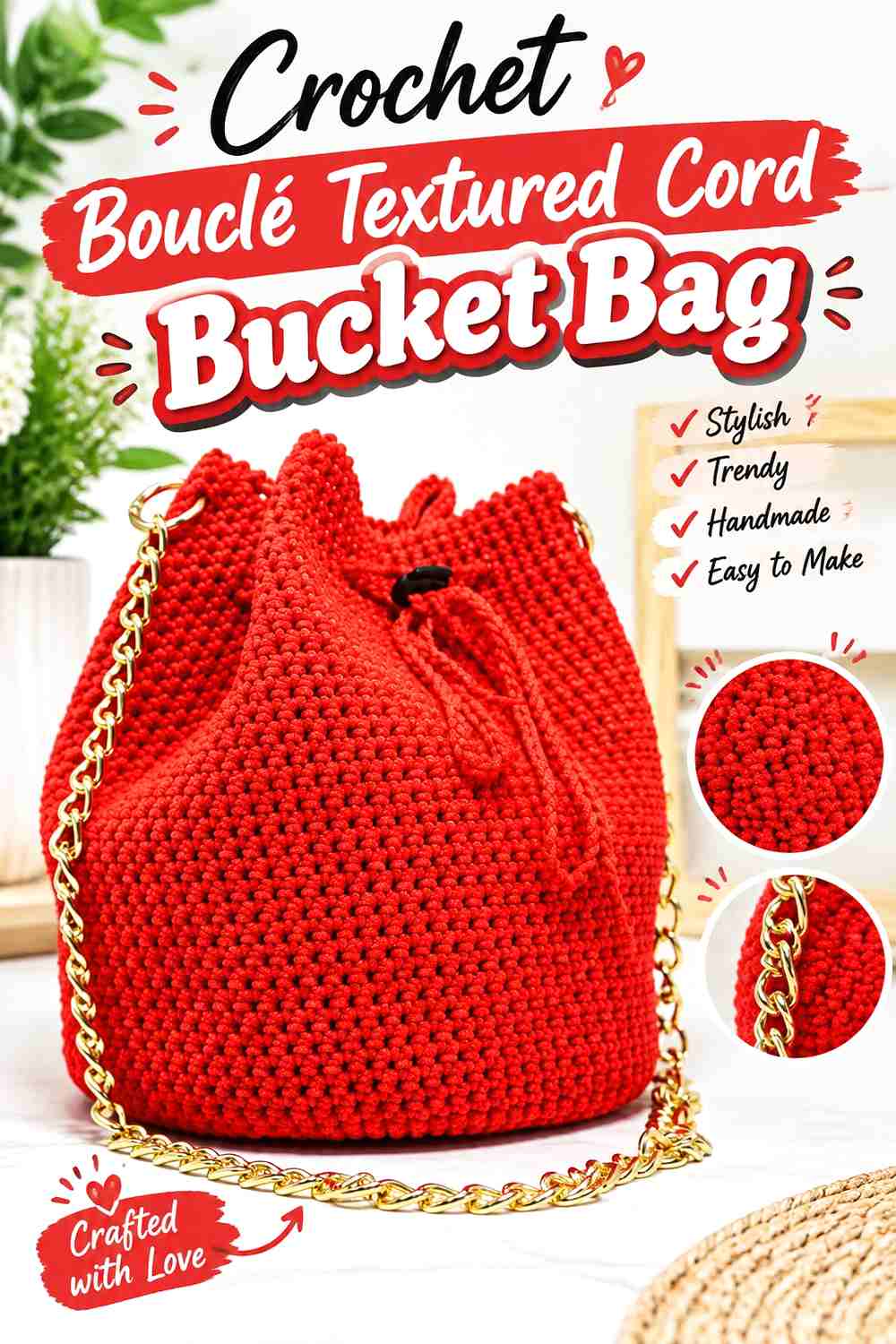
Momì’s Crochet demonstrates a bucket bag worked from cord with a round base and a distinctive single-crochet surface treatment, plus hardware for carrying the finished bag. The construction is much firmer in character than a typical soft bouclé bag, making it useful as a reference when shape retention is a priority. YouTube
Decide Whether Texture or Stitch Definition Comes First
This design’s original surface relies on the way the crochet stitches are worked. Bouclé may conceal much of that definition.
If the raised stitch effect is what attracts you to the tutorial, consider limiting bouclé to selected panels, trim, or another area rather than covering the entire design in a yarn that masks the texture.
A Firm Base Can Balance a Plush Body
The contrast between a structured bottom and a soft exterior is especially appropriate for a bucket bag. The base defines the footprint while the upper section can remain more tactile.
Before substituting materials, check that the stitches around the base remain visible enough for accurate attachment. A smooth coordinating yarn at that transition may make the construction easier to manage.
Creator Credit: Momì’s Crochet
8. Crochet Bouclé Pleated Crossbody Bucket Bag
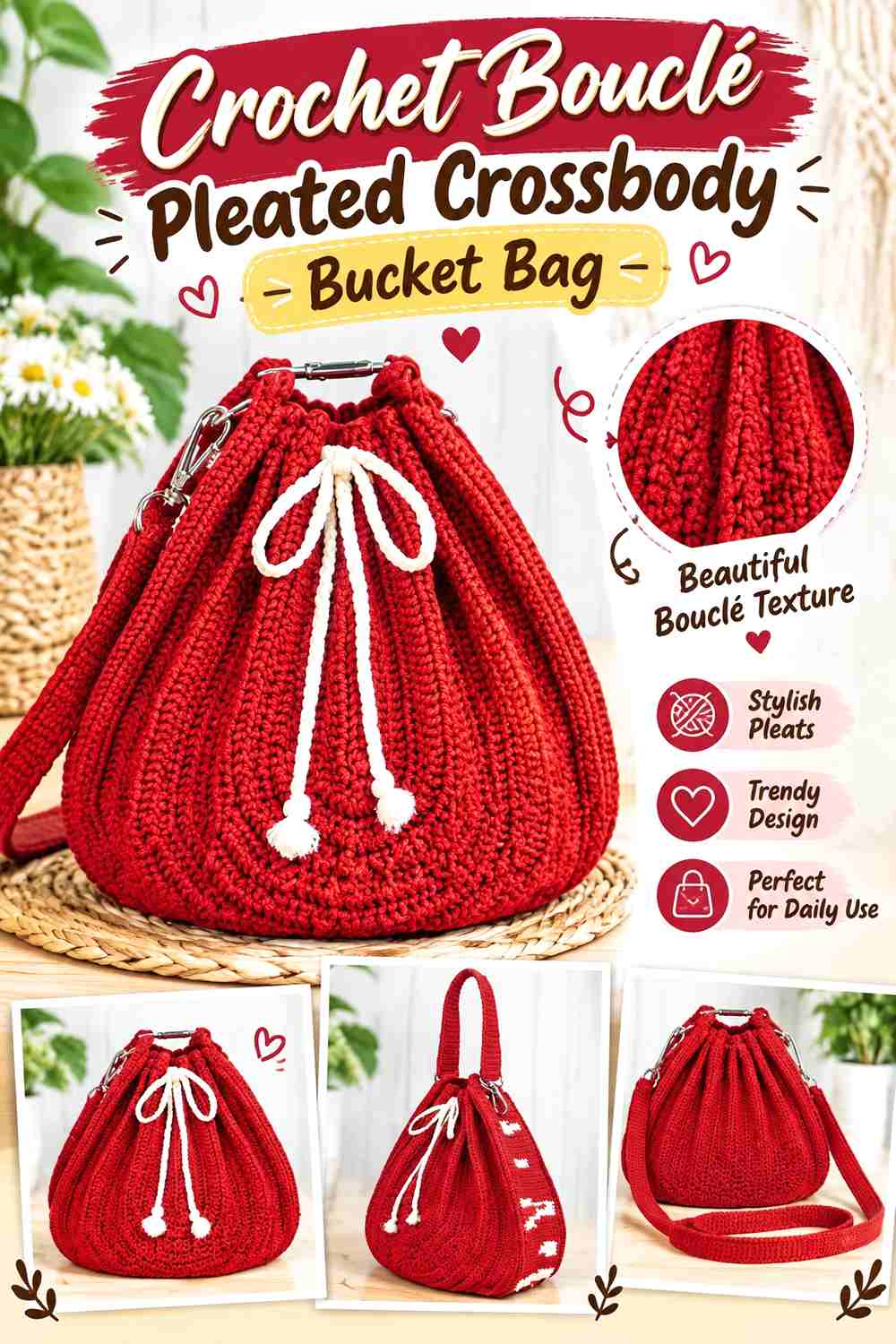
Crochet.Box’s drawstring bucket bag combines a taller bucket silhouette with a gathered upper section and carrying strap. The finished form emphasizes the pleating created as the drawstring pulls in the opening. YouTube
Bouclé Makes the Gathered Top Look Fuller
Pleats that read as crisp folds in smooth yarn can become softer waves in bouclé. That produces a different character rather than necessarily being a problem.
Choose this direction if you prefer a relaxed, cushioned opening. If defined pleating matters more, reserve bouclé for the lower body and keep the drawstring zone smoother.
Test the Crossbody Drape With Realistic Contents
Soft fabric behaves differently once weight is placed inside it. A tall bouclé bucket may lengthen or narrow visually when suspended from a crossbody strap.
Before finalizing strap placement, check how your swatch stretches and how the bag body hangs. Avoid assuming the substituted yarn will maintain the same proportions as the original polyester construction.
Creator Credit: Crochet.Box
9. Crochet Bouclé Open-Weave Lined Bucket Bag
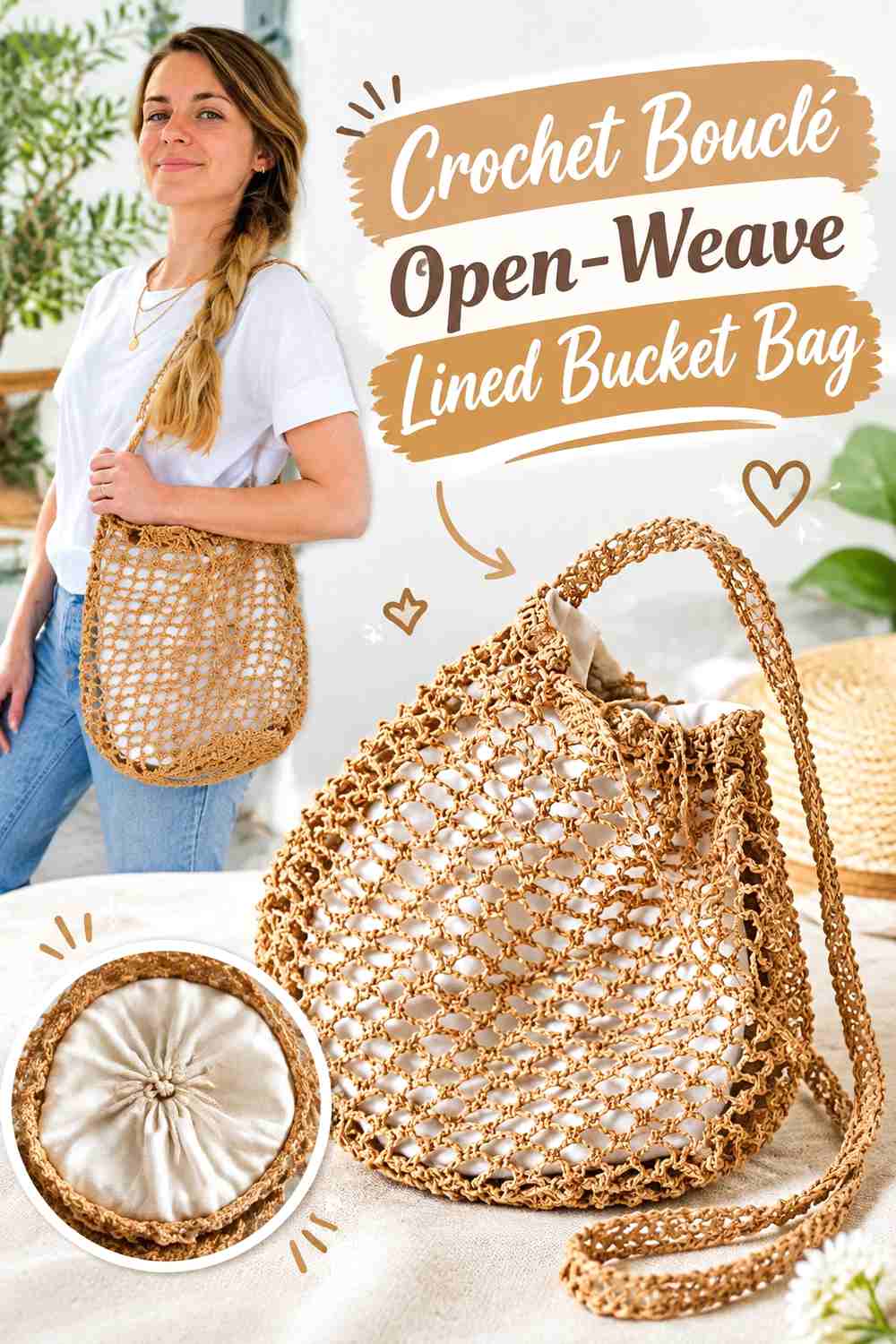
Rooney Sewing Patterns demonstrates a raffia bucket bag with an airy basket-like body, then adds lining, a drawstring, and a strap. The original material creates far more definition than bouclé, but the combination of an open outer shell and an inner fabric layer offers an interesting adaptation route. YouTube
Use Bouclé Selectively if Openwork Matters
Highly looped yarn can visually fill open spaces and make a mesh-like structure difficult to read. Before replacing raffia throughout, test whether the chosen bouclé preserves enough separation between stitches.
Another option is to keep the structural crochet smoother and introduce bouclé around the upper edge, strap details, or other controlled areas.
Lining Becomes Part of the Visual Plan
When the crochet shell contains openings, the lining color can affect the entire appearance of the bag. A low-contrast lining keeps attention on texture, while a contrasting lining emphasizes every opening.
With bouclé, lining can also give the interior a smoother surface for storing small belongings.
Creator Credit: Rooney Sewing Patterns
10. Crochet Bouclé Pastel Color-Block Bucket Bag
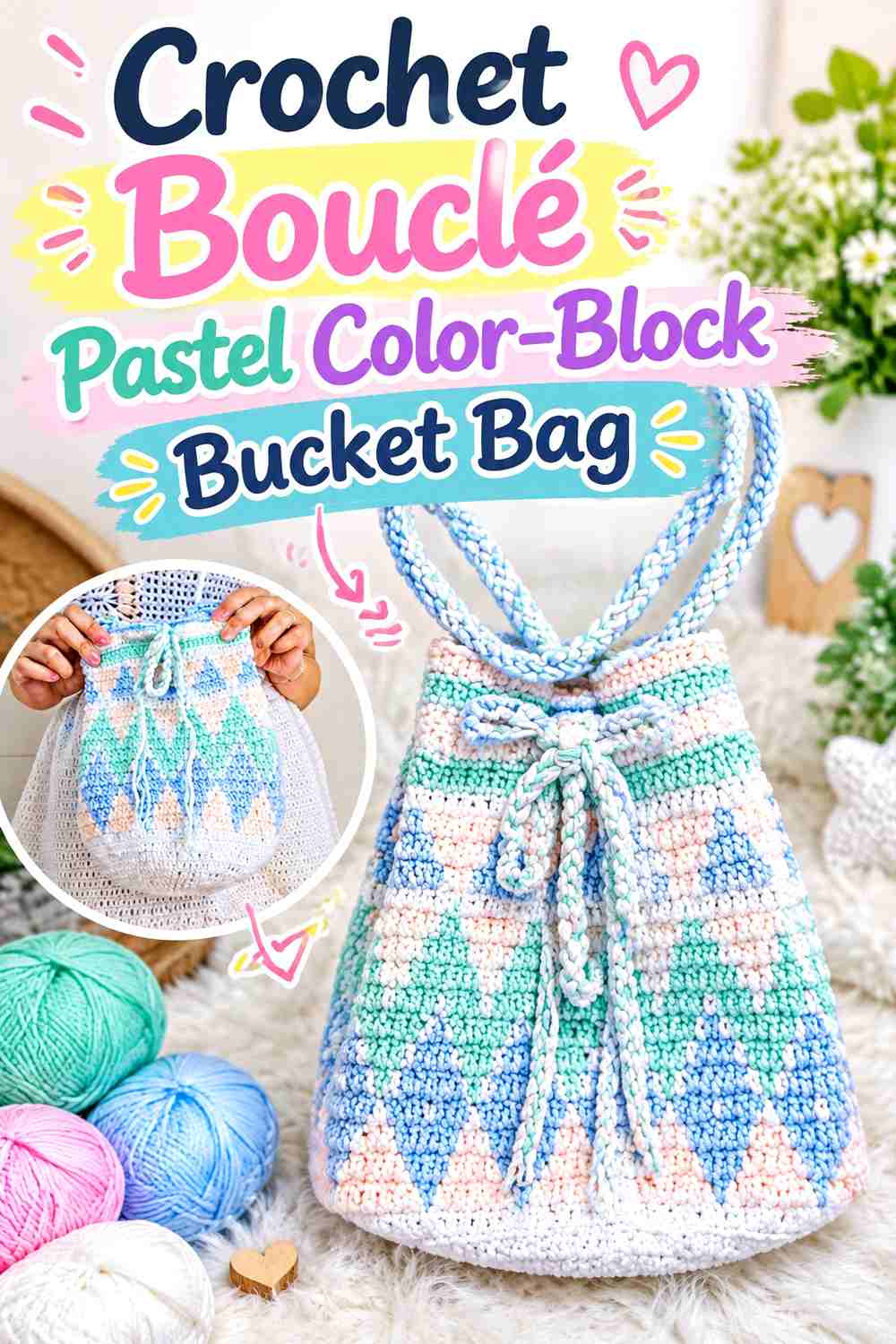
TCDDIY’s bucket-bag tutorial uses several yarn colors, making it a useful reference for a softer color-block approach rather than a single uninterrupted shade. A fall interpretation could retain that segmented look while shifting the palette and surface toward bouclé. YouTube
Color Changes Can Keep Fuzzy Yarn From Looking Flat
Bouclé already blurs fine stitch definition. Distinct blocks of color can restore visual organization without requiring complicated textured stitches.
For fall, that does not have to mean only brown or cream. Muted olive, rust, burgundy, oatmeal, charcoal, dusty blue, or other subdued combinations can create seasonal character without relying on one conventional palette.
Check Transitions Before Hiding Them in Texture
Fuzzy yarn can conceal joins, but it can also make it harder to see whether color-change areas are neat. Inspect those transitions as you work rather than assuming the bouclé surface will hide every inconsistency.
If several colors come from different bouclé lines, swatch them together first. Similar label information does not guarantee identical loft or fabric behavior.
Creator Credit: TCDDIY
11. Crochet Bouclé Zigzag Crossbody Bucket Bag
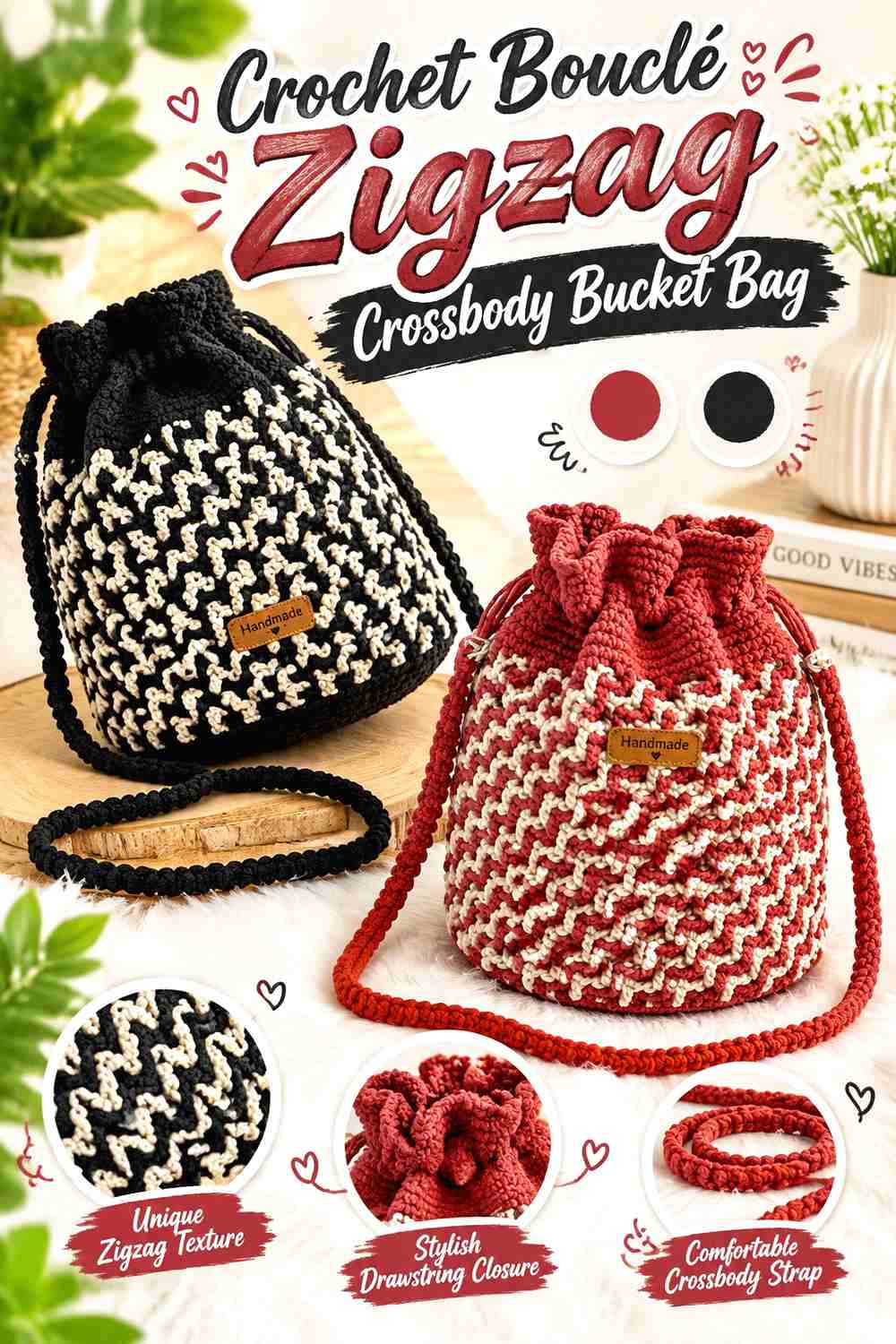
Kane Crochet’s bucket design uses a zigzag texture, cylindrical form, drawstring opening, and crossbody strap. The original tutorial works with cotton rope, so it provides a useful contrast between sharply defined construction and the softer appearance a bouclé adaptation would create. YouTube
Decide How Much of the Zigzag You Want to Preserve
A dramatic stitch pattern needs visible stitch structure. Very fuzzy bouclé may soften the zigzag until it becomes more of a subtle shadow than a graphic feature.
Swatching is especially valuable here. If the design disappears, try using bouclé in alternating sections or using a less heavily looped yarn rather than increasing stitch complexity.
A Smooth Strap Can Frame the Textured Body
The cylindrical body provides a natural place for bouclé, while a firmer strap can create cleaner lines from shoulder to bag.
That contrast can also keep the main patterned area visually separate from the carrying hardware, which is useful when the body already contains both fuzzy yarn and directional stitch texture.
Creator Credit: Kane Crochet
12. Crochet Bouclé Beaded Drawstring Bucket Bag
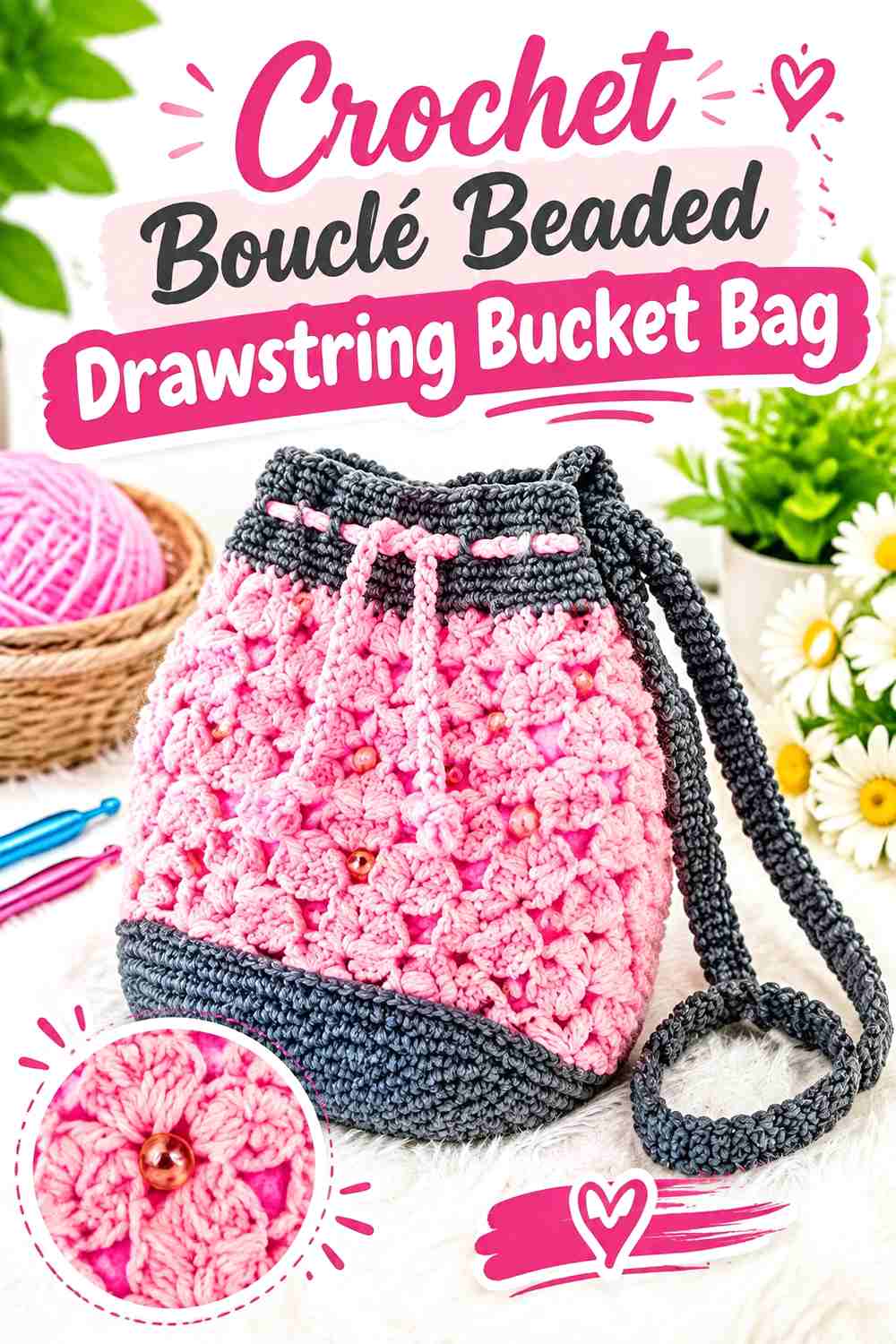
Crafty Crochet Gallery demonstrates a compact drawstring bucket bag and incorporates beads into the closure treatment. This makes it a useful choice when you want a simple soft body with a small decorative detail concentrated at the top. YouTube
Small Beads Need to Remain Visible Against the Bouclé
A deeply textured yarn can visually swallow small embellishments. If beads are part of the look you want, compare their scale with your finished bouclé fabric before attaching anything.
A smoother drawstring can give those embellishments a cleaner background while the bag itself stays plush.
Keep Embellishments Away From High-Friction Areas
A decorative closure is handled repeatedly, so placement matters more than it would on purely ornamental crochet. Make sure any chosen embellishment is securely incorporated and appropriate for the way the finished bag will be used.
For a bag intended around young children, consider whether small detachable components are suitable at all.
Creator Credit: Crafty Crochet Gallery
13. Crochet Bouclé Mesh Bucket Bag
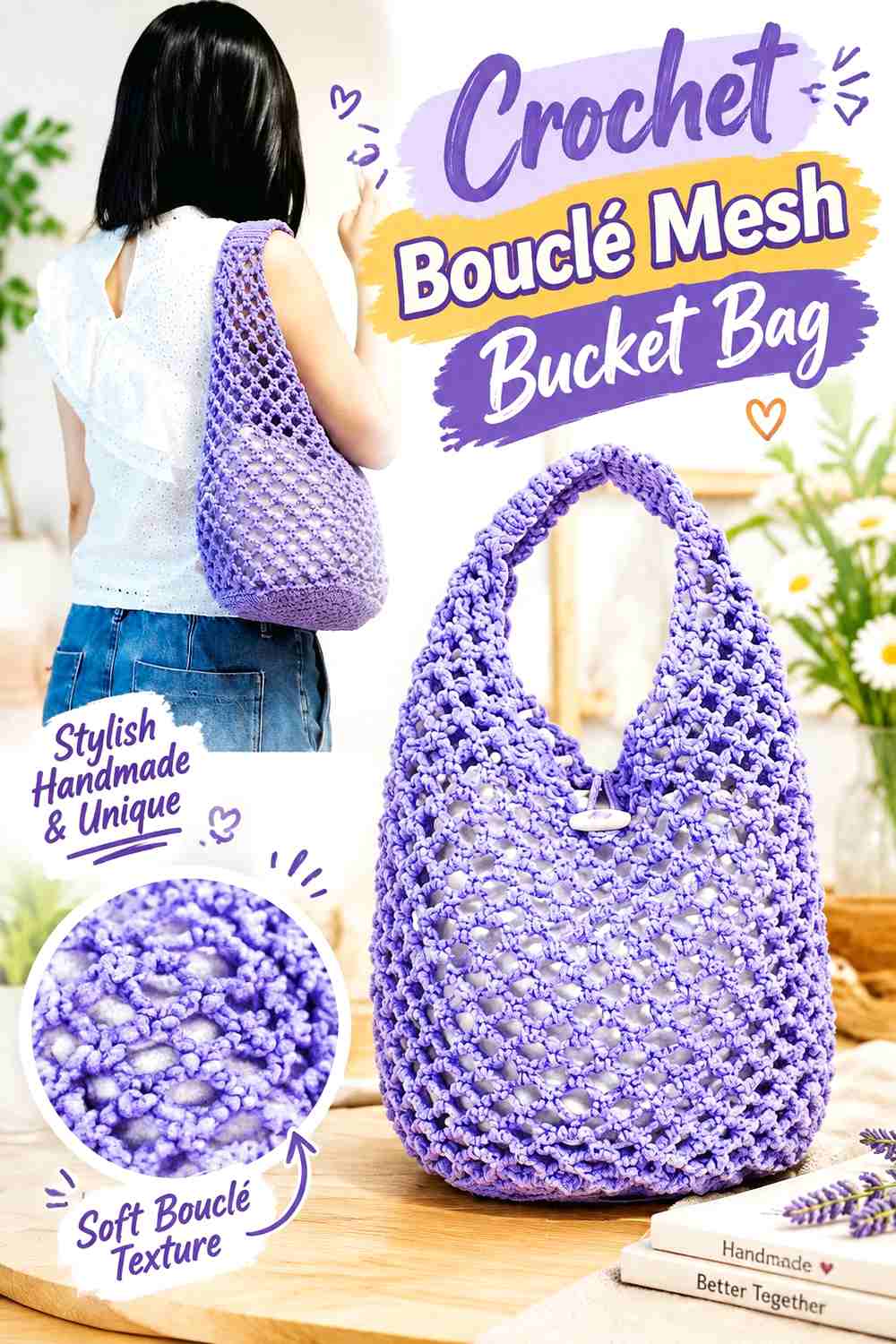
Cocona Crochet’s mesh bucket bag takes the silhouette in a much lighter direction, with an open net-like body rather than dense walls. It is one of the more experimental choices for bouclé because the yarn texture can either soften the openwork attractively or obscure it. YouTube
Openwork Needs More Swatching With Bouclé
Mesh depends on negative space. If your bouclé has long loops or a halo that spreads into those spaces, the finished fabric may no longer read as clearly open.
Make a generously sized sample rather than judging from the first few stitches. Hanging the swatch can also show how the openings change once gravity starts pulling on the fabric.
Consider a Hybrid Texture Instead of Full Bouclé
This construction offers a good opportunity to combine yarns. A smoother yarn can define the mesh while bouclé appears around the rim, base, or selected bands.
That approach preserves the airy structure and still gives the finished bucket a cozy fall surface.
Creator Credit: Cocona Crochet
14. Crochet Bouclé Puff-Flower Motif Bucket Bag
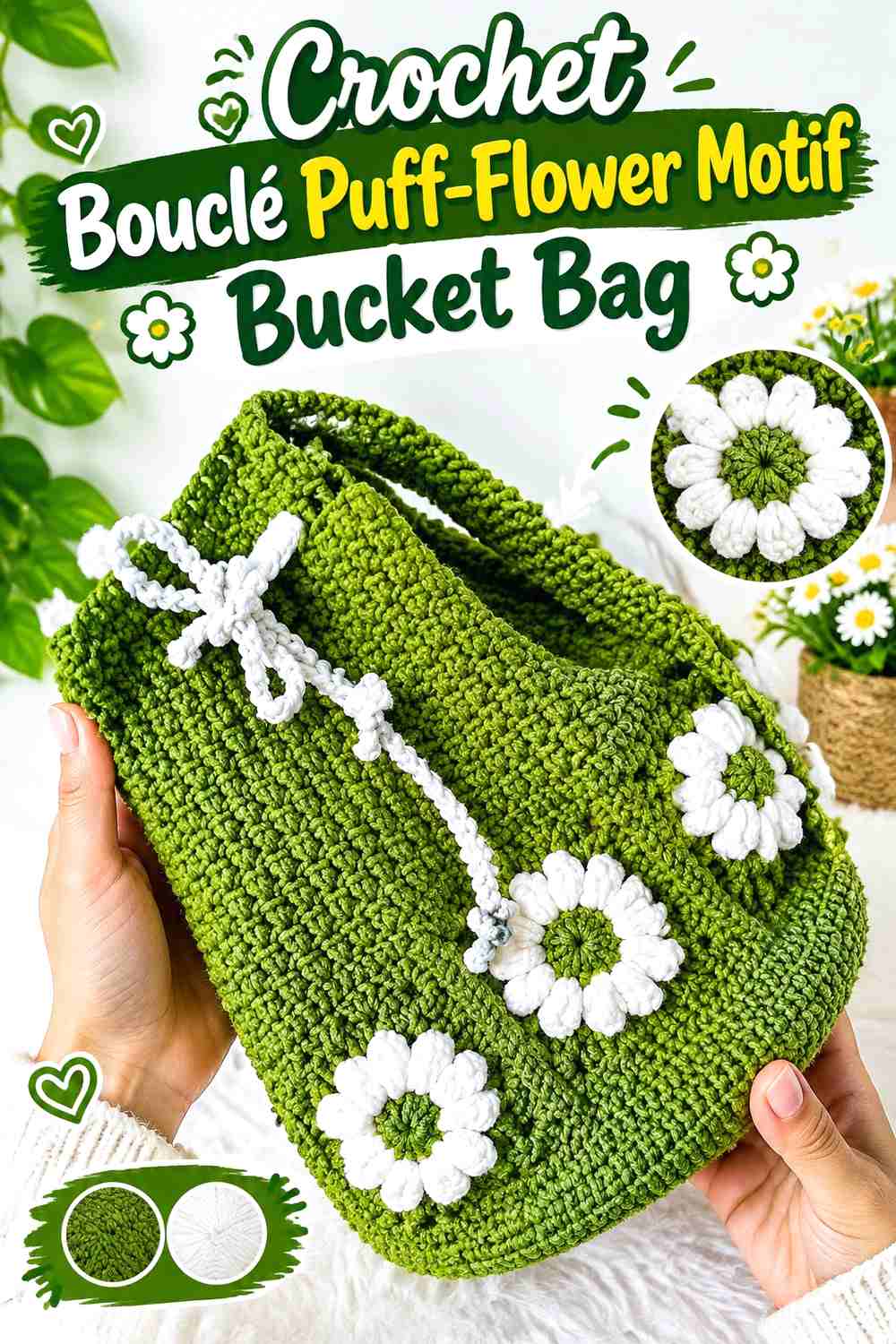
Balya Crochet builds a drawstring bucket bag from eight granny squares featuring puff-flower motifs. This gives the bag dimensional decoration before bouclé is even introduced, making it the most texture-heavy motif option in the roundup. YouTube
Puff Flowers and Bouclé Compete for Attention
Dimensional motifs rely on recognizable edges and raised sections. A heavily curled bouclé can soften those details enough that the flower becomes difficult to distinguish.
A more controlled adaptation would be to use bouclé selectively—perhaps in the flower centers, selected motif areas, or edging—while keeping the structural portions clearer.
Match Finished Motifs Before Building the Bucket
When several squares create one bag body, inconsistent dimensions can distort the final shape. Compare the prepared motifs side by side before joining them.
This becomes even more important if smooth and bouclé yarns are combined, because the two yarn types may produce noticeably different fabric behavior despite being worked into the same motif concept.
Creator Credit: Balya Crochet
15. Crochet Bouclé Floral Leather-Base Bucket Bag
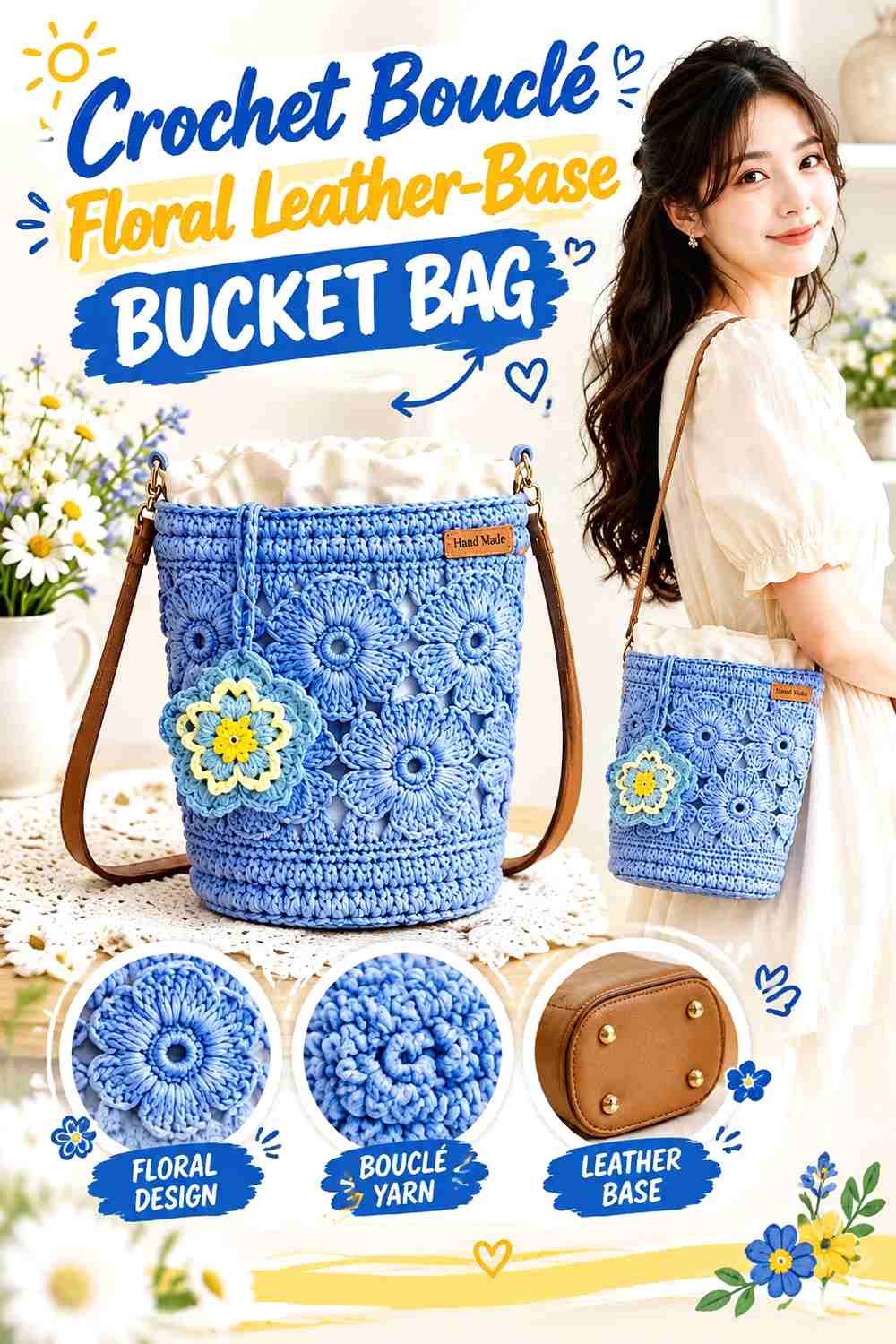
PoPo Crochet school demonstrates a floral crossbody bucket bag with a drawstring lining, flower detail, and a premade PU leather base. That combination makes this idea notably different from the fully crocheted foundations elsewhere in the collection. YouTube
A Firm Base Can Sharpen a Very Soft Bouclé Body
A premade base establishes the footprint immediately, which can be useful when the chosen yarn produces a flexible fabric. Visually, the smooth base also creates a strong counterpoint to the fuzzy upper section.
When adapting the construction, confirm that the yarn and hook combination works cleanly with the available attachment holes rather than forcing bulky loops through openings designed for another material.
Keep the Floral Detail Readable
A flower charm or floral surface already provides a focal point. If both the motif and entire body use highly textured bouclé, those details may merge.
Consider placing the strongest fuzzy texture on one area and giving the flower enough contrast in yarn, scale, or placement to remain recognizable.
Creator Credit: PoPo Crochet school
Which Bouclé Bucket Bag Construction Should You Choose?
For the most direct plush look, the fur-effect drawstring design is the natural starting point because texture is already central to its construction. The ruffle-top and mini versions also suit a deliberately soft, rounded appearance.
If shape retention matters more, look toward the oval-base, textured-cord, or leather-base constructions. Their firmer foundations give you a clearer structural contrast to a soft bouclé body.
For decorative crochet, the solid-granny, puff-flower, zigzag, and color-block options offer more visual organization. These require more careful swatching because fuzzy yarn can hide the very stitch or motif definition that makes the original design interesting.
The mesh and open-weave versions call for the most experimentation. They can produce an unusual lightweight fall bag, but they are also the designs most likely to change dramatically when a smooth source yarn is replaced with bouclé.
Conclusion
A crochet bouclé bucket bag does not need complicated construction to make an impact. The yarn itself supplies much of the visual texture, so some of the strongest fall versions may come from straightforward shapes with carefully chosen details.
Choose the fur-effect, ruffled, or mini designs if plushness is your main priority. Look at firmer bases and hardware when you want a bag that feels more structured, or explore motifs and color blocking when you want the texture broken into visible sections.
Most importantly, treat yarn substitution as part of the design process. Swatch first, check how the fabric hangs, confirm that closures and straps still function well, and use the linked creator tutorials for the exact construction of each original project.
Frequently Asked Questions
Can I replace the yarn in any crochet bucket bag tutorial with bouclé?
Not automatically. Bouclé can change gauge, stitch visibility, thickness, drape, and the way a bag holds its shape. Make a test swatch and compare its fabric with the tutorial before committing to the substitution. This is especially important when the design must fit a premade base or uses clearly defined motifs.
Is bouclé suitable for an entire crochet bucket bag?
It can be, but the result depends on the yarn and construction. A simple plush body is generally easier to interpret in bouclé than a design whose appearance relies on tiny openings or crisp stitch definition. You can also combine a bouclé body with smoother yarn for straps, drawstrings, joins, or edging.
Why are my crochet stitches difficult to see in bouclé yarn?
Loops and fuzzy fibers can cover the stitch anatomy that would normally be visible in smooth yarn. Good lighting, stitch markers, and a simple construction can make the work easier to manage. Avoid relying on appearance alone when you need to identify an important joining or attachment point.
Should a bouclé bucket bag be lined?
Not every bucket bag needs lining, but it can be useful when the crochet is open, very soft, or highly textured on the inside. A lining creates a smoother interior and can prevent small belongings from interacting directly with loose-looking loops or open spaces.
Can I make the strap from the same bouclé yarn?
Possibly, but test how the yarn behaves under tension first. A strap receives different wear and loading than the body of a bag. If the bouclé stretches more than you want or loses definition with handling, a smoother crochet strap, reinforcement, chain, or another compatible carrying option may make more sense.
How do I keep a bouclé bucket bag from looking shapeless?
Start with the construction rather than trying to correct the shape at the end. A firm base, denser supporting fabric, lining, or strategically smoother structural sections can help define the bucket silhouette. The appropriate solution depends on the tutorial and yarn rather than one universal method.
Which of these ideas works best when I want the bouclé texture to stand out?
The fur-effect drawstring, ruffle-top, mini bucket, and simple color-block designs give the yarn plenty of visual space. Motif, mesh, puff-flower, and zigzag designs place more competition around the texture, so they are better choices when you want bouclé to participate in a more detailed surface rather than dominate it.