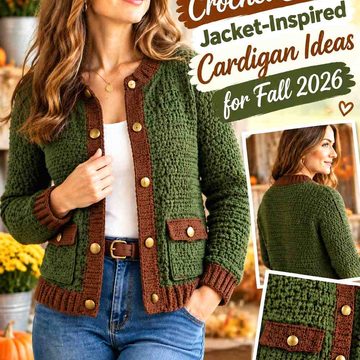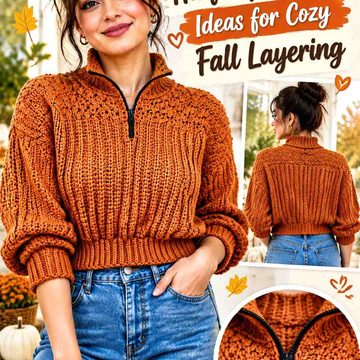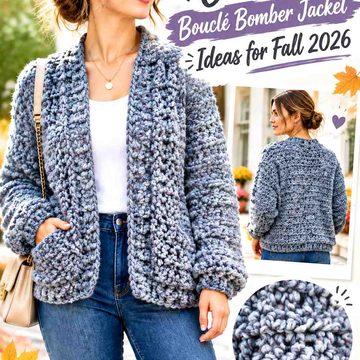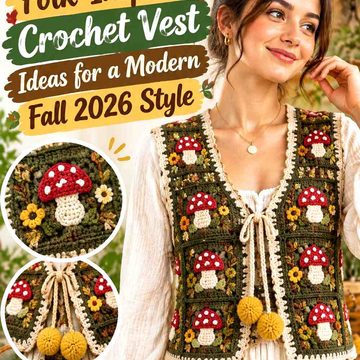
A crochet teddy texture vest can bring the soft, slightly fuzzy look of teddy jackets and sherpa-inspired layers into a garment that is lighter and easier to combine with fall outfits. The effect can come from bouclé or brushed yarn, super-bulky fiber, a soft halo, raised crochet stitches, or a combination of texture and relaxed shaping.
Not every tutorial below was originally designed with teddy-style yarn. That matters. Several are included because their construction gives you a useful vest shape that could be adapted after careful swatching, while others already rely on bulky yarn or pronounced surface texture. A very fuzzy yarn can hide cables, ribbing, colorwork, and shaping, so substituting it is not as simple as changing color.
The collection includes crewneck, V-neck, checkerboard, hooded, collared, oversized, cropped, long open-front, floral, cable, highly textured, chunky, and button-front designs. That range makes it easier to choose the kind of teddy effect you want before investing in yarn.
Quick List
- Crochet Ribbed Teddy Crewneck Vest
- Crochet Plush V-Neck Teddy Vest
- Crochet Fluffy Checkerboard Teddy Vest
- Crochet Super-Bulky Hooded Teddy Vest
- Crochet Soft-Collar Teddy Sweater Vest
- Crochet Oversized Teddy V-Neck Vest
- Crochet High-Neck Cropped Teddy Vest
- Crochet Long Open Teddy Layering Vest
- Crochet Raised-Flower Teddy Texture Vest
- Crochet Cable-Texture Teddy Vest
- Crochet All-Over Textured Teddy Vest
- Crochet Chunky Boxy Teddy Vest
- Crochet Cropped Checkered Teddy Vest
- Crochet Scalloped Button-Front Teddy Vest
What Actually Creates a Teddy Texture in Crochet?
The most literal route is a yarn with a soft, fuzzy, looped, brushed, or bouclé-like surface. Instead of displaying every stitch sharply, these fibers soften the boundaries between stitches and create the plush pile associated with teddy outerwear.
You can also suggest the look without using extremely fuzzy yarn. Super-bulky fabric, raised stitches, dense ribbing, bobbles, and other dimensional surfaces can create a substantial fall texture while leaving the crochet structure easier to see.
That distinction becomes especially important when a vest contains decorative stitches. A plain V-neck panel may tolerate a strong yarn halo well. A cable or small checkerboard pattern needs clearer stitch definition. For those designs, a moderately nubby yarn may be more successful than a long-haired novelty fiber.
Swatch Before Replacing the Tutorial Yarn
Changing to a teddy-style yarn can affect more than gauge. Plush fibers can make fabric thicker, reduce visible stitch definition, alter drape, and make it harder to see exactly where the hook should enter.
Make a generous sample using the intended stitch pattern rather than relying only on the yarn label. Measure it after the same finishing treatment you plan to use on the vest.
For a wearable, also handle the swatch. Fold it, stretch it gently, place it over a shirt, and see whether it feels flexible enough around the shoulders and armholes. A beautiful plush swatch that is too stiff may be better suited to a boxy vest than a closely shaped one.
Fit and Finishing Matter More With Plush Fabric
Teddy texture adds visual and sometimes physical bulk. A vest that already has generous positive ease can become much more substantial after a thick yarn substitution.
Pay particular attention to shoulder width, armhole depth, neckline size, and hem length. Think about the intended underlayer as well. A teddy vest worn over a thin fitted top needs different room from one intended to sit over a sweatshirt or heavy button-down.
Finishing may also require a different strategy. Ribbing, scallops, collars, button bands, and seams need to remain visible and stable. In some designs, using a smoother coordinating yarn for the edges can preserve definition without removing the plush effect from the main body.
1. Crochet Ribbed Teddy Crewneck Vest
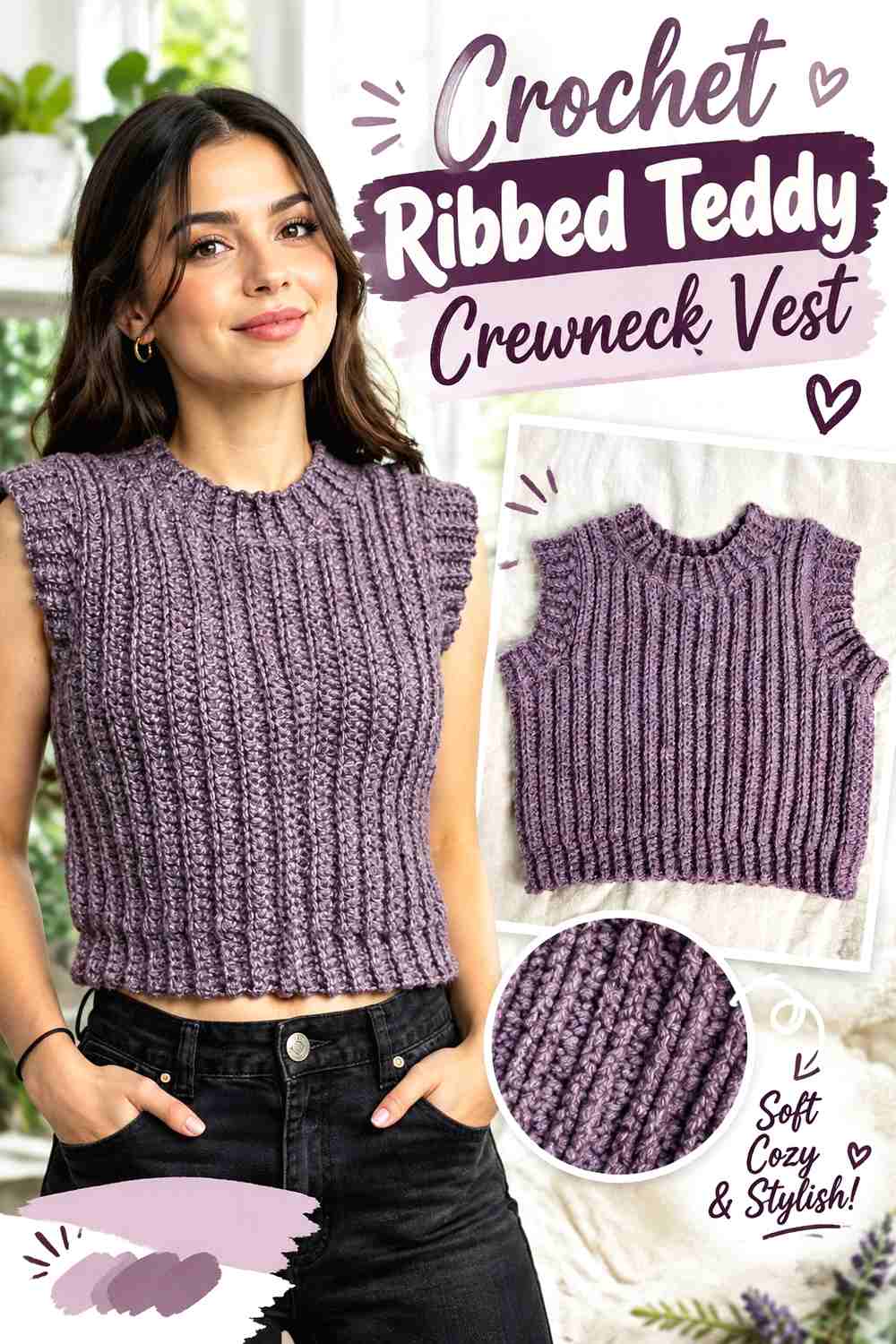
A ribbed crewneck is a strong starting point for a teddy-style vest because the silhouette is simple and the surface already has vertical texture. VivCrochets’ vest uses a ribbed crewneck construction and works with yarn held together to produce a substantial fabric, making it a useful reference when you want the texture to carry most of the visual interest.
For fall, this type of vest can work especially well in oatmeal, mushroom, camel, charcoal, cream, or muted olive because the straightforward shape lets the yarn surface remain the focal point.
Ribbing Can Disappear Under a Heavy Halo
There is a limit to how fuzzy the yarn can become before ribbing loses its definition. If the ridges are the reason you chose this vest, test them with your intended yarn before making the full garment.
A short, nubby surface can preserve more shadow between the ribs than a long eyelash-style halo. Another option is to reserve the fuzziest yarn for the body and use a more defined coordinating yarn where the ribbed effect matters most.
Give the Crewneck Enough Layering Room
A crewneck places crochet fabric close to the base of the neck, which becomes more noticeable when the yarn itself is thick.
Compare the finished opening with the shirts you plan to wear underneath. A neat neckline over a thin long-sleeve tee may feel crowded over a collared shirt or heavier fall layer.
Creator Credit: VivCrochets
2. Crochet Plush V-Neck Teddy Vest
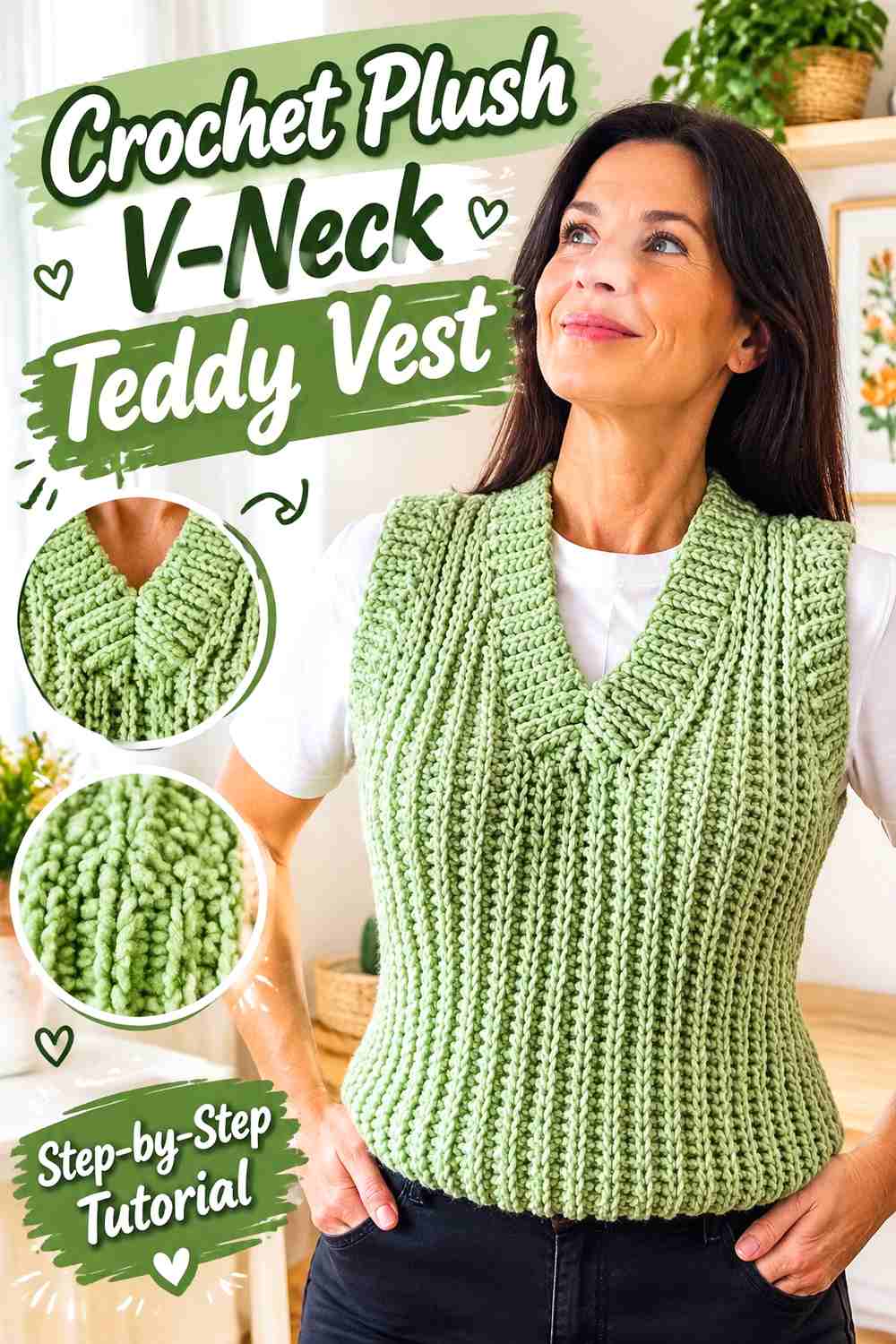
A V-neck introduces open space through the center front, which can keep a plush vest from looking visually heavy. By StellaM’s tutorial provides a recognizable V-neck sweater-vest construction that can serve as a cleaner base for a soft or nubby fall texture.
This direction suits someone who wants the teddy effect but still wants a shirt collar, turtleneck, or contrasting base layer to remain visible.
A V-Neck Breaks Up a Dense Teddy Surface
A high crewneck can create one uninterrupted area of plush fabric from hem to neckline. The V opening changes that proportion and introduces a strong vertical line.
That can be useful with thicker yarn because it keeps the center of the outfit visually open. Check how deep the original neckline sits before modifying anything, since the shape affects both styling and shoulder fit.
Treat Plush Yarn as a Fit Change
If you replace the original yarn with something thicker or fuzzier, do not assume that matching the nominal yarn weight will reproduce the same garment.
Compare gauge, fabric thickness, and drape. A teddy yarn can create a wider or stiffer panel even when the yarn label seems compatible, so use the tutorial’s sizing information together with your own finished swatch.
Creator Credit: By StellaM
3. Crochet Fluffy Checkerboard Teddy Vest
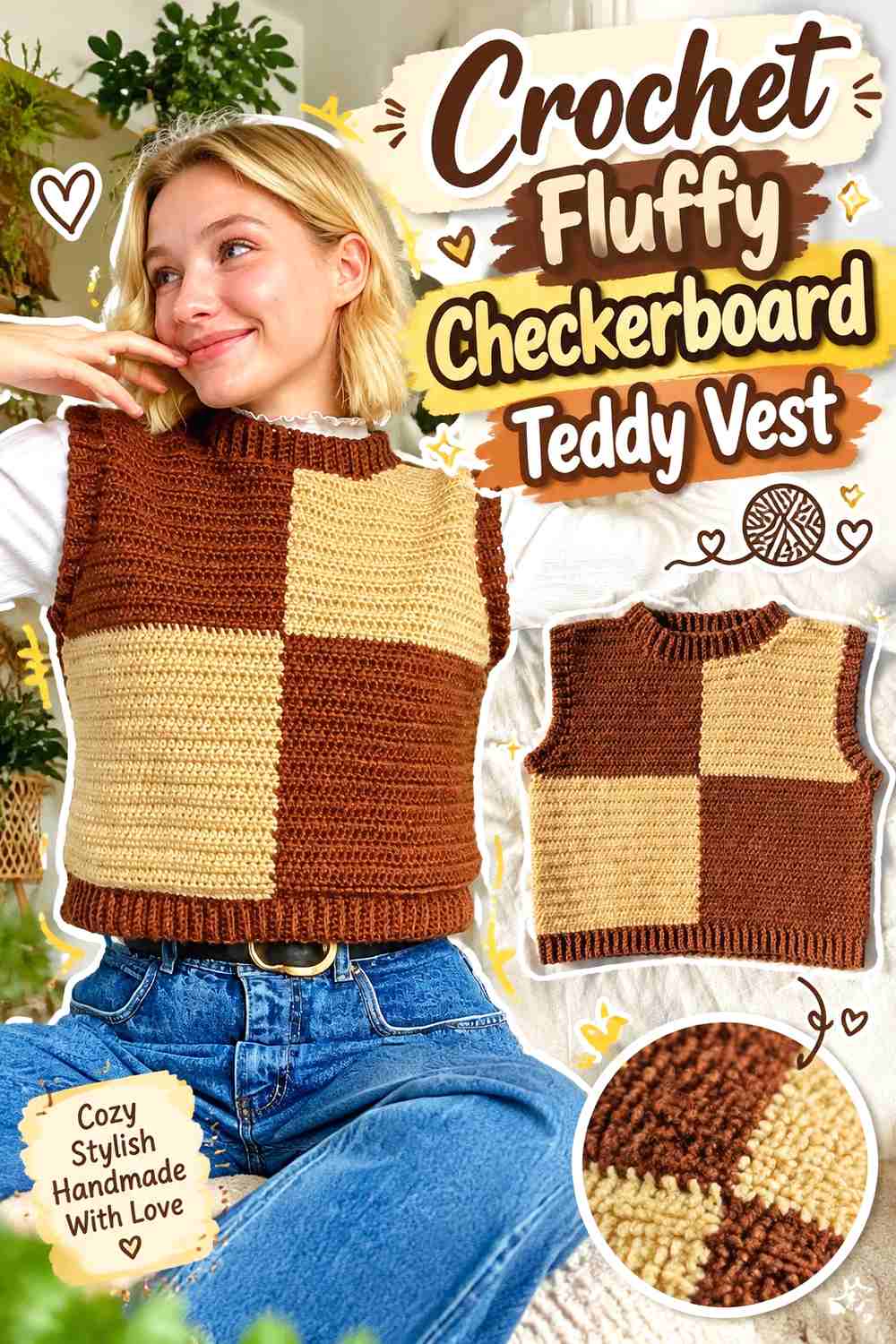
Checkerboard gives a teddy vest a graphic direction rather than relying on texture alone. HayHay Crochet’s checkerboard sweater vest is especially relevant because the designer’s accompanying pattern information also discusses a lighter fluffy-yarn version of the design.
For fall 2026, the concept does not have to stay black and white. Cocoa and cream, moss and oatmeal, burgundy and blush, or charcoal and soft gray can keep the checks visible while shifting the mood toward cooler weather.
Checks Need Enough Contrast to Survive the Halo
Fuzzy yarn softens the boundary between adjacent colors. Two shades that look clearly different as skeins may appear much closer once their fibers blend along the edges.
Make a small two-color sample and view it from several feet away. If the blocks merge visually, increase the value contrast rather than depending on subtle shade differences.
Keep Texture From Competing With the Grid
The checker pattern already gives the vest a strong surface design. Heavy ribbing, extra bobbles, or additional decorative borders may make the finished piece unnecessarily busy.
If your yarn supplies plenty of teddy texture, consider letting the color blocks do the rest of the work. The cleaner the outline, the easier it is to read both the checks and the plush surface.
Creator Credit: HayHay Crochet
4. Crochet Super-Bulky Hooded Teddy Vest
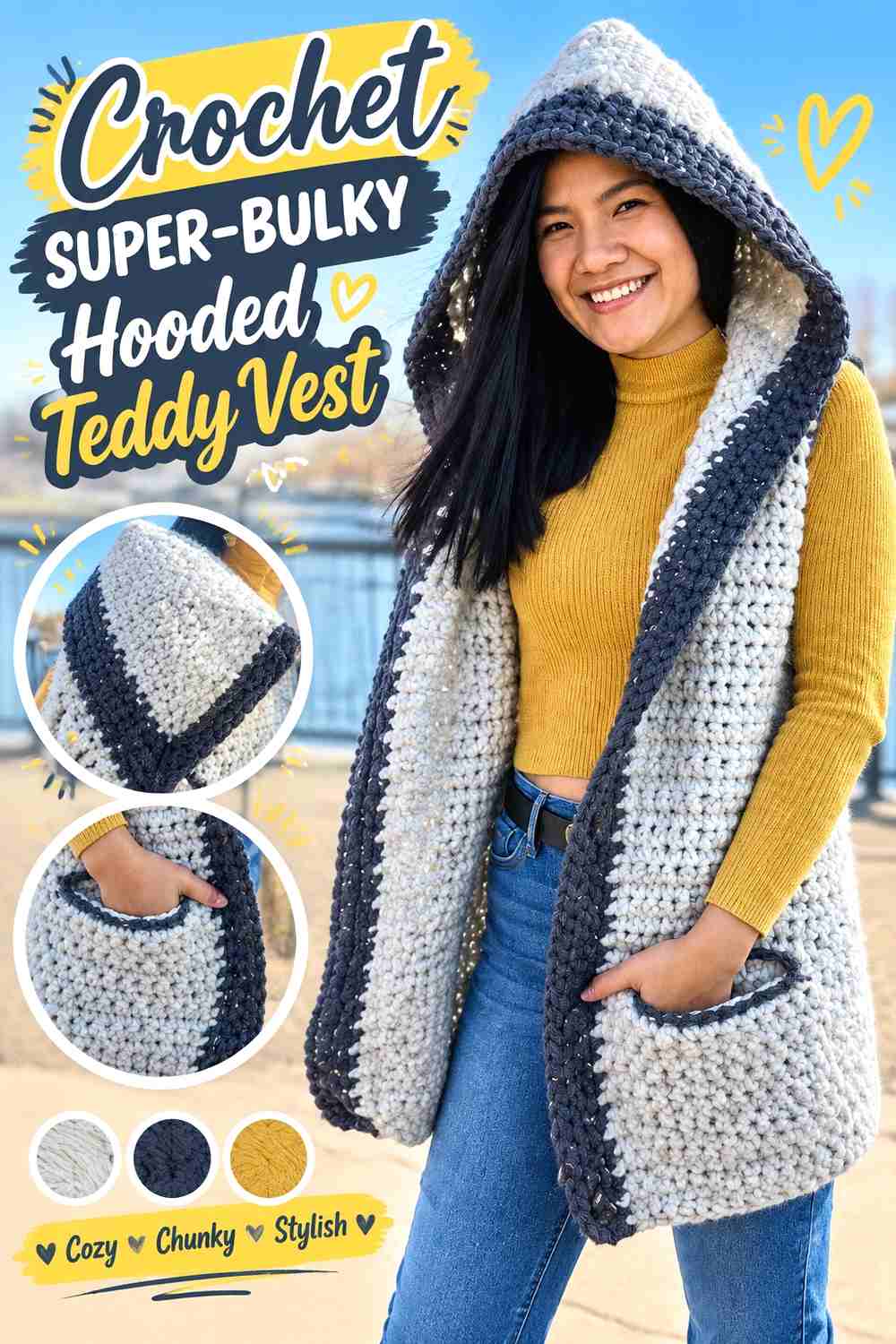
For a vest that feels closer to sleeveless outerwear, a hooded shape is one of the most practical teddy-texture directions. KnitcroAddict’s design uses super-bulky yarn and includes a hood, pockets, front edging, and optional buttons, so the original project is already built around a more substantial fabric.
That makes this option different from simply putting fuzzy yarn into a lightweight sweater-vest pattern. The silhouette has enough visual scale to accommodate a thicker fall surface.
This Shape Can Carry More Fabric
The longer body, open front, and hood distribute visual bulk over a larger garment. That can make a substantial yarn look more intentional than it would on a tiny fitted vest.
Even so, do not automatically increase yarn thickness beyond what the tutorial uses. An already-bulky garment can become stiff or excessively heavy if the substitute yarn creates a much denser fabric.
Hood, Pockets, and Buttons Need Separate Checks
The body is only one part of the fit. A plush hood can become heavier than expected, while thick pocket edges can add volume to the lower front.
Buttons also need to cooperate with the finished edge. If the yarn obscures openings or makes the front very thick, inspect the closure before attaching hardware permanently.
Creator Credit: KnitcroAddict
5. Crochet Soft-Collar Teddy Sweater Vest
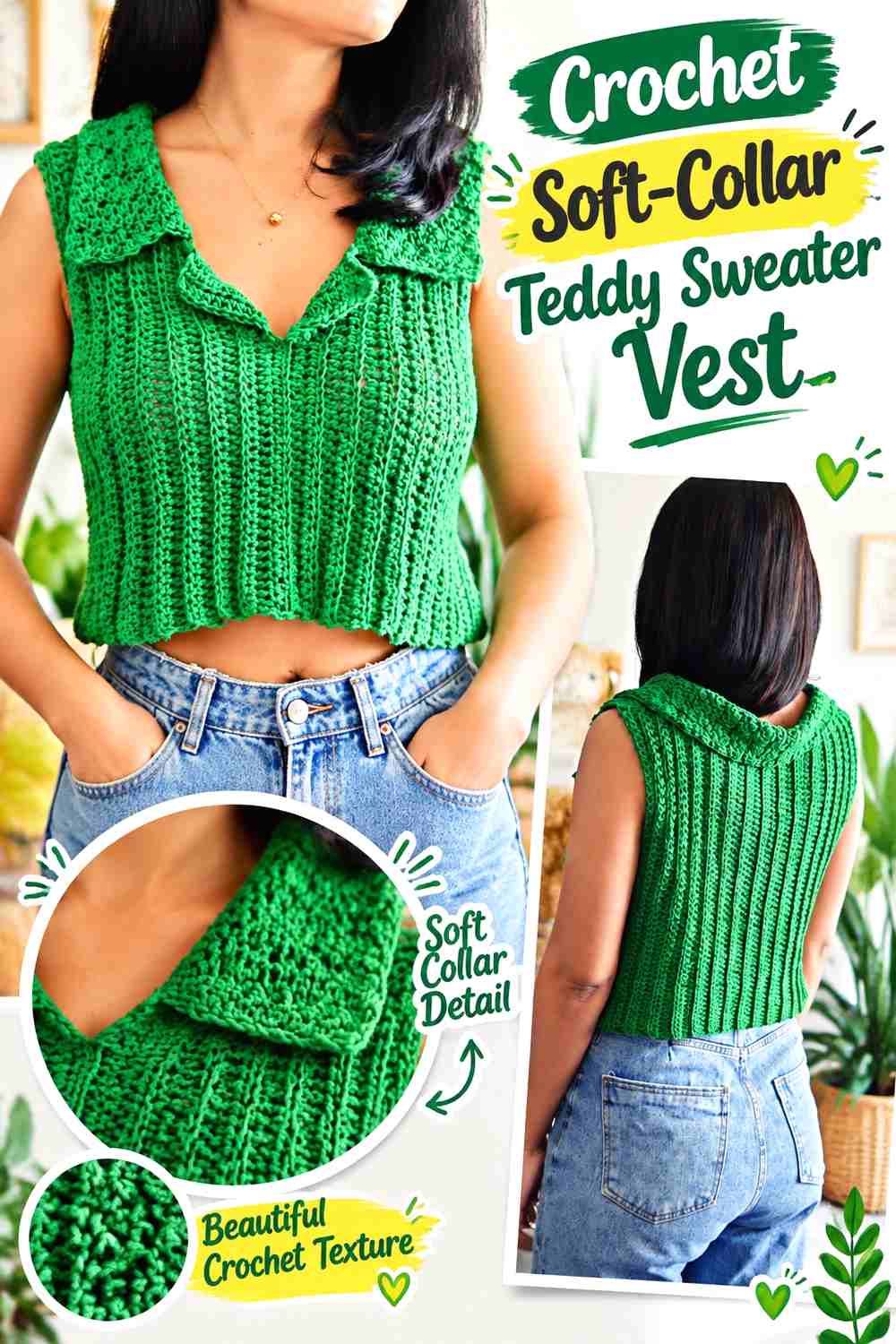
A collar can make a fuzzy vest feel more tailored without removing its cozy character. The jennyandteddy crochet. design provides a collared sweater-vest construction, giving this idea a more defined neckline than the crewneck and V-neck options. The associated pattern information describes the collar as a separate part that is attached to the vest.
That separate finishing stage is useful to think about when adapting the vest to a highly textured yarn.
The Collar Still Needs a Recognizable Edge
A collar depends on its outline. If the yarn halo is so long that the fold and outer edge disappear, the feature that distinguishes this vest can become difficult to see.
Swatch the collar texture before committing the entire garment to an extremely fuzzy fiber. A softly brushed yarn can produce the teddy effect while preserving more structure than a very shaggy option.
Mixing Textures Can Protect the Neckline
The collar does not necessarily have to use exactly the same surface as the body when you are creating an independent adaptation.
A smoother coordinating yarn around the neckline can make the shape clearer and may feel more comfortable against the neck. Before mixing yarns, confirm that their fabric thicknesses and care requirements make sense together.
Creator Credit: jennyandteddy crochet.
6. Crochet Oversized Teddy V-Neck Vest
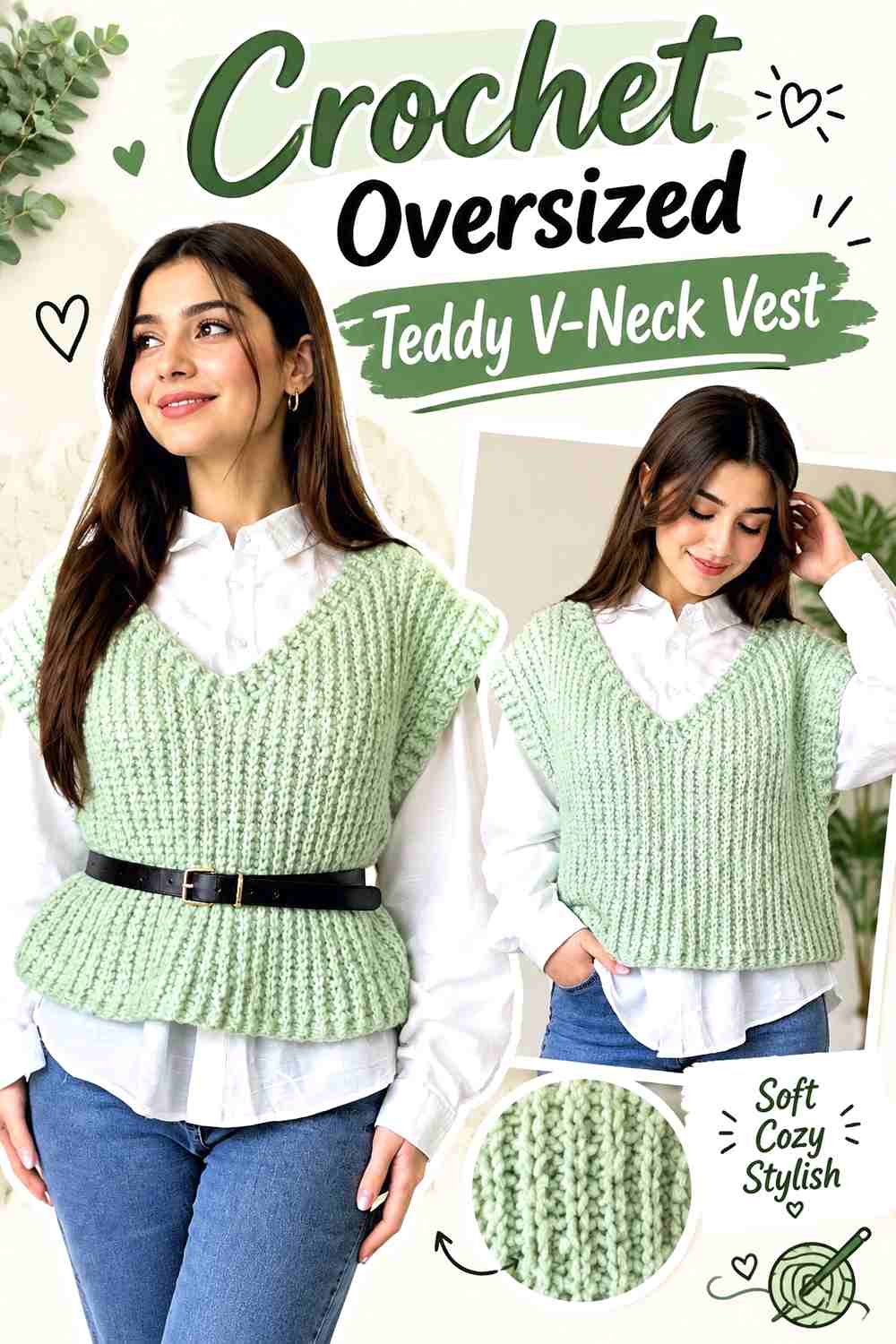
An oversized V-neck offers more room for layering than a close-fitting sweater vest. Alona crochets’ tutorial uses separate front and back sections and a relaxed V-neck silhouette, giving you a useful construction reference when the goal is a roomy teddy layer rather than a fitted top.
This is the kind of vest that can sit over a crisp shirt, fitted turtleneck, or other light fall base without requiring sleeves of its own.
Oversized Does Not Mean Unlimited Ease
Plush yarn already makes a garment look larger. Adding considerable garment width on top of that can move the shoulder line farther outward than expected.
Compare the intended width with a loose vest or sweater you already own. Think about whether you want deliberate slouch or simply enough room for a layer underneath.
Watch the Shoulder Line With Thick Yarn
A soft oversized shoulder can look relaxed in ordinary yarn but much broader in teddy-textured fabric.
Before finishing the sides, drape the panels over the intended underlayer and assess where the fabric sits relative to the natural shoulder. The visual effect matters as much as the numerical measurement.
Creator Credit: Alona crochets
7. Crochet High-Neck Cropped Teddy Vest
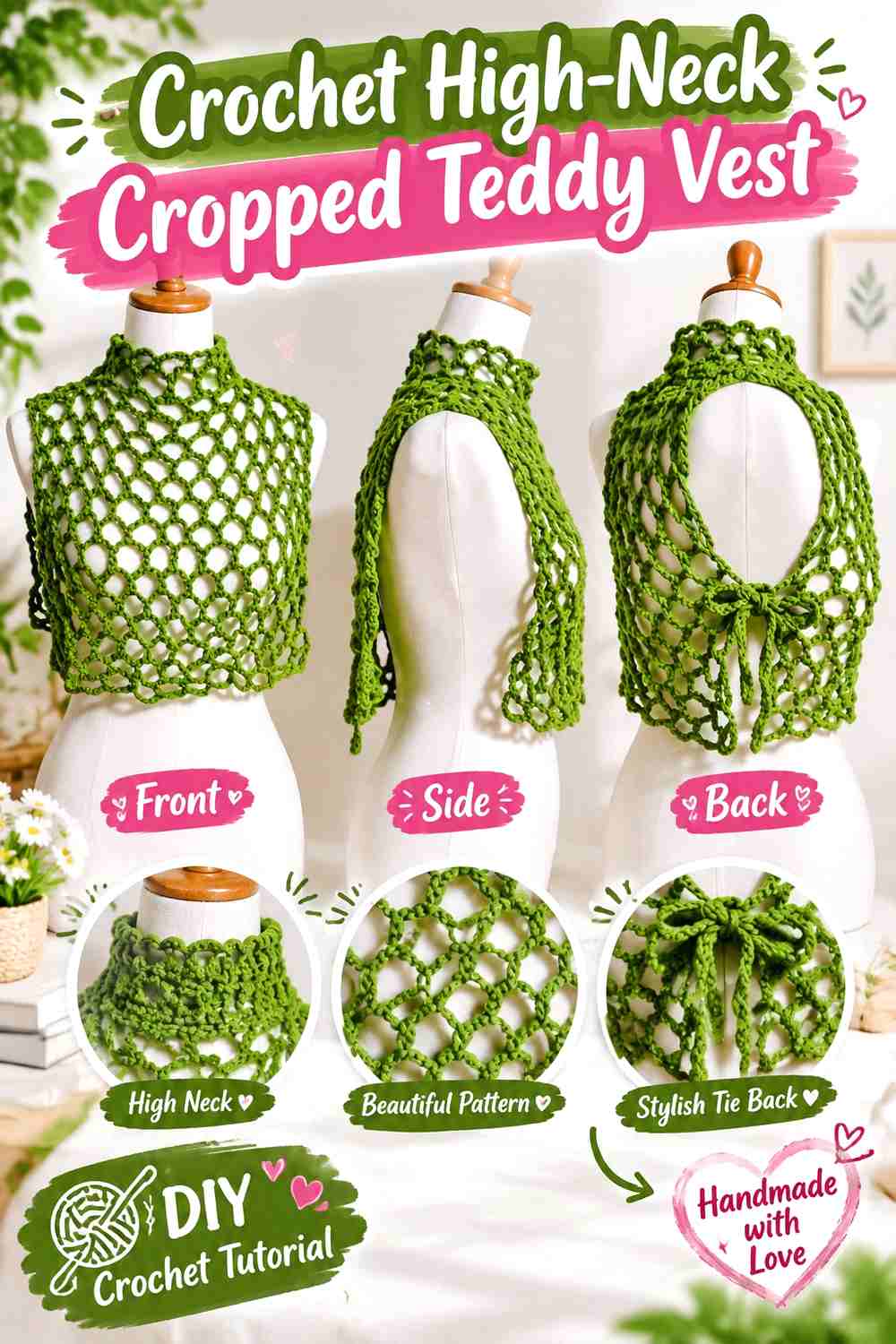
A cropped high-neck vest takes the teddy concept in a compact direction. The source from mae uses a cropped mock-neck shape, creating more coverage at the neckline while keeping the overall garment short.
That combination can work well when you like the visual density of plush crochet but do not want a long block of thick fabric through the torso.
A High Neck Concentrates Texture Near the Face
Teddy yarn around a mock neck is much more noticeable against the skin than the same yarn at a hem.
Before committing, test the fiber against the neck for comfort. Soft appearance alone does not guarantee that a yarn will feel pleasant in an area with constant skin contact.
Cropped Length Can Balance Dense Fabric
Shortening the silhouette reduces how much plush fabric appears in the outfit and can keep a high-neck vest from resembling heavy outerwear.
Do not guess the cropped length from a photo, however. Compare the tutorial’s demonstrated proportions with your torso and the waistlines you normally wear.
Creator Credit: mae
8. Crochet Long Open Teddy Layering Vest
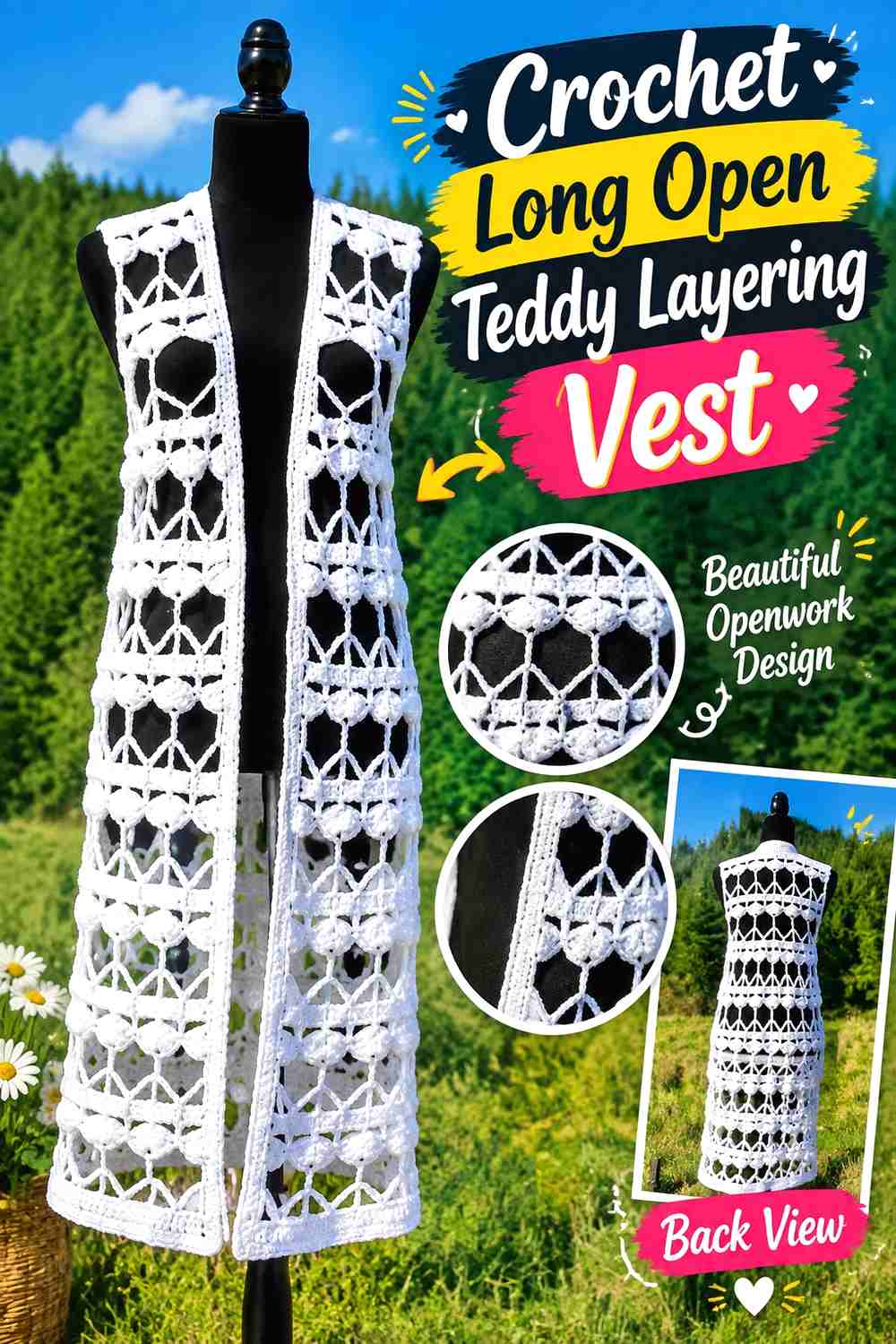
A long open vest creates an entirely different fall silhouette. The Craft Nut’s tutorial provides a longer boho-style layering shape rather than the compact sweater-vest form used by many other projects in this collection.
For a teddy interpretation, the key is restraint. Long garments multiply the effects of yarn weight, drape, and stretch, so a lightly brushed fiber may be more practical than the thickest plush yarn available.
Long Length Magnifies Yarn Weight
A yarn that feels pleasantly substantial in a small swatch can feel very different when there is a long panel hanging from the shoulders.
Make a larger sample if you plan a dramatic yarn substitution. Hang it temporarily and observe whether gravity noticeably lengthens the fabric.
Keep an Open Front From Becoming Too Stiff
The appeal of a long open vest is partly the way the fronts hang around the body. A dense teddy fabric can push those panels outward instead.
If the fabric refuses to drape, move toward a lighter fuzzy yarn or a looser-looking teddy surface rather than forcing a stiff material into a flowing silhouette.
Creator Credit: The Craft Nut
9. Crochet Raised-Flower Teddy Texture Vest
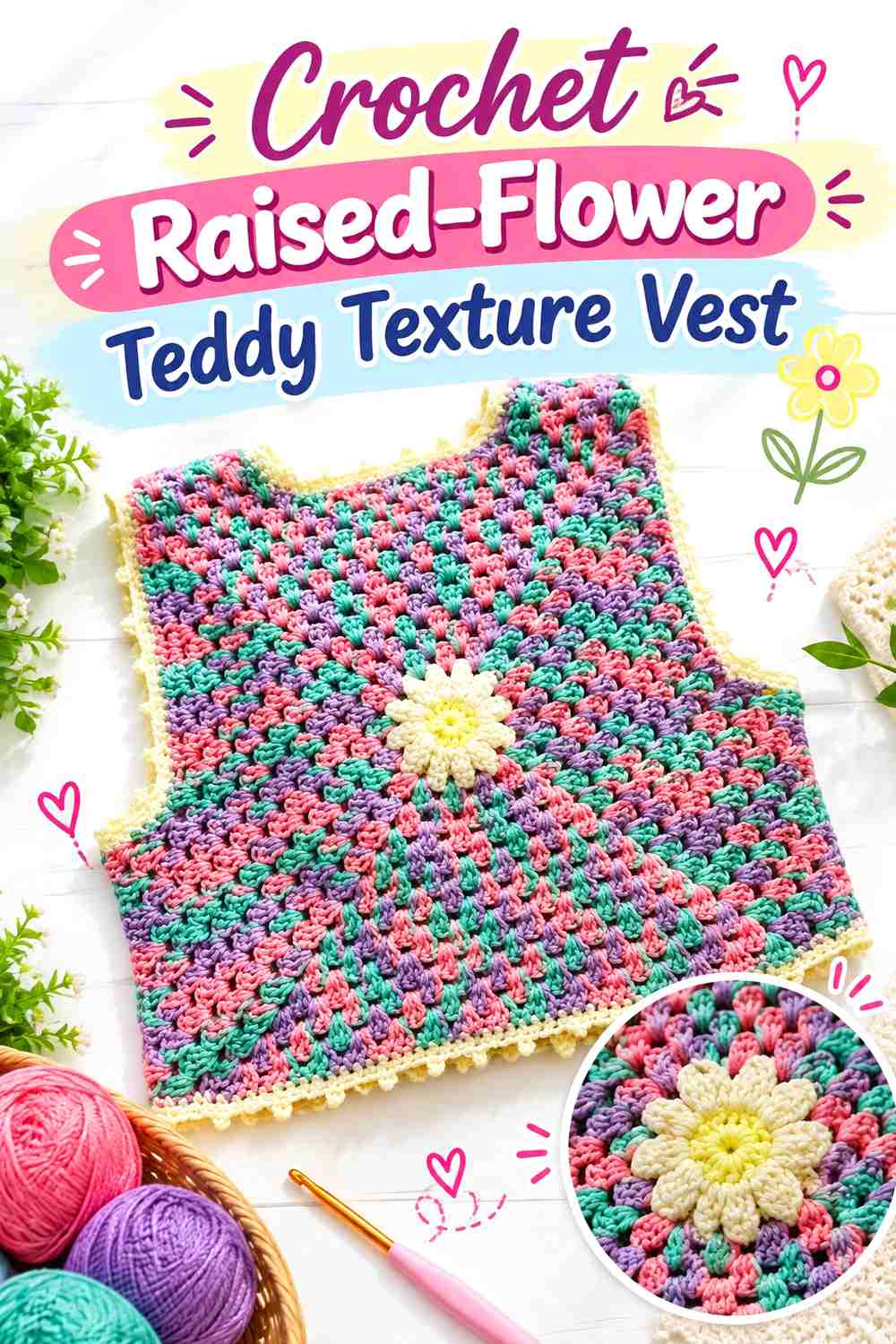
A flower-textured vest lets you combine plushness with clearly dimensional detail. The Crochet with Karu source presents a decorative fall-oriented vest concept with prominent motif interest, making it a different choice from the plain textured panels elsewhere in this collection.
This idea works particularly well when you want the teddy effect to appear selectively rather than covering every part of the garment with the same fuzzy surface.
Raised Flowers Need Space to Remain Visible
A highly fuzzy background can swallow small petals and reduce the relief that makes a flower motif interesting.
Before combining the two effects, sample the actual motif in the planned yarn. If the flower disappears, use a smoother yarn for the raised details or confine the teddy texture to the surrounding fabric.
Selective Plushness Can Be More Effective
You do not need maximum texture everywhere. A vest with a soft nubby body and cleaner flowers can look more dimensional than one where every stitch has the same heavy halo.
The same principle works in reverse: smoother body fabric can provide a quiet background for especially plush floral accents.
Creator Credit: Crochet with Karu
10. Crochet Cable-Texture Teddy Vest
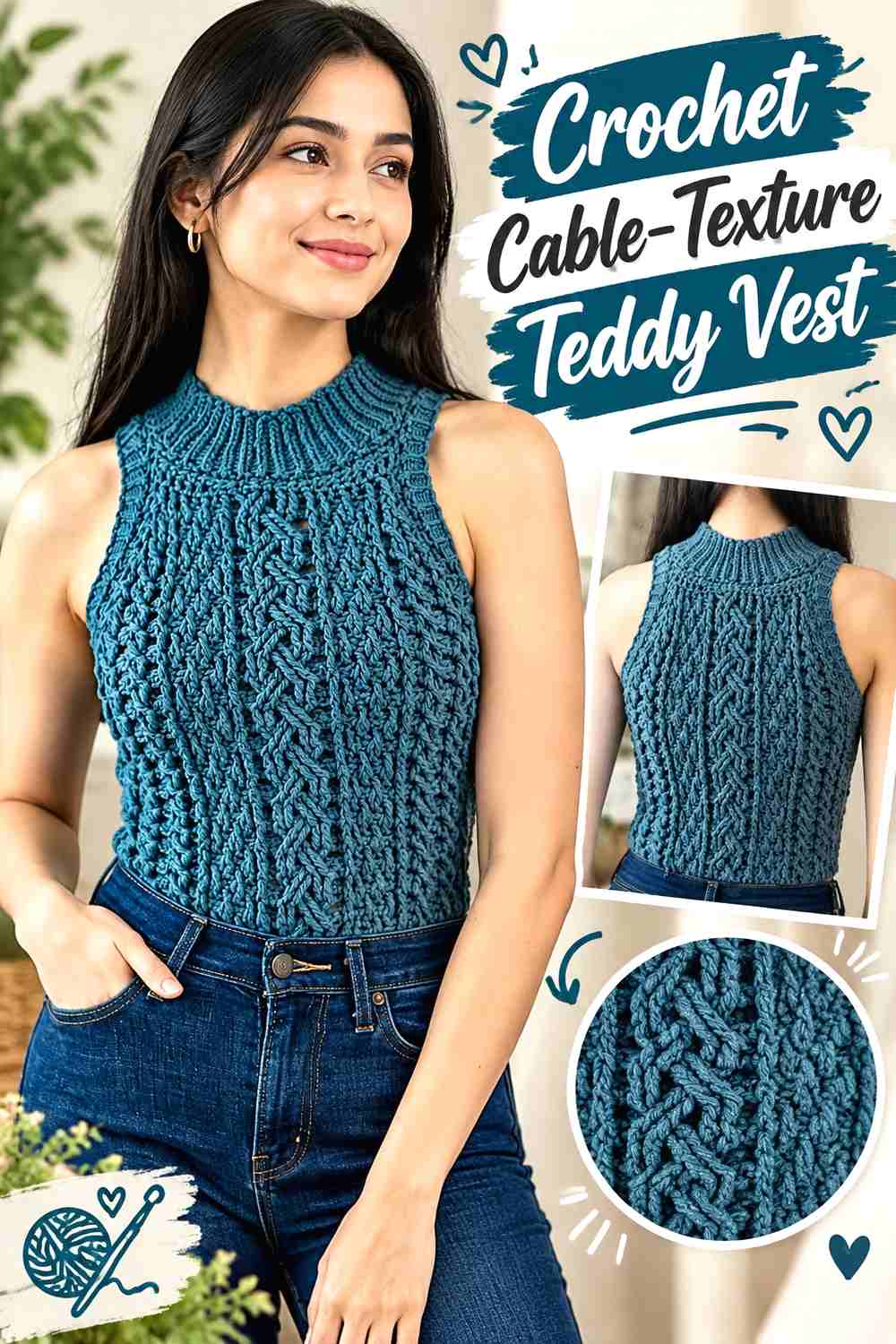
Cables create depth through stitch structure rather than fiber alone. TCDDIY’s vest uses prominent crochet cable work and a neckline that can be styled with a higher collar effect, giving this idea one of the strongest sculptural surfaces in the collection.
It is a good option if you want a cozy fall vest but would rather create the teddy impression through dimensional crochet than an extremely furry yarn.
Cable Relief Needs a Cleaner Plush Yarn
Long fibers can bridge the valleys between cable sections and flatten the visual effect. The more complicated the cable, the more stitch definition matters.
Look for softness and loft without automatically choosing the hairiest yarn. A lightly brushed or nubby fiber can preserve the shadows that make the raised design readable.
Let One Texture Be Dominant
Cables are already a statement surface. Adding multiple fuzzy yarns, contrasting bobbles, and strong color changes can compete with that structure.
A quieter palette often gives the raised crochet more room to show. For an autumn version, texture can supply the interest while the color stays relatively restrained.
Creator Credit: TCDDIY
11. Crochet All-Over Textured Teddy Vest
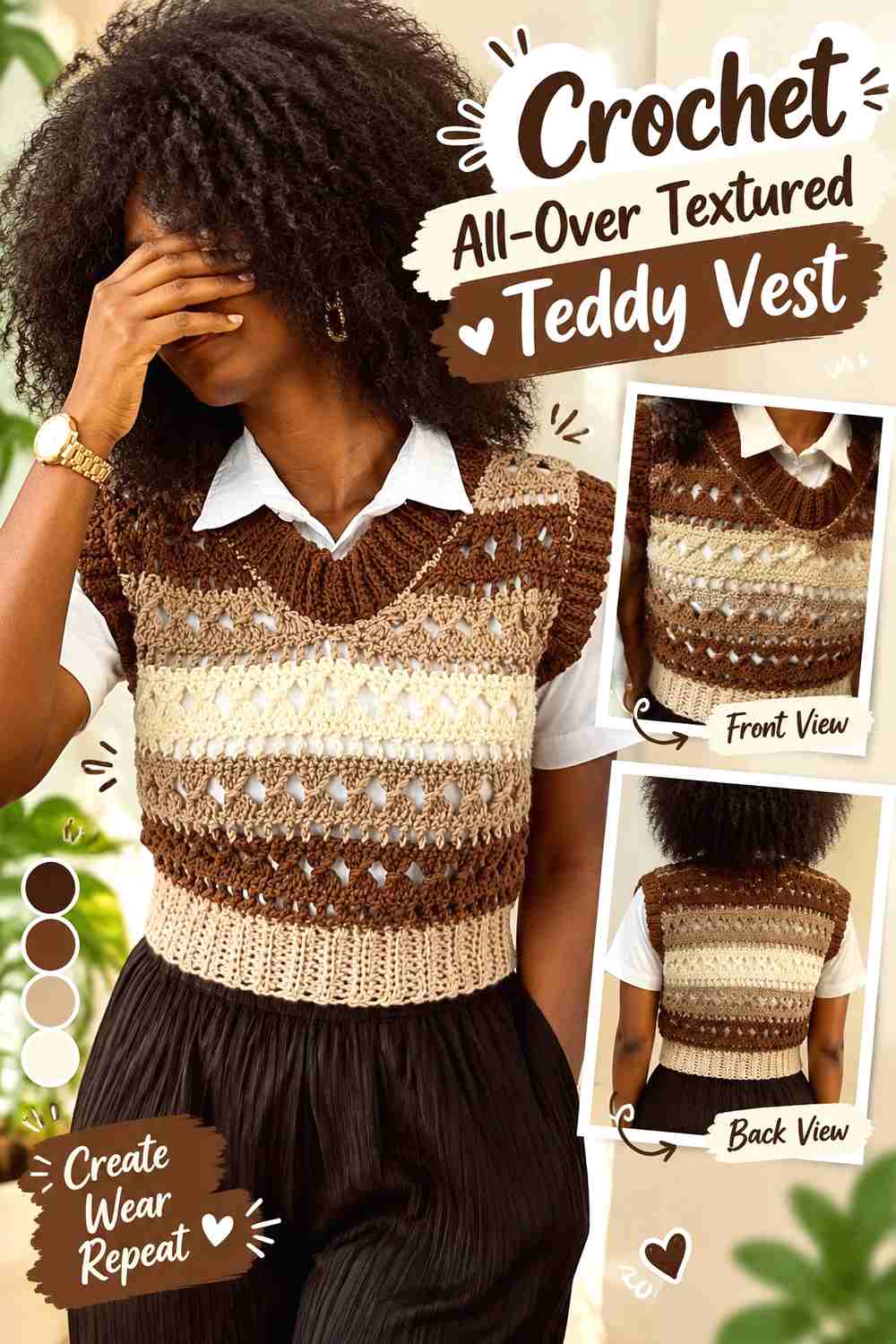
This option starts with texture rather than asking the yarn to create all of it. Zx Crochets’ tutorial is specifically centered on a textured crochet vest and includes garment shaping and finishing around that surface design.
For a teddy interpretation, this can be useful when you want a plush-looking vest but still prefer to see obvious crochet texture from several feet away.
Decide Whether the Stitch or Yarn Is the Main Feature
Combining an elaborate texture with a very fuzzy fiber can make both effects weaker. The stitches become harder to see, while the fiber surface is interrupted by strong relief.
Make two swatches if necessary: one with a smoother soft yarn and one with the proposed teddy yarn. Compare which version communicates the texture you actually want.
Keep Edges Easy to Read
Armholes, hem, and neckline frame an all-over textured vest. If those areas become visually fuzzy or irregular, the entire garment can look less controlled.
Consider using the clearest part of the yarn or a compatible smoother fiber for edging when definition is more valuable there than maximum plushness.
Creator Credit: Zx Crochets
12. Crochet Chunky Boxy Teddy Vest
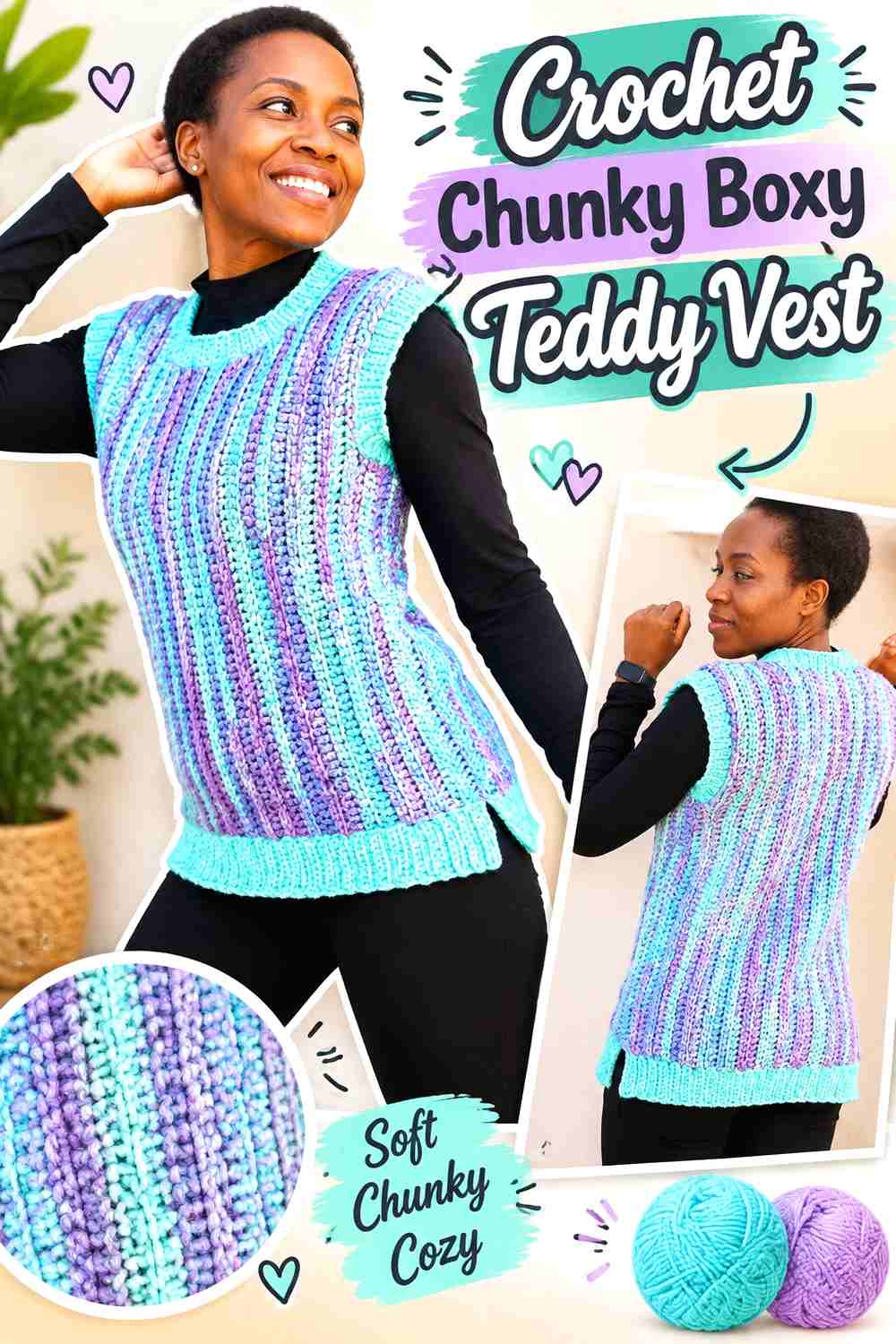
A chunky vest with uncomplicated shaping is one of the more natural homes for teddy texture. Yarn Craftee’s tutorial uses chunky yarn and a sweater-vest format, providing a useful base when you want substantial fabric without adding cables, motifs, or complicated colorwork.
This project can lean minimalist in a single neutral shade or become more playful in rust, mustard, forest green, dusty rose, or another fall color.
Simple Panels Give Nubby Yarn Room to Work
When the surface is plain, you do not have to worry as much about hiding a complicated stitch pattern.
That does not mean gauge stops mattering. Bouclé and fuzzy yarn can be difficult to measure visually, so mark the sample edges clearly and measure the fabric itself instead of trying to count indistinct loops after the fact.
Recheck the Armholes Before Seaming
Thicker fabric occupies more physical space around the body. An armhole that appears generous when the pieces are lying flat can feel smaller once seams, edging, and an underlayer are added.
Before completing permanent finishing, hold or temporarily secure the panels around the intended base layer and check movement at the shoulder.
Creator Credit: Yarn Craftee
13. Crochet Cropped Checkered Teddy Vest
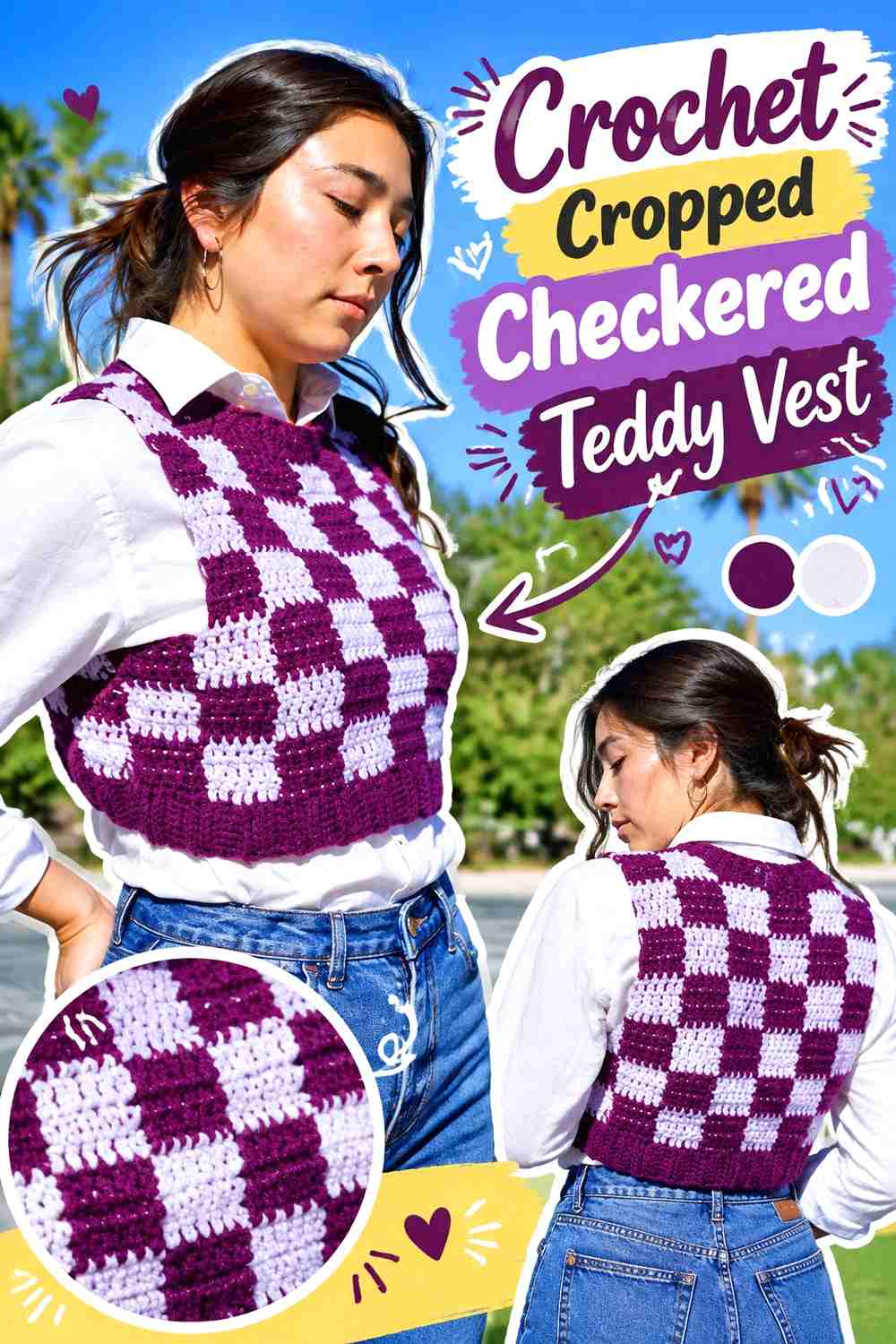
This second checkerboard direction is deliberately different from the boxier HayHay version because the source from it’s erin b. emphasizes a cropped checkered vest silhouette.
The shorter body makes it a useful choice when you want a bold plush pattern without turning the vest into a large outer layer.
Small Checks Blur Faster Than Large Blocks
The fuzzier the yarn, the more adjacent colors can soften into one another. A check that depends on small, crisp blocks may lose more definition than a larger-scale pattern.
Before deciding on a teddy fiber, compare the size of one color area with the length of the yarn halo. A simple sample will show whether the pattern remains recognizable.
Cropped Proportions Can Control Visual Bulk
A dense checkerboard plus plush yarn creates two kinds of visual weight at once: strong pattern and strong texture.
Keeping the silhouette cropped can balance that effect. Pay attention to where the hem will land on the intended wearer rather than assuming the creator’s proportions will translate automatically.
Creator Credit: it’s erin b.
14. Crochet Scalloped Button-Front Teddy Vest
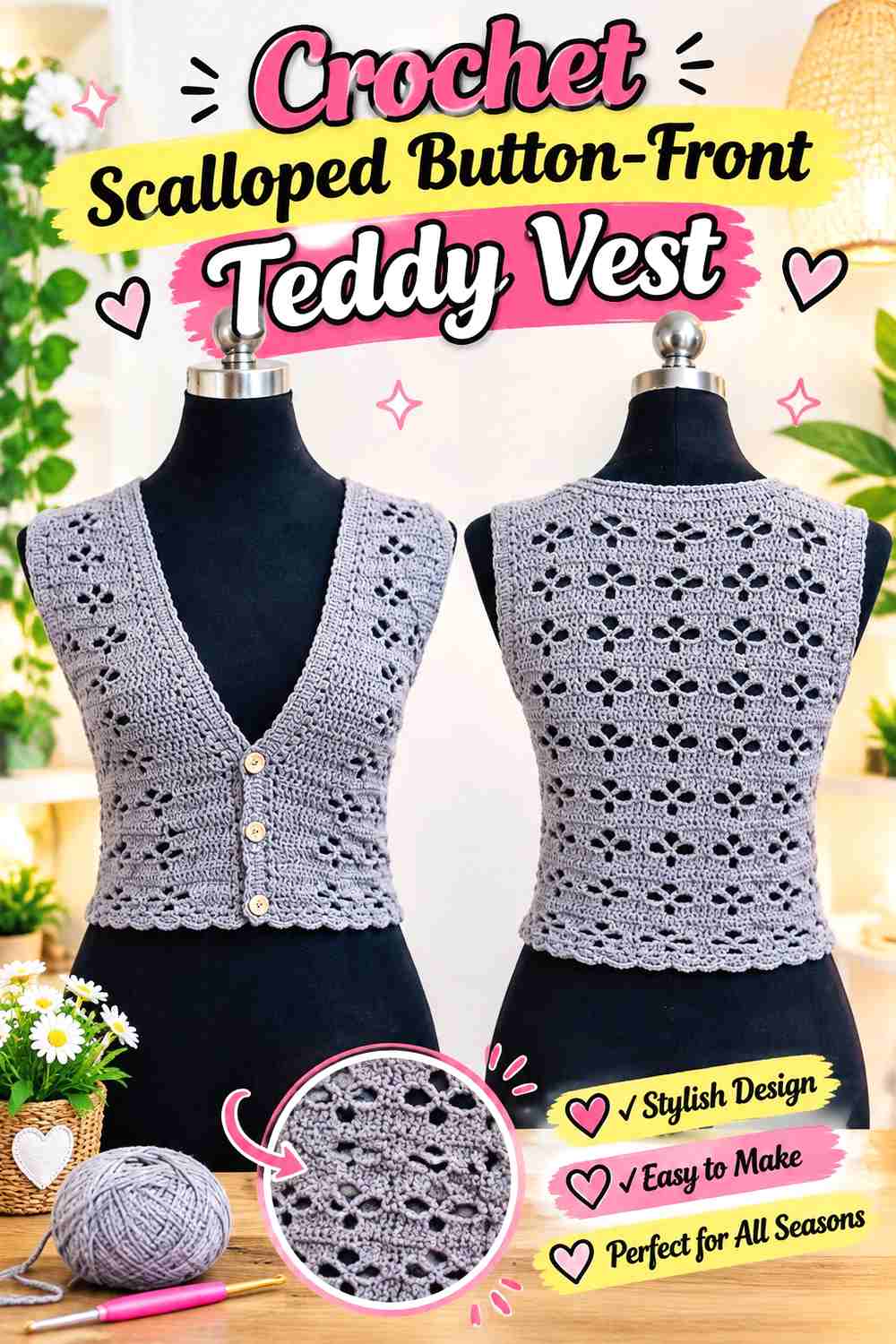
A button-front vest with scalloped edging offers the most decorative finish in this collection. Ler Crochet’s tutorial combines a front opening, shaped neckline, buttons, and scallop detail, making the edges part of the design rather than simply a border around the main fabric.
For a teddy version, this design works best when you deliberately protect that edge definition instead of covering every feature with the same fuzzy yarn.
Scallops Need Definition Along a Fuzzy Edge
A scalloped border relies on repeated curves. If the yarn obscures where one curve ends and the next begins, the decorative finish can lose its purpose.
One practical direction is to make the body plush and keep the scallop yarn slightly smoother. That creates contrast through texture even when both areas use the same color.
Give the Button Band More Stability
Front closures experience pulling that the center of a vest panel does not. Very stretchy or loosely structured teddy fabric may allow the buttons to distort the edge.
Check the finished band before choosing button weight and placement. If you change the tutorial yarn substantially, the original closure behavior may change as well.
Creator Credit: Ler Crochet
Which Teddy Texture Vest Direction Fits Your Fall Wardrobe?
For the most straightforward teddy effect, start with the chunky boxy vest, oversized V-neck, or hooded super-bulky vest. Their silhouettes can support substantial fabric without depending on delicate surface detail.
If you want a cleaner sweater-vest look, compare the ribbed crewneck, classic V-neck, cropped high-neck, and collared designs. They give the fuzzy texture a recognizable garment shape without requiring a large amount of decorative colorwork.
For a stronger statement, the checkerboard vests add graphic contrast, while the flower and cable designs introduce dimensional crochet. Those projects benefit from a more restrained yarn halo because their stitches need to remain visible.
The long open vest requires the most attention to drape and overall garment weight. The scalloped button-front design asks for extra care around its decorative and functional edges. In both cases, a moderately plush yarn may be more useful than the thickest teddy fiber.
Conclusion
A successful crochet teddy texture vest starts with matching the fiber to the construction. Simple panels can handle a stronger fuzzy surface, while cables, flowers, checks, collars, scallops, and ribbing need enough stitch definition to keep their design visible.
For a substantial fall layer, the hooded or chunky options are natural starting points. Choose a V-neck or cropped shape when you want the plush fabric to feel lighter visually. The cable and flower designs suit crocheters who want dimensional texture to come from the stitches themselves, while checkerboard gives the teddy look a graphic direction.
Before adapting any tutorial, make a swatch with the actual yarn and compare gauge, thickness, stretch, drape, and stitch visibility. Use each original creator’s tutorial for its exact construction and sizing rather than assuming a fuzzy-yarn substitution will behave the same way.
Frequently Asked Questions
What kind of yarn gives a crochet vest a teddy texture?
Bouclé, brushed, fuzzy, softly looped, and some plush bulky yarns can create a teddy-like surface. A heavily raised crochet stitch can produce a similar visual effect with a more conventional yarn. Check the actual swatch rather than relying on the yarn name, because fibers described as fuzzy or bouclé can behave very differently.
Can I replace regular yarn with teddy or bouclé yarn in any crochet vest pattern?
Not reliably. A substitute yarn can change gauge, thickness, drape, stretch, and stitch visibility. Make a swatch using the tutorial’s main stitch and compare it with the creator’s gauge and intended fabric before deciding whether the substitution is workable.
Which vest shape works particularly well with very fuzzy yarn?
Simple crewneck, V-neck, boxy, or oversized constructions are often easier to pair with a strong yarn halo because they do not depend on small decorative stitches. Cables, tiny checks, scallops, and detailed motifs may need greater stitch definition.
How can I crochet with fuzzy yarn when the stitches are difficult to see?
Choose a construction where you can feel stitch placement reliably, work in good lighting, and use stitch markers at important boundaries. A contrasting practice swatch can also help you decide whether the yarn is realistic for the chosen tutorial before you begin a full garment.
Will a teddy-texture crochet vest be warmer than a regular vest?
Not necessarily. Warmth depends on fiber, fabric density, thickness, fit, openings, and the clothing worn underneath. A fuzzy surface may look warmer without providing the same insulation as a denser or heavier fabric.
How do I stop a plush crochet vest from looking too bulky?
Balance texture with silhouette. A V-neck introduces open space, a cropped hem reduces the total area of dense fabric, and restrained edging keeps the outline cleaner. Avoid automatically adding extra ease simply because you want a cozy look.
Should I use fuzzy yarn for ribbing and borders too?
You can, but it may hide the definition that makes those finishes effective. For collars, button bands, scallops, armholes, and strong ribbing, a smoother coordinating yarn can sometimes produce a clearer edge while the body retains the teddy texture.