Crochet cannot reproduce woven corduroy exactly, but it can capture the feature that makes corduroy so recognizable: repeated raised lines separated by recessed channels. Back-loop work, post stitches, dense relief patterns, waffle texture, and strongly defined columns can all create that ribbed visual rhythm.
For an autumn tote, texture matters as much as color. Rust, camel, chocolate, olive, burgundy, ochre, charcoal, and cream can reinforce the seasonal mood, but the bag still needs a construction that suits its intended use. A soft fold-and-seam tote behaves differently from a cord-yarn bag with a firm base, while long shoulder straps place different demands on the fabric than short hand-carry handles.
The tutorials below include true ribbed bags plus textured tote constructions that can support a corduroy-inspired interpretation. Where the original tutorial uses another texture, treat it as a construction reference rather than assuming you can exchange stitches or yarn without affecting dimensions, stitch counts, shaping, or yarn requirements.
Quick List
- Vertical-Rib Crochet Everyday Tote
- Wide-Rib Crochet Ribbon-Yarn Shoulder Tote
- Crochet Waistcoat-Column Structured Tote
- Crochet Chunky Ridge-Texture Tote
- Crochet Relief-Rib Twine Tote
- Crochet Oversized Textured Project Tote
- Crochet Herringbone Ridge Tote
- Crochet Compact Ribbed Handbag Tote
- Crochet Macramé Cord Textured Tote
- Crochet Wide Cotton-Cord Autumn Tote
- Crochet Basket-Rib Panel Tote
- Crochet Honeycomb Ridge Tote
- Crochet Plush Waffle-Rib Tote
- Crochet Crunch-Stitch Ribbed Tote
- Crochet Fine-Cotton Waffle Shopper Tote
- Crochet Boxy Basketweave Tote
- Crochet Chunky Short-Handle Tote
What Gives Crochet a Corduroy-Look Surface?
The closest visual match usually comes from consistent raised columns rather than random texture. Back-loop crochet can leave horizontal ridges when worked conventionally, but changing the orientation of a panel can turn those ridges into vertical lines on the finished bag. Post stitches create deeper relief, while waffle and basketweave patterns produce broader bands of raised and recessed fabric.
Scale changes the effect. Narrow, closely spaced ridges resemble fine-wale corduroy more closely. Broad ribs create a chunkier interpretation that can look closer to wide-wale corduroy. Neither approach is inherently better; the important question is whether the texture remains clear in the yarn you choose.
Smooth yarn or cord normally shows relief more clearly than a highly fuzzy fiber. Before committing to an entire tote, make enough test fabric to see several complete ribs. A tiny swatch containing only one raised line will not show whether the repetition actually gives you the corduroy-like rhythm you want.
Structure Matters More Than Autumn Color
A tote body has to cope with weight pulling downward. Highly elastic ribbing may look excellent while empty but lengthen noticeably once the bag is filled. Dense stitches, firm yarns, reinforced openings, lining, and carefully planned handles can all affect how the finished tote behaves.
The base deserves particular attention. An oval base creates a different profile from a rectangular foundation, while a flat panel that is folded and seamed may collapse more readily when set down. Decide whether you want a soft fashion tote or a bag that keeps a defined silhouette before choosing the texture.
Handle construction matters for the same reason. Long crochet straps may stretch more than short hand-carry handles. If stretch is a concern, check whether the selected tutorial discusses strap structure or whether adding appropriate reinforcement or lining would suit your adaptation.
Check These Details Before Changing a Tote to Ribbing
Do not assume a different stitch can be dropped directly into a bag tutorial. Ribbed and relief fabrics can have different stitch widths, row heights, elasticity, and yarn consumption from the fabric demonstrated by the creator.
Instead, identify which parts of the tutorial control shape: base dimensions, panel width, body circumference, handle placement, opening width, and any closure. If you change the main body texture, compare your swatch dimensions before deciding how much of the original construction can remain unchanged.
For a fall palette, also look at the texture under ordinary indoor and outdoor light. Deep brown or black can hide shallow ribs, while medium-value caramel, rust, moss, oatmeal, and muted pumpkin shades often make shadows between raised columns easier to see.
1. Vertical-Rib Crochet Everyday Tote
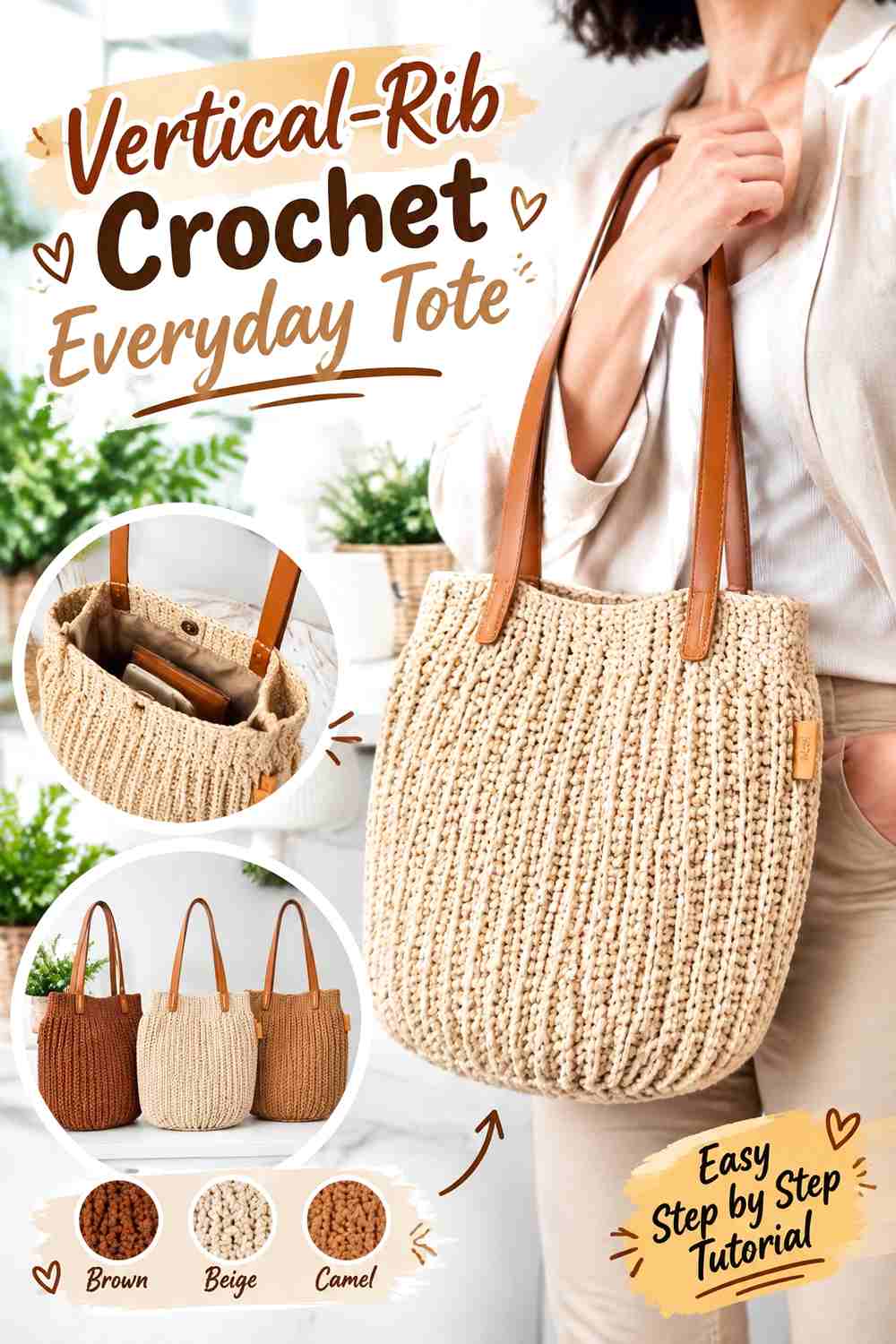
This is the most literal interpretation of the theme. Crochet By AnDREAM demonstrates a tote built specifically around rib stitch, so the raised surface is integral to the project rather than an adaptation added afterward. YouTube
For an autumn version, this is a useful starting point if you want the bag to read as ribbed from across the room. A solid camel, tobacco, rust, olive, or deep wine shade would keep attention on the light-and-shadow effect between the ribs rather than breaking it up with frequent color changes.
Keep the Rib Direction Visually Consistent
Corduroy gets much of its character from orderly parallel lines. That means orientation is important when adapting a ribbed crochet tote.
If the main body displays strong vertical channels, consider whether the handles, top band, and side seams support that direction or compete with it. You do not need every component to be ribbed, but too many competing textures can weaken the clean corduroy reference.
Test How Much the Ribbing Expands
Ribbed fabric is often more flexible than dense plain crochet. That may be attractive for a soft fashion tote, but it becomes more important if the bag will carry heavier belongings.
Measure the swatch both relaxed and gently stretched. If it changes dramatically, consider whether lining or another structural treatment fits your intended use rather than assuming the empty-bag dimensions tell the full story.
Creator Credit: Crochet By AnDREAM
2. Wide-Rib Crochet Ribbon-Yarn Shoulder Tote
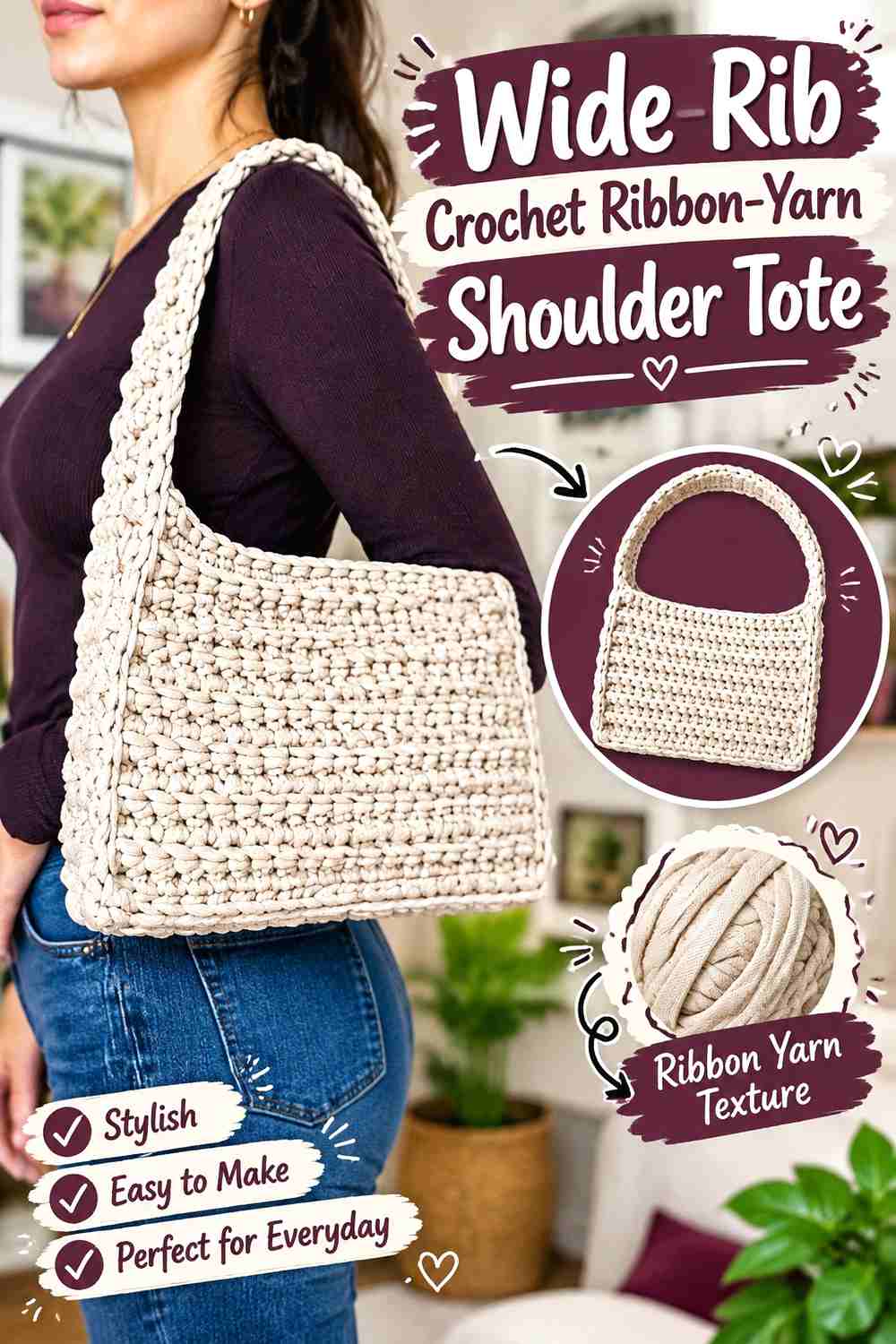
Lallaulab demonstrates a customizable ribbed bag made with ribbon-style material and designed for shoulder carrying. That combination produces broader, more sculptural ribs than a fine yarn would normally create. YouTube
This makes the construction a strong candidate for a wide-wale corduroy look. Instead of trying to imitate narrow clothing-weight corduroy, the bag can emphasize bold channels that become part of its silhouette.
Ribbon Yarn Makes Every Ridge More Pronounced
Thicker, flatter material can give ribbing a substantial profile. It also makes irregular tension more visible.
If you adapt the idea to another cord or ribbon yarn, compare several ribs before deciding. Look for even width from top to bottom rather than concentrating only on whether the individual stitches look neat.
Shoulder Carrying Changes the Top Edge
A shoulder bag repeatedly pulls upward where the handle meets the body. With highly textured fabric, that stress can distort the first few ribs beside the attachment area.
Watch the opening while the bag is loaded with a few representative lightweight belongings. If it folds more than you like, a firmer upper band or lining may be worth considering, provided it suits the construction.
Creator Credit: Lallaulab
3. Crochet Waistcoat-Column Structured Tote
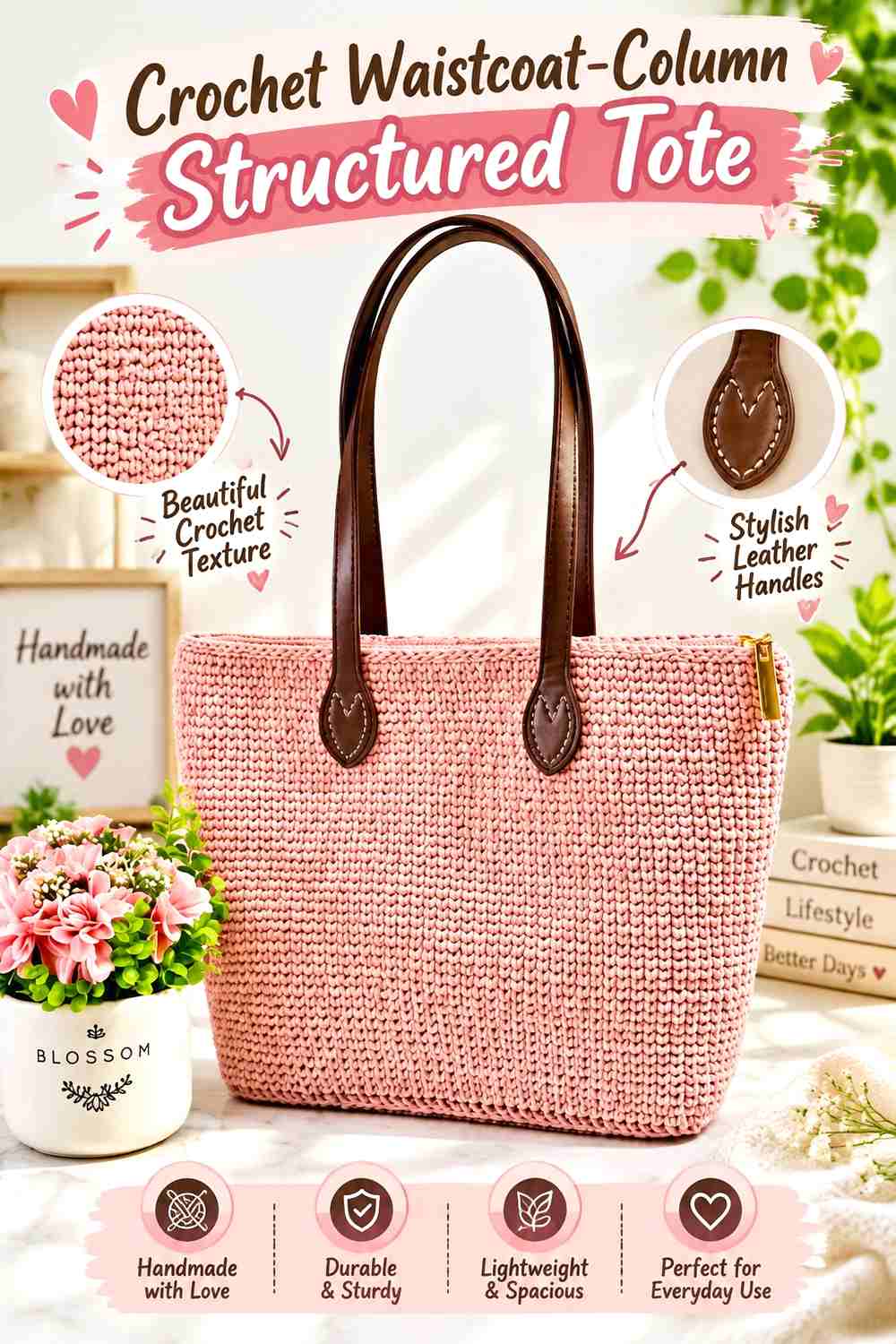
HOBBY CROCHET CLUB demonstrates a tote using waistcoat stitch, creating a dense surface with clearly organized vertical-looking stitch columns. YouTube
It is not conventional crochet ribbing, which is precisely why it adds useful variety. For a corduroy-inspired adaptation, you can use the orderly columns as a subtler alternative to deep elastic ribs. This suits readers who like the autumn textile reference but want a firmer-looking tote.
Choose This Direction When Structure Comes First
Deep ribbing can introduce considerable flexibility. A denser column texture shifts the balance toward shape retention.
That can make sense for a tote you want to look relatively crisp when empty. Before changing yarn, compare how readily your swatch folds. A bag fabric that is too rigid may be uncomfortable, while one that collapses immediately may not deliver the structured effect you chose this option for.
Fine Columns Give a Quieter Corduroy Reference
Not every corduroy-look bag needs exaggerated ridges. Closely packed vertical marks can suggest fine-wale corduroy without producing deep channels.
Medium autumn shades are particularly useful here because the stitch definition remains visible without extreme contrast. If the yarn is very dark, inspect the fabric in normal light before committing to a large tote.
Creator Credit: HOBBY CROCHET CLUB
4. Crochet Chunky Ridge-Texture Tote
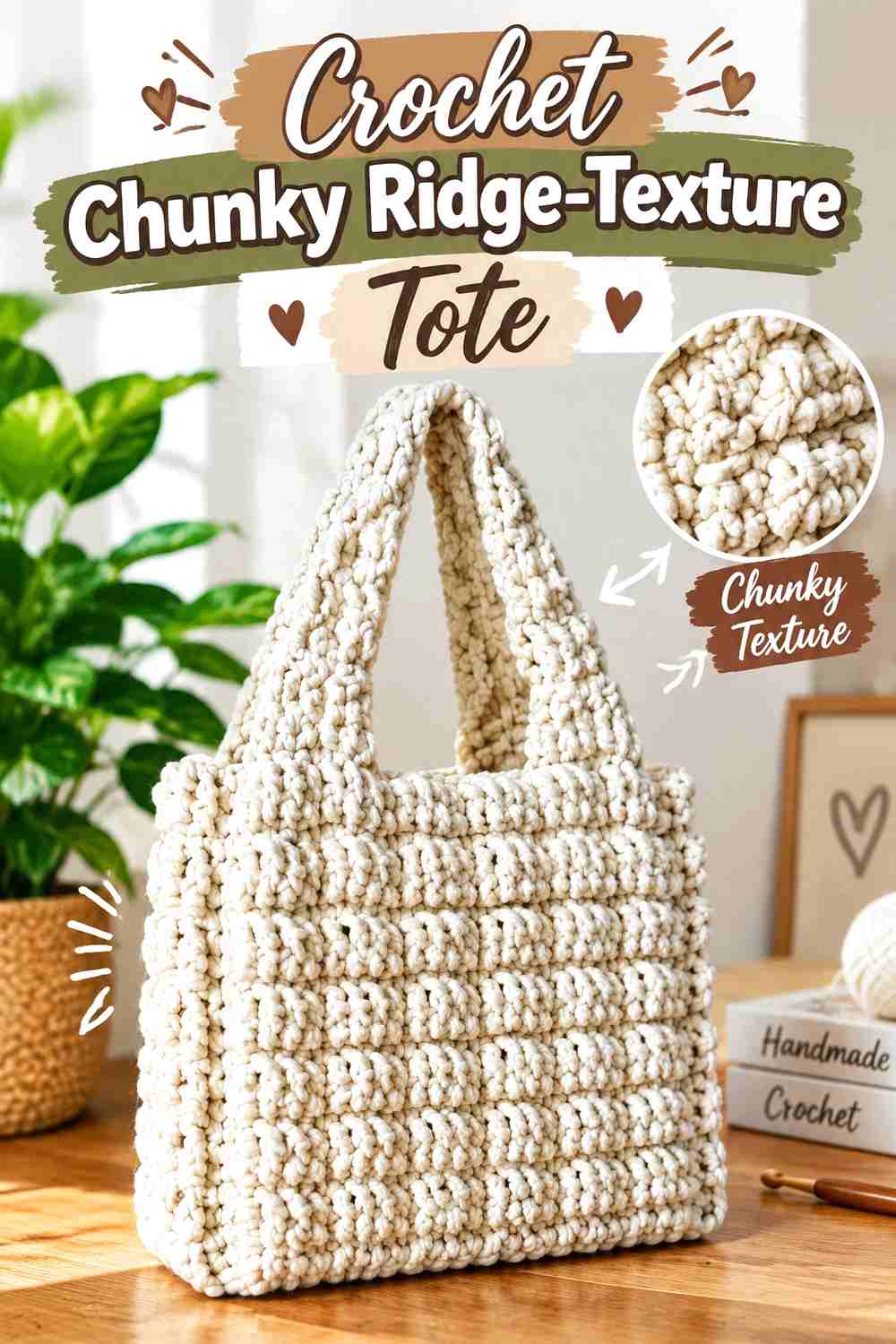
Kenikse Crochet’s tutorial builds a chunky textured tote with a separate base section, substantial body texture, and crocheted handles that are joined as part of the finished bag. YouTube
The larger stitch scale gives this idea a cozy autumn character without requiring literal narrow ribbing. For a corduroy-look variation, the goal would be to preserve strong repeated texture rather than add so many decorative details that the surface becomes visually busy.
Large Texture Needs a Large Enough Bag
Broad ridges can overwhelm a very small bag because only a few repeats are visible. On a roomier tote, the repetition has space to establish a textile-like rhythm.
Before resizing a tutorial, compare how many complete raised sections would remain across the front. A useful adaptation preserves enough repetition for the texture to look intentional.
Keep Handles From Competing With the Body
When the bag surface is heavily textured, equally complicated handles can create visual overload.
A simpler handle often lets the ribbed body remain the focal point. Conversely, if the body texture is subtle, carrying a related ridge into the handles can make the design feel more unified.
Creator Credit: Kenikse Crochet
5. Crochet Relief-Rib Twine Tote
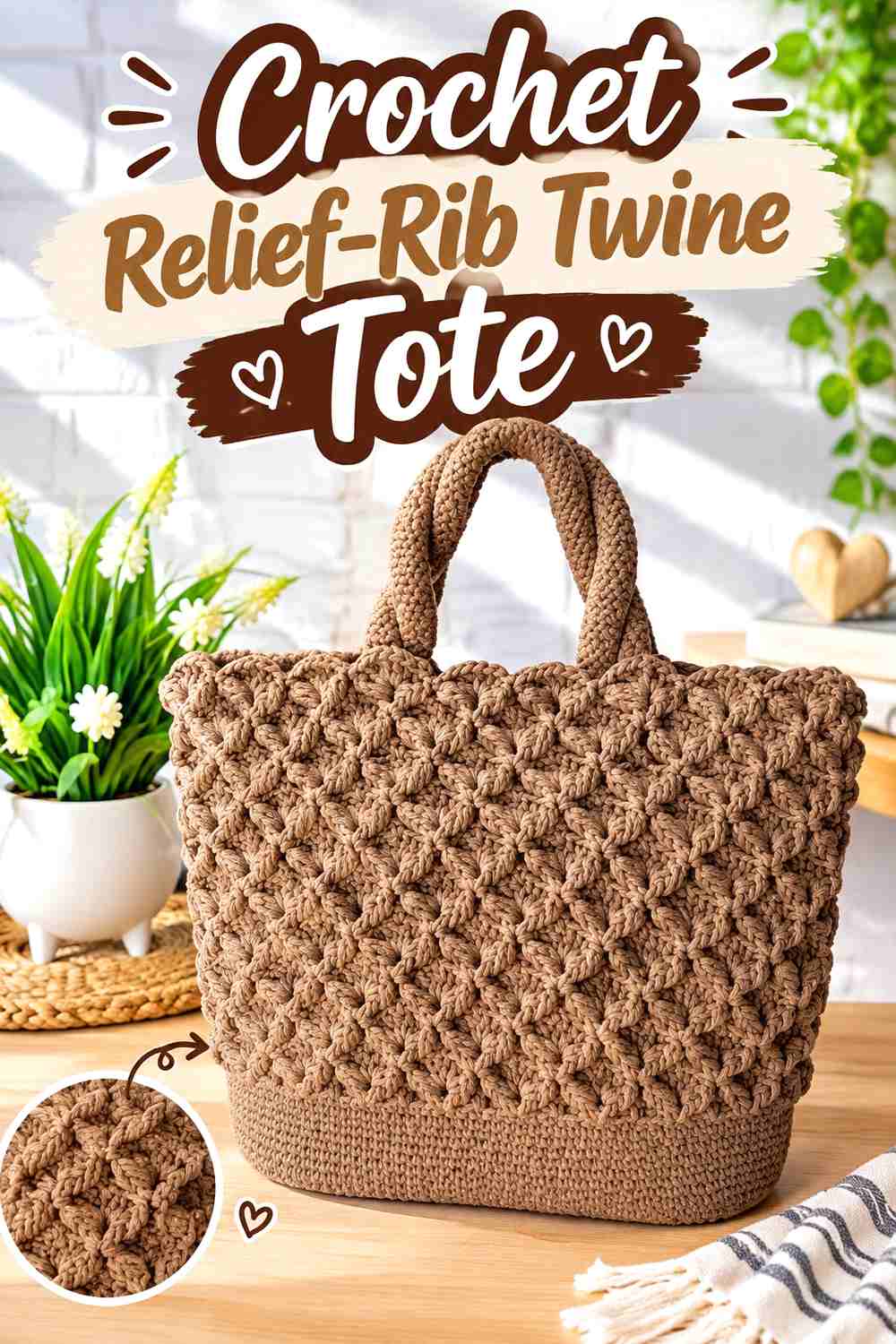
Li crochês e artesanatos demonstrates a tote worked with twine and an embossed relief-style stitch. The raised fabric gives this source a particularly useful connection to the corduroy-look theme. YouTube
Twine and cord-like materials naturally emphasize shadow between raised sections. In warm brown, bark, caramel, or muted terracotta, that relief can read as an autumn textile effect even without reproducing traditional corduroy exactly.
Relief Depth Can Add Bulk Quickly
Deep post or relief work uses the third dimension more aggressively than ordinary flat stitches. That can give a bag impressive texture, but it may also create a heavier, thicker fabric.
Decide whether you want a substantial hand-carry tote or a lighter shoulder bag. The same raised texture that looks luxurious in a compact bag can become cumbersome when scaled up.
Check the Base-to-Body Transition
A structured base and a strongly embossed body have to meet cleanly. If your substituted yarn produces much thicker relief than the source material, the body may spread or contract relative to the base.
Swatching the decorative texture is therefore only half the job. Also compare its width with the simpler fabric used around the bottom or opening.
Creator Credit: Li crochês e artesanatos
6. Crochet Oversized Textured Project Tote
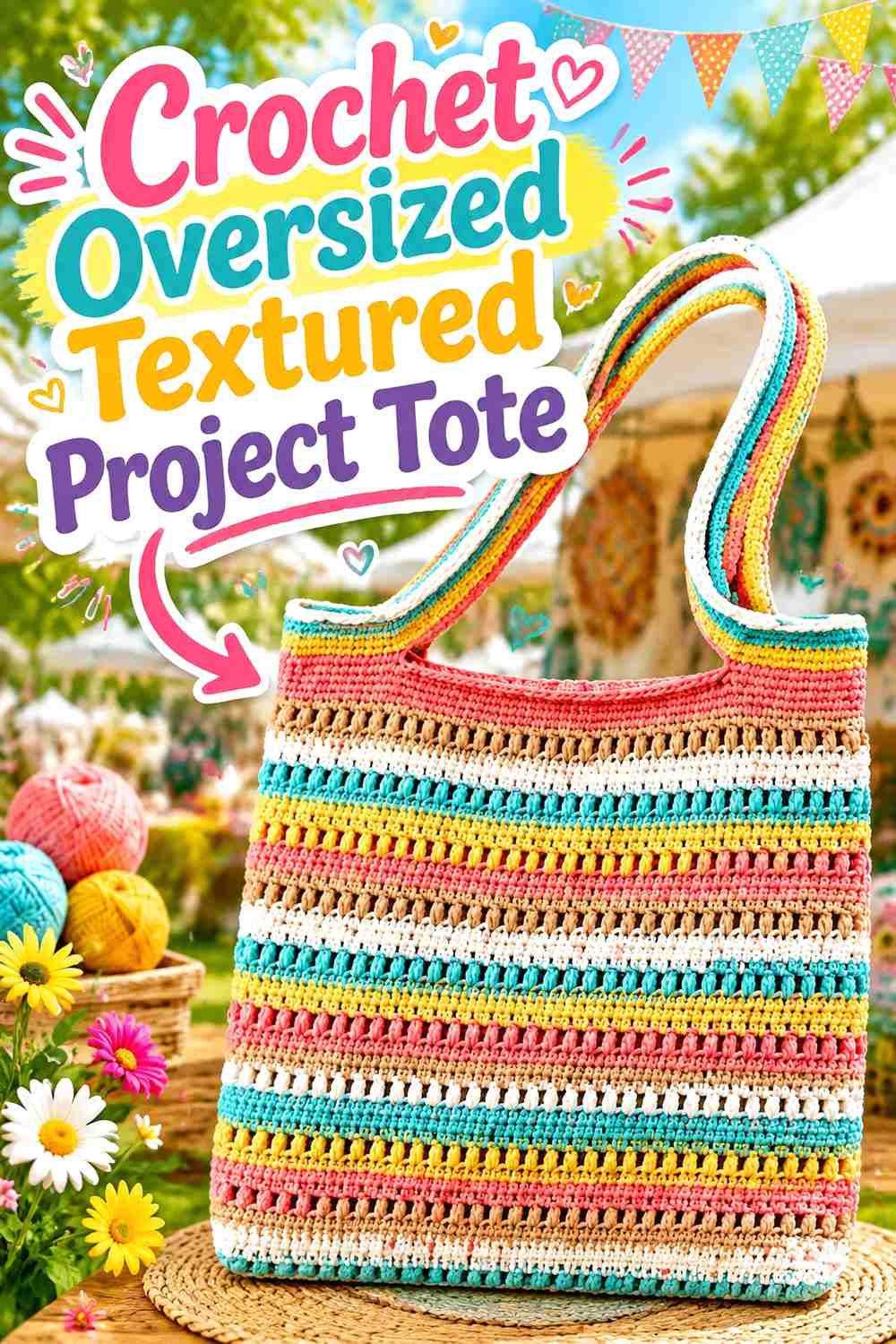
The Crochet Crowd demonstrates a generously proportioned textured tote with an integrated top section and handles. The project is designed around a repeated body texture rather than a plain open market-bag mesh. YouTube
This is the direction to consider when you want the corduroy idea on a larger scale. An oversized autumn tote gives repeated ribs plenty of visual space and can work well as a project bag or roomy everyday carry.
Bigger Bags Magnify Stretch
Adding width and height does not only create more capacity; it also gives the fabric more opportunity to deform under its own weight and the weight of the contents.
A ribbing substitution that behaves nicely on a swatch may become much softer across a broad tote panel. Test the fabric with some gentle weight before assuming it will maintain the same proportions.
A Lining Can Change the Character Completely
An unlined oversized crochet tote often looks softer and more casual. A lining can reduce how much small objects press through the stitch structure and can help the bag keep a cleaner outline.
Whether that is desirable depends on your goal. For a slouchy corduroy-inspired project bag, movement may be part of the appeal. For a polished work tote, added structure may be preferable.
Creator Credit: The Crochet Crowd
7. Crochet Herringbone Ridge Tote
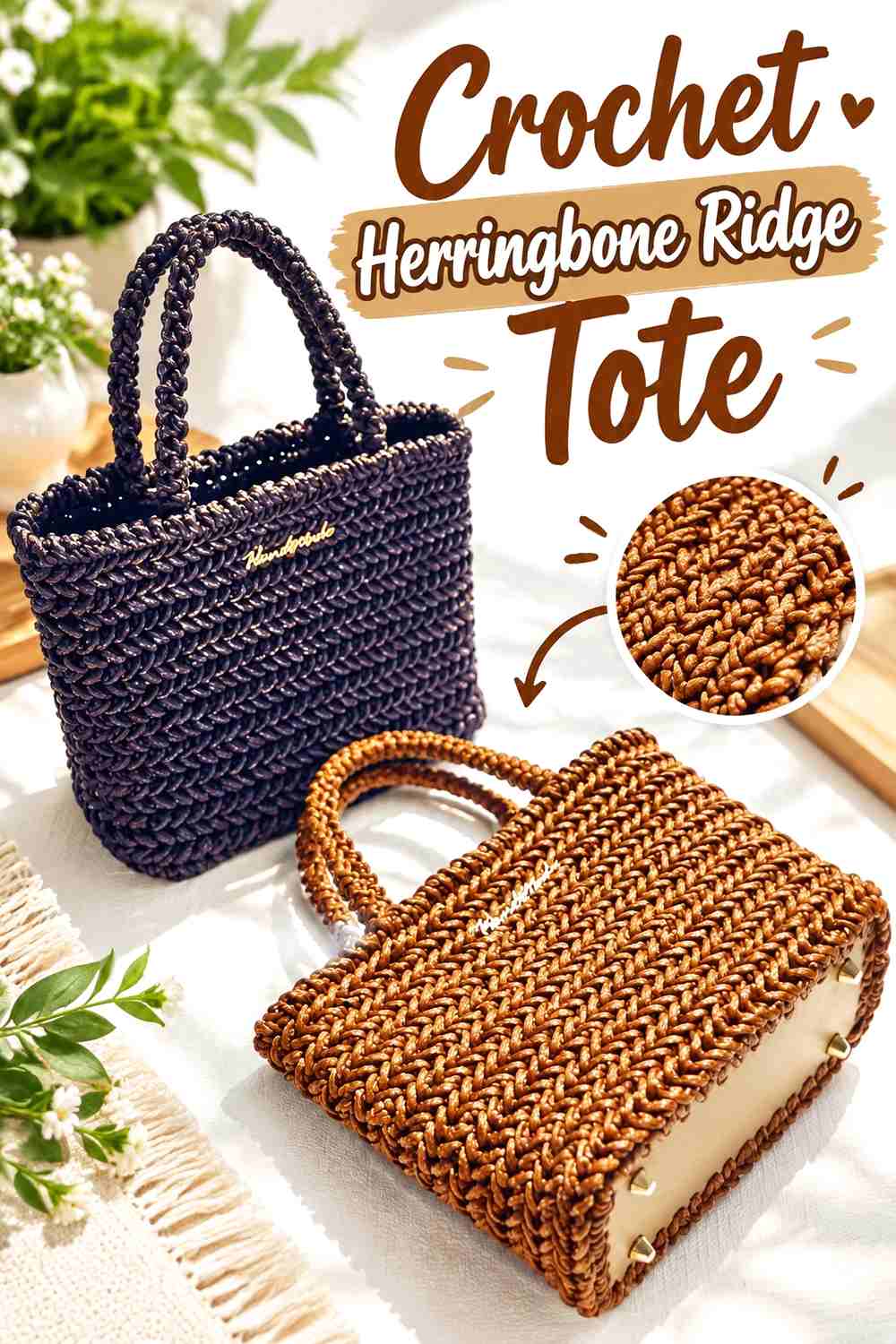
GomSon Crochet demonstrates a compact herringbone tote with a defined base and a polished, structured appearance. YouTube
Herringbone is a useful departure from perfectly straight ribbing. It keeps the idea of repeated directional texture but introduces a subtle angle, creating a bag that feels closer to tailored autumn accessories than to stretchy sweater rib.
Directional Texture Can Replace Deep Ribbing
If very pronounced ridges feel too casual, a repeated herringbone surface provides texture without large recessed channels.
That makes it useful with chocolate, espresso, chestnut, and other leather-adjacent autumn shades. The texture becomes visible as the light moves across the bag rather than dominating from every angle.
Compact Proportions Favor Firm Materials
A smaller structured tote depends on clear corners and controlled depth more than a soft oversized shopper does.
If you substitute a very flexible yarn for a firmer source material, check whether the base still supports the shape you want. Adding texture cannot compensate for a fabric that is much softer than the construction requires.
Creator Credit: GomSon Crochet
8. Crochet Compact Ribbed Handbag Tote
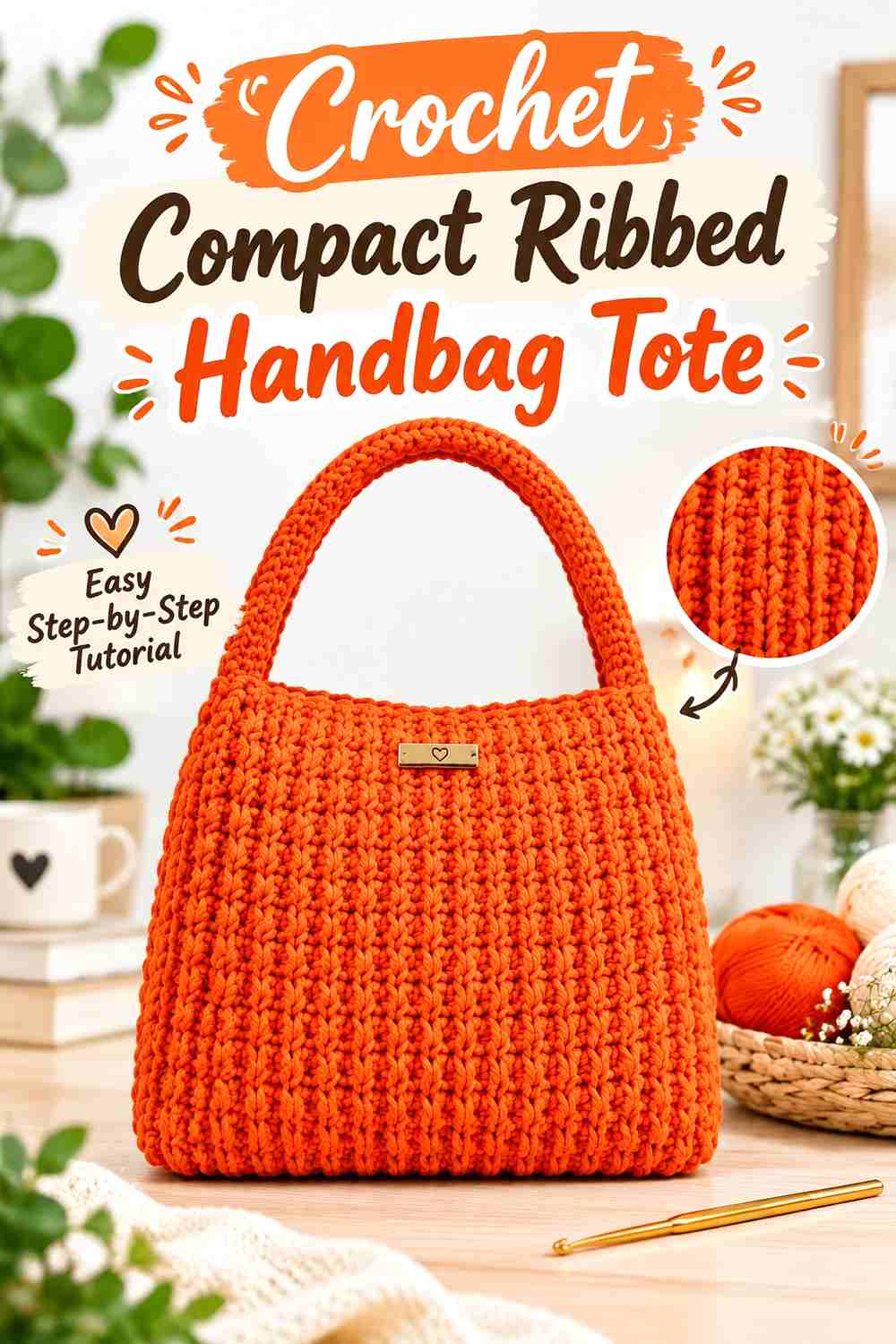
The Crochet Bag channel demonstrates a specifically ribbed handbag with a textured body, defined base, and integrated-style handles. YouTube
This idea sits between a handbag and a conventional tote. That smaller scale makes it useful if you like corduroy texture but do not need a large market or work bag.
Short Handles Reduce the Visual Length
Long straps draw the eye vertically and can exaggerate an already tall ribbed body. Short handles keep the design compact and place more attention on the body texture.
For an autumn handbag interpretation, this can work particularly well with broad ribs and a clean upper edge.
Treat the Opening as a Functional Decision
A compact tote may be carried in busier settings where an entirely open top is less convenient.
If you want a snap, zipper, or another closure, decide before finishing the top edge. A closure can require extra stability, and adding one afterward may distort deeply ribbed fabric if there is not enough support.
Creator Credit: Crochet Bag
9. Crochet Macramé Cord Textured Tote
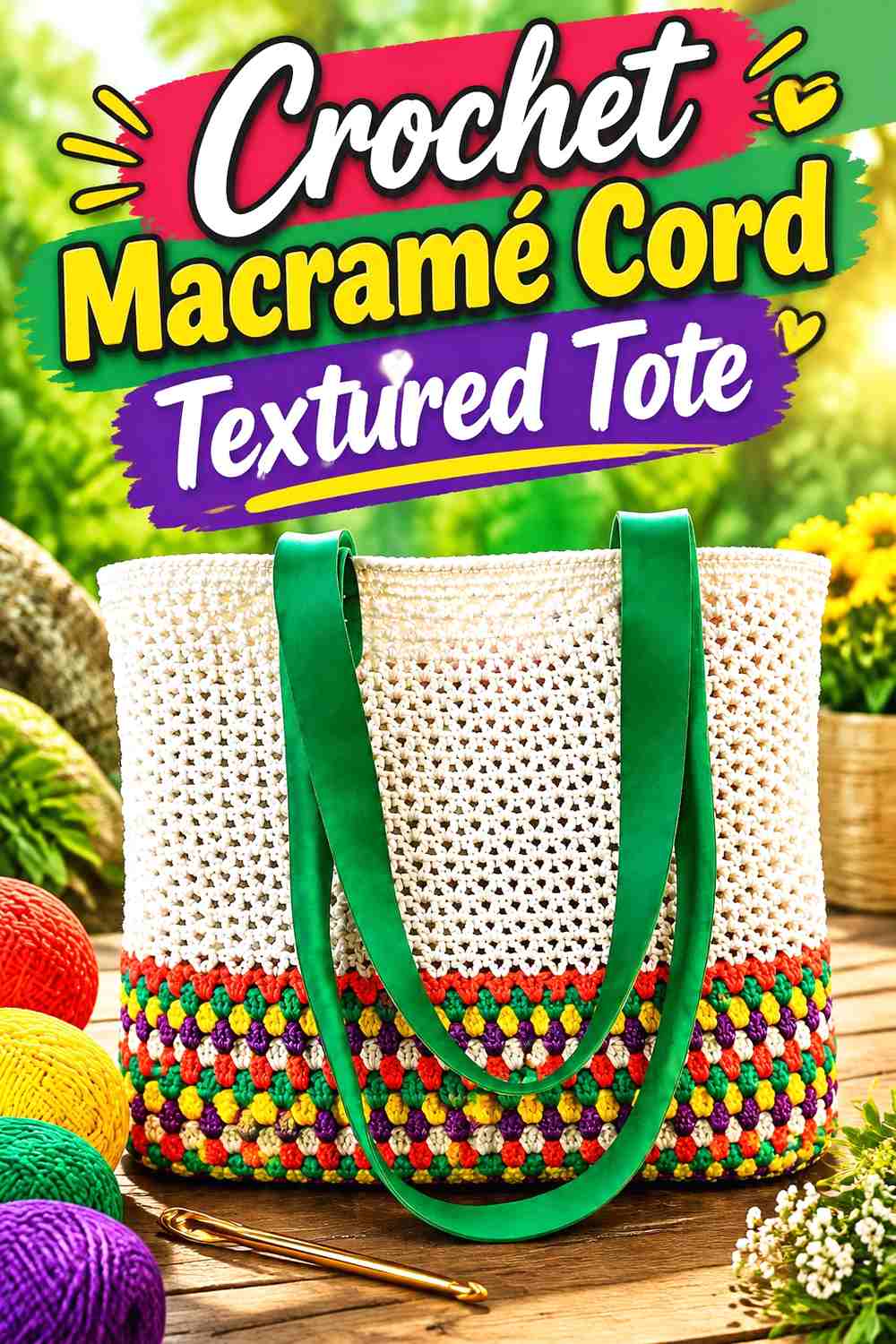
Crochet Craftsman demonstrates a tote made with macramé yarn and a pronounced textured body, with a contrasting lower section adding another visual division. YouTube
For the corduroy-look theme, this provides an opportunity to use texture selectively. Instead of covering everything with ribs, you can let a smoother base visually anchor a more dimensional upper body.
A Smooth Base Makes the Ribs Look Stronger
Texture is partly about contrast. Raised columns can appear more pronounced when they begin above a relatively plain foundation.
That makes this a useful approach if a fully ribbed bag feels too busy. Keep the base simple and allow the corduroy-like surface to become the main event above it.
Color Blocking Can Either Help or Hide the Texture
A color change at the base can emphasize construction, but multiple stripes running through the textured section may interrupt the rib rhythm.
For a stronger corduroy reference, consider keeping the main raised area in one color. Use autumn contrast at the base, handles, or opening instead.
Creator Credit: Crochet Craftsman
10. Crochet Wide Cotton-Cord Autumn Tote
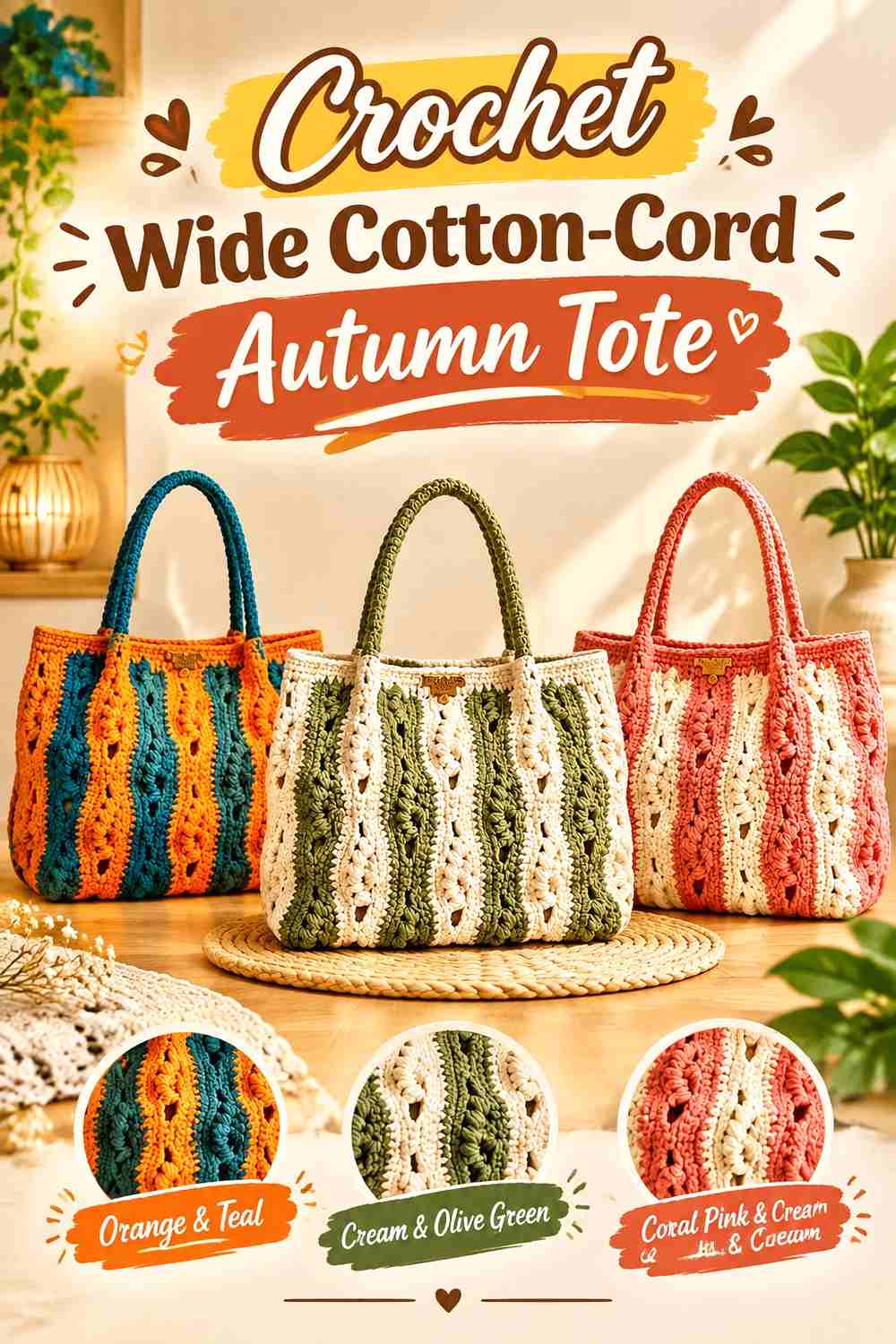
Tayla Handmade Crochet demonstrates a broad cotton-macramé-cord tote with a strong repeated texture, separate-looking strap treatment, and optional finishing details such as lining or a magnetic closure. YouTube
The wide rectangular proportion differentiates it from taller ribbed shoppers. For autumn, that shape can look especially polished in warm neutral cord because the surface resembles a substantial furnishing textile rather than a stretchy market bag.
Width Changes How Vertical Ribs Read
Vertical ribs on a tall narrow bag exaggerate height. On a broad tote, they counterbalance the width and keep the silhouette from feeling overly horizontal.
This is useful design logic if you adapt the body texture. Compare rib width with the overall front panel: very wide channels may make a broad bag look segmented, while narrower ribs give a more continuous corduroy effect.
Closures Need a Stable Upper Edge
A magnetic snap or similar closure works best when the surrounding fabric can support repeated opening and closing.
If your ribbing is particularly elastic, examine the top edge before adding hardware. A lining or firmer band may make more sense than attaching a closure directly to highly flexible stitches.
Creator Credit: Tayla Handmade Crochet
11. Crochet Basket-Rib Panel Tote
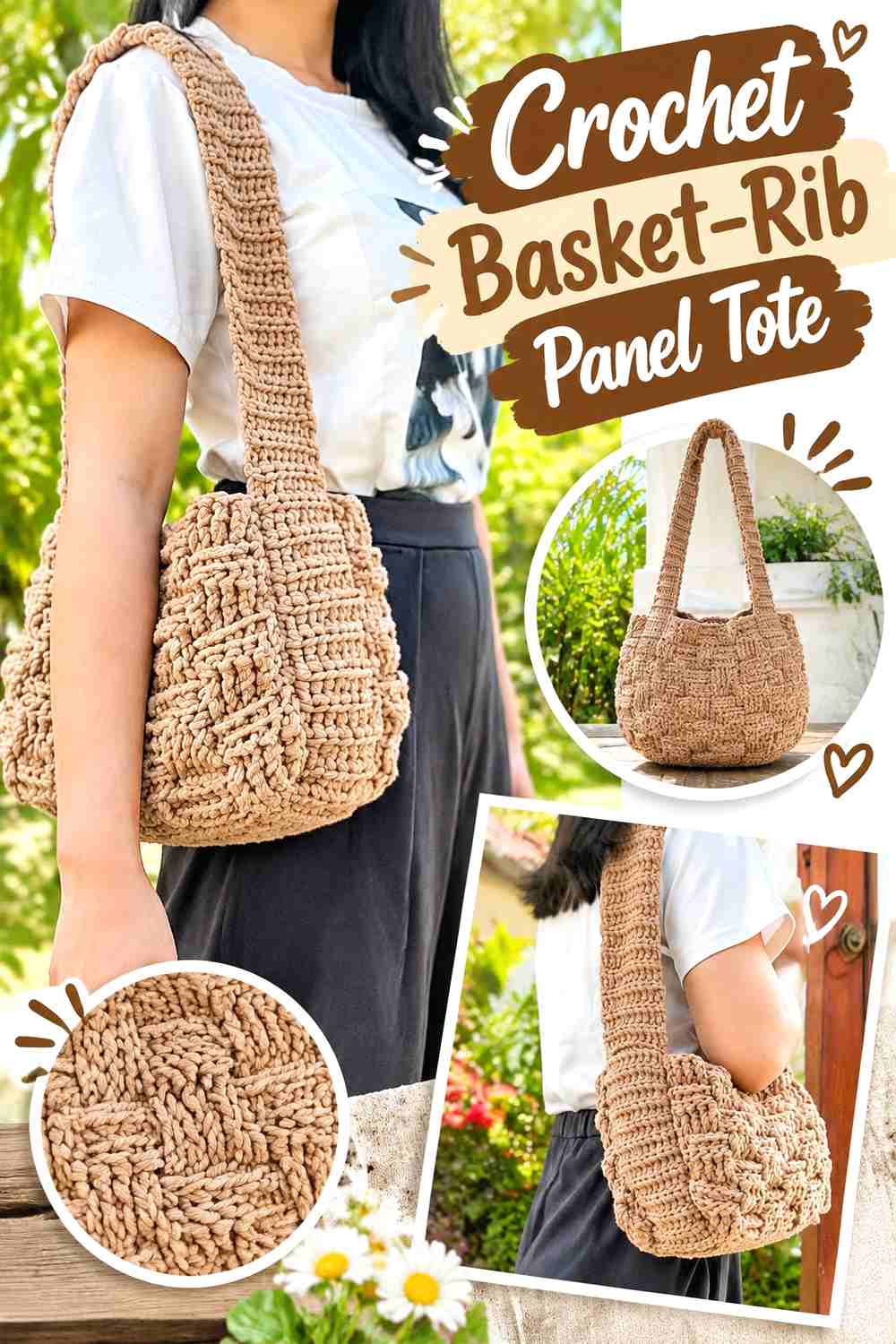
melhz crochet demonstrates a bag built around basketweave texture. Rather than creating uninterrupted narrow ribs, the raised sections alternate direction to form block-like woven panels. YouTube
This offers a broader interpretation of corduroy for readers who want shadow and relief without perfectly straight lines across the entire bag.
Basketweave Breaks Long Ribs Into Sections
Straight ribs emphasize one direction. Basketweave interrupts that movement and creates a more substantial woven appearance.
It is a good choice if you want a tote that references several autumn textiles at once—corduroy, woven wool, and basket texture—without literally imitating any one of them.
Watch for Thickness at the Side Seams
Raised blocks can make the edges of a panel much thicker than simple crochet.
Before sewing or joining a highly textured side, fold the fabric the way it will sit in the finished bag. If the seam becomes bulky, consider how that will affect comfort against the body and the overall width.
Creator Credit: melhz crochet
12. Crochet Honeycomb Ridge Tote
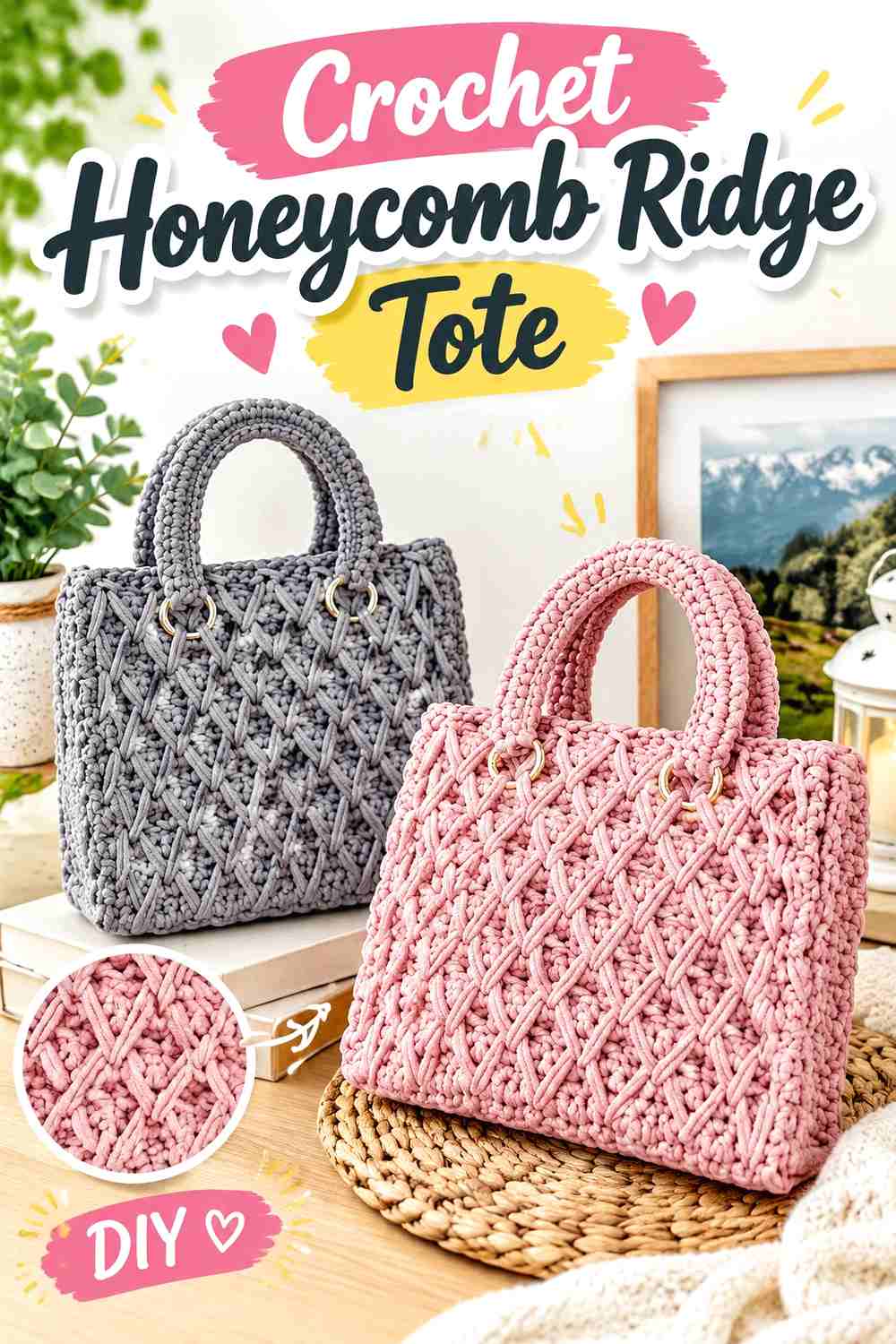
털몽치 Mongchi Crochet demonstrates a structured tote with a rectangular foundation, distinct front and back panels, dimensional honeycomb-inspired texture, and ring hardware associated with the handles. Glasp
This is one of the strongest choices when you want a very architectural autumn bag. The relief is more geometric than conventional ribbing, but the repeated raised lines and recesses can produce a similarly tactile, fabric-focused effect.
Panel Construction Gives Texture a Defined Frame
Because the textured areas read as front and back panels, the base and sides can act like a visual border.
That separation is useful when adapting a corduroy idea. You can reserve your strongest ribbing for the main faces of the tote instead of forcing it around every corner.
Hardware Changes the Level of Finish
Ring-mounted handles create a different impression from crochet straps grown directly from the body.
If you like a more handbag-like autumn tote, hardware can create a deliberate break between the tactile crochet and the handles. Just confirm that the attachment area is adequately supported for the materials and intended use.
Creator Credit: 털몽치 Mongchi Crochet
13. Crochet Plush Waffle-Rib Tote
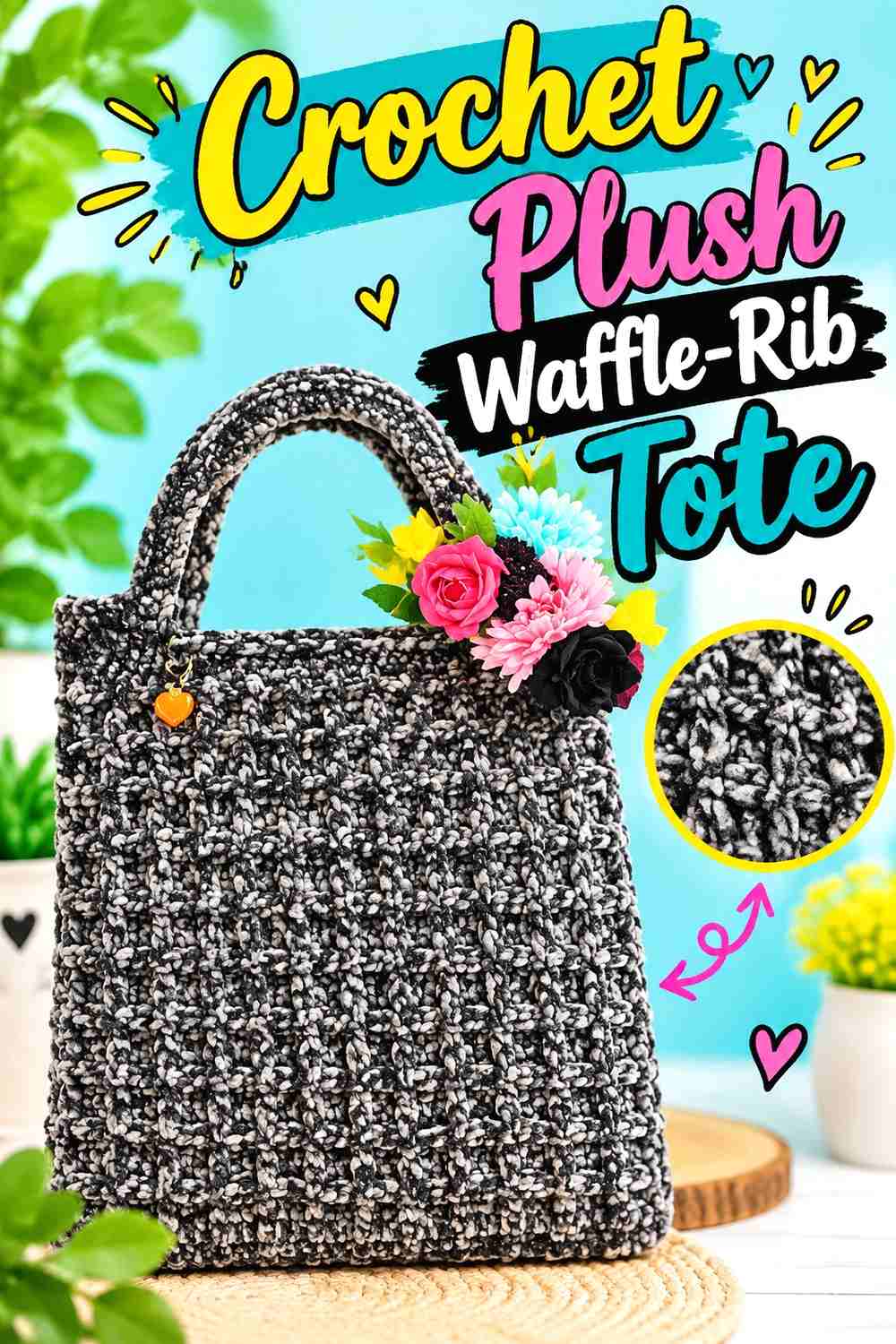
MelodyCrochet demonstrates a waffle-textured tote made with plush yarn, producing deep recessed areas and raised lines across a soft bag body. YouTube
This is the coziest interpretation in the collection. The surface moves away from classic narrow corduroy and toward a chunky, upholstery-like autumn texture.
Plush Yarn Softens the Edges of Every Ridge
A highly defined cotton cord creates sharp relief. Plush yarn rounds the same sort of raised architecture and makes the shadows less crisp.
Choose based on the look you want. For a literal corduroy reference, a smoother yarn may be more convincing. For a soft seasonal tote, the hazier texture can be the attraction.
Waffle Fabric Can Become Substantial
Dimensional crochet adds depth, and plush material adds still more bulk.
That makes this better suited to readers who appreciate a tactile bag rather than the lightest possible carry. If you enlarge it, consider the finished fabric weight before automatically turning a medium tote into an oversized one.
Creator Credit: MelodyCrochet
14. Crochet Crunch-Stitch Ribbed Tote
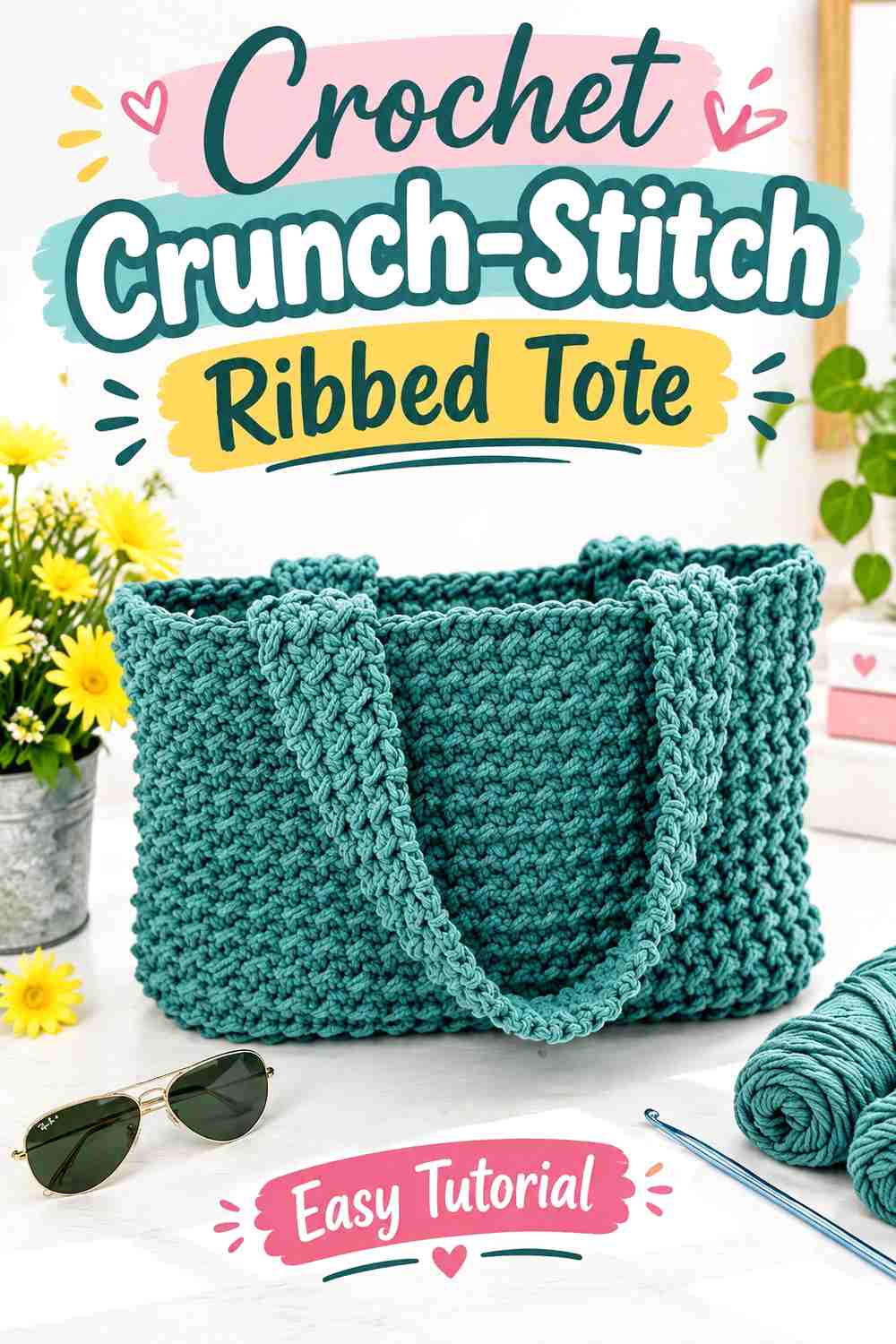
Jo to the World Creations uses crunch stitch for a large textured tote, combining alternating stitch heights into a dense surface and carrying related texture into the straps. The bag is worked from a base into the body, with the handles attached separately. Jo to the World Creations
Crunch stitch does not create traditional vertical ribs, but its orderly pebbled ridges make it useful when you want a quieter corduroy-inspired surface rather than dramatic post stitches.
Dense Texture Can Be Better for Small Contents
Very open crochet fabric lets narrow objects poke through. A denser texture reduces that issue even before lining is considered.
If your autumn tote will carry notebooks, tools, or smaller accessories rather than only bulky yarn or clothing, fabric density may matter more than achieving the deepest possible ribs.
Long Straps Need Their Own Stretch Test
A stable body does not guarantee stable handles. Straps experience concentrated pulling across a narrow width.
Test the handle fabric separately if you change yarn or stitch. The best tote texture and the best strap texture do not necessarily have to be identical.
Creator Credit: Jo to the World Creations
15. Crochet Fine-Cotton Waffle Shopper Tote
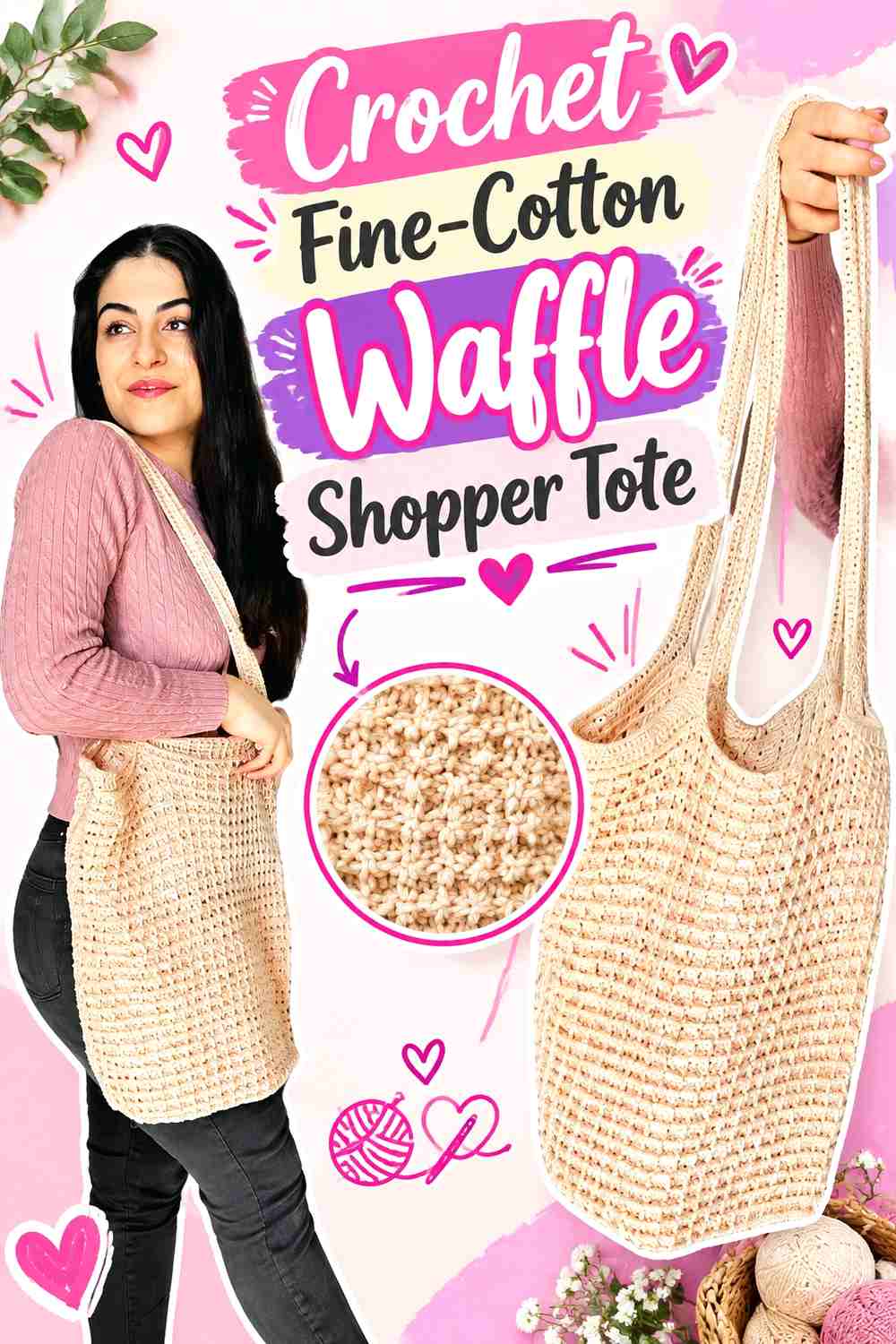
Mille Creazioni demonstrates a spacious shopper using waffle stitch and fine cotton, producing a more precise, small-scale texture than the plush waffle tote above. YouTube
That scale makes it particularly relevant to a fine-wale corduroy look. Instead of large padded blocks, the repeated relief can read as a more refined all-over textile.
Finer Yarn Makes the Shadow Pattern More Delicate
Smaller stitches create more repeats across the same bag width. That makes the surface appear continuous rather than chunky.
If you want an autumn tote that can work with tailored clothing, this can be a more restrained direction than super-bulky ribs.
Large Shopper Size Still Needs Structural Planning
Fine yarn can create beautiful definition, but a roomy bag places considerable demand on the finished fabric.
If you expect to use it for more than lightweight items, consider the behavior of the base, opening, and handles rather than judging the project only by the stitch definition.
Creator Credit: Mille Creazioni
16. Crochet Boxy Basketweave Tote
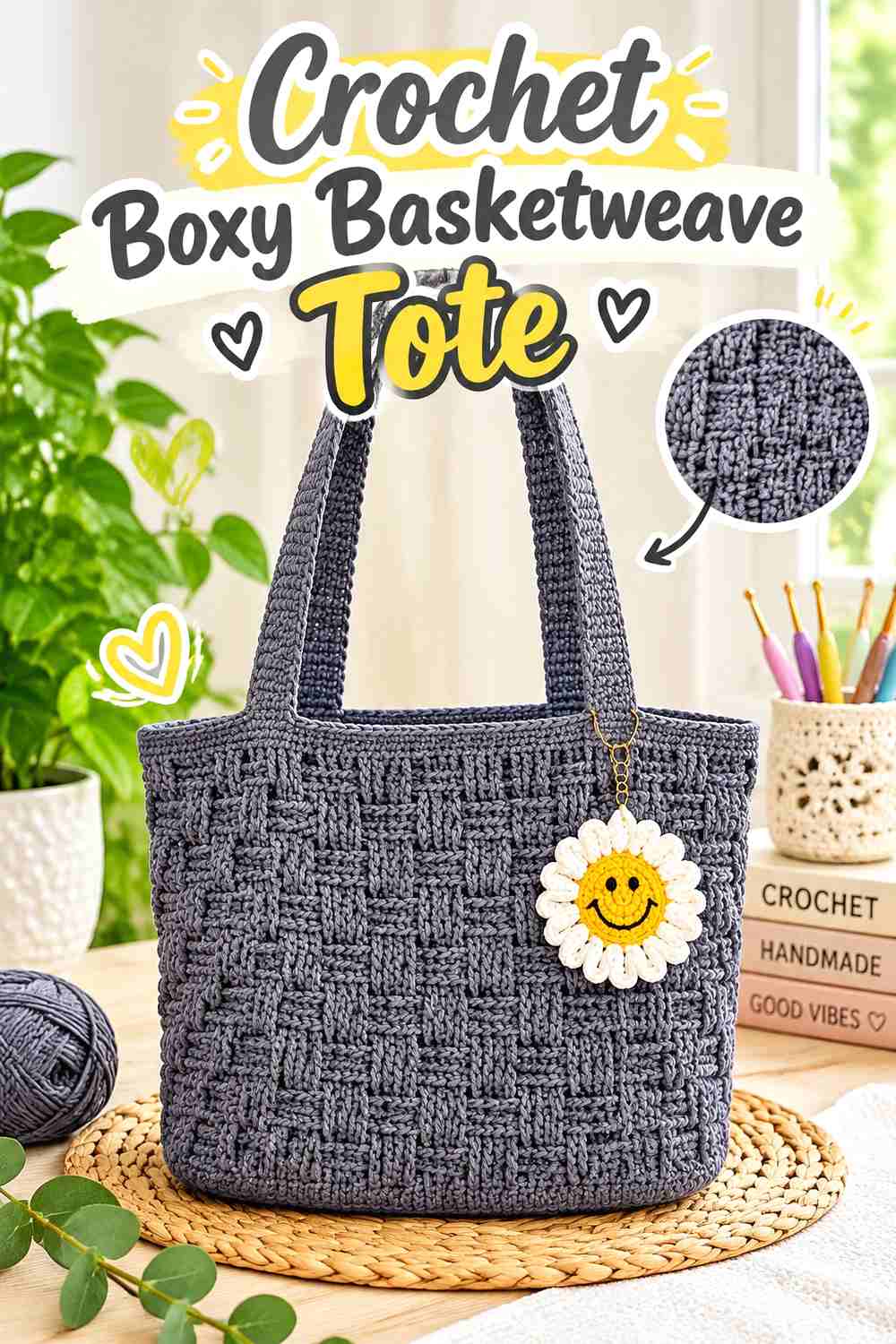
Chompu Handicrafts demonstrates a basketweave-pattern bag using cotton rope, producing a compact, boxier silhouette and a strongly dimensional exterior. YouTube
Compared with the softer basketweave option earlier, this direction is more structured. It suits an autumn tote that should resemble a small woven carryall rather than a relaxed shopper.
A Boxy Base Makes Texture Look More Tailored
Defined depth lets the front panel remain relatively flat instead of folding inward. That creates a better display surface for relief stitches.
If the corduroy-like texture is the main reason you are making the bag, a structured front can showcase it more consistently than a very slouchy body.
Cotton Rope Emphasizes Every Uneven Section
Firm cord gives excellent stitch definition, but it is less forgiving of inconsistent tension.
Look across several texture repeats as you work. Correcting a persistent change in tension early is easier than trying to reshape a rigid finished panel later.
Creator Credit: Chompu Handicrafts
17. Crochet Chunky Short-Handle Tote
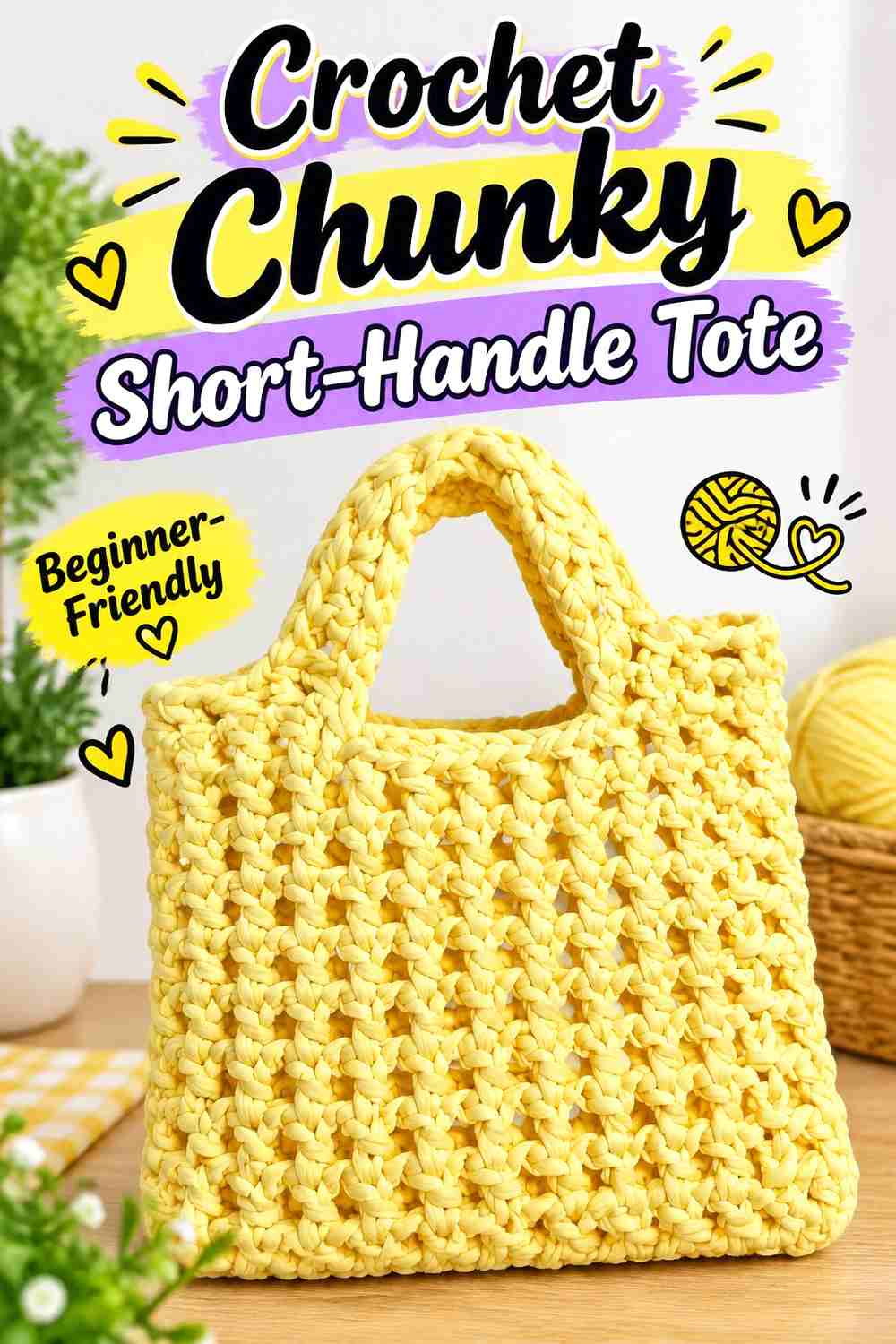
lerugi crochets demonstrates a chunky T-shirt-yarn tote with short handles and a simple, substantial body construction. The original is not presented as a corduroy bag, so this is best treated as a silhouette and handle reference for a ribbed adaptation rather than an exact texture match. YouTube
The thick material and short handles make it a useful final option for someone who wants a bold autumn carryall without a long shoulder strap.
Ribbing Would Change This Construction More Than Color Would
Replacing a plain body with elastic ribs can change width, height, and yarn consumption. That means this adaptation should begin with fabric testing rather than by preserving the tutorial’s original stitch counts.
Use the source to understand the broad tote silhouette, base relationship, and short-handle concept, then verify your own dimensions if you introduce a different body texture.
Short Handles Suit Heavy-Looking Texture
Chunky ribs already give a bag strong visual weight. Compact hand-carry handles keep the silhouette balanced and avoid adding another long vertical element.
For autumn styling, this can work particularly well in pumpkin brown, dark olive, oxblood, charcoal, or a warm undyed neutral.
Creator Credit: lerugi crochets
Comparing the 17 Corduroy-Look Crochet Tote Directions
| If you want… | Start with… | Main thing to check |
|---|---|---|
| The clearest classic rib effect | Vertical-rib everyday tote | Rib stretch under load |
| Bold wide-wale texture | Ribbon-yarn shoulder tote | Consistent tension |
| A firmer structured surface | Waistcoat-column tote | Fabric rigidity |
| Chunky tactile texture | Chunky ridge tote | Handle balance |
| Deep raised relief | Twine relief tote | Added fabric bulk |
| A large project bag | Oversized textured tote | Sagging and lining |
| Subtle tailored texture | Herringbone tote | Base structure |
| A smaller fashion bag | Compact ribbed tote | Opening and closure |
| Texture concentrated above the base | Macramé cord tote | Color-block placement |
| A broad polished silhouette | Wide cotton-cord tote | Stable upper edge |
| Woven-looking relief | Basket-rib tote | Thick side seams |
| Geometric structure | Honeycomb tote | Panel and handle support |
| Softest tactile effect | Plush waffle tote | Finished weight |
| Dense everyday fabric | Crunch-stitch tote | Strap stretch |
| Fine-scale raised texture | Fine-cotton waffle tote | Shopper structure |
| A boxy carryall | Cotton-rope basketweave tote | Tension consistency |
| Chunky hand-carry proportions | Short-handle tote | Recalculating a ribbed adaptation |
Conclusion
For the closest crochet equivalent to corduroy, start with the true ribbed totes and pay attention to both ridge width and stretch. The ribbon-yarn option creates a wide-wale look, while finer textures can produce something closer to narrow corduroy channels.
If function matters more than literal ribbing, the waistcoat, herringbone, relief, honeycomb, crunch-stitch, and basketweave projects offer different ways to create an autumn textile effect without relying on color alone. The waffle designs are especially useful when you want deeper shadow and a softer, more dimensional surface.
Choose the bag construction before choosing your autumn shade. Base shape, opening, handle length, stretch, and lining will influence everyday usefulness more than whether the finished tote is rust, olive, or brown. For exact construction details, follow the original creator tutorial associated with the project you select.
Frequently Asked Questions
How can crochet look like corduroy?
Use a fabric with repeated raised and recessed areas. Back-loop ribbing, post stitches, relief crochet, and some dense textured stitches can all produce parallel shadow lines reminiscent of corduroy. Narrower repeated ridges suggest fine-wale corduroy, while broad ribs resemble wide-wale fabric.
Should the ribs run vertically or horizontally on a crochet tote?
Vertical ribs usually create the clearest clothing-like corduroy effect and visually lengthen the bag. Horizontal ribs can work, but they tend to read more like sweater ribbing. Panel orientation can sometimes be used to turn horizontally worked crochet ridges into vertical ribs on the finished tote.
What yarn qualities help ribbing show clearly?
Smooth yarns and cords generally reveal raised stitches and shadow channels more clearly than heavily fuzzy fibers. The yarn also needs to produce a fabric suitable for a bag, so stitch definition should be considered alongside stretch and structure.
Do ribbed crochet totes stretch more than plain totes?
Some ribbed constructions can be quite elastic, but the amount depends on the stitch, yarn, orientation, and tension. Test a representative swatch and gently load it before relying on its relaxed dimensions.
Is lining useful for a ribbed crochet tote?
It can be. A lining may reduce stretching, prevent small items from pushing through the crochet fabric, and help a soft bag maintain its shape. Whether you need one depends on the stitch density and how you intend to use the tote.
Can I replace the stitches in any tote tutorial with rib stitch?
Not without checking the consequences. A rib stitch can have a different width, height, elasticity, and yarn requirement from the original fabric. Changing it may also affect the relationship between the body, base, handles, and opening.
Which autumn colors show a corduroy-like texture well?
Medium and warm values often reveal relief clearly because shadows remain visible between the ribs. Camel, caramel, rust, muted pumpkin, olive, burgundy, oatmeal, and medium brown are natural options, but test very dark shades if stitch definition is important because shallow texture can become harder to see.