Gingerbread slipper socks bring two Christmas favorites together: warm handmade footwear and the decorated-cookie look of brown gingerbread, white icing, bright candy buttons, and cheerful faces. The theme can be playful and obvious, or it can be reduced to a warm brown slipper with a narrow white scalloped edge and a few carefully chosen accents.
There is a published crochet design specifically called Gingerbread Dreams Slipper Socks, but it is a written pattern rather than one of the qualifying YouTube tutorials used for the project credits below. The 14 ideas in this collection therefore use different verified slipper and slipper-sock video constructions as starting points for independent gingerbread adaptations.
That distinction is important. Adding an embroidered face to a plain toe is a relatively small change. Replacing the fitted foot with thick appliqués, heavy surface crochet, or bulky decorations can alter comfort and fit. The best gingerbread slippers keep the sole practical, preserve the tutorial’s basic construction, and concentrate decorative details on the visible upper, cuff, ankle, or outside of the foot.
Quick List
- Crochet Gingerbread Face Slipper Socks
- Crochet Icing-Cuff One-Piece Gingerbread Slipper Socks
- Crochet Gumdrop Stripe Gingerbread Slipper Socks
- Crochet Chunky Gingerbread Cookie Slippers
- Crochet Cable-Icing Gingerbread Slippers
- Crochet Gingerbread Loafer Slippers
- Crochet Brick-Texture Gingerbread House Slippers
- Crochet Candy-Button Gingerbread Slippers
- Crochet T-Shirt Yarn Gingerbread Slipper Socks
- Crochet Simple Gingerbread House Slippers
- Crochet Scalloped-Icing Gingerbread Slippers
- Crochet Gingerbread Cuff Slipper Boots
- Crochet Gingerbread Lace-Up Slipper Boots
- Crochet Buttoned Gingerbread Slipper Boots
Keep Gingerbread Decorations Off the Walking Surface
A gingerbread face belongs naturally on the toe or upper because those areas are visible without sitting directly beneath the foot. Flat embroidery, surface details, small appliqués, and icing-like edging can create the theme without changing the sole.
Avoid putting dimensional gumdrops, raised buttons, knots, or other decorative pieces on the bottom of the slipper. Even soft yarn decorations can form uncomfortable pressure points, and loose additions can affect how the foot contacts the floor.
The same principle applies inside the slipper. Secure yarn ends carefully and avoid creating bulky knots where the foot will repeatedly rub against them.
Check Fit Before Adding the Face and Icing
Slipper socks depend more heavily on fit than ornaments or decorative stockings. Yarn substitution, tighter colorwork, extra surface crochet, or an added cuff can change circumference and stretch.
Finish enough of the basic slipper to check it against the intended foot before completing the gingerbread decorations. If the tutorial provides a sizing system, use that rather than assuming one adult slipper will fit everyone.
For pairs, compare the two slippers at equivalent stages. Decorative stitching can subtly pull one toe inward or make one ankle opening less flexible than the other.
Use the Gingerbread Palette Strategically
A medium or warm brown main yarn establishes the cookie effect immediately. White or cream can suggest icing, while red, pink, green, turquoise, yellow, or other bright shades can supply candy accents.
You do not need every Christmas color on every slipper. A brown base, one icing color, and two accent colors can be easier to read than a large number of competing details.
If the toe carries a gingerbread face, arrange the eyes, mouth, cheeks, and candy elements before attaching them permanently. Footwear curves when worn, so details that look correctly positioned on a flat slipper may shift once the foot fills the toe.
1. Crochet Gingerbread Face Slipper Socks
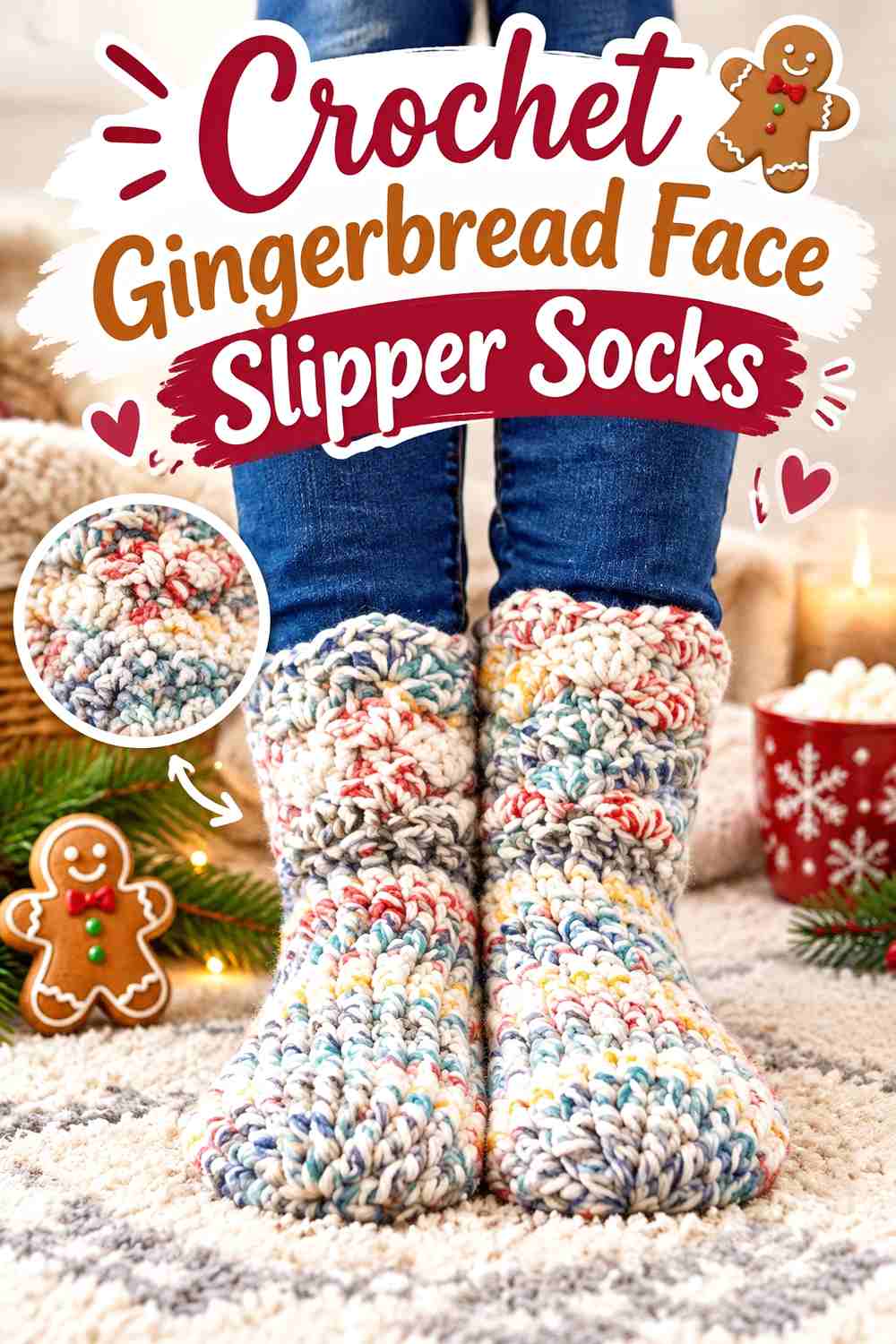
B.Hooked Crochet’s slipper-sock construction combines a fitted foot with a taller decorative upper, giving you two separate areas for gingerbread styling. Keep the foot in a cookie-brown shade, use the toe for the face, and reserve white or cream for icing-like details near the ankle.
This approach works particularly well when you want the finished project to look more like a sock than an open house shoe.
Center the Face While the Slipper Is Being Worn
A toe section naturally rounds over the foot. Temporarily position the eyes and mouth while the slipper contains a foot form or is being carefully tried on.
That gives you a more realistic view than centering everything on flattened fabric. The facial features should look balanced from above, not merely when the slipper is lying on a table.
Turn the Decorative Upper Into an Icing Zone
The taller ankle provides room for a white shell, scallop, or contrasting band without crowding the gingerbread face. Keep the color relationship simple so the ankle reads as icing rather than an unrelated second design.
If you adapt the cuff, make sure the new edging does not reduce the stretch needed to pull the slipper over the heel.
Flat Candy Details Are Better Near the Toe
Bright dots or small flat appliqués can suggest candy buttons, but keep bulky pieces away from areas likely to rub against furniture or the opposite foot.
Creator Credit: B.Hooked Crochet
2. Crochet Icing-Cuff One-Piece Gingerbread Slipper Socks
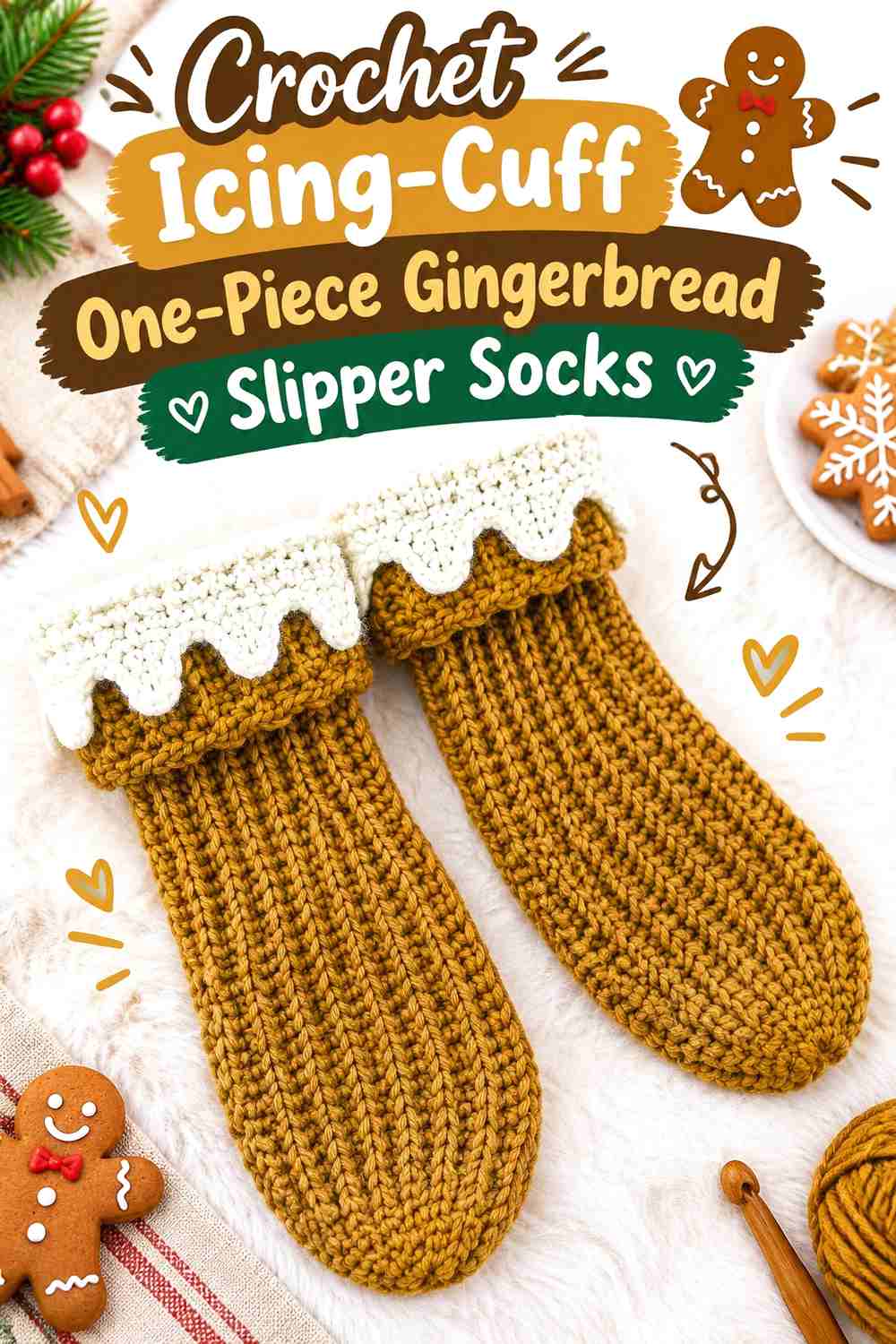
Sirin’s Crochet demonstrates a one-piece slipper-and-sock construction, giving this version a comparatively clean base for holiday embellishment. A mostly brown body can become the gingerbread cookie, while the opening provides a natural boundary for white icing-style trim.
The simpler surface also leaves room for small facial or candy details without competing with a heavily textured stitch pattern.
Preserve the Simplicity of the One-Piece Shape
The attraction of this construction is its straightforward silhouette. Rather than covering every inch with decorations, concentrate the theme at the toe and opening.
That approach keeps the underlying shape recognizable and reduces the chance of decorative additions changing how the slipper flexes.
Test the White Cuff Before Repeating It
An icing edge can look decorative while still tightening the opening. Complete a short section, stretch it gently, and compare it with the untreated opening.
If the new border noticeably restricts the fabric, choose a looser or less dense decorative treatment.
Use Embroidery for a Low-Bulk Gingerbread Expression
A stitched smile and flat eye details can give the toe plenty of personality without adding thick components over the foot.
Creator Credit: Sirin’s Crochet
3. Crochet Gumdrop Stripe Gingerbread Slipper Socks
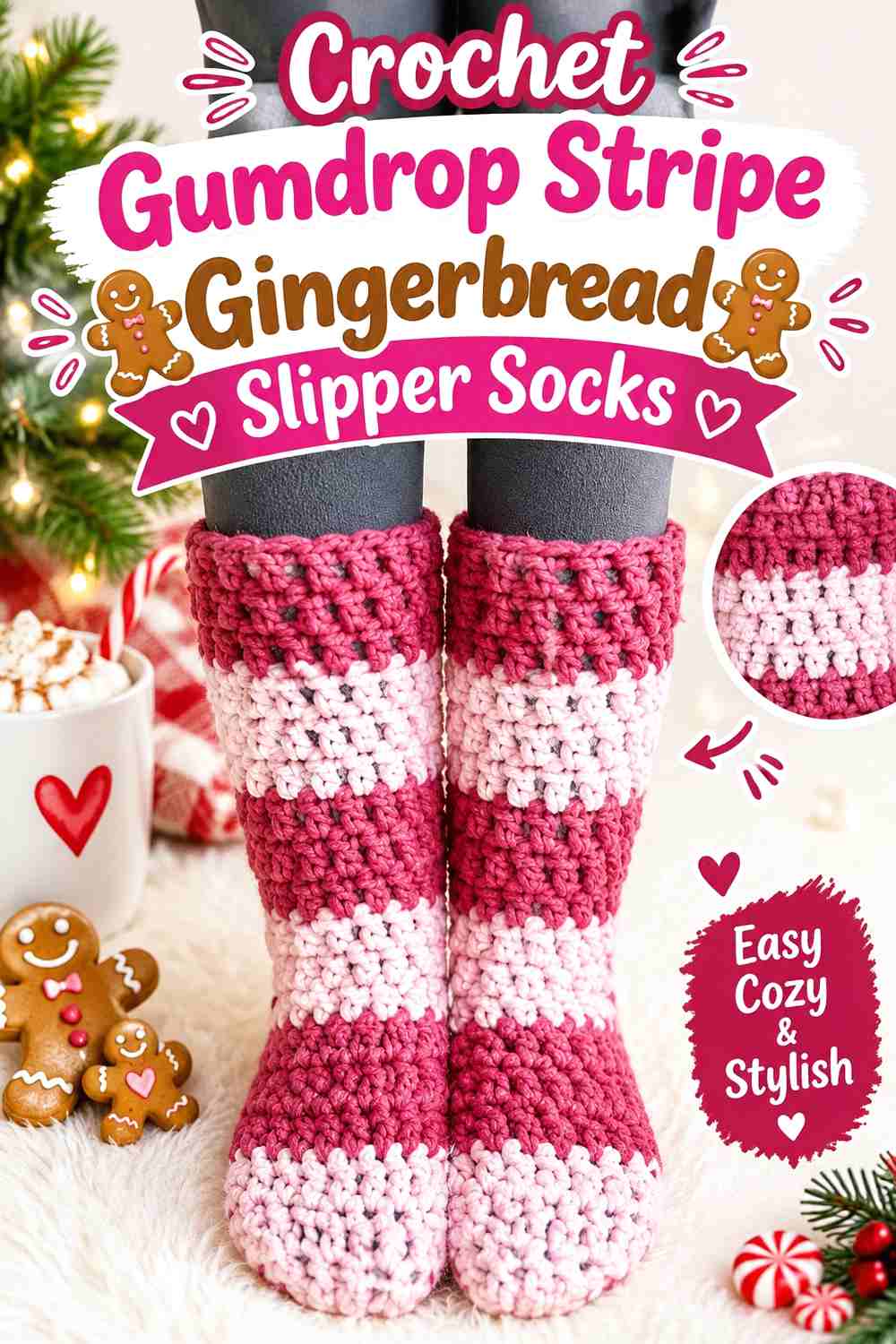
Fiber Flux’s slipper-sock source uses a tall tube-like silhouette and prominent striping, making it especially adaptable to a gingerbread-house color story. Instead of treating the stripes as ordinary bands, assign them specific decorative roles: brown cookie sections, white icing, and narrow candy-colored accents.
This construction is useful when you want the Christmas theme to extend up the leg rather than remain concentrated at the toe.
Space the Candy Colors With Brown or White
Red, green, pink, and yellow can quickly become visually busy when placed side by side. Separating brighter stripes with brown or cream gives each accent more definition.
A repeated sequence will usually look more intentional than changing the order randomly between the two socks.
Reserve the Face for One Clear Brown Section
If you want a gingerbread face, leave enough uninterrupted brown fabric at the toe or lower front. A face placed across several narrow stripes can become difficult to recognize.
Keep Optional Ties Away From Added Decorations
If your chosen version includes a tie or drawstring treatment, keep appliqués and surface details clear of its path. The opening still needs to function normally.
Creator Credit: Fiber Flux
4. Crochet Chunky Gingerbread Cookie Slippers
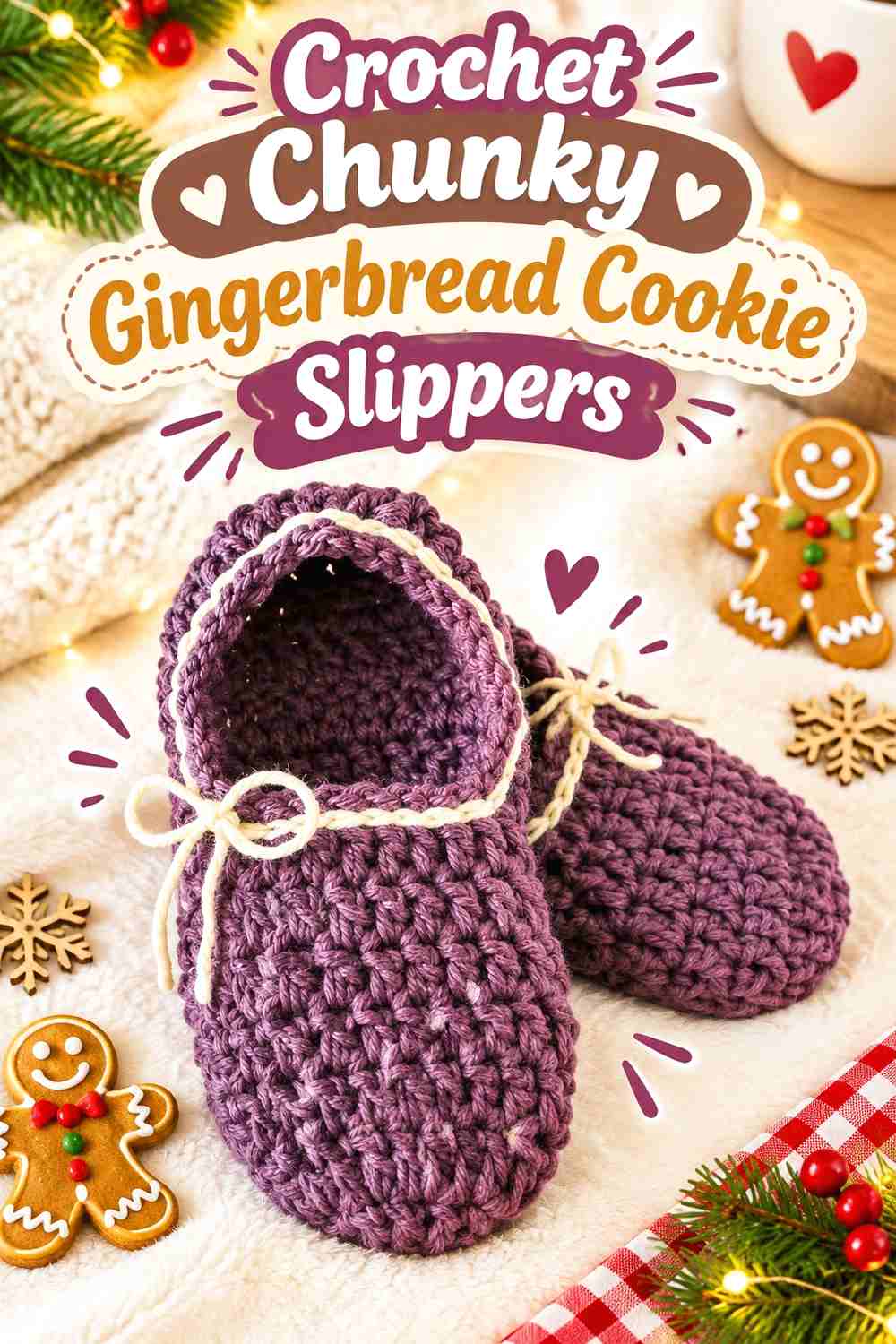
WoolyWondersCrochet’s chunky women’s slipper construction provides a substantial base that can carry a bold gingerbread face without needing many tiny details. The source demonstrates multiple sizing approaches through hook choice.
A brown chunky slipper with oversized white icing lines can read clearly even from across the room, making this idea suitable for Christmas morning photos or gift pairs.
Scale the Face to the Chunky Fabric
Fine embroidery can disappear between large stitches. Use facial features that are visually proportional to the heavier fabric instead of copying the scale of decorations from a fine-yarn ornament.
This does not mean every feature needs to be dimensional. Wider flat stitching can provide enough contrast.
Avoid Adding Bulk Across the Toe Bend
The toe already contains thick yarn. Additional padded appliqués may make the upper stiffer than intended, so keep decorative pieces flat where the foot needs to flex.
Compare Both Shoes After Decorating the First Toe
A large gingerbread face can visually change the apparent size of a slipper. Use the first decorated shoe as a placement reference before permanently attaching details to the second.
Creator Credit: WoolyWondersCrochet
5. Crochet Cable-Icing Gingerbread Slippers
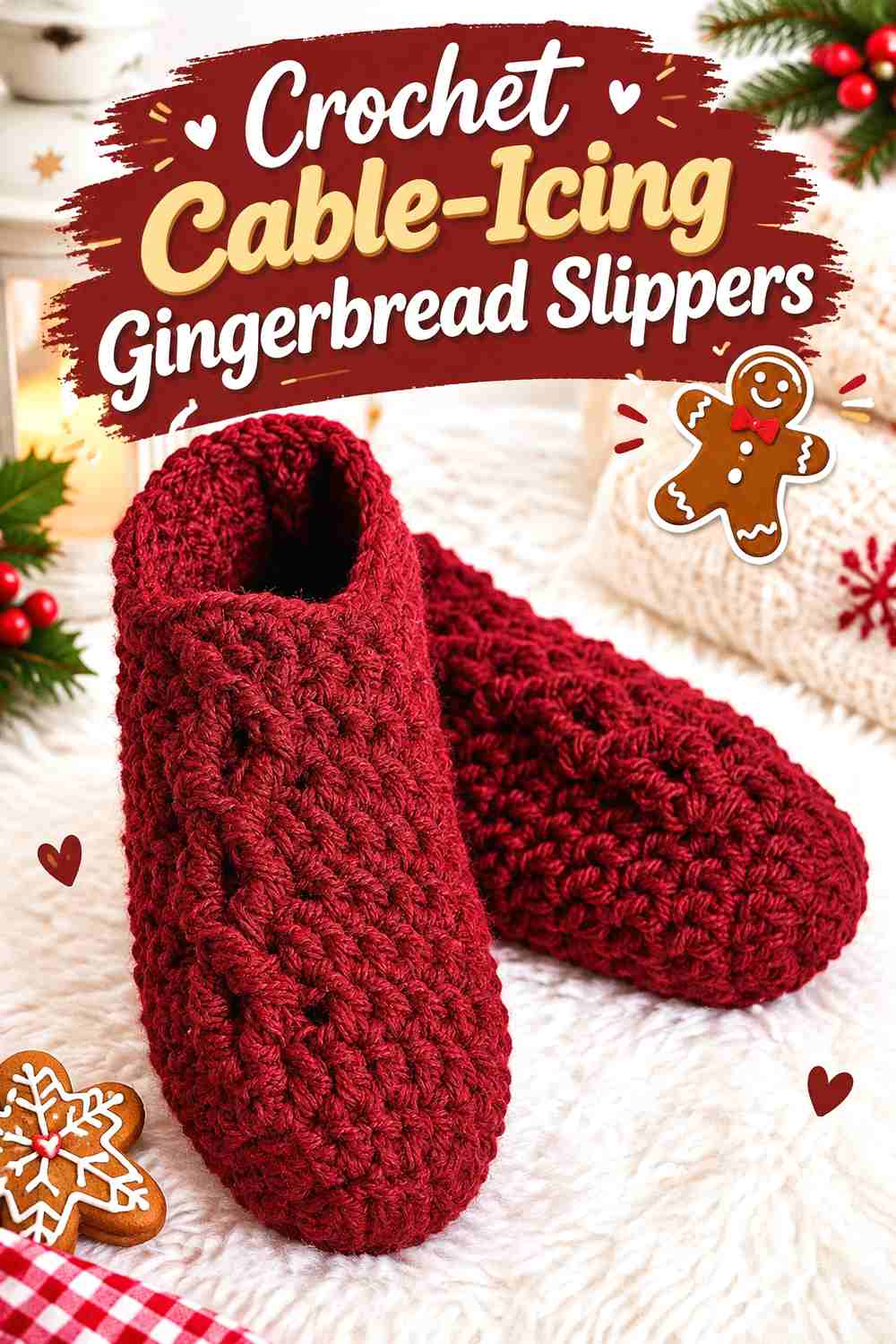
Tamara Kelly’s slipper construction features a strong cable detail, giving you texture that can be incorporated into the gingerbread theme rather than covered up. The tutorial is specifically associated with chunky cable slippers.
Use brown for most of the shoe and think of the raised cable as piped icing. A cream cable against darker brown can create the holiday effect without requiring a literal gingerbread face.
Let the Cable Replace Extra Surface Decoration
The raised central detail already attracts attention. Highlighting it in an icing color can be more effective than adding another large motif on top.
This is a good option for someone who wants gingerbread-inspired footwear that feels less novelty-driven.
Keep Color Changes From Tightening the Cable Panel
If you introduce contrasting yarn specifically around textured stitches, compare the width of the altered panel with the tutorial’s original structure.
A decorative center that pulls inward can affect the fit over the top of the foot.
Candy Accents Can Stay Near the Opening
A couple of small red or green details around the upper edge can reinforce the Christmas theme while leaving the cable as the dominant feature.
Creator Credit: Tamara Kelly
6. Crochet Gingerbread Loafer Slippers
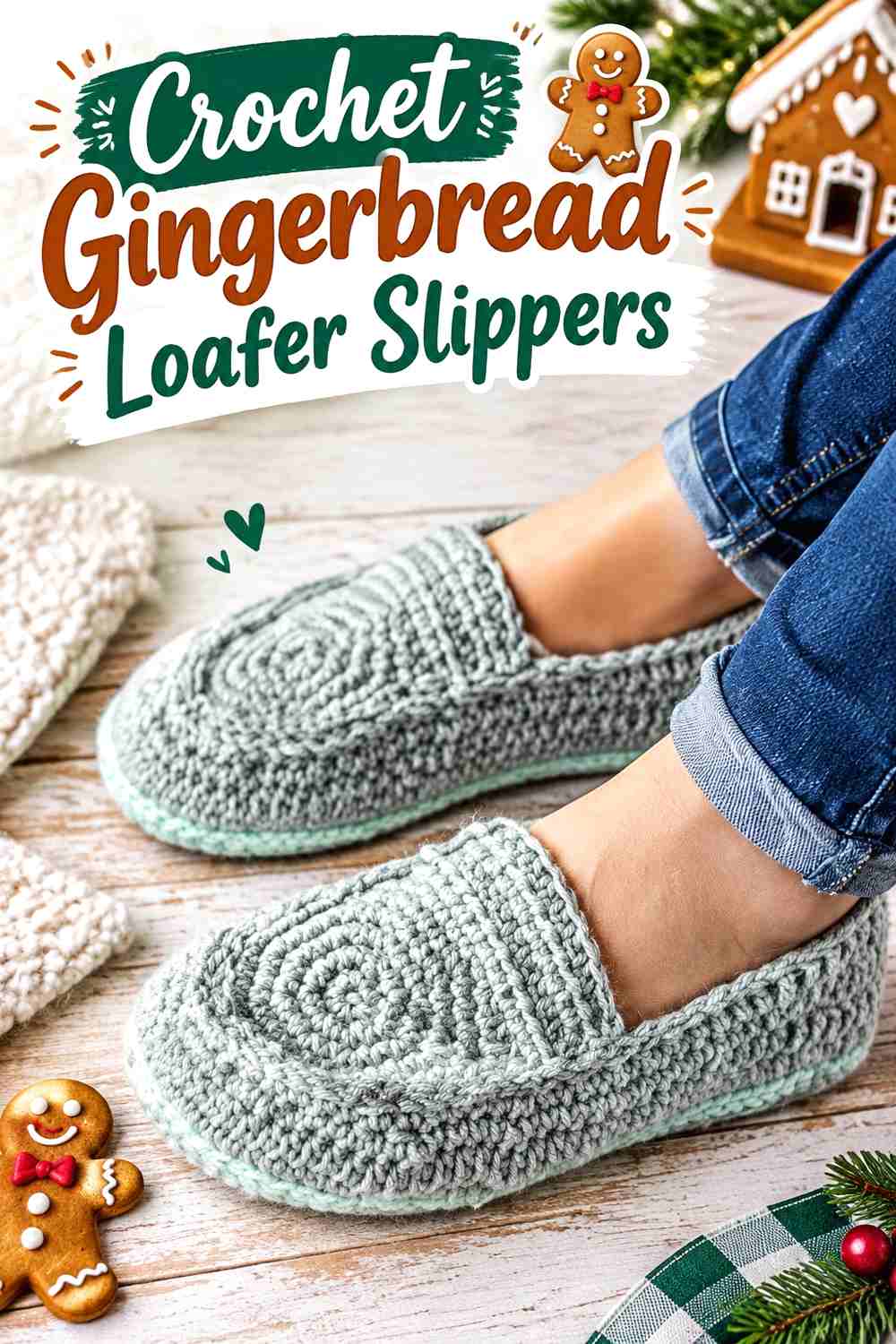
Bethany Dearden’s loafer slipper offers a lower, more shoe-like profile than the sock and boot constructions elsewhere in this collection. The design is documented as a women’s loafer slipper with a video tutorial.
This shape suits a gingerbread theme concentrated on the vamp—the visible upper section—rather than around a tall cuff.
Use the Vamp Like a Decorated Cookie
A broad front section provides a logical place for a simple face, icing outline, or a row of flat candy-style dots.
Keep the decorations inside the visible upper rather than allowing pieces to extend onto areas that rub against the floor.
A Low Opening Needs Less Icing
A thick white border around the entire opening could overpower a loafer silhouette. A narrow contrast edge or just a few icing-like curves may be enough.
Check Decoration Placement With Both Shoes Side by Side
Loafers have an obvious front-facing panel. Small differences in eye or button placement can therefore be more noticeable than on heavily textured slippers.
Creator Credit: bethany dearden
7. Crochet Brick-Texture Gingerbread House Slippers
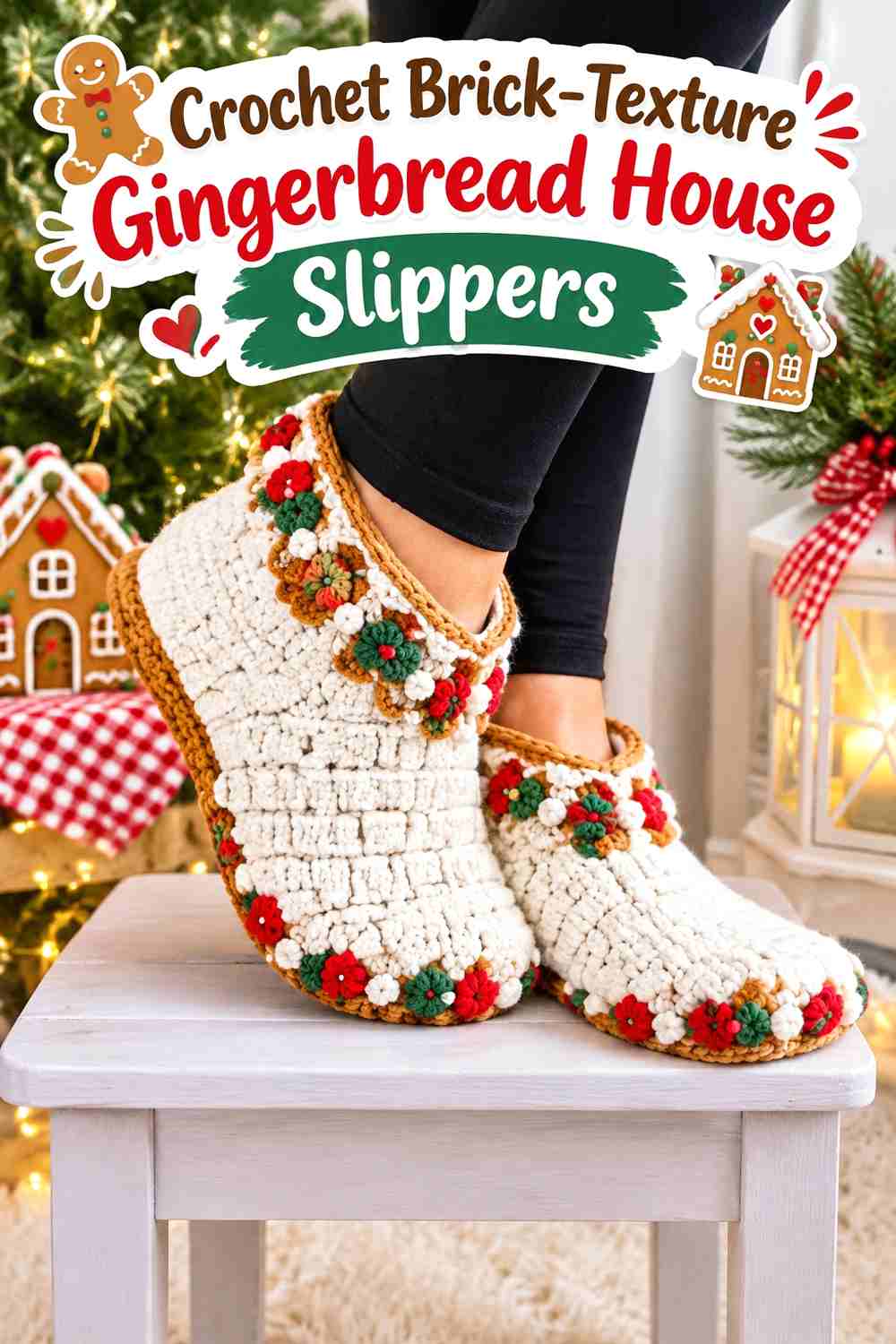
Dorianna Rivelli’s slipper tutorial includes a chunky brick-style option, making the surface an appealing match for a gingerbread-house interpretation. Instead of adding a face, use the texture itself as the architectural feature.
Brown fabric can suggest gingerbread walls, while cream edging and small colored accents can reference piped icing and candies.
Treat the Texture as the House Wall
A strongly textured stitch pattern does not need to be hidden beneath appliqués. Use contrast strategically around the top or edges and let the raised surface provide most of the design.
This creates a more abstract gingerbread slipper than the face-based options.
Keep Tiny Candy Details on Stable Areas
If you add colored circles or dots, place them where the surface does not fold sharply when walking.
Decorations sitting directly over a pronounced texture can also tilt, so preview their position before sewing them down.
Use the Pair as a Coordinated House Rather Than Identical Copies
One slipper can emphasize red accents and the other green while retaining the same brown-and-white base. The result still reads as a pair without requiring every candy detail to match.
Creator Credit: Dorianna Rivelli
8. Crochet Candy-Button Gingerbread Slippers
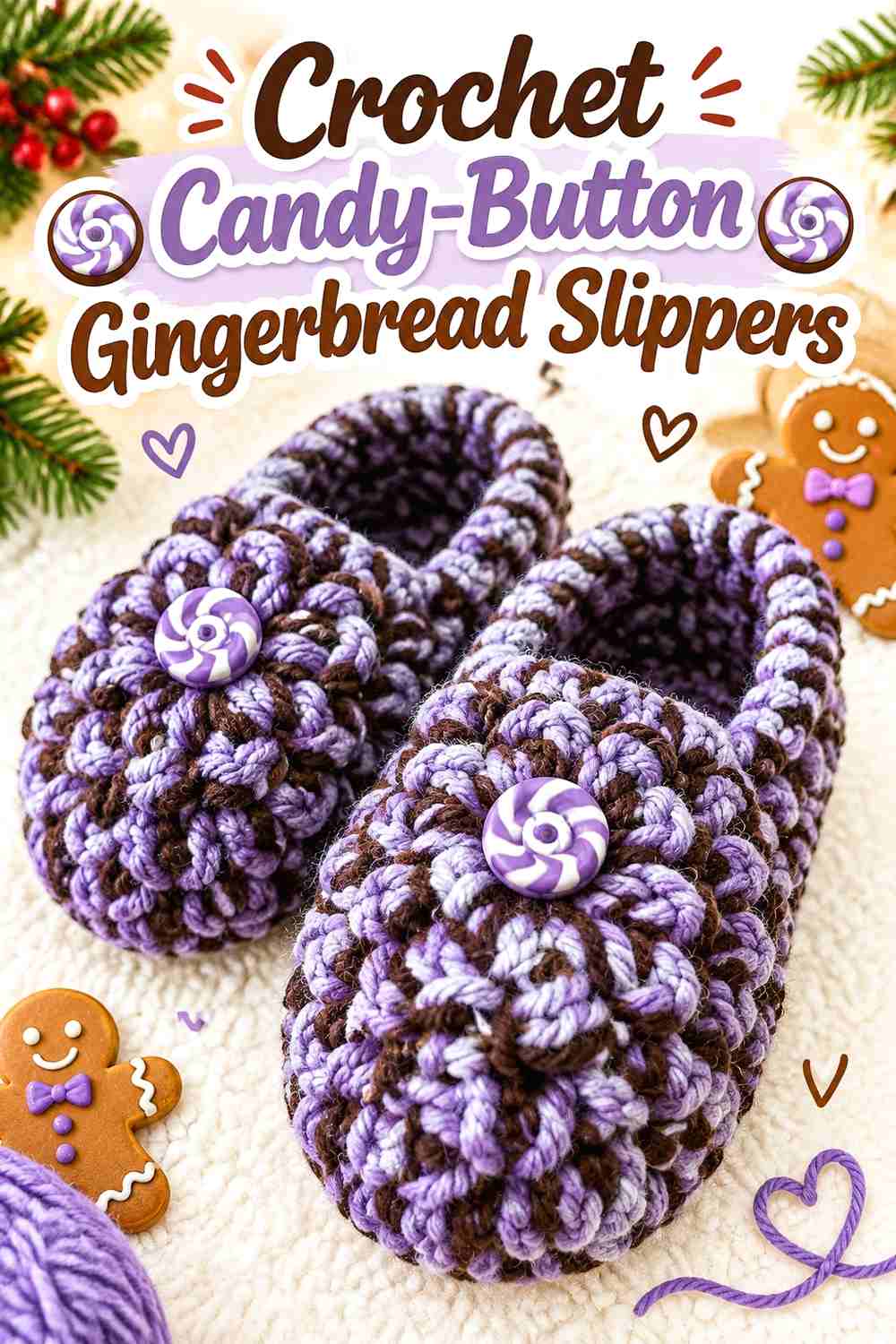
AllFreeCrochet’s slipper video provides another basic house-slipper construction that can act as a neutral canvas for holiday decoration. The tutorial is included in a curated collection of full slipper videos.
This version works well for a classic gingerbread-man treatment: brown body, white outline details, and two or three bright candy-inspired buttons positioned on the visible upper.
Use Decorative Buttons Only Where They Will Not Be Stepped On
Actual buttons can provide strong gingerbread character, but footwear moves and rubs against nearby objects. Keep hard components on the upper and away from the floor-contact area.
For children or anyone for whom loose small parts may create a hazard, use stitched or crocheted flat alternatives instead.
Make the White Icing Outline Continuous
A clean white line around a brown upper can establish the cookie look before any face is added. If the edge begins to ripple, adjust the finishing tension rather than relying on later decorations to hide it.
Keep the Sole Visually Quiet
The strongest gingerbread effect usually comes from the top. Leaving the sole in a plain brown or neutral color keeps attention on the decorated upper.
Creator Credit: AllFreeCrochet
9. Crochet T-Shirt Yarn Gingerbread Slipper Socks
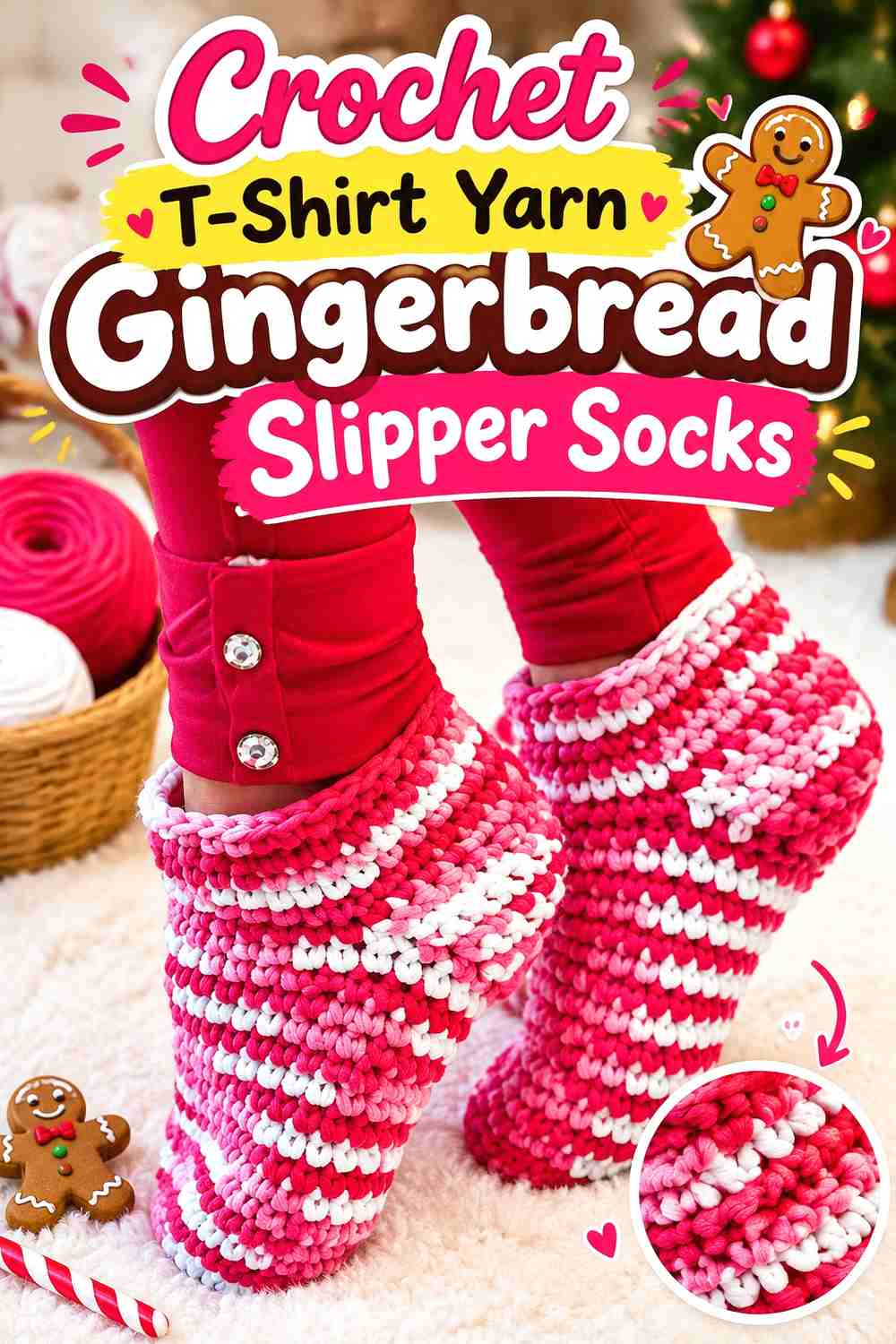
Jayda InStitches’ slipper-or-sock source uses T-shirt yarn, creating a noticeably different scale and fabric from conventional worsted or bulky yarn slippers. It is listed specifically as a slipper/sock tutorial.
This heavier material favors bold gingerbread styling. Broad white bands and large graphic details will generally suit the scale better than delicate icing embroidery.
Increase the Decoration Scale With the Yarn
A tiny stitched smile that works on fine yarn may become nearly invisible on T-shirt yarn. Judge the facial features from standing distance and enlarge the visual elements if necessary.
Avoid Layering Too Many Thick Materials
The base fabric is already substantial. Multiple thick appliqués can make the upper cumbersome, so choose one or two strong gingerbread signals rather than every possible decoration.
Use Wide Icing Bands Instead of Fine Lines
A broad cream edge or chunky zigzag can complement the scale of the slipper better than narrow surface stitching.
Creator Credit: Jayda InStitches
10. Crochet Simple Gingerbread House Slippers
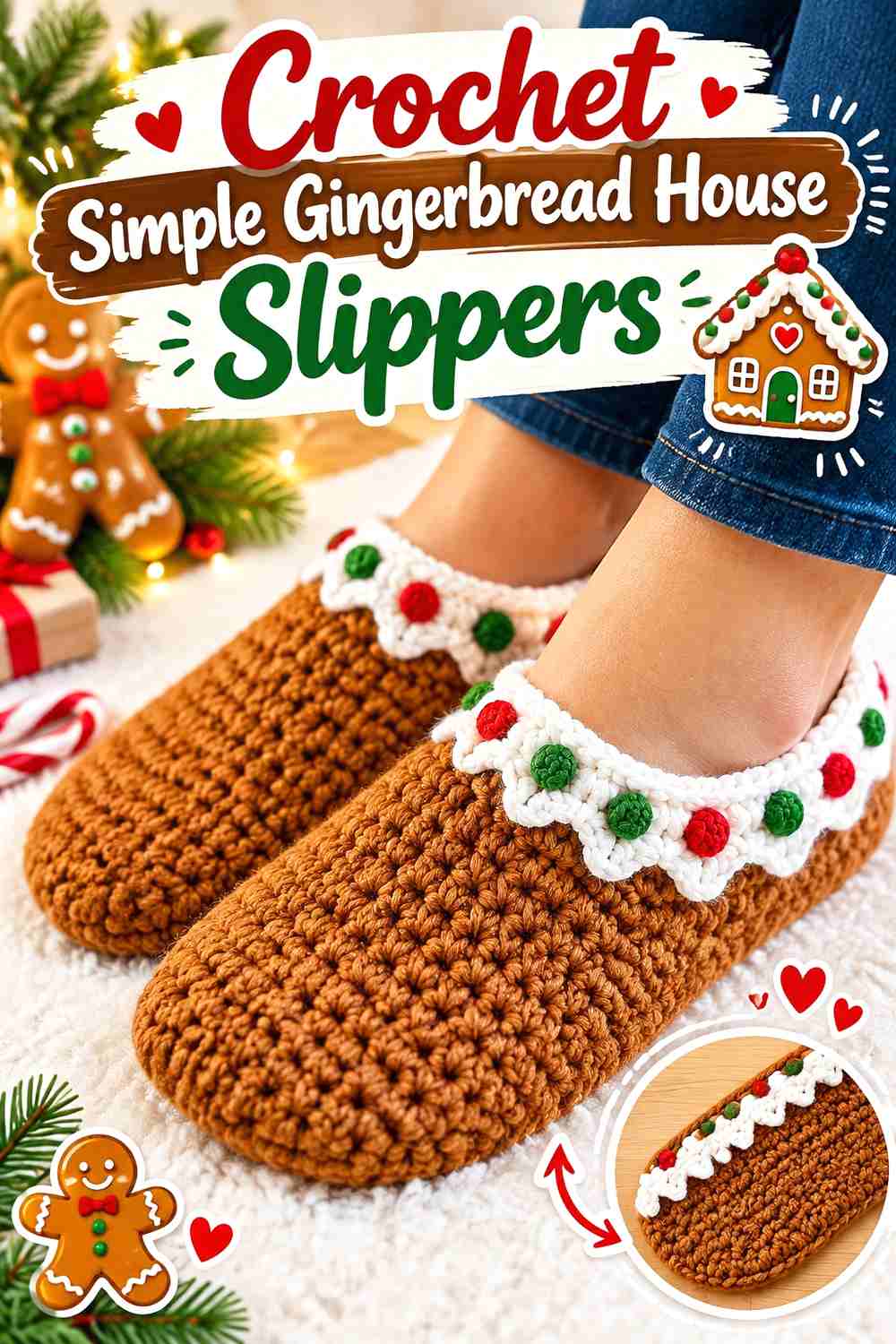
HappyBerry Crochet’s adult slipper tutorial provides a straightforward unisex-style house-shoe construction that can support a more understated gingerbread adaptation. The source is specifically identified as an adult slipper tutorial for men or women.
Instead of adding a cartoon face, use brown as the foundation and place narrow white geometric lines across the upper to suggest the icing on a decorated gingerbread house.
A Geometric Icing Pattern Makes This Version Less Childlike
Straight or zigzag white lines can reference cookie decoration without producing a character face. Add one muted red or green accent if you want a stronger Christmas connection.
Keep Surface Crochet Flexible
Decorative lines worked too tightly can shorten or pucker the upper. After each major section, place the slipper against its matching shoe and check whether the fabric still has similar dimensions.
This Shape Can Work as a Coordinated Family Style
Because the gingerbread treatment does not depend on a large face, the colors and icing layout can be varied without changing the underlying concept.
Use the creator’s own sizing guidance rather than assuming a single construction measurement works for every wearer.
Creator Credit: HappyBerry Crochet
11. Crochet Scalloped-Icing Gingerbread Slippers
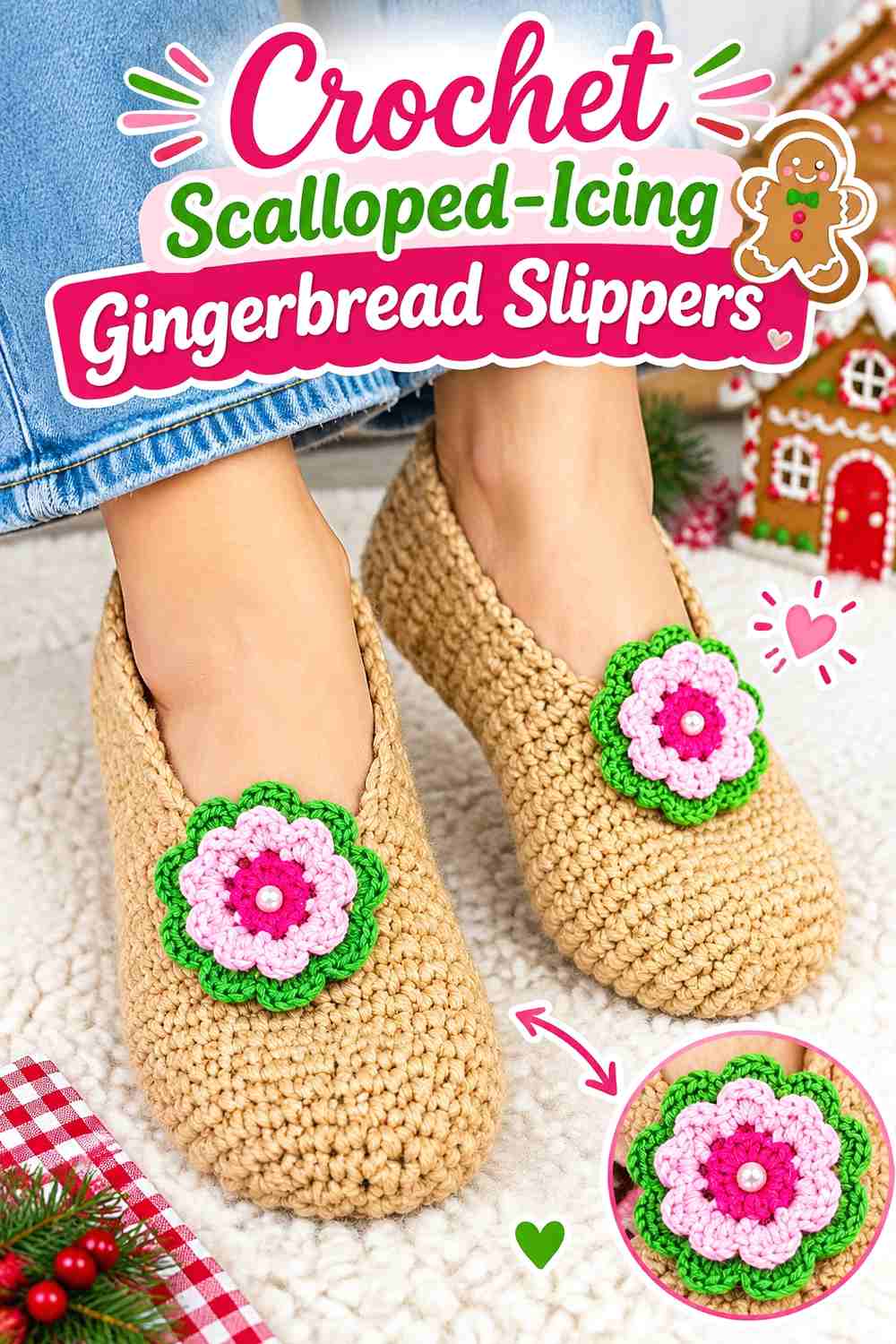
Naztazia’s slipper tutorial uses a traditional bedroom-slipper format that is well suited to a visible decorative edge. The source appears in a verified collection of YouTube slipper tutorials.
A brown slipper with a white scalloped opening can suggest piped royal icing even without adding eyes or candy buttons.
Let the Opening Carry the Christmas Theme
This is a useful choice if you prefer footwear that only hints at gingerbread. Keep the body brown and place the strongest holiday detail around the upper edge.
A small red or green bow, dot, or flat accent can complete the palette without turning the whole toe into a character.
Check Scallops for Consistent Spacing
Irregular white edging is more visible against a dark brown background. Divide the opening visually before beginning so the first and last decorative sections do not crowd each other.
Do Not Let the Border Reduce Entry Space
A decorative opening still has to pass over the foot. Test the slipper after the border is added before completing the second shoe.
Creator Credit: naztazia
12. Crochet Gingerbread Cuff Slipper Boots
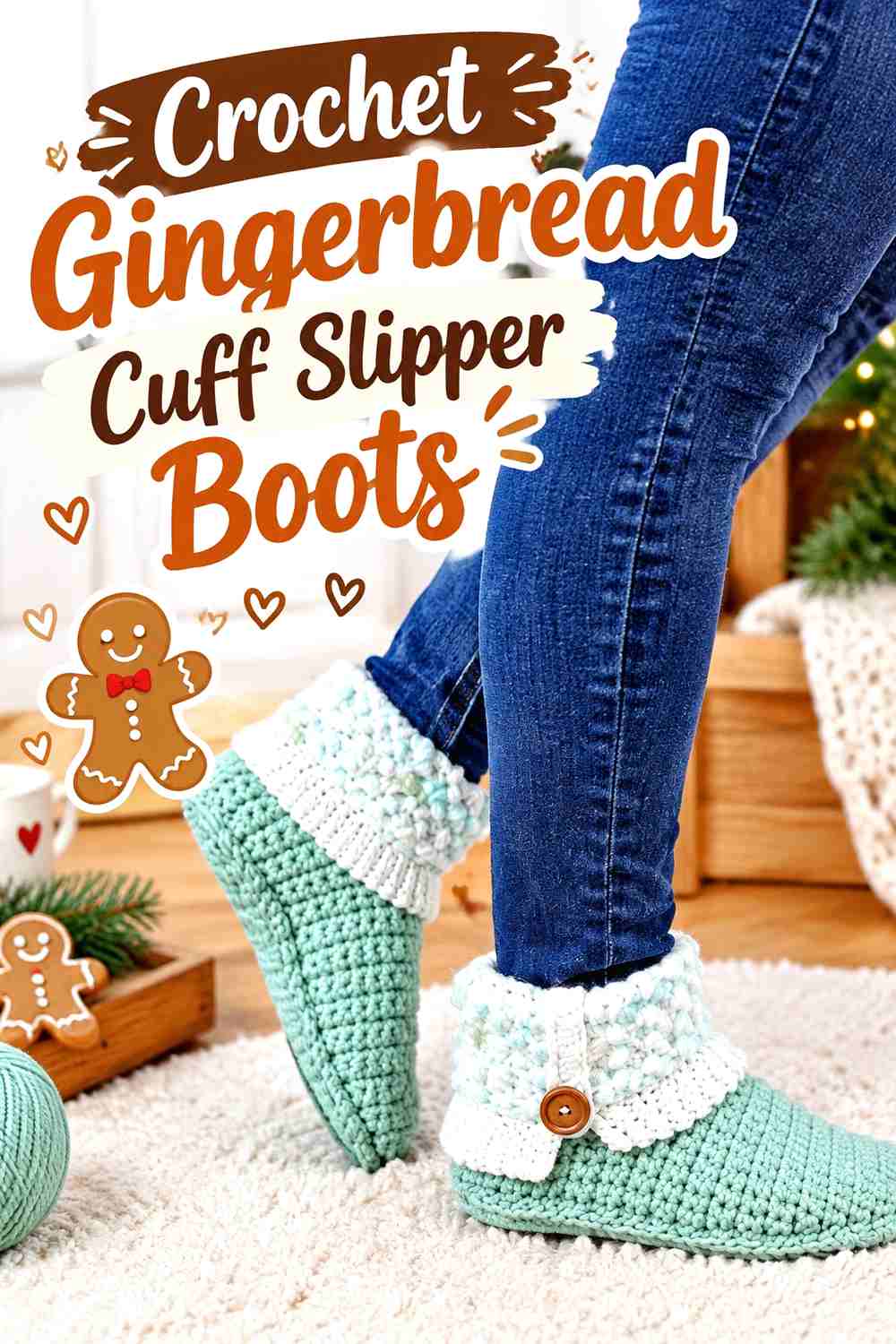
A Crocheted Simplicity’s slipper boots use separate sole, upper, ankle, and textured cuff components, creating clearly defined areas for color and decoration.
That construction lends itself naturally to a gingerbread adaptation: brown lower sections for the cookie and a cream cuff that resembles a generous line of icing.
Let the Cuff Be the Main Icing Feature
A textured cream cuff can establish the theme without requiring complicated embellishment across the fitted foot.
Add the face only if you want an overt gingerbread character; otherwise, brown, cream, and one candy color can be sufficient.
Preserve the Relationship Between Sole and Upper
Because the project uses separate structural pieces, avoid changing one section’s yarn thickness independently unless you have checked how it affects joining and size.
Decorative experimentation is easier in the cuff than in the fit-critical sole.
Buttons Can Become Candy Accents
The original design incorporates button details, making this a natural place to introduce a Christmas color. Choose hardware appropriate to how the slippers will be used, and attach it securely.
Creator Credit: A Crocheted Simplicity – Jennifer Renaud
13. Crochet Gingerbread Lace-Up Slipper Boots
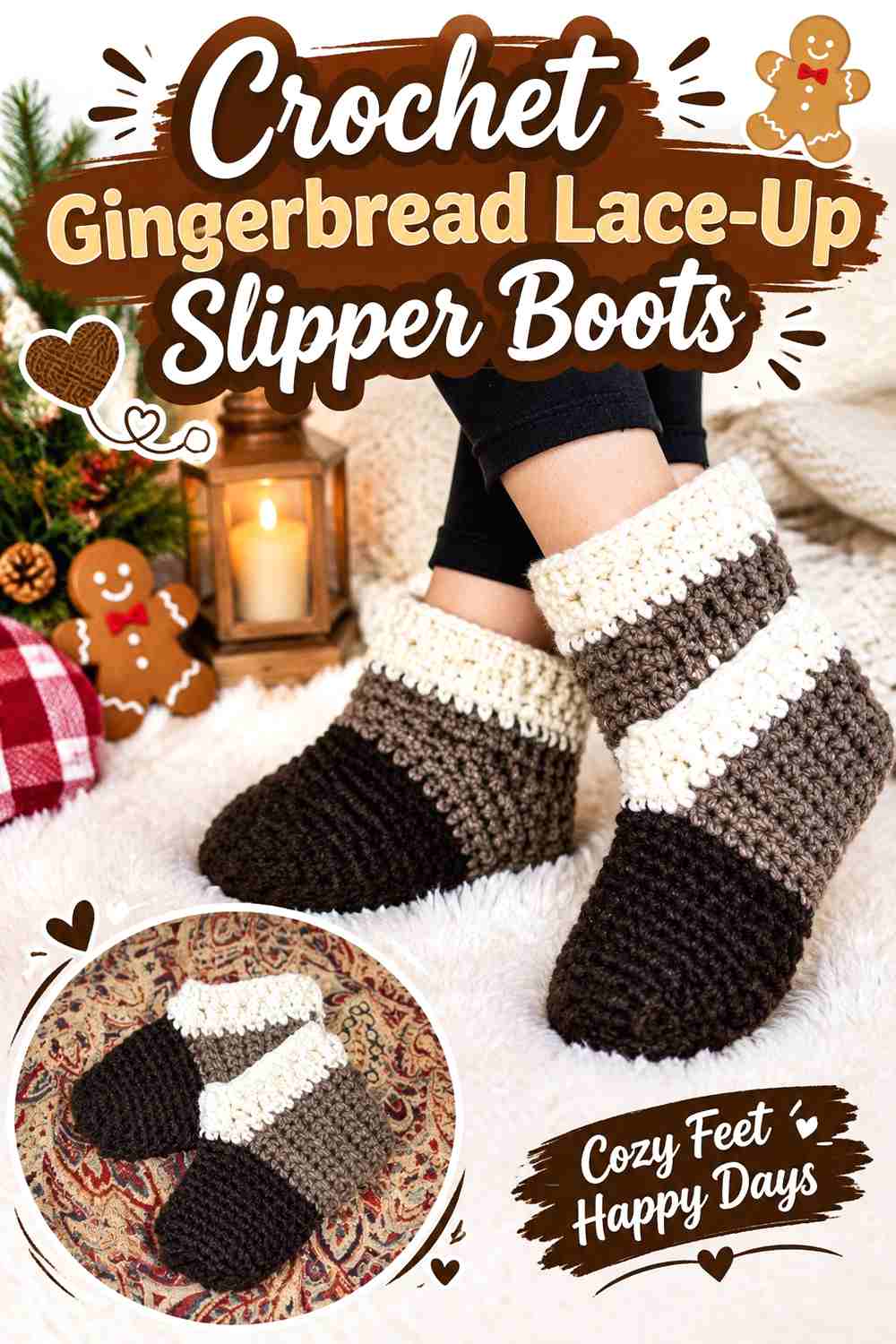
Sara Sach’s slipper source is built around a deliberately straightforward approach, which makes it useful for a gingerbread design where decoration rather than complicated construction is meant to carry the theme. The project appears as a dedicated slipper video in the verified tutorial collection.
A simple brown base gives you freedom to add an icing edge, contrasting ankle treatment, or small face without competing with a highly textured upper.
Establish Fit Before Starting the Decorative Layer
The simpler the slipper, the easier it is to see whether added surface work has distorted it. Compare the pair before and after adding gingerbread details.
Use One Statement Element
Choose a prominent face, a strong icing border, or a row of candy accents rather than automatically combining all three.
A single clear decorative idea can make the pair look more intentional.
Repeat Key Details Without Demanding Perfect Copies
Handmade faces can have slight variations. Keep the eye level, main colors, and major decorative positions consistent, while allowing small expression differences to remain part of the handmade character.
Creator Credit: Sara Sach
14. Crochet Buttoned Gingerbread Slipper Boots
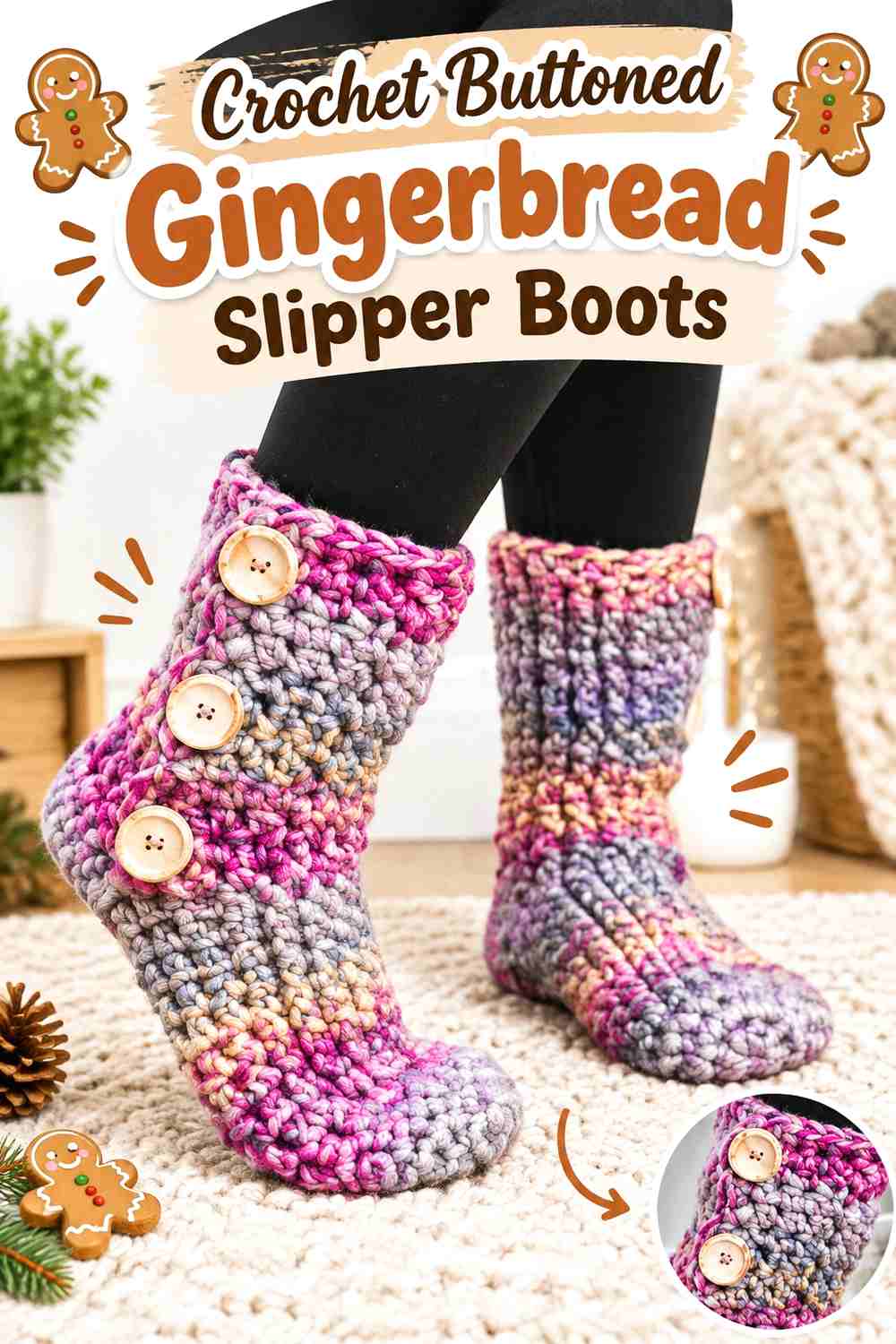
MJ’s Off The Hook Designs’ slipper boots combine a higher ankle profile, visible buttons, and a separate sole treatment, giving the final project one of the most structured silhouettes in the collection. The source provides multiple women’s sizes and a video tutorial.
Those side buttons make the gingerbread theme particularly easy to establish without putting bulky decorations on the toe: use candy-colored buttons against a brown boot and add white icing-style accents around the cuff.
Turn Existing Hardware Into the Candy Detail
Instead of sewing extra appliqués across the foot, let red, green, pink, or white buttons provide the gumdrop effect.
This keeps the decorations in a predictable side location and preserves a cleaner toe.
White Cuff Details Can Balance a Dark Brown Boot
Brown across the entire taller silhouette can look visually heavy. A cream edge or cuff provides contrast and immediately strengthens the decorated-cookie association.
Keep Added Details Clear of the Sole Construction
The source also includes a distinct sole treatment. Preserve the structural relationship between the footwear and its sole rather than extending decorative pieces underneath.
The holiday theme should change the appearance without compromising the part responsible for ground contact.
Creator Credit: MJ’s Off The Hook Designs
Comparing the 15 Crochet Gingerbread Slipper Sock Styles
| If you want… | Ideas to compare | Main adaptation issue |
|---|---|---|
| A recognizable gingerbread face | Gingerbread Face Slipper Socks, Chunky Cookie Slippers | Facial placement on a curved toe |
| Tall cozy socks | Gumdrop Stripe Slipper Socks | Keeping color repeats consistent |
| A subtle gingerbread look | Cable-Icing Slippers, Simple House Slippers | Using texture instead of many appliqués |
| Low-profile footwear | Gingerbread Loafers, Scalloped-Icing Slippers | Limited decoration space |
| A gingerbread-house effect | Brick-Texture Slippers | Letting texture remain visible |
| Bold chunky styling | Chunky Cookie Slippers, T-Shirt Yarn Slippers | Scaling decorations to heavy yarn |
| A strong icing cuff | Hibernation-style Slipper Boots | Maintaining opening stretch |
| Candy-button details | Candy-Button Slippers, Buttoned Slipper Boots | Secure placement away from walking areas |
| A taller Christmas boot | Ribbed or Buttoned Slipper Boots | Keeping ankle decoration flexible |
| The simplest adaptation | One-Piece or Simple House Slippers | Preserving fit while adding surface details |
If the gingerbread character matters most, start with a relatively smooth toe that provides space for a recognizable face. If you prefer something you could keep wearing throughout winter without an obvious cartoon look, cable texture, white cuff edging, brown yarn, and restrained candy-color accents can communicate the theme more subtly.
Conclusion
These 15 crochet gingerbread slipper sock ideas show that Christmas footwear does not have to follow one formula. A smooth slipper sock can carry a cheerful cookie face, a cable slipper can turn raised texture into “icing,” and a tall boot can use its cuff and buttons for the holiday theme while keeping the foot itself comparatively simple.
For the most character-driven result, choose the B.Hooked, chunky, or loafer-style constructions and concentrate the decoration on the toe. For a softer interpretation, use the cable, scalloped-edge, or simple house-slipper ideas. The taller Littlejohn’s Yarn, A Crocheted Simplicity, and MJ’s Off The Hook Designs options provide more vertical space for icing bands and candy accents.
Whichever project you choose, use the original creator’s tutorial for construction and sizing. Complete the fit-critical sections first, then add gingerbread details where they can be seen without making the sole uncomfortable or the opening too tight.
Frequently Asked Questions
Are all 15 tutorials specifically for gingerbread slipper socks?
No. They are verified crochet slipper, slipper-sock, loafer, or slipper-boot tutorials chosen for different constructions that can support a gingerbread-themed adaptation. The gingerbread colors and decorative analysis in this article are independent styling ideas rather than claims about the creators’ original designs.
Where should I put a gingerbread face on crochet slippers?
The upper toe is usually the most visible location and keeps the face away from the sole. Position the features temporarily while the slipper has its three-dimensional foot shape so the eyes and mouth do not shift too far apart when worn.
Can I use real buttons as gumdrops on gingerbread slippers?
Buttons can work on the visible upper or side, provided they are attached securely and do not rub uncomfortably. Avoid putting them underneath the foot. For young children or situations where small detachable parts could be unsafe, stitched or crocheted flat details are a more appropriate alternative.
How can I make crochet icing without making the slipper too bulky?
A contrasting edge, flat surface crochet, embroidery, or a restrained scalloped border can provide an icing effect with less bulk than thick appliqués. Always check that an edging around the opening still stretches enough for the foot to enter comfortably.
What colors make crochet slippers look like gingerbread?
Brown establishes the cookie base, while white or cream suggests icing. Red, green, pink, yellow, or other bright shades can serve as candy accents. Strong contrast is more important than using a large number of colors.
Should gingerbread slipper socks have a non-slip treatment?
Crochet yarn soles can be slippery on smooth flooring. Some slipper patterns use separate sole materials or discuss additional grip options, but suitability varies by construction and surface. Test finished footwear cautiously and prioritize purpose-designed secure footwear where slipping or mobility is a significant concern.
Can I add a gingerbread appliqué to any crochet slipper?
Not automatically. A flat appliqué can work on many smooth uppers, but it may interfere with highly textured fabric, toe flexibility, or fit. Compare the appliqué size with the completed slipper and check how the upper bends before sewing it permanently in place.