Ghost bags can lean playful, gothic, soft, graphic, or full-on Halloween character style. The biggest difference, though, is not the expression on the ghost. It is the bag underneath it. A flat shoulder bag behaves differently from a rounded bucket, a drawstring pouch, or a soft character backpack once you add a longer strap and start carrying everyday items.
The ideas below use public crochet tutorials as construction references. Some sources already make wearable bags, while others teach ghost treat bags or compact pouches that can inspire a shoulder-bag adaptation. When a tutorial is not originally a shoulder bag, that distinction is made clear rather than treating a longer strap as an automatic conversion.
Use the projects to compare shape, opening, strap placement, fabric density, motif style, and scale before deciding which ghost belongs in your fall wardrobe.
Quick List
- Crochet Two-Faced Ghost Shoulder Bag
- Crochet Wavy Ghost Bucket Shoulder Bag
- Crochet Filet Ghost Motif Shoulder Tote
- Crochet Two-Panel Ghost Shoulder Bag
- Crochet Rounded Ghost Bucket Shoulder Bag
- Crochet Plush Ghost Companion Shoulder Bag
- Crochet Boo Drawstring Shoulder Pouch
- Crochet Cinched Ghost Shoulder Pouch
- Crochet Tall Ghost Mini Shoulder Bag
- Crochet Ghost-and-Pumpkin Shoulder Tote Pair
- Crochet Compact Ghost Treat Shoulder Pouch
- Crochet Japanese Ghost Drawstring Shoulder Bag
- Crochet Mini Ghost Character Shoulder Pouch
- Crochet Ghost-or-Pumpkin Shoulder Treat Bag
- Crochet Classic Ghost Character Shoulder Tote
Decide Where You Want the Bag to Sit Before Changing the Strap
A hand-carried Halloween bag does not automatically become a comfortable shoulder bag when its handle is made longer. A shoulder strap changes the direction of the pull on the upper edge, and a crossbody-length strap can create even more diagonal tension.
Before adapting a tutorial, decide whether the finished bag should sit close under the arm, near the hip, or across the body. Then consider the strap attachment points as part of the bag structure rather than an afterthought.
If the original project has a narrow upper edge or small handle anchors, check whether those areas remain stable with the longer strap and the contents you plan to carry. A lightweight seasonal purse and a bag loaded with everyday belongings place very different demands on the same crochet fabric.
Yarn Stretch, Lining, and Strap Support Matter on Wearable Ghost Bags
Crochet fabric can change shape under weight. That matters especially with ghost designs because stretching can alter the face, pull a rounded body into an elongated shape, or distort a carefully planned graphic.
A lining may be useful when the fabric is open, very soft, or likely to hold keys and other small items. Strap reinforcement can also be worth considering when a long crochet strap stretches more than expected.
Do not assume every ghost bag needs both. First examine the finished fabric and perform a modest load check. Reinforcement is most useful when it addresses an actual structural issue rather than being added automatically.
Check the Ghost While the Bag Is Hanging
Ghost eyes and mouths are often positioned while a project lies flat, but shoulder bags are normally viewed while hanging vertically. Gravity, strap tension, filling, and curved side panels can all change the apparent placement of the face.
Before permanently attaching separate features, lightly shape or fill the bag and hang it from the intended carrying points. Step back and look at the complete character. This simple check can reveal a face that is technically centered but visually too high, too wide, or too close to the opening.
1. Crochet Two-Faced Ghost Shoulder Bag
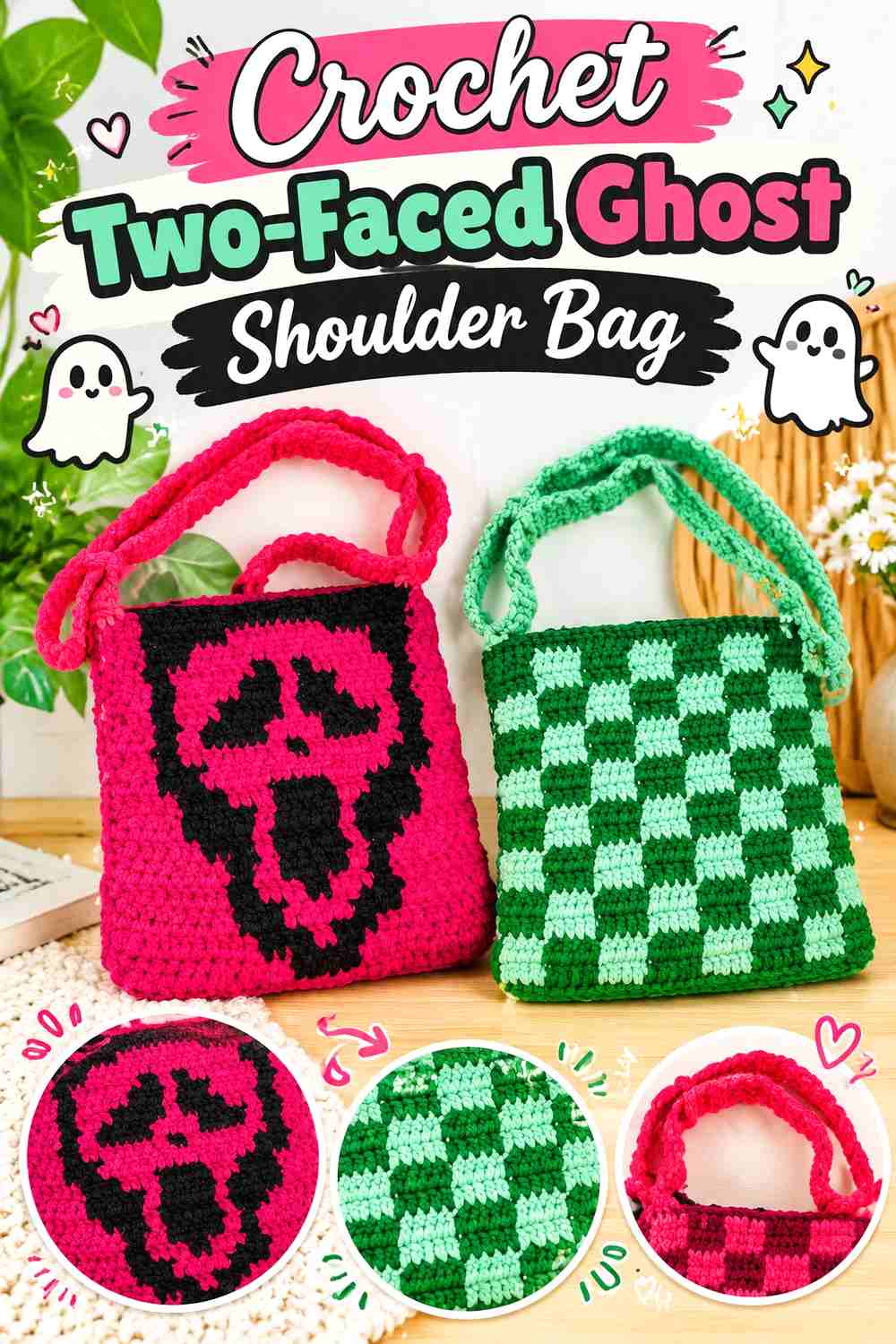
This graphic bag is the closest match in the collection to a ready-made Halloween shoulder accessory. The m_babi project places a bold ghost-face graphic on one side and a contrasting checkered design on the other, so the bag feels more like an outfit piece than a candy carrier. The two-sided treatment is particularly useful if you want Halloween imagery without shaping the entire bag like a ghost.
Two Different Sides Make Styling More Flexible
A bag with two strong surfaces gives you a useful styling choice. The ghost side can be the focal point of a simple fall outfit, while the checkered side creates a more geometric look.
When changing colors, plan both sides together. A completely unrelated palette on each panel can make the finished bag feel visually disconnected. Repeating at least one color across the two sides can help them read as parts of the same accessory.
Graphic Colorwork Shows Tension Changes Quickly
Large facial shapes need clean edges to remain readable from normal viewing distance. Uneven color-change tension can make one section pull tighter than the surrounding fabric, creating distortion that becomes much more obvious in a bold graphic than in a plain bag.
Pause occasionally and look at the panel from farther away. The ghost should still read clearly without requiring close inspection.
Strap Drop Changes Where the Graphic Is Seen
A shorter shoulder strap keeps the ghost higher against the body, while a longer strap moves the design toward the hip. Neither position is automatically better.
Choose the drop according to how you want to wear the bag, then check the panel while it hangs at that height. This is more useful than choosing strap length solely from how the bag looks on a table.
Creator Credit: m_babi
2. Crochet Wavy Ghost Bucket Shoulder Bag
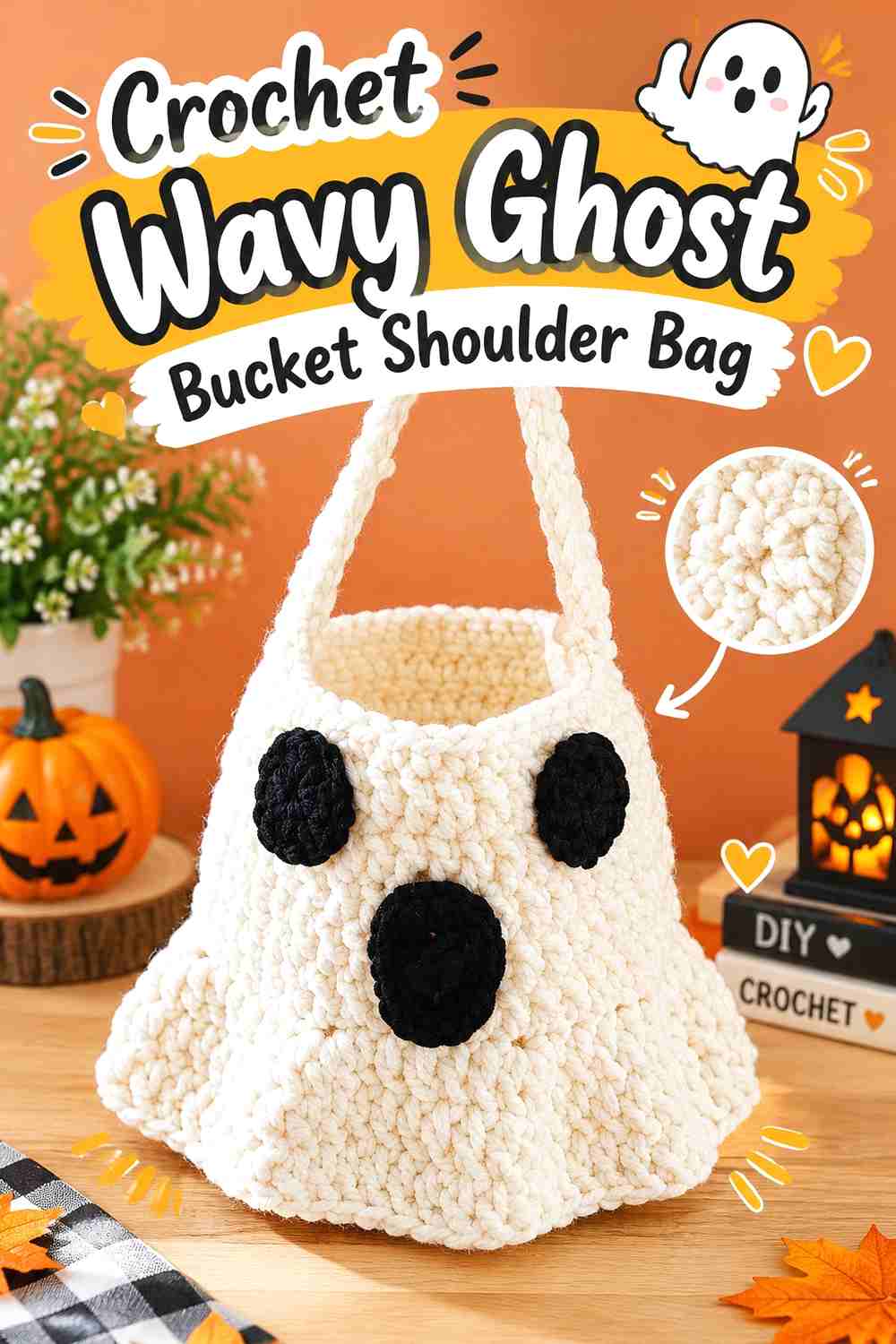
Sirin’s Crochet demonstrates a ghost-shaped Halloween bag or bucket with a recognizable character body and open top. The original project is a trick-or-treat carrier rather than a dedicated shoulder purse, so a longer-strap version should be treated as an adaptation. Its shaped lower edge makes it especially interesting if you want the entire bag, not merely an appliqué, to create the ghost silhouette.
The Wavy Bottom Should Stay in Proportion
The lower edge supplies much of the ghost’s movement and personality. If you make major changes to the body proportions, check whether that edge still feels balanced with the width and height above it.
Simply making the body wider can leave the lower points looking too small, while dramatically lengthening the body may turn the character into a narrow sack.
A Longer Strap Changes the Upper-Edge Stress
The original carrying method concentrates force differently from a shoulder strap. If you adapt the design, examine the top edge and proposed strap anchors before relying on them.
Hang the empty bag first, then test it with light representative contents. If the rim pulls sharply upward at the attachment points, that is a sign the shoulder conversion deserves additional structural consideration.
Open Access Has a Trade-Off
An open bucket is convenient when items need to be added repeatedly, but it offers less containment than a zipper or drawstring.
For an outfit accessory carrying a few larger items, that may be acceptable. For keys or other loose belongings, consider whether the interior needs a separate closure or lining rather than assuming the original Halloween opening will suit everyday use.
Creator Credit: Sirin’s Crochet
3. Crochet Filet Ghost Motif Shoulder Tote
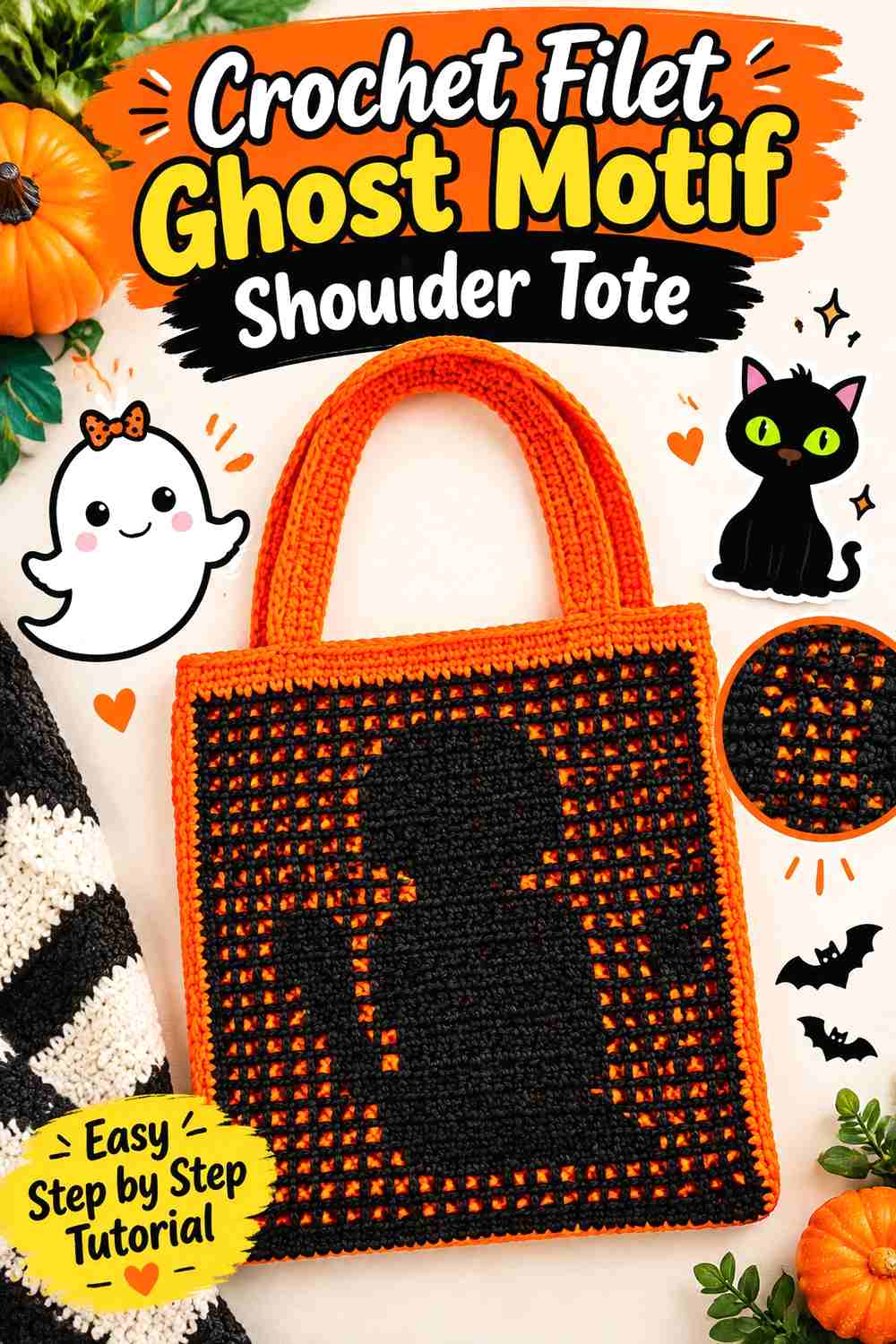
Crochet with Lisa uses filet crochet to place Halloween imagery directly into a tote-style fabric, with a ghost among the motif choices. This makes the design a useful route for readers who prefer a conventional bag outline with a seasonal image rather than a sculptural ghost body.
Filet Fabric Makes the Ghost Part of the Bag
The image appears through the relationship between open and solid areas, so no separate ghost appliqué is needed. That keeps the front relatively flat and lets the motif occupy a large portion of the surface.
The trade-off is openness. Small belongings can be more exposed than they would be inside dense crochet fabric.
A Lining Can Change the Contrast as Well as the Function
With openwork, lining is not merely an interior issue. Whatever sits behind the fabric can affect how clearly the ghost reads.
Before permanently installing a lining, place the proposed fabric behind the completed motif and view it in normal lighting. A high-contrast lining may strengthen the image, while a busy print could compete with it.
Center the Ghost on the Finished Hanging Bag
Panel edges, seams, and strap placement can change what visually counts as the center once the tote is assembled.
Judge the ghost in relation to the final usable front rather than the unfinished panel alone. Hang the bag and check whether the motif still feels balanced between the strap attachments and side edges.
Creator Credit: Crochet with Lisa
4. Crochet Two-Panel Ghost Shoulder Bag
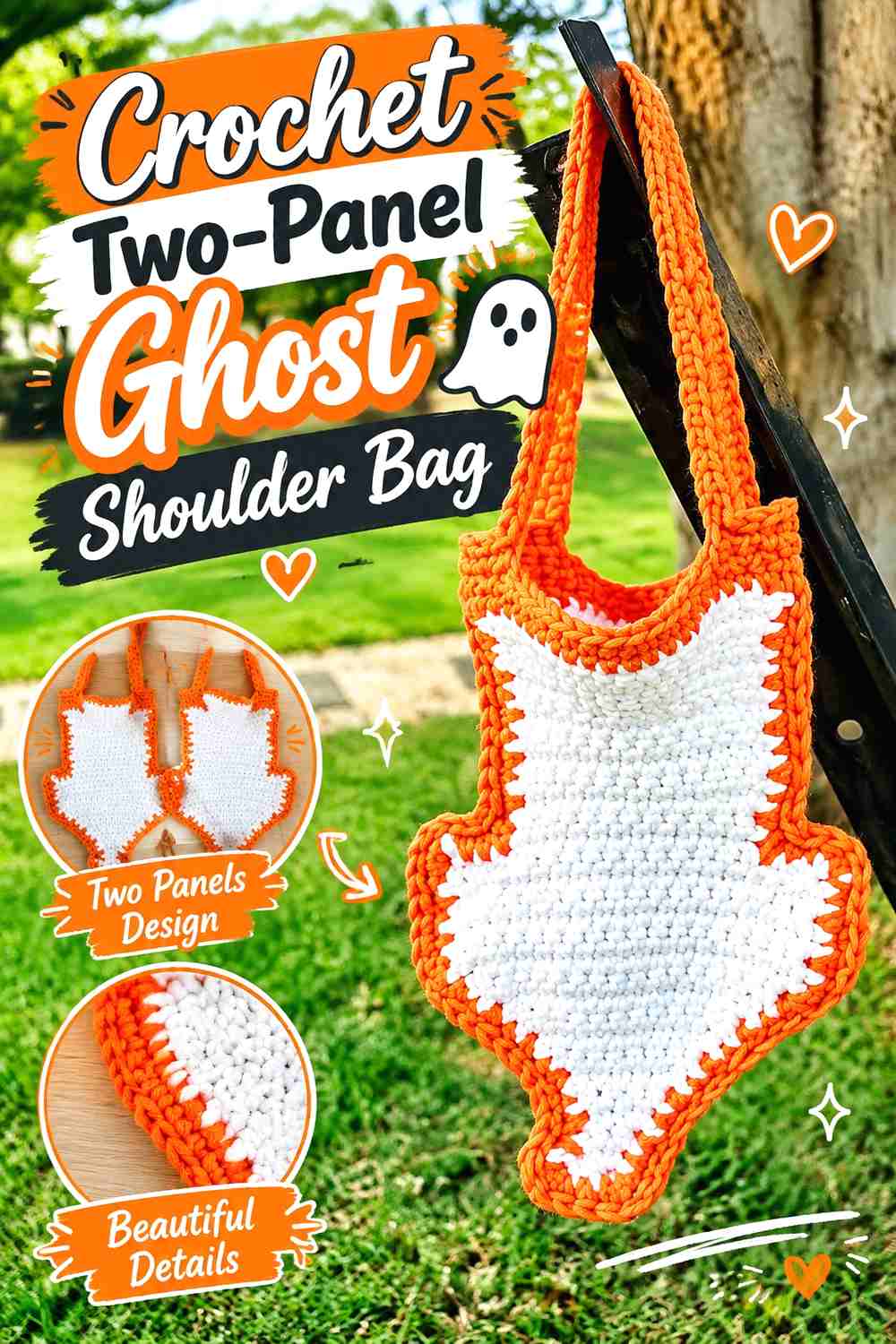
Wow! Crochet Designs uses separate pieces that are joined to create the ghost bag. That flat-panel approach is a helpful starting point for a shoulder-bag adaptation because the front and back can be evaluated before assembly. The original project is a Halloween ghost carrier rather than specifically a long-strap purse.
Matching Panels Are Essential Before Joining
A front and back that differ noticeably in size can create puckering or twisting along the completed edge.
Compare the panels directly before assembly. If one requires significant stretching to align with the other, solve that discrepancy first rather than hoping the final join will hide it.
The Outer Join Can Become a Design Feature
A panel bag naturally creates a defined edge. With a quiet joining color, the silhouette can remain soft and ghostlike. With stronger contrast, the join can become an outline around the character.
Decide which effect you want before selecting a strap. A high-contrast border plus a high-contrast strap may visually frame the entire bag, while a matching strap keeps attention on the face.
Place the Shoulder Strap After You Know the Finished Width
A two-panel design gives you a useful opportunity to evaluate attachment spacing after the body exists.
Instead of deciding on strap placement from one unfinished piece, assemble the body, identify the true side positions, and then assess how the bag hangs. That reduces the chance of one anchor sitting farther forward than the other.
Creator Credit: Wow! Crochet Designs
5. Crochet Rounded Ghost Bucket Shoulder Bag
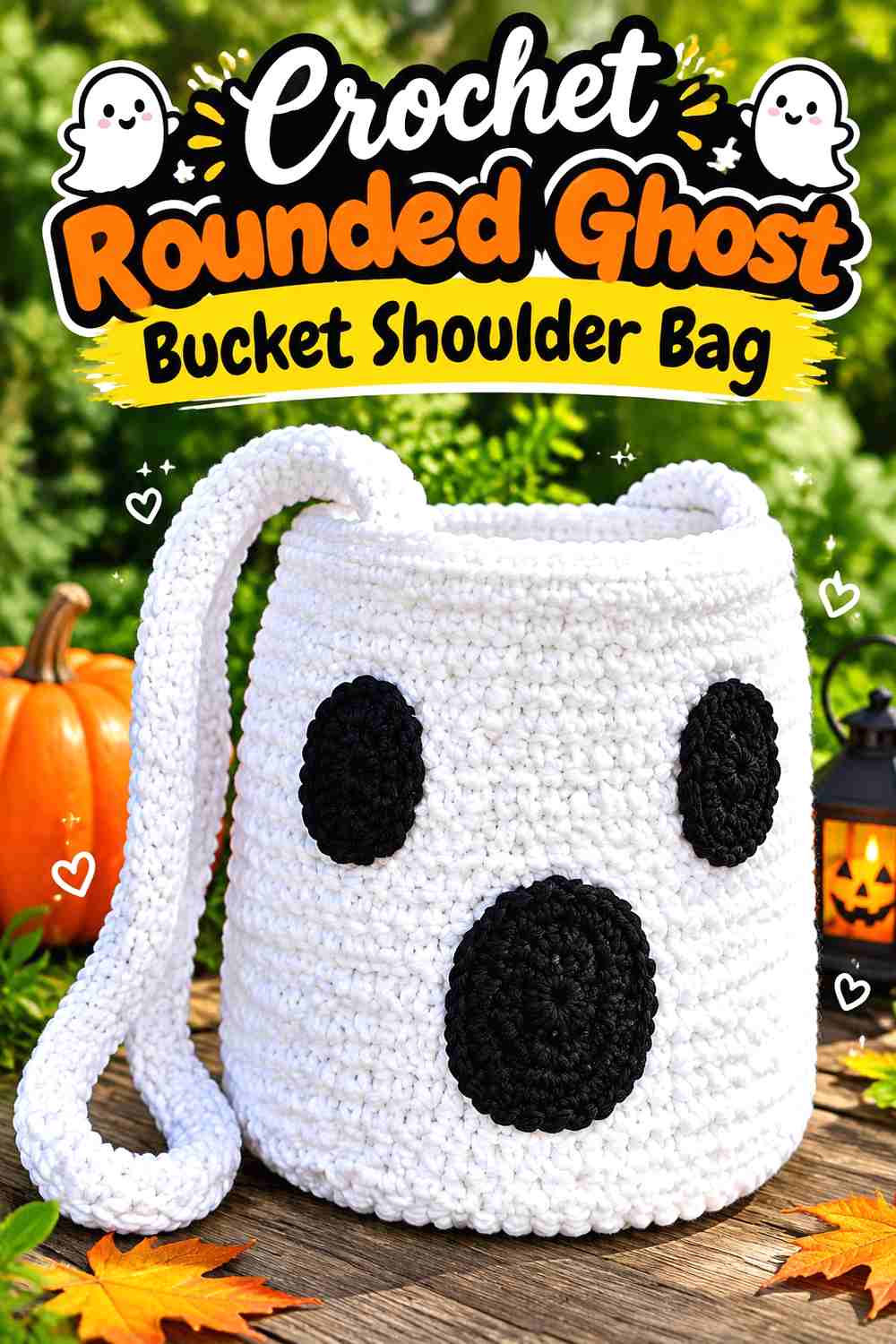
Treasured Hometown’s ghost candy basket uses a fuller rounded container shape rather than a flat tote. For a shoulder-bag interpretation, that rounded volume creates a playful silhouette that can look almost like a small ghost character being carried at the hip. The original tutorial is a handled candy basket, so the longer-strap version requires independent planning.
Rounded Volume Needs Enough Fabric Stability
The appeal comes partly from the bag retaining a plump container shape. A very drapey substitution may collapse against the body and make the ghost look flatter than intended.
If you change materials significantly, make a small sample and compare its stretch and firmness before committing to the complete bag.
Face Placement Changes as the Body Fills
A curved front expands differently from a flat panel. Eyes placed too far apart can appear even wider after the container is filled.
Temporarily position facial pieces while the body contains a light amount of stuffing or representative contents. This gives you a more realistic view of the final expression.
Shoulder Carrying Pulls From Different Points
A basket handle typically lifts the container from relatively close attachment points. A longer shoulder strap may spread or angle that force differently.
Pay particular attention to the rim. If the top deforms badly while hanging, the body may need a different strap arrangement or reinforcement before the idea works comfortably as a wearable bag.
Creator Credit: Treasured Hometown
6. Crochet Plush Ghost Companion Shoulder Bag
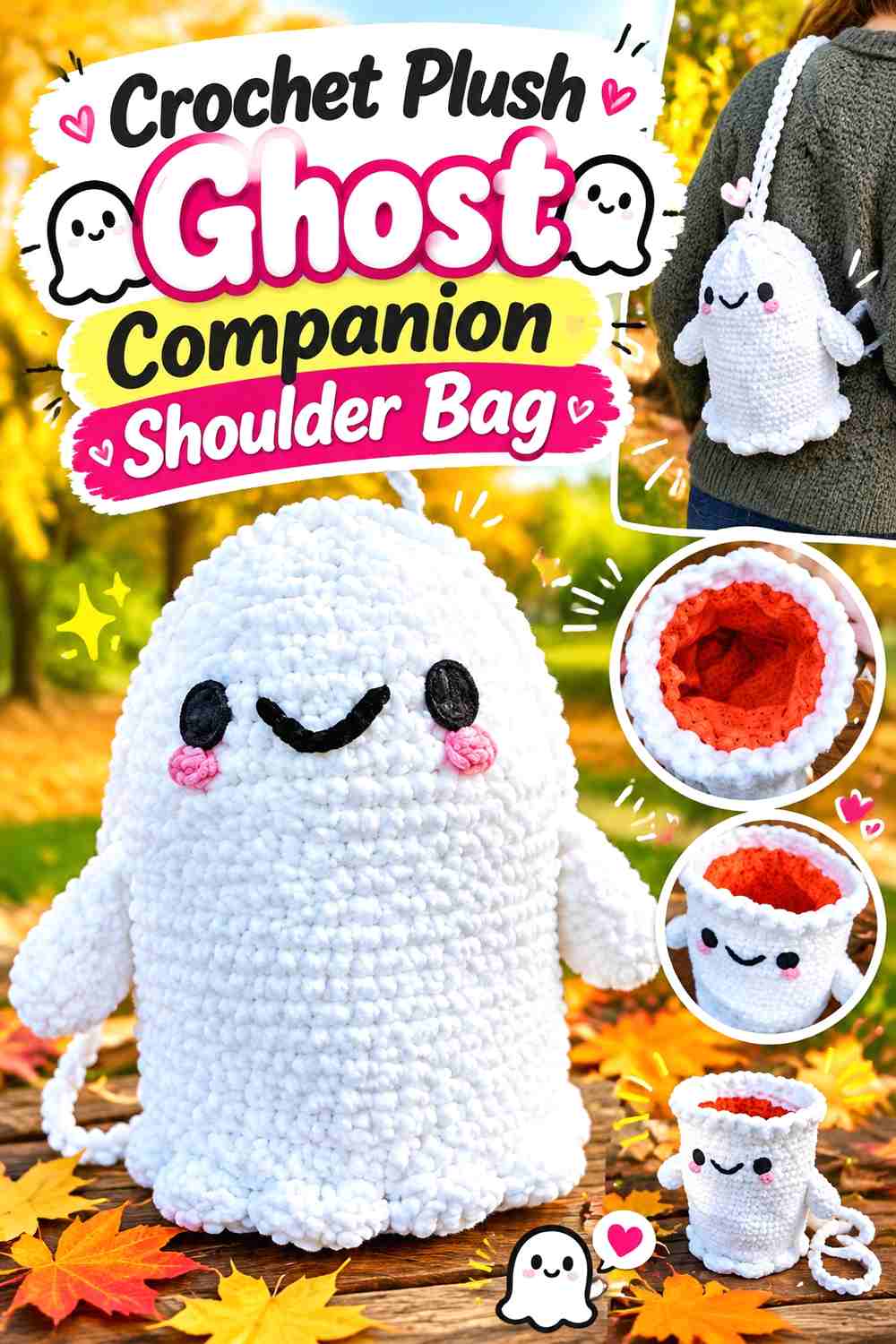
Graceface Creates makes a full ghost character backpack with a drawstring area, soft dimensional body, straps, and optional lining information. It is not presented as a conventional shoulder purse, but its plush character construction offers a useful reference for anyone who wants a soft ghost bag that feels more like a wearable companion than a flat handbag.
Plush Fabric Prioritizes Character Over Crisp Structure
A soft dimensional ghost can look charming precisely because it is rounded and squeezable. That same softness means the exterior will not necessarily behave like a firm everyday purse.
If you want the character look but also need a more organized interior, lining becomes a more important consideration than it would be on a purely decorative accessory.
One Shoulder Strap Requires Different Balance
Backpack straps are designed to distribute the load behind the body. Moving toward a single shoulder or crossbody strap shifts the entire bag to one side and changes how the ghost hangs.
Test the balance with temporary strap placement before making anything permanent. The aim is to keep the character upright rather than tilted noticeably toward one anchor.
Dimensional Arms Need Clearance
Raised character pieces create personality, but they also create snag points.
When deciding which side should face outward against your body, check whether arms or other features rub beneath the strap or catch on clothing. Sometimes moving the strap slightly toward the back preserves both comfort and the character’s front view.
Creator Credit: Graceface Creates
7. Crochet Boo Drawstring Shoulder Pouch
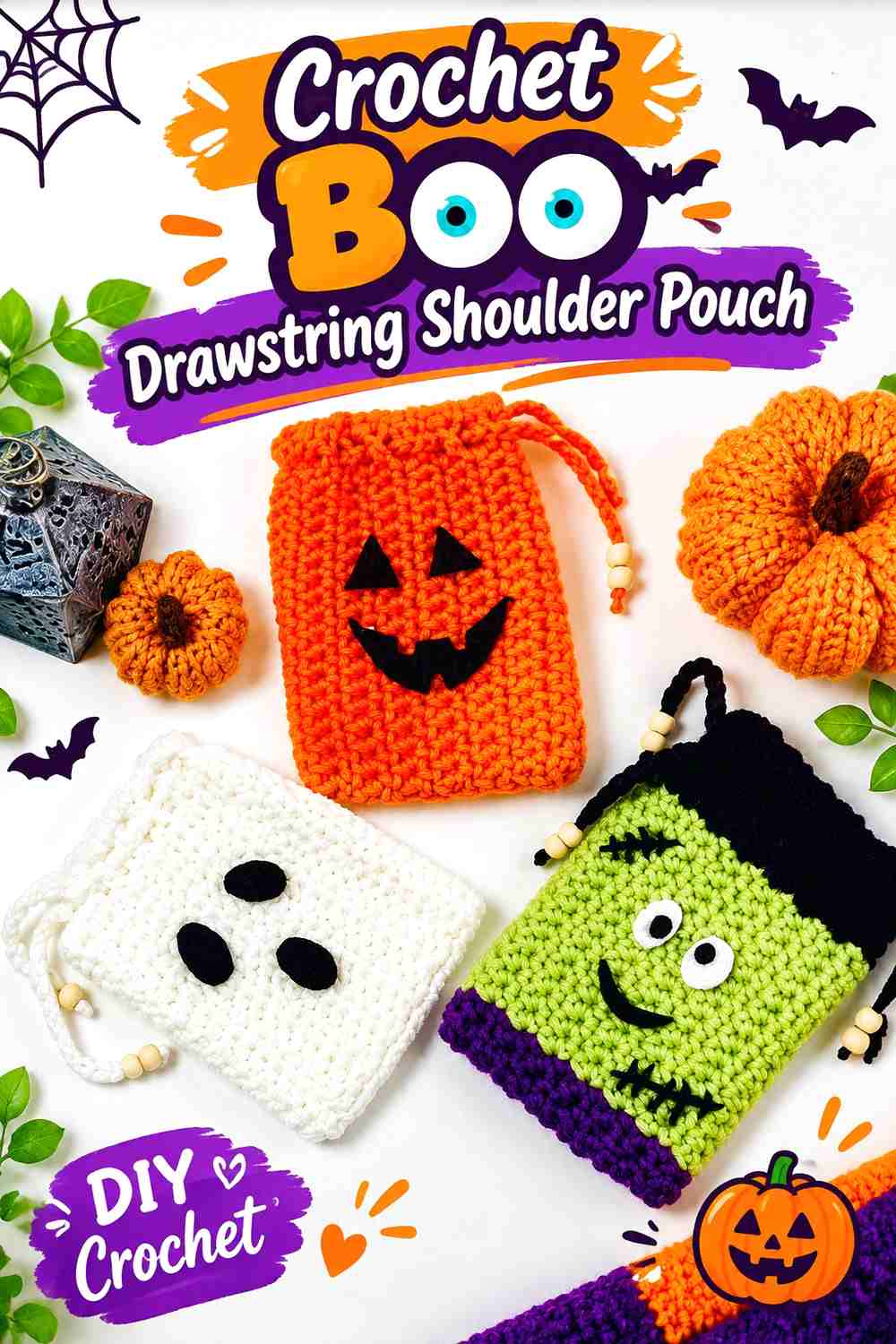
TheYarnBowl Crochet’s Halloween Boo Bags include a ghost version in a small drawstring format. The original scale is closer to a treat or gift bag than a full shoulder purse, but the closure makes it an interesting reference for a compact seasonal pouch worn on a longer strap.
The Drawstring Should Still Operate After Adding a Strap
Do not let new shoulder attachments crowd the cord path. A strap anchored too close to the gathered opening can interfere with tightening or make the top bunch unevenly.
Decide where each system needs to function before adding either one permanently.
Mixed-Media Details Affect the Final Look
The tutorial uses non-yarn finishing materials for parts of the character treatment. That creates a different surface from an all-crochet or embroidered ghost.
If you want a softer handmade look, consider whether your adaptation will retain those materials or replace the facial treatment with securely attached yarn details. Make that choice before placing the face because material thickness can change the visual scale.
Compact Scale Works Better for Essentials
A small drawstring ghost can make sense as a phone-and-small-items accessory, but that does not make it equivalent to a roomy tote.
Choose the project because you want a compact Halloween bag. If you need substantially more capacity, a tote-shaped source is a safer starting point than dramatically enlarging every element of a tiny pouch.
Creator Credit: TheYarnBowl Crochet
8. Crochet Cinched Ghost Shoulder Pouch
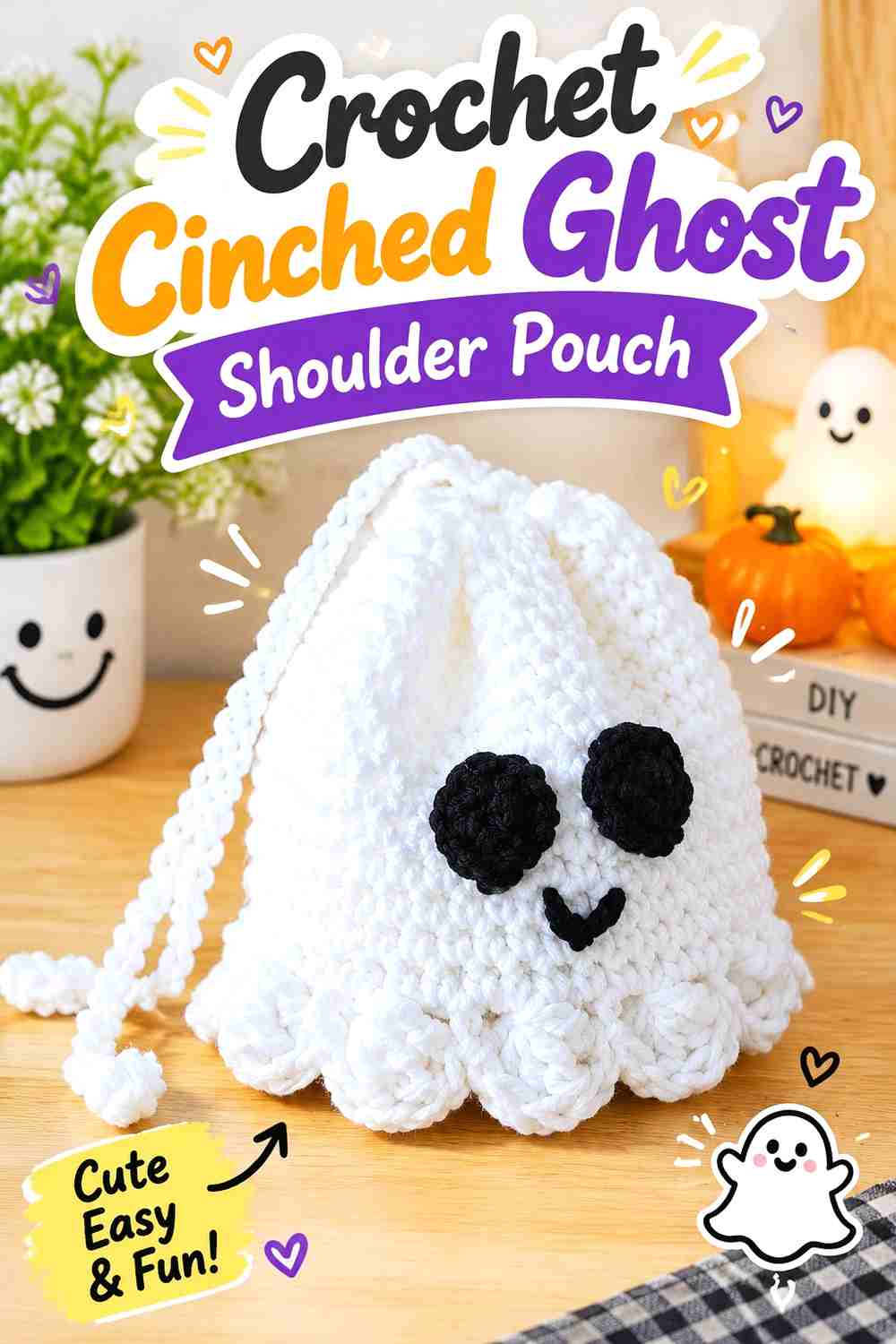
Jayda InStitches presents a dedicated ghost drawstring pouch with a character-shaped lower section and gathered top. Its closure gives this idea more containment than an open ghost bucket, making it useful inspiration for a small shoulder pouch when the strap conversion is planned separately.
The Face Must Work Open and Closed
A drawstring changes the upper silhouette every time it is tightened. Facial elements placed too near that area may tilt or become partly hidden.
Before final finishing, view the ghost with the opening fully relaxed and again while cinched. Aim for a face that still reads naturally in both conditions.
Cord Bulk Matters on a Small Bag
A heavy drawstring can dominate a compact ghost pouch visually and make the upper section feel disproportionately thick.
If substituting the cord material, compare its thickness with the bag body and the proposed shoulder strap. Three different bulky elements competing at the top can make a small design feel cluttered.
Keep the Carry Strap Independent From the Closure
A shoulder strap should support the body rather than accidentally becoming part of the drawstring mechanism.
Separating those functions makes the bag easier to use and means opening the pouch does not alter the carrying length.
Creator Credit: Jayda InStitches
9. Crochet Tall Ghost Mini Shoulder Bag
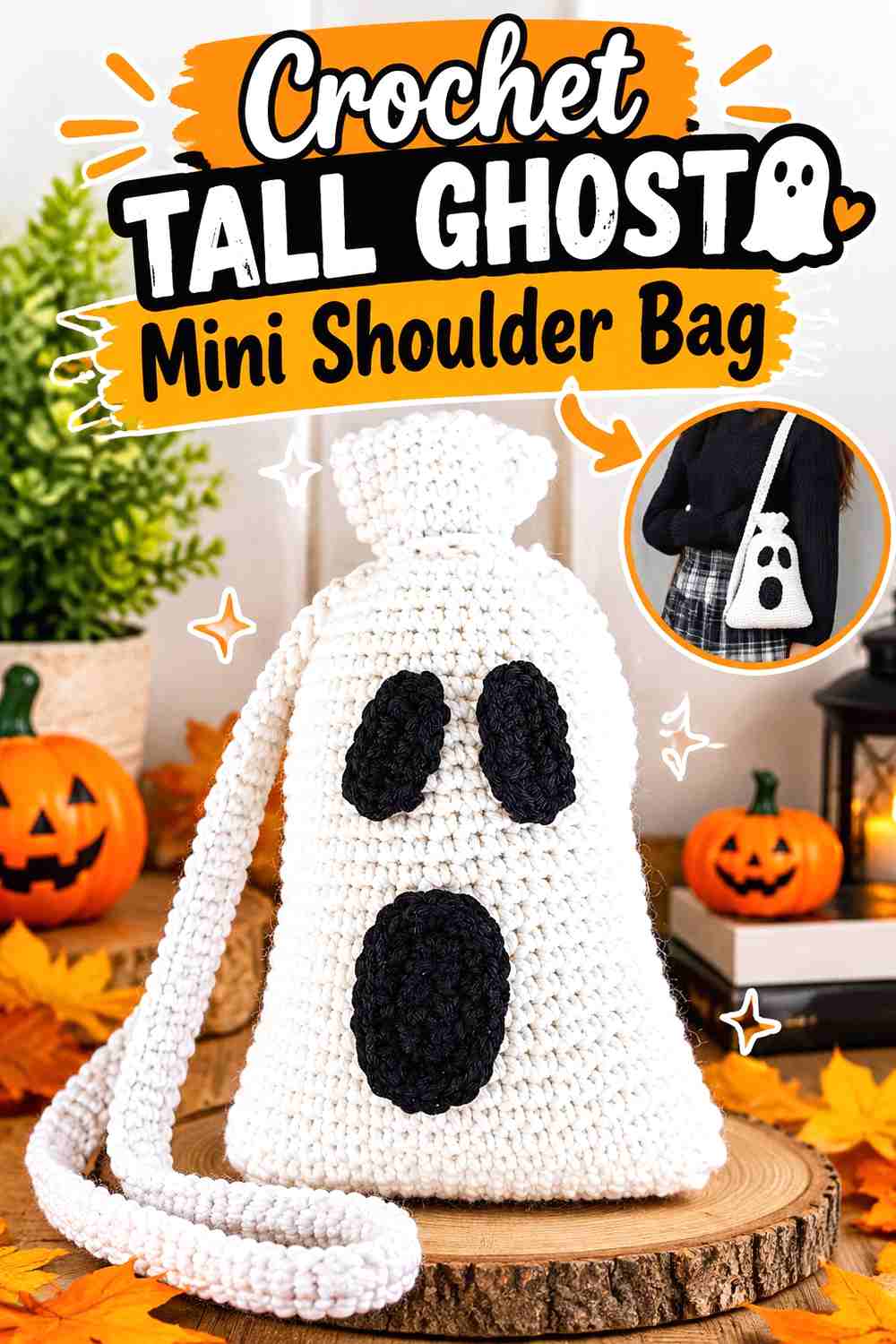
Highland Hickory Designs’ ghost belongs to a Halloween bag trio and has a taller, relatively narrow body. The source treats it as a candy or gift bag and also discusses decorative use, so a wearable shoulder version would be an adaptation rather than the original format. Its slim proportions are what make it interesting here.
A Narrow Body Creates a Different Purse Profile
Most character bags become fairly wide when adapted for carrying. This shape offers another direction: keep the ghost relatively slender and use it for a few essentials rather than trying to turn it into a large tote.
That preserves the recognizable upright character instead of stretching the body outward simply to create capacity.
Fill the Bag Before Finalizing the Expression
A narrow soft bag can round outward substantially when items are placed inside.
Temporarily position the eyes and mouth while the body is lightly filled. Check both the front view and a slight side angle so the face does not drift visually toward one edge.
Scaling Up Changes More Than Size
Using dramatically thicker yarn or making every dimension larger can alter the opening, strap requirements, facial proportions, and overall balance.
If you want a substantially larger shoulder bag, transfer the visual ghost treatment to a larger proven bag structure rather than assuming a small gift-bag construction will scale perfectly.
Creator Credit: Highland Hickory Designs
10. Crochet Ghost-and-Pumpkin Shoulder Tote Pair
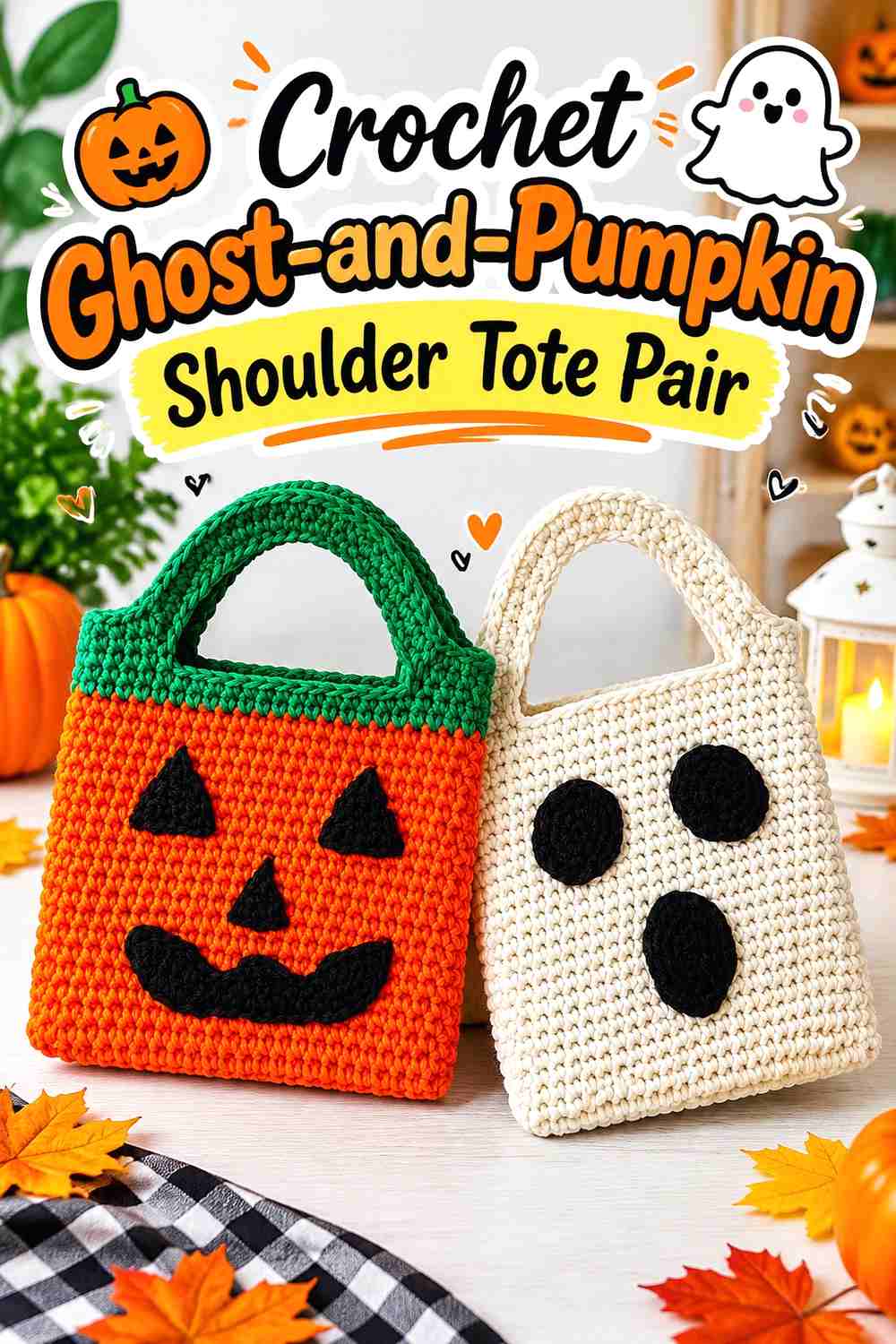
Tejidos Joss demonstrates ghost and pumpkin Halloween bags within the same tutorial. That shared project family makes a useful starting point for coordinated shoulder accessories: one ghost and one pumpkin can have matching proportions while still looking clearly different.
Matching Construction Makes a Pair Feel Intentional
When making two themed bags, consistency in overall scale, strap treatment, and opening style can matter more than using exactly the same colors.
Settle the structural decisions first. Then allow the ghost and pumpkin faces to provide the individual personality.
The Ghost Needs Its Own Facial Spacing
Do not reuse facial proportions simply because two bags share the same body.
Dark details against a white ghost create a different amount of visual contrast than features placed on a pumpkin. Arrange each face on its completed bag and judge it independently.
Strap Color Can Connect the Pair
If the two bag bodies use very different seasonal colors, repeating one neutral strap or edging color can visually connect them.
This is especially useful when the pair will be carried together, gifted to two people, or displayed side by side.
Creator Credit: Tejidos Joss
11. Crochet Compact Ghost Treat Shoulder Pouch
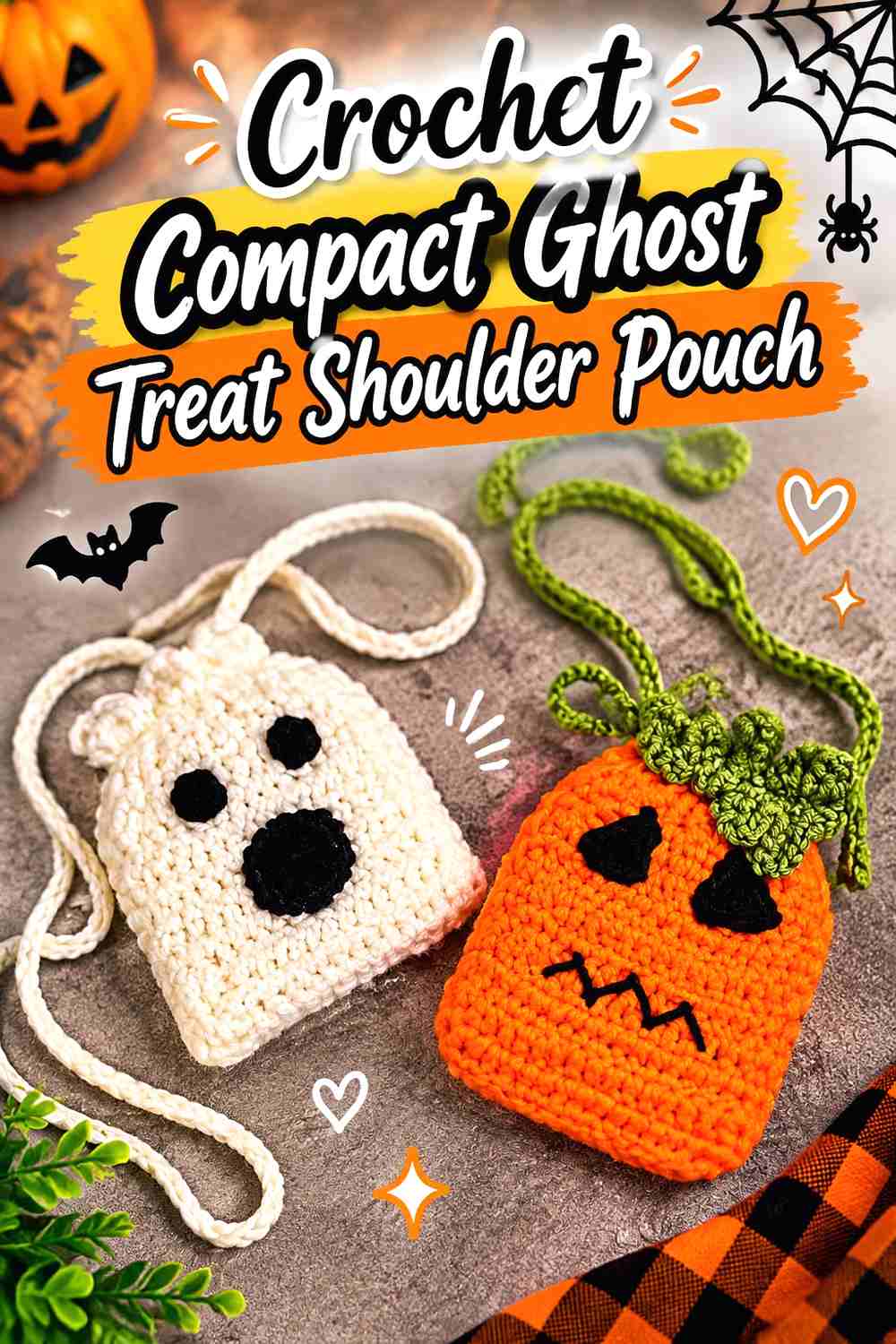
Vesa and Vlera’s Halloween tutorial includes compact pumpkin and ghost pouches. The ghost is much smaller in purpose than a conventional tote, making it better inspiration for a tiny shoulder accessory than for an everyday high-capacity bag.
Small Bags Make Every Detail More Prominent
On a compact surface, even a modest change in eye spacing or mouth position can alter the expression noticeably.
Place the character details only after you understand how the pouch opens and how much of the surface remains visible when it is filled.
Decide What Must Fit Before Enlarging Anything
A tiny seasonal shoulder pouch can be useful precisely because it carries very little.
Choose the intended contents first. If they already exceed the visible capacity of the source project by a large margin, moving to a different bag construction is usually more reliable than enlarging the pouch until its proportions no longer resemble the original character.
Use a Narrow Strap With Care
A visually delicate strap can suit a small bag, but thin crochet can stretch or dig into the shoulder depending on material and contents.
Match the strap to the expected load rather than choosing its width solely for appearance.
Creator Credit: Vesa and Vlera
12. Crochet Japanese Ghost Drawstring Shoulder Bag
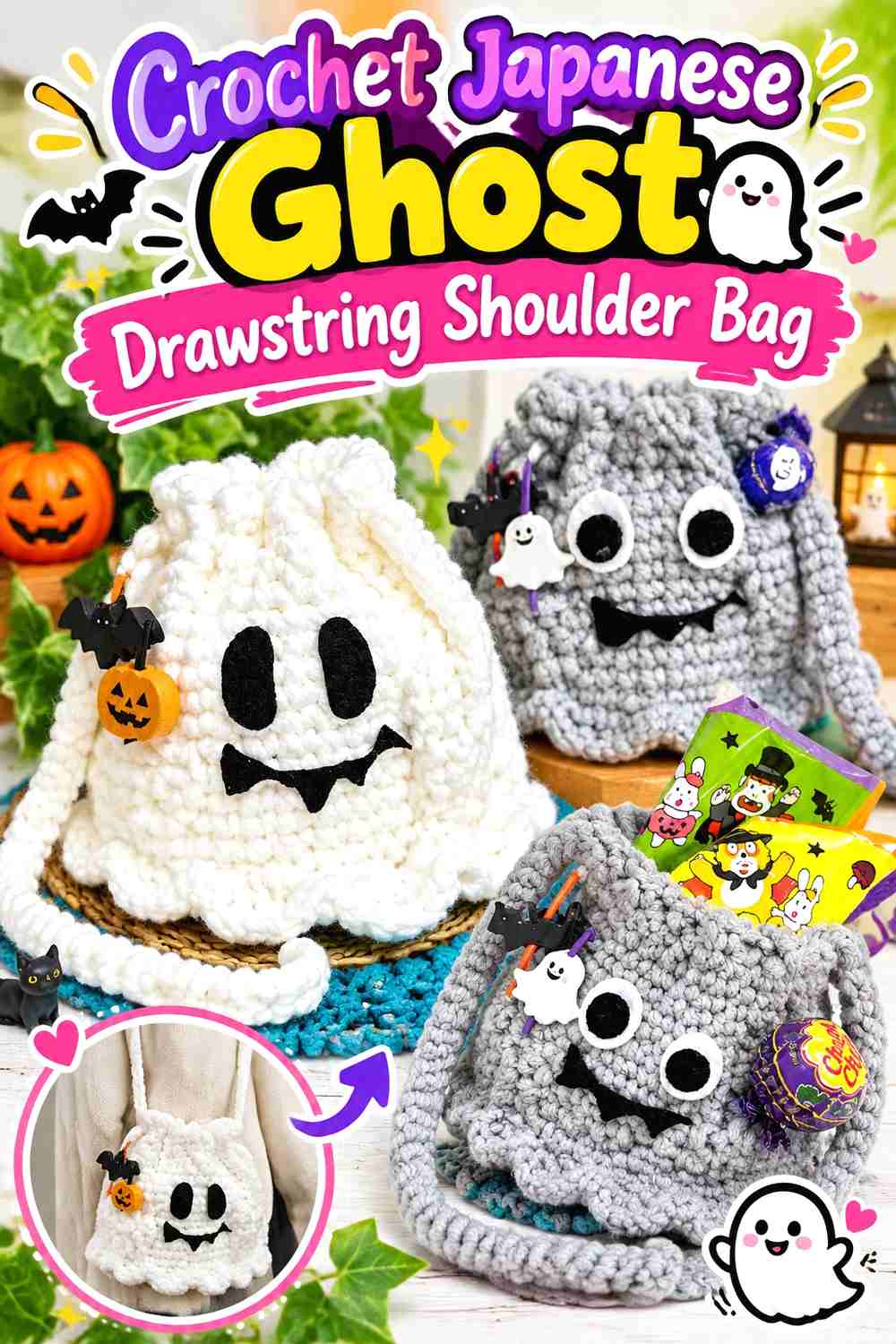
The mitako_amu ghost project uses a compact drawstring-bag format and pays particular attention to the appearance of stitch alignment on the rounded body. That makes it a useful source when you want a clean character face on a bag where spiral movement or slant could otherwise become visually obvious.
Stitch Drift Can Move a Symmetrical Face
On a rounded bag, a centered feature can appear to migrate if the fabric itself develops a noticeable diagonal tendency.
Before adding the face, use temporary markers to establish the visual front while the completed body is upright. Do not rely only on where the beginning of a round happens to fall.
Leave Clear Space Around the Drawstring Channel
The gathered top should look intentional rather than crowded by the expression.
If you enlarge the eyes or mouth, keep checking the distance between those features and the closure. Once the top is cinched, that blank space often becomes visually smaller.
Choose Strap Anchors From the Hanging Shape
After the bag body and drawstring are functioning correctly, hang the pouch from temporary points and find the position that keeps the ghost facing forward.
This is especially important with a rounded body, which can rotate more easily than a flat rectangular purse.
Creator Credit: mitako_amu
13. Crochet Mini Ghost Character Shoulder Pouch
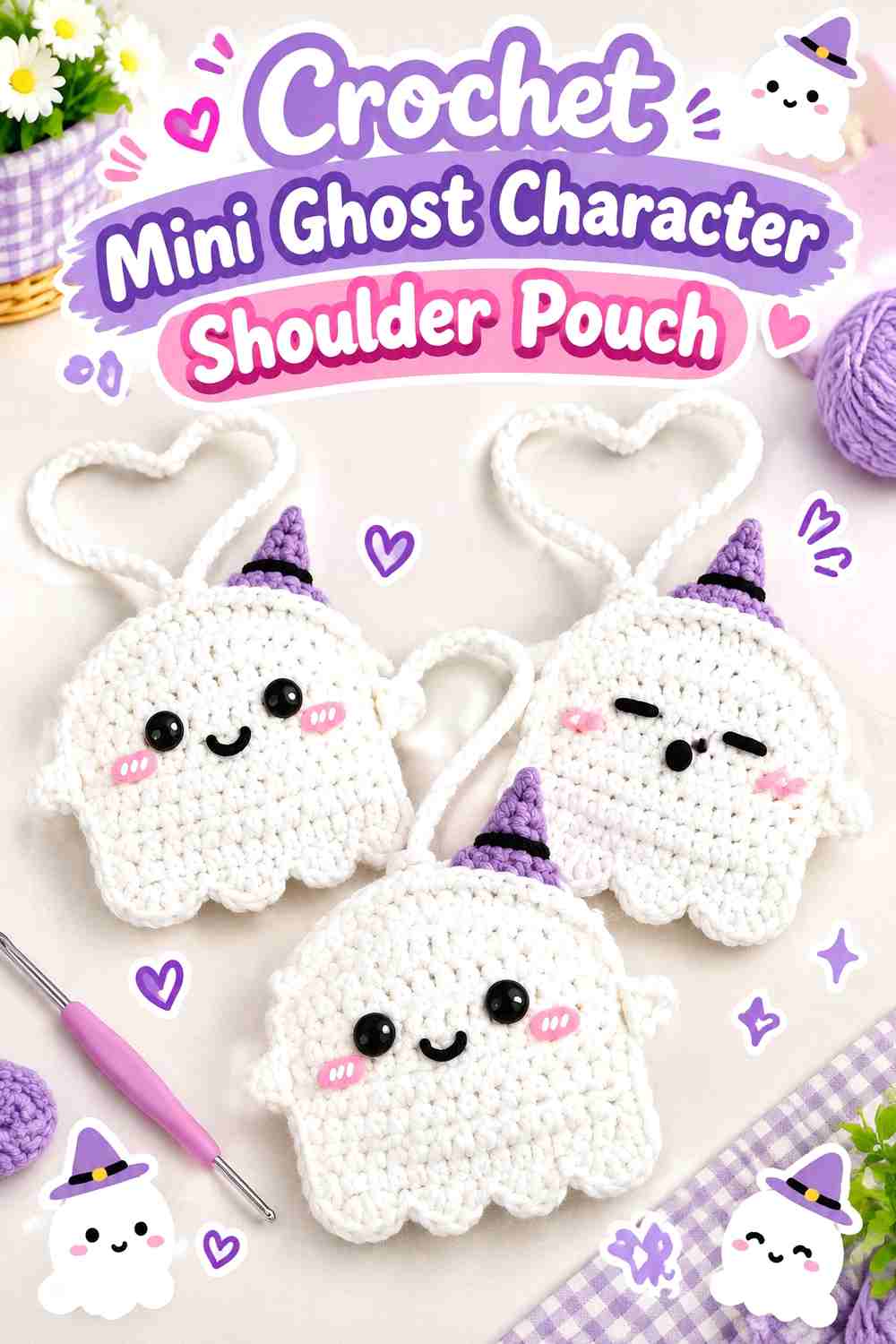
Monua DIY’s ghost project is originally a small pouch and bag charm, not a shoulder purse. Its front-and-back ghost construction and character silhouette make it useful inspiration for a miniature wearable pouch, but turning it into a larger bag would require more planning than simply changing to thicker yarn.
Keep the Tiny Character Feel
The small scale is a major part of the appeal. Instead of enlarging it into a conventional tote, consider the concept as a deliberately tiny seasonal purse for one or two small items.
That preserves the proportions of the character and gives this idea a distinct role among the larger shoulder bags.
Panel Alignment Matters on Shaped Edges
A recognizable ghost outline depends on the front and back matching cleanly.
Compare the shaped pieces before joining. If one edge is noticeably longer, forcing the pieces together can make the little ghost tilt or twist.
A Long Strap Can Overwhelm a Mini Pouch
The strap should not visually weigh more than the bag.
When adapting a charm-sized concept, consider the relationship between strap thickness and body size. A substantial cord may be structurally strong but look disproportionately bulky beside a tiny character pouch.
Creator Credit: Monua DIY
14. Crochet Ghost-or-Pumpkin Shoulder Treat Bag
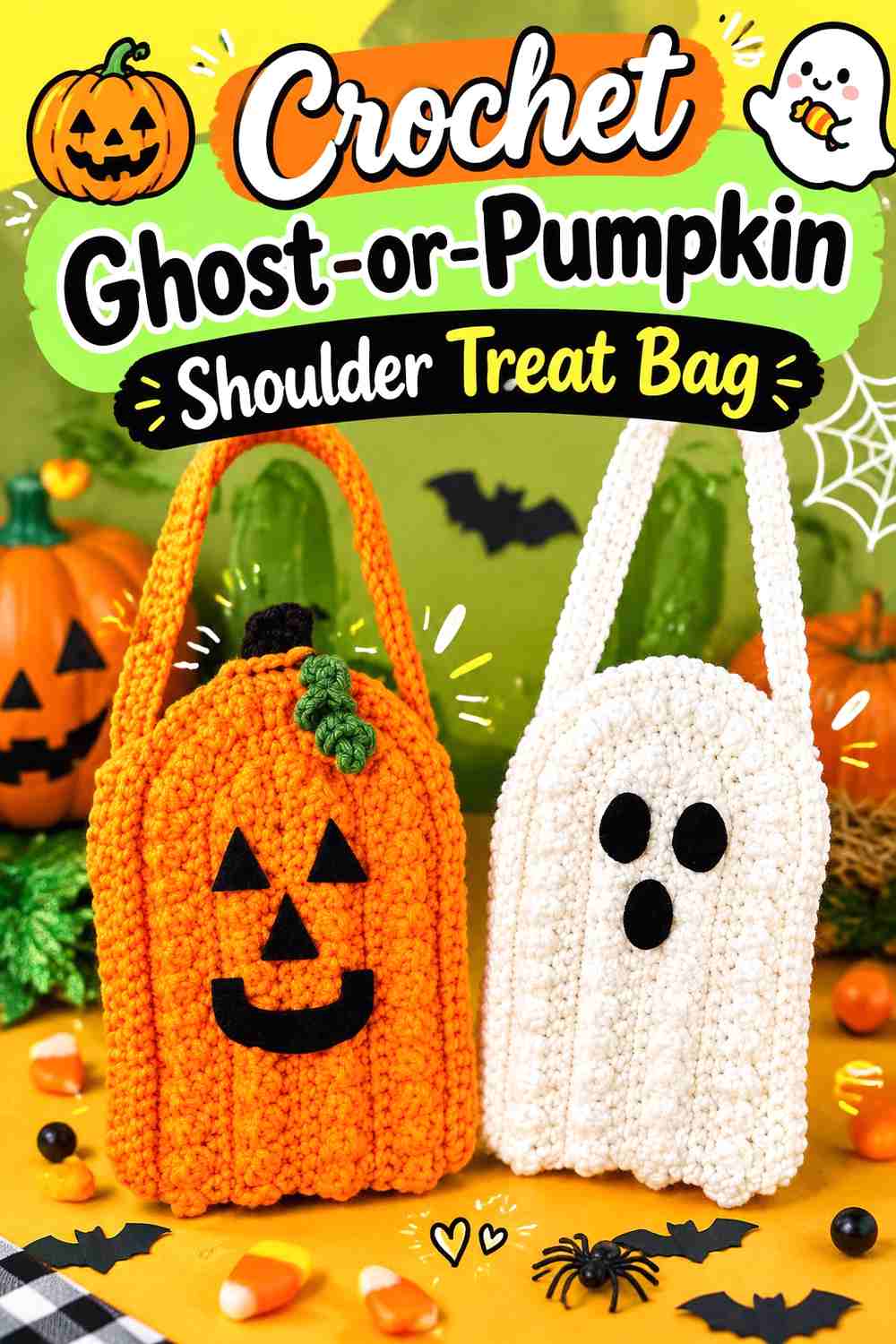
AvocadCoe Crafts uses one Halloween bag concept that can be finished as either a ghost or a Jack-O’-Lantern. That makes the source useful for anyone planning coordinated seasonal bags where the underlying structure remains consistent while the character changes. The original is a treat bag, so a longer shoulder strap should be planned as a separate adaptation.
Shared Construction Helps When Making Multiples
If you want several bags, repeating the same underlying body can simplify comparison and keep the finished group cohesive.
Complete one first and evaluate its proportions before starting the entire set. That gives you a chance to adjust the opening or planned shoulder strap before repeating the same issue several times.
Ghost and Pumpkin Versions Need Different Contrast
A white ghost with dark features reads very differently from an orange pumpkin face.
Place decorative elements against the actual completed body rather than assuming identical sizing will look equally balanced on both versions.
Test the Longer Strap Before Repeating It
Once you have decided on a shoulder conversion, try it on the first finished bag with light contents.
Check whether the top edge pulls, the character rotates, or the strap stretches more than expected. Make any structural adjustment before duplicating the same strap on additional bags.
Creator Credit: AvocadCoe Crafts
15. Crochet Classic Ghost Character Shoulder Tote
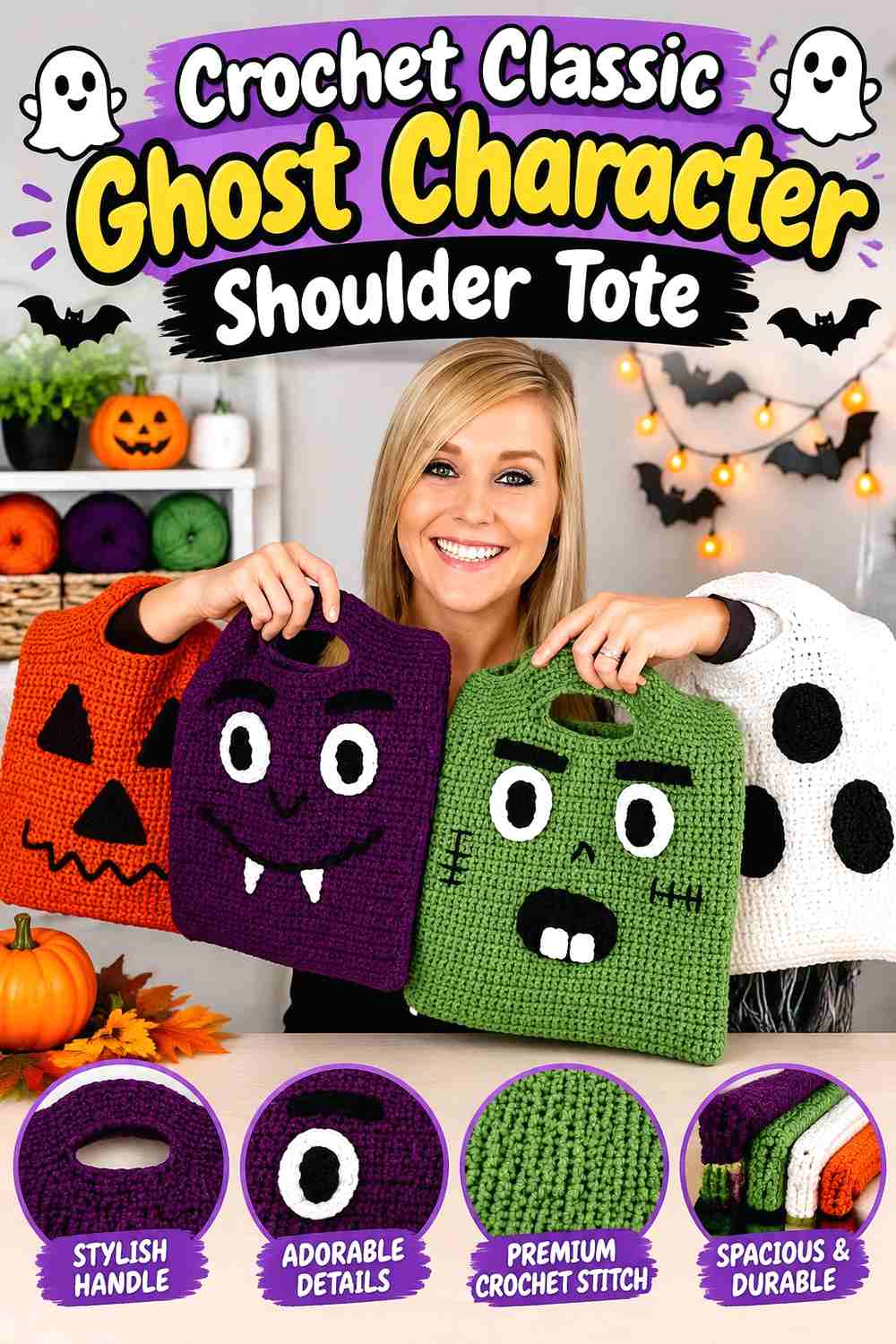
Crochet With Tiffany’s Halloween treat-bag tutorial includes a ghost among several character options and uses a comparatively broad bag body. That broad surface makes it a useful candidate for a shoulder-tote adaptation because there is more room for the ghost face, opening, and carrying points to coexist than on a tiny pouch.
Start With the Bag Function Before the Ghost Face
A shoulder tote needs a usable opening and stable carrying points even when the decoration is removed from the equation.
Work out how the bag should hang and where the straps belong first. Then place the ghost features within the remaining front area instead of letting the face dictate structurally awkward handle positions.
A Broad Front Gives the Expression More Breathing Room
Larger panels allow the eyes and mouth to sit away from seams and straps.
That does not mean the features should automatically become very large. Temporarily place them and view the bag from several feet away. A simple ghost expression often reads more clearly when it has enough empty space around it.
Longer Handles Change the Visual Proportions
Turning a trick-or-treat tote into a shoulder bag makes the handles a much larger part of the overall silhouette.
Check whether the new strap visually competes with the character. A clean, relatively quiet strap can keep attention on the ghost, while a contrasting strap turns the carrying system into part of the design.
Creator Credit: Crochet With Tiffany
Which Crochet Ghost Shoulder Bag Style Should You Choose?
For the most handbag-like result, the Two-Faced Ghost Shoulder Bag is the most direct route because its graphic panel and long carrying style already read as a wearable accessory. The filet tote is another strong choice when you want a familiar bag silhouette rather than a character-shaped body.
Choose the wavy, rounded, or two-panel ghost ideas when the actual bag silhouette should create the character. These designs make the ghost noticeable from farther away, but strap changes deserve more structural attention.
For a small fall accessory, the drawstring and mini-pouch ideas are more suitable. Their compact scale keeps the look playful without requiring a large white bag to dominate an outfit.
The plush ghost concept offers the most dimensional character, while the ghost-and-pumpkin projects work especially well when you want a coordinated pair or several Halloween bags built around related construction.
Conclusion
A good crochet ghost shoulder bag starts with the kind of bag you actually want to carry. Choose a flat graphic design if you want something that behaves more like an everyday purse, a rounded ghost if the character silhouette matters most, or a drawstring pouch if you prefer a small seasonal accessory.
Before adapting any hand-carried or treat-bag tutorial, check the upper edge, strap attachment points, opening, expected contents, and how the ghost looks once the bag hangs vertically. Those decisions matter more than simply making the original handle longer.
For exact construction, shaping, materials, and finishing details, follow the credited original tutorial for the project you choose.
Frequently Asked Questions
Can I turn any crochet ghost trick-or-treat bag into a shoulder bag?
Not automatically. A longer strap changes how force is applied to the bag, especially around the upper edge and attachment points. A small treat bag may also have proportions or fabric that work well for candy but not for repeated everyday carrying. Use the original project as a construction reference, then evaluate the strap, opening, scale, and expected contents separately.
How long should a crochet ghost shoulder-bag strap be?
There is no universal length because the ideal drop depends on the wearer, the bag size, how much the crochet stretches, and whether the bag should sit under the arm or lower toward the hip. Test the intended position with a piece of yarn, ribbon, or another temporary length before committing to the final strap.
Should a crochet ghost shoulder bag have a lining?
A lining is optional, but it can be useful when the crochet fabric is open, stretchy, or likely to hold small items that could work through the stitches. It may also reduce direct pressure from the contents against a ghost motif. Fit any lining to the completed interior rather than assuming the crochet will match an estimated size exactly.
What yarn qualities help a crochet shoulder bag hold its shape?
Look at the finished fabric rather than relying on fiber name alone. A shoulder bag generally benefits from enough stitch definition and stability to support its shape without excessive stretching. A plush ghost bag may intentionally need much softer fabric, so the ideal choice depends on whether structure or character volume is more important.
How can I stop a crochet shoulder strap from stretching?
Strap behavior depends on its length, width, stitch structure, fiber, attachment method, and the weight placed in the bag. If a completed crochet strap stretches more than you want, an appropriate non-stretch reinforcement may help. Test the finished strap with modest realistic contents before relying on its unloaded length.
How do I keep the ghost face centered after the bag is finished?
Judge the face on the three-dimensional bag rather than only on flat crochet fabric. Lightly fill the bag, hang it from the intended strap points, and temporarily position separate eyes or mouth pieces. Check the expression from normal viewing distance before permanently attaching anything. Rounded bags and drawstring pouches especially benefit from this step because their surface changes shape during use.