A crochet hand muff already has the compact, old-world silhouette that works well with cloaks, long coats, layered skirts, riding boots, and other medieval-inspired winter clothing. Add a narrow strap across the front with an antique-looking buckle and the simple hand warmer can shift toward a merchant, ranger, court, guild, or fantasy-traveler aesthetic.
Exact crochet tutorials for buckle-front medieval muffs are rare. The tutorials in this collection teach genuine hand muffs, winter muffs, twiddle muffs, and closely related open-ended muff constructions. The buckle treatments described here are styling adaptations rather than claims about features included in the original tutorials.
For most versions, the safest design approach is to treat the buckle as decorative rather than as the mechanism holding the muff together. Crochet stretches, hardware adds weight, and an actual working buckle can concentrate strain in a small part of the fabric. A separate crocheted strap securely attached across the outward-facing surface can create the visual effect without interfering with the openings where your hands enter.
Quick List
- Crochet Merchant Buckle-Front Hand Muff
- Crochet Hidden-Purse Buckle-Front Hand Muff
- Crochet Courtly Buckle-Front Winter Hand Muff
- Crochet Ruffled Noble Buckle-Front Hand Muff
- Crochet Shearling-Texture Buckle-Front Hand Muff
- Crochet Armored Texture Buckle-Front Hand Muff
- Crochet Corset-Panel Buckle-Front Hand Muff
- Crochet Guild Patchwork Buckle-Front Hand Muff
- Crochet Relic Scrapwork Buckle-Front Hand Muff
- Crochet Gothic Mixed-Texture Buckle-Front Hand Muff
- Crochet Studded Bobble Buckle-Front Hand Muff
- Crochet Guard-Style Buckle-Front Hand Muff
- Crochet Heraldic Buckle-Front Hand Muff
- Crochet Chainmail-Texture Buckle-Front Hand Muff
- Crochet Rosette Buckle-Front Hand Muff
- Crochet Tapestry-Style Buckle-Front Hand Muff
Make the Buckle Look Structural Without Making It Carry the Structure
A buckle can suggest leather armor, riding gear, belts, satchels, and historical fastening systems, but crochet fabric does not behave like leather.
For a decorative treatment, work or make the hand muff according to its original construction first. Then consider a separate band crossing the center front. The strap can frame the buckle while the muff’s actual seam and body continue to support the garment.
If you want a real adjustable fastening rather than a decorative buckle, the entire attachment system needs more planning. Check how the hardware pulls against the stitches, whether reinforcement is necessary, and whether the fastening changes the usable interior space. Do not assume an ornamental buckle can safely function as a structural closure.
Choose Hardware Around the Yarn, Not Before It
Large buckles can overwhelm a small muff, while tiny buckles may disappear against deep cables, loops, bobbles, or faux-fur-style texture.
Lay the intended buckle on a swatch before committing to the combination. Dark bronze, antique brass, pewter-like gray, blackened metal, wood, or leather-look hardware can support medieval styling, but the finish should remain visible against the yarn.
Check the back of the hardware as carefully as the front. Rough edges, protruding prongs, or unfinished metal can catch yarn or rub against clothing. Hardware should remain on the exterior surface and away from the areas where hands slide through the openings.
Medieval Style Comes From Texture as Much as Color
Brown and burgundy alone will not make a muff look medieval. Surface construction does more of the work.
Raised stitches can suggest carved or tooled decoration. Loops and plush yarn create a fur-like impression. Ruffles move the design toward court dress. Mixed stitch panels can resemble woven or pieced textiles, while repeated bobbles can produce an almost studded surface.
For a quieter traveler or ranger look, consider charcoal, peat brown, moss, flax, oxblood, muted navy, or deep forest green. For a courtly interpretation, plum, black cherry, cream, dark teal, or a controlled metallic accent can create more formality.
1. Crochet Merchant Buckle-Front Hand Muff
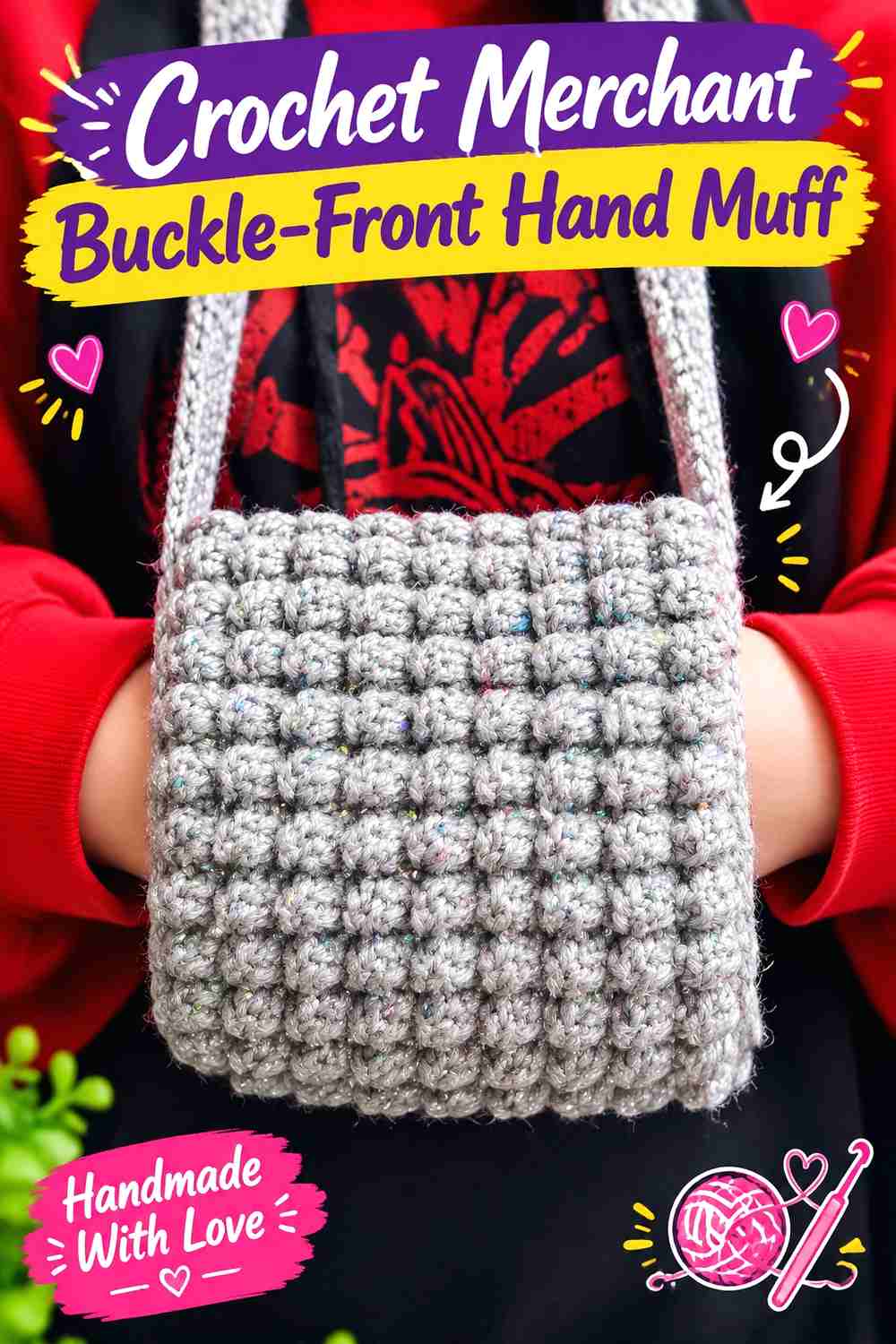
Bixby Legend’s traditional hand-warmer format provides a straightforward shared muff with openings on both sides. The uncomplicated tube is useful here because it leaves a broad central surface available for a medieval-style strap and buckle without forcing the hardware to compete with elaborate stitch detail.
A Wide Center Strap Can Create a Belted Look
Place the decorative band across the broadest visible portion of the muff rather than immediately beside an opening.
A medium-width strap can make the center resemble a belt wrapped around a traveler’s accessory. Keeping the underlying muff relatively quiet helps the buckle become the obvious focal point.
Replace Rainbow Energy With Controlled Color Blocking
The source uses strong color variation, but the construction can inspire a more restrained medieval palette.
Instead of many unrelated shades, consider two or three related tones with one darker strap. A moss body with brown trim or a burgundy muff with charcoal accents can preserve visual interest without looking like a modern rainbow accessory.
Check Which Side Naturally Faces Outward
A decorative buckle only works when it remains visible during wear.
Put both hands into the finished muff and notice how the tube rotates naturally. Position the strap after establishing the likely outward-facing surface rather than assuming the seam or center of the flat piece will automatically become the front.
Creator Credit: Bixby Legend
2. Crochet Hidden-Purse Buckle-Front Hand Muff
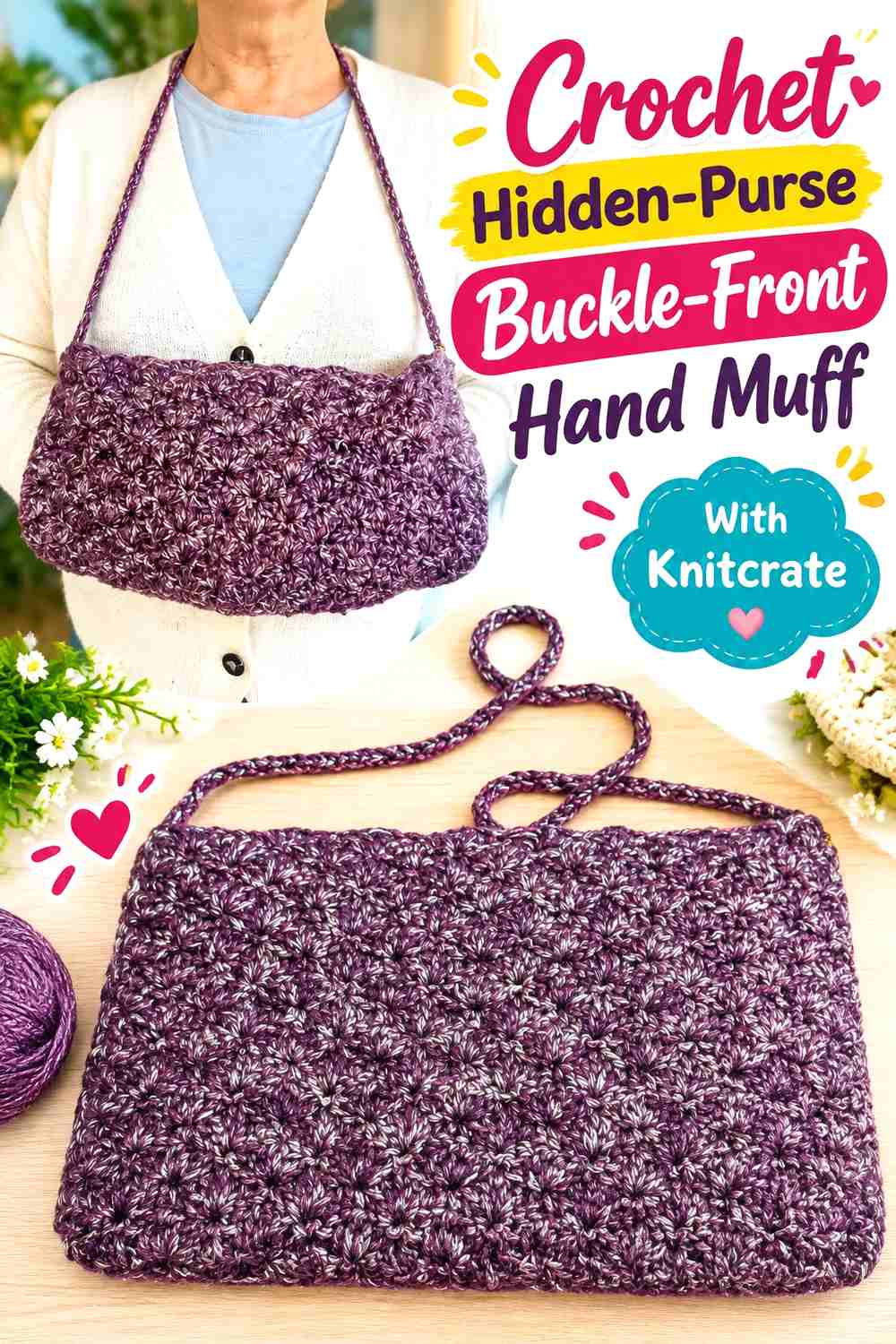
JoannesWeb’s muff combines hand warming with a hidden purse compartment, making this one of the most function-driven sources in the collection. A medieval adaptation can lean into the idea of a concealed coin pouch while using a front strap and buckle as the visual detail.
Keep the Decorative Buckle Clear of the Pocket Access
The hidden storage feature already requires an opening and internal space.
Do not position a decorative strap where it blocks or disguises the zipper so thoroughly that accessing the pocket becomes inconvenient. Place the buckle where it looks central from the outside but remains independent of the real storage closure.
A Coin-Purse Theme Benefits From Firmer Visual Structure
Shell texture already gives the muff a decorative surface.
Instead of covering it with several medieval motifs, use one buckle band to provide a strong horizontal interruption. Deep burgundy, forest green, or charcoal can make that band feel more like a satchel fastening.
Stored Items Change the Way the Muff Hangs
A pocket containing a phone or keys changes the balance of the hand warmer.
If you add a buckle and strap as well, evaluate the finished piece with the realistic contents inside. A visually centered buckle may no longer look centered if the filled pocket causes the muff to rotate.
Creator Credit: JoannesWeb
3. Crochet Courtly Buckle-Front Winter Hand Muff
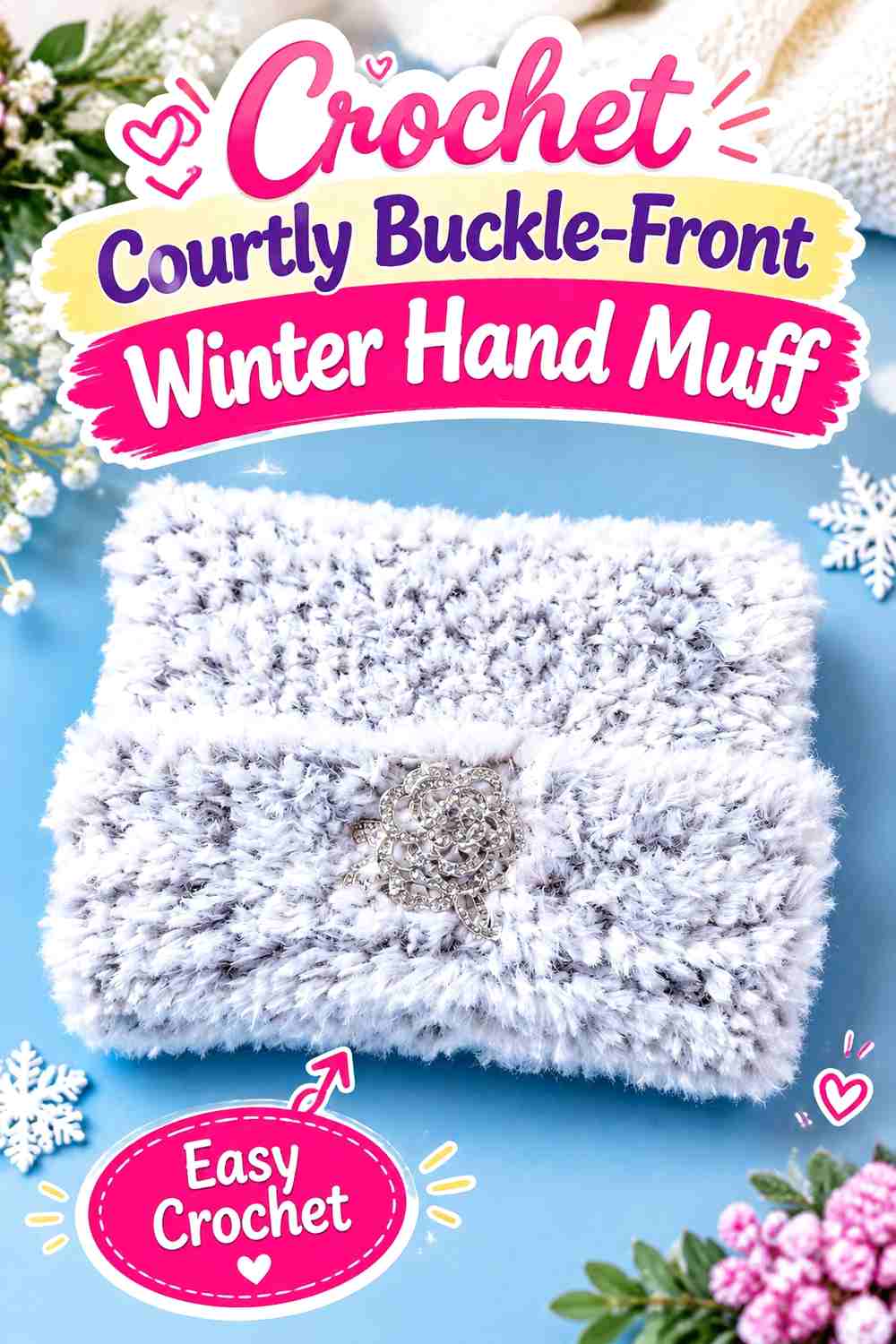
The Stitch Sessions – Crochet & Conversation provides a formal winter bridal muff reference, making it a useful base for a more elegant medieval-court interpretation. Rather than treating the buckle as rugged armor, this version can make the fastening look ornamental and jewelry-like.
Choose a Buckle That Reads as Ornament
A court-inspired muff suits a smaller, more decorative buckle better than oversized utilitarian hardware.
Look for a finish that contrasts gently with the yarn instead of becoming the entire design. A darker metallic accent on cream, wine, plum, or deep green can suggest ceremonial clothing without requiring beads across the whole surface.
Formal Texture Needs Visual Restraint
A bridal-style muff already carries a dressier mood.
If the central buckle is ornate, keep the supporting strap simple. If the crochet itself contains elaborate texture, reverse the balance and use quieter hardware.
Compare the Muff With the Sleeves It Will Accompany
A medieval winter outfit may include bell sleeves, fur cuffs, fitted under-sleeves, or a cloak.
Try the muff with those layers before enlarging its openings or adding bulky edge decoration. The accessory should frame the hands rather than swallowing the sleeve detail.
Creator Credit: The Stitch Sessions – Crochet & Conversation
4. Crochet Ruffled Noble Buckle-Front Hand Muff
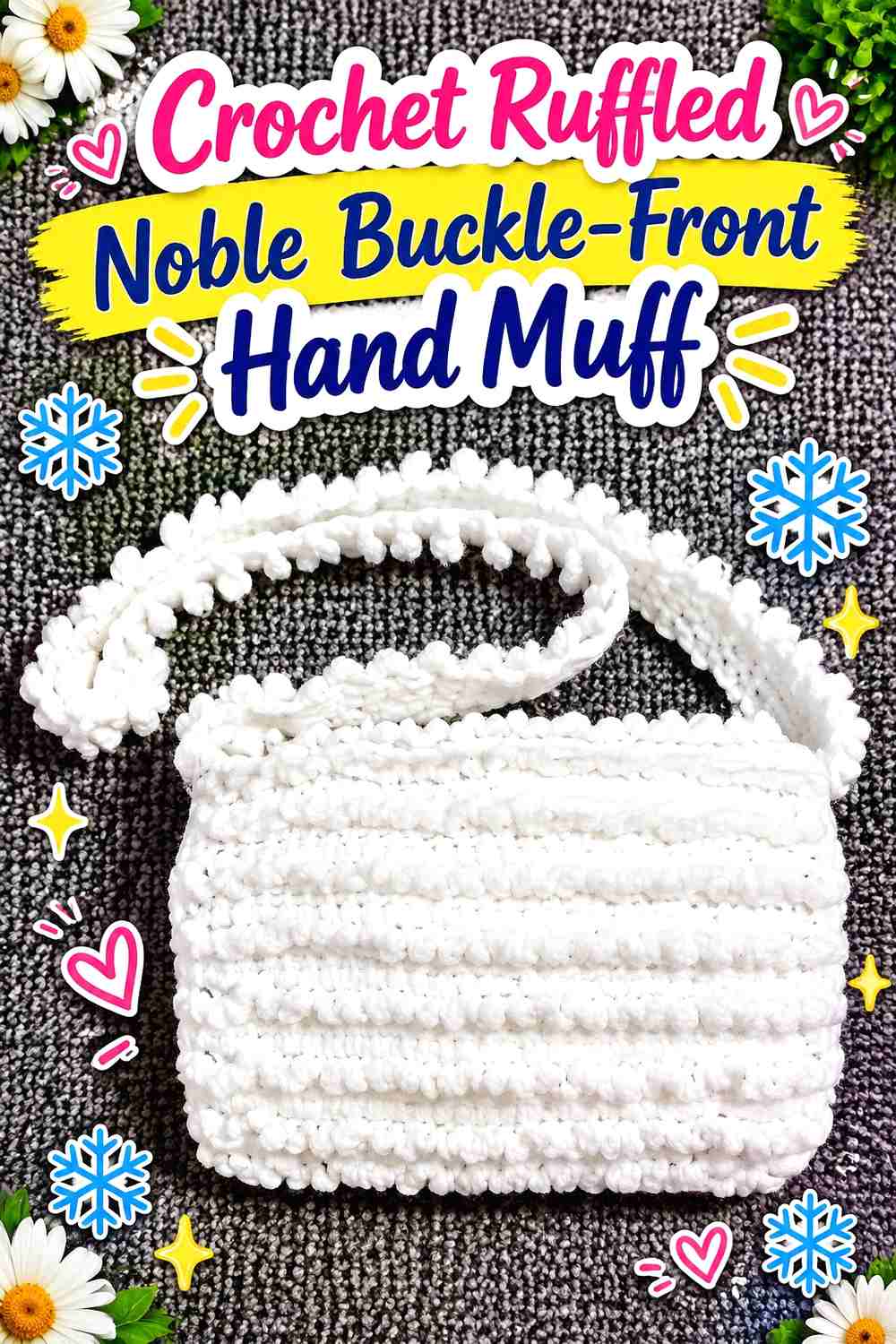
Häkelfreuden’s muff uses prominent ruffled openings, creating an immediately more romantic silhouette than a plain winter tube. That makes it especially suitable for a noblewoman, bard, court mage, or romantasy-inspired medieval look.
Let the Buckle Stabilize the Visual Center
Ruffles create movement at both ends, so a clean central strap can keep the middle from feeling empty.
Use the buckle as a visual anchor rather than adding additional flowers, tassels, and trim across the same space.
Keep Hardware Away From the Ruffled Openings
The ruffle occupies exactly the area the hands pass through.
Position the buckle well toward the center so fingers, sleeve cuffs, and moving ruffles do not repeatedly catch against it.
Deep Ruffles Need Room Beside Winter Sleeves
A dramatic edge may look generous on an empty muff but behave differently around a heavy coat sleeve.
Test one finished opening with the intended outerwear before increasing the second ruffle or adding another layer of trim.
Creator Credit: Häkelfreuden
5. Crochet Shearling-Texture Buckle-Front Hand Muff
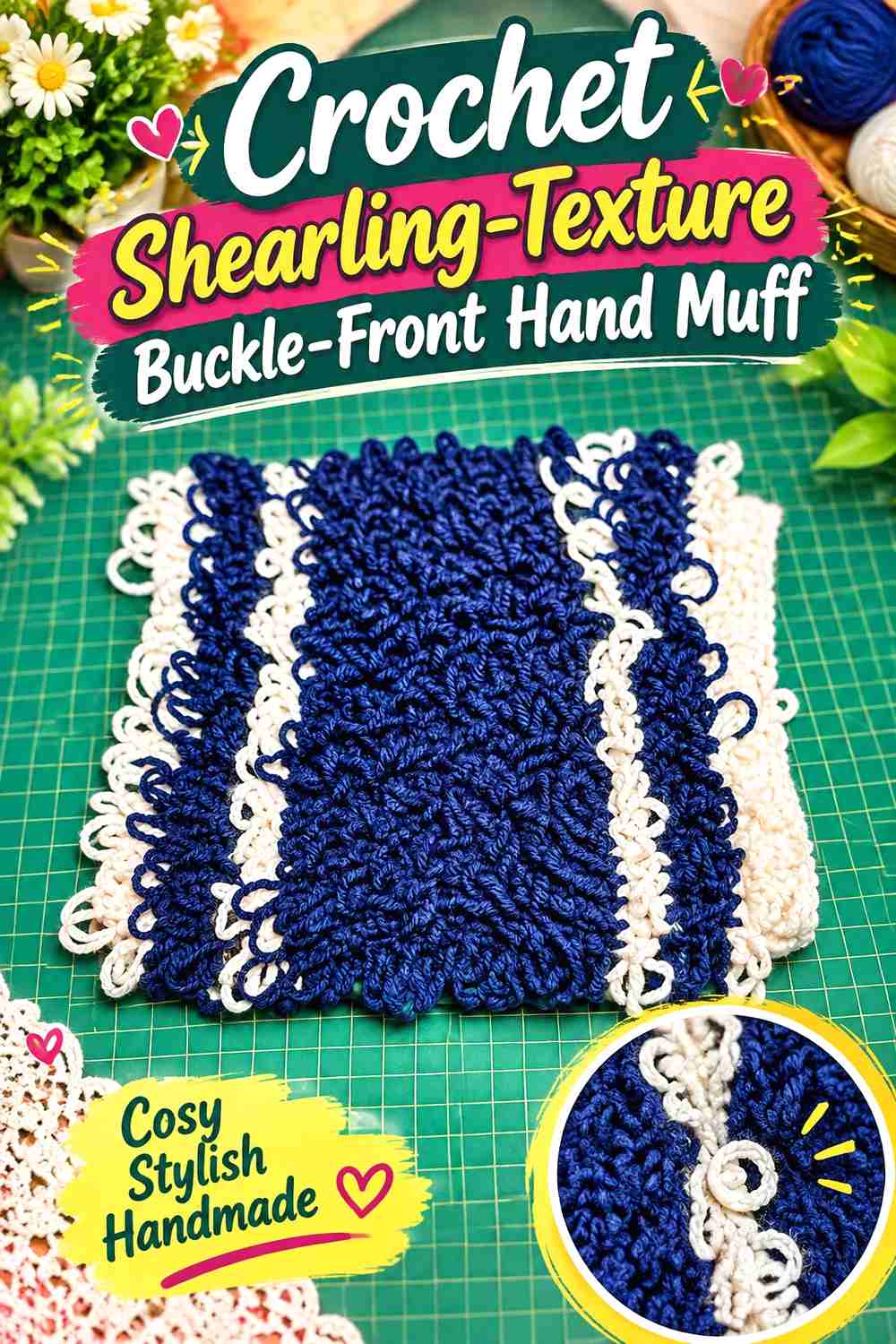
ilonciaLu’s muff uses a looped surface that gives the body a shaggy, fur-like appearance. The texture makes it one of the strongest medieval winter references for a rugged northern traveler, hunter, ranger, or fantasy-warrior aesthetic.
Smooth Strap Against Shaggy Texture Creates the Strongest Contrast
A buckle can disappear if both the body and strap are heavily textured.
Use a flatter crocheted band across the looped surface so the fastening remains readable. Brown, black, or dark gray against a lighter shaggy body can suggest a leather belt over fur.
Do Not Bury the Buckle in Long Loops
Projecting loops can fold over small hardware.
Before sewing the strap in place, flatten the surrounding texture and confirm that the buckle remains visible from normal viewing distance.
Protect the Loops From Rough Hardware
The same texture that creates the medieval effect can snag easily.
Check every buckle edge and attachment point with your fingertips. Any sharp or unfinished area that catches a test strand of yarn should not be placed directly against the looped body.
Creator Credit: ilonciaLu
6. Crochet Armored Texture Buckle-Front Hand Muff
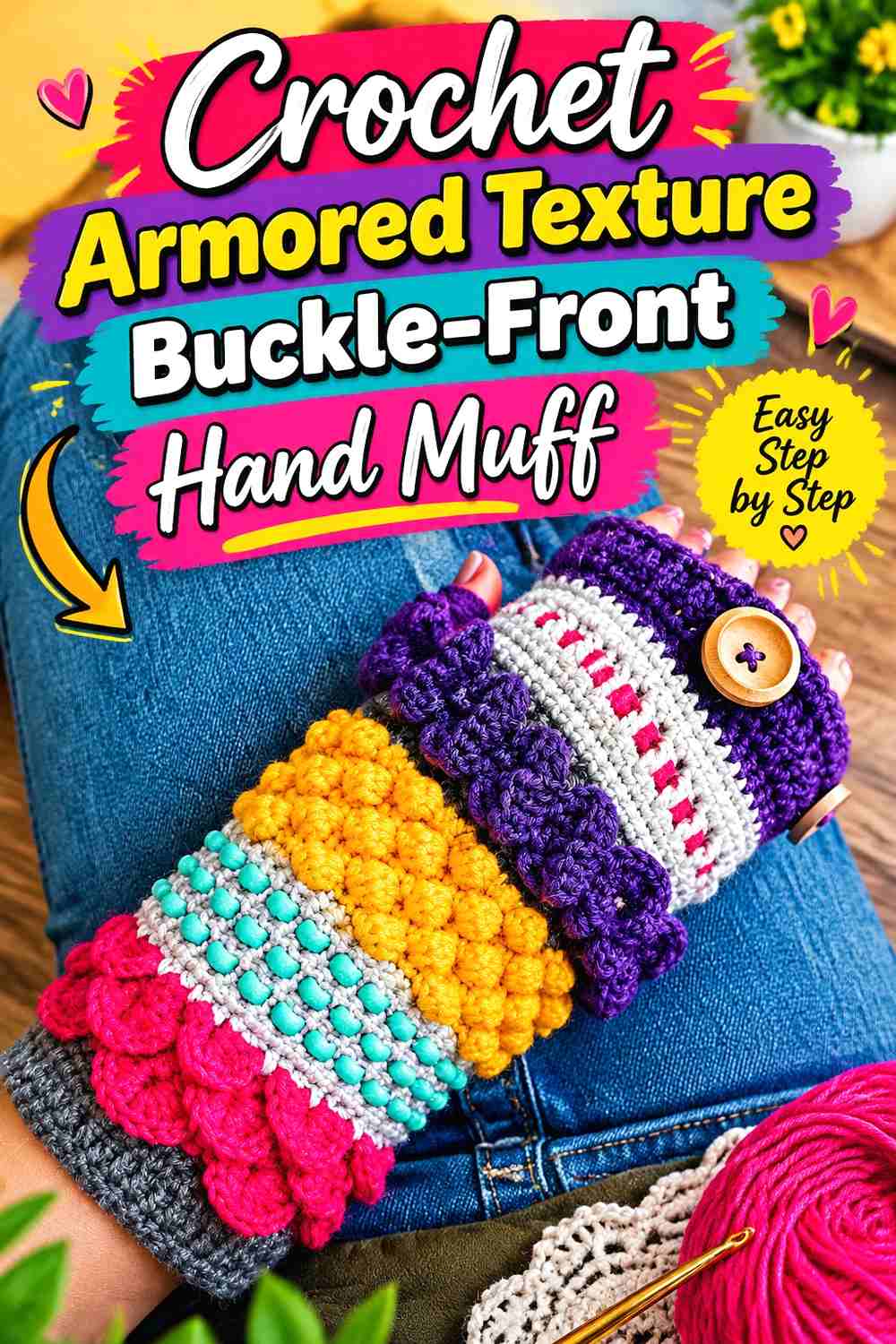
Heart Hook Home’s twiddle muff uses several distinct crochet textures in one continuous piece. For this fashion adaptation, the relevant inspiration is the varied stitch surface rather than its sensory embellishments. The project demonstrates how one muff body can move between flatter, raised, ridged, and dimensional crochet zones.
Treat Texture Bands Like Fantasy Armor Sections
Instead of using many bright colors, work related dark or earthy shades so the texture changes do more of the work.
A buckle strap crossing a flatter section can separate two more sculptural zones and create the impression of layered textile armor.
Do Not Put the Buckle on the Bulkiest Stitch
A raised stitch field may not provide the flattest mounting area.
Choose a calmer band where the strap can sit evenly rather than forcing stiff hardware across large bobbles or projecting scales.
Keep the Interior Smoother Than the Exterior
For a fashion muff, the medieval effect belongs primarily on the outside.
If you adapt the texture arrangement, reserve the most pronounced relief for the visible surface and check that the hand-facing area remains comfortable.
Creator Credit: Heart Hook Home
7. Crochet Corset-Panel Buckle-Front Hand Muff
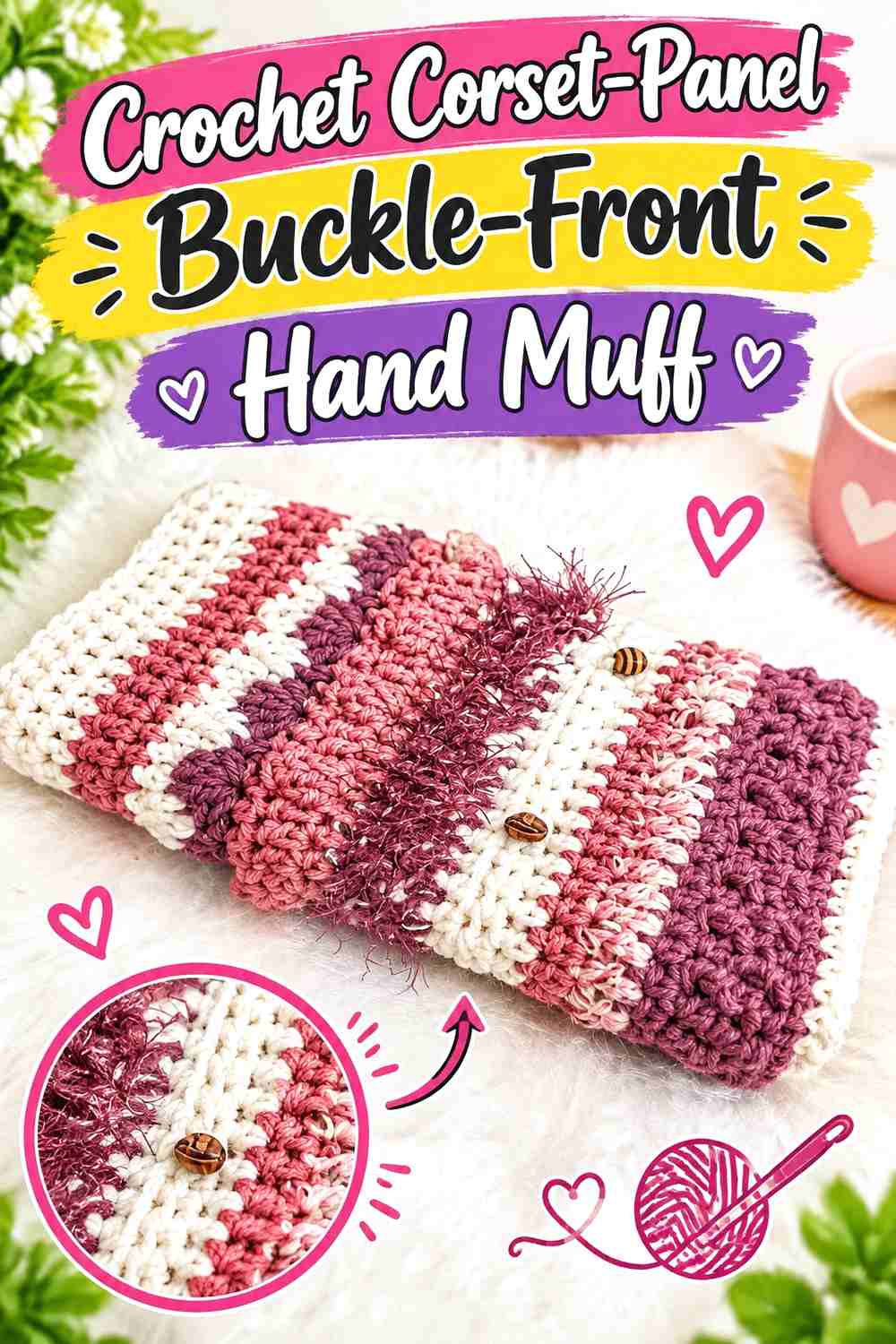
Girlybunches’ twiddle muff uses separate crocheted sections that are joined into the finished tube. That paneled approach is useful for a medieval adaptation because it gives you a natural way to distinguish an outward-facing decorative panel from a quieter hand-facing section.
Make One Panel the Deliberate Front
Instead of decorating the entire circumference equally, assign one panel as the presentation side.
That section can carry the strap, buckle, surface lacing, or more pronounced texture while the reverse remains simpler.
A Vertical Strap Can Mimic Corset Hardware
The buckle does not have to run horizontally.
A shorter vertical tab placed across a panel transition can evoke corset tabs or reinforced garment closures. Check hand position first so the hardware does not land where the muff is normally gripped.
Separate Pieces Make Reinforcement Easier to Plan
Before joining the panels, you can inspect the back of the buckle area.
If the hardware needs a firmer textile foundation, address that section while the piece remains accessible rather than trying to reinforce it after the tube has been closed.
Creator Credit: Girlybunches
8. Crochet Guild Patchwork Buckle-Front Hand Muff

LoveCrafts’ twiddle-muff tutorial uses varying crochet stitches, colors, and textures within a tubular hand-warmer format. For medieval winter styling, edit that freedom into a more disciplined patchwork surface inspired by guild textiles, travel blankets, or pieced household cloth.
Repeat One Dark Color to Unite Mixed Textures
Patchwork can look medieval-inspired or simply chaotic depending on the palette.
Choose one recurring shade—such as charcoal, brown, oxblood, or deep green—to appear in several sections and in the buckle strap. That repeated color can make unrelated stitch textures feel intentional.
Use the Buckle as a Boundary Between Texture Zones
A strap positioned over the transition between two sections can visually organize the surface.
This works particularly well if one zone is raised and the other is flatter, because the buckle appears to connect two different textile panels.
Edit Out Unnecessary Surface Objects for Fashion Use
Sensory tutorials may show buttons, ribbons, bells, or other attached pieces.
For a medieval fashion muff, use only the tube and texture ideas that support the intended style. A single well-positioned buckle is usually more coherent than adding every embellishment demonstrated in a sensory context.
Creator Credit: LoveCrafts
9. Crochet Relic Scrapwork Buckle-Front Hand Muff
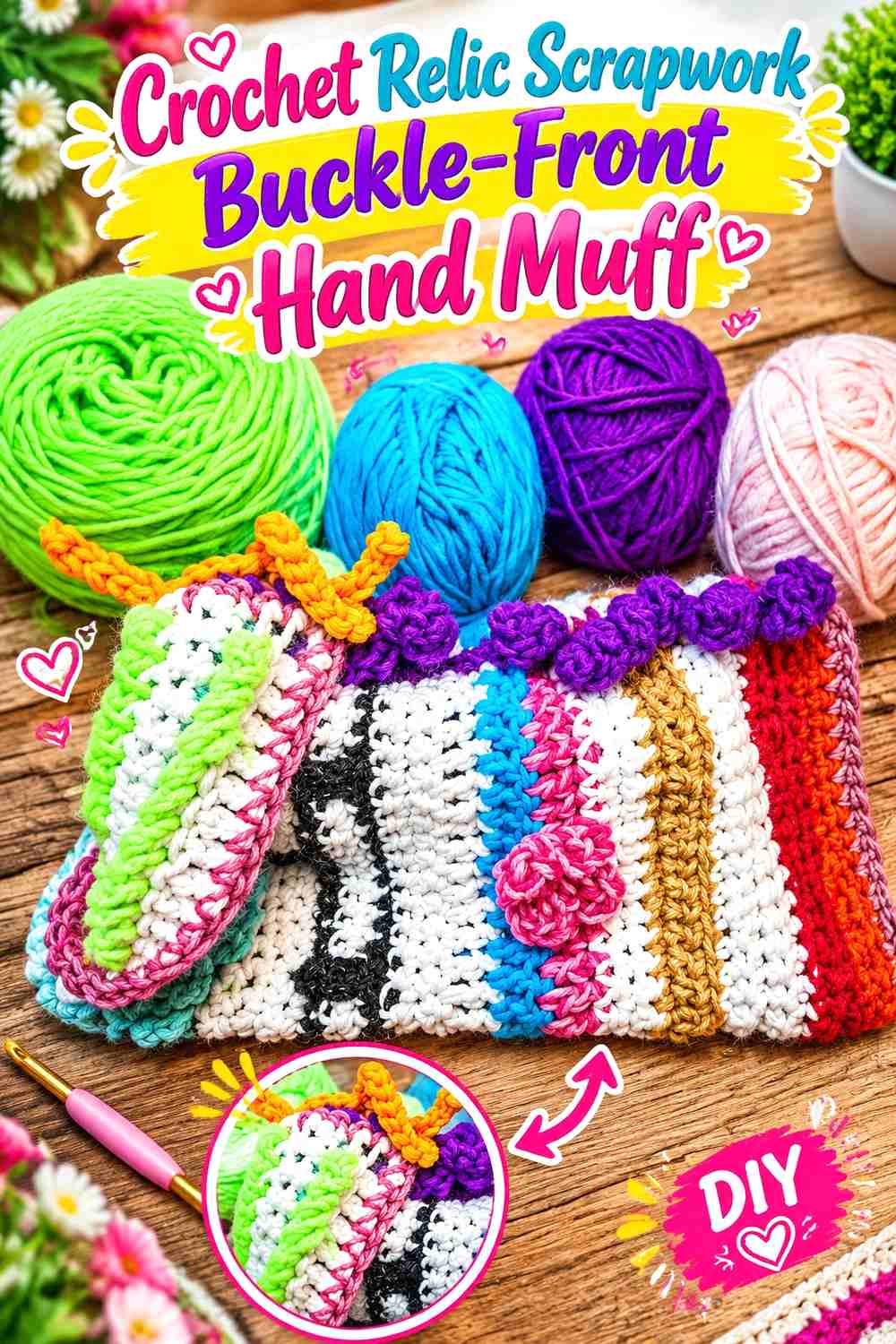
Cukicrochet’s sensory muff uses mixed yarns and varied crochet textures in a cylindrical construction. Its scrap-based approach can be adapted into a weathered medieval accessory where several related fibers create the look of a repaired or inherited textile.
Choose Scraps by Material Character, Not Randomness
A relic-like muff benefits from variation, but the colors should still belong together.
Muted brown, parchment, rust, moss, black, and burgundy can produce an aged palette. Avoid mixing every bright scrap simply because the source construction allows variety.
One Buckle Can Make Scrapwork Look Deliberate
A strong center fastening creates a focal point that helps organize the varied surface.
Using the same dark yarn for a strap and occasional separator bands can further connect otherwise different scraps.
Mixed Fibers Need Compatible Care
A medieval appearance does not excuse impractical material combinations.
If scraps have different washing requirements, consider whether they belong in the same winter accessory. When yarn identities are unknown, limiting the number of materials may simplify care.
Creator Credit: Cukicrochet
10. Crochet Gothic Mixed-Texture Buckle-Front Hand Muff
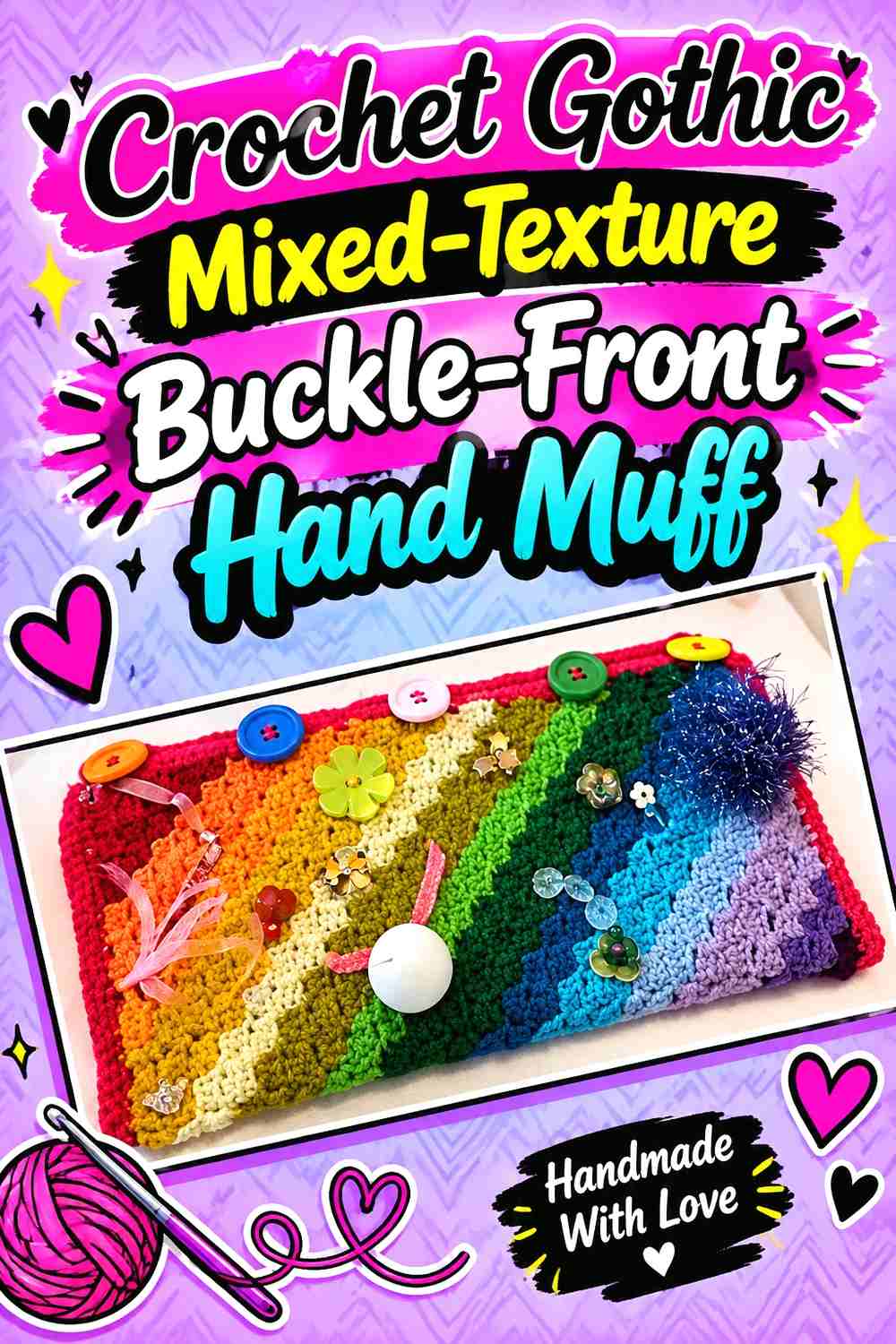
Sooz In The Shed’s fiddle-muff construction provides a true muff-shaped base with areas of varied surface interest. Stripped of sensory-specific attachments, that concept can become a dark gothic hand warmer with controlled bands of texture and one antique-style buckle.
Black Needs Texture With Strong Shadows
Complicated crochet can disappear visually in very dark yarn.
Choose raised stitches that remain noticeable through shadow, or break black with charcoal, wine, or deep plum so the buckle and stitch work do not merge into one flat surface.
Keep the Buckle Finish Distinct From the Yarn
A black buckle on black yarn may vanish unless its shape is large and graphic.
Antique brass, pewter-like gray, or another muted contrasting finish can be easier to read without turning the muff into a shiny costume prop.
Leave Quiet Space Around the Hardware
Mixed texture already creates visual activity.
A smooth zone immediately surrounding the strap can make the buckle look intentional rather than trapped inside an unrelated field of loops and raised motifs.
Creator Credit: Sooz In The Shed
11. Crochet Studded Bobble Buckle-Front Hand Muff
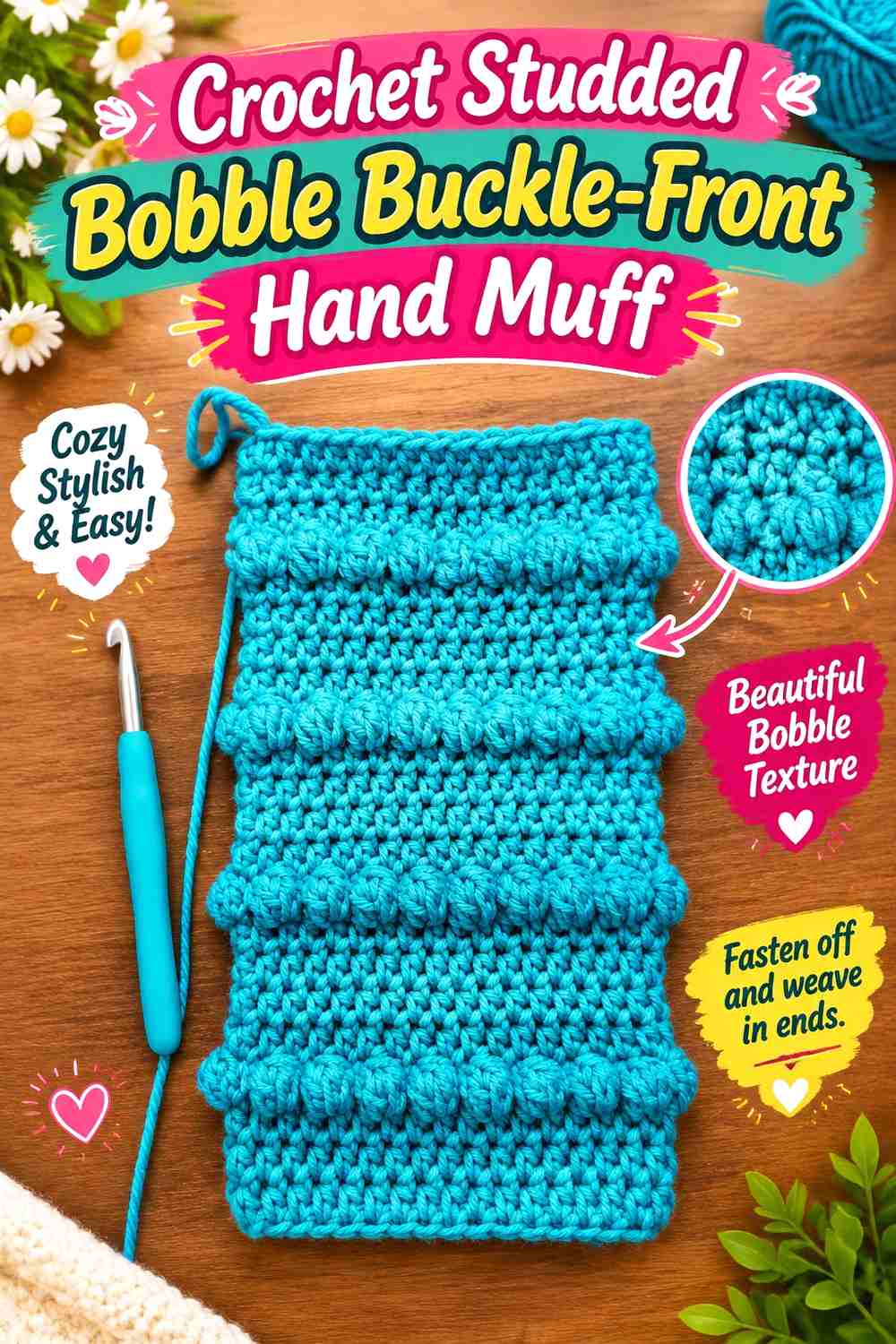
GirlScouts Troop8080’s crochet fidget-muff tutorial uses bobble-like raised texture within a genuine muff construction. For this winter-fashion adaptation, those raised areas can suggest textile studs or riveted armor without adding hard studs across the fabric.
Let Crochet Bobbles Replace Metal Studs
The strongest advantage of this approach is that most of the dimensional detail can stay textile-based.
A repeated bobble band can frame the buckle while avoiding a large number of separately attached hard decorations.
Keep the Strap Flatter Than the Bobble Field
Hardware needs a stable visual base.
Mount the decorative buckle on a smooth or lightly ribbed band rather than placing it directly across the most dimensional bobbles.
Do Not Crowd the Hand Openings
Bobbles, a buckle, and winter sleeves all add bulk.
Keep the strongest texture toward the center and maintain enough room around both ends for hands to pass comfortably.
Creator Credit: GirlScouts Troop8080
12. Crochet Guard-Style Buckle-Front Hand Muff
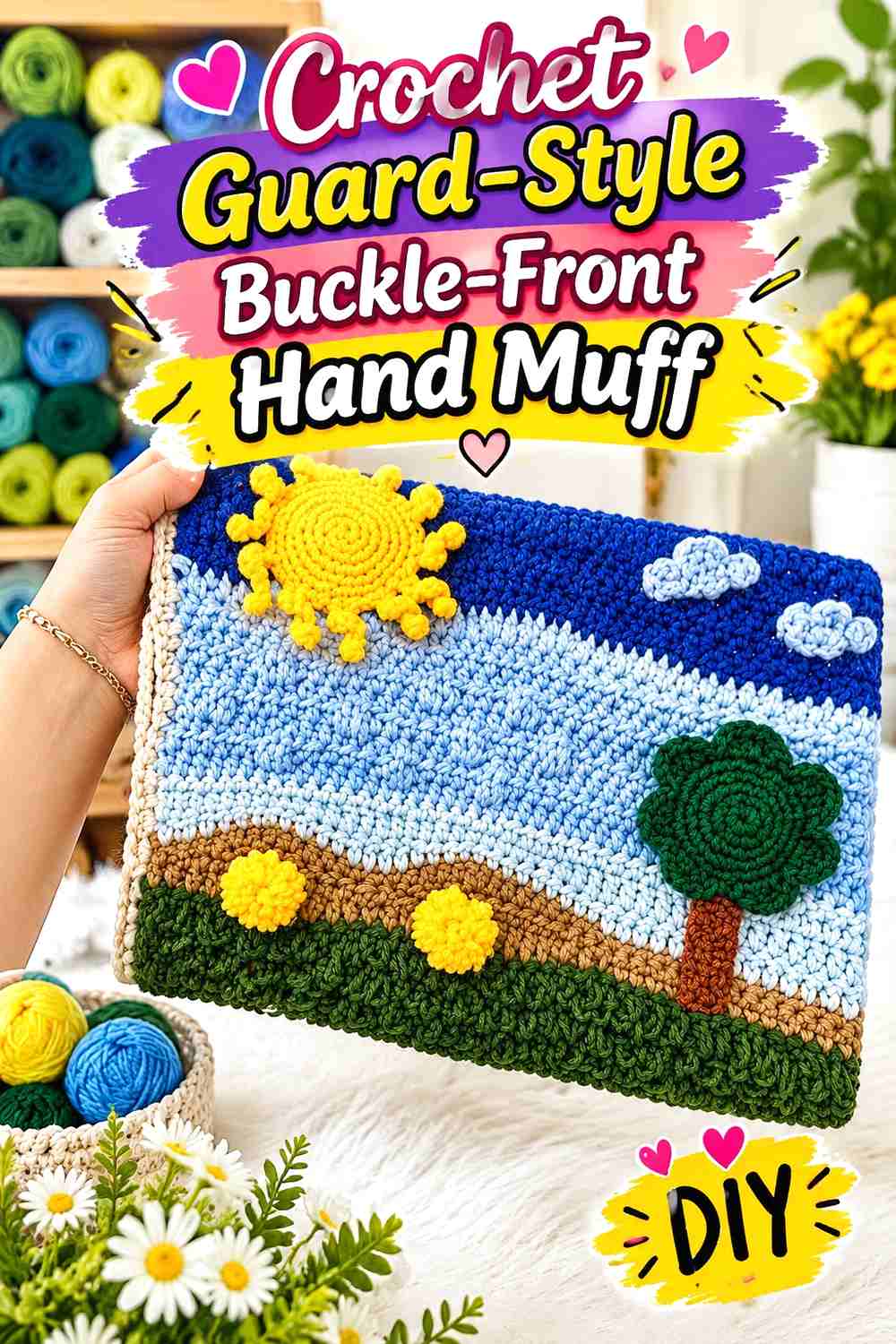
Crochet Nurse’s tutorial includes crochet muffs within a care-oriented context, but the basic tube form can serve as a restrained construction reference for a simpler fashion adaptation. This version works well when you want a medieval guard or ranger accessory without heavy ruffles, fur effects, or floral ornament.
A Plain Body Makes the Buckle More Convincing
When the surface is simple, the strap can carry most of the theme.
A broad dark band with a medium buckle can create the impression of practical equipment rather than decorative jewelry.
Use Dense Crochet Where Structure Matters
A decorative strap can pull slightly on the fabric even when it is not functional.
A firmer central fabric generally gives the buckle area a cleaner appearance than very loose openwork. Swatch the intended stitch and check whether it stretches dramatically under the hardware.
Keep the Design Compatible With Everyday Coats
This option is useful if the muff needs to work beyond costume styling.
A removable or understated buckle treatment can make it easier to pair the accessory with ordinary winter outerwear while retaining a medieval influence.
Creator Credit: Crochet Nurse
13. Crochet Heraldic Buckle-Front Hand Muff
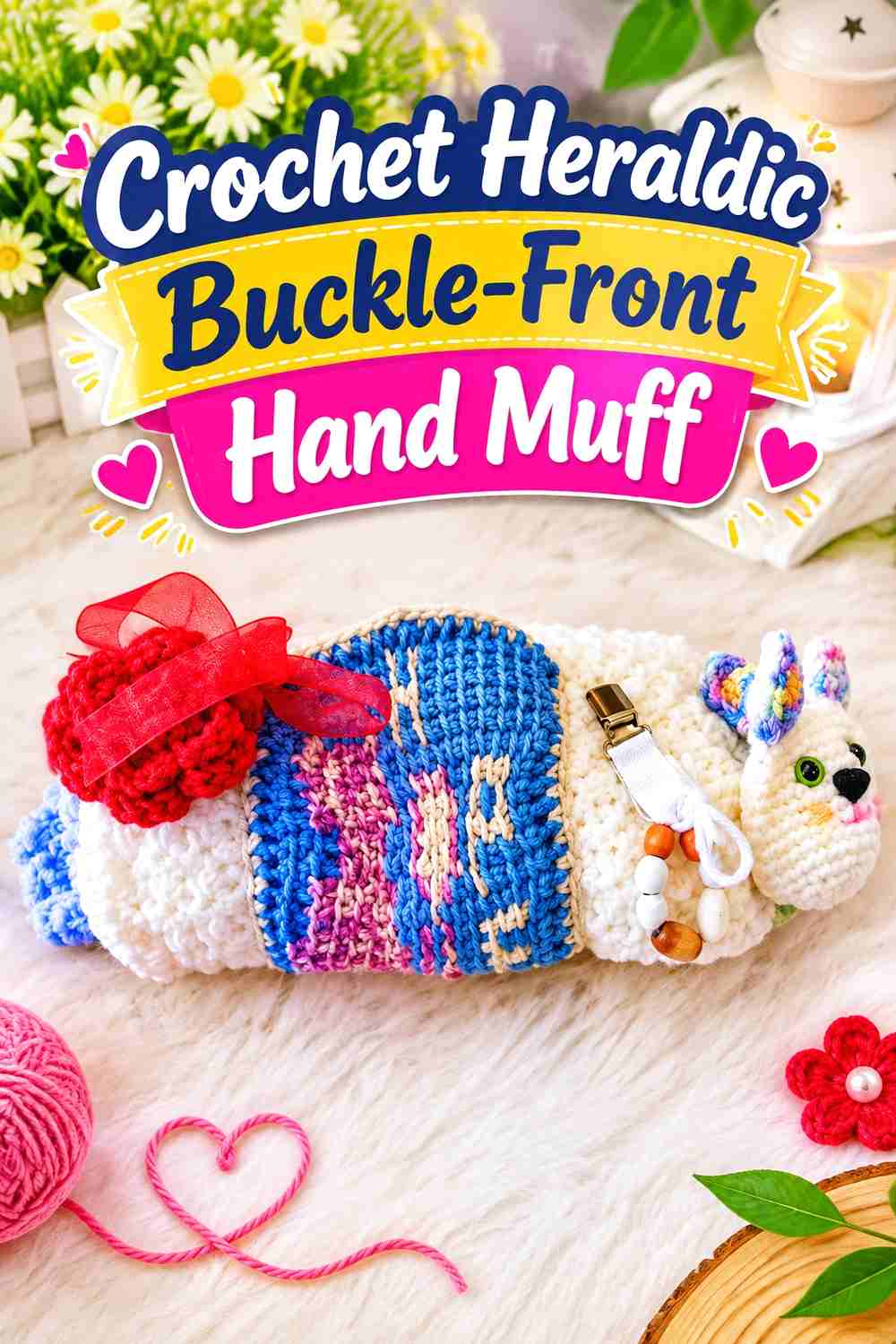
HelenMay Crochet’s tutorial shows several crochet activity-muff examples, making it useful for comparing how motifs and surface features can be distributed across the same general tube form. For a medieval-fashion interpretation, reduce that variety to one heraldic focal motif plus a buckle strap.
One Emblem Is Stronger Than Many Small Motifs
A shield-like geometric shape, stylized flower, or simple appliqué can suggest heraldry without turning the muff into a collage.
Place the motif above or beside the strap rather than directly underneath the buckle where it would be obscured.
Use Symmetry for a Court or Guild Look
A deliberately centered buckle with balanced decoration on each side gives the muff a more formal character.
An off-center layout can look rustic or handmade in a different way, so choose the placement according to the role you want the accessory to suggest.
Check Motif Attachment From the Inside
Anything sewn onto the muff can leave tails or firm stitching on the reverse.
Run your hands through the completed tube and make sure the attachment area does not create an uncomfortable interior patch.
Creator Credit: HelenMay Crochet
14. Crochet Chainmail-Texture Buckle-Front Hand Muff
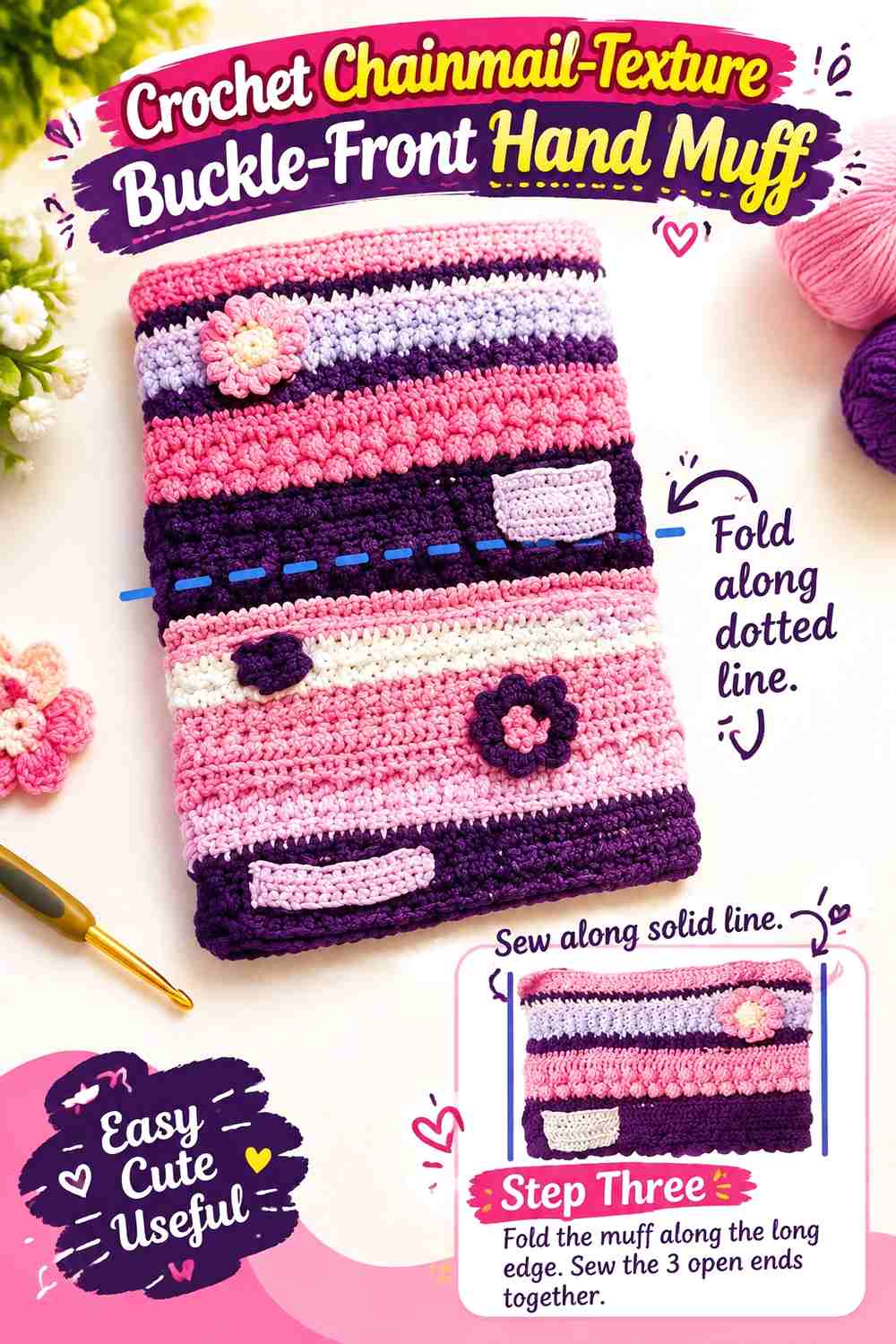
Prince William Public Libraries’ fidget-muff example emphasizes repeated raised crochet texture, including bobble-like surfaces. For a medieval styling adaptation, a regular field of raised stitches can suggest small armor links or padded textile protection rather than an explicitly sensory surface.
Repetition Creates a More Armor-Like Effect
Random texture reads as decorative; organized repetition can look more structural.
Keep the raised field regular and use the buckle strap as a strong horizontal break through the center.
Gray Does Not Have to Be the Only Armor Color
Charcoal and pewter are obvious choices, but brown, black cherry, deep navy, or forest green can produce a softer textile-armor interpretation.
The important decision is contrast between the raised body and the buckle band.
Maintain a Smooth Grip Area
A highly textured muff can become awkward if every surface projects outward.
Consider leaving the lower or inward-facing section smoother so the accessory remains comfortable to hold while the visible front carries the dramatic texture.
Creator Credit: Prince William Public Libraries
15. Crochet Rosette Buckle-Front Hand Muff
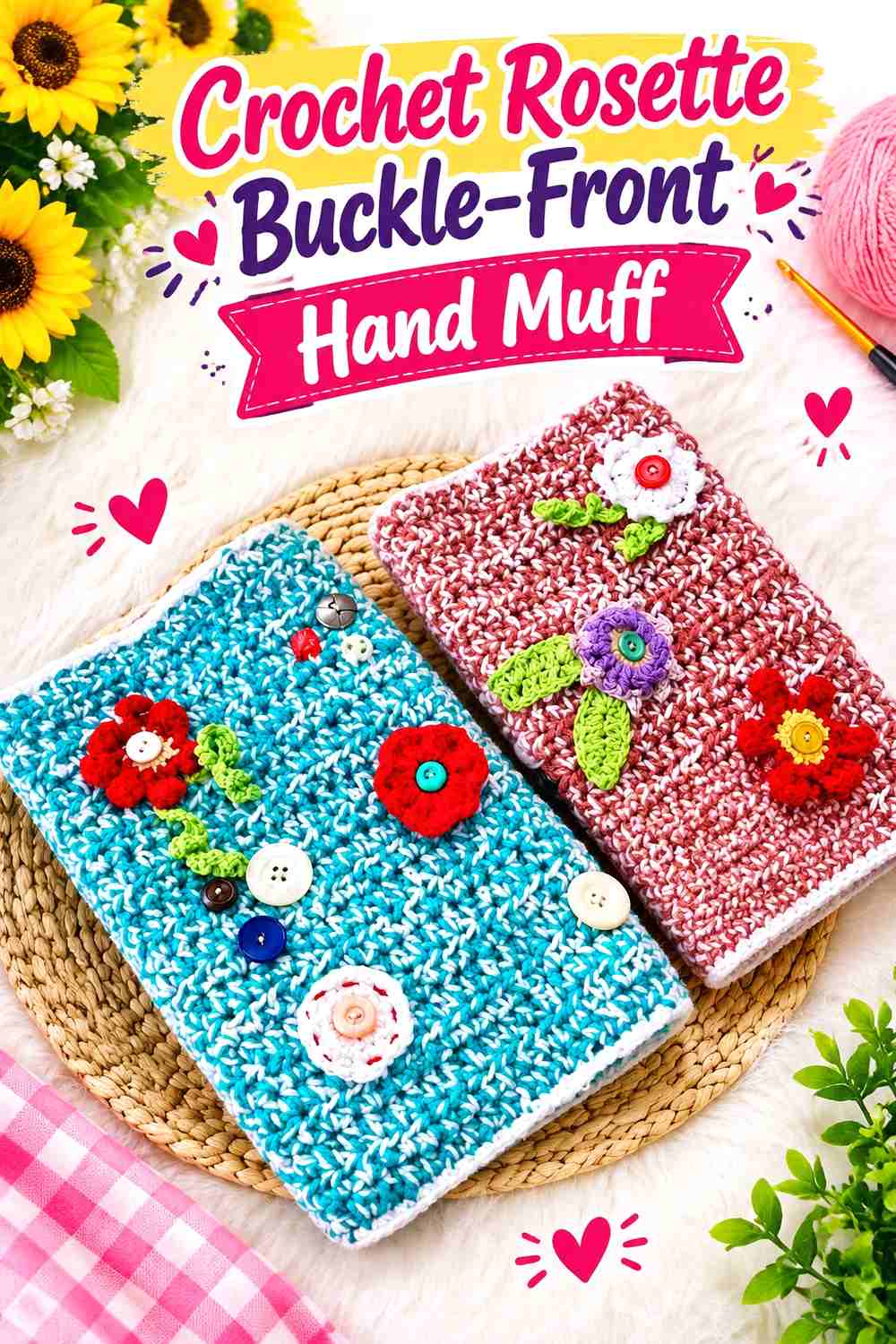
Bea Somnium’s sensory-muff tutorial includes crochet floral elements among its surface details. For medieval winter fashion, that idea can become a restrained rosette or botanical emblem paired with a small buckle rather than a heavily embellished activity muff.
Place the Rosette Beside the Buckle, Not Under It
A three-dimensional flower and metal hardware both need visible space.
Offsetting the rosette slightly allows the buckle to remain readable while the floral detail creates a softer courtly contrast.
Dark Florals Can Feel More Medieval Than Bright Ones
A rose or stylized flower does not have to be pink.
Oxblood, plum, cream, muted gold, or dark green can connect the motif more naturally to a winter medieval palette.
Secure Petals for Real Wear
Projecting petals can catch on coat buttons, bag straps, and jewelry.
If this is an everyday winter muff rather than a photo accessory, use a flatter motif or attach every section firmly enough to tolerate repeated handling.
Creator Credit: Bea Somnium
16. Crochet Tapestry-Style Buckle-Front Hand Muff
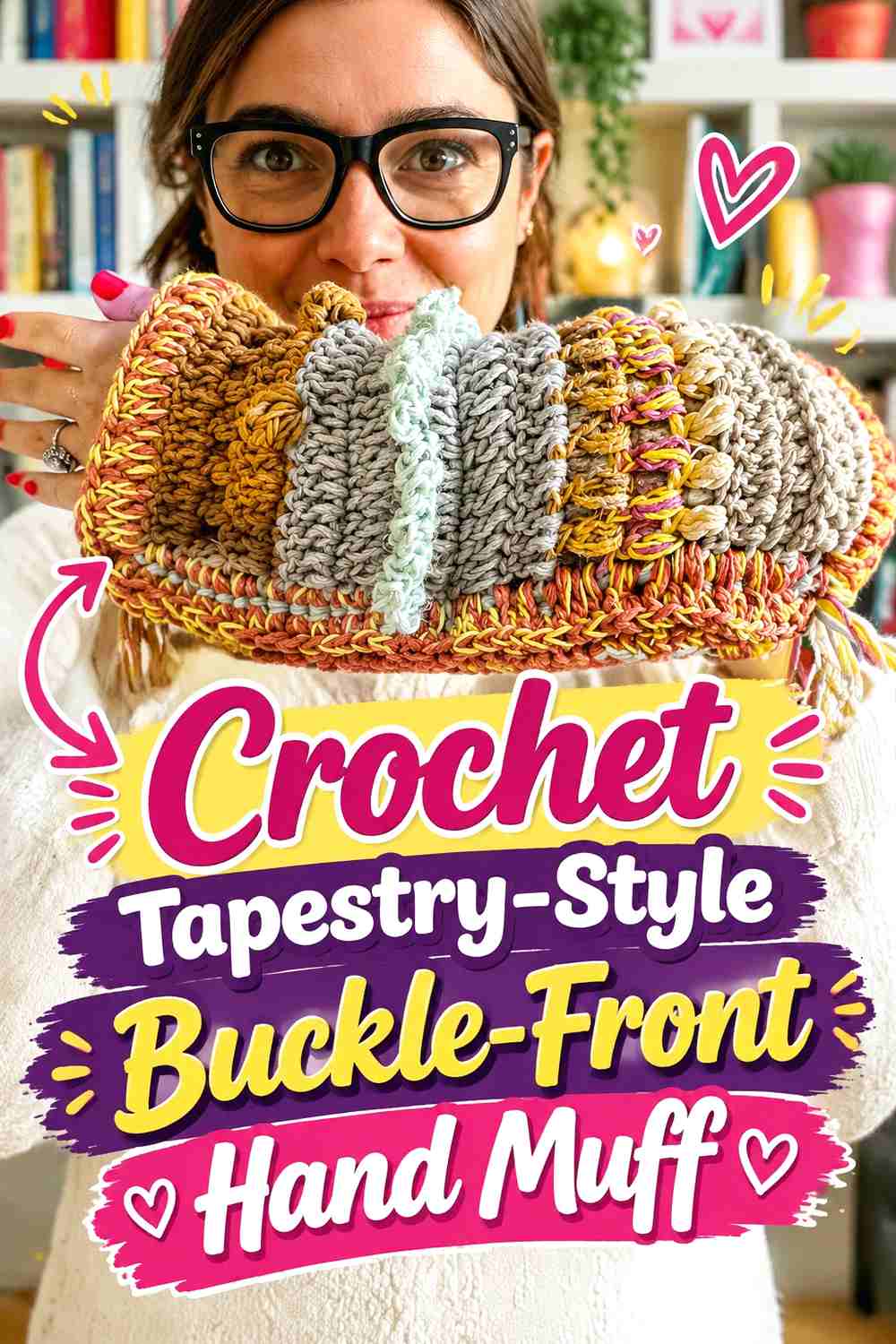
EL CLUB DE LA CALCETA’s Manguito Sofía offers a coordinated sensory-muff design rather than a completely random assortment of textures. That coherent surface planning makes it useful as the final inspiration for a tapestry-like medieval muff where color and texture are organized before the buckle is added.
Plan the Surface as One Composition
Decide where dark, light, flat, and raised sections will appear before attaching hardware.
A coordinated arrangement can make the muff resemble a small woven textile accessory rather than a tube that accumulated decoration over time.
Make the Buckle Part of the Color Plan
If the strap is dark brown, repeat that shade in at least one other section of the muff.
That repetition helps the hardware feel integrated instead of looking like an unrelated piece added at the end.
Preserve Enough Plain Fabric for the Eye to Rest
Tapestry-inspired styling does not require ornament on every inch.
A few calmer crochet sections create separation between patterned zones and give the central buckle more visual authority.
Creator Credit: EL CLUB DE LA CALCETA
Which Crochet Buckle-Front Hand Muff Suits Your Medieval Style?
| Medieval direction | Projects to compare | Main feature | Main checkpoint |
|---|---|---|---|
| Merchant or traveler | 1, 2 | Simple tube or hidden storage | Buckle placement and balance |
| Courtly or noble | 3, 4, 15 | Formal texture, ruffles, florals | Avoiding excessive ornament |
| Ranger or northern traveler | 5, 12 | Shaggy or practical texture | Hardware snagging and opening room |
| Armored fantasy | 6, 11, 14 | Raised stitches and bobbles | Keeping buckle area relatively flat |
| Corseted or paneled | 7 | Separate visual front panel | Reinforcement before joining |
| Guild or patchwork | 8, 9 | Mixed textures and related colors | Keeping variation coordinated |
| Gothic medieval | 10 | Dark texture and metal contrast | Making details visible in dark yarn |
| Heraldic | 13 | Central motif plus buckle | Motif and buckle spacing |
| Tapestry-inspired | 16 | Coordinated texture zones | Maintaining visual hierarchy |
Conclusion
For the clearest medieval buckle effect, the simple merchant muff, guard-style muff, and paneled corset-inspired design give the hardware plenty of visual space. They work especially well when you want the buckle to suggest leather gear rather than jewelry.
The loop-textured, bobble, and raised-stitch versions suit rugged fantasy styling because the crochet itself can suggest fur, padded armor, or studded textile surfaces. For a noble or romantic interpretation, the ruffled, formal, floral, and tapestry-style muffs provide softer alternatives.
Whatever version you choose, construct and fit the hand muff before permanently positioning the buckle. Check which surface naturally faces outward, make sure the openings remain comfortable with winter sleeves, and inspect hardware for rough edges. Unless the original construction specifically supports a working fastening, treat the buckle as a decorative element on a securely attached strap and use the original creator tutorial for exact muff construction.
Frequently Asked Questions
Can I put a real buckle on a crochet hand muff?
Yes, but the safest and simplest approach is usually to treat it as decorative hardware. Mount the buckle on a separate crocheted or fabric strap that is securely attached to the outside. If you want the buckle to function as a true structural closure, the surrounding crochet may need reinforcement and the design should be tested for strain.
Where should the buckle sit on a medieval-style hand muff?
The center front is the clearest placement because it stays away from the hand openings and resembles a belt around the muff. You can also use an offset or vertical buckle for a corset-like look. Put your hands inside first so you know which section naturally faces outward.
What colors work for a medieval crochet hand muff?
Useful palettes include oxblood and brown, moss and charcoal, burgundy and black, cream and dark brown, muted navy and pewter, plum and charcoal, or several weathered earth tones. The texture and hardware usually contribute more to the medieval effect than color alone.
How do I stop a buckle from pulling on crochet stitches?
Avoid attaching metal hardware directly through a small number of exposed stitches. A wider separate strap can spread the visual and physical load over a larger area. If the hardware feels heavy compared with the fabric, choose a lighter buckle or add appropriate reinforcement rather than relying on stretched crochet.
Are faux-fur or loop-texture muffs practical with buckles?
They can be, but projecting fibers may cover or catch on hardware. Use a smoother strap underneath the buckle and keep sharp edges away from loops. Test the combination with a scrap of yarn before attaching the buckle permanently.
Should a medieval hand muff be lined?
A lining is optional and depends on the source construction and intended use. It can create a smoother interior or cover an open crochet fabric, but it also changes bulk, stretch, and care. Check the muff opening again after lining because the usable interior may become smaller.
Can I add several buckles for a more armored look?
You can, but additional hardware increases weight and snag points quickly on a small accessory. One prominent buckle or two smaller symmetrical tabs will often communicate the theme more clearly than covering the muff with metal. If multiple pieces are used, keep all hardware away from the hand openings and inspect the back surfaces carefully.