A crochet funnel-neck cape combines two useful cold-weather ideas: coverage across the shoulders and extra fabric around the neck. Depending on the construction, the finished piece may look like a compact capelet, a cowl that expands over the shoulders, or a longer poncho with a high collar.
The tutorials in this collection do not all use the exact term “funnel neck.” Some creators call the neckline a turtleneck, cowl neck, high neck, or collar. Those differences matter. A true funnel usually stands around the neck without needing a full fold, while a cowl has more drape and a turtleneck may be long enough to turn over.
Rather than treating those terms as interchangeable, use the finished fabric as your guide. Collar stability, shoulder expansion, garment length, closure style, and yarn weight all influence whether a project feels like a sculpted cape, a relaxed poncho, or an oversized neck warmer.
Quick List
- Crochet Regal Ribbed Funnel-Neck Capelet
- Crochet Cable-Yoke Funnel-Neck Capelet
- Crochet Buttoned Chunky Funnel Cape Wrap
- Crochet Box-and-Bow-Tie Funnel Capelet
- Crochet Color-Blend High-Neck Cape
- Crochet Fluffy Top-Down Funnel-Neck Cape
- Crochet Minimal Turtleneck Cape
- Crochet Draped Cowl Funnel-Neck Cape
- Crochet Sleeved Turtleneck Cape
- Crochet Two-Panel Funnel-Neck Cape
- Crochet Granny-Stitch Cowl-Neck Cape
- Crochet Linen-Stitch Funnel-Neck Cape
- Crochet Openwork Ribbed Funnel-Neck Cape
- Crochet Granny Funnel-Neck Cape
- Crochet Four-Corner Textured Funnel-Neck Cape
What Makes a Funnel Neck Work on a Crochet Cape?
Collar height alone does not create a successful funnel neck. The crochet fabric also needs the right relationship between circumference, stretch, and stiffness.
A loose collar worked in very fluid fabric will usually collapse into a cowl. That can be attractive, but it produces a different silhouette. At the opposite extreme, a very dense collar may remain upright while feeling uncomfortable or making it difficult to pull the garment over the head.
Check the collar vertically as well as flat. Hold your swatch upright and see whether it stands, bends softly, or folds immediately. That tells you more about the eventual neckline than simply measuring the swatch on a table.
Head clearance deserves equal attention when the cape has no opening. A close funnel neck still has to pass comfortably over the head unless buttons, a seam opening, or another closure allows the neckline to open.
Shoulder Expansion Matters as Much as Collar Fit
A high neckline naturally draws the cape toward the neck. The shoulder section has to counter that pull by spreading adequately over the upper body.
On top-down constructions, try the developing cape once it has moved beyond the collar. If the lower edge immediately rides upward when you move your arms, the shoulder expansion may need more attention than the total cape length.
This becomes especially important when shortening a poncho tutorial into a cape-style layer. Stopping early saves length, but stopping before sufficient shoulder width develops can create a tight yoke rather than a usable capelet.
Choose Yarn for Structure, Drape, and Total Weight
Thicker yarn does not automatically create the strongest funnel collar. Some bulky yarns produce very soft fabric, while a smaller yarn worked at an appropriate density may retain shape more effectively.
Also consider how the same yarn behaves across the entire cape. A wonderfully substantial collar may become uncomfortably heavy when repeated through a long, dense poncho body.
For cold-weather layering, think about the garment underneath. A cape intended for a fitted long-sleeve top can sit closer to the shoulders than one designed to go over a substantial sweater. Test the actual layering combination before making final decisions about neckline and shoulder circumference.
1. Crochet Regal Ribbed Funnel-Neck Capelet
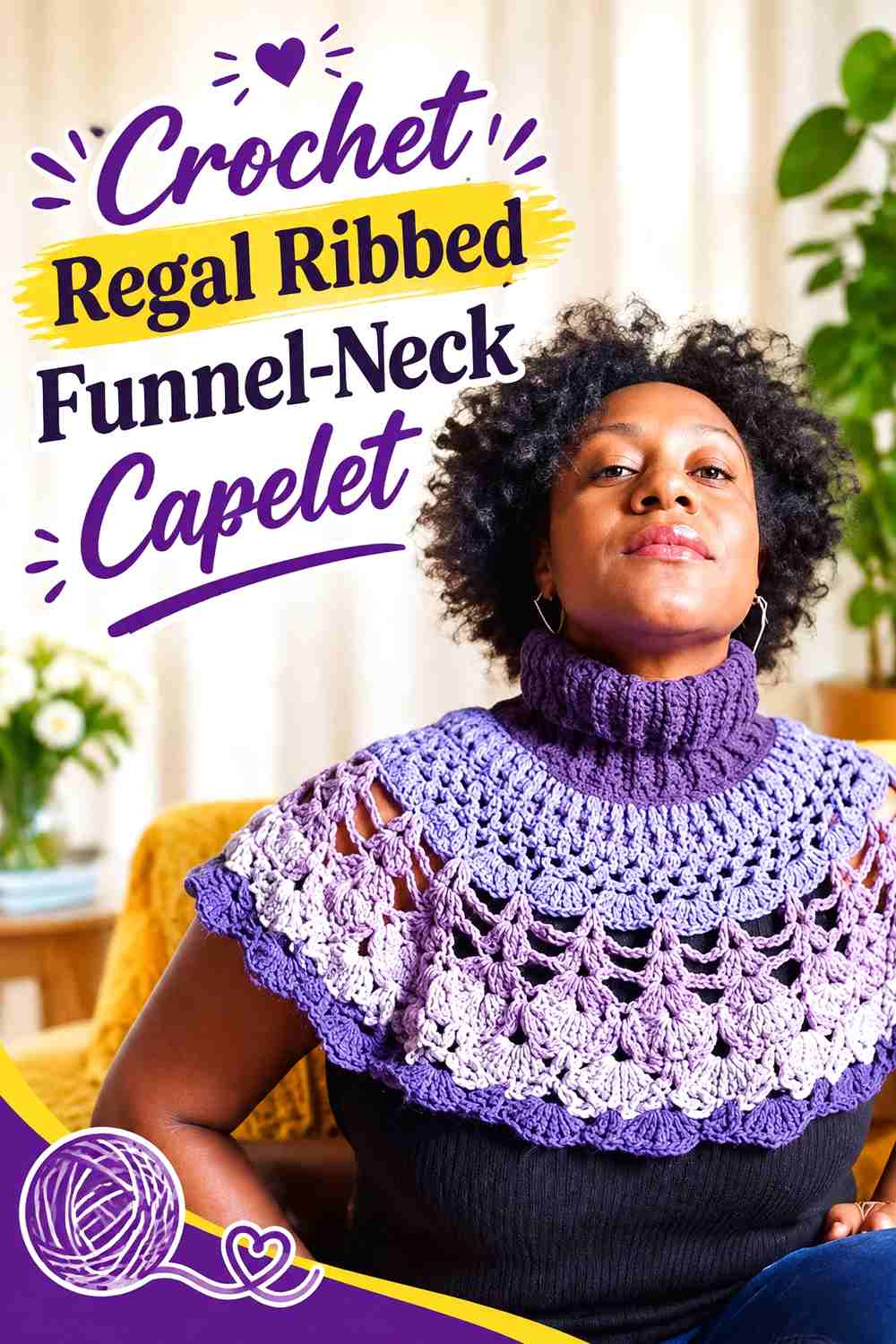
This compact design is one of the closest direct matches to the funnel-neck cape idea. The finished project combines a substantial ribbed turtleneck section with a yoke that spreads outward over the shoulders, so the collar and capelet are designed as one continuous visual shape rather than two unrelated pieces.
Let the Neckline Be the Main Structural Feature
Because the cape body is relatively short, the collar occupies a large percentage of the finished silhouette. Increasing its height can therefore change the project dramatically.
Try the neckline at several stages rather than assuming the tallest possible collar will look most balanced. If it reaches the chin before the shoulder section looks substantial enough, more cape depth may improve the proportions better than more collar.
Check the Transition From Ribbing to Yoke
A strong funnel collar can sit correctly on its own yet still tilt or buckle if the fabric below it pulls unevenly.
Watch the point where the neck becomes the shoulder yoke. It should spread outward without forcing the lower edge of the collar to flare. This transition is especially important when substituting yarn with more or less stretch than the source project.
Creator Credit: Poya Stitches
2. Crochet Cable-Yoke Funnel-Neck Capelet
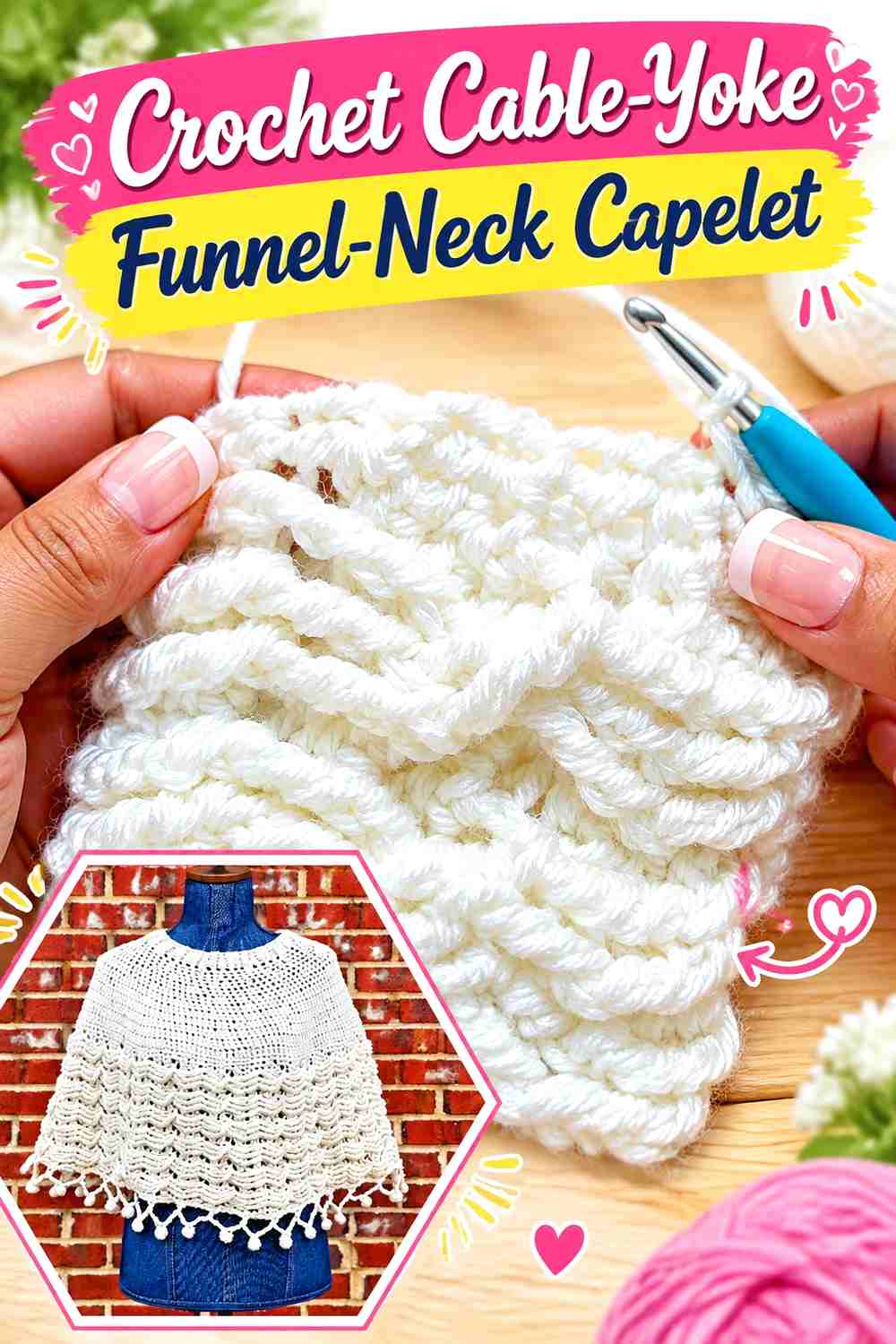
This capelet uses pronounced cable texture through the body and then narrows into a shaped yoke and collar. The cable-rich construction creates much more surface structure than a plain poncho, making it useful when you want the cape itself—not only the neckline—to carry visual weight.
Raised Cables Add Physical Weight as Well as Texture
Crochet cables use fabric differently from flat stitches. A swatch that looks manageable may feel more substantial once the cable design is repeated around the shoulders.
Before increasing collar height for a stronger funnel effect, assess whether the textured body already supplies enough bulk near the neck. A restrained collar can balance a heavily textured yoke better than an oversized one.
Keep the Yoke Centered After Assembly
Directional cables make alignment noticeable. If the garment shifts to one side, the problem becomes easier to see than it would on an untextured cape.
Try the capelet after the body and yoke take shape. Correcting how the fabric settles across the shoulders is more valuable than adding decorative finishing to an already misaligned piece.
Creator Credit: Stitches n Scraps
3. Crochet Buttoned Chunky Funnel Cape Wrap
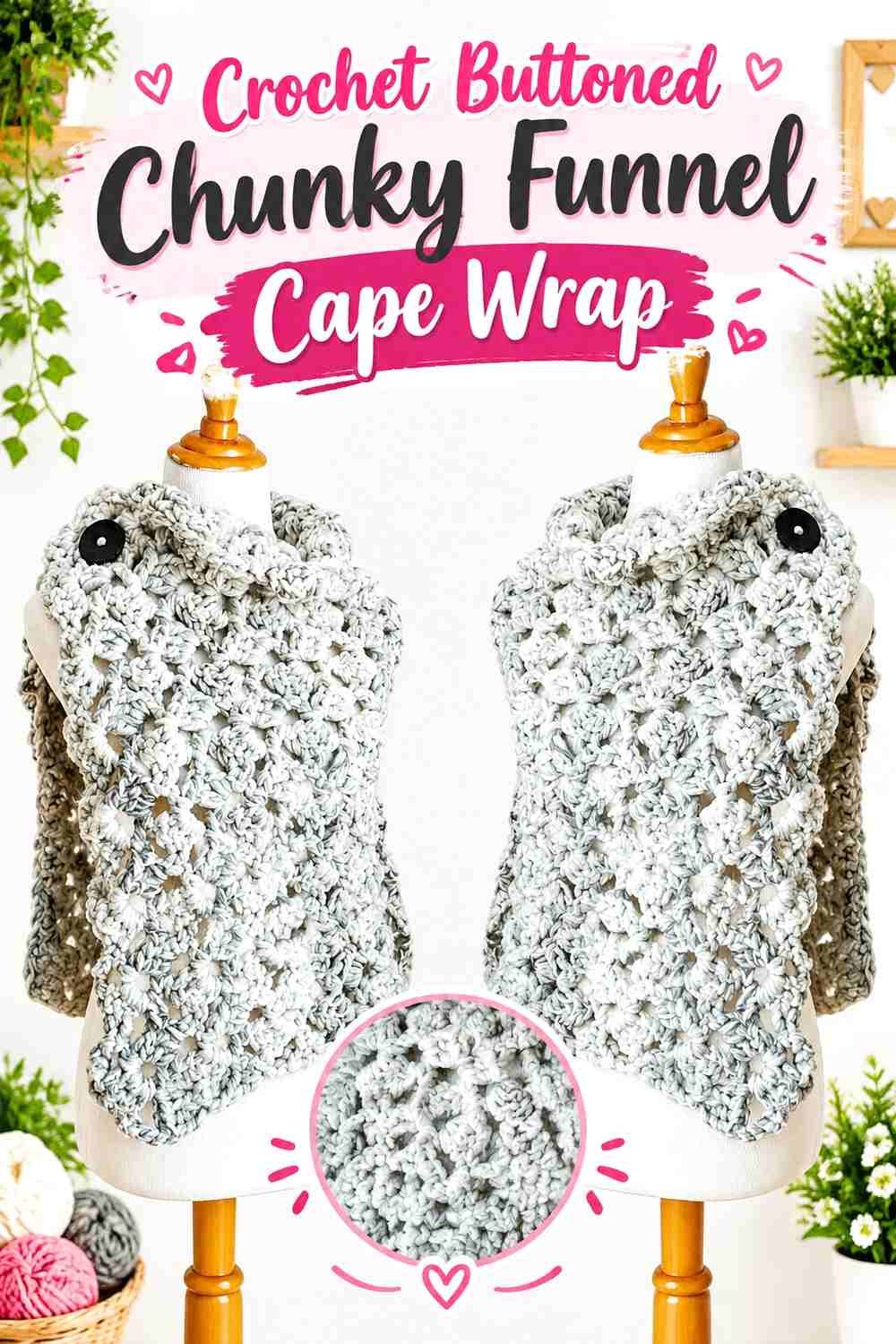
This oversized wrap combines capelet and cowl qualities and uses a prominent button to control the opening. That closure distinguishes it from pull-over funnel capes because the neck circumference does not have to solve both head clearance and worn fit at the same time.
A Closure Gives the Neckline More Flexibility
Pull-over collars often need extra circumference simply so the garment can pass over the head. A buttoned construction can open wider during dressing and close more closely afterward.
If you want a more funnel-like version of this wrap, experiment with the worn position before permanently placing the button. A slightly different fastening point can change how much of the upper edge stands versus folds.
Jumbo Fabric Can Become Overwhelming Quickly
Thick yarn creates strong visual scale, particularly on a compact cape. Increasing both collar height and shoulder depth may turn a useful wrap into a very bulky layer.
Try it over your intended winter clothing before adding more length. A cape worn over a sweater already has more volume underneath than the same piece modeled over a thin shirt.
Creator Credit: Fiber Flux
4. Crochet Box-and-Bow-Tie Funnel Capelet
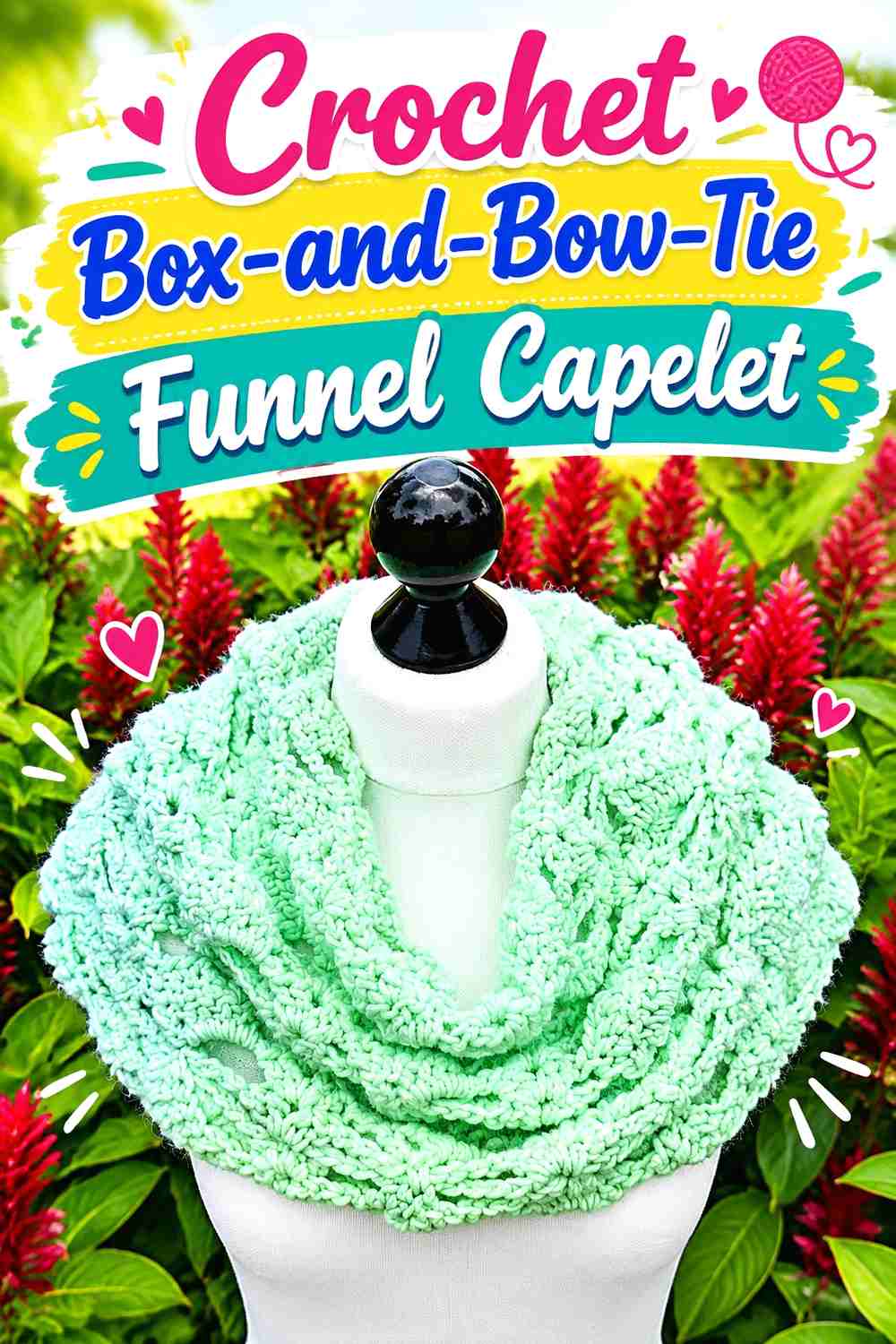
This unusual construction can function as a capelet, cowl, or neck warmer. Its alternating open and solid sections give it a much more decorative surface than the dense ribbed options, while the circular construction makes it possible to explore a higher cowl-to-funnel wearing position.
Openwork and a Standing Neck Need Different Qualities
The body benefits from visible openings because they show the distinctive box-and-bow-tie texture. A taller collar may need more support than that same open fabric provides.
If you adapt the upper section, compare a continuation of the decorative stitch with a denser collar swatch. The best answer may be contrast rather than forcing one stitch pattern to perform every job.
Keep the Surface Design From Competing With Extra Trim
This project already has strong stitch architecture. Multiple borders, dramatic color changes, and a high collar can all fight for attention on a short garment.
A quieter palette can let the open-and-solid texture remain visible while a raised neckline supplies the cold-weather focus.
Creator Credit: Secret Yarnery
5. Crochet Color-Blend High-Neck Cape
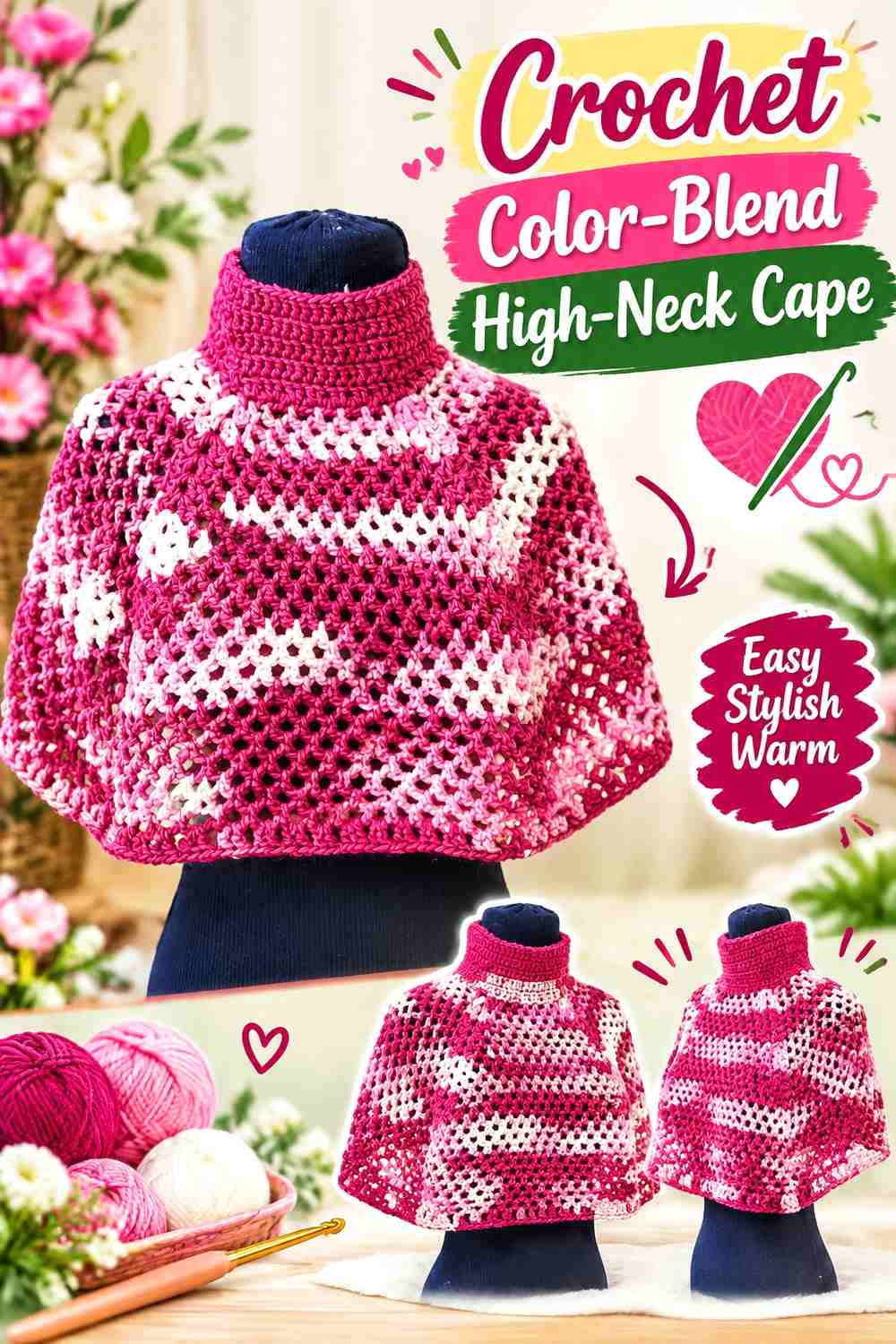
This high-neck poncho uses contrasting or changing color through a broad, pointed cape shape. The raised neck is part of the demonstrated project rather than a separate styling suggestion, making it a useful choice when you prefer more coverage than a short shoulder capelet.
Color Changes Should Support the Cape Shape
On a wide cape, color placement affects how the eye reads the garment. Narrow stripes emphasize repetition, while broader areas of color can make the silhouette appear calmer.
If you shorten the finished length, reconsider the color plan rather than automatically reproducing every change from a longer version. A compact cape provides less vertical space.
Watch the Relationship Between Neck Height and Hem Points
A strong high collar creates vertical emphasis while pointed sections pull the eye downward.
Those two directions can balance each other well, but proportions matter. If adapting length, preserve enough of the lower geometry for the pointed shape to remain obvious rather than stopping as soon as the shoulders are covered.
Creator Credit: Vivirtejiendo
6. Crochet Fluffy Top-Down Funnel-Neck Cape
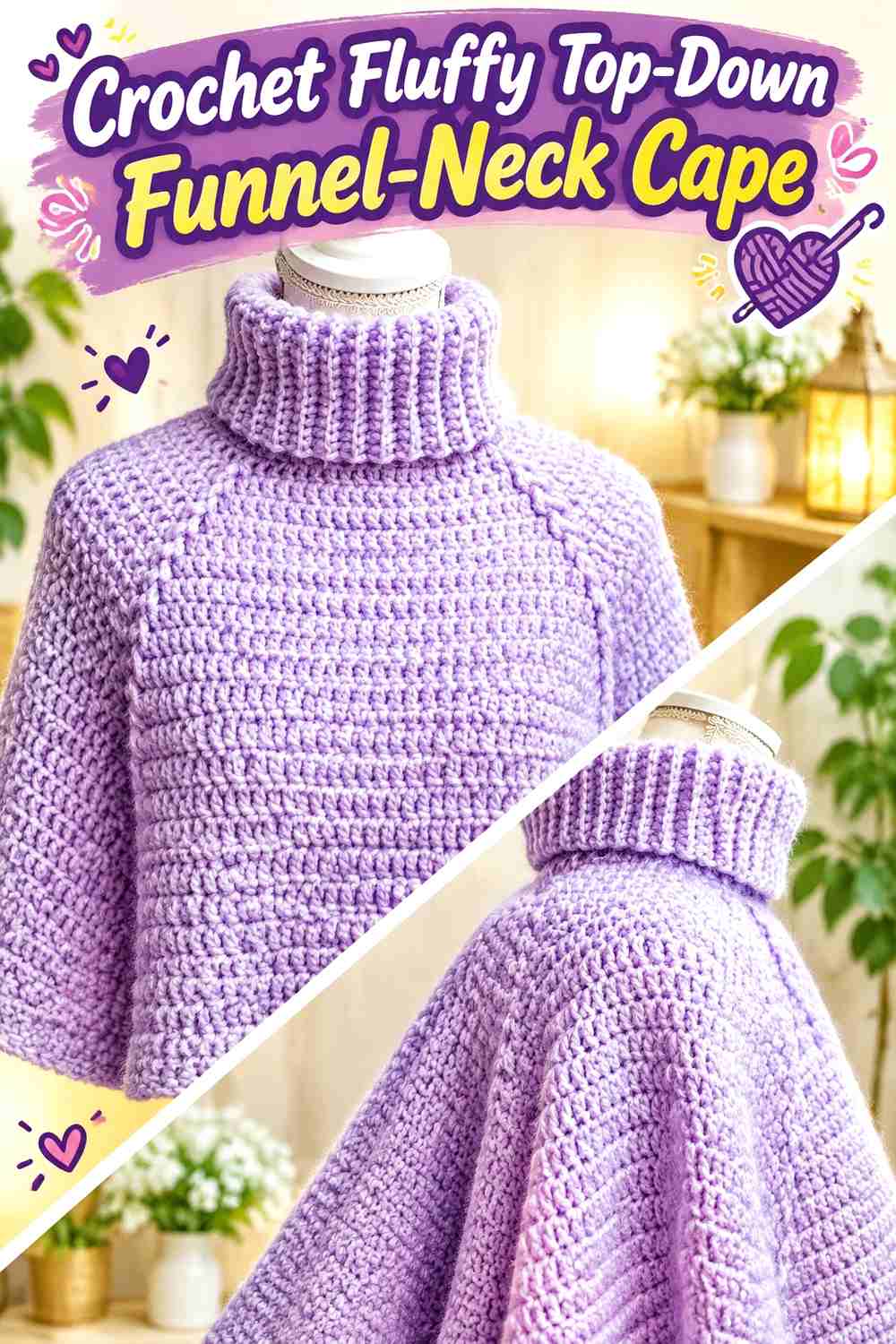
This turtleneck poncho begins at the neck and expands into a broad body, with the source project showing a soft, fluffy finished fabric and a prominent warm collar. The top-down direction makes it particularly useful for readers who want to judge shoulder spread while the piece is developing.
Soft Yarn Can Turn a Funnel Into a Relaxed Turtleneck
A fuzzy fabric may produce plenty of warmth while offering less architectural support than a crisp yarn.
Decide whether you actually want a rigid funnel. A softer neck that stands partly upright and partly folds can work well with a flowing cape body, provided that result is intentional.
Use Try-On Points to Choose the Final Cape Depth
Top-down construction gives you an opportunity that fixed panels do not: you can evaluate the garment before committing to full length.
For a more cape-like interpretation, stop only after there is enough width for comfortable arm movement. A shorter project still needs sufficient shoulder expansion.
Creator Credit: Kiriko Crochet
7. Crochet Minimal Turtleneck Cape
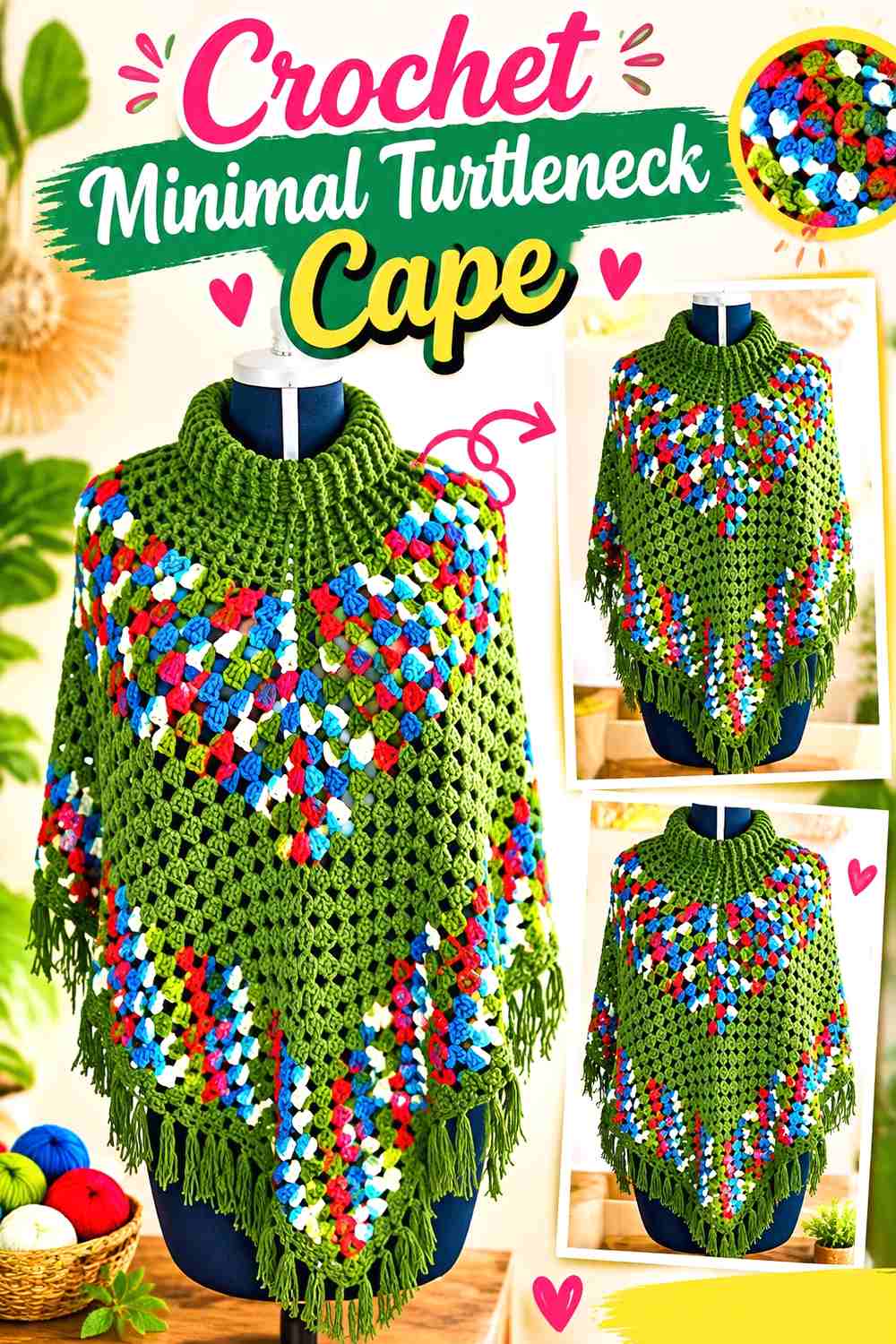
This project uses a straightforward turtleneck poncho silhouette without relying on elaborate cables, complex motifs, or an open front. That simplicity makes the proportions of the collar, shoulder spread, and hem especially noticeable.
Simple Fabric Makes Fit Problems Easier to See
On a highly decorative project, texture can distract from small shaping problems. A cleaner cape gives those issues nowhere to hide.
Check whether the collar sits level and whether the body falls similarly over both shoulders. Uneven expansion becomes particularly obvious on a solid-color minimalist version.
Decide Whether You Want a Folded or Standing Neck
A long turtleneck can often be worn in more than one position. For a funnel-neck look, you may prefer to keep more height upright rather than turning the whole section over.
Do not assume the yarn will cooperate with that styling. Test how the collar naturally behaves before planning the final height.
Creator Credit: Mariie Crochet
8. Crochet Draped Cowl Funnel-Neck Cape
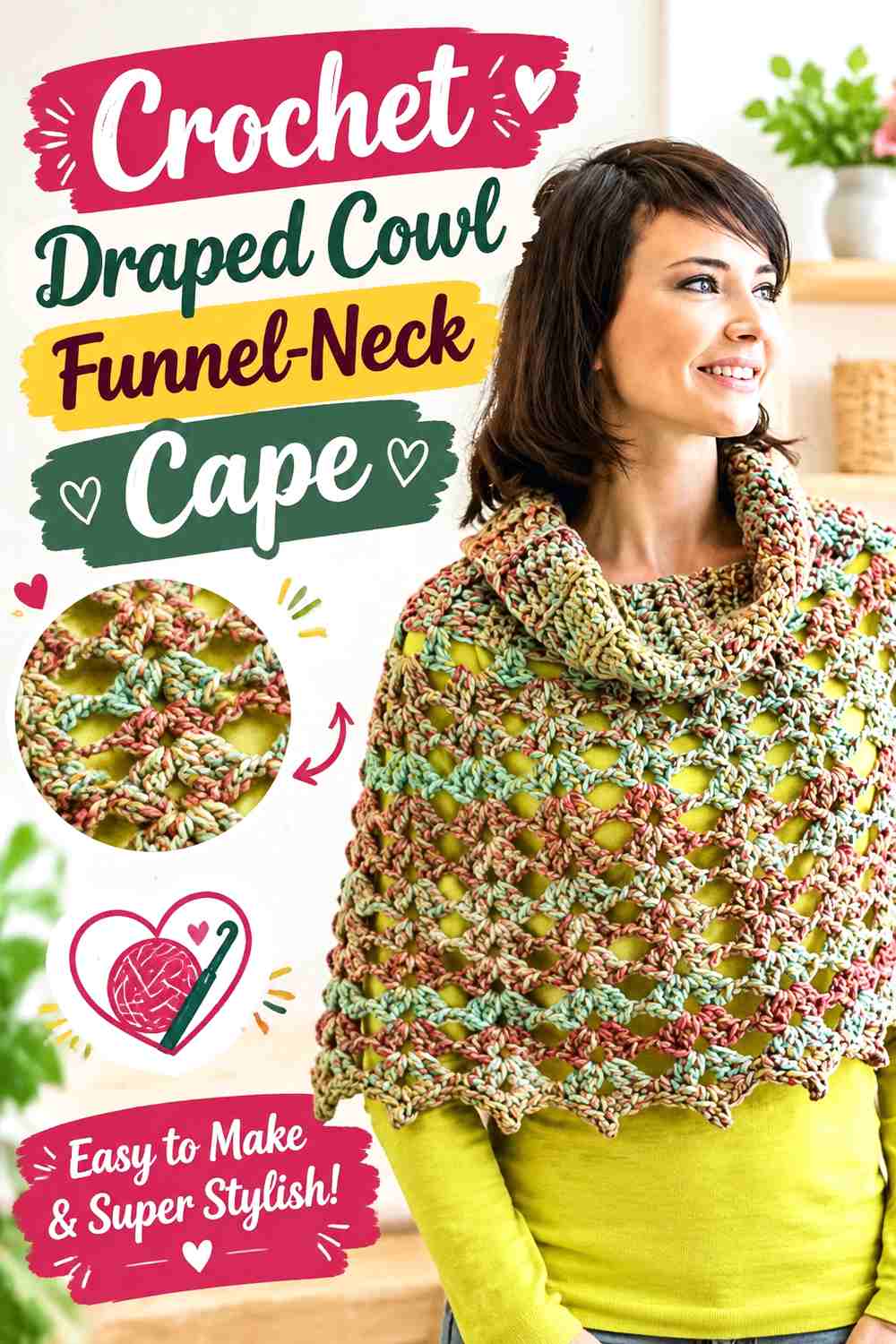
This cowl-neck poncho offers a softer alternative to a rigid funnel. The extra fabric around the neckline creates folds rather than a sharply upright wall, making it appropriate when you want neck coverage without a closely sculpted collar.
Control the Cowl Rather Than Trying to Make It Rigid
A draped collar does not need to behave like ribbed turtleneck fabric. Its appeal comes from controlled folds.
Arrange the neckline while wearing the cape and notice whether the volume distributes around the neck or drops entirely toward the front. Balanced folds usually give more of a funnel-cowl effect.
Make Sure the Collar Does Not Hide the Shoulder Shape
A very deep cowl can visually swallow the top of a shorter cape. If you are reducing body length, reassess the collar at the same time.
Cape depth and cowl volume work as a pair. Changing only one can make an otherwise balanced project look top-heavy.
Creator Credit: Marly Bird
9. Crochet Sleeved Turtleneck Cape
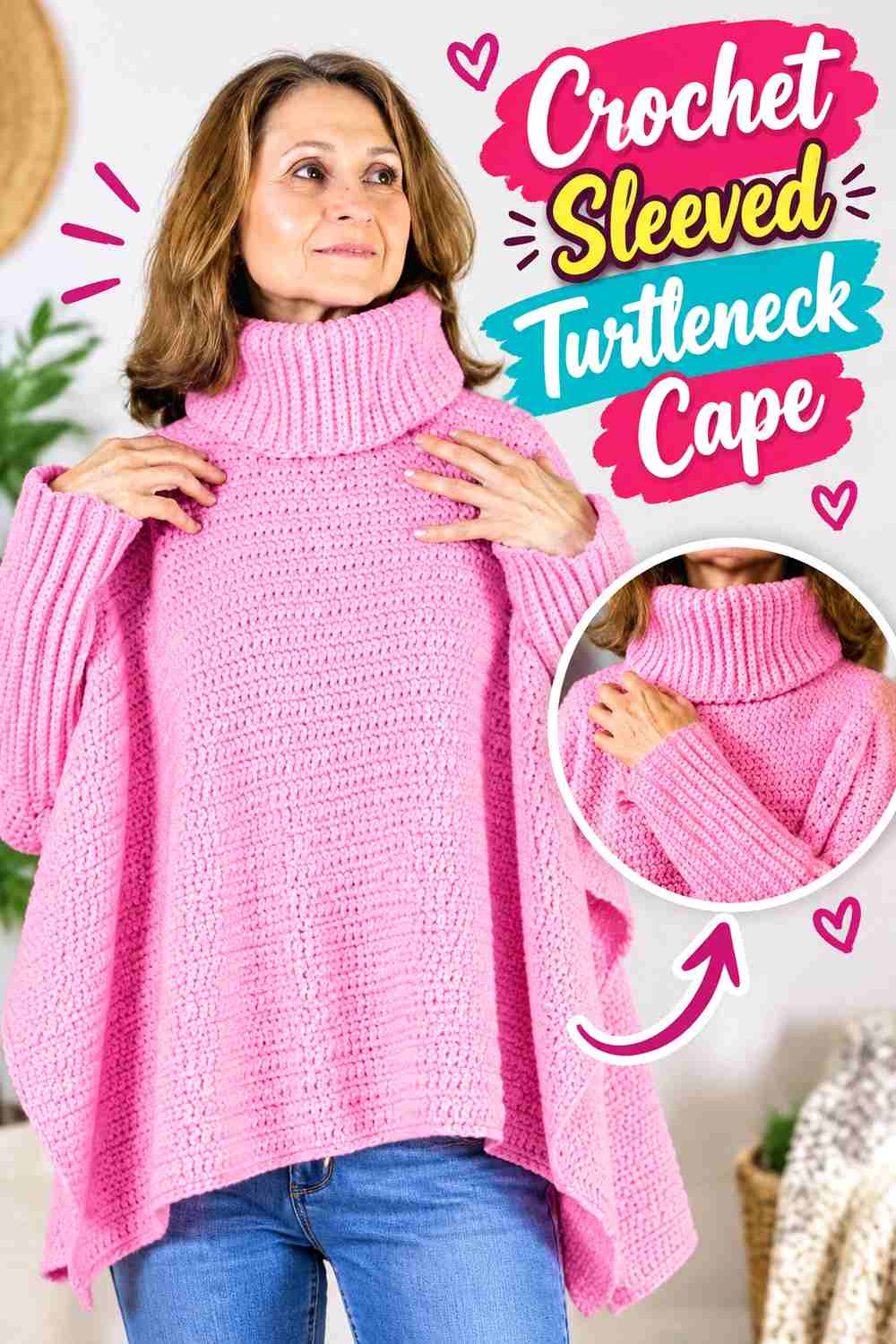
This poncho includes both a turtleneck and sleeves, giving it more garment structure than a traditional sleeveless cape. The added arm definition can make the piece easier to keep in position while preserving the broad poncho-like body.
Sleeves Change How the Cape Moves
A sleeveless poncho can rotate or shift around the body relatively freely. Sleeves anchor the fabric to the arms, which changes how weight is distributed across the shoulders and neckline.
If you alter the cape width, consider whether the sleeve position still allows the body fabric to drape naturally instead of pulling toward the wrists.
Lighter Fabric Can Make the Added Structure More Wearable
A high neck, broad body, and sleeves create more total fabric than a compact capelet.
That does not automatically mean the project needs the heaviest possible yarn. A less bulky fabric can preserve movement and make indoor layering more practical.
Creator Credit: Crazy Cool Crochet
10. Crochet Two-Panel Funnel-Neck Cape
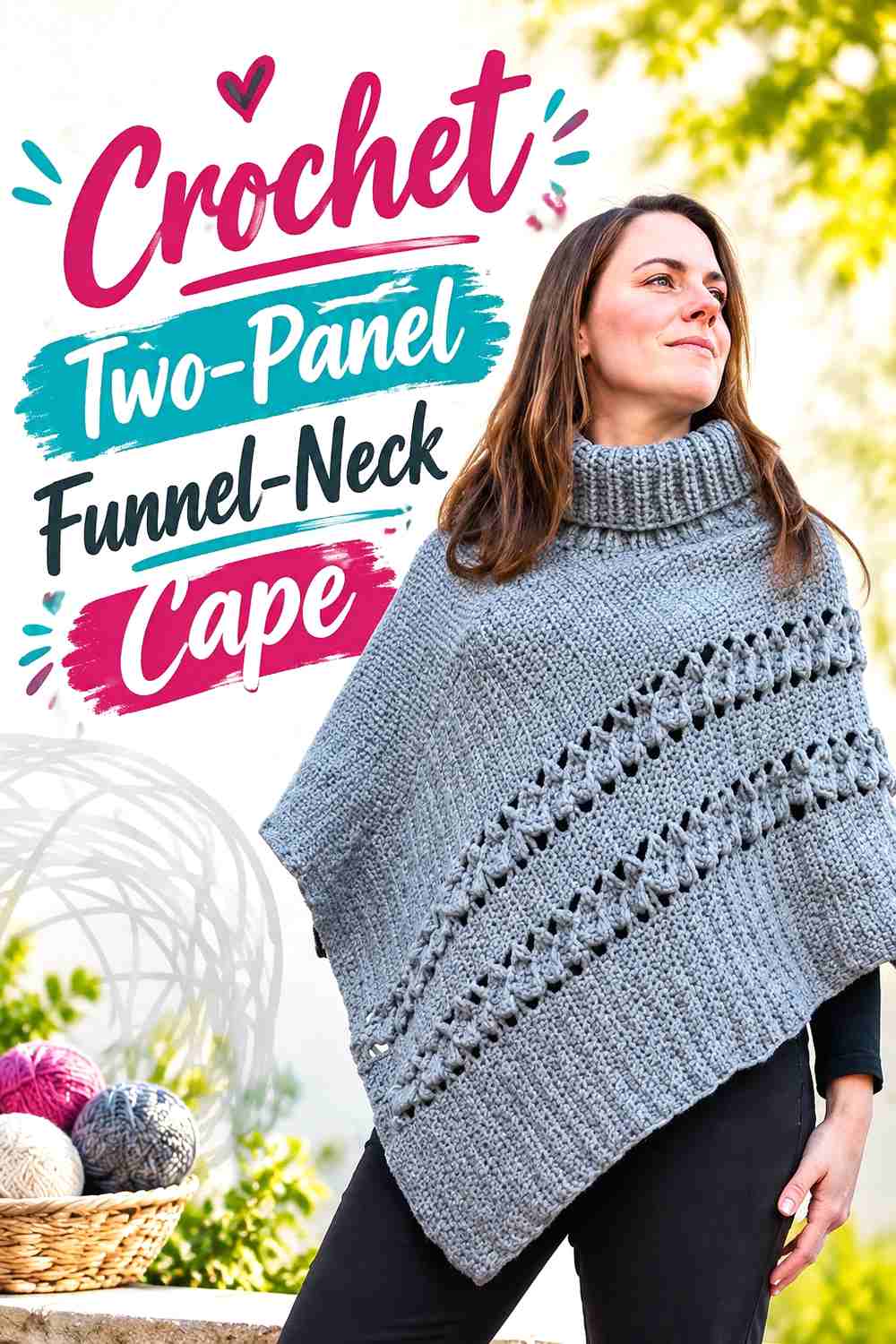
This turtleneck poncho is constructed from rectangular sections before the high neck is completed, providing a useful alternative to circular top-down designs. Its geometry makes it particularly interesting for readers who prefer working flat.
Rectangular Construction Makes Width Planning Important
When a garment is built from panels, shoulder coverage depends heavily on the dimensions and final orientation of those pieces.
Do not alter only the length because you want a shorter cape. Check how the planned panel width affects the finished shoulder line and neckline opening as well.
Finish the Body Fit Before Judging Collar Height
A collar attached to incorrectly proportioned panels may appear too loose or too tight even when its own measurements seem reasonable.
Assemble or temporarily position the body first. Once the shoulder seams and neck opening make sense, you can judge how much vertical neck fabric suits the finished cape.
Creator Credit: Lanas y Ovillos in English
11. Crochet Granny-Stitch Cowl-Neck Cape
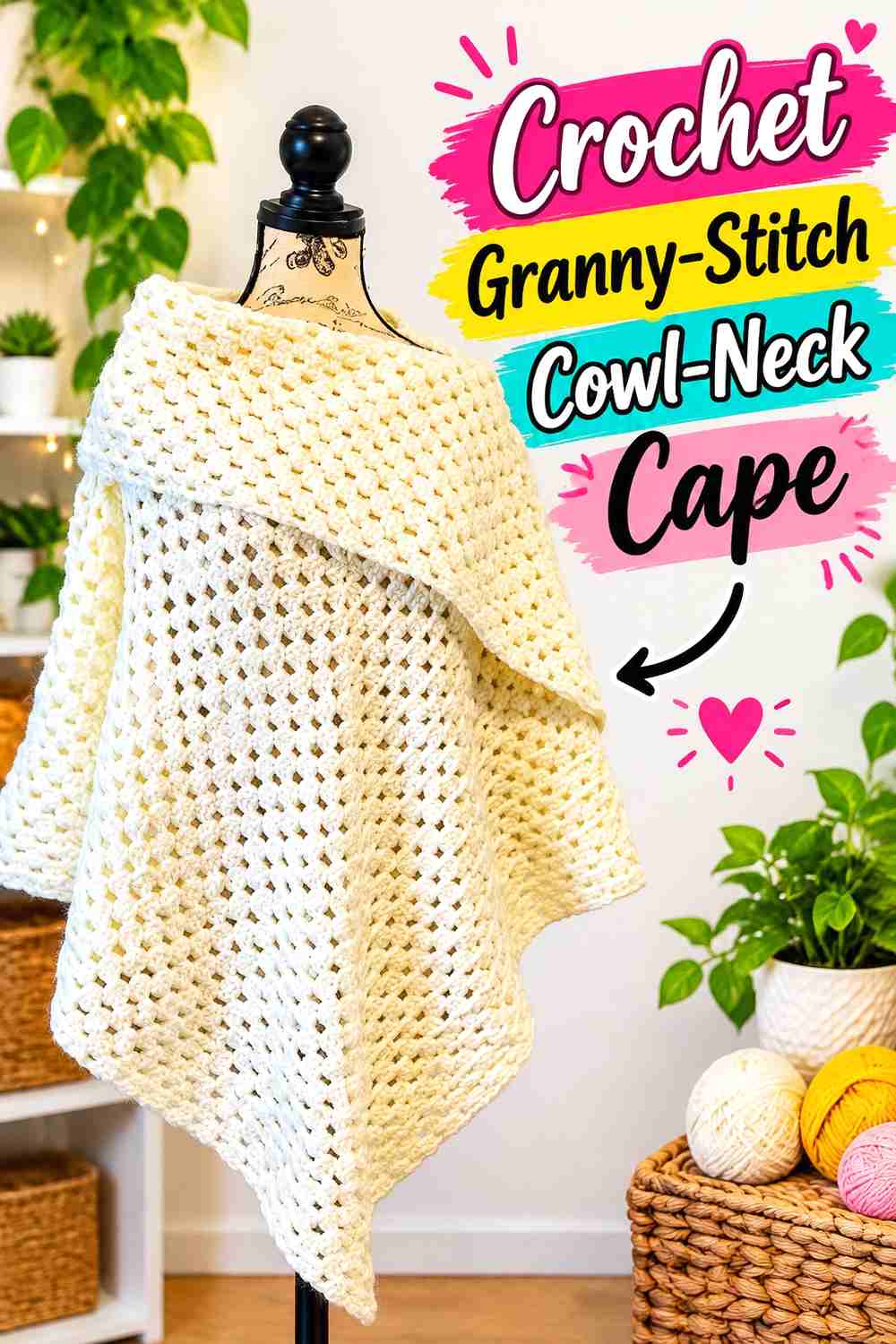
This cowl-neck poncho brings recognizable granny-style texture into a cold-weather layering shape. Compared with dense ribbed capes, the grouped-stitch surface creates more visible openings and a stronger handmade crochet character.
Granny Texture Needs a Layering Strategy
Spaces between stitch groups allow the clothing underneath to show through. That can be part of the design, but it produces a different type of coverage from dense winter fabric.
For cold weather, consider the color and texture of the base layer as part of the finished look rather than assuming the cape will visually conceal it.
Give the Neckline Enough Contrast From the Body
A high cowl can disappear visually if every section uses the same open texture and scale.
A more defined neck treatment can separate the face-framing collar from the patterned body. If adapting the source, compare texture density before deciding how closely the neckline should echo the granny fabric.
Creator Credit: DIY FROM HOME CROCHET
12. Crochet Linen-Stitch Funnel-Neck Cape
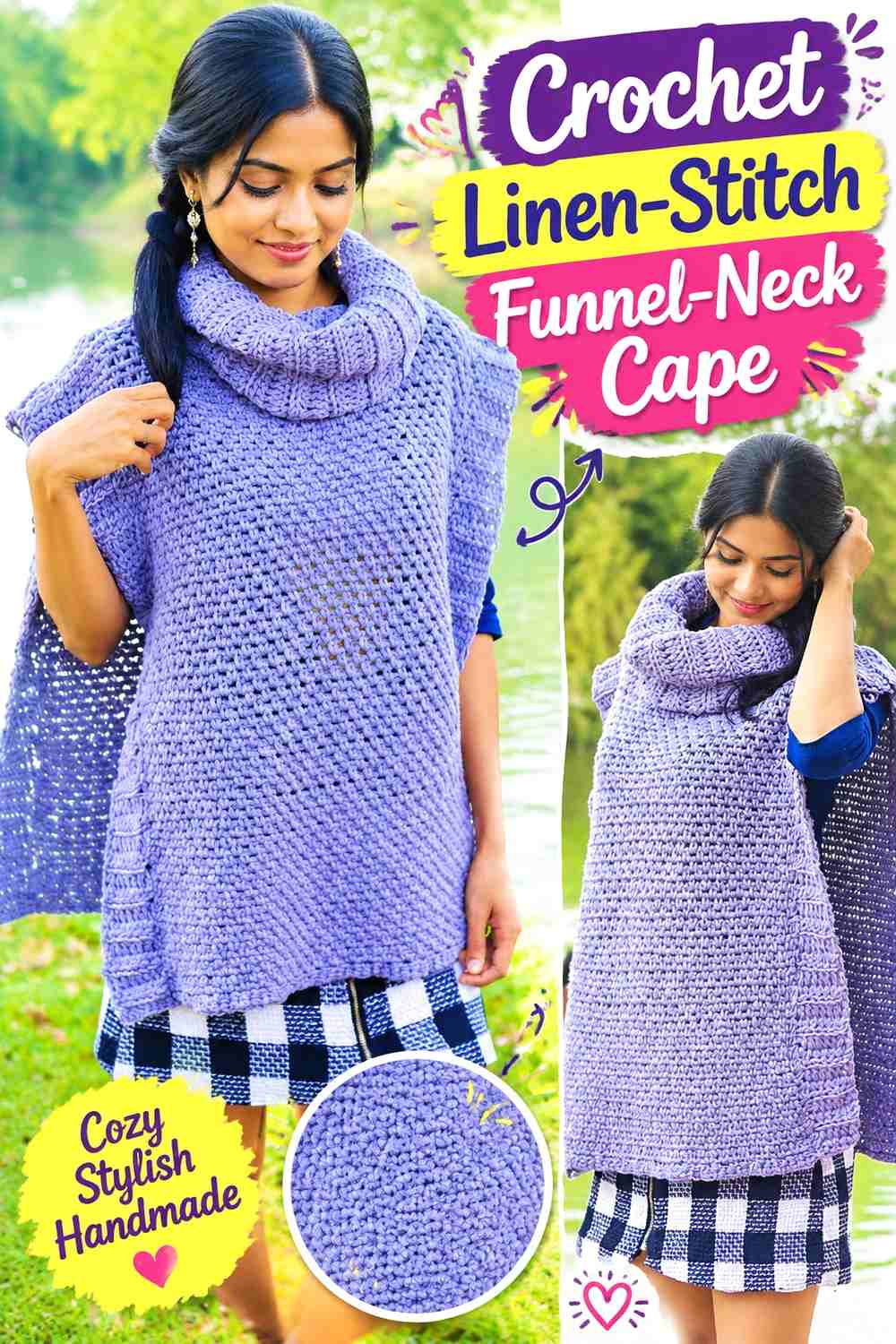
This poncho uses simple panel construction with a separately created ribbed cowl-neck section. The smoother main fabric and visibly different collar texture create a useful distinction between the body and neckline.
A Separate Collar Gives You a Natural Fit Check
Because the body and neck are distinct components, you do not have to decide everything at the beginning.
Evaluate the assembled cape first. The actual neck opening tells you more about the collar circumference and depth you need than a guess made before the body exists.
Ribbing Can Turn a Soft Body Into a More Defined High-Neck Look
A fluid body does not require an equally fluid collar. Using a more elastic or structured texture around the neck can make the upper silhouette feel deliberate while preserving movement below.
Watch the joining edge, though. If the two fabrics have very different stretch, the seam can pucker or flare.
Creator Credit: Jennyandteddy crochet.
13. Crochet Openwork Ribbed Funnel-Neck Cape
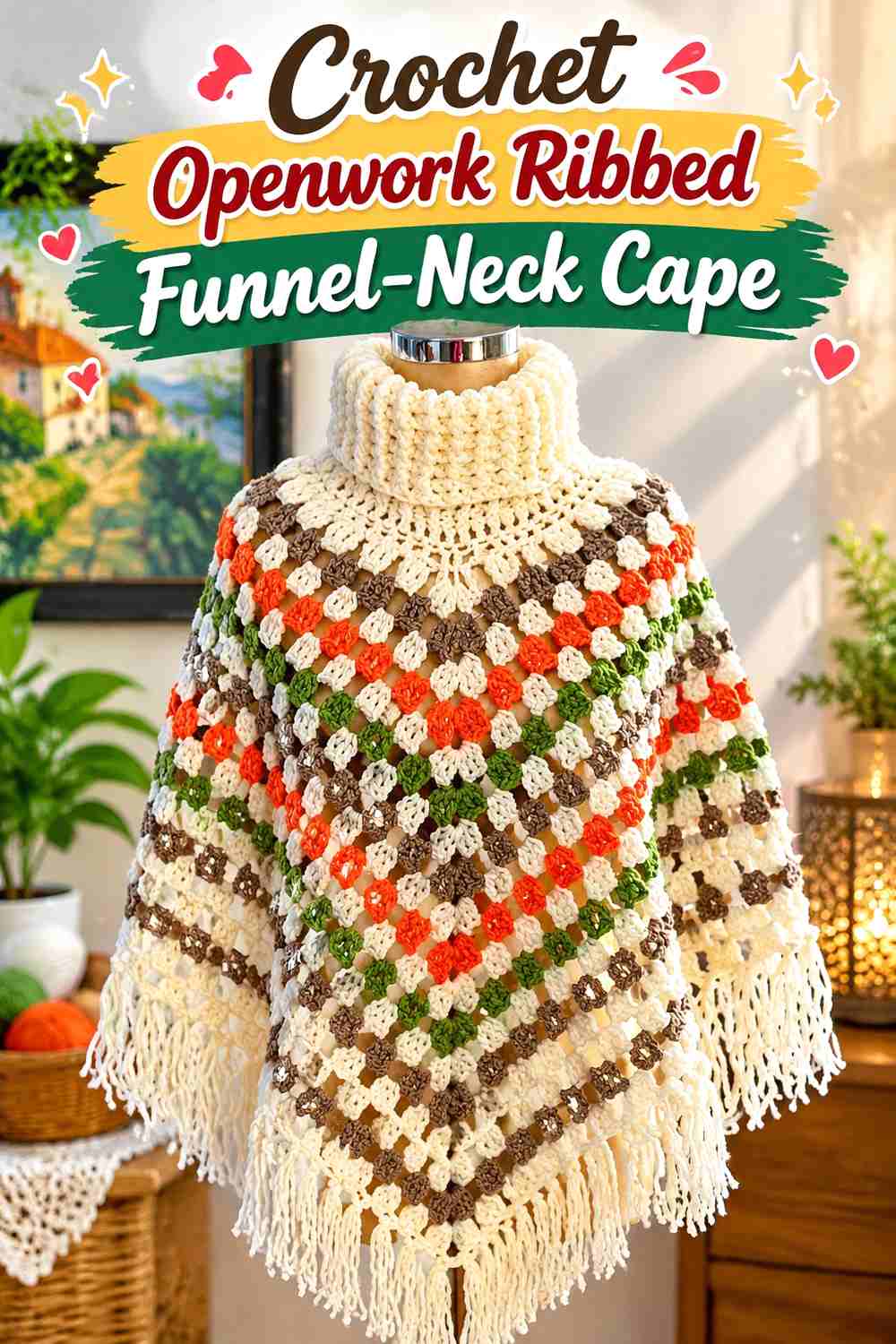
This cowl-neck poncho combines an airy patterned body with a more substantial ribbed neck treatment. That contrast makes it a useful option for someone who likes the visual lightness of open crochet but still wants noticeable coverage around the neck.
Open Body Fabric and a Dense Collar Behave Differently
The body can expand and drape easily because of its open structure, while ribbing around the neck has a more contained appearance.
When substituting yarn, swatch both areas if possible. A yarn that works beautifully in the open pattern may become too thick or stiff once concentrated into the collar.
Watch the Neck Opening Before Adding Height
A taller collar can appear narrower even when its stitch count has not changed because the fabric surrounds more of the neck.
Check head clearance before extending it. If the opening is already close, adding height without considering stretch may make the finished piece inconvenient to put on.
Creator Credit: Crochet Örgü Atölyesi
14. Crochet Granny Funnel-Neck Cape
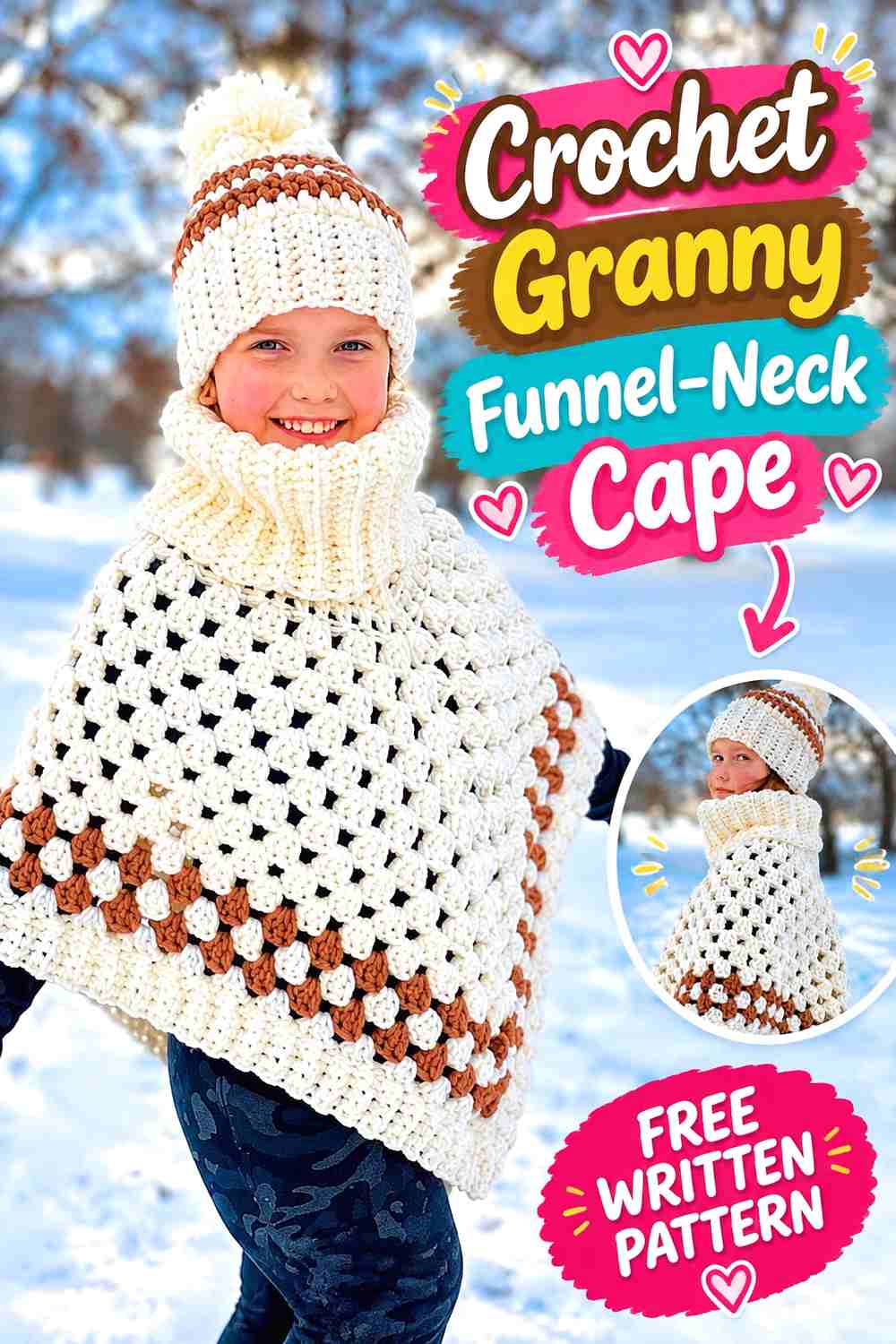
This top-down turtleneck poncho begins with a substantial neck section and then expands into a granny-textured body. The construction creates a clear contrast between the relatively solid collar and the familiar grouped-stitch fabric below.
A Clean Collar Keeps Granny Texture From Taking Over
Granny stitch already supplies strong visual rhythm. Repeating equally complicated texture at the neckline can make a compact version feel busy.
Keeping the collar comparatively quiet allows its height to define the silhouette while the lower section provides the decorative crochet character.
Shortening a Poncho Requires Enough Lower Expansion
If you want a cape rather than the full poncho length, do not simply stop after an arbitrary number of rounds.
First confirm that the lower edge has expanded far enough to clear the shoulders and upper arms comfortably. A short high-neck garment that pulls upward during movement will not behave like a relaxed cape.
Creator Credit: NEBESKA
15. Crochet Four-Corner Textured Funnel-Neck Cape
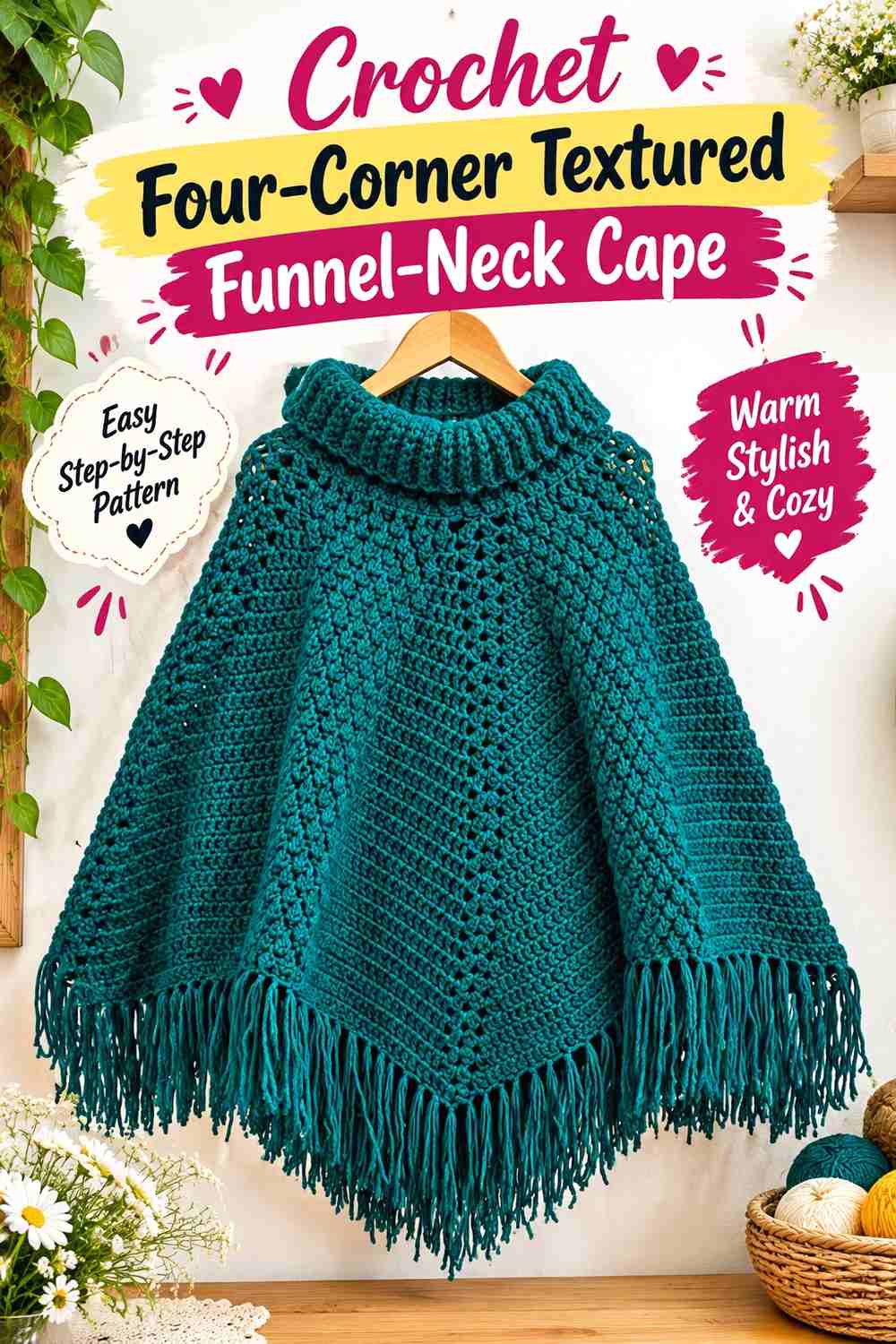
This turtleneck poncho develops from a ribbed neck into a four-corner body with added surface texture. The resulting geometry differs from rounded yokes and two-panel constructions because the expansion creates more obvious directional points.
Four Corners Create a Stronger Geometric Hem
If you shorten this kind of poncho into a cape, preserve enough rounds for the corner structure to become visually clear.
Stopping too soon can leave the project looking like an unfinished yoke rather than an intentionally compact cape. Pin or fold the lower portion to preview several potential lengths before finishing.
Re-Establish Measurements for the Intended Wearer
The source includes smaller sizing, so an adult adaptation should not be created by increasing one measurement and assuming everything else will scale proportionally.
Consider head clearance, collar circumference, shoulder breadth, cape depth, and the thickness of the clothing underneath separately. Those measurements affect different parts of the garment.
Creator Credit: crochet-crosia
Which Crochet Funnel-Neck Cape Style Should You Choose?
If you want the most compact shoulder layer, start with the ribbed Poya Stitches capelet or the cable-rich Stitches n Scraps construction. They keep the lower body relatively controlled, making the neckline a major part of the silhouette.
For an adjustable neck, the buttoned Fiber Flux wrap offers a different solution from pull-over designs. The opening reduces the conflict between a close worn neckline and the need to get the garment over your head.
Choose the Marly Bird option when you prefer a softer cowl effect rather than an upright funnel. The Kiriko Crochet, Mariie Crochet, Vivirtejiendo, and Lanas y Ovillos in English projects move farther toward full poncho coverage while retaining a prominent high neck.
Granny texture creates another clear dividing line. The DIY FROM HOME CROCHET and NEBESKA options make the stitch pattern an obvious part of the finished look, while the Jennyandteddy crochet. design uses a quieter body with a more clearly separated ribbed neckline.
If arm coverage matters, the Crazy Cool Crochet version is the most garment-like direction because the sleeves stabilize the broad body rather than leaving it completely free over the arms.
Conclusion
A successful crochet funnel-neck cape needs more than a tall collar. The neckline has to work with the fabric below it, the shoulders need enough room to move, and the finished length should match how you intend to layer the piece.
For a sculpted capelet, prioritize collar structure and a controlled shoulder yoke. For a softer winter layer, a cowl-neck construction allows more drape. Full turtleneck ponchos provide additional torso coverage, while buttoned and sleeved designs solve practical fit problems in different ways.
If you adapt one of the longer tutorials into a shorter cape, establish the shoulder spread before deciding where to stop. When exact gauge, sizing, assembly, yarn requirements, or construction details matter, follow the original creator’s tutorial rather than estimating them from the finished appearance.
Frequently Asked Questions
What is the difference between a crochet funnel neck and a turtleneck?
A funnel neck normally rises around the neck without requiring a full fold. A traditional turtleneck is often tall enough to fold or double over. In crochet, yarn and stitch behavior can blur that distinction, so the finished fabric matters more than the label alone.
Can I turn a crochet cowl-neck cape into a funnel neck?
Sometimes. A cowl generally uses more drape and circumference, while a funnel needs enough structure to retain height. Simply making the cowl taller may create more folds rather than a standing collar. Test the fabric before changing the neckline.
Can I shorten a turtleneck poncho into a capelet?
Often, but the shoulder shaping has to be sufficiently developed first. A top-down poncho stopped too early may pull toward the neck or restrict the arms. Try the garment during construction when possible and choose the stopping point by fit rather than row count alone.
Why does my crochet funnel collar keep collapsing?
Possible causes include a collar that is too wide, fabric with considerable drape, a stitch pattern that stretches easily, or more collar height than the material can support. Compare a denser swatch before tightening the neckline itself, since reducing circumference too far can affect comfort and head clearance.
Should I crochet the funnel collar and cape body with the same stitch?
Not necessarily. A denser or more elastic collar can provide structure while a softer or more open stitch gives the shoulder section better drape. The important part is creating a smooth transition between fabrics with different stretch and thickness.
How do I check whether a pull-over funnel neck is large enough?
Confirm that the opening passes comfortably over the intended wearer’s head without excessive stretching. Test this before adding a large amount of collar height because a tall, close tube can be harder to pull on even when the lower neckline initially seems adequate.
Can a crochet funnel-neck cape be layered over a winter coat?
Some can, but the cape needs enough shoulder circumference and depth to accommodate the coat underneath. A cape fitted over a thin shirt may ride upward over structured outerwear. If that is your intended use, test the developing piece over a similarly bulky garment before final finishing.