Small Christmas amigurumi can do more than fill space in a stocking. The right project can become a bag charm, ornament, desk companion, gift topper, or little plush keepsake after Christmas morning is over.
The projects below cover very different shapes instead of repeating the same round character in different colors. There are recognizable holiday characters, stuffed food designs, narrow ornaments, woodland shapes, and compact objects. That variety matters when you are making several gifts for the same family or trying to use different scraps from your yarn stash.
Each idea is paired with a public video tutorial from a different YouTube creator. Use the project notes here to compare shapes, finishing demands, gift suitability, and adaptation options, then follow the original creator for the exact crochet construction.
Quick List
- Crochet Reindeer Squishy with Antlered Holiday Silhouette
- Crochet Christmas Pudding Squishy with Holly Top
- Crochet Hot Cocoa Mug Squishy with Marshmallow Detail
- Crochet Winter Penguin Squishy Keychain
- Crochet Snowman Plush with Hat-and-Scarf Shape
- Crochet Polar Bear Christmas Squishy Ornament
- Crochet Gingerbread Man Squishy Ornament
- Crochet Candy Cane Squishy for a Slim Stocking Stuffer
- Crochet Present Box Squishy Ornament
- Crochet Pine Cone Squishy Woodland Charm
- Crochet Mushroom Elf Christmas Squishy
- Crochet Stuffed Christmas Bell Squishy with Bow
- Crochet Santa Keychain Amigurumi
- Crochet Christmas Gnome Squishy Keychain
- Crochet Mini Christmas Tree Squishy Ornament
- Crochet Stuffed Christmas Bauble Squishy
- Crochet Brussels Sprout Christmas Squishy
What Makes a Crochet Squishy Work Well as a Stocking Stuffer?
A stocking-friendly amigurumi should make sense at a small scale. A compact ball, cone, cube, short character, or narrow candy-cane shape is generally easier to tuck between other gifts than an amigurumi with long unsupported limbs or an elaborate stand.
Also think about what happens after the stocking is opened. A hanging loop can turn a small plush into an ornament. A compact character may work as a desk decoration. A lightweight piece can become a bag charm or keychain when its construction is suitable for that use.
Small does not automatically mean simple. Antlers, handles, hats, wings, bows, facial details, and color changes can create more finishing work than the main stuffed body. When you need to make several gifts, compare the number of separate details as carefully as the overall size.
Yarn, Stuffing, and Shape Need to Work Together
Dense amigurumi fabric usually gives stuffing less opportunity to show between stitches. Whatever yarn you choose, pair it with a hook and tension that create fabric suitable for a stuffed object rather than assuming the hook printed on the yarn label will automatically produce the result you want.
Stuffing affects shape as much as softness. Rounded baubles and puddings need an even silhouette, while a gift box benefits from recognizable corners. A candy cane must preserve its curve, and a bell needs to remain wider toward the lower edge. Add stuffing gradually and keep checking the outline from several angles instead of concentrating only on firmness.
Changing yarn can also change the personality of a project. Smooth yarn makes stitch definition and embroidered details easier to see, while plush yarn creates a softer, more obviously squishy surface but can make small stitch placement harder to read. If you substitute yarn, confirm that the tutorial’s small details will still be workable at the new scale.
Think About Small Parts Before Gifting
Safety eyes, beads, glued decorations, bells, wire, and other detachable components may be appropriate for decorative amigurumi but not for every recipient. For a young child or a pet, consider whether embroidered features or securely stitched yarn details are more suitable.
The tutorial may show one finishing method without claiming that the finished object is appropriate for unsupervised child or pet use. Treat those as separate questions. Decide how the item will actually be used, then choose attachments and embellishments accordingly.
1. Crochet Reindeer Squishy with Antlered Holiday Silhouette
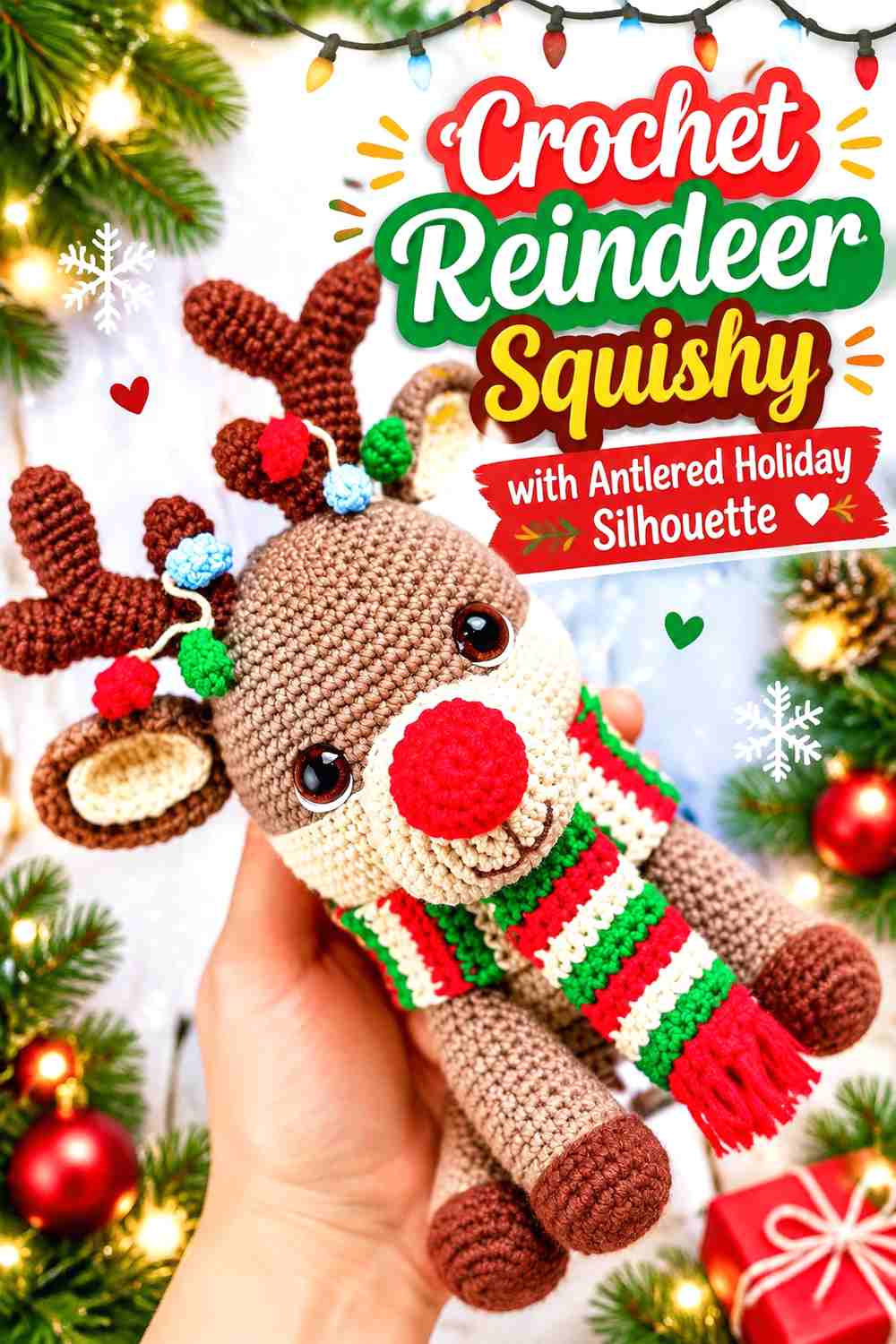
A reindeer gives you a recognizable Christmas character without relying on Santa’s traditional red-and-white shape. The tutorial from Amis Tejiendo Momentos creates a full amigurumi reindeer with a distinct muzzle, antlers, ears, limbs, and festive detailing, making this one of the more character-driven options in the collection.
For a stocking stuffer, the appeal is the strong silhouette. Even before facial details are considered, the antlers and head shape separate it from the smoother snowman, pudding, and bauble projects later in the list.
Antlers Change How the Plush Handles
Projecting antlers make the reindeer visually interesting, but they also create areas that can bend or catch on other objects. If the finished toy will be packed tightly into a stocking, avoid crushing the top of the head under heavier gifts.
The same issue matters during storage after Christmas. A small box with enough room around the antlers will protect the character’s outline better than compressing it with flat ornaments.
Facial Placement Carries Much of the Character
A reindeer has several features competing for attention around a relatively small head: eyes, muzzle, nose, ears, and antlers. Before permanently attaching separate pieces, compare their position from straight ahead instead of judging each attachment independently.
If you adapt the colors, keep enough contrast around the muzzle and nose for the face to remain readable. The basic reindeer identity is more dependent on shape and feature placement than on using one exact shade of brown.
Creator Credit: Amis Tejiendo Momentos
2. Crochet Christmas Pudding Squishy with Holly Top
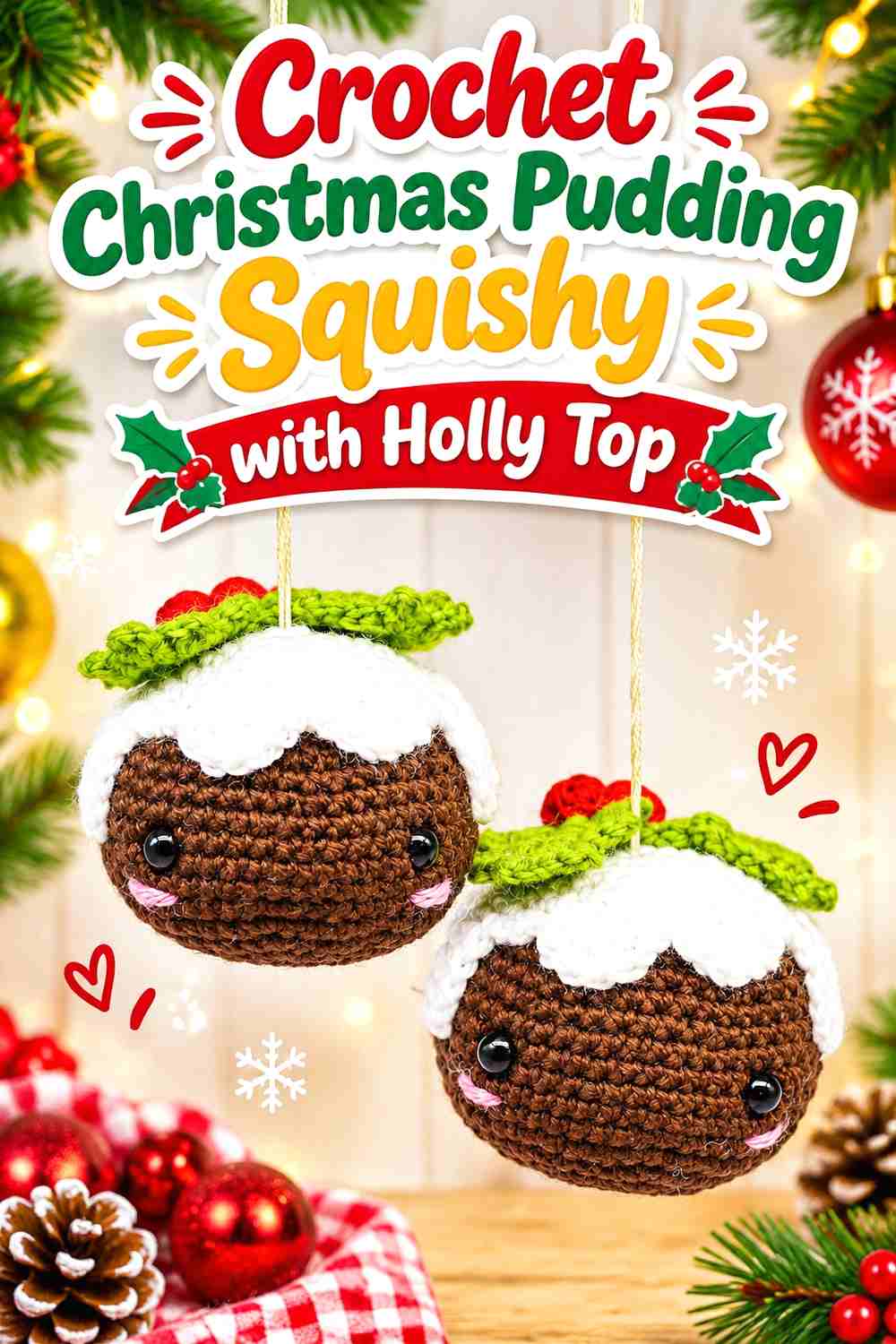
The Christmas pudding is a compact food-shaped amigurumi with a rounded body, frosting, and holly decoration. MJ Carlos’s tutorial presents it as a stuffed Christmas ornament, which makes the design especially relevant when you want a squishy that can move from a stocking to the Christmas tree.
Compared with a character doll, this shape has fewer projecting limbs to manage. Most of the visual interest sits on the surface and top of the pudding instead.
Keep the Frosting Distinct from the Pudding Body
The white topping is what quickly turns an ordinary brown ball into a Christmas pudding. When choosing substitute colors or yarns, make sure the frosting does not visually disappear into the base.
The boundary between the two areas is also worth checking as you work. A clean contrast around the upper portion helps the finished piece read as a dessert rather than simply a round ornament.
Holly Details Add Finishing Work to a Simple Base
The main pudding body has a straightforward rounded concept, but the decorative top adds another scale of crochet. Small leaves and berry-like details demand more precision than the large stuffed form.
If you are making several stocking stuffers, this is a useful project to batch: finish the larger pudding bodies first, then work the smaller decorative components together so you are not repeatedly switching between large and tiny details.
Creator Credit: MJ Carlos
3. Crochet Hot Cocoa Mug Squishy with Marshmallow Detail
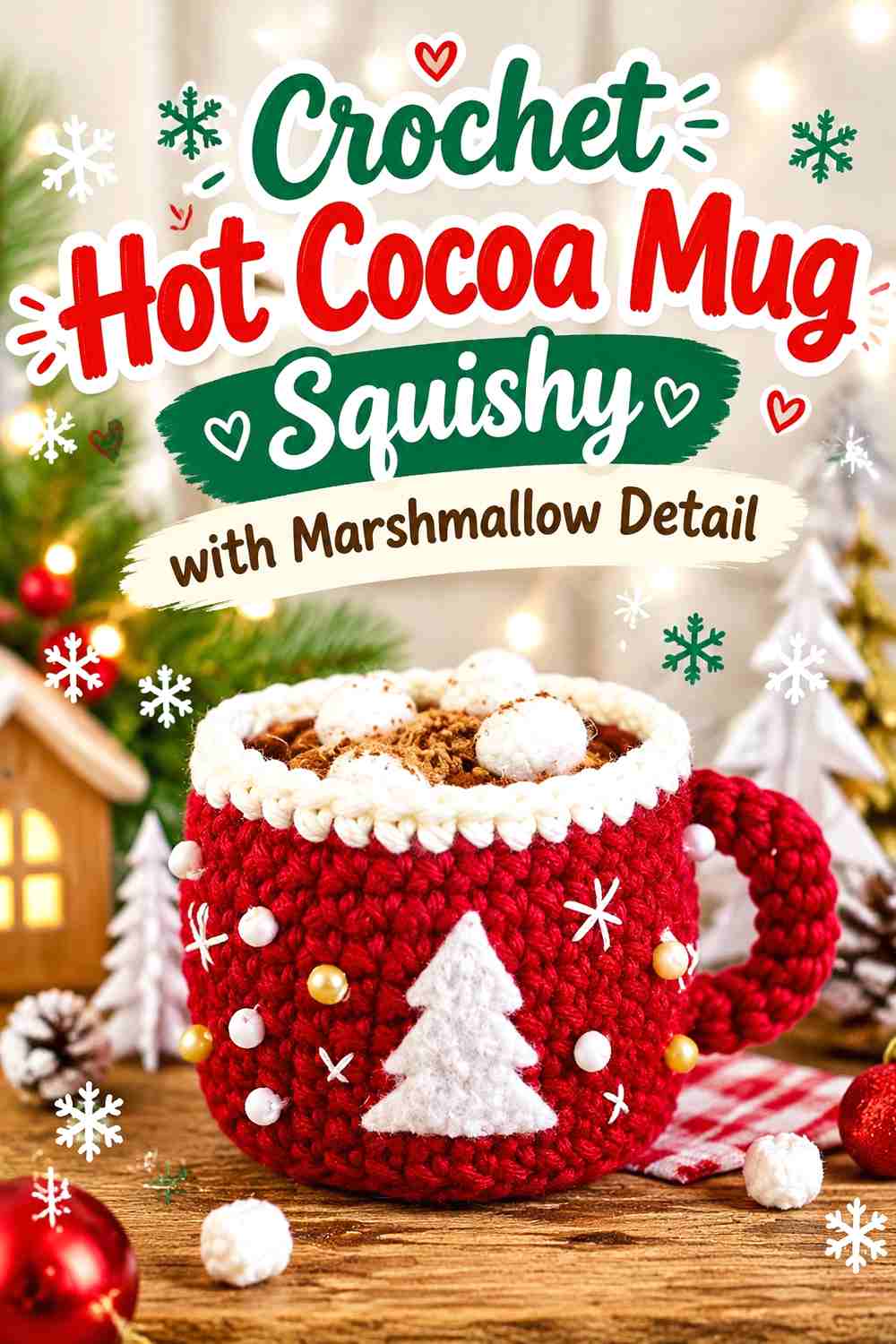
A stuffed cocoa mug brings a different kind of Christmas imagery into the collection. Instead of an animal or holiday character, this project from olliehollycrochet uses the recognizable form of a mug, cocoa surface, handle, trim, and marshmallow-inspired detailing.
It works especially well for someone who likes cozy food-themed crochet. The cylindrical body also offers more surface area for personalized colors than a tiny facial amigurumi.
The Handle Needs to Look Proportional to the Mug
A handle can seem like a minor component until it is attached. If it sits too high, too low, or too far from the body, the whole mug can look unbalanced.
Pin or hold it in position and view the piece from the front and side before securing it. When adapting the project with a different yarn, remember that a thicker handle may visually dominate a small mug even when the main body still looks proportional.
Top Details Should Not Overcrowd the Opening
The cocoa and marshmallow area is the focal point because it tells the viewer what the object represents. Keep decorative additions readable instead of packing the top with so many extras that the mug opening disappears.
If this is intended for frequent handling rather than ornament-only use, think carefully about how many raised embellishments you want to add. Simpler stitched details can be easier to manage than numerous loosely attached decorations.
Creator Credit: olliehollycrochet
4. Crochet Winter Penguin Squishy Keychain
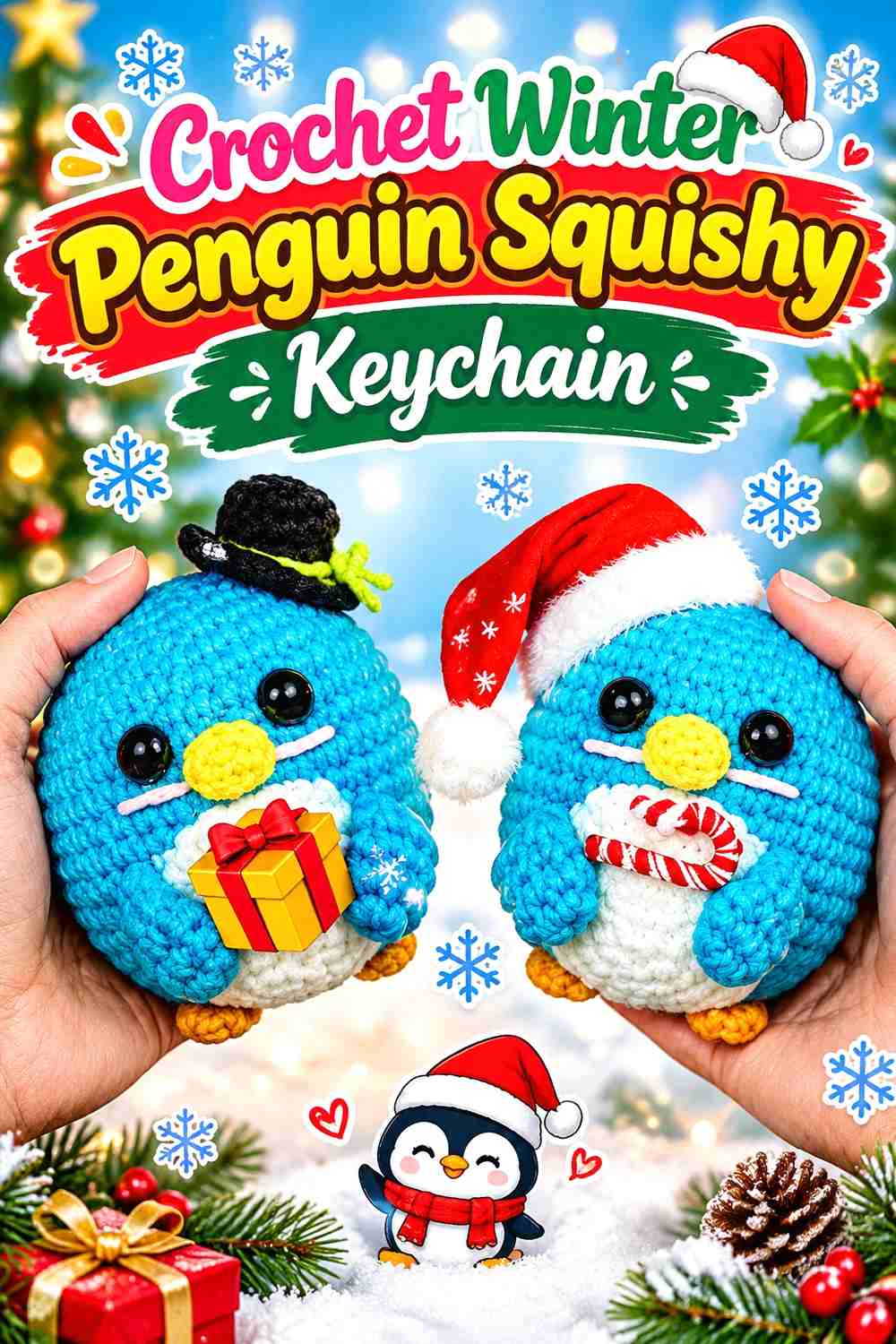
A penguin gives you a round animal form with strong color blocking rather than lots of clothing or complex accessories. Cennagurumi’s Christmas version adds winter styling and is presented as a small keychain or decoration, putting it naturally in stocking-stuffer territory.
The dark-and-light body contrast makes the character recognizable even at a small scale. This can be a helpful choice when you prefer fewer tiny facial components than a more detailed doll.
Preserve the Face Patch When Changing Colors
The penguin’s face relies on contrast. If you replace the traditional dark body with another shade, choose a face color that remains clearly separated.
This matters more than matching a particular Christmas palette. A festive red or green accessory can supply the seasonal connection without sacrificing the characteristic penguin markings.
Decide Between a Keychain and a Soft Toy Finish
Hardware changes how a small amigurumi will be handled. A keyring makes the piece practical for a bag or keys, while a yarn hanging loop suits an ornament. Leaving both off produces a softer little plush.
Make that decision before finishing so attachment points can be secured appropriately rather than added as an afterthought.
Creator Credit: Cennagurumi
5. Crochet Snowman Plush with Hat-and-Scarf Shape
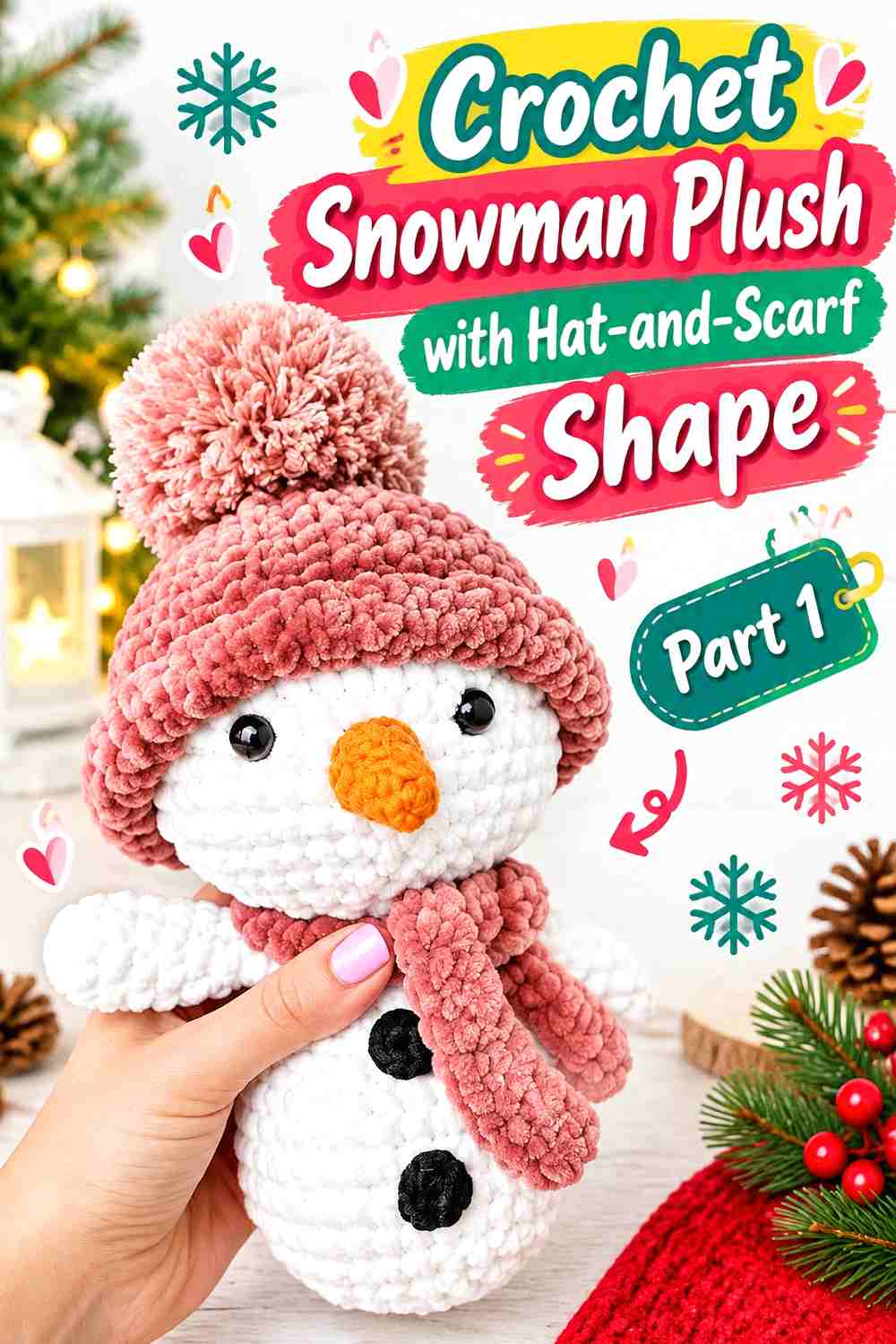
The Rose and Lily Crochet snowman uses a fuller plush presentation than many tiny cotton ornaments. The tutorial constructs a recognizable snowman character with a white stuffed body and contrasting winter accessories, giving this option a noticeably softer, more cuddly appearance within the collection.
Choose this direction when you want the stocking stuffer to feel more like a miniature plush toy than a traditional tree ornament.
Plush Yarn Changes the Finishing Experience
Very soft yarn can create a satisfying squishy surface, but it often makes individual stitches harder to see. Keep reliable round markers and avoid depending solely on visual stitch counting if the fibers obscure the tops of stitches.
When switching from smooth yarn to plush yarn in another design, remember that tiny decorative pieces may become disproportionately bulky. This snowman works because the overall design already supports a softer, fuller appearance.
Accessories Control the Final Silhouette
A snowman body by itself is a sequence of rounded forms. The hat, scarf, nose, and other details create the recognizable winter character.
Before sewing accessories permanently, check how the hat changes overall height and whether the scarf sits neatly around the neck without covering too much of the face or body. Small adjustments can substantially change the finished expression.
Creator Credit: Rose and Lily Crochet
6. Crochet Polar Bear Christmas Squishy Ornament
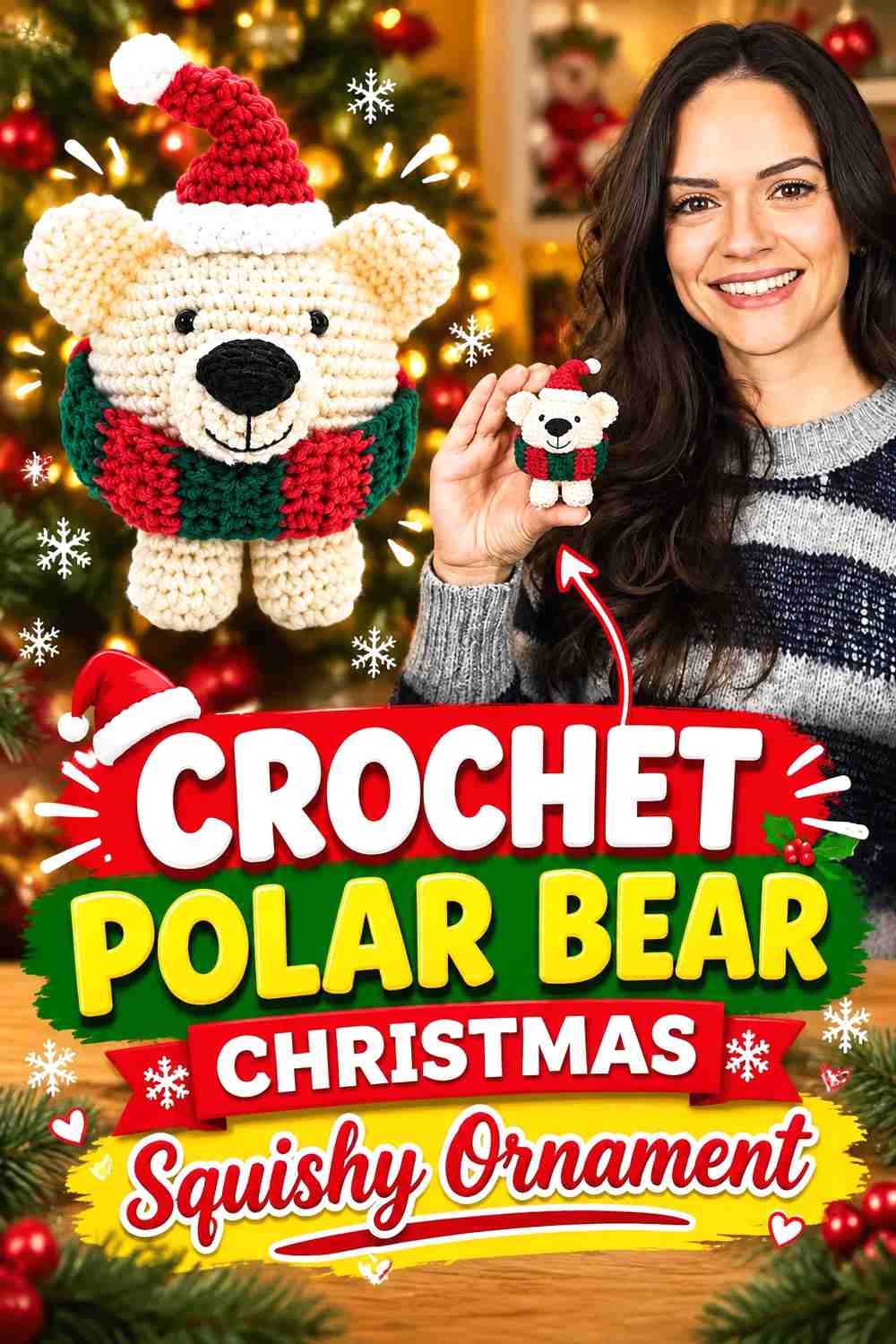
Little Crochet Farm’s polar bear uses a compact bear shape combined with winter details, including a scarf and Christmas styling. The finished project is designed as a small amigurumi ornament, which gives it a useful middle ground between animal plush and seasonal decoration.
This option stands apart from the penguin because its body is mostly one light color, so shaping and facial contrast become especially important.
Light Yarn Makes Stitch Gaps More Noticeable
When stuffing sits directly behind pale fabric, gaps between stitches may be more visible than they would be on dark yarn. Before committing to the entire project, check that your hook and tension create the dense fabric you want.
This is also useful when substituting plush yarn. A softer surface can hide individual stitches, but it does not automatically prevent stuffing from showing if the fabric itself is too open.
Let the Scarf Add Contrast Without Hiding the Bear
The scarf is a useful place for a bright Christmas color because the bear itself can remain simple. Keep the accessory proportional so it frames the neck rather than covering the body or face.
For a coordinated set of stocking stuffers, you could repeat the same scarf palette across several different animals while keeping their body colors distinct.
Creator Credit: Little Crochet Farm
7. Crochet Gingerbread Man Squishy Ornament
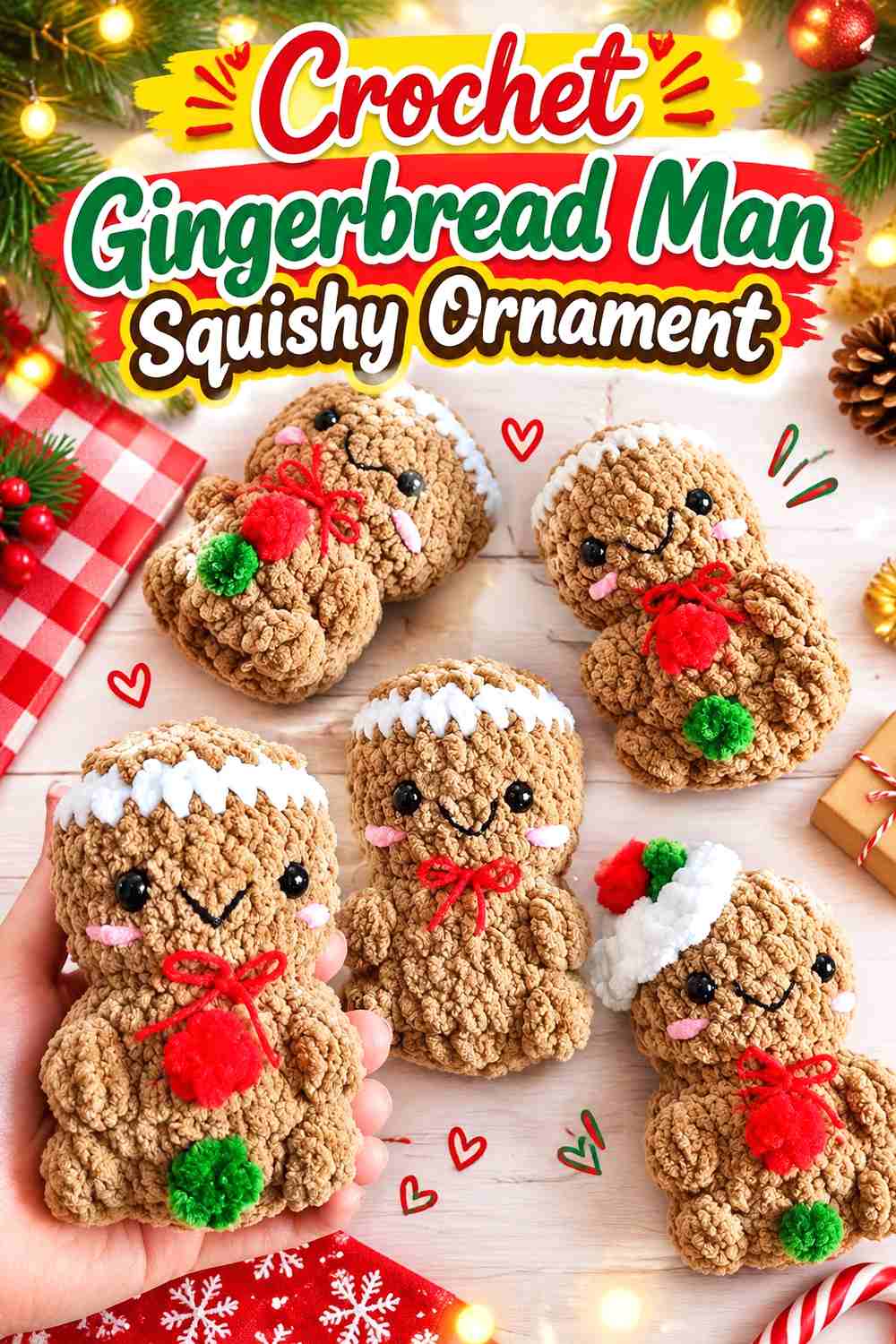
This velvet-yarn gingerbread design from By Asalet Calışkan turns the classic cookie silhouette into a soft amigurumi figure. The creator presents it as a Christmas decoration, keychain, or gift ornament, so it already bridges several possible uses after it leaves the stocking.
Its flatter person-shaped silhouette also gives the collection a useful break from balls, cones, and round animal bodies.
Icing Details Need Enough Contrast to Read Clearly
The gingerbread look depends heavily on surface decoration. White edging, facial features, buttons, or other accents should remain visible against the brown base.
When using fuzzy yarn, test a small embroidered detail before finishing the whole plush. If the fibers swallow fine lines, slightly bolder yarn details may read better than delicate embroidery.
Check Limb Shape Before Final Stuffing
Small arms and legs can become uneven if one section is packed more firmly than another. Compare both sides while the opening is still accessible.
The goal is not rigid symmetry, but a balanced cookie-like outline. Overstuffing narrow sections can make them look bulky and reduce the flat gingerbread silhouette that distinguishes this project from a round doll.
Creator Credit: By Asalet Calışkan
8. Crochet Candy Cane Squishy for a Slim Stocking Stuffer
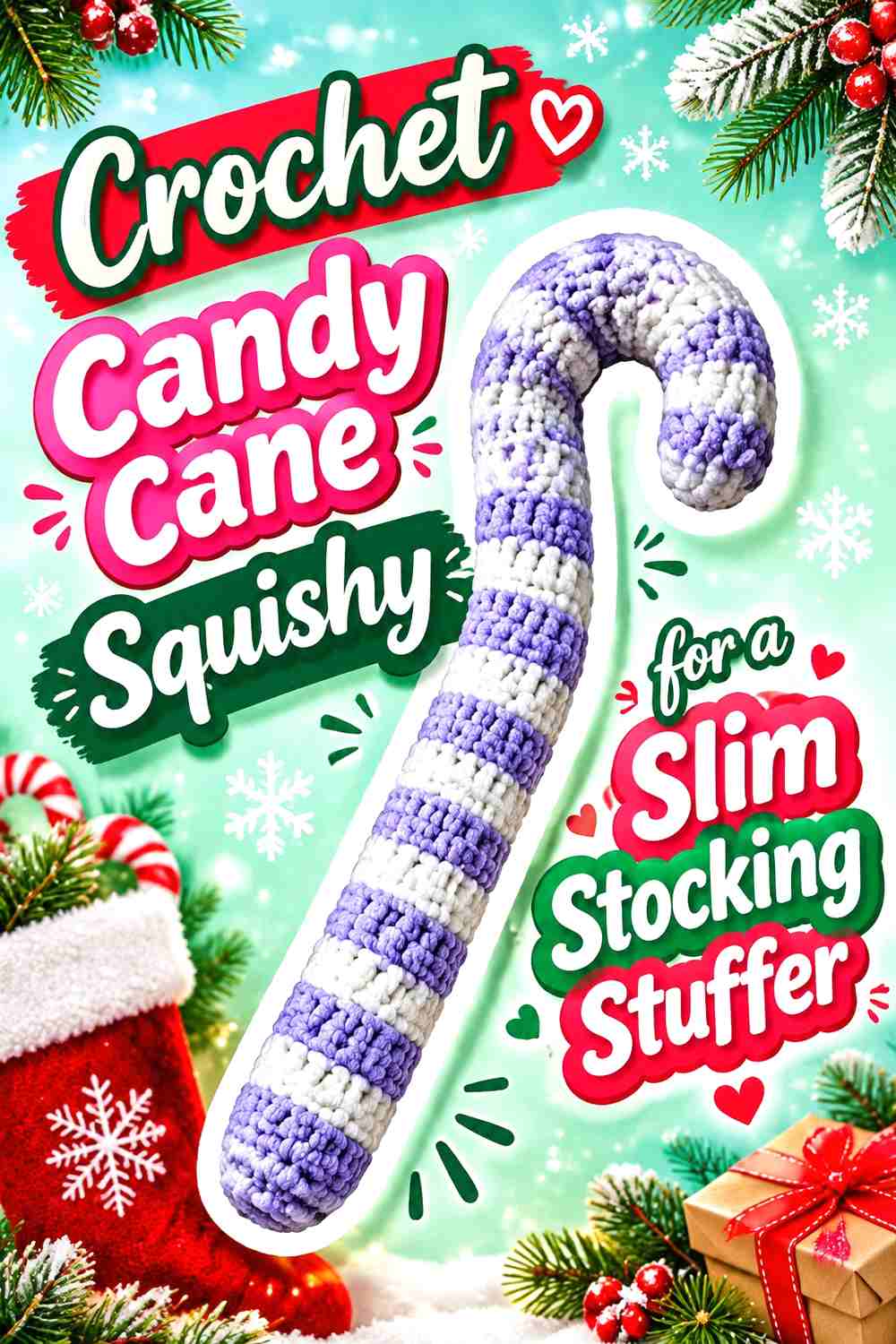
A candy cane is one of the narrowest options here. Les AMIgurumis de Yara’s tutorial creates a stuffed amigurumi candy cane, giving you a project that can slide into small spaces where a round plush or mug would take up more room.
It also creates instant Christmas recognition without eyes, limbs, or facial assembly, which can be appealing when you want a non-character gift.
The Curve Is More Important Than Perfect Stripes
Red-and-white striping catches the eye first, but the curved top is what makes the object unmistakably a candy cane. Watch the silhouette as closely as the color transitions.
If you adapt the palette to nontraditional colors, the curve becomes even more important because the familiar red-and-white color cue is no longer doing all the work.
Avoid Stuffing the Narrow Form Too Aggressively
A thin stuffed tube can become lumpy when fiberfill is packed unevenly. Add small amounts gradually and move the filling along the form rather than forcing a large clump into one area.
Pay particular attention around the bend. The shape should remain curved rather than becoming a swollen hook with a much thinner stem.
Creator Credit: Les AMIgurumis de Yara
9. Crochet Present Box Squishy Ornament
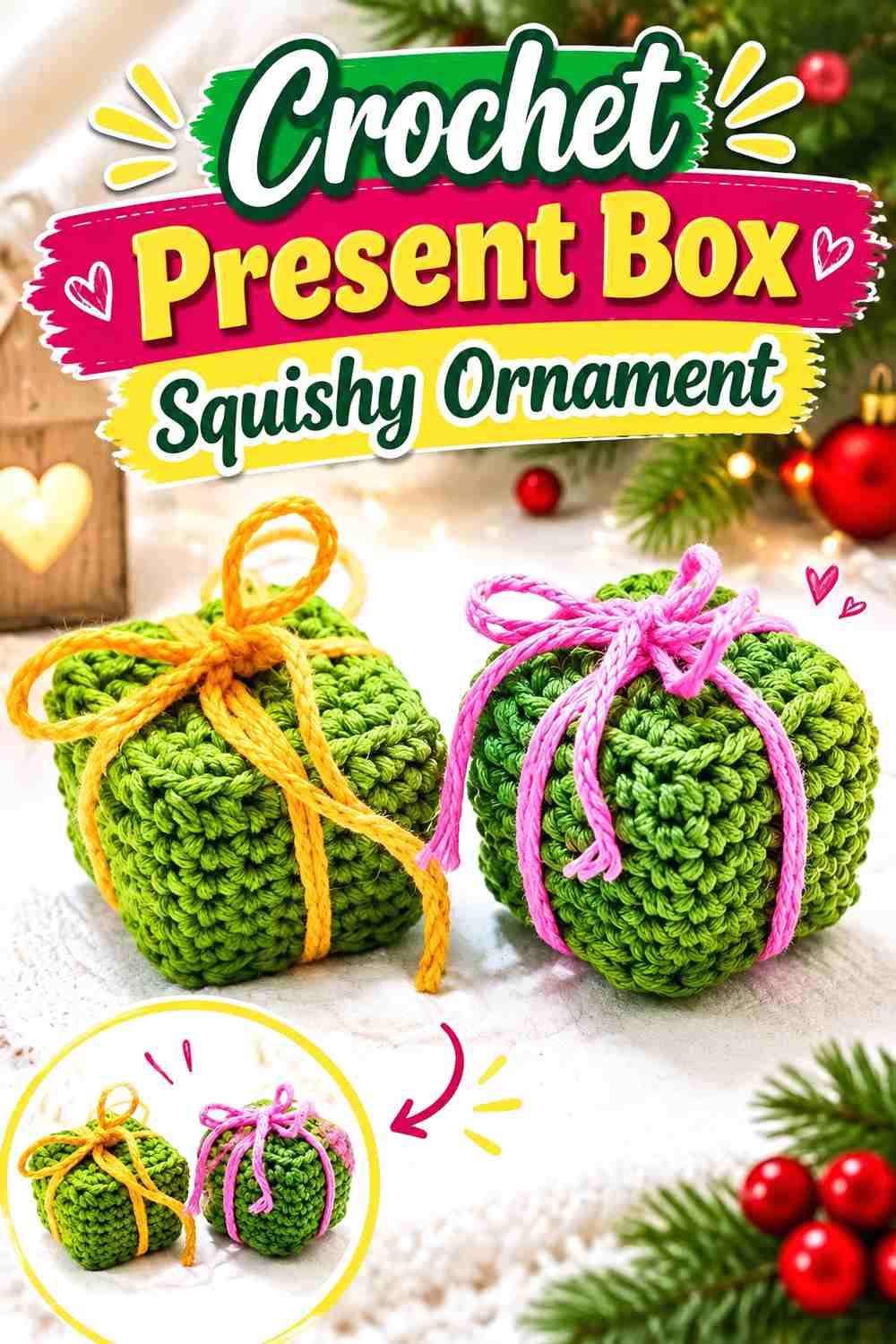
Raji’s Craft Hobby turns a simple amigurumi cube into a tiny stuffed Christmas gift box. The geometric form is a major change from the rounded plushies in this list and gives you an easy way to vary colors through the box-and-ribbon combination.
This is especially useful when you want a small stocking extra for someone who may not want an animal or doll.
Shape the Corners Before Closing the Box
A cube loses its identity quickly if heavy stuffing rounds every edge. Add enough filling to support the shape, then use your fingers to define the corners and sides before final closure.
The project does not need to become rigid. The goal is simply to preserve enough geometry for the piece to look like a wrapped package instead of a round cushion.
Center the Ribbon from More Than One Angle
A ribbon line that looks centered from the front may drift off center across the top. Check both views before fastening decorative sections.
Strong contrast between the package and ribbon can make small alignment differences more obvious, while a tonal palette produces a softer effect. Neither approach is inherently better; choose based on whether you want graphic definition or a subtler look.
Creator Credit: Raji’s Craft Hobby
10. Crochet Pine Cone Squishy Woodland Charm
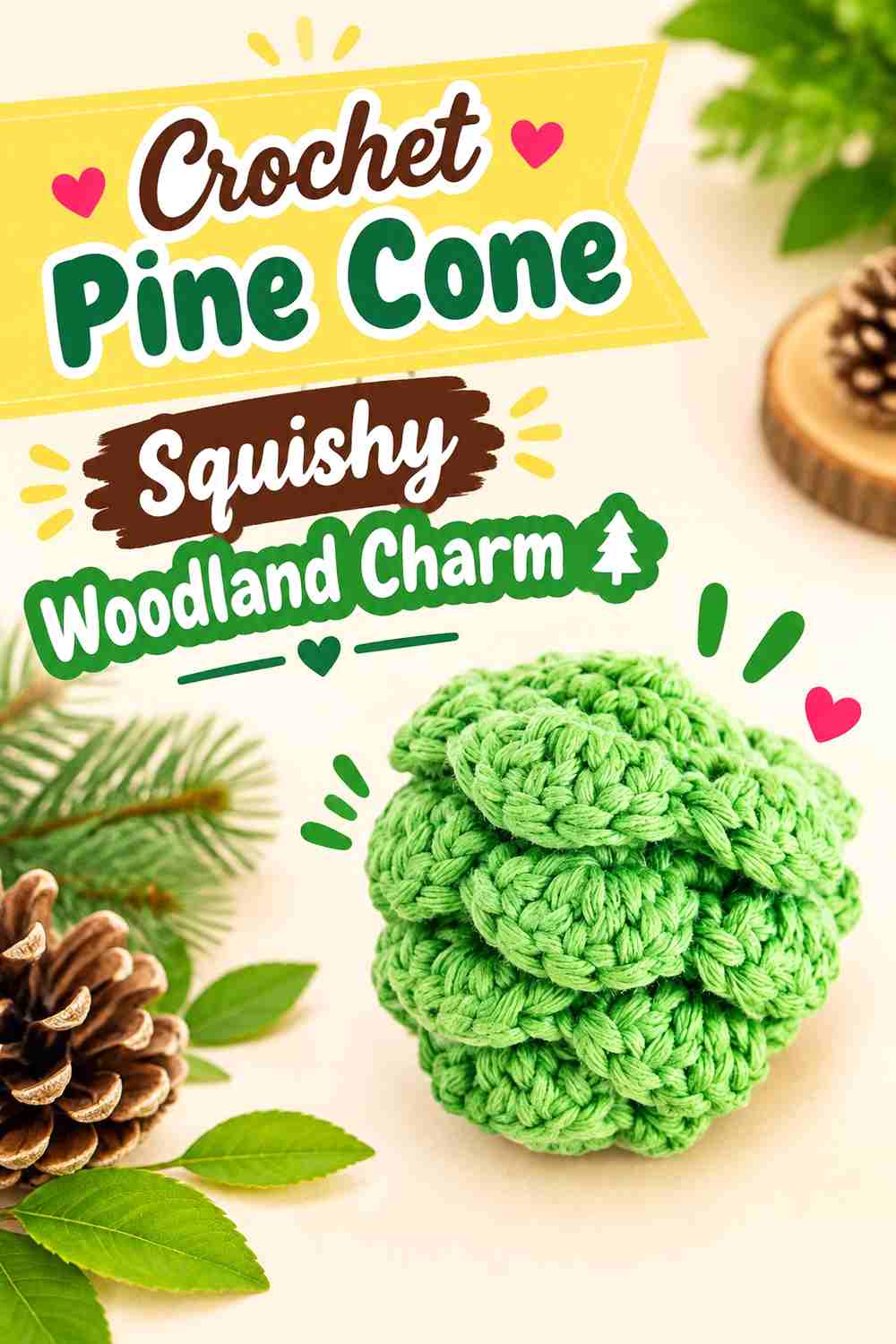
Garnknuten’s pine cone amigurumi introduces a natural woodland motif that can work for Christmas without looking like a conventional Santa-themed decoration. The creator presents the small stuffed pine cone as suitable for a keychain or Christmas-tree use.
This makes it a useful option for rustic, Scandinavian, woodland, or neutral holiday palettes.
Texture Should Support the Pine-Cone Shape
The surface is more important here than facial expression or color blocking. Whatever yarn you use should allow the raised structure to remain visible.
Extremely fluffy yarn may soften the texture so much that the form becomes harder to recognize. A yarn with clearer stitch definition can be helpful when the construction itself supplies most of the visual detail.
Woodland Colors Can Extend Its Use Beyond December
A pine cone does not need bright red or green to feel seasonal. Brown, tan, muted green, or other natural shades can make it fit autumn displays and woodland decor as well as Christmas.
That gives this project more year-round potential than an overt Santa or pudding design, which may matter if you want a stocking stuffer that does not immediately get packed away with holiday decorations.
Creator Credit: Garnknuten
11. Crochet Mushroom Elf Christmas Squishy
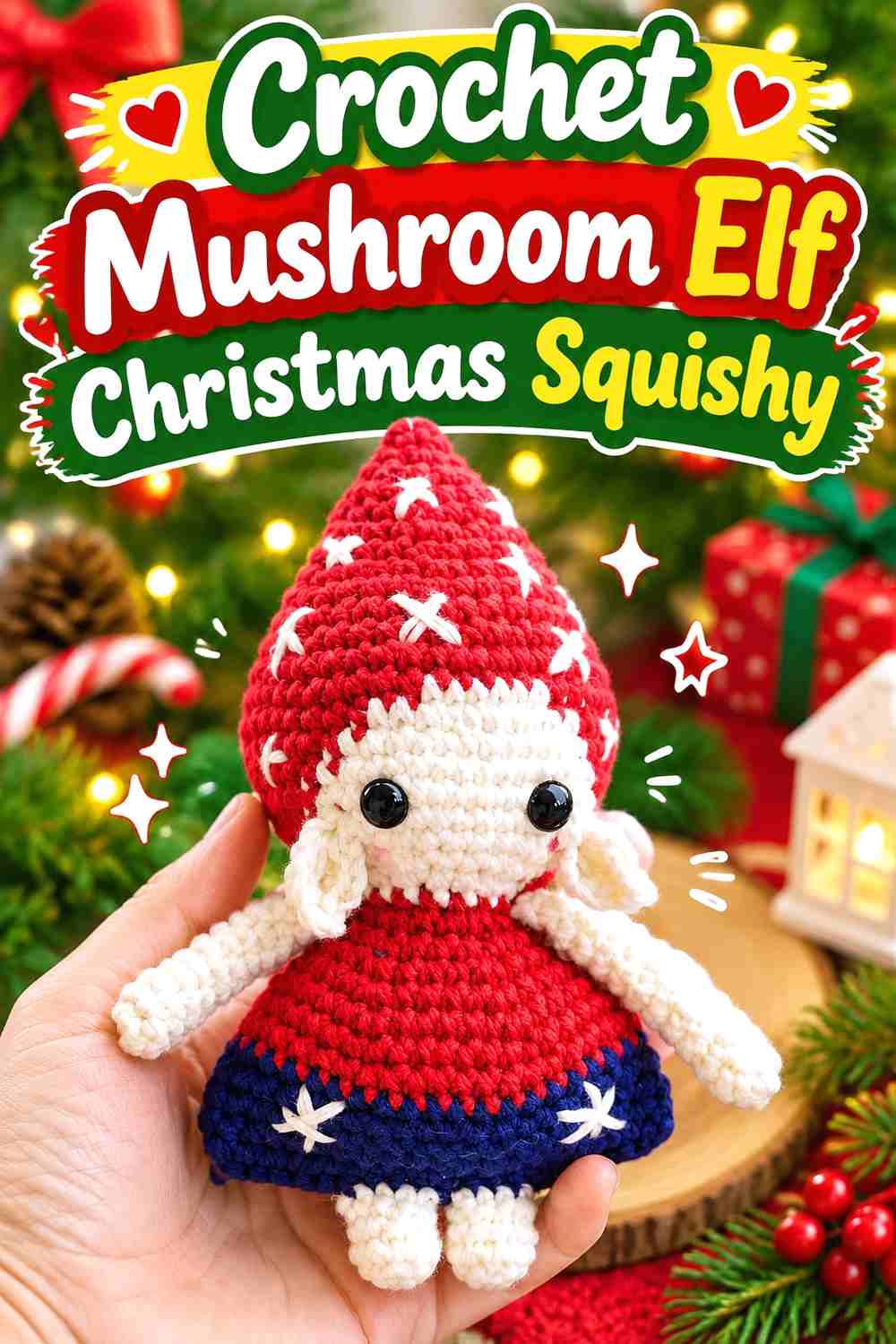
The Anvis Granny Handicrafts tutorial combines an elf-like figure with a mushroom-inspired hat, giving the project a much more whimsical silhouette than a traditional Christmas doll. The creator presents it as an ornament, keychain, or small amigurumi figure.
This is a good choice when you want something seasonal without repeating familiar Santa, snowman, or reindeer imagery.
The Hat Should Stay Proportional to the Body
The mushroom-style top is the main visual feature, so it needs enough width to read clearly. At the same time, an oversized hat can make a small figure feel top-heavy.
If you substitute a thicker yarn, evaluate the hat and body together rather than assuming both sections will scale visually at exactly the same rate.
Keep the Face Visible Under the Hat
Large hats can shade or partly cover small facial details. Before fastening the final position, look straight at the finished doll and make sure the face still has enough open space around it.
This is particularly important if you add extra trim or embroidery. Decorative details should support the whimsical shape rather than crowd the narrow area between the face and hat.
Creator Credit: Anvis Granny Handicrafts
12. Crochet Stuffed Christmas Bell Squishy with Bow
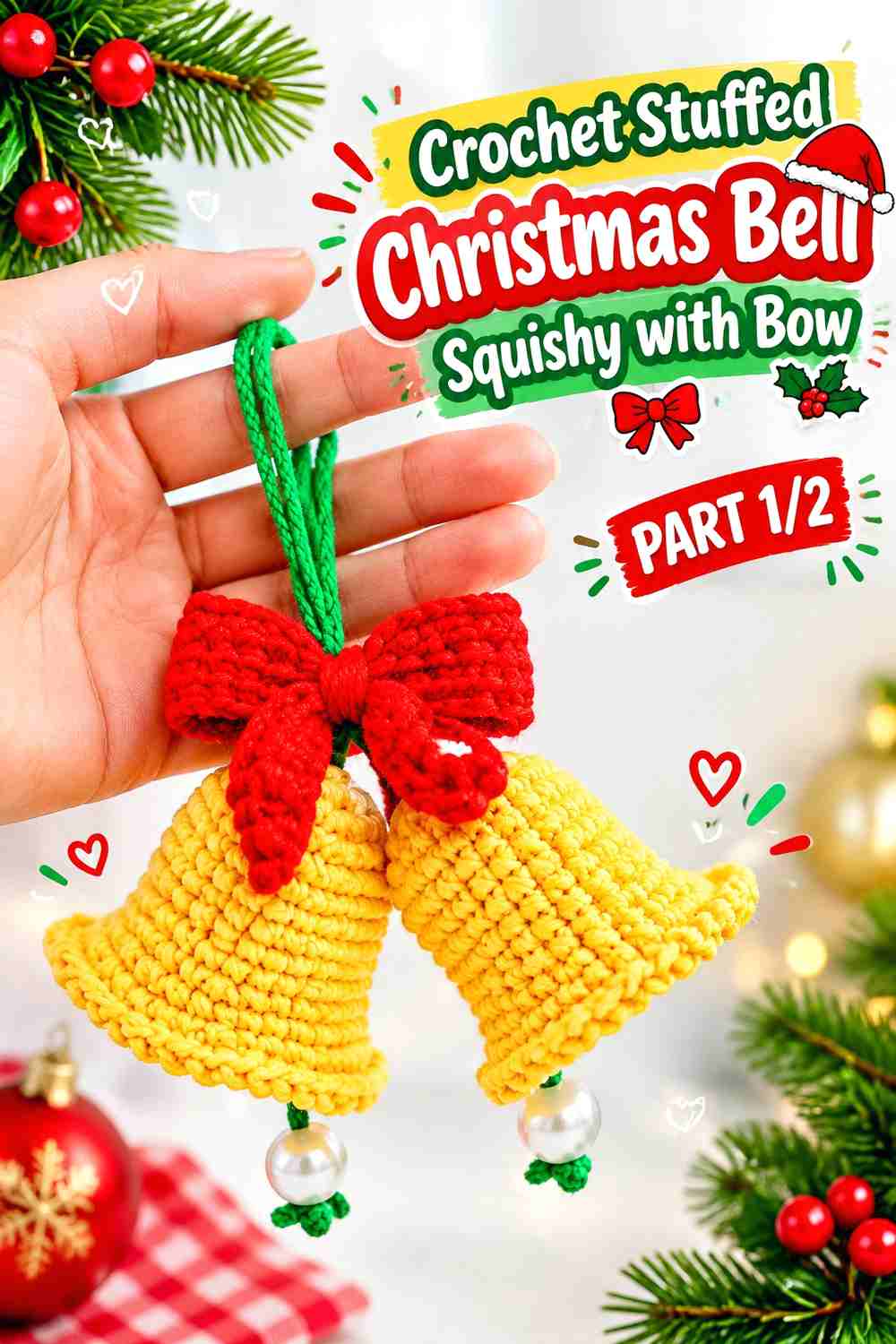
Amigu World’s Christmas bell is a stuffed amigurumi rather than a flat bell motif. The tutorial is divided into connected parts and includes the bell, bow, and finishing, giving the project more dimensional structure than a simple hanging appliqué.
Its flared lower edge introduces a silhouette that none of the round toys or straight-sided gift boxes share.
Keep the Lower Bell Flare Visible
The bell should widen toward the bottom. If the stuffing produces a uniformly cylindrical body, the distinctive profile becomes less obvious.
Check the side view before closing. If necessary, redistribute the filling rather than automatically adding more. Shape is the priority here, not maximum firmness.
Preview the Finishing Portion Before Crocheting Every Piece
Because the project continues across connected tutorial parts, it is useful to understand the final assembly before cutting every yarn tail or deciding how much length to leave for joining.
This applies to any multipart amigurumi tutorial: watching the handoff between sections first can prevent surprises during finishing and make it easier to organize colors and components.
Creator Credit: Amigu World
13. Crochet Santa Keychain Amigurumi
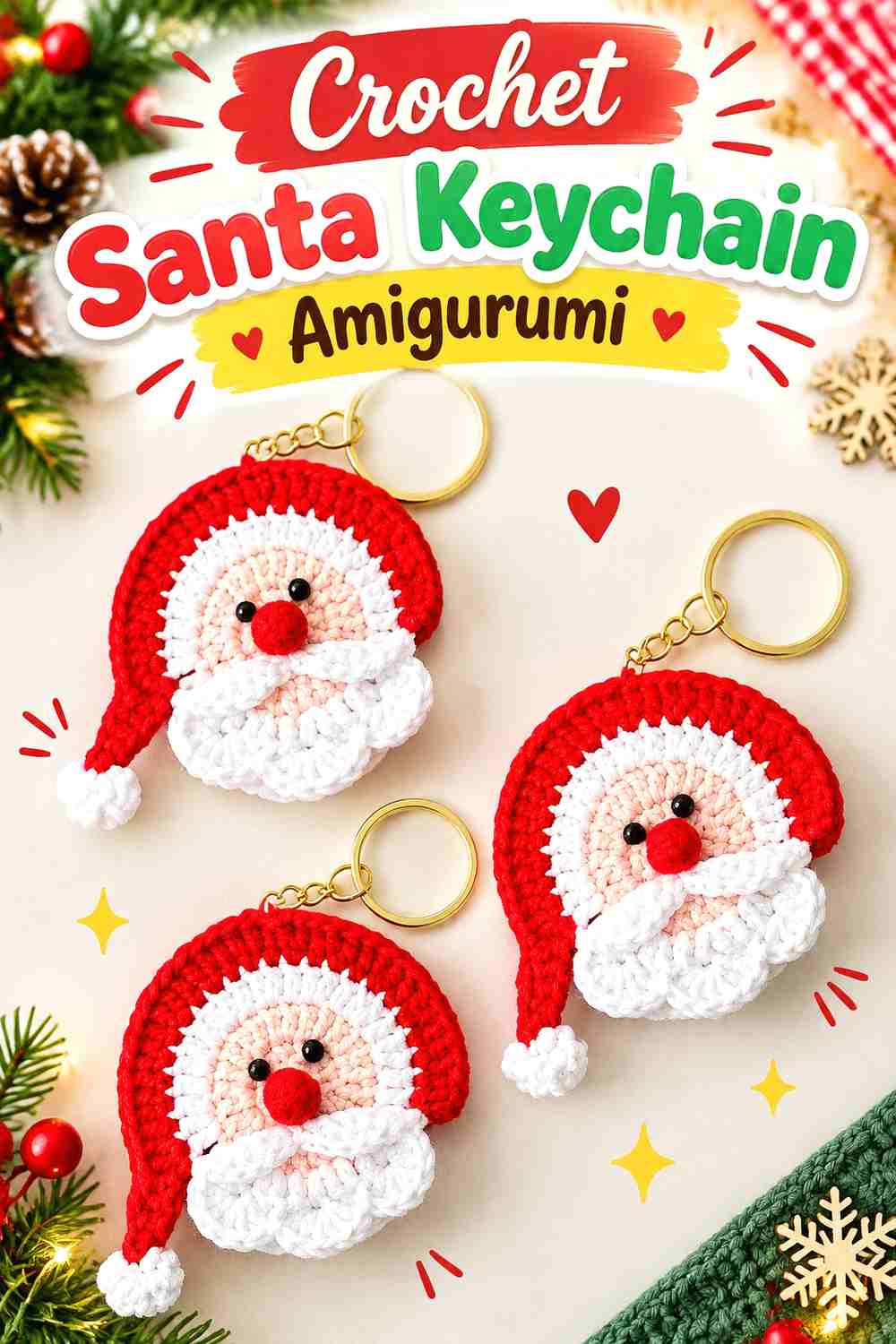
Örgü Blog’s Santa is specifically designed around a compact keychain format, making it one of the most directly stocking-oriented projects in this list. The design reduces a large Christmas character into a small recognizable form rather than trying to reproduce a full-size doll.
That can be useful when you want the Santa theme but do not want a bulky plush occupying most of the stocking.
Prioritize the Features That Make Santa Recognizable
At miniature scale, every detail cannot carry equal visual weight. Red headwear, a white beard or trim area, and the central face generally communicate more than numerous tiny embellishments.
If you personalize the colors, keep enough familiar contrast that the character still reads clearly without needing to be explained.
Choose Hardware for the Recipient
A keyring makes sense for someone who will attach the project to keys or a bag. For a child or someone who prefers soft decorations, you may instead choose a yarn loop or omit hardware where appropriate.
Whatever attachment you use, secure it to the structure of the piece rather than relying on a loose decorative strand that was not intended to carry repeated pulling.
Creator Credit: Örgü Blog
14. Crochet Christmas Gnome Squishy Keychain
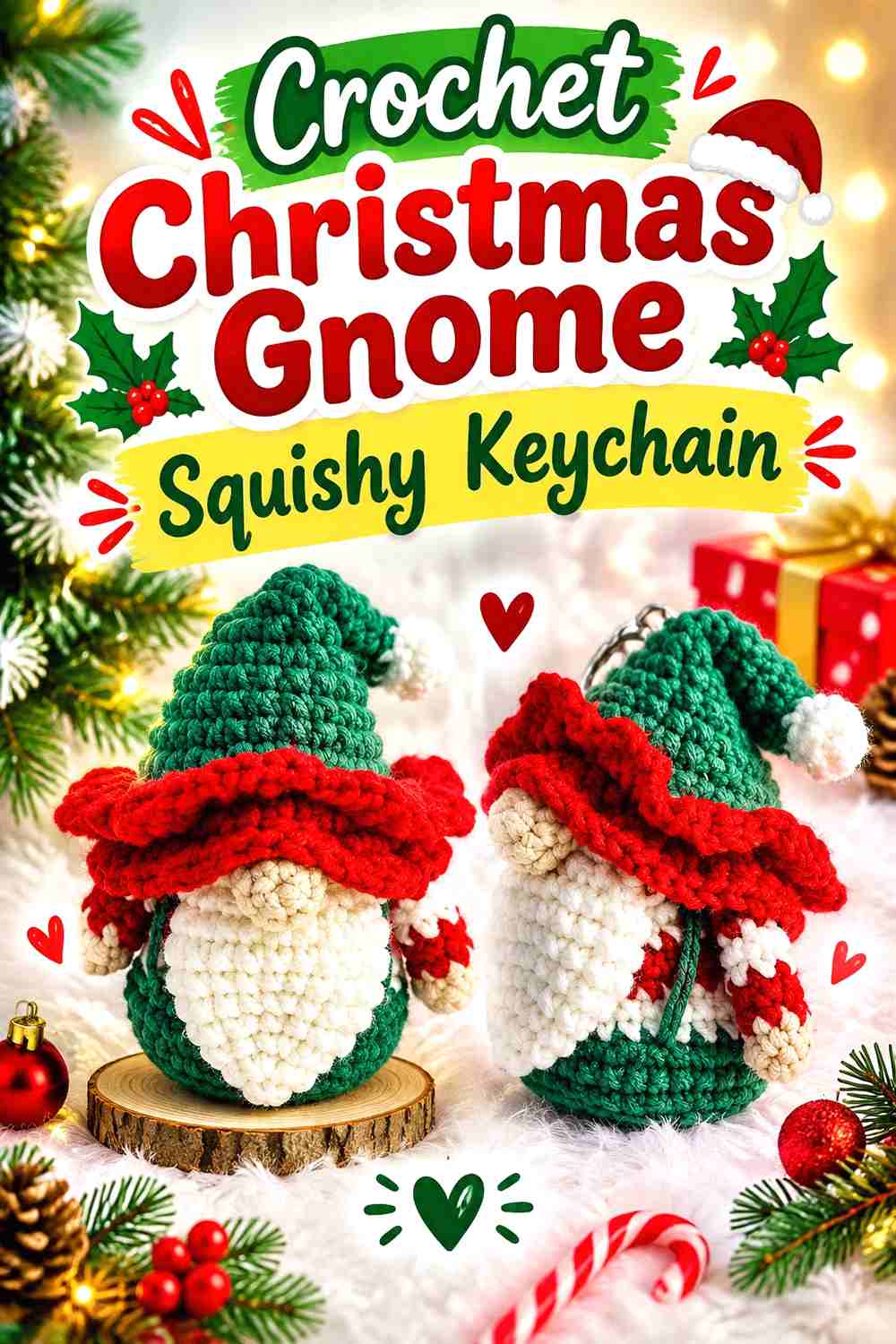
Kane Crochet’s Christmas gnome uses a compact stuffed body, oversized hat, beard, nose, and tiny arms to create the familiar gnome look at keychain scale. The project has a noticeably triangular overall silhouette because so much of its height comes from the hat.
That shape helps it stand out beside the round penguin, pudding, and bauble options.
The Beard and Hat Need Clear Separation
A gnome often has very little visible face, so the boundaries between hat, nose, and beard become important. If all three areas use similar values or very fuzzy textures, the center of the design can blur together.
Contrast can come from color, texture, or both. The hat does not have to be bright red, but it should remain visually distinct from the beard.
Check the Hanging Balance Before Adding a Keychain
A tall pointed hat can shift the visual center upward. Before choosing where to attach hardware or a hanging loop, hold the finished piece from the proposed point and see whether it faces the direction you want.
A slightly different attachment location can determine whether the gnome hangs neatly or constantly rotates sideways.
Creator Credit: Kane Crochet
15. Crochet Mini Christmas Tree Squishy Ornament
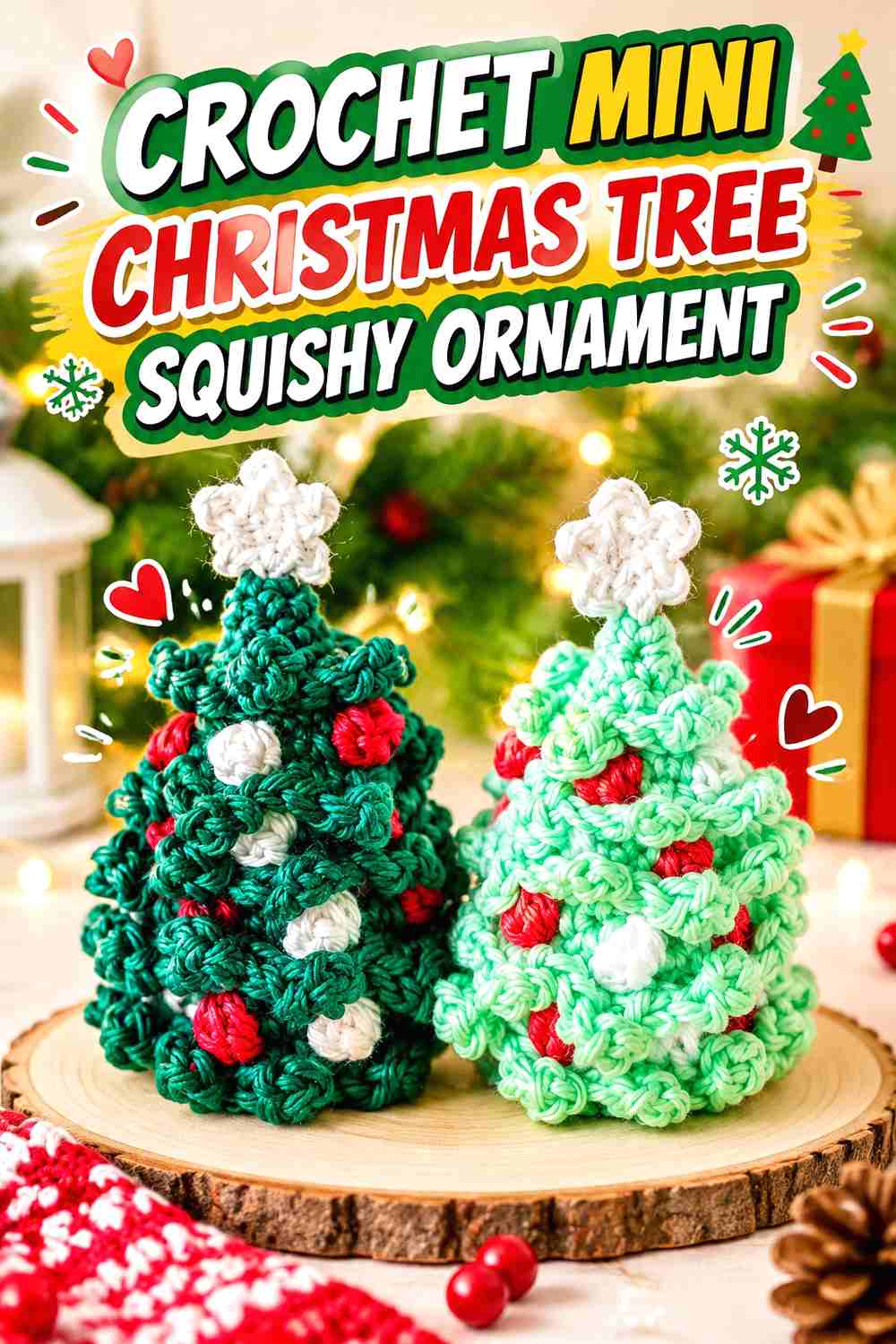
Pocket Yarnlings’ small Christmas tree uses amigurumi construction with decorative stitch details and color changes rather than assembling many separate branches. The creator’s project is designed as a compact holiday ornament and small gift.
A tree is especially useful when you want an unmistakably Christmas-themed shape without making another character with eyes, arms, and clothing.
Keep the Tree Taper Visible
The basic silhouette needs to move from a broader lower area toward a narrow top. Uneven stuffing can distort that progression and make one section bulge.
Check the tree while filling it and rotate it frequently. A consistent taper matters more to the finished identity than making every decorative element perfectly symmetrical.
Decorations Should Stay in Scale with the Tree
Small bobbles, stitched ornaments, or other accents can easily overwhelm a mini tree. If you change yarn weight, reassess the decorative elements instead of automatically scaling every embellishment upward.
You can also simplify the surface and let the tree shape do most of the work. A restrained version may fit better in a stocking meant for someone who prefers minimal Christmas decor.
Creator Credit: Pocket Yarnlings
16. Crochet Stuffed Christmas Bauble Squishy
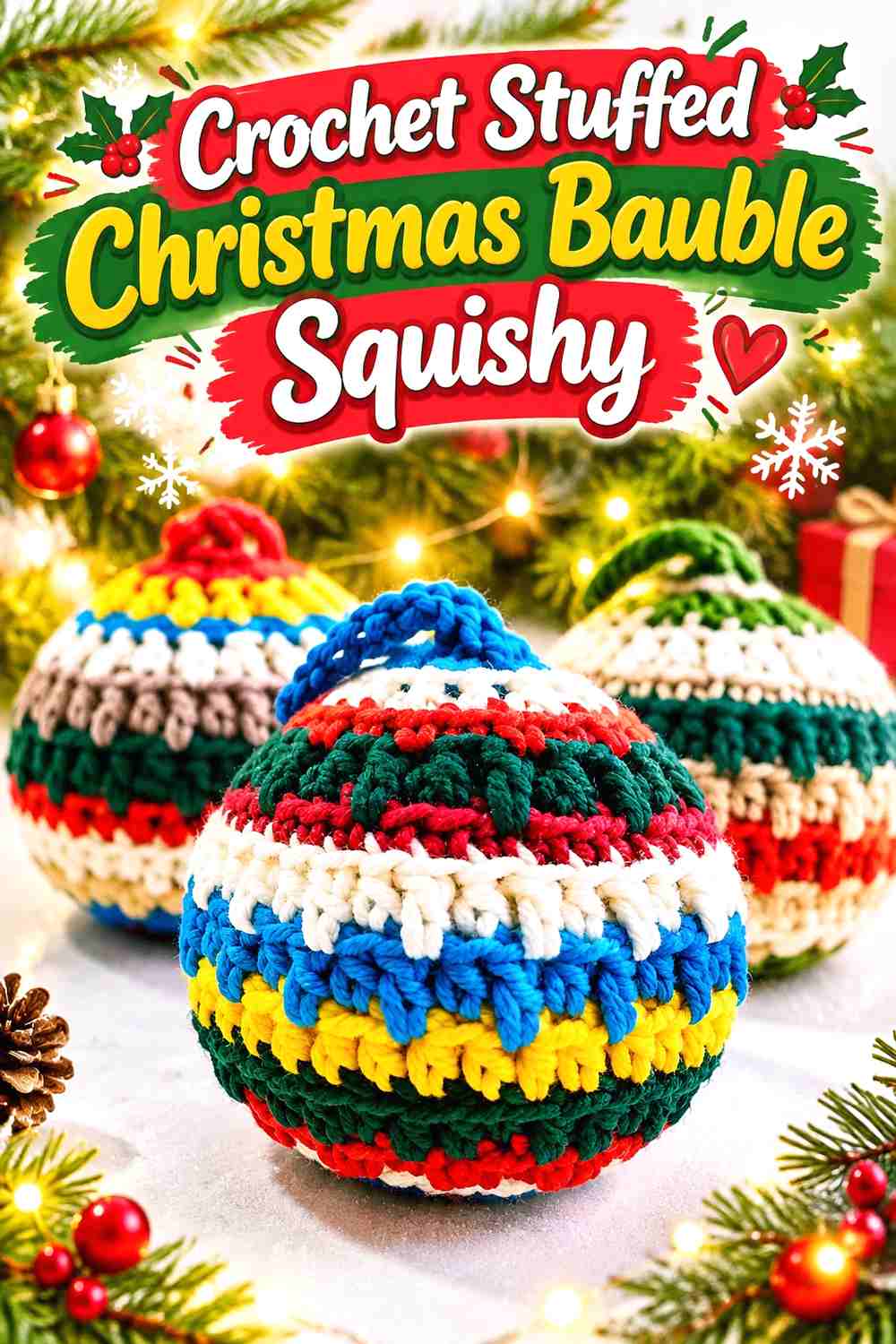
Crochetpedia’s bauble differs from patterns that simply crochet a cover around an existing plastic ornament. This design is filled with toy stuffing, creating a genuinely soft ornament whose final roundness is influenced by how it is stuffed.
That makes it one of the purest “squishy” ideas in this collection: the shape is simple, so yarn texture, stripes, and surface details can supply most of the personality.
Stuffing Determines Whether the Bauble Looks Round
A spherical project quickly shows uneven filling. Add stuffing in smaller portions and rotate the piece frequently so one side does not become flatter or firmer than the other.
Before closing completely, hold it at arm’s length and check the overall outline. Small dents are easier to correct while you still have access to the inside.
Use Color Changes as the Main Design Feature
Because a bauble has no face, limbs, or clothing, surface color becomes more important. Stripes, alternating rounds, or a limited two-color scheme can create very different looks without changing the underlying form.
For a group gift, this is also an efficient concept for making coordinated but nonidentical pieces. Keep the same palette and vary the arrangement from bauble to bauble.
Creator Credit: Crochetpedia
17. Crochet Brussels Sprout Christmas Squishy
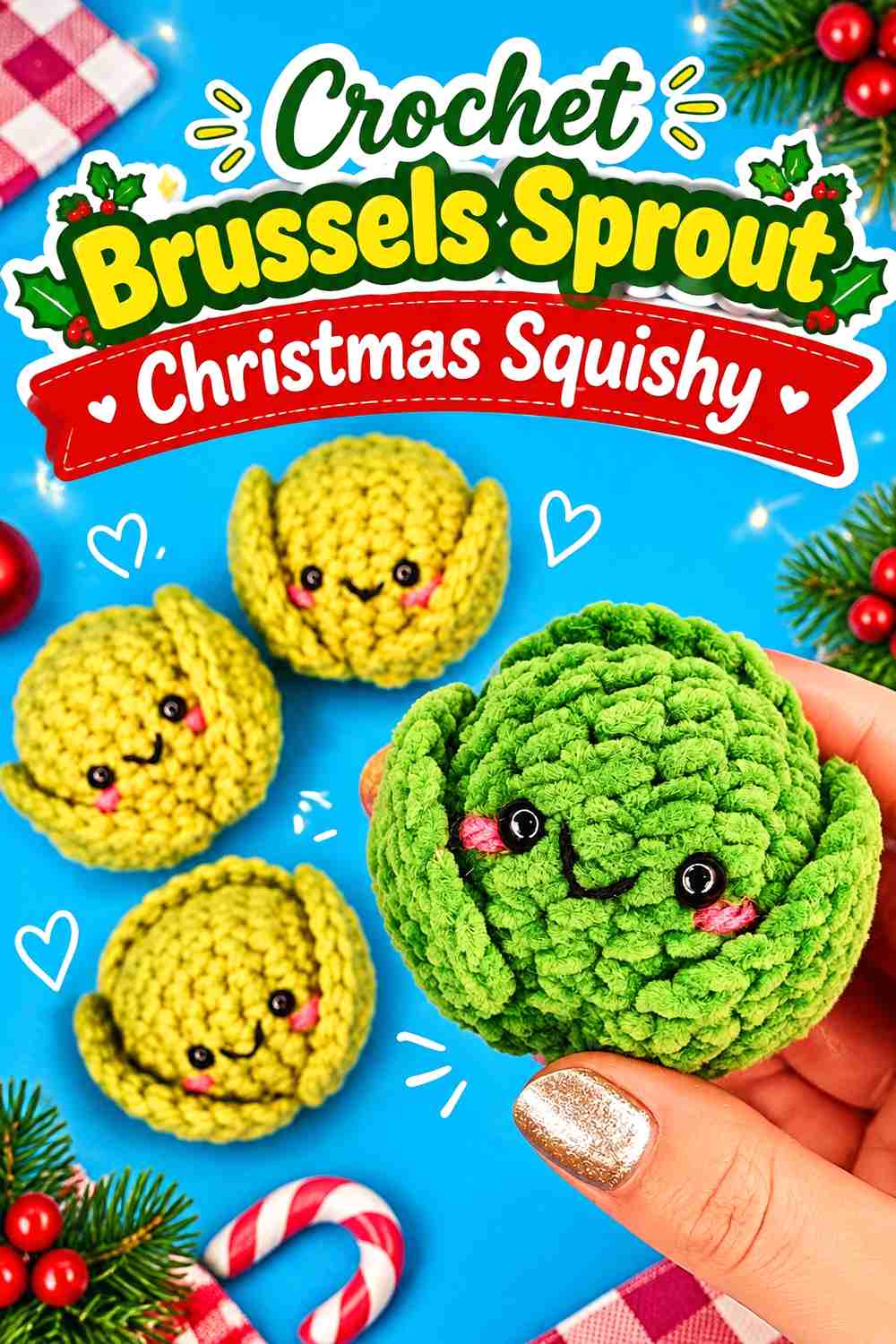
A crochet Brussels sprout is the playful outlier in this collection. Hooked by Robin includes amigurumi Brussels sprouts among Christmas stocking-stuffer ideas, turning a famously divisive holiday vegetable into a small handmade novelty gift.
It is a strong choice for someone who already has plenty of traditional Christmas ornaments or appreciates humorous handmade gifts.
Leaf Texture Matters More Than Holiday Colors
The sprout does not need red, gold, or candy-cane striping to feel connected to Christmas. Its holiday association comes from the dinner-table joke and the unexpected subject.
That means green can do most of the work while the layered or leafy surface creates the character. Focus on keeping those details visible rather than adding unrelated festive embellishments.
This One Works Especially Well as a Surprise Gift
Unlike Santa or a snowman, the recipient may not immediately expect a Brussels sprout to come out of the stocking. That surprise is part of the appeal.
It also gives you an option for people who prefer quirky objects over sentimental holiday decor. If you are making several stockings, reserving one unusual project like this prevents the handmade gifts from feeling too repetitive.
Creator Credit: Hooked by Robin
Which Christmas Squishy Should You Choose?
For the most traditional Christmas characters, start with the reindeer, snowman, Santa, elf, or gnome. They rely on recognizable facial and clothing details and work well when you want the stocking stuffer itself to feel unmistakably festive.
For shapes with less assembly, consider the pudding, candy cane, gift box, pine cone, tree, or bauble. Their identity comes mainly from the overall form, surface texture, and color placement rather than multiple limbs.
The cocoa mug and Brussels sprout are better choices when the recipient enjoys food-themed or humorous crochet. The penguin and polar bear sit between seasonal and year-round amigurumi: change or remove some of the Christmas accessories and the animal itself can work well beyond December.
If you are making several gifts, variety will usually look more intentional than repeating one design in many colors. Mixing a tall gnome, round pudding, narrow candy cane, cube-shaped gift, and animal plush creates a group that feels collected rather than duplicated.
Conclusion
The most useful stocking-stuffer project is not necessarily the one with the fewest stitches or smallest finished size. Think about the recipient and what they might do with the amigurumi afterward.
Choose the Santa, gnome, elf, reindeer, or snowman for someone who likes classic Christmas characters. Pick the bauble, bell, tree, pudding, or gift box if the piece is likely to become an ornament. The polar bear and penguin offer softer winter themes, while the hot cocoa mug and Brussels sprout bring more personality to a mixed gift collection.
Whichever idea you choose, review the original tutorial before substituting yarn, changing the scale, or altering attachments. Small projects leave less room for proportion errors, so a little planning around stuffing, decoration size, and final use can make a noticeable difference in the finished squishy.
Frequently Asked Questions
What type of yarn works well for crochet Christmas squishy amigurumi?
There is no single yarn that works for every project. Smooth cotton or acrylic can make small stitches and embroidered details easier to see, while chenille or other plush yarn can create a softer squishy surface. The important point is that the fabric is dense enough for stuffing and the yarn still allows the project’s small details to remain workable.
Can I use plush yarn for a tutorial that uses thinner smooth yarn?
You can sometimes adapt an amigurumi by changing yarn and hook size, but the finished scale and proportions will change. Tiny antlers, handles, holly leaves, facial features, and other details may become much larger or harder to construct. Review the full project before deciding that every component will translate cleanly to plush yarn.
Should I stuff small Christmas amigurumi firmly?
Use enough stuffing to support the intended shape without forcing the stitches apart. A bauble needs even roundness, a gift box needs recognizable edges, and a candy cane must preserve its curve. The right firmness depends on the object rather than one universal stuffing rule.
Are safety eyes appropriate for Christmas stocking stuffers?
That depends on the recipient and intended use. Safety eyes and other small detachable components are not automatically appropriate for every child or pet. When that is a concern, consider embroidered facial features and avoid loose beads, bells, glued decorations, or similar small parts.
How can I turn a small amigurumi into a Christmas ornament?
A securely attached yarn loop can work for many lightweight pieces, but first check how the object balances when suspended. Tall hats, antlers, handles, or other projecting details can cause an ornament to tilt. Determine the hanging point after considering the finished center of balance rather than attaching the loop automatically at the geometric top.
Which of these ideas is useful if I need several different stocking stuffers?
Mix constructions rather than only changing colors. For example, combine a round bauble, slim candy cane, geometric gift box, animal plush, food-themed pudding, and tall-hat gnome. The group will feel more varied because the shapes, textures, and finishing details differ as well as the colors.
What should I check before resizing one of these Christmas amigurumi projects?
Think about every attached component, not only the main body. Changing yarn weight affects eyes, embroidered features, handles, antlers, hats, hanging loops, and other details. Follow the creator’s original construction first if necessary, then decide which parts need to be adjusted for your chosen scale.