A window seat can be one of the coziest places to read in winter, but it also tends to be one of the draftier spots in a room. A crochet lap blanket adds warmth without bringing the bulk of a full bed-size afghan into a compact nook.
The most useful lap blanket is not necessarily the thickest one. Width, drape, fabric density, edging, finished weight, and how easily the blanket folds beside you all affect whether it works comfortably on a window seat. A blanket that is too wide can bunch against cushions or spill onto the floor, while one that is too narrow may leave the sides of your legs exposed.
These 16 ideas explore distinctly different constructions, including compact lapghans, corner-to-corner designs, shell-stitch panels, granny squares, chevrons, ripple fabric, log-cabin layouts, chenille texture, mosaic crochet, and heavier winter stitches. Several source tutorials are already designed around lap blankets or adjustable blanket sizing. Others demonstrate larger throws or blanket-style constructions that can serve as adaptation starting points, so confirm the creator’s sizing guidance before changing the finished dimensions.
Quick List
- Crochet Bulky Two-Color Window-Seat Lap Blanket
- Crochet Sea-Glass Texture Reading Lap Blanket
- Crochet Corner-to-Corner Suzette Lap Blanket
- Crochet Paneled Shell-Stitch Window-Seat Lapghan
- Crochet Self-Striping Breezy Lap Blanket
- Crochet Waffle-Texture Winter Lap Blanket
- Crochet Modular Granny-Square Reading Lap Blanket
- Crochet Pointed Chevron Window-Seat Lap Blanket
- Crochet C2C Log-Cabin Reading Lap Blanket
- Crochet Faded Ripple Winter Lap Blanket
- Crochet Chenille Reading-Nook Lap Blanket
- Crochet Winterberry Textured Lap Blanket
- Crochet Bonfire Striped Lap Blanket with Fringe
- Crochet Mosaic Window-Seat Lap Blanket
- Crochet Classic Log-Cabin Lap Blanket
- Crochet Chunky Soft-Drape Reading Lap Blanket
Size the Blanket for the Window Seat, Not the Bed
A lap blanket only needs to cover the area you want warm while seated. Before choosing a tutorial, sit in your reading nook in the position you normally use and measure approximately how far you want the blanket to extend across your lap and down your legs.
Also look at the available space around you. A deep window seat with large cushions can accommodate more blanket than a narrow bench where excess fabric quickly becomes crowded.
An existing throw is a useful measuring tool. Fold it to a comfortable size, use it during a reading session, and notice whether you want more width at the sides, more length toward your feet, or less fabric around your waist. That real-world test is often more informative than picking a generic “lapghan” measurement.
If you adapt a blanket made from squares, panels, or expanding geometric sections, work from the blocked dimensions of your actual crochet rather than an estimated motif size.
Warmth Depends on More Than Yarn Thickness
A thick yarn can produce substantial fabric, but yarn weight alone does not determine warmth. Stitch density, open spaces, fiber characteristics, blanket size, and what you are wearing underneath all contribute.
Waffle and heavily textured fabrics can feel substantial, while granny squares and some shell or ripple patterns may contain more open space. Chenille can create plush coverage but may also produce a bulkier blanket to store beside a narrow seat.
Drape is equally important. A lap blanket should settle around bent knees instead of behaving like a rigid mat. When substituting yarn, make a swatch large enough to judge both texture and flexibility.
Finished weight deserves attention too. A compact dense blanket can sometimes feel heavier across the legs than a larger but more open design. If pressure on your lap bothers you, prioritize manageable fabric weight rather than assuming maximum thickness will be the most comfortable choice.
Borders, Joins, and Edges Matter in a Small Reading Nook
Blanket edges are constantly handled in a reading nook. You pull them up, tuck them around your legs, fold them beside you, and sometimes trap them against cushions. A neat border can stabilize the edge, but an especially bulky border can make a small blanket feel heavier around the perimeter.
Motif joins deserve similar attention. Squares are convenient because they can be crocheted individually, but inconsistent blocked sizes can create rippling or puckering when the motifs are assembled.
Fringe introduces another choice. It can give a blanket a relaxed fireside look, but long fringe may catch under seat cushions or brush the floor on a raised window bench. If your nook is tight, a clean border may be more practical.
Finally, check the yarn manufacturer’s care information before committing to a winter blanket. A reading-nook throw is likely to see regular contact with hands, clothing, drinks, and snacks, so realistic cleaning requirements matter.
1. Crochet Bulky Two-Color Window-Seat Lap Blanket
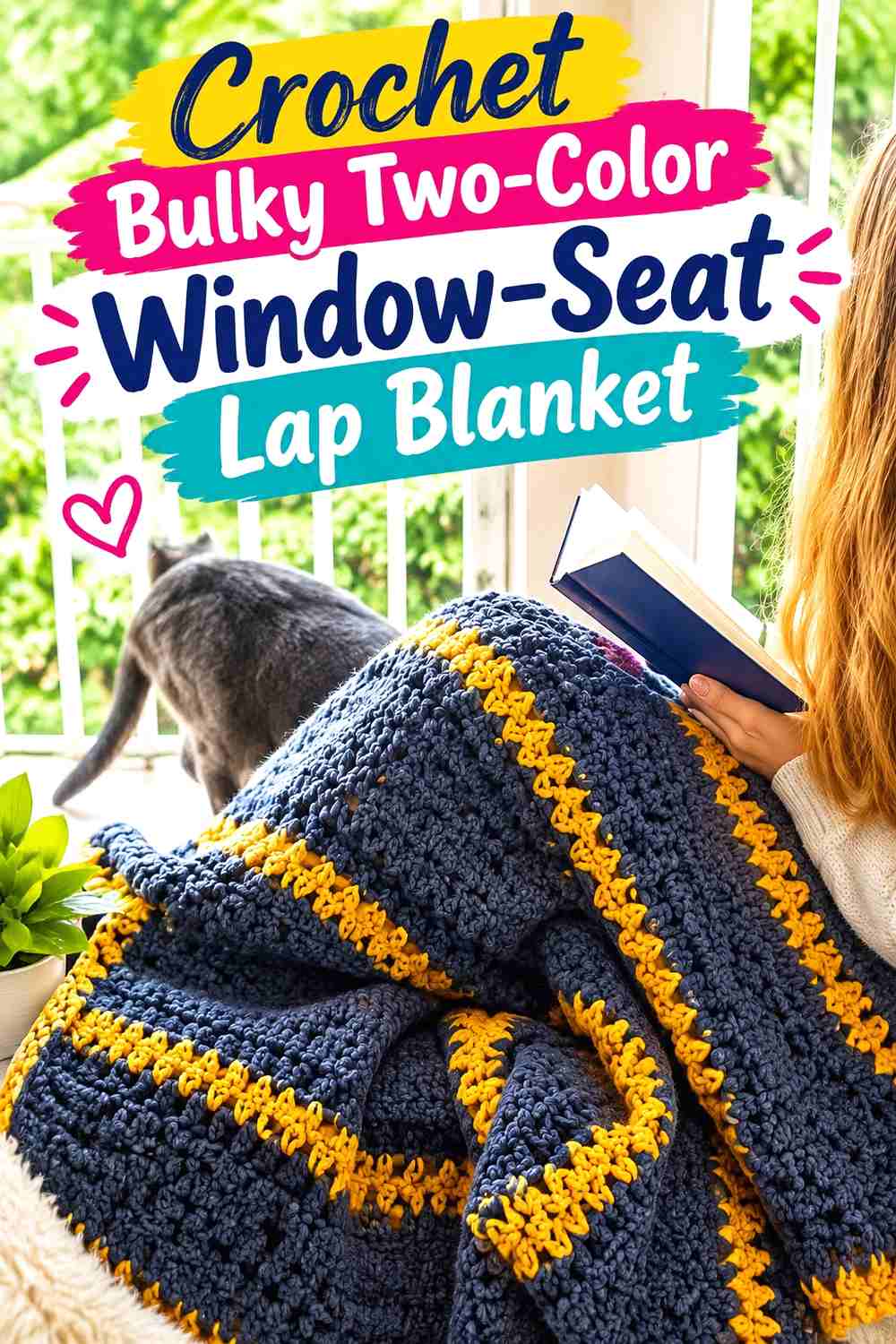
Katia Creates demonstrates a dedicated lap blanket using bulky yarn and a simple two-color approach, making this one of the most direct matches for a compact winter reading blanket.
The uncomplicated color plan keeps attention on texture and coverage instead of complicated motif placement. That can work especially well in a window nook where patterned cushions, curtains, books, and surrounding decor already provide plenty of visual detail.
Two Colors Can Define the Blanket Without Making It Busy
A limited palette gives you enough contrast to make the crochet visible while remaining easy to coordinate with the rest of the reading corner.
If you change the colors, consider the upholstery and cushions that will sit behind the blanket. High contrast creates a stronger graphic effect, while neighboring shades make the blanket feel quieter.
Bulky Fabric Needs a Fold-and-Store Check
A thick lap blanket may be compact while in use yet surprisingly bulky when folded.
Before increasing its size, think about where it will live between reading sessions. A wider version may be comfortable across the knees but inconvenient if the only storage space is a narrow basket or the corner of the seat.
Creator Credit: Katia Creates
2. Crochet Sea-Glass Texture Reading Lap Blanket
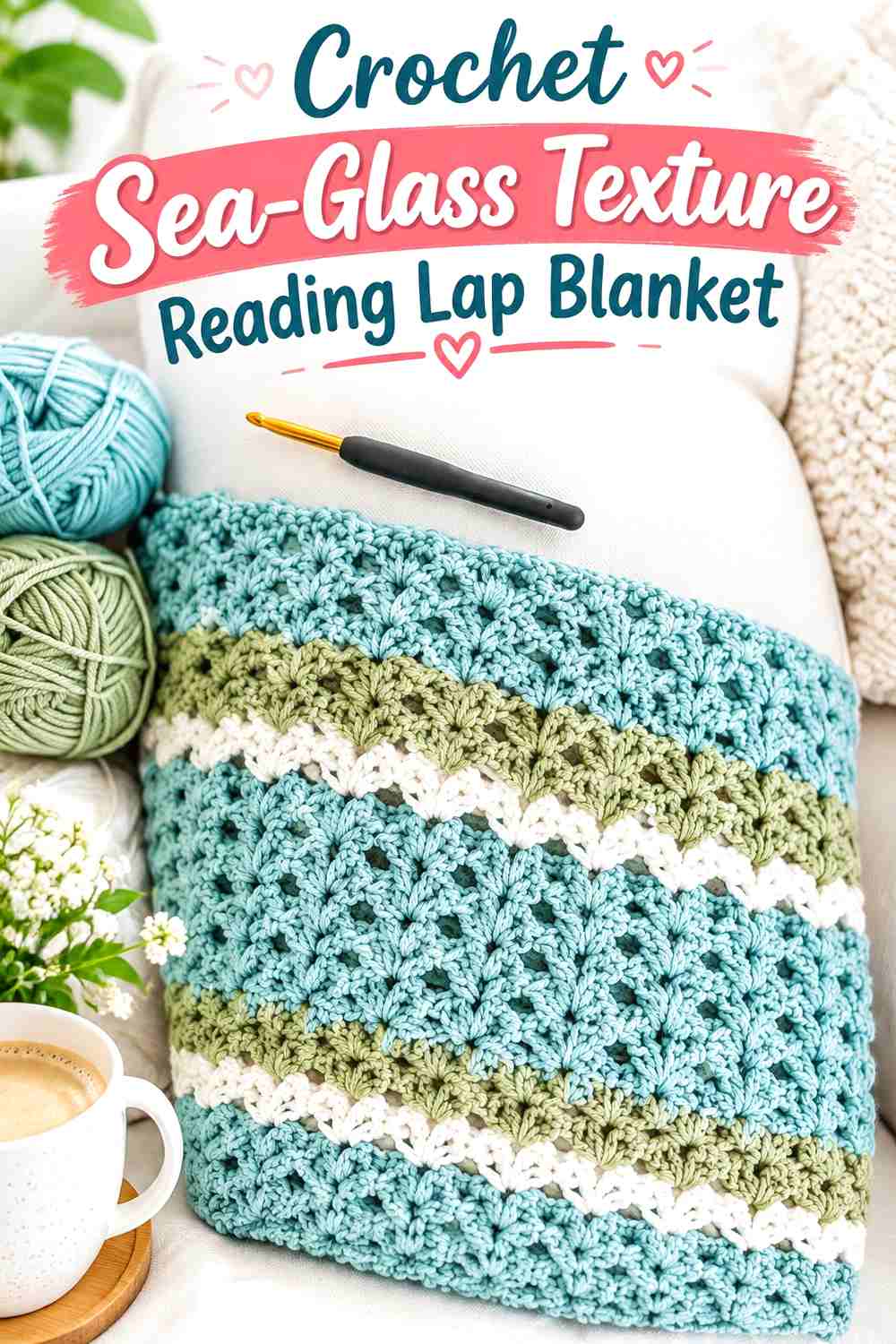
Daisy Cottage Designs provides a lap-blanket direction built around an attractive repeating stitch texture rather than motifs that need to be assembled later.
For a window seat, continuous fabric has a practical advantage: there are no motif joins to position against your legs or cushion edges, and you can evaluate the blanket’s overall drape as it grows.
A Gentle Texture Keeps the Surface Interesting
A repeating texture can add visual depth even when you use only a small group of colors.
This is useful if you want a reading blanket that feels decorative without becoming a dominant statement piece. Before choosing highly variegated yarn, consider whether the color changes will compete with the stitch definition you want to see.
Continuous Rows Make Length Easier to Evaluate
A one-piece blanket gives you repeated opportunities to lay the growing fabric over your legs and judge whether the proportions suit the nook.
Do not rely solely on how the piece looks flat on a table. The useful length is the one that reaches where you want it when your knees are bent in your normal reading position.
Creator Credit: Daisy Cottage Designs
3. Crochet Corner-to-Corner Suzette Lap Blanket
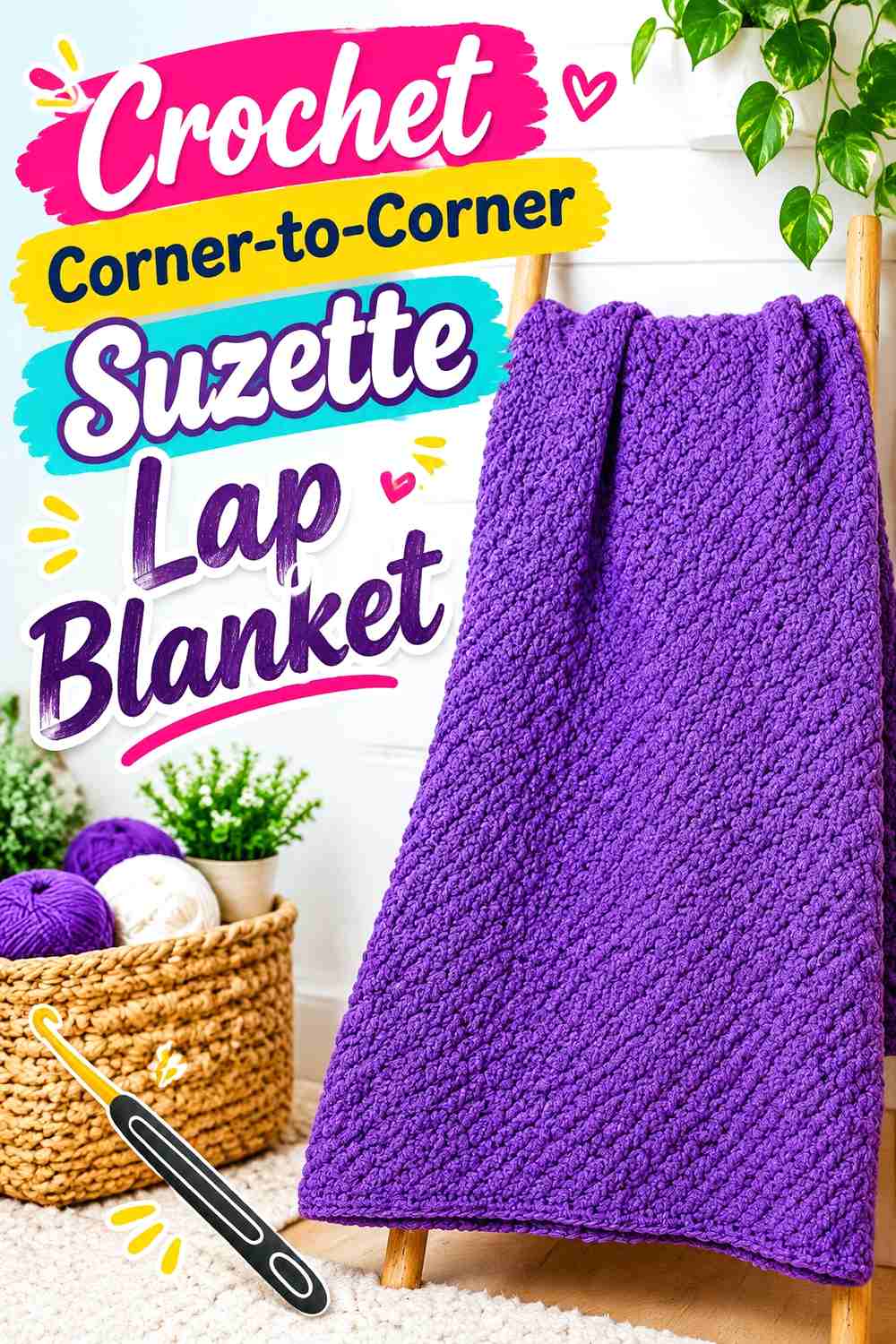
First The Coffee Crochet combines a corner-to-corner format with Suzette-stitch texture in a project specifically presented as a lapghan. The construction grows diagonally rather than beginning with the full blanket width.
That diagonal growth can be appealing if you enjoy seeing both dimensions change as the blanket develops.
Diagonal Construction Changes the Planning Rhythm
With a conventional row blanket, you establish the width first and then continue until the length is sufficient. Corner-to-corner construction asks you to think about the point where increasing should transition into maintaining or decreasing the shape.
Use the creator’s sizing guidance rather than guessing at that turning point, especially if you want to alter the original dimensions.
Textured Fabric Can Add Warmth Without Motif Seams
The Suzette-style surface creates texture across a continuous piece of fabric. That makes it worth considering if you want more visual depth than plain rows but do not want to assemble separate squares.
When substituting yarn, check that the texture remains flexible enough to settle naturally over your knees.
Creator Credit: First The Coffee Crochet
4. Crochet Paneled Shell-Stitch Window-Seat Lapghan
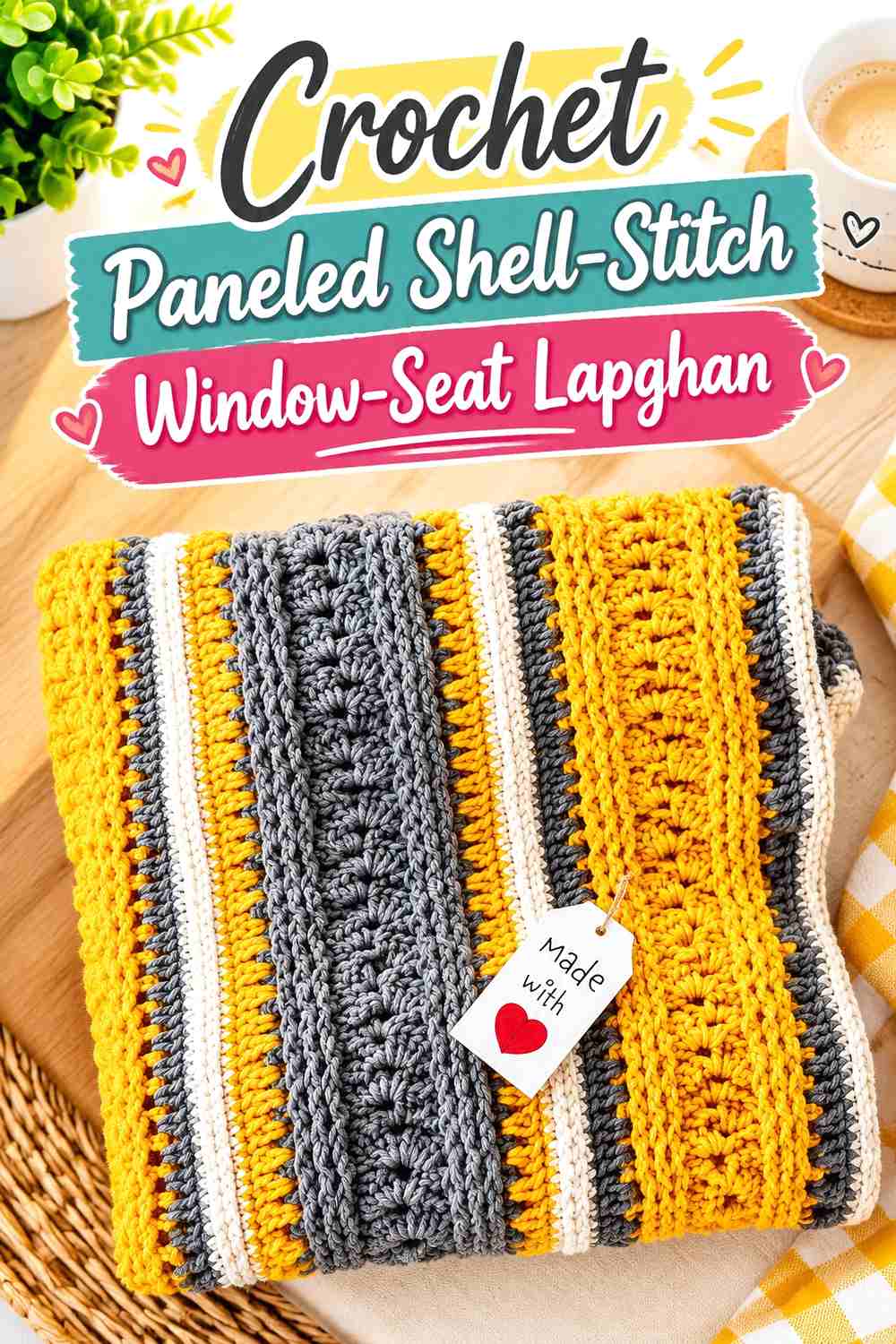
Yarnspirations’ lapghan tutorial uses shell-stitch fabric worked in individual panels that are joined during finishing.
That panel-based approach gives this blanket a different workflow from both continuous-row and motif-square projects. It can also make a larger-looking blanket project feel more portable while individual sections are being crocheted.
Narrow Panels Are Easier to Carry Between Reading Spots
If you often crochet away from home, working one panel at a time means you do not need to carry the full growing blanket everywhere.
The trade-off comes later: individual sections must relate to one another closely enough to join without one panel stretching or bunching against its neighbor.
Shell Fabric Needs Consistent Panel Length
Even when two panels begin with matching dimensions, variations in tension can make their finished lengths differ.
Compare the sections before final assembly. If one panel is noticeably different, it is better to identify the issue before the joining and border stages make adjustments harder.
Creator Credit: Yarnspirations
5. Crochet Self-Striping Breezy Lap Blanket
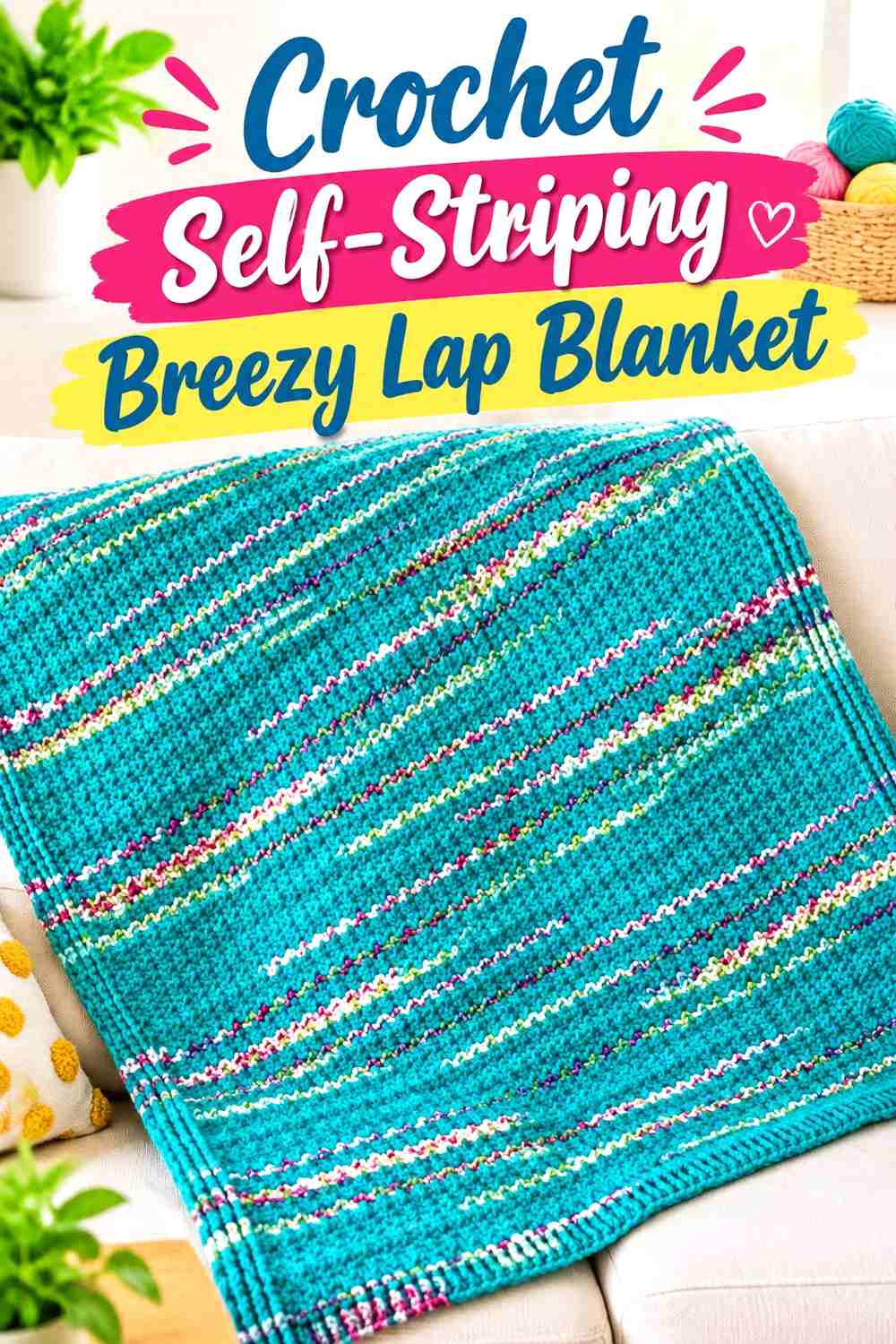
BonnieBayCrochet’s lapghan tutorial uses a lighter self-striping approach, offering a useful contrast to the dense, heavy winter blankets in this collection.
A lighter lapghan can be a good choice for a window nook that is sunny during the day but cool after sunset. Instead of creating maximum insulation, it gives you a manageable layer that is easy to pull on and fold away.
Self-Striping Yarn Handles Much of the Color Planning
Color-changing yarn can create variation without requiring repeated decisions about when to introduce another shade.
Before buying yarn, look at how long the color transitions are. A small lap blanket may display a self-striping sequence differently from a large afghan because fewer repeats fit across the finished surface.
Lighter Fabric Is Easier to Tuck Around the Legs
A softer, less bulky blanket can be tucked around the knees or along the sides of the body without producing a large mound of fabric.
That can be especially useful on a narrow window seat where you share the bench with cushions, a book stack, or a small tray.
Creator Credit: BonnieBayCrochet
6. Crochet Waffle-Texture Winter Lap Blanket
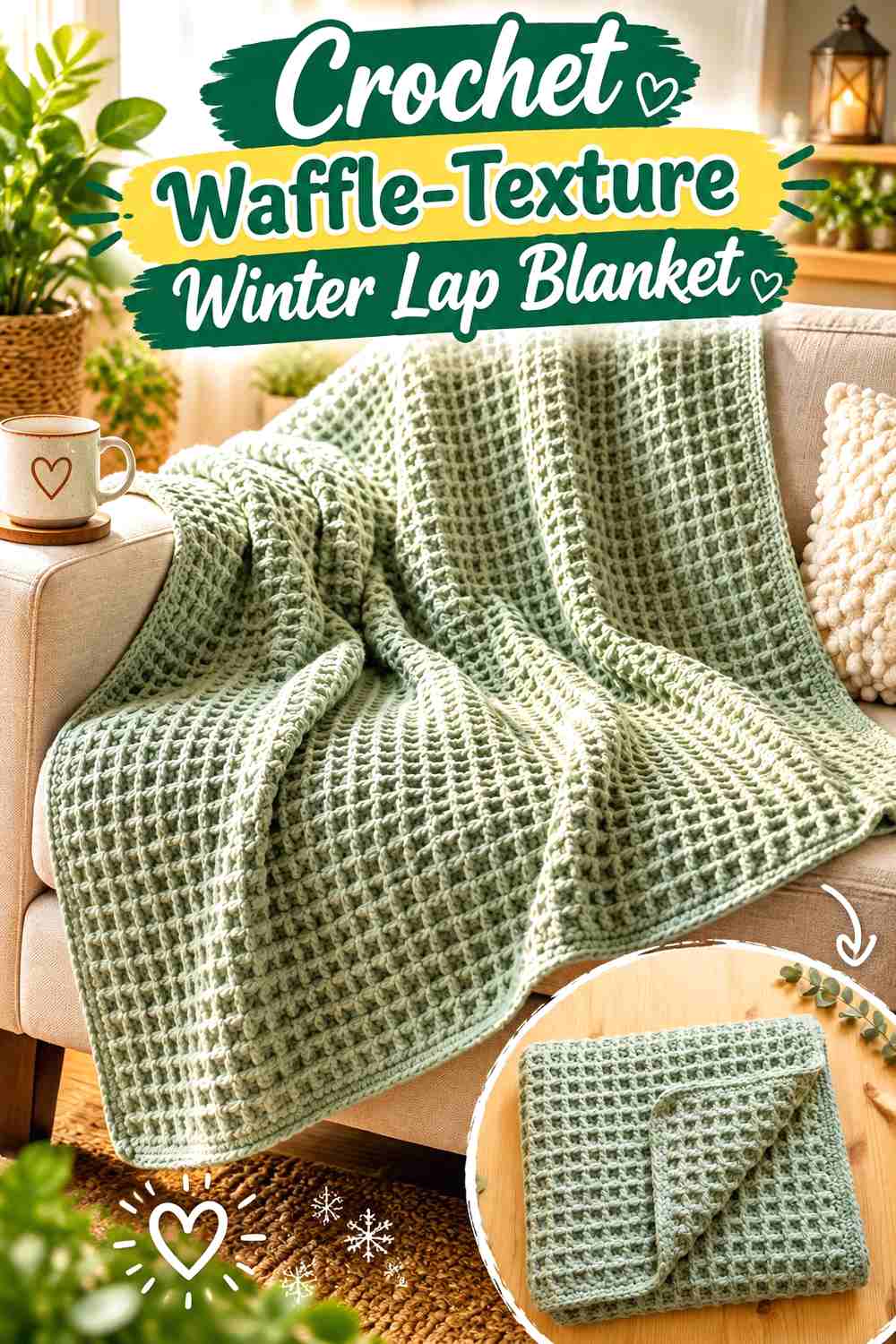
Littlejohn’s Yarn demonstrates waffle-stitch blanket construction and includes a lap-blanket sizing option among the project possibilities.
The pronounced grid-like texture gives this idea a very different surface from shells, granny squares, or ripples. It is a strong direction if you want the blanket itself to contribute texture to an otherwise simple reading nook.
Waffle Texture Creates a More Substantial Fabric
Raised texture can make a blanket feel fuller than a flatter stitch pattern made from similar materials.
That extra substance can be welcome beside a cold window, but consider finished weight before making the blanket much larger than you need. A lap blanket does not have to cover the entire seat to do its job.
Stitch Definition Matters More With a Deep Texture
A highly textured stitch is easier to appreciate when the yarn allows the raised sections and recesses to remain visible.
Very busy color changes can obscure that structure. If texture is your priority, a solid, heathered, or restrained color scheme may let the surface do more of the visual work.
Creator Credit: Littlejohn’s Yarn
7. Crochet Modular Granny-Square Reading Lap Blanket
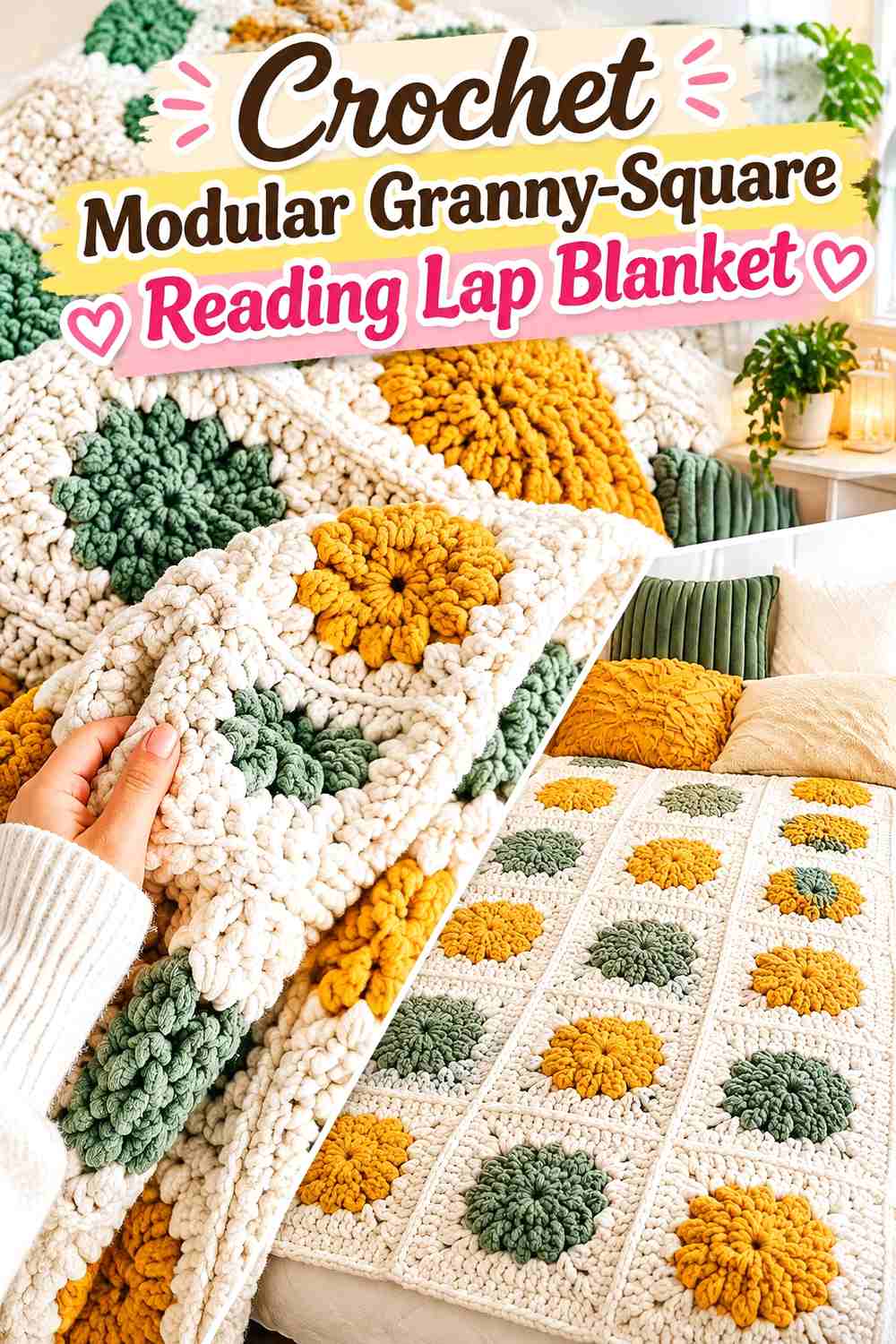
Danii’s Ways demonstrates a granny-square blanket assembled from individual motifs. The source project is larger than a typical window-seat lap blanket, so this is most useful as a modular construction route rather than an exact lapghan-size template.
For a compact nook, the advantage is that you can plan the blanket around a smaller motif grid after measuring and blocking your own squares.
Block One Motif Before Calculating the Grid
Do not plan the finished blanket from an unblocked square or from an assumed motif size.
Once a representative square is finished appropriately for the yarn, measure it and use that dimension to estimate how many motifs can fit across your desired lap-blanket width. Remember that joins and borders can affect the final span.
Modular Crochet Makes the Project Highly Portable
Individual granny squares take up very little space compared with carrying a nearly completed one-piece blanket.
That makes this option convenient if the blanket itself will become a winter reading project that moves between your window seat, sofa, commute, or craft group before final assembly.
Creator Credit: Danii’s Ways
8. Crochet Pointed Chevron Window-Seat Lap Blanket
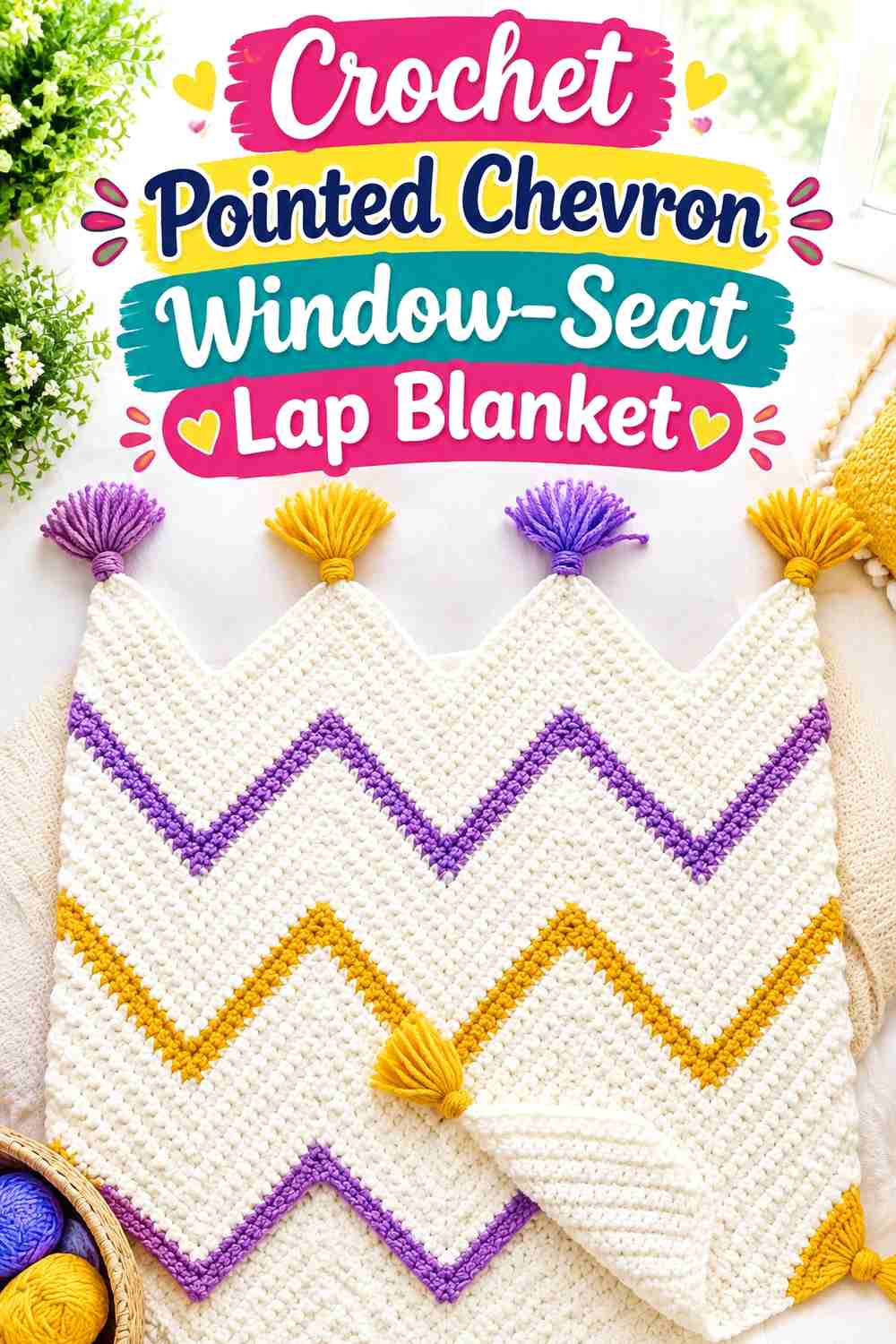
Daisy Farm Crafts uses a single-crochet chevron construction that creates a clear zigzag profile and striped visual rhythm.
The source blanket is not specifically limited to a small window-seat lap size, so treat the tutorial as a chevron construction reference and confirm how the creator handles sizing before adapting the width.
Chevron Points Change the Visual Edge
A chevron blanket does not have the straight lower edge of a simple rectangular throw. The peaks and valleys become part of the silhouette.
That can look particularly attractive draped over the side of a window bench, but decide whether you enjoy the pointed edge when the blanket is actually resting across your feet and legs.
Stripes Emphasize Every Direction Change
Chevron shaping becomes especially visible when color changes follow the zigzag.
If your reading nook already contains plaid, floral, or strongly patterned textiles, a quieter color sequence may keep the overall space from feeling crowded.
Creator Credit: Daisy Farm Crafts
9. Crochet C2C Log-Cabin Reading Lap Blanket
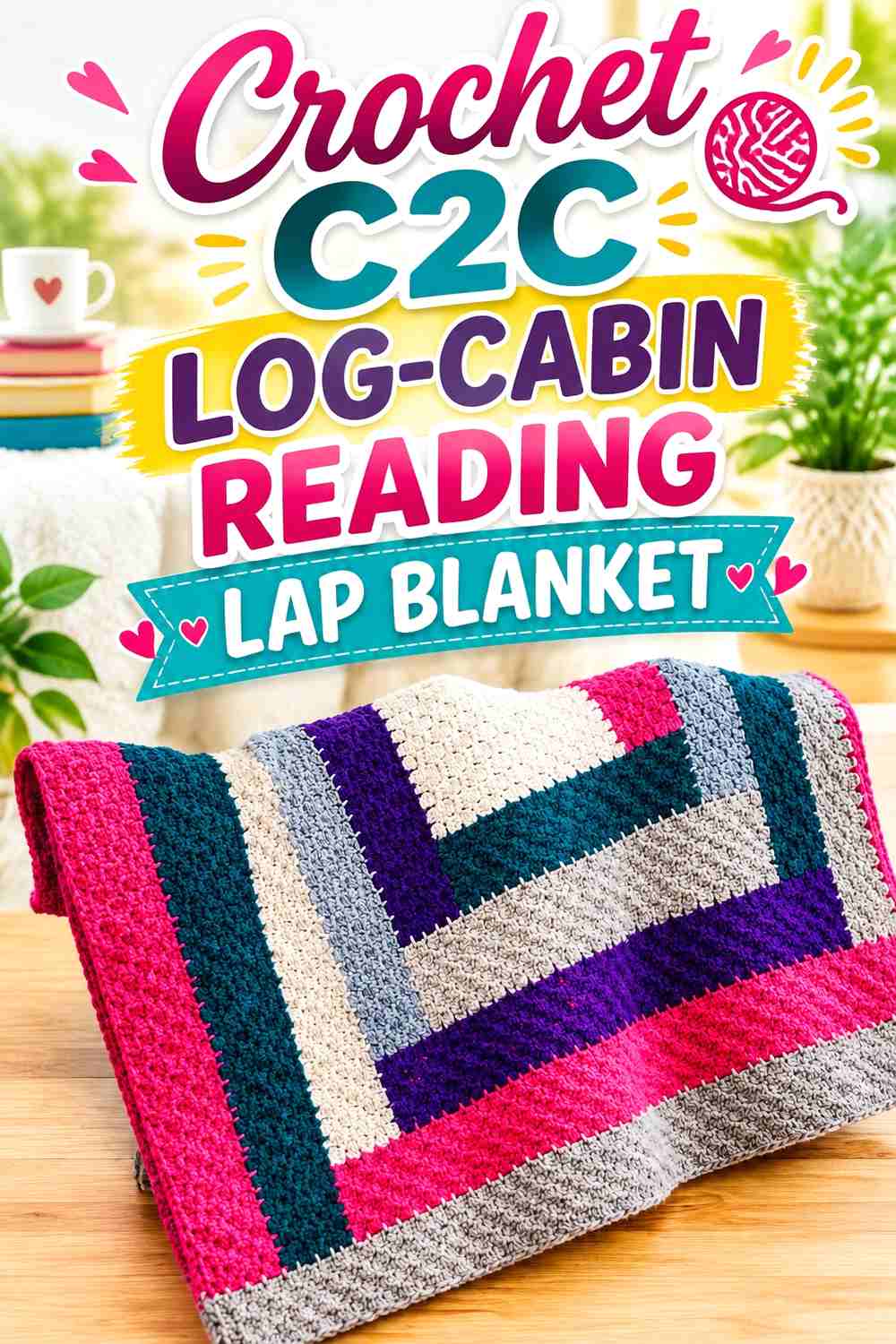
The Crochet Crowd combines corner-to-corner crochet with a log-cabin-style arrangement, building a geometric blanket from a center section and surrounding rectangular areas.
This offers more visual structure than a conventional diagonal C2C blanket and gives you opportunities to use several colors in clearly defined blocks.
Block Placement Becomes Part of the Design
With a log-cabin layout, color is not merely repeated in horizontal stripes. Each new section changes the apparent balance of the blanket.
Sketching a simple color map before you begin can help you avoid putting all of the darkest or brightest sections on one side unless that asymmetry is deliberate.
C2C Rectangles Create a Different Surface Direction
Because the sections are worked with a corner-to-corner method, the texture within each block can run differently from the overall rectangular outline.
That directional change is part of the appeal, so use yarn with enough stitch visibility for the construction to remain noticeable.
Creator Credit: The Crochet Crowd
10. Crochet Faded Ripple Winter Lap Blanket
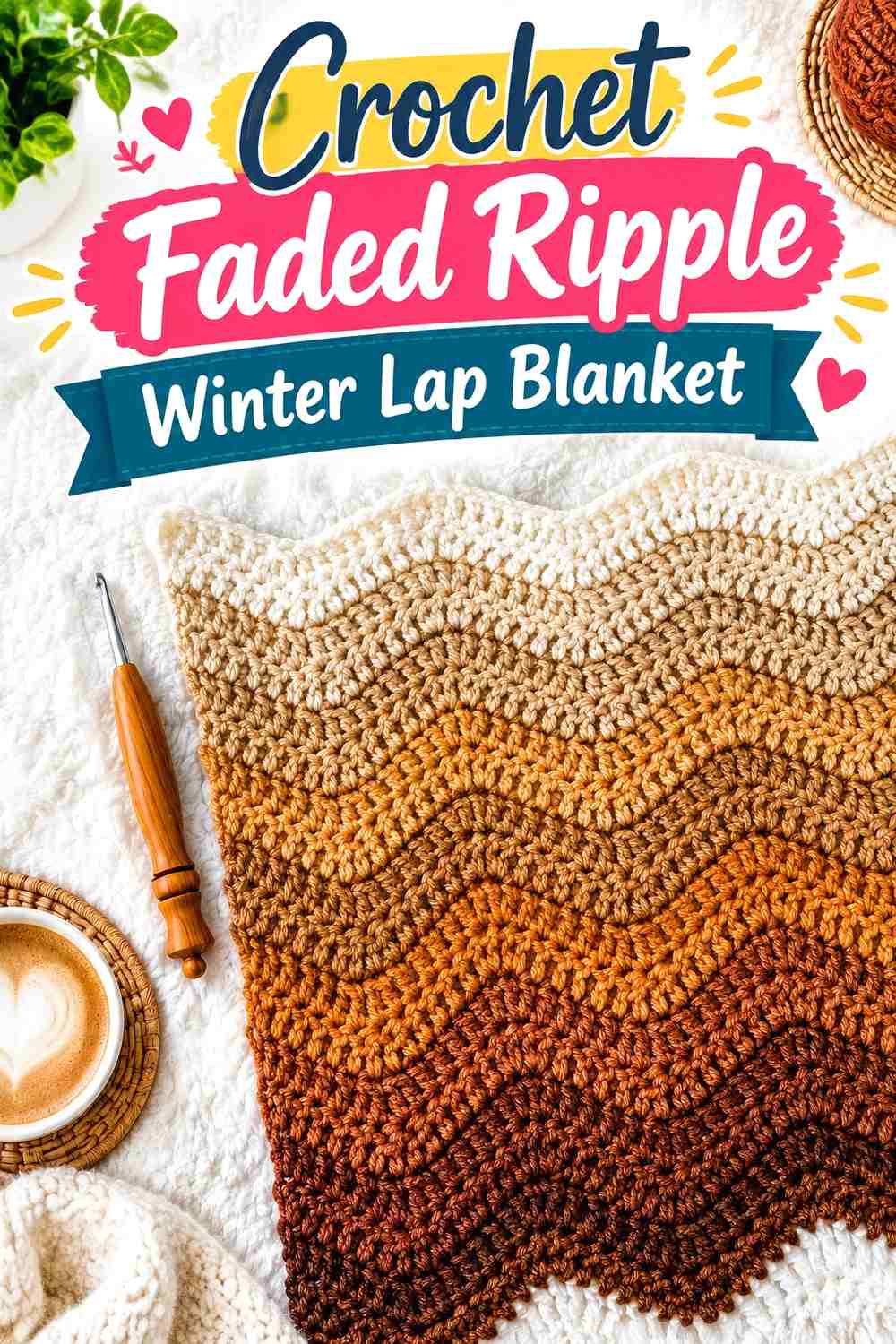
TL Yarn Crafts’ ripple blanket tutorial uses broad waves and planned color transitions to create a flowing striped surface. The demonstrated afghan is larger than a compact lap blanket, but the accompanying project information discusses adjusting the construction.
For a window seat, this concept works well when you want horizontal movement without the sharper points of a traditional chevron.
Broad Ripples Feel Softer Than Sharp Zigzags
A ripple creates peaks and valleys, but the overall effect can appear more fluid than a sharply angular chevron.
That makes this a useful middle ground for a nook where you want visible pattern without a strongly geometric patchwork look.
A Color Fade Can Make a Small Blanket Feel Cohesive
Gradual color progression works particularly well when the blanket is often folded or partially tucked around the legs because neighboring shades remain visually related.
If you reduce the blanket size, plan how much of the original color progression will still appear. A shorter lap blanket may not have room for every transition used in a larger afghan.
Creator Credit: TL Yarn Crafts
11. Crochet Chenille Reading-Nook Lap Blanket
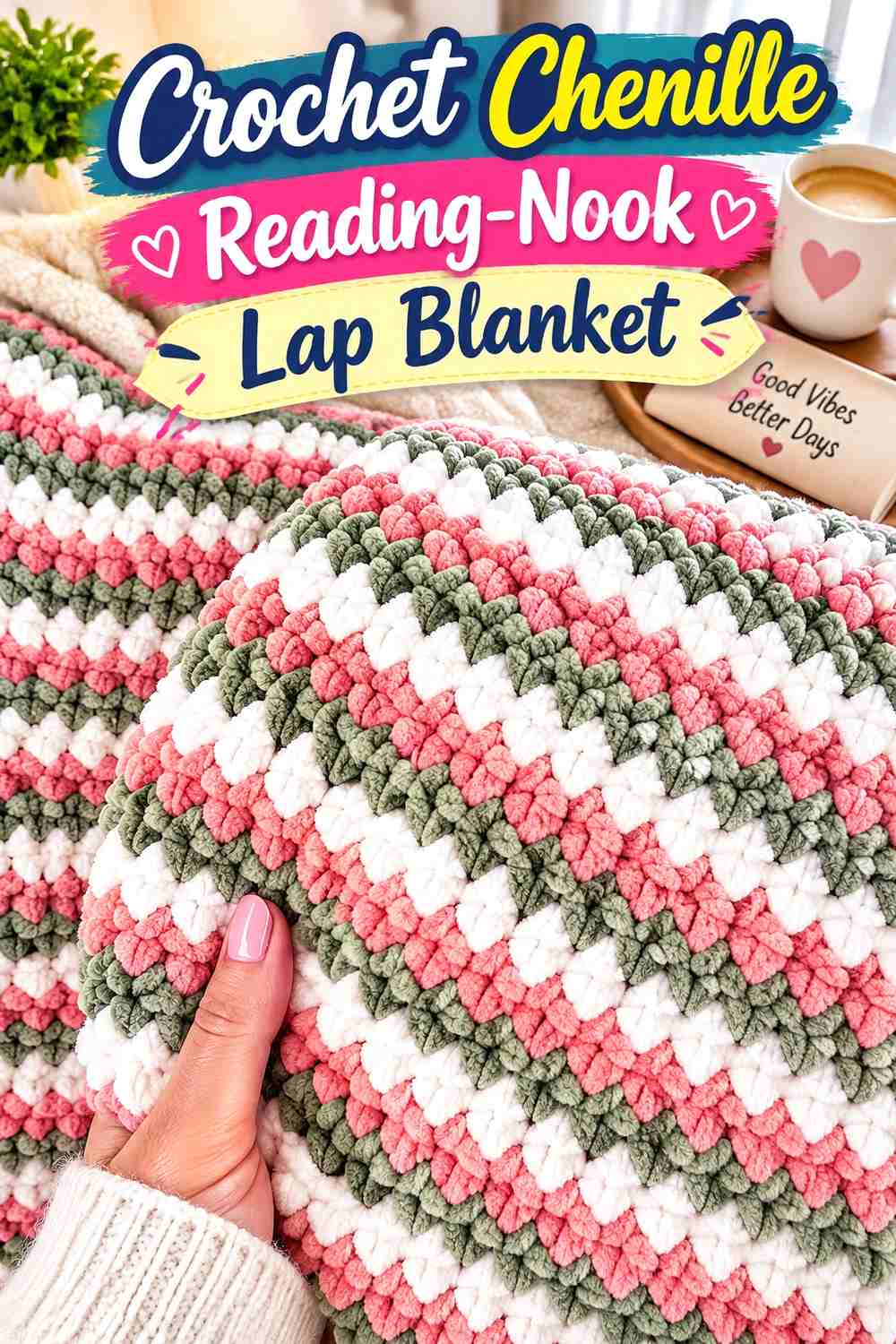
Hooked by Robin demonstrates a blanket stitch specifically with chenille yarn, creating a plush option for readers who prefer a soft, velvety surface.
Chenille gives this project a noticeably different hand from crisp cotton-like motifs or highly defined textured stitches. For a winter nook, its strongest appeal is tactile softness rather than intricate stitch visibility.
Chenille Can Make a Small Blanket Feel Substantial
Because plush yarn has considerable visual and physical volume, you may not need an oversized blanket to create a cozy effect.
A compact version can be easier to manage on a narrow seat while still providing a thick layer across the legs.
Check the Fabric Instead of Expecting Crisp Stitch Definition
Fuzzy yarn can soften the appearance of individual stitches, so designs that depend on very precise texture may not show as clearly.
That is not necessarily a drawback. In this project, the appeal comes from the plush overall surface, making it a good choice when touch matters more than intricate visual detail.
Creator Credit: Hooked by Robin
12. Crochet Winterberry Textured Lap Blanket
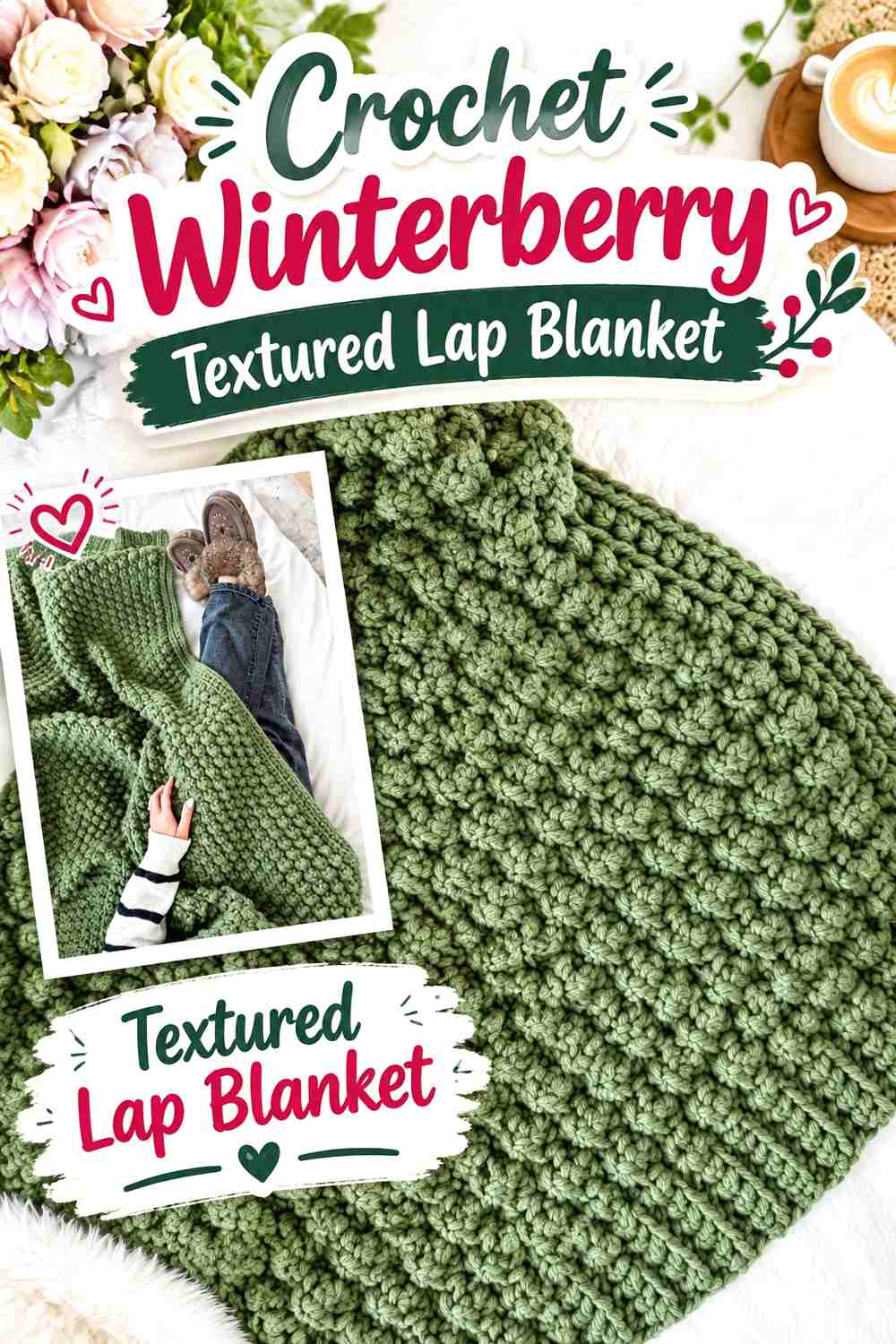
MJ’s Off The Hook Designs’ Winterberry blanket is offered in multiple size options, including a lap size, and uses a textured construction with a border incorporated into the design.
That built-in-edge concept is particularly useful for readers who like a finished perimeter but would rather not treat the border as a completely separate design decision at the end.
An Integrated Border Keeps the Edge Visually Connected
When edging is part of the blanket’s construction, the perimeter can feel more unified with the central fabric.
For a lap blanket that will frequently be folded over a bench or basket, a well-defined edge also gives the folded blanket a tidy outline.
Super-Bulky Yarn Can Reduce the Need for Extra Size
A substantial yarn can create a lot of coverage and texture within a relatively compact blanket.
Before enlarging a lap-size version, consider whether the added dimensions are actually useful. More fabric means more weight and more volume to manage in the nook when the blanket is not in use.
Creator Credit: MJ’s Off The Hook Designs
13. Crochet Bonfire Striped Lap Blanket with Fringe
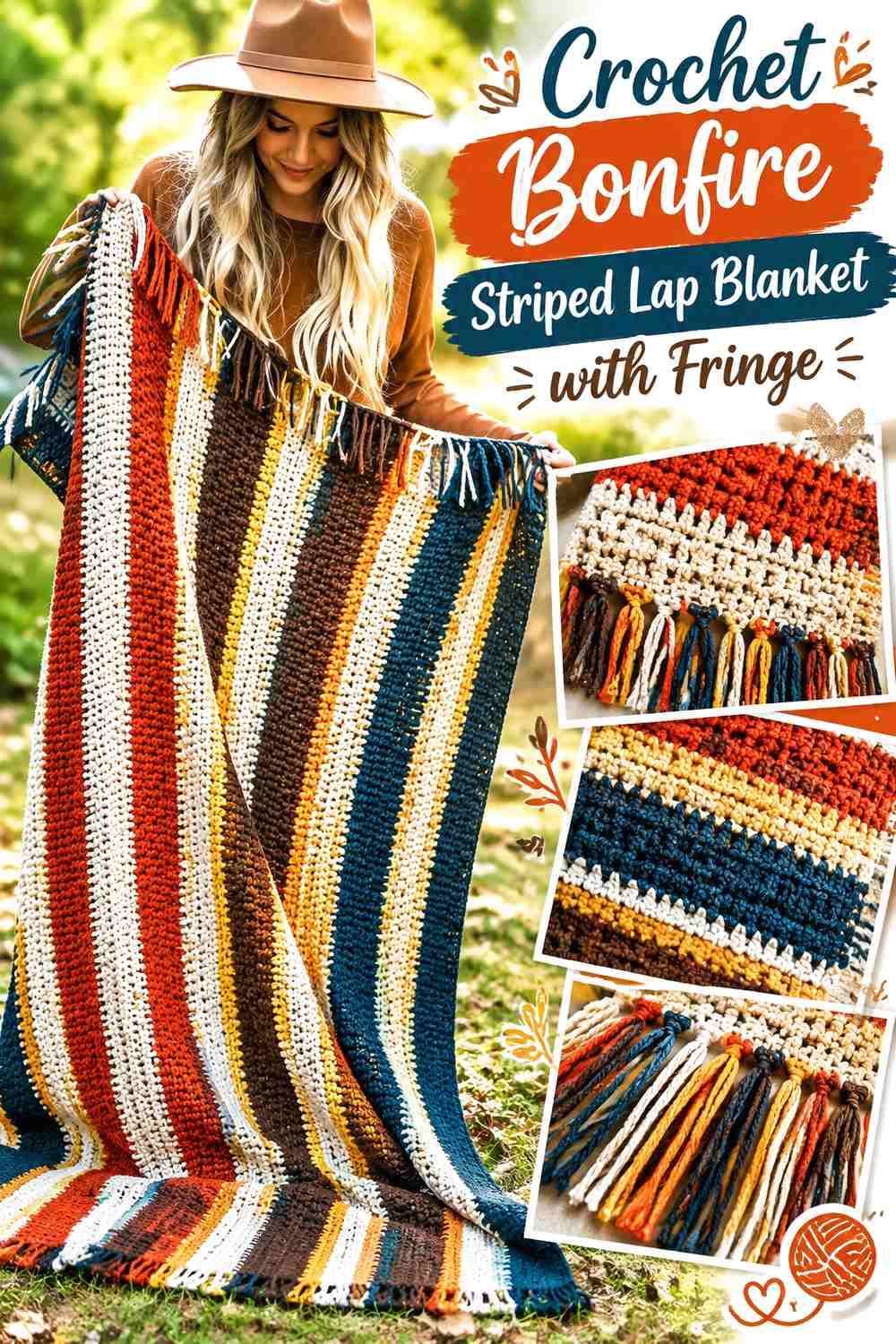
The Turtle Trunk’s Bonfire Blanket combines alternating textured stripes with a fringed finish. The original project is presented as a larger blanket, so use it as a design and construction reference if you want to translate the look into a smaller lap format.
Its alternating surface patterns make it a good option when you want more visual variation than a blanket built from one repeated texture.
Alternating Textures Break Up Long Rows
Switching between different surface effects can make a straightforward rectangular blanket feel more layered.
For a smaller lap version, consider how many complete texture repeats you can accommodate before deciding on the final length. Preserving the visual rhythm is more important than squeezing every element from a larger throw into a reduced space.
Fringe Needs Enough Clearance Below the Seat
Fringe reinforces the relaxed fireside character of the design, but a raised window bench can leave tassels hanging freely toward the floor.
Check the finished placement before deciding on fringe length. In a tight nook, shorter fringe—or a clean edge inspired by the same blanket—may be easier to live with.
Creator Credit: The Turtle Trunk
14. Crochet Mosaic Window-Seat Lap Blanket
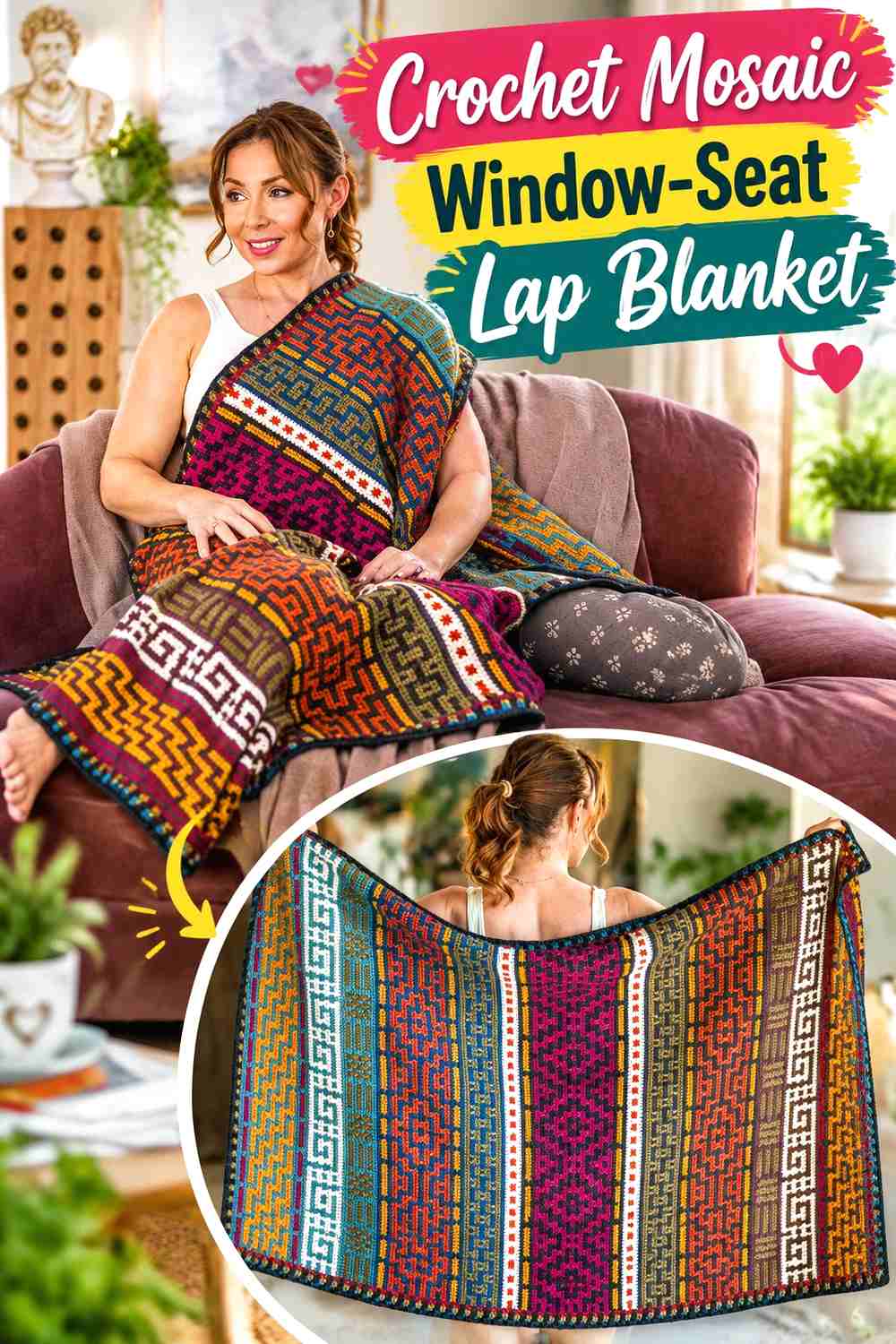
ExpressionFiberArts demonstrates a mosaic crochet shawl-and-blanket hybrid that can serve as inspiration for a richly patterned lap blanket. This source is not presented specifically as a small window-seat lapghan, so treat it as a mosaic construction and layout reference rather than an exact sizing pattern for this use.
Mosaic crochet brings a sharper graphic character to the collection and is especially effective when you want the folded blanket to double as a decorative accent in the nook.
High-Contrast Color Makes the Mosaic More Visible
Mosaic designs rely heavily on the relationship between their colors. If two shades are very close in value, some of the graphic pattern may become less distinct.
You do not need the brightest possible combination, though. A dark neutral paired with a lighter muted shade can create clear pattern definition without overwhelming a calm reading space.
Pattern Density Deserves a Drape Test
A strongly patterned fabric can also become structurally substantial depending on the yarn and construction.
Before committing to a full lap blanket, make a useful-size sample and bend or fold it as you would on the window seat. The ideal result should show the motif clearly while still draping comfortably over your legs.
Creator Credit: ExpressionFiberArts
15. Crochet Classic Log-Cabin Lap Blanket
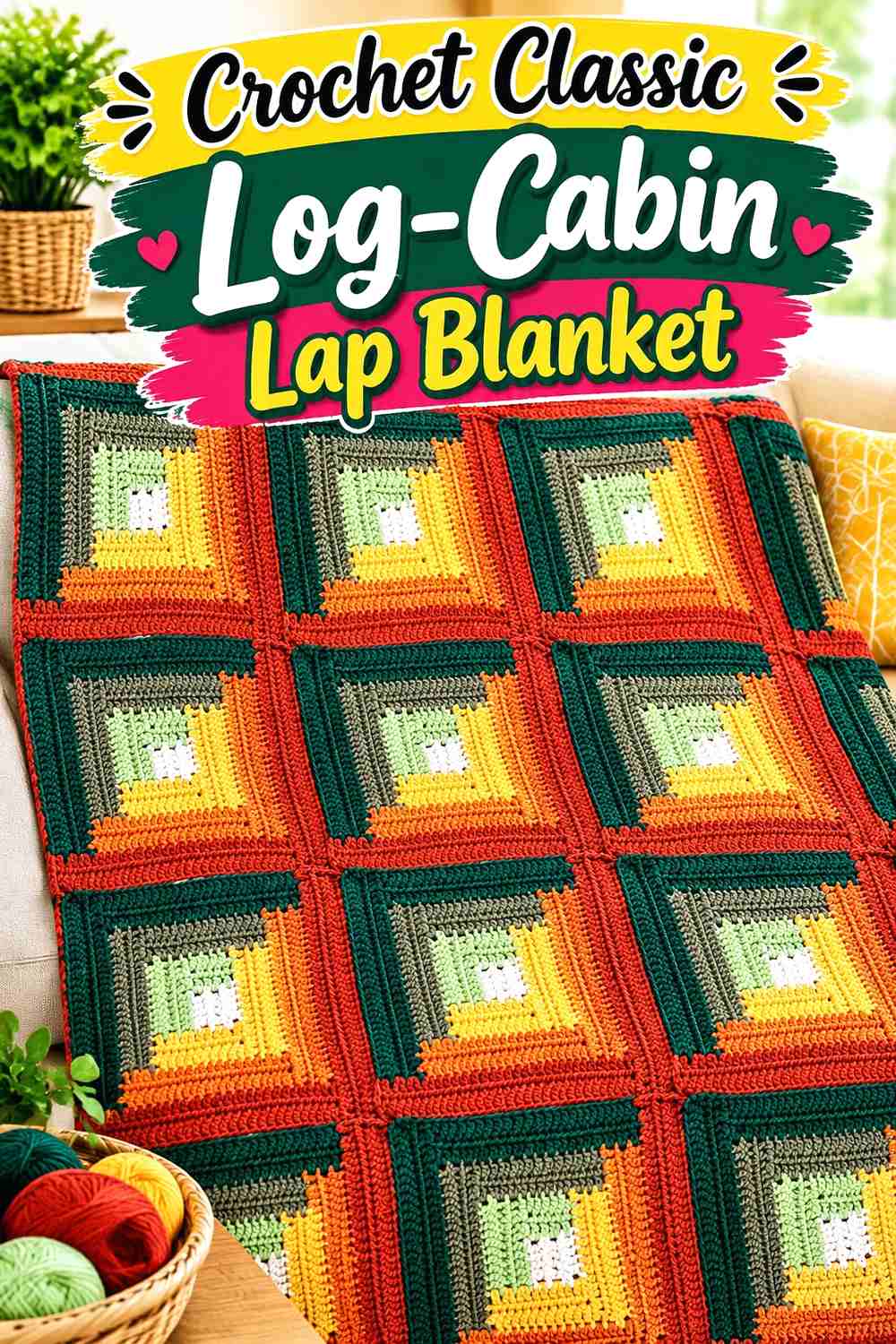
Fiber Spider demonstrates a classic crochet log-cabin blanket that expands outward in successive sections around the earlier fabric.
Unlike the C2C log-cabin version earlier in the list, this approach emphasizes the traditional block-building appearance rather than diagonal corner-to-corner rectangles.
Expanding Sections Make Color Placement Highly Visible
Each added area becomes part of the blanket’s larger geometry, so color placement can influence whether the design feels balanced, deliberately asymmetric, bold, or quiet.
Arrange yarn colors before beginning rather than choosing each new section only when you reach it. Even a loose plan can prevent an accidental concentration of dark or bright color.
Stop Based on Useful Coverage, Not Maximum Size
An expanding blanket invites you to keep adding sections, but a window-seat version benefits from a clear stopping point.
Periodically place the growing blanket over your lap and compare it with the space available. Once it provides the coverage you want, additional size may add more bulk than comfort.
Creator Credit: Fiber Spider
16. Crochet Chunky Soft-Drape Reading Lap Blanket
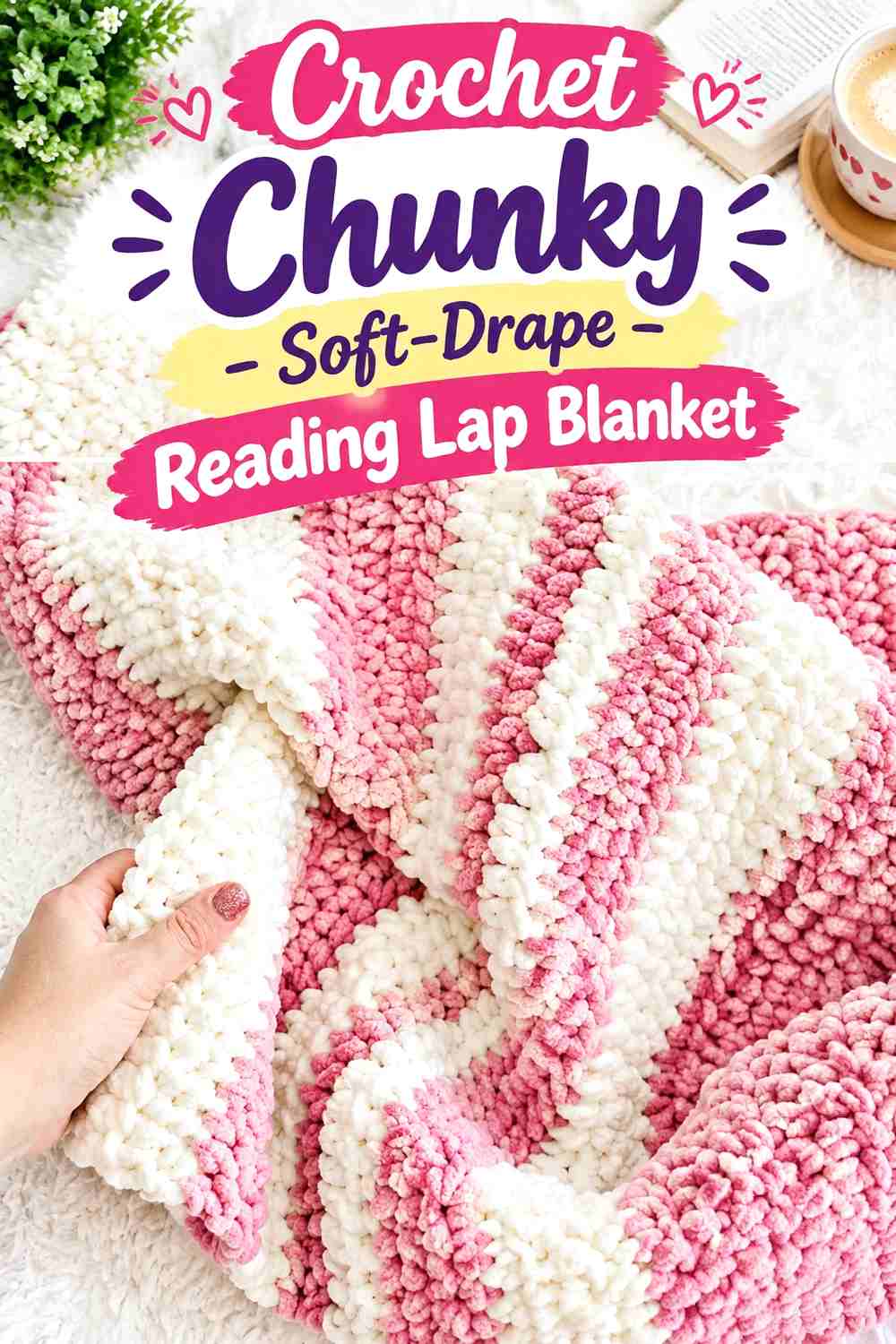
Bella Coco demonstrates a fast-growing blanket construction using thick, soft yarn, providing another useful route for a winter lap blanket when you want uncomplicated fabric rather than motifs or complex color layouts.
The source tutorial is a general blanket project rather than a dedicated window-seat lapghan, so compare the creator’s sizing guidance with your own nook measurements before adapting the dimensions.
Simple Fabric Lets the Yarn Carry the Design
When the construction is visually straightforward, the yarn’s texture and color become more noticeable.
A soft neutral can blend into a quiet reading corner, while a saturated shade can make the folded blanket the main accent on the window seat without requiring a complicated stitch pattern.
Chunky Does Not Need to Mean Oversized
A thick blanket already occupies more physical space than a lightweight one. Keeping the dimensions focused on the lap can preserve the cozy effect without crowding cushions or creating a large bundle to store.
Before making it wider, sit with a similarly sized blanket and decide whether additional side coverage would actually improve comfort.
Creator Credit: Bella Coco
Which Crochet Lap Blanket Style Fits Your Window Seat?
| If you want… | Consider… |
|---|---|
| A straightforward lap-size winter blanket | #1, #3, #5, or #12 |
| Strong raised texture | #6 or #12 |
| A project that travels in smaller pieces | #4 or #7 |
| Soft stripes without separate motifs | #5 or #10 |
| A sharp zigzag edge | #8 |
| Geometric block construction | #9 or #15 |
| Plush chenille softness | #11 |
| Alternating texture plus fringe | #13 |
| A bold graphic surface | #14 |
| Thick, uncomplicated fabric | #16 |
| Easy color customization | #1, #7, #9, or #15 |
For a narrow window seat, the lighter self-striping lapghan or a carefully sized one-piece blanket can minimize excess fabric. If the nook is particularly cold, waffle texture, super-bulky fabric, chenille, or another dense construction can give the blanket more physical presence without requiring bedspread dimensions.
Modular projects solve a different problem. Granny squares and paneled construction are convenient when you want to crochet the blanket away from home or avoid holding the full weight of the project while working. Log-cabin layouts offer similar visual variety but grow as a connected piece.
If the blanket will remain on display all winter, consider what it looks like folded as well as spread across your lap. Ripples, chevrons, mosaic motifs, textured stripes, and log-cabin blocks can all become part of the window-seat decor between reading sessions.
Conclusion
For a compact blanket that is already closely aligned with lap use, start with the bulky two-color blanket, corner-to-corner Suzette lapghan, self-striping lapghan, or Winterberry lap-size option. They reduce the amount of resizing you need to plan.
If texture is the main attraction, the waffle blanket, chenille version, and Winterberry design give three very different interpretations of cozy fabric. Readers who enjoy color placement and assembling visual layouts may prefer granny squares, either log-cabin construction, the faded ripple, or mosaic crochet.
The paneled shell design and modular granny-square blanket are particularly useful when portability during the making process matters. For a narrow reading nook, the lighter self-striping option may be easier to fold and tuck away than a very bulky throw.
Whichever style you choose, measure the window seat and your preferred seated coverage before increasing or reducing a tutorial. Check your actual fabric for drape and weight, and use the original creator tutorial for the exact construction, sizing method, materials, borders, joins, and finishing details.
Frequently Asked Questions
How big should a crochet lap blanket be for a window seat?
There is no single correct size because window seats and reading positions vary. Sit in the nook and measure the area you actually want covered, then compare that with the tutorial’s finished dimensions or sizing method. Include enough width for the blanket to settle around your legs without creating unnecessary piles of fabric beside you.
Is a chunky crochet blanket better for a cold window nook?
Chunky fabric can provide substantial coverage, but warmth also depends on stitch density, fiber, open spaces, garment layers, and blanket size. A thick blanket may also become heavier and more difficult to store, so consider both warmth and handling.
Are granny-square blankets warm enough for winter reading?
They can be useful winter layers, but traditional granny-style motifs may contain more open spaces than dense waffle, chenille, or tightly textured fabric. Yarn choice, motif construction, joins, borders, and whatever you wear underneath all affect the final experience.
Should I add fringe to a window-seat lap blanket?
Fringe can work well when there is enough clearance around the seat. If tassels will become trapped between cushions, drag on the floor, or constantly tangle around your feet, a simpler finished edge may be more practical.
Is a one-piece blanket or motif blanket better for a lapghan?
A one-piece blanket avoids final motif assembly and makes it easy to evaluate the overall fabric as you work. Motif blankets are more portable during construction and give you greater control over color placement. The better option depends on which part of the process you prefer.
How do I keep a crochet lap blanket from becoming too heavy?
Avoid increasing the dimensions automatically, especially when using dense stitches, chenille, or bulky yarn. Make a swatch, evaluate the fabric weight in your hands, and keep the finished dimensions focused on the coverage you actually need while seated.
Should I block a crochet lap blanket?
Follow the recommendations appropriate to the yarn and the original project. Blocking can be particularly useful when you need motifs or panels to reach consistent dimensions before joining. Always consider the fiber’s care instructions rather than treating every yarn the same way.