November layering asks more from a cardigan than simply looking oversized. The most useful designs leave enough room for another layer underneath without turning the shoulders, armholes, or sleeves into unnecessary bulk.
Construction makes a major difference. A chunky drop-shoulder cardigan creates volume differently from a granny hexagon, while a long duster distributes its weight differently from a cropped cardigan with oversized sleeves. Textured stitches, pockets, ribbing, and colorwork also affect how substantial the finished garment feels.
These 15 crochet cardigan tutorials offer distinct approaches to relaxed November layering. Some emphasize quick chunky fabric, others favor drape or length, and several use motif, mosaic, or patchwork construction for a more decorative outer layer.
Quick List
- Crochet Chunky Drop-Shoulder Oversized Cardigan
- Crochet Clean-Panel Unisex Oversized Cardigan
- Crochet Relaxed Any-Size Oversized Cardigan
- Crochet Long Slouchy Pocket Cardigan
- Crochet DK Everyday Oversized Cardigan
- Crochet Airy Mesh Drop-Sleeve Cardigan
- Crochet Mini-Bean Textured Oversized Cardigan
- Crochet Mosaic-Hem Oversized Cardigan
- Crochet Cropped Hexagon Oversized-Sleeve Cardigan
- Crochet Super-Chunky Hexagon Cardigan
- Crochet Bulky Drop-Shoulder Pocket Cardigan
- Crochet Suzette-Stitch Oversized Pocket Cardigan
- Crochet Bean-Stitch Patchwork Oversized Cardigan
- Crochet Longline Duster Oversized Cardigan
- Crochet Simple Open-Front Oversized Cardigan
Decide How Much Oversized Ease You Actually Want
“Oversized” can describe several different things. A cardigan may have extra width through the body, a dropped shoulder, wide sleeves, extra length, or several of those features at once.
For November layering, compare the finished garment measurements with your body measurements and with the clothes you expect to wear underneath. A cardigan that fits beautifully over a thin T-shirt may feel very different over a sweatshirt or substantial knit top.
Positive ease is simply the difference between the body measurement and the finished garment measurement. As a planning example, a 48-inch finished bust worn over a 40-inch body measurement gives 8 inches of total positive ease. That does not mean 8 inches is automatically right for everyone; it simply gives you a concrete way to compare two sizes.
Also check the lower body. If a long cardigan reaches the hips, the finished width has to accommodate that area comfortably rather than being selected from the bust measurement alone.
Yarn Weight Changes More Than Warmth
Bulky and super-bulky yarn can create dramatic oversized fabric quickly, but it also adds physical and visual volume. A very wide cardigan in thick yarn may feel more substantial than a similarly oversized garment made with DK or lighter worsted yarn.
Drape matters just as much. A relaxed cardigan usually looks different when the fabric hangs softly instead of holding itself away from the body.
Before substituting yarn, make a useful-size swatch and assess:
- stitch dimensions and gauge;
- fabric thickness;
- flexibility when folded;
- stretch after handling;
- stitch definition;
- how much weight the fabric develops as it gets larger.
A yarn that looks appealing in the skein is not automatically a good substitute for an oversized garment. Follow each creator’s gauge and material guidance when recreating the tutorial.
Check Armholes, Sleeves, and Length Before Sizing Up
Sizing up is not always the best way to create a more oversized cardigan. It can also enlarge the armhole, neckline, shoulder placement, and sleeve circumference in ways you did not intend.
If the pattern is already designed with substantial ease, first look at its finished measurements and intended fit. You may get the layered look you want in your normal pattern size.
Sleeve volume deserves particular attention. A roomy sleeve can be comfortable over thin tops, while a more generous armhole may be useful if you regularly layer over shirts or lightweight sweaters. At the same time, very bulky sleeves can become difficult to fit beneath a coat.
Length creates another trade-off. A longline cardigan offers more coverage, but it also uses more fabric and places more garment weight below the shoulders. Cropped oversized cardigans keep the volume concentrated higher on the body and can pair more easily with high-waisted trousers or skirts.
1. Crochet Chunky Drop-Shoulder Oversized Cardigan
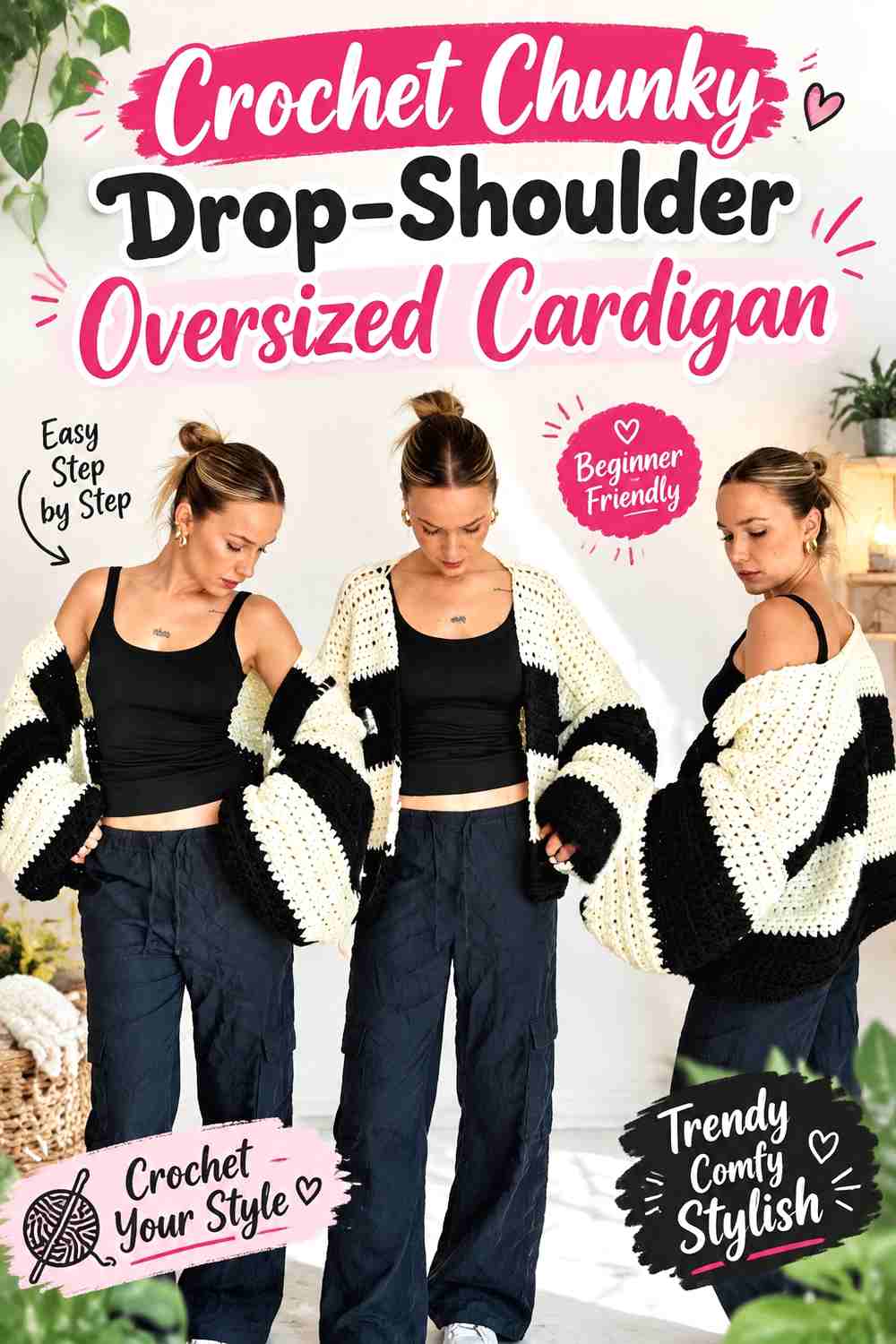
Marta Antonia’s tutorial focuses specifically on a chunky oversized cardigan intended as a cozy layering piece. The source uses thick yarn and a large hook, creating a substantially different November layer from the finer-gauge cardigans later in this collection.
This direction makes sense when you want the cardigan itself to supply much of the visual texture in an outfit rather than acting as a thin extra layer.
Chunky Fabric Makes Every Inch of Ease More Visible
Extra width in thick crochet creates more noticeable volume than the same amount of width in a thin, draping fabric.
Before deciding that bigger will automatically look cozier, compare the tutorial’s intended proportions with your own preferred layering fit. The goal may be roomy shoulders and body space rather than simply maximizing circumference.
Think About the Coat You Will Wear Over It
A chunky cardigan can function almost like light outerwear on mild days, but November weather may still require another coat.
If you expect to wear the cardigan beneath structured outerwear, consider whether its sleeve and shoulder bulk will fit comfortably inside that coat. This practical issue is easy to overlook when evaluating the cardigan by itself.
Creator Credit: Marta Antonia
2. Crochet Clean-Panel Unisex Oversized Cardigan
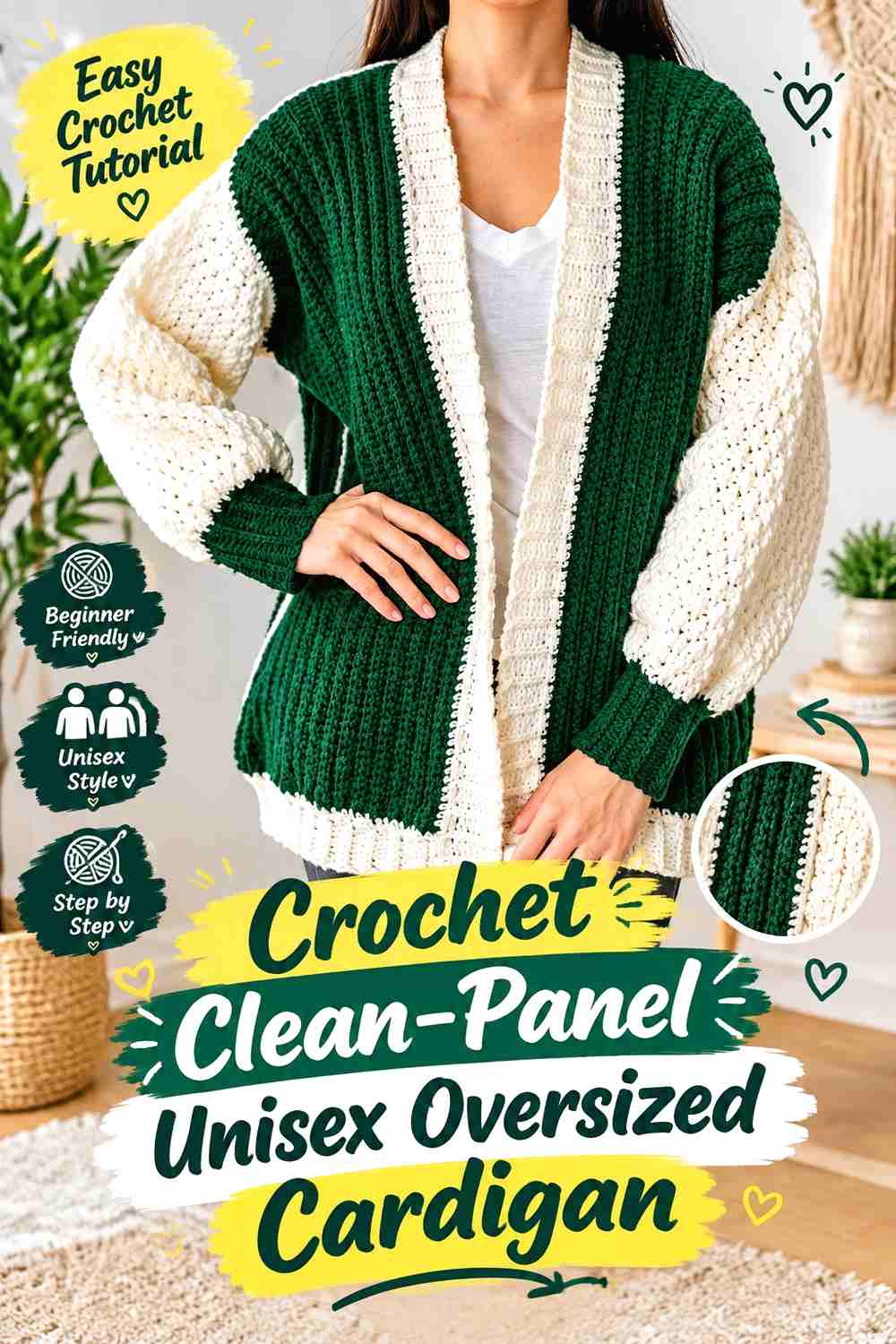
TCDDIY’s oversized cardigan uses separate garment sections, including front and back areas, sleeves, cuffs, and finishing borders. The design is presented as a cozy oversized unisex cardigan, making it a useful choice for a straightforward relaxed silhouette rather than a motif-based garment.
A clean panel construction also gives color plenty of room to work. Deep brown, charcoal, forest green, burgundy, or oatmeal can make a simple shape feel very November-ready without introducing complicated color placement.
Panel Width Controls More Than the Front View
An oversized back panel affects where the shoulder line falls and how much fabric gathers around the upper body.
When comparing sizes or adapting measurements, do not evaluate only the front opening. Check the complete back width and how the sleeve placement relates to it.
Borders Can Stabilize a Relaxed Silhouette
An open cardigan has long front edges that are visually prominent. A defined border can give those edges more structure and make a soft oversized body appear more finished.
If you substitute yarn, monitor whether the border and body have similar tension. A noticeably tighter front band can pull the cardigan upward instead of simply framing it.
Creator Credit: TCDDIY
3. Crochet Relaxed Any-Size Oversized Cardigan
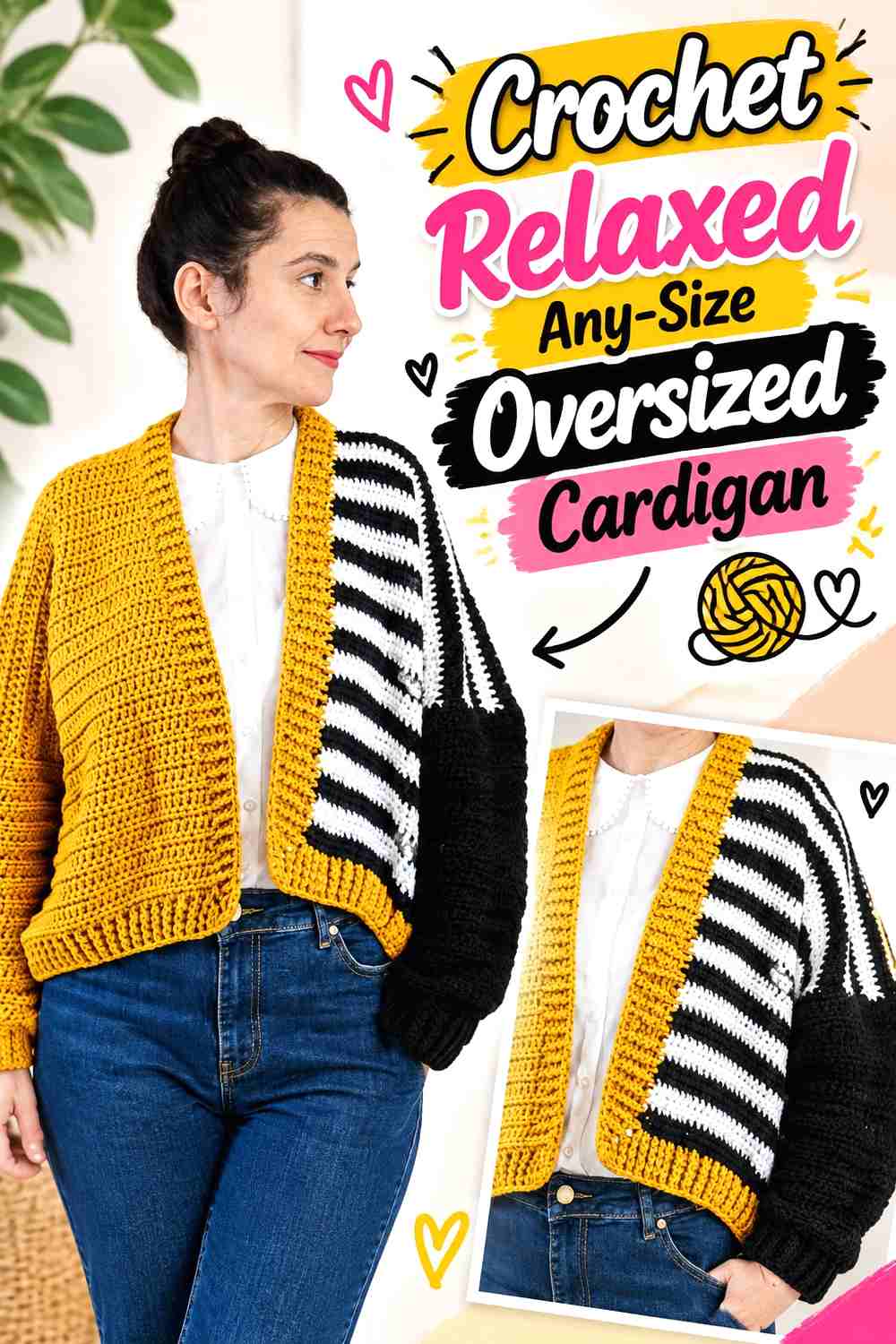
Sirin’s Crochet presents this cardigan specifically as an oversized design with guidance for making it in different sizes.
That makes the tutorial useful if standard size labels are less important to you than understanding how the overall garment should relate to your own measurements.
Start With the Layer You Intend to Wear Underneath
When working from measurements, taking them over very different clothing can change the result.
If this is primarily a November cardigan, consider assessing the fit while wearing a representative base layer rather than a close-fitting summer top. You are not trying to add an arbitrary amount of width; you are checking whether the planned garment provides the room you actually need.
Keep Right and Left Sides Consistent
Measurement-led construction still depends on symmetry.
If you lengthen a panel, widen a section, or alter a sleeve, record that change as you make it. Relying on memory when you reach the opposite side can lead to small differences that become visible after assembly.
Creator Credit: Sirin’s Crochet
4. Crochet Long Slouchy Pocket Cardigan
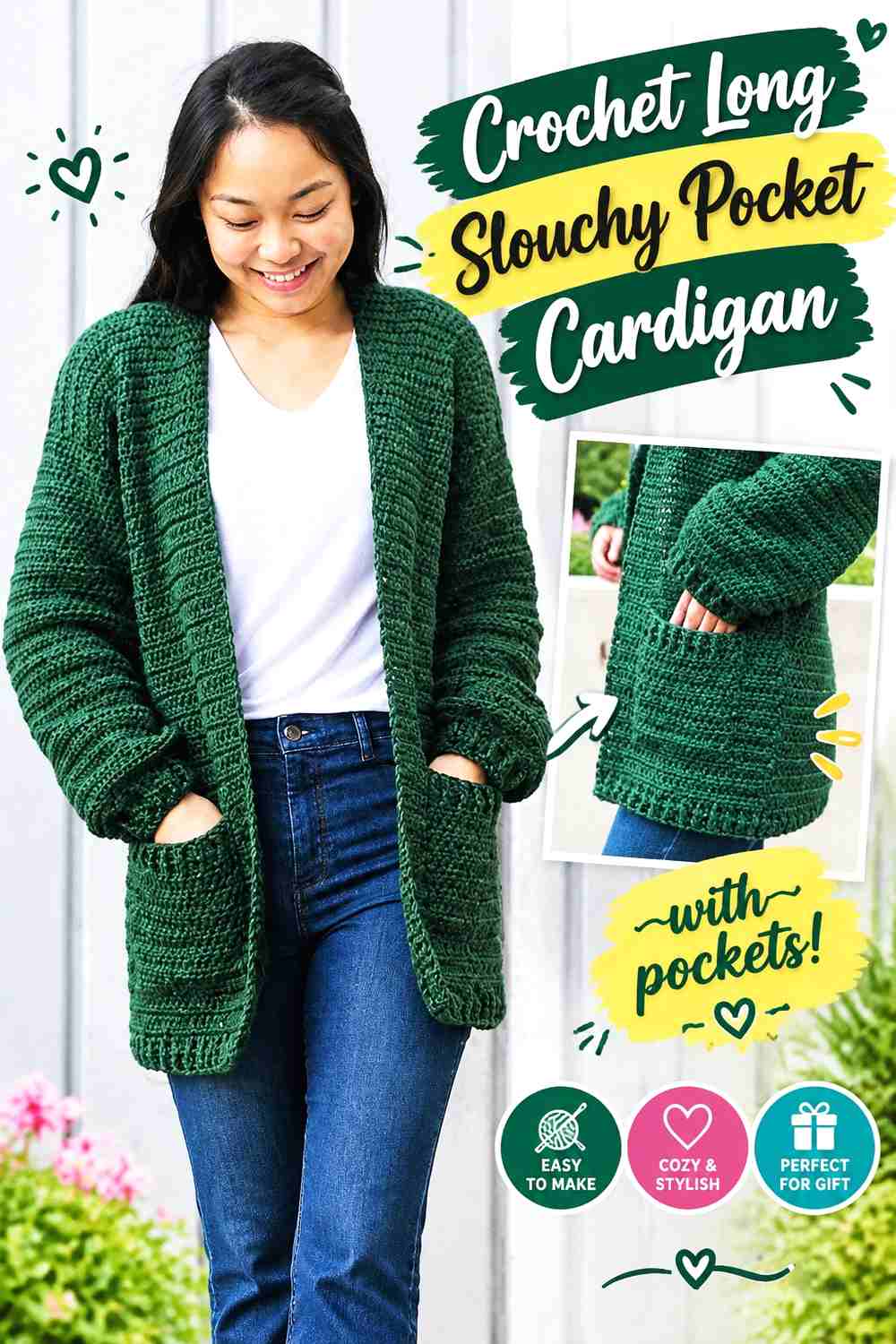
For The Frills’ Briar design combines an oversized body, loose sleeves, longer length, ribbed finishing, and two substantial front pockets. The creator specifically describes it as a layering garment and notes that choosing the usual T-shirt size produces the intended oversized fit.
This is one of the most practical November options when coverage and pockets matter as much as the crochet texture.
Long Length Makes Hip Fit Important
Once a cardigan extends well below the waist, bust ease is no longer the only meaningful measurement.
Compare the finished garment width with the widest area it needs to pass around. A cardigan that has plenty of room through the chest can still pull across the lower body if that measurement is ignored.
Pockets Add Both Function and Visual Weight
Large patch pockets emphasize the lower front of a long cardigan. They can be useful for everyday wear, but they also become part of the silhouette.
Positioning matters if you alter the cardigan’s length. Try the garment on before permanently placing pockets so they remain comfortable for your arms rather than simply matching their original distance from the hem.
Creator Credit: For The Frills
5. Crochet DK Everyday Oversized Cardigan
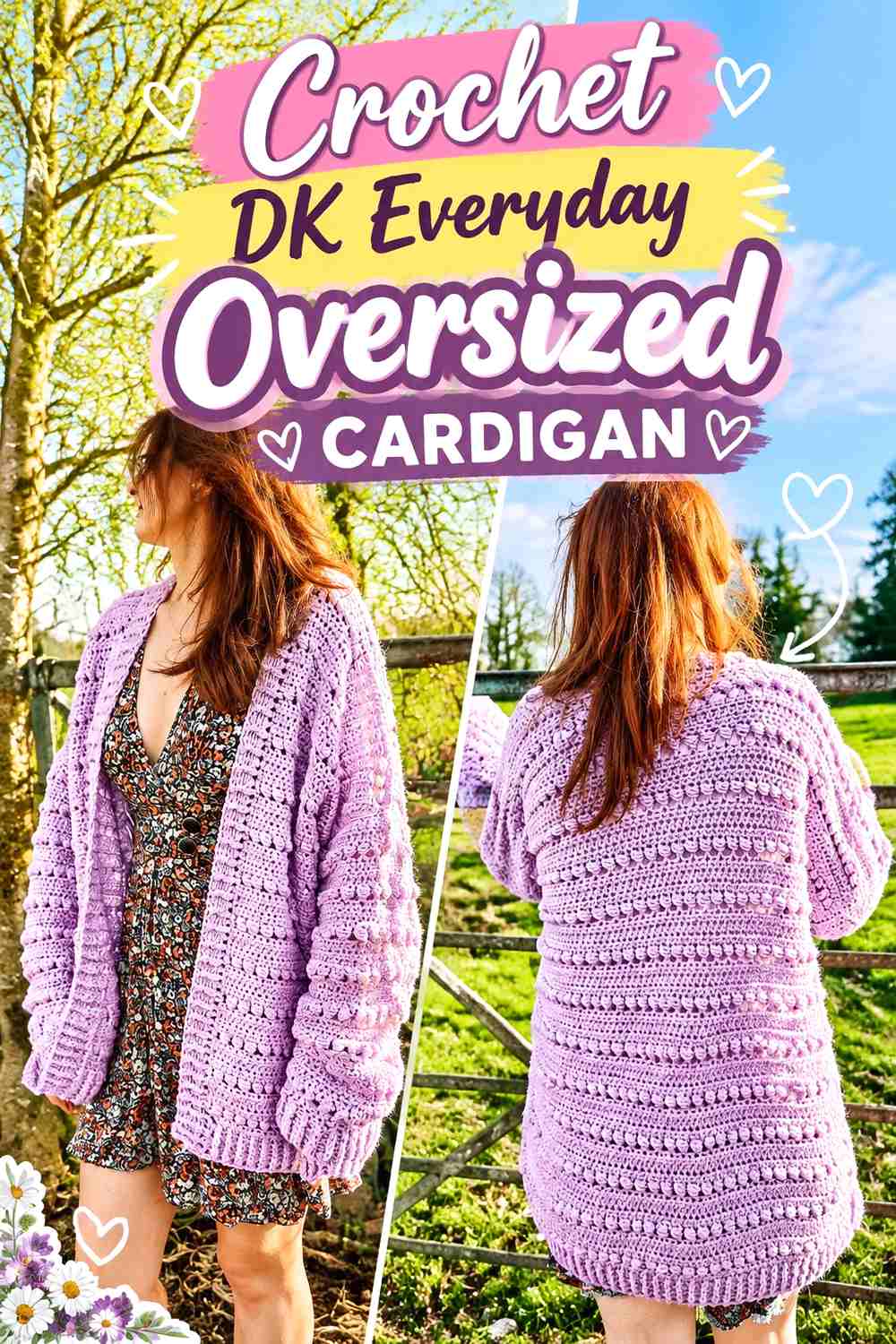
Hey Carrie’s tutorial uses DK yarn for an oversized cardigan, providing a lighter-gauge alternative to the chunky designs in this list. The tutorial sample is worked in a stated size rather than being presented as one universal finished measurement.
This type of fabric can be especially useful for indoor November layering when a super-bulky cardigan would feel like too much garment.
Finer Yarn Lets Oversized Fabric Fall Differently
More ease does not always have to mean a visually massive cardigan.
A thinner fabric can collapse closer to the body, allowing you to use a relaxed silhouette while retaining more movement. If this drape is what attracts you to the project, avoid replacing the yarn with something dramatically thicker without first testing the fabric.
Use the Tutorial Size as a Reference, Not a Guess
A creator’s sample size is helpful only when you compare it with your own measurements and the written sizing information.
Do not choose the same size simply because you like how it looks in the video. Height, body measurements, preferred ease, and layering plans all affect how an oversized cardigan sits.
Creator Credit: Hey Carrie
6. Crochet Airy Mesh Drop-Sleeve Cardigan
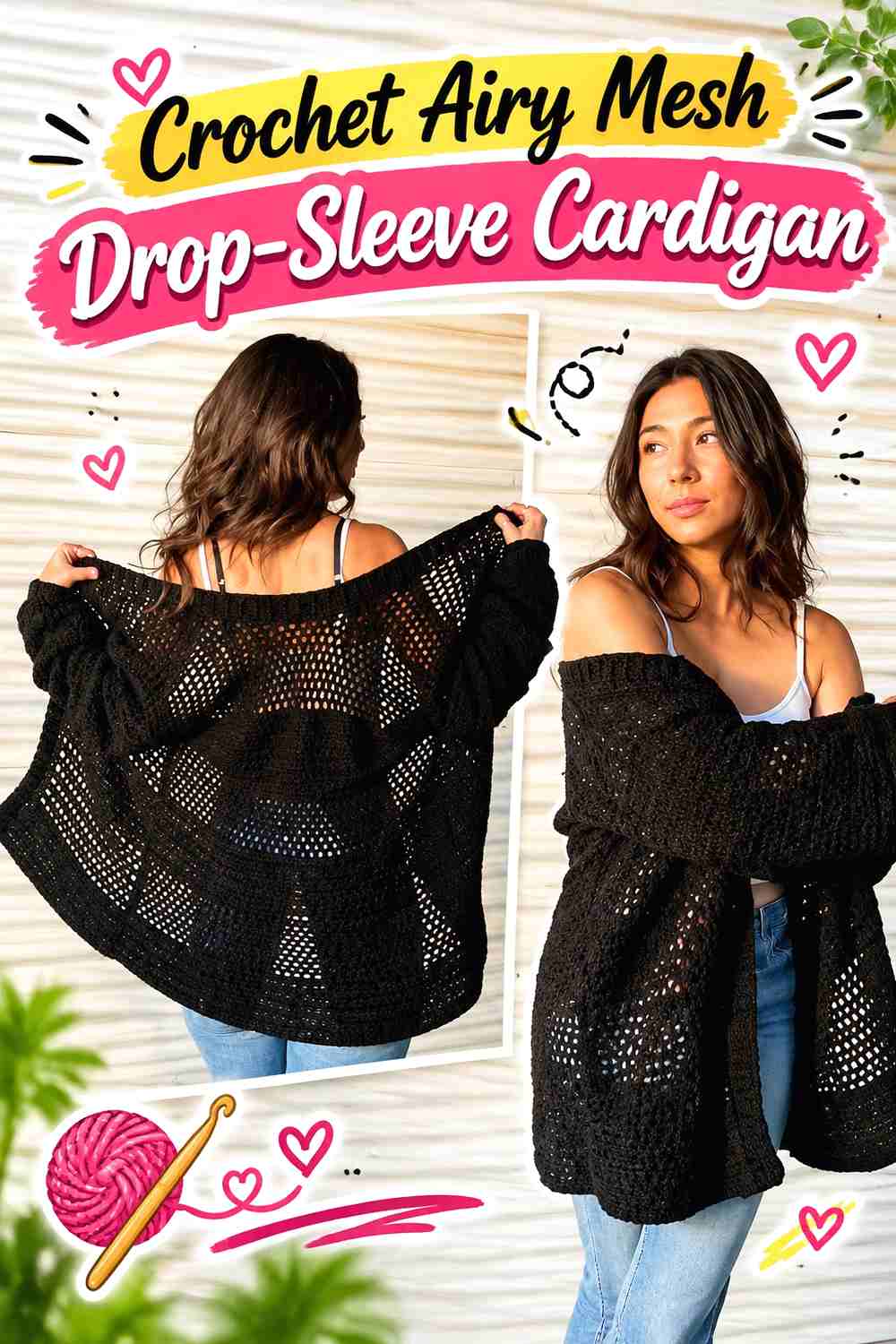
It’s Erin B.’s oversized cardigan is identified as a mesh, drop-sleeve, seamed design, and the length can be customized toward a cropped or fuller version.
The open fabric makes this one of the more breathable choices in the collection. Instead of relying on the cardigan alone for warmth, it allows the layer underneath to become part of the outfit.
Open Fabric Makes Your Base Layer Visible
Mesh changes the role of a cardigan. The shirt, turtleneck, or dress underneath contributes directly to the finished color and contrast.
For November, that can be useful. A neutral open cardigan can look quite different over burgundy, moss green, black, or cream without requiring another handmade garment.
Drop Sleeves Create Room at the Upper Body
A dropped shoulder can contribute much of the relaxed appearance without requiring the cardigan to be extremely wide everywhere.
Pay attention to where the sleeve begins in the finished garment. If you alter body width, that shoulder placement can shift too, changing both sleeve length and upper-body volume.
Creator Credit: It’s Erin B.
7. Crochet Mini-Bean Textured Oversized Cardigan
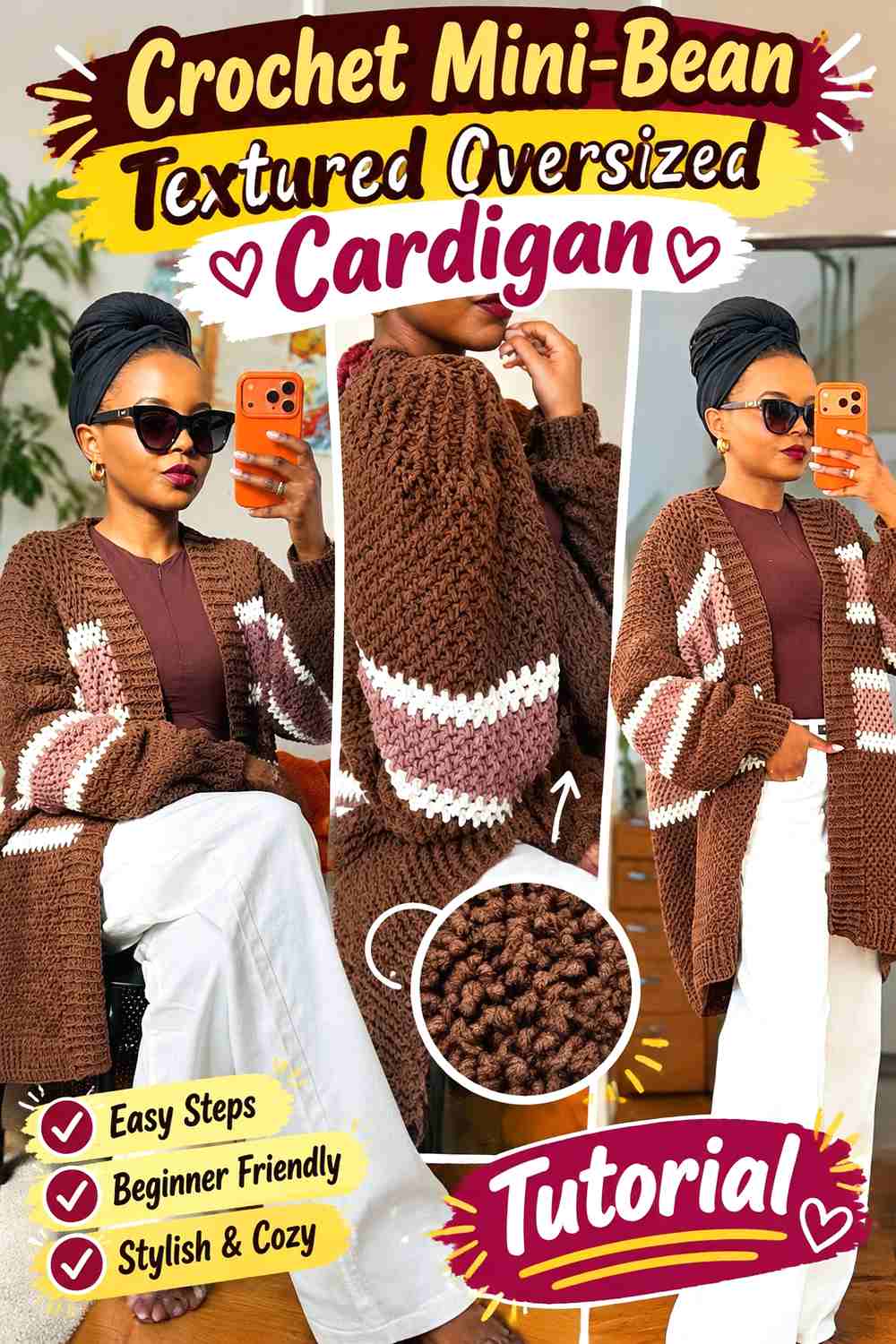
AC Crochets’ Elizabeth Cardigan uses a mini-bean texture across a slightly oversized body, with the back and fronts formed through one continuous body panel before the sleeves are added. Ribbed finishing is used around key edges.
This option is less about dramatic size and more about combining relaxed fit with a clearly tactile fabric.
Texture Adds Volume Without Adding More Width
A raised stitch pattern already makes the surface look substantial.
If you love oversized cardigans but do not want an extremely wide silhouette, texture can provide some of that cozy visual weight without relying entirely on additional ease.
Check the Growing Garment’s Weight
A small textured swatch can feel pleasantly cushy, while an entire cardigan contains far more yarn.
As the body develops, handle the fabric vertically as well as flat. This gives you a better sense of how the stitch pattern behaves under its own weight before sleeves and finishing add more.
Creator Credit: AC Crochets
8. Crochet Mosaic-Hem Oversized Cardigan
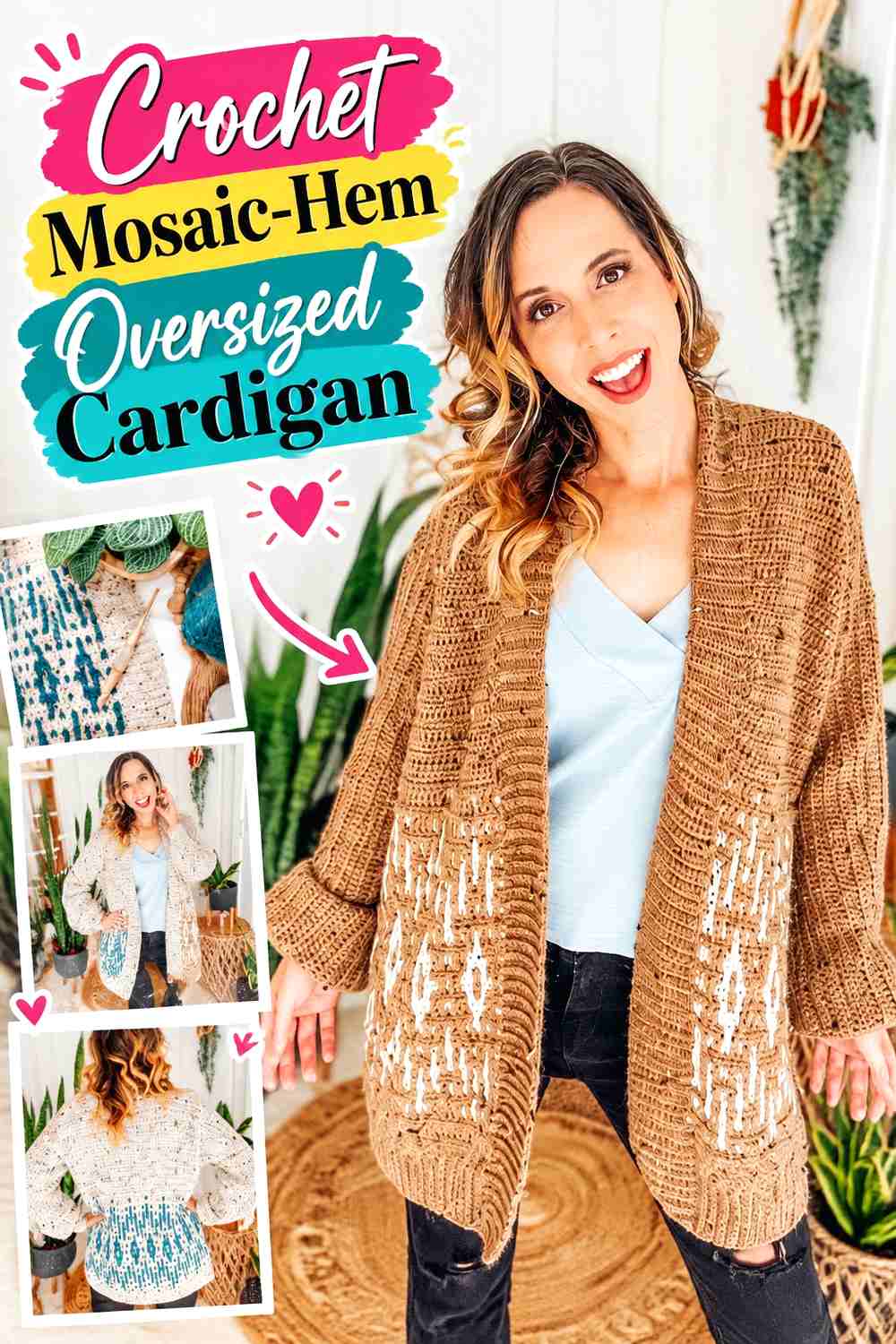
Briana K Designs’ mosaic cardigan combines a relatively simple upper garment with a large mosaic colorwork section and ribbing added around the lower portion. The body and arms are worked flat in one piece before seaming, and the source is specifically designed with significant positive ease.
For November, the lower colorwork gives you an opportunity to combine earthy seasonal shades without covering the entire cardigan in a busy pattern.
Keep the Colorwork Proportional to the Body Length
A strong decorative band becomes a major part of the visual balance.
If you alter the garment length, consider how much plain upper fabric will remain in relation to the mosaic section. Simply adding or removing length can change the apparent position and dominance of the colorwork.
A Statement Hem Directs Attention Downward
Colorwork concentrated at the lower body creates a different effect from patterned shoulders or sleeves.
This can be particularly useful if you want the cardigan to remain relatively quiet around scarves and necklaces while allowing the decorative detail to show below a coat opening.
Creator Credit: Briana K Designs
9. Crochet Cropped Hexagon Oversized-Sleeve Cardigan
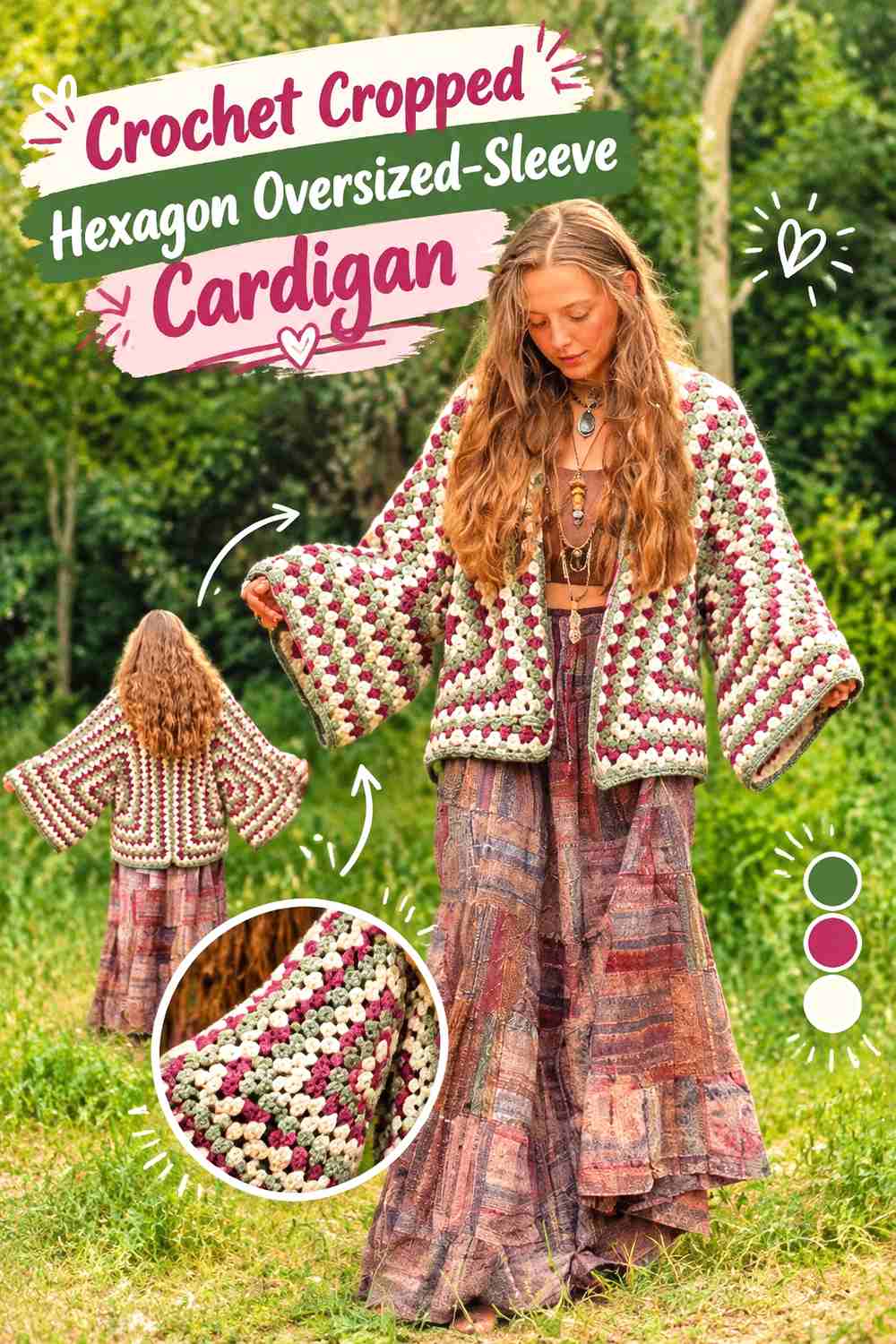
HayHay Crochet’s granny hexagon cardigan combines a cropped body with noticeably oversized sleeves and scalloped edging. The construction is customizable rather than being limited to one fixed finished size.
This creates a very different version of oversized dressing: most of the drama is concentrated around the arms and upper body rather than extra garment length.
Cropped Length Keeps Sleeve Volume in Focus
When both the body and sleeves are very large, an outfit can become dominated by crochet.
A shorter body changes that balance. It leaves more of the lower outfit visible while keeping the soft, roomy-sleeve effect that makes a hexagon cardigan distinctive.
Watch Sleeve Length as the Hexagon Grows
With hexagon construction, several garment dimensions develop together.
Do not focus only on whether the body wraps comfortably around you. Fold and test the developing piece periodically so you can see what is happening at the sleeve and shoulder as well.
Creator Credit: HayHay Crochet
10. Crochet Super-Chunky Hexagon Cardigan
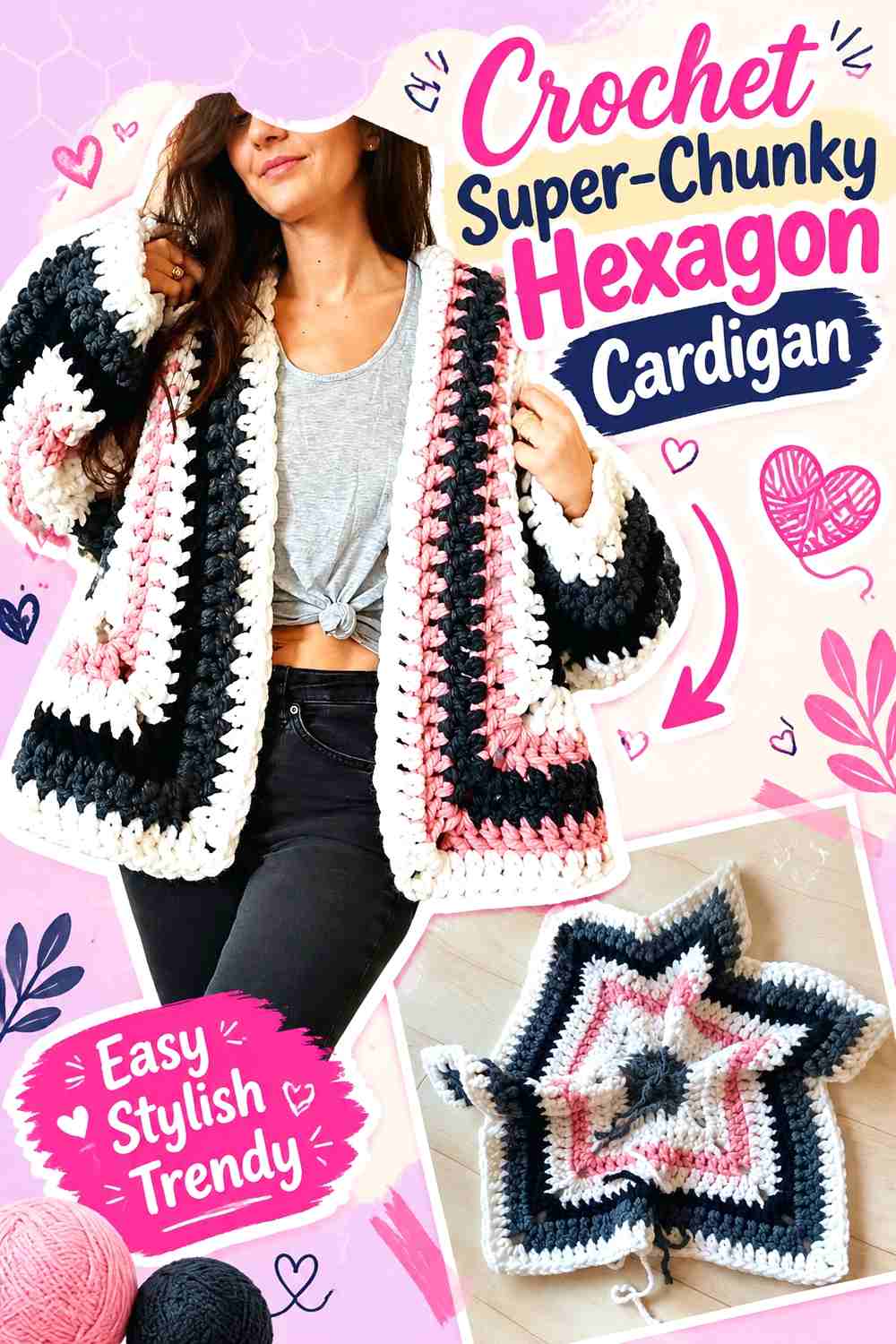
The Snugglery takes the hexagon-cardigan concept into much heavier territory, using super-bulky yarn and two large hexagonal sections to form the body and sleeves.
It gives the familiar granny-derived construction a more substantial, almost jacket-like presence and provides a clear contrast with the lighter cropped hexagon option above.
Super-Bulky Yarn Changes the Scale of the Granny Structure
The clusters and spaces become much larger visual elements when the yarn is thick.
Choose colors with that scale in mind. Frequent high-contrast changes can make the cardigan very graphic, while one or two closely related shades allow the silhouette to remain the strongest feature.
Sleeve Shaping Becomes Especially Valuable
Hexagon cardigans can naturally create generous sleeves. In a heavy yarn, that generosity is more noticeable.
Pay attention to the creator’s sleeve-shaping approach rather than assuming a straight oversized sleeve will behave the same way. Controlling some of the lower-arm volume can make a thick cardigan more practical to wear.
Creator Credit: The Snugglery
11. Crochet Bulky Drop-Shoulder Pocket Cardigan
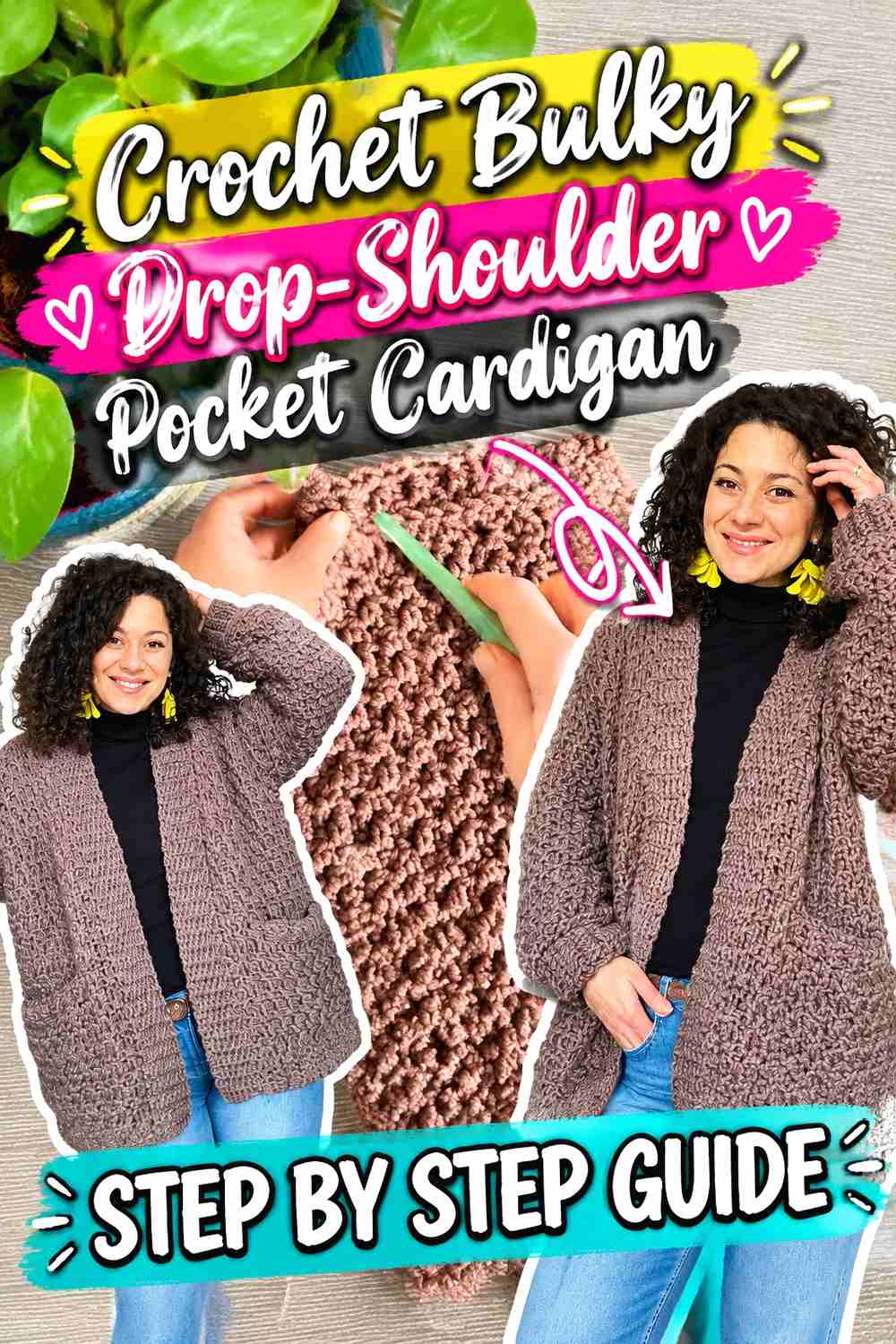
ByKaterina Designs’ cozy cardigan uses bulky yarn, a textured fabric, oversized drop-shoulder construction, and integrated pocket planning. The design is available across a broad published size range, and the back shoulder area includes shaping rather than being treated as one completely unstructured rectangle.
That combination makes this a useful project for readers who want visible oversizing but still care about how the upper garment sits around the neck and shoulders.
Shoulder Shaping Can Improve a Large Silhouette
An oversized garment does not have to abandon structure.
Small changes around the shoulder and neckline can influence where a roomy cardigan hangs. When comparing oversized patterns, look beyond total width and notice whether the designer has deliberately shaped these areas.
Hidden Pockets Keep the Front Cleaner
Pockets can either become obvious design features or disappear into the garment.
A more integrated treatment keeps attention on the textured body and relaxed silhouette. This can be preferable if you want practical storage without adding another rectangular element to the front.
Creator Credit: ByKaterina Designs
12. Crochet Suzette-Stitch Oversized Pocket Cardigan
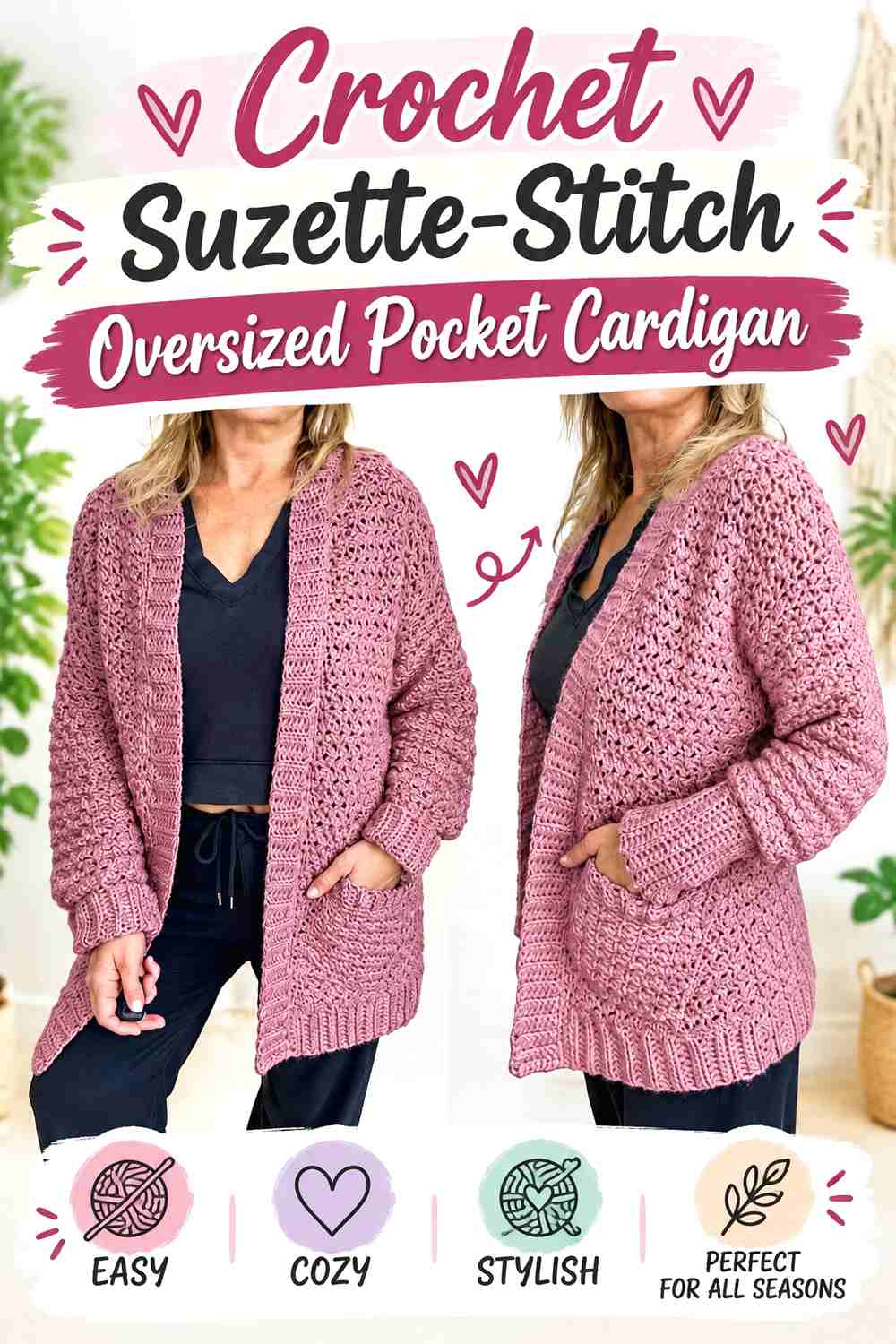
Mermaids and Hooks’ Wrenley Cardigan combines an oversized fit with pronounced suzette-stitch texture, ribbed finishing, optional pockets, and more than one body-length direction. The body is built from separate flat panels before the sleeves are worked onto the assembled garment.
It suits someone who wants a conventional cardigan silhouette but does not want the main fabric to look flat or plain.
Short and Long Versions Serve Different Layering Needs
Length is not just a style preference in November.
A shorter cardigan is easier to fit under many coats and keeps more movement around the legs. A longer version supplies more coverage and gives the textured stitch a larger visual field. Decide which role the cardigan will play before automatically choosing the longest option.
Directly Added Sleeves Reduce One Assembly Decision
Working sleeves from the established body removes the separate task of positioning a finished sleeve piece into an armhole.
You still need to monitor the sleeve itself, however. Try the developing garment on when practical so you can assess length and circumference against the layers you intend to wear beneath it.
Creator Credit: Mermaids and Hooks
13. Crochet Bean-Stitch Patchwork Oversized Cardigan
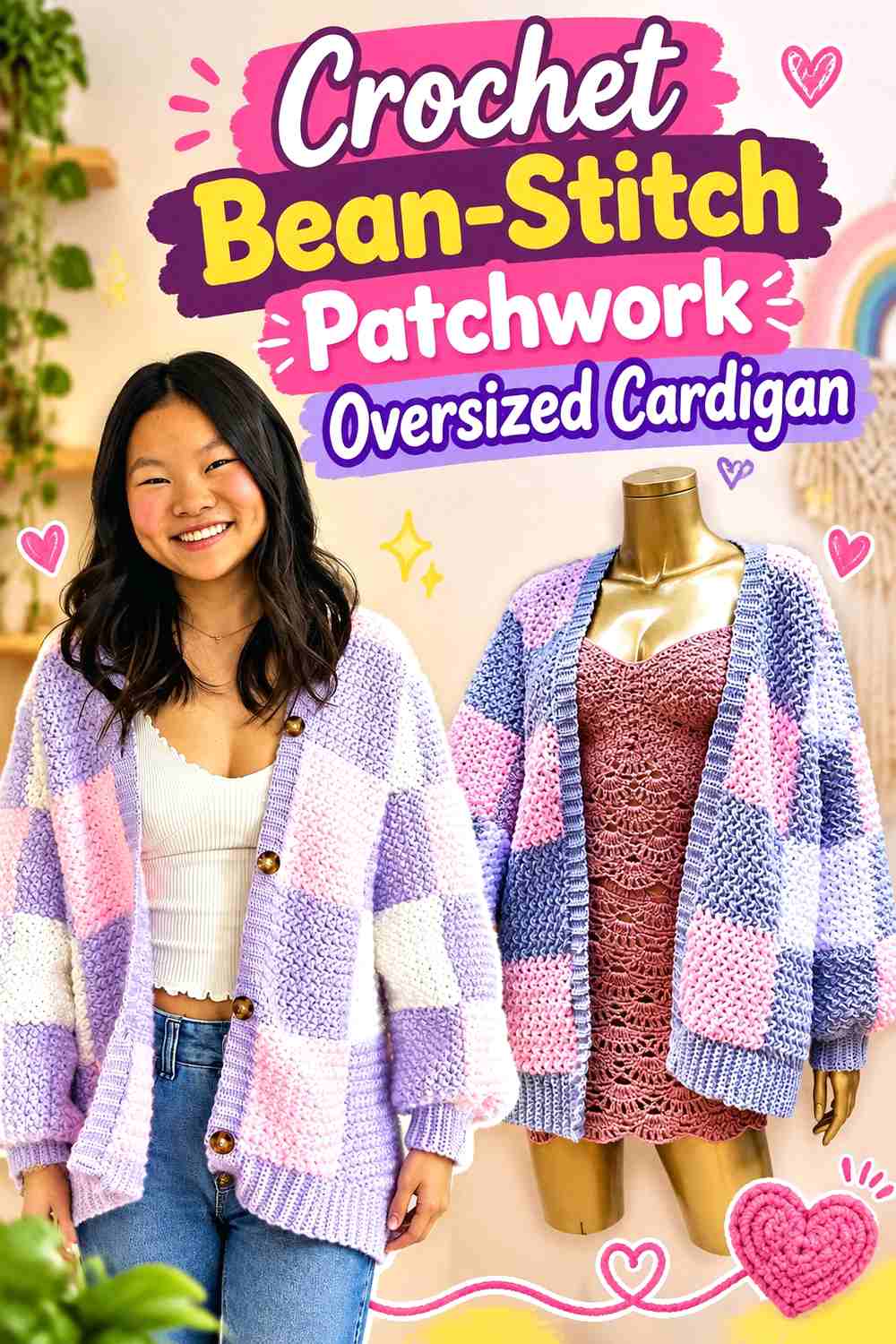
Shyler crochets’ patchwork cardigan uses textured bean stitch and colored strips rather than constructing the entire garment from individual granny squares. The published design is oversized and finished with ribbed edging around the cuffs, hem, and opening.
This is one of the strongest options when you want a colorful November cardigan but prefer larger structured color areas over dozens of separately joined motifs.
Plan the Dominant Color Before the Accent Strips
Patchwork can look either organized or highly eclectic depending on color distribution.
If you want a cardigan that works with many November outfits, choose one repeated anchor shade and let the other colors act as accents. A fully even distribution creates a different, more intentionally multicolored result.
Strip Construction Changes the Joining Work
A patchwork appearance does not automatically mean handling a pile of small squares.
Larger strips can reduce the number of independent pieces while retaining visible blocks of color. If assembly is usually the part of patchwork garments you dislike, this construction difference may be more important than the finished color palette.
Creator Credit: Shyler crochets
14. Crochet Longline Duster Oversized Cardigan
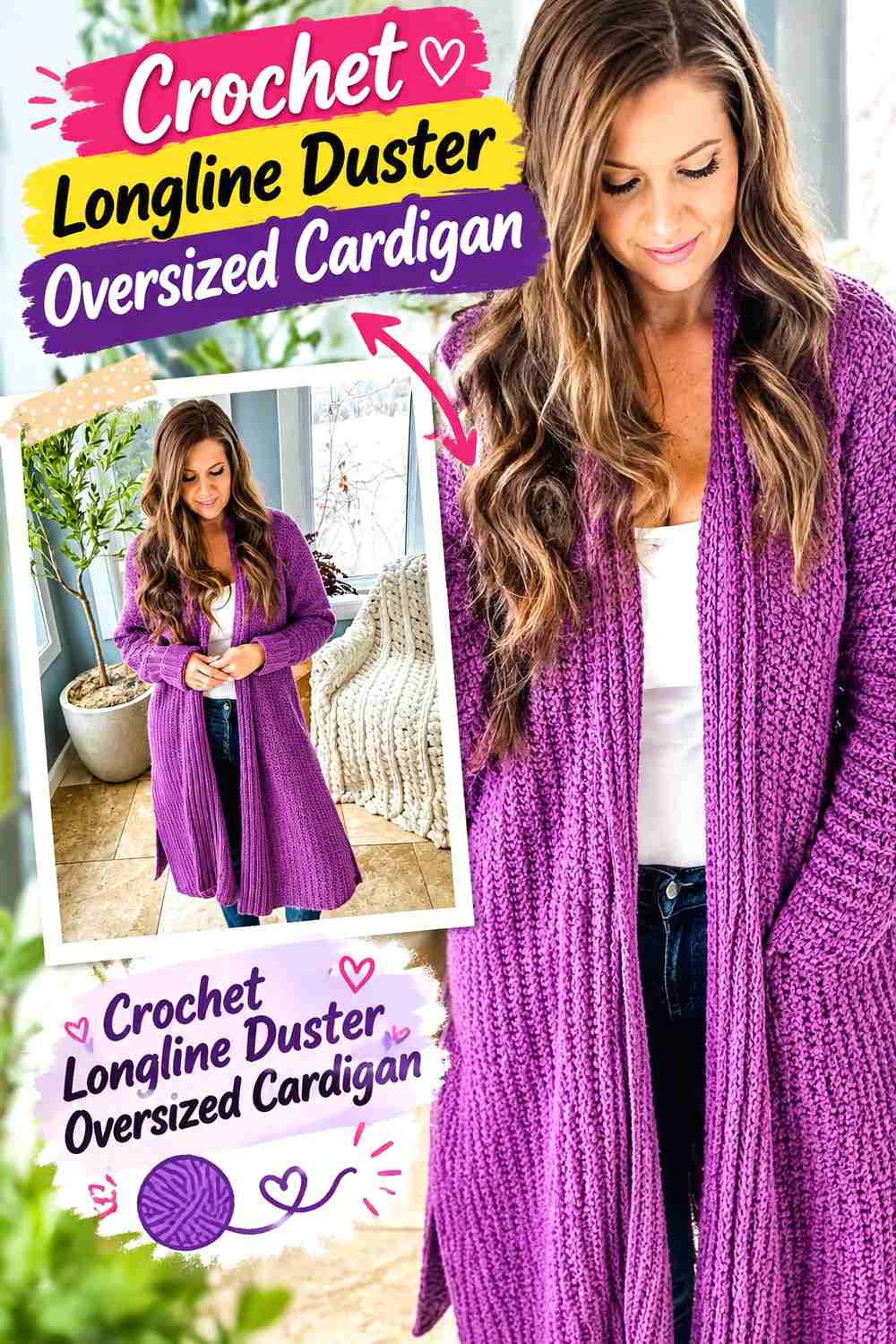
MJ’s Off The Hook Designs’ duster is an oversized long cardigan worked from side to side in one main piece using DK-weight yarn and a repeating textured fabric. The pattern also provides length-adjustment guidance and limits much of the seaming to the sides and sleeves.
This is the clearest option in the collection when you want the visual drama of length without pairing that length with super-bulky yarn.
DK Yarn Helps Keep a Long Cardigan From Looking Too Massive
A duster already has a large surface area.
Using a finer yarn lets the garment provide considerable coverage without automatically giving it the same dense visual weight as a chunky coat-style cardigan. If you substitute a heavier yarn, check the resulting fabric carefully rather than expecting the same movement.
Side-to-Side Construction Changes Where Length Adjustments Happen
Not every cardigan gains length by simply adding more rows at the bottom.
Construction direction determines which part of the work controls garment length and which controls width. Understand the orientation of this design before making an alteration based on habits from bottom-up cardigans.
Creator Credit: MJ’s Off The Hook Designs
15. Crochet Simple Open-Front Oversized Cardigan
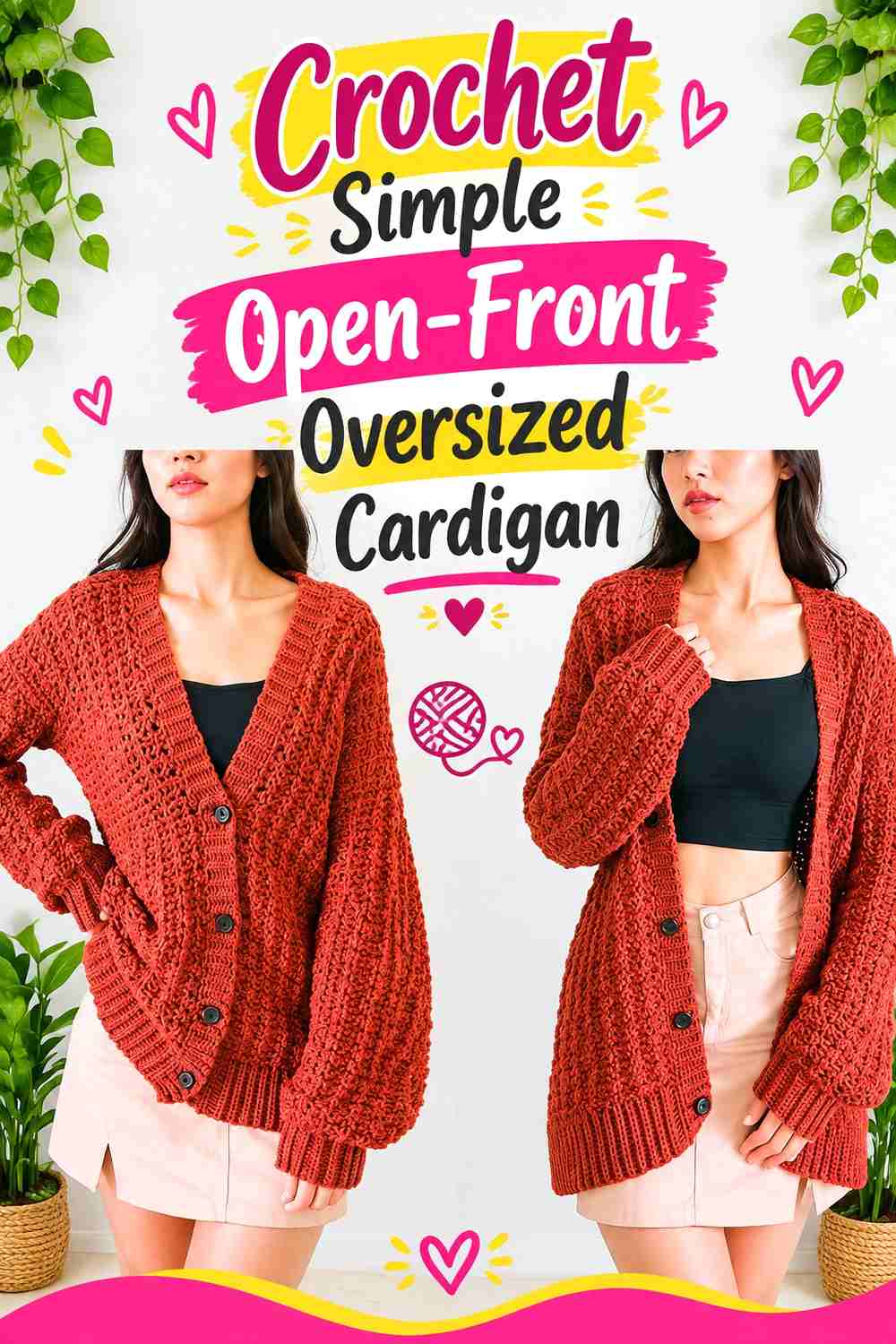
Chenda DIY’s tutorial presents a straightforward oversized cardigan with a clean open-front appearance.
Compared with the mosaic, patchwork, hexagon, and heavily textured options above, this project offers a calmer finish. That simplicity can be useful when the cardigan needs to layer over patterned dresses, plaid shirts, striped tops, or scarves without introducing another competing motif.
A Plain Body Puts More Attention on Fit
When there is no major colorwork or motif to draw the eye, the outline of the garment becomes particularly noticeable.
Check front length, shoulder placement, sleeve length, and the way the opening hangs before assuming decorative edging will disguise an issue. On a simple cardigan, proportion is the design.
Solid Color Makes November Accessories Easier to Rotate
A single-color cardigan can act as the stable layer while scarves, bags, and tops change throughout the month.
For a fall-to-winter wardrobe, a neutral or deep muted shade can also carry the garment beyond November without changing anything about the underlying construction.
Creator Credit: Chenda DIY
Which Oversized Crochet Cardigan Works Best for Your November Layers?
| If you want… | Consider |
|---|---|
| A thick statement layer | 1 or 10 |
| A simple oversized silhouette | 2, 3, or 15 |
| A long cardigan with pockets | 4 or 12 |
| A lighter oversized fabric | 5 or 14 |
| Open, breathable layering | 6 |
| Strong stitch texture | 7 or 12 |
| Decorative colorwork | 8 |
| Cropped body with dramatic sleeves | 9 |
| More structured bulky oversizing | 11 |
| A colorful patchwork look | 13 |
| Maximum longline coverage | 14 |
The two hexagon options illustrate an important comparison. Project 9 concentrates its oversized character in the sleeves while keeping the body shorter, whereas project 10 uses very thick yarn to make the entire construction more substantial.
Projects 4 and 14 both provide length, but they approach it differently too. The pocket cardigan emphasizes slouchy everyday practicality, while the duster uses a lighter yarn and side-to-side construction for a longer continuous silhouette.
For texture rather than strong colorwork, compare projects 7, 11, and 12. If you want the cardigan itself to become the visual statement, projects 8 and 13 provide more obvious pattern and color opportunities.
Conclusion
A useful oversized cardigan should give you intentional room, not simply more fabric everywhere.
For chunky November comfort, the Marta Antonia and The Snugglery projects create the most substantial silhouettes in this collection. If you prefer long coverage, the For The Frills pocket cardigan and MJ’s Off The Hook Designs duster take two distinctly different approaches to length.
The HayHay Crochet hexagon is a good direction when you want a cropped body with generous sleeves, while It’s Erin B. offers a more open fabric for layering over visible base pieces. For decorative garments, the Briana K Designs mosaic cardigan and Shyler crochets patchwork cardigan bring color into the construction rather than treating it as an afterthought.
Before starting any of them, compare your measurements with the creator’s sizing information, consider what you will realistically wear underneath, and make sure your yarn produces the fabric you want. Use the original tutorial for the exact gauge, sizing, construction, and finishing details.
Frequently Asked Questions
How much positive ease should an oversized crochet cardigan have?
There is no universal amount that suits every cardigan or wearer. Start with the pattern’s intended ease and finished measurements, then compare them with your own body measurements and preferred layering clothes. A drop-shoulder chunky cardigan may need a different proportion from a draping longline cardigan.
Should I size up to make a crochet cardigan look oversized?
Not automatically. If a pattern is already designed for an oversized fit, sizing up again can enlarge the neckline, armholes, sleeves, and overall length as well as the body. Check the finished measurements before choosing a larger size.
What should I wear while checking the fit of a November cardigan?
Use a layer similar to what you expect to wear underneath the finished garment. If the cardigan is intended to go over long-sleeve shirts or light sweaters, evaluating it only over a thin camisole may not tell you enough about practical layering room.
Are chunky yarns better for oversized crochet cardigans?
They are useful when you want thick fabric and a strongly cozy silhouette, but they are not automatically better. Chunky yarn increases visual bulk and can make a large garment more substantial. DK and lighter worsted fabrics can provide oversized ease with more fluid drape.
Why do oversized crochet sleeves sometimes feel too bulky?
Body width, dropped shoulders, deep armholes, thick yarn, and wide sleeve circumference can all contribute. If you need to wear the cardigan beneath a coat, compare sleeve volume carefully before making it larger than the intended fit.
Can I make an oversized crochet cardigan longer?
Many cardigan designs can be adjusted, but the correct place to add length depends on construction. A bottom-up panel cardigan, hexagon cardigan, and side-to-side duster do not gain length in the same way. Follow the creator’s adjustment guidance rather than automatically adding rows where you would on another pattern.
What should I check before substituting yarn in an oversized cardigan?
Check gauge first, then assess fabric thickness, drape, stretch, stitch definition, and weight. A substitute can technically match the stitch dimensions yet still create a fabric that behaves very differently in a large garment.