A crochet book nook can turn the narrow spaces around your favorite novels into a small winter scene. Instead of filling the shelf with identical round plushies, combine upright characters, woodland animals, narrow props, textured pieces, and one or two taller background elements.
The 17 ideas below are chosen for those different visual roles. Some make natural focal characters, while others work better beside book spines or farther back in the display. The tutorials teach the matching finished objects, but they are not all specifically designed as miniature book-nook projects. Finished scale can vary considerably, so confirm dimensions, yarn, hook, and construction details in the creator’s tutorial before planning a tight shelf arrangement.
For a convincing winter nook, scale matters less than consistency. A fox, mushroom, candle, and little house can belong in the same scene even when they come from unrelated tutorials, provided their proportions look intentional when they are placed together.
Quick List
- Crochet Tiny Fox Shelf Companion
- Crochet Woodland Owl Amigurumi
- Crochet Dressed Mouse Book-Nook Character
- Crochet Textured Hedgehog Amigurumi
- Crochet Winter Reindeer Amigurumi
- Crochet Mini Bunny Shelf Friend
- Crochet Chunky Cat Amigurumi
- Crochet Little Penguin Amigurumi
- Crochet Winter Snowman Amigurumi
- Crochet Cozy Gnome Amigurumi
- Crochet Scarfed Teddy Bear Amigurumi
- Crochet Mini Mushroom Cluster
- Crochet Coffee Cup Amigurumi
- Crochet Winter Candle Amigurumi
- Crochet Gingerbread Man Amigurumi
- Crochet Little House Amigurumi
- Crochet Winter Tree Amigurumi
Choose Crochet Book-Nook Pieces by Footprint, Not Just Height
Height is obvious when planning a bookshelf display, but depth often causes more trouble. A small animal with a large tail, thick legs, or a very round body may project farther from the books than a taller, slimmer figure.
Decide where each project will sit before committing to a tutorial. Narrow objects such as candles can occupy small gaps between books. Animals with prominent tails or ears usually need a little more open space. A house or tree can work as a background anchor when the shelf has enough height and depth.
It also helps to place a few books, paper templates, or rough yarn balls on the shelf before crocheting anything. You can estimate where the visual gaps are without relying on unverified finished measurements.
Mix Silhouettes to Make a Winter Shelf Look Like a Scene
A shelf containing five similar round animals can look more like a collection of toys than a book nook. Mixing shapes gives the arrangement more depth.
Try pairing one upright woodland animal with a low mushroom group, a slim candle, and a taller tree. A mouse or teddy can become the central character, while a little house establishes the setting behind it. The goal is not to make every object equally noticeable.
Color can connect pieces from different tutorials, but silhouette should provide the variety. Repeating a restrained winter palette across several projects is often more cohesive than choosing 17 unrelated colors.
Keep Small Details Appropriate for the Shelf’s Real Use
Book-nook amigurumi is often decorative, but the display may still be accessible to children or pets. Safety eyes, beads, glued decorations, long loops, and other detachable details deserve extra thought when that is the case.
For display-only pieces, also consider maintenance. Deep texture, fluffy yarn, long fibers, and elaborate embellishments can hold more dust than smooth crochet. If a project will be squeezed between frequently handled books, secure protruding details well and leave enough room to remove books without constantly catching the crochet.
1. Crochet Tiny Fox Shelf Companion
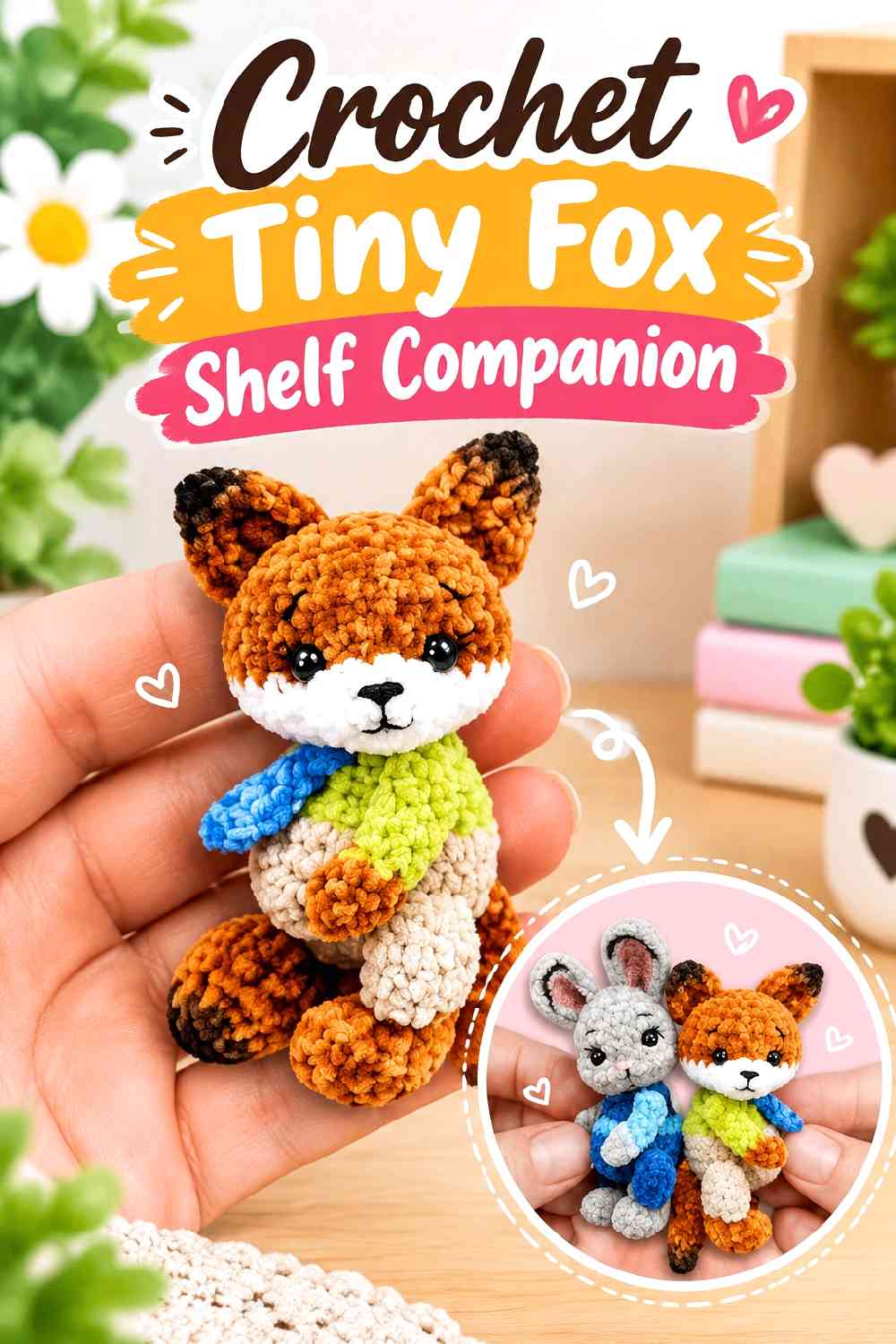
A fox is a natural choice for a woodland winter nook because its pointed ears and long tail create a recognizable silhouette without needing elaborate scenery. This version works particularly well as a character near the front of a shelf, where the face and tail can remain visible instead of disappearing behind taller decorations.
Give the Tail Enough Shelf Depth
The tail is part of what distinguishes a fox from other small woodland animals, but it can also increase the project’s footprint. Before settling on placement, consider whether you want the tail arranged beside the body, extending backward, or visible along one side.
A tightly packed bookcase may favor a side-facing position. A deeper shelf gives you more freedom to make the tail part of the composition rather than something that has to be hidden.
Micro Scale Makes Tension More Noticeable
When a fox is worked at a very small scale, irregular tension and visible stuffing become easier to notice because there is little surface area to disguise them. A smooth yarn can make tiny shaping and facial details easier to see, while fuzzier fibers may soften those details.
If you change yarn or hook size to alter the scale, make a small fabric test first rather than assuming the same combination will produce sufficiently dense amigurumi fabric.
Creator Credit: Miniature Crochet by Microtoysby
2. Crochet Woodland Owl Amigurumi
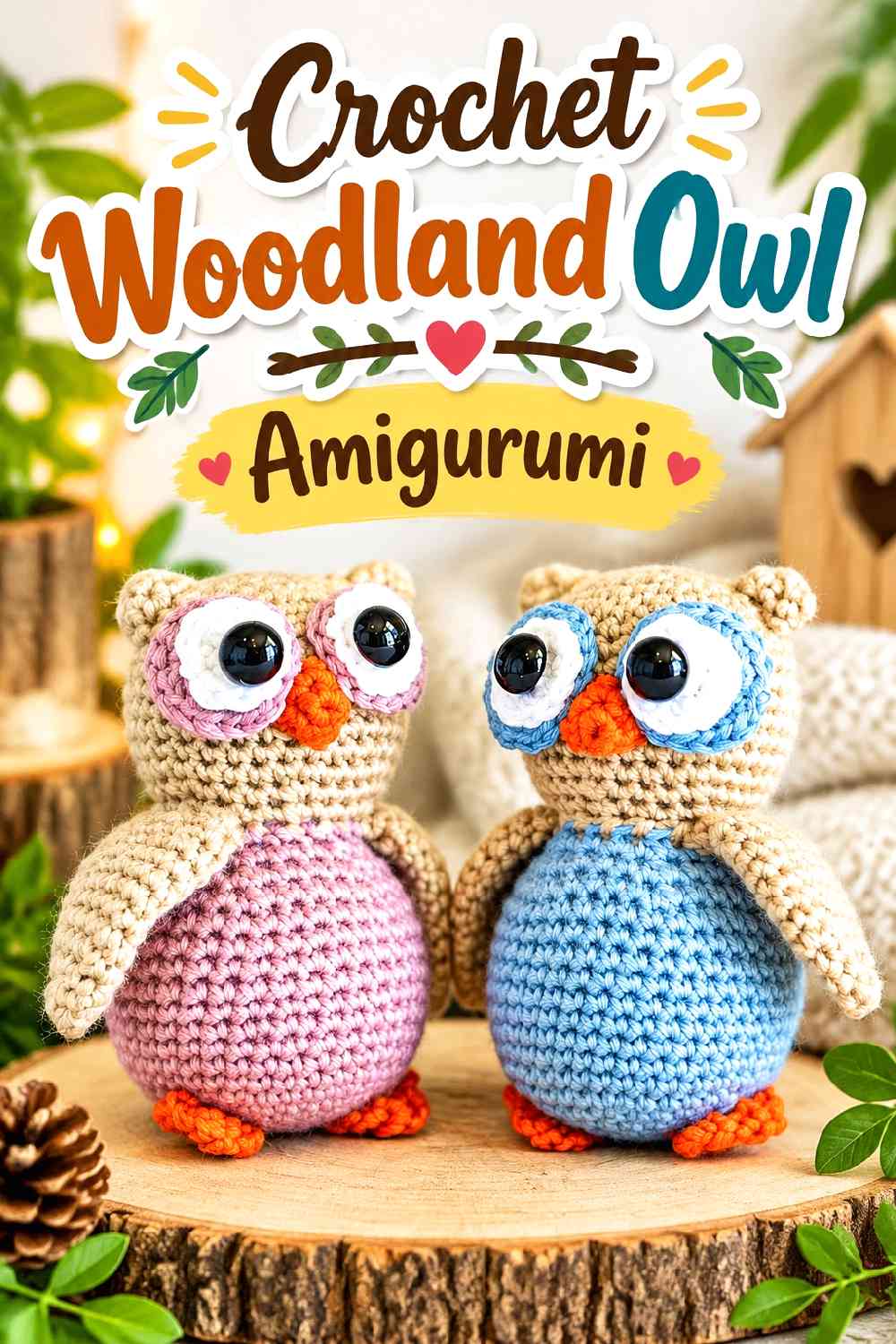
An owl gives a book nook a completely different profile from a four-legged woodland animal. Its upright body uses vertical rather than horizontal shelf space, which can make it useful beside a tall row of book spines or near the back of a display.
The Face Should Remain the Main Focal Point
An owl depends heavily on its eye area and facial contrast for character. When adapting colors, check those elements from normal viewing distance rather than only while holding the piece close to you.
Very busy yarn can compete with the facial shapes. A quieter body color allows the eyes, beak, and wing shapes to remain readable on a crowded shelf.
An Upright Shape Can Fill Narrow Shelf Gaps
Unlike an amigurumi with sprawling legs or a large tail, an owl can occupy a relatively vertical visual zone. That makes this type of shape worth considering when you have height available but limited room in front of the books.
Check the finished footprint as well as height before choosing its permanent position. You still need enough space for the wings and any projecting facial details.
Creator Credit: Crochet With Tiffany
3. Crochet Dressed Mouse Book-Nook Character
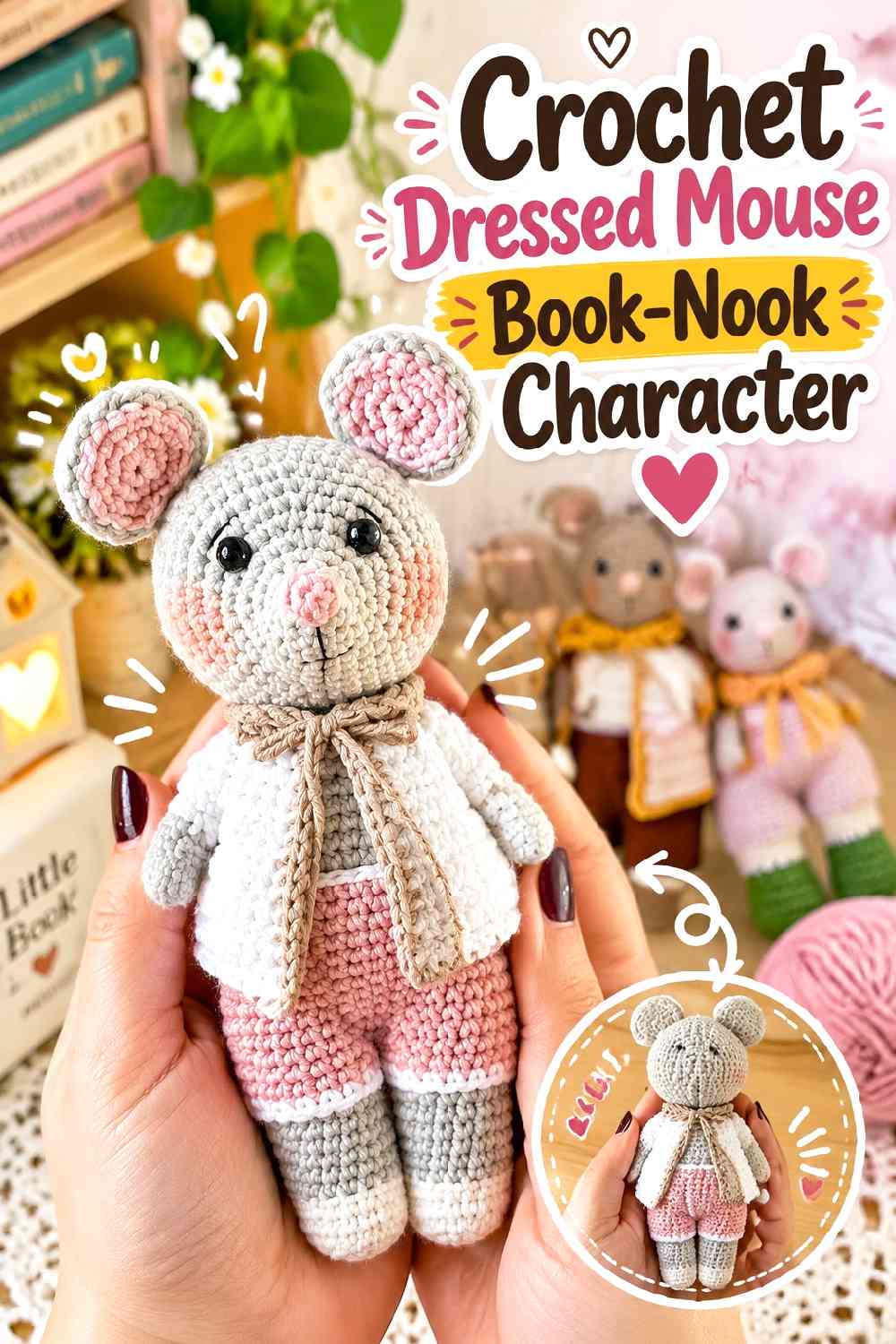
A dressed mouse can make the shelf feel like a miniature story rather than a collection of separate crochet objects. Clothing gives the character a stronger sense of personality, making it a good central figure beside a tiny cup, candle, or mushroom.
Clothing Adds Detail Without Expanding the Scene
A plain animal often relies on surrounding props to establish the theme. Clothing can do some of that work directly on the character.
For a winter shelf, muted clothing colors can visually connect the mouse with the rest of the display. Before changing anything, check how garments fit around the finished body so extra layers do not hide important shaping.
Thin Ears and Limbs Need Breathing Room
Mouse ears and smaller limbs can become lost if the figure is wedged tightly between larger pieces. Give the character a clear outline against books or a relatively plain background.
If the nook is frequently disturbed when books are removed, position delicate projecting pieces away from the main traffic path rather than letting them rub against hard covers.
Creator Credit: Elise Rose Crochet
4. Crochet Textured Hedgehog Amigurumi
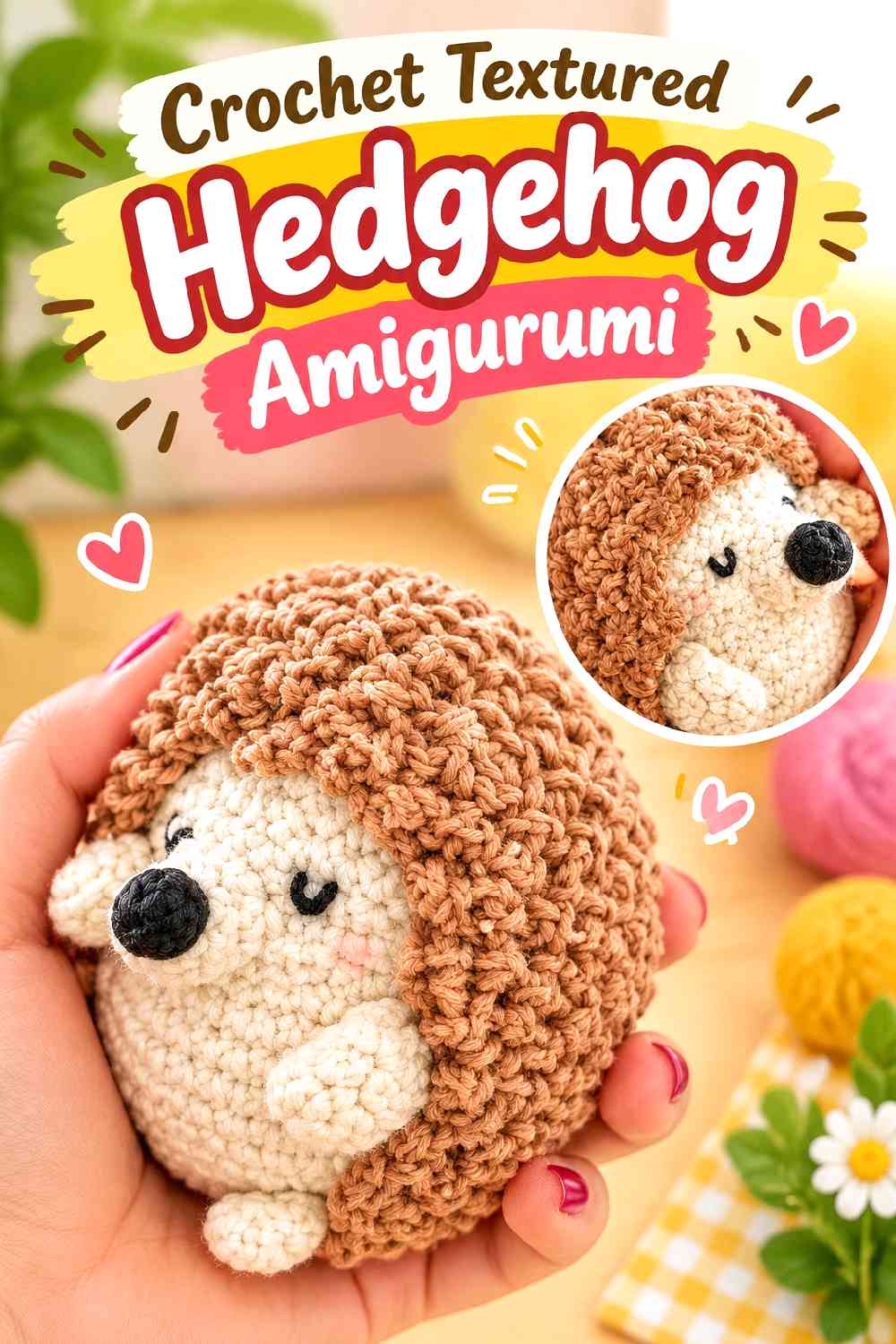
A hedgehog brings texture into a shelf that might otherwise contain mostly smooth single-crochet surfaces. That contrast makes it useful as a low woodland element near mushrooms, trees, or other forest-inspired pieces.
Texture Changes the Visual Weight
Raised or layered quills can make a small hedgehog appear denser than a similarly sized smooth animal. If the rest of your nook already contains elaborate textures, give this project a little open space around it.
Against simple book spines, however, that extra surface detail can become a useful focal point without requiring bright colors.
Check How the Quills Will Handle Dust and Contact
Textured surfaces have more edges and recesses than smooth amigurumi. On an open shelf, that may mean more careful cleaning.
Placement can help. A hedgehog sitting slightly inside the shelf instead of along the outer edge is less likely to be repeatedly brushed by hands, clothing, or books.
Creator Credit: Gülay Işıklıoğlu atolye_masal
5. Crochet Winter Reindeer Amigurumi
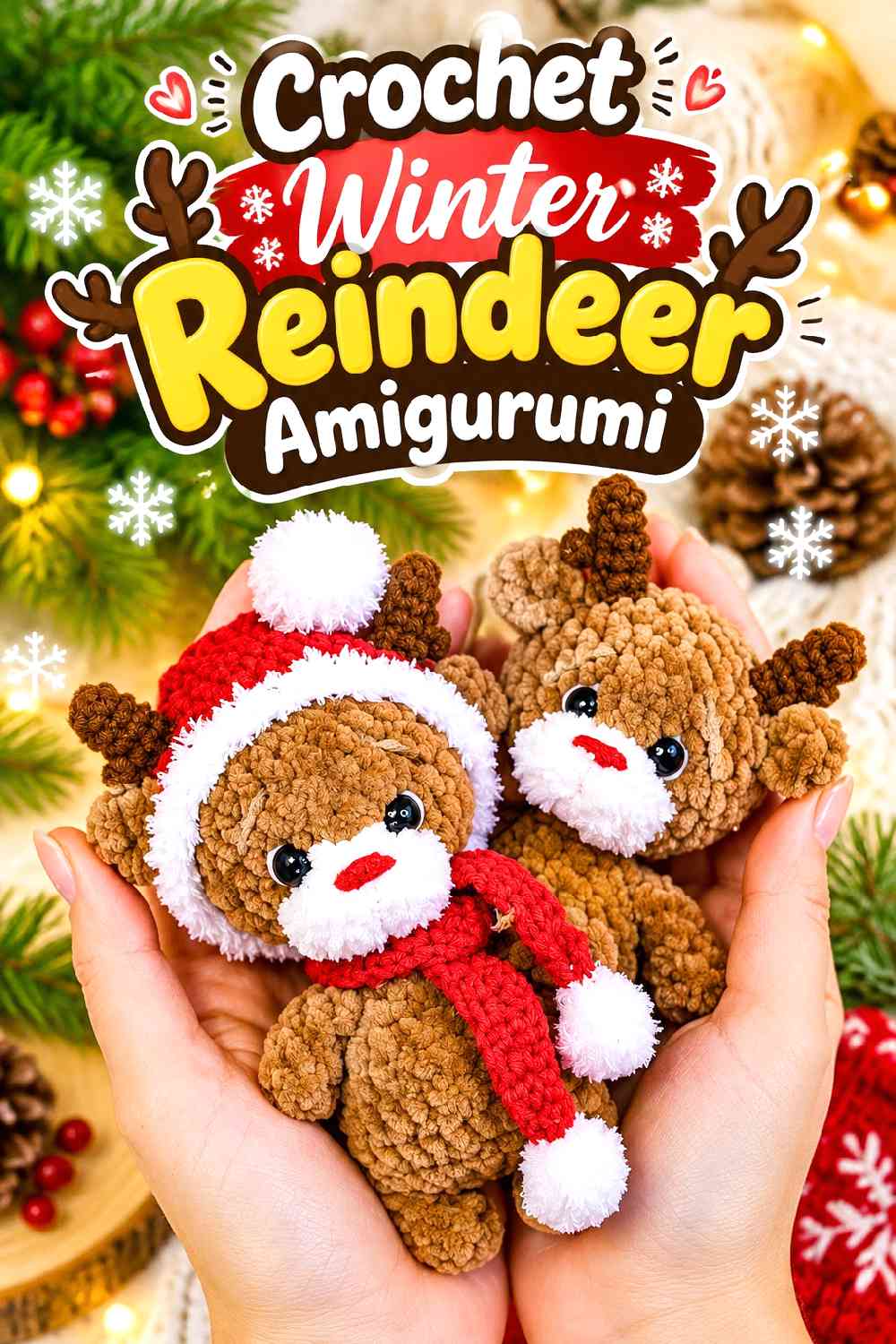
Reindeer immediately push a book nook toward a winter or holiday mood. Antlers make the silhouette noticeably different from the rounded heads of bears, cats, and snowmen, so this is a useful choice when you need more shape variation.
Antlers Need More Clearance Than the Body Suggests
Do not judge placement from body width alone. Antlers can extend into the space occupied by adjacent books, trees, or other characters.
Before permanently arranging the nook, view the reindeer from the same angle you normally see the shelf. A little empty space around the antlers usually keeps the silhouette clearer.
A Reindeer Can Carry the Seasonal Theme by Itself
If you prefer a winter shelf that is not overwhelmingly holiday-specific, a reindeer can provide the seasonal reference while the surrounding pieces remain more neutral.
Pairing it with woodland colors, mushrooms, a cottage, or a simple tree creates a broader winter-forest feeling. Strong red-and-green accents will push the same character toward a more explicitly Christmas display.
Creator Credit: DidyToys
6. Crochet Mini Bunny Shelf Friend
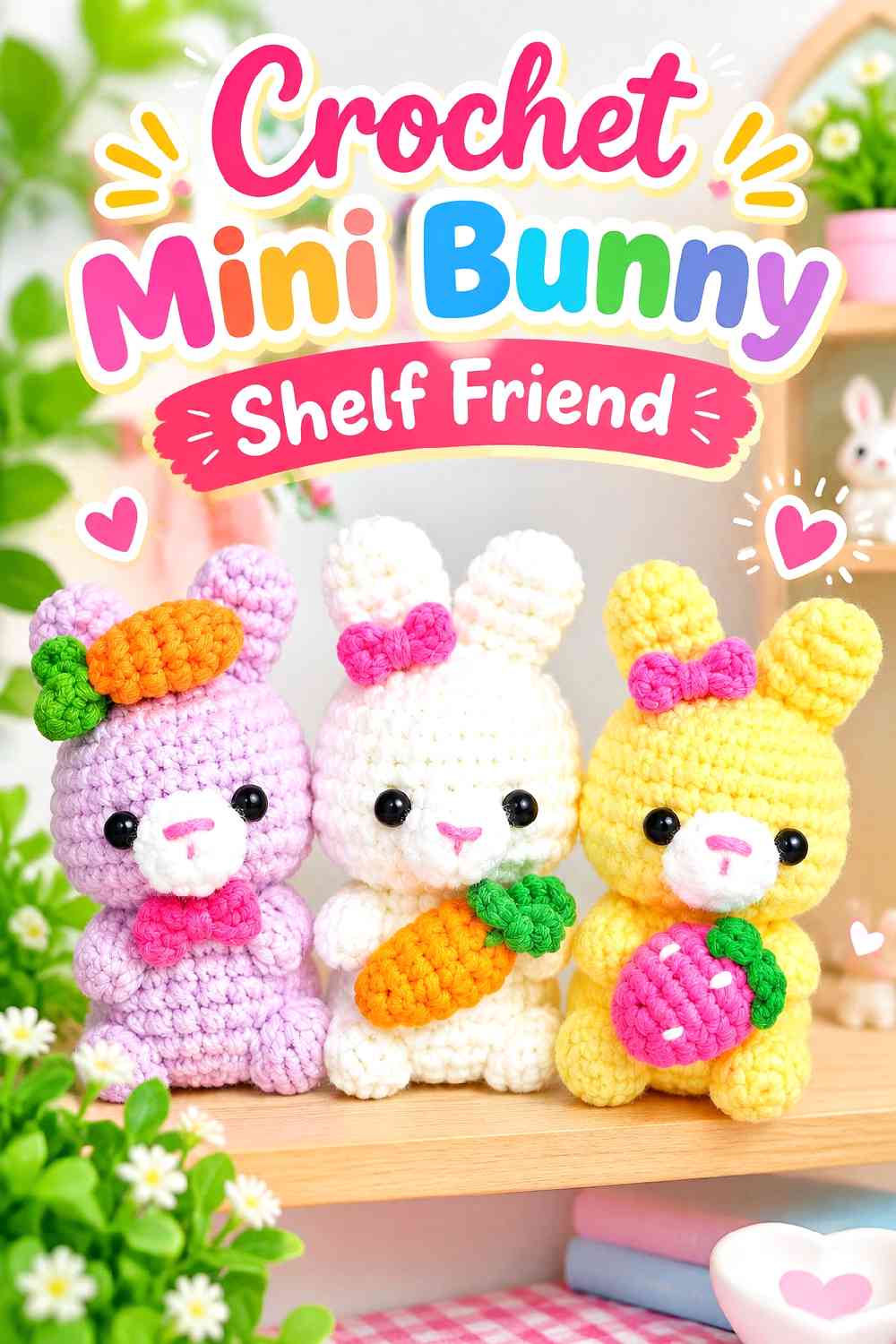
A compact bunny adds a softer shape to a woodland nook. Long ears distinguish it from other small animals and help the figure remain recognizable even when much of the body sits behind a front-row prop.
Ear Height Can Matter More Than Body Height
When measuring available shelf space, remember that ears create the highest point. A bunny placed beneath a low shelf may fit at body level but still look cramped once the ears are included.
Positioning it slightly forward can also keep the ears from visually merging into tall books behind it.
Keep Extra Accessories in Proportion
Miniature accessories can add character, but several tiny additions may make a small bunny look cluttered. Choose one strong secondary detail rather than covering every surface.
If you change the scale of the bunny, check any accessory separately. A detail that reads clearly on the original size may become awkward or difficult to recognize when substantially reduced.
Creator Credit: AnDesign_Craft
7. Crochet Chunky Cat Amigurumi
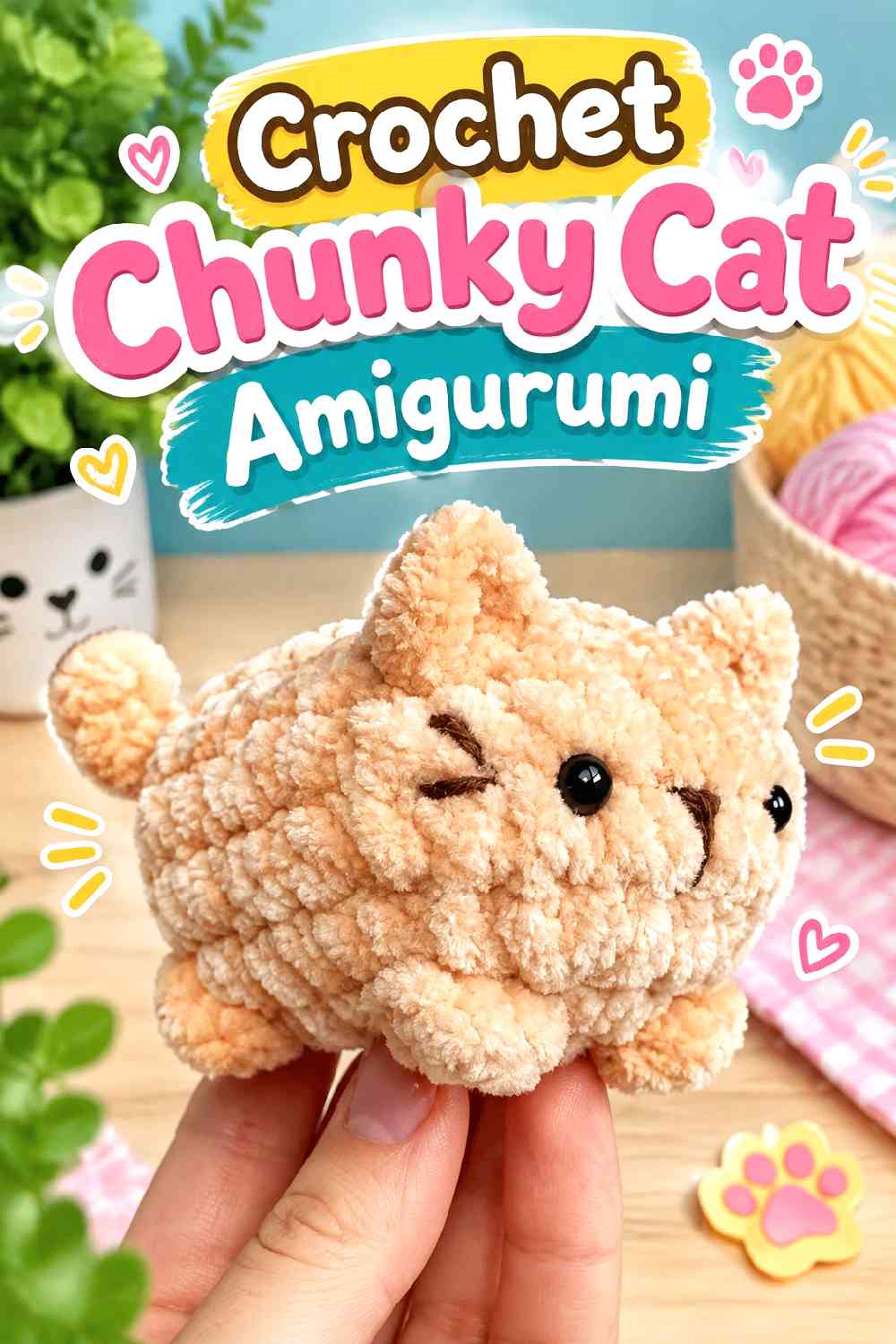
A rounder cat offers a low, substantial silhouette that works well near the front of a shelf. It can balance taller objects such as an owl, candle, tree, or gnome without introducing another narrow vertical piece.
Chunky Yarn Uses Shelf Depth Quickly
A plush or chunky-looking cat may be visually compact while still taking up significant physical space. Check the depth of the body before planning to place it in a narrow gap between book rows.
For a tighter book nook, changing yarn scale may be worth exploring, but fabric density and facial proportions should be checked again after any substitution.
Let the Tail Help Define the Pose
Tail position can change how much room the cat needs. A tail kept close to the body creates a more compact silhouette, while one extending outward makes the pose more expressive but needs more clearance.
Arrange the finished cat with the neighboring books in place. That is a better test than judging its footprint on an empty table.
Creator Credit: Crafter Frog
8. Crochet Little Penguin Amigurumi
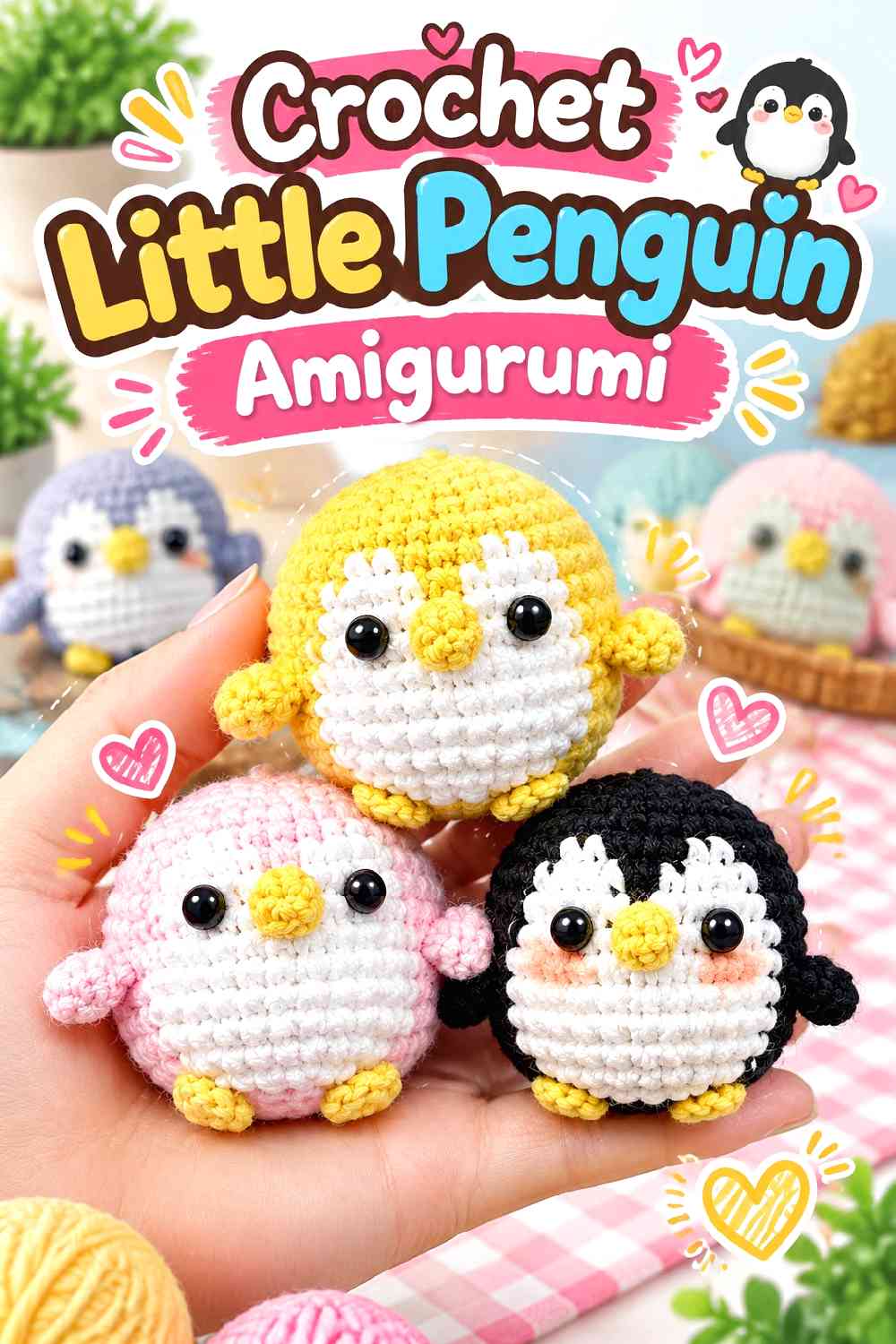
A penguin adds a crisp, graphic silhouette to a winter nook. Its contrasting body areas can remain easy to recognize even when the figure is surrounded by darker books or neutral winter decorations.
Strong Color Blocking Helps on a Busy Shelf
A shelf full of book jackets already contains many colors and lines. A penguin’s simpler color arrangement can give the eye somewhere to rest.
If you adapt the palette, preserve enough contrast between major body sections for the figure to remain recognizable from several feet away.
Pay Attention to the Base Before Displaying It
A rounded penguin can look charming while still being difficult to position upright if the stuffing or lower shaping is uneven.
Before finishing the surrounding nook, test the figure on the actual shelf. If it naturally leans, adjusting its placement beside a stable prop may work better than forcing it into an exposed position where every small tilt is noticeable.
Creator Credit: Ngochan Crochet
9. Crochet Winter Snowman Amigurumi
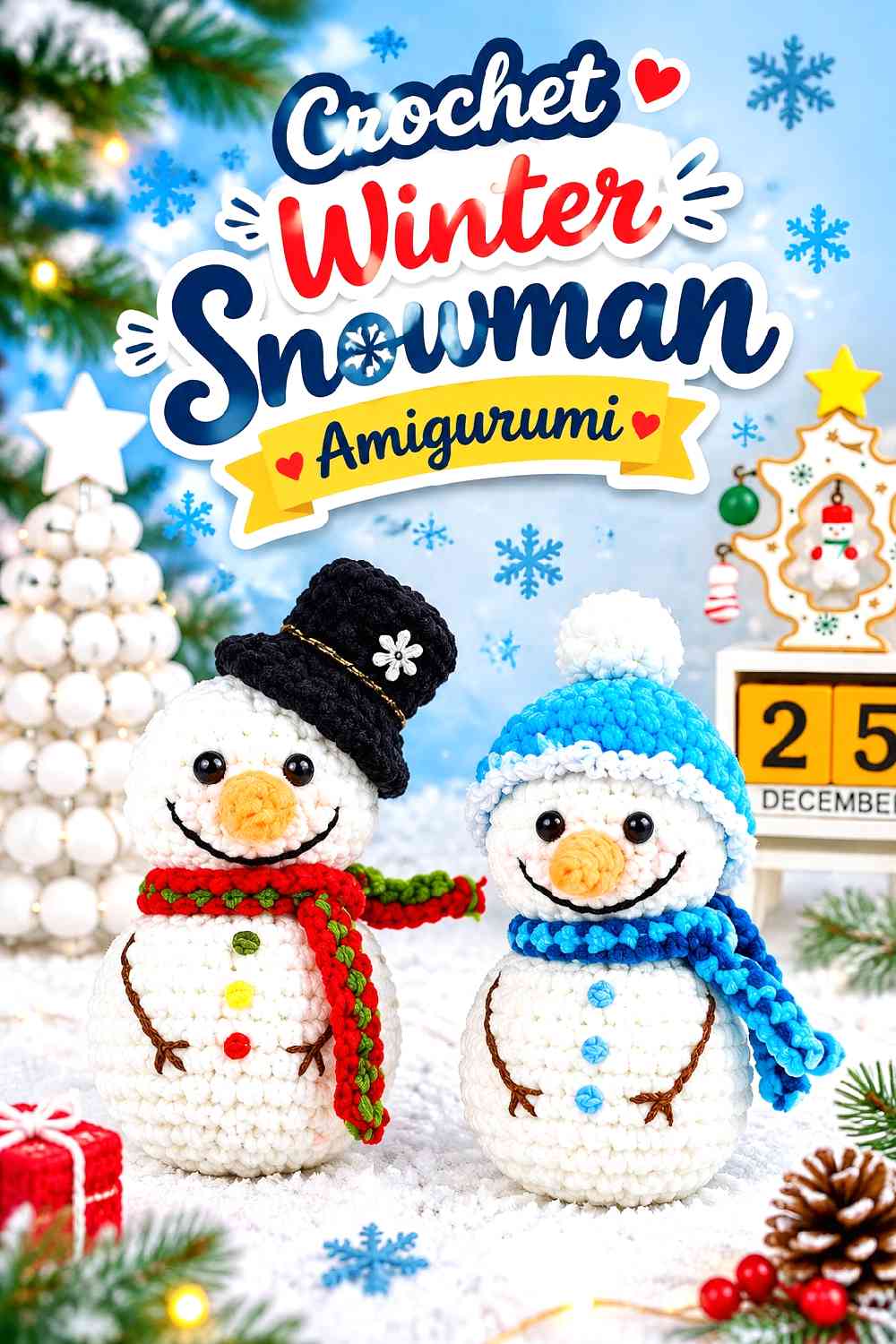
A snowman is one of the clearest winter signals in this collection, and its stacked shape adds height without the complicated outline of antlers or long ears. It works well toward the back of a scene where the upper body can remain visible above shorter props.
Keep the Stacked Shape Visually Balanced
A snowman depends on its rounded sections reading as one stable figure. Uneven stuffing can make those sections lean or distort, which becomes noticeable when the character is lined up against straight book spines.
Check the silhouette from the front and side before final finishing rather than judging only from above while crocheting.
Too Many Decorations Can Hide the Simple Form
Scarves, hats, buttons, and other winter details can make a snowman more distinctive, but the shelf may already contain several decorated objects.
If the surrounding nook is busy, a restrained version can provide a useful visual pause. Save stronger embellishment for the main focal character.
Creator Credit: SpringDay DIY
10. Crochet Cozy Gnome Amigurumi
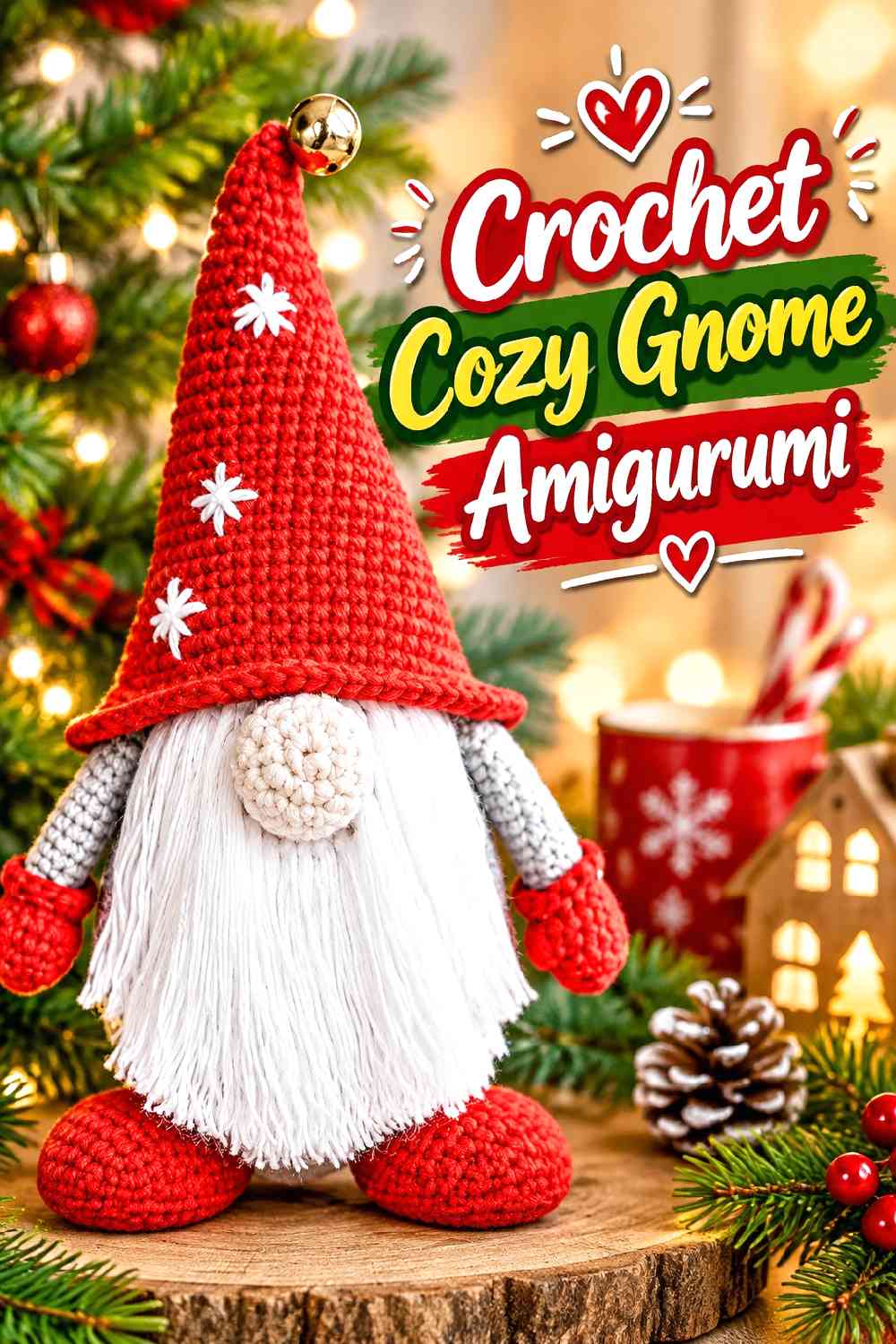
A gnome introduces a tall hat, hidden-face styling, and a strong triangular outline. Those differences make it an effective way to break up a row of animal faces.
The Hat Controls the Whole Silhouette
The hat is usually the first feature the eye notices, so check its finished direction before deciding where the gnome belongs. A leaning or elongated hat may require more side clearance than the body itself.
Placing the gnome beside simple book spines can make the hat shape more visible than placing it directly in front of complicated cover art.
Beard Texture Can Become Part of the Winter Mood
A textured beard gives the nook another surface treatment, especially when paired with smoother objects such as a candle or cup.
Because textured fibers can visually expand the lower face area, avoid squeezing the gnome between two equally detailed pieces. A little negative space helps the silhouette remain readable.
Creator Credit: CREANDO CON PILAR
11. Crochet Scarfed Teddy Bear Amigurumi
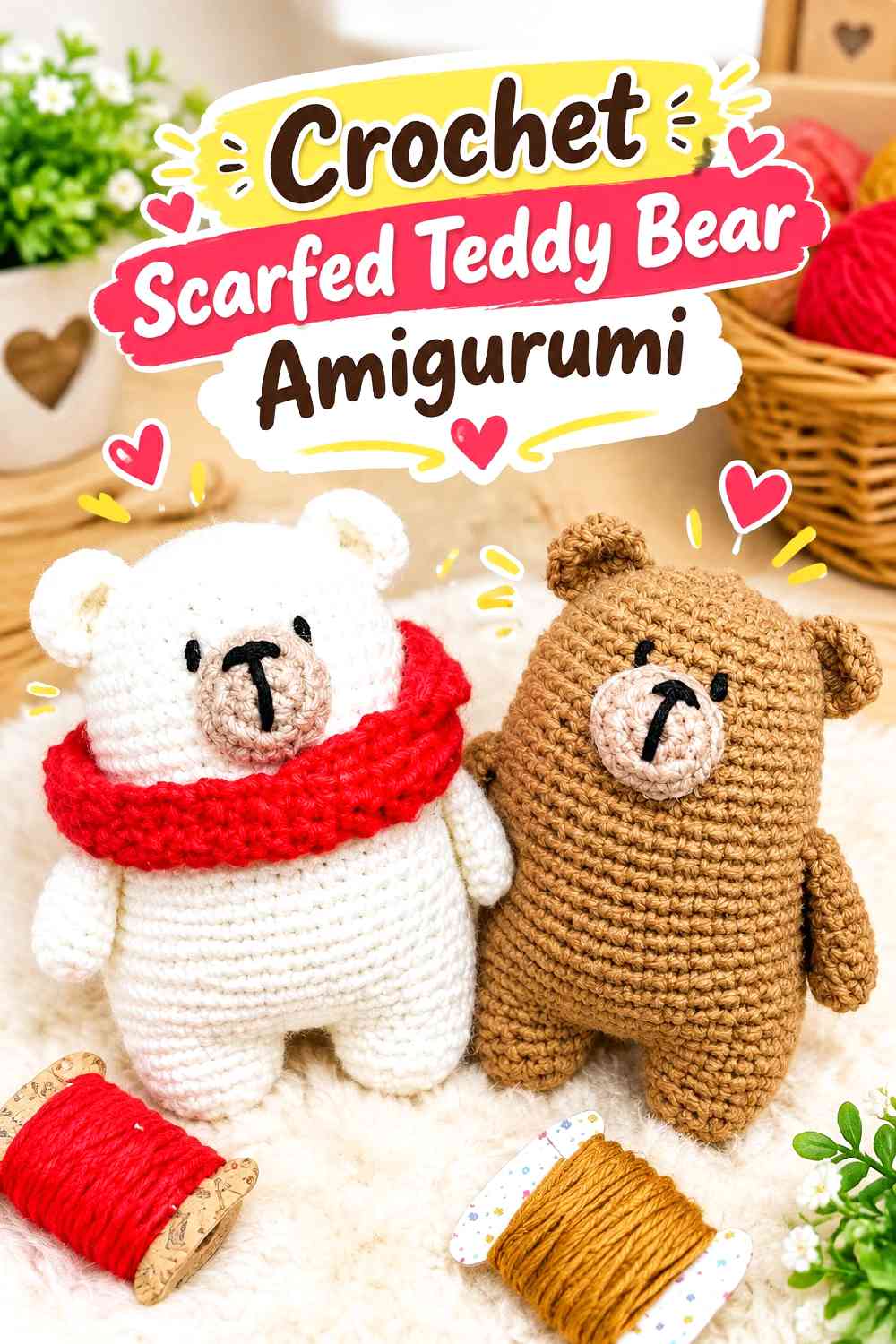
A teddy bear with a scarf feels more like a winter shelf character than a generic stuffed bear. The scarf provides the seasonal cue while the familiar bear shape keeps the project compatible with both woodland and storybook displays.
The Scarf Is an Easy Place to Connect Your Color Palette
If several tutorials in the nook use unrelated yarn colors, a small accessory can help bring them together. Repeating one accent color in the bear’s scarf, the mushroom caps, or the nearby house can create cohesion without remaking the entire character.
Check the scarf’s bulk against the neck and arms so it does not overwhelm the face when the bear is scaled down.
A Wider Body Works Well as a Front Focal Piece
The bear’s broader silhouette can hold visual attention near the front of the shelf. It is a useful counterpoint to narrow objects such as candles and trees.
Leave enough width around the arms and scarf for the figure to look intentional rather than wedged into an available gap.
Creator Credit: Yarn Symphony
12. Crochet Mini Mushroom Cluster
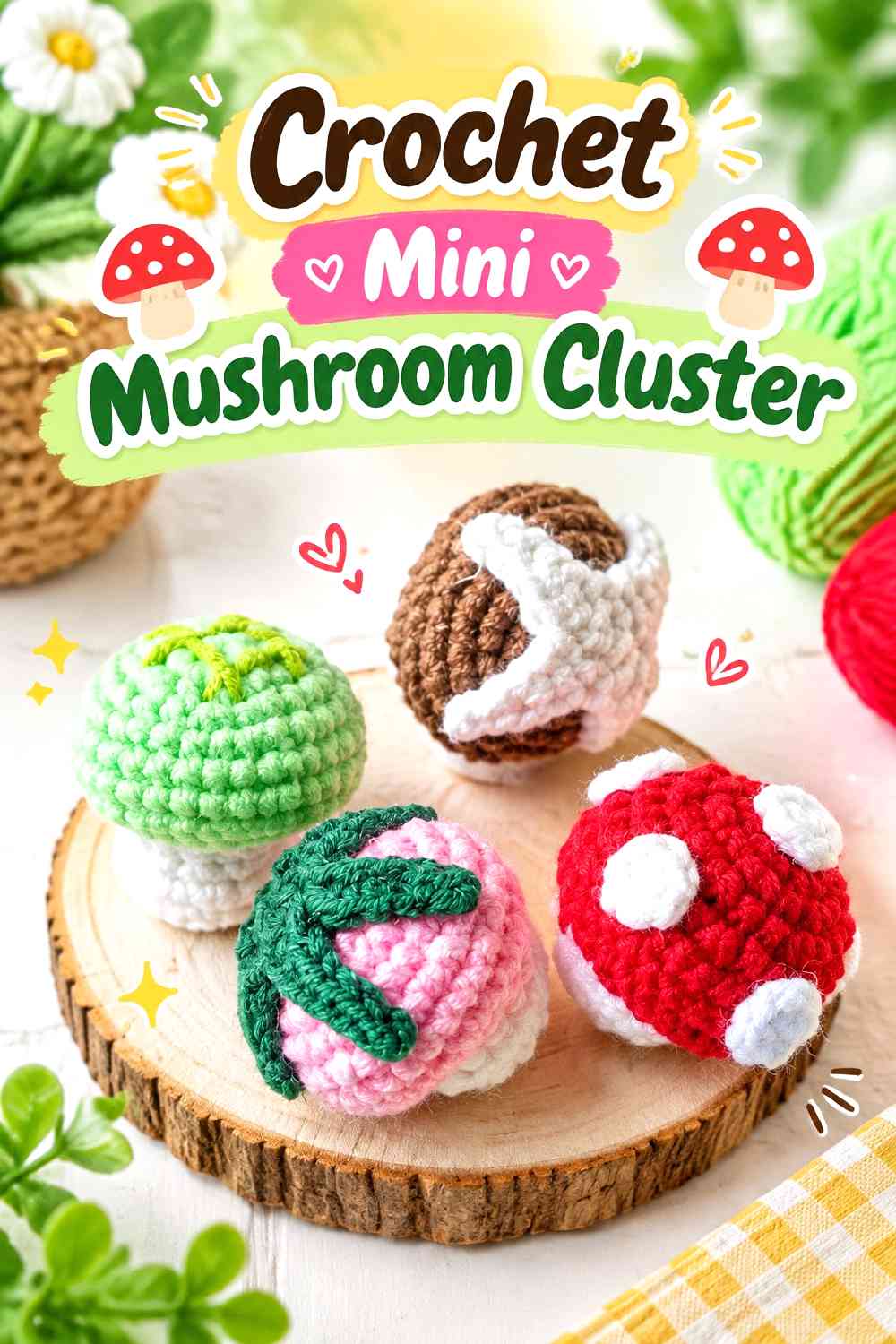
Mushrooms are valuable book-nook pieces because they can function as scenery instead of another main character. A group of different caps creates a low woodland layer around the feet of animals, cottages, or trees.
Use Mushrooms to Fill Awkward Low Spaces
The area directly in front of taller characters often looks empty, but another full-sized amigurumi can make the shelf overcrowded. Small mushrooms can fill that space while keeping the main figure visible.
Try arranging the finished pieces before deciding whether you need a single mushroom or a group.
Vary Shape Before You Vary Every Color
A cohesive mushroom cluster does not require a rainbow palette. Differences in cap width, height, and placement can provide enough variety.
Keeping several related colors often makes the mushrooms feel like part of one landscape rather than separate decorative objects collected from unrelated projects.
Creator Credit: Mayy Handmade
13. Crochet Coffee Cup Amigurumi
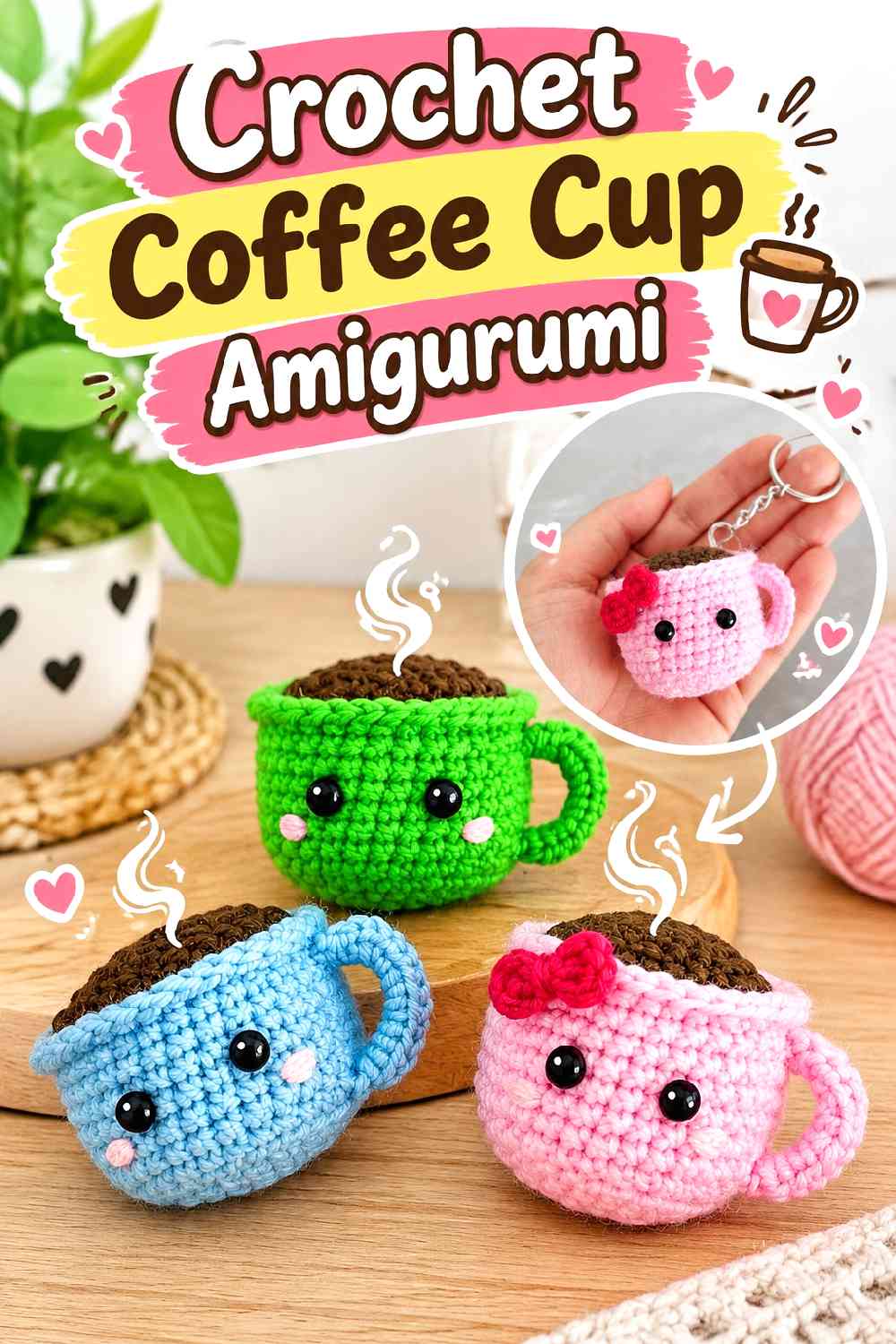
A crochet coffee cup changes the story of the shelf without adding another animal. Beside a mouse, bear, or gnome, it can suggest a reading break or cozy indoor scene.
Turn the Handle Toward the Viewer
Small props are easy to lose visually. A coffee cup can become a plain cylinder from the wrong angle, while a visible handle immediately explains what the object is.
Experiment with the orientation after all the other shelf pieces are in place instead of deciding on one fixed viewing angle too early.
One Everyday Object Can Make the Scene Feel Lived In
A nook composed entirely of characters can feel like a display case. Introducing a familiar object suggests that the characters inhabit the space.
You do not need several household props to create that effect. One cup placed thoughtfully near the central character may be enough.
Creator Credit: Crochet dreamland
14. Crochet Winter Candle Amigurumi
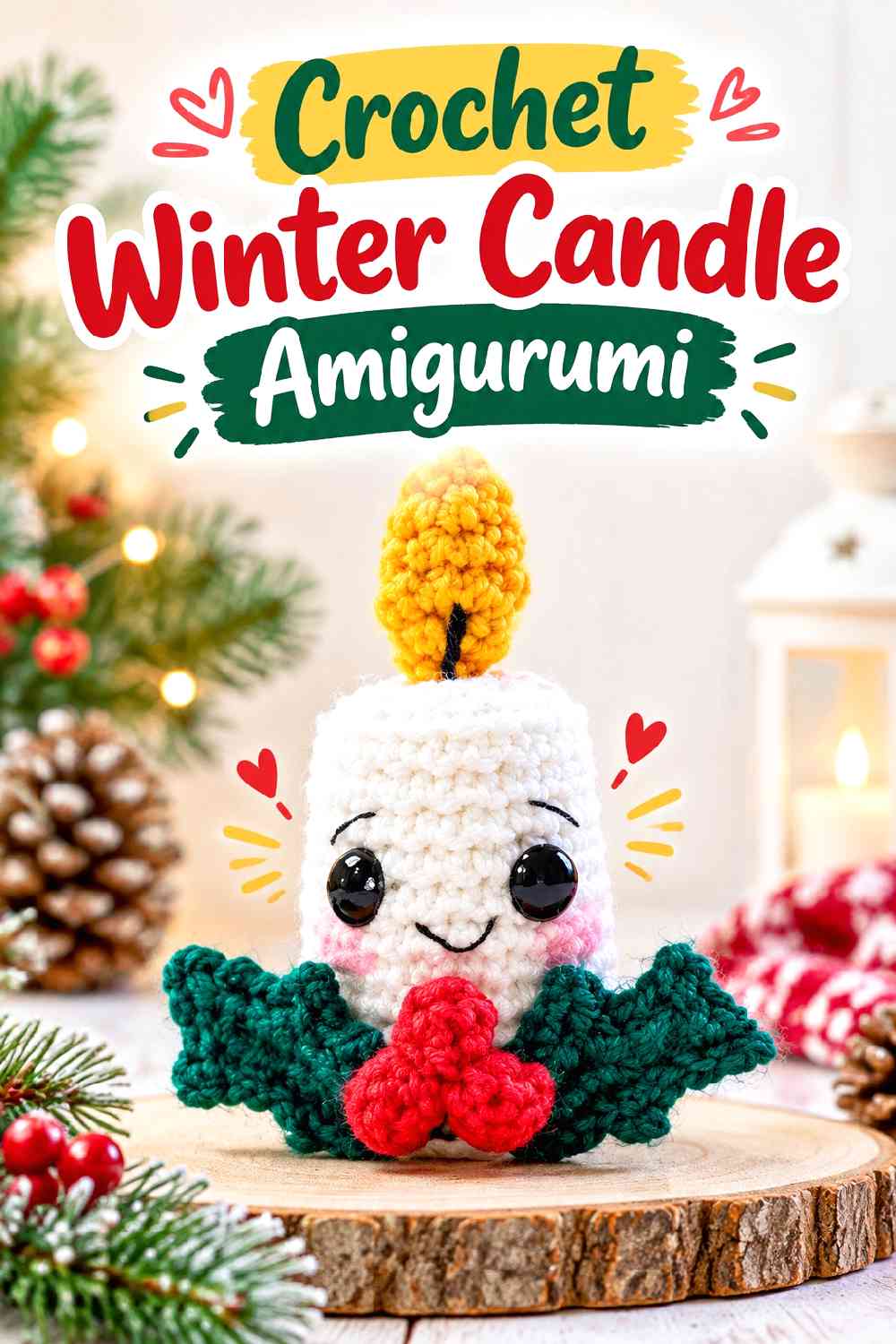
A crochet candle is a useful narrow filler for spaces that cannot accommodate another animal. Its vertical form can also introduce the visual idea of warm light without requiring an actual flame or electrical element.
Slim Props Are Useful Between Larger Characters
When a scene contains a broad bear, round cat, and textured hedgehog, another wide object can make the composition crowded. A candle fills height while keeping the footprint relatively simple.
Use it where a gap looks too empty for nothing but too narrow for a full character.
Make the Flame Easy to Read
The top detail is what separates a candle from a simple crocheted cylinder. If you adapt colors, maintain enough contrast for the flame to remain visible against the books behind it.
For displays accessible to children or pets, avoid assuming glued or detachable embellishments are secure enough for toy use.
Creator Credit: ToyGurumi
15. Crochet Gingerbread Man Amigurumi
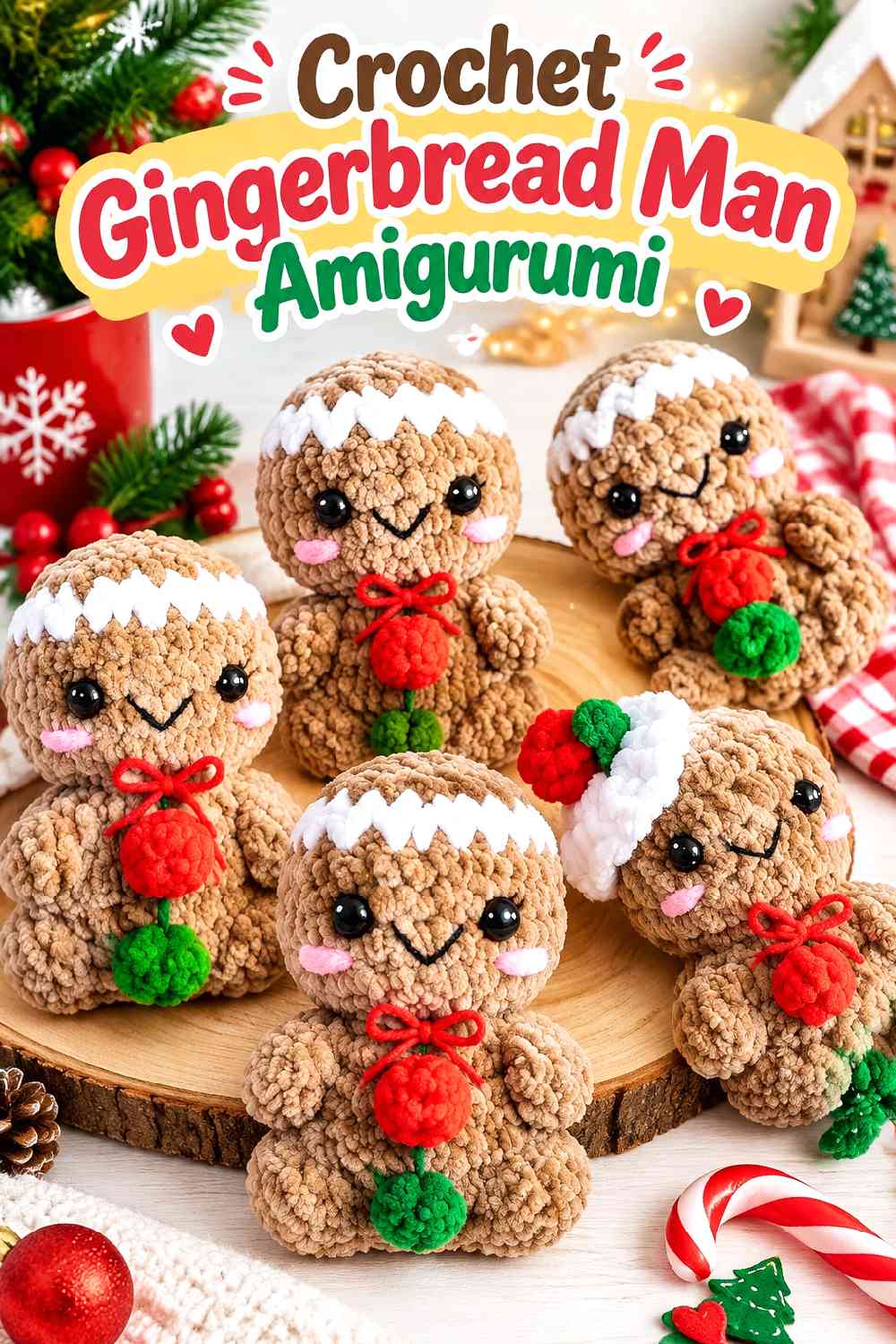
A gingerbread figure gives the shelf a flatter, front-facing character shape than the round woodland animals. That makes it especially useful when you want a seasonal figure that can sit close to the books instead of projecting far into the room.
A Flatter Silhouette Can Save Valuable Depth
Bookcases with shallow shelves do not always suit deep plush forms. A relatively flat character can provide a recognizable focal point while leaving more usable space in front.
Check the finished side profile before assuming it will fit a particularly narrow shelf.
High-Contrast Details Matter More at Small Scale
Gingerbread-style decoration often relies on small contrasting features. When reducing scale, elaborate surface details may stop reading clearly from normal viewing distance.
Choose the details that contribute most to the expression and overall silhouette rather than trying to make every tiny accent equally prominent.
Creator Credit: By Asalet Calışkan
16. Crochet Little House Amigurumi
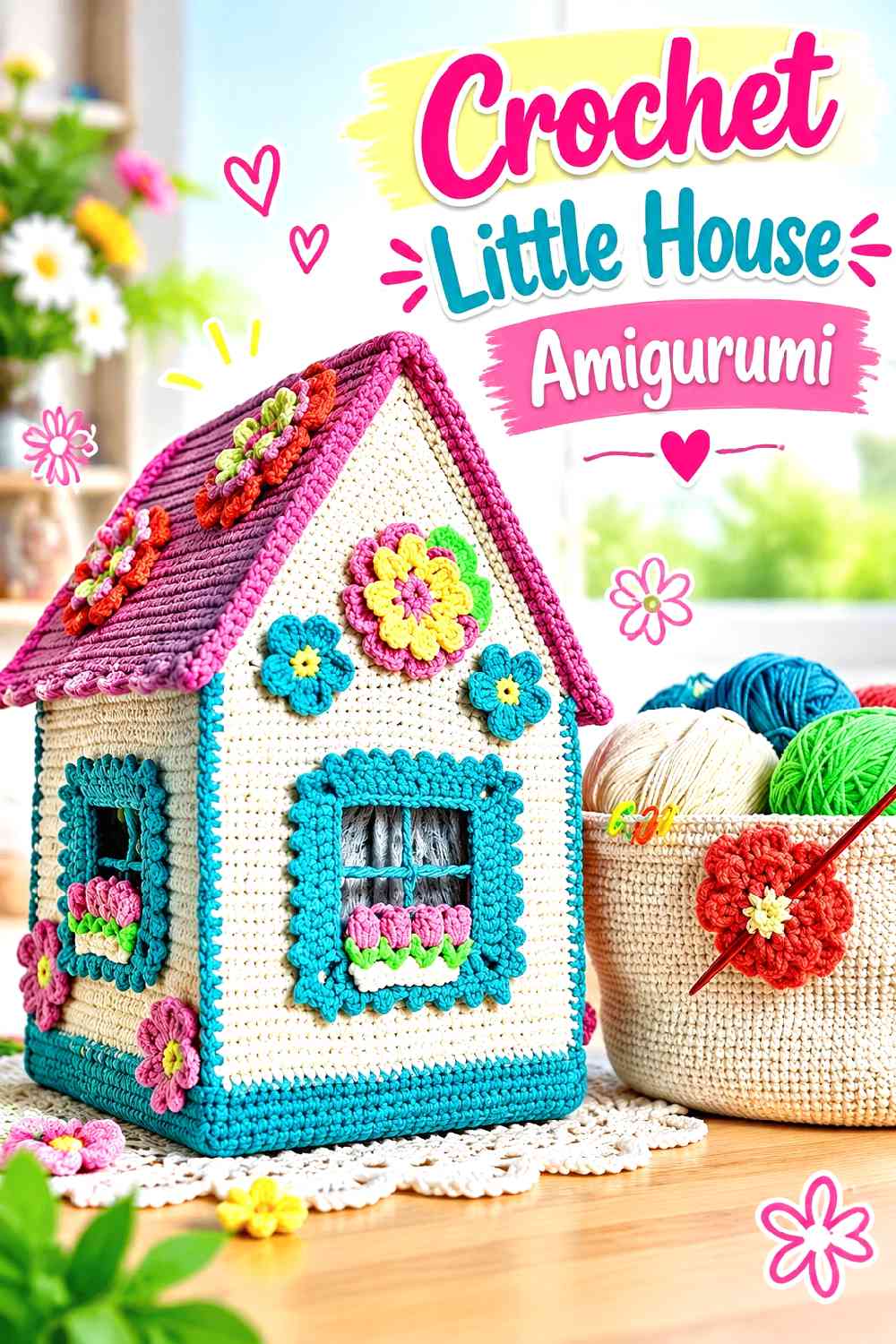
A crochet house can turn a loose collection of animals into an actual setting. Instead of treating it as another front-row object, use it as a background anchor that explains where the mouse, fox, mushrooms, and winter props belong.
Confirm the Finished Scale Before Making It the Backdrop
House tutorials can produce much larger decor than tiny book-nook miniatures. Do not assume a project will fit merely because the finished object is called a crochet house.
Check the creator’s finished dimensions and compare them directly with your available shelf height, width, and depth. If you alter yarn size, remember that windows, doors, roof details, and other small features also change scale.
The Roofline Can Organize the Whole Composition
A peaked roof creates a strong background silhouette. Positioning shorter mushrooms, animals, or a candle in front of it naturally creates layers.
Avoid hiding every wall behind characters. Leaving part of the house visible makes the setting clearer and prevents the backdrop from becoming an unnecessary mass of crochet.
Creator Credit: EASY CROCHET PATTERNS
17. Crochet Winter Tree Amigurumi
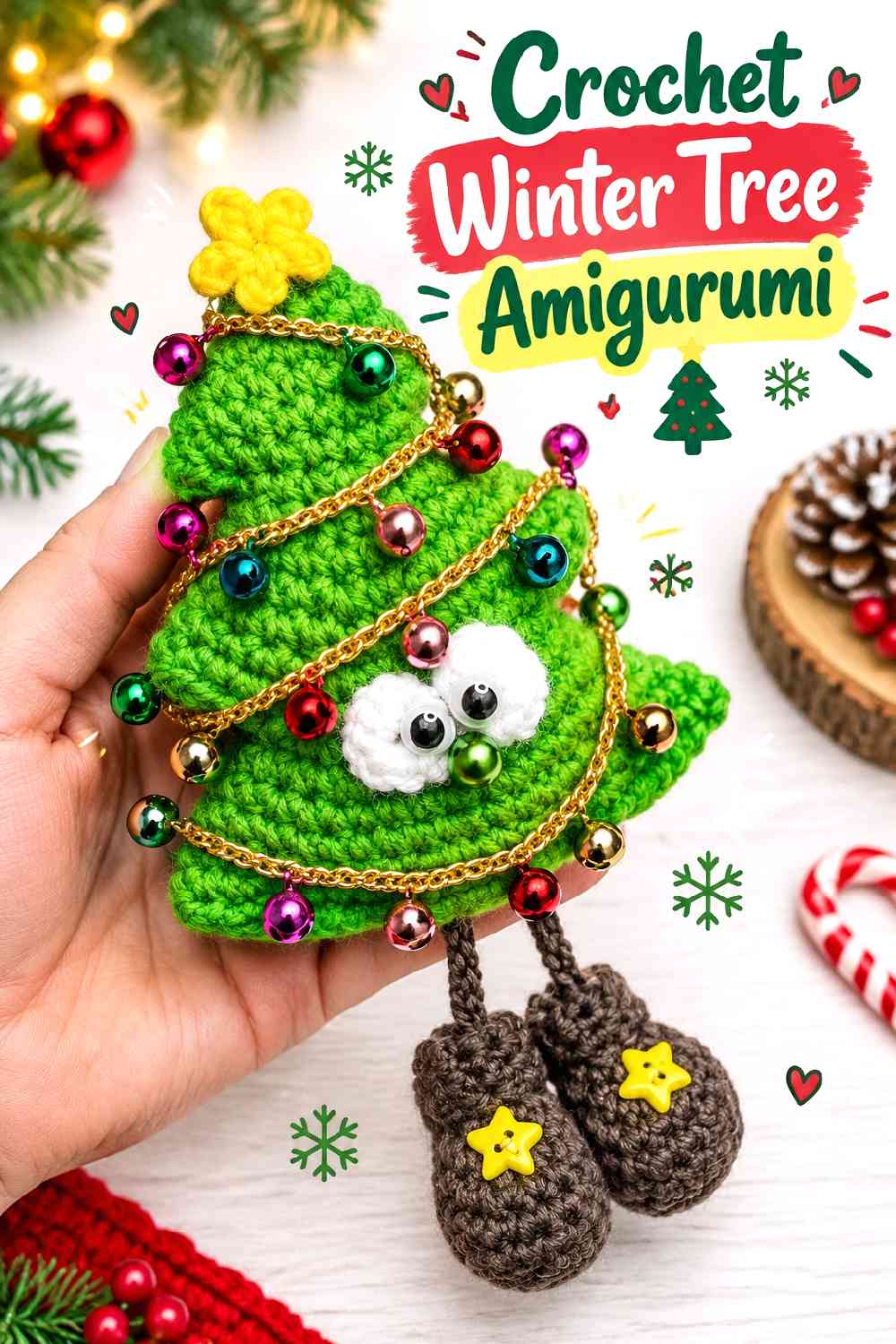
A crochet tree is a strong finishing piece for a winter book nook because its tapered shape adds height without looking like another character. It can frame the house or balance a tall gnome on the opposite side of the shelf.
Put the Tallest Tree Farther Back
Layering is easier to read when taller scenery sits behind the main characters. A tree placed toward the back can remain visible above smaller animals while leaving the foreground open for more detailed pieces.
Check the shelf above before committing to the height. A squeezed tree loses the clean tapered outline that makes it useful.
Keep Ornamentation Secondary to the Shape
A tree does not need heavy decoration to establish the winter setting. Too many small attachments can compete with nearby character faces and may create maintenance or safety concerns.
For a book nook, a clear silhouette and coordinated yarn palette can be more effective than covering every branch area with separate details.
Creator Credit: Magic Uncinetto
Which Crochet Amigurumi Works Where on a Winter Shelf?
| Shelf role | Projects that suit the role | Main thing to check |
|---|---|---|
| Main character | Fox, mouse, reindeer, teddy bear | Enough open space around the face and accessories |
| Woodland companion | Owl, bunny, cat, hedgehog | Overall footprint, ears, wings, tails, or texture |
| Winter character | Penguin, snowman, gnome | Finished height and upright stability |
| Low scenery | Mushrooms | Keep them below the main focal character |
| Small story prop | Coffee cup, candle | Make distinctive features visible from the front |
| Seasonal accent | Gingerbread man | Avoid overcrowding small decorative details |
| Background anchor | House, tree | Confirm shelf dimensions before starting |
The strongest arrangement usually combines several roles instead of choosing five projects from the same category. One character, one low woodland detail, one narrow prop, and one taller backdrop can already create a convincing miniature scene.
Conclusion
For a woodland-style winter nook, start with the fox, mouse, hedgehog, mushrooms, and tree. For a warmer storybook shelf, the dressed mouse or scarfed teddy can become the main character beside the coffee cup, candle, and little house.
If you want the display to feel more seasonal, the reindeer, snowman, gnome, gingerbread man, and tree make the winter theme much more obvious. A cat, bunny, owl, or penguin can soften that holiday emphasis when you want the shelf to stay on display beyond December.
Whichever combination you choose, check the original tutorial for the creator’s exact construction, materials, scale, and finishing details. Plan the shelf itself before making all 17 pieces; a few carefully varied amigurumi usually create a stronger book nook than filling every available gap.
Frequently Asked Questions
Do all of these crochet tutorials make miniature book-nook-sized amigurumi?
No. They teach objects that can work as book-nook characters or scenery, but the original finished sizes vary. Check the creator’s stated dimensions where available and compare them with your actual shelf before starting.
If a tutorial produces something larger than your nook needs, changing yarn and hook size may alter the finished scale, but it can also affect fabric density, stuffing visibility, and small details.
How can I make crochet amigurumi smaller for a book nook?
Using a thinner yarn with an appropriately matched smaller hook can reduce the size of many amigurumi designs without rewriting the construction. The result is not guaranteed to scale perfectly, especially when a project contains tiny accessories or detailed facial features.
Make a small test section first and check whether the fabric remains dense enough to contain stuffing.
What yarn works well for tiny crochet shelf amigurumi?
Smooth yarn can make small stitches, facial details, and shaping easier to see. Fuzzy or plush yarn creates a softer surface but usually makes fine details less distinct and may increase the apparent bulk of the finished piece.
There is no single correct yarn for every project. Choose according to the scale, texture, and structure you want, then verify the creator’s materials before substituting.
How do I stop small amigurumi from falling over on a bookshelf?
Balanced stuffing and a stable lower shape are the first things to check. Test each finished piece on the actual shelf before arranging the complete scene.
A character that naturally leans may work better beside a house, book, or other stable object than standing alone in the center. Avoid adding improvised internal weights where they could create a safety problem.
Are safety eyes suitable for crochet book-nook amigurumi?
They can be appropriate for decorative pieces that remain out of reach, but small detachable components deserve additional caution when children or pets can access the display. Embroidered facial features are an alternative when loose or removable parts are a concern.
The same consideration applies to beads, buttons, glued ornaments, and other small embellishments.
How many amigurumi pieces should I put in one book nook?
There is no universal number because shelf width and project scale vary. Instead of trying to fill every inch, arrange pieces by role: one obvious focal character, one or two supporting figures, a low detail such as mushrooms, and a background or narrow prop.
Leaving some open space between silhouettes usually makes individual crochet pieces easier to recognize than packing the nook completely full.