A crochet vintage fruit ornament collection can give a winter tree a completely different personality from standard stars, snowflakes, and baubles. Apples, pears, citrus, berries, plums, and grapes bring rich orchard colors, while pineapple, banana, watermelon, mango, and avocado add the playful look of old-fashioned fruit illustrations and market displays.
The strongest collection does not depend on color alone. Fruit shapes behave differently once they are hanging. A round orange works almost like a soft bauble, a pear carries more weight toward its lower half, cherries hang as a pair, grapes form a deep cluster, and a banana takes up horizontal or diagonal branch space.
The tutorials below teach the individual crochet fruits rather than nineteen matching Christmas ornaments. Finish each fruit according to its original creator, then plan the hanging loop, tree placement, palette, and optional vintage-style embellishment separately. Check finished dimensions and weight before making multiples, especially if you intend to use thinner yarn to reduce the scale.
Quick List
- Crochet Ruby Apple Vintage Ornament
- Crochet Golden Pear Vintage Ornament
- Crochet Garnet Pomegranate Ornament
- Crochet Deep-Plum Vintage Ornament
- Crochet Blush Peach Vintage Ornament
- Crochet Strawberry Heirloom Ornament
- Crochet Raspberry Cluster Ornament
- Crochet Twin Cherry Vintage Ornament
- Crochet Vineyard Grape Cluster Ornament
- Crochet Pomander Orange Ornament
- Crochet Tangerine Winter Ornament
- Crochet Golden Lemon Ornament
- Crochet Blush Grapefruit Ornament
- Crochet Gilded Pineapple Ornament
- Crochet Golden Mango Ornament
- Crochet Curved Banana Ornament
- Crochet Blueberry Jewel Ornament
- Crochet Watermelon Slice Vintage Ornament
- Crochet Retro Avocado Ornament
Choose a Vintage Palette Before Crocheting Multiples
Natural fruit colors are only one option. A coordinated palette can make tutorials from nineteen different creators look like one ornament collection.
For a darker winter tree, think about ruby, burgundy, dark plum, muted orange, olive green, cream, and antique-gold-like yellow. A softer interpretation could combine dusty peach, sage, pale citrus, faded berry red, cream, and warm brown.
Repeat a few colors across different fruits instead of matching every piece to a photograph of real produce. The same dark red can appear on apples, cherries, raspberries, and strawberries, while one olive or evergreen shade can connect several stems and leaves.
Texture matters too. Matte yarn creates a softer handmade look, while a restrained metallic-looking strand or small embroidered highlight can give selected ornaments a glass-ornament feel. Test unfamiliar yarn before committing to several pieces because texture and fiber changes can also affect firmness.
Test Hanging Balance Before Adding Permanent Loops
The best place for an ornament loop is not automatically the visual center of the fruit. What matters is how the completed, stuffed object settles when suspended.
Finish the fruit first whenever possible. Tie on a temporary strand and test several nearby attachment positions. Look for twisting, leaning, or an awkward tendency to hide the most recognizable side.
Compact fruit such as oranges and blueberries generally needs less surrounding branch room than grapes, pineapple, banana, or watermelon slices. Distribute the projecting pieces around the tree instead of placing every large or irregular ornament in one area.
If a tutorial includes a keychain loop or stem, do not assume that component is automatically strong enough or positioned correctly for your tree. Evaluate the finished piece and your intended hanging method separately.
Add Vintage Character Without Hiding the Crochet
A vintage-style fruit collection does not need heavy embellishment on every surface. In fact, too much trim can make the fruits harder to recognize and hide the crochet texture that makes the collection distinctive.
Consider concentrating decorative accents around leaves, seeds, stems, fruit crowns, or one side of the body. Cream embroidery, restrained beads, metallic-looking thread, tiny bows, or simple hanging cord can provide enough detail.
If ornaments will be accessible to young children or pets, rethink beads, sequins, detachable trim, or other small additions. Yarn-based and embroidered details may be more practical, although tree ornaments should still be placed appropriately for the household.
1. Crochet Ruby Apple Vintage Ornament
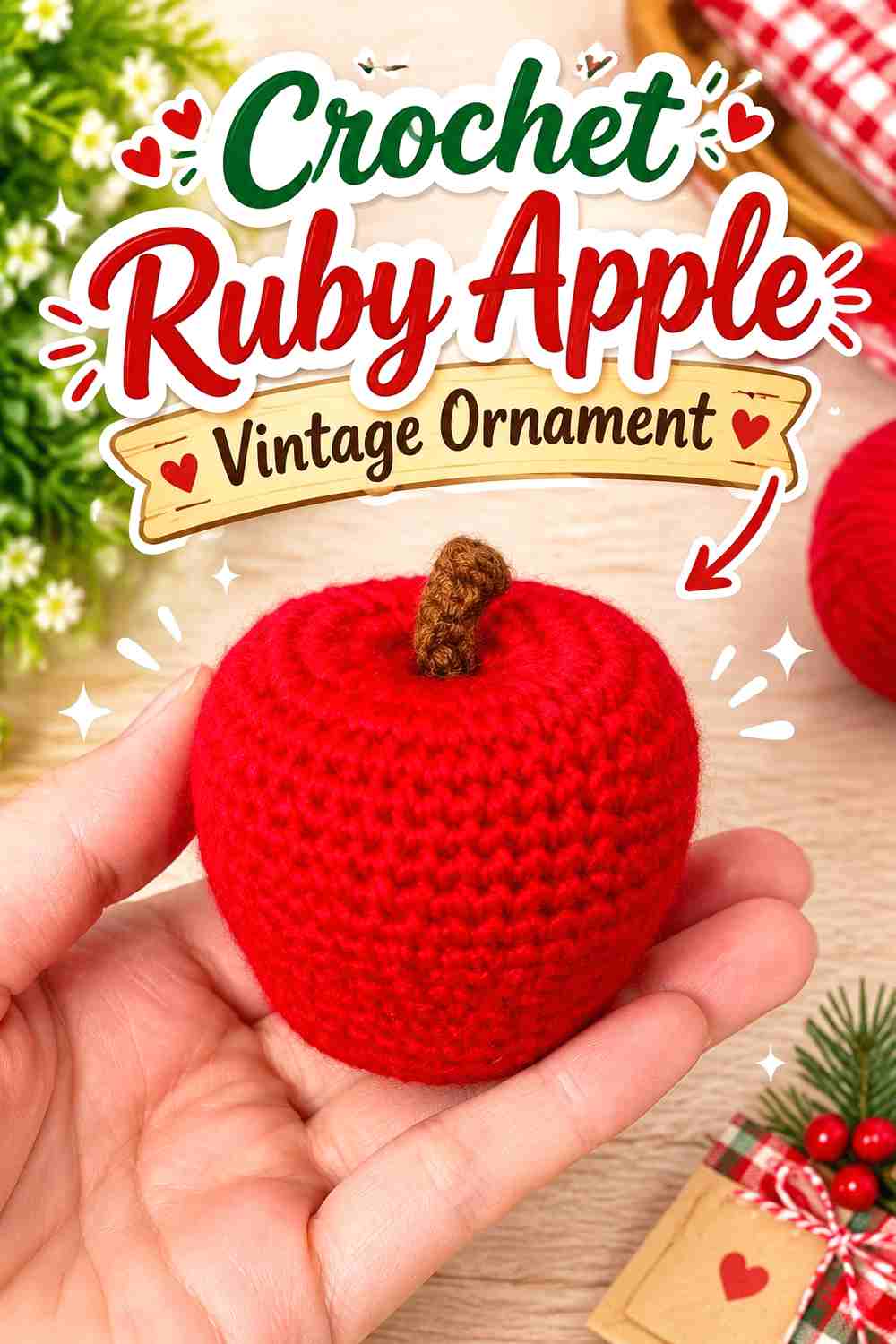
An apple is one of the strongest anchor shapes for a fruit-themed winter tree. The tutorial from Crocheting channel creates a stuffed apple with the rounded body and top detail needed to distinguish it from a plain ball ornament.
Deep red gives the project an obvious winter-tree role, but dark green, cream, muted gold, or dusty rose can push it further toward a coordinated vintage palette.
Preserve the Dip Around the Stem
A perfectly spherical apple can start looking like an ordinary bauble. The subtle shaping around the top is what helps the fruit keep its identity.
Follow the creator’s construction and check the finished contour before adding decorative surface details. Avoid covering the top shaping with an oversized hanging bow or heavy cluster of trim.
Use Apples as Repeating Anchor Ornaments
Statement fruits such as pineapple and grapes may only need to appear once or twice, while a compact apple shape is easier to repeat across several branches.
Using the same apple color in multiple areas can visually connect other one-off fruits without requiring every ornament to match.
Creator Credit: Crocheting channel
2. Crochet Golden Pear Vintage Ornament
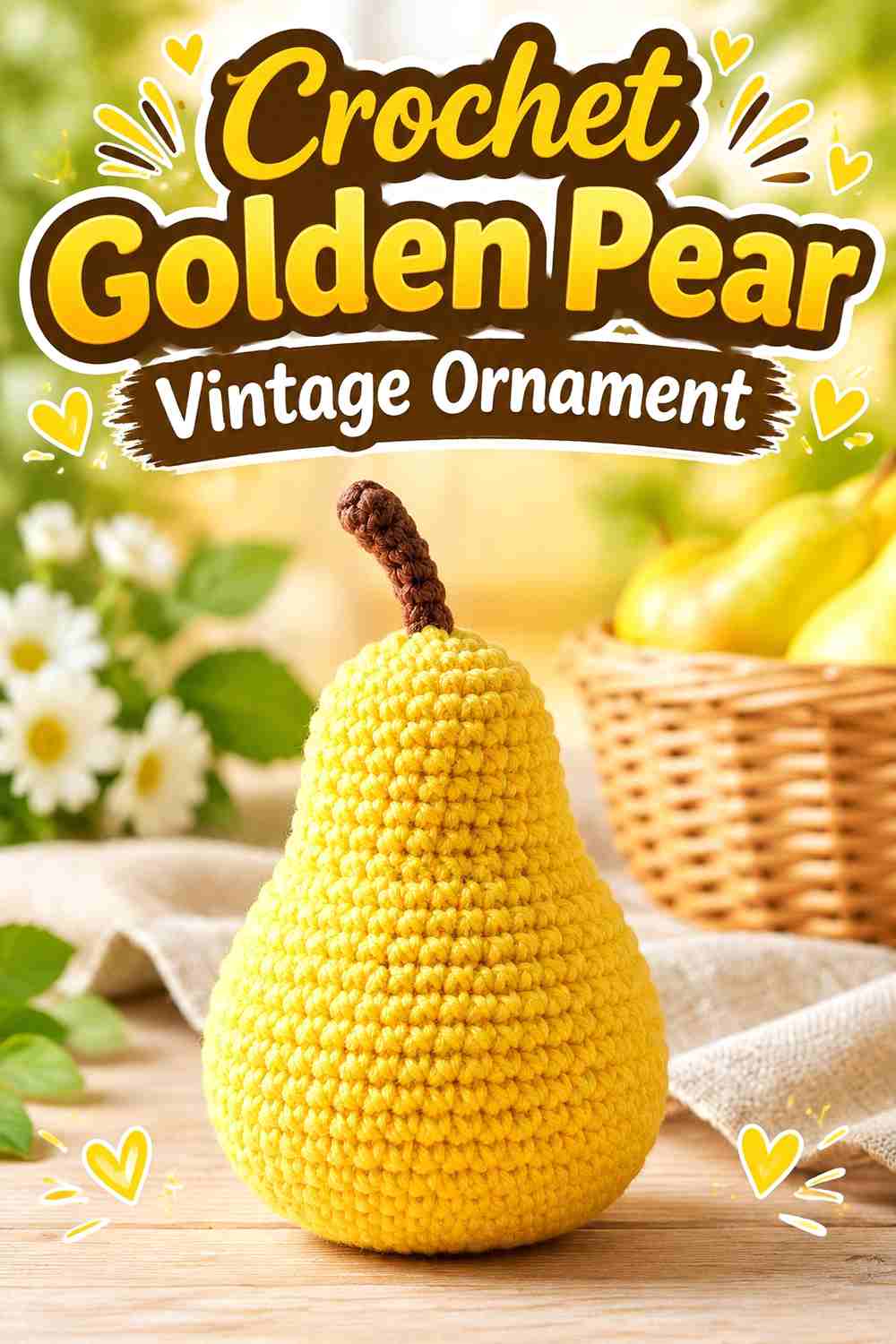
A pear introduces a more elegant vertical profile than the apple. Alextitia Tuto Crochet’s tutorial produces the recognizable narrow upper section and fuller lower body, giving this ornament a naturally tapered silhouette.
Muted green is an obvious choice, but antique-yellow, cream, dusty burgundy, or warm brown can make the finished pear feel less like play food and more like decorative tree fruit.
The Lower Weight Changes How the Pear Hangs
A pear carries much of its visual mass below the midpoint. That means the loop position deserves testing after stuffing and finishing.
Temporarily suspend the fruit and check whether it settles straight. A slight adjustment near the top can make a larger difference than trying to reshape the lower body afterward.
Pair Pears With Round Fruit for Better Rhythm
Several tapered ornaments together can make one section of the tree feel unusually vertical.
Alternate pears with apples, oranges, plums, or berries so the overall silhouette moves between narrow and round forms.
Creator Credit: Alextitia Tuto Crochet
3. Crochet Garnet Pomegranate Ornament
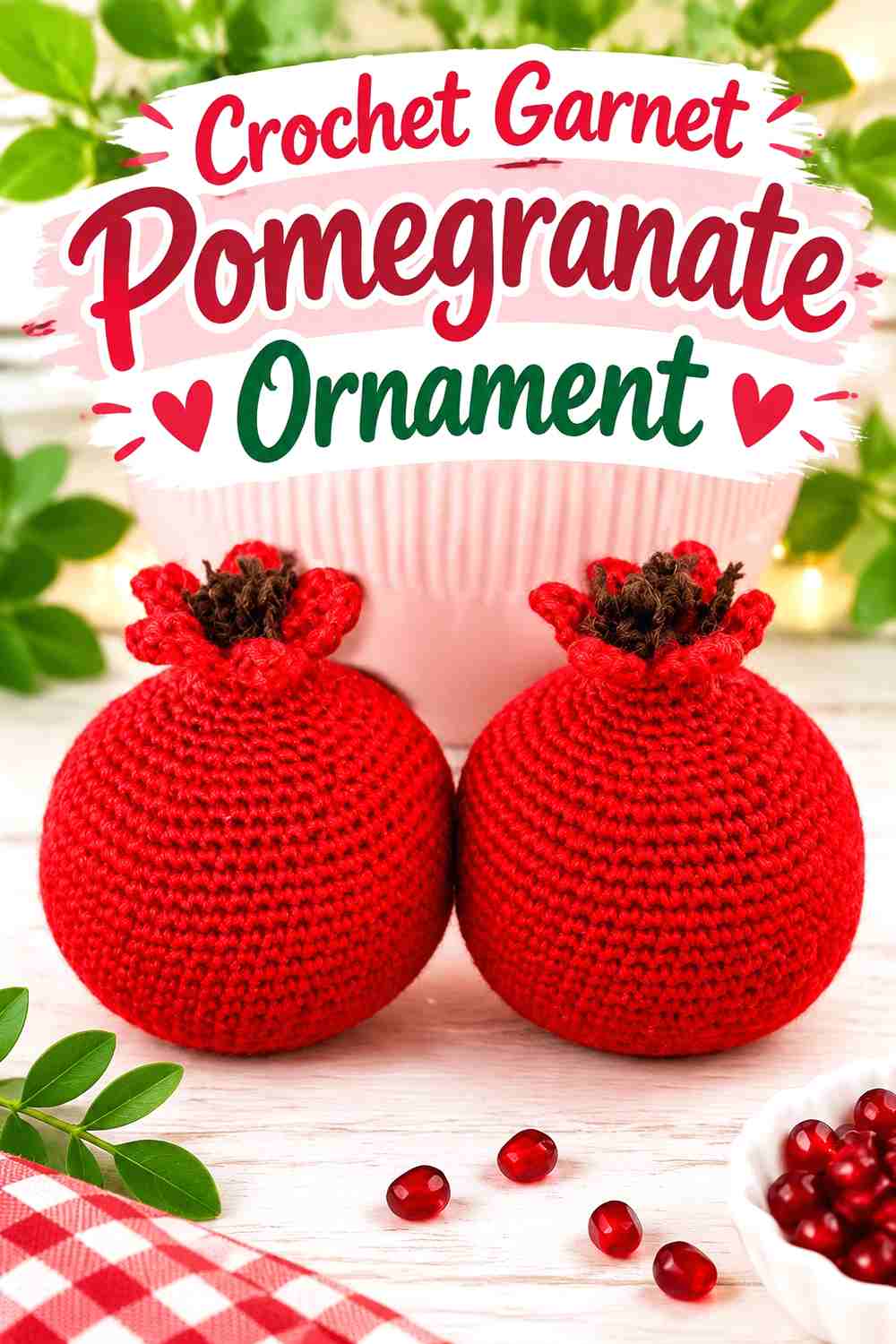
Pomegranate brings a distinctive crown-like top that makes it particularly useful in a decorative fruit collection. Farkli Dunyam demonstrates a dimensional crochet pomegranate whose upper detail separates it clearly from apples and round citrus.
Rich garnet, wine, dark crimson, or dusty red can give this fruit a strong winter presence without needing additional holiday symbols.
Keep the Crown Clear of the Hanging Loop
The pointed top is the pomegranate’s identifying feature. A bulky loop tied tightly around it can flatten or hide the detail.
Test where the fruit can be supported without pulling the crown inward. A small, visually quiet attachment usually lets the fruit itself remain the focus.
Use Pomegranate as a Dark Red Statement Piece
A collection containing cherries, strawberries, apples, and raspberries can already have plenty of bright red.
Give the pomegranate a deeper shade to introduce tonal variation. One dark garnet ornament can create more depth than making every red fruit identical.
Creator Credit: Farkli Dunyam
4. Crochet Deep-Plum Vintage Ornament
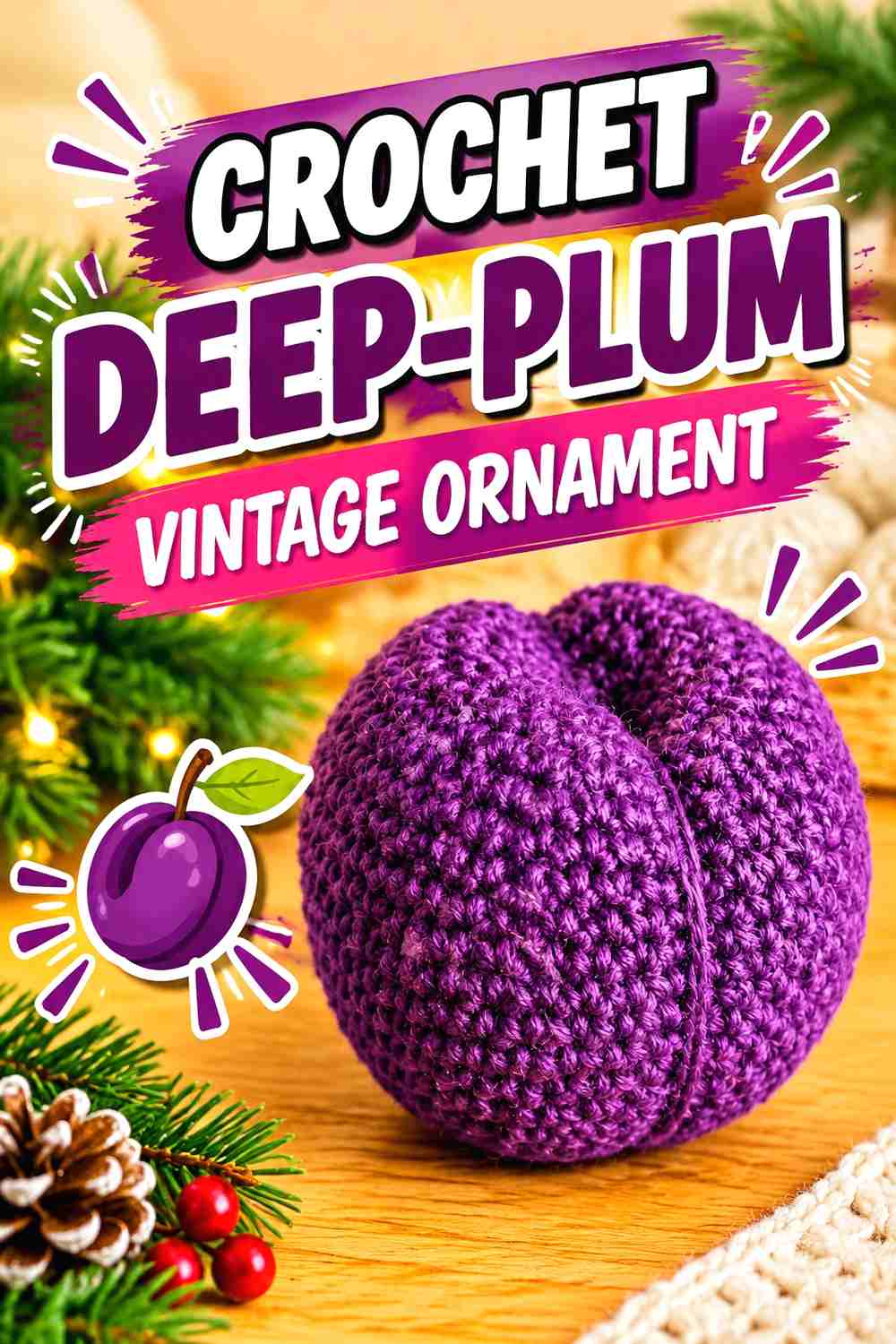
Plum is useful when the tree needs a dark jewel tone that does not repeat another red fruit. MummaJ Crochet’s tutorial creates a simple stuffed plum whose rounded form makes it easy to combine with more elaborate ornaments.
Deep purple, wine, mauve, or nearly black-purple yarn can all work within a vintage-inspired collection.
Dark Fruit Adds Depth Between Lighter Ornaments
Cream lemons, golden pears, peaches, and oranges can dominate a tree visually if every surrounding ornament is similarly bright.
Place dark plums beside those lighter pieces to create contrast and prevent the fruit collection from looking washed out.
Let the Fruit Shape Stay Simple
Because the plum already contributes an unusual color, it does not need elaborate additional decoration.
A simple stem, understated loop, and perhaps one restrained highlight can be enough. Heavy trim may turn a useful supporting ornament into another competing focal point.
Creator Credit: MummaJ Crochet
5. Crochet Blush Peach Vintage Ornament
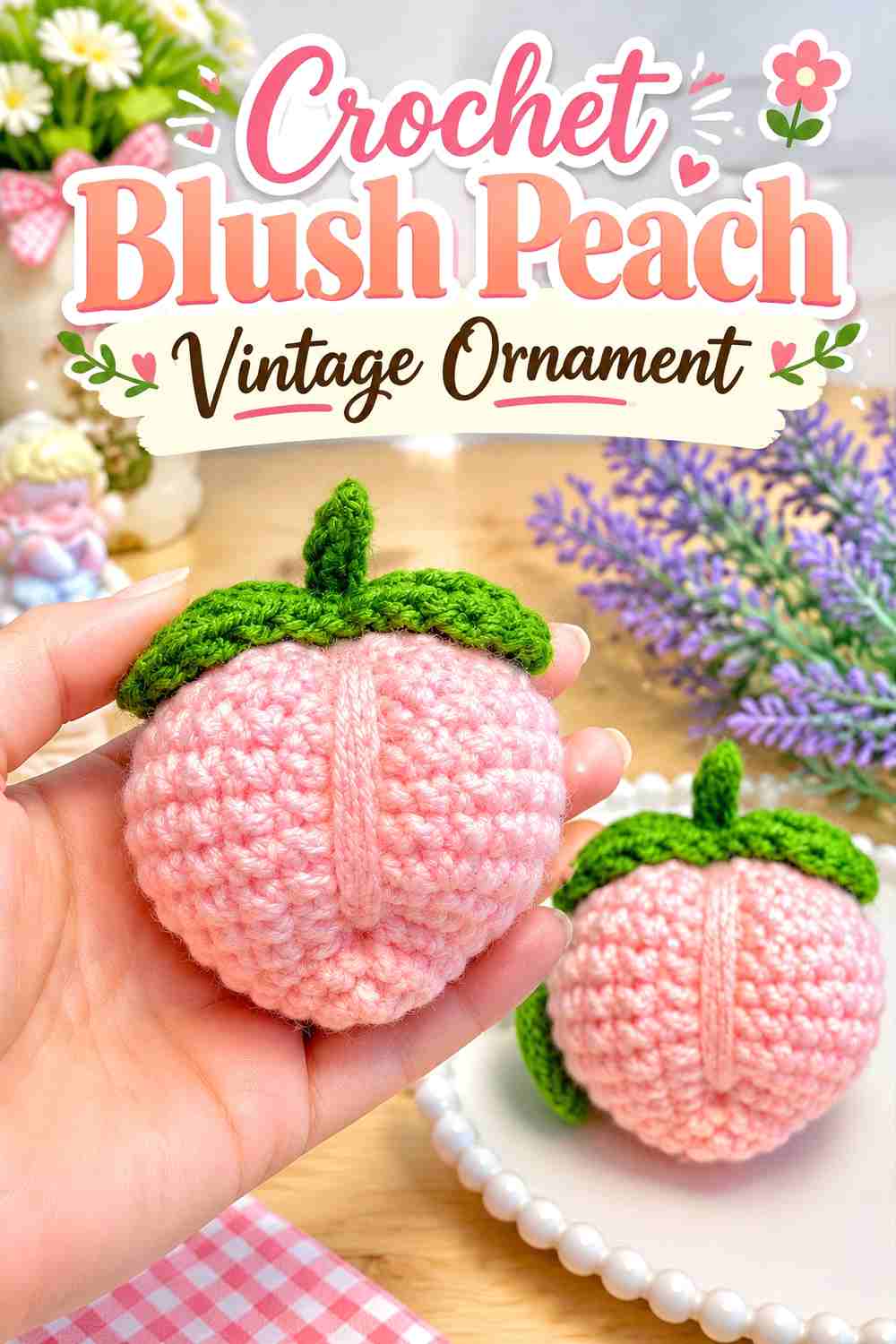
A peach introduces a softer color and a distinct center contour. vvw.studio’s tutorial includes the fruit, stem, and leaves, giving the finished piece several recognizable details beyond a round stuffed body.
Dusty peach, faded rose, cream with pink shading, or muted coral can soften a tree that otherwise relies heavily on burgundy and dark green.
Do Not Lose the Peach’s Center Contour
The shaping line is one of the clearest differences between a peach and another spherical fruit.
When adapting the project as an ornament, keep embellishment away from that contour and check that stuffing has not rounded the body so completely that the distinction disappears.
Peach Can Bridge Red and Gold Areas
A blush or coral fruit works well between deep cherries and warm yellow citrus.
Use it as a transition color rather than clustering all pale ornaments together. That distributes softer tones throughout the tree.
Creator Credit: vvw.studio
6. Crochet Strawberry Heirloom Ornament
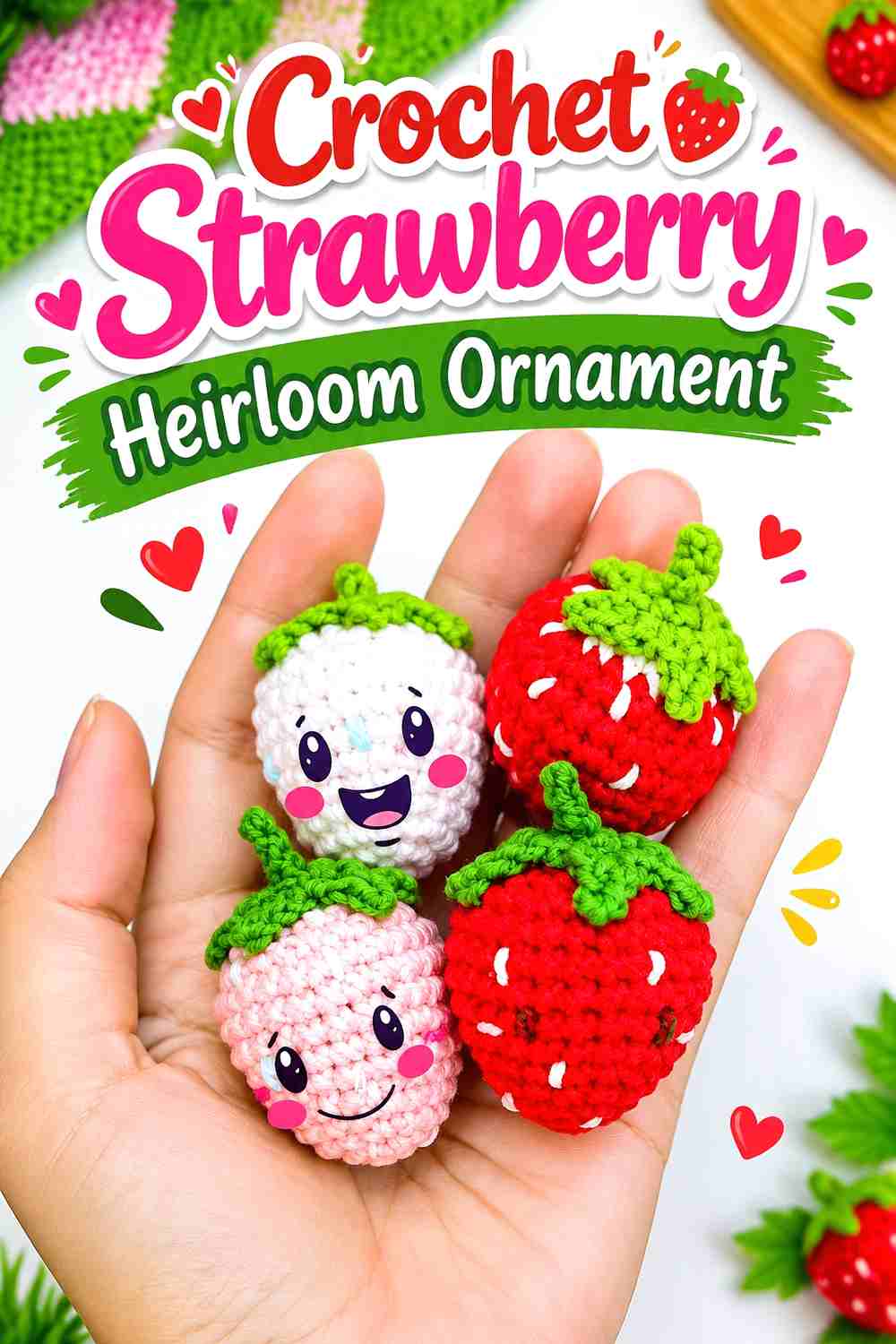
A strawberry offers one of the most recognizable tapered fruit silhouettes in the collection. AnDesign_Craft demonstrates a dimensional strawberry with a leafy top, giving you a natural contrast between the berry body and crown.
The seeds also provide ready-made locations for subtle decorative accents if you want a more elaborate ornament.
Turn Seed Details Into Controlled Highlights
Instead of covering the whole strawberry in sparkle, use the seed positions to distribute cream, gold-like, or pale embroidered accents.
This keeps much of the crochet surface visible while still giving the fruit a more decorative tree finish.
Check the Leaf Cap From Below
Tree ornaments are often viewed from a lower angle than tabletop amigurumi.
Suspend the strawberry temporarily and make sure the leafy cap remains visible instead of folding tightly around the hanging thread.
Creator Credit: AnDesign_Craft
7. Crochet Raspberry Cluster Ornament
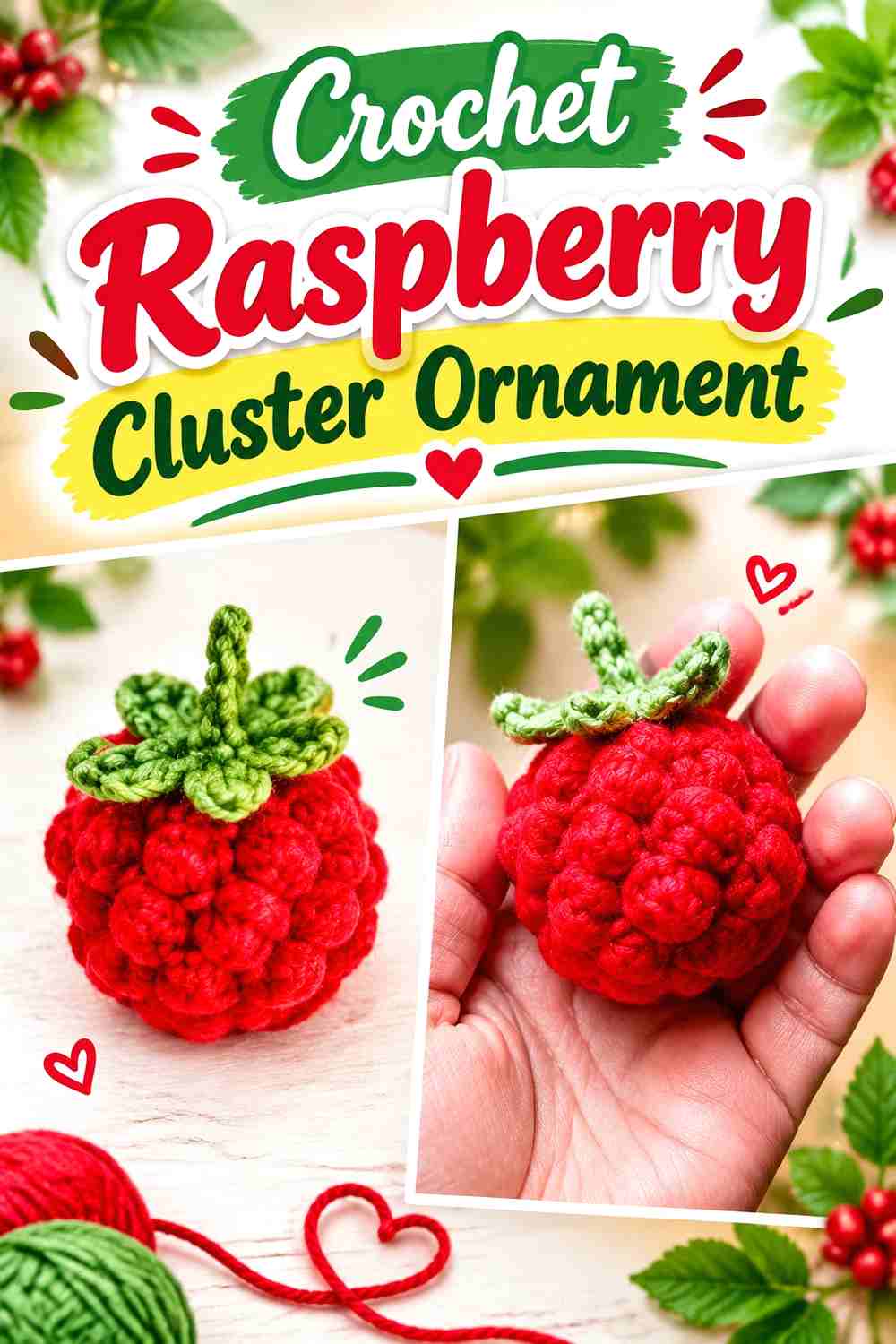
Raspberry introduces a bumpy surface that no smooth apple, plum, or citrus fruit can duplicate. Josephine Chow’s tutorial uses textured crochet to create the berry’s characteristic clustered appearance.
That surface detail is especially valuable on a tree because small ornaments need strong texture or contrast to remain visible from several feet away.
Let Texture Replace Extra Embellishment
The raised berry surface already catches shadow and creates visual interest.
Before adding beads or metallic thread, hang the finished raspberry and see whether it actually needs more. A detailed crochet texture can become muddled when too many extra materials are layered over it.
Small Berries Work Better in Intentional Groups
If one raspberry looks visually tiny beside a pineapple or pear, consider making several and grouping them in the same region of the tree rather than attempting to enlarge the design dramatically.
Repeating the fruit can create a stronger berry accent while maintaining the delicate scale.
Creator Credit: Josephine Chow
8. Crochet Twin Cherry Vintage Ornament
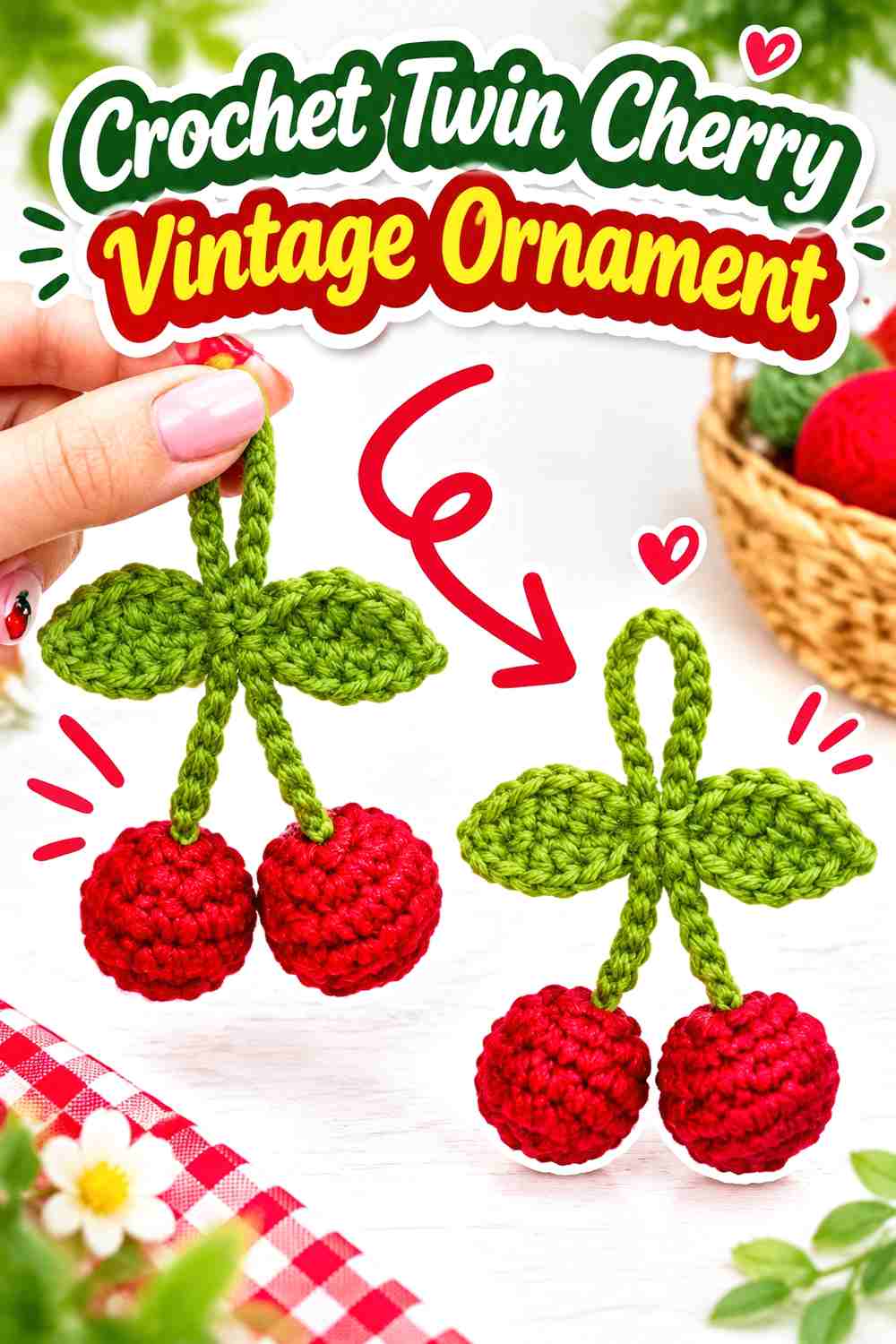
Paired cherries provide movement and negative space that a single round fruit cannot. ElyseCrochets 💌 demonstrates connected cherries with stems and leaf detail, making the concept naturally suited to hanging.
Dark ruby, cranberry, or wine red can give the pair a classic winter-tree appearance without changing the underlying construction.
Allow the Cherries to Hang at Different Levels
The pair looks most natural when the two fruit bodies remain visually separate.
Test the completed piece before attaching an additional ornament loop. If both cherries are forced tightly together, the design loses much of the movement that makes it different from an apple or berry.
Keep Stem Details Light
The stems and leaf are already fine-scale features. Thick ribbon or a large decorative hanger can overwhelm them.
A simple loop lets the two red fruit bodies and connecting stems provide most of the ornament’s visual interest.
Creator Credit: ElyseCrochets 💌
9. Crochet Vineyard Grape Cluster Ornament
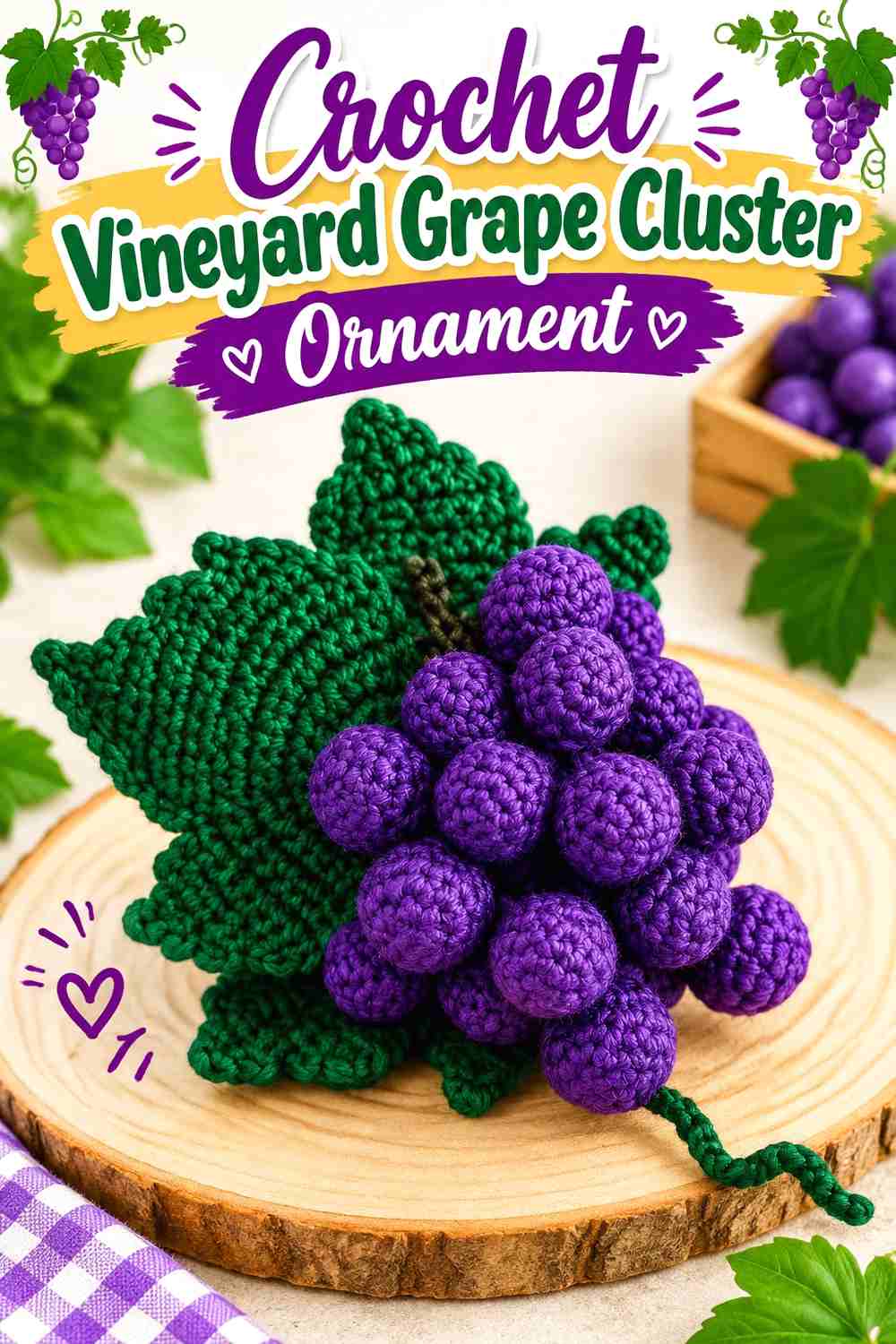
A bunch of grapes provides one of the deepest, most dimensional shapes in the collection. L’angolo di Criss demonstrates a clustered grape construction rather than a single round fruit.
Wine purple, dusty plum, pale green, burgundy, or even cream-and-gold styling can create very different interpretations while preserving the unmistakable cluster.
Give a Grape Bunch More Branch Clearance
Individual grapes create considerable visual depth compared with a flat slice or compact orange.
Hang the cluster where nearby branches will not compress everything into one mass. The outer portion of the tree often provides better space for seeing each rounded component.
Vary Highlights Across the Cluster
If you add decorative accents, avoid placing the same amount on every grape.
Keeping some sections plain and others lightly highlighted creates depth and prevents the bunch from looking overly uniform.
Creator Credit: L’angolo di Criss
10. Crochet Pomander Orange Ornament
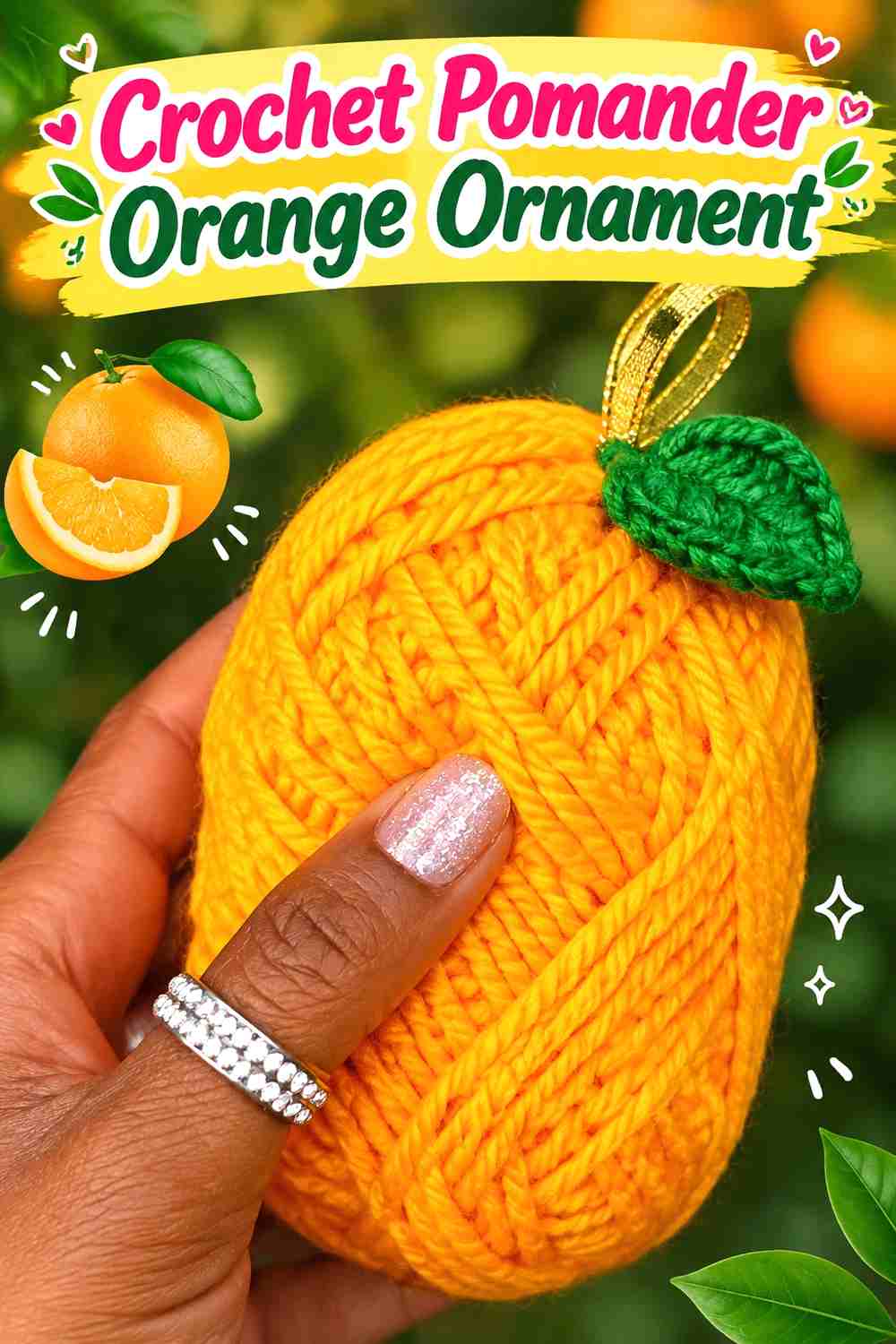
A round orange acts almost like a traditional soft bauble, making it one of the easiest fruit forms to distribute throughout a tree. Crochet Like Me demonstrates a compact dimensional orange that can serve as a repeated citrus anchor.
Warm burnt orange, muted tangerine, or deep rust can make the project feel richer than a bright summer palette.
Use the Orange as a Visual Filler Between Statement Fruit
Large grapes, pineapple, and banana need more open space. Oranges can occupy many of the smaller gaps between them.
Repeating several orange ornaments also makes the overall fruit theme clearer even when many other fruits appear only once.
Add Pomander-Inspired Styling Carefully
If you want an old-fashioned pomander impression, surface embroidery or small decorative accents can create pattern without changing the fruit construction.
Keep additions light enough that the orange still reads as crochet rather than disappearing under trim.
Creator Credit: Crochet Like Me
11. Crochet Tangerine Winter Ornament
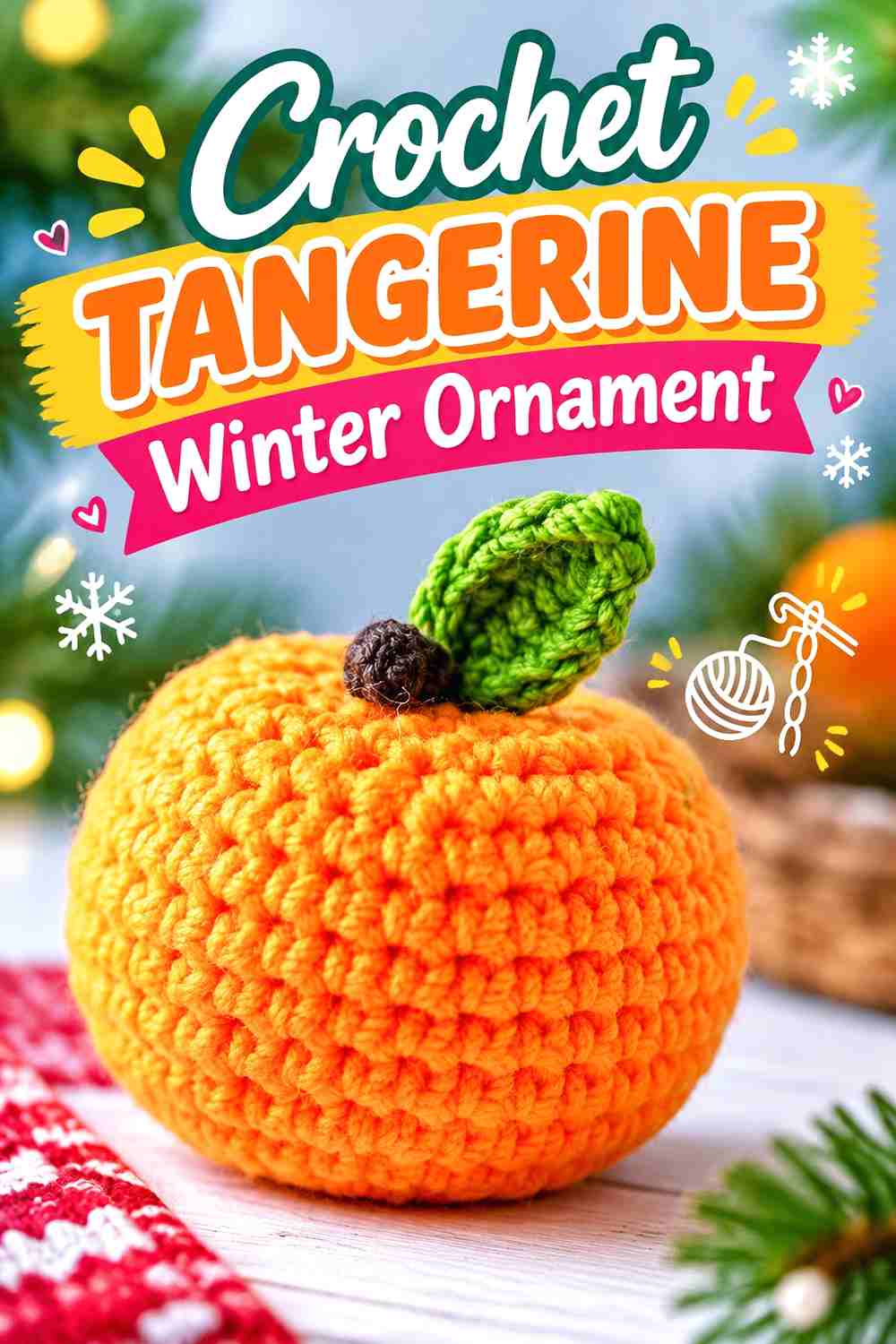
A tangerine provides a second warm citrus note but can work as a smaller accent rather than a duplicate orange. Amigu World demonstrates a compact fruit with the familiar rounded citrus body and top detail.
The distinction becomes more useful when you intentionally vary scale, color depth, or finishing between the orange and tangerine.
Make Tangerines the Smaller Repeating Citrus
If the source dimensions suit your tree, use tangerines to fill small branch gaps while allowing the orange to remain the larger citrus ornament.
Do not rely on the fruit names alone. They should look meaningfully different once displayed together.
Deep Orange Can Feel Warmer Than Bright Citrus
A slightly darker, redder orange can sit comfortably beside burgundy, olive, cream, and gold-like colors.
That tonal adjustment helps a small citrus ornament blend into a winter palette without losing its identity.
Creator Credit: Amigu World
12. Crochet Golden Lemon Ornament
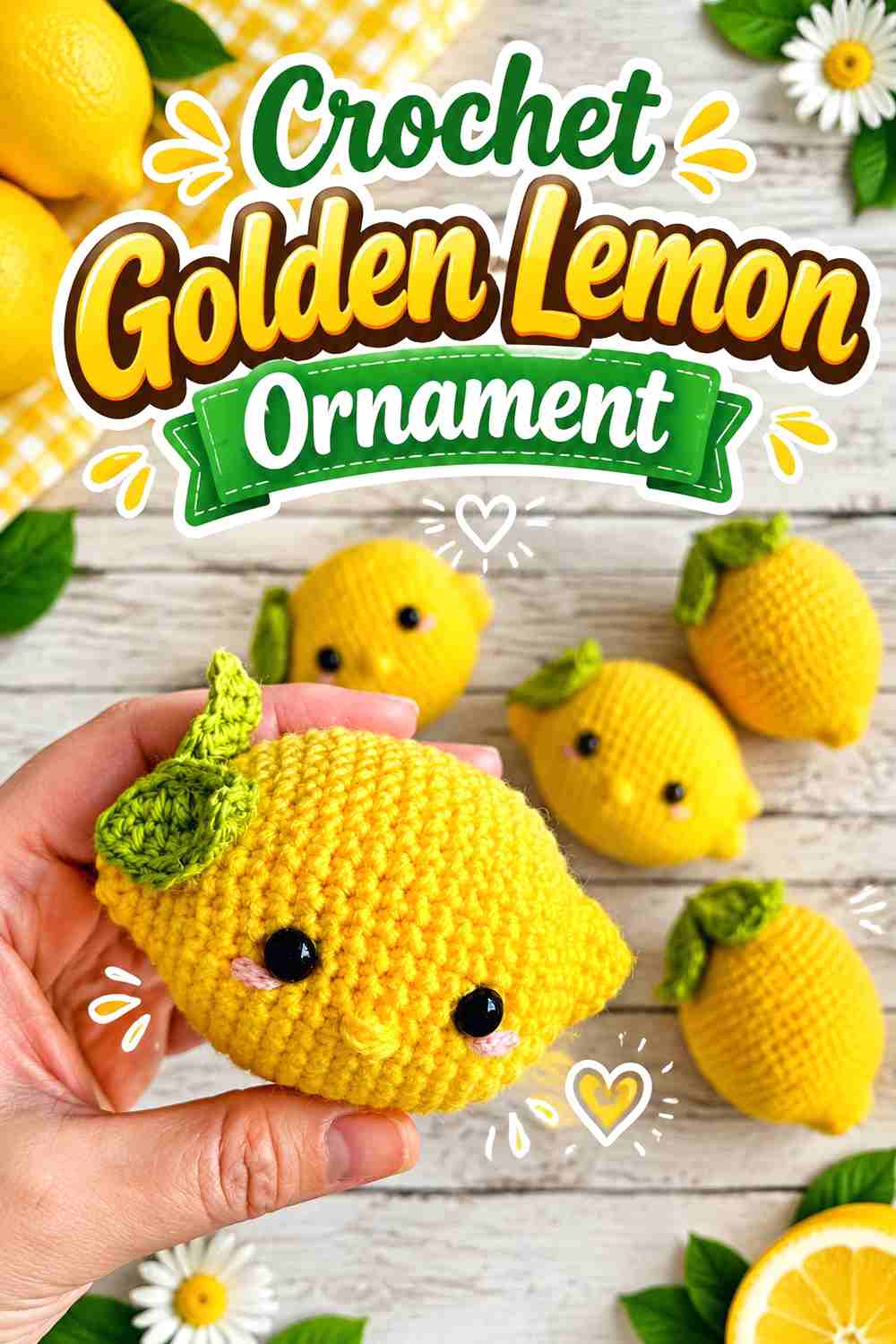
A lemon provides an elongated citrus shape with pointed ends, immediately separating it from round oranges and tangerines. MJ Carlos demonstrates the fruit with its characteristic body and leafy detail.
Golden yellow, muted ochre, pale cream-yellow, or warm champagne-like shades can all move the design toward a more vintage winter palette.
Keep Both Ends Recognizable
The slight points at the ends help communicate “lemon” from across the room.
Avoid burying the entire fruit deep inside branches or attaching bulky embellishments that round off those defining areas.
Use Lemon to Lighten Dark Sections of the Tree
Yellow can act almost like a highlight among plum, burgundy, forest green, and brown ornaments.
Spread lemons between darker fruits rather than clustering all yellow pieces together. That gives the collection a more even visual rhythm.
Creator Credit: MJ Carlos
13. Crochet Blush Grapefruit Ornament
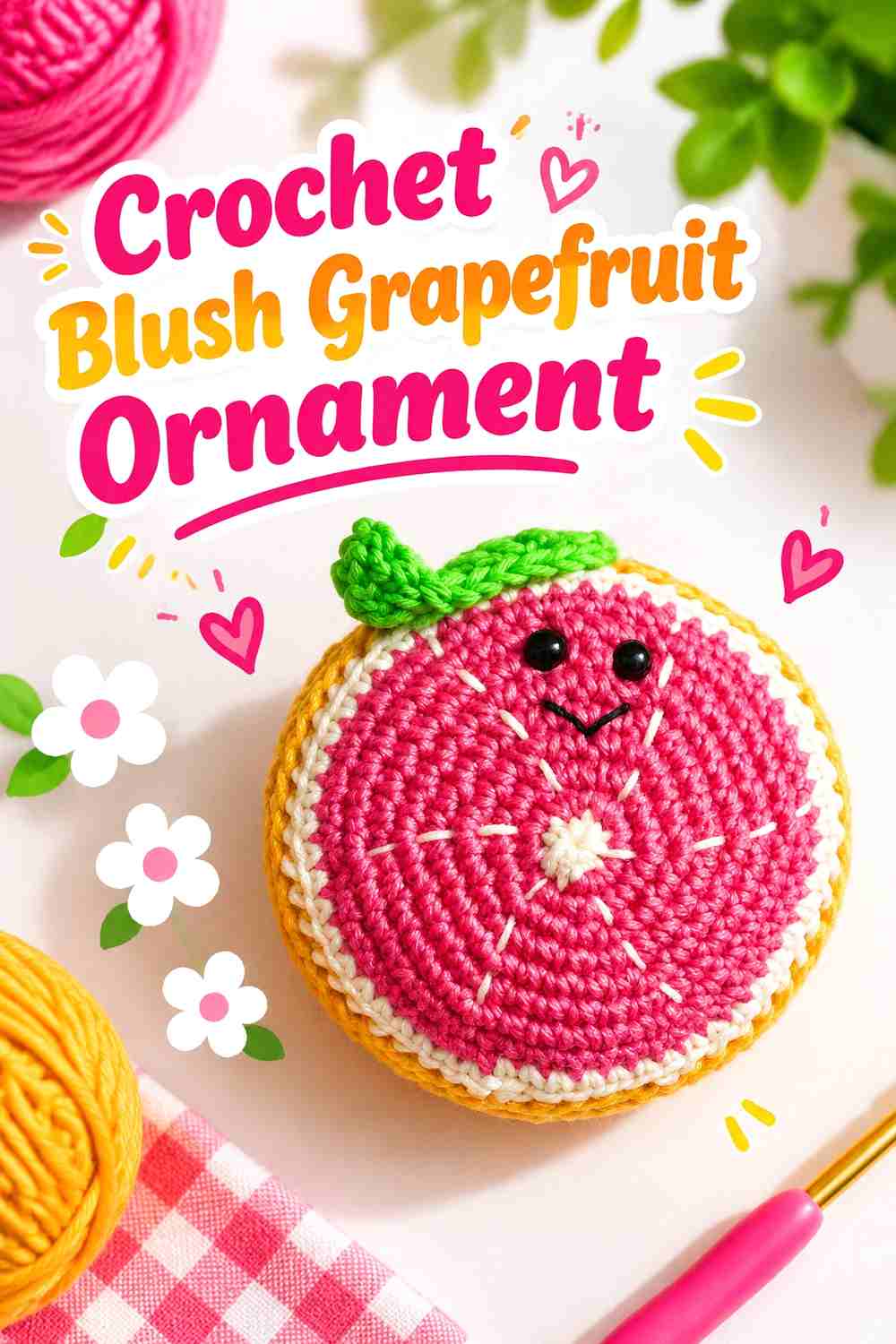
Grapefruit adds a softer citrus option to the orange-and-yellow section of the collection. Ieva’s Crochet Designs demonstrates a grapefruit amigurumi that gives you an opportunity to introduce blush, coral, or pink tones.
This is useful when a tree already contains several strong reds but needs another warm color without repeating cherry or strawberry.
Use Dusty Pink Instead of Another Bright Red
A pale coral or muted grapefruit shade creates separation from the ruby fruit elsewhere in the collection.
Place it beside cream, olive, or gold-like ornaments where the softer color will remain visible.
Decide Whether Color or Surface Detail Should Lead
If you choose a yarn with significant texture or shimmer, additional embroidery may be unnecessary.
If the yarn is matte and simple, a restrained highlight can provide enough ornament character. Avoid stacking several attention-grabbing treatments onto one compact citrus shape.
Creator Credit: Ieva’s Crochet Designs
14. Crochet Gilded Pineapple Ornament
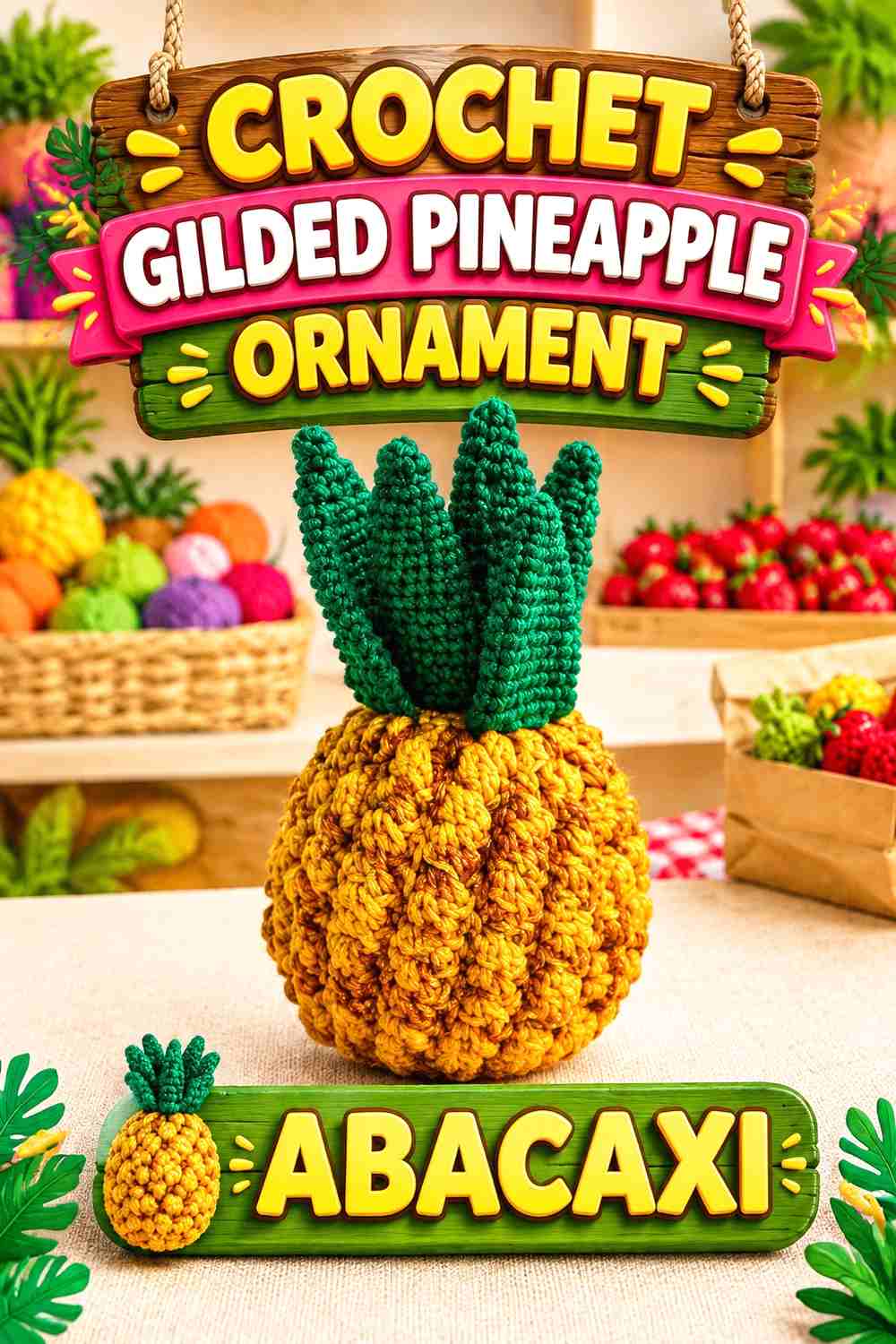
Pineapple is the tallest and most textural fruit in the collection. Linha Moderna’s tutorial includes a distinct body surface and prominent leafy crown, giving this project the presence of a statement ornament.
Mustard yellow, antique-gold-like shades, cream, or muted ochre paired with dark green leaves can make it particularly effective on a vintage-inspired tree.
Let Crochet Texture Provide the Decoration
The body already contains strong surface interest. Heavy embellishment can cover the very feature that makes the pineapple different.
Consider emphasizing only selected raised areas or leaf tips if you want a more decorative finish.
Reserve Vertical Space for the Crown
The upper foliage is central to the pineapple silhouette.
Avoid hanging it directly under a dense branch or another large ornament. A more open outer position allows the complete tall form to remain visible.
Creator Credit: Linha Moderna
15. Crochet Golden Mango Ornament
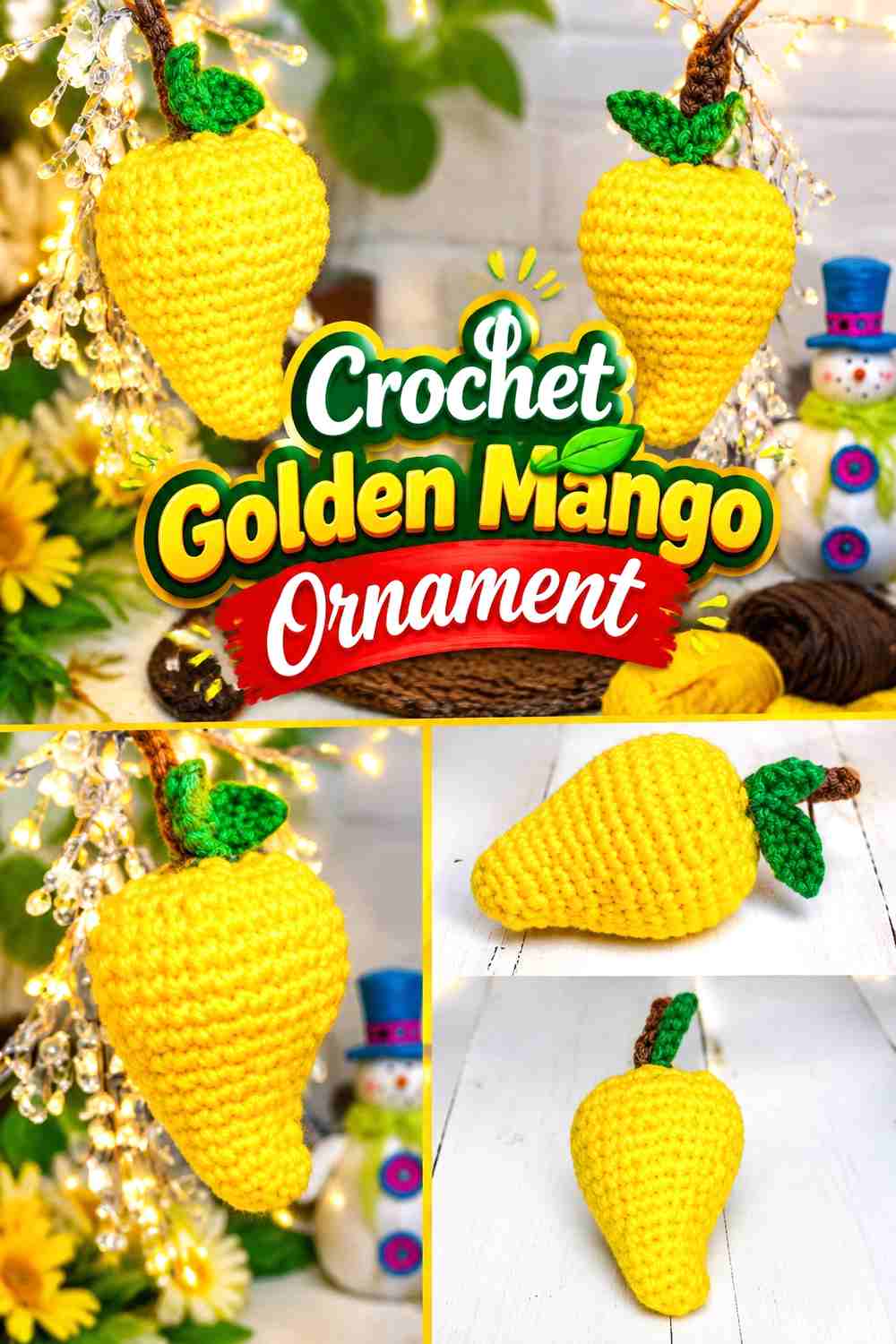
Mango provides a softly asymmetrical fruit form that does not behave like a perfectly round orange or apple. TEJIENDO CROCHET-SILVY demonstrates a dimensional mango construction with the recognizable curved profile.
Gold, peach, muted coral, and olive can turn it into an unusual but cohesive addition to the vintage fruit palette.
Keep the Asymmetry Instead of Forcing a Perfect Sphere
The uneven curve is what earns this ornament a separate place in the collection.
When stuffing and hanging it, avoid trying to make every side identical. Test the orientation that displays the mango profile most clearly.
Use Mango as a Warm Transition Ornament
The fruit can bridge the palette between yellow lemon, orange citrus, and blush peach.
That makes it especially useful when the tree has distinct color areas that otherwise feel disconnected.
Creator Credit: TEJIENDO CROCHET-SILVY
16. Crochet Curved Banana Ornament
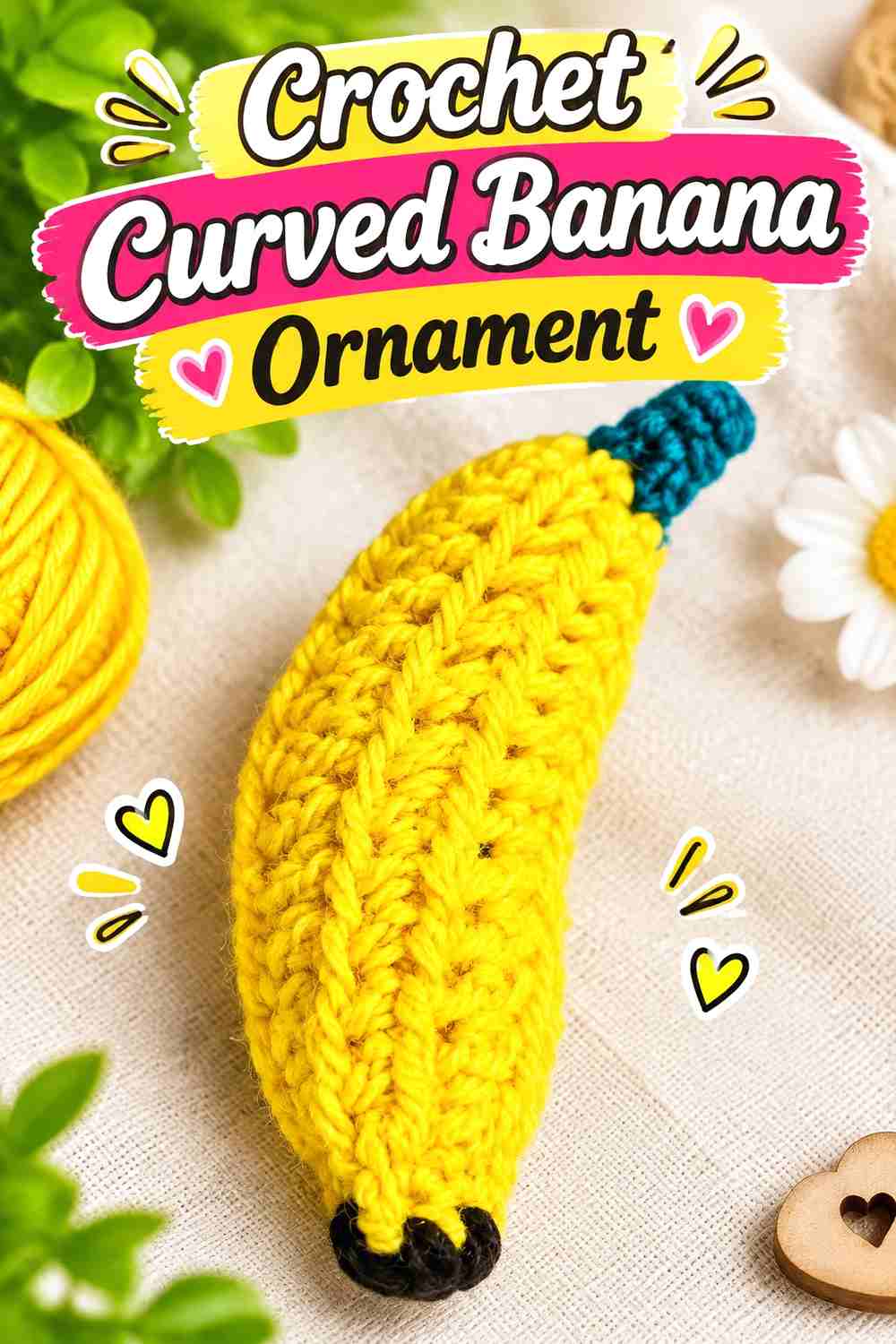
The banana contributes the strongest long curve in the entire collection. Crochetwithme demonstrates a stuffed banana amigurumi whose elongated shape breaks up the many round and bottom-heavy fruits.
It is a playful choice, but mustard, cream-yellow, olive, or muted brown accents can keep it connected to a vintage market-style palette.
Test Several Hanging Angles
A banana does not have to hang perfectly vertically. Depending on the attachment point, it may look better on a diagonal or in a more horizontal orientation.
Use temporary thread to compare positions before permanently securing the loop.
Give the Full Curve Room to Show
Placing the banana deep inside dense branches can hide the feature that makes it valuable.
Reserve a relatively open area where both ends and the center curve can be seen from the front.
Creator Credit: Crochetwithme
17. Crochet Blueberry Jewel Ornament
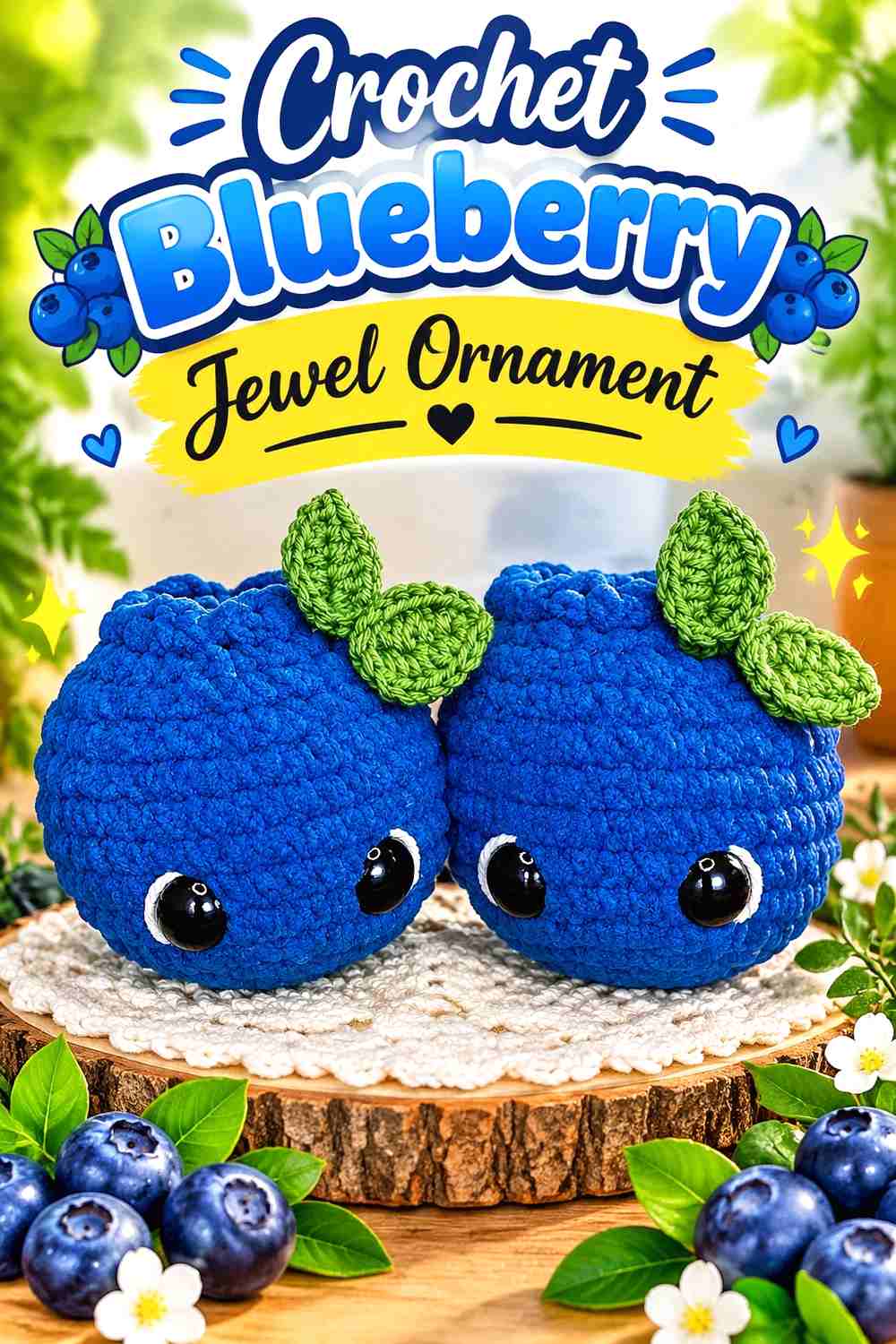
A blueberry provides a cool-colored accent among the warmer orchard fruits. Storybook Crochet demonstrates a rounded blueberry with the small crown detail needed to prevent it from looking like a generic blue ball.
Dusty navy, faded indigo, blue-gray, or deep blue-purple can work well beside cream and silver-like winter decorations.
Keep the Crown Visible
The top detail carries much of the fruit identity.
Position the hanging loop so it does not flatten or conceal the crown, and avoid wedging the ornament so deeply into branches that only the blue body remains visible.
Repeat Blueberries Like Small Jewel Accents
One very small blueberry may disappear on a large tree.
Several distributed across different branches can work almost like tiny colored baubles and help carry cooler tones through the collection.
Creator Credit: Storybook Crochet
18. Crochet Watermelon Slice Vintage Ornament
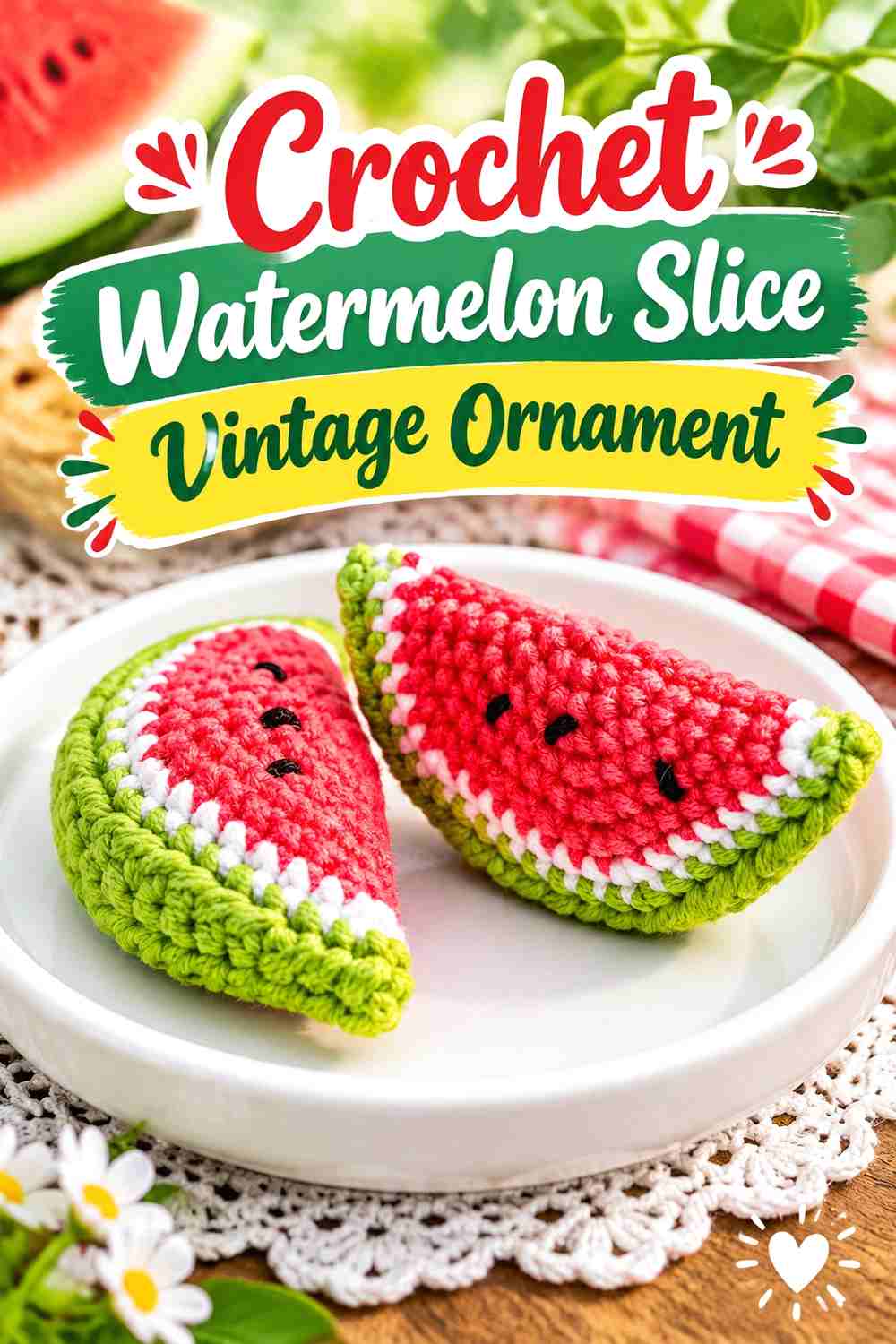
A watermelon slice is different because it displays the fruit interior instead of a whole outer form. GratiaProject demonstrates a slice with clearly separated color sections, giving the ornament a broad, graphic face.
For a vintage interpretation, dusty red, muted green, cream, and dark seed details can move it away from an especially bright summer look.
Make the Cut Face Point Outward
The layered colors are what make the project visually useful. If the slice turns sideways against the tree, most of that information disappears.
Test the hanger carefully so the broad fruit face remains visible from the room.
Use Flat Shapes Near Shallower Branch Areas
A slice generally needs less front-to-back depth than a grape cluster or pineapple.
This can make it helpful near branch tips or other areas where a bulky stuffed fruit would crowd surrounding ornaments.
Creator Credit: GratiaProject
19. Crochet Retro Avocado Ornament
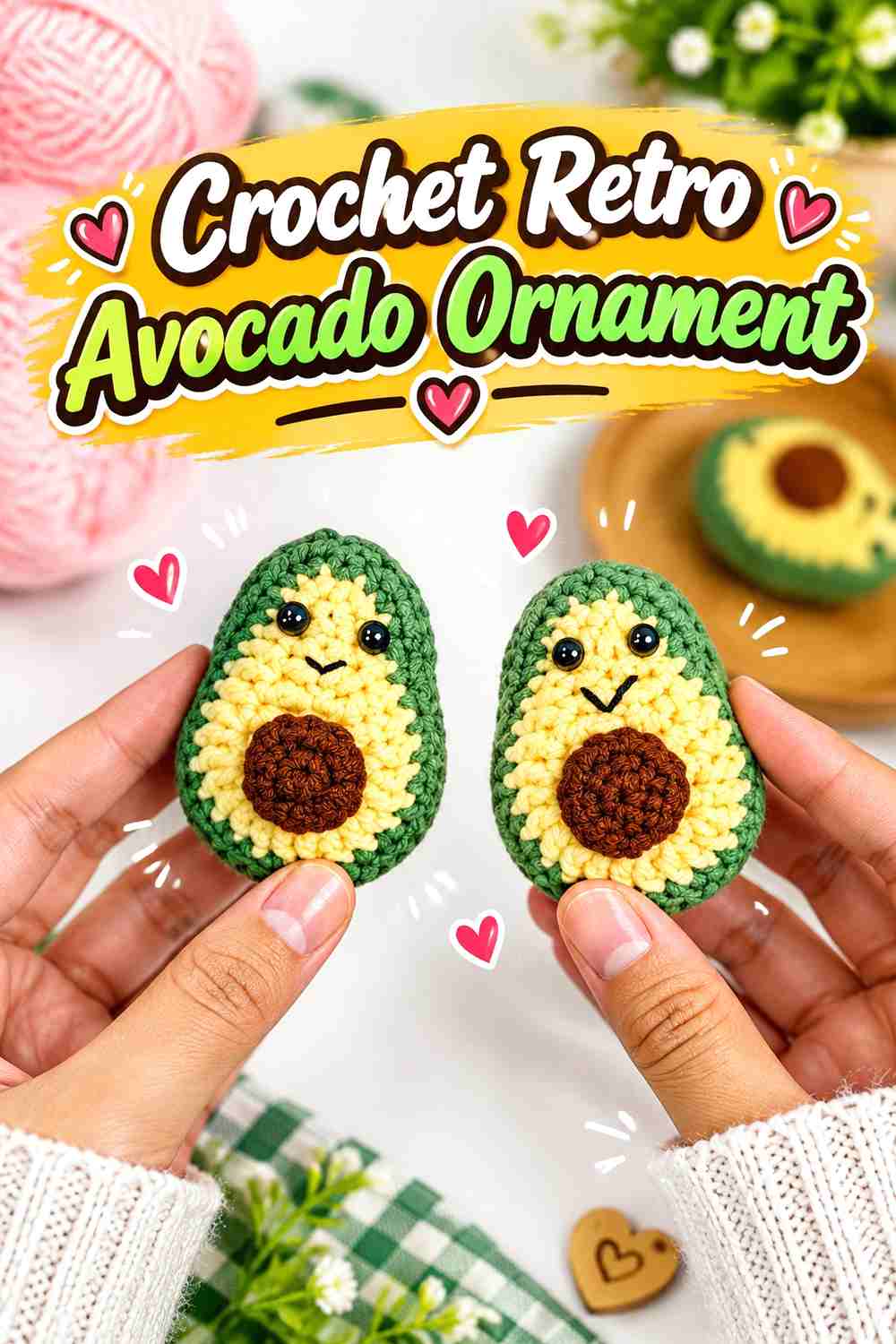
Avocado brings a layered green palette and prominent central pit, making it the most graphic modern-fruit option in the collection. Betty’s.Crochi demonstrates the contrasting outer edge, lighter center, and pit that define the finished piece.
It is less traditionally wintry than apple or pomegranate, but its olive and cream tones can work surprisingly well on an eclectic vintage-style tree.
Let the Color Layers Do the Work
Avocado already contains several distinct visual zones. Heavy surface decoration can make the ornament needlessly complicated.
Keep any festive detail around the edge, hanger, or one small area so the pit and contrasting flesh remain easy to read.
Separate Green Fruit From Green Branches
Dark green edges may disappear against an evergreen tree.
Place the avocado beside cream, gold-like, red, or pale fruit ornaments, or choose a green that provides enough contrast from the actual branches.
Creator Credit: Betty’s.Crochi
Comparing the 19 Crochet Vintage Fruit Ornament Shapes
| Ornament Type | Strong Choices | Main Tree-Planning Issue |
|---|---|---|
| Compact bauble-like fruit | Apple, orange, tangerine, plum, blueberry | Easy to distribute, but keep identifying top details visible |
| Bottom-heavy fruit | Pear, pomegranate | Test hanging balance before fixing the loop |
| Tapered fruit | Strawberry, lemon | Preserve leafy tops and pointed ends |
| Clustered fruit | Raspberry, cherries, grapes | Leave room between individual fruit forms |
| Tall statement fruit | Pineapple | Protect the leafy crown |
| Curved or asymmetrical fruit | Mango, banana | Test several hanging angles |
| Broad cut fruit | Watermelon slice | Keep the colorful face pointing outward |
| Layered graphic fruit | Avocado | Maintain contrast against evergreen branches |
| Soft-color transition fruit | Peach, grapefruit | Use between darker reds and golden citrus |
For the most traditional-looking fruit tree, focus first on apples, pears, pomegranates, plums, peaches, strawberries, cherries, grapes, oranges, tangerines, lemons, and pineapple. Those shapes create a strong orchard and market feel.
Mango, banana, blueberry, watermelon, grapefruit, raspberry, and avocado can then provide unexpected color and silhouette changes. They are especially useful if you want the collection to feel collected over time rather than perfectly uniform.
Conclusion
A successful crochet vintage fruit ornament collection needs more than nineteen different colors. Combine compact apples and citrus with tapered pears and strawberries, a dark plum, textured raspberry, paired cherries, deep grape clusters, a tall pineapple, and the unusual curve of a banana.
If you want a restrained traditional tree, concentrate on orchard fruit, citrus, berries, grapes, and pomegranate. For something more eclectic, introduce the mango, watermelon, blueberry, and avocado as occasional surprise ornaments rather than letting them dominate the collection.
Choose the palette before making multiples, and repeat a few yarn colors or hanging-loop treatments throughout the tree. Most importantly, finish each fruit before deciding exactly how it should hang. Weight, stuffing, leaves, stems, and asymmetrical shaping all affect the final balance.
Use the original creator tutorials for exact crochet construction, then treat hanging hardware, decorative surface accents, and tree placement as separate finishing decisions.
Frequently Asked Questions
Do all 19 tutorials make Christmas tree ornaments?
No. The tutorials teach individual crochet fruits, amigurumi, or small fruit decorations. The tree-ornament use is an adaptation.
Check the completed fruit’s size, weight, top construction, and balance before adding a hanging loop.
Which crochet fruits are easiest to hang on a winter tree?
Compact fruits such as apples, oranges, tangerines, plums, and blueberries generally need less branch clearance than grapes, pineapple, banana, or wide slices.
The actual result depends on the yarn, stuffing, finished dimensions, and hanging position used in the individual tutorial.
How can I make crochet fruit look vintage rather than like children’s play food?
Use a restrained palette and simpler finishing. Burgundy, dusty peach, cream, mustard, olive, dark plum, muted citrus, and warm brown can create a different mood from bright primary colors.
Small embroidered highlights or understated hanging cord can reinforce the decorative look without covering the crochet.
Can I use thinner yarn to make the fruit small enough for ornaments?
Changing yarn weight with an appropriately matched hook can reduce scale, but it can also affect firmness, stuffing visibility, leaves, stems, and small decorative elements.
Make one test fruit before resizing an entire collection.
How do I stop a pear or other uneven fruit from hanging sideways?
Complete and stuff the fruit first, then attach temporary thread at several nearby positions and test how it settles naturally.
There is no universal loop location because balance depends on the finished object’s actual weight distribution.
Should every fruit ornament use the same hanging loop?
Not necessarily, but repeating one or two loop materials can help the collection feel coordinated.
The attachment method still needs to suit the individual fruit. A grape cluster, cherry pair, banana, and apple may not balance correctly from exactly the same type of position.
Are beads, sequins, or metallic embellishments necessary for a vintage fruit tree?
No. Yarn color, texture, shape, and repeated hanging details can create a cohesive collection on their own.
If you do add small embellishments, keep them restrained and consider who can access the tree, especially where young children or pets are present.