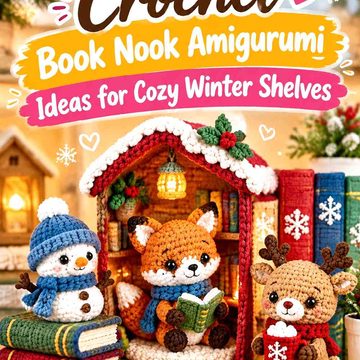
A crochet book nook can turn one narrow section of a bookshelf into a tiny reading world. Instead of filling the space with unrelated miniatures, start with one object that explains the scene—a chair, book, lamp, or rug—then add only the details that make the nook feel occupied.
The tutorials in this collection do not all use one standardized miniature scale. Several are specifically designed for dollhouses, while others are small amigurumi, keychain, or shelf projects that can become intentionally whimsical book-nook pieces. A tiny coffee cup from one tutorial should not automatically be expected to fit beside a 1:12 chair from another.
That difference can actually make the collection more useful. You can build a realistic dollhouse-style library, a soft amigurumi reading corner where the proportions are playful, or a bookcase vignette that uses just two or three crocheted accents beside real books.
Quick List
- Crochet Tiny Book Stack
- Crochet Tufted Reading Chair
- Crochet Lacy Dollhouse Reading Throw
- Crochet Mini Reading Cushion
- Crochet Dollhouse Floor Lamp
- Crochet Oval Reading-Nook Rug
- Crochet Tiny Book Basket
- Crochet Potted Shelf Plant
- Crochet Mini Coffee Cup
- Crochet Candlelit Reading Accent
- Crochet Tiny Bookshop Cat
- Crochet Library Mouse
- Crochet Mini Owl Book Guardian
- Crochet Teddy Bear Reading Companion
- Crochet Woodland Mushroom Shelf Accent
- Crochet Mini Café Cake
- Crochet Tiny Frog Shelf Companion
Establish the Book Nook Scale Before Adding Accessories
The largest object should usually establish the scale.
For a traditional dollhouse-style scene, that might be the chair. Once its seat height and width are known, compare every cushion, basket, book, mug, and character directly against it.
For an amigurumi-style nook, the character can become the reference instead. A teddy bear or frog may be the “reader,” which means the chair and accessories can be intentionally oversized or simplified.
Do not judge scale only by the word “mini.” A keychain coffee cup and a true dollhouse lamp can both be small in your hand while looking completely unrelated when placed side by side.
Changing yarn and hook size can help, but it also changes stiffness, stitch definition, stuffing behavior, and the apparent thickness of the fabric. Make one sample before resizing an entire scene.
Build the Nook Around One Main Reading Story
A book nook becomes more convincing when the objects suggest an activity.
A chair, book, lamp, and mug create a quiet reading scene. A basket, blanket, cat, and candle suggest a cozy evening corner. An owl, mushroom, and tiny books can push the same shelf toward woodland fantasy.
You do not need all seventeen projects in one nook. Empty shelf space helps viewers understand the individual shapes.
Also consider viewing angle. A deep bookshelf may hide low objects toward the back, so place rugs and cushions where they remain visible while letting taller lamps, plants, or characters occupy the rear corners.
Treat Small Parts as Display Details When Necessary
Miniature crochet frequently uses safety eyes, beads, keychain hardware, glue, or other small components.
If a book nook will be accessible to babies, young children, or pets, choose facial details and embellishments appropriately. A collectible shelf miniature is not automatically suitable as a toy.
Crocheted candles and lamps should also remain decorative unless any lighting system you add is specifically designed to be safely used around the surrounding materials. Yarn and stuffing should never be treated as heat-resistant.
1. Crochet Tiny Book Stack
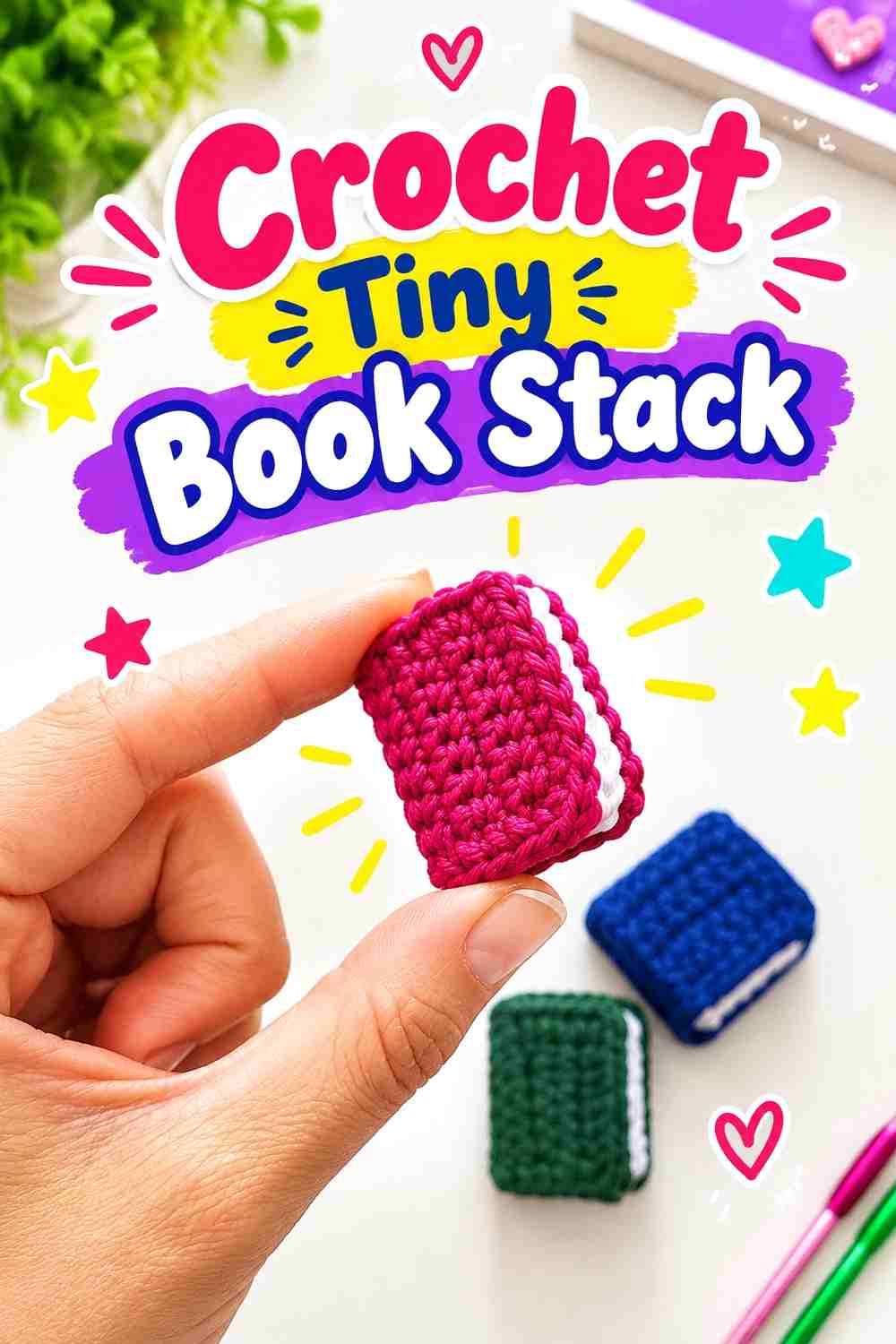
A crocheted book is the most direct way to establish the theme. Tabby’s Crochet demonstrates a small dimensional book with a recognizable cover and page section, making it useful as a single shelf prop or the beginning of a tiny stacked library.
Rather than making every book identical, consider varying the cover colors while keeping the general scale consistent. A few books can sit beside a chair, stack on a miniature table, or lean against a basket.
Keep the Page Block Clearly Smaller Than the Cover
The recognizable book silhouette depends on a visible distinction between cover and pages.
If thicker yarn makes both sections look equally bulky, the miniature can begin to resemble a small rectangle rather than a book. Check the side profile before committing to several copies.
A Small Stack Needs Unevenness to Look Natural
Perfectly aligned books can look more like one striped block.
Offsetting the upper book slightly or mixing standing and flat books gives the scene more depth without requiring a larger collection. Keep the total stack low enough that it does not overwhelm nearby furniture.
Creator Credit: Tabby’s Crochet
2. Crochet Tufted Reading Chair
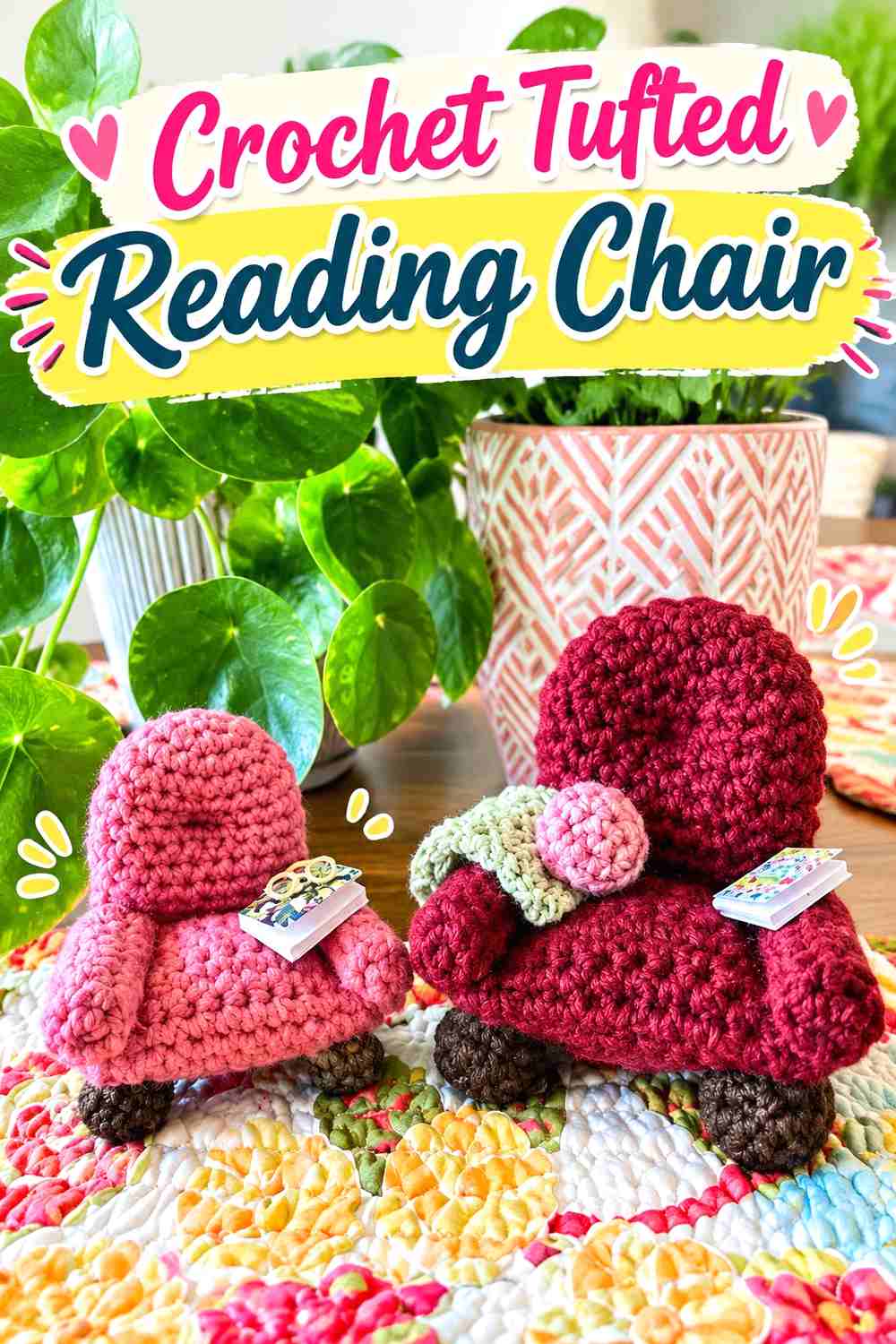
Wind Rose Fiber Studio’s miniature armchair is specifically presented for dollhouse use and creates a complete upholstered-style seat with separate dimensional sections.
That makes it one of the strongest scale anchors in the article. Once the chair is finished, nearby books, cushions, mugs, rugs, and characters can be judged against it rather than against your hand.
Size the Nook Around the Chair First
Furniture consumes far more visual space than tiny accessories.
Place the chair inside the intended shelf opening before crocheting several companion objects. If it already fills much of the width, a lamp and one book stack may create a better reading scene than a complete miniature room.
Leave Enough of the Seat Visible
A cushion, blanket, or character should not completely hide the chair’s shape.
Test every soft accessory directly on the finished seat. If a pillow occupies almost the entire back or a teddy fills the whole chair, decide whether the exaggerated proportion is intentional.
Creator Credit: Wind Rose Fiber Studio
3. Crochet Lacy Dollhouse Reading Throw
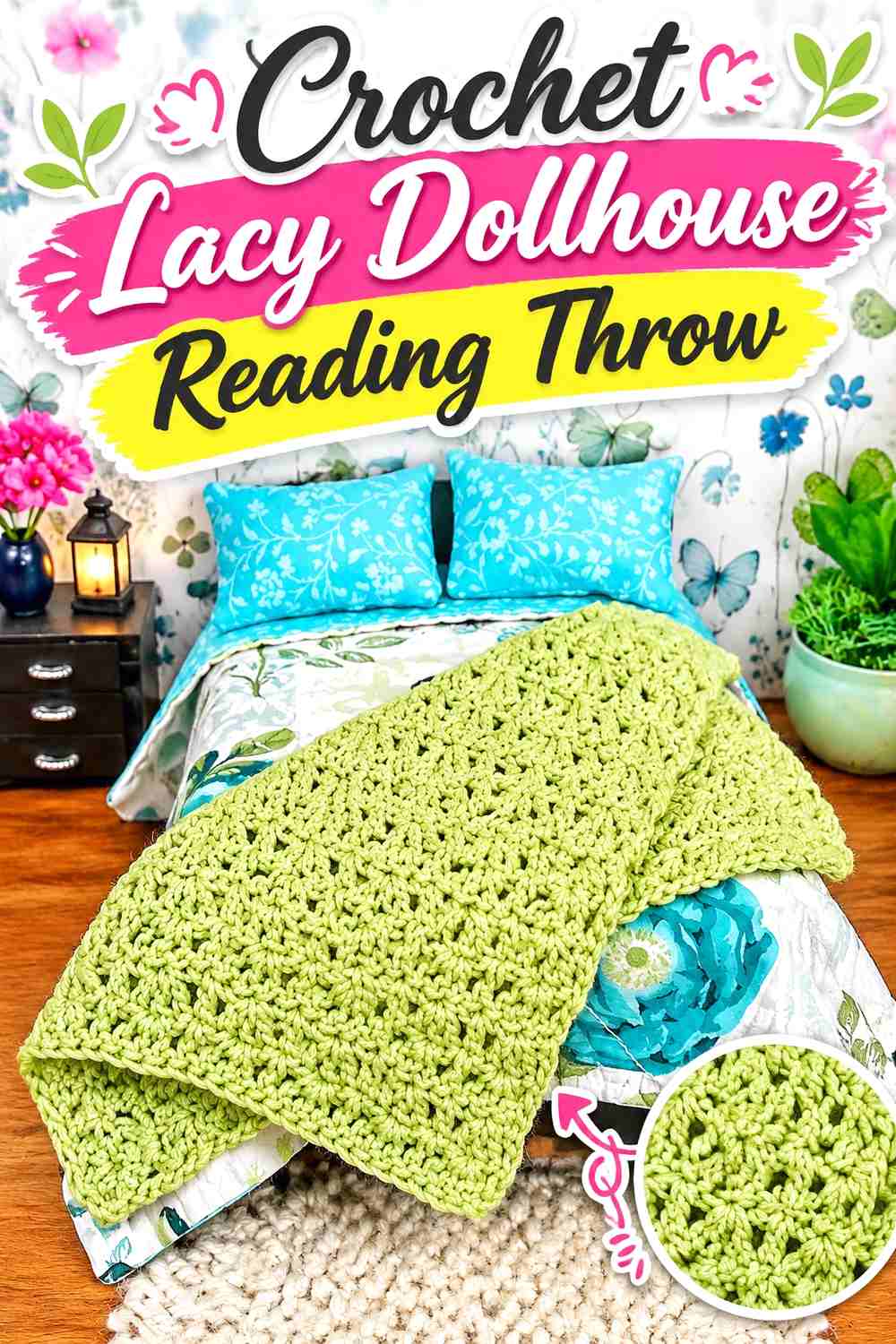
Lydia Hawk Designs provides a dedicated miniature blanket tutorial for a 1:12 dollhouse, making this one of the sources where the intended miniature context is explicit.
A lacy throw can soften a book nook without adding another bulky object. Fold it over the chair arm, drape it across a small bench, or place it in a basket to suggest a reading corner that is actually used.
Miniature Bedding Needs Believable Drape
A blanket can have the correct width and still look too heavy.
Lay the developing fabric over the chair or furniture you intend to use. If it holds itself away from the surface instead of folding naturally, the yarn may be visually too thick for that particular nook.
Let the Openwork Contrast With Denser Amigurumi
A lacy throw provides useful texture beside tightly worked stuffed objects.
If the chair, cat, basket, and books are all dense crochet, an open textile can keep the scene from appearing like one solid mass of stitches.
Creator Credit: Lydia Hawk Designs
4. Crochet Mini Reading Cushion
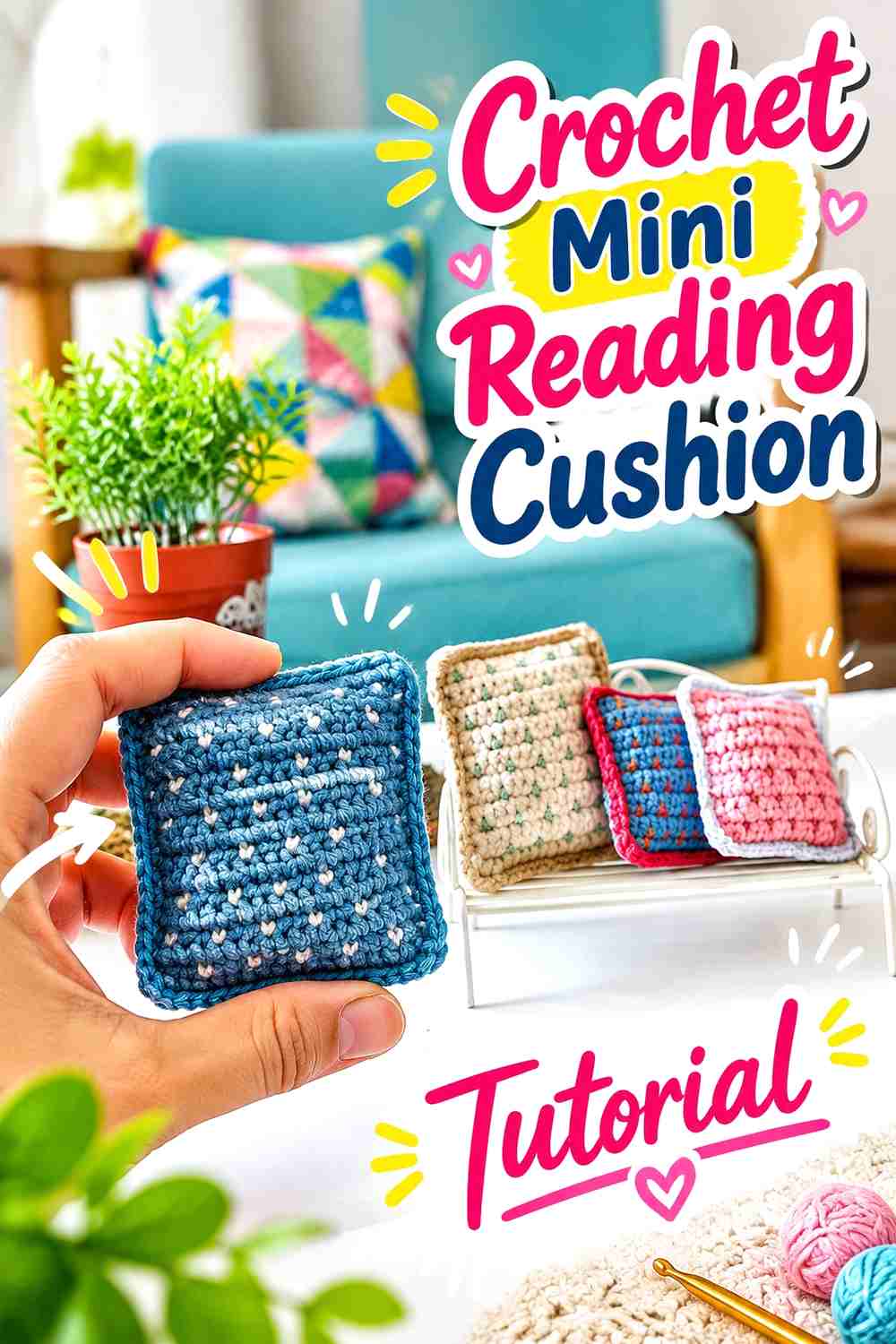
Katoen handmade’s mini cushion is intended as an accessory for small dolls and amigurumi, giving you a soft accent without committing to another piece of furniture.
A single pillow can transform a plain chair or bench into a reading nook, especially when the cushion color repeats one of the tiny book covers.
Pillow Volume Matters More Than Its Flat Width
Stuffing changes the apparent scale.
A cushion that looks appropriately small before filling can become much more dominant afterward. Stuff gradually and compare it with the chair before closing the final opening.
Use One Strong Cushion Instead of Several Competing Patterns
Miniature spaces become visually crowded quickly.
If the rug or blanket already has a noticeable stitch pattern, a simpler cushion can provide color without adding another layer of busy texture.
Creator Credit: Katoen handmade
5. Crochet Dollhouse Floor Lamp
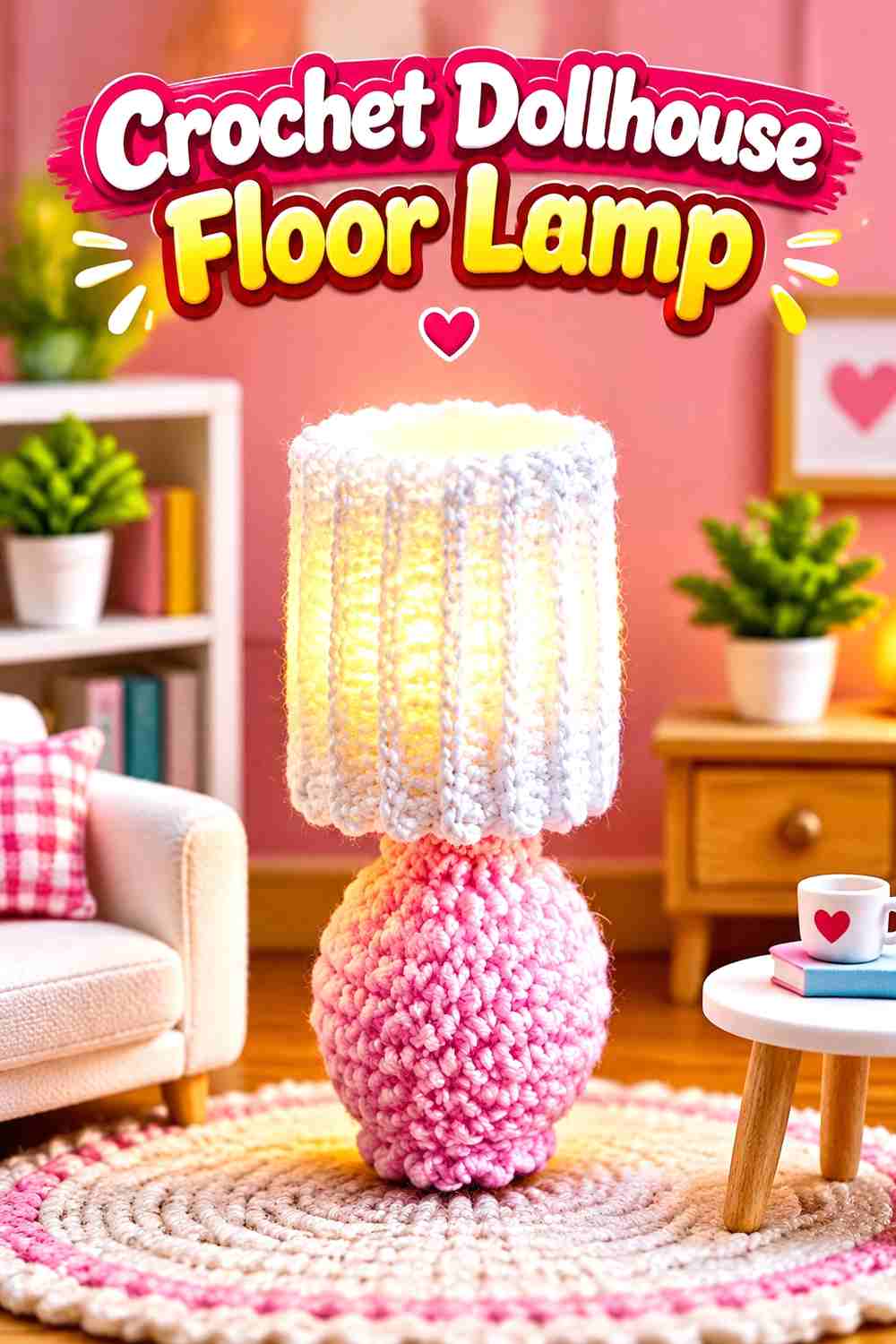
Lanzagurumi Canarias demonstrates a crochet lamp specifically as dollhouse furniture, making it particularly appropriate for a reading nook where a vertical accent helps define the scene.
Place the lamp beside a chair or low book stack rather than surrounding it with several tall objects. The height difference is what makes the miniature immediately read as a reading corner.
Judge the Shade Beside the Chair
A lamp can look proportionate on its own yet appear enormous once placed next to small furniture.
Compare the shade width and total height with the finished chair before permanently arranging the nook. When mixing creators, this direct visual comparison is more useful than assuming both projects share a scale.
Keep the Crochet Lamp Decorative
The yarn object represents a lamp; it is not automatically an electrical fixture.
Do not place a hot bulb, flame, or improvised heat source inside the crochet. If you want an illuminated book nook, keep the lighting system separate and use components intended for miniature displays.
Creator Credit: Lanzagurumi Canarias
6. Crochet Oval Reading-Nook Rug
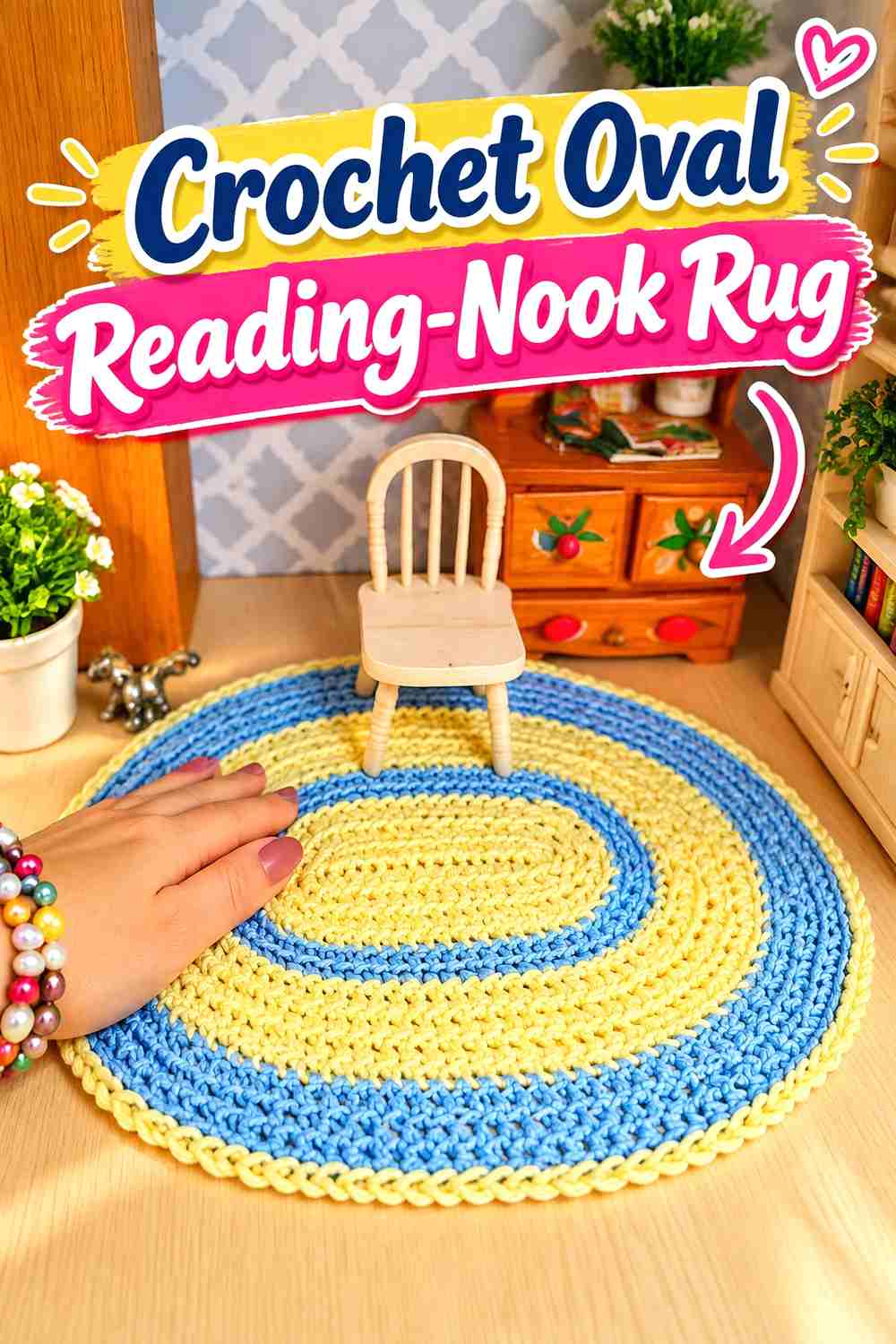
Loy Dollhouse’s tutorial is specifically for an oval crocheted dollhouse rug, giving you a floor textile that can organize the whole scene rather than simply decorate one object.
An oval also provides a useful shape contrast against rectangular books, shelves, walls, and chair backs.
Use the Rug to Connect Two Objects
Instead of centering it randomly, let the rug visually connect the chair with the lamp, basket, or book stack.
Enough of the outer edge should remain visible for viewers to understand the oval shape. A rug almost entirely covered by furniture loses much of its role in the scene.
Small Ripples Look Larger in a Miniature
A slightly uneven edge may seem insignificant while the rug is in your hand.
Place it on the actual shelf surface and view it from the front. Curling becomes more noticeable beside tiny straight furniture, so follow appropriate finishing guidance for the fiber you use.
Creator Credit: Loy Dollhouse
7. Crochet Tiny Book Basket
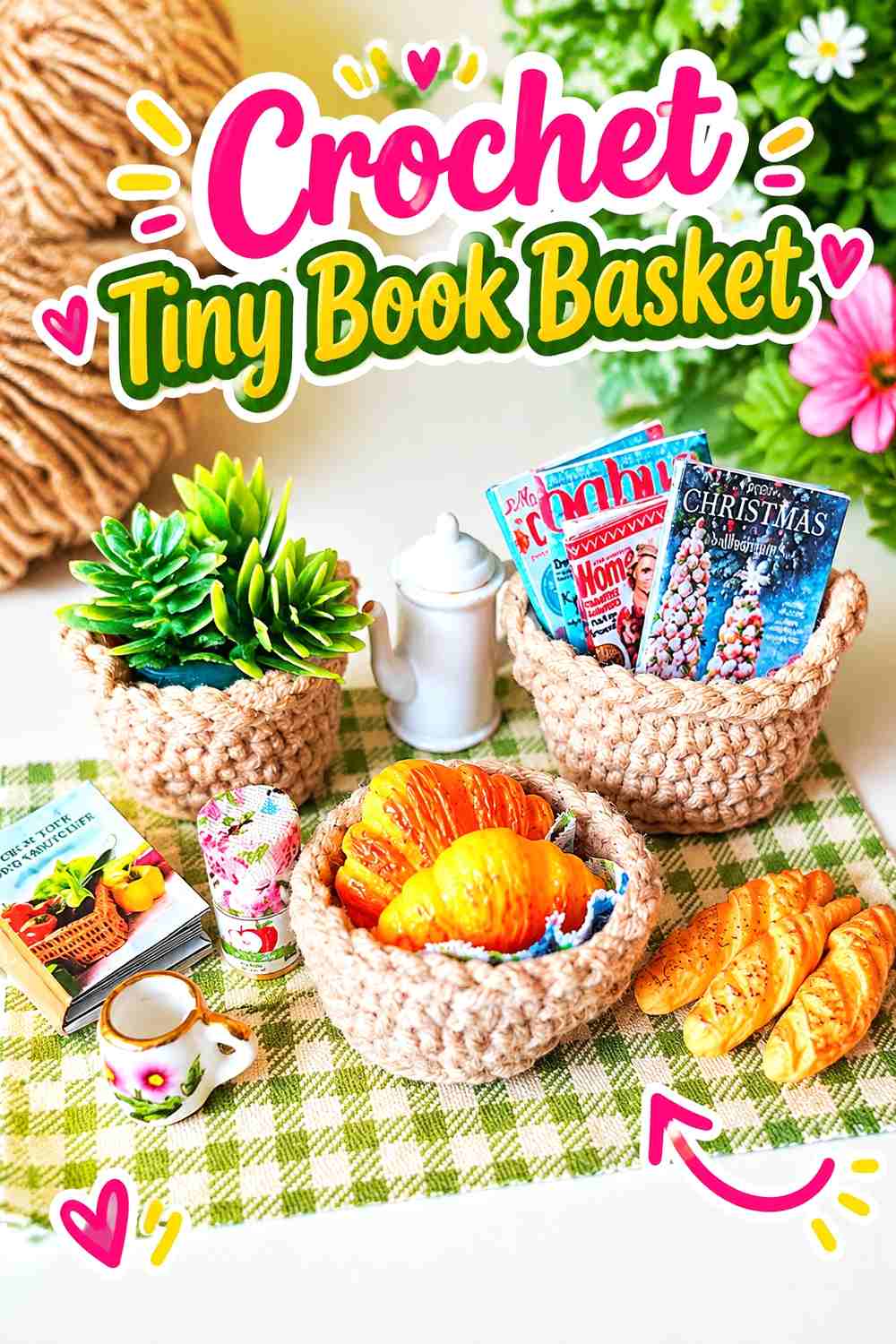
LittleMaggieShop demonstrates miniature crocheted baskets specifically for dollhouse settings, making them practical containers for imagined books, yarn, rolled blankets, or other reading-corner clutter.
A basket is especially useful because it lets you imply more objects without having to crochet every item individually.
Keep the Opening Visible
The basket needs a readable rim to look like storage rather than a stuffed ball.
If you add books or a rolled throw, leave part of the opening visible. Overfilling can hide the container shape and make the contents look as though they are sitting directly on the floor.
Choose the Contents Before Choosing the Location
A book basket belongs naturally beside the chair, while a blanket basket can sit near the lower shelf or under a table.
Giving each object a reason for being there helps a miniature nook feel composed rather than simply crowded.
Creator Credit: LittleMaggieShop
8. Crochet Potted Shelf Plant
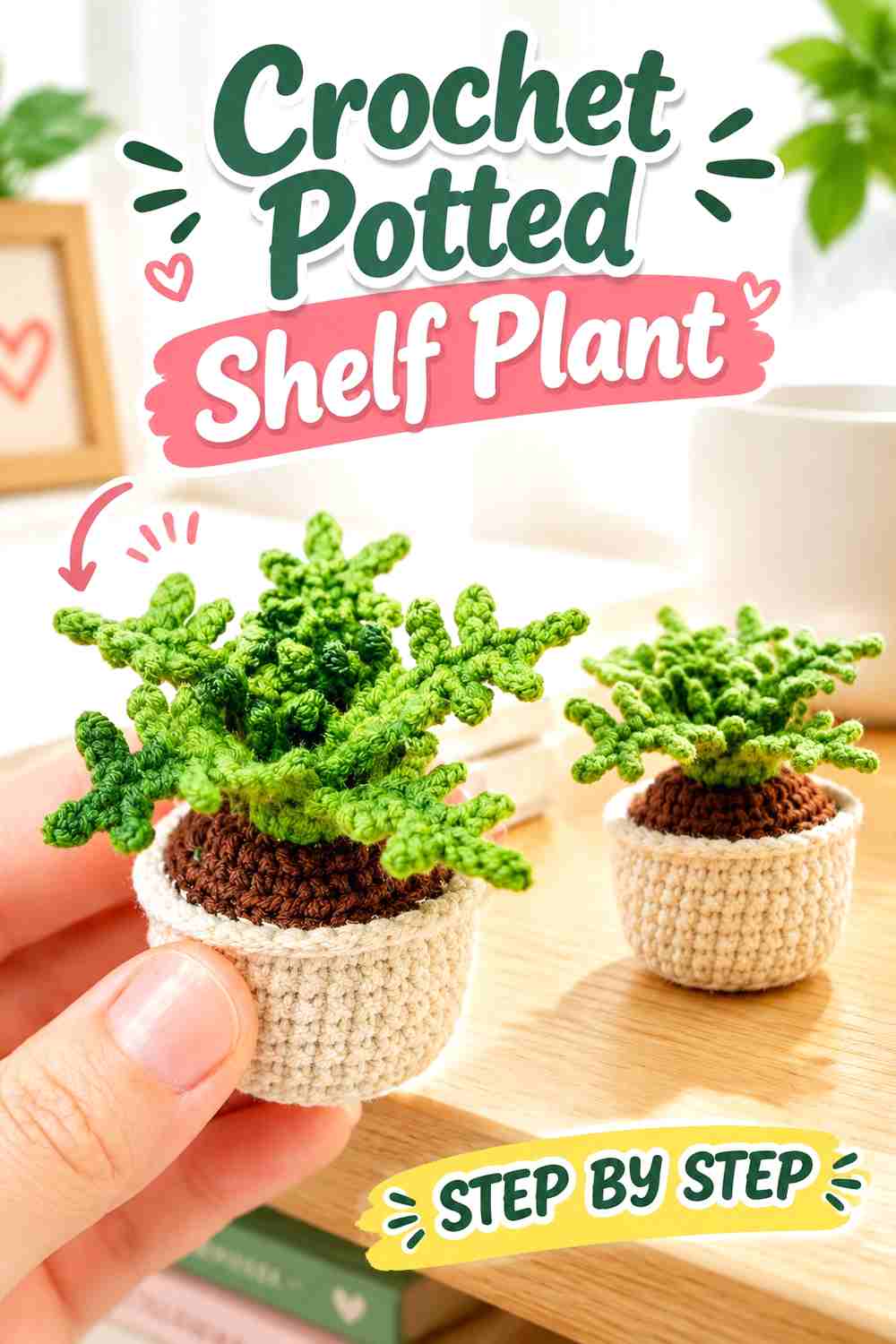
Crochet Everyday’s mini plant tutorial creates a complete freestanding arrangement with a pot, leaves, filling, and several branches.
This makes it useful for the back corner of a book nook, where the foliage can add height without competing with the reading chair.
Let the Plant Occupy Vertical Space
Books, rugs, cushions, and baskets tend to sit low.
A plant introduces an upward shape that can fill an otherwise empty corner. Avoid making the foliage so broad that it blocks the lamp or hides book spines behind it.
Stable Placement Matters on Narrow Shelves
A top-heavy miniature can tip when books are moved nearby.
Test the finished plant on the actual shelf before finalizing the display. If it does not stand reliably, reconsider its placement rather than adding unsupported height.
Creator Credit: Crochet Everyday
9. Crochet Mini Coffee Cup
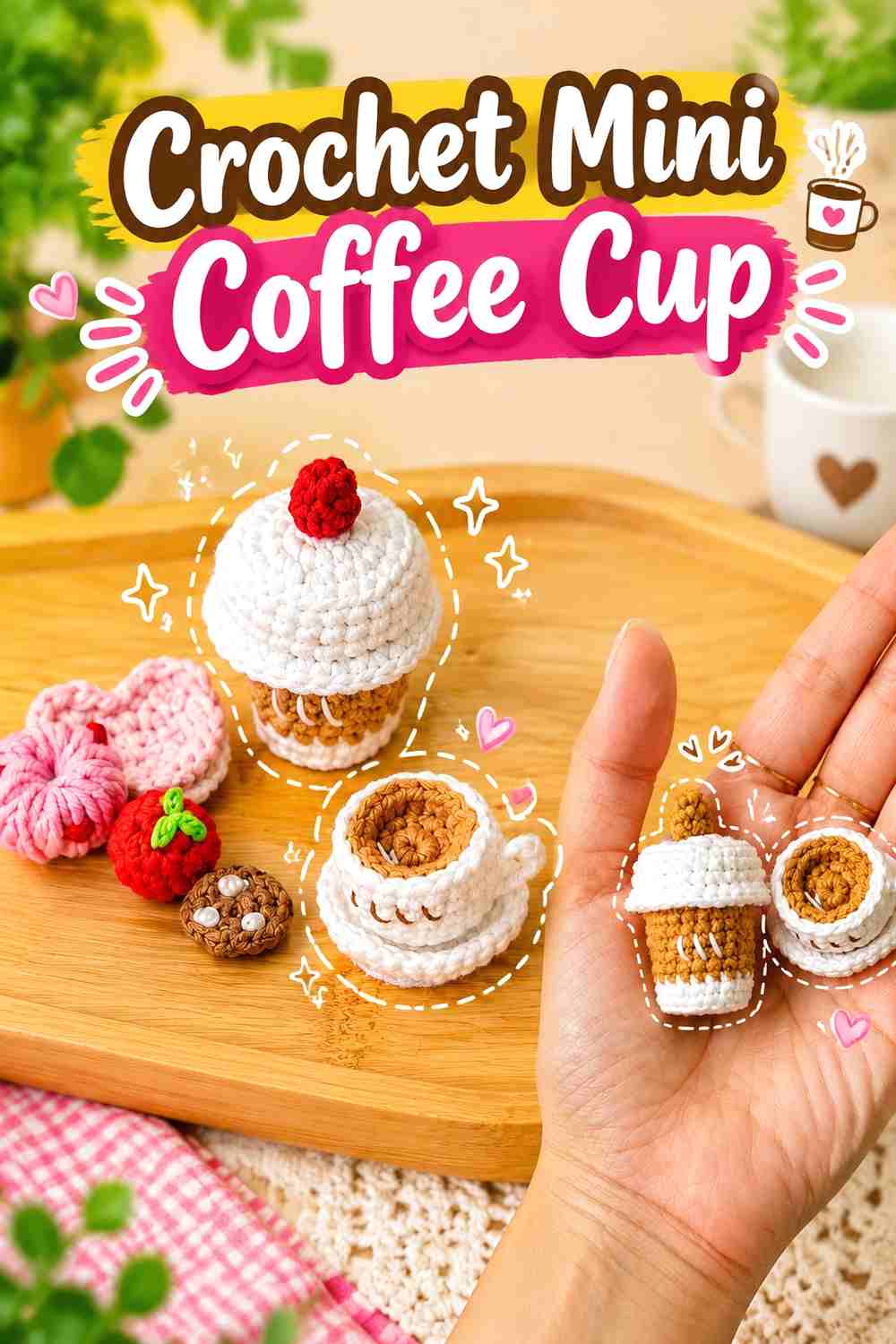
Pukasnow Crochet’s tutorial demonstrates small amigurumi coffee-cup forms designed at keychain scale. The project is not presented as standardized dollhouse tableware, so treat its finished size as a guide for a whimsical book nook rather than assuming it will match 1:12 furniture.
A coffee cup can instantly suggest someone has just stepped away from the chair.
Finish the Mug Before Choosing the Table
A tiny cup in your hand can still look oversized beside true dollhouse furniture.
If the completed mug dominates a small table, either change the scale of the surrounding pieces or embrace a playful amigurumi nook where exaggerated props are intentional.
Keep the Drink Visible From the Shelf Angle
Book nooks are normally viewed from the front rather than directly above.
Position the cup where viewers can still see enough of the opening or handle to identify it. Pushing it too far back can make a detailed miniature disappear.
Creator Credit: Pukasnow Crochet
10. Crochet Candlelit Reading Accent
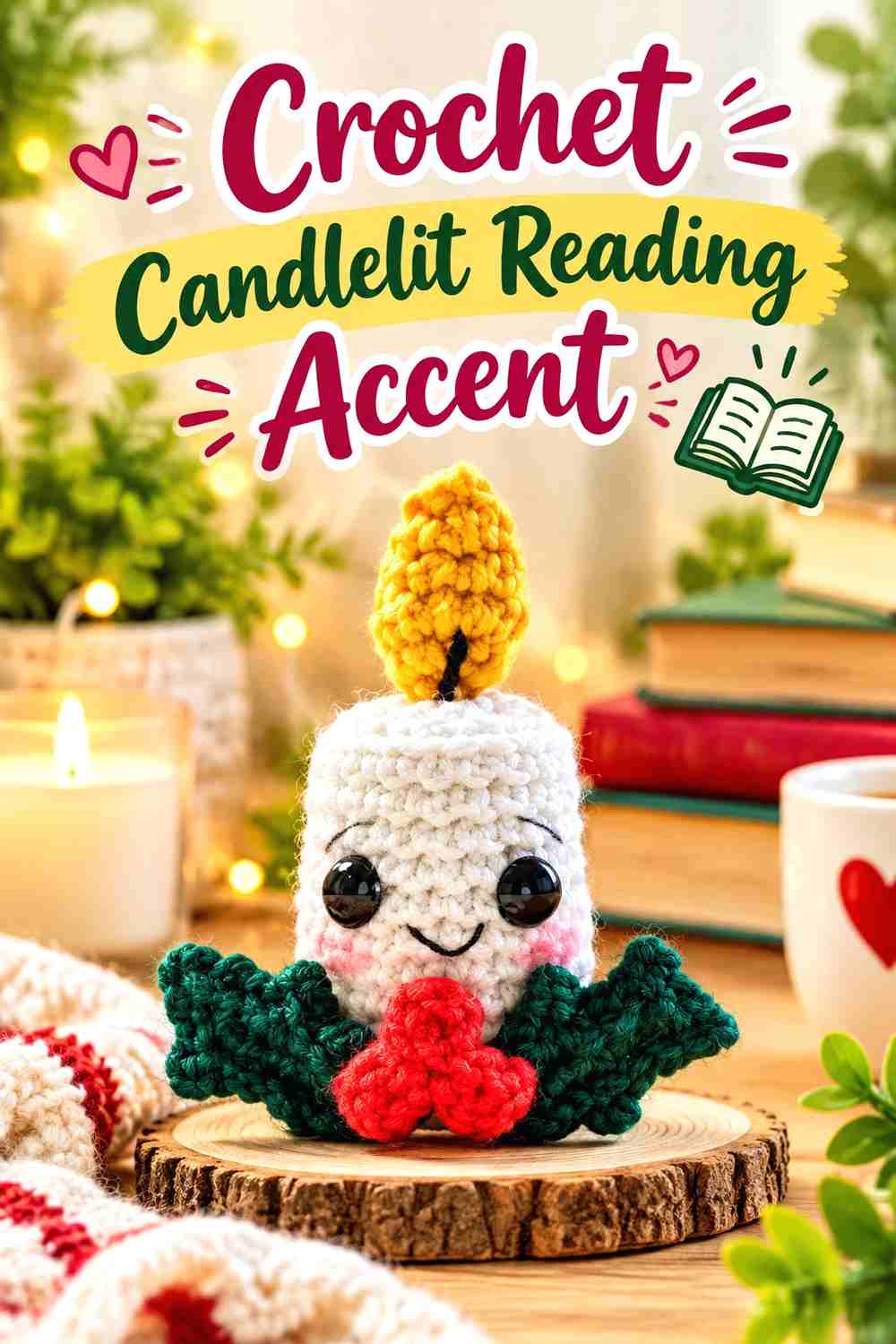
ToyGurumi’s candle amigurumi provides a compact vertical decoration with a recognizable flame shape. The source presents it as a stuffed crochet candle rather than a functioning light.
In a book nook, it can sit on a mantel-like shelf, side table, or ledge where you want the appearance of warmth without adding another large furnishing.
One Candle May Be Enough
A tiny nook rarely needs a full row of decorations.
One candle beside a book stack can communicate a cozy atmosphere while keeping the viewing area open. Several candles work better when the nook has a broader shelf or mantel.
Treat the Flame as Representational
Do not combine the yarn candle with a real flame or hot lighting element.
If you want actual illumination, place a miniature LED or other suitable lighting component elsewhere in the nook according to its own instructions.
Creator Credit: ToyGurumi
11. Crochet Tiny Bookshop Cat
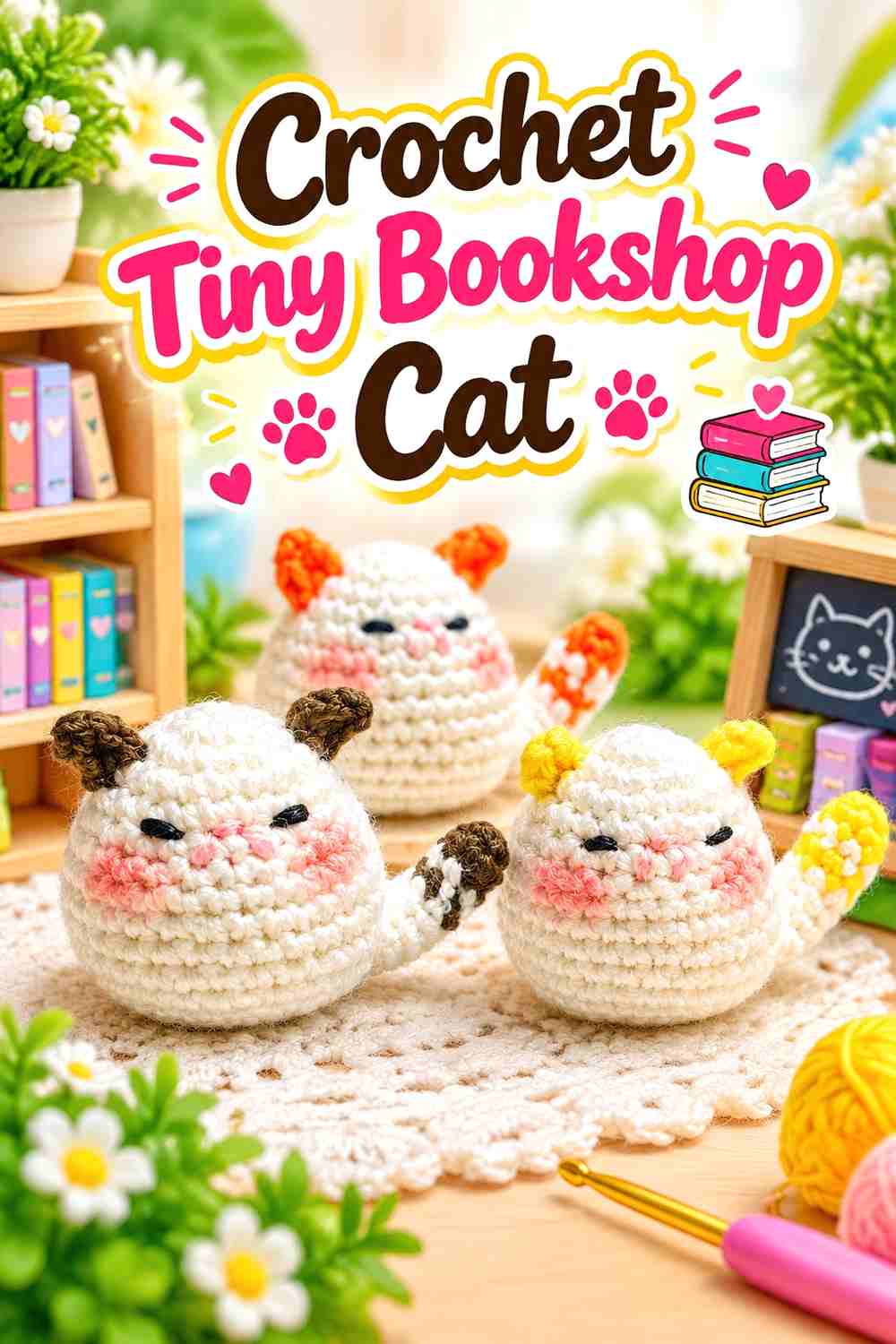
Mei Crafts demonstrates a miniature amigurumi cat with a compact body and recognizable ears and facial details.
A cat works particularly well in a book nook because it creates the impression that the room is occupied without requiring a human-style doll.
Decide Whether the Cat Owns the Chair
The character can be a small pet beside the furniture or the main resident of a whimsical amigurumi library.
Those interpretations require different scale relationships. If the cat nearly fills the chair, styling it as the reader may look more intentional than pretending it is a tiny pet.
Give the Ears a Clear Background
Small pointed ears can disappear against a patterned blanket or busy stack of books.
A quieter wall or chair back behind the head helps the silhouette remain readable from normal bookshelf distance.
Creator Credit: Mei Crafts
12. Crochet Library Mouse
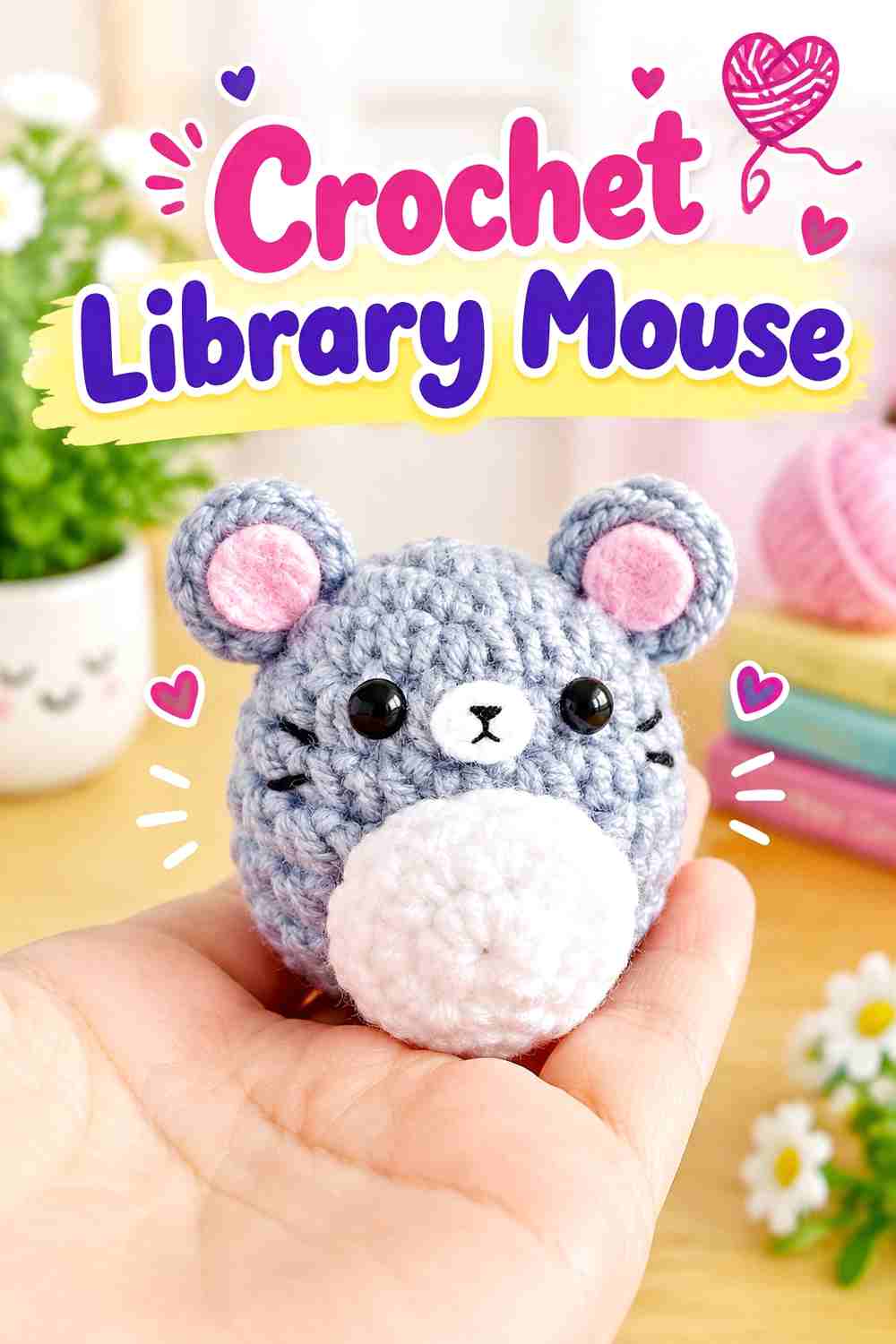
Happygurumi’s tutorial creates a complete tiny mouse amigurumi with a compact body and long tail, making it an especially fitting character for a miniature library scene.
A mouse can sit beside an oversized book, peek from a basket, or occupy a deliberately whimsical reading nook where the books appear enormous.
The Tail Extends the Effective Footprint
The body may be tiny, but the tail adds a long visual line.
Arrange it before deciding where the mouse belongs. A curled tail can keep the character compact, while an extended tail may need more clear floor or shelf space.
Oversized Books Can Become Part of the Story
Unlike realistic dollhouse scenes, a mouse library can benefit from exaggerated book proportions.
A book nearly as large as the character makes the nook feel intentionally storybook-like instead of incorrectly scaled.
Creator Credit: Happygurumi
13. Crochet Mini Owl Book Guardian
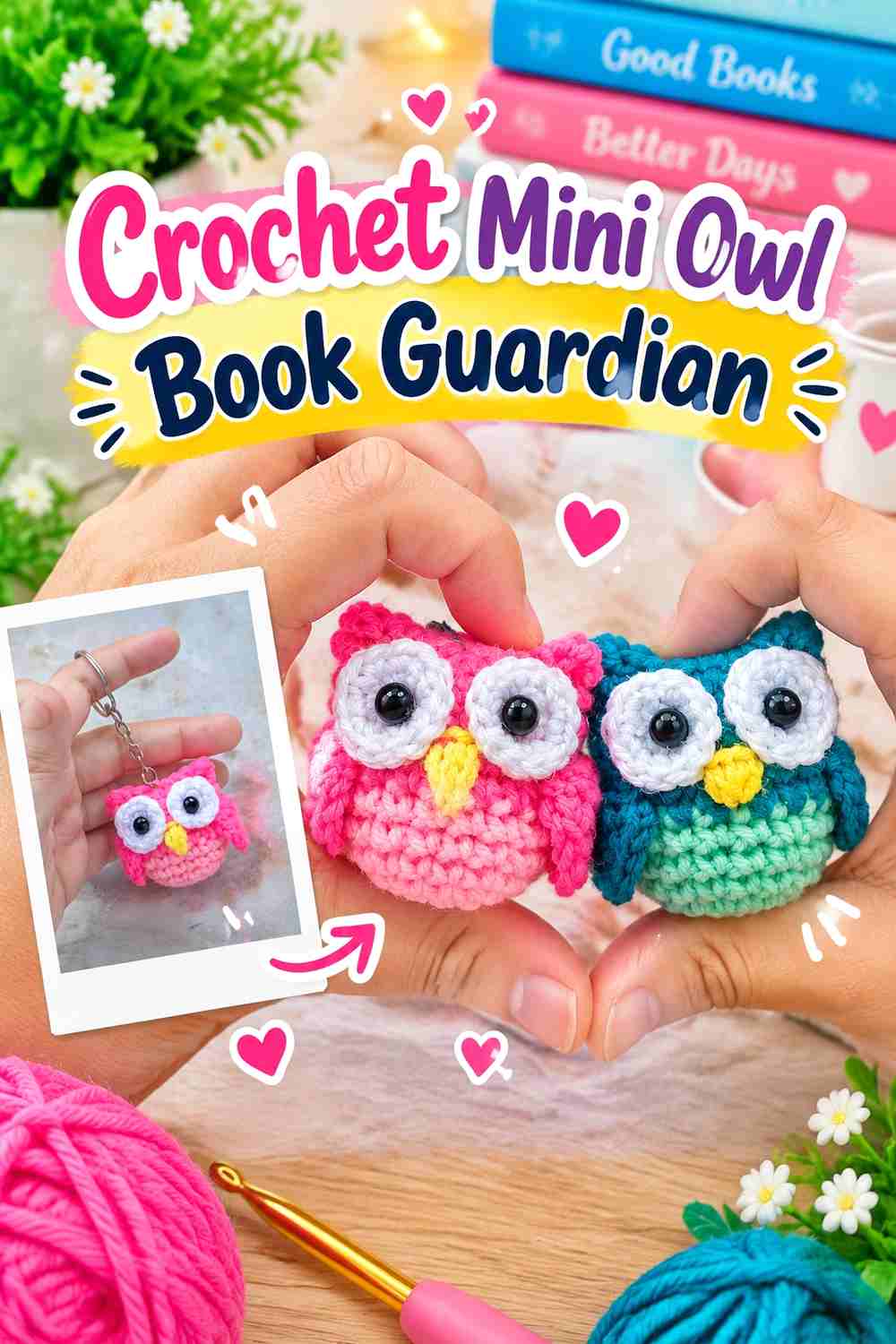
Cute Crochet’s mini owl tutorial creates a compact stuffed bird with a strong front-facing face, wings, and contrasting eye area.
An owl works naturally on the upper shelf of a fantasy book nook, where it can function more like a guardian or mascot than a seated character.
Eye Contrast Matters From Viewing Distance
The owl’s face is its strongest feature.
If you alter the colors, preserve enough contrast around the eyes and beak for the expression to remain visible when the nook is viewed from across a room.
Use Height Instead of More Floor Clutter
Place the owl on a stack of books or raised ledge rather than squeezing another object beside the chair.
Using vertical levels makes the scene feel fuller without occupying every inch of the floor.
Creator Credit: Cute Crochet
14. Crochet Teddy Bear Reading Companion
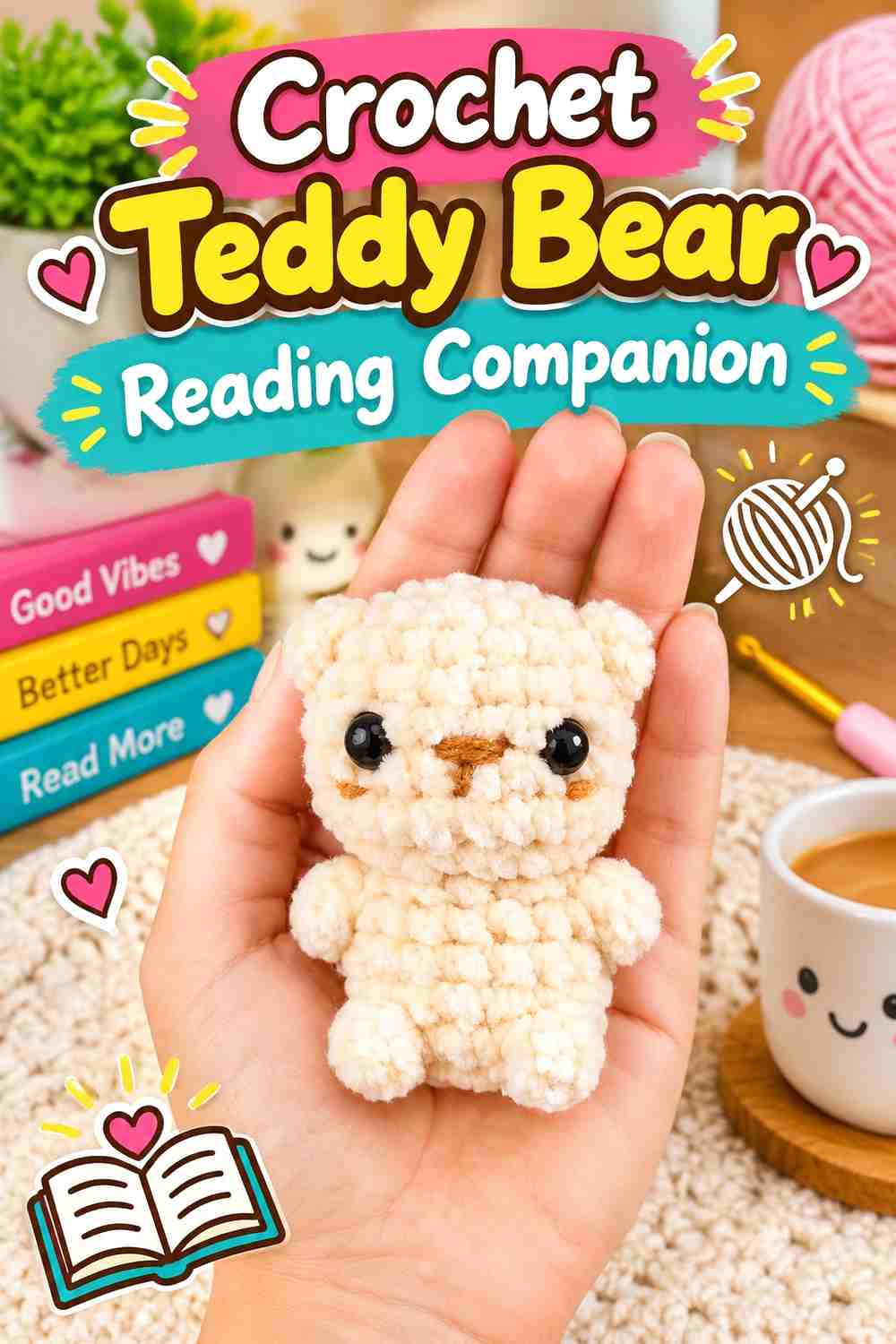
Amigurumis Atina’s mini teddy-bear design creates a compact no-sew-style character suitable for a small collectible display. The creator notes that the finished size varies with materials, so compare your completed bear directly with the intended nook.
A teddy can serve either as a toy inside the scene or as the book nook’s main reader.
Decide the Teddy’s Role Before Choosing Furniture
If the bear is a toy belonging to an imagined doll, it should remain much smaller than the chair.
If the teddy is the resident reader, choose or adapt furniture around the bear itself. Mixing the two scale ideas can make the nook look accidental.
Soft Chenille Changes the Visual Weight
Plush yarn creates a very different presence from fine dollhouse thread.
A fuzzy teddy may look larger and softer than its measurements suggest, so keep nearby textiles relatively simple if you want the bear to remain the focal character.
Creator Credit: Amigurumis Atina
15. Crochet Woodland Mushroom Shelf Accent
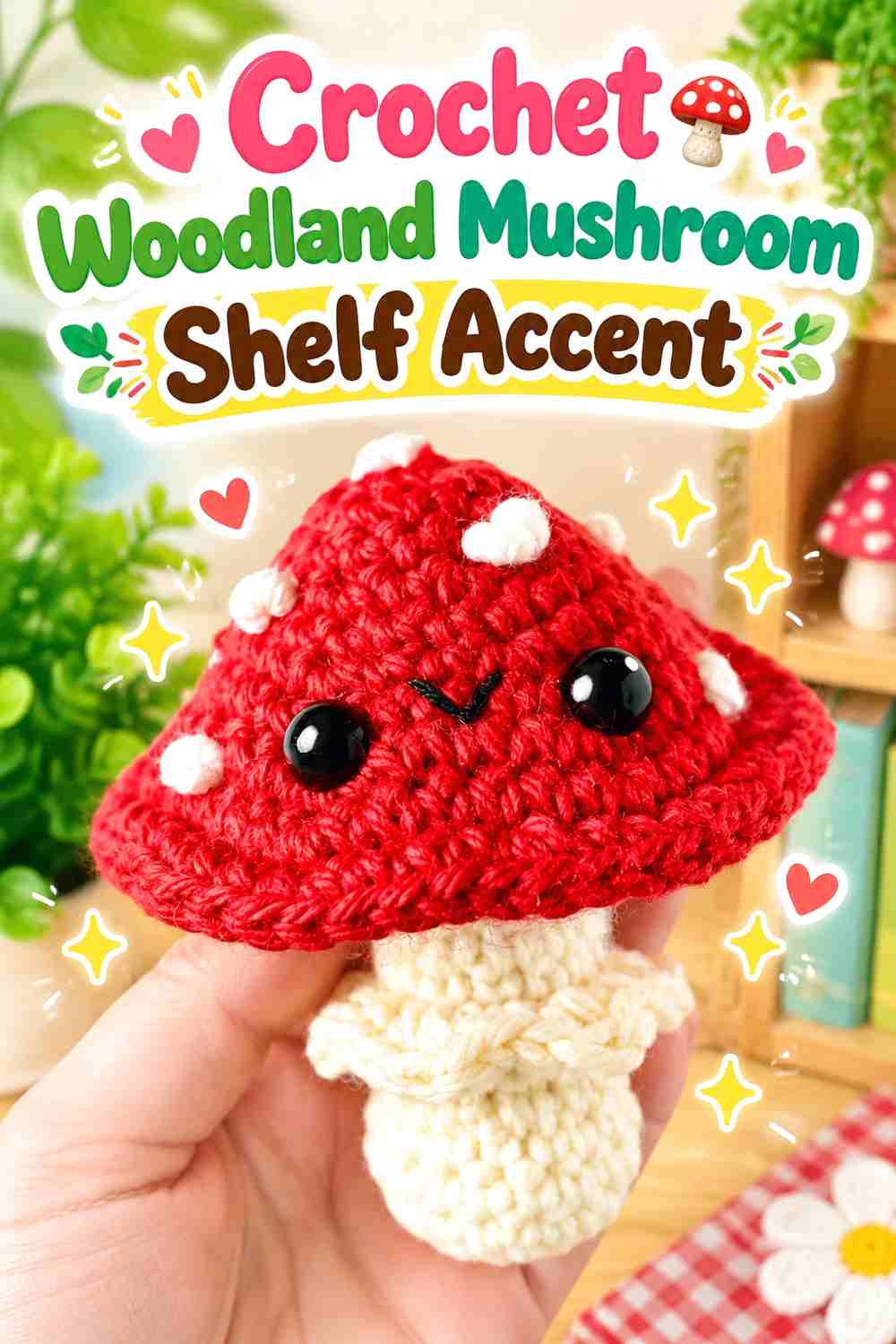
A Menagerie of Stitches demonstrates a tiny no-sew toadstool-style mushroom that can work as a miniature woodland prop or whimsical book-nook decoration.
Unlike the animals, the mushroom does not need furniture to explain its role. A pair of books, mossy colors, and one mushroom can push the entire shelf toward cottage-fantasy styling.
The Cap Controls the Apparent Size
The mushroom’s widest point is usually near the top.
Compare cap width with nearby books and characters before making several. A very broad cap can dominate a narrow book nook even when the stem is tiny.
Use Woodland Details Sparingly
One mushroom can suggest a magical library.
Adding mushrooms, leaves, flowers, pumpkins, animals, and vines to every available space can weaken the reading theme. Keep the books visible so the nook still feels bookish first.
Creator Credit: A Menagerie of Stitches
16. Crochet Mini Café Cake
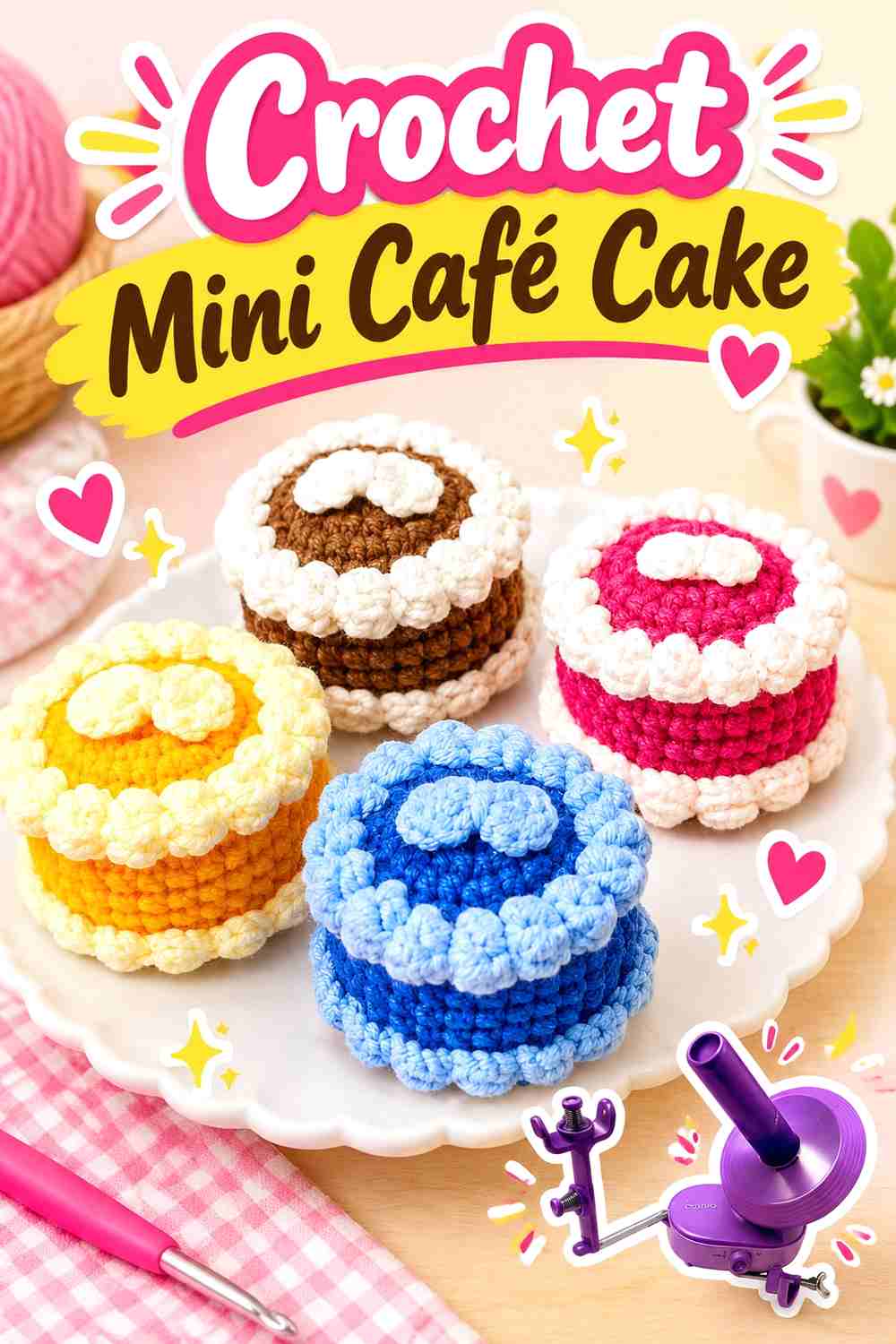
amiwacrochet’s mini cake tutorial produces a dimensional food amigurumi that works well when the book nook leans toward a tiny café or bookshop reading table.
The cake is more visually substantial than a mug, so it can become the central tabletop object rather than one of many small foods.
Let the Cake Determine the Table Scale
Finish the cake before choosing its furniture.
If it consumes almost the entire tabletop, either use a larger surface or deliberately create a whimsical café where oversized desserts are part of the style.
Stop Before the Nook Becomes a Bakery Display
The cake should strengthen the reading story, not replace it.
One dessert, one drink, and a nearby book are usually enough to communicate a bookshop café. A crowded collection of tiny foods can pull attention away from the library setting.
Creator Credit: amiwacrochet
17. Crochet Tiny Frog Shelf Companion
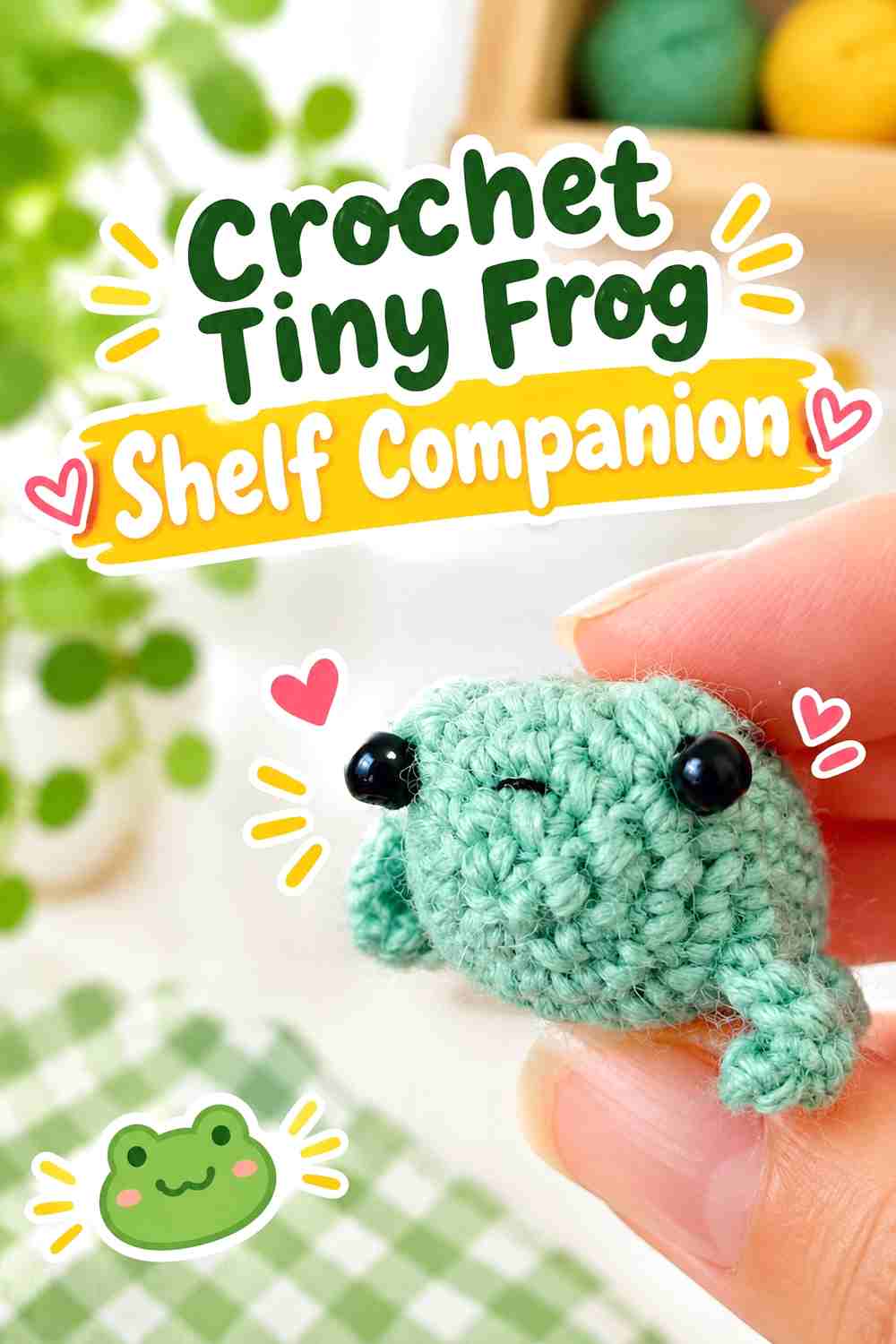
Móhu Makes’ miniature frog is a compact, almost no-sew amigurumi that can become a playful reader, shelf mascot, or tiny creature hiding between books.
Its squat outline provides useful contrast against tall books, lamps, and plants.
Low Characters Work Well on Raised Surfaces
A tiny frog placed directly at the back of a deep shelf may disappear.
Raise it on a book stack, small box, or ledge so the face remains visible. This uses height without changing the amigurumi itself.
Keep the Scene Deliberately Whimsical
A frog reading beside human-scale furniture does not need realistic proportions to work.
The important point is consistency. If the frog is the resident, let the books, chair, mug, and accessories relate visually to that character rather than mixing several unrelated miniature scales.
Creator Credit: Móhu Makes
Which Mini Book Nook Crochet Pieces Work Best Together?
For the most realistic miniature reading corner, start with the dollhouse-specific chair, lamp, rug, blanket, and basket. These pieces give you furniture and textiles before you add character-scale amigurumi.
For a cozy bookshop shelf, combine the tiny books, coffee cup, plant, cat, and cushion. The scene can stay small because each object immediately communicates a familiar part of a reading space.
For a woodland fantasy library, use the mouse, owl, mushroom, frog, books, and candle. Those pieces do not need to share realistic human proportions as long as they relate convincingly to one another.
The teddy and cake work particularly well in a softer storybook or café scene. They are stronger focal objects, so keep the surrounding details quieter.
Conclusion
A successful crochet book nook does not need seventeen miniatures packed into one shelf.
Start with one anchor: the chair for a traditional library, the books for a bookshop display, or a mouse, cat, teddy, owl, or frog for a character-led nook. Then add two or three objects that explain what is happening—a lamp for reading, coffee for a café, a blanket for comfort, or a mushroom for fantasy.
Most importantly, compare scale before combining tutorials. Some sources are true dollhouse projects, while others are small amigurumi designed for completely different purposes. A carefully planned three-piece scene will usually feel more convincing than a crowded shelf of individually cute objects that do not relate to one another.
Use each original creator’s tutorial for the exact construction and finishing details of the featured piece.
Frequently Asked Questions
Are all 17 projects made to the same dollhouse scale?
No. Some tutorials are specifically designed for dollhouses, while others are miniature amigurumi, keychain, or shelf projects. Compare finished objects directly before combining them.
What should I crochet first for a miniature book nook?
Start with the object that controls the scale. For a realistic room, that is usually the chair or other furniture. For a whimsical amigurumi nook, start with the character who will occupy the space.
How can I make different mini crochet patterns look like one scene?
Repeat a restrained color palette, choose similar yarn textures where practical, and let one object establish scale. You can also repeat one neutral shade across book pages, baskets, rugs, or cushions to visually connect unrelated tutorials.
Can I make a regular mini amigurumi smaller for a dollhouse?
Sometimes thinner yarn and a smaller hook will reduce the overall dimensions, but the fabric may also become stiffer and fine details may change. Make a test before assuming a scaled-down version will look proportionate beside true dollhouse furniture.
What colors work well for a cozy crochet book nook?
Warm neutrals, burgundy, forest green, rust, deep blue, mustard, oatmeal, and muted brown can create a traditional bookish palette, but the layout matters more than using any specific colors. Repeat a few shades instead of giving every miniature a completely independent palette.
How do I keep a mini book nook from looking cluttered?
Leave visible floor, wall, or shelf space between focal objects. Use vertical levels such as stacked books or raised ledges, and avoid adding a new object simply because there is technically room for it.
Are miniature amigurumi book-nook pieces suitable for children?
That depends on their construction and intended recipient. Safety eyes, beads, magnets, keychain hardware, glue, and other small components can create hazards. Treat collector-scale book-nook miniatures as display objects unless they have been designed and finished appropriately for play.