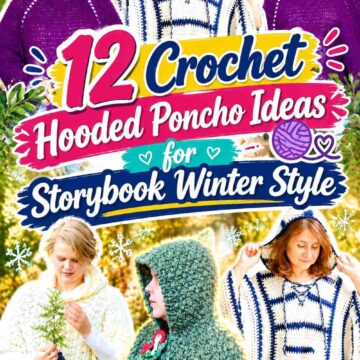
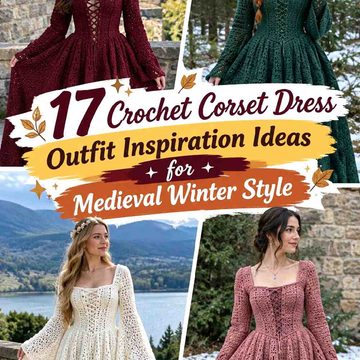
A crochet medieval forest cloak does not have to copy a historical garment to create the right mood. Deep hoods, wide shoulder coverage, pointed hems, textured fabric, muted woodland colors, and loose layering can all push a modern crochet cape or poncho toward a storybook traveler look.
The tutorials in this collection were chosen for their useful cloak-like constructions. Some are true hooded cloaks, while others are capes, ponchos, wraps, or hooded scarves that can inspire a shorter medieval-fantasy layer. Not every tutorial is specifically designed as medieval clothing, so use the original creator’s instructions for construction and sizing, then treat color, trim, closures, and styling as separate adaptation decisions.
Quick List
- Crochet Deep-Hood Forest Wanderer Cloak
- Crochet Craft-Witch Half-Circle Hooded Cloak
- Crochet Short Storybook Hooded Cape
- Crochet Star-Point Woodland Hooded Cloak
- Crochet Two-Point Hooded Traveler Poncho
- Crochet Fur-Trim Woodland Hooded Poncho
- Crochet Cowl-Neck Hearthside Cape Poncho
- Crochet Boho Forest Texture Poncho
- Crochet Convertible Woodland Shawl Poncho
- Crochet Color-Flow Winter Poncho Cloak
- Crochet Granny-Square Forest Patchwork Poncho
- Crochet Fringe-and-Bead Folk-Tale Poncho
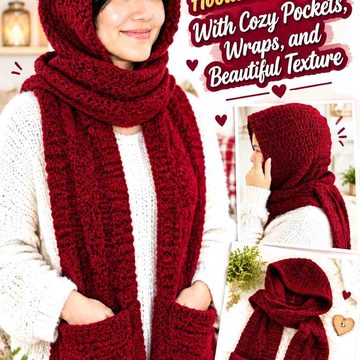
- Crochet Hooded Pocket Shawl Cloak
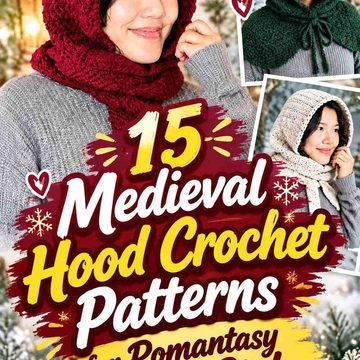
- Crochet Tapered Hooded Scarf Mini Cloak
- Crochet Wheat-Texture Hooded Scarf Cape
- Crochet Rounded Hooded Pocket Scarf
- Crochet Granny-Square Hooded Scarf Mantle
What Makes a Crochet Layer Feel More Medieval and Woodland
Silhouette usually does more work than decoration. A generous hood, wide shoulders, an open front, an uneven or pointed hem, and enough fabric to move around the body can create a stronger storybook impression than covering a modern shape with themed embellishments.
Color can reinforce the idea without becoming costume-like. Moss, fern, bark, charcoal, lichen gray, faded berry, cream, rust, and muted mustard can all fit a forest palette. Instead of using every woodland shade at once, consider choosing one dominant color and one quieter trim or accent.
Closures also change the character of a piece. A simple front fastening can make an open cape feel more cloak-like, but do not add a heavy clasp merely for appearance. Check how the neckline naturally sits first and make sure any added closure does not pull or distort the crocheted fabric.
Drape and Weight Matter More on a Cloak Than on a Small Accessory
A cloak, poncho, or long wrap contains enough fabric for yarn weight to become a structural decision. A yarn that feels pleasantly substantial in a swatch may feel much heavier once it extends across the shoulders and down the body.
If you substitute yarn, compare the resulting fabric with the creator’s finished piece. Look for how easily it folds, how much it stretches vertically, and whether the edges hang or project outward. A medieval forest cloak generally benefits from visible movement, but extremely loose fabric can also stretch around the neckline.
Hoods deserve a separate check. A large hood adds fabric directly behind the neck and shoulders. If the body already has significant weight, a heavier hood can pull the entire garment backward.
Check Winter Layering Before Changing Length or Width
A cloak intended to sit over a shirt will fit differently when worn over a sweater, dress, or costume layer. Before making major alterations, identify what you expect to wear underneath.
Pay particular attention to the neckline, shoulder span, arm movement, and the shortest part of the hem. A dramatic center point does not automatically provide generous coverage at the sides.
For a winter storybook look, extra length can be attractive, but more fabric also means more weight and a greater chance of catching the hem on chairs, bags, stairs, or outdoor surfaces. Choose length for the way you will actually wear the piece rather than for a standing photograph alone.
1. Crochet Deep-Hood Forest Wanderer Cloak
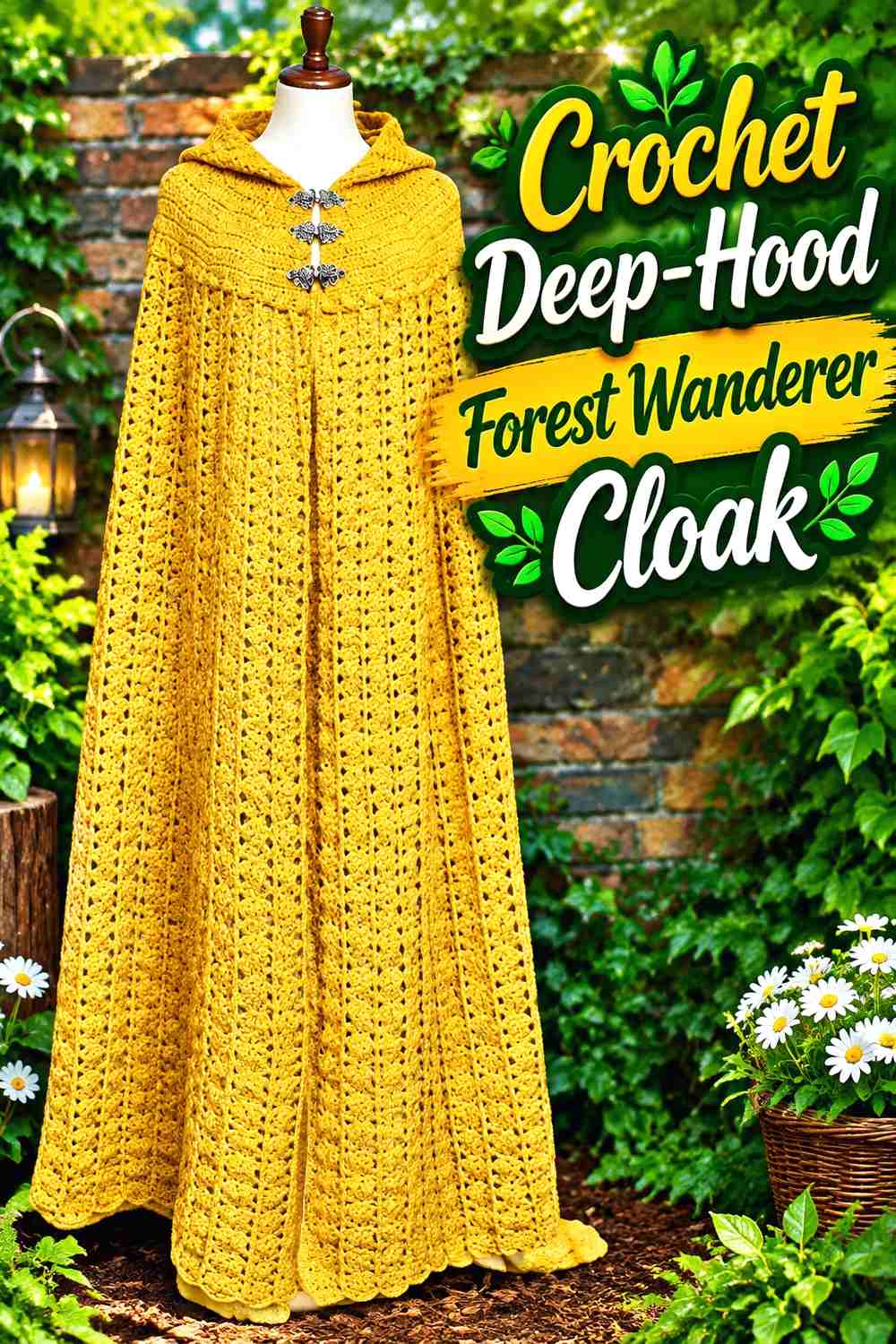
This is the direction to consider when you want the collection’s most recognizable cloak silhouette rather than a poncho that merely suggests one. The design combines broad body coverage, a hood, and a front opening, giving it the proportions associated with a fantasy traveler or woodland wanderer.
A deep moss, peat brown, charcoal, or muted heather could make the form feel more forest-oriented without altering the actual construction.
Long Crochet Fabric Puts Stress on the Neckline
The longer a cloak becomes, the more fabric its upper edge has to support. Before extending the hem beyond the tutorial, let the developing piece hang naturally and watch what happens around the shoulders and neck.
If the neckline begins stretching noticeably, simply adding more length may change the fit of the entire garment. Treat extra length as a structural modification, not just a styling choice.
A Front Closure Should Follow the Natural Drape
Try the cloak on before deciding where an ornamental clasp, button, tie, or toggle should sit. The crochet should already fall comfortably around the shoulders.
A closure works better when it stabilizes that position rather than dragging two sections together that naturally want to sit farther apart.
Creator Credit: Bag-O-Day Crochet
2. Crochet Craft-Witch Half-Circle Hooded Cloak
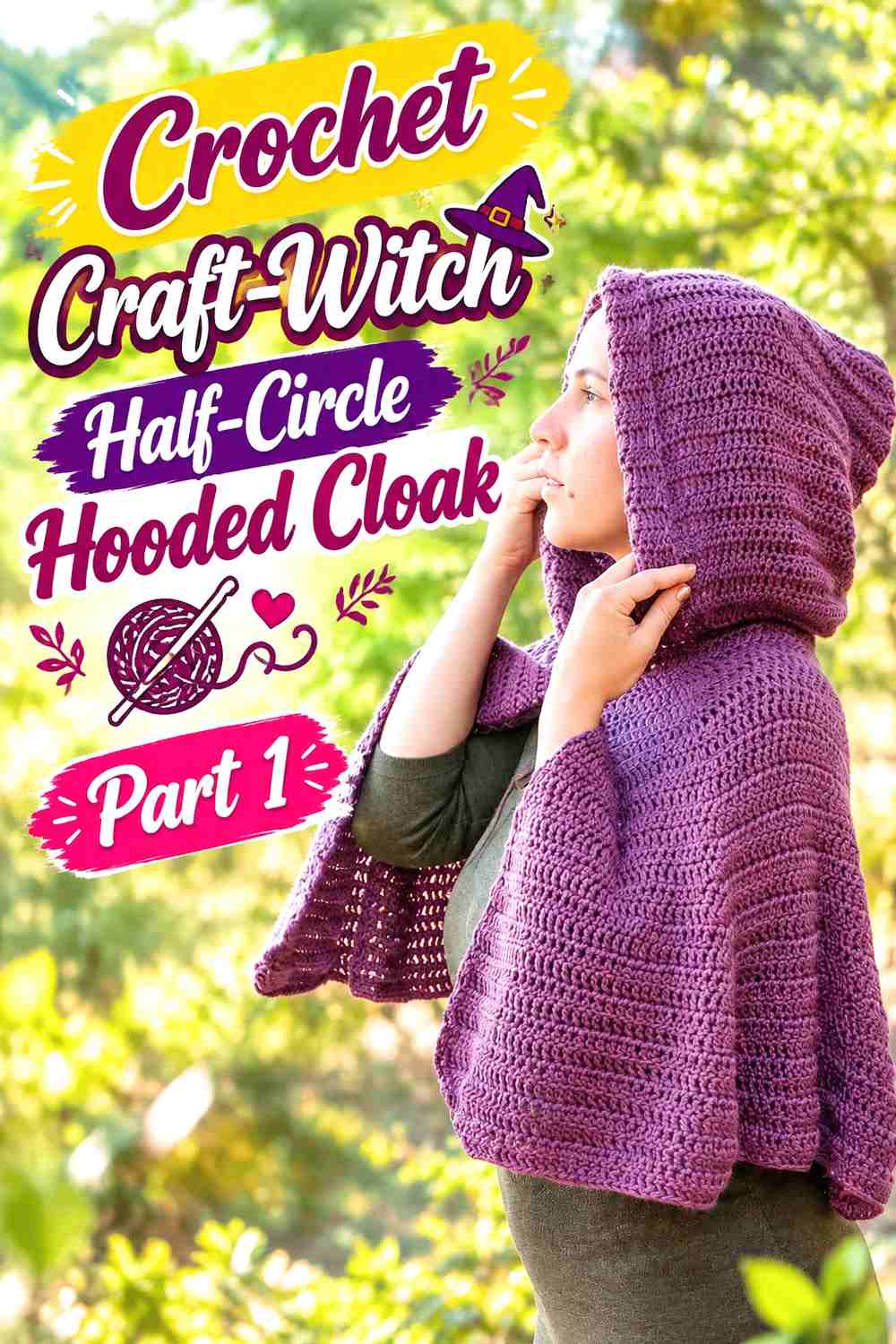
This hooded cloak offers another full-cape direction, but its broad spreading shape creates a different visual effect from a narrow straight-sided mantle. The original project was developed around a hooded cloak concept, making it particularly useful for fantasy, witch, woodland, and costume-inspired adaptations.
For a quieter medieval-forest version, let the shape carry the theme and keep embellishment restrained.
Width Changes How Much the Cloak Wraps Around the Body
A wider cloak can overlap more around the sides and front, while a narrower version behaves more like a decorative cape.
Do not judge width only while the crochet is lying flat. Put the developing piece around your shoulders and check how much of the torso remains exposed when your arms move.
Hood Depth Affects the Entire Storybook Silhouette
A hood that sits close to the head looks more contemporary. A roomier hood creates stronger visual depth around the face and can give a fantasy cloak more presence.
If you alter hood depth, check its weight as well. Adding fabric behind the head can affect how the neckline sits when the hood is worn down.
Creator Credit: Crochet with illJay
3. Crochet Short Storybook Hooded Cape
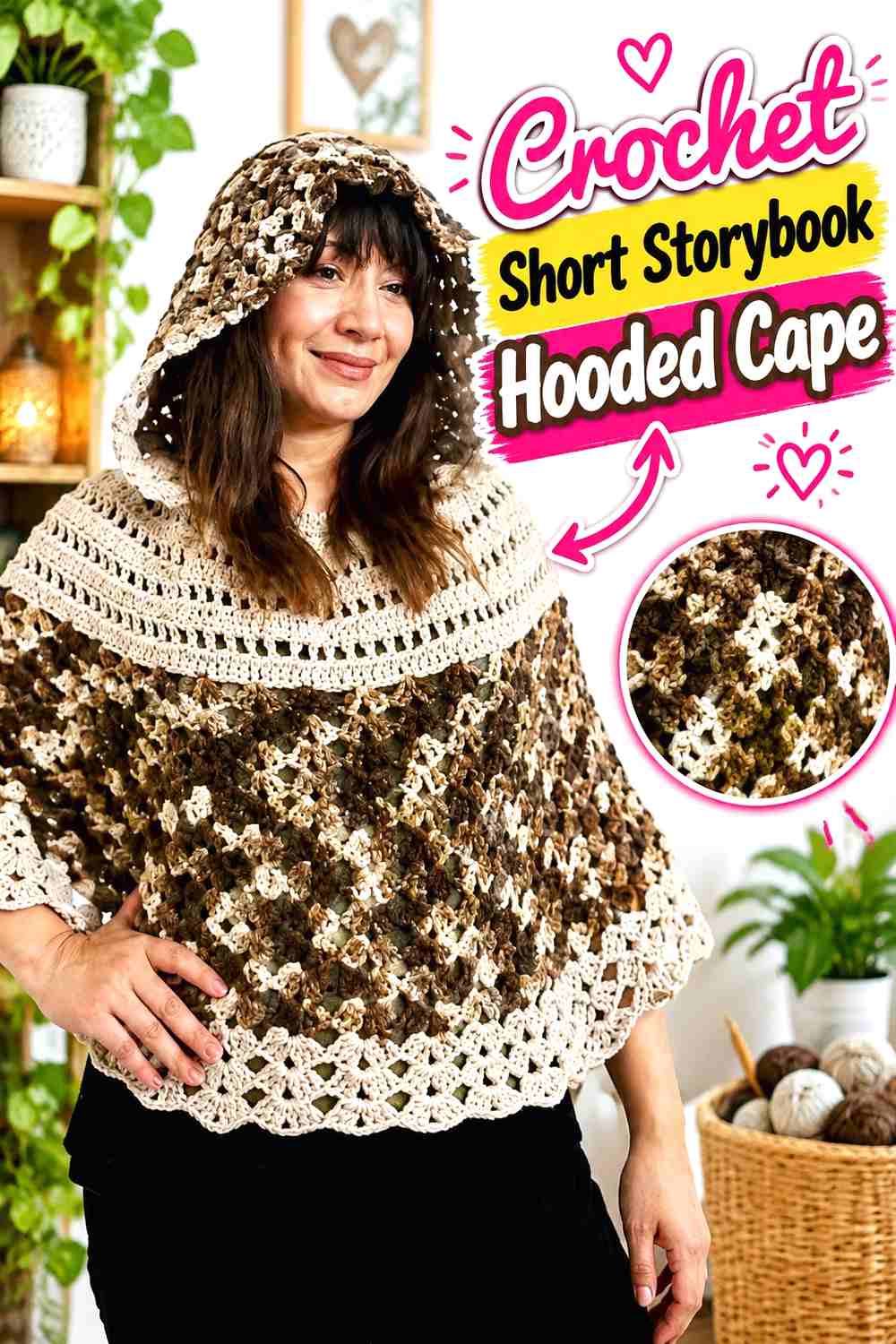
A shorter hooded cape is useful when you want the medieval-forest mood without committing to a long garment. The finished shape concentrates fabric around the head, neck, shoulders, and upper torso, creating a compact layering piece that can sit over a dress, sweater, or simple long-sleeve base.
Because there is less lower-body fabric, the hood becomes one of the strongest visual features.
Shorter Length Makes Shoulder Fit More Noticeable
A long cloak can visually hide small differences in shoulder drape. With a cape, the shoulder line and lower edge remain much closer together, so uneven shaping is easier to notice.
Try the cape over the thickness of clothing you expect to wear before deciding that the neckline or shoulder coverage needs adjustment.
Use Color to Lengthen the Visual Line
A solid forest green, brown, or deep gray can make a short cape feel calmer and more cloak-like. Strong horizontal color changes may instead emphasize its compact length.
If you want contrast, concentrating it near the hood or outer border can preserve a more continuous body silhouette.
Creator Credit: Mariie Crochet
4. Crochet Star-Point Woodland Hooded Cloak
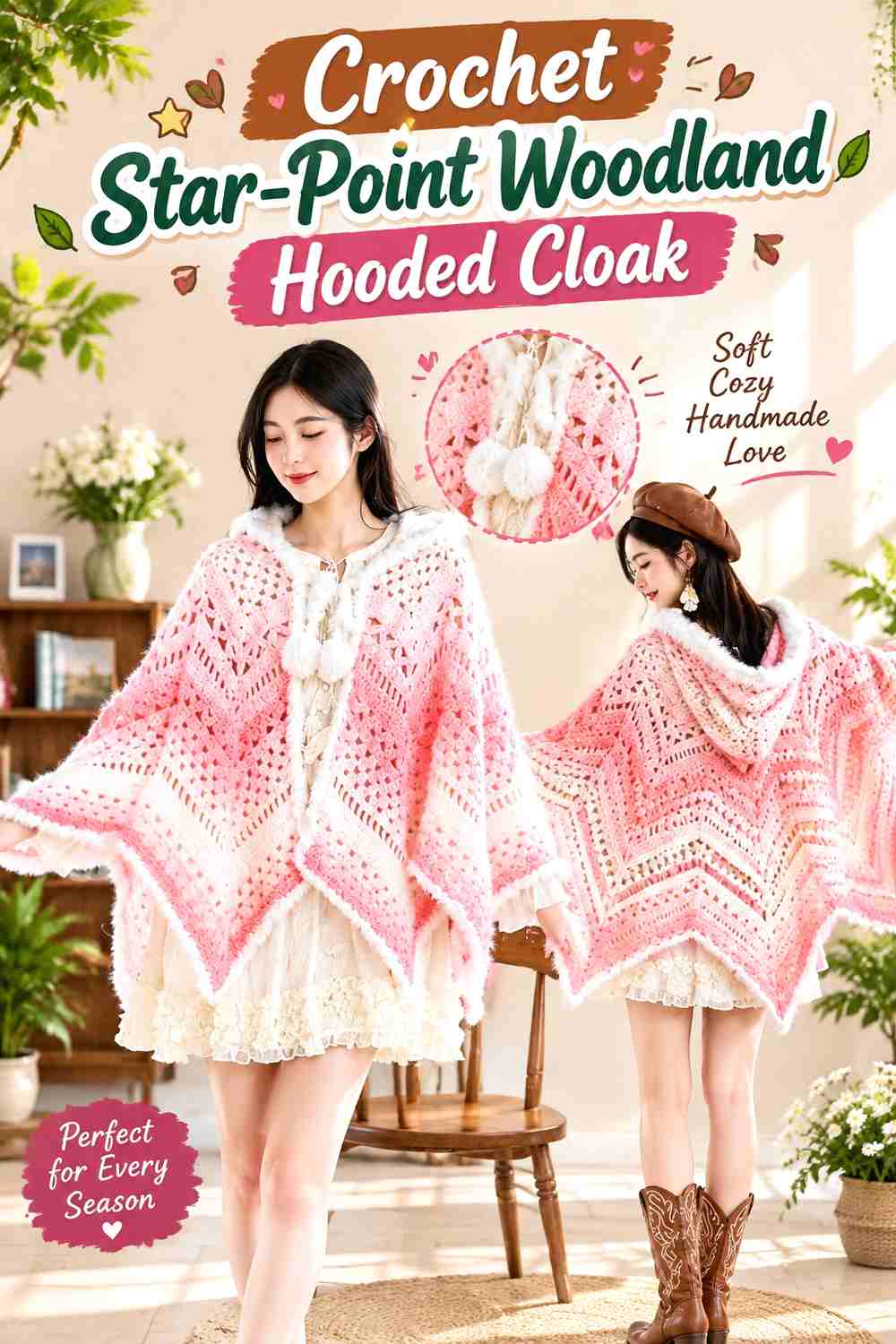
This hooded cloak replaces a conventional rounded or straight hem with pronounced points. That gives the finished piece a much more whimsical outline and makes it particularly suited to fairy-tale, enchanted-forest, or magical-winter styling. The published project also shows a hood and decorative edging as part of the finished concept.
It is an option for someone who wants the cloak shape itself to provide the fantasy element.
Pointed Edges Need Space to Remain Visible
The star-like outline is easiest to appreciate when the lower points can hang freely. If the cloak is layered over a wide skirt, backpack, or bulky coat, some points may fold or disappear into the clothing beneath.
Consider the entire outfit before changing the scale of the lower edge.
Plush Trim Changes Both Texture and Weight
A fluffy border creates strong contrast with ordinary crochet stitches, especially around a hood. That texture can create a snowy storybook effect, but it also changes the weight and behavior of the finished edge.
If substituting trim, check compatibility with the main fabric instead of assuming any novelty yarn will produce the same result.
Creator Credit: Susan’s Family
5. Crochet Two-Point Hooded Traveler Poncho
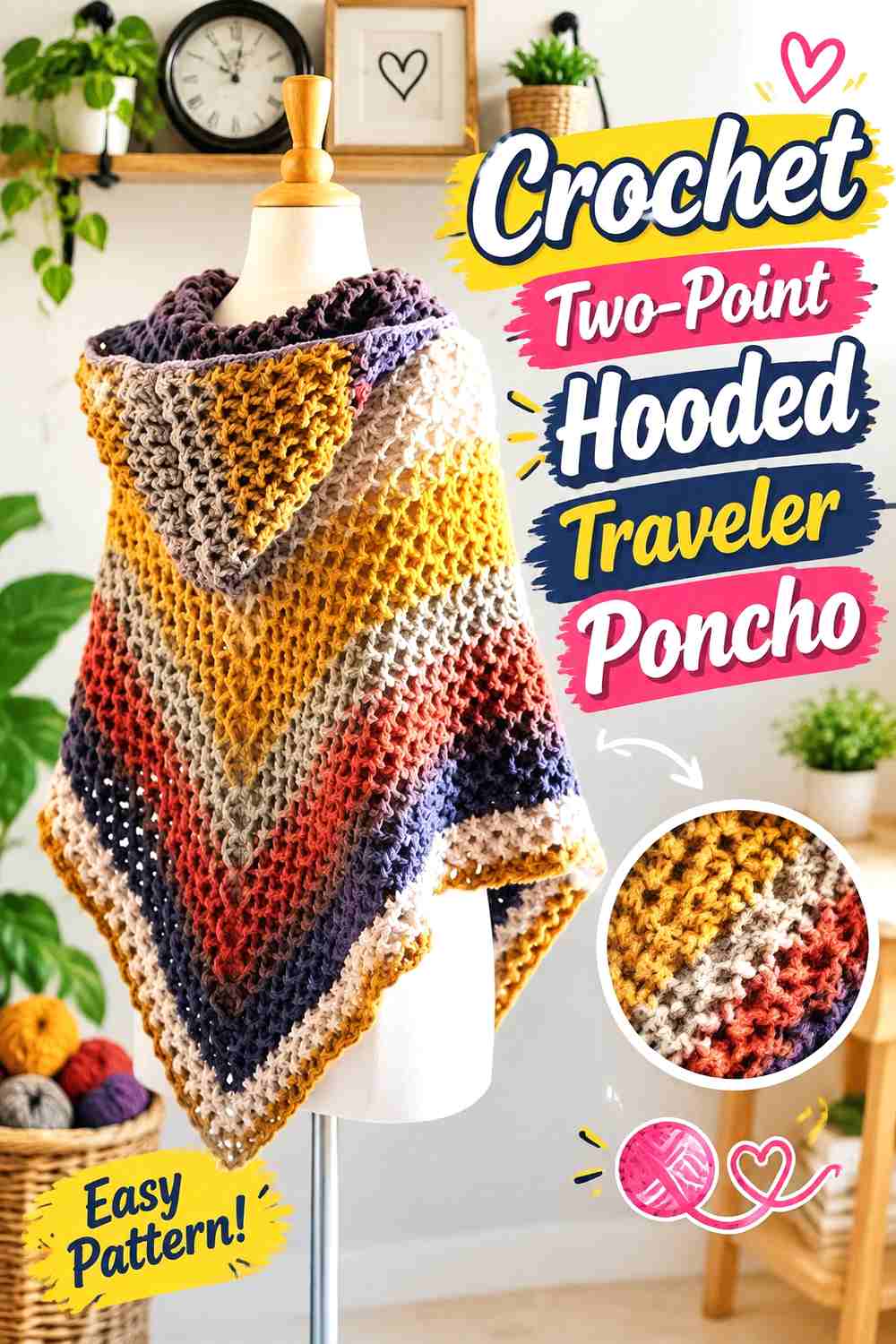
This hooded poncho forms a point at the front and another at the back, creating a longer center line without requiring an equally long hem around the entire body. The tutorial also presents a hoodless V-neck direction, so the basic silhouette can be considered separately from the hood.
For a woodland traveler look, the two-point shape can stand in for a cloak while remaining more contained around the sides.
The Shortest Side Determines Arm Coverage
A deep front point can make a poncho appear very long in a photograph, but it does not tell you how low the side edges sit.
Check the garment from the side and with your arms raised. If winter coverage matters, those shorter areas may be more important than the dramatic center point.
Decide on the Hood Before Finalizing the Styling
The hood adds significant visual weight around the shoulders. Without it, the V-neck version can accommodate a separate scarf, cowl, or collared underlayer.
Choose between those directions early rather than treating the hood as an automatic requirement for a fantasy look.
Creator Credit: crochetdreamz
6. Crochet Fur-Trim Woodland Hooded Poncho
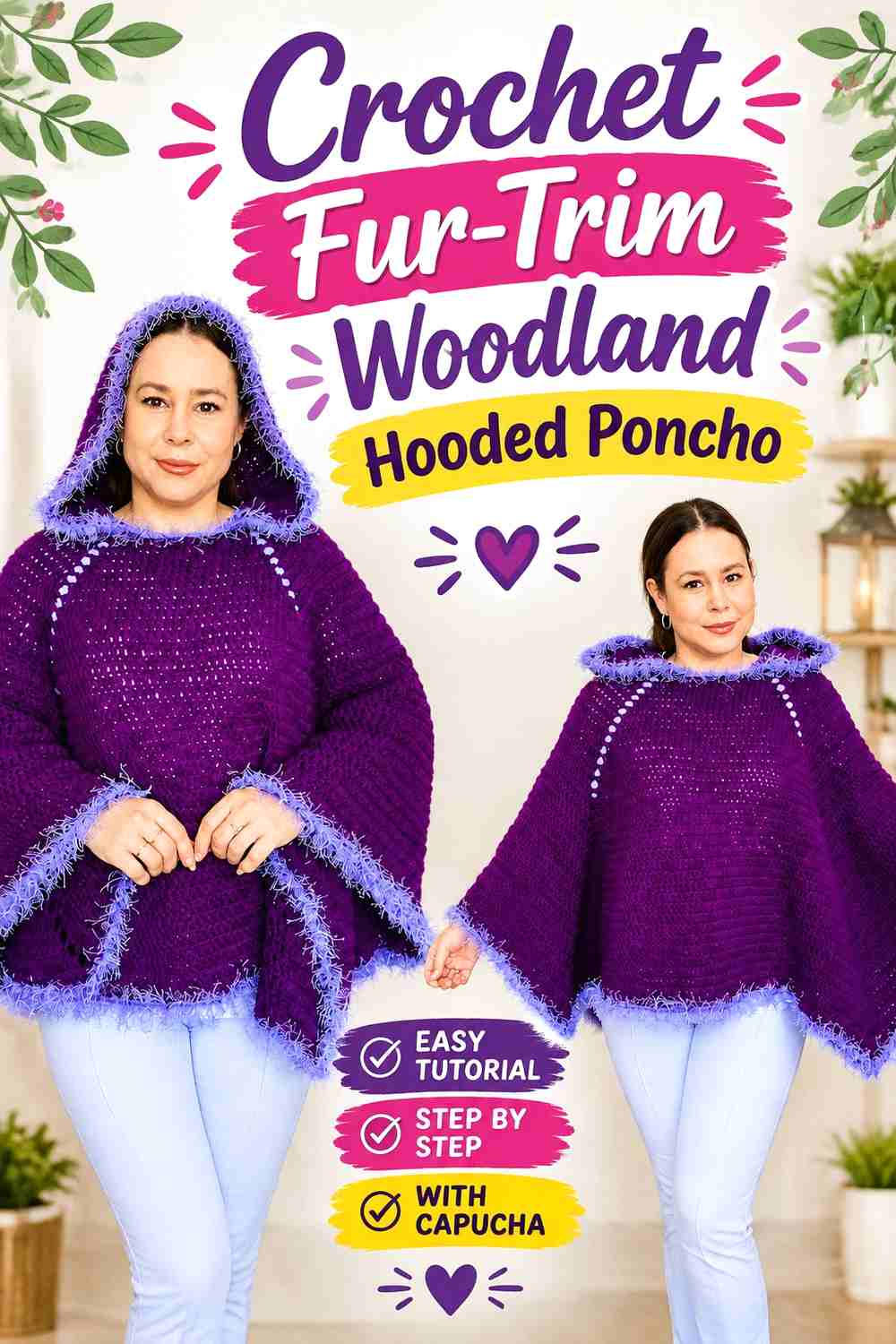
This hooded poncho offers another substantial winter silhouette, with decorative fuzzy yarn used in the demonstrated finishing. The combination of a roomy hood, broad poncho body, and contrasting texture makes it especially adaptable to a snow-forest or storybook traveler palette.
Instead of copying the demonstrated colors, imagine the same shape in pine, mushroom brown, storm gray, or cream.
Decorative Trim Can Pull on an Otherwise Soft Edge
Novelty yarn does not behave exactly like the main crochet fabric. If you substitute another fuzzy or plush yarn, compare its weight and stretch before using it around a large section of the garment.
The trim should enhance the edge rather than make the hood or hem sag.
Head Fit Deserves Its Own Check
A hooded poncho has two different fitting problems: the body must sit comfortably around the shoulders, while the hood must have enough room around the head.
Do not assume that adjusting the poncho body automatically corrects hood proportions. Follow the creator’s guidance and verify both areas independently.
Creator Credit: MageTeje
7. Crochet Cowl-Neck Hearthside Cape Poncho
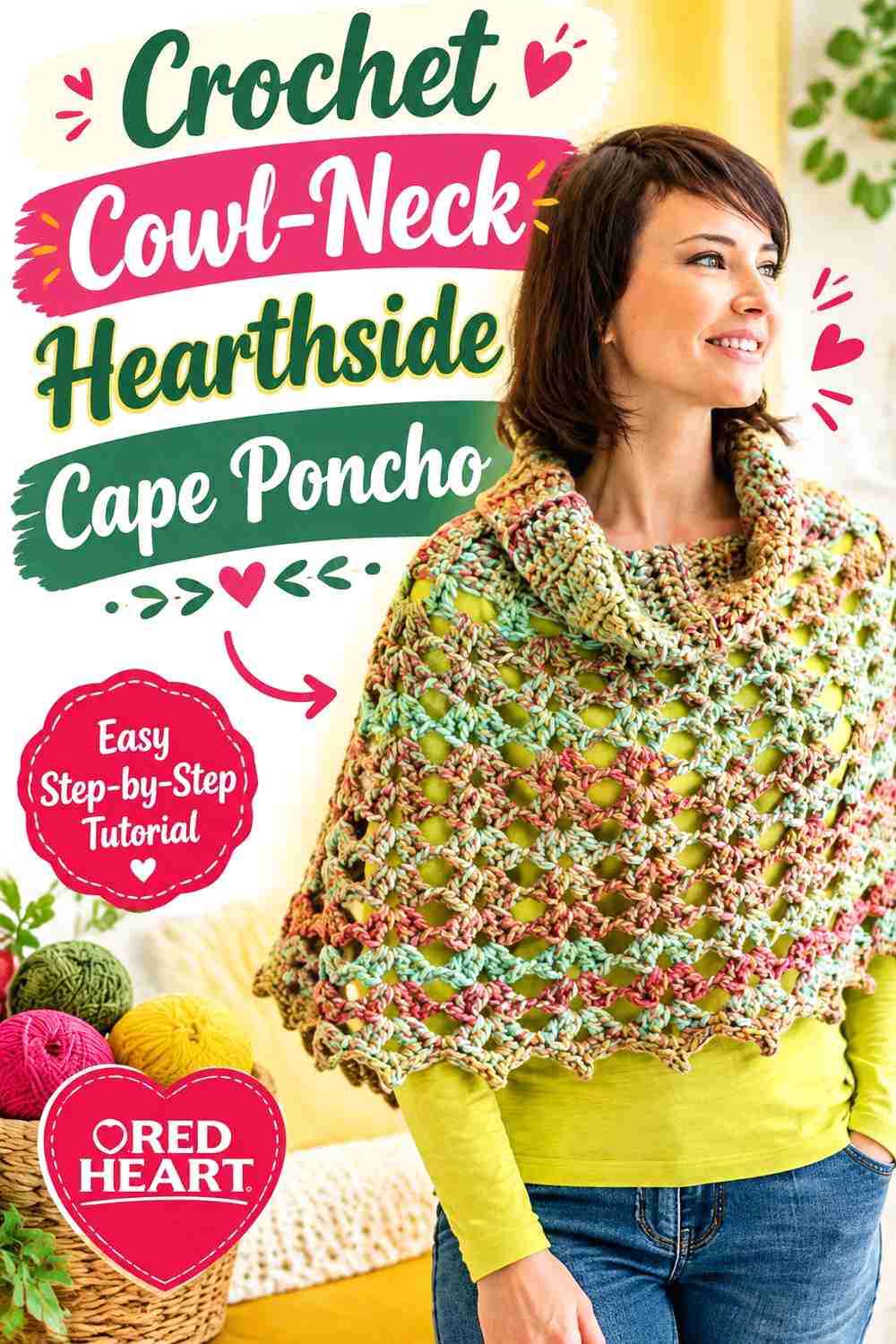
A large cowl can create a cloak-like winter presence even without a hood. This poncho uses neckline volume as the main feature, giving the upper garment a softer, wrapped appearance while leaving the lower body loose.
It suits a storybook look that feels more village, cottage, or hearthside than mysterious forest traveler.
A Cowl Competes With Other Winter Necklines
If this piece will be worn over a high-neck sweater or beneath a coat with a large collar, several layers may compete for the same space.
Try to plan the full outfit rather than evaluating the poncho on a thin base layer only.
Face-Level Yarn Needs More Than Good Drape
The main body can tolerate a fiber you would not want continually touching the neck or jaw.
If you substitute yarn, consider texture against skin as well as weight and appearance. A beautifully draped poncho is less useful if the cowl is uncomfortable to wear.
Creator Credit: Marly Bird
8. Crochet Boho Forest Texture Poncho

This loose poncho emphasizes continuous texture instead of separate motifs, a large hood, or elaborate shaping. That makes it a useful base when you want the medieval-forest impression to come mainly from drape, yarn color, and styling.
A muted single-color version can look very different from the same construction in bright stripes or highly variegated yarn.
Repeated Texture Rewards Clear Stitch Definition
When one stitch texture covers a large area, the yarn has a strong influence on whether that texture remains visible.
A very busy color sequence can compete with raised or repeating stitch details. If texture is the feature you want, test the yarn over a larger swatch before committing.
Forest Styling Does Not Require Extra Motifs
Mushrooms, leaves, acorns, and vines can be attractive, but adding all of them to an already textured poncho may overwhelm the shape.
A bark brown or fern green garment with a simple edge can create a stronger woodland impression than multiple appliqués competing for attention.
Creator Credit: Lanas y ovillos
9. Crochet Convertible Woodland Shawl Poncho
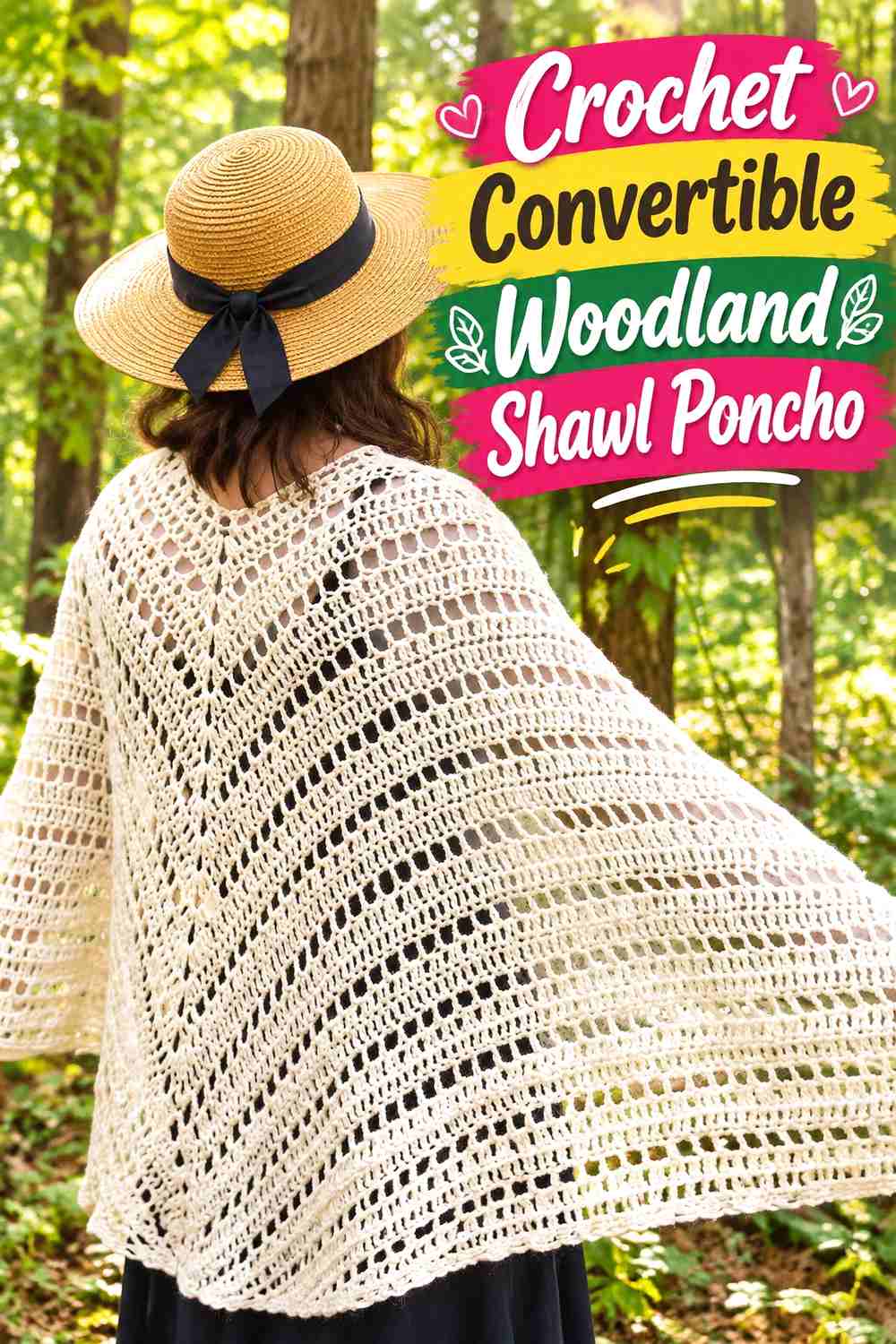
A convertible layer can move between shawl-like and poncho-like styling, which is useful if you want a storybook piece that does not always read as costume clothing. The source project is designed around a lighter, flowing construction, so a winter adaptation needs more thought than simply choosing thicker yarn.
The changing orientation also makes the outer edge more important than it is on a fixed garment.
An Edge Must Work in Every Wearing Position
A border that is visually minor when the piece is worn as a poncho may become prominent after it is rearranged as a shawl.
Finish all visible edges consistently and test the different arrangements before deciding where to add tassels or contrast.
Heavier Yarn Can Reduce the Convertible Effect
A fabric that folds and repositions easily in a lightweight yarn may behave differently if recreated with a dense winter fiber.
If warmth is the priority, compare the resulting swatch carefully. The goal is not merely more thickness; you still need enough flexibility for the piece to change shape comfortably.
Creator Credit: Jayda InStitches
10. Crochet Color-Flow Winter Poncho Cloak
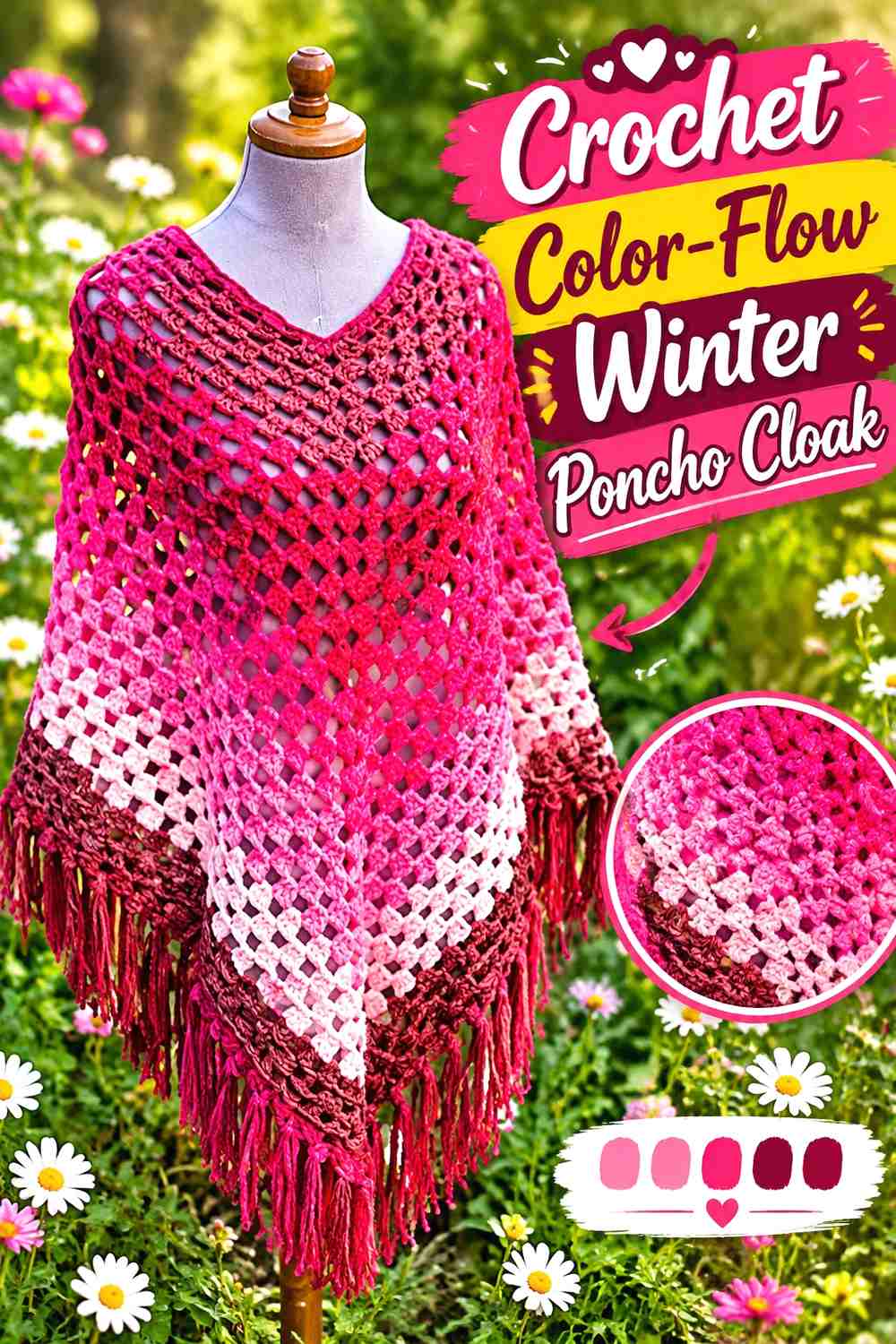
This poncho uses broad continuous fabric that gives color-changing yarn room to travel across a large surface. Instead of building the design from individual motifs, the color movement becomes part of the overall garment.
For a medieval forest direction, look for transitions that suggest moss, bark, fog, stone, muted berries, or autumn leaves rather than relying on literal woodland motifs.
Long Color Changes Can Reshape the Visual Silhouette
A strong band of contrast can make a wide section look even broader, while a slow tonal transition can keep attention on the drape.
Inspect more than the first few yards of a color-changing yarn before deciding how well it fits the cloak concept.
Size Changes Affect the Color Layout Too
A larger garment gives a color sequence more room to repeat or transition. A smaller version may place those same shades in completely different areas.
Treat the yarn and garment dimensions as connected decisions rather than planning color independently from size.
Creator Credit: The Crochet Crowd
11. Crochet Granny-Square Forest Patchwork Poncho
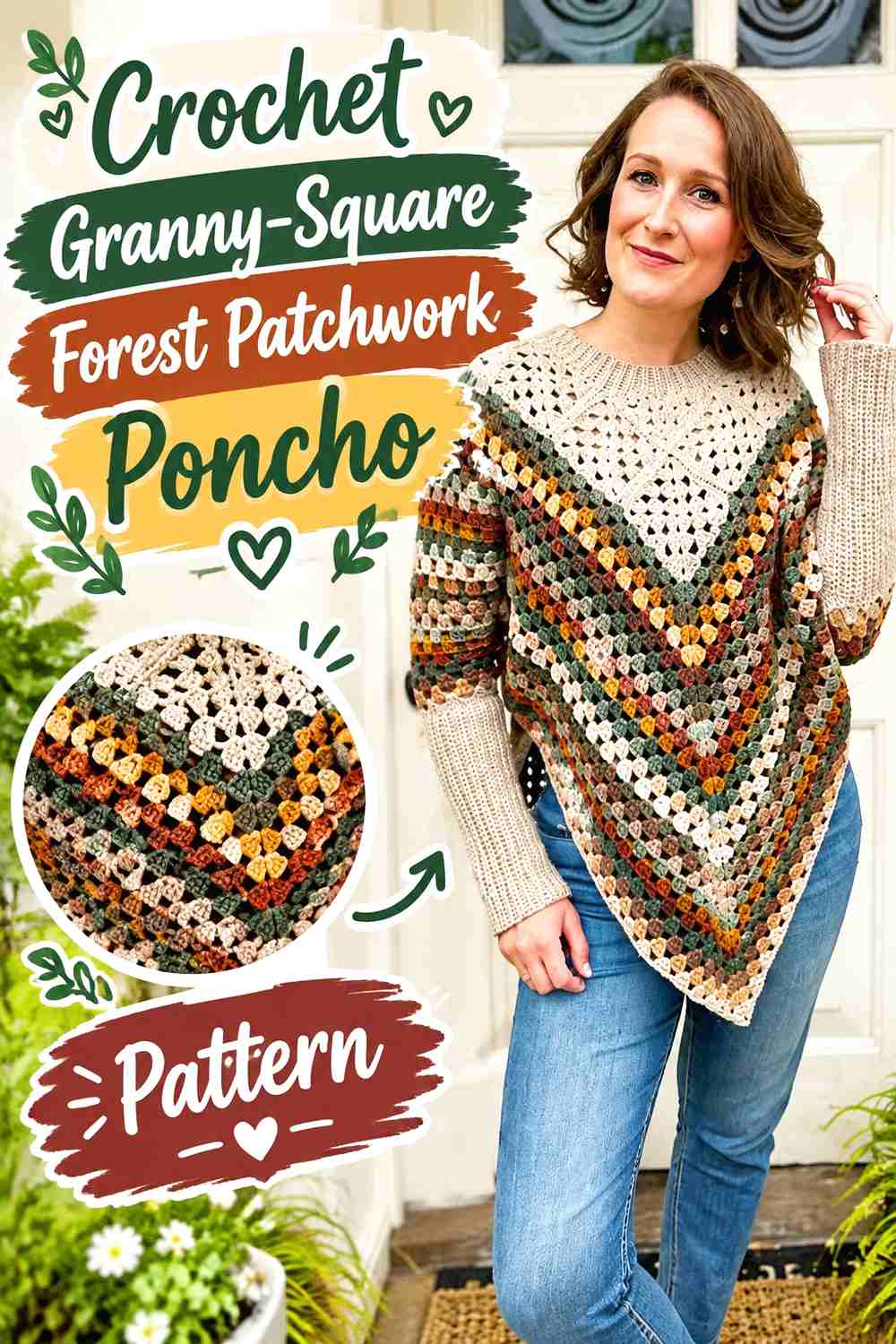
Granny-square construction gives this idea an intentionally pieced appearance, which can work well for a rustic village or woodland-storybook layer. Unlike a continuous cloak, the joins and motif layout become part of the visible design.
A limited palette—such as moss, oat, bark, and rust—can keep the patchwork cohesive while still allowing individual squares to vary.
Blocked Motif Size Matters More Than the Color Plan
A beautiful layout cannot compensate for squares that finish at noticeably different sizes.
Check the prepared dimensions of the motifs before joining a full garment. Small inconsistencies multiplied across the shoulders can distort both the neckline and hem.
Plan the Whole Forest Palette Before Joining
Lay every square out before committing to placement. This is particularly useful when some motifs are light and others very dark.
A random approach can still look deliberate, but it helps to check that one shoulder or side does not accidentally become much heavier visually than the other.
Creator Credit: HanJan Crochet
12. Crochet Fringe-and-Bead Folk-Tale Poncho
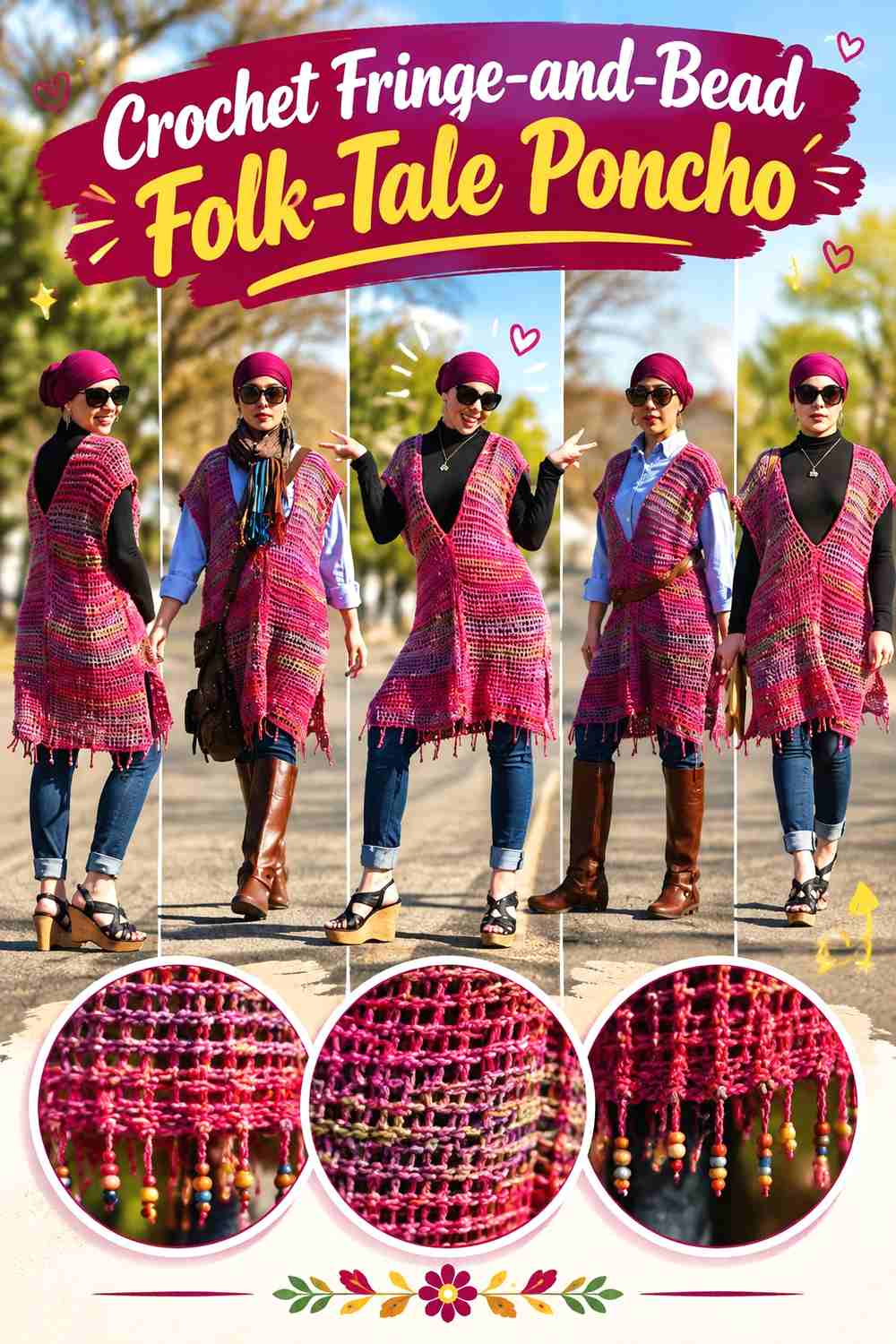
A loose tunic-style poncho with fringe and bead details moves the theme away from a formal cloak and toward a folk-tale traveler layer. Its decorative lower edge gives the garment noticeable movement, which can work beautifully with an earthy forest palette.
This option makes the most sense when finishing details are an intentional part of the look rather than additions made after the garment is complete.
Fringe Changes the Effective Length
Long fringe can make a poncho look considerably longer even though the crocheted body has not changed.
Check where the solid fabric ends first. Fringe that reaches bags, seats, or the hands may behave differently in daily wear than it does while standing still.
Beads Add Real Weight
Beads should not be treated as purely visual decoration. Their combined weight can pull downward on a soft crochet edge.
Confirm the creator’s materials before substituting bead size or quantity, especially if your chosen yarn already stretches easily.
Creator Credit: YARNutopia by Nadia Fuad
13. Crochet Hooded Pocket Shawl Cloak
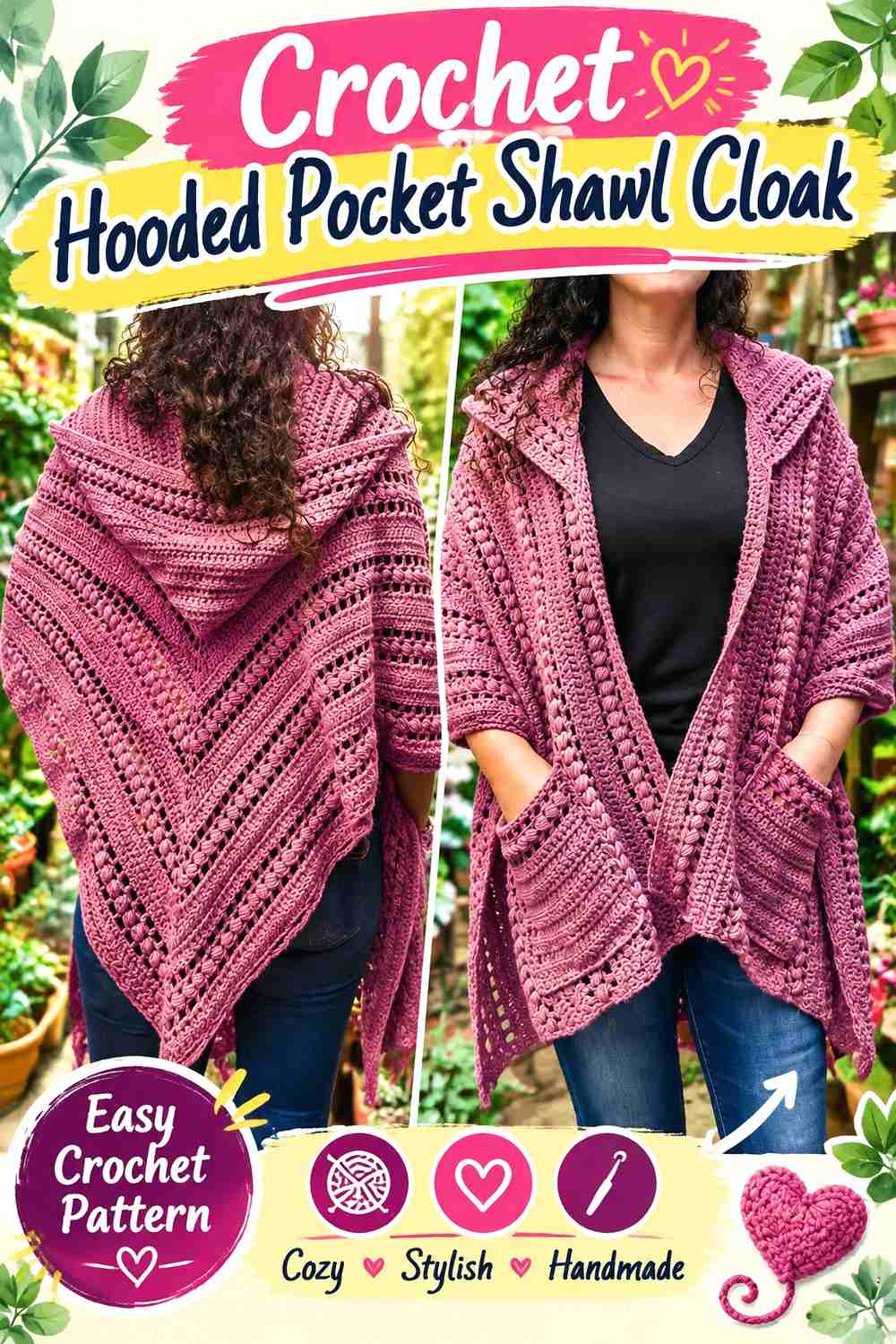
A hooded pocket shawl creates a narrow cloak effect without covering the entire body. Long front sections provide vertical lines, while the hood supplies the strongest medieval-fantasy cue. The source project uses a shaped shawl with separately added hood and pockets.
It is a good direction when you want something more substantial than a hooded scarf but less enveloping than a full cloak.
Pockets Add Weight Exactly Where the Front Hangs
Large pockets can pull the shawl ends downward, particularly once hands or objects are placed inside.
Check the unfilled pocket placement while wearing the finished length. A pocket should be comfortable to reach without dragging the entire wrap forward.
Center the Hood Before Securing It
Because the shawl has long ends, a hood attached slightly off center can make the imbalance obvious.
Mark the true center and compare both front lengths while the hood is temporarily positioned. It is easier to correct alignment before final attachment.
Creator Credit: JolieKnots Handmade
14. Crochet Tapered Hooded Scarf Mini Cloak
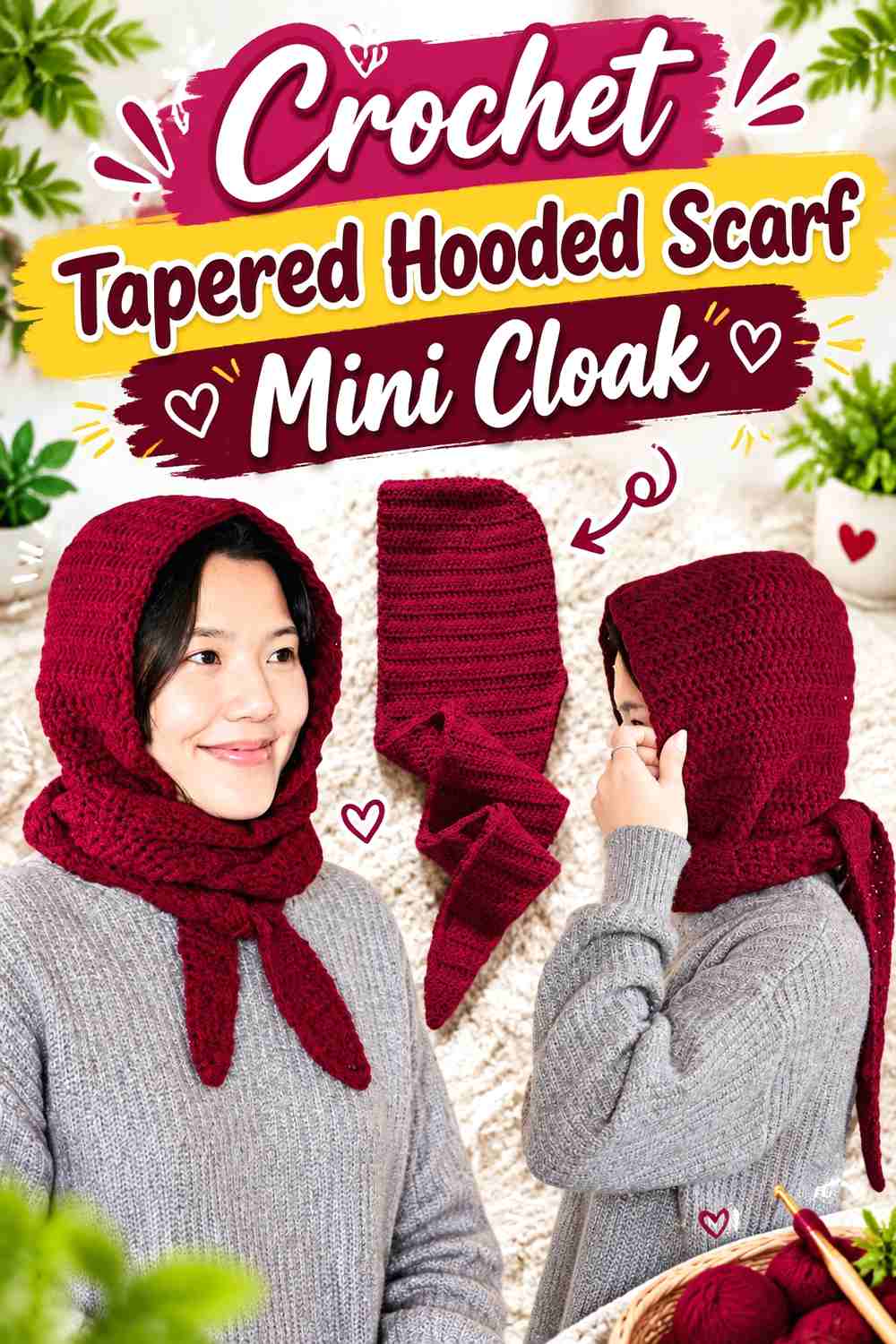
This streamlined hooded scarf offers the storybook hood without a full cape body. Its tapered ends keep the lower portion visually light, making it easier to wear with a coat or dress when a large cloak would be impractical. The published design combines a fitted hood with scarf sections that narrow toward their ends.
In deep olive, charcoal, brown, or cream, it can suggest a woodland hood while remaining clearly usable as winter neckwear.
Tapered Ends Keep the Hood as the Focal Point
Because the scarf becomes narrower away from the face, the hood naturally carries more visual weight.
Avoid adding very bulky decorations to the ends if you want to preserve that balance. Heavy tassels can shift attention downward and change how the scarf hangs.
Check the Hood With Your Hair and Winter Layers
A close-fitting hood can feel different depending on hairstyle, a beanie underneath, or a thick coat collar.
Use the creator’s adjustment guidance rather than assuming the demonstrated dimensions will suit every layering setup.
Creator Credit: VivCrochets
15. Crochet Wheat-Texture Hooded Scarf Cape
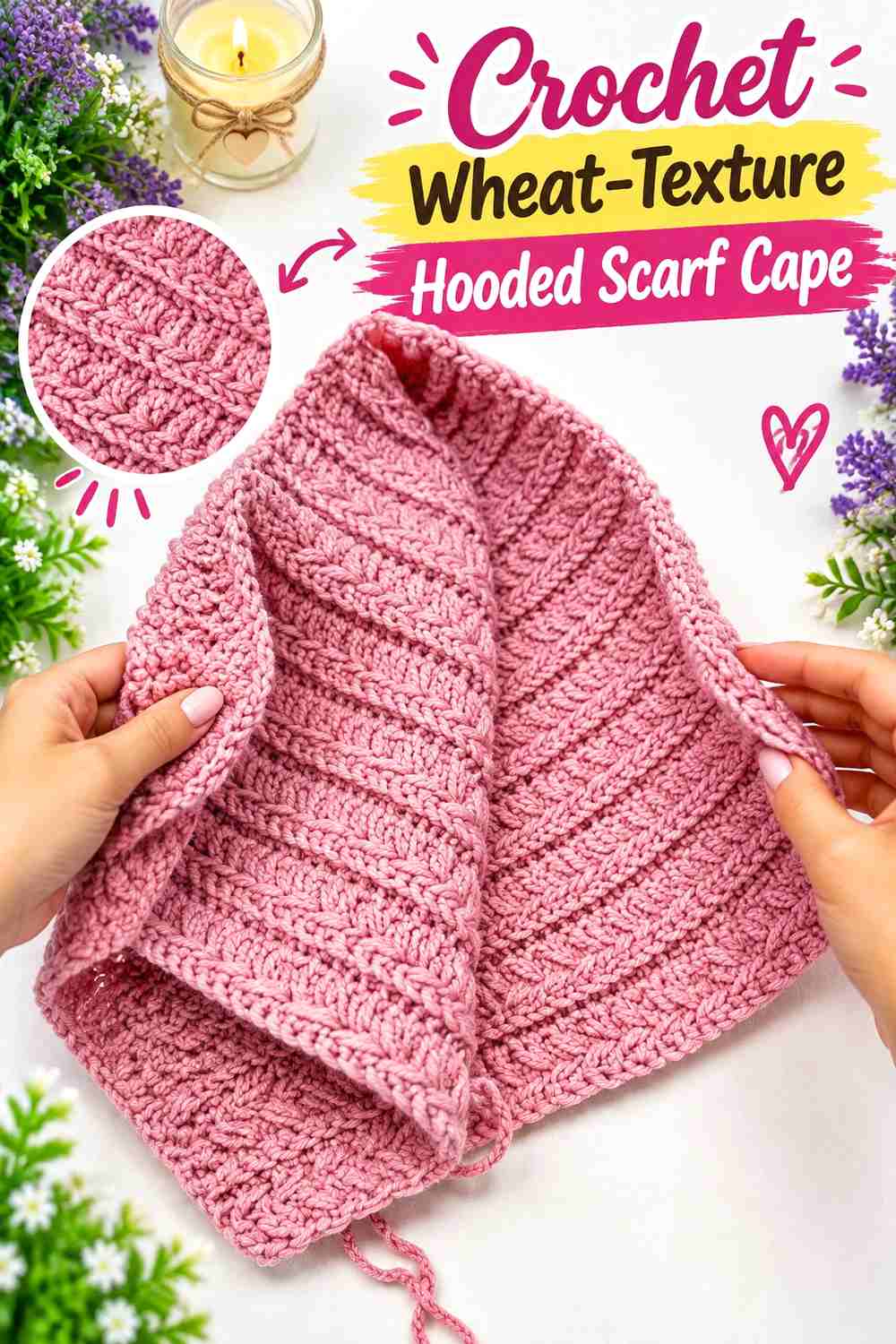
This hooded scarf uses a pronounced textured stitch as a major part of its appearance. The result offers less body coverage than a traditional cloak but more surface interest than a plain hood-and-scarf combination.
A single woodland shade can make the texture more visible and give the piece a quieter, hand-worked storybook character.
Texture Should Bend Comfortably Around the Neck
Raised or highly defined crochet fabric can look excellent while lying flat yet feel firmer once wrapped.
Bend your swatch before committing to the full accessory. The back of the fabric and the way it folds matter as much as the decorative side.
Let the Stitch Work Replace Extra Decoration
If the fabric already contains strong texture, a complicated border, multicolor striping, and added appliqués can compete with it.
For a medieval forest look, consider allowing the stitch definition and hood silhouette to do most of the visual work.
Creator Credit: Briana K
16. Crochet Rounded Hooded Pocket Scarf
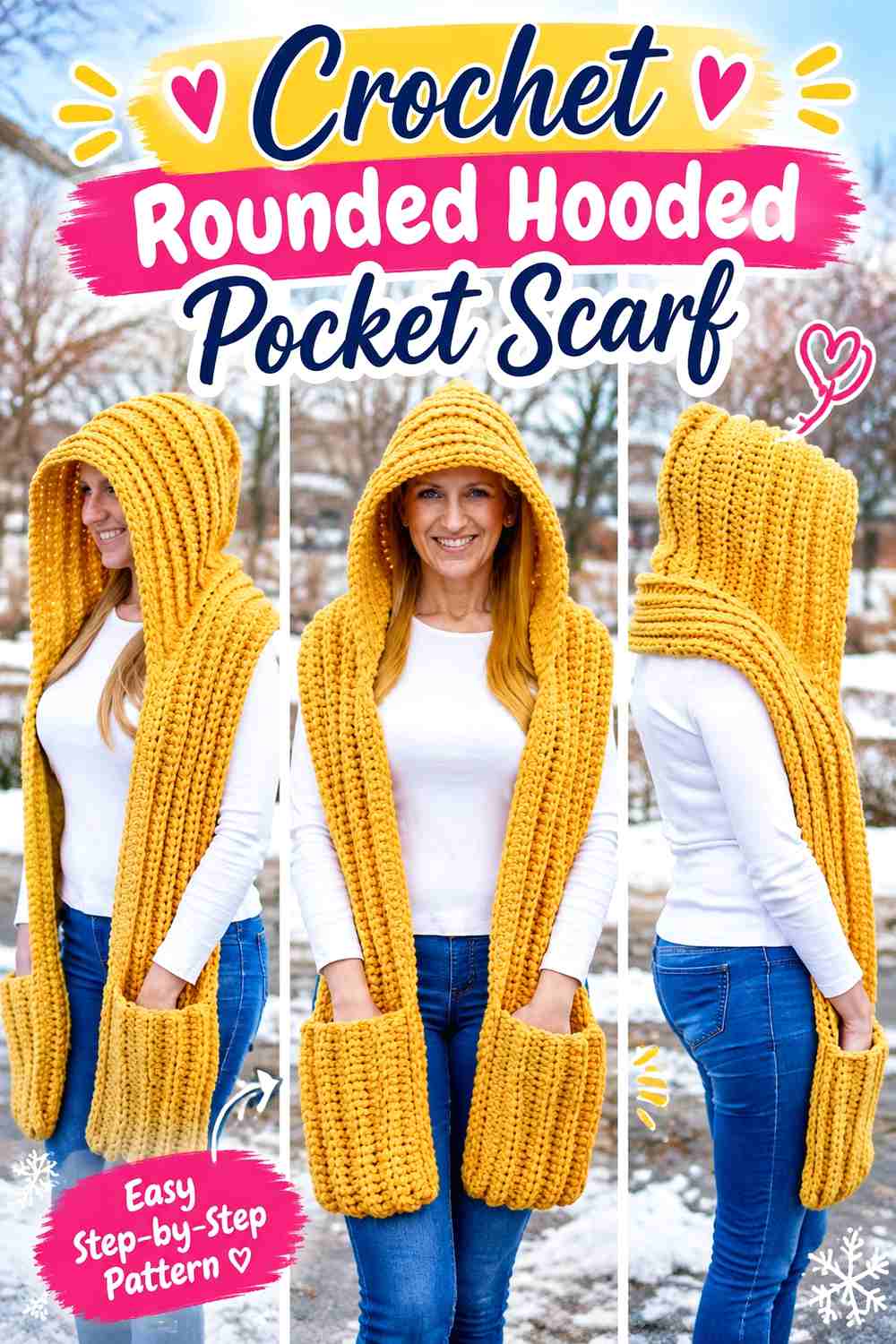
This hooded scarf combines long pocketed ends with a rounded hood, offering a practical alternative to a pointed or box-shaped hood. The demonstrated project uses substantial yarn, so the finished accessory has more visual mass than a delicate scarf.
That makes it suitable for a compact winter traveler look when a full cloak would be too much fabric.
Bulky Fabric Can Become Heavy Across a Long Scarf
A thick yarn may produce a warm-looking fabric quickly, but a hood plus two long pocketed ends represents a considerable amount of material.
Let the scarf hang during fit checks instead of evaluating only the portion on your hook.
Treat the Pockets as Part of the Drape
Pocket placement affects where the scarf ends naturally sit. Heavy contents can stretch one side and make the entire accessory look uneven.
For cloak-like styling, keeping the pockets relatively flat preserves the long vertical lines down the front.
Creator Credit: naztazia
17. Crochet Granny-Square Hooded Scarf Mantle
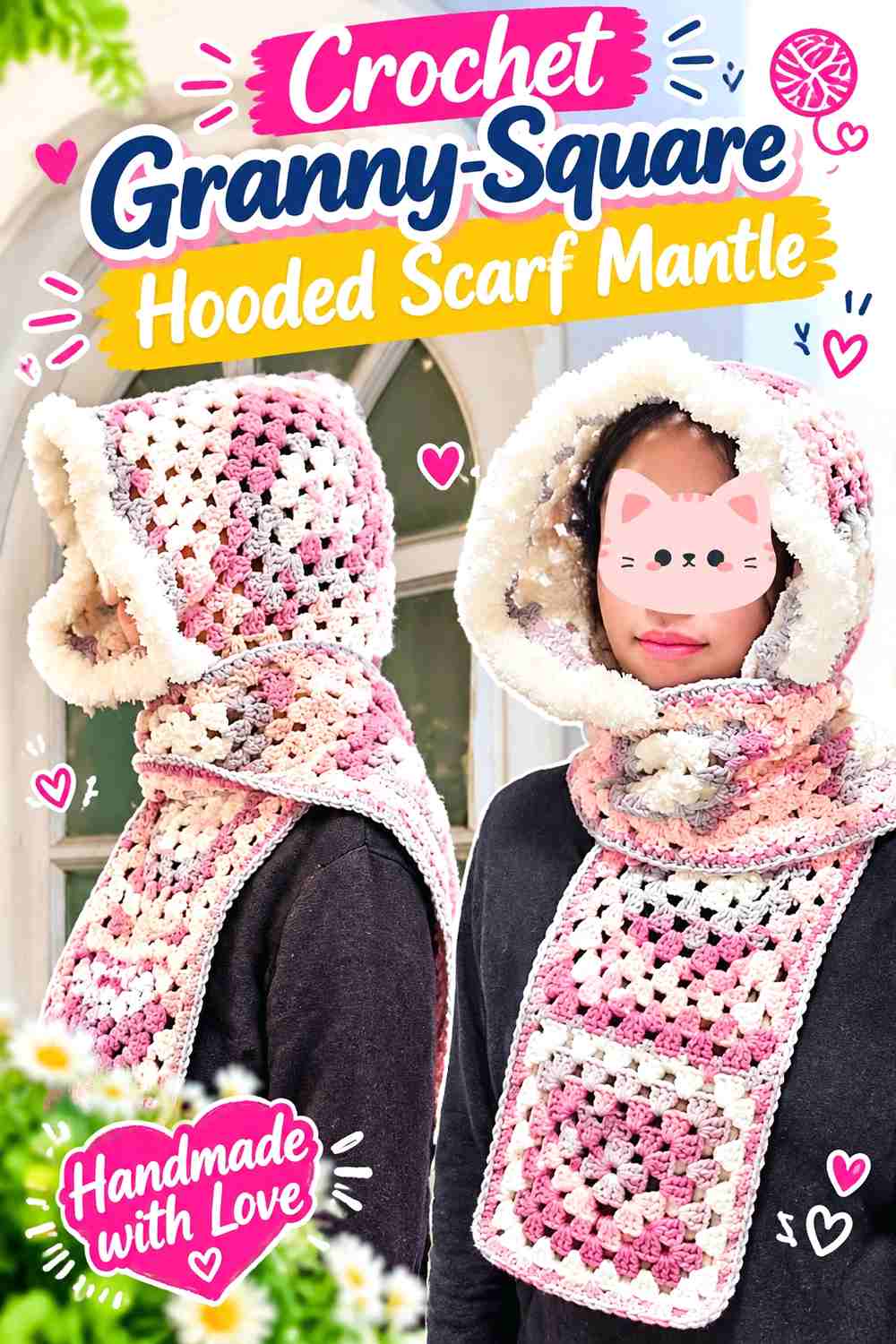
This final idea combines a hooded scarf silhouette with granny-square construction. Large motifs form the hood area while smaller motifs continue into the scarf, creating a modular piece that feels distinctly handmade and can take on a rustic woodland character through color planning.
It offers the motif appeal of a patchwork poncho without committing to a full torso-sized garment.
Get the Hood Motifs Right Before Making Every Square
The larger squares play a major role in determining the hood shape. Check their dimensions and how they fold before repeating the smaller scarf motifs.
A beautifully matched scarf cannot fix a hood that is substantially too shallow or too deep.
Open Granny Fabric Has a Different Winter Role
Traditional granny-style fabric contains visible spaces. That can be perfect for decorative layering, but it should not automatically be treated as equivalent to dense wind-blocking fabric.
If the goal is a storybook winter outfit, plan the clothing underneath as part of the finished look.
Creator Credit: Crochet Musings
Which Crochet Medieval Forest Cloak Style Should You Choose?
If the goal is the most traditional cloak-like silhouette, start with Projects 1, 2, 3, or 4. They place the greatest emphasis on an actual cape body and hood.
Projects 5 and 6 are better if you prefer the security of a pullover poncho while still wanting a hood. Project 7 provides strong winter neck coverage without a hood, while Projects 8 through 12 explore texture, patchwork, convertible shaping, color movement, and decorative hems.
For something easier to combine with ordinary winter outerwear, Projects 13 through 17 reduce the amount of body fabric. They keep the hooded storybook feeling but behave more like shawls and scarves.
The most important distinction is not which project looks most medieval in a single photo. Choose the construction you will actually enjoy wearing, then use color, restrained trim, and compatible accessories to move the finished piece toward the forest aesthetic you want.
Conclusion
A convincing crochet medieval forest cloak can come from several different constructions. A full hooded cape creates the strongest fantasy-traveler silhouette, while a pointed poncho gives you more contained coverage. Cowl ponchos and folk-style wraps suit softer village looks, granny-square designs introduce rustic patchwork, and hooded scarves create a smaller storybook layer that is easier to combine with a winter coat.
Before choosing, decide how much body coverage you want, whether a hood is essential, and how much garment weight you are comfortable carrying around the shoulders. Then think about color and embellishment.
For exact construction, measurements, stitch work, sizing, and finishing, follow the original creator tutorial attached to the project you select rather than combining instructions from several different designs.
Frequently Asked Questions
Can I turn any crochet poncho into a medieval forest cloak?
Not automatically. A poncho and a cloak distribute fabric differently. You can use a poncho as a cloak-inspired layer, but adding a hood or front opening may require meaningful construction changes. If those features matter, choosing a tutorial that already includes them is usually more reliable than improvising them afterward.
What colors work well for a crochet medieval forest cloak?
Muted greens, browns, oatmeal, charcoal, stone gray, rust, faded gold, and subdued berry shades can all support the theme. You do not need to use all of them. A single moss green or deep brown cloak can look more intentional than a garment with many competing “forest” colors.
Should a medieval-style crochet hood be oversized?
It depends on the look and the original construction. A roomier hood can produce a dramatic shadowed silhouette, but extra hood fabric also adds weight behind the neckline. Check the tutorial’s intended hood proportions before increasing depth.
Is thicker yarn always better for a winter crochet cloak?
No. Thicker yarn can produce substantial fabric, but a large cloak already contains much more material than a hat or scarf. Heavy yarn may create more shoulder strain or stretch than expected. Drape, total garment weight, warmth, and the intended underlayers all matter.
How can I make a crochet cloak look woodland-inspired without adding appliqués?
Let color and silhouette do most of the work. Moss green, bark brown, lichen gray, oatmeal, or muted rust can establish the palette. A deep hood, simple textured border, wooden-looking closure, or irregular hem can add character without covering the garment in decorative motifs.
Should I block a crochet cloak before deciding on final length?
Follow the care and finishing guidance for the specific yarn and pattern, but do not ignore the possibility that the fabric may change after finishing. Large wearables can also stretch under their own weight. Consider those changes before adding extra length simply because the unfinished garment appears short.
What is the easiest way to choose between a cloak, poncho, and hooded shawl?
Choose by movement and coverage. A cloak usually gives an open front and broad drape, a poncho stays more securely centered around the body, and a hooded shawl provides less torso coverage but is easier to layer with everyday outerwear. The best option is the one whose construction matches how you plan to wear it.