A crochet lace collar bomber jacket brings together two very different design languages. Bomber jackets usually rely on a compact body, defined cuffs, a strong lower band, and sometimes a zipper or sporty collar. Vintage crochet lace does almost the opposite: it adds scallops, open spaces, rounded edges, ties, and decorative softness around the neckline.
That contrast is exactly what can make the combination interesting for winter outfits. A dark cropped bomber with an ivory Peter Pan collar can feel sharply vintage, while a tonal shell-lace collar gives the same jacket a quieter handmade character.
Exact lace-collar bomber tutorials are relatively specialized, so this collection includes two kinds of useful sources. Some teach bomber, cropped-jacket, or collared-cardigan construction; others teach detachable vintage collars that can be paired with a compatible bomber neckline. When combining ideas, measure the finished jacket rather than assuming a separate collar will fit automatically.
Quick List
- Crochet Zip-Front Shell-Lace Collar Bomber Jacket
- Crochet Pocketed Scallop-Collar Bomber Jacket
- Crochet Lemon-Peel Lace Collar Cropped Bomber Jacket
- Crochet Contrast Peter Pan Collar Bomber Jacket
- Crochet Shell-Edge Lace Bomber-Style Jacket
- Crochet Oversized Vintage Collar Bomber Cardigan
- Crochet Openwork Lace-Body Bomber Jacket
- Crochet Cottage Scallop-Collar Bomber Jacket
- Crochet Rounded Peter Pan Collar Bomber Jacket
- Crochet Structured Vintage Lace Collar Bomber Jacket
- Crochet Buttoned Poppy-Lace Collar Bomber Jacket
- Crochet Tie-Front Shell Collar Bomber Jacket
- Crochet Minimal Peter Pan Collar Bomber Jacket
- Crochet Ruffled Rouge-Collar Bomber Jacket
Match the Lace Collar to the Finished Jacket Neckline
A detachable collar can be made independently, but a permanently attached collar needs to follow the actual shape of the bomber neckline. That path may be wider than a body neck measurement, especially on an open-front or zippered jacket.
Finish or at least stabilize the shoulders and neckline before committing to a lace adaptation. Then place a flexible measuring tape along the exact attachment path and compare it with the blocked collar.
Also check where the front ends will land. A lace collar that looks balanced over an open jacket may crowd a zipper pull or overlap awkwardly once the bomber is closed.
Keep the Bomber Shape Visible Beneath the Vintage Detail
A lace collar works especially well when the jacket still has recognizable bomber features. Defined cuffs, a compact body, ballooning sleeves, a lower band, pockets, or a zipper can provide structure while the collar introduces the vintage element.
If every part of the jacket becomes openwork, scalloped, ruffled, and highly decorative, the garment may start reading more like a lace cardigan than a bomber. That can still be attractive, but it is a different silhouette.
Decide which detail should lead. For a sporty-vintage contrast, keep most of the body relatively simple. For a romantic interpretation, let lace spread into the front panels or upper body while retaining stronger cuffs and hem treatment.
Plan Winter Fiber and Collar Weight Together
A dense winter bomber and a fine lace collar do not need to use the same yarn. In fact, a lighter collar can provide useful contrast against a heavier body.
However, very different fibers may behave differently after washing and blocking. A removable collar is especially practical when the jacket and lace require different care.
Large collars also add weight. A deep collar in a heavy yarn may pull outward on the neckline, while a very fine collar can look visually disconnected from an extremely chunky jacket. Swatch the two fabrics together before deciding whether the contrast feels intentional.
1. Crochet Zip-Front Shell-Lace Collar Bomber Jacket
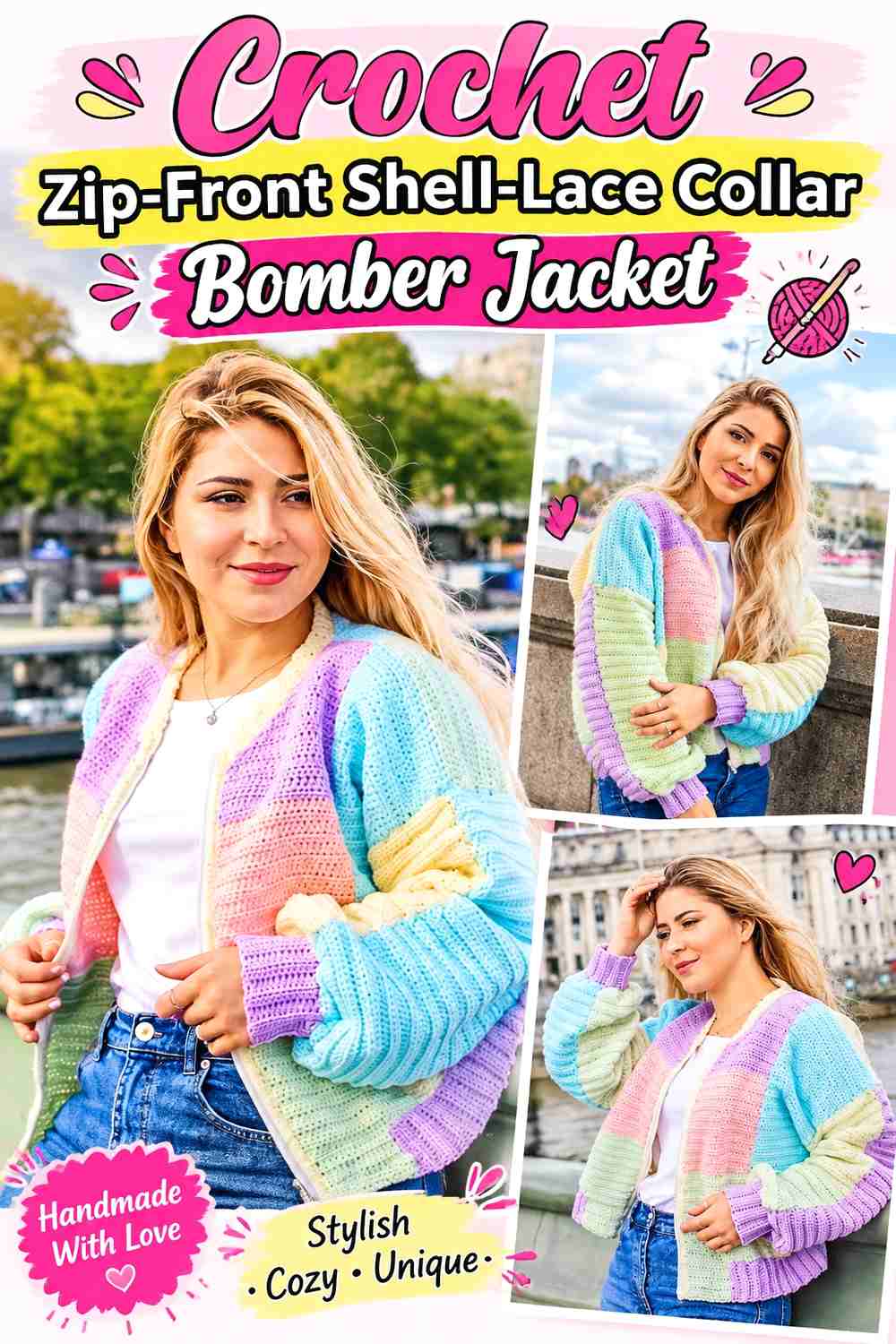
This idea begins with a true zip-front bomber silhouette. Brunaticality’s source construction includes a cropped jacket shape, cuffs, and an open-ended zipper, giving you a strong sporty foundation before any vintage neckline is introduced.
Instead of replacing those bomber features, add a lighter shell or scallop collar around the established neckline. Cream lace over black, navy, burgundy, or brown would create an especially clear vintage contrast.
Keep Lace Away From the Zipper Teeth
A zipper creates a moving mechanical edge directly beside the collar.
Before permanently attaching lace, close and open the jacket several times with the collar pinned in place. Scallops, ties, and loose lace points should stay clear of the zipper path rather than needing to be moved every time the jacket is fastened.
Let the Cropped Body Balance a Wider Collar
A short bomber can visually support a more decorative neckline because there is less body length competing for attention.
Still, collar depth should remain proportionate to the front panels. A very broad lace collar may cover much of a cropped jacket and weaken the recognizable bomber outline.
Creator Credit: Brunaticality
2. Crochet Pocketed Scallop-Collar Bomber Jacket
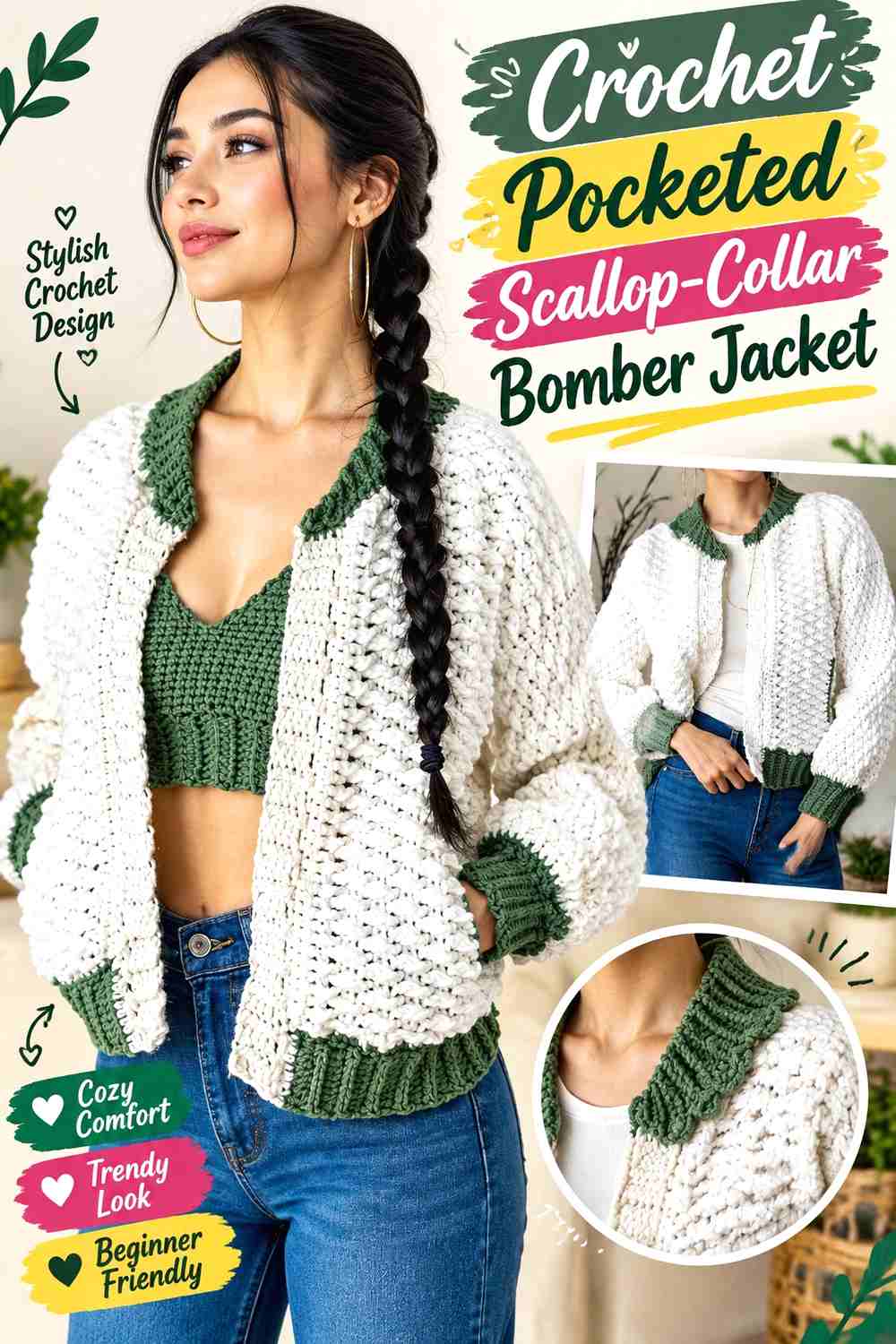
TCDDIY’s sporty bomber construction includes pockets, a defined bottom band, collar construction, sleeves, and cuffs. Those details make it a useful foundation when you want the jacket to remain recognizably practical while adding a vintage lace treatment at the neckline.
A scalloped collar would contrast particularly well with the straight lines of the pockets and lower band.
Pockets and Lace Create Two Different Focal Areas
Large pockets naturally draw the eye toward the lower front of the jacket, while an ornate collar pulls attention upward.
That balance can be effective. Avoid adding equally strong decorative trim to the pockets unless you intentionally want lace repeated throughout the garment. Keeping them simpler gives the collar a clearer role.
Check the Front Band Before Enlarging the Collar
A broad decorative collar can overlap the upper section of the front opening.
Lay the finished or blocked collar over the jacket with the front positioned as it will normally be worn. Make sure both sides sit symmetrically and do not make the opening look unintentionally narrow.
Creator Credit: TCDDIY
3. Crochet Lemon-Peel Lace Collar Cropped Bomber Jacket
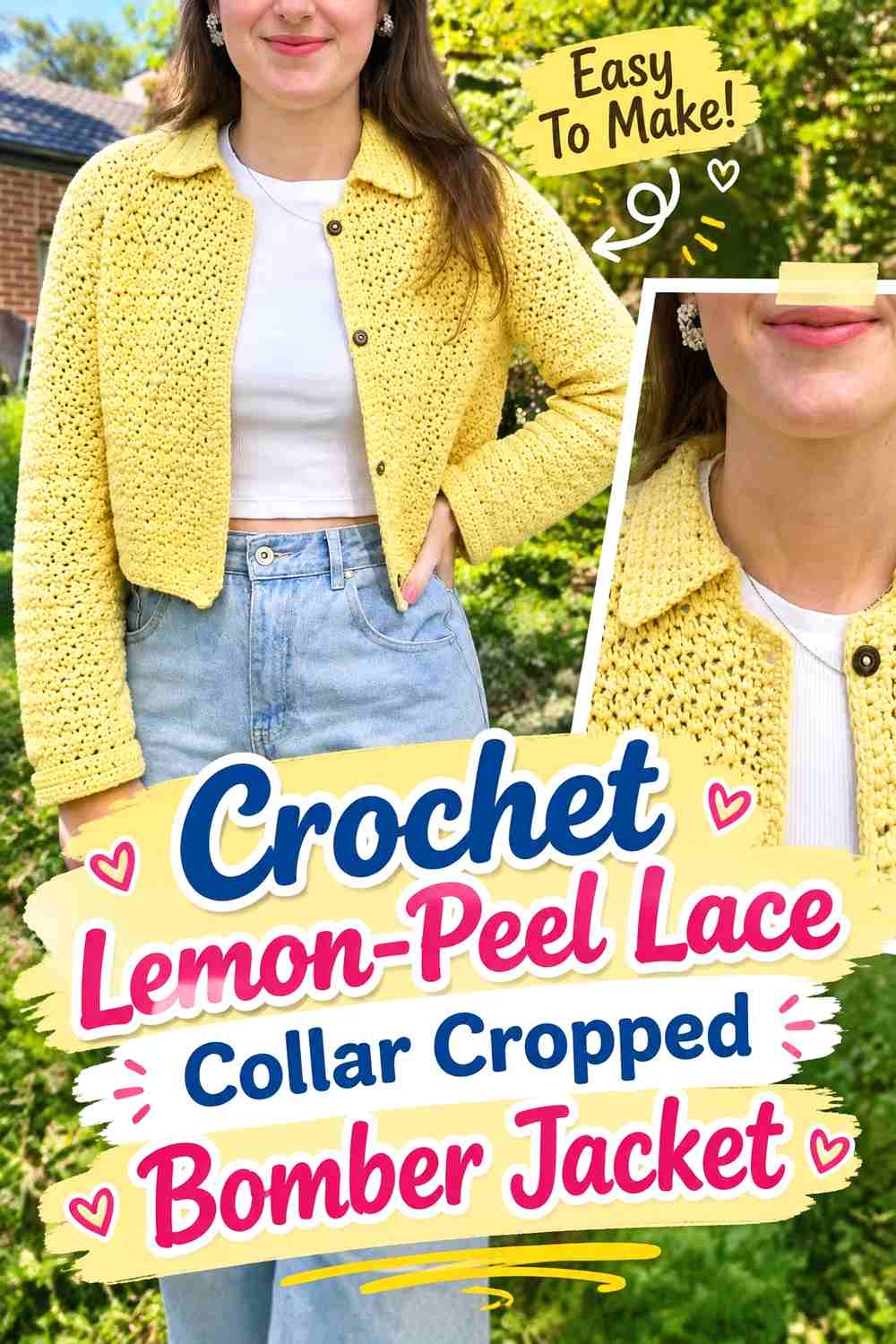
Stephanie Tashi’s cropped cardigan uses a textured lemon-peel fabric, a defined collar, buttons, and a short jacket-like silhouette. It is not presented as a traditional bomber, so this idea works as an adaptation: preserve the cropped body and substantial sleeves while moving the neckline toward a lace-collar finish.
The small-scale body texture gives you enough visual interest that the lace does not need to be extremely elaborate.
Fine Lace Can Contrast With Pebbled Body Texture
A smooth lace yarn beside a more textured jacket body creates separation even when both are the same color.
That makes tonal versions especially interesting. A cream-on-cream or charcoal-on-charcoal combination can still show a distinct collar because the two surfaces reflect light differently.
Button Placement May Limit Collar Depth
A collar that spreads too far down the front can cover the top button or create several overlapping layers around it.
Finish the main front closure plan before choosing the final collar depth. If the first button is meant to remain visible, treat it as a fixed boundary when testing collar shapes.
Creator Credit: Stephanie Tashi
4. Crochet Contrast Peter Pan Collar Bomber Jacket
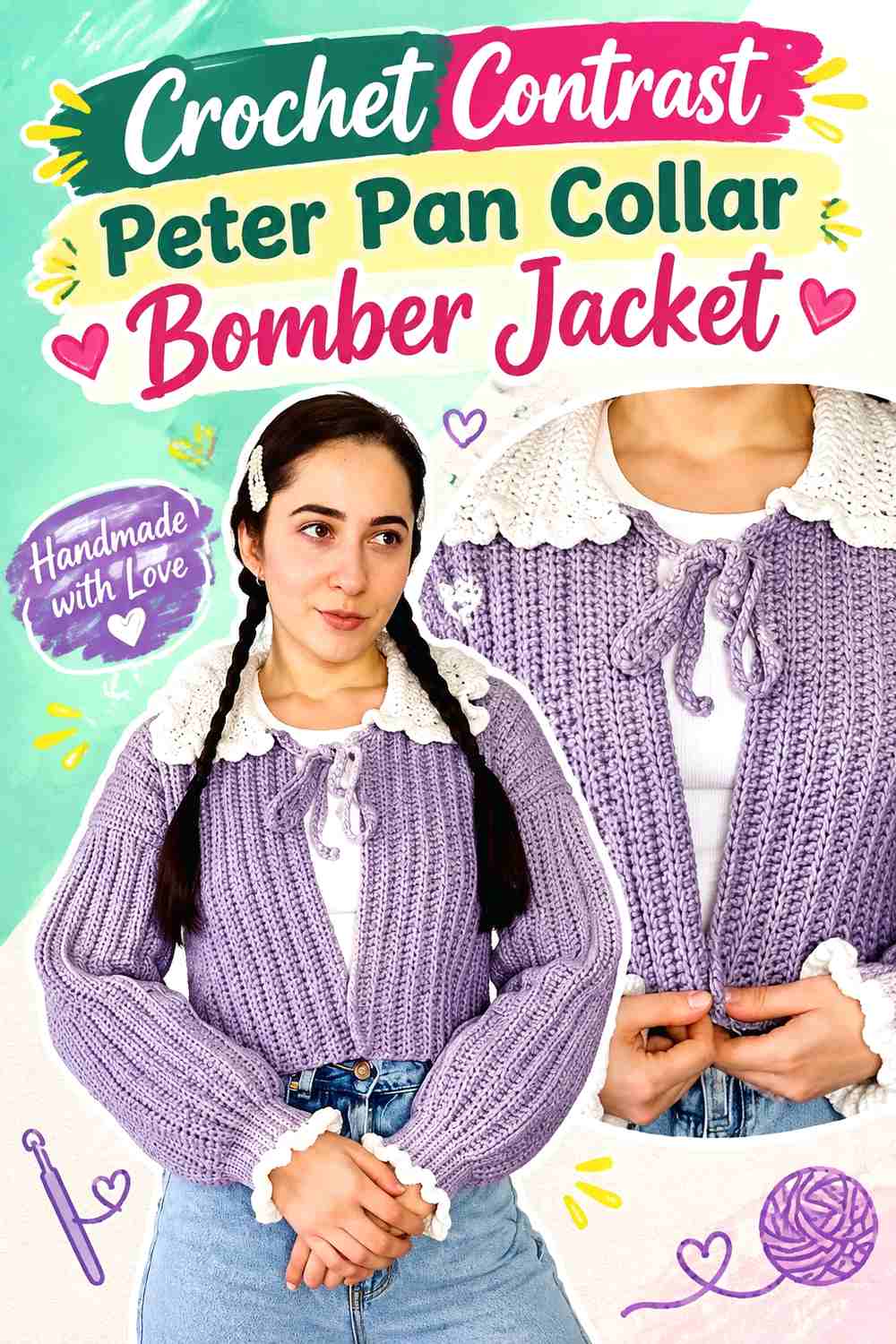
The collared cardigan demonstrated by Вика с крючком🧶 already uses contrast between the main body and its collar and sleeve finishing. The source is a cardigan rather than a classic bomber, but the separate contrast neckline provides a useful route toward a vintage bomber adaptation.
Replace the plain collar concept with a compatible rounded lace collar while keeping the contrast-color logic.
Contrast Color Makes Collar Alignment More Important
A light collar against a dark body creates an immediate outline around the neck.
That also means an uneven attachment line will be easier to notice. Center the collar from the back neckline and compare the two front ends before securing anything permanently.
Keep the Lace Color Connected to Another Small Detail
A collar can feel more integrated when its color appears once more in the jacket, but repetition should remain restrained.
A narrow cuff accent or small edging detail may be enough. Repeating lace across the cuffs, hem, pockets, and front all at once can overpower the bomber structure.
Creator Credit: Вика с крючком🧶
5. Crochet Shell-Edge Lace Bomber-Style Jacket
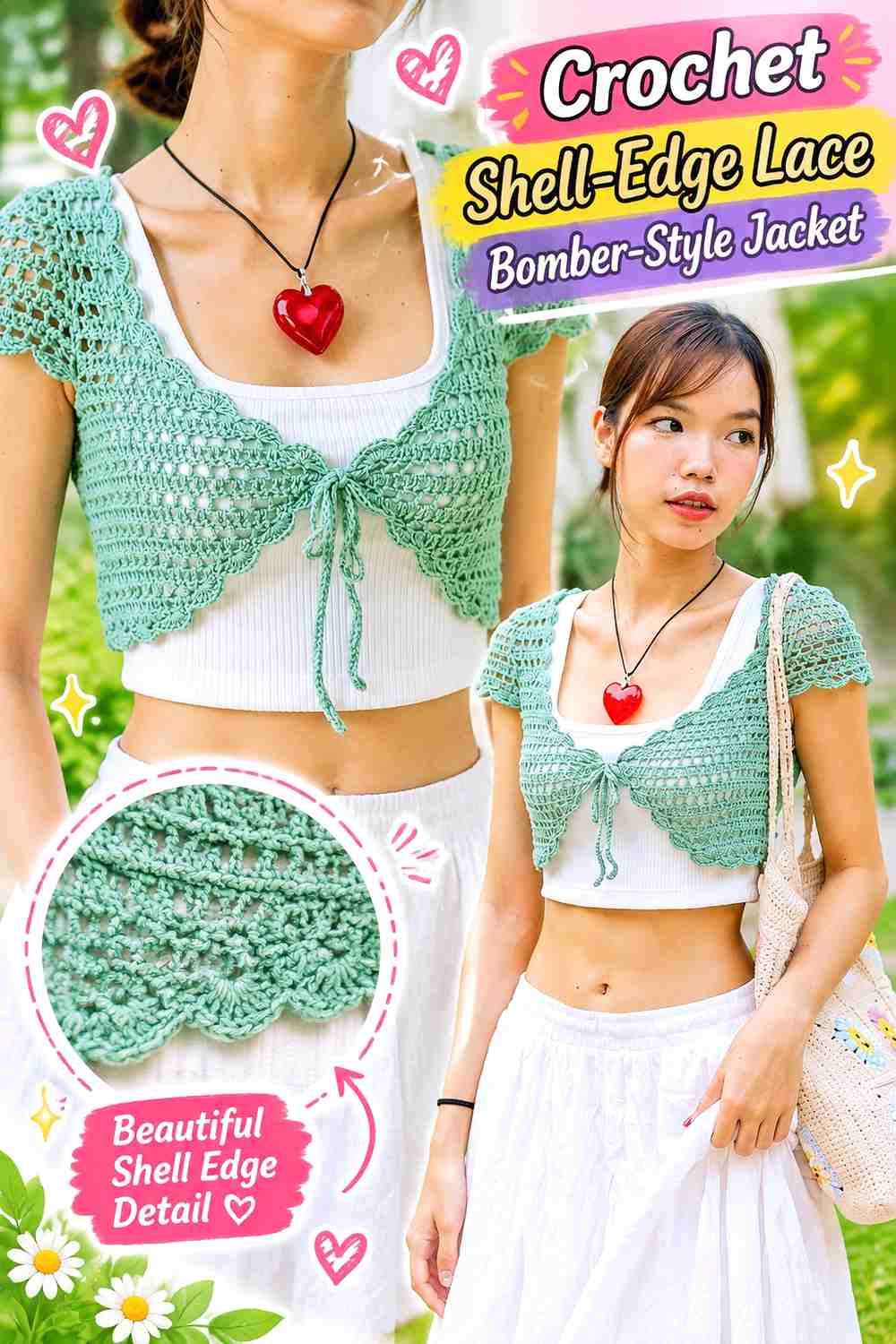
Chenda DIY’s cropped lace cardigan already incorporates open crochet fabric and shell-style edging. It is a tie-front cardigan rather than a bomber, so the vintage bomber interpretation comes from introducing firmer winter cuffs, a more defined lower edge, and a compact jacket silhouette rather than pretending the source is a standard bomber.
This is one of the better options if you want lace to influence more than the neckline.
An Open Lace Body Needs Stronger Bomber Anchors
When most of the garment is already openwork, the collar alone will not create the vintage-versus-sporty contrast.
Use visual structure at the wrists and lower edge if you want the bomber reference to remain obvious. Those denser areas can frame the lace without changing the entire body construction.
Shell Edges Can Become Too Repetitive
A shell collar plus shell front edge plus shell cuffs may make every boundary look identical.
Consider concentrating the most ornate shell work around the neckline and using a cleaner finish elsewhere. That gives the collar a reason to be the focal feature.
Creator Credit: Chenda DIY
6. Crochet Oversized Vintage Collar Bomber Cardigan
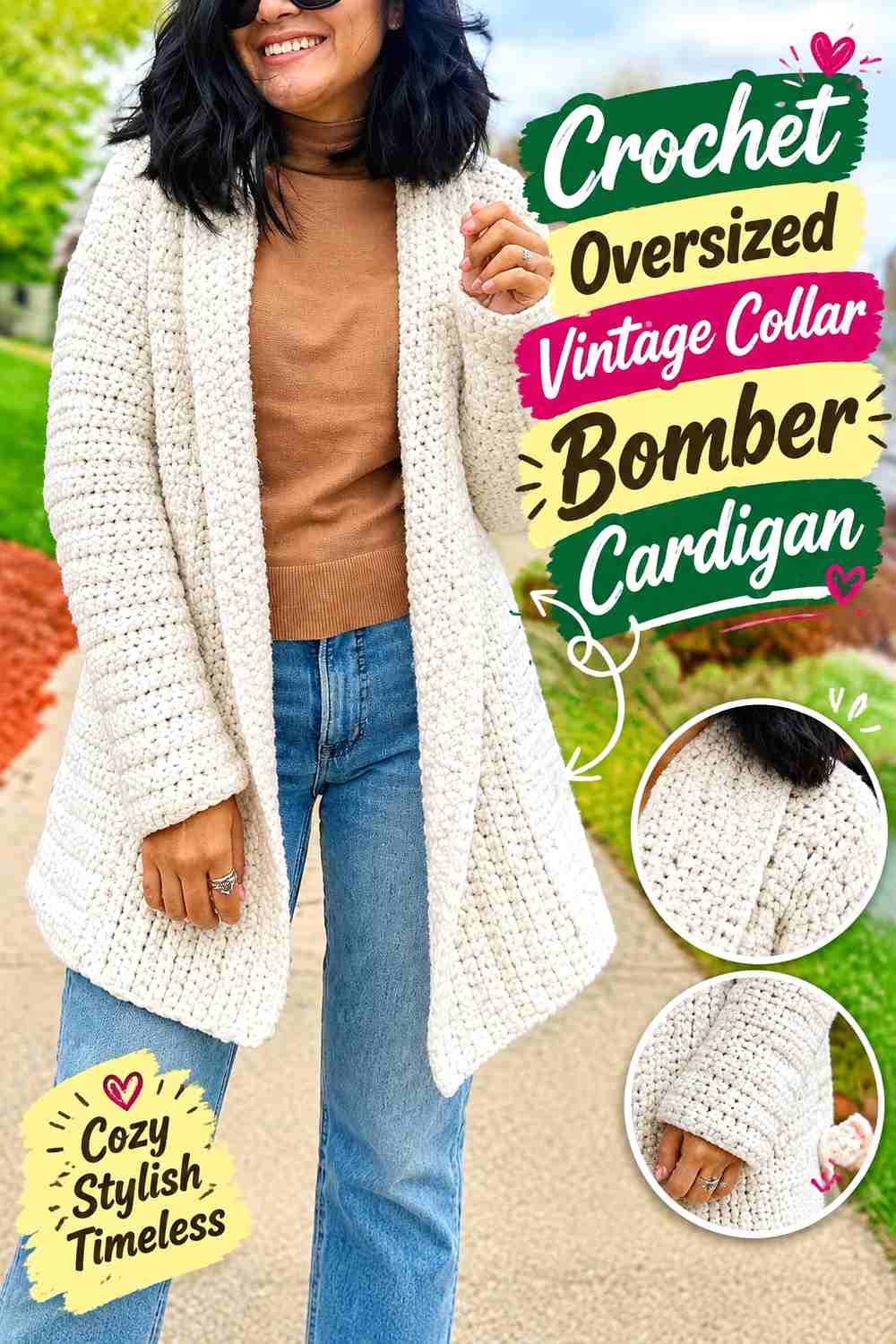
KnitcroAddict’s source cardigan uses bulky yarn and adds a substantial collar after the main pieces are assembled. The garment is longer and more cardigan-like than a traditional cropped bomber, but its separate collar construction makes it useful for thinking about how a broad neckline relates to a heavier winter body.
For a bomber interpretation, shorten only if the construction and fit allow it, then use a more decorative outer collar edge rather than making the collar still heavier.
A Heavy Jacket Does Not Need a Heavy Lace Collar
Matching yarn weight exactly may produce a collar with too much bulk around the neck.
A slightly lighter compatible yarn can preserve the idea of a broad fold while allowing scallops or openwork to remain visible. Compare the fibers after blocking rather than judging thickness from the skein.
Oversized Collars Can Hide Shoulder Proportion
A wide collar spreads across part of the upper torso, so it can visually change how broad the shoulders appear.
Pin a paper or fabric mock-up over the finished jacket before committing to a deep vintage collar. This is especially useful when the sleeves already have generous volume.
Creator Credit: KnitcroAddict
7. Crochet Openwork Lace-Body Bomber Jacket
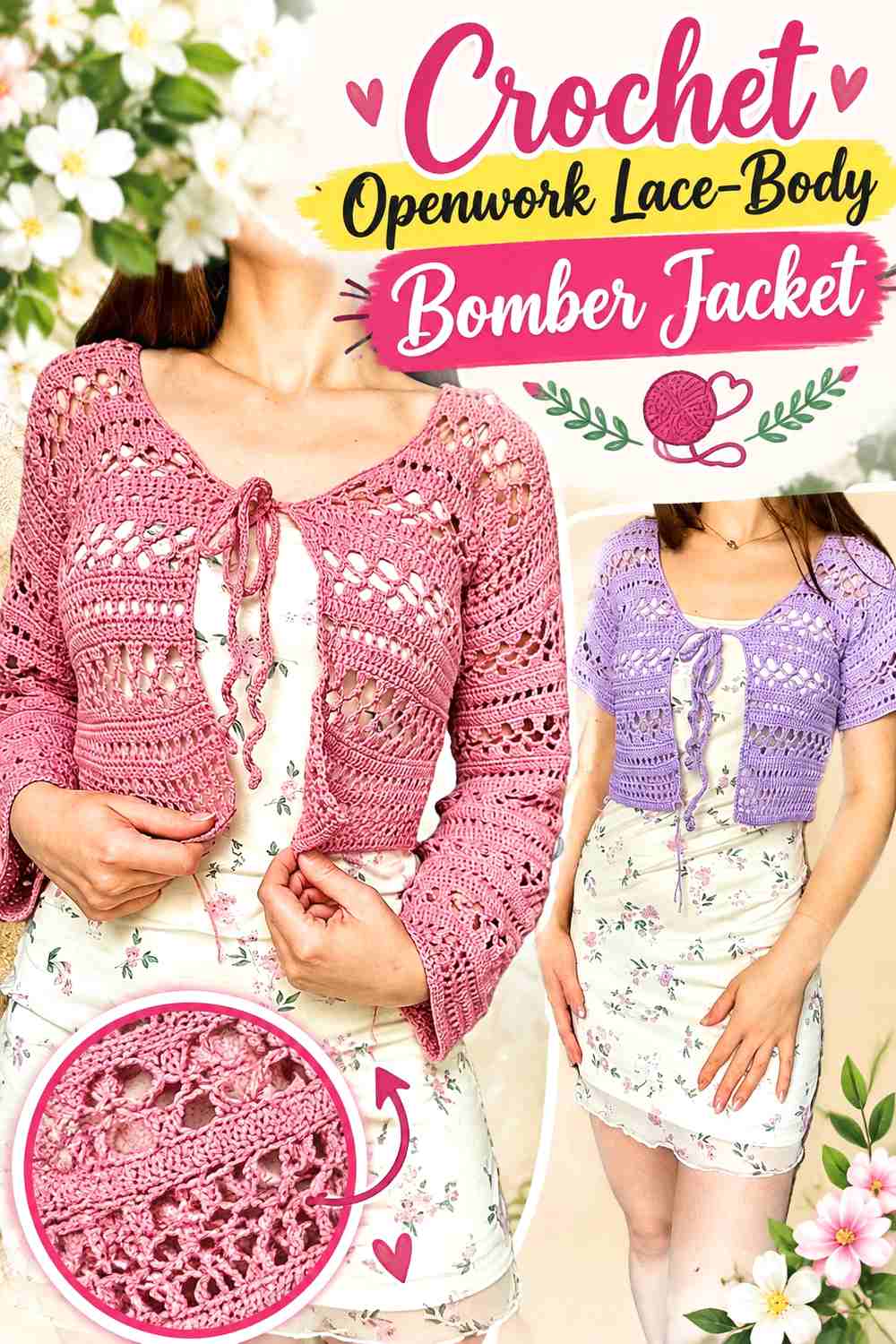
Alona crochets demonstrates a lightweight lace cardigan whose surface alternates open and more solid crochet areas. This is another adaptation rather than an exact bomber source, but the lace body offers a useful route for readers who want the vintage element spread across the entire jacket instead of isolated at the neck.
A more structured collar, cuffs, and lower band can then provide the bomber contrast.
Do Not Expect Openwork to Behave Like Dense Bomber Fabric
An airy stitch pattern generally has different stretch and drape from a compact jacket fabric.
If you add a firm waistband or heavy collar, watch whether those denser sections pull disproportionately on the lighter body. The finished garment should hang as one piece rather than looking weighted down at its boundaries.
A Lace Body Benefits From a Simpler Collar Shape
When the front and sleeves already contain significant openwork, an extremely elaborate neckline may be unnecessary.
A rounded collar with a restrained scalloped edge can provide the vintage shape without competing with the rest of the fabric.
Creator Credit: Alona crochets
8. Crochet Cottage Scallop-Collar Bomber Jacket
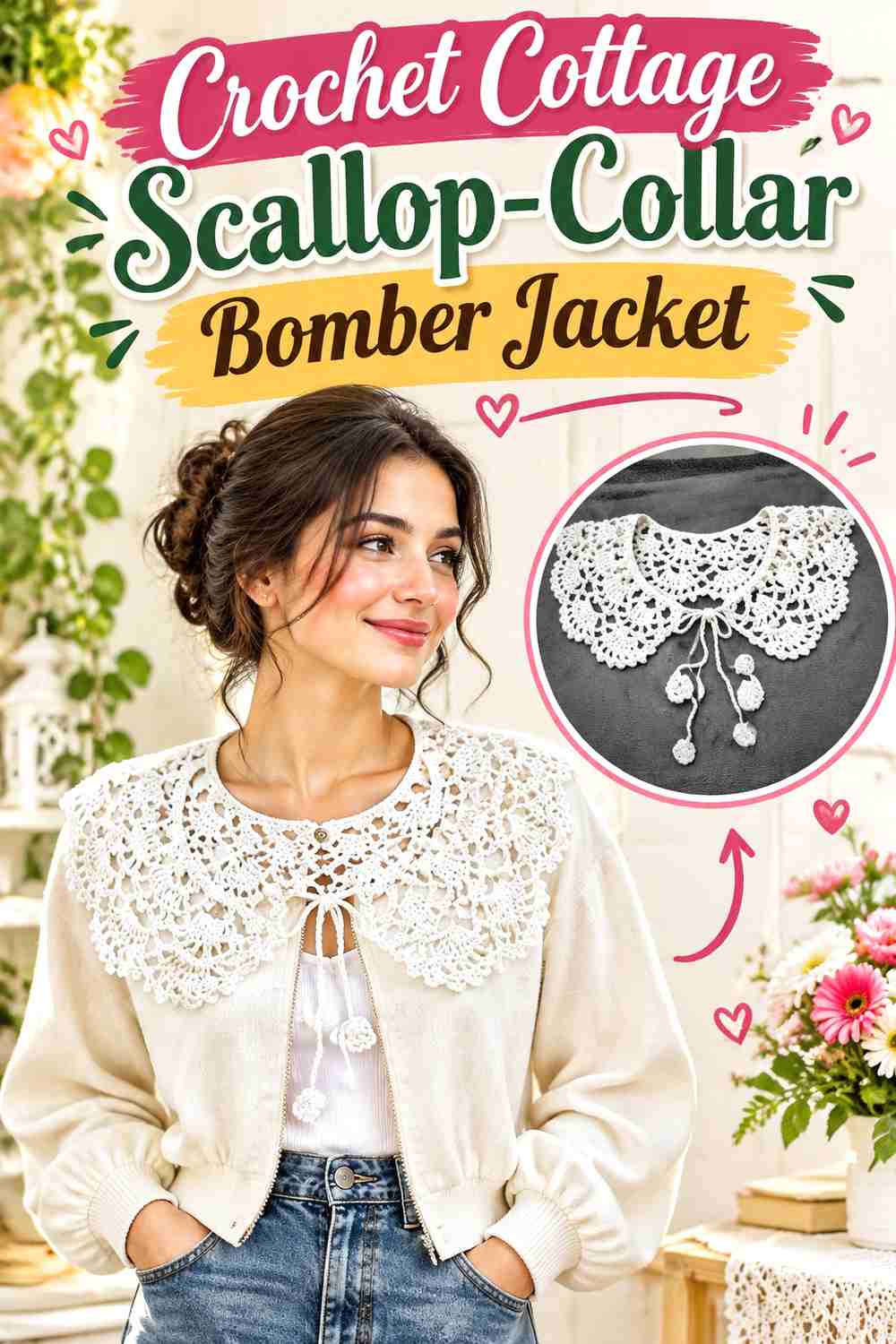
Hopeful Turns demonstrates a separate vintage crochet collar designed to be worn over garments and adaptable in size. That makes it particularly useful for converting an existing plain bomber into a vintage winter piece without rebuilding the whole neckline.
A detachable version also lets you switch between sporty and romantic styling depending on the outfit.
Measure the Jacket Neckline, Not Only Your Neck
A collar that fits comfortably around your body may still sit incorrectly over a bomber.
The jacket neckline can rest farther from the neck and may have extra thickness from front bands or ribbing. Place the finished bomber flat and measure the path where the collar will actually rest.
Soft Scallops Need a Plain Background
Decorative outer curves are easiest to see when the jacket body immediately beneath them is relatively simple.
If the bomber already contains large color blocks, appliqués, or strong cables around the chest, consider making the collar tonal rather than adding another high-contrast feature.
Creator Credit: Hopeful Turns
9. Crochet Rounded Peter Pan Collar Bomber Jacket
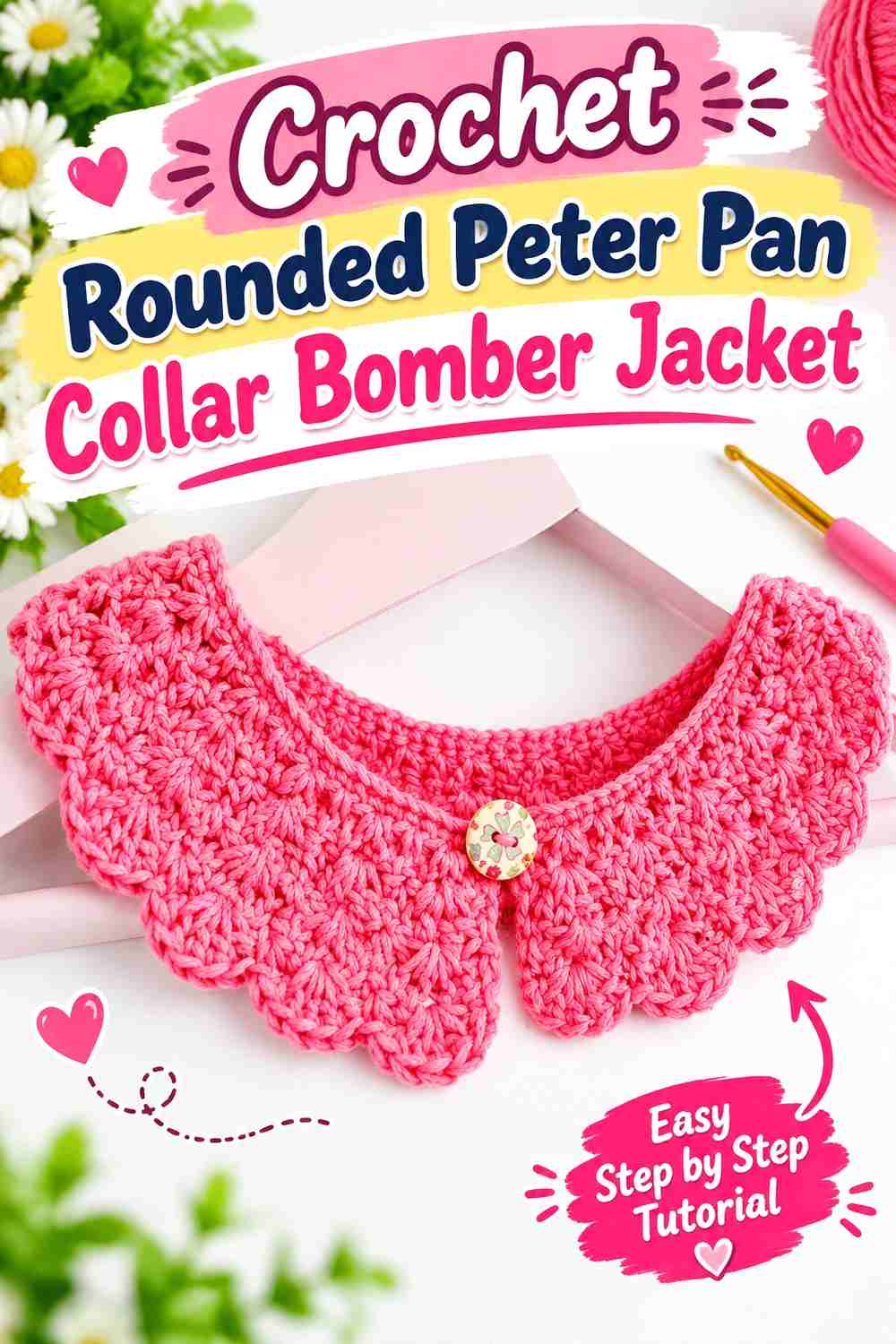
Ahuyama Crochet’s source focuses on the classic Peter Pan collar shape and specifically presents the collar as an accessory that can be added to sweaters, blouses, and other garments. That detachable concept transfers naturally to a compatible bomber neckline.
The rounded lobes create one of the strongest vintage contrasts against straight ribbed cuffs and a sporty jacket hem.
Center Both Rounded Front Sections Carefully
A Peter Pan collar looks balanced because its two visible front sections relate to one another.
Before attachment, mark center back on both the bomber and collar. Then check that the two front curves reach comparable positions beside the jacket opening rather than relying only on the overall neckline measurement.
Rounded Lace Softens a Boxy Bomber
Straight hems, broad shoulders, and compact jacket bodies create angular visual lines.
A curved collar can deliberately soften those lines without changing the jacket’s basic fit. That makes this adaptation useful when you want a feminine vintage detail without adding lace everywhere.
Creator Credit: Ahuyama Crochet
10. Crochet Structured Vintage Lace Collar Bomber Jacket
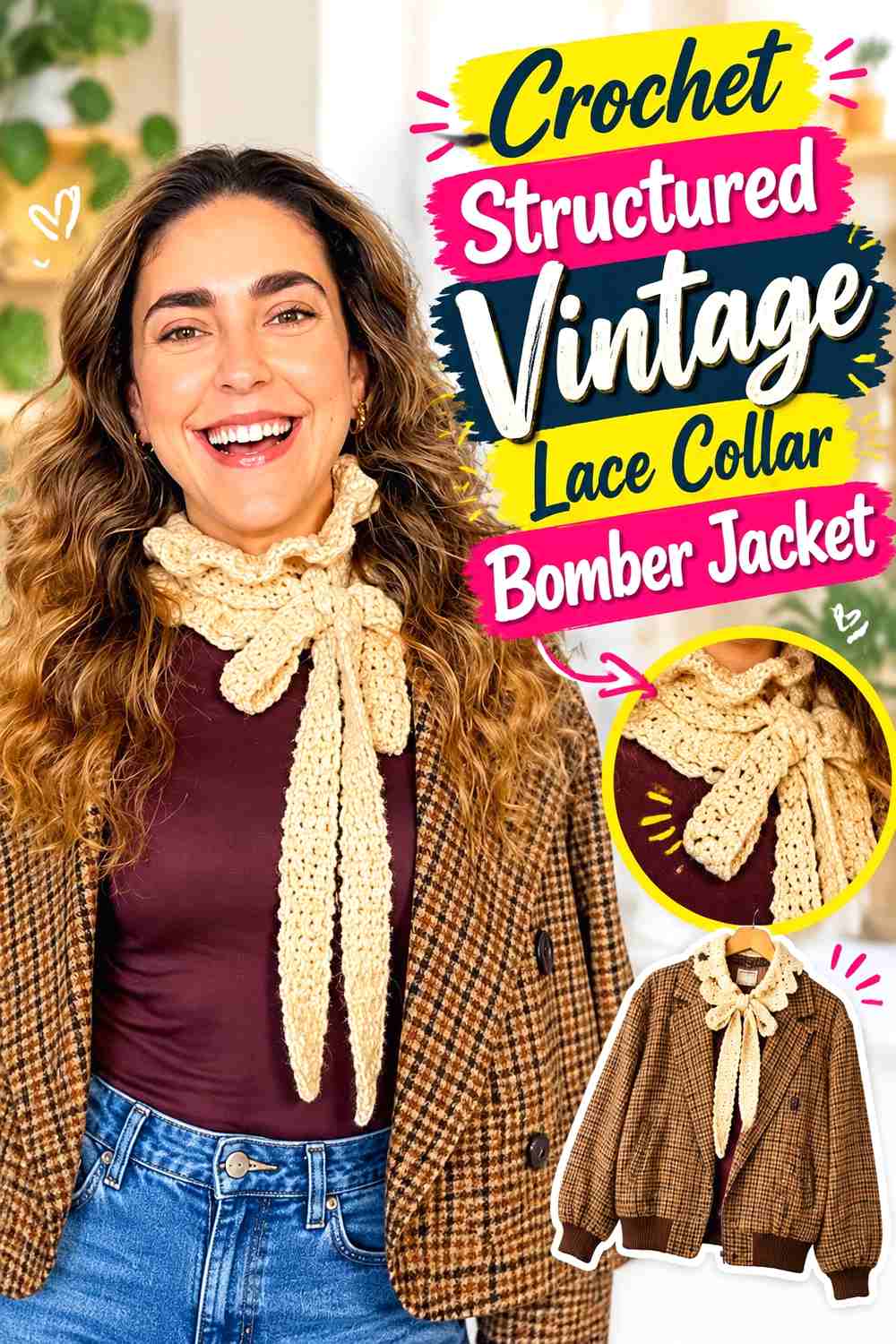
Fios Cruzados por Joana Gouveia demonstrates a vintage collar in different yarn treatments, showing how material choice can shift the same general idea from more delicate to more substantial. That comparison is especially useful when pairing a collar with a winter bomber.
A structured collar can hold a clearer outline against dense jacket fabric, while a softer version will blend more gently into the shoulders.
Collar Firmness Should Relate to Bomber Weight
A dense jacket can visually overwhelm a very limp collar.
Conversely, a stiff collar on a lightweight bomber can appear to float above the garment instead of following it. Bend and drape your collar swatch directly over the jacket fabric to judge the relationship.
Structure Can Make Scallops Look Sharper
A little body can help points and curves remain visible, especially in dark yarn.
Too much firmness, however, may stop the collar from following the neckline. The goal is shape retention without turning the decorative edge into a rigid plate.
Creator Credit: Fios Cruzados por Joana Gouveia
11. Crochet Buttoned Poppy-Lace Collar Bomber Jacket
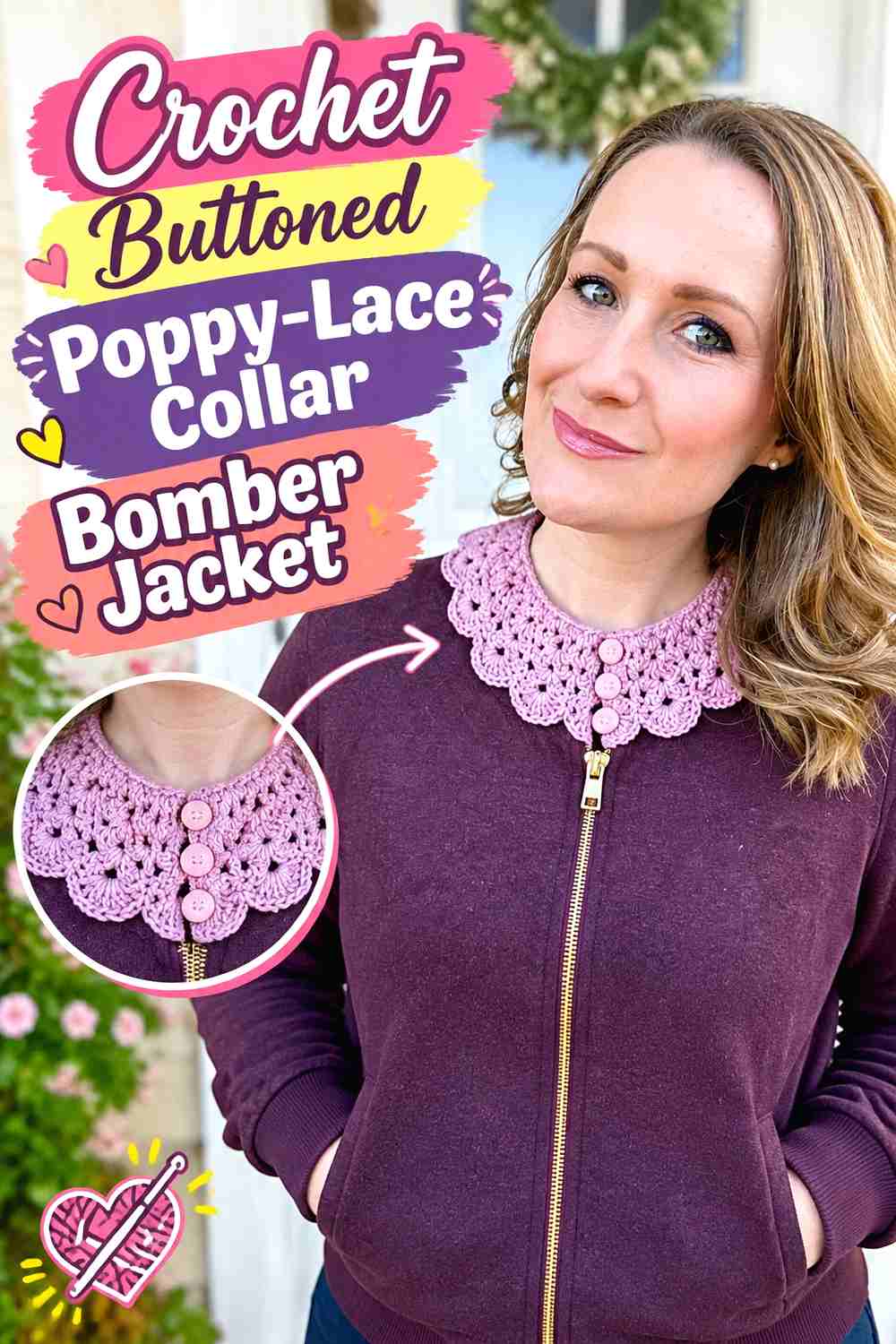
HanJan Crochet’s collar design uses a Peter Pan-inspired lace shape with a button closure and includes several size options in the original pattern system. For bomber styling, the buttoned detachable approach is useful because the collar can remain separate from the jacket construction.
This option works particularly well on a bomber with a plain crew-style or gently curved neckline.
Keep the Collar Button Clear of Jacket Hardware
A small collar button can occupy the same area as a zipper pull, snap, or top jacket button.
Wear the bomber in its normal closed position before choosing how the collar will sit. Moving the collar fastening slightly may create a cleaner and more comfortable layered neckline.
Scalloped Edges Need Symmetrical Blocking
A compact collar does not have much depth to hide small irregularities.
Block both sides to comparable curves and compare the front ends directly. The center-front line of the bomber provides a useful reference when deciding whether the collar is truly centered.
Creator Credit: HanJan Crochet
12. Crochet Tie-Front Shell Collar Bomber Jacket
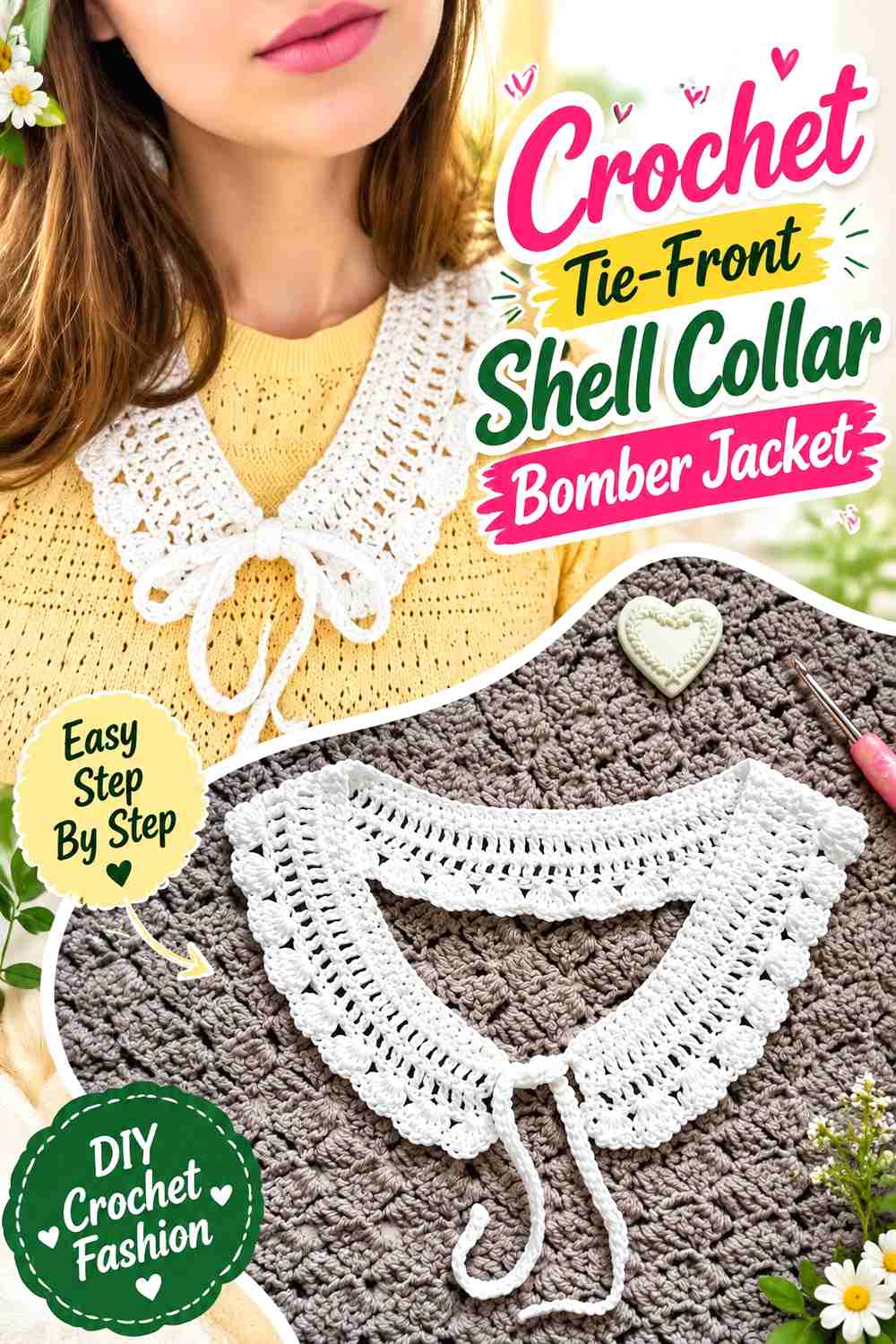
Selina Veronique Crochet’s vintage collar uses ties and a decorative shell-like finishing treatment, making it a softer alternative to buttoned Peter Pan collars. The original collar is intended as a separate accessory, so it is most useful here as an adaptation for a plain bomber rather than as a complete jacket source.
The ties can create an especially romantic neckline when the bomber is worn partly open.
Tie Length Should Work With the Jacket Closure
Long ties hanging over a zipper can become inconvenient even when they look attractive in a still photograph.
Pin or temporarily knot the collar in place and operate the jacket closure several times. Shortening the ties or positioning the bow higher may keep them out of the moving hardware.
Shell Edging Can Carry the Vintage Theme Alone
This collar already has recognizable decorative movement along its outer edge.
That means the jacket body can remain relatively plain. A solid dark bomber with one light shell collar often creates a clearer vintage statement than a jacket covered with several unrelated lace trims.
Creator Credit: Selina Veronique Crochet
13. Crochet Minimal Peter Pan Collar Bomber Jacket
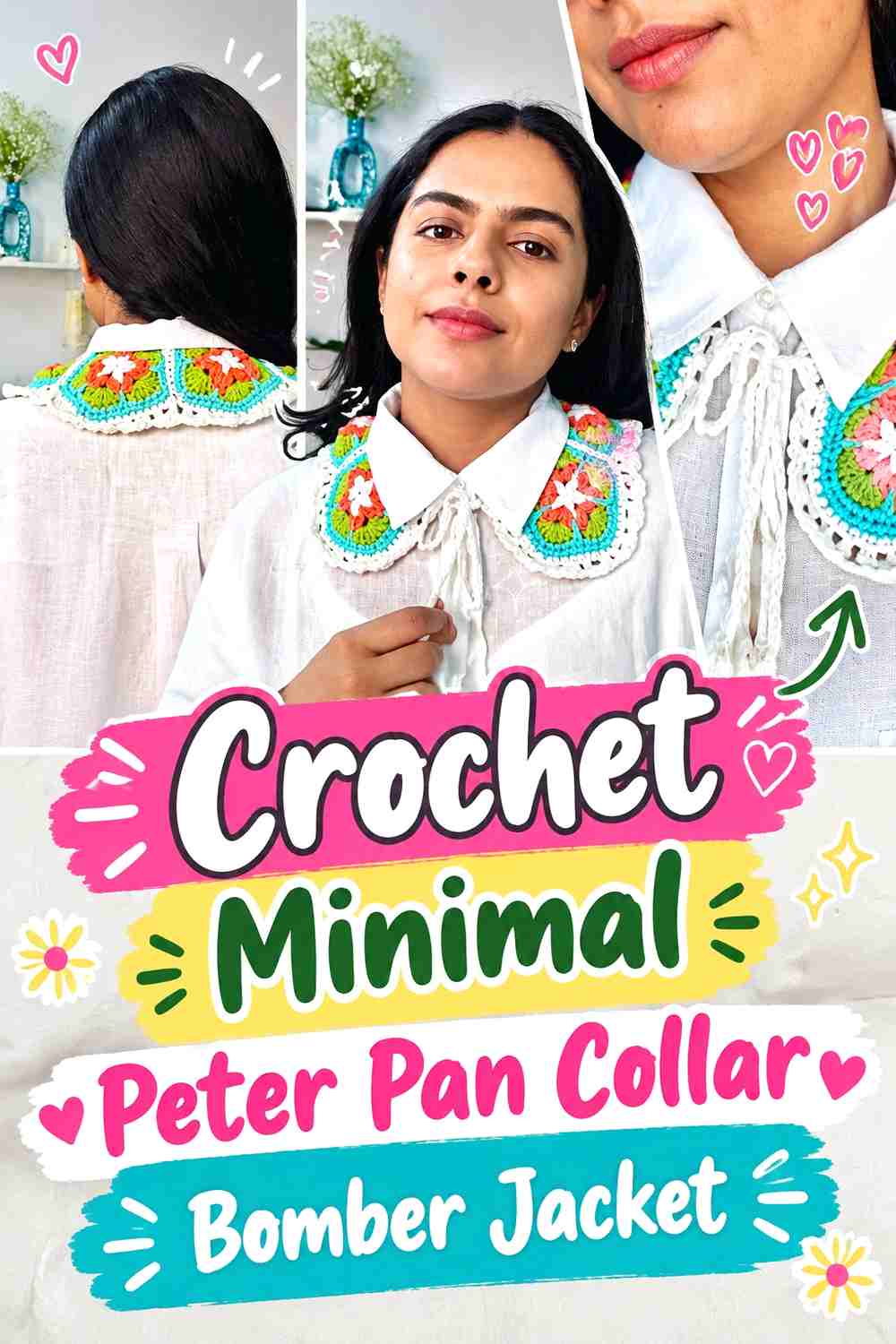
KEEN’s demonstrates a detachable Peter Pan-style vintage collar with a comparatively clean construction. This makes it useful for a bomber where you want the rounded vintage silhouette without a very deep or highly ornate lace treatment.
A minimal collar can be especially effective when the bomber already has bold sleeves, textured stitches, or a strong zipper line.
Small Collars Preserve More of the Bomber Front
A deep collar may cover the upper chest and part of the jacket opening.
A compact Peter Pan shape leaves more of the original bomber visible, so the contrast between sporty and vintage elements stays obvious.
Simple Shapes Put More Attention on Finishing
When there are fewer decorative repeats, the outline itself becomes the feature.
Uneven front ends or an inconsistent inner edge will therefore be easier to see. Take time to shape and block the collar before deciding where it should sit on the bomber.
Creator Credit: KEEN’s
14. Crochet Ruffled Rouge-Collar Bomber Jacket
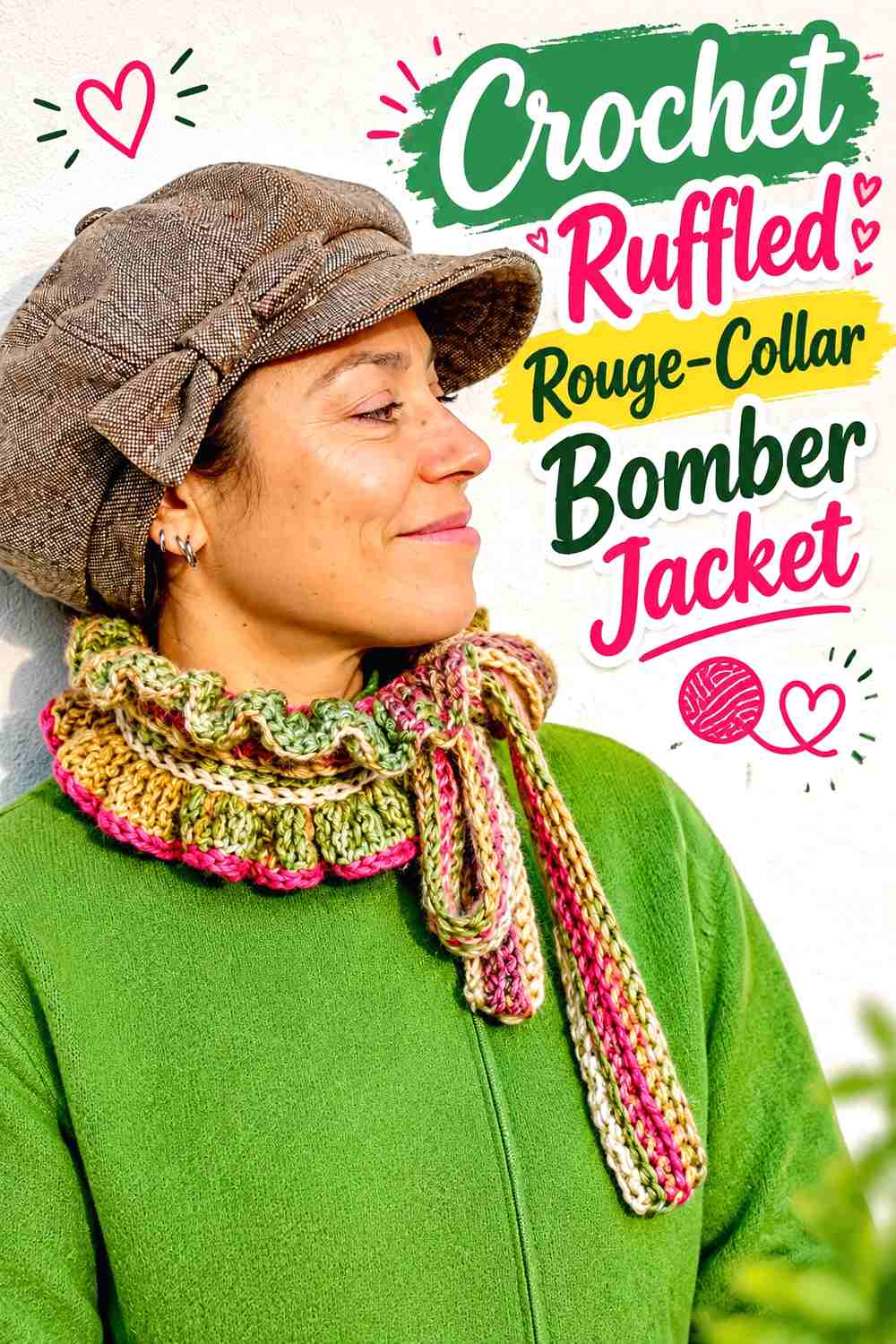
Francesca Uncinettando Crochet&Love demonstrates a soft vintage collar that behaves more like a narrow ruffled neck accessory than a flat Peter Pan piece. That creates a noticeably different bomber adaptation because the decorative fabric builds upward and around the neckline rather than spreading broadly across the chest.
This style can work particularly well with a simple cropped bomber and a high-waisted winter outfit where you want the neckline to provide the main romantic detail.
Vertical Ruffle Volume Competes With High Coat Collars
A ruffled neck treatment occupies more space immediately around the throat.
If the bomber will be worn under another coat, test the complete outfit before increasing collar volume. Several thick neckline layers can become uncomfortable even when each garment fits well on its own.
This Shape Works Best When the Bomber Body Stays Quiet
A gathered or ruffled collar already creates shadow and movement near the face.
Keep pocket trim, cuffs, and body decoration comparatively restrained if you want that neckline texture to remain the defining vintage feature.
Creator Credit: Francesca Uncinettando Crochet&Love
Which Crochet Lace Collar Bomber Jacket Style Should You Choose?
If you want the strongest traditional bomber foundation, start with Projects 1 or 2. Their source constructions already emphasize jacket details such as a compact shape, defined bands, pockets, or a zipper, so the lace can remain a focused neckline adaptation.
For a softer vintage jacket, Projects 3 through 7 move closer to collared cardigans and lace garments. These are better choices when you are comfortable with the finished piece reading somewhere between bomber and cropped cardigan.
Projects 8 through 14 are especially useful if you already have a plain crochet bomber construction you like. The detachable collar approaches allow you to compare Peter Pan curves, shell edges, buttons, ties, structured vintage shapes, and ruffled necklines without changing the entire jacket.
For the clearest vintage contrast, pair a relatively simple dark bomber with a lighter detachable collar. For a subtler winter version, work the collar in a neighboring shade and let texture rather than color separate the two components.
Conclusion
A crochet lace collar bomber jacket works because the two parts do not naturally look alike. Bomber construction provides compact proportions, cuffs, hems, pockets, and hardware; lace introduces curved edges, openwork, ties, scallops, and vintage detail.
The easiest route is usually to choose a bomber construction first and treat the collar as a separate design decision. That allows you to confirm neckline shape, jacket weight, and closure placement before committing to lace.
Choose Peter Pan collars for a crisp vintage effect, shell and scalloped collars for something softer, a structured collar for a heavier winter jacket, or a ruffled neckline when you want the collar to build volume upward rather than outward. Use the original tutorials for exact garment or collar construction, and verify compatibility on the finished neckline before permanent attachment.
Frequently Asked Questions
Can I add a crochet lace collar to any bomber jacket?
Not automatically. A simple round or gently curved bomber neckline is generally easier to adapt than a jacket with a hood, tall ribbed neck, or complicated overlapping closure. Measure the actual finished neckline before selecting a collar.
Should the lace collar be made from the same yarn as the bomber?
It does not have to be. A lighter yarn can create useful contrast against a dense winter jacket, while matching yarn can produce a more unified look. If the fibers differ, consider how blocking, stretching, and care requirements may also differ.
Is a detachable lace collar better than a permanently attached one?
A detachable collar gives you more styling flexibility and can be easier to care for separately. Permanent attachment can create a cleaner integrated finish, but the collar needs to match the jacket neckline much more precisely.
How do I stop a lace collar from covering the bomber zipper?
Test the blocked collar with the jacket fully assembled and zipped. Check where its front ends naturally fall and keep loose scallops or ties out of the zipper path. A slightly narrower collar may be more practical than forcing a deep design around the hardware.
What colors create a vintage winter look?
Ivory with black or navy creates strong contrast, while cream with brown, burgundy with dusty pink, forest green with oatmeal, and charcoal with gray can create quieter vintage combinations. The collar shape and texture matter as much as color.
Can I use chunky yarn for the lace collar so it matches a winter bomber?
You can experiment, but thicker yarn changes both the size and appearance of lace openings and scallops. It can also add substantial neckline weight. Swatch the decorative repeat first instead of assuming a fine-yarn collar can simply be enlarged through yarn substitution.
How can I keep a lace bomber from looking too decorative?
Choose one dominant vintage element. A strong collar usually needs less additional lace at the cuffs, pockets, and hem. Keeping those areas structured and comparatively simple helps preserve the bomber silhouette.