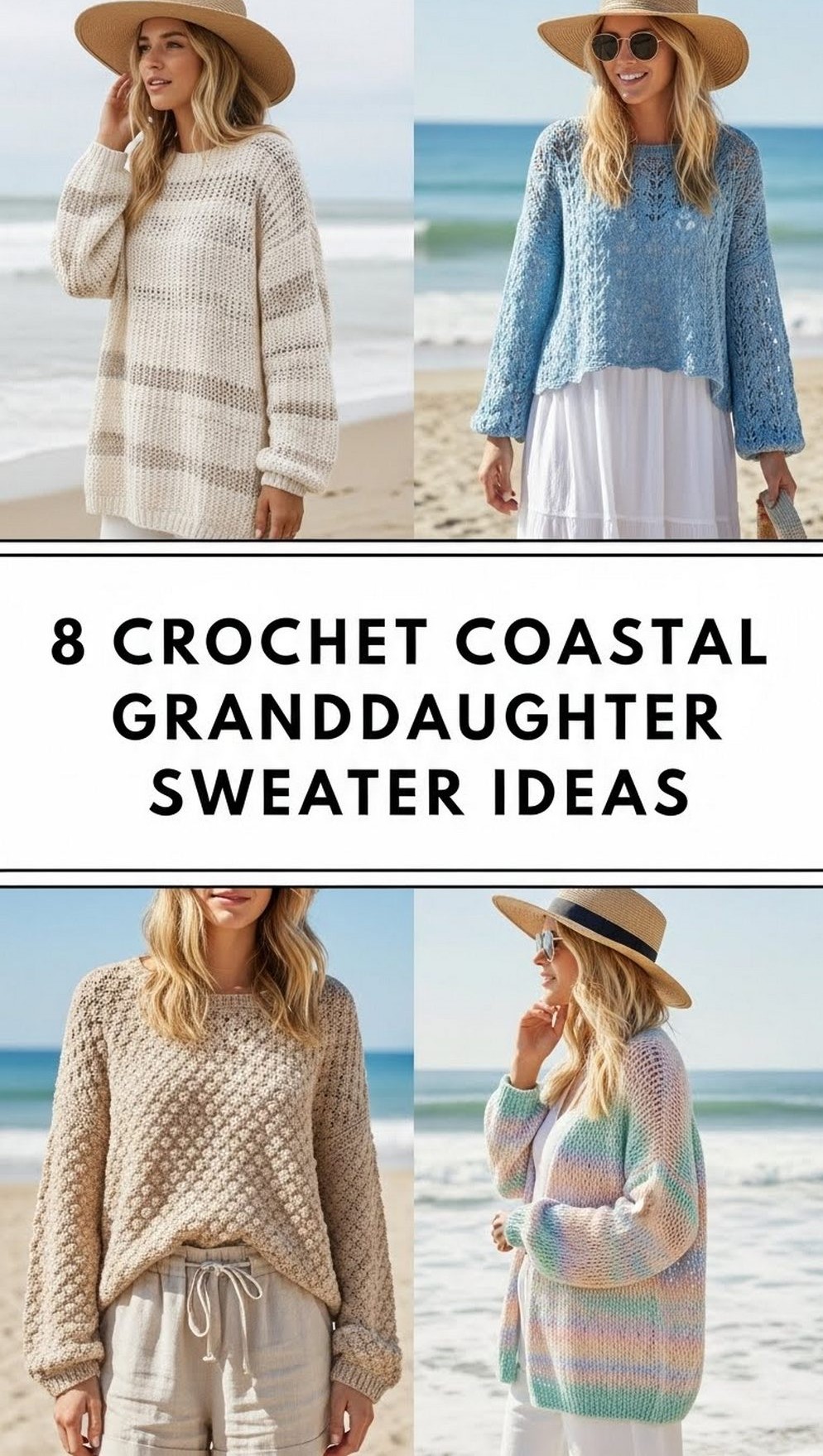
Coastal granddaughter style is all about soft ocean light, easy layers, and that “borrowed from grandma, styled for me” vibe. Think relaxed fits, cotton and linen blends, and palettes of cream, sand, sea-glass blue, and navy stripes. The sweaters below all stay breezy and wearable, with lots of size options and clear, photo-rich tutorials. You can dress them up with linen trousers or down with denim shorts and sandals. Pick one that matches your yarn stash and start building a seaside-inspired wardrobe, one cozy stitch at a time.
Coastal Shores Mesh Crochet Sweater
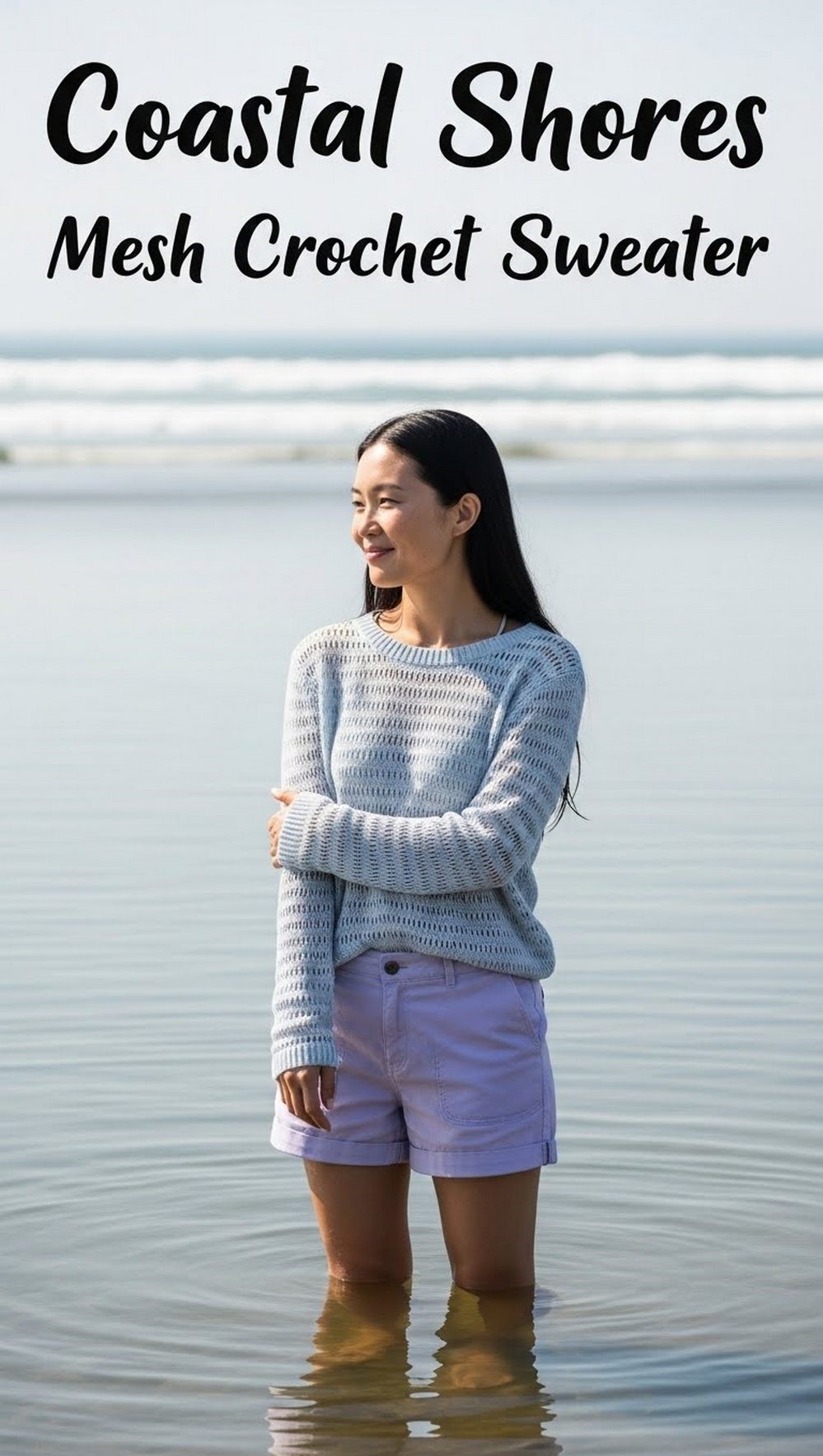
This is the ultimate coastal granddaughter layer: a light blue mesh crochet sweater you can throw over a tank or swimsuit on breezy days. The Coastal Shores Sweater is worked in airy stitches with 100% cotton sport yarn, so it feels cool but still gives a bit of sun and wind protection. The relaxed boat neck and straight body make sizing forgiving. Block lightly so the mesh opens up and hangs beautifully. When you’re done, pack it for every beach walk. Tutorial word at the end of Caption. Tutorial
Supplies:
- Yarn: Sport-weight 100% cotton (e.g. DMC Natura Just Cotton in Glacier)
- Hook: 3.5 mm (US E) crochet hook
- Notions: Yarn needle, scissors, stitch markers, measuring tape
Why it’s great: Breezy mesh plus cotton yarn gives a perfectly beachy, easy-to-layer pullover that suits all ages.
Ocean Breeze Speckled V-Neck Crochet Sweater

For a softer, romantic take on coastal style, this Ocean Breeze V-neck sweater uses a cream base yarn sprinkled with light grey-blue speckles. It’s all double crochet, worked in panels from the shoulders down, so you can decide on cropped or tunic length as you go. The drapey cotton-acrylic blend makes the fabric swingy rather than stiff, perfect over high-waisted jeans or a flowy skirt. Start with the cropped version for a fast win, then come back for the beach-cover-up length. Tutorial word at the end of Caption. Tutorial
Supplies:
- Yarn: Worsted-weight pima cotton blend (e.g. Comfy Color Mist “Tidewater”)
- Hook: 5.0 mm (US H) crochet hook
- Notions: Yarn needle, scissors, stitch markers, tape measure
Why it’s great: Simple stitches plus elegant speckled yarn give designer vibes with beginner-friendly construction.
Nautical Knots Top-Down Crochet Pullover
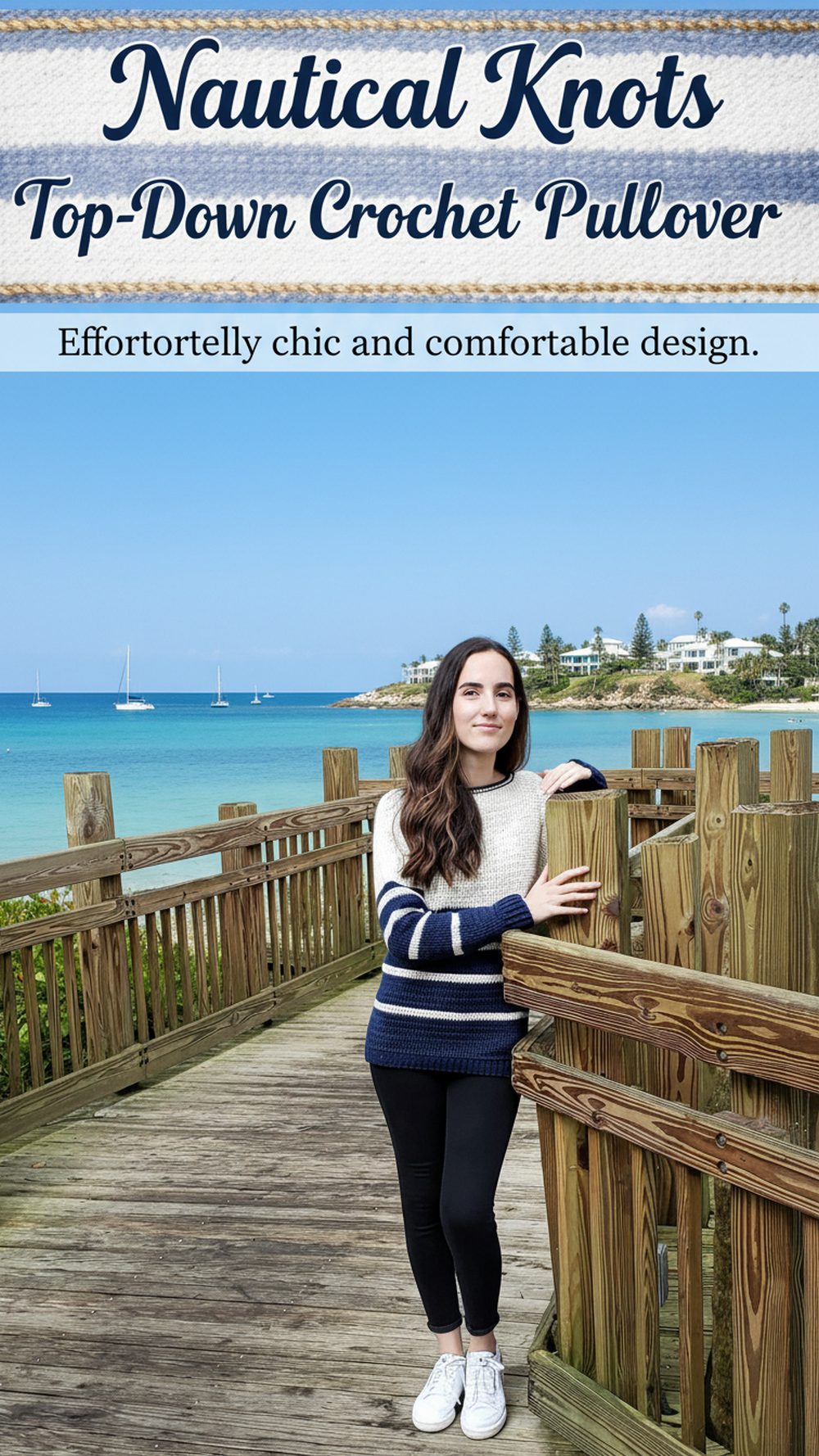
This Nautical Knots Pullover nails that preppy yacht-club look your inner coastal granddaughter craves. Worked top-down in the round, it’s a fantastic first raglan sweater: you’ll learn simple increases and stripe color changes as you go. KnitPicks CotLin in Swan and Planetarium gives you a classic off-white body with deep navy stripes that stay cool and breathable. Try a slightly cropped length and roll the cuffs for a modern twist, or keep it hip-length for timeless wear. Tutorial word at the end of Caption. Tutorial
Supplies:
- Yarn: DK-weight cotton/linen blend (e.g. CotLin “Swan” and “Planetarium”)
- Hook: 4.0 mm (US G) crochet hook
- Notions: Yarn needle, scissors, stitch markers, measuring tape
Why it’s great: Top-down construction lets you try on as you go and perfect your stripe placement.
Long Stripe Breton Crochet Pullover
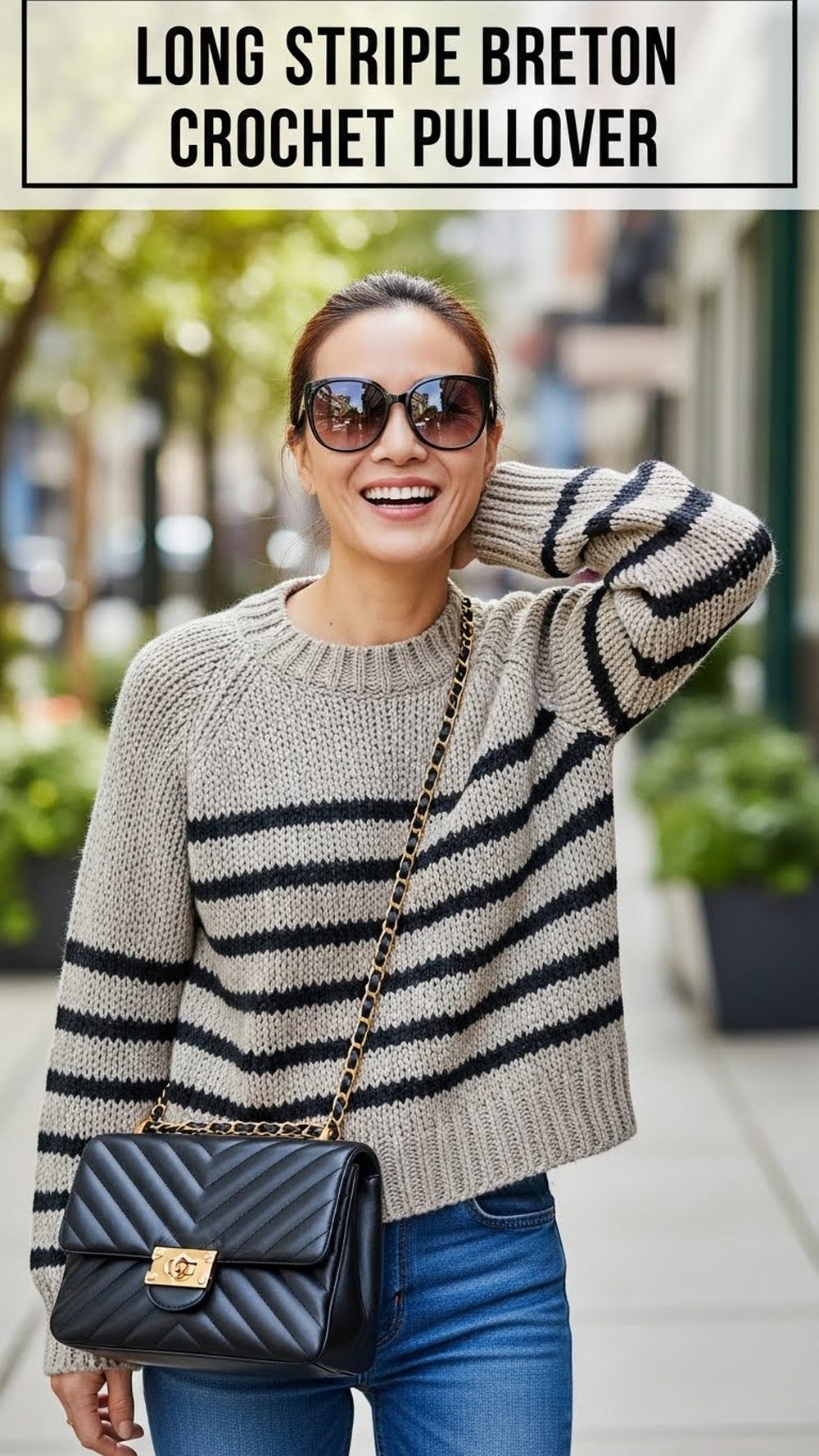
Channel a French coastal granddaughter vibe with this long stripe pullover: a relaxed, legging-length sweater in soft dove grey with thin midnight-navy crochet stripes. The body is worked in linen (moss) stitch, so the fabric drapes beautifully and looks almost woven. It’s made in flat pieces and seamed, which keeps everything portable and tidy. Follow the designer’s stripe counts for a classic Breton look, or shift the stripe placement higher for a cropped-over-dress style. Tutorial word at the end of Caption. Tutorial
Supplies:
- Yarn: Sport/DK baby alpaca (e.g. WeCrochet Andean Treasure in Finley Heather and Midnight Heather)
- Hook: 5.5 mm (US I) and 6.0 mm (US J) crochet hooks
- Notions: Yarn needle, scissors, stitch markers, blocking tools
Why it’s great: Thin navy stripes over soft grey give you a chic, grown-up take on coastal stripes with cozy drape.
Sand Dune Tan Mesh Crochet Sweater
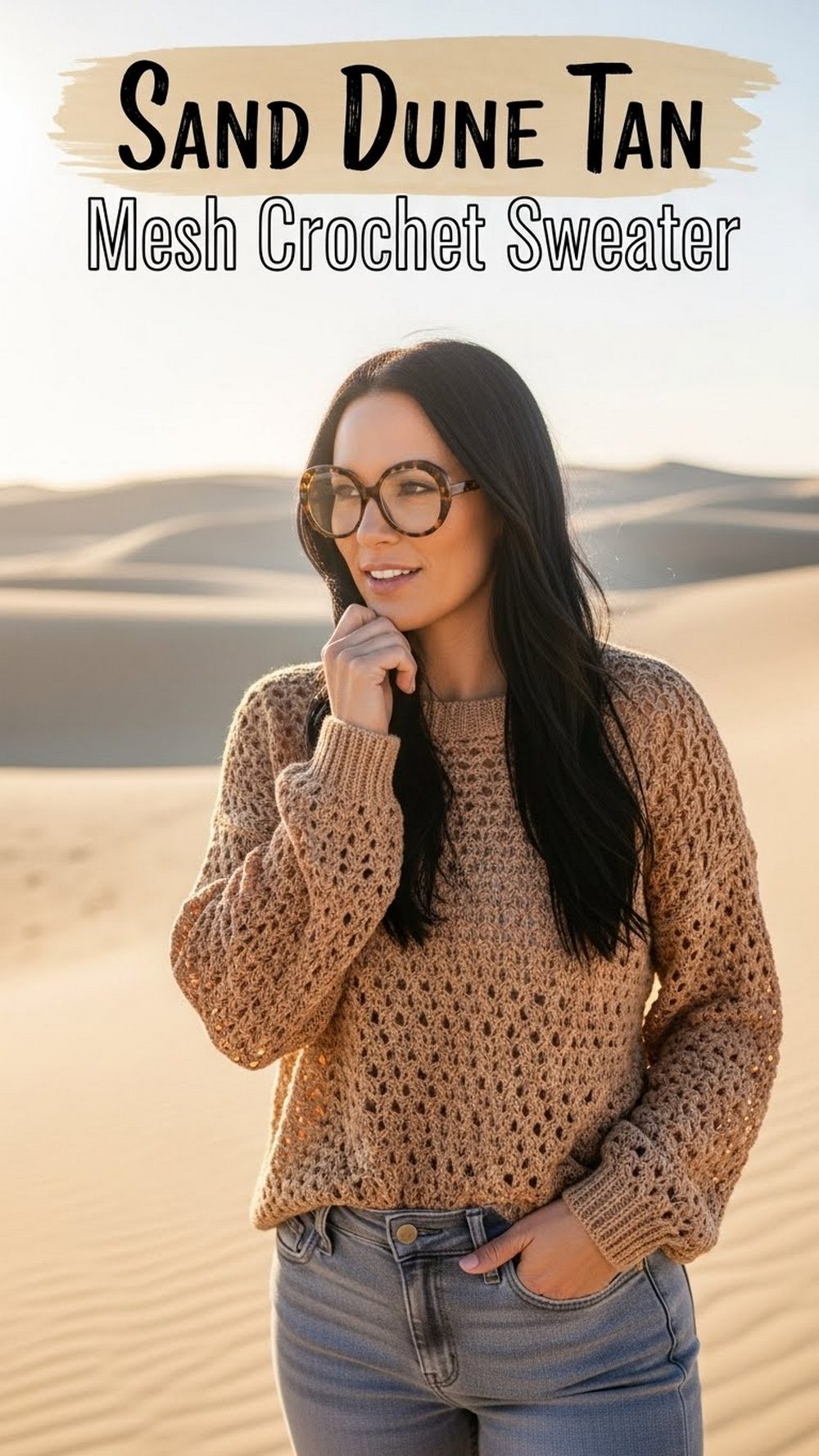
If you love minimalist neutrals, this Summer Mesh Sweater from Delia Creates is pure coastal granddaughter chic. It’s a simple boxy pullover worked in an airy mesh pattern using lightweight tan cotton-bamboo yarn, making it ideal for warm days or layering over a slip dress. The straight pieces and relaxed drop shoulders are very forgiving, so you can focus on keeping your stitches even. Size down for a more fitted look or up for that slouchy “borrowed from grandma” feel. Tutorial word at the end of Caption. Tutorial
Supplies:
- Yarn: DK-weight cotton/bamboo blend (e.g. Lion Brand Coboo in Tan)
- Hook: 5.0 mm (US H) crochet hook
- Notions: Yarn needle, scissors, stitch markers, blocking pins
Why it’s great: A neutral tan mesh pairs with everything and looks polished whether you’re beachside or in the city.
Beach Day Striped Crochet Pullover
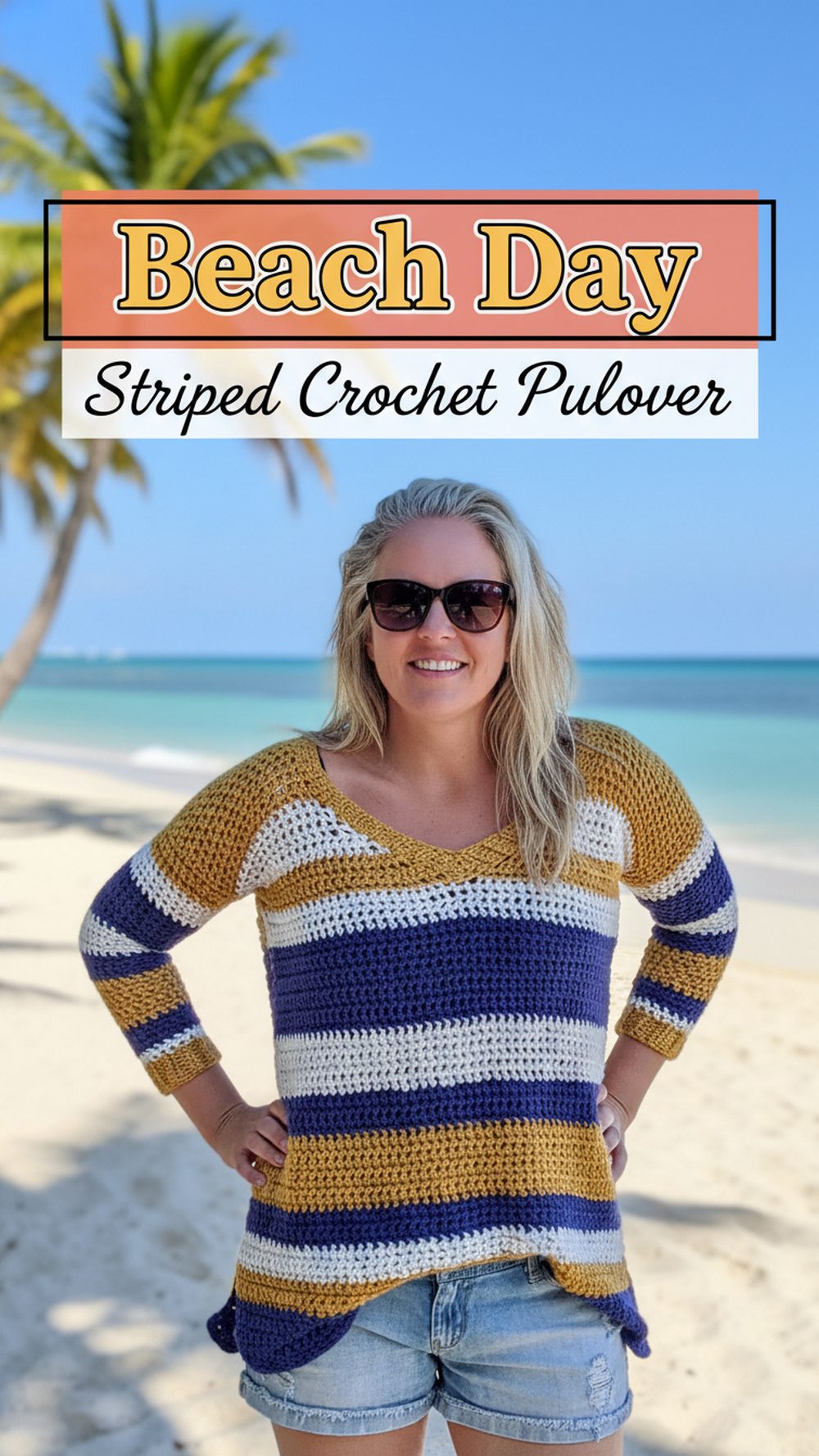
For a slightly bolder palette, the Beach Day Pullover mixes navy, mustard, and cream stripes in an easy, wearable shape. Worked bottom-up in pieces, it uses worsted-weight cotton so it’s beach-ready but still cozy for sunset walks. Stripe sequences are clearly written, so you can follow exactly or swap colors for your own school or team shades. Keep your floats neat when changing colors and you’ll have a very polished finish. This one screams boardwalk photos with your favorite people. Tutorial word at the end of Caption. Tutorial
Supplies:
- Yarn: Worsted-weight 100% cotton (e.g. Loops & Threads Crème Cotton in Navy, Mustard, and Cream)
- Hook: 5.5 mm (US I) crochet hook
- Notions: Yarn needle, scissors, stitch markers, tape measure
Why it’s great: High-contrast but still beachy stripes give a fun, youthful twist on classic nautical sweaters.
Lyndie Striped Coastal Crochet Cardigan
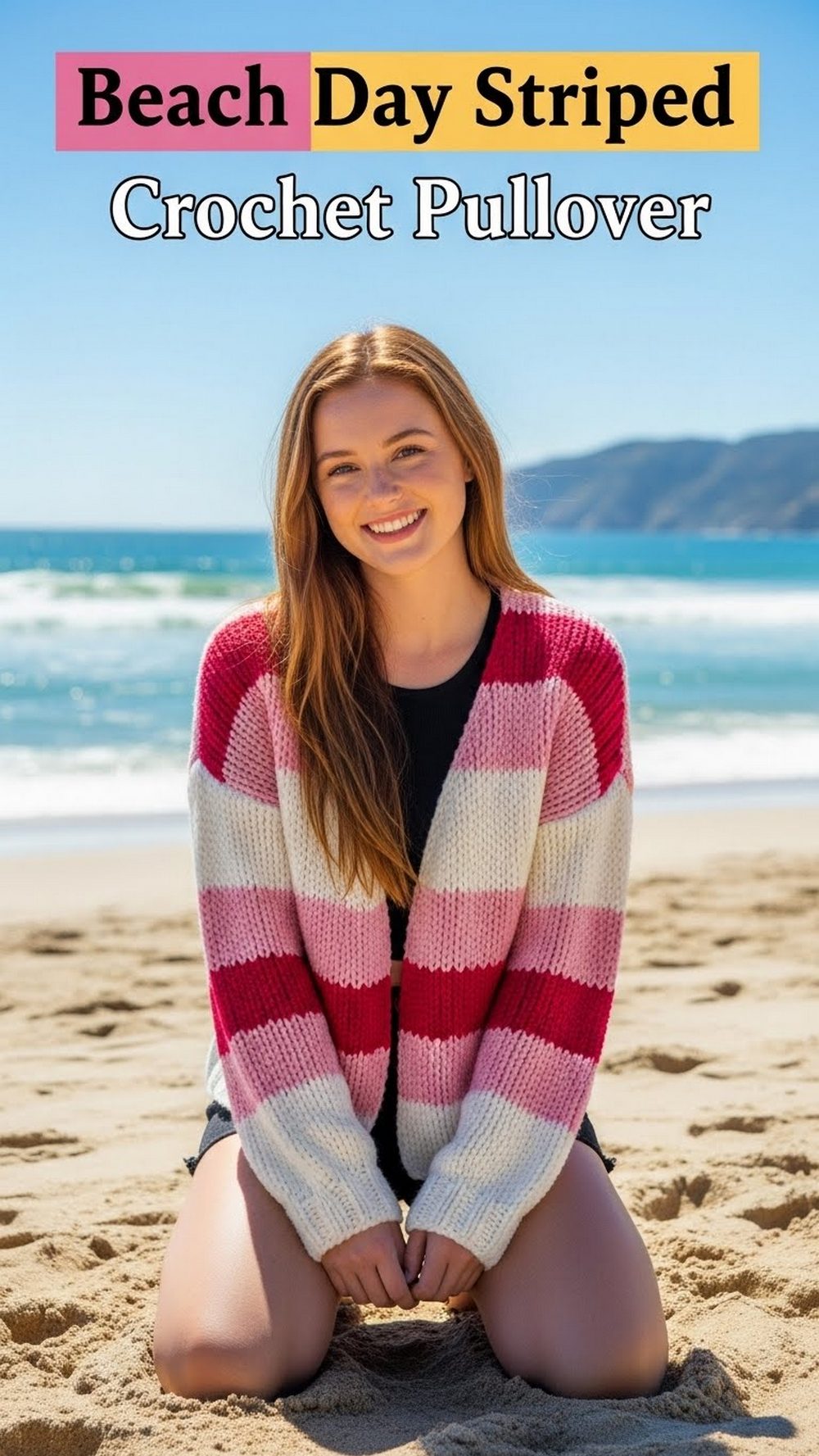
This Lyndie Cardi is perfect for the granddaughter who loves a dramatic duster cardigan with beachy stripes. Made in breathable linen-pima cotton fingering yarn, it’s surprisingly light despite the length. The stripes alternate ivory, blush, and rouge for a soft yet statement-making look that pairs beautifully with simple tank-and-jeans outfits. The pattern uses moss stitch and very little seaming, so once you get into the rhythm it’s easy TV crochet. Add pockets if your coastal heart demands them. Tutorial word at the end of Caption. Tutorial
Supplies:
- Yarn: Fingering-weight linen/pima cotton (e.g. KnitPicks Lindy Chain in Swan, Blush, Rouge)
- Hook: 3.5 mm (US E) crochet hook
- Notions: Yarn needle, scissors, stitch markers, measuring tape
Why it’s great: Long, swishy stripes in cool fibers create a year-round statement cardigan that still feels beach-light.
Cotton Stripes Baby Granddaughter Crochet Sweater
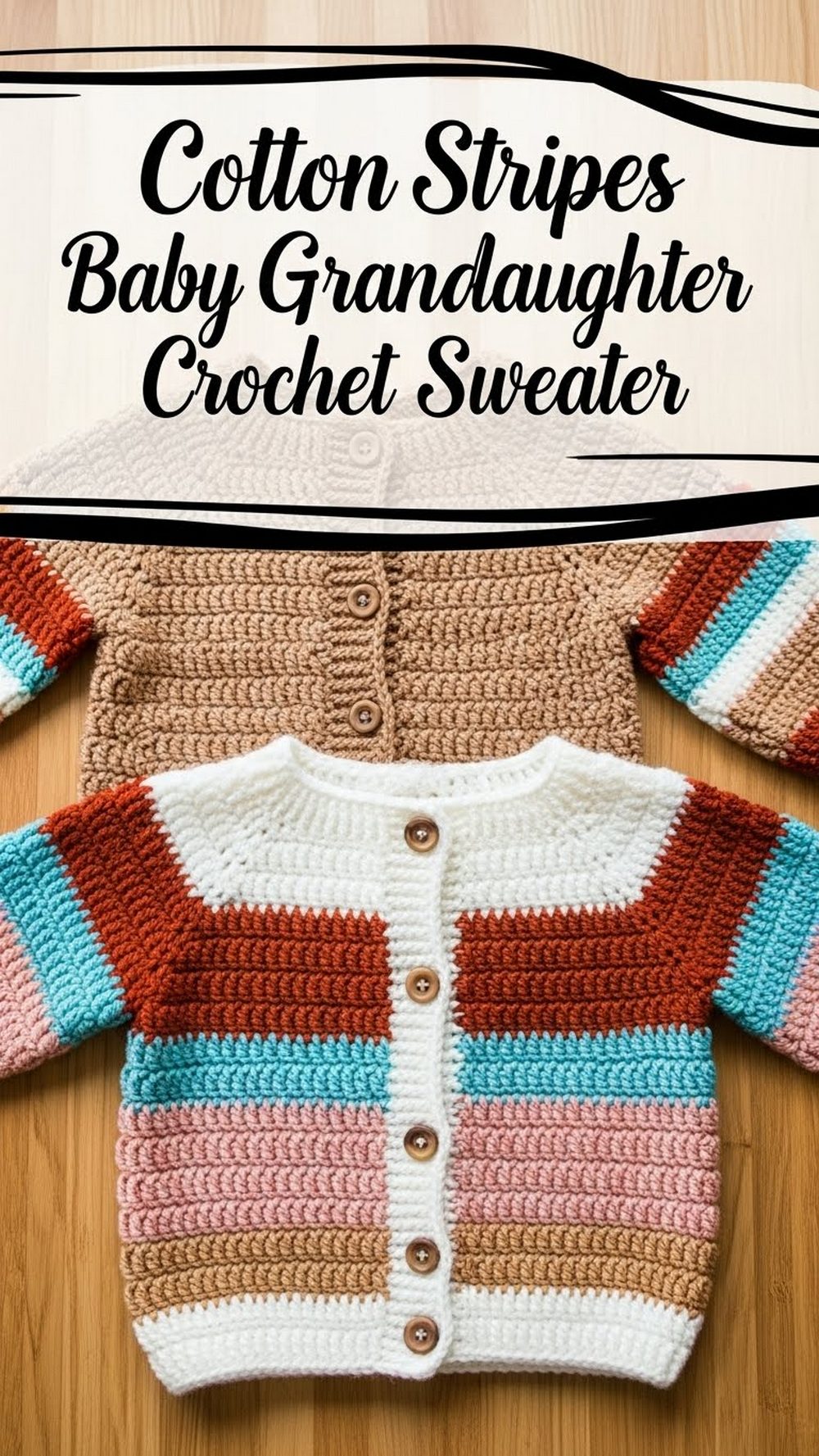
For the littlest coastal granddaughter, this Cotton Stripes Baby Sweater is an adorable classic. Designed for 3–6 months with notes up to about 18 months, it uses Bernat Softee Cotton so it’s soft, washable, and perfect for seaside naps. The simple top-down construction and tidy stripes give you great practice with baby garments without any fussy shaping. Choose a palette of soft white, sand, aqua, and blush for a gentle beach feel, and finish with tiny buttons that echo seashells. Tutorial word at the end of Caption. Tutorial
Supplies:
- Yarn: DK-weight cotton blend (e.g. Bernat Softee Cotton in coordinating stripe colors)
- Hook: Size recommended on pattern (typically 4.0–4.5 mm)
- Notions: Small buttons, yarn needle, scissors, stitch markers, baby-size measuring tape
Why it’s great: Fast to make, practical to wash, and unbelievably cute in coastal pastel stripes for baby photos.
Conclusion
You don’t need a whole new wardrobe to lean into the coastal granddaughter mood—just one well-chosen crochet sweater can shift your style. Start with whichever pattern feels least intimidating, maybe a boxy mesh or baby sweater, and let yourself enjoy the rhythm of the stitches. As you finish, jot notes about yarn, size tweaks, and stripe ideas so future projects get even easier. Bookmark this list and return whenever you’re ready for your next seaside-inspired make.
FAQs
1. What yarns work best for coastal-style sweaters and homey layers?
Look for breathable fibers: cotton, linen, bamboo, and cotton-acrylic blends. For cooler climates, soft merino or alpaca blends still feel “coastal” if you stick to light, beachy colors. Avoid very stiff acrylics; they can make garments feel bulky instead of drapey.
2. Should I machine wash or hand wash these projects, and how do I dry them?
Always check the yarn label first. Most cotton and cotton blends can be machine washed on gentle in a mesh bag. Lay flat to dry on a towel, shaping the sweater to measurements. Avoid hanging when wet—it can stretch the shoulders and length.
3. How can I scale a sweater pattern up or down in length or width?
To lengthen, simply add rows before any shaping (or after cuffs for top-down designs). To adjust width, swatch carefully, then change hook size or yarn weight to get more or fewer stitches per 10 cm. For bigger bust adjustments, choose a pattern with detailed size charts and work from your actual measurements.
4. Which fibers are safest for warm weather, kitchens, or a bit of heat exposure?
Cotton and linen handle heat best, so they’re ideal for light garments, beach cover-ups, and dishcloths or potholder covers. For anything near real heat (like handling hot pans), stick to thick cotton and avoid acrylic, which can melt. Don’t rely on garments as heat protection—use proper oven mitts.
5. What joins and edgings make crochet garments more durable for daily wear?
Mattress stitch or whipstitch seams in matching yarn are strong but flexible. For edgings, simple single crochet or slip-stitch ribbing around necklines, cuffs, and hems helps them keep shape. Working into the back loop only for ribbing gives stretch without bulky seams.
6. How much time and yarn do typical sweaters take?
Light adult pullovers usually use 700–1400 yards (650–1300 m), depending on size, length, and yarn weight. Lighter mesh designs use less, long dusters use more. Expect a weekend or two for a simple mesh or baby sweater, and several weeks of casual evenings for long cardigans.
7. Any tips for photographing my coastal crochet projects nicely?
Use indirect natural light near a window or outside in shade. Choose simple backgrounds—plain wall, wood floor, or sandy ground—and add a couple of props like a book, straw hat, or shell. Shoot from above for flat lays or slightly off to the side for modeled shots, focusing sharply on the crochet texture.
8. How do I fix curling hems, stretching necklines, or wavy edges?
Curling usually means tight edges—try going up a hook size for final rows or adding a round of looser single crochet. Stretchy necklines benefit from a round or two of slightly smaller-hook ribbing. Wavy hems often come from too many stitches; lightly steam-block first, and if it’s still wavy, redo the edge with fewer stitches or a smaller hook.