A crochet computer monitor dust cover can bring a handmade touch to a home office, gaming desk or creative workspace. These 19 inspiration ideas explore simple ribbed panels, decorative slipcovers, granny-square curtains, textured crochet drapes and modern colorblock designs. From soft sage and oatmeal to deep navy, burgundy and dusty blue, each concept offers a different way to style a computer monitor when it isn’t being used.
This collection focuses on removable front panels and decorative covers for desktop monitors, with options for standard widescreen and ultrawide displays. You can compare different hanging arrangements, stitch textures, decorative borders and ways to leave the stand and rear housing accessible. Computer monitors require proper ventilation, however, so these ideas are visual inspiration rather than approved covers for operating equipment.
These are AI-generated crochet design visualizations for inspiration, not photographs of tested handmade covers or step-by-step patterns.
Quick Design Selection Guide
| Your preferred style | Design to explore | Distinctive feature |
|---|---|---|
| Simple everyday styling | Crochet Sage Ribbed Monitor Front Cover | Close vertical ribbing and clean lower hem |
| Cottage-inspired detail | Crochet Ivory Scalloped Monitor Slipcover | Eight rounded scallops |
| A modern geometric look | Crochet Navy Geometric Colorblock Monitor Hood | Three large vertical color sections |
| Traditional handmade character | Crochet Lilac Granny-Square Monitor Curtain | Twelve joined granny squares |
| A cover for a wider display | Crochet Sand Extra-Wide Monitor Dust Panel | Long striped panel suspended from a separate rail |
| Decorative front curtain | Crochet Rosewood Pleated Monitor Dust Drape | Three soft vertical folds |
For an actual monitor, a separate rail-mounted curtain may be worth considering because it can avoid contact with the equipment. Still, check the monitor manufacturer’s guidance before placing any material near its ventilation openings, casing or screen.
1. Crochet Sage Ribbed Monitor Front Cover
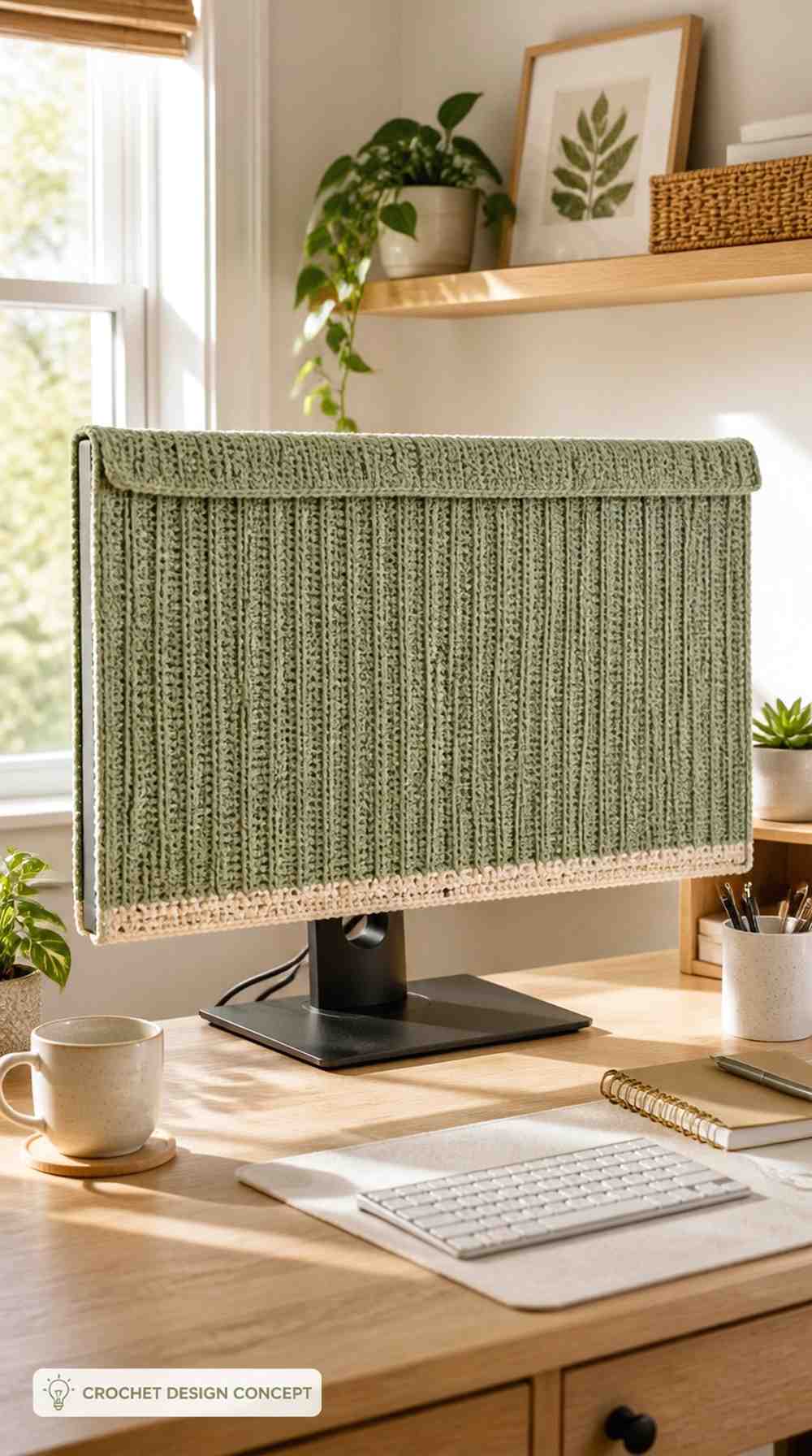
Soft sage-green crochet creates a broad rectangular front cover with closely worked vertical ribs and a narrow oatmeal border along the lower edge. Two short side returns help define its shape, while a slim upper flap rests over the outer frame of a switched-off monitor. The black pedestal remains visible beneath the fabric.
The simple ribbing makes this one of the most understated designs in the collection. It suits a pale wooden desk with neutral office accessories. The main consideration is how the upper flap would rest without blocking ventilation or placing unnecessary pressure on the monitor.
- Vertical Ribbing: The repeated raised rows create texture across the broad panel. Check stitch tension to avoid uneven stretching or a wavy lower edge.
- Upper Frame Flap: The narrow fold should be assessed against the monitor’s casing and ventilation layout before any practical use.
- Oatmeal Lower Border: A straight contrasting hem helps the panel hang neatly without adding bulky decorative pieces.
- Screen Contact: Avoid dragging rough crochet stitches across the display. A separate, manufacturer-compatible protective arrangement may be more suitable.
2. Crochet Ivory Scalloped Monitor Slipcover
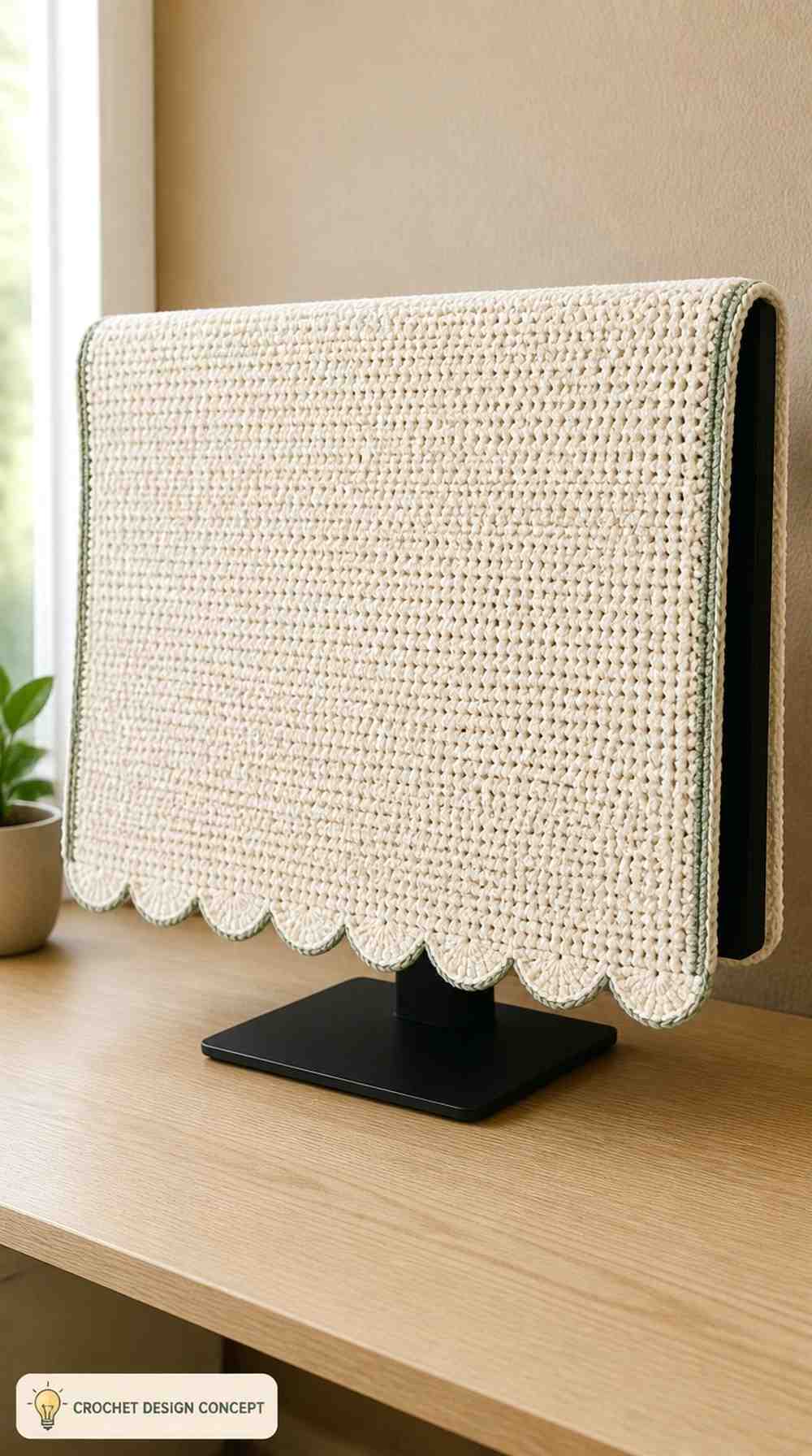
Ivory crochet forms a shallow rectangular hood with a closely stitched front panel and eight rounded scallops along the lower edge. Fine dusty-sage lines frame the left and right sides, while the cover follows the monitor’s upper outer edges without enclosing its entire rear housing.
This design gives a home office a softer cottage-inspired appearance. The scallops are the main decorative feature, so the rest of the crochet stays simple. Their size and weight would need careful planning to prevent the lower edge from pulling unevenly.
- Eight-Scallop Border: Keep the rounded sections consistent in width and depth so they form a balanced lower hem.
- Shallow Hood Shape: A lightly fitted upper section may look tidy, but monitor ventilation requirements must determine whether it can actually be used.
- Dusty-Sage Side Lines: Narrow contrasting borders create definition without adding appliqués that could catch during removal.
- Ivory Yarn Care: Light yarn may show dust and marks quickly, making a washable, removable construction worth considering.
3. Crochet Terracotta Foldover Monitor Dust Panel
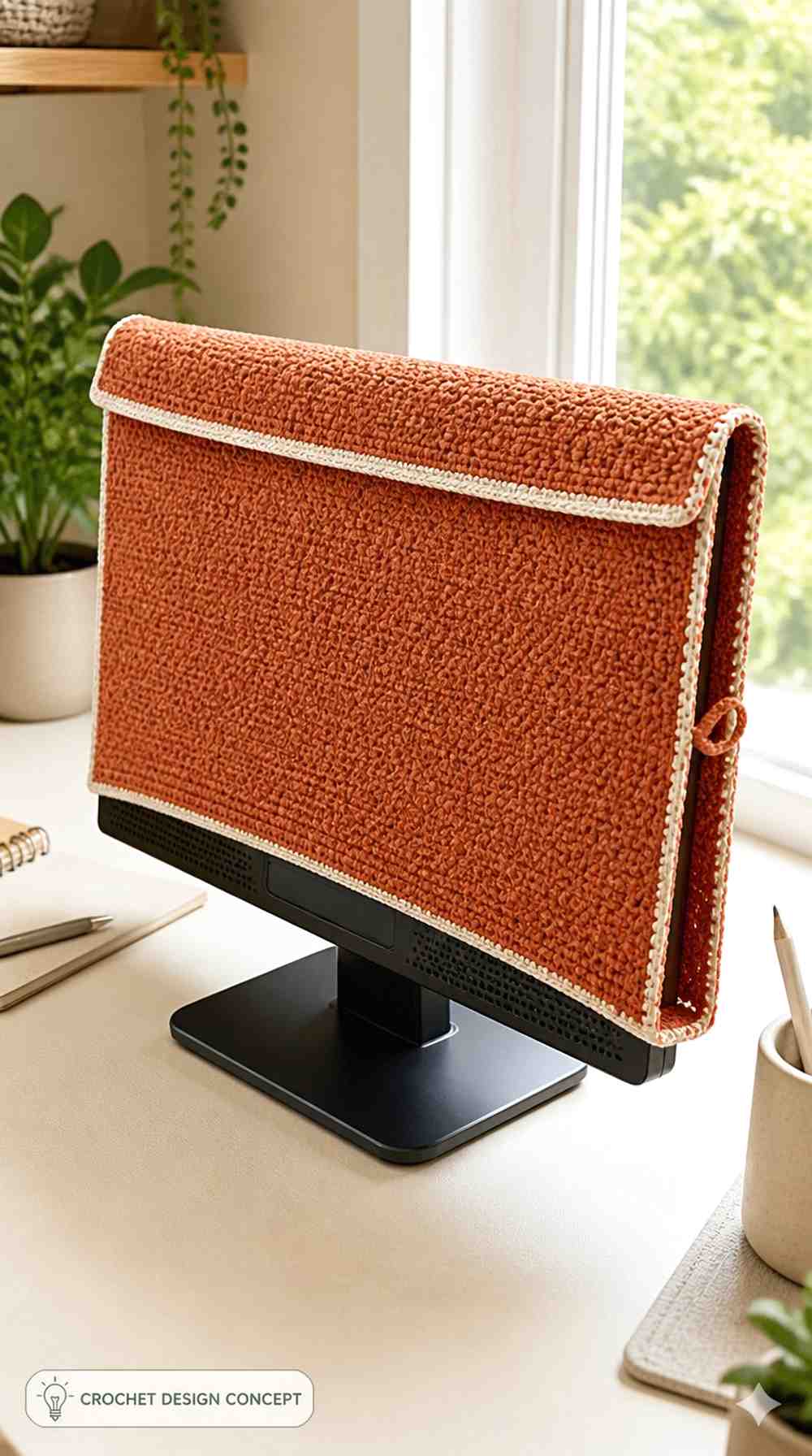
Warm terracotta crochet creates a rectangular front panel with fine seed-like stitch texture and a narrow cream border. A short folded upper flap sits along the monitor’s top outer frame, while two side tabs turn toward the rear edges. Small crochet loops finish the tabs without adding hard decorative hardware against the display.
The foldover arrangement has a tailored appearance that differs from a simple hanging curtain. Its side tabs suggest a shaped cover, although the fabric’s weight and attachment method would need careful attention to avoid pulling on the equipment.
- Foldover Top: The upper flap should not rest over ventilation openings or create pressure on the monitor’s display frame.
- Side Tab Placement: Short tabs provide a possible shaped finish, but must remain clear of rear ports, controls and cables.
- Seed-Like Stitch Texture: Close stitches create a compact surface that may offer more coverage than widely spaced crochet mesh.
- Soft Fastenings: Avoid hard buttons or metal attachments against the monitor casing or screen, where they could cause marks.
4. Crochet Navy Geometric Colorblock Monitor Hood
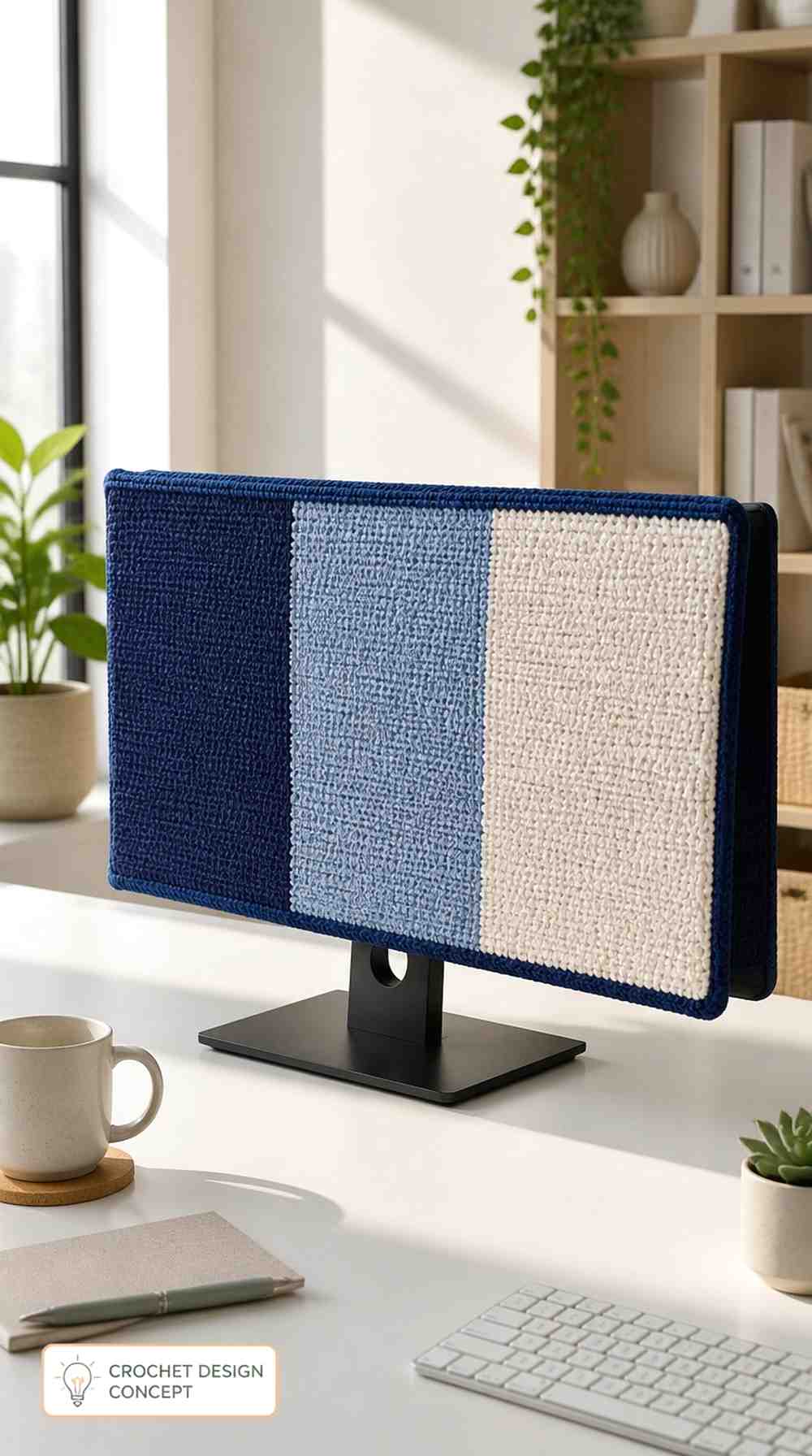
Three large crochet color sections define this modern dust cover: deep navy on the left, faded sky blue through the center and warm cream on the right. A narrow navy fold follows the upper frame, with matching side returns and closely stitched linen-like fabric across the front.
The broad blocks create visual interest without flowers, fringe or raised decoration. Against a white desk, the dark navy gives the composition a strong contrast. The important design challenge is keeping the color joins straight across such a large rectangular panel.
- Three-Color Arrangement: Large sections make the design easier to read from a distance than numerous small color changes.
- Flat Color Joins: Keep connecting seams smooth so they do not form thick ridges against the front of the display.
- Cream Panel Placement: The light right section may show dirt more readily than the navy portion, so laundering requirements matter.
- Hood Limitation: An open rear does not automatically make a top-fold cover safe; follow the monitor’s ventilation and covering instructions.
5. Crochet Dusty Blue Pixel Checker Monitor Cover
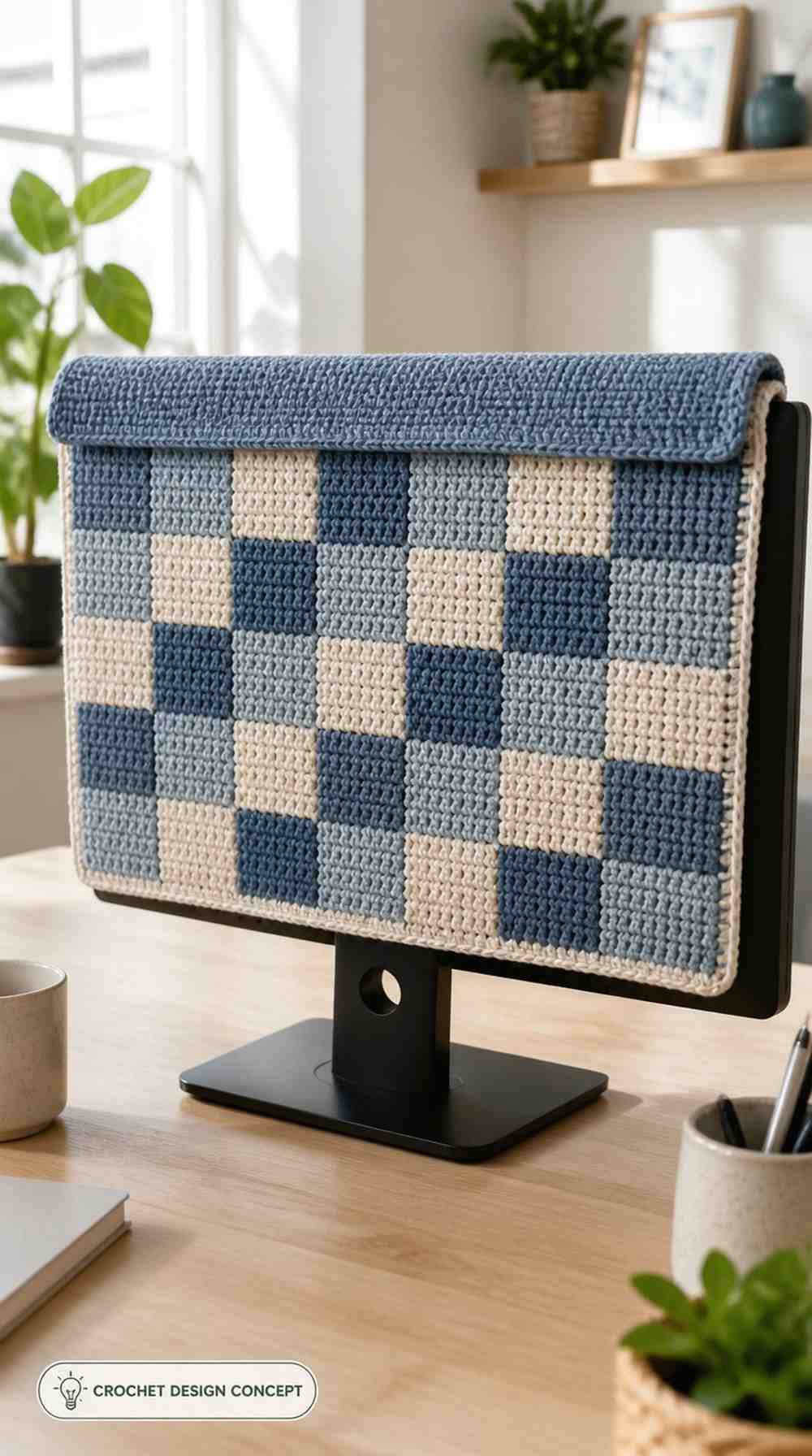
Small dusty-blue, faded-denim and oatmeal crochet squares form a repeated checker pattern across this rectangular monitor cover. A solid dusty-blue top strip and fine ivory edging frame the joined squares, with short side returns completing the design. The black monitor stand remains visible below the front panel.
The miniature squares resemble a soft pixel-inspired arrangement, making the design interesting for a creative desk or gaming setup. Unlike simple stripes, the individual crochet pieces introduce more joining seams and yarn ends, which could affect the finished drape.
- Small-Square Layout: Keep the squares consistent so the checker pattern forms a regular rectangle rather than uneven rows.
- Joining Seams: Flat joins are preferable to bulky raised seams, particularly if the panel could come close to a delicate screen surface.
- Solid Top Strip: The plain dusty-blue upper section creates a clean finish above the busy patchwork.
- Extra Fabric Weight: Many joined pieces may produce a heavier cover; assess how the finished panel would be supported rather than hanging from fragile monitor edges.
6. Crochet Charcoal Linen-Stitch Monitor Drape
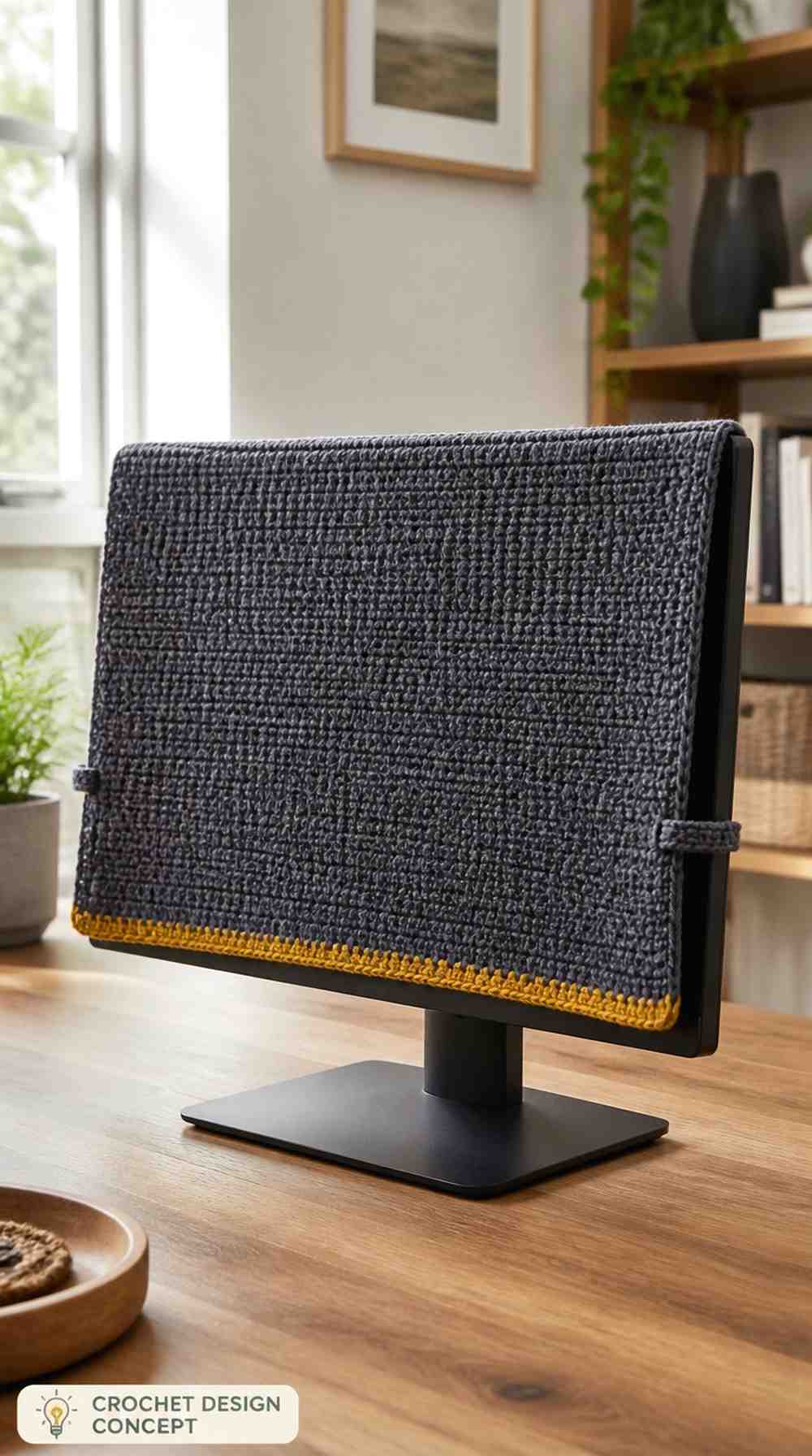
Dark charcoal crochet forms a smooth front drape with small, tightly worked linen-like stitches. A narrow mustard-gold border follows the bottom edge, while two short charcoal tabs sit at the lower sides. The panel hangs just beneath the display frame without extending down over the monitor’s pedestal neck.
Its strength is the restrained design. The nearly uniform charcoal fabric allows the mustard border to stand out without creating a patterned center. Short side tabs introduce a possible adjustment detail, but their placement should not affect the monitor’s operating components.
- Dense Linen-Like Texture: The closely worked stitches create an even surface, although actual dust coverage depends on stitch gaps and material.
- Lower Mustard Border: A small contrast edge gives definition without fringe that might catch on desk equipment.
- Side Tab Length: Keep both tabs short and away from control buttons, cables or the monitor stand’s adjustment mechanism.
- Simple Removal: A smooth front panel may be easier to lift and fold than a heavily embellished design, provided its mounting arrangement is appropriate.
7. Crochet Lilac Granny-Square Monitor Curtain
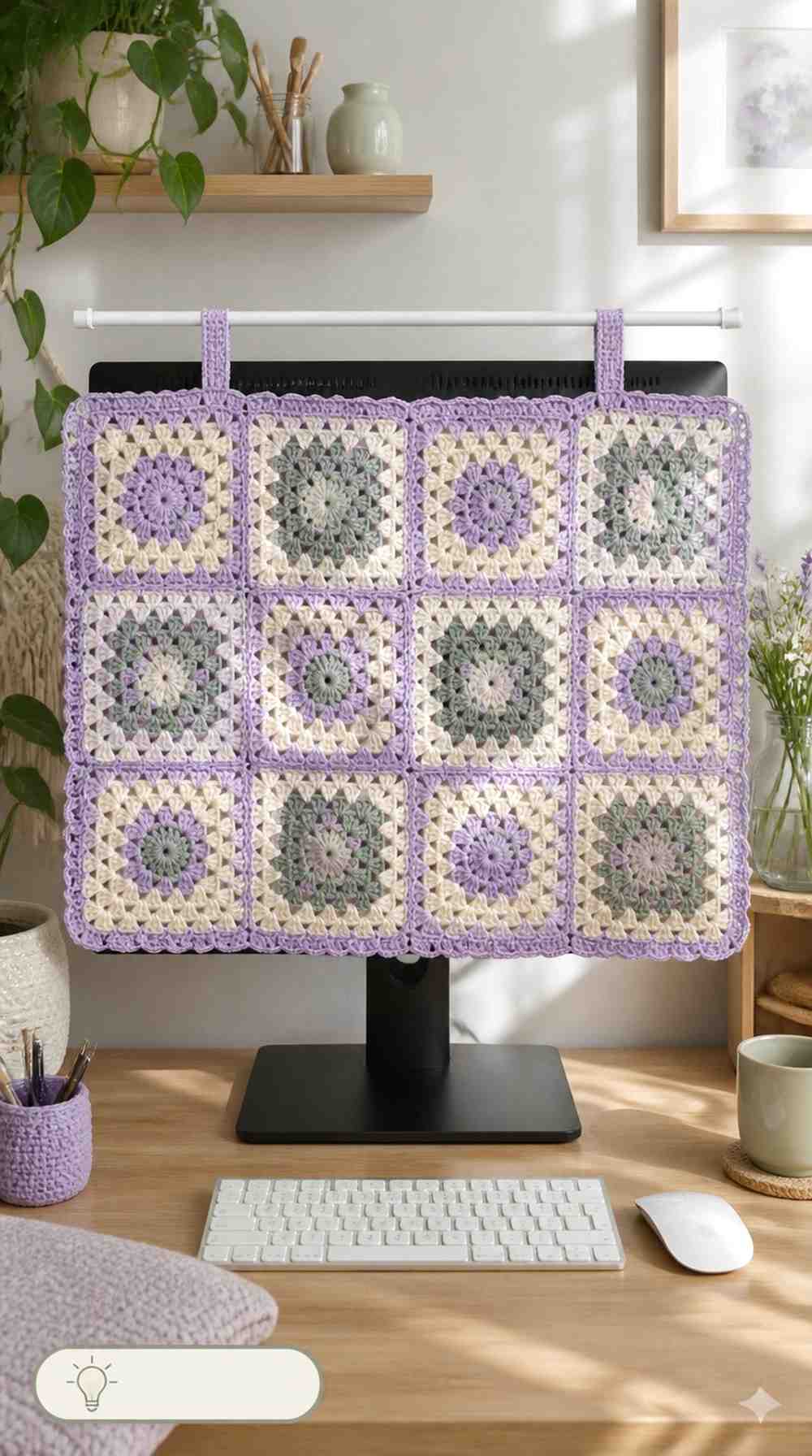
Twelve crochet granny squares create a broad lilac-and-ivory front curtain, arranged in three rows and four columns. Muted sage centers appear among the lavender and cream motifs, while two small hanging loops connect the panel to a separate white desktop rail above the monitor. The display is hidden behind the curtain, but the monitor’s top and rear remain uncovered.
This design brings a traditional crochet technique into a modern workspace. The separate rail makes its arrangement visually different from a slipcover. The open spaces in granny-square stitches are decorative, though they limit how effectively the textile could reduce dust.
- Twelve-Square Grid: Three rows and four columns establish a rectangular shape, but finished dimensions depend on the actual squares and their joins.
- Separate Hanging Rail: An independent rail can avoid placing fabric weight directly on the monitor if installed with suitable clearance and stability.
- Open Granny Motifs: Large stitch gaps allow air and dust to pass through, so this is primarily a decorative screen curtain rather than a dustproof barrier.
- Flat Joining: Keep square connections even to prevent the curtain from leaning or developing an irregular lower hem.
8. Crochet Oatmeal Shell-Border Monitor Cover
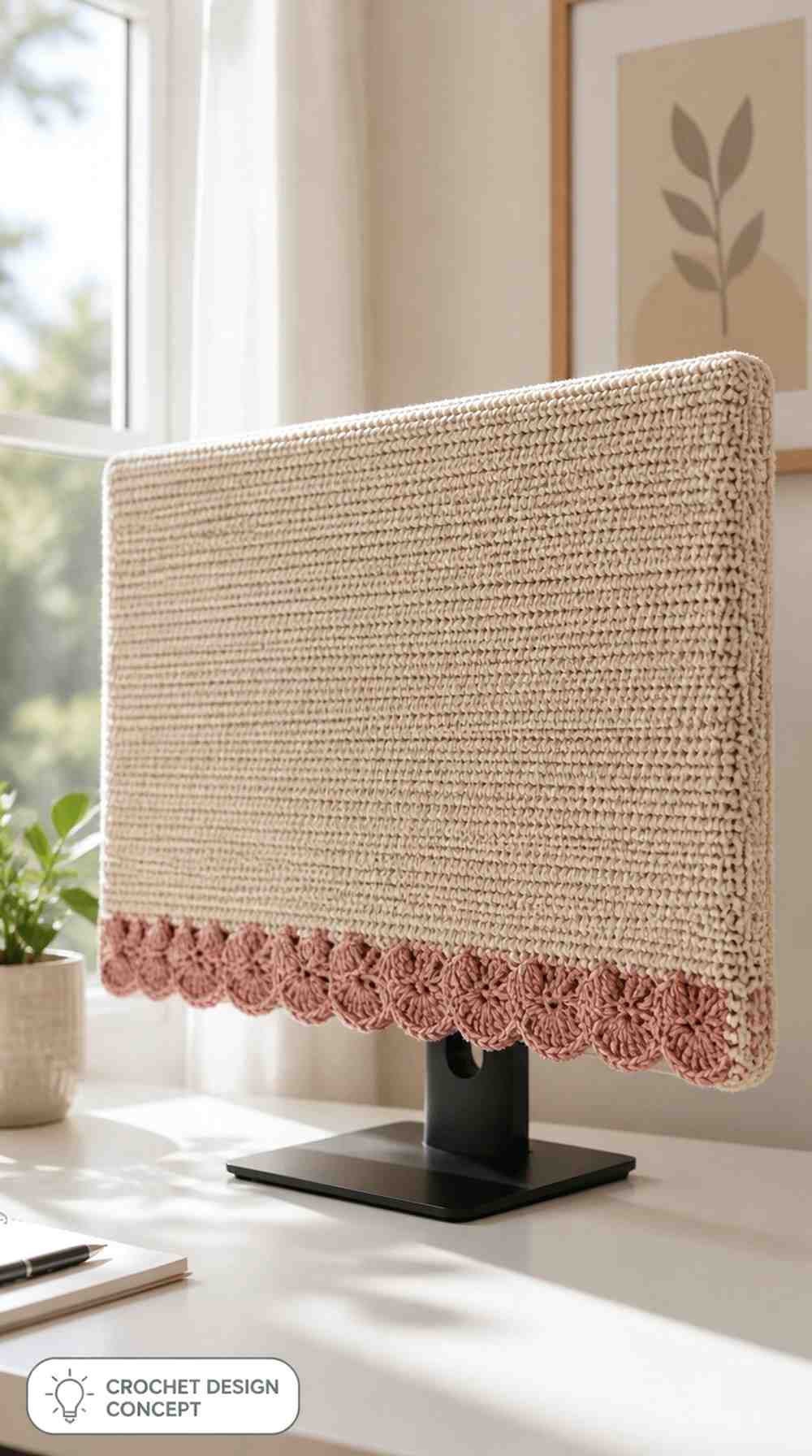
Warm oatmeal crochet forms a broad front cover with smooth horizontal rows and a dusty-rose shell-stitch border along the bottom. Small fan-shaped crochet clusters repeat across the hem, while narrow oatmeal side panels follow the monitor’s outer edges. The black pedestal remains visible beneath the textile.
The decorative lower border gives this design a gentle vintage appearance. Because most of the cover is plain, the repeated shells become the focal point. Their size and spacing would need to be planned around the overall panel width.
- Shell-Stitch Repeats: Distribute the five-part fan shapes evenly so the row finishes neatly at both lower corners.
- Plain Upper Panel: The closely worked oatmeal fabric balances the raised decorative border without adding another competing texture.
- Dusty-Rose Color: The warm pink edge creates contrast that works with light desks and wooden furniture.
- Hem Weight: A raised shell border may pull on the bottom of the panel, so check its drape before choosing an attachment method.
9. Crochet Olive Three-Panel Monitor Wrap
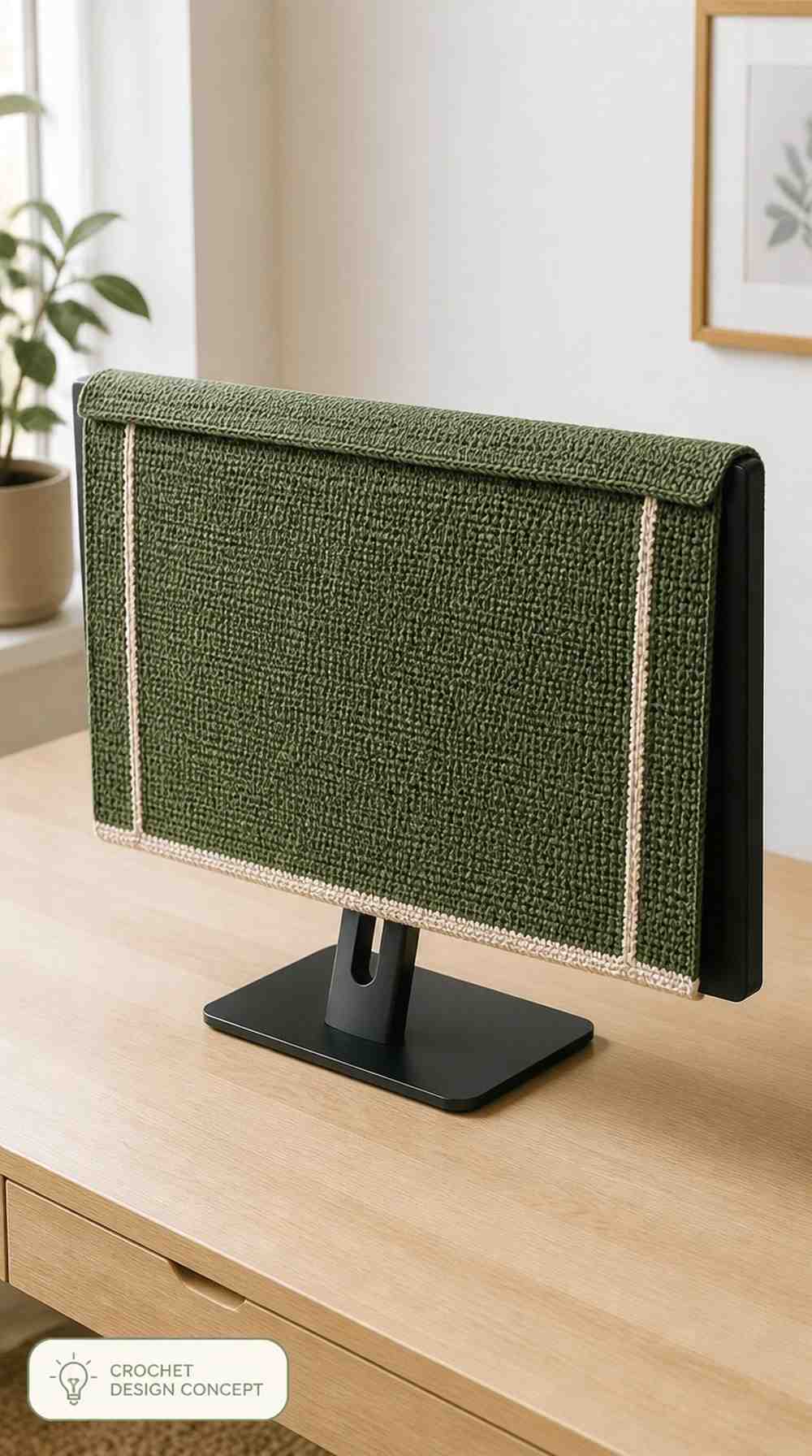
Muted olive crochet forms a front cover with three distinct pieces: one broad rectangular central panel and two narrow side panels. Straight cream crochet seams separate the sections, while a thin sage upper fold and oatmeal lower border finish the arrangement. The monitor’s rear housing remains open.
This design emphasizes tailored construction rather than surface decoration. The visible panel joins create clean vertical lines, giving it a more structured appearance than a loose hanging drape. Its shape would need to follow the monitor’s outside dimensions without becoming tight around the casing.
- Three-Panel Construction: Separate side pieces allow a more shaped appearance but create additional seams that must remain smooth.
- Cream Joining Lines: The vertical seams provide contrast while helping distinguish the broad front from the narrower returns.
- Monitor Depth: Check the actual housing thickness before planning side panels; displays with similar screen sizes can have different casing depths.
- Rear Access: Leaving the back open is useful for recognizing the monitor’s shape, but the front fold still requires manufacturer compatibility checks.
10. Crochet Coral Daisy Corner Monitor Drape
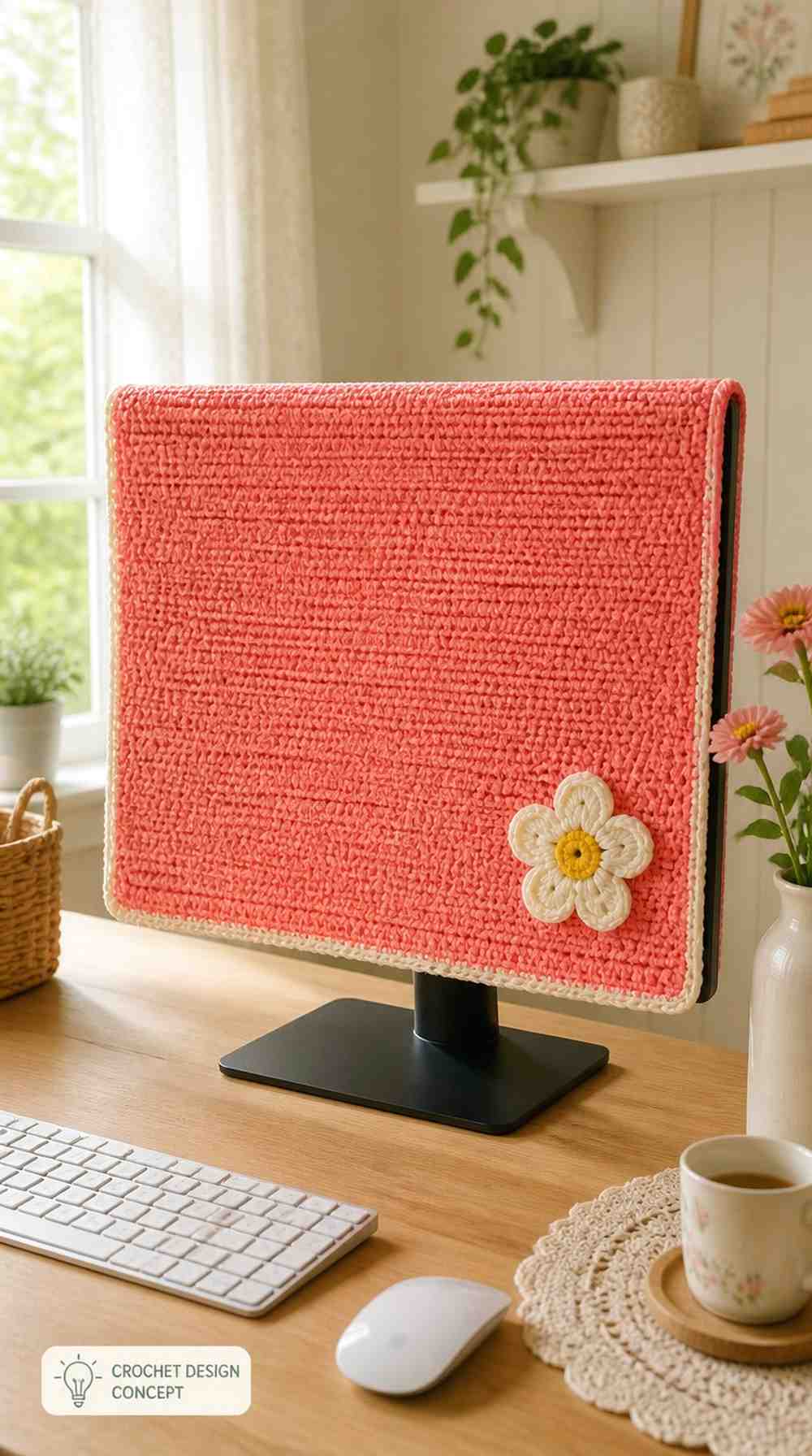
Coral-pink crochet creates a simple rectangular cover with a closely worked front surface and slim cream edging. One flat ivory daisy appears near the lower right corner, finished with five rounded petals and a small golden-yellow center. A narrow upper fold rests over the monitor’s outer frame, leaving the stand and rear visible.
The single floral motif gives this design a cheerful cottage-style look without making the panel overly decorative. Its off-center placement leaves most of the crochet plain, which helps the small daisy stand out against the coral background.
- Lower-Corner Daisy: Keep the flower flat and securely attached so its edges do not catch when the cover is folded or removed.
- Five-Petal Detail: A single ivory daisy with a small yellow center is enough to create the intended accent without additional flowers.
- Plain Central Fabric: The closely stitched coral panel gives the design a calmer appearance than an all-over floral pattern.
- Decorative Maintenance: Flower appliqués introduce extra joins and stitch edges where dust can collect, making regular cleaning important.
11. Crochet Rust Chevron Front Dust Cover
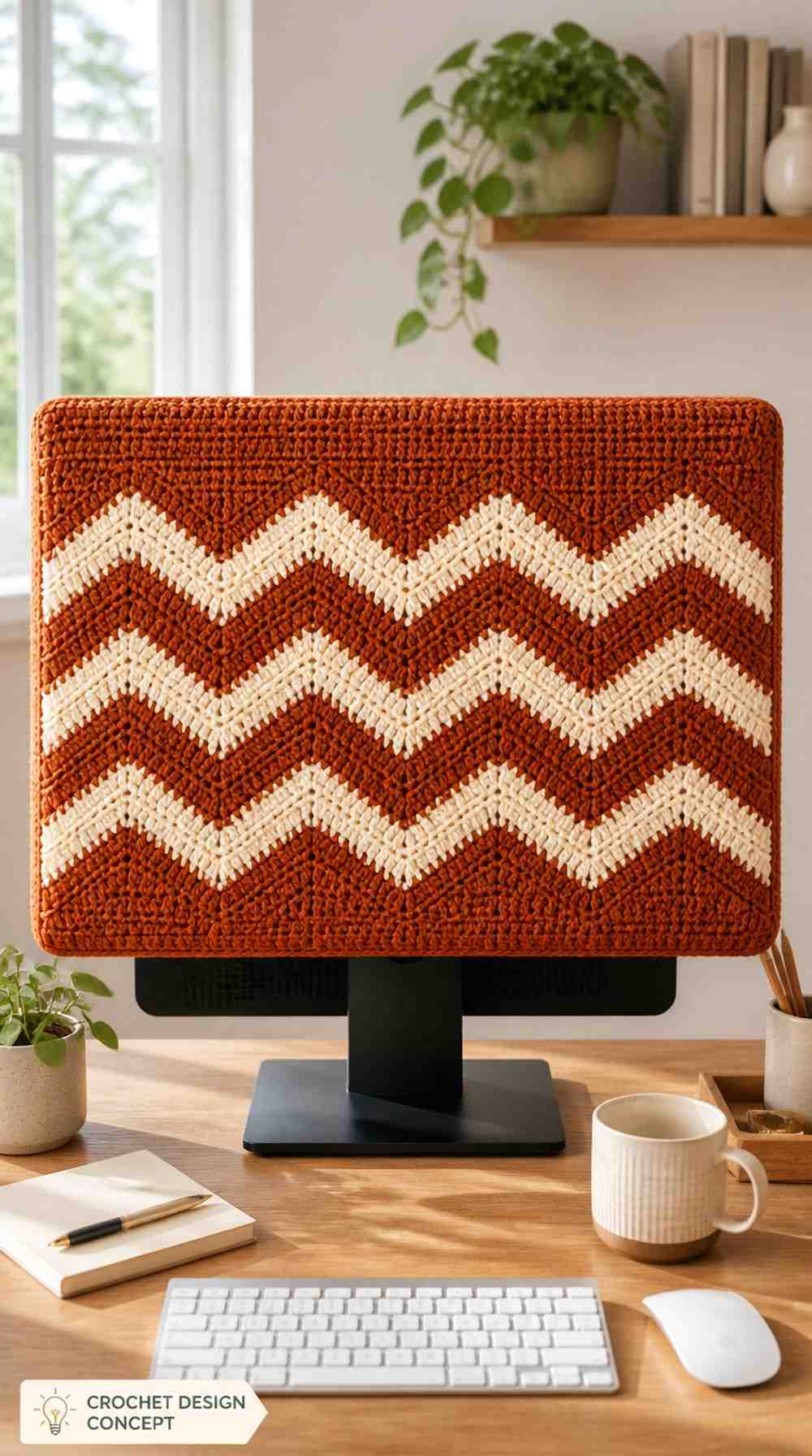
Rust-orange and cream crochet form four broad chevron stripes across this rectangular monitor cover. The V-shaped rows repeat horizontally, while a plain rust upper fold and matching side returns keep the shape defined. The cover conceals the switched-off display, leaving the black pedestal visible below.
The strong chevron pattern gives the design a retro character that works particularly well with warm wooden desks. Unlike a checkerboard, its color changes follow diagonal stitch rows. Consistent tension is important because uneven chevrons could distort the panel’s straight edges.
- Four Chevron Stripes: Keep the V-shaped points aligned so the repeated pattern remains balanced across the entire front.
- Cream Color Changes: Smooth transitions help the rust and cream sections meet without bulky seams or loose yarn ends.
- Straight Outer Edges: Chevron shaping can affect the side boundaries, so plan how the pattern finishes within a rectangular cover.
- Retro Desk Styling: The warm rust palette pairs naturally with wood tones, while the bold stripes provide enough detail without added embellishments.
12. Crochet Forest Windowpane Monitor Panel
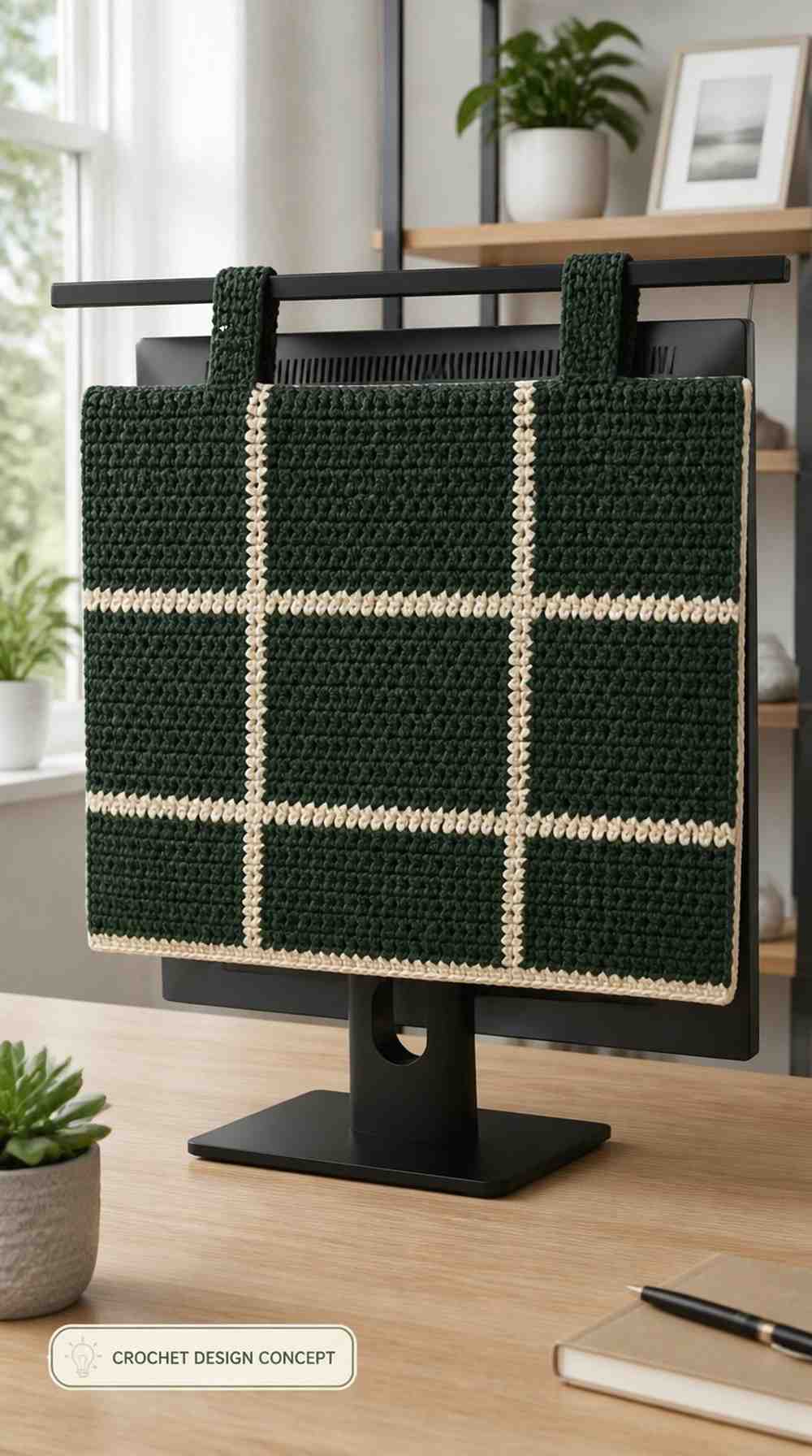
Deep forest-green crochet forms a dense rectangular curtain decorated with thin oatmeal lines arranged in a large windowpane grid. Three vertical divisions and two horizontal divisions create evenly spaced rectangles across the front. Two short crochet loops suspend the panel from an independent black desk rail above the powered-off monitor.
The regular grid gives the cover a clean, architectural appearance. Its separate hanging system also makes the concept different from fitted wraps. The display sits behind the curtain, while the monitor’s casing and stand remain uncovered.
- Windowpane Alignment: Keep the oatmeal lines straight and evenly spaced so the large rectangles retain their intended proportions.
- Dense Forest Fabric: Close crochet stitching can offer more visual coverage than open mesh, although it is not an airtight dust barrier.
- Independent Mounting: The separate rail should be stable and positioned so the curtain does not press against the display or obstruct ventilation.
- Lower Hem Balance: A straight oatmeal border helps finish the grid without making the bottom edge visually busy.
13. Crochet Mint Open-Grid Monitor Curtain
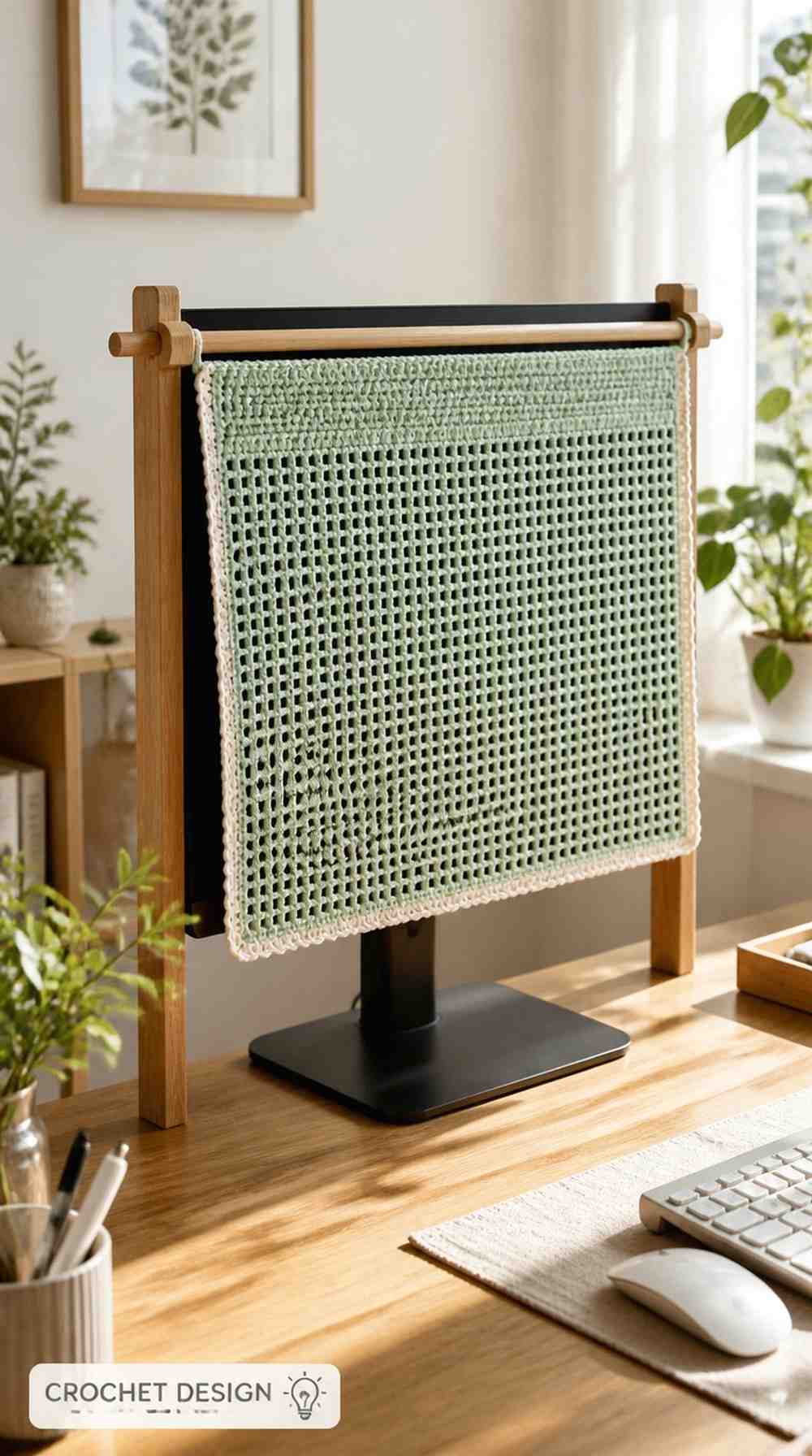
Mint-green crochet creates a lightweight-looking front curtain with small square mesh openings. A broad solid mint band finishes the top, while narrow ivory borders outline the sides and lower edge. The panel hangs from a separate wooden rail supported by an independent desktop stand behind the powered-off monitor.
The open-grid construction gives this design a relaxed handmade look. It allows the dark monitor to remain partly visible through the stitches, rather than completely concealing it. That same openness makes the panel less suitable when actual dust reduction is the main goal.
- Small Square Mesh: Keep the openings consistent so the curtain hangs evenly rather than stretching into irregular shapes.
- Solid Upper Band: The closely stitched top section provides a place for hanging attachments without relying solely on open mesh.
- Separate Wooden Rail: A desk-supported rail requires adequate stability and clearance from the monitor’s top and rear.
- Dust Protection Limitation: Open crochet holes permit dust to pass through, making this more appropriate as a decorative curtain than a protective cover.
14. Crochet Denim Stand-Cutout Monitor Slipcover
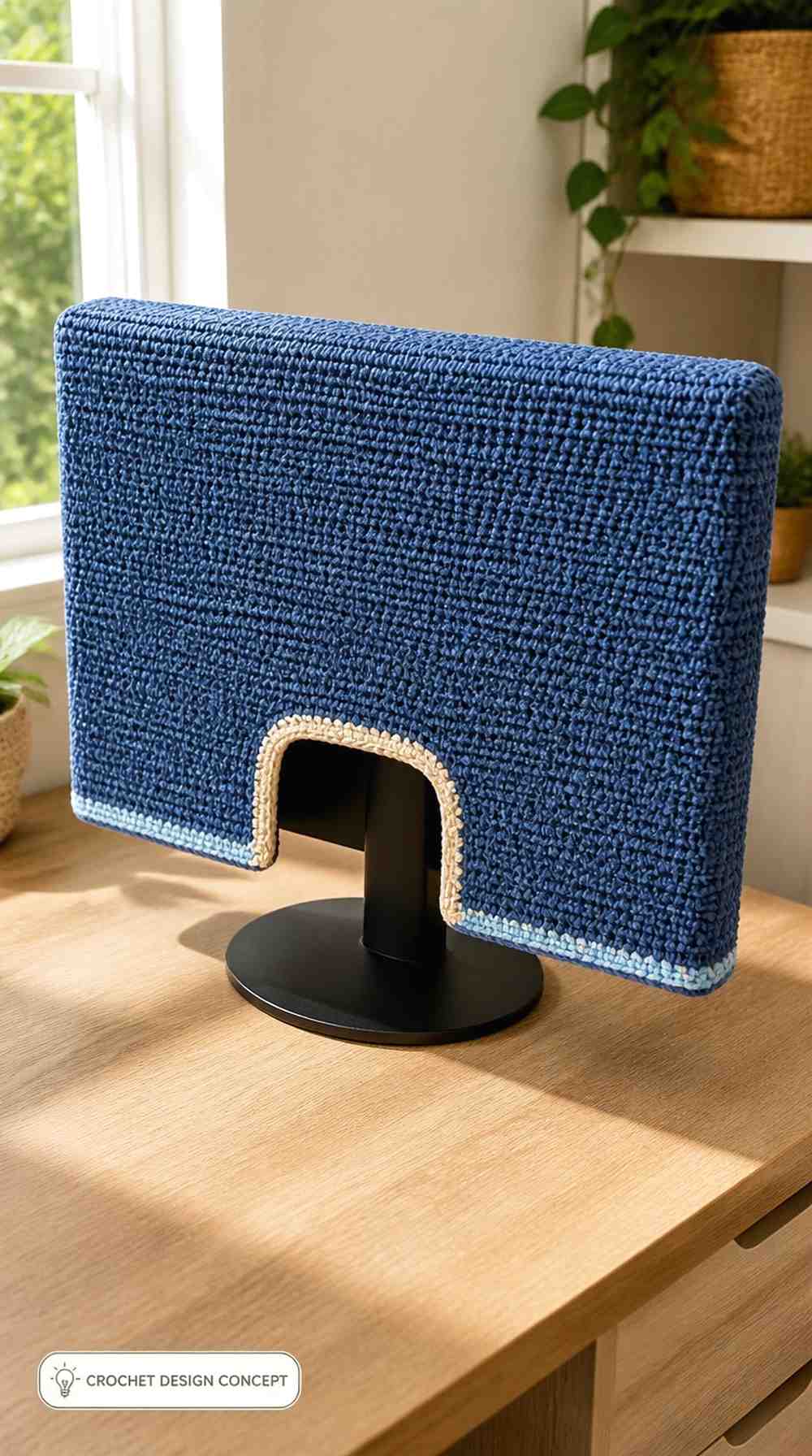
Denim-blue crochet creates a rectangular front slipcover with a carefully shaped U-shaped opening at the lower center. Ivory edging follows the cutout, leaving the monitor’s narrow support neck unobstructed. Thin sky-blue lines finish the lower side hems, while the main front panel uses tightly worked stitches.
The stand opening distinguishes this design from covers with uninterrupted lower edges. Its shape accommodates the visible pedestal neck without letting excess fabric gather around it. The actual cutout must match the monitor’s stand position and leave any movement or adjustment features accessible.
- U-Shaped Stand Opening: Measure the width and position of the support neck before planning the cutout; not all monitor stands connect centrally.
- Ivory Cutout Edge: A narrow border defines the opening while helping the surrounding stitches maintain their shape.
- Stand Clearance: Leave space around any height-adjustment or tilting mechanism so the cover cannot become trapped.
- Fitted Appearance: The shaped lower edge produces a tailored look, but a snug cover should never put pressure on the display or block ventilation.
15. Crochet Plum Shell-Stripe Monitor Dust Cover
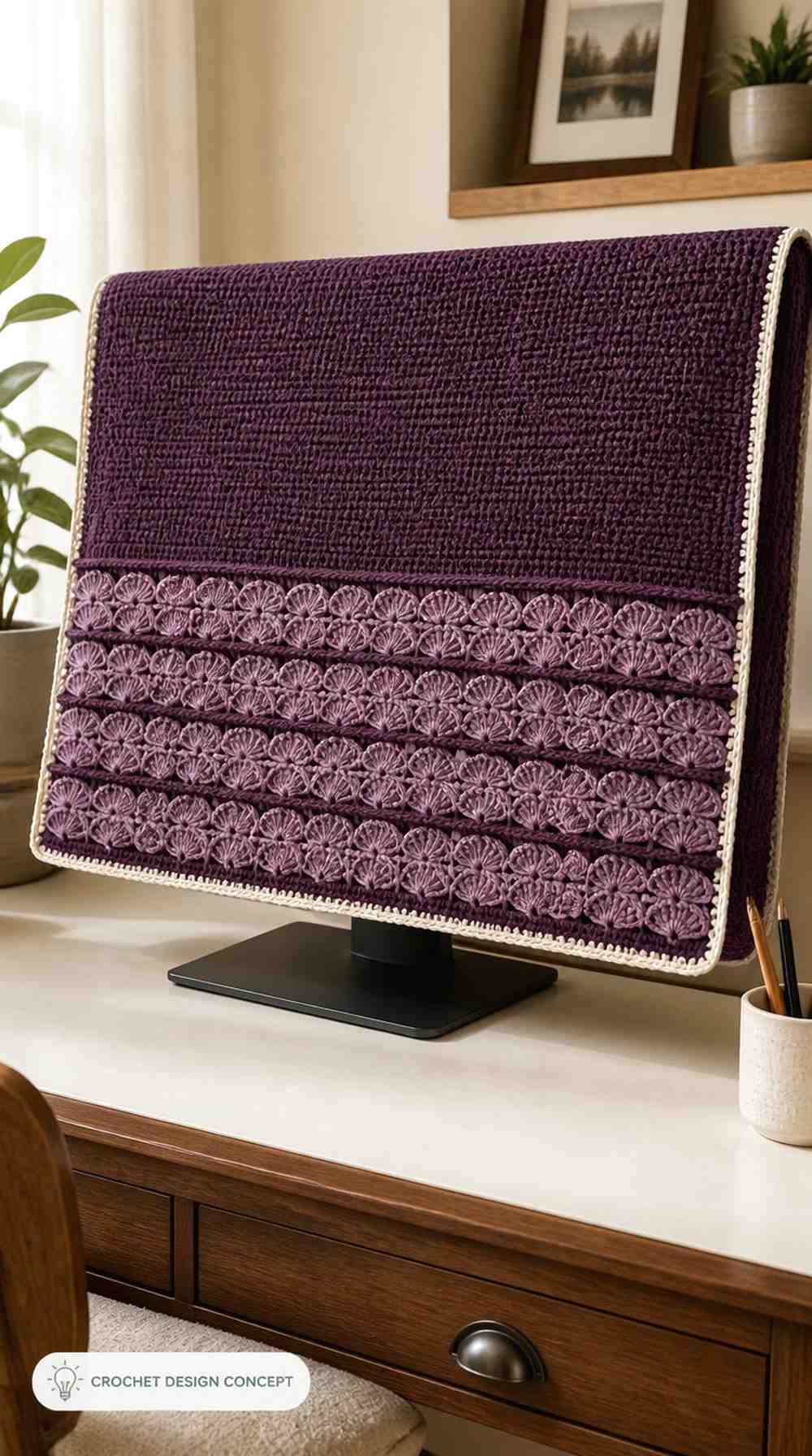
Plum-purple crochet forms a wide front dust cover with a smooth upper section and four horizontal rows of raised mauve shell stitches across the lower half. Fine ivory edging frames the rectangular panel and narrow side returns, while a simple plum fold finishes the upper edge.
The contrast between the plain top and textured bottom makes this design different from an all-over shell pattern. The mauve fans give the darker fabric visible dimension without adding separate appliqués. Their raised structure would need careful planning to maintain an even drape.
- Four Shell Rows: Keep the repeated fan motifs evenly spaced so the lower half remains visually balanced.
- Smooth Upper Section: Plain plum stitching provides a quieter area above the raised shells and keeps the composition from feeling crowded.
- Ivory Outer Border: A fine light edge separates the plum fabric from the dark monitor and helps define the cover’s rectangular shape.
- Textured Fabric Care: Raised shell rows can collect more dust and lint than a smooth panel, so laundering requirements deserve attention.
16. Crochet Sand Extra-Wide Monitor Dust Panel
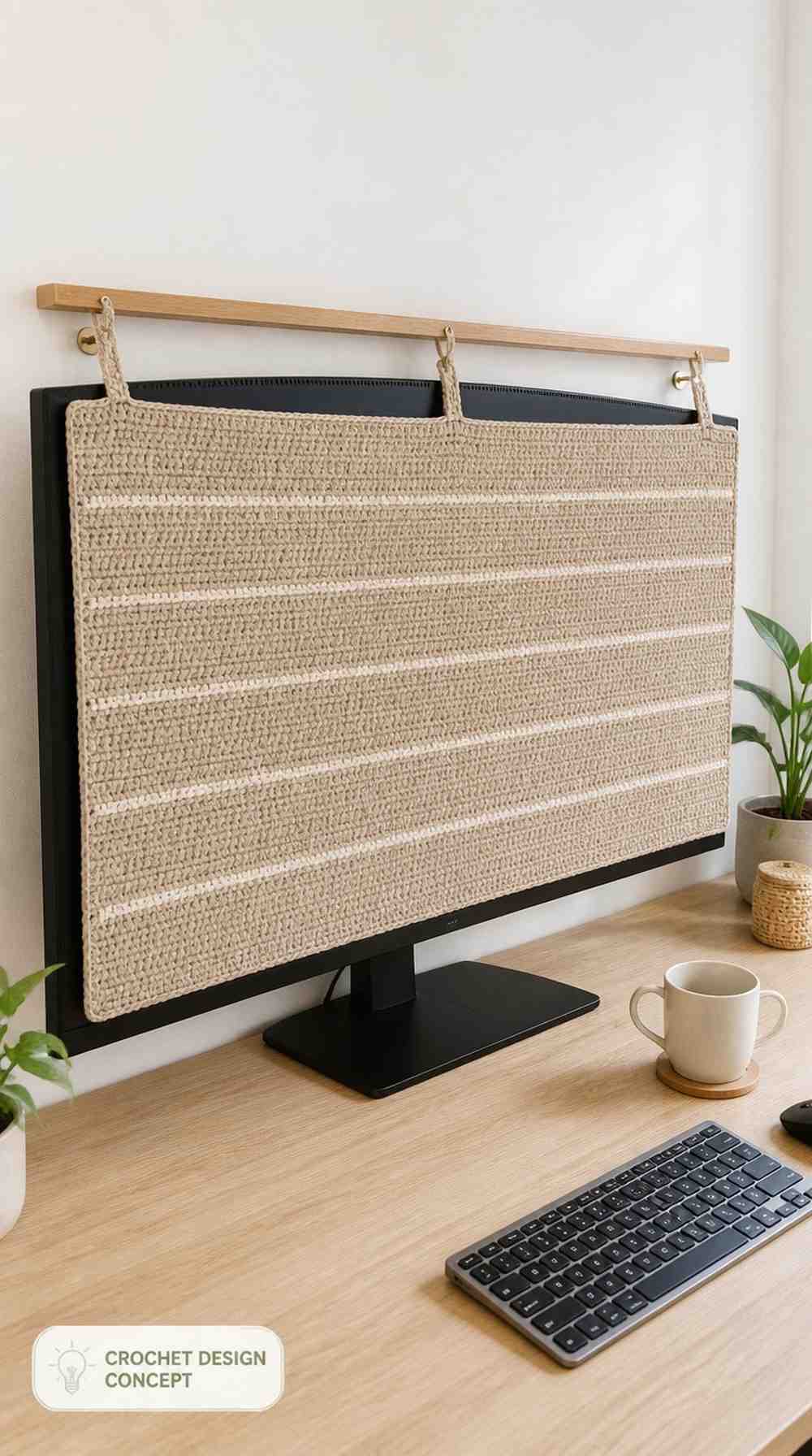
Sand-beige crochet forms a broad rectangular curtain sized visually for an ultrawide curved computer monitor. Seven narrow oatmeal stripes run horizontally across the closely worked fabric. Three small sand hanging loops connect the panel to a separate wall-mounted rail above the display.
The unusually wide silhouette is the main feature of this design. Unlike a standard fitted cover, the curtain hangs independently and leaves the curved monitor’s top, sides, rear and pedestal uncovered. Its dimensions would need careful planning to provide coverage without sagging across the long span.
- Ultrawide Proportions: Measure the actual display width and visible height rather than choosing dimensions based only on the advertised diagonal screen size.
- Three Hanging Loops: A third central suspension point may help distribute fabric weight across the long panel, provided the rail is properly supported.
- Seven Oatmeal Stripes: Narrow horizontal lines create visual rhythm without making the extended curtain appear heavily patterned.
- Independent Rail Placement: Position the rail using suitable wall hardware and keep the curtain clear of the monitor’s ventilation, screen surface and cables.
17. Crochet Burgundy Diagonal Colorblock Monitor Cover
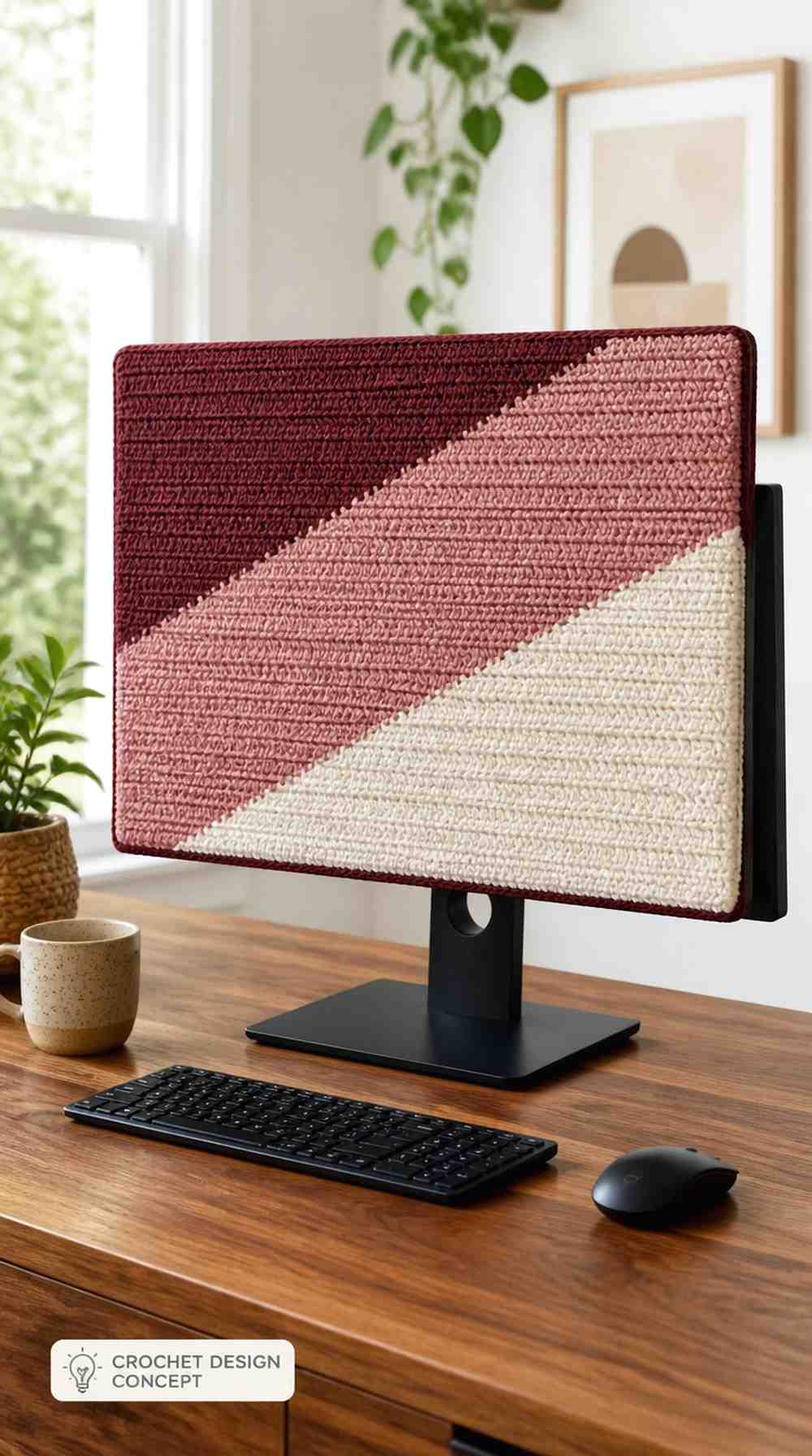
Burgundy, dusty rose and warm ivory crochet form three broad diagonal sections across a rectangular monitor cover. Fine burgundy edging outlines the front, while a narrow top fold and short side returns maintain the cover’s shape. The fabric lies smoothly over the powered-off display, with the black pedestal visible underneath.
The diagonal joins give this design a more modern appearance than vertical stripes or square patchwork. Its three-color arrangement creates interest without raised stitch details. Careful joining is important to keep the transitions flat across the broad front panel.
- Diagonal Color Placement: Arrange the burgundy, rose and ivory sections so the joins travel cleanly across the front without awkward corners.
- Flat Crochet Seams: Keep transitions smooth, especially where separate color sections meet along the diagonal.
- Burgundy Outer Edge: A single dark border visually ties the three shades together and keeps the cover’s rectangular silhouette defined.
- Material Weight: Different yarn types can change drape and stretching, so use compatible materials if adapting the colorblock design.
18. Crochet Mustard Button-Tab Monitor Cover
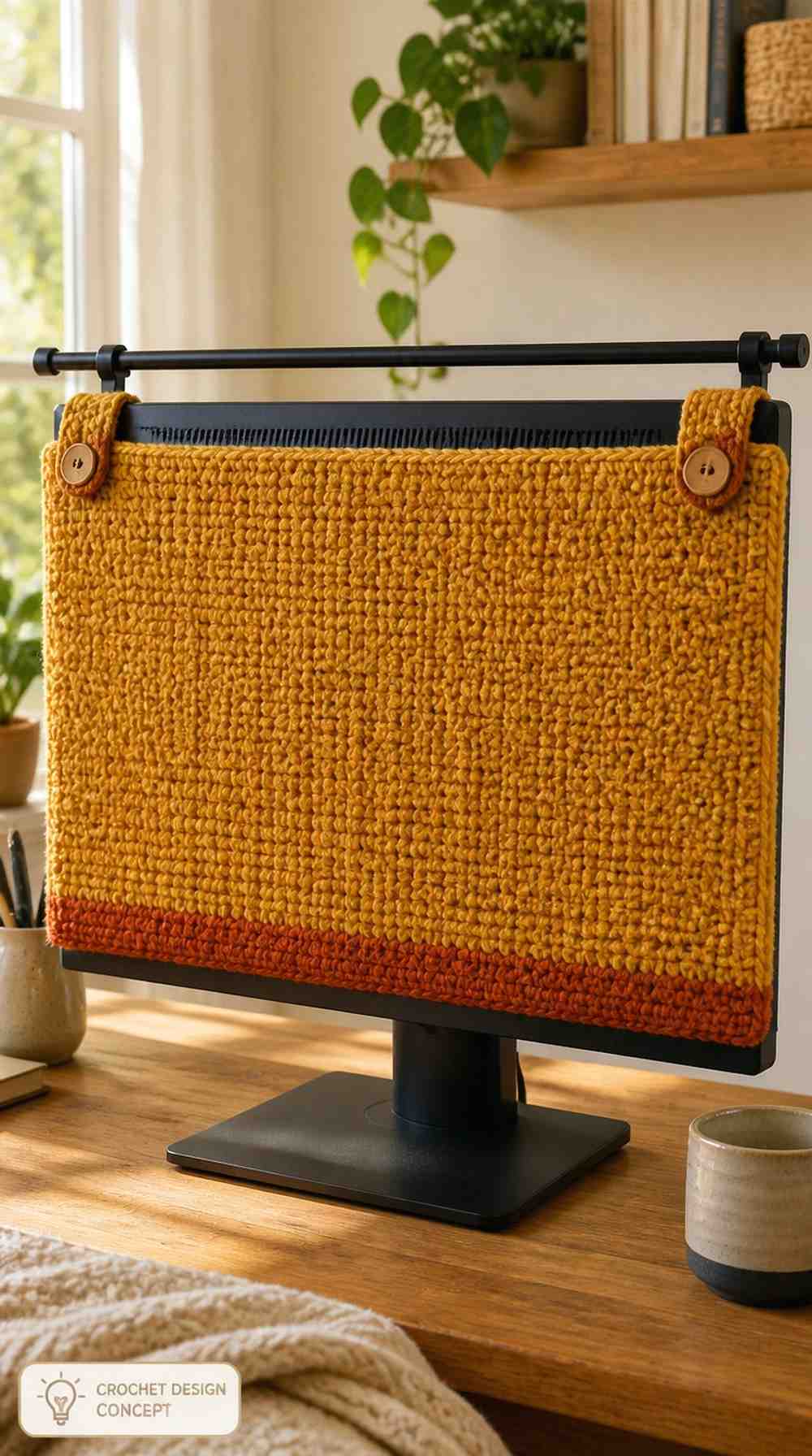
Mustard-gold crochet forms a rectangular front panel with small, even moss-stitch texture. A narrow rust-orange border follows the lower hem, while two short folded tabs appear at the upper corners. Each tab has a tiny wooden button and attaches the curtain to a separate slim crossbar above the powered-off monitor.
The two buttoned tabs create a vintage-inspired hanging arrangement. Unlike designs resting on the outer monitor frame, this concept uses a separate desk-mounted support. Its fastening details remain above the display, but the rail and buttons still need safe positioning.
- Two Upper Button Tabs: Position the tabs evenly so the curtain hangs straight rather than pulling toward one corner.
- Wooden Button Closures: Check each button and loop for secure attachment; avoid placing hard components where they could touch the screen.
- Moss-Stitch Surface: The compact textured rows create a restrained background that lets the mustard color remain prominent.
- Separate Crossbar: A properly supported independent rail can help avoid pressure on the monitor housing, provided the installation has adequate clearance.
19. Crochet Rosewood Pleated Monitor Dust Drape
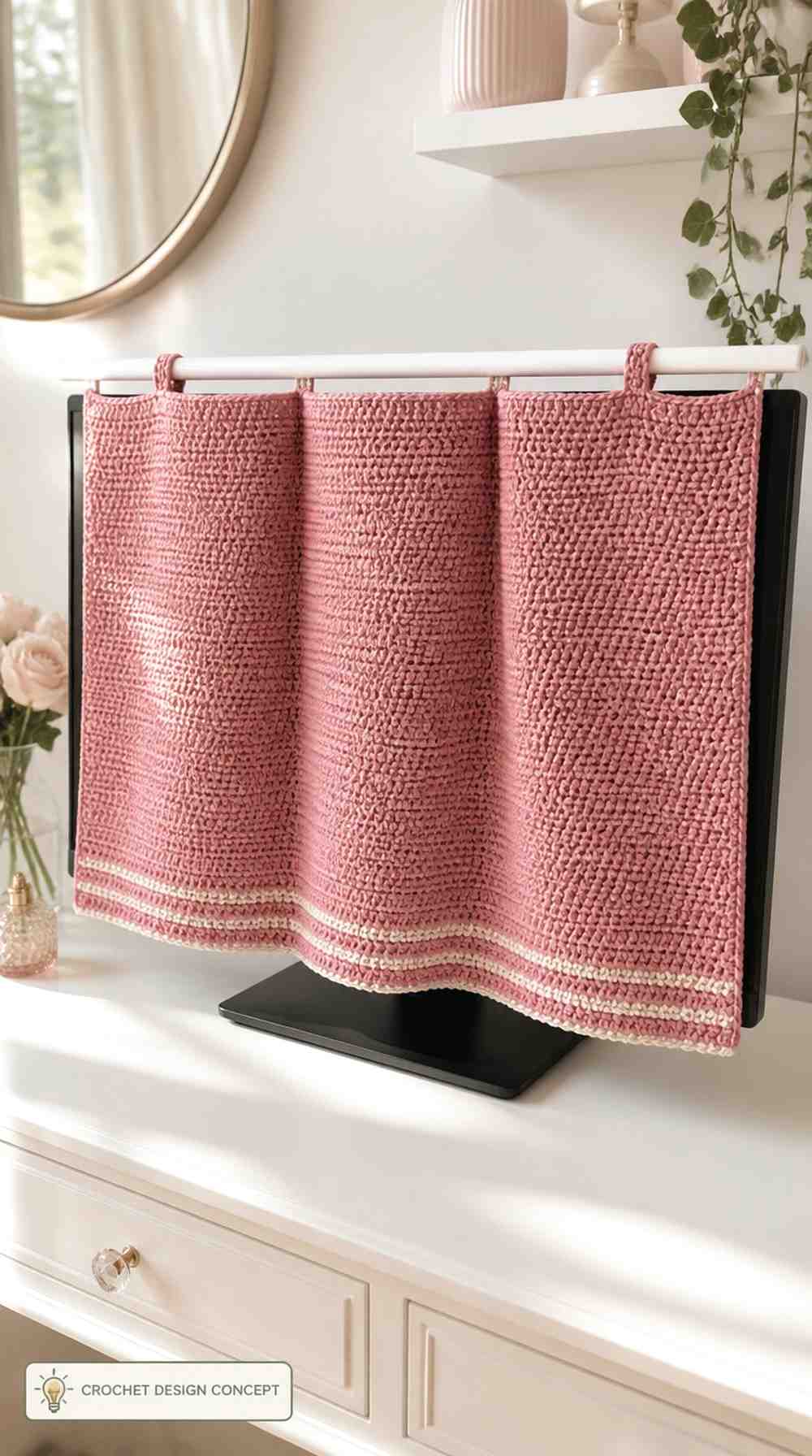
Rosewood-pink crochet forms a soft front curtain with three gently defined vertical pleats. Two parallel ivory lines finish the lower hem, and short rosewood loops suspend the panel from a separate white desktop rail. The powered-off monitor’s screen sits behind the curtain, while its casing, ports and stand remain uncovered.
The pleated silhouette makes this concept feel more like a miniature textile curtain than a fitted electronics cover. Its gentle folds add depth without complicated motifs or raised appliqués. A real version would need enough width for the folds while remaining clear of the display surface.
- Three Vertical Pleats: Keep the folds shallow and evenly spaced so the panel does not bunch heavily at the bottom.
- Rosewood Fabric Drape: A flexible yarn may create softer folds than a very firm cord, though actual behavior depends on the stitches and material.
- Double Ivory Hem: Two narrow parallel lines emphasize the lower edge without tassels or dangling yarn.
- Independent Hanging: The separate rail needs secure support and enough forward clearance to prevent the curtain from rubbing against the screen.
Practical Guide to Crochet Computer Monitor Dust Covers
A computer monitor dust cover needs careful planning because a decorative textile can interfere with an electronic device if it is used incorrectly.
Check the manufacturer’s instructions first. Monitor designs differ, and some manufacturers explicitly warn against covering the ventilation openings. Philips, for example, advises keeping the ventilation holes unobstructed and avoiding anything that prevents the monitor from cooling properly.
Philips Documents
Never cover a monitor while it is operating. These designs are intended as inspiration for inactive displays. Even when a monitor is switched off and cool, a textile cover may be unsuitable if its manufacturer prohibits covering vents or the housing. Follow the specific monitor’s instructions rather than assuming that switching it off makes every cover safe.
Measure the actual monitor. Check its visible width, height, casing thickness, stand position and any ventilation locations. Standard and ultrawide monitors have very different proportions. A separate hanging curtain needs additional space for the rail or support.
Consider yarn and stitch density. Smooth, low-lint yarn and closely worked stitches may be more appropriate for a decorative dust panel than bulky, fuzzy or heavily open fabric. Crochet is not dustproof, and loose fibers can introduce their own cleaning problems.
Protect the display surface. Avoid rough stitches, exposed buttons, metal attachments or excessive pressure against the screen. Remove a cover carefully without dragging it across the panel. When cleaning the monitor, follow the manufacturer’s approved methods rather than using the crochet cover to wipe the screen.
Keep the cover clean and dry. Dust can collect in textured crochet. Follow the yarn care label, dry the textile completely and keep it away from liquids, hot equipment and electrical connections.
For related textile-cover inspiration, explore 17 Crochet Retro Record Player Dust Cover Inspiration Ideas on Yarn Nest Studio. It offers other ways to combine crochet panels, colorwork and decorative borders around household equipment, though the safety needs of each device differ.
Want to Make Something Similar?
These verified resources offer guidance on crochet monitor covers, rectangular panels and decorative edging. They are not exact patterns for the AI-generated concepts in this collection, and they do not establish compatibility with any particular monitor.
- Crochet Monitor/TV Cover — Arti Singh — A crochet monitor-cover video that provides related project inspiration. Check the construction and your monitor’s safety requirements independently. YouTube
- Crochet Moss Stitch in a Rectangle — Repeat Crafter Me — Explains rectangular moss-stitch crochet, useful for the Mustard Button-Tab Monitor Cover and other simple flat panels. Repeat Crafter Me
- Scalloped Edging or Shell Stitch Border — Moogly — Shows decorative scalloped crochet edging, relevant to the Ivory Scalloped Slipcover and Oatmeal Shell-Border Cover. moogly
These resources teach crochet techniques. Whether a finished textile can safely be placed near a computer monitor depends on its design and the equipment manufacturer’s guidance.
Which Crochet Computer Monitor Dust Cover Should You Choose?
| What you're looking for | Suggested designs | Main trade-off |
|---|---|---|
| Simple textured panel | Sage Ribbed, Charcoal Linen-Stitch | Fit and potential screen contact |
| Cottage-inspired styling | Ivory Scalloped, Coral Daisy Corner | Decorative edges need extra cleaning |
| Strong geometric pattern | Navy Colorblock, Rust Chevron | Flat joins and accurate panel shaping |
| Traditional crochet motifs | Lilac Granny-Square, Dusty Blue Pixel Checker | More joins and potential stitch openings |
| Separate hanging arrangement | Forest Windowpane, Rosewood Pleated | Requires a secure independent rail |
| Modern fitted look | Olive Three-Panel, Denim Stand-Cutout | Must account for casing, vents and stand |
| Textured decorative hem | Oatmeal Shell-Border, Plum Shell-Stripe | Added weight and raised stitches |
| Ultrawide monitor styling | Sand Extra-Wide Monitor Panel | Long-span support and dimensions |
| Adjustable decorative hanging | Mustard Button-Tab | Secure attachments and clearance |
For a restrained appearance, the Crochet Sage Ribbed Monitor Front Cover and Crochet Charcoal Linen-Stitch Monitor Drape offer straightforward textures without elaborate motifs.
If you enjoy colorful traditional crochet, the Crochet Lilac Granny-Square Monitor Curtain creates a distinctive patchwork look.
For a more practical direction to explore, the independently mounted Crochet Forest Windowpane Monitor Panel or Crochet Rosewood Pleated Monitor Dust Drape may allow decorative fabric to hang without resting on the monitor. Proper clearance, rail stability and manufacturer approval remain essential.
Conclusion
These 19 crochet computer monitor dust cover inspiration ideas explore how yarn colors, stitch textures, shaped edges and decorative panels can bring handmade character to a workspace. From simple ribbing and shell borders to granny-square curtains and geometric colorwork, each design offers a different visual direction.
A real computer monitor needs suitable ventilation and careful handling, so decorating it should never take priority over the manufacturer’s safety requirements. Use these concepts as creative inspiration, and consider independently supported textile panels when a conventional fabric cover would be unsuitable.
Which design would look best in your workspace: the Sage Ribbed Cover, the Lilac Granny-Square Curtain or the Sand Extra-Wide Panel? Share whether you use a standard widescreen or ultrawide monitor and which crochet style appeals to you most.
Frequently Asked Questions
1. Can I safely put a crochet dust cover over my computer monitor?
Not necessarily. Computer monitors have ventilation requirements that differ by model. Some manufacturers prohibit covering ventilation openings, and a fabric cover can interfere with cooling or trap dust near the equipment. Never use a cover while the monitor is operating, and check its manual before placing any textile against the casing, even when it is switched off.
2. What yarn is suitable for a crochet monitor dust cover?
A smooth, low-lint, washable yarn may be worth exploring for a decorative panel. Avoid heavily shedding fibers and bulky textures that could rub against delicate surfaces. Yarn choice alone does not establish safety around electronics. The monitor’s ventilation requirements, the panel’s placement and its attachment method are more important than the fiber’s decorative qualities.
3. Will a crochet cover prevent dust from reaching my monitor?
Crochet fabric is not dustproof. Small stitch openings can allow dust to pass through, and the yarn itself may collect lint and particles. A closely worked panel may provide some physical coverage, but its effectiveness has not been verified here. Follow the monitor manufacturer’s cleaning recommendations rather than relying on a handmade textile as the main dust-control method.
4. How should I measure my monitor for a crochet cover?
Measure the actual display and casing rather than relying only on the diagonal screen size. Check the visible width, height, stand position, outer housing depth and ventilation locations. For a separately mounted front curtain, measure the rail clearance and ensure the textile cannot touch or press against the display. Never cover controls, vents or ports.
5. Are these 19 crochet computer monitor dust cover ideas complete patterns?
No. They are AI-generated design concepts intended to inspire different crochet shapes, colors, textures and hanging arrangements. They do not include tested stitch counts, exact dimensions, yarn quantities or verified compatibility with computer monitors. The linked resources provide related crochet techniques, not certified monitor-cover designs.