A fuzzy hobo bag can range from a relaxed teddy-texture shoulder bag to a more structured purse covered in long faux fur. The most important differences are not simply color. Base shape, yarn pile, opening width, strap construction, lining, and closure all change how the finished bag hangs and how practical it feels in use.
This collection combines literal furry and teddy hobo tutorials with fuzzy shoulder-bag tutorials and several clearly defined hobo constructions made in smoother yarn. For the latter group, the tutorial is a construction reference rather than proof that a direct fuzzy-yarn substitution will work. Comparing yarn thickness and making a fabric sample first is especially useful when moving from cotton or cord to chenille, bouclé, eyelash, or faux-fur yarn. The ideas below help you choose a silhouette as well as a surface texture.
Quick List
- Crochet Furry Oval-Base Hobo Bag
- Crochet Teddy-Texture Slouch Hobo Bag
- Crochet Long-Pile Fur Hobo Shoulder Bag
- Crochet Eyelash-Fur Zip Hobo Bag
- Crochet Fluffy Underarm Hobo Bag with Ready-Made Strap
- Crochet Chenille Chain-Strap Hobo-Style Handbag
- Crochet Teddy-Panel Hobo-Style Bag
- Crochet Soft-Pile Classic Hobo Bag
- Crochet Deep-Slouch Fuzzy Everyday Hobo Bag
- Crochet Round Fuzzy Hobo Bag with Magnetic Button
- Crochet Rectangular-Base Fuzzy Folded Hobo Bag
- Crochet Compact Faux-Fur Hobo-Style Bag
- Crochet Fur-and-Macramé Soft Hobo Bag
Fuzzy Yarn Changes More Than the Surface
Long pile and fluffy fibers can hide stitch definition, so a bag that looks sharply shaped in cotton or cord may read much softer when adapted with fuzzy yarn. Chenille usually gives a plush surface without the same long hair as faux fur, while eyelash yarn can add a halo without necessarily providing the fabric structure by itself.
For a hobo bag, check the fabric after it has been allowed to hang rather than judging only the flat crochet piece. A yarn that feels pleasantly soft in your hand may also produce more bulk around folds, handles, and the top opening. When adapting a smooth-yarn tutorial, compare your sample with the source fabric before committing to the full bag. The goal is not to reproduce the creator’s gauge from guesswork; it is to confirm that your chosen yarn can still create the intended silhouette.
Choose the Hobo Shape Before the Fur Type
A fuzzy finish attracts attention first, but the underlying geometry determines how the bag behaves. An oval or rectangular base gives the contents a defined footprint while allowing the upper body to soften. A round body creates a different distribution of space, and a deeply slouchy design puts more emphasis on drape. Folded sides can create a controlled inward curve that may disappear if the yarn pile is too heavy.
Straps also change the result. A separate chain or ready-made strap keeps a fuzzy body visually distinct from the carry point and avoids relying entirely on a plush crocheted handle. An integrated hobo handle creates a smoother continuous silhouette but deserves extra attention if the chosen fiber stretches. Decide which feature matters most—soft collapse, a firm base, a compact underarm carry, or a dramatic fuzzy surface—before choosing the yarn.
When Lining and Strap Support Are Worth Considering
A lining is not automatically necessary, but it can solve specific problems. Long fibers may make the interior visually dark or fuzzy, while looser crochet fabric can allow small objects to catch against the stitches. A lining can also provide a cleaner place for certain closures, provided it is installed without pulling the crochet body out of shape.
The strap deserves separate consideration because the bag hangs from it under use. A long, unsupported crocheted strap made from a stretchy yarn can change length as the bag is carried. Ready-made straps, chain straps, or carefully reinforced crochet handles offer different ways to manage that issue. None should be assumed to support a particular load unless the tutorial specifically establishes it. Also check the yarn manufacturer’s care information before washing a fuzzy finished bag, especially when several fibers, lining fabric, or metal hardware are combined.
1. Crochet Furry Oval Base Hobo Bag
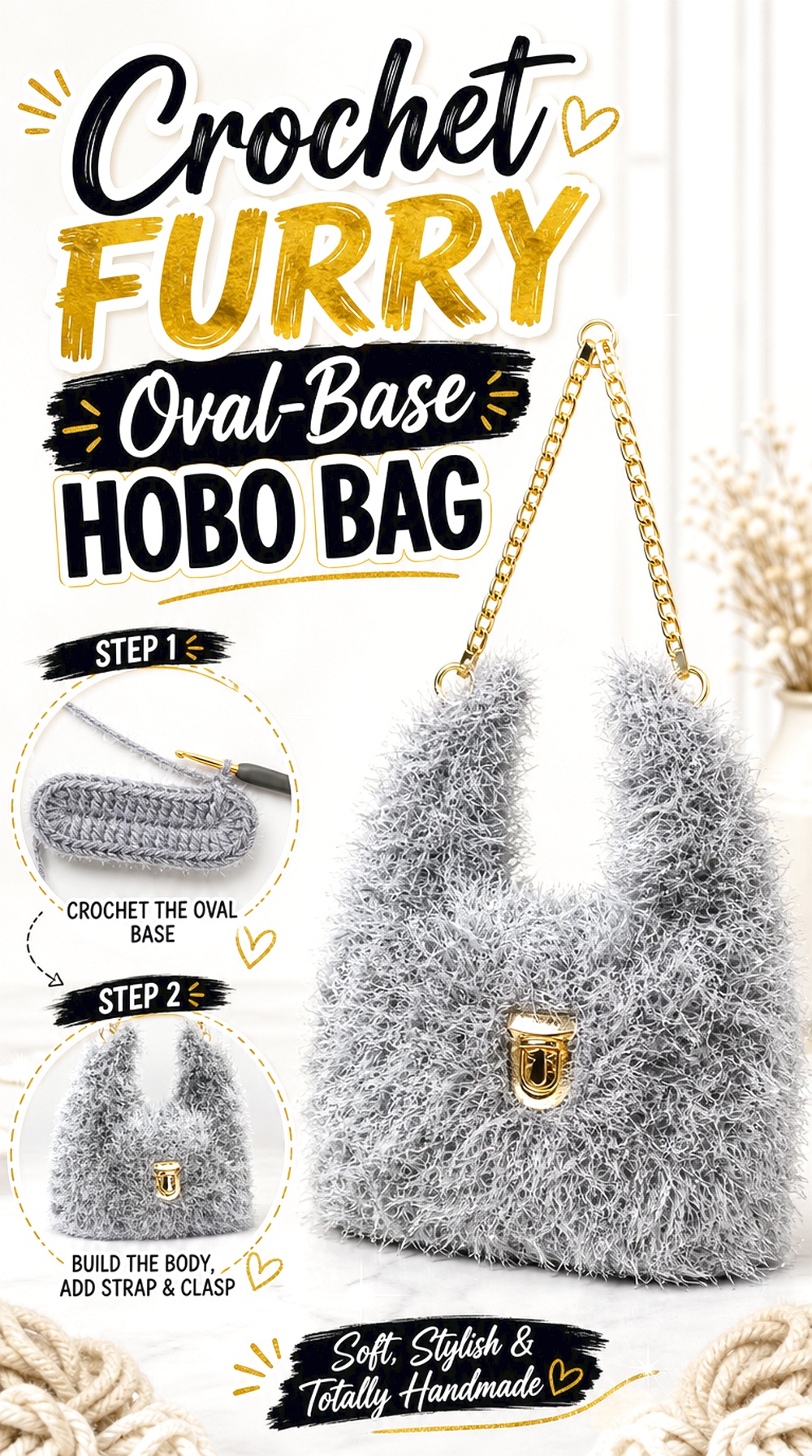
This is one of the closest literal matches to a fuzzy hobo bag in the collection. Katy Handmade’s Sabrina tutorial uses a furry yarn for a softly rounded hobo body and includes an oval foundation, a separate fuzzy handle, and closure hardware. The result sits between a relaxed crochet shoulder bag and a more polished handbag, so it works well for someone who wants visible fur without losing the recognizable bag outline.
Compared with the deeper slouch designs later in the list, this version gives the lower portion more definition. That is useful when you like the softness of faux fur but do not want the entire bag to collapse into one shapeless pouch.
The Oval Base Keeps the Slouch Controlled
An oval footprint gives a fuzzy body a clear place from which to rise. That matters because long pile can visually blur the transition between the bottom and the sides. If you substitute a different fur yarn, compare how your fabric sits around that lower curve before continuing with the whole bag. A yarn that is dramatically thicker than the source may make the body flare or hide the intended base shape.
A Matching Fur Handle Makes the Texture Continuous
Using fur through the carry area creates a very different appearance from adding a chain or leather-look strap. The bag reads as one continuous plush object rather than a crochet body with separate hardware. The trade-off is that the handle’s shape becomes more dependent on the behavior of the yarn. Check how comfortably it bends and whether the attachment area still feels clearly defined before final finishing.
Closure Hardware Needs a Clear Landing Area
Long fibers can conceal the exact edge where a closure should sit. Before attaching any hardware, smooth the pile away from the intended placement area and compare both sides of the opening. The important checkpoint is alignment rather than copying a measurement from a different yarn. A closure that looks centered on the crochet fabric can appear off-center once the surrounding fur is fluffed back into place.
Original Tutorial and Creator Credit
Creator: Katy Handmade
2. Crochet Teddy Texture Slouch Hobo Bag
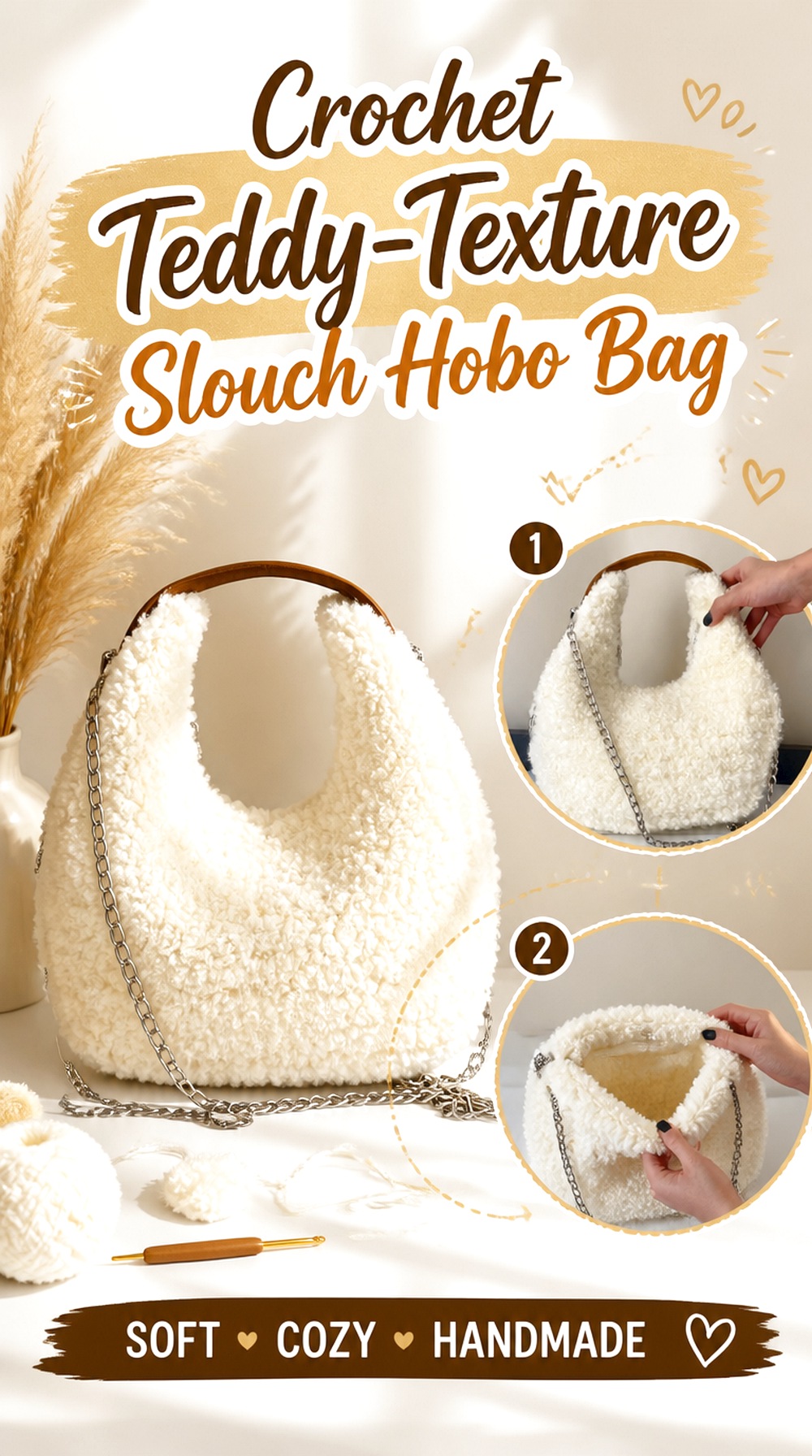
The Teddy hobo bag from Örgülere Yolculuk puts the soft surface and relaxed silhouette at the center of the design. The video is explicitly presented as a teddy hobo bag, making it a useful reference when your priority is a cloudier, denser plush look rather than the longer strands of faux fur.
This style makes sense for readers who want the bag to look soft even before it is filled. Its personality comes from the combination of a rounded hanging shape and the teddy-like surface. Because that texture can reduce visible stitch definition, overall proportion becomes more important than decorative stitch detail.
Teddy Pile Shifts Attention to the Silhouette
With a dense fuzzy surface, the eye reads the outline of the bag before individual crochet stitches. That makes uneven shaping more noticeable even though individual stitches are less visible. Periodically view the work from farther away instead of inspecting only the hook area. A balanced shoulder curve and an even lower body will usually matter more visually than perfectly exposed stitch texture.
Watch the Opening as the Body Begins to Slouch
A hobo bag generally narrows or curves toward its carrying area, and thick plush yarn adds physical bulk around that opening. Before finishing, check that the opening still functions the way you expect when the bag is allowed to hang. A top that seems generous while the piece lies flat can feel more restricted after the sides draw inward and the fuzzy fabric compresses around the shoulder area.
Symmetry Is Easier to Judge Before Final Finishing
Teddy texture can make small differences hard to spot while you are working. Lay the bag flat and compare the left and right sides before adding any permanent finishing details. Look at the outline rather than trying to expose every stitch. This is especially helpful for a hobo shape because an unintended imbalance near the upper curve can make one side hang lower once the bag is carried.
Original Tutorial and Creator Credit
Creator: Örgülere Yolculuk
3. Crochet Long Pile Fur Hobo Shoulder Bag
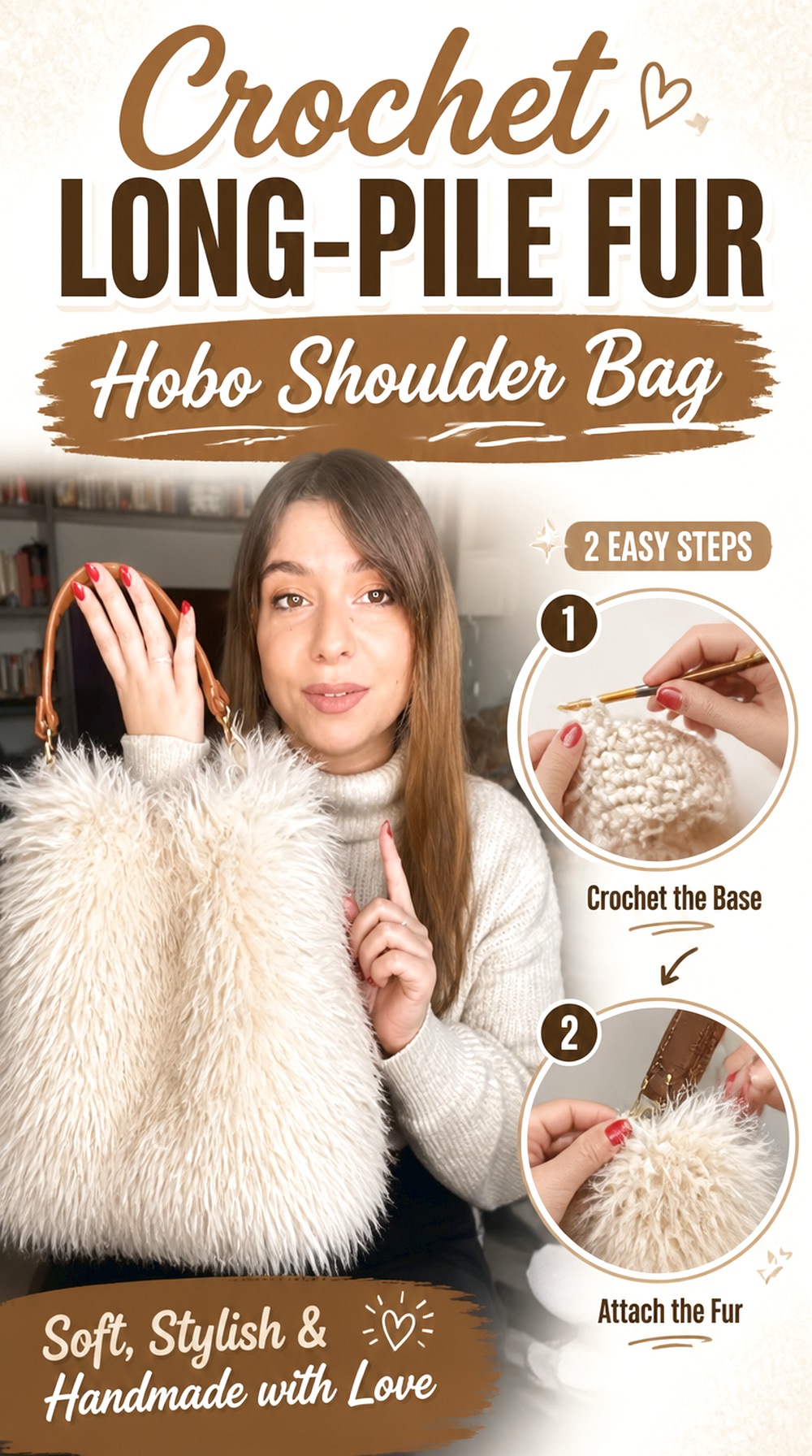
Macrè Bag’s Irina tutorial is a fur shoulder-bag source rather than a video titled specifically as a hobo. Its finished concept is still valuable here because it combines a soft long-haired body with a separate shoulder strap and a satin lining, providing a useful route toward a hobo-inspired bag when you want dramatic fur without a fuzzy crocheted strap.
This option feels more polished and accessory-like than the full teddy styles. The separate strap visually frames the furry body, while the lining addresses an interior that would otherwise have the same highly textured character as the outside.
A Separate Strap Keeps Fur Away From the Carry Point
A smooth ready-made strap changes both appearance and function. Instead of asking long-pile yarn to form the entire shoulder section, the fur can remain concentrated on the body of the bag. This creates a cleaner contrast and makes the top edge easier to identify visually. For a hobo adaptation, decide whether you want a shorter underarm position or a longer shoulder drop before choosing compatible hardware.
Long Fibers Can Hide Shape Errors as Well as Stitches
Faux fur is forgiving when individual crochet stitches are not perfectly visible, but that does not mean the underlying fabric can be irregular. A wavy upper edge or uneven body may remain apparent through the pile. Feel along the fabric and compare its actual edges rather than relying only on what the fur shows. This tactile check is particularly useful when the fibers make visual stitch counting difficult.
Lining Makes a Plush Interior Easier to Navigate
The Irina materials include a satin lining, which is a practical feature to notice when considering long fur. A smoother interior separates personal items from the textured crochet surface and can create a cleaner finished opening. If you adapt the concept, make sure the lining follows the relaxed shape rather than pulling the body taut; otherwise the hobo drape can become noticeably more rigid.
Original Tutorial and Creator Credit
Creator: Macrè Bag
4. Crochet Eyelash Fur Zip Hobo Bag
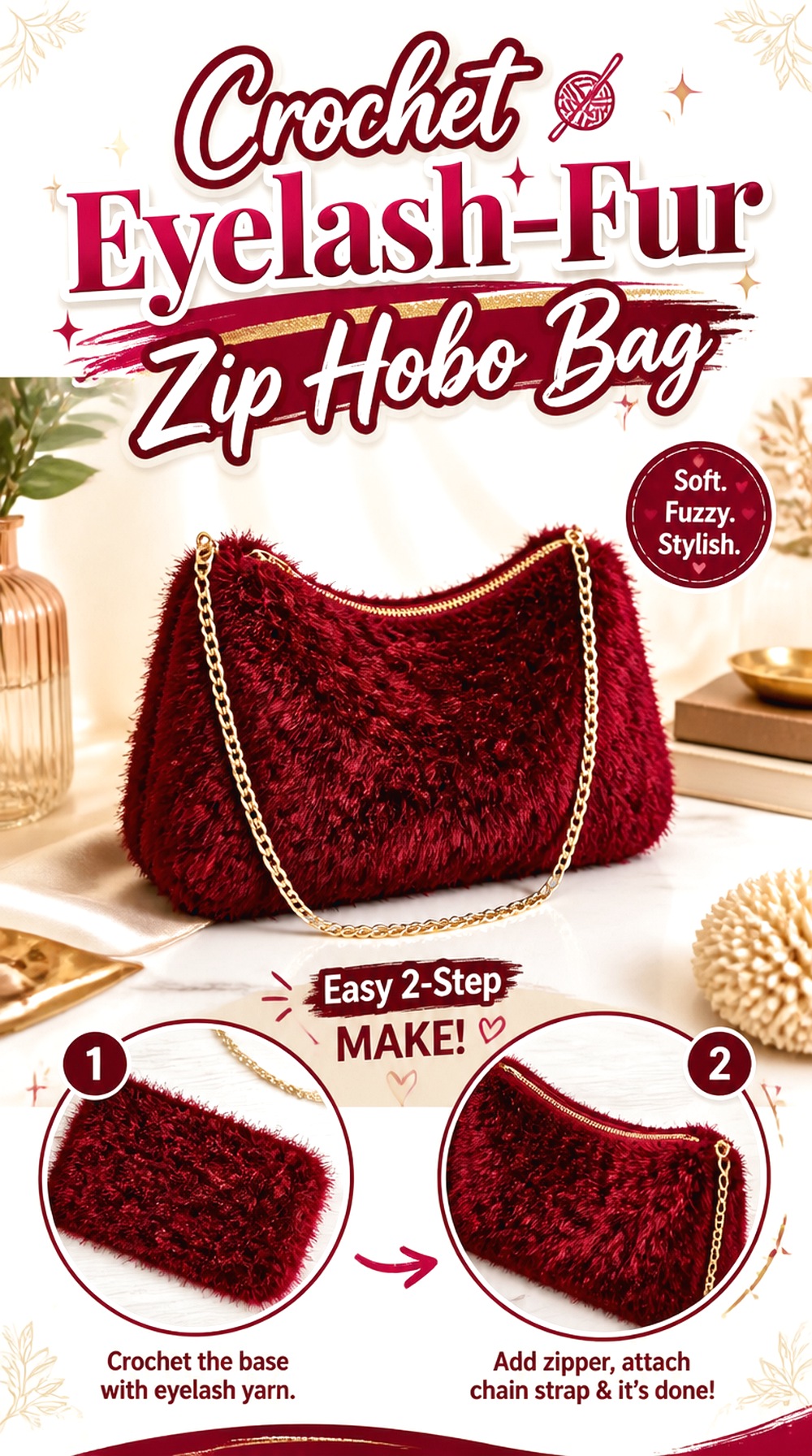
Paraligo’s Crochet Fur Bag offers a different route to fuzziness: the project combines a firm bag-making material with eyelash-style yarn and finishes the bag with a zipper and chain shoulder strap. That makes it a useful reference for a hobo-inspired project where the fuzzy appearance sits over a more defined structural foundation.
Instead of relying on thick plush yarn alone, this direction separates the decorative halo from some of the structural work. It may appeal to readers who like fuzzy bags but dislike an opening that collapses completely or a strap that stretches along with the body.
A Firmer Core Changes the Structure-versus-Softness Trade-Off
When fuzzy fibers are combined with a more stable foundation, the bag can retain a defined outline while still looking soft. This is a useful concept for hobo shapes that need visible curves without becoming completely floppy. If you explore a similar material pairing, test a small section first. Two strands or materials that look compatible can behave very differently in thickness, flexibility, and the amount of surface fuzz they create.
The Zipper Controls a Naturally Open Silhouette
Hobo bags often have generous upper openings, which is part of their relaxed character but may not suit every use. A zipper provides a more deliberate boundary. On fuzzy fabric, the main concern is keeping fibers away from the moving zipper path. Before installing any closure, check that the edge can remain sufficiently clear so the pile does not continually interfere with opening and closing.
Chain Hardware Keeps the Body Visually Light
A chain strap introduces a crisp line against a fuzzy surface. This can keep a plush bag from looking visually heavy from top to bottom, especially when the body already has dense texture. It also offers a different proportion from a thick crochet handle. When planning a hobo adaptation, compare the chain length with the point where you want the bag to sit rather than assuming one standard shoulder position.
Original Tutorial and Creator Credit
Creator: Paraligo
5. Crochet Fluffy Underarm Hobo Bag with Ready Made Strap
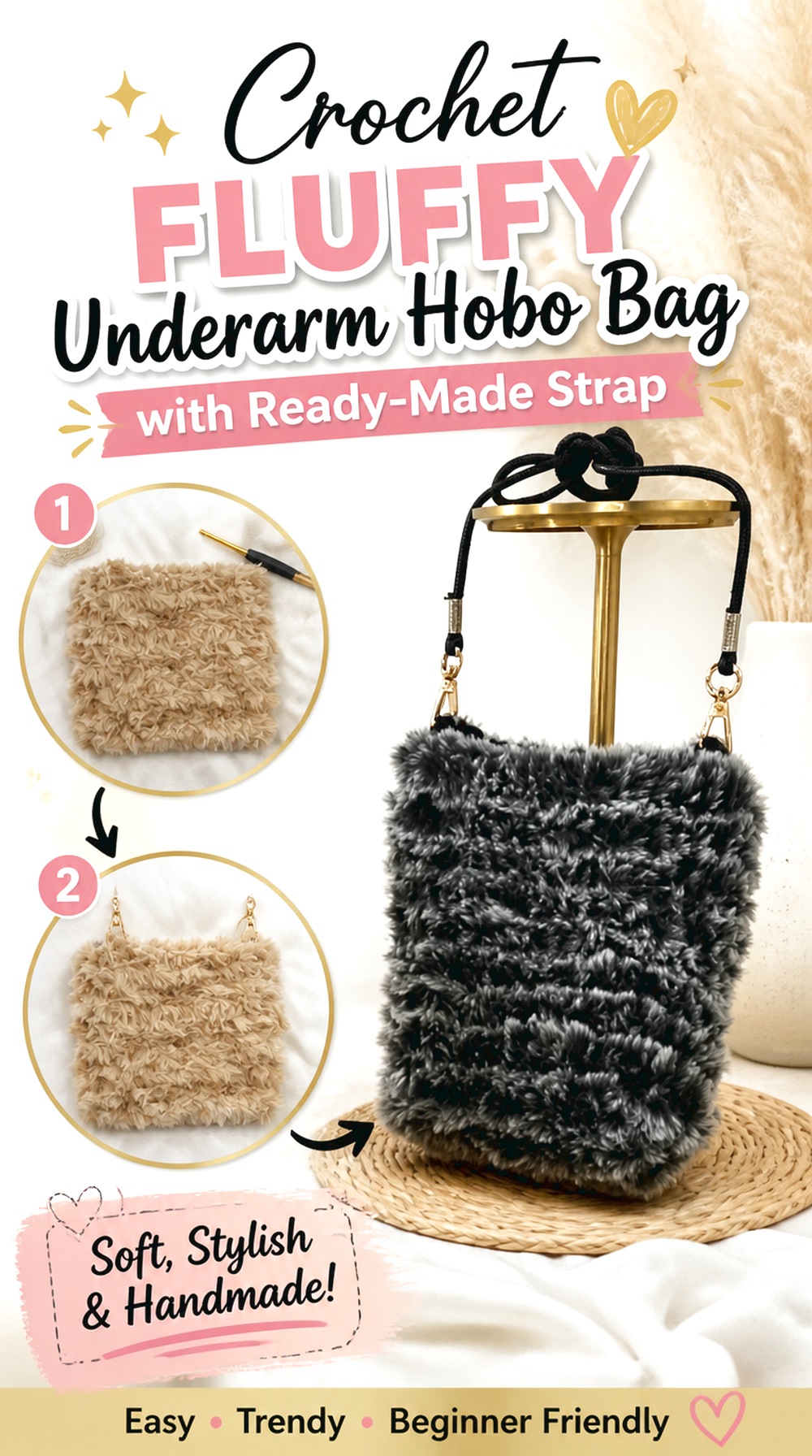
The Dreamcat Yarn shoulder-bag tutorial from mys楽しく編み物 uses a fluffy yarn with a separate leather-look shoulder strap, creating a useful reference for a smaller fuzzy bag carried close beneath the arm. Instead of emphasizing a deep hanging pouch, this idea takes the hobo mood in a more compact direction: rounded soft body, plush surface, and a clearly separate carrying component.
It is a good choice to study when you want a fuzzy bag that feels more like a fashion accessory than an oversized everyday sack. For an adaptation, preserve the compact relationship between body and strap instead of simply enlarging every dimension.
A Ready-Made Strap Creates a Useful Visual Break
A smooth strap gives the eye a place to separate the shoulder line from the fluffy body. That is especially effective with novelty yarn because too much continuous fuzz can obscure where the bag ends and the handle begins. If you substitute another strap, compare its width and hardware scale with the body. Very heavy fittings can visually overpower a smaller plush bag even when they technically fit.
Fluffy Yarn Makes Edge Reading More Important
The yarn surface can make it difficult to see exactly where a crochet edge begins, particularly in darker colors. Use markers or another reliable way to identify key shaping areas rather than depending solely on visible stitch tops. The purpose is not to add more markers than the tutorial requires; it is to prevent fuzzy fibers from hiding a location you will need to recognize later for assembly or strap placement.
Check Surface Wear Before Choosing the Final Yarn
The tutorial notes that yarn characteristics such as pilling or surface loss can vary, which is worth taking seriously for a bag that rubs against clothing. Before investing in the entire project, handle a sample and consider how the surface responds to repeated friction. A yarn that looks beautiful sitting on a table may behave differently when carried beneath the arm.
Original Tutorial and Creator Credit
Creator: mys楽しく編み物
6. Crochet Chenille Chain Strap Hobo Style Handbag
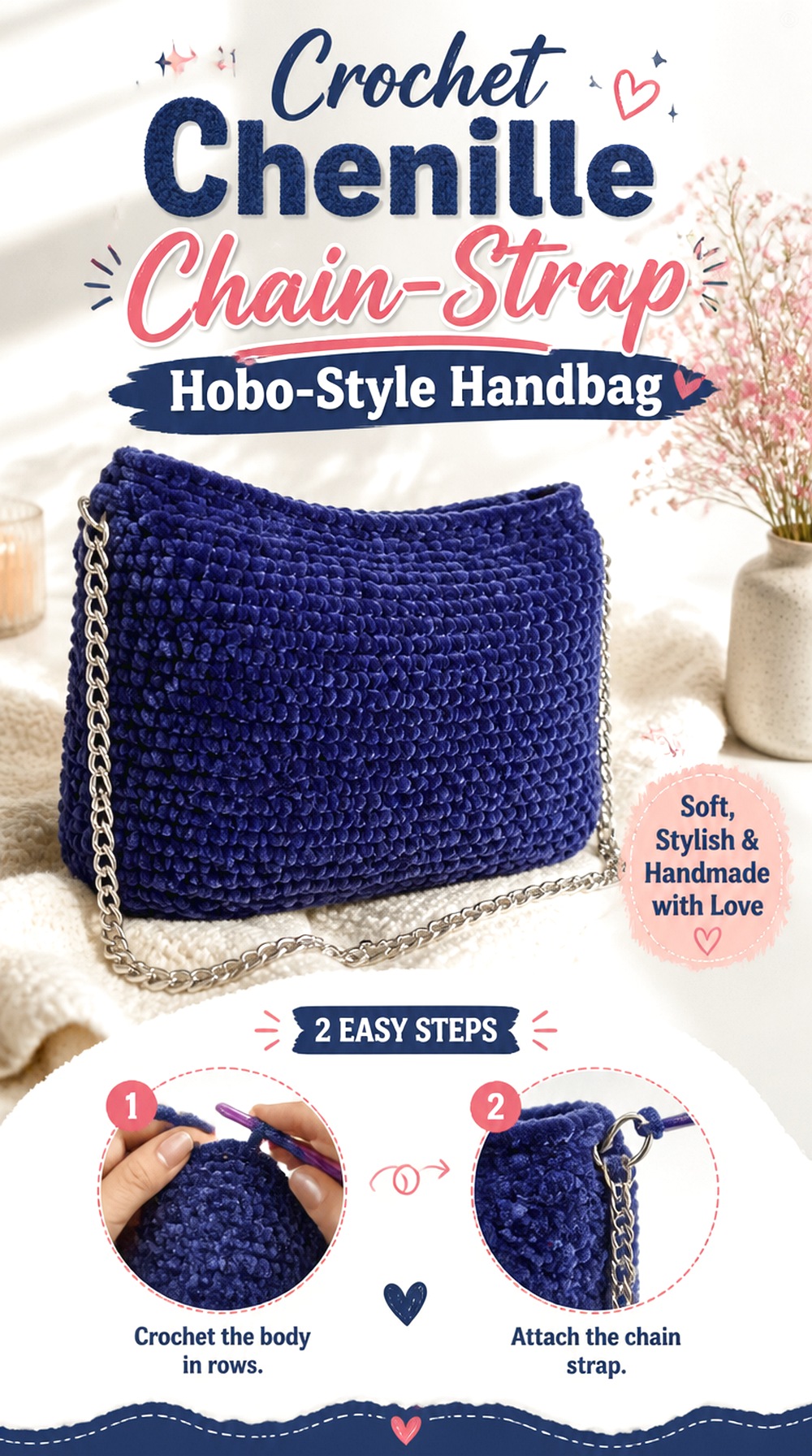
Momì’s Crochet uses chenille for the Andromeda bag and incorporates a lining, magnetic clasp, and chain-based shoulder hardware. Those features make it a strong texture reference for a more refined hobo-style handbag, even though the original source is not presented as a classic slouchy hobo.
Chenille offers a different fuzzy experience from faux fur: the surface is plush and soft, but the fibers do not create the same long-haired outline. That can be useful if you want rounded softness while keeping the edge and closure easier to read. This direction is also appealing when hardware is part of the intended finished look.
Chenille Gives Plushness Without a Long Halo
If long fur feels too visually dramatic, chenille can create a softer, more compact surface. Its bulk still matters, though. A thick chenille fabric may occupy more space around the upper edge and side joins than a smoother yarn. For a hobo adaptation, test whether the fabric can bend into the desired curve without becoming so dense that the body behaves more like a rigid handbag.
A Lined Interior Makes This a More Finished Handbag Direction
The source includes lining as part of the bag concept, which separates this option from deliberately unlined slouch bags. A lining can be especially useful when the crochet surface is plush because it provides a smoother internal layer. The main adaptation checkpoint is drape: allow enough ease in the lining so it supports the bag without forcing the chenille body into a straighter shape.
Magnetic Closure Placement Depends on a Stable Top
A magnetic clasp works most cleanly when the area around it does not distort excessively. Before adding one to a fuzzy hobo, pinch the opening where the hardware will sit and see how the fabric behaves. If the edge bunches or stretches dramatically, reinforcement or a different finishing approach may be worth considering. The goal is a closure that meets naturally without pulling the bag out of balance.
Original Tutorial and Creator Credit
Creator: Momì’s Crochet
7. Crochet Teddy Panel Hobo Style Bag
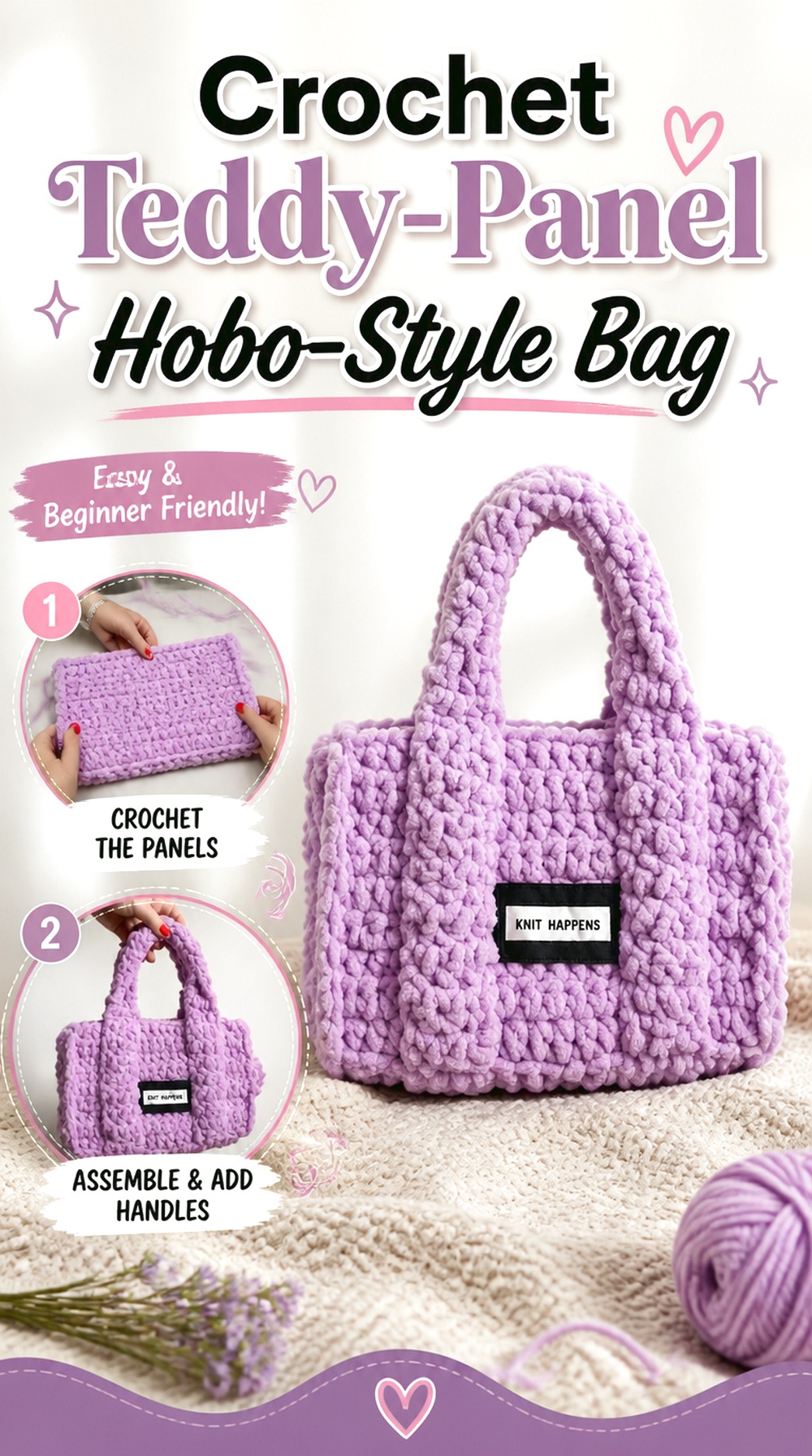
LalaBeCrocheting’s teddy bag uses a visibly plush, bulky format and a construction built from defined bag sections, including handles and a side component. That makes it a useful source for someone who wants teddy texture but prefers a bag whose volume is established by joined sections rather than a completely fluid hobo body.
For this roundup, the hobo adaptation comes from relaxing the carry silhouette and emphasizing the shoulder curve rather than claiming the source itself is a traditional hobo. The panel-based approach can be helpful when you want more predictable depth from a very thick fuzzy yarn.
Panels Give You Natural Shape Checkpoints
Separate sections make it possible to assess width, height, and overall balance before the finished bag is fully assembled. With teddy yarn, that is valuable because the fabric can look much larger once its pile fluffs outward. Compare matching sections directly rather than relying on visual estimates. If one panel has stretched while being handled, correct that difference before it becomes part of the final silhouette.
Super-Plush Texture Adds Visual Volume Quickly
A thick teddy surface can make even a moderate-size bag appear substantial. That is not a problem if a bold fuzzy accessory is the goal, but it changes how proportions read. A very wide handle plus an already bulky body may feel visually top-heavy. When adapting the style toward a hobo, decide whether you want the shoulder area to blend into the body or provide a narrower contrast.
Handle Position Determines Whether It Reads as Tote or Hobo
Two bags with similar bodies can look completely different depending on where the handles sit. A hobo generally benefits from a stronger inward pull toward the shoulder area, while a tote tends to retain a broader open top. If you use a teddy-bag tutorial as inspiration, pay particular attention to the finished carry line and make sure your adaptation still produces the relaxed upper curve you actually want.
Original Tutorial and Creator Credit
Creator: LalaBeCrocheting
8. Crochet Soft Pile Classic Hobo Bag
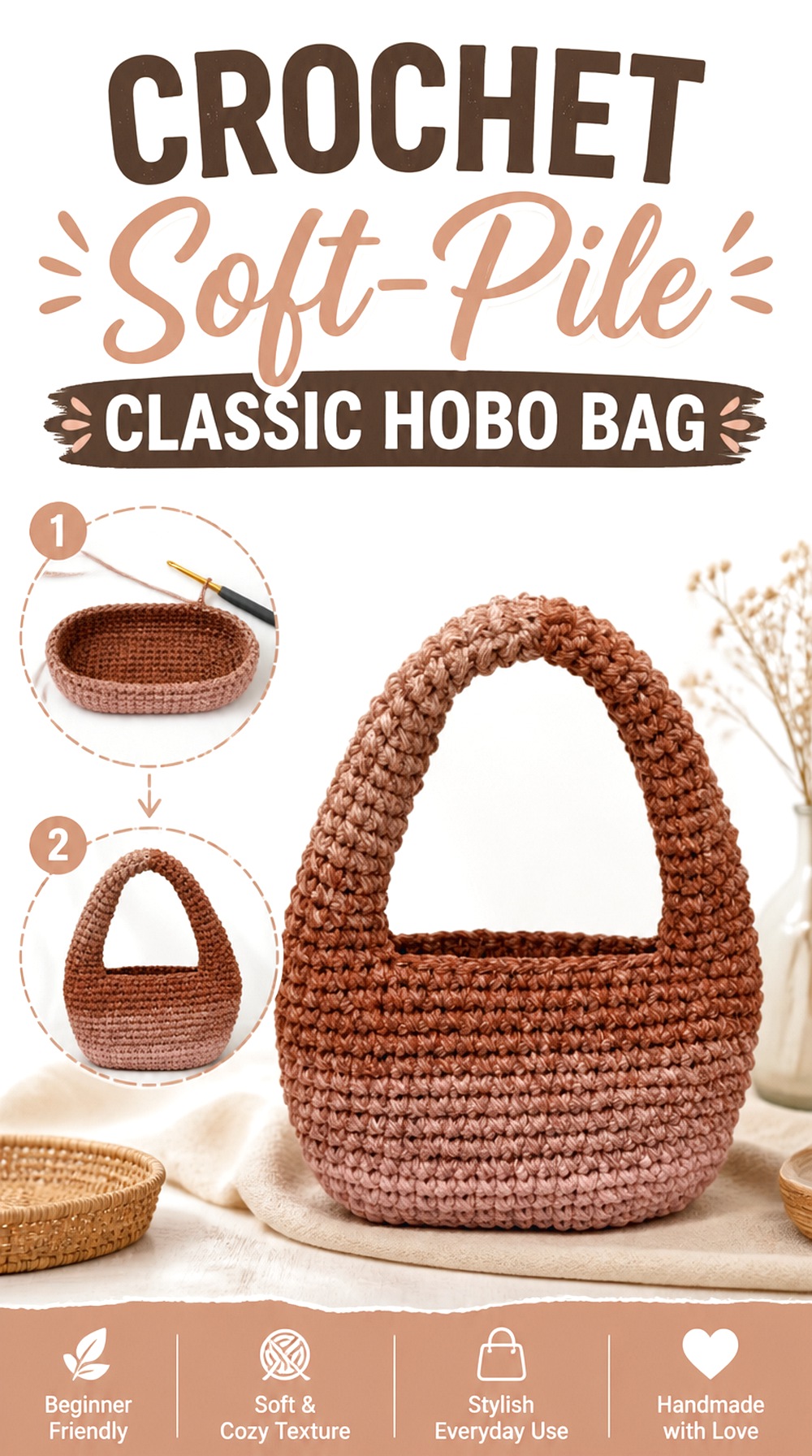
Magic Knot Bag’s tutorial supplies a clear classic hobo construction and integrated handles. The source uses a cotton spectrum yarn rather than fuzzy yarn, so this is intentionally an adaptation idea rather than a claim about the original material.
This option is useful if shape matters more to you than starting with a fur-specific tutorial. The bag already has the recognizable relaxed shoulder profile; the challenge is choosing a fuzzy yarn that does not erase it. A lower-pile bouclé, lightly brushed yarn, or similarly soft option may preserve more of the original architecture than a very long faux fur.
Preserve the Hobo Outline Under the Halo
Before choosing a highly textured substitute, look at the finished source bag and identify the curves that make it read as a hobo. Your yarn needs enough flexibility to follow those curves but not so much bulk that the transitions disappear. Make a generous fabric sample, fold it, and allow it to hang. This reveals more about its suitability than judging a small flat swatch alone.
Lower Pile Gives the Shape More Room to Speak
A moderate halo is often easier to adapt to an existing hobo construction than very long fur because you can still see the edge and handle transitions. This is a design choice rather than a universal rule. If dramatic faux fur is the priority, accept that the original shape may become softer and less defined. If the recognizable hobo profile matters most, keep the surface texture more restrained.
Integrated Handles Need a Stretch Check
The source construction includes handles within the crochet project rather than relying on a completely separate strap. A fuzzy substitution can change how that area behaves, particularly if the new fiber stretches more than the original cotton blend. Hold the sample under gentle tension and compare how quickly it rebounds. That simple observation can tell you whether a reinforced carry area deserves consideration.
Original Tutorial and Creator Credit
Creator: Magic Knot Bag
9. Crochet Deep Slouch Fuzzy Everyday Hobo Bag
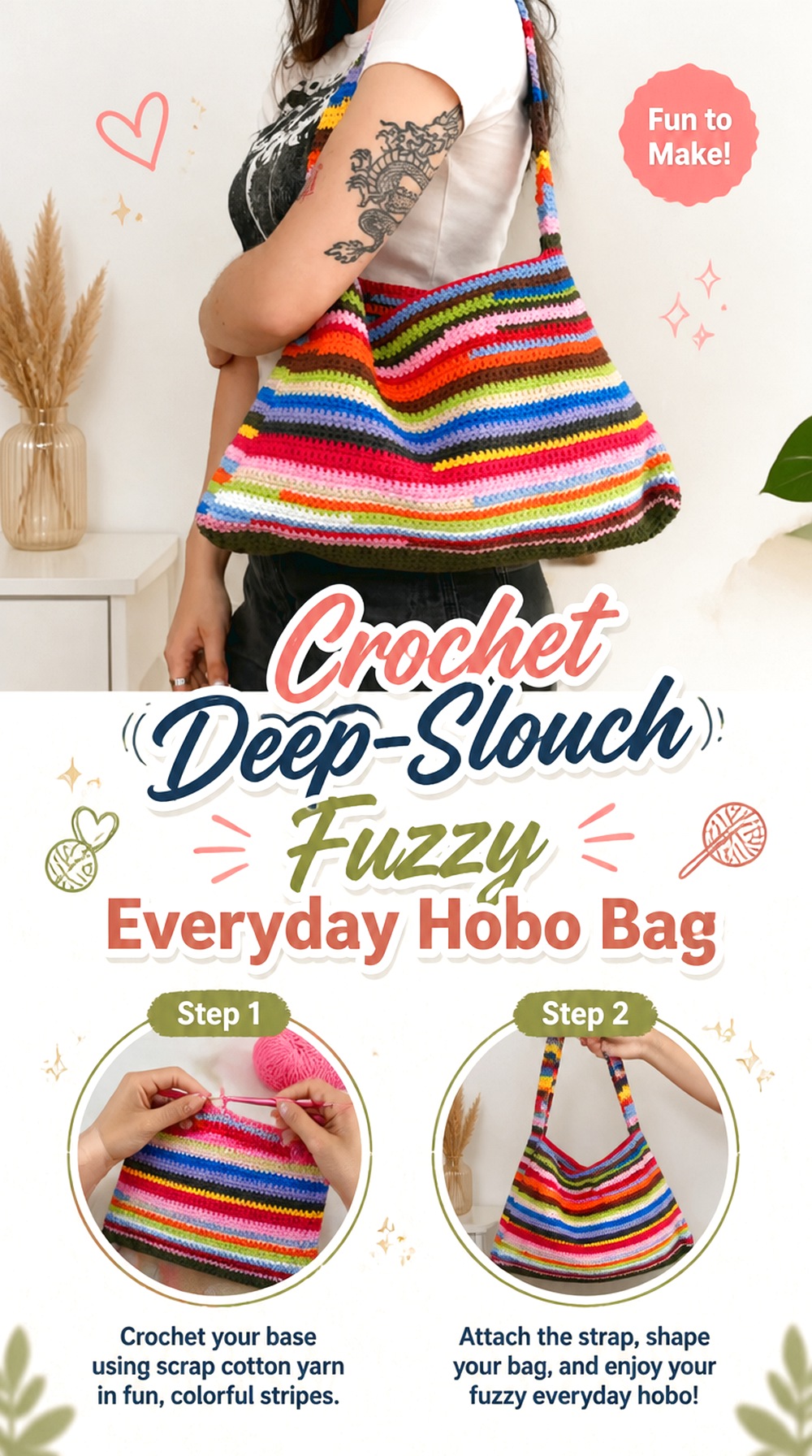
Kenikse Crochet’s source is explicitly a slouchy crochet bag and uses DK cotton in the demonstrated version. For a fuzzy interpretation, the useful feature is its relaxed hanging character rather than its original fiber. This is the direction to consider if you want the body of the bag to droop naturally instead of maintaining the more handbag-like profile of the oval-base or zippered ideas.
Because the starting tutorial uses a smoother yarn, substituting fuzzy material deserves caution. A plush yarn can make the slouch look fuller and may change how the opening and handles settle when the bag is hanging.
Let the Finished Hang Decide Whether the Slouch Works
A deep-slouch bag cannot be evaluated accurately only while it lies flat. Once enough fabric is present to show its behavior, let it hang naturally and observe where the body folds. You are looking for an intentional center drop rather than uncontrolled stretching at one point. This is particularly important with soft fuzzy fibers because their weight and elasticity can alter the profile as the project grows.
Check the Opening After the Sides Pull Inward
The usable opening of a slouchy bag may become smaller once the body hangs and the sides draw toward the center. Thick plush fibers amplify that effect by occupying additional space. Before committing to finishing details, test the opening in the position the bag will actually be carried. If it feels awkward, identify whether the issue is yarn bulk, excessive stretch, or the chosen overall scale.
Give the Carry Area More Attention Than the Lower Body
The bottom of a slouch bag is supposed to move, but the region that transfers the bag’s weight to the handle has a different job. When adapting to a stretchy fuzzy yarn, watch that transition carefully. Reinforcement can be considered if appropriate, but it should not create a stiff lump that interrupts the silhouette. The best solution keeps the relaxed body while giving the upper area enough stability to remain recognizable.
Original Tutorial and Creator Credit
Creator: Kenikse Crochet
10. Crochet Round Fuzzy Hobo Bag with Magnetic Button
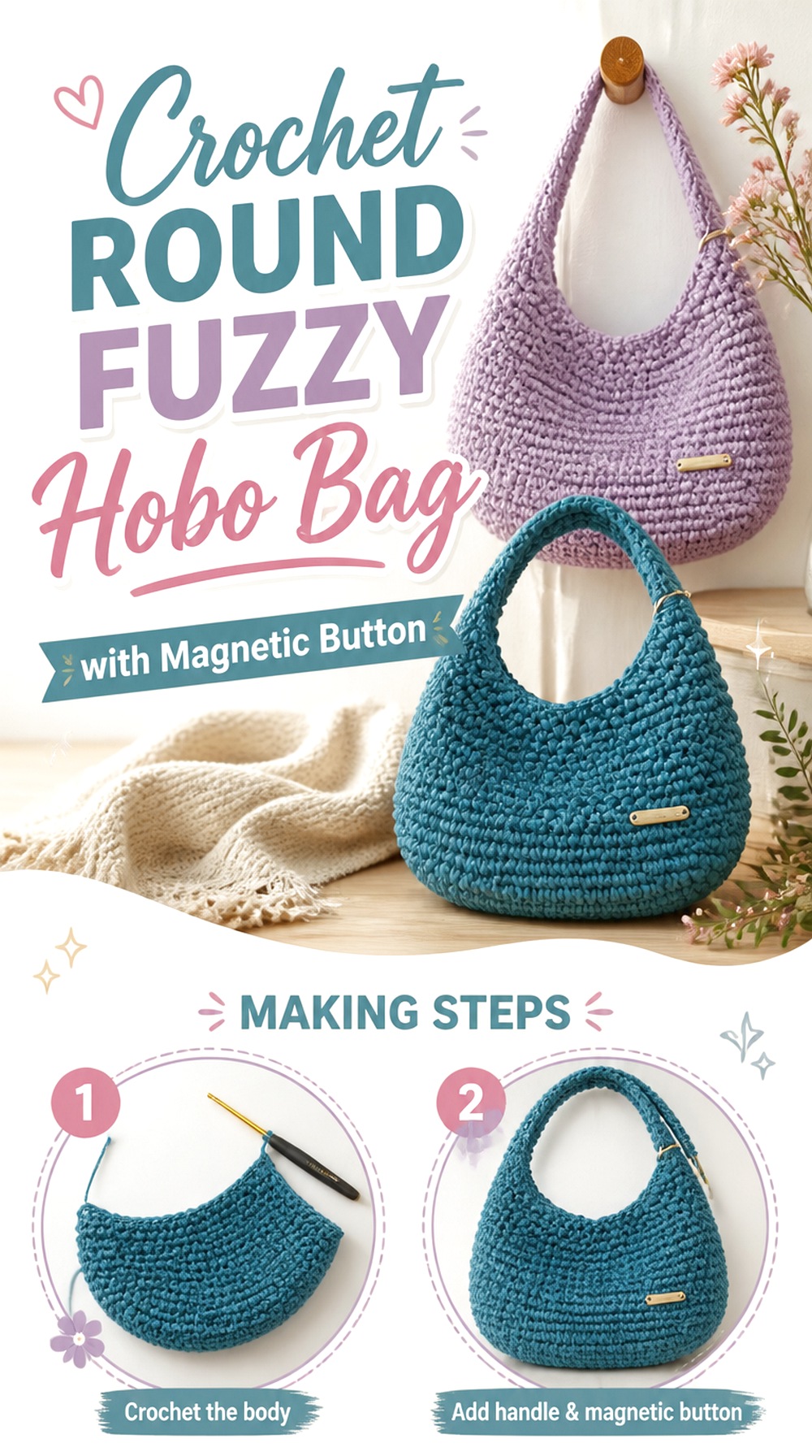
Adel handmade’s tutorial is specifically a round hobo bag and lists a magnetic button among its finishing materials. The demonstrated project uses smooth cotton, so the fuzzy version here is another controlled adaptation rather than a direct description of the source yarn.
The rounded lower body distinguishes this idea from elongated or rectangular hobo bags. A soft chenille or short-pile fuzzy yarn could emphasize that curved silhouette, while very long fur may make the outline appear larger and less precise. This direction suits someone who wants the hobo concept to feel compact and circular rather than long and drooping.
A Round Body Changes How Space Is Distributed
A circular or rounded bag does not use its interior in the same way as a broad rectangular one. Objects settle toward the widest part of the body rather than spreading evenly across a long base. Before choosing this silhouette, think about the types of items you usually carry. The attraction is its sculptural shape, not an assumption that it will hold the same things as a larger rectangular hobo.
Keep the Magnetic Button Accessible Through the Fuzz
A magnetic closure is most useful when you can locate and align it without fighting the surrounding pile. Shorter fuzz or chenille makes that easier than very long faux fur. If you want the dramatic fur effect anyway, plan a small clean area around the closure so the fibers do not continually cover the hardware. Check alignment with the bag hanging, since a round body can shift as it fills.
Hardware Should Stay Proportional to the Curved Silhouette
The source also uses handbag hardware, which adds crisp detail to an otherwise rounded crochet form. On a fuzzy adaptation, choose components that remain visible without dominating the bag. Oversized rings can pull attention away from the circular body, while very delicate hardware may disappear into thick pile. Compare the hardware against the finished fabric rather than judging it separately.
Original Tutorial and Creator Credit
Creator: Adel handmade
11. Crochet Rectangular Base Fuzzy Folded Hobo Bag
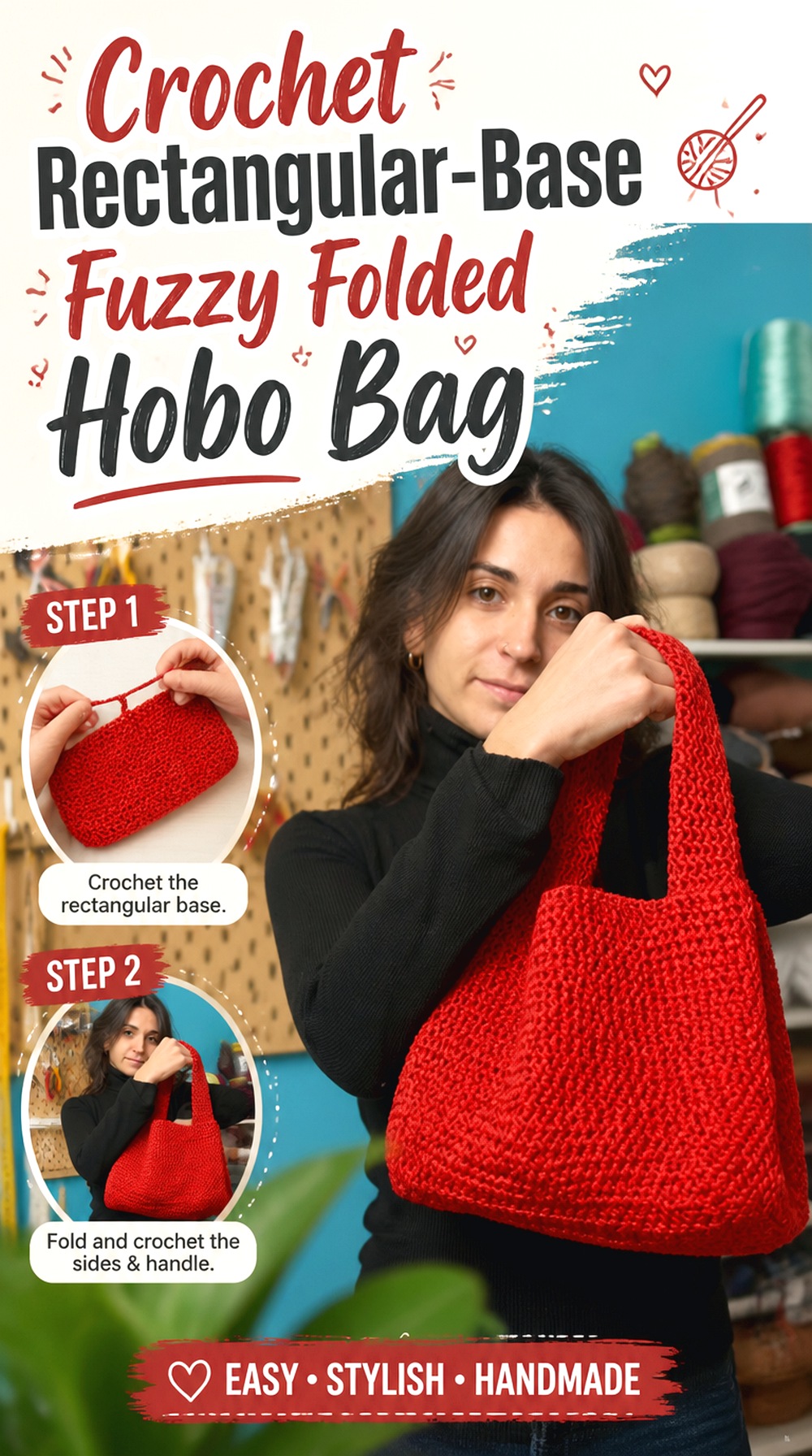
The vivi e cuci hobo tutorial starts from a rectangular base and deliberately forms side folds before the handle is finished. The original uses cord, making its geometry considerably firmer than most fuzzy yarns. That contrast is exactly why it offers an interesting adaptation route: the base provides definition while a softer upper fabric could create a plush interpretation of the folded silhouette.
This is a better direction for someone who wants a hobo bag that still has a recognizable bottom and controlled side shaping. Short-pile chenille is likely to preserve those visual transitions more clearly than an extremely long fur.
A Rectangular Footprint Gives the Soft Body Somewhere to Settle
A defined base prevents every part of the bag from collapsing toward the center. When a soft yarn is introduced, that footprint can help preserve a clear bottom even as the sides relax. Check the corners of your sample carefully, because thick fuzzy yarn can make directional changes feel bulky. If the corners become rounded, decide whether that softer interpretation still matches the look you want.
Side Folds Must Remain Visible Through the Pile
The source’s side folds contribute directly to its finished hobo profile. With fuzzy yarn, those folds can disappear if the surface is too dense or the fabric too thick to bend cleanly. Test one folded section before committing to the whole adaptation. If the fabric springs open rather than holding a soft crease, a lower-pile yarn may communicate the original shape more successfully.
Structure at the Bottom, Softness Above Creates Contrast
This idea works because it does not require every part of the bag to behave identically. The bottom can remain comparatively defined while the upper body bends toward the handle. That contrast often makes a hobo silhouette easier to read. If adding lining, avoid making it so tight that it straightens the side folds; the inner layer should follow the intended volume rather than redesign it.
Original Tutorial and Creator Credit
Creator: vivi e cuci
12. Crochet Compact Faux Fur Hobo Style Bag
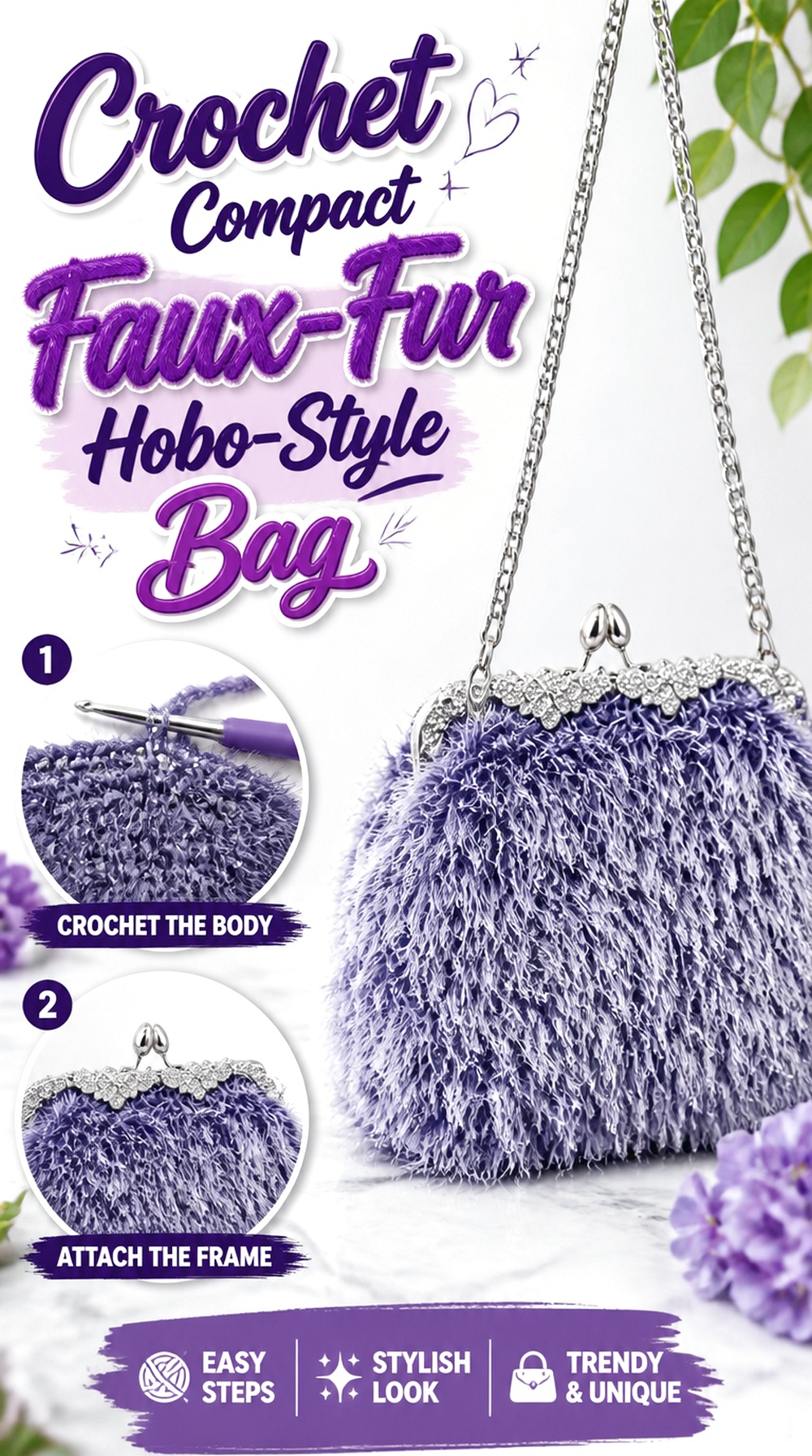
Oby Ebiokoro Crochet’s Zina tutorial focuses directly on a crochet fur bag. The source is not labeled as a classic hobo, so this idea uses its faux-fur treatment as the texture reference while shifting the styling toward a compact hobo carry. The publicly indexed video identifies the project as the Zina fur bag and the creator through the Handmadebyoby channel identity.
This is a useful route when you want a smaller fuzzy statement bag rather than the deep everyday slouch of Idea 9. Keeping the body compact also puts more visual emphasis on the fur itself, so restraint in hardware and embellishment can help the texture remain the focal point.
Compact Proportions Keep the Fur From Taking Over
Long pile visually enlarges a crochet object beyond the dimensions of the underlying fabric. On a smaller bag, that effect can be attractive because the fur creates presence without requiring a very large body. When planning a hobo-style adaptation, compare the outline before and after fluffing the pile. That reveals how much apparent volume the yarn adds and whether the shoulder curve still looks intentional.
Decide on the Opening Before the Edge Disappears
A highly textured upper edge can make it difficult to add a closure as an afterthought. Decide early whether the final bag should remain open, use a magnetic closure, or support another compatible system. This is planning rather than a pattern change: the chosen option affects where you may need a clear, stable section of fabric. Avoid assuming hardware from another project will automatically work with this one.
Interior Contrast Can Improve Visibility
A dark or very fluffy interior can make small contents harder to see. If lining is appropriate for your adaptation, a smoother interior fabric can provide visual contrast and keep objects away from the fur. The lining does not have to be decorative; its more important job is to follow the compact body without distorting it. Check the bag both empty and lightly filled before securing the final interior fit.
Original Tutorial and Creator Credit
Creator: Oby Ebiokoro Crochet
13. Crochet Fur and Macramé Soft Hobo Bag
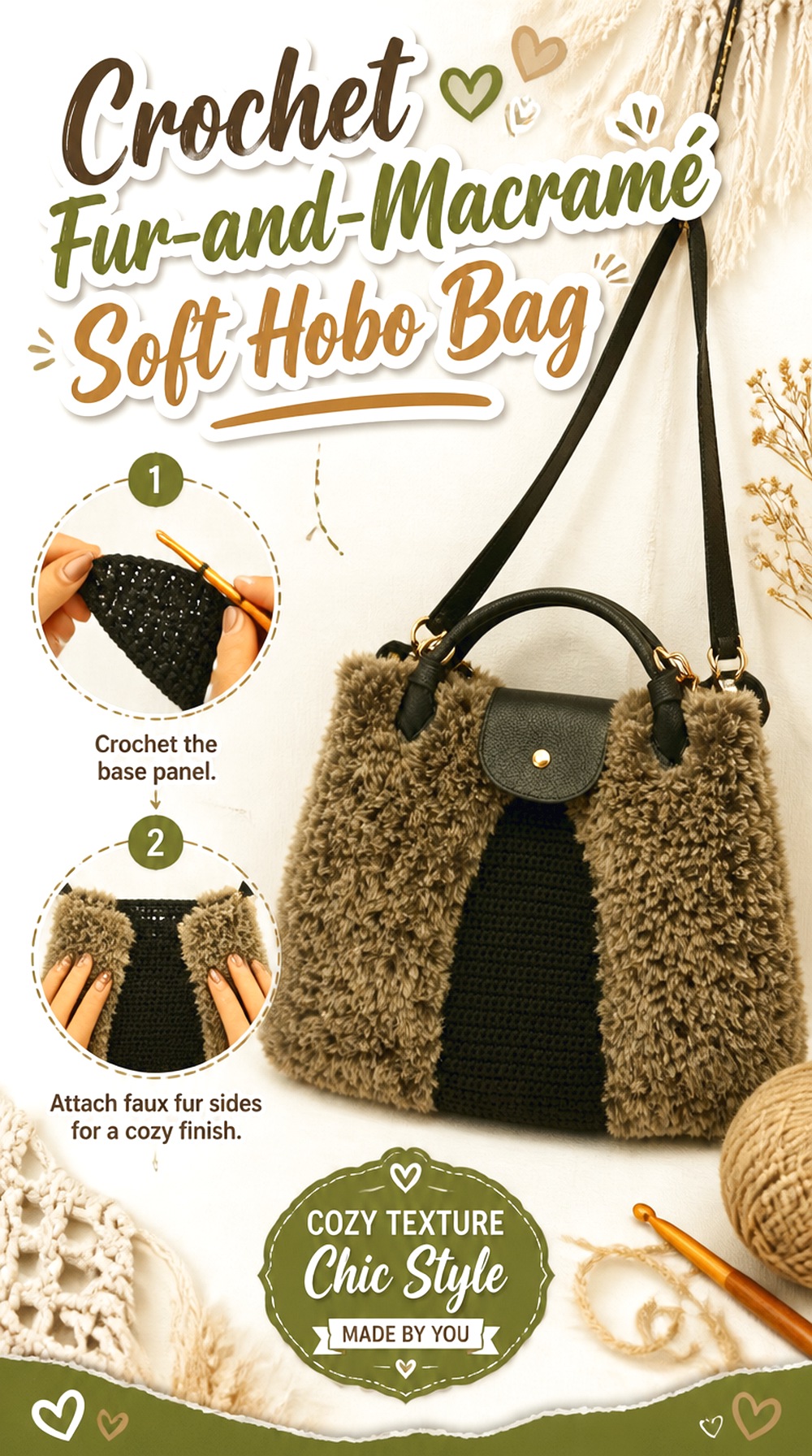
Örgüce Selvi Karalar’s fur-bag tutorial combines fur yarn with polyester macramé material, giving this final idea a useful two-texture direction. Rather than asking a single fuzzy fiber to provide every characteristic, a mixed-material hobo can use one element for softness and another for clearer structure.
That makes this option particularly interesting if you like a plush exterior but still want the bag to retain recognizable boundaries. The visual result can also feel less uniformly fluffy than a full faux-fur bag, which may suit readers who want the fuzzy trend without covering the entire construction in long pile.
Two Materials Can Divide the Structural Work
A fuzzy yarn and a firmer macramé-type material naturally bring different qualities to a bag. The useful design question is where you need softness and where you need definition. Avoid assuming the two materials can simply be substituted strand for strand in another pattern. Compare thickness, flexibility, and how they bend together first, because an uneven material balance can create unexpectedly rigid or bulky areas.
Keep the Support Material From Dominating the Slouch
A firmer component can help maintain the bag’s shape, but too much stiffness works against the characteristic hobo drape. After introducing a supporting material, let the fabric hang and observe whether the center still settles naturally. If the body remains completely rigid, the finished object may read more like a structured handbag. The goal for this idea is controlled softness, not maximum firmness.
Mixed Materials Change the Care Decision
A bag containing fuzzy yarn, macramé-style material, lining, and possibly hardware should be cared for according to the requirements of the least forgiving component. Do not assume a method is safe simply because one yarn label permits it. Keep the original labels for every material and check them before cleaning. Surface brushing should also be approached cautiously because some fuzzy fibers release or distort more easily than others.
Original Tutorial and Creator Credit
Creator: Örgüce Selvi Karalar
Which Fuzzy Hobo Direction Fits Your Goal?
For the most direct fuzzy-hobo references, start with the Sabrina furry oval-base bag or the Teddy hobo bag. They already combine the two defining parts of the topic: plush texture and hobo shaping. The Macrè, Paraligo, mys, Momì’s Crochet, LalaBeCrocheting, Oby Ebiokoro, and Örgüce sources are more useful when texture treatment, lining, straps, hardware, or mixed materials matter as much as the exact silhouette.
The Magic Knot Bag, Kenikse Crochet, Adel handmade, and vivi e cuci tutorials reverse that equation. Their strongest value is hobo construction, and the fuzzy look is an adaptation. Those are better choices when you already know the shape you want and are willing to sample a fuzzy yarn before substituting it. Among them, the round version gives the most compact body, the Kenikse style emphasizes deeper slouch, and the rectangular-base version provides the clearest lower structure.
Conclusion
The right fuzzy hobo bag depends on which feature you want to protect when the yarn gets softer. Choose the oval-base or folded-base styles when structure matters, the teddy and deep-slouch options when softness is the main attraction, or a chain-strap, magnetic-closure, or zippered version when you want more handbag-like finishing. Long faux fur creates the strongest statement, while chenille and shorter-pile yarns can leave more of the crochet shape visible.
For any smooth-yarn hobo you plan to make fuzzy, sample the replacement yarn before assuming it will preserve the same proportions or drape. Once you choose a direction, use the original tutorials for the creators’ exact construction details and finishing sequence.
Frequently Asked Questions
Can I replace regular yarn with faux fur in any crochet hobo bag tutorial?
Not reliably. A yarn substitution can change fabric thickness, stretch, edge visibility, and the amount of room around the opening. Very long faux fur can also hide shaping that is obvious in cotton or cord. Make a sample first and see how it folds and hangs. If preserving the original hobo silhouette is important, a shorter-pile fuzzy yarn may be easier to adapt than a dramatically long fur.
How can I keep a fuzzy crochet hobo bag from stretching too much?
Start by identifying where the stretch matters. A soft body can be desirable in a hobo bag, while uncontrolled stretching through the handle or upper attachment area is less useful. Yarn choice, a separate strap, appropriate reinforcement, or a lining may help depending on the construction. Do not assume a bag can carry a specific weight unless the source actually establishes that performance.
Does a fuzzy crochet hobo bag need a lining?
No. Lining is a functional choice rather than a requirement. It becomes more attractive when the crochet fabric is open, the fuzzy interior catches small objects, you want a smoother inner surface, or the chosen closure works better with a finished interior edge. If you add one, give it enough room to follow the hobo’s natural slouch instead of pulling the crochet body into a rigid shape.
What type of closure works well with fuzzy yarn?
The best option depends on the opening and the amount of pile. Magnetic buttons can suit designs with a stable meeting point, while a zipper offers a more completely closed top but needs a clear path that fuzzy fibers will not continually obstruct. Some hobo bags are intentionally left open. Rather than choosing hardware by appearance alone, check whether the upper edge can support and expose the closure properly.
Should the shoulder strap be crocheted from fuzzy yarn too?
It can be, especially when you want a seamless all-over plush look such as the Sabrina-style direction. A separate chain or ready-made strap creates a cleaner contrast and avoids putting all of the carrying tension into fuzzy crochet fabric. Consider how the chosen yarn stretches, how wide the strap feels on the shoulder, and whether you want the handle to visually disappear into the bag or stand apart from it.
How are faux fur, chenille, teddy yarn, and eyelash yarn different for this type of bag?
Faux fur usually produces the longest, most dramatic pile and can hide most stitch definition. Chenille gives a dense velvety surface with a cleaner outline. Teddy-style yarn creates a thick plush appearance that can add considerable visual volume. Eyelash yarn creates a lighter hairy halo and may be paired with another material when more structure is wanted. Actual behavior varies by yarn, so compare physical samples rather than relying only on category names.
How should I clean a fuzzy crochet hobo bag?
Follow the care information for the actual yarn and every additional material used in the finished bag. A project can contain fuzzy yarn, lining fabric, synthetic cord, leather-look components, chains, clasps, or magnetic hardware with different care requirements. Do not assume a fuzzy bag is machine washable because one component is washable. Keep the yarn labels and check whether the hardware or lining requires a gentler approach before cleaning the entire finished piece.