A laundry stain brush is useful for working on stubborn marks, but finding a good place for it after cleaning can be surprisingly awkward. Leaving a damp brush on a shelf or inside a closed cupboard may prevent it from drying properly. These 13 crochet laundry stain brush drying holder inspiration ideas explore hanging loops, wall-mounted rails, open mesh panels, handle cradles, adjustable straps and small brush-drying stations in colors that suit practical laundry spaces.
The designs focus on supporting the brush by its handle while keeping the bristles exposed to circulating air. Some holders use existing handle holes, while others feature clips, rigid racks or removable rail attachments. Because stain brushes come in different shapes and materials, the most suitable arrangement depends on your actual brush and its manufacturer’s care instructions. Use this collection to compare fastening methods, available wall space, drainage and cleaning requirements.
These are AI-generated crochet design visualizations for inspiration, not photographs of tested handmade holders or complete crochet patterns. Their strength, stability and drying performance have not been tested.
Quick Design Selection Guide
- For one brush with a hanging hole: Crochet Terracotta Handle-Loop Brush Hanger and Crochet Sea-Glass Shelf-Wrap Brush Hanger offer compact hanging arrangements.
- For more than one brush: Crochet Navy Two-Clip Drying Rail, Crochet Oatmeal Three-Loop Brush Ladder and Crochet Ivory Offset Double-Brush Hanger provide separate brush positions.
- For decorative wall storage: Crochet Butter Yellow Mesh-Back Brush Hanger and Crochet Blush Scalloped Wall-Plate Hanger combine a hanging system with a decorative crochet panel.
- For a laundry shelf or countertop: Crochet Raspberry Split-Cradle Brush Rest, Crochet Cocoa Freestanding Arch Brush Hanger and Crochet Moss Under-Shelf Corner Hanger explore different support positions.
- For adjustable or clip-based hanging: Crochet Lavender Adjustable Button-Tab Hanger and Crochet Charcoal Soft-Grip Clip Hanger offer alternatives to a simple fixed hanging loop.
1. Crochet Terracotta Handle-Loop Brush Hanger
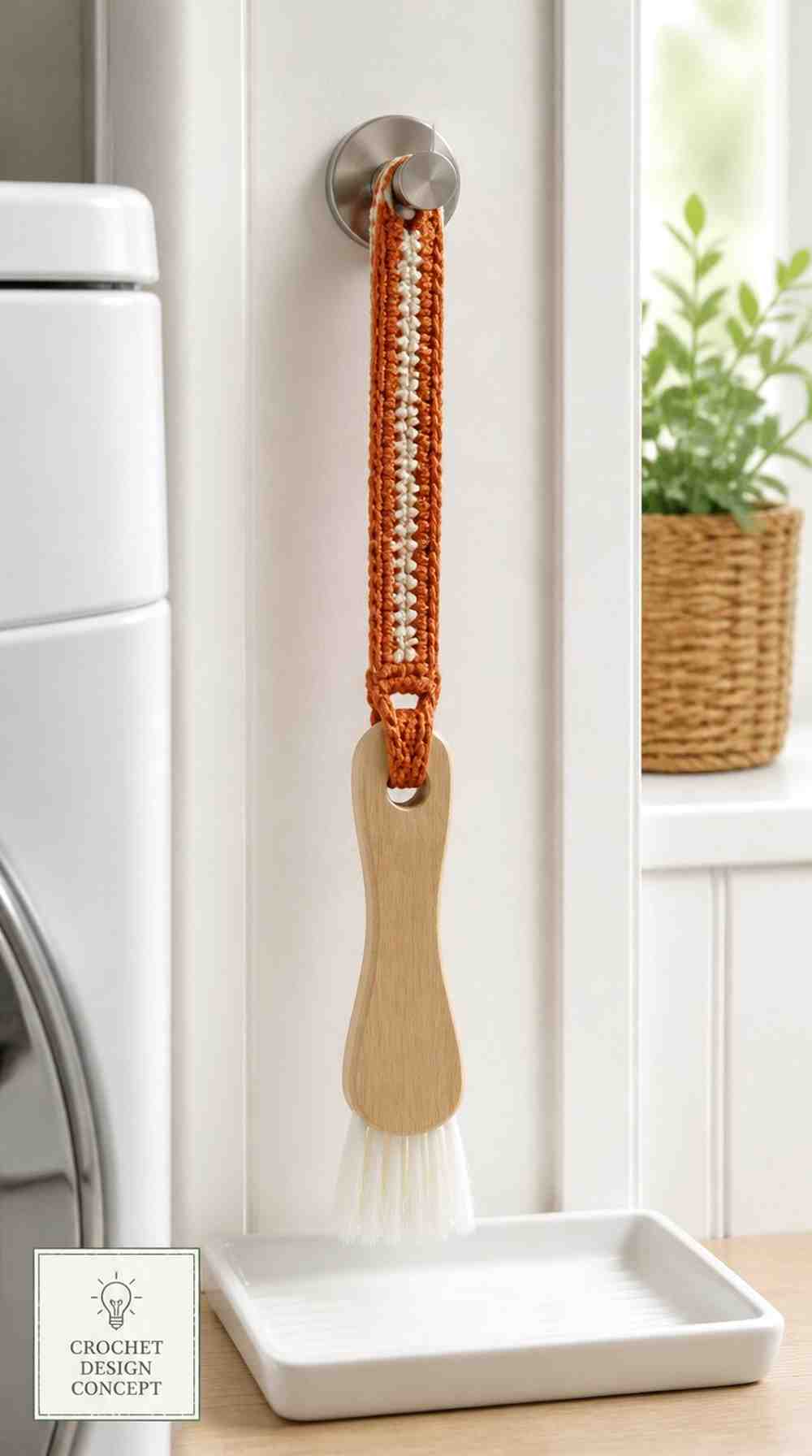
Warm terracotta crochet forms a short hanging strap with two narrow ivory raised ridges. The upper end hangs from a stainless-steel wall hook, while the reinforced lower loop passes through the existing hole in a wooden stain-brush handle. The brush hangs vertically with its white bristles pointing downward.
This design keeps the crochet attachment near the handle rather than enclosing the wet brush head. It is a compact option for a small laundry nook, provided the brush has a suitable hanging hole and the loop is securely constructed.
- Handle-hole fit: Check that the reinforced lower loop fits the actual brush’s hanging hole without forcing the yarn or putting pressure on thin wood.
- Hanging clearance: Position the wall hook high enough that the bristles hang freely above the separate drip tray and do not touch the countertop.
- Loop durability: Repeatedly inserting and removing the handle can stretch crochet, so inspect the loop and wall-hook connection regularly.
2. Crochet Navy Two-Clip Drying Rail
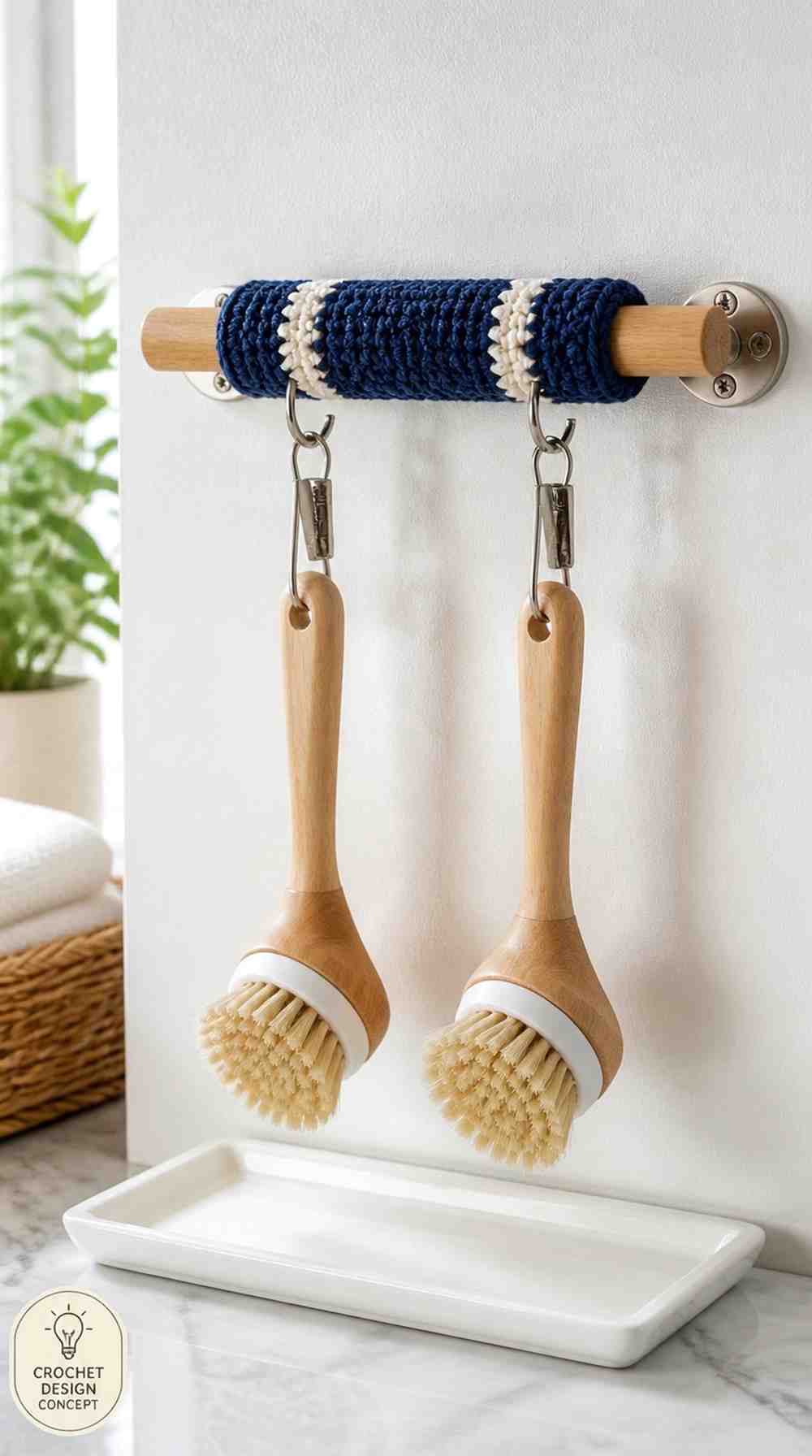
A navy crochet sleeve with two ivory stripes adds texture to the middle of this natural-wood drying rail. Two small metal clips hang from exposed sections of the rigid rail, each holding a separate laundry brush by its upper handle. The bristles remain free below the clips.
Unlike an all-crochet hanging loop, this concept relies on metal hardware to grip the brushes. The crochet provides a decorative finish to the supporting rail without being the main load-bearing component.
- Clip suitability: Choose clips that grip the specific handle material without crushing soft wood or slipping from smooth plastic surfaces.
- Separate hanging points: Leave enough space between the two clips so wet brush heads do not touch one another while drying.
- Support construction: The wooden rail and metal mounting points must carry the actual weight; a crochet sleeve is not a structural substitute.
3. Crochet Butter Yellow Mesh-Back Brush Hanger
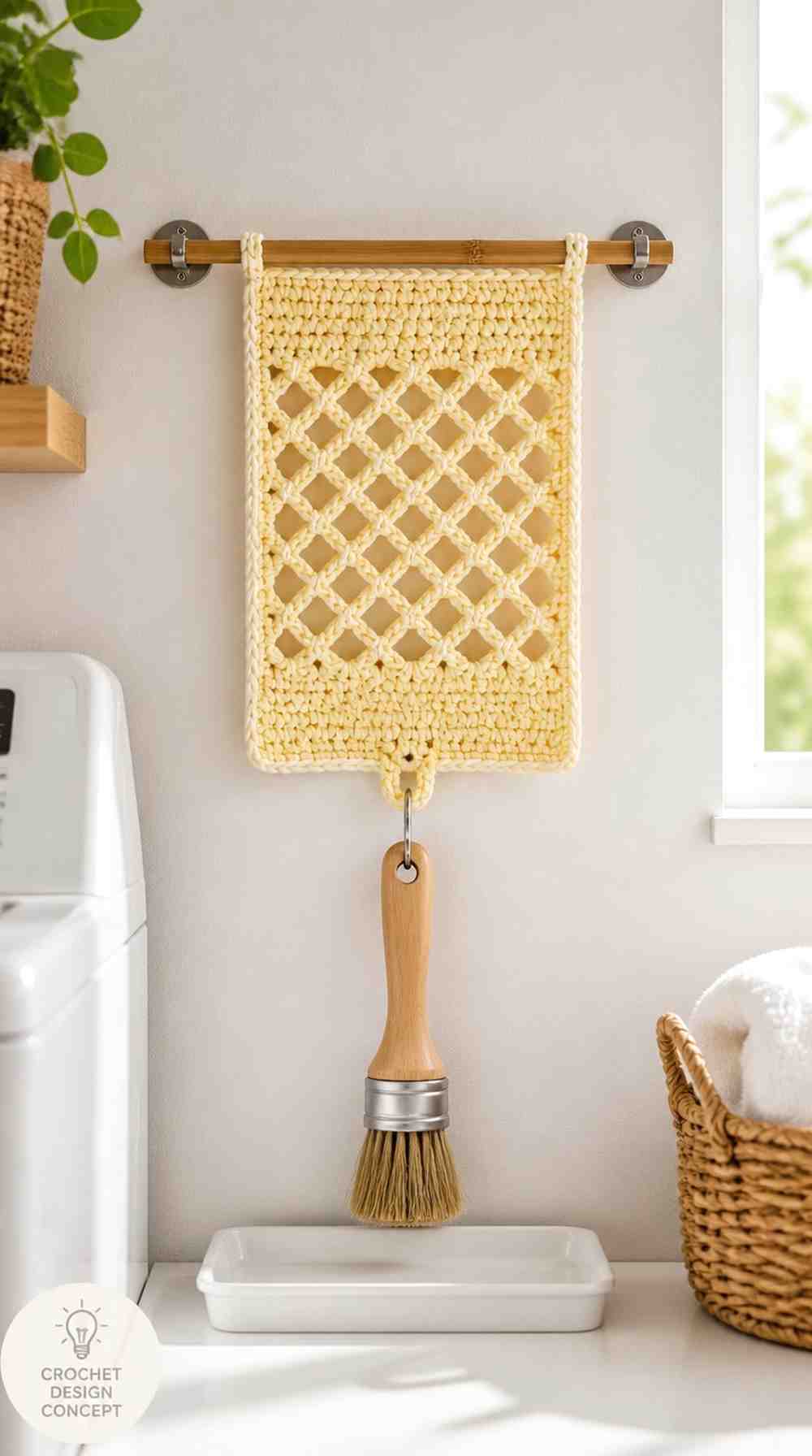
Butter-yellow crochet creates a rectangular hanging panel with a delicate diamond-mesh center. Closely stitched borders frame the openwork, while a pale-bamboo dowel supports the top. One wooden stain brush hangs from a separate metal hook below the panel, leaving its bristles unobstructed.
The open mesh makes the holder feel visually light and helps distinguish it from a solid wall plaque. It also places the decorative crochet above the brush head, reducing direct contact with the damp bristles.
- Openwork structure: Keep the diamond connections consistent and the panel properly attached to the dowel so it hangs evenly without distorted openings.
- Separate brush support: The hook should be mounted through a reinforced support point, not left hanging from an unsupported strand of mesh.
- Wall spacing: Allow room behind and beneath the brush for airflow, keeping the holder away from permanently damp laundry walls.
4. Crochet Raspberry Split-Cradle Brush Rest
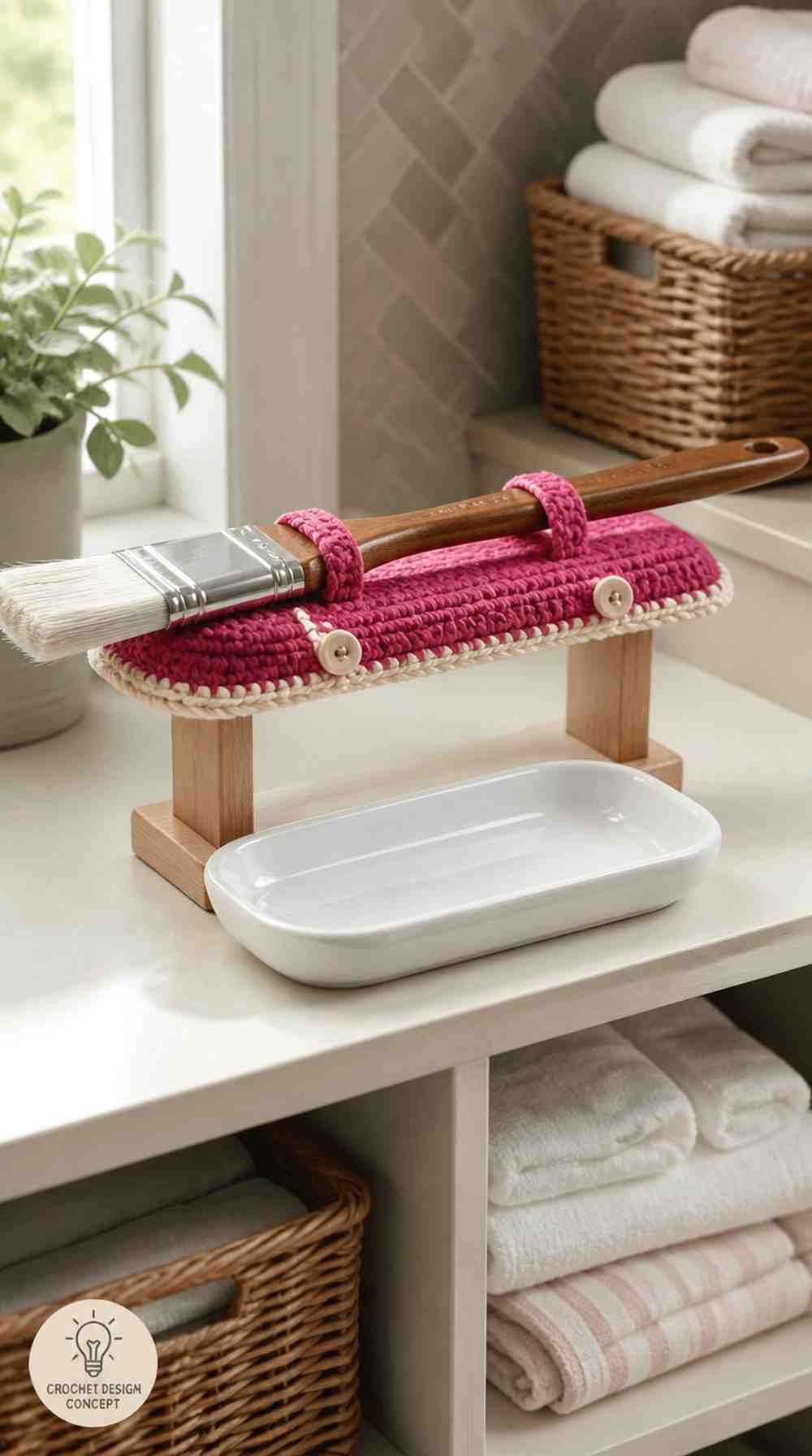
Raspberry-pink crochet covers two small support saddles on a light-wood rack, creating a horizontal resting place for a narrow stain-brush handle. Ivory edging outlines the supports, while the brush head projects completely beyond the front of the cradle.
The most important feature is the separation between the supported handle and the exposed brush head. This arrangement offers an alternative to vertical hanging for brushes that do not have a suitable handle hole, although the rack must be stable enough to prevent tipping.
- Handle support: Position both saddles beneath the handle rather than the brush head so the bristles remain clear of the crochet.
- Weight balance: The projecting brush head can make the rack tip forward; a real version needs a properly balanced rigid base.
- Brush-head clearance: Leave enough space beyond the cradle for the bristles to hang freely without rubbing against the tray or shelf edge.
5. Crochet Sea-Glass Shelf-Wrap Brush Hanger
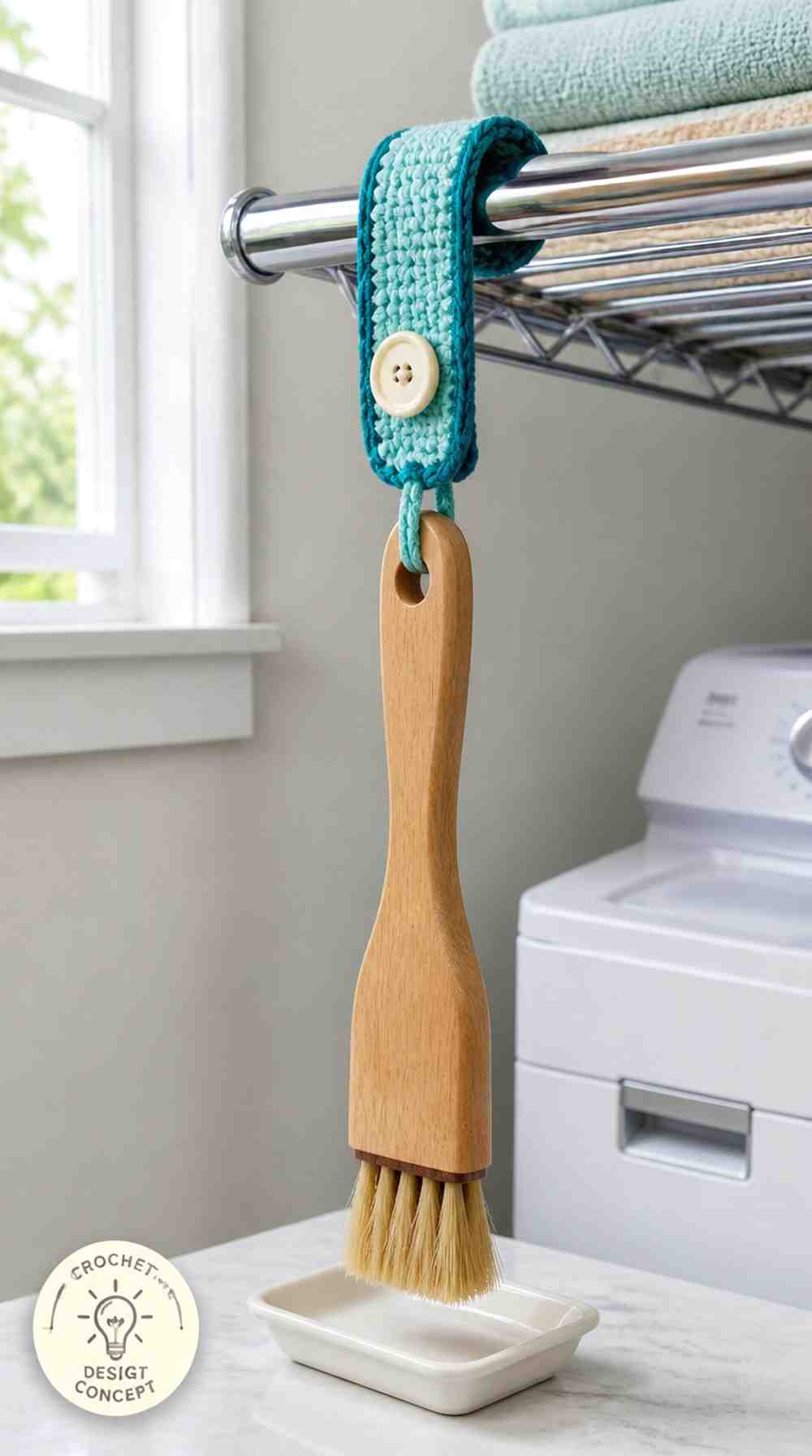
Sea-glass-turquoise crochet wraps around a smooth metal shelf rail, held by a small ivory button. A short matching lower loop connects through the existing hanging hole of a wooden stain brush. Deep-teal edging gives the strap a neat outline.
This concept avoids the need for a separate wall plaque and uses an existing shelf rail as its mounting point. However, the rail must be suitable for hanging items, and the buttoned connection should remain secure when the brush is removed and replaced.
- Rail compatibility: Check that the shelf rail is securely installed and has enough room for the wrap without obstructing the shelf’s normal use.
- Buttoned fastening: Reinforce the buttonhole and sew the button securely so repeated handling does not loosen the connection.
- Drying position: Keep the brush suspended above a removable tray, with no wet bristles resting against the rail, wall or crochet strap.
6. Crochet Oatmeal Three-Loop Brush Ladder
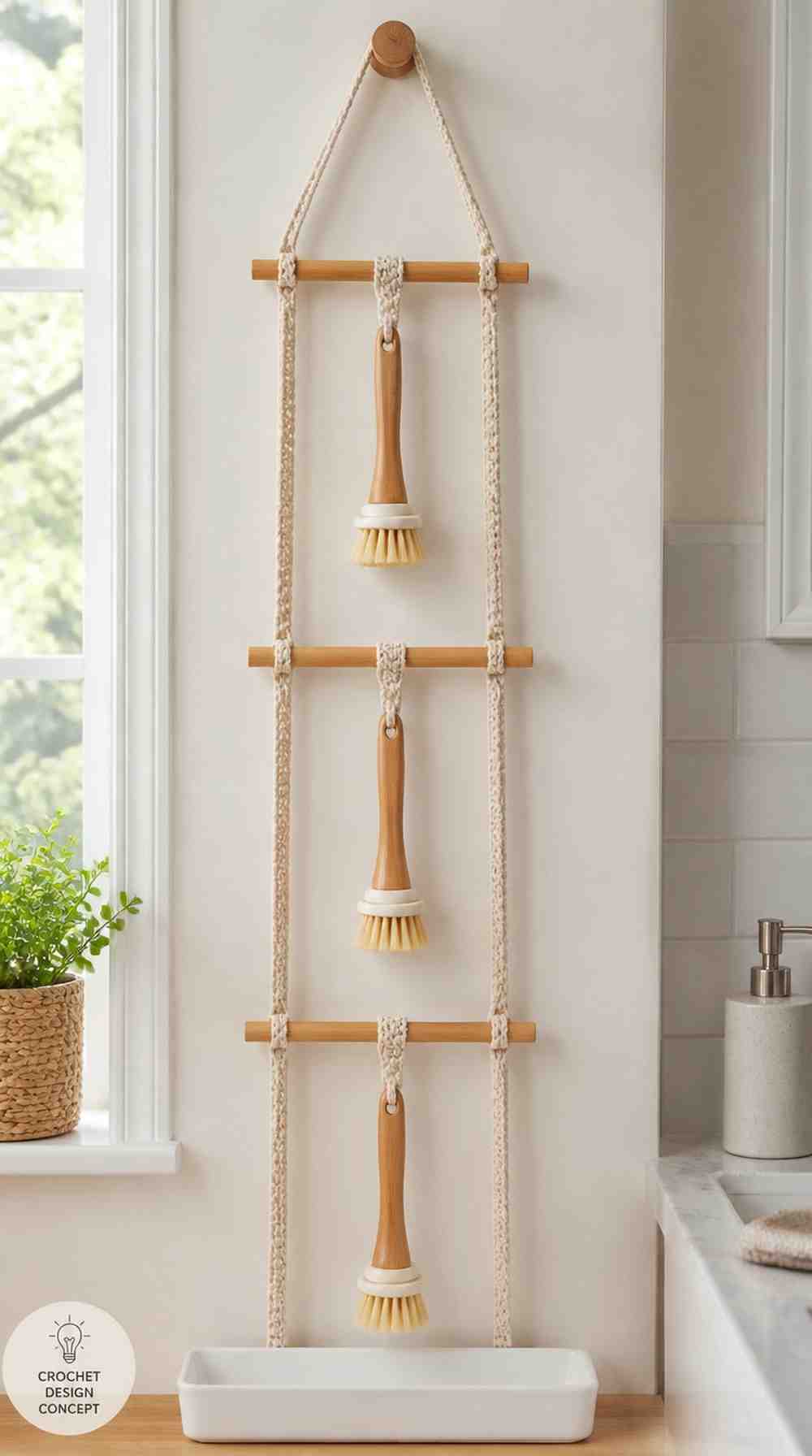
Warm oatmeal crochet connects three small bamboo dowels into a narrow vertical ladder. Each dowel has a short ivory loop supporting one stain brush through its handle hole. The brushes hang at different levels, with their bristles pointing down and staying separate.
The ladder arrangement is useful to consider when several laundry brushes need their own places. It uses vertical wall space rather than spreading all the brushes across a shelf, although its support connections must accommodate the combined weight.
- Staggered spacing: Adjust the distance between dowels so the brush heads do not overlap or touch the handle of the brush below.
- Upper mounting strength: The wall peg and top connection must support the complete loaded organizer, not just the empty crochet ladder.
- Individual removal: Each brush should be accessible without pulling the other hanging loops out of position.
7. Crochet Cocoa Freestanding Arch Brush Hanger
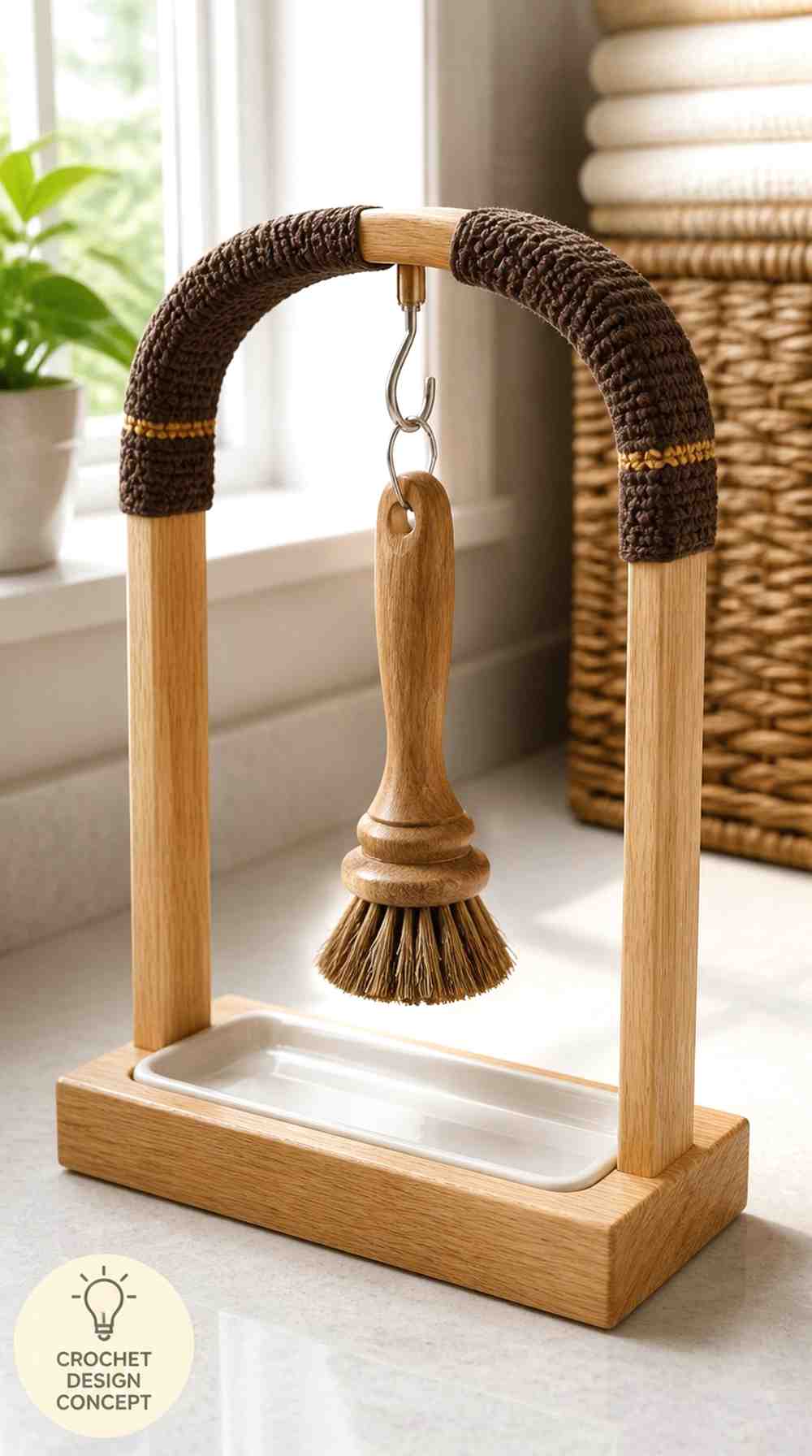
A light-oak arch forms the rigid structure of this small countertop drying station. Cocoa-brown crochet wraps part of its curved upper section, finished with a narrow caramel stripe. One metal hook hangs from the exposed crossbar, holding a stain brush above a separate ceramic tray.
The freestanding design does not require wall mounting, which may appeal to someone using a movable laundry setup. Its stability is especially important because the suspended brush places weight beneath the upper arch.
- Stable base: A sufficiently wide, secure wooden base is essential to prevent the hanging brush from pulling the arch over.
- Removable drip tray: Keep the tray separate from the crochet and easy to empty and clean after moisture collects.
- Counter placement: Use a dry, level surface with enough surrounding space so the rack does not obstruct laundry equipment or nearby electrical outlets.
8. Crochet Lavender Adjustable Button-Tab Hanger
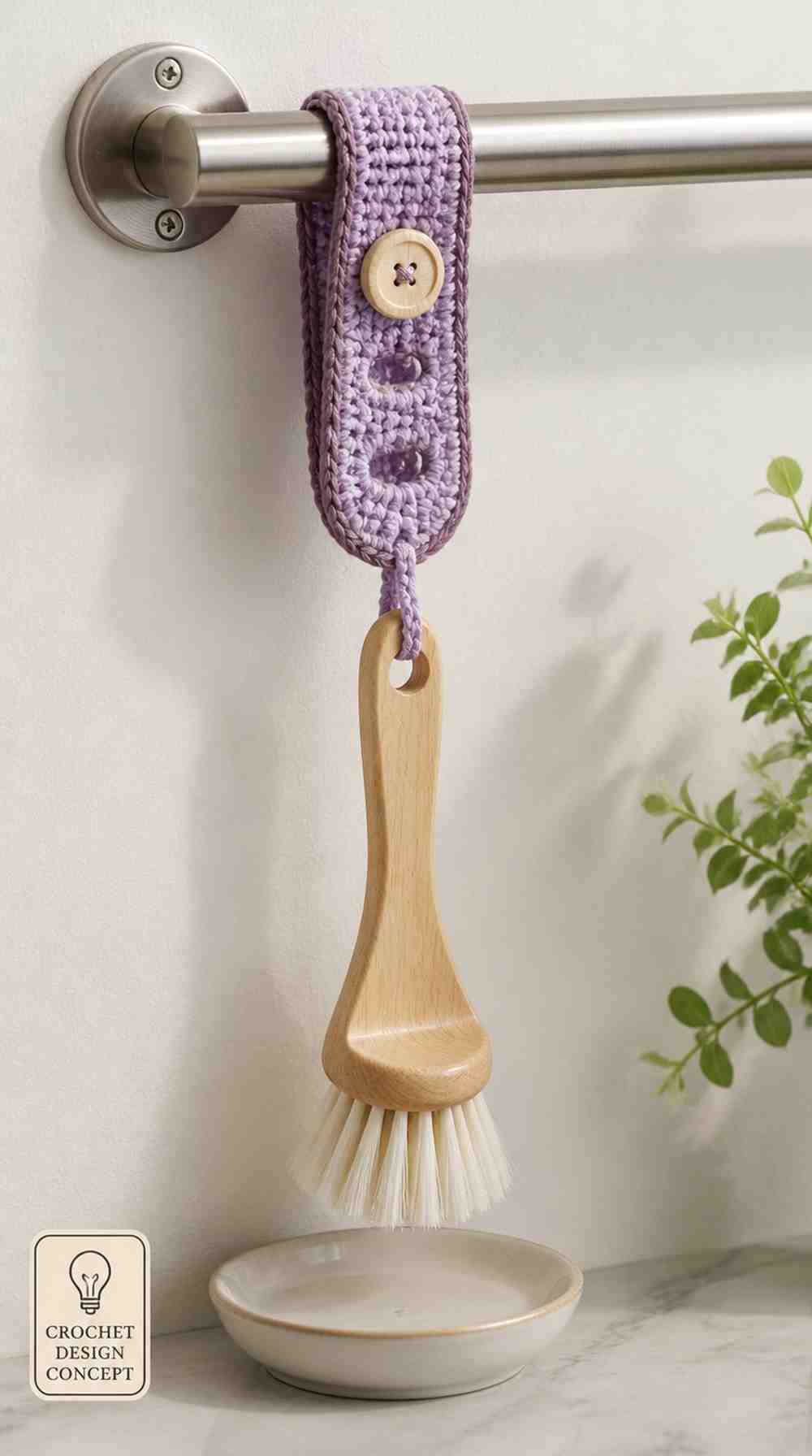
Muted-lavender crochet creates a narrow strap with two reinforced buttonholes and one pale-wood fastening button. The strap wraps around a laundry rail, while a short lower loop suspends the stain brush through its existing handle hole.
The adjustable button positions distinguish this holder from a fixed crochet loop. They allow the wrap to accommodate small differences in rail circumference, though they do not make the design suitable for every type of rail or brush.
- Adjustment positions: Test both buttonholes on the actual rail so the strap remains secure without excessive stretching.
- Unused buttonhole: Reinforce the second opening because an unfastened hole can still become distorted through repeated folding and handling.
- Brush length: Consider the hanging height of the particular brush, including its full bristle length, before selecting the fastening position.
9. Crochet Blush Scalloped Wall-Plate Hanger
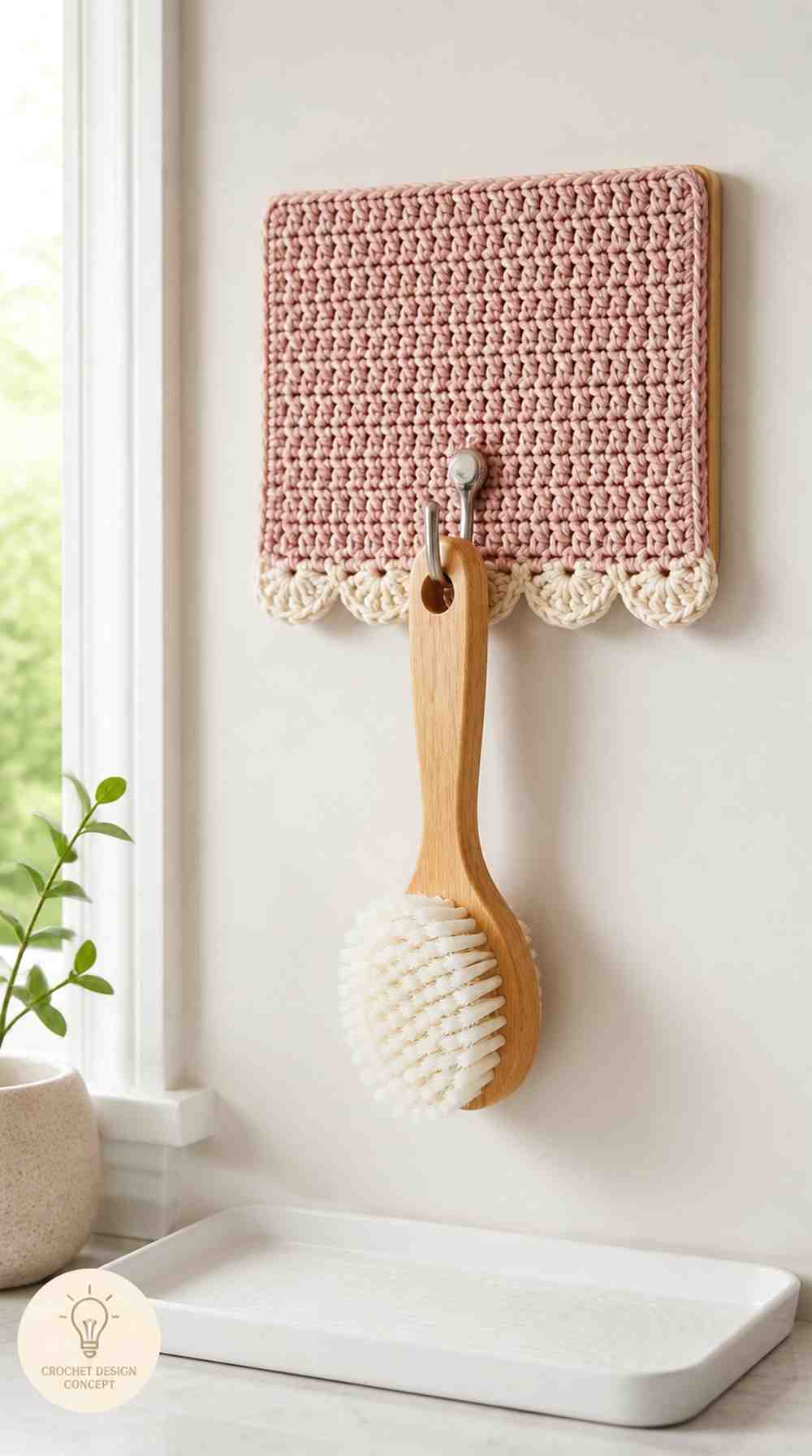
Dusty-blush crochet covers a small rectangular wooden wall plaque, with ivory shell stitches forming a decorative lower edge. A stainless-steel hook mounted through the rigid backing holds one wooden stain brush by its existing handle hole.
This design combines a more traditional wall-decoration appearance with a practical brush-hanging position. Its decorative shell border sits above the brush head, helping keep the wetter part of the tool away from the crochet.
- Rigid backing: Use a properly mounted backing board so the metal hook does not depend on soft crochet fabric for structural support.
- Shell-edge placement: Keep the ivory scallops above the brush head and clear of its moving handle during removal.
- Cleaning access: A removable or washable crochet covering is worth considering because laundry rooms can expose decorative surfaces to dust and detergent residue.
For a related approach to hanging small brushes, see 18 Crochet Paintbrush Drying Hanger Inspiration Ideas on Yarn Nest Studio. Those concepts involve artists’ brushes, but their open-hanging arrangements offer useful visual comparisons.
10. Crochet Indigo Hoop-and-Crossbar Brush Hanger
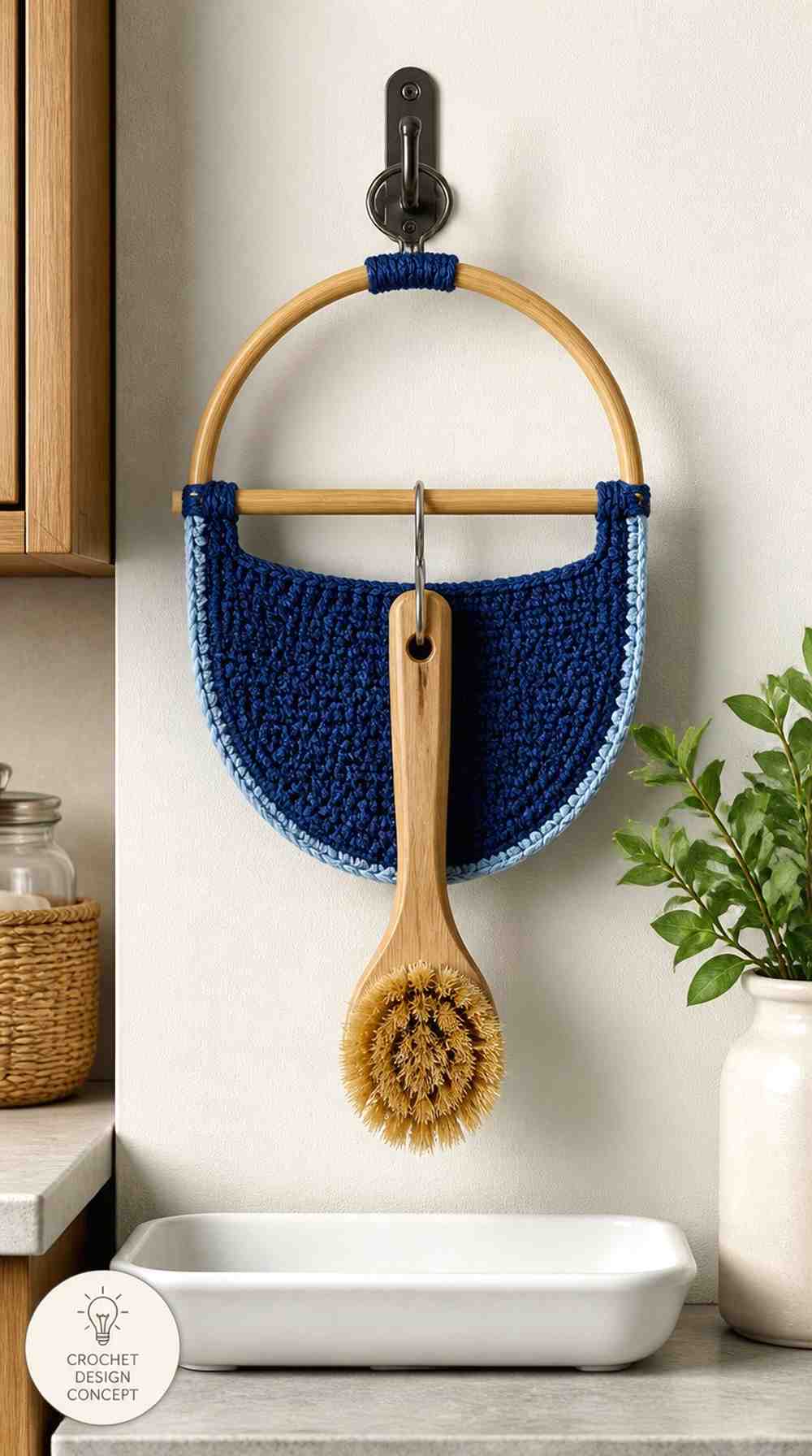
An indigo crochet covering follows the lower section of a natural-bamboo hoop, with a pale-blue border defining its edge. A small wooden crossbar sits inside the hoop and supports an exposed metal hook holding the laundry stain brush.
The round frame gives this design a distinctive appearance compared with rectangular wall panels. The brush hangs below the central crossbar, leaving its head uncovered, while the crochet remains mostly around the decorative outer frame.
- Crossbar attachment: The wooden crossbar must connect securely to the hoop rather than floating within the crochet-covered frame.
- Brush clearance: Position the hook so the brush head extends below the hoop without pressing against the wrapped lower arc.
- Hoop stability: Use a suitable wall hook and check the full frame’s balance before hanging a wet or recently rinsed brush.
11. Crochet Moss Under-Shelf Corner Hanger
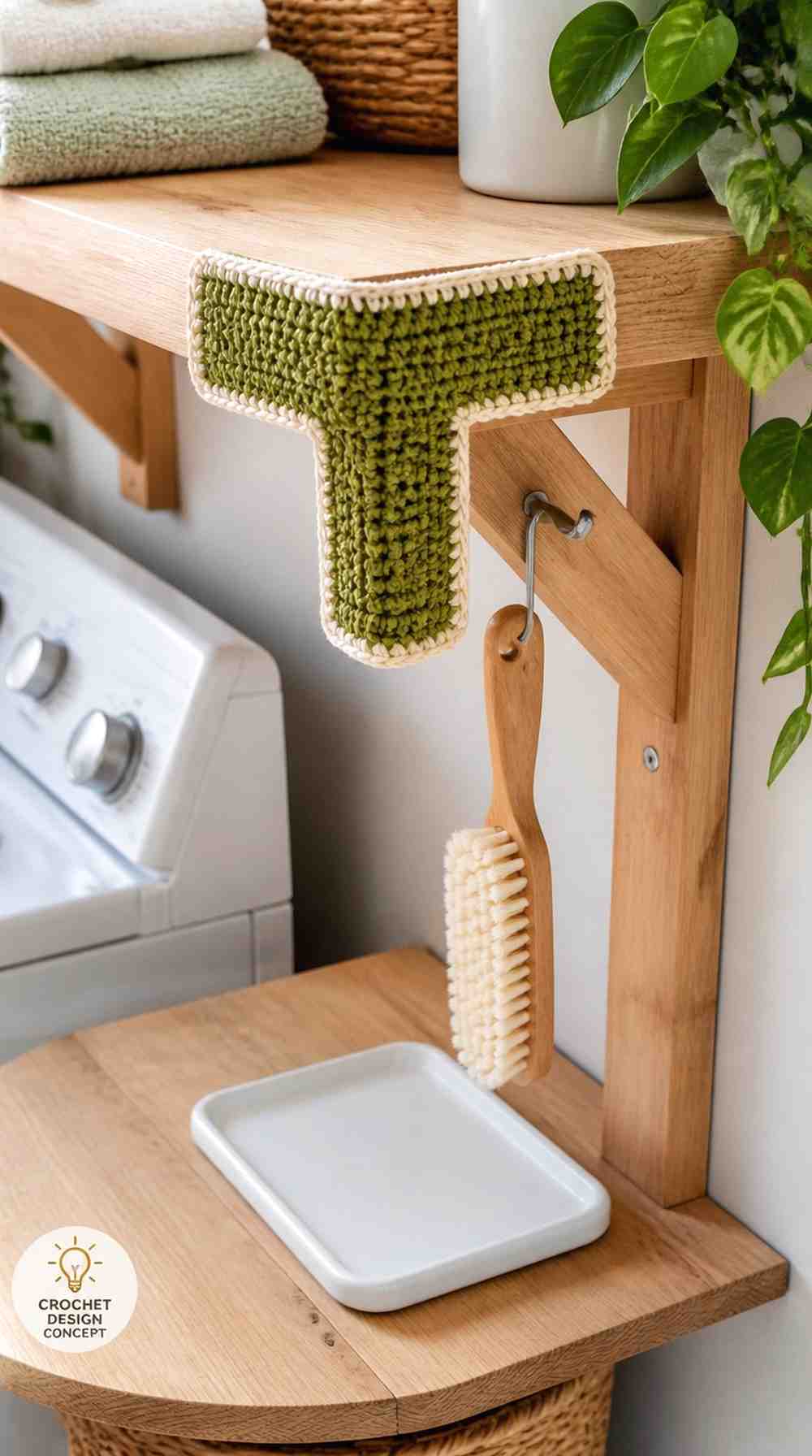
Moss-green crochet wraps the outer corner of a natural-wood laundry shelf bracket. Its L-shaped form follows two perpendicular surfaces, with narrow ivory edging highlighting the corner. A separate metal hook attached directly to the wooden bracket holds the brush below.
The advantage of this concept is its compact placement beneath an existing shelf. The crochet contributes texture without enclosing the brush or interfering with its bristles, making it visually different from a traditional hanging pocket.
- Shelf-bracket suitability: Only consider this arrangement on a securely fixed bracket designed to support the additional hanging load.
- Corner shaping: Keep the crochet sleeve neatly fitted around the bracket so it does not slip over the metal hook or obstruct the brush.
- Drip management: Position a removable tray beneath the suspended brush, away from stored detergents, electrical equipment and moisture-sensitive surfaces.
12. Crochet Charcoal Soft-Grip Clip Hanger
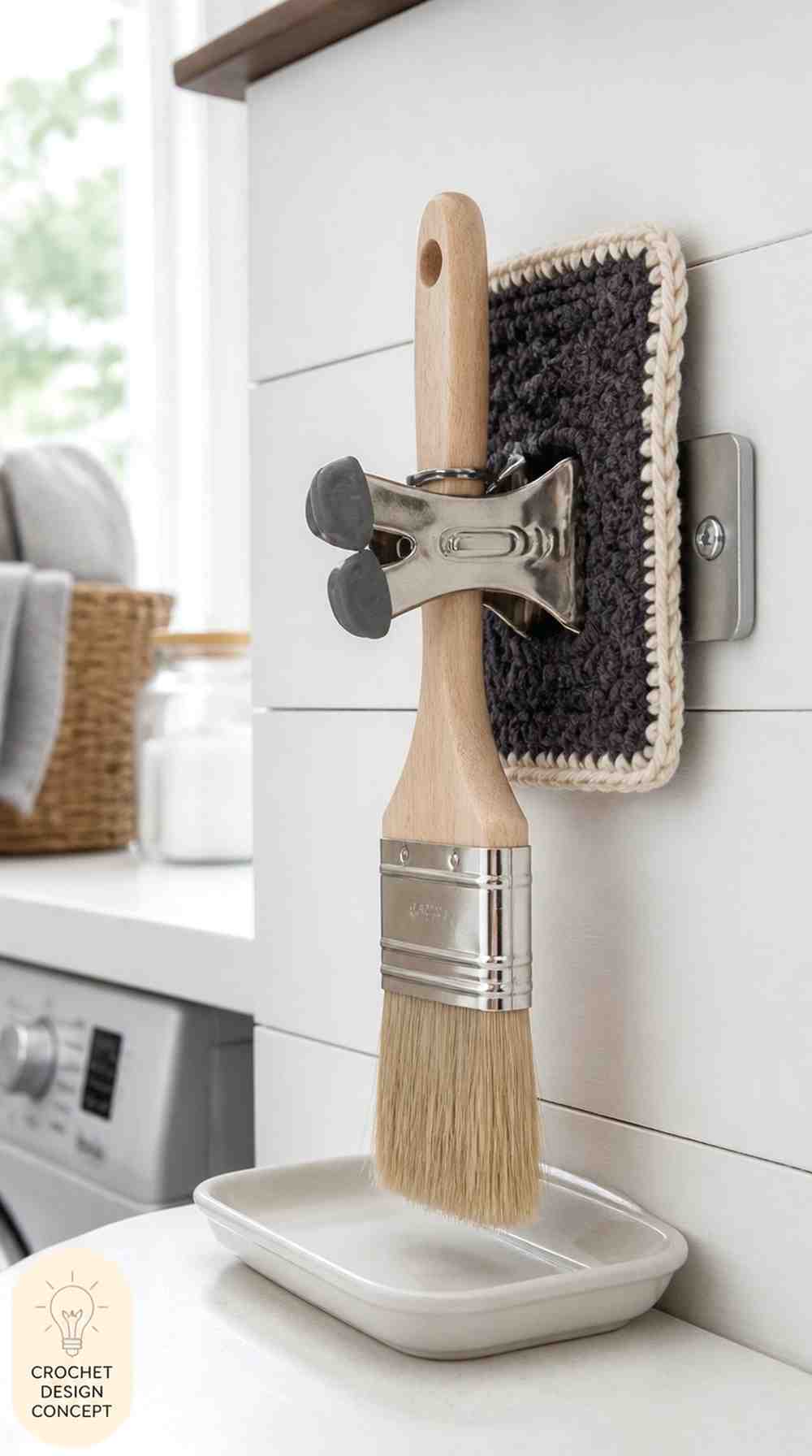
Charcoal-gray crochet creates a small decorative covering around a rigid wall-mounted clip support. A stainless-steel spring clamp with protective silicone pads grips the dry upper handle of a stain brush, allowing its bristles to hang down freely.
Unlike the handle-hole designs, this concept does not require a hole at the end of the brush. Its suitability depends on the particular handle shape and the clip’s gripping ability, not on the crochet covering.
- Clip compatibility: A spring clamp should hold the handle securely without cracking plastic, crushing wood or allowing the brush to slide out.
- Protected contact: Smooth silicone pads may help reduce abrasion, although their grip and material compatibility need checking on the actual brush.
- Load-bearing separation: Mount the clip to rigid hardware; the charcoal crochet is decorative and should not be relied upon to support the brush’s weight.
13. Crochet Ivory Offset Double-Brush Hanger
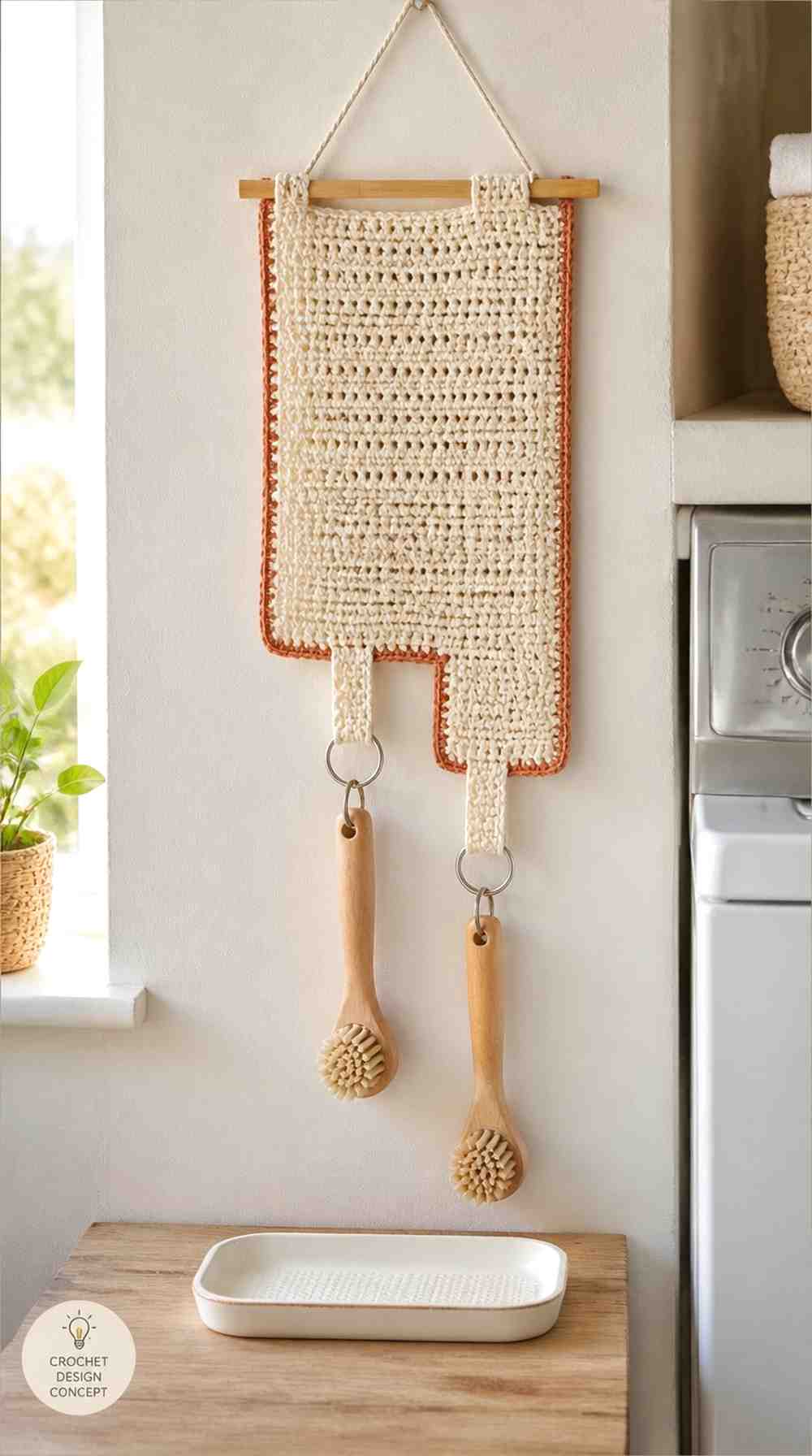
Warm-ivory crochet forms a rectangular wall panel suspended from a narrow bamboo dowel. Two reinforced lower tabs hang at different heights, each holding a small metal ring. A wooden stain brush hangs from each ring through its existing handle hole, with the bristle heads kept separate.
The staggered layout gives two brushes their own positions without making the organizer very wide. Terracotta edging adds a subtle finish, while the exposed metal rings provide clear attachment points below the crochet panel.
- Different hanging heights: Offset the two tabs enough to keep the brush heads from knocking together when the brushes are removed or replaced.
- Ring attachment: Reinforce the crochet tabs where the metal rings connect so repeated movement does not wear through the yarn.
- Combined weight: The dowel, mounting hooks and textile connections need to suit the weight of both actual brushes, including any retained water.
Practical Guide to Crochet Laundry Stain Brush Drying Holders
Start with the brush shape. Check whether your stain brush has a hanging hole, a narrow handle, a broad plastic grip or a short scrub-brush body. A handle-hole loop will not work for every brush, while a clip or supported cradle may need model-specific sizing.
Leave the bristles exposed. A holder intended for drying should not enclose the wet brush head in dense crochet. Open air circulation and a suitable position help the brush dry. Follow the brush manufacturer’s instructions on orientation, especially for wooden handles, adhesives or unusual bristle materials.
Choose a washable yarn. Smooth cotton yarn is one option for decorative holders because it shows crochet stitches clearly and may be washable according to its care label. However, cotton absorbs moisture. Keep the yarn away from the wettest part of the brush and wash and dry the holder when needed.
Use secure mounting hardware. Crochet loops and wall hangers are not automatically load-bearing. Check the strength of each actual hook, clip, bracket or rail and do not overload existing shelves. If a rigid support is required, the crochet should not be treated as a replacement for it.
Manage drips separately. A removable tray beneath a hanging brush may help protect the surface from remaining water. Empty and clean the tray, and avoid placing a dripping brush over electrical sockets, appliances or stored chemicals.
Clean before hanging. Rinse or otherwise clean the stain brush according to its material and the stain-removal product instructions. Remove excess water before placing it in the holder. Do not mix incompatible cleaning chemicals or leave chemical residue soaking into crochet yarn.
Inspect everything after use. Look for stretched loops, loose buttons, damaged clips, worn yarn and trapped moisture. A holder that stays damp or develops an unpleasant smell should be cleaned and fully dried before reuse.
Want to Make Something Similar?
The following crochet resources teach related hanging and brush-holder construction techniques. They are not exact patterns for the 13 illustrated concepts, and they have not been tested as laundry stain brush drying systems.
- Crochet Dish Brush Holder — CyCrochet — A free written pattern with diagrams demonstrating a folded crochet holder, side seams and a hanging loop. Its pocket construction differs from the exposed-bristle arrangements shown here.
- Hanging Ring Towel Holder — Naztazia — A free crochet project with a video tutorial demonstrating a crocheted ring and buttoned hanging connection. The fastening technique may offer useful inspiration for adjustable straps.
- Wall Hanging Organiser — Igacrochet — A free wall-organizer pattern with a dowel-supported hanging design, useful for understanding rectangular crochet backings and upper support.
For another small cleaning-tool storage idea, explore 16 Crochet Hanging Sink Sponge Caddy Inspiration Ideas. These are kitchen-sink organizers rather than laundry brush drying holders, but they provide related examples of removable hanging arrangements.
Which Crochet Laundry Stain Brush Drying Holder Should You Choose?
| Main requirement | Designs to consider | Important trade-off |
|---|---|---|
| One brush with a handle hole | Terracotta Handle-Loop, Sea-Glass Shelf-Wrap | Requires a suitable handle hole |
| Two or more brushes | Navy Two-Clip Rail, Oatmeal Three-Loop Ladder, Ivory Offset Double-Brush | Needs more support and hanging clearance |
| Decorative wall panel | Butter Yellow Mesh-Back, Blush Scalloped Wall-Plate | Requires appropriate wall mounting |
| Horizontal brush support | Raspberry Split-Cradle | Needs a stable rigid rack |
| Movable countertop station | Cocoa Freestanding Arch | Takes up counter space |
| Adjustable fastening | Lavender Button-Tab | Buttonholes and fit need checking |
| Circular decorative frame | Indigo Hoop-and-Crossbar | Requires a secure crossbar |
| Under-shelf placement | Moss Under-Shelf Corner | Depends on suitable shelf hardware |
| Brush without a hanging hole | Charcoal Soft-Grip Clip | Requires a compatible gripping clip |
For a small laundry room with a single brush that already has a hanging hole, the Terracotta Handle-Loop or Sea-Glass Shelf-Wrap concept is a simple starting point.
If several stain brushes need separate places, the Oatmeal Three-Loop Ladder and Ivory Offset Double-Brush designs make use of vertical wall space. The Navy Two-Clip Rail is another option when compatible rigid hardware is available.
For a brush without a handle hole, the Charcoal Soft-Grip Clip or Raspberry Split-Cradle concept may be worth exploring, provided the gripping or supporting components can hold that particular brush safely.
Conclusion
Crochet laundry stain brush drying holders bring handmade color and organization to a small but useful part of the laundry routine. From simple terracotta hanging loops and adjustable lavender straps to open mesh panels, sturdy drying rails and decorative wall plaques, these 13 concepts explore different ways to give a cleaned brush its own space. The best choice depends on the brush’s handle, available mounting points and the need for proper airflow. Keep the bristles unobstructed, choose suitable support hardware and make sure the crochet itself can be removed and cleaned when necessary.
Which design would you use in your laundry room? Would you choose a single hanging loop, a decorative crochet wall panel, a small freestanding arch or a holder that keeps several stain brushes separate? Share your favorite and the type of brush you currently use.
Frequently Asked Questions
1. Can crochet be used to hold a wet laundry stain brush while it dries?
A properly designed holder may help position a cleaned brush for drying, but the crochet should ideally support only the handle or form a decorative part of a rigid hanging system. Avoid enclosing damp bristles in dense yarn. The actual holder must be secure, easy to clean and compatible with the brush manufacturer’s drying instructions.
2. What yarn is suitable for a crochet laundry brush holder?
Smooth, washable cotton yarn is one option because it can provide clear stitch definition and is available in a range of useful colors. However, cotton absorbs moisture and can stretch under load. Keep the yarn away from the wet brush head and follow its specific washing and drying instructions. Do not assume crochet alone will safely support a heavy brush.
3. Is it better to dry a stain brush with the bristles pointing downward?
Some brushes can be hung with the bristles downward to encourage drainage and avoid resting weight on the bristle tips. However, the correct position depends on the brush’s construction, handle material and manufacturer’s instructions. The important general considerations are allowing airflow, avoiding prolonged moisture and keeping the bristles from being crushed.
4. How do I prevent a crochet brush holder from becoming damp or developing an odor?
Clean the brush before hanging it, remove excess water and keep the wet head away from the crochet fabric. Place the holder in a ventilated area and inspect it regularly. If the yarn becomes damp or dirty, remove and wash the holder according to its care label, then let it dry completely before reuse.
5. Are these 13 crochet laundry stain brush drying holders available as patterns?
No. These are original crochet design visualizations intended to inspire different hanging methods, color combinations, mounting arrangements and decorative finishes. They are not tested finished objects or complete crochet patterns. The linked tutorials explain related crochet skills, but they do not reproduce the pictured holders exactly or establish that a particular design will safely hold your brush.