Soft pastels make scarves feel extra dreamy—think blush pinks, pearl greys, seafoam mints, and lavender hazes. Below are ten lovely crochet scarf projects (all free tutorials from reputable designers) that lean into airy textures, gentle striping, and cozy fibers. Each idea includes quick sizing notes, specific supplies, and a direct tutorial link. So your visuals match the real project. Pick your favorite pastel mood and get stitching!
Crosswinds Triangle Scarf
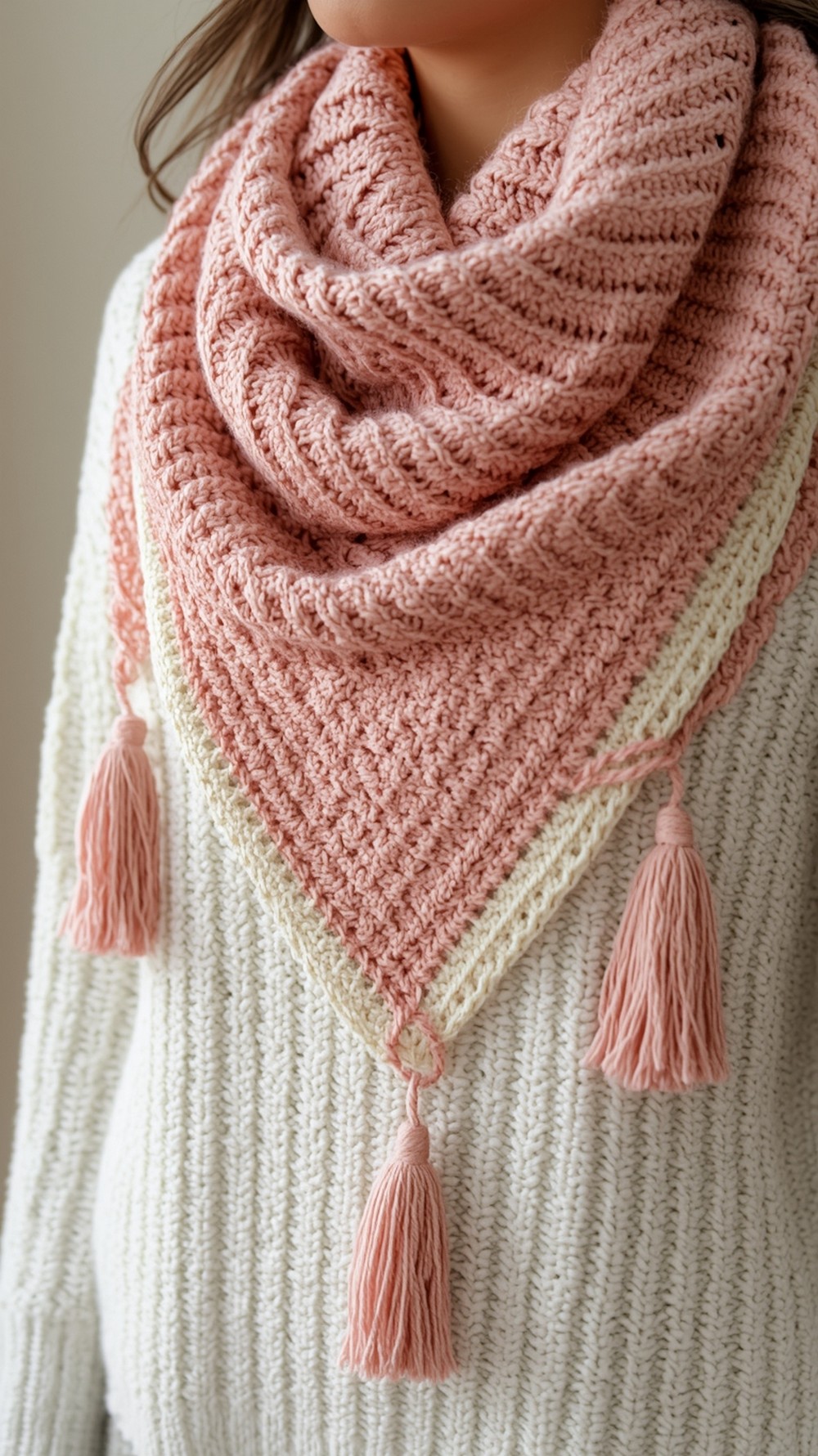
This textured triangle scarf works up in soothing shells and cross double crochets, finished with a delicate cream border and tassels. The sample features a romantic blush pink body with a natural-heather edging—perfect pastel vibes for daily wear. Make it as large as you like; the triangle grows row by row. Expect roughly 4–5 worsted skeins for the main color. Tip: keep edges straight by remembering the final dc in the turning chain. Find the full pattern and step photos in the Tutorial. Tutorial.
Supplies:
- Worsted acrylic/wool (Level 4)
- 5.5 mm (I) hook
- Yarn needle, scissors, measuring tape
Why it’s great: Modern texture + soft blush coloring = an effortlessly elegant wrap.
O’Go First Blush Scarf
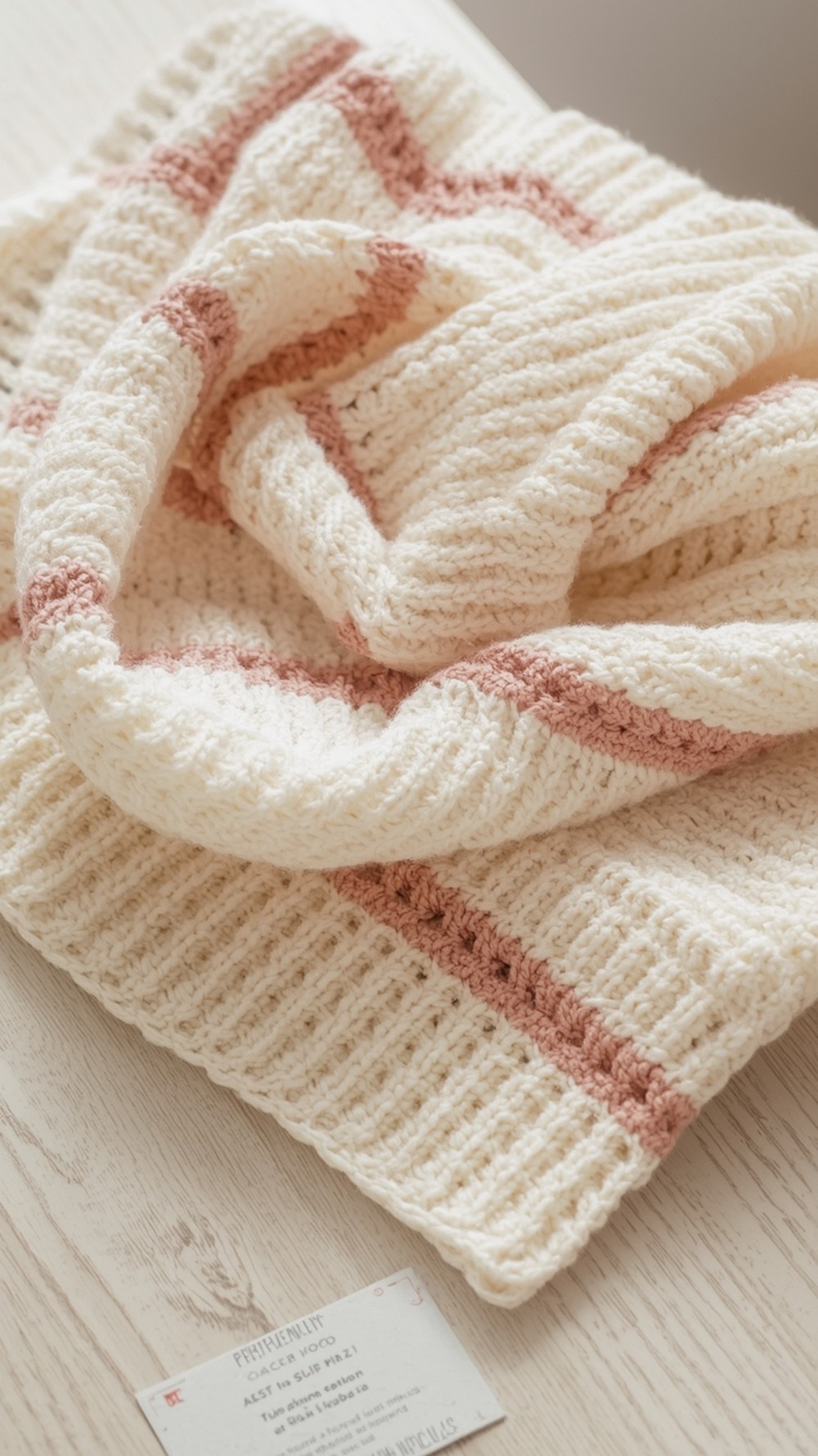
Beginner-friendly rows of single crochet in the back loop create sleek ribbing, punctuated by slim pastel stripes from Caron Colorama O’Go in “First Blush.” The base cream (“Sticky Rice”) keeps the look minimalist while the blush striping adds whisper-soft color. Measure your chain to your height for custom length. Tip: trim tails evenly for a tidy, fringe-like finish. Get the full how-to, materials, and a video on the Tutorial page. Tutorial.
Supplies:
- Bulky acrylic (Level 5)
- 6.5 mm (K) hook
- Tapestry needle, scissors
Why it’s great: Clean rib texture with delicate pastel accents—simple, quick, and chic.
Pink & Gray Striped Scarf
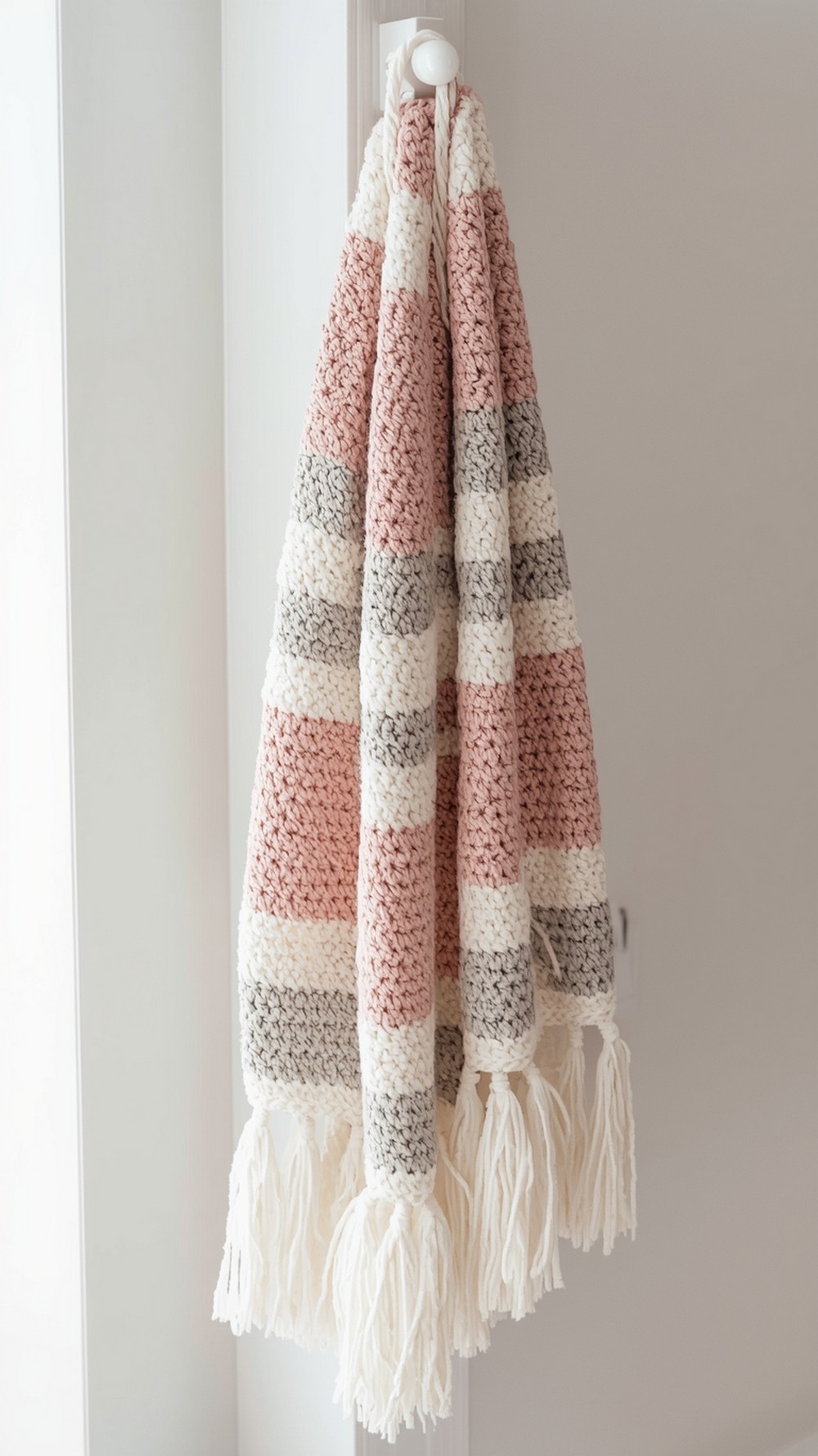
A wide half-double (worked between posts) gives this scarf pillowy drape in soft bands of quartz pink, putty grey, and rice-paper white. It’s long (about 90″ x 6″) for generous wrapping and finishes with simple tassels. Tip: mark color changes to keep stripe counts consistent. The stitch is easy to “read,” so it’s great for relaxed evenings. Full color names and row order are in the Tutorial. Tutorial.
Supplies:
- Chunky acrylic/wool blend (Level 5)
- 6.5 mm (K) hook
- Tapestry needle, scissors, small notebook for tassels
Why it’s great: Pastel stripes + super soft texture—classic and giftable.
Ombre Moss Infinity Scarf
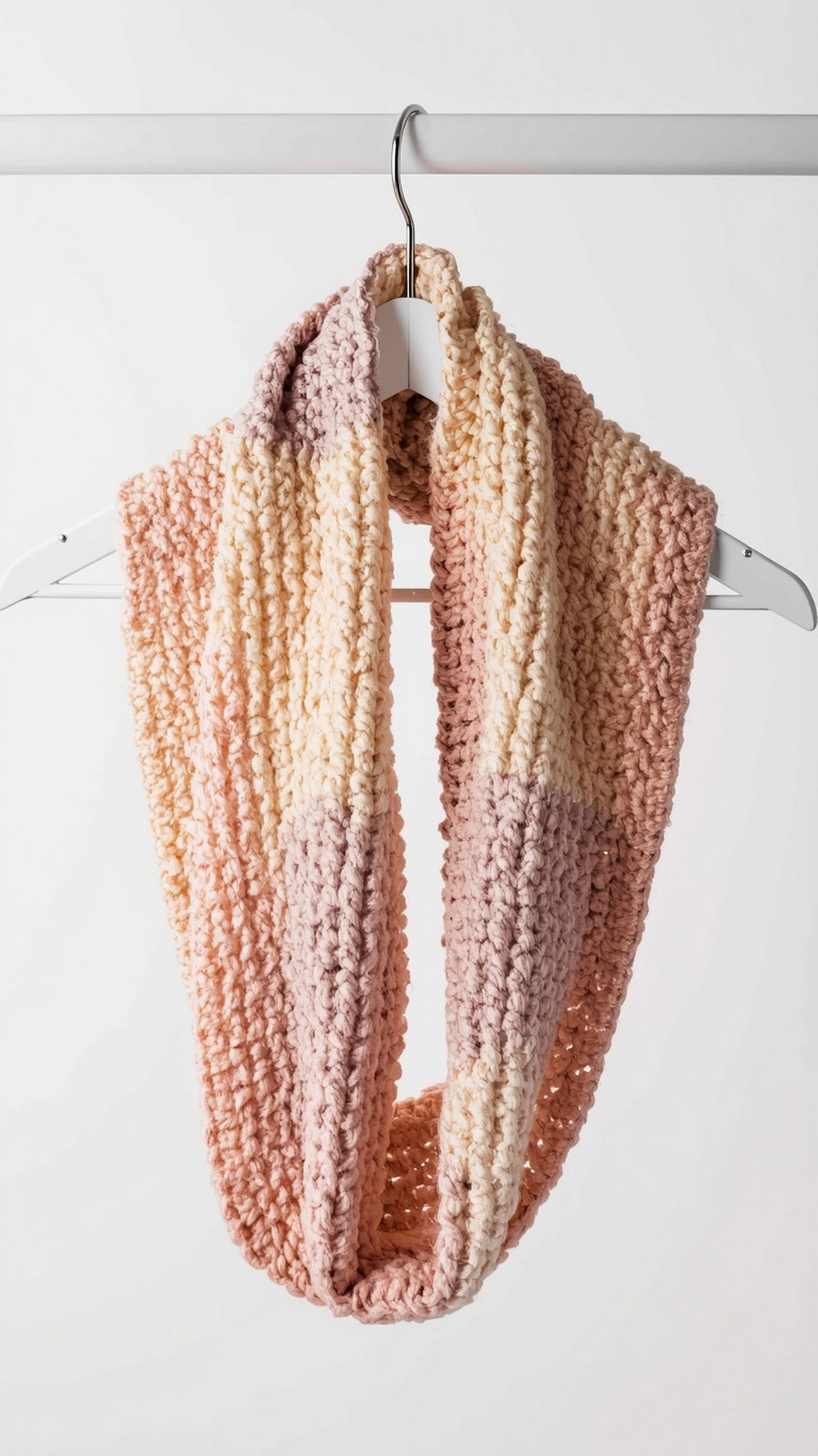
This airy infinity scarf uses the moss (linen) stitch to spotlight the gentle color flow of Bernat Sport Ombre Twist. The sample shows light, breezy hues in soft ombre transitions—ideal for pastel lovers. Work to your preferred length and sew ends for a loop, or leave it straight. Tip: go up a hook size or two for drape. Find gauge, yardage, and the printable pattern in the Tutorial. Tutorial.
Supplies:
- Sport acrylic (Level 3)
- 9.0 mm (M/N) hook
- Tapestry needle, scissors
Why it’s great: A one-skein pastel ombre with effortless, meditative stitching.
Marbled Scarf

Purl Soho’s free crochet Marbled Scarf lets hand-dyed color do the work. In their Estuary yarn, soft aquatic marls read as pastel seafoam, shell pink, and misty greys that gently shift along the fabric. The pattern is beginner-friendly and perfect for mindful stitching. Tip: wind skeins before starting to keep tension even. Full materials, sizing, and notes are in the Tutorial. Tutorial.
Supplies:
- Hand-dyed yarn per tutorial (lightweight)
- Hook size per pattern
- Tapestry needle, blocking tools
Why it’s great: Ethereal marled pastels with a simple, relaxing stitch repeat.
Tunisian Crochet Scarf
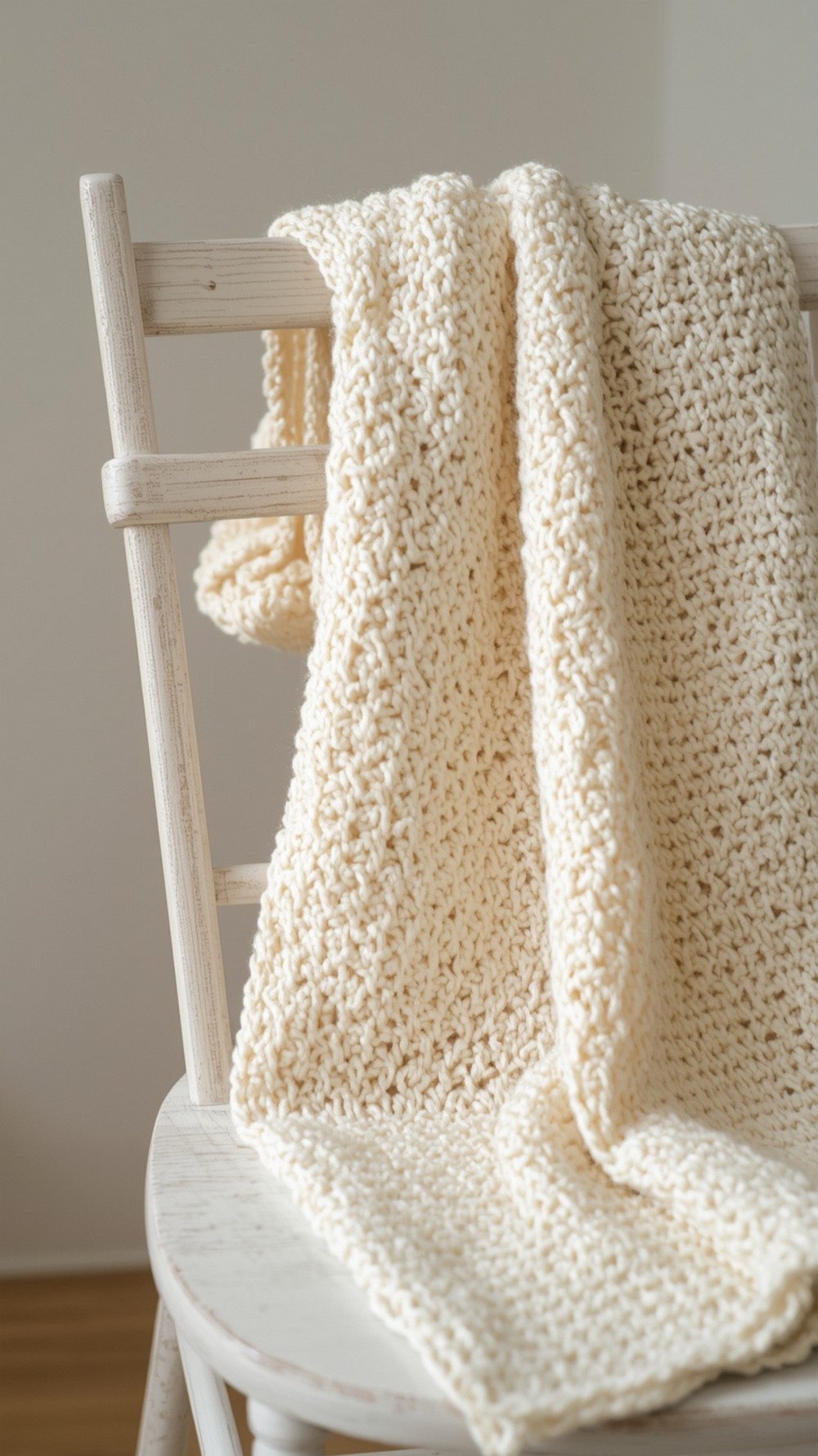
For serene minimalism, this Tunisian Gobelin-stitch scarf in creamy Heirloom White is perfection. Dense yet drapey, it feels luxe and reads as a quiet pastel neutral. You’ll use an Afghan hook and work forward/return rows—great for learning Tunisian basics. Tip: block lightly to open the fabric and soften the hand. Full tutorial, yardage, and hook details are on the Tutorial page. Tutorial.
Supplies:
- Baby alpaca (sport/worsted per pattern)
- 6 mm Tunisian/Afghan hook
- Tapestry needle, blocking pins
Why it’s great: A timeless, soft-ivory statement with beginner-friendly Tunisian texture.
Hygge Cloud Super Scarf
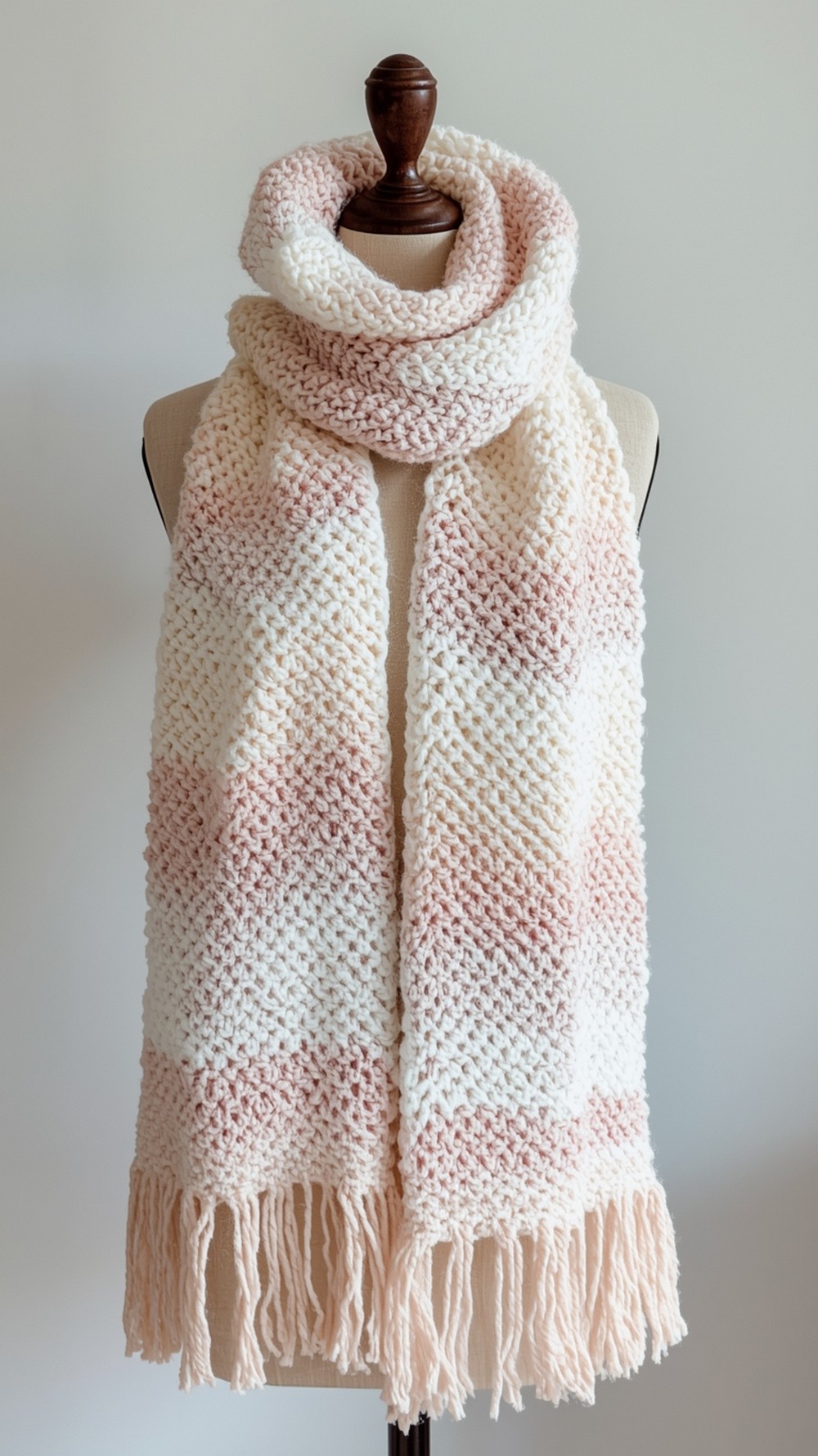
This oversized chevron-look scarf uses Red Heart Hygge in shades “Cloud” and “Pearl”—buttery soft, pastel-neutral hues with a gentle halo. The simple repeat grows quickly on a large hook, and optional tassels add flair. Tip: the stitch multiple is included, so customize width without fuss. Full written pattern and photos in the Tutorial. Tutorial.
Supplies:
- Bulky acrylic blend (Level 5)
- 9.0 mm (M/N) hook
- Tapestry needle, optional tassel maker
Why it’s great: Feather-soft pastels, giant comfort, and a meditative repeat.
Skinny Scalloped Scarf
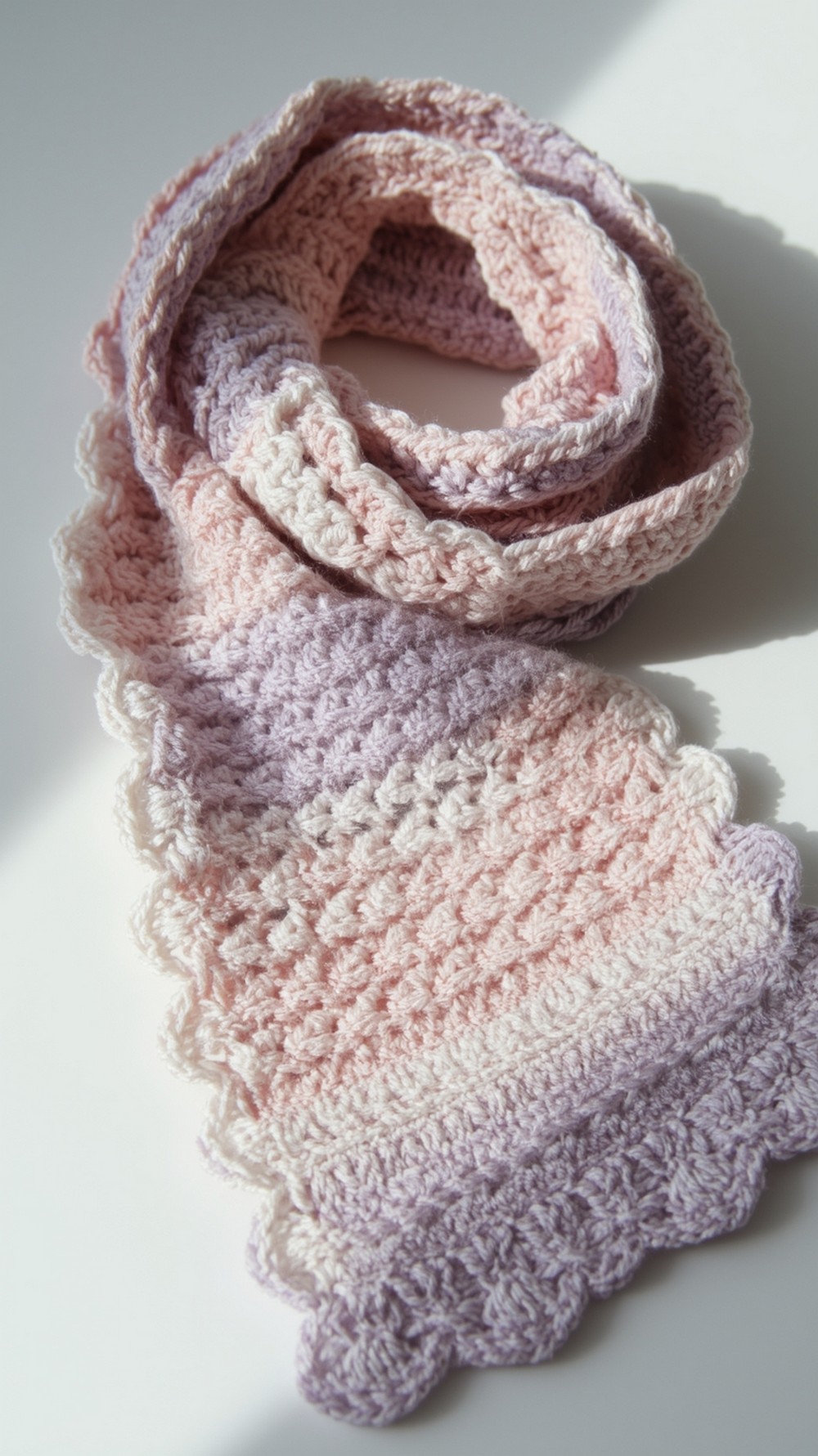
A sleek dc foundation becomes boutique-worthy once you scallop the entire edge. The Repeat Crafter Me sample uses variegated yarn with subtle pastel shifts (think soft lilac, blush, and mist)—the scallops make the color play sing. It’s a great stash-buster and fast gift. Tip: block lightly to crisp the shell edging. Full stitch walkthrough and photos in the Tutorial. Tutorial.
Supplies:
- Worsted self-striping/variegated (Level 4)
- 5.0 mm (H) hook
- Yarn needle, scissors, blocking pins
Why it’s great: Light, lacy edges + gentle pastel color changes = instant polish.
At First Blush Triangle Scarf

This puff-and-dc lace triangle scarf delivers romantic drape in Lion Brand Touch of Alpaca “Blush.” It’s lightweight yet cozy, perfect over tees or coats. Work rows until your desired wingspan, then block to open the lace. Tip: keep puff stitches consistent by pulling loops to equal height. Full instructions and step photos in the Tutorial. Tutorial.
Supplies:
- Worsted alpaca blend (Level 4)
- 5.5 mm (I) hook
- Tapestry needle, blocking tools
Why it’s great: The name says it—blush pastel, airy lace, and easy repeats.
Sparkle Cake Triangle Shawl
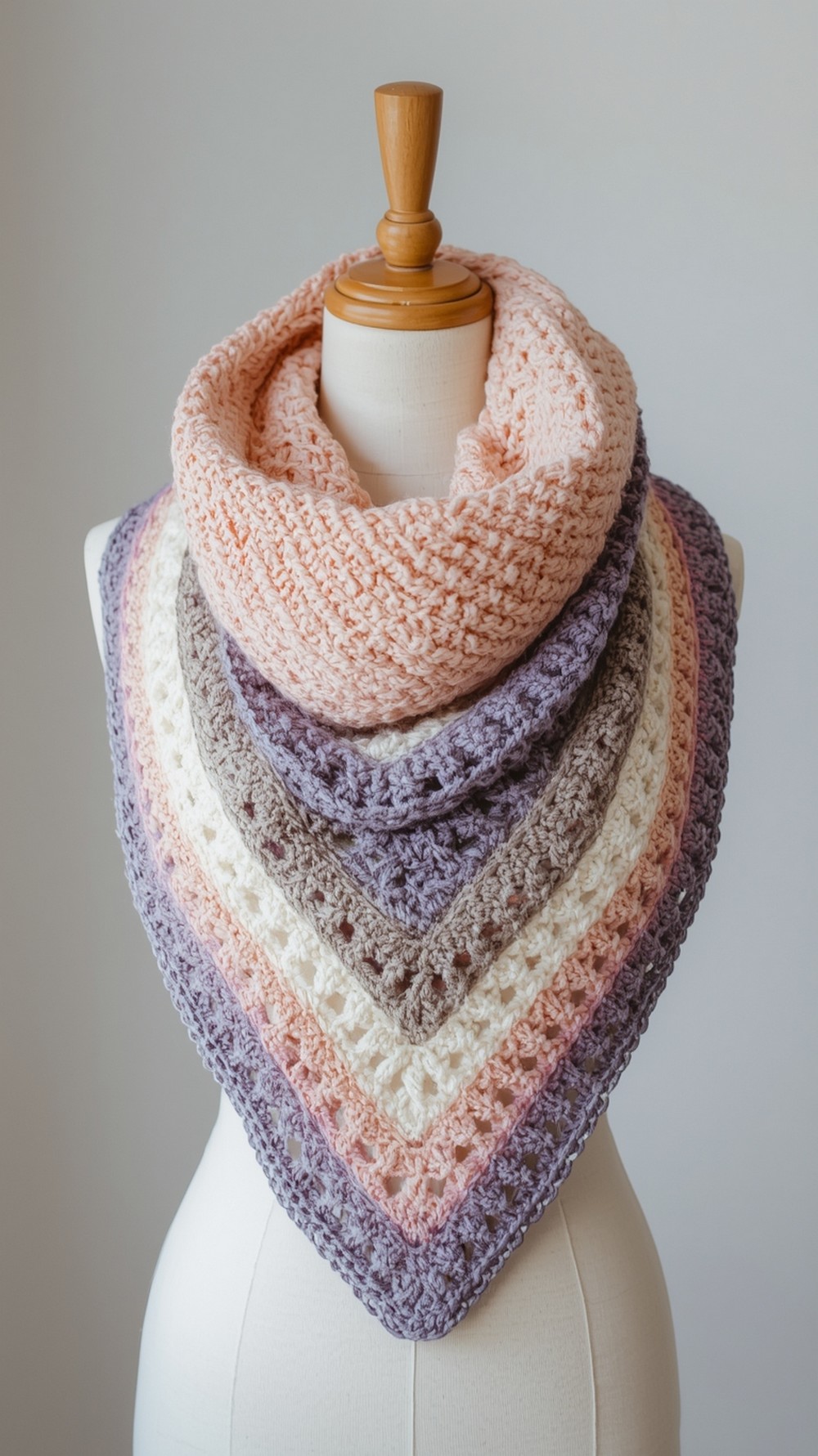
Sewrella’s triangle scarf/shawl keeps to two easy lines of instruction while Mandala Sparkle “Nova” paints the fabric with blush, peach, lavender, and light greys—an unmistakably pastel gradient with a hint of shimmer. Grow the triangle as large as you like. Tip: center-pull cake for smoother color transitions. See yarn notes, inspiration, and pattern in the Tutorial. Tutorial.
Supplies:
- DK acrylic blend (Level 3) with sparkle
- Hook size per pattern (commonly 5–5.5 mm)
- Yarn needle, scissors
Why it’s great: A gentle pastel rainbow that feels dreamy and beginner-friendly.
Conclusion
Pastels make crochet scarves feel soft, wearable, and endlessly giftable. Start with one that matches your yarn stash—ribbed stripes or a simple triangle are quick wins—and you’ll have a cozy accent that brightens outfits without shouting. Bookmark this list for weekend makes, and share your finished scarf pics so others can discover these gentle, calming palettes too.
FAQs
What yarns work best for pastel scarves?
Cotton blends, acrylics, alpaca blends, and brushed fibers (like Hygge) show pastels beautifully; look for heathers, marls, and gentle ombrés.
Machine wash or hand wash?
Check the label. Acrylics/cottons are often machine-washable (cold, lay flat). Alpaca/wool blends typically prefer hand wash and flat dry.
How do I scale a scarf pattern?
Add/subtract foundation chains in the given stitch multiple; work more or fewer rows for length. For triangles, simply stop when width feels right.
Safe fibers for kitchen/bath or heat?
Use cotton or linen for heat or damp areas. Avoid synthetics near high heat (they can melt) and be cautious with halos near flames.
What joins/edgings add durability?
Back-loop seams, slip-stitch joins, and single-crochet borders reinforce edges. For tassels, knot securely and trim evenly.
Typical time & yardage?
Skinny scarves: 200–300 yds; long ribbed scarves: 400–600 yds; super scarves: 600–800 yds; triangles vary (500–900 yds). Time ranges from 2 hours (skinny) to a weekend (large triangle).
Any photo tips for finished projects?
Shoot near a window, use a plain background, and style loosely draped. Focus on stitch texture; avoid harsh shadows.
How do I fix curling, stretching, or wavy edges?
Curling: go up a hook or block. Stretching: steam lightly and let dry flat. Wavy edges: reduce stitch count or loosen tension at turning chains.