If you want shawl patterns that are enjoyable to follow and easy to grow row by row, diagram-style crochet shawls are a lovely place to start. I picked eight shawl ideas with clear visual support, strong pattern pages, and distinct looks, from airy fan lace to cozy granny triangles. A good shawl diagram helps you spot repeats fast, check shaping at a glance, and relax into the rhythm without rereading every line. These ideas also give you a nice spread of beginner-friendly and more detailed options, so you can choose something simple now and save a stretch project for later.
Crochet Fan Lace Shawl Diagram
This soft triangular crochet shawl is a beautiful pick if you enjoy open fan repeats and a lighter, elegant finish. The DROPS Calandria pattern is worked top down and uses Baby Merino together with Brushed Alpaca Silk, giving the fabric a delicate halo and gentle drape. It finishes around 146 cm wide and 73 cm deep, so it works well as a shoulder shawl for cool evenings. A smart tip is to use stitch markers at each repeat edge so the fan diagram stays easy to track from row to row. Tutorial.
Supplies:
- DK/fingering-style wool blend plus brushed alpaca blend
- 5.0 mm crochet hook
- stitch markers
- yarn needle
- blocking pins
Why it’s great:
It gives you a pretty lace result without feeling too fussy once the repeat clicks.
Crochet Love Knot Shawl Diagram

This crochet shawl is a great choice when you want a diagram-led project with striking texture and very little bulk. DROPS 95-20 is worked from the bottom up in love knots, forming airy diamonds that look intricate but repeat in a steady rhythm. The pattern lists a top width of about 140 cm and a mid-back length of about 70 cm, so it is generous without feeling oversized. Add a progress marker every five diamonds to keep count clean and make the chart easier to read as the shawl grows. Tutorial.
Supplies:
- lace/lightweight mohair blend yarn
- 4.5 mm crochet hook
- wooden beads
- tapestry needle
- stitch markers
Why it’s great:
The open structure makes it lightweight, dressy, and surprisingly quick for its size.
Crochet Shells and Clusters Shawl Diagram
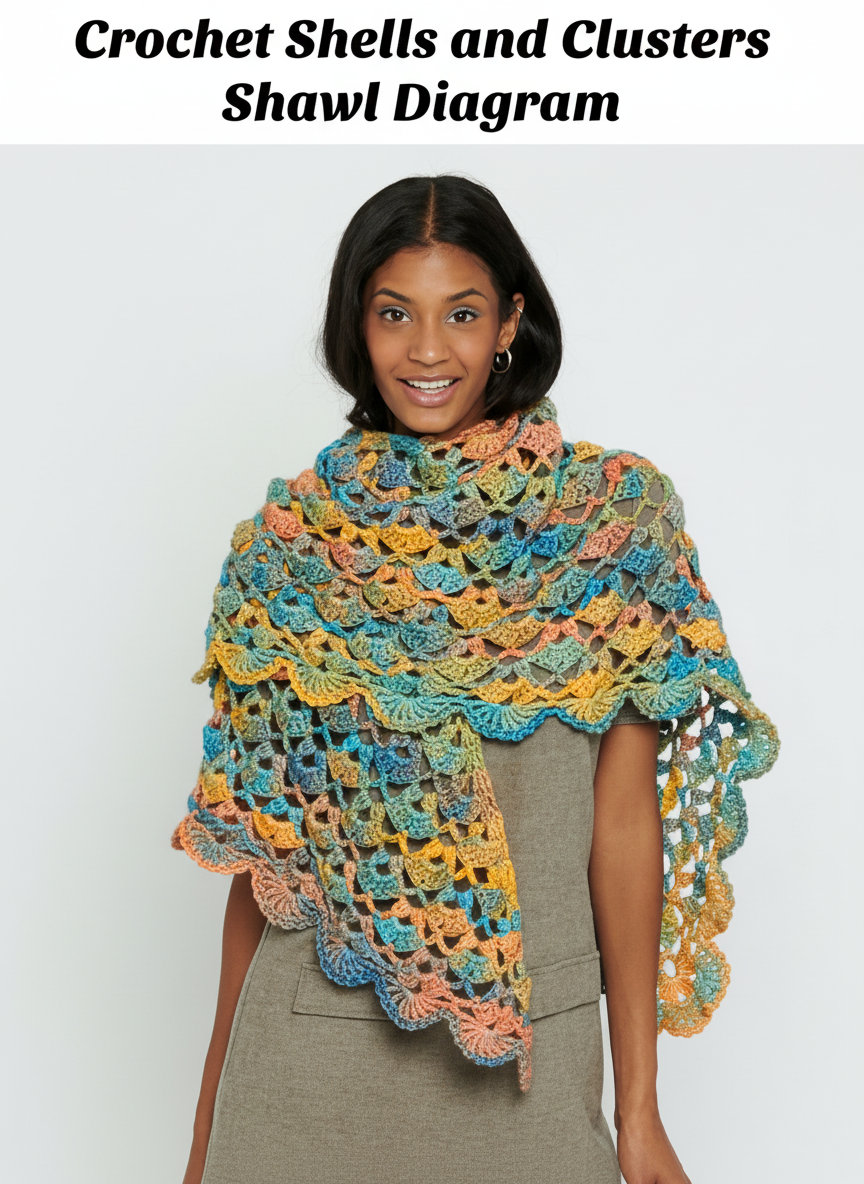
This crochet shawl works nicely for makers who want a fuller texture but still want a manageable pattern page. Yarnspirations’ Shells & Clusters Shawl is rated easy and uses Caron Blossom Cakes, so you get color movement without constant yarn changes. The shell and cluster details give the neckline extra interest while the overall shape stays wearable and practical. For the cleanest finish, swatch first and keep your chain tension even, because textured stitches can tighten faster than plain doubles when you settle into the repeat. Tutorial.
Supplies:
- light weight cake yarn
- hook in the pattern download
- yarn needle
- scissors
- stitch markers
Why it’s great:
It gives you rich stitch texture and easy built-in color variation in one project.
Crochet Yes Yes Shawl Diagram
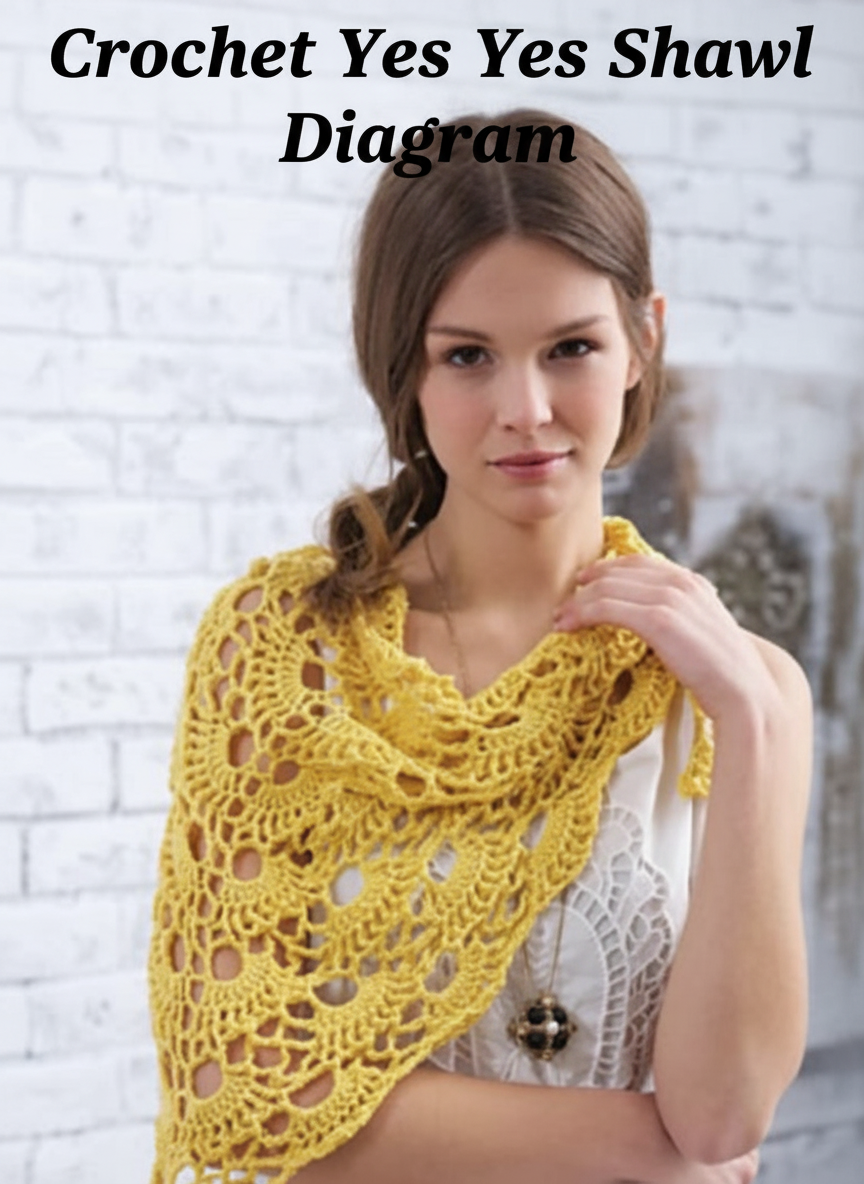
If you want a slightly more advanced crochet shawl with polished stitch detail, this one is a strong pick. The Patons Yes Yes Shawl is listed as intermediate and shown in both navy and blush versions, which makes it easy to imagine in either a classic or softer palette. It is a good project for crocheters who already know their basic stitches and want to practice shaping with confidence. A helpful move is to print the diagram or notes and highlight each finished repeat so you do not lose your place mid-row. Tutorial.
Supplies:
- sport/DK cotton yarn
- hook in the pattern download
- stitch markers
- yarn needle
- blocking supplies
Why it’s great:
It feels refined and wearable while still staying within reach for confident intermediates.
Crochet Sparkle Cake Triangle Shawl Diagram
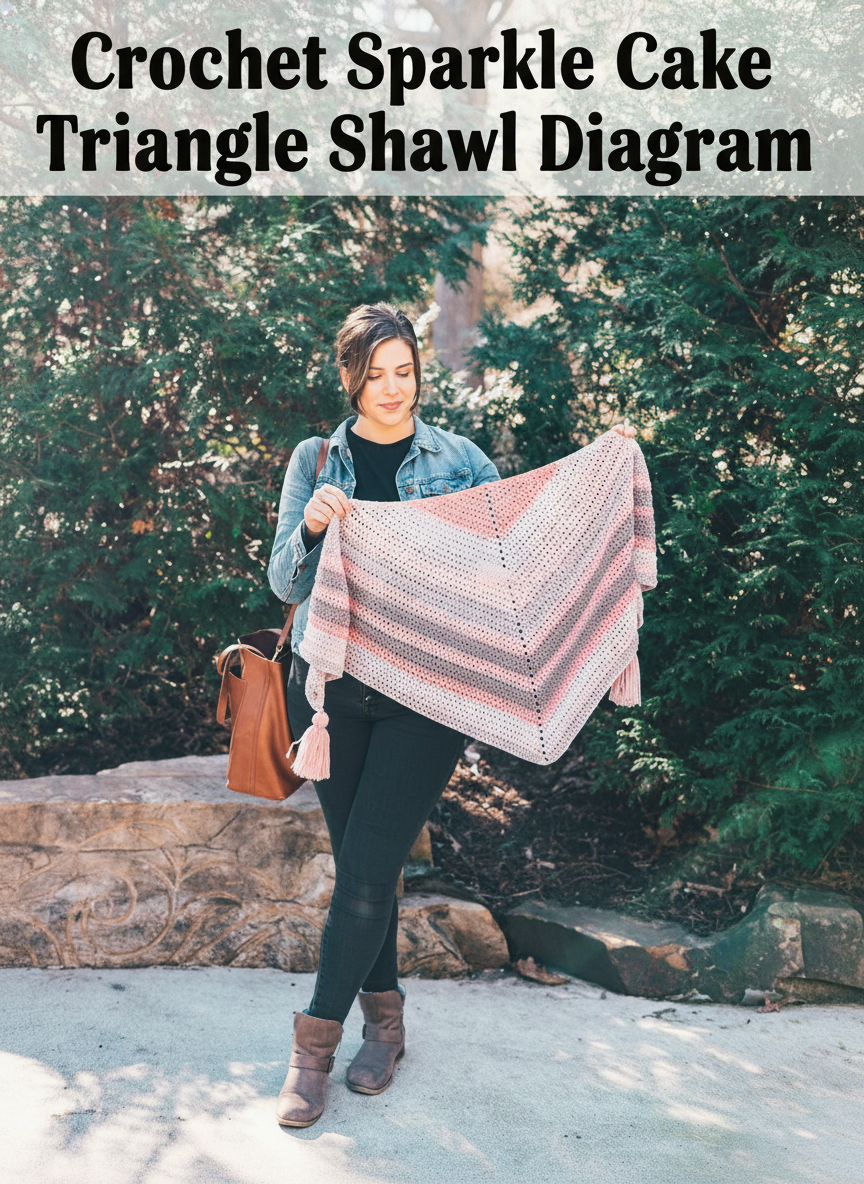
This crochet shawl is one of the easiest choices in the set and a lovely option when you want color payoff without complex shaping. Sewrella’s Sparkle Cake Crochet Triangle Shawl uses Lion Brand Mandala Sparkle in the Nova colorway, with blush, peach, smoky grey, and lavender moving across the shawl in a soft fade. The finished wingspan is about 60 inches excluding tassels, so it is easy to wear as a scarf or light wrap. Block it after finishing, because the designer notes that skipping blocking can leave the shape curved. Tutorial.
Supplies:
- light weight self-striping cake yarn
- 6.0 mm crochet hook
- darning needle
- tassel maker or book
- blocking tools
Why it’s great:
It is simple enough to memorize quickly but still looks special thanks to the color changes.
Crochet Lace Scarf Wrap Diagram

This crochet scarf wrap is ideal if you like shawl styling but want a simpler rectangle that is easy to modify. All About Ami’s Netherfield Scarf Wrap is worked flat in turned rows and can stay a wrap or be seamed into a scarf. The page notes that the starting chain should be a multiple of 10 plus 3, and each extra ripple adds roughly 2 inches to the length, which makes resizing very straightforward. Use a row counter here, because lace repeats feel much easier when you can check progress at a glance. Tutorial.
Supplies:
- superwash merino yarn
- hook listed in pattern
- yarn needle
- row counter
- blocking pins
Why it’s great:
The rectangular shape keeps the project calm and flexible while still looking elegant.
Crochet Shell Stitch Triangle Diagram

ption:
This is the most diagram-focused crochet shawl option in the list. MyPicot’s Shell Stitch Triangle is designed specifically for triangular shawls, and the page includes both step-by-step instructions and a separate chart download. The stitch creates a dense but elastic fabric, which is useful when you want a shawl that feels substantial rather than very lacy. Because it is a repeatable triangle motif, you can stop at the size that suits your yarn and styling plans. Try a solid color first so the shell texture stays easy to read. Tutorial.
Supplies:
- any shawl-appropriate yarn weight
- hook matched to your yarn
- printed chart
- stitch markers
- yarn needle
Why it’s great:
It is perfect when you specifically want a chart-based shawl you can scale to any size.
Crochet Virus Shawl Diagram

This crochet shawl is a classic for anyone who enjoys eye-catching repeats and flowing color transitions. Hobbii’s Virus Shawl is rated intermediate, uses Sultan Deluxe 100% cotton cake yarn, and the pattern page says it includes a detailed visual guide plus video tutorials. That makes it a strong choice when you want chart-like visual help paired with step support. Since long gradient cakes do most of the color work for you, the main job is keeping your increases consistent and your fabric relaxed so the pattern can open up properly. Tutorial.
Supplies:
- 100% cotton gradient cake yarn
- recommended hook from pattern
- stitch markers
- yarn needle
- blocking mats
Why it’s great:
It delivers dramatic lace impact while the gradient yarn handles the color drama for you.
Conclusion
A good crochet shawl diagram can make a big project feel calm, clear, and fun. Pick one that matches your comfort level, choose yarn you truly enjoy handling, and let the repeats do the heavy lifting. One easy win, like the Sparkle Cake or Shell Stitch Triangle, can build the confidence you need for the more detailed shawls next.
FAQs
What yarn works best for crochet shawls?
Light or medium-light yarns are the most versatile. Cotton gives definition, merino adds softness, alpaca blends add warmth and drape, and cake yarns make color changes easy.
Are diagram shawls better than written patterns?
They are often easier for visual learners because you can see shaping and repeats quickly. Many of the best shawl patterns offer both charts and written instructions.
Which of these is best for beginners?
The Sparkle Cake Triangle Shawl, Granny-style shawls, and simple shell-based triangles are the most beginner-friendly in this group.
How much yarn does a crochet shawl usually need?
Many shawls use one to two cakes or several hundred yards, depending on stitch openness, width, and border size. Airy lace generally uses less yarn than dense textured shawls of the same size.
Do I really need to block a shawl?
Usually yes. Blocking helps lace open up, evens edges, and improves drape. Some patterns specifically warn that skipping blocking can affect the final shape.
How do I resize a shawl from a diagram?
For triangle shawls, you usually keep repeating the chart until you reach the size you want. For rectangle wraps, adjust the starting chain and row count according to the repeat multiple.
Why do my shawl edges curl or wave?
That is often caused by tension issues, missed increases, or adding too many stitches in lace sections. Checking the chart every row and blocking at the end usually helps.
How can I keep my place in a shawl diagram?
Use a highlighter tape, row counter, or stitch markers at repeat points. Marking every completed section makes large shawls much easier to manage.