Small details can make a window feel more thoughtfully decorated, even when the blinds themselves are simple. Crochet window blind pull tassel holder ideas explore how compact handmade covers could add color and texture to existing pull tassels without changing the overall window treatment. These 15 inspiration concepts include fitted sleeves, ribbed cuffs, scalloped covers, geometric crochet panels, and small floral accents in terracotta, cornflower blue, oatmeal, lavender, and other attractive shades.
The collection focuses on decorative covers for existing single pull tassels rather than creating new cords or changing a blind’s operating system. Some designs wrap around the middle of a tassel, while others cover most of its original shape. The most useful details to compare are fit, stitch density, removable fastenings, and whether the cover might interfere with normal blind operation. Window-cord safety comes first: decorative crochet does not make corded blinds safer, and cordless window coverings are the recommended choice wherever young children may be present.
These are AI-generated crochet design visualizations for inspiration, not photographs of tested products or step-by-step patterns. None of these concepts is a window-cord safety device or a substitute for manufacturer-approved blind components.
Quick Design Selection Guide
| Your preferred style | Design to explore |
|---|---|
| A simple fitted cover | Crochet Terracotta Tapered Tassel Sleeve |
| A narrow removable cuff | Crochet Cornflower Ribbed Pull Tassel Cuff |
| A decorative scalloped finish | Crochet Oatmeal Scalloped Bell Tassel Holder |
| A small botanical accent | Crochet Forest Green Leaf-Accent Tassel Holder |
| A compact reversible design | Crochet Navy Reversible Tassel Band |
| A modern geometric look | Crochet Charcoal Open-Front Tassel Frame |
1. Crochet Terracotta Tapered Tassel Sleeve
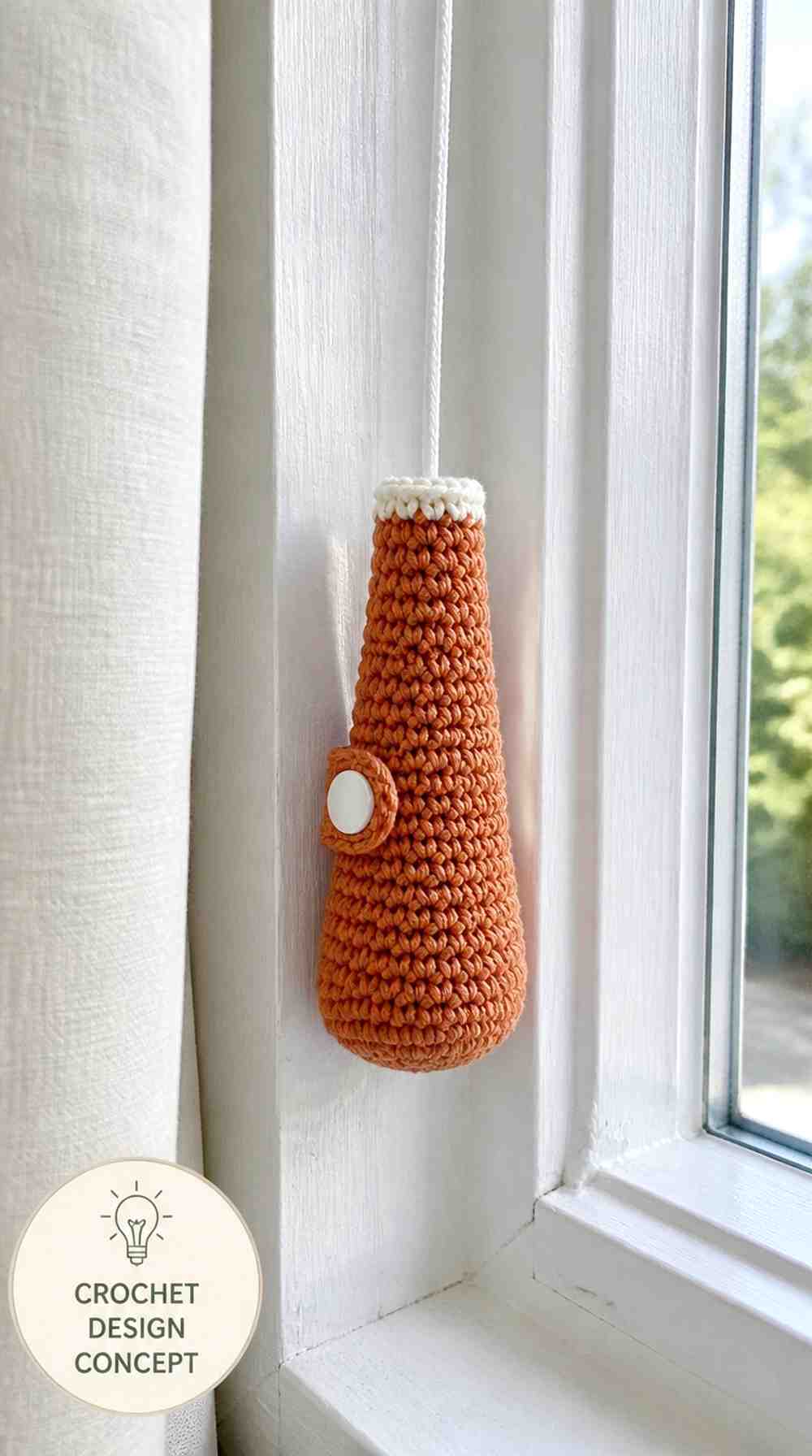
Warm terracotta crochet gives this compact sleeve a simple, handmade appearance. Its tapered silhouette follows the original pull tassel, with closely worked stitch rows and a narrow cream border at the upper opening. A small side tab closes with a cream snap, while the lower end remains softly rounded.
The fitted shape makes this design more understated than a cover with decorative edging. Its visual appeal comes from the terracotta color and clean crochet texture. The side fastening offers a possible removable arrangement, but the sleeve must not interfere with the original tassel or blind mechanism.
- Tapered fitting: The crochet sleeve should follow the shape of the existing tassel rather than pulling tightly against its upper cord connection.
- Side snap: Keep the small fastening flat and away from the operating cord so it cannot catch or restrict movement.
- Minimal decoration: The short cream border gives the terracotta crochet a finished appearance without adding hanging strands or extended fabric.
2. Crochet Cornflower Ribbed Pull Tassel Cuff
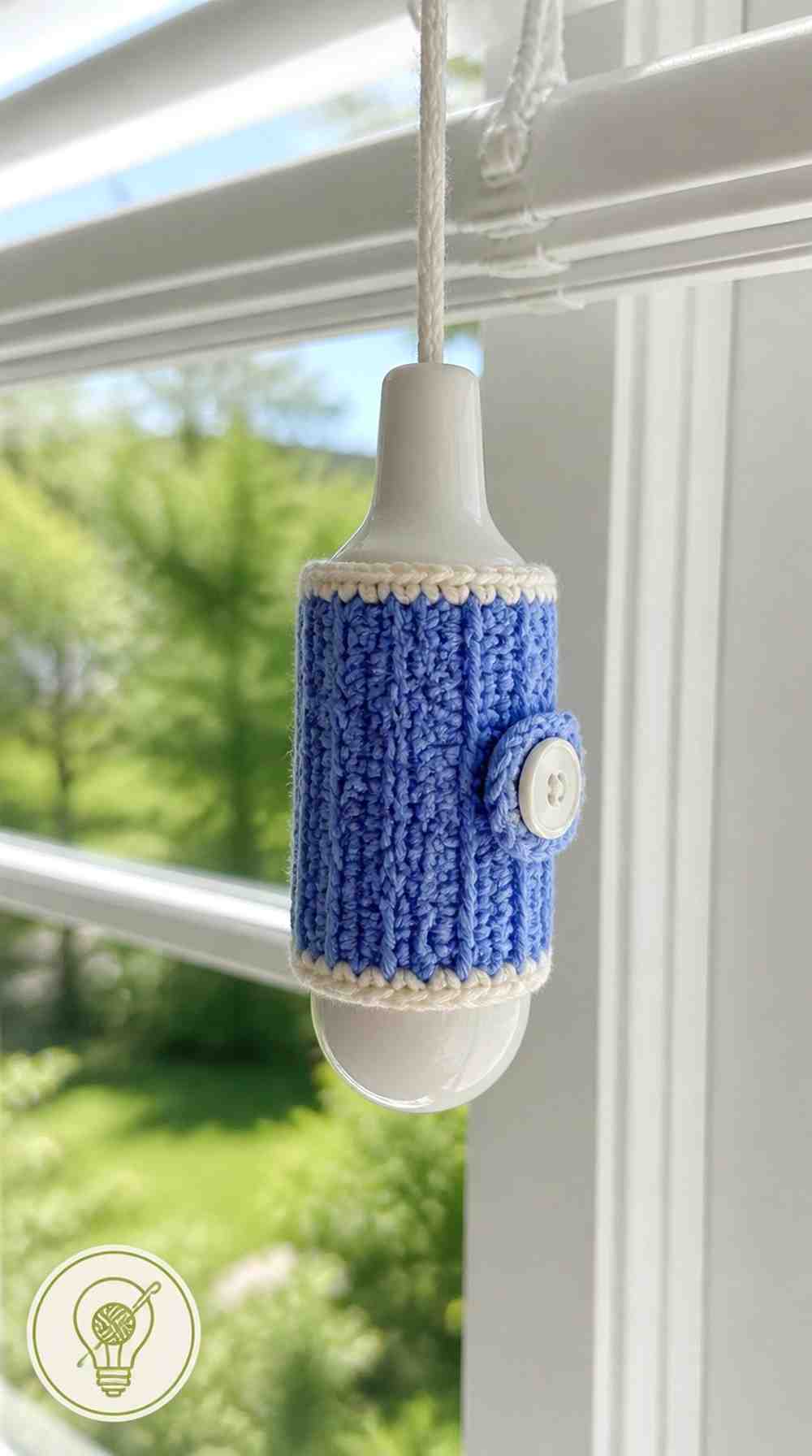
Cornflower-blue crochet creates a short ribbed cuff around the middle of an existing cylindrical pull tassel. A narrow ivory border defines the upper and lower edges, while a small buttoned overlap sits along one side. The original rounded tassel tip remains visible beneath the band.
This design uses less crochet fabric than a full-length cover. The vertical-looking ribs give it texture without changing the original tassel’s overall silhouette. Its compact form may also make it easier to compare colors against different window frames, although the cuff needs to remain firmly positioned.
- Middle-band placement: Keep the cuff on the original tassel body rather than wrapping it around the cord above.
- Ribbed texture: Closely worked crochet ribs give the narrow band visual definition without requiring loose embellishments.
- Button fitting: The small closure should fasten securely without creating an outward projection that could snag nearby window fabric.
3. Crochet Oatmeal Scalloped Bell Tassel Holder
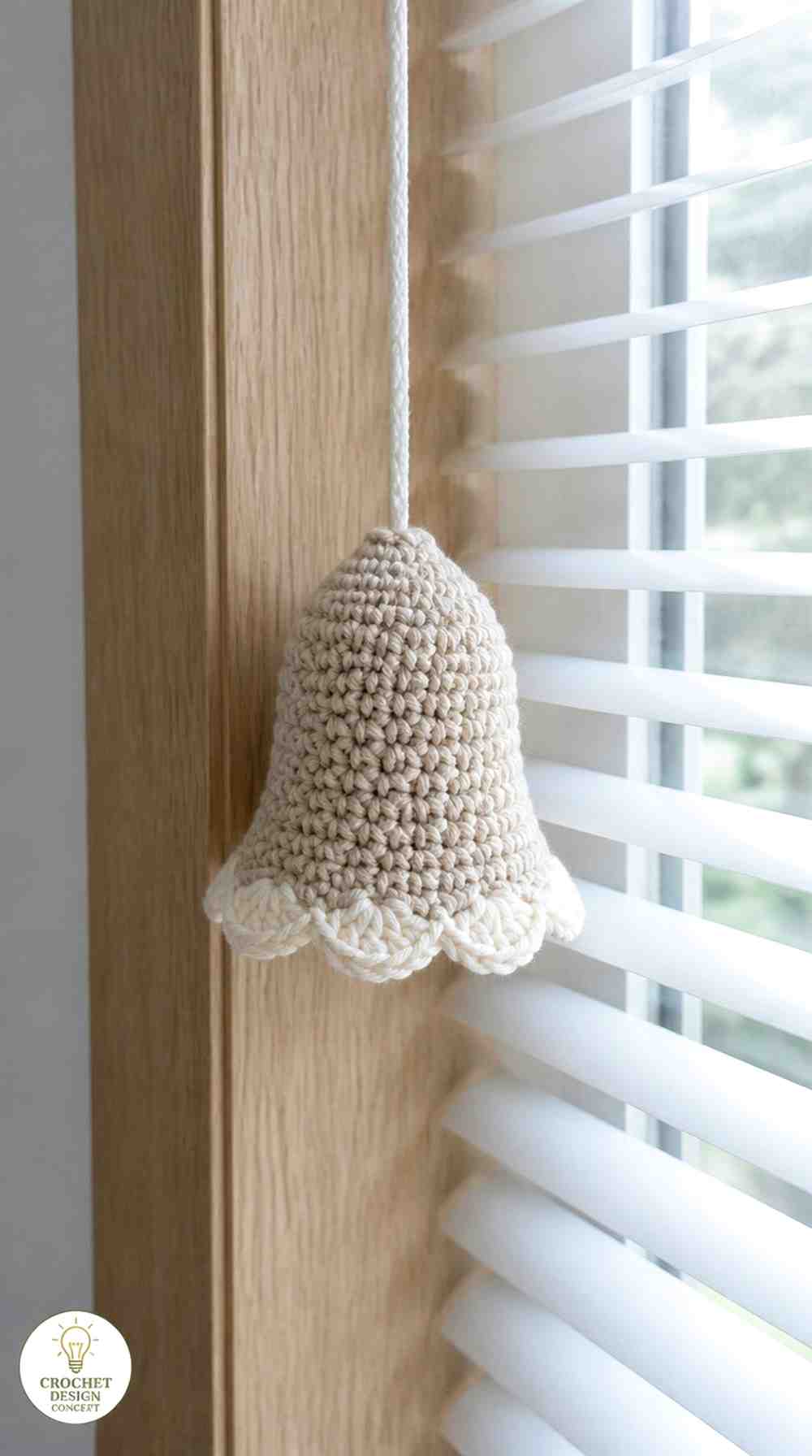
Soft oatmeal crochet forms a small bell-shaped cover with a gently flared lower edge. Six neat cream scallops surround its base, while the upper opening sits close to the original tassel’s neck. The crochet body has smooth, closely connected stitches that gradually widen toward the bottom.
The scalloped finish gives this concept a more traditional look. It could complement pale wooden window frames and neutral curtains without needing strong color contrast. The lower edge should remain compact, since long or loose decorative strands would be inappropriate around a blind cord.
- Bell-shaped proportions: Keep the flared crochet body close to the original tassel rather than creating an oversized hanging ornament.
- Six scallops: Each cream scallop should connect neatly to the lower edge without extending into loose fringe.
- Neutral styling: Oatmeal and cream work well together when the window already has natural wood, linen, or warm-white finishes.
4. Crochet Mustard Hexagon Tassel Cover
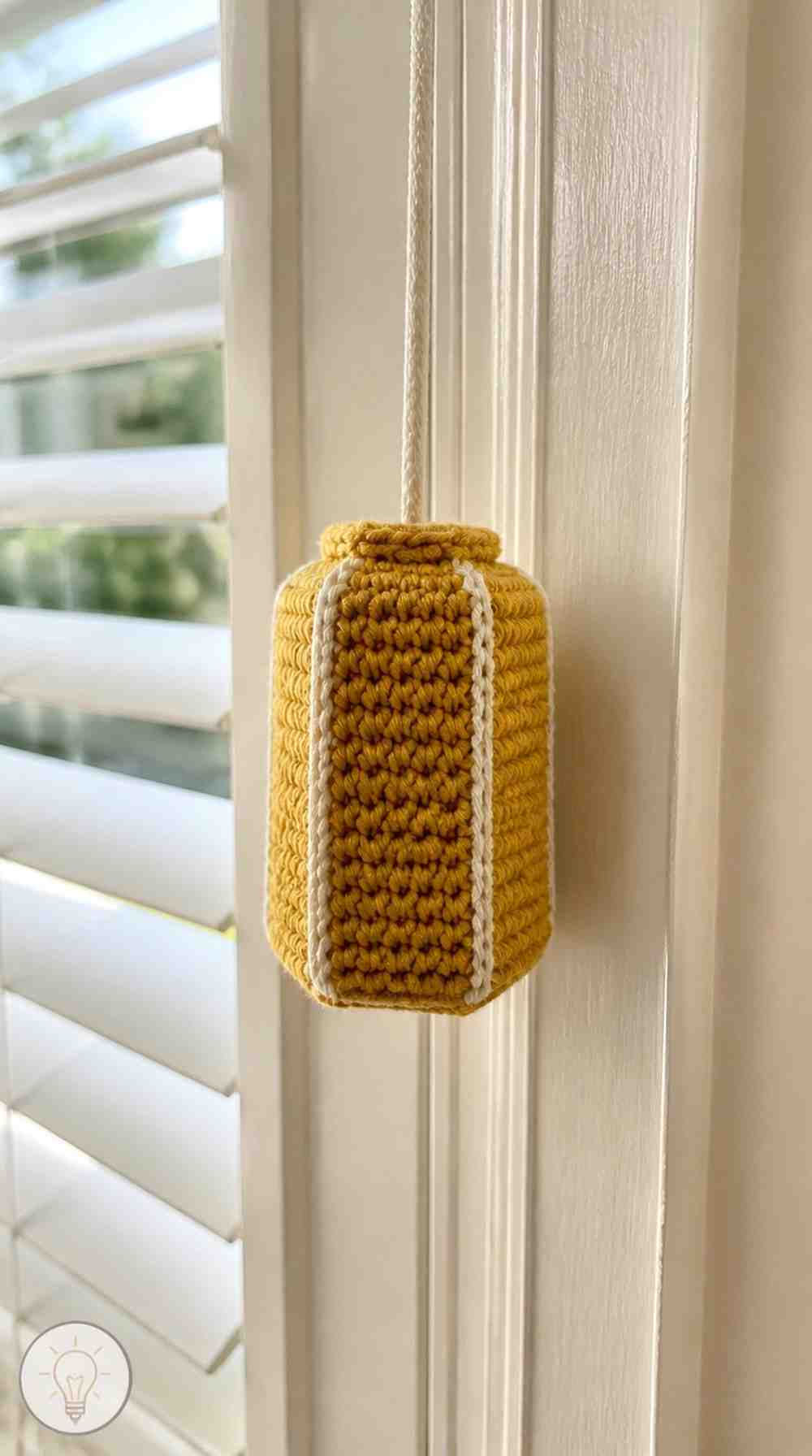
Mustard-yellow crochet forms a short six-sided cover with defined vertical facets and slim cream joining lines. Its geometric body follows an existing elongated hexagonal tassel, ending in a firm, flat lower edge. The close stitch rows make the six-sided construction immediately recognizable.
Unlike rounded sleeves, this concept emphasizes a structured shape. The contrast between mustard panels and cream seams gives the small cover a decorative finish without raised flowers or bows. The original tassel must remain usable, with no changes to the operating cord or its factory connection.
- Hexagonal shaping: Plan the six small crochet panels around the actual tassel dimensions rather than assuming every blind pull has the same shape.
- Cream seam alignment: Keep the joins straight and evenly spaced so the cover retains its intended faceted appearance.
- Upper opening: The fitted crochet should not pinch the original cord attachment or obstruct any manufacturer-provided component.
5. Crochet Lavender Mesh-Window Tassel Sleeve
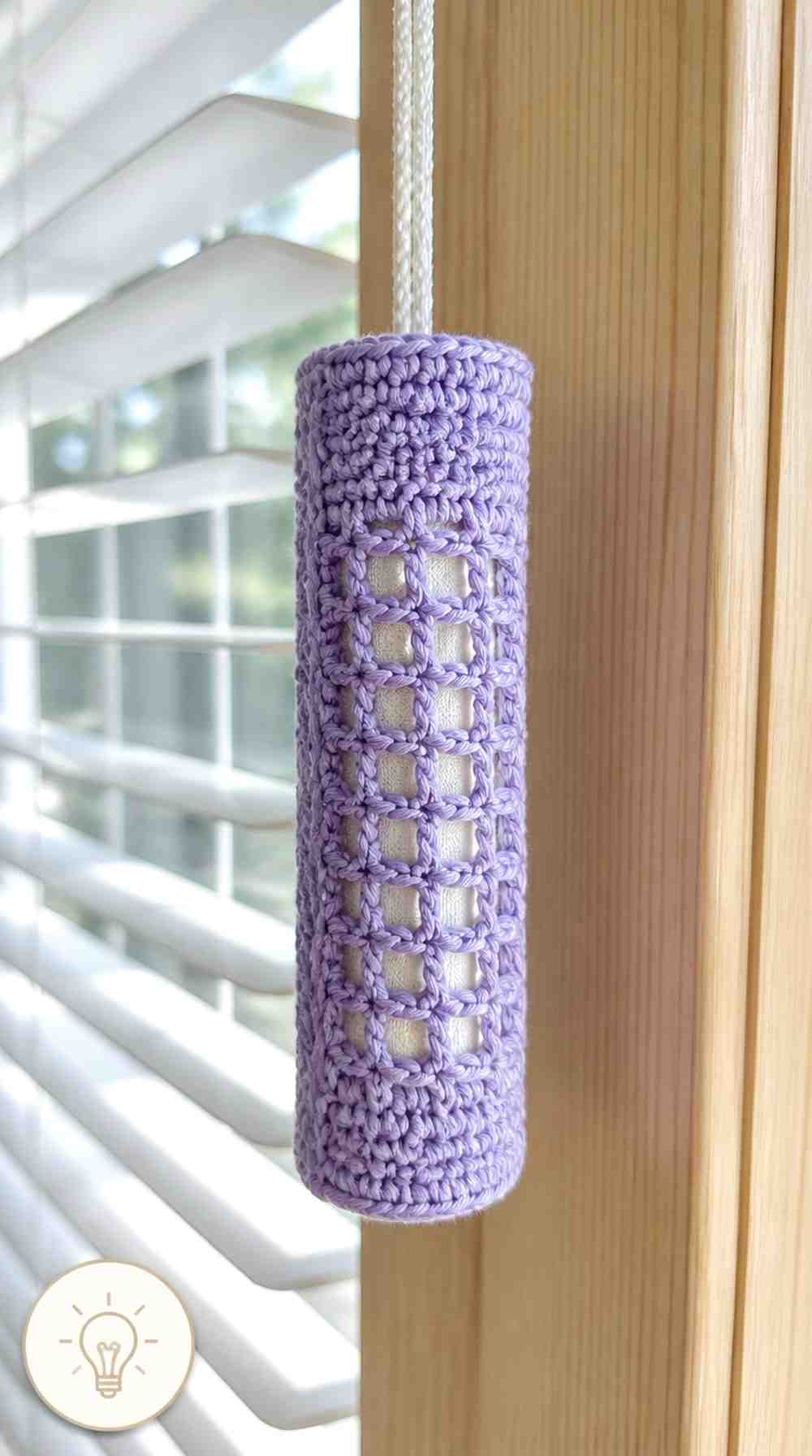
Pale lavender crochet creates a narrow sleeve with solid upper and lower bands and an open square-mesh section across the front. A cream cotton lining sits behind the mesh, making the crochet openings visible without exposing loose yarn strands against the original tassel.
The layered arrangement gives this sleeve a lighter look than a completely solid cover. Its decorative openwork is supported by the underlying fabric, while the narrow side seam maintains the sleeve shape. The additional layer requires careful fitting because it increases thickness around a relatively small object.
- Mesh construction: Keep the square openings evenly connected and supported by solid crochet edges.
- Inner lining: A fitted cream lining may help keep open crochet loops from catching on the existing tassel’s surface.
- Layered thickness: Account for both crochet and lining when considering the outer dimensions of the decorative sleeve.
6. Crochet Forest Green Leaf-Accent Tassel Holder
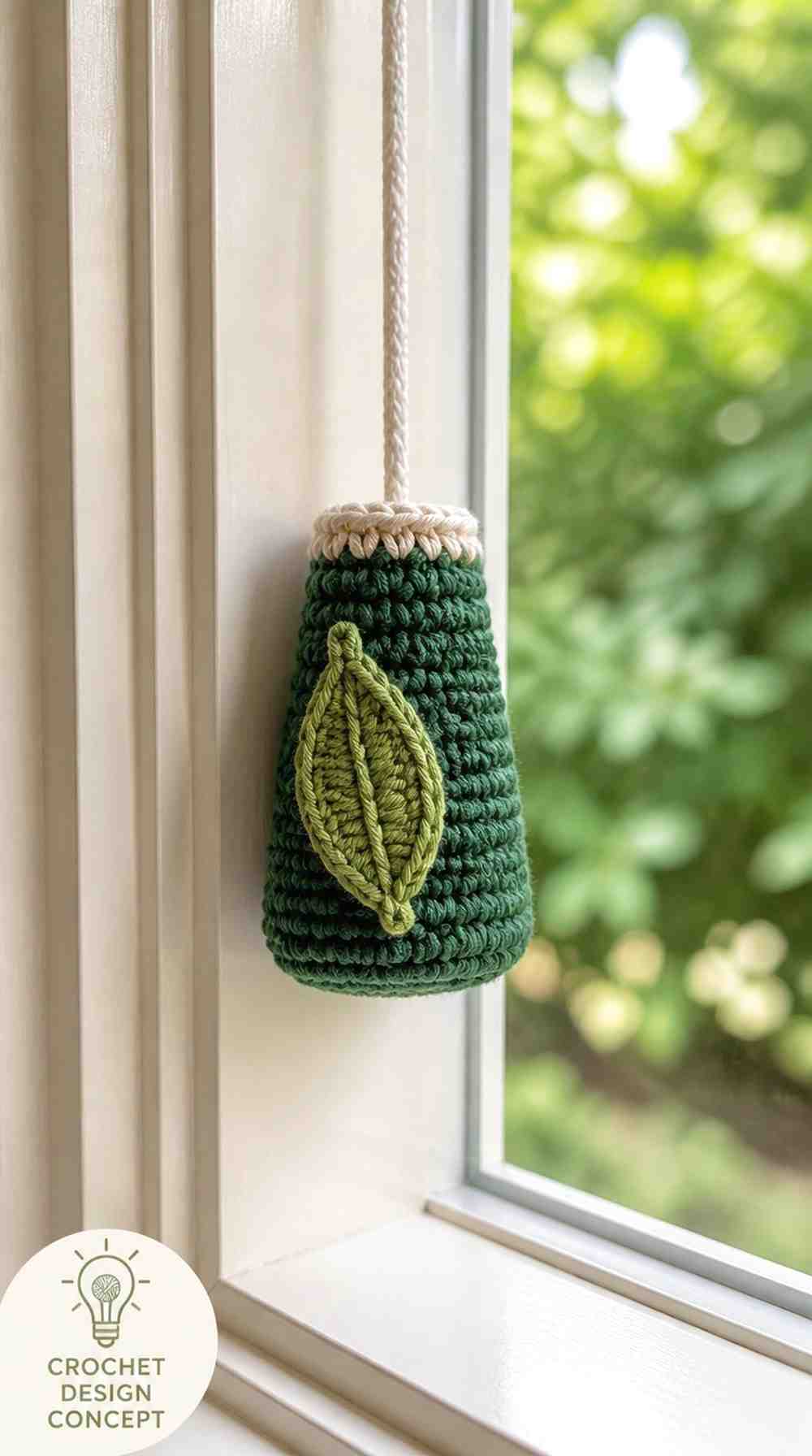
Forest-green crochet creates a tapered cover with closely worked horizontal stitch rounds and a narrow oatmeal-colored top border. A small olive-green leaf appliqué decorates one side, with a defined central stitch line and neatly shaped edges.
The leaf gives this otherwise simple cover a botanical character. Its placement is intentionally restrained, allowing the tapered silhouette to remain the main feature. A small, firmly attached crochet leaf is more suitable for this concept than a long vine or hanging floral strand.
- Leaf positioning: Keep the olive appliqué close to the surface of the holder rather than allowing it to project outward.
- Secure attachment: The leaf edges and central stitch line should be attached firmly enough to prevent loose decorative pieces.
- Window pairing: The forest-green and oatmeal palette can complement warm wooden frames and rooms with natural plant-inspired colors.
7. Crochet Plum Foldover Tassel Wrap
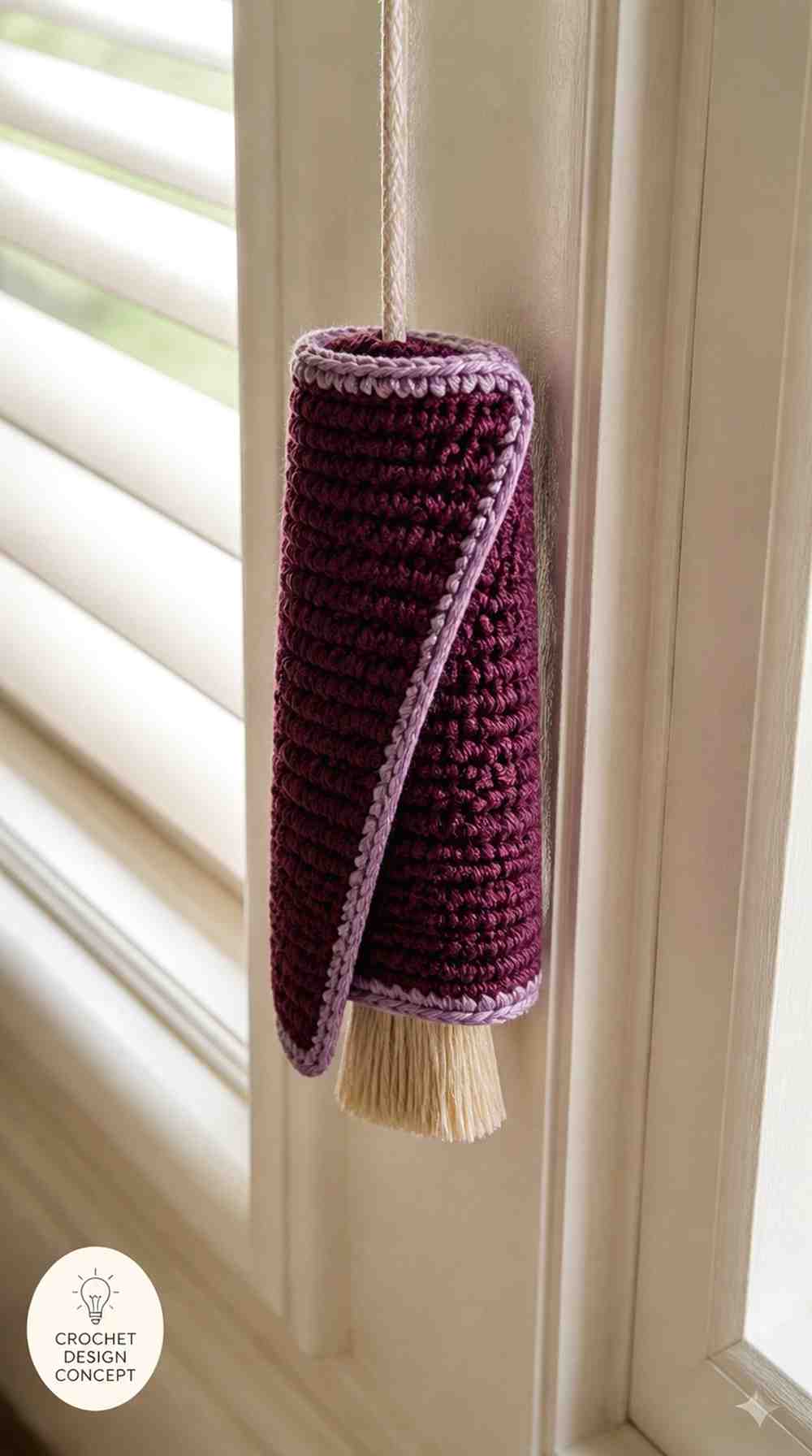
Deep-plum crochet forms a compact rectangular wrap with a narrow triangular flap overlapping one side. A slim dusty-lilac border outlines the edges, while a concealed beige hook-and-loop patch closes the flap. The original lower tassel tip remains visible beneath the crochet.
The foldover construction makes this design visually different from a pull-on sleeve. Its removable side opening could make fitting simpler on an appropriately shaped separate object, although it should not be installed on a working blind without confirming that the manufacturer permits the accessory.
- Overlapping flap: Keep the triangular section flat against the main panel so it does not protrude into the cord’s operating path.
- Concealed fastening: The hook-and-loop material belongs on a reinforced area, away from the original cord connection.
- Plum-and-lilac finish: The lighter edging defines the folded construction without requiring extra tassels or loose ties.
8. Crochet Dusty Rose Granny-Square Tassel Case
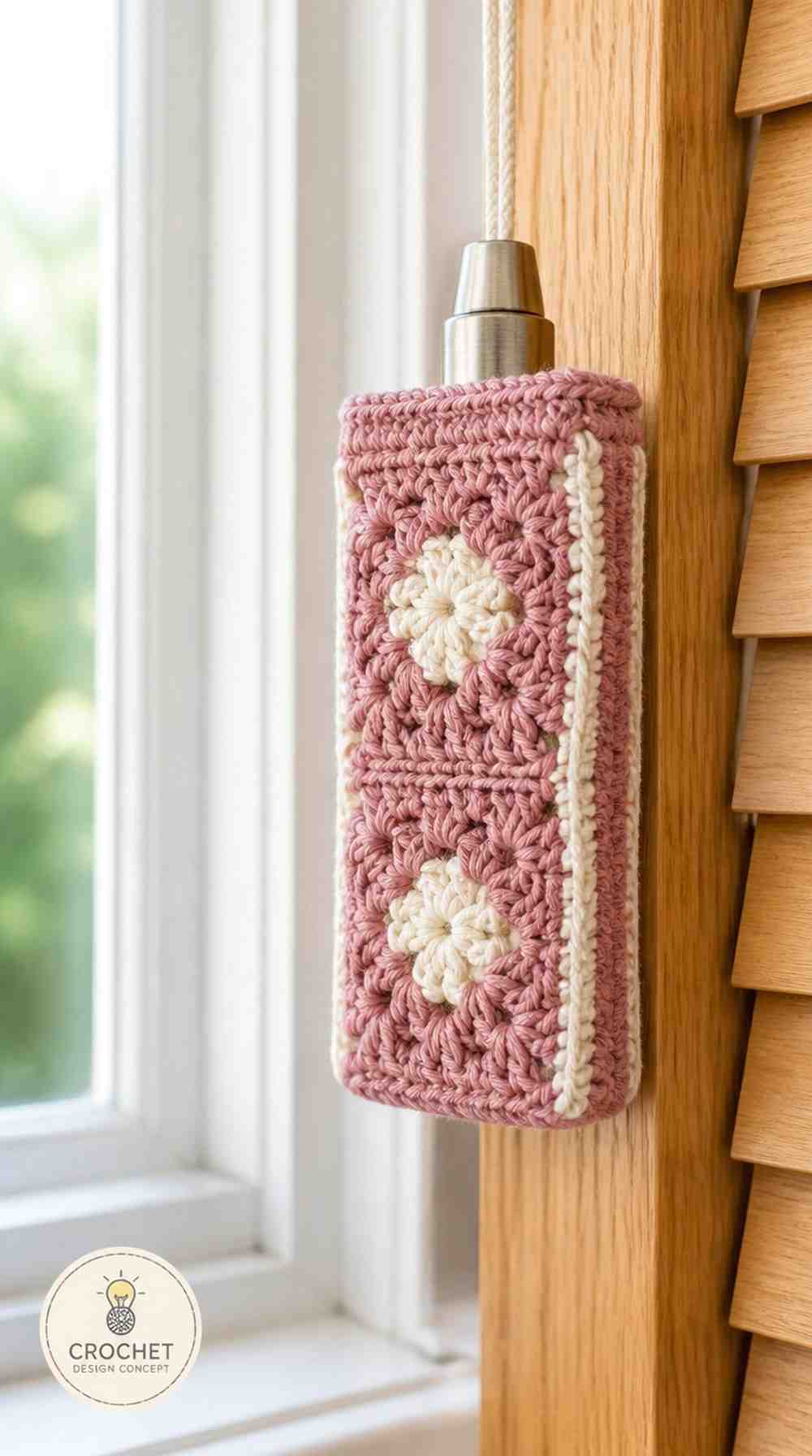
Two small dusty-rose granny-square panels join to form a compact sleeve around a flat-sided original pull tassel. Each square has a cream center, soft pink outer rounds, and four defined corners. Cream side seams connect the panels, while a narrow solid upper border completes the shape.
The tiny granny-square construction brings a familiar crochet motif to a small window accent. The joined panels create more texture than plain stitch rows, although their corners need careful shaping to sit naturally around the existing tassel.
- Motif size: Use two small matching squares that correspond to the original tassel’s flat sides rather than leaving excess fabric at the corners.
- Side connections: Neat cream joins help prevent the panels from separating or twisting around the covered object.
- Upper border: A solid round above the motifs gives the decorative case a more continuous finish than open granny-square corners alone.
9. Crochet Cocoa Spiral-Rib Tassel Holder
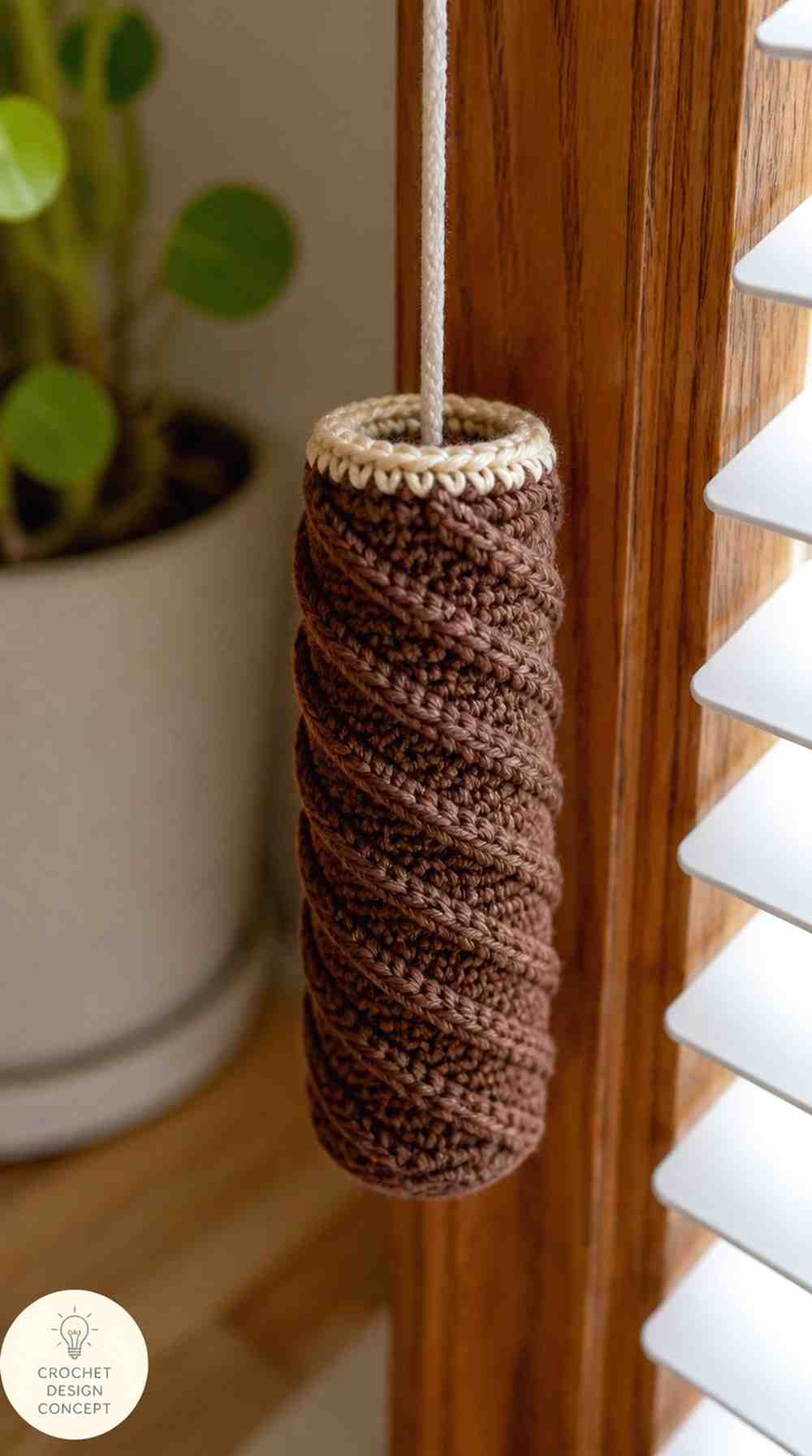
Cocoa-brown crochet forms a narrow cylindrical sleeve with raised spiral ribs traveling diagonally around the surface. A warm-cream finishing round defines the upper opening, while the lower end follows the rounded shape of the original tassel.
The spiral stitch relief creates movement through texture instead of contrasting colors or decorative attachments. This makes the design interesting for simple wooden windows where a compact dark accent would look natural. The ridges should remain small enough that the cover does not become bulky.
- Spiral consistency: Keep the raised stitch line connected to the main crochet body so it reads as genuine stitch relief rather than an applied cord.
- Rounded fit: The lower end should follow the factory tassel’s shape without extending it with extra yarn.
- Warm neutral palette: Cocoa and cream offer a subdued finish that works naturally beside oak, walnut, and ivory window surrounds.
10. Crochet Sea Glass Petal-Edge Tassel Cover
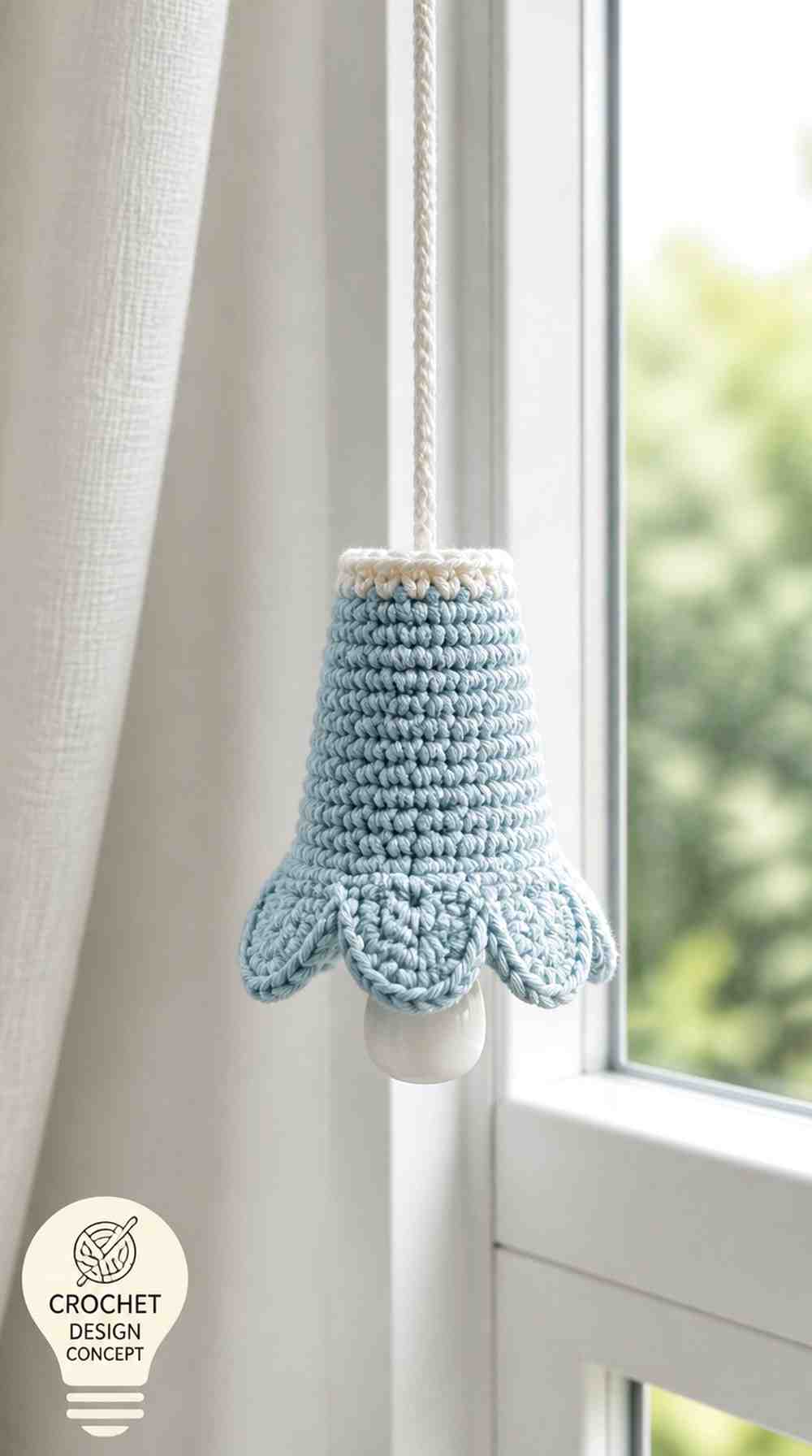
Sea-glass-blue crochet creates a small rounded sleeve with five shallow petal-shaped lobes along its lower edge. A slim ivory border finishes the upper opening, while the main body has dense, smoothly worked crochet rows.
The five-petal outline makes this cover feel lightly floral without adding a separate appliqué. Each petal remains close to the original tassel, keeping the overall design compact. The rounded shape may suit a simple white window frame where the soft blue color can provide a small decorative accent.
- Petal construction: Form the lower lobes from connected crochet stitches rather than attaching loose pieces that could detach or catch.
- Compact outline: Keep the five petals close to the original tassel’s lower silhouette without increasing the hanging length.
- Color balance: Sea-glass blue and ivory create a light combination that stands out gently against white blinds.
11. Crochet Navy Reversible Tassel Band
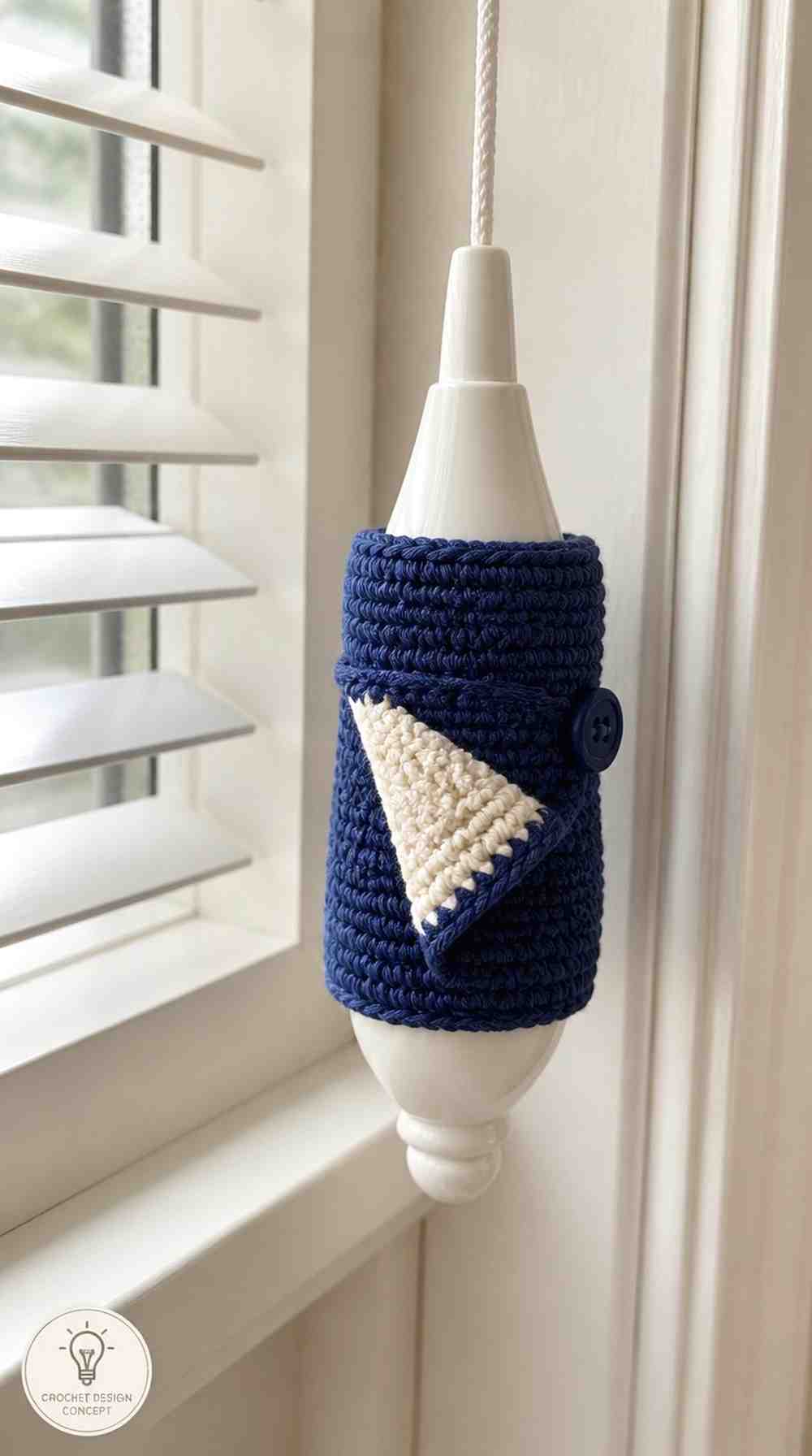
Navy-blue crochet forms a short double-layer band around the middle of an existing pull tassel. One corner folds outward to show a contrasting cream reverse face. A small matching button secures the overlapping section, while narrow navy joins keep the two layers aligned.
The reversible finish gives this concept two color surfaces in one compact accessory. It also adds thickness, which may affect how comfortably the band sits around the original tassel. The button should remain on the outer side of the band rather than near the cord connection.
- Double-layer construction: Keep both crochet faces aligned to prevent the cream underside from twisting or bunching.
- Small button: Position the fastening on a flat section where it can be opened without pulling on the existing blind cord.
- Reversible styling: The navy face provides a stronger contrast, while the cream side offers a softer appearance when displayed outward.
12. Crochet Blush Flat-Bow Tassel Sleeve
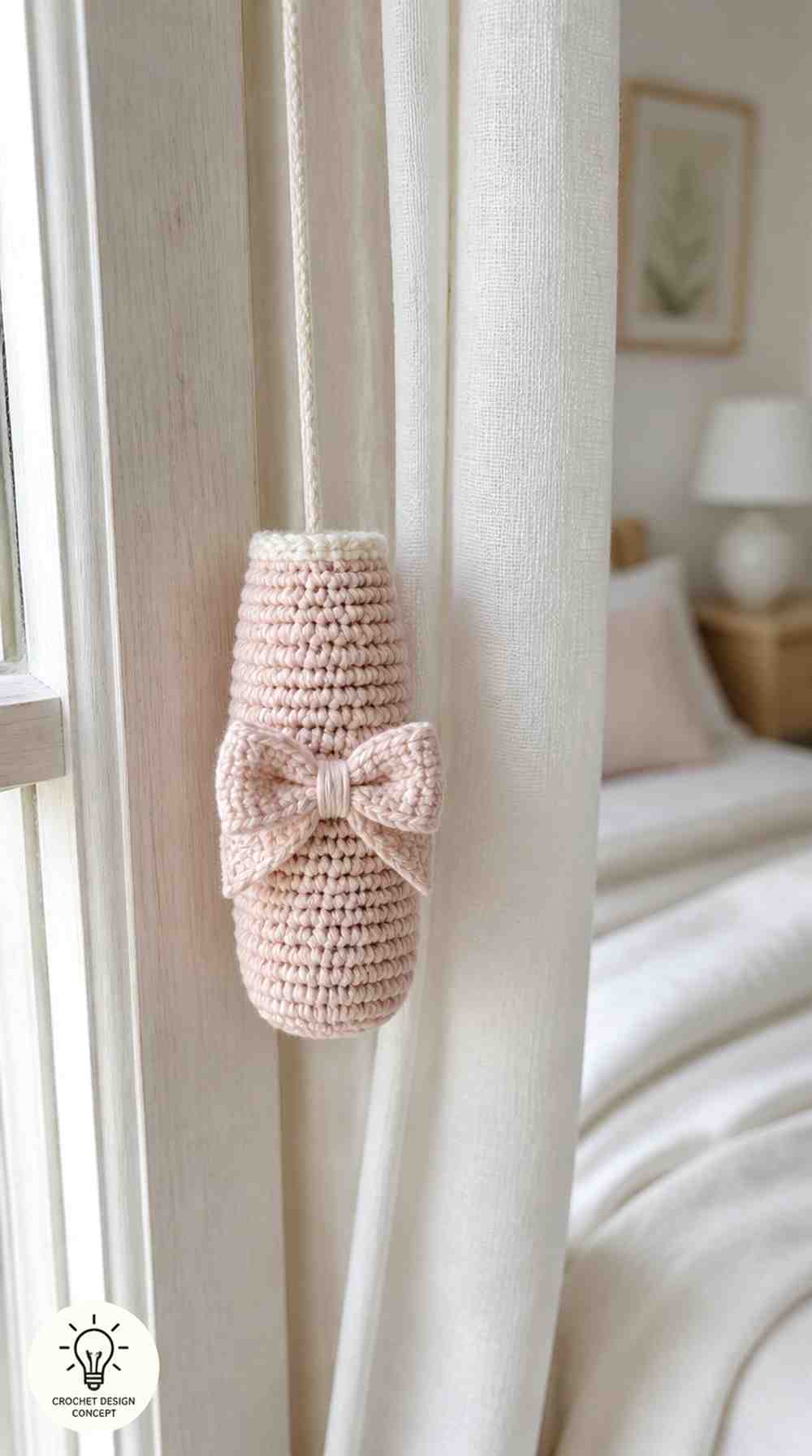
Blush-pink crochet forms a slim fitted sleeve with a small flat bow stitched onto its front. A cream border finishes the upper opening, while closely worked crochet rows create the main oval shape. The bow has two modest folded loops and short straight tails.
The bow adds a gift-like decorative touch without making the cover noticeably longer. Its small proportions are important because oversized ribbon loops could catch against nearby window fabric. This design is primarily about appearance rather than changing the function of the pull tassel.
- Flat bow attachment: Secure the folded loops and short tails directly to the sleeve instead of leaving loose hanging ends.
- Oval shaping: The crochet should fit the original tassel’s outline without forcing the covered body into a different shape.
- Blush-and-cream colors: The soft palette works well with pale bedroom window frames and natural linen tones.
13. Crochet Rust Diagonal Mosaic Tassel Wrap
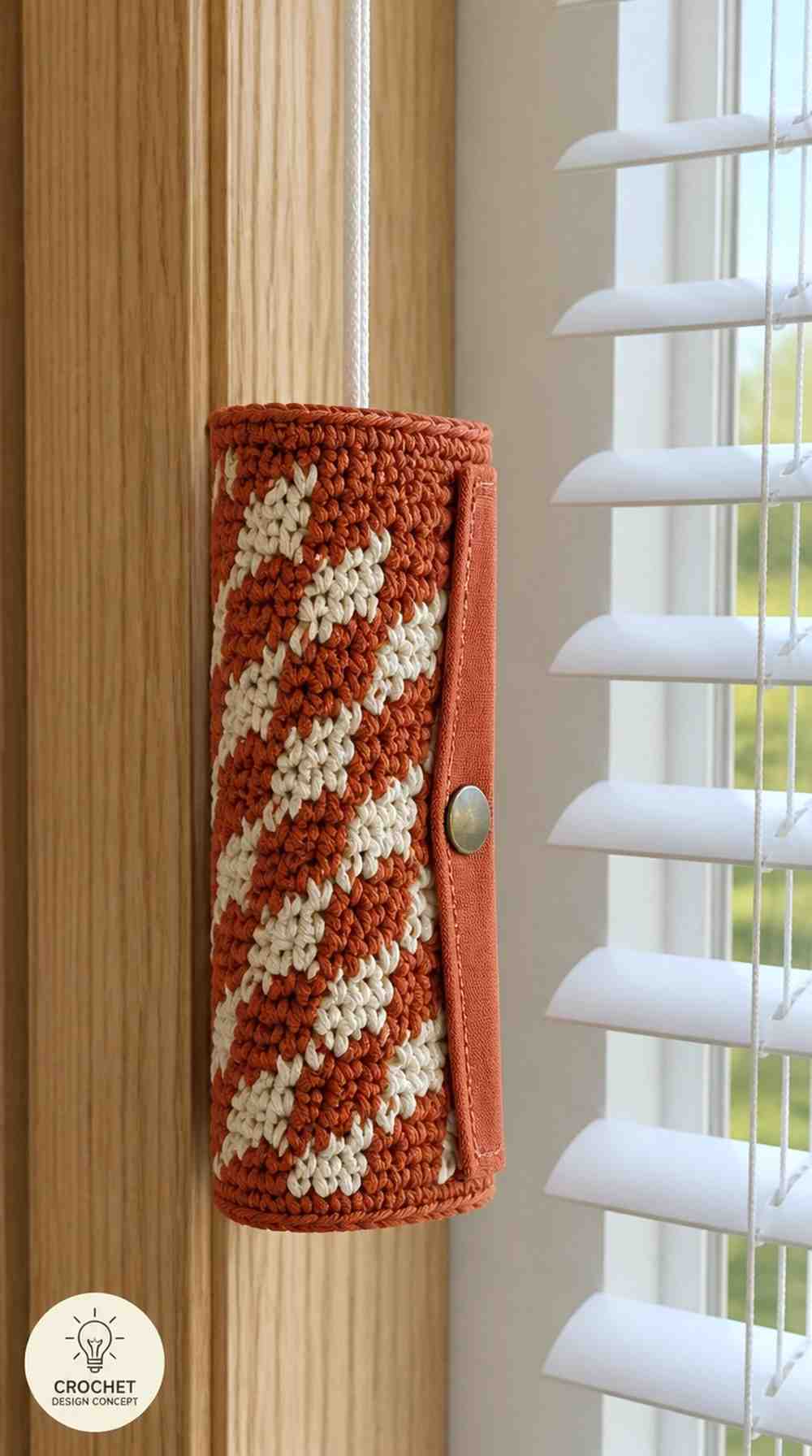
Rust-orange crochet creates a compact wrap decorated with cream diagonal mosaic colorwork. The pattern is formed from connected crochet stitches rather than an applied strip. A small concealed side snap closes the overlapping fabric around an existing rectangular tassel.
The diagonal colorwork gives this design a structured, modern appearance. Unlike simple solid-color sleeves, the pattern provides decoration across the entire surface. The side opening also distinguishes it from designs that are worked as continuous cylindrical pieces.
- Mosaic alignment: Keep the cream diagonal rows evenly connected so the pattern does not distort around the side closure.
- Snap reinforcement: Attach the hidden fastening to a firm section without allowing hard hardware to press against the original cord attachment.
- Rectangular fitting: This shape is best considered for a similarly shaped tassel rather than a strongly tapered or rounded one.
14. Crochet Ivory Shell-Trim Tassel Holder
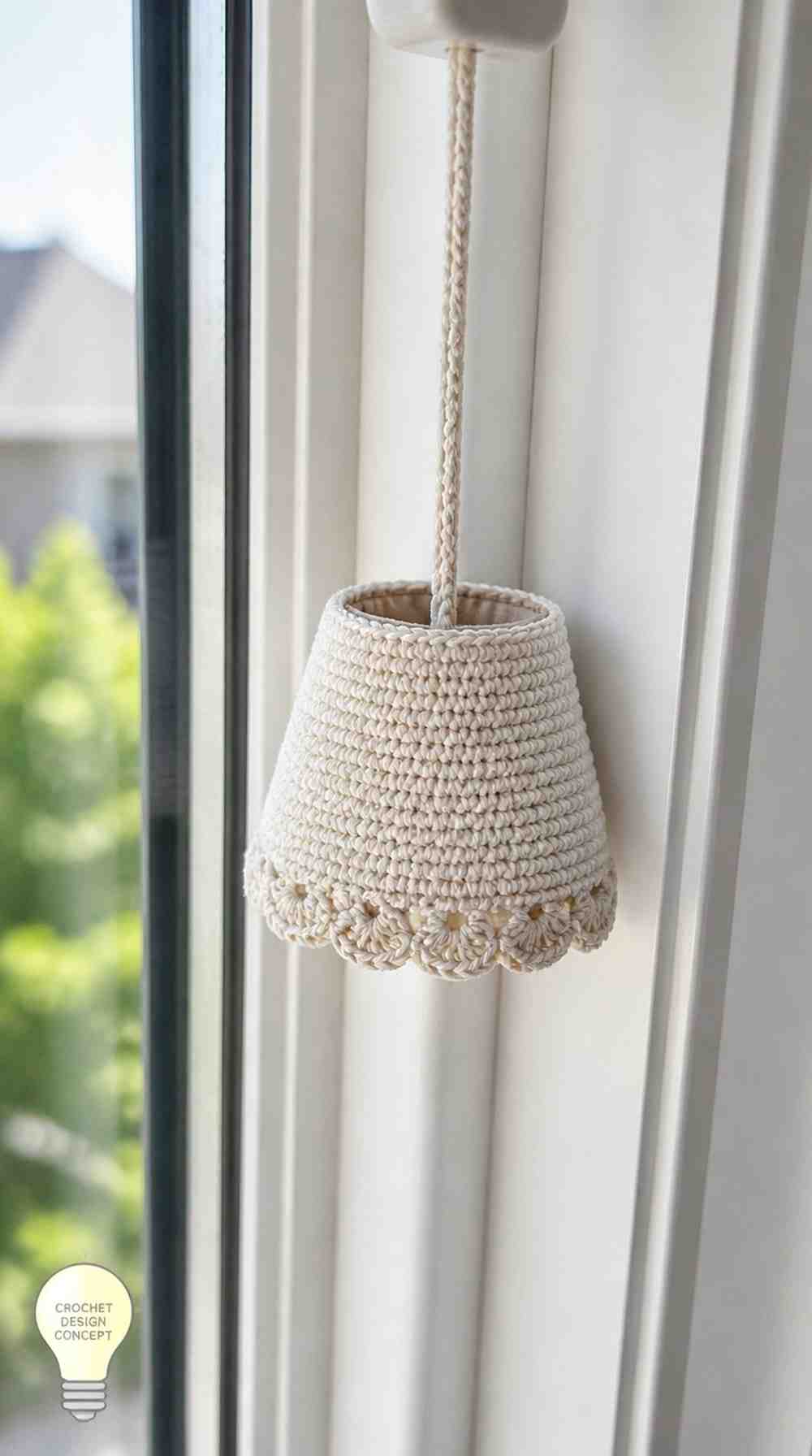
Ivory crochet gives this small fitted sleeve a delicate, understated appearance. The central body has close stitch rows, while a row of small cream shell stitches finishes the lower edge. A champagne-beige cotton lining is visible just inside the narrow upper opening.
The shell border creates a more traditional decorative texture than the geometric or ribbed designs. Its compact form avoids long fringe and loose yarn ends. The lining adds another material layer that needs to be considered when planning the finished fit.
- Shell-stitch edging: Keep the shell groups small and connected so the border stays near the original tassel rather than extending downward.
- Smooth lining: The champagne-beige inner fabric should remain neatly attached and should not bunch around the upper opening.
- Light-colored care: Ivory and cream may show dust more readily, so removable construction and suitable washing instructions matter.
15. Crochet Charcoal Open-Front Tassel Frame
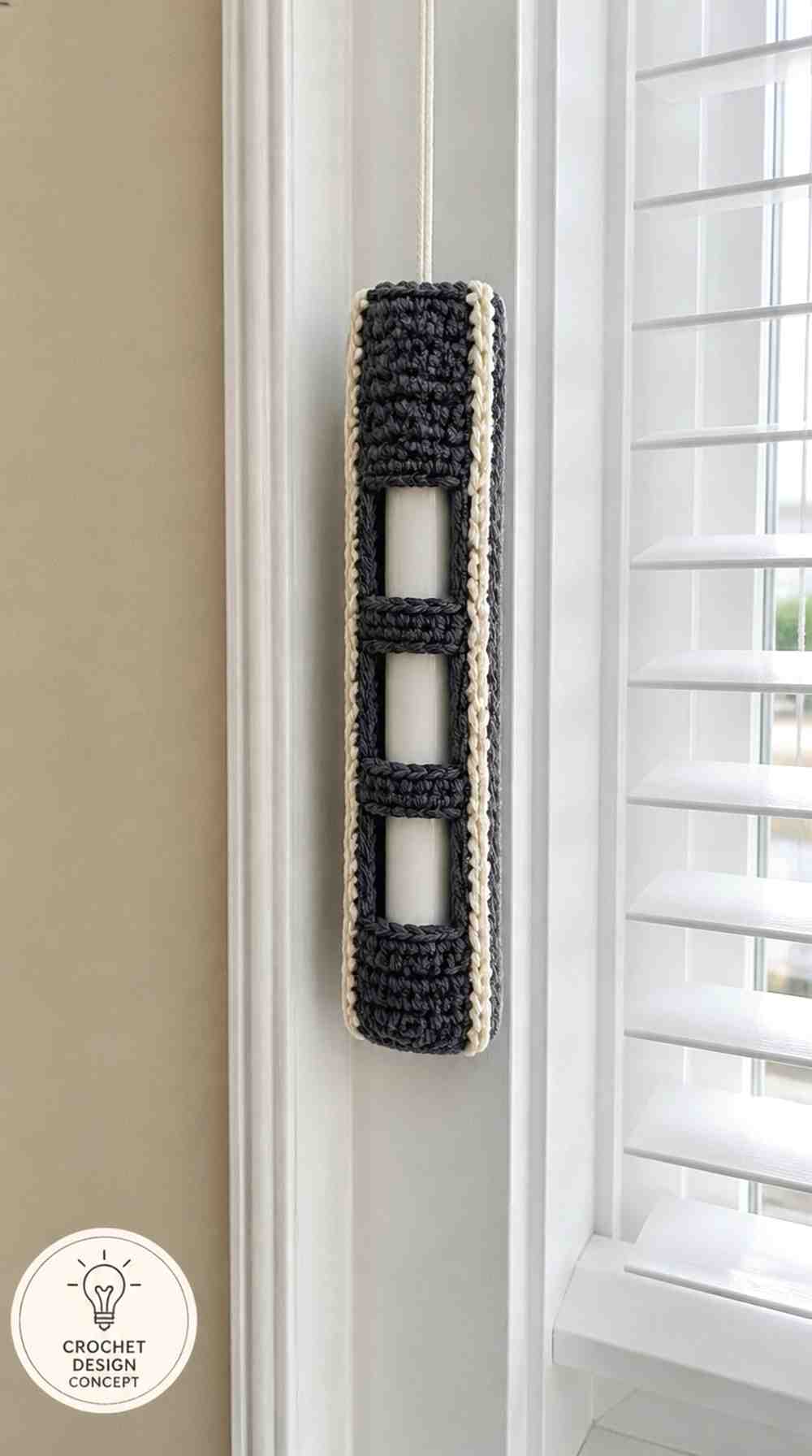
Charcoal-grey crochet forms a narrow frame around an existing elongated blind pull tassel. Two vertical side rails connect through three short horizontal bars, creating small rectangular openings over a solid back panel. Thin cream edging outlines the front frame.
The open-front construction allows portions of the original white plastic tassel to remain visible. This makes the concept different from a completely covered sleeve. The crossbars and side rails need clean, consistent joins to retain their ladder-like appearance.
- Open-front design: Keep the three crossbars aligned and sufficiently narrow so the original tassel remains visible through the openings.
- Solid backing: The rear panel supports the decorative front frame and helps keep the separate crochet rails in position.
- Minimal hardware: The charcoal-and-cream design relies on stitch structure rather than added metal ornaments, beads, or dangling embellishments.
Practical Guide to Crochet Window Blind Pull Tassel Holders
Window-blind pull tassels are part of a working window-covering system, so safety and manufacturer instructions matter more than decoration.
Choose cordless blinds wherever possible. The U.S. Consumer Product Safety Commission recommends cordless window coverings, especially in homes where children live or visit. Blind cords can create a serious strangulation hazard, and decorative holders do not reduce that risk.
Do not modify the operating cord. Avoid adding extra cord length, tying existing cords together, creating loops, removing cord stops, or changing the tassel’s original attachment. A crochet cover should never replace an approved safety component.
Check manufacturer compatibility. Many blinds are not designed for decorative accessories on their pull tassels. Do not assume a fitted cover will be suitable simply because it looks attractive in a picture. If the manufacturer does not approve the modification, leave the original tassel unchanged.
Use compact, lightweight designs. Small sleeves and cuffs are more appropriate as visual inspiration than long hanging tassels, loose fringe, additional braided cords, or weighted decorative attachments.
Keep all safety information accessible. Do not cover warning labels, interfere with movement, obstruct a cord stop, or make a pull tassel harder to operate correctly.
Consider detached display samples. If you mainly want to experiment with crochet colors and stitches, work around a separate sample tassel or decorative wooden form instead of altering an installed blind. This lets you explore the appearance without changing a functioning window covering.
For official guidance, read the CPSC Window Covering Cord Safety information.
Want to Make Something Similar?
For general crochet shaping practice, Pocket Yarnlings offers a helpful How to Crochet a Tube in 10 Different Styles guide. It explores tube and cylindrical shapes that can help explain the construction of small fitted crochet sleeves.
These techniques are useful for experimenting with separate sample objects. The tutorial is not an exact pattern for any of the pictured blind tassel holders and does not establish that homemade accessories are safe for operating blinds.
For additional decorative inspiration, Yarn Nest Studio’s 15 Crochet Wall Hanging With Tassels Ideas explores different crochet textures, tassel treatments, and hanging decorations. Those concepts are intended for decor and should not be transferred directly to blind operating cords.
Comparison: Which Crochet Pull Tassel Holder Design Should You Choose?
The best design depends on the original tassel’s shape and whether you are exploring the idea on a separate decorative sample rather than an installed blind.
| Design | Main visual feature | Something to consider |
|---|---|---|
| Crochet Terracotta Tapered Tassel Sleeve | Simple fitted shape | Side snap and tapered sizing |
| Crochet Cornflower Ribbed Pull Tassel Cuff | Short ribbed band | Original tassel remains exposed |
| Crochet Oatmeal Scalloped Bell Tassel Holder | Soft flared lower edge | Scallop size and shaping |
| Crochet Mustard Hexagon Tassel Cover | Six-sided geometric structure | More complex panel joins |
| Crochet Lavender Mesh-Window Tassel Sleeve | Openwork with lining | Layered fabric thickness |
| Crochet Forest Green Leaf-Accent Tassel Holder | Small leaf appliqué | Secure decorative attachment |
| Crochet Navy Reversible Tassel Band | Two color faces | Double-layer bulk |
| Crochet Rust Diagonal Mosaic Tassel Wrap | Diagonal colorwork | Pattern and snap alignment |
| Crochet Charcoal Open-Front Tassel Frame | Visible original tassel | Crossbar and backing construction |
For a simple sample project, the Crochet Terracotta Tapered Tassel Sleeve or Crochet Cornflower Ribbed Pull Tassel Cuff offers a relatively uncomplicated appearance.
If you prefer soft decorative finishes, the Crochet Oatmeal Scalloped Bell Tassel Holder, Crochet Sea Glass Petal-Edge Tassel Cover, and Crochet Blush Flat-Bow Tassel Sleeve provide different forms of compact edging.
The Crochet Mustard Hexagon Tassel Cover, Crochet Dusty Rose Granny-Square Tassel Case, and Crochet Rust Diagonal Mosaic Tassel Wrap emphasize more visible crochet construction.
For a modern, understated finish, the Crochet Cocoa Spiral-Rib Tassel Holder or Crochet Charcoal Open-Front Tassel Frame may be worth exploring.
Remember that these are visual concepts, not approved blind accessories. Any real operating blind should retain its manufacturer’s intended components and safety features.
Conclusion
Crochet window blind pull tassel holder inspiration ideas show how small textile details can bring color and handmade character to a window setting. Compact sleeves, ribbed bands, geometric motifs, scalloped borders, and small botanical accents all offer different visual directions without requiring elaborate decoration.
The important distinction is between exploring a decorative crochet concept and modifying a working blind. These 15 designs are best treated as inspiration for separate samples or manufacturer-approved accessories. For homes where children are present, cordless window coverings are the safer choice.
Which design appeals to you most: the terracotta tapered sleeve, the oatmeal scalloped bell, or the forest-green leaf-accent cover? Share your favorite color combination and whether you prefer simple crochet texture or small decorative details.
Frequently Asked Questions
1. Can I safely put a crochet cover on an existing window blind pull tassel?
Not automatically. A decorative crochet cover has not been tested as part of the blind’s operating system and may interfere with movement or factory-installed components. Check the window-covering manufacturer’s instructions and do not modify the cord, stops, or approved tassel assembly. A separate decorative sample is a better choice when compatibility is unknown.
2. Does a crochet tassel holder make a blind cord safer for children?
No. A crochet cover does not remove the strangulation risk associated with accessible blind cords. The U.S. Consumer Product Safety Commission recommends cordless window coverings, particularly in homes where young children live or visit. A decorative tassel cover must never be treated as a child-safety device.
3. What yarn is suitable for a small decorative crochet tassel sleeve?
Smooth cotton yarn or a suitable cotton blend may be useful when experimenting with small crochet samples because it can produce clearly defined stitches and tidy edges. The yarn’s thickness, stretch, and care instructions affect the finished shape. Material choice alone does not establish that a cover is suitable for a working blind.
4. Can I use long crochet tassels or hanging cords to decorate a blind pull?
Adding long cords, hanging strands, or loops to a blind pull is not recommended. These features may create additional entanglement hazards or interfere with the blind’s operation. If you like decorative tassels, consider displaying them separately from the working window covering.
5. Are these 15 crochet window blind pull tassel holders real patterns?
No. They are original crochet design visualizations showing possible colors, textures, shapes, and decorative finishes. They are not tested accessories or complete patterns. Anyone exploring these ideas should begin with a separate sample object and follow the window-covering manufacturer’s instructions before considering any modification to installed blinds.