A black cat granny square can become much more than one style of tote. Depending on how the squares are arranged, the same cat motif can work as a bold front panel, a repeated patchwork design, a tiny pouch accent, or part of a larger backpack. The important difference is not just color—it is how the bag is shaped, opened, carried, reinforced, and finished.
The projects below use verified granny-square bag tutorials as construction references. Not every original tutorial contains a black cat motif, so treat the cat square as an adaptation rather than assuming it can be substituted automatically. Compare your blocked cat square with the tutorial’s original square before joining anything. That simple check helps you choose a bag whose scale, seams, strap, and opening actually work with the motif you want to feature.
Quick List
- Crochet Black Cat Grid Tote Bag
- Crochet Three-Square Black Cat Shoulder Bag
- Crochet Patchwork Black Cat Handbag Tote
- Crochet Black Cat Market Bag
- Crochet Two-Square Black Cat Drawstring Pouch
- Crochet Mini Black Cat Cinch Bag
- Crochet Puff-Square Black Cat Crossbody Bag
- Crochet Black Cat Phone Bag
- Crochet Buttoned Black Cat Granny Square Pouch
- Crochet Black Cat Zipper Pouch
- Crochet Black Cat Granny Square Backpack
- Crochet Two-Square Black Cat Vintage Crossbody
- Crochet Black Cat Two-Panel Tote Bag
- Crochet Dense-Square Black Cat Carryall Tote
How to Adapt a Black Cat Granny Square Without Distorting the Bag
Start with the blocked square, not the unblocked motif. A black cat design may contain denser areas around the ears, face, or silhouette than a classic granny square, so two squares made with the same yarn and hook can still finish at different dimensions. Before substituting the cat motif into a bag tutorial, compare the finished width, height, corner positions, and usable edge with the square shown by the creator.
If the difference is small, an additional border may help bring motifs into compatible dimensions, provided it does not distort the cat image. A large mismatch is a stronger sign to choose another bag construction rather than forcing the pieces together.
For bags that need many motifs, make and block one cat square first. It is much easier to change direction after one square than after producing an entire stack that will not align with the planned layout.
Structure, Stretch, and Lining Matter More Than the Cat Colors
A detailed cat motif can look perfect while the finished bag still stretches more than expected. Straps, openings, side seams, and bases experience different stresses than decorative square centers, so consider the entire bag architecture before deciding where the cats will go.
A dense fiber and stitch combination generally produces a firmer-looking fabric than a loose, open construction, while a softer fabric may create more drape. Neither is automatically better. The right choice depends on whether you want a flexible shoulder bag, a flatter pouch, or a tote that keeps a more defined outline.
Lining can also be useful when your cat square includes open spaces or when small contents could catch on joins. It should not be assumed to make a bag suitable for heavy loads, however. Follow the selected tutorial for its construction and decide separately whether an interior finish suits your intended use.
Plan Cat Placement Before Joining the Squares
Black cat motifs attract attention quickly, so their orientation can make or break an otherwise neat bag. Lay every blocked motif out in the approximate final arrangement before joining. Check that faces are upright on the front and back and that squares folding around a base or side will not leave a cat unexpectedly sideways.
Repeating the cat on every square creates a strong all-over theme, but it is not the only option. For a calmer bag, use one or two black cat focal squares and fill the remaining spaces with compatible solid or simple granny squares.
Contrast matters too. A black cat silhouette can disappear into charcoal borders or very dark joining yarn. If readability is important, surround the motif with a lighter or more saturated field and judge the arrangement from several feet away before committing to the seams.
1. Crochet Black Cat Grid Tote Bag
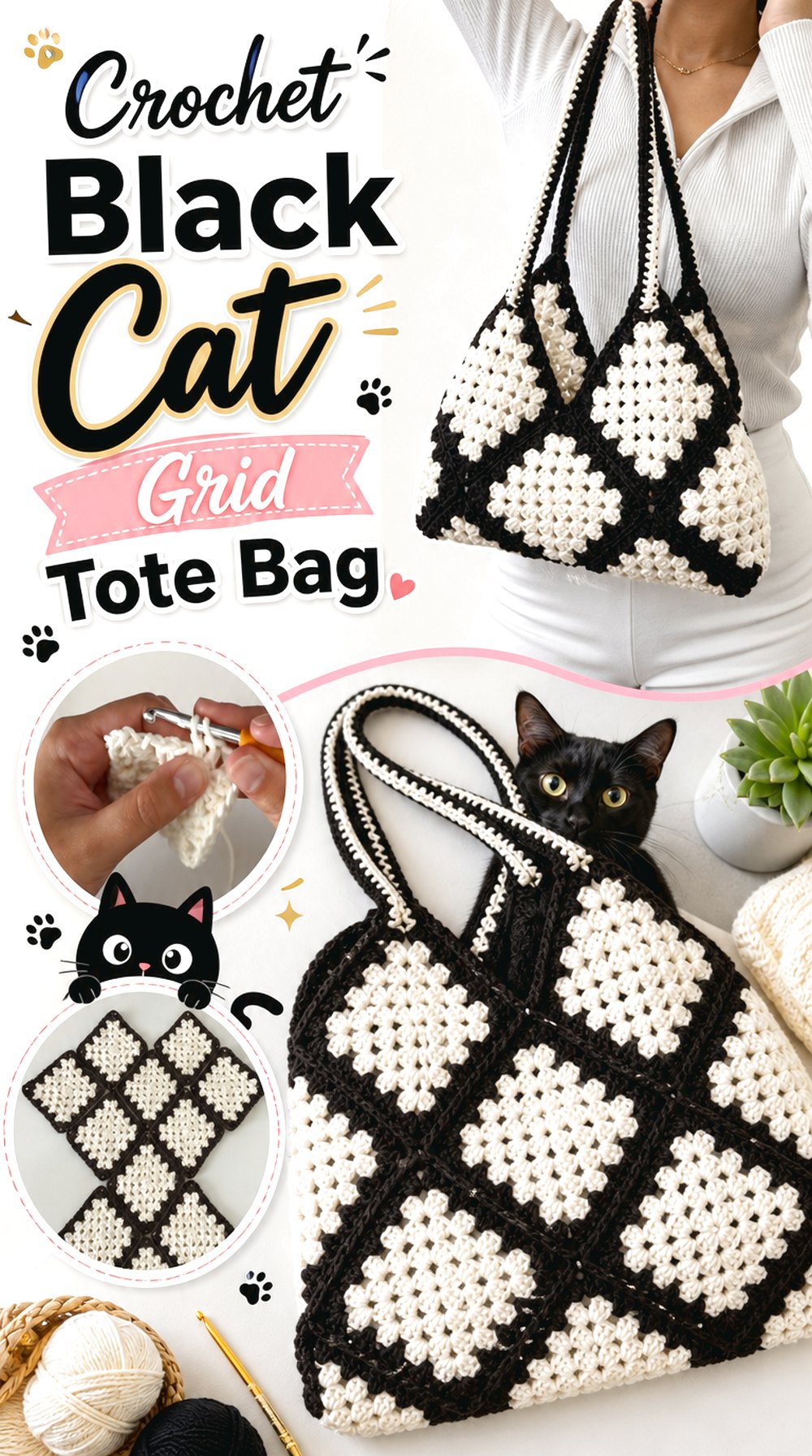
This tote direction works well when you want the black cat motif to feel integrated into a clean, everyday granny-square bag rather than treated as a small decoration. The supporting tutorial produces a minimalist square-based tote, giving you a straightforward framework for mixing cat motifs with simpler filler squares.
A useful adaptation is to reserve the clearest cat squares for the broad front-facing area and keep heavily seamed positions less detailed. Before making multiples, compare your blocked cat square with the tutorial square. Even a small size difference becomes more noticeable when several motifs must align across a straight tote panel.
Let the Front Panel Carry the Strongest Cat Motifs
A tote with a fairly regular grid gives you room to create deliberate visual hierarchy. Instead of scattering cat faces randomly, decide which squares should be seen first when the bag hangs naturally. A centered cat, a diagonal arrangement, or a small repeated group can look more intentional than placing detailed motifs at every available position.
Lay the squares flat in the approximate finished arrangement and photograph them before joining. The photo makes uneven spacing and accidental clusters easier to notice.
Keep the Upper Edge Visually Calm
When detailed cat squares sit close to a bag opening, the handles and top finishing can compete with ears, eyes, and facial features. Consider using simpler filler motifs around the upper edge if your cat design already has a strong silhouette.
This also gives you an easier place to judge whether the top edge remains even. Check the creator’s handle and finishing sections carefully rather than assuming a different motif will behave exactly like the original squares.
Compare Fiber Changes Before Making the Whole Set
The original tutorial says its bag can be made with cotton or acrylic, but a substitution can change the way your own motifs drape and stretch. If your black cat square was developed in a different yarn, make one complete blocked sample first.
The most important comparison is not the yarn label by itself. Check whether the finished square dimensions, edge firmness, and stitch definition work with the bag construction you are adapting.
Creator: crochet daniela
2. Crochet Three-Square Black Cat Shoulder Bag
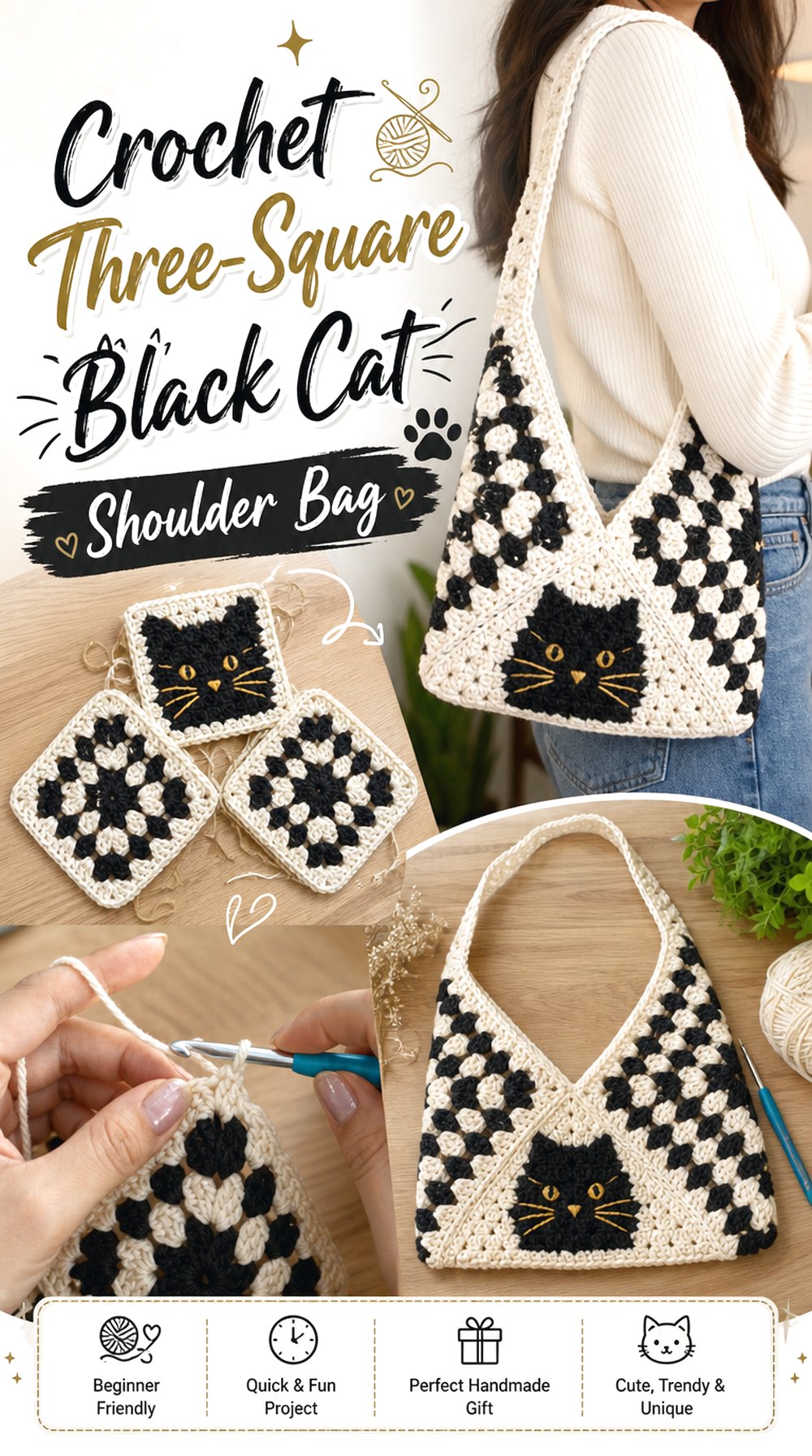
A three-square shoulder bag gives the cat motif much more visual space than a large patchwork tote. Instead of producing many repeated faces, you can treat each square almost like an individual illustration. This is a strong choice when you have one especially detailed black cat square and want it to remain easy to see.
The supporting tutorial specifically builds a customizable bag from three granny squares. That smaller motif count makes scale especially important: each square contributes a substantial portion of the final outline, so changing its dimensions changes the bag rather than merely changing one decorative patch.
Three Squares Make Every Motif Dimension Important
In a large grid, one slightly different square may be absorbed by the surrounding layout. In a three-square construction, there is much less room for discrepancy. Block the cat square and compare its dimensions with any filler squares before treating them as interchangeable.
If you enlarge a cat motif by adding borders, recheck the finished proportions rather than assuming the original strap and opening will still look balanced with the larger body.
Decide Which Cat Should Face Outward
Because the squares fold into different planes of the finished bag, not all three motifs will be viewed from the same angle. Before joining, temporarily arrange the squares in the tutorial’s overall configuration and identify which section becomes the main front.
Place the clearest cat there. If you use cats on the side sections too, decide whether their orientation still makes sense after folding rather than arranging every face upright only while the pieces are lying flat.
Shoulder Carry Changes the Way the Bag Hangs
A shoulder bag can tilt or collapse differently than a hand-carried tote. That matters when your design depends on a perfectly readable cat face. Look at the tutorial’s finished hanging shape before deciding where to place eyes, whiskers, or ears close to a fold.
If preserving the cat image is the priority, keep the most detailed parts away from the deepest fold lines and use simpler square areas where the fabric naturally bends.
Creator: VivCrochets
3. Crochet Patchwork Black Cat Handbag Tote
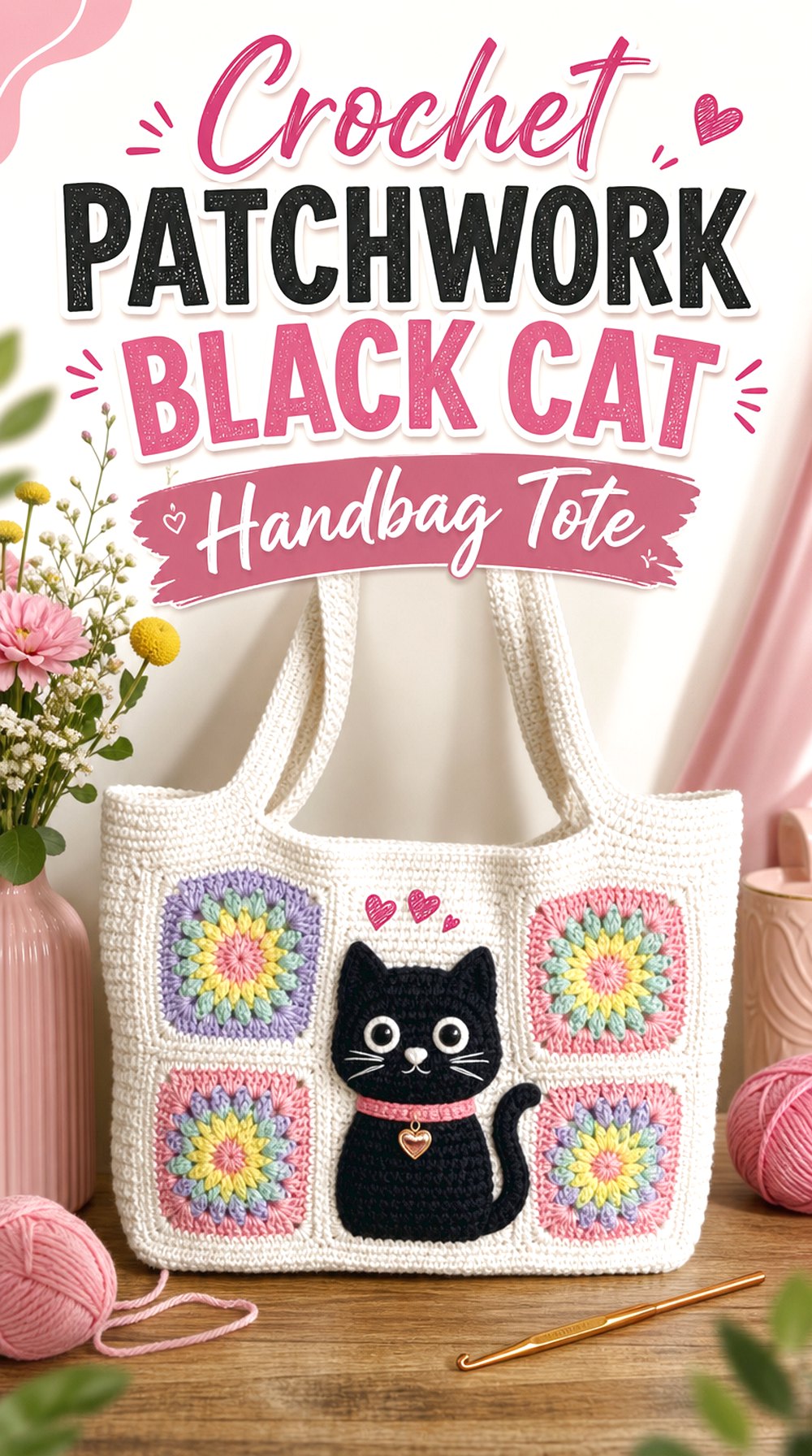
This handbag-style tote is a better match for readers who want a fuller patchwork effect. The supporting tutorial uses multiple granny squares and adds the handle after the body is assembled, creating a larger field where black cats can alternate with moons, solid squares, stripes, or simple contrast motifs.
Rather than making every square identical, consider treating the cats as recurring focal points. That gives the bag a black-cat theme without turning the surface into a wall of repeated faces. It also reduces the number of detailed motifs you need to make while preserving the patchwork character.
Repetition Needs a Layout, Not Just a Stack of Squares
When many motifs are involved, random placement can accidentally put several cats together on one side while leaving the other visually empty. Arrange the full patchwork before sewing and mark which section will become the front.
For a balanced look, compare cat spacing as well as color spacing. A simple paper grid or phone photo can help you test several arrangements without changing any crochet.
Keep Cat Ears Clear of Busy Seams
A black cat square often relies on pointed ears or a strong head silhouette. Placing that detail directly against a high-contrast seam can make the outline harder to read.
Before joining, examine where the seam line will fall around each motif. If the cat has very fine facial details, give it a cleaner surrounding field and move heavily variegated filler squares farther away so the central image stays legible.
The Handle Is Part of the Composition
Because the handle is added after the square body in the supporting tutorial, it becomes another visual line across the completed piece. Consider how your handle color relates to the cat outlines and joining yarn.
A black handle can echo the cats on a lighter bag, while a contrasting handle can separate the carry structure from the motif design. Check the creator’s attachment method before changing materials or proportions.
Creator: naztazia
4. Crochet Black Cat Market Bag
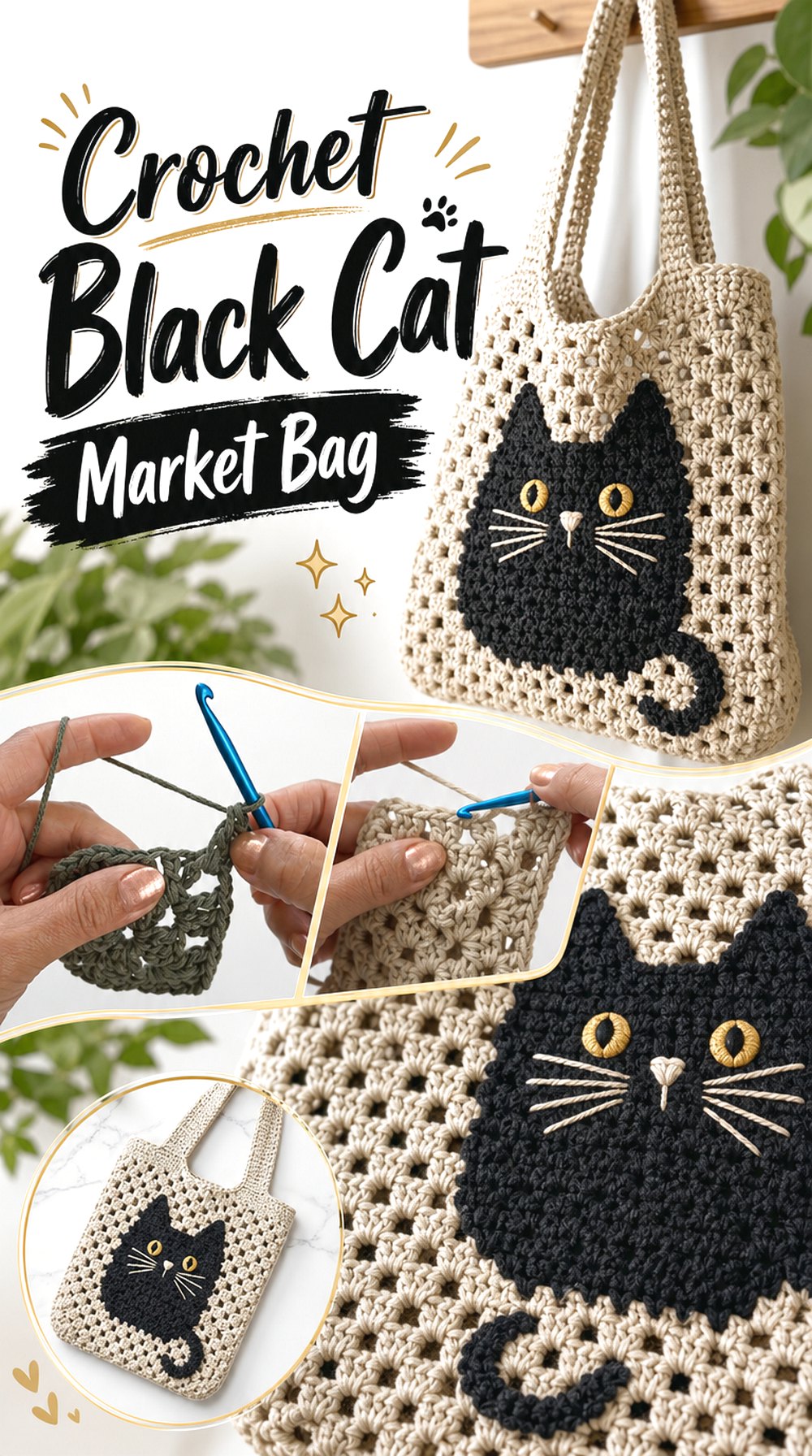
A market-bag format gives you more visual area than a tiny purse and can support a bolder black-cat arrangement. One approach is to make the front predominantly cat-themed while using plainer motifs or less detailed color work elsewhere. This keeps the design readable without requiring every part of a roomy bag to carry the same amount of detail.
The source tutorial demonstrates a granny-square market bag and finishes with a defined opening and handles. If you adapt its square design, concentrate first on matching the dimensions of the finished motifs rather than copying the original color plan.
A Roomier Bag Magnifies Stretch
A larger fabric area can change shape more noticeably once the bag hangs. Before planning rows of detailed cat faces, think about which motifs may sit near the bottom, sides, and handle transition.
If your cat square has a looser outer border than your filler squares, the bag may not hang evenly. Blocking and comparing the pieces before joining is a better checkpoint than trying to correct the discrepancy after the body is assembled.
Keep Small Contents in Mind
Granny-square fabric can include openings, depending on the motif. A market-style bag may be fine for larger items while allowing very small objects to catch or work through open spaces.
If your black cat motif uses open background areas, decide whether an inner pouch or lining better matches your plans. Do not assume lining or the crocheted fabric provides a particular load capacity; the tutorial does not establish a universal carrying limit.
Use the Larger Surface for a Cat Scene
The broader body creates room for something more interesting than simple repetition. You could place black cats across a moon-inspired color gradient, alternate sitting-cat and silhouette motifs, or use cats only in one visual band.
Keep all compatible squares the same finished dimensions. Decorative variety works best when the underlying grid remains predictable enough to join cleanly.
Creator: Katia Creates
5. Crochet Two-Square Black Cat Drawstring Pouch
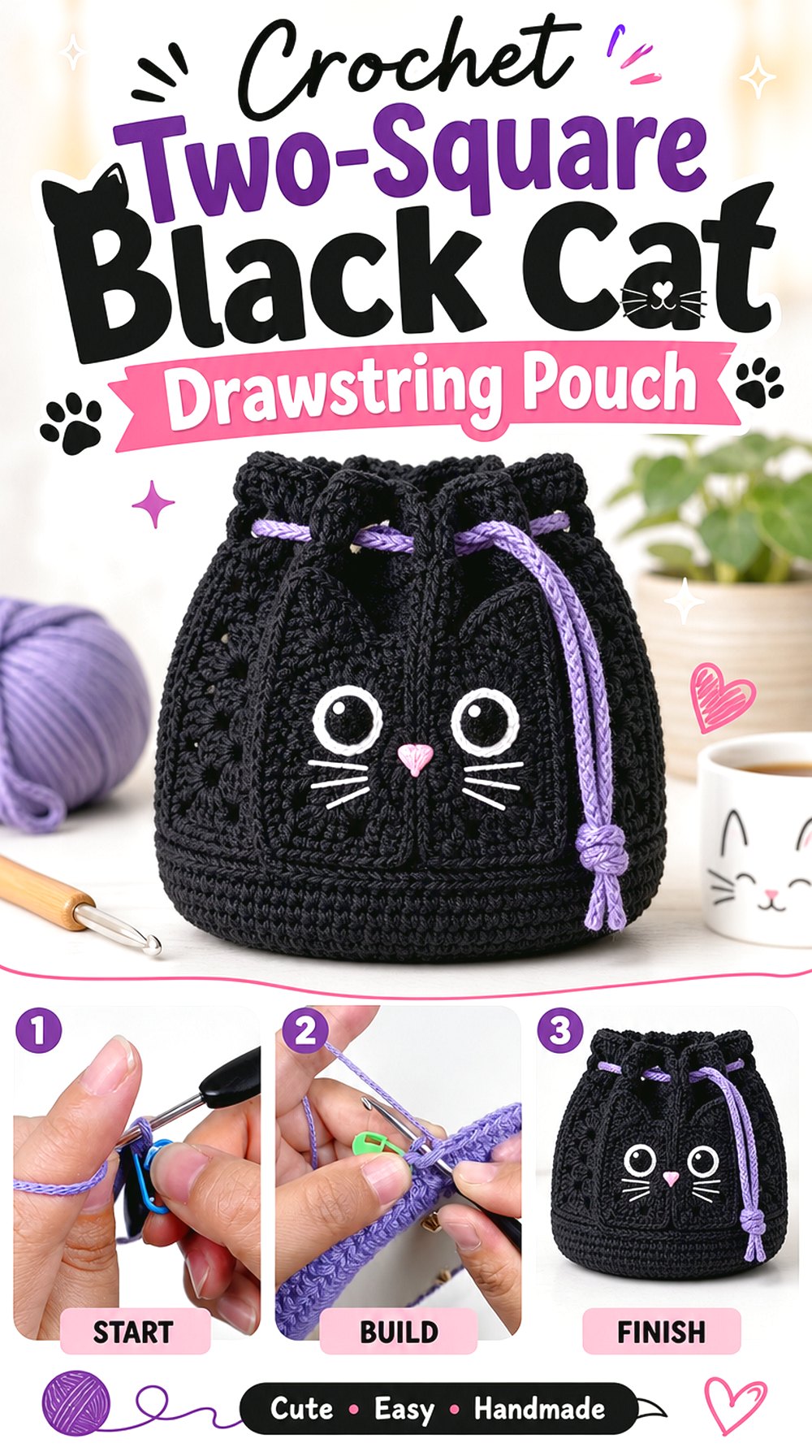
A drawstring pouch changes the role of the black cat motif because the top of the bag gathers instead of staying flat. That makes it better to place the cat lower in the square, where the face is less likely to disappear into the cinched section.
The supporting tutorial creates a drawstring bag from two granny squares. That simple front-and-back concept is useful for a black cat design because you can make one feature square for the front and either repeat it or use a simpler companion square on the back.
Keep the Cat Below the Gathering Zone
A drawstring opening changes shape every time the bag closes. Fine motif details near that area may buckle or fold together.
Before adapting a cat square, look at the finished source bag and estimate which portion remains comparatively flat when the cord is drawn. Keep the eyes, ears, and main face within that more stable visual field and allow the upper background to handle most of the gathering.
Front and Back Do Not Need Matching Cats
With only two major squares, it is easy to make both sides identical—but you do not have to. A detailed black cat front paired with a simple moon, paw print, solid square, or coordinating granny square can make the project feel less repetitive.
The key is dimensional compatibility. Decorative designs can differ, but their blocked outer edges need to work together cleanly for the pouch construction.
Check the Cord Against the Intended Use
A drawstring changes both access and appearance. It gives the project a casual pouch-like closure, but it is not the same as a zipper or firmly closed flap.
Think about what you expect to keep inside and whether a cinched opening is sufficient. Also check the original tutorial’s cord construction rather than inventing an attachment that may distort the top edge.
Creator: Tasty Dumpling Living
6. Crochet Mini Black Cat Cinch Bag
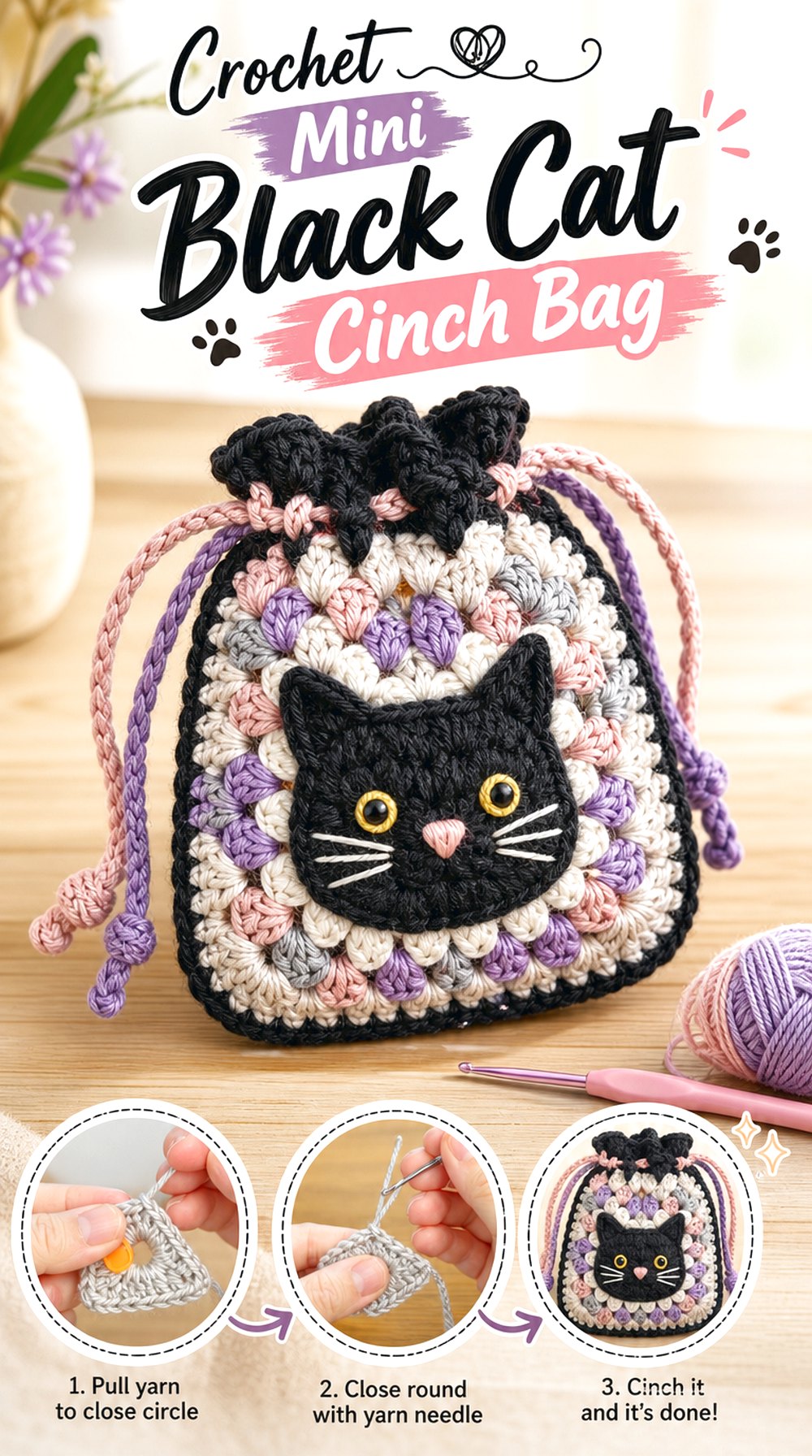
This tiny cinch-bag direction works when you want the cat motif to become a small accessory rather than a full-size carry bag. The original project is a compact granny square drawstring bag, so scale is the defining issue here.
A complex black cat square may lose its character when reduced dramatically. Instead of shrinking a large motif indiscriminately, choose a cat design with a strong silhouette and fewer tiny details. Large eyes, clear ears, and a simple contrasting background will usually read more successfully at small scale than whiskers and intricate facial shaping packed into a tiny area.
Simplify the Cat Before You Shrink the Bag
Small projects expose visual clutter quickly. A motif that looks detailed and balanced at tote size may become hard to read when the entire square is only a small part of a mini bag.
Make one sample first and view it from arm’s length. If the cat stops reading as a cat, simplify the color changes or choose a bolder silhouette rather than continuing to reduce hook or yarn size solely to make everything fit.
Tiny Bags Need Realistic Capacity Expectations
The tutorial gives a finished sample measuring about 9 cm wide and 11 cm high. Those dimensions are useful for understanding that the source is genuinely small, not a standard shoulder bag.
If your adaptation changes yarn, hook, or square dimensions, the finished scale may differ. Decide what you actually want the bag to hold before treating the original measurement as a target.
Let the Drawstring Frame the Motif
On a miniature bag, the cord can become a prominent design element. Choosing a cord color that echoes the eyes, moon, border, or another accent around the cat can make the tiny project look more deliberate.
Avoid letting an overly bulky cord dominate the square. Judge the proportion visually after the bag body exists, and follow the creator’s construction for how the drawstring is passed through the opening.
Creator: mochida akari – crochet and knitting
7. Crochet Puff-Square Black Cat Crossbody Bag
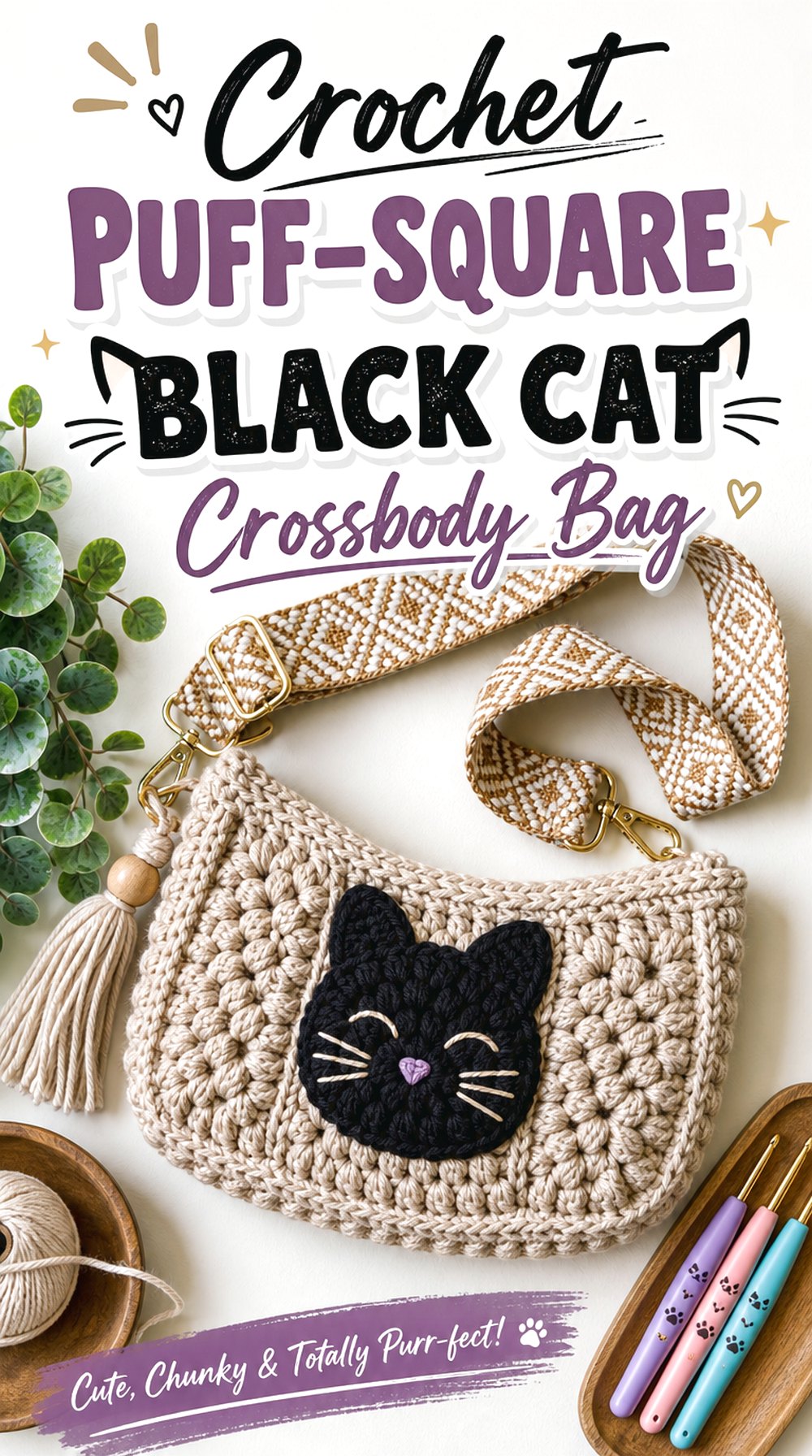
A crossbody construction puts more emphasis on the side attachment points and strap than a simple tote. The supporting tutorial uses textured puff-stitch granny squares, side rings, and a removable strap option. For a black-cat adaptation, use the bag architecture as your guide rather than assuming a different square can replace the puff motif without adjustment.
This idea suits a cat square with enough structure to serve as a prominent front panel. You could also keep textured squares elsewhere and use a compatible black cat square only at the front, provided the finished dimensions and joining edges agree.
Treat Hardware Placement as a Structural Decision
Side rings immediately change where carrying force enters the bag. That makes the side edges more than decorative borders.
If you change the original motif, check that your square does not place fragile surface details directly where hardware or joins need to sit. The safest adaptation is one that preserves a clean, stable outer edge while keeping the cat design comfortably inside the square.
Texture Can Compete With a Detailed Cat Face
The source bag uses a puff-stitch granny-square design. If you combine highly dimensional filler motifs with a graphic black cat square, compare them side by side before making multiples.
A flatter cat square beside very raised texture can look intentionally contrasted, but it can also make the project feel visually uneven. Decide whether texture or the cat is supposed to be the main feature, then simplify the other element accordingly.
Confirm Strap Length and Attachment for Your Body
Crossbody comfort depends on how the bag actually sits when worn, and changing the body dimensions can affect that relationship. Do not assume the tutorial’s strap proportions will automatically suit a larger or smaller cat-square adaptation.
Finish and block the body first when possible, then use the creator’s strap construction as the reference while checking the placement against your preferred wearing position.
Creator: MJ’s Off The Hook Designs
8. Crochet Black Cat Phone Bag
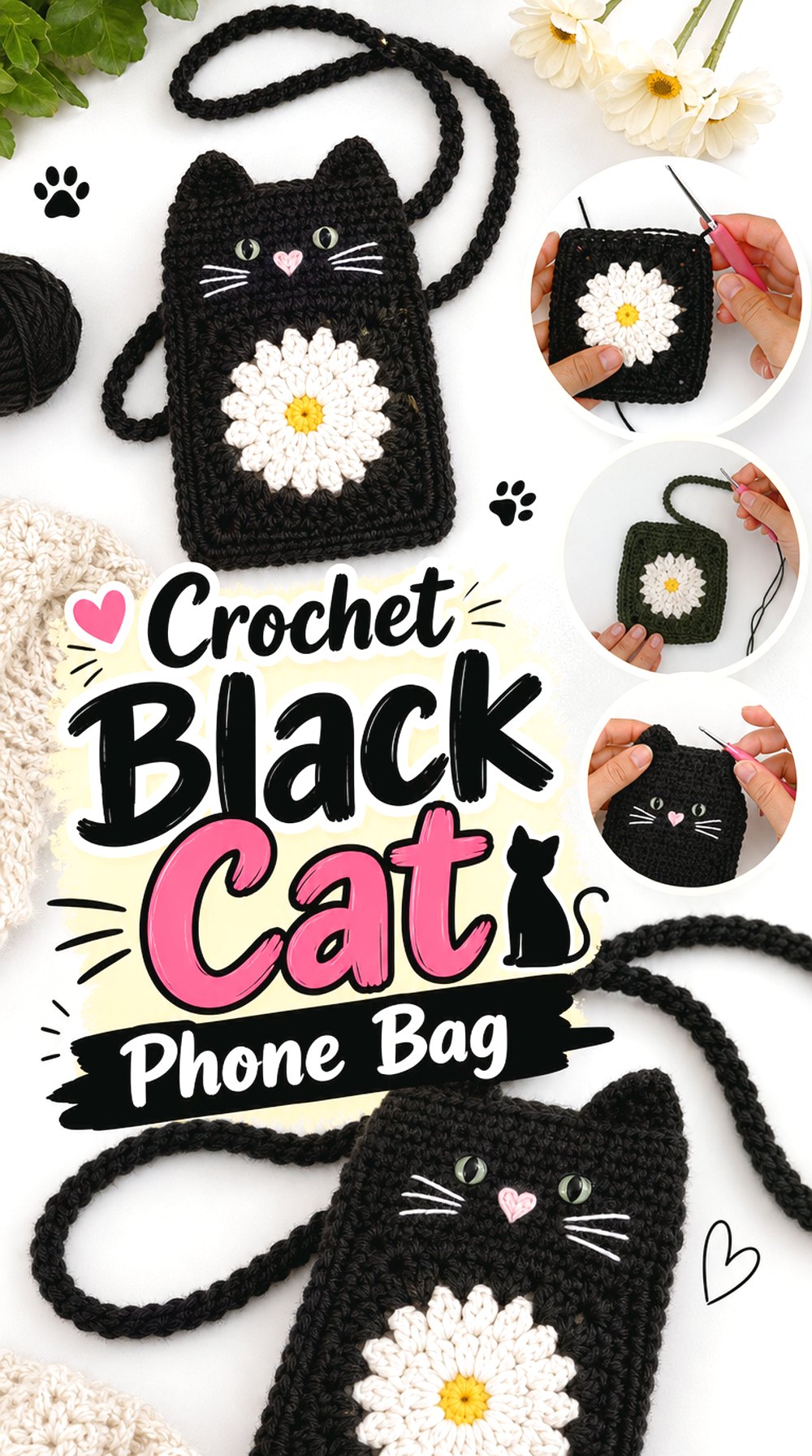
A phone bag is one of the most practical ways to use a single bold cat design without committing to a large field of motifs. The supporting tutorial turns granny squares into a narrow phone-sized bag and includes a strap.
Here, the biggest adaptation question is not how many cats to repeat—it is whether the square proportions suit the device and whether the cat remains recognizable after the square is scaled. A taller bag can also give you room to place the cat toward the upper front while leaving a quieter lower section, depending on the construction you choose.
Check the Device Before Choosing Square Scale
Phones differ substantially in height, width, thickness, and cases. Do not rely on the words “phone bag” as a universal sizing guarantee.
Compare your actual device with the source’s finished view and with the width of your blocked square. Allow for the bag’s opening and fabric thickness as well. If the cat motif forces the body too wide or too short, choose another cat square instead of distorting the project around it.
A Single Cat Can Be More Effective Than Repetition
Because the front is narrow, one carefully placed black cat often has more impact than several tiny motifs. Consider a face, sitting silhouette, or cat-and-moon square as the main front detail while keeping the back simpler.
This reduces visual crowding and lets you concentrate your cleanest color changes on the part that will be seen most often.
Keep the Opening Free of Ears and Fine Details
A phone repeatedly moves through the top opening, so avoid placing delicate raised ears, loose decorative elements, or heavily textured embellishment directly where the device will rub against them.
A cat that is crocheted into the square itself is generally easier to integrate visually than extra pieces attached at the opening. For any added embellishment, consider snagging and intended use before including it.
Creator: Diving Ducks Crochet
9. Crochet Buttoned Black Cat Granny Square Pouch
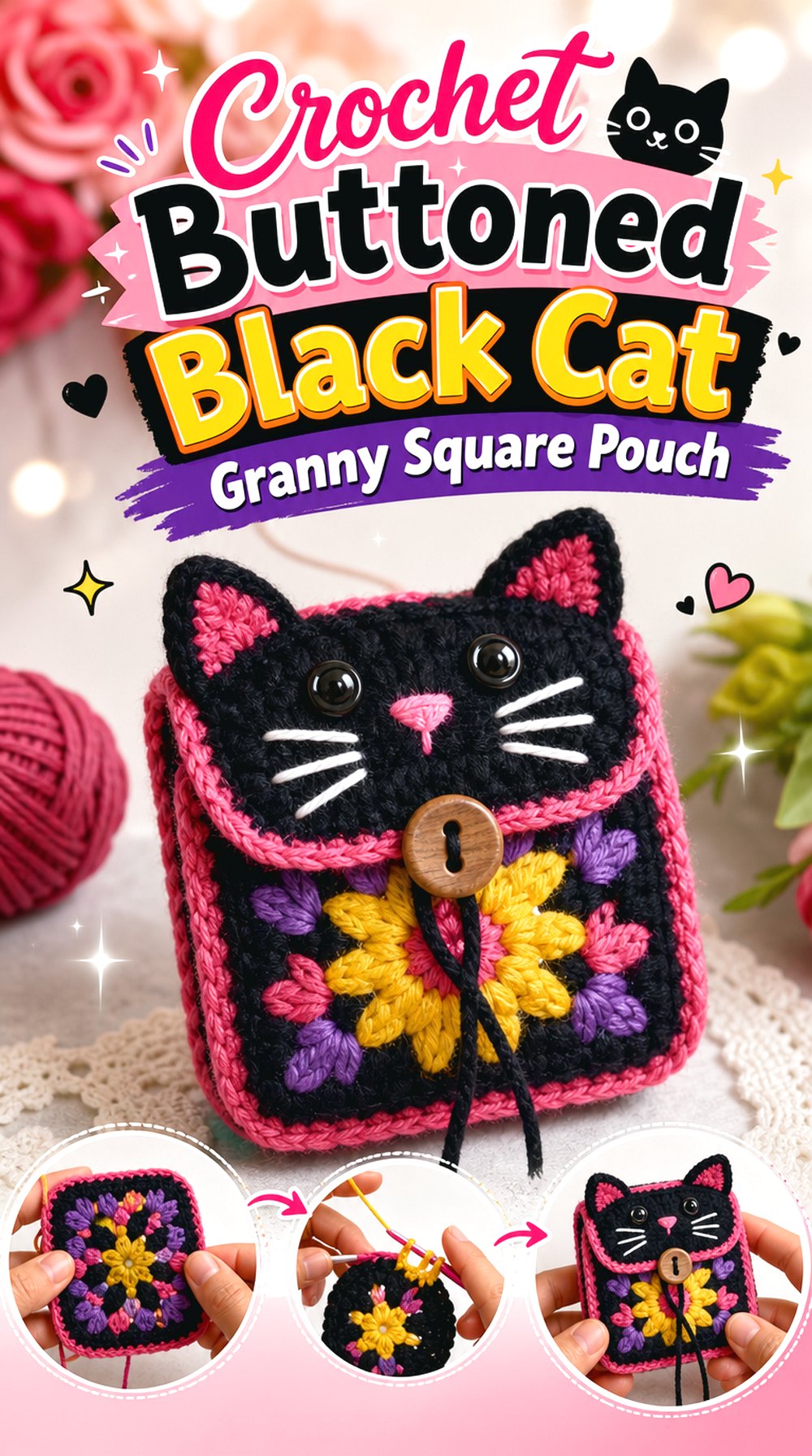
A buttoned pouch is a good middle ground between an open tote and a zippered case. The supporting tutorial creates a small granny-square pouch and adds a button closure. That gives you a compact canvas for one black cat motif while keeping construction comparatively simple.
Because the closure becomes a visible point on the front, you can either incorporate it into the composition or deliberately keep it away from the cat’s face. A centered button placed directly over the motif may obscure the design, so preview the final closure position before deciding where the cat should sit within the square.
Keep the Button Out of the Cat’s Key Features
The eyes and ears are usually what make a black cat motif readable at a glance. If the pouch closure falls in the same area, the button can interrupt the design.
Before committing to motif placement, inspect the tutorial’s finished pouch and mark the approximate closure location on your sample square. Shift the cat design or use a plainer back/flap area if needed rather than treating the closure as an afterthought.
Small Pouches Reward Dense Backgrounds
A pouch may hold coins, earphones, or similarly small objects—the source itself presents several small-item uses. If your cat granny square has large open gaps, consider whether the fabric suits what you intend to store.
A denser background or lining may be more appropriate for very small contents, but that is an adaptation choice. Confirm how much interior finishing the original tutorial actually provides before starting.
Match the Edge Before Joining Two Different Motifs
Using a cat on the front and a plain square on the back is an easy way to reduce repetition. The two pieces still need compatible blocked dimensions and edges.
Place them directly on top of each other after blocking. If corners and sides do not align naturally, resolve that difference before assembly rather than stretching one square aggressively during seaming.
Creator: GraceHandcrafts
10. Crochet Black Cat Zipper Pouch
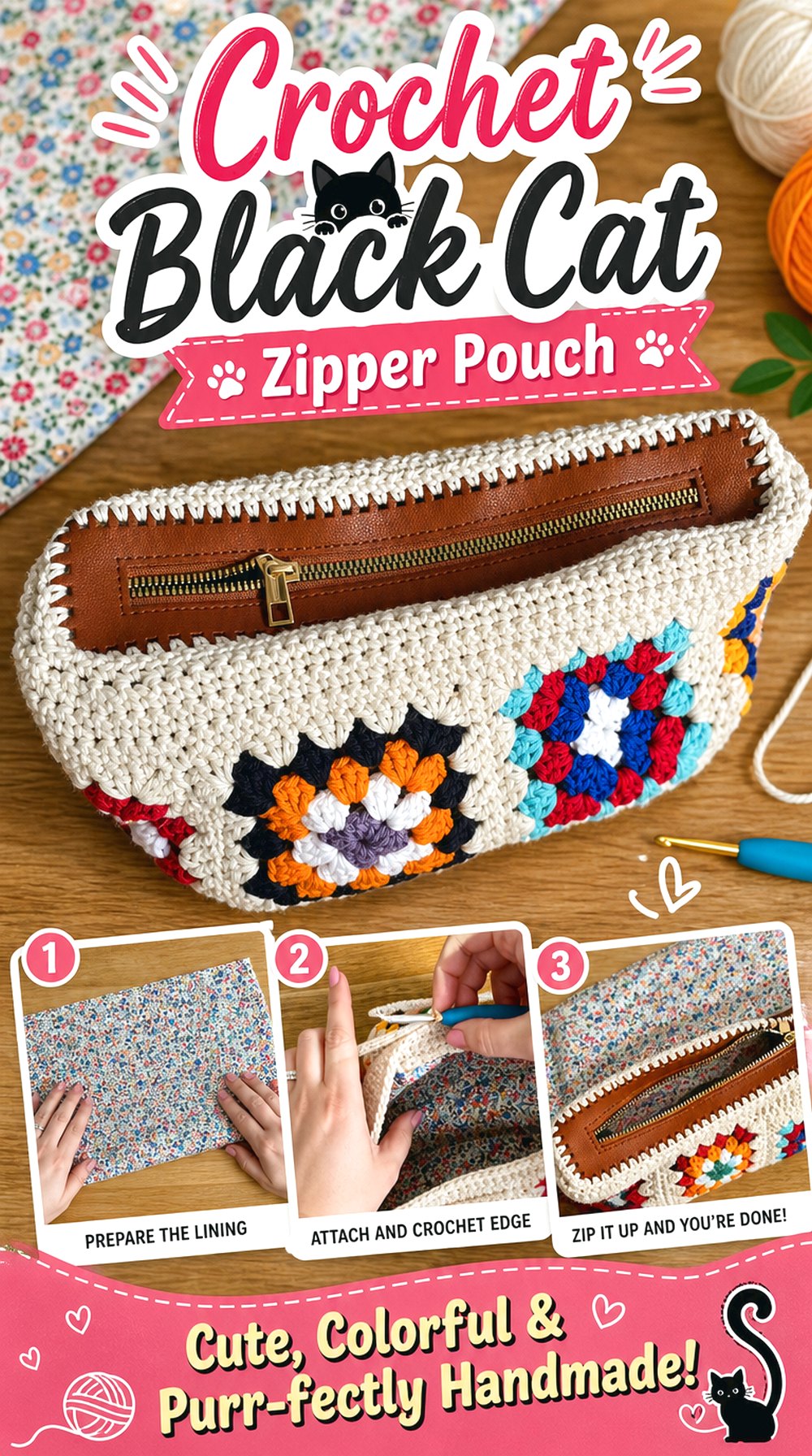
A zippered pouch gives the black cat square a more structured-looking finish and is especially useful when you want a closed top rather than an open or buttoned bag. The supporting tutorial focuses on assembling granny squares, adding a zipper, and hand sewing a lining without requiring a sewing machine.
For a black cat version, this is a strong choice when the motif is detailed enough to deserve a clean framed presentation. The zipper line creates a clear upper boundary, so keep the cat comfortably below it and let a simple outer border handle the finishing work.
Leave a Quiet Border Beside the Zipper
Cat ears pushed immediately against the zipper can look cramped and may be harder to read. A plain final border around the motif creates breathing room and gives the top edge a cleaner transition into the closure.
When adapting a cat square, judge this visually after blocking. Adding too many border rounds simply to reach a target size can also change the proportions, so compare the result with the tutorial square as you go.
Lining Helps Separate Contents From the Crochet Surface
The tutorial specifically demonstrates hand lining as part of the pouch assembly. That can be useful when a detailed motif contains openings or when you do not want small contents rubbing directly against carried yarn on the back of colorwork.
Use the creator’s tutorial for the actual lining and zipper process rather than trying to infer sewing measurements from the crochet square alone.
Check Square Shape Before Installing a Straight Closure
A zipper emphasizes unevenness because it introduces a straight reference line across the top. If your blocked cat square leans, ripples, or has mismatched corners, that will be more obvious beside the zipper.
Correct motif shape before assembly. Do not rely on the closure to pull an uneven square into position; forcing it can distort both the pouch and the cat design.
Creator: Crafted by Cat
11. Crochet Black Cat Granny Square Backpack
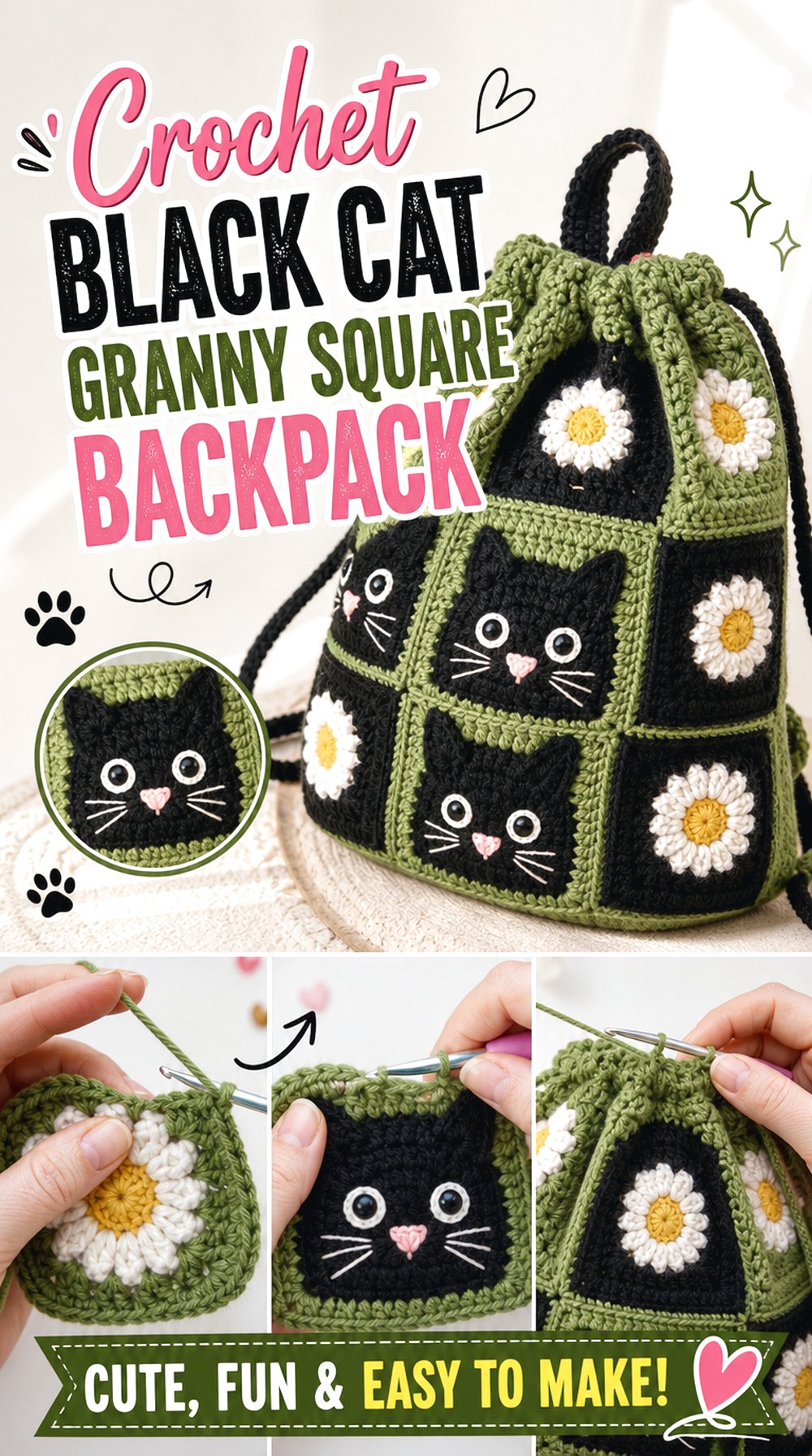
A backpack gives you enough surface area to turn black cat motifs into a deliberate front panel rather than a tiny accent. The supporting tutorial uses granny squares to create a full backpack and includes a drawstring-style opening and straps.
Its original motif is a daisy, so a black cat replacement should be treated carefully. The cat square needs to match the relevant blocked dimensions and joining edges before you reproduce a full panel. Another option is to keep simpler compatible squares across most of the backpack and reserve several cat motifs for the front, where they remain visible when the bag is worn.
Reserve the Best Cats for the Front Panel
A backpack has a naturally dominant display surface. Instead of spreading detailed cat squares evenly over every side, place the most readable motifs where they face outward.
This also lets the back panel stay visually quieter. Because that area sits against the wearer, highly dimensional cat details or raised embellishments may be less desirable there than on the front.
Drawstring Areas Need Flexible Motif Planning
The top of a backpack opens and closes repeatedly, so a detailed motif immediately beside the gathering zone may distort when the opening contracts.
Check the source video’s completed shape and identify how much of the upper area moves. Place black cat faces lower if necessary, leaving simpler crochet near the top to handle the changing shape without repeatedly folding facial features.
Strap Symmetry Matters More on a Backpack
Two straps make uneven attachment easier to notice than on a single-strap bag. Once you change the dimensions of the granny-square panel, review the tutorial’s strap placement rather than copying positions blindly.
Wearability depends on the entire finished body. Complete and block the main backpack shape first when the source construction allows, then compare both strap attachment points so the cat panel hangs level.
Creator: A Crafty Concept
12. Crochet Two-Square Black Cat Vintage Crossbody
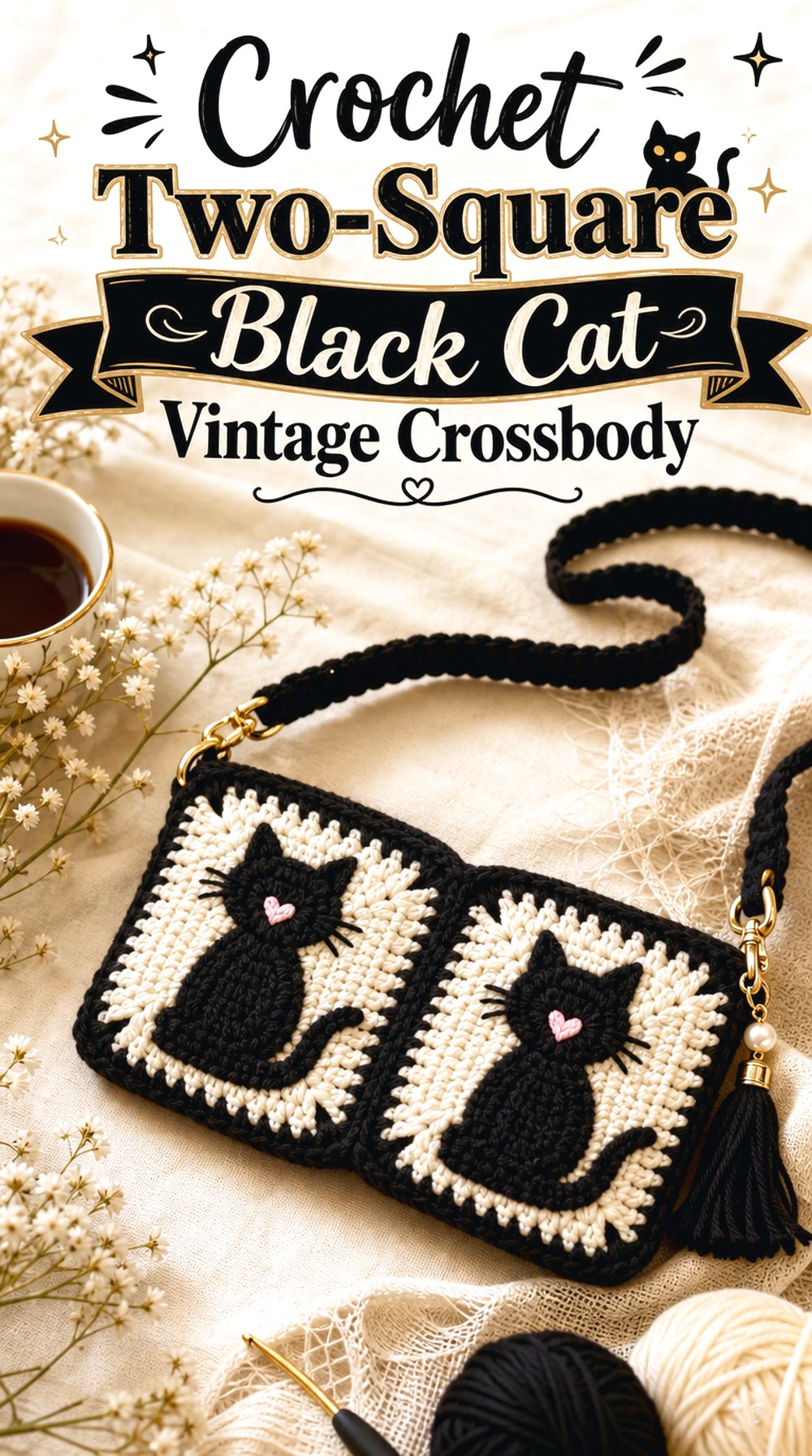
This crossbody option uses only two major granny squares, giving each black cat motif plenty of room to become the star. The supporting tutorial describes a lightweight two-square crossbody with a slim strap and optional decorative additions such as tassels or charms.
For a black cat version, the minimal square count is useful if your motif involves several color changes or detailed facial work. Instead of repeating that labor across a large tote, you can make one feature cat for the front and a coordinating second square for the back.
Two-Square Construction Puts the Cat at Center Stage
There is very little visual competition in this bag shape. That makes it ideal for a recognizable cat face, sitting silhouette, or cat-and-moon composition.
It also means mistakes in proportion are difficult to hide. Check whether the cat is visually centered after blocking, not just while the square is fresh off the hook. A square that relaxes unevenly can make an otherwise centered motif look off balance.
Decide Whether Fringe Supports the Theme
The source mentions fringe, tassels, and charms as customization possibilities. A black-cat version could use a subtle tassel or small decorative accent, but extra movement is not necessary if the granny square is already detailed.
Before adding anything, ask whether it strengthens the finished silhouette or simply competes with the cat. A graphic motif often benefits from a cleaner border.
A Slim Strap Changes the Visual Weight
A narrow strap keeps attention on the two-square body, which can work particularly well with a bold central motif. At the same time, strap choice affects how the bag hangs.
If your adapted squares are larger, heavier, or made from a different yarn than the original, check the finished body before deciding that the same strap proportions still make sense. Avoid making unsupported durability assumptions.
Creator: MadameStitch
13. Crochet Black Cat Two-Panel Tote Bag
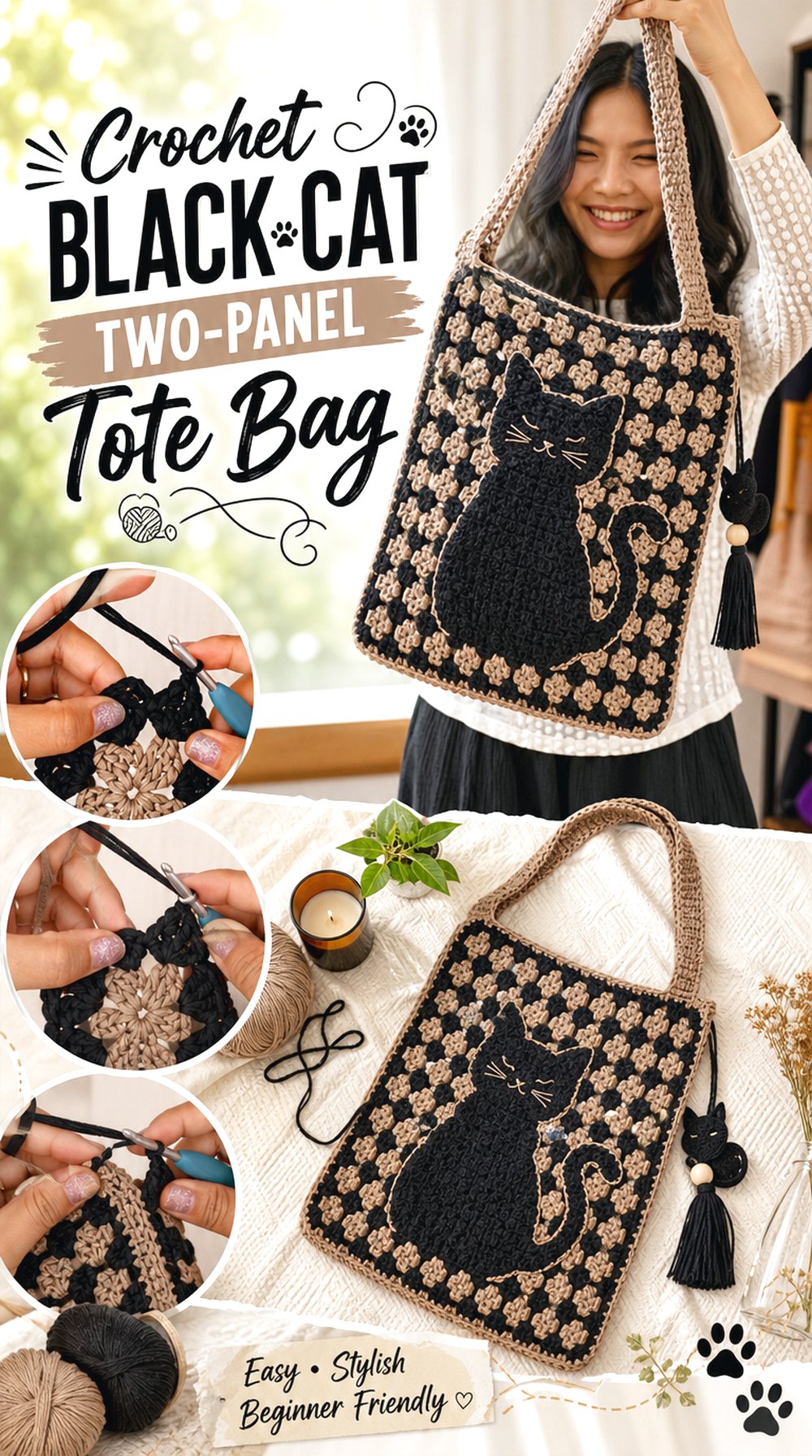
Instead of assembling a large collection of small squares, this tote uses a two-panel concept that can give the black cat design a much larger visual scale. The supporting tutorial presents a granny-square tote built around two main panels with separate side, bottom, and strap construction.
That format is appealing if you prefer one oversized cat motif per side. A large black cat square can read almost like artwork, while the side and bottom sections provide quieter structural areas. Because the original project uses a specific panel-based architecture, match your panel dimensions carefully before assuming an oversized motif can drop into the design unchanged.
One Oversized Cat Can Replace Repetition
If making fourteen or twenty detailed cat squares feels excessive, a larger feature panel offers a completely different route. One centered silhouette can create a stronger graphic statement than many tiny faces.
Keep the motif comfortably inside the panel so the side and bottom connections do not cut through ears or other recognizable features. The surrounding border is functional space as well as decoration.
Side and Bottom Sections Control the Bag’s Depth
The source construction includes separate side and bottom sections. That means the main square does not determine every dimension by itself.
If your black cat panel changes size, study how those secondary pieces interact with it before crocheting them. A wider panel without corresponding structural adjustments may alter the finished shape significantly.
Material Substitution Can Change the Panel Dramatically
The original tutorial uses paper raffia for its sample. A soft yarn-based black cat square may behave very differently, particularly in drape.
If you prefer another fiber, judge the new fabric on its own merits instead of expecting it to reproduce the source bag’s exact structure. Swatch or make the feature panel first, then decide whether the resulting firmness suits the tote you want.
Creator: KnitcroAddict
14. Crochet Dense-Square Black Cat Carryall Tote
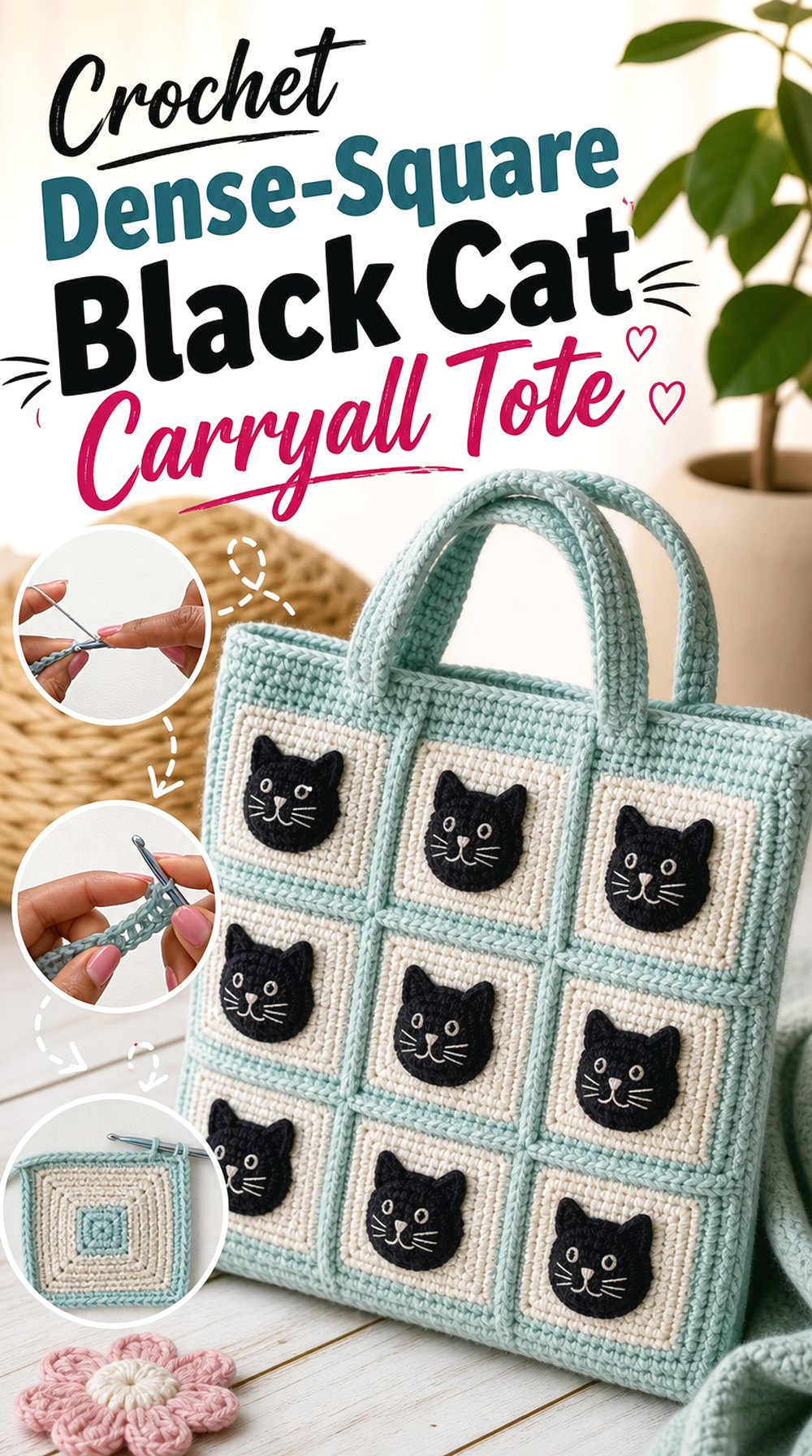
For a black cat bag with less open space, this dense-square tote provides a useful alternative to classic airy granny construction. The source uses single-crochet granny squares and assembles them into a larger tote.
That denser look can suit graphic cat motifs particularly well because the background feels more continuous. Rather than using the cat on every square, consider alternating black cats with solid dense squares so the faces have visual room. This option is especially different from the miniature pouches and two-square bags because its identity comes from repeated firm-looking motifs across a roomier body.
Density Can Help Graphic Details Read Clearly
Traditional granny squares often use obvious openings as part of their character. A denser square creates a more continuous surface, which can make color-blocked eyes, ears, and silhouettes easier to see.
However, do not assume your existing black cat motif will automatically match the source square. Density affects both dimensions and edge structure. Compare one fully blocked cat square with one compatible filler motif before planning the tote grid.
Alternate Cats With Solid Squares for Better Rhythm
An all-cat layout can become visually busy across a larger bag. Alternating statement motifs with plain squares gives each cat more room to register.
Try several layouts before joining: a checkerboard, one central front cluster, or cats restricted to the lower or upper rows. Keep orientation in mind if any squares wrap toward the sides.
Larger Tote Bodies Need Strap Checks
Even when the square fabric feels firm, the handle area can still behave differently under use. Look closely at how the source attaches and finishes the carrying sections.
If you change yarn, square count, or body size, do not assume the same feel or capacity. Test the finished empty bag, inspect attachment points, and reinforce only with a method compatible with your chosen construction.
Creator: Leelee Knits
Which Black Cat Granny Square Bag Shape Should You Choose?
| Bag idea | Main advantage for a black cat motif | Key point to verify |
|---|---|---|
| Grid tote | Multiple cat placements in a regular layout | Blocked square consistency |
| Three-square shoulder bag | Large motifs with little repetition | How squares fold into the final shape |
| Patchwork handbag tote | Strong all-over themed design | Motif orientation across many joins |
| Market bag | More room for a full cat-themed layout | Stretch and openness |
| Two-square drawstring pouch | Simple front-and-back motif plan | Gathering around the top |
| Mini cinch bag | Small accessory or compact gift | Whether the cat still reads at reduced scale |
| Puff-square crossbody | Strong structured-looking front | Compatibility with textured source squares |
| Phone bag | One clear focal cat | Device size and opening |
| Buttoned pouch | Compact closure without a zipper | Button position over the motif |
| Zipper pouch | Closed top and lined finish option | Straight square edge at zipper |
| Backpack | Large display panel | Strap symmetry and top gathering |
| Vintage crossbody | Two statement squares | Strap proportion after motif substitution |
| Two-panel tote | Oversized single cat design | Panel dimensions and side depth |
| Dense-square carryall | Less open visual surface | Edge compatibility between motif types |
Conclusion
The most useful black cat granny square bag is the one whose construction suits the motif instead of forcing the cat into an incompatible layout. Choose the three-square shoulder bag, phone bag, or two-square crossbody when you want one or two cats to dominate. The patchwork, market, and dense-square totes work better when you want repetition, while the zipper pouch and button pouch give you compact closed options. For a bigger statement, the backpack or oversized two-panel tote provides much more display space.
Whichever direction you choose, block and measure one cat square before producing the full set. Then use the original tutorials for the exact construction, joining, closure, and finishing details.
Frequently Asked Questions
Can any black cat granny square replace a classic granny square in a bag tutorial?
No. Two designs called “granny squares” can have different finished dimensions, stitch density, corner placement, and edge construction. Make and block your black cat square first, then compare it directly with the square required by the bag tutorial. If the dimensions are close, a compatible border may help. If they differ substantially, choosing another bag structure is usually cleaner than stretching or forcing the motifs during assembly.
Should every black cat on a granny square bag face the same direction?
Not necessarily, but the final orientation should look deliberate. Squares that appear upright while laid flat may rotate after the bag is folded or joined. Map the front, back, sides, and base before seaming. Most designs look clearer when the main front-facing cats are upright, while side motifs can either follow that orientation or form an intentional alternating arrangement.
How can I keep a black cat motif visible on a dark crochet bag?
Create contrast around the cat rather than relying on black alone. A cream, pumpkin, lavender, dusty pink, muted green, or other lighter background can separate the silhouette from dark joining yarn. Also check the design from a distance. Fine whiskers or facial details that are obvious close up may disappear once the bag is carried, while strong ears, eyes, and a clear outer silhouette remain easier to recognize.
When is lining especially useful in a black cat granny square bag?
Lining is worth considering when the motif has noticeable openings, the inside contains many carried yarn ends or joins, or the bag will hold small objects that could catch on the crochet fabric. It can also give the interior a cleaner finish. Lining does not automatically establish a particular carrying capacity, however. Check whether the selected tutorial includes lining and follow its construction details rather than improvising from appearance alone.
Why can a crochet bag strap stretch even when the granny squares seem firm?
The strap and square body do different jobs. A firm motif can keep its shape while a long crocheted strap lengthens under repeated tension, especially if its stitch pattern or fiber is flexible. Strap width, construction, attachment points, and what is carried all affect the result. Review the specific tutorial’s strap method and consider reinforcement only when it works with that construction instead of assuming one universal solution.
How do I adapt a detailed black cat motif for a phone bag or mini pouch?
Simplify before shrinking. Tiny color changes, thin whiskers, and complex facial shaping may become difficult to read when the square is reduced. A bold cat silhouette or larger facial features usually translate more clearly to a small accessory. Make one sample at the intended scale and compare it with the actual phone or contents before committing to the entire bag. The motif needs to work visually and fit the required construction dimensions.