A brooch can change the look and function of a crochet cardigan, but the cardigan itself matters just as much as the pin. Dense front bands can support a stronger statement piece, open lace calls for a lighter touch, and oversized fronts need enough overlap if the brooch is expected to act as a closure rather than decoration.
These 18 ideas cover cocoon shapes, granny-square constructions, cropped boleros, mesh layers, textured panels, pockets, cables, raglan shaping, and adaptable lengths. One featured tutorial specifically shows a brooch used as the cardigan closure; the others provide cardigan constructions that can be paired with a suitable brooch when the fabric and front shape allow it. The comparisons below help you judge placement, structure, drape, and whether a decorative pin should be functional or purely ornamental.
Quick List
- Crochet Gemstone-Pin Cocoon Cardigan
- Crochet Four-Square Granny Cardigan
- Crochet Long Lace Triangle Cardigan
- Crochet Slouchy Oversized Cardigan
- Crochet Plush-Collar Cardigan
- Crochet Adjustable Tie-Front Mesh Cardigan
- Crochet V-Stitch Airy Cardigan
- Crochet Pocketed Open-Front Cardigan
- Crochet Five-Panel Everyday Cardigan
- Crochet Short Bolero Cardigan
- Crochet Ribbed Made-to-Measure Cardigan
- Crochet Wide-Sleeve Pocket Cardigan
- Crochet No-Sew Hexagon Cardigan
- Crochet Convertible-Length Cardigan
- Crochet Lightweight Granny-Stitch Cardigan
- Crochet Textured Cable-Panel Cardigan
- Crochet Sunflower Patchwork Cardigan
- Crochet Top-Down Suzette Raglan Cardigan
Choose the Cardigan Structure Before Choosing the Brooch
A brooch used only as decoration has much more freedom than one expected to keep a cardigan closed. For a functional closure, first look at the front edges. Wide borders, ribbing, dense granny clusters, or reinforced joins usually give you more substantial fabric to work with than large mesh openings.
Also check whether the fronts naturally meet. A cardigan designed to hang several inches apart may distort if a pin is used to pull the edges together. In that case, place the brooch on one lapel or front panel instead. Cropped boleros, roomy cocoons, overlapping collars, and adaptable open fronts all behave differently, so decide whether you want decoration, light positioning, or a true closure before choosing the pin.
Brooch Weight and Placement Matter on Crochet Fabric
Crochet fabric can stretch around a concentrated point, especially when the garment is openwork, very soft, or made from a highly drapey yarn. A large metal brooch that looks appropriate on a dense cardigan may pull an airy mesh cardigan out of shape.
Whenever possible, position the pin through a sturdy border, seam area, ribbed band, or another section with enough fabric to distribute the pressure. On motif cardigans, a join or outer edging may be a better location than the center of an open square. For delicate crochet, a smaller and lighter brooch can provide the visual accent without asking the fabric to support unnecessary weight. Check the back of the pin for rough edges that could snag yarn before wearing it.
Check Fit and Front Overlap After Blocking
Brooch placement is easiest to judge after the cardigan has reached its intended finished shape. Blocking can change drape, motif dimensions, front-edge alignment, and how far an open cardigan falls away from the body.
Try the finished cardigan over the kind of clothing you expect to wear underneath. Bring the fronts together gently rather than stretching them until they meet. If the garment begins pulling across the shoulders, armholes, or upper back, a brooch should probably remain decorative rather than become the main closure. If the fronts naturally overlap, experiment with pin placement at the upper chest, waist, or collar and watch how each position changes the silhouette before committing to a particular brooch style.
1. Crochet Gemstone Pin Cocoon Cardigan
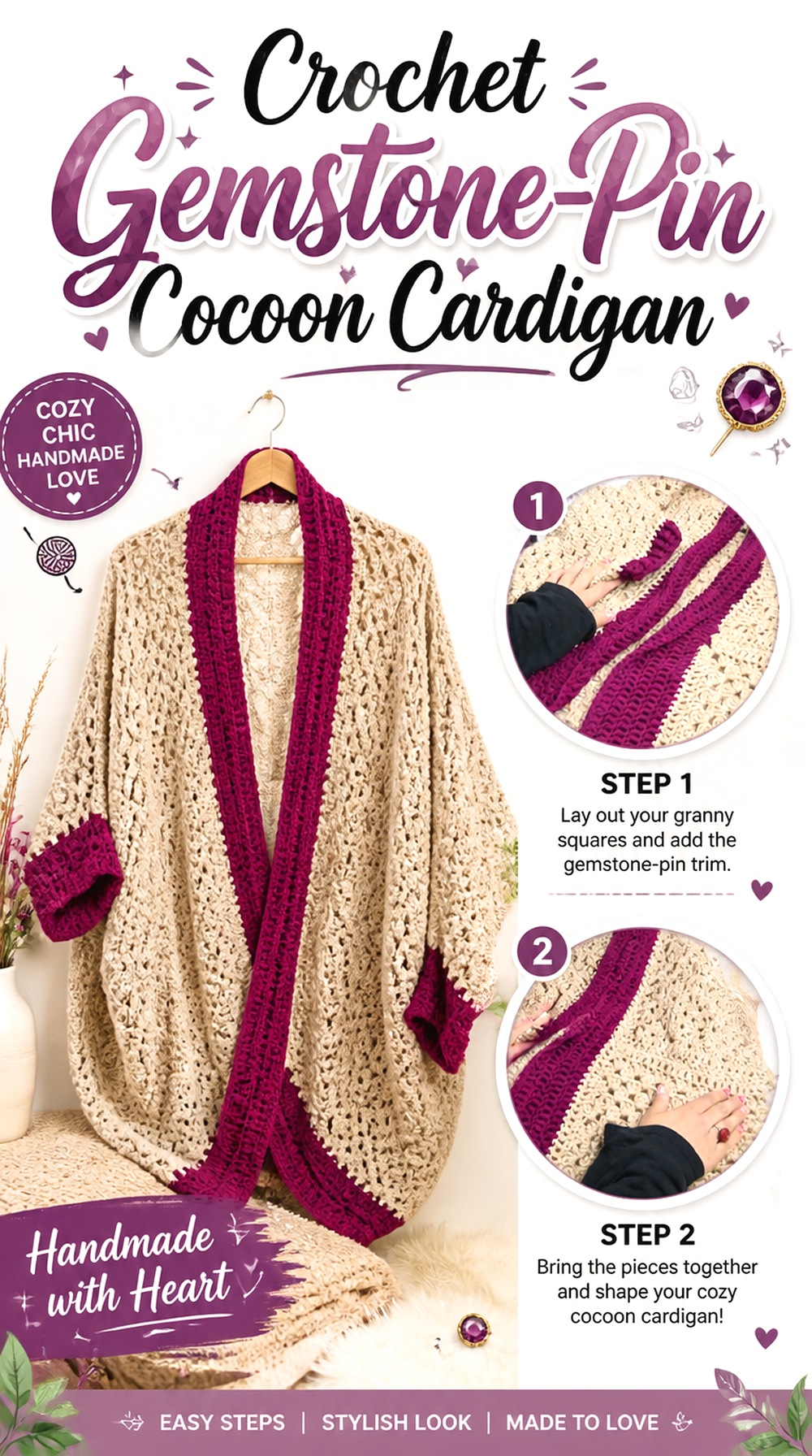
This cocoon cardigan is the clearest match for the brooch-cardigan theme because the original project actually uses a gemstone brooch to bring the front together. It begins with an oversized granny-square form that becomes a relaxed cocoon, giving the front a soft, rounded fall rather than the straight edges of a tailored cardigan. YARNutopia also presents the brooch as part of the finished styling rather than merely an optional embellishment.
The roomy construction makes this especially appealing when you want the brooch to create one focal point at the front without making the entire garment look formally buttoned.
The Brooch Works With the Cocoon Shape
A cocoon already wants to fall inward around the torso, so a single front pin can gather the edges without requiring a line of closures. Before copying the placement, put the cardigan on and see where the two sides meet naturally. Pinning too far away from that point can pull the back or sleeves forward and change the way the cocoon hangs.
A Granny Border Gives the Pin a Better Target
Rather than pushing a pin through the largest openings in the granny fabric, look for a substantial outer border or cluster where the brooch can catch enough material. This matters even more with a heavier decorative brooch. If the edge noticeably sags once the pin is attached, choose a lighter brooch or keep it purely decorative on one side.
Original Tutorial and Creator Credit
Creator: Fuad Azmat / YARNutopia by Nadia
2. Crochet Four Square Granny Cardigan
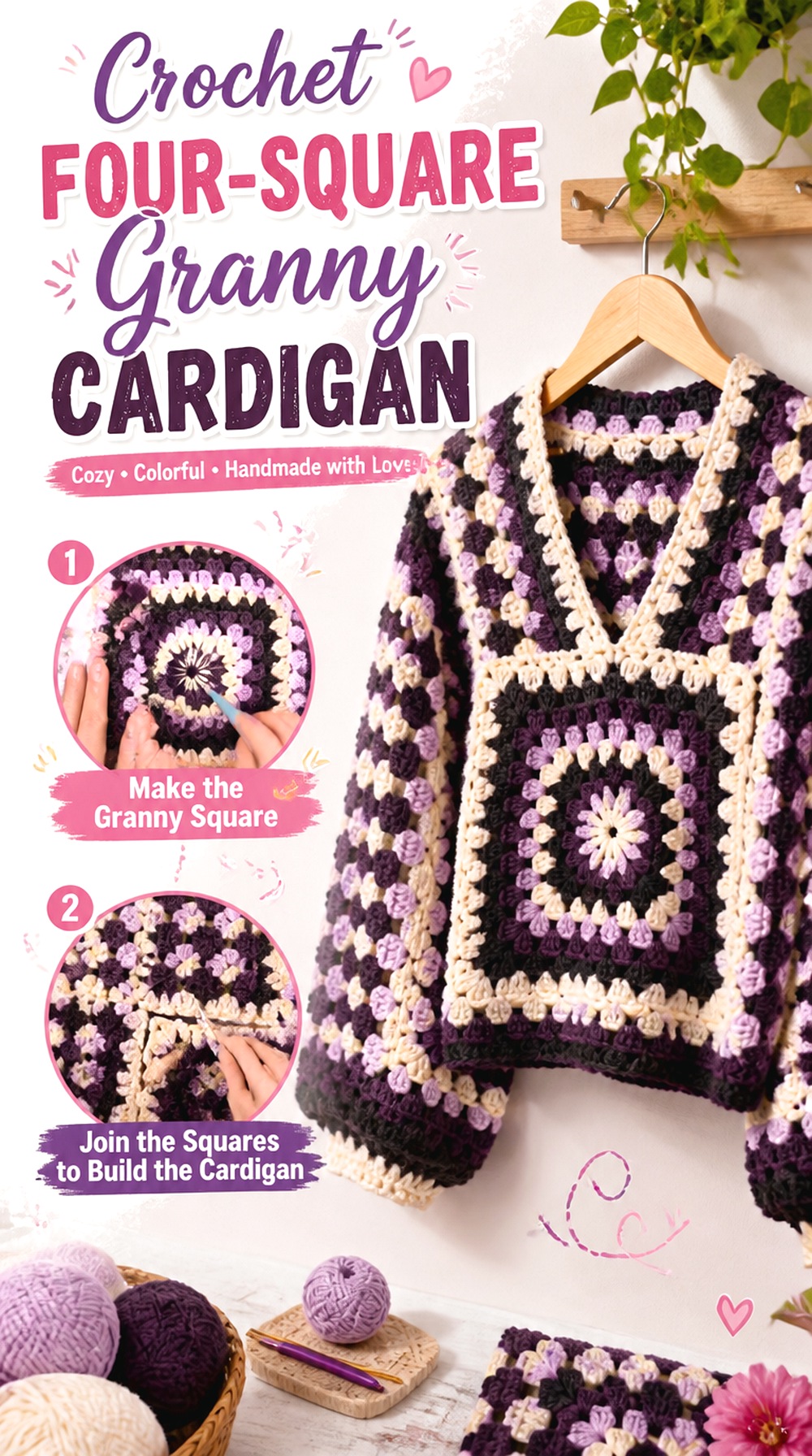
Instead of relying on one giant square, this Yarnspirations cardigan is assembled from four large granny squares. That changes both the visual rhythm and the places where a brooch can sit. The square boundaries become part of the garment design, giving you obvious joins and borders to consider when adding a decorative closure. The tutorial presents the finished piece as a cardigan made from four giant granny squares.
This is a useful alternative to the single-square cocoon when you want recognizable motif geometry across the garment rather than one uninterrupted granny field.
Use the Square Layout to Guide Brooch Position
Before pinning anything, look at the front as a composition. A brooch placed directly over an important motif center can compete with the crochet, while placement near a join can make the pin feel integrated with the construction. For a symmetrical look, test the brooch at the same visual height on both front edges before fastening it.
Joined Motifs Need Consistent Dimensions
Large squares make alignment easy to see, so differences in blocked dimensions can affect the finished front. Check the squares against one another before final assembly. If the two front areas do not hang evenly, fix that issue before adding a brooch; a closure should not be used to disguise a cardigan that is already pulling off-center.
Original Tutorial and Creator Credit
Creator: Yarnspirations
3. Crochet Long Lace Triangle Cardigan
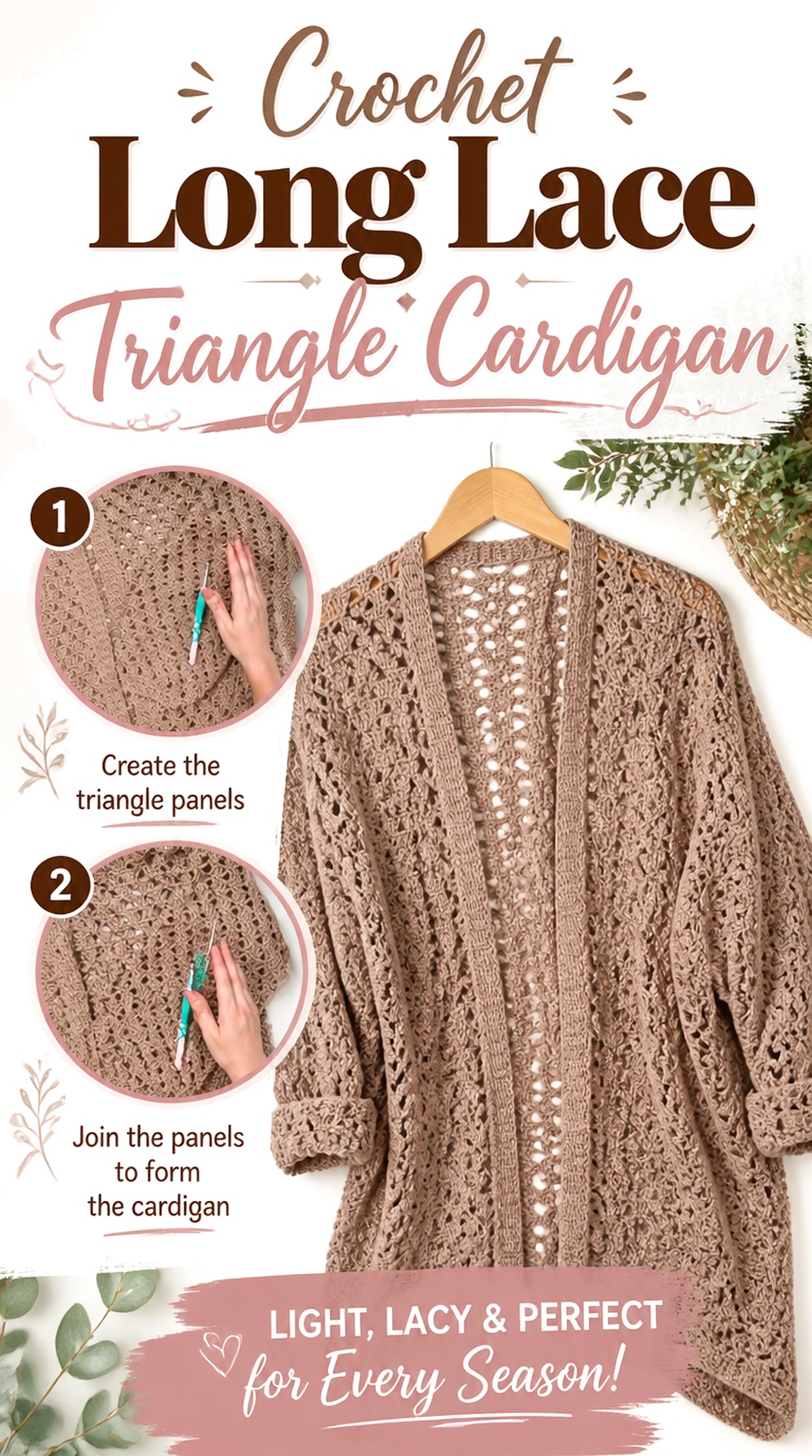
Briana K’s Regency cardigan offers a completely different silhouette: long, airy, and lace-focused, with flat construction and a graceful open front. The tutorial describes a long lacy cardigan worked flat before seaming, with ribbing finishing the edge.
Because the visual effect comes from open lace and length, this is better suited to a lighter brooch than the substantial cocoon styles. A small pin can draw the eye toward the neckline or lightly position the fronts while allowing the lace to keep its movement.
Lace Needs a Lighter Closure Strategy
Large open spaces give a heavy brooch less fabric to grip. Instead of piercing an exposed lace opening, test the finished ribbed edging or another denser area. If the border stretches downward under the brooch before the cardigan is even worn, the accessory is too heavy for that placement.
Let the Long Front Keep Its Vertical Line
A long cardigan gets much of its effect from uninterrupted vertical drape. Pulling both sides tightly together can change that line. Try pinning high on the chest for light control while leaving the lower fronts open, or use the brooch as a one-sided accent if maintaining the open silhouette matters more than closure.
Original Tutorial and Creator Credit
Creator: Briana K
4. Crochet Slouchy Oversized Cardigan
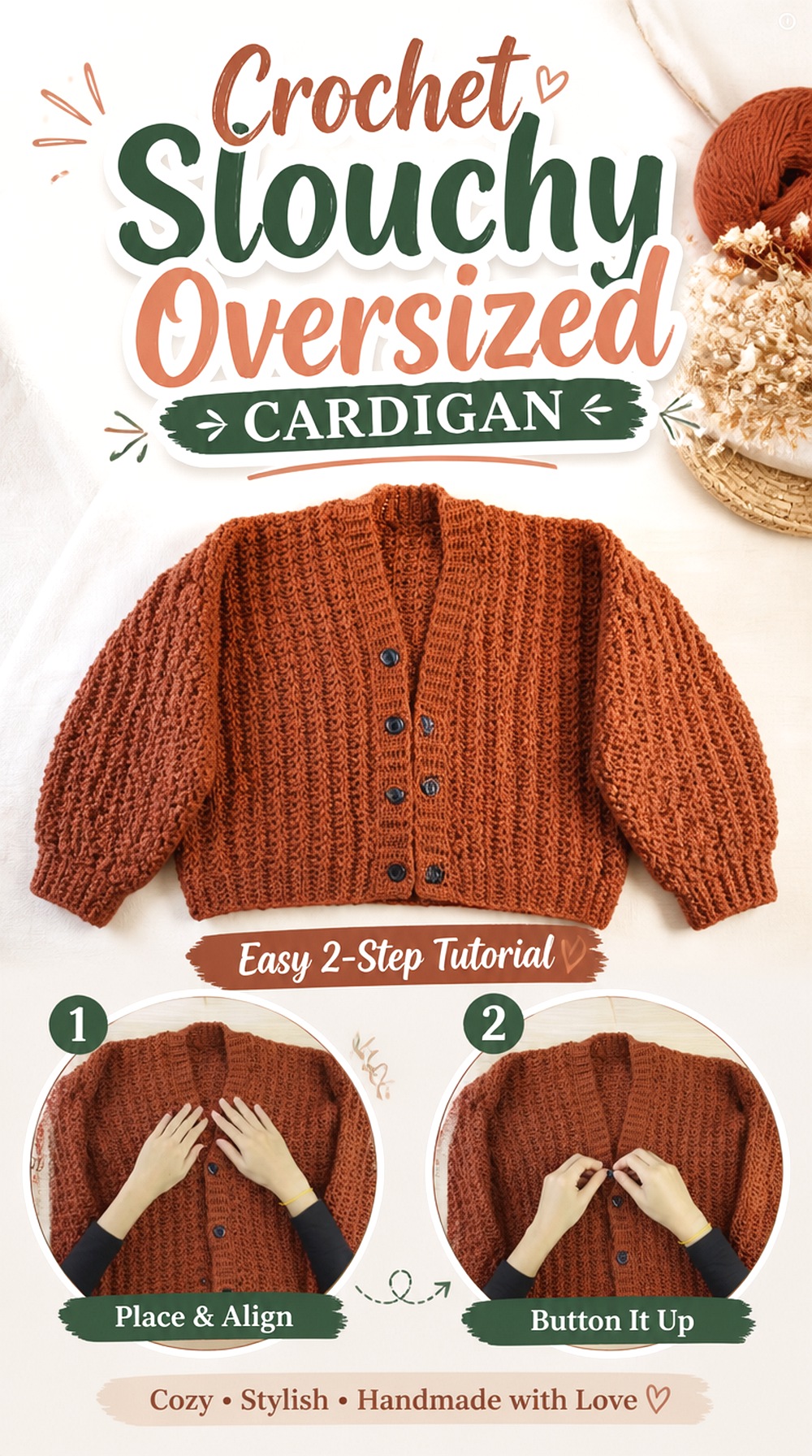
Chenda DIY’s oversized cardigan gives you generous volume rather than a fitted or motif-driven shape. The finished look is relaxed, making it a good candidate for a brooch used to control just one section of the front rather than force the entire cardigan into a close fit. The tutorial centers on an oversized crochet cardigan and walks through the garment construction visually.
A brooch can be particularly useful stylistically here because changing its height changes how much fabric gathers above and below the pin.
Do Not Remove the Intended Ease With the Pin
An oversized cardigan needs room to retain its relaxed character. When testing a closure, bring the fronts together only as far as they naturally travel. If a brooch creates strong diagonal pull lines toward the shoulders or sleeves, move it higher, use it on one front only, or leave the cardigan open.
Statement Pins Need Visual Breathing Room
A simple oversized surface can accommodate a more noticeable brooch without competing with complex motifs. Still, match scale to fabric. A visually large but lightweight pin may work better than a dense, heavy metal piece, especially when the cardigan fabric is soft enough to drape freely.
Original Tutorial and Creator Credit
Creator: Chenda DIY
5. Crochet Plush Collar Cardigan
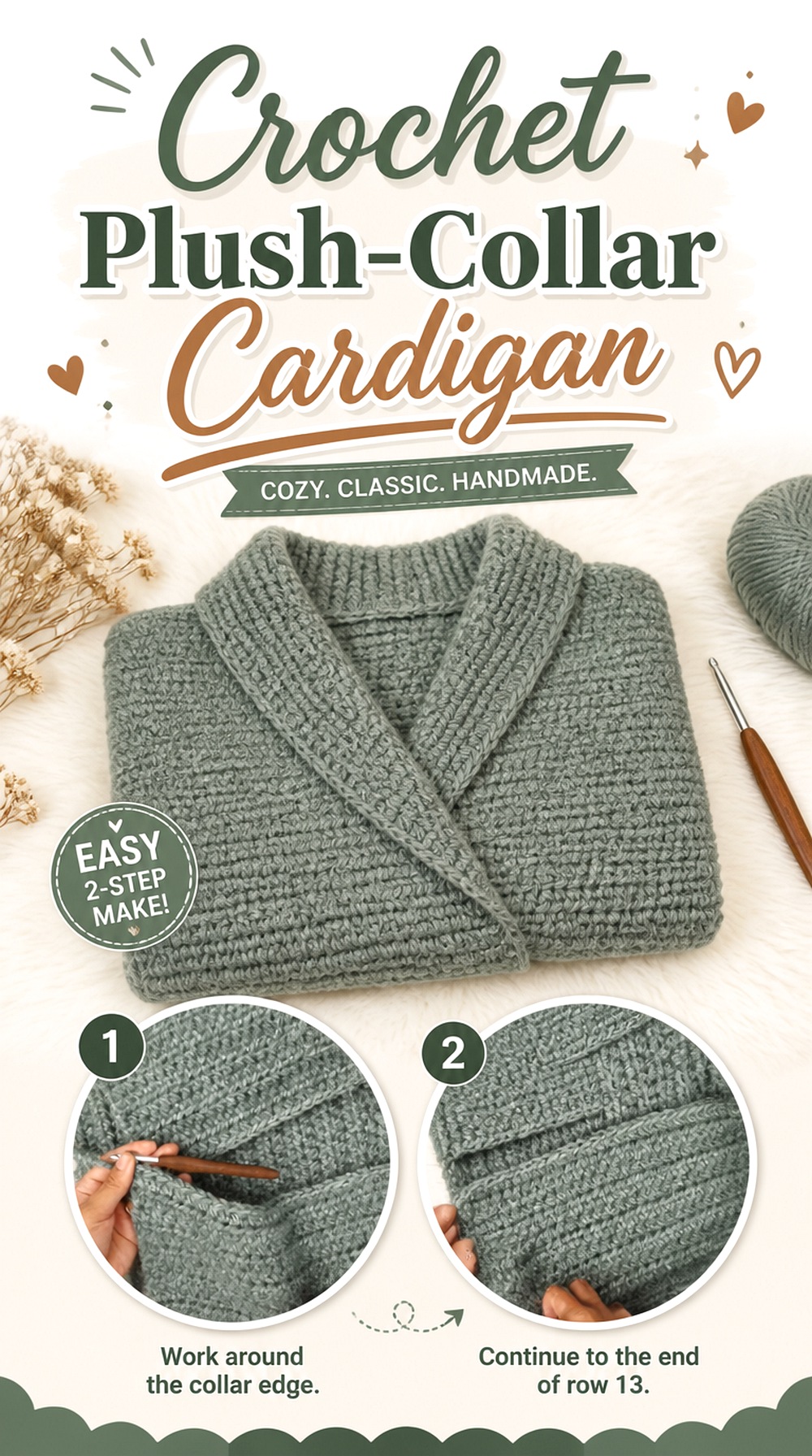
KnitcroAddict’s classic cardigan shifts the focus to a substantial collar and paneled construction. The tutorial describes a five-piece cardigan with the collar added afterward, using bulky yarn in the demonstrated design.
That collar gives a brooch another job beyond fastening the fronts. It can sit near the neckline as a decorative focal point, secure one collar edge, or visually connect the two sides. Compared with mesh and lace, the denser fabric offers more potential support, though brooch weight still needs to be checked against the finished fabric.
Treat the Collar as Part of the Brooch Composition
Try the brooch with the collar arranged exactly as you plan to wear it. A pin placed too close to the collar turn can cause one side to buckle. Moving it slightly lower may allow the collar to frame the brooch instead of fighting it.
Bulky Fabric Changes Pin Accessibility
Thicker crochet can be more difficult for a short brooch pin to pass through comfortably. Do not force a pin through dense yarn if the mechanism is too small. A brooch with enough pin length for the fabric, or placement through a slightly thinner edge section, can reduce unnecessary compression and snagging.
Original Tutorial and Creator Credit
Creator: KnitcroAddict
6. Crochet Adjustable Tie Front Mesh Cardigan
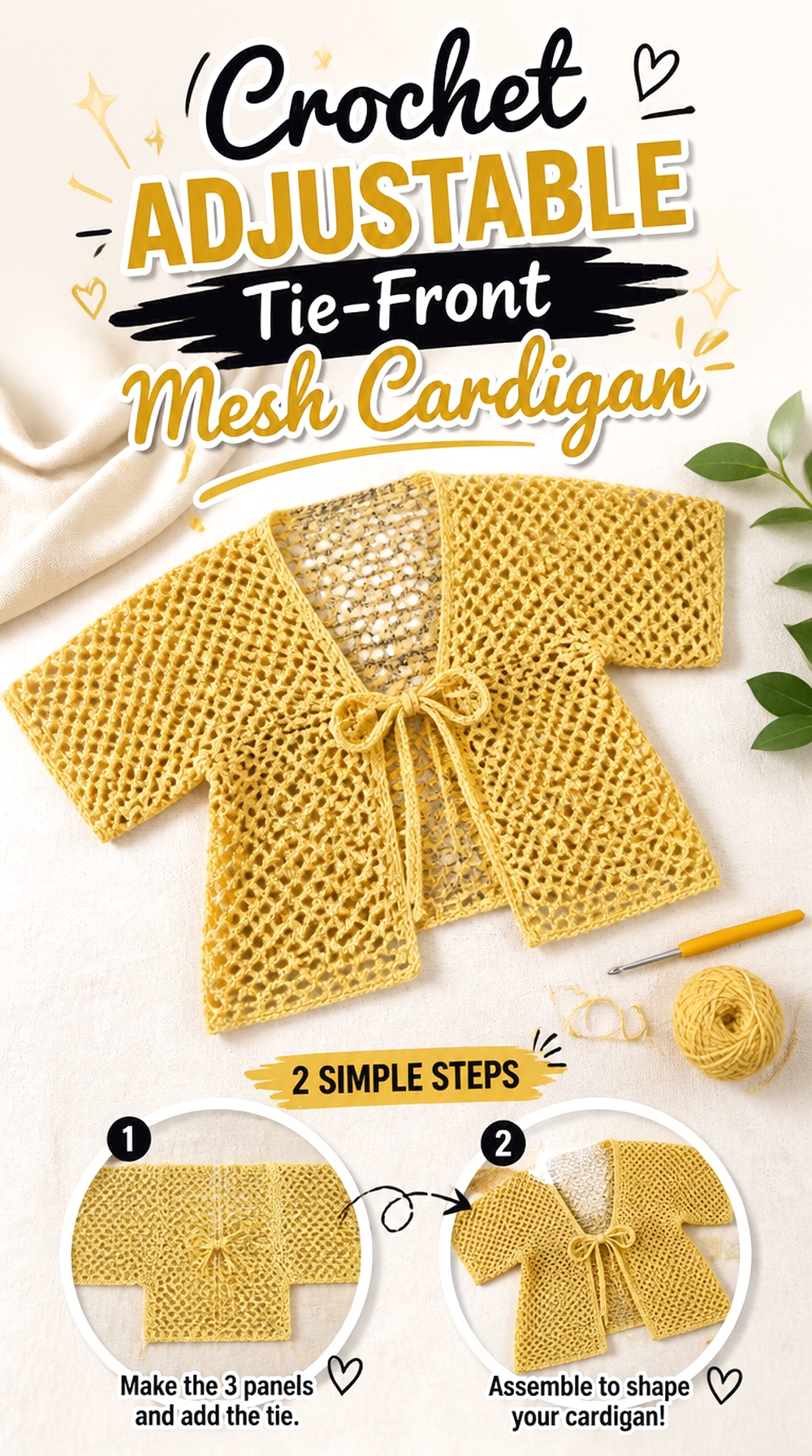
Crochet with Linni’s mesh cardigan introduces a front-tie detail, giving you a built-in alternative to a brooch closure. The tutorial covers adjustable sizing, mesh shaping, assembly, and ties.
That makes this design valuable for comparison: you can leave the ties as the functional closure and use a brooch decoratively, or decide whether a lightweight brooch gives the finished garment the styling you prefer. Because mesh creates more open space than dense crochet, pin placement deserves extra care.
Ties and Brooches Solve Different Problems
Ties distribute tension through their attachment points, while a brooch concentrates it in a small area. If you need the cardigan to stay securely positioned, retaining the ties may be more practical. The brooch can then sit higher on one front panel as an accent instead of carrying the job of keeping the garment closed.
Find a Dense Edge Before Piercing the Mesh
Large mesh openings are not ideal targets for a pin. Examine the outer edge and any more substantial finishing rows first. A lightweight brooch attached through a stronger border is less likely to visibly drag one mesh opening downward or create an uneven gap around the pin.
Original Tutorial and Creator Credit
Creator: Crochet with Linni
7. Crochet V Stitch Airy Cardigan
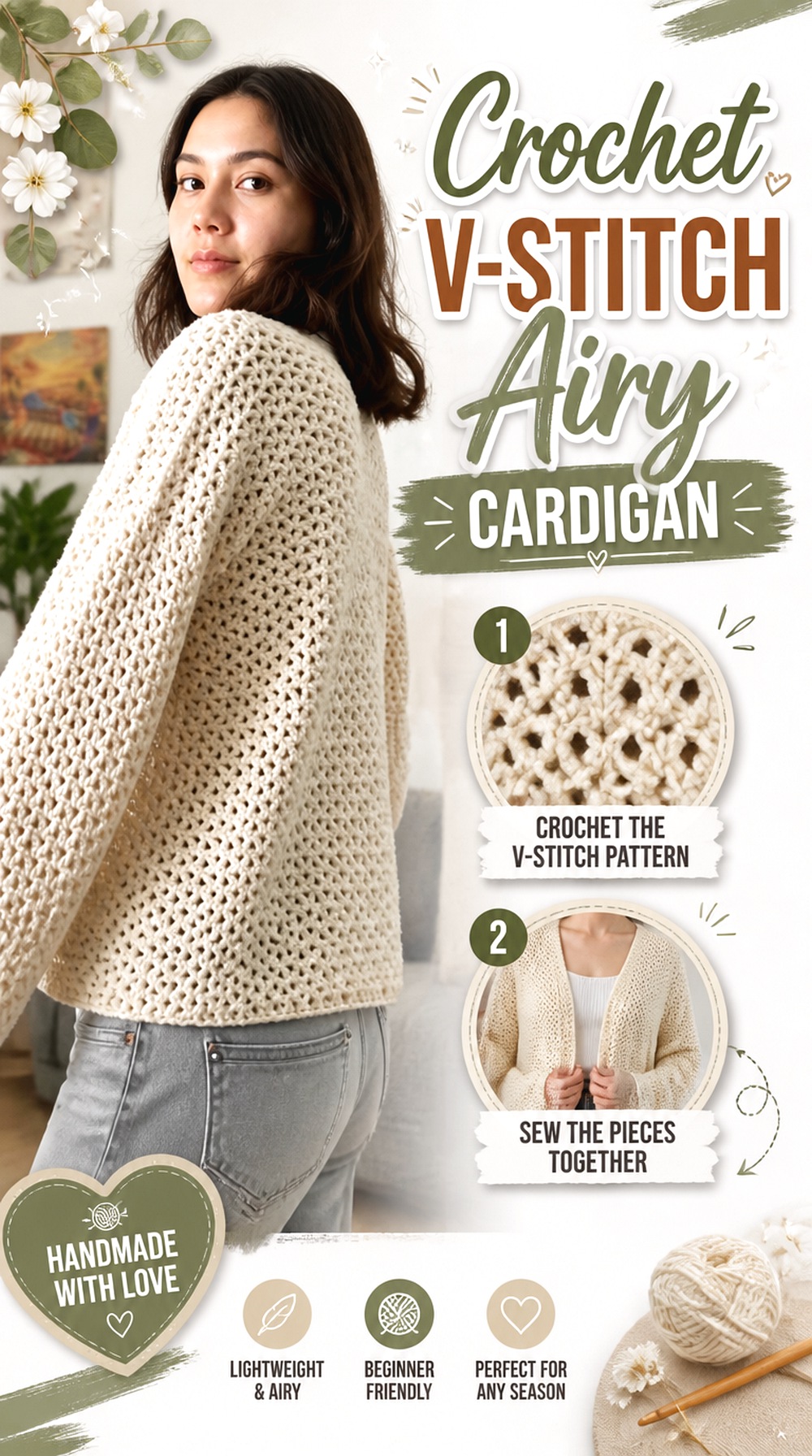
VivCrochets uses V-stitch mesh to create a breathable cardigan assembled from three pieces. The result has a lighter visual density than a granny-square or bulky paneled cardigan, making the fabric itself part of the styling decision.
For a brooch version, think of the pin as a restrained accent rather than automatically choosing the largest statement piece you own. A small decorative closure near a finished edge can preserve the openness that makes this design distinctive.
Keep the V-Stitch Pattern Visually Open
The negative space is one of the cardigan’s main features. A very large brooch can cover that texture and make one area look unexpectedly heavy. Test the accessory against the fabric from a few feet away; sometimes a smaller pin provides enough contrast while allowing the V-stitch pattern to remain readable.
Watch for Local Stretch Around the Pin
Open fabric can react strongly to concentrated weight. Attach the brooch temporarily, hang or wear the cardigan, and inspect the area after a few minutes. If the opening below the pin lengthens noticeably, move to a border or choose a lighter accessory rather than relying on that section as a closure point.
Original Tutorial and Creator Credit
Creator: VivCrochets
8. Crochet Pocketed Open Front Cardigan
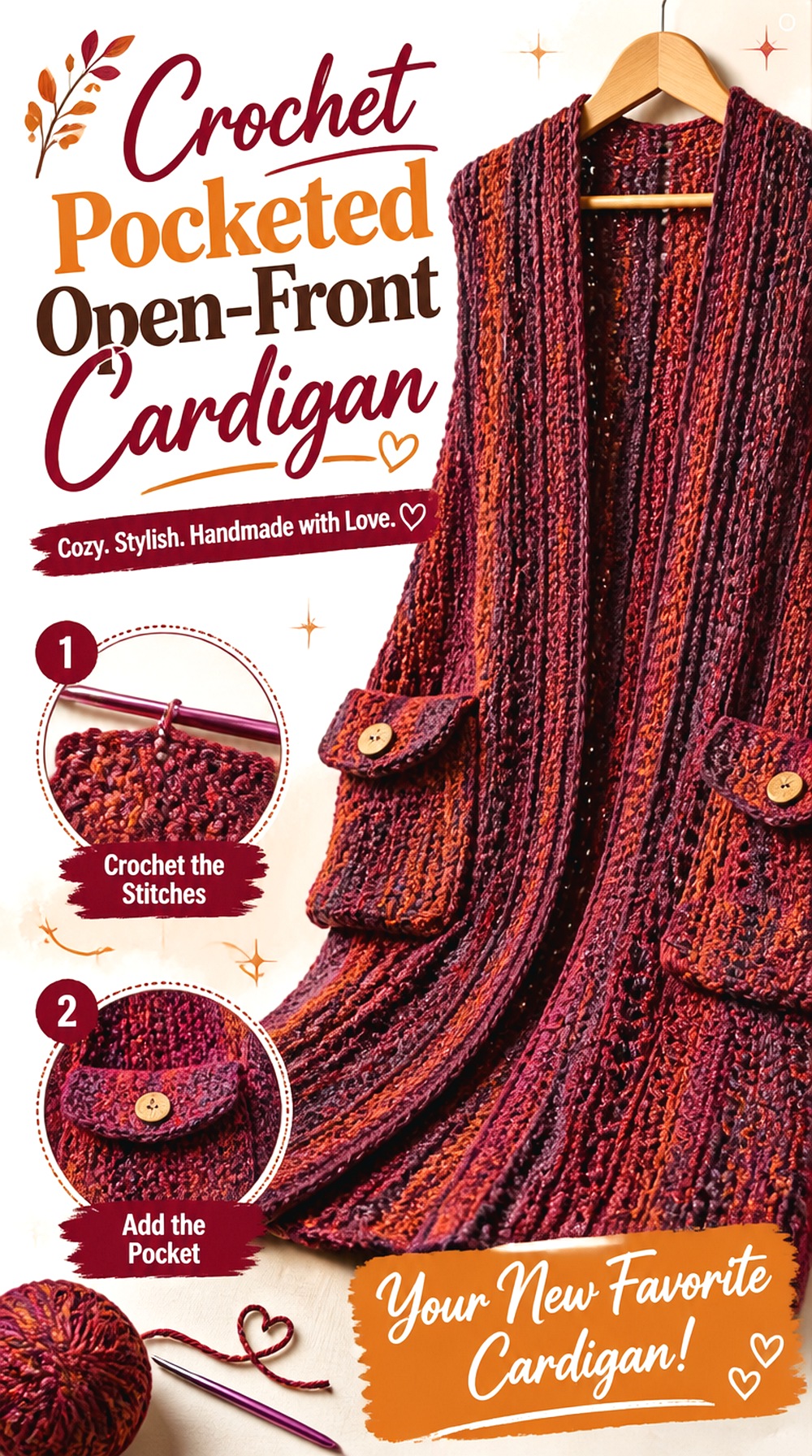
Bag-O-Day Crochet’s cardigan adds pockets to an otherwise straightforward wearable shape. The tutorial describes a size-adjustable cardigan with pockets, making it useful when function matters as much as decorative styling.
A brooch can add a focal point above the pockets and help control an open neckline without competing with the lower-front details. This is a practical choice for readers who want their cardigan to remain everyday-friendly rather than turning the brooch into the only significant design feature.
Keep Closure Tension Away From the Pockets
Pockets already introduce extra fabric and can change how the lower front hangs. A brooch placed too low may pull the pocket area toward the center. Test a higher placement first so the pocket fronts can continue to fall naturally.
A Simple Front Lets the Brooch Stand Out
With fewer large motifs competing for attention, you can use shape, metal finish, stone color, or a crocheted brooch to create the main decorative feature. Match the pin to the cardigan’s visual scale, but prioritize weight and fabric support over appearance alone.
Original Tutorial and Creator Credit
Creator: Bag-O-Day Crochet
9. Crochet Five Panel Everyday Cardigan
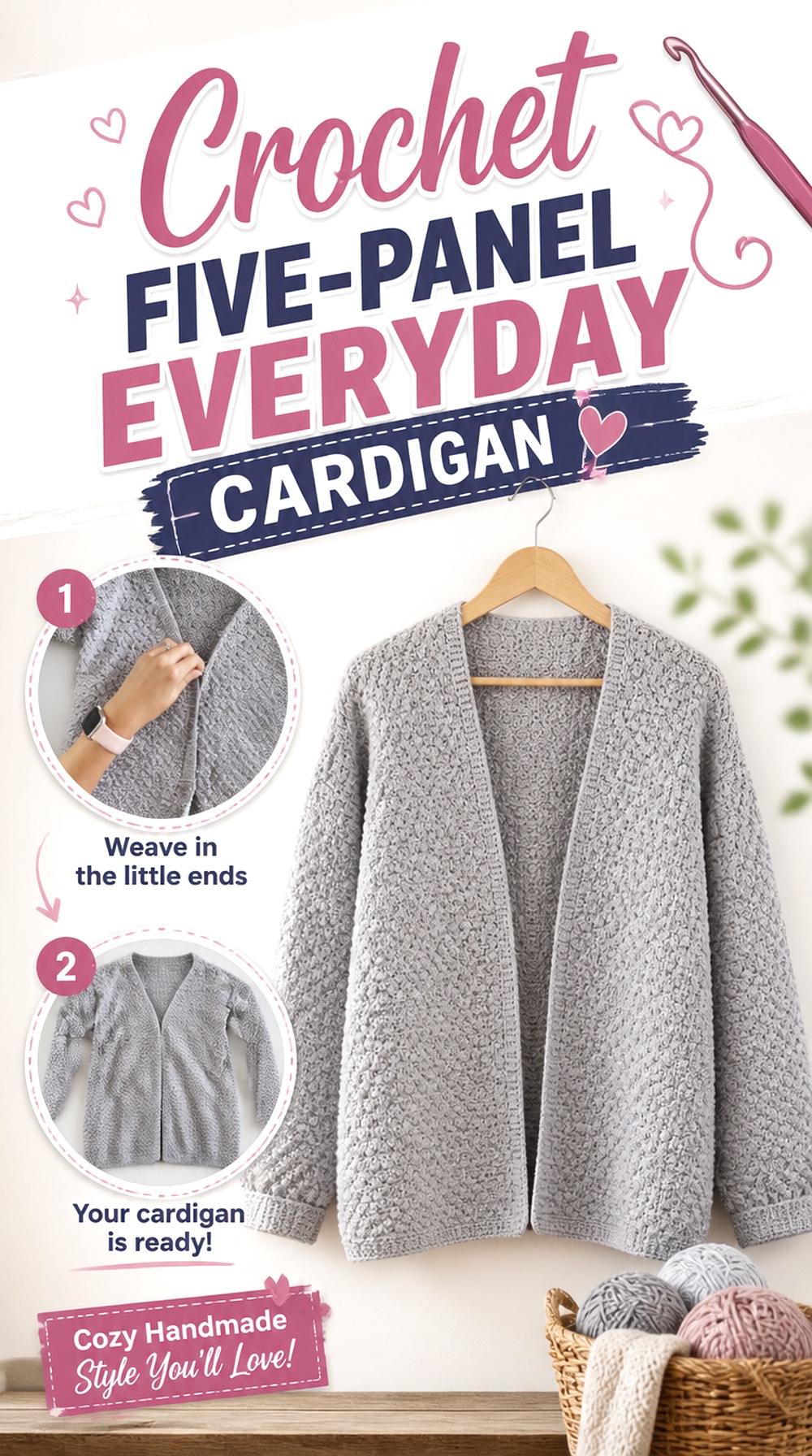
B.Hooked Crochet’s cardigan uses five basic panels, giving this option a clear, conventional garment structure. The tutorial is designed to introduce cardigan construction through straightforward pieces and assembly.
That regular front geometry is useful for brooch styling because you can judge the two edges against each other without accounting for large motif angles or cocoon folds. Choose this direction if you prefer the brooch to decorate a classic cardigan rather than become part of an unconventional construction.
Straight Front Edges Make Placement Easier to Judge
Put the cardigan on and compare the two front edges before adding any accessory. If they hang evenly, a brooch can sit at the upper chest without creating an obviously crooked closure. If one side is already lower, correct the finishing or blocking before using the pin to pull the sides into alignment.
Use the Brooch to Change the Neckline, Not the Size
A pin can make the upper opening narrower, but it should not compensate for a cardigan that is too small through the body. If closing the fronts produces strain around the armholes or back, leave the garment open and use the brooch on one panel.
Original Tutorial and Creator Credit
Creator: B.Hooked Crochet
10. Crochet Short Bolero Cardigan
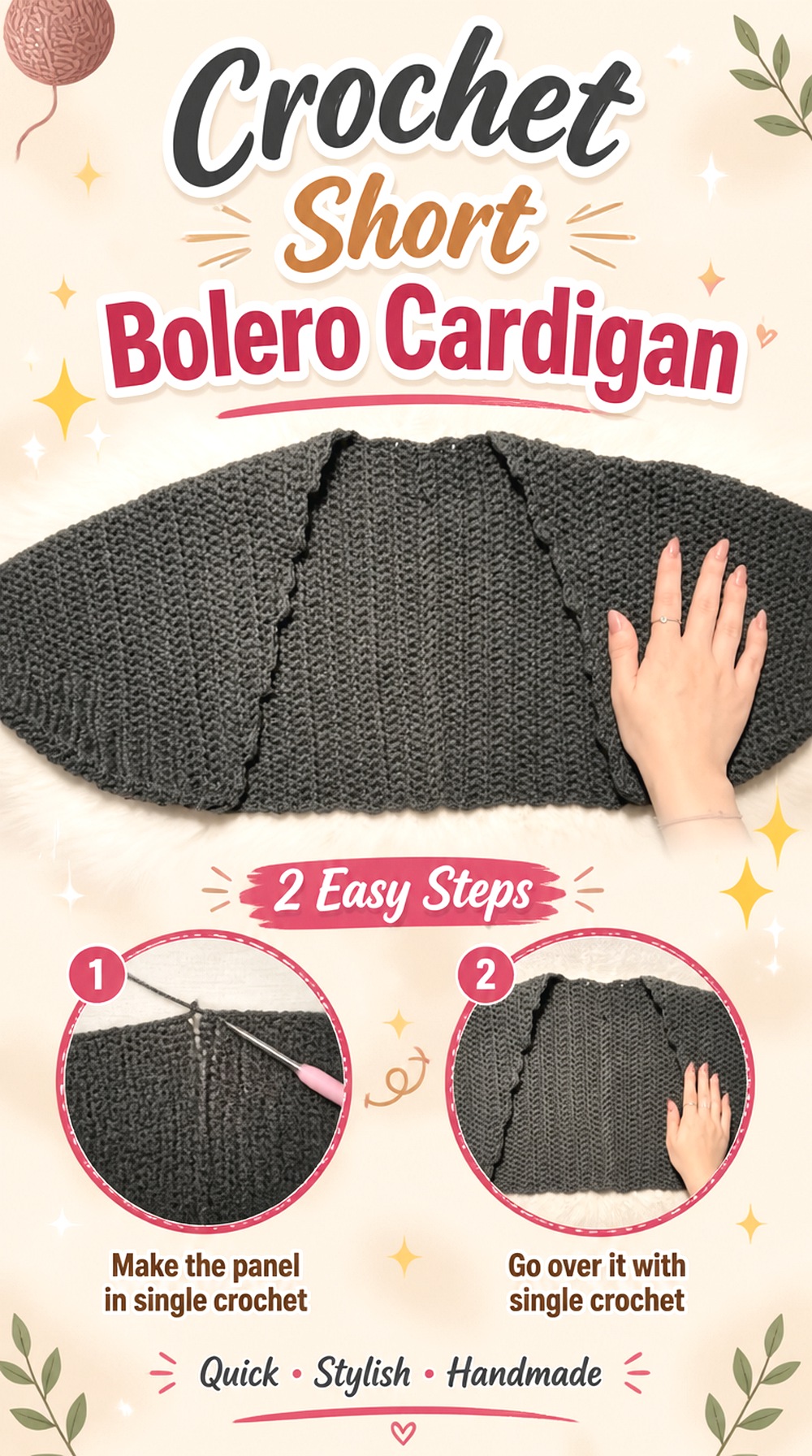
A bolero gives the brooch-cardigan concept a much shorter silhouette. Stefanie Aurelia’s tutorial demonstrates a crochet bolero cardigan and discusses modification while showing cuffs, sleeves, back construction, sewing, and the final result.
Because a bolero covers less of the torso, a brooch placed at the center front can become visually prominent very quickly. This option is especially different from the long duster and cocoon ideas: the accessory and neckline sit close together, so proportions deserve attention.
A Small Front Calls for Controlled Brooch Scale
A brooch that looks moderate on a long cardigan can dominate a short bolero. Try the accessory while wearing the garment and judge it in relation to the neckline, sleeve volume, and exposed layer underneath. A compact pin often preserves the light character better than an oversized focal piece.
Do Not Force Short Fronts to Overlap
Some bolero fronts are meant to remain open. If the edges do not naturally reach each other, use the brooch on one side or pair it with the underlying top rather than stretching the crochet across the chest. That preserves the intended shape and avoids turning the shoulders into the tension point.
Original Tutorial and Creator Credit
Creator: Stefanie Aurelia
11. Crochet Ribbed Made to Measure Cardigan
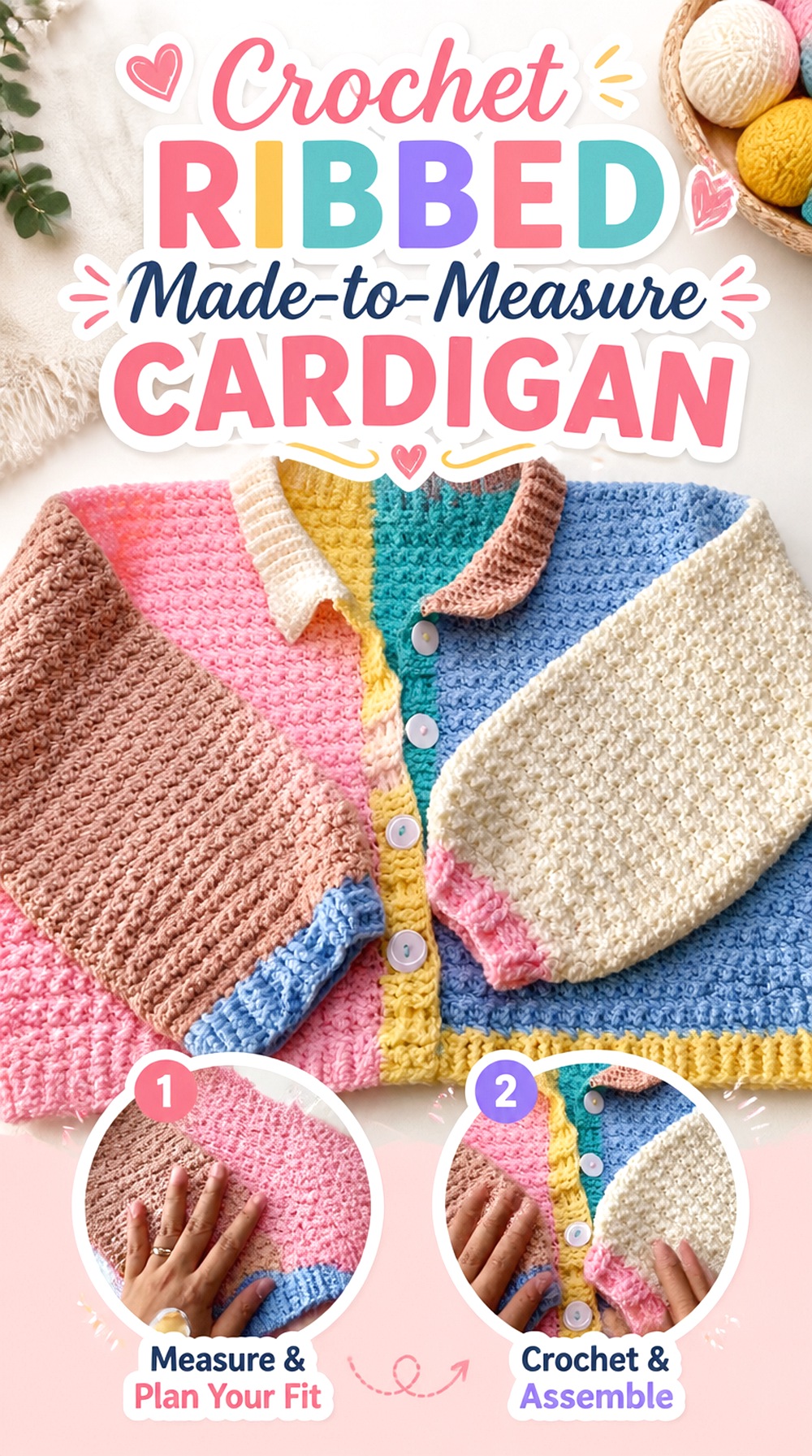
CROCHET BY BEV’s cardigan is made to measure and includes ribbed details plus buttons in the demonstrated construction. The tutorial covers back and front panels, sleeves, side borders, collar, and button finishing.
Because the cardigan already has an intentional closure system, a brooch does not have to replace the buttons. Instead, it can become a collar accent or an occasional alternative at the upper front. This is a useful choice if you want both conventional fastening and decorative flexibility.
Existing Buttons Give You More Styling Options
Decide whether the brooch will complement the buttons or visually replace them when worn. If both are prominent, they can compete. One approach is to keep the buttons functional and place the brooch near the collar, where it reads as jewelry rather than another closure in the same line.
Ribbed Areas Can Offer a Stronger Placement Zone
Ribbing creates a visually defined edge, but the fabric still needs to support the pin. Test the brooch through the finished band and watch whether the ribs spread or distort. If they do, use a lighter piece or attach the brooch where the ribbing meets a more stable seam.
Original Tutorial and Creator Credit
Creator: CROCHET BY BEV
12. Crochet Wide Sleeve Pocket Cardigan
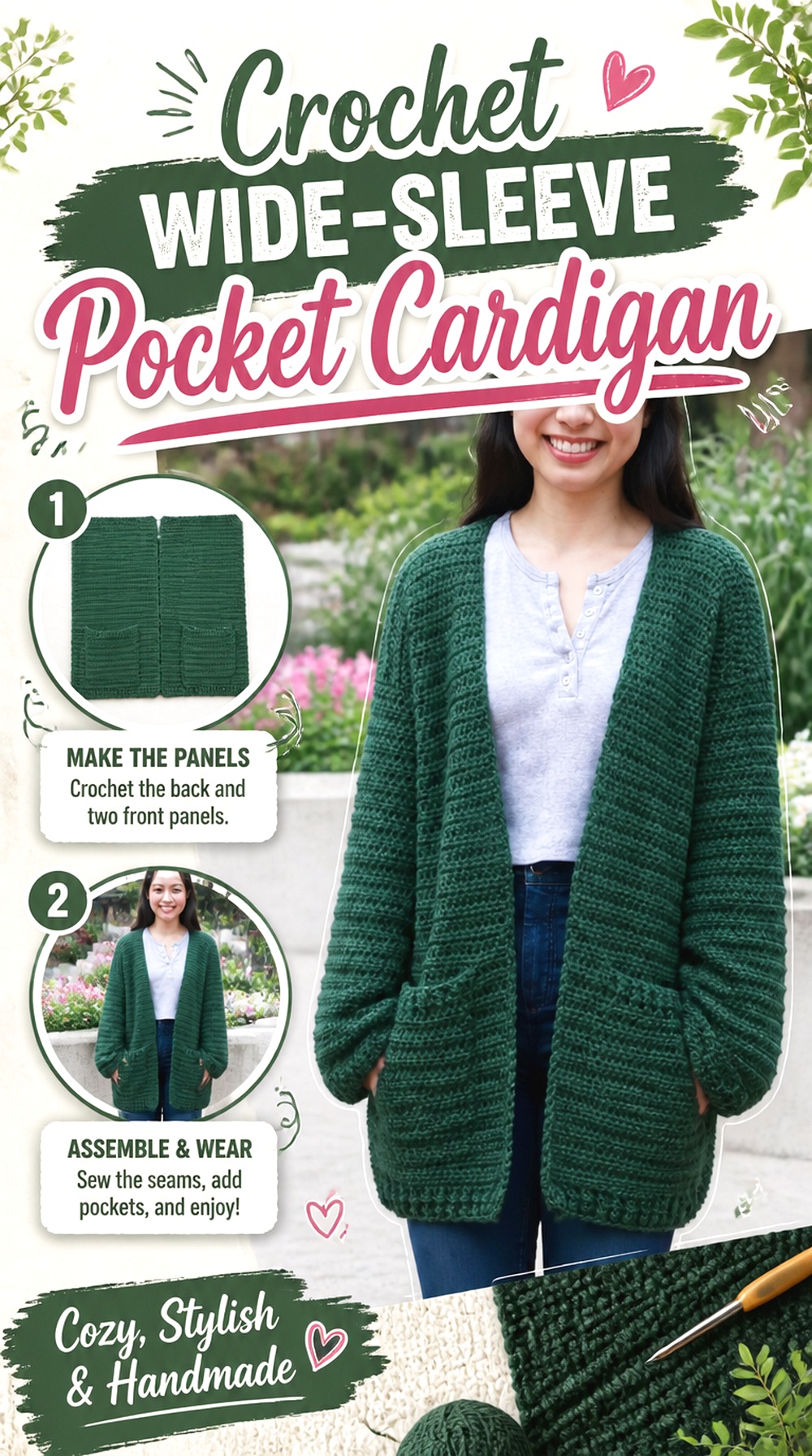
The Briar cardigan from forthefrills combines an oversized body, loose wide sleeves, ribbed edging, and pockets. The tutorial presents a slouchy cardigan intended for relaxed layering.
Compared with the simpler pocket cardigan earlier, this version has more deliberate volume. A brooch can gather the upper front and create shape while leaving the wide sleeves and lower body relaxed. That contrast between one controlled point and the surrounding oversized fabric can become part of the look.
Pinning Higher Preserves the Slouch
Closing an oversized cardigan at the waist can remove much of the drape that defines it. Test a brooch closer to the upper chest first. This keeps the lower fronts free and makes the pin function more like a soft neckline closure than a belt.
Balance Pockets, Sleeves, and a Statement Brooch
The cardigan already has large-scale details. A bold brooch can work, but evaluate the entire front instead of the pin in isolation. If the accessory, pockets, and sleeve volume all demand equal attention, a simpler brooch may create a cleaner visual hierarchy.
Original Tutorial and Creator Credit
Creator: forthefrills
13. Crochet No Sew Hexagon Cardigan
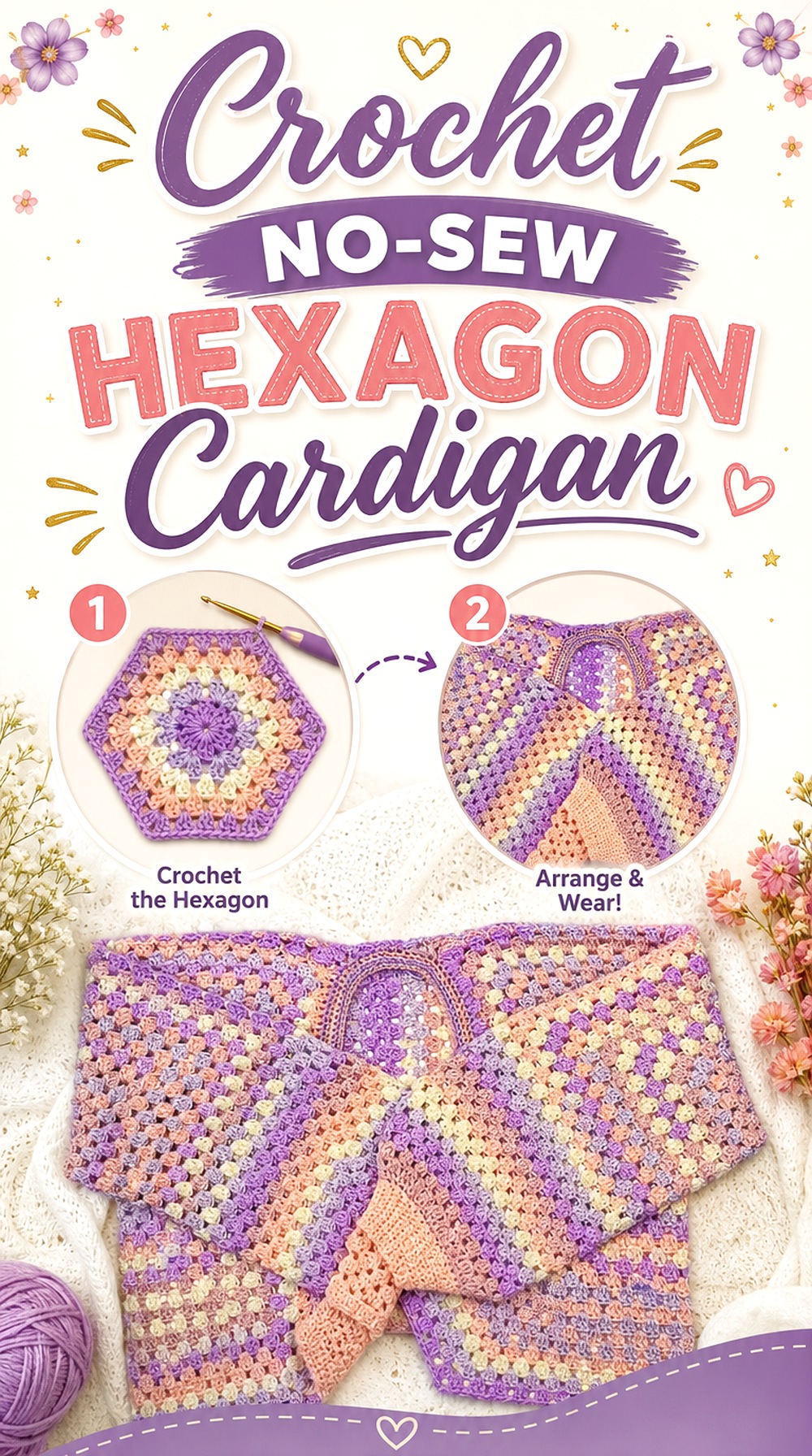
PassioKnit Kelsie’s granny hexagon cardigan uses the familiar two-hexagon concept while emphasizing a no-sew construction. The tutorial covers sizing, joining the hexagon form, arm length, cuffs, back shaping, added length, and border rows.
The hexagon shape produces a relaxed front that works well with a brooch when you want one optional point of closure rather than a row of buttons. It is also visually different from square-motif cardigans because the shaping comes from folded hexagonal pieces rather than a rectangular panel layout.
Finish the Border Before Choosing Pin Placement
The final border can change both the width and stability of the front edge. Wait until that finishing is complete before deciding where the brooch belongs. A position that looks right on an unfinished hexagon may move once the edge has more structure.
Check the Back Width Before Pulling the Fronts Together
Hexagon cardigans can be customized through added shaping and back rows. If the cardigan already fits closely across the back, pulling both front edges together with a brooch may remove needed ease. Use the finished garment fit—not just the appearance of the open front—to decide whether the pin should close or decorate.
Original Tutorial and Creator Credit
Creator: PassioKnit Kelsie
14. Crochet Convertible Length Cardigan
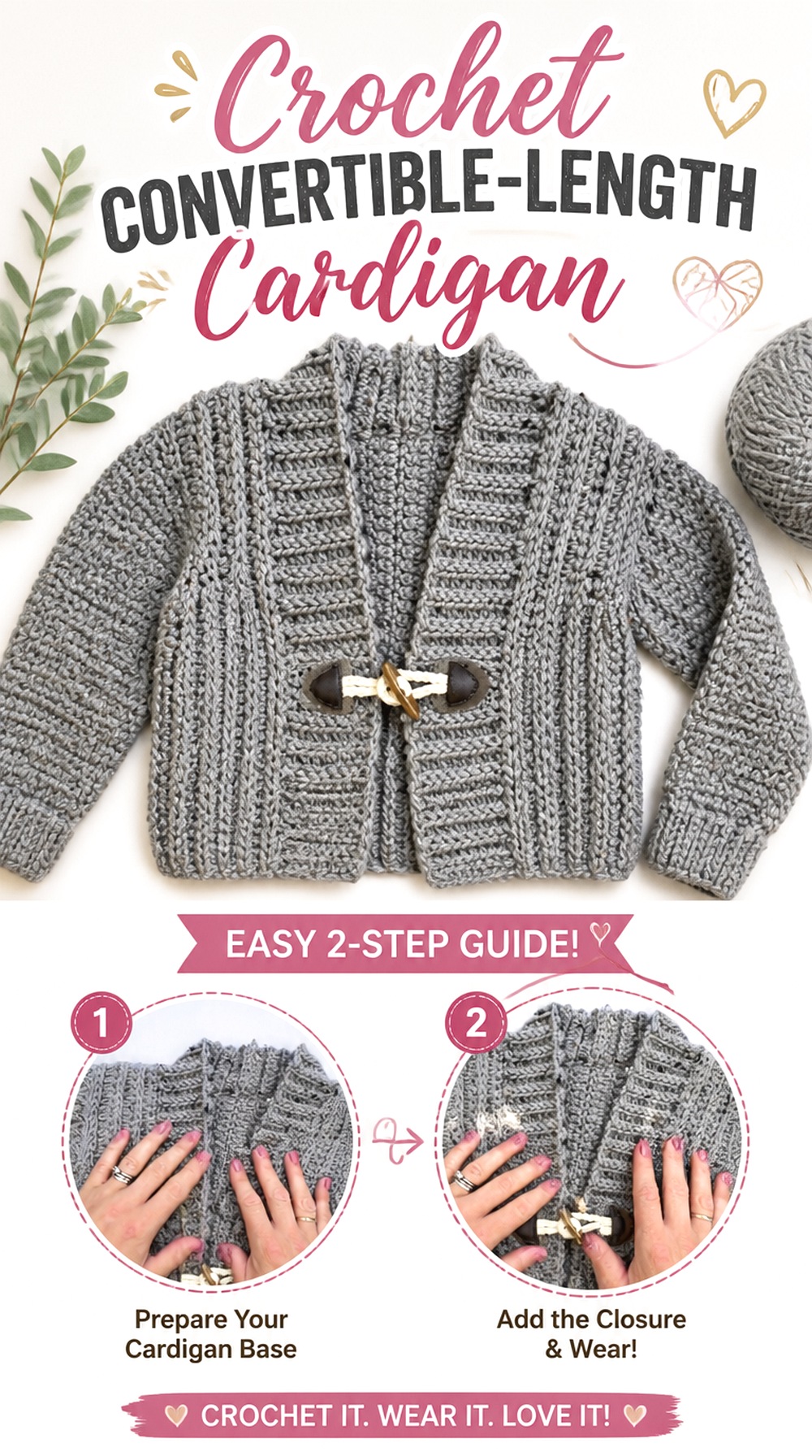
HanJan Crochet’s design stands out for the number of styling directions built around the same cardigan concept. The tutorial accompanies a design with options that include cropped, hip, and duster lengths, as well as optional pockets, a waist tie, and different collar treatments.
That flexibility makes this one of the strongest choices if you want to plan the brooch from the beginning. A short version, long open version, or tied version can each support a very different accessory strategy without changing the central character of the cardigan.
Match Brooch Height to the Chosen Length
On a cropped cardigan, an upper-chest brooch may feel proportionally balanced, while a long duster can accommodate a lower focal point. Do not automatically use the same placement across every version. Try the finished length with the brooch and check where the accessory sits relative to the waist and hem.
Decide Between a Waist Tie and a Pin
A waist tie gathers the entire body differently from a single brooch. If you want adjustable shaping, the tie may remain the better functional feature while the brooch decorates the collar. If you prefer a cleaner open line, omit the competing focal point and let the brooch provide the main visual closure.
Original Tutorial and Creator Credit
Creator: HanJan Crochet
15. Crochet Lightweight Granny Stitch Cardigan
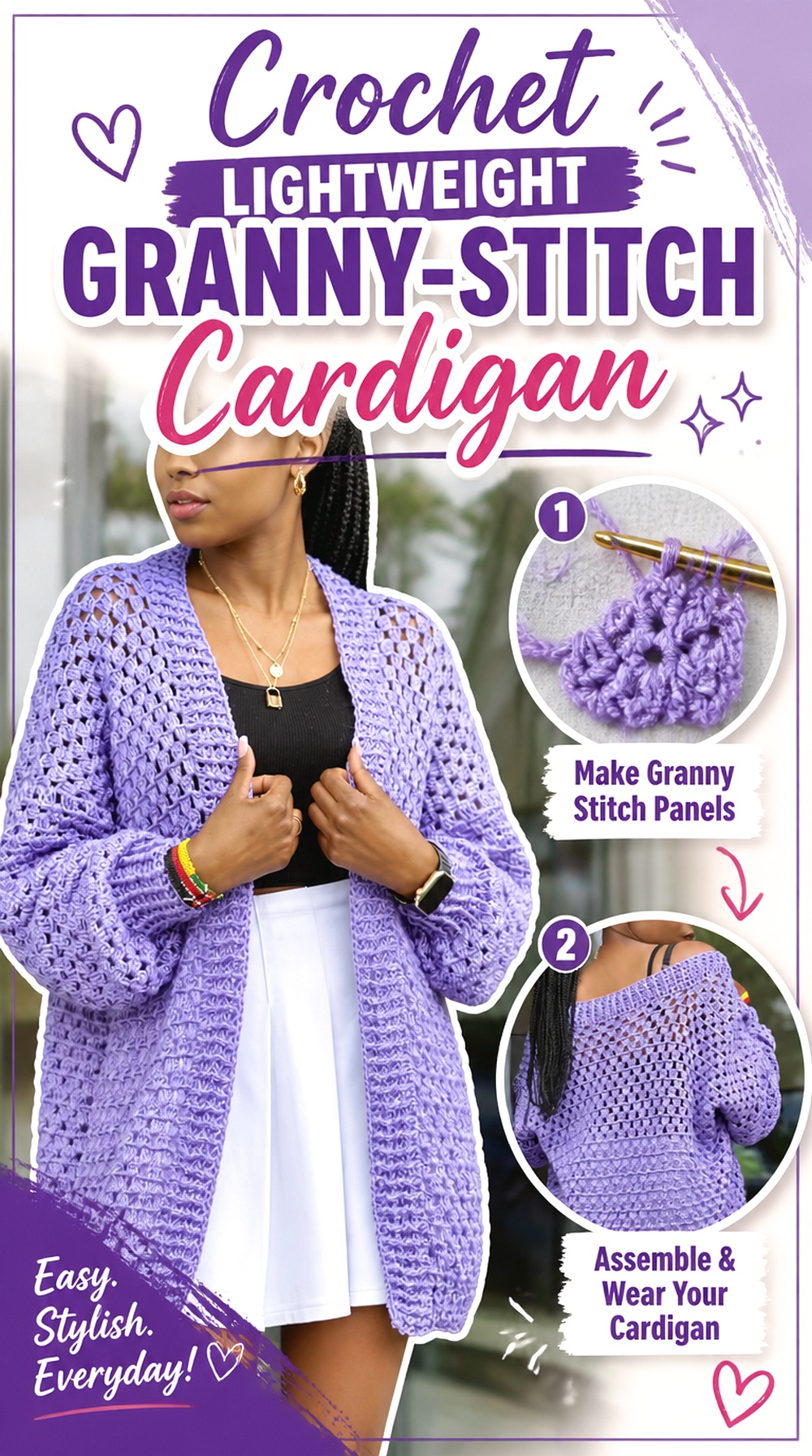
AC Crochets offers a light granny-stitch cardigan made with a finer-looking overall fabric than the bulky cocoon options. The tutorial identifies the design as a light granny-stitch cardigan and demonstrates the project across its full video format.
This creates a useful middle ground between dense paneled cardigans and very open mesh. The granny texture is visible, but the cardigan retains a lighter appearance, so a brooch can either blend into the border or contrast with the repeating stitch pattern.
Use the Border Instead of an Open Granny Gap
A pin placed through the middle of a large opening can shift or enlarge that space under weight. Look for the finished edge or a dense cluster near the front. This gives the brooch a more predictable anchor while keeping the repeating granny pattern intact.
Let the Stitch Rhythm Influence Brooch Shape
The cardigan already has strong repeated geometry. A simple round, oval, floral, or abstract brooch can provide contrast without trying to mimic every angle in the crochet. Hold several options against the finished garment before deciding; visual compatibility is easier to judge on the real fabric than from yarn color alone.
Original Tutorial and Creator Credit
Creator: AC Crochets
16. Crochet Textured Cable Panel Cardigan
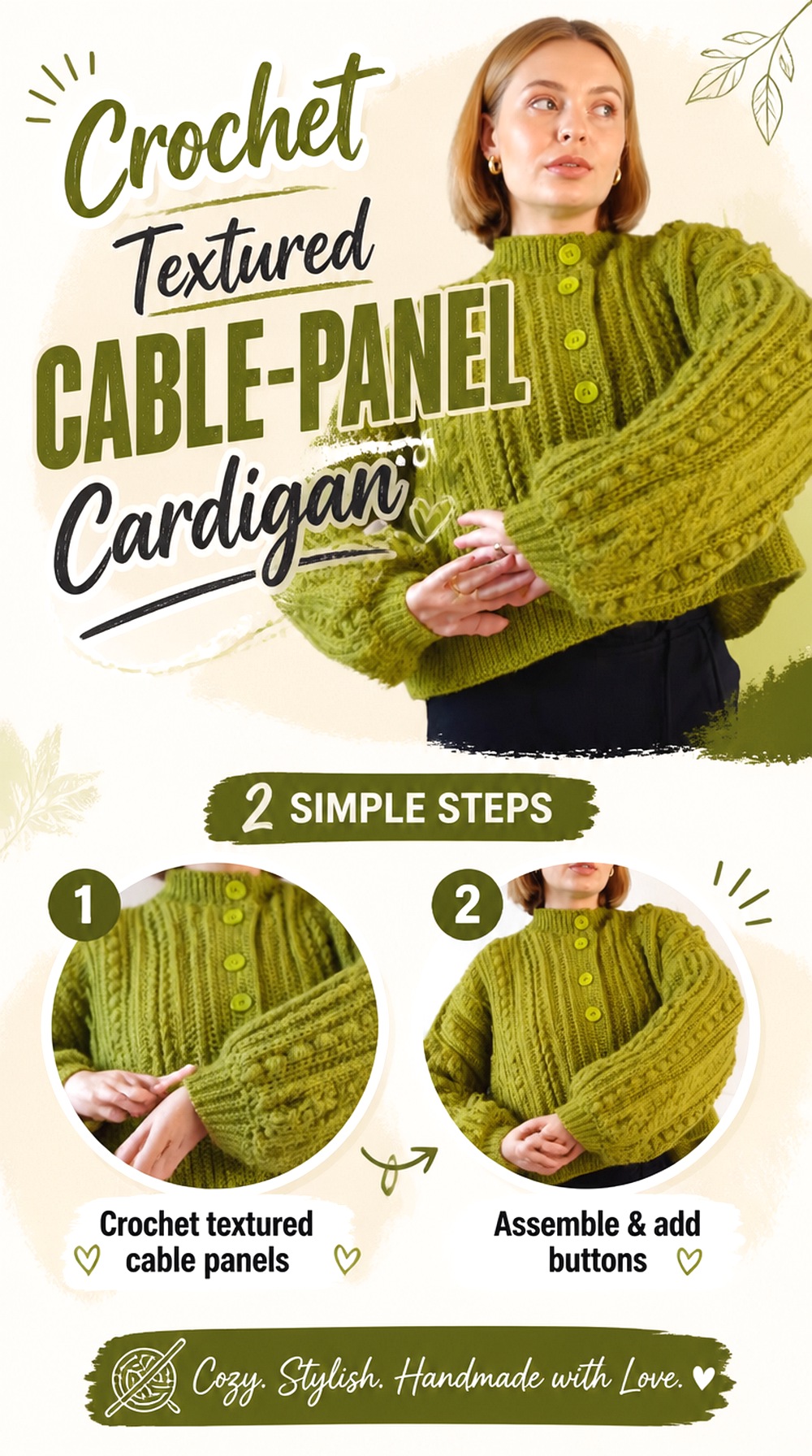
Katie Joslin’s cardigan uses separate cable, ribbed-puff, and twisted-stitch panels that are combined to form the body and sleeves. The tutorial also covers finishing details and describes the panel system as customizable for width, length, and fit.
This is the most texture-heavy option in the collection. Instead of adding visual interest to a plain surface, the brooch must coexist with cables and raised stitch work. A restrained pin on the front band can make more sense than placing a large ornament directly over the main texture.
Keep the Brooch Off the Strongest Cable Detail
A prominent cable panel already functions as a focal point. Covering it with a brooch can hide the feature that makes the cardigan distinctive. Test the pin on a ribbed or finishing section where it can complement the texture rather than compete with it.
Panel Alignment Is a Fit Checkpoint
Because the design relies on multiple textured panels, consistent panel length and assembly affect how the front hangs. Compare both sides before planning a closure. If one panel is pulling or twisting, correct the garment first rather than using a brooch to force the edges into position.
Original Tutorial and Creator Credit
Creator: Katie Joslin
17. Crochet Sunflower Patchwork Cardigan
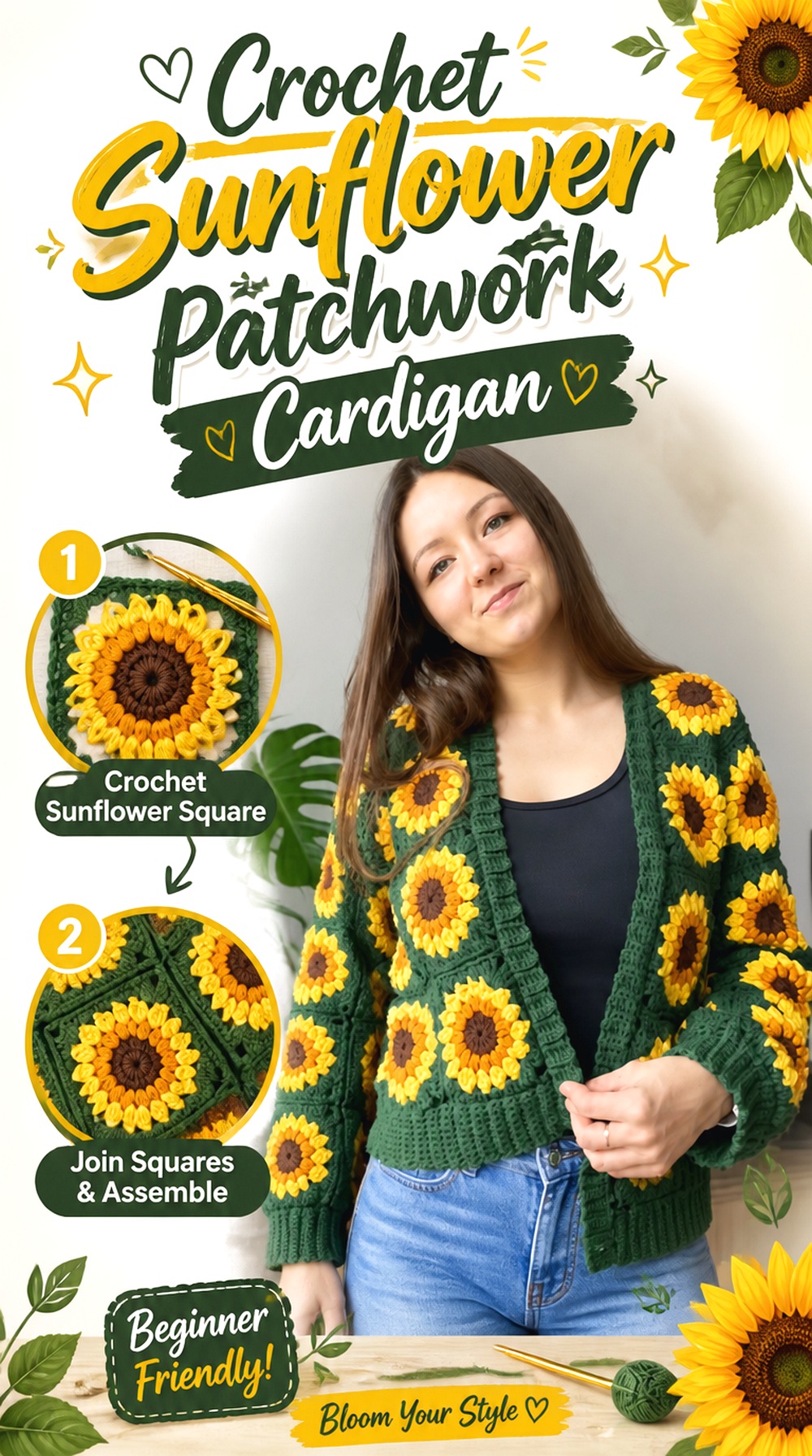
This sunflower cardigan from by Kristine uses flower-centered granny squares to create a colorful patchwork garment. The tutorial covers the sunflower motifs, layout, assembly, and ribbed finishing.
A brooch on this cardigan should be chosen with the motif arrangement in mind. The garment already has obvious focal points, so the accessory can either echo the floral theme or provide a quieter contrast. This is a strong option when you want the cardigan itself to remain the visual star.
Map the Motifs Before Adding Another Focal Point
Look at which sunflower squares sit closest to the neckline and front opening. If a brooch covers a flower center, the layout can appear interrupted. A join, ribbed edge, or relatively quiet area may produce a more intentional result.
Check Every Square Before Final Assembly
Motif garments depend on consistent blocked dimensions. Lay the squares together before joining and compare their edges. A small mismatch repeated across several motifs can shift the front opening and make brooch placement harder to balance later.
Original Tutorial and Creator Credit
Creator: by Kristine
18. Crochet Top Down Suzette Raglan Cardigan
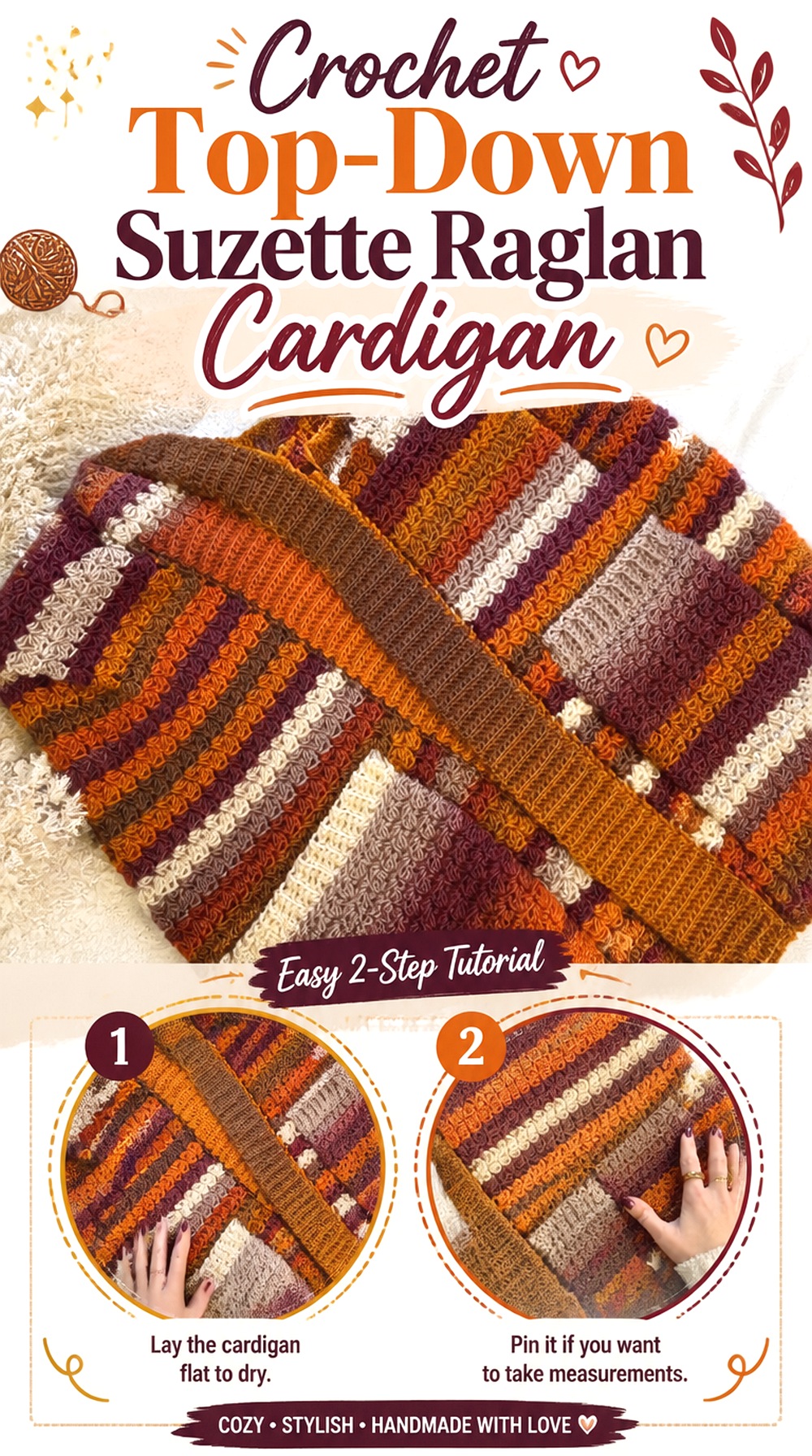
MJ’s Off The Hook Designs provides a top-down raglan cardigan in Suzette stitch, with options shown in the tutorial that include a longer version with extras such as a hood and pockets or a shorter button-up interpretation.
Top-down raglan shaping makes this structurally different from every granny-square, hexagon, bolero, and flat-panel option above. For brooch styling, the neckline and front finishing are particularly important because the pin can accent the upper opening without interfering with the raglan lines.
Keep the Raglan Lines Free of Closure Tension
Raglan shaping directs the eye from neckline to underarm. A brooch placed too close to one of those lines can pull the front sideways and disturb the symmetry. Centered or collar-based placement usually deserves testing first, especially if the pin is expected to hold two fronts together.
A Hood Changes the Best Brooch Position
If you choose a hooded version, the neckline carries additional fabric. Place the brooch only after seeing how the hood falls when worn up and down. A pin that looks balanced with the hood down may sit underneath folds once the hood is rearranged, so treat the finished neckline as a complete system.
Original Tutorial and Creator Credit
Creator: MJ’s Off The Hook Designs
Which Crochet Brooch Cardigan Style Should You Choose?
For the most literal interpretation of a brooch cardigan, the YARNutopia cocoon stands out because the original finished project specifically uses a gemstone brooch as its front closure. Granny, hexagon, and oversized cardigans are useful when you want a relaxed silhouette that can be lightly gathered rather than fully buttoned.
For a delicate look, the lace and mesh cardigans work better with lightweight pins attached near sturdy edging. The bolero offers the smallest canvas and therefore makes the brooch more prominent. If you prefer structured garment construction, the five-panel, ribbed, cable, and raglan options provide clearer front bands or collar areas. The sunflower cardigan is the opposite approach: the crochet motifs already provide the decoration, so the brooch works best when it supports rather than overwhelms the existing design.
Conclusion
The strongest crochet brooch cardigan choice depends on what you expect the pin to do. A cocoon or roomy hexagon can use one brooch as a relaxed closure, while lace and mesh usually benefit from a smaller accessory placed on a substantial edge. Traditional paneled, ribbed, cable, and raglan cardigans give you more structured areas for decorative placement, and floral granny-square designs require extra attention to motif balance.
Before choosing the accessory, finish and block the cardigan, try it on over your usual layers, and check where the fronts naturally fall. Then use the original tutorials for the exact construction details and choose a brooch whose weight, scale, and placement suit the finished fabric.
Frequently Asked Questions
Can any crochet cardigan be closed with a brooch?
Not necessarily. First check whether the front edges naturally meet or overlap. If you have to stretch the cardigan significantly to bring them together, a brooch would be forcing the garment into a shape it was not designed to hold. In that situation, wear the cardigan open and attach the brooch decoratively to one front panel, collar, border, or other sturdy area instead.
Where should I place a brooch on an openwork crochet cardigan?
Look for the most stable part of the front rather than simply choosing the visually central spot. Edging, ribbing, a seam area, or a dense stitch cluster usually gives the pin more material than a large mesh opening. Test the brooch while wearing the cardigan and check whether the surrounding crochet begins to stretch or sag before deciding that the placement is suitable.
How can I keep a heavy brooch from stretching crochet?
Reducing the load on one small area is the main consideration. Try a lighter brooch, move it to denser fabric, or keep the heavier piece decorative on a section with more structural support. Do not rely on a delicate open stitch to hold substantial weight. If the fabric visibly drops, widens, or pulls around the pin, choose a different accessory or placement.
Should I choose the brooch before or after blocking the cardigan?
Final placement is easier after blocking because the garment’s dimensions, drape, motif alignment, and front opening may change. You can still choose a general brooch style earlier, but test the actual accessory on the finished cardigan. This is particularly important for granny-square, lace, and mesh designs where blocking can noticeably influence spacing and how the front edges hang.
Can a brooch replace buttons or a waist tie?
Sometimes, but the two closure types do not necessarily behave the same way. Buttons and ties may distribute tension through planned attachment points, while a brooch concentrates pressure in a smaller area. If a tutorial includes buttons or a waist tie for functional shaping, consider keeping that system and using the brooch decoratively unless the finished fabric comfortably supports the alternative.
What cardigan styles work well with larger statement brooches?
Roomy cardigans with relatively substantial front borders often provide a better visual and structural setting than very open lace. Cocoon, oversized, ribbed, or densely worked paneled cardigans can give a large accessory enough visual space, but weight still matters. A large brooch that is lightweight may be more suitable than a smaller but very heavy metal piece, so judge construction as well as appearance.