Crochet snood scarves can range from close-fitting neck warmers to long infinity loops that wrap several times, and some designs extend far enough to cover the head. Creators also use the words cowl, infinity scarf, and snood for overlapping styles, so shape and construction matter more than the label alone.
The 15 ideas below include lightweight loops, bulky winter cowls, textured infinity scarves, convertible head wraps, a Möbius construction, a hooded scarf, and an adjustable buttoned wrap. Rather than choosing only by appearance, compare how much fabric sits around the neck, whether the piece needs to pass over the head, how the yarn affects drape, and how you expect to wear it. Those practical differences are what make one snood far more suitable than another for a particular wardrobe or season.
Quick List
- Crochet Delicate Double-Wrap Snood Scarf
- Crochet Woven Linen-Stitch Infinity Snood
- Crochet Super-Chunky Knit-Look Loop Scarf
- Crochet Variegated Draped Infinity Snood
- Crochet Suzette-Texture Double-Wrap Snood
- Crochet Lightweight Spring Cowl Snood
- Crochet Long Bulky Loop Snood Scarf
- Crochet Tall Textured Hood-Convertible Cowl
- Crochet Twisted Möbius Snood Scarf
- Crochet Head-Wrap Infinity Snood
- Crochet Fold-Down Color-Block Cowl
- Crochet Simple Round Chunky Snood
- Crochet Lightweight Seamed Infinity Snood
- Crochet Hooded Snood Scarf
- Crochet Buttoned Wrap Cowl Scarf
Decide How You Want the Snood to Sit Before Choosing a Tutorial
The first useful distinction is not stitch pattern but silhouette. A short cowl normally stays close to the neck, while a long infinity snood needs enough circumference to drape or wrap without becoming restrictive. A tall cowl adds another variable because the extra fabric may be folded down, scrunched around the neck, or pulled over the head.
Before starting, look at the finished piece and decide where you want its lower edge to fall. Also check whether the opening comfortably passes over the widest part of the head without excessive stretching. If you plan to wear a snood over a bulky coat, the same circumference that feels generous over a shirt may sit much closer once a jacket collar is underneath it.
Yarn Weight Changes More Than Warmth
Thicker yarn can create a substantial snood quickly, but the finished fabric also becomes bulkier at the neck and shoulders. That can be useful for a short winter cowl, yet the same yarn in a long multi-wrap infinity scarf may produce much more volume than expected.
Lighter yarn generally gives you more fabric without the same degree of bulk, which can work well for longer loops and transitional-weather snoods. Fiber and stitch density matter too. A lofty yarn can feel visually substantial without behaving like a dense, heavy fabric, while tightly worked stitches may give a scarf more body. When substituting yarn, compare the resulting fabric rather than relying only on the yarn-weight number.
Check the Opening, Height, and Drape at Three Different Stages
A useful fitting check happens before a snood is completely finished. First, confirm that its planned opening can pass comfortably over the head if the design has no closure. Next, check the height: too little fabric may not provide the neck coverage you wanted, while excessive height can bunch under the chin.
Finally, look at how the fabric collapses when worn. Snoods intended to drape should fold naturally rather than standing away from the neck like a rigid tube. Blocking may change the finished behavior, but it cannot always correct a basic mismatch between stitch density, yarn, and intended shape. For seamed scarves, pin or temporarily hold the ends together and try the loop before making the join permanent.
1. Crochet Delicate Double Wrap Snood Scarf
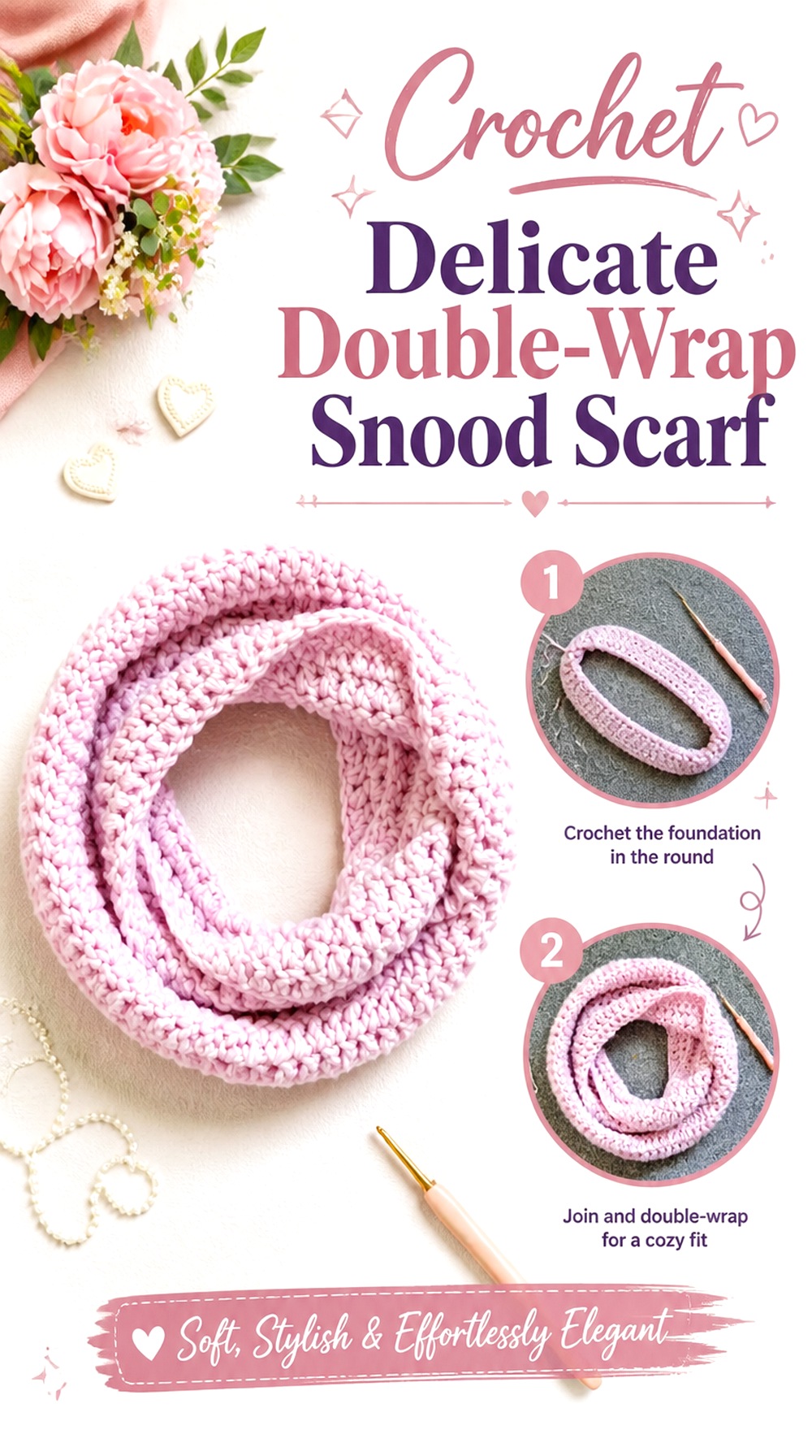
This option takes the familiar infinity-scarf shape in a softer, less heavily textured direction. Selina Veronique Crochet’s tutorial shows a feminine snood made as a long piece and joined into a continuous loop, using a lofty yarn held together for the project. The result looks substantial enough for cool weather without relying on oversized sculptural stitches.
Choose this type of snood if you like a relaxed loop that can become part of an outfit instead of reading only as heavy winter gear. The simple surface also makes the overall shape and yarn texture more noticeable.
Soft Loft Matters More Here Than Bulk
A delicate-looking snood benefits from yarn that creates volume without making the scarf excessively rigid. If you substitute a denser yarn, make a small fabric sample first and fold it over itself. A fabric that feels pleasant as a flat swatch can become considerably thicker once an infinity scarf is doubled around the neck.
The goal is enough body to hold a recognizable loop while retaining the ability to collapse into soft folds.
Keep the Loop Long Enough to Drape
Long infinity scarves need room to hang before they are wrapped. Shortening one too aggressively can turn a flowing snood into a close-fitting double cowl, which changes both the look and the pressure around the neck.
Before joining the ends, hold the strip in a loop and experiment with the number of wraps you actually want. Remember that seam allowance and the final join can slightly change the available length.
Seam Placement Affects the Finished Fall
A joined flat scarf has a defined seam even when that seam becomes inconspicuous during wear. Align the ends carefully before finishing so one edge does not shift beyond the other.
Once joined, rotate the loop so the seam falls toward the back or another less visible position. If your yarn has a noticeable directional texture, check how the two ends meet before permanently closing the scarf.
Original Tutorial and Creator Credit
Creator: Selina Veronique Crochet
2. Crochet Woven Linen Stitch Infinity Snood

Meema Makes uses linen stitch to give this infinity scarf a flatter, woven-looking surface rather than pronounced ribs or raised clusters. The tutorial uses chunky yarn but also notes that the concept can be worked with other yarn choices, making the fabric texture the defining feature.
This is a strong direction when you want a snood with visible stitch character but do not want deep three-dimensional texture around the neck. The compact-looking surface can also showcase carefully chosen hand-dyed or tonal yarn without competing with it.
Linen Stitch Gives a Flatter, Woven Surface
A flatter texture changes how a snood layers. Instead of individual ribs or clusters stacking on top of each other, the fabric can form smoother folds when wrapped.
That makes width particularly important. A wide woven-texture scarf may still build considerable bulk once doubled even if each individual layer looks relatively thin. Compare the scarf flat and wrapped before deciding whether to add more width.
Watch Width as Well as Circumference
Infinity-scarf fitting often focuses on length, but width determines how much fabric collects vertically around the neck. More width can provide additional coverage, yet it may also push upward toward the jaw after the scarf is wrapped twice.
When adapting the concept, stop occasionally and bunch the fabric into the shape you expect to wear. This is more informative than judging the rectangle only while it lies flat.
Busy Yarn Can Hide the Texture
Linen stitch produces a subtle surface rather than an oversized relief pattern. Highly contrasting, rapidly changing yarn colors may become the dominant visual feature and make the woven effect less obvious.
If stitch definition is your priority, compare a tonal, lightly variegated, or solid option with any strongly multicolored yarn you are considering. Neither choice is wrong; they simply emphasize different parts of the finished snood.
Original Tutorial and Creator Credit
Creator: Meema Makes
3. Crochet Super Chunky Knit Look Loop Scarf
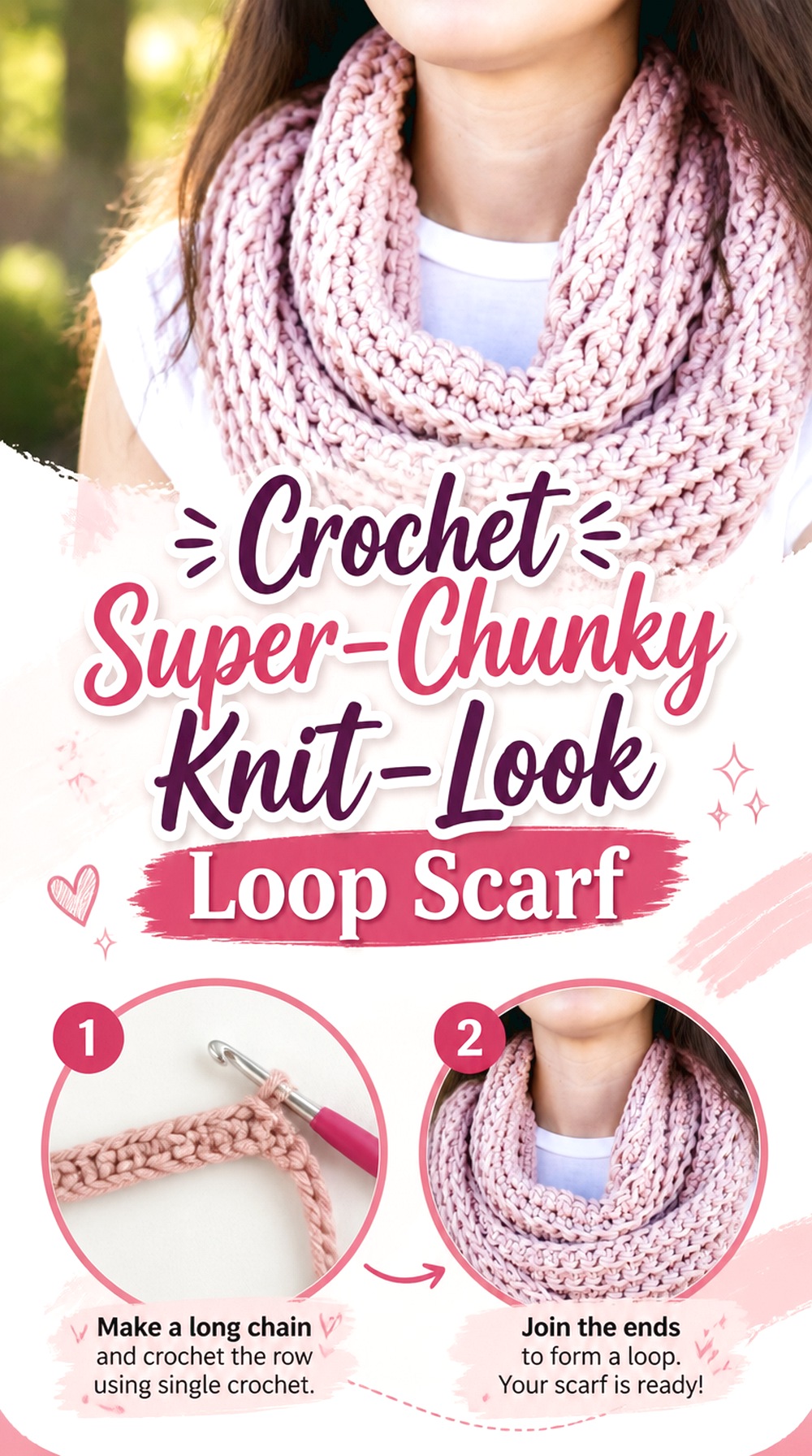
Amanda Love Santos presents a chunky infinity scarf designed around a compact crochet fabric with a knit-like appearance. Super-chunky yarn gives the finished loop a bold scale, so this idea looks noticeably different from lighter, more fluid infinity scarves.
This style makes sense when you want the snood itself to be a strong part of a winter outfit. Because the yarn is visually large, even a simple stitch structure becomes prominent. It is less about delicate drape and more about creating a substantial loop that reads clearly over coats, sweaters, and other cold-weather layers.
Super-Chunky Yarn Magnifies Every Design Choice
With very thick yarn, small changes in width or circumference can create a noticeable difference in finished bulk. Extra rows that seem minor on the hook may add an entire additional layer of volume around the neck.
If substituting another super-chunky yarn, compare the actual fabric rather than assuming every yarn in the same weight category will behave identically. Lofty and dense yarns can produce very different results.
A Dense Loop Needs Enough Breathing Room
A close snood should feel secure, not restrictive. This becomes especially important when the fabric itself is thick and has limited collapse.
Before final joining, temporarily form the loop and check it over the head and around the neck while wearing the type of clothing you expect underneath. If it already feels crowded without a coat collar, additional winter layers will make the fit even tighter.
Original Tutorial and Creator Credit
Creator: Amanda Love Santos
4. Crochet Variegated Draped Infinity Snood
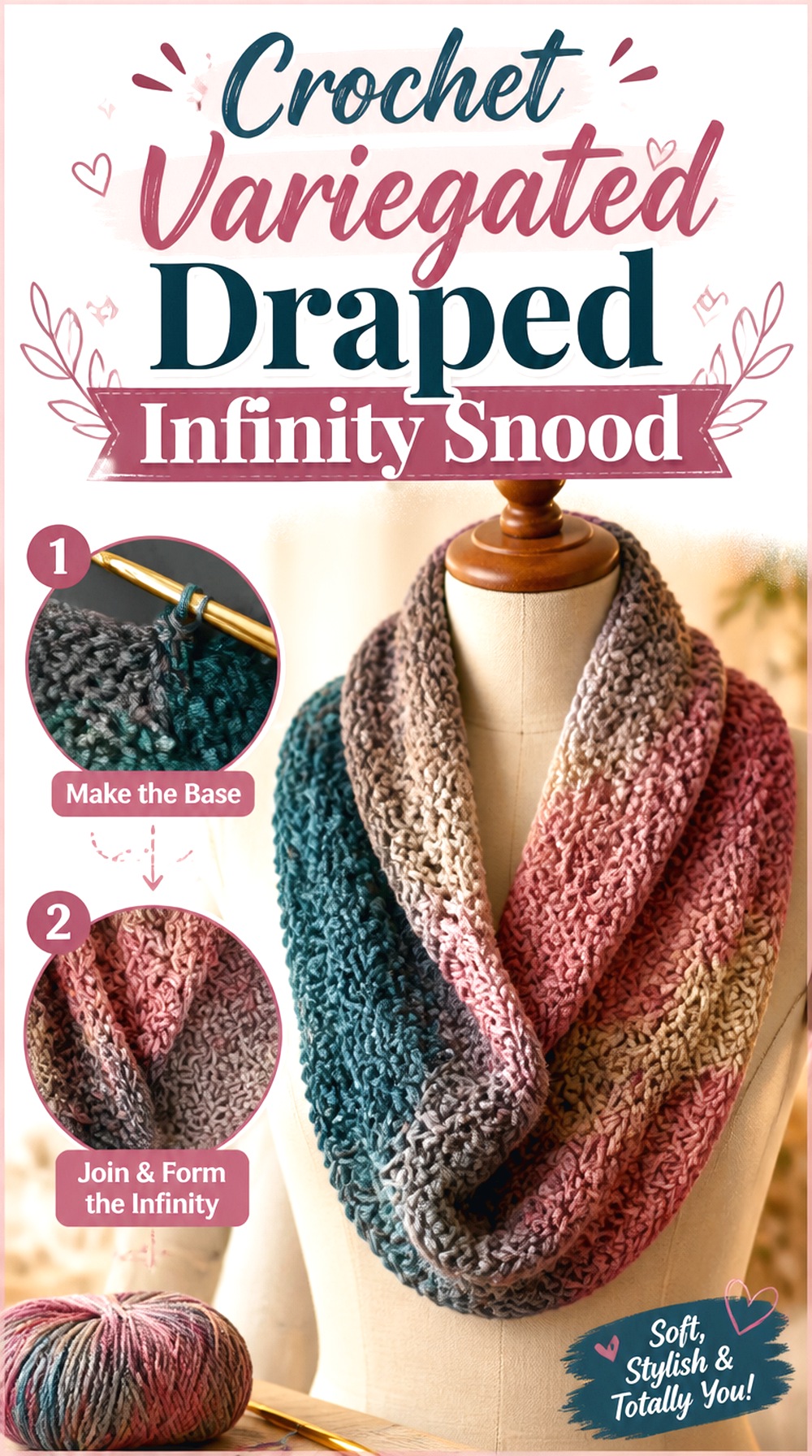
The Rachel Scarf from Ophelia Talks Crochet uses variegated yarn as an important part of the finished effect. Instead of adding color through separate blocks or complicated motifs, the changing yarn colors travel through one continuous infinity-scarf shape.
This idea works well if yarn color is what first attracts you to a project. The long loop provides enough surface area for color transitions to develop, while the relatively restrained construction lets the yarn remain the focus. Compared with a short cowl, a longer snood can also rearrange the color sequence differently each time you wrap it.
Let the Color Changes Do the Visual Work
When a yarn already contains several shades, adding an equally complex stitch pattern can make both features harder to read. A quieter stitch surface gives variegation more room to become the main design element.
Before committing, crochet enough of a sample to see how often the colors change. A skein can look very different once the shades are distributed across actual rows rather than wound together in the ball.
Longer Loops Give More Styling Options
A long infinity scarf can be worn hanging or wrapped, and those two arrangements distribute the colors differently across the body. This is useful with variegated yarn because you are not locked into one fixed color placement at the neckline.
Length still needs planning. If you expect to double the scarf most of the time, test that arrangement before joining rather than evaluating only the single-loop drape.
Original Tutorial and Creator Credit
Creator: Ophelia Talks Crochet
5. Crochet Suzette Texture Double Wrap Snood
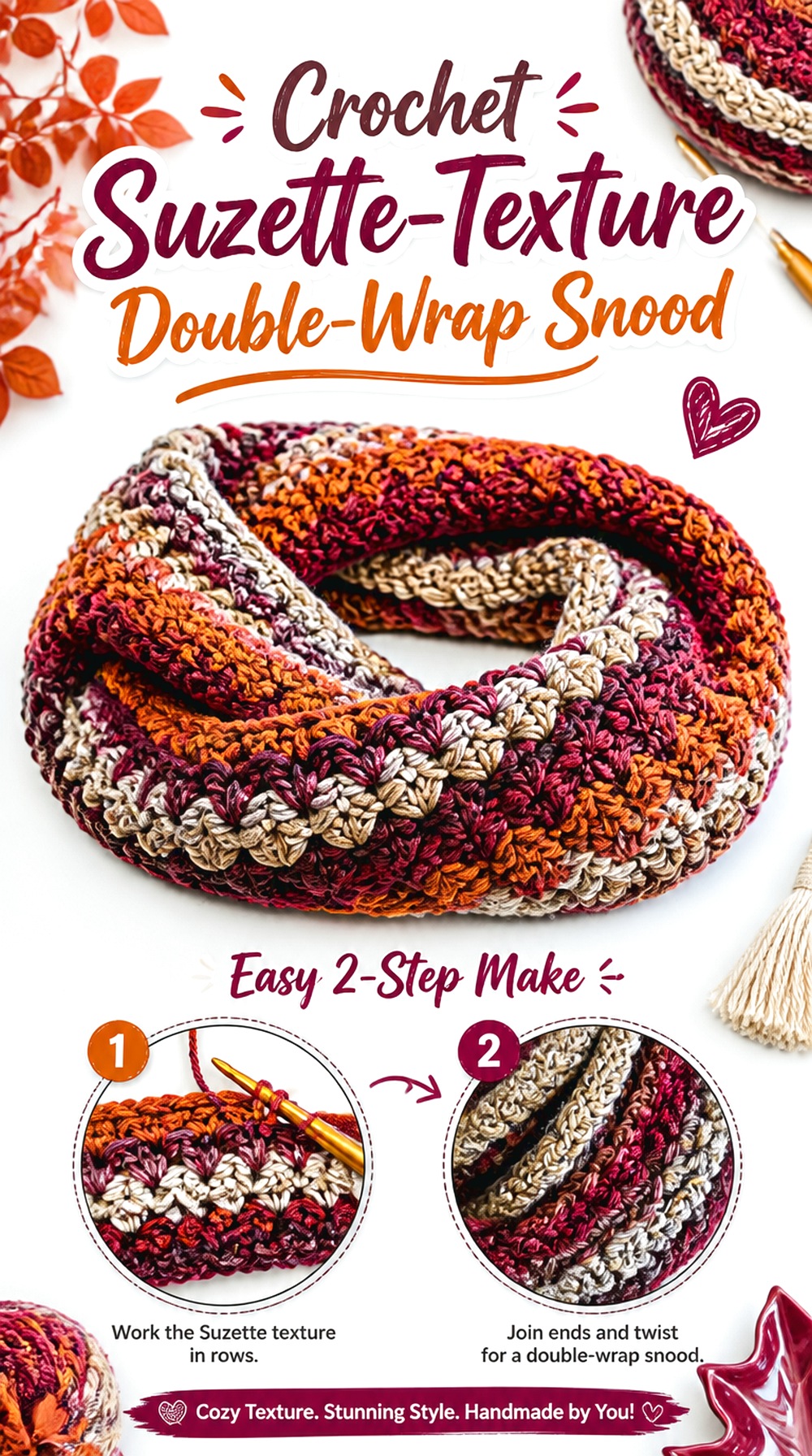
MJ’s Off The Hook Designs uses Suzette stitch for a modern infinity scarf with noticeable allover texture. The tutorial also demonstrates a two-strand yarn approach and presents different thickness possibilities, while the finished scarf is long enough to be wrapped more than once.
This is a useful middle ground between a plain loop and an aggressively chunky ribbed cowl. The textured surface gives solid and tonal yarn more dimension, but the long infinity format keeps the silhouette relaxed. Consider it when you want the stitch pattern to remain visible even after the scarf has been folded and wrapped.
Suzette Texture Adds Density Without Ribbing
Raised ribbing creates obvious vertical or horizontal lines. Suzette texture behaves differently, distributing small-scale relief across the entire fabric.
That makes it a good option when you prefer an even textured surface instead of a directional one. It can still add thickness, however, so examine the fabric doubled over. A texture that seems moderate in one layer may feel substantially denser after multiple wraps.
Two-Strand Construction Changes Weight Fast
Holding yarn strands together can create a fuller fabric, but it also changes total yarn consumption and the physical weight of a long scarf. If substituting yarn, do not assume that matching visual thickness automatically reproduces the same drape.
Make a generous swatch, let it hang rather than keeping it flat, and see whether it stretches under its own weight. Long infinity scarves expose yarn behavior more clearly than small accessories do.
Decide How Many Wraps You Actually Want
A scarf intended for two wraps needs a different practical circumference than one you hope to wind around the neck more times. More wraps create warmth and visual density, but they also reduce the available space inside each loop.
Test the intended arrangement while the scarf is still adjustable. The most useful measurement is not simply the flat length—it is whether the finished number of wraps sits comfortably.
Original Tutorial and Creator Credit
Creator: MJ’s Off The Hook Designs
6. Crochet Lightweight Spring Cowl Snood
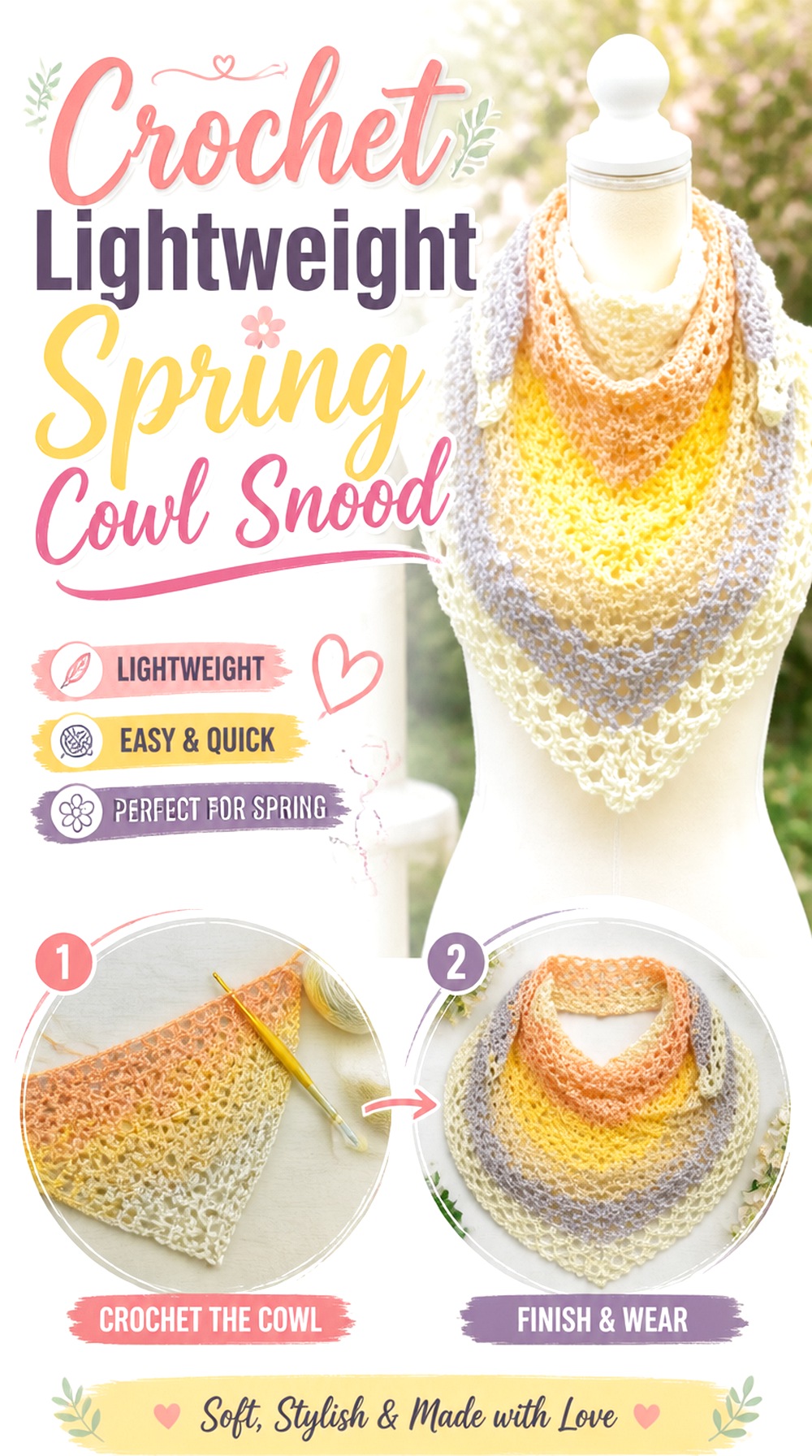
Bag-O-Day Crochet’s tutorial focuses on lightweight cowls suited to milder weather rather than the heaviest winter conditions. That makes this idea valuable in a snood collection dominated by bulky yarn and deep neck coverage.
A lighter cowl can function more like a decorative layer while still giving some coverage around the neck. It also reduces the amount of fabric you have to manage indoors. Choose this direction if you want something that bridges seasons or if thick woolly cowls feel visually overwhelming with your usual clothing.
Lighter Cowls Need Drape, Not Stiffness
When warmth is not the only priority, fluid movement becomes more noticeable. An overly firm lightweight fabric can stand away from the neckline instead of settling into relaxed folds.
Before finishing, squeeze and release the fabric in your hand. If it immediately springs back into a rigid tube, consider whether that matches the styling you want. Hook choice and yarn characteristics can both affect the final behavior.
Open Structure Can Suit Transitional Weather
A more breathable crochet fabric will not behave like a dense winter neck warmer, and that can be an advantage during spring, fall, or cool evenings.
Judge the project by its intended use rather than trying to force maximum warmth from every snood. If you want a decorative layer, visible openings and lighter yarn can reduce bulk while still giving the scarf enough presence to frame the neckline.
Original Tutorial and Creator Credit
Creator: Bag-O-Day Crochet
7. Crochet Long Bulky Loop Snood Scarf
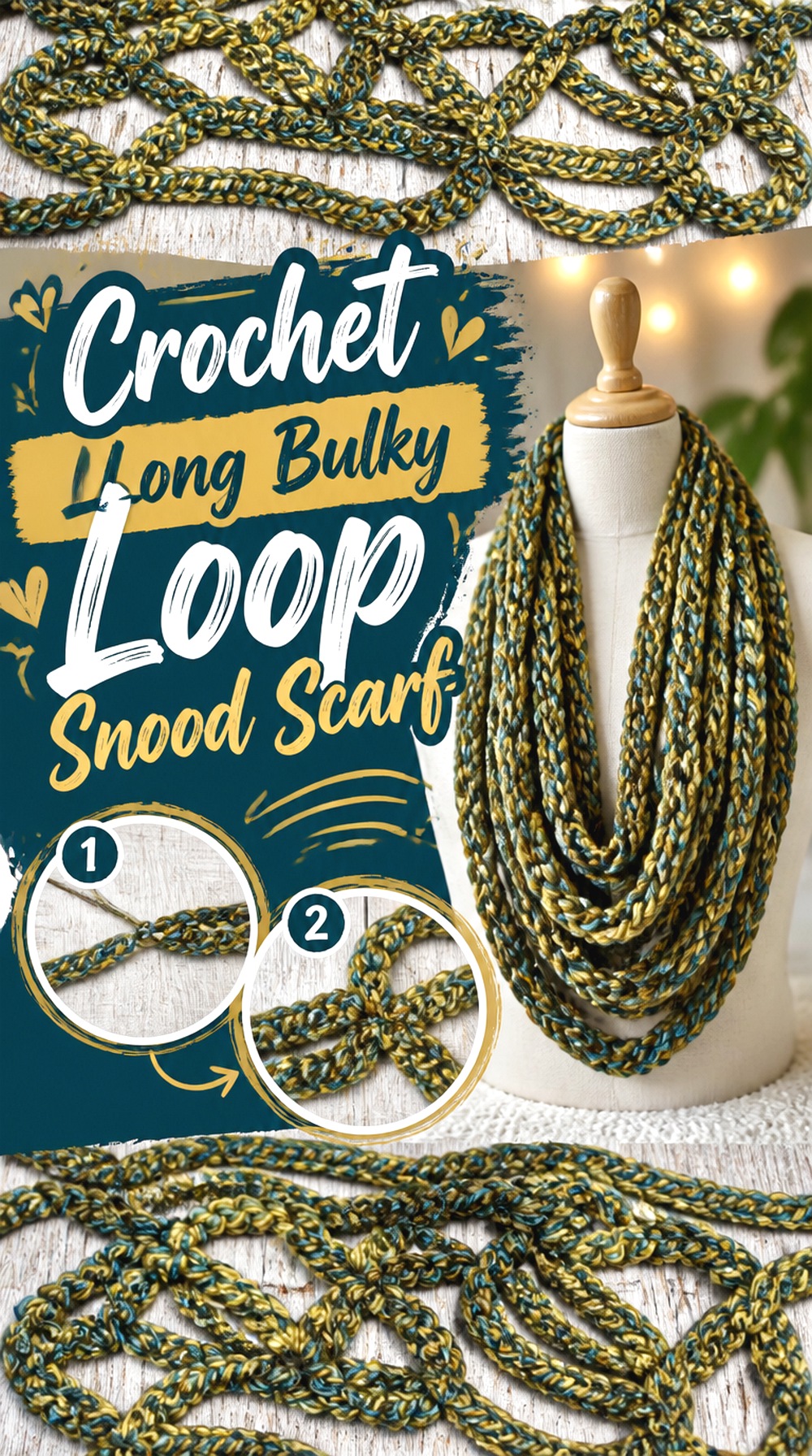
Rich Textures Crochet’s cowl is made with bulky yarn but has the extended circumference of a larger loop rather than a small fitted neck tube. The finished shape therefore combines substantial yarn with the drape and styling range of an infinity scarf.
That combination creates a useful contrast with short chunky cowls. Instead of concentrating all the volume directly under the chin, a longer loop can distribute some of the fabric farther down the chest before wrapping. This can suit anyone who likes substantial texture but still wants visible length in the finished accessory.
Length Changes This from Cowl to Infinity Scarf
Two projects made from similar yarn can wear very differently if one has far more circumference. A short cowl forms a compact ring, while a longer version creates hanging folds before it is doubled.
Think about the scarf unwrapped as well as wrapped. If you like the look of a long loop with a coat open indoors, preserving enough circumference for that drape matters as much as warmth.
Bulky Texture Can Build Shoulder Volume
A long loop does not eliminate bulk; it redistributes it. Once doubled, bulky yarn can still create a broad band around the neck and upper chest.
If you have a jacket with a large collar, test how the scarf interacts with it. Too much fabric competing in the same area can make both pieces difficult to arrange. A collarless coat or simple sweater leaves more visual and physical space for a substantial snood.
Test the Fold Before Final Finishing
The way a large loop folds determines whether its texture remains attractive after wrapping. Some fabrics form soft overlapping layers, while others develop sharp bends or thick ridges.
Before securing the final finish, wrap the loop as you expect to wear it and look at the front, sides, and back. This can reveal unwanted twisting or concentrated bulk that is not apparent when the project is flat.
Original Tutorial and Creator Credit
Creator: Rich Textures Crochet
8. Crochet Tall Textured Hood Convertible Cowl
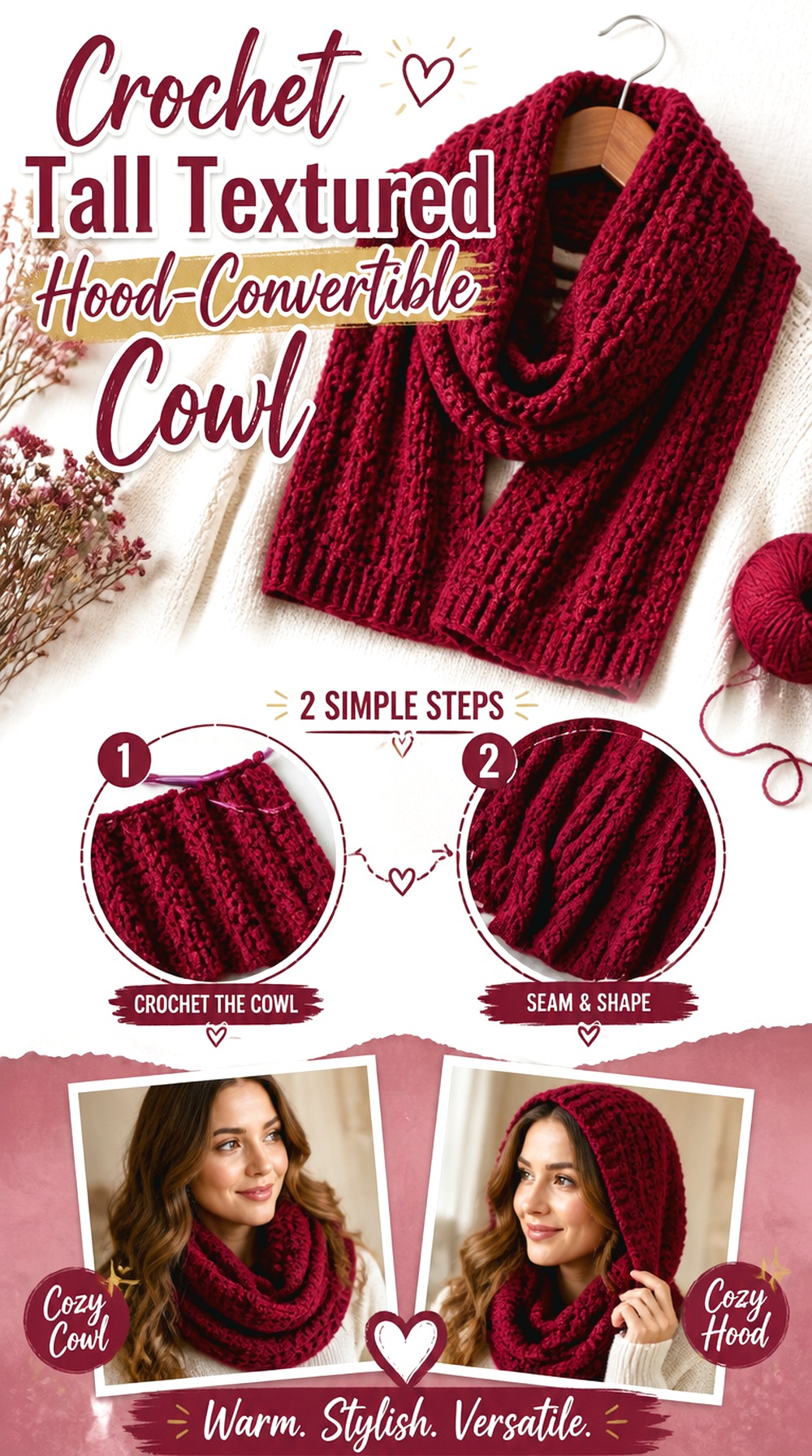
Winding Road Crochet’s design deliberately increases both circumference and height: the finished cowl is large enough to resemble an infinity scarf and tall enough to pull upward as a hood.
This makes it one of the most functional options in the roundup. Rather than attaching a separate hood, the same continuous tube changes jobs according to how it is arranged. The trade-off is that all of that head-covering fabric remains present when the cowl is worn around the neck, so height and drape deserve more attention than they would in an ordinary compact snood.
Extra Height Is What Makes the Hood Conversion Work
A cowl cannot provide useful head coverage if nearly all of its fabric is already occupied around the neck. Convertible designs depend on enough vertical depth to travel from the shoulders toward the crown.
If adapting the concept, think about height in relation to your intended use. More height improves hood potential but also means more fabric to fold or scrunch when the hood is down.
The Neck Portion Still Needs to Sit Comfortably
It is easy to focus on whether the cowl reaches over the head and forget that it will often be worn in its lower position. Check what happens at the throat after the extra hood fabric is pushed downward.
If it forms a hard stack directly under the chin, you may prefer a softer yarn or more fluid fabric. Convertible designs work best when both wearing positions feel intentional.
Texture Can Reduce Fluid Drape
The project is specifically textured, and strong texture can help the fabric look substantial. It can also resist collapsing as easily as a very smooth stitch pattern.
That distinction matters when turning the cowl into a hood. A fabric with more body can create a defined silhouette, while a softer construction may hug the head more closely. Choose according to the effect you want rather than assuming more drape is always better.
Check Hair and Headroom Before Committing
A hood that fits closely on short hair may behave differently over thick hair, braids, or a bun. Because this type of snood has no front opening, it also has to travel over the head to be put on.
Use a flexible fit check rather than copying dimensions blindly. The finished opening needs to accommodate the wearer and still return to an attractive shape around the neck.
Original Tutorial and Creator Credit
Creator: Winding Road Crochet
9. Crochet Twisted Möbius Snood Scarf

This Crochet Crowd tutorial approaches the infinity cowl with a Möbius-style twist rather than a conventional untwisted ring. The twist becomes part of how the scarf folds and displays its surface, giving the snood a different visual rhythm even when the stitch work itself remains relatively straightforward.
A Möbius snood suits readers who want construction to create the interest. Because the loop is intentionally twisted, it naturally turns different areas of the fabric toward the viewer instead of presenting one consistent inside and outside surface.
The Twist Is the Main Design Feature
With an ordinary infinity scarf, accidental twisting before joining is usually something to avoid. In a Möbius design, a controlled twist is the point.
That means the orientation must be deliberate. Look carefully at the tutorial’s construction rather than improvising a random turn, because adding an unintended extra twist can change how the fabric sits and may make the finished loop harder to arrange.
A Möbius Loop Changes How the Fabric Falls
The continuous half-twist encourages the scarf to cross over itself naturally. This can create attractive movement without requiring a separate decorative closure.
It also means directional stitch patterns deserve attention. If the front and back of your chosen stitch look dramatically different, both may become visible in the finished scarf. Decide whether that contrast is something you want to feature.
Keep the Foundation From Twisting Twice
Long starting chains are prone to rolling while they are being handled. A Möbius project already includes its intentional orientation change, so uncontrolled additional twisting can create confusion.
Lay the foundation out before completing the crucial join or twist. Distinguishing the planned turn from an accidental one is much easier on a table than after several rounds of fabric have been added.
Original Tutorial and Creator Credit
Creator: The Crochet Crowd
10. Crochet Head Wrap Infinity Snood
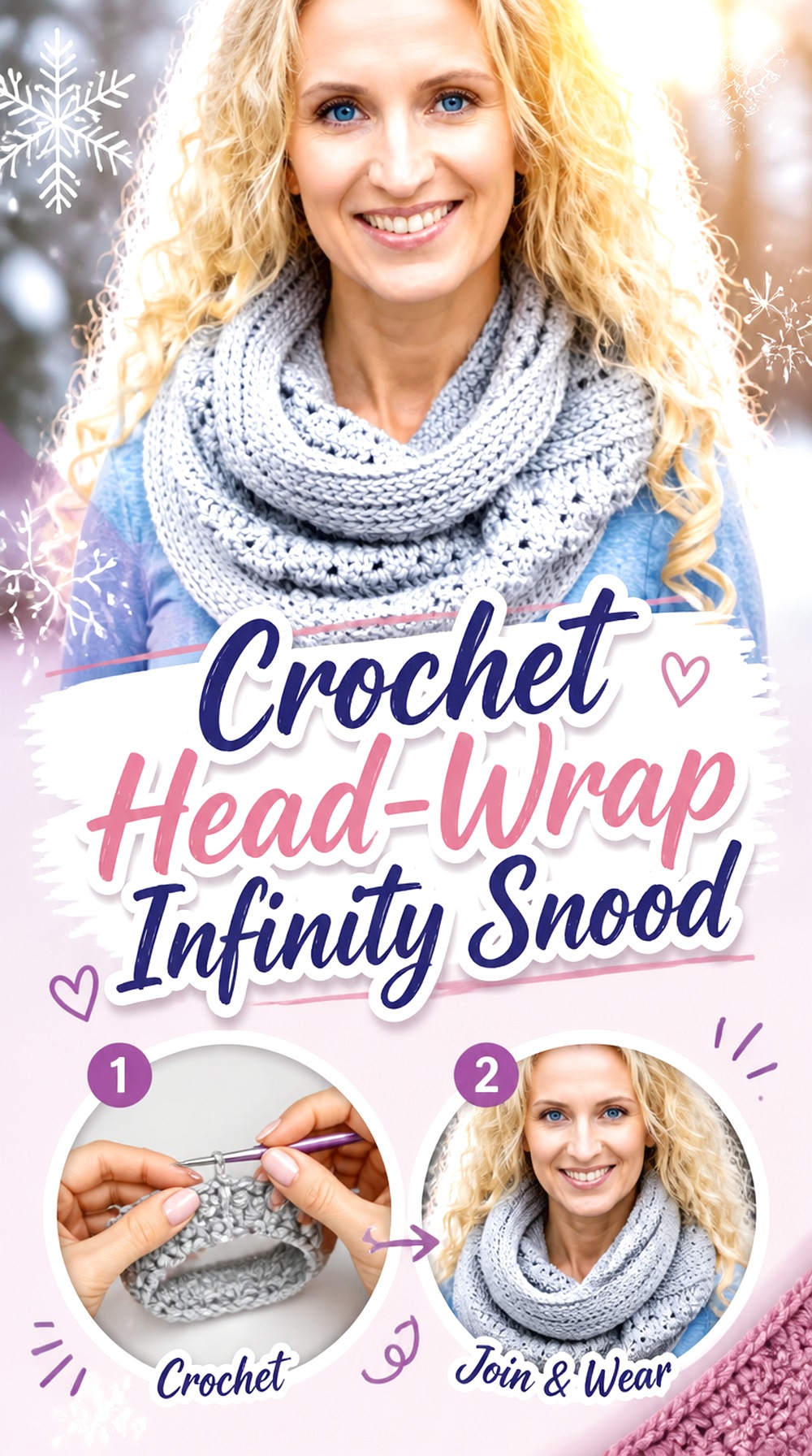
Naztazia’s Winter Park Scarf is an infinity scarf that can also be repositioned as a head wrap. The tutorial combines ribbed-looking sections with a granny-style center, giving the fabric more than one visual texture while preserving the continuous loop.
This option is useful when you want versatility without committing to a permanently shaped hood. You can keep the scarf around the neck most of the time, then move part of the loop upward when head coverage is useful. Because the same opening serves both purposes, fit needs to accommodate more than one wearing position.
Head-Wrap Use Needs a Different Fit Check
A loop that fits beautifully as a scarf can feel too tight once part of it is repositioned around the head. Before finishing an adaptable snood, try the configuration that requires the most circumference.
Do not judge comfort only while standing still. Turn your head and check the pressure around the ears, jaw, and back of the neck. A scarf should not become restrictive simply because it has been styled differently.
Ribbing and Granny Texture Create Two Behaviors
Ribbed sections can visually frame the edges, while a granny-style middle introduces a more open and patterned area. Combining them affects more than appearance because each section may stretch or drape somewhat differently.
When substituting yarn, watch the relationship between these areas. If one part becomes much stiffer than the other, the finished scarf may fold unevenly instead of flowing as one cohesive piece.
Choose Yarn That Can Handle Repeated Repositioning
A convertible head-wrap snood is likely to be stretched, folded, and rearranged more often than a decorative scarf that stays in one position.
Check the yarn label for care information and consider how the fiber responds to friction, especially if the piece will regularly contact coats, hair, or accessories. A beautiful yarn still needs to suit the way the object will actually be handled.
Original Tutorial and Creator Credit
Creator: naztazia
11. Crochet Fold Down Color Block Cowl
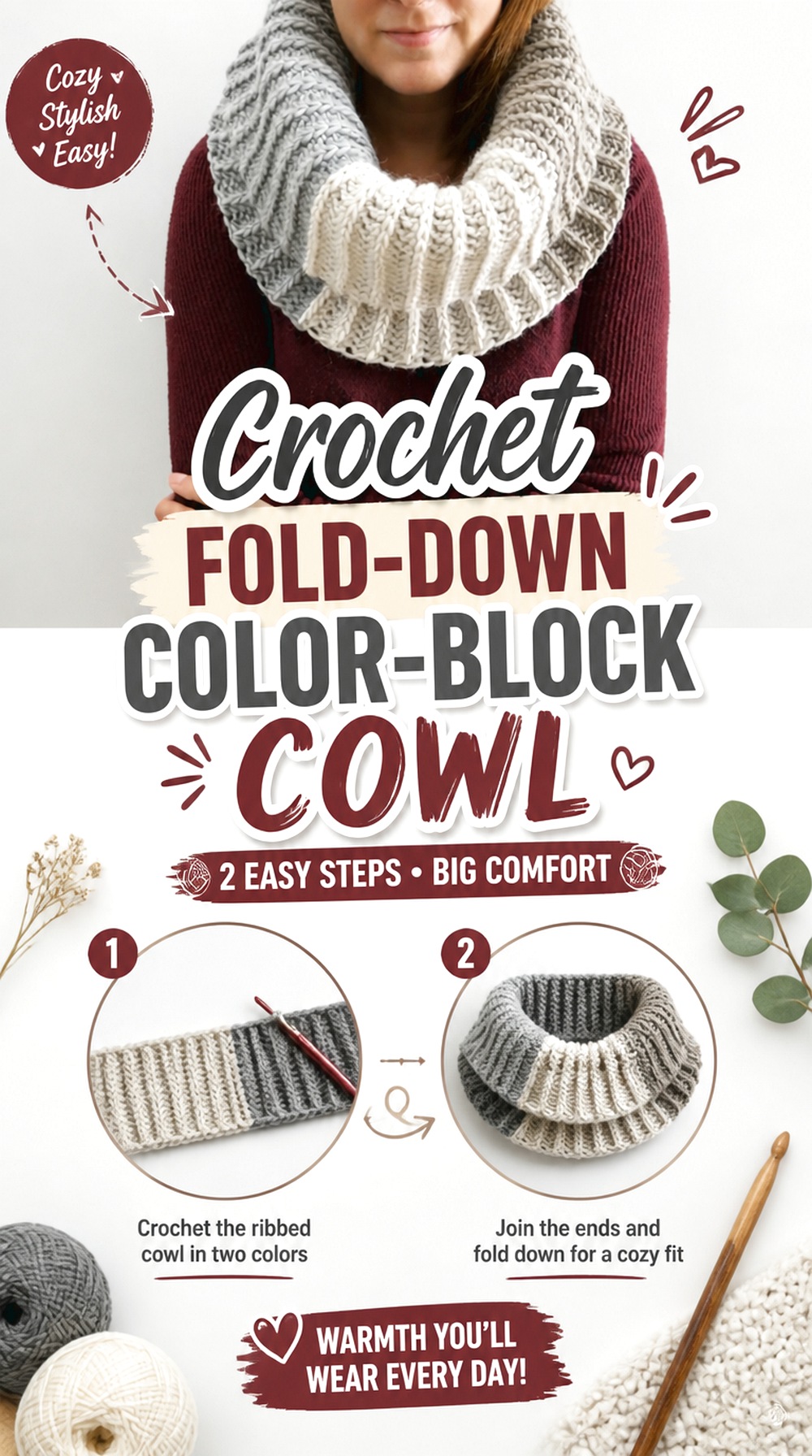
B.Hooked Crochet’s cowl is worked slightly oversized and uses three colors, with enough height to fold the finished piece down for additional warmth. The design therefore uses both color placement and fabric depth rather than relying on a long dangling loop.
This is a practical choice if you prefer a compact accessory but still want substantial coverage. Folding gives the neckline a layered appearance without the repeated wrapping required by a long infinity scarf. The color changes can also make those layers easier to see, especially when contrasting or related neutral shades are used.
Folding Creates Warmth Without a Separate Collar
A tall cowl can effectively build its own doubled neckline when the upper portion is turned downward. This keeps the overall silhouette compact while increasing the amount of fabric near the neck.
Before adding extra height, fold the existing fabric and see where the edge lands. Too much depth may crowd the jaw or hide other garment details, while too little may not create a distinct fold.
Color Blocks Can Emphasize the Fold Lines
Where colors change affects what remains visible after the cowl is turned down. A beautifully proportioned color section on the flat piece may become partially hidden once folded.
Plan with the wearing position in mind. If a particular shade is intended to frame the face, temporarily fold the project at intervals while you work so you can see which section will ultimately appear at the top.
Oversized Does Not Mean Loose at the Head Opening
An oversized cowl can have extra height or body while still needing an opening that functions comfortably. Because there is no button or zipper, the piece must travel over the head.
Check the opening independently from the overall volume. Adding more vertical fabric does not correct a circumference that is too tight, and increasing circumference excessively may cause the cowl to lose its close layered look.
Original Tutorial and Creator Credit
Creator: B.Hooked Crochet
12. Crochet Simple Round Chunky Snood
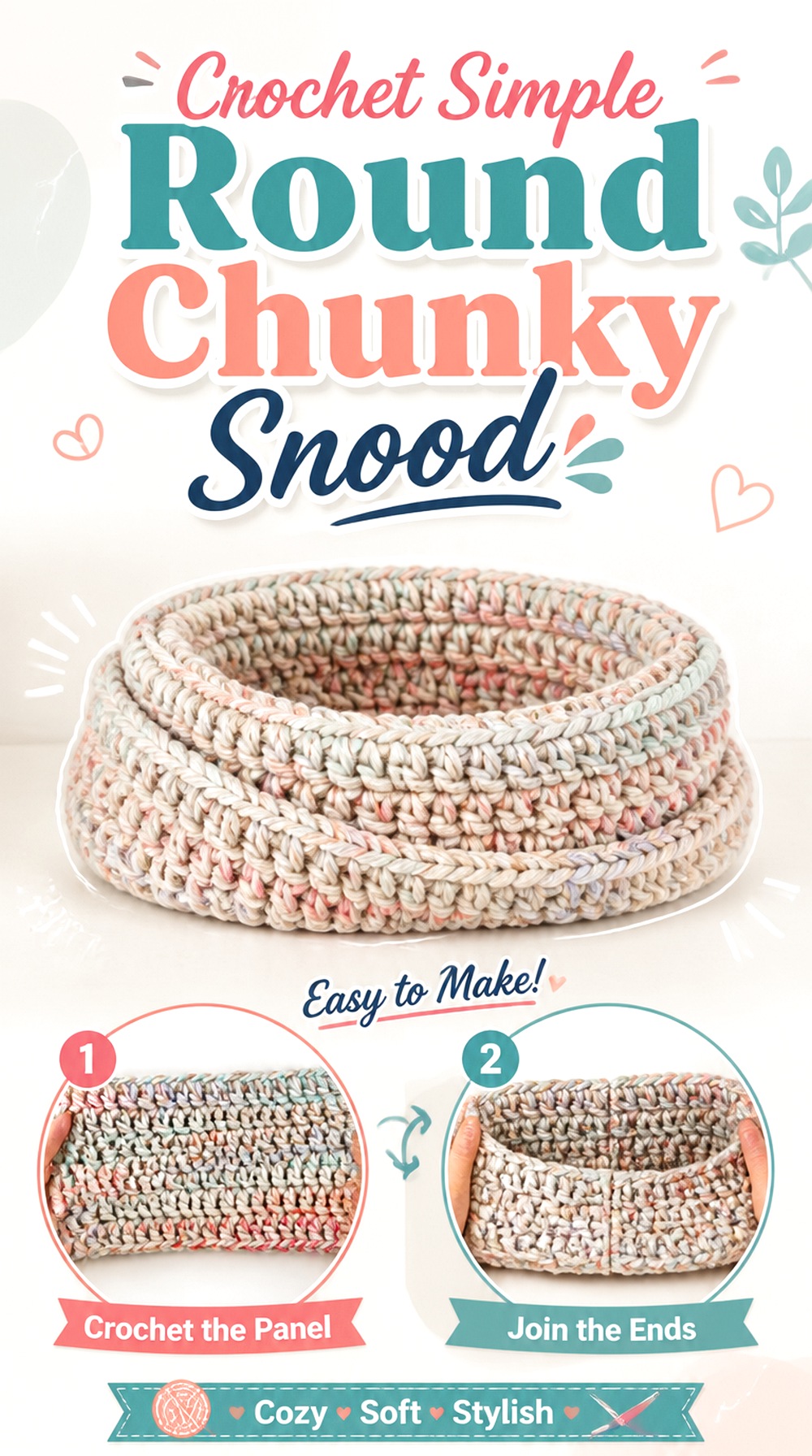
Fiber Flux’s one-hour cowl is a compact round-built design made with super-bulky yarn and straightforward construction. Its simplicity makes the overall scale of the yarn and the relationship between height and circumference easy to see.
This is the kind of snood to consider if you prefer an unfussy winter neck warmer over a long decorative infinity scarf. Because there are fewer structural distractions, it also provides a clear baseline for comparing more elaborate options in this collection: you can decide whether you genuinely need a hood, twist, closure, multiple wraps, or special texture.
Simple Construction Puts Yarn Choice Front and Center
When the stitch structure is restrained, the yarn supplies much of the finished personality. A smooth solid yarn can create a clean minimalist cowl, while a marled or multicolored option introduces more movement without changing the construction.
The same simplicity also exposes uneven yarn substitutions. If the new yarn produces a much stiffer or thinner fabric, there are few other design elements available to disguise the difference.
Round-Built Cowls Avoid a Side Seam
Working directly as a tube removes the final end-to-end scarf seam used in many infinity designs. That can create a clean continuous shape, but it also means circumference decisions happen earlier.
Check the initial ring carefully before progressing too far. A seamed flat scarf can be test-fitted before joining, whereas an in-the-round cowl may require undoing more work if the opening proves unsuitable.
Original Tutorial and Creator Credit
Creator: Fiber Flux
13. Crochet Lightweight Seamed Infinity Snood
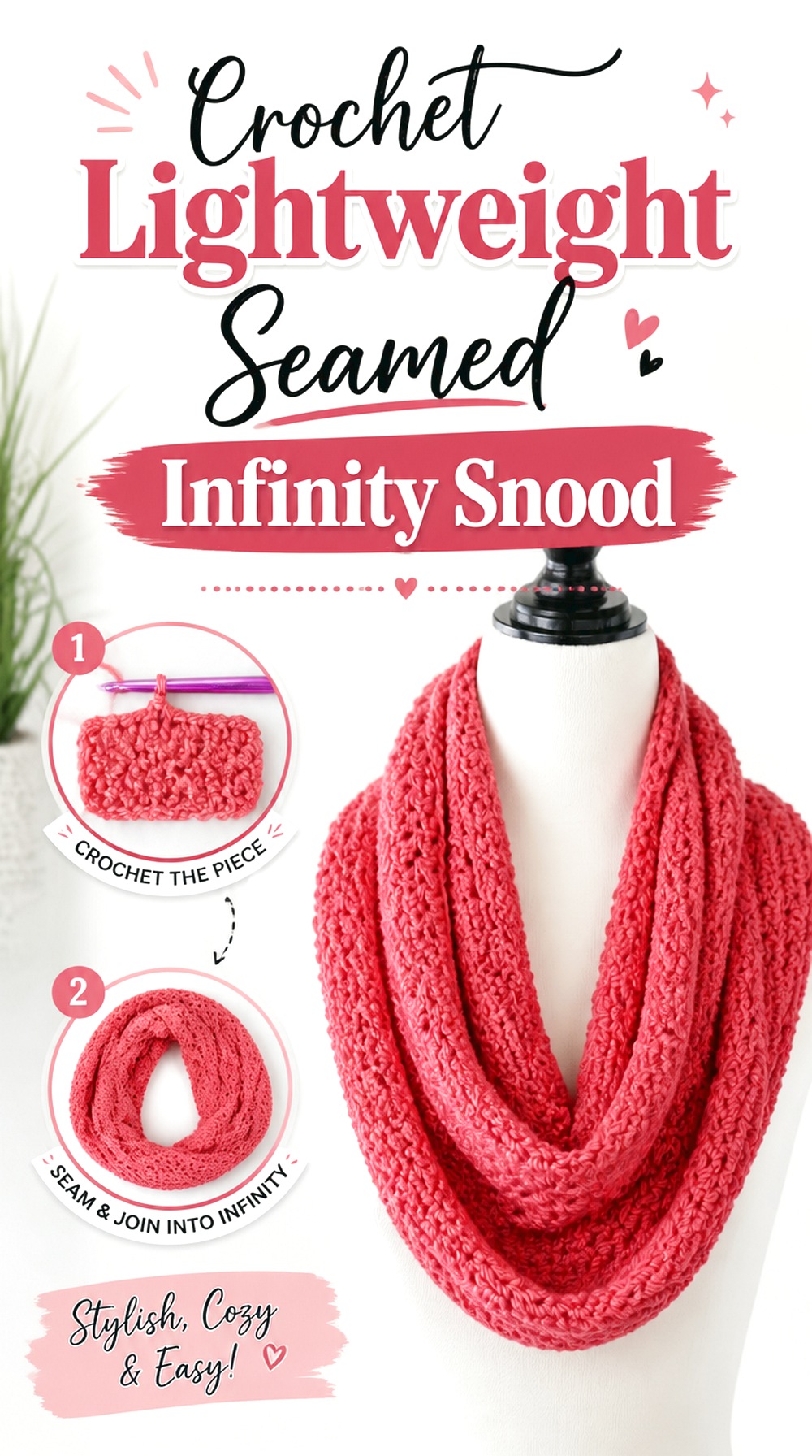
Jo to the World Creations takes a different route from round-built cowls: this infinity scarf is crocheted as a long piece and then joined at the ends. The tutorial uses lighter yarn and an alternating texture, producing a loop that is less visually bulky than the heaviest winter examples here.
This construction is appealing when you want plenty of scarf length but prefer a lighter layer around the neck. Working flat also makes it relatively easy to inspect the drape and approximate finished loop before the final join, which is particularly useful when adapting the idea to personal styling preferences.
A Seamed Long Strip Is Easy to Resize Before Joining
One advantage of flat construction is that the unfinished scarf can be draped around the body before the ends become permanent.
Use that opportunity. Pin or hold the ends together and test a single loop, double wrap, and the position of the lower edge. Adjusting length at this stage is generally easier than discovering after seaming that the scarf hangs lower or tighter than expected.
DK-Weight Fabric Creates a Lighter Loop
A lighter yarn can provide length without creating the same volume as a super-bulky infinity scarf. This makes it useful when you want a snood that can stay on indoors or fit more easily beneath outerwear.
The trade-off is reduced visual mass and potentially different warmth. Choose the lighter approach because it suits the intended layer, not because you expect it to imitate a chunky winter cowl.
Alternating Texture Helps a Plain Color Read Clearly
Subtle texture can keep a single-color scarf visually interesting without turning it into a heavily raised fabric. With a long loop, this is helpful because a large uninterrupted area of one color can otherwise appear very flat.
If using a strongly variegated yarn instead, decide which feature should dominate. Texture and color can complement one another, but neither automatically needs to be maximized.
Original Tutorial and Creator Credit
Creator: Jo to the World Creations
14. Crochet Hooded Snood Scarf
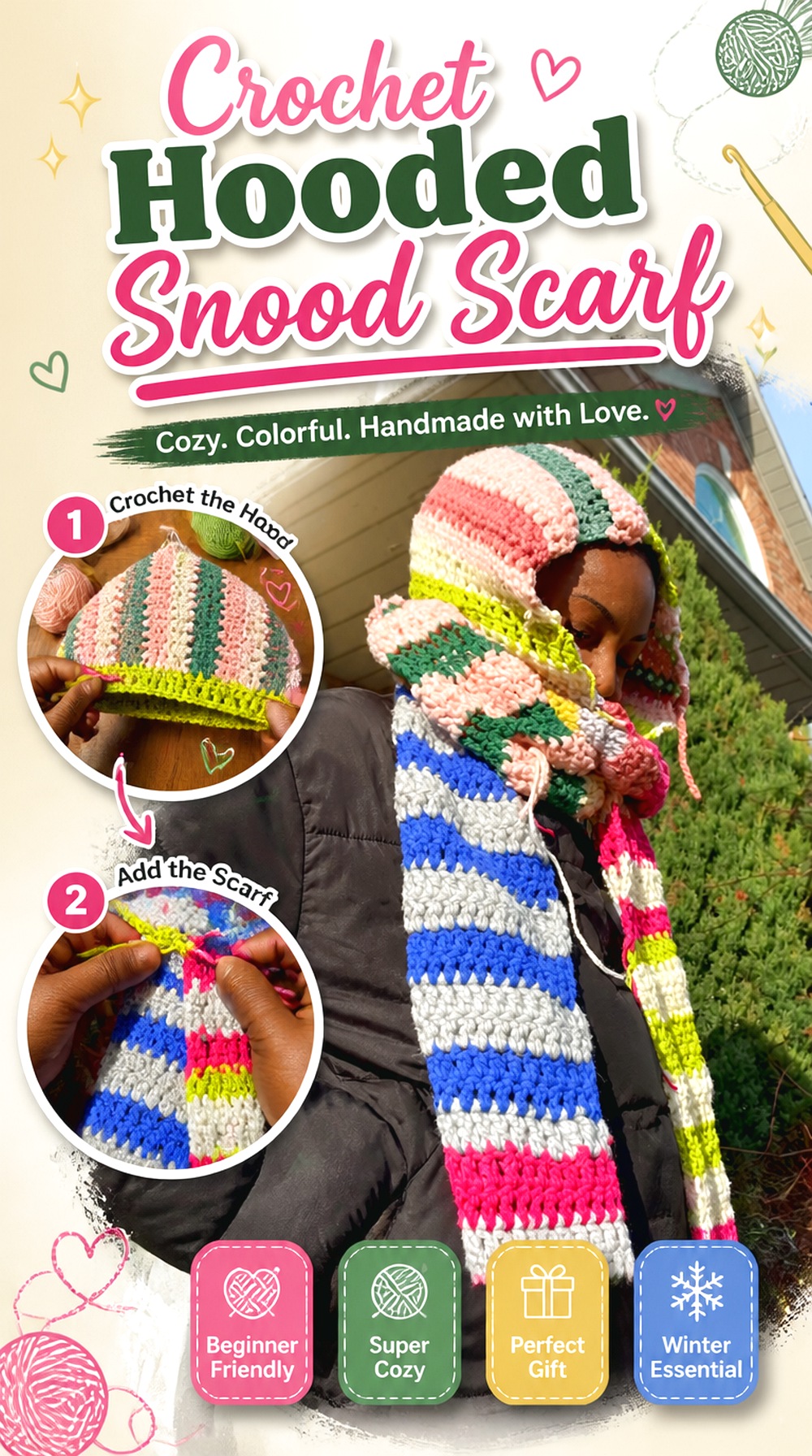
Kiara’s hooks takes the snood concept beyond a neck loop by combining it with a hooded-scarf silhouette. The tutorial is specifically presented as a hooded scarf or snood, making the head-covering portion a permanent part of the finished form rather than something created only by pulling up an oversized cowl.
This is the option to compare with convertible cowls if you know you want a recognizable hood shape. The dedicated hood can give clearer head coverage, but it also introduces more considerations around weight, face framing, and how the scarf sits when the hood is not being worn.
The Hood and Scarf Must Balance Each Other
A generously sized hood can look disproportionate if the neck portion is very narrow, while an oversized scarf section may overwhelm a smaller hood.
When adapting the idea, evaluate the entire silhouette rather than each component in isolation. Try the hood up and down. The project should still look intentional when the head covering is resting behind the neck, because that may be how it is worn much of the time.
Face Framing Matters More Than Overall Length
For a standard infinity scarf, circumference is one of the main fit concerns. A hooded snood adds the opening around the face.
Check whether the front edge sits where you want it without falling forward into the eyes or pulling backward excessively. Yarn with more body can create a structured edge, while a very fluid yarn may produce a softer frame. Neither effect is universally preferable.
A Hooded Snood Can Become Heavy at the Back
The hood concentrates additional fabric behind the head and upper neck when it is lowered. A dense yarn that feels manageable in a short cowl can become more noticeable after a full hood is added.
If adapting with a substitute yarn, hold a generous sample against the back of the neck rather than judging only by softness. Finished weight and drape affect comfort as much as texture does.
Check Neck Coverage Before Styling the Hood Down
A hooded scarf can look excellent with the hood raised but leave more or less neck coverage than expected when lowered.
Try both positions before considering the project finished. If you mainly want winter neck warmth, the scarf portion deserves as much attention as the hood. If the hood is primarily a fashion feature, you may prefer less bulk concentrated around the throat.
Original Tutorial and Creator Credit
Creator: kiara’s hooks
15. Crochet Buttoned Wrap Cowl Scarf
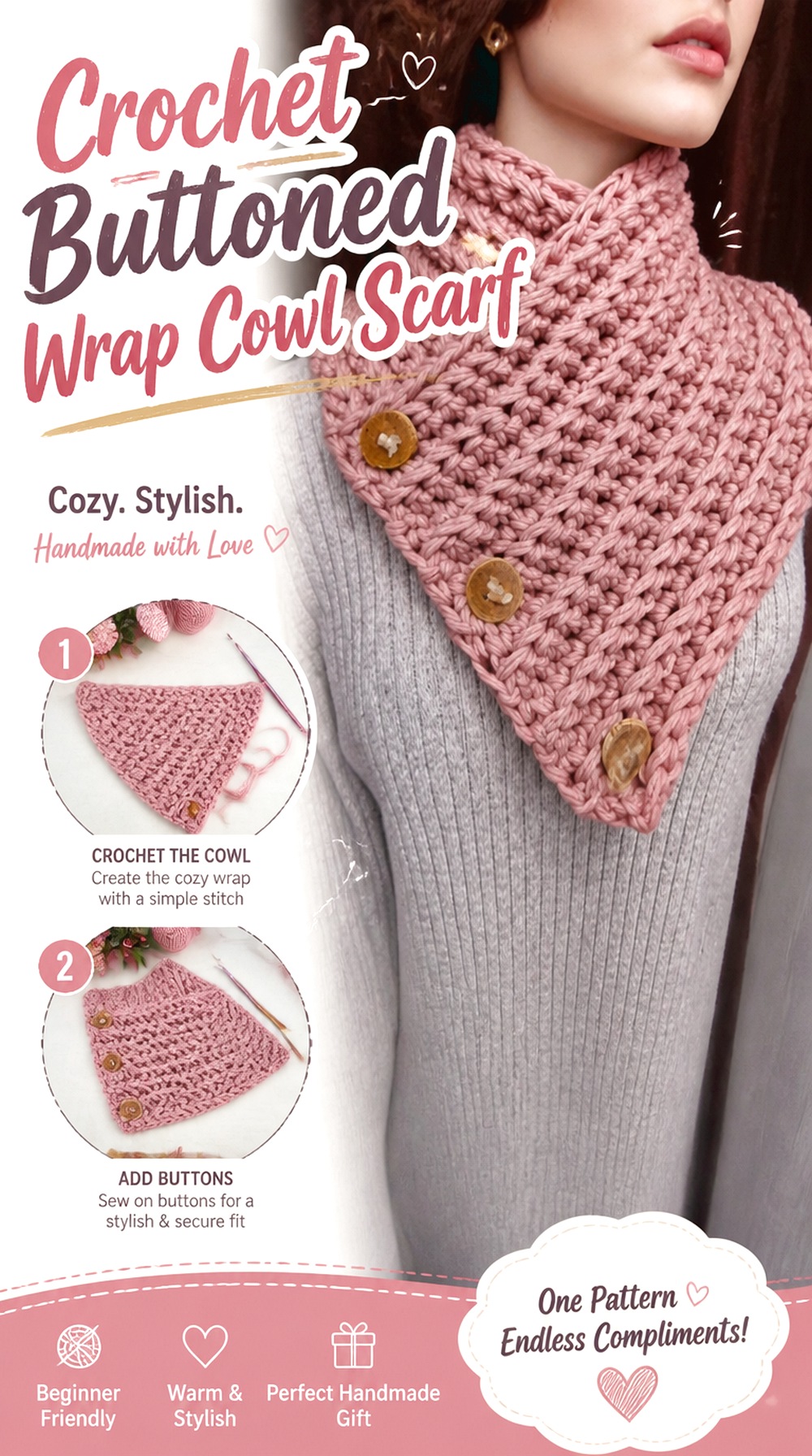
Hectanooga1’s tutorial adds something the continuous loops in this roundup do not have: a buttoned closure. The scarf wraps around the neck and secures rather than requiring the wearer to pull a fixed ring over the head.
That makes this concept worth considering for fit flexibility and styling. Depending on where and how the closure is used, the fabric can overlap at the front and create an asymmetrical layered look. It is also useful for anyone who dislikes pulling scarves over styled hair or who wants more control over how closely the snood sits.
Buttons Add Real Fit Flexibility
A fixed infinity loop has one permanent circumference. A buttoned wrap can offer more control over the amount of overlap, provided the closure design supports the chosen position.
This makes the project particularly adaptable when the scarf may be worn over different layers. A closer setting could suit a sweater, while more room may be useful over a heavier coat. Confirm the tutorial’s closure arrangement before making changes.
Placement Changes How the Wrap Sits
Moving a button is not purely decorative. It can change overlap, neckline angle, and how much fabric gathers at one side.
Before attaching a closure permanently, pin or mark a few potential positions and look at the scarf from the front and side. The most attractive location when the wrap is flat may not produce the most comfortable neckline once it is worn.
Treat the Closure Area as a Stress Point
Repeated buttoning places more localized strain on the fabric than an ordinary continuous cowl experiences. Avoid enlarging the opening unnecessarily, and monitor whether the surrounding stitches begin to distort during use.
If you substitute a very soft or stretchy yarn, pay particular attention to how the closure behaves. A fabric with excellent drape may still need thoughtful handling at a frequently used fastening point.
Original Tutorial and Creator Credit
Creator: Hectanooga1
How the 15 Crochet Snood Styles Compare
| Crochet Snood Idea | Main Difference | Most Important Check |
|---|---|---|
| Delicate Double-Wrap Snood | Soft long loop | Drape after wrapping |
| Woven Linen-Stitch Snood | Flat woven texture | Width versus bulk |
| Super-Chunky Knit-Look Loop | Very substantial yarn | Comfortable head opening |
| Variegated Draped Snood | Color-driven long loop | Color distribution |
| Suzette-Texture Snood | Allover textured double wrap | Weight after multiple wraps |
| Lightweight Spring Cowl | Less bulky seasonal layer | Fluidity of fabric |
| Long Bulky Loop Snood | Bulky yarn plus long circumference | Shoulder volume |
| Hood-Convertible Cowl | Tall tube that can cover the head | Height and headroom |
| Möbius Snood | Intentional twisted loop | Correct twist orientation |
| Head-Wrap Infinity Snood | Repositionable head coverage | Comfort in both positions |
| Fold-Down Color-Block Cowl | Tall folded neckline | Fold depth |
| Simple Round Chunky Snood | Compact continuous tube | Opening size |
| Lightweight Seamed Snood | Long flat strip joined later | Length before seaming |
| Hooded Snood Scarf | Dedicated hood construction | Hood-to-scarf balance |
| Buttoned Wrap Cowl | Adjustable closure | Button position and strain |
Conclusion
The most useful way to choose among these crochet snood scarf ideas is to start with wearing style. Pick a compact round cowl when you want straightforward neck coverage, a long infinity scarf when drape and multiple wraps matter, or a hooded or head-wrap option when you want the scarf to cover more than the neckline. Möbius construction adds movement, while a buttoned wrap provides adjustability that fixed loops cannot.
Yarn should support that shape rather than fight it: lighter fabrics suit long draped loops, while bulky yarn can work especially well in shorter winter cowls. Once you choose the silhouette, use the original tutorial for its exact construction details and verify any measurements or material changes before adapting the design.
Frequently Asked Questions
What is the difference between a crochet snood, cowl, and infinity scarf?
The terms overlap considerably in modern crochet use. A cowl usually refers to closed neckwear, often shorter and closer fitting. An infinity scarf is generally a longer continuous loop that may be wrapped more than once. Snood can refer to either a looped neck scarf or a style that can extend over the head. For project selection, concentrate on the actual finished shape rather than relying on the title alone.
How can I tell whether a crochet snood will fit over my head?
The safest check is to test the actual opening before the project becomes difficult to alter. If it is worked in the round, confirm the starting circumference can pass comfortably over the head without excessive stretching. For a flat scarf that will later be joined, pin the ends together first. Also consider hair volume and whether glasses, earrings, or other accessories make a tight pull-over opening inconvenient.
Which yarn qualities matter most for a crochet snood scarf?
Think about softness, drape, thickness, stretch, and intended care rather than choosing by yarn weight alone. A short winter cowl can benefit from substantial fabric, while a long scarf that wraps several times may become cumbersome in the same dense yarn. Yarn that touches the neck also needs to feel comfortable against the wearer. Always follow the yarn manufacturer’s care information rather than assuming a handmade snood can be washed in a particular way.
Can I turn any infinity scarf into a hooded snood?
Not automatically. A loop needs sufficient height and circumference to move from the neck over the head without becoming restrictive. Simply making an ordinary infinity scarf longer does not necessarily provide enough vertical coverage for a useful hood. If head coverage is important, start with a tutorial designed as a hooded scarf, tall convertible cowl, or head-wrap infinity scarf and compare its overall shape before adapting it.
Why does my crochet snood stand stiffly around my neck?
The combination of yarn, stitch density, width, and construction may be producing more structure than the design needs. Thick yarn and tightly worked stitches can create a tube that holds itself upright instead of collapsing into folds. Before remaking the project, compare the fabric with the intended finished silhouette. A different hook, softer yarn, less width, or a more open stitch concept may provide more drape, depending on the design.
Should I block a crochet snood before joining the ends?
For a scarf crocheted flat, blocking before the permanent join can make it easier to evaluate the finished dimensions, even edges, and drape. It also gives you another chance to test the loop before seaming. Projects worked entirely in the round may be blocked after completion instead. Use a blocking method appropriate for the specific fiber, because heat, moisture, and agitation affect different yarns differently.