A crochet phone case can be much more than a fitted sleeve. Lace and openwork change the finished piece dramatically: one design can behave like a light decorative pouch, another like a crossbody phone bag, while a more structured version may use an airy motif only as an accent.
These 12 ideas cover mesh, shells, granny-style openings, floral netting, textured puffs, flaps, buttons, and different strap arrangements. Some of the linked tutorials demonstrate literal lace or mesh; others provide a useful phone-bag construction with open motifs or a structure that can inspire a lace-focused version. Because openwork affects stretch and fit, avoid swapping one stitch pattern for another without checking the finished dimensions first.
Quick List
- Crochet Scalloped Lace Phone Pouch
- Crochet Airy Mesh Crossbody Phone Case
- Crochet Floral Net Phone Bag
- Crochet Shell-Lace Button Phone Pouch
- Crochet Screen-Access Mesh Phone Sling
- Crochet Granny-Flap Phone Case
- Crochet Sunflower Pocket Phone Holder
- Crochet Puff-Heart Convertible Phone Bag
- Crochet Magnetic-Closure Textured Phone Holder
- Crochet Slim Rope Crossbody Phone Case
- Crochet Open Granny-Square Phone Bag
- Crochet Lightweight Net Phone Pouch
Choose Lace That Still Protects the Phone
Very open crochet creates a lighter look, but large gaps also mean more of the phone is exposed. A fine lace pouch may work well when the goal is carrying a phone inside another bag, while a crossbody case generally benefits from firmer borders around the base, sides, and opening.
Pay particular attention to where the openwork sits. Mesh across the center panel behaves differently from open stitches along a side seam or top edge. For phone pouches, stretch, strap behavior, opening width, closure, and possible lining matter just as much as the stitch pattern itself. If keys, cards, or other small items will share the pouch, a very open fabric may also allow those items to catch or slip through.
Measure the Phone Before Planning the Lace Layout
Do not choose the pouch size from a generic phone label alone. Measure the actual device with the everyday protective case attached, because that case can change both width and thickness.
A useful planning check is to compare those measurements with the finished width and height stated by the tutorial, when the creator provides them. Also consider how much the crochet fabric stretches. An open mesh that appears narrow while lying flat may expand considerably once the phone is inserted.
If you want to adapt a motif-based design, block or settle the motif first and measure it before committing to a panel layout. Decorative lace should frame the phone rather than forcing the device against a tight seam or leaving the opening so loose that it can slide out.
Straps, Closures, and Lining Change How the Case Works
A phone pouch carried inside a tote has different demands from one worn across the body. Long crochet straps can stretch, especially when the stitch structure and yarn are both flexible. If the finished strap length matters, compare it after the phone is placed inside rather than judging it empty.
Closures also change the usefulness of lace. Buttons and flaps can restrain the opening without hiding all the decorative stitch work, while magnetic hardware produces a cleaner top line but requires careful placement. A lining can make openwork more secure and reduce snagging, but it also changes the transparency and drape that make lace appealing. Choose those additions according to how the case will actually be carried.
1. Crochet Scalloped Lace Phone Pouch
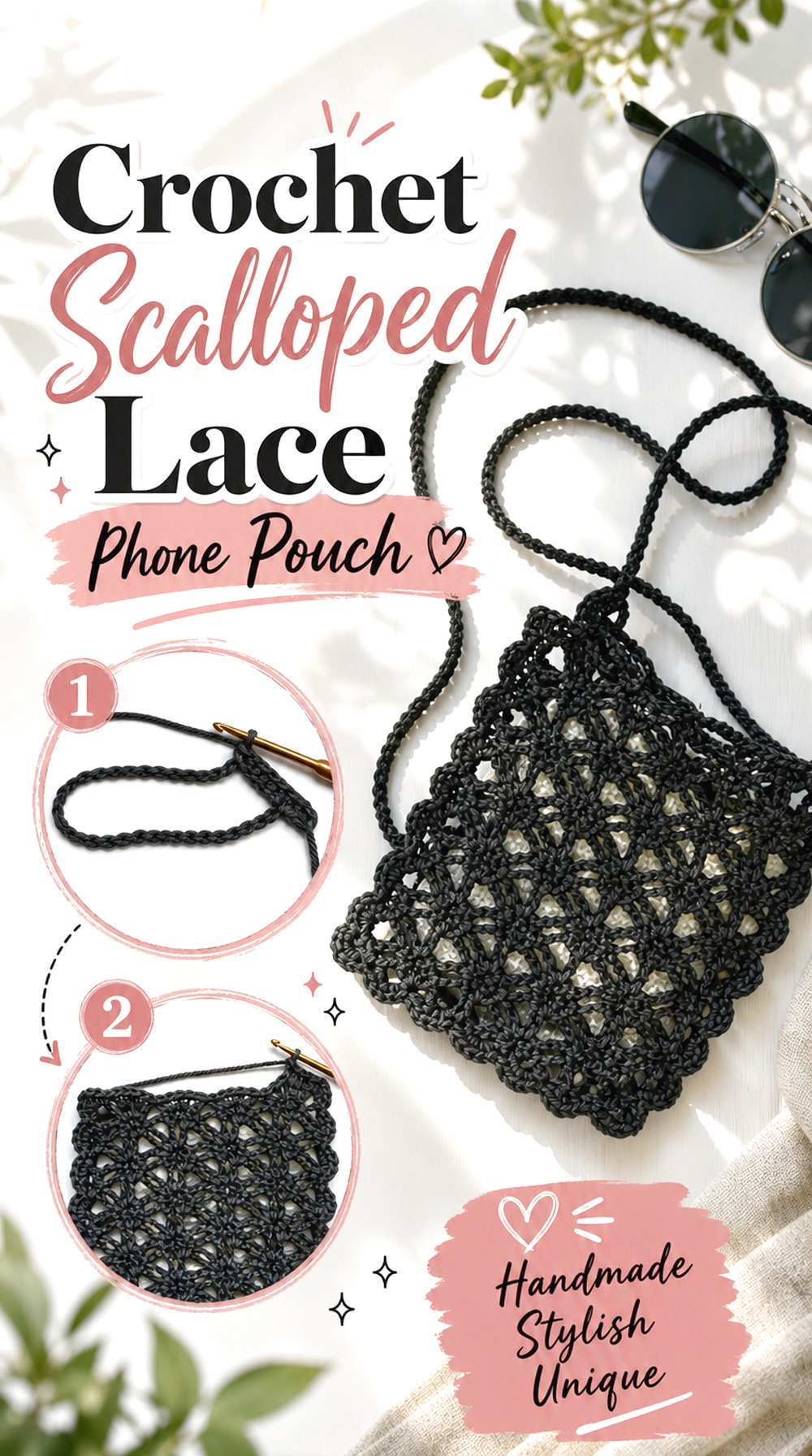
This is the most direct match for readers who want a phone pouch that visibly reads as lace rather than simply textured crochet. Cocona Crochet’s tutorial is specifically presented as a lace phone pouch, so it is a useful reference when the openwork itself is meant to be the visual focus. The narrow pouch format keeps the lace from being overwhelmed by a large bag shape, making it well suited to a phone-only accessory or a light protective sleeve. The video also offers English closed captions, which can help when following the visual demonstration.
Let the Openwork Be the Main Feature
With a lace-centered design, extra embellishment is usually unnecessary. The negative space already provides contrast and visual movement. Before choosing yarn, think about whether you want the stitch pattern to appear crisp or softly blended. Strong stitch definition makes the openings easier to see, while a very fuzzy yarn can visually fill those spaces and reduce the lace effect.
Check the Top Opening After the Phone Goes In
An elegant lace body is less useful if the opening stretches wider than the phone. Insert the actual device before finalizing any optional closure or decorative edging. The weight of the phone can pull the fabric vertically and subtly widen the upper edge. If security matters, consider whether the source construction provides enough restraint or whether a compatible closure should be planned separately.
Original Tutorial and Creator Credit
Creator: Cocona Crochet
2. Crochet Airy Mesh Crossbody Phone Case
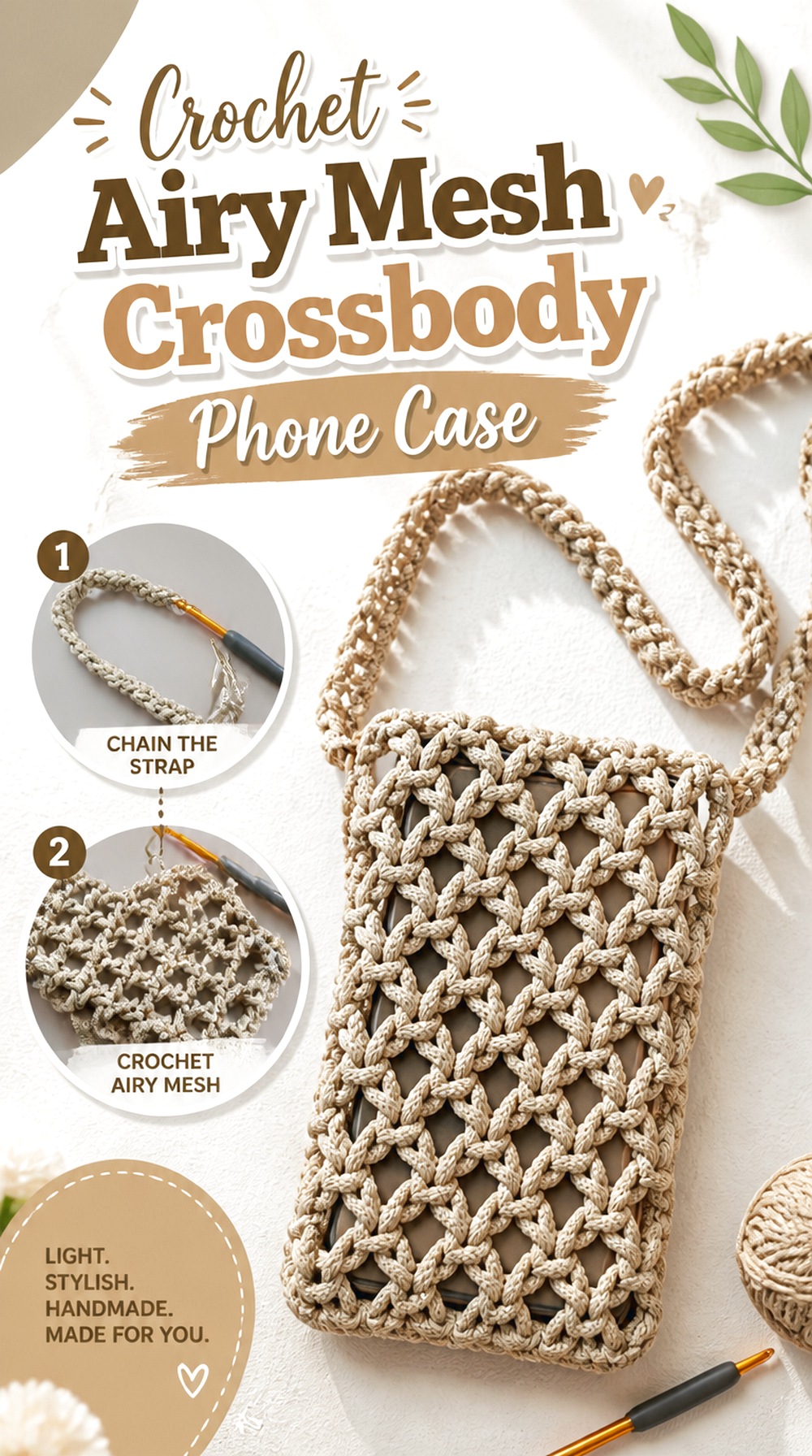
This mesh phone bag shifts the idea from a fitted sleeve toward a lightweight carry pouch. Toh Handmade presents a finished mesh phone bag with a separate strap and provides finished dimensions for the demonstrated sample. The open fabric keeps the pouch visually light, while the rectangular outline still makes the phone shape easy to recognize. Because the tutorial uses a comparatively open stitch arrangement, this idea suits readers who want the lace effect to come from repeating spaces instead of shells or floral motifs.
Mesh Size Affects More Than Appearance
Larger openings make the fabric lighter and more expandable, but they also expose more of the phone. Consider what will sit next to the pouch when it is worn. Jewelry, bag hardware, or other small protruding objects can catch on generous mesh spaces. A tighter openwork pattern gives a similar airy impression with less opportunity for snagging.
A Short Strap Creates a Different Accessory
The creator lists a relatively short strap on the demonstrated bag, so study the finished wearing position rather than assuming every phone bag is a full crossbody. A short strap can make the project function more like a hand-held or close-carry pouch. If you plan to change the strap length, remember that a longer crochet strap may stretch differently under the phone’s weight.
Original Tutorial and Creator Credit
Creator: Toh Handmade
3. Crochet Floral Net Phone Bag
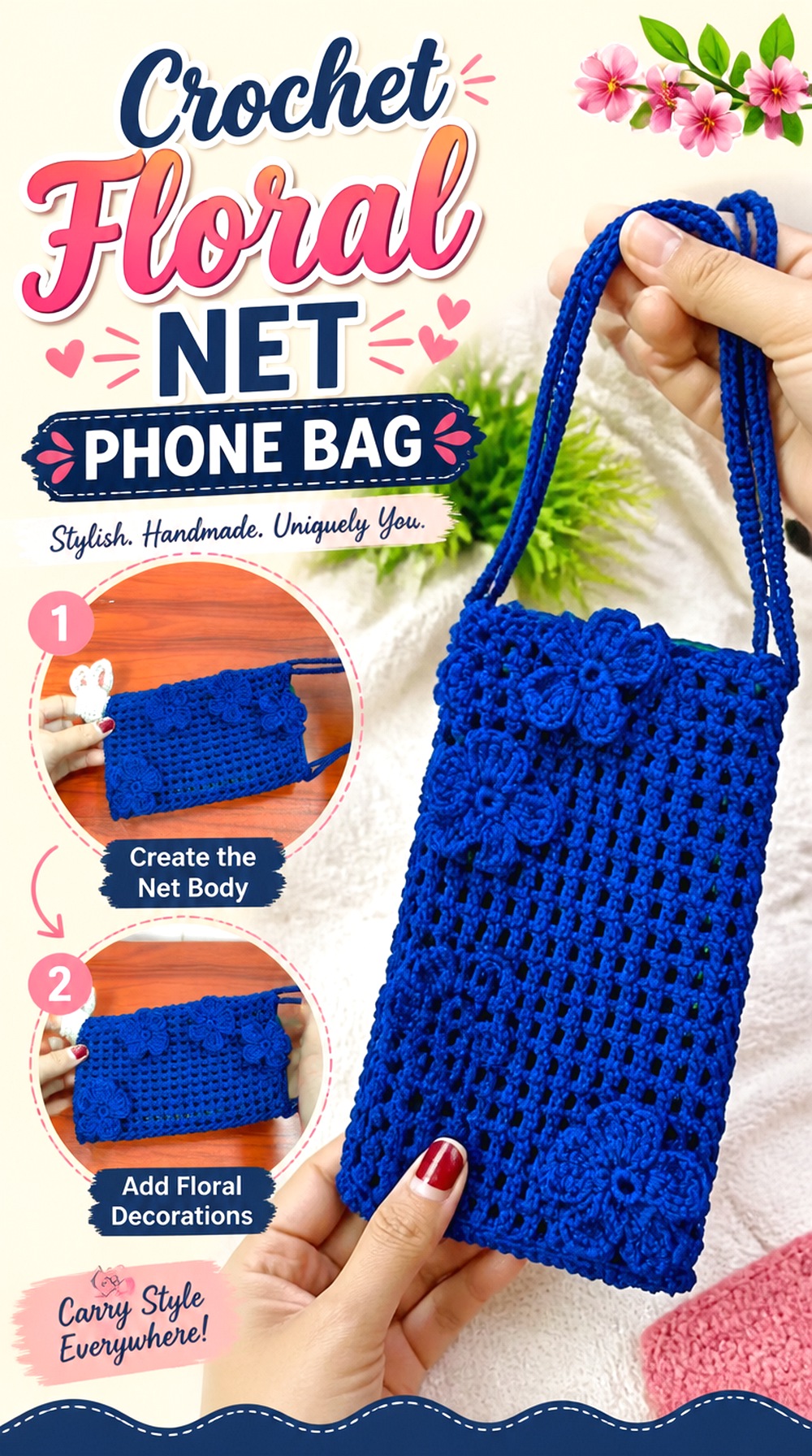
Here the openwork becomes a background for small floral decoration. Crochet ByLarissa combines a net-style phone bag with crochet flowers, creating a design that feels more ornamental than a plain mesh pouch. The creator also lists a magnetic lock among the materials, so the finished concept pairs delicate-looking open fabric with a defined closure point. That combination is useful if you like floral lace but still want the top of the phone bag to feel intentionally finished rather than simply open.
Keep Flowers Away From High-Friction Areas
Dimensional flowers are most effective where they can stay visible without constantly rubbing against clothing or a larger handbag. Before attaching extra motifs, hold the pouch in its intended carrying position. Flowers placed directly under a strap connection or along the side that rests against the body may flatten more quickly or catch more easily.
A Magnetic Closure Needs a Stable Attachment Area
Open mesh alone may not provide the firmest base for hardware. If you adapt the idea, inspect how the tutorial supports its magnetic closure and avoid assuming that any section of lace can hold a clasp equally well. A denser border or reinforced area can help keep the closing force from distorting the surrounding openwork.
Original Tutorial and Creator Credit
Creator: Crochet ByLarissa
4. Crochet Shell Lace Button Phone Pouch

Shell stitches create a denser kind of lace than an open net. Vivi Crochet’s phone pouch uses a repeating shell texture and finishes the design with a button and loop, giving the top edge a visible focal point. The shells form decorative curves while still producing more surface coverage than many mesh patterns. This makes the idea worth considering when you want a lace-inspired look but prefer less open space around the phone. The demonstrated project uses milk cotton yarn and a bead-style button according to the creator’s materials list.
Shells Create Visual Width
Repeated fan or shell shapes can make a narrow pouch appear fuller than a straight vertical mesh. If you are choosing colors, consider how strongly you want each shell repeat to stand out. A single color emphasizes texture, while frequent color changes can make the small phone-sized surface feel busier.
The Button Should Match the Real Opening
The button loop needs to hold the filled pouch, not merely the empty crochet fabric. Test the opening with the phone inside before deciding whether a decorative button is large enough for the intended job. If the lace stretches significantly, the closing point may sit differently once the pouch carries weight.
Original Tutorial and Creator Credit
Creator: Vivi Crochet 🌷
5. Crochet Screen Access Mesh Phone Sling
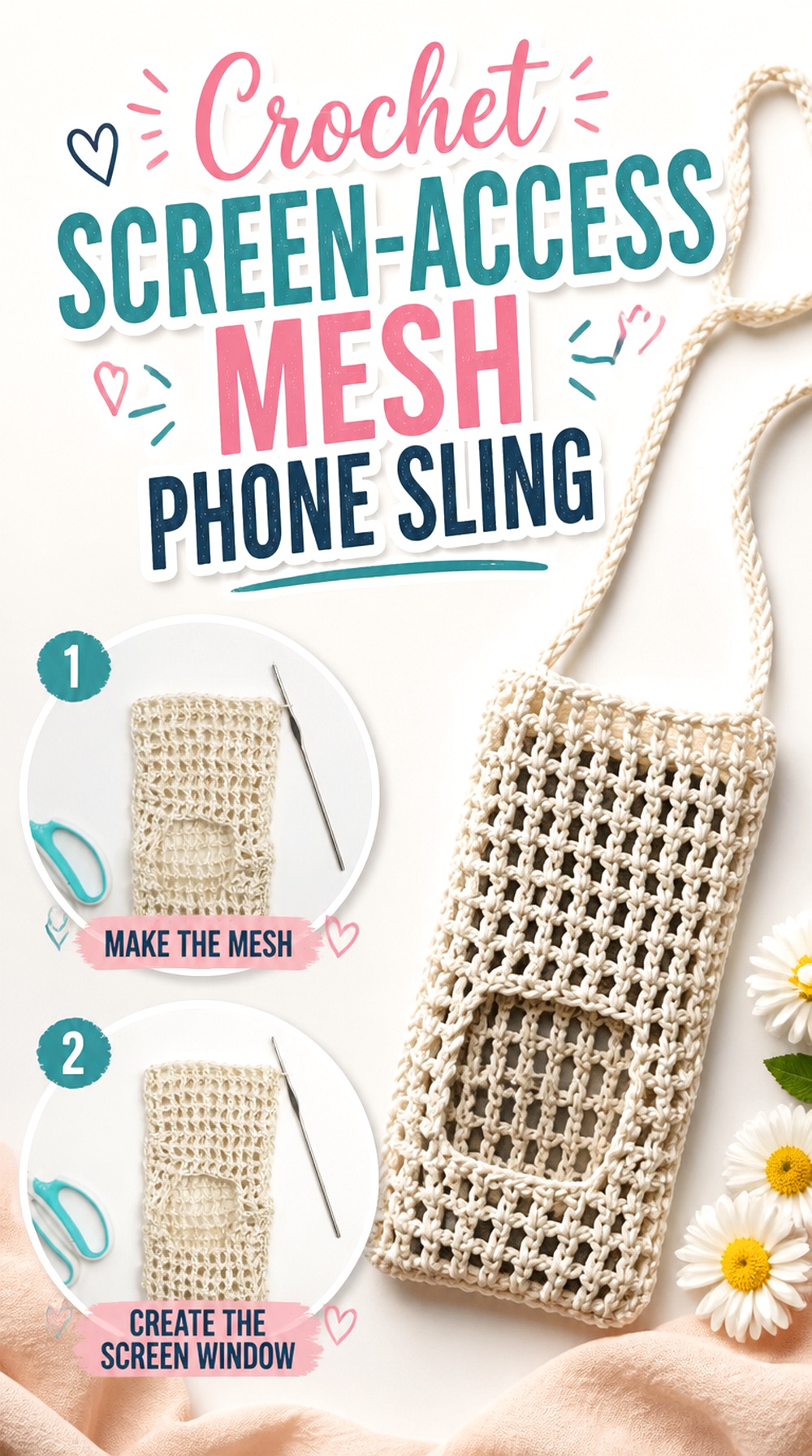
Viky Pace’s project takes openwork in a more functional direction. The tutorial describes a mesh phone bag with a screen-access window and explains a custom-template approach for fitting different smartphones. Rather than hiding the phone behind decorative lace, the pouch treats openness as part of the access concept. This makes it distinct from the other designs here: the open area is planned around interaction with the device, not simply around appearance.
Window Placement Needs More Precision Than Decorative Mesh
A decorative gap can move slightly without ruining the pouch, but an access window needs to line up with the part of the phone you intend to see or reach. Use the actual device as the reference. Camera placement, case thickness, and screen proportions vary, so avoid relying on another phone model’s layout without checking your own.
Protect the Edges Around the Open Area
The larger the intentional opening, the more important its surrounding structure becomes. Watch for edges that curl, stretch, or pull toward the strap. If you alter the size, maintain enough fabric around the window that the pouch still behaves as a holder rather than turning into a loose frame.
Original Tutorial and Creator Credit
Creator: Viky Pace
6. Crochet Granny Flap Phone Case
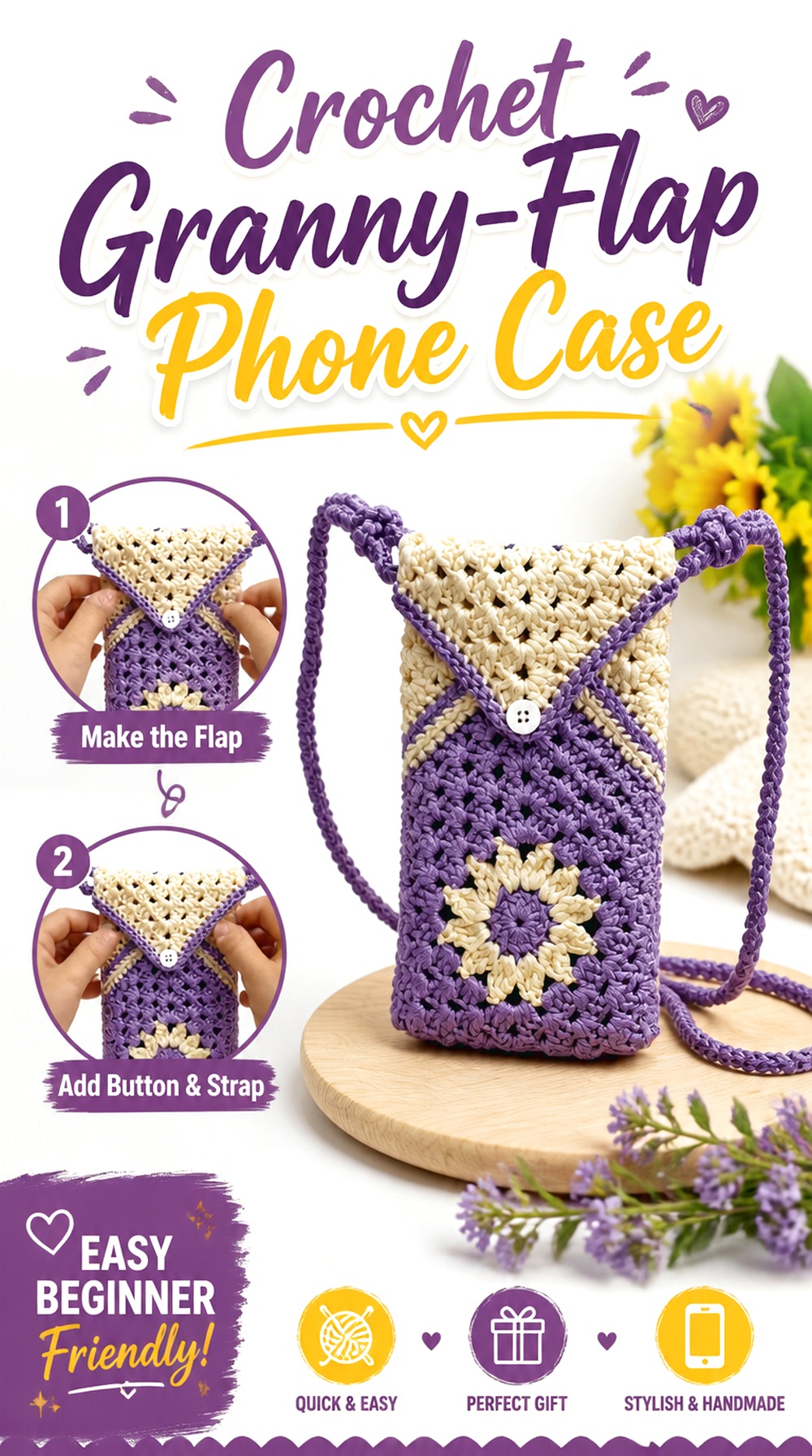
This idea uses granny squares as the source of openness instead of a continuous lace stitch. Coc Tips & Tricks describes a phone pouch assembled from granny squares with a flap, button closure, and adjustable strap. That combination gives the project clearer structure than a loose net pouch while preserving the little openings associated with classic granny construction. It is a practical choice when you like motif crochet and want the closure to feel like part of the bag shape rather than a separate piece of hardware.
Motif Size Determines the Whole Pouch
With a motif-based phone case, the square is effectively a building block. Measure it after the fabric has settled before deciding how it relates to your phone. If the motif is too wide, reducing the seam allowance will not solve the basic proportion problem; if it is too narrow, stretching the finished pouch can distort the holes.
The Flap Adds Security Without Hiding the Sides
A flap can cover the top opening while leaving the open granny texture visible across the front and back. Check how far the flap reaches once the phone is inserted. A flap that looks generous on an empty pouch may sit higher when the device fills the body.
Adjustable Straps Need a Stretch Check
The tutorial includes an adjustable strap concept. If you adapt it, evaluate the length with the phone loaded because crochet can lengthen under weight. Adjustment hardware or knot placement should remain easy to reach and should not pull directly against fragile motif corners.
Original Tutorial and Creator Credit
Creator: Coc Tips & Tricks
7. Crochet Sunflower Pocket Phone Holder
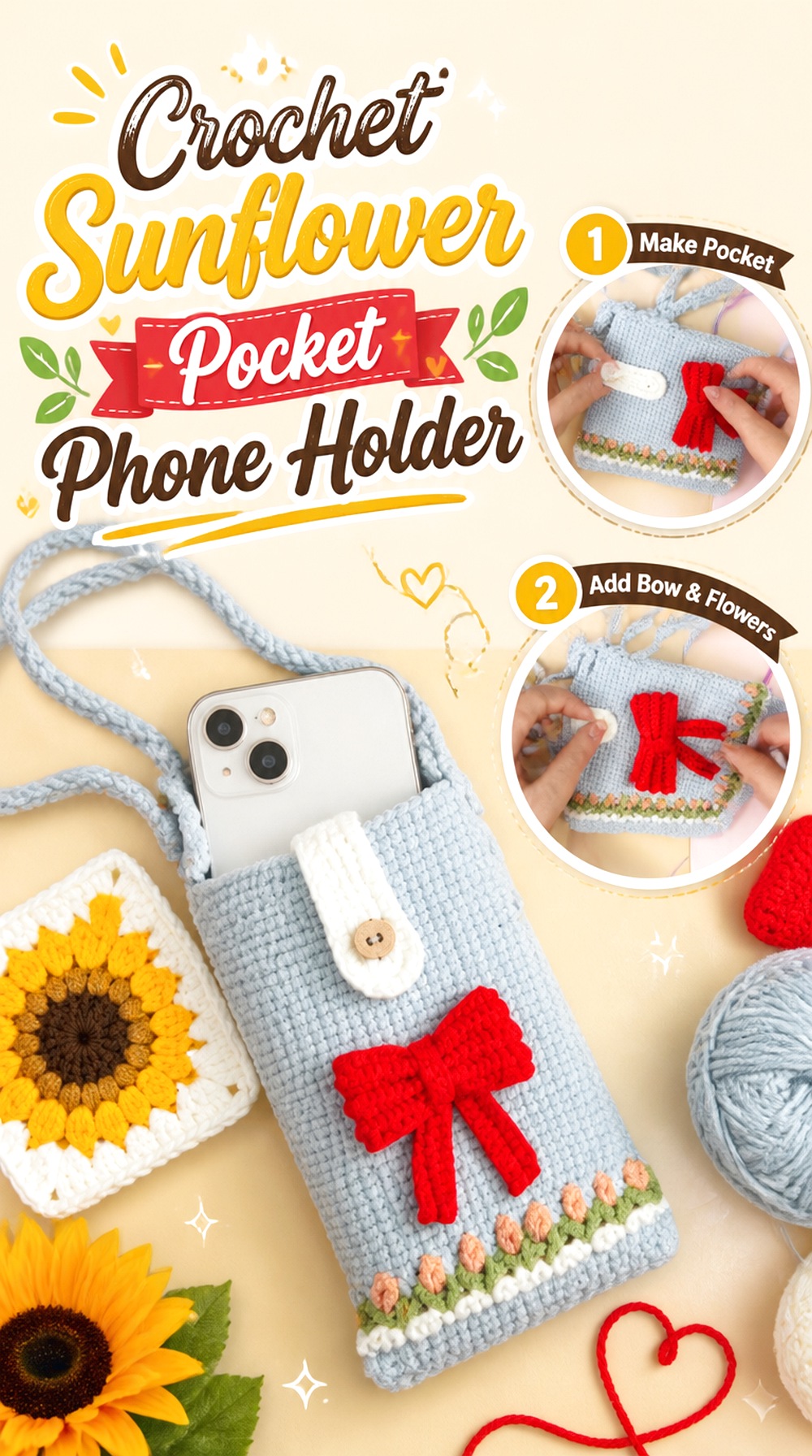
Emnash Threads builds the decoration around a sunflower granny square and bow, with the tutorial description also identifying a back pocket. This gives the holder several visual layers instead of relying on one repeating stitch. The sunflower introduces open motif spaces, while the bow creates a separate focal point and the pocket changes how the back of the piece can be used. It suits readers who want the phone case to look more like a miniature embellished accessory than a plain protective sleeve.
One Statement Motif Can Be Enough
A sunflower already has a strong center and radiating shape. Before adding more flowers, bows, beads, or contrasting borders, look at the phone-sized surface as a whole. Too many focal elements can hide the motif geometry that makes the project interesting. Keeping one dominant flower often gives the open granny spaces more visual room.
Treat the Back Pocket as a Separate Fit Problem
A pocket adds another layer of fabric and can change the way the phone holder bends. If you plan to use it, confirm what you actually want it to carry and whether the extra contents press against the phone. Avoid overfilling a small crochet pocket simply because it stretches.
Original Tutorial and Creator Credit
Creator: Emnash Threads
8. Crochet Puff Heart Convertible Phone Bag
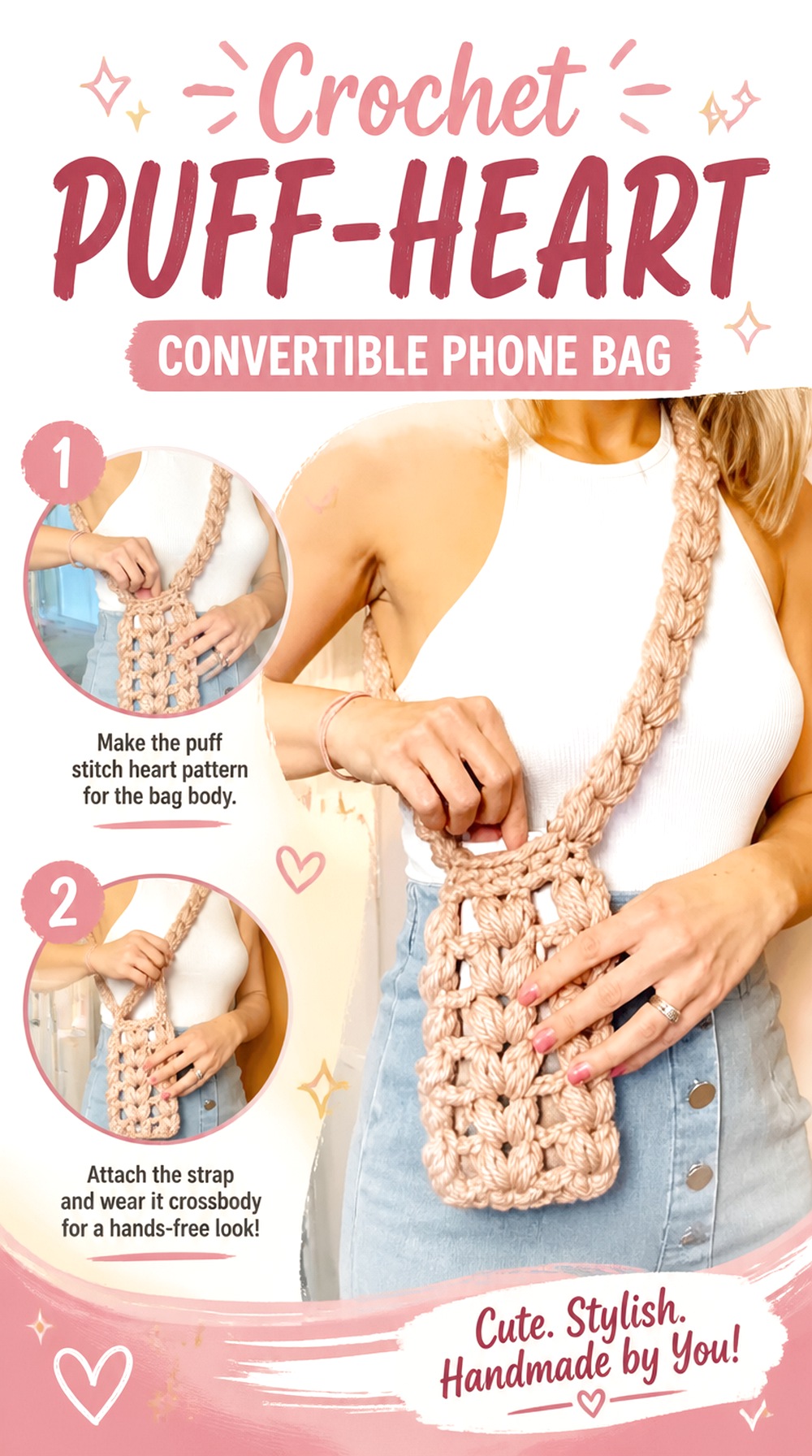
The surface of this design is more textured than traditionally lacy, but its puff motifs offer a strong alternative for readers who want decorative negative space without a fragile-looking mesh. CozyCreativeCrochets describes the puffs as resembling little hearts and presents the finished cell phone bag as wearable in several ways, including crossbody, sling, bum-bag, or fanny-pack styling. That multi-wear concept makes the carry method the defining feature rather than the top opening alone.
Raised Motifs Change How the Bag Sits
Puffs create thickness. That can make the surface feel substantial, but it can also increase friction against clothing or another bag. If you want a flatter phone case, keep the dimensional texture concentrated on one face rather than assuming both sides need identical decoration.
Decide on the Carry Position Before Finalizing the Strap
A waist-level bag and a crossbody phone sling need different strap behavior. Choose the intended position first, then judge the strap after the phone is inserted. A crochet strap that seems correct while empty can hang lower once the weight of the device stretches it.
Original Tutorial and Creator Credit
Creator: CozyCreativeCrochets
9. Crochet Magnetic Closure Textured Phone Holder
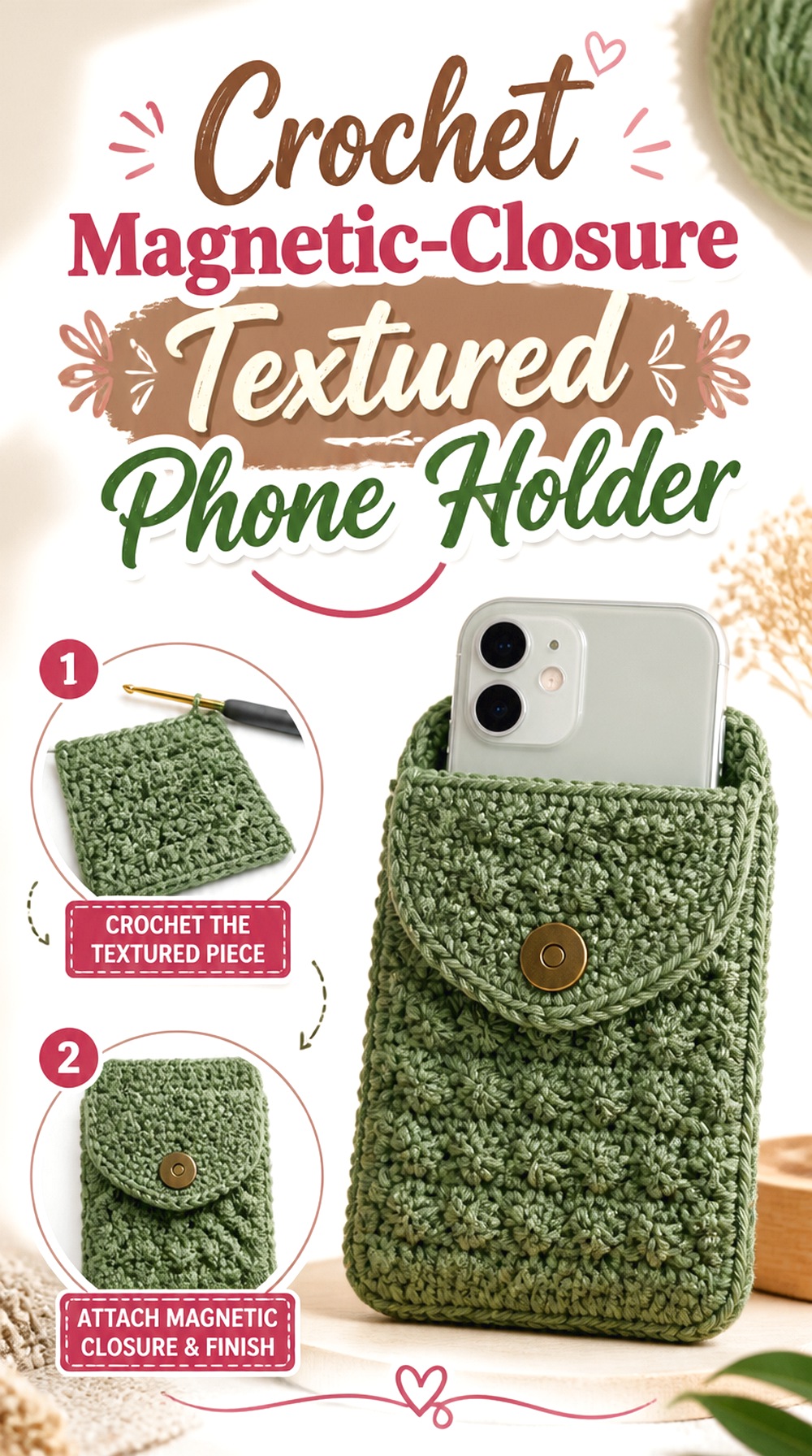
A magnetic closure creates a cleaner top edge than a large button or drawstring. Blog do crochê’s phone holder tutorial specifically includes a magnetic clasp and also covers a strap and size adjustment within the video. The demonstrated fabric is more substantial than a fine lace pouch, which makes this a useful structural reference if you want to combine a secure closure with selective openwork elsewhere in your own design.
Hardware Needs More Support Than a Soft Lace Edge
A magnet works by pulling two points together, so the attachment area receives repeated stress. If you want lace nearby, keep the hardware anchored to a stable portion of the pouch rather than directly on a very open motif. Otherwise the clasp can distort the surrounding fabric each time it is opened.
Selective Lace Can Balance Structure and Decoration
Not every phone case needs openwork from base to top. A denser lower body with a lace panel, open border, or decorative upper section can keep the shape more predictable while still delivering the airy look. This approach is especially useful when the closure itself needs a firm foundation.
Original Tutorial and Creator Credit
Creator: Blog do crochê
10. Crochet Slim Rope Crossbody Phone Case
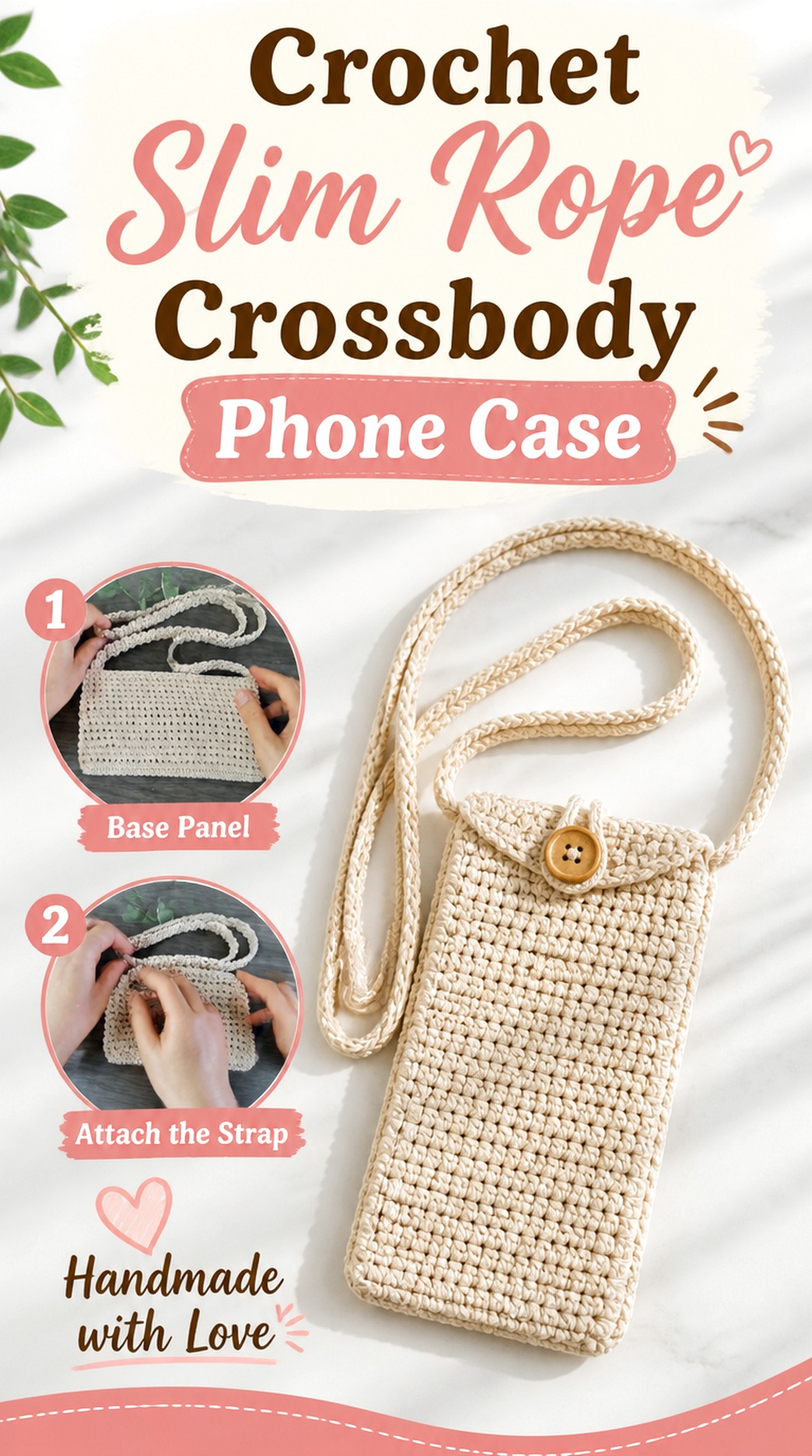
Chompu Handicrafts demonstrates a narrow crossbody phone bag made with cotton rope. The creator supplies both finished pouch and strap measurements for the example, making this a helpful construction reference when you are trying to judge proportions before adding your own lace-focused surface treatment. Rope also creates a noticeably different fabric character from fine cotton or soft acrylic: the bag reads more structured and accessory-like.
Yarn Thickness Can Overpower Delicate Openwork
A lace repeat that looks refined in thin cotton may become bold and widely spaced in rope. If you adapt a stitch motif, make a small sample before committing to the whole pouch. Check the size of the openings, not only the overall gauge, because thick yarn can turn modest spaces into holes large enough to expose much more of the phone.
Crossbody Length Should Be Judged on the Wearer
The tutorial gives a long strap measurement for its sample. Treat that as information about the demonstrated project, not a universal target. Height, preferred wearing position, stretch, and whether the case is worn over a coat all change the comfortable length.
Original Tutorial and Creator Credit
Creator: Chompu Handicrafts
11. Crochet Open Granny Square Phone Bag
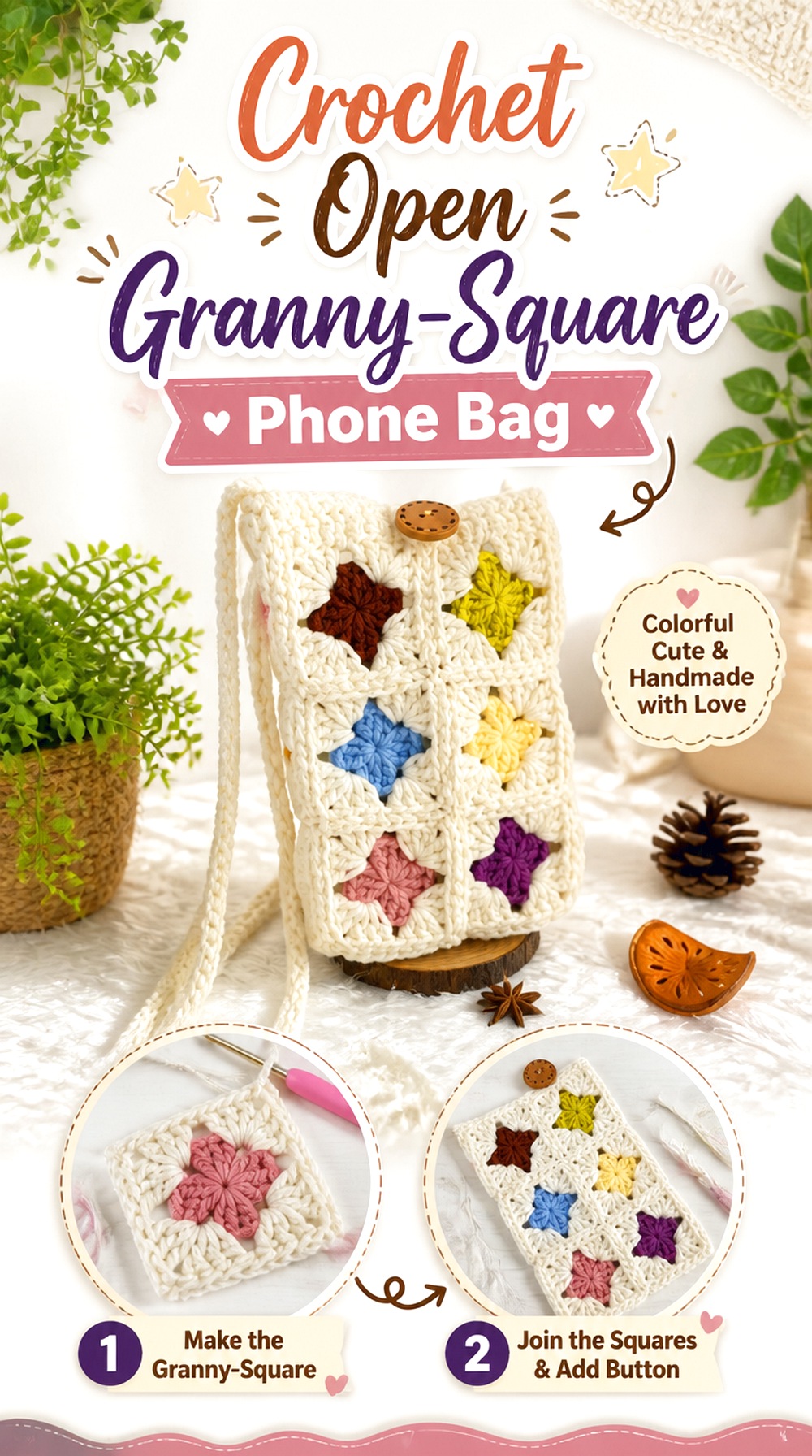
Kane Crochet’s phone bag uses granny-square construction, a button, and a defined depth rather than behaving like an almost-flat sleeve. The creator provides finished dimensions for the demonstrated sample, including height, width, and depth. That extra depth is what separates this idea from the flatter granny-flap option earlier in the list: it reads more like a miniature bag capable of surrounding the phone rather than simply wrapping it between panels.
Depth Changes How Motifs Meet at the Corners
Once a phone bag has a side depth, motif placement becomes a three-dimensional planning issue. Watch how the open granny areas turn around the edges. If you substitute a different square, compare not only its width but also whether its border gives you enough stable fabric for joining and shaping.
A Button Can Become Part of the Motif Layout
A button closure is visually prominent on such a small bag. Instead of treating it as an afterthought, consider whether its position aligns with the center of a motif, a seam, or a denser border. A well-placed closure can reinforce the geometry rather than interrupting it.
Original Tutorial and Creator Credit
Creator: Kane Crochet
12. Crochet Lightweight Net Phone Pouch
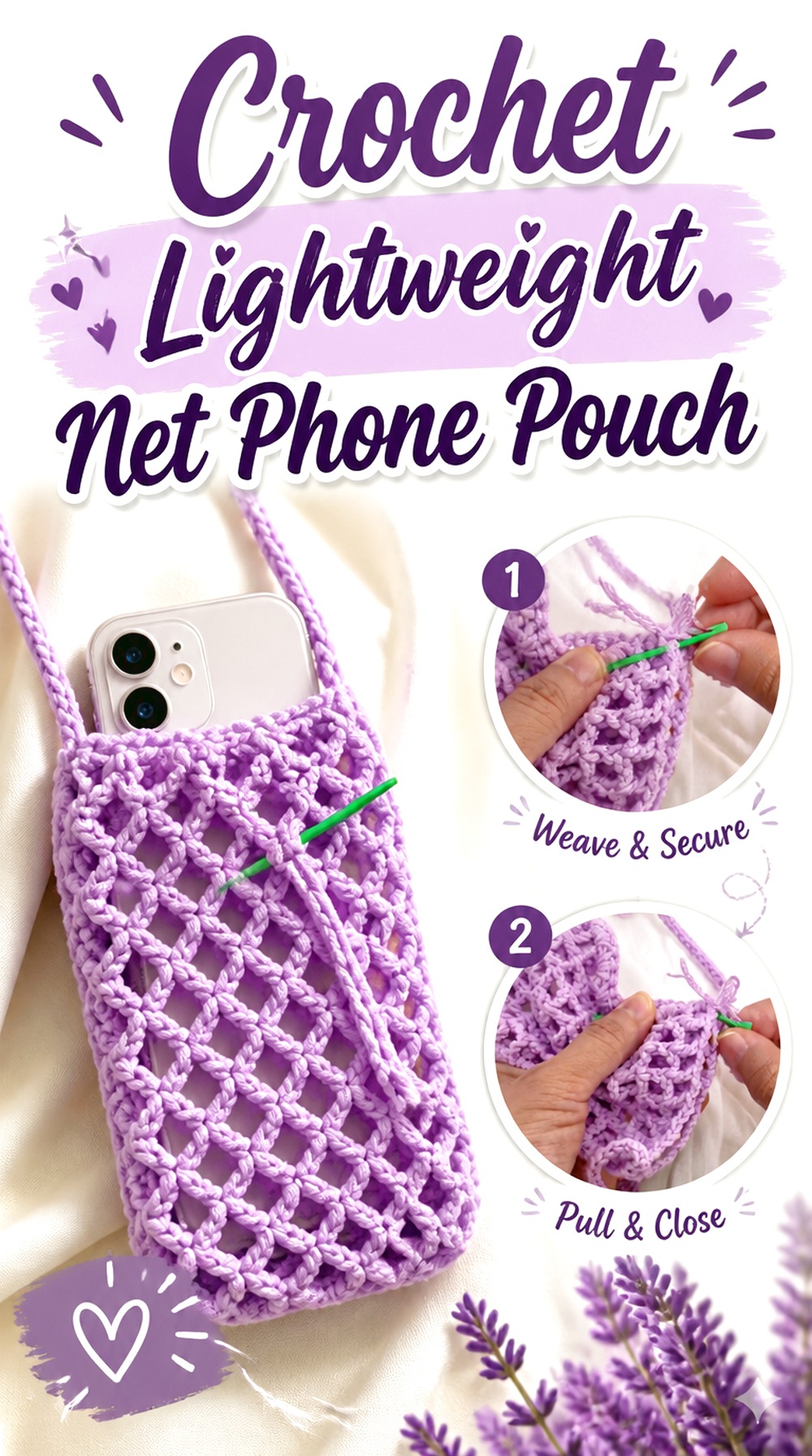
This final option strips the phone bag back to a simple net structure. Hayasinta’s tutorial is specifically for a crochet net phone bag and lists a cotton-acrylic yarn combination for the sample. The finished concept is visually lighter than the textured, floral, or flap-based designs above, so it works well as a reference when you want the repeated openings themselves to provide nearly all of the decoration.
Simple Netting Makes Fit More Noticeable
When there is no large motif, flap, or flower to distract the eye, uneven stretch becomes more obvious. Check the pouch with the phone inside and look at whether the mesh openings stay reasonably consistent from top to bottom. A phone that is too wide for the fabric can pull the lower spaces much larger than the upper ones.
Minimal Designs Put More Attention on Finishing
A plain net phone pouch has nowhere to hide untidy edges or an awkward strap connection. Spend extra attention on the top border, corners, and attachment points. If you add a lining, choose it deliberately: an opaque fabric will dramatically change the appearance because it becomes visible through nearly every opening.
Original Tutorial and Creator Credit
Creator: hayasinta
Which Crochet Lace Phone Case Style Should You Choose?
| If You Prefer… | Strong Options | Main Detail to Check |
|---|---|---|
| Clearly visible lace | Crochet Scalloped Lace Phone Pouch | Whether the opening stretches when filled |
| Very airy fabric | Crochet Airy Mesh Crossbody Phone Case or Crochet Lightweight Net Phone Pouch | Snagging and how much of the phone remains exposed |
| Floral decoration | Crochet Floral Net Phone Bag or Crochet Sunflower Pocket Phone Holder | Motif placement and added thickness |
| More coverage | Crochet Shell-Lace Button Phone Pouch | Whether shell texture gives enough room for the device |
| Screen accessibility | Crochet Screen-Access Mesh Phone Sling | Window position for the actual phone |
| A flap closure | Crochet Granny-Flap Phone Case | Flap reach after the phone is inserted |
| Flexible wearing options | Crochet Puff-Heart Convertible Phone Bag | Strap stretch at the chosen carrying position |
| Cleaner hardware closure | Crochet Magnetic-Closure Textured Phone Holder | Reinforcement around the clasp |
| More bag-like depth | Crochet Open Granny-Square Phone Bag | Motif joins around corners and sides |
| A structured crossbody shape | Crochet Slim Rope Crossbody Phone Case | Whether yarn thickness makes the openings too large |
Conclusion
The right crochet lace phone case depends on what you want the openwork to do. Choose the scalloped, shell, floral-net, or simple mesh ideas when the stitch pattern should dominate the look. Granny constructions offer more defined panels, while magnetic closures, flaps, buttons, and structured yarn can make the pouch feel more secure. For crossbody use, pay particular attention to strap stretch and the top opening; for an inside-the-bag sleeve, softness and compactness may matter more.
Once you have chosen the overall shape, use the original tutorials for their exact construction details and confirm the finished fit against your own phone before making major yarn, stitch, or size changes.
Frequently Asked Questions
How open should a crochet lace phone case be?
That depends on how the pouch will be used. Larger mesh openings give a lighter lace effect but expose more of the phone and can catch on other objects. A case worn alone generally benefits from firmer borders and smaller openings than a decorative sleeve carried inside another bag. Insert the actual phone and check how far the openings expand under its weight before deciding that the fabric is secure enough.
Can I replace the stitch pattern in a phone-bag tutorial with any lace stitch?
Not safely without recalculating. Different stitch patterns change width, height, stretch, and the size of the openings. A lace repeat may also require a particular stitch multiple, so it may not fit an existing phone-pouch foundation cleanly. Make a sample first, measure it, and compare it with the phone. Treat the source tutorial as construction guidance rather than assuming every decorative stitch is interchangeable.
Should I line a crochet lace phone case?
A lining can reduce snagging and keep small objects from slipping through open stitches, but it also changes the look and movement of the lace. With very open mesh, the lining becomes a major visible background. If the phone pouch is only carrying a phone, you may prefer to keep the openwork visible; if it will also hold cards, coins, or small accessories, lining may provide more practical containment.
Why does a crochet phone-case strap become longer after use?
Crochet fabric can stretch when weight is added, and a narrow strap concentrates that load along a small amount of fabric. Yarn type, stitch construction, strap length, and the weight of the filled pouch all influence the result. Check the strap while the phone is inside the case. If maintaining length is important, consider a less stretchy construction or suitable reinforcement rather than relying only on the unloaded measurement.
How do I know whether a granny square is the right size for my phone?
Measure the settled or blocked square, then compare that dimension with the phone while its usual protective case is attached. Also account for seams, borders, side depth, and the desired amount of ease. A motif that needs aggressive stretching to reach the phone width is not a good fit, because the openings and joins may distort once the device is inserted.
Are buttons or magnetic closures better for a lace phone pouch?
Neither is universally better. Buttons work naturally with many decorative and granny-style designs and can be positioned on a denser border. Magnetic closures create a cleaner opening but need a sufficiently stable attachment area so repeated pulling does not distort delicate openwork. Choose according to the fabric structure as well as appearance, and evaluate the closure with the phone already inside the pouch.