A draped crochet poncho can be anything from an airy rectangle thrown over a tank to a substantial hooded layer with enough shape to replace a light jacket. The construction makes a major difference. Some designs begin with flat panels, others grow in the round, while ruanas stay open at the front and motif ponchos build their shape from joined squares.
These 15 crochet draped poncho ideas focus on those meaningful differences rather than color changes alone. You can compare open and closed fronts, soft and structured necklines, symmetrical and asymmetrical hems, sleeves, fringe, motifs, and convertible shawl shapes. Each idea also points to an original YouTube tutorial while highlighting the fit, drape, finishing, or material decisions worth checking before you commit to a full wearable.
Quick List
- Crochet Airy Rectangle Drape Poncho
- Crochet Hooded Two-Point Draped Poncho
- Crochet Soft Cowl-Neck Draped Poncho
- Crochet Boho Repeating-Texture Poncho
- Crochet Open-Front Ruana Draped Poncho
- Crochet Sleeved Swancho-Style Poncho
- Crochet Lightweight Shawl-Convertible Poncho
- Crochet Asymmetrical Mesh Fringe Poncho
- Crochet Minimal Relaxed Draped Poncho
- Crochet Color-Flow Layering Poncho
- Crochet Two-Way Cozy Draped Poncho
- Crochet Fringe-and-Bead Tunic Poncho
- Crochet Yarn-Cake Weekend Draped Poncho
- Crochet Granny-Square Draped Poncho
- Crochet Fan-Edged Granny-Stitch Poncho
Choose the Drape Before the Stitch Pattern
For this type of garment, a beautiful stitch pattern is only part of the decision. The same overall poncho shape can hang very differently depending on yarn thickness, fiber behavior, fabric density, and how much openwork is present. A light mesh can fall close to the body without creating much bulk, while a dense fabric in a heavier yarn can produce a more substantial silhouette.
Think about the finished job first. A decorative warm-weather layer benefits from movement and breathable fabric, while a cold-season poncho may need more coverage. If you substitute yarn, do not assume the original size or drape will remain unchanged. Compare gauge information, finished measurements, and the creator’s worn sample before treating another yarn as interchangeable.
Plan Coverage Around the Neckline and Sides
Ponchos avoid conventional fitted sleeves, but they still have important fit points. The neckline determines how easily the garment goes on and how it layers over other clothes. Side length affects arm movement, while front and back points can make a garment feel much longer than its shoulder width suggests.
Open ruanas behave differently from pullovers because the front panels can move independently. Cowl and turtleneck shapes add fabric near the neck, and a hood can change the weight around the shoulders. Before choosing a tutorial, compare its finished view with a garment you already like. Look at where the side edge falls, how much of the arm remains exposed, and whether the neckline leaves enough room for your preferred base layers.
Check the Construction Before You Commit to Yarn
A simple-looking poncho can hide a construction method you may or may not enjoy. Rectangle designs concentrate most of the work in long flat sections followed by limited joining. In-the-round ponchos reduce large seams but require careful attention to shaping points. Granny-square versions divide the work into portable motifs, then make consistent blocked dimensions and joining more important.
Finishing also varies. Fringe, beads, collars, hoods, sleeves, and decorative edges can add significant work after the main body is complete. Watch enough of the tutorial to understand where construction changes occur before buying all the supplies. If a creator links written sizing information, use it alongside the video rather than relying on the finished photograph alone.
1. Crochet Airy Rectangle Drape Poncho
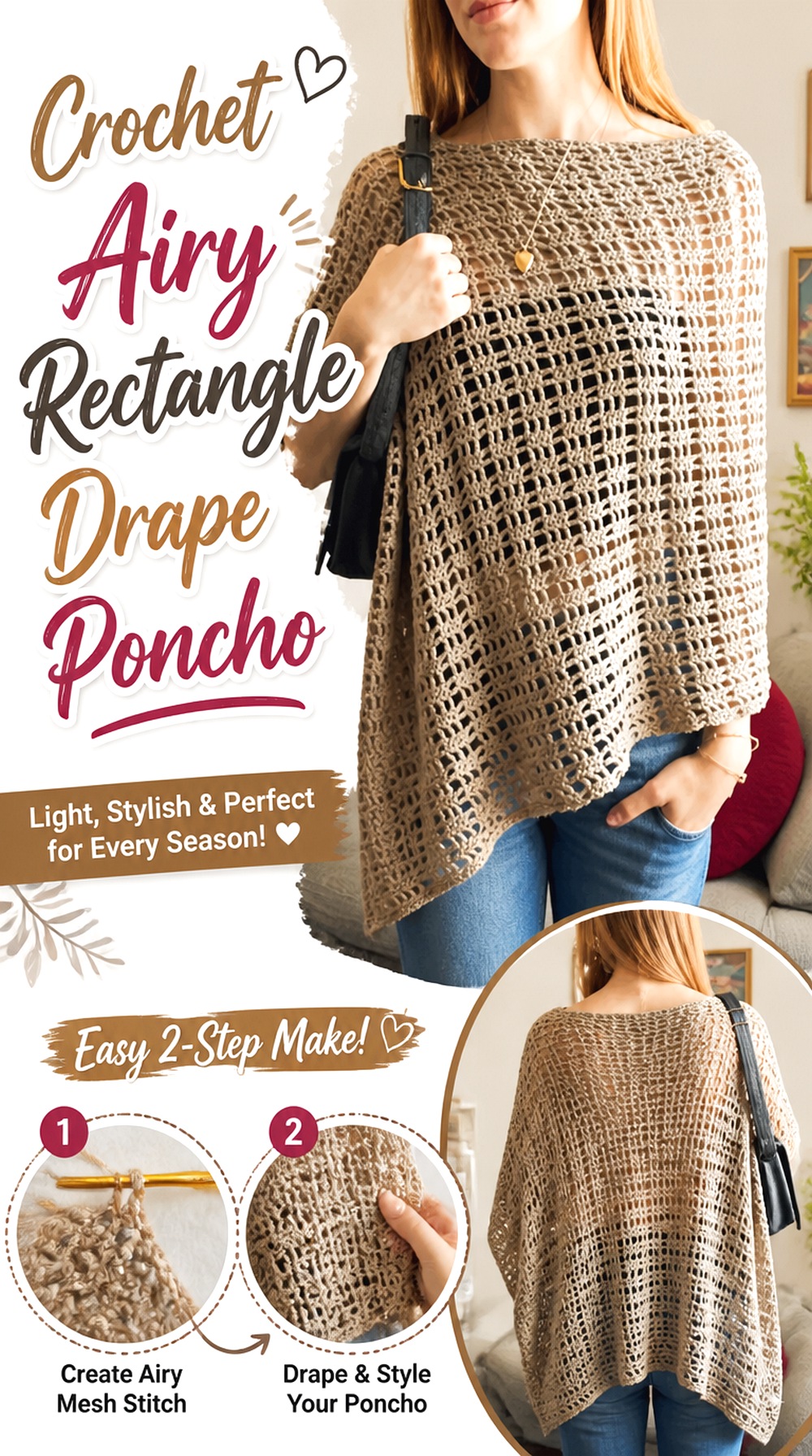
This relaxed poncho begins with an uncomplicated rectangle, making the fabric itself the main visual feature rather than complicated shaping. The tutorial demonstrates two fabric looks, including open mesh, so it is particularly relevant if you want a loose shoulder layer with visible airflow and movement instead of a dense winter piece.
Because the final garment is created by positioning and joining flat crochet, the project is also useful for understanding how a rectangle changes once it hangs from the shoulders. The creator includes sizing, blocking, and construction segments, which are especially important for a garment whose final effect depends so heavily on drape.
Rectangle Width Controls More Than Bust Coverage
The starting shape affects the side drop as well as the overall width. A rectangle that becomes substantially wider may also place more fabric around the upper arm or change where the hem hangs. Instead of enlarging a flat piece automatically, compare the creator’s worn sample and sizing discussion with the amount of side coverage you actually want.
Open Fabric Needs a Layering Plan
Mesh makes this poncho visually light, but the openings also make the garment dependent on what is worn beneath it. A fitted tank, tee, or long-sleeve layer will produce different results. If you substitute a denser stitch pattern, expect the garment to feel visually heavier even when the outer dimensions remain similar.
Original Tutorial and Creator Credit
Creator: simplydaisy
2. Crochet Hooded Two Point Draped Poncho
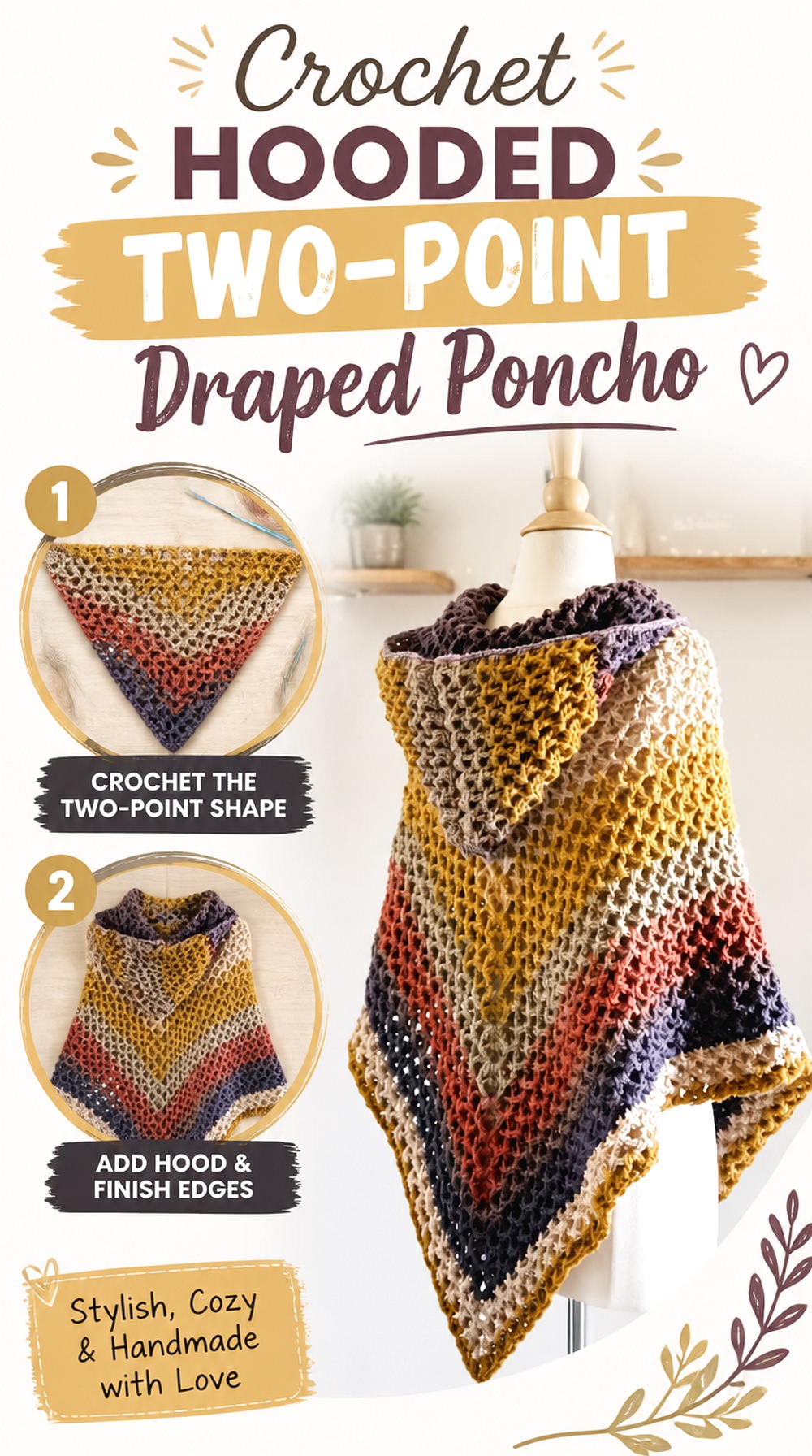
A hood immediately gives this poncho more presence than a simple shoulder wrap. The body is worked in the round and forms two points, one toward the front and one toward the back, creating a directional drape that visually lengthens the center of the garment. The tutorial also explains that the design can be made without the hood as a V-neck poncho.
That flexibility makes this a useful option if you like the pointed body shape but are undecided about extra bulk around the neckline. The video demonstrates several adult sizes, while additional sizing is referenced through the creator’s written pattern.
The Hood Changes Shoulder Weight
A hood adds crochet fabric exactly where a poncho is already supported: around the neckline and shoulders. That can affect how the upper garment settles. If you change yarn, consider whether the substituted fabric will make the hood lighter, heavier, stiffer, or more fluid before assuming the body will hang the same way.
Two Points Create a Longer Visual Line
A pointed front and back can provide generous center coverage without requiring a straight hem to sit equally low all the way around the body. Check where the side edges finish as well as the deepest points. Someone wanting arm coverage may judge this fit differently from someone mainly concerned with front length.
The Hoodless Version Solves a Different Layering Need
Removing the hood does more than simplify finishing. A V-neck can sit more comfortably beneath an outer coat and leaves space for a scarf or collared layer. Compare both finished options before starting so you are not choosing the hood simply because it appears in the tutorial title.
Original Tutorial and Creator Credit
Creator: crochetdreamz
3. Crochet Soft Cowl Neck Draped Poncho
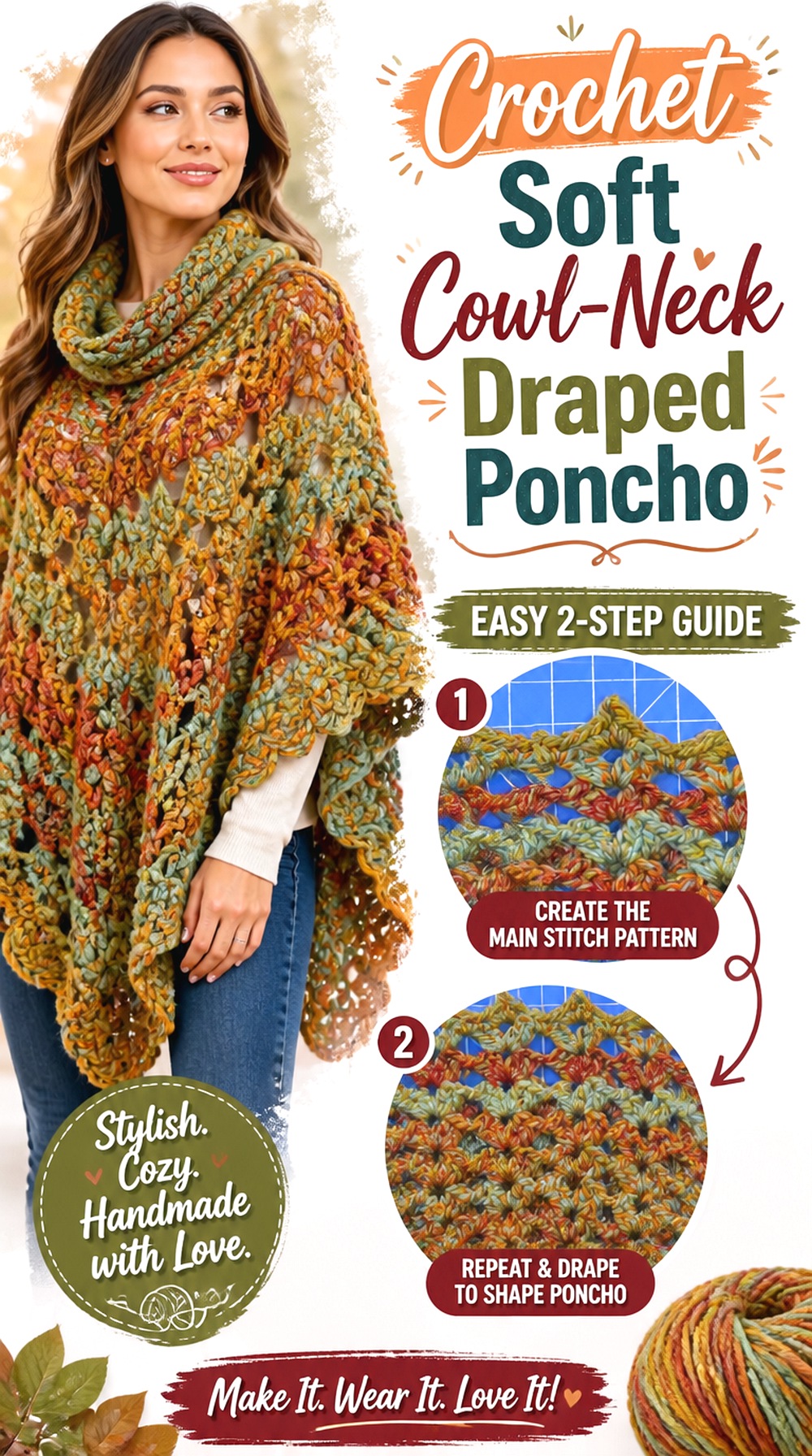
The cowl is the defining element here. Instead of treating the neckline as a simple opening, this poncho uses additional fabric to create a soft frame around the neck and shoulders. That gives the upper half of the garment more volume while the lower poncho body remains loose and unrestricted.
It is a strong contrast to an open ruana or bare V-neck design. Readers who like cozy neck coverage but do not want a separate hood may find this balance appealing. Marly Bird presents the project as part of a first-project series and links the accompanying pattern from the tutorial.
Cowl Volume Affects What Fits Underneath
A soft cowl is easiest to appreciate when the base layer does not compete with it. A bulky shirt collar or thick scarf can crowd the same area. If you plan to wear the poncho over substantial winter clothes, look carefully at the finished neckline and decide how much layering room you need.
Softness Matters More Near the Face
Yarn feel is especially noticeable in a cowl because the crochet can contact the neck and jaw. A substitute that looks attractive in the main body may still feel uncomfortable in the collar. Check the recommended material and consider how the chosen fiber behaves against skin as well as how it drapes.
Keep the Collar in Proportion to the Body
A dramatic cowl can visually dominate a shorter poncho, while a small collar can disappear on a generous body. Before making length changes, look at the proportion between the neckline and lower garment. Extending one area without considering the other can change the overall balance.
Original Tutorial and Creator Credit
Creator: Marly Bird
4. Crochet Boho Repeating Texture Poncho
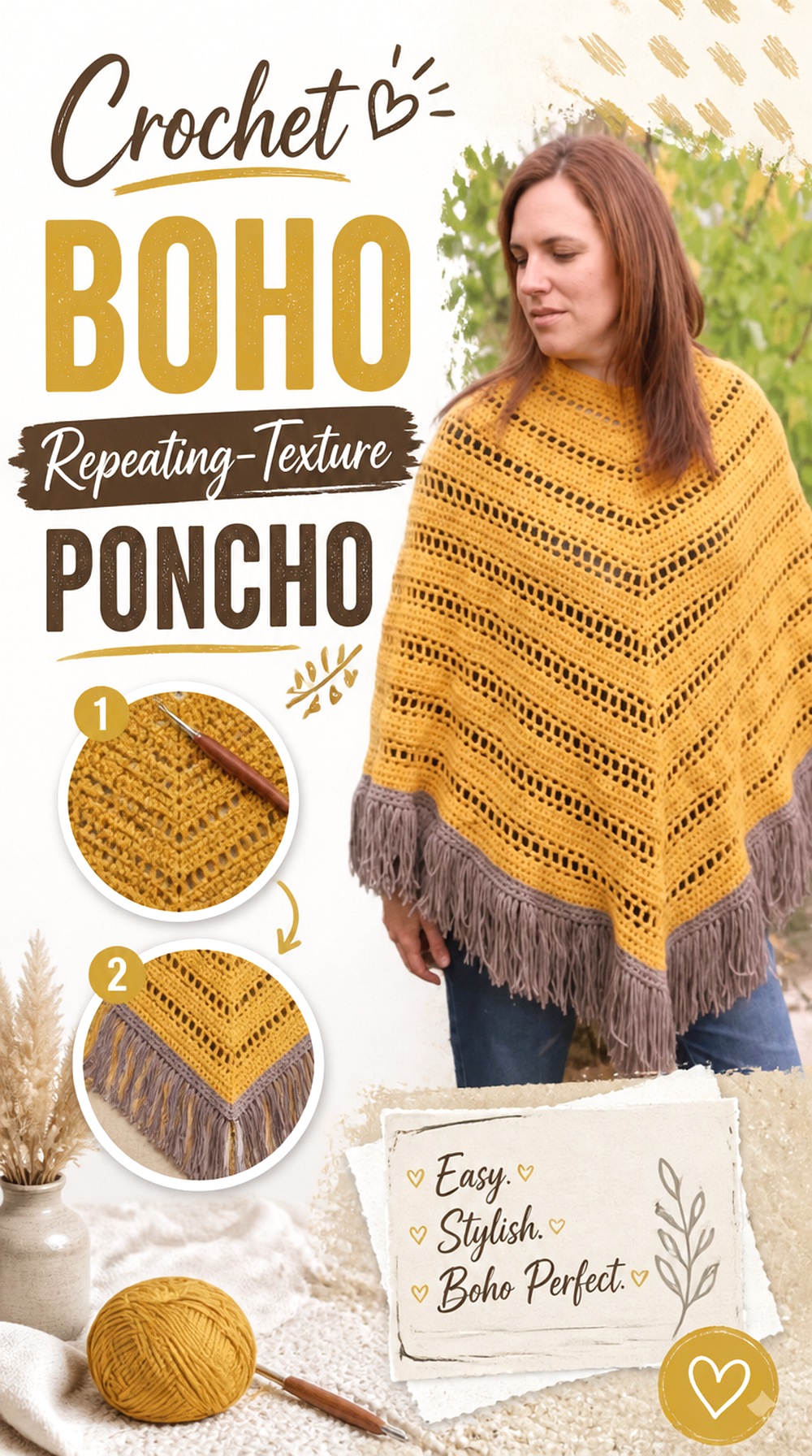
This poncho leans into a relaxed boho appearance rather than a tailored outerwear look. The creator describes a repeating section in the design, giving the fabric a consistent rhythm that helps the garment read as one continuous surface rather than a patchwork of separate motifs.
That makes it worth considering when you want visual texture but prefer not to manage dozens of individual squares or complex color placement. The finished style is loose enough to function as a statement layer over simple clothing, with the overall silhouette doing as much work as the stitch texture.
Repetition Makes Yarn Character More Visible
When the same texture continues through much of a garment, yarn color and stitch definition become prominent. A highly variegated yarn can compete with a textured repeat, while a more restrained color may make the stitch pattern easier to see. Compare those priorities before choosing solely from the skein.
Boho Drape Depends on Avoiding Excess Stiffness
A loose poncho benefits from fabric that can fall rather than project outward. If your swatch feels rigid compared with the tutorial’s finished fabric, review yarn choice, gauge, and hook information before continuing across an entire garment. A large wearable magnifies differences that can seem minor in a small swatch.
Original Tutorial and Creator Credit
Creator: Lanas y ovillos
5. Crochet Open Front Ruana Draped Poncho
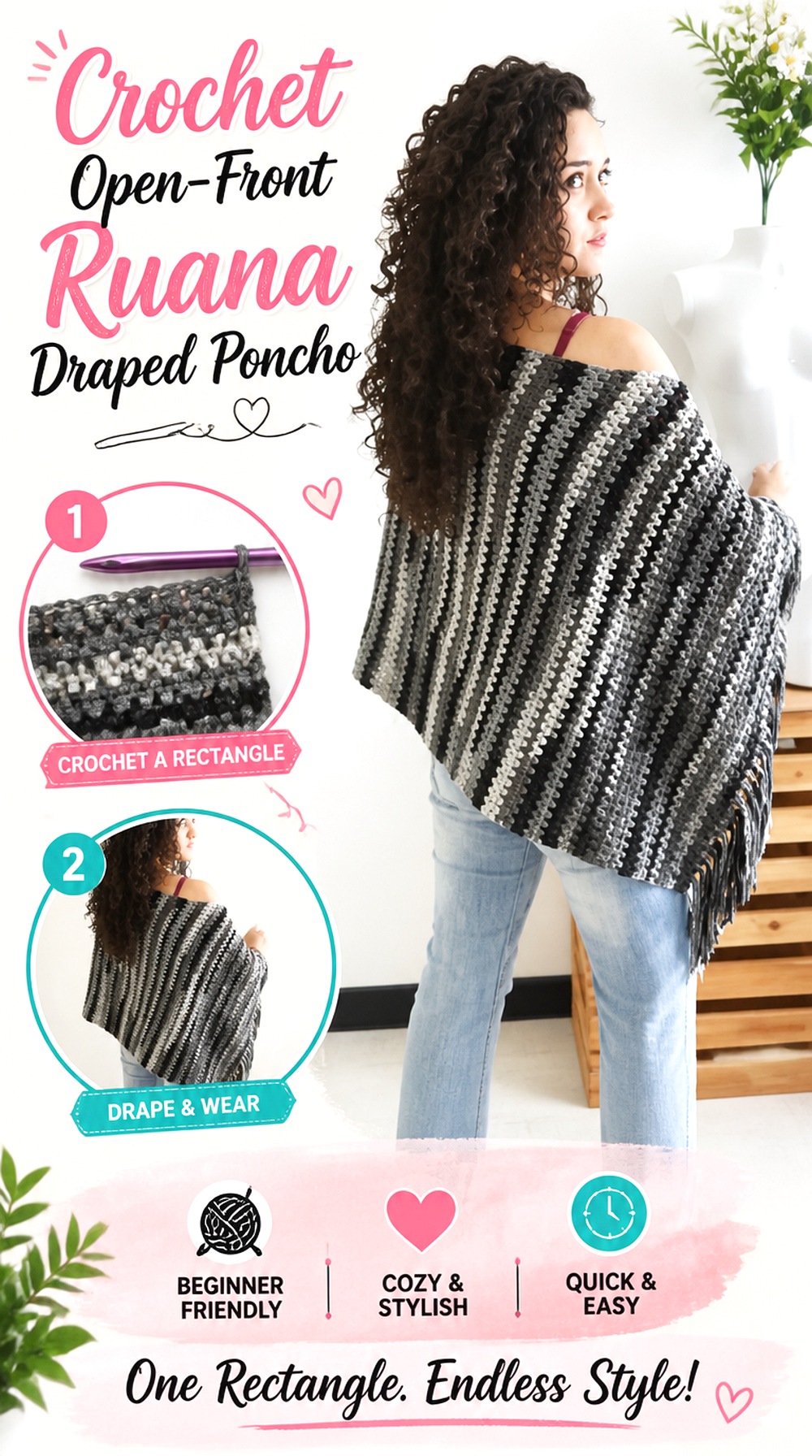
A ruana gives you poncho-like shoulder and back coverage while keeping the front divided into two panels. Crochet MC’s tutorial begins from a rectangle and shows the piece as a poncho or ruana, making it particularly useful for comparing closed and open-front styling within a related construction idea.
The open front changes how the garment moves. Instead of remaining centered like a pullover, the panels can fall independently and reveal more of the outfit underneath. This option is well suited to readers who enjoy drape but dislike pulling a poncho over the head.
Front Panels Need Enough Weight to Hang Cleanly
Ruana fronts look most intentional when both sides fall evenly instead of constantly curling or shifting. Yarn behavior and edge finishing can affect that result. Compare the tutorial’s finished panels before substituting a yarn that is dramatically lighter, springier, or stiffer than the original fabric.
Open Construction Makes Layering More Flexible
Because the front is not fixed closed, a ruana can accommodate different necklines and tops without crowding the chest. The trade-off is less security in wind or active movement. Decide whether easy on-and-off styling or fixed coverage matters more for the way you intend to wear it.
Back Length Deserves Its Own Check
It is easy to focus on the attractive hanging front panels and forget how much fabric covers the back. Review the rear view before changing length. A ruana that feels elegant from the front may feel too short or too long from behind depending on your intended use.
Original Tutorial and Creator Credit
Creator: Crochet MC
6. Crochet Sleeved Swancho Style Poncho
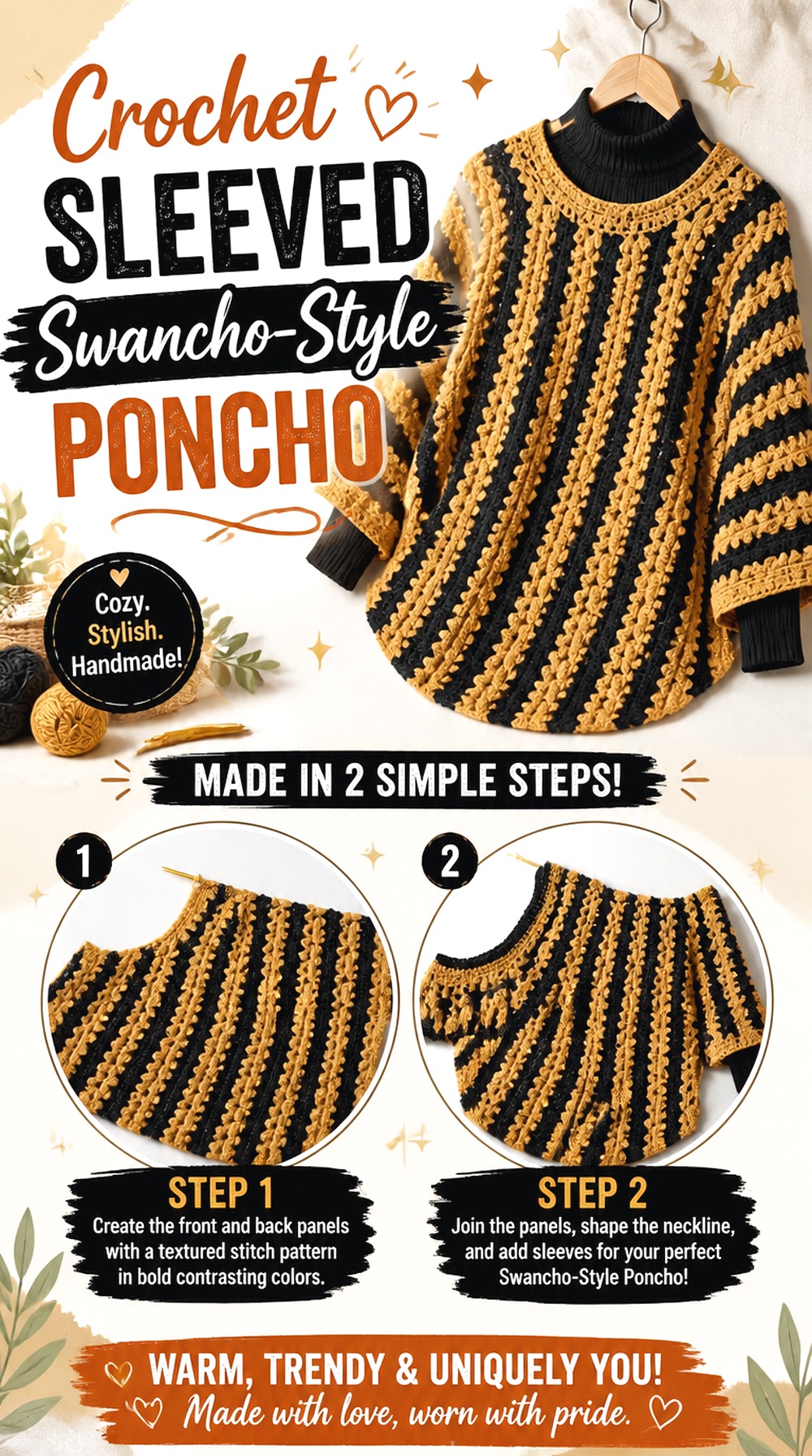
This design sits between a traditional poncho and a sweater because it adds sleeves to a broadly draped body. Bag-O-Day Crochet describes it as the Josephine Poncho or a crochet swancho. That hybrid construction gives more definition to the arms without losing the roomy silhouette that makes ponchos comfortable for layering.
It is a practical alternative for someone who loves broad poncho coverage but dislikes fabric moving freely around the wrists and forearms. The tutorial also discusses size adjustments, so readers should use that guidance rather than treating the demonstrated piece as universally sized.
Sleeves Change the Way the Body Can Shift
A classic poncho can rotate or move on the shoulders more freely. Once sleeves are added, the garment becomes anchored to the arms. That can make it feel more controlled during wear, but it also means arm placement and sleeve comfort matter more than they do on a completely open-sided poncho.
Watch the Transition From Drape to Sleeve
The key visual decision is how the broad body narrows toward the arms. Look at the finished garment from the side, not only from the front. Too much fabric near the underarm may feel bulky under another coat, while a closer transition can make the piece read more like a sweater.
Size Changes Should Preserve the Intended Silhouette
Making a swancho larger is not only about gaining circumference. The relationship between body depth, shoulder width, and sleeve placement still matters. Use the creator’s size guidance and compare the worn sample instead of increasing every area independently.
Original Tutorial and Creator Credit
Creator: Bag-O-Day Crochet
7. Crochet Lightweight Shawl Convertible Poncho
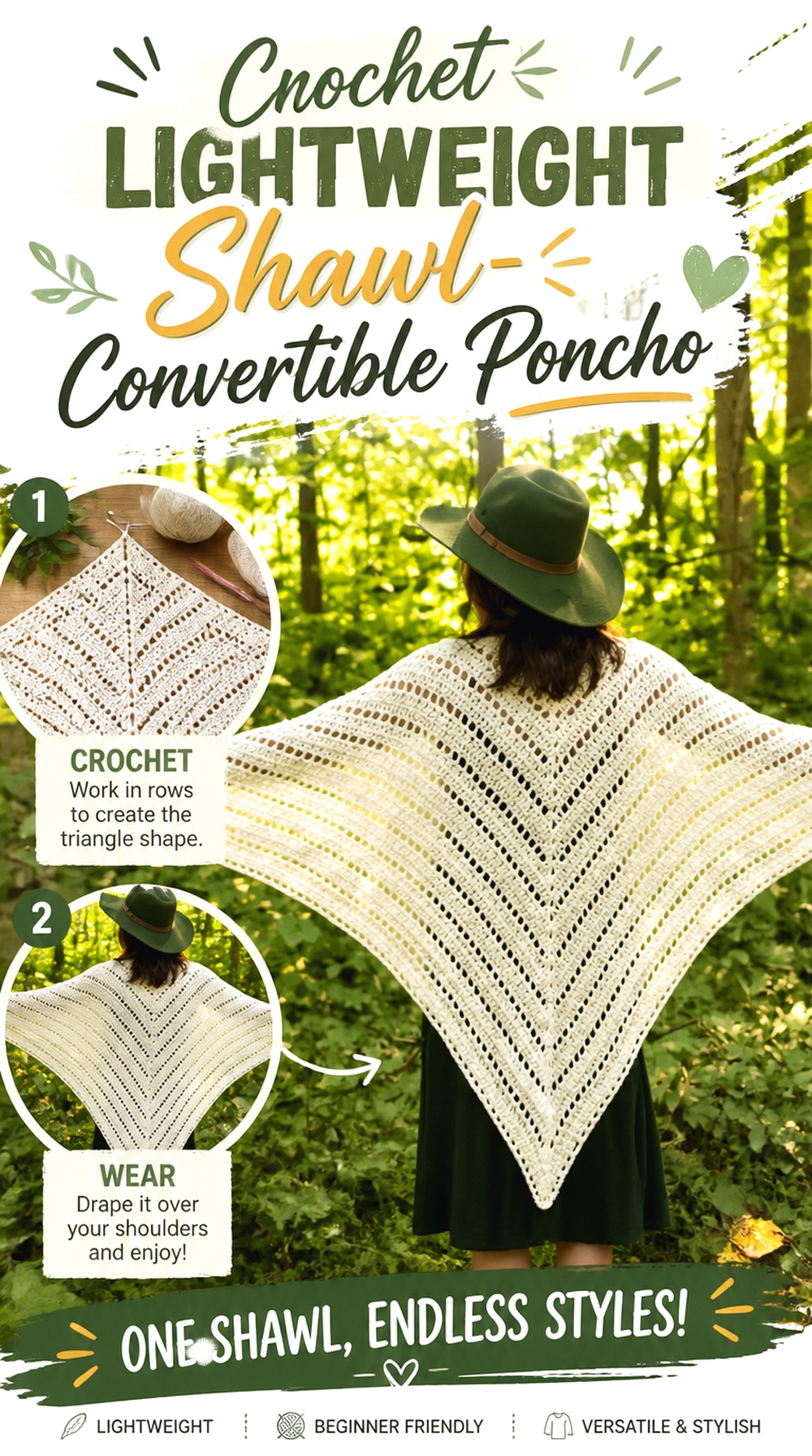
Jayda InStitches presents the Summer Love design as a flowy project that can be worn as either a poncho or a shawl. That convertible quality makes it different from a fixed pullover shape. It also uses lightweight yarns, placing the emphasis on movement and decorative layering rather than maximum warmth.
This is a useful direction for leftover lightweight yarns or for someone who wants a crochet layer that can change roles instead of remaining a single-purpose garment. Because the fabric can be repositioned, the outer edge and overall drape stay visible in more than one wearing arrangement.
A Convertible Edge Has to Look Good in More Than One Position
An edge that sits near the hem in poncho mode may become far more visible when the piece is arranged as a shawl. Pay attention to finishing all the way around rather than treating one edge as hidden. Consistent tension becomes part of the styling versatility.
Lightweight Yarn Makes Length Changes Noticeable
An airy garment can appear shorter when spread broadly over the shoulders and longer when allowed to hang vertically. Check the piece in the wearing configuration you expect to use most often before deciding that more length is necessary.
Color Leftovers Need a Placement Plan
A scrap-friendly concept creates freedom, but random color changes are not the only option. You can arrange related tones, deliberate contrasts, or gradual shifts. Decide early whether you want the color transitions to look improvised or planned, especially because both shawl and poncho arrangements expose large areas of fabric.
Original Tutorial and Creator Credit
Creator: Jayda InStitches
8. Crochet Asymmetrical Mesh Fringe Poncho
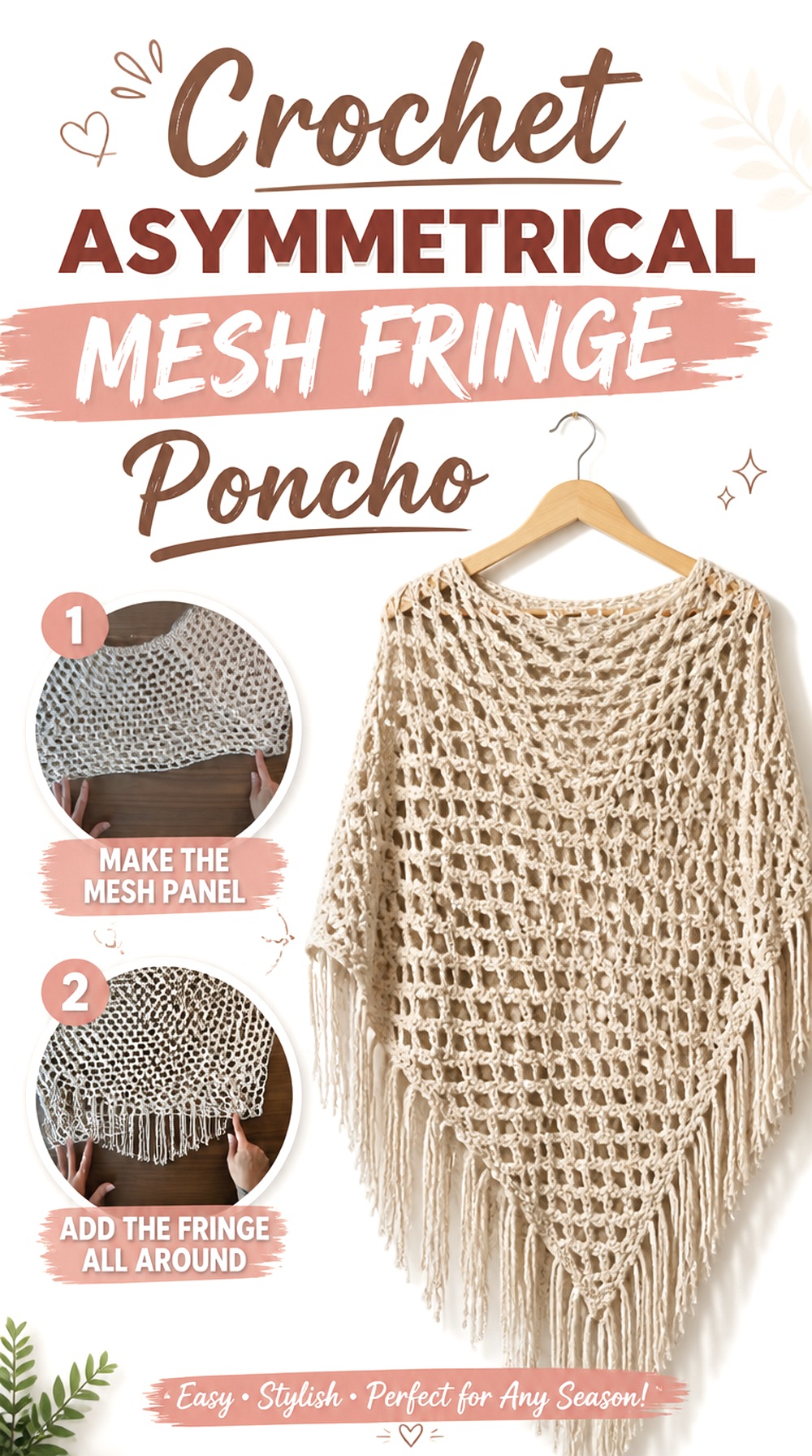
This mesh poncho offers a choice between symmetrical and asymmetrical versions, with fringe available as an additional finishing option. That makes the silhouette itself customizable before color even enters the discussion. A centered version reads as more balanced, while the asymmetrical option directs the eye toward a longer or shifted section of the hem.
The mesh construction keeps the garment visually open, so this is better viewed as a layering piece than a dense substitute for outerwear. The creator includes both shape options and the optional fringe in the same tutorial.
Asymmetry Changes Where the Visual Weight Lands
A slanted or offset hem naturally pulls attention toward one side. When deciding on length, look at both the shortest and longest sections rather than using one measurement to represent the whole garment. The longer point may also behave differently when you sit or carry a bag.
Fringe Can Amplify an Already Directional Hem
Fringe adds movement and extends the visual line below the crocheted fabric. On an asymmetrical garment, that can make the lower point even more pronounced. If you prefer a cleaner silhouette, compare the finished piece before fringe is attached and decide whether the body already provides enough interest.
Mesh Makes the Base Layer Part of the Design
The clothing under an open mesh poncho will show through clearly. Similar colors can create a subtle layered effect, while contrast makes the openwork much more visible. Plan the garment as part of an outfit rather than judging the crochet only when laid flat.
Original Tutorial and Creator Credit
Creator: it’s erin b.
9. Crochet Minimal Relaxed Draped Poncho
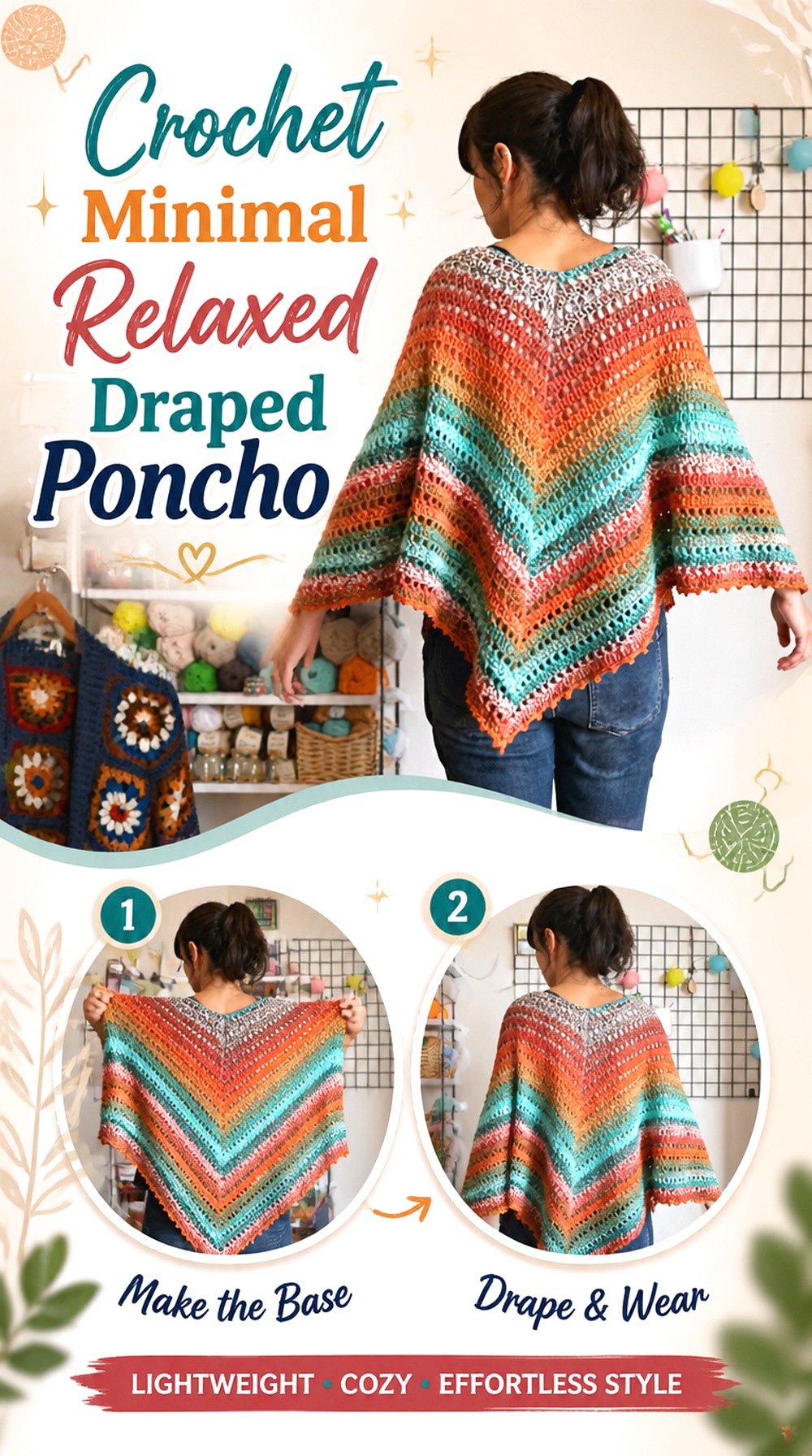
Sometimes the most useful difference is restraint. Sirin’s Crochet presents a straightforward chic poncho without relying on a hood, elaborate motif arrangement, or other dominant accessory feature in the title and project framing. That makes this a good reference point for someone who wants the silhouette and fabric to remain the main focus.
It can also help separate two decisions that are often mixed together: learning a poncho construction and choosing decorative extras. Start with the garment form, then decide later whether color, edging, or accessories need to do more visual work.
Minimal Styling Exposes Uneven Drape
When there is no fringe, hood, or bold motif layout to distract the eye, uneven edges or tension differences become easier to notice. Periodically lay the fabric flat and compare both sides. Correcting a persistent difference earlier is usually easier than trying to disguise it with finishing.
Confirm Details the Video Listing Does Not Surface
The public video description does not provide detailed sizing or material information in the search listing. Before purchasing yarn, check the full tutorial and any creator-linked resources for the actual requirements. A minimal design should not be mistaken for a universally interchangeable one.
Original Tutorial and Creator Credit
Creator: Sirin’s Crochet
10. Crochet Color Flow Layering Poncho
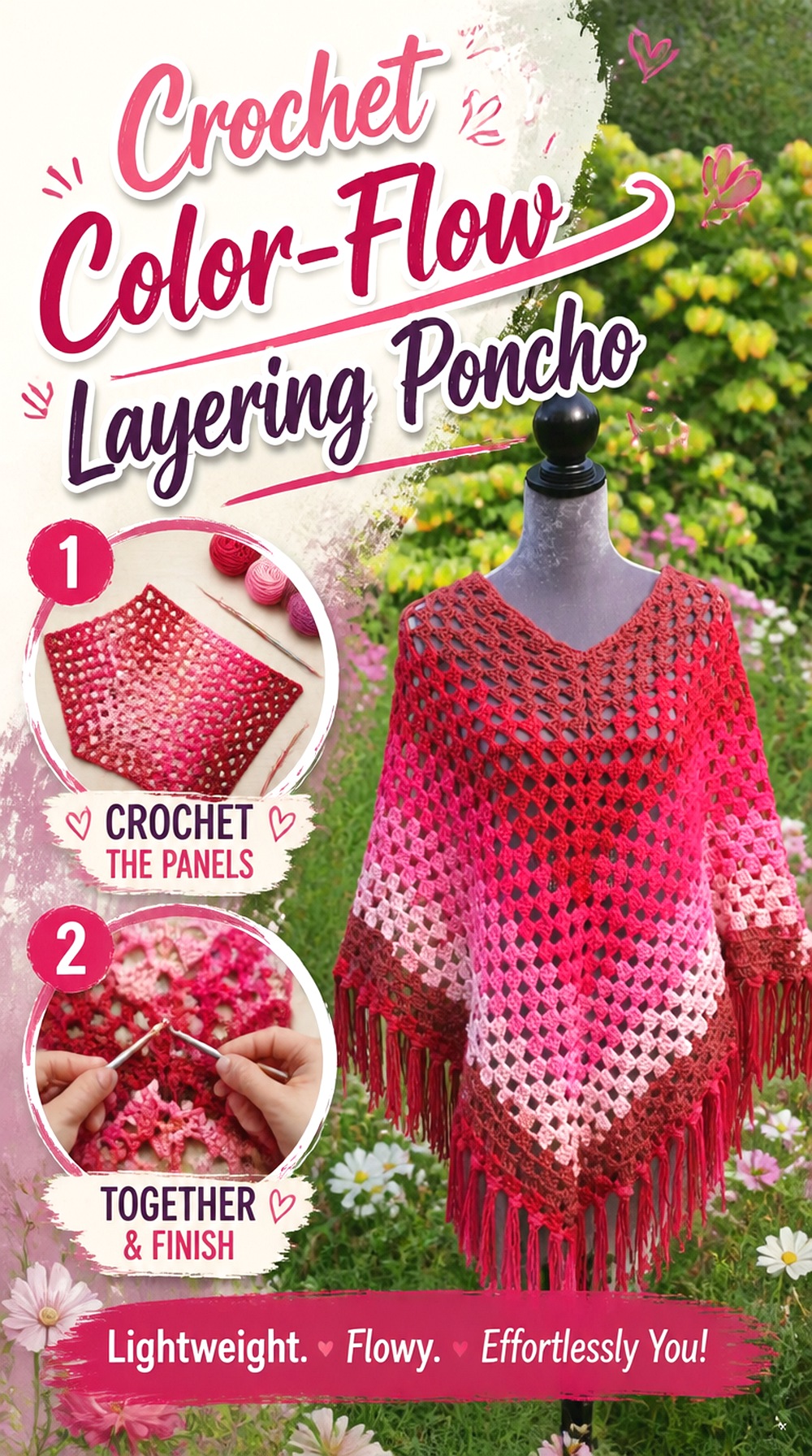
The Crochet Crowd’s Cool Poncho demonstration uses color-changing cake yarn and shows the project in a larger adult size, making color movement across a broad garment one of its most noticeable features. Instead of arranging many separate motifs, the changing yarn creates visual variation continuously across the crocheted fabric.
That approach suits makers who want strong color without repeatedly planning individual stripes or blocks. The tutorial is tied to a written Yarnspirations pattern, so the video can be used alongside the pattern rather than treated as the only sizing reference.
Color Changes Can Emphasize Garment Width
Broad horizontal or diagonal areas of changing color can make the silhouette feel different even when the physical measurements stay the same. Look at the full garment rather than a small swatch before deciding whether a strongly contrasting cake yarn supports the drape you want.
Larger Sizes Need More Than a Thumbnail Check
The tutorial specifically shows a larger-size version, which is useful because additional fabric can alter how a poncho hangs. If you are choosing another size, compare the written pattern’s finished information rather than assuming the proportions of the demonstrated garment simply shrink or expand uniformly.
Let the Yarn Do the Color Work Deliberately
Cake yarn can reduce manual color changes, but that does not mean every transition will land where you expect. If placement matters strongly to you, study how the chosen yarn progresses before starting and decide whether natural transitions or more controlled color placement better suits the finished poncho.
Original Tutorial and Creator Credit
Creator: The Crochet Crowd
11. Crochet Two Way Cozy Draped Poncho
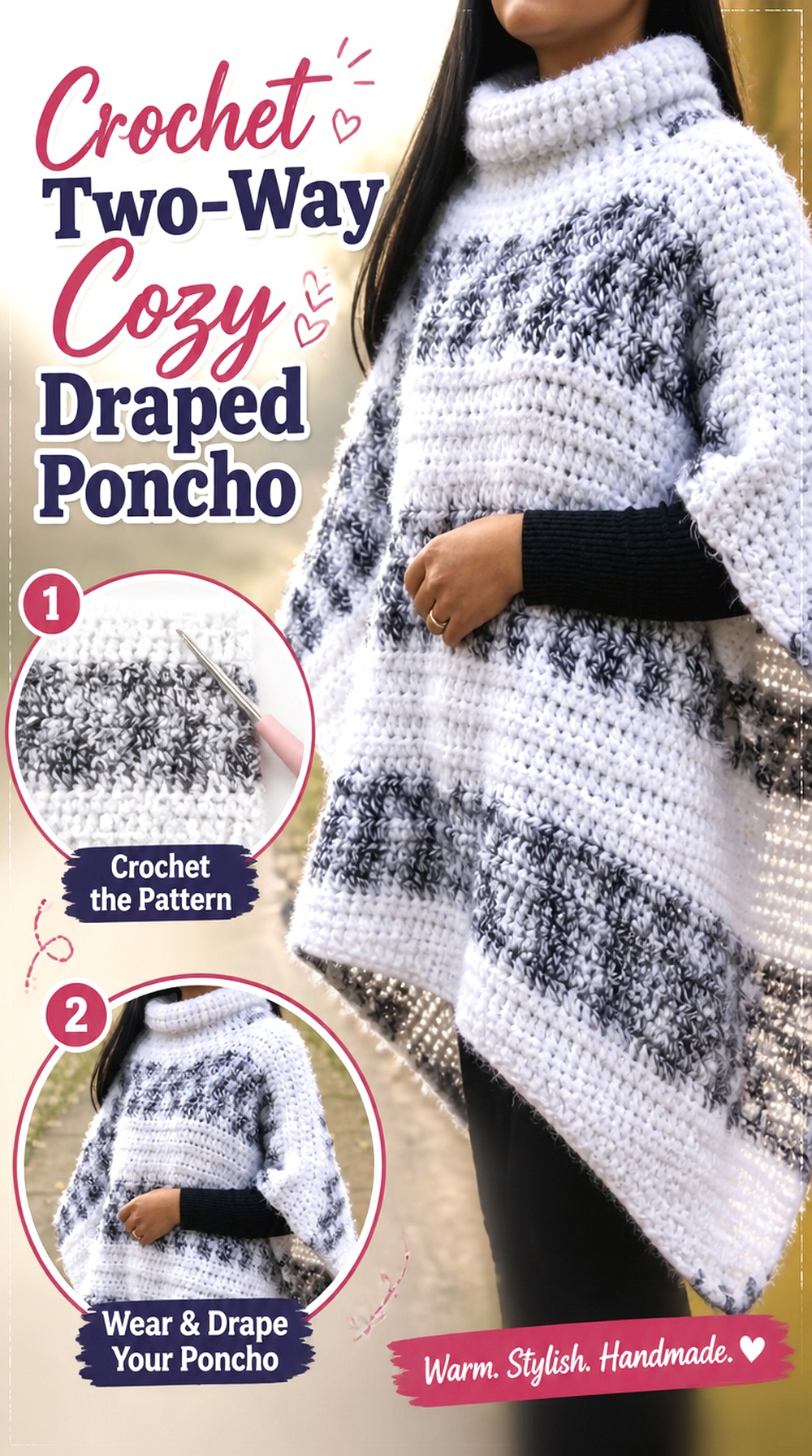
KnitcroAddict’s cozy poncho is built from two matching panels with a collar added afterward, but its standout feature is how the finished garment can be worn in two orientations. One position gives a more traditional front-and-back poncho look; turning it creates a noticeably different silhouette.
That makes this idea particularly useful if versatility matters more than embellishment. The tutorial demonstrates one size, while the creator links broader written sizing support separately. Bulky yarn also makes this one visually more substantial than the airy mesh and summer-weight options elsewhere in the list.
Rotation Changes More Than the Hem
Turning the garment changes where the widest and longest parts sit on the body. Before modifying length, test both intended orientations. An adjustment that improves one wearing position may make the second less balanced.
Bulky Fabric Needs a Weight Check
Thicker yarn can create satisfying warmth and texture, but a large poncho also contains a significant amount of fabric. If substituting another bulky yarn, compare the finished swatch’s weight and flexibility rather than choosing by yarn category alone.
The Added Collar Anchors Both Looks
Because the body can be repositioned, the collar becomes an important visual reference point. Check that it sits comfortably before judging the overall drape. A collar that feels too tight or too stiff can undermine the versatility of an otherwise loose garment.
Original Tutorial and Creator Credit
Creator: KnitcroAddict
YouTube Video: Crochet Cozy Poncho ( Free Pattern )
12. Crochet Fringe and Bead Tunic Poncho
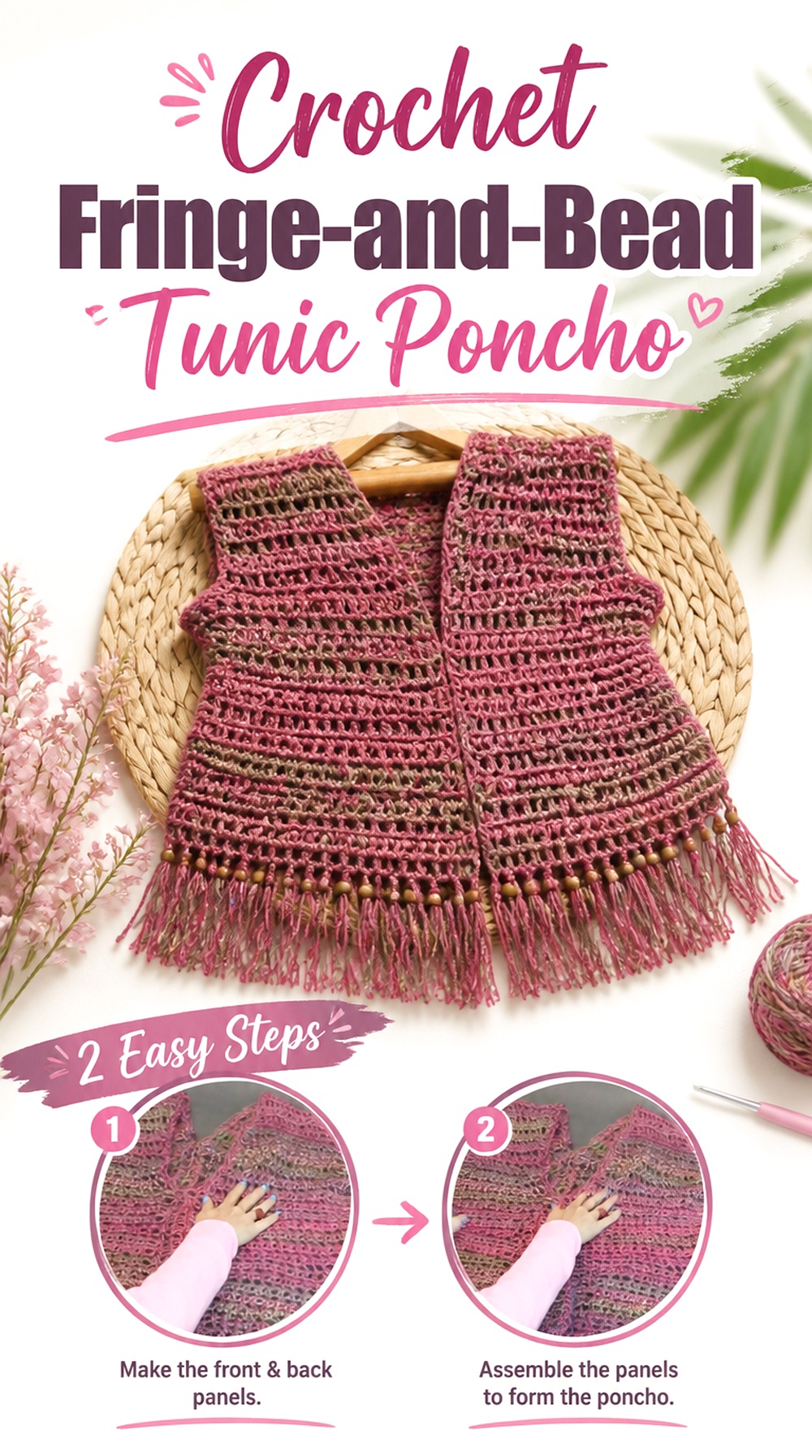
YARNutopia’s All Year Round Poncho has a loose tunic-style shape that can be styled in several ways. The creator’s project page describes a two-panel construction and includes fringe and beads as finishing details, giving the lower edge considerably more movement and decoration than a plain rectangle poncho.
The loose body can work as a conventional layer or, with an appropriate yarn choice, a lighter cover-up style. Because the embellishments become part of the silhouette, this is best approached as a complete styling project rather than treating fringe and beads as automatic last-minute additions.
Fringe and Beads Add Pull at the Hem
Any embellishment attached to a draped edge changes how that edge behaves. Before adding a large amount, check how the unembellished poncho hangs. If the fabric already stretches readily, extra weight at the bottom deserves particular attention.
Two Panels Make Length Easier to Visualize
Flat-panel construction lets you compare the pieces before final assembly. Use that opportunity to consider where the completed garment should fall instead of waiting until the poncho is fully joined. Remember that worn drape may differ from the same panel measured flat.
Decorative Components Should Be Confirmed Early
If beads are part of the look you want, confirm the creator’s materials and how they are incorporated before shopping. Size, weight, and hole dimensions can affect compatibility with yarn. Do not assume any decorative bead will behave the same way.
Original Tutorial and Creator Credit
Creator: Fuad Azmat / YARNutopia by Nadia
13. Crochet Yarn Cake Weekend Draped Poncho
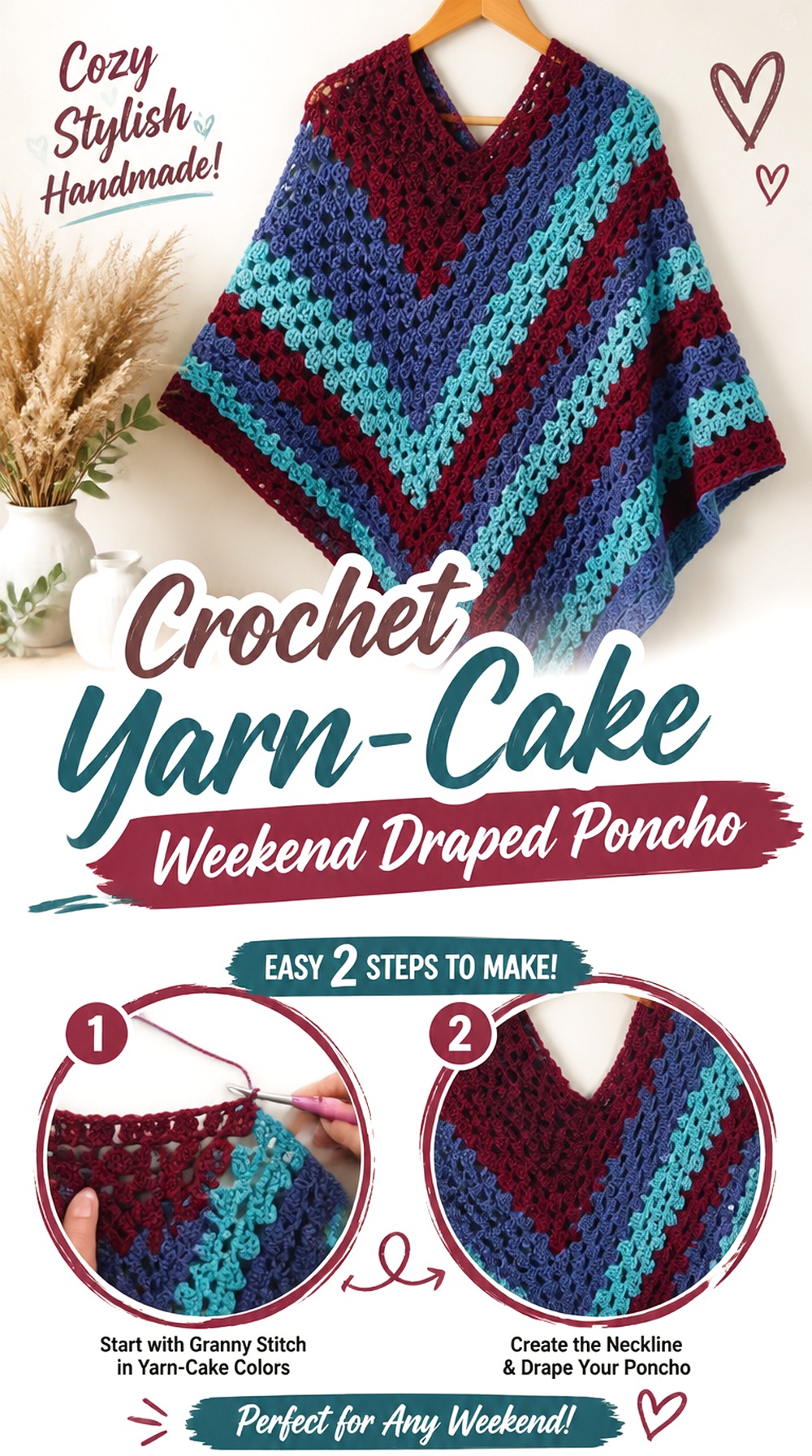
Ophelia Talks Crochet presents this colorful poncho as a project completed over a weekend and uses yarn cakes to create shifting color across the garment. The time reference should be treated as the creator’s experience rather than a universal completion estimate, but it does show that the design is intended around relatively direct construction rather than an elaborate multi-week motif assembly.
The broad color transitions make this a good choice for someone who wants a lively draped garment without manually planning every stripe. It also demonstrates how strongly yarn selection can define a simple poncho’s personality.
Treat the Weekend Label as Context, Not a Deadline
Crochet speed varies with experience, yarn handling, breaks, and project size. Use the title to understand the creator’s framing, not to judge your own pace. A comfortable, accurately sized wearable matters more than matching somebody else’s completion time.
Long Color Transitions Suit Broad Fabric
A cake yarn has room to show its progression across a poncho’s larger surface. Before beginning, inspect how quickly the colors change. Very short repeats may create frequent stripes, while longer transitions can produce broader sections with a softer gradient effect.
Original Tutorial and Creator Credit
Creator: Ophelia Talks Crochet
14. Crochet Granny Square Draped Poncho
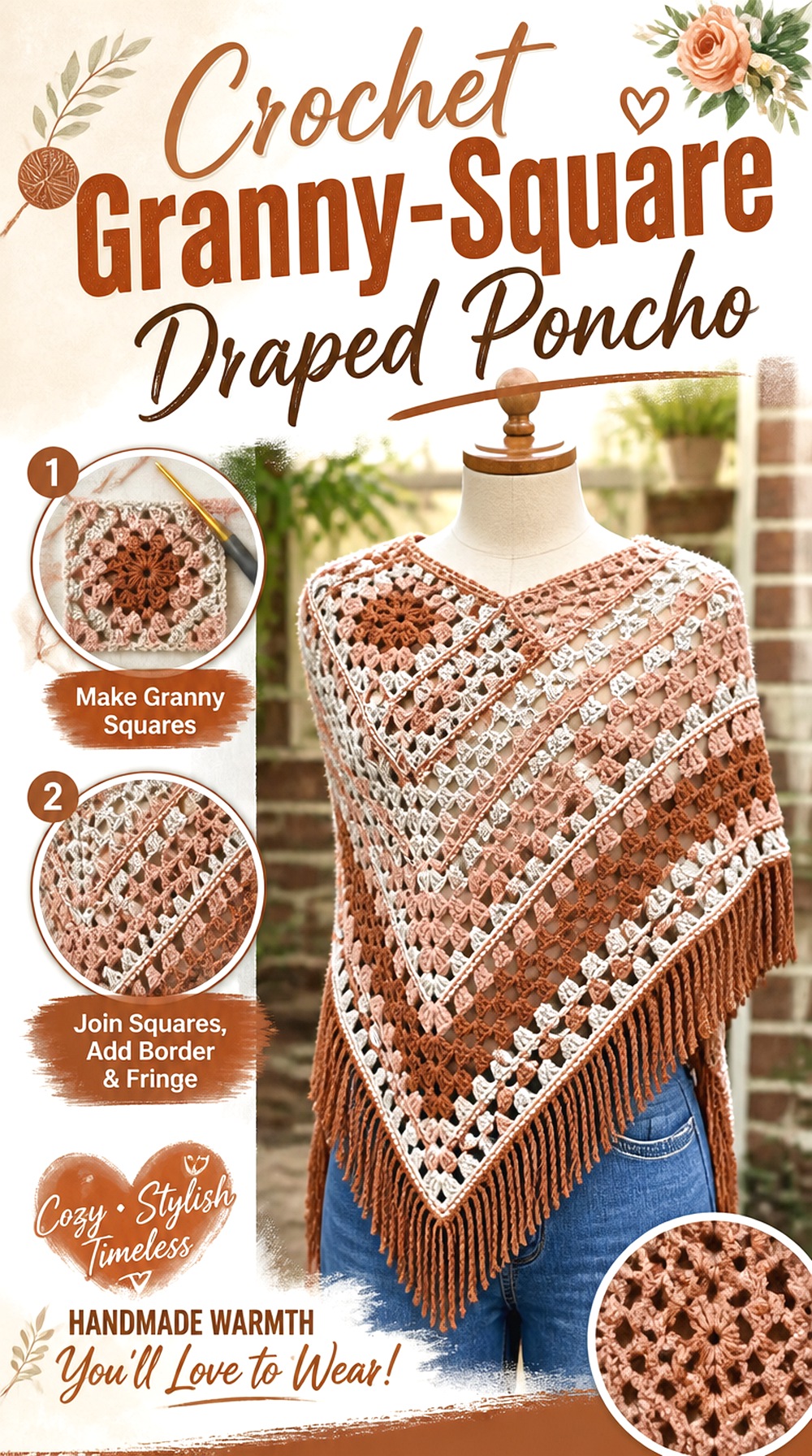
This HanJan Crochet project shifts the construction from continuous fabric to granny squares. The design can be finished as a traditional poncho or adapted with sleeves, and fringe provides another optional styling direction. The creator also provides multiple adult sizing groups, making it a useful motif-based alternative to one-size inspiration pieces.
Granny-square construction changes the planning process. Instead of watching only overall length, you need consistent motifs, deliberate color placement, and a layout that remains balanced after joining. The joins become visible design lines rather than hidden construction details.
Block Motifs Before Trusting the Layout
Small differences between individual squares can multiply across a wearable. Compare the dimensions after the motifs have been prepared according to the pattern’s finishing guidance. Joining noticeably different square sizes can pull the shoulder line and lower edge out of balance.
Optional Sleeves Change the Garment Category
Without sleeves, the squares create a classic poncho silhouette. Adding sleeves moves the result closer to a sweater hybrid. Decide which version you want before finalizing the motif layout because the amount and placement of fabric around the arms will affect the overall silhouette.
Fringe Should Follow the Motif Rhythm
A granny-square garment already contains strong visual divisions. Fringe can either reinforce those divisions or make the lower edge look unnecessarily busy. View the joined body first and decide whether the square layout needs another decorative element before committing to fringe.
Original Tutorial and Creator Credit
Creator: HanJan Crochet
15. Crochet Fan Edged Granny Stitch Poncho
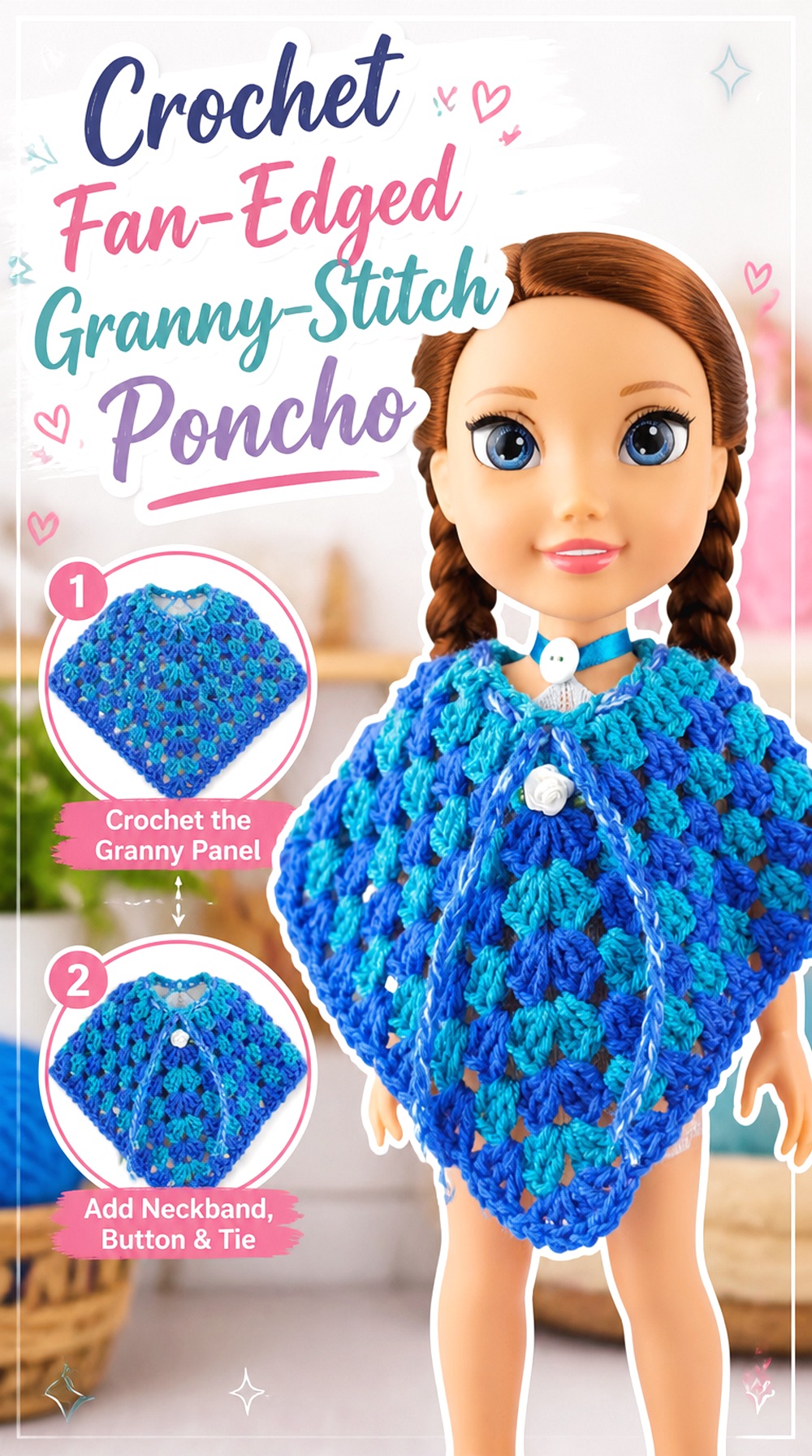
This final option uses granny-style stitch groups in continuous poncho fabric rather than building the garment from separate granny squares. Vivirtejiendo’s tutorial combines the familiar grouped crochet look with a decorative fan treatment, giving the edge more visual definition than a basic straight finish.
That distinction is important if you like the traditional granny aesthetic but do not want to make and join multiple motifs. The two-color example also shows how contrast can highlight the repeated stitch structure without requiring the patchwork layout of a square-based poncho.
Continuous Granny Fabric Avoids Motif Joins
Skipping separate squares removes one major finishing stage, but it also means size differences cannot be corrected motif by motif. Check the developing fabric regularly and use the creator’s sizing guidance rather than waiting until the entire poncho is finished to evaluate its span.
The Fan Edge Becomes a Strong Focal Point
A decorative lower edge can visually widen or soften the hem depending on how it reads against the main fabric. If you change colors, consider whether the edging should blend with the body or deliberately stand apart. Either approach will affect which part of the poncho attracts attention first.
Contrast Can Clarify the Granny Structure
Two colors make grouped stitches and decorative areas easier to distinguish. A single-color version would create a quieter result, while stronger contrast emphasizes the repeated geometry. Choose based on whether you want the silhouette or the stitch structure to be the dominant feature.
Original Tutorial and Creator Credit
Creator: Vivirtejiendo
Conclusion
The right crochet draped poncho depends less on decoration than on how you want the garment to behave. Choose the rectangle and ruana styles for uncomplicated layering, mesh or shawl-convertible versions for lighter movement, and the hooded, cowl, or bulky options when upper-body coverage matters more. The swancho offers more control around the arms, while the two granny-based projects suit makers who want visible crochet structure.
Before starting, compare the neckline, side drop, finishing work, fabric density, and available sizing information rather than choosing from the thumbnail alone. Once you have picked the silhouette that fits your wardrobe, use the original tutorials for the creators’ exact construction details.
Frequently Asked Questions
What yarn qualities help a crochet poncho drape instead of standing stiffly?
Look at the complete fabric rather than fiber name alone. Yarn thickness, twist, fiber content, hook size, and stitch density all influence how a poncho hangs. Make a swatch using the tutorial’s guidance and compare its flexibility with the creator’s finished garment. A substitute yarn that produces a noticeably firmer fabric can make a loose poncho project outward rather than fall naturally.
How can I tell whether a draped poncho will feel too wide or heavy?
Check more than the bust measurement. Look at shoulder span, side drop, center-front length, and the amount of fabric hanging below the arms. For heavier yarns, consider the total fabric area as well. A very generous poncho can fit around the torso while still feeling cumbersome because of its length or weight. Finished garment measurements and worn views are more useful than a generic size label.
Can I use a different yarn from the one shown in a poncho tutorial?
Possibly, but treat the substitution as a fit decision rather than a simple color change. Compare yarn weight, gauge, fabric flexibility, and care requirements with the source material. A substitute can change finished dimensions even when you follow the same construction. This matters especially for mesh, cowl, ruana, and oversized designs where the way the fabric hangs is central to the finished look.
What is the practical difference between a ruana and a closed crochet poncho?
A closed poncho generally goes over the head and keeps the front connected, while a ruana has an opening down the front. The ruana is easier to put on and can reveal more of the clothing underneath, but its front panels may move more during wear. A closed poncho stays centered more consistently. Choose based on how much fixed front coverage versus styling flexibility you want.
Can I replace the squares in a granny-square poncho with another motif?
Only after comparing the blocked dimensions and shape of the replacement motif with the original. A motif that is larger, smaller, denser, or more flexible can change panel width, neckline placement, garment weight, and joining behavior. Do not assume equal round counts create equal squares. Make and block a sample first, then use the creator’s garment layout and sizing information to judge whether adaptation is realistic.
Should a crochet draped poncho be blocked before wearing?
Blocking can help many openwork, panel, and motif garments settle more evenly, but the appropriate method depends on the fiber and the creator’s instructions. It can be especially useful when joined sections need consistent dimensions or when an open stitch pattern needs to relax. Always check the yarn’s care guidance before applying heat, steam, or aggressive stretching, since fibers respond differently.