A gothic crochet hood can be close and fitted like a balaclava, loose enough to fall like a veil, joined to long scarf tails, or built into a deep cowl that gathers around the neck. Those differences matter more than simply choosing black yarn. Face openings, hood depth, neck volume, motifs, pockets, and decorative borders all change how the finished piece wears.
Exact gothic-lace hood tutorials are relatively limited, so this collection also includes strong hood, cowl, snood, scarf, and balaclava constructions that can serve as starting points for a gothic interpretation. Some already use pronounced texture or motifs; others are structural references rather than lace patterns. The comparisons below focus on choosing a suitable silhouette first, then deciding where openwork or ornamental edging can be added without undermining fit or function.
Quick List
- Crochet Veil-Edge Hooded Scarf
- Crochet Double-Wrap Cathedral Hood
- Crochet Drawstring Raven Balaclava Hood
- Crochet Shadow-Cowl Gothic Hood
- Crochet Soft-Drape Mourning Snood Hood
- Crochet Split-Tail Chapel Hooded Scarf
- Crochet Pocketed Gothic Wrap Hood
- Crochet Rounded Pocket Hooded Scarf
- Crochet Ribbed Woodland Gothic Hooded Scarf
- Crochet Panel-Built Lace-Trim Balaclava
- Crochet Granny-Lace Patchwork Hooded Scarf
- Crochet Cabled Cathedral Hooded Cowl
- Crochet Sculpted Gothic Hooded Cowl
- Crochet Striped Chapel Scoodie
- Crochet Textured Arco Gothic Hooded Scarf
- Crochet Deep-Cowl Lace-Edge Hood
- Crochet Granny-Motif Gothic Balaclava
- Crochet Close-Fit Veil-Trim Balaclava
- Crochet Halo-Edge Hooded Cowl
Decide What “Gothic Lace Hood” Means Before Choosing a Tutorial
There is a practical difference between a hood that only looks delicate and one whose main fabric is genuinely open. A closely fitted balaclava generally needs more predictable stretch and coverage around the crown and face than a loose scarf hood. A deep cowl can tolerate more drape, while long scarf tails provide a low-risk place for ornamental openwork.
For most adaptations, choose the hood construction for fit first. Then decide whether the gothic character should come from an open border, scalloped edging, mesh panel, dramatic point, motif arrangement, long tails, or layered neck volume. Replacing an entire structural fabric with a much more open stitch can alter dimensions and stretch significantly. A swatch gives more useful information than assuming two stitch patterns will behave alike simply because they use the same yarn.
Fit Checkpoints Matter More Than Dark Color
A hood has to accommodate head depth as well as circumference. Before committing to decorative details, notice where the source construction sits at the forehead, crown, back of the head, chin, and neck. Glasses, bulky hairstyles, buns, and under-layers can also change the amount of room that feels comfortable.
Face openings deserve particular attention on balaclavas. A border that looks narrow while lying flat may pull differently once stretched around the face. Deep cowls have the opposite issue: too much unsupported fabric can collapse farther than expected. If you change yarn or stitch structure, compare your fabric to the tutorial’s demonstrated fit rather than assuming its measurements will transfer unchanged. Blocking a swatch can also reveal whether an openwork fabric grows noticeably before it becomes part of the hood.
Add Gothic Detail Without Weakening the Silhouette
The safest place for dramatic lace is often an area that does not carry much structural load. Scarf ends, outer hood rims, lower cowl edges, and selected motif panels can take decorative treatment without asking the lace itself to support the crown or a heavily used pocket.
Dense and open sections should still feel visually connected. A narrow ornamental border can frame a heavily textured hood, while a simpler body gives a larger lace panel room to stand out. Very dark yarn can hide complicated stitch definition, so pronounced relief or well-spaced openings may photograph and read more clearly than extremely fine detail. Be cautious with beads, chains, charms, or heavy pendants: added weight can pull on open stitches, and dangling pieces near the face or drawstrings can snag during wear.
1. Crochet Veil Edge Hooded Scarf
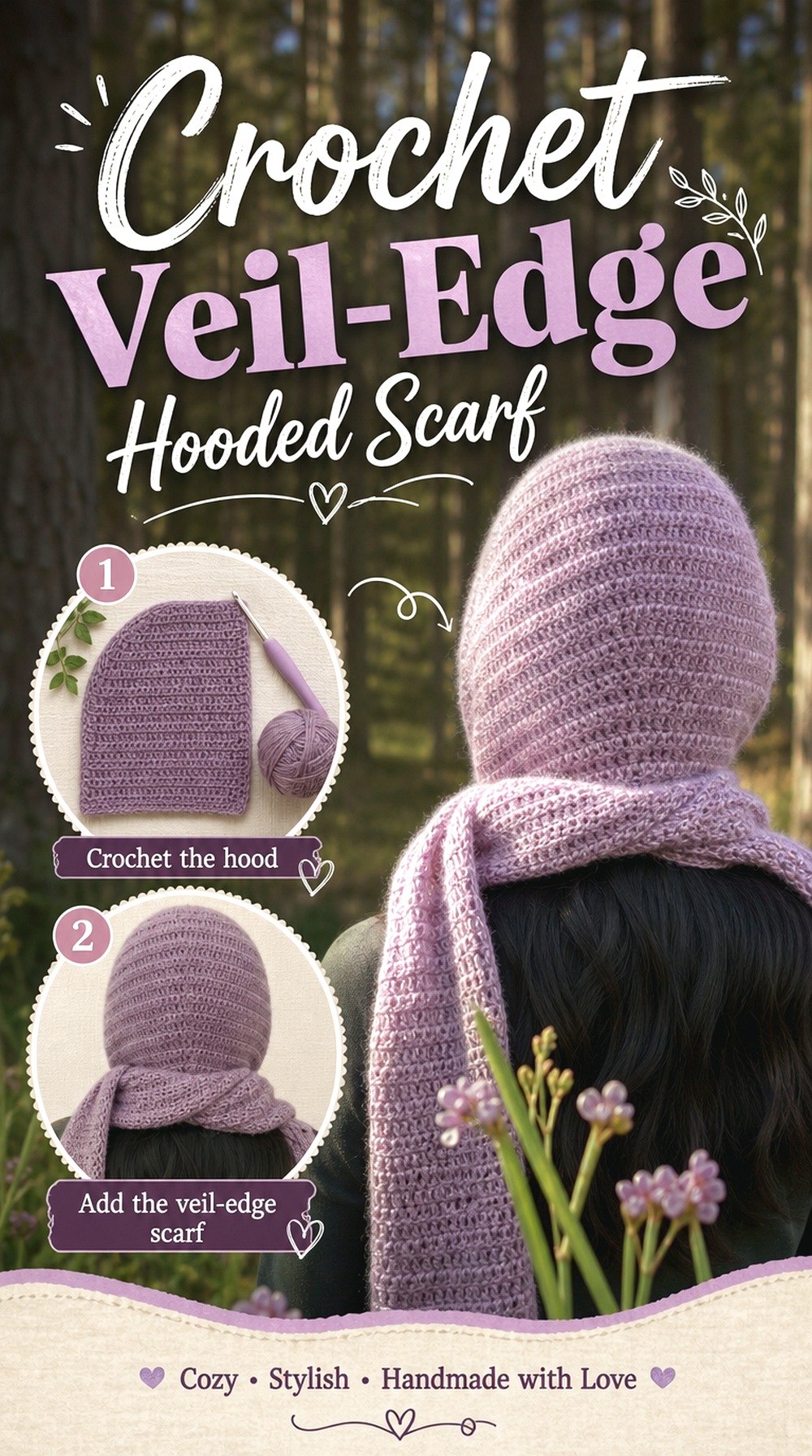
This idea starts with the straightforward hood-and-scarf silhouette demonstrated by ABoC Studio and turns the exposed perimeter into the decorative focus. Instead of making the entire hood highly open, the concept keeps the crown and scarf body more stable while giving the face edge or scarf ends a lighter, veil-like finish. That makes it a useful choice if you want an unmistakably gothic outline without sacrificing most of the coverage of a conventional hooded scarf.
The long scarf portion also creates more styling options than a fitted balaclava because it can hang vertically, cross over the chest, or wrap closer to the neck.
Keep the Lace at the Face Edge or Scarf Ends
A border can create a surprisingly strong gothic effect without requiring a complete change in the hood fabric. Concentrating openwork around the face makes the outline visible while keeping the back of the hood comparatively stable. If you want more drama, repeat the decorative language at the scarf ends rather than inserting lace everywhere. That creates continuity while limiting the number of structural areas affected by a stretchier stitch.
Check Hood Depth Before Adding a Draped Border
An ornamental face edge adds width as well as visual weight. Try the plain hood shape in the position you expect to wear it before deciding how substantial the border should be. If the hood already sits far forward, a deep lace treatment can move the visual edge even farther toward the face. A shallower trim may work better when the original construction already provides generous depth.
Original Tutorial and Creator Credit
Creator: ABoC Studio
2. Crochet Double Wrap Cathedral Hood
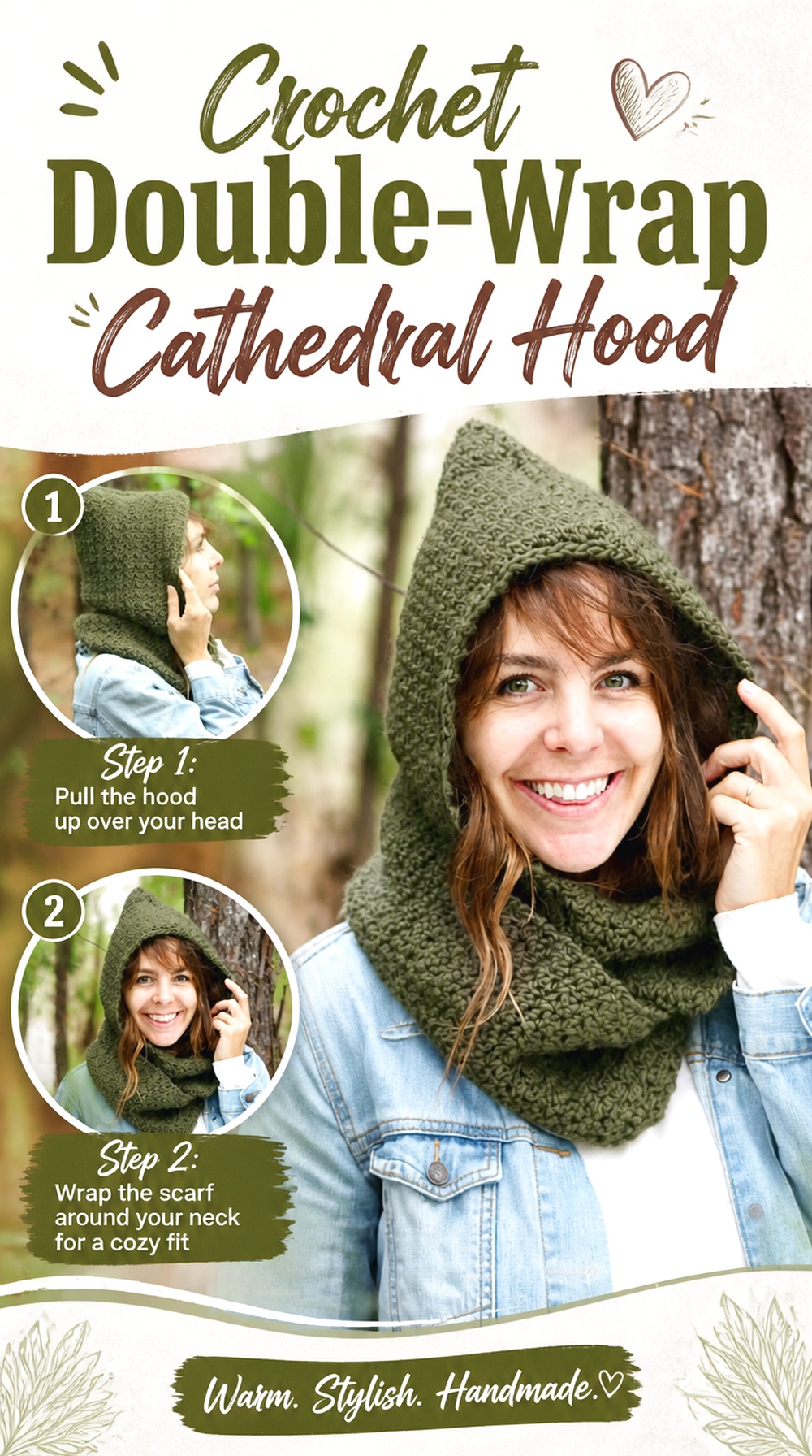
A double-wrapped infinity scarf beneath an attached hood gives this version much more neck volume than a simple hood with two loose tails. Kay Krochets’ Trailhead construction provides that underlying format, making it a useful reference for a gothic hood intended to look substantial around a coat collar. The gathered loop can create a shadowed, almost mantle-like neckline, while the hood remains visually distinct above it.
Rather than covering every surface with lace, this interpretation could reserve openwork for a controlled outer band or hood rim. The continuous scarf loop is the defining feature, so any adaptation should preserve its ability to wrap and lie comfortably.
The Double-Wrap Neck Changes the Gothic Silhouette
An infinity-style scarf creates layers around the neck instead of long vertical lines down the body. That works well when you want a compact, cloak-like effect under outerwear. Before adding decorative texture, check how much bulk the plain loop already creates. Dense yarn plus a wide ornamental border can quickly make the neck area fuller than intended, particularly when the scarf is wrapped more than once.
Openwork Belongs Where the Infinity Loop Still Holds Shape
A looped scarf depends on enough structure to remain readable as a scarf rather than stretching into a long, narrow tube. If lace is part of the adaptation, a defined border or selected panel is easier to control than converting the whole loop to very open mesh. Compare the blocked behavior of both fabrics first, especially if the lace section uses noticeably different stitch spacing.
Watch Added Weight Around the Hood Seam
The scarf and hood meet in an area that already carries fabric from two directions. Heavy beads, thick tassels, or dense applied motifs near that transition can encourage sagging. If embellishment is important to the look, moving most of it toward the outer hood edge or a lower scarf area can keep the visual drama while reducing concentrated weight where the sections connect.
Original Tutorial and Creator Credit
Creator: Kay Krochets
3. Crochet Drawstring Raven Balaclava Hood
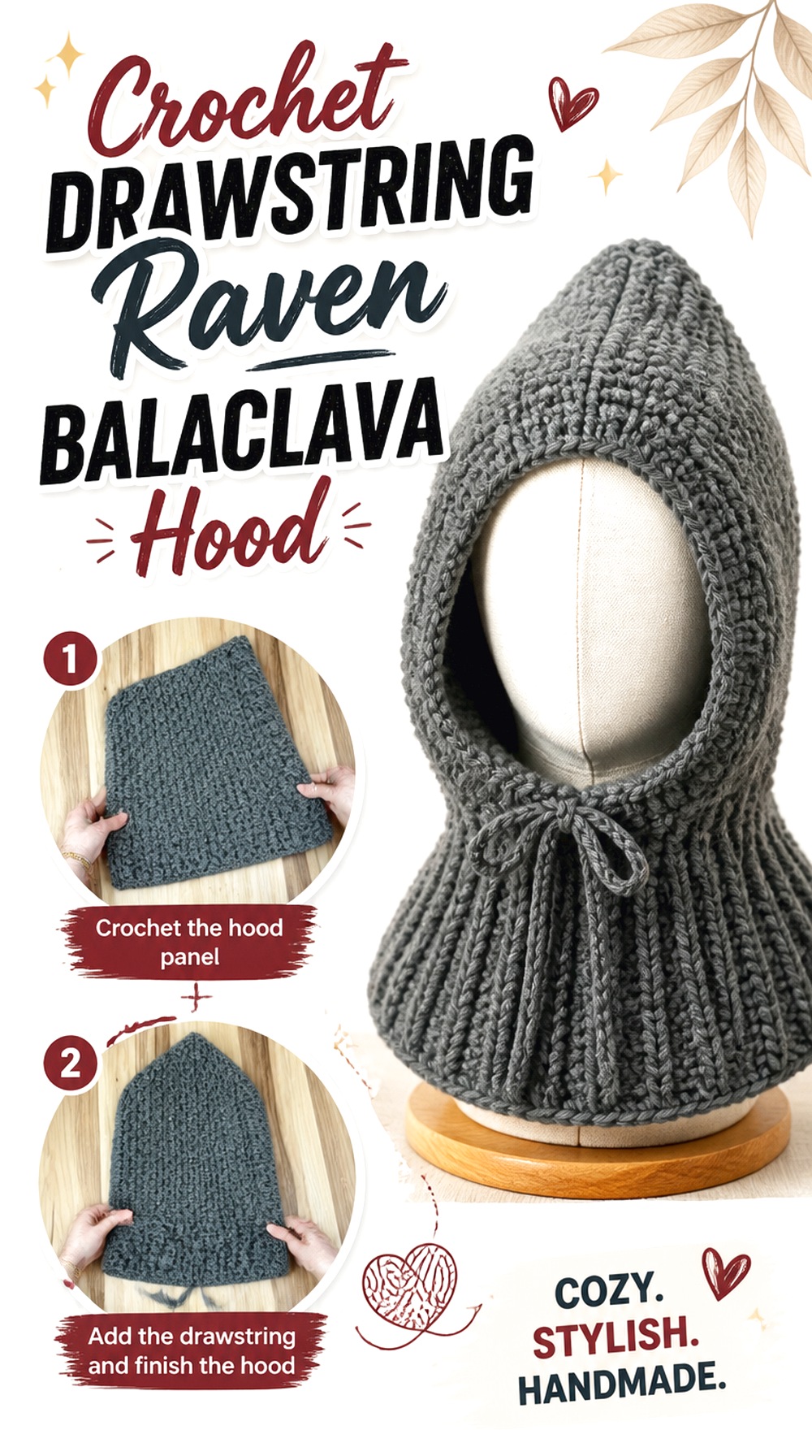
For a more fitted gothic look, Natalie’s balaclava tutorial offers a close hood shape with a face opening and drawstring detail rather than loose scarf tails. The construction is intended to be adjusted to the wearer and includes ribbed finishing around key areas, which makes it a useful source when fit matters more than dramatic drape.
The gothic interpretation here comes from framing: a restrained openwork edge, pointed cord details, or a darker contrasting border can emphasize the face without turning the whole crown into lace. It suits someone who wants the hood to stay close during wear instead of falling loosely around the shoulders.
A Drawstring Opening Gives You Control Over Face Framing
A drawstring can change the opening after the hood is finished, which is useful when you want a more enclosed silhouette. Decorative edging should not interfere with that movement. Before adding a wide border, check whether the cord still travels cleanly and whether the opening can tighten without bunching the lace unevenly. A lighter treatment keeps the adjustment functional while still giving the face edge a gothic frame.
Keep Decorative Cord Ends Away From Snag-Prone Hardware
Long cord ends can contribute to a dramatic look, but adding beads, chains, or metal pieces also increases both weight and snag potential. Check how the ends fall when the hood is tightened and loosened, particularly around coat zippers, jewelry, and hair. If hardware is used, keep it restrained and secure rather than allowing heavy pieces to swing directly beside the face.
Test Stretch Before Turning Dense Fabric Into Lace
A fitted balaclava relies on controlled stretch. Replacing a substantial section with open mesh can change the face opening or crown fit even when the stitch count appears similar. Make a sample in the intended lace treatment and stretch it in the same direction the hood will be worn. If it grows much more readily, use the lace selectively instead of assuming the original shaping will behave the same way.
Original Tutorial and Creator Credit
Creator: Natalie
4. Crochet Shadow Cowl Gothic Hood
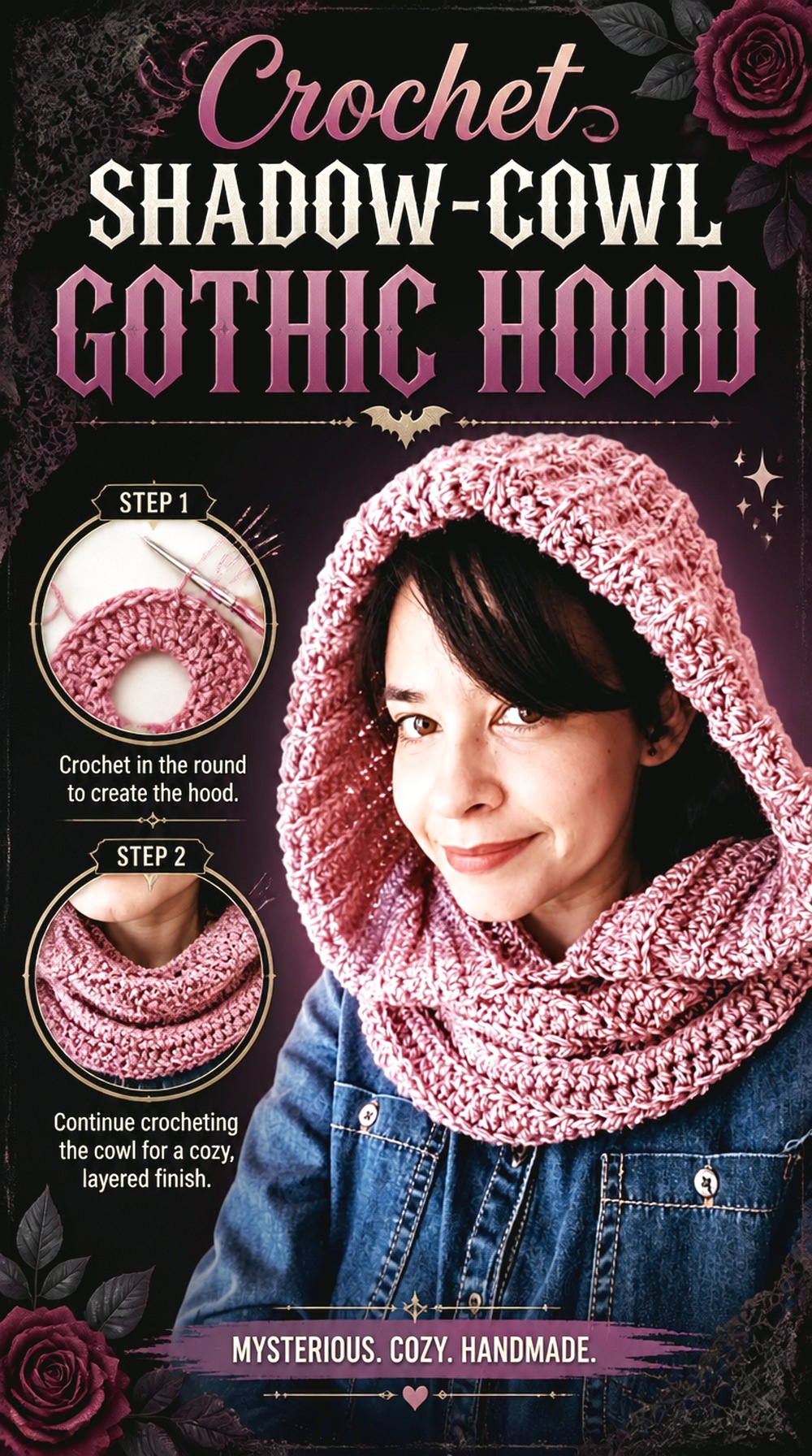
Kiri Kiri’s hooded-cowl format shifts the emphasis away from scarf tails and toward a continuous neck section. That creates a cleaner silhouette for wearing over a sweater or beneath a coat and gives the hood a natural place to fold when it is not covering the head. The tutorial is presented as adaptable to different sizes and yarn choices, making it a useful reference for understanding the proportions of this cowl-based form.
For a gothic version, the depth of the cowl can do much of the visual work. A restrained lace edge or contrasting open panel can then add detail without competing with the soft folds around the neck.
Extra Cowl Volume Creates a Shadowed Neckline
A deeper neck section naturally creates folds, which can look especially dramatic in charcoal, black, oxblood, or another dark solid. Before increasing the cowl further, notice where the existing fabric sits on the shoulders and under the chin. More volume is not automatically better; if it crowds the face, the hood can feel visually heavy rather than intentionally draped.
Size the Hood for Hair, Glasses, and Layering
A cowl hood may be worn over hair, earbuds, or glasses and sometimes beneath another hood or coat collar. Those real-world layers change how much room feels useful. Measure the intended wearer and compare that information with the tutorial’s demonstrated proportions. If you switch to a highly open stitch, also account for possible stretching rather than sizing from the unblocked fabric alone.
Original Tutorial and Creator Credit
Creator: Kiri Kiri
5. Crochet Soft Drape Mourning Snood Hood
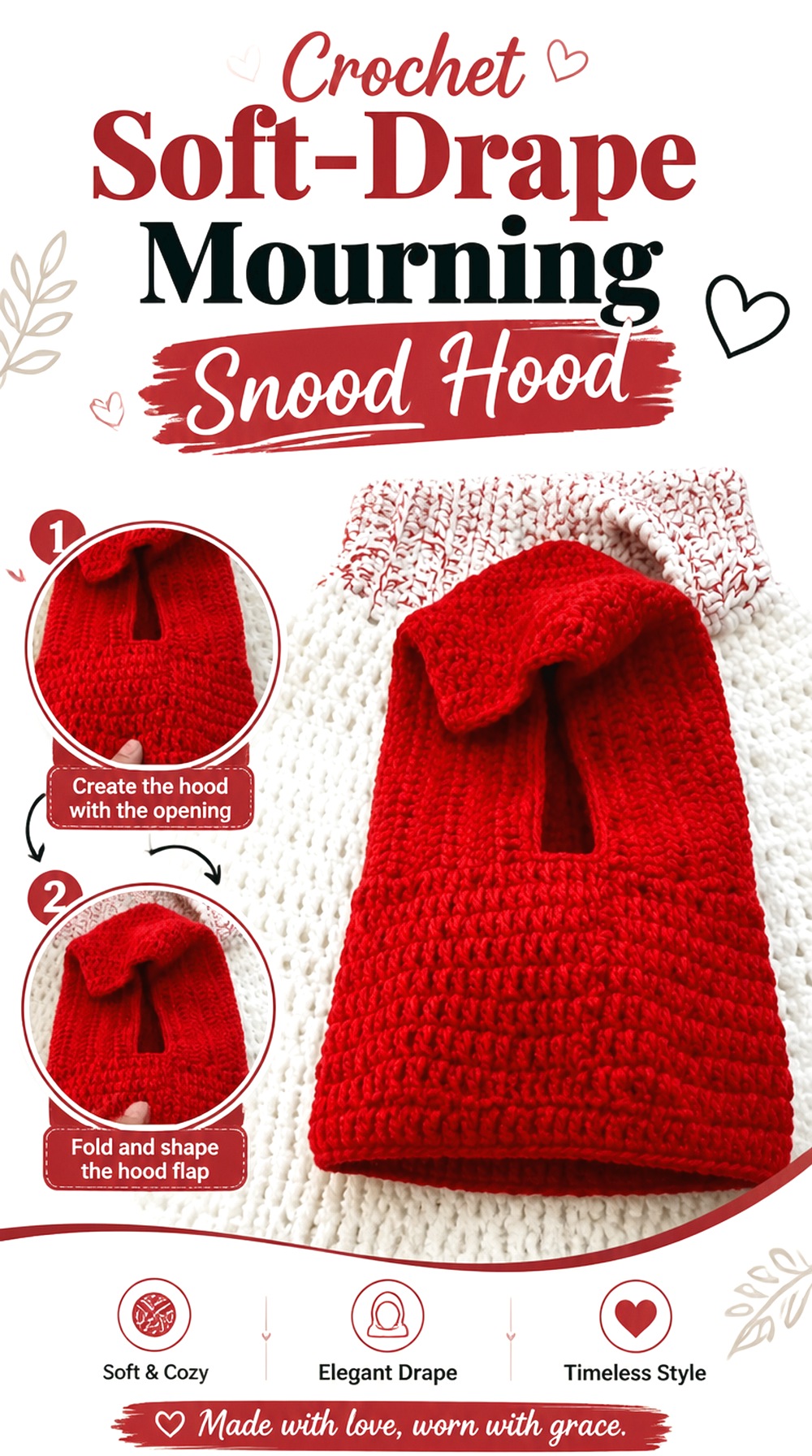
This idea takes the fuller snood-style hood shown by Alextitia Tuto Crochet and leans into its ability to fall softly around the head and neck. Compared with a fitted balaclava, the silhouette feels less athletic and more veil-like, particularly when the hood is allowed to settle behind the head. The source tutorial discusses measuring, hood assembly, and adjusting the snood’s volume, which makes it relevant when drape is the main design decision.
A gothic version does not need elaborate surface decoration. A softly falling solid fabric with one open border can create a stronger mourning-veil impression than a densely embellished hood that no longer drapes.
A Snood Shape Suits Softer, Veil-Like Drape
A snood benefits from fabric that can fold rather than stand rigidly away from the body. If you are choosing between yarns, compare how the swatches bend and recover instead of judging only softness by touch. A very stiff fabric may hold a sculptural shape, which can be desirable, but it will not produce the same cascading effect as a more relaxed hood.
Keep the Neck Section Comfortable When the Hood Falls Back
The hood will not always be worn up. When it falls behind the head, much of its fabric gathers around the neck and upper back. Check that any lace border, beadwork, or thick decorative seam still feels comfortable in that position. Embellishment that looks beautiful along an upright hood can become bulky when all of it is stacked against a coat collar.
Original Tutorial and Creator Credit
Creator: Alextitia Tuto Crochet
6. Crochet Split Tail Chapel Hooded Scarf
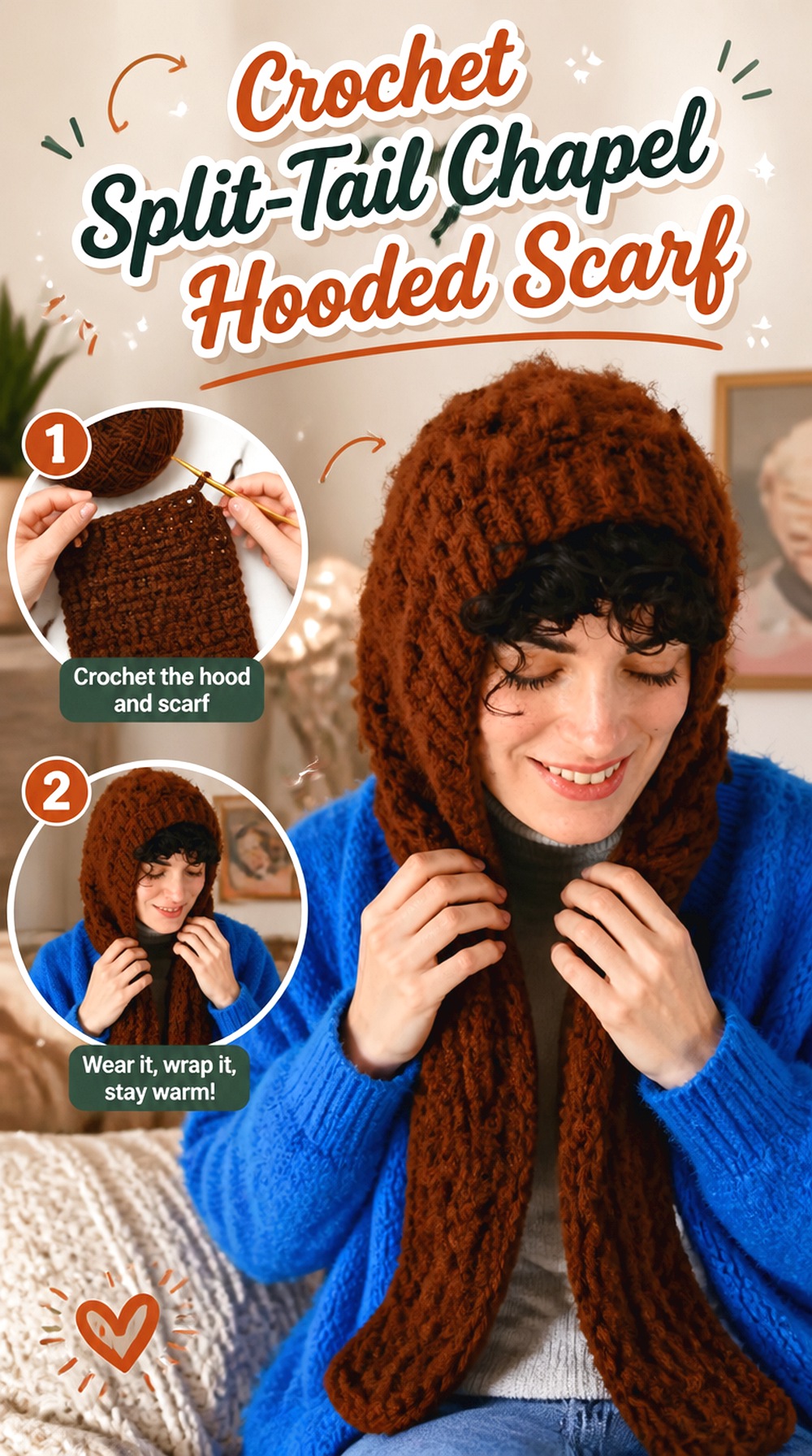
Doblecroché’s hood-and-scarf tutorial provides a classic two-tail configuration, which offers a very different canvas from an infinity cowl. The long scarf sections can remain visible even when the hood is down, allowing gothic detailing to continue below the neckline instead of being concentrated around the head.
For this interpretation, think of the hood as the architectural center and the tails as the decorative extension. Lace panels, shaped ends, or a narrow repeating border can be introduced farther from the crown, where extra openness is less likely to interfere with hood fit.
Long Scarf Tails Give Lace More Room to Show
Two separate tails provide more uninterrupted vertical space than a compact cowl. That makes them a sensible location for larger decorative repeats or a gradually widening border. Before making the lace section extensive, decide whether you expect to wrap the scarf or leave it hanging. Very open fabric can compress and snag differently when repeatedly wrapped around the neck.
Balance Tail Decoration Against Neck Weight
Heavy trim at both scarf ends can pull the accessory forward, especially when the hood is down. Compare the weight of an embellished sample with the plain scarf fabric before repeating the treatment on both sides. If the trim feels noticeably heavier, a narrower border or sparse accent may preserve the vertical gothic effect without making the scarf continually shift during wear.
Original Tutorial and Creator Credit
Creator: Doblecroché
7. Crochet Pocketed Gothic Wrap Hood
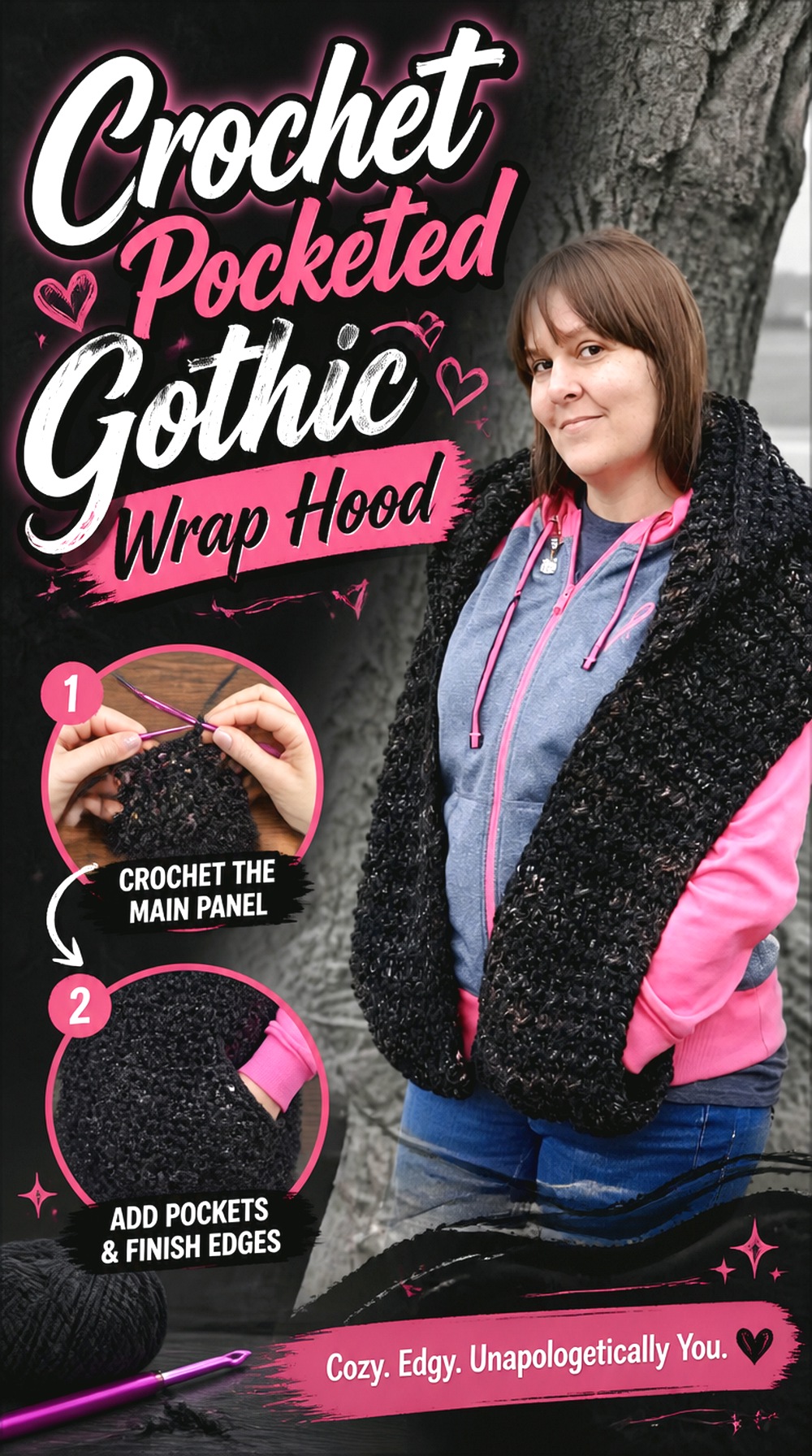
Bag-O-Day Crochet’s hooded scarf adds pockets, turning the accessory into something closer to a wearable wrap than a simple head covering. Those pockets create useful visual weight at the bottom of the scarf and provide another way to distinguish the design from lace-only hoods.
For a gothic interpretation, keep the high-wear functional areas comparatively substantial and move the more delicate treatment toward the hood border or outer scarf edges. This approach works well if you want the romantic appearance of a lace-framed hood but still expect the lower scarf to be handled frequently.
Pockets Make This a Garment-Like Accessory
Once pockets are involved, scarf width and length affect more than appearance. Check where the pocket area actually falls on the wearer rather than assuming the source placement will transfer after changing yarn or adding a border. If the scarf becomes significantly longer after blocking, the pockets may sit lower than expected and change how comfortably the wrap is used.
Keep Open Lace Away From High-Wear Pocket Areas
Pocket edges receive repeated pulling from hands and whatever is placed inside. Very open or delicate stitches can distort more noticeably there than along a purely decorative border. If lace is central to the concept, use a stable pocket body and introduce openwork farther away. This separation also makes the ornamental areas stand out instead of asking every part of the scarf to perform the same job.
Check Scarf Length Before Adding Heavy Edging
A wide lower border adds both length and weight. Try the completed structural scarf before deciding how deep the gothic edging should become. If the pocket already sits near the desired level, adding a large lace section beneath it may create awkward proportions. A narrow border around multiple edges can sometimes give a stronger finished frame with less added length.
Original Tutorial and Creator Credit
Creator: Bag-O-Day Crochet
8. Crochet Rounded Pocket Hooded Scarf
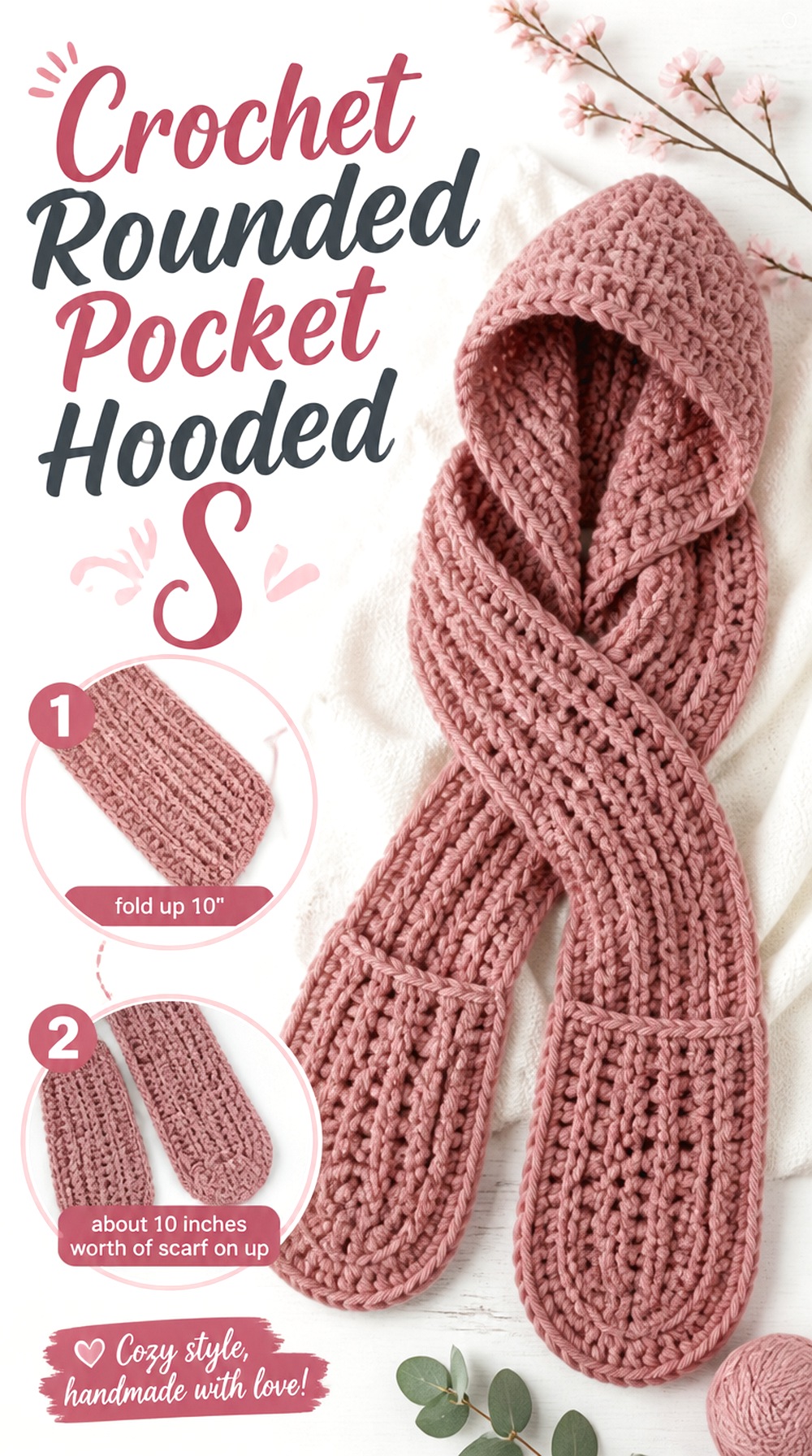
Naztazia’s hooded pocket scarf offers another functional scarf format, but it provides a useful contrast for readers interested in a softer, rounded hood profile. A rounded back changes the impression significantly: instead of exaggerating a pointed or pixie-like shape, it can make an ornate face border the main gothic feature.
This is a strong option when you prefer recognizable scarf practicality but do not want an extremely sculptural crown. An applied lace edge can follow the curved opening, while the pockets and central scarf fabric remain denser for everyday handling.
A Rounded Hood Reads Softer Than a Pointed Back
Crown shape influences the whole mood of a gothic hood. Rounded construction produces a quieter outline and leaves more visual attention for the face frame, color contrast, or scarf ends. If your goal is a severe pointed silhouette, choose another base rather than trying to force a rounded hood into that shape with edging alone. Let the source geometry work with the intended style.
Pocket Openings Need More Stability Than Decorative Borders
The top of a pocket is repeatedly stretched when hands enter and leave. Treat it differently from the lace around a hood opening. Even if both areas use the same accent color, the pocket edge can stay firm while the face border remains more ornamental. This small distinction helps the finished project feel designed for actual use instead of applying identical decoration everywhere.
Original Tutorial and Creator Credit
Creator: naztazia
9. Crochet Ribbed Woodland Gothic Hooded Scarf
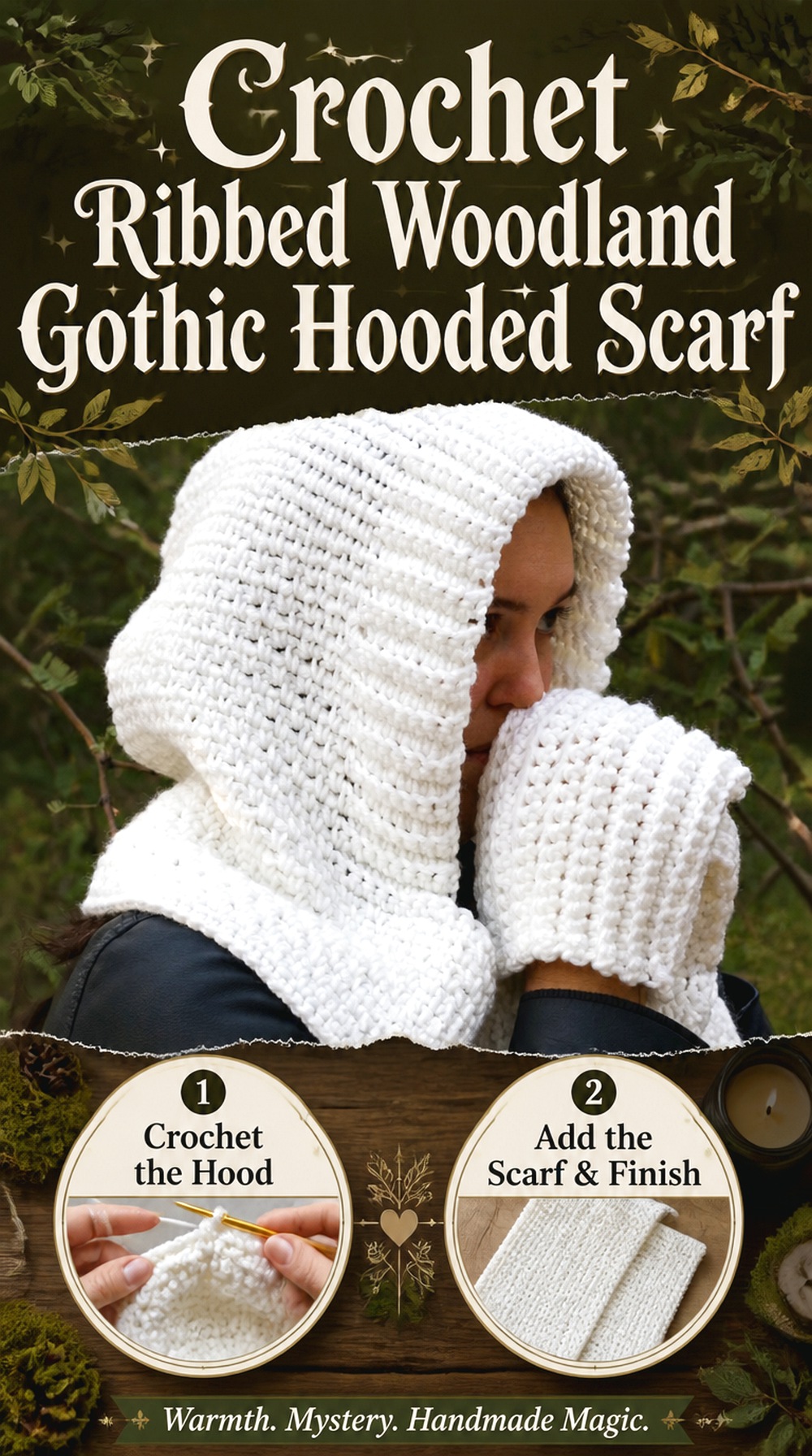
The Winding Road Crochet hooded scarf provides another pocketed option, but its strong linear texture gives this interpretation a different direction. Instead of making lace the dominant fabric, use the denser vertical or ribbed appearance as a visual counterpoint to a delicate border. The result can feel more woodland-gothic than veil-like, especially when the long scarf shape remains clearly visible.
This concept suits readers who like ornamental detail but still want substantial texture across most of the accessory. The contrast between firm lines and an open edge can be more readable than combining several complicated lace textures.
Ribbed Texture Can Ground a More Ornate Lace Accent
Raised or directional texture already gives dark yarn visual interest. Rather than covering it with multiple motifs, choose one location for the lace—perhaps the face edge or scarf ends—and allow the ribbed body to act as the quieter background. When swatching very dark colors, look at the fabric under ordinary indoor lighting as well as bright daylight; subtle texture may disappear more readily than expected.
Long Vertical Lines Change How the Hooded Scarf Hangs
Directional texture naturally draws the eye down the scarf. A wide horizontal lace border at the ends can provide a deliberate visual stop, while a narrow edge running the entire length will emphasize height even more. Decide which effect you want before adding trim. Otherwise the accessory can become visually busy because the base texture and edging are pulling the eye in competing directions.
Original Tutorial and Creator Credit
Creator: Winding Road Crochet
10. Crochet Panel Built Lace Trim Balaclava

Cherilyn Q’s balaclava tutorial uses a construction that makes the major fit zones easy to see: crown, seams, face edge, and lower section are visually distinct during assembly. That clarity is helpful for a gothic adaptation because you can decide where decoration belongs without treating the entire balaclava as one undifferentiated surface.
A narrow black-on-black lace trim could soften the face opening, while the panels themselves remain substantial. This design is better suited to controlled detail than a large draping border because the fitted silhouette depends on keeping the fabric close to the head.
Panel Construction Makes Fit Easier to Diagnose
When a hood is assembled from defined sections, you can often tell whether excess fabric originates at the crown, side, or lower edge. That is useful if you change yarn or texture. Try the structural version before committing to a permanent decorative border. If the fit already needs adjustment, solve that problem first rather than expecting edging to hide excess width or insufficient depth.
Reserve Lace for the Face Edge Rather Than the Crown
The crown is stretched and shaped in several directions during wear, while a narrow face border can be more decorative without carrying the same load. Keeping large openwork away from the top also avoids making the balaclava dramatically more transparent where coverage may matter most. If you want additional gothic detail, repeat a small motif at the neck rather than opening the whole crown.
Seam Placement Matters Under a Close-Fitting Hood
A seam that feels unobtrusive in the original fabric may become bulkier if decorative joins or thick applied motifs are added. Run your fingers over potential embellishment areas from the inside before deciding where to place them. Anything sitting directly against the forehead, temple, or back of the head deserves more scrutiny than decoration on an outer scarf edge.
Original Tutorial and Creator Credit
Creator: Cherilyn Q
11. Crochet Granny Lace Patchwork Hooded Scarf
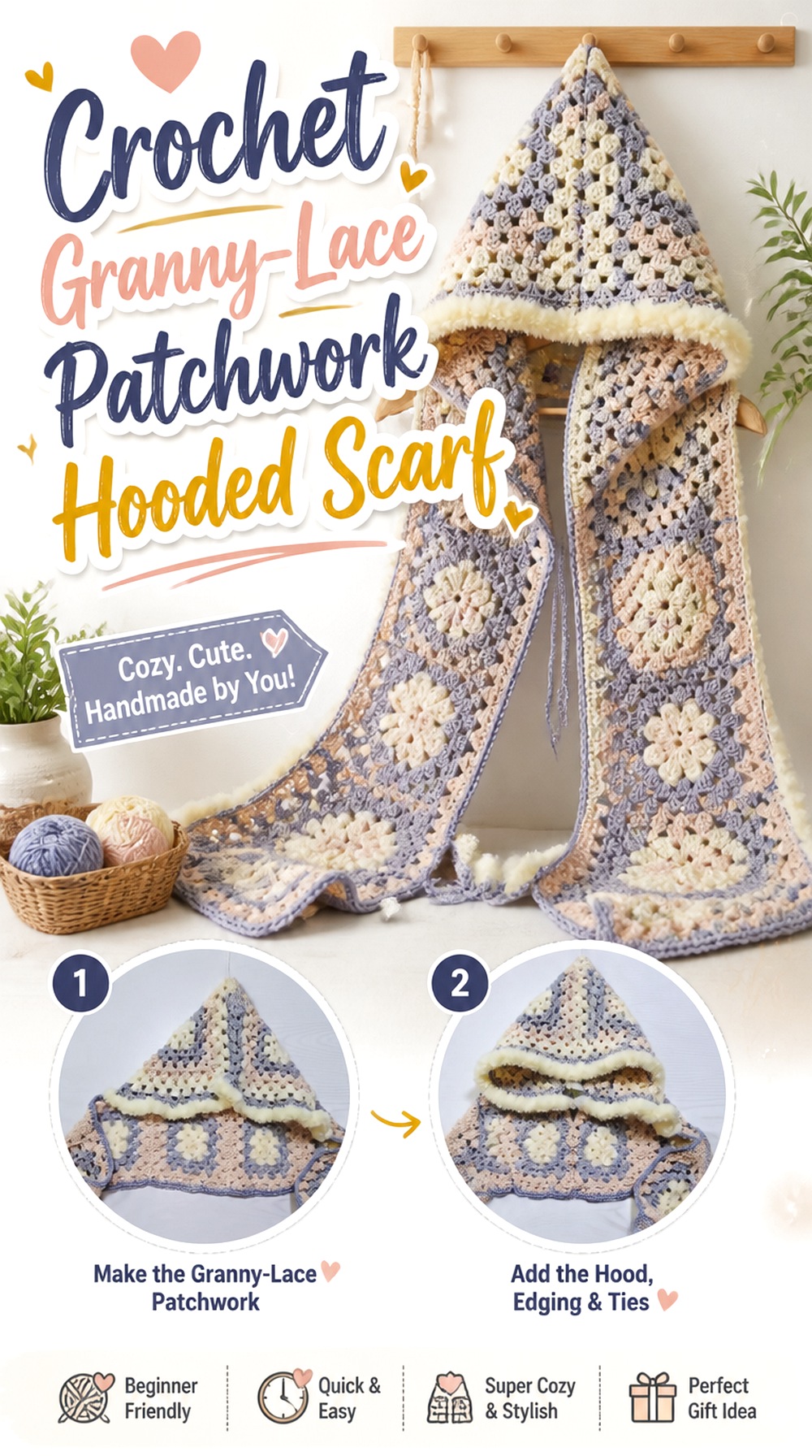
Crochet Musings uses large and smaller granny squares to create a hooded scarf, making this one of the most natural bases for a gothic motif treatment. Because the accessory is assembled from visible modules, the design can carry contrasting centers, open corners, web-like color placement, or selectively ornate squares without requiring every motif to be identical in appearance. The source specifically describes a hooded scarf built from large and smaller granny squares.
This idea differs from a fitted motif balaclava because the scarf remains a major part of the finished piece. The modular construction is the visual feature rather than a hidden structural method.
Motif Scale Controls the Whole Hood Geometry
A square is not merely decoration when it forms part of the hood itself. Its blocked width affects the size of the surrounding panel, so substituting a gothic motif requires more than matching stitch count. Compare the finished, blocked dimensions of the replacement square with the source motif. If they differ, correct the size before joining rather than hoping seams or edging will absorb the discrepancy.
Keep Granny-Square Openings Consistent Before Joining
Two motifs can measure the same across while having very different edge density. One may have large open spaces near the corners and another may have a firm border. That difference can make joining uneven or produce gaps at the transition. Before committing to a mixed gothic layout, place blocked motifs side by side and compare both dimension and edge structure.
Use Gothic Contrast Through Layout, Not Just Dark Yarn
The modular format allows gothic character to come from placement. A repeated dark center, alternating open and dense squares, or a concentrated motif around the hood can create hierarchy without requiring every square to be complex. Plan the full front-and-back arrangement before joining so that the strongest motifs appear intentionally placed rather than clustering accidentally on one side.
Original Tutorial and Creator Credit
Creator: Crochet Musings
12. Crochet Cabled Cathedral Hooded Cowl
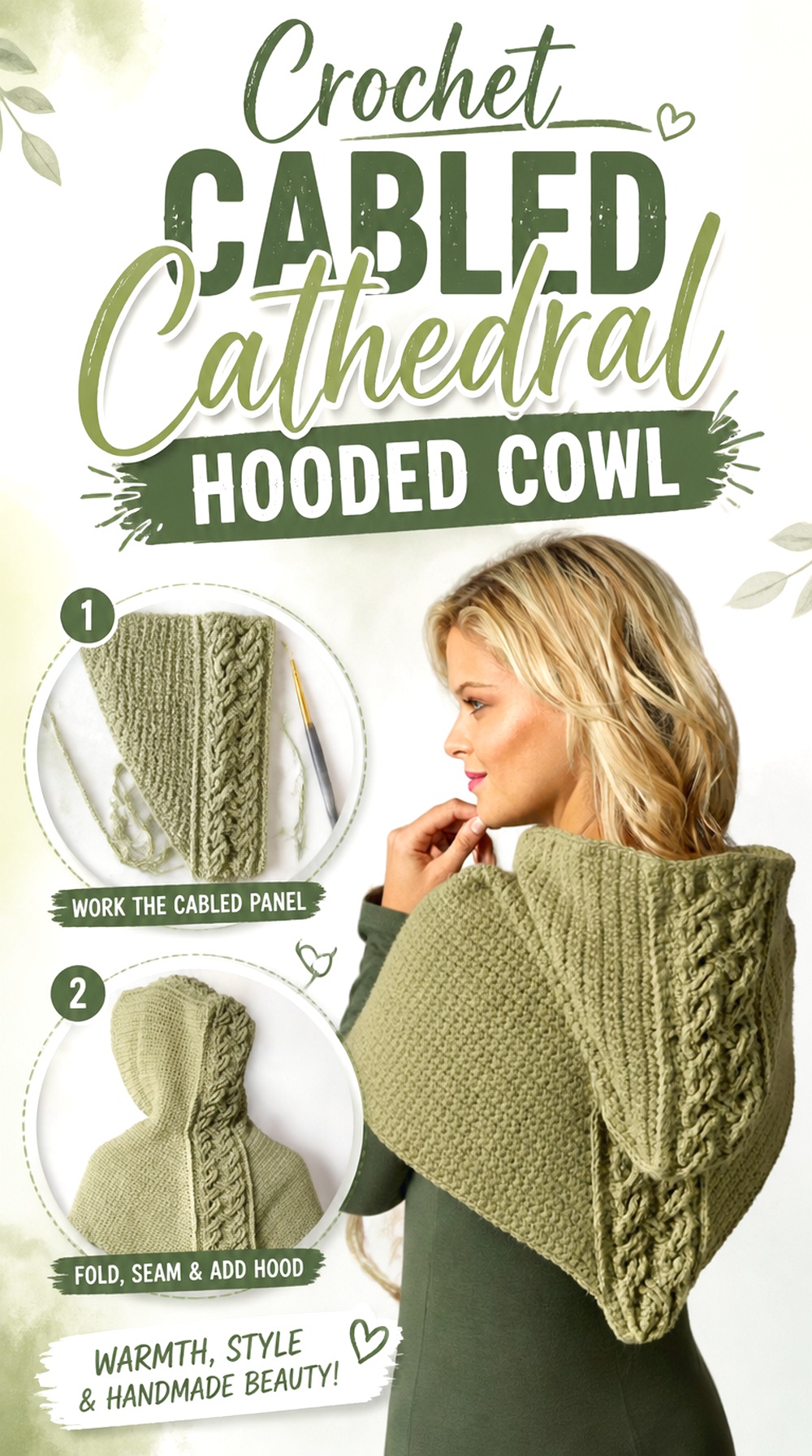
Marly Bird’s hooded-cowl video centers prominent cable texture, which can produce a gothic architectural effect without relying on open lace at all. Raised lines can suggest columns, arches, or carved stonework, especially in a solid dark yarn with enough stitch definition. The video presents a Red Heart hooded cowl design and demonstrates the cable-focused construction.
For this interpretation, lace becomes an accent rather than the main attraction. A restrained open edge can soften the cowl’s lower border or frame the hood while leaving the cables clear and uninterrupted.
Cables Give a Stonework Look Without Open Lace
If the goal is gothic rather than sheer, substantial texture may provide more impact than mesh. Cables need enough visual clarity to read, so inspect your swatch in the actual color you intend to use. Very fuzzy fibers or extremely dark yarn can soften the relief. A simpler yarn surface can make raised structure easier to distinguish even when the overall palette remains dark.
Add Lace Where It Will Not Compete With Raised Texture
A detailed cable panel and a highly complex lace panel placed directly beside one another can fight for attention. Instead, use the openwork as a frame: the outer hood edge or lower cowl perimeter gives it a clear job. Repeating one small element from that border elsewhere can unify the design without covering the areas where the dimensional cable texture is strongest.
Original Tutorial and Creator Credit
Creator: Marly Bird
13. Crochet Sculpted Gothic Hooded Cowl
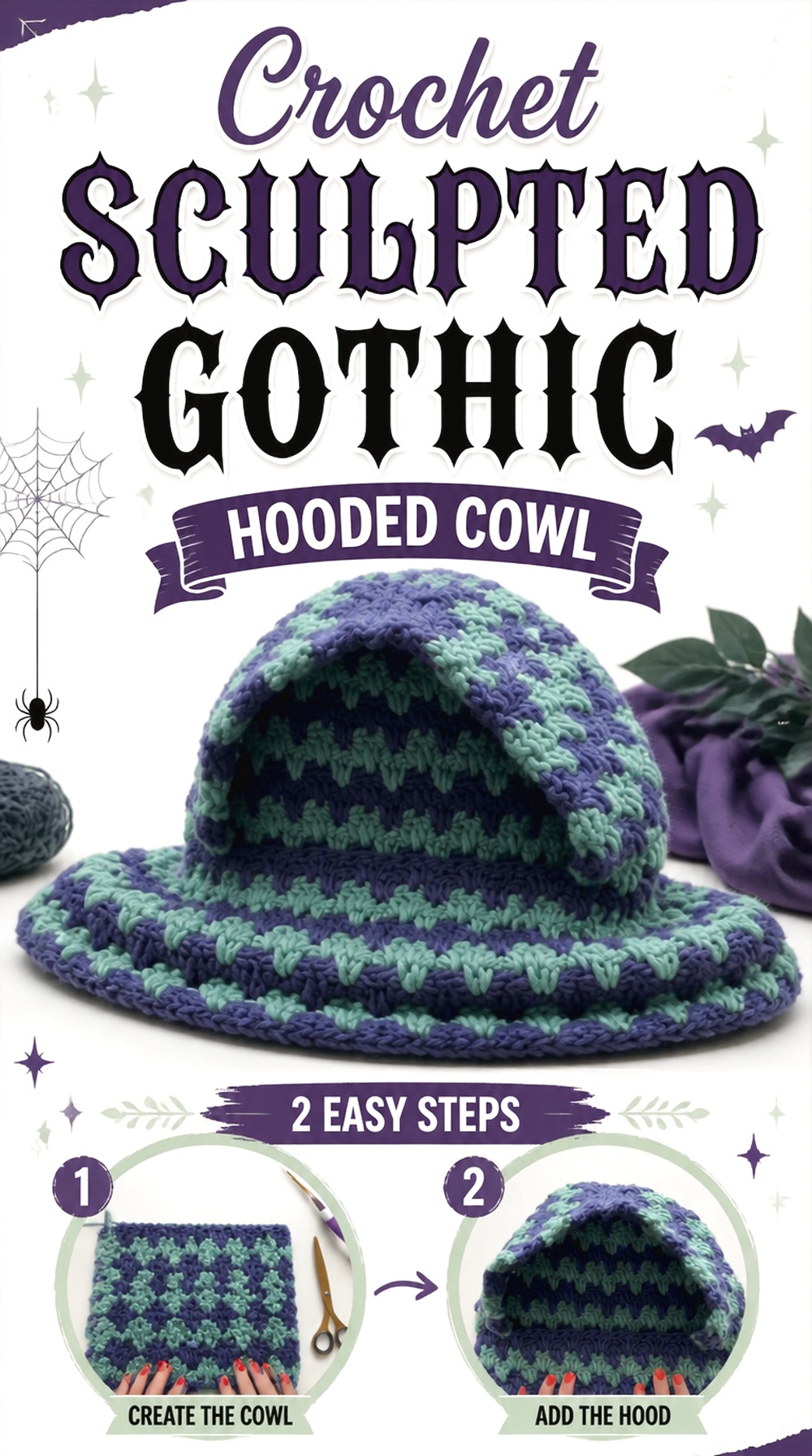
Blue Star Crochet | Veronika Cromwell’s Leo Cowl offers a compact hooded-cowl format with pronounced texture rather than hanging scarf tails. That makes it a practical reference for a gothic hood intended to sit as a self-contained neck-and-head accessory. The cowl remains visually connected to the hood, so the lower section can support the silhouette even when the hood is worn down.
A gothic adaptation could keep the textured body intact and create contrast through a simpler open rim or carefully controlled two-tone treatment. This suits readers who want drama concentrated near the face rather than extending down the torso.
A Textured Cowl Can Carry the Hood Without Long Scarf Tails
Removing scarf ends changes both movement and styling. There is less fabric to arrange over a coat, but the neck section becomes more important because it is always visible. Decide whether you want the cowl to stand closer to the chin or fold lower before increasing its depth. Extra rows or a large border can substantially change that relationship.
Two-Tone Planning Can Clarify the Hood Line
Color contrast is most effective when it reinforces construction. A different tone around the opening can define the face while leaving the main cowl visually unified. If the base already contains strong texture, avoid dividing every section into separate colors. One deliberate contrast zone usually reads more clearly than frequent color changes, particularly when lace or surface texture is already contributing detail.
Original Tutorial and Creator Credit
Creator: Blue Star Crochet | Veronika Cromwell
14. Crochet Striped Chapel Scoodie
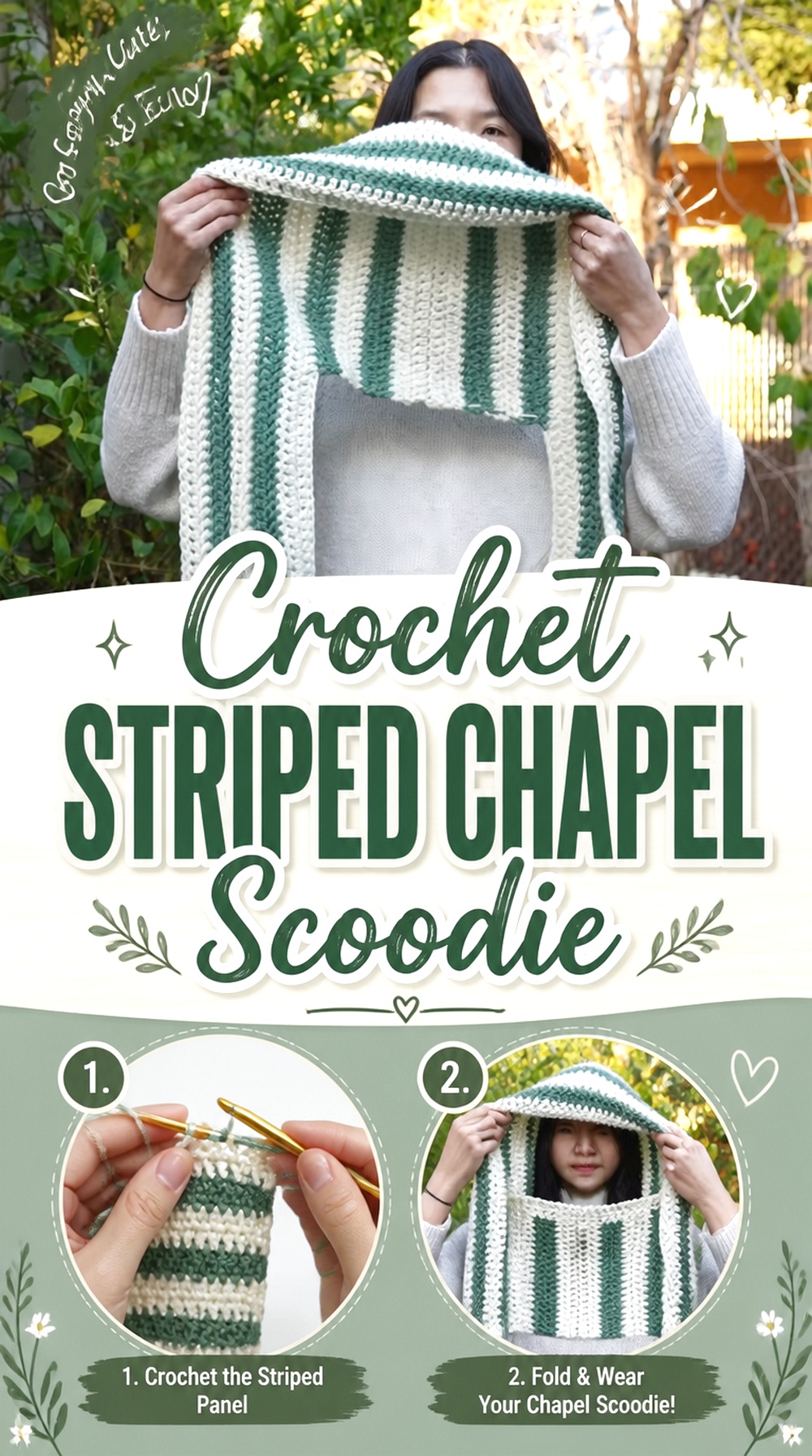
VivCrochets combines a hood and scarf in a striped scoodie format, giving this idea a graphic rhythm that can be pushed in a gothic direction without relying solely on lace. Alternating dark neutrals, muted wine tones, or another restrained palette can create banded architectural lines, while a delicate border adds a separate ornamental layer. The source video demonstrates a striped hooded scarf and describes a no-sew approach.
This is a useful choice if solid black tends to obscure the stitch definition you want to show. Strategic contrast can make the silhouette and edge treatment more visible.
Stripes Can Act Like Architectural Bands
Stripe placement can reinforce the shape of the accessory instead of functioning as random color decoration. On a long scarf, horizontal changes break up the vertical length; around a hood, they can emphasize curvature. Before adding a lace border, decide whether it should match the darkest stripe, the lightest accent, or a separate neutral. Too many competing contrasts can make a relatively simple construction appear fragmented.
A No-Sew Shape Makes Edge Customization More Visible
When the main silhouette has fewer obvious assembly interruptions, the outer edge becomes more noticeable. That makes finishing especially important. Lay the hooded scarf flat after the structural work is complete and inspect whether the edge is already smooth. An ornamental trim tends to magnify unevenness rather than hide it, so correct visible tension problems before turning the perimeter into the focal point.
Original Tutorial and Creator Credit
Creator: VivCrochets
15. Crochet Textured Arco Gothic Hooded Scarf
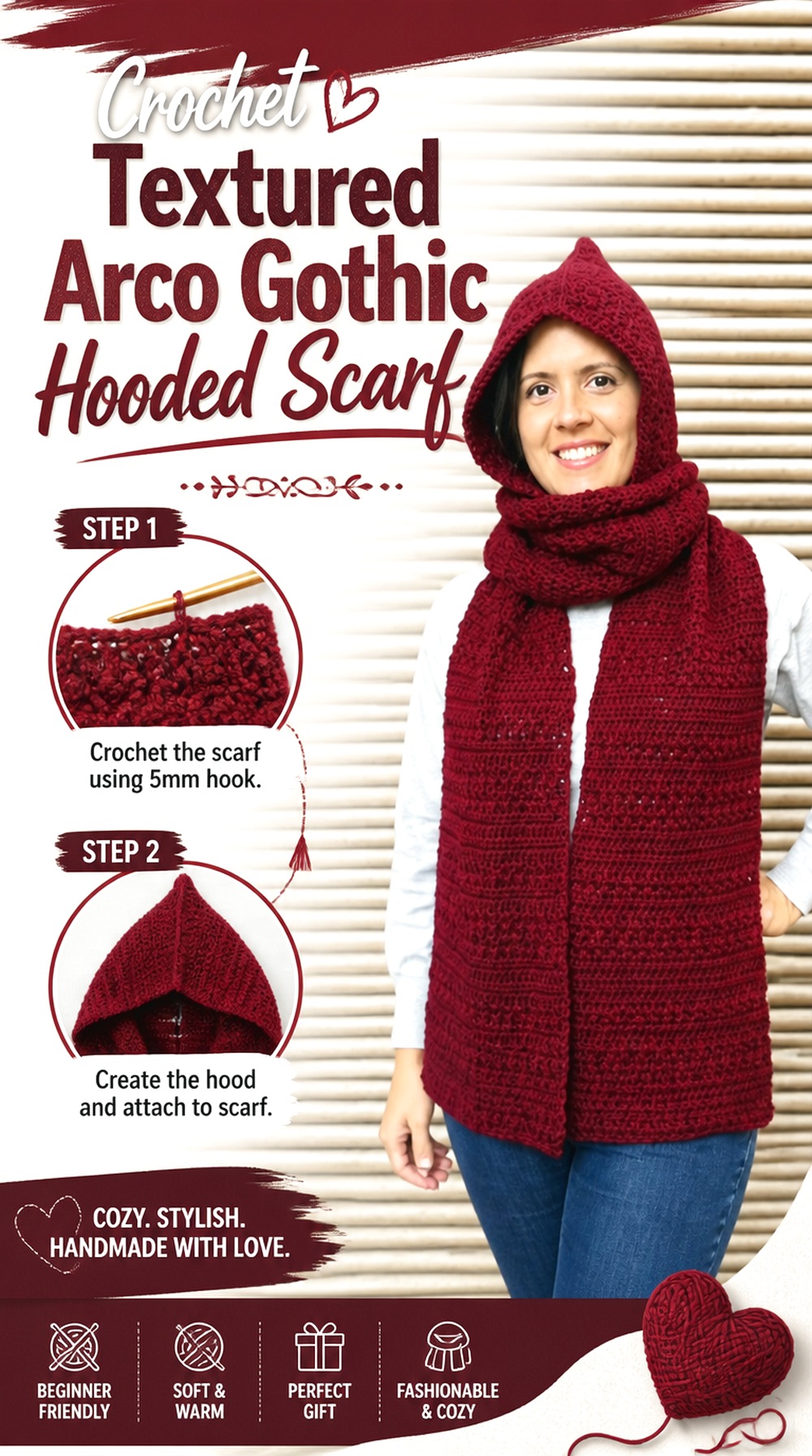
ChristaCoDesign’s Arco scarf with hood uses a one-piece textured format, making continuity the main attraction. Instead of a hood that looks visually attached to a separate scarf, the accessory can read as one flowing piece from head to lower edge. The tutorial specifically presents a one-piece textured hooded scarf.
For a gothic treatment, that uninterrupted shape is worth protecting. Rather than inserting unrelated lace blocks throughout, use an edge treatment that follows the same continuous line. It creates ornament without breaking the design into too many competing sections.
One-Piece Construction Keeps the Silhouette Continuous
A continuous build creates long visual lines, so major changes in texture become more obvious. Before inserting an open section, ask whether you want it to interrupt that flow or reinforce it. A border that follows the entire outer edge generally supports the one-piece concept, while an isolated lace rectangle can look more like an added patch unless its placement has a clear purpose.
Texture Changes How Black or Very Dark Yarn Reads
Dark yarn can flatten subtle texture in photographs and low light. If the Arco-style surface is part of what attracted you, make a generous swatch in the actual color rather than relying on a lighter sample. If the relief nearly disappears, consider a yarn with clearer stitch definition or allow the lace border to have larger openings so the two textures remain distinguishable.
Plan Lace Additions Before the Final Edge Is Finished
An applied border affects the finished width, length, and sometimes the way a scarf curls. Decide on the ornamental treatment before completing every finishing decision on the base. You do not need to predict exact dimensions, but you should know whether the border is intended to be narrow and structural or broad and draping. That choice affects how the finished scarf will frame the body.
Original Tutorial and Creator Credit
Creator: ChristaCoDesign
16. Crochet Deep Cowl Lace Edge Hood
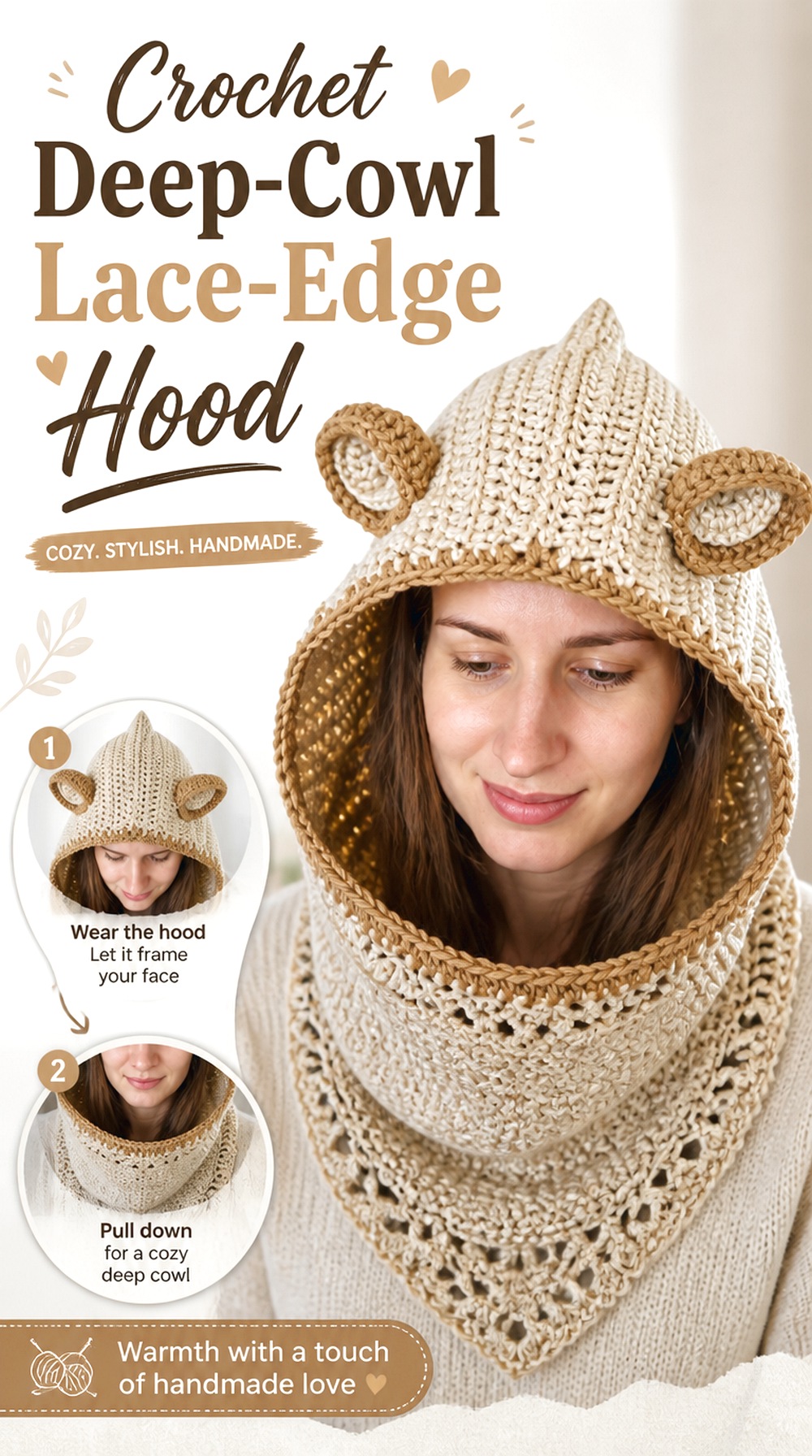
Crochet with Clare’s hooded cowl provides a straightforward compact foundation for readers who want to make the outer edge—not the construction—the main gothic feature. A simple hood-and-cowl shape can be a strength here because it leaves visual room for a scalloped, pointed, or open ornamental rim.
Unlike long scarf versions, this design keeps all of the fabric near the shoulders and neck. That makes it easier to wear beneath a coat, but it also means any broad edging will gather in that same area when the hood is lowered.
Deep Cowl Volume Lets the Hood Collapse Gracefully
A hooded cowl should still look intentional when it is not on the head. Observe how the base fabric falls behind the neck before deciding how stiff or elaborate the trim should be. A flexible edging can fold with the cowl; a very firm one may stand away from the body. Neither is inherently wrong, but they create noticeably different silhouettes.
A Narrow Lace Border Preserves the Simple Construction
If the base design appeals because it is visually clean, an oversized border can erase that advantage. A narrow open edge around the hood and perhaps the cowl hem gives enough ornament to establish a gothic direction without turning every surface into lace. This is also a useful approach when you are uncertain how much the decorative stitch will stretch after blocking.
Original Tutorial and Creator Credit
Creator: Crochet with Clare
17. Crochet Granny Motif Gothic Balaclava
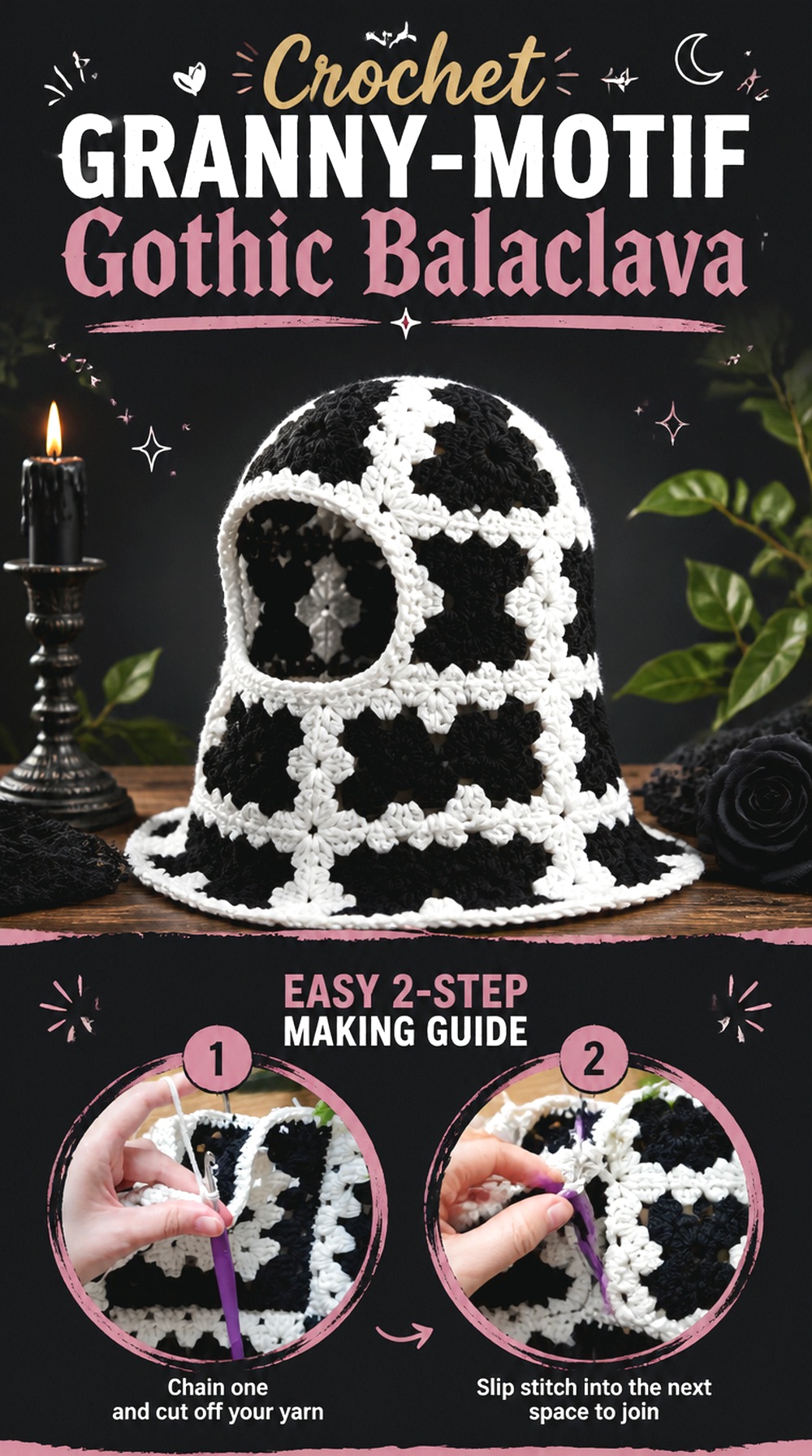
Day la hanh’s granny-square balaclava turns the motif itself into the headwear rather than attaching squares to long scarf sections. That produces a compact patchwork silhouette with far more visual geometry around the face and crown. The tutorial focuses on a granny-square balaclava, making it a strong reference for readers who want gothic motifs to define the entire hood rather than appear only at the edge.
This is the place to explore deliberate motif orientation, high-contrast centers, or web-like negative space. Because the piece is fitted, however, motif dimensions need closer attention than they would on a loose decorative scarf.
A Fitted Motif Grid Creates a Different Gothic Mood
A motif balaclava feels graphic and assembled rather than flowing. If that patchwork character is what you want, emphasize it instead of hiding joins under heavy trim. Strong borders between motifs can create a stained-glass or paneled effect, while lower-contrast joins produce a quieter surface. Decide which visual language suits the intended gothic style before choosing the motif colors and borders.
Check Square Placement Around the Face Opening
Motifs sitting beside the cheeks or forehead are more visually prominent than squares farther back. Arrange the completed pieces around a face-shaped opening before permanently joining them so that important centers or directional designs are oriented intentionally. If a motif has a clear top and bottom, accidental rotation will be much more noticeable here than it would be in an all-purpose blanket.
Block Motifs Before Judging Balaclava Fit
Individual squares can change dimensions after blocking, and even small differences become significant when several motifs surround a head. Block the intended components consistently before deciding whether the grid is too narrow or too wide. This also reveals whether one design stretches more than another if you are mixing motifs. Matching blocked dimensions is more useful than comparing them straight from the hook.
Original Tutorial and Creator Credit
Creator: day la hanh
18. Crochet Close Fit Veil Trim Balaclava
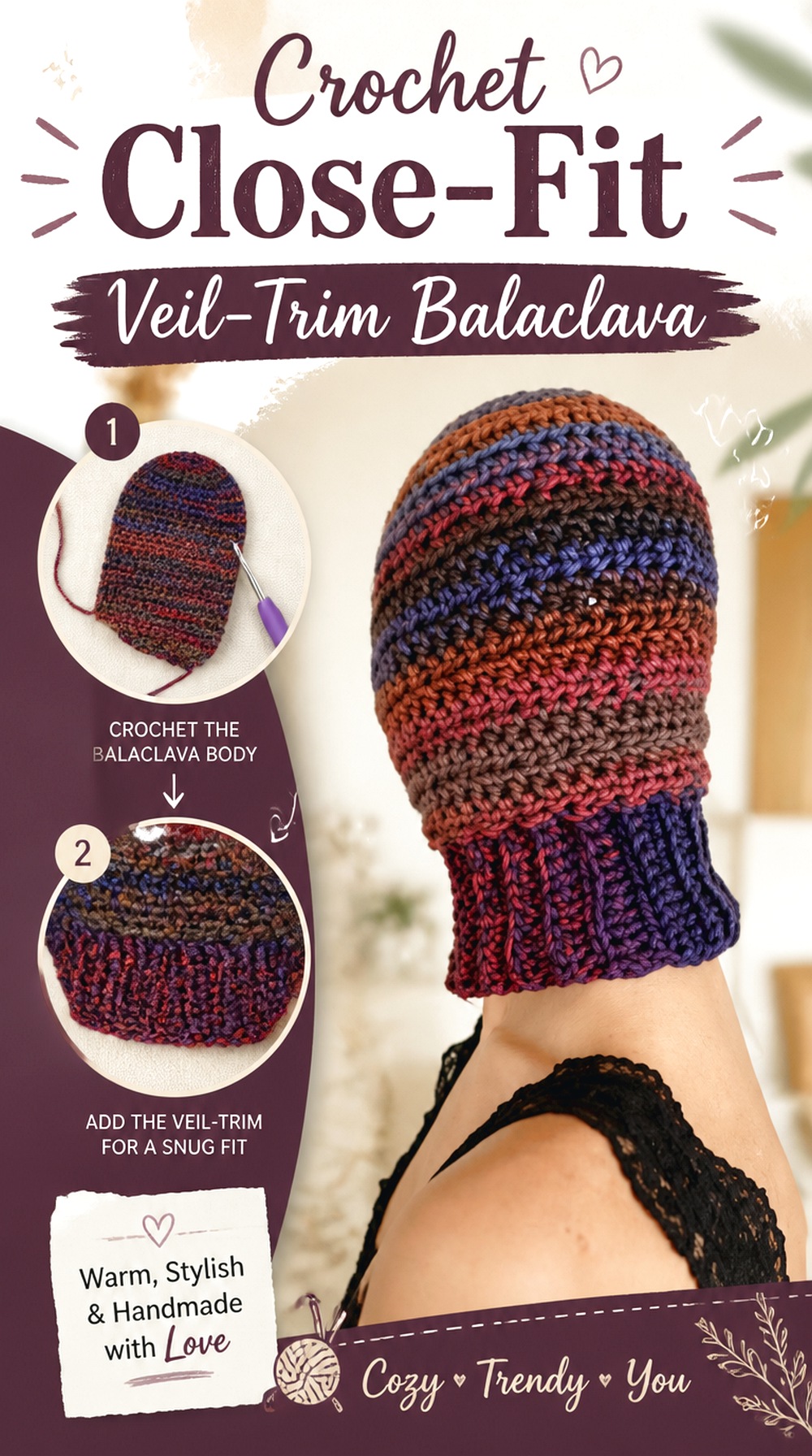
Brittanyalicecrochet’s balaclava tutorial provides a comparatively simple fitted foundation, making it useful when the intended gothic detail is a face-framing trim rather than complicated construction. A clean close-fitting hood can support a narrow veil-like edge, pointed lower border, or contrasting openwork accent while keeping the crown visually restrained.
Because there are no long scarf tails to absorb design changes, every added element affects the head-and-face silhouette directly. This concept therefore works best with lighter decoration and careful fit checks rather than a very deep lace treatment.
Close Fit Leaves Little Margin for Bulky Trim
A heavy face border can change where a fitted opening sits against the skin. Before attaching anything substantial, hold or pin a sample of the proposed edging around the hood opening and try the piece in its normal position. If the trim pushes into the cheek, glasses, or forehead, reduce its depth rather than assuming repeated wear will solve the problem.
Veil-Like Edging Works Better When It Stays Light
The visual goal of a veil edge is movement and negative space, not thickness. Choose a treatment whose weight is small relative to the base hood. If the sample causes the opening to pull downward, it is no longer acting as a light frame. A narrower repeat or fewer decorative additions can preserve the delicate gothic look while allowing the fitted balaclava to keep its intended shape.
Original Tutorial and Creator Credit
Creator: brittanyalicecrochet
19. Crochet Halo Edge Hooded Cowl
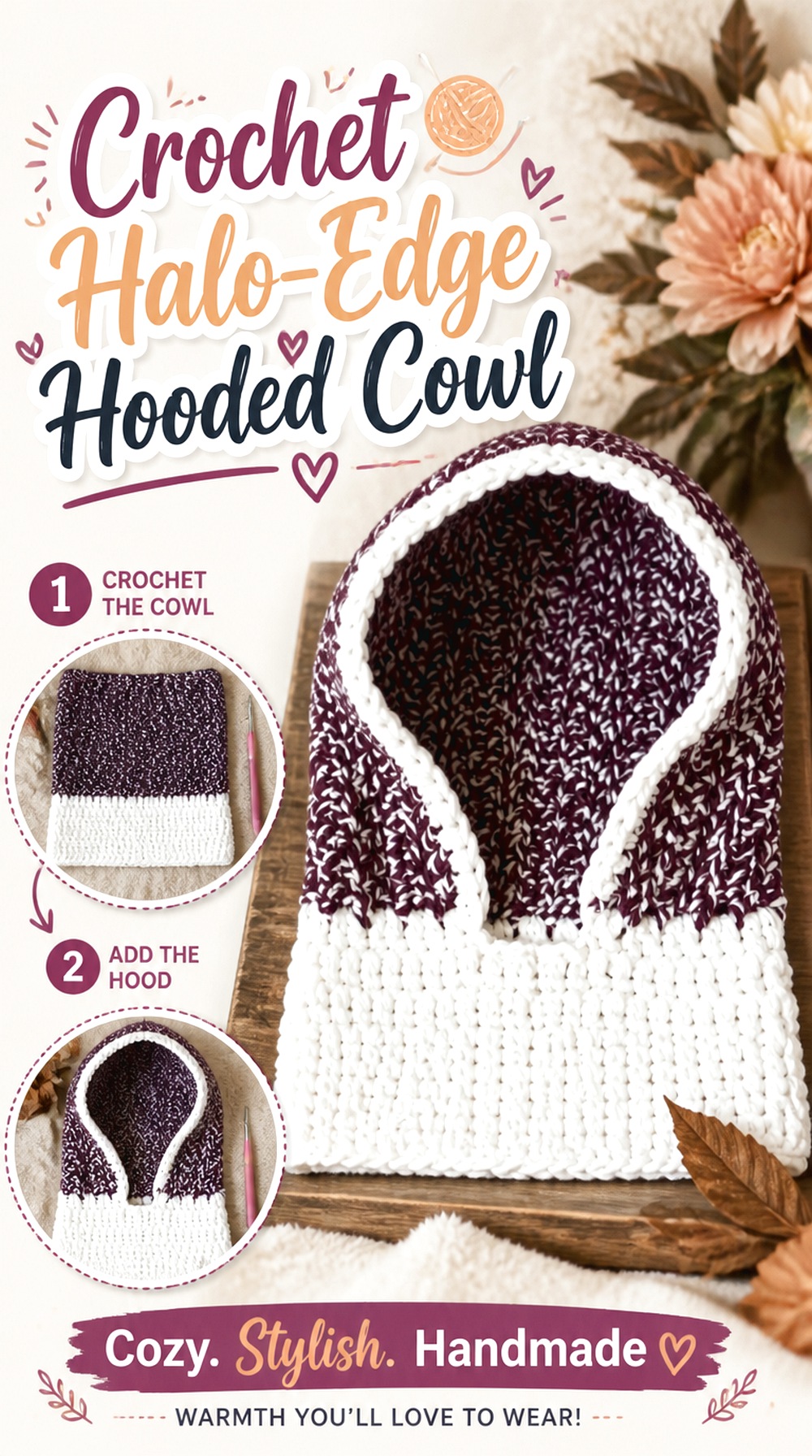
ThePatternfamily’s hooded-cowl tutorial provides a classic cowl-and-hood shape that can function as a neutral base for a strong ornamental outer rim. Rather than introducing lace throughout the body, this concept concentrates the gothic element around the opening so it resembles a textile halo when viewed from the front. The source is a full public hooded-cowl video rather than a short-form clip.
This final option suits readers who want a recognizable hood that can still be transformed visually through finishing. It also provides a useful contrast to the fitted balaclavas and long scarf constructions earlier in the collection.
A Classic Hooded Cowl Is a Flexible Gothic Base
A relatively simple silhouette can take several stylistic directions without changing its essential function. Before choosing the trim, decide whether you want the hood to look ecclesiastical, romantic, witchy, or sharply graphic. Those moods suggest different proportions. A tiny scallop creates a subtle frame, while a deep pointed treatment becomes one of the main visual features of the entire accessory.
Use the Outer Rim as the Decorative Focal Point
Framing the perimeter keeps the eye around the face and hood instead of dispersing detail across the cowl. Test the border on a separate swatch first and check how it curves; some flat edgings may flare or tighten when forced around a rounded opening. If the sample does not follow a curve comfortably, choose a dirent edging concept rather than forcing the base hood out of shape.
Creator: ThePatternfamily
Which Gothic Hood Construction Should You Choose?
| Construction | Strongest Visual Quality | Useful When You Want | Main Adaptation Check |
|---|---|---|---|
| Fitted balaclava | Defined face framing | A compact hood that stays close | Lace stretch around the opening |
| Hooded cowl or snood | Neck folds and drape | A cloak-like or veil-like silhouette | Bulk when the hood is lowered |
| Long hooded scarf | Vertical movement | Lace tails, wraps, or dramatic length | Added trim weight and final length |
| Pocket hooded scarf | Garment-like function | Hand coverage plus a hood | Keep pockets structurally stable |
| Granny-motif hood | Graphic geometry | Patchwork or stained-glass effects | Match blocked motif dimensions |
| Cable or textured hood | Architectural surface | Gothic character without much openwork | Make sure dark yarn still shows relief |
The most adaptable option is not necessarily the most elaborate. Choose the construction based on where you need stability, then use lace to emphasize areas that can tolerate extra openness. A fitted balaclava benefits from controlled borders, while a scarf tail or loose cowl offers considerably more freedom for large decorative sections.
Conclusion
For a close, face-framing gothic hood, the fitted balaclavas give you the clearest starting point. Choose a snood or hooded cowl if soft neck folds and veil-like drape matter more, and look to the long hooded scarves when you want ornamental tails or pockets to become part of the outfit. Motif-built options create the strongest patchwork statement, while cables and dense texture can produce gothic depth without making the fabric highly open.
Whichever silhouette you choose, preserve the structural areas first and place lace where its stretch and weight are easier to manage. Use the original tutorials for their exact construction details, then make your gothic changes only after checking fit, fabric behavior, and finishing.
Frequently Asked Questions
Can I replace the main fabric in any crochet hood tutorial with a lace stitch?
Not reliably. A lace stitch may have different stretch, width, vertical growth, and transparency from the fabric used in the source tutorial. Those changes become especially important around a fitted crown or face opening. A safer approach is to swatch the proposed lace, compare its blocked behavior with the original fabric, and use it selectively if the difference is substantial. Borders and scarf ends usually allow more flexibility than structural crown sections.
What kind of yarn works for a draped gothic lace hood?
There is no single fiber or yarn weight that fits every hood. For a loose snood or scarf hood, look for fabric that bends and folds in the way you want after blocking. A fitted balaclava may benefit from more controlled recovery. The useful test is the fabric, not the label alone: crochet a sample in the intended stitch, block it according to the yarn’s care guidance, and compare drape, stretch, and stitch definition.
How can I keep black crochet lace from looking visually flat?
Use stitch structure that remains readable in low contrast. Larger negative spaces, pronounced relief, clearly defined borders, or a combination of dense and open areas are often easier to see than several subtle textures worked together. Examine the swatch under normal indoor light as well as daylight. If the detail disappears, simplifying the lace or choosing a yarn with clearer stitch definition may create a stronger gothic result than adding more complexity.
Should a gothic crochet hood be blocked before I add decorative trim?
Blocking the main hood first can be useful when the yarn and construction respond well to blocking because it lets you judge the settled dimensions before adding the final decorative edge. Motif-built hoods particularly benefit from having squares brought to consistent dimensions before joining or finishing. Always follow the care requirements of the actual fiber, however; do not assume every yarn should receive the same heat, steam, or wet-blocking treatment.
How do I adapt a hood tutorial when I am using a different yarn?
Do not rely only on the hook size or the tutorial’s stated dimensions. Compare a swatch of your fabric with the source construction and measure the actual wearer where fit matters. For modular projects, compare blocked motif size; for balaclavas, pay particular attention to the face opening and head depth; for cowls, judge drape and neck volume. Different yarn can alter all of those characteristics even when the project looks similar on the hook.
Can I add chains, beads, charms, or metal decorations to a gothic lace hood?
They can be decorative, but use them selectively. Extra hardware adds weight and can pull on open crochet, while dangling pieces near the face can catch on hair, jewelry, zippers, or other clothing. Check how an embellishment behaves with the hood both up and down before adding more. For items intended for children or other situations where loose parts create a safety concern, avoid unsecured small or dangling components.