Chocolate brown works especially well for fall crochet because it can move from clothing to home décor without looking tied to only one seasonal theme. A deep cocoa cardigan feels completely different from a compact acorn, textured basket, plaid runner, or pumpkin pillow, even when the same general color family connects them.
This collection focuses on those meaningful differences. You’ll find oversized layers, fitted accessories, functional pieces, small autumn decorations, and larger home projects. The tutorials do not all use chocolate brown in their samples, so think of brown as the color direction rather than a reason to ignore the creator’s yarn specifications. Check yarn weight, gauge, fit, structure, and finishing requirements before substituting materials.
Quick List
- Chocolate Brown Crochet Hexagon Cardigan
- Espresso-Trim Crochet Sweater Vest
- Chunky Chocolate Crochet Granny Square Sweater
- Cocoa Crochet Ruana-Style Poncho
- Dark Chocolate Crochet Autumn Shawl
- Mocha Texture Crochet Scarf
- Chocolate Stripe Crochet Hooded Scarf
- Knit-Look Chocolate Crochet Beanie
- Cocoa Twist Crochet Ear Warmer
- Chocolate Crochet Fingerless Gloves
- Cable-Texture Chocolate Crochet Leg Warmers
- Chocolate Brown Crochet Everyday Socks
- Structured Chocolate Crochet Tote Bag
- Coffeehouse Chocolate Crochet Mug Cozy
- Chocolate Brown Crochet Granny Pumpkin
- Mini Chocolate Crochet Acorn Decor
- Chocolate Crochet Fall Leaf Coasters
- Chunky Chocolate Crochet Fireside Basket
- Chocolate Plaid Crochet Table Runner
- Chocolate Circle Crochet Wall Hanging
- Chocolate Stripe Crochet Fall Blanket
- Chocolate Pumpkin Granny Square Crochet Pillow
Make Chocolate Brown Show Off the Crochet, Not Hide It
A very dark brown can make subtle stitch changes harder to see, especially when the yarn is fuzzy or the finished piece is photographed in dim light. That matters most for cables, ribbing, raised textures, granny clusters, and surface details. If the stitch pattern is the feature, compare yarns under natural light before committing to a large project.
You can also create definition without abandoning the chocolate palette. Espresso, cocoa, camel, cream, mushroom, and warm taupe can sit together as a tonal group. On a plaid runner or striped blanket, a lighter neighboring shade helps the darkest brown read as intentional contrast. For a solid garment, a smoother yarn surface may keep the stitch architecture clearer than a highly fuzzy fiber.
Match Yarn Behavior to the Finished Item
Color is one decision; fabric behavior is another. A cardigan, shawl, or poncho usually benefits from enough flexibility to move around the body, while a tote or basket generally needs more resistance to stretching. Socks and fitted accessories introduce another concern because the fabric has to work with the body rather than simply hang from it.
Start with the yarn weight and fiber information given by the tutorial. If you want to substitute a different chocolate-brown yarn, compare the resulting fabric rather than assuming two yarns labeled with the same weight will behave identically. For wearables, check gauge and drape before making full panels. For bags and baskets, examine whether the finished fabric feels firm enough for your intended use before adding straps or finishing details.
Plan the Brown Palette Before a Multi-Part Project
Solid chocolate can create a calm, minimalist result, but multi-part projects give you more room to control visual weight. A granny sweater could use dark brown as its anchor and warmer tan or cream in selected rounds. A plaid table runner can use chocolate as the dominant stripe with lighter neutrals separating intersecting lines. A pumpkin can stay entirely cocoa brown for understated fall décor.
Before joining motifs or committing to a long color repeat, place several finished sections together in the lighting where the piece will actually be used. Two browns that look separate in the skein can merge once crocheted. This checkpoint is particularly useful for granny squares, stripes, colorwork, and home décor that will be viewed from across a room.
1. Chocolate Brown Crochet Hexagon Cardigan
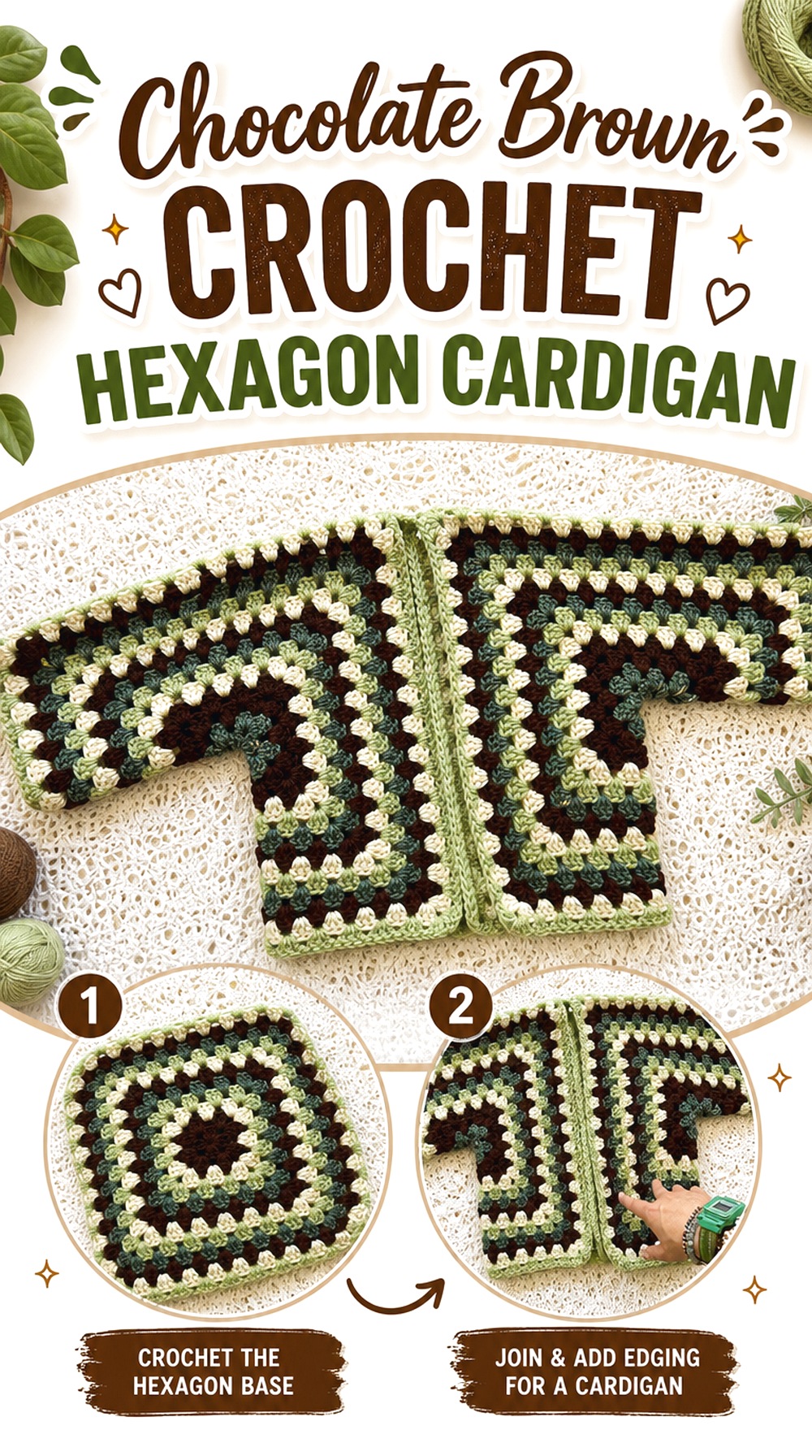
A granny-style hexagon cardigan gives chocolate brown a relaxed, oversized look rather than a polished sweater-vest feel. The recognizable construction creates broad sleeves and an open front, making this a useful choice when you want a fall layer that can sit over T-shirts, tanks, or lighter knits.
Hannah Drapinski’s tutorial shows the hexagon concept in earthy shades and demonstrates finished adult and child versions. In a mostly chocolate palette, the focus shifts toward silhouette and cluster texture. If you use several browns, keep enough tonal separation that the rounds still read clearly instead of blending into one dark surface.
Hexagon Growth Controls More Than Body Width
With this construction style, making the basic shapes larger affects several areas of the garment at once. That makes it important to check the folded piece against your body before assuming that more rounds only mean a wider cardigan. Look at sleeve room, body depth, and the position of the lower edge together.
If your preferred fit is less oversized, compare the tutorial’s finished silhouette with a cardigan you already wear comfortably before continuing the main shapes.
Wide Sleeves Can Change the Whole Fall Silhouette
The generous sleeve shape is part of the appeal, but it also influences layering. A very roomy sleeve can sit comfortably over a thin shirt while feeling bulky under a fitted coat.
For a chocolate-brown version intended as an outer fall layer, that volume may be exactly what you want. If it needs to fit beneath another jacket, pay closer attention to sleeve width before committing to extra length or edging.
Original Tutorial and Creator Credit
Creator: Hannah Drapinski
2. Espresso Trim Crochet Sweater Vest
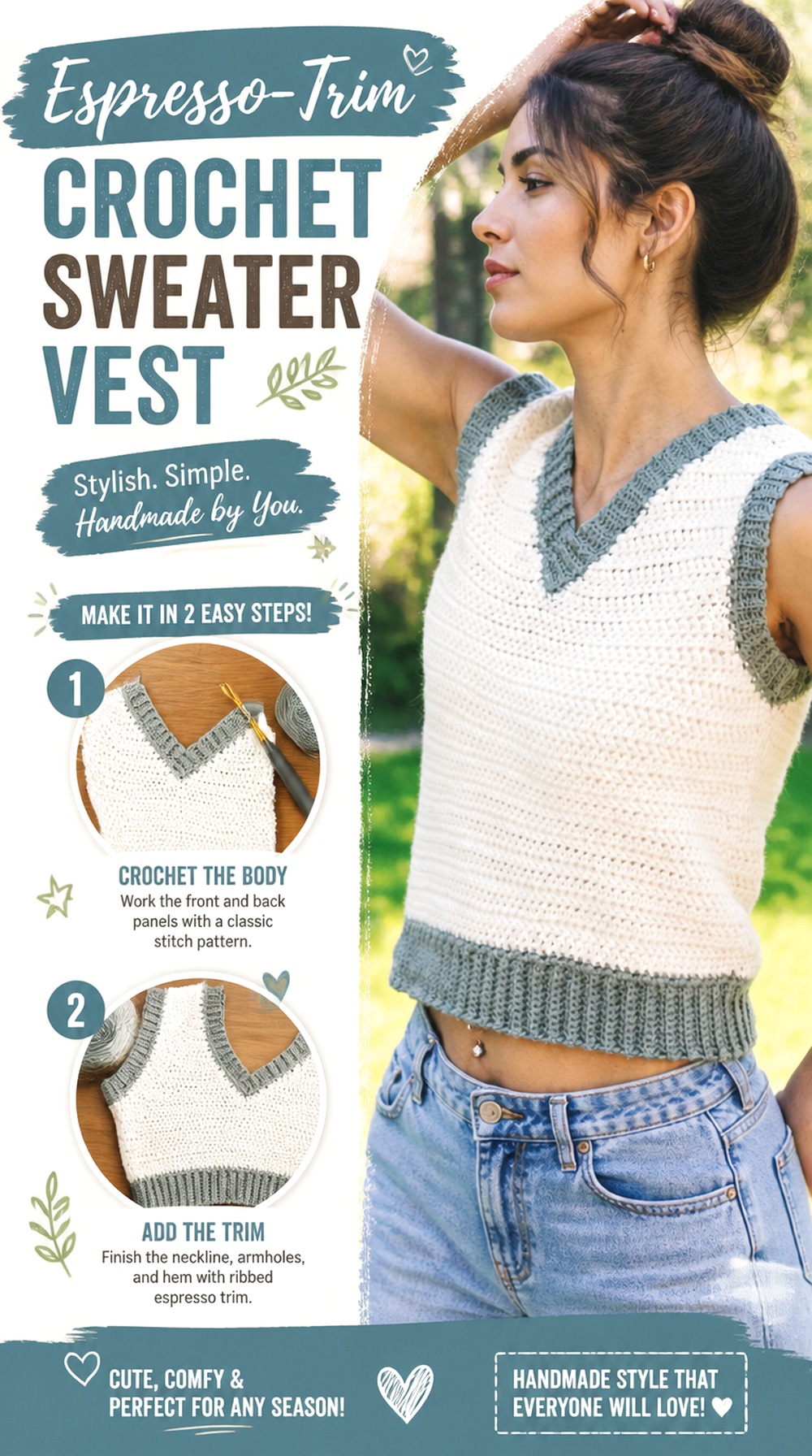
A chocolate crochet vest brings autumn color into an outfit without the weight or sleeve bulk of a full sweater. The Leelee Knits design uses separate front and back panels with defined ribbed finishing, producing a cleaner, more traditional sweater-vest shape than the loose hexagon cardigan above.
Dark brown can work especially well here because the neckline and armhole edges give the silhouette visible structure. You could keep everything one shade for a minimalist look or reserve an espresso-toned contrast for the ribbing. Either way, measure for the fit recommended by the source rather than choosing a size from your usual store-bought label alone.
Armhole Fit Matters More When You Plan to Layer
A vest can look roomy across the body while still feeling restrictive if the armholes do not work with the shirts you intend to wear underneath. Before finishing the edges, consider whether your fall styling will involve a thin tee, collared shirt, or heavier long sleeve.
The thicker the underlayer, the more useful it becomes to evaluate the vest on top of that actual garment rather than over a light fitting top.
Ribbing Frames a Very Dark Brown Fabric
Deep chocolate can visually flatten a simple panel from a distance. The defined neckline, hem, and armhole treatment helps prevent that by giving the garment distinct boundaries.
If you use a slightly darker espresso for the trim, compare the colors after crocheting a small section. Skein-to-skein contrast may look more dramatic than it does once the shades are worked into dense fabric.
Original Tutorial and Creator Credit
Creator: Leelee Knits
3. Chunky Chocolate Crochet Granny Square Sweater
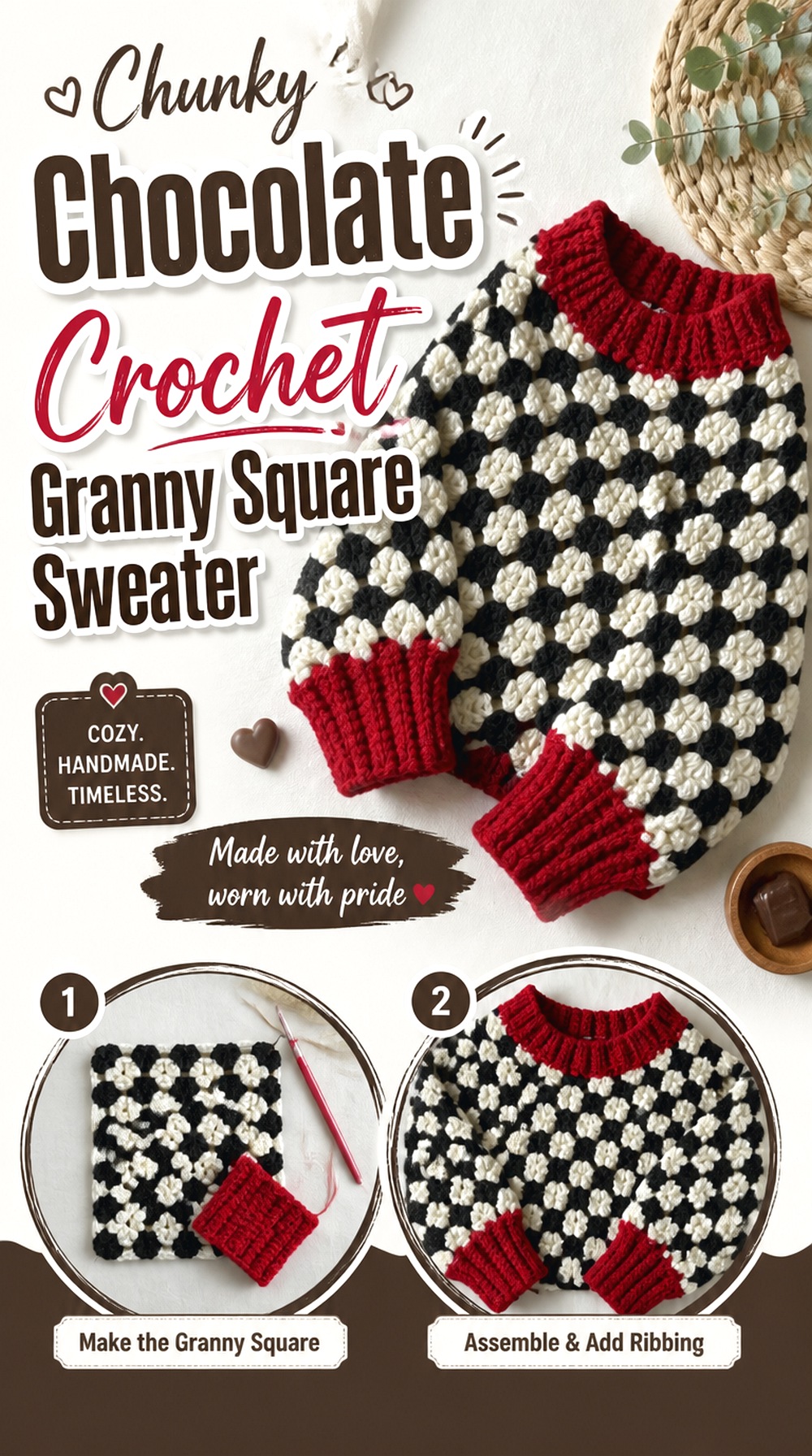
This chunky granny square sweater moves the brown theme in a bolder direction. Rather than letting chocolate function as a quiet neutral, the repeated granny construction makes the yarn itself a graphic element. A dark brown and cream combination would produce a strong vintage feel, while cocoa, caramel, and taupe can create softer tonal blocks.
Because chunky yarn and joined motifs can add substantial visual and physical volume, this option suits readers who actively want a statement sweater. Kenikse Crochet’s tutorial shows a fall sweater made from chunky granny-style sections, making it a strong match for this seasonal idea.
Block the Motifs Before Judging the Panel Width
Individual granny sections can change after they settle or are blocked, and small differences multiply when several pieces are arranged together. Compare finished dimensions before final assembly rather than correcting a mismatch at the seam.
This becomes even more important if you introduce multiple chocolate-toned yarns. Fibers that look similar may relax differently, so make sure the motifs behave compatibly as well as coordinate visually.
Chunky Fabric Changes the Shoulder Line
A heavier-looking granny fabric can make a sweater appear broader through the shoulders than a fine-gauge garment with the same general measurements. That is not automatically a problem—it may be the intended look.
Before adding extra width for an oversized fit, study the tutorial’s final proportions and decide how much visual volume you actually want when the sweater is worn over fall layers.
Keep the Brown Color Sequence Purposeful
A random arrangement can work, but a restricted chocolate palette often looks stronger when one shade clearly dominates. Try laying the motifs out before joining them and look for accidental dark clusters.
If one side appears visually heavier, move a few lighter cocoa or cream motifs rather than waiting until the entire sweater is assembled.
Original Tutorial and Creator Credit
Creator: Kenikse Crochet
4. Cocoa Crochet Ruana Style Poncho
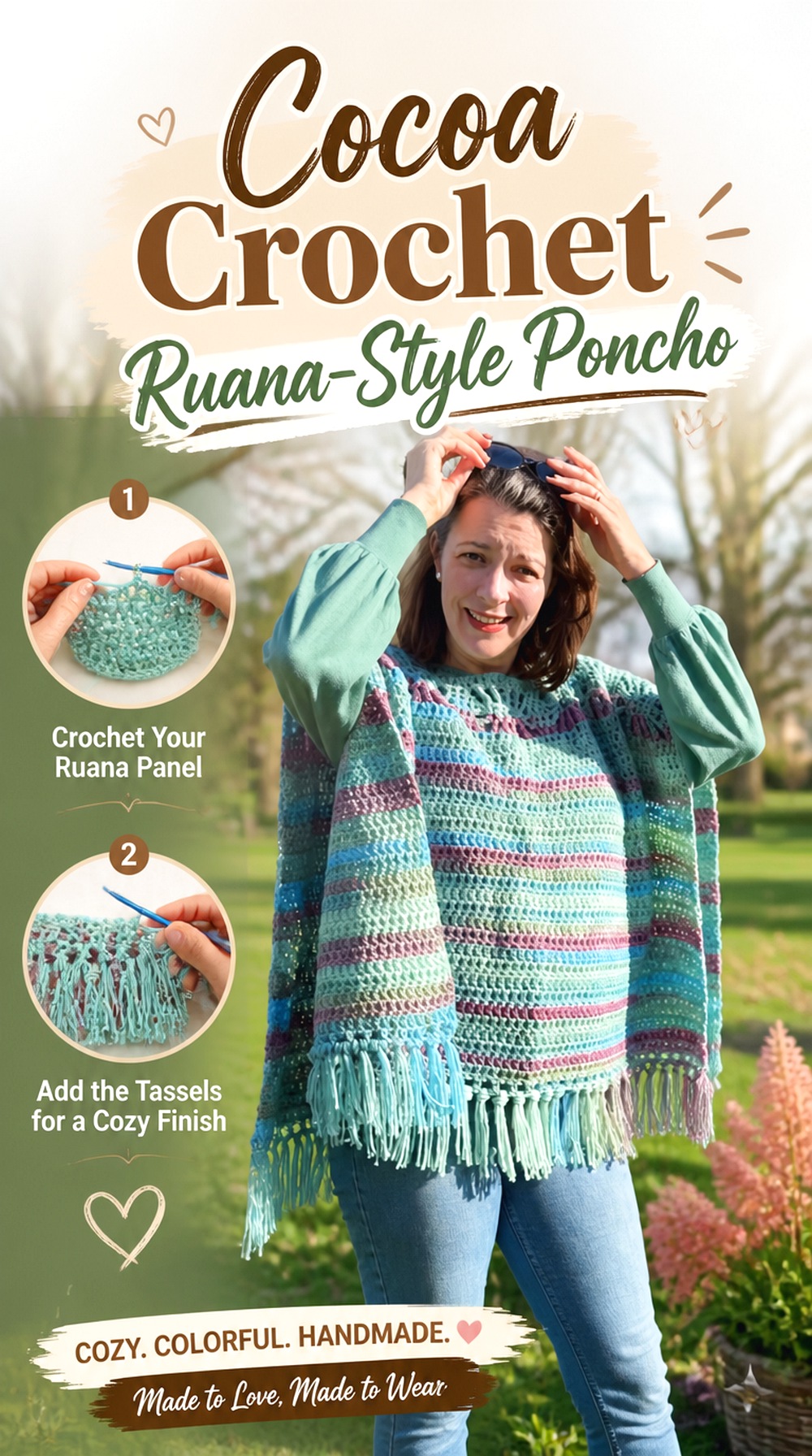
A cocoa poncho is a useful alternative when you want coverage without the fitted decisions involved in armholes and sleeves. The Garden Slate design from Ophelia Talks Crochet has a relaxed, ruana-inspired shape with chunky fabric and tassel finishing, creating a broad layer that can work over simple fall outfits.
Chocolate brown makes this silhouette feel especially grounded and neutral. Because so much fabric is visible at once, pay attention to drape: a brown yarn that feels beautifully soft in a small swatch can still become heavy when multiplied across a large wrap-style garment.
Shoulder Placement Determines How the Fabric Falls
A poncho does not need traditional sleeves, but that does not make fit irrelevant. The shoulder joins affect how the front and back sections hang, where the sides fall, and whether the neckline sits comfortably.
Before final finishing, put the garment on and check that the weight is distributed evenly rather than pulling toward the front or back.
Tassels Can Shift the Look From Clean to Rustic
Fringe or tassels add movement and suit the fall mood, but they also introduce another visual layer at the bottom edge. On a solid chocolate poncho, that can create a strong rustic finish.
If you prefer a cleaner silhouette, compare the garment before and after the tutorial reaches its tassel section and decide whether that finishing detail supports your wardrobe.
Original Tutorial and Creator Credit
Creator: Ophelia Talks Crochet
5. Dark Chocolate Crochet Autumn Shawl
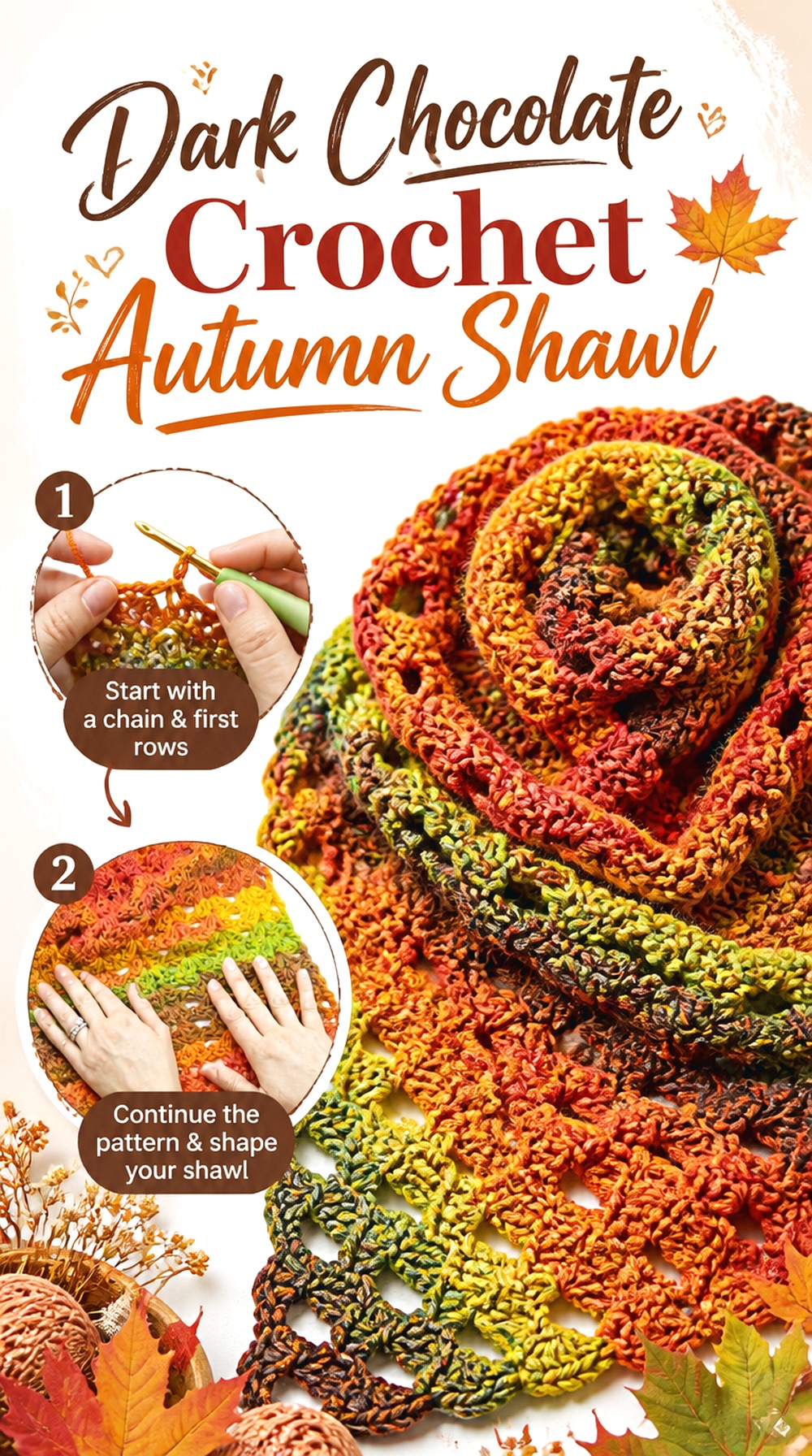
A dark chocolate shawl offers a softer fall layer than a cardigan or poncho and can be easier to style when indoor and outdoor temperatures keep changing. Fiber Flux’s Autumn Symphony Shawl uses an open, repeating texture, so the fabric has visual movement even when worked in one color.
That makes it a smart candidate for a rich solid brown. Instead of relying on stripes to create interest, the open spaces and repeated stitch texture break up the dark surface. If you change yarn from the tutorial, preserve enough drape for the shawl to wrap comfortably rather than becoming a stiff rectangular panel.
Open Texture Keeps Deep Brown From Looking Too Heavy
Chocolate brown can feel visually dense in a large solid piece. An open stitch pattern lets background colors show through the fabric, which lightens the overall effect when the shawl is worn over cream, denim, rust, or olive clothing.
Hold a swatch over the outfits you are most likely to wear. This simple comparison can reveal whether you want a very dark espresso or a slightly warmer cocoa shade.
Decide Whether Width or Length Matters More to You
A wrap used primarily around the shoulders serves a different purpose from one you expect to wind around the neck. Before adapting the tutorial, think about where you want the bulk.
Changing a shawl’s dimensions can alter how the stitch pattern drapes and how much fabric gathers at the front, so base any modification on your intended styling rather than a generic “bigger is better” assumption.
Original Tutorial and Creator Credit
Creator: Fiber Flux
6. Mocha Texture Crochet Scarf
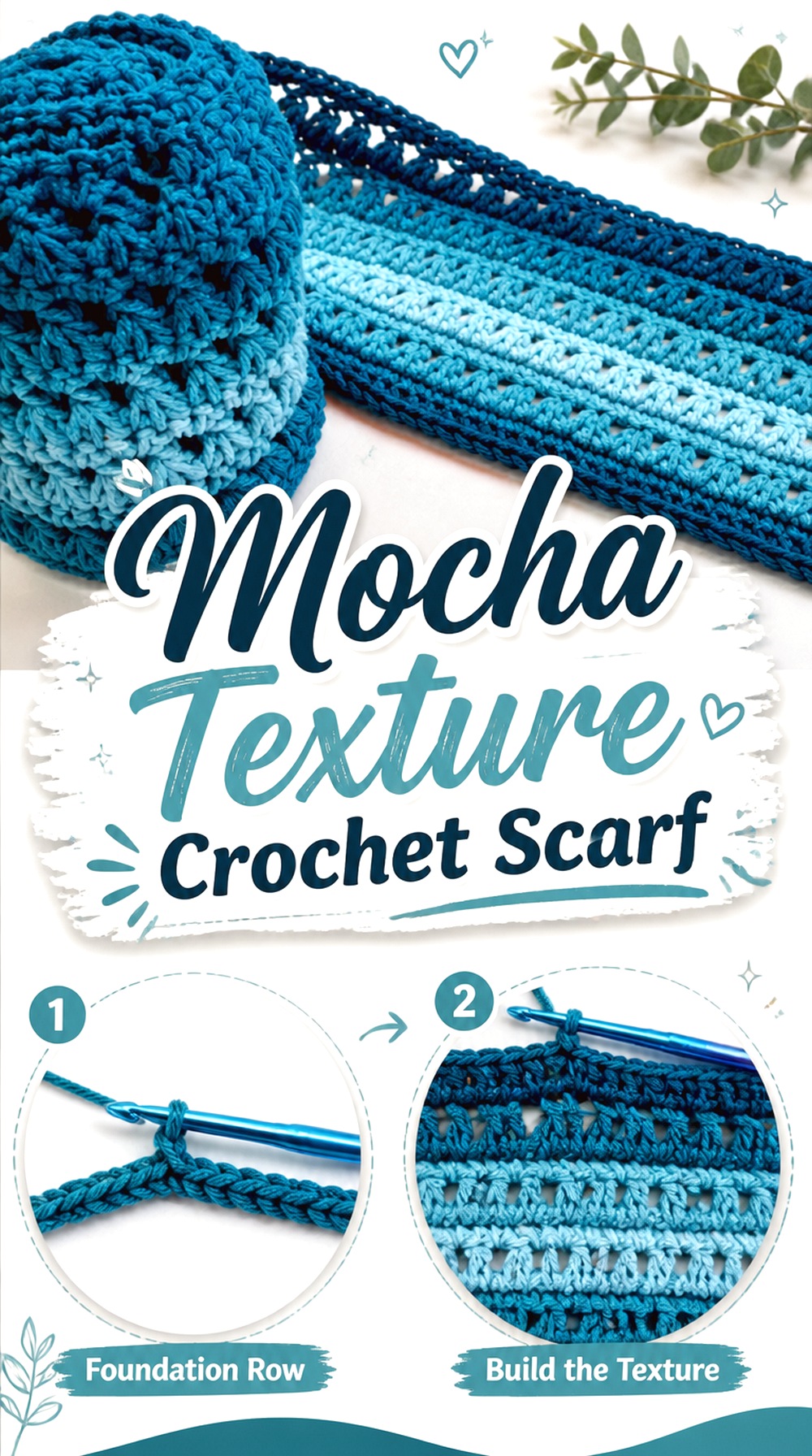
A mocha scarf is one of the simplest ways to use chocolate brown near the face without committing to an entire brown outfit. The Bag-O-Day tutorial produces a unisex scarf with a distinctive textured stitch, giving a solid neutral color more detail than a completely flat fabric would provide.
A medium cocoa shade can make the stitch definition easier to see, while espresso creates a subtler, more understated surface. If you intend to add fringe, consider how that changes the finished length and movement rather than treating it as a purely decorative afterthought.
Texture Should Still Be Visible in Indoor Light
A scarf is often seen at close range, so losing the stitch pattern to an overly dark, fuzzy yarn can undermine the feature that makes the project different.
Crochet a small sample and view it both beside a window and under the lighting you use most often. If the texture disappears, a smoother brown or a slightly lighter mocha may show the pattern more effectively.
Fringe Adds Length Without Adding Neck Bulk
Fringe can make a simple scarf look more finished while leaving the main wrapped section unchanged. That is useful if you want visual length but do not want additional layers around your neck.
Before cutting fringe, check how long the scarf already hangs when worn. The right decision depends on proportion, not simply whether fringe appears in the source.
Original Tutorial and Creator Credit
Creator: Bag-O-Day Crochet
7. Chocolate Stripe Crochet Hooded Scarf
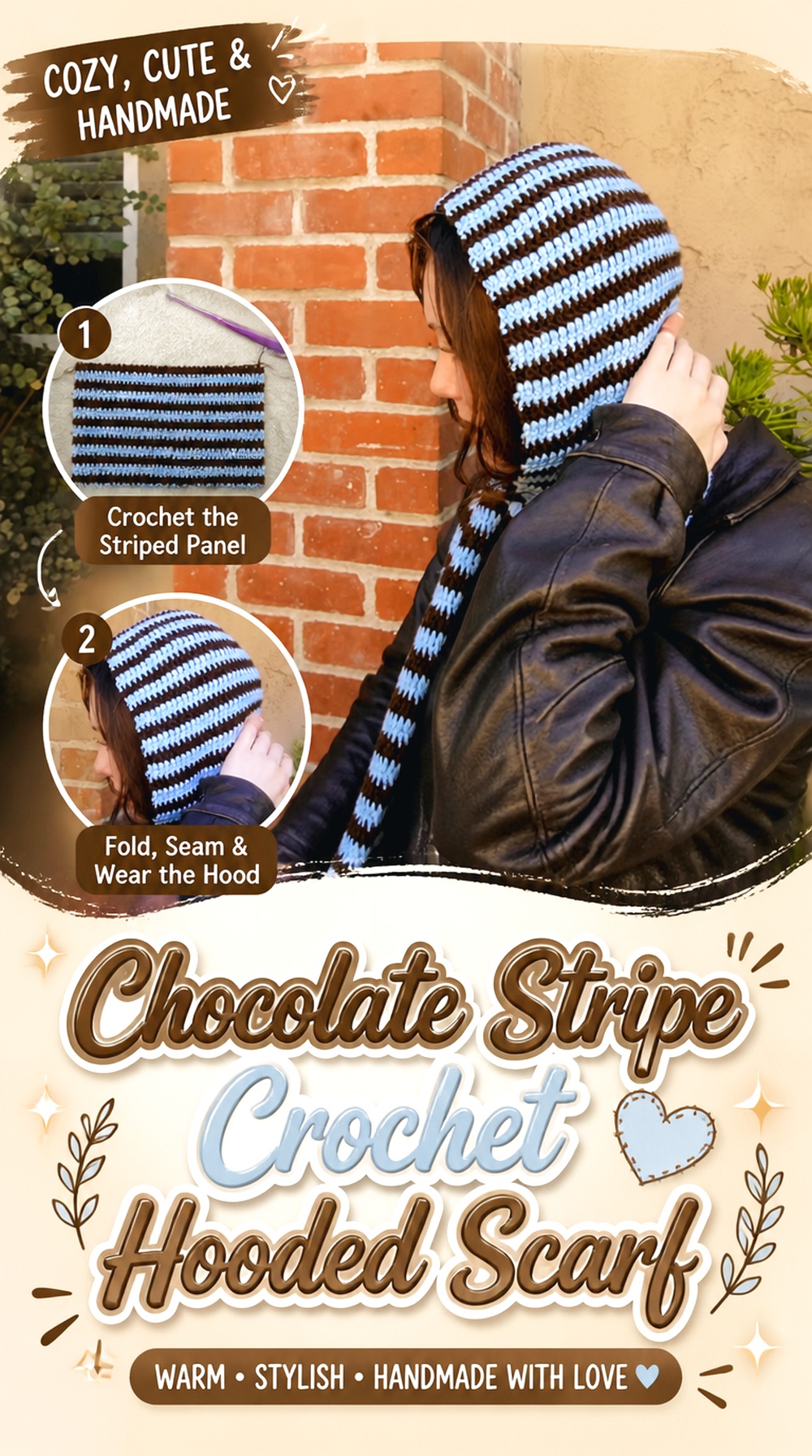
A hooded scarf combines two cold-weather accessories, which makes it noticeably different from a standard rectangular scarf. Anna Greene’s tutorial integrates a hood into a long scarf and demonstrates a two-color version. For fall, chocolate with cream, camel, rust, or oatmeal would keep the piece earthy without making the hood section visually disappear.
Because the hood adds fabric near the head and shoulders, yarn behavior matters more here than on an ordinary scarf. A substitute that becomes very rigid may create a hood that stands away from the head instead of falling naturally.
Check Hood Depth Before Finishing the Scarf Ends
Head size is only one consideration. Hair volume, whether you wear a bun or ponytail, and whether the hood needs to sit over another hat can all change the amount of room that feels comfortable.
Use the source construction as your guide, but evaluate the partially completed hood on the actual wearer before assuming the demonstrated proportions will translate unchanged.
Continuous Stripes Make Color Changes More Noticeable
A two-tone hooded scarf creates long visual lines from the scarf into the hood. If you replace the sample colors with chocolate and a neutral accent, inconsistent tension at color changes can become more visible.
Keep an eye on the edges as the fabric grows. A neat color transition matters because the scarf ends remain exposed rather than being hidden inside a seam.
Original Tutorial and Creator Credit
Creator: Anna Greene
8. Knit Look Chocolate Crochet Beanie
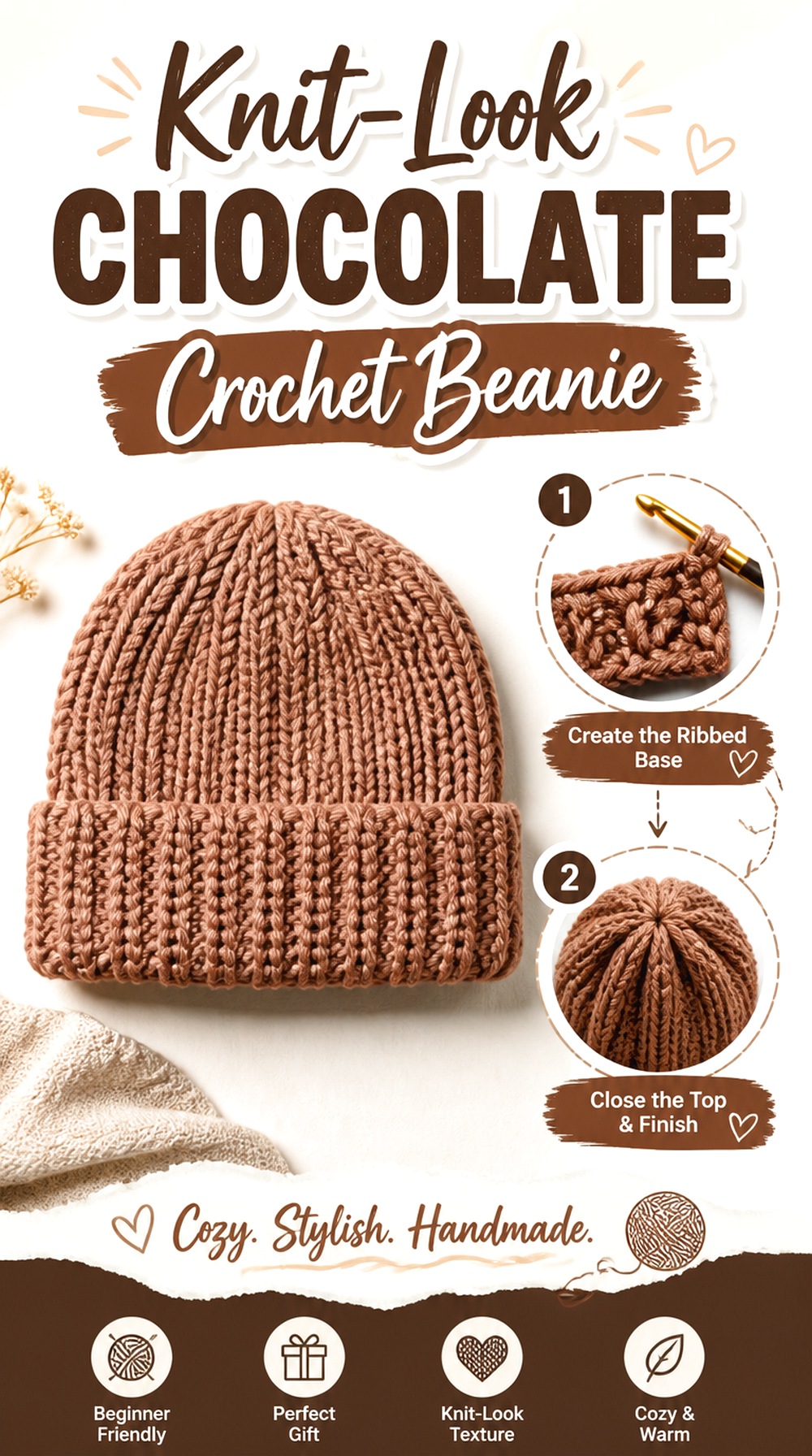
A knit-look beanie in chocolate brown fits naturally into a fall wardrobe because the color is quiet while the ribbed surface supplies the detail. VivCrochets’ updated tutorial focuses specifically on a crochet fabric designed to resemble knitted ribbing and includes sizing guidance.
For a solid espresso or coffee brown, this construction is useful because the vertical-looking texture keeps the hat from appearing featureless. Fit is the bigger decision. Ribbed fabrics can stretch significantly, so use the creator’s sizing logic and your own head measurement instead of simply copying the visible width of the sample.
Stretch Matters More Than the Flat Circumference
A ribbed hat is meant to expand on the head, which means the size while lying on a table does not tell the whole story. Changing fiber can also change how readily the fabric stretches and how well it returns afterward.
If you substitute yarn, make a useful-size swatch and stretch it gently several times. Compare how it recovers before basing the whole hat on the new material.
A Dark Beanie Benefits From Clean Crown Finishing
Chocolate brown hides some irregularities, but bulky gathering at the crown can still affect the hat’s profile. The tutorial specifically addresses the top shaping and closing process.
Watch that section before deciding on your final hat height. Extra length changes how much fabric must be managed at the top and whether the beanie looks fitted or deliberately slouchy.
Original Tutorial and Creator Credit
Creator: VivCrochets
9. Cocoa Twist Crochet Ear Warmer
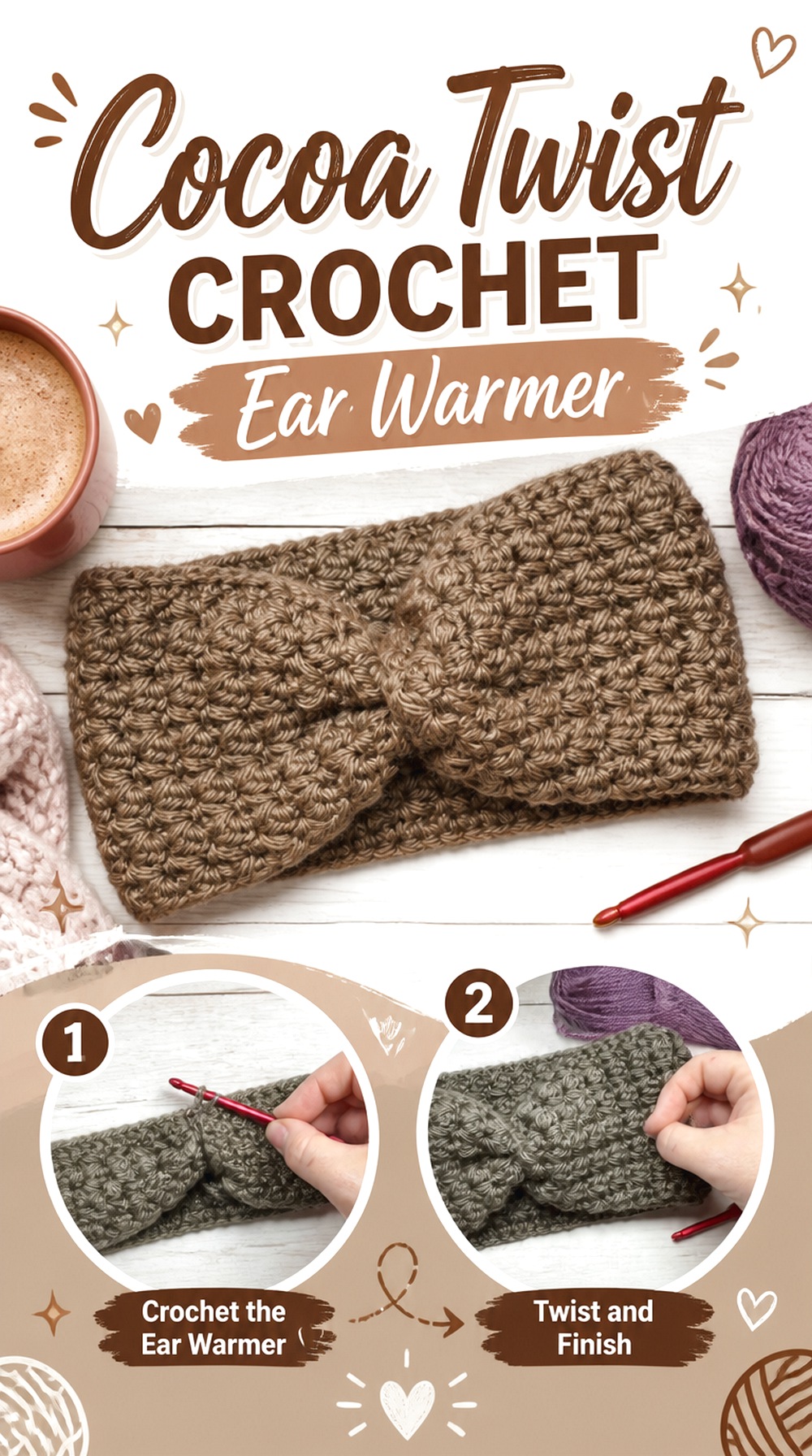
A textured ear warmer gives you the autumn brown palette without covering the entire head. Rich Textures Crochet’s Country Ear Warmer has a dense surface and a gathered twist-style front, so it reads more like a finished accessory than a plain band.
Chocolate brown suits the pronounced texture, but stitch visibility is worth checking before you start. A medium cocoa or chestnut may display the raised pattern more clearly than near-black espresso. Because the band sits directly around the head, circumference and stretch should be checked using the yarn you will actually crochet with.
The Front Twist Becomes the Visual Center
The gathered front detail concentrates several layers of fabric in one place. That creates the signature look, but it also means this section feels thicker than the rest of the band.
If you wear glasses, headphones, or other headwear, think about where you prefer that added bulk to sit. The source notes that the feature can be positioned differently when worn.
Dense Texture Changes How the Brown Reads
A highly textured surface creates small shadows across the yarn, making a single chocolate shade appear to contain multiple tones. This can be an advantage if you want a rich solid-color accessory.
Choose a yarn that lets those shadows remain crisp. Heavy halo or fuzz may soften the texture enough that the visual effect becomes less distinct.
Original Tutorial and Creator Credit
Creator: Rich Textures Crochet
10. Chocolate Crochet Fingerless Gloves
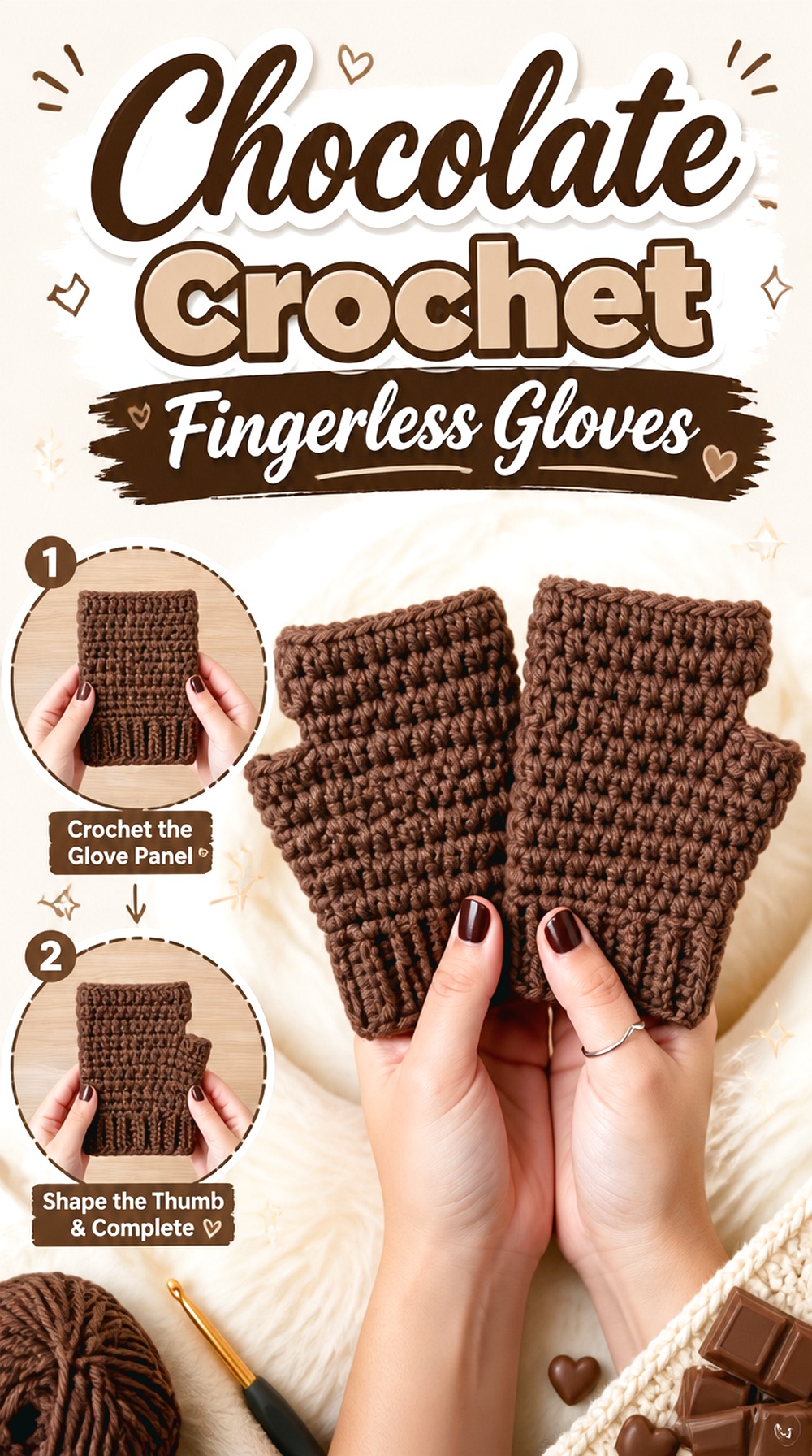
Chocolate fingerless gloves add color and texture while leaving the fingers free, which can be useful during transitional fall weather. Cherilyn Q’s tutorial includes shaping for the thumb area and a ribbed finish, making this option more fitted and construction-focused than the scarves and headwear above.
Fit deserves close attention because hand proportions vary. A glove can have the right overall circumference while the thumb opening still sits awkwardly. Use the tutorial’s construction as the source of truth, but check the developing fabric against the intended wearer instead of relying on appearance alone.
The Thumb Opening Is the Key Fit Checkpoint
The location of the thumb opening affects how the glove sits across both the palm and wrist. If it pulls diagonally when you move your hand, the overall fit may need reconsideration even if the width seems correct.
Try the piece on when the tutorial reaches the relevant shaping area. It is easier to identify a fit issue there than after the ribbing and finishing are complete.
Ribbing Can Help Balance a Dark Solid Color
A single chocolate shade works well on a small accessory when the edge has visible structure. The ribbing gives the wrist a distinct finish and can visually separate the hand section from a coat sleeve.
If your chosen yarn creates softer ribbing than the tutorial sample, consider whether you are still satisfied with the edge definition before making the second glove.
Original Tutorial and Creator Credit
Creator: Cherilyn Q
11. Cable Texture Chocolate Crochet Leg Warmers
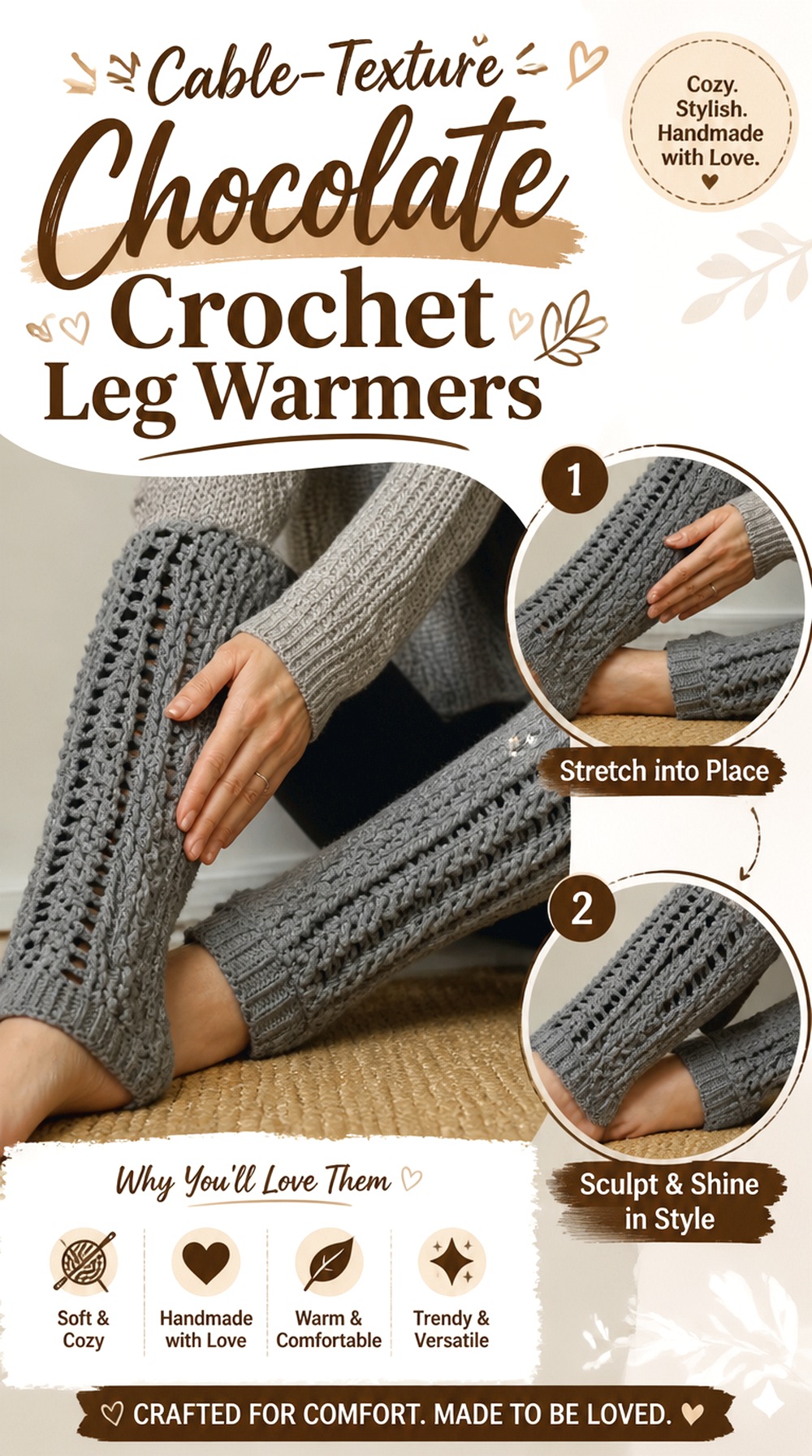
Cable-style leg warmers are a strong place to use medium or dark chocolate because the raised surface creates its own pattern without requiring several colors. TCDDIY’s design includes prominent textural sections along with separate finishing bands, giving the finished pair more structure than a plain crochet tube.
The main decision is how closely you want them to follow the leg. A fitted cable design and a deliberately slouchy leg warmer create very different silhouettes. Check circumference at the relevant points on your leg and keep in mind what footwear or leggings you plan to wear underneath.
Raised Cables Need Enough Stitch Definition
Deep brown emphasizes shadows, which can make cables look dramatic, but only when the yarn shows the stitch structure. If the fiber has a strong halo, the crossover texture may look softer than expected.
Before committing, test a small section of the textured pattern. You are evaluating visibility and fabric thickness as much as the actual brown shade.
Upper and Lower Bands Affect How the Pair Sits
Defined bands give the leg warmers a finished boundary and influence how the fabric meets the calf, ankle, or footwear. A band that feels comfortable while standing may behave differently after walking.
Try the piece on before final assembly if the construction permits it, and compare the fit with the shoes or boots you expect to pair with the finished warmers.
Original Tutorial and Creator Credit
Creator: TCDDIY
12. Chocolate Brown Crochet Everyday Socks
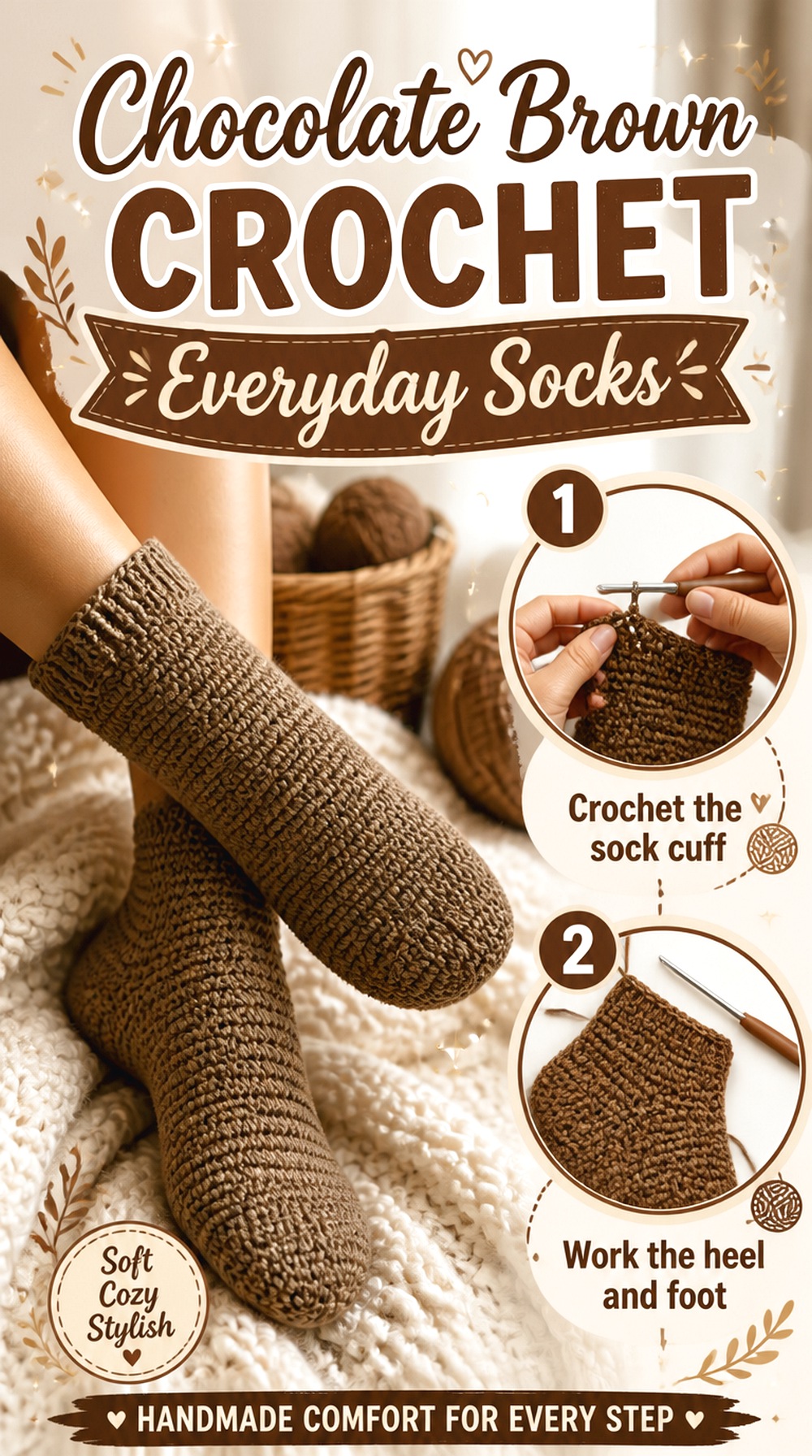
Crochet socks require more planning than decorative fall accessories because yarn choice, thickness, stretch, and shoe fit all affect whether the finished pair is practical. B.Hooked Crochet’s tutorial is specifically designed around socks intended to be worn with shoes and emphasizes the relationship between yarn and pattern.
Chocolate brown is an easy color to pair with boots or neutral fall footwear, but appearance should come after fabric behavior. Avoid substituting a thick, low-stretch brown yarn simply because the color is right. Follow the tutorial’s material and gauge guidance closely for a project where fit has little room for improvisation.
Shoe Compatibility Should Guide the Fabric Choice
A sock that feels comfortable around the house can still become too bulky once enclosed in a shoe. The sole, toe, and heel all add fabric where space is limited.
Use the footwear you plan to wear as a real checkpoint. If the sock fabric already feels thick before the pair is finished, changing the shoe does not necessarily solve the underlying fit issue.
Make the Second Sock From Measured Results
Pairs expose small tension changes quickly. Before starting the second sock, note the useful measurements from the first completed piece rather than relying on memory.
The goal is not to invent new stitch counts but to reproduce the source instructions with similar tension and dimensions. This is especially important if your chocolate yarn varies slightly in thickness through the skein.
Original Tutorial and Creator Credit
Creator: B.Hooked Crochet
13. Structured Chocolate Crochet Tote Bag
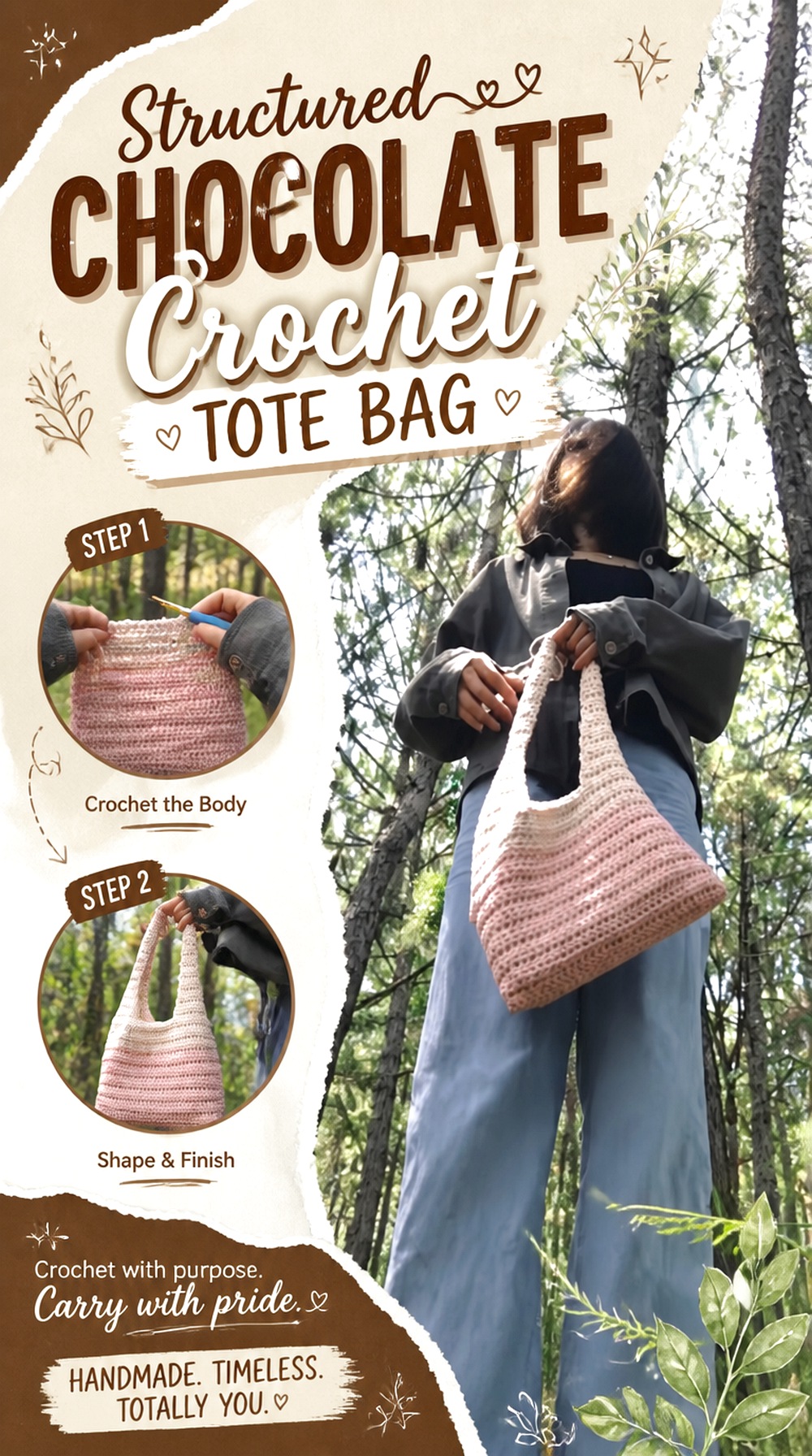
A chocolate crochet tote turns an autumn color into something useful beyond clothing. The ABoC Studio tutorial creates a substantial bag from thicker yarn and explains how the dimensions can be adjusted. That makes it a good option for readers who want a straightforward silhouette where stitch texture and structure carry most of the visual interest.
For a brown version, think about the bag’s function before choosing yarn solely for softness. A tote that needs to hold its shape generally benefits from firmer fabric than a drapey scarf. Also watch the handles: they may stretch differently from the bag body once the tote is loaded.
Handle Stretch Can Change the Carrying Height
A handle that looks correctly proportioned when the bag is empty may lengthen under weight. This is especially noticeable with very stretchy yarn or loosely worked fabric.
Before adding extra handle length for comfort, consider what you will realistically carry. If the tutorial’s material produces a firmer strap than your substitute, your finished bag may hang lower even at the same initial measurement.
The Bottom Should Feel Stable Before You Add Height
As the bag grows, the side walls can distract from a base that is already too soft for your intended use. Check the lower portion early.
If you want a structured fall tote for notebooks or everyday items, evaluate whether the fabric resists distortion. If your goal is a softer yarn bag, more movement may be acceptable, but that should be a conscious choice.
Chocolate Brown Hides Wear but Also Hides Stitches
Dark brown can be forgiving visually, yet that can make it harder to spot uneven joins or missed areas while crocheting. Work in strong light and check the edges frequently.
This is particularly useful around handle transitions and any places where the construction changes direction, since small irregularities can affect the bag’s symmetry.
Original Tutorial and Creator Credit
Creator: ABoC Studio
14. Coffeehouse Chocolate Crochet Mug Cozy
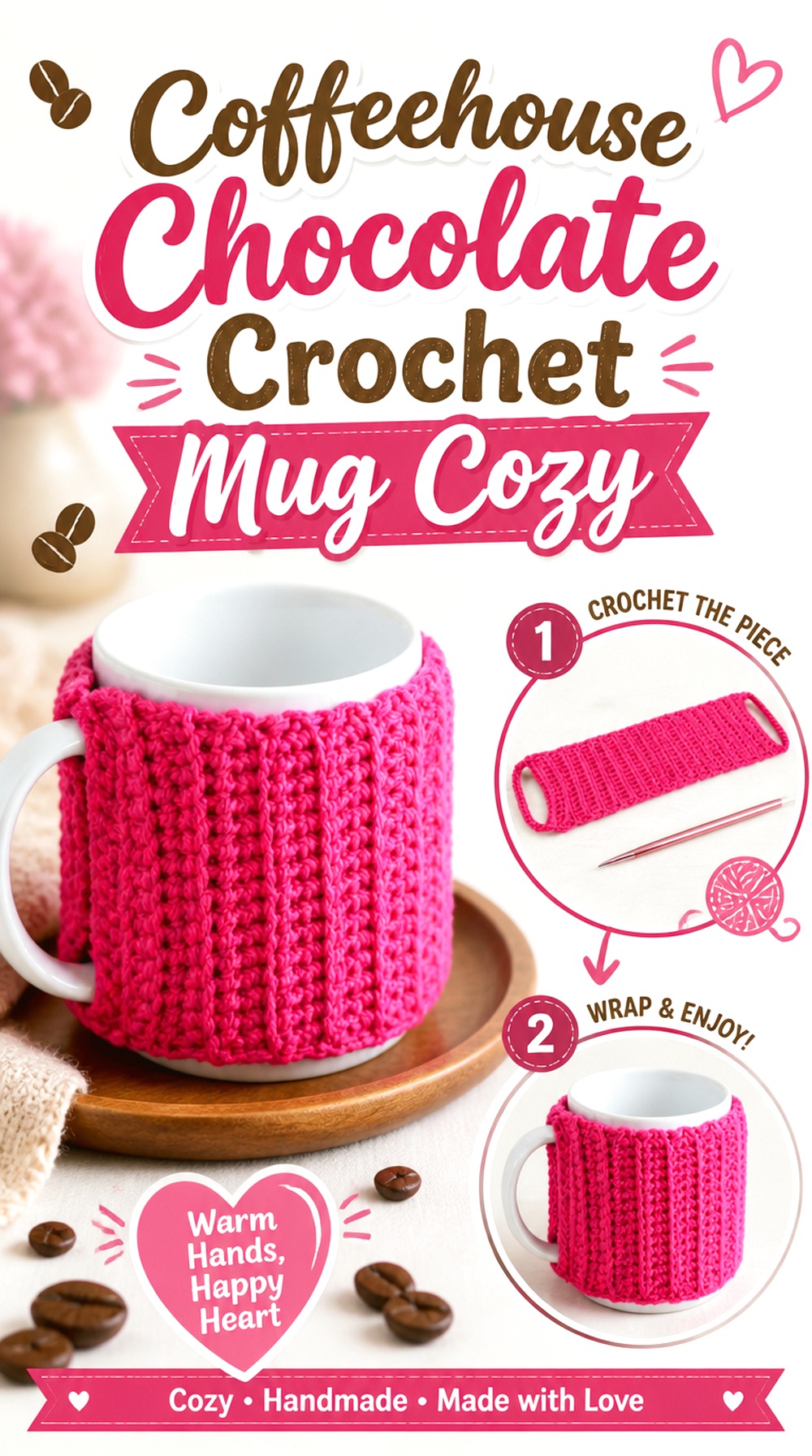
A mug cozy is one of the smallest projects in this collection, making it a practical way to test a chocolate-brown yarn before buying enough for a wearable. Crochet Jewel’s tutorial demonstrates a simple mug sleeve that wraps around a cup and can be used as a small handmade accent.
The key difference from most décor projects is fit. Mug shapes and handle positions vary, so a cozy that suits one cup may interfere with another. Choose the actual mug first, then use the tutorial to judge where the cozy should sit and whether the fabric is clear of the handle.
Fit the Cozy to the Mug You Will Actually Use
Do not rely only on a generic circumference. A tapered mug, straight-sided mug, and oversized coffee cup can all require different placement even when their widest measurements appear similar.
During construction, wrap the developing piece around the intended mug and check that it remains below the rim and does not bunch against the handle.
Keep Decorative Details Away From Drinking Areas
Buttons, beads, or added embellishments can look attractive, but they should not make the mug awkward to grip or place on a table.
For a fall coffeehouse look, the chocolate yarn already supplies a strong theme. A clean textured sleeve may be more functional than adding several projecting decorations.
Original Tutorial and Creator Credit
Creator: Crochet Jewel
15. Chocolate Brown Crochet Granny Pumpkin
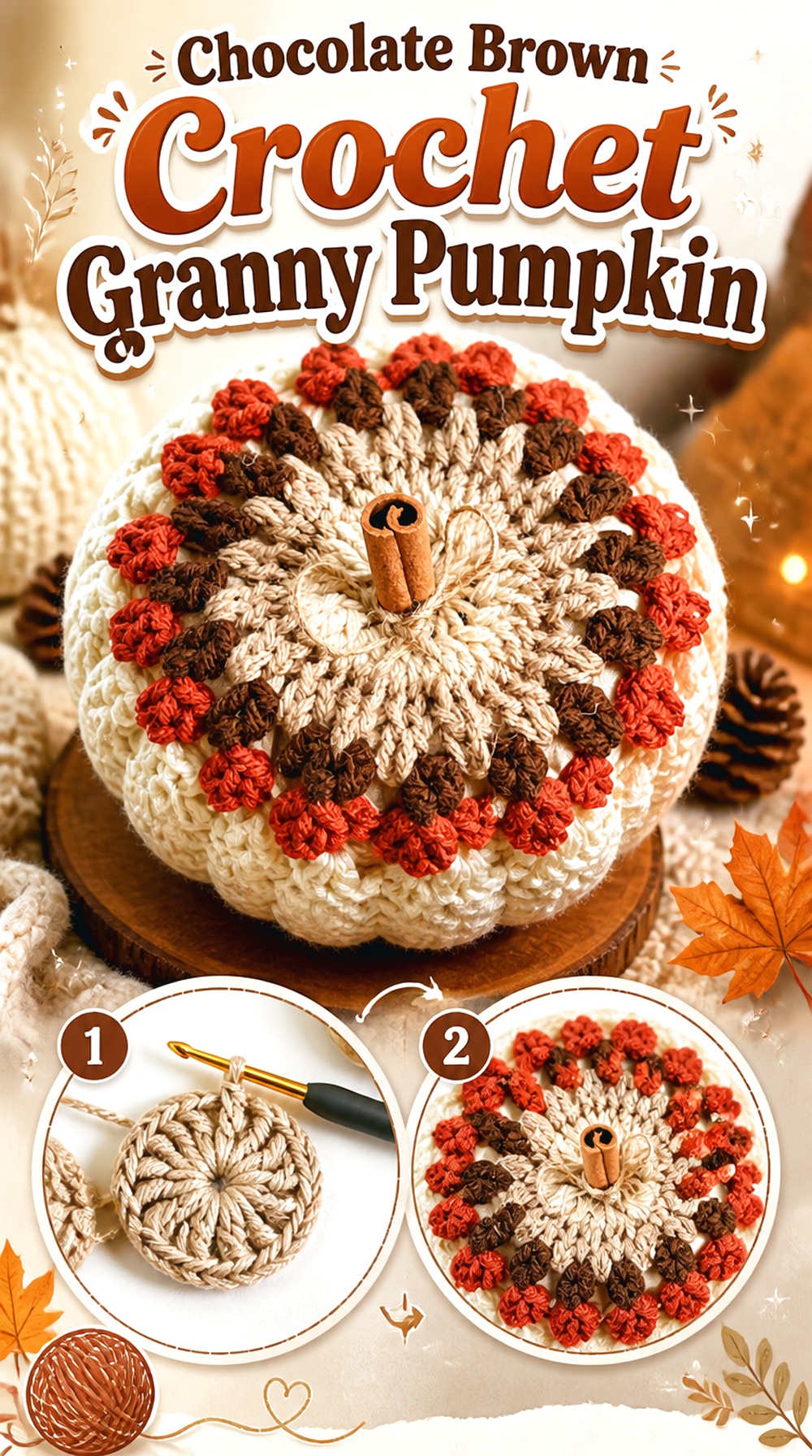
A brown pumpkin feels more understated than traditional orange and works well in neutral fall décor. MJ’s Off The Hook Designs’ granny-stitch pumpkin is particularly well matched to this article because the tutorial’s listed color options actually include a shade named Chocolate alongside other neutrals and autumn tones.
The granny-style surface makes the pumpkin visually different from a smooth stuffed shape. It also introduces open texture, so stuffing and any internal support choices affect the final appearance. Think about whether you want a lightweight shelf pumpkin or a heavier display piece before following optional weighting ideas.
Brown Changes the Pumpkin From Literal to Neutral Decor
Orange announces “pumpkin” immediately, while chocolate brown lets the ribbed or clustered shape do more of that work. The result can sit alongside cream textiles, wooden surfaces, baskets, and other neutral autumn accents without creating a bright color block.
If you make several pumpkins, varying the brown tone is enough to create contrast without changing the overall palette.
Stuffing Controls the Definition Between Sections
Too little filling can make a dimensional pumpkin look collapsed, while aggressive stuffing can flatten the crocheted texture and distort the intended contour.
Add filling gradually and keep checking the visible stitch pattern. The goal is to support the shape without forcing the fabric beyond the proportions demonstrated by the source.
Original Tutorial and Creator Credit
Creator: MJ’s Off The Hook Designs
16. Mini Chocolate Crochet Acorn Decor
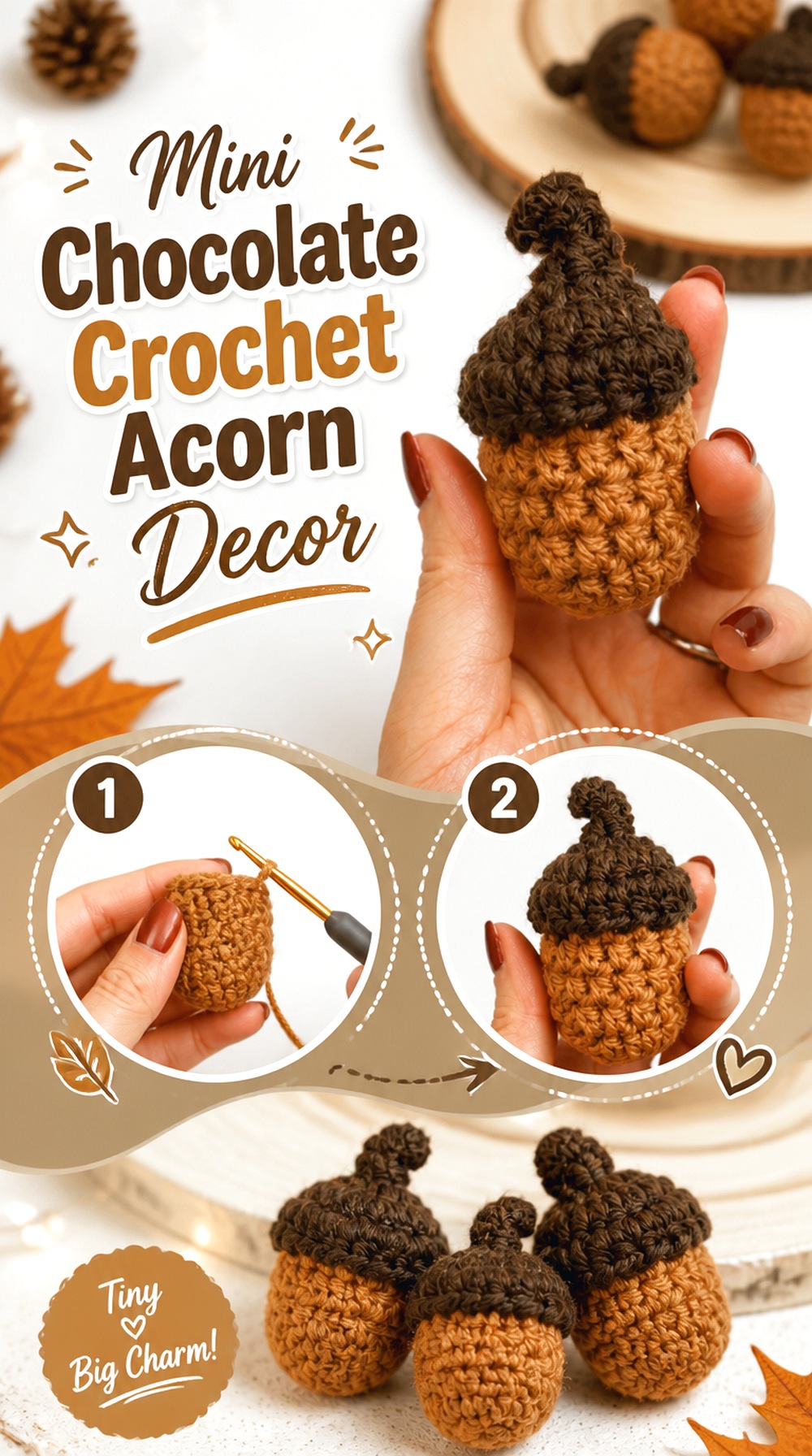
A small crochet acorn gives you a woodland fall accent without taking up much display space. Brunaticality’s tutorial separates the acorn into a lower nut section and contrasting cap, which makes it ideal for a two-brown palette: warm caramel below with deep chocolate on top, or the reverse for a more stylized version.
Small stuffed pieces make good shelf, bowl, or hanging accents, but scale matters if you plan to combine several into a garland or arrangement. Make one sample first and compare it with the basket, wreath, or branch where you intend to display the finished group.
Two Brown Tones Keep the Acorn Shape Readable
Using exactly the same dark color for the nut and cap can make the seam between them disappear, especially at a distance. A subtle change from cocoa to espresso preserves the neutral palette while clarifying the form.
The contrast does not have to be dramatic. Crochet small samples and place them together before deciding whether the shades separate enough in your room lighting.
A Garland Needs Consistent Finished Scale
If several acorns will hang in one line, small changes in stuffing or tension become more obvious than they would in a loose decorative bowl.
Compare each new acorn with the first finished piece before closing it completely. Consistency is particularly useful when the decoration will be seen straight on across a mantel or shelf.
Original Tutorial and Creator Credit
Creator: Brunaticality
17. Chocolate Crochet Fall Leaf Coasters
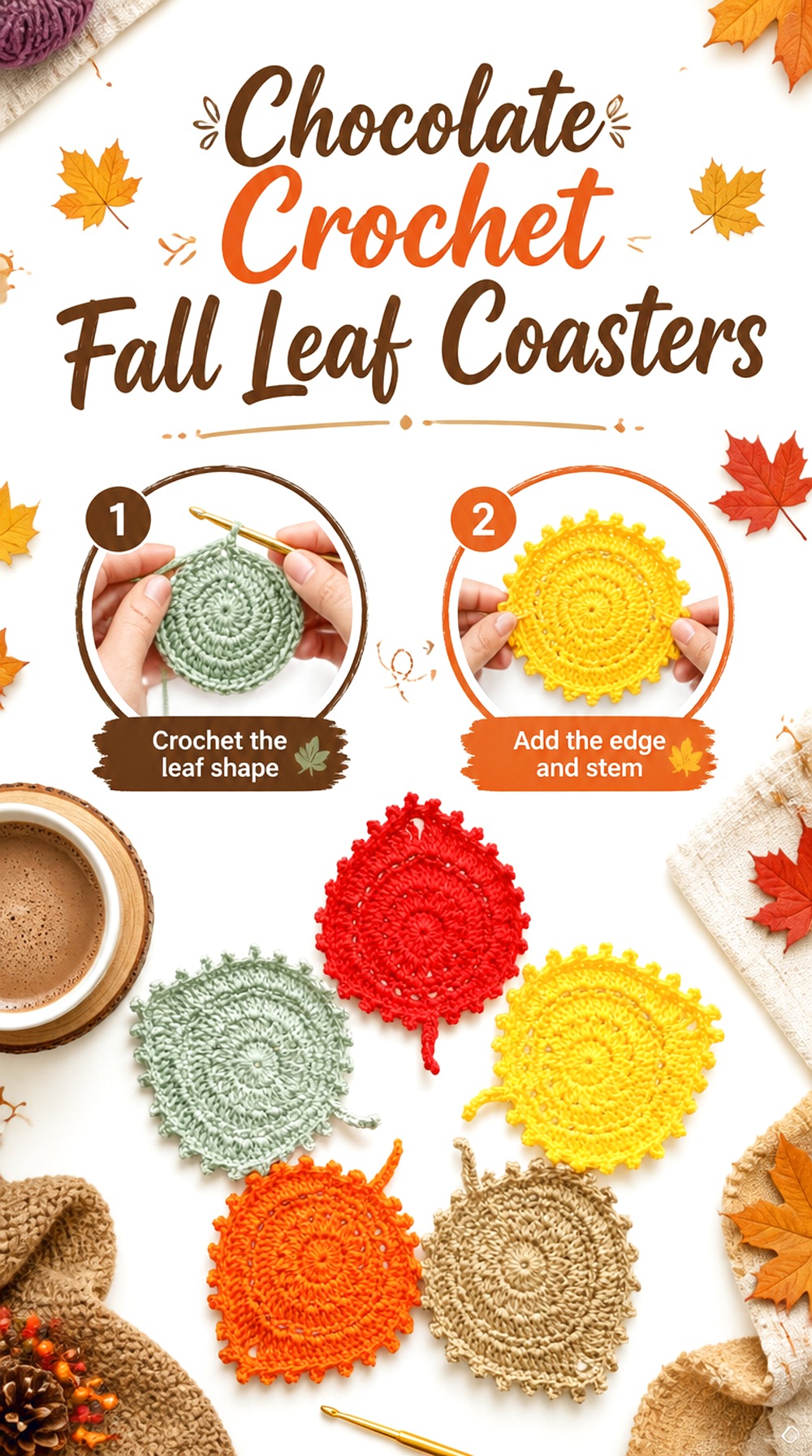
Leaf-shaped coasters bring the fall theme directly to the table while remaining flatter and easier to store than stuffed décor. HandmadebyRaine demonstrates a leaf-coaster design credited in the video description to pattern designer Katherine Laight, so the tutorial should be treated as the demonstration source rather than as a reason to reproduce the pattern here.
A chocolate-brown version would read more like a dried autumn leaf than a fresh green one. Cotton or another material suitable for your intended tabletop use should be chosen based on the source guidance rather than color alone.
Blocking Can Make the Leaf Outline Clearer
A flat motif relies on its outer shape. If the points curl or the central area twists, the finished coaster may look less like a leaf even when every stitch is correct.
The tutorial links to blocking guidance, and that finishing stage is worth considering before deciding the project is complete. Let the piece settle fully before judging its final outline.
Mix Brown Shades Without Losing a Coordinated Set
A coaster set does not need every leaf to be identical. Espresso, chestnut, cocoa, and caramel can create a pile-of-fall-leaves effect while staying cohesive.
For a more formal table, use one shade throughout. For casual autumn décor, tonal variation can make the set more interesting without introducing unrelated colors.
Original Tutorial and Creator Credit
Creator: HandmadebyRaine
18. Chunky Chocolate Crochet Fireside Basket
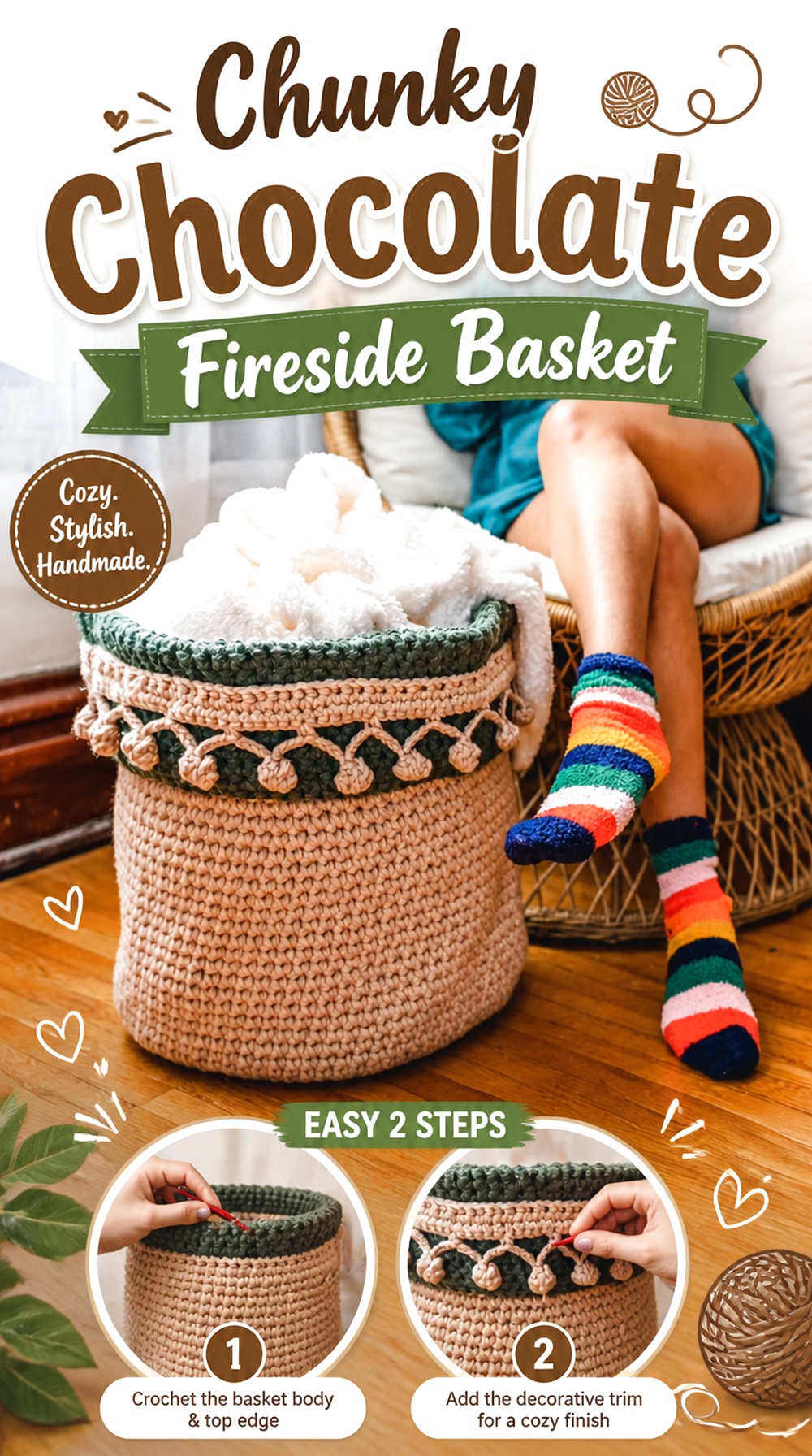
A chunky chocolate basket brings the fall palette into storage rather than purely decorative crochet. TL Yarn Crafts’ Fireside Basket has a substantial rounded form with a decorative accent near the upper section, giving it enough presence to sit beside a chair, on a shelf, or near a craft area.
For a basket, firmness matters. A very soft brown substitute may produce the right color but not the upright silhouette visible in the tutorial. Pay attention to the creator’s yarn category and fabric density, and check that your developing base remains flat before building more height.
A Flat Base Is the First Structural Check
If the base cups upward or ripples, adding tall sides will not automatically correct the problem. Put the early section on a flat surface and look at it from the side.
Small tension issues are easier to address while the project is still mostly a base. This matters more for a storage basket than for a soft decorative bowl because the finished piece is expected to stand predictably.
Chunky Brown Makes the Basket Visually Heavy
A large dark basket can anchor a room, which is useful beside cream furniture or light wood. In a dark corner, however, the same chocolate shade may disappear.
If visibility matters, use a lighter brown accent near the top or place the basket against a contrasting surface. The decorative band offers a natural place to introduce that separation.
Original Tutorial and Creator Credit
Creator: TL Yarn Crafts
19. Chocolate Plaid Crochet Table Runner
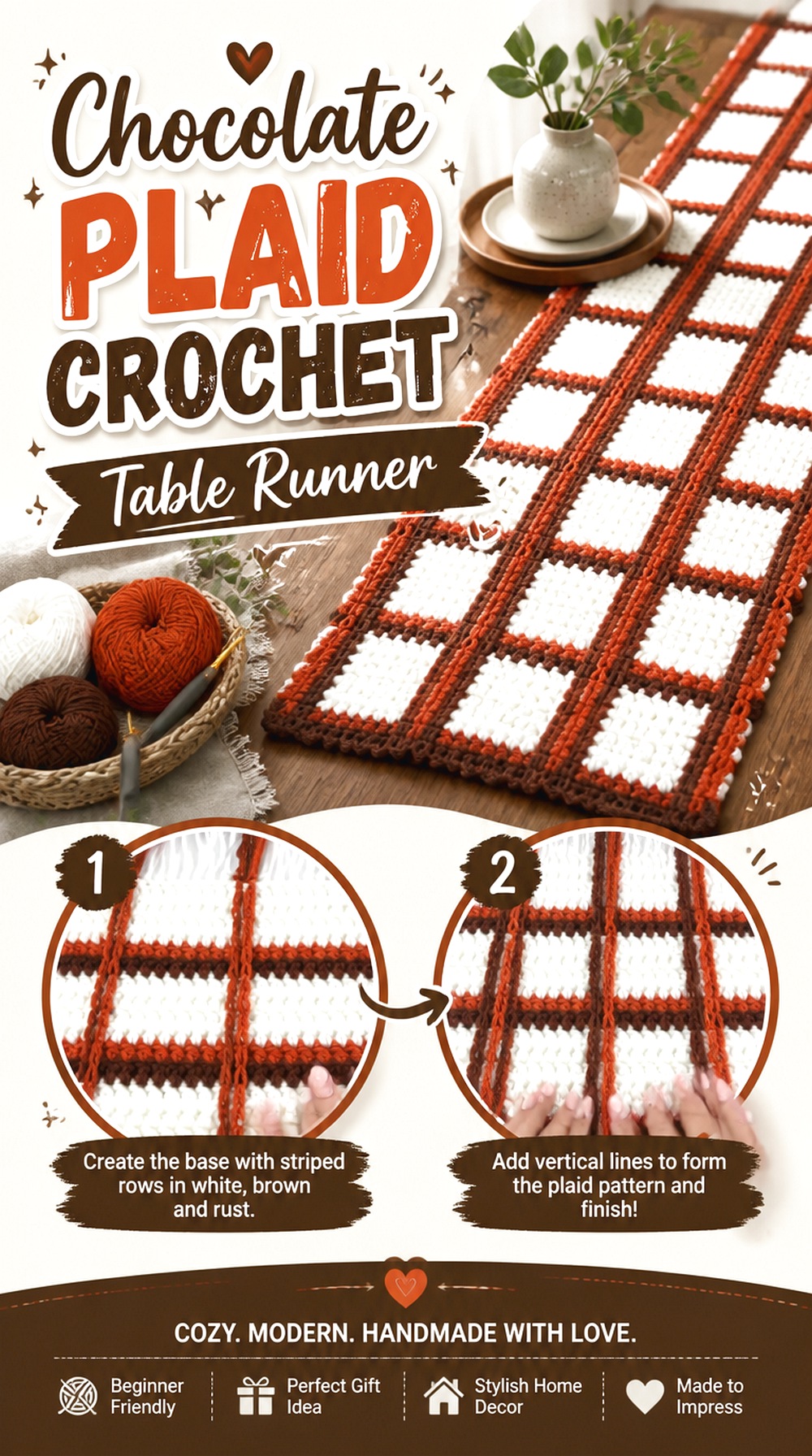
Chocolate brown feels especially natural in plaid because it can serve as both a neutral and a strong crossing line. Winding Road Crochet’s tartan table runner uses stripes plus surface detailing to create the plaid effect, and the source specifically notes that the design can be adapted to different color combinations for fall décor.
A chocolate, cream, and rust arrangement would feel traditional; chocolate, oatmeal, and taupe would be more muted. Before starting, compare the runner dimensions with the furniture where you will use it rather than choosing a size from the visual sample alone.
Plaid Needs Contrast at the Intersections
If every brown is too close in value, the crossing lines can disappear and the fabric may read as uneven stripes instead of plaid. Photograph your yarn choices together in grayscale if you are unsure; shades that remain distinguishable there usually provide stronger value contrast.
You can keep the palette entirely warm and neutral while still making the grid easy to read.
Fringe Changes the Apparent Runner Length
A runner measured only by its crocheted center can appear longer once fringe is attached. That matters on shorter consoles, coffee tables, or entryway furniture.
Decide whether you want the ends to hang over the furniture edge before finalizing length. The source offers adjustable sizing, so use the actual surface as the checkpoint.
Original Tutorial and Creator Credit
Creator: Winding Road Crochet
20. Chocolate Circle Crochet Wall Hanging
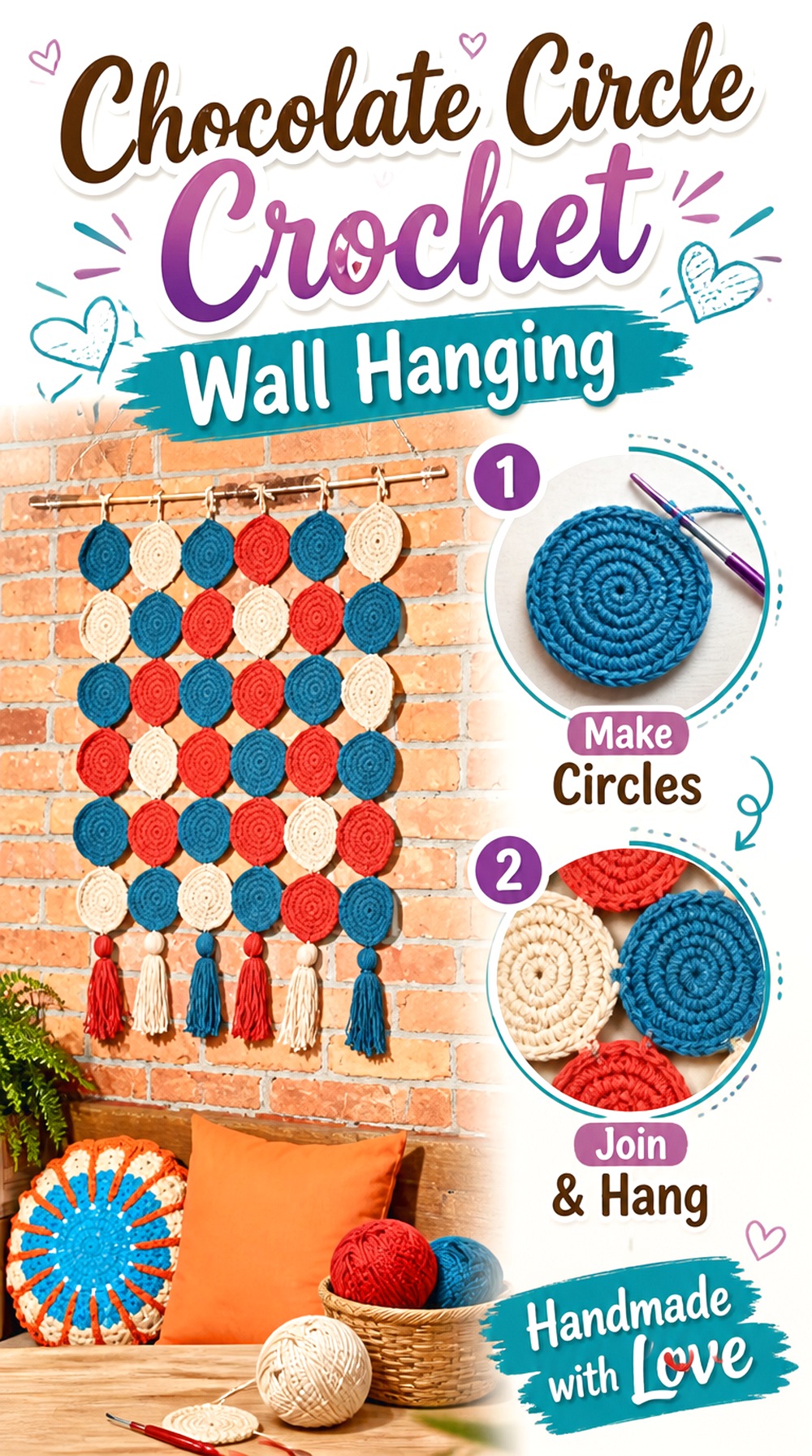
A circular crochet wall hanging lets chocolate brown function almost like woven fiber art. Yarnspirations’ Round In Circles project uses repeated circular forms in a hanging composition, making it very different from a flat framed motif or tapestry panel.
For fall, you could work the circles in chocolate, camel, mushroom, and cream instead of brighter colors. The main planning challenge is visual separation. If every circle is the same deep brown and displayed on a similarly dark wall, much of the shape can disappear. Test the palette against the actual wall color before committing to all the pieces.
Wall Color Becomes Part of the Palette
Unlike a scarf or basket, a wall hanging is always viewed against a fixed background. A chocolate circle can look dramatic on ivory and barely visible on deep wood paneling.
Hold a yarn ball or small motif against the intended wall from several feet away. That distance test is more useful than judging the yarn only in your hands.
Repetition Needs Visual Balance, Not Perfect Sameness
Repeated circles look coordinated, but they do not all need identical tonal weight. Alternating dark and medium browns can keep the hanging from feeling like one large block.
Lay the completed components on the floor in their planned arrangement before final hanging. Move the darkest pieces until the composition feels balanced from left to right.
Original Tutorial and Creator Credit
Creator: Yarnspirations
21. Chocolate Stripe Crochet Fall Blanket
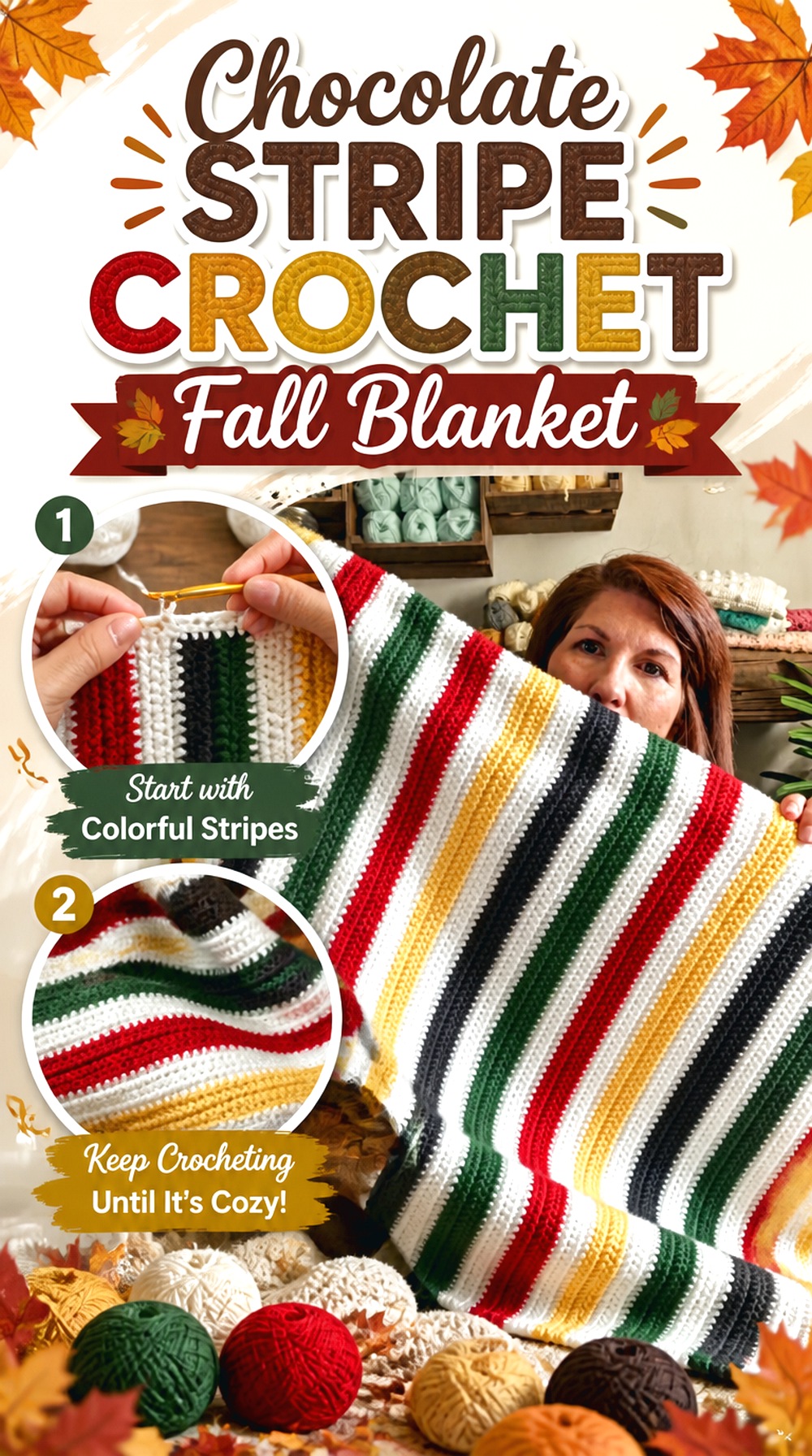
A striped blanket gives you room to use several autumn neutrals without the assembly work of individual motifs. Daisy Farm Crafts’ Camping Stripe Crochet Blanket uses repeated bands of color and a pronounced ribbed border, so a chocolate adaptation could mix espresso with cream, camel, muted rust, or olive.
The important planning decision is overall balance. Dark brown can dominate a stripe sequence even when it appears only as often as the lighter colors. Arrange the skeins side by side and decide whether chocolate should be the anchor color, an occasional accent, or the primary background before beginning the full repeat.
Stripe Order Changes the Visual Weight
A dark stripe placed at regular intervals creates a strong rhythm. Several dark bands grouped together create a much heavier section, even if the total amount of brown yarn is identical.
Sketch the sequence or place short yarn strands in order before crocheting. This tiny planning step can prevent a blanket from developing an unintended dark zone halfway through.
The Border Can Unite a Multi-Brown Palette
A ribbed border offers a final chance to visually frame the blanket. Using your darkest chocolate there can pull scattered brown stripes together, while a lighter neutral border can soften the overall look.
Do not decide from the skein alone. Once the main blanket is complete, lay potential border colors around the edge and compare them in the room where the blanket will be used.
Original Tutorial and Creator Credit
Creator: Daisy Farm Crafts
22. Chocolate Pumpkin Granny Square Crochet Pillow
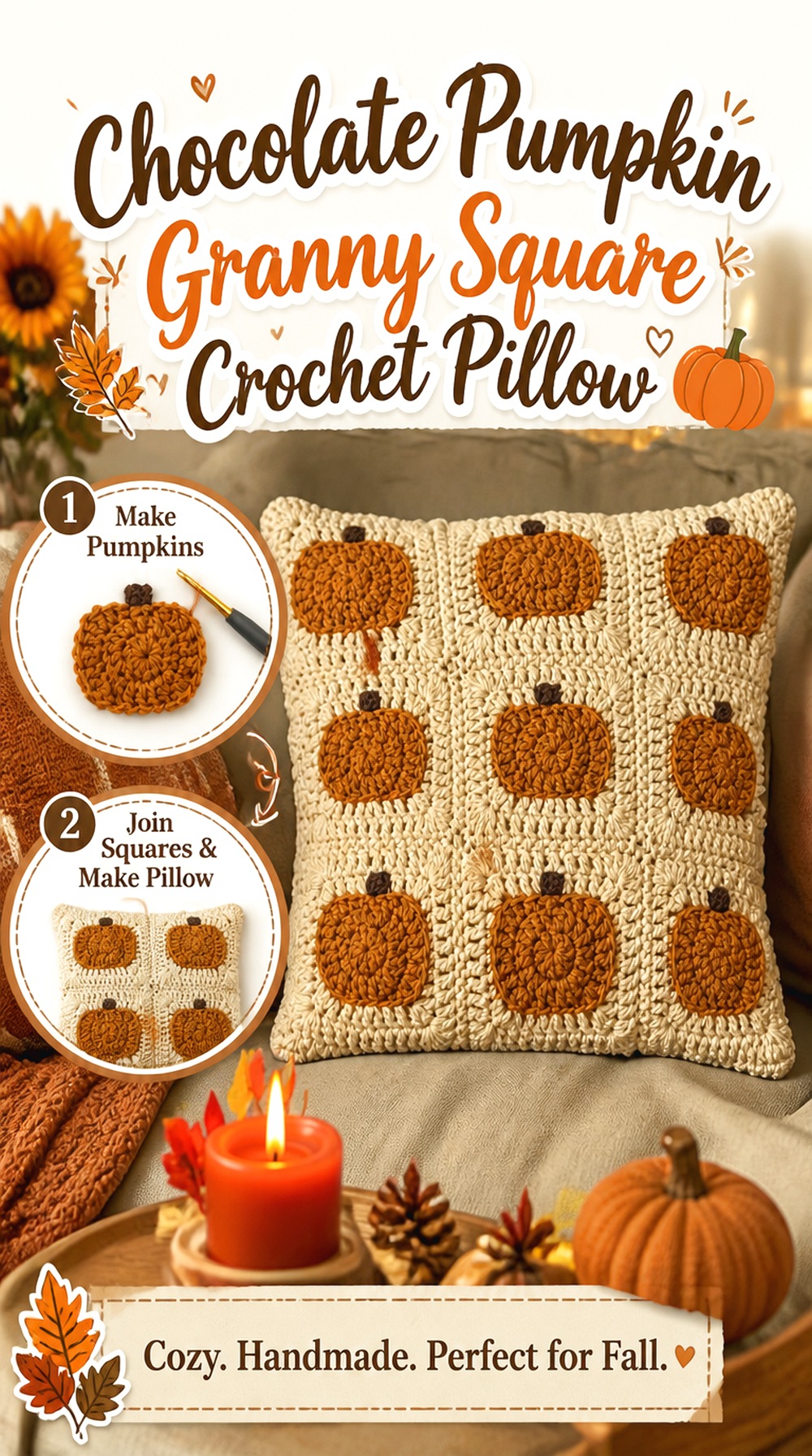
A pumpkin granny square pillow combines two recognizable crochet ideas—a motif panel and a functional cushion—so it adds stronger seasonal imagery than a plain brown throw pillow. Valeria Chérie’s tutorial builds a fall pillow around a pumpkin motif, border treatment, joined squares, and a separate back panel.
Chocolate brown could replace the traditional orange pumpkin for a neutral harvest look, or it could form the background around a lighter caramel pumpkin. Because the design depends on a recognizable motif, contrast between the pumpkin and surrounding fabric matters more here than on the solid 3D pumpkin earlier in the collection.
Keep the Pumpkin Motif Distinct From Its Background
Chocolate on dark taupe may look sophisticated in the skeins but can flatten the pumpkin shape once crocheted. Compare the two yarns from several feet away before committing to the full front.
If you want an all-brown pillow, pair a dark cocoa pumpkin with a light mushroom background or reverse the values. Tonal contrast can preserve the motif without introducing a non-neutral color.
Match the Front and Back Before Final Joining
A decorative motif panel and a simpler back can behave differently because their stitch structures are not identical. Before assembly, place them together and compare the edges.
If one panel has relaxed more than the other, address the dimensional difference before joining rather than forcing the edges to match. A square pillow looks cleaner when both sides meet without obvious puckering.
Original Tutorial and Creator Credit
Creator: Valeria Chérie
Which Chocolate Brown Crochet Project Fits Your Fall Plans?
For a major wardrobe project, the hexagon cardigan gives the loosest silhouette, the vest offers cleaner edges and easier layering, the granny sweater makes the strongest visual statement, and the poncho avoids conventional sleeve shaping. Smaller accessories such as the beanie, gloves, ear warmer, and leg warmers let you test a brown yarn with less commitment.
For home décor, decide first whether you need function or seasonal display. The basket, blanket, mug cozy, table runner, and coasters have practical roles, while the acorn, pumpkin, wall hanging, and pumpkin pillow contribute more obvious autumn character. If you want the brown palette to remain useful beyond fall, the blanket, basket, wall hanging, and neutral wearables transition most easily into other seasons.
Conclusion
Chocolate brown can support very different crochet projects, so choosing by finished function is more useful than choosing by color alone. Start with the hexagon cardigan or poncho if you want loose layering, the vest or gloves for a closer fit, and the tote or basket when structure matters more than drape. For unmistakable autumn décor, the granny pumpkin, acorn, leaf coasters, plaid runner, and pumpkin pillow make the seasonal connection much clearer.
Once you choose a project, match the brown yarn to the fabric behavior the item needs instead of substituting by shade alone. Use the original tutorials linked with each idea for their exact construction, sizing, materials, and finishing details.
Frequently Asked Questions
Can I replace the tutorial yarn with any chocolate brown yarn of the same weight?
Not automatically. Yarn-weight labels describe a range, and two yarns in the same category can still differ in fiber, thickness, elasticity, twist, and drape. Those differences matter especially for fitted wearables, socks, structured bags, and baskets. Compare the tutorial’s yarn information with your substitute, make a useful swatch when fit matters, and follow the creator’s gauge guidance rather than assuming the color change is the only difference.
Which chocolate brown crochet projects are easiest to adapt without changing fit?
Home décor and small flat accessories generally involve fewer body-fit decisions than garments. A leaf coaster, mug cozy, pumpkin, acorn, wall hanging, or table runner can therefore be a more straightforward place to explore the brown palette. You still need to respect the source construction and material requirements, but you are not simultaneously managing shoulder width, head circumference, hand shaping, or shoe compatibility.
How do I stop dark brown crochet texture from disappearing?
Choose a yarn surface that lets the stitch definition remain visible and inspect it in realistic lighting. Cables, ribbing, granny clusters, and raised textures may be harder to read in very dark fuzzy yarn. A slightly lighter cocoa shade can reveal more detail than near-black espresso. For multi-color pieces, pair the darkest brown with camel, mushroom, cream, or another noticeably lighter value.
Can I make an all-brown fall project without it looking flat?
Yes, but use differences in value, texture, or construction. Espresso beside caramel creates clearer separation than two nearly identical dark browns. You can also combine a smooth section with ribbing, granny clusters, cables, fringe, or raised surface work. For a motif project such as the pumpkin pillow, make sure the motif remains distinguishable from its background even if every yarn stays within the brown family.
Should I block chocolate brown crochet motifs before joining them?
For projects where several pieces need to align—such as granny-square garments or motif pillows—comparing the finished dimensions before joining is useful. Blocking can help certain motifs settle into a more consistent shape, but the appropriate method depends on the fiber and source instructions. Do not assume every yarn should be treated the same way. Follow the care information for the yarn and any finishing directions provided by the tutorial.
Which brown crochet ideas work beyond fall?
The cardigan, sweater vest, scarf, beanie, socks, tote, basket, wall hanging, and blanket are the least dependent on obvious fall imagery. A solid chocolate version can stay in use well beyond the autumn season. Pumpkins, acorns, dried-leaf shapes, and harvest-motif pillows are more specifically seasonal, although a neutral brown palette can make them subtler than traditional orange-and-gold décor