Electric blue can give fall crochet a completely different mood from the expected rust, olive, burgundy, and brown. The saturated shade works especially well when the project itself has enough texture, structure, or scale to let the color become a deliberate focal point. That could mean a cropped cardigan, a compact ear warmer, a graphic tote, or a full statement throw.
These 16 ideas cover different kinds of fall making rather than repeating one garment in slightly different forms. Some focus on layering and fit, others on warmth, portability, or home styling. The linked tutorials teach the underlying projects; not every creator made the original sample in electric blue, so treat the color as an adaptation and confirm the tutorial’s yarn, gauge, measurements, and construction details before substituting materials. That distinction keeps the ideas useful without turning the original tutorials into something they are not.
Quick List
- Electric Blue Cropped Button Crochet Cardigan
- Electric Blue Open-Front Crochet Cardigan
- Electric Blue Ribbed Crochet Vest
- Electric Blue Drawstring Crochet Balaclava
- Electric Blue Brimmed Crochet Bucket Hat
- Electric Blue Chunky Crochet Beanie
- Electric Blue Twist-Front Crochet Ear Warmer
- Electric Blue Moss-Stitch Crochet Fingerless Gloves
- Electric Blue Tube-Style Crochet Leg Warmers
- Electric Blue Lightweight Crochet Poncho
- Electric Blue Tunisian Crochet Triangle Shawl
- Electric Blue Textured Crochet Scarf
- Electric Blue Checkered Crochet Tote Bag
- Electric Blue Chunky Crochet Cowl
- Electric Blue Web-Texture Crochet Throw
- Electric Blue Textured Crochet Pillow Cover
Making Electric Blue Feel Right for Fall
Electric blue is visually strong, so the easiest way to make it feel intentional for fall is to let the project shape and texture do some of the balancing. Dense ribbing, chunky stitches, waffle-like surfaces, substantial cuffs, and structured bag fabric can give a bright color more seasonal weight. Lighter or open fabrics make the same hue feel more transitional and are useful when early fall is still mild.
You also do not need to add several competing colors. Cream, charcoal, warm gray, dark denim, camel, and black can give electric blue room to stand out. For colorwork projects, decide whether blue will be the dominant field or the accent before buying yarn. That choice affects the overall appearance far more than simply adding another bright shade.
Choose Yarn for the Project Before Chasing the Perfect Blue
A beautiful shade is not automatically a good substitution. A cardigan needs an appropriate combination of drape, weight, and recovery, while a tote benefits from fabric that will not become excessively stretchy under ordinary use. A hat or cowl may benefit from loft and warmth, while a pillow cover needs enough definition to keep its texture visible.
Start with the yarn weight and gauge information supplied by the tutorial, then look for an electric blue option with reasonably similar behavior. A much heavier substitute can make a wearable bulkier and alter its dimensions; a significantly lighter one can change coverage and structure. Fiber choice also influences softness, stretch, blocking, cleaning, and stitch definition, so check the yarn label and the creator’s project information rather than substituting by color alone.
Check Fit and Scale Before a Color Adaptation Becomes a Yarn Adaptation
Changing only the color is usually much simpler than changing yarn weight, hook size, and construction at the same time. For fitted pieces such as cardigans, vests, balaclavas, hats, gloves, and leg warmers, compare your measurements with the tutorial’s sizing information and check gauge where the creator provides it.
For bags and home projects, the main question changes from body fit to structure and scale. A looser fabric can stretch a bag opening, while a different yarn may enlarge or shrink a pillow cover or throw motif. If you want to use a different electric blue yarn from the source project, make a swatch first and compare the resulting fabric with the intended use. That small check can reveal excess stiffness, looseness, weight, or stretch before the project becomes difficult to correct.
1. Electric Blue Cropped Button Crochet Cardigan
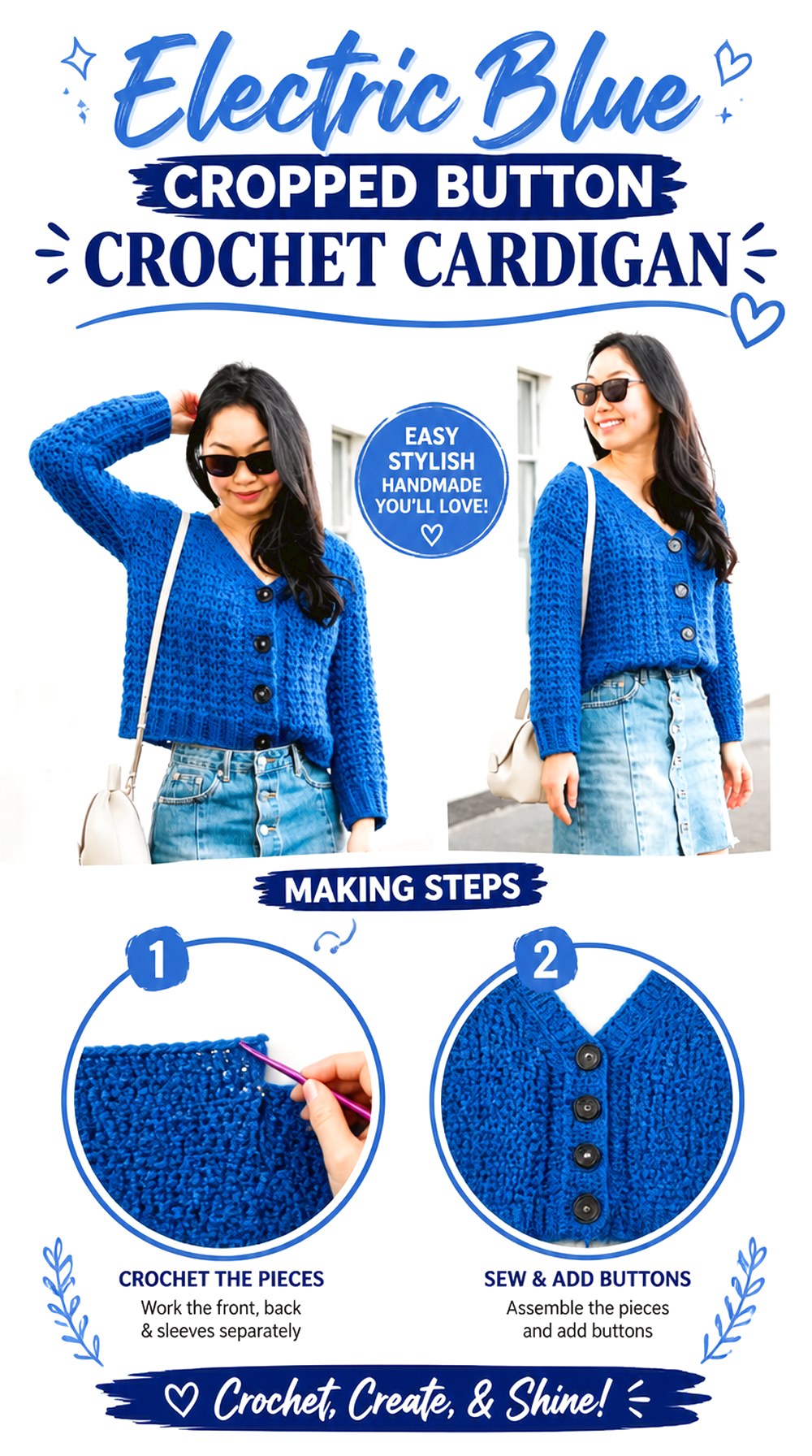
A cropped button cardigan gives electric blue enough surface area to make a statement without turning the entire outfit into one block of color. The For The Frills tutorial produces a chunky V-neck cardigan with buttons and a shorter silhouette, making it particularly suited to high-waisted pants, skirts, and dresses. The creator also provides information for adjusting the length, which is useful if a very cropped shape is not what you want.
In electric blue, the buttons and neckline become important visual breaks. Neutral buttons can quiet the palette, while blue or translucent buttons preserve the saturated monochrome effect.
The Cropped Hem Changes Where the Color Lands
A bright cardigan ending around the waist draws attention to that horizontal line, so compare the tutorial’s finished length with garments you already like before committing to it. If you plan to change length, remember that doing so changes yarn requirements as well. The source tutorial should remain the reference for construction rather than estimating additional rows or quantities from appearance alone.
Button Choice Can Calm or Intensify the Blue
The front closure creates several small contrast points across a very saturated garment. Dark, wood-toned, cream, or tonal buttons will each change the mood without requiring extra crochet colorwork. Check button dimensions against the buttonholes made by the tutorial before purchasing a full set; appearance matters, but a button that cannot pass comfortably through the opening is not a useful substitution.
Chunkier Fabric Adds Visual Weight
The tutorial uses chunky yarn, which gives the cardigan a substantial fall-ready surface. If you switch to another yarn simply because it comes in the ideal electric blue, do not assume a different weight will produce the same cardigan. Compare the recommended yarn category and gauge so the neckline, fronts, sleeves, and button band retain the intended proportions.
Original Tutorial and Creator Credit
2. Electric Blue Open Front Crochet Cardigan
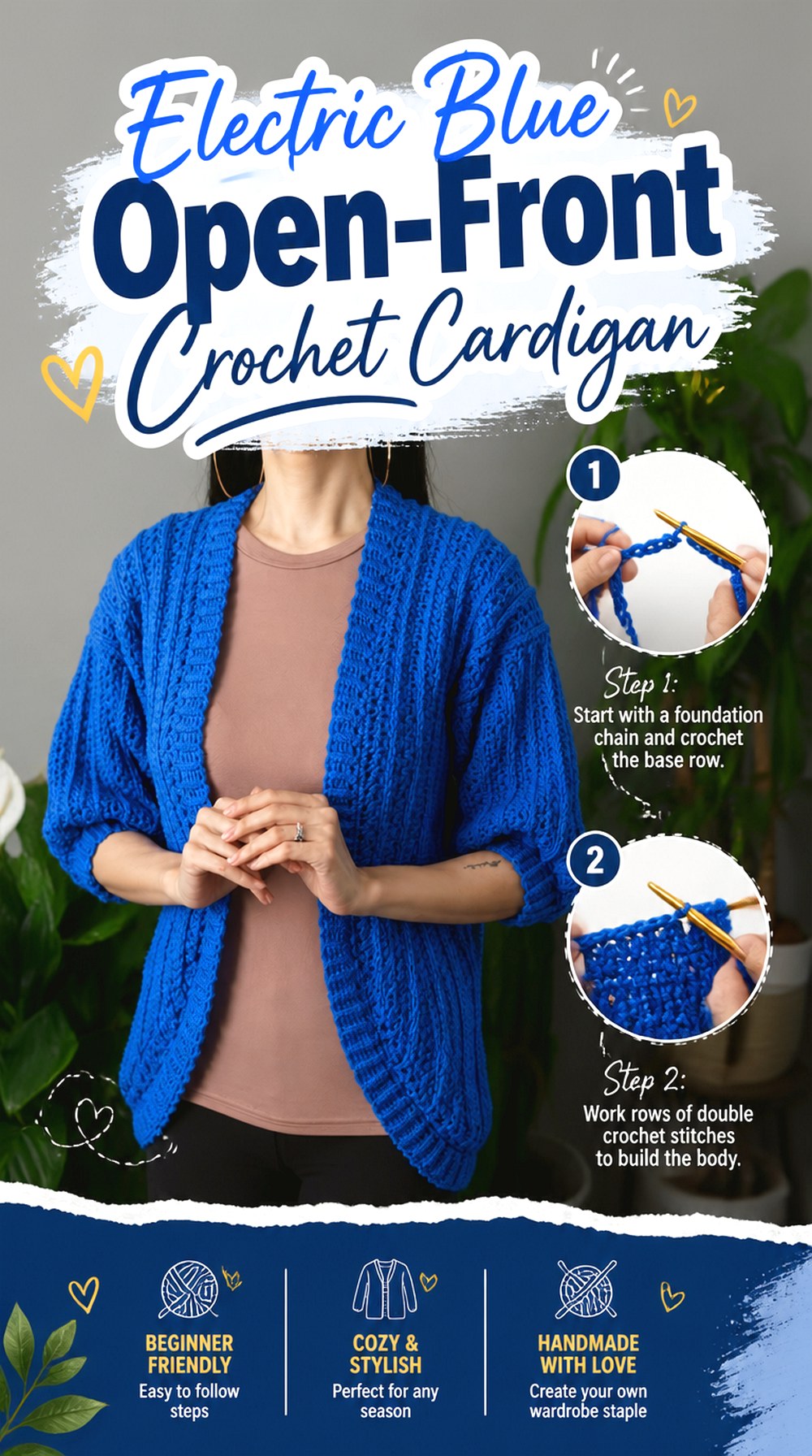
For a less contained layer, an open-front electric blue cardigan lets the clothing underneath break up the color. TCDDIY’s cardigan tutorial uses separate front sections, a back, sleeves, cuffs, and a finished band, producing a more flowing open-front shape rather than the compact buttoned silhouette of the first idea. The source project uses category 4 yarn and shows the major garment sections individually.
That construction makes this a useful choice when you want electric blue to frame an outfit instead of becoming the whole upper-body focal point.
An Open Front Makes Layering Part of the Design
Because the center stays visually open, the shirt or dress underneath effectively becomes another color in the cardigan. Try the blue beside the neutrals and denim shades you actually wear before choosing yarn. A warm cream creates a much different contrast from black or cool gray, even though the crochet garment itself has not changed.
Watch the Front Band for Unwanted Rippling
A band running around a cardigan opening can draw attention to tension differences, especially in a vivid solid shade. Lay the cardigan flat periodically while finishing that area. If the edge begins to wave or pull inward, investigate your tension and compare your work with the tutorial before continuing through the entire band.
Sleeve Weight Matters on an Open Garment
Long sleeves add substantial fabric to a cardigan. A heavier substitute yarn can therefore affect how the shoulders and front hang even when the color looks perfect. Match the source yarn category and gauge as closely as practical if you want the tutorial’s proportions, and assess a swatch for both softness and weight rather than looking only at stitch definition.
Original Tutorial and Creator Credit
Creator: TCDDIY
3. Electric Blue Ribbed Crochet Vest
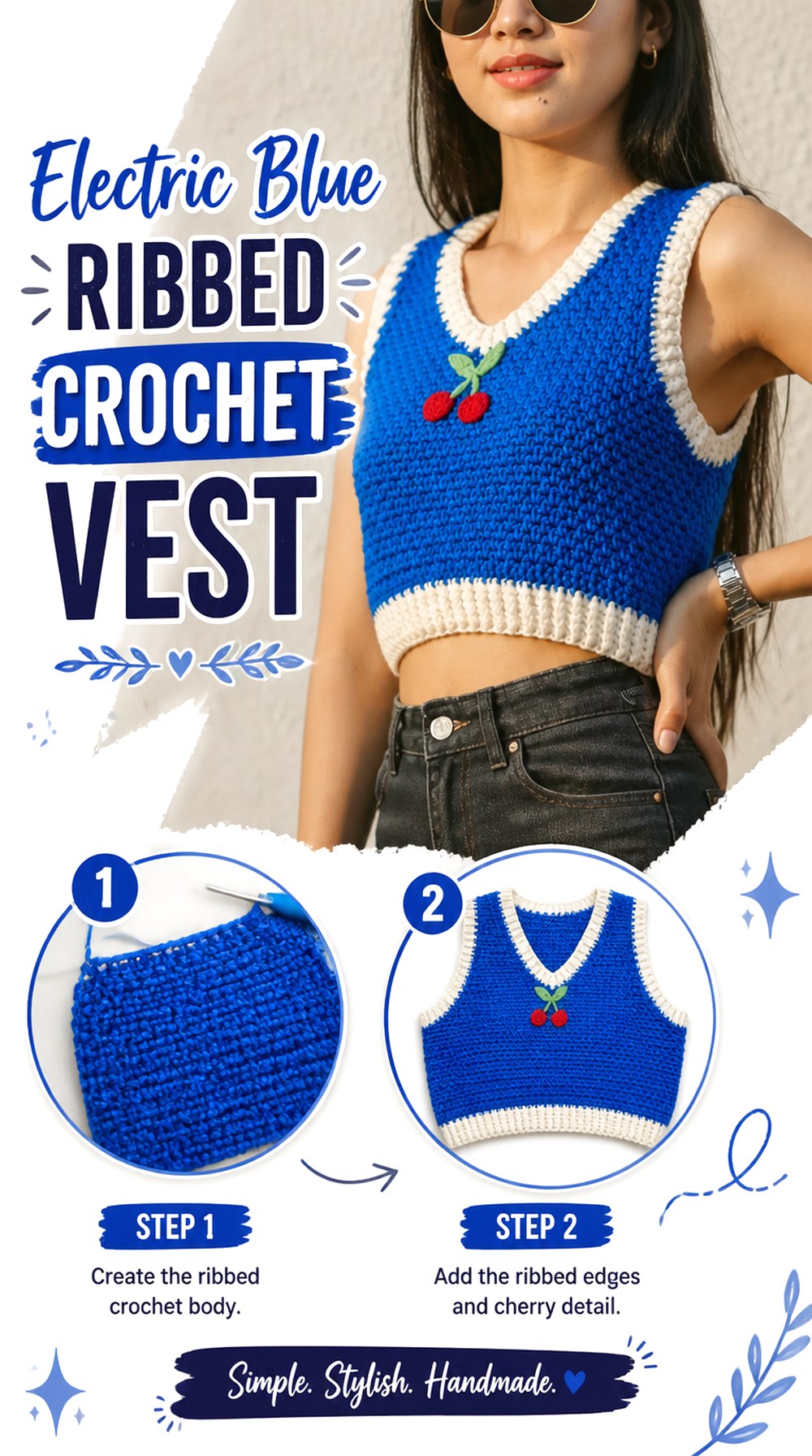
An electric blue vest gives you strong color with less bulk than a full cardigan. Chenda DIY’s tutorial creates a sleeveless vest with distinct front and back sections plus ribbed finishing around key edges. The original tutorial uses DK yarn and demonstrates a straightforward garment shape that can be layered over a fitted tee, blouse, or lightweight long-sleeve top.
The absence of full sleeves also makes the contrast between the vest and the base layer more visible. That is useful if you like electric blue but do not want it directly beside your face and hands everywhere you look.
Armhole Finishing Becomes More Noticeable in a Bright Shade
With no sleeves to cover the armhole edge, uneven ribbing or a stretched opening can stand out. Check both sides against each other as the finishing develops instead of waiting until the garment is complete. Consistent edge tension will do more for the finished appearance than adding extra decorative details to an already bold color.
Layering Determines the Real Fit
A vest that fits over a thin shirt may feel very different over a fall-weight blouse or knit top. When reviewing the creator’s sizing information, decide what you expect to wear underneath and measure accordingly. Do not rely only on your usual store-bought size; garment measurements and intended ease are more useful indicators when available.
Keep Decorative Motifs Optional
The source video includes an additional crochet cherry detail, but the underlying vest does not need that embellishment to work. For a clean electric-blue version, leaving the surface plain lets the ribbing and silhouette carry the design. If you add motifs, test their placement temporarily before sewing so they do not visually crowd the neckline.
Original Tutorial and Creator Credit
Creator: Chenda DIY
4. Electric Blue Drawstring Crochet Balaclava
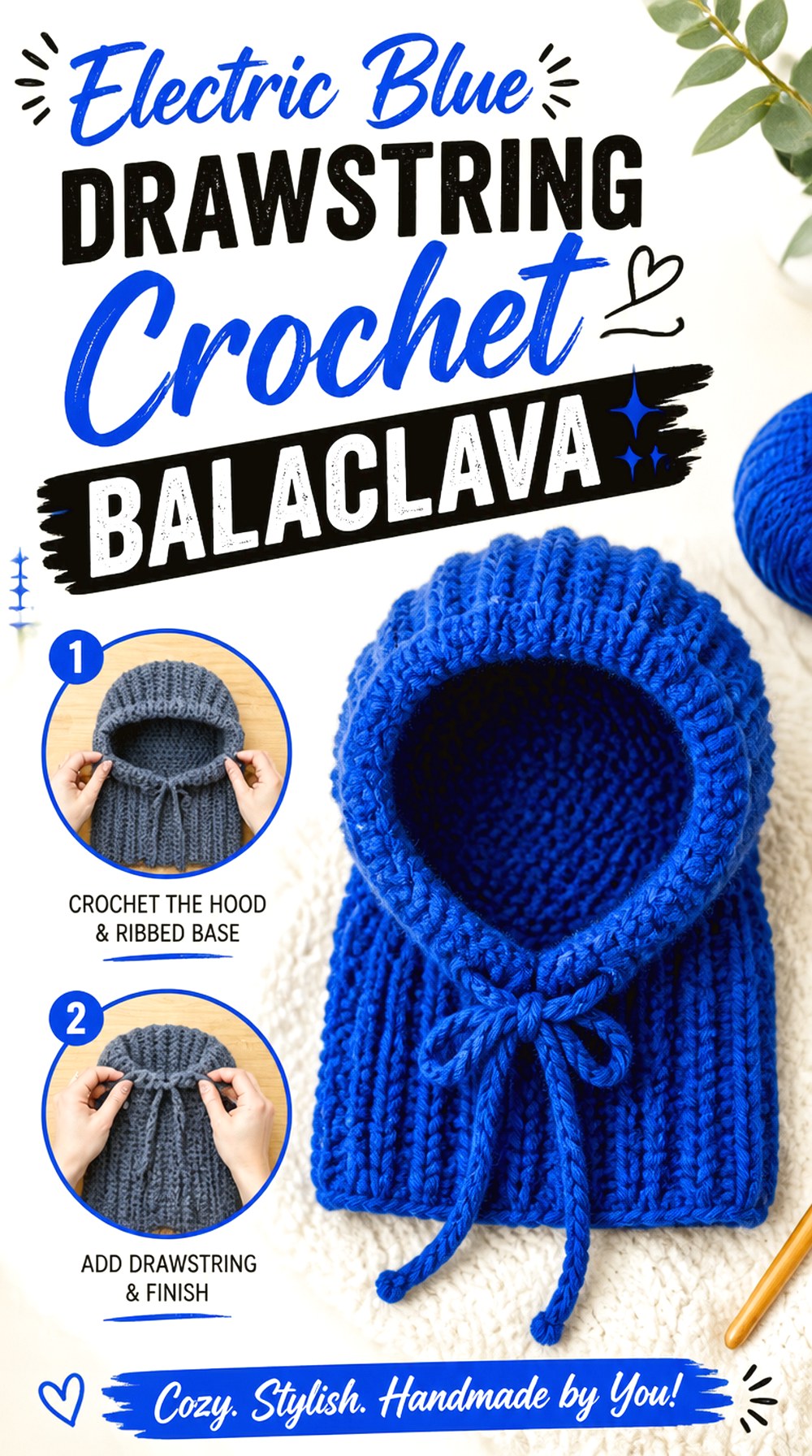
A saturated blue balaclava turns a practical cold-weather accessory into a very visible fall statement. Natalie’s tutorial is made to measure, minimizes sewing, and includes ribbing around the lower section and face opening plus a drawstring detail. Those features distinguish it from a basic beanie because fit must work simultaneously around the crown, face, neck, and shoulders.
Electric blue is especially effective here because the continuous color frames the face. If that feels too intense, a neutral coat or jacket provides an immediate visual break without modifying the crochet design itself.
Face-Opening Fit Deserves an Early Check
A balaclava is less forgiving than a loose scarf because the opening sits close to the face. Since this tutorial uses a made-to-measure approach, use the creator’s measurement guidance rather than copying another person’s dimensions. Check comfort before permanently finishing the edging, particularly if your substitute yarn behaves differently from the original.
The Drawstring Changes Both Fit and Appearance
A drawstring adds a functional line around an already prominent opening. Matching electric blue keeps the surface continuous, while a neutral cord creates deliberate contrast. Whatever color you choose, make sure the finished tie arrangement is comfortable and appropriate for the intended wearer and use rather than treating it purely as decoration.
Ribbing Can Make One Blue Look Like Several
Even in a single solid shade, ribbed sections catch light differently from flatter crochet fabric. That provides built-in visual variation without adding another yarn color. A smooth, clearly plied electric blue can emphasize this effect; fuzzy yarn may soften the rib definition. Compare swatches if the texture is one of the main reasons you chose this project.
Original Tutorial and Creator Credit
Creator: Natalie
5. Electric Blue Brimmed Crochet Bucket Hat
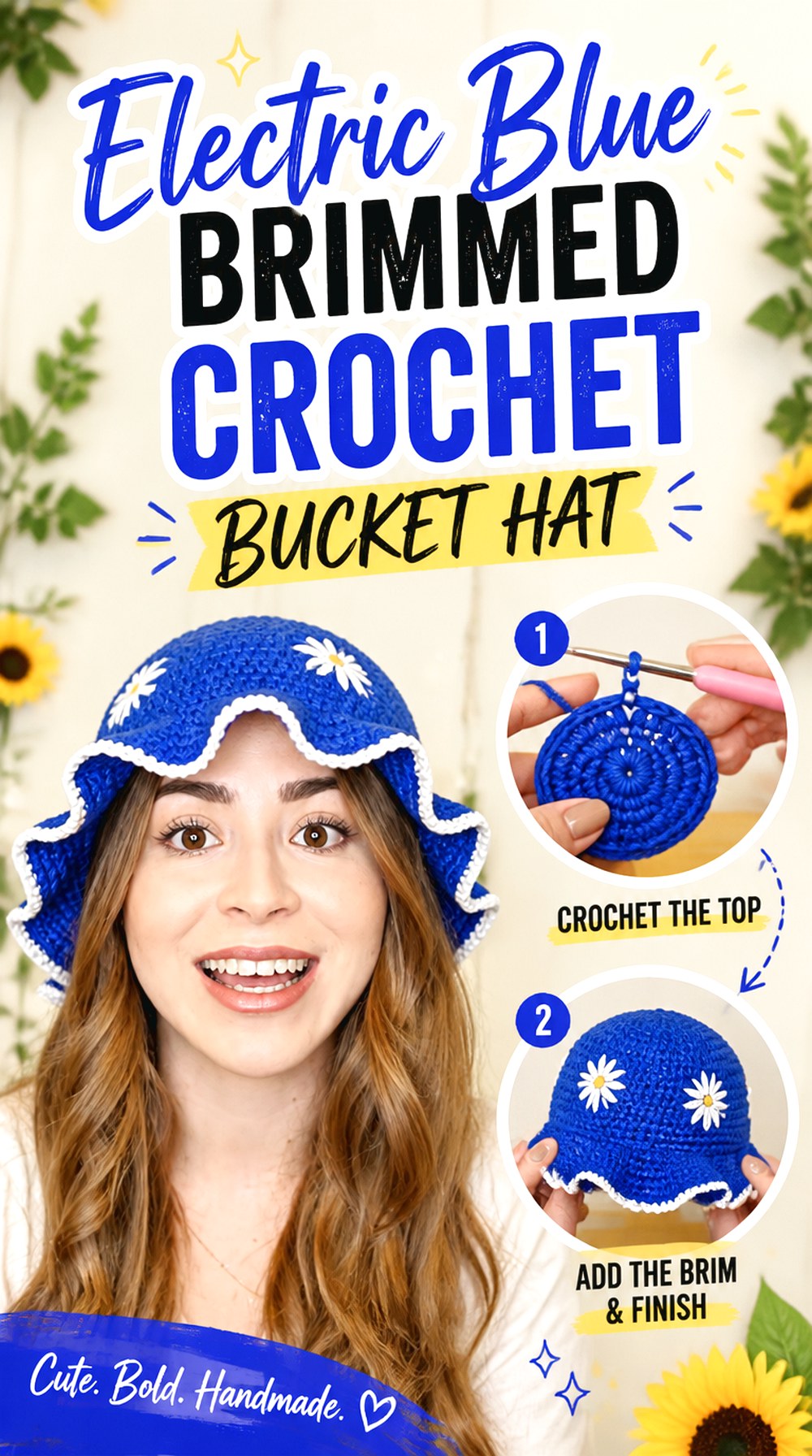
A bucket hat offers a different approach to fall headwear: less close-fitting than a beanie and more dependent on the relationship between crown, sides, and brim. Brunaticality’s tutorial demonstrates those areas and discusses different brim possibilities, along with optional finishing details.
Worked in electric blue, the clean circular silhouette can look graphic without needing multicolor motifs. It is also an easy piece to coordinate with a blue bag or gloves because the color appears in a relatively small, controlled area rather than covering the whole outfit.
Brim Behavior Depends on Fabric Structure
A brim that is too soft can collapse differently from the tutorial sample, while a very rigid substitute may create a noticeably stiffer silhouette. Before committing to the entire hat, assess whether your electric blue yarn produces fabric that suits the brim style you want. Yarn fiber, hook choice, and tension all influence that behavior.
Crown Fit Comes Before Decorative Finishing
Embroidery or other surface details are much easier to judge after the hat fits correctly. The source tutorial includes optional flower embroidery, but you can leave an electric-blue version plain or use a restrained contrasting detail. First confirm crown and circumference according to the tutorial’s sizing guidance.
Decide Whether the Hat Is a Match or an Accent
If you already plan an electric-blue cardigan or tote, the bucket hat can intentionally form a coordinated set. If it is the only blue piece, it becomes the accent. Making that styling decision first prevents you from adding unnecessary contrast yarn simply because the tutorial demonstrates decorative possibilities.
Original Tutorial and Creator Credit
Creator: Brunaticality
6. Electric Blue Chunky Crochet Beanie
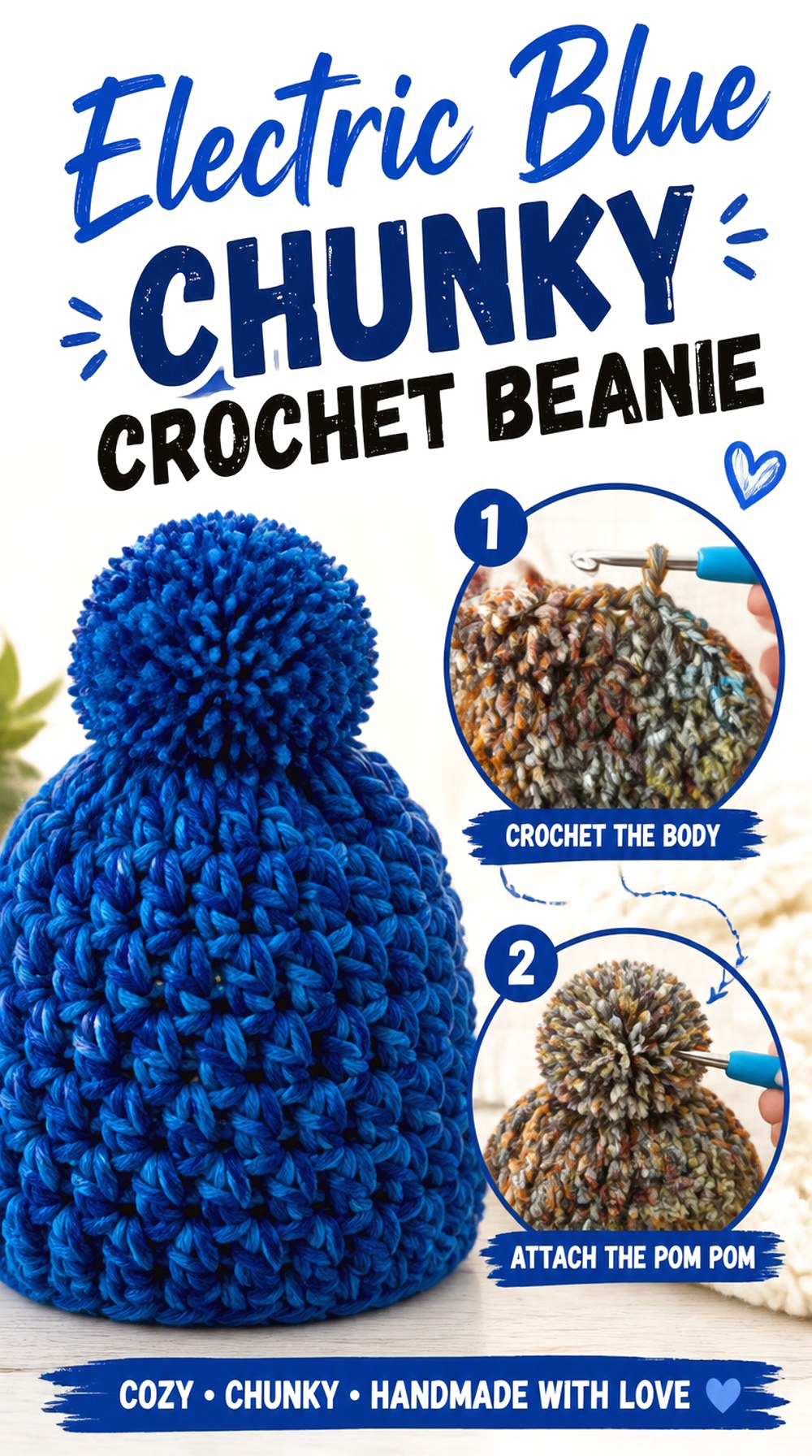
For a simpler cold-weather option, a chunky electric blue beanie concentrates color around the face without the brim or extended neck coverage of the previous designs. Rich Textures Crochet’s beginner beanie uses super-bulky yarn and basic crochet stitches, creating a substantial surface where the bright shade remains easy to see.
This project works well when you want the color itself to do most of the styling. There is little need for complicated embellishment; a strong blue paired with a dark coat can provide plenty of contrast on its own.
Check Stretch Before Judging Circumference
Hat fit depends on more than a flat measurement because crochet fabric can stretch differently depending on yarn and tension. If you substitute another super-bulky yarn, work the creator’s gauge check and assess the fabric rather than assuming all yarn carrying the same weight label behaves identically.
A Large Stitch Scale Makes Yarn Texture Obvious
Super-bulky fabric magnifies differences in twist, halo, sheen, and stitch definition. If you want a crisp electric-blue beanie, examine how clearly the stitches appear in a swatch. A very fuzzy yarn may still make an attractive hat, but it will produce a softer visual effect than a smooth, strongly defined blue.
Original Tutorial and Creator Credit
Creator: Rich Textures Crochet
7. Electric Blue Twist Front Crochet Ear Warmer
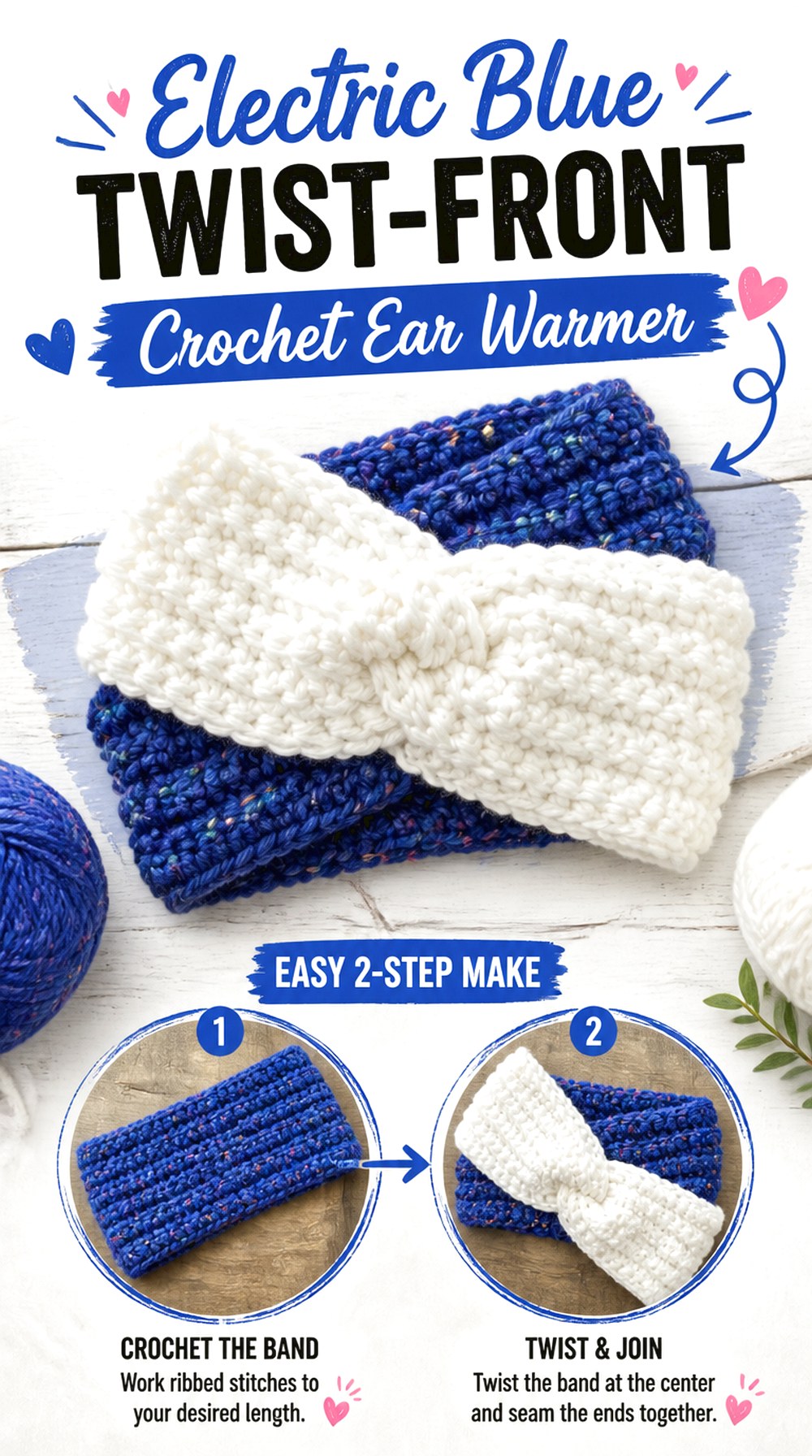
An ear warmer is a useful way to test electric blue in a wearable before committing to a sweater-sized project. Pattern Princess demonstrates a super-bulky headband-style ear warmer with a crossed center treatment and sizing guidance for several wearer categories.
Because the project leaves the top of the head uncovered, it has a lighter appearance than either a beanie or balaclava. The twist at the front also creates enough depth and shadow to keep a single bright blue from looking visually flat.
The Center Twist Needs to Sit Comfortably
The crossed center creates multiple fabric layers, so yarn thickness matters there more than it would in a plain flat band. Check how bulky your chosen blue yarn feels when folded before finishing. A yarn that looks ideal in a single swatch may feel too thick once several layers are stacked together.
Size the Band for the Actual Wearer
Headbands need enough stretch to stay in place without becoming uncomfortable. Use the tutorial’s sizing and measurement guidance rather than relying on a generic age label alone. If your substitute yarn changes stretch substantially, compare the developing band against the intended fit before joining the ends permanently.
Original Tutorial and Creator Credit
Creator: Pattern Princess
8. Electric Blue Moss Stitch Crochet Fingerless Gloves
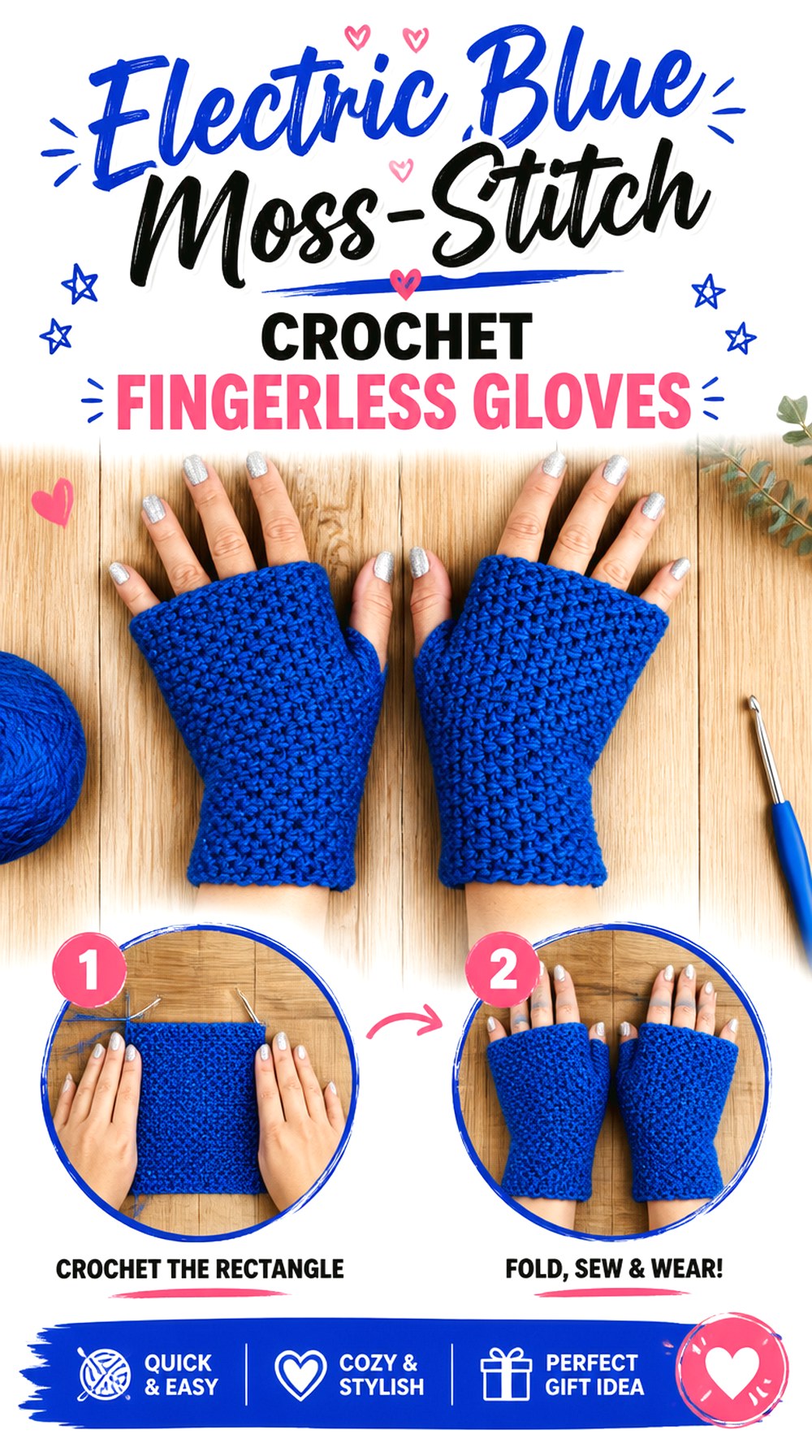
Electric blue fingerless gloves are a smaller fall project with a practical advantage: fingers remain uncovered while the wrist and hand receive an extra crochet layer. Naztazia’s tutorial uses moss stitch and works the glove fabric flat before forming the finished mitt with a side seam and thumb opening.
That construction also makes these gloves a useful candidate for a vivid solid yarn because the repeated texture distributes the color evenly. They can coordinate with a neutral coat or intentionally match another blue accessory elsewhere in the article.
Hand Fit Should Be Checked Before the Side Seam
A rectangle can look correct on the table and still feel too loose or tight once wrapped around the hand. Before completing the seam, test the fabric around the intended wearer’s hand and confirm the thumb-opening position using the tutorial as your guide. Yarn stretch can make a significant difference in a close-fitting accessory.
Moss Stitch Rewards Clear Color Definition
The alternating texture of moss stitch gives a solid shade subtle movement. A smooth electric blue makes that texture easier to see, while highly fuzzy yarn can blur it. If stitch definition is the reason you chose this design, compare the yarn in a small sample before making both gloves.
Original Tutorial and Creator Credit
Creator: naztazia
9. Electric Blue Tube Style Crochet Leg Warmers
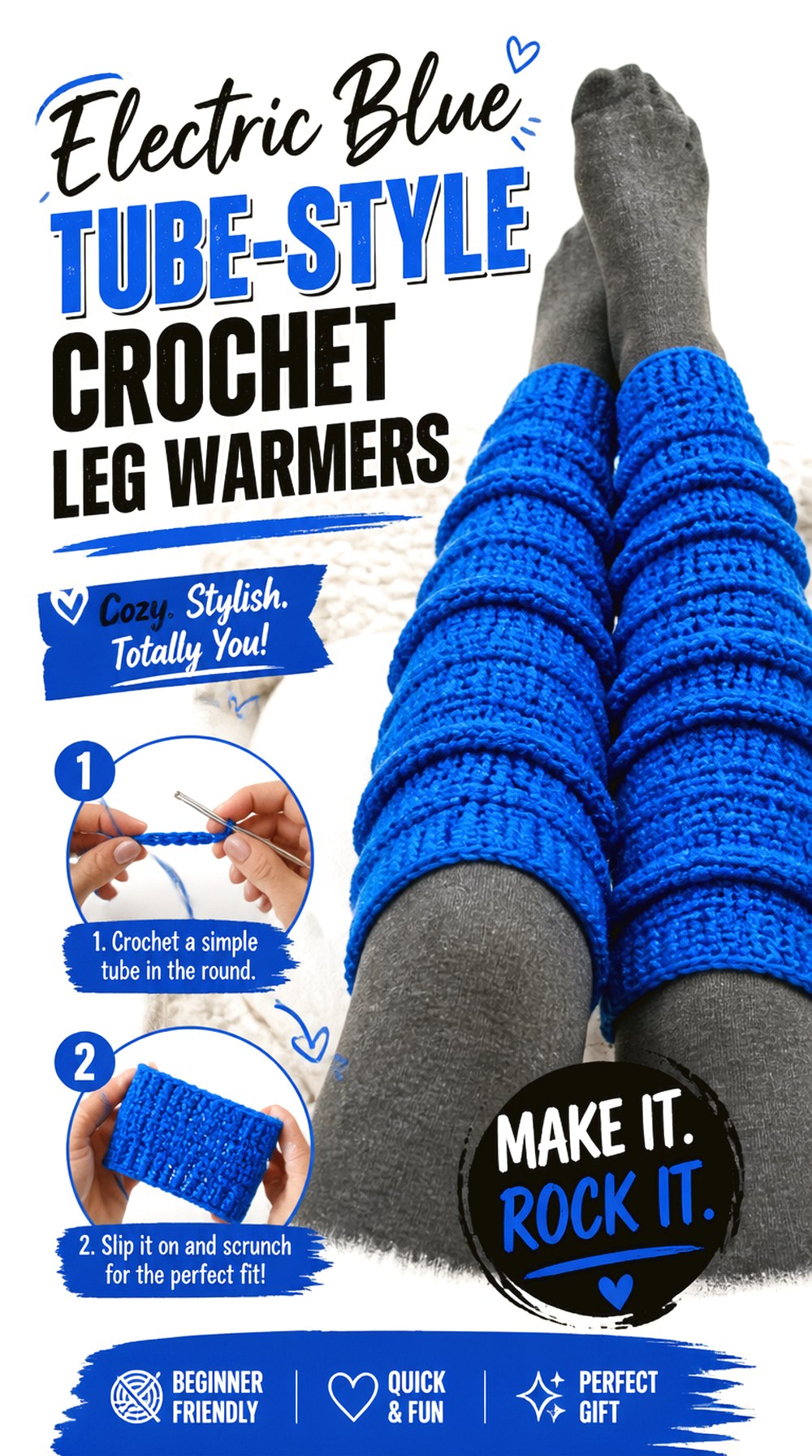
Leg warmers move the bright color away from the face and make it easier to use electric blue as a lower-body accent. B.Hooked Crochet’s tutorial teaches a simple tubular construction worked in rounds with basic stitches. The straightforward form is useful for styling over tights, leggings, or near the top of boots when the weather starts cooling.
Because two matching pieces are required, consistency matters more than decorative complexity. A slight difference in tension between the first and second warmer can become noticeable when they are worn together.
Calf Fit Matters More Than a Generic Label
Measure the intended area of the leg and compare it with the tutorial’s fit information before beginning. A yarn with extra stretch can loosen during wear, while a firmer fabric may need more room from the start. Checking the first few rounds against the intended fit is more useful than assuming one circumference works for everyone.
Make the Second Warmer Match the First
Record any legitimate adjustments you make to yarn, hook, or desired length so the second piece does not become an approximation. Lay the two warmers together during the project and compare width and length. Electric blue draws the eye, so inconsistent proportions may be more apparent than they would be in a visually mottled yarn.
Original Tutorial and Creator Credit
Creator: B.Hooked Crochet
10. Electric Blue Lightweight Crochet Poncho
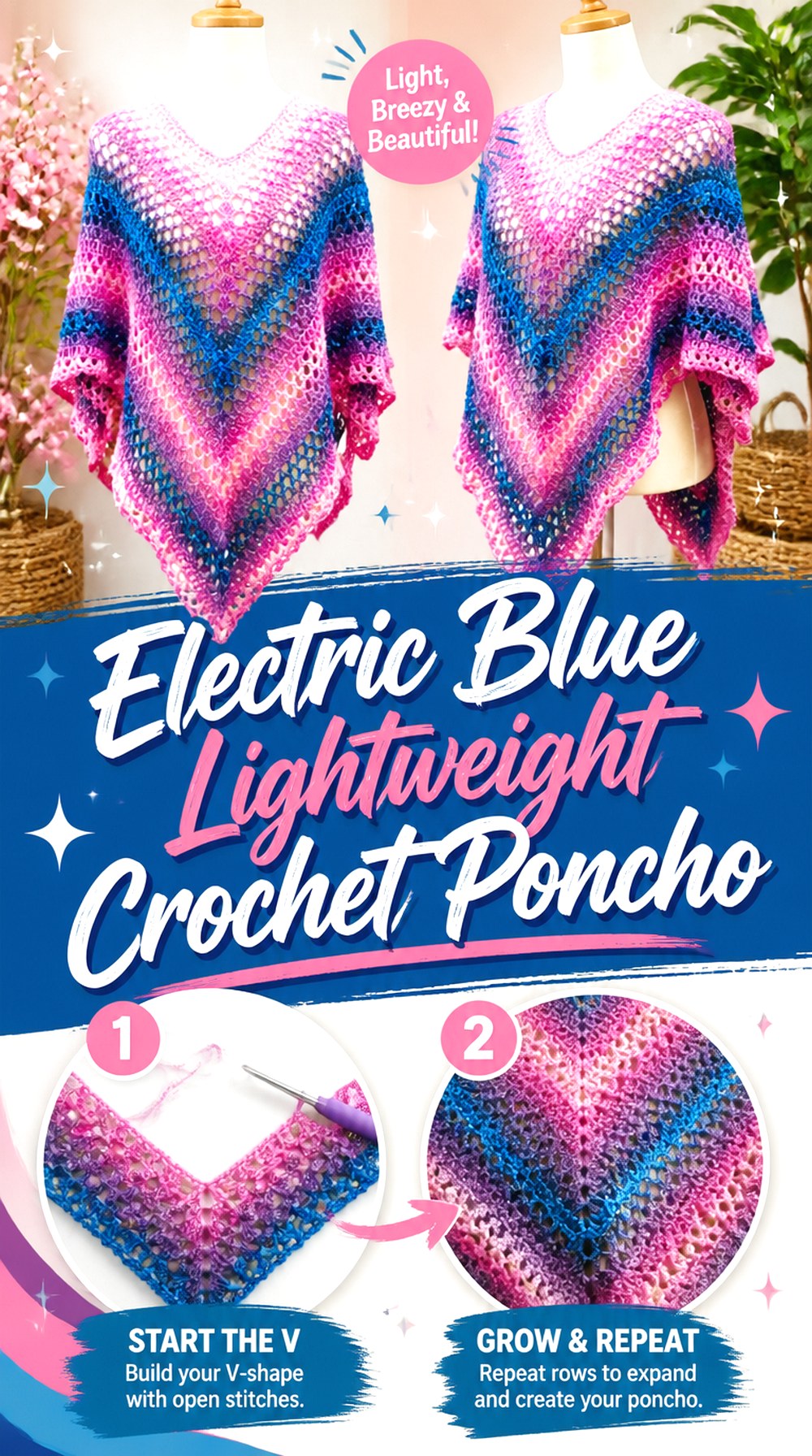
A poncho creates a larger field of electric blue than a hat or pair of gloves but avoids the fitted sleeves and button bands of a cardigan. Bag-O-Day Crochet’s tutorial demonstrates a lightweight poncho intended as a spring or summer design, making the underlying concept especially relevant to early fall or transitional weather rather than deep cold.
In a saturated blue, the broad drape can become the central element of an outfit. Keep the layers underneath simple if you want the crochet shape and color to remain the focus.
Treat This as a Transitional Layer
The source design is explicitly lightweight, so it should not be presented as the equivalent of a heavy cold-weather poncho. For fall 2026, it makes the most sense on mild days or as an indoor layer. If greater warmth is your priority, choose yarn substitutions carefully rather than simply moving several weight categories heavier.
Drape Is Central to the Silhouette
A poncho relies on fabric falling from the shoulders instead of following a fitted torso shape. A very stiff electric blue yarn can therefore alter the finished character even when the dimensions seem workable. Hold a larger swatch vertically and see how it hangs before investing in the whole project.
Keep the Neckline Proportionate
Large fields of strong color make the neckline an important break in the silhouette. Check that opening and shoulder placement against the creator’s project before extending the body. If you change yarn behavior substantially, those upper proportions deserve attention before additional fabric adds weight.
Original Tutorial and Creator Credit
Creator: Bag-O-Day Crochet
11. Electric Blue Tunisian Crochet Triangle Shawl
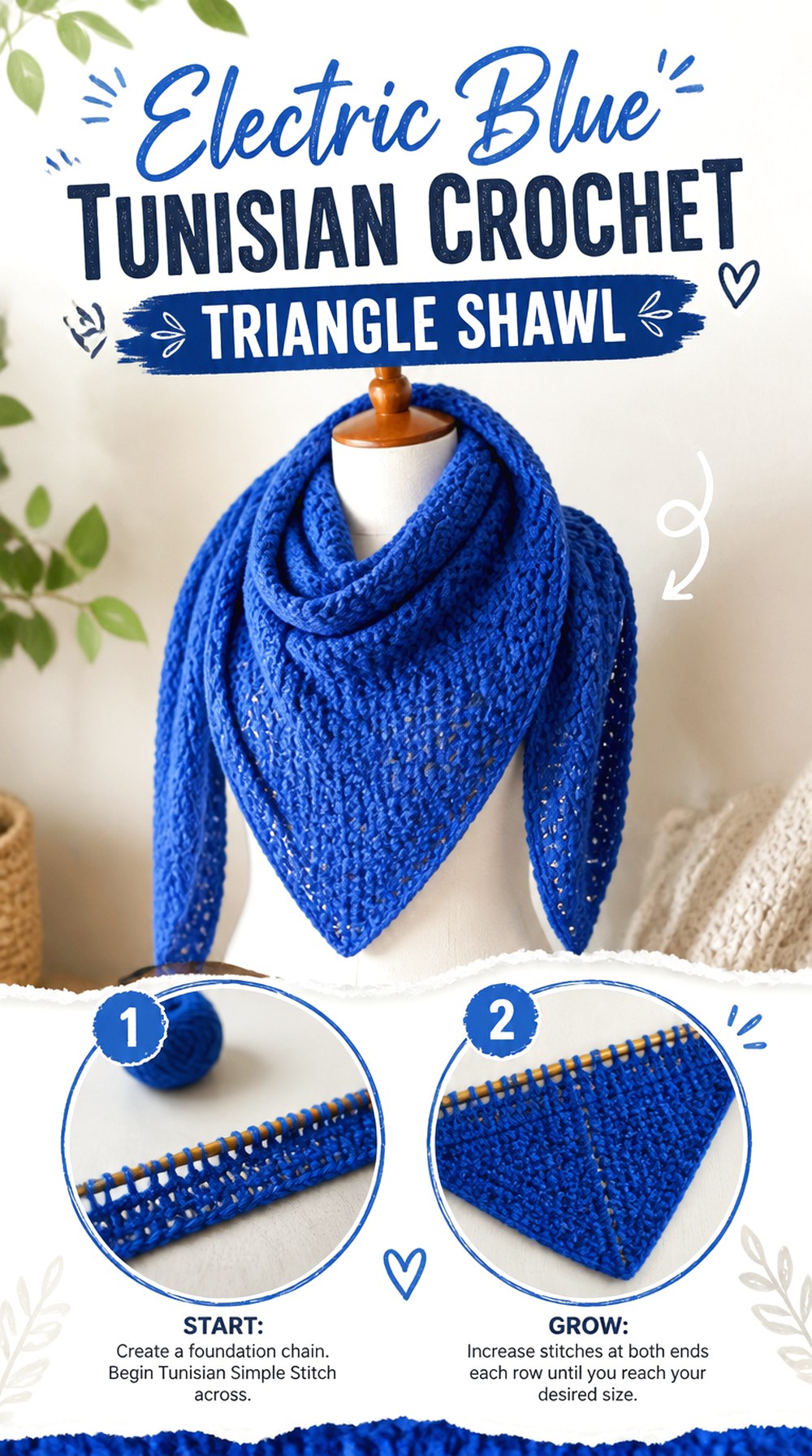
A triangular shawl allows electric blue to move from a narrow point into a broad field of color, giving the shade a softer presentation than a boxy garment. TL Yarn Crafts’ Lamia Wrap tutorial teaches a Tunisian crochet shawl that begins small and grows into its triangular form, using textured Tunisian stitches in the design.
This is a good option when you want a wearable that can be draped over the shoulders, shifted around the neck, or layered over a neutral coat without needing conventional garment sizing.
Tunisian Fabric Has Its Own Character
Do not assume a conventional crochet swatch tells you exactly how the same yarn will behave in Tunisian crochet. The technique can create a different density and surface. If you are substituting an electric blue yarn, make the relevant Tunisian swatch and check the tutorial’s gauge information before deciding that the fiber and hook combination is suitable.
The Triangle Makes Color Placement Simple
A single-color version removes the need to plan stripes or motif repeats. That lets the geometry and texture carry the visual interest. If the blue feels too intense across the whole shawl, a restrained contrasting border could visually contain it, but first make sure any added finish will not distort the outer edges.
Blocking Can Clarify the Finished Shape
Triangle shawls often benefit visually from careful finishing because the edges and point are part of the design. Follow care instructions appropriate to your chosen fiber and consult the creator’s recommendations. Do not assume all electric-blue yarns tolerate the same heat, moisture, or blocking method simply because the colors are similar.
Original Tutorial and Creator Credit
Creator: TL Yarn Crafts
12. Electric Blue Textured Crochet Scarf
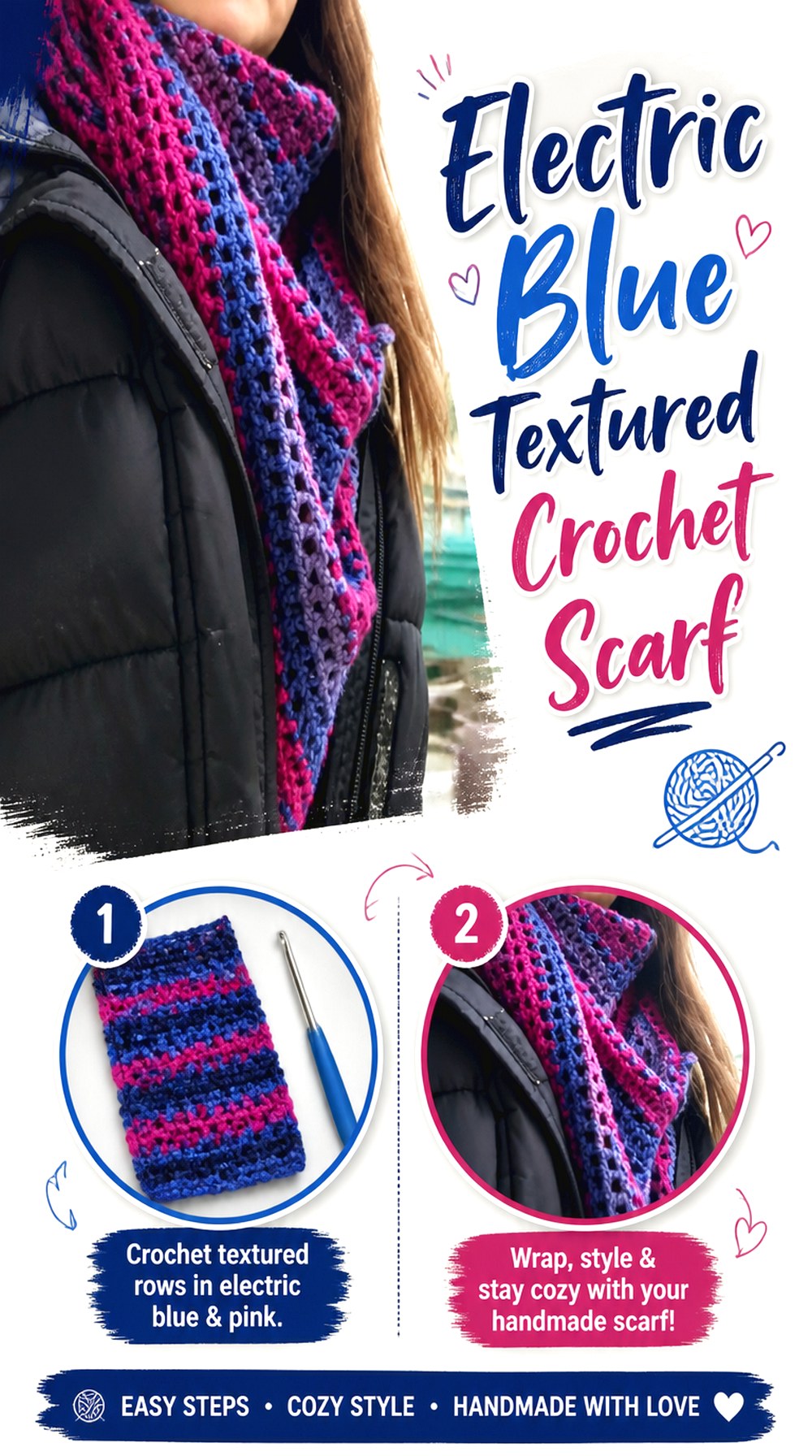
conventional scarf is one of the simplest ways to introduce electric blue because there is no armhole, closure, crown, or garment panel to fit. Ophelia Talks Crochet’s London Weekend Scarf tutorial provides a long rectangular scarf format that lets the surface texture and yarn become the main features.
The finished item can be wrapped near the face for a strong blue accent or allowed to hang vertically over a neutral coat. That styling flexibility makes it less visually demanding than a full blue sweater while still giving the color plenty of room.
Width and Length Affect How Much Blue You See
A narrow scarf creates a concentrated stripe of color; a wider one covers more of the chest and shoulders. Rather than choosing proportions only from photographs, compare a scarf you already own with the tutorial’s project and decide how you actually plan to wear the electric-blue version.
Straight Edges Matter on a Solid Bright Scarf
A vivid single color makes the overall outline easy to see. Periodically spread the scarf flat and check whether the sides remain consistent. If the piece is unexpectedly narrowing or widening, identify the cause early rather than trying to disguise an uneven edge during finishing.
Original Tutorial and Creator Credit
Creator: Ophelia Talks Crochet
13. Electric Blue Checkered Crochet Tote Bag
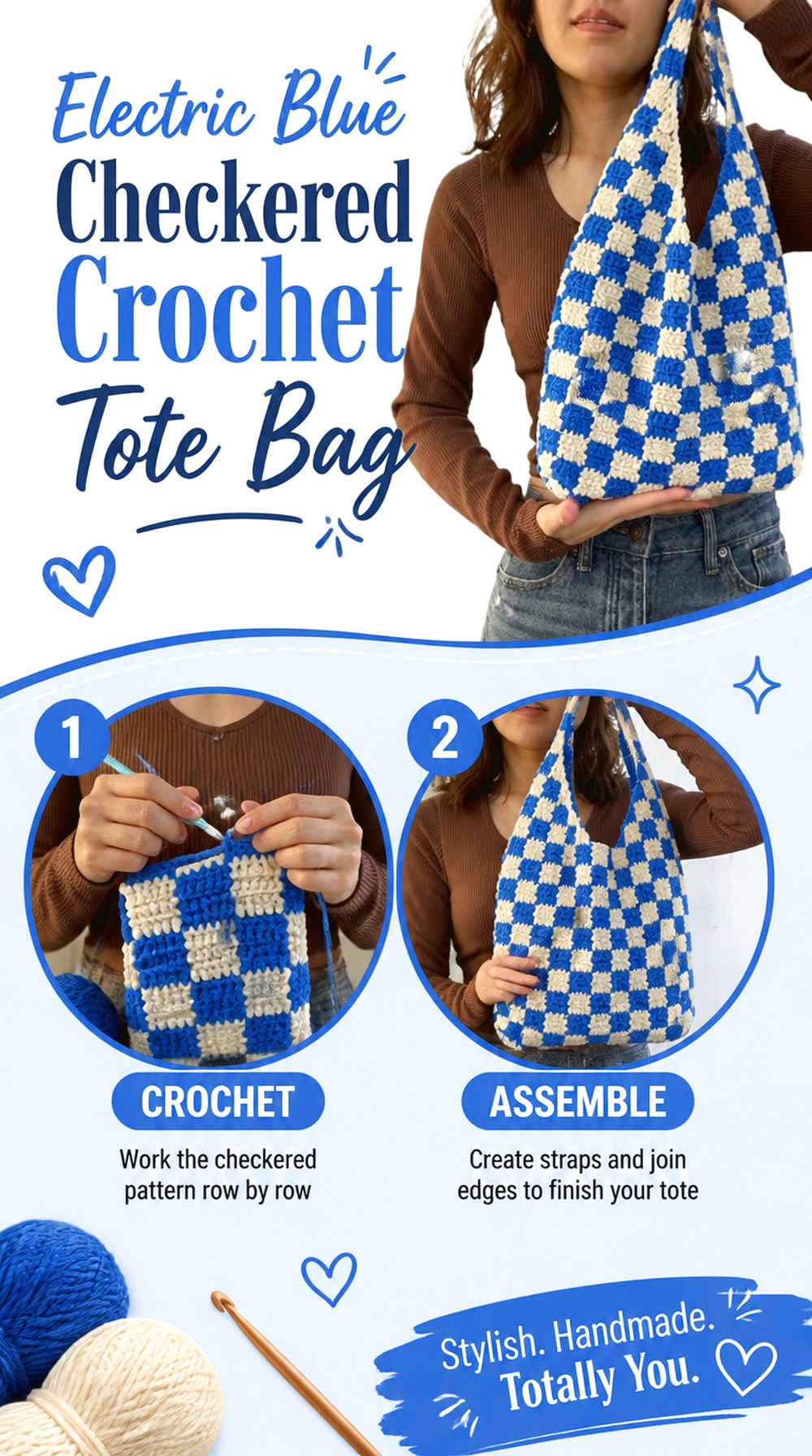
A checkered tote gives electric blue a graphic role rather than using it as one uninterrupted block. VivCrochets’ tutorial demonstrates a checkered tote with a defined base, body, and straps, with color changes forming an important part of the finished appearance.
For fall, electric blue can be paired with cream, charcoal, brown, or another restrained shade so the checker pattern stays readable. Compared with a wearable, a tote also lets you use a very strong color without having to coordinate it directly with skin tone or garment fit.
Decide Which Color Controls the Checkerboard
Electric blue can dominate the pattern or alternate evenly with a neutral. Before starting, sketch or mentally map which shade will appear most prominently around the base, body, and upper edge. Good color planning prevents the bag from looking like two unrelated yarn choices once the repeated squares accumulate.
Bag Fabric Needs More Than Attractive Drape
A sweater can benefit from flowing fabric, but a tote generally needs more shape. If your preferred electric blue yarn creates a very stretchy swatch, consider whether that behavior matches the intended bag use. Do not make unsupported load-capacity assumptions; instead, assess fabric density and follow the creator’s construction before deciding whether lining or reinforcement would suit your own use.
Strap Stretch Can Change the Carrying Height
Crochet straps can lengthen when worn depending on yarn, stitch structure, and what the bag carries. Check how the tutorial constructs its straps and evaluate your substitute yarn before making independent length changes. If you add reinforcement or lining, treat that as your adaptation rather than implying it is part of the original tutorial.
Original Tutorial and Creator Credit
Creator: VivCrochets
14. Electric Blue Chunky Crochet Cowl
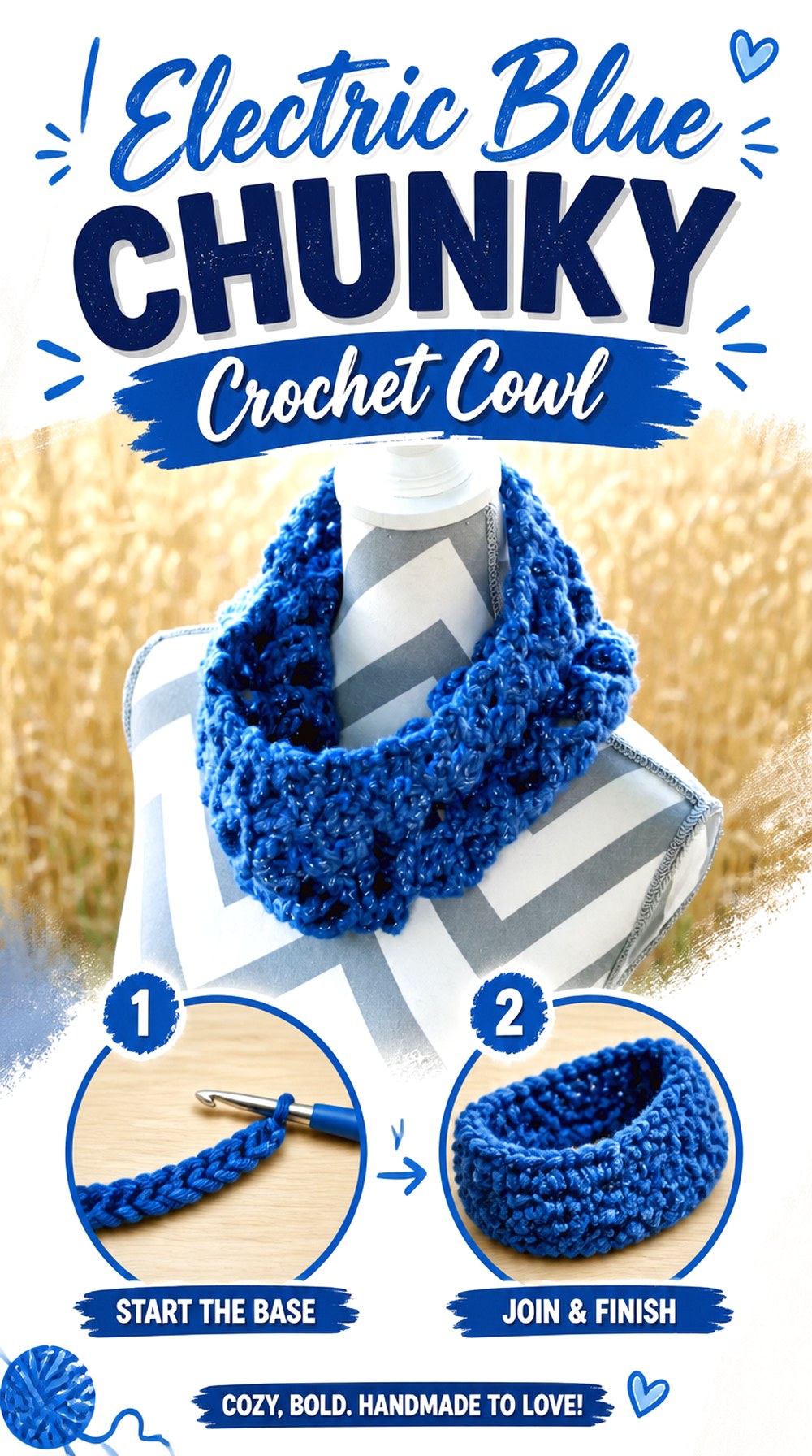
A chunky cowl keeps electric blue close to the neckline but removes the long hanging ends of a traditional scarf. The Crochet Crowd’s tutorial demonstrates a substantial cowl using several stitch types and cluster texture. The result occupies a compact area, making it a useful choice when you want the color to appear bold but contained.
Because a cowl sits repeatedly folded or gathered around the neck, surface texture becomes especially visible. A solid electric blue can emphasize those shadows without requiring color changes.
Neck Comfort Comes Before Maximum Chunkiness
A thick yarn can look appealing in the skein but feel different when several layers gather around the neck. Make sure the chosen yarn feels comfortable against skin or against the collar layer you intend to wear underneath. If you substitute fiber, also check its care information and texture rather than relying only on its weight classification.
Cluster Texture Gives Solid Blue More Depth
Raised and grouped stitches create light and shadow across a single shade, which helps electric blue look dimensional instead of flat. Choose a yarn with enough stitch definition for the texture to remain visible. Excessive halo can soften the effect, while a smoother yarn generally produces crisper relief.
Original Tutorial and Creator Credit
Creator: The Crochet Crowd
15. Electric Blue Web Texture Crochet Throw
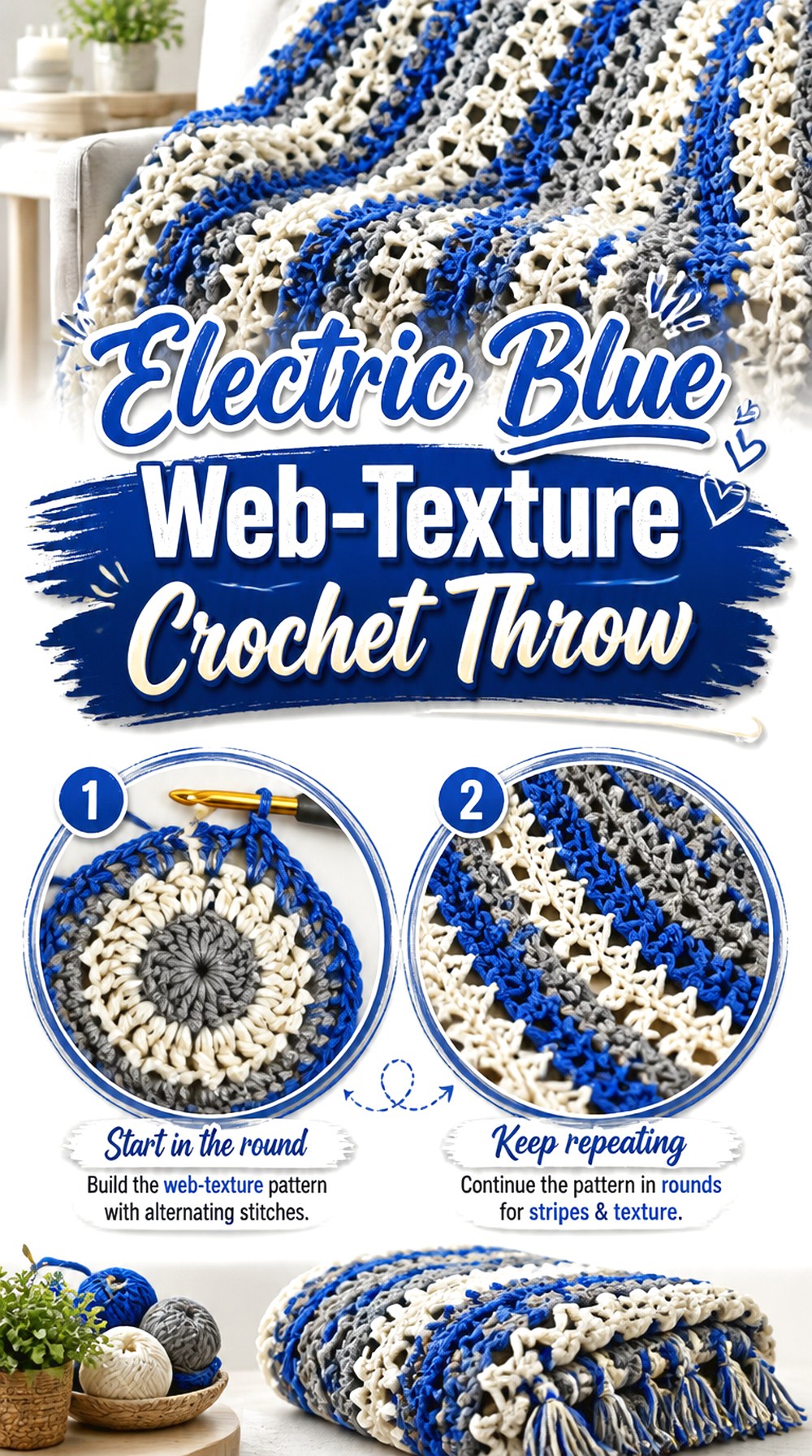
A throw turns electric blue from an outfit accent into a full home-decor statement. Fiber Spider’s tutorial creates a web-inspired crochet blanket, giving the surface a strong repeating structure rather than a plain solid fabric.
This can work particularly well on a cream, gray, tan, or dark neutral sofa where the blue becomes a defined visual centerpiece. Unlike a garment, the project does not need to match body measurements, but consistent tension and overall fabric behavior still matter as the blanket grows.
Large Projects Magnify Small Tension Changes
A minor variation may seem insignificant near the beginning of a blanket but become more visible over a much larger area. Spread the work out periodically instead of keeping it folded in your lap. That makes it easier to notice unintended distortion while correction is still manageable.
A Web Texture Needs Enough Definition
The appeal of this design depends partly on the pattern remaining visible across a broad surface. A highly variegated yarn could compete with that structure, whereas electric blue keeps the palette simple. If your chosen yarn is fuzzy, very dark, or extremely shiny, make a larger sample and view it from a distance to see whether the web effect still reads clearly.
Plan Finished Storage Before Increasing Scale
Large crochet throws take more room to use and store than small accessories. Decide where the blue piece will live—sofa, chair, guest room, or folded display—before independently enlarging the project. Any increase in dimensions also changes yarn requirements, so use the creator’s information as your baseline rather than guessing quantities.
Original Tutorial and Creator Credit
Creator: Fiber Spider
16. Electric Blue Textured Crochet Pillow Cover
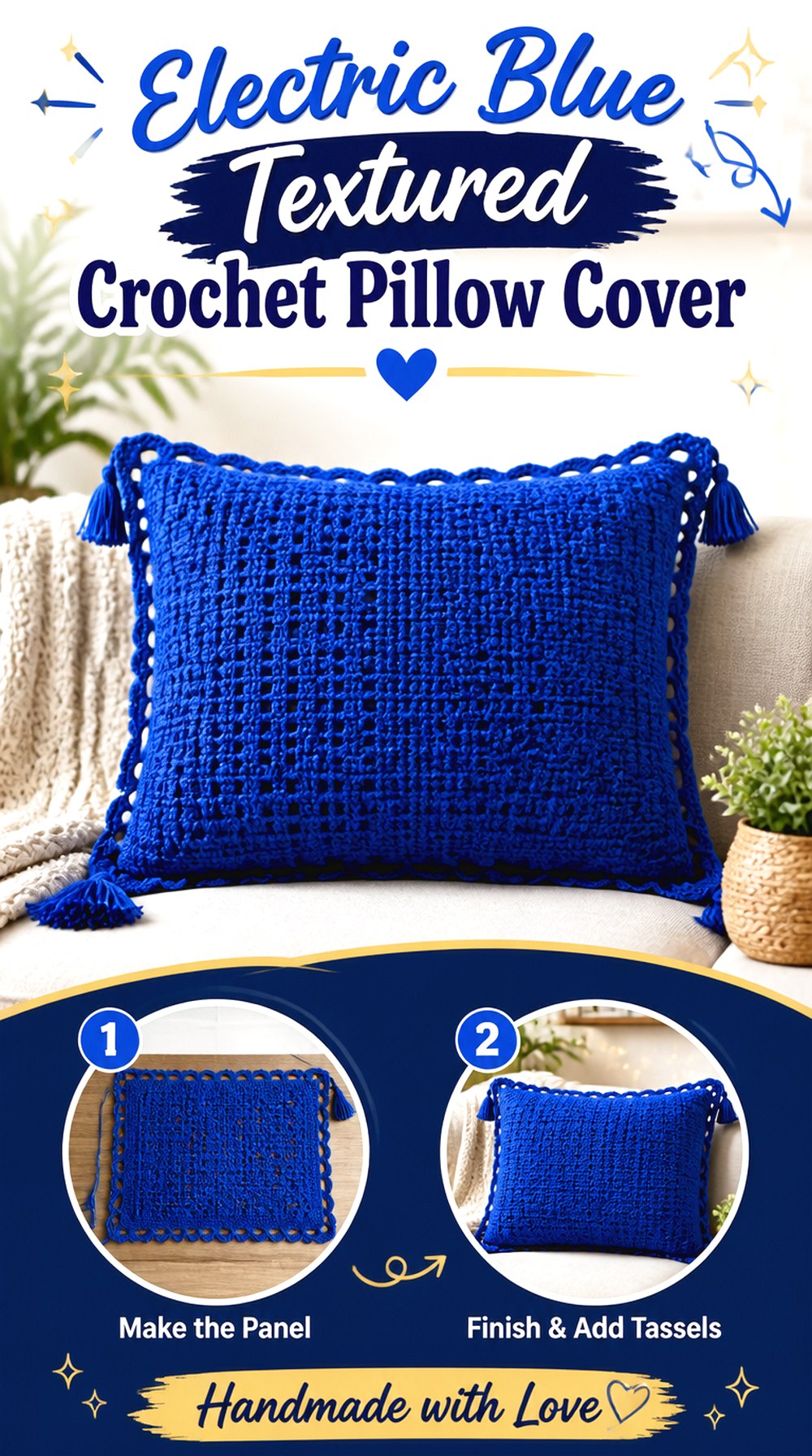
An electric blue pillow is the lowest-commitment home-decor option in this collection if you want a concentrated color accent rather than a full throw. Crochet With Samina’s tutorial focuses on a crocheted pillow-cover design, providing a source project you can recolor without pretending the original sample used the same palette.
A blue cushion can also be moved between rooms or combined with neutral textiles as the season changes. That flexibility makes it useful when electric blue feels appealing but you are not ready to make it the dominant color of a larger blanket.
Match the Cover to the Intended Insert
Do not assume every decorative pillow uses the same dimensions. Confirm the tutorial’s construction and compare the developing cover with the insert you plan to use. A cover that is dramatically too loose can lose stitch definition once stuffed, while one that is too small may distort the fabric and seams.
Texture Should Remain Visible After Filling
A textured sample can look pronounced while lying flat and then change once stretched around an insert. Before final assembly, hold the fabric over the pillow and check whether the electric-blue surface still has the depth you wanted. If you substituted yarn, this is also a useful point to identify unwanted gaps or excessive stiffness.
Original Tutorial and Creator Credit
Creator: Crochet With Samina
Which Electric Blue Crochet Idea Should You Choose?
| If you want… | Strong options from this list | Main thing to check |
|---|---|---|
| A statement fall layer | Cropped cardigan, open cardigan, vest | Gauge, intended ease, yarn weight |
| Flexible shoulder coverage | Poncho, Tunisian shawl | Drape and finished scale |
| Strong color in a small project | Beanie, ear warmer, gloves | Fit and stretch |
| More cold-weather coverage | Balaclava, cowl, leg warmers | Comfort and fabric thickness |
| A practical accessory | Checkered tote | Structure and strap stretch |
| A classic neck accessory | Textured scarf | Edge consistency and proportions |
| A large home statement | Web-texture throw | Tension, yarn needs, storage |
| A smaller decor accent | Pillow cover | Insert compatibility and fabric stretch |
The main divide is fit versus structure. Wearables need to work with your measurements and layering plans, while the tote and home projects rely more on shape retention, scale, and how the fabric behaves in use. Electric blue can work across all of them, but the yarn that makes a good flowing shawl is not automatically the yarn you would choose for a structured tote.
Conclusion
Electric blue can carry an entire fall crochet collection without forcing every project into the same style. Choose the cropped cardigan or open-front cardigan when you want the color to lead an outfit, the vest or poncho for flexible layering, and the smaller hats, gloves, leg warmers, scarf, or cowl when you prefer controlled accents. The checkered tote gives the blue a graphic treatment, while the throw and pillow move it into home decor.
Most importantly, choose the project construction first and the exact blue yarn second. Matching yarn behavior, fit, drape, or structure will usually produce a better result than selecting by shade alone. Use the original tutorials for their exact construction details and verify measurements, gauge, and materials before adapting them.
Frequently Asked Questions
Does an electric blue yarn need to match the yarn used in the tutorial exactly?
No. The color can be changed, but the replacement yarn still needs to make sense for the project. Start by comparing yarn weight and the creator’s gauge information, then consider fiber, drape, stretch, stitch definition, and care. Two yarns can look almost identical in color yet produce noticeably different fabric. For fitted garments and hats, a gauge difference can alter size; for bags, it can change structure and stretch.
Which electric blue crochet projects are easiest to coordinate with a fall wardrobe?
Smaller accessories are usually the simplest place to begin because they do not cover as much of the outfit. An electric blue beanie, ear warmer, fingerless gloves, scarf, or cowl can sit beside black, charcoal, cream, camel, or denim without requiring the rest of the clothing to match. A cardigan or poncho creates a much larger color field, so the base layers become more important to the overall look.
Can I use the same electric blue yarn for several projects in this collection?
Only when the yarn characteristics suit each tutorial. A yarn appropriate for a cardigan might also work for a scarf or hat if the required weight and gauge are compatible, but that does not mean it will create the structure you want in a tote or the exact fabric expected in another tutorial. Compare each source individually instead of treating color continuity as proof of material compatibility.
How can I keep an all-blue crochet project from looking too flat?
Texture is the easiest solution. Ribbing, moss stitch, clusters, Tunisian texture, checker arrangements, and raised or open structures reflect light differently even when they are made from one shade. You can also use contrast through styling rather than crochet: place an electric-blue garment over cream or charcoal, or put a blue pillow against a neutral sofa instead of automatically introducing another yarn color.
Should I change the hook size if my electric blue yarn is a different brand?
Brand alone is not a reason to change hook size. Compare the yarn specifications and make the gauge or fabric sample relevant to the tutorial. If your stitches are too dense or too loose compared with the project requirements, hook adjustment may be appropriate. For fitted pieces, follow the creator’s gauge guidance; for bags and decor, also judge whether the resulting fabric has the structure and appearance you need.
Is electric blue better for early fall or colder weather crochet?
The color itself is not tied to a temperature. Construction and materials determine how warm the project is. The lightweight Bag-O-Day poncho in this list is better treated as a transitional layer, while a chunky cowl, super-bulky beanie, or balaclava provides a different kind of coverage. Choose according to the finished fabric and your climate rather than assuming every fall-colored project offers the same warmth.
What should I check before turning one electric blue project into a matching set?
Check material compatibility rather than simply buying extra skeins of the same yarn. A hat and scarf may pair easily, but a matching tote may require firmer fabric, and a cardigan introduces gauge and fit considerations. You can still create a coordinated set by using the same blue family in different yarn types. Matching hue is optional; matching each project’s functional requirements is more importan