A crochet potion bottle belt pouch can be part costume accessory, part small-item carrier, and part fantasy prop. The most convincing versions do more than change yarn color: bottle shaping, neck treatment, fabric density, attachment style, closures, and surface motifs all change how the finished piece looks and behaves at the hip.
This collection includes two tutorials created specifically as potion-bottle storage pieces, plus original bottle-holder tutorials that offer useful construction starting points for wearable adaptations. Not every source creator designed a Halloween belt pouch, so those conversions are identified as adaptations rather than presented as source instructions. That distinction matters when you are changing size, replacing a long strap with a belt loop, or putting a real container inside. Use the ideas below to compare structure first, then take exact construction details from each credited original tutorial.
Quick List
- Rainbow Cork-Top Crochet Potion Bottle Belt Pouch
- Moonlit Crochet Apothecary Potion Belt Pouch
- Growing-Vines Crochet Potion Bottle Belt Holder
- Granny Utility Crochet Potion Belt Pouch
- Linked-Stitch Crochet Potion Pocket Carrier
- Wide-V Crochet Traveler Potion Belt Bag
- Reinforced-Mesh Crochet Potion Bottle Pouch
- Charted Web Crochet Potion Belt Holder
- Drawcord Crochet Elixir Bottle Belt Pouch
- Openwork Crochet Adventurer Potion Sling
- Interlocking Crochet Rune Potion Belt Pouch
- Ocean-Lace Crochet Elemental Potion Pouch
- Star-Stitch Crochet Potion Bottle Belt Bag
- Granny-Mesh Crochet Herbalist Potion Holder
- Spoked-Web Crochet Potion Bottle Carrier
- Two-Size Crochet Alchemist Bottle Pouch
- Granny-Square Crochet Patchwork Potion Pouch
- Bow-Trim Crochet Witch Potion Belt Bag
- Heart-Sigil Crochet Potion Bottle Pouch
Fit the Bottle Before Building the Witchy Details
For an actual bottle holder, begin with the container rather than the appliqué, charm, or Halloween color palette. Compare the bottle’s base with the crochet base, then check its widest point and the transition from body to shoulder. A squat apothecary bottle behaves differently inside crochet than a tall straight-sided water bottle, even when their capacities seem similar.
Miniaturizing a water-bottle pattern also changes proportions. Large mesh openings can become impractical around a narrow vial, and a full-size motif may overwhelm a small pouch. Treat source measurements as belonging to the source project unless the designer explicitly provides resizing guidance. When adapting, fitting the real container repeatedly is more dependable than assuming a standard bottle-holder ratio will transfer unchanged.
Make the Belt Attachment Carry the Load
Changing a crossbody bottle holder into a belt pouch is not simply a styling edit. A long strap usually spreads load between two attachment areas, while a compact belt loop concentrates force close to the upper edge. If the original tutorial does not teach a belt attachment, regard the loop as a separate adaptation and assess how the pouch hangs with the intended contents before wearing it.
Dense fabric may offer more surface area for a secure attachment, while very open mesh may need a different solution. A wide loop can also behave differently from a single carabiner point. Keep the potion pouch close enough to the body that it does not swing excessively, but leave enough clearance for comfortable movement.
Use Glass and Closures With Extra Care
Crochet should not be treated as impact protection for glass. If a witchy pouch will contain a real glass bottle, inspect the base, opening, attachment point, and overall balance before walking around with it. A lightweight plastic prop or a soft pouch used for dice, coins, or costume pieces creates a very different load.
Drawstrings and decorative cork-shaped tops can help define the potion silhouette, but they should not be assumed to seal a container holding liquid. The bottle itself needs a secure closure. Beads, charms, buttons, and dangling decorations also deserve caution around small children and pets. For purely decorative Halloween wear, you have considerably more freedom to emphasize texture, unusual silhouettes, embroidery, and removable embellishments.
1. Rainbow Cork Top Crochet Potion Bottle Belt Pouch
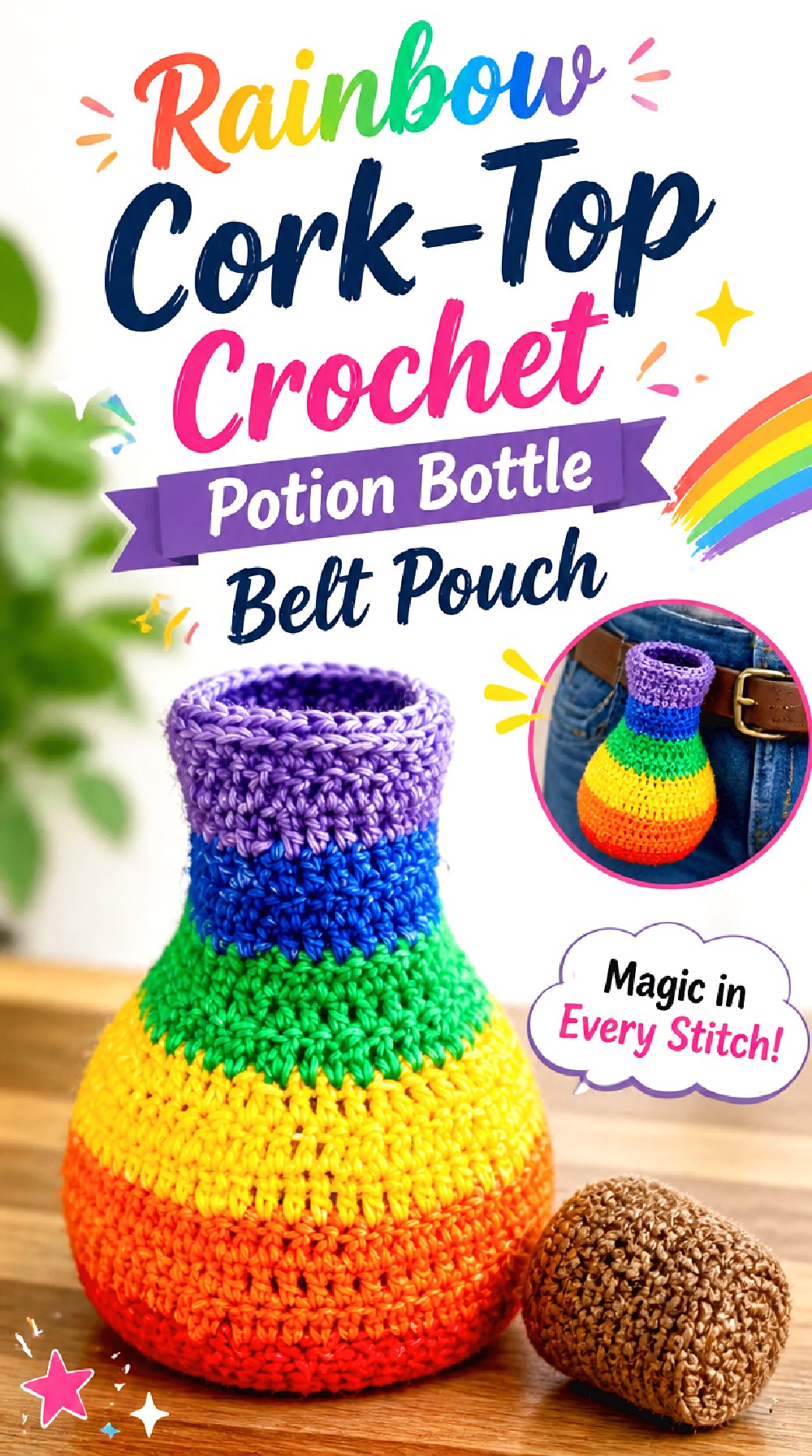
This bottle-shaped pouch starts from one of the strongest direct matches in the collection: Crochet With Kim’s potion bottle dice bag. The source creates a hollow bottle form with a contrasting cork-style piece rather than placing a separate bottle inside, so the finished object itself supplies the fantasy silhouette. The designer also discusses working the fabric firmly enough to help the potion shape hold together.
For Halloween styling, that makes it useful when you want storage without carrying glass. A rainbow version can lean toward magical-game styling, while murkier jewel tones would create a darker witch-apothecary mood. A belt loop would be an added adaptation, not part of the source pattern, so attach it only after judging the weight you plan to carry.
Let the Cork Remain Functional
The cork-shaped top is more than surface decoration because it helps complete the recognizable bottle profile. Avoid covering that area with so many leaves, cords, or charms that opening the pouch becomes awkward. If you change colors for a Halloween version, preserve the visual contrast between bottle body, neck, and cork so the shape stays readable even when viewed quickly at hip level.
Decide What the Pouch Will Actually Carry
A soft potion-shaped dice pouch can be treated differently from a holder containing a physical bottle. Dice, wrapped candy, lightweight costume tokens, or similar small items keep the construction closer to its original purpose. If you add a belt loop, load the pouch before finalizing placement and check whether it tilts outward. Heavier contents may require a wider or more carefully reinforced attachment than purely decorative wear.
Original Tutorial and Creator Credit
Creator/Site: Crochet With Kim
2. Moonlit Crochet Apothecary Potion Belt Pouch
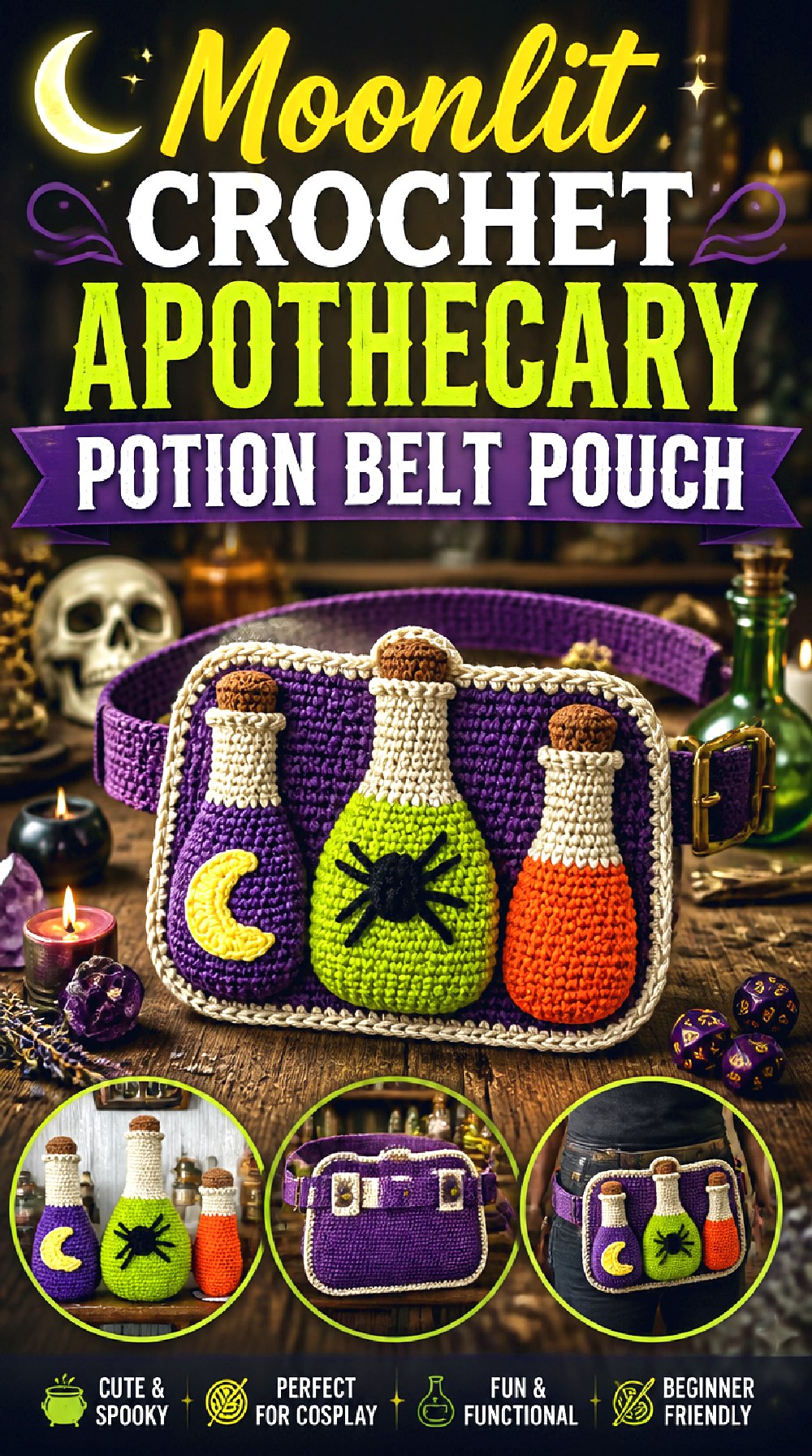
Green Fox Farms Designs takes the potion-bottle concept in a more explicitly spooky direction with the Potion of Moonlight Bottle. The original project works as either potion-bottle amigurumi or unstuffed storage for dice and other small pieces, and the moon appliqué gives the surface a defined visual focal point. The site discusses multiple potion-bottle forms in the larger design family while providing project-specific guidance for the featured bottle.
For a Halloween belt pouch, this is a useful route when you want the crochet itself to resemble an apothecary container instead of hiding a real bottle inside mesh. A compact belt loop could be added as a separate costume adaptation. Keep that attachment away from the moon motif so the front still reads clearly while worn.
Position the Moon for the Wearing Angle
An appliqué that looks centered while the pouch lies on a table can appear off-center once the pouch hangs from the waist. Before permanently adding a belt attachment, hold the finished bottle form where it will sit on the body and decide which surface naturally faces outward. That is the side where a moon, rune, botanical label, or embroidered sigil will have the strongest effect.
Stuffing Changes the Project’s Purpose
The source allows the potion bottle concept to function either as storage or as a stuffed decorative object. For a usable belt pouch, keeping the storage cavity available is the logical direction. If you add partial stuffing for shaping, make sure it does not narrow the opening or create hidden pockets where small contents become difficult to retrieve.
Original Tutorial and Creator Credit
Creator/Site: Green Fox Farms Designs
3. Growing Vines Crochet Potion Bottle Belt Holder
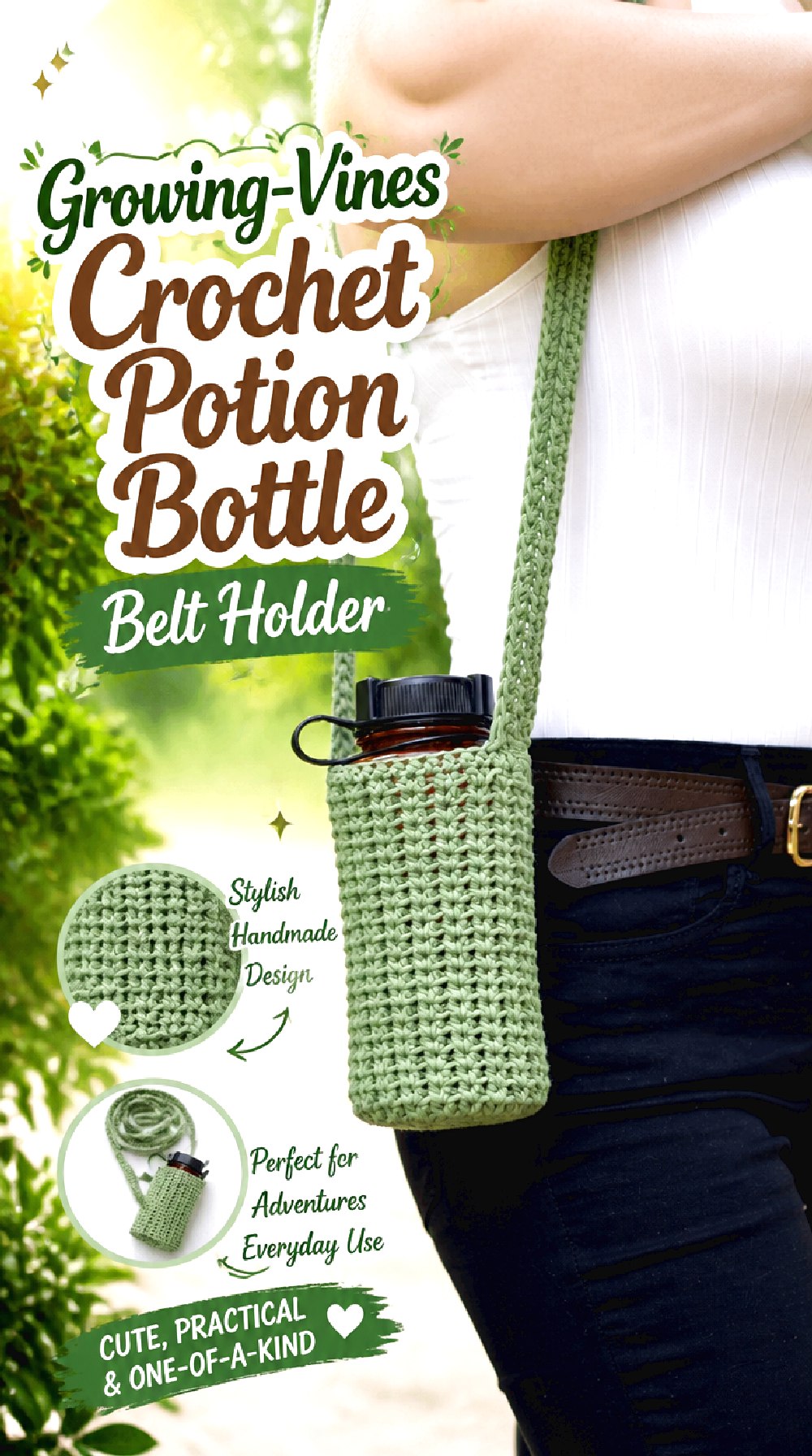
Winding Road Crochet’s Growing Vines bottle holder is unusually relevant to this roundup because the original design specifically discusses shoulder carrying, belt wear, and attachment with a carabiner. It is also designed with bottle-size adjustment in mind, giving it a stronger functional connection to wearable potion carrying than a display-only cozy.
For a healer, forest witch, druid, or traveling-apothecary costume, the vine-like surface already points toward a botanical direction without requiring a cluster of appliqués. A short, wide potion bottle would generally keep the fantasy profile closer to the hip than a tall modern water bottle. Use the creator’s actual sizing and carrying guidance for construction, then style the finished holder around your chosen Halloween bottle.
Choose Belt Loop or Carabiner by Movement
The original project presents different carrying options, so decide how much movement you want at the hip. A belt loop can keep the holder visually integrated with a costume, while a carabiner creates a more obvious single suspension point. Test either arrangement with the actual container because the same crochet body can hang differently depending on where its weight is concentrated.
Keep the Bottle Height Costume-Friendly
A tall holder may collide with the thigh when sitting, climbing stairs, or walking quickly. Before committing to an adaptation, hold the intended potion container beside the belt and check the clearance you really have. A shorter bottle can often create a more convincing fantasy silhouette while reducing the amount of movement below the belt line.
Original Tutorial and Creator Credit
Creator/Site: Winding Road Crochet
4. Granny Utility Crochet Potion Belt Pouch
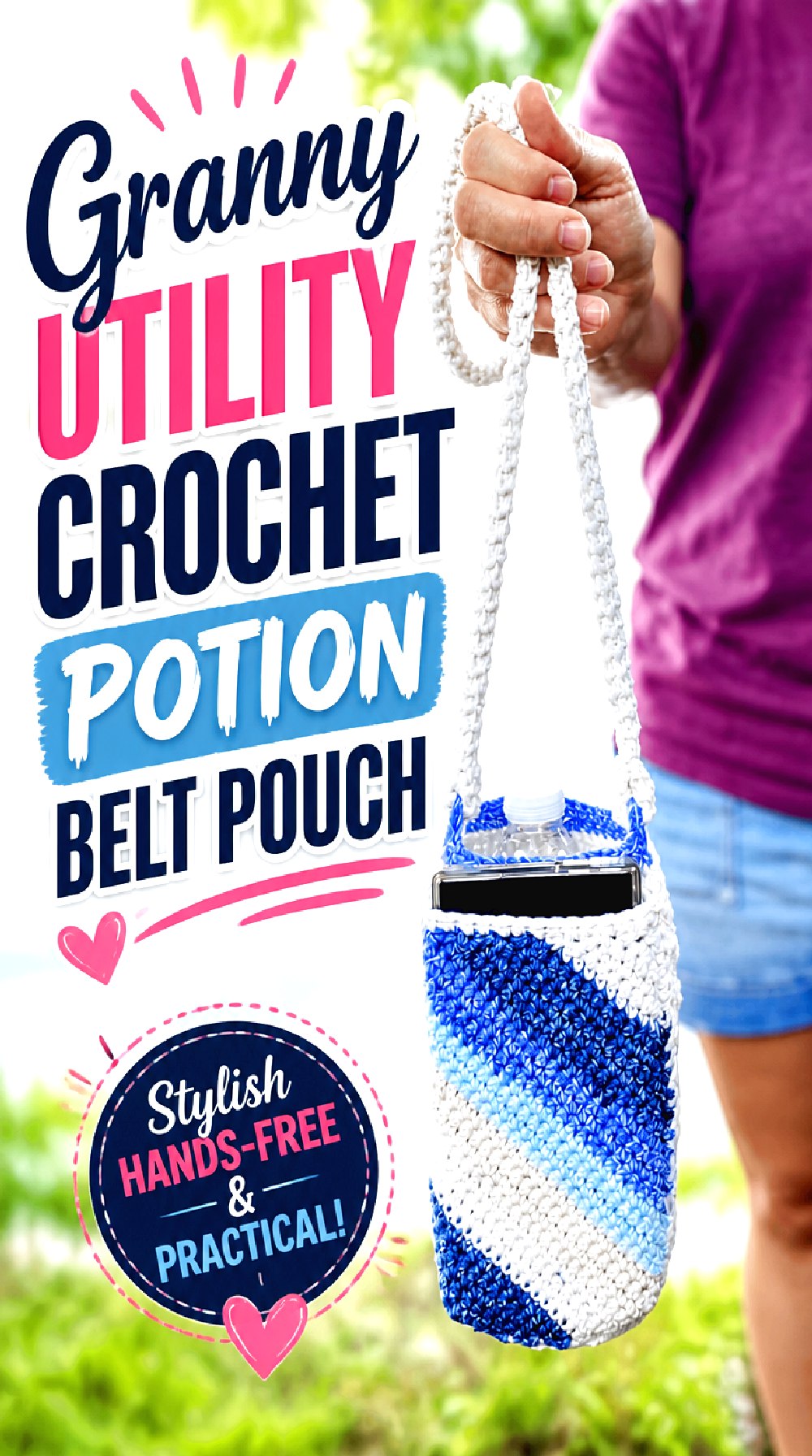
A Crocheted Simplicity combines several functional ideas in one carrier: a granny-stitch bottle body, an optional C2C pocket, and a choice between stationary and adjustable strap arrangements. The designer also includes guidance for changing bottle size and discusses how different yarn options affect stretch.
That makes the construction interesting for a witchy utility pouch rather than a purely decorative potion sleeve. A scaled-down bottle compartment could represent the potion, while the secondary pocket creates a place for a soft prop card, folded costume note, or other lightweight accessory. Converting the original shoulder/crossbody configuration to belt wear would be your adaptation, so do not assume the source strap instructions automatically become a suitable belt loop.
Make the Secondary Pocket Earn Its Space
A second compartment changes both the silhouette and the balance of the pouch. For Halloween wear, use it because the costume actually benefits from layered storage or a utility-belt look, not simply because the tutorial includes one. Keeping that pocket lightly loaded will also help prevent a small potion carrier from twisting noticeably toward one side.
Granny Fabric Shows the Contents Differently
Granny-style fabric introduces regular openings, allowing flashes of the underlying container or lining to become part of the visual effect. That can work beautifully around colored potion bottles, but tiny objects should not be placed loose inside open fabric unless an inner pouch or other suitable containment method is used. Decide whether the openings are decorative windows or functional ventilation before finalizing the scale.
Original Tutorial and Creator Credit
Creator/Site: A Crocheted Simplicity
5. Linked Stitch Crochet Potion Pocket Carrier
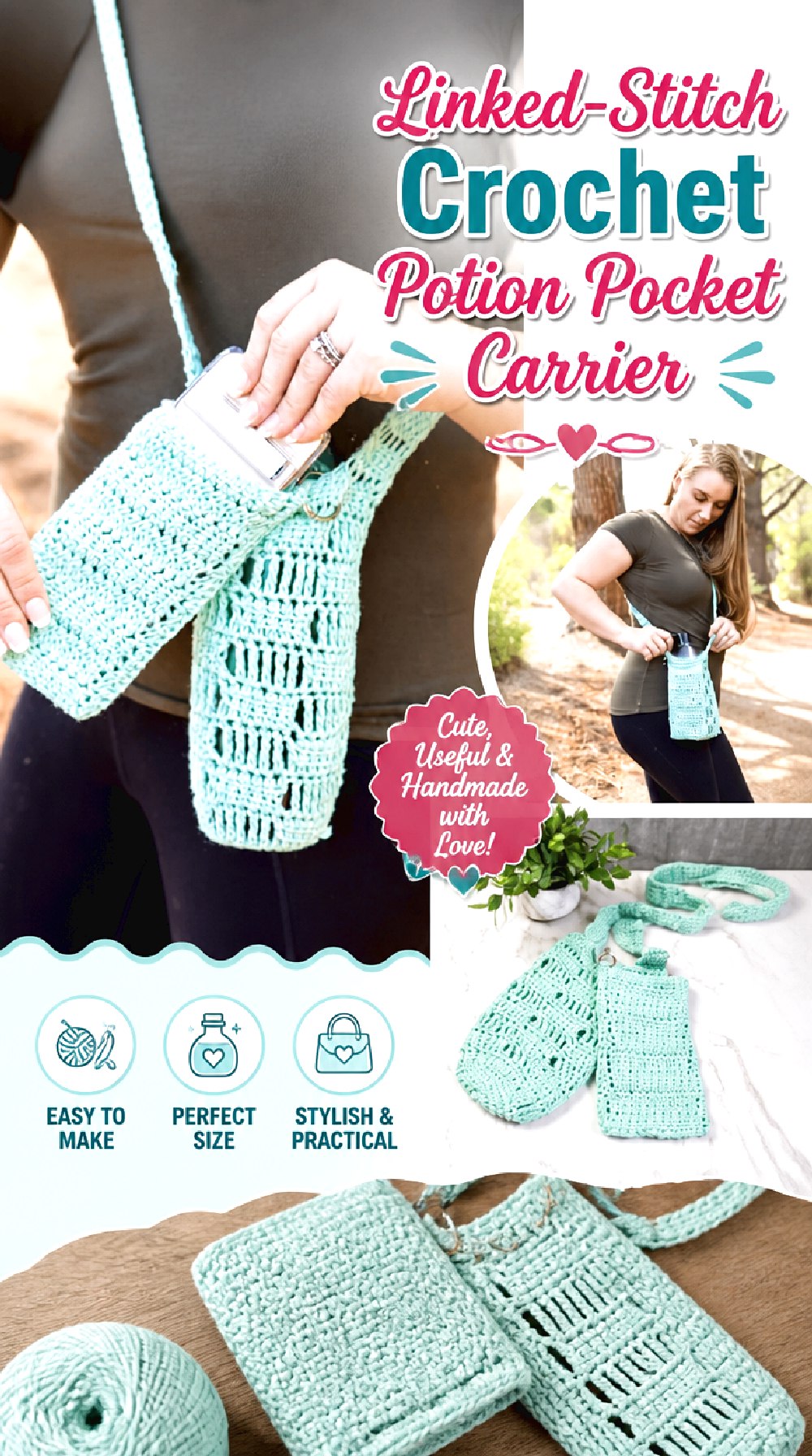
Nicki’s Homemade Crafts uses a combination of conventional and linked crochet in a bottle holder that also includes a separate phone pocket. The pocket can be treated as an optional feature, and the original project gives the carrier a noticeably more utility-oriented character than a simple mesh tube.
For a Halloween costume, that translates well into an alchemist’s working pouch: one compartment visually reads as the potion holder while the second supplies a layered tool-belt look. Keep the adaptation restrained. A miniature bottle plus an oversized secondary pocket can look out of proportion quickly, so establish the potion-holder scale first. A belt attachment would need to be planned separately from the original carrying arrangement.
Linked Fabric Can Define Structural Zones
Using denser-looking linked stitches in selected areas can visually separate the solid portions from more open sections. On a fantasy adaptation, that contrast is useful because you can let the structure itself provide detail instead of adding many charms. Concentrate decorative embroidery or a label-like accent on the more continuous fabric where its shape can remain legible.
Check Side-to-Side Balance Before Decorating
A pocket placed on one side establishes a clear front and adds potential weight away from the bottle’s centerline. Load the finished carrier with the lightweight items you intend to use and hold it at the belt before deciding where any extra appliqué belongs. If the pouch already twists, more decoration is unlikely to solve the underlying balance problem.
Original Tutorial and Creator Credit
Creator/Site: Nicki’s Homemade Crafts
6. Wide V Crochet Traveler Potion Belt Bag
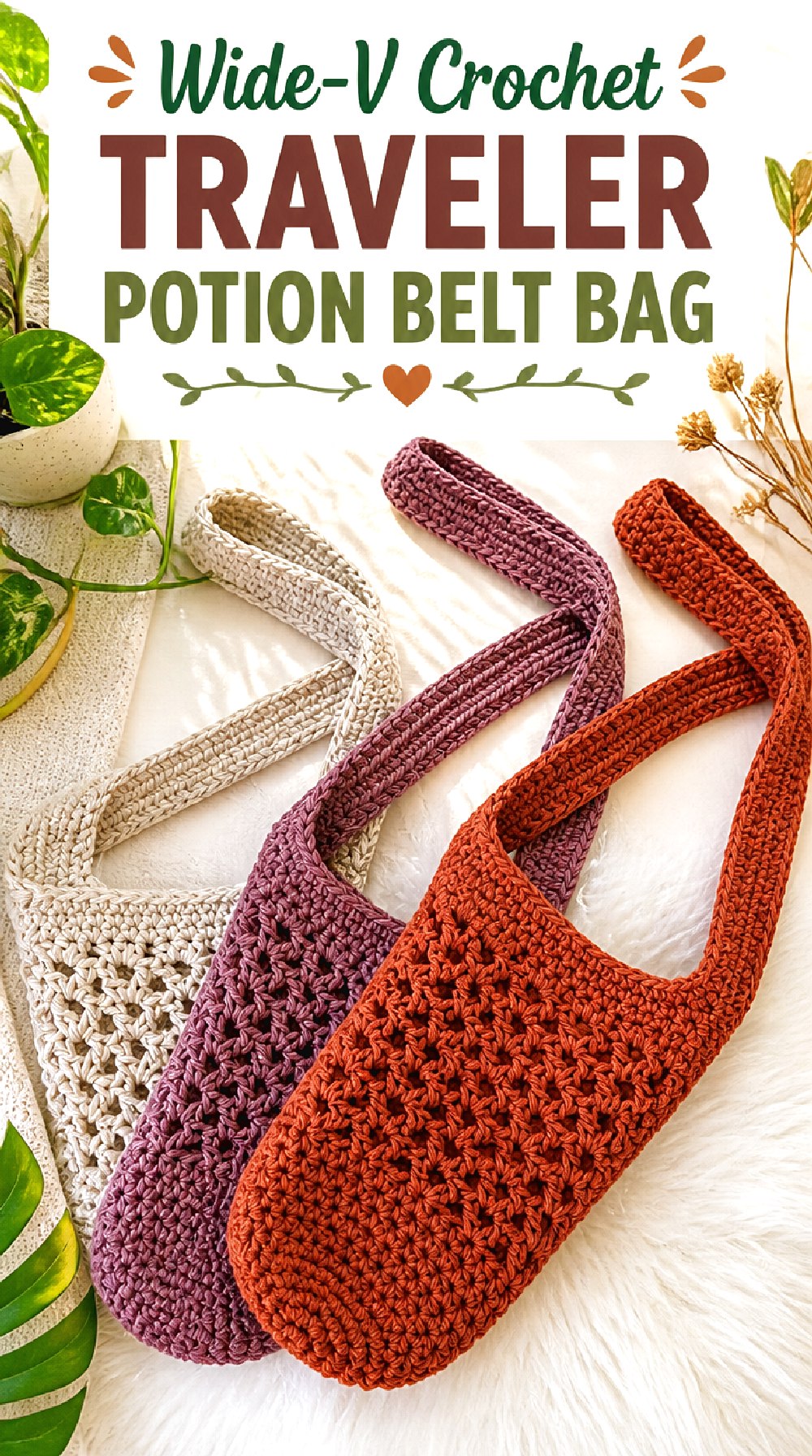
The Loophole Fox’s Traveler’s Water Bottle Bag uses wide V-stitch texture and a strap constructed directly from the bag, producing a more integrated look than a holder with a separately added cord. The designer also discusses custom sizing in the fuller pattern options, making scale a central part of the project.
For a potion adaptation, the V-shaped openings can reveal flashes of colored glass while still creating more visual structure than very loose netting. Deep plum, moss, charcoal, or oxidized-copper color combinations would push the traveler form toward a witch-market aesthetic without requiring literal Halloween motifs. Replacing the source strap with a compact belt attachment would be a separate modification.
Scale the V Openings With the Bottle
A stitch opening that looks balanced around a water bottle may appear enormous around a narrow potion vial. Before committing to a miniature version, compare the width of the openings with the smallest part of the container. If the bottle can bulge through or the pattern loses its recognizable rhythm, choose a larger potion bottle or a construction with tighter openings.
Preserve the Seamless Look at the Top
Because the original strap grows from the bag, the transition from holder to carrying section is visually coherent. A belt adaptation should aim for the same sense of intention. Even if you use a different attachment method, avoid tacking a thin loop onto a wide open edge without considering where the force will travel through the fabric.
Original Tutorial and Creator Credit
Creator/Site: The Loophole Fox
7. Reinforced Mesh Crochet Potion Bottle Pouch
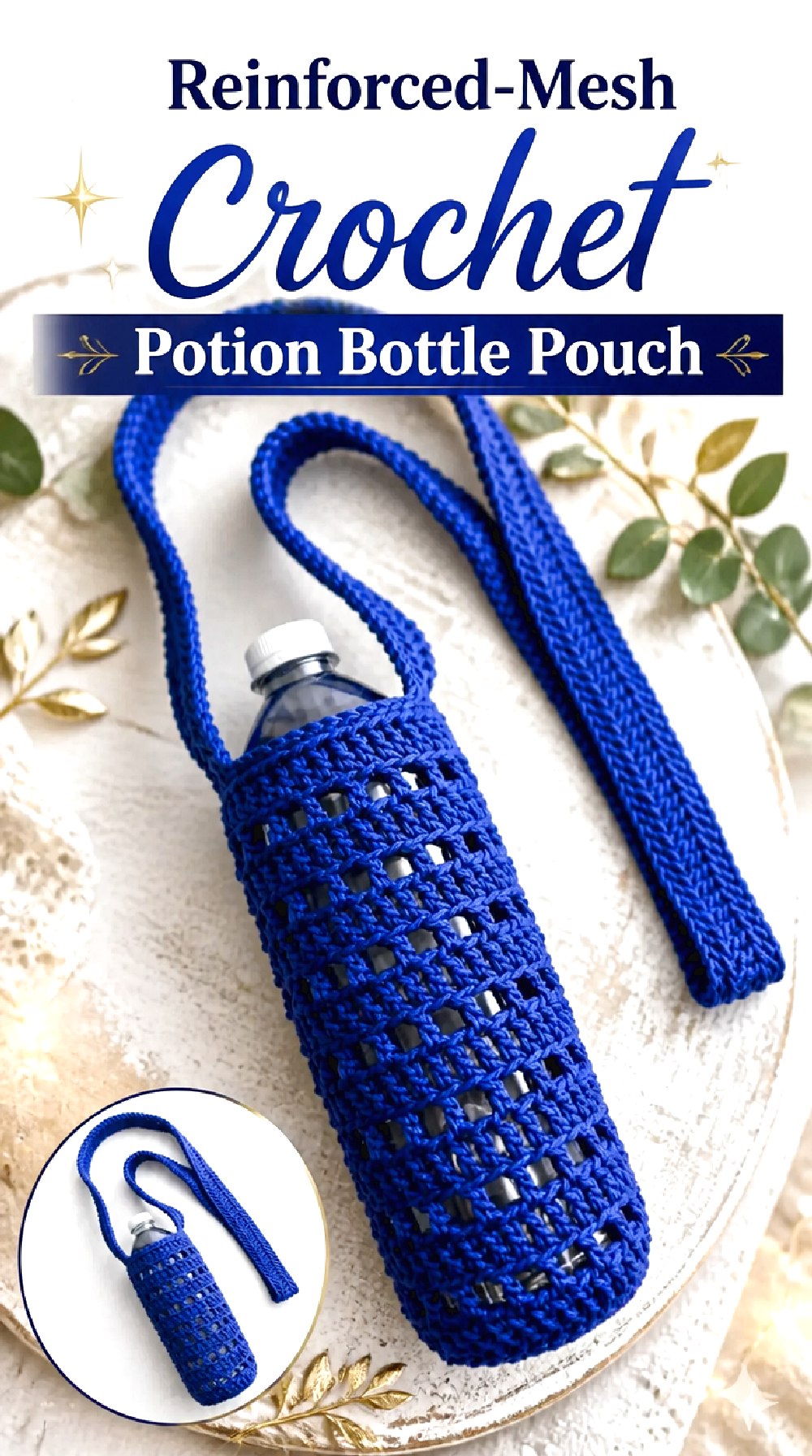
Sarah Maker’s holder combines a solid circular base, open mesh through the body, and a deliberately reinforced carrying strap. The project is designed for shoulder or crossbody use, but the separation between sturdy base, ventilated body, and reinforced carrying area makes it a useful structural reference when planning a smaller fantasy holder.
For potion styling, use the mesh when the container itself deserves attention—colored glass, an aged label, or a distinctive stopper can remain visible instead of disappearing beneath dense crochet. A belt conversion is not part of the source, so retain the principle of reinforcement rather than simply shortening the original strap and assuming the load behaves identically.
Let the Base Fit Before Adjusting Height
Openwork is forgiving visually, but the base still establishes whether the bottle sits securely in the center. When resizing for a potion container, compare the crochet base directly with the bottle footprint before working upward. A holder that is too broad at the bottom can sag around a small vial even if the upper mesh looks attractive.
Borrow the Reinforcement Principle
The original source pays particular attention to strengthening its carrying strap. A belt pouch creates a different geometry, but the underlying lesson still applies: attachment areas deserve more thought than decorative sections. If you devise your own loop, make the transition into the holder broad enough for the intended load and inspect it after the pouch has been hanging for a while.
Original Tutorial and Creator Credit
Creator/Site: Sarah Maker
8. Charted Web Crochet Potion Belt Holder
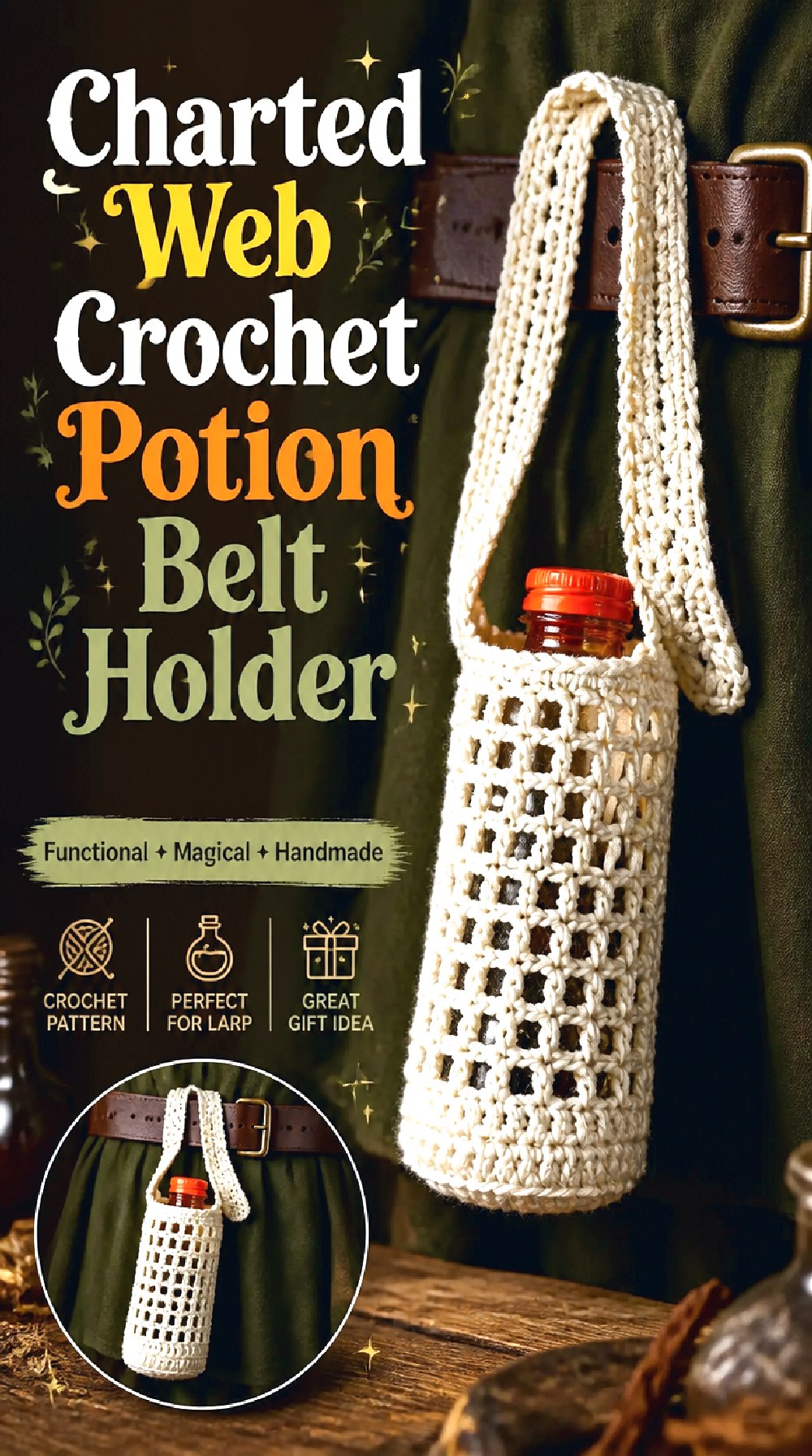
Goddess Crochet’s water bottle holder is built around an open mesh concept and is supported by both written material and a crochet chart. That visual approach gives this adaptation a different planning advantage: readers comfortable with charts can study the overall repeat structure before deciding whether the same relationship will look balanced at potion-bottle scale.
For a spiderweb-adjacent Halloween mood, the open geometry can do much of the thematic work without a literal spider appliqué. Black or smoke-colored yarn around luminous green, amber, or purple glass would emphasize the negative space. The source is a water-bottle holder, not a belt pouch, so keep any waist attachment clearly separate from the original tutorial.
Treat Negative Space as the Main Motif
When most of the visual interest comes from holes and connecting lines, adding several appliqués can obscure what makes the fabric attractive. Let the web-like structure remain readable. A small charm near the top or a contrasting edge may be enough to shift the project toward Halloween without turning the holder into a collection of unrelated decorations.
Charts Help Reveal Resizing Problems Early
A chart can make repeat relationships easier to see than prose alone. Before shrinking the holder, examine how many repeat units create the full circumference. If reducing the count would interrupt the pattern logic, it may be better to use a different yarn scale or choose a bottle whose circumference suits the existing repeat more naturally.
Original Tutorial and Creator Credit
Creator/Site: Goddess Crochet
9. Drawcord Crochet Elixir Bottle Belt Pouch
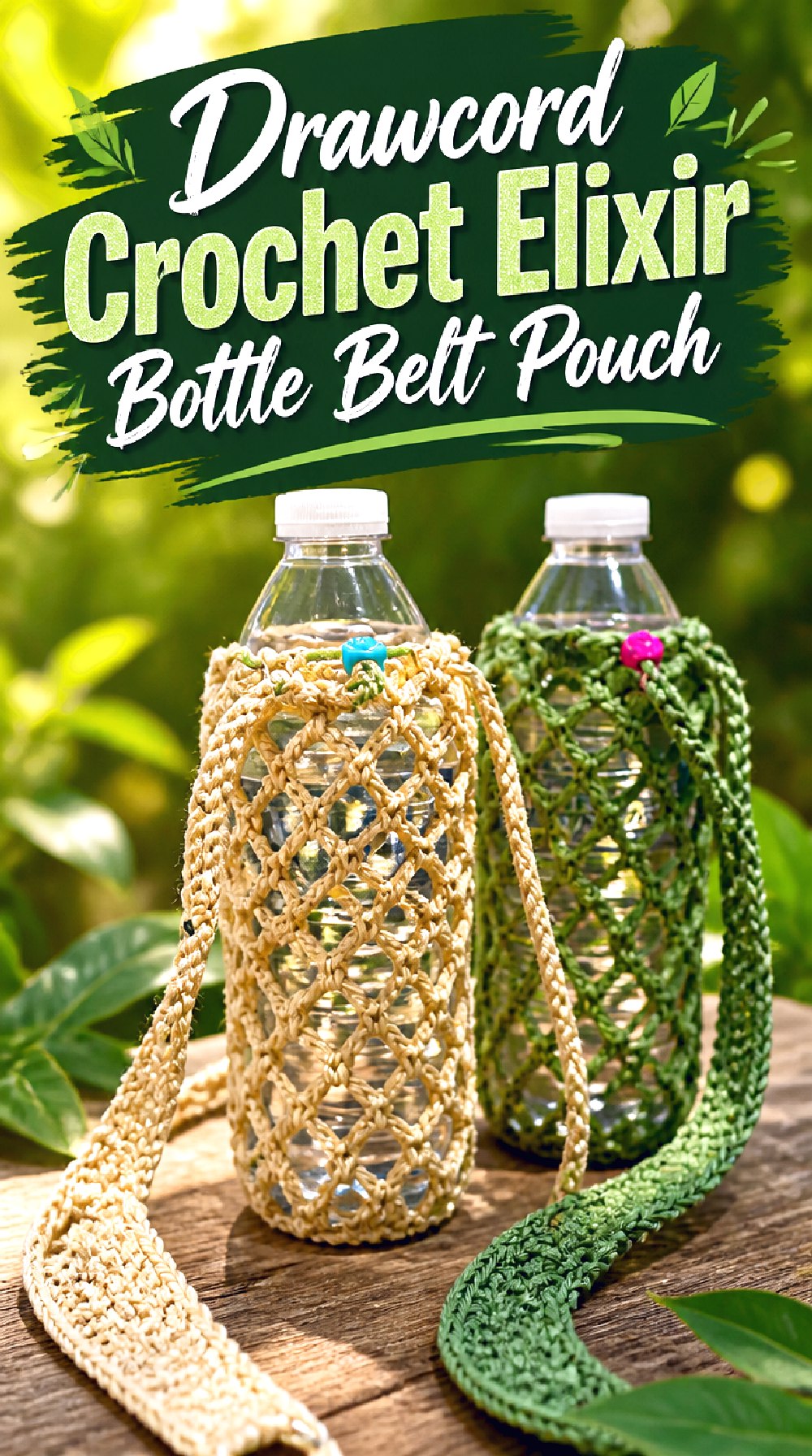
Amy B Stitched’s Water Bottle Sling uses open mesh and finishes the upper area with a separate tie secured through the top openings, creating a distinctly gathered finish rather than an uncovered cylinder. That detail gives the project a useful potion-bottle connection because a controlled cinch can visually mark the transition toward a bottle neck.
For a Halloween version, the drawcord can become the focal detail: imagine a dark plum pouch around an amber container, or a moss-green carrier with a contrasting cord. Because the original is a sling, replacing its longer carrying arrangement with a belt attachment is an adaptation. Keep the drawcord focused on holding the upper section rather than asking it to carry the entire load.
Cinch Below the Right Part of the Bottle
Potion containers vary dramatically at the shoulder. A cord that sits neatly beneath a long bottle neck may bunch awkwardly around a squat jar. During adaptation, determine where the real bottle begins to narrow and let that transition guide how much of the source concept is appropriate.
A Decorative Bead Is Still a Loose Component
The source uses a bead as part of the tie arrangement. For an adult costume this can create a useful talisman-like accent, but beads introduce an extra detachable component. Keep small pieces away from young children and pets, and inspect the cord regularly if the pouch will be worn through a crowded event.
Original Tutorial and Creator Credit
Creator/Site: Amy B Stitched
10. Openwork Crochet Adventurer Potion Sling
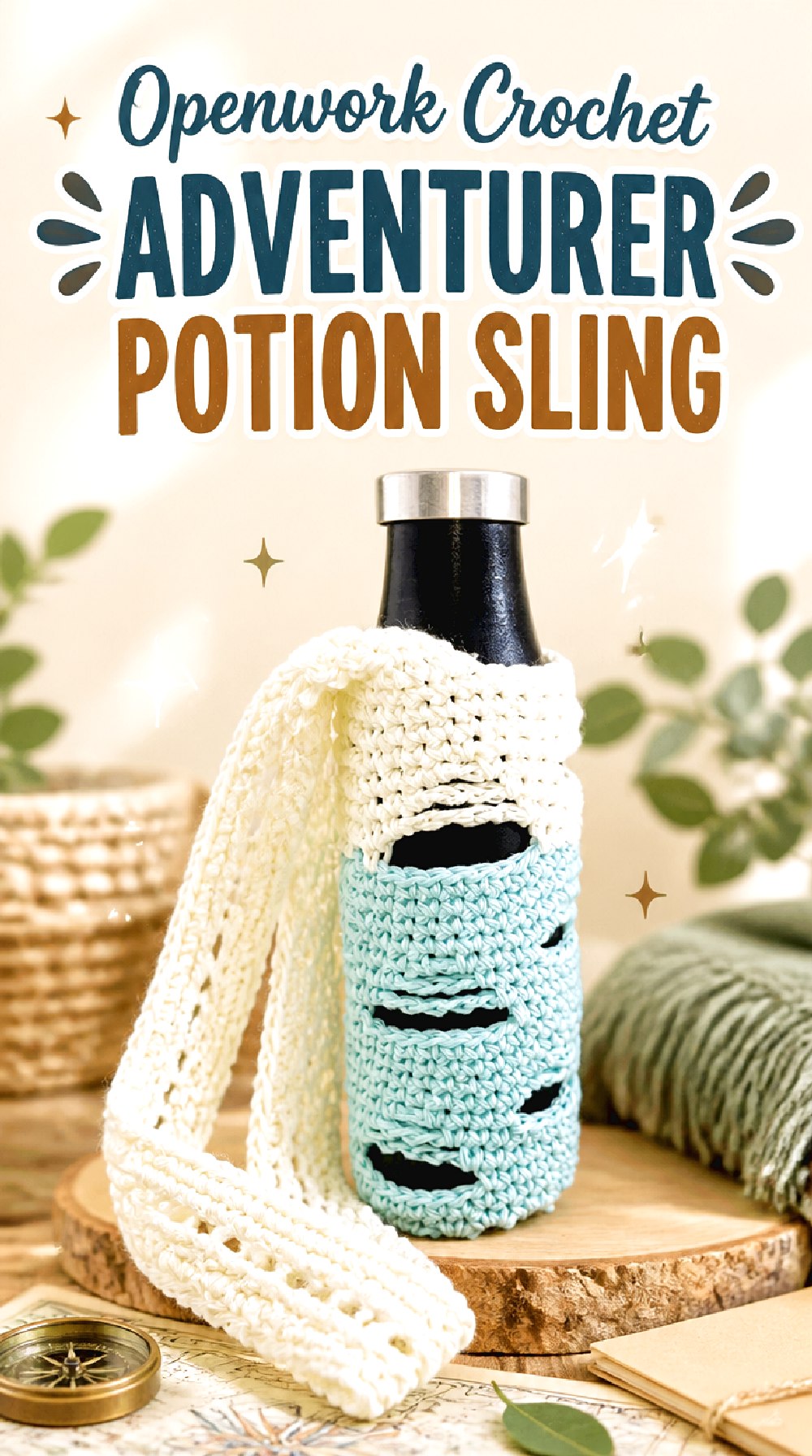
Moogly’s Hydrated Hiker Water Bottle Sling uses openwork through the bottom and sides, while the designer notes that the sides can be made solid if preferred. The strap can also be adjusted, giving the original project several functional choices rather than one fixed surface treatment.
That flexibility makes it a good reference for an adventurer-style potion pouch. A largely open body can show off colored glass, while a more solid treatment creates a stronger background for embroidery or a stitched “elixir” label. A true belt version would require a new attachment choice, but the source helps readers compare how much bottle exposure they actually want before making that modification.
Open and Solid Fabric Create Different Characters
Openwork reads more like a net or carrying sling, which suits a wandering healer or scavenger costume. Solid fabric feels closer to a pouch and provides a better visual field for symbols. Choose one direction deliberately instead of adding solid panels randomly; consistency will make the miniature adaptation look designed rather than patched together.
Keep the Bottle From Becoming the Pendulum
Long carriers can swing, and even a short belt-mounted version can move if the container sits too low below the attachment. Compare the intended bottle height with the wearer’s hip before completing the adaptation. Bringing a compact potion closer to the belt often creates a cleaner costume line and makes the holder easier to control.
Original Tutorial and Creator Credit
Creator/Site: Moogly
11. Interlocking Crochet Rune Potion Belt Pouch
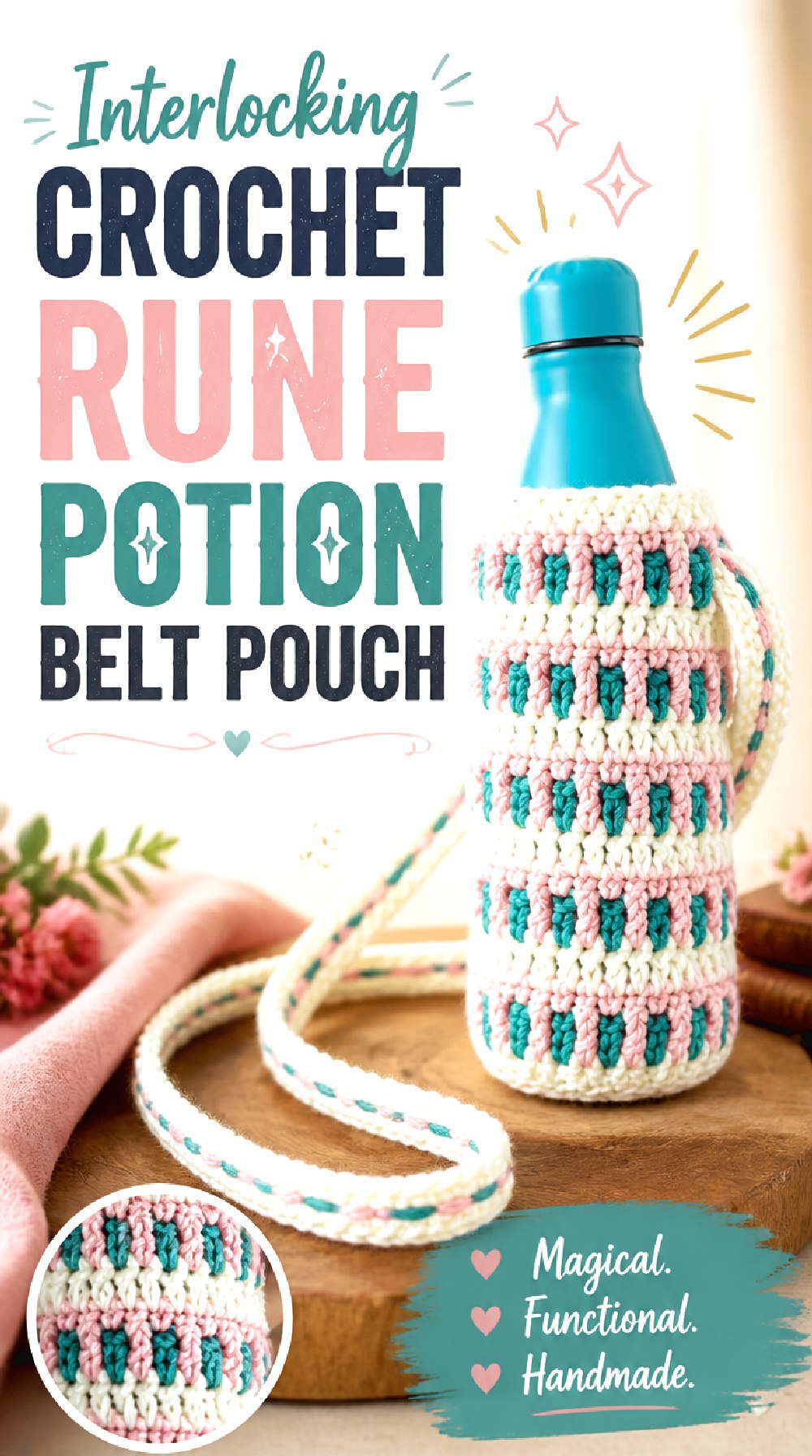
Blue Star Crochet’s interlocking bottle sling creates a reversible geometric fabric by combining two mesh layers. That woven-looking surface is substantially different from a basic bottle net, giving this project a natural route toward rune, labyrinth, or arcane-grid styling without attaching separate motifs.
The designer also bases customization around the bottom circle and repeatable body height, which makes bottle proportion an explicit design concern. For a potion-belt adaptation, preserve enough of the interlocking geometry for the two-layer effect to remain recognizable. Extremely small containers may leave too little surface area for the pattern to establish itself clearly.
Two Layers Increase Visual and Physical Substance
Interlocking crochet creates more fabric than a single sparse mesh. On a small belt pouch, that can give the holder a more substantial look, but it may also make a tiny bottle feel bulky. Compare the finished fabric thickness with the scale of your prop before deciding that smaller automatically means better.
Use Geometry Instead of Extra Charms
This fabric already creates bold repeated patterning. Allow that structure to act as the magical symbol system. Strong contrast between the two layers can create an obvious rune-like effect, while related colors produce something subtler. Additional appliqués should be minimal so they do not hide the feature that makes this construction distinctive.
Original Tutorial and Creator Credit
Creator/Site: Blue Star Crochet
12. Ocean Lace Crochet Elemental Potion Pouch
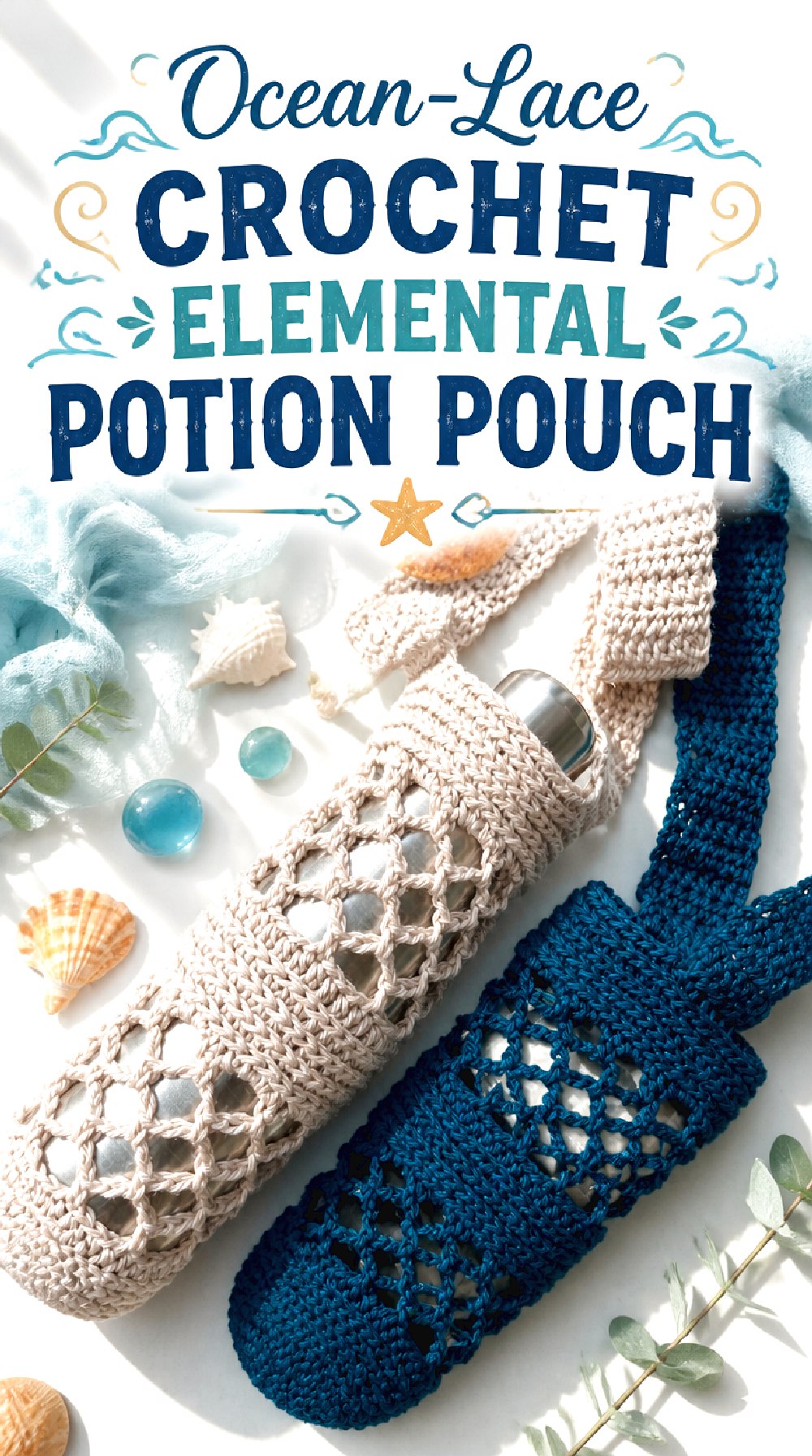
Concrete Gems Crochet’s Ocean Coral Water Bottle Holder alternates textured and lace sections rather than using one fabric throughout. The original also provides different strap-length concepts, producing a carrier where both surface rhythm and carrying position are deliberate design elements.
For a witchy potion pouch, those alternating areas can suggest layers of magical liquid, sea foam, coral, or elemental energy without requiring a literal bottle-shaped amigurumi form. This would work particularly well around a colored container that appears selectively through the lace. When shrinking the idea, however, protect the proportion of the texture changes; too many zones on a tiny vial can become visually crowded.
Give Each Texture Enough Vertical Space
On a full-size carrier, several fabric changes have room to establish themselves. A miniature potion version may not. Rather than compressing every original visual zone, decide which contrast matters most—perhaps one textured lower section and one lace window—and verify any structural change against the creator’s instructions.
Align the Lace With What You Want Visible
A lace section can deliberately reveal an attractive label, glowing-colored insert, or unusual glass shape. Hold the bottle inside a mockup or partially finished holder and check what the openings actually expose. Random placement may cover the best part of the prop while revealing an uninteresting seam on the opposite side.
Original Tutorial and Creator Credit
Creator/Site: Concrete Gems Crochet
13. Star Stitch Crochet Potion Bottle Belt Bag
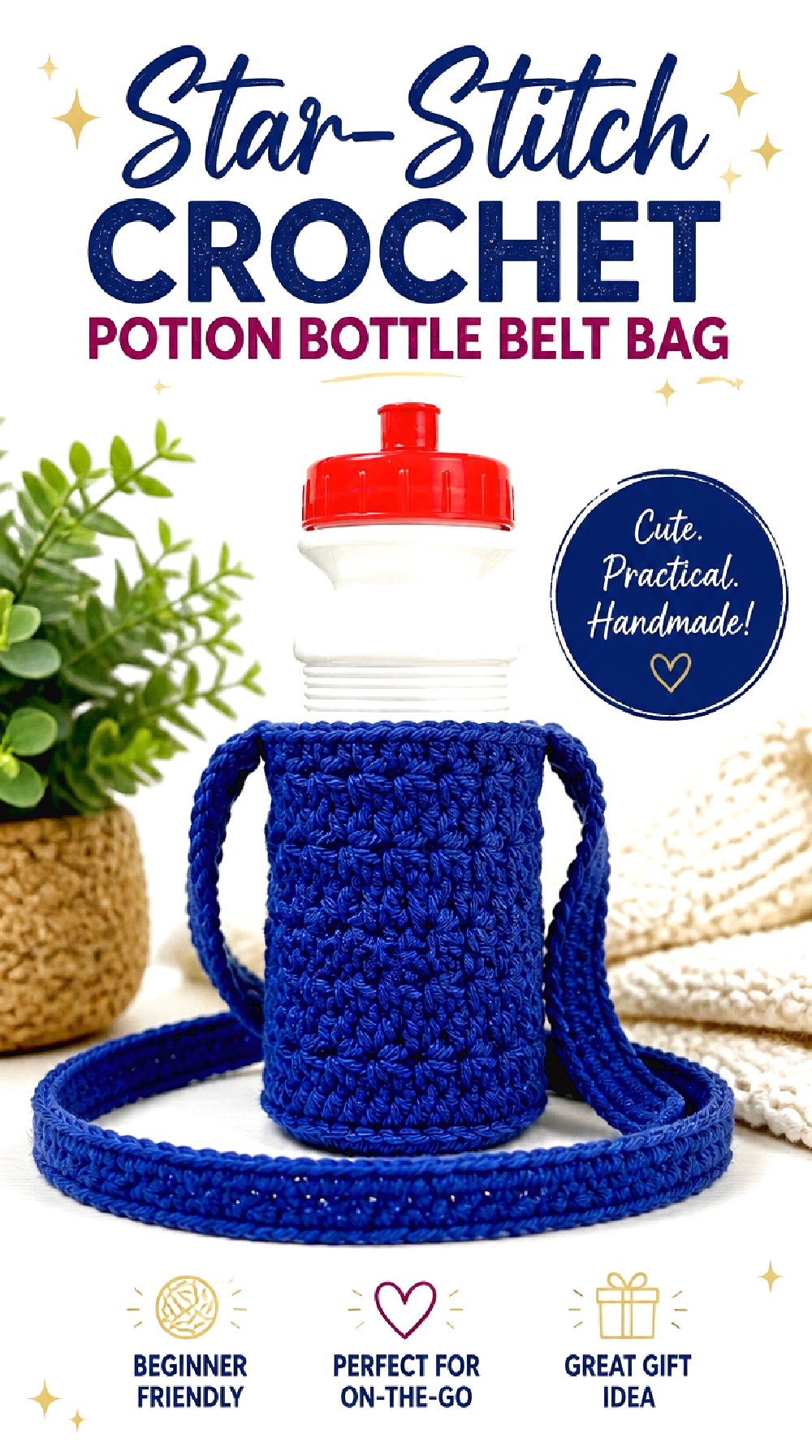
Jo to the World Creations uses star stitch as the defining surface of its water bottle holder and provides two size options plus customizable height and strap length. The dense repeated stars create a very different visual language from mesh, granny openings, or plain single crochet.
For Halloween wear, that texture could become celestial without adding a separate moon or star appliqué. Dark navy, smoky gray, wine, or black yarn would keep the surface sophisticated while still fitting a witch costume. Because the source carrying system is not a belt loop, a waist-mounted version should be treated as a separate alteration after the miniature body size has been established.
Dense Texture Can Hide a Plain Prop Bottle
If the container itself is inexpensive or visually unremarkable, a more continuous star-stitch surface lets the crochet take control of the appearance. That is useful when you want the pouch to coordinate with the costume rather than display the bottle. If the bottle has elaborate glass or a hand-painted label, an open design may be the better choice.
Watch Bulk Where the Belt Loop Meets Texture
A textured fabric can become thick when folded, doubled, or joined to another dense section. If you create a belt loop, check the attachment area before adding decorative edging. Too many stacked layers can produce a stiff lump at the hip even when the pouch body itself hangs well.
Original Tutorial and Creator Credit
Creator/Site: Jo to the World Creations
14. Granny Mesh Crochet Herbalist Potion Holder
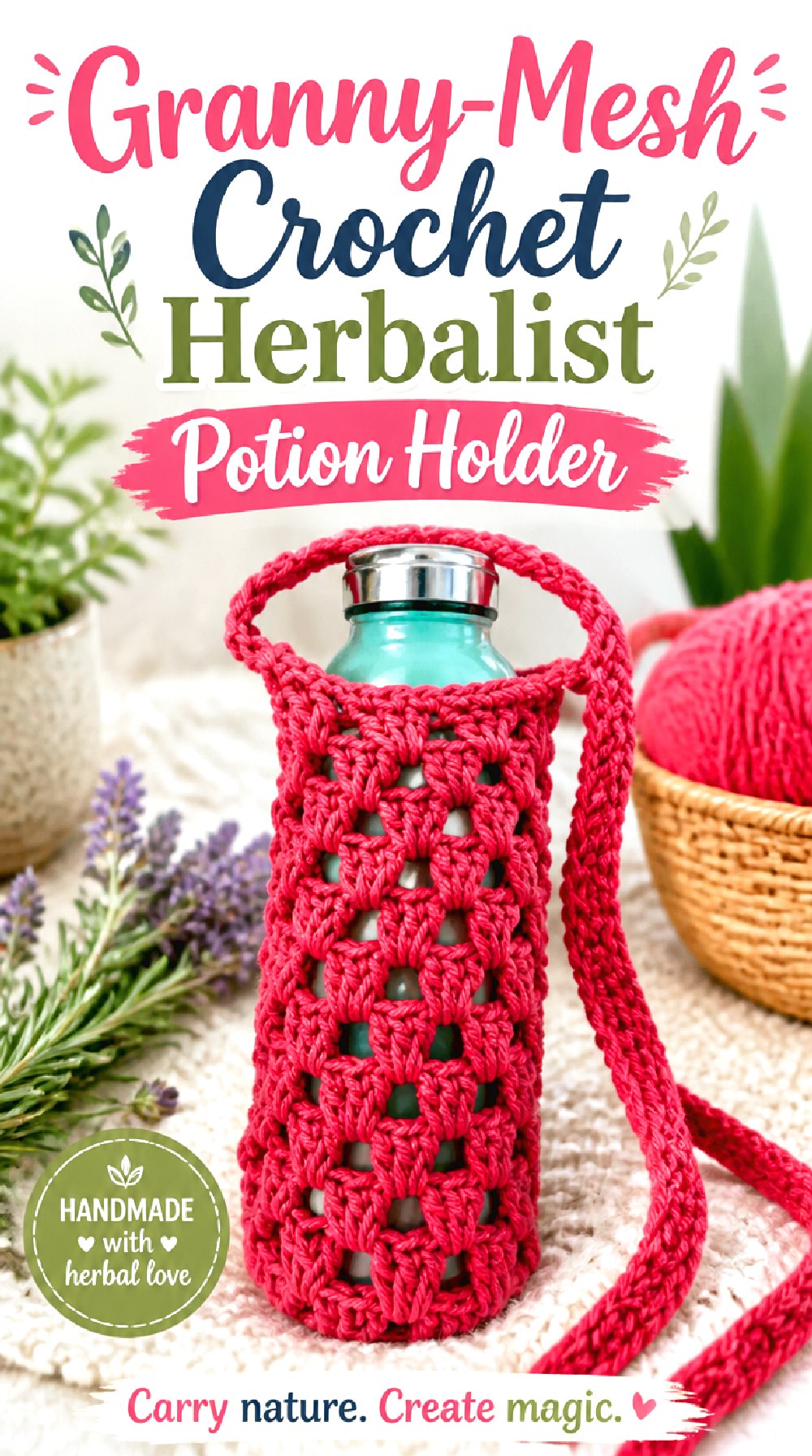
Jenny & Teddy builds its holder around a solid circular base, a granny-stitch body, and a strap whose length can be adjusted from short carrying to longer crossbody use. The designer also discusses adapting the holder for bottles of different dimensions.
That straightforward construction makes it a useful base for an herbalist potion pouch where yarn color, bottle glass, and one or two botanical details can do the styling work. Instead of shrinking a heavily patterned project, you can concentrate on proportion. A short belt attachment would be a new adaptation, but the source already encourages thinking about desired carrying length and bottle fit.
Granny Openings Suit Layered Color
Because the body contains regular openings, the yarn does not have to supply all of the color. Olive crochet over amber glass, charcoal over purple, or cream over green can produce a layered effect. Test the combination under ordinary daylight before committing; colors that contrast strongly in the skein may merge once the bottle is behind the fabric.
Botanical Styling Works Best in One Area
A few leaves near the upper edge can push the holder toward herbalist territory, but covering the entire granny fabric with appliqués can hide its rhythm. Choose one focal area—near the belt attachment, around the neck, or on the outward-facing side—and keep the rest of the texture visible.
Original Tutorial and Creator Credit
Creator/Site: Jenny & Teddy
15. Spoked Web Crochet Potion Bottle Carrier
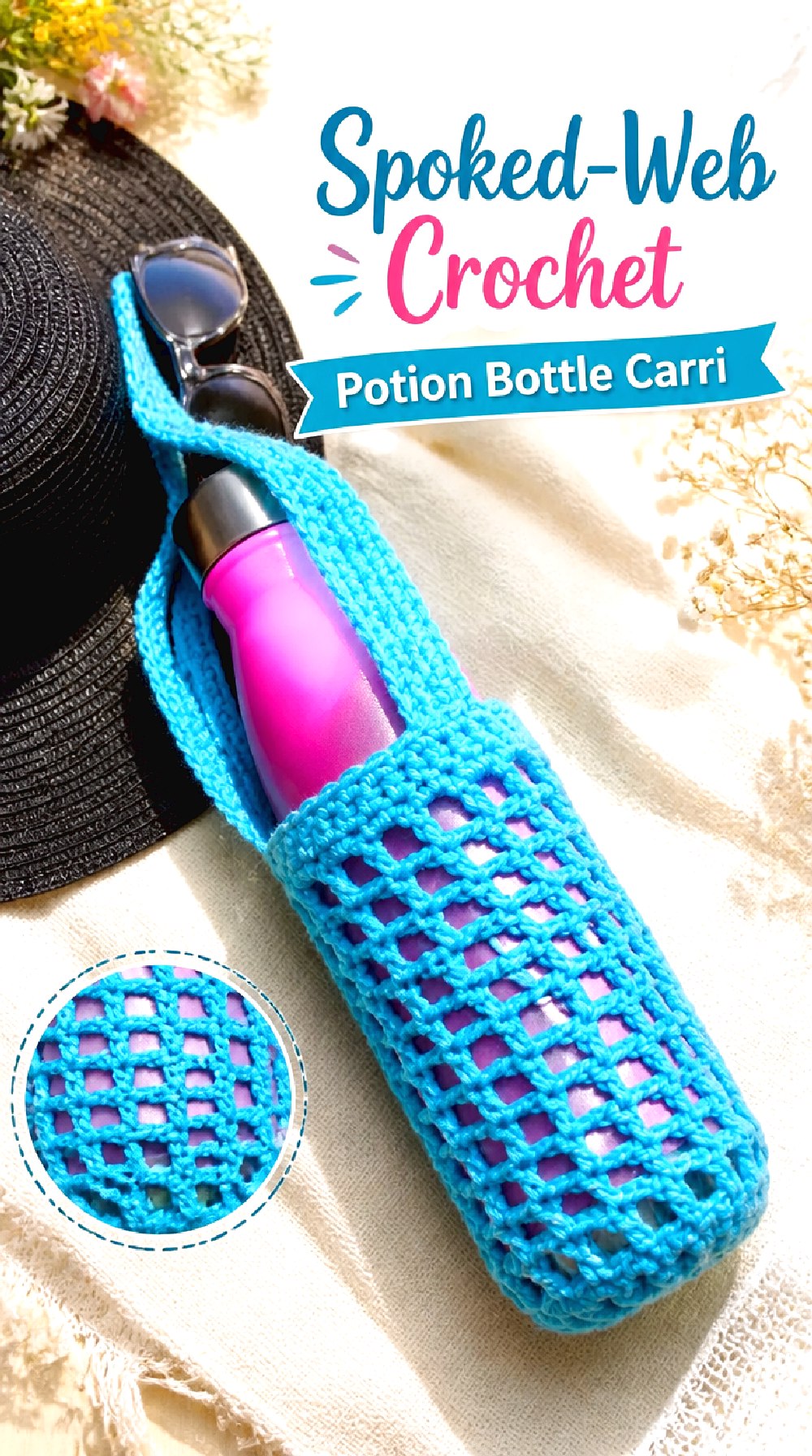
Dream a Little Bigger’s bottle holder uses an open, chart-supported construction that begins with a spoke-like circular arrangement and grows into an airy carrier. The strong radial geometry at the base gives this adaptation a subtly different visual starting point from holders that begin with a solid disk.
For a Halloween potion pouch, the open structure can suggest a web, wheel, or magical containment net, particularly in a dark yarn around luminous-colored glass. Because the source is designed for hands-free bottle carrying rather than miniature belt use, scale the body cautiously and devise any waist attachment separately.
The Bottom Is Part of the Visual Story
An open radial base may be visible when the pouch swings or when it hangs against a contrasting costume. Treat it as part of the design rather than something nobody will see. If the potion bottle is very narrow, check that the base openings remain small enough to support it appropriately.
Scrap-Friendly Color Can Look Intentional
Open holders often use relatively little visible yarn, which makes contrast changes tempting. Instead of random scraps, assign colors to structural zones—for example, one shade at the base and another through the body. Repeating that logic creates a deliberate spell-web effect rather than an accidental striped carrier.
Original Tutorial and Creator Credit
Creator/Site: Dream a Little Bigger
16. Two Size Crochet Alchemist Bottle Pouch
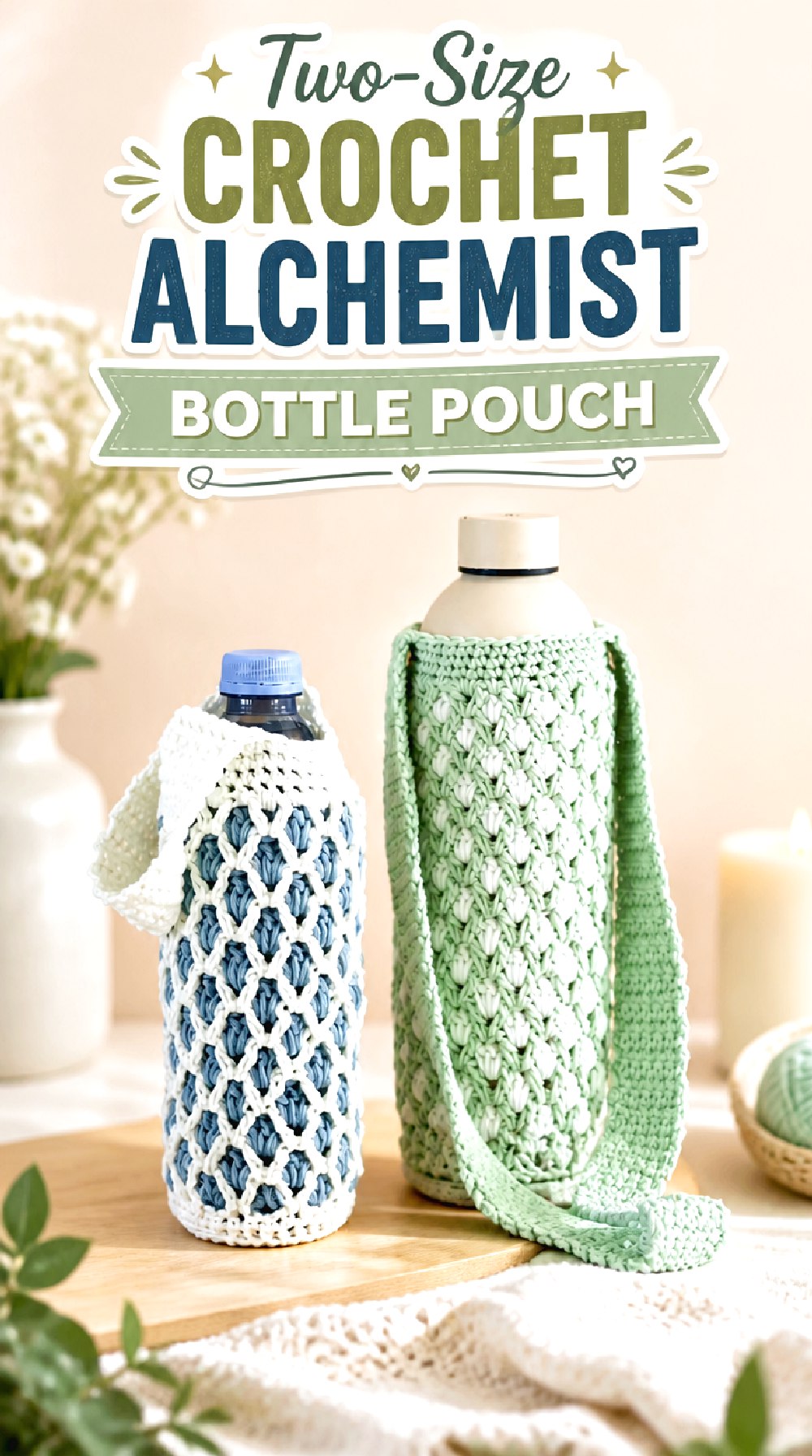
Bella Coco’s bottle-holder video teaches two holder sizes and offers a choice between a handle and a longer strap. That makes the source useful when you want to compare scale and carrying style before deciding how far to push a Halloween adaptation.
For an alchemist belt pouch, the smaller holder concept is the more obvious place to begin, but the actual potion container should determine whether further resizing is necessary. The option of a shorter handle is also helpful conceptually because it demonstrates that the carrier does not need to default to crossbody length. A belt loop would still be your own modification rather than a feature taught in the video.
Use the Two Sizes as Comparison, Not a Guarantee
A source offering two sizes is useful, but neither size automatically fits a decorative potion bottle. Compare the actual base and height of your container with the demonstrated finished forms. A squat bottle may require proportion changes even when its width resembles one of the source examples.
Short Carrying Features Change the Silhouette
Replacing a long strap with a compact carrying element makes the bottle itself more prominent. For costume wear, that can be an advantage because the upper body remains clear of extra straps. Keep the new attachment visually proportionate to the pouch so the loop does not become larger than the potion form it supports.
Original Tutorial and Creator Credit
Creator: Bella Coco
17. Granny Square Crochet Patchwork Potion Pouch
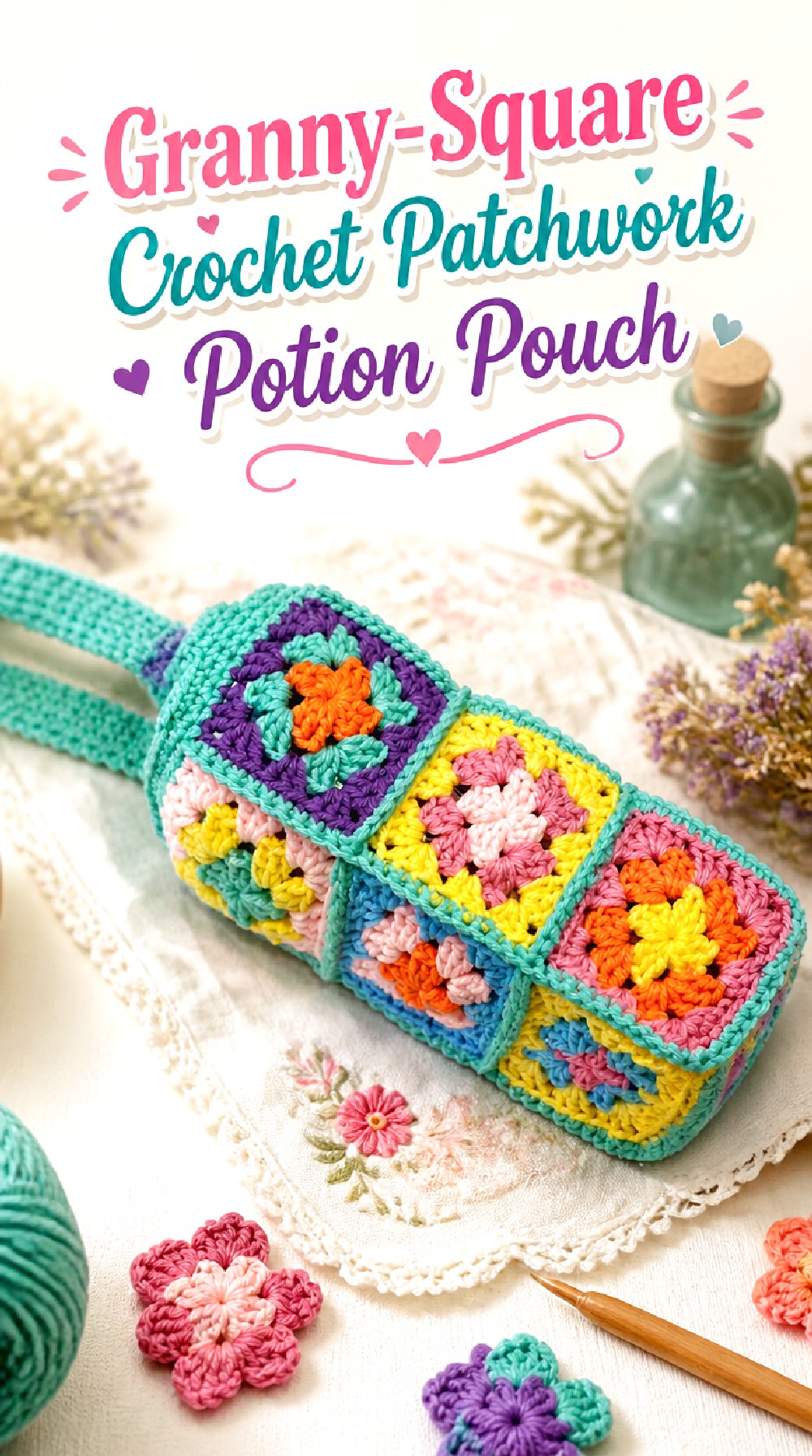
Katia Creates assembles a bottle holder from granny squares rather than building the whole body as one uninterrupted tube. That modular construction introduces visible joins and repeated motifs, giving it a patchwork character that none of the plain mesh carriers can replicate. The tutorial also discusses using motif scale to change the holder size.
For a witchy belt pouch, the idea works best with a potion bottle large enough for the motifs to remain legible. Very tiny vials may make a full square assembly impractical. A compact patchwork holder in moss, plum, ochre, and charcoal could fit a scavenger-witch or eclectic apothecary costume particularly well.
Mock Up the Squares Around the Bottle First
Motifs give you a useful planning advantage: finished squares can be arranged around the container before final joining. Use that opportunity to check both circumference and overall height. If the grid extends far beyond the bottle shoulder, reducing the number of motifs may work better than trying to force the existing layout into a miniature scale.
Make the Joins Part of the Costume Palette
Seams remain visible in modular crochet, so their color matters. A dark join can outline each square like stained glass, while a matching join produces a softer patchwork surface. Decide which effect suits the costume before assembly; changing your mind after all motifs are connected can involve far more work.
Original Tutorial and Creator Credit
Creator: Katia Creates
18. Bow Trim Crochet Witch Potion Belt Bag
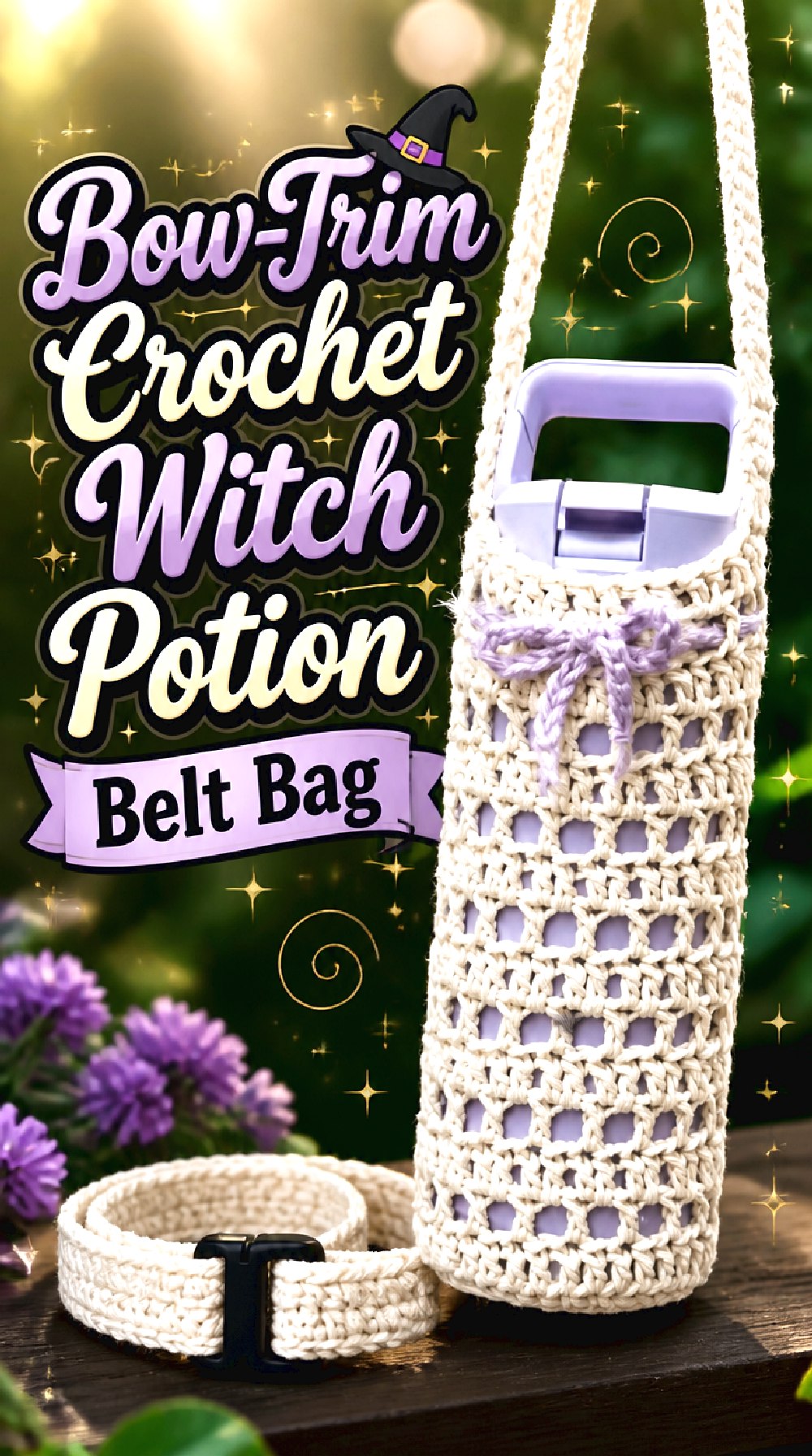
VivCrochets demonstrates a mesh water bottle holder that can be worn over the shoulder or crossbody and finishes it with a small bow. The open carrier is designed to accommodate different bottle sizes, so the relationship between container and crochet is already central to the project.
A potion adaptation can take that softness in several directions: black mesh with a plum bow for a storybook witch, dusty sage with brown trim for an herbalist, or burgundy with cream for a gothic apothecary look. Turning it into a belt pouch requires a separate carrying modification, but the original bow provides a ready-made decorative focal point without adding bulky surface motifs.
Keep the Bow Clear of the Bottle Opening
Decoration near the top can interfere with bottle removal if it is oversized or badly positioned. Treat the bow as trim, not as the primary closure unless the tutorial specifically uses it that way. When adapting to a shorter potion container, check that the bow remains visible without covering the stopper or crowding the shoulder.
Mesh Lets Unusual Bottles Stay Visible
If you have a potion prop with colored glass, a sculpted stopper, or a dramatic label, open mesh allows those features to remain part of the costume. Choose yarn that frames rather than fights the bottle. A heavily variegated yarn around an already busy prop can make the combination visually confusing.
Original Tutorial and Creator Credit
Creator: VivCrochets
19. Heart Sigil Crochet Potion Bottle Pouch
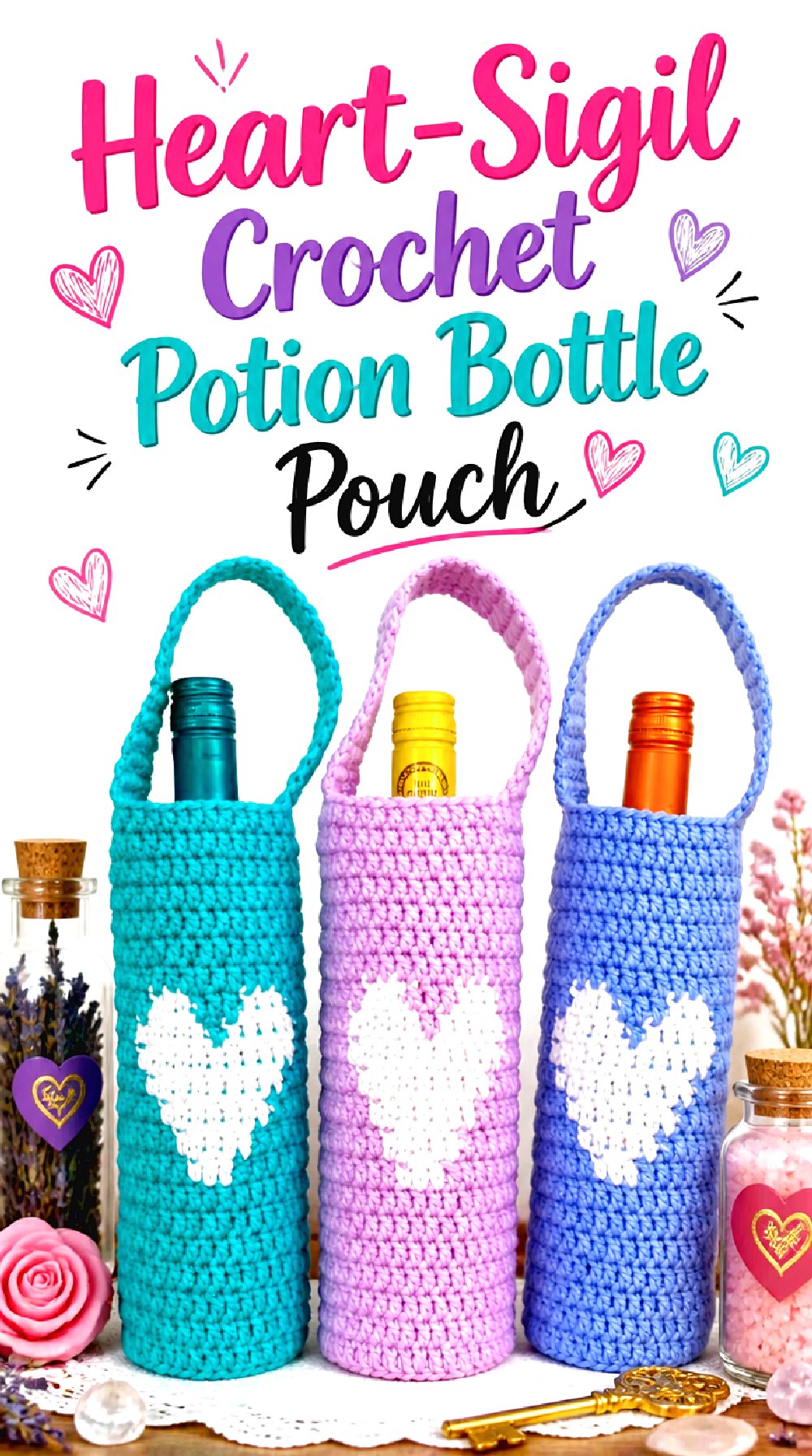
Lovable Loops’ wine bottle holder uses a graphic heart directly in the fabric and includes a carrying strap, so the design offers a useful reference for a potion pouch where the surface image is built into the body instead of sewn on later.
For Halloween, the heart can be interpreted less romantically and more like a magical health-potion symbol, or the construction can inspire another compatible graphic treatment from an appropriate pattern source. The original is sized for a wine bottle, so a small potion version would require substantial rescaling rather than simple shortening. A long strap-to-belt-loop conversion would also be an independent adaptation.
Graphic Motifs Need Enough Width
Colorwork imagery depends on having enough stitches across the surface to remain recognizable. Shrinking a bottle bag too aggressively can distort the graphic before the container itself becomes small enough. If a tiny potion pouch is your priority, consider using a small appliqué rather than forcing a large charted motif into insufficient space.
A Health-Potion Theme Changes the Mood
A heart shape can work naturally for a fantasy healing potion, especially when paired with saturated red, deep pink, burgundy, or contrasting neutral yarn. Keep surrounding decoration minimal so the symbol remains obvious. For a more ominous Halloween treatment, use the heart as one intentional emblem rather than covering the pouch with several competing motifs.
Original Tutorial and Creator Credit
Creator/Site: Lovable Loops
Which Crochet Potion Belt Pouch Style Should You Choose?
For the closest match to an actual potion-shaped storage piece, start with the Rainbow Cork-Top or Moonlit Apothecary pouches. The Growing-Vines holder is the strongest choice when belt carrying itself is a priority because its source already discusses belt and carabiner use.
Choose Granny Utility or Linked-Stitch styles when extra storage matters. Wide-V, Reinforced Mesh, Charted Web, Granny Mesh, and Bow-Trim options keep more of a decorative bottle visible. Star Stitch and Interlocking Crochet are better when the yarn surface should dominate, while Granny Square construction creates the strongest patchwork effect. Ocean Lace sits between open and solid fabric, and the Heart-Sigil idea suits a recognizable fantasy health-potion theme.
Conclusion
The strongest crochet potion bottle belt pouch is the one whose construction matches what you actually plan to carry. Soft dice-bag versions avoid the complications of glass entirely, while real bottle holders need careful attention to base fit, opening width, movement, and attachment strength. Open mesh highlights decorative glass; dense texture makes the crochet itself the focus; modular squares create patchwork character; and secondary pockets push the design toward a full alchemist utility belt.
For belt adaptations, test the finished pouch at the waist with its intended contents instead of assuming a shortened shoulder strap will behave the same way. Once you have chosen the structure that suits your Halloween look, use the credited original tutorials for their exact construction details.
Frequently Asked Questions
Can I turn any crochet water bottle holder into a belt pouch?
Not automatically. A water bottle holder may be designed so its load is shared across a long shoulder strap, while a belt loop concentrates the weight much closer to one area of the upper edge. Treat belt conversion as a structural adaptation. Check fabric density, attachment width, bottle weight, and how the holder hangs before wearing it. Winding Road Crochet’s source is especially relevant because belt and carabiner carrying are already considered in the original project.
Should I use a real glass potion bottle inside a crochet belt pouch?
You can use glass only with appropriate caution, but crochet is not shatterproof protection. Check the base, sides, attachment point, and bottle closure, and remember that a fall or collision can still break glass. For crowded Halloween events, cosplay, or active wear, a lightweight plastic prop or a bottle-shaped soft pouch may be more practical. Never assume a crochet drawstring replaces the bottle’s own liquid-tight cap or stopper.
How do I resize a bottle-holder tutorial for a small potion bottle?
Measure the real bottle and focus first on the base diameter, widest circumference, shoulder position, and usable height. Then check how the tutorial’s stitch or motif repeat responds to size changes. Plain mesh often scales differently from granny squares, interlocking patterns, or charted colorwork. When the source provides its own customization instructions, follow those rather than inventing stitch counts from a finished photograph.
Which yarn is best for a wearable potion bottle holder?
There is no single fiber that is correct for every source. Follow the tutorial’s material recommendations when reproducing that design, especially where stretch or stitch definition is important. In general, think about how the yarn behaves under weight: a fabric that stretches substantially can let a bottle sit lower over time, while a firmer fabric may hold shape better. Any substitution should be checked against gauge, fit, and the intended load.
Should a potion pouch be lined?
A lining can be worth considering when the crochet is very open and you want to carry tiny loose objects rather than a bottle. Dice, coins, beads, or costume tokens can work through sufficiently large gaps. However, lining changes the pouch structure and may affect stretch and opening width. If the original tutorial does not include lining, treat it as a separate modification and make sure it does not obstruct the neck or closure.
Can I add charms, beads, moons, leaves, or Halloween appliqués?
Yes, when they do not interfere with function or create an unsuitable safety issue. Place decorations after you know which side faces outward during wear, and keep bulky pieces clear of the opening, belt attachment, and areas where a bottle rubs against the fabric. Loose beads, charms, buttons, and long cords need extra caution around young children and pets. One well-placed motif often reads more clearly than many competing decorations.
How do I keep a crochet potion pouch from swinging at my hip?
Start by reducing unnecessary drop between the belt and the pouch. A compact attachment generally keeps the bottle closer to the body than a long hanging loop. Bottle height matters too: a short, broad potion container may move less awkwardly than a tall narrow one. Load the pouch with its real intended contents and walk, sit, and turn before finalizing attachment placement. If it twists strongly, adjust balance before adding decorative finishing.