A crochet batwing sleeve top fits Halloween especially well because the silhouette already creates movement and drama. With the arms lowered, the fabric can fall into deep folds; with the arms extended, the extra width between the body and sleeves becomes much more visible. That gives you plenty of room to lean toward a witchy, gothic, web-inspired, or literal bat-themed look without needing a complicated costume.
The projects below start with true batwing tops and sweaters, then expand into closely related dolman, cocoon, kimono, and wide-sleeve constructions. Those related silhouettes are included as adaptation ideas rather than presented as exact batwing patterns. They can be useful when you want the wing effect but prefer an open front, stronger sleeve flare, lighter mesh, or more cape-like layering.
For Halloween styling, color is only one decision. Fabric density, sleeve depth, cuffs, neckline, overall garment weight, and the way the fabric hangs when you move can have a much bigger effect on the finished look. Use each creator’s tutorial for the exact construction and sizing details, then treat the notes here as planning guidance for choosing the version that suits your outfit.
Quick List
- Crochet Off-Shoulder Ribbed Batwing Top
- Crochet Classic Draped Batwing Sleeve Top
- Crochet Soft-Drape Batwing Blouse
- Crochet Lace-Shoulder Batwing Pullover
- Crochet Striped Open-Stitch Batwing Sweater
- Crochet Braided-Texture Batwing Sweater
- Crochet Long-Cuff Batwing Sweater
- Crochet V-Stitch Batwing Sweater
- Crochet Open-Front Cocoon Batwing Layer
- Crochet Diamond-Texture Batwing Pullover
- Crochet Ribbed Cocoon Batwing Cardigan
- Crochet Granny-Stripe Cocoon Batwing Cardigan
- Crochet Kimono-Style Wide-Sleeve Topper
- Crochet Mesh Bell-Sleeve Halloween Top
- Crochet Textured Rectangle Cocoon Topper
- Crochet Airy Mesh Cocoon Batwing Layer
- Crochet Dolman Rectangle Cardigan Top
Choose the Wing Shape Before the Halloween Details
Not every wide crochet sleeve creates the same effect. A true batwing or dolman shape usually carries extra fabric from the body into the sleeve, so the garment develops its characteristic wing-like outline when the arms are extended. A bell sleeve creates width farther down the arm instead, while a cocoon cardigan gets much of its volume from a large folded body.
That difference matters when you are planning a Halloween outfit. If you want a recognizable bat-like outline for photos or a costume, prioritize the deeper batwing constructions near the beginning of this list. If you mainly want dramatic movement over a dress, tank, or fitted base layer, a cocoon or kimono shape may be more practical.
Also look at the cuff. A deep wing ending in a narrow cuff creates a very different silhouette from an open sleeve that stays wide at the wrist. Neither is automatically better; the choice depends on how much fabric you want around your hands and how literal you want the wing effect to be.
Yarn Weight and Drape Change the Batwing Effect
Wide sleeves use fabric as part of their shape, so yarn behavior matters more than it might on a small accessory. A fluid fabric can collapse into long folds and emphasize movement. A firmer fabric can hold a more graphic outline but may also feel heavier when a large amount of crochet hangs below the arms.
Openwork adds another option. Mesh, lace, and V-stitch fabrics can make an oversized top feel visually lighter and can work especially well over a contrasting Halloween base layer. Dense fabric provides more coverage but can place more weight at the shoulders and cuffs.
Before committing to a large garment, make a useful swatch and handle it vertically as well as flat. A swatch that looks firm on a table may lengthen noticeably when gravity is pulling on it. That is especially relevant for oversized sleeves and long side panels.
Plan Fit Around the Hem, Cuffs, and Arm Span
The roomy upper body of a batwing garment can make it tempting to focus only on bust fit. In practice, other areas may be less forgiving. A lower band may need to pass comfortably over the hips, fitted cuffs must work around the wrist and forearm, and the total span of the garment affects how the sleeves sit when your arms are down.
Use the measurements and sizing method provided by the individual tutorial rather than assuming that an oversized bust automatically means an unrestricted fit everywhere.
For a Halloween adaptation, think about what will sit underneath the top as well. A batwing garment worn over a thin camisole may behave differently from the same garment layered over a dress, collared shirt, or long-sleeve thermal. Plan for the actual outfit rather than choosing size from the crochet piece alone.
1. Crochet Off-Shoulder Ribbed Batwing Top
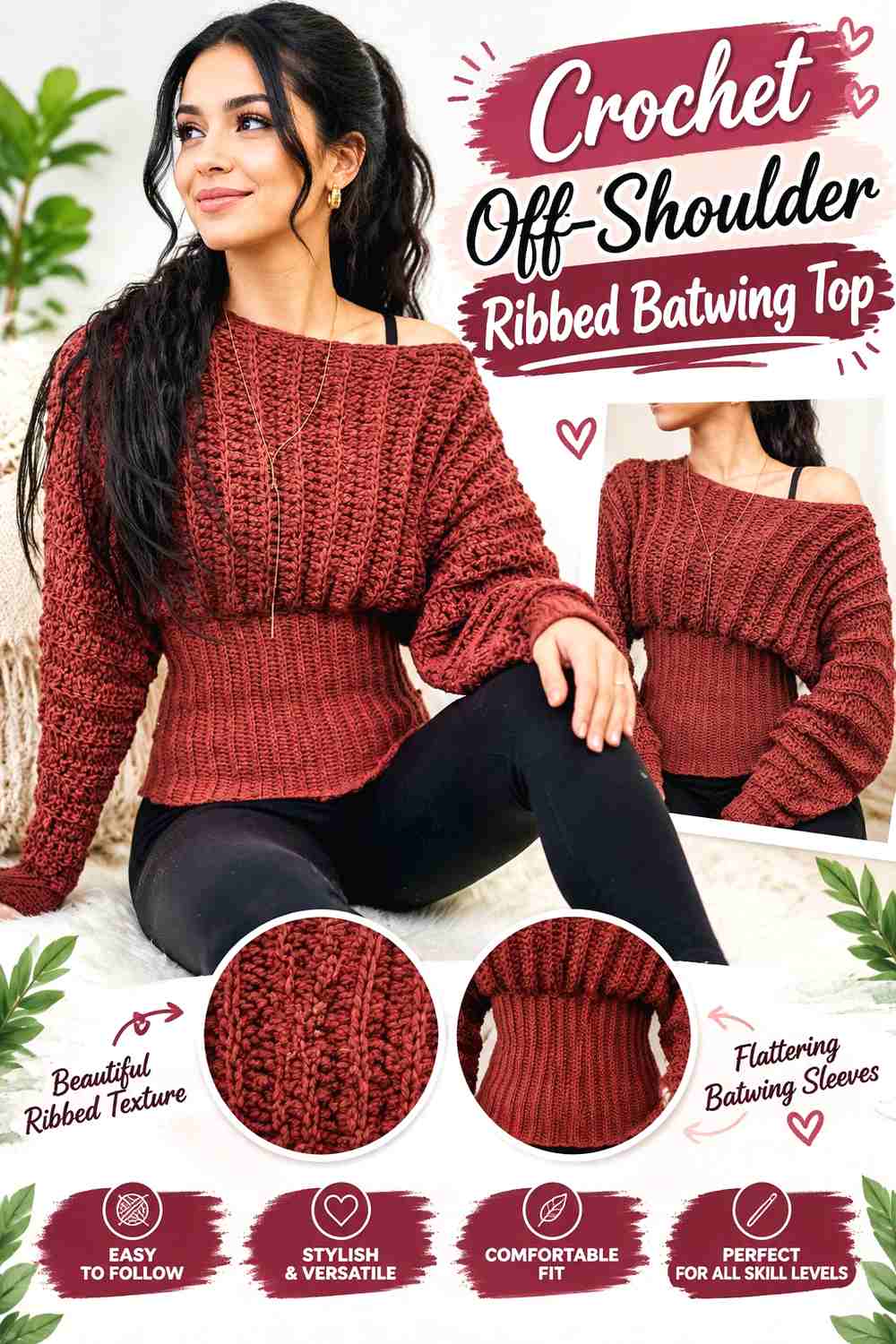
An off-shoulder neckline changes the mood of a batwing top immediately. Instead of putting all the drama into sleeve volume, this version combines the broad wing shape with a more open upper neckline and defined ribbed areas. The source tutorial also separates the garment into recognizable construction stages for the panels, neckline, lower edge, sleeves, and cuffs.
For Halloween, that makes this a strong option when you want a dark evening top rather than something that reads strictly as a costume. Black, charcoal, deep plum, oxblood, or muted green can push it toward gothic styling without altering the underlying construction.
The Open Neckline Changes What You Can Layer Under It
Before choosing an off-shoulder version, decide whether the neckline is part of the outfit or whether you want another garment visible underneath. A fitted tank creates a different effect from a high-neck mesh layer or collared shirt.
If you plan to wear it outdoors late in October, consider the practical effect of that extra exposure as well as the appearance.
Ribbed Cuffs Give the Wide Sleeve a Clear Endpoint
A fitted-looking cuff visually contains the fabric above it. That contrast can make a batwing sleeve appear larger and more intentional without leaving loose fabric around the hands.
For a costume that involves carrying a bag, handling food, or moving through a crowded event, a controlled wrist can also be more convenient than an entirely open sleeve.
Creator Credit: TCDDIY
2. Crochet Classic Draped Batwing Sleeve Top
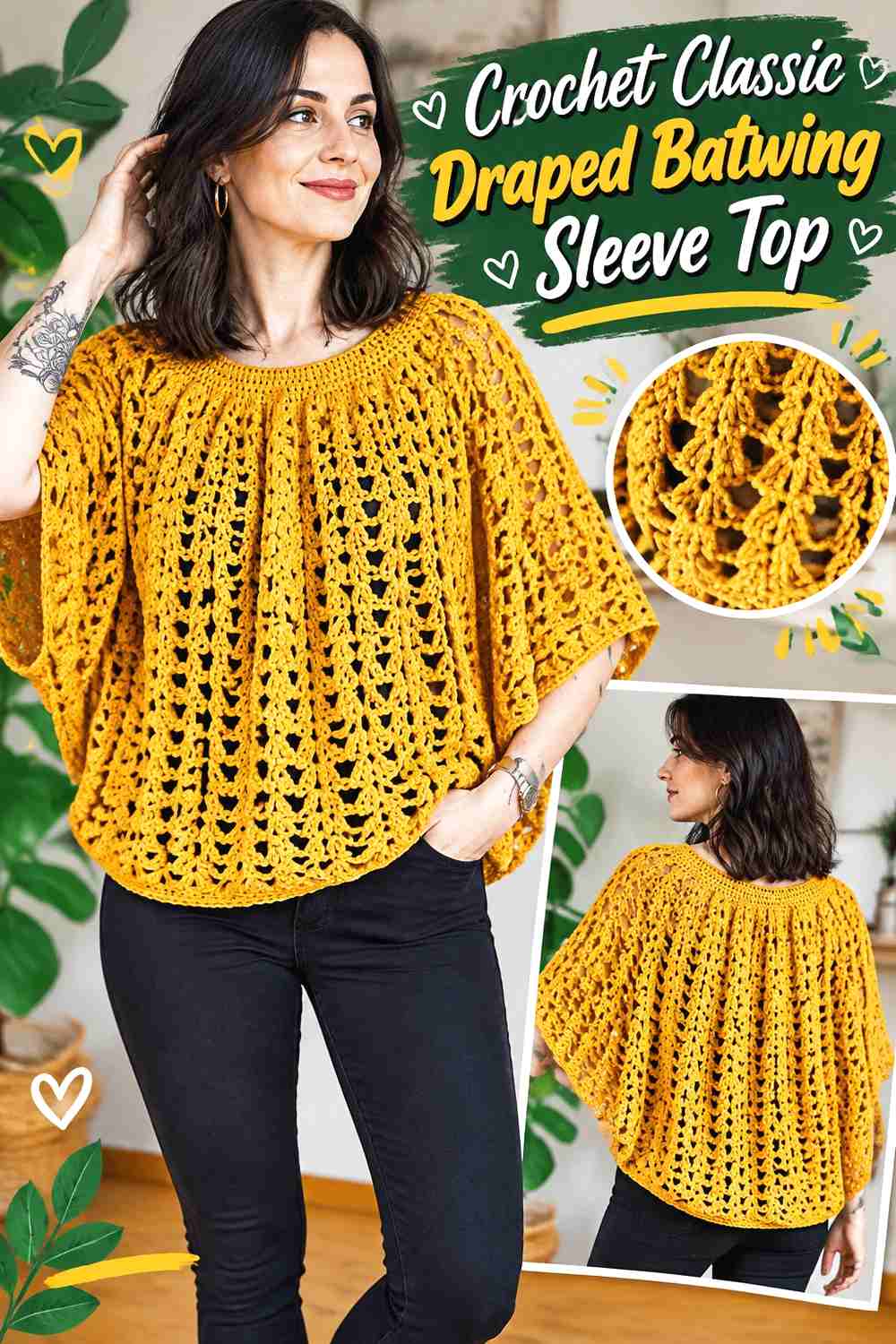
This version keeps the focus on the recognizable batwing silhouette rather than adding a complicated surface design. The tutorial shows a finished top with substantial underarm drape, making it a useful reference when the overall wing shape matters more to you than decorative motifs.
That simplicity gives you room to make the Halloween character come from the palette and styling. A single dark color can emphasize the silhouette, while contrasting edges can visually trace the neckline, cuffs, or lower edge.
Watch the Shape With Your Arms Down as Well as Out
A batwing top may look especially dramatic when photographed with the arms extended, but most of the time it will be worn with the arms lowered. Check the tutorial’s finished views in both positions.
The folds should still suit the kind of outfit you have in mind when the garment is hanging naturally rather than posed like wings.
A Simple Surface Leaves More Room for Accessories
If the crochet fabric itself is relatively restrained, you can use jewelry, a belt, a pointed hat, dramatic makeup, or a contrasting underlayer without competing with a busy stitch pattern.
If you want to add appliqués, test their placement before sewing them down. A motif positioned on a fold may disappear or distort once the arms drop.
Creator Credit: Soy
3. Crochet Soft-Drape Batwing Blouse
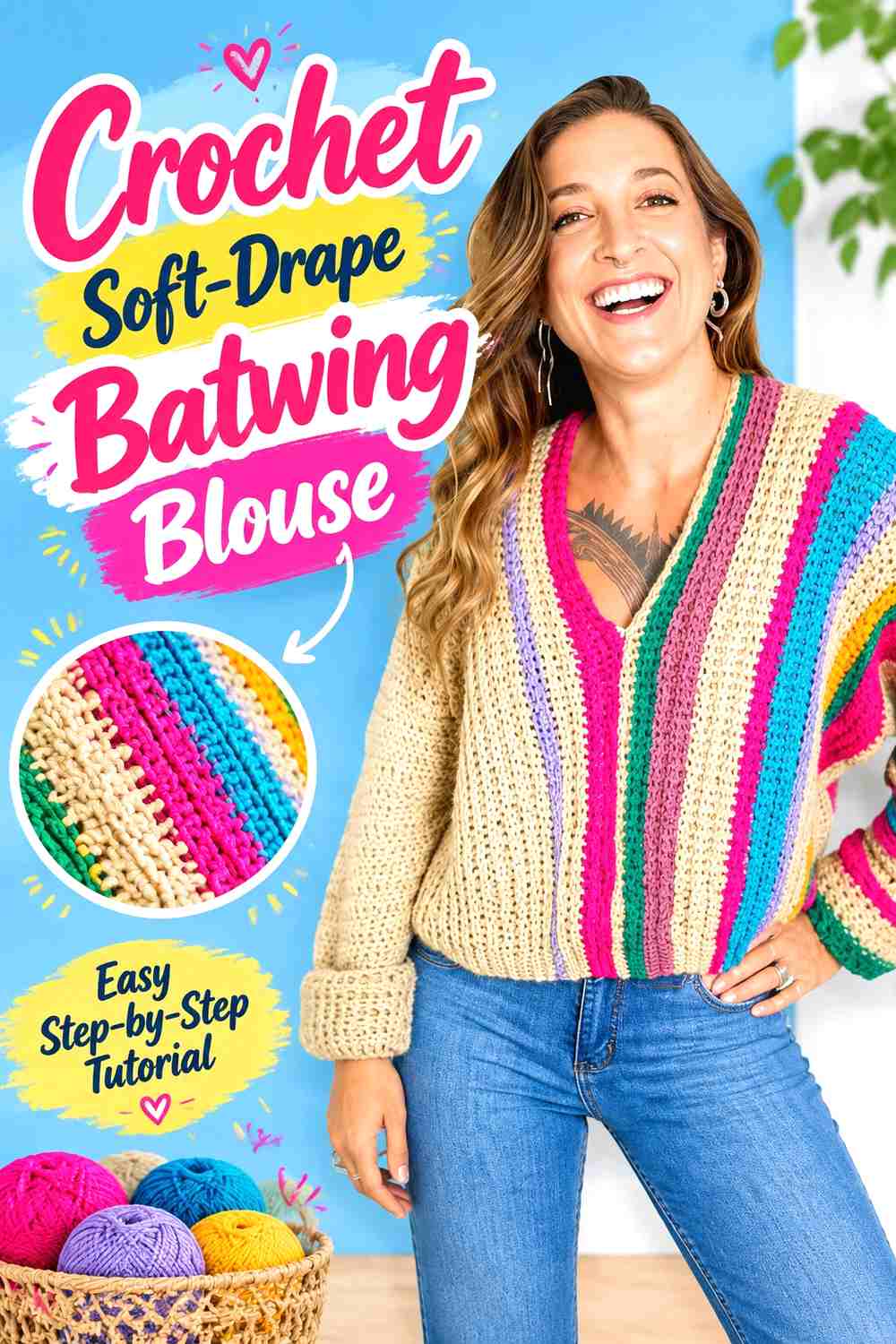
A blouse-like batwing top is useful when you want movement rather than a strongly structured costume shape. This tutorial centers on a broad batwing form with a soft, flowing presentation instead of treating the sleeves as separate dramatic appendages.
For Halloween, this can work well as the upper layer of a witch-inspired outfit, particularly when you want something that can still be worn after the holiday.
Drape Matters More Than a Perfectly Flat Outline
For this style, a fabric that collapses gracefully can be an advantage. The visual interest comes from folds between the body and arms rather than from keeping every edge rigid.
If substituting yarn, do not compare only the label category. Make and handle a swatch so you can judge whether the replacement fabric behaves similarly when hanging.
Check Where the Lower Edge Sits Before Changing Length
Adding length to an oversized garment also adds fabric and weight. It can change where the folds concentrate and how the top sits around the hips.
If you want a longer Halloween tunic effect, first check the source construction to see where length can be altered without unintentionally changing the sleeve proportions.
Creator Credit: Anne Galante – Escola de Artes Manuais
4. Crochet Lace-Shoulder Batwing Pullover
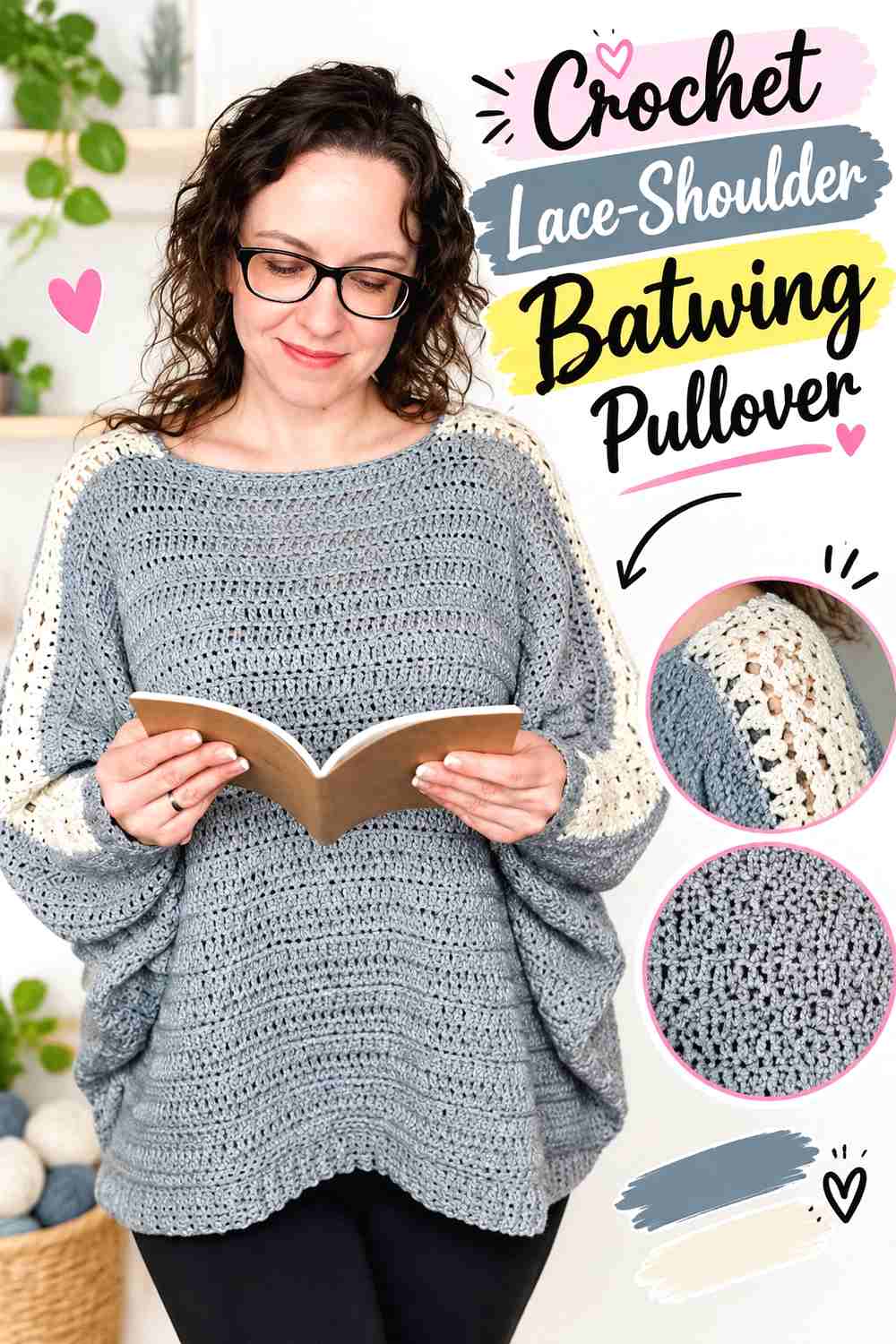
This batwing sweater introduces lace along the shoulder and upper sleeve area, giving the oversized silhouette a lighter upper edge. Moogly describes the design as a batwing or dolman sweater with lace extending from the neckline toward the wrist.
That placement is useful for Halloween because the open areas can reveal a contrasting garment underneath. A black lace-like upper section over purple, red, silver, or even a subtle glow-effect fabric can change the visual effect without changing the crochet pattern itself.
Contrast Under the Lace Can Become Part of the Design
Openwork does not have to be viewed only as empty space. What you wear underneath becomes visible through it and can function almost like a second color in the crochet.
Before choosing a high-contrast base layer, look at how much of the lace area will actually sit over the shoulders and arms.
Shoulder Stretch Deserves Attention
Open lace and a large sleeve span can behave differently from dense fabric under their own weight. When comparing yarn substitutions, consider how readily the fabric stretches vertically.
Blocking and storage can matter too. A heavy oversized sweater left hanging for long periods may behave differently from one stored folded, depending on fiber and construction.
Creator Credit: Tamara Kelly – Moogly
5. Crochet Striped Open-Stitch Batwing Sweater
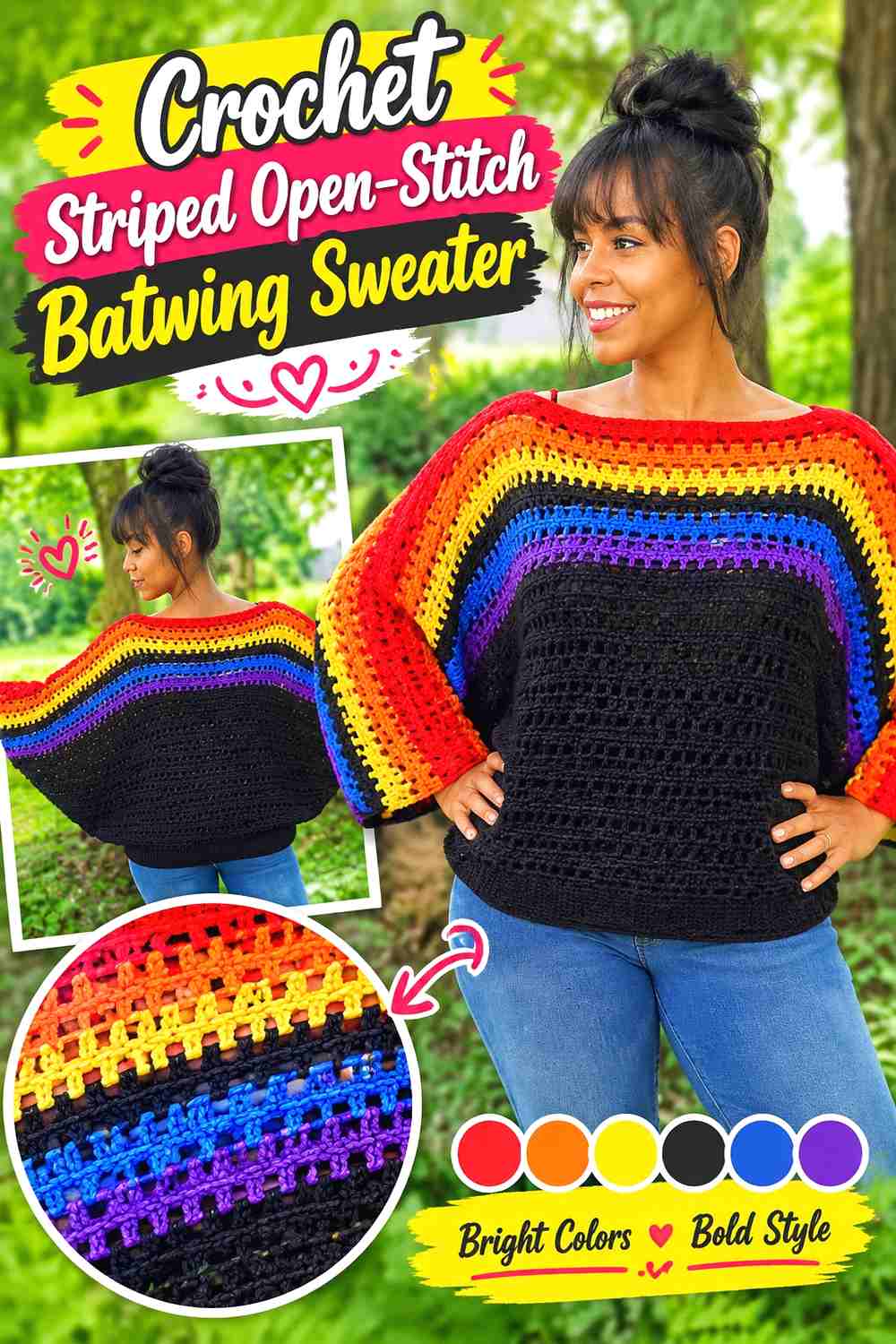
A striped or color-blocked batwing changes how the eye reads all that extra width. Littlejohn’s Yarn presents an oversized batwing sweater with an open-looking fabric and broad color changes, creating a more graphic treatment of the silhouette.
For Halloween, this idea does not need rainbow coloring. Alternating black and gray, pumpkin and black, purple and charcoal, or even two close dark shades can produce a striped wing without requiring a literal bat motif.
Horizontal Color Changes Emphasize Width
Bands running across a broad garment can make the full span more noticeable. That works particularly well if your goal is to emphasize the wing shape when the arms are out.
Before planning many color changes, consider where the stripes will fall when the garment folds at the sides. A band that looks straight when flat may become much less visible when worn.
Open Fabric Can Grow Under Garment Weight
The source discussion notes that garment weight can affect the fabric. This is worth remembering whenever you adapt a large open-stitch top.
A swatch can tell you more if you measure it after washing and blocking and then observe how it behaves while hanging. That is more informative for a batwing garment than judging an unstressed swatch alone.
Creator Credit: Littlejohn’s Yarn
6. Crochet Braided-Texture Batwing Sweater
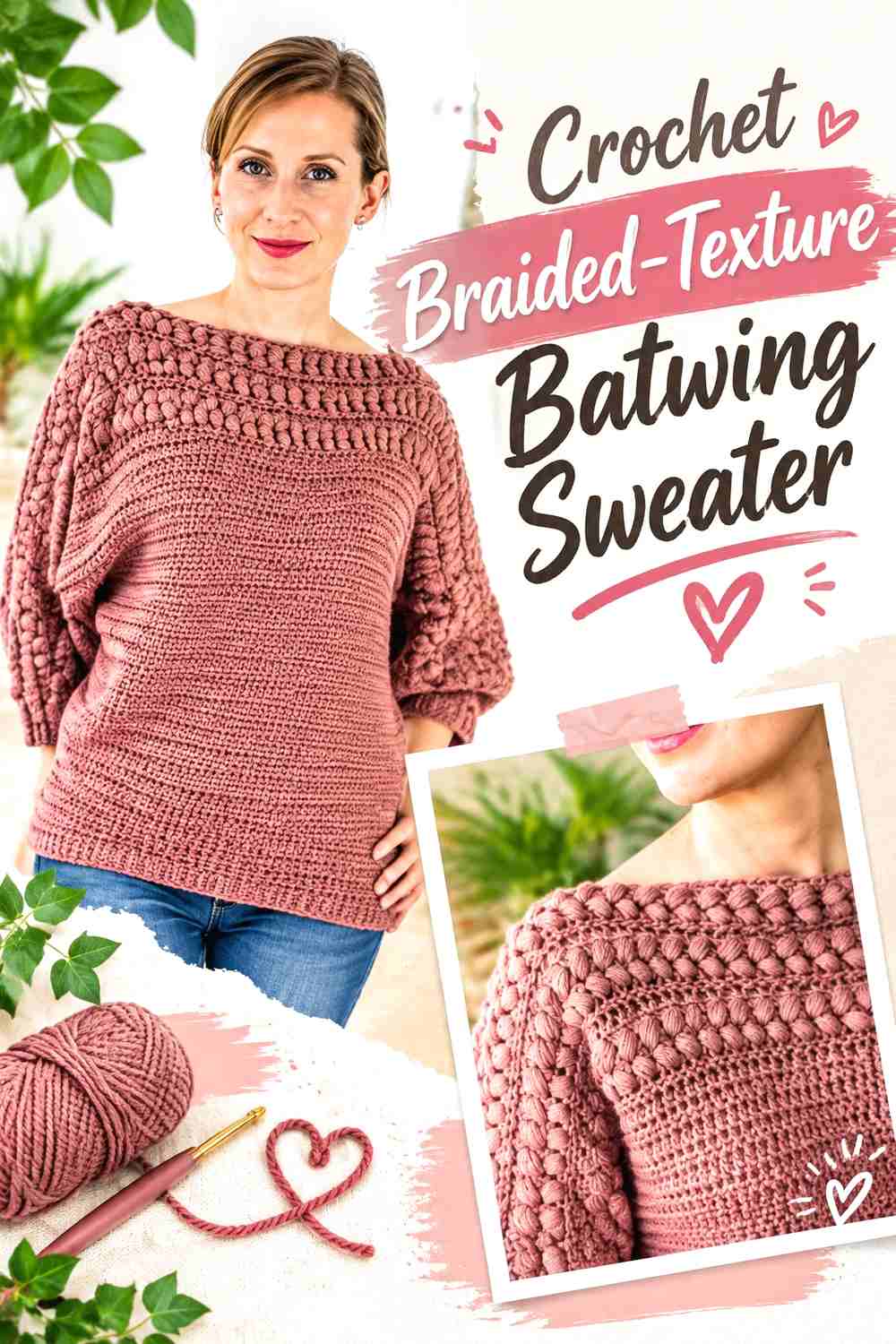
This batwing sweater stands apart because the surface texture becomes a focal point rather than leaving the entire garment visually plain. The source design includes a distinctive braided or puff-like textural detail within a roomy batwing shape.
For a Halloween version, raised texture can suggest twisted vines, bones, old architectural trim, or a more elaborate gothic garment without adding separate appliqués.
Put Statement Texture Where It Will Stay Visible
Texture placed too deep in an underarm fold may disappear when the arms are lowered. Before adapting the surface design, look at the worn garment and identify which portions remain visible in a relaxed stance.
If you add any independent embellishment, pin or temporarily position it first rather than judging placement on a flat panel.
The Lower Fit Can Matter More Than the Bust
The source design uses a roomy upper silhouette while paying attention to the lower body fit. That is a useful reminder that oversized does not mean every measurement is equally loose.
When selecting a size, follow the creator’s measurement guidance and pay particular attention to where the lower edge is designed to sit.
Creator Credit: Ned & Mimi
7. Crochet Long-Cuff Batwing Sweater
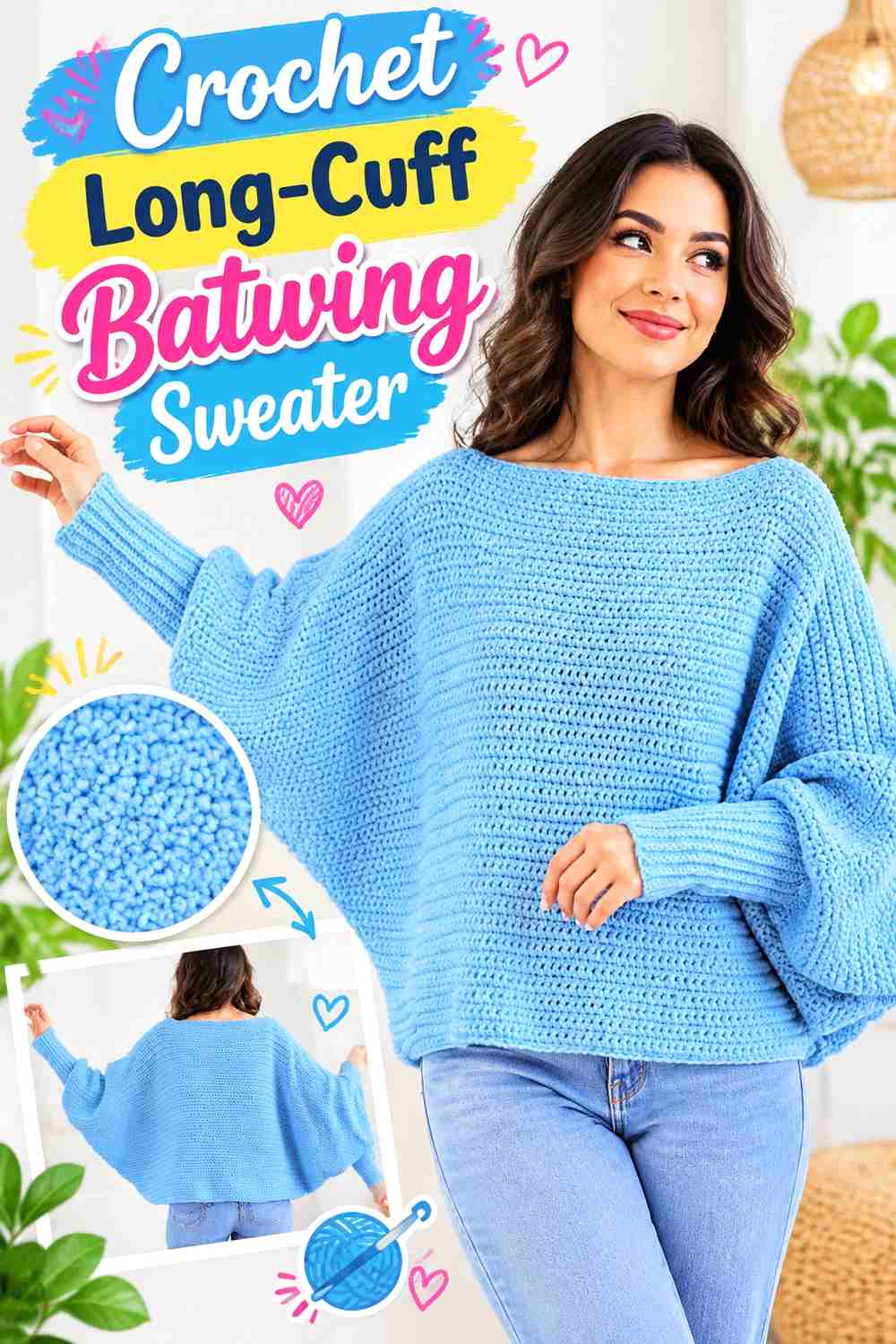
Here, the transition from wide upper sleeves into long, narrower cuffs creates the main visual contrast. Crazy Cool Crochet’s tutorial shows a batwing sweater that combines expansive sleeves with extended slim cuff sections.
That combination works especially well for a Halloween look because the upper garment can feel cape-like while the lower arms remain defined.
Long Cuffs Make Sleeve Length Less Forgiving
A wide sleeve can hide small changes in fit, but a long narrow cuff is more specific. Check how the tutorial determines cuff length and fit before making substitutions.
If you plan to wear bracelets, gloves, or another costume layer underneath, include that in your fit decision rather than assuming the original wrist fit will still work.
Dense Fabric Creates a Different Wing Than Mesh
A more solid surface can make the garment look darker and more continuous, which may suit a shadowy bat or witch-inspired outfit. The trade-off is that additional fabric can also contribute more weight.
If you want maximum width with less visual mass, compare this option with the lace, V-stitch, or mesh projects elsewhere in the list.
Creator Credit: Crazy Cool Crochet
8. Crochet V-Stitch Batwing Sweater
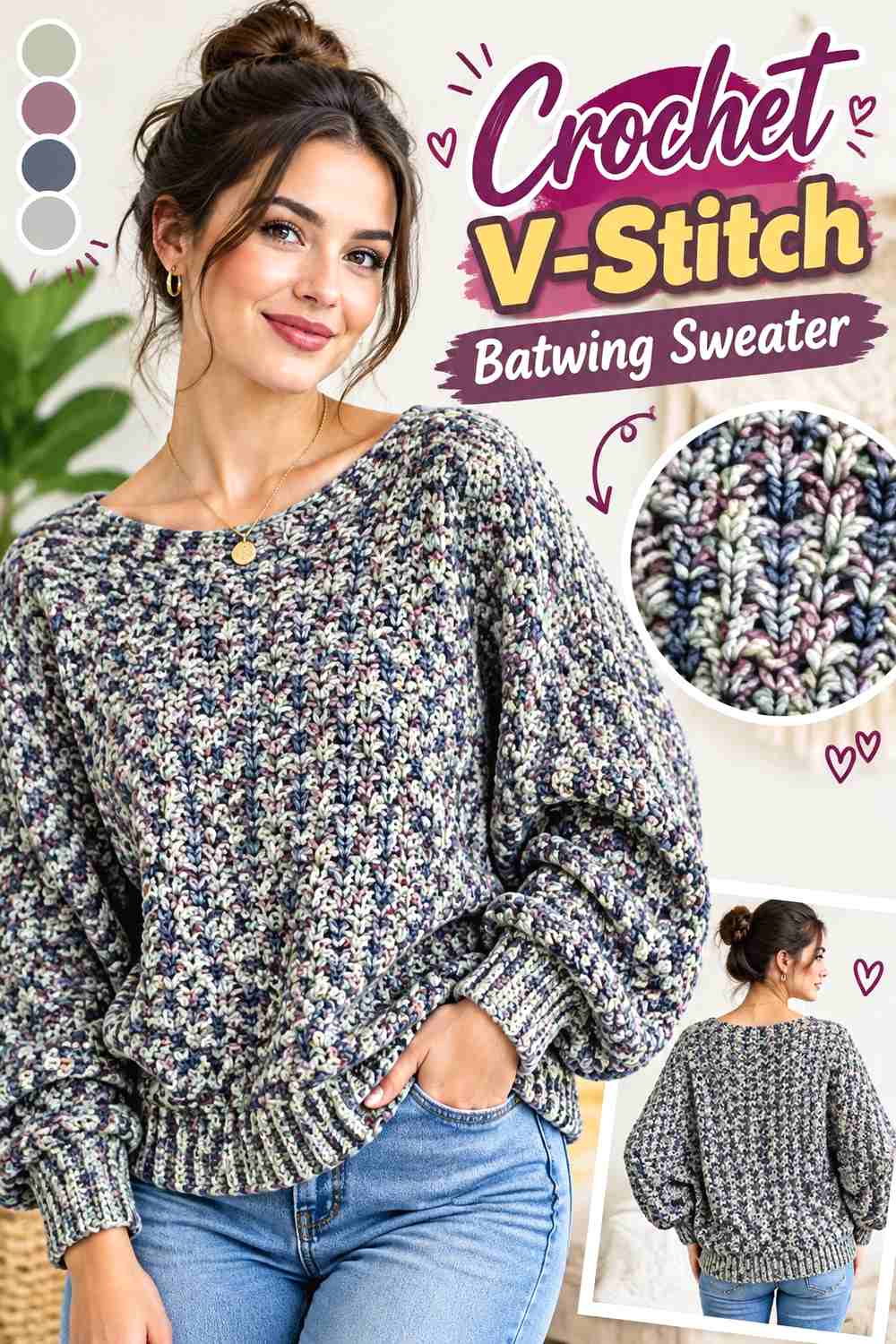
The V-stitch treatment gives this batwing sweater a more open, repeating surface while preserving the broad wearable silhouette. The associated project information presents it as a relaxed batwing design with a wide size range rather than a fitted conventional sleeve sweater.
For Halloween, that open texture can work particularly well over a color you want to show through the fabric.
Repeated Openwork Softens a Large Silhouette
Dense oversized fabric can appear visually heavy even before garment weight becomes a practical concern. An open repeat breaks up that surface and lets the background show through.
If you use a strongly contrasting underlayer, check the full outfit in ordinary indoor lighting as well as photographs. Contrast can appear much stronger through openwork than expected.
Check the Finished Width Before Assuming More Ease Is Better
Batwing garments already contain substantial room through the upper body. Adding extra size for an intentionally oversized look can also change sleeve drop and garment length.
Use the creator’s size information as your starting point rather than automatically sizing up for drama.
Creator Credit: JolieKnots Handmade
9. Crochet Open-Front Cocoon Batwing Layer
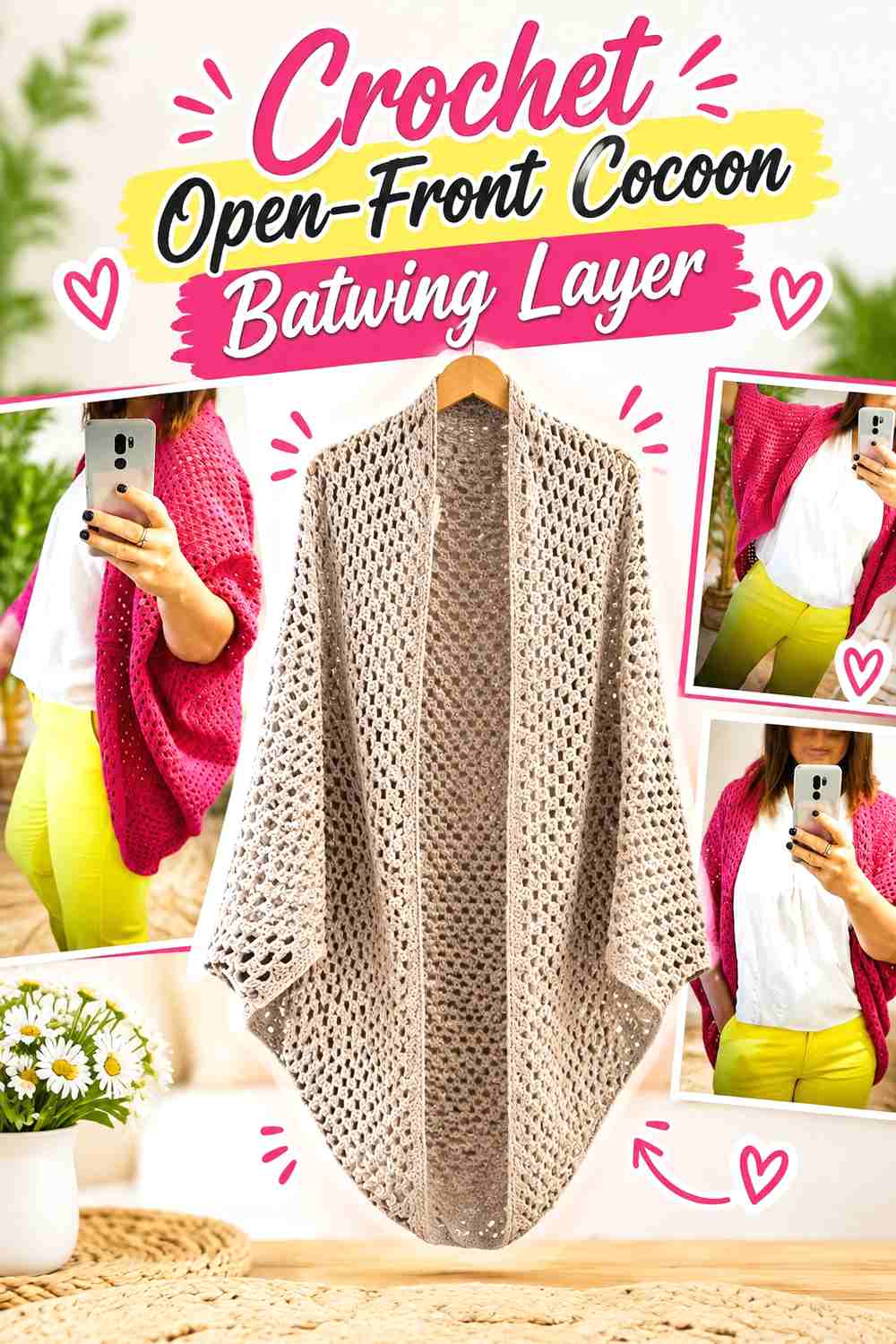
This is one of the batwing-adjacent options in the collection. Rather than forming a closed pullover, the cocoon construction creates broad draped sides and an open front, producing wing-like volume as a layering piece. The referenced design is presented as a cocoon-style cardigan rather than a true batwing top.
For Halloween, the open front gives you space to make the layer part of a larger outfit instead of asking one crochet piece to carry the entire theme.
An Open Front Keeps the Center of the Costume Visible
If you are wearing a graphic shirt, corset-style layer, fitted dress, or other statement piece underneath, an open cardigan allows it to remain part of the look.
That can be more flexible than a pullover if you want to remove the outer layer indoors without dismantling the rest of the outfit.
Back Decoration Has More Visual Space
A broad cocoon back can provide a useful surface for independent motifs or surface decoration. A large moon, web, or bat-inspired appliqué can read more clearly there than inside deep sleeve folds.
Before attaching anything heavy, consider how added weight might pull on the center back and change the hang of the garment.
Creator Credit: Alicja Crocheting
10. Crochet Diamond-Texture Batwing Pullover
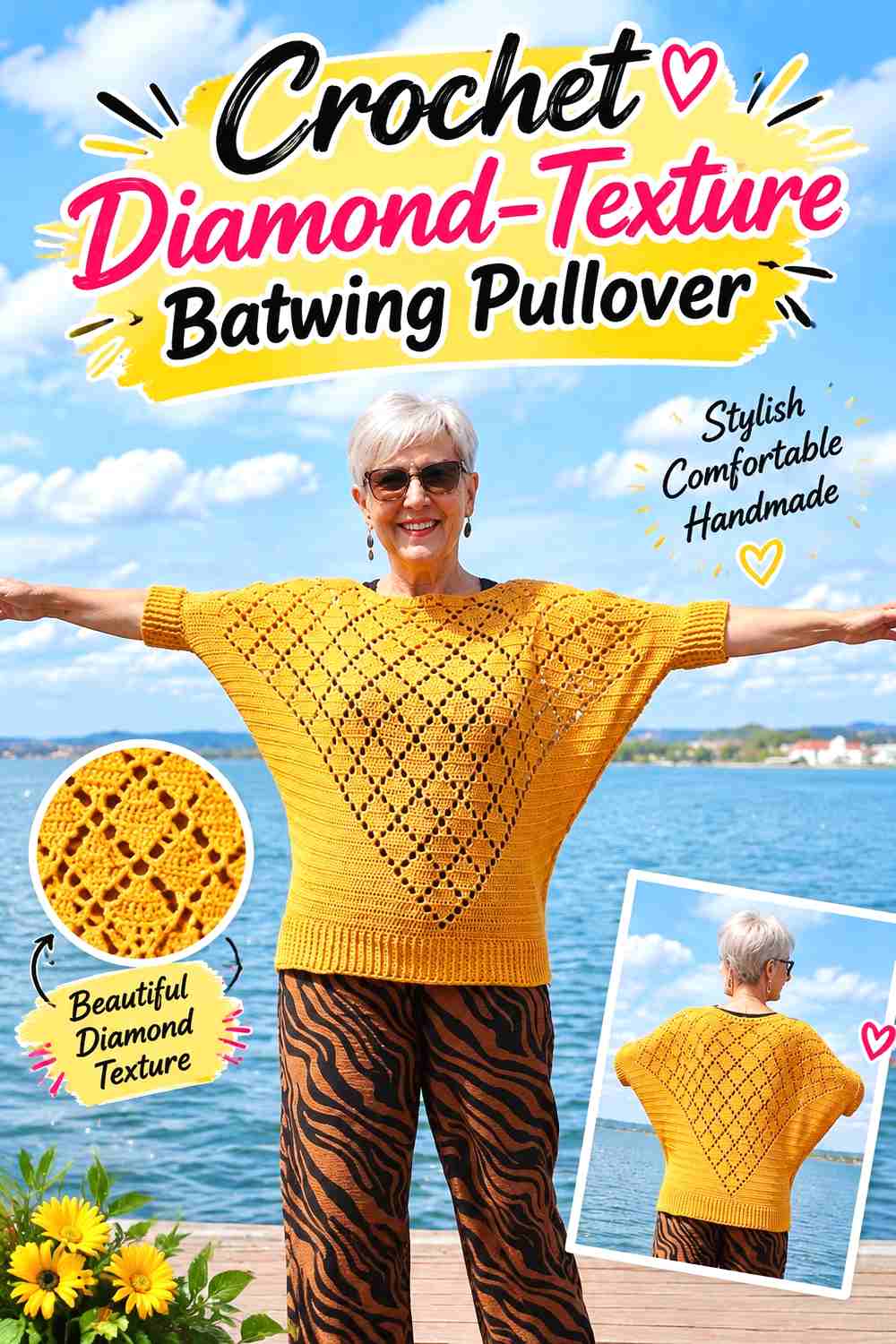
A geometric surface pattern turns the wide body of this batwing sweater into a visual feature rather than treating it as blank space. The referenced Karin Morik project uses a pronounced diamond motif and includes distinctive arm-area details within its oversized shape.
For Halloween, diamonds can provide structure when you want a dramatic top without bats, pumpkins, or other literal seasonal symbols.
Geometric Texture Benefits From Careful Centering
When a large motif is part of the visual identity of a garment, placement matters. A centered shape can look very different from one shifted into a fold or partially hidden beneath the arms.
If you adapt color placement around the texture, study the finished garment rather than designing the palette only from a flat diagram.
Extra Hardware Changes the Garment’s Personality
If a design includes openings, fasteners, or other added details, those elements may attract more attention than the stitch pattern itself. For a Halloween variation, it is easy to over-layer decorative ideas.
Choose one focal direction first—texture, hardware, color contrast, or appliqué—then decide whether another detail actually improves the finished look.
Creator Credit: Karin Morik
11. Crochet Ribbed Cocoon Batwing Cardigan
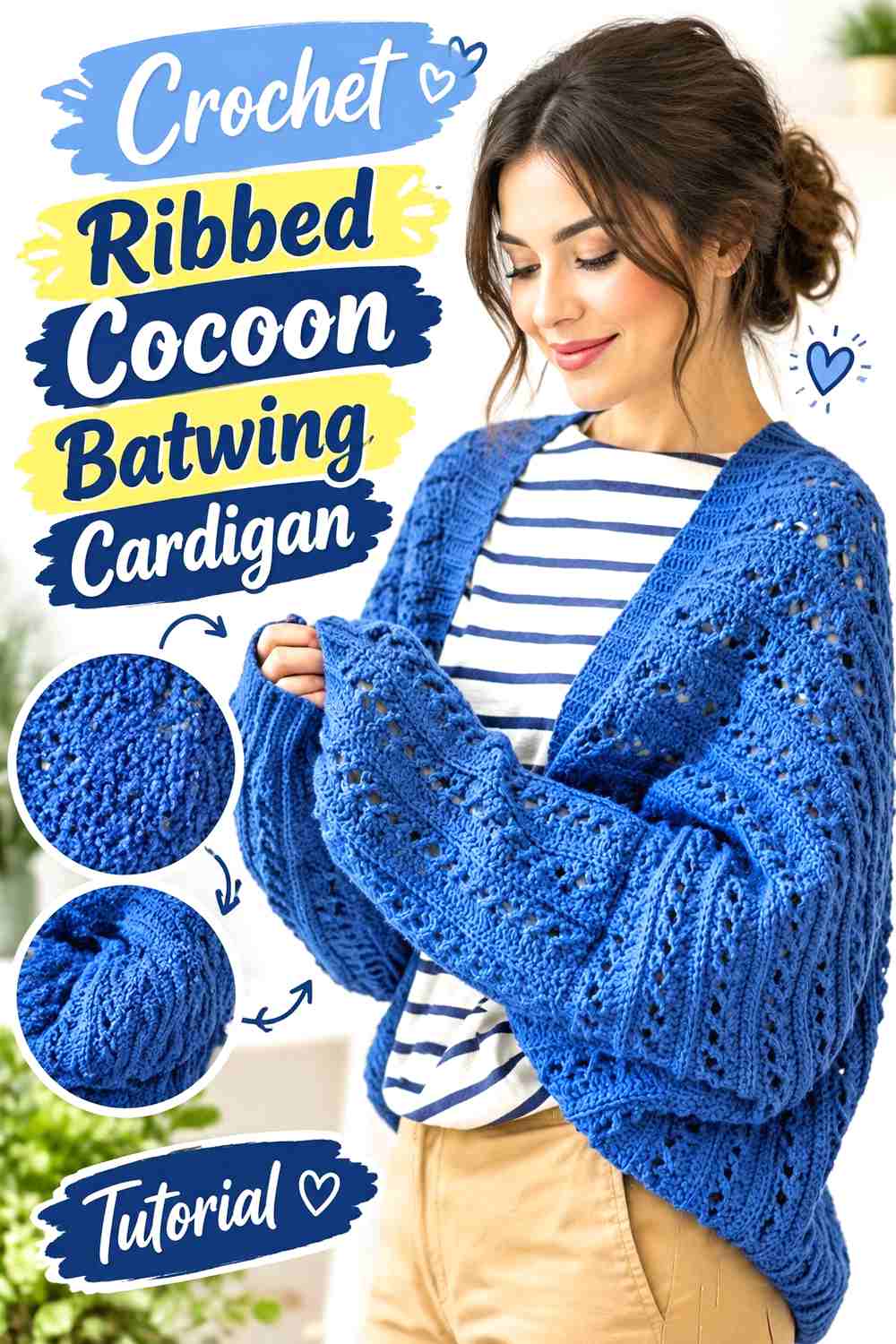
This cocoon cardigan uses a wide body with ribbed treatment around visible edges and wrists, giving the soft central fabric a more defined frame. It is another batwing-adjacent construction rather than a literal closed batwing top.
For Halloween, the combination can be useful when you want flowing side volume but do not want the entire garment to look unstructured.
Ribbing Can Visually Contain an Oversized Body
A defined front edge gives the eye a clear vertical line while the rest of the cardigan folds around it. That contrast can make a large cocoon shape easier to style.
If you change the main fabric to a darker or more open appearance, consider how the edge treatment will relate to it rather than choosing every section independently.
Wrist Finishing Affects Practical Wear
A cocoon shape can create plenty of fabric around the upper arm. A more controlled wrist area helps keep that volume away from the hands.
That may be useful if your Halloween plans involve handing out candy, eating, or carrying props rather than simply posing for photos.
Creator Credit: Orinam crochet
12. Crochet Granny-Stripe Cocoon Batwing Cardigan
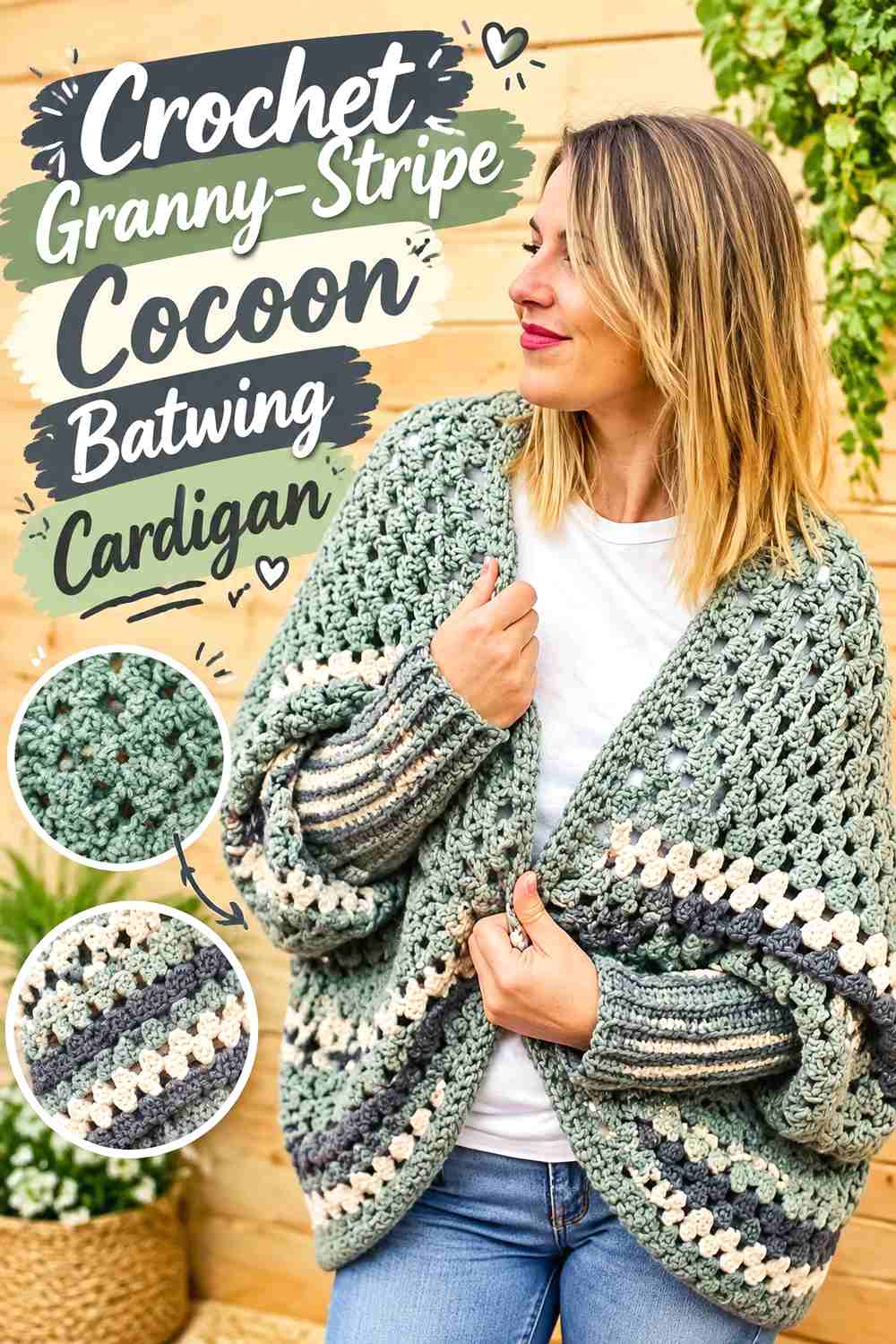
This project uses a large cocoon-style construction with a granny-inspired striped appearance, giving the fabric a more rhythmic, handmade surface. The tutorial demonstrates a rectangle-based cocoon approach rather than a fitted batwing pullover.
For Halloween, you can use that visual rhythm deliberately: narrow color changes can create a classic seasonal palette, while tonal stripes can keep the effect darker and more subtle.
A Rectangle-Based Body Is Useful for Color Planning
Large, relatively regular sections make it easier to preview color order before the garment is assembled into its final shape. Lay out yarns together and consider how often you actually want the accent color to appear.
Too many equally strong Halloween colors can make the garment feel busier than intended, especially over a patterned outfit.
Granny-Style Openings Change the Underlayer
An open granny-like fabric allows whatever sits underneath to participate in the final color scheme. A black base can make brighter crochet colors appear more separated, while a lighter underlayer may make the openings more obvious.
Choose the base layer at the same time as the yarn palette instead of treating it as an afterthought.
Creator Credit: Unique stitch designs
13. Crochet Kimono-Style Wide-Sleeve Topper
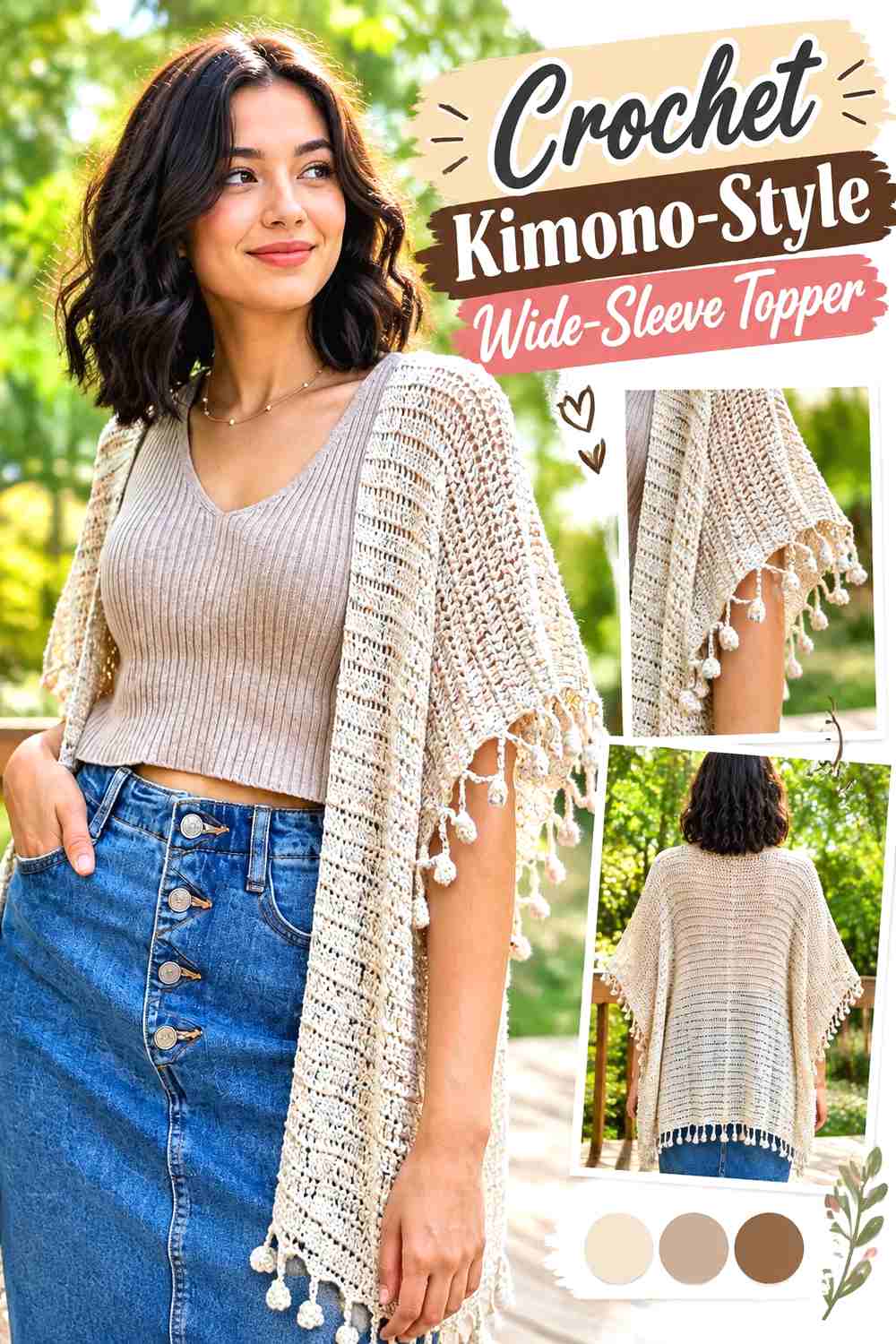
A kimono-style cardigan is not a true batwing top, but its broad open silhouette can create similar sweeping movement. KnitcroAddict’s tutorial provides a wide, draped layering shape that offers a useful alternative for readers who want the wing-like visual effect without a closed pullover.
This version can work particularly well over a fitted monochrome Halloween outfit because the contrast between a narrow base and a loose outer layer makes the sleeve movement more noticeable.
Kimono Drape Puts More Emphasis on the Front Edge
Unlike a closed batwing sweater, an open kimono continually frames the clothes underneath. That makes the front edge part of the overall outfit composition.
If you use a bright seasonal accent, consider limiting it to either the outer garment or the base layer so the two pieces do not compete equally.
Wide Sleeves Need Clearance Around the Hands
Open sleeves can look striking while walking, but they can also fall closer to tables, candles, food, or decorations. Keep wide crochet sleeves away from open flames and other heat sources.
For an event where you will be using your hands frequently, compare the sleeve opening with the cuffed projects before deciding which silhouette is most practical.
Creator Credit: KnitcroAddict
14. Crochet Mesh Bell-Sleeve Halloween Top
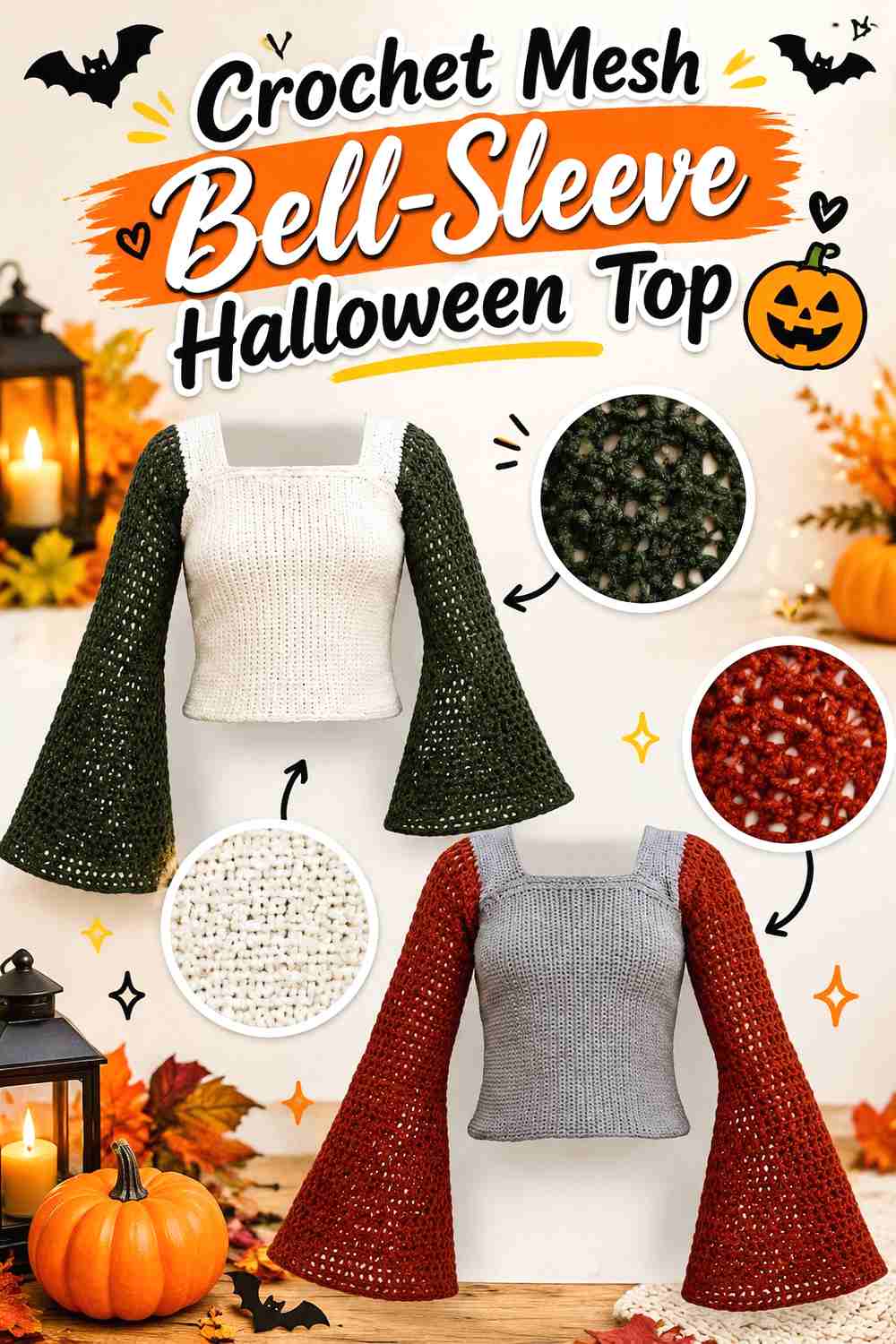
This project is the clearest alternative to a true batwing silhouette. Calluna Crochet’s top uses long mesh bell sleeves and a more defined neckline, so the volume is concentrated toward the arms rather than running continuously from the body into the sleeve.
It belongs in this collection for readers who want dramatic Halloween sleeves but prefer a more recognizable top shape through the torso.
Bell Sleeves Create Drama Without a Deep Underarm
If you dislike having a large amount of fabric beneath the arms, a flared lower sleeve can provide movement without the same batwing construction.
That also changes where embellishments can go. Details on the lower sleeve are more likely to stay visible than motifs placed inside a deep batwing fold.
Mesh Makes the Sleeve Edge More Noticeable
A long open sleeve can become especially graphic over a contrasting arm or fitted long-sleeve base. For a spiderweb-inspired effect, the openness of the crochet may provide enough visual texture without adding literal web decorations.
Avoid relying on appearance alone for snag resistance; open mesh can catch on jewelry, rough accessories, or projecting costume pieces.
Creator Credit: Calluna Crochet
15. Crochet Textured Rectangle Cocoon Topper
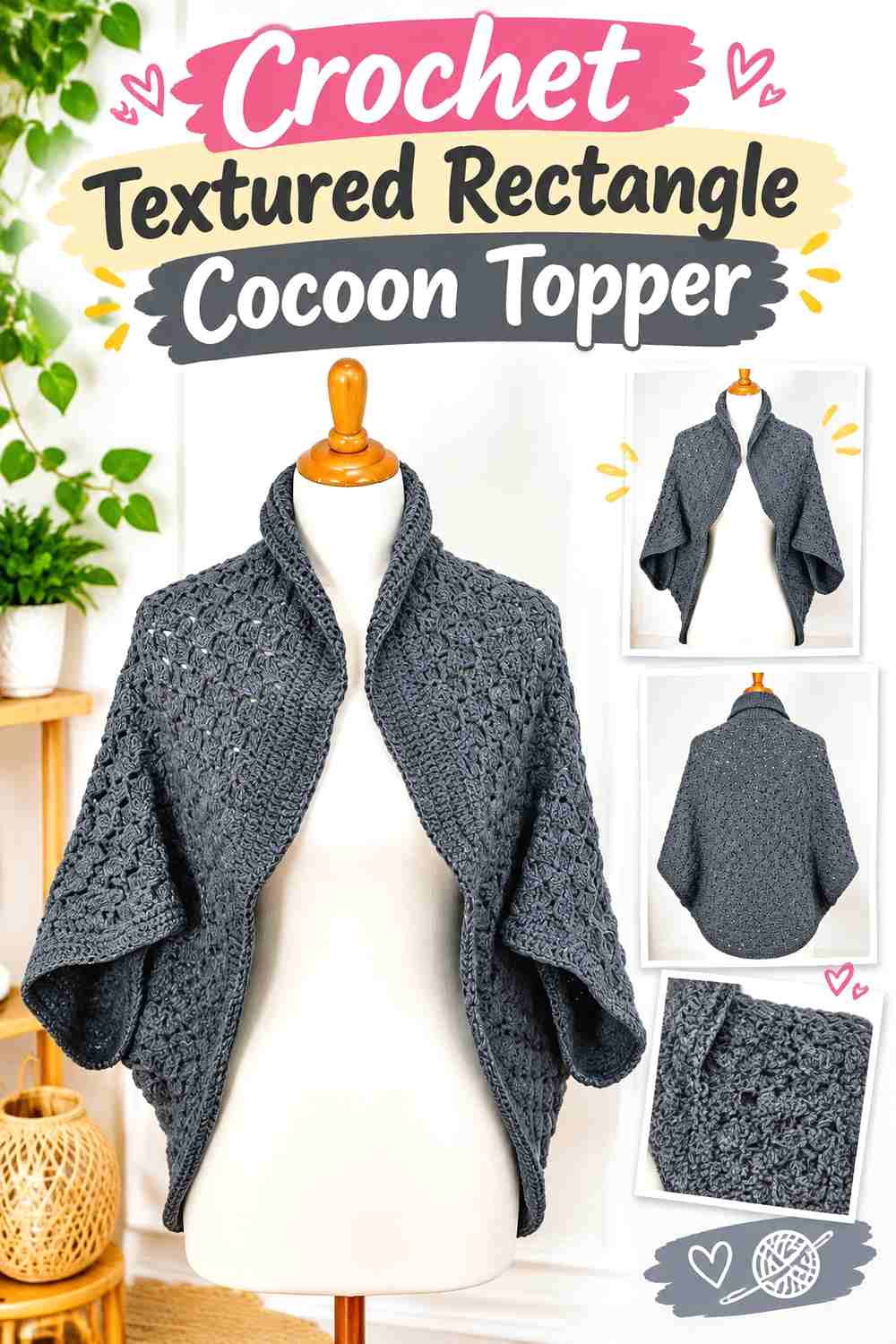
Fiber Flux demonstrates a cocoon cardigan created from a large rectangle that is transformed into a wearable layer with finishing around the sleeve and neckline areas. The construction creates generous side folds even though it is not an exact batwing pullover.
For Halloween, this is useful if your priority is a cape-like outline that remains open and easy to layer.
Simple Geometry Makes Surface Design More Important
When the underlying shape is straightforward, texture, color placement, and edging become a larger part of the finished character.
If you want to introduce a Halloween accent, first decide whether it belongs in the main rectangle or the finishing. Repeating it everywhere can reduce the contrast that made it noticeable in the first place.
Check the Fold Before Placing a Large Motif
A decoration positioned beautifully on a flat rectangle may move to the side or disappear once the rectangle becomes a cocoon.
Temporarily fold the piece into its wearable position before committing to large appliqués, embroidery, or surface embellishment.
Creator Credit: Fiber Flux
16. Crochet Airy Mesh Cocoon Batwing Layer
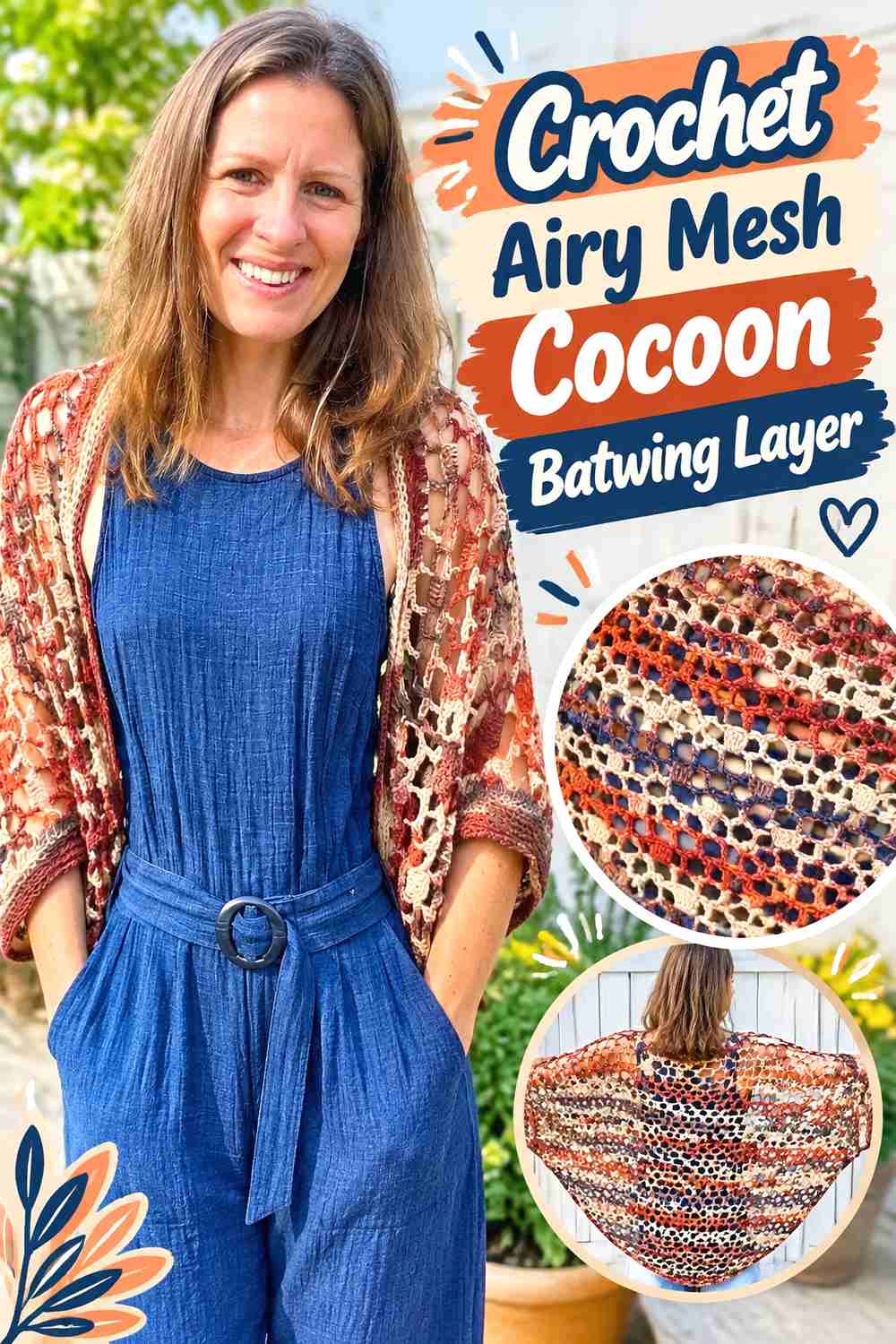
This cocoon-style cardigan emphasizes a light, open surface, offering a less dense version of the oversized layering idea. The Concrete Gems Crochet tutorial shows a broad cocoon silhouette with visible openwork rather than a compact fitted fabric.
That makes it a useful Halloween choice when you want volume but expect to spend much of the event indoors, or when the crochet needs to sit over another complete outfit rather than supply all the coverage itself.
Open Mesh Lets a Strong Base Color Do More Work
A bright orange, violet, acid green, red, or silver layer beneath black openwork can create a more pronounced seasonal effect than using multiple colors in the crochet itself.
Test the combination while wearing it. A flat swatch against another fabric does not show how the colors will shift as the cocoon folds.
Lighter-Looking Fabric Still Needs Fit Planning
Visual lightness does not eliminate the need to check sleeve openings, back width, and overall hang. Oversized constructions can still feel restrictive in unexpected places if their openings do not suit the wearer.
Follow the tutorial’s sizing guidance instead of assuming that open mesh automatically provides enough room.
Creator Credit: Concrete Gems Crochet
17. Crochet Dolman Rectangle Cardigan Top
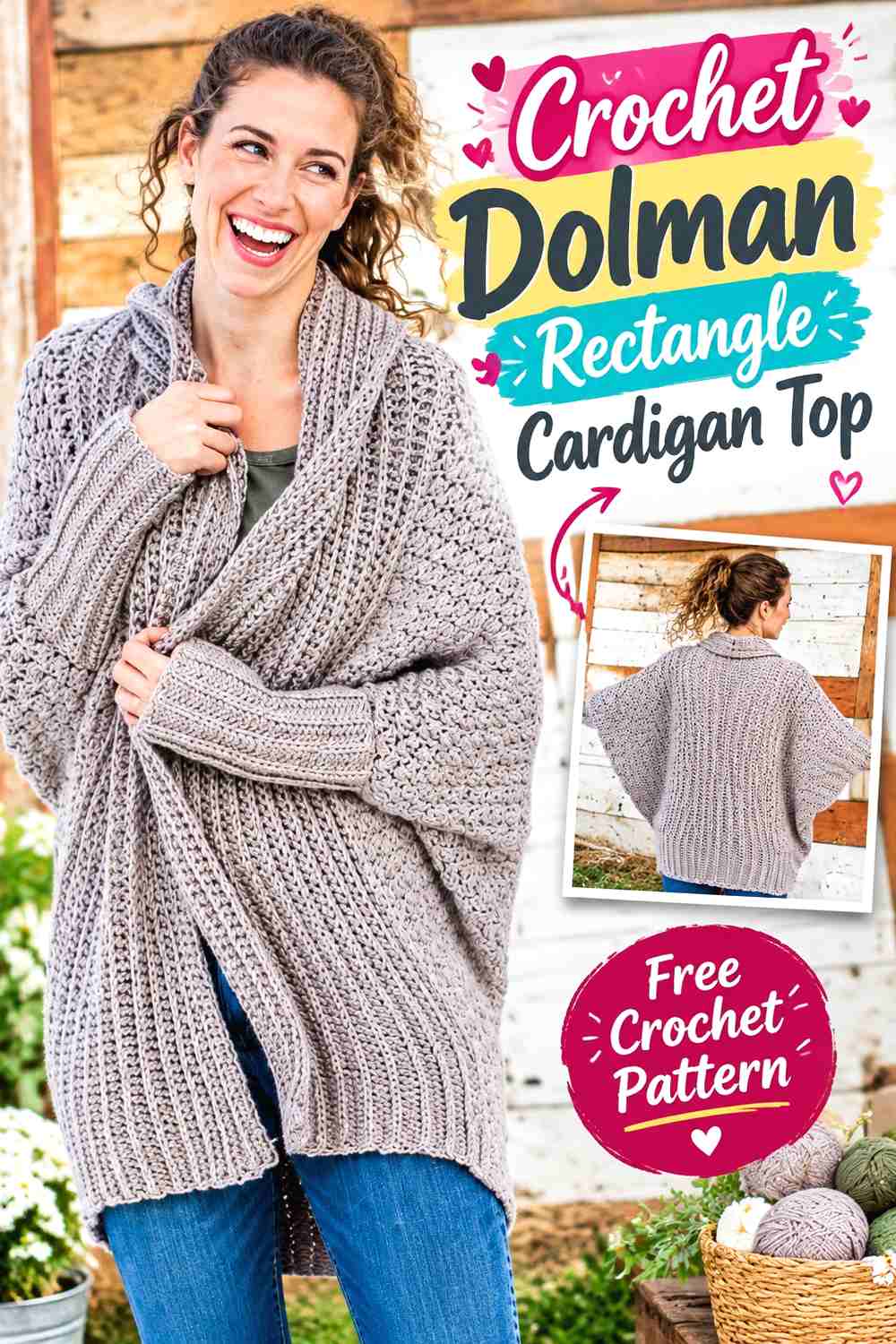
The final idea uses a rectangular foundation to create a modern draped cardigan with dolman-style sleeves and a substantial finished front edge. Make & Do Crew’s Habitat Cardigan is a related wide-sleeve silhouette rather than a literal batwing top, but the roomy side construction makes it useful for the same Halloween layering category.
This is the option to consider when you want your Halloween crochet to function as a normal cardigan after the seasonal styling is removed.
Dolman Shaping Offers a More Everyday Wing Effect
Compared with a very deep batwing, a dolman cardigan can give you extra fabric beneath the arm without making the entire garment look costume-specific.
Use Halloween color or accessories for the seasonal part of the outfit, then remove those elements later if you want the cardigan to return to everyday rotation.
A Strong Collar Can Balance Broad Sleeves
Wide sleeves naturally pull the eye outward. A substantial front or collar treatment brings some visual weight back toward the center of the body.
That can be useful if you prefer a balanced cardigan silhouette rather than an exaggerated horizontal wing line.
Creator Credit: Make & Do Crew
Comparing the 17 Halloween Batwing Top Directions
If you want the most literal batwing silhouette, begin with the off-shoulder, classic draped, soft-drape, lace-shoulder, striped, braided-texture, long-cuff, V-stitch, or diamond-texture pullovers. These keep the extra fabric closely connected to the body-and-sleeve shape and make the wing effect easiest to recognize.
For a more wearable Halloween layer, the cocoon and dolman options give you similar sweeping volume with an open front. They are particularly useful when the clothing underneath is an important part of the costume.
Choose the kimono or bell-sleeve options when arm movement matters more than producing a literal bat outline. Their volume sits differently, but they still create dramatic motion.
Fabric choice can then refine the direction. Dense crochet tends to create a more continuous dark surface. Lace, V-stitch, granny-style openings, and mesh break up that surface and allow a contrasting underlayer to become part of the design.
Conclusion
A Halloween batwing top does not need a bat appliqué on every sleeve to communicate the idea. The silhouette itself can do much of the work.
For the clearest wing shape, start with one of the true batwing pullovers and decide whether you prefer an open neckline, lace, texture, stripes, or fitted cuffs. For a softer costume layer, the cocoon and dolman cardigans provide generous folds without requiring a closed sweater. If flowing arm movement is the priority, the kimono and bell-sleeve alternatives provide another route.
Whichever direction you choose, check the original tutorial for its exact sizing, yarn, gauge, construction, and finishing information before making substitutions. Then plan the Halloween details around how the finished garment actually hangs on the body—not just how the pieces look laid flat.
Frequently Asked Questions
What makes a crochet top a true batwing rather than a bell-sleeve top?
A batwing or dolman silhouette carries extra fabric from the body into the upper sleeve, often creating a deep line beneath the arm. A bell sleeve generally keeps the upper sleeve more conventional and creates most of its flare farther down the arm. Both can look dramatic, but they produce different outlines when the arms are extended.
Can I use a cocoon cardigan tutorial for a Halloween batwing look?
Yes, as long as you treat it as a related silhouette rather than expecting an exact batwing construction. A cocoon can provide broad side folds and a wing-like outline while keeping the front open. It is particularly useful when you want another garment underneath to remain visible.
Is black yarn the best choice for a Halloween batwing top?
Black is an obvious option, but it is not the only useful one. Charcoal, deep purple, dark green, muted red, gray, and carefully placed orange can all work. Very dark yarn can make intricate texture harder to see, so consider whether silhouette or stitch definition is more important to the look you want.
How can I keep a wide crochet batwing top from becoming too heavy?
Start with the yarn and fabric called for by the tutorial, especially if you have not made that construction before. When substituting, compare the behavior of washed swatches rather than relying only on yarn-category labels. Openwork can reduce visual density, while large amounts of dense crochet may create more weight and stretch. Avoid assuming a lighter-looking yarn will behave identically without testing it.
Which measurements matter most for an oversized batwing top?
That depends on the construction, so use the measurements specified by the creator. In general, do not look only at the bust. The lower edge or hip area, neckline, cuff circumference, garment length, and full sleeve span can all affect whether an oversized design feels comfortable.
Where should I place Halloween appliqués on a batwing sleeve top?
Place them where they remain visible when the garment is worn naturally. Deep underarm folds can hide motifs that looked prominent when the piece was flat. Temporarily pin or position an appliqué, put the garment on, lower your arms, and check the result before attaching it permanently. Also consider the weight of larger embellishments because they can affect how soft crochet fabric hangs.