Crochet bauble covers are an easy way to change the character of ornaments you already own without replacing the familiar round Christmas shape. For a nostalgic tree, the strongest designs often rely on recognizable handmade details: granny clusters, thread-like openwork, bold traditional color combinations, raised bobbles, sweater-style ridges, starbursts, tassels, and simple ribbons.
“Nostalgic” does not have to mean reproducing an archival pattern. A contemporary cover can still suit a memory-filled Christmas tree when its texture, color balance, or finishing details recall handmade decorations collected over many years.
These 19 tutorials approach the bauble in different ways. Some build open crochet around a visible ornament, some completely disguise the original ball, and others create flat pieces or separate sections that are joined around it. Before choosing one, check the size and shape of the ornament you want to cover. A construction designed around one round bauble will not automatically fit every diameter, cap shape, or elongated ornament.
Quick List
- Crochet Star-Lace Tassel Bauble Cover
- Crochet Two-Medallion Granny Bauble Cover
- Crochet One-Piece Seam-Closed Bauble Cover
- Crochet Simple Keepsake Ball Cover
- Crochet Retro Colorwork Granny Bauble Cover
- Crochet Fine-Yarn Color-Play Bauble Cover
- Crochet Ribbed Sweater-Style Bauble Cover
- Crochet Small-Scale Classic Bauble Cover
- Crochet Two-Motif Netted Bauble Cover
- Crochet Moss-Stitch Holiday Bauble Cover
- Crochet Chunky Hearthside Bauble Cover
- Crochet Heirloom Petal-Texture Bauble Cover
- Crochet Classic Ridge Bauble Cover
- Crochet Sunburst Medallion Bauble Cover
- Crochet Old-Fashioned Zigzag Bauble Cover
- Crochet Cozy Striped Ball Cover
- Crochet 1990s-Inspired Christmas Bauble Cover
- Crochet Bobble-Texture Bauble Cover
- Crochet Coordinated Granny Bauble Cover Set
Choose the Cover Construction Before the Color Palette
Color can completely change a Christmas ornament, but construction determines how the finished bauble actually behaves.
An open lace or granny cover deliberately allows the ornament underneath to show through. That works well when the original ball provides useful contrast, shine, or color. A dense cover does the opposite: it can disguise an ornament whose surface no longer suits your tree and make the crochet texture the main feature.
Flat constructions are useful if you prefer to inspect the fit before enclosing the ornament. Covers made from separate halves create another clear checkpoint because you can compare each section with the ball before joining. In-the-round versions can produce a very clean shape, but you need to pay closer attention to when the ornament is inserted and how the top opening fits around its cap.
What Gives a Crochet Bauble a Nostalgic Look?
Instead of relying on one supposedly “vintage” color, combine a few deliberate design cues. Granny stitch immediately gives a bauble a recognizable handmade character. Fine crochet and open spaces can create a doily-like or lace-inspired effect. Ribbing, moss stitch, cables, bobbles, and raised loops move in the opposite direction, making the ornament resemble a tiny winter textile.
Finishing also matters. A simple velvet ribbon gives a different impression from baker’s twine, while a tassel changes the silhouette entirely. Metallic thread, wooden beads, tiny bells, and reused ribbon can all shift the mood, but they should remain supporting details rather than covering the crochet.
If you use beads, bells, charms, or other small detachable pieces, secure them appropriately for the intended display and consider whether they are suitable around young children or pets.
Check the Ornament Before Adjusting the Crochet
Two baubles sold as the same general size can differ around the widest point or near the cap. Measure the actual ornament you plan to cover rather than relying only on the packaging.
Fit also depends on the crochet fabric. An open granny structure can behave differently from firm ribbing or dense raised texture. Changing yarn weight may alter not only the dimensions but also stretch, thickness, and how neatly the fabric gathers around the top and bottom.
If you are using a treasured glass ornament, consider whether the construction requires substantial handling while the cover is being completed. A shatterproof practice bauble can be useful when you are unfamiliar with the construction.
1. Crochet Star-Lace Tassel Bauble Cover
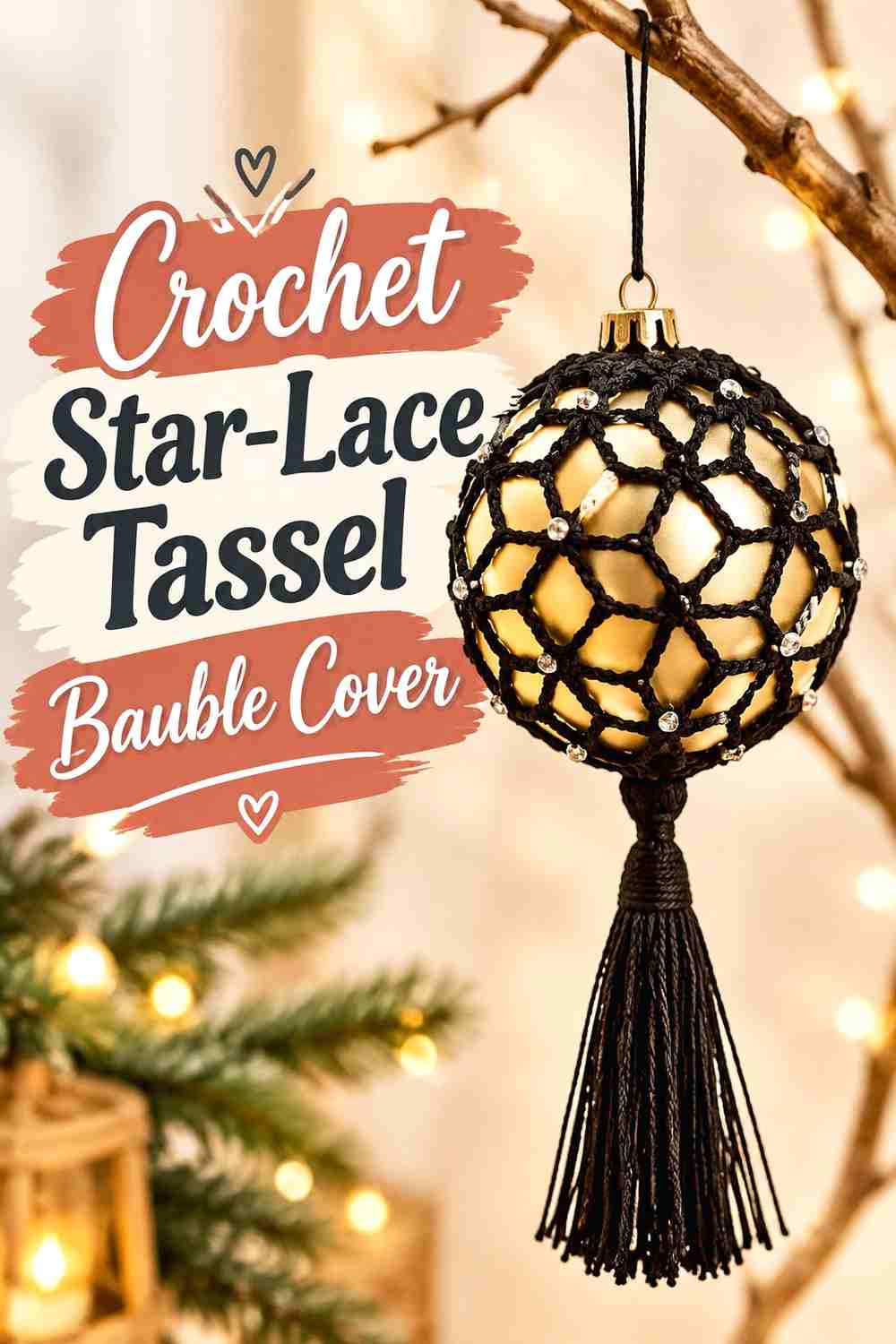
This openwork cover makes the bauble underneath part of the finished design. A star-like crochet structure stretches across the ornament instead of hiding it completely, and the lower decoration can extend the silhouette beyond the ball itself.
It suits a Christmas tree where you want the shine of the original ornament to remain visible. It also provides a useful contrast to dense crochet balls because the negative space is as important as the yarn.
Choose the Bauble Color as Part of the Pattern
With an open cover, the underlying ornament effectively becomes another color in the project. Put the yarn against the actual bauble before starting rather than judging the combination from separate skeins.
A dark ornament beneath pale crochet emphasizes the star structure, while closely related colors create a quieter effect.
Tassels Change the Amount of Hanging Space
A lower tassel makes the finished decoration visually taller than the bauble itself. That matters on a densely decorated tree where ornaments hang close to lower branches.
Check the total drop before making several covers so the tassels have room to hang rather than resting on the branch below.
Beads Should Support the Openwork
If you add beads, use them to emphasize the structure rather than filling every open section. Too many additions can compete with the lace effect that makes this cover distinctive.
Also confirm that any embellishments are secure and suitable for where the ornaments will be displayed.
Creator Credit: Day’s Crochet – Modern Crochet Patterns
2. Crochet Two-Medallion Granny Bauble Cover
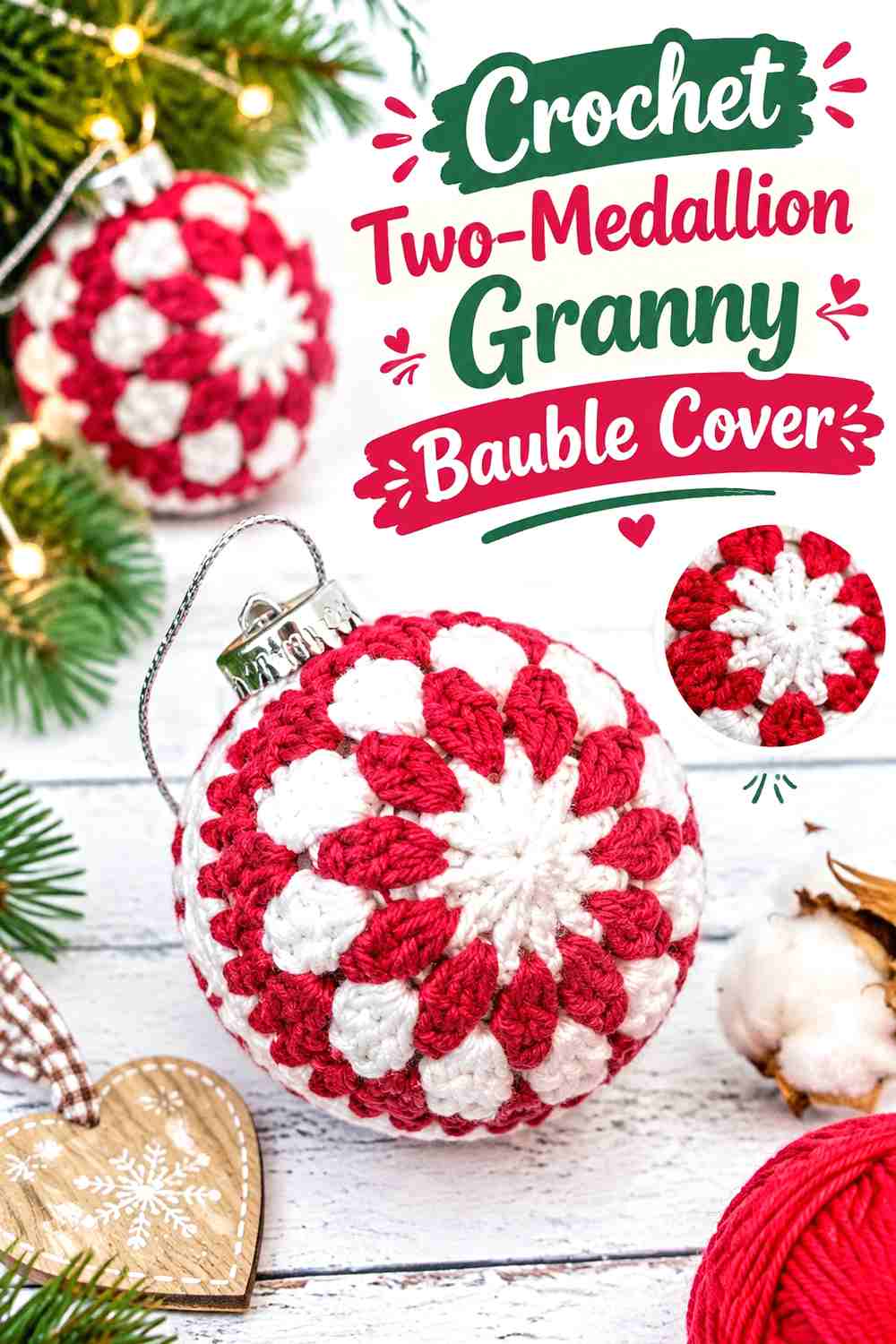
This cover approaches the ornament through two granny-style sections that meet around the ball. The visible clusters and openings give it the familiar character of classic granny crochet without turning the ornament into a miniature square.
The two-part construction also offers a useful fitting stage. You can examine the individual medallions against the bauble before the final joining encloses it.
The Ornament Showing Through Is Intentional
Open granny stitches expose sections of the ball beneath them. Choose an underlying bauble that complements the yarn rather than assuming the crochet will disguise an unwanted color completely.
For scratched or uneven ornaments, a denser cover elsewhere in this collection may provide better visual coverage.
Match Both Halves Before Joining
Small tension differences can become more obvious when two circular pieces meet around a rigid sphere.
Compare the finished halves before assembly. If their edges differ noticeably, correcting the issue before joining will usually produce a cleaner result than trying to force them into alignment around the ornament.
Creator Credit: Cosy Rosie Crochet
3. Crochet One-Piece Seam-Closed Bauble Cover
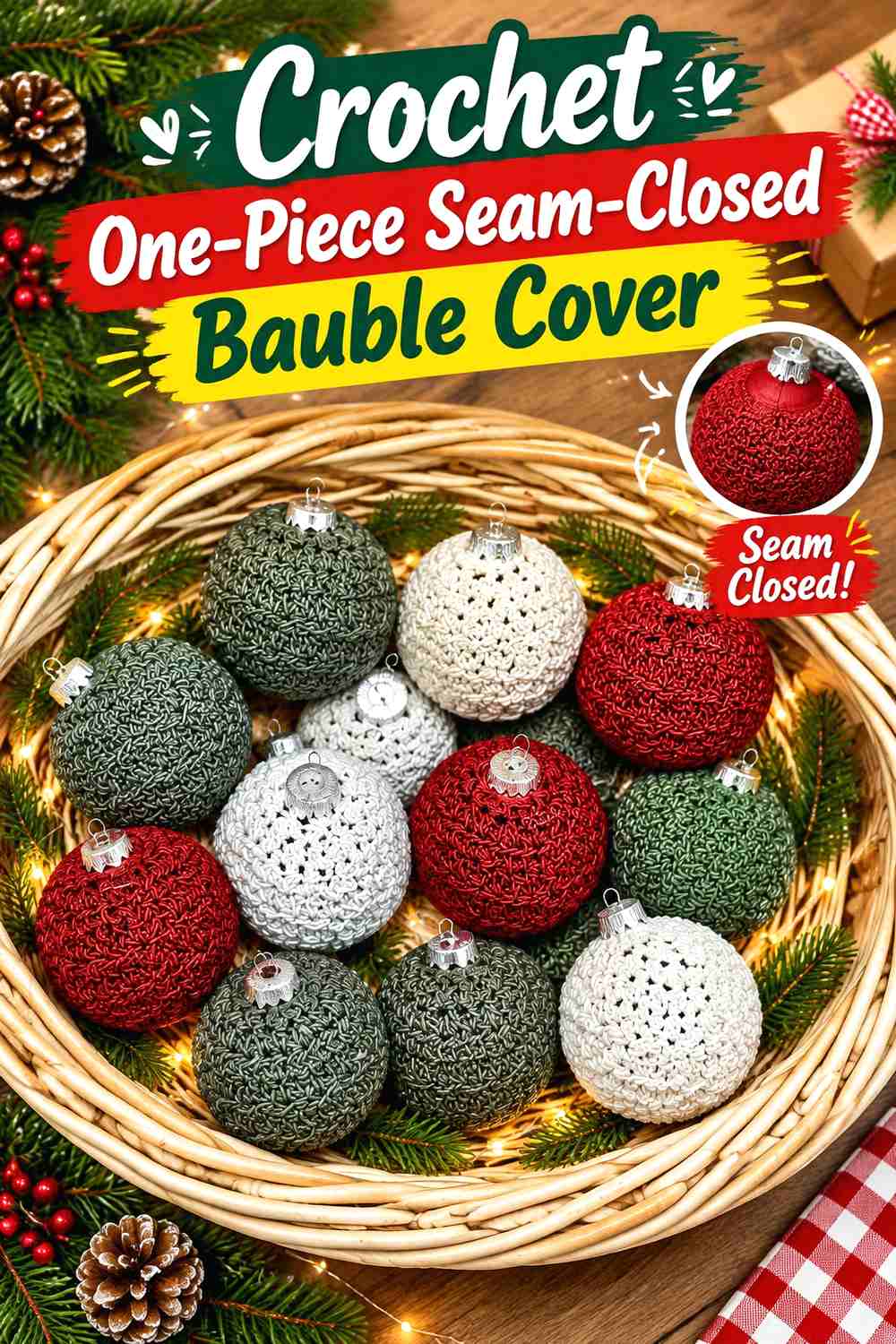
A one-piece construction gives this ornament a different workflow from the paired-medallion designs. The crochet develops as one continuous cover before closing around the bauble.
That can appeal to crocheters who would rather manage one main piece than align two decorative halves. It also creates a useful canvas for a restrained solid-color or two-tone Christmas palette.
Plan Where the Closing Line Will Sit
Any joined area can become visible if the tension or color changes abruptly near it.
Before closing the cover, decide whether you want the join facing toward the back of the tree, aligned beneath another feature, or treated as an intentional part of the texture.
Test the Cover Before the Final Closure
A crochet shell can look correctly sized while empty yet behave differently once stretched around the ornament.
Fit the actual piece over the intended bauble and check the cap area before making the closure permanent. The hanger still needs to remain usable.
Creator Credit: Crochet with Deana
4. Crochet Simple Keepsake Ball Cover
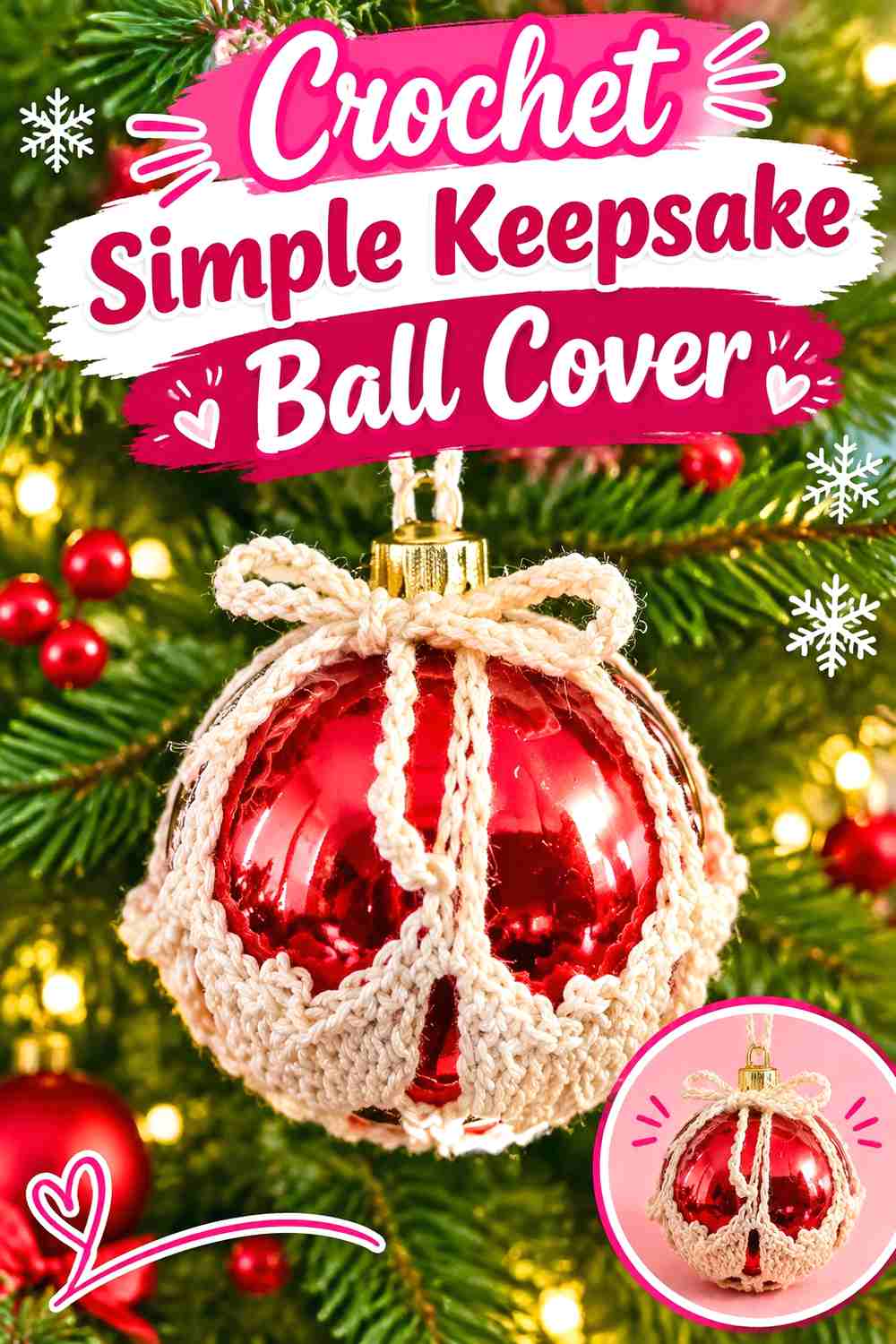
A straightforward crochet ball cover is useful when you want the yarn and ornament shape to provide most of the visual interest. Instead of building the design around elaborate trim, this approach can become a quiet background piece among more decorative heirloom ornaments.
It is also a good concept for a mixed tree because you can repeat the same general cover shape without every bauble becoming a focal point.
Simplicity Makes Tension More Visible
When there are few decorative elements to distract the eye, uneven stretching can become noticeable.
Rotate the ornament while checking the fit and look for areas where the crochet is being pulled much more tightly than elsewhere.
Let the Topper Remain Functional
Do not crowd the cap simply to achieve complete crochet coverage.
A clean opening around the ornament hardware makes the finished piece easier to hang and can create a more deliberate transition between crochet and the original topper.
Creator Credit: LittleGemsCreations – Fibre Artist
5. Crochet Retro Colorwork Granny Bauble Cover
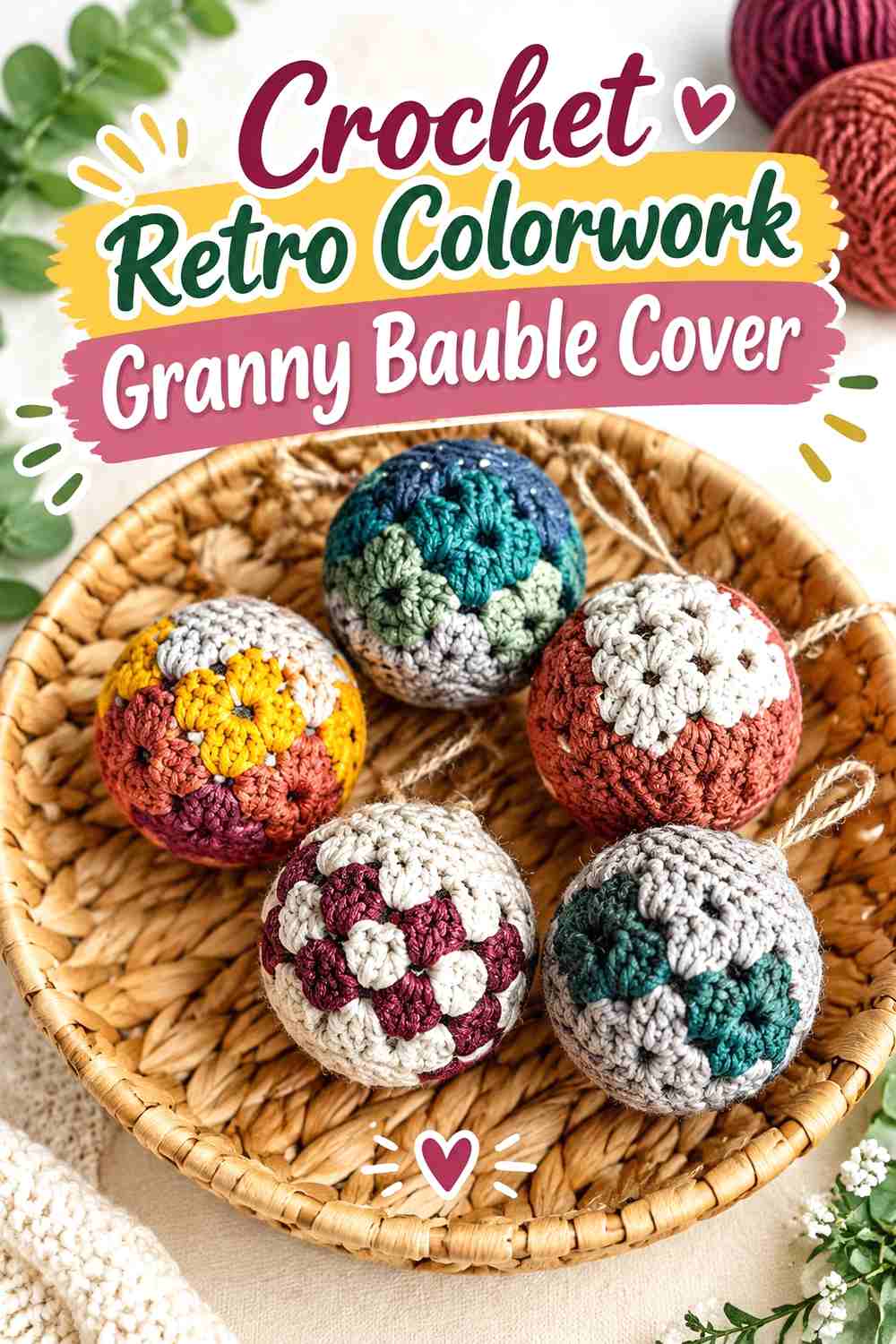
This granny-style cover is especially useful for building color into the ornament itself. Instead of treating stripes as an afterthought, the crochet structure can organize contrasting shades around the spherical form.
That makes it a strong choice for a 2026 tree inspired by colorful handmade decorations rather than a strictly coordinated modern palette.
Plan the Color Rhythm Around the Sphere
Color changes on a bauble are seen from multiple directions. A combination that looks balanced from the front may create a very different pattern when the ball rotates.
If you are making a set, decide whether every bauble should repeat the same sequence or whether the shared yarn palette is enough to connect them.
A Granny Section Benefits From a Stable Top and Bottom
An open middle section and more controlled ends can create a useful visual contrast.
When substituting yarn, pay attention to how the fabric behaves in both areas rather than assuming a successful granny section guarantees the entire cover will fit correctly.
Creator Credit: HanJan Crochet
6. Crochet Fine-Yarn Color-Play Bauble Cover
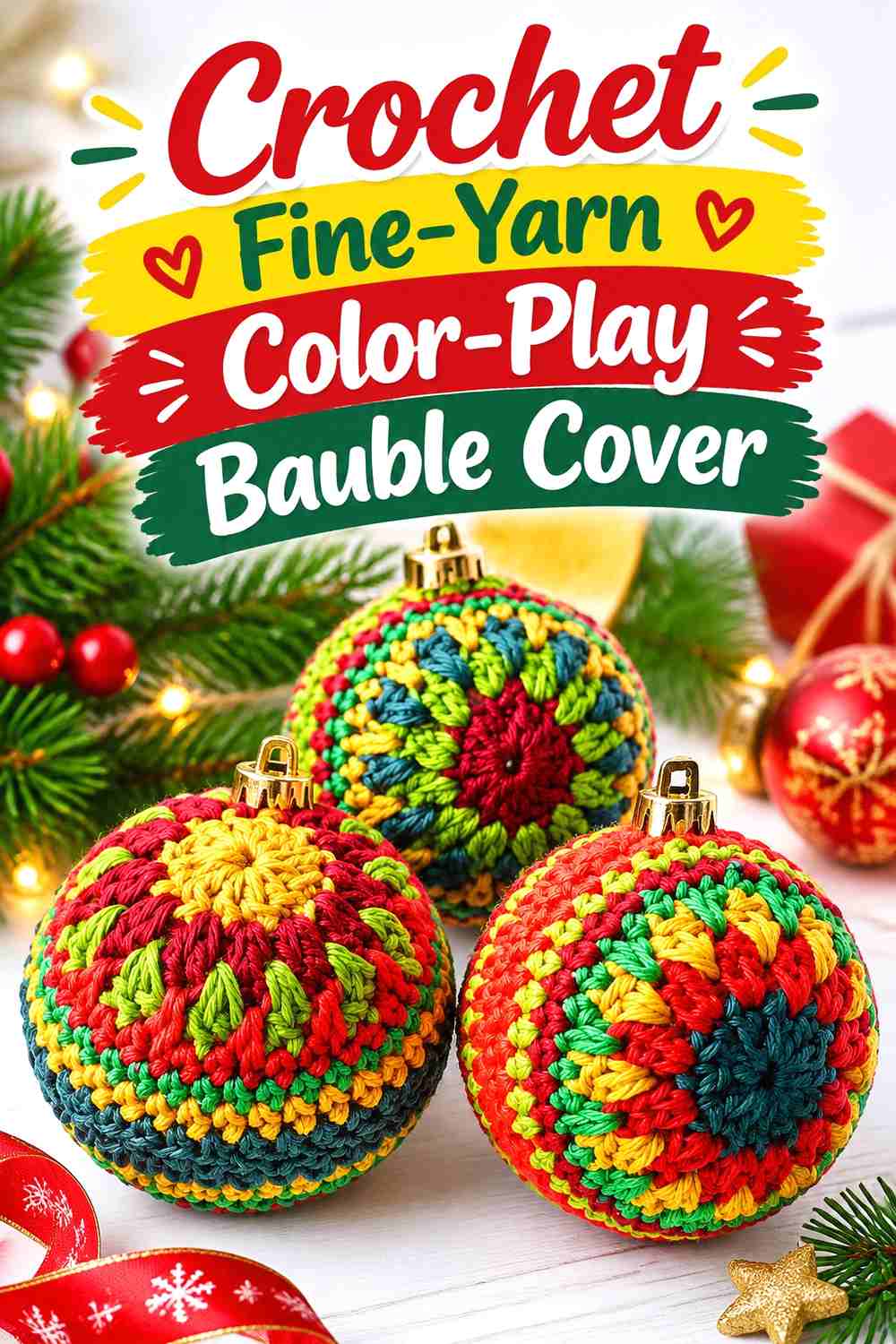
Using finer yarn changes the visual weight of a bauble cover. More of the original ornament can remain visible between the crochet, and the finished decoration can sit comfortably beside older glass ornaments, tinsel, and small metallic decorations without looking overly bulky.
This is a useful direction when you want plenty of color but still want the finished ball to feel delicate.
Fine Yarn Does Not Hide the Base Completely
Inspect the original ornament before choosing this style. Scratches, logos, or uneven coloration may remain visible through open sections.
If hiding the existing surface is the main goal, a dense ribbed or textured cover may be the more practical option.
Use Contrast to Clarify the Crochet
Several colors can look vibrant in the skein but merge when wrapped around a small sphere.
Place your planned shades together with the bauble itself. Clear value contrast often makes the crochet structure easier to see from across the room.
Creator Credit: Carmen
7. Crochet Ribbed Sweater-Style Bauble Cover
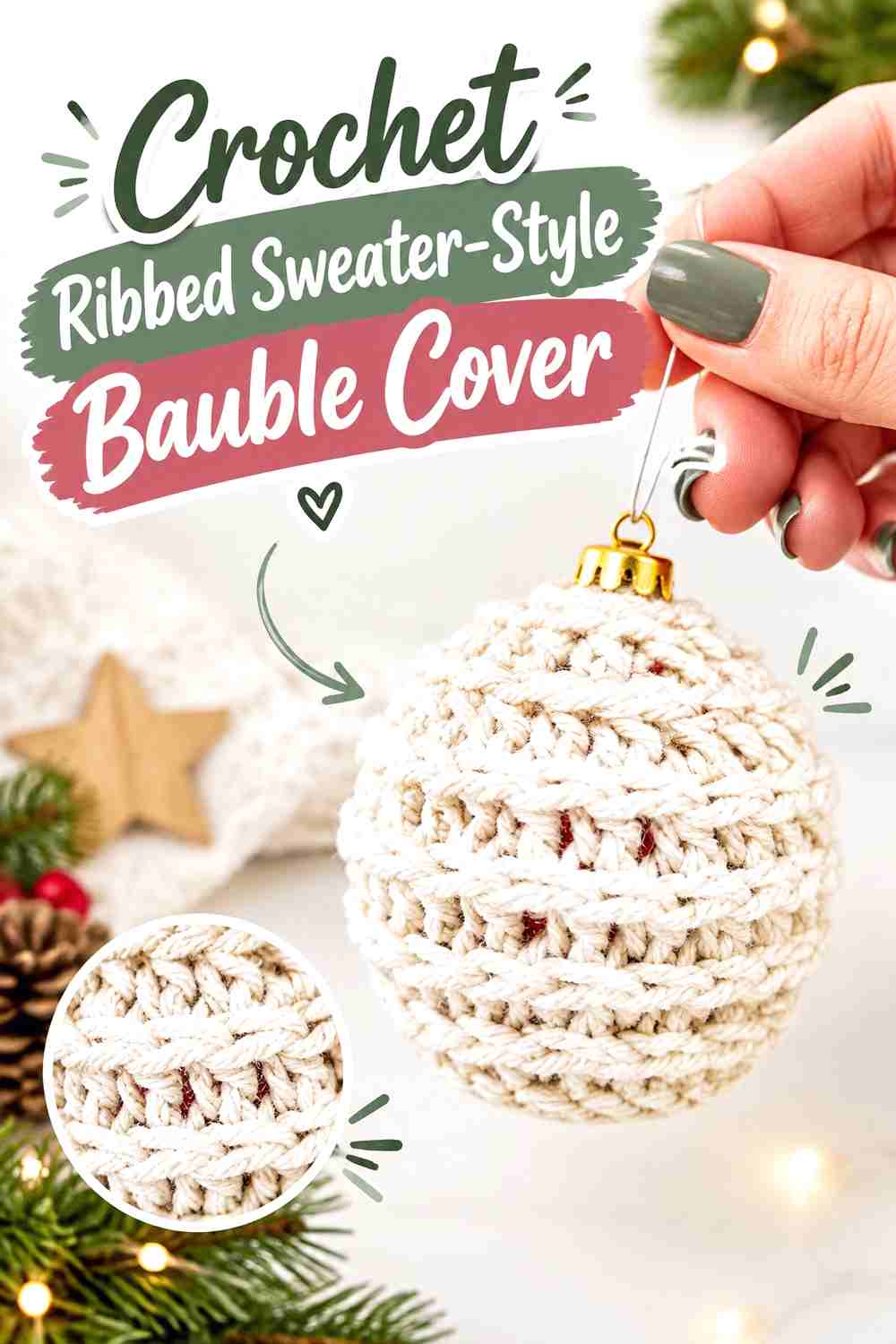
Raised ridges give a Christmas bauble the appearance of a miniature winter knit, even though the piece is crocheted. The texture is particularly effective on a solid-colored ornament where the shadows between ridges do much of the decorating.
This direction is less about sparkle and more about a cozy textile finish, which makes it useful for trees mixing yarn crafts, wooden ornaments, felt, and traditional ribbon.
Check How the Ribs Stretch
Ribbing changes character as it stretches around a sphere. A texture that looks deep while lying flat may open considerably over the widest part of the ornament.
Test the fabric on the intended ball before deciding whether you like the amount of stretch.
Avoid Too Much Decoration on Strong Texture
A pronounced ribbed surface already gives the ornament plenty of detail.
A simple hanger or small bow may preserve the sweater-like look better than layering several charms, flowers, and beads over the ridges.
Creator Credit: Tender Warm Creations
8. Crochet Small-Scale Classic Bauble Cover
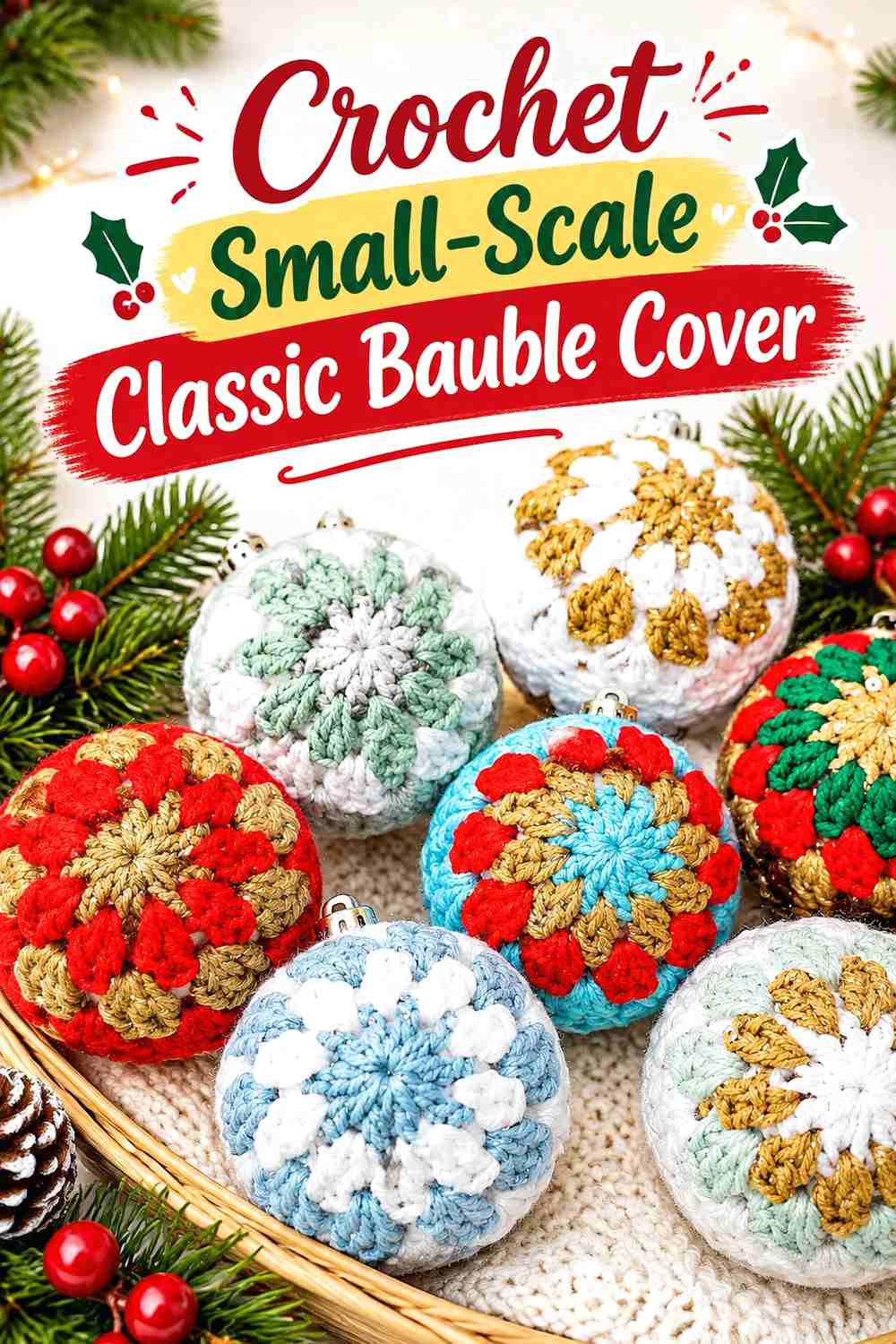
Smaller baubles need a different design balance from oversized statement ornaments. Thick yarn, large motifs, or several layers of embellishment can quickly overwhelm the sphere.
This compact cover idea keeps the familiar round shape prominent and works well when you want numerous handmade baubles distributed throughout the tree rather than a few large focal ornaments.
Scale Down the Details With the Ball
Do not judge trim independently from the ornament. A bow or bead that looks tiny on the worktable can dominate a small finished bauble.
Temporarily position embellishments before attaching them and view the ornament from normal tree-viewing distance.
Compare the Widest Point, Not Just the Height
A ball can appear small based on height but still have substantial circumference.
Use the actual ornament when checking fit, particularly if you are adapting a tutorial to balls from a different manufacturer or set.
Creator Credit: Freddie Loves Crochet
9. Crochet Two-Motif Netted Bauble Cover
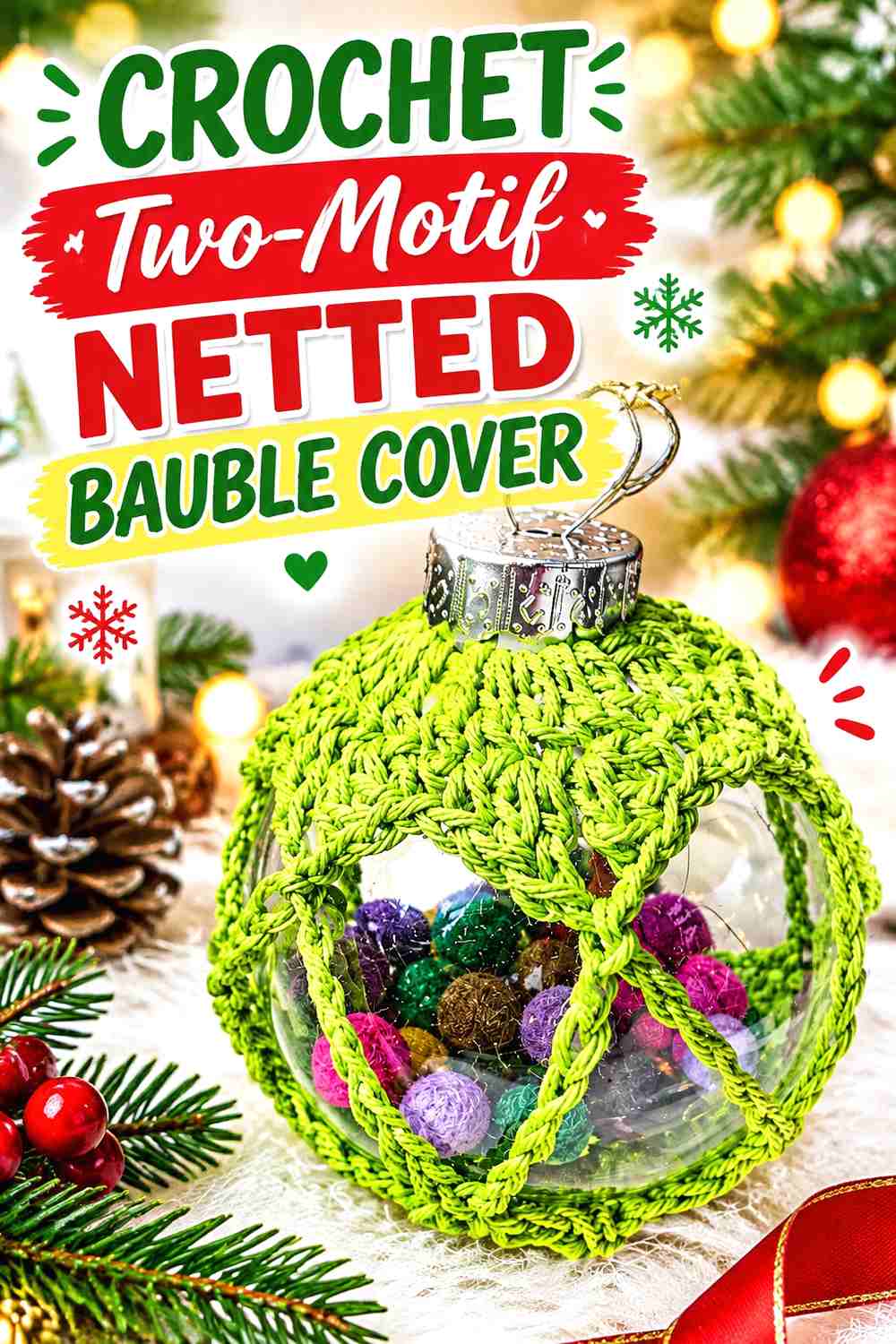
This idea makes the joining area part of the visual design. Separate motifs meet around the ornament with open connecting sections, allowing the underlying bauble to provide contrast.
It creates a more decorative, medallion-based look than a uniform shell and can work particularly well when you want the sphere to remain obviously visible beneath the crochet.
Motif Alignment Matters Around the Equator
When two prominent pieces meet, any difference in placement is easier to spot.
Mark the visual center of each section before joining so one side does not sit noticeably higher than the other after the ball is enclosed.
Use the Underlying Finish Deliberately
A reflective bauble can sparkle through open joins, while a matte ornament creates a quieter background.
Because the base remains visible, changing the bauble finish can alter the entire look even when the crochet stays the same.
Creator Credit: The Crochet Crowd
10. Crochet Moss-Stitch Holiday Bauble Cover
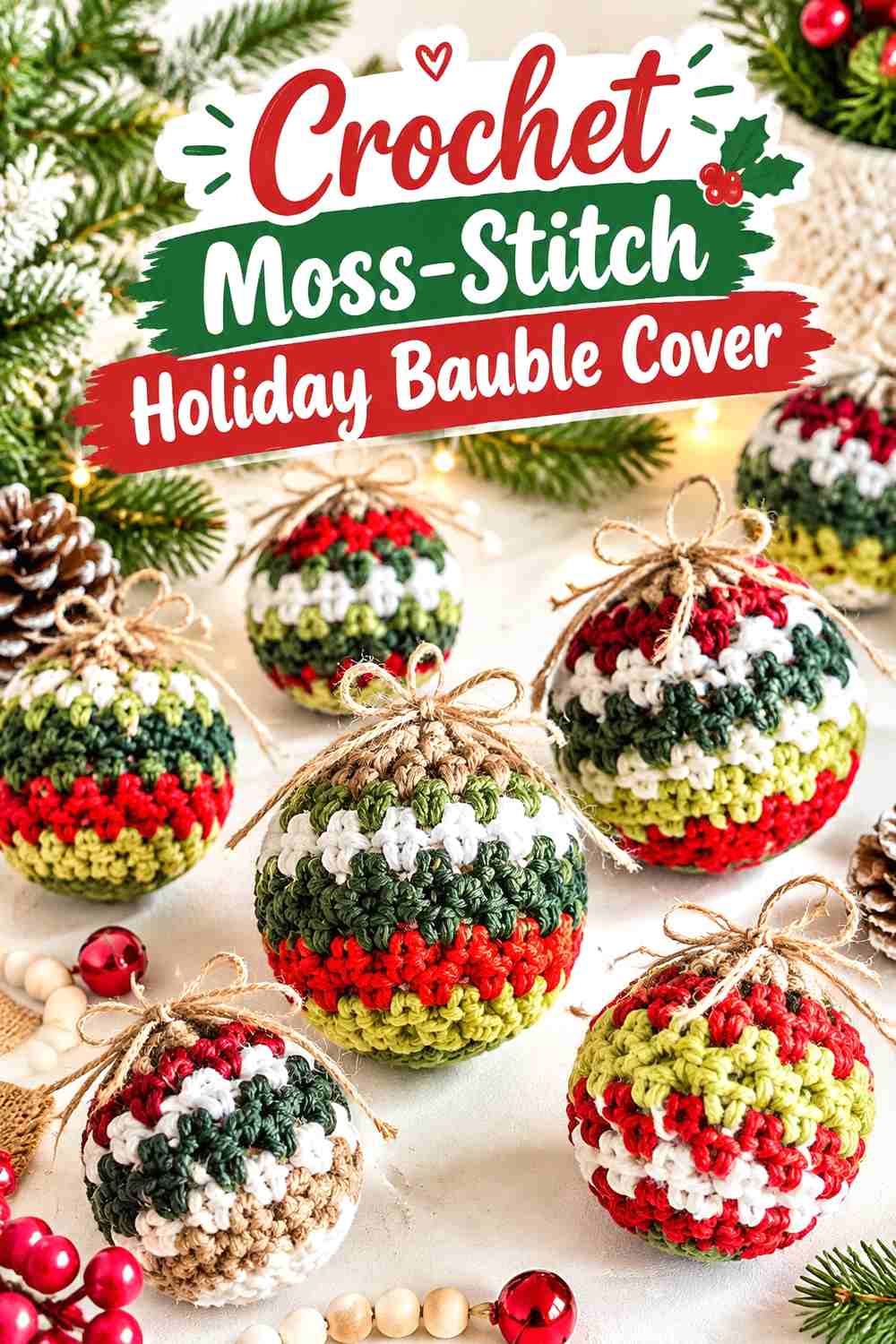
Moss stitch creates a small-scale woven effect that suits a bauble especially well when you want a textile look without deep dimensional ridges. The surface can support traditional stripes while still remaining visually calmer than bobbles or loops.
This makes it a useful bridge between a rustic Christmas tree and a more colorful retro one.
Color Changes Become Part of the Texture
Small repeated stitches create many opportunities for contrasting shades, but too many unrelated colors can make the surface difficult to read.
For a nostalgic set, consider repeating a limited group of colors across several ornaments even if the order changes from bauble to bauble.
Bulky Fabric Changes the Ornament Profile
A thicker cover increases the apparent diameter of the ball and can reduce the visual prominence of a small topper.
Check neighboring ornaments and branch spacing before producing an entire set, especially if your tree already carries many larger decorations.
Creator Credit: MJ’s Off The Hook Designs
11. Crochet Chunky Hearthside Bauble Cover
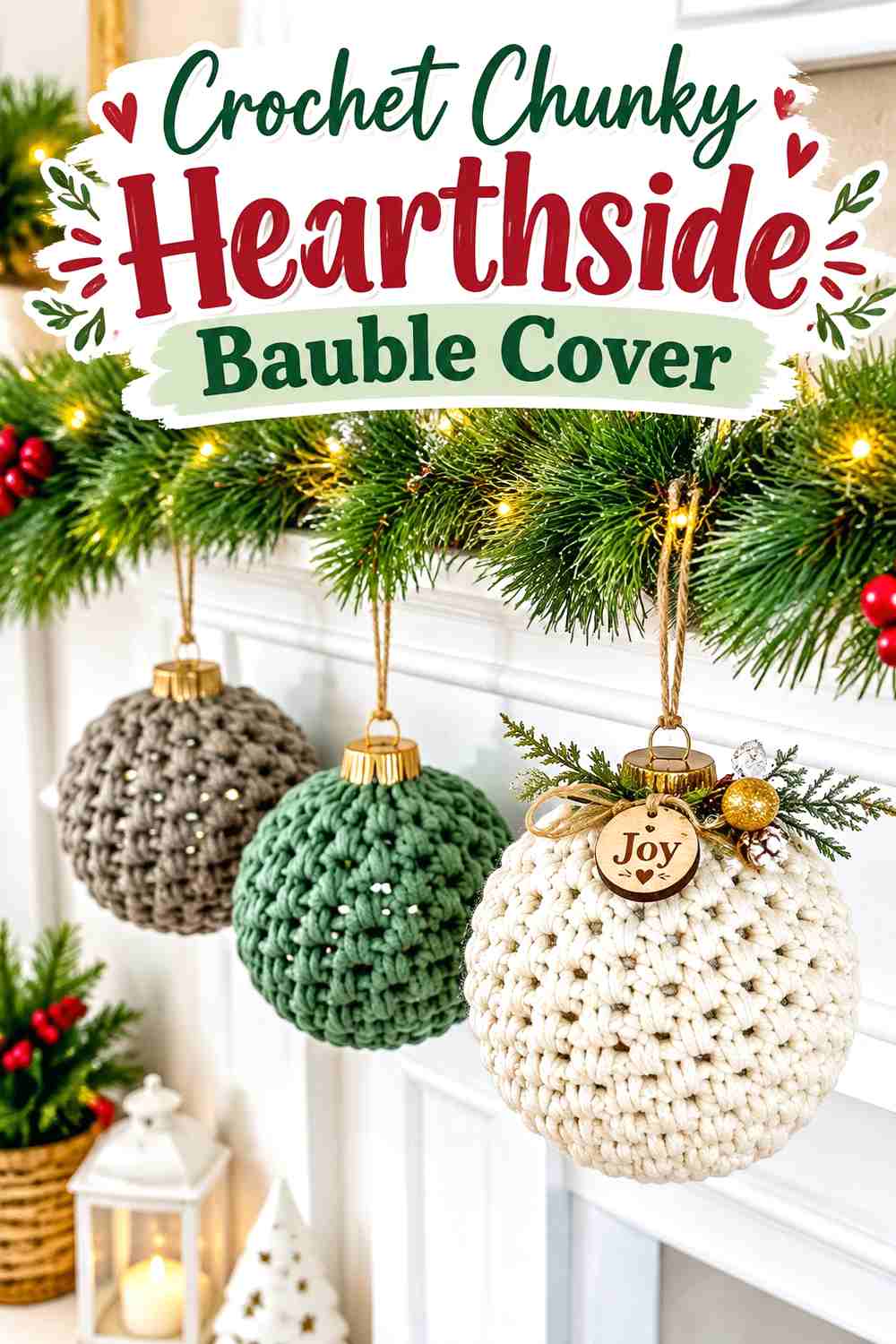
A thicker crochet cover can transform a smooth glass or plastic ball into something that feels closer to a tiny piece of winter home decor. The visible raised stitch detail becomes more important than the original ornament finish.
This style works well when the nostalgic direction you want is warm and substantial rather than delicate and lace-like.
Stretch and Thickness Need to Work Together
A thick yarn that lacks enough flexibility can produce a cover that looks correct until you try to pull it around the widest section.
When substituting yarn, compare both thickness and stretch with the material used in the tutorial rather than matching only the printed weight category.
Leave Room Around the Ornament Cap
Chunky yarn can build substantial thickness near the top.
Make sure the cap, hanging loop, and any ribbon still sit comfortably above the crochet instead of being swallowed by the gathered fabric.
Creator Credit: Simply Made by Erin Crochet
12. Crochet Heirloom Petal-Texture Bauble Cover
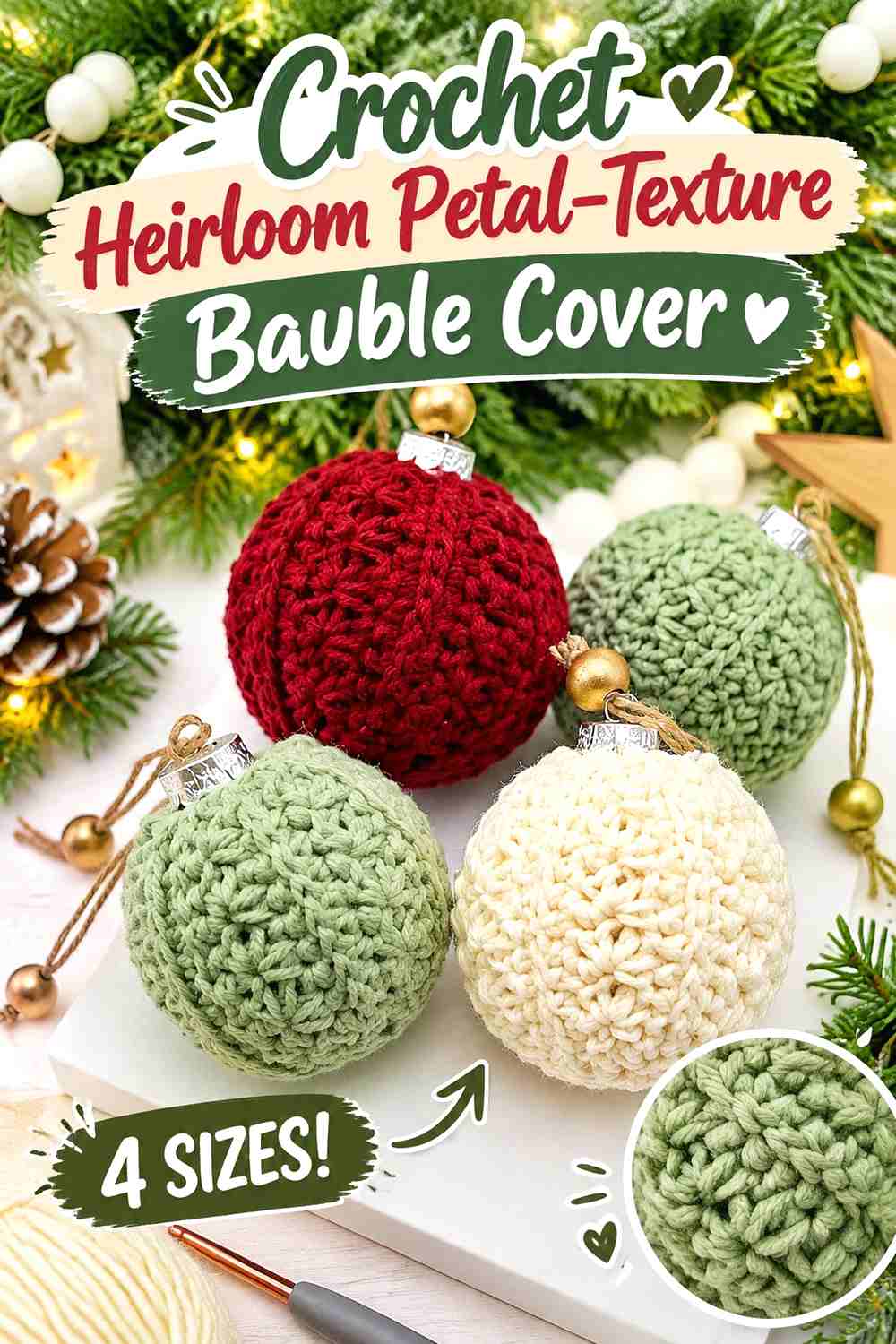
Raised petal-like loops give this bauble a decorative surface that can resemble small overlapping textile details rather than a plain crochet shell. The texture makes a solid-colored cover interesting without requiring multiple color changes.
It is a strong choice when you want a tree ornament that feels elaborate up close while still maintaining a simple round silhouette.
Raised Loops Need Clear Stitch Definition
A very fuzzy yarn can soften the petal effect until the individual raised sections become difficult to distinguish.
If the surface texture is the reason you chose the project, prioritize a yarn that allows those details to remain visible.
Flat Construction Makes Early Fit Checks Useful
When a textured cover begins as a flat piece, take advantage of that stage.
Wrap the unfinished fabric around the widest part of the ornament before the final assembly. It is easier to notice an obvious sizing problem before the ball is enclosed.
Creator Credit: Briana K Designs
13. Crochet Classic Ridge Bauble Cover
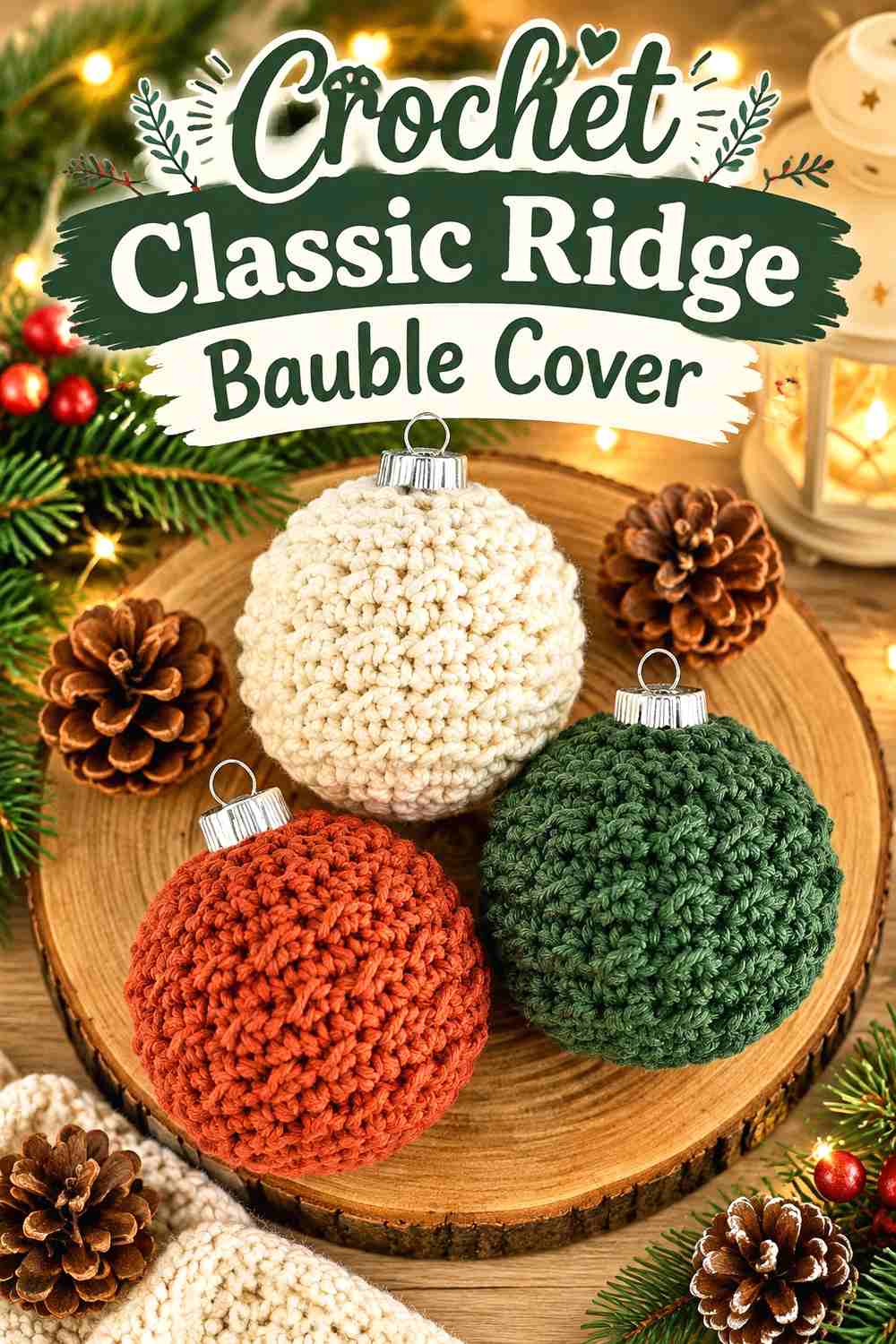
This ridged cover uses directional texture to make a basic round bauble feel more structured. The repeated lines draw the eye from top to bottom and can make a simple cream, red, green, or gold ornament look intentionally handmade without a busy motif.
It also adapts well to a mixed collection because the texture is strong enough to stand alone.
Vertical Flow Can Make the Ball Look More Elongated
Directional ridges affect how the eye reads a sphere.
If your ornament is already slightly elongated, look at the completed texture from several angles to make sure the proportions still suit the look you want.
Seams Should Follow the Texture Quietly
Strong ridges make interruptions more noticeable.
During finishing, check that the beginning and ending edges meet without creating one unusually wide or compressed section that draws attention to the join.
Creator Credit: The Turtle Trunk
14. Crochet Sunburst Medallion Bauble Cover
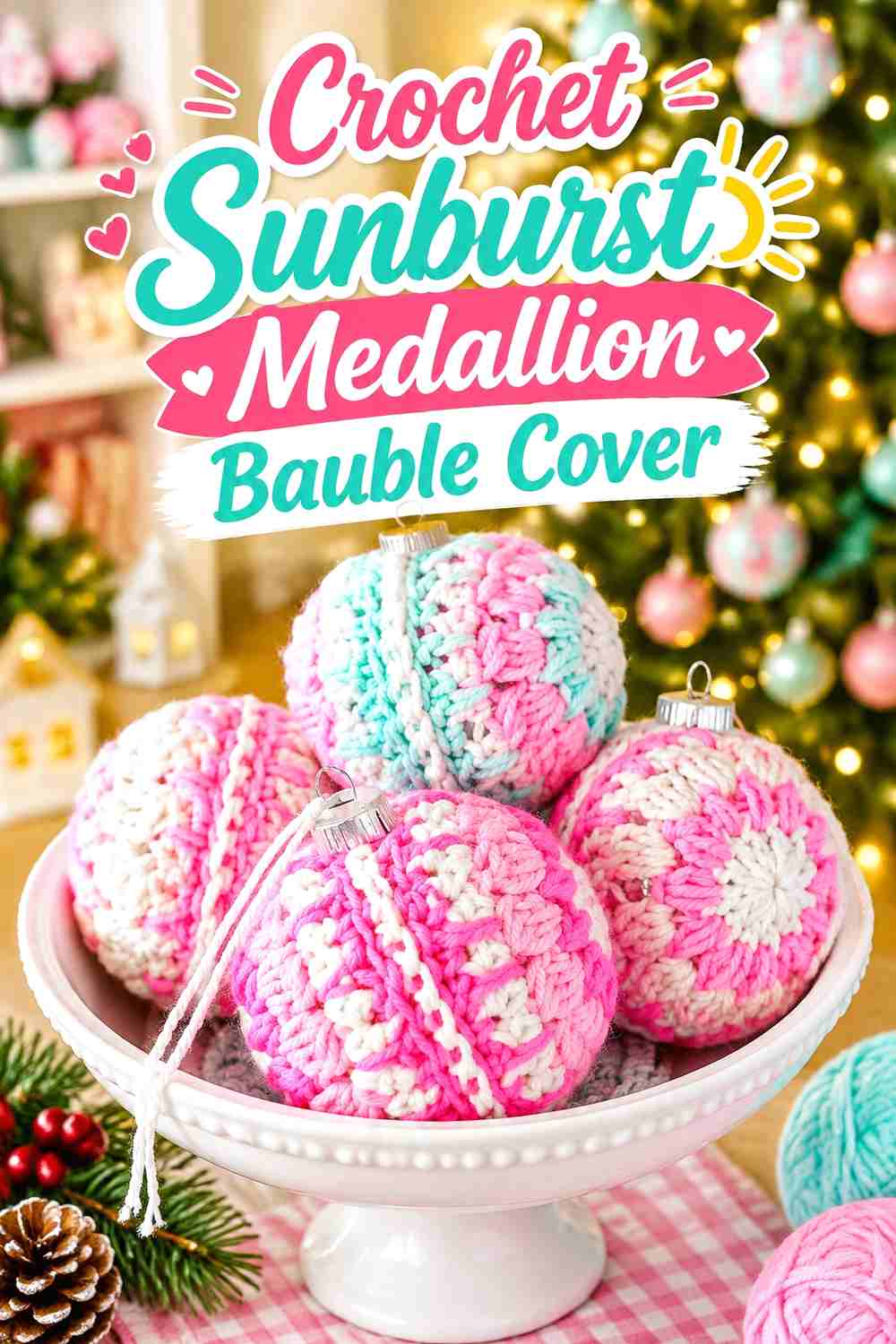
A sunburst design places the strongest visual interest at the center of each side of the ornament. Multiple colors radiate outward, giving the bauble the feeling of an old-fashioned graphic decoration rather than a simple striped ball.
This can become a focal ornament even without additional bells, ribbons, or tassels.
Center the Burst Before Closing the Cover
A medallion that shifts upward or sideways is immediately noticeable because the entire design radiates from one point.
Check the orientation while the cover can still be adjusted rather than waiting until the final join is complete.
Limit Extra Trim Around a Strong Motif
A sunburst already contains directional lines and color changes.
Keep the top treatment comparatively simple if you want the medallion to remain the first feature people notice.
Creator Credit: Erica Arndt
15. Crochet Old-Fashioned Zigzag Bauble Cover
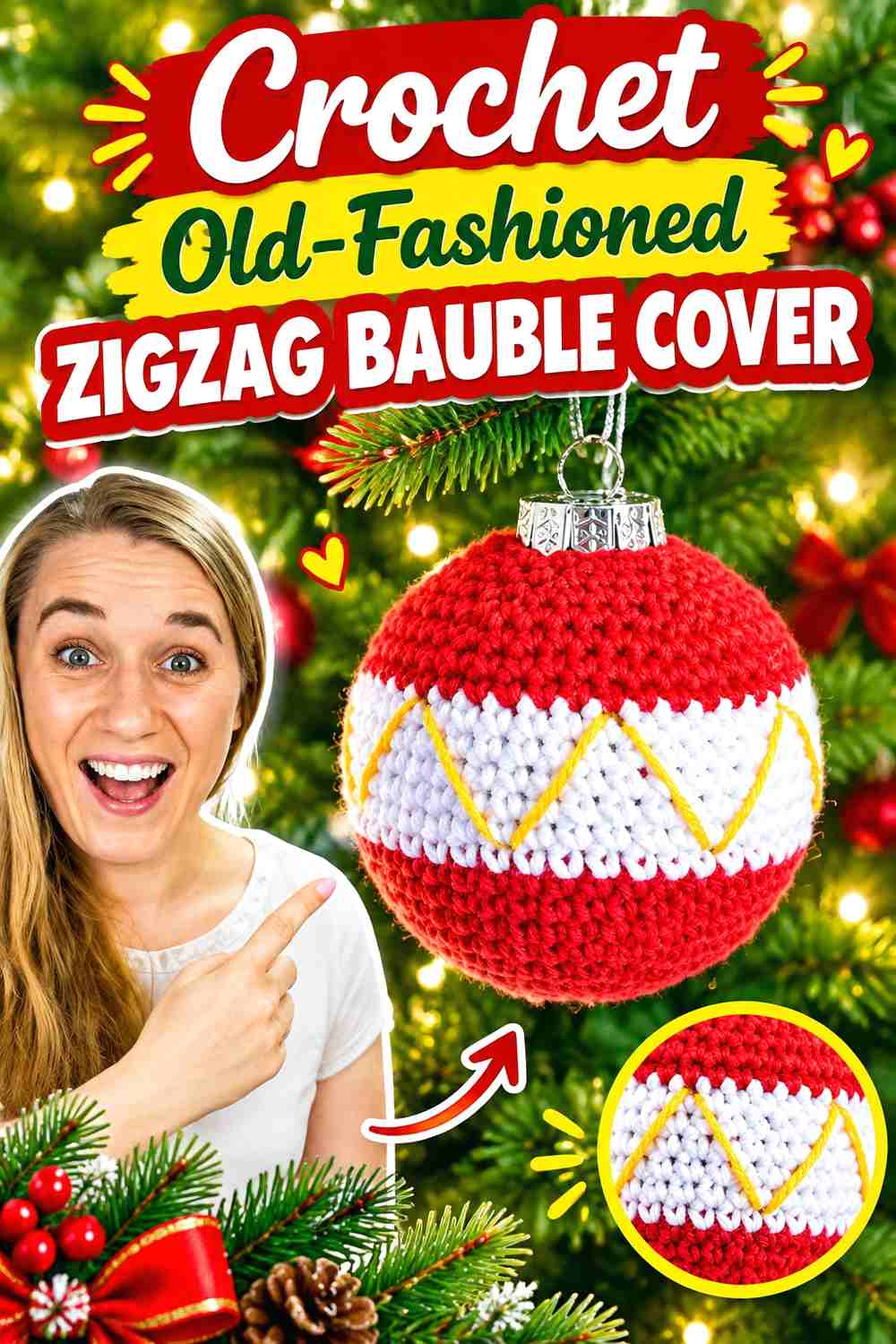
This project leans directly into an old-fashioned Christmas ornament look. Strong color changes and decorative surface details can make an ordinary plastic ball feel closer to a keepsake decoration that belongs in a long-established family collection.
It is a useful choice if your version of nostalgia involves clear red, white, green, gold, and graphic ornamentation rather than muted neutral colors.
Let the Zigzag Be the Main Decoration
A strong surface pattern does not need several unrelated embellishments competing with it.
If you want additional detail, concentrate it near the cap or hanger rather than interrupting the central graphic area.
Repeat the Detail Across a Small Set
This style becomes especially convincing when several baubles share one recognizable decorative cue.
You can vary the main colors while repeating the same general zigzag character, creating a collected set without making every ornament identical.
Creator Credit: Nicki’s Homemade Crafts
16. Crochet Cozy Striped Ball Cover
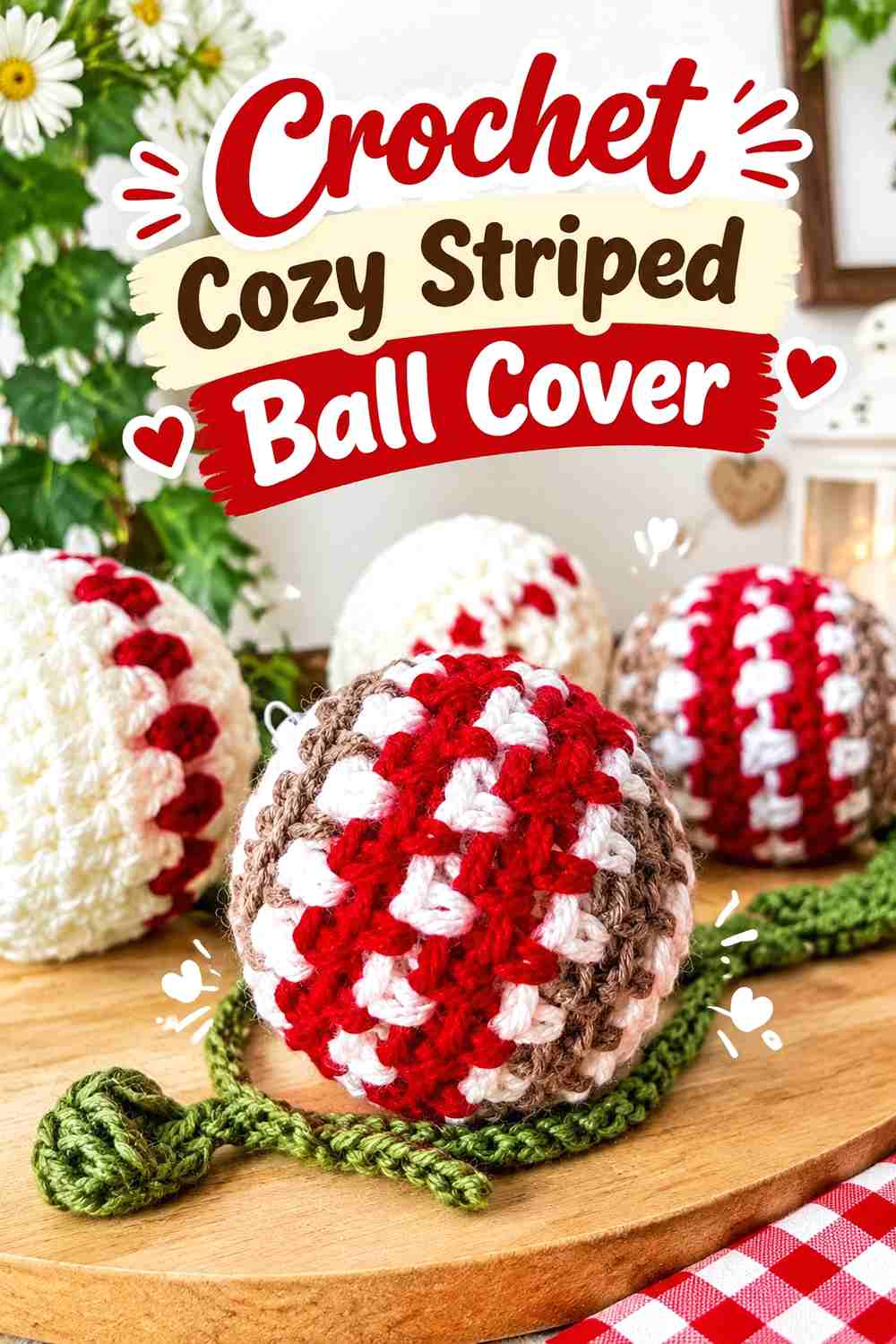
Soft stripes give a bauble the appearance of being wrapped in a miniature Christmas textile. Compared with open granny covers, this approach puts more emphasis on the crochet surface and less on the ornament underneath.
A palette of cream with two deeper seasonal shades can create a familiar holiday look, but the same concept also works with colors borrowed from ornaments already on your tree.
Stripe Width Changes the Scale of the Design
Very narrow stripes produce more visual activity, while broader areas of color let the round shape breathe.
Before committing to a full set, make one sample and view it on the tree. Details that feel large in your hand often appear much smaller among branches and lights.
Watch the Transition Around the Top
The final color near the cap can influence the whole ornament because it frames the hanger.
Consider whether you want that area to contrast strongly or blend quietly into the topper and ribbon.
Creator Credit: CrochetMagic Channel
17. Crochet 1990s-Inspired Christmas Bauble Cover
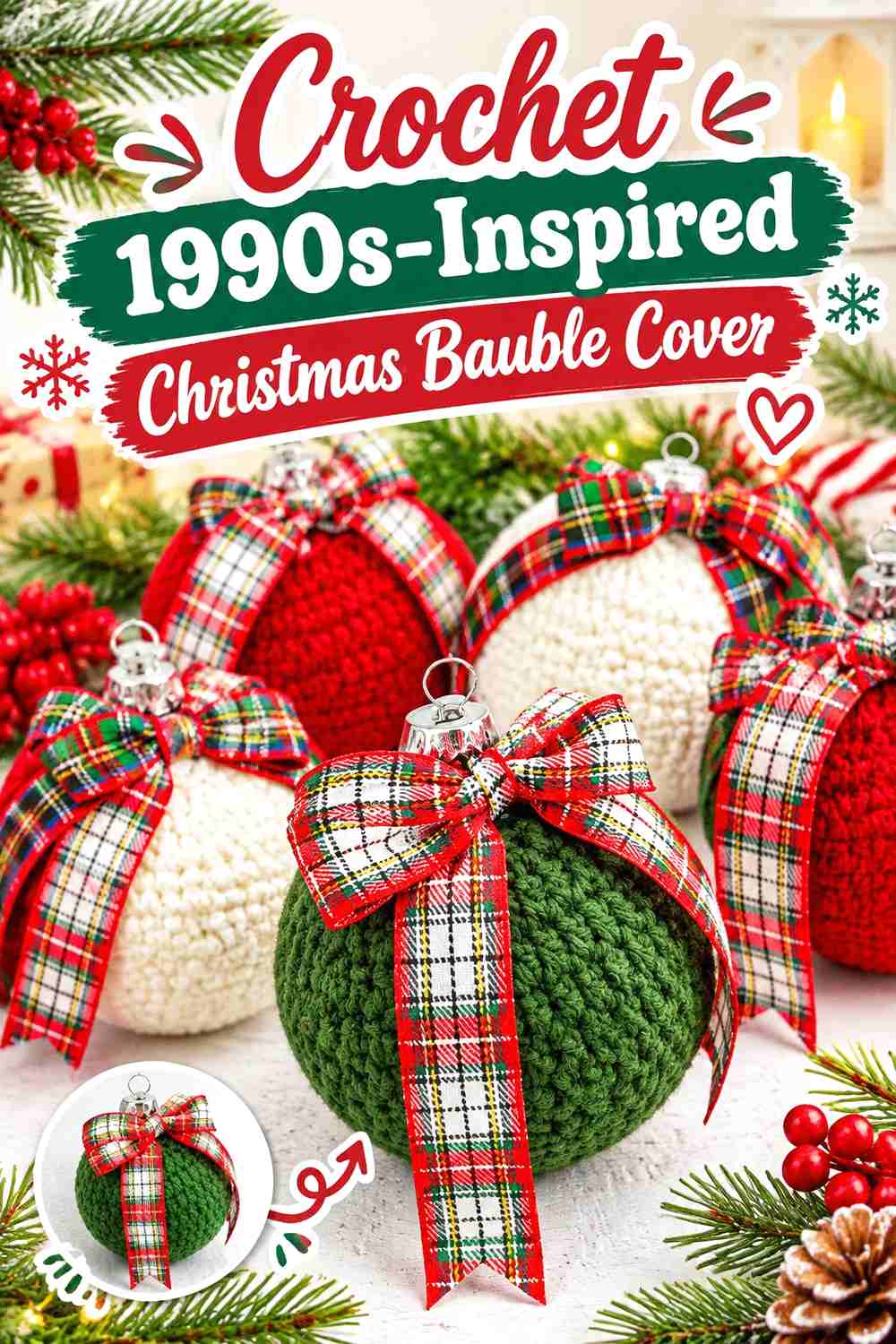
This full crochet bulb embraces the bold, homey side of Christmas nostalgia. A substantial cover, traditional holiday colors, and ribbon at the top suit a tree inspired by the decorated interiors many people associate with 1990s Christmas movies and family photographs.
It is deliberately different from fine-thread heirloom lace: the appeal comes from obvious yarn texture and a strong handmade presence.
Larger Ornaments Need Enough Branch Space
A covered ball can look even larger once yarn and ribbon are added.
Before making a full collection, hang one completed ornament in the intended area of the tree and check whether it crowds lights, neighboring baubles, or branch tips.
Plaid Ribbon Can Carry Part of the Nostalgic Look
You do not need complex crochet colorwork if the finishing ribbon already provides a recognizable Christmas pattern.
Keeping the crochet body simpler can give patterned ribbon enough visual space to register rather than creating competing designs.
Creator Credit: Just Be Crafty
18. Crochet Bobble-Texture Bauble Cover
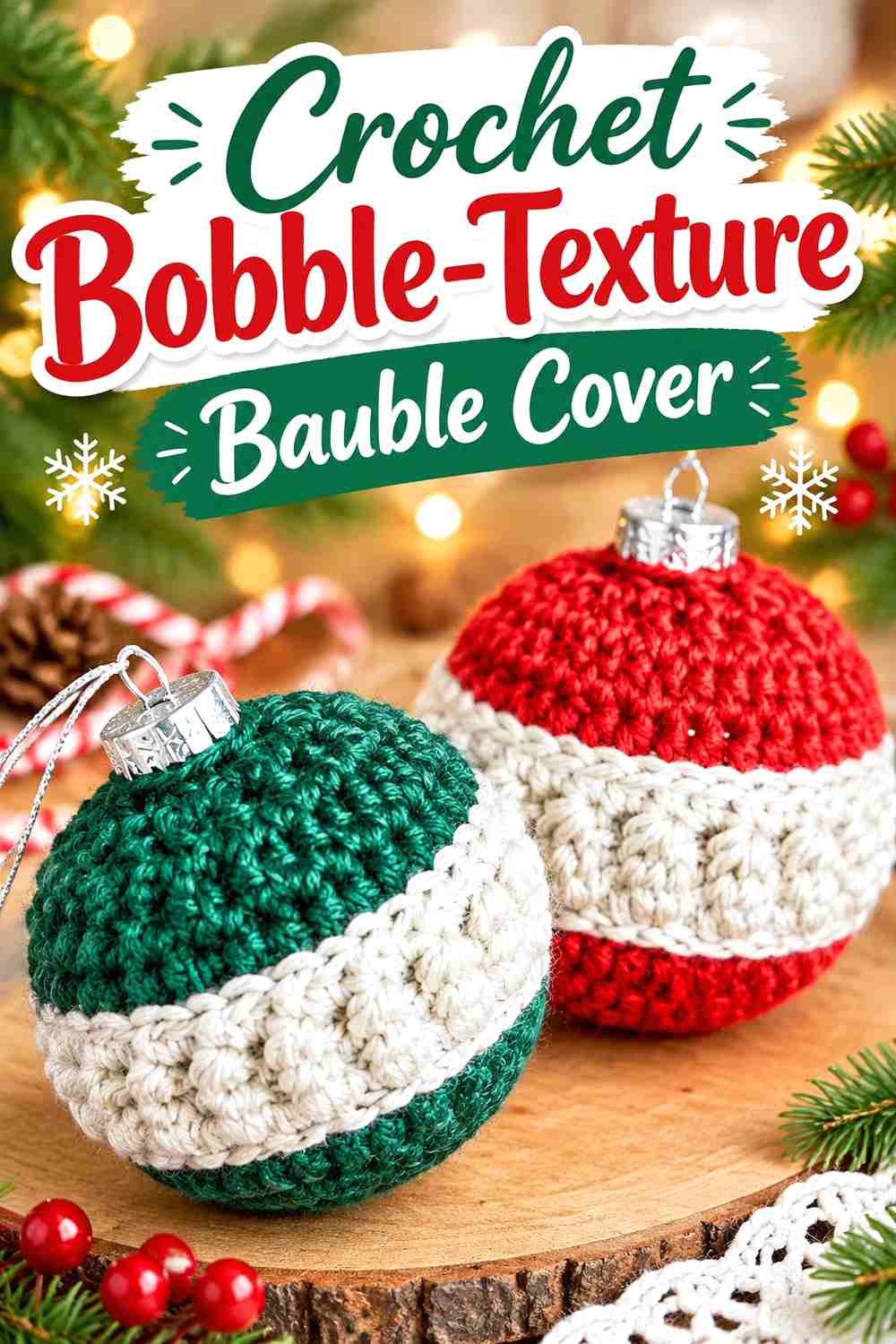
Bobbles create one of the most dimensional surfaces in this collection. Instead of using open spaces or stripes to create interest, the cover relies on repeated raised points that cast small shadows around the ball.
This makes it a useful choice for a single-color nostalgic ornament or for a set where you want texture to connect several different shades.
Bobbles Increase Visual and Physical Bulk
A raised stitch projects farther than a flat crochet surface.
Check the finished ornament against nearby branches before deciding whether to add bows, bells, or additional trim that increases the overall footprint even more.
Solid Colors Highlight the Surface Pattern
Several color changes can be attractive, but they are not necessary for a dimensional cover.
If the bobbles are the feature you most want to emphasize, one rich red, evergreen, cream, or another tree-compatible shade can let light and shadow define the design.
Creator Credit: Spotted Horse Design Co.
19. Crochet Coordinated Granny Bauble Cover Set
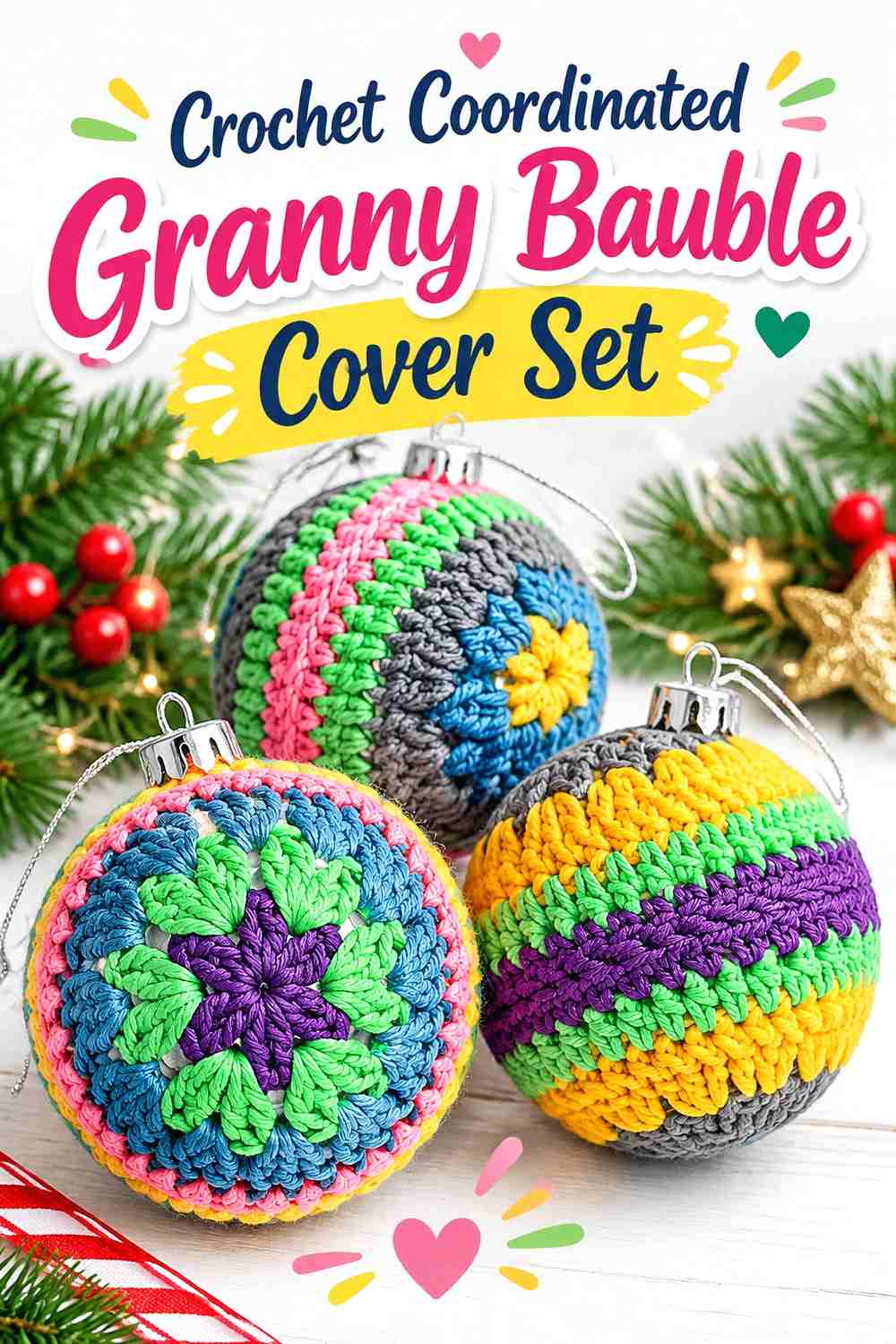
The final idea treats nostalgic crochet baubles as a collection rather than a single ornament. Granny-style covers can be repeated across several balls while the colors, placement, or underlying baubles change.
That makes the project particularly useful when you want handmade decorations to appear throughout the tree rather than having one crochet ornament isolated among commercial baubles.
Build a Family of Ornaments, Not Exact Copies
A coordinated set does not require identical color placement.
Choose a limited shared palette or repeat one dominant shade while allowing the individual covers to vary. The recurring granny texture will help connect the group.
Spread Repeated Texture Around the Tree
Several similar baubles hung together can read as one large color block.
Distributing them among older ornaments, lights, ribbon, and other handmade pieces lets the crochet texture recur throughout the tree and strengthens the collected-over-time effect.
Use the First Bauble as the Fit Test
Before making the rest of the set, complete one cover with the yarn and ornament type you actually intend to use.
That first sample gives you a practical reference for stretch, scale, cap clearance, and how the colors look under your Christmas lights.
Creator Credit: Zeens And Roger Crochet
Comparing the Nostalgic Bauble Cover Styles
For maximum visibility of the original ornament, choose the star-lace, granny-medallion, fine-yarn, or netted styles. These use negative space as part of the finished look, so the color and finish of the bauble underneath matter.
If your goal is to disguise an ornament you no longer like, look toward the ribbed, chunky, petal-textured, ridge, striped, 1990s-inspired, or bobble versions. Their denser surfaces shift more attention toward the yarn.
Construction can also guide the decision. Two-piece and medallion designs provide obvious fitting checkpoints before final joining. Flat textured covers let you compare width against the ornament before seaming. In-the-round covers create a different workflow because the ball may need to be inserted before the last shaping is completed.
For the strongest explicitly nostalgic effect, the old-fashioned zigzag, granny-stitch, sunburst, ridge, and 1990s-inspired versions provide clear decorative character without requiring the tree to follow one rigid historical theme.
Conclusion
A nostalgic crochet Christmas tree works best when the ornaments do not all look newly manufactured as a matching set. Variety in texture can actually strengthen the collected feeling.
Choose star lace or fine yarn when you want older shiny baubles to remain visible. Granny covers suit a colorful handmade tree, while ridges, moss stitch, chunky texture, and bobbles create warmer textile-heavy ornaments. The sunburst and zigzag options provide stronger graphic focal points, and the 1990s-inspired cover works when you want a deliberately bold, familiar Christmas look.
Before making multiples, complete one bauble using the exact ornament and yarn you plan to use. Check the widest-point fit, cap clearance, hanging loop, finished weight, and how the texture looks under tree lights. Then use the credited creator tutorial for the exact construction of the design you choose.
Frequently Asked Questions
Can I use crochet bauble covers to hide scratched Christmas ornaments?
Yes, if the cover provides enough coverage for the condition of the ornament. Dense ribbed, bobble, chunky, or full-shell designs can conceal more of the original surface. Open granny and lace covers intentionally leave parts of the ornament visible, so scratches or discoloration may still show.
How do I know whether a bauble cover tutorial will fit my ornaments?
Compare the dimensions specified by the creator with your actual ornament, especially its diameter or circumference around the widest point. Also inspect the cap area. If your ornament differs from the tutorial example, do not assume a simple yarn substitution will automatically correct the size because yarn weight also changes thickness and stretch.
Which crochet bauble cover style looks most vintage?
There is no single universal vintage look. Granny clusters create a familiar handmade appearance, while fine-thread openwork can feel more lace-inspired. Sunbursts, pronounced ridges, traditional stripes, bobbles, tassels, metallic accents, and old-fashioned graphic colorwork can all contribute different types of nostalgia.
Should I use glass or shatterproof ornaments under crochet covers?
Follow the requirements of the tutorial you select. Shatterproof ornaments can be more convenient for constructions that require substantial handling or stretching during assembly. If you use glass, handle it carefully and avoid forcing a cover that is clearly too tight.
Why is my crochet bauble cover sagging?
The cover may be too large for the ornament, the yarn may stretch differently from the tutorial yarn, or the crochet fabric may have more ease than expected. Compare the widest-point fit before closing the cover. If you substituted yarn or hook size, make a test cover rather than assuming the original sizing will remain unchanged.
Can I add vintage bells, beads, tassels, or ribbon to a crochet bauble cover?
Yes, when the embellishment works with the construction and does not block the ornament cap or hanger. Keep the combined weight in mind, especially with larger beads or bells. Secure small pieces appropriately and consider whether detachable embellishments are suitable around children or pets.
Can I make nostalgic crochet bauble covers from mismatched leftover yarn?
Mismatched yarn can work particularly well for a collected Christmas look, but check more than color. Combining very different yarn weights or fibers can change cover size, stretch, texture, and bulk. Keeping the yarn construction reasonably compatible while varying the colors is usually easier than trying to force very different materials into the same fitted cover.