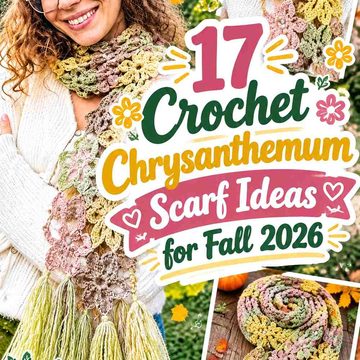
Royal purple and apple green make an unusually energetic fall pairing. Purple brings depth and richness, while clear yellow-green adds contrast that can keep a handmade scarf from disappearing into a dark autumn coat. The challenge is deciding how much of each color to use.
That is where color blocking becomes more useful than simply alternating yarn every few rows. Purple can dominate the main body while apple green marks the ends, the scarf can be divided into two dramatic halves, diagonal blocks can meet through corner-to-corner construction, or the colors can alternate inside shells, chevrons, granny motifs, ribs, and open lace.
The tutorials below teach nineteen different scarf constructions. Not every original project uses royal purple and apple green; those colors are an adaptation layer. Follow the creators for the actual scarf construction, then use the planning ideas here to determine where the two colors should meet, how large each block should be, and whether fringe or borders need to repeat one of the shades.
Quick List
- Crochet Three-Panel Royal Purple and Apple Green Color-Block Scarf
- Crochet Narrow-Stripe Purple and Green Neck Scarf
- Crochet Wide-Band Purple and Apple Green Scarf
- Crochet Ribbed Purple Scarf With Green End Blocks
- Crochet Moss-Stitch Alternating Color-Block Scarf
- Crochet Alpine-Texture Purple and Green Panel Scarf
- Crochet Chevron-Wave Purple and Apple Green Scarf
- Crochet Basketweave Checker Color-Block Scarf
- Crochet Shell-Band Purple and Green Scarf
- Crochet Tunisian Split-Color Scarf
- Crochet Broomstick-Lace Two-Tone Infinity Scarf
- Crochet Ripple Purple and Apple Green Scarf
- Crochet Lattice Window Color-Block Scarf
- Crochet Diagonal C2C Purple and Green Scarf
- Crochet Suzette Half-and-Half Infinity Scarf
- Crochet Lemon-Peel Long-Block Scarf
- Crochet Granny-Square Purple and Green Scarf
- Crochet Puff-Stitch Statement Color-Block Scarf
- Crochet Cluster-Stitch Purple and Green Scarf
Decide Which Color Should Dominate Before Starting
Royal purple and apple green have strong visual contrast, so a 50/50 split is only one possibility.
If you want a scarf that is easier to combine with dark coats, consider using purple as the larger field and green as a smaller accent block. If you want the scarf to function as the bright part of an otherwise neutral outfit, equal blocks or repeated green sections can make more sense.
The stitch pattern also changes how much color the eye sees. Dense single crochet creates solid fields, while shells, lattice stitches, granny clusters, and broomstick lace expose the background between stitches. A bright green openwork section may therefore feel less dominant than the same amount of dense green fabric.
Make a small color sample before committing to the full scarf. More importantly, look at the yarns together in daylight and indoor lighting. Apple green can shift from fresh yellow-green to almost neon depending on the yarn and surroundings.
Make Color Changes Work With the Scarf Construction
Color placement should support the stitch pattern rather than interrupt it randomly.
Large rectangular blocks work naturally with simple single crochet, ribbing, moss stitch, Tunisian fabric, and lemon-peel texture. Chevron and ripple designs can use color changes to emphasize their directional movement. Granny squares and corner-to-corner construction create color blocks through geometry instead of horizontal bands.
Textured stitches require extra thought. Alpine, basketweave, puff, and cluster patterns already create strong shadows, so numerous tiny color changes can make the fabric visually crowded. Broader blocks often let both the texture and the unusual color pairing remain visible.
Whenever you alter colors, use the creator’s tutorial to determine a logical transition point rather than changing yarn in a way that disrupts the stitch repeat.
Think About Ends, Fringe, and Wearability Early
A two-color scarf can create many yarn ends if every section is short. Large color blocks reduce that finishing work and can look more deliberate with such a high-contrast pairing.
Also decide whether fringe should be purple, green, mixed, or omitted. Green fringe on a predominantly purple scarf can visually weight the ends more heavily than expected, while purple fringe can make bright green end blocks feel framed.
Drape matters too. A dense basketweave scarf and an open broomstick-lace scarf will not behave the same way around the neck even when their widths are similar. When substituting yarn for color reasons, confirm that both shades are compatible in weight and fiber behavior rather than choosing two skeins simply because their colors look good together.
1. Crochet Three-Panel Royal Purple and Apple Green Color-Block Scarf
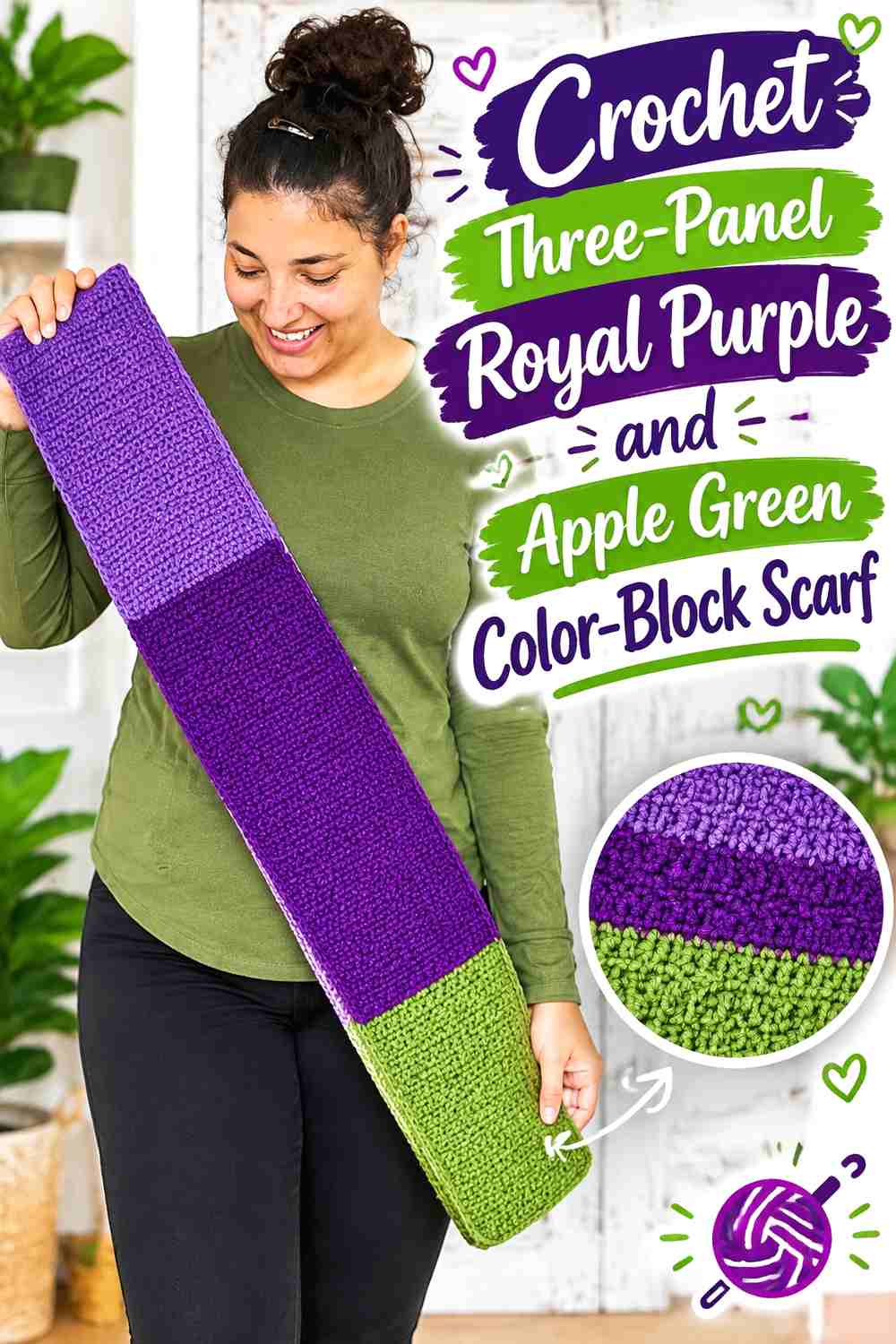
The Color Block Shay Scarf from Yarn Crafts | EyeLoveKnots | Cre8tion Crochet is the most direct conceptual match in this collection. The tutorial is built around distinct solid-color blocks in a straightforward scarf shape rather than relying on an existing multicolor stitch pattern.
For this version, royal purple could occupy both outer blocks with apple green in the center, or the colors could be reversed for a brighter scarf with one strong purple middle section.
A Three-Block Layout Creates Natural Balance
Purple-green-purple creates symmetry without requiring many color changes. It also allows the green to become visible when the scarf is wrapped because the middle section can appear around the neck while the purple portions fall toward the front.
Green-purple-green produces a much brighter result. Consider how much of the scarf will normally be visible against your coat before deciding which arrangement should dominate.
Measure Blocks by Appearance, Not Just Equality
Three mathematically equal sections do not always look equal once the scarf is wrapped. The center spends more time around the neck, while the ends hang vertically.
Temporarily drape the work as it grows and decide whether you actually want equal blocks or a shorter middle section with longer end panels.
A Simple Border Can Pull High-Contrast Colors Together
If the finished scarf feels visually divided, a border in the dominant color can create a continuous line around both shades. Follow the source construction when adding its finishing treatment and judge the border after both main colors are present.
Creator Credit: Yarn Crafts | EyeLoveKnots | Cre8tion Crochet
2. Crochet Narrow-Stripe Purple and Green Neck Scarf
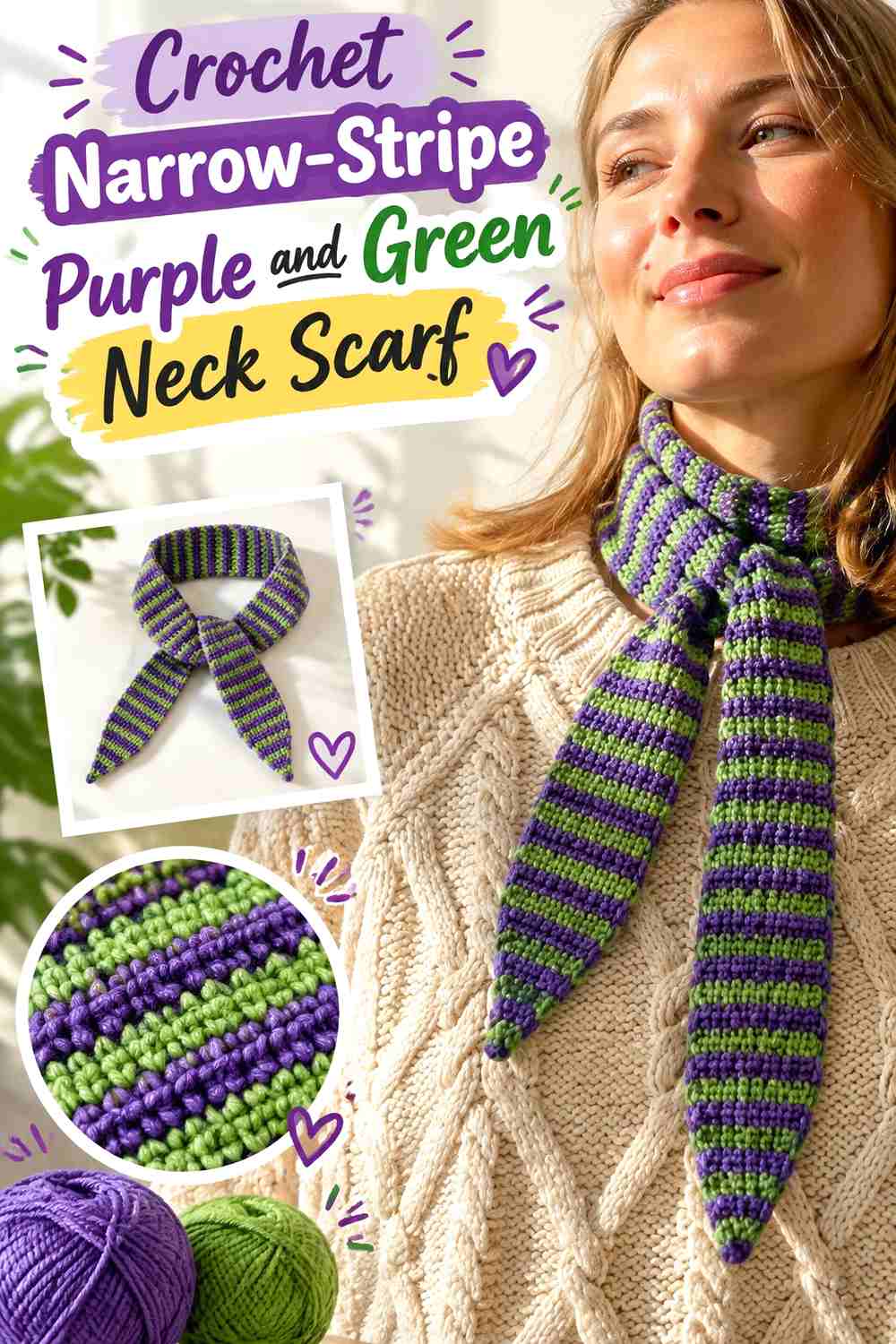
passtschon’s striped scarf uses repeated color changes in a narrower scarf shape, creating a much more graphic approach than the large blocks above. The tutorial specifically incorporates switching colors as the scarf develops.
Royal purple and apple green could turn that repeated stripe structure into a sharp fall accessory that works particularly well when the scarf itself is relatively narrow.
Narrow Stripes Make Apple Green More Controlled
Apple green can dominate quickly in a large solid section. Breaking it into narrow repeated bands lets the color remain noticeable without occupying half the scarf at once.
Purple can serve as the visual anchor, especially when the scarf is worn with black, navy, charcoal, or brown outerwear.
Frequent Color Changes Increase Finishing Decisions
A striped design creates more transitions than a three-block scarf. Before beginning, check how the tutorial manages the inactive color and finishing so you know whether your adaptation will create many loose ends.
Do not automatically cut both yarns after every stripe if the creator’s method offers a cleaner way to handle the changes.
Creator Credit: passtschon
3. Crochet Wide-Band Purple and Apple Green Scarf
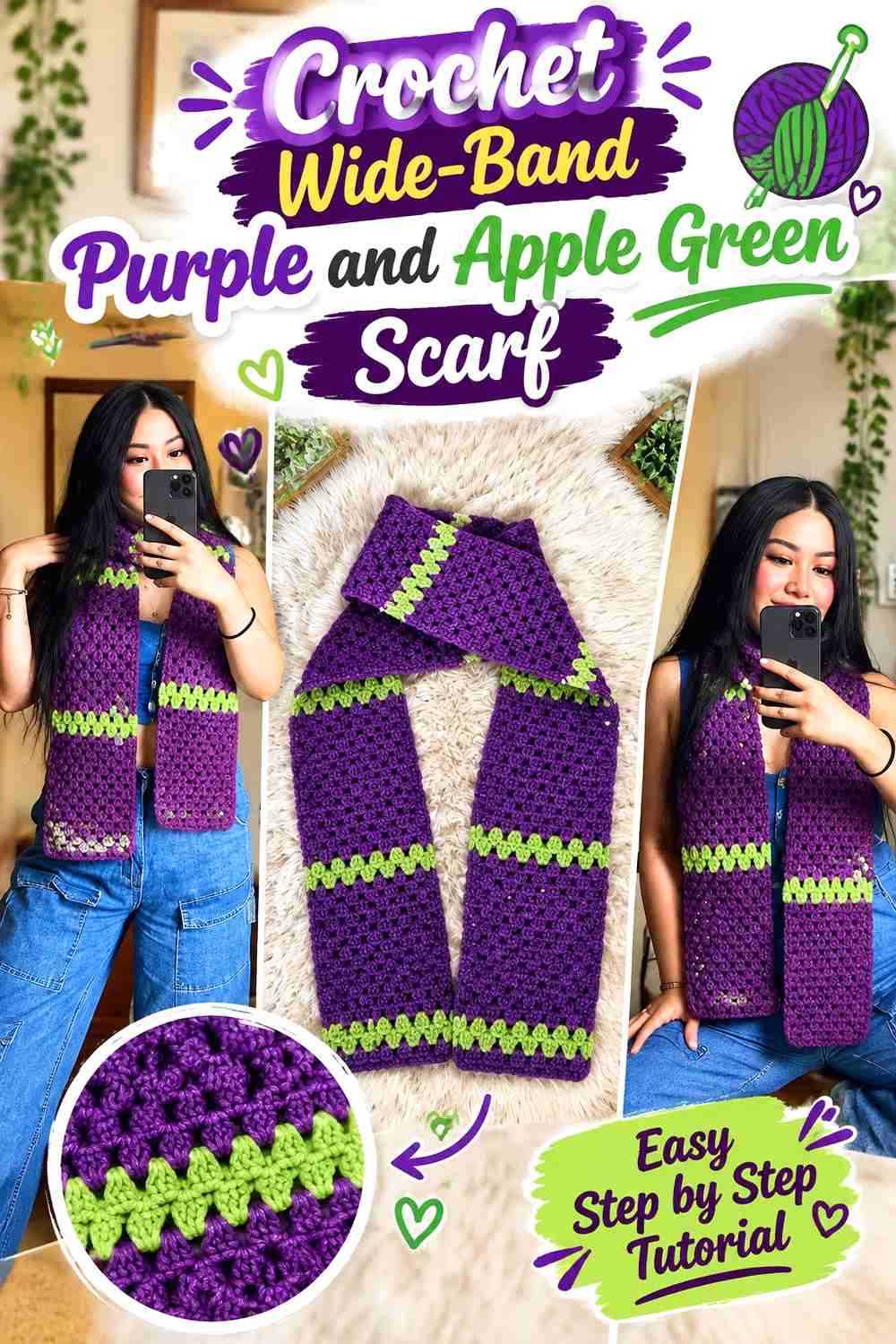
Cherilyn Q’s striped scarf provides a straightforward repeated scarf construction and includes a demonstrated color change.
Instead of creating many narrow stripes, use the same structural idea for wide horizontal bands. The larger blocks make the purple-green contrast feel modern and deliberate rather than busy.
Wide Bands Work Well With Two Equally Strong Colors
A narrow stripe can behave almost like an accent. A broad apple-green section becomes a full design statement.
If you want both shades to have equal importance, repeat several substantial bands instead of making green a small trim color.
Place a Transition Where It Will Actually Be Seen
A striking purple-to-green change can disappear behind the neck if it lands in the wrong location. As the scarf approaches wearable length, drape it around yourself or a form and check where the next major block will fall.
That simple test can help place the strongest transitions near the front.
Creator Credit: Cherilyn Q
4. Crochet Ribbed Purple Scarf With Green End Blocks
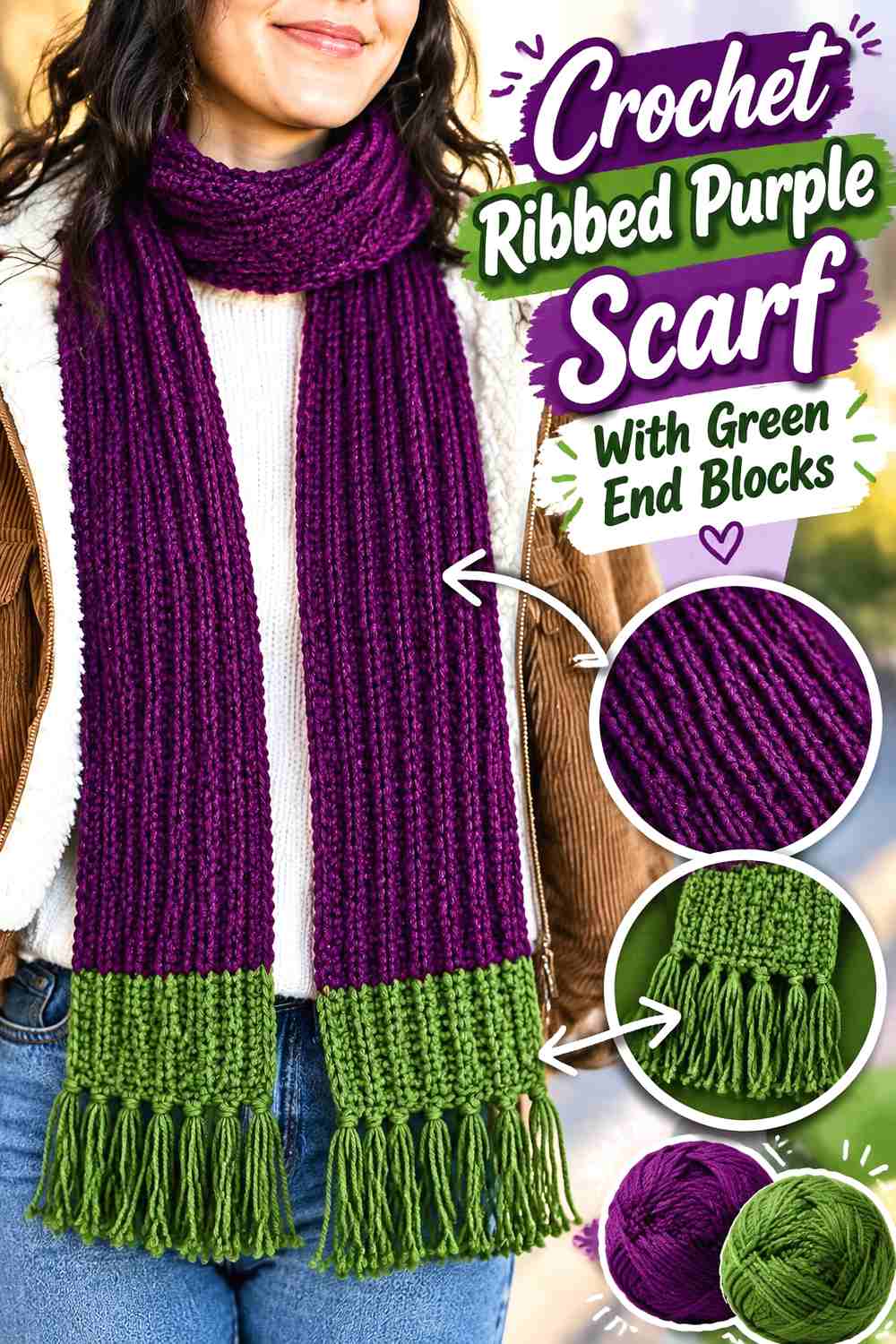
VivCrochets’ scarf uses pronounced ribbing and finishes with tassels, producing a thick linear texture that differs strongly from flat color-block designs.
A royal-purple ribbed body with substantial apple-green blocks at both ends would let the green show when the scarf hangs while keeping the area around the neck comparatively dark.
End Blocks Emphasize the Length of Ribbing
Long uninterrupted purple ribs can visually lengthen the scarf. Green at the ends acts almost like a pair of caps, clearly defining where the scarf finishes.
Keep both green end sections consistent if symmetry is important to the overall look.
Decide Whether Tassels Should Blend or Contrast
Purple tassels attached to green end blocks pull the main body color back into the ends. Green tassels exaggerate the contrast and create a brighter finish.
Mixed tassels can work too, but they produce a busier effect. Compare a few loose strands at the edge before attaching a full set.
Creator Credit: VivCrochets
5. Crochet Moss-Stitch Alternating Color-Block Scarf
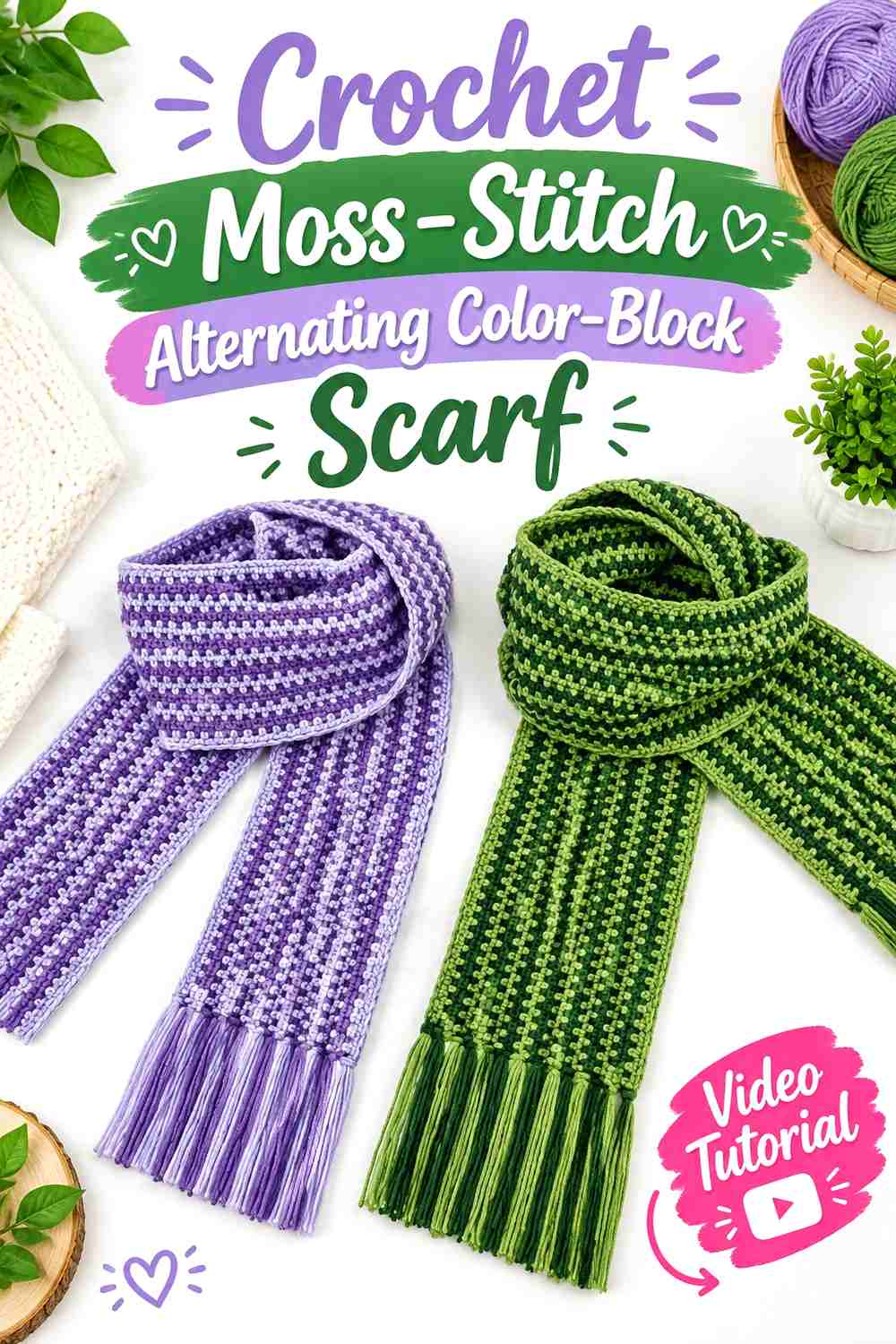
Jo to the World Creations’ scarf uses moss stitch and includes a fringe finish, giving this idea a small-scale woven-looking texture.
Moss stitch is especially useful with strong contrasting colors because the surface is visually quieter than heavy post stitches. Broad purple and green sections can therefore remain the main design feature.
Moss Texture Keeps Large Blocks From Looking Flat
A solid field of purple does not have to mean visually plain fabric. The repeated texture creates subtle variation within each color without competing with the color blocking.
That makes this a useful option if you want only a few major color changes.
Use the Fringe to Rebalance the Palette
If purple occupies most of the scarf, a green-heavy fringe can introduce more of the accent shade without enlarging the green blocks.
If the main fabric is already divided evenly, a single-color fringe may provide a calmer finish.
Creator Credit: Jo to the World Creations
6. Crochet Alpine-Texture Purple and Green Panel Scarf
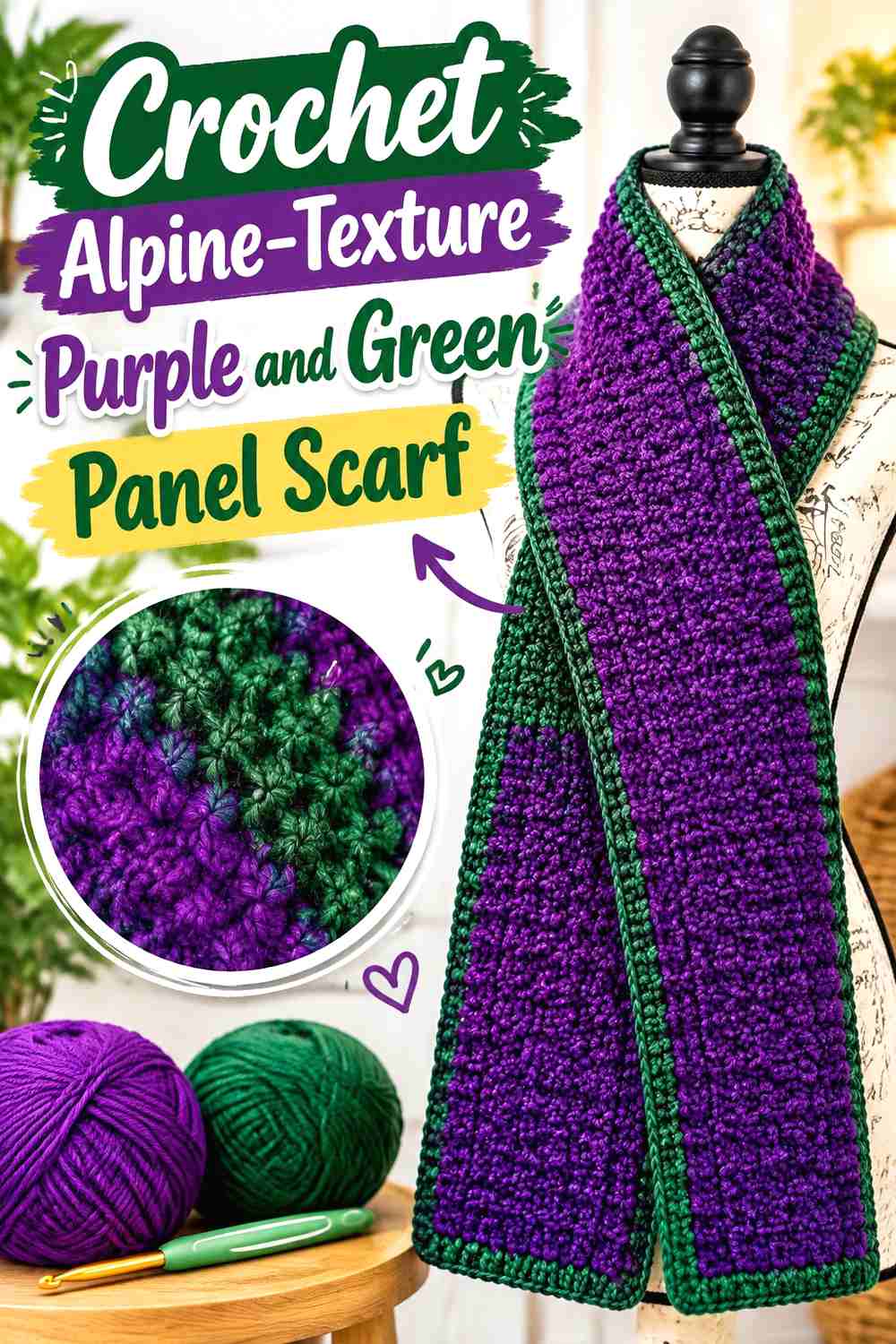
First The Coffee Crochet’s scarf uses alpine stitch to create a pronounced raised surface and includes a border in the project construction.
Because the texture already has considerable visual depth, this version benefits from large purple and apple-green panels rather than rapid alternating stripes.
Raised Texture Can Make Dark Purple More Readable
Royal purple can hide subtle stitches in low light. Alpine-style raised texture creates stronger highlights and shadows, helping the fabric retain visible surface detail even when the color is deep.
Check the actual purple yarn under fall indoor lighting before deciding whether the stitch definition is strong enough for your preference.
Keep Color Boundaries Away From Complicated Texture Transitions
A large clean color block allows the stitch repeat to remain visually continuous. Random changes inside the raised pattern can make the fabric look interrupted.
Use transition points that make sense within the tutorial’s established repeat rather than choosing them only by measuring inches.
Creator Credit: First The Coffee Crochet
7. Crochet Chevron-Wave Purple and Apple Green Scarf
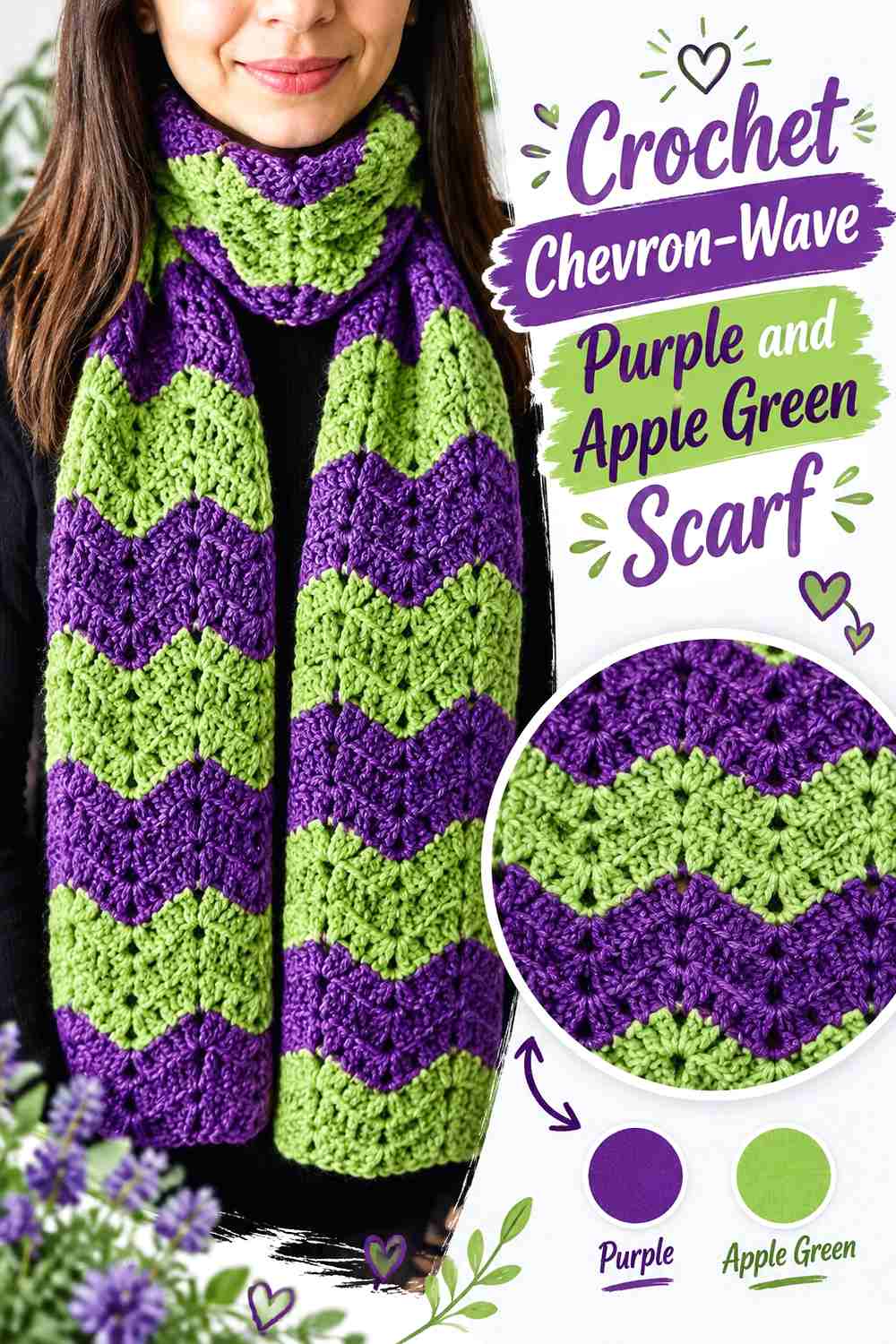
A. LeLong’s scarf uses a flowing chevron-wave structure, bringing actual directional movement into the fabric.
Royal purple and apple green can take advantage of those peaks and valleys. Instead of treating each color as a plain rectangle, let the stitch pattern create zigzag boundaries between them.
Color Changes Can Highlight the Chevron
Changing shades after a complete repeat makes the movement of the fabric easier to see. Purple and green waves stacked along the scarf will appear more active than straight horizontal stripes.
This is especially useful if you want the color blocking to feel integrated into the stitch design.
Large Waves Are Calmer Than Rapid Alternation
Alternating color extremely often can create a strong optical effect because both the shape and color are changing at once.
Broader bands of purple followed by broader bands of apple green preserve the chevron while making the finished scarf easier to coordinate with clothing.
Creator Credit: A. LeLong
8. Crochet Basketweave Checker Color-Block Scarf
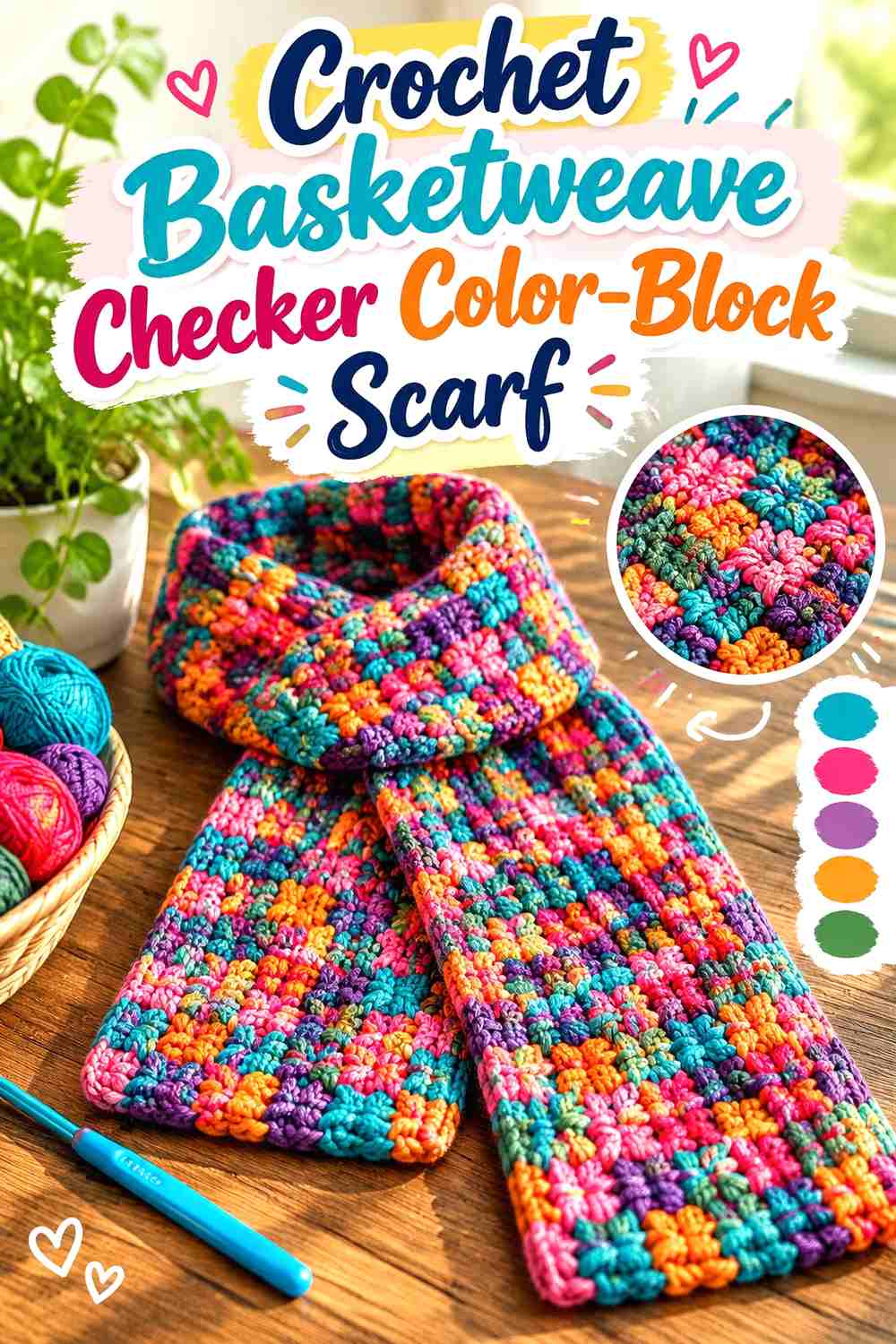
Atreyu Crochet’s scarf uses basketweave texture, giving the surface clear block-like structure even before a second color is introduced.
That makes it an interesting base for a purple-and-green scarf inspired by oversized checks rather than straightforward horizontal bands.
Let Texture Establish the Smaller Squares
The basketweave already divides the surface visually. You do not need to turn every textured unit into a separate color block.
Instead, use long purple and green sections and allow the stitch texture to create the smaller internal grid.
Dense Texture Changes Drape
Basketweave creates more dimensional fabric than open lace or simple moss stitch. Make sure you actually want a substantial scarf before choosing this construction solely because the check effect suits the color-block theme.
Yarn substitution can further change that behavior, so compare both colors for similar thickness and flexibility.
Creator Credit: Atreyu Crochet
9. Crochet Shell-Band Purple and Green Scarf
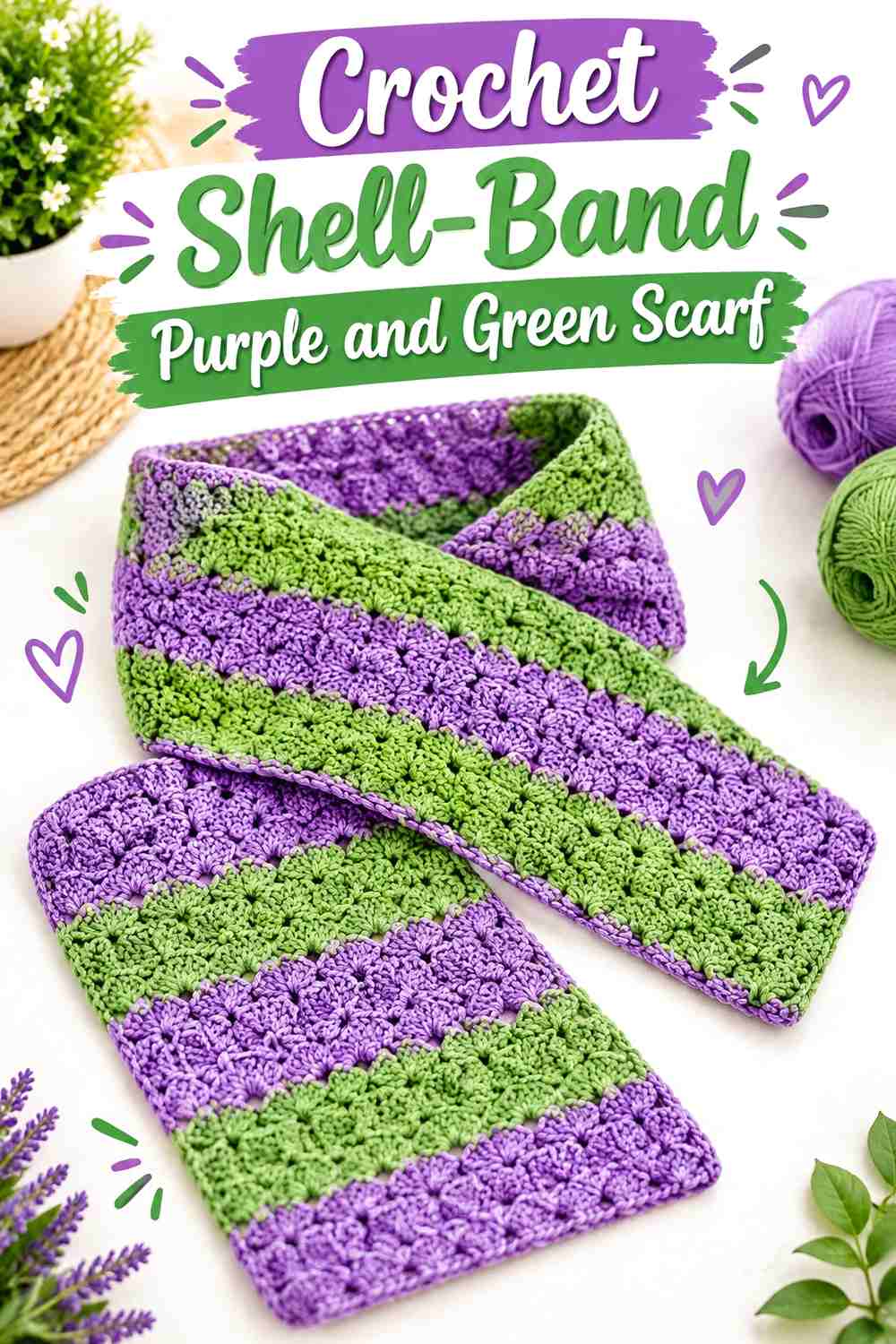
Amanda Crochets’ scarf uses repeated shell stitch, giving the edge and surface a softer, more decorative rhythm than the geometric basketweave option.
Purple and green can be arranged as large shell-filled sections or as a smaller number of alternating bands.
Shells Soften a High-Contrast Color Pair
Royal purple beside apple green can feel very graphic in plain rectangular blocks. Curved shell shapes introduce visual softness and make the same colors feel less severe.
This can be useful if you want a bright scarf but not a strongly sporty or geometric one.
Change Colors Where the Shell Repeat Stays Complete
A partial shell interrupted by a new color may make the boundary look accidental.
Follow the tutorial closely enough to recognize the stitch repeat, then place your major color transitions at logical structural points.
Creator Credit: Amanda Crochets
10. Crochet Tunisian Split-Color Scarf
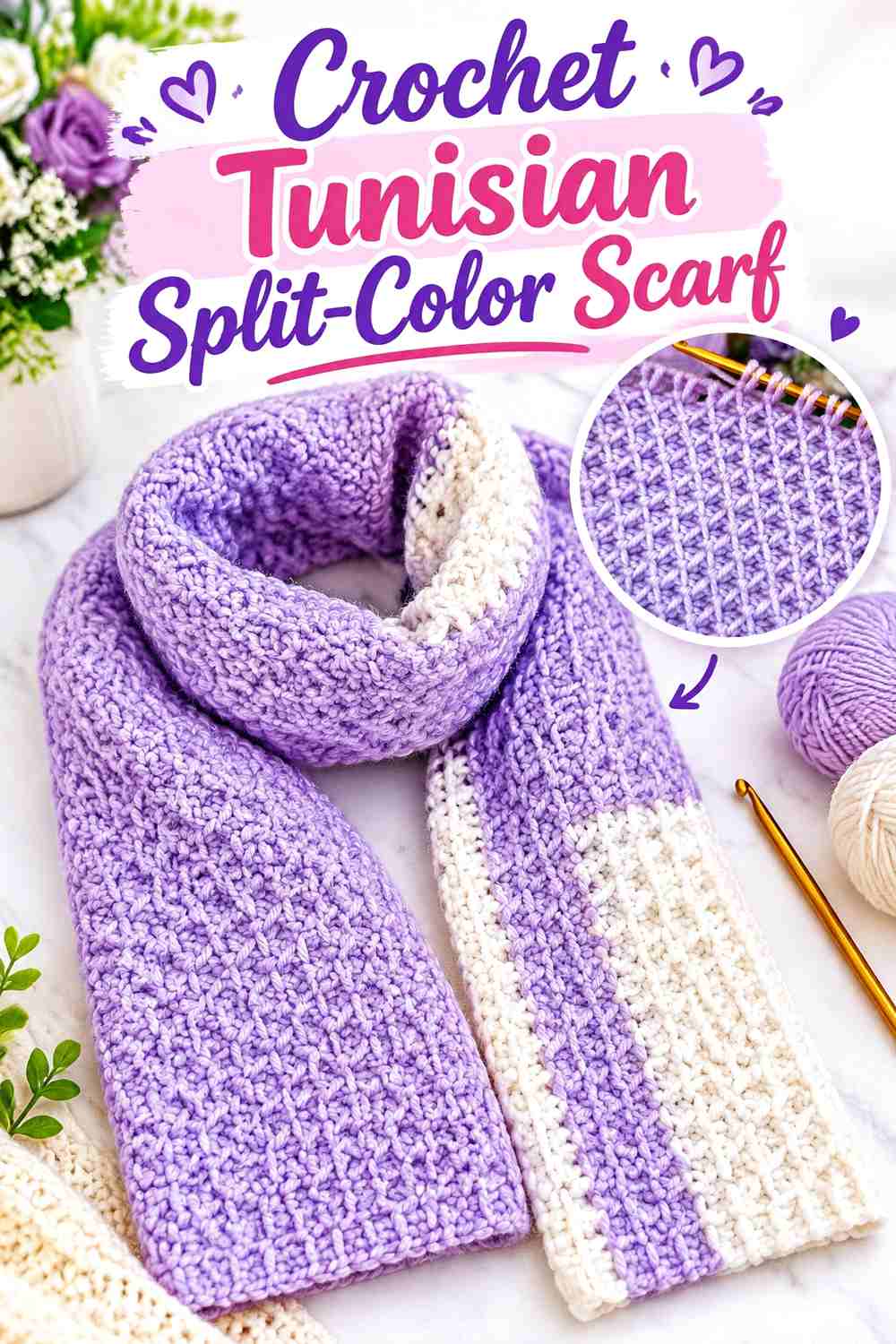
Knitting my hobby demonstrates a complete Tunisian crochet scarf, giving this idea a different fabric structure from standard row-by-row crochet.
A simple split-color treatment can make the smooth, regular surface the focus: work one substantial portion in royal purple and the remaining portion in apple green rather than adding numerous small stripes.
Tunisian Fabric Suits Clean Graphic Blocks
The relatively orderly surface provides a strong canvas for saturated color. A half-purple, half-green scarf can therefore look intentional even without decorative borders or texture changes.
For a less equal split, use roughly one-third green as the accent and let purple dominate.
Check Curling and Finishing Before Judging the Color Layout
Some Tunisian fabrics behave differently from ordinary crochet when they first come off the hook. Follow the source’s construction and finishing guidance before deciding whether a color boundary looks straight or the scarf is sitting correctly.
Creator Credit: Knitting my hobby
11. Crochet Broomstick-Lace Two-Tone Infinity Scarf
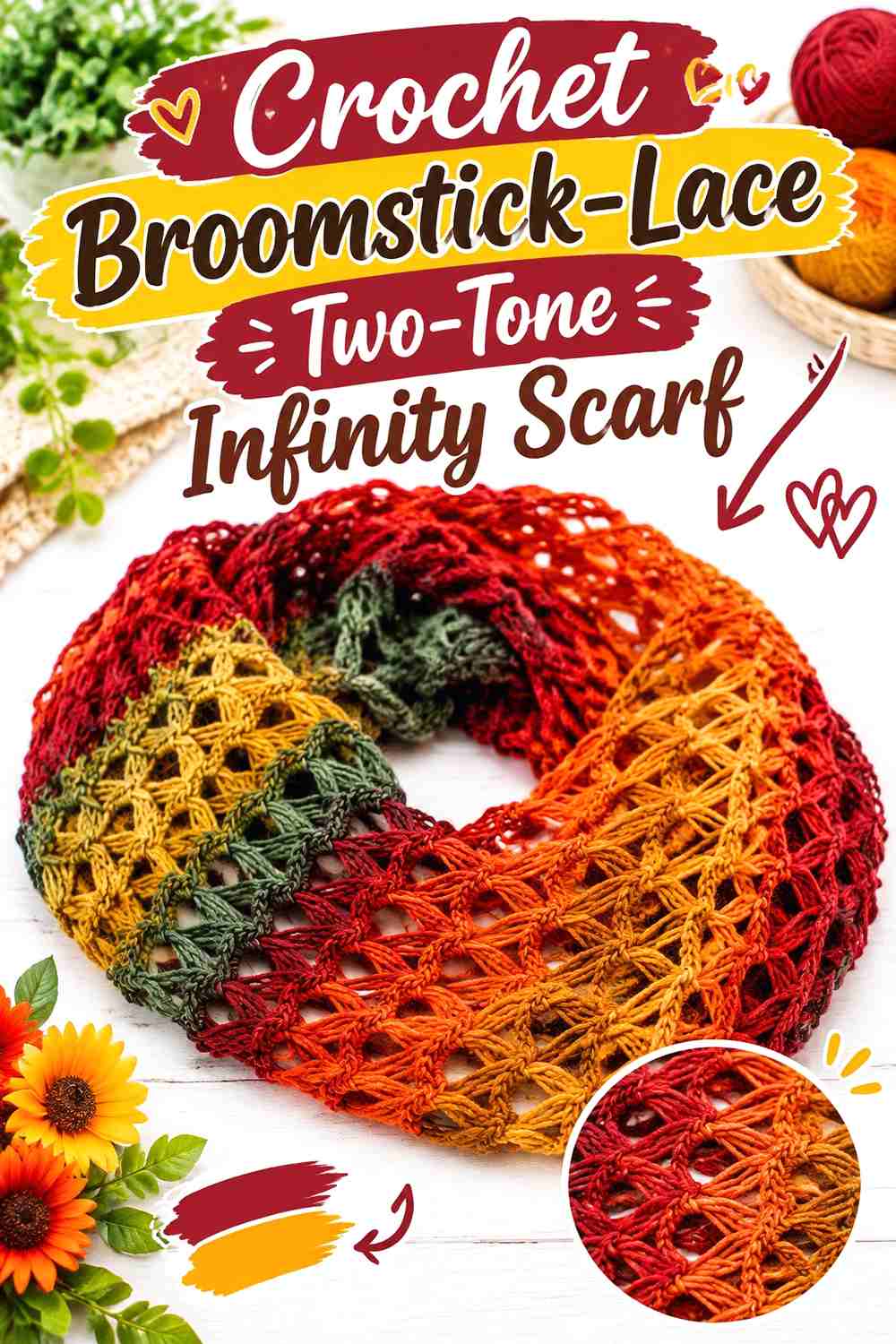
B.Hooked Crochet’s infinity scarf uses broomstick lace, producing elongated openings and a much airier finished object than the dense scarves above.
Royal purple and apple green can be used in two large sections around the loop, allowing the scarf to show different colors depending on how it is wrapped.
An Infinity Loop Makes Color Placement Less Predictable
A conventional scarf has obvious ends. An infinity scarf rotates and overlaps, so the purple-green boundary may appear in different places every time it is worn.
That can be an advantage if you prefer a less symmetrical color-block arrangement.
Open Lace Reduces the Visual Weight of Apple Green
Because the background shows through the broomstick openings, a green section will not form the same uninterrupted bright field as dense single crochet.
This makes the construction a useful option if you like the color combination but want a lighter visual effect.
Creator Credit: B.Hooked Crochet
12. Crochet Ripple Purple and Apple Green Scarf
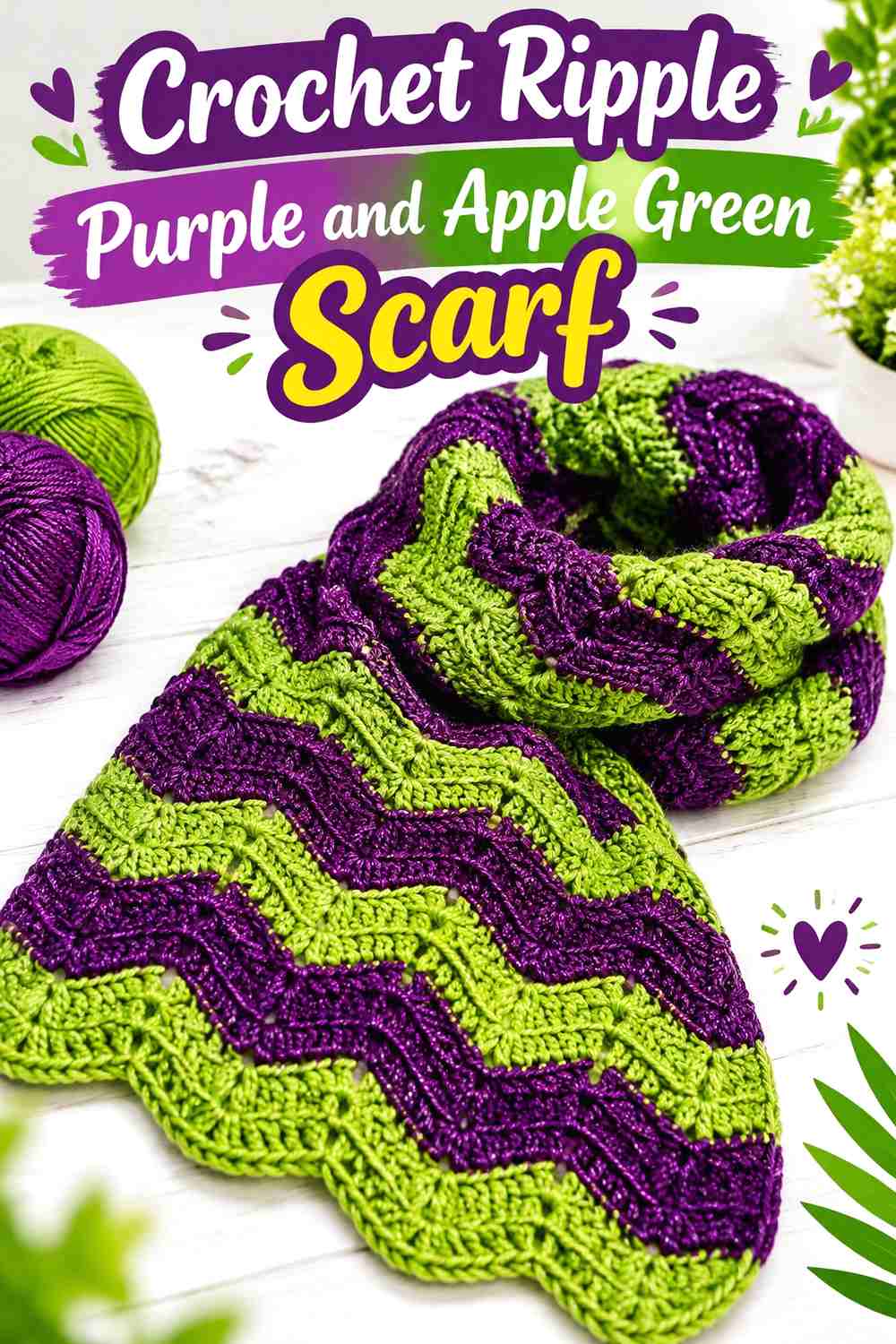
Bag-O-Day Crochet’s scarf uses a ripple construction, creating repeated peaks and valleys across the fabric.
This version can make the purple-green contrast look almost like overlapping waves. It is related to the chevron option but offers a different surface and finished interpretation.
Repeat Two or Three Purple Rows for Every Green Section
The colors do not have to occupy equal amounts of fabric. A purple-heavy sequence can keep the scarf easier to wear while green traces the ripple as a bright accent.
Conversely, equal broad bands create a much stronger statement.
Watch the Ends of the Scarf as the Waves Accumulate
Directional stitches can make the final edge visually important. Before choosing fringe or another finishing treatment, view the completed ripple pattern on its own.
A complicated fringe may not be necessary when the fabric already has obvious movement.
Creator Credit: Bag-O-Day Crochet
13. Crochet Lattice Window Color-Block Scarf
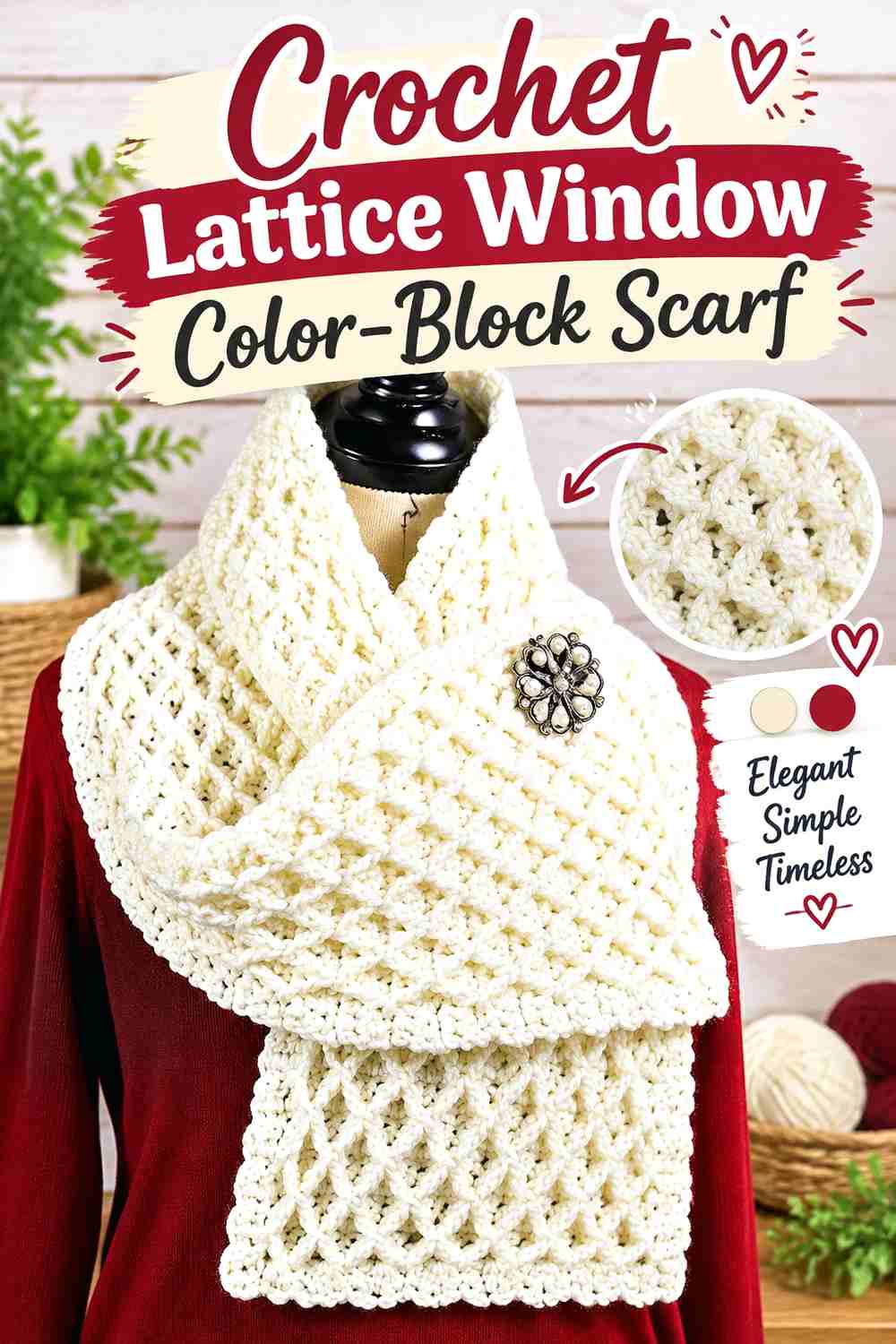
Nicki’s Homemade Crafts teaches a lattice scarf with repeated open spaces, making the background behind the scarf part of the finished appearance.
Large purple and green panels can make those lattice openings particularly noticeable over a contrasting coat.
Think About the Coat Color Behind the Lattice
An apple-green openwork panel worn over a black coat creates strong contrast. The same panel over a similarly bright jacket may lose definition.
Because the openings expose clothing underneath, choose the final color proportions with your most likely outerwear in mind.
Keep the Color Blocks Large Enough to Show the Lattice
Tiny stripes can fragment an already open stitch pattern. Broader purple and green sections make it easier to see both the color and the repeating windows.
Creator Credit: Nicki’s Homemade Crafts
14. Crochet Diagonal C2C Purple and Green Scarf
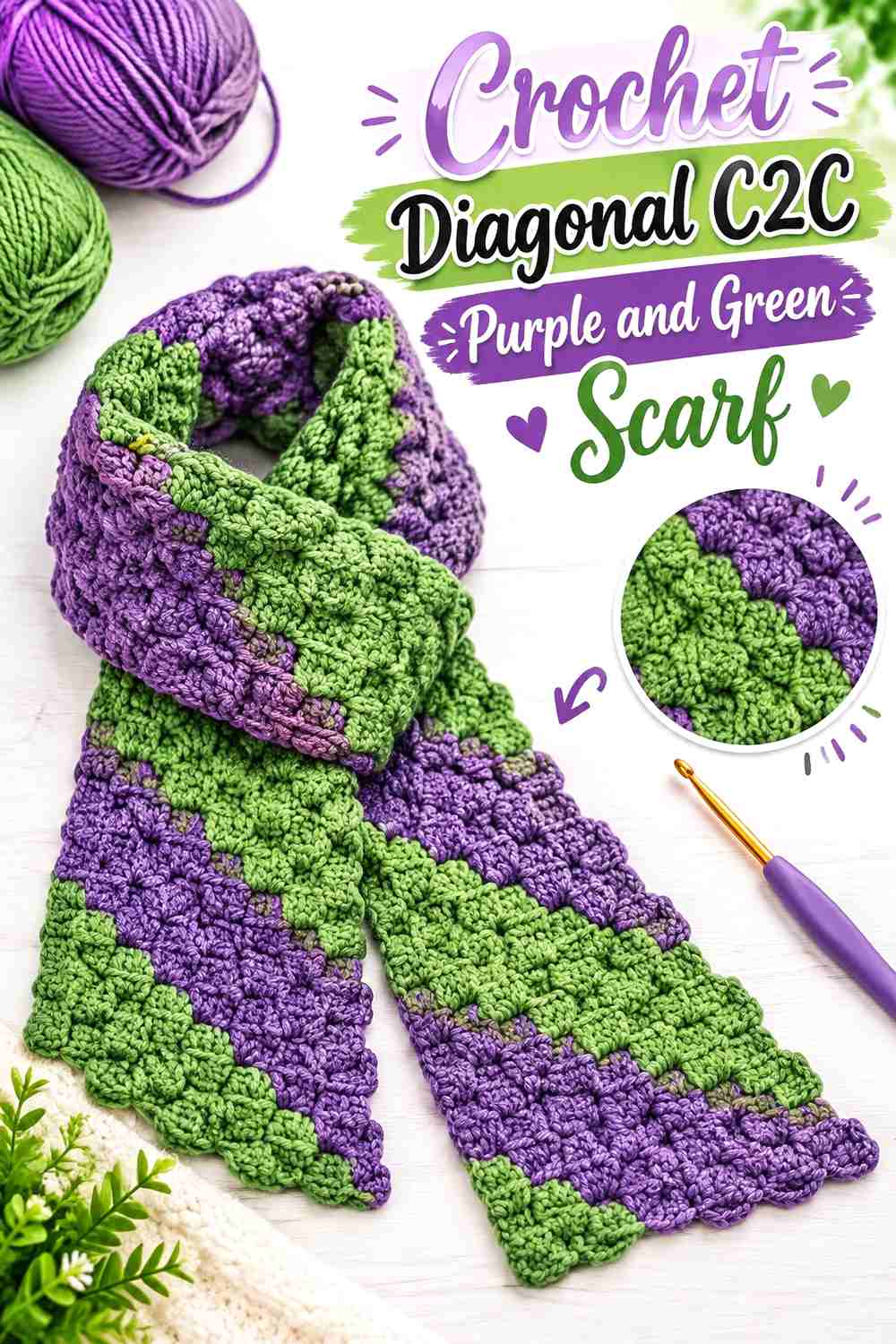
Left Hand Crochet & Knit Tutorials demonstrates a corner-to-corner scarf worked on the bias. That diagonal construction creates one of the most natural opportunities for a non-horizontal color-block layout in this collection.
Royal purple can begin at one corner and transition into apple green as the scarf grows, allowing the boundary to cut diagonally through the finished fabric.
A Diagonal Boundary Makes Two Colors Feel More Integrated
Straight blocks can look intentionally segmented. A diagonal transition creates movement and allows one color to appear to flow into the next.
This can be particularly effective with two shades as contrasting as purple and apple green.
Plan Where the Diagonal Will Fall When Worn
The most interesting part of a two-color C2C scarf may be the transition itself. Try to avoid hiding every color change at the back of the neck.
Drape the developing scarf before deciding exactly when to change to the second shade.
Creator Credit: Left Hand Crochet & Knit Tutorials
15. Crochet Suzette Half-and-Half Infinity Scarf
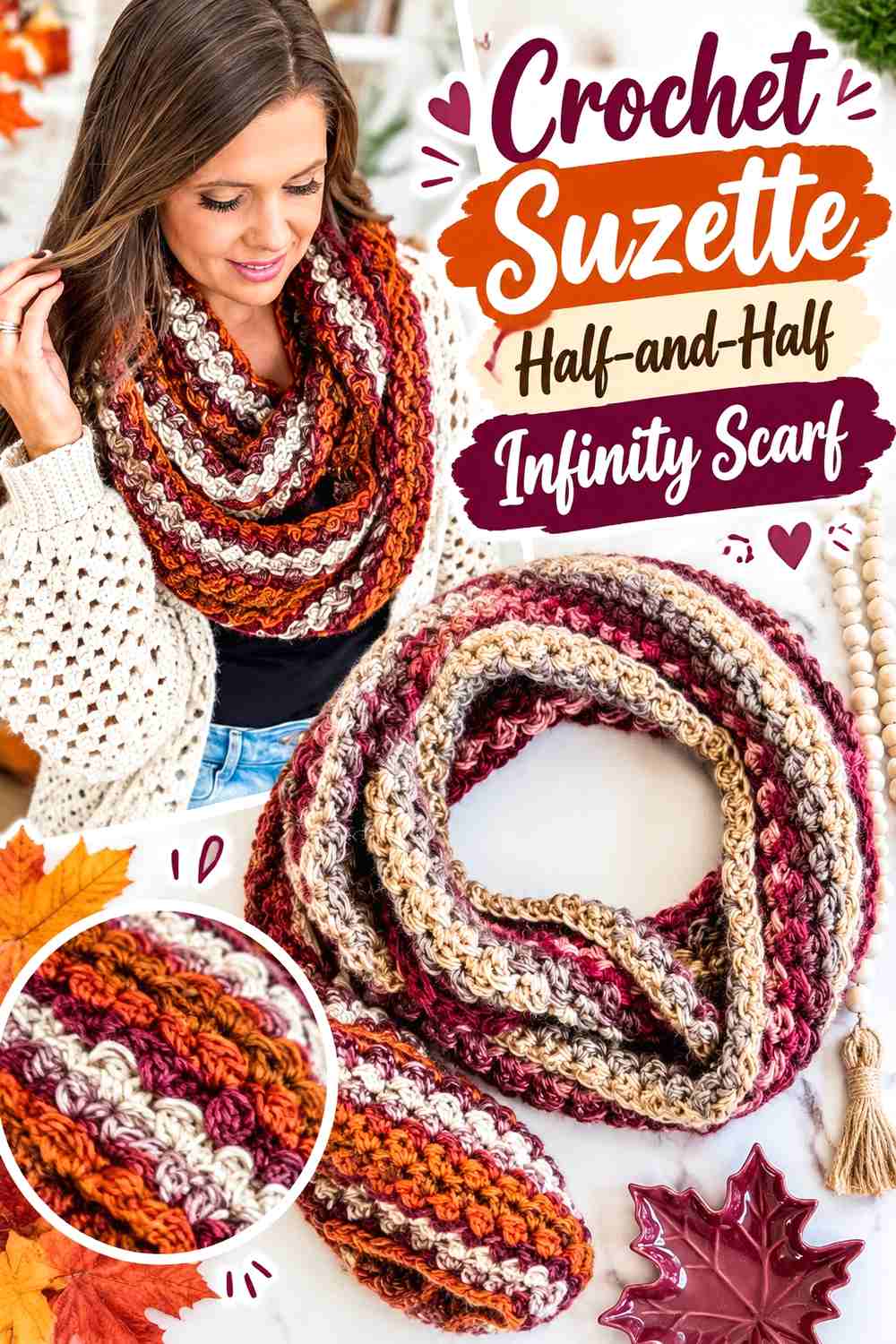
MJ’s Off The Hook Designs uses Suzette stitch in an infinity-scarf construction, creating a substantial textured loop.
A half-purple, half-apple-green arrangement would produce changing color placement whenever the loop is wrapped, while the repeated texture keeps both blocks visually consistent.
A Half-and-Half Loop Creates Several Looks From One Layout
Depending on how you rotate it, the wearer could show mostly purple, mostly green, or both colors at the front.
That gives a simple two-block design more styling flexibility than the same split on a straight scarf.
Match the Two Yarns Carefully
The source construction uses yarn in a particular way to achieve its intended thickness. If your royal-purple and apple-green choices differ noticeably in weight or loft, the two halves may not behave alike.
Use compatible yarns and verify the source material requirements before substituting solely for color.
Creator Credit: MJ’s Off The Hook Designs
16. Crochet Lemon-Peel Long-Block Scarf
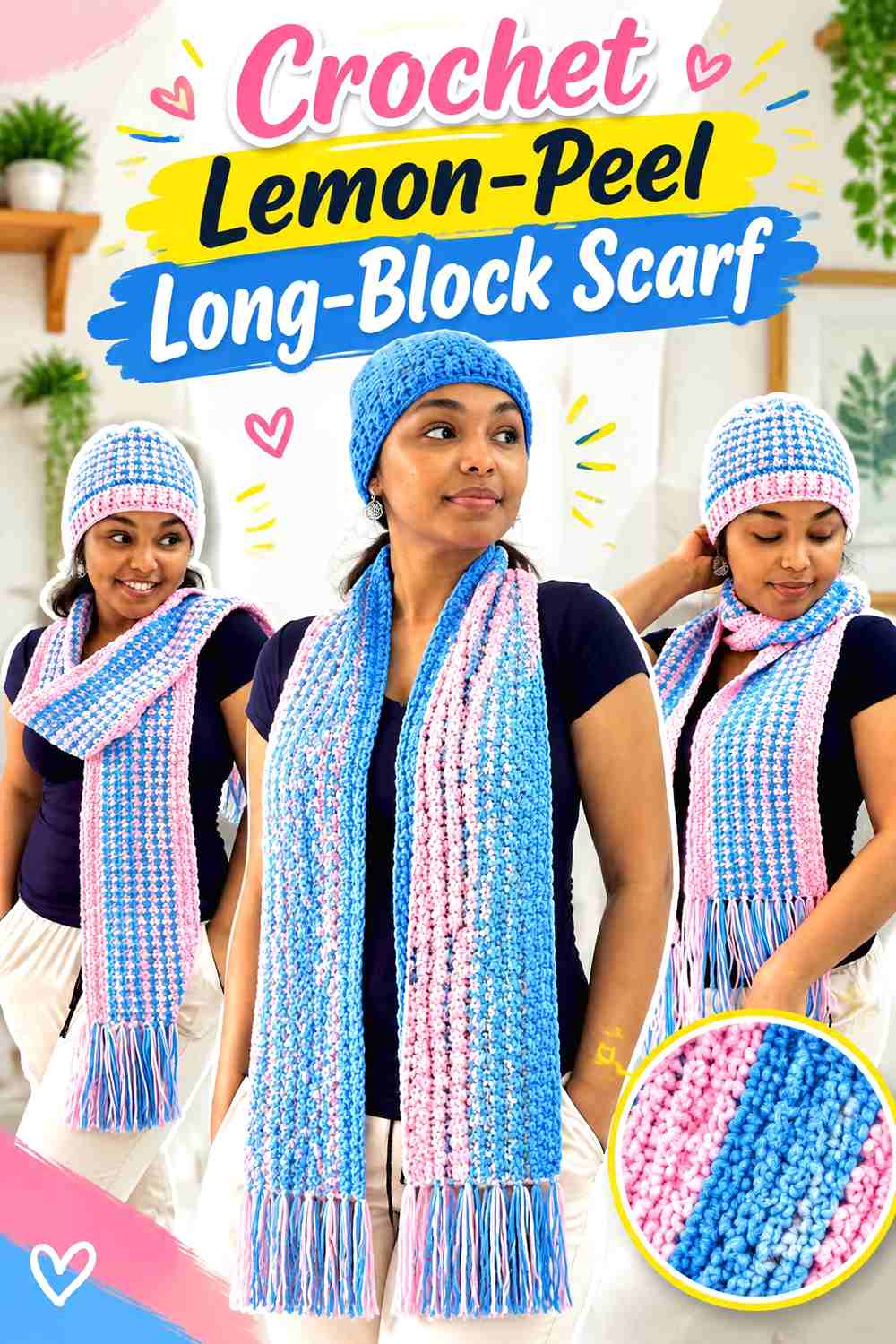
FTK Crochet’s scarf uses lemon-peel stitch, providing a compact alternating texture that works well beneath large uninterrupted color areas.
For this interpretation, divide the scarf length into two or three long blocks rather than frequently alternating colors.
Small-Scale Texture Balances Large-Scale Color
The stitch pattern provides detail close up, while the purple-and-green blocks create the design seen from farther away.
That two-scale approach can make the scarf interesting without requiring complicated colorwork.
Unequal Blocks Can Make the Scarf Easier to Style
Try a long purple body with a substantial apple-green section at only one end. Once wrapped, the asymmetry can create one green vertical tail and one purple tail instead of a perfectly matched pair.
If you prefer formal symmetry, repeat the green block at both ends.
Creator Credit: FTK Crochet
17. Crochet Granny-Square Purple and Green Scarf
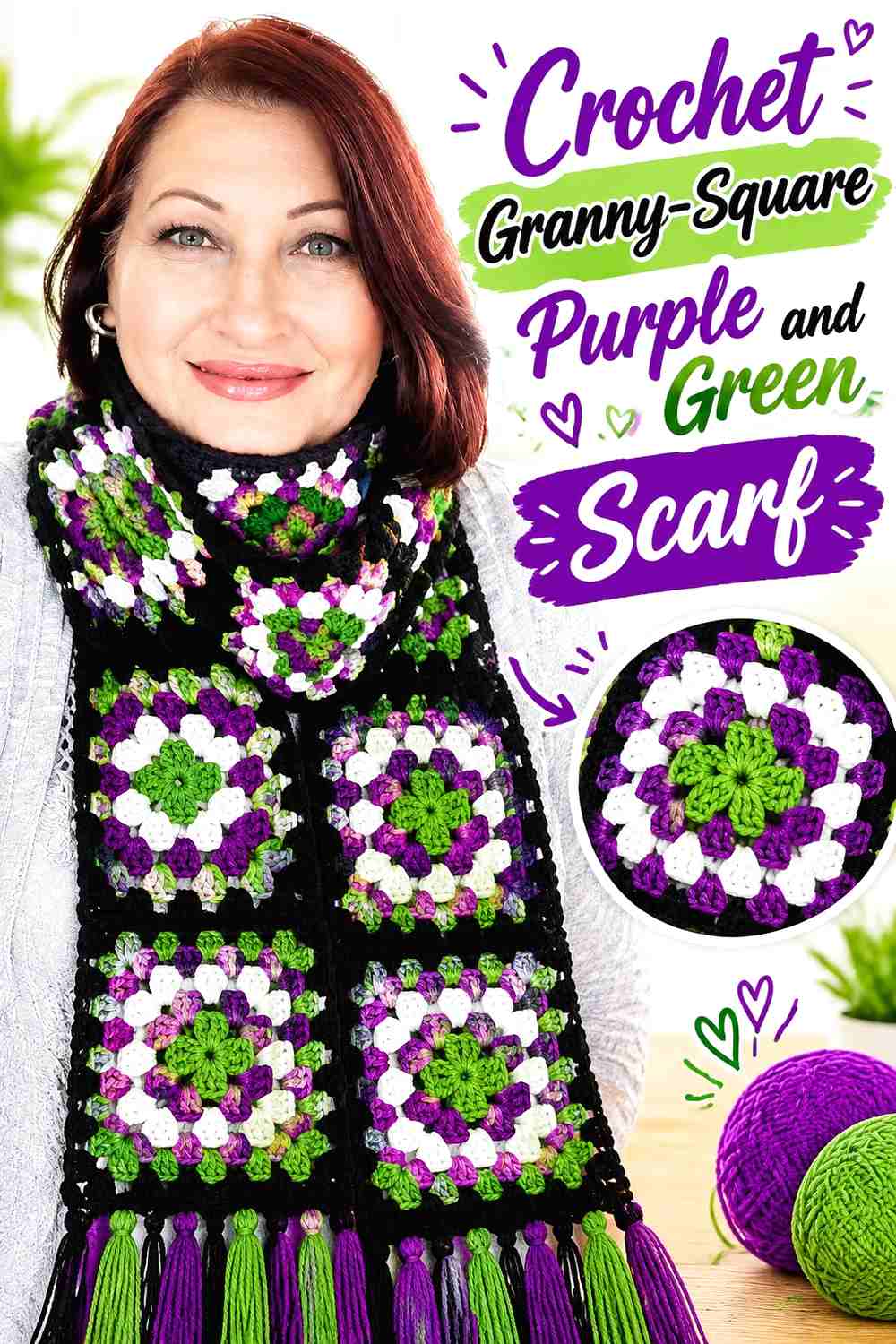
OMGrannySquare’s tutorial constructs a scarf from granny squares, making the individual motifs themselves the color-block units.
This is one of the most flexible options for experimenting with royal purple and apple green because you can arrange the finished squares before committing to the final sequence.
Alternate Motifs Instead of Stripes
A purple square followed by a green square creates obvious large blocks. You could also make two-color motifs, but repeating solid or restrained squares often keeps this strong palette easier to read.
Lay every completed square on the floor or table before joining.
Use the Join as a Third Visual Element Without Adding a Third Color
Joining in purple makes green motifs feel framed by the dominant shade. Joining in green does the opposite.
Using one of the existing colors avoids expanding the palette while still making the seams part of the design.
Check Every Motif’s Finished Dimensions
Color should not distract from assembly accuracy. Compare the prepared squares before joining them so a tighter green motif or looser purple motif does not gradually distort the scarf.
Creator Credit: OMGrannySquare
18. Crochet Puff-Stitch Statement Color-Block Scarf
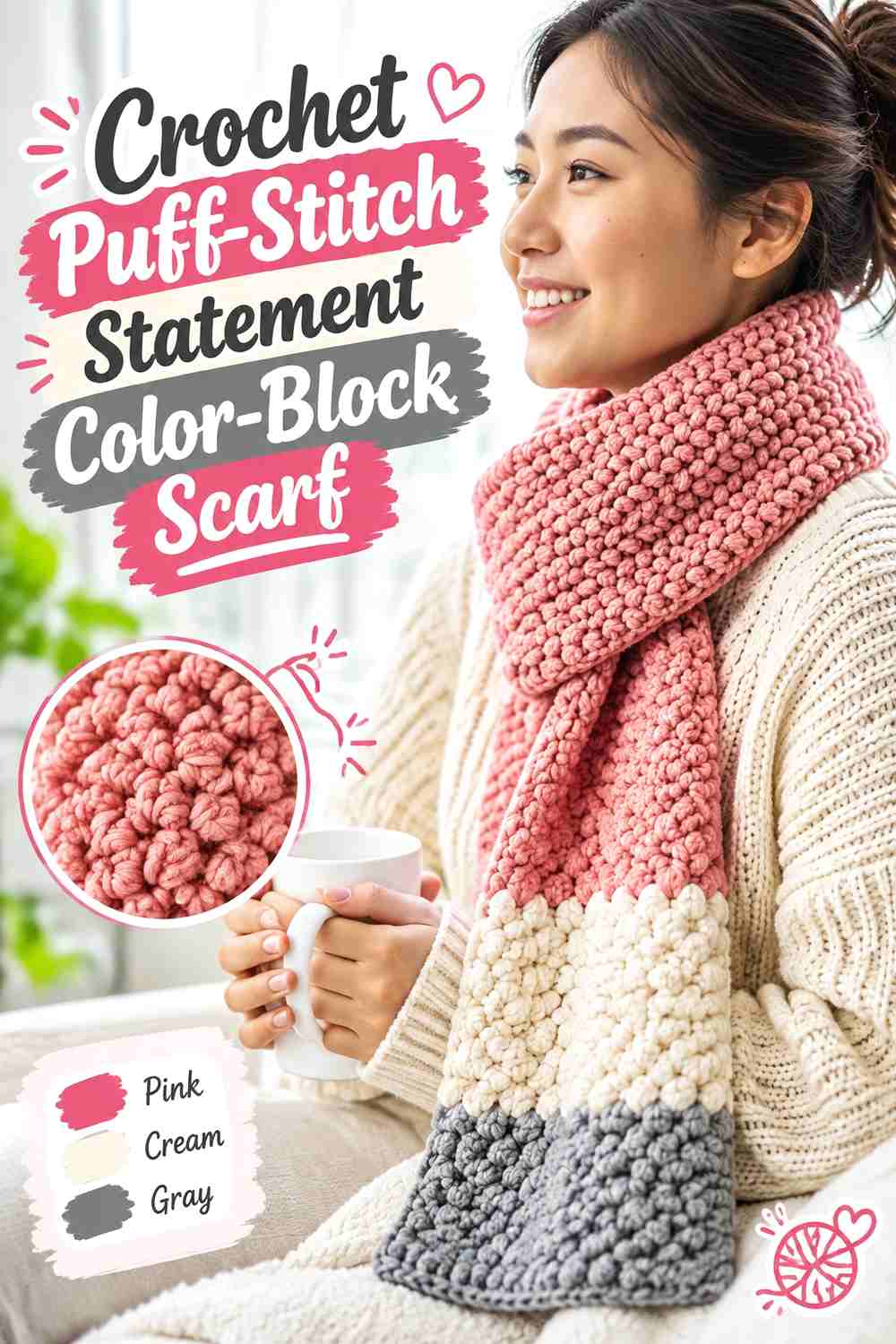
Tasty Dumpling Living’s scarf uses puff stitches, creating pronounced raised sections and a softer, more dimensional surface.
Because puff stitches already make a statement, royal purple and apple green work best here in generous blocks rather than rapidly alternating rows.
Purple Can Emphasize Puff-Stitch Shadows
Dark royal purple produces strong shadows between raised stitches. Apple green usually shows the individual puffs more brightly.
Using both therefore creates not only a color change but also a perceived change in texture definition.
Reserve Green for One or Two Focal Panels
If an entire puff-stitch scarf in apple green feels too intense, use green near one end or around the lower third while keeping the remainder purple.
That preserves the requested palette without requiring equal visual weight.
Creator Credit: Tasty Dumpling Living
19. Crochet Cluster-Stitch Purple and Green Scarf
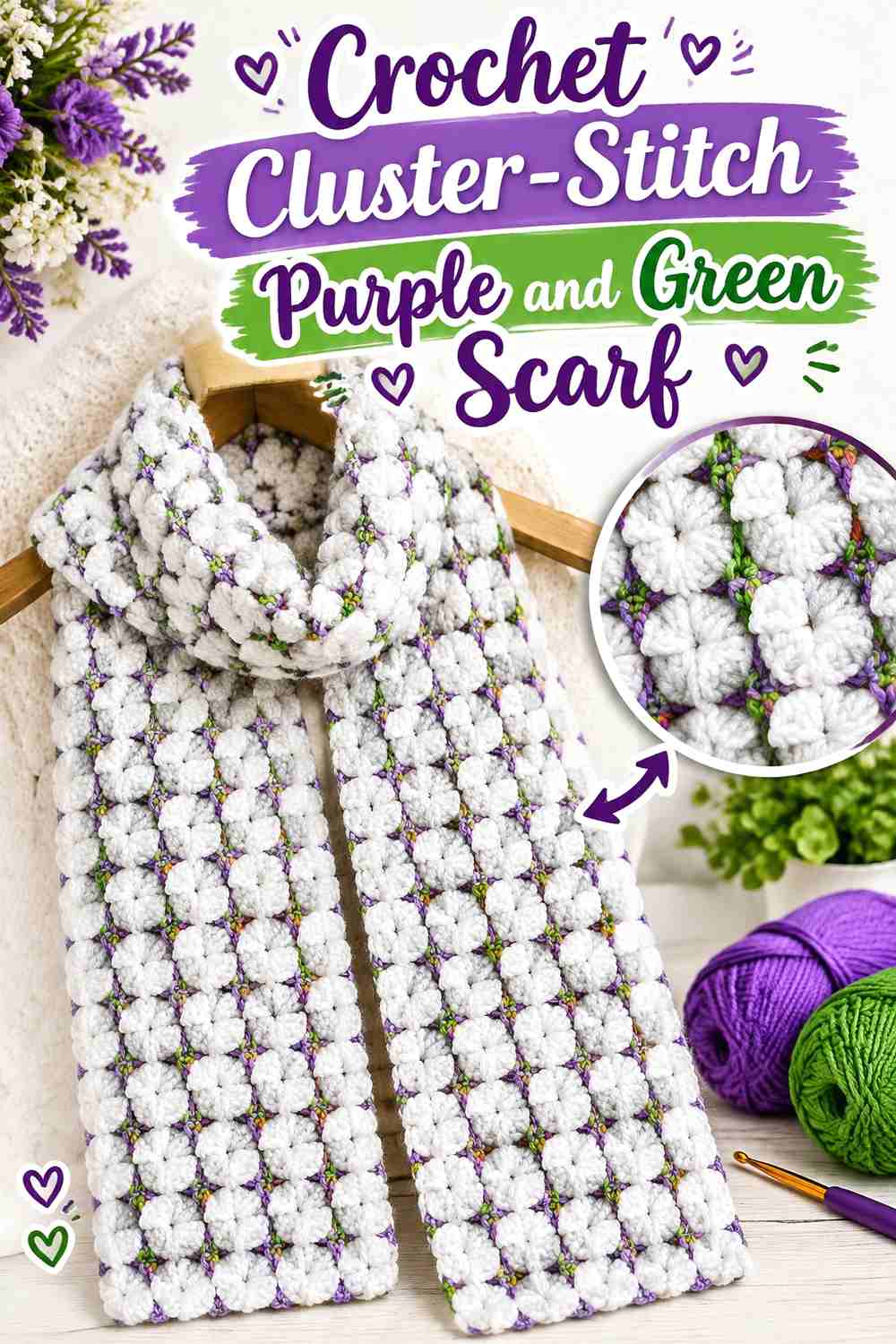
Meladora’s Creations for Crochet teaches a scarf based on cluster stitch, producing a filled-out textured fabric distinct from the puff, shell, and alpine options elsewhere in this collection.
For the color-block version, use royal purple for the central majority of the scarf and apple green for matched end sections, or reverse the proportions for a brighter result.
Cluster Texture Can Visually Blend the Block Edge
Raised grouped stitches create more surface variation than flat single crochet, so the meeting point between two colors can feel less severe.
This is useful if you like strong purple-and-green contrast but want the scarf to retain a soft handmade character.
Repeat the Same Transition Logic at Both Ends
If the scarf uses green ends, measure or count according to the source construction so the two sections relate intentionally.
Perfect mathematical symmetry is optional, but visibly accidental block lengths can distract from an otherwise clean two-color design.
Creator Credit: Meladora’s Creations for Crochet
Which Purple and Apple Green Color-Block Scarf Style Should You Choose?
For the cleanest interpretation of the color-block theme, the three-panel single-crochet scarf, Tunisian split scarf, ribbed end-block scarf, or lemon-peel design provide large uninterrupted areas where royal purple and apple green can make a clear statement.
If you want the color boundary to become part of the stitch pattern, choose chevron, ripple, diagonal C2C, shells, or granny-square construction. Those projects make the transition more structural than a simple change between rectangular sections.
For heavier fall texture, alpine, basketweave, Suzette, puff, and cluster stitches give the scarf more surface depth. These work especially well when the color blocks are large enough that the texture does not have to compete with frequent yarn changes.
If you prefer a lighter scarf, the broomstick-lace and lattice options expose more background and reduce the visual intensity of the apple green. They can be useful when you like the unusual palette but do not want two solid saturated colors filling the entire accessory.
Conclusion
Royal purple and apple green are strong enough that the most successful color-block scarf usually does not need many additional design elements. The key decision is where the colors meet.
Choose three large blocks for a straightforward graphic scarf, end panels when you want green visible mainly below the coat collar, diagonal C2C construction for movement, granny squares for rearrangeable modular color, or chevrons and ripples when you want the stitch pattern to shape the color boundary.
Dense textured stitches such as alpine, basketweave, puff, and clusters can make royal purple particularly rich, while open lattice and broomstick lace reduce the visual weight of bright green. Whichever construction you choose, make a sample with both actual yarn colors, confirm that their weight and behavior are compatible, and use the original tutorial for the exact scarf construction and finishing details.
Frequently Asked Questions
Do royal purple and apple green work together in a fall crochet scarf?
Yes, but they produce a much brighter fall palette than traditional rust, brown, mustard, or olive. Royal purple supplies a deep anchor while apple green provides high contrast. Using more purple than green can make the combination easier to coordinate with darker fall outerwear.
What color-block ratio works well for royal purple and apple green?
There is no universal ratio. Equal blocks produce the boldest two-color statement. A purple-dominant scarf with smaller apple-green sections feels more restrained. Test the colors in the approximate proportions you intend to use rather than judging them from two equal yarn skeins placed side by side.
Should both scarf colors use the same yarn brand and fiber?
They do not have to come from the same brand, but their weight, thickness, stretch, and care requirements should be compatible. Two yarns labeled with the same general weight can still behave differently, so compare them before combining them throughout one scarf.
How can I keep apple green from overpowering royal purple?
Use it in narrower sections, at the ends, inside openwork, or as every second or third major block rather than half the entire scarf. Purple fringe or a purple border can also visually reconnect separated purple sections.
Which crochet stitches show these two colors most clearly?
Simple ribbing, moss stitch, Tunisian fabric, lemon-peel texture, and straightforward single crochet provide relatively clean color fields. Chevron, ripple, shells, and C2C are better when you want the boundary between purple and green to become part of the visual pattern.
Can I use purple and green granny squares for a color-block scarf?
Yes. Granny-square construction is especially flexible because you can rearrange completed motifs before joining them. Compare the finished square sizes first, then decide whether to alternate solid purple and green motifs or use more restrained two-color squares.
How do I reduce the number of yarn ends in a two-color scarf?
Larger color blocks generally create fewer ends than frequent narrow stripes. The exact way colors can be carried or changed depends on the scarf construction, so follow the creator’s tutorial and finishing guidance instead of assuming the same yarn-management method works for every stitch pattern.