Crochet boot cuffs can do much more than add a small strip of texture above a winter boot. With the right silhouette, they can suggest weathered pirate gear, courtly medieval trim, forest-fae layers, corseted gaiters, or the heavy ribbing of a fantasy adventurer’s wardrobe.
Exact tutorials labeled specifically as “medieval pirate boot cuffs” are uncommon, so this collection uses verified crochet boot-cuff, boot-topper, gaiter, and leg-warmer tutorials as practical construction references. Some are already close to the desired silhouette. Others provide a useful base for changing color, visible height, trim emphasis, or styling without rewriting the creator’s pattern.
For a romantasy look, the strongest differences come from construction rather than simply choosing brown or black yarn. Cables can suggest armor or leather tooling. Lace and scallops create a more courtly direction. Lacing and drawstrings introduce a corseted detail, while oversized flares or thigh-high shapes can turn footwear into a major part of the outfit.
Quick List
- Crochet Victorian Button Pirate Boot Cuffs
- Crochet Sculpted Cable Captain Gaiters
- Crochet Lace Court Pirate Boot Toppers
- Crochet Reversible Tunisian Mercenary Boot Cuffs
- Crochet Chunky Ribbed Captain Button Cuffs
- Crochet C2C Chainmail-Inspired Boot Cuffs
- Crochet Knit-Look Riding Boot Cuffs
- Crochet Puff-Texture Relic Boot Cuffs
- Crochet Deep-Ribbed Brigand Boot Toppers
- Crochet Ruffly Corsair Boot Cuffs
- Crochet Bulky Button Deckhand Boot Cuffs
- Crochet Minimal Adventurer Boot Cuffs
- Crochet Shell-Texture Siren Leg Warmers
- Crochet Flared Swashbuckler Leg Warmers
- Crochet Laced Tunisian Corset Gaiters
- Crochet Ruffled Court-Pirate Leg Warmers
- Crochet Scalloped Tavern Boot Cuffs
- Crochet Thigh-High Corsair Heel-Gap Gaiters
How to Make a Crochet Boot Cuff Read Medieval or Pirate
Start with the silhouette. A narrow ribbed cuff can resemble the top of a heavy sock or riding layer, while a taller fitted piece reads more like a gaiter. A flared bottom changes the relationship with the boot completely and can create a more theatrical swashbuckling outline.
Texture carries much of the theme. Cables, puffs, dense Tunisian crochet, pronounced ribbing, and directional blocks can suggest substantial handworked fabric. Lace, shells, scallops, and ruffles move the same basic accessory toward courtly, bardic, fae, or romantic pirate styling.
Color works best when it supports that construction instead of trying to create the entire theme by itself. Oxblood, weathered brown, charcoal, moss, muted navy, black cherry, tarnished gold, parchment, and deep plum can all suit the concept, but the stitch structure should still remain visible.
Fit the Cuff to the Actual Boot Shaft
Boot cuffs are unusual wearables because the boot itself becomes part of the fit. The same cuff can look dramatic above a roomy knee boot and almost disappear inside a snug ankle boot.
Check the circumference where the cuff will actually sit, not only the widest part of the calf. Also consider how much crochet fabric needs to extend into the boot. Thick cables, puff stitches, Tunisian fabric, and bulky yarn can become uncomfortable if a fitted shaft compresses too much material against the leg.
Taller gaiter-style projects need more than one measurement. The ankle, calf, and upper edge may all sit at different circumferences, while flared designs need enough room around the shoe for the lower shape to remain visible.
Balance Texture, Hardware, and Winter Layers
Buttons, cords, buckles, and lacing can strengthen the fantasy styling, but they should not interfere with the real boot.
Before adding decorative hardware, look at where the boot zipper, buckle, laces, or rigid shaft edge already sits. Two raised elements pressing directly against each other can be uncomfortable and may also hide the detail you wanted to feature.
For winter outfits, think about the layers above the cuff as well. A dramatic ruffle or high scalloped edge needs visible space between the boot and coat hem. A quieter ribbed cuff is easier to combine with a heavily textured cloak, skirt, or oversized sweater.
1. Crochet Victorian Button Pirate Boot Cuffs
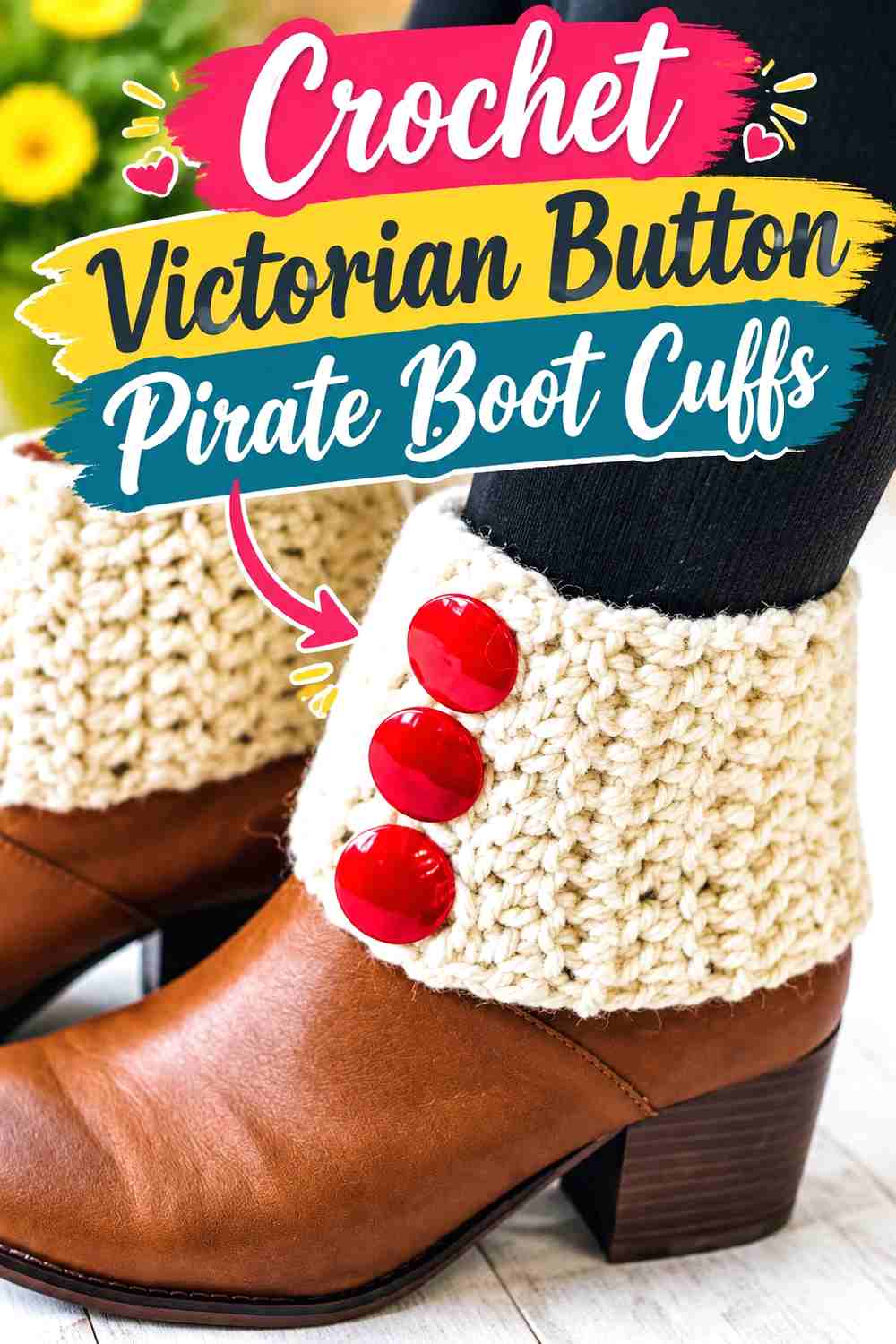
A decorative upper band and button detail make this source cuff especially useful for a refined pirate or medieval-court interpretation. The design keeps the main body relatively restrained while concentrating visual interest around the visible edge, which is a useful approach when the cuff needs to look ornate without becoming bulky everywhere.
Keep the Ornate Band Above the Boot
The fantasy character of this version depends on the decorative section being visible. Before deciding how high to wear it, put on the intended boots and check where the shaft ends while standing.
A cuff that looks beautifully proportioned on its own can lose most of its medieval character if the boot covers the detailed edge.
Let Buttons Suggest Period Styling Without Overloading the Surface
Decorative buttons can hint at an old-world fastening even when they are not responsible for adjusting the fit. Consider dark metal, wood-like, or understated vintage-inspired finishes if they suit the project materials.
Keep the crochet circumference comfortable independently. An ornamental button should not be expected to rescue a cuff that is fundamentally too loose or too tight.
Creator Credit: AllFreeCrochet
2. Crochet Sculpted Cable Captain Gaiters
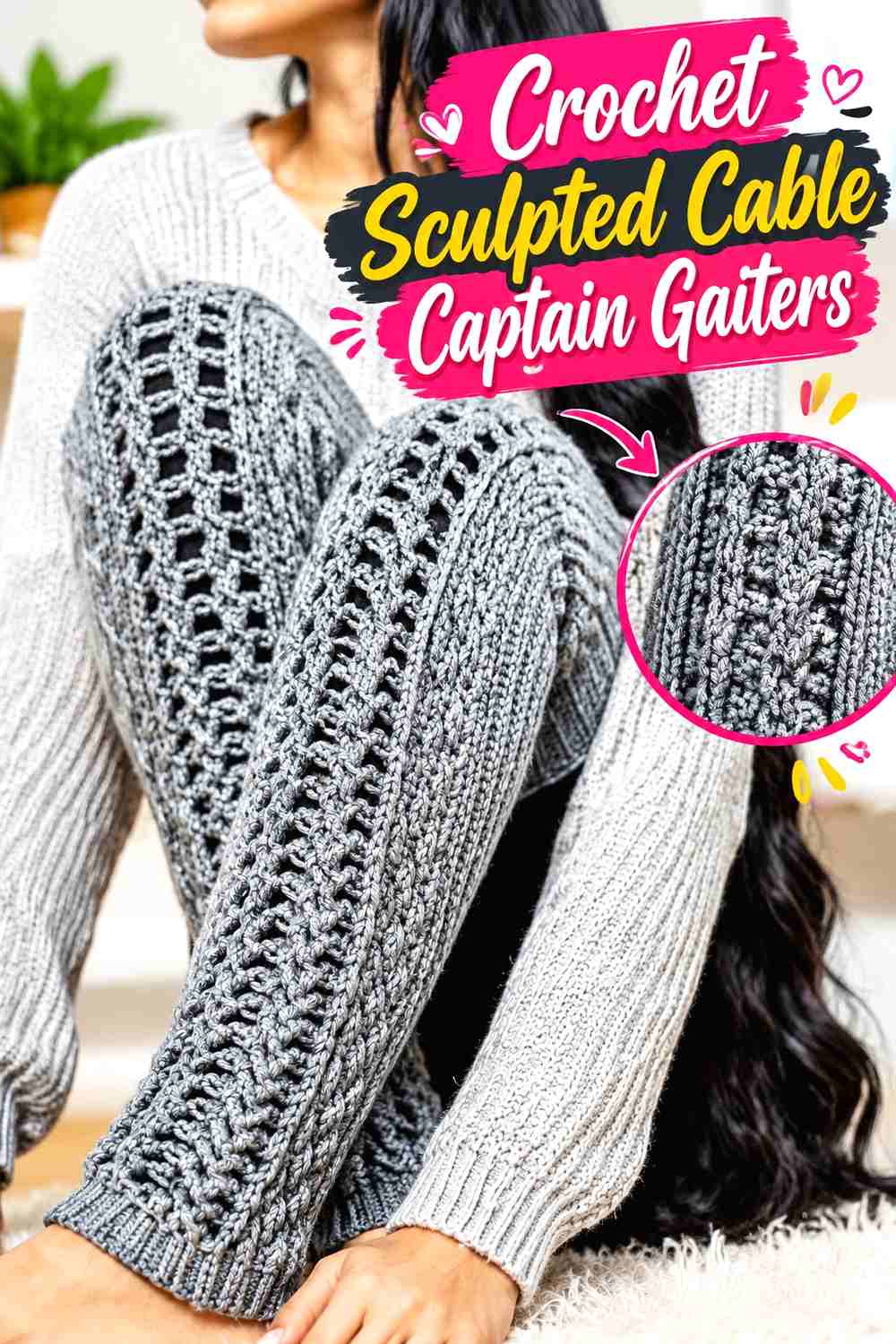
Cable texture immediately gives a winter leg layer more visual weight. TCDDIY’s leg-warmer tutorial uses pronounced cable-style detail and multiple constructed sections rather than relying on a completely plain tube, making it a strong source for an adventurer, ship captain, or armored-riding interpretation.
Raised Cables Can Mimic Tooled or Braided Detail
For a medieval-pirate direction, let the sculpted texture become the focal point. A solid oxblood, charcoal, dark brown, or muted forest shade can preserve the shadows around the cables better than a very active multicolor yarn.
If you change yarn, sample the textured area first. The feature loses much of its effect if the fiber is so fuzzy that the cable relief disappears.
Structured Sections Need More Than One Fit Check
A more detailed leg warmer has several places where width and flexibility can change.
Check the developing piece at the calf and near the boot before assuming a comfortable upper section guarantees that every other area will behave the same way.
Creator Credit: TCDDIY
3. Crochet Lace Court Pirate Boot Toppers
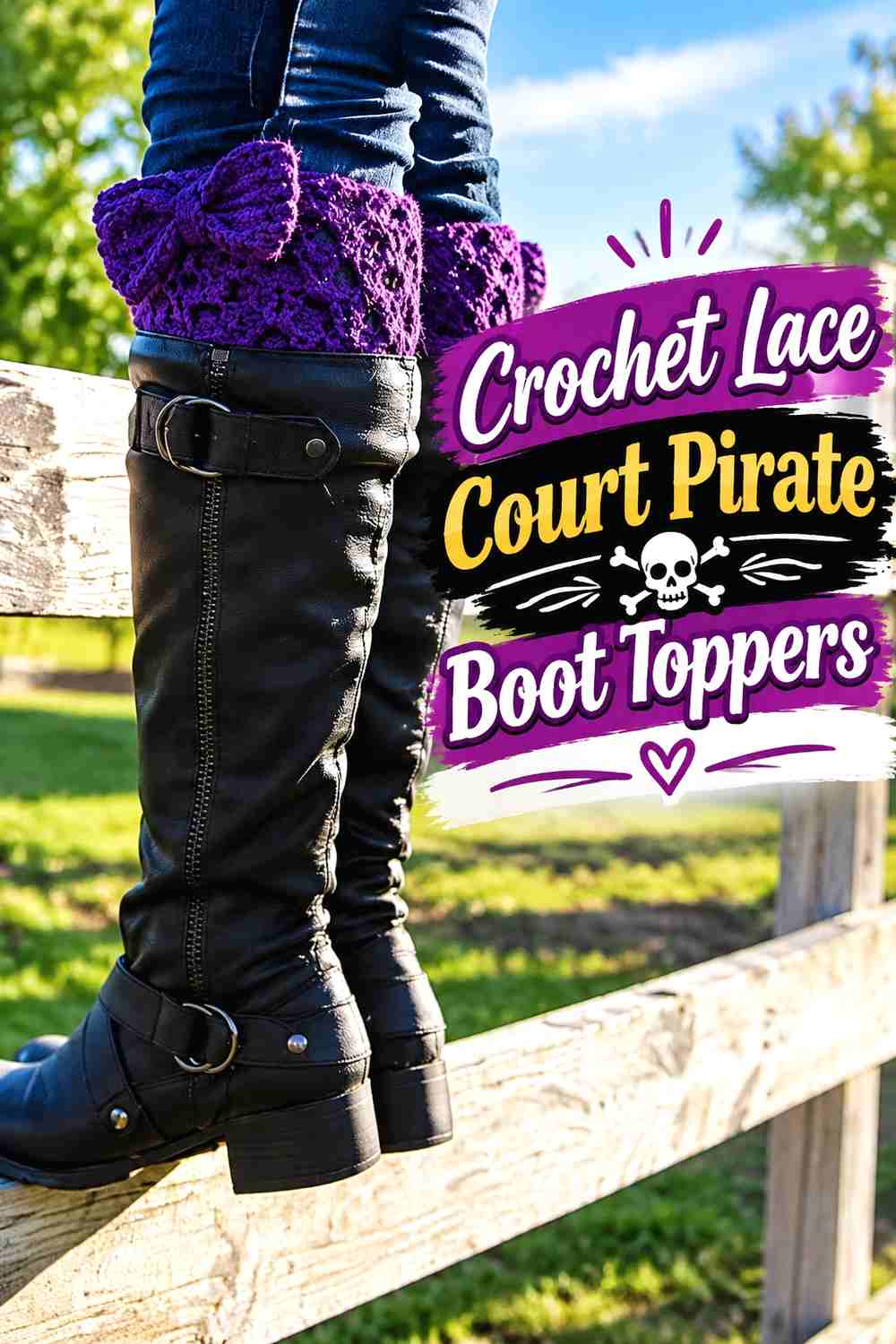
Jonna Martinez’s boot-cuff tutorial uses visible lace, providing a much lighter direction than cables or chunky ribbing. Openwork is especially effective for a romantasy outfit that leans toward a court pirate, healer, bard, or noble traveler rather than a heavily armored character.
Contrast Determines Whether the Lace Looks Delicate or Dramatic
Dark lace against pale tights creates a very different result from black lace over black leggings.
Decide whether you want the open spaces to read clearly. If so, consider what color will sit behind the cuff as part of the design instead of choosing yarn in isolation.
Keep Openwork Away From Rough Boot Hardware
Lace creates more exposed loops than dense ribbing. A buckle edge, rough zipper pull, or hook-and-loop closure can repeatedly catch the fabric.
Try the cuff with the actual boots before making its partner and rotate the most delicate section away from hardware if necessary.
Creator Credit: Jonna Martinez
4. Crochet Reversible Tunisian Mercenary Boot Cuffs
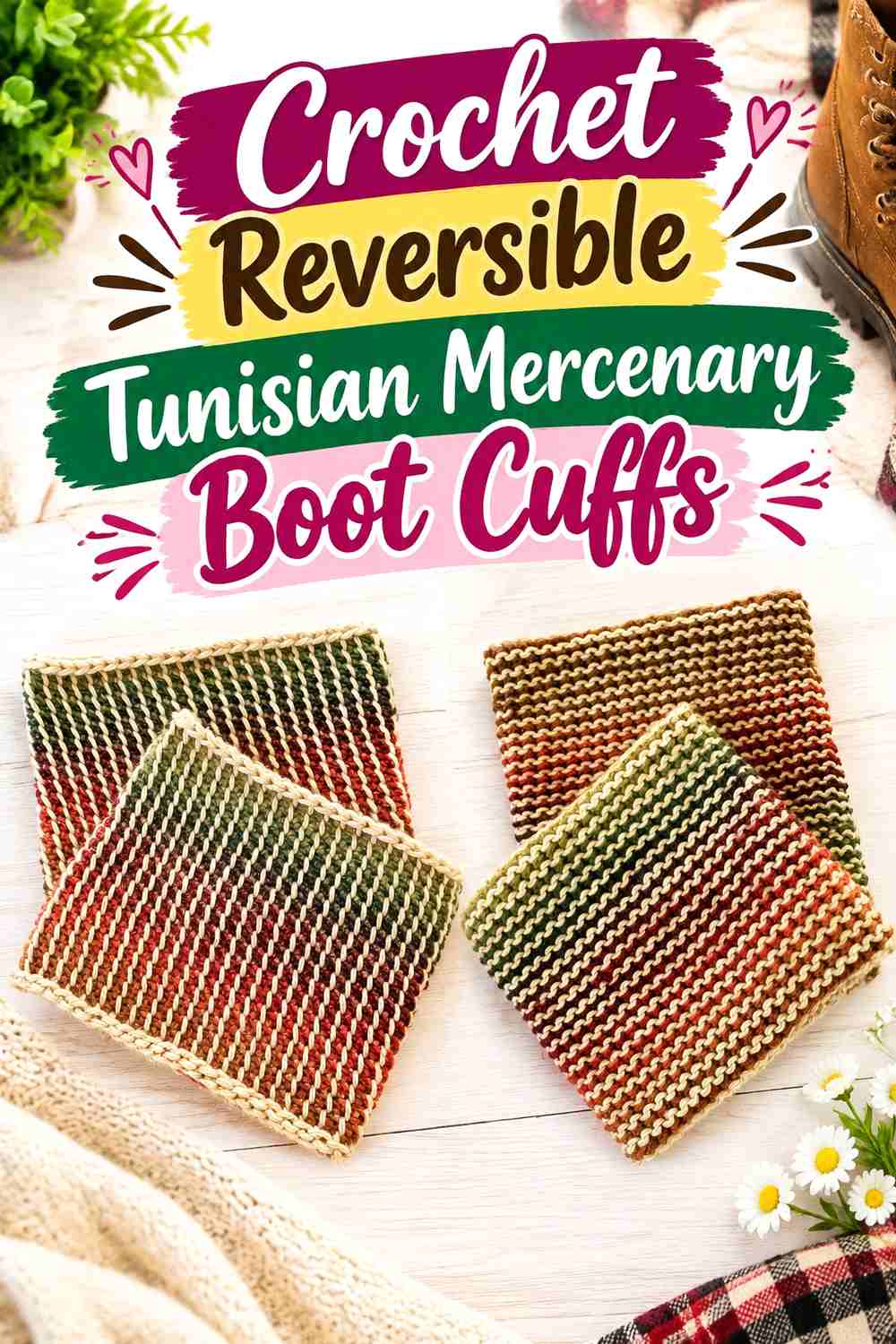
B.Hooked Crochet’s reversible cuffs use Tunisian crochet with a double-ended hook, creating two usable surfaces and a denser character than airy lace. That reversible construction gives this idea a practical fantasy advantage: one pair can produce two noticeably different outfit effects.
Two Surfaces Can Support Two Costume Moods
If contrasting yarns are used, think beyond simply choosing two favorite colors.
One face might coordinate with a dark pirate outfit while the reverse works with a lighter tavern, ranger, or winter-market look. The reversible feature has more value when both sides genuinely fit your wardrobe.
Dense Tunisian Fabric Needs Shaft Space
This construction can feel more substantial than an open or lightly ribbed cuff.
Check the available room inside the intended boot. If the shaft is close-fitting, keeping more of the Tunisian fabric visible above the opening may be preferable to compressing a thick layer between boot and calf.
Creator Credit: B.Hooked Crochet
5. Crochet Chunky Ribbed Captain Button Cuffs
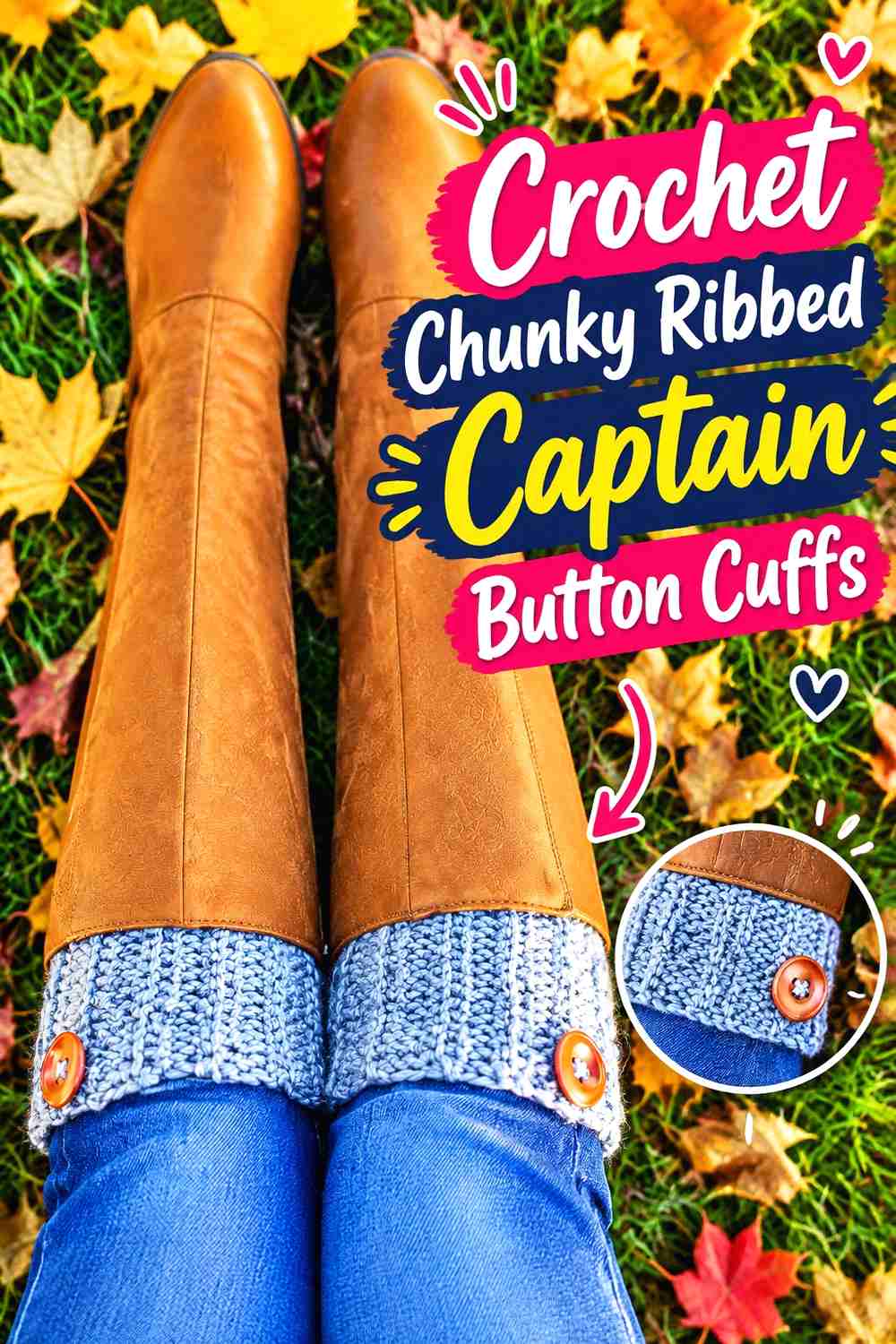
Substantial ribbing and decorative buttons give this cuff a strong, visible upper edge. The source project emphasizes a chunkier construction than the finer lace options, which makes it particularly suitable for a rugged captain, winter sailor, or tavern adventurer interpretation.
Chunky Ribbing Looks Stronger With Simple Color
Deep vertical texture can provide enough detail on its own. A weathered neutral or dark jewel tone allows the raised lines to remain the dominant feature.
Adding several competing trims can weaken the bold, utilitarian character that makes this version distinct.
Position the Buttons Around Existing Boot Hardware
Buttons look most intentional when they remain visible and do not collide with a zipper or buckle.
Put on the boot and rotate the cuff until the decorative side lands in a comfortable place before deciding which direction should face outward on the matching piece.
Creator Credit: MJ’s Off The Hook Designs
6. Crochet C2C Chainmail-Inspired Boot Cuffs
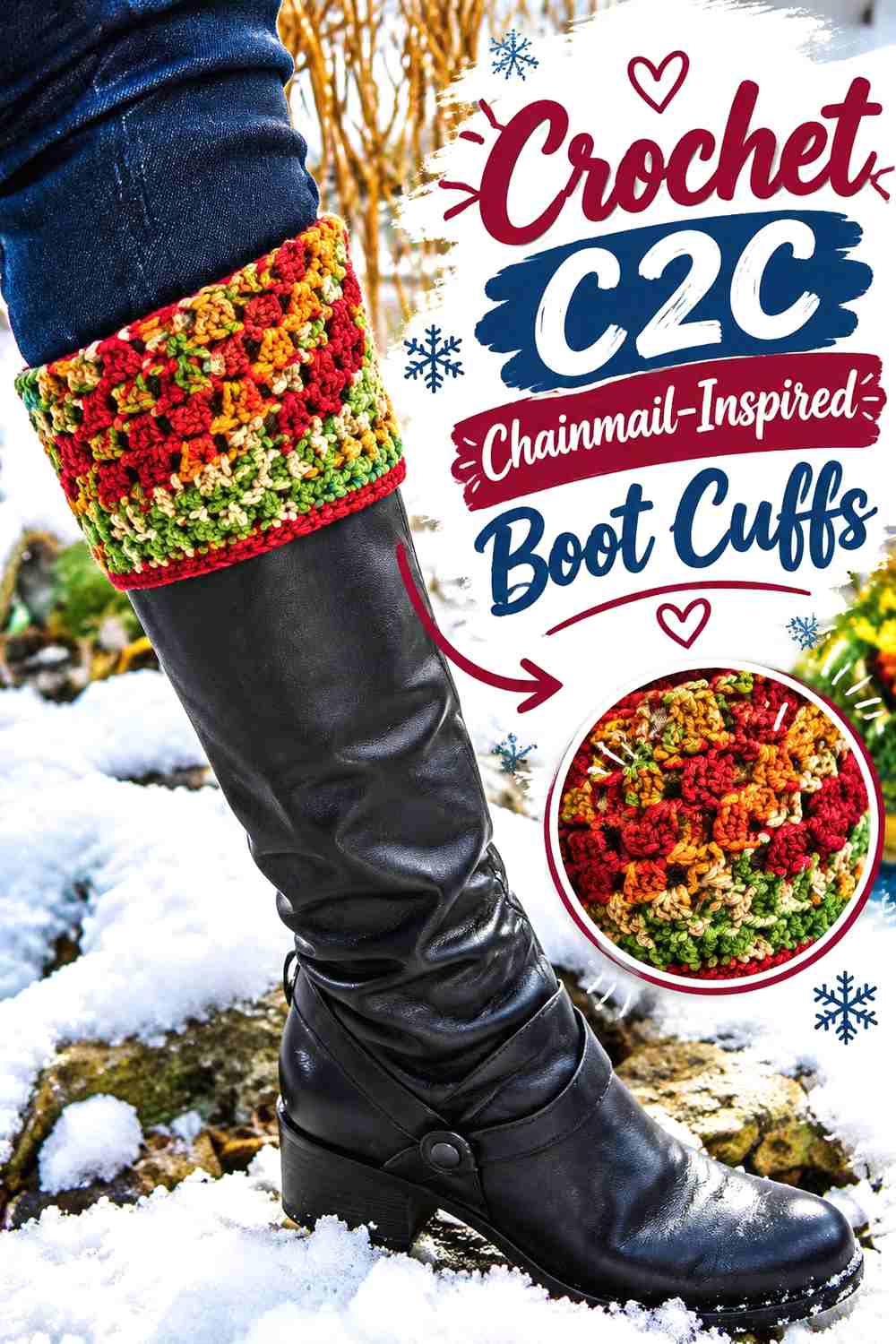
Corner-to-corner texture gives these cuffs a block-like directional surface that differs from ordinary vertical ribbing. The Crochet Crowd’s tutorial is specifically devoted to C2C boot cuffs, making the project useful for a fantasy outfit where you want a geometric, almost tiled effect rather than lace or traditional cables.
Directional Blocks Can Hint at Layered Armor
The goal does not need to be literal chainmail. A repeated diagonal texture can simply suggest a more structured, protective surface.
Gray, charcoal, iron-inspired neutrals, or dark heathered yarn can push the texture toward an armored mood without attaching hard embellishments.
The Join Matters More With Geometric Texture
A seam that interrupts strong directional lines can attract attention.
Before finishing, look at the cuff from the outside and check whether the blocks meet cleanly enough for the texture to remain the main feature.
Creator Credit: The Crochet Crowd
7. Crochet Knit-Look Riding Boot Cuffs
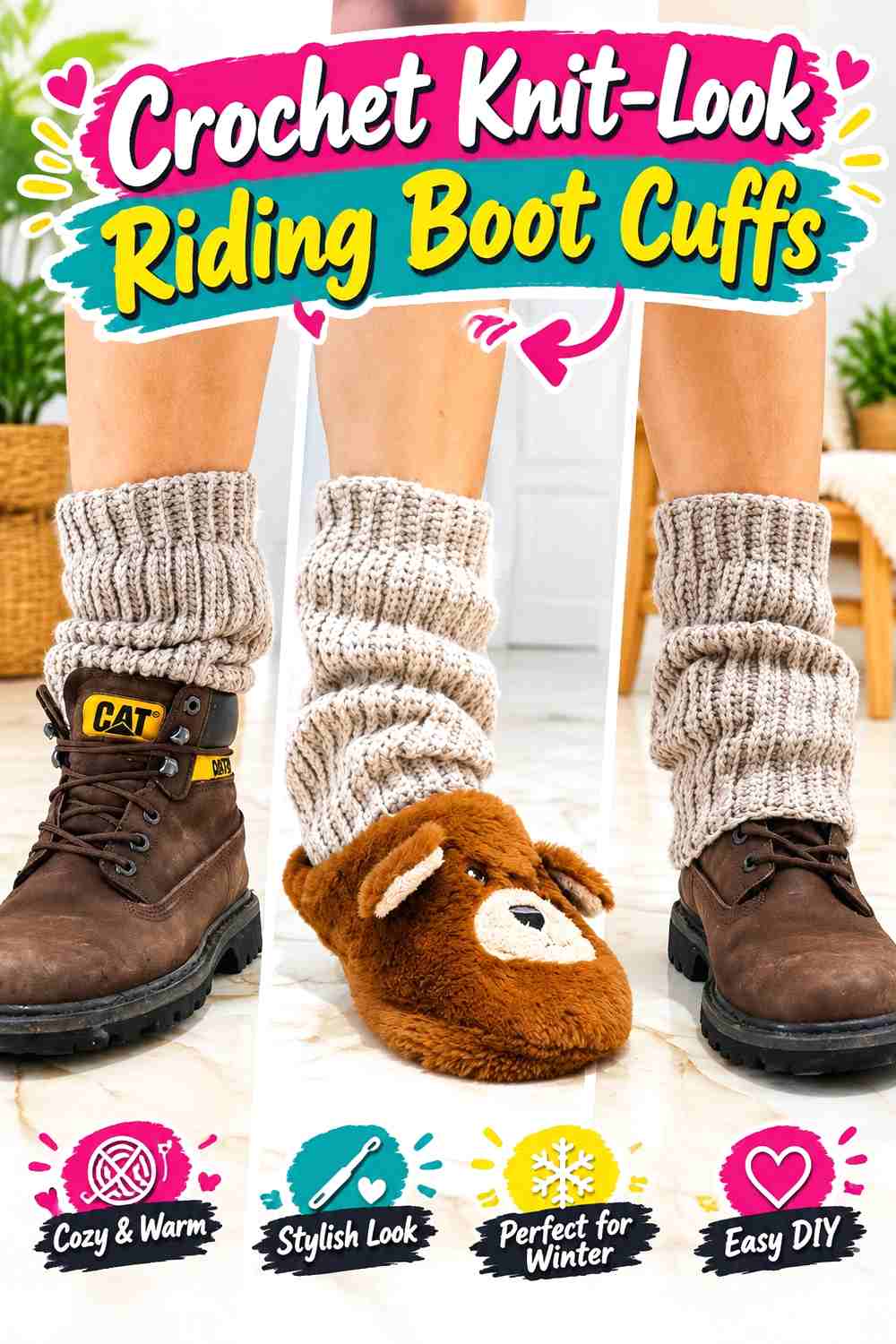
Sirin’s Crochet demonstrates a knit-look leg warmer or boot cuff, giving this idea flexibility between a narrow topper and a slightly taller lower-leg layer. The smoother vertical texture suits a riding, ranger, or understated medieval-travel outfit where the cuff should support the boots rather than dominate them.
Choose Between a Topper and a Visible Riding Layer
Decide how much crochet should show before settling on height.
Only a narrow strip above a tall boot creates a restrained riding look. More visible fabric works better when the cuff is intended to resemble part of a layered gaiter or heavy stocking.
Even Texture Makes Small Tension Changes Easier to See
A relatively orderly knit-look surface does not hide variation as readily as ruffles or puffs.
Pause while working the first piece and compare its width at several points. Correcting a noticeable drift is easier before you reproduce the same proportions for the second cuff.
Creator Credit: Sirin’s Crochet
8. Crochet Puff-Texture Relic Boot Cuffs
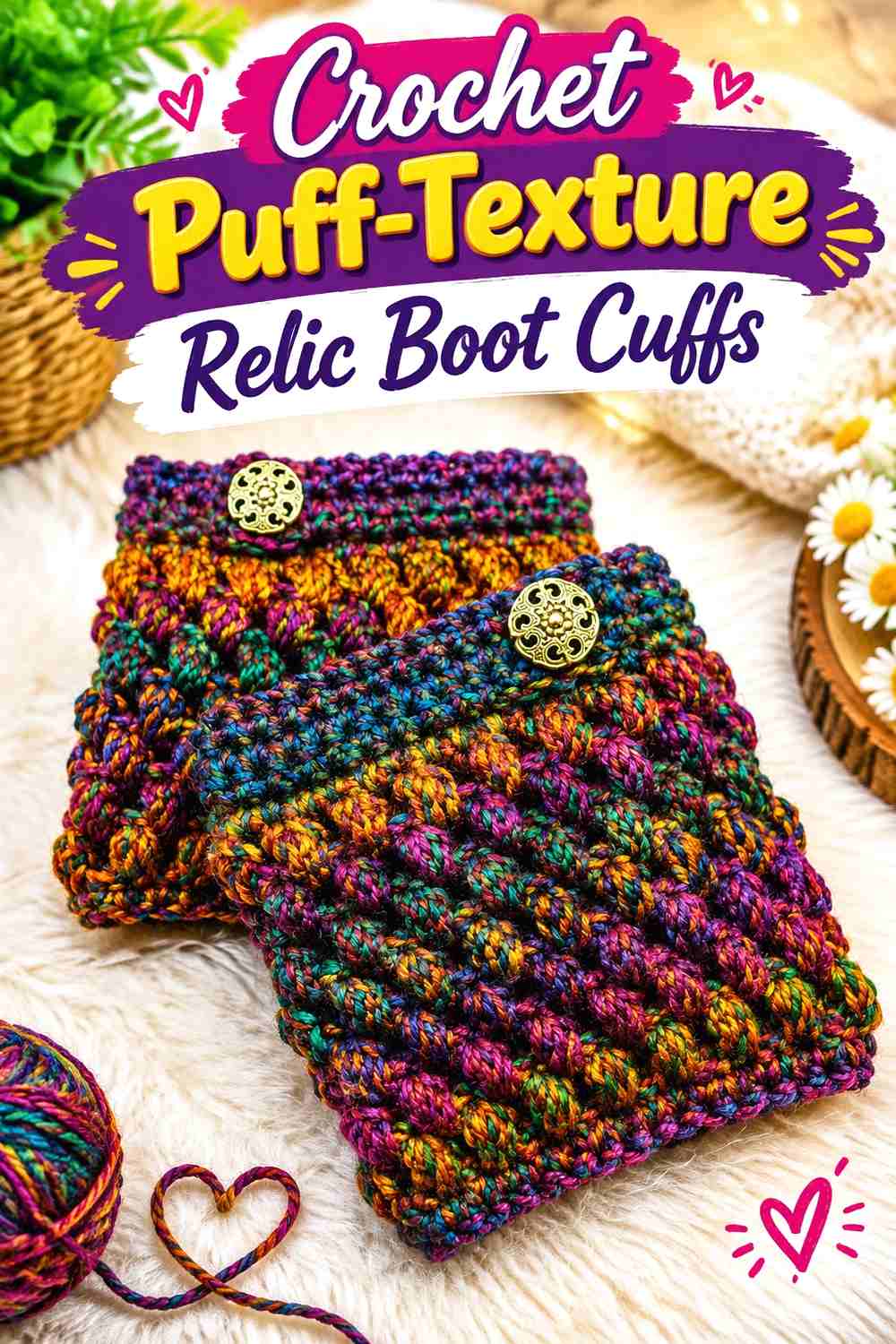
Puff stitches give these boot cuffs a raised, dimensional surface that already looks embellished even in one color. Bag-O-Day Crochet’s project provides a direct puff-stitch cuff reference, making it useful for a richer relic, mage, or ornate pirate aesthetic.
Raised Puffs Create Ornament Without Separate Trim
A dimensional surface can provide enough medieval-style richness without buttons, charms, or several colors.
If the puffs are the feature you want people to notice, a relatively calm yarn usually gives the shadows around them more visual room.
Check the Cuff From the Side, Not Only the Front
Puff stitches project outward, so they affect thickness as well as appearance.
Test the first cuff inside or above the intended boot shaft. If the boot compresses the puffs flat, showing more of the textured section above the opening may preserve the effect better.
Creator Credit: Bag-O-Day Crochet
9. Crochet Deep-Ribbed Brigand Boot Toppers
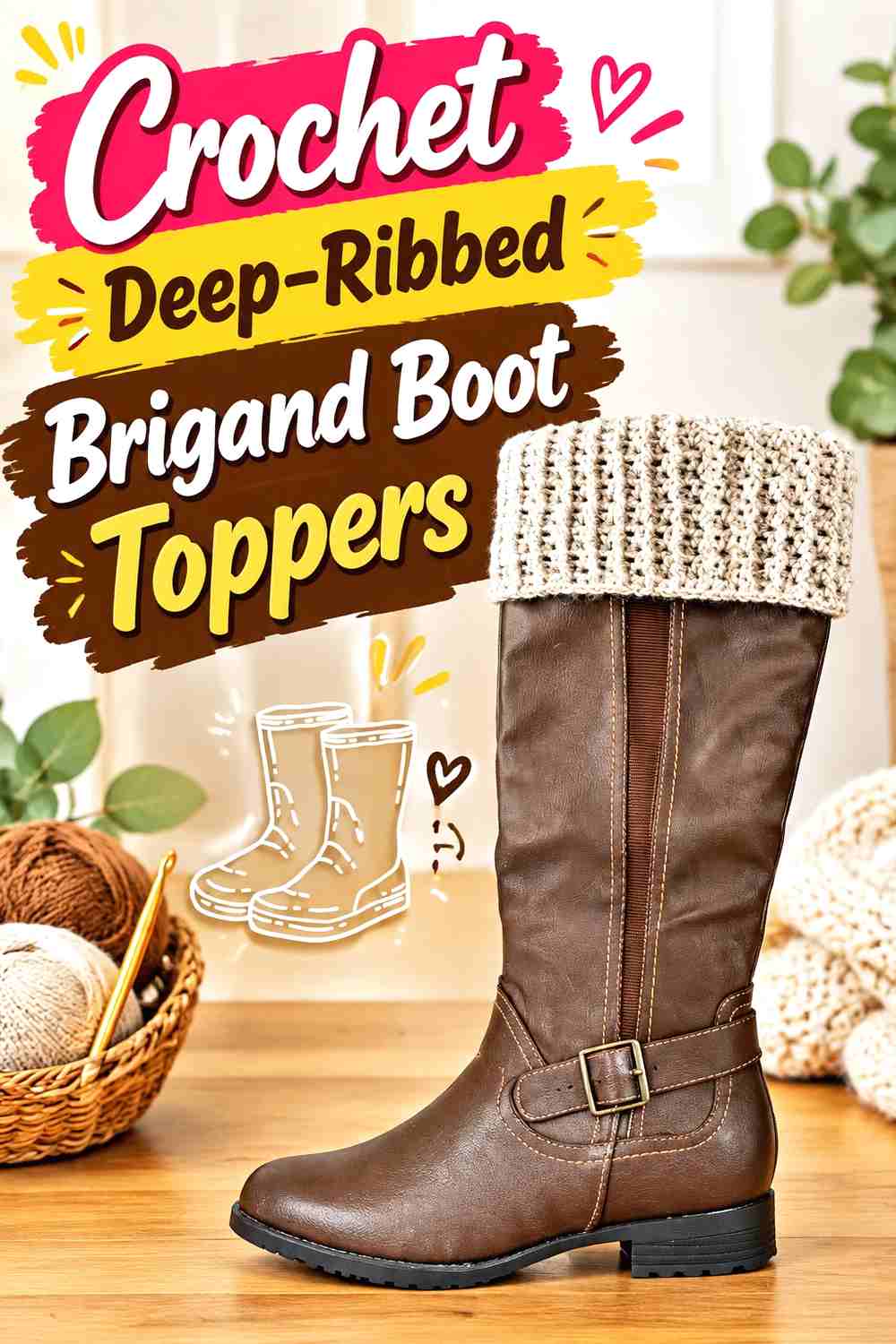
Continuous ribbing gives this boot-topper style a strong vertical surface from edge to edge. The construction is visually simpler than a buttoned or scalloped design, which makes it a useful foundation for a rougher brigand, dockside pirate, or traveling-warrior outfit.
Let the Ribbing Create the Rugged Detail
Heavy rib lines already resemble functional cold-weather gear.
A muted yarn can reinforce that utilitarian quality, while a saturated burgundy or bottle green shifts the same texture toward a more theatrical romantasy wardrobe.
Stretch Recovery Matters More Than Decorative Extras
Ribbing is only helpful if the fabric behaves well after being pulled into position.
Try on the first cuff several times and observe whether it returns toward its original shape. A cuff that remains stretched may slide or lose the tidy vertical structure that defines the design.
Creator Credit: Make, Do & Craft – Crochet
10. Crochet Ruffly Corsair Boot Cuffs
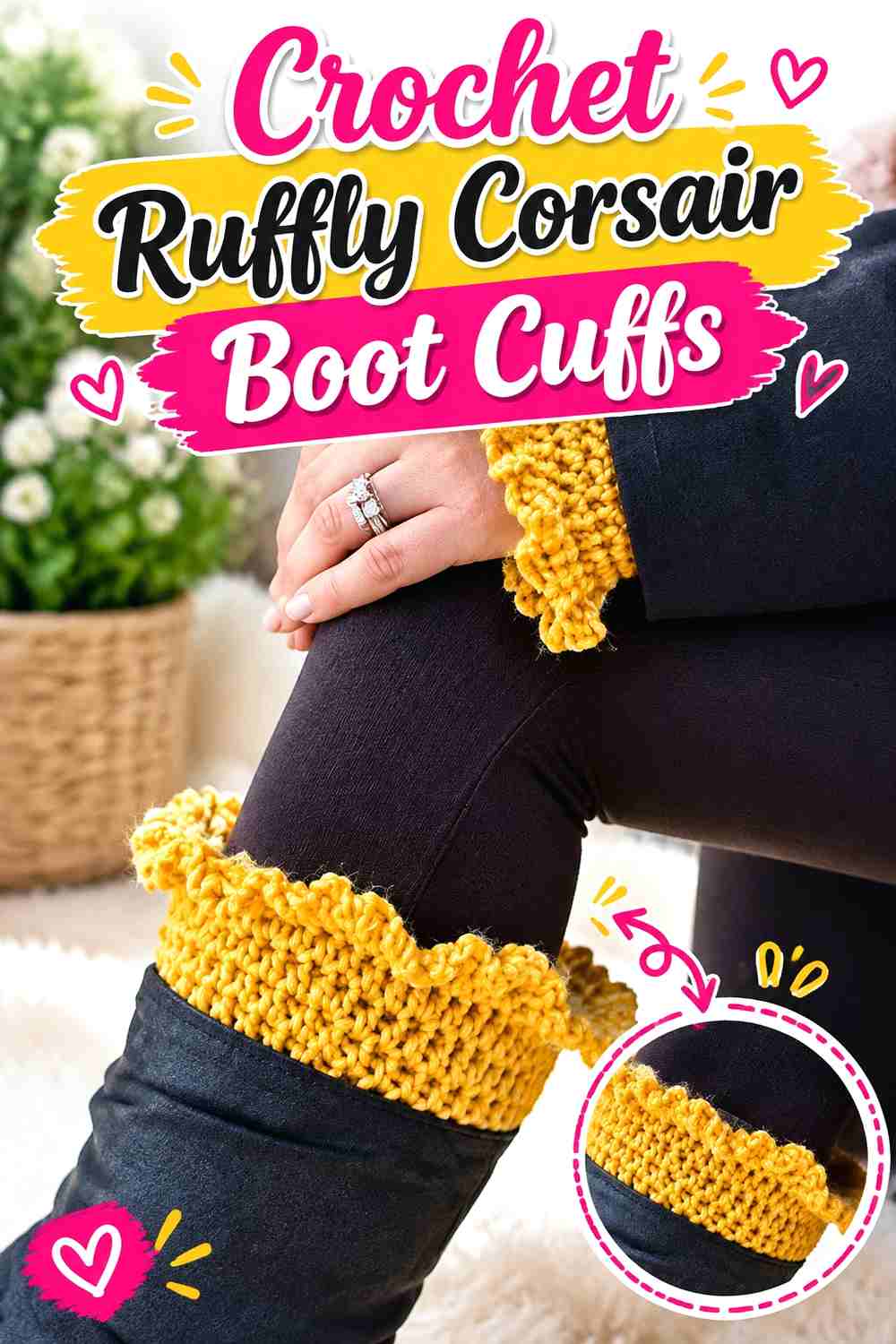
A pronounced ruffled edge creates one of the most theatrical silhouettes in this collection. Made With Love By Glama’s tutorial focuses specifically on ruffly boot cuffs, making the project a strong option for a flamboyant corsair, romantic rogue, or courtly pirate outfit.
Give the Ruffle Enough Space to Open
A full flounce needs room above the boot rather than being packed into the shaft.
Check how much leg remains visible between the boot and any skirt, coat, or cloak hem. The ruffle is most effective when it can spread instead of being squeezed between other layers.
Pair Drama With Relatively Simple Boots
Boots covered in buckles, studs, straps, and fur already contain several visual features.
A ruffled cuff can look more intentional against simpler footwear, where the crochet edge becomes the main decorative transition between the boot and the rest of the outfit.
Creator Credit: Made With Love By Glama
11. Crochet Bulky Button Deckhand Boot Cuffs
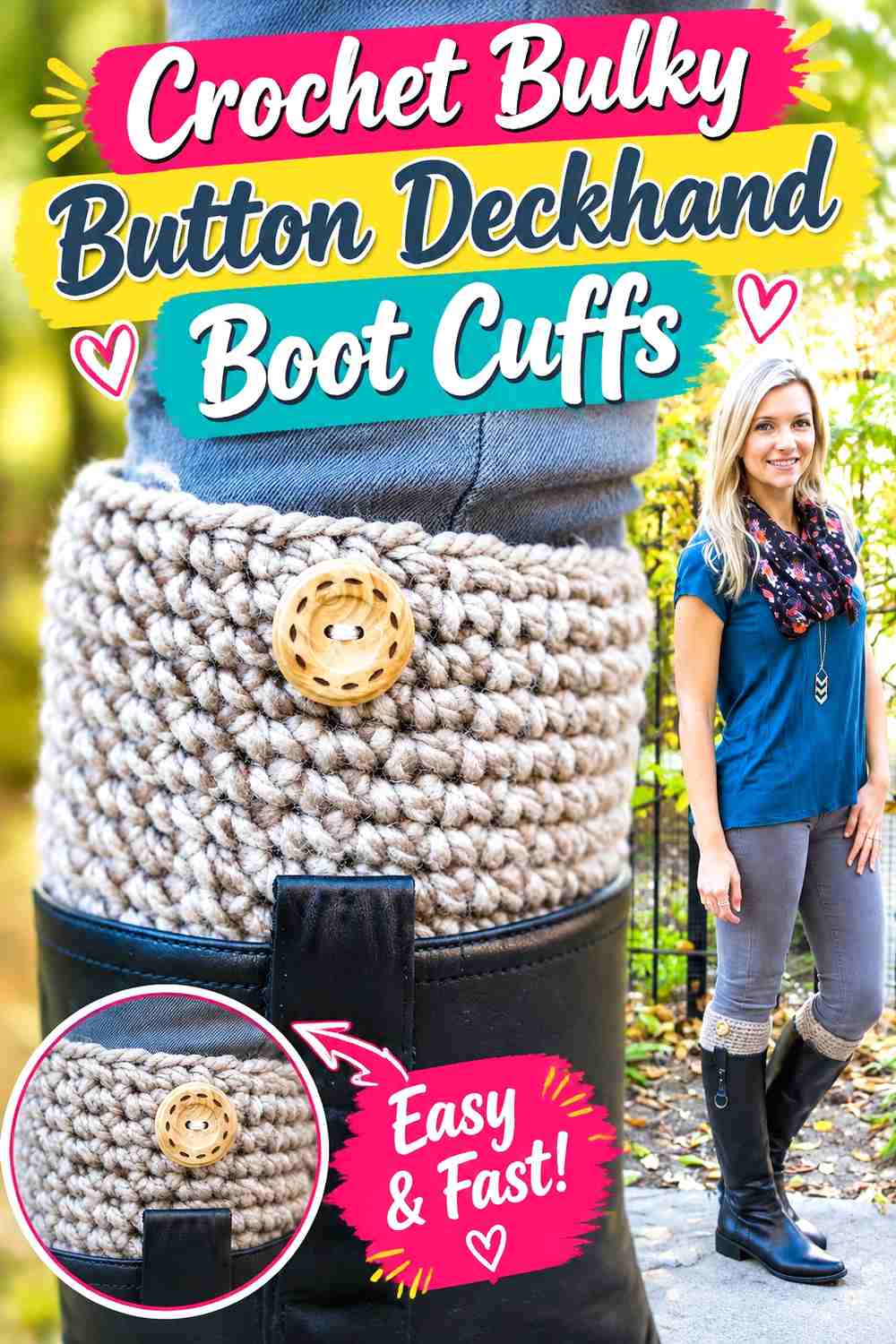
This source design combines a comparatively calm single-crochet surface with bulky yarn and decorative buttons. That makes it different from the cable and puff versions: the medieval-pirate mood can come from substantial fabric and hardware rather than intricate stitch texture.
A Quiet Surface Makes Hardware More Important
When the body is visually simple, buttons become easier to notice.
That can work well for a deckhand or working-pirate concept where the accessory should feel sturdy rather than highly ornamental.
Bulky Fabric Can Crowd a Fitted Shaft
A straightforward stitch does not necessarily mean a thin cuff.
Check how much of the bulky section sits inside the boot and whether it remains comfortable after walking. A little visible thickness can look substantial without requiring the entire cuff to be trapped inside the shaft.
Creator Credit: Melanie Ham
12. Crochet Minimal Adventurer Boot Cuffs
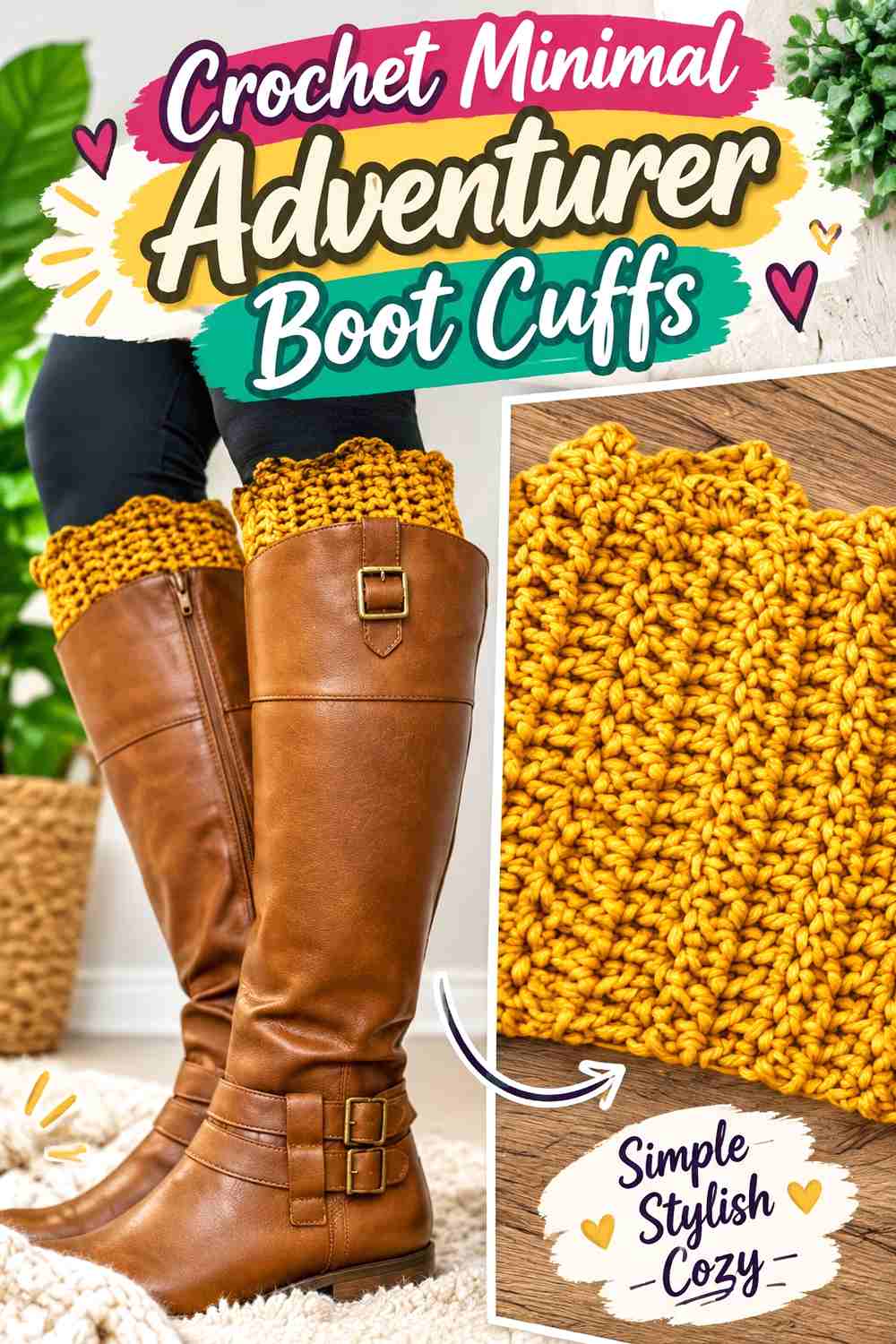
A simpler boot cuff is useful when the rest of the romantasy outfit already contains belts, buckles, layered skirts, weapons props, patterned tights, or a highly textured cloak. DIY FROM HOME CROCHET’s tutorial provides a straightforward medium-weight cuff rather than forcing another dramatic feature into the outfit.
Minimal Crochet Can Make the Whole Outfit Stronger
Not every medieval-inspired element needs to announce itself.
A restrained cuff in charcoal, oatmeal, muted brown, navy, or moss can create the appearance of layered winter clothing while allowing the boots and costume pieces above them to remain dominant.
Use the Simple Shape as a Fit Benchmark
Because there is less surface decoration, fit becomes easier to evaluate.
Use the first cuff to judge the circumference, visible height, and interaction with the boot before deciding whether a future pair should move toward a bulkier or more theatrical design.
Creator Credit: DIY FROM HOME CROCHET
13. Crochet Shell-Texture Siren Leg Warmers
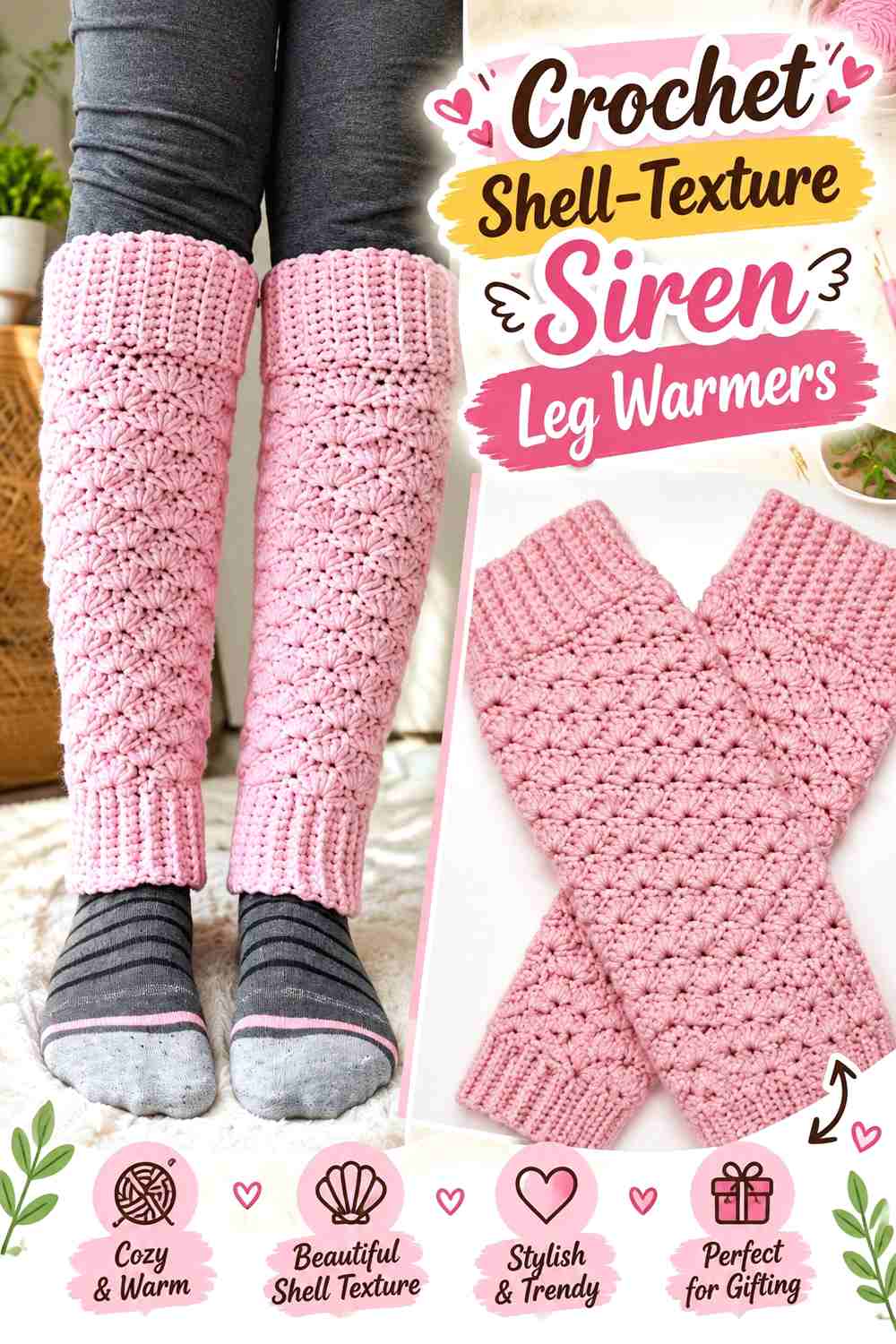
Shell stitches introduce a curved, repeating texture that feels softer and more flowing than cables or geometric blocks. Crochet With Akita’s leg-warmer design combines decorative shell texture with more controlled cuff areas, providing a useful source for a sea-witch, siren, coastal mage, or romantic sailor interpretation.
Shells Suit a Softer Pirate Silhouette
This texture works particularly well when you want movement rather than an armored appearance.
Deep teal, storm blue, sea green, faded plum, or dark neutral shades can reinforce the maritime mood while leaving the curved stitch pattern recognizable.
Decide How Much Slouch Should Cover the Pattern
Decorative shells look different when stretched smoothly along the calf versus compressed into folds.
If the stitch definition is the reason you chose this version, avoid so much slouch that most of the pattern becomes hidden inside overlapping fabric.
Creator Credit: Crochet With Akita
14. Crochet Flared Swashbuckler Leg Warmers
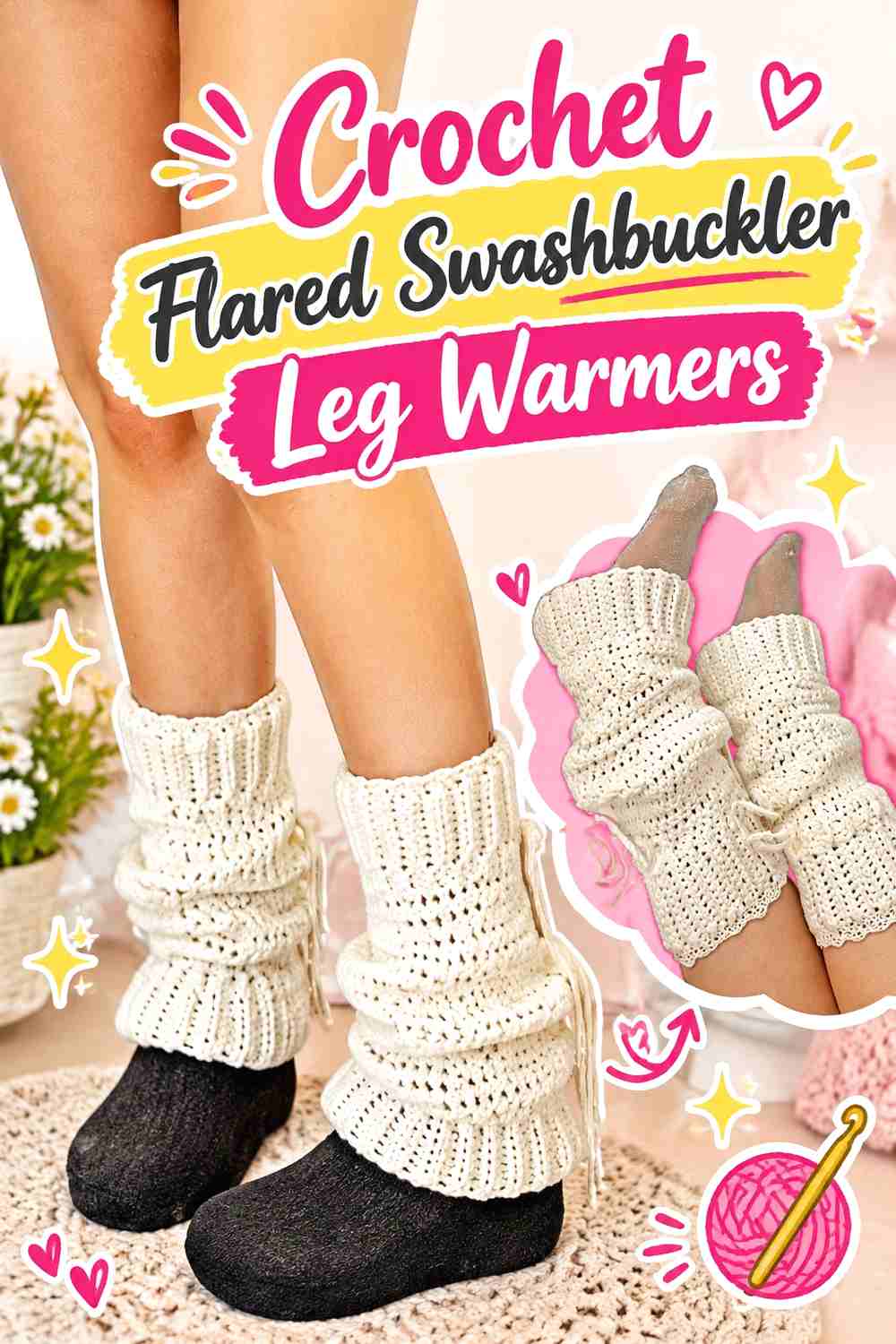
Nat’s record uses a noticeably wider lower section designed to spread over footwear instead of remaining a straight tube. That flare makes the project especially useful for a swashbuckler look because it changes the outline of the boot itself rather than adding only a narrow trim at the top.
The Flare Should Be Designed Around the Shoe
A dramatic lower edge can visually extend the boot, but its proportions depend on the footwear underneath.
Chunkier boots can support more volume. A slim boot may look better with less spread, so compare the developing shape with the shoes you actually intend to wear.
Lace-Like Detail Can Contrast With a Rugged Silhouette
A wider, substantial warmer does not have to look purely utilitarian.
Using delicate edge detail against a heavier body can create the tension between rough and romantic elements that suits a swashbuckling romantasy costume particularly well.
Creator Credit: nat’s record
15. Crochet Laced Tunisian Corset Gaiters
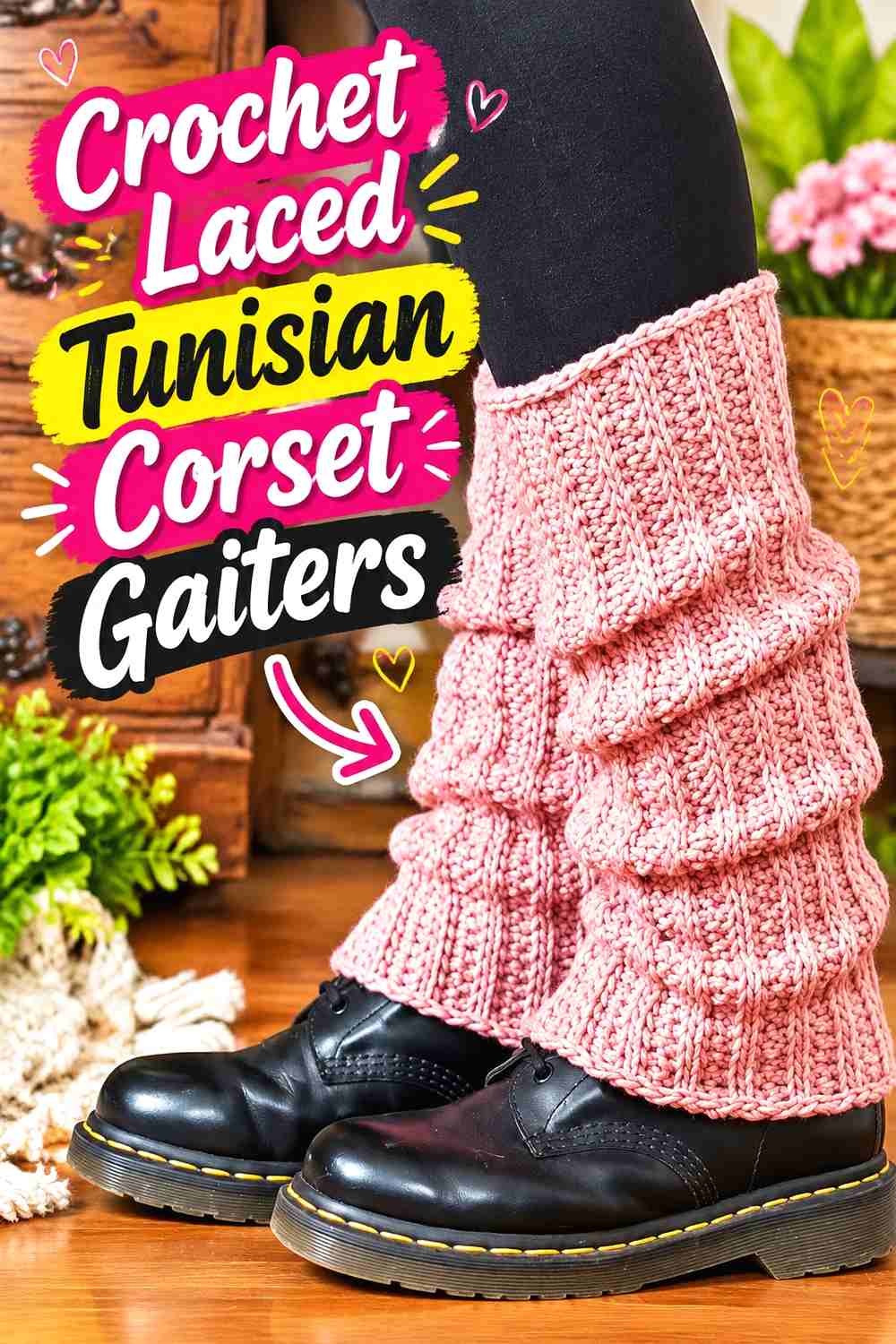
Cosmaudí’s Tunisian leg-warmer tutorial uses knit- and purl-like Tunisian texture and includes an optional cord that can function as lacing or a drawstring. That cord detail makes this one of the most direct starting points for a corseted gaiter interpretation.
Lacing Immediately Changes the Fantasy Read
Even a simple cord can make the upper edge feel more like a deliberately fastened costume layer.
Decide whether you want the cord to blend with the body or become a contrasting feature. A lighter or metallic-looking accent against dark crochet can draw the eye strongly toward the lacing.
Tunisian Fabric Deserves a Separate Fit Test
Do not assume this material will stretch exactly like your usual ribbed crochet.
Swatch the actual Tunisian texture and compare both width and flexibility before deciding on a very close gaiter fit. A beautiful fabric that is too rigid can become uncomfortable around a moving calf.
Creator Credit: cosmaudí
16. Crochet Ruffled Court-Pirate Leg Warmers
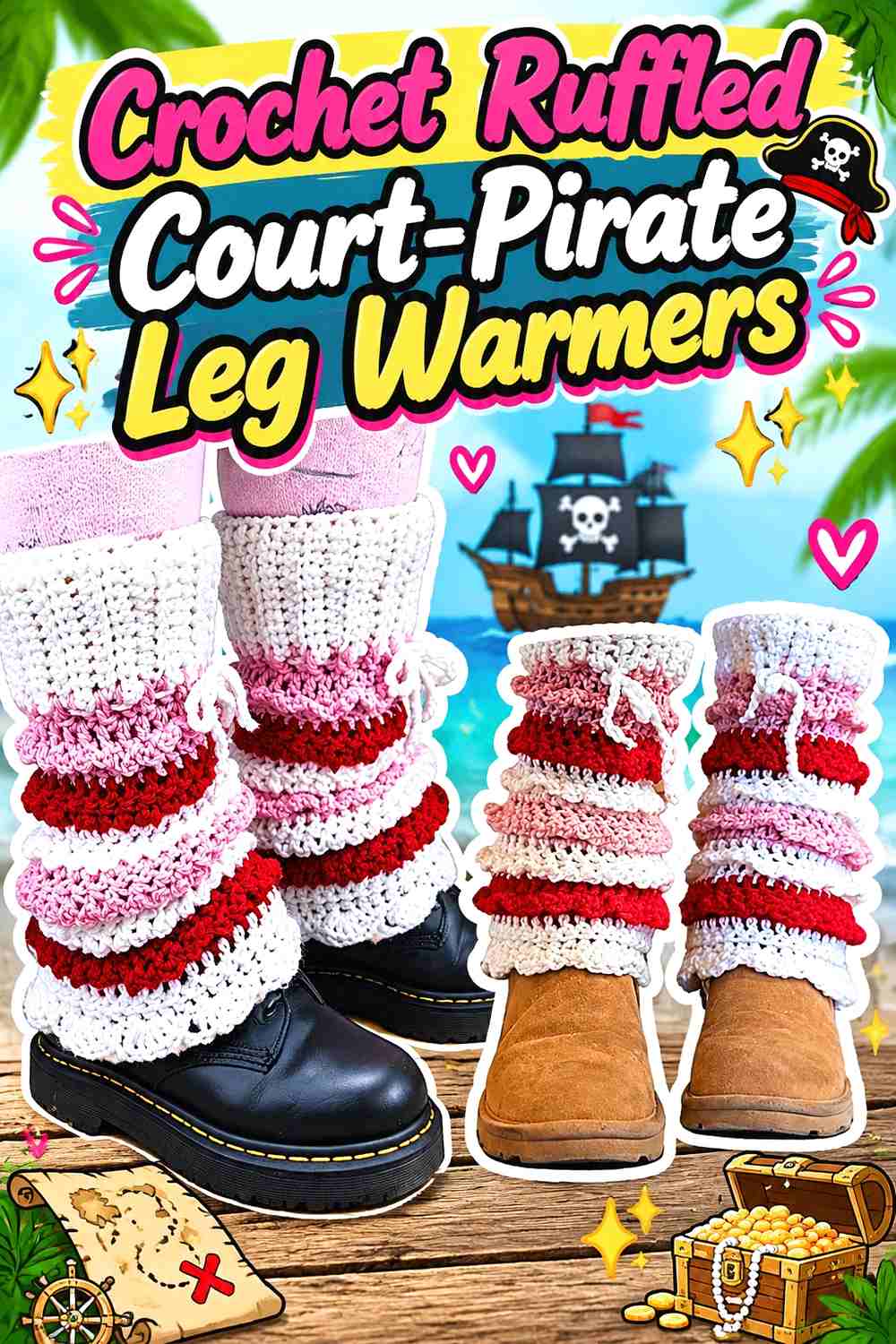
Melody Yarn Tinka’s project uses a made-to-measure approach with optional ruffles, ties, and a shaped lower area. Those details offer a different kind of drama from the compact ruffly cuff earlier in the article because the decoration is integrated into a taller leg-warmer silhouette.
Ties Can Become Part of the Costume Language
Visible ties suggest adjustable historical clothing even when the construction itself is modern crochet.
Keep them positioned where they will not catch repeatedly on boot buckles or drag near the ground. Decorative movement is useful only when the accessory remains practical to wear.
Decide Whether the Ruffle or the Gaiter Shape Leads
This project already contains several visually strong features.
For a court-pirate outfit, you might make the ruffle the obvious statement. For a subtler romantasy version, keeping the color quieter allows the overall leg-warmer shape and ties to carry more of the theme.
Creator Credit: Melody Yarn Tinka
17. Crochet Scalloped Tavern Boot Cuffs
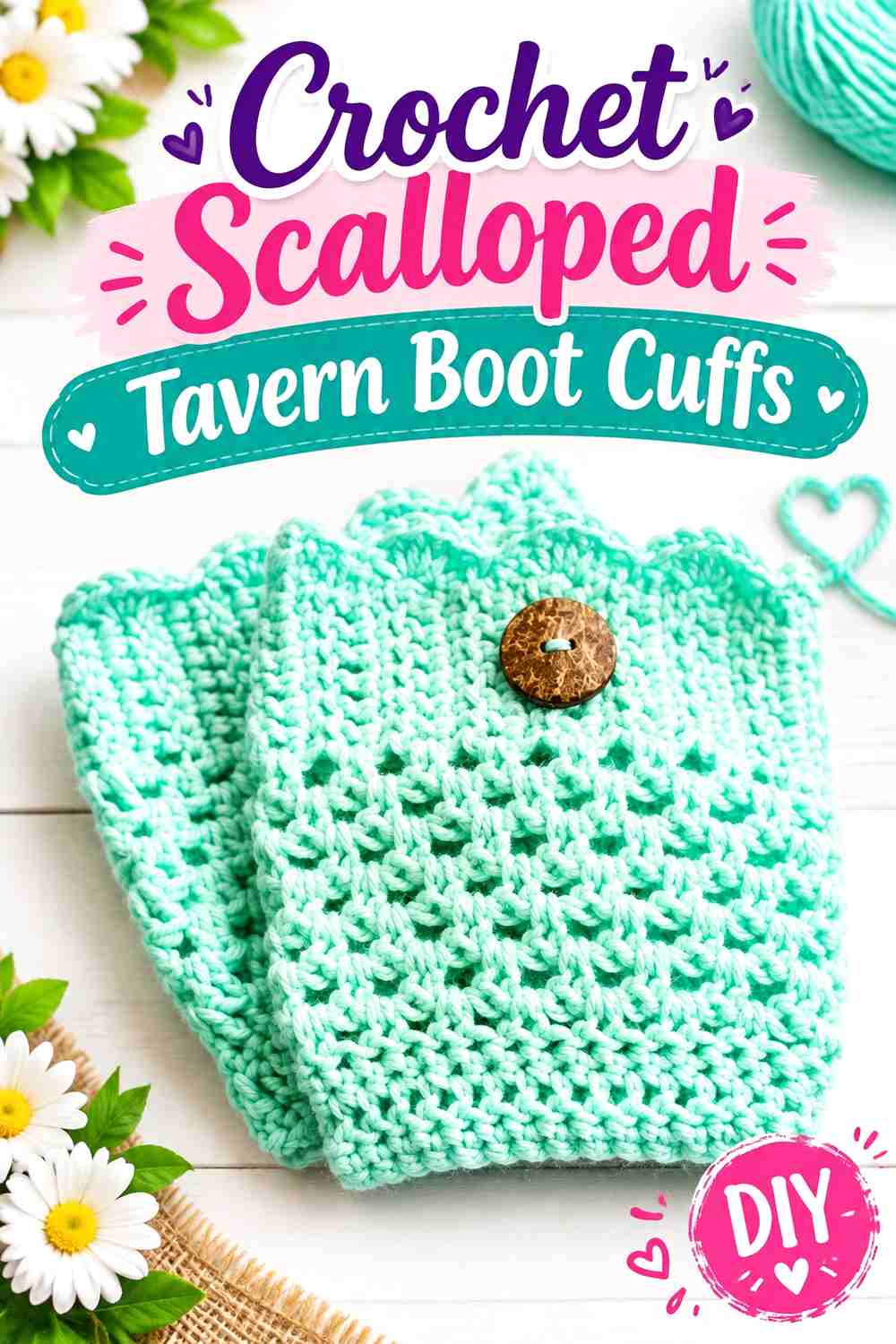
The iKNITS tutorial finishes its crochet boot cuffs with a distinct scalloped edge and optional button detail. Scallops sit between plain ribbing and a full ruffle, making this a useful choice for a tavern, village, bard, or everyday fantasy outfit that needs visible character without extreme volume.
Scallops Add Shape Without a Large Flounce
A repeated curved edge provides enough ornament to be noticeable while remaining relatively controlled.
This makes the cuff easier to pair with boots that already have moderate detailing but would feel overwhelmed by a large ruffle.
Even Spacing Becomes Part of the Finish
A decorative border attracts attention to its rhythm.
Before considering the first cuff complete, look across the entire visible edge rather than inspecting individual stitches one at a time. Consistent curves help the border look intentional when repeated on the second leg.
Creator Credit: iKNITS
18. Crochet Thigh-High Corsair Heel-Gap Gaiters
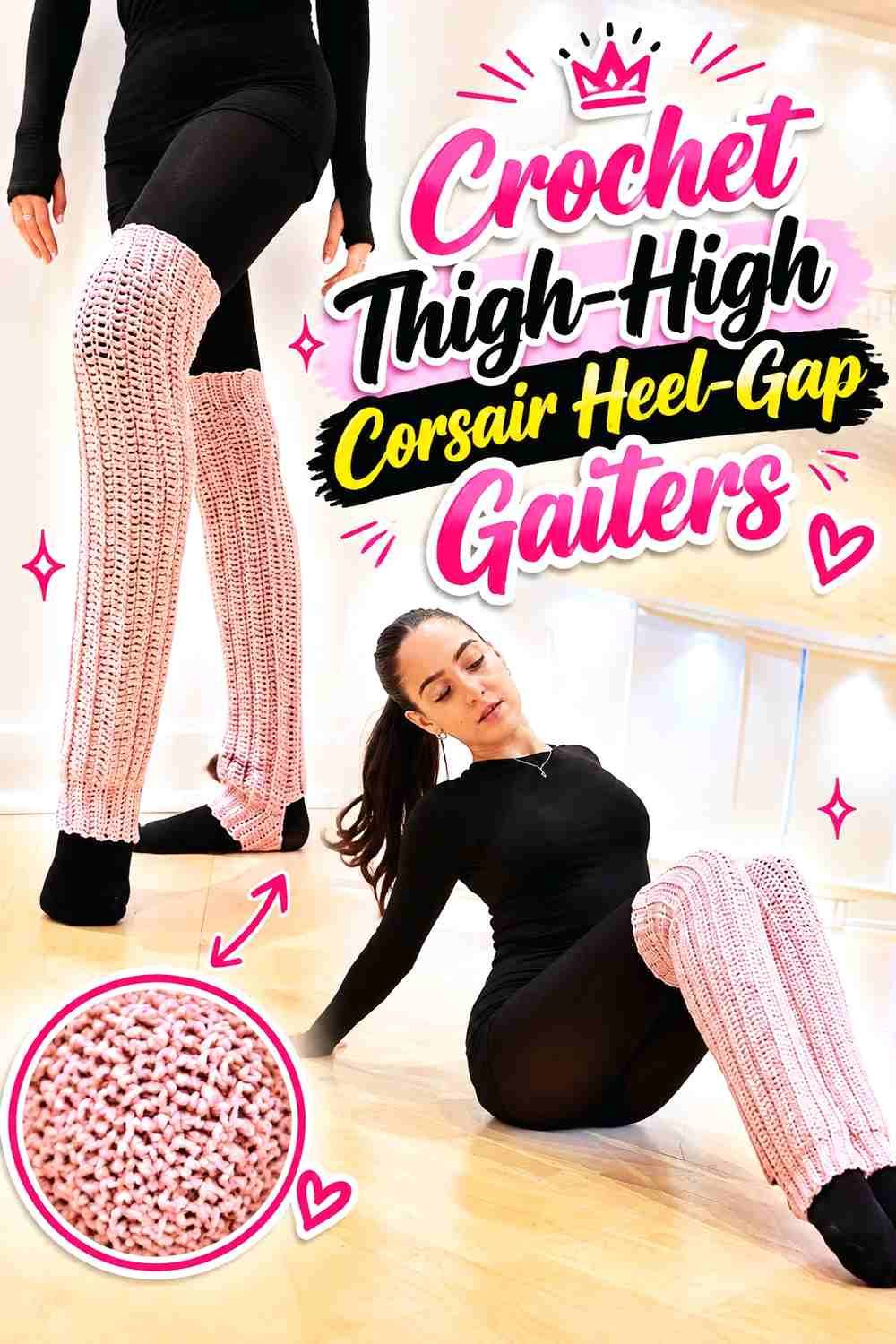
Cassandra Paz’s tutorial extends far beyond a conventional boot cuff, using thigh-high coverage with a heel opening. This is the most dramatic silhouette in the collection and works when the leg layer itself should become a major part of the romantasy costume rather than a small detail above the boot.
Thigh-High Coverage Requires Several Fit Points
A single calf measurement cannot describe the whole project.
The fabric crosses the ankle, calf, knee, and upper leg, so use the creator’s measurement framework rather than assuming an ordinary boot-cuff size can simply be extended upward.
The Heel Gap Changes the Footwear Relationship
Unlike a standard cuff that ends above the boot, this construction continues toward the foot while leaving the heel open.
That can create a distinctive layered corsair or fantasy-riding silhouette, but the opening needs to align properly with the intended footwear. Review the finished shape before modifying overall length or yarn behavior.
Treat Top-Edge Support as Functional
Tall crochet has more fabric hanging below its upper edge than a short cuff does.
Pay attention to the support method demonstrated in the tutorial and consider whether it suits the yarn and wearing situation you have planned. A dramatic silhouette is only useful if it remains comfortable and stable enough for the intended outfit.
Creator Credit: Cassandra Paz
Which Medieval Pirate Crochet Boot Cuff Style Fits Your Look?
| Style direction | Projects to compare | Main visual feature | Check before choosing |
|---|---|---|---|
| Rugged pirate or deckhand | 6, 10, 12, 13 | Ribbing, bulk, practical texture | Space inside the boot shaft |
| Captain or armored adventurer | 2, 7, 9 | Cables, geometric texture, dimensional stitches | Whether texture stays visible |
| Court pirate or romantic rogue | 1, 3, 11, 17, 18 | Buttons, lace, ruffles, scallops | Visible space above the boot |
| Forest-fae or ranger | 4, 8 | Shaped edges and quieter wearable texture | Finished height and boot overlap |
| Siren or coastal fantasy | 14 | Flowing shell texture | How much slouch hides the pattern |
| Swashbuckler statement | 15 | Wide flare over footwear | Proportion against the shoe |
| Corseted gaiter look | 16 | Tunisian texture and cord detail | Fabric flexibility and lacing placement |
| Maximum costume impact | 19 | Thigh-high coverage and heel gap | Multiple fit points and top support |
| Two-look versatility | 5 | Reversible Tunisian fabric | Thickness inside the shaft |
Conclusion
For a rugged pirate outfit, the deep ribbed, chunky button, or simple adventurer cuffs are easier to integrate with substantial boots and layered winter clothing. If you want the crochet itself to become the focal point, the cable, puff, C2C, and shell textures provide stronger surface detail.
The Victorian, lace, ruffled, and scalloped designs are better suited to a romantic or courtly interpretation, while the Forest Fern and knit-look options can support quieter ranger and woodland styling. For a true statement silhouette, the flared swashbuckler warmer, laced Tunisian gaiter, and thigh-high heel-gap design change much more than the upper edge of the boot.
Choose the construction first and the fantasy styling second. Fit, visible height, boot-shaft space, and fabric thickness are harder to correct than color or embellishment. Once you have selected the silhouette, use the original creator tutorial for its exact construction and finishing details.
Frequently Asked Questions
What makes a crochet boot cuff look medieval or pirate inspired?
Construction has more influence than color alone. Cables, heavy ribbing, lacing, buttons, scallops, lace, ruffles, and taller gaiter proportions can all suggest historical or fantasy clothing. Dark or weathered colors can reinforce the effect, but the cuff should still have a silhouette that works with the boots.
Can I turn a regular crochet boot cuff into a pirate-style cuff?
A conventional cuff can be styled in that direction through yarn color, visible height, compatible decorative trim, or hardware, but avoid changing structural details randomly. If you want a substantially taller, flared, laced, or thigh-high result, a tutorial already built around that silhouette is a safer starting point.
Should medieval-style crochet boot cuffs go inside or outside the boots?
That depends on the design. Simple ribbing can sit partly inside the shaft with only the upper edge visible. Scallops, ruffles, lace, buttons, or a flared bottom usually need more exposed space. Test the first cuff with the exact boots before finishing its partner.
Which crochet textures work well for a rugged pirate look?
Cables, dense Tunisian crochet, strong ribbing, C2C blocks, and puff texture create substantial surfaces that can suit rugged styling. For a softer romantasy interpretation, shells, lace, scallops, and ruffles create a more decorative effect.
How do I prevent a crochet boot cuff from feeling too bulky?
Consider both yarn thickness and stitch structure. Dense Tunisian fabric, bulky yarn, puff stitches, and large cables can take up more shaft space than open lace or a flatter cuff. Check the first piece inside the boot before making the pair, and keep more decorative fabric above the shaft when appropriate.
Can I add buckles or metal charms to crochet pirate boot cuffs?
Decorative hardware can work, but consider weight, attachment security, and where it sits relative to the boot. Avoid positioning raised pieces where they will repeatedly press against a zipper, buckle, or rigid shaft edge. If an embellishment is not part of the original tutorial, treat it as a styling addition rather than assuming it can function as structural support.
Are leg warmers and gaiters better than short boot cuffs for a romantasy outfit?
They create different effects. Short cuffs are easier to wear with everyday boots and add only a small fantasy accent. Taller leg warmers or gaiter-style pieces can transform more of the lower-leg silhouette, which works well when the footwear is meant to be a major part of the costume. The trade-off is that taller pieces require more attention to calf shape, movement, stretch, and staying in place.