A good winter reading sweater needs a different kind of comfort from a statement garment you wear for a quick outing. When you are settled into a chair with a novel, holding a mug, taking notes, or spending several hours at book club, sleeve bulk, neckline height, fabric weight, pockets, and overall ease become much more noticeable.
The 18 ideas below cover genuinely different sweater and cardigan constructions rather than small color variations. You will find longline cardigans, relaxed raglans, granny motifs, cable panels, chunky pockets, cropped layers, a sweater vest, a turtleneck, balloon sleeves, textured yokes, and lighter open fabrics.
These tutorials are not all specifically labeled as “reading sweaters.” Instead, each provides a crochet garment construction that can suit cozy winter reading when its fit, yarn, and length match how you like to sit and layer.
Quick List
- Crochet Longline Duster Reading Cardigan
- Crochet Relaxed Raglan Reading Sweater
- Crochet Airy Layered Reading Pullover
- Crochet Granny Motif Reading Cardigan
- Crochet Sedge-Texture Cozy Reading Sweater
- Crochet Cropped Hexagon Reading Cardigan
- Crochet Oversized Minimalist Reading Cardigan
- Crochet Striped Relaxed Reading Sweater
- Crochet Cable-Panel Reading Cardigan
- Crochet Layering Sweater Vest for Reading Nights
- Crochet Collared Classic Reading Cardigan
- Crochet Oversized Fireside Reading Cardigan
- Crochet Chunky Pocket Reading Cardigan
- Crochet Moss-Stitch Striped Reading Jumper
- Crochet Wheat-Texture Yoke Reading Sweater
- Crochet Granny-Square Reading Shrug
- Crochet Balloon-Sleeve Teatime Reading Cardigan
- Crochet Turtleneck Reading Sweater
Choose a Reading Sweater by Sitting Comfort, Not Just Standing Fit
Garments are usually photographed while the wearer is standing, but a reading sweater spends much of its life folded around a seated body. That changes what deserves attention.
A long cardigan can provide welcome coverage over the lap and hips, but excessive length may bunch behind you in a deep chair. A cropped sweater avoids that problem but provides less lower-body warmth. An oversized pullover can feel relaxed through the torso, while too much fabric at the underarm may become noticeable when your elbows remain bent around a book.
Before settling on a size, compare your body measurements with the specific tutorial or accompanying pattern. Then think about the ease you actually want. “Oversized” should be an intentional fit choice rather than the result of simply choosing a larger size without checking the garment proportions.
Sleeve length is particularly worth testing. Sleeves that look dramatic when your arms hang naturally may slide toward your hands while you hold a book.
Yarn, Texture, and Drape Change the Reading Experience
A sweater can look soft without necessarily behaving softly. Fiber content, yarn construction, stitch density, and garment weight all influence how the finished piece feels during several hours of wear.
Dense cables and puff textures create visual depth but can produce a more substantial garment. Open granny stitches and mesh constructions reduce visual density and can work well over another winter layer. Smooth fabrics are less likely to compete with patterned clothing, while textured stitches can make a solid-color sweater interesting without additional colorwork.
If you substitute yarn, make a gauge swatch and consider more than measurements. Feel the fabric against your neck and inner arm, fold it, and notice whether it springs back or stretches under its own weight.
For a reading sweater, drape is often as important as warmth. Fabric that bends easily tends to settle more naturally around the elbows and waist when you curl into a chair.
Think About Cuffs, Pockets, and Necklines Before Book Club Night
Small construction details can have an outsized effect when your hands stay busy.
Deep pockets are useful for a phone, reading glasses, tissues, or a bookmark, but heavily loaded pockets can distort a soft crochet cardigan. Wide balloon sleeves create a cozy silhouette but may brush pages, snacks, or drinks. Close cuffs can keep sleeve fabric away from your hands.
Necklines create another trade-off. A turtleneck offers more coverage, while an open cardigan makes temperature adjustment easier in a warm living room or café. A V-neck or sweater vest leaves room for a collared shirt or lightweight turtleneck underneath.
The right option depends on where you read and how you naturally layer.
1. Crochet Longline Duster Reading Cardigan
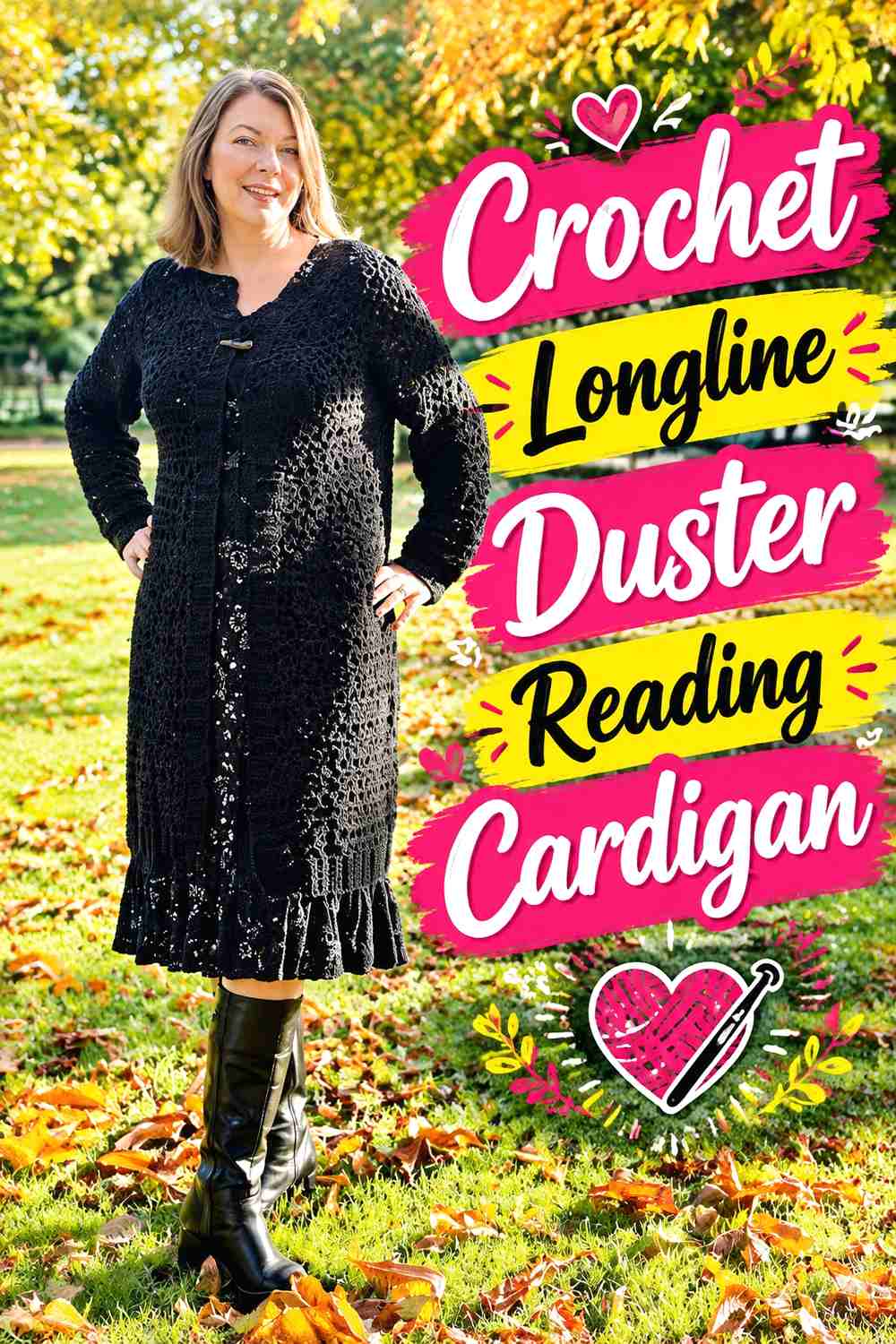
A long duster is the closest option in this collection to a wearable blanket without becoming one. Ophelia Talks Crochet demonstrates a chunky duster cardigan designed as a substantial cold-weather layer with customizable length and textured finishing.
For reading, the appeal is coverage. The longer body can warm the hips and upper legs while leaving the front open, making it easier to regulate temperature than with a similarly heavy pullover.
Long Length Changes How the Cardigan Behaves in a Chair
Decide where you normally read before choosing your final length. A knee-length cardigan can feel cozy in an upright armchair but may bunch behind your back on a sofa with deep cushions.
Try comparing the intended garment length with a coat or cardigan you already own. Sit in it before committing to the same proportions in crochet.
A Heavy Cardigan Needs Shoulder Support
Adding length also adds yarn and therefore garment weight. That weight hangs primarily from the shoulders.
If you modify the source design, consider the relationship between length, fiber, and drape rather than extending the cardigan indefinitely. A fabric that feels light in a swatch can become considerably more substantial across an entire duster.
Creator Credit: Ophelia Talks Crochet
2. Crochet Relaxed Raglan Reading Sweater
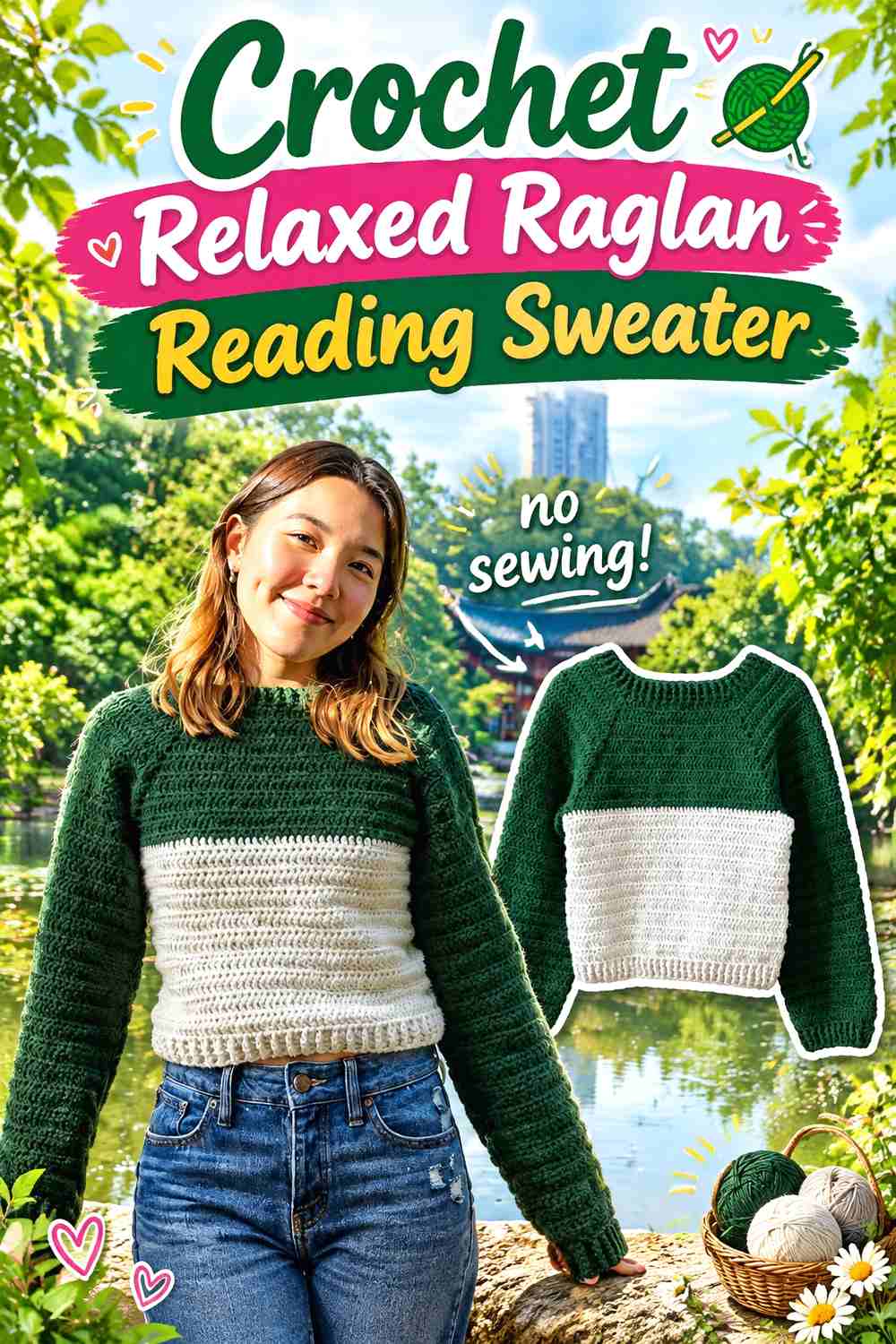
A raglan is a useful option when you want a pullover without abrupt drop-shoulder seams. VivCrochets’ tutorial uses a two-color raglan construction and works through the yoke, sleeves, ribbing, neckline, and body.
For book club nights, the continuous shoulder line can give the sweater a cleaner, less bulky upper silhouette than some heavily seamed constructions.
Raglan Depth Controls More Than Bust Fit
The point where the yoke separates into body and sleeves affects the underarm area. Too little depth can make the sweater feel restrictive when you bend your arms, while excessive depth can create fabric bunching.
Follow the sizing information associated with the tutorial rather than judging fit only by overall bust width.
Two Colors Can Define the Shape Without Making It Busy
A reading sweater does not need complex colorwork to have visual interest. A main winter neutral with a contrasting neckline, lower body, or sleeve section can make the raglan structure noticeable while still being easy to style for a casual book club.
If you change the color arrangement, plan transitions around the garment construction instead of interrupting them arbitrarily.
Creator Credit: VivCrochets
3. Crochet Airy Layered Reading Pullover
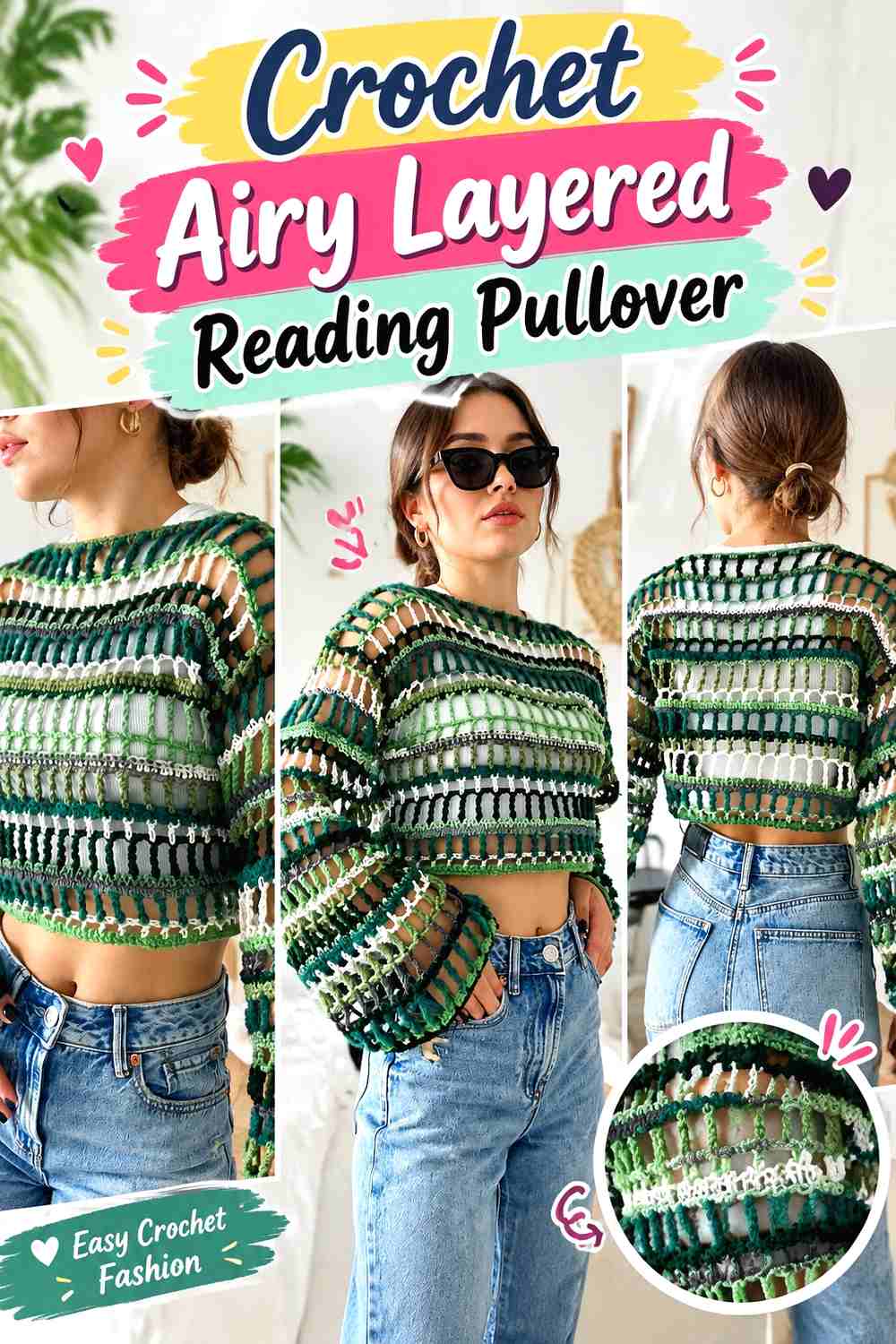
Kenikse Crochet’s long-sleeve mesh sweater takes the collection in the opposite direction from the dense duster. Its open fabric produces a lighter garment intended to be layered, with front and back panels and separate sleeves.
For a winter reading outfit, that makes sense in heated indoor spaces where a heavy sweater may quickly feel excessive.
Open Fabric Makes the Underlayer Part of the Outfit
A mesh sweater does not function visually on its own in the same way as a dense pullover. The shirt, camisole, or other layer beneath it shows through the crochet.
For book club styling, choose the underlayer at the same time as the sweater colors. Strong contrast emphasizes the stitch pattern; similar tones produce a quieter effect.
Openwork Provides Less Wind Protection
This is primarily an indoor-layering idea rather than the first choice for a cold walk to the meeting.
If you need outdoor warmth as well, plan for a coat or another layer rather than making the crochet fabric unusually dense and changing the character of the design.
Creator Credit: Kenikse Crochet
4. Crochet Granny Motif Reading Cardigan
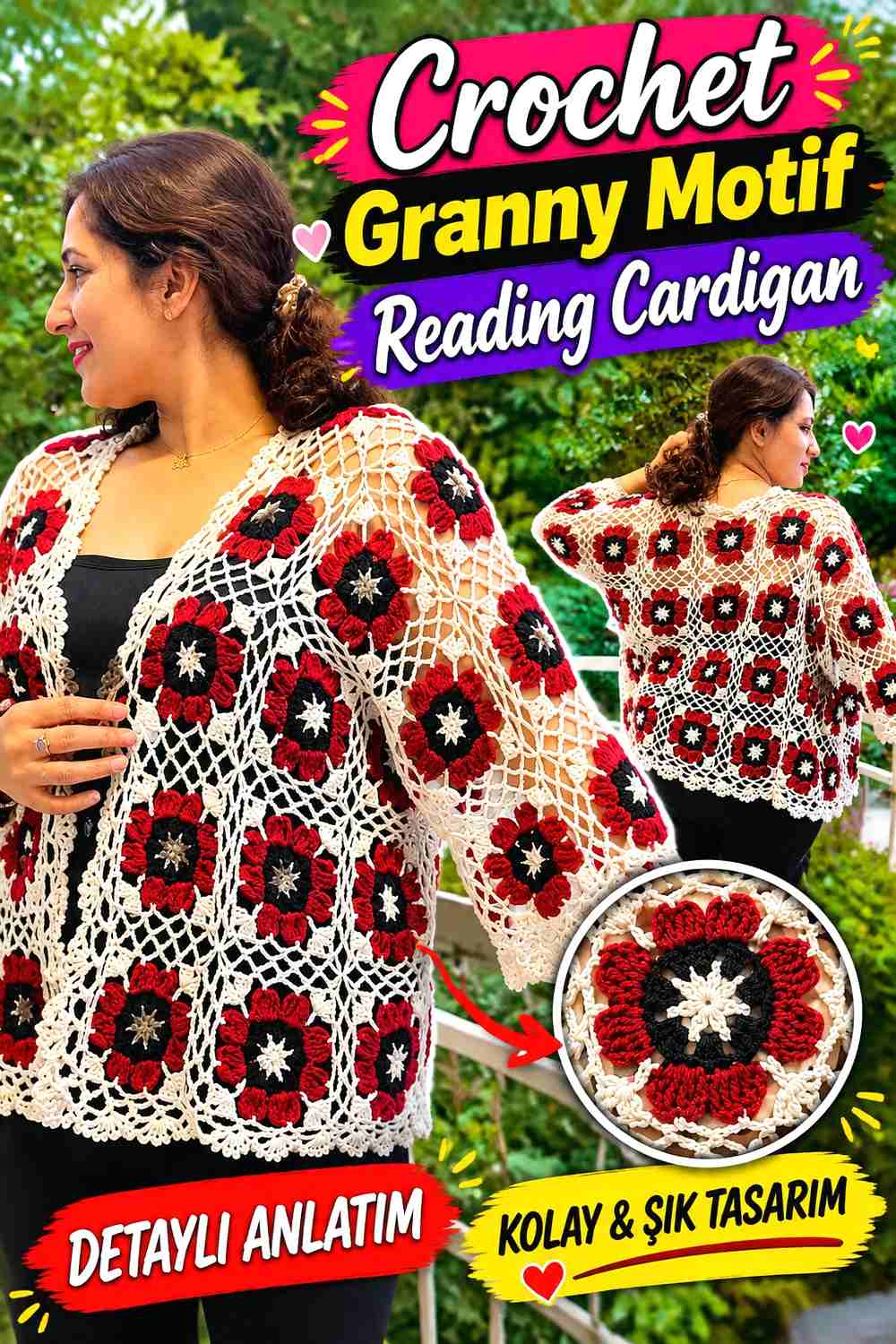
A granny-motif cardigan gives a book-club sweater a collected, handmade appearance that can suit vintage, cottage, and colorful wardrobes. ÖRGÜ MÜ DEDİNİZ demonstrates a cardigan assembled from granny-square motifs, including joining and garment assembly.
Motif construction also lets you work on smaller portable components before committing to the full garment.
Block Motifs Before Trusting the Layout
A sweater made from joined motifs depends on consistent square dimensions. Small differences multiply when several pieces meet across the back, shoulder, or sleeve.
Compare blocked motifs before final assembly. If you want to mix several square designs, confirm that their finished dimensions and border structures are compatible rather than assuming all granny squares are interchangeable.
Color Placement Can Affect the Apparent Width
High-contrast squares draw the eye individually, while a more limited palette lets the cardigan read as a continuous garment.
If you prefer a calmer reading-night layer, consider concentrating stronger colors in selected areas and using repeated neutrals to connect the motifs.
Creator Credit: ÖRGÜ MÜ DEDİNİZ
5. Crochet Sedge-Texture Cozy Reading Sweater
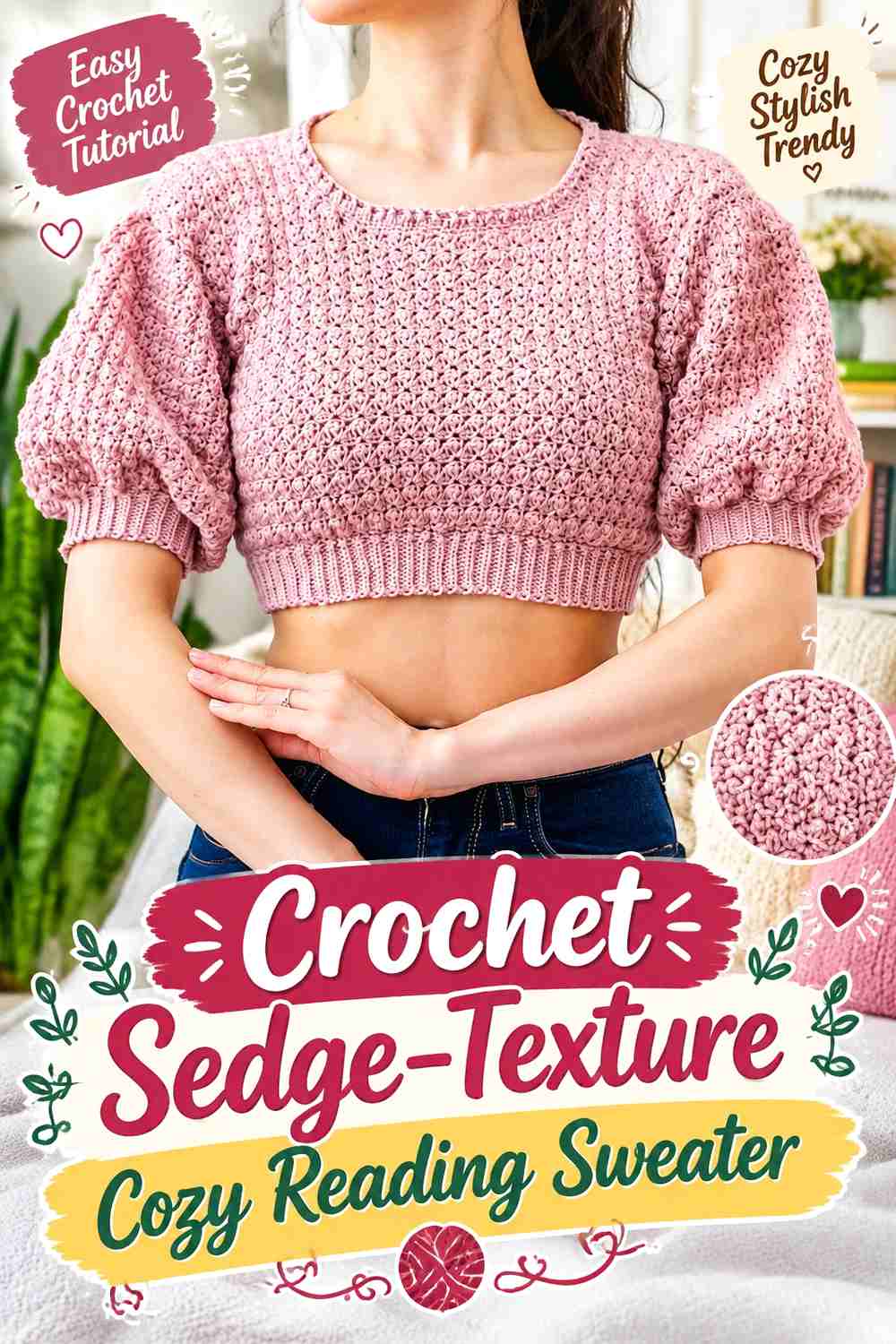
TCDDIY’s cozy sweater uses a textured stitch across a paneled construction with separate neckline, sleeve, cuff, lower-band, and collar finishing.
This is a useful route when you want one solid yarn color to look more interesting without introducing motifs or multiple-color patterning.
Texture Can Make a Neutral Sweater Feel Finished
A cream, taupe, charcoal, or muted green sweater can look deliberately detailed when the stitch pattern already creates surface variation.
That allows the sweater to pair easily with patterned skirts, trousers, or book-club accessories without needing additional decoration.
Examine the Fabric at the Inside of the Elbow
Repeatedly bending the arms compresses textured crochet. A stitch pattern that looks appealing when flat may feel thicker in areas that stay folded.
Before committing to the garment, bend and squeeze your swatch. That small test tells you more about reading comfort than simply holding it against your torso.
Creator Credit: TCDDIY
6. Crochet Cropped Hexagon Reading Cardigan
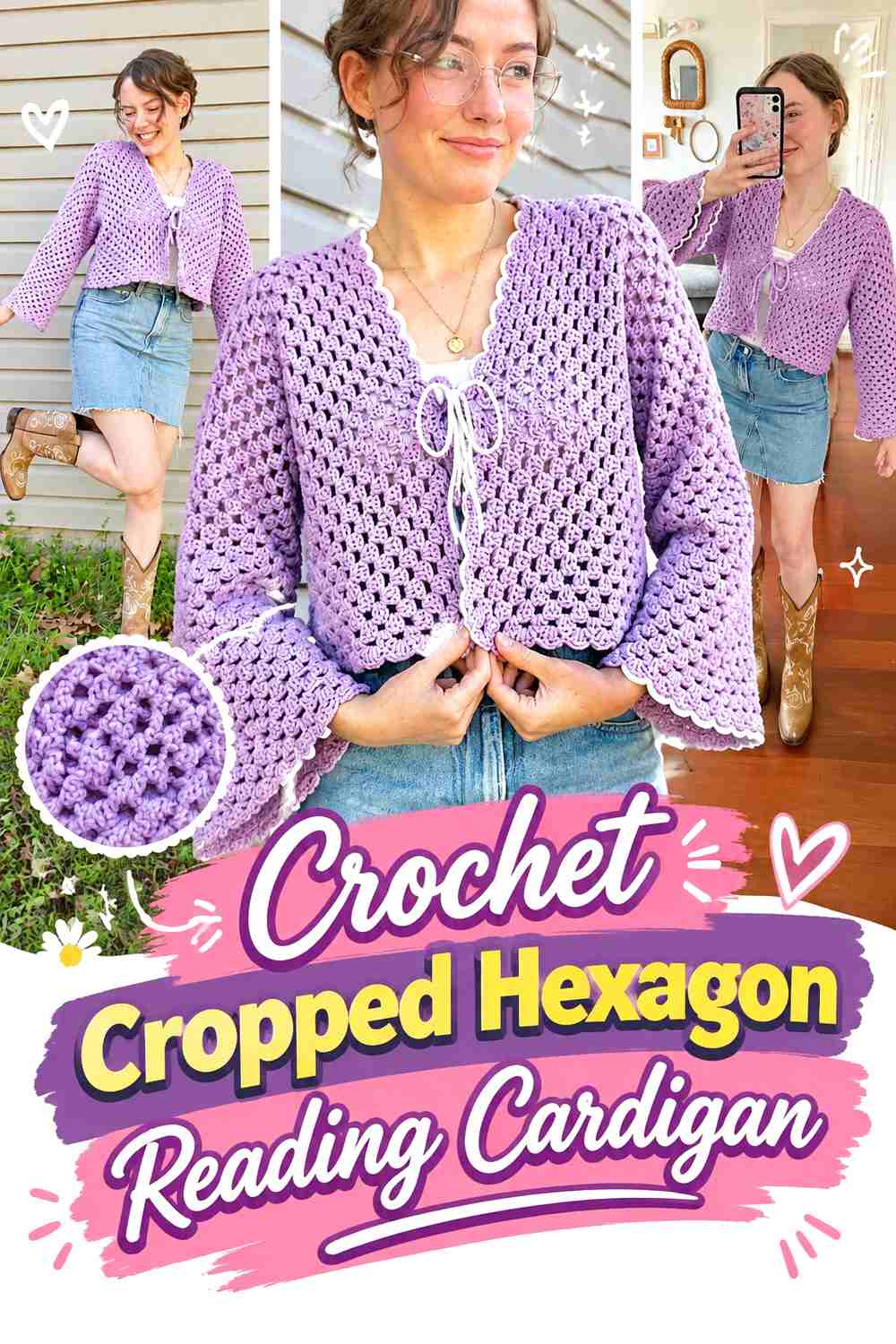
HayHay Crochet’s cropped cardigan is built around granny-style hexagon construction and includes options for adjusting the garment and finishing details.
A cropped cardigan is particularly useful for reading at a desk or sitting deep in a sofa because there is less fabric to gather beneath the hips.
Cropped Length Works Well With High-Waisted Layers
A short cardigan leaves more of the lower outfit visible. For winter book club nights, it can work over high-waisted trousers, skirts, or a dress where a long sweater would obscure the silhouette.
Before shortening further, check where the cardigan falls while seated as well as standing.
Hexagon Construction Creates Its Own Drape
A hexagon cardigan does not behave exactly like a conventional front-and-back-panel garment.
Let the construction determine the shoulder and sleeve shape before making major changes. If you need more body width or sleeve length, use the source’s adjustment logic rather than treating the pieces like ordinary rectangles.
Creator Credit: HayHay Crochet
7. Crochet Oversized Minimalist Reading Cardigan
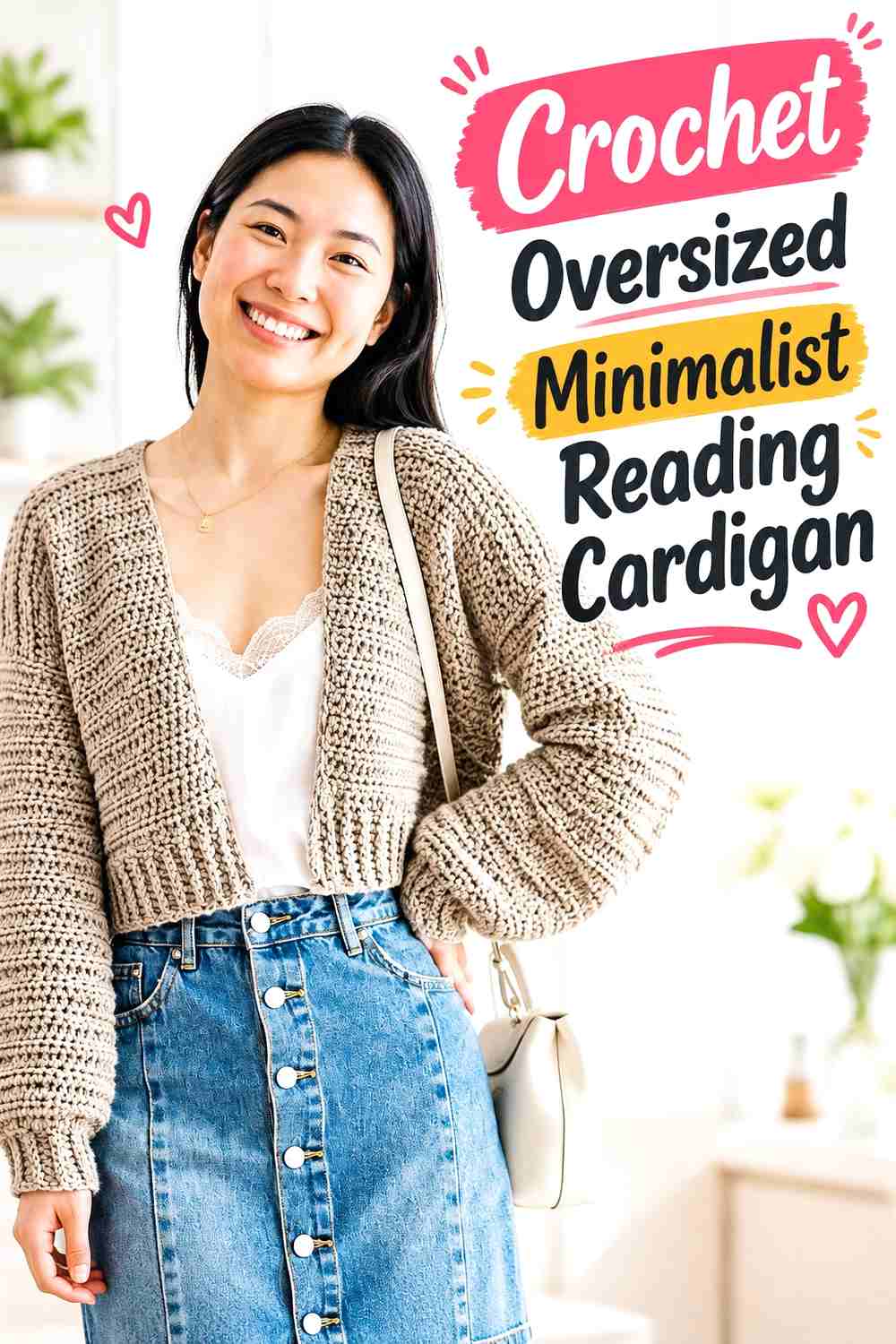
The oversized cropped cardigan from forthefrills uses a minimalist open-front shape, a bottom-up body, customizable lengths, and several neckline finishing options.
That combination makes it well suited to readers who like a relaxed layer but do not want the visual weight of cables, motifs, or elaborate colorwork.
Oversized Should Still Have Deliberate Proportions
More width can create a cozy silhouette, but extra fabric everywhere is not automatically more comfortable.
Check the shoulder placement, armhole depth, and sleeve proportions associated with your selected size. If you want additional ease, preserve a sensible relationship between those areas rather than enlarging every dimension equally.
An Open Front Makes Temperature Changes Easier
Book clubs move between chilly journeys and heated rooms. An open cardigan lets you adjust more quickly than a pullover.
It also accommodates different necklines underneath, which can make the garment more versatile across winter rather than limiting it to one specific outfit.
Creator Credit: forthefrills
8. Crochet Striped Relaxed Reading Sweater
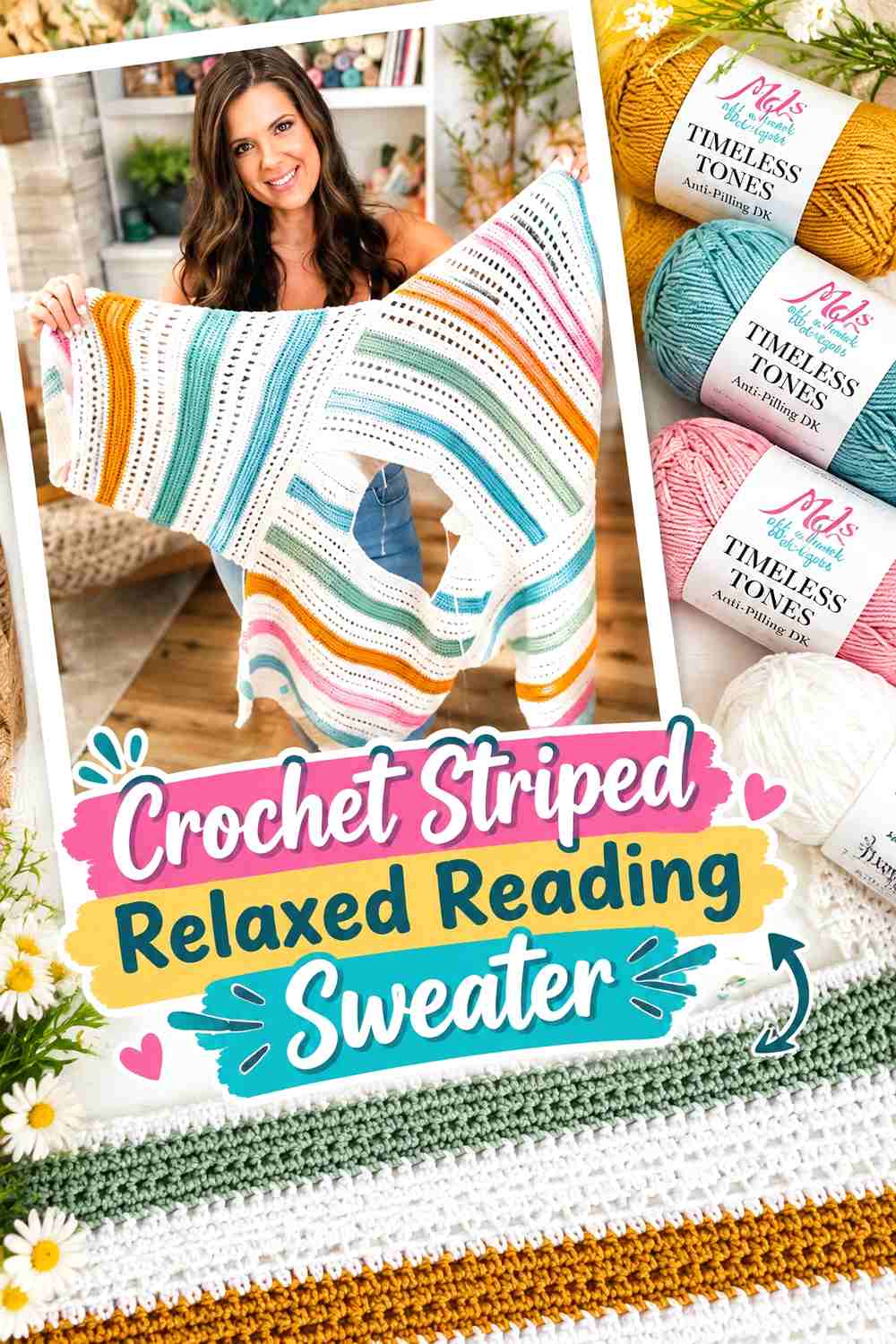
MJ’s Off The Hook Designs demonstrates a relaxed striped sweater with worked pieces, shoulder shaping, ribbing, and a multi-color stripe arrangement.
For a reading sweater, stripes can supply plenty of personality while leaving the garment surface relatively uncluttered.
Place Strong Stripes Where They Will Stay Visible
When you sit with a book against your torso, the lower front of the sweater may be hidden for much of the evening.
If adapting the stripe palette, consider putting a favorite color higher on the body or sleeves instead of saving all the contrast for the hem.
Shoulder Shaping Matters in a Seamed Sweater
A paneled sweater can still have a refined fit when the shoulders are intentionally shaped.
Before altering width, understand how any change affects the shoulder seam and sleeve attachment. Simply widening both body pieces can move the sleeve position farther down the arm than intended.
Creator Credit: MJ’s Off The Hook Designs
9. Crochet Cable-Panel Reading Cardigan
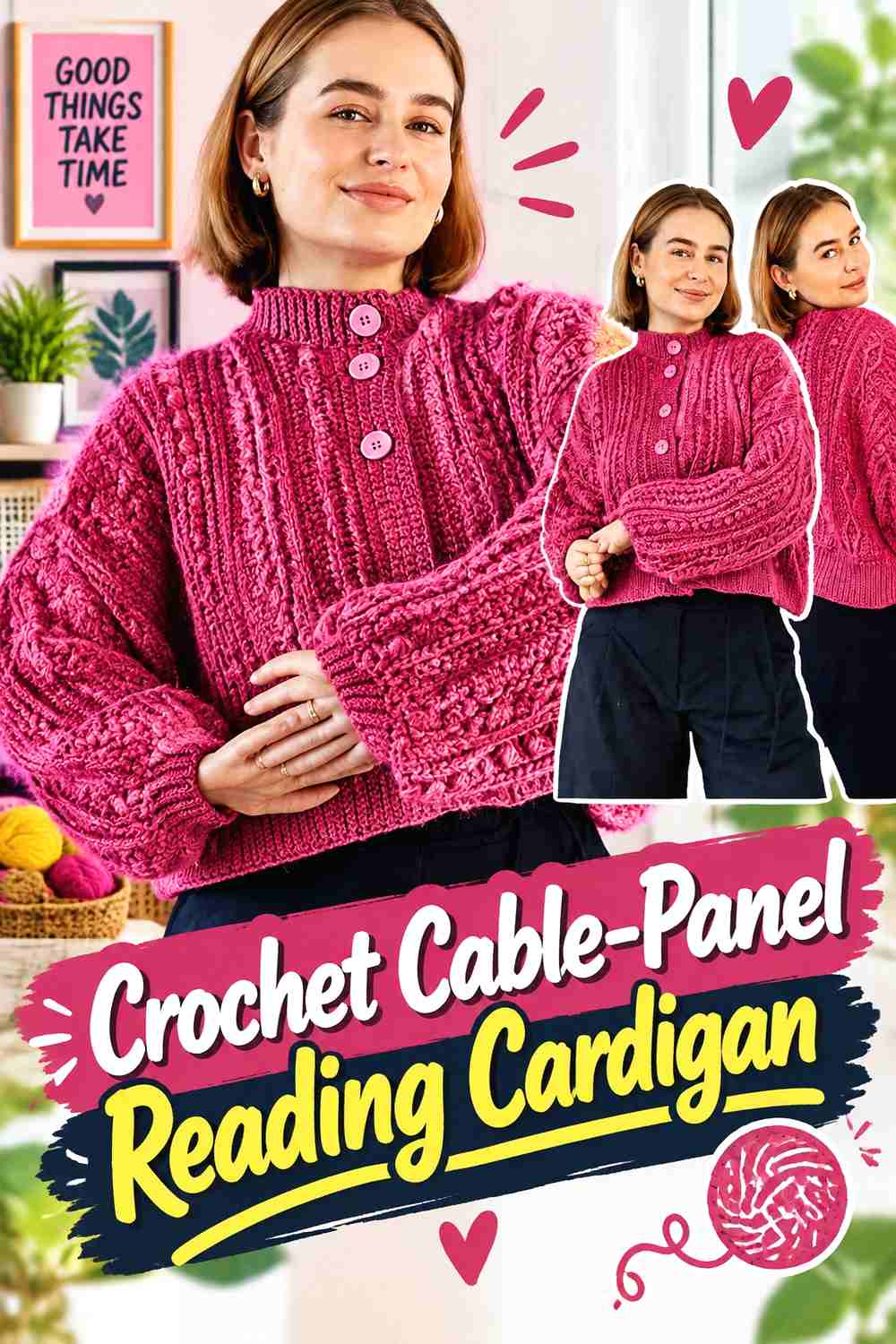
Katie Joslin’s made-to-measure cardigan combines cable panels with other textured panels and then joins them into the body and sleeves. The panel approach is designed to allow adjustments to dimensions and fit.
This is one of the strongest choices if the appeal of your reading sweater is rich winter texture rather than bright color.
Cable Panels Add Depth and Weight
Raised crochet texture consumes visual and physical space. A heavily cabled cardigan can feel more substantial than a smoother cardigan with similar finished measurements.
Consider that before adding extra length or dramatically oversized sleeves.
Panel Consistency Determines the Finished Structure
When separate vertical elements form the garment, variations in panel length become assembly problems.
Measure the panels under the same conditions before joining them. Blocking can help settle texture, but it should not be used as a plan for correcting large discrepancies between pieces.
Creator Credit: Katie Joslin
10. Crochet Layering Sweater Vest for Reading Nights
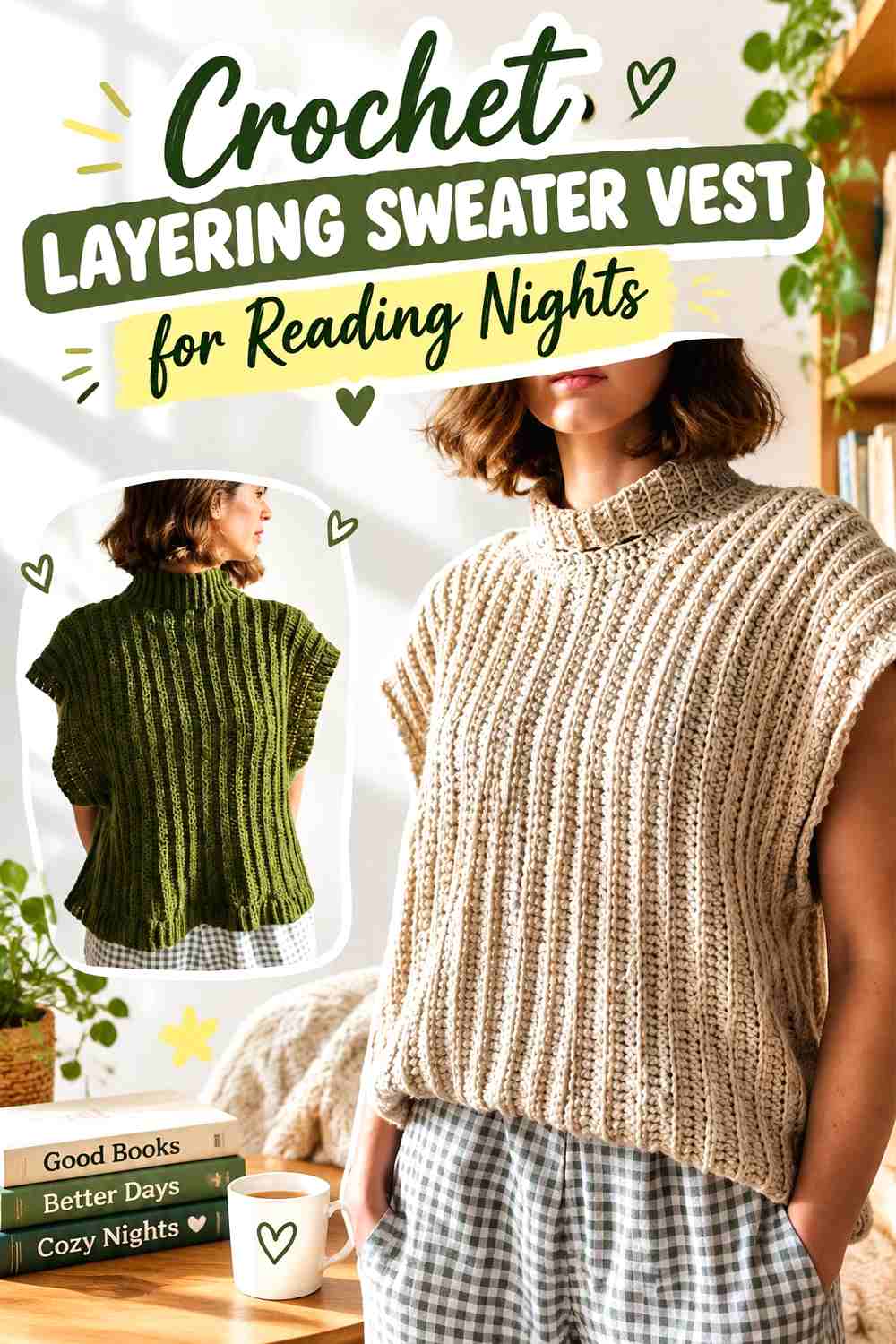
A sweater vest is useful when you want torso warmth but prefer completely unrestricted arms while holding a hardback, writing notes, or reaching across a book-club table. passtschon’s tutorial constructs a crochet sweater vest with separate front and back sections plus armhole and neckline finishing.
It also creates a natural opportunity for layered winter styling.
Armhole Depth Changes the Layering Options
An armhole that works over a fitted shirt may behave differently over a thicker blouse or turtleneck.
Decide what you actually plan to wear underneath before finalizing fit. If your goal is a winter vest, test dimensions with a realistic underlayer rather than a thin summer top.
A Vest Avoids Sleeve-and-Page Conflicts
Wide sweater cuffs can slide across pages or dip toward a drink. A vest removes that problem entirely.
For readers who run warm indoors but still want a winter layer, that functional difference may matter more than the extra coverage provided by full sleeves.
Creator Credit: passtschon
11. Crochet Collared Classic Reading Cardigan
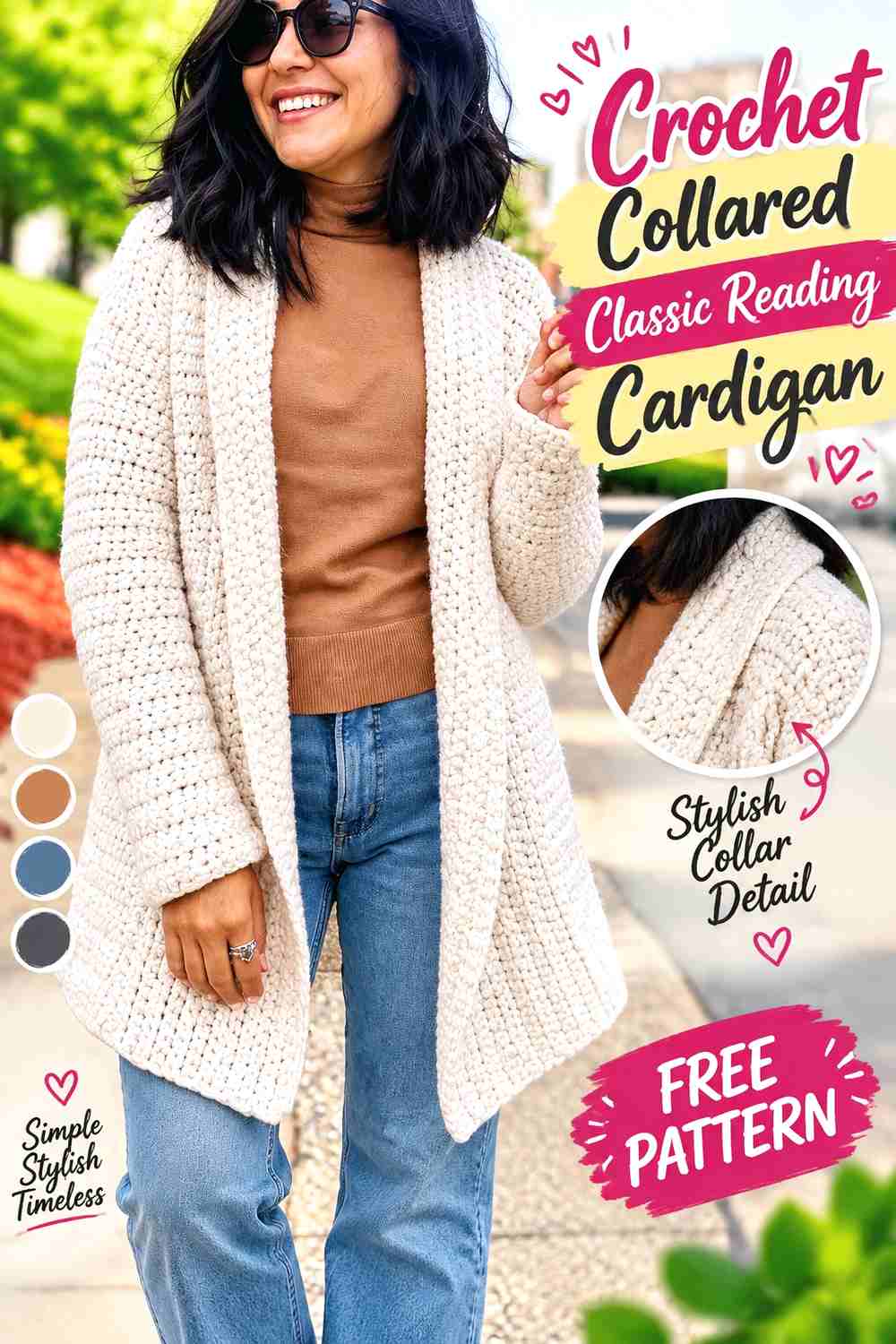
KnitcroAddict’s classic cardigan is made from multiple garment pieces with a collar added afterward, creating a conventional open-front silhouette rather than a motif or hexagon construction.
The collar gives the sweater a little more presence around the neckline without closing it completely.
A Collar Adds Warmth Without Becoming a Turtleneck
If you find high necklines restrictive but still want something around the back of the neck, a collared cardigan offers a middle ground.
Pay attention to how the chosen yarn behaves in the collar. A very stiff fabric can make it stand away from the body, while softer fabric may fold more naturally.
Separate Pieces Make Seaming Quality Visible
The shoulder and side seams influence how the cardigan hangs.
Before assembly, compare matching pieces carefully and block them when appropriate for the chosen yarn. Clean alignment matters more on a simple cardigan because there are fewer decorative elements to distract from an uneven silhouette.
Creator Credit: KnitcroAddict
12. Crochet Oversized Fireside Reading Cardigan
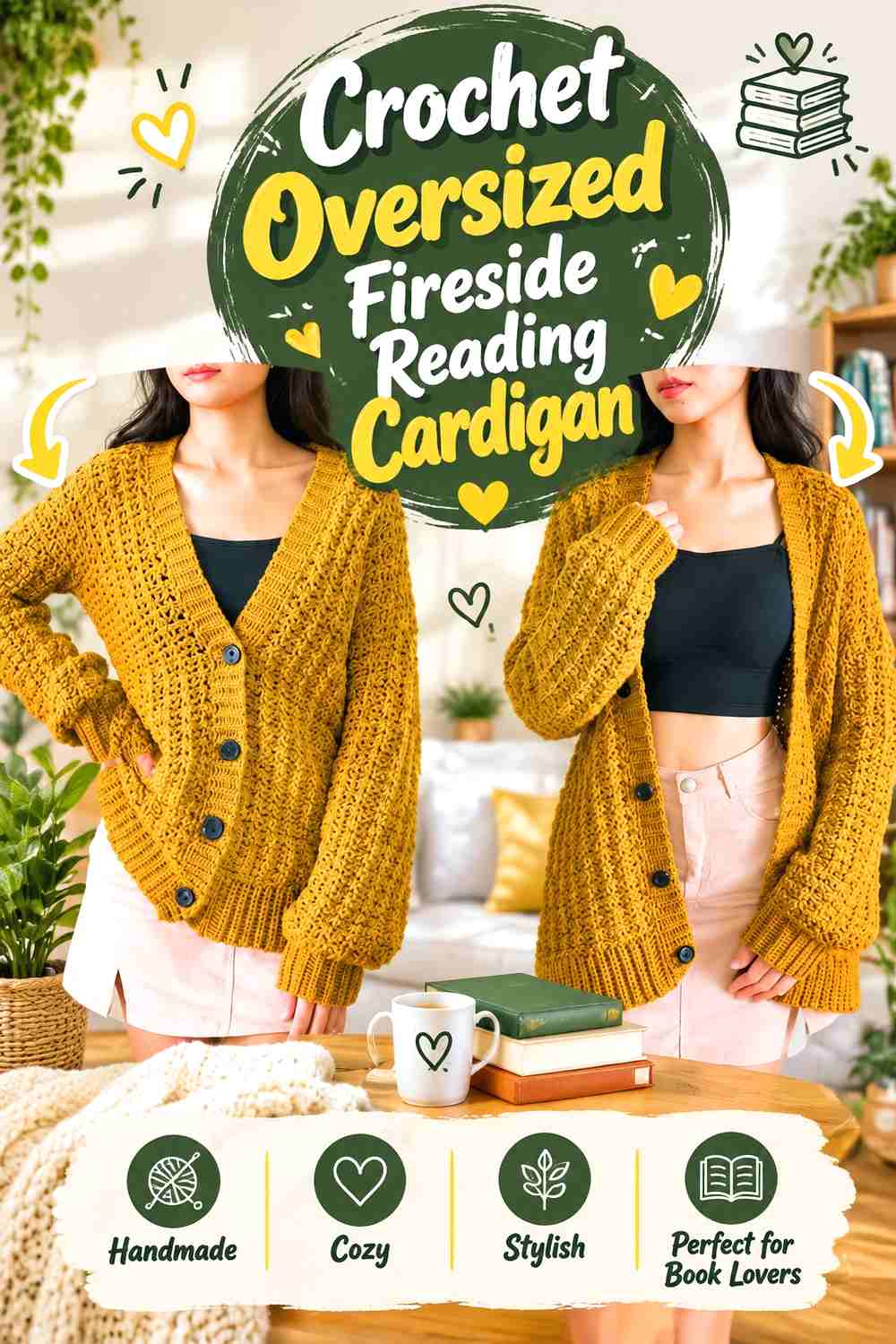
Chenda DIY’s oversized cardigan uses a straightforward, roomy construction intended for cold-weather layering.
This is the kind of sweater that can suit readers who prefer a simple silhouette with enough ease for another layer underneath.
Extra Width Should Not Swallow the Sleeves
An oversized body can be comfortable without requiring sleeves that cover the hands.
When adapting proportions, think of body ease and sleeve length as separate choices. For reading, a relaxed torso paired with practical cuffs can be more functional than exaggerating every dimension.
A Plain Cardigan Gives Yarn More Visual Responsibility
With a straightforward shape, yarn texture and color become major parts of the finished look.
Before buying a large sweater quantity, examine the yarn in both daylight and warm indoor lighting. Deep winter colors can look quite different beside lamps, candles, or café lighting.
Creator Credit: Chenda DIY
13. Crochet Chunky Pocket Reading Cardigan
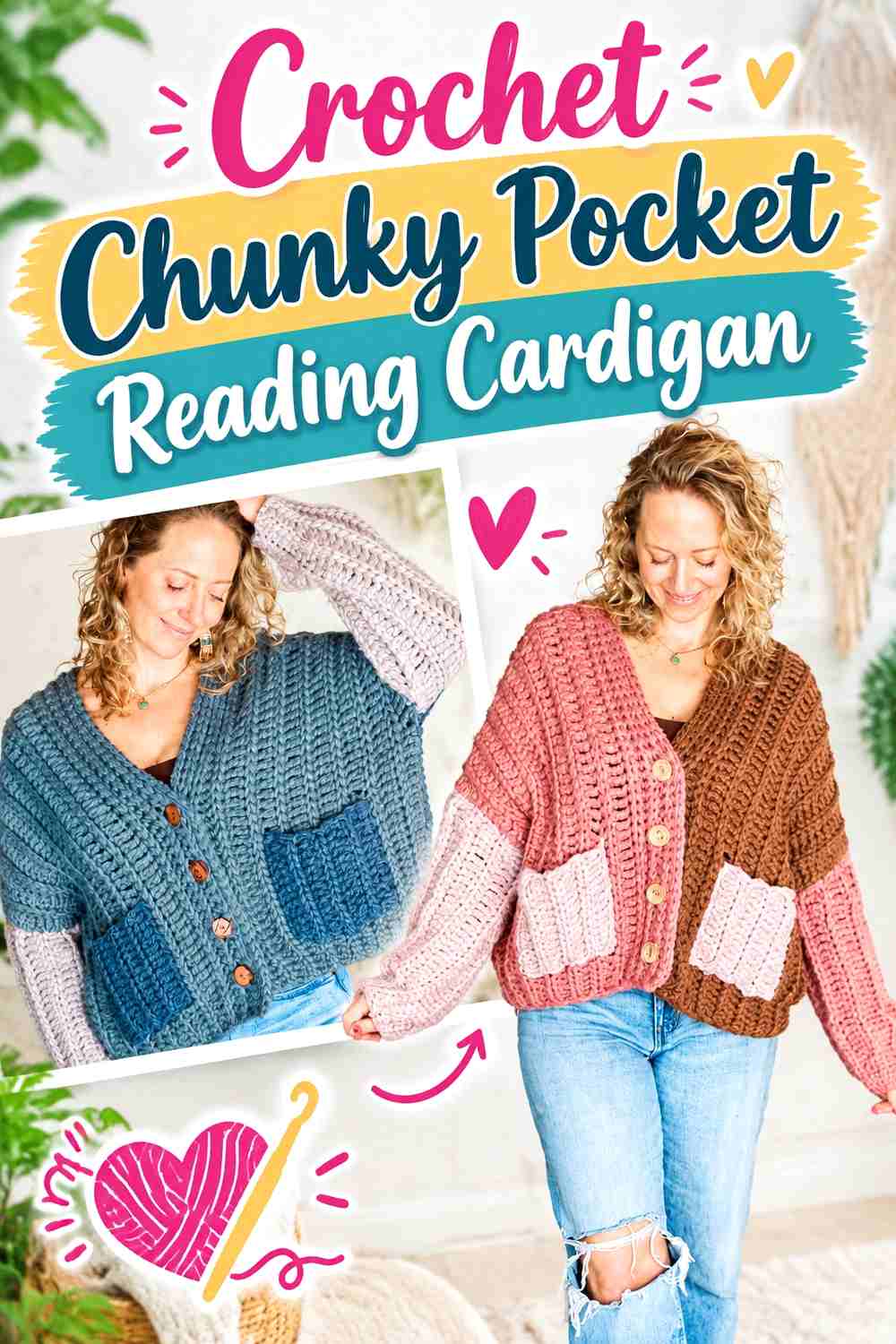
Make & Do Crew’s chunky oversized cardigan adds two especially relevant reading features: pockets and a substantial throw-on shape. The tutorial also incorporates buttons into the design.
For someone who routinely misplaces a bookmark or reading glasses between sofa cushions, pockets have an obvious appeal.
Pockets Are Useful Until They Become Storage Bags
Crochet pockets can stretch when repeatedly loaded with heavy objects.
Reserve them for relatively light reading essentials rather than treating them like handbag compartments. If the pocket shape begins to sag, reduce what you carry rather than assuming blocking will permanently reverse repeated stretching.
Super-Bulky Fabric Changes the Scale of Everything
Thick yarn makes seams, pockets, cuffs, and front bands more substantial.
That can produce a wonderfully cozy cardigan, but it also means you should check whether the sweater fits comfortably beneath your usual winter coat if you plan to wear it to book club rather than only at home.
Creator Credit: Make & Do Crew
14. Crochet Moss-Stitch Striped Reading Jumper
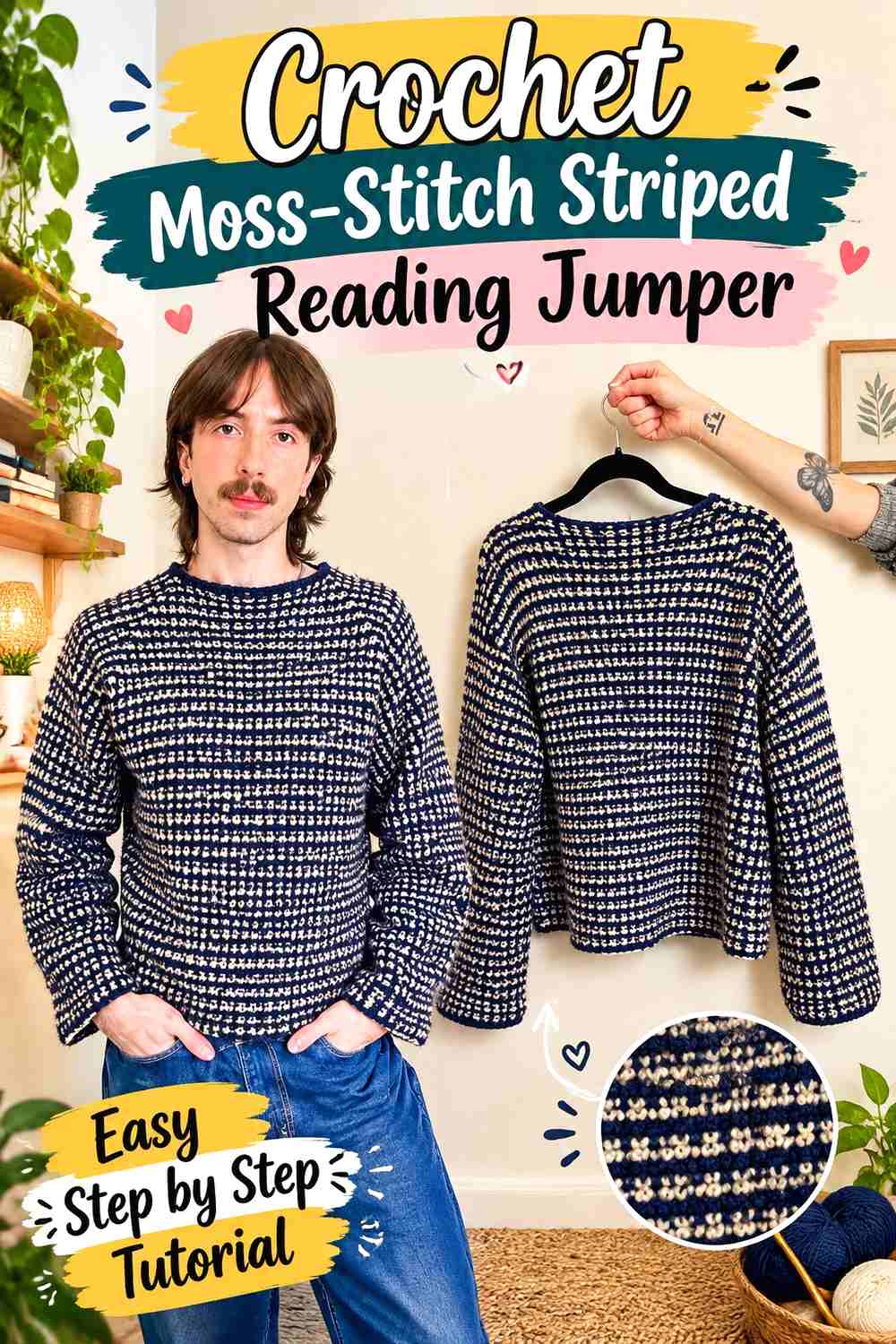
divyne crochet’s jumper combines raglan shaping with vertically oriented striped moss-stitch fabric and a dense, gap-free surface.
The vertical color treatment is a meaningful change from the horizontal stripes used in many sweaters and can create a very different visual rhythm.
Vertical Stripes Emphasize Construction Lines
Color changes that travel lengthwise draw attention to alignment.
Plan the distribution before beginning large sections so the front, back, and sleeves feel related. Random variation can work, but deliberate repetition creates a calmer sweater for an understated winter wardrobe.
Moss Stitch Benefits From a Drape Check
Dense-looking fabric can still behave softly depending on fiber and tension.
Make a generous swatch, wash or block it according to the yarn’s care requirements, and then fold it around your arm. That gives you a more realistic sense of whether the finished jumper will feel flexible during long periods of sitting.
Creator Credit: divyne crochet
15. Crochet Wheat-Texture Yoke Reading Sweater
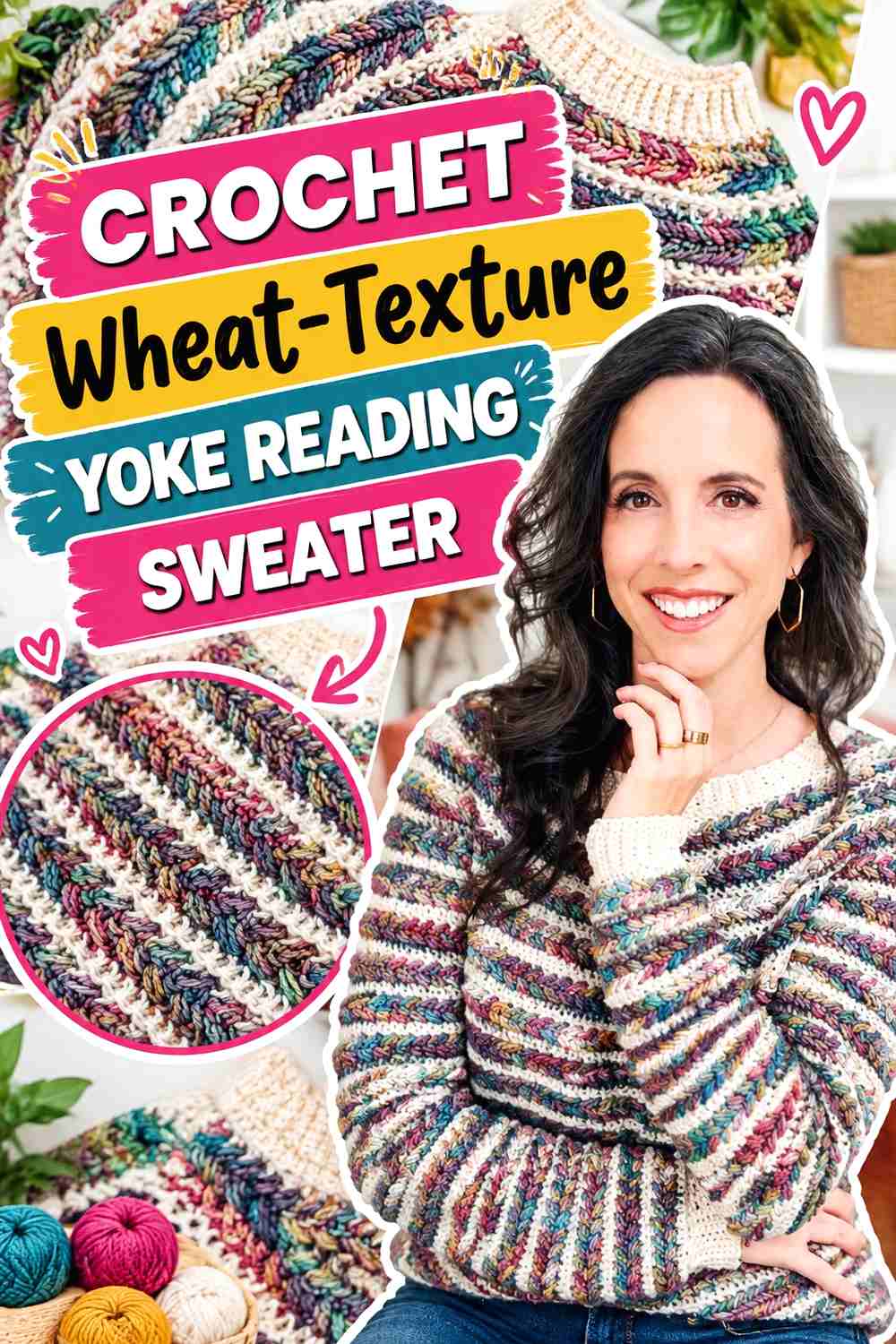
Briana K’s sweater combines a circular yoke with pronounced textured rounds, neckline shaping, sleeves, and ribbed finishing.
This creates an interesting middle ground between a plain pullover and an all-over highly textured sweater: the construction and surface design provide interest without requiring joined motifs.
Yoke Texture Frames the Face
Texture near the upper chest and shoulders remains visible even when the lower sweater is hidden behind a book or table.
That makes the yoke a useful place for contrast if you are considering a two-color version. You can create a distinctive upper section without making the whole garment visually dense.
Neckline Shaping Affects Seated Comfort Too
A neckline can appear balanced while standing but shift backward or forward once you settle into a chair.
When trying on the developing sweater, move naturally rather than checking it only in front of a mirror with your shoulders squared.
Creator Credit: Briana K
16. Crochet Granny-Square Reading Shrug
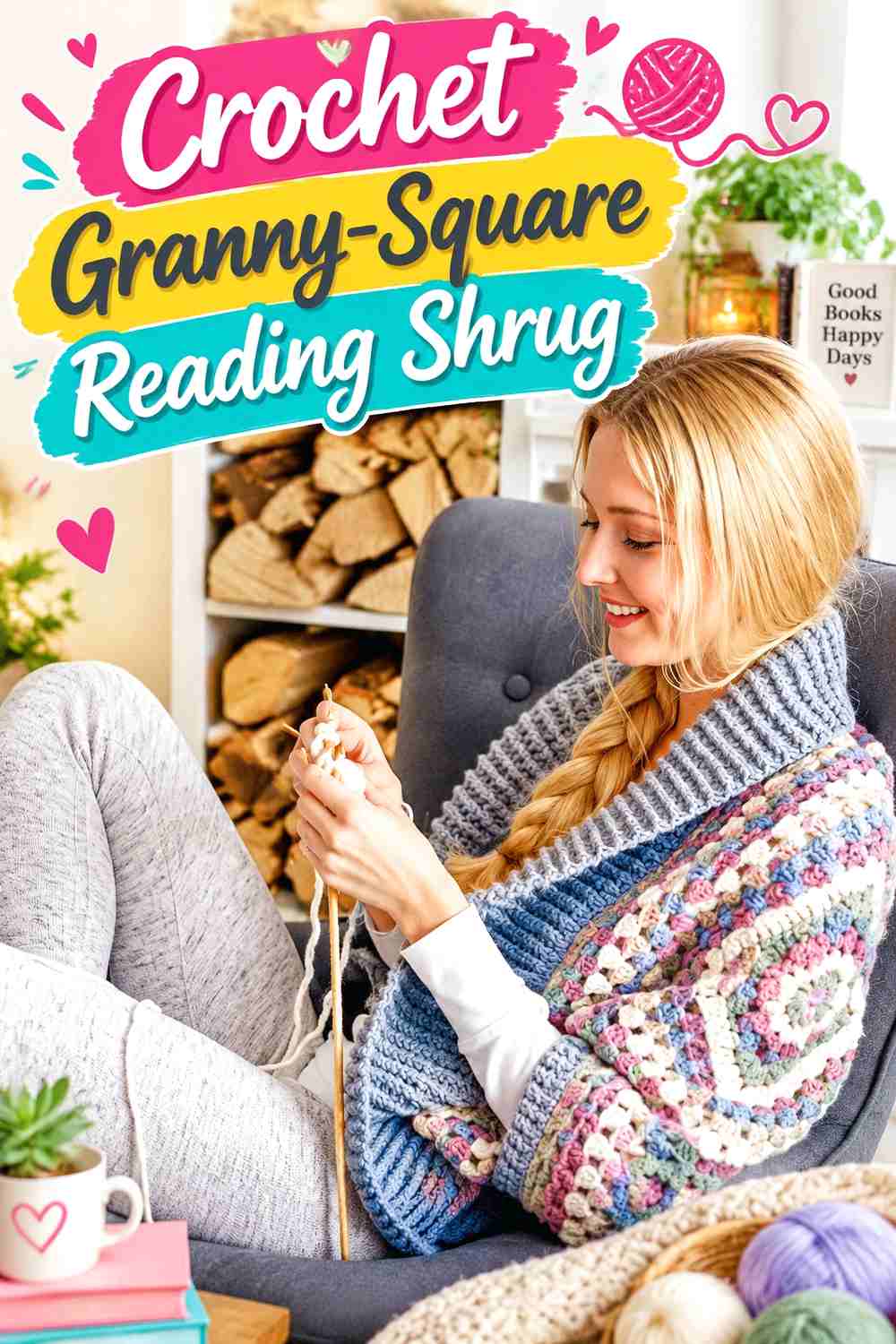
The Crochet Crowd’s cardigan/shrug takes a particularly different construction route: the garment is based around strategically joined granny squares rather than conventional front, back, and sleeve panels.
A shrug also concentrates coverage around the shoulders and arms while leaving more of the front outfit visible.
A Shrug Works Well When Full Torso Coverage Feels Too Warm
Some book-club spaces are overheated even in winter. A shrug can warm the shoulders without enclosing the body as completely as a pullover.
It can also layer over a dress or blouse without hiding the entire outfit.
Motif Centers Become Part of the Sleeve Design
When large granny motifs form structural garment areas, motif placement is much more visible than in a sweater made from tiny repeated squares.
Look at where the strongest colors and central motif details will land after joining. Orientation should be planned as part of the garment, not decided after all the squares are complete.
Creator Credit: The Crochet Crowd
17. Crochet Balloon-Sleeve Teatime Reading Cardigan
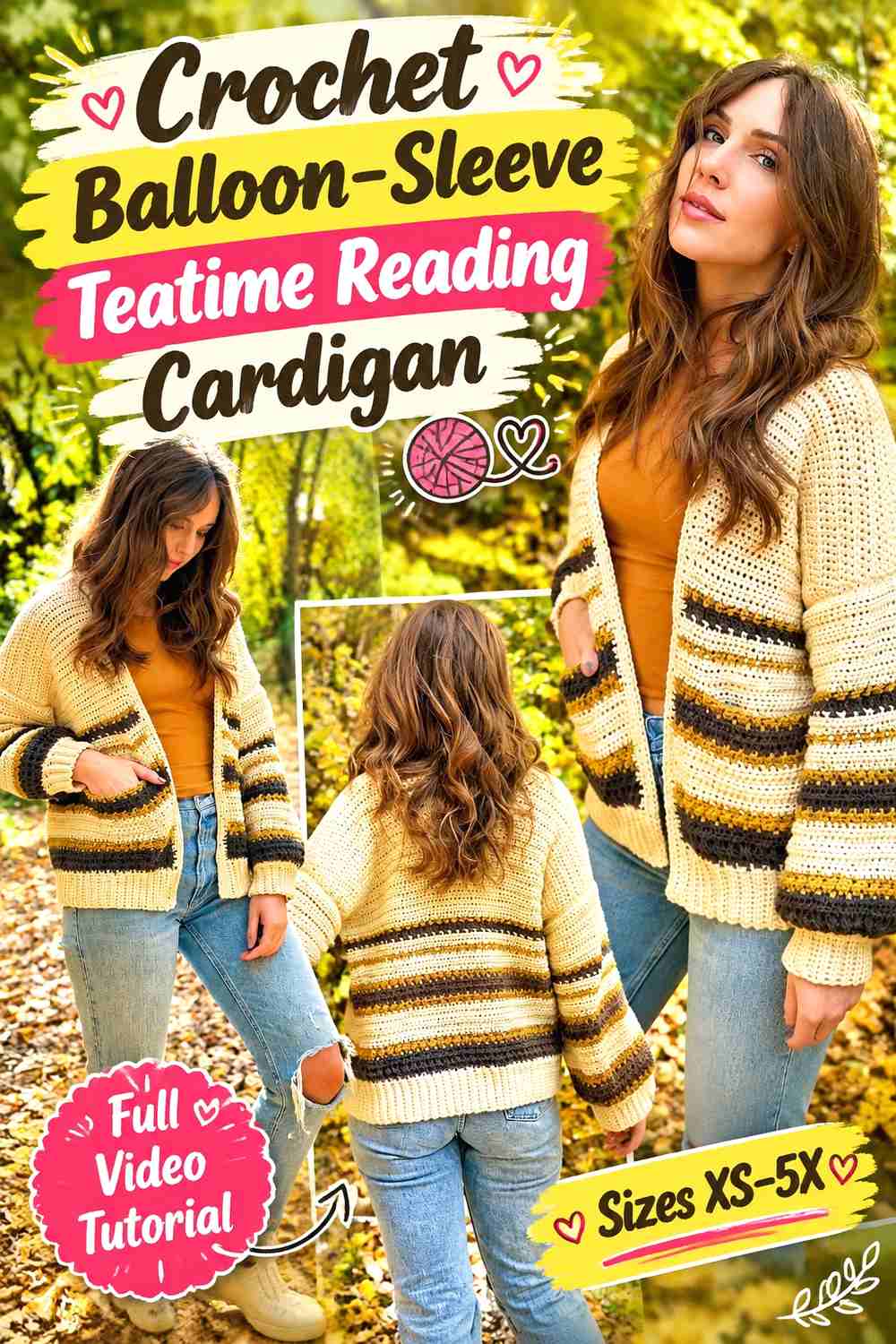
Evelyn And Peter Crochet’s Teatime Cardigan combines stripes with an oversized fit and balloon-style sleeves.
It is almost tailor-made for the visual mood of a book-club evening: relaxed, cozy, and distinctive without relying on complicated appliqués.
Balloon Sleeves Need Practical Cuffs
Volume through the sleeve creates the silhouette, but the cuff determines whether that volume stays away from your hands.
For reading, check how far the sleeve drops when you raise a mug or hold an open book. A cuff that stays where intended is more useful than maximum sleeve drama.
Collegiate Stripes Can Support a Literary Look
Stripe placement gives this cardigan a slightly academic quality that works well with simple trousers, skirts, loafers, or a collared layer.
If you change the palette, choose colors that maintain enough contrast to make the stripe sections intentional rather than muddy.
Creator Credit: Evelyn And Peter Crochet
18. Crochet Turtleneck Reading Sweater
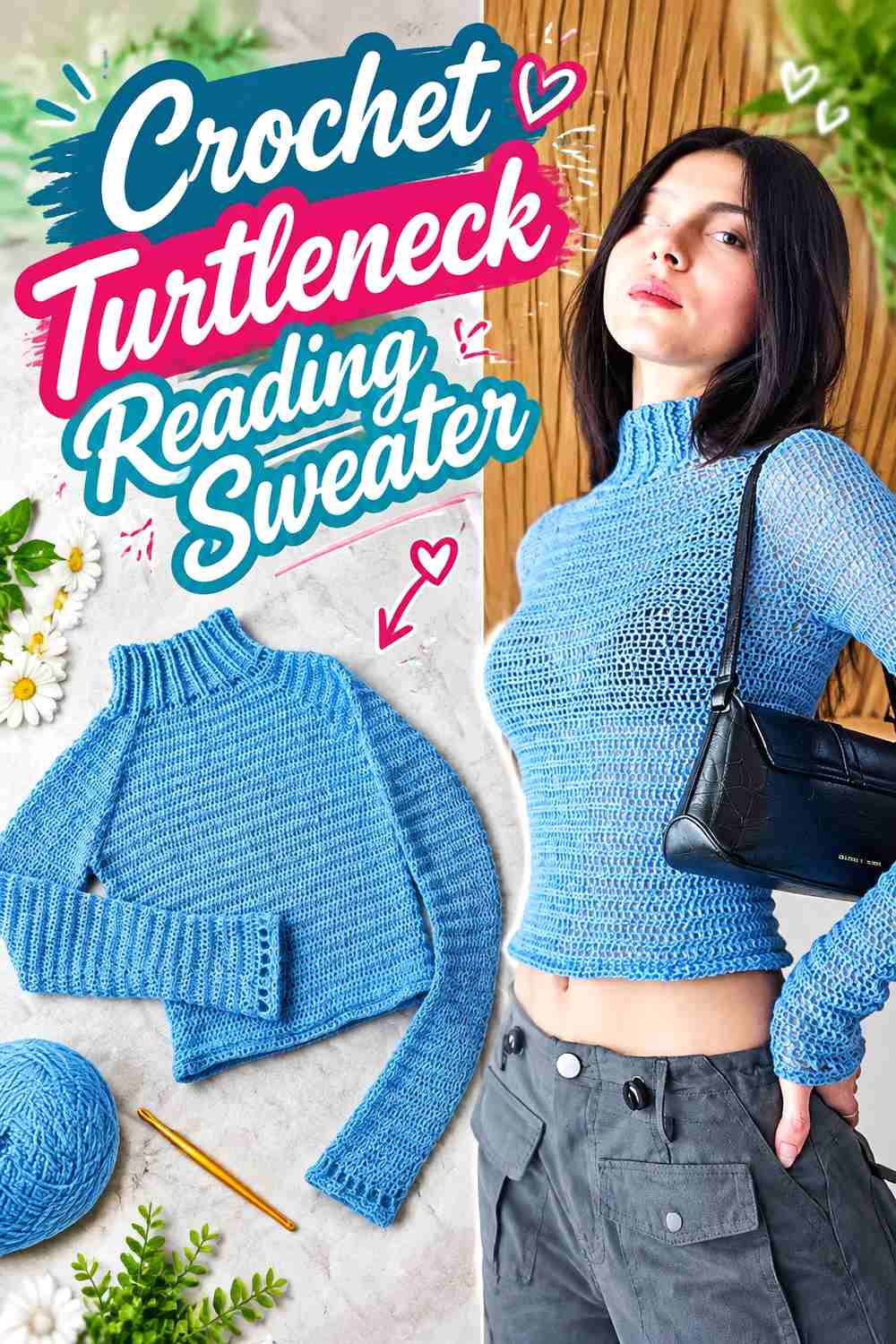
ABoC Studio’s polo-neck sweater brings the collection to its most enclosed neckline, with a full pullover construction and tall crocheted neck.
For someone who reads in a genuinely cold room, a turtleneck can reduce the need for a scarf or extra neck layer.
Neck Stretch Is a Functional Requirement
A turtleneck has to be comfortable once worn and still allow the sweater to pass over the head.
Changing yarn, hook size, or edging can alter that stretch. Check the fabric behavior rather than assuming that a neckline with the correct circumference will automatically be comfortable to put on.
A High Neck Makes Fiber Feel More Important
The neck is more sensitive to texture than many other parts of the body.
If you are considering a yarn substitution, wear the swatch against the side of your neck for a while. A fiber that feels perfectly acceptable in your hand may be distracting when it remains in contact with the skin through an entire discussion.
Creator Credit: ABoC Studio
Which Crochet Reading Sweater Style Fits Your Book-Club Routine?
For maximum wrap-up warmth, the longline duster and chunky pocket cardigan provide the most substantial visual coverage. The oversized minimalist and fireside cardigans offer a relaxed feel without relying on complicated texture.
If unrestricted hand and arm movement matters most, the sweater vest is the clearest option. The cropped hexagon cardigan is another useful choice when you want less fabric gathering around the waist while seated.
Readers who want texture can compare the cable-panel cardigan, sedge-texture sweater, and Wheat-Texture yoke. They create depth in very different ways: vertical panels, all-over fabric texture, and concentrated yoke interest.
For colorful construction, the granny-motif cardigan, granny-square shrug, striped sweater, moss-stitch jumper, and Teatime Cardigan each handle color differently. If you prefer a quieter winter wardrobe, the classic collared cardigan or simple drop-shoulder cardigan gives the yarn and silhouette more room to speak.
Finally, consider temperature. The mesh pullover and shrug are useful indoor layers, while the duster, chunky cardigan, and turtleneck make more sense when extra coverage is genuinely useful.
Conclusion
The most comfortable crochet winter reading sweater is not automatically the thickest or largest one.
Think first about how you actually read. A long duster can be wonderful if you sit upright and want extra coverage. A cropped cardigan may work better in a deep sofa. A sweater vest keeps arms completely clear, while balloon sleeves create a cozy silhouette but require more attention around the cuffs. A turtleneck offers maximum neck coverage, and an open cardigan gives you the easiest temperature control.
Then choose the construction you want to spend time making. Motifs offer portable pieces, cables emphasize texture, raglans approach the shoulders differently from drop-shoulder garments, and made-to-measure or customizable designs give you more control when standard proportions are not ideal.
Use the credited original tutorials for their exact sizing, gauge, yarn, construction, and finishing instructions, and evaluate any modifications against your own measurements before turning the idea into your favorite book-club sweater.
Frequently Asked Questions
What makes a crochet sweater comfortable for long reading sessions?
Look beyond bust circumference. Shoulder position, sleeve width, cuff placement, neckline height, garment weight, and fabric drape can all affect comfort while your elbows remain bent for long periods.
A useful test is to wear a similarly shaped sweater you already own while reading. Notice what you repeatedly pull, push up, loosen, or adjust. Those behaviors reveal which features matter most for your crochet version.
Is an oversized crochet sweater always better for reading?
No. Moderate ease can feel relaxed, but excessive width can create extra fabric under the arms or around the waist when seated.
Choose an oversized design because you like its proportions, then follow its sizing information. Simply making an ordinary fitted pattern several sizes larger can change shoulders, armholes, sleeves, and neckline placement in unintended ways.
Are cardigans or pullovers better for book club?
Cardigans provide easier temperature control and can be removed without disturbing hair or accessories. Pullovers offer uninterrupted torso coverage and do not have front edges that shift while you move.
Neither is universally better. A warm café may favor an open cardigan, while a drafty room may make a pullover or turtleneck more appealing.
Which crochet sweater construction is useful if I dislike bulky sleeves around books?
Consider a sweater vest first. A cardigan with close cuffs is another practical option.
If you like balloon or oversized sleeves, focus on cuff fit. A controlled cuff can keep most of the sleeve volume away from the hands while preserving the intended silhouette.
Can I use a different yarn than the sweater tutorial recommends?
Often yes, but yarn substitution can change gauge, drape, weight, warmth, stretch, texture definition, and care requirements.
Match the important characteristics of the source yarn and make a swatch before committing to the garment. For reading sweaters, also assess how the washed fabric feels against the neck and bent arms.
Should I block crochet sweater pieces before assembly?
Follow the individual tutorial or pattern’s finishing guidance. For constructions made from separate panels or motifs, comparing dimensions before final joining can help reveal inconsistencies.
Blocking can settle stitches and improve shape, but it should not be expected to correct major sizing differences caused by inaccurate gauge or inconsistent construction.
How do I make a crochet reading sweater feel more wintery without adding bulk?
Use color and texture strategically. Deep neutrals, cranberry, forest green, oatmeal, brown, charcoal, muted blue, or other winter shades can change the mood without changing the construction.
You can also choose a textured stitch, contrasting ribbing, understated stripes, or a patterned yoke rather than adding heavy appliqués or extra layers to an already substantial sweater.