A crochet cushion is one of the simplest ways to bring grannycore character into a winter room without committing to a full blanket or furniture makeover. Plaid makes that small project especially effective: repeated blocks, intersecting colors, vintage granny squares, and structured geometric layouts all sit naturally beside wooden furniture, wool throws, baskets, and fireside seating.
The projects below take several routes to that look. Some of the tutorials create literal plaid, gingham, or argyle pillows. Others use granny squares, patchwork panels, or geometric cushion constructions that can be adapted with a carefully planned plaid-inspired palette. That distinction matters—changing colors is usually much safer than changing a tutorial’s underlying construction.
Before choosing one, think about more than the colors. A removable cover functions differently from a permanently closed pillow. Small joined motifs give you more control over a checkerboard layout than one continuous square. Dense colorwork creates a sharper woven-cloth effect, while traditional granny clusters make the finished cushion look softer and more obviously crocheted.
Quick List
- Crochet Fireside Holiday Plaid Cushion
- Crochet Cottage Gingham Hearth Cushion
- Crochet Heritage Argyle Plaid Cushion
- Crochet Two-Tone Patchwork Granny Cushion
- Crochet Buttoned Granny-Grid Hearth Cushion
- Crochet Sunburst Check Hearth Cushion
- Crochet Oversized Granny Plaid Cushion
- Crochet Vintage Granny Hearth Pillow
- Crochet XXL Fireside Granny Cushion
- Crochet Pom-Pom Corner Plaid Granny Pillow
- Crochet Groovy Scrap-Plaid Cushion
- Crochet Framed Boho Granny Hearth Cushion
- Crochet Classic Scatter Granny Cushion
- Crochet Farmhouse Two-Color Granny Cushion
- Crochet Heart-and-Check Grannycore Cushion
- Crochet Interlocking Winter Grid Cushion
- Crochet Chunky Boho Plaid-Style Cushion
Plan the Plaid Effect Before You Crochet the Cushion
Plaid can come from several different structures. True colorwork creates intersecting blocks directly in a panel. Gingham depends on carefully related light, medium, and dark areas. Argyle creates a diagonal diamond rhythm. Granny-square plaid is different again: the impression comes from arranging motifs so their colors repeat in organized rows and columns.
If you are adapting a granny-square tutorial, sketch the complete front first. A random scrap layout will look charming, but it will read as patchwork rather than plaid. Repeating the same dark, medium, and light colors at planned intervals creates a stronger check effect.
Also consider the scale of the pattern. A small cushion divided into too many tiny checks can become visually busy beside patterned upholstery. Larger blocks usually make the plaid easier to read from across a room.
Match the Crochet Cover to the Insert and Intended Use
A decorative hearth cushion still needs enough structure to sit neatly. Before committing to a motif count or color arrangement, compare the actual crocheted panel with the insert you plan to use. Blocking can change the dimensions of granny squares, and individually made motifs may vary slightly even when they were intended to match.
Closure matters as well. A permanently joined cushion gives a clean uninterrupted edge, but a buttoned, envelope, or zippered cover can be easier to remove when seasonal decor changes. If you expect the pillow to spend winter near a frequently used fireplace or stove, keep it at a safe distance from heat, sparks, and open flame regardless of fiber choice.
Let Yarn Texture Support the Pattern
For a plaid cushion, stitch definition is often more important than novelty texture. Smooth yarn helps small color blocks and motif boundaries remain visible. Very fuzzy yarn can soften those divisions until carefully planned checks stop reading clearly.
That does not mean every cushion needs to be flat. Raised joins, granny clusters, interlocking stitches, and pom-poms can strengthen the grannycore mood. The useful question is whether texture supports the plaid layout or competes with it.
1. Crochet Fireside Holiday Plaid Cushion
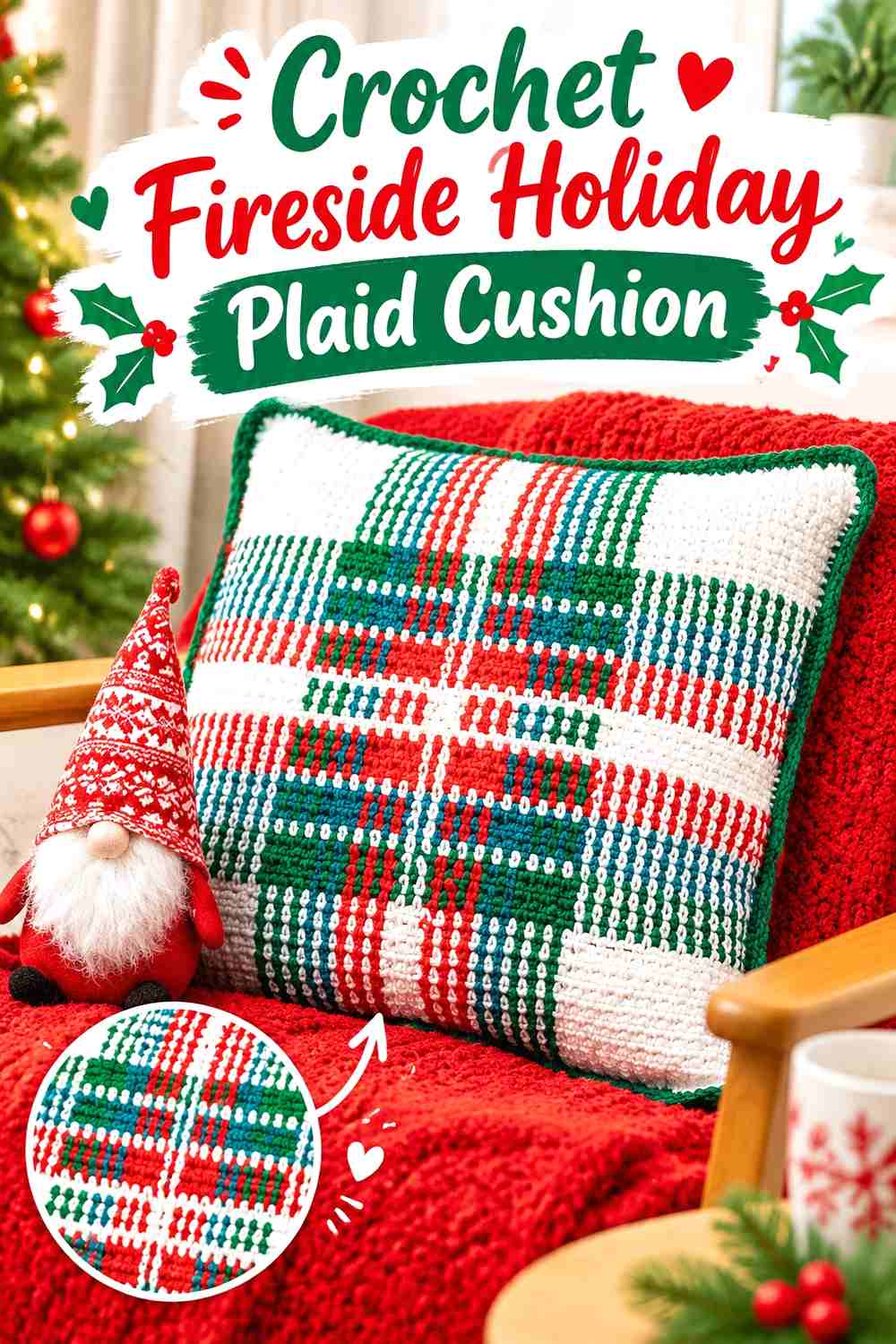
This option starts with an actual plaid pillow rather than a granny-square adaptation. The tutorial uses flat colorwork panels, making it a strong reference when the woven-check appearance matters more to you than visible crochet motifs.
For a winter hearth, the concept can move beyond specifically festive colors. Deep green, cream, rust, mustard, brown, or burgundy can preserve the traditional plaid character while fitting a room that stays decorated throughout the colder months.
Multiple Color Areas Need Organization
True plaid colorwork places more demands on yarn management than a simple striped cushion. Before beginning, decide whether you enjoy keeping several active color sections organized as you work.
If juggling colors tends to interrupt your rhythm, a motif-based plaid later in this list may feel more manageable because each color decision is contained within a smaller square.
Keep the Back Quieter When the Front Is Busy
A complex plaid front already carries substantial visual information. A restrained back lets the cushion turn into a calmer accent when you want less pattern in the room.
This also gives you freedom to concentrate your color planning on the surface that normally faces outward instead of making both sides equally elaborate.
Strong Contrast Produces the Clearest Plaid
Plaid relies on neighboring blocks remaining distinguishable. Put your proposed colors beside one another before starting and check them from several feet away. If every shade has nearly the same value, the grid may become difficult to see once the cushion is across the room.
Creator Credit: Just Be Crafty
2. Crochet Cottage Gingham Hearth Cushion
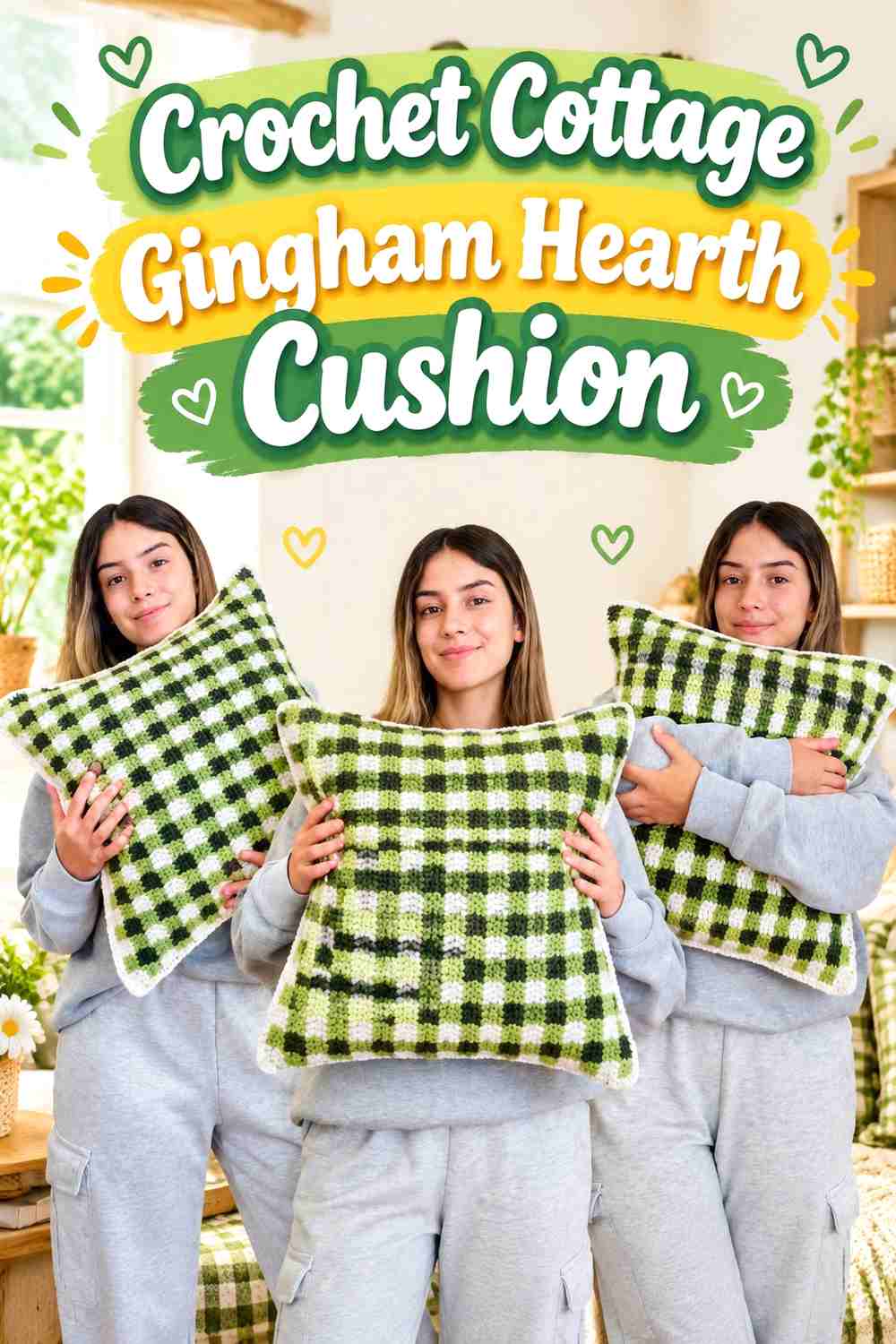
Gingham gives you a cleaner, more regular alternative to complex tartan. Its orderly checks work especially well with grannycore interiors because they reference vintage kitchen textiles and country-house fabrics without requiring a large number of colors.
The source cushion uses a recognizable gingham arrangement. For a winter interpretation, consider muted berry, forest, slate blue, oatmeal, or tobacco-toned combinations rather than relying on bright seasonal red and green.
Three Related Values Make the Checks Read Properly
The characteristic gingham effect depends on the relationship between its color areas. Choosing a light shade, a middle shade, and a noticeably deeper shade generally creates more convincing visual layering than three colors of almost identical darkness.
Photographing the yarn together and viewing the image in grayscale can also reveal whether the planned values have enough separation.
Preserve the Block Proportions When Resizing
If you change the dimensions to suit another insert, think in complete checks rather than adding an arbitrary strip to one edge. Uneven partial blocks can make a carefully organized gingham front look accidental.
Measure the completed crochet instead of relying entirely on expected dimensions because personal tension and yarn substitutions can change the final panel.
Creator Credit: crochet daniela
3. Crochet Heritage Argyle Plaid Cushion
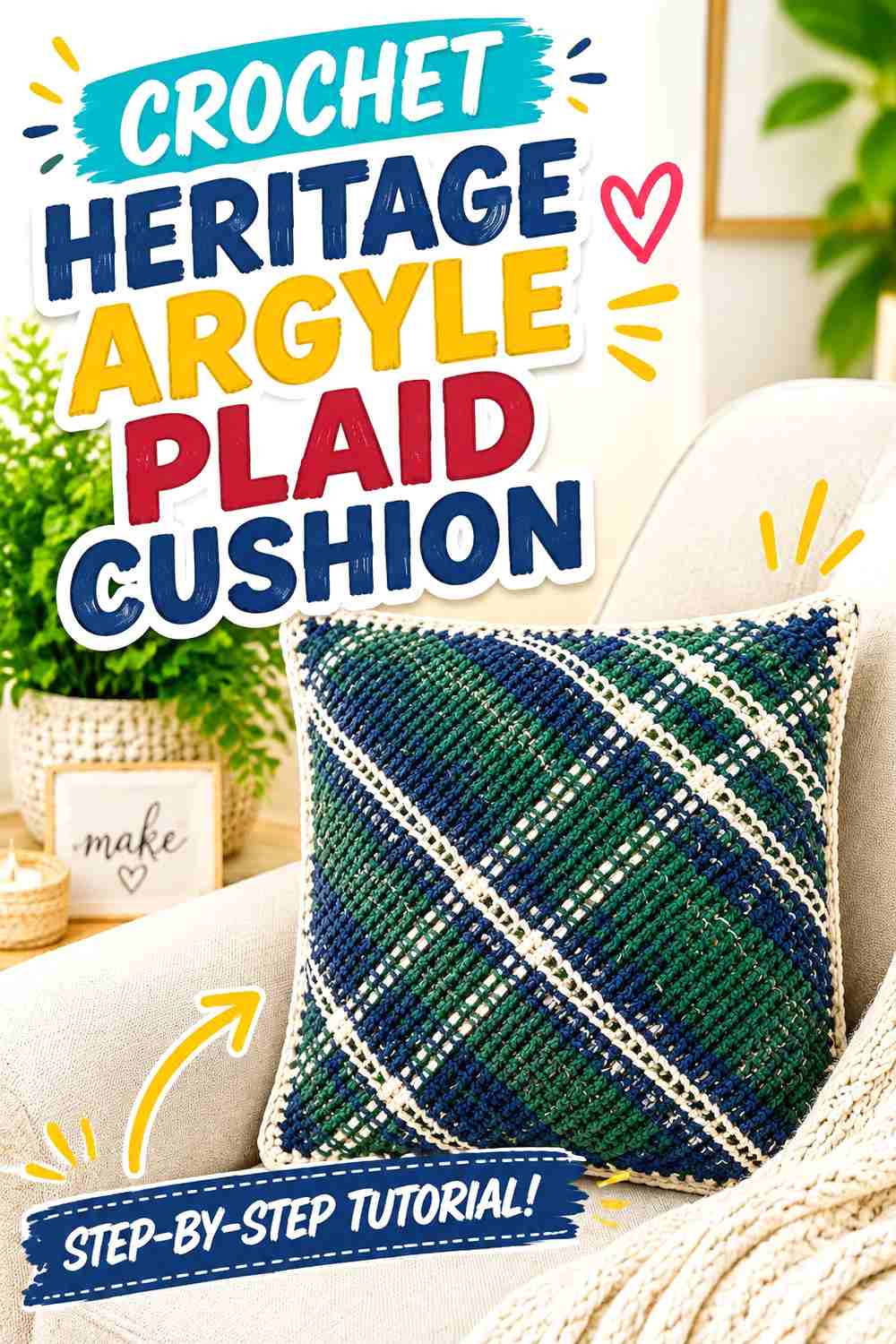
Argyle offers a different kind of heritage plaid. Instead of a straightforward checkerboard, diagonal diamonds create movement across the front, making this a useful choice when you want the cushion to feel traditional without repeating the same square grid as the other pillows.
It can work particularly well as the single patterned cushion on a leather chair or beside solid crocheted pillows.
Diagonals Make Alignment More Noticeable
A horizontal check can tolerate minor visual variation more easily than a strong diagonal design. With argyle, your eye naturally follows the sloping lines across the cushion.
Check the fabric periodically from a distance so you notice any developing distortion before the complete front is finished.
Give the Argyle Room to Be the Focal Point
Argyle becomes visually competitive when it sits beside several other high-contrast patterns. If this is the statement cushion at the hearth, surrounding it with solid wool, simple ribbing, or quieter granny textures can make the diamond design more effective.
A more subdued argyle palette is another option when the room already contains tartan throws or patterned rugs.
Creator Credit: The Crochet Crowd
4. Crochet Two-Tone Patchwork Granny Cushion
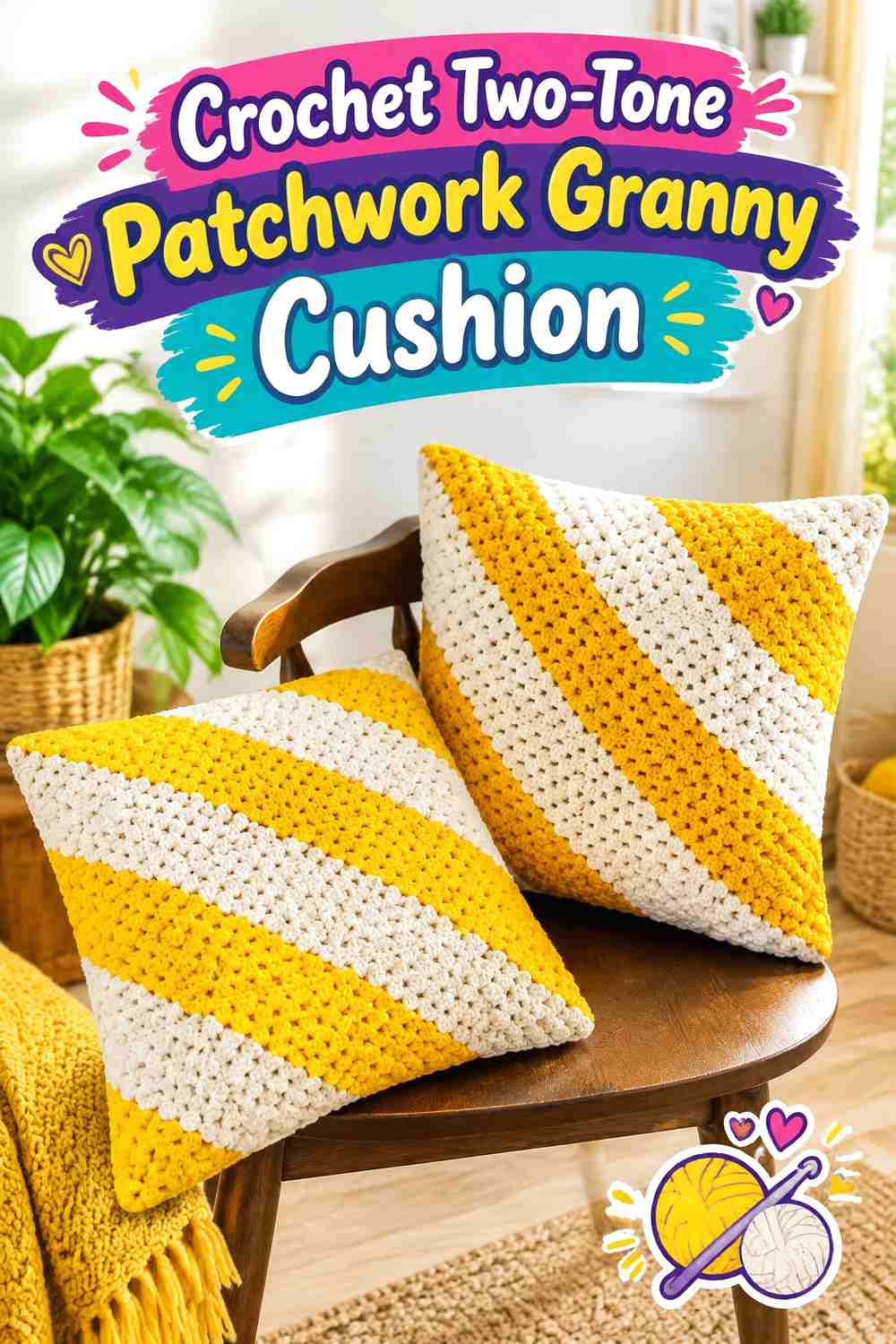
This patchwork construction is useful when you like the organization of plaid but still want the unmistakable character of individual granny squares. Half-and-half color placement creates a graphic surface that can be arranged into larger checks, diagonals, or alternating blocks.
Unlike literal plaid colorwork, each motif acts as a small design unit. That makes it easier to rearrange the front before final joining.
Lay Out Every Square Before Joining
Do not rely on memory when a two-color motif can face more than one direction. Rotate the pieces on a table or floor until the larger pattern becomes clear, then photograph the layout for reference.
A single reversed square may look intentional in scrappy patchwork but can interrupt a planned plaid repeat.
Visible Joins Can Strengthen the Grid
The seams do not have to disappear. A contrasting or clearly defined joining line can function like the narrow lines in woven tartan, separating larger blocks and making the checkerboard structure more obvious.
For a softer look, use a joining shade closer to the dominant background color.
Creator Credit: Carolines Welt
5. Crochet Buttoned Granny-Grid Hearth Cushion
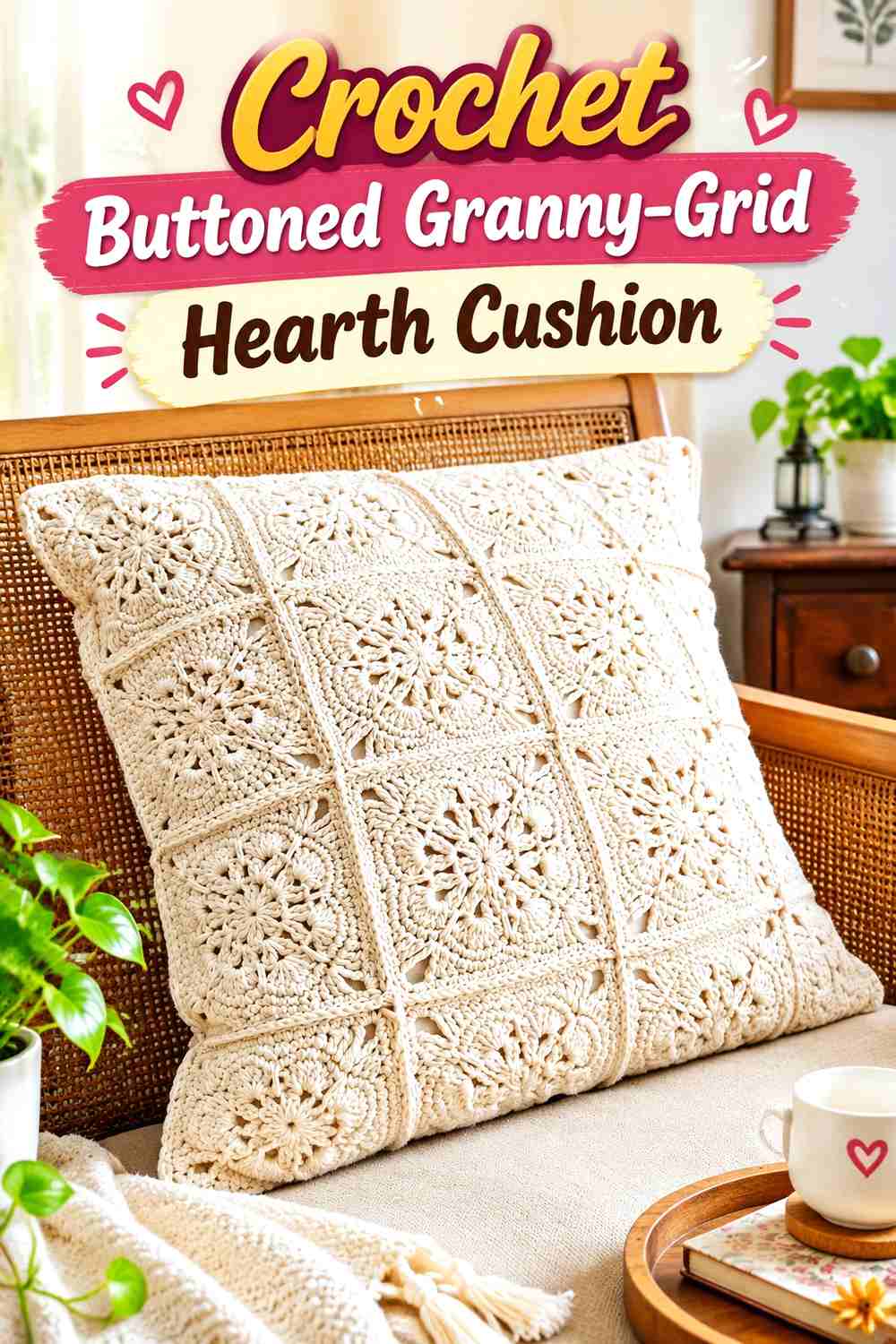
A front assembled from multiple granny squares gives you one of the most flexible layouts in the collection. Rather than making every motif different, organize a limited palette into repeating rows so the finished cover suggests a traditional wool plaid.
The tutorial also demonstrates a cushion-cover approach with button finishing, which is worth considering for decor that you plan to switch between seasons.
Block the Motifs Before Planning the Final Grid
Small differences become much more visible when straight rows of squares meet. Compare the blocked dimensions before committing to the arrangement.
If several motifs are consistently larger or smaller, correct that issue before joining rather than expecting the seams to absorb all the difference.
A Removable Back Is Useful for Seasonal Decorating
A winter cushion does not necessarily need to occupy storage space as a complete stuffed object for the rest of the year. A removable cover can be packed more compactly while the insert remains in use with another cover.
If removability matters, confirm the source’s closure construction before making major changes to the rear panel.
Creator Credit: Tres Agujas Artesanas
6. Crochet Sunburst Check Hearth Cushion
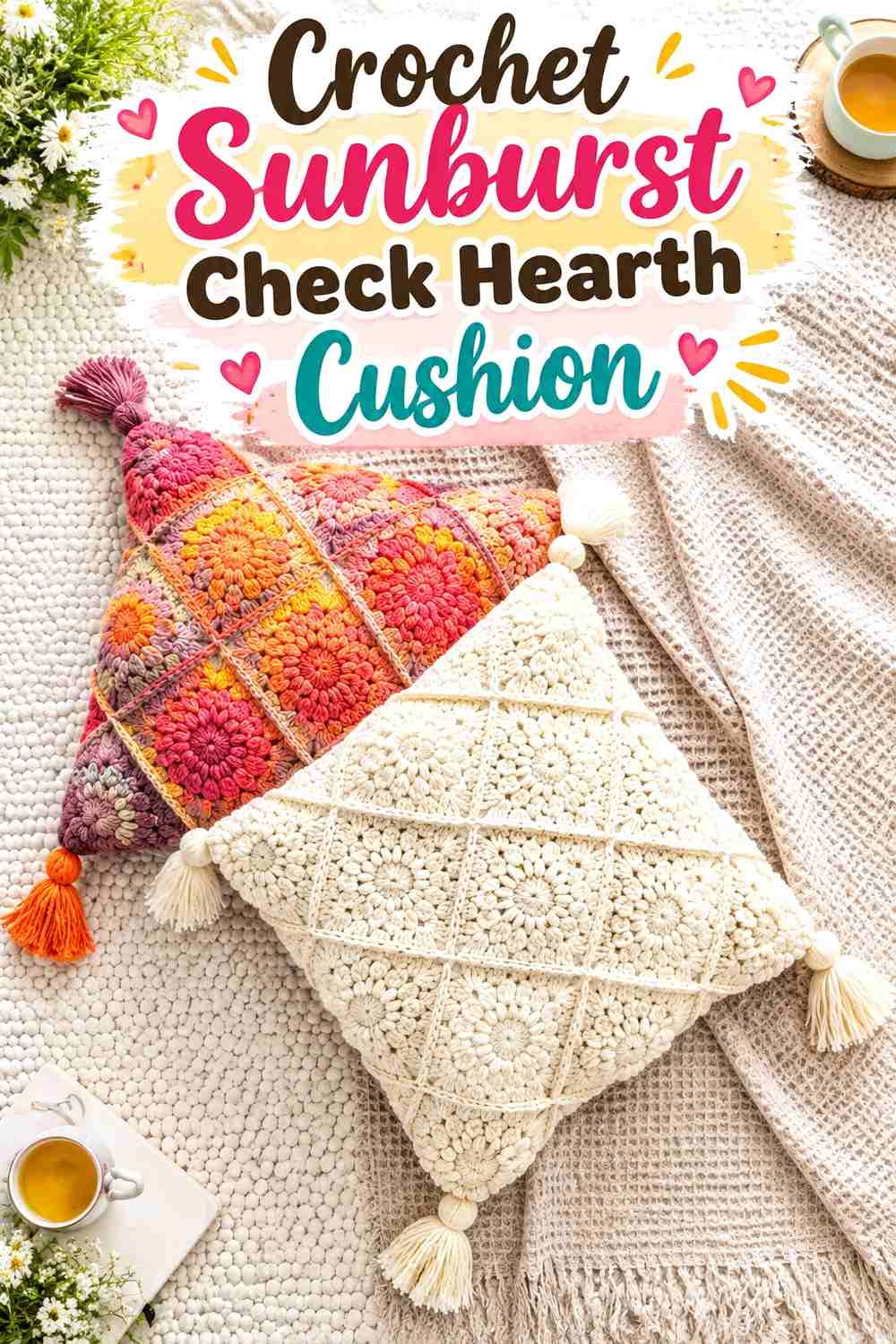
Sunburst motifs soften the geometry of plaid by placing circular-looking centers inside square units. Arrange those centers in repeating dark and light rows and the pillow can still read as checked from a distance while revealing much more crochet detail up close.
This works well when a strict woven-plaid imitation feels too formal for the room.
Use the Centers as Your Plaid Blocks
Instead of trying to make every round within each motif resemble tartan, allow the dominant center colors to create the larger grid. Repeating those centers in a deliberate sequence gives the front visual order without overcrowding every individual square.
A consistent outer round can then tie unlike centers together.
Sunburst Motifs Need Careful Visual Balance
Because the center is naturally eye-catching, strong colors can appear heavier than pale ones even when the motifs are physically identical.
Spread the darkest squares through the panel instead of accidentally concentrating them in one corner unless an intentionally asymmetric design is the goal.
Creator Credit: Jewels and Jones
7. Crochet Oversized Granny Plaid Cushion
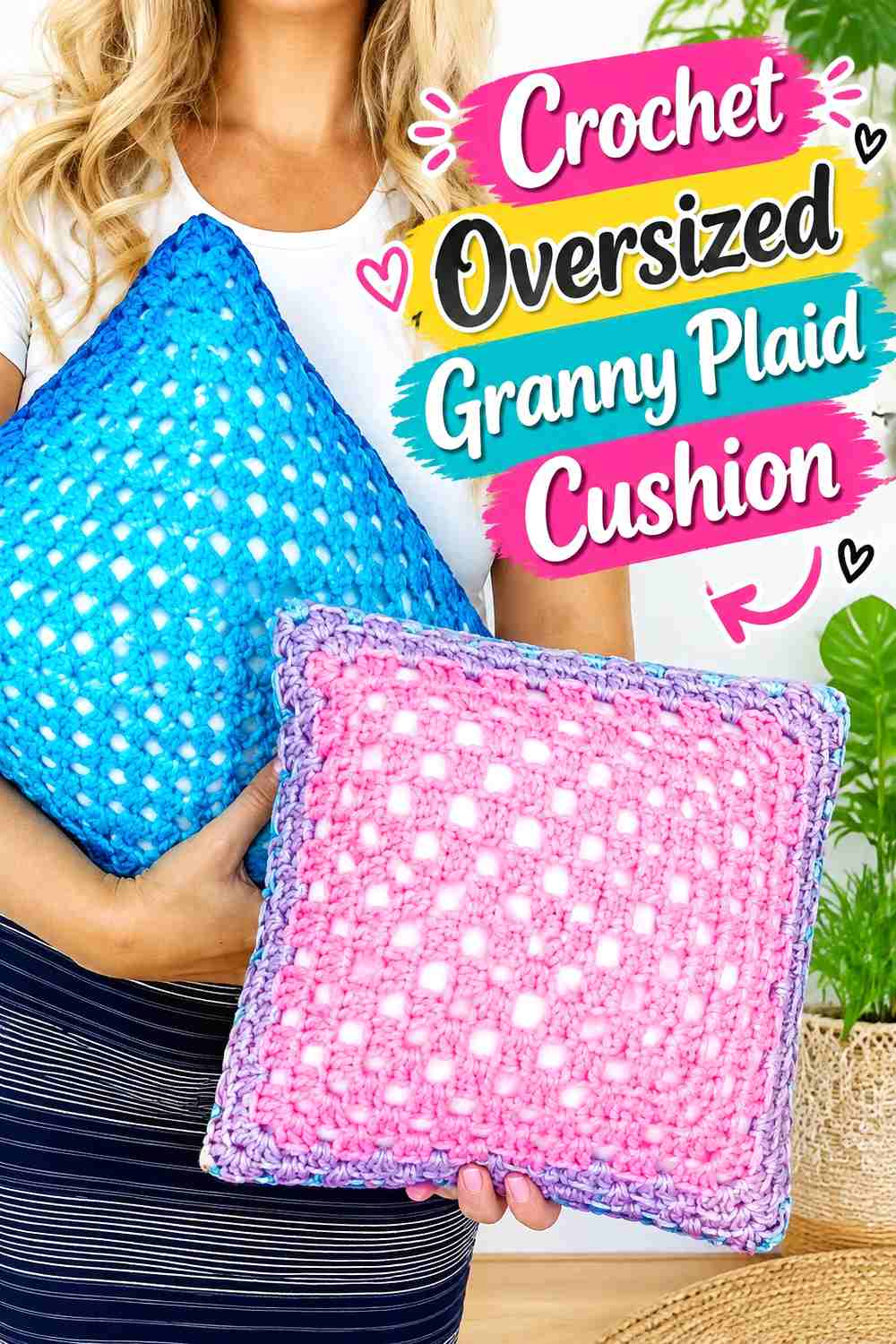
A single large granny square gives the hearth cushion a completely different rhythm. There are no small motifs to join; the visual pattern grows outward from the center.
You can still bring plaid into the design by repeating a restrained sequence of winter colors rather than treating every round as an unrelated stripe.
Concentric Color Is Not the Same as Plaid
A large square naturally produces rings of color, so simply alternating shades will create a striped frame rather than a checked fabric effect.
If the rest of your hearth arrangement contains tartan or gingham, that can be an advantage. Use the cushion as a grannycore companion that repeats the same palette without duplicating the exact pattern.
Judge the Finished Panel Against the Actual Insert
Continuous squares are easy to keep enlarging, which makes it tempting to work toward a guessed size. Stop periodically and compare the crochet directly with the intended pillow.
The amount of stretch you want will depend on the yarn, stitch openness, and the appearance you prefer, so avoid treating one project’s finished measurements as universal.
Creator Credit: Jennifer Noelle
8. Crochet Vintage Granny Hearth Pillow
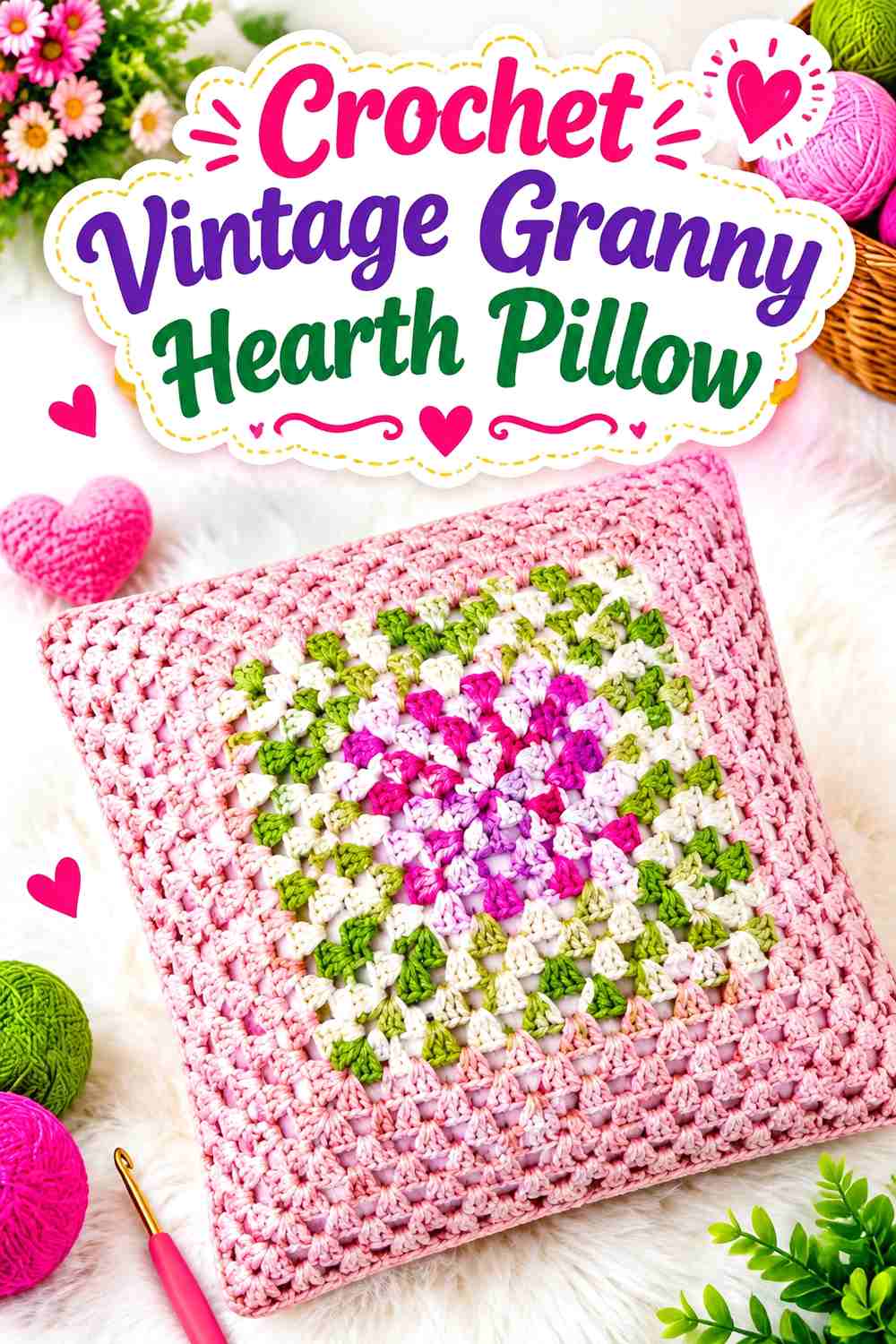
This classic granny-square pillow case leans strongly into the nostalgic side of grannycore. It suits a room where the handmade character should remain visible rather than being disguised as woven fabric.
For a plaid-inspired variation, limit the palette and repeat colors methodically instead of using a completely random scrap sequence.
A Narrow Palette Makes Classic Granny Look More Tailored
Traditional multicolor granny crochet can become visually energetic very quickly. Restricting the design to two neutrals plus one or two deeper accent colors gives it more connection to plaid furnishings.
The crochet remains vintage, but the color organization feels more deliberate.
Decide Whether You Want Contrast at the Outer Edge
A dark border frames the cushion and separates it from pale upholstery. A quieter border allows the granny pattern to flow more softly into the room.
Test both possibilities by placing the almost-finished front on the chair or sofa where it will actually be used before choosing the final surrounding shade.
Creator Credit: Jayda InStitches
9. Crochet XXL Fireside Granny Cushion
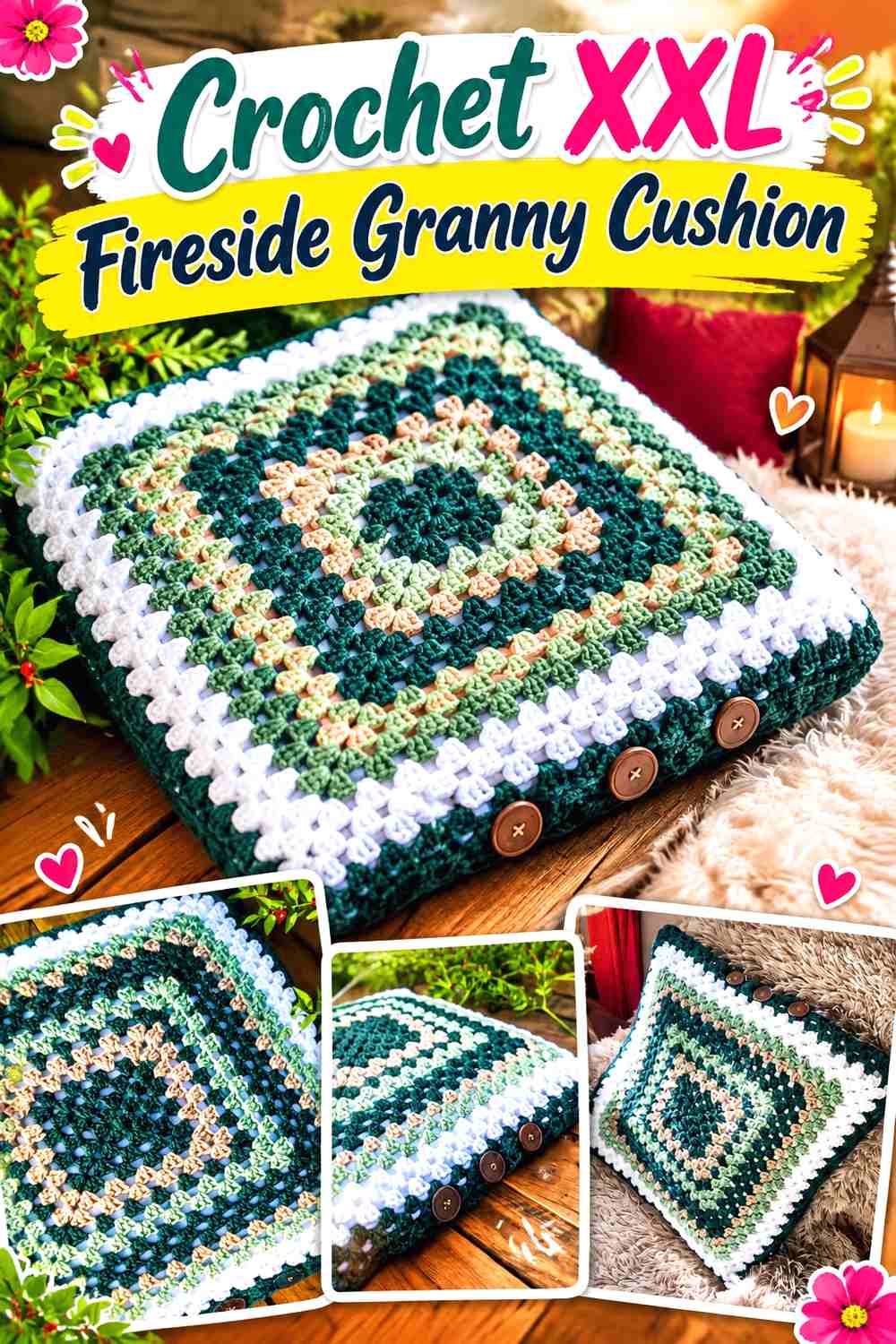
An oversized granny square shifts attention from intricate motif repetition to scale. It can anchor a deep armchair, window seat, or wide hearth bench where a smaller cushion would disappear visually.
The larger uninterrupted surface is also useful when you want broad bands of winter color rather than many tiny squares.
Large Scale Needs a Simple Color Plan
On a generous cushion, every additional color occupies more visual space. An overly complicated sequence can dominate the entire seating area.
A small set of repeated heritage colors—such as cream, moss, rust, charcoal, or wine—can give the oversized granny stronger connection to plaid textiles nearby.
Bigger Crochet Makes Edge Shape More Obvious
As a granny square grows, any waviness, twisting, or inconsistent corner tension becomes easier to notice.
Lay the work flat occasionally rather than waiting until the end to judge the shape. Blocking can refine crochet, but it should not be expected to correct a major structural problem.
Creator Credit: Linda Funky Crochet
10. Crochet Pom-Pom Corner Plaid Granny Pillow
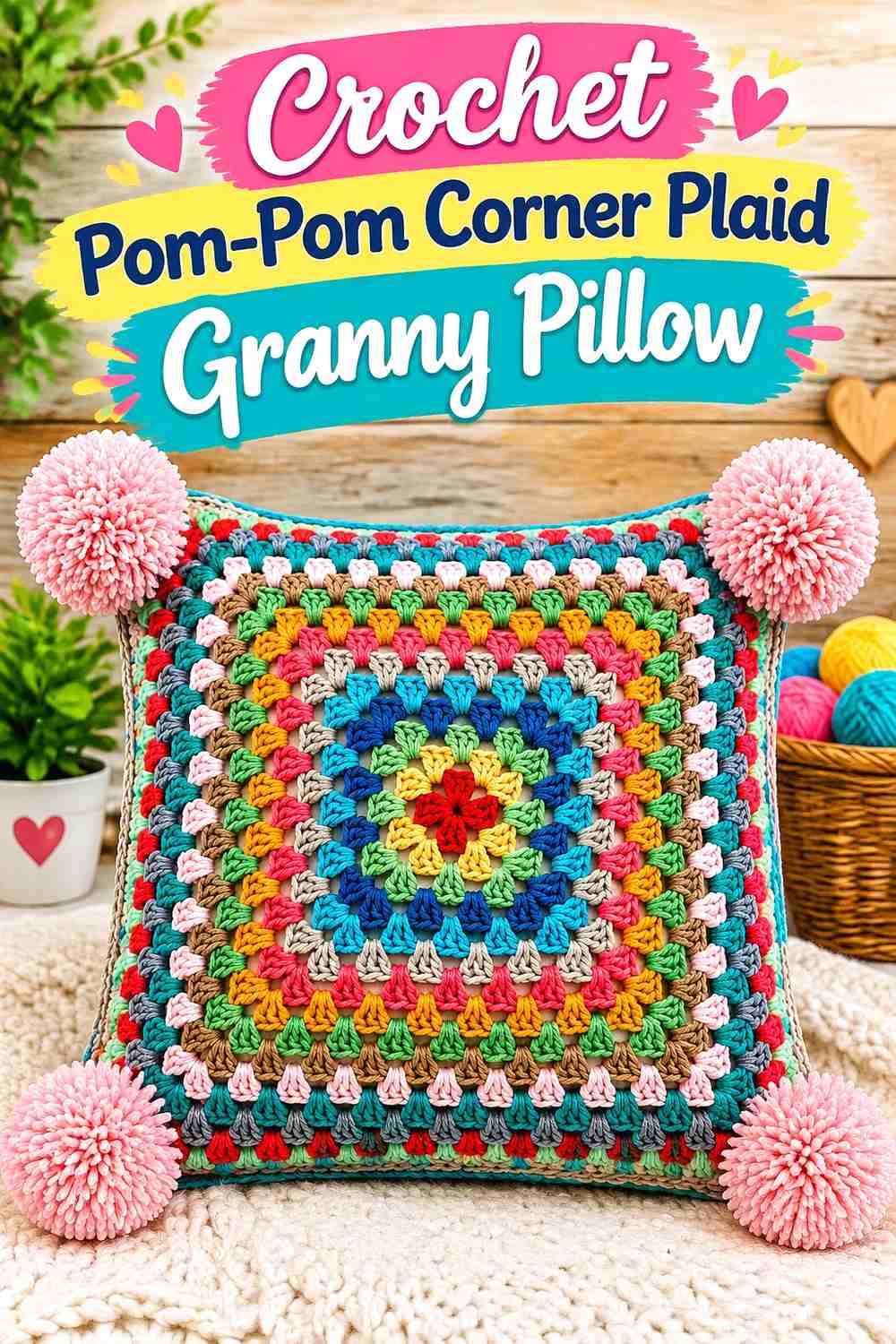
Pom-poms push a granny cushion further toward playful cottage and vintage styling. The basic square shape stays practical, while the corners introduce a detail that distinguishes it from simpler plaid pillows.
A restrained check-inspired palette keeps the embellishment from making the design feel overly busy.
Corner Details Change the Silhouette
Pom-poms extend beyond the square outline, so consider where the pillow will sit. They are more noticeable on an open chair than when compressed between several sofa cushions.
If you like the granny construction but prefer cleaner lines, treat the embellishment as optional and let the color layout supply the decorative interest.
Repeat Colors Instead of Making Every Round Unique
A controlled sequence can connect an outward-growing granny square with neighboring plaid textiles. For example, returning regularly to the same dark anchor shade creates stronger visual continuity than using a new color for every round.
Choose the sequence before beginning so the final proportions feel intentional.
Creator Credit: Lori Holt
11. Crochet Groovy Scrap-Plaid Cushion
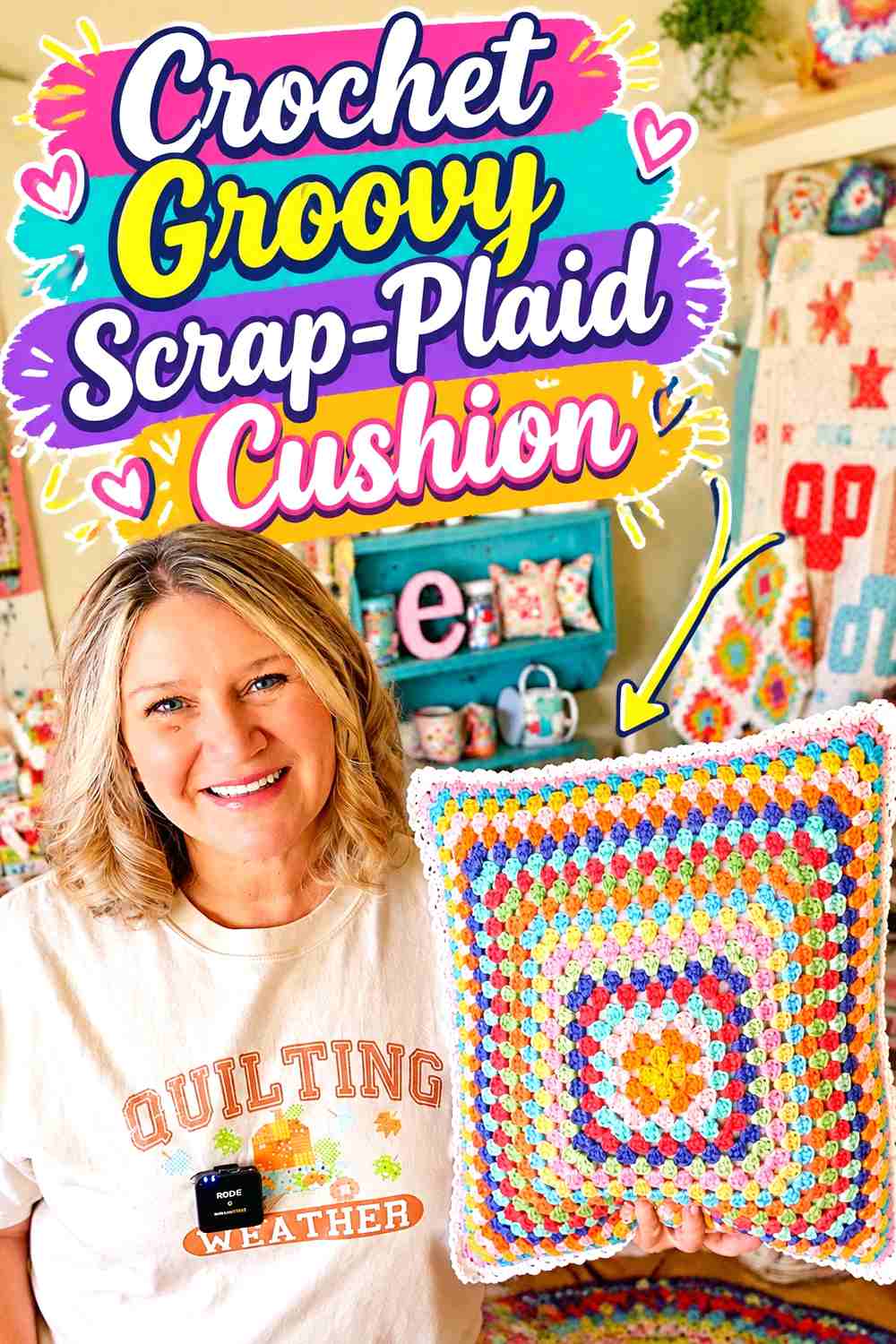
This granny-square pillow is a strong choice for a collected, slightly retro room. It gives you permission to use several colors while still working within an organized square format.
The challenge is preventing “scrappy” from becoming completely random when your target aesthetic is plaid grannycore.
Sort Scraps Into Color Families First
Before crocheting, divide available yarn into groups such as light neutrals, muted mids, and dark accents. That lets you use leftovers while maintaining enough repetition for the finished pillow to look coordinated.
You do not need identical quantities of every shade; you need a recognizable relationship among them.
Let One Color Act as the Visual Thread
Using one recurring shade around motifs, along joins, or in repeated positions can bring unrelated scraps together.
This is particularly helpful when the cushion will sit next to a plaid blanket, because the repeated anchor color can connect the two pieces even when their patterns differ.
Creator Credit: Erica Arndt
12. Crochet Framed Boho Granny Hearth Cushion
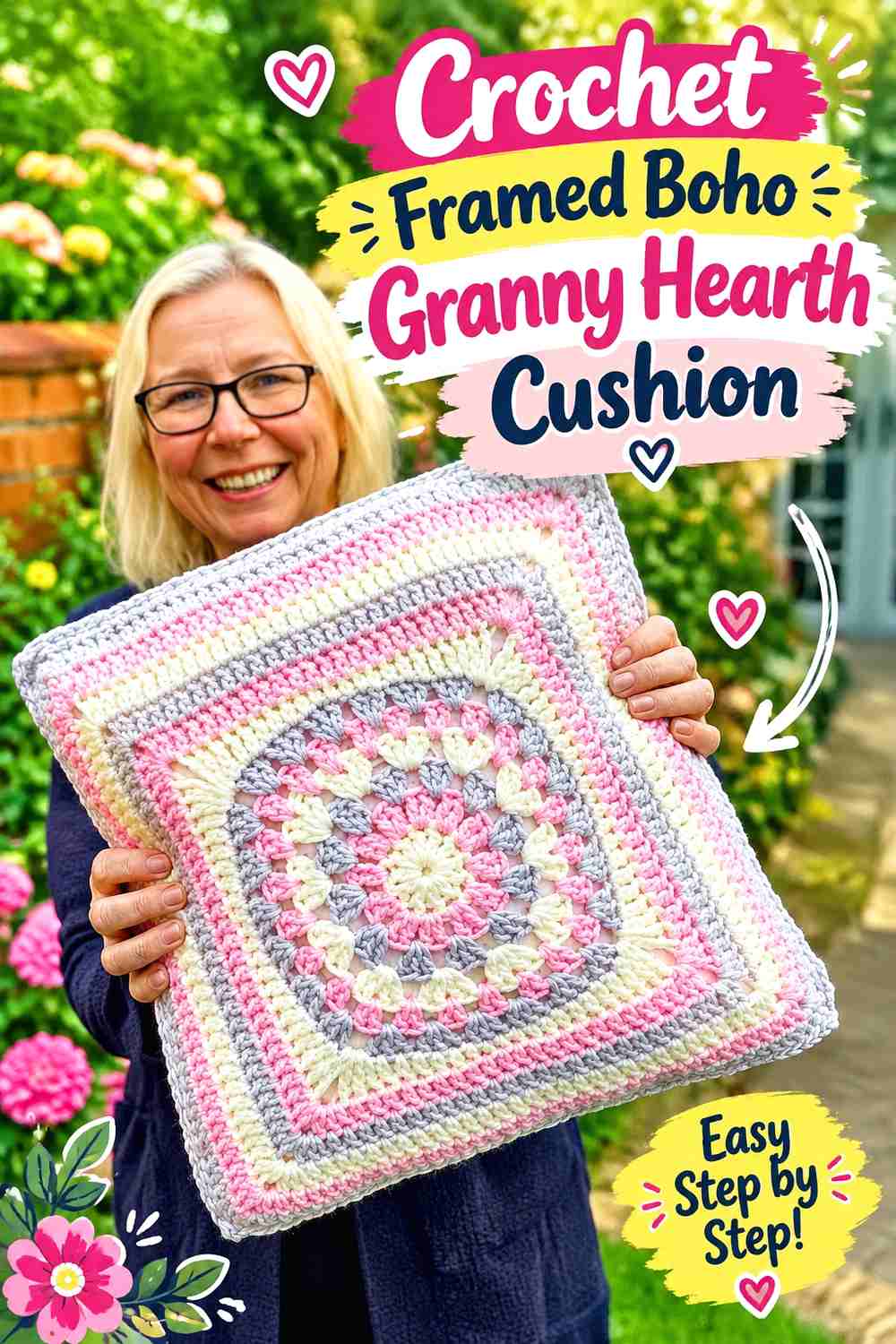
This cushion construction combines granny-style crochet with a more framed, bohemian appearance. It is useful when you want the central square to remain important while the outer portions create more breathing room around it.
That framing can stop a winter seating area filled with patterned throws and rugs from becoming too visually dense.
Use the Center as a Miniature Plaid Statement
The most decorative area does not have to cover the entire pillow. A carefully planned center using your strongest plaid colors can establish the theme, while quieter surrounding rounds soften the transition into the room.
This approach also works well if your accent yarn is limited.
A Framed Layout Can Calm High-Contrast Colors
Dark green, black, cranberry, and cream can create a powerful heritage palette. Surrounding those colors with a wider neutral field makes the same combination easier to use in a small room.
Think about visual proportion before adding another high-contrast band simply because yarn remains available.
Creator Credit: Cosy Rosie Crochet
13. Crochet Classic Scatter Granny Cushion
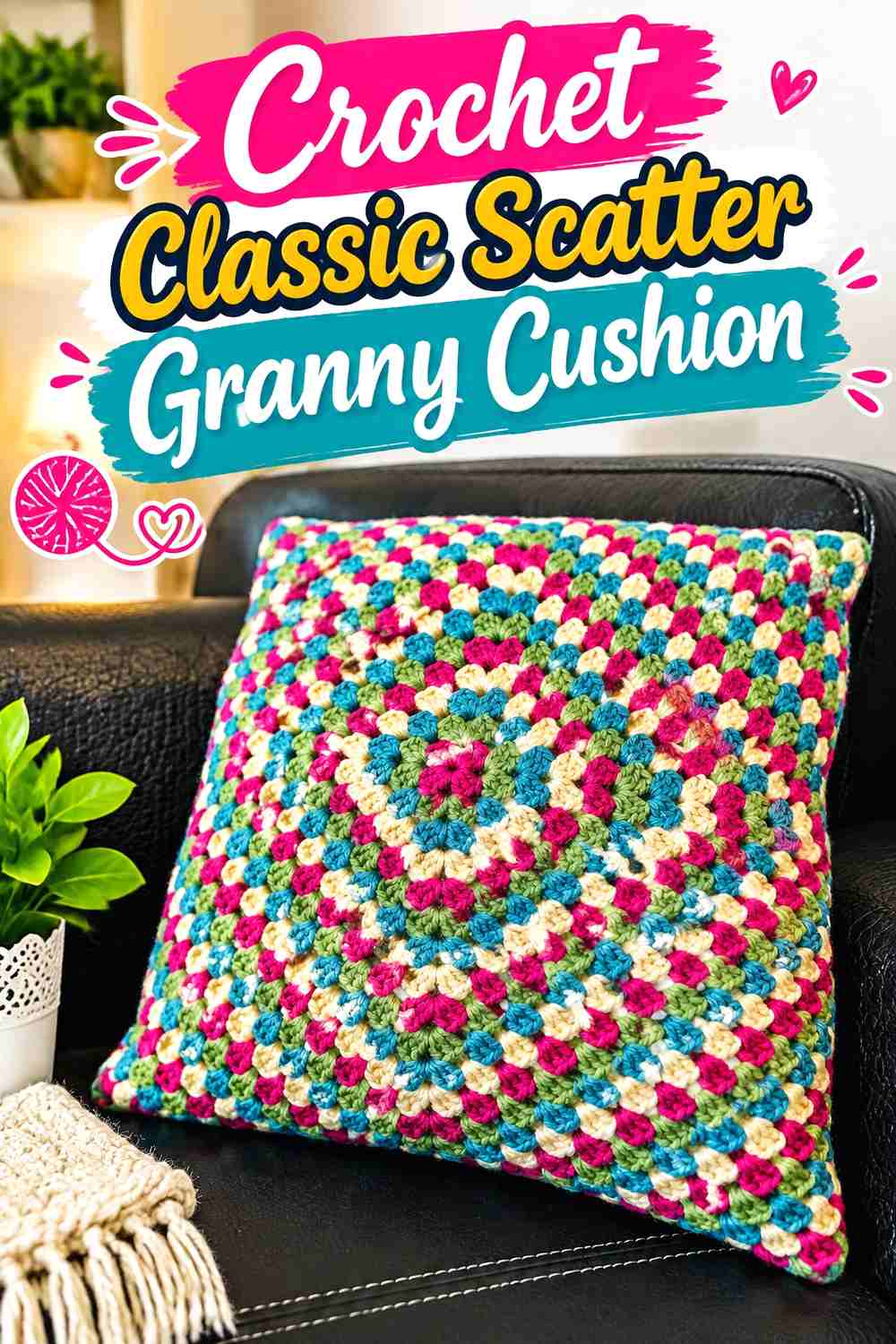
A traditional granny scatter cushion works especially well when you want one handmade accent among upholstered furniture rather than a complete coordinated crochet set.
The design is straightforward enough that the color plan can do most of the stylistic work. Use repeated winter shades to connect it with tartan blankets, checked curtains, or a patterned rug.
Let Nearby Textiles Determine the Palette
Instead of choosing yarn in isolation, place candidate colors next to the throw or chair that will share the space.
You do not need to match every shade exactly. Repeating two or three dominant colors is usually enough to make separate patterns feel related.
Decide Whether the Cushion Should Blend or Lead
A low-contrast granny square adds texture without becoming the focal point. A dark-and-light combination turns the pillow into a much stronger statement.
Make that decision before buying additional colors because the room, rather than the individual skeins, should determine how much contrast you need.
Creator Credit: Ophelia Talks Crochet
14. Crochet Farmhouse Two-Color Granny Cushion
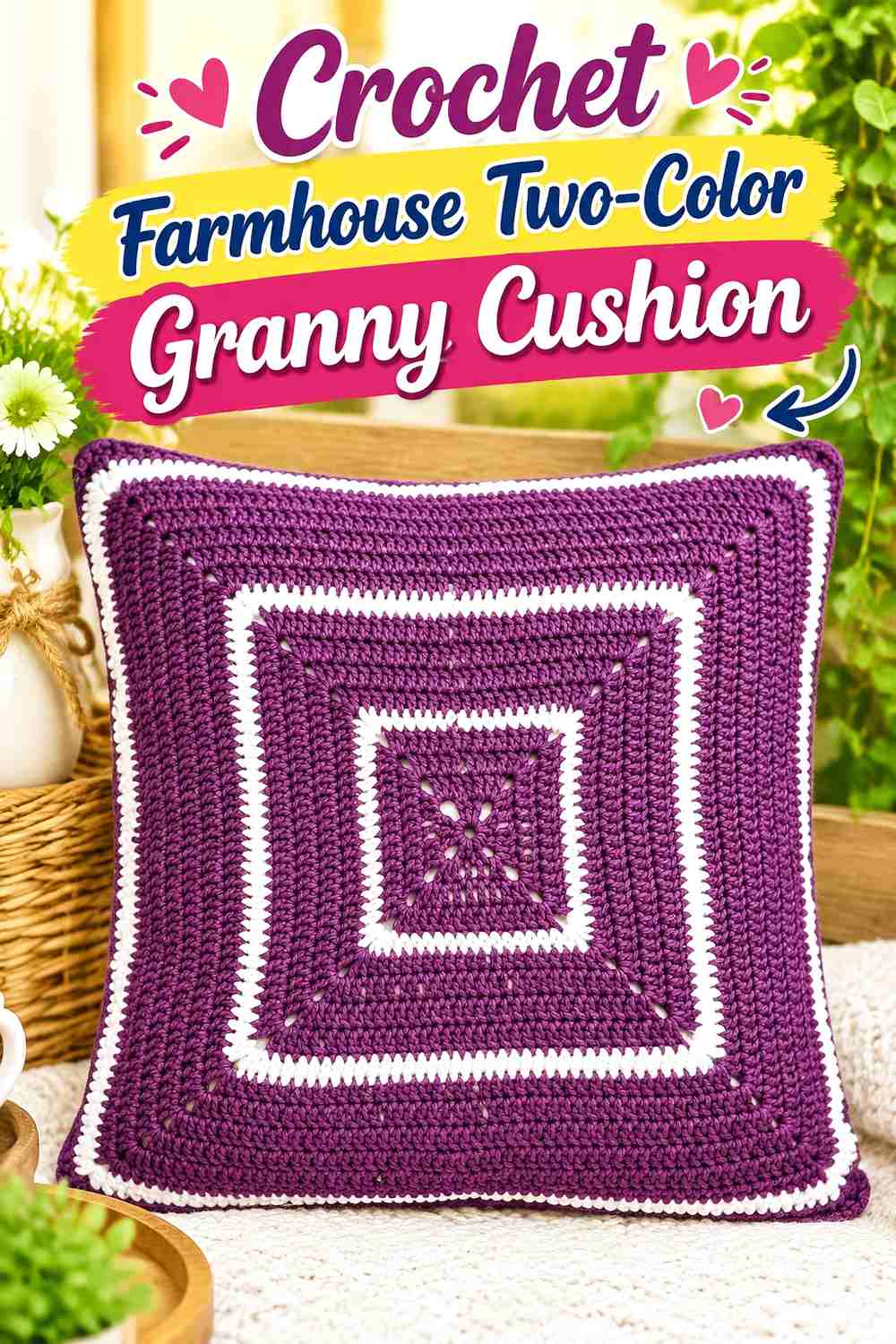
A mostly two-color granny cover creates a calmer farmhouse interpretation of the theme. The restricted palette makes individual stitches and square geometry easier to notice while reducing the visual noise of a highly scrappy pillow.
This is a useful bridge between literal black-and-white buffalo check and colorful vintage granny crochet.
Two Colors Put More Attention on Tension
When there are fewer colors to distract the eye, irregular edges and inconsistent rounds become more visible.
Check the panel’s shape as it grows and compare matching pieces before final assembly. Small corrections are easier before the cover has been joined around an insert.
Use Contrast to Control the Farmhouse Effect
Strong dark-and-light contrast feels graphic and check-like. Two neighboring neutrals create a softer, more faded vintage look.
Neither approach is universally better; choose according to the amount of pattern already present around the hearth.
Creator Credit: Crazy Cool Crochet
15. Crochet Heart-and-Check Grannycore Cushion
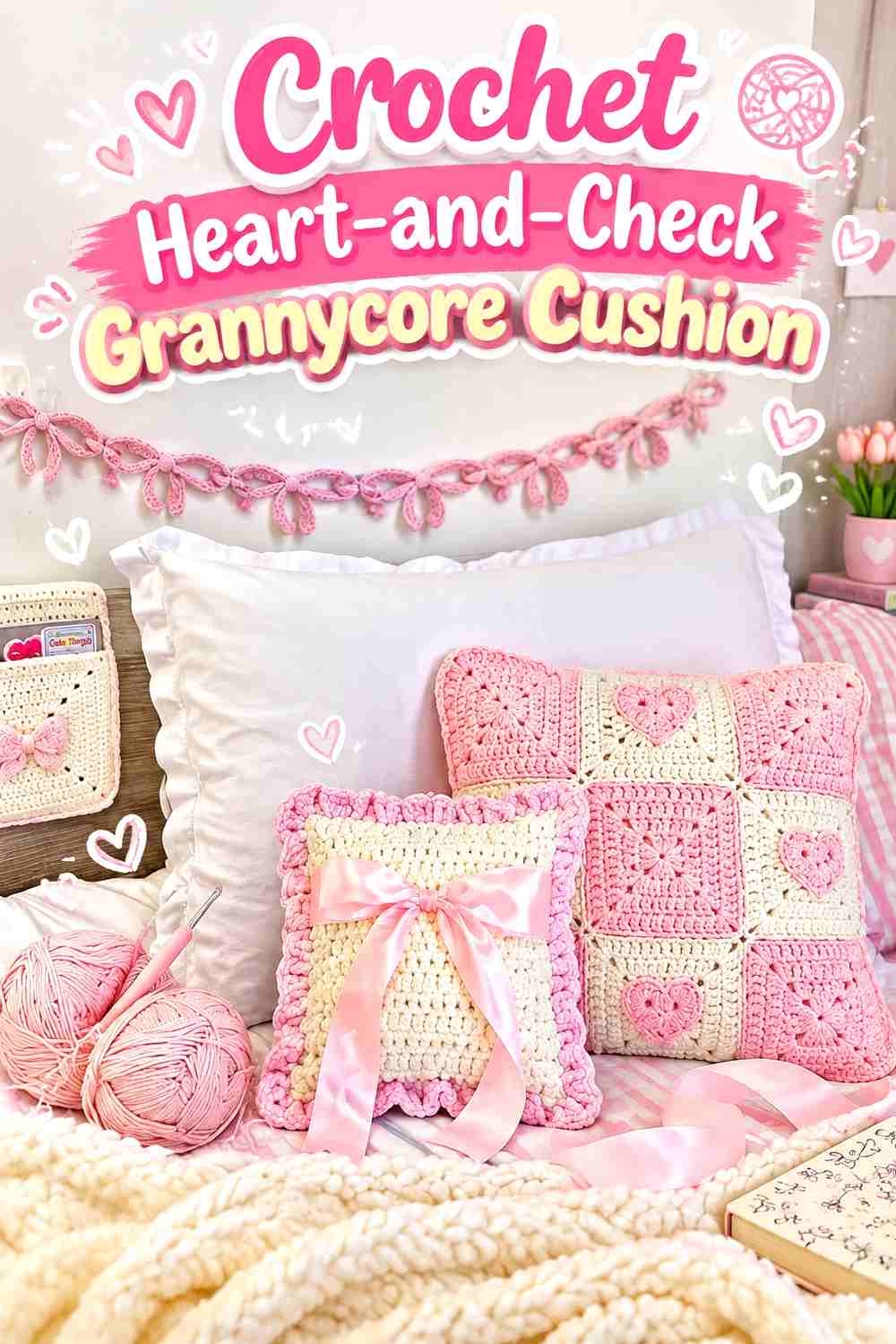
Mixing solid granny units with motif squares produces a cushion that feels collected rather than strictly traditional. The alternating surfaces can be arranged almost like a checkerboard, making this a useful route to playful grannycore plaid.
A heart motif also gives the cushion a softer cottage character without requiring every square to carry the same decoration.
Alternate Decorative and Quiet Squares
When every square contains a strong motif, the eye has nowhere to rest. Using solid or restrained units between decorative squares can make both the checkerboard and the motifs easier to recognize.
Lay out the entire front before joining so the decorative squares do not accidentally cluster on one side.
Keep Extra Embellishment Secondary to the Grid
Bows, ruffles, or other coquette details can coexist with plaid, but too many focal elements can hide the underlying square arrangement.
Choose one dominant idea. If the check layout is important, keep the edging relatively quiet; if a decorative border is the focus, simplify the internal color changes.
Creator Credit: mahum 🎀
16. Crochet Interlocking Winter Grid Cushion
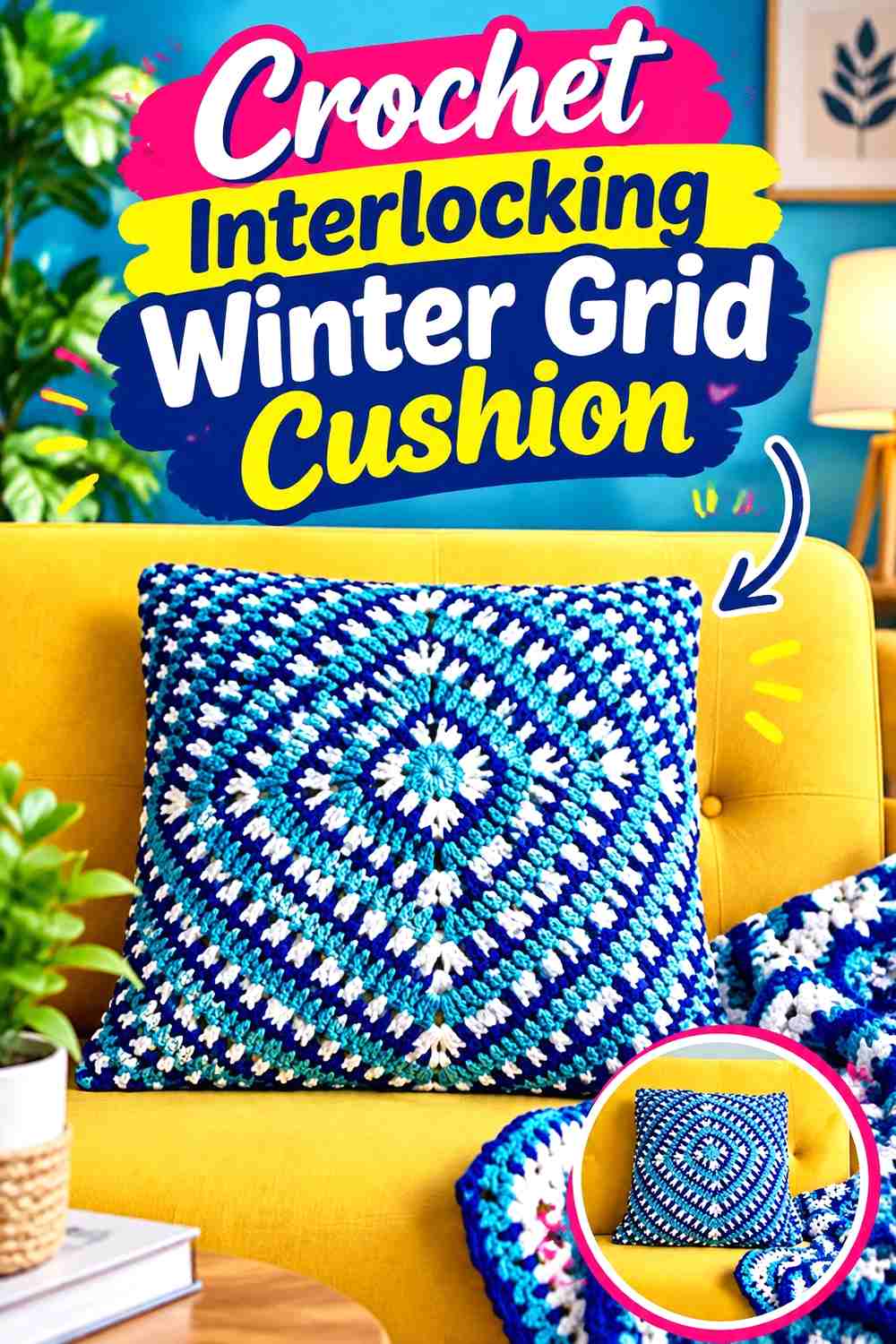
Interlocking crochet creates a stronger architectural surface than a loose classic granny cluster. That makes this cushion useful when you want geometric winter decor that still feels handmade.
The intersecting lines naturally support a plaid-inspired palette, particularly when neighboring colors are clearly separated.
Interlocking Texture Adds Pattern Without Tiny Motifs
If weaving in many individual granny-square ends is not appealing, a larger continuously worked geometric square can give you visual complexity with fewer separate components.
The trade-off is that color placement becomes harder to rearrange later, so plan the palette carefully before the design has grown very far.
Keep the Geometric Lines Visible
Highly variegated yarn can compete with interlocking stitch structure. Solid or gently heathered colors generally make geometric crossings easier to see.
If the cushion sits beside a strongly patterned blanket, use fewer colors here and allow the texture itself to supply the detail.
Creator Credit: Blue Star Crochet
17. Crochet Chunky Boho Plaid-Style Cushion
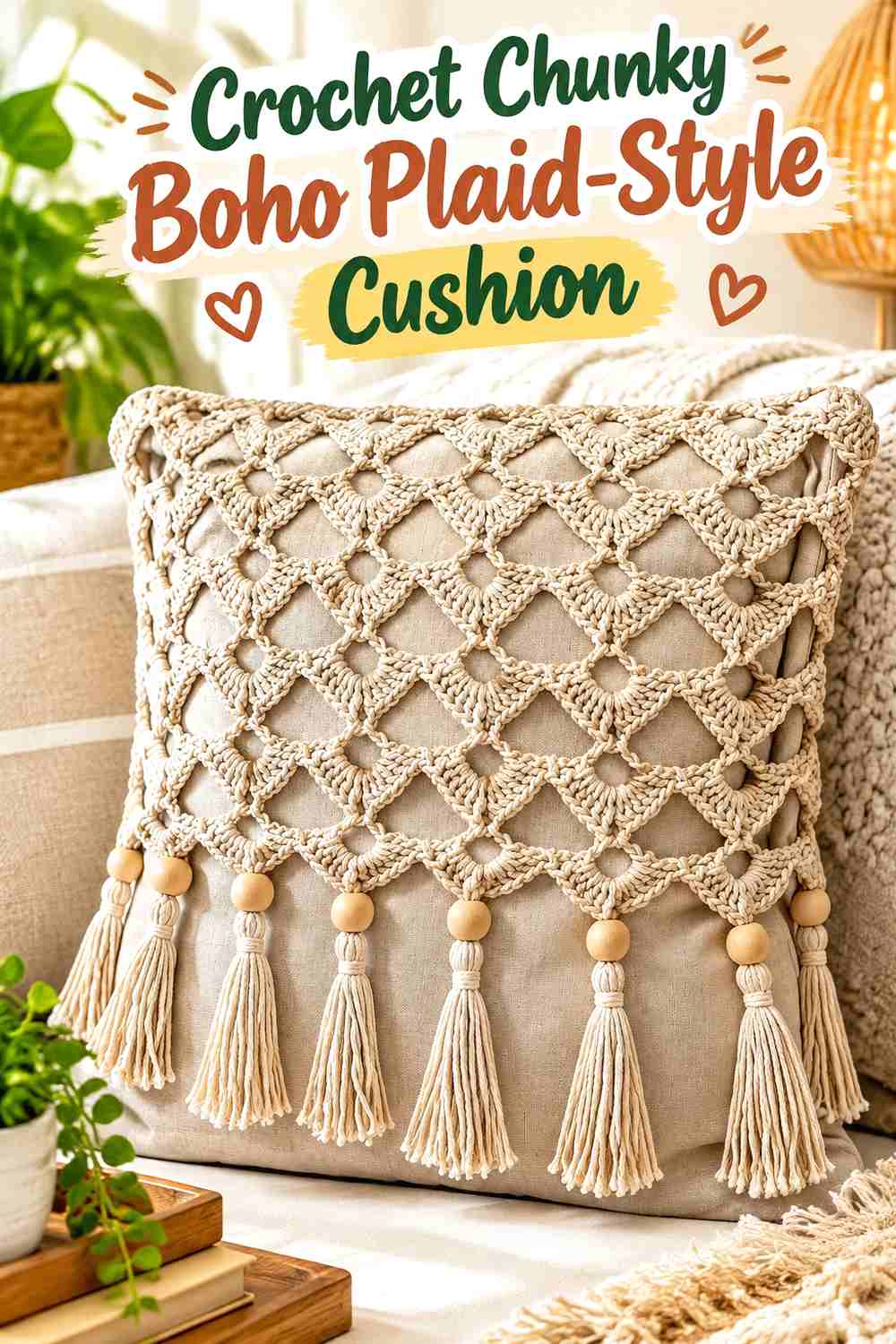
A chunky granny-inspired cushion gives the collection a more tactile finish. Instead of reproducing a precise tartan, use broad blocks of earthy winter color and let the heavier crochet create the cozy hearth character.
This works particularly well when the room needs texture more than another sharply defined check pattern.
Chunkier Yarn Makes Every Motif Feel Larger
A design that looks intricate in finer yarn can become much bolder when worked at a heavier scale. Consider whether the planned color blocks will still fit comfortably within the cushion’s overall proportions.
Fewer, larger areas of color may look more intentional than squeezing a complicated plaid repeat onto a relatively small surface.
Treat Tassels and Extra Texture as Styling Decisions
Decorative hanging elements create a relaxed bohemian effect, but they also change how the cushion behaves when moved, stacked, or used for back support.
If your goal is a functional fireside pillow, you may prefer a cleaner perimeter. If it will mainly sit on a chair as decor, additional texture can become part of the grannycore character.
Creator Credit: Fatma hobby
Which Crochet Plaid Hearth Cushion Style Should You Choose?
For the clearest traditional plaid effect, start with the Fireside Holiday Plaid, Cottage Gingham, or Heritage Argyle ideas. These make the pattern itself the central feature rather than relying mainly on color adaptation.
For stronger grannycore character, the Two-Tone Patchwork, Buttoned Granny-Grid, Sunburst Check, Groovy Scrap-Plaid, and Heart-and-Check cushions make individual motifs part of the design. They require more layout planning, but you can rearrange many of the pieces before joining.
The Oversized Granny, Vintage Granny, XXL Granny, Pom-Pom Corner, Framed Boho, Classic Scatter, and Farmhouse Two-Color options are better when you want the palette to reference plaid while keeping traditional granny crochet dominant.
The Interlocking Winter Grid suits a more geometric room, while the Chunky Boho option works when tactile texture matters more than reproducing a precise tartan.
Conclusion
The most convincing crochet grannycore plaid hearth cushion does not have to imitate woven tartan exactly. What matters is intentional repetition: colors that return in predictable places, squares that form a readable grid, or geometric lines that connect visually with the checks already used elsewhere in the room.
Choose true plaid or gingham when you want crisp pattern. Choose joined granny squares when you want more control over motif placement. Choose an oversized or continuous granny design when you prefer fewer seams and a softer interpretation of the theme.
Whichever construction you choose, settle the insert, color arrangement, closure preference, and finished placement before making major adaptations. Use the original creator’s tutorial for exact construction details, then make the decorative decisions around the needs of your own winter room.
Frequently Asked Questions
How can I make granny squares look more like plaid?
Use deliberate repetition rather than random scrap placement. Select a limited palette and arrange the dominant motif colors in regular rows, columns, or alternating blocks. A consistent joining color can act like the narrow dividing lines in woven plaid.
Is gingham easier to plan than tartan for a crochet cushion?
Gingham usually has a simpler visual structure because it relies on repeated checks and a small group of related values. Tartan can involve more intersecting colors and line widths. The actual crochet difficulty still depends on the specific tutorial and construction.
Should I block granny squares before arranging a cushion front?
Blocking before final layout can make it easier to compare motif dimensions and see whether the rows will align cleanly. It is particularly useful when a structured check pattern depends on straight joins.
What colors make a crochet plaid cushion feel wintry without looking specifically Christmas-themed?
Forest green, rust, cream, charcoal, deep blue, mustard, brown, burgundy, and muted berry tones can create a cold-weather palette without relying solely on bright red and green. Look at the furniture and textiles already in the room before deciding.
Is a removable crochet cushion cover better for seasonal decor?
It can be more convenient because the cover can be stored separately while the insert is reused. If that matters to you, choose a tutorial with an appropriate envelope, button, zipper, or other removable construction rather than assuming a permanently closed pillow can be converted without planning.
How do I stop a plaid cushion from making the room look too busy?
Let one or two textiles carry the strongest pattern. If the cushion has high-contrast checks, pair it with quieter solids or subtle textures. If the room already includes tartan curtains, rugs, or blankets, a limited-color granny cushion can echo their palette without repeating another equally strong plaid.
Can I use a different granny-square motif in one of these cushion constructions?
Potentially, but compare the blocked dimensions, edge structure, density, and corner shape first. Two motifs that look similar in photographs may not join neatly at the same size. Treat the original tutorial’s construction and any substitute motif as separate components that need to be checked for compatibility.