A crochet window topper can soften a winter room without hiding the daylight that makes a cold-season window so appealing. Scallops, pineapples, filet motifs, flower strands, shells, fringe, and lightly gathered crochet all bring texture to the upper part of a window while leaving most of the glass exposed.
Here, Drape-Maxx is used as a styling idea rather than the name of a specific crochet technique or fiber. Think generous drape, visible folds, decorative lower edges, and enough movement for the crochet to feel softer than a rigid window treatment. Because crochet fabric bends rather than forming a hard upholstered box, most of these projects function as pelmet-style valances or window toppers.
Several tutorials below already make short valances or café curtains. Others create longer curtain panels or floral curtains that can inspire a shallower window-top treatment. When adapting a full curtain, first determine whether the stitch or motif repeat can end cleanly at pelmet depth; simply stopping halfway through a pictorial design can leave the pattern looking incomplete.
For a vintage winter room, consider cream, antique white, oatmeal, faded green, burgundy, muted blue, warm brown, or another shade that works with your curtains and woodwork. The best project is not necessarily the most elaborate one—it is the one whose weight, transparency, hanging method, and lower edge make sense above your particular window.
Quick List
- Crochet Layered Swag Pelmet
- Crochet Pineapple Ring Pelmet
- Crochet Pointed Fan Pelmet
- Crochet Fringed Openwork Pelmet
- Crochet Winter Flower-Garland Pelmet
- Crochet Cluster-Lace Café Pelmet
- Crochet Airy Repeat Café Pelmet
- Crochet Full-Width Geometric Pelmet
- Crochet Arched Neutral Lace Pelmet
- Crochet Tassel-Edge Sheer Pelmet
- Crochet Shell-Lace Window Pelmet
- Crochet Filet Heart Pelmet
- Crochet Rose-and-Leaf Garden Pelmet
- Crochet Cascading Floral Pelmet
- Crochet Boho Vine Pelmet
- Crochet Flower-Strand Pelmet
What Creates a Drape-Maxx Look in Crochet?
Drape starts with the fabric itself. Fine thread and open lace can fall into delicate folds, while heavier yarn produces broader, more obvious curves. Neither is automatically better. A narrow cottage window may benefit from a restrained thread valance, while a larger window can carry stronger scallops, pineapples, or dimensional motifs.
Fullness matters too. A crochet topper worked exactly to the visible width of the window will usually look flatter than one designed to gather. However, adding extra width changes more than appearance: it also increases weight and compresses motif details when the piece is pushed together on the rod.
Before making a wide pelmet, crochet enough of the pattern to see how it behaves when gently gathered. Some filet pictures need to remain relatively flat to stay readable, while shells and repeating openwork can tolerate more folds.
The lower edge creates another opportunity for drape. Deep scallops, points, fringe, flower strands, and tassels can produce movement without requiring the entire top edge to be heavily gathered.
Match the Hanging Method to the Crochet Structure
The top edge deserves as much planning as the decorative bottom.
Rod pockets produce a continuous gathered line but can compress thick crochet. Large crochet loops create more visible spacing. Wooden or decorative rings can become part of the design, while narrow tabs can make a heavier valance hang in individual folds.
Check the rod and hardware before finalizing the topper. A substantial crochet curtain can weigh more than it appears to while lying on a table, particularly when made with thicker yarn or many dimensional flowers.
Also measure the window itself rather than assuming the tutorial’s proportions will transfer. Consider the visible glass, frame, curtain rod position, and whether the pelmet will hang alone or in front of longer curtains.
If you are adapting a full curtain tutorial, make a sample of the top treatment as well as the decorative fabric. A beautiful stitch repeat is not useful as a pelmet if its original mounting method cannot be adapted neatly to your rod.
Keep Winter Window Crochet Clear of Heat and Dampness
A cozy winter window often sits near heating equipment, but decorative crochet should not be assumed to tolerate heat simply because it is textile décor. Keep yarn and hanging embellishments appropriately separated from radiators, heaters, fireplaces, candles, and other heat or flame sources.
Window condensation is another practical issue. Crochet that repeatedly rests against damp glass or a wet sill may not remain in good condition. Allow moisture to clear and position the topper where it can stay dry.
If a project includes long dangling cords, loops, or tieback-like elements, think carefully about placement in homes with young children. Decorative strands do not need to extend farther than the design requires.
Finally, follow the care guidance for the actual yarn or thread used. A vintage-looking cotton lace valance and a thick acrylic topper may require very different finishing and cleaning methods.
1. Crochet Layered Swag Pelmet
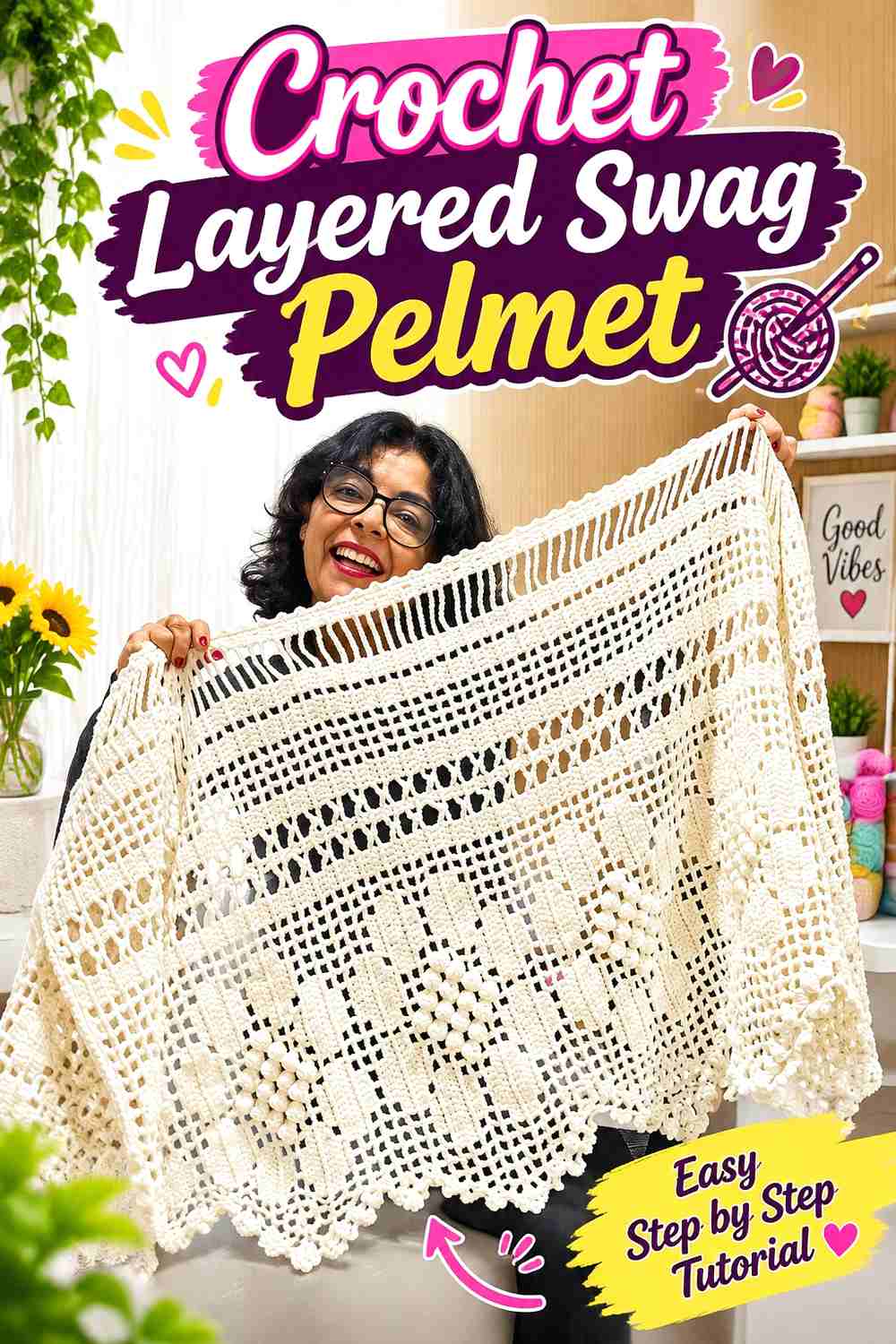
This design takes the pelmet idea in its most traditional direction: a shaped window topper with strong lower movement rather than a simple straight strip. The tutorial already focuses on a valance-style curtain, so it is a useful choice when you want the crochet itself to create a substantial architectural feature at the top of the window.
For winter styling, a single subdued shade can make the folds look more formal, while two closely related colors can emphasize the layered outline without turning the topper into a bright seasonal decoration.
Let the Deepest Point Frame the Window
A shaped valance naturally draws the eye downward at particular points. Before settling on placement, check whether those dips interfere with the view, decorative window trim, or another curtain hanging behind the crochet.
A deep center can suit a tall window, while a shallower presentation may be better when the upper glass is already limited.
Gather Carefully Around Shaped Sections
A highly shaped lower edge may distort if the top is compressed too aggressively. Test the piece on the intended rod before assuming that more gathering will automatically produce a richer result.
The goal is enough fullness to create movement while preserving the visible shape of the lower design.
Creator Credit: Nortere Artesanato
2. Crochet Pineapple Ring Pelmet
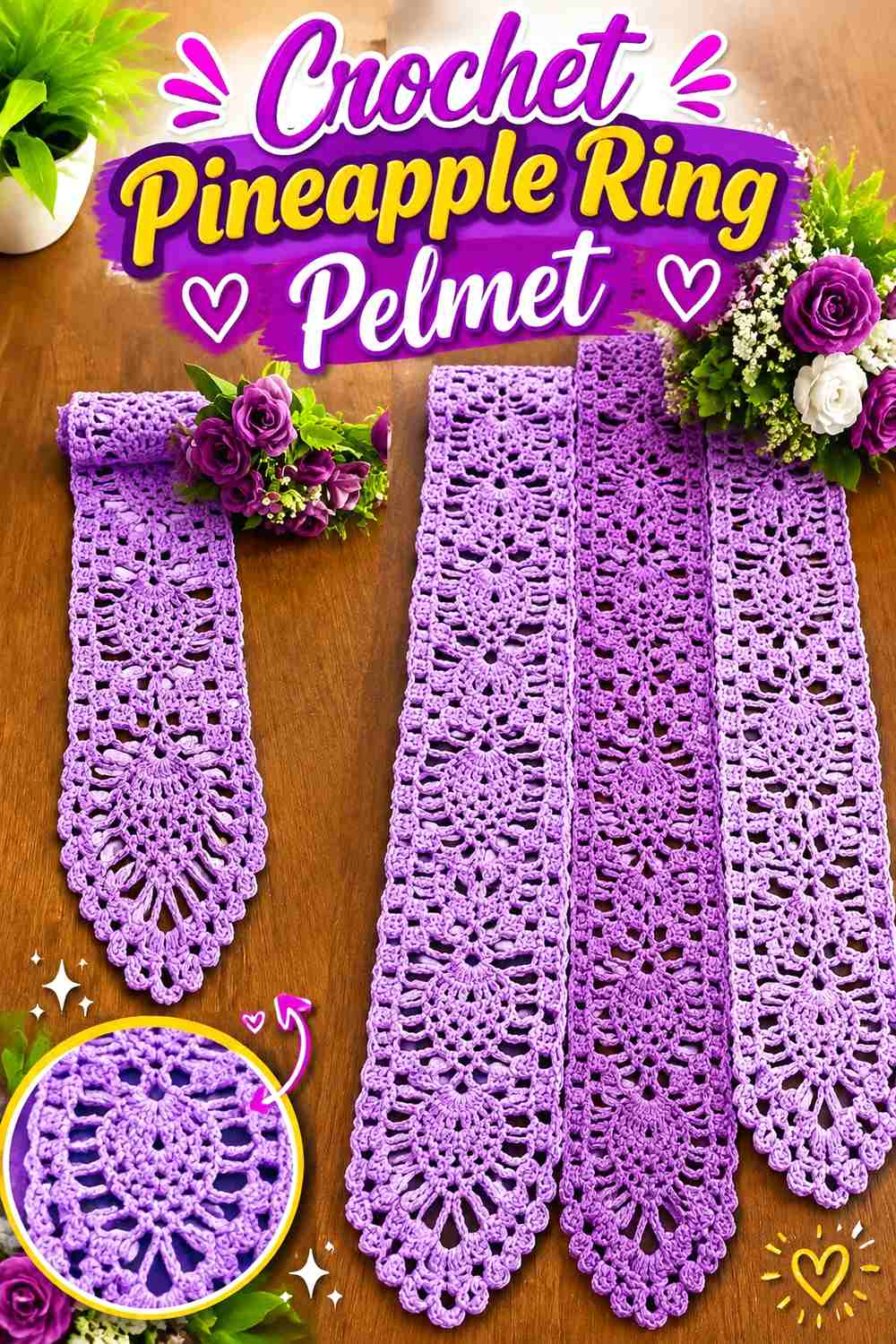
Pineapple crochet brings unmistakable vintage-lace character to the window. This tutorial uses a colorful pineapple-style valance and visible hanging rings, creating a more decorative upper edge than a hidden rod pocket.
For a winter room, the same construction can be interpreted in antique white, muted cranberry, moss, tobacco brown, or another palette that feels quieter than a multicolor summer curtain.
Pineapple Motifs Need Room to Open Fully
A pineapple pattern depends on expanding and narrowing spaces. Excessive gathering can fold those shapes on top of one another until the main motif becomes difficult to recognize.
Before deciding how wide to make the piece, hold or pin a completed section in loose folds and compare it with the same section laid flatter.
Rings Can Become Part of the Vintage Detail
Visible rings introduce repeated hard shapes above the soft crochet. Wood can reinforce a cottage or heritage atmosphere, while another ring material may create a cleaner look.
Check compatibility between the ring size, rod, and crochet attachment before making the full number of hanging points.
Creator Credit: Carmem Crochê
3. Crochet Pointed Fan Pelmet
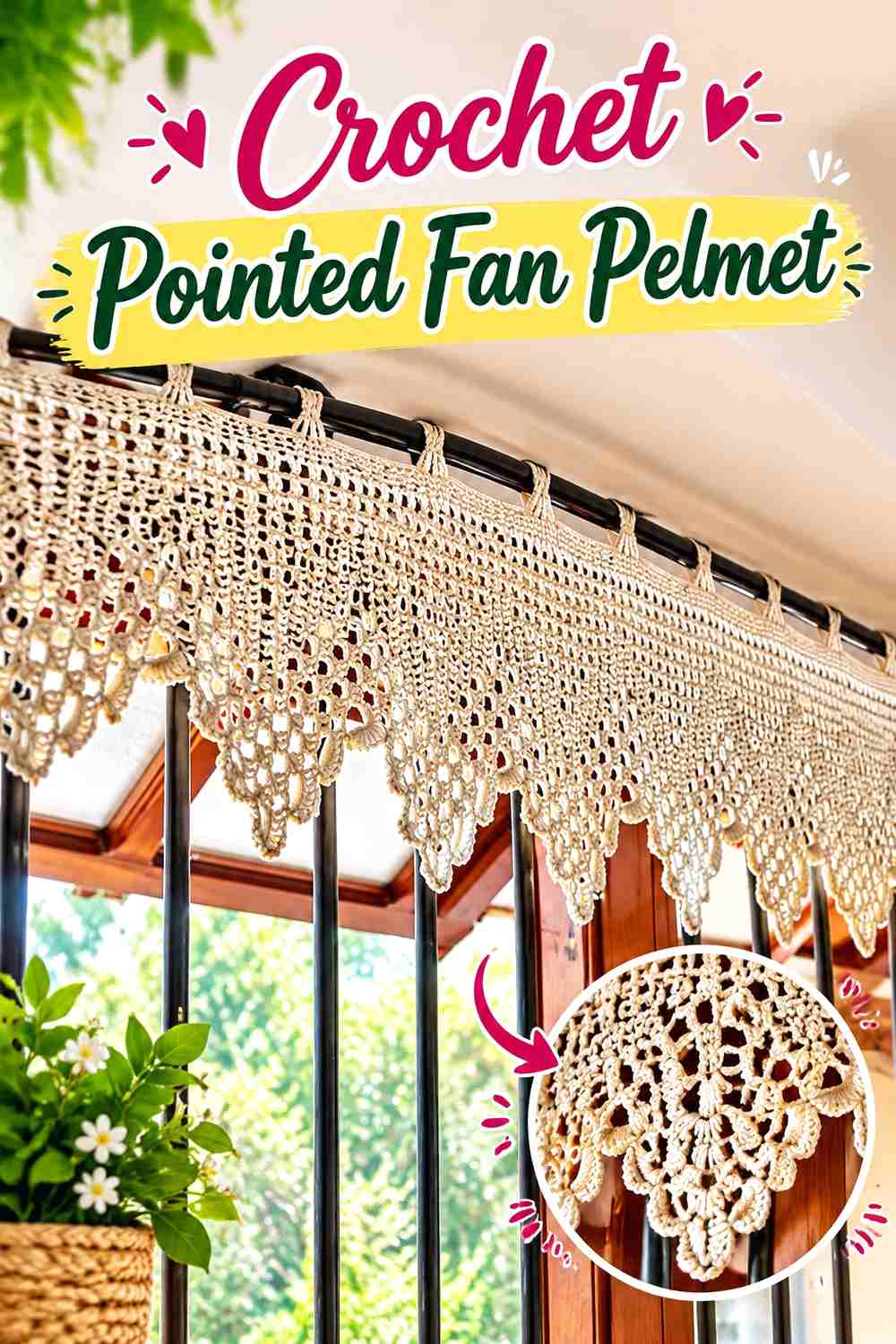
A repeating curtain construction with distinct lower points can make an effective pelmet because the decorative edge does much of the work. Instead of relying on heavy fringe or separate appliqués, the stitch pattern creates its own rhythm along the bottom.
This style works particularly well when you want a vintage window topper that remains light enough for daylight to pass through.
Repeated Points Need Consistent Depth
Variations that seem small while the crochet is lying on a work surface can become obvious once every point hangs freely.
Check the developing fabric vertically from time to time. Gravity can reveal differences that are much less noticeable when the piece is flat.
Let the Lower Edge Replace Extra Trim
A strong pointed edge generally does not need tassels, flowers, and fringe added at the same time.
If the room already contains patterned drapes or floral wallpaper, leaving the crochet edge unembellished can help the window look collected rather than overloaded.
Creator Credit: Vó Tita Crochês
4. Crochet Fringed Openwork Pelmet
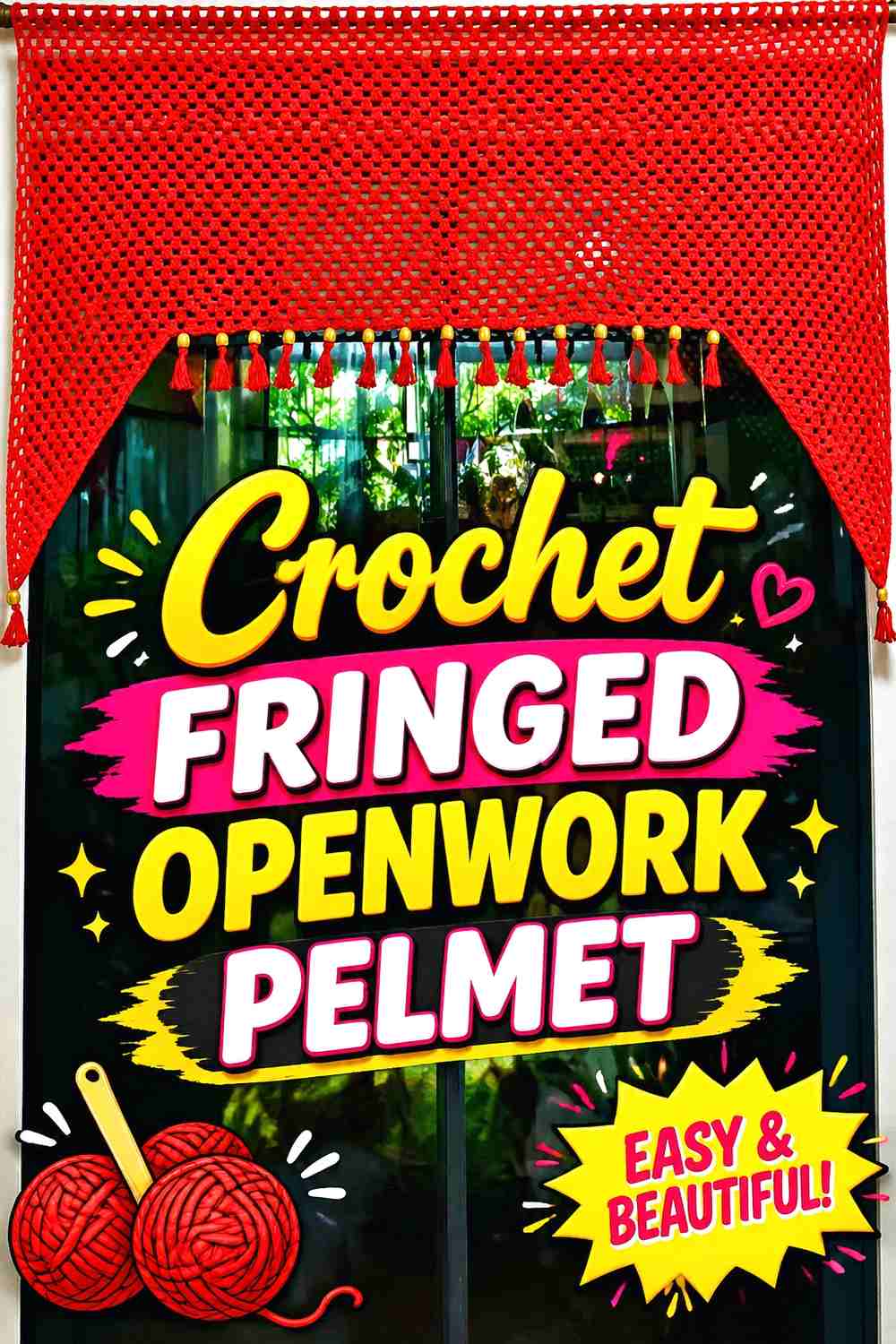
This valance combines open crochet with hanging fringe, making the lower edge softer and more mobile than a conventional scallop. It suits the Drape-Maxx idea particularly well because the decorative movement is concentrated below the main fabric.
For a vintage winter version, consider allowing the fringe to remain tonal rather than introducing several contrasting colors.
Fringe Changes the Apparent Pelmet Depth
Measure the main crochet and dangling finish as one visual unit. A topper that seems suitably shallow before fringe is added may cover more of the window than expected afterward.
This matters particularly on shorter windows where every additional inch of hanging detail reduces visible glass.
Keep Fringe Away From Busy Hardware
Dangling yarn can look untidy when it catches against blind mechanisms, handles, or another curtain layer.
Check the entire window setup—not just the crochet rod—before choosing the final fringe length.
Creator Credit: Elisa Segantini Croche 🧶
5. Crochet Winter Flower-Garland Pelmet
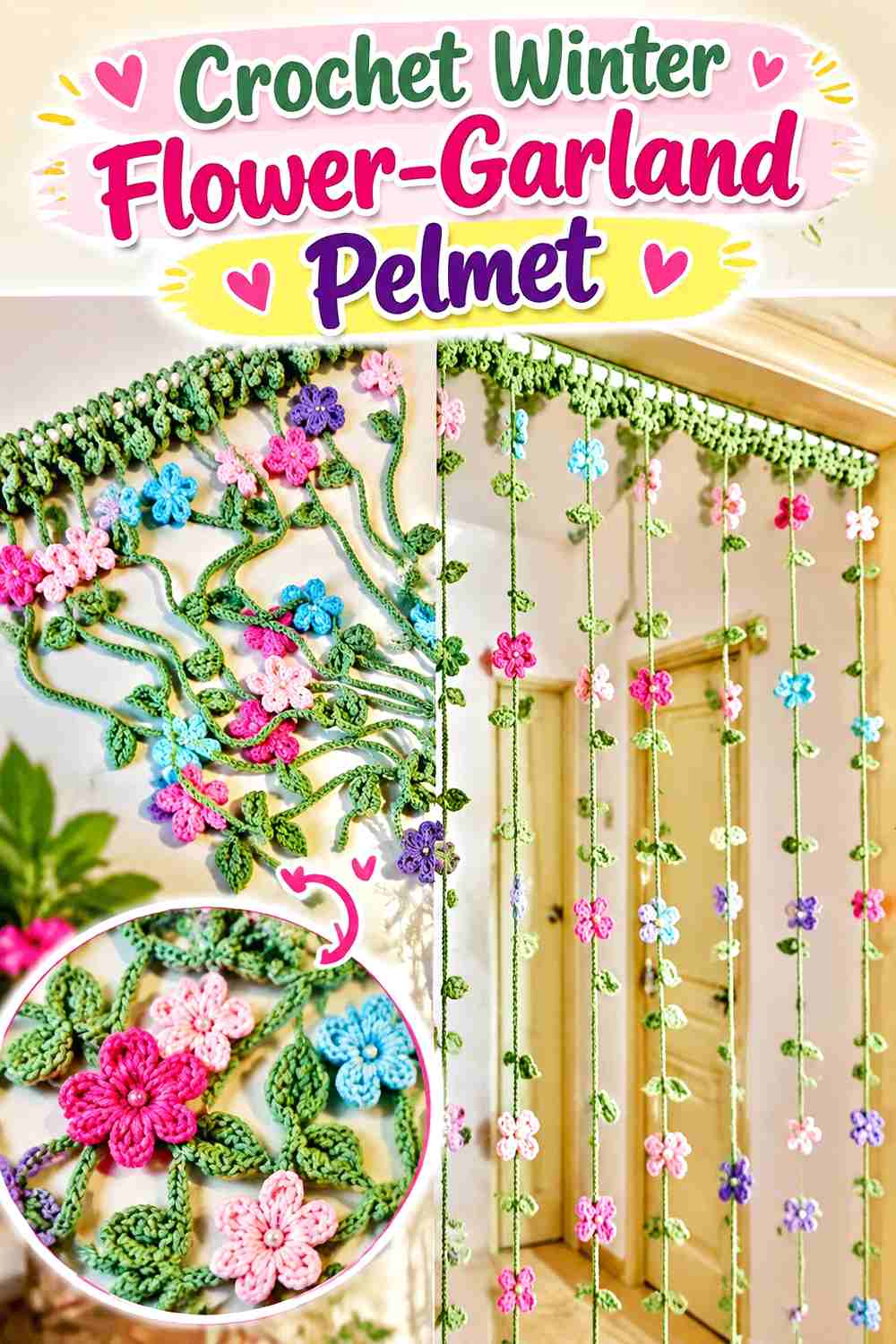
Instead of making one continuous lace panel, this approach uses flowers, leaves, and connecting crochet to create a lighter garland-style curtain. Concentrating those motifs near the top of the window transforms the idea into a decorative pelmet with generous open space.
For winter, recolor the botanical theme rather than abandoning it. Cream flowers, olive leaves, burgundy accents, or dusty winter foliage shades can feel very different from a bright spring palette.
Concentrate Motifs Where They Create a Clear Silhouette
A garland can become visually scattered if flowers are positioned at many unrelated heights.
For a pelmet adaptation, keep the densest floral area close to the support and allow only selected leaves or strands to extend lower.
Negative Space Is Part of This Design
The appeal comes partly from the open window visible between motifs. Adding enough flowers to create a solid band can remove what distinguishes this idea from a conventional lace valance.
Arrange the motifs temporarily before permanent joining so you can judge the gaps from across the room.
Creator Credit: vvw.studio
6. Crochet Cluster-Lace Café Pelmet
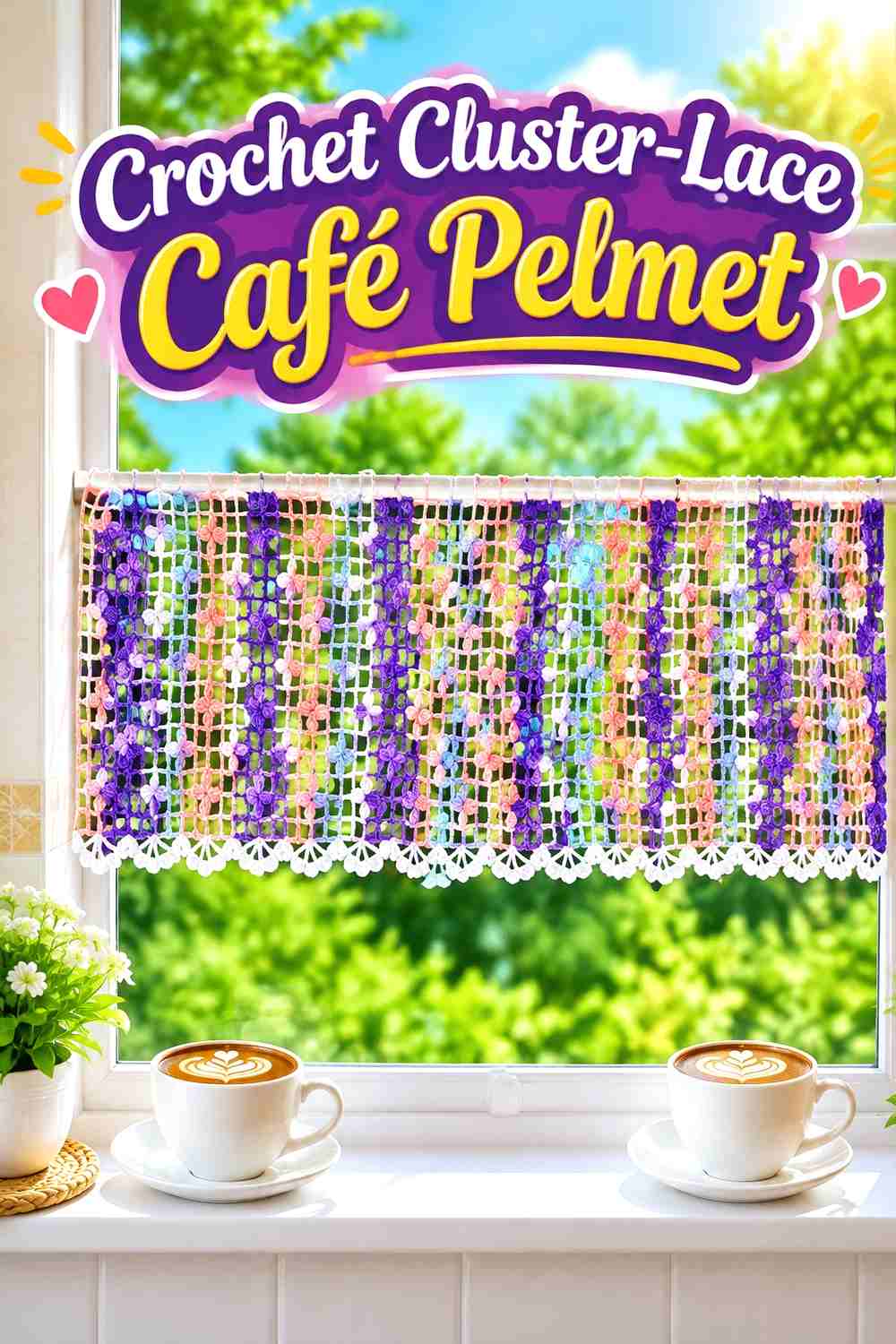
A short café-curtain construction is naturally close to pelmet proportions and provides a useful alternative to deep swags. This design uses lace clusters and a defined hanging edge, giving the window enough texture to feel dressed without covering much glass.
It is particularly suitable for a vintage room where you want thread-like delicacy rather than a chunky yarn treatment.
Fine Lace Benefits From a Contrasting Background
When the curtain is viewed during the day, the window itself provides strong backlighting. At night, however, the same pale lace may be seen against darkness or another curtain.
Consider how the stitch pattern looks in both conditions before deciding whether the chosen thread color has enough presence.
Blocking Can Clarify the Lower Border
Cluster lace and decorative borders can look uneven immediately after crocheting.
Use the finishing method appropriate for the thread to establish the intended outline before making final judgments about hanging depth or width.
Creator Credit: HandmadebyRaine
7. Crochet Airy Repeat Café Pelmet
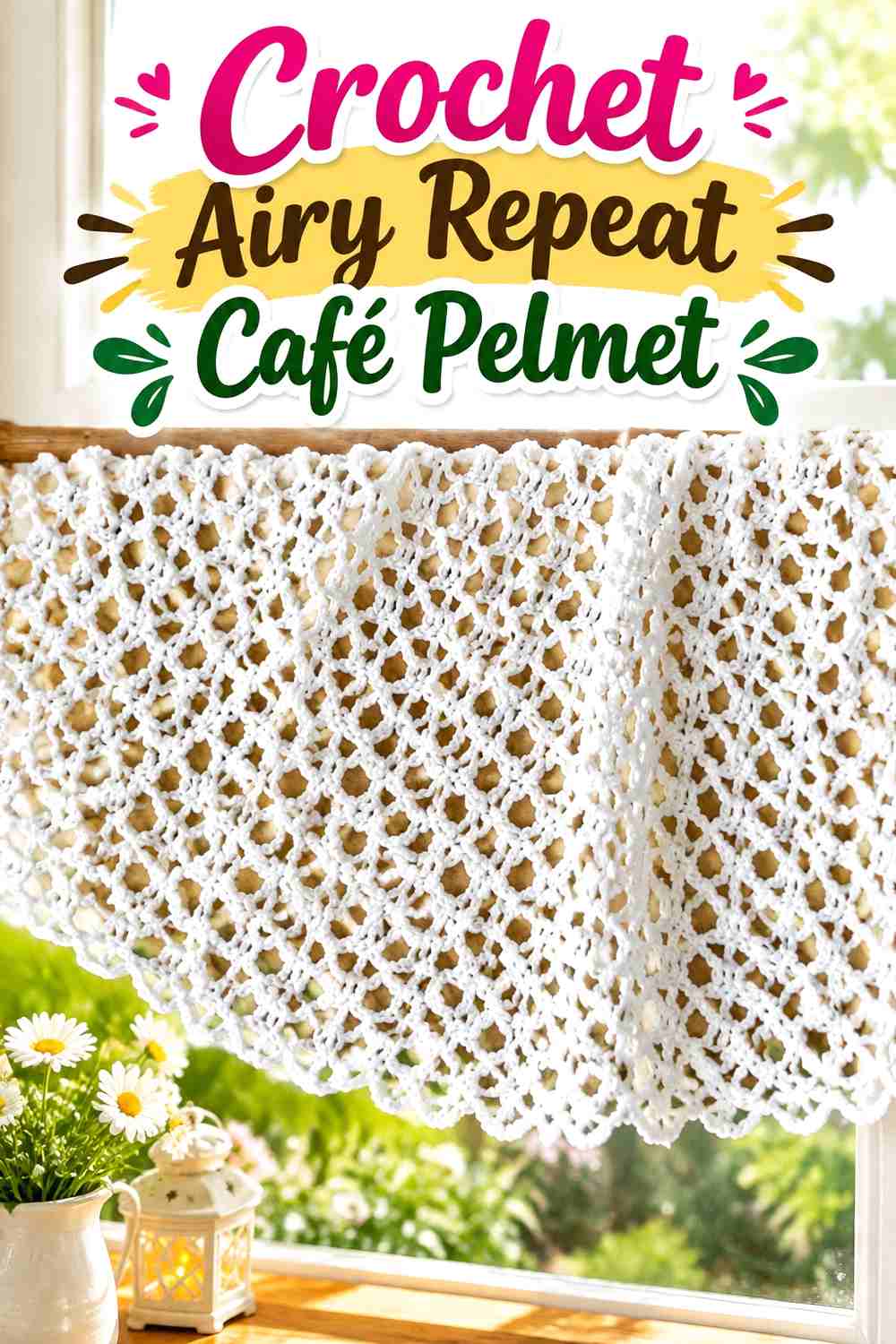
This café-curtain tutorial uses a repeated open crochet fabric that can be adapted to a shallower topper by planning complete repeats rather than stopping at an arbitrary row.
The result is useful for windows where you want a soft textile edge but not a strongly pictorial or floral design.
Finish on a Complete Repeat
When adapting a longer curtain, first identify where the decorative repeat visually resolves.
Stopping merely because the fabric has reached a preferred measurement can leave the final band looking interrupted. Compare possible finishing points before deciding how deep the pelmet should be.
A Simple Repeat Handles Gentle Gathering Well
All-over patterns tend to tolerate folds better than large isolated pictures because the design continues across the fabric.
Still, test a sample in soft gathers. Too much fullness can make even open lace appear unexpectedly dense.
Creator Credit: いつの間にか62歳
8. Crochet Full-Width Geometric Pelmet
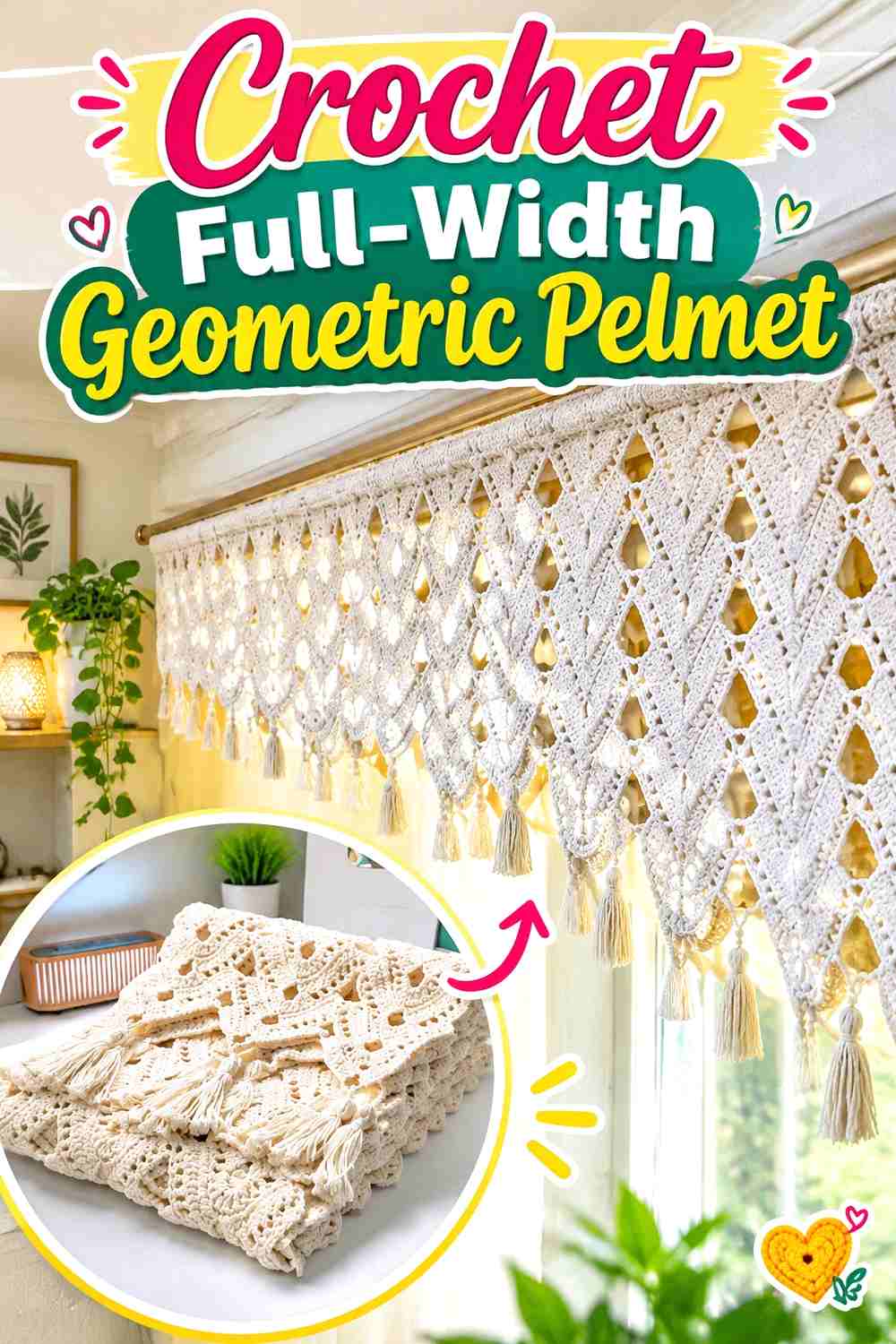
This source makes a complete curtain panel rather than a short pelmet, so use it as a construction reference for a crochet window-top adaptation. Its repeating geometric surface can work in a shallow format when complete sections are planned before changing the depth.
This idea suits wider windows where a small thread-lace topper might look visually insignificant.
Do Not Shorten Through the Middle of the Design
A full curtain has enough vertical space for patterns to develop. A pelmet does not.
Study how the visible repeat is organized and decide which complete portion can become a self-contained topper instead of simply working a fraction of the full curtain.
Heavier Crochet Needs Appropriate Support
A wider piece made with substantial yarn can put more demand on the rod than fine thread lace.
Check the installed hardware and the behavior of the completed crochet before adding further decorative weight such as tassels or beads.
Creator Credit: Samuel | Muleke Artesão
9. Crochet Arched Neutral Lace Pelmet
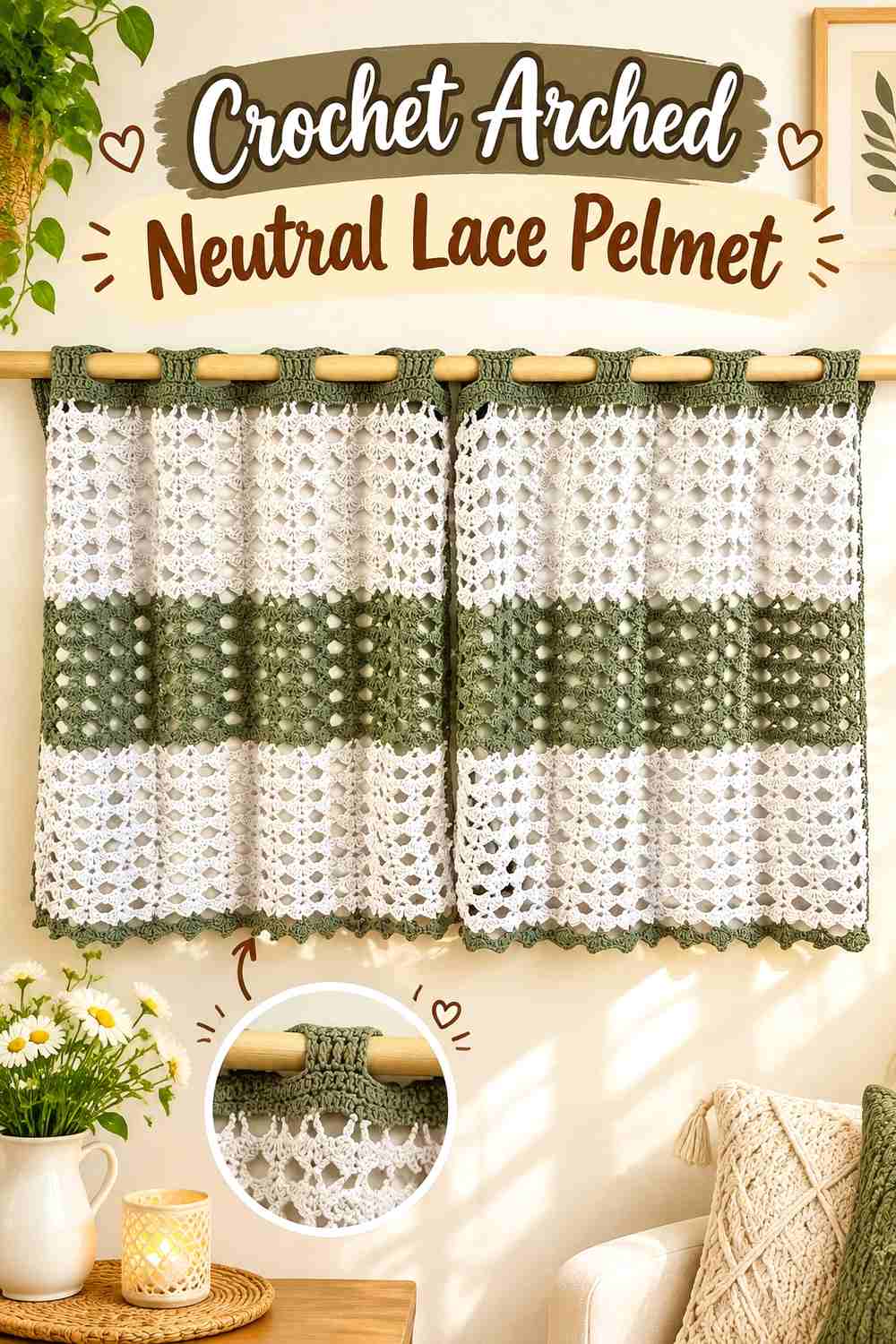
A neutral crochet curtain with a strong repeating design offers a good foundation for a vintage winter topper. This tutorial creates a longer curtain, so the pelmet concept comes from selecting an appropriate complete section and adapting its proportions rather than claiming the source itself is a short valance.
Warm beige, flax, ivory, and faded stone can reinforce the old-house character without adding more pattern to the room.
Neutral Color Puts More Attention on Edge Quality
When everything is worked in one shade, crooked sides and inconsistent lower repeats are easier to notice.
Lay the fabric flat periodically and compare both edges. Correcting width changes early is much easier than expecting hanging or blocking to disguise a significant difference.
Consider the Curtain Behind the Crochet
A neutral pelmet often works in combination with longer fabric drapes.
If those curtains are highly patterned, choose a relatively quiet crochet section. If the background curtains are solid, a stronger openwork repeat can become the decorative focus.
Creator Credit: Crochê da Alessandra
10. Crochet Tassel-Edge Sheer Pelmet
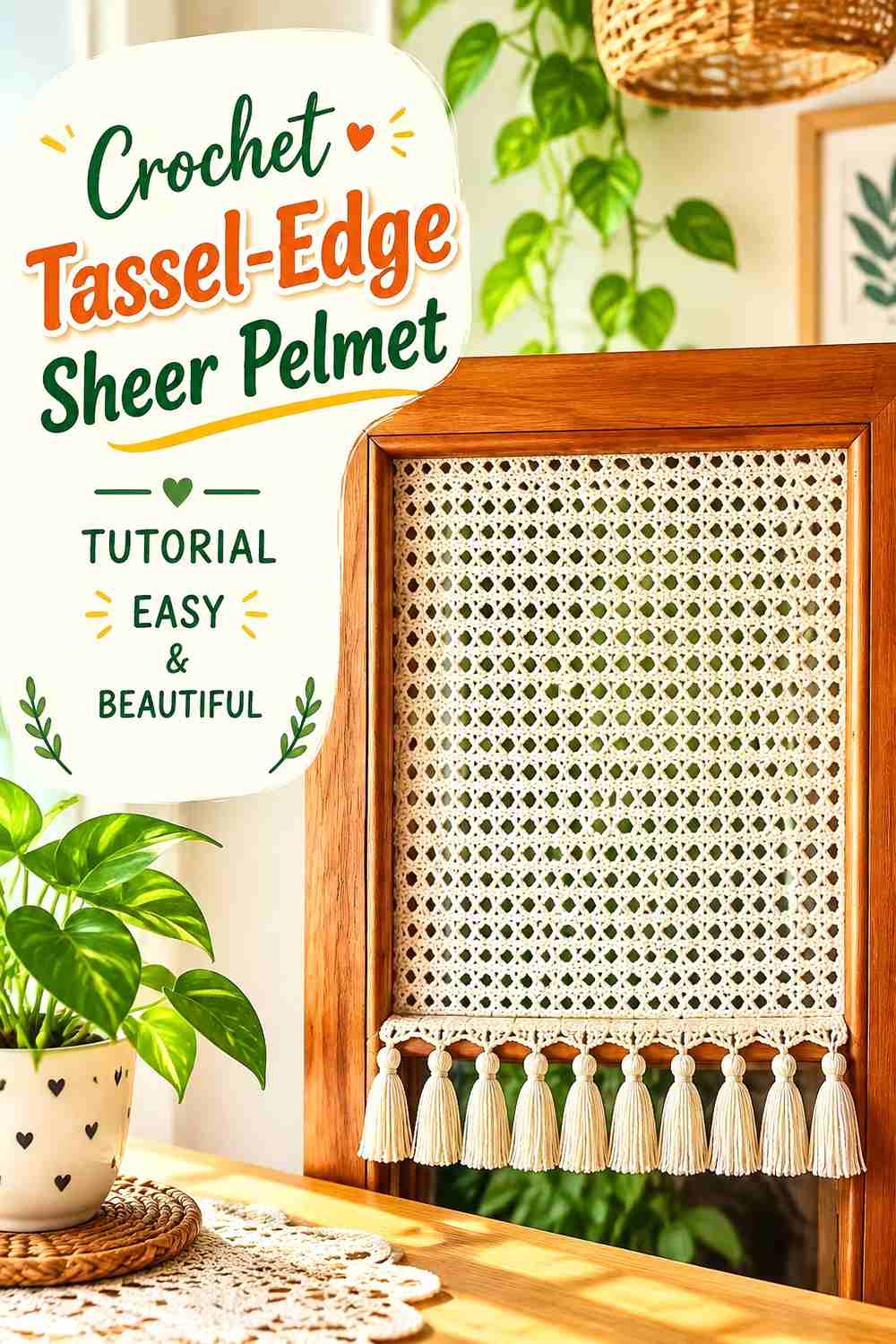
This sheer curtain construction uses open bands and hanging decorative elements, making it useful as inspiration for a lightweight pelmet. Rather than retaining the full curtain depth, the window-top version can emphasize the strongest openwork bands and tassel-like finish.
It works well where retaining daylight matters more than creating a substantial textile block.
A Shallow Main Panel Gives Tassels More Importance
When the crocheted body becomes shorter, the dangling finish represents a larger proportion of the overall design.
Decide whether that is the effect you want before reducing the panel depth. If the tassels begin to dominate, shorten or simplify the surrounding decorative treatment rather than adding more detail.
Light Fabric Still Needs a Stable Top Edge
A sheer crochet fabric may be visually delicate, but the hanging points still need to keep the width distributed evenly.
Check the top edge for stretching after the piece has hung temporarily. Long-term vertical tension can reveal behavior that is not apparent on a flat sample.
Creator Credit: Gemma Crochet
11. Crochet Shell-Lace Window Pelmet
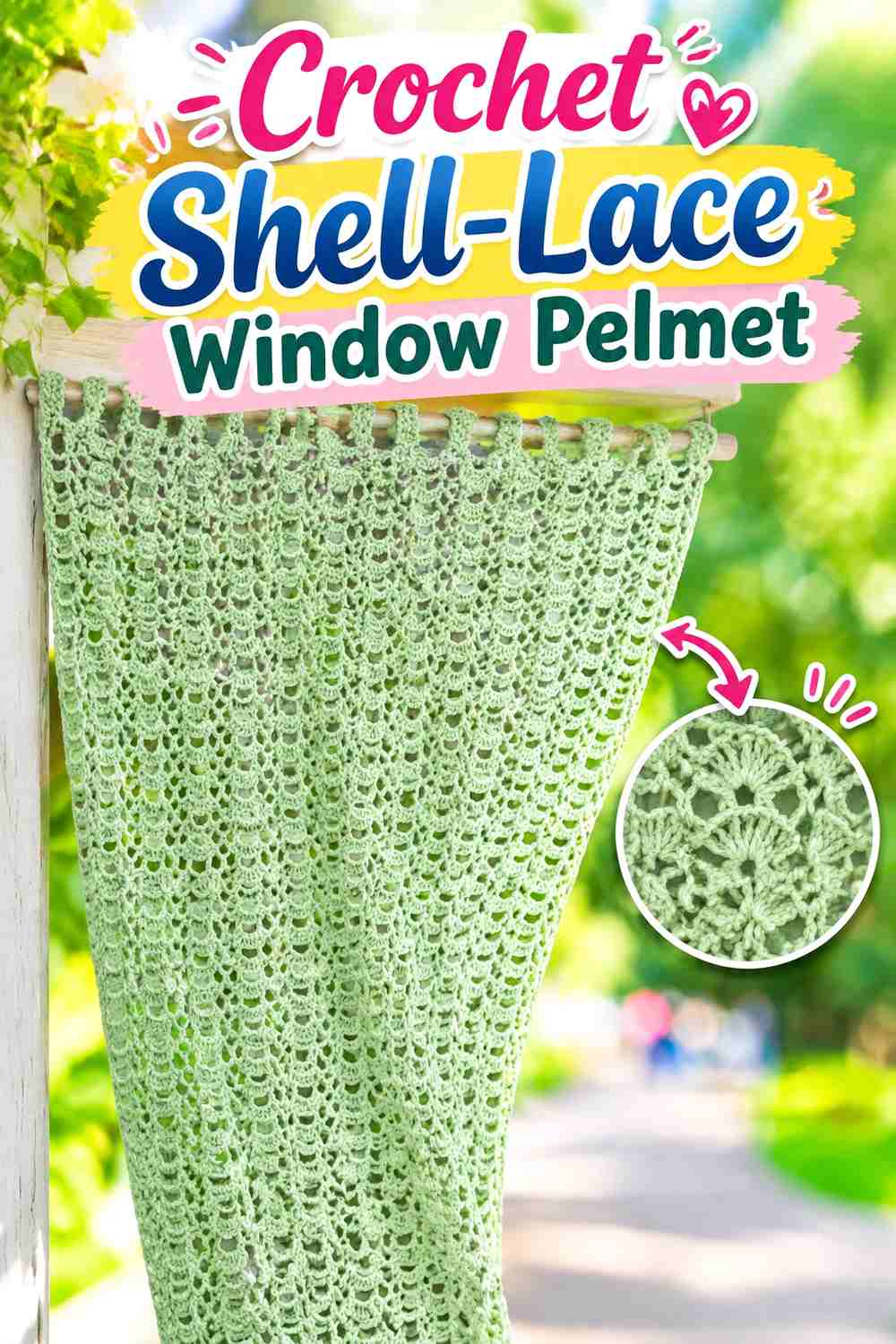
A repeating shell-stitch curtain creates broad curved motifs without separate flowers or appliqués. The source demonstrates a curtain panel, but the two-row repeating structure makes it useful for planning a shorter window topper built from complete pattern sections.
Shells bring enough vintage character that the pelmet can remain otherwise simple.
Shells Create Fullness Even Without Heavy Gathering
Curved stitch groups naturally make the surface look more decorative than plain mesh.
Start with moderate fullness and assess the installed piece before deciding that it needs additional gathers. Too much compression can cause neighboring shells to overlap visually.
Repeat Scale Should Match the Window
A broad shell may look elegant across a large window but leave only a few repeats on a narrow opening.
Make enough of the pattern to understand its width before deciding whether this construction gives the rhythm you want.
Creator Credit: The Crochet Crowd
12. Crochet Filet Heart Pelmet
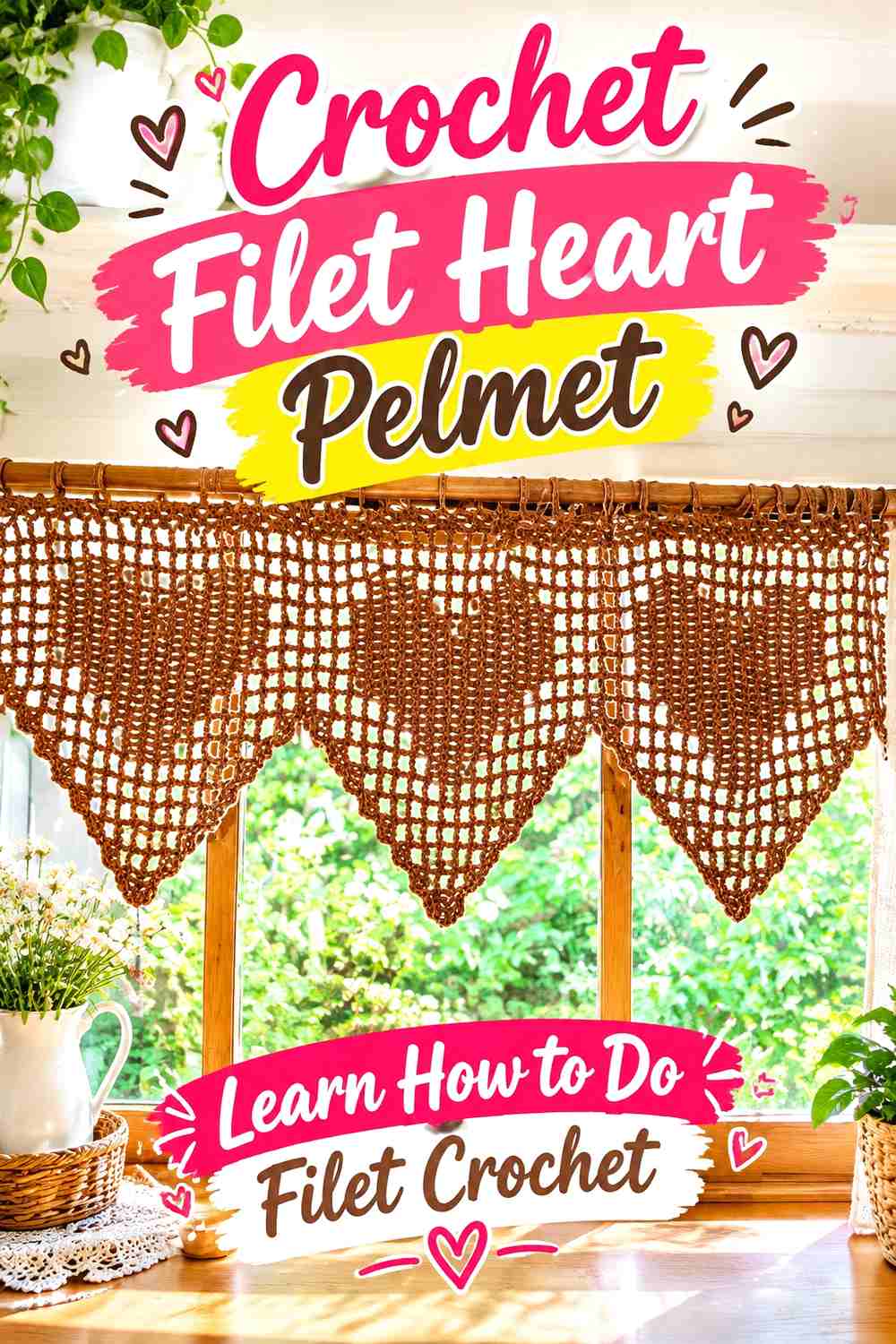
Filet crochet is especially suited to vintage-style window décor because pictures can emerge from a relatively flat grid of open and filled areas. This tutorial specifically focuses on heart imagery for a curtain valance.
For winter styling that does not feel overly romantic, work the hearts in a subdued cream, dark red, or another color already present in the room.
Filet Pictures Need Less Gathering
Unlike a shell repeat, a recognizable filet image can become difficult to read when folded into deep gathers.
If the hearts are the main reason you chose the design, prioritize visibility of the motif over maximum fullness.
Check the Motif Placement at the Window Edges
A pictorial pattern looks more resolved when motifs are not awkwardly cut off where the pelmet ends.
Plan the number of repeats around the finished width and hanging method before investing in the full piece.
Creator Credit: Zoe Glover’s Crochet
13. Crochet Rose-and-Leaf Garden Pelmet
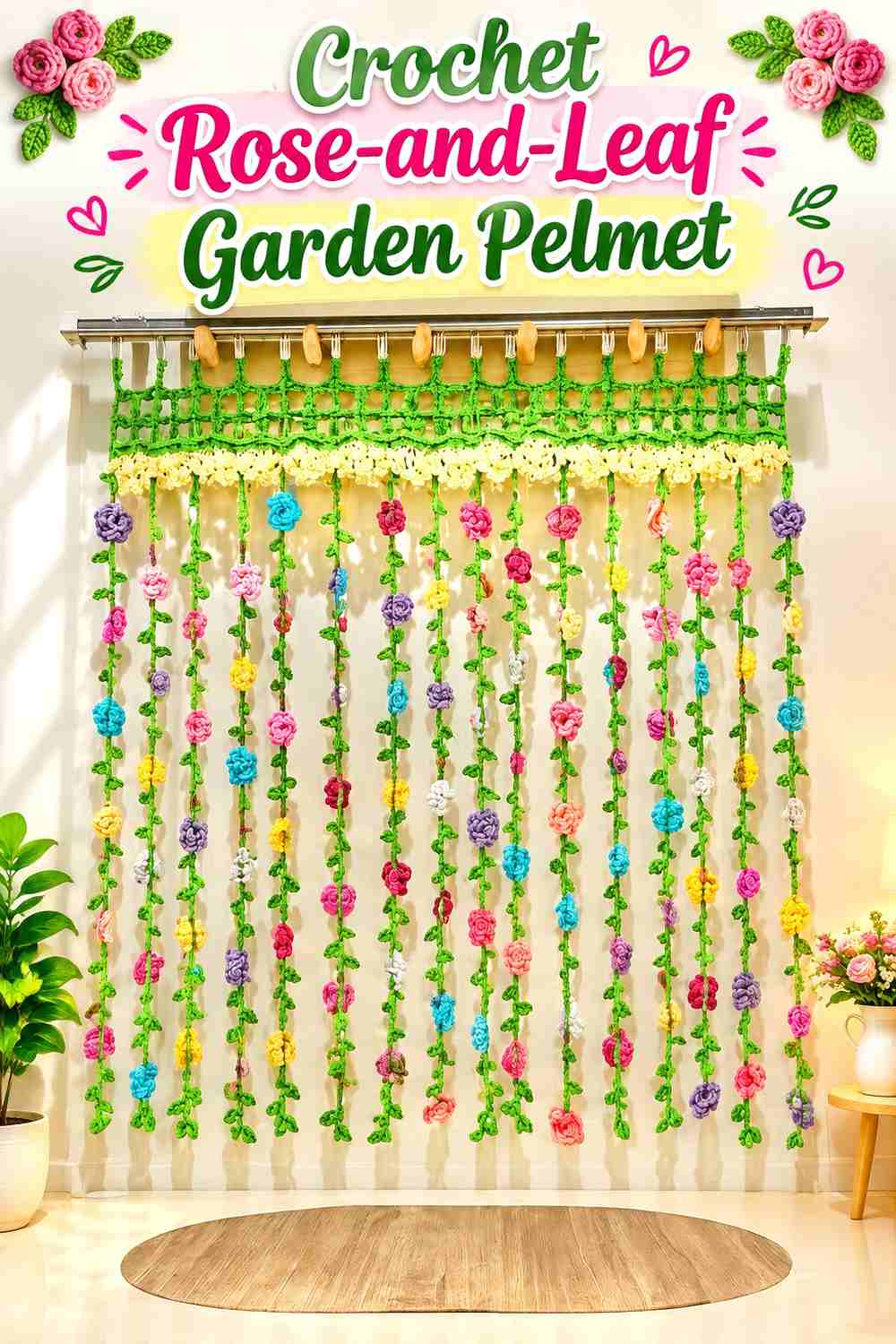
Dimensional flowers and leaves can create a richer window topper than flat lace. This curtain tutorial provides the floral construction; for a pelmet adaptation, keep the decorative garden concentrated across the upper window instead of extending long strands over the glass.
A restrained winter palette can move the idea away from spring décor while preserving its romantic vintage character.
Dimensional Motifs Add Weight Quickly
A single flower may feel light in the hand, but many flowers distributed across a wide window treatment create cumulative weight.
Test a representative section from the intended support before assuming the original rod or attachment method will remain suitable.
Give Large Flowers Uneven Spacing
Perfectly equal flower placement can make a botanical pelmet feel rigid.
A more natural arrangement can vary the gaps while maintaining overall balance. Lay the complete group on the floor or a large table before joining it permanently.
Creator Credit: Crochet Anne
14. Crochet Cascading Floral Pelmet
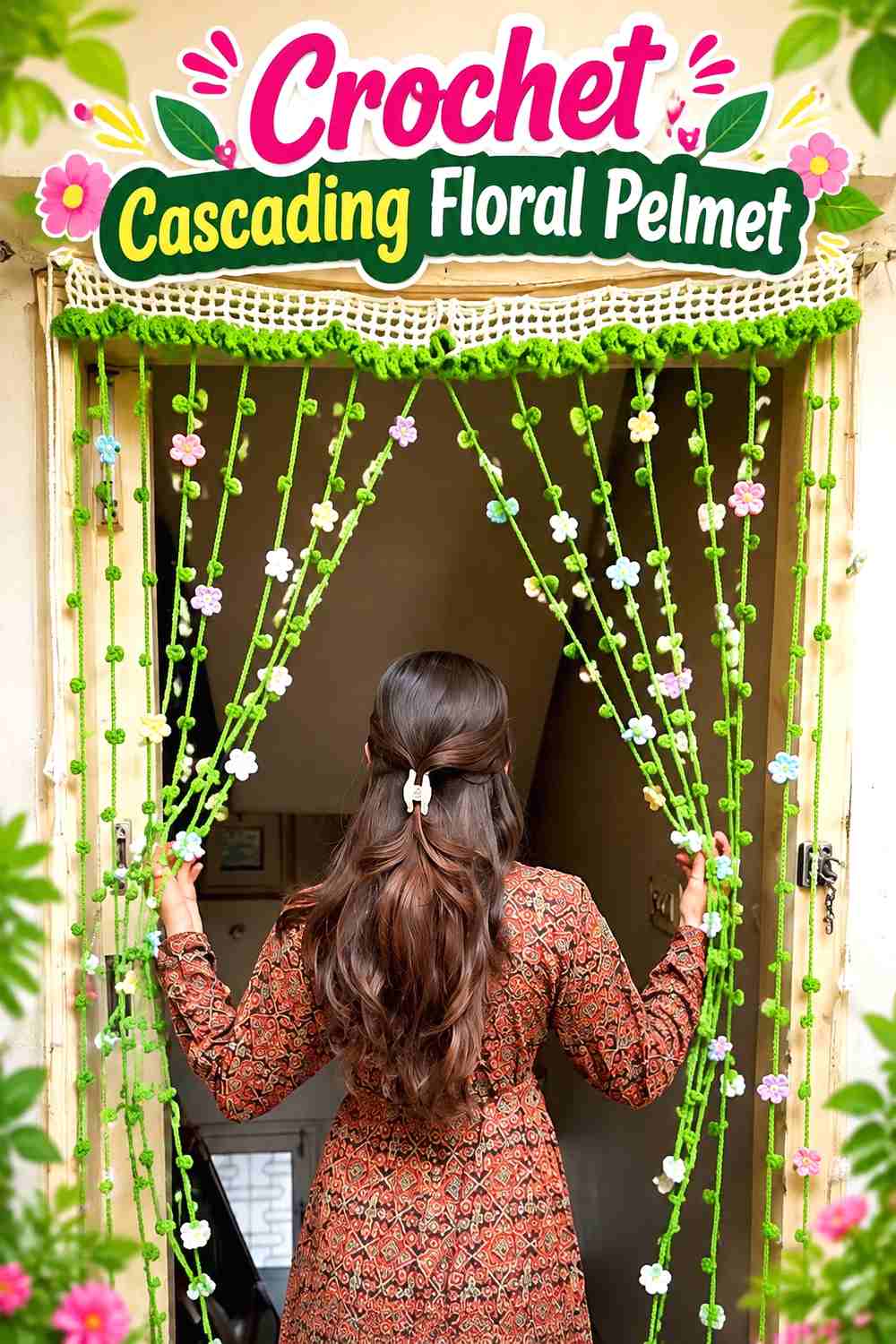
This floral curtain uses hanging flower elements to create strong downward movement. For a pelmet, that cascading quality can be retained in selected areas rather than covering the full height of the window.
It is one of the most decorative ideas in the collection and suits a nook where the window itself is intended to become a focal point.
Varying Drop Lengths Creates the Drape-Maxx Effect
A perfectly straight line of flowers feels more like trim. Different drop lengths create the softer layered outline associated with a draped window treatment.
Keep the variation controlled enough that the lowest flowers do not interfere with handles, blinds, or frequently opened sections of the window.
Use Color Sparingly in a Vintage Winter Room
Dimensional flowers already create considerable detail.
If the room contains patterned curtains, antique furniture, or decorative wallpaper, a narrow winter palette can stop the pelmet from becoming visually separate from everything around it.
Creator Credit: Plakshi Jain | Crochet
15. Crochet Boho Vine Pelmet
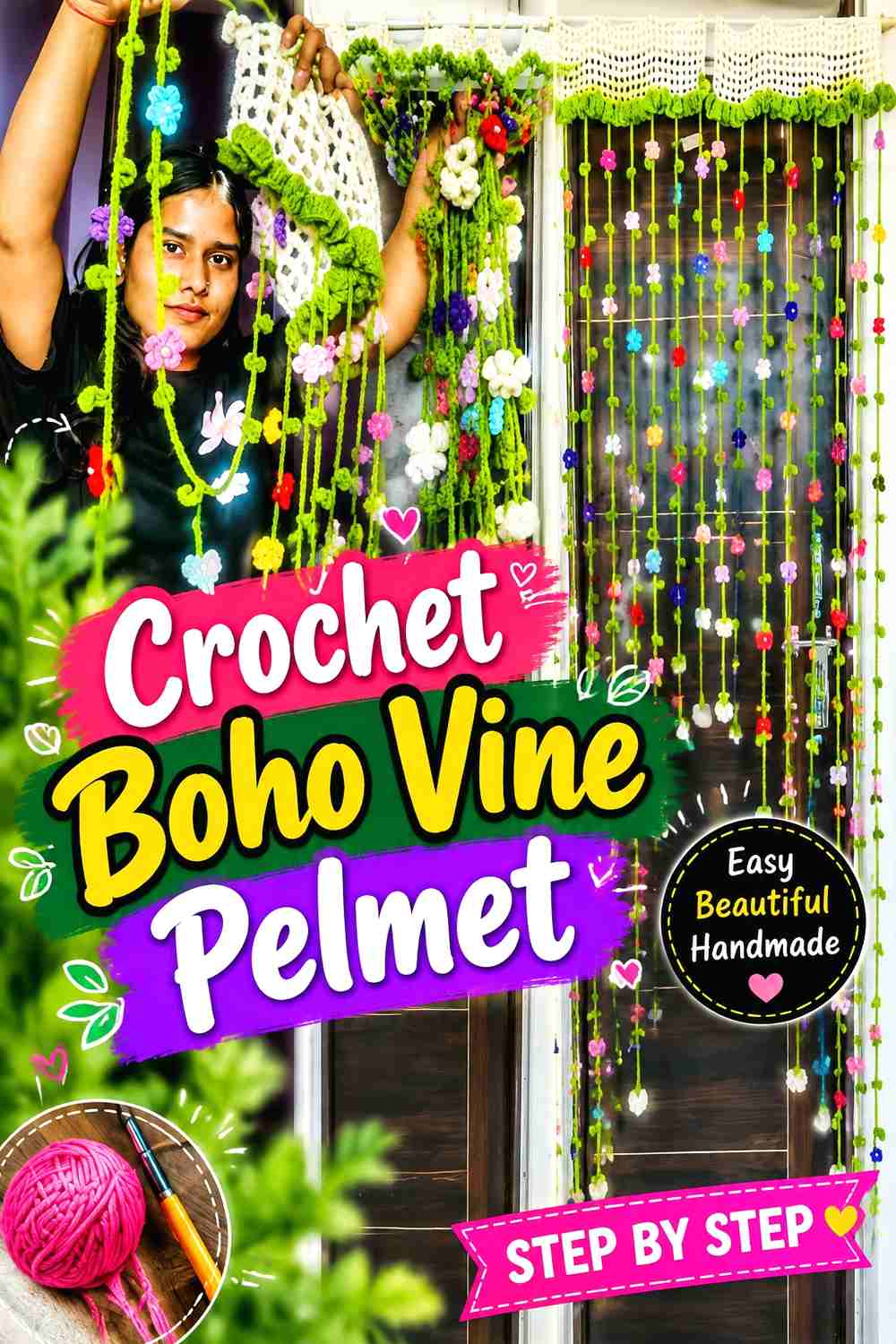
This floral curtain construction offers another route to a lightweight botanical window topper. Instead of emphasizing a broad solid panel, the project can be adapted so flowers and vine-like elements form a decorative band across the top of the glass.
For vintage winter styling, reduce the bright bohemian feeling through yarn choice rather than altering the underlying construction.
Vines Can Visually Connect Separate Motifs
Individual flowers sometimes look like isolated appliqués when spaced across a rod.
Connecting greenery gives the eye a line to follow and helps the entire pelmet read as one composition. Keep enough open space that the vines do not become a dense curtain of their own.
Choose the Lowest Point Before Filling the Top
Start by deciding how far you want any botanical element to descend over the glass.
That boundary prevents the arrangement from gradually becoming deeper as more flowers and leaves are added.
Creator Credit: kanchu_crochet
16. Crochet Flower-Strand Pelmet
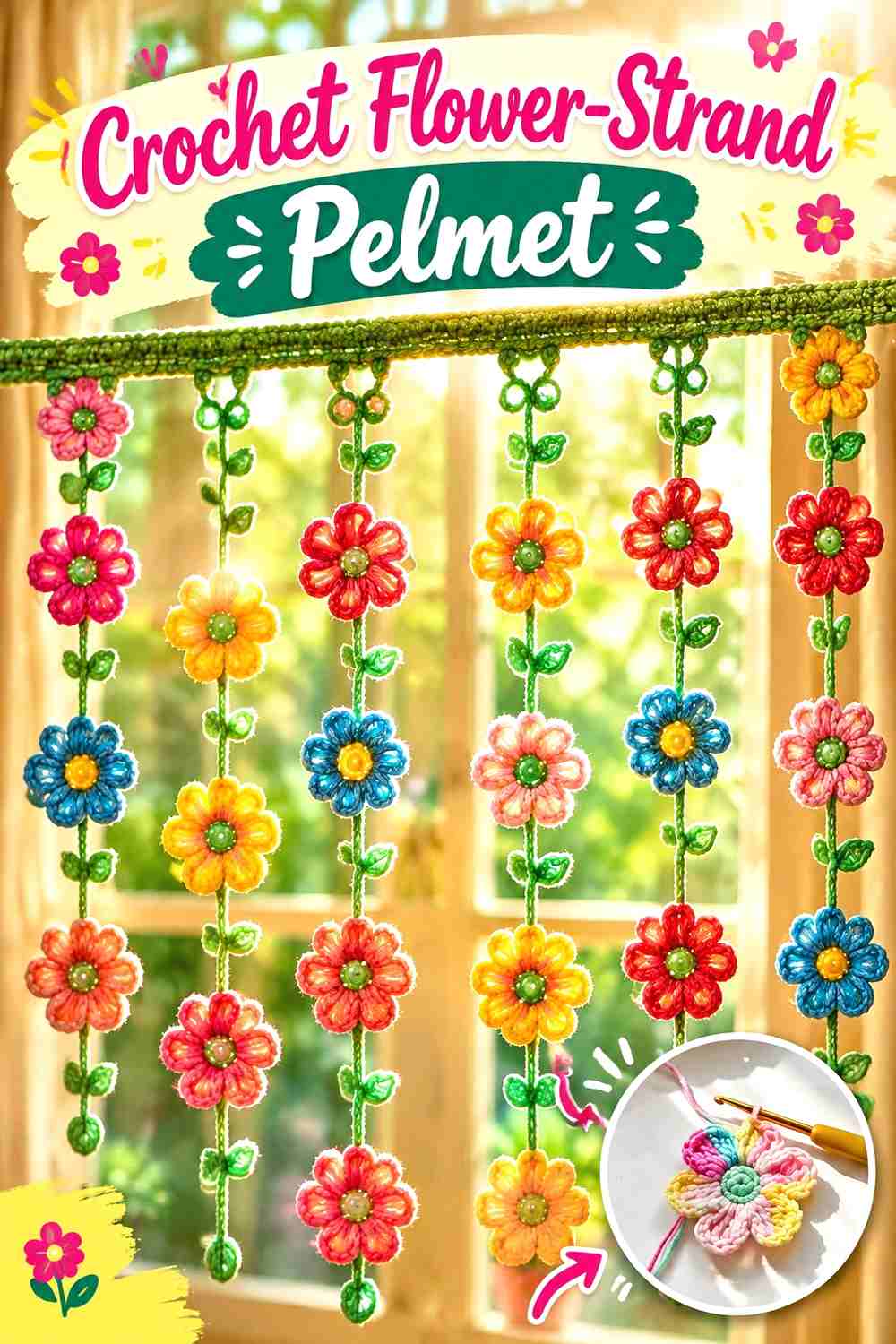
The final idea uses multiple connected flower strands to create a curtain, but those strands can be shortened selectively for a pelmet-style window treatment. This gives you a much more open result than a solid lace valance and allows the visible glass to remain a major part of the composition.
It is especially useful when you want a soft handmade accent but do not need privacy from the crochet itself.
Staggered Strands Make the Lower Edge Feel Layered
Rather than ending every strand at exactly the same height, use the source construction to explore a controlled sequence of longer and shorter drops.
The arrangement can form a shallow central swag, alternating points, or an asymmetrical botanical edge depending on the window.
Keep the Support Line Visually Organized
Loose hanging strands attract attention to the top because every one begins there.
Maintain deliberate spacing at the support so the pelmet looks planned even when the flowers below are arranged more freely.
Creator Credit: Daily Crochet & Knit Free Patterns
Which Crochet Pelmet Style Fits a Vintage Winter Window?
For the most traditional vintage-lace effect, the pineapple, filet heart, cluster-lace, and shell-lace options are the strongest starting points. Their decorative interest comes directly from the crochet fabric, so they can work in a single quiet shade.
Choose the layered swag or pointed fan when the lower silhouette matters most. These designs create an obvious window-top shape without depending on separate floral decorations.
For a lighter botanical window, the flower garland, rose-and-leaf, cascading floral, boho vine, and flower-strand versions leave much more glass exposed. They are useful when you want decorative softness rather than privacy.
The full-width geometric and neutral lace ideas have greater visual weight and are better suited to wider windows or rooms where the pelmet needs to stand up to substantial curtains, dark furniture, or heavy winter textiles.
If maximizing visible stitch detail matters, hang filet and geometric designs relatively flat. If maximizing soft movement matters, repeating shells, openwork, fringe, flowers, and swags generally offer more freedom to create folds and irregular lower edges.
Conclusion
A cozy vintage winter window does not need an oversized curtain treatment. A relatively shallow crochet pelmet can introduce softness, pattern, and handmade detail while keeping daylight and the view largely open.
Choose pineapple or filet crochet for an old-fashioned lace character, shells or repeating openwork for gentle folds, and shaped swags when you want the window topper itself to define the silhouette. Floral constructions are the strongest choice when you prefer an airy, garden-inspired treatment, while tassels and fringe add movement without requiring dimensional motifs.
The key to the Drape-Maxx look is not simply making the crochet wider. Fullness has to suit the stitch pattern. Filet images need enough flat space to remain visible, dimensional motifs need support, and strongly shaped lower edges need room to hang without collapsing into one another.
Use each original tutorial for its exact crochet construction. When adapting a longer curtain to pelmet proportions, preserve complete stitch or motif repeats and test the finished section on the actual window before committing to the entire width.
Frequently Asked Questions
What does Drape-Maxx mean for a crochet pelmet?
In this collection, Drape-Maxx is a descriptive styling term for a window topper with noticeable softness, fullness, folds, scallops, fringe, swags, or hanging motifs. It is not being used as the name of a specific crochet stitch, yarn, or established crochet technique.
Can I shorten a full crochet curtain tutorial into a pelmet?
Often, but only when the design allows a clean stopping point. An all-over repeat may be straightforward to shorten, while a large filet picture or vertical motif can look incomplete if it is interrupted. Identify the complete repeat before choosing the pelmet depth.
Should a crochet pelmet be gathered or hang flat?
That depends on the design. Shells, openwork, and plain repeating lace can often handle visible gathering. Filet pictures and large geometric motifs generally need more open surface area to remain readable. Test a section on the rod rather than choosing fullness by measurement alone.
Which crochet designs work well for vintage winter windows?
Pineapple lace, filet crochet, shells, scallops, botanical motifs, subtle fringe, and softly shaped swags all lend themselves to a vintage look. Winter character can come from a restrained palette such as antique white, burgundy, oatmeal, faded green, muted blue, or warm brown rather than overt holiday motifs.
Should I block a crochet pelmet before hanging it?
Many lace and motif projects benefit from appropriate finishing because it can clarify scallops, points, filet grids, and individual motifs. Use a method suitable for the actual fiber and follow the yarn-care guidance rather than assuming every crochet thread or yarn should be treated identically.
Can a crochet pelmet hang above a radiator or heater?
Do not assume decorative crochet is suitable close to a heat source. Keep window textiles appropriately separated from radiators, heaters, open flames, candles, and other sources of heat, following the safety guidance for the appliance and the room.
How can I stop a crochet pelmet from sagging in the center?
First check whether the support is suitable for the weight and width of the finished crochet. Also review the spacing of rings, loops, or tabs and whether the fabric has stretched after hanging. A heavier yarn, dimensional flowers, or excessive width can change the way a topper behaves compared with a small flat sample.