A crochet apothecary satchel can sit somewhere between a practical winter bag and a piece of romantasy costuming. Deep forest colors, drawstring closures, old-fashioned buttons, botanical motifs, bottle-shaped pockets, and softly structured crossbody forms can suggest an herbalist, healer, traveling alchemist, or medieval market apothecary without turning the finished accessory into a costume prop that has no everyday use.
The tutorials in this collection are starting constructions rather than fourteen tutorials specifically labeled “medieval apothecary satchel.” Some teach drawstring pouches, bottle carriers, flap bags, granny-square purses, or compact crossbody bags that can be styled in an apothecary direction. Keep the creator’s original construction intact, then use color, removable charms, lining, strap choices, and non-structural botanical details to create the romantasy mood.
That distinction is useful because function still matters. A loose drawstring herb pouch behaves differently from a structured flap satchel, while an openwork bottle carrier may be appropriate for one container but unsuitable for loose coins or tiny notions. Choose the construction for what you actually need to carry before choosing the moss-green yarn.
Quick List
- Crochet Herbalist Drawstring Apothecary Pouch
- Crochet Horn-Button Field Apothecary Satchel
- Crochet Openwork Elixir Bottle Sling
- Crochet Structured Healer
- Crochet Crescent Moon Apothecary Satchel
- Crochet Mosaic Remedy Pouch
- Crochet Potion Bottle Carrier Satchel
- Crochet Patchwork Traveling Apothecary Bag
- Crochet Gathered Forager Bucket Satchel
- Crochet Tiny Talisman Apothecary Pouch
- Crochet Slim Messenger Apothecary Satchel
- Crochet Mushroom Forager Ingredient Pouch
- Crochet Drawstring Elixir Purse
- Crochet Botanical Flower Apothecary Pouch
Choose the Satchel Construction Before Adding the Fantasy Theme
The most useful decision is not whether the bag should be moss green or burgundy. It is whether you need a drawstring pouch, flap closure, narrow bottle carrier, openwork sling, structured crossbody, or larger bucket-style bag.
Drawstrings are useful when you want the opening to gather closed around irregular contents. Flaps give a more traditional satchel profile and make the front surface available for embroidery or a decorative closure. Narrow carriers are better suited to one tall object, while broader crossbody bags provide more room for everyday essentials.
Think about access as well. A decorative pouch worn at a winter festival can prioritize silhouette, while a bag intended for daily use should let you reach your phone, wallet, or keys without untying several ornamental cords.
Build Romantasy Style Through Details That Do Not Weaken the Bag
Botanical styling can be added without redesigning the load-bearing parts of the tutorial. Dark olive, lichen, mushroom brown, wine, charcoal, muted plum, parchment cream, and weathered-looking gold tones all work naturally with an apothecary theme.
Leaves, mushrooms, flowers, moons, embroidered vines, removable bottle charms, tassels, and braided cords can add character, but keep bulky embellishments away from areas that bend repeatedly. A decorative leaf on the flap is different from stitching a heavy cluster directly onto a strap attachment point.
Hardware also changes the mood. Buttons, rings, snaps, and chain components can look old-world depending on their finish, but use hardware because it suits the bag construction—not simply because it looks medieval.
Plan for Winter Clothing and Real Contents
A satchel worn over a sweater, cloak-like coat, or thick jacket may sit differently than it does over a T-shirt. Before permanently finishing an adjustable or custom strap, test the bag over the layers you actually expect to wear.
Also consider what will go inside. Glass bottles need more protection than yarn notions, and small objects can escape through open crochet fabric. If you intend to carry vials, cosmetics, stones, keys, or other compact pieces, examine the fabric openings and consider whether an independently planned lining or inner pouch would suit the use.
Do not assume that a decorative crocheted bottle carrier provides impact protection for glass. For a fantasy costume, lightweight nonbreakable props may be more practical than filling a soft crochet satchel with fragile containers.
1. Crochet Herbalist Drawstring Apothecary Pouch
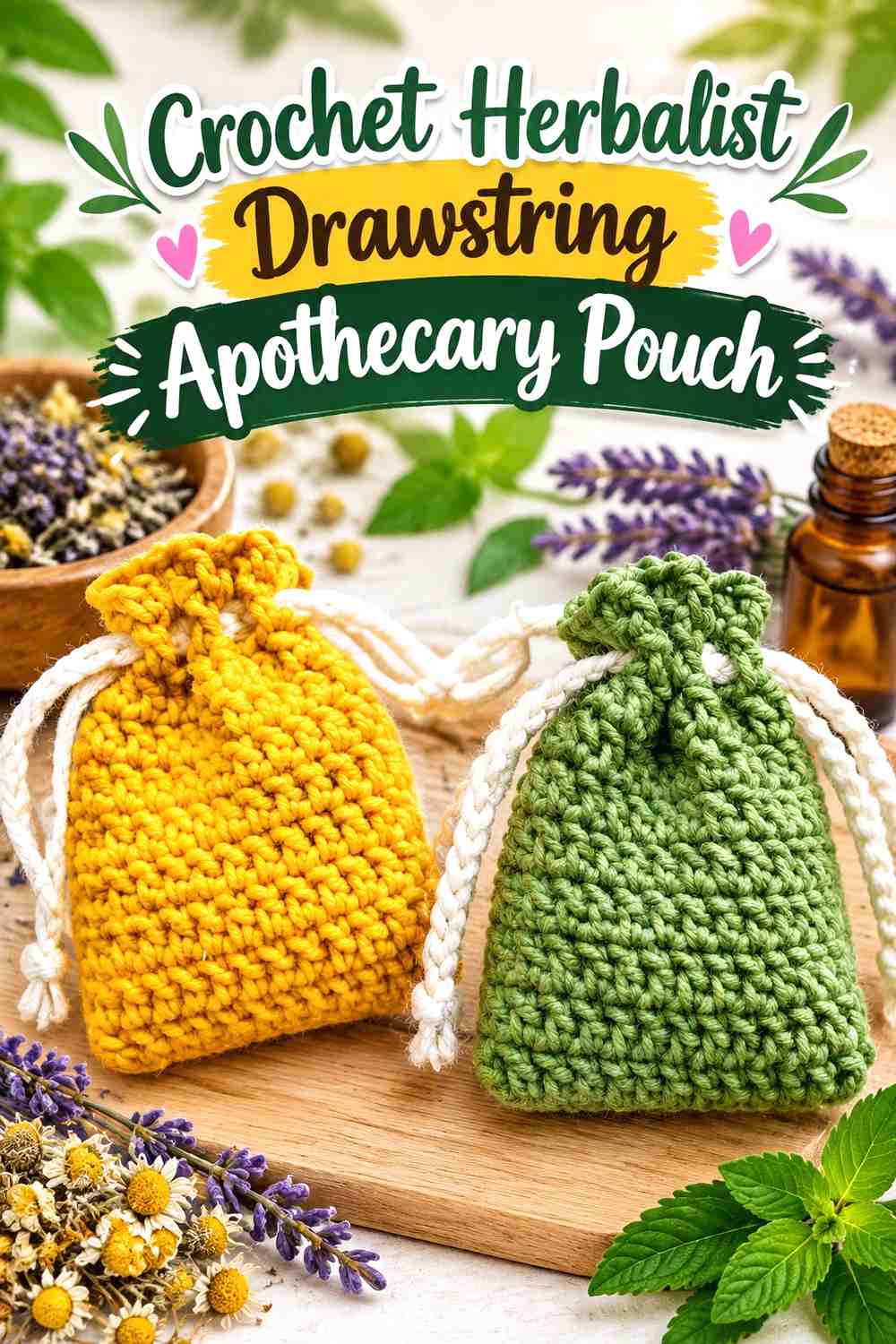
A gathered drawstring pouch is one of the simplest constructions to translate into an herbalist accessory. The rounded body and cinched opening create the look of a small remedy bag without needing rigid hardware, making it useful for notions, tokens, or other lightweight personal items.
For a medieval-inspired version, the styling can remain restrained: earthy yarn, a contrasting cord, and perhaps one small embroidered herb or leaf motif are enough to distinguish it from an ordinary gift pouch.
A Drawstring Opening Suits Irregular Small Contents
The opening changes shape as it closes, so the pouch does not depend on a precisely aligned flap or button.
That flexibility can be useful when the contents vary, but check the gaps around the gathered top. Very small items may still need an inner container rather than being placed loose inside.
Keep Decorative Cord Ends Practical
Long tassels or charms can reinforce the fantasy look, but they can also catch on coats and other bags.
Finish the drawstring so it remains easy to operate with cold hands, then add decoration only where it does not interfere with opening and closing.
Creator Credit: VivCrochets
2. Crochet Horn-Button Field Apothecary Satchel
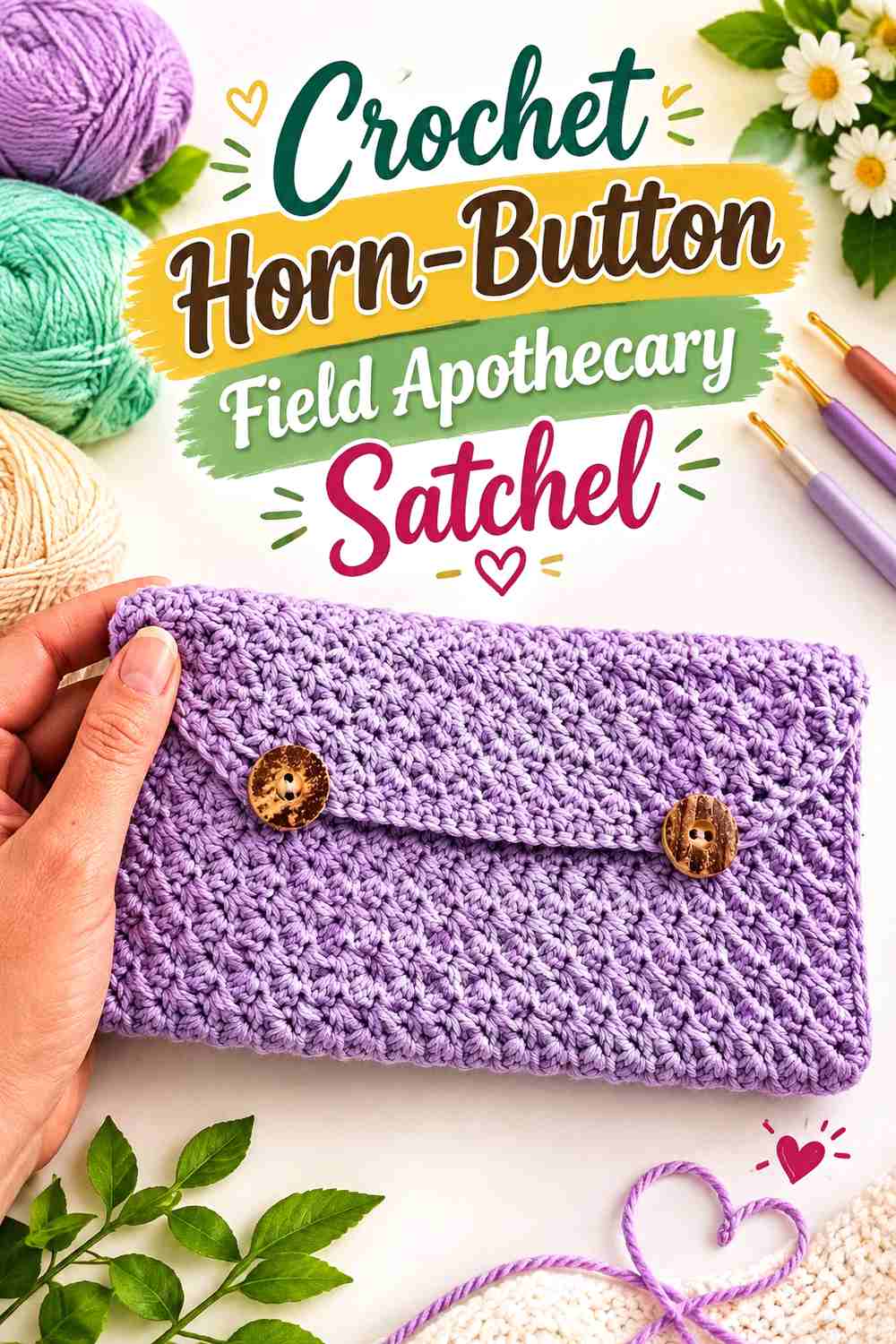
A flap pouch creates a stronger old-world silhouette than a simple open bag. The source construction uses a shaped flap and button closures, which makes it particularly easy to reinterpret as a field herbalist’s supply pouch.
The broad front also gives you room for subtle romantasy styling without changing the underlying structure.
The Closure Can Carry Most of the Medieval Character
A good flap already gives the bag a satchel profile, so you do not need to cover the entire surface in appliqués.
Choose buttons and colors that support the look, then let the closure remain one of the main focal points. This usually reads more convincingly than adding unrelated decorative details everywhere.
A Flap Does Not Automatically Seal the Sides
Before using this style for tiny beads, charms, or other loose ingredients, look carefully at how the finished flap meets the body.
If side gaps remain, keep very small contents inside a secondary pouch rather than assuming that the flap works like a zipper.
Creator Credit: Andrea’s Loops
3. Crochet Openwork Elixir Bottle Sling
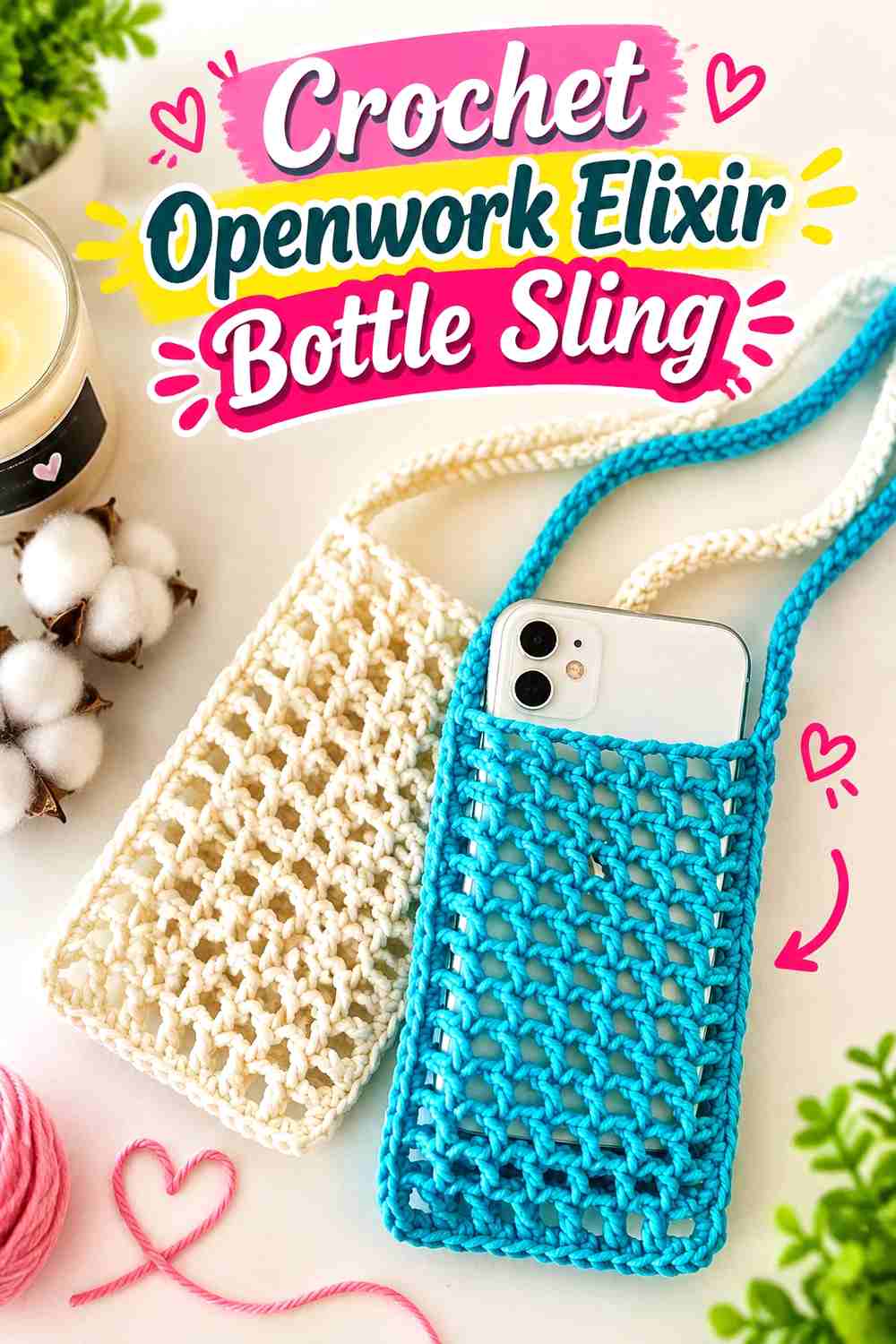
A narrow openwork bag can be reimagined as a sling for one prominent potion bottle or nonbreakable fantasy prop. Its tall profile differs dramatically from wider remedy pouches, making it useful when you want the bottle itself to become part of the outfit.
The visible openings also give the project a lighter feel than dense crochet fabric.
Open Fabric Makes the Container Part of the Design
If the carried object is visible through the stitches, its color and shape affect the finished look.
A dark bottle-shaped prop beneath moss or brown crochet can create a very different result from a brightly colored modern container, so judge the accessory with its intended contents inside.
Do Not Treat Openwork as a General Notions Pouch
Mesh-like fabric is less appropriate for loose tiny items.
Use this construction when the narrow carrier shape serves a specific purpose, or add a separate inner solution if you want the visual openness without losing small contents.
Creator Credit: I am Sulu
4. Crochet Structured Healer
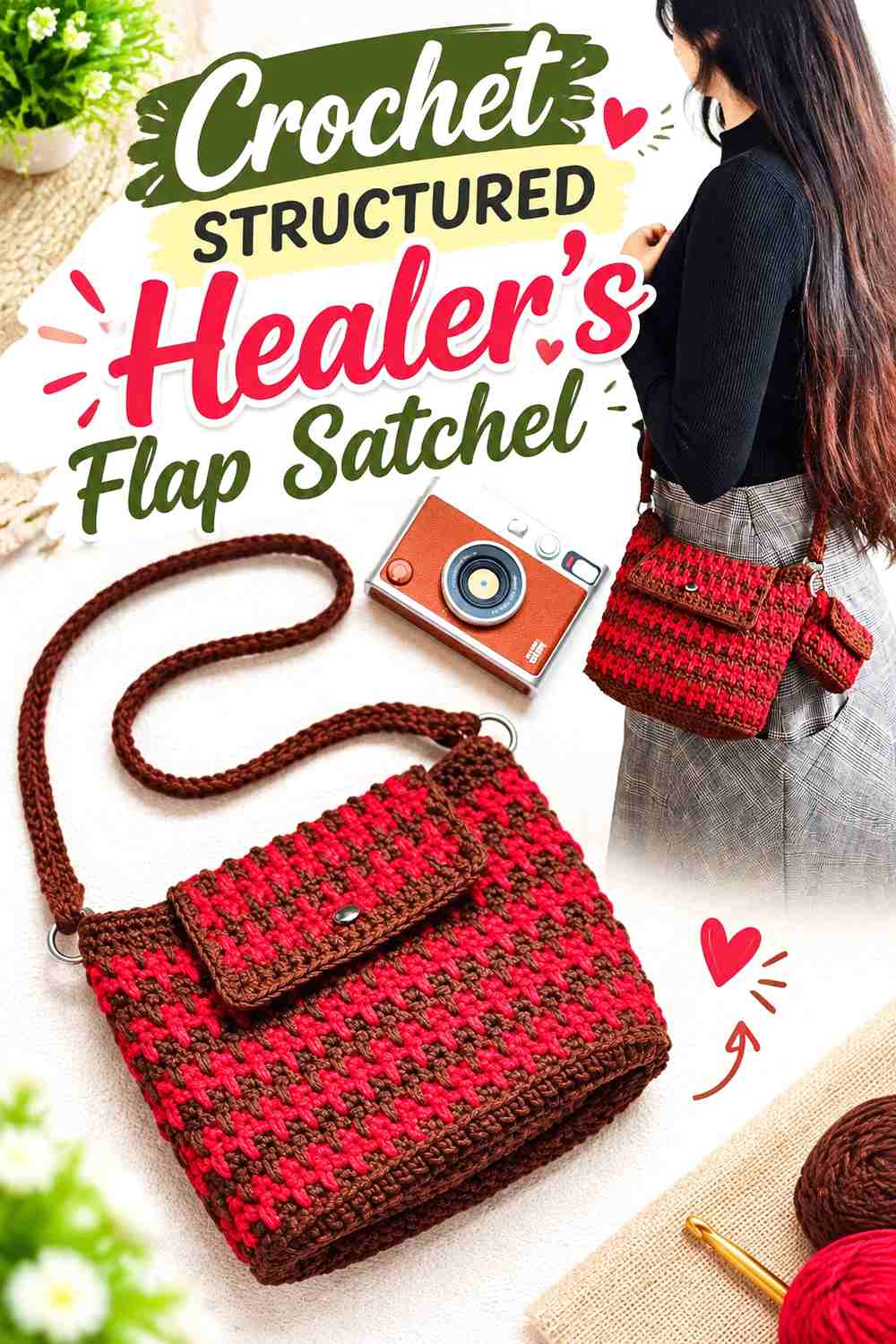
A more structured crossbody with a defined flap works well for a traveling-healer interpretation. Compared with soft drawstring pouches, this construction has clearer edges and a more deliberate everyday-bag profile.
That makes it a strong choice when you want romantasy influence without carrying something that looks purely like a costume accessory.
Structure Makes Front Decoration More Noticeable
A firm-looking flap presents botanical embroidery, a small sigil, or one removable charm more clearly than a heavily gathered surface.
Keep the decoration proportional. One strong motif can emphasize the flap shape instead of obscuring it.
Modern Closures Can Still Work in a Fantasy Palette
You do not have to remove practical hardware simply because the aesthetic is medieval-inspired.
If the tutorial uses a secure closure that works well, consider letting color and surface decoration create the historical-fantasy mood. Function is more valuable than replacing a reliable closure with an awkward one solely for appearance.
Creator Credit: tinycrochet
5. Crochet Crescent Moon Apothecary Satchel
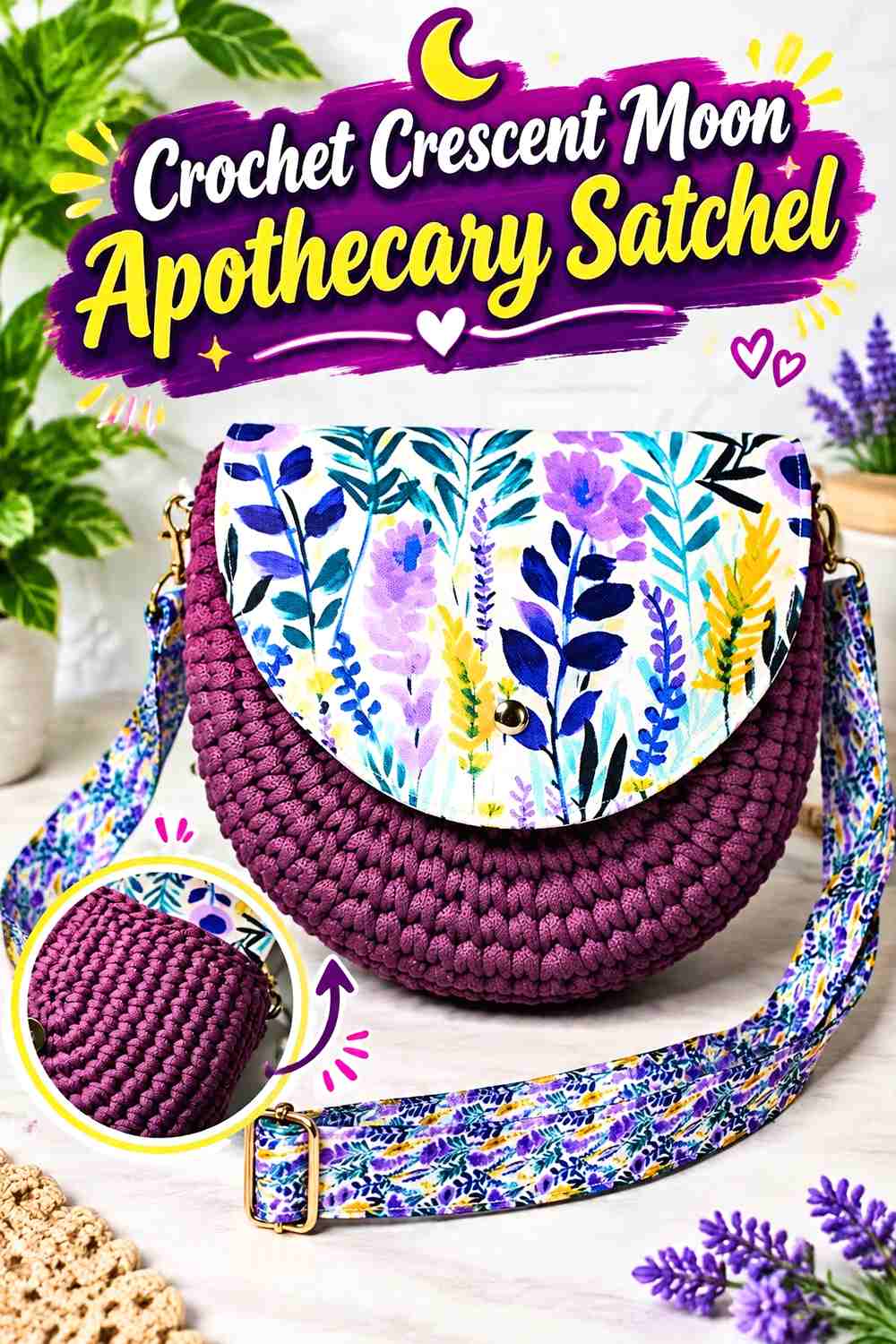
A half-round bag naturally suits a celestial apothecary theme. Its curved lower edge can suggest a crescent without requiring a literal moon appliqué, which makes the fantasy reference feel more integrated into the shape.
This construction also provides useful contrast to rectangular flap bags and cylindrical pouches elsewhere in the collection.
Let the Curve Remain the Main Feature
If too many charms hang from the lower edge, the half-moon silhouette can disappear.
Keep the bottom relatively clear and concentrate embellishment on the flap, closure, or one side of the strap.
Mixed Materials Need a Deliberate Color Plan
The source design combines crochet with non-crochet flap and strap components.
If you adapt the concept for romantasy style, consider those components part of the palette from the beginning. Brown, charcoal, olive, wine, or weathered neutral combinations can make contrasting materials look intentional rather than added later.
Creator Credit: plotkadesign
6. Crochet Mosaic Remedy Pouch
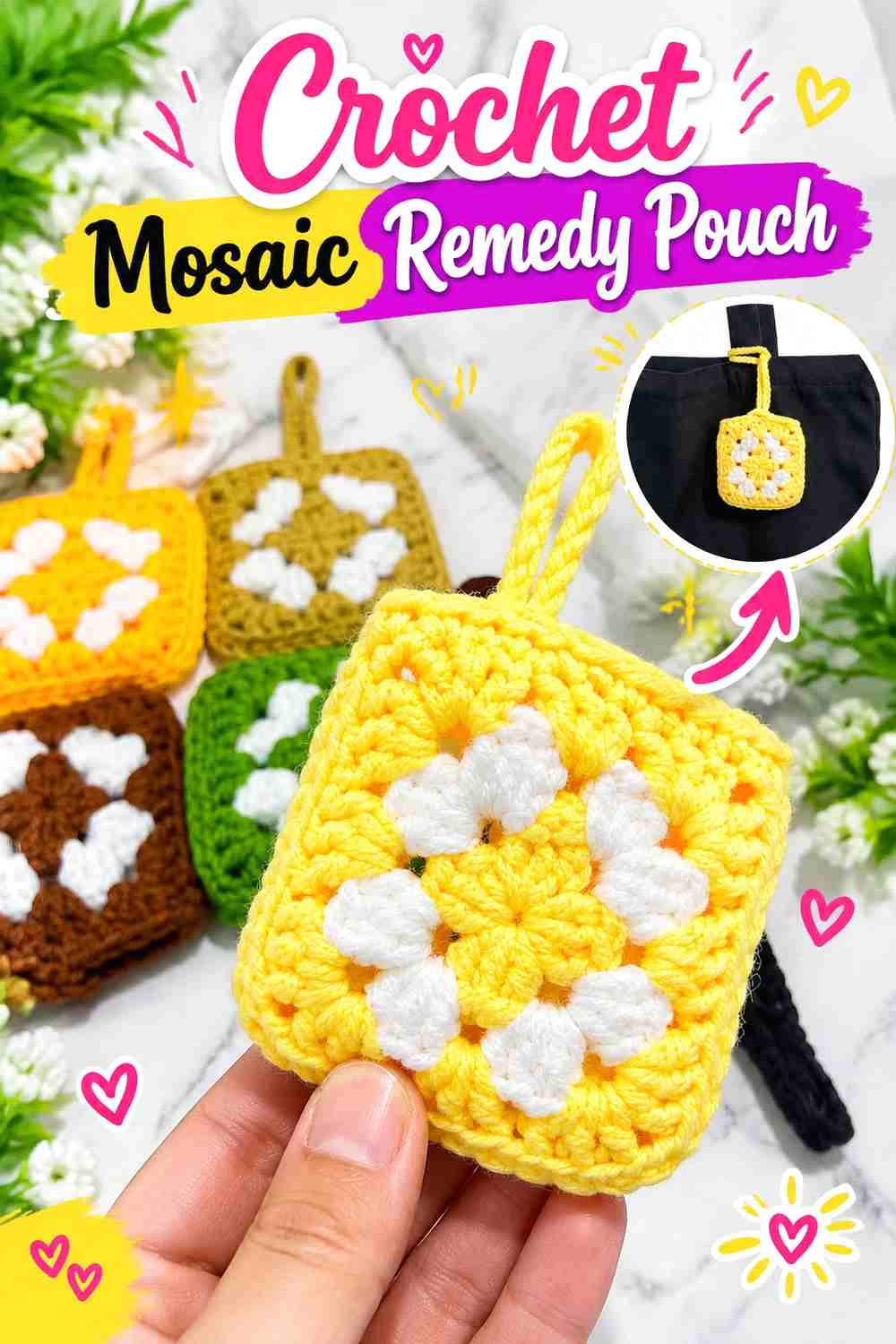
A granny-square pouch offers a completely different surface from solid satchel fabric. The visible motif can suggest a tiled apothecary floor, heraldic textile, herb-garden geometry, or old embroidered medicine pouch depending on the colors you choose.
It is particularly useful for a romantasy style that leans decorative rather than rugged.
Keep the Motif Palette More Muted Than a Festival Bag
Many granny projects invite several bright colors, but the same construction changes character dramatically in lichen green, parchment, brown, rust, plum, and charcoal.
Limiting the palette can make the motif look more like an aged textile and less like a contemporary rainbow accessory.
Motif Openings Affect What You Can Carry
Look at the completed fabric rather than assuming every granny-style pouch will contain tiny objects securely.
If the stitch pattern leaves visible spaces, place small remedies, charms, or notions inside a separate inner pouch or consider an appropriate lining plan.
Creator Credit: Creggy’s Crochet
7. Crochet Potion Bottle Carrier Satchel
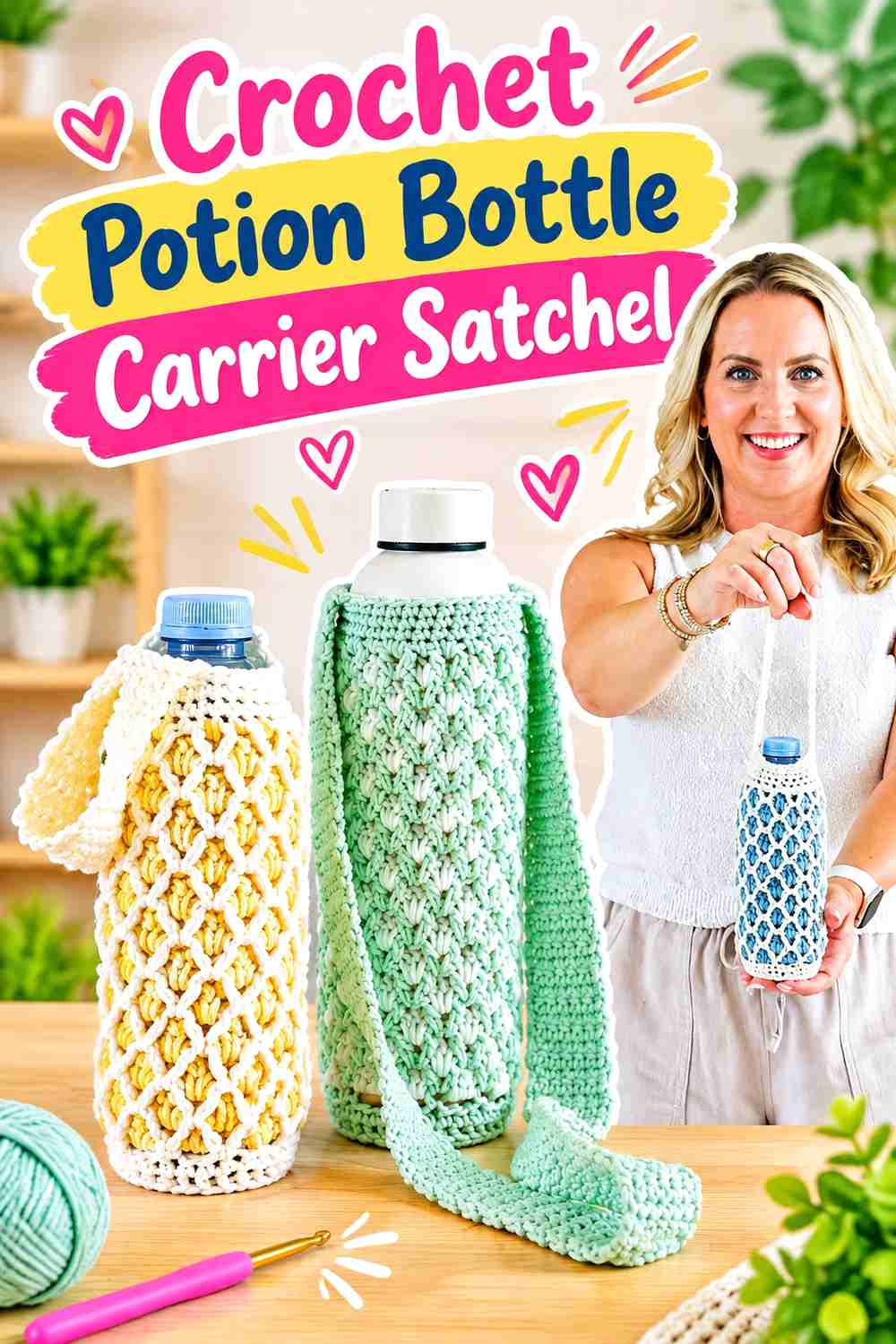
A dedicated bottle holder is one of the most direct ways to translate an everyday crochet project into an apothecary accessory. The tall body supports the silhouette of a potion or tonic carrier while a strap leaves the hands free.
It can also become one component of a larger costume system, paired with a separate pouch for smaller items.
Match the Carrier to the Actual Container
Bottle shapes and dimensions vary, so choose the container before assuming the finished holder will fit.
Follow the creator’s sizing information and test the intended bottle during construction when appropriate. A holder that is too loose may allow excessive movement, while one that is too tight can distort the crochet fabric.
Soft Crochet Is Not Protective Packaging for Glass
A bottle holder keeps an object carried at your side; it should not be confused with a padded protective case.
For busy events, travel, or situations where the bag may be bumped, consider whether a nonbreakable bottle or lightweight prop better suits the costume.
Creator Credit: Bella Coco
8. Crochet Patchwork Traveling Apothecary Bag
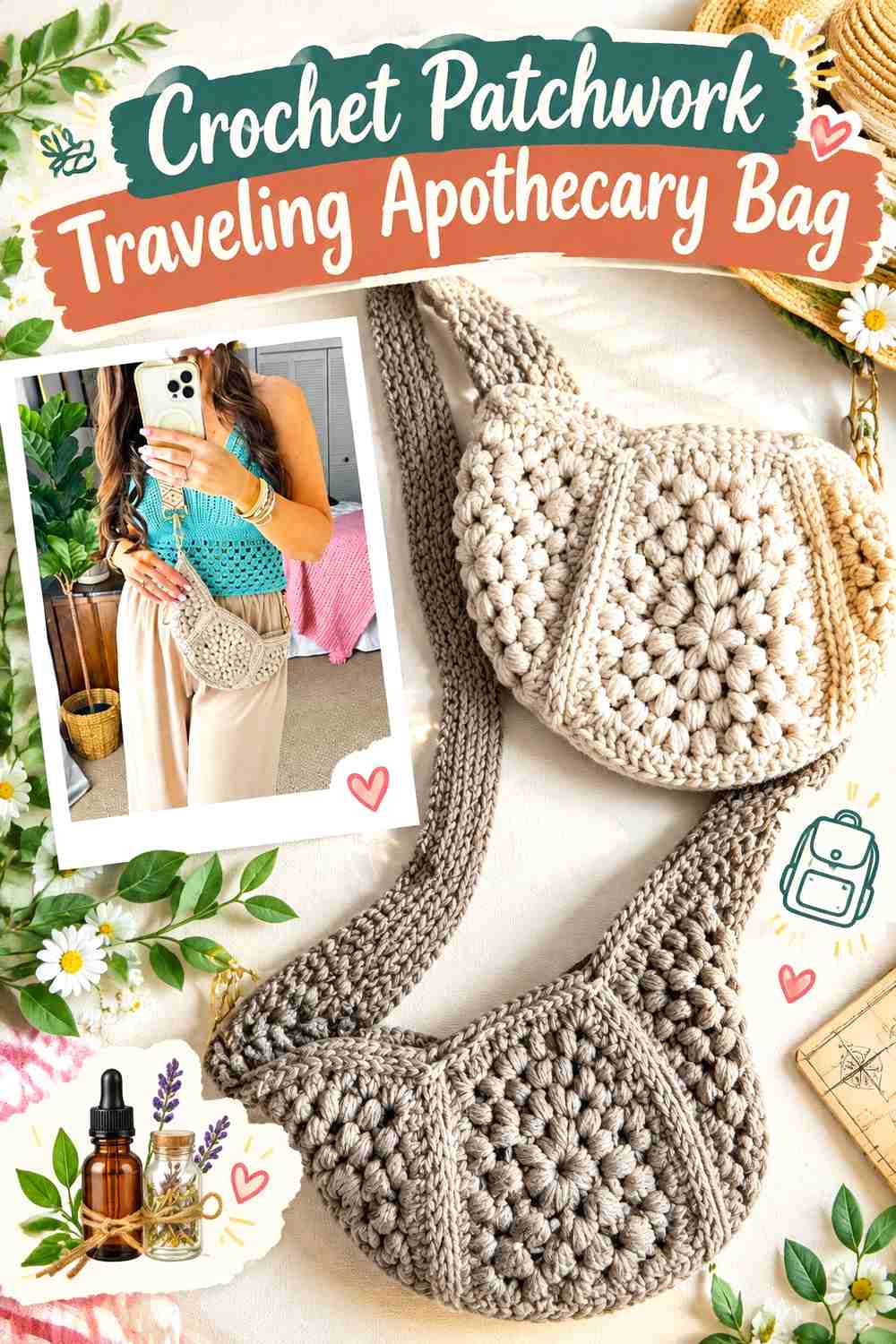
A joined-motif crossbody bag can become the larger working satchel in an apothecary outfit. Compared with the smaller remedy pouch, this construction offers a broader bag body and a strap system that reads more like an everyday accessory.
The visible joins also become part of the design, which suits a handmade, traveled-with-for-years romantasy look.
Motif Placement Can Create a Quiet Heraldic Effect
You do not need literal coats of arms or fantasy symbols. Repeating two or three muted shades across joined squares can create enough structure to suggest an inherited or well-worn field bag.
Plan the complete layout before joining so the strongest color does not accidentally collect in one corner.
Check Strap and Hardware Choices With Winter Layers
A removable or hardware-connected strap gives you useful styling flexibility.
Test the completed bag over the coat, sweater, or cloak-like layer you expect to wear. The correct position over thin clothing may sit too high once bulky winter layers are added.
Creator Credit: MJ’s Off The Hook Designs
9. Crochet Gathered Forager Bucket Satchel
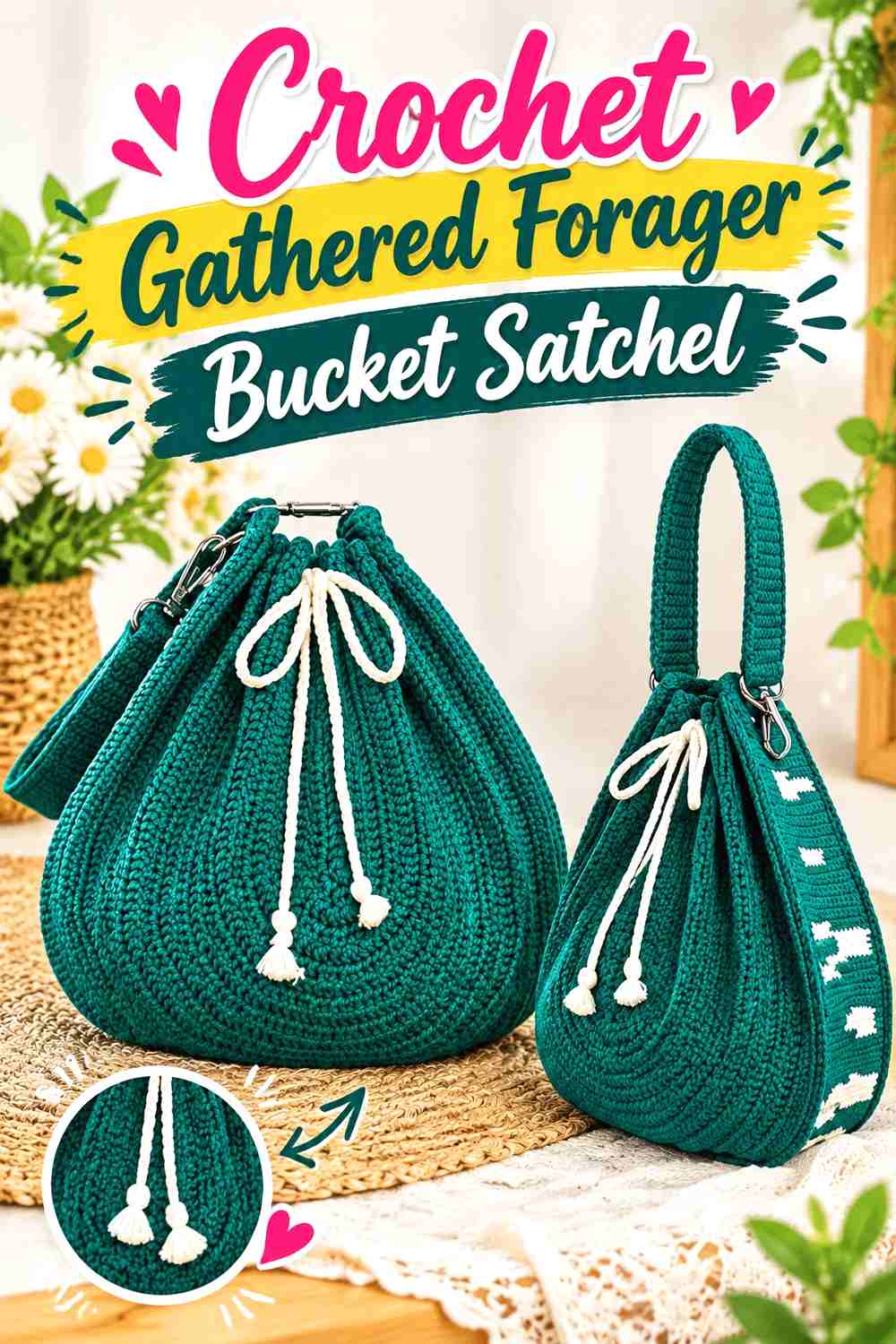
A bucket bag provides significantly more visual volume than the compact pouches in this collection. The gathered top suggests a forager’s carryall where bundles of lightweight supplies could be collected and closed inside.
Its deeper body also makes it better suited to an outfit that needs one main statement bag rather than several tiny accessories.
A Deeper Bag Needs Internal Organization
One large compartment can become inconvenient when small objects settle to the bottom.
If you want to use the satchel for modern essentials, consider removable inner pouches for keys, cards, or other small items rather than altering the tutorial with unsupported pocket construction.
Keep the Drawstring Easy to Reach
A richly decorated cord can fit the fantasy theme, but the closure is still a working part of the bag.
Avoid attaching so many charms near the drawstring channel that they make repeated opening uncomfortable or difficult.
Creator Credit: Crochet.Box
10. Crochet Tiny Talisman Apothecary Pouch
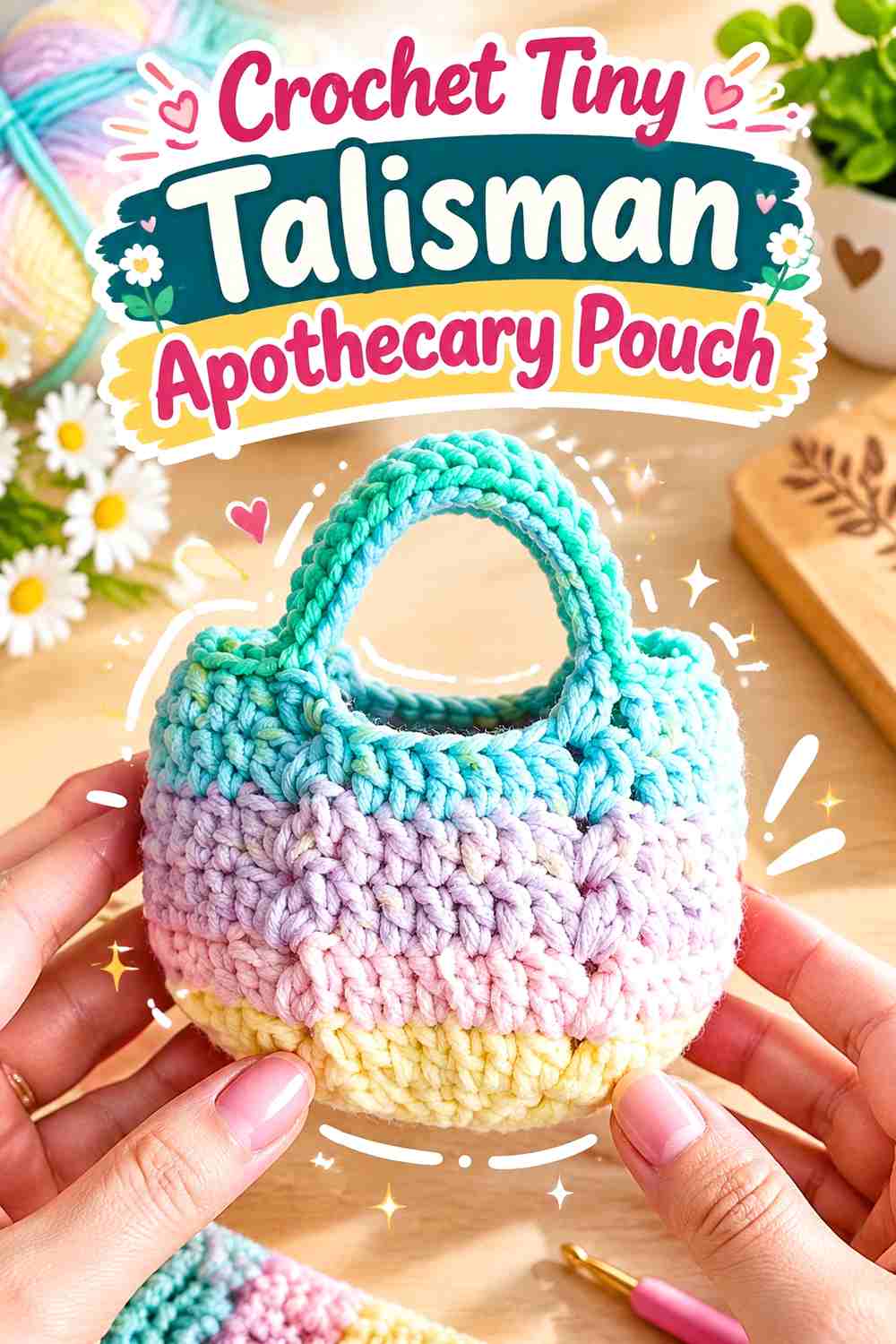
A very small bag can serve as a talisman pouch, coin holder, charm carrier, or decorative secondary satchel. This scale is useful when you already have a larger crossbody bag but want one small visible accessory clipped or worn separately.
Depending on how you finish it, the same basic form can look like a healer’s token pouch or a miniature remedy case.
Small Scale Makes Closure Choice More Important
A snap, button, or drawstring can occupy a large percentage of a miniature bag’s front surface.
Choose one closure treatment as the focal feature instead of trying to combine several decorative ideas in the limited space.
Use Tiny Pouches for Items You Actually Need Quickly
A secondary pouch works best when it has one clear purpose.
Coins, earbuds, a small key, or another compact everyday object can make more sense than filling it with several unrelated items that are difficult to retrieve.
Creator Credit: Crochet Everyday
11. Crochet Slim Messenger Apothecary Satchel
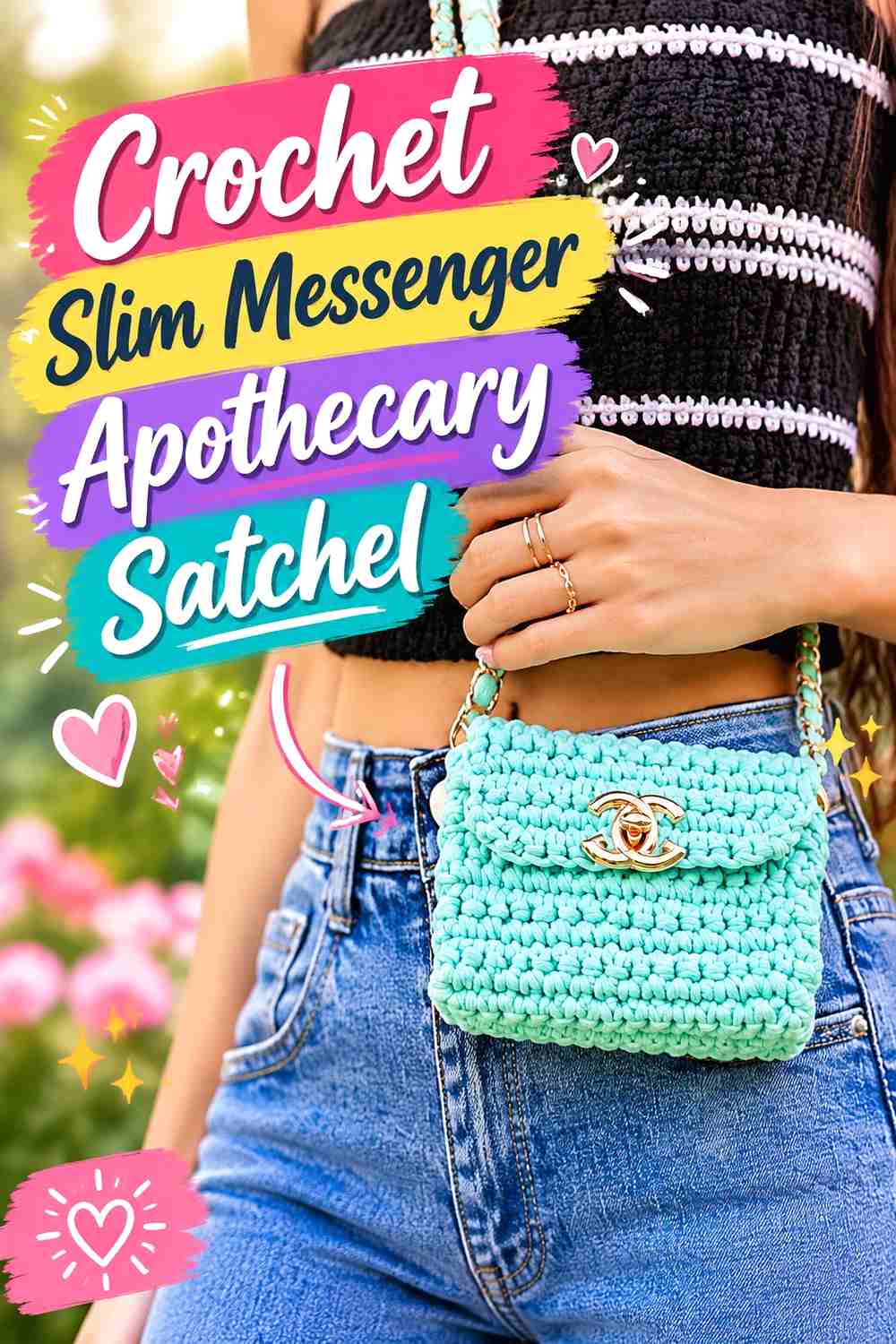
A small crossbody with a straightforward body gives you a useful base for a cleaner romantasy look. Instead of emphasizing mushrooms or celestial shapes, this style can suggest the practical field bag of a traveling healer.
Its simplicity is valuable because not every part of a fantasy outfit needs to be highly decorated.
Minimal Construction Gives Botanical Details More Impact
A plain bag body creates a quieter background for one embroidered plant, stitched initial, or removable herb charm.
Choose a single motif with purpose rather than spreading small appliqués across every surface.
Check Where the Bag Sits Before Final Styling
A slim crossbody may sit against the hip, waist, or upper thigh depending on the strap and wearer.
Test that position with winter clothing before deciding where decorative pieces belong. A charm that looks balanced on a table may be hidden or uncomfortable once the bag is worn.
Creator Credit: Chenda DIY
12. Crochet Mushroom Forager Ingredient Pouch
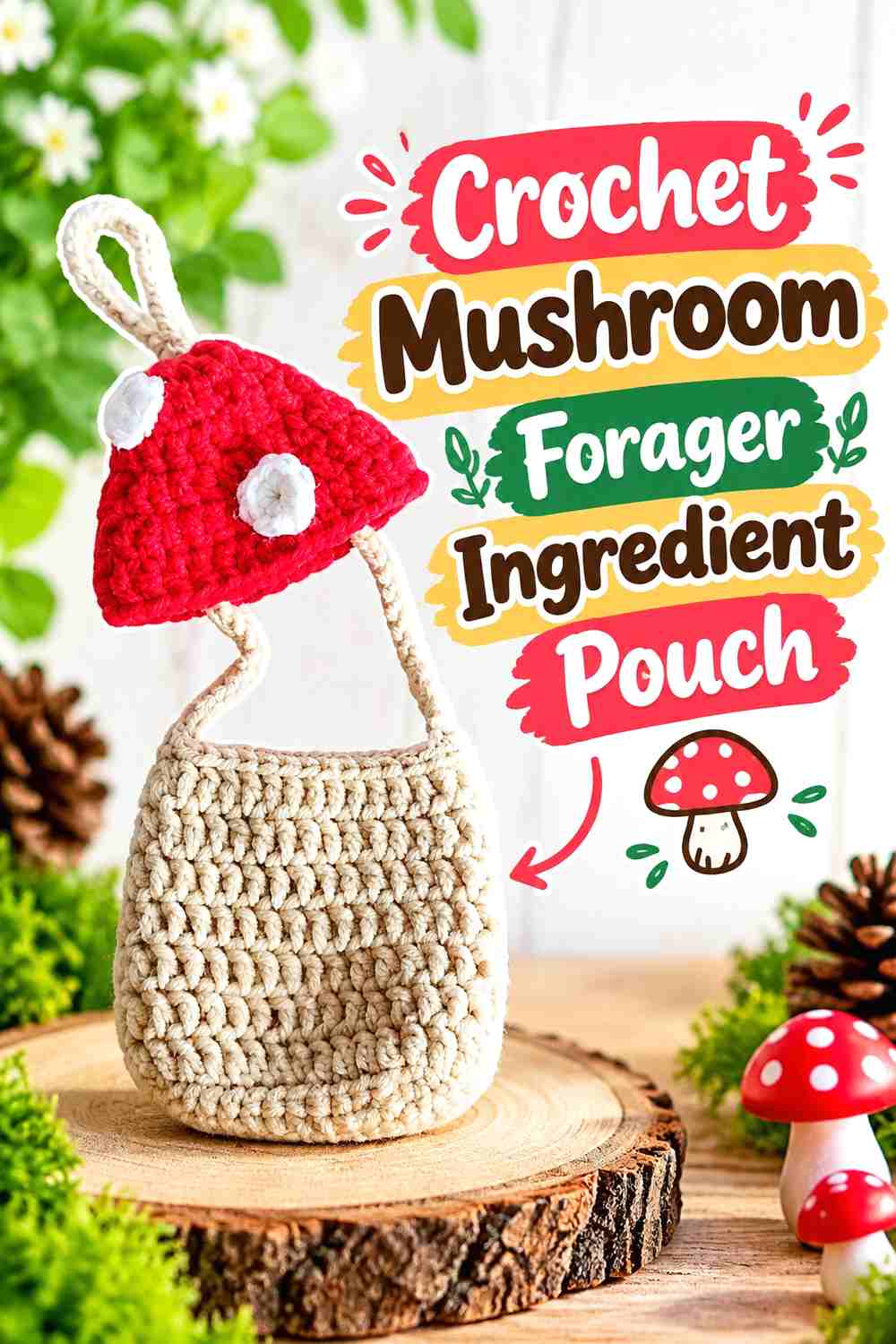
A mushroom-shaped drawstring pouch pushes the collection further into woodland romantasy. Unlike a standard satchel decorated with a mushroom appliqué, the mushroom form is built into the identity of the pouch itself.
This makes it a strong accent piece for a forager, hedge-witch, forest healer, or cottage-apothecary look.
Let the Mushroom Shape Stay Recognizable
Because the cap and stem define the design, avoid covering them with several additional botanical motifs.
A restrained color palette can make the pouch feel more medieval-fantasy without changing the character of the original construction.
Shape-Based Pouches Trade Interior Simplicity for Personality
A novelty silhouette may not organize contents as efficiently as a plain rectangle.
Use this piece where visual storytelling matters, and reserve larger practical items for one of the broader satchels in the collection.
Creator Credit: Jaslyn Lim 芊慧
13. Crochet Drawstring Elixir Purse
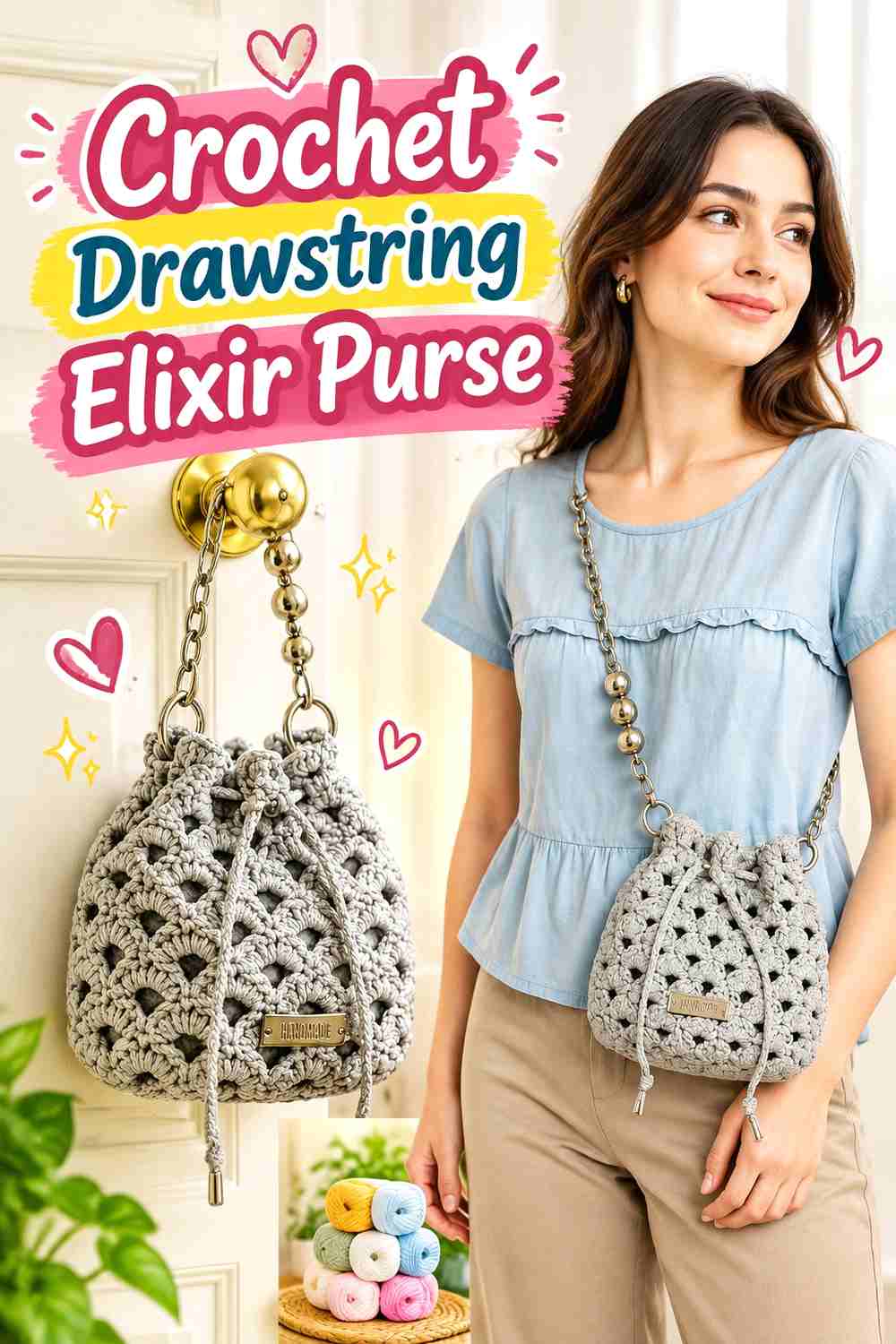
A gathered purse with a chain-style strap creates a more courtly apothecary interpretation than the rustic forager bags. It can suggest an alchemist attached to a noble household, a healer at a winter banquet, or a romantasy character whose accessories lean ornate rather than woodland.
The combination of soft crochet and harder strap hardware creates most of the contrast.
Metallic Hardware Can Shift the Entire Mood
Bright polished metal produces a different result from darker or antique-looking finishes.
If you substitute hardware, confirm that the dimensions and attachment method remain appropriate for the bag. A visual change should not compromise how the strap connects to the crochet body.
A Gathered Top Works Better With Flexible Contents
Rigid objects can press against a drawstring opening and prevent it from closing cleanly.
Before treating the bag as a potion carrier, test the intended contents together. A few soft personal essentials may suit this form better than several large bottles.
Creator Credit: Crochet Bag
14. Crochet Botanical Flower Apothecary Pouch
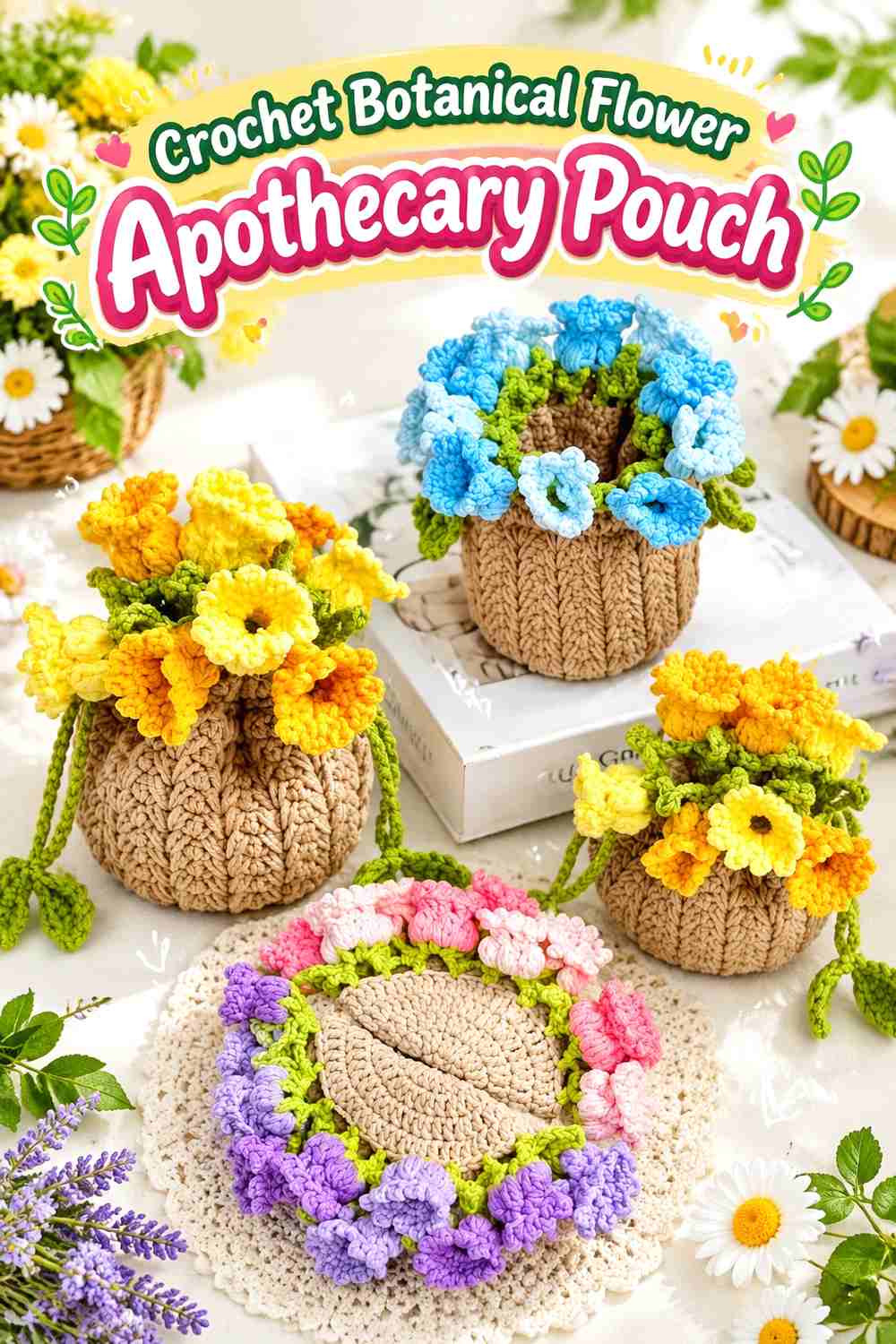
A floral drawstring pouch is a natural choice for the botanical side of the apothecary theme. The construction incorporates flower and leaf elements into the visual identity rather than relying on an unrelated charm added at the end.
With muted colors, the same idea can move away from spring florals and toward dried-herb, winter-garden, or enchanted-greenhouse styling.
Winter Botanicals Do Not Need Bright Flower Colors
Try thinking in terms of dried petals and evergreen foliage rather than a fresh summer bouquet.
Muted burgundy, rust, cream, olive, moss, brown, and smoky violet can make floral elements feel more suited to a winter romantasy wardrobe.
Dimensional Leaves Need Space Around the Drawstring
Botanical decoration becomes less useful if it blocks the working closure.
Open and close the finished pouch several times before deciding where any additional charms belong. The drawstring should continue to move without snagging on raised leaves or flowers.
Creator Credit: 숩니공방 soobni’s knitting
Comparing the 14 Crochet Apothecary Satchel Styles
| If You Want… | Strong Options | Main Detail to Check |
|---|---|---|
| A small herb or token pouch | Herbalist drawstring, talisman pouch | Closure gaps and tiny contents |
| A classic satchel silhouette | Horn-button pouch, structured healer's bag | Flap coverage and closure |
| A bottle-focused accessory | Openwork elixir sling, bottle carrier | Container fit and breakability |
| Strong romantasy shape | Crescent satchel, mushroom pouch | Preserve the defining silhouette |
| Decorative textile character | Mosaic pouch, patchwork bag | Motif density and fabric openings |
| More carrying volume | Bucket satchel, patchwork crossbody | Organization and strap comfort |
| An elegant apothecary look | Drawstring elixir purse | Hardware and gathered opening |
| Botanical styling | Flower apothecary pouch | Keep decorations clear of the closure |
| A quieter everyday adaptation | Slim messenger satchel | Strap position and practical access |
For a costume or themed winter outing, the mushroom pouch, crescent satchel, bottle carrier, and botanical pouch create the strongest fantasy cues. For something you can more easily style with everyday clothing, the structured flap bag, slim crossbody, patchwork satchel, or bucket bag offers a subtler route.
Conclusion
The most convincing crochet medieval apothecary satchel is not necessarily the bag with the most mushrooms, charms, and potion bottles. Start with the function you need, then let the fantasy styling grow from that construction.
Choose a compact drawstring pouch for small remedies or tokens, a flap satchel for everyday essentials, a tall carrier for one bottle, or the bucket and patchwork bags when you need more room. The crescent and mushroom options work particularly well when silhouette matters more than subtlety, while the structured healer’s satchel and slim messenger style can blend more easily with ordinary winter clothes.
Keep load-bearing areas practical, test straps over winter layers, and check openwork or flap gaps before placing small objects inside. Use the original creator tutorial for exact construction, then add your apothecary palette and removable decorative details without trying to reconstruct or rewrite the source pattern.
Frequently Asked Questions
Are these tutorials specifically for medieval apothecary satchels?
No. They are crochet pouch, bottle-holder, purse, and crossbody constructions selected because their finished forms can support a medieval-apothecary or romantasy adaptation.
The fantasy styling comes from your palette, non-structural embellishments, hardware choices, and how you use the finished bag.
What colors work well for a winter romantasy apothecary bag?
Forest and olive greens, mushroom brown, charcoal, parchment cream, dark plum, burgundy, rust, and muted gold-like accents can create a winter herbalist palette without requiring explicitly holiday colors.
A smaller palette usually looks more cohesive than using every earthy shade in one bag.
Which construction is most useful for carrying potion bottles?
A narrow bottle-holder construction provides the clearest bottle-specific option, but fit and material still matter.
Crochet should not be treated as impact protection for fragile glass. For costumes and crowded events, a lightweight nonbreakable prop may be more practical.
Should I line a crochet apothecary satchel?
Lining can be useful when the crochet fabric has openings or when you want to prevent small objects from working through the stitches. Whether it is necessary depends on the individual bag and intended contents.
If the original tutorial does not include lining, treat adding one as a separate sewing adaptation rather than assuming a universal method.
How can I make a crochet bag look medieval without making it impractical?
Let the silhouette and a few controlled details do most of the work. A flap, drawstring, earthy palette, botanical embroidery, old-fashioned-looking button, or removable charm can create the theme while preserving a practical strap and closure.
You do not need to replace functional modern hardware if doing so would make the bag less secure.
Which satchel styles work best over bulky winter clothing?
Crossbody and adjustable-strap constructions give you more flexibility than very short fixed straps, but the correct length depends on the wearer and clothing.
Test the finished or adjustable strap over the actual coat or sweater layers you expect to use before finalizing its position.
How do I keep botanical appliqués from making the satchel look crowded?
Choose one main area for decoration—the flap, one lower corner, or a removable charm cluster—and leave the load-bearing parts visually quieter.
This keeps leaves, mushrooms, moons, or flowers readable while allowing the bag’s shape and stitch texture to remain part of the design.