Crochet leg warmers can give winter boots a softer, more layered look without changing the footwear itself. Ribbing can imitate knitted fabric, cables create heavier visual texture, shell stitches add decorative depth, and extra length can form relaxed folds above the ankle.
“Wool-look” in this collection describes appearance rather than fiber content. Several source tutorials use acrylic or other yarns, while some are particularly suitable for adapting to wool or wool blends. Do not assume a project uses wool unless the creator specifies it. If you substitute fiber, check gauge, stretch, recovery, care requirements, and how the finished fabric behaves after washing.
Boot style matters too. A narrow cuff that disappears into a tall boot needs different proportions from a flared warmer designed to sit over footwear. Decide where you want the crochet to remain visible before choosing a construction.
Quick List
- Crochet Tailored Calf-Fit Wool-Look Leg Warmers
- Crochet Flat-Seamed Knit-Look Ribbed Leg Warmers
- Crochet Deep-Rib Faux-Knit Leg Warmers
- Crochet Slouchy Heritage-Wool Texture Leg Warmers
- Crochet Shell-and-Rib Wool-Look Leg Warmers
- Crochet Sculpted Cable Winter Leg Warmers
- Crochet Chunky Flared Over-Boot Leg Warmers
- Crochet Scalloped Forest-Wool Leg Warmers
- Crochet Tunisian Rib Drawstring Leg Warmers
- Crochet Ruffled Boot-Top Leg Warmers
- Crochet Long Everyday Wool-Look Leg Warmers
- Crochet Feather-Stitch Button Boot Warmers
- Crochet Compact Classic Boot Leg Warmers
- Crochet Minimal Double-Crochet Boot Cuffs
- Crochet Knit-Look Textured Winter Boot Cuffs
Choose the Boot Relationship Before Choosing the Texture
Leg warmers can sit entirely above a boot, overlap its opening, tuck partly inside the shaft, or spread over the upper portion of the footwear. Those arrangements require different amounts of fabric.
If you usually wear tall fitted boots, dense cables, large shells, and thick lower cuffs may create uncomfortable bulk inside the shaft. A slimmer ribbed design is easier to position above or just inside that type of boot.
Ankle boots leave more crochet visible, so decorative scallops, ruffles, buttons, and flared lower edges have room to become part of the outfit. Try the developing warmer with the actual footwear rather than evaluating fit only on the leg.
What Creates a Convincing Wool-Look Crochet Fabric?
The strongest wool-like appearance usually comes from texture and color rather than fiber labels alone. Vertical ribs, cables, post stitches, dense shells, tweed-like colors, and slightly heathered neutrals can all make crochet resemble traditional knitted winter accessories.
Oatmeal, charcoal, sheep gray, cream, peat brown, moss, burgundy, and muted navy work particularly well when you want the stitch structure to remain visible.
Very fuzzy yarn can create softness but hide cables and fine ribbing. Smooth or gently heathered yarn generally shows sculpted stitches more clearly. If the texture is the reason you chose a project, make a swatch before switching to a heavily brushed or novelty fiber.
Fit, Stretch, and Fiber Matter More Than the Size Name
Leg warmers often need to move over the foot or boot opening and then remain comfortably positioned around the calf. That makes stretch and recovery as important as circumference.
Measure where the top edge will actually sit while wearing the clothing you expect underneath. Leggings, tights, jeans, and bare legs all create different fit conditions.
If you use wool or a wool blend, wash a representative swatch according to the yarn label before committing to major sizing adjustments. Some yarns relax considerably, while others retain strong elasticity. Avoid assuming that a wool substitution will behave exactly like the tutorial yarn.
1. Crochet Tailored Calf-Fit Wool-Look Leg Warmers
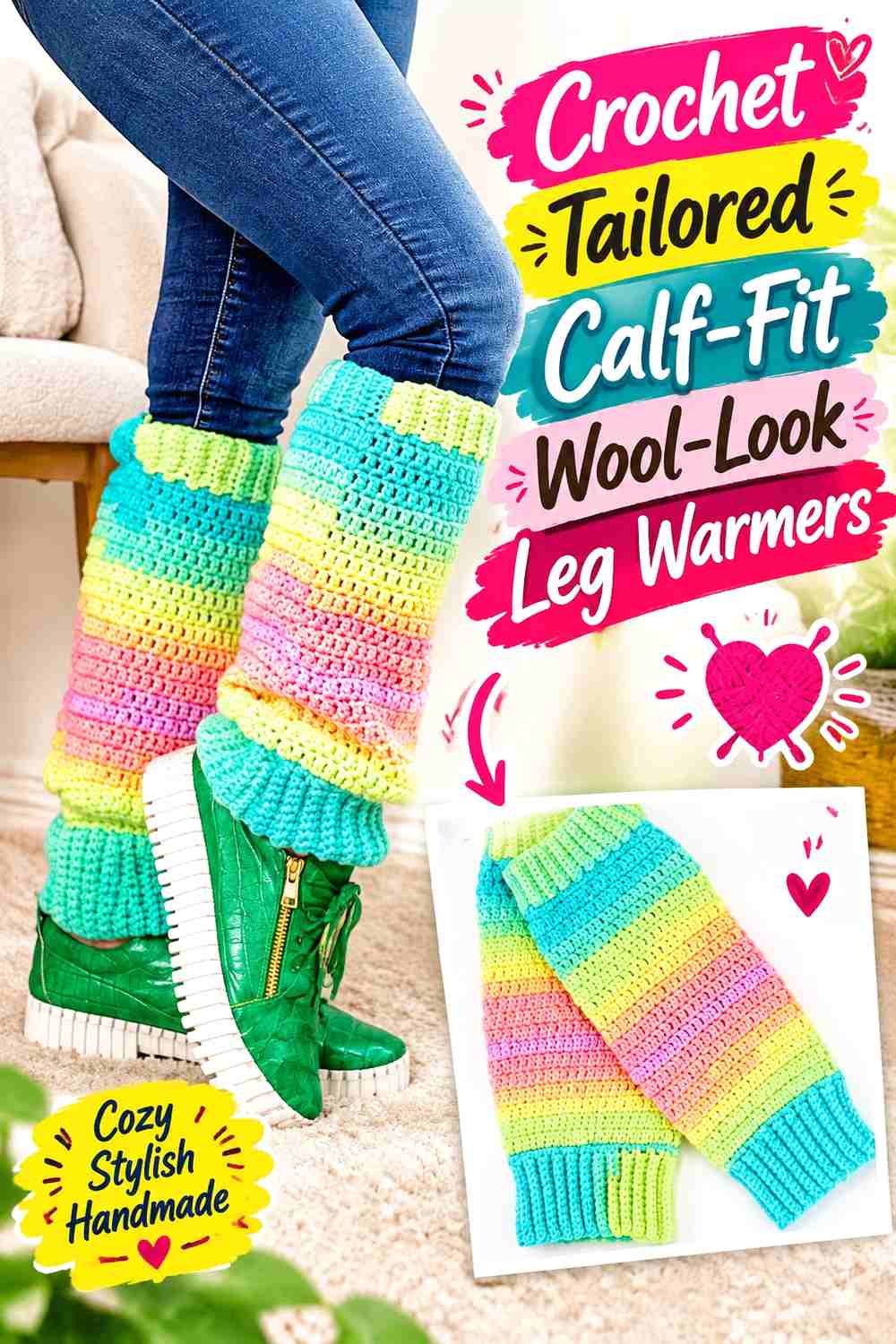
This construction is useful when you want a relatively clean winter layer rather than exaggerated slouch or decorative edging. The supporting tutorial emphasizes adjusting the warmer around different areas of the leg, which makes it a strong starting point when boot styling depends on a controlled fit.
In charcoal, oatmeal, tweed brown, or muted green, the straightforward surface can take on a classic wool-accessory appearance without requiring additional motifs.
Fit the Calf and Ankle as Separate Areas
A tube that fits the widest part of the calf can still feel loose closer to the ankle.
Think about where the lower edge will sit in relation to your boots. A little extra room can work well over a boot opening, while a warmer meant to tuck inside the shaft usually benefits from a cleaner lower profile.
Let Neutral Color Create the Heritage Effect
Simple crochet fabric gives yarn color a larger role.
A heathered or gently marled neutral can create the visual impression of traditional wool knitwear while still allowing you to follow the creator’s original yarn and sizing guidance.
Creator Credit: Treasurie
2. Crochet Flat-Seamed Knit-Look Ribbed Leg Warmers
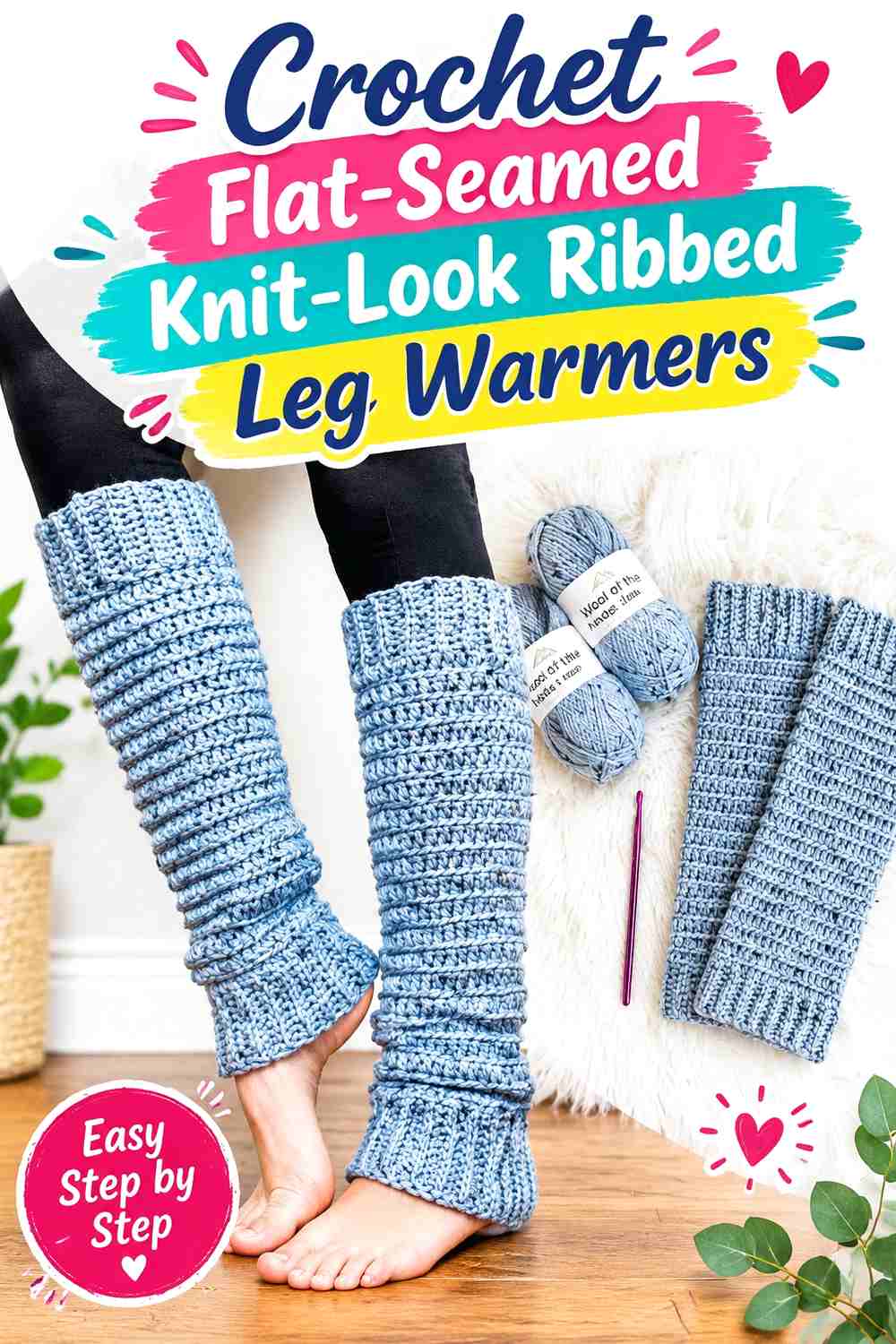
This version uses strong ribbing and flat construction before the fabric is joined into a tube. That gives the project a different working method from designs crocheted continuously in the round and produces an orderly, garment-like surface.
The repeated ribs are particularly well suited to a wool-look interpretation because the finished texture resembles classic knitted winter accessories.
The Seam Should Stretch With the Ribbing
Flexible ribbing loses much of its advantage if the final seam becomes a stiff vertical line.
After joining a short section, stretch it sideways and compare it with the surrounding fabric. The closure should move with the warmer rather than becoming the point that restricts fit.
Compare Both Panels Before Joining
Flat construction makes it easy to place both unfinished warmers next to each other.
Check length and width before seaming. Long repetitive ribs make even gradual differences between the two pieces relatively easy to see once they are worn together.
Creator Credit: Ned & Mimi
3. Crochet Deep-Rib Faux-Knit Leg Warmers
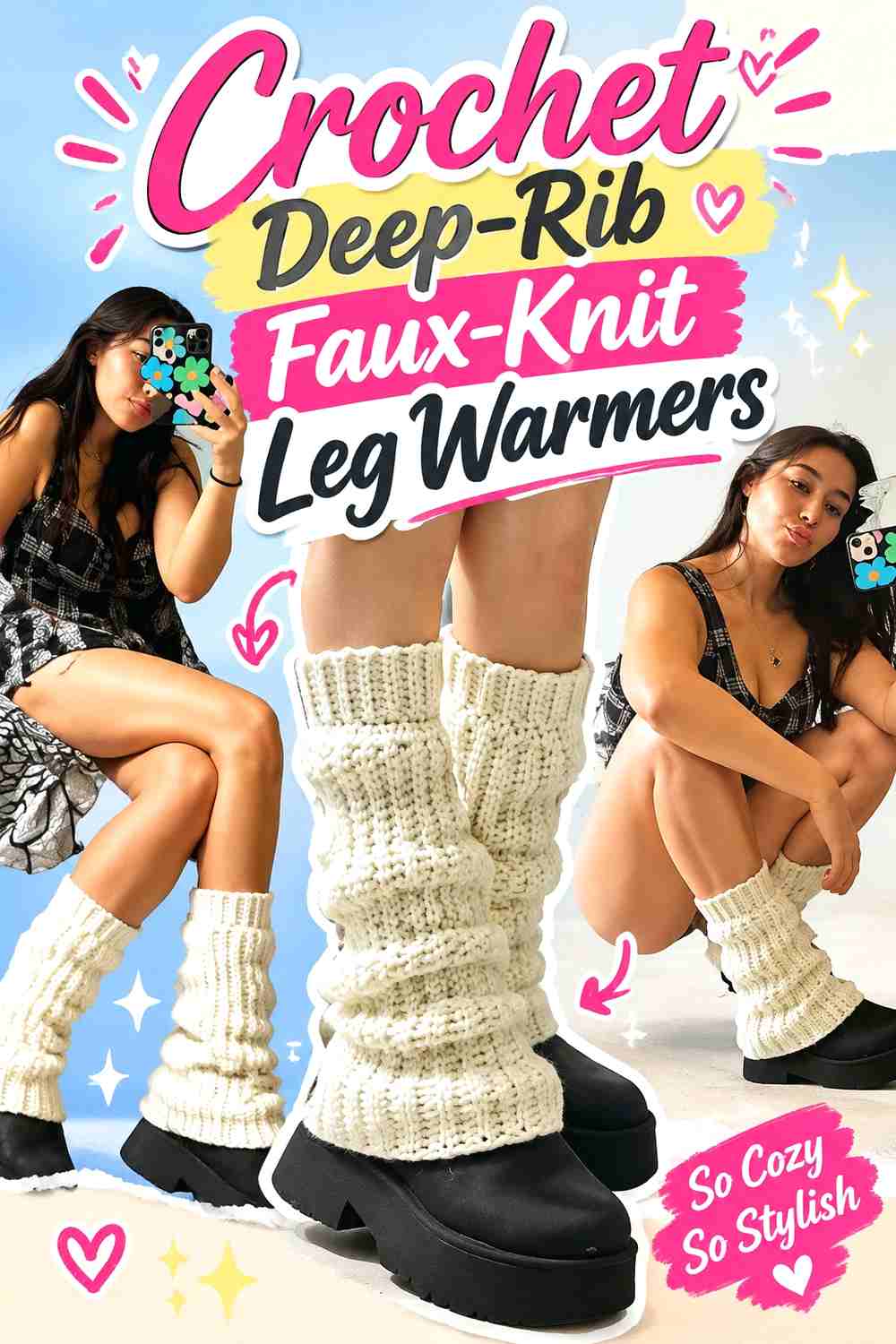
This design pushes the knitted appearance further by making ribbing the dominant visual feature. The finished surface is streamlined rather than highly decorative, which makes it easy to combine with tall leather boots, ankle boots, or simple winter shoes.
A single solid shade works especially well because the vertical texture supplies enough detail on its own.
Long Ribs Reveal Changes in Tension
Repeated vertical lines can expose gradual changes in width more clearly than irregular textured stitches.
Pause occasionally and compare both edges. If one side begins drifting, correct the issue before the difference continues through the full length.
Wool Substitutions Need a Finishing Test
The source construction includes finishing guidance, but a different fiber may respond differently to washing, blocking, or heat.
Follow the care instructions for the yarn you actually choose. Avoid applying a finishing method simply because it worked on the original material.
Creator Credit: Kae Neebs
4. Crochet Slouchy Heritage-Wool Texture Leg Warmers
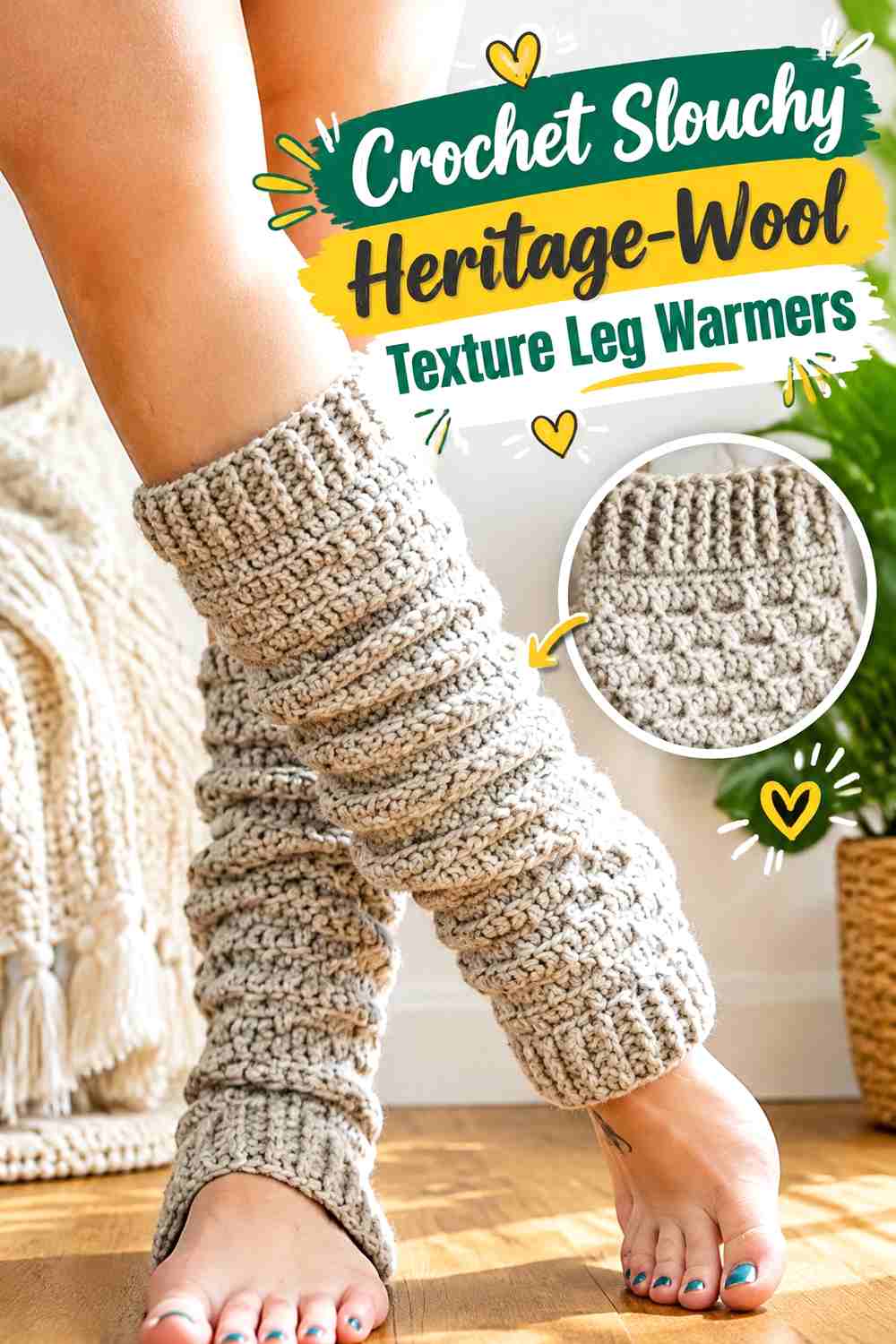
This option creates a much more relaxed silhouette. Ribbed areas control the edges while the central textured fabric has enough extra length to collapse into visible folds around the lower leg.
The original project is particularly relevant to the wool-look theme because the design has been demonstrated using Fisherman’s Wool, making it a useful reference for how real wool can behave in a textured slouchy warmer.
Extra Length Creates Weight as Well as Folds
Slouch requires additional fabric, but every extra section also adds weight beneath the upper cuff.
Try the first warmer at its intended height before extending it further. If the top already wants to migrate downward, additional wool fabric may make the issue more noticeable.
Raised Texture Can Feel Thick Inside Boots
A textured wool fabric can look wonderfully substantial over leggings yet become uncomfortable when compressed inside a narrow boot shaft.
If your boots are fitted through the calf, keep the textured portion primarily above the opening rather than assuming all of it will tuck comfortably inside.
Creator Credit: Sigoni Macaroni
5. Crochet Shell-and-Rib Wool-Look Leg Warmers
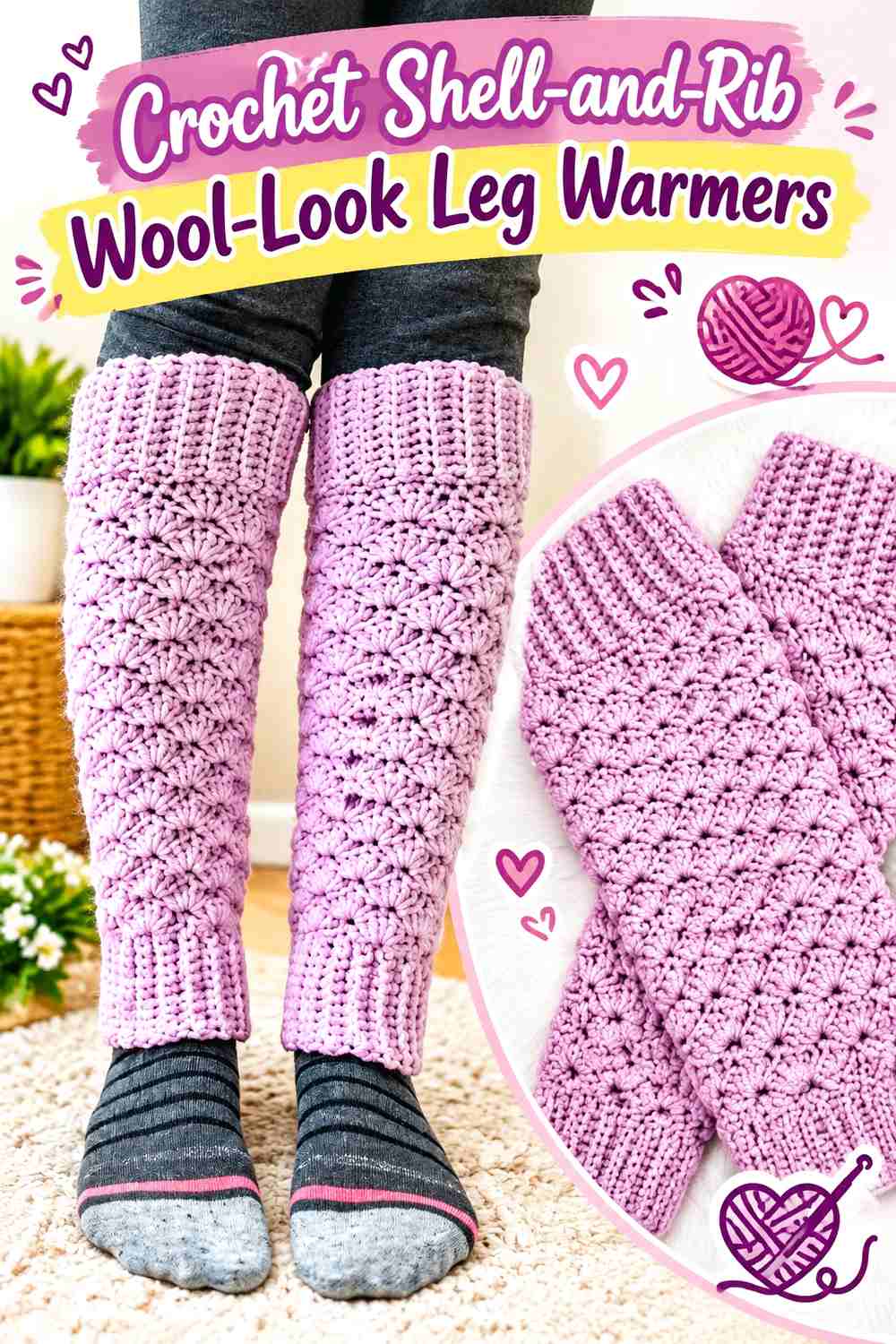
Shell stitch gives this pair a softer decorative surface than straight ribbing. Defined cuffs frame the patterned center, creating a useful balance between structure and ornament.
This design suits winter boots when you want visible crochet texture above the shaft rather than a completely plain layer.
Smooth Yarn Makes the Shells Easier to Read
Shells depend on repeated curves and openings remaining distinct.
A strongly fuzzy yarn can soften those shapes until much of the stitch character disappears. If you want a wool blend, consider one with enough surface definition to show the shell pattern clearly.
Keep the Decorative Section Above the Boot
Compressing shell fabric inside a tight boot can hide the pattern and add unwanted thickness.
Check how much leg warmer remains exposed once the boot is on. If only a small amount shows, concentrate the most attractive texture where it will actually be visible.
Creator Credit: Crochet With Akita
6. Crochet Sculpted Cable Winter Leg Warmers
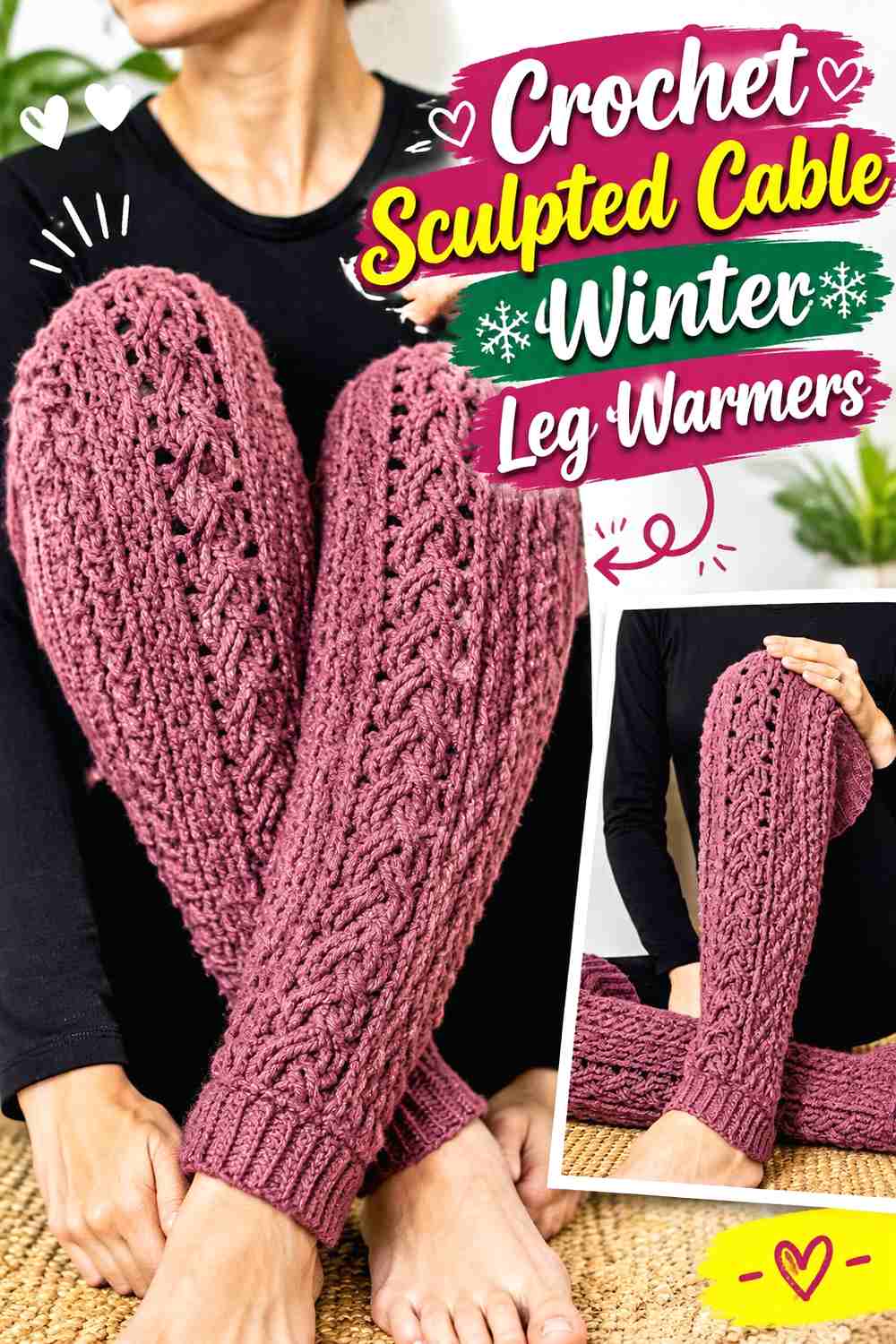
Cable crochet creates one of the strongest wool-sweater effects in the collection. The source combines twisting cable details with additional textured sections and structured finishing, making the surface more architectural than a basic ribbed tube.
This is a good option when the leg warmer is meant to be clearly visible above a simple boot.
Cables Need Stitch Definition More Than Fuzz
The visual effect depends on raised elements casting shadows and crossing clearly over the background.
Very fuzzy yarn can reduce that contrast. A smooth, rounded wool or wool-look yarn generally makes sculpted cable sections easier to see.
Complex Texture Adds Physical Thickness
Cable fabric occupies more space than flat crochet.
Test a representative section against the boot opening before making both full pieces. If the fabric barely fits inside the shaft, plan to wear the warmer above the boot rather than forcing it underneath.
Creator Credit: TCDDIY
7. Crochet Chunky Flared Over-Boot Leg Warmers
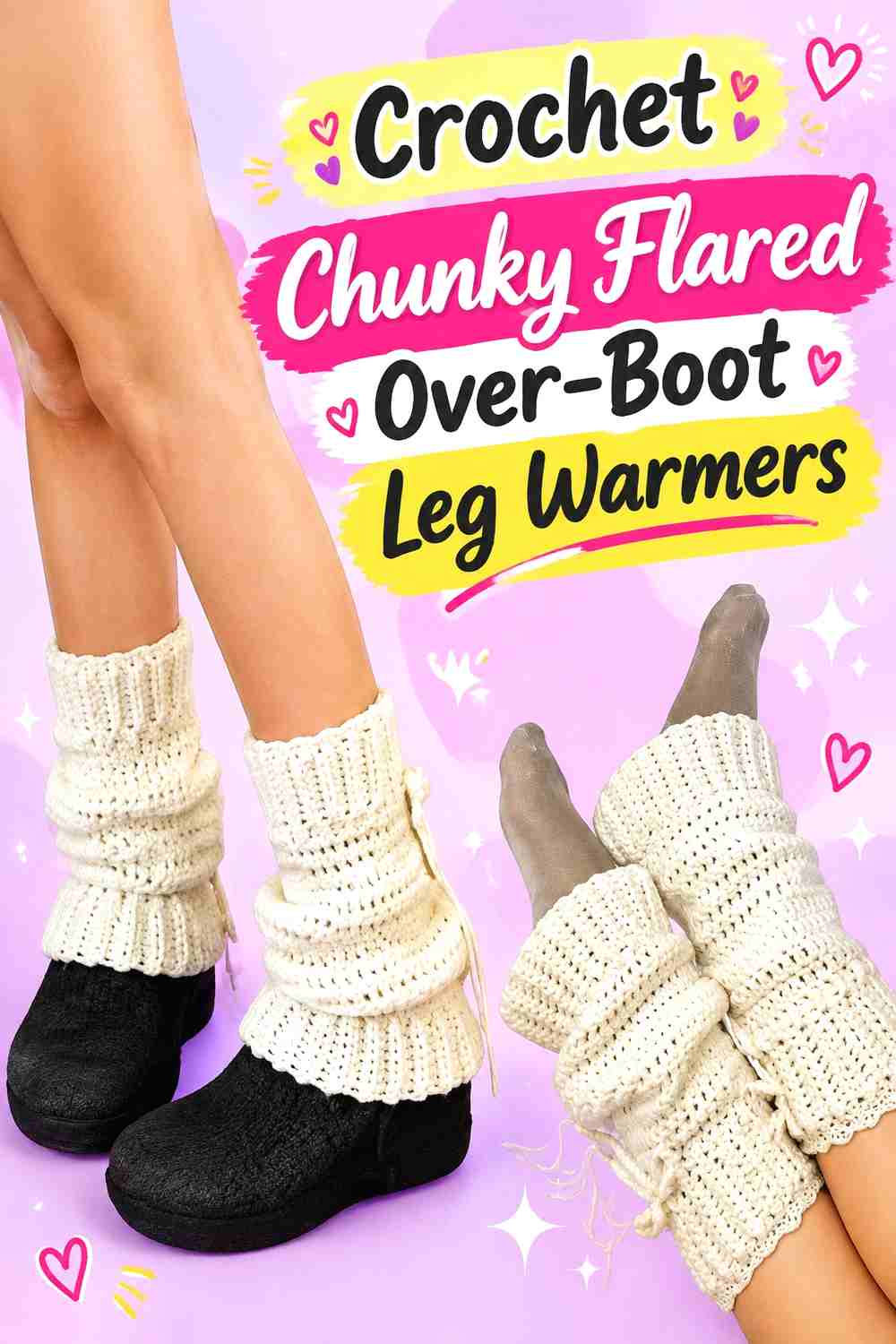
This project changes the relationship between leg warmer and footwear completely. Instead of narrowing toward the ankle, the lower section spreads outward so the crochet can sit visibly over the top of the shoe or boot.
Chunky yarn reinforces that silhouette, giving the finished pair a strong cozy winter presence.
Choose the Boots Before Finalizing the Flare
A wide lower edge may look balanced over sturdy boots and overwhelming over narrow footwear.
Place the developing warmer over your usual winter shoes before completing the second piece. The boot width should visually support the amount of crochet spreading around it.
Thick Fabric Needs More Clearance
Chunky yarn increases physical volume as well as visual softness.
If the warmer overlaps the boot shaft, make sure it sits outside rather than creating a thick compressed layer inside footwear that was not designed for it.
Creator Credit: nat’s record
8. Crochet Scalloped Forest-Wool Leg Warmers
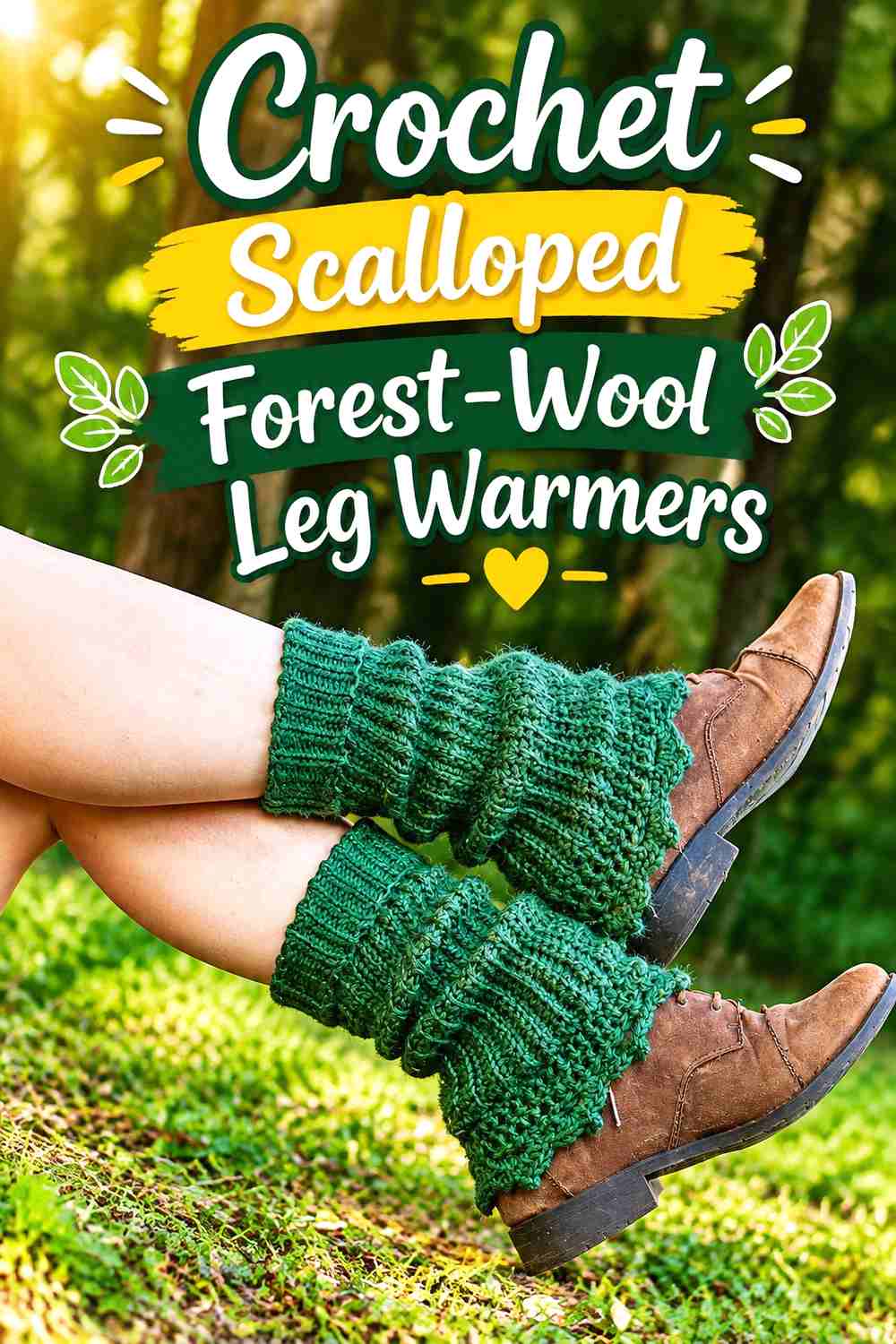
A scalloped lower edge gives this pair a softer outline without producing the full volume of a ruffle. The source is made-to-measure, allowing the body proportions and edge placement to be considered together.
Worked in moss, oatmeal, bark brown, or dark green, the silhouette can lean toward cottage winter styling while still working with everyday boots.
Scallops Need to Remain Outside the Boot
A decorative edge serves little purpose if the entire border disappears into the shaft.
Plan the finished length so the scallops land above or just over the boot opening. This also avoids compressing the shaped edge into a narrow space.
Made-to-Measure Still Requires Stretch Checking
A correct circumference on paper does not tell you how the fabric behaves while moving over the foot and calf.
Test the developing warmer with your yarn choice before completing both pieces, particularly if substituting a fiber with different elasticity.
Creator Credit: Forest Lily
9. Crochet Tunisian Rib Drawstring Leg Warmers
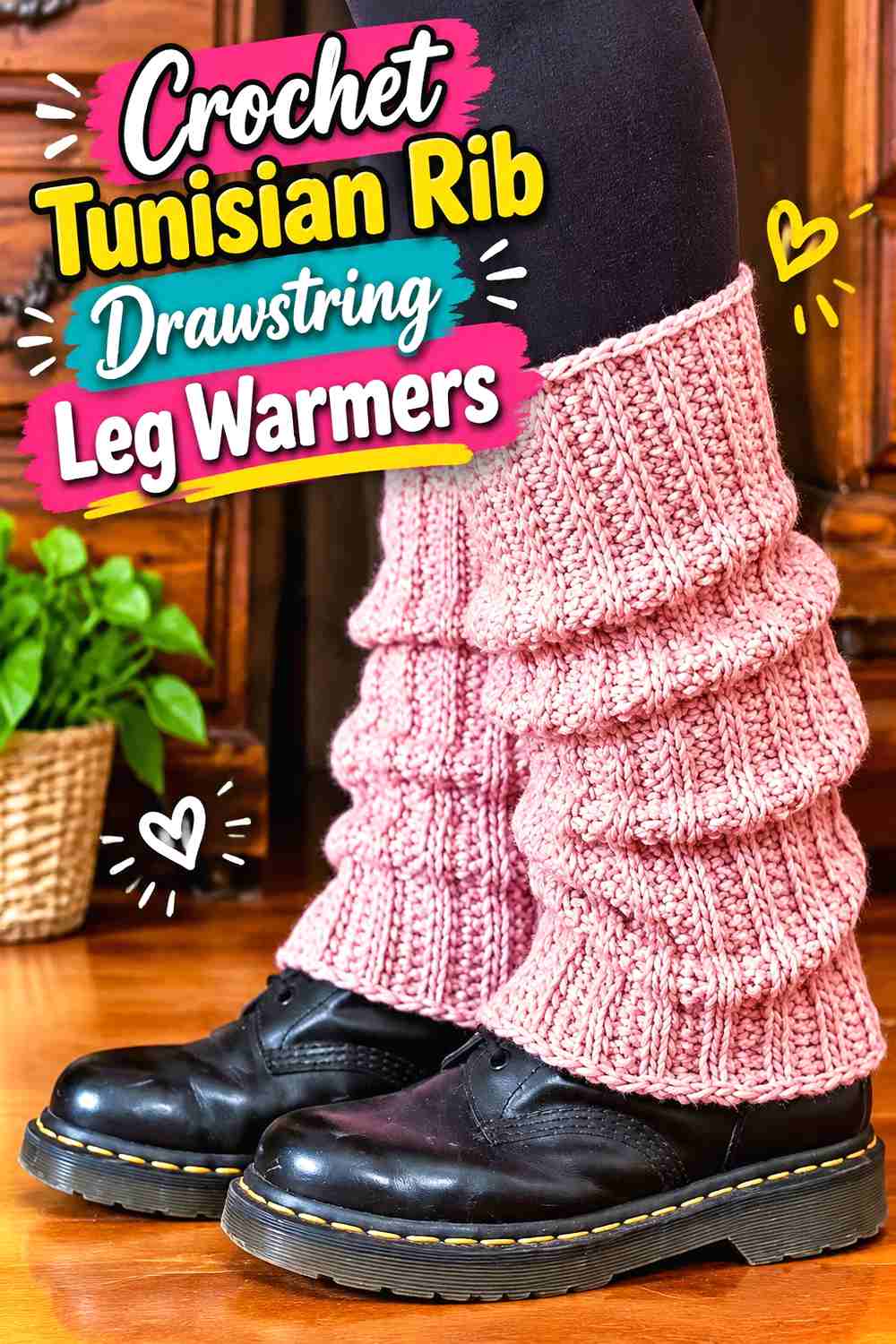
Tunisian crochet creates a surface that looks noticeably different from standard crochet ribbing. This tutorial uses knit- and purl-like texture and also allows for a cord detail at the upper edge.
The result can resemble substantial knitted winter fabric while still being made with a crochet-based technique.
Tunisian Fabric Needs Its Own Fit Sample
Do not assume your usual crochet gauge or stretch will transfer directly.
Make a meaningful swatch of the actual Tunisian texture and wrap it around the calf. Check both horizontal flexibility and how the fabric hangs vertically.
A Drawstring Should Stabilize, Not Over-Tighten
A cord can help define the upper edge and add a rustic winter detail.
It should not compensate for a warmer that is fundamentally much too loose. Fit the fabric first, then treat the drawstring as a finishing and styling feature.
Creator Credit: cosmaudí
10. Crochet Ruffled Boot-Top Leg Warmers
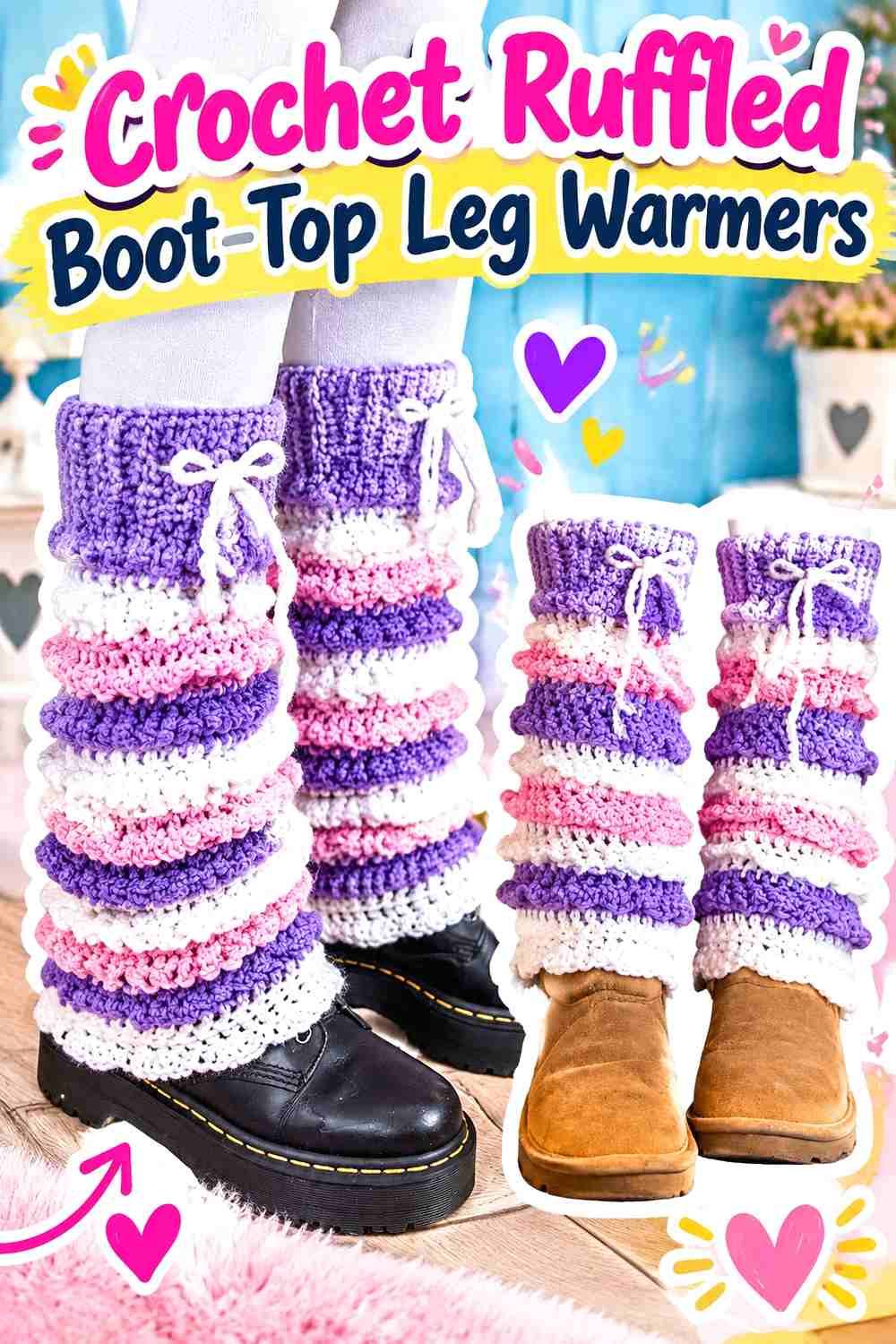
This project concentrates its visual interest at the lower edge. A pronounced ruffle creates movement around the ankle, making the warmer part of the footwear silhouette instead of simply extending the clothing above the boot.
A wool-look version can feel softer and more romantic than the cable or ribbed options, especially in cream, taupe, or muted gray.
Ruffles Need Room Around the Boot Opening
A gathered edge is designed to spread.
Avoid positioning it inside a close-fitting boot shaft, where the fabric can be crushed and uncomfortable. The ruffle works better above or outside the boot.
Keep the Upper Fit Simpler Than the Edge
The lower portion already carries considerable visual volume.
A relatively controlled upper section helps balance the silhouette and prevents the entire leg warmer from looking equally wide from top to bottom.
Creator Credit: Melody Yarn Tinka
11. Crochet Long Everyday Wool-Look Leg Warmers
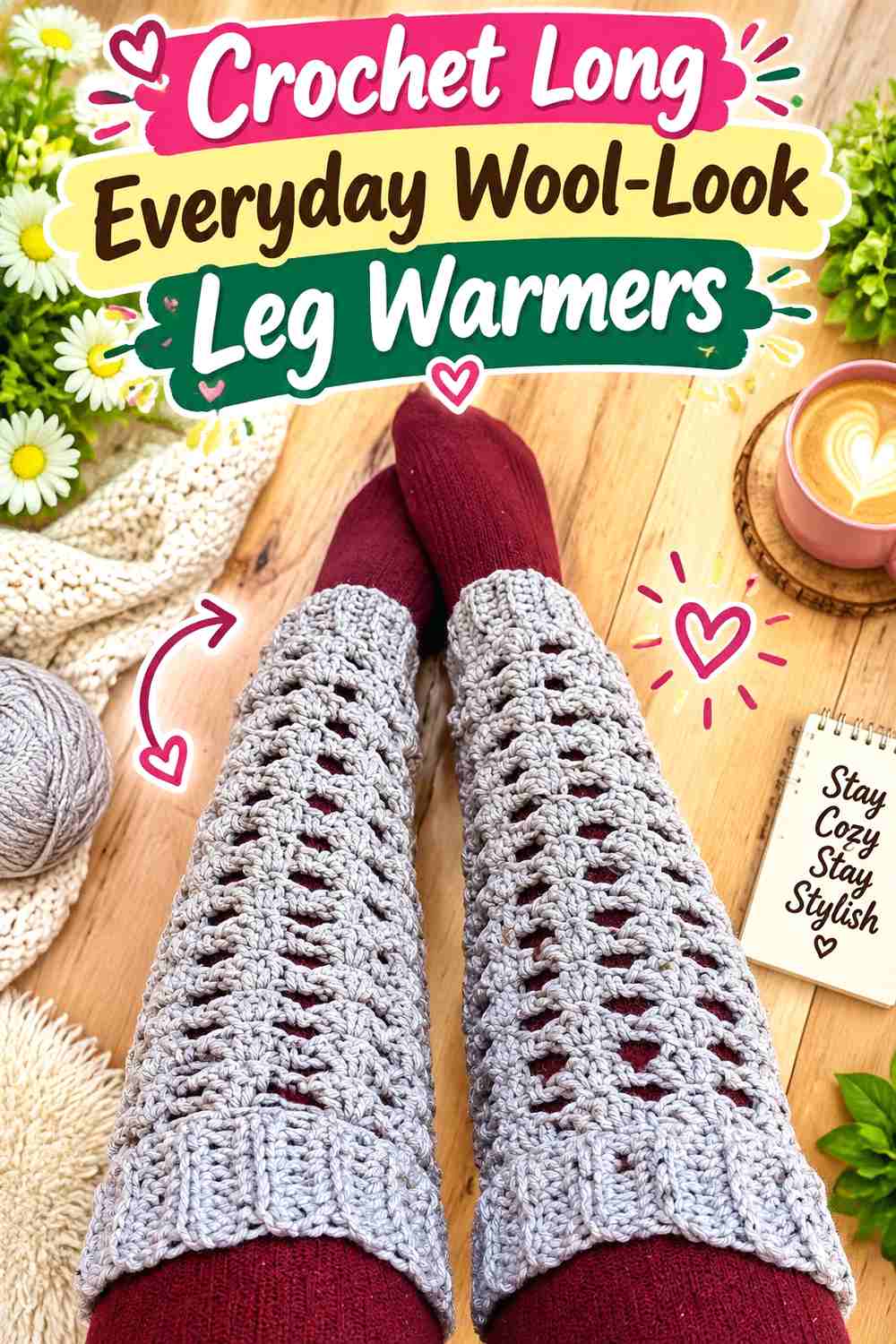
This longer leg-warmer construction offers more calf coverage without using elaborate embellishments. The quiet surface makes it useful when you want a substantial winter layer that can coordinate with patterned coats, knit dresses, or prominent boots.
In a heathered neutral, the extra length can create the impression of traditional wool hosiery or knitted gaiters.
Longer Coverage Encounters More Changes in Leg Width
A circumference that works comfortably near the ankle may behave differently higher on the calf.
Use the creator’s sizing and adjustment guidance rather than assuming one straight measurement will automatically suit the full height.
Let the First Warmer Hang Before Copying It
Long crochet fabric can settle under its own weight.
Wear the first completed piece briefly before duplicating every proportion. That gives you a better sense of whether the chosen yarn creates the intended height and slouch.
Creator Credit: Bag-O-Day Crochet
12. Crochet Feather-Stitch Button Boot Warmers
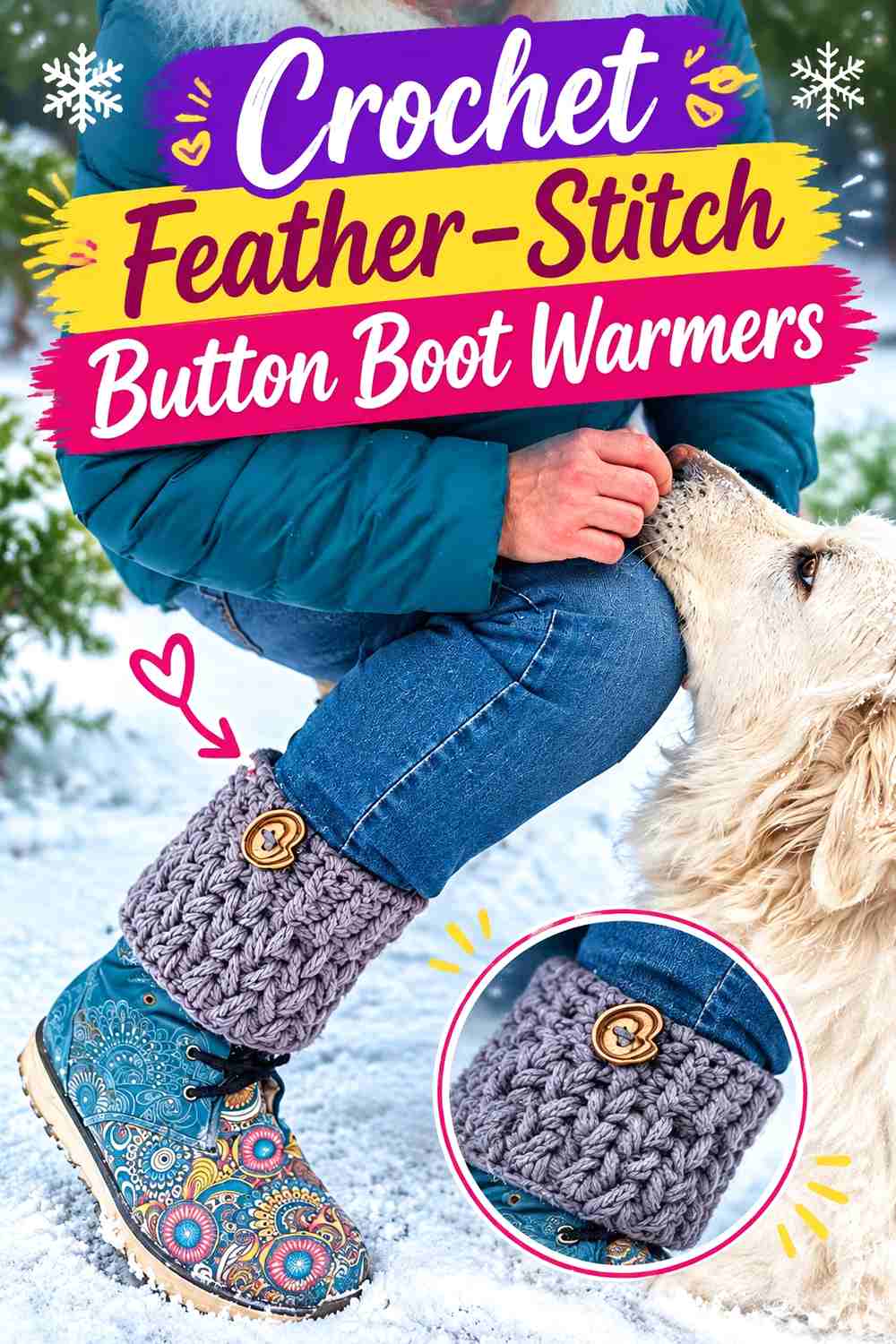
This boot-focused project combines ribbing with pronounced feather-stitch texture and sewn-on buttons. The resulting accessory is much shorter than a full calf warmer, so the visible section can sit directly above the boot opening without covering most of the lower leg.
That compact shape is useful when the goal is a small wool-look accent rather than a large slouchy layer.
Buttons Should Stay Clear of Boot Pressure Points
Decorative buttons can become uncomfortable if they are trapped beneath a tight boot shaft.
Try the unfinished cuff with the intended boots and identify which side remains exposed. Position the decorative face where the hardware will stay visible and uncompressed.
Short Cuffs Put More Attention on Texture
With less fabric overall, every visible stitch has greater impact.
A solid cream, brown, charcoal, or tweed-look shade can highlight the feather texture while keeping the accessory easy to coordinate with winter footwear.
Creator Credit: The Crochet Crowd
13. Crochet Compact Classic Boot Leg Warmers
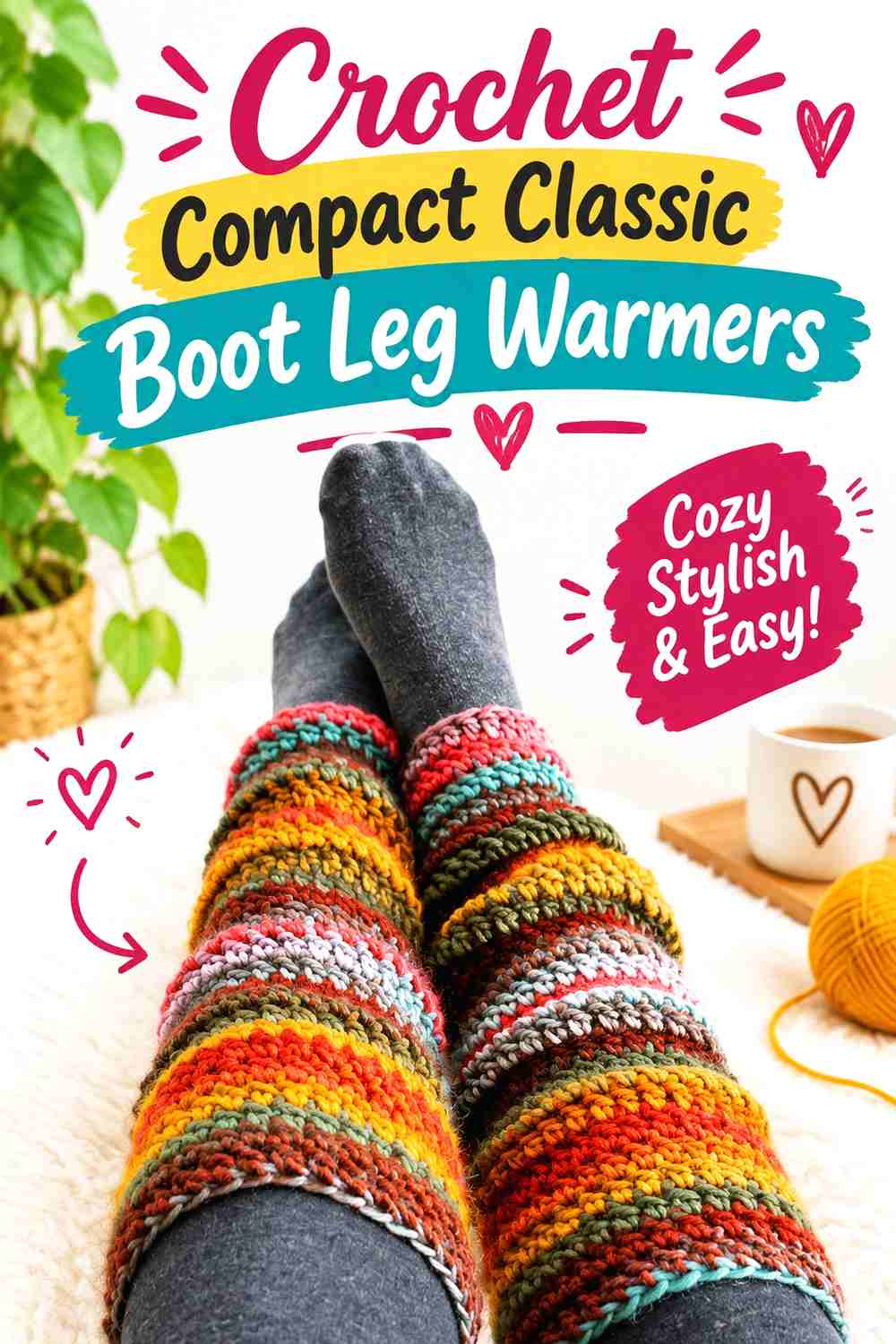
This straightforward project sits between a tiny decorative boot cuff and a tall calf warmer. The relatively compact length keeps the shape easy to style with boots while providing more visible crochet than a narrow topper.
Because the surface is simple, it works particularly well for showcasing a yarn with subtle heathering or gentle tonal changes.
Shorter Length Reduces Excess Fabric at the Ankle
A compact warmer does not need to be pushed into multiple folds just to fit between the ankle and calf.
That makes it a useful direction for boots with a moderate shaft where a very slouchy design would create too much bulk.
Simple Fabric Makes Fit Easier to Judge
Without large cables or ruffles, you can see immediately whether the warmer is pulling, twisting, or becoming loose.
Use that simplicity to check the first piece carefully before starting the second.
Creator Credit: B.Hooked Crochet
14. Crochet Minimal Double-Crochet Boot Cuffs
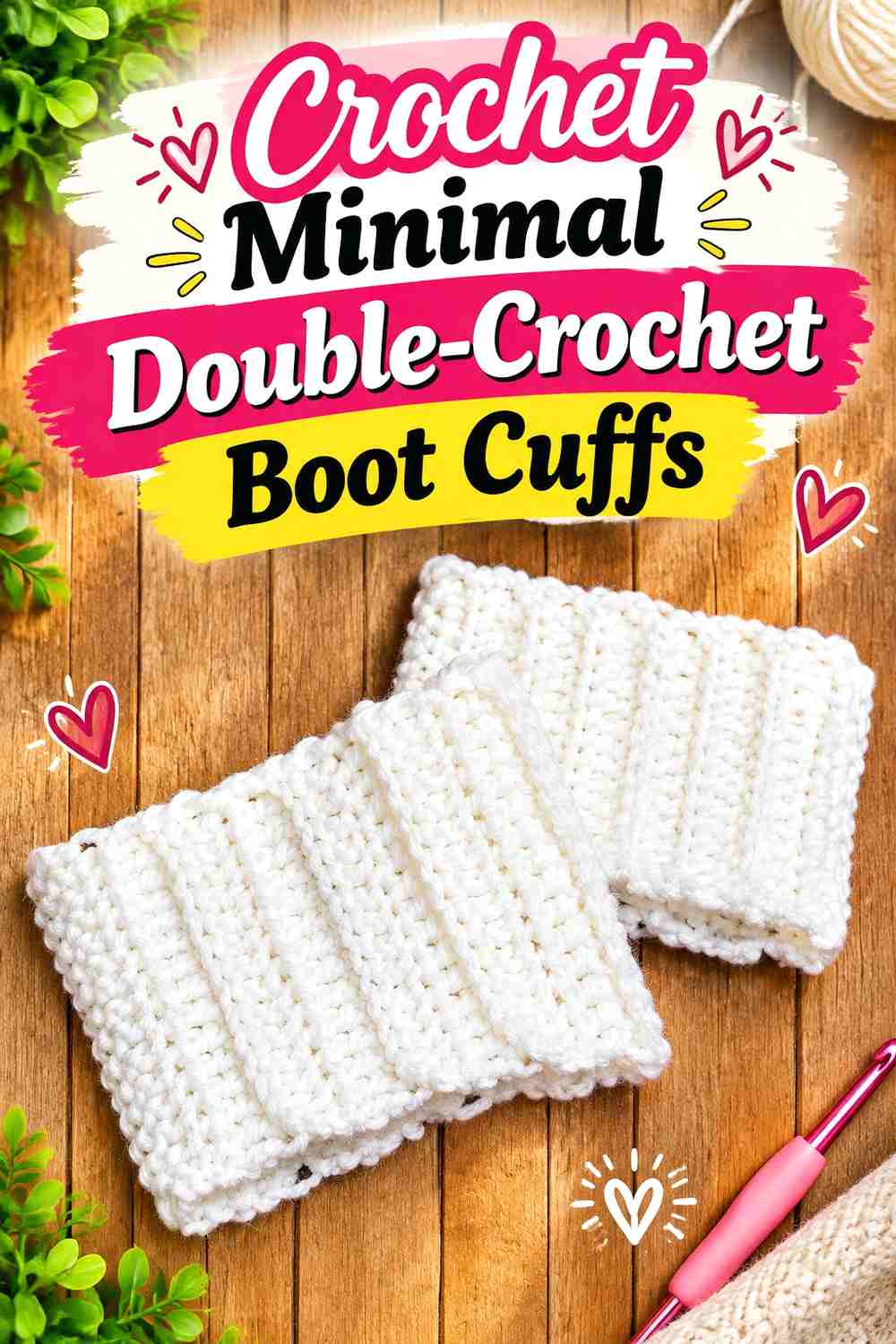
This is the most pared-back boot topper in the collection. The tutorial uses a compact cuff construction and keeps stitch detail relatively simple, allowing the accessory to peek over boots without becoming a dominant part of the outfit.
It is a useful choice when your boots, coat, or leggings already have substantial texture.
Minimal Cuffs Work Well With Statement Boots
If the footwear includes buckles, lacing, quilting, or a strong leather texture, an elaborate crocheted edge can compete with those details.
A simple wool-look cuff adds softness at the opening while leaving the boot itself visually prominent.
Fiber Texture Can Supply the Missing Detail
A plain stitch pattern gives you room to use a heathered, tweedy, or softly marled yarn without losing important cable or shell definition.
Just remember that a different fiber can change circumference and stretch, so fit still needs to be checked.
Creator Credit: Sewrella
15. Crochet Knit-Look Textured Winter Boot Cuffs
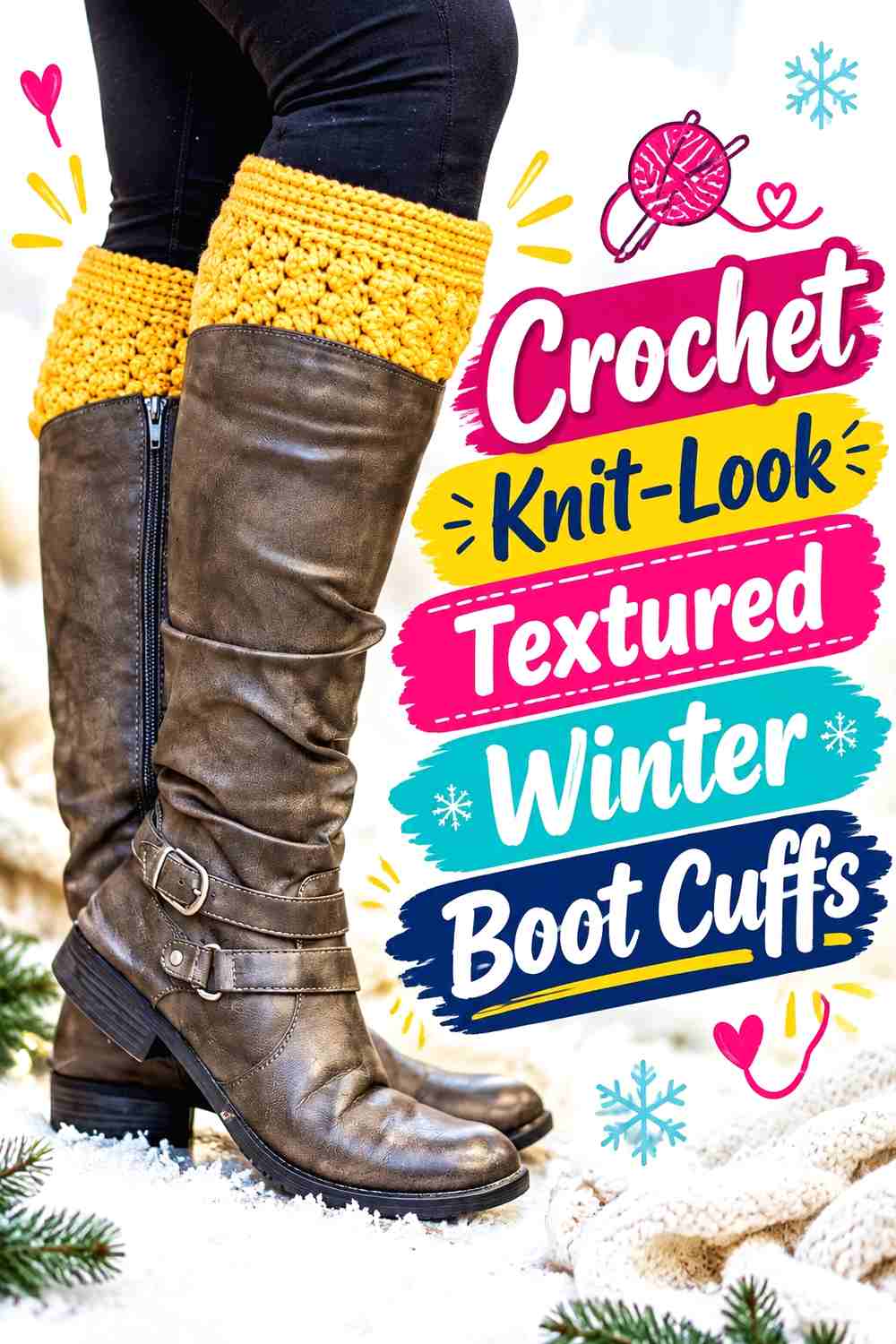
This boot-cuff construction combines a textured body with a knit-like ribbed area, making it particularly suitable for the wool-look theme. The project is designed around measurements rather than relying only on a generic clothing size, which is useful because calves and boot openings vary independently from standard garment sizing.
The shorter form keeps the texture concentrated exactly where it will show above winter boots.
Measure Where the Cuff Will Actually Sit
Do not take a calf measurement at an arbitrary point and assume it represents the boot-cuff position.
Put on the boots first, identify where the upper edge of the crochet will rest, and measure that location with any leggings or pants you expect to wear underneath.
Knit-Look Ribbing Benefits From Good Recovery
A ribbed edge can appear beautifully tailored when it stretches and then returns toward its original shape.
If substituting wool or a wool blend, wash the swatch according to its care instructions and check whether the ribbing remains resilient before using that result to decide the final circumference.
Creator Credit: Winding Road Crochet
Which Wool-Look Crochet Leg Warmers Work Best With Winter Boots?
For tall or relatively fitted boots, the Deep-Rib Faux-Knit, Flat-Seamed Ribbed, Compact Classic, Feather-Stitch Button, Minimal Boot Cuff, and Knit-Look Boot Cuff options are the easiest places to start. Their lower sections can be kept controlled so less bulky fabric has to compete with the boot shaft.
For ankle boots, you have more room to show decorative lower edges. The Shell-and-Rib, Chunky Flared, Scalloped Forest, and Ruffled Boot-Top designs turn the exposed ankle area into part of the outfit.
Choose the Slouchy Heritage-Wool or Long Everyday options when you want a larger amount of crochet visible above the footwear. The Tunisian and Cable designs are strongest when surface texture itself should imitate substantial knitted winter fabric.
If actual wool is important rather than simply a wool-like appearance, verify the creator’s stated material first or treat a different fiber as a deliberate substitution. Swatch before changing fiber because stretch, weight, gauge, and after-washing behavior all affect leg-warmer fit.
Conclusion
A convincing wool-look crochet leg warmer does not require every project to use real wool. Ribbing, cables, dense texture, muted winter colors, heathered yarn, and substantial cuffs can all create the visual character associated with traditional knitted cold-weather accessories.
Choose by footwear first. Slim ribbing and short cuffs work well when the crochet needs to sit close to the boot opening. Shells, scallops, ruffles, and flared forms need more visible space. Longer and slouchier warmers create the strongest layered winter effect but also introduce more weight and fit considerations.
Once you choose the silhouette, use the original creator tutorial for its exact construction, sizing, stitch work, and finishing details. If you switch to wool or another fiber, treat that change as a new fabric decision and test it before making the full pair.
Frequently Asked Questions
Do crochet leg warmers have to be made from wool to look cozy?
No. Acrylic, blends, and other fibers can create a traditional winter appearance when the stitch texture, yarn surface, and color support that look. Ribbing, cables, tweed-like shades, and dense crochet can all contribute. If warmth or natural-fiber content is important, verify the actual yarn rather than judging from appearance.
Which crochet leg warmer style works best with tall boots?
Slim ribbed warmers and short boot cuffs generally create less bulk around a fitted boot shaft. Thick cables, ruffles, and large shells may be more comfortable when they remain above the boot opening rather than being tucked inside.
How should I measure for crochet leg warmers worn with boots?
Measure the area where the upper edge will actually sit and consider the ankle area as well. Take measurements over leggings or pants if those layers will normally be underneath. For a short boot cuff, put the boots on first so you know exactly where the crochet needs to rest.
Can I replace acrylic yarn with wool in a leg-warmer tutorial?
Possibly, but the substitution can change gauge, elasticity, weight, softness, and finished dimensions. Wool yarns also vary considerably in how they respond to washing. Make and wash a representative swatch and compare it with the creator’s intended fabric before adjusting the complete pair.
Why do my crochet leg warmers keep sliding down?
The upper circumference may be too loose, the fabric may lack enough recovery, or the finished warmer may be heavier than the top edge can support. Extra-long and highly textured designs increase that weight. Use the tutorial’s fitting method rather than simply tightening the top until it becomes uncomfortable.
Should leg warmers go inside or outside winter boots?
Either can work depending on the construction. Slim cuffs can sit partly inside or just above a boot, while flares, scallops, ruffles, buttons, and decorative shells are generally more useful when left visible outside the shaft.
How can I make crochet leg warmers look more like knitted wool accessories?
Choose a stitch with strong ribbing, cables, post texture, or a knit-like Tunisian surface. Solid or heathered winter colors also help the texture read clearly. Avoid extremely busy color changes when the faux-knit surface is meant to be the main feature.