A clothing donation bin is useful during wardrobe cleanouts, but it is easy to forget which clothes are ready to give away and which still need checking. Adding a crochet label panel to a bin can help make the sorting process clearer while bringing a little handmade color into a closet or laundry room. These 16 crochet clothing donation bin label panel inspiration ideas explore removable card sleeves, hanging tags, buttoned wraps, granny-square frames and multi-pocket sorting labels.
The designs are intended mainly for personal donation sorting bins at home, not as replacements for official charity collection signs. Some panels hold a single clear label, while others separate clothing categories or show different steps in the donation process. By comparing their fastening methods, card openings, crochet textures and overall proportions, you can choose a label that fits your storage container and is easy to change when its contents or purpose changes.
These are AI-generated crochet design visualizations for inspiration, not photographs of tested handmade products or step-by-step patterns.
Quick Design Selection Guide
- For a clear, everyday donation label: Crochet Terracotta Wide-Window Donation Label and Crochet Teal Wraparound Donation Label Belt provide prominent front-facing cards.
- For separating clothing categories: Crochet Butter Yellow Dual-Category Bin Panel and Crochet Mustard Three-Step Donation Panel offer multiple labeled sections.
- For classic handmade styling: Crochet Raspberry Granny-Frame Clothing Label, Crochet Blush Daisy-Edge Donation Panel and Crochet Cocoa Basketweave Ready-Label Panel feature decorative crochet details.
- For removable hanging tags: Crochet Oatmeal Handle-Hung Sorting Label, Crochet Moss Handle-Wrap Clothing Tag and Crochet Rust Reversible Donation Status Tag attach near existing bin handles.
- For changing the label frequently: Crochet Indigo Clear-Window Donation Label, Crochet Lavender Diagonal-Slot Donation Label and Crochet Sky-Blue Clip-On Bin Label Frame provide different ways of accessing or repositioning labels.
1. Crochet Terracotta Wide-Window Donation Label
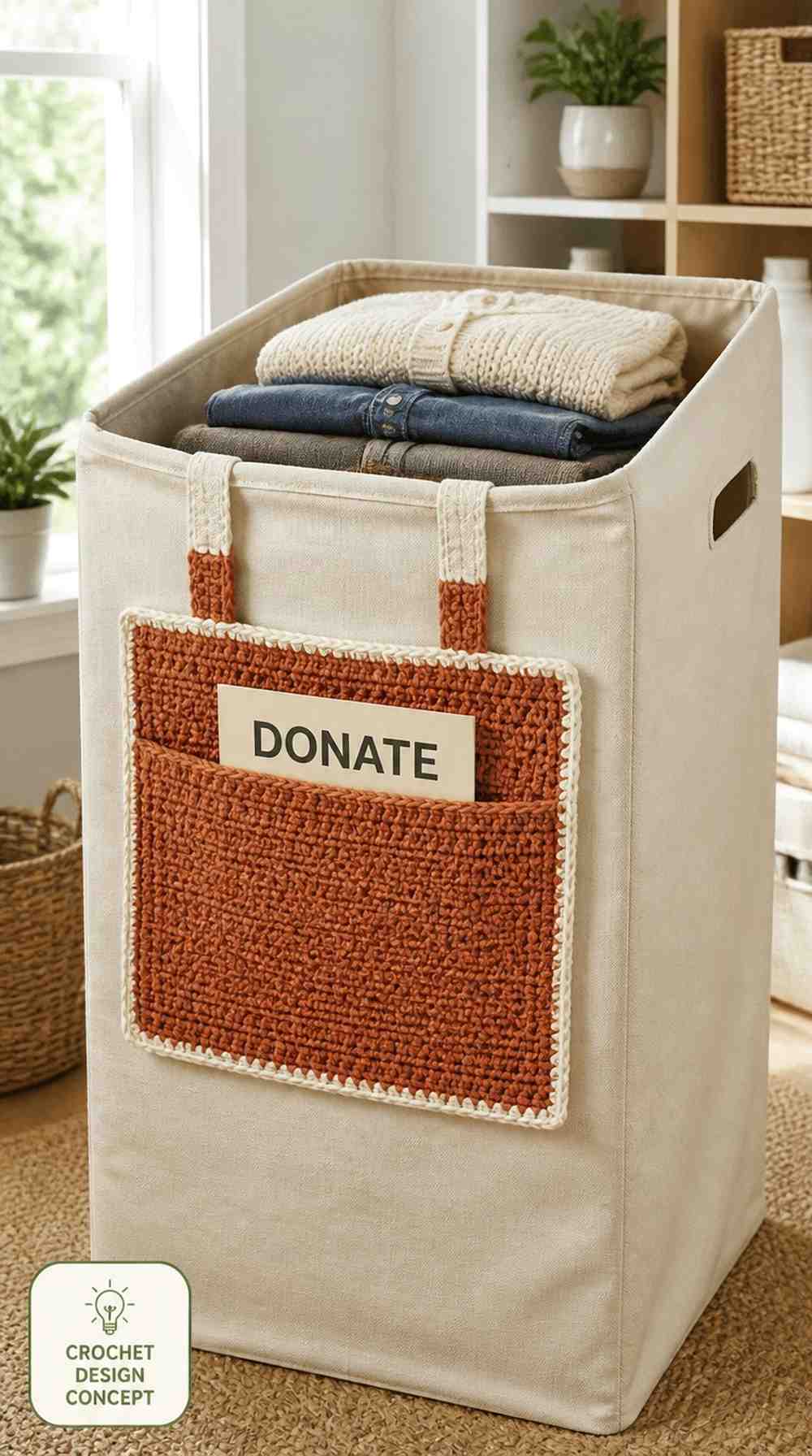
Warm terracotta crochet forms a broad rectangular label with an ivory border and a shallow center pocket. The removable cream card reads “DONATE” in clear dark lettering, while two short upper loops connect the panel to the fabric bin. Dense horizontal rows keep the shape simple and easy to recognize.
The wide pocket gives the label plenty of visual space without adding unnecessary decoration. It works particularly well for one main household donation bin, where a single readable word is more useful than several small labels competing for attention.
- Label readability: Use a high-contrast card with large, plain lettering so the word remains recognizable from across the room, not just close up.
- Upper attachment loops: Fasten the panel to existing fabric tabs or suitable handles rather than cutting new holes into the bin.
- Pocket proportions: Leave enough of the paper visible to read the entire word while keeping its lower edge securely inside the crochet sleeve.
2. Crochet Navy Foldover Ready-Label Panel
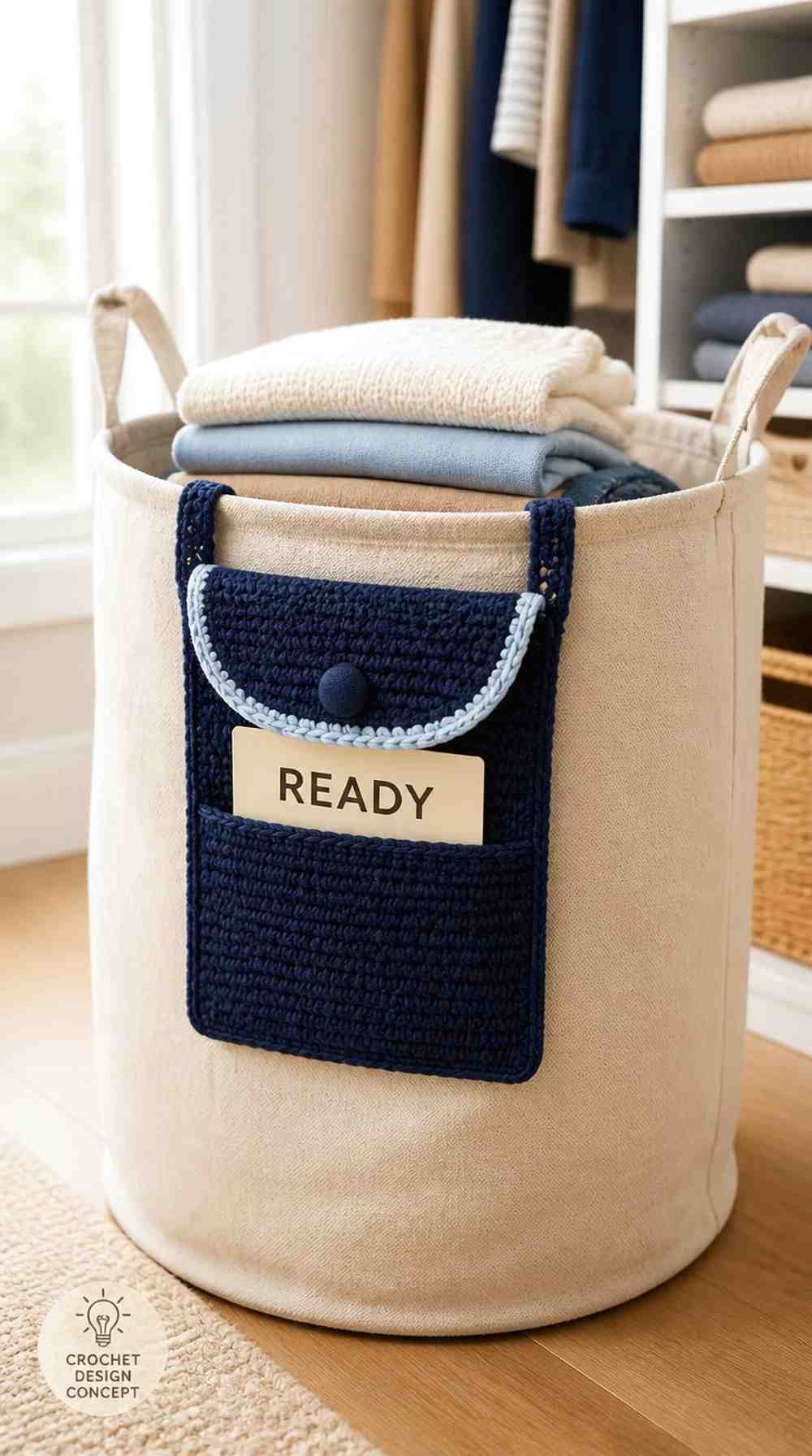
Midnight-navy crochet gives this label panel a tidy appearance, with a rounded foldover flap and a narrow pale-blue border. A cream card marked “READY” sits in the lower pocket, while a small covered button provides a simple fastening detail.
This design is intended for a bin holding clothing that has already been checked and prepared. The flap creates a more enclosed label pocket than an open sleeve, although it also adds an extra step whenever the card needs changing.
- Status wording: Reserve “READY” for garments that have actually been checked against the receiving organization’s requirements, not simply clothes you no longer want.
- Foldover access: Keep the flap short enough that the label can be opened and replaced without pulling the whole panel away from the bin.
- Button security: A flat covered button may reduce bulk, but it still needs firm stitching and should not catch against clothing during sorting.
3. Crochet Butter Yellow Dual-Category Bin Panel
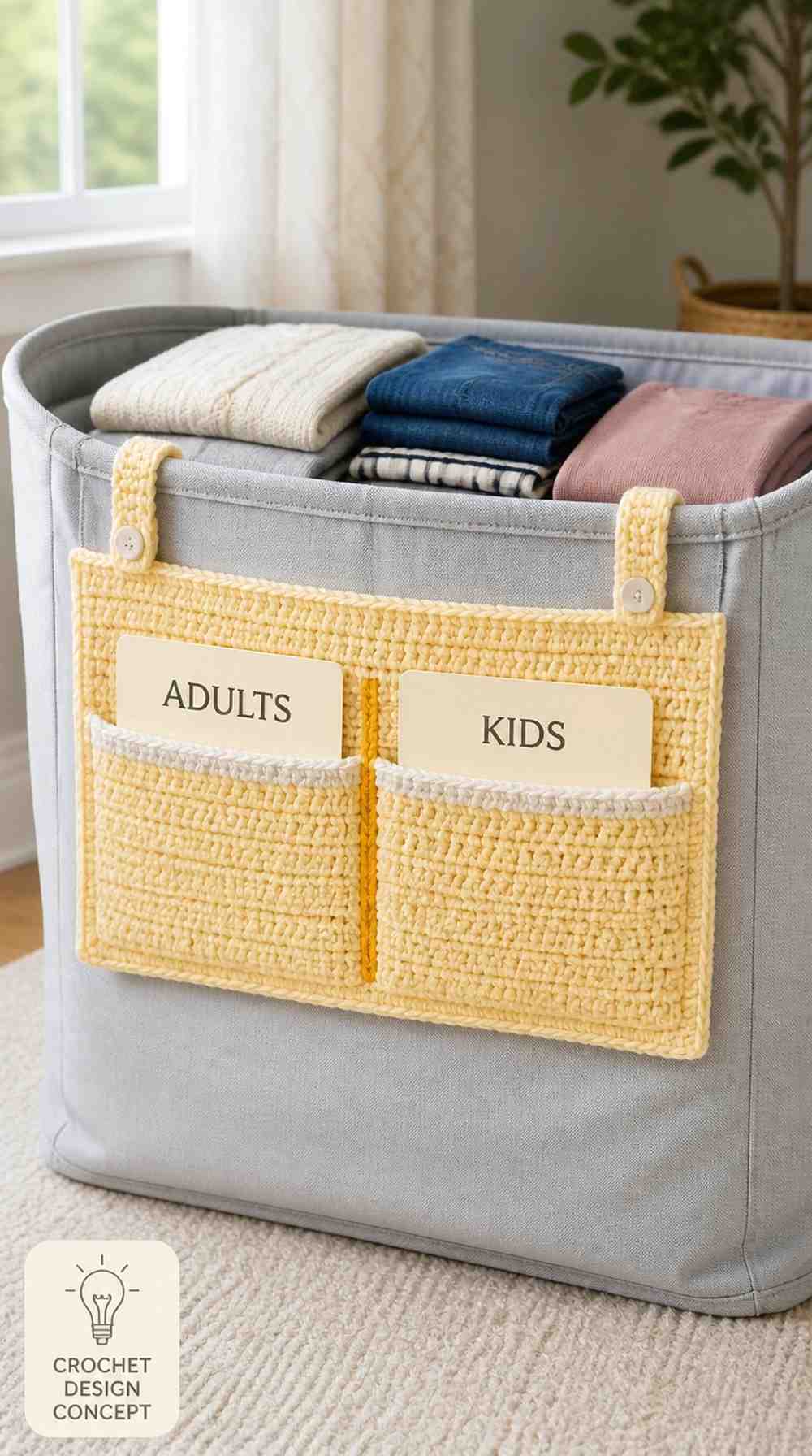
Butter-yellow crochet forms two matching card pockets separated by a slim mustard-colored seam. Ivory edging outlines the openings, while the removable cards read “ADULTS” and “KIDS.” The panel hangs across the upper front of a gray fabric donation bin.
The paired compartments are useful for households that sort clothing by age group before packing. However, the labels describe categories rather than proving that a charity accepts every garment in those groups. The actual contents should still be checked before donation.
- Category separation: Use clearly different cards to identify the intended clothing groups, with the physical contents kept separate if that distinction matters during packing.
- Central seam: Reinforce the line between the pockets so each card stays in its own compartment rather than sliding across the panel.
- Acceptance check: Confirm whether the chosen donation organization accepts children’s and adults’ clothing before relying on these categories for final packing.
4. Crochet Raspberry Granny-Frame Clothing Label
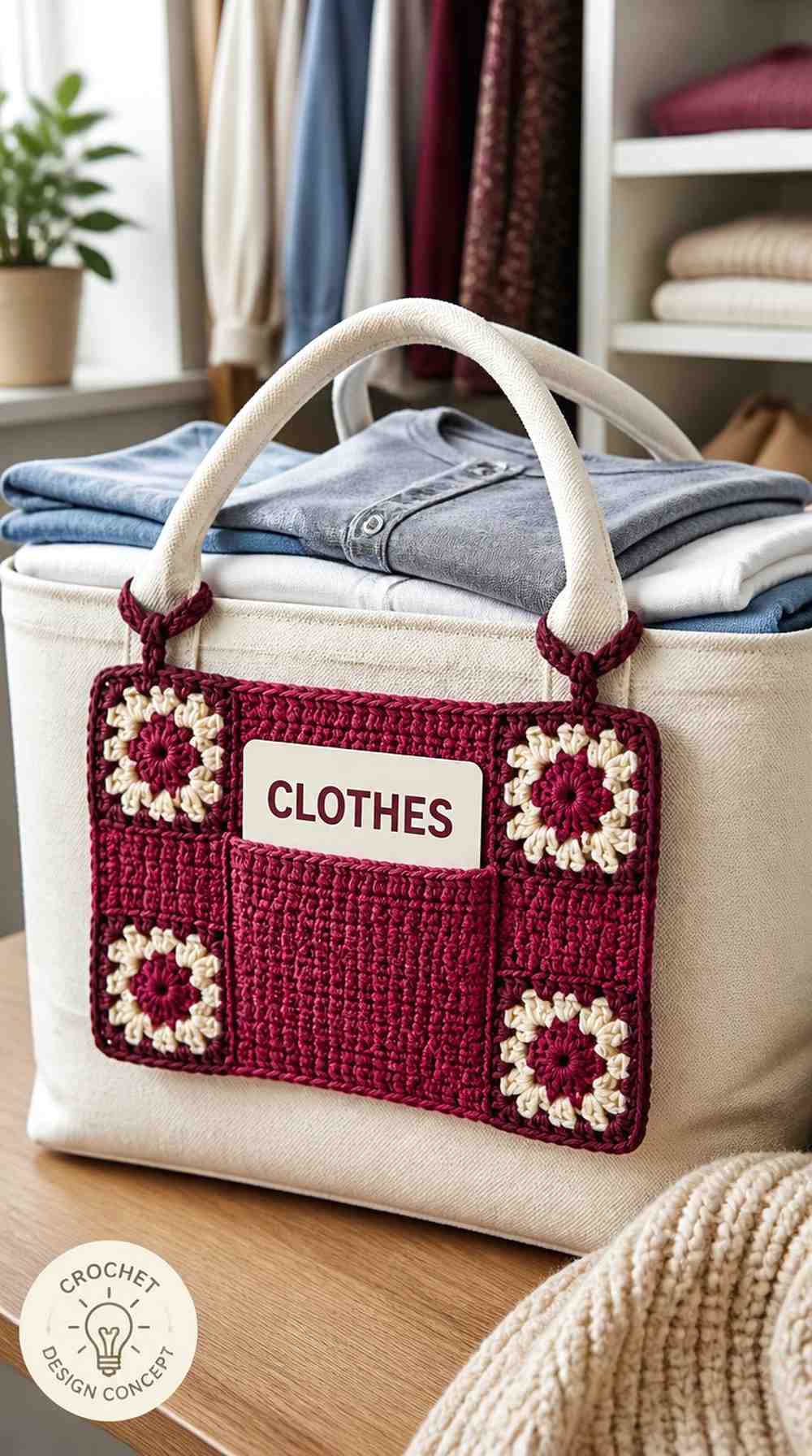
A solid raspberry crochet panel is bordered with four miniature granny-square corner motifs. Each square combines raspberry, ivory and burgundy yarn, creating a textured frame around the central card marked “CLOTHES.” Two burgundy crochet ties secure the panel to the front of a canvas basket.
The granny-square detail gives the label a more traditional handmade appearance. Its solid center keeps the paper easy to read, while the decorative corner motifs add color without needing to cover the entire panel in openwork.
- Solid card pocket: A continuous crochet center prevents the paper label from slipping into the open spaces commonly found in granny-square motifs.
- Corner-motif balance: Keep all four squares similar in size so their joins frame the card evenly rather than pulling the rectangular panel out of shape.
- Tie placement: Attach the ties at suitable upper points and keep their ends short enough not to hang into the bin or catch on garments.
5. Crochet Teal Wraparound Donation Label Belt
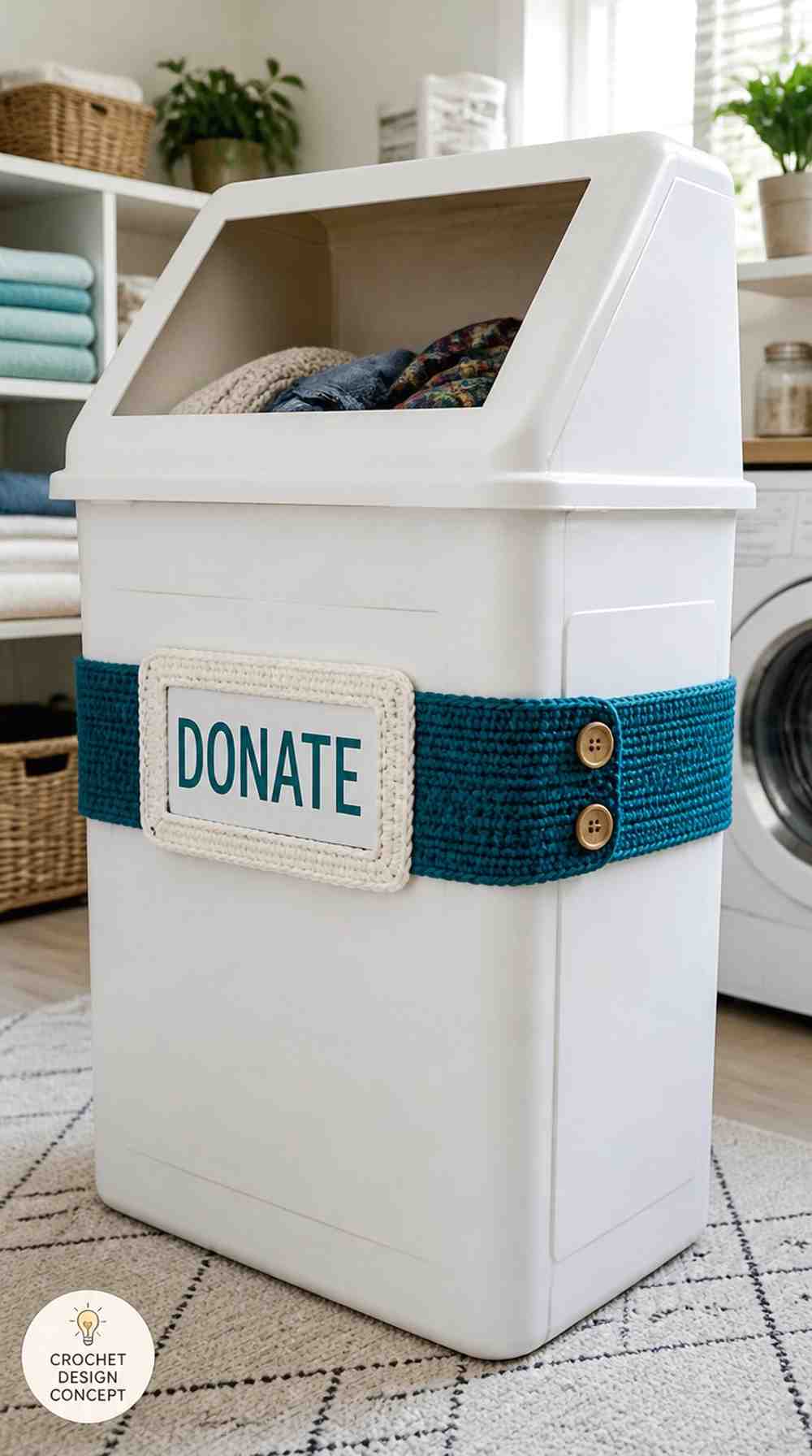
Deep-teal crochet wraps around the middle of a rigid donation bin, with a flat ivory card frame at the front. The removable cream label reads “DONATE” in dark teal, while small wooden buttons fasten the overlapping belt ends at the side.
The wraparound design looks different from a conventional hanging tag because the label becomes part of a continuous band around the container. A real version would need careful sizing to stay positioned without squeezing or distorting the bin.
- Belt fitting: Measure the bin’s circumference where the belt will sit, allowing for crochet stretch and the thickness of the fastening overlap.
- Side buttons: Position the wooden buttons away from corners or handles where they could rub against clothing or interfere with carrying.
- Bin access: Keep the belt below the opening so it does not obstruct a lid, handles or the normal removal of packed garments.
6. Crochet Oatmeal Handle-Hung Sorting Label
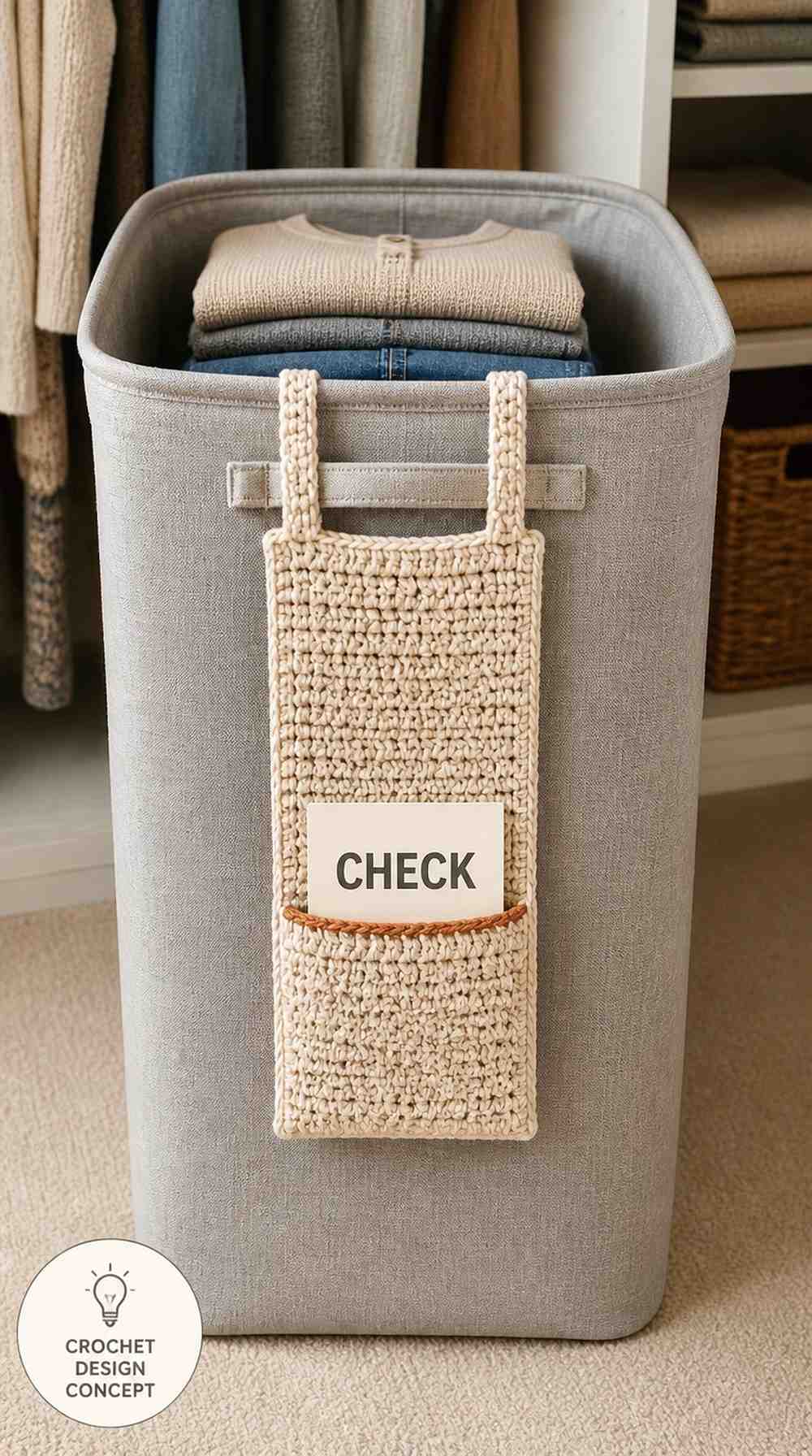
Warm oatmeal crochet forms a narrow vertical label suspended from an existing fabric-bin handle. A small ivory pocket carries a cream card marked “CHECK,” and a rust-colored border provides a subtle contrasting detail.
The hanging style is useful for a basket that already has sturdy handles. It identifies clothes awaiting review without covering much of the bin’s front, although the panel may move more freely than one fastened at several points.
- Sorting-stage meaning: Use “CHECK” for clothes awaiting condition and acceptance review, keeping them separate from items already approved for packing.
- Handle compatibility: Confirm that the hanging loops fit the existing handle without becoming a lifting strap or obstructing normal carrying.
- Swinging movement: A shorter panel may move less when the basket is handled, making the label easier to read during everyday use.
7. Crochet Coral Stacked-Card Sorting Panel
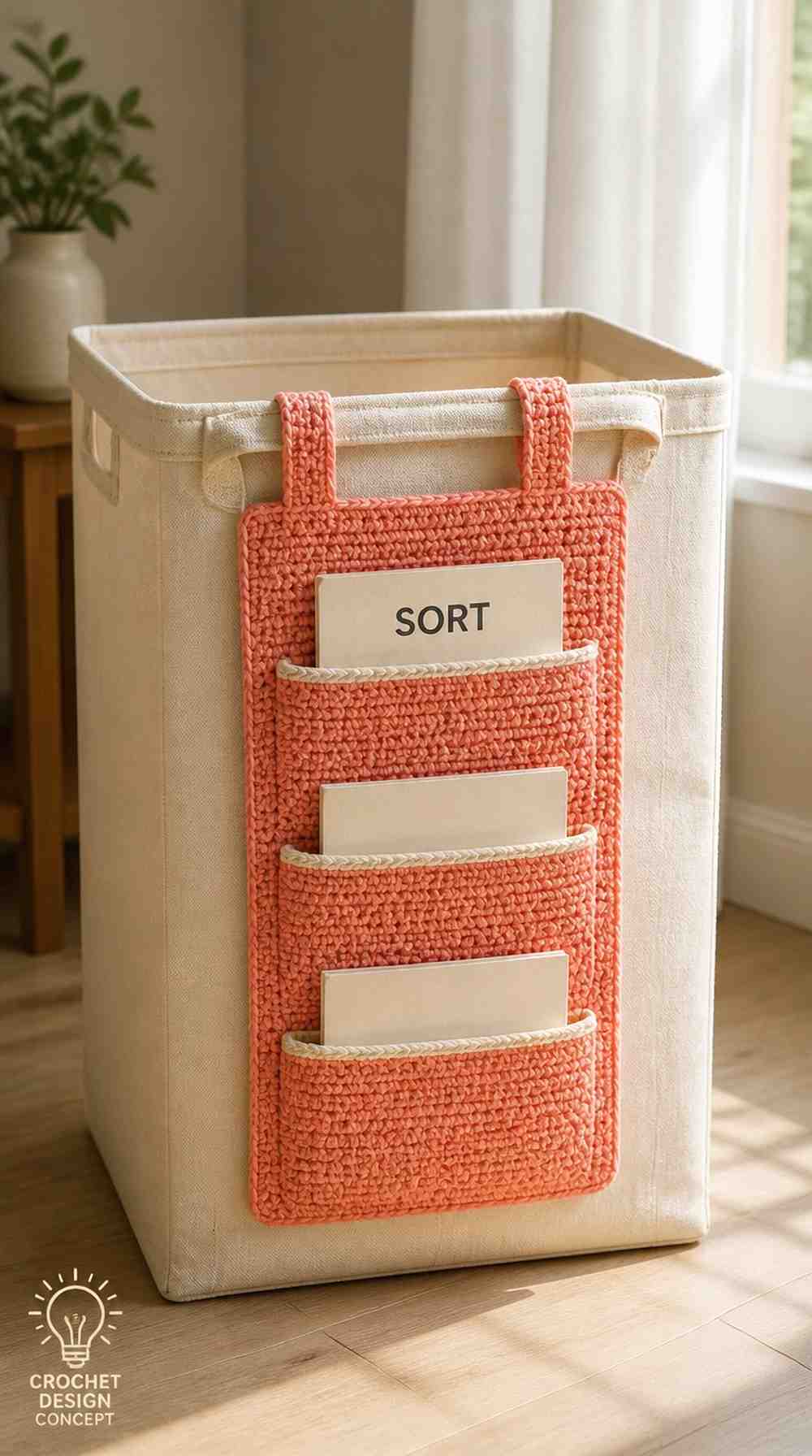
Coral crochet creates a vertical organizer with three shallow card sleeves, each outlined in warm ivory. The upper sleeve contains a card marked “SORT,” while the two lower compartments hold blank removable cards.
The stacked arrangement offers space to change a bin’s purpose or record different sorting categories. Its main advantage is flexibility: the cards can be updated without rebuilding the crochet panel. The smaller sleeves, however, need enough spacing to keep their contents accessible.
- Three separate sleeves: Keep the pocket openings clearly divided so cards remain in their intended positions rather than sliding behind neighboring pockets.
- Flexible wording: Use the lower blank cards for categories or reminders that suit your routine, instead of permanently fixing unnecessary labels to the panel.
- Pocket spacing: Leave the upper edges exposed enough for fingers to remove each card without tugging the crochet backing.
8. Crochet Indigo Clear-Window Donation Label
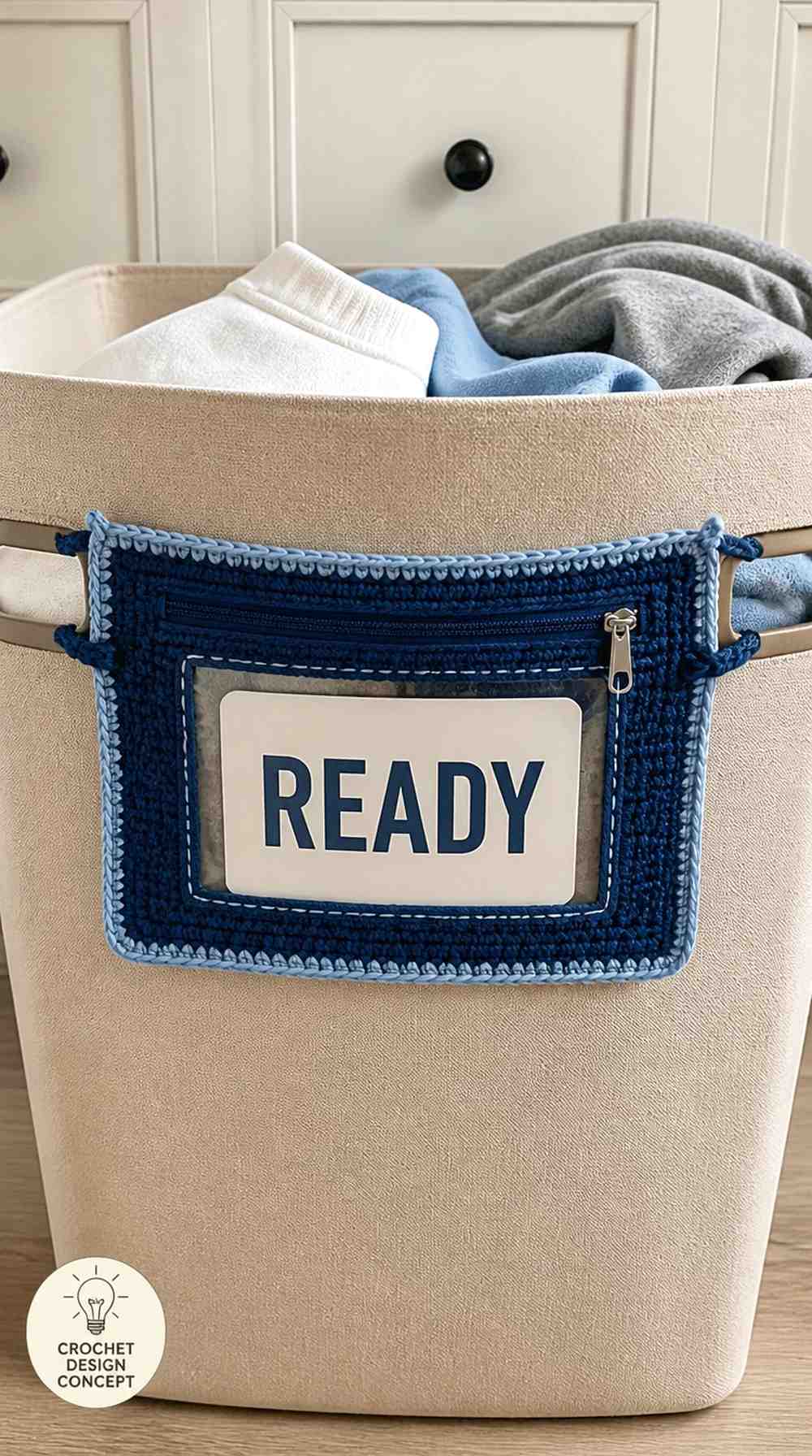
Deep-indigo crochet surrounds a transparent flexible window with pale-blue edging. A cream card marked “READY” sits behind the clear center, while a short zipper across the top gives access to the card sleeve.
This design is interesting for anyone who frequently changes or reuses donation bins. The window helps protect the paper from ordinary handling, although transparent material is not automatically waterproof and still needs cleaning if it becomes dusty or dirty.
- Window attachment: Secure the transparent sheet around its edges without stretching the crochet frame or creating sharp exposed corners.
- Zipper clearance: Allow enough space for the zipper to open fully so cards can be replaced without folding or damaging them.
- Cleaning materials: Follow the care requirements of the yarn, zipper and transparent insert; some combinations may need separate hand cleaning rather than machine washing.
9. Crochet Moss Handle-Wrap Clothing Tag
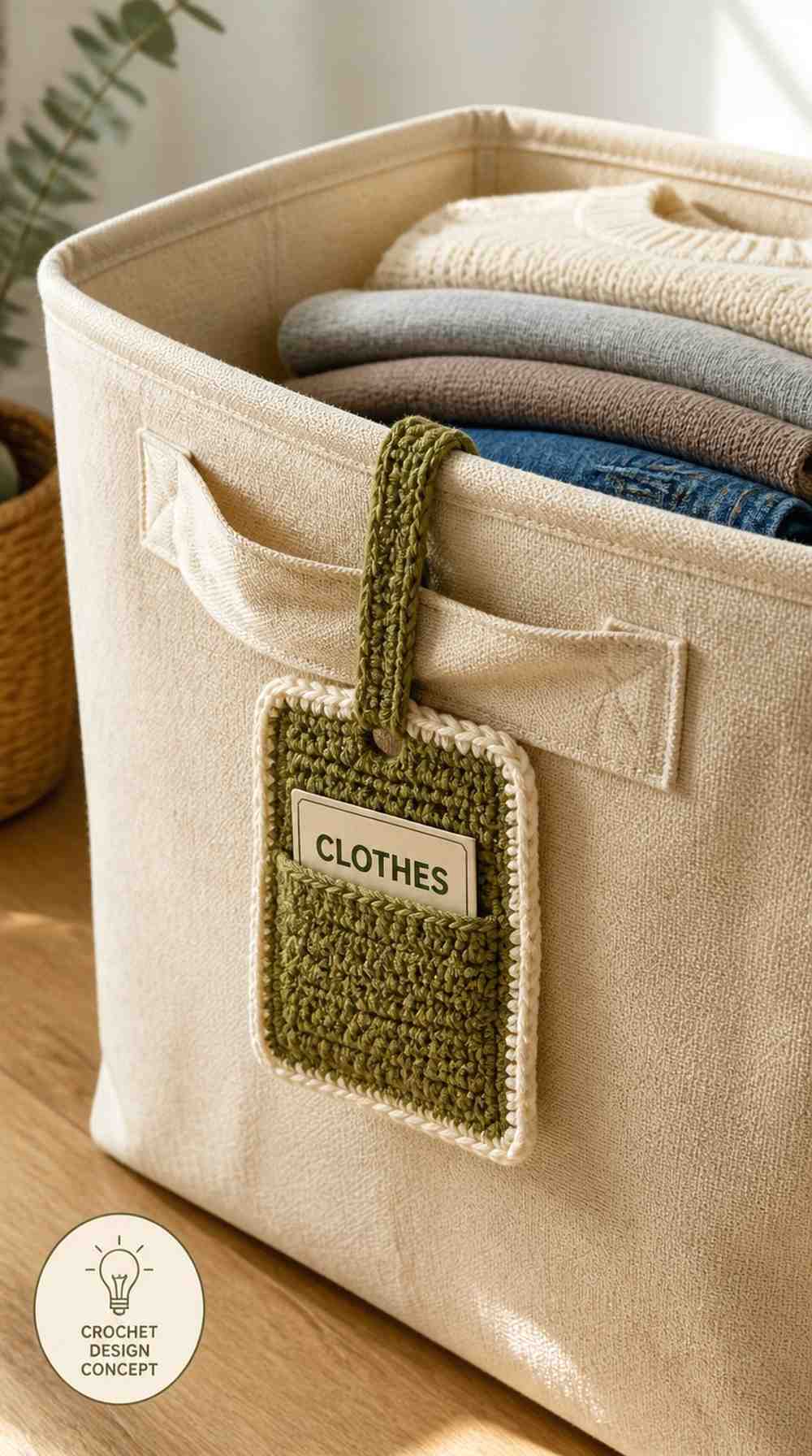
Muted-moss-green crochet creates a small rectangular hanging tag with an ivory border. A removable cream card reading “CLOTHES” sits inside its center sleeve, while a short doubled loop wraps around the fabric basket’s handle.
The design is smaller than a full front panel and works well for identifying a single basket in a closet. Its compact format keeps decoration minimal, although the label needs sufficiently large lettering to remain clear.
- Handle attachment: Use the doubled crochet loop only for hanging the tag, not for lifting or carrying the weight of the clothing basket.
- Compact card size: Choose a short, bold label word that remains readable within the tag’s limited width.
- Side positioning: Hang the tag where it faces outward rather than disappearing behind the basket or folding against its side.
10. Crochet Blush Daisy-Edge Donation Panel
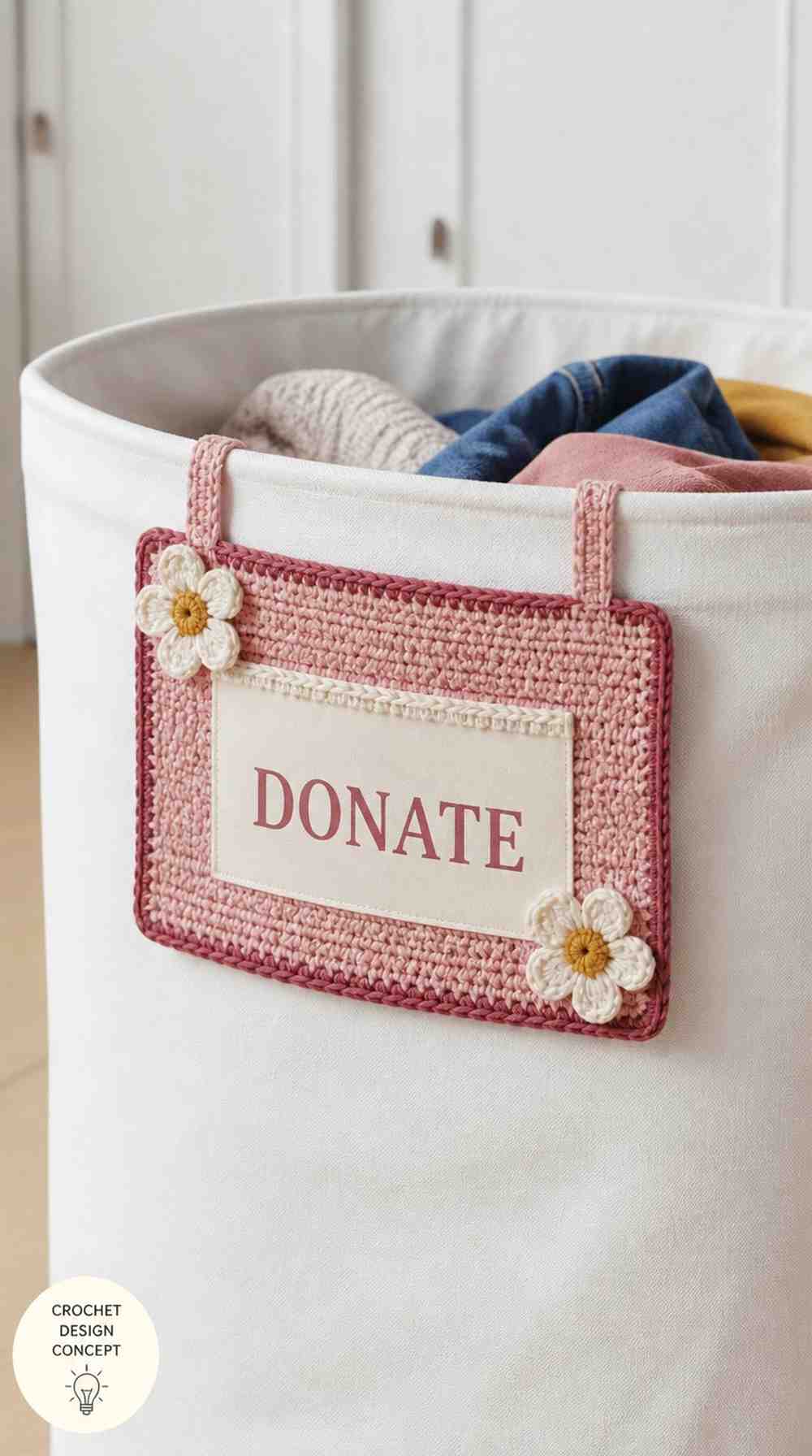
Dusty-blush crochet forms a rectangular label holder with a raspberry border and two small ivory daisies. Each flower has five neat petals and a mustard-yellow center, positioned at opposite outer corners. A cream card marked “DONATE” remains clear in the central sleeve.
The floral details soften the appearance of a practical sorting bin without becoming the main focus. Because the flowers are small and flat, they can decorate the label while leaving most of its surface available for readable information.
- Appliqué placement: Keep the daisies outside the card opening so their petals do not cover the word or interfere with replacing the paper.
- Flat flower attachment: Secure the petals carefully to reduce curling and snagging when garments are placed into or removed from the basket.
- Label contrast: Dark rose lettering on a cream card stands out better than lettering worked directly into a similarly colored blush crochet background.
11. Crochet Cocoa Basketweave Ready-Label Panel
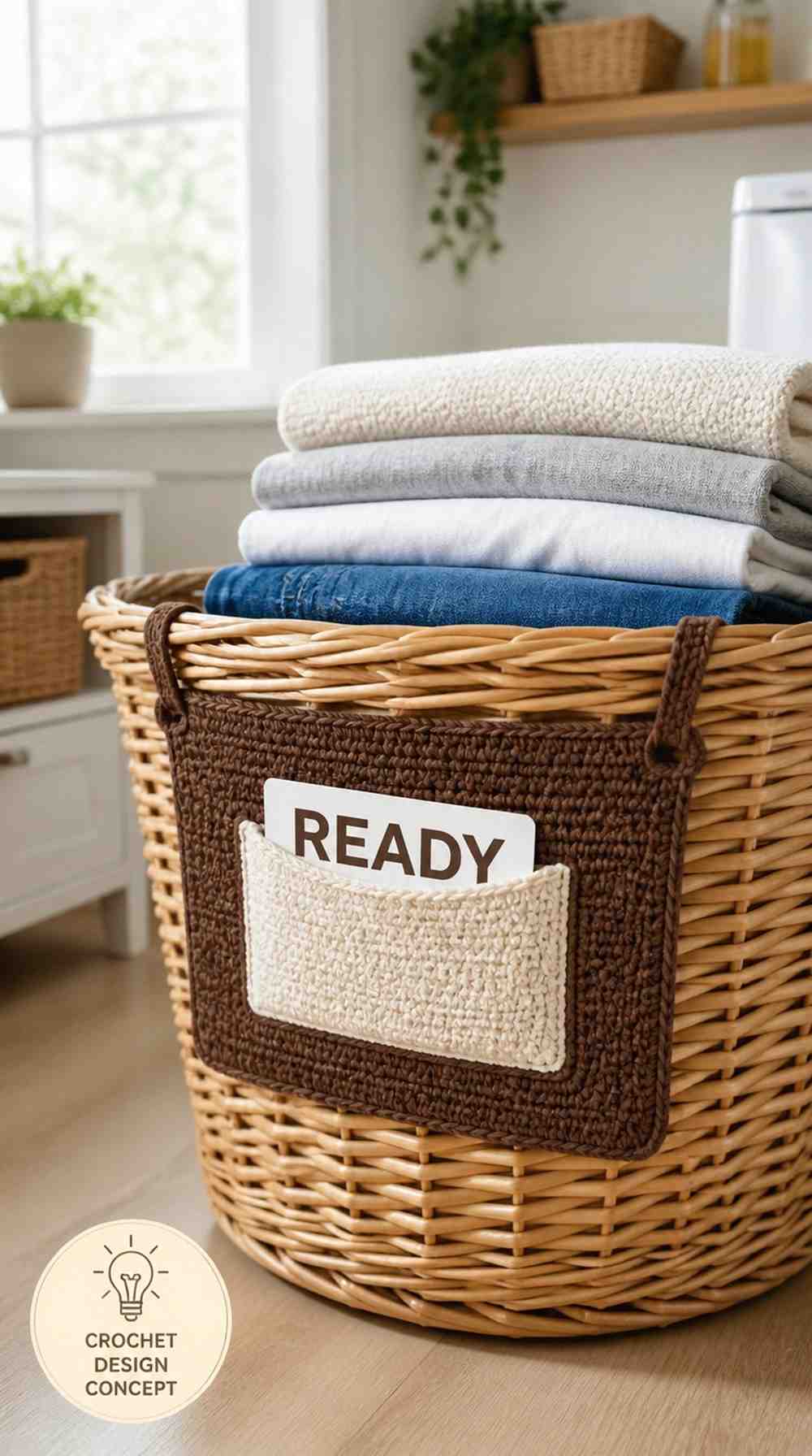
Cocoa-brown crochet gives this label panel a rich textured frame, with low basketweave-style stitches surrounding a flat cream center pocket. A removable ivory card reads “READY” in large brown lettering, while short crochet ties connect the panel to a wicker basket.
The raised stitch border adds depth without covering the label itself. It is a good concept for anyone who prefers textured crochet over decorative flowers or multicolored motifs, though the basketweave sections may need extra attention when cleaning.
- Textured frame: Keep the raised basketweave stitches around the outside, leaving the central pocket smooth so the paper card sits flat.
- Wicker attachment: Tie the label to existing suitable handles rather than forcing yarn through rough basket edges that could abrade the stitches.
- Ready-to-donate meaning: Use this label only when the contents are clean, dry, wearable and accepted by the intended organization.
12. Crochet Lavender Diagonal-Slot Donation Label
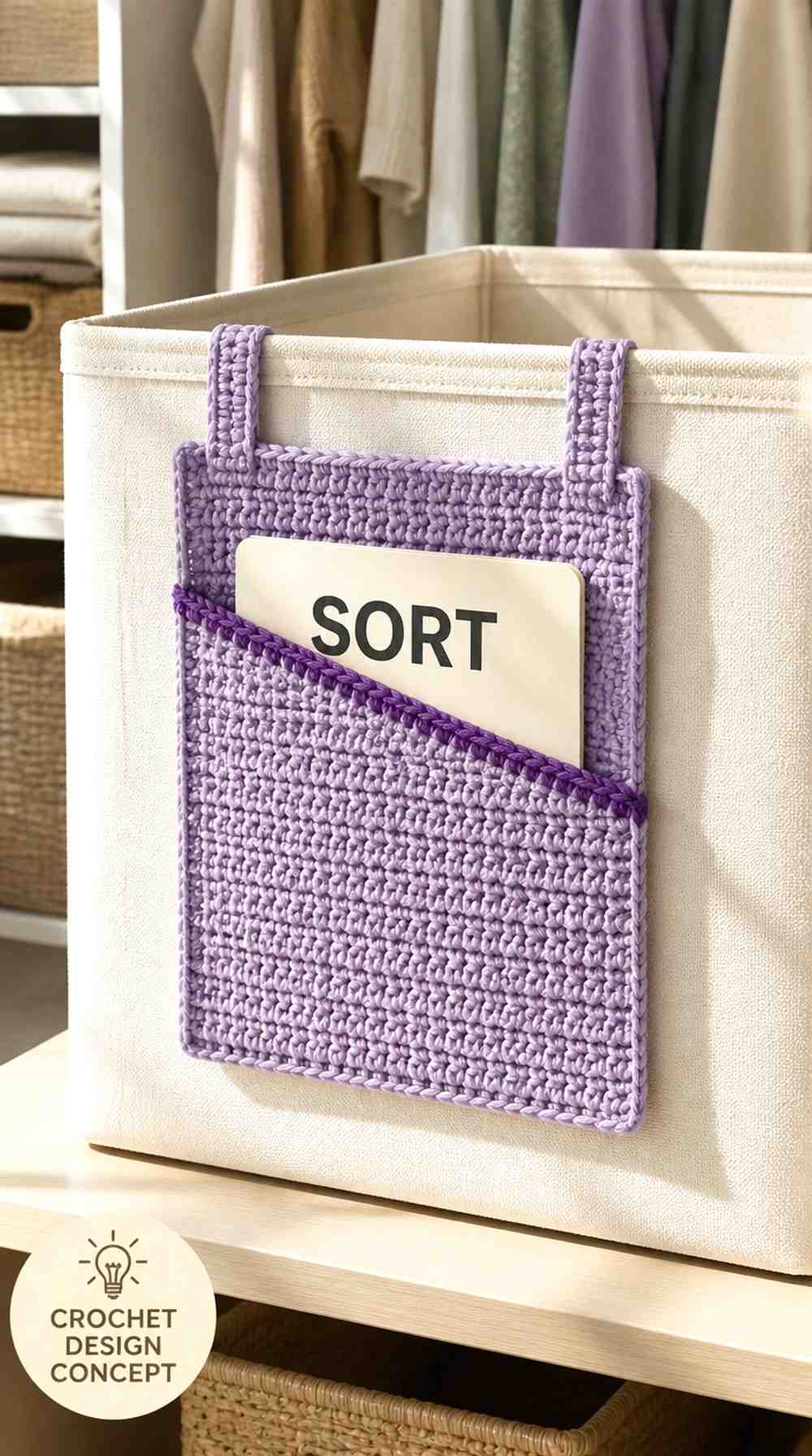
Muted-lavender crochet creates a rectangular panel with a single diagonal-opening card pocket. A darker-purple border follows the sloping top edge, while a cream card marked “SORT” remains visible above the opening.
The angled pocket adds a distinctive shape without needing extra decoration. Its lower side makes the card easier to grasp, but the pocket still needs enough depth to prevent the label from sliding out when the basket is moved.
- Diagonal opening: Keep the slope moderate so most of the card remains supported rather than exposed along one side.
- Pocket depth: Leave sufficient crochet fabric below the card to hold it securely during normal handling.
- Clear sorting status: Use “SORT” for a bin containing clothing that still needs to be separated or reviewed, not as an indication that everything is ready for donation.
13. Crochet Rust Reversible Donation Status Tag
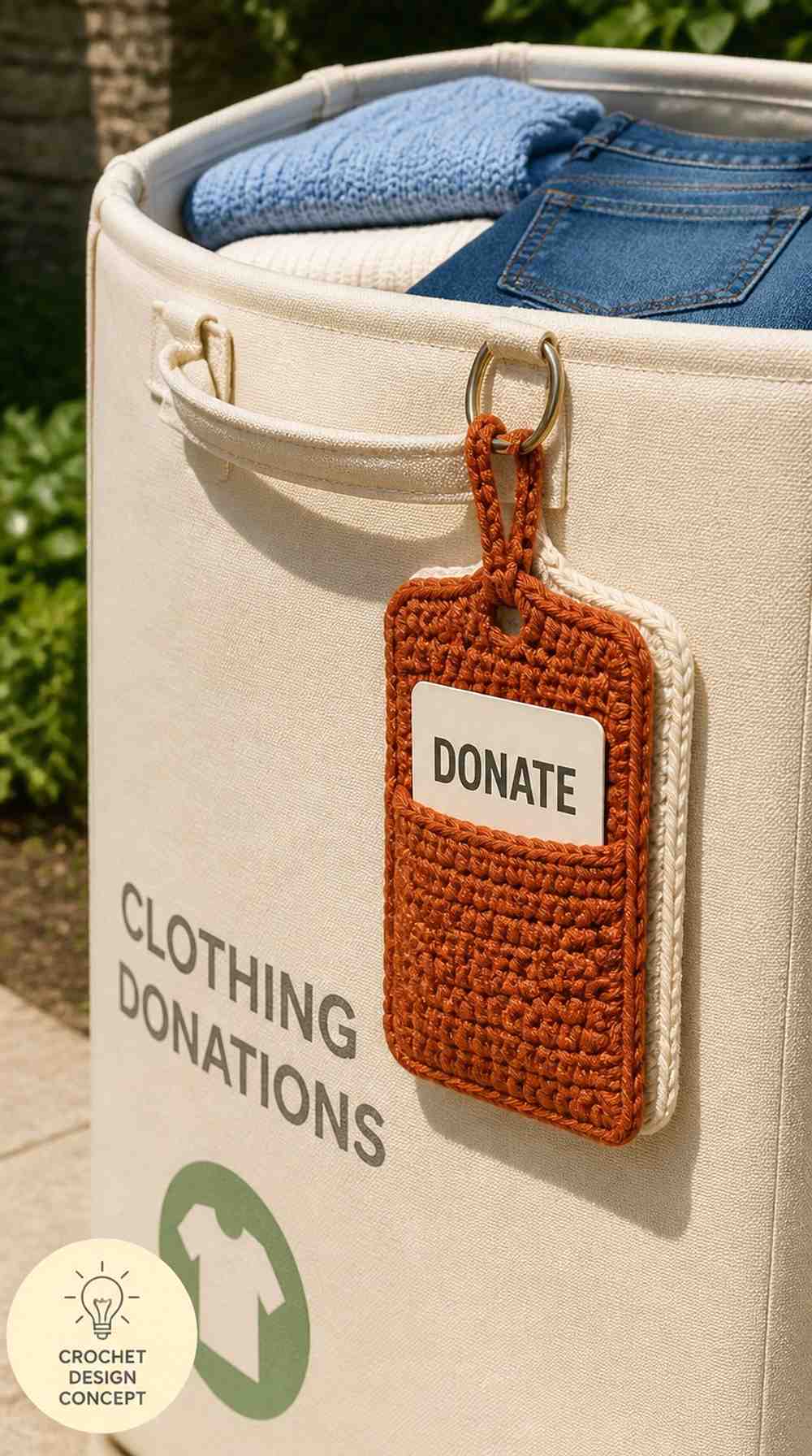
Warm-rust crochet forms the front of this double-sided rectangular hanging tag. A cream card marked “DONATE” sits in its front sleeve, while an ivory crochet reverse side provides space for an alternate “FULL” status card. A short loop and metal ring attach the tag to the basket handle.
The reversible arrangement allows the same tag to serve two different stages of household donation storage. Its usefulness depends on changing the label accurately rather than leaving an outdated status visible after the bin has been filled or emptied.
- Two-sided construction: Join the rust and ivory crochet faces neatly so the tag can turn without exposing loose seams or tangled yarn ends.
- Status changes: Use “FULL” only as a practical reminder that the bin needs attention; it does not mean the contents have been accepted by a charity.
- Ring attachment: Choose a smooth, securely closed metal ring that will not snag delicate clothing or pull free from the hanging loop.
14. Crochet Sky-Blue Clip-On Bin Label Frame
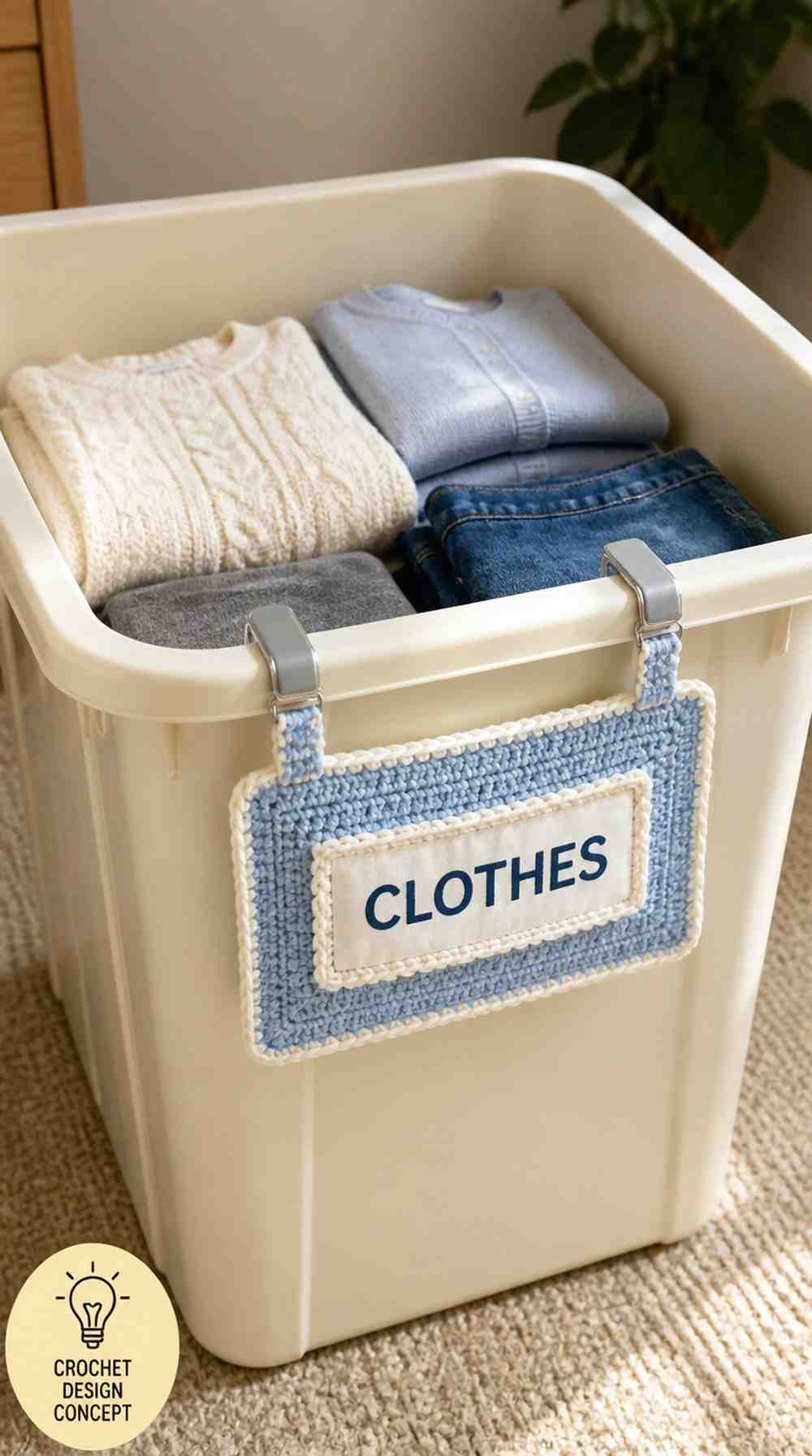
Sky-blue crochet forms a rectangular label frame with a narrow ivory border and a cream card reading “CLOTHES.” Two small padded metal clips secure the panel to the upper front edge of a rigid plastic donation bin.
The clip-on system is useful for a bin that does not have suitable fabric handles or hanging tabs. It may allow the panel to be removed without permanently altering the container, although the clips must be compatible with the rim’s shape and thickness.
- Rim compatibility: Check that the clips fit the actual bin edge securely without deforming the plastic or preventing the lid from closing.
- Padded contact: Smooth protective padding may reduce scratches, but inspect the rim and clips for marks after use.
- Removable attachment: A clip-on panel can be transferred between bins if the hardware fits, making the label easier to reuse during seasonal wardrobe sorting.
15. Crochet Charcoal Vertical Packing-Status Label
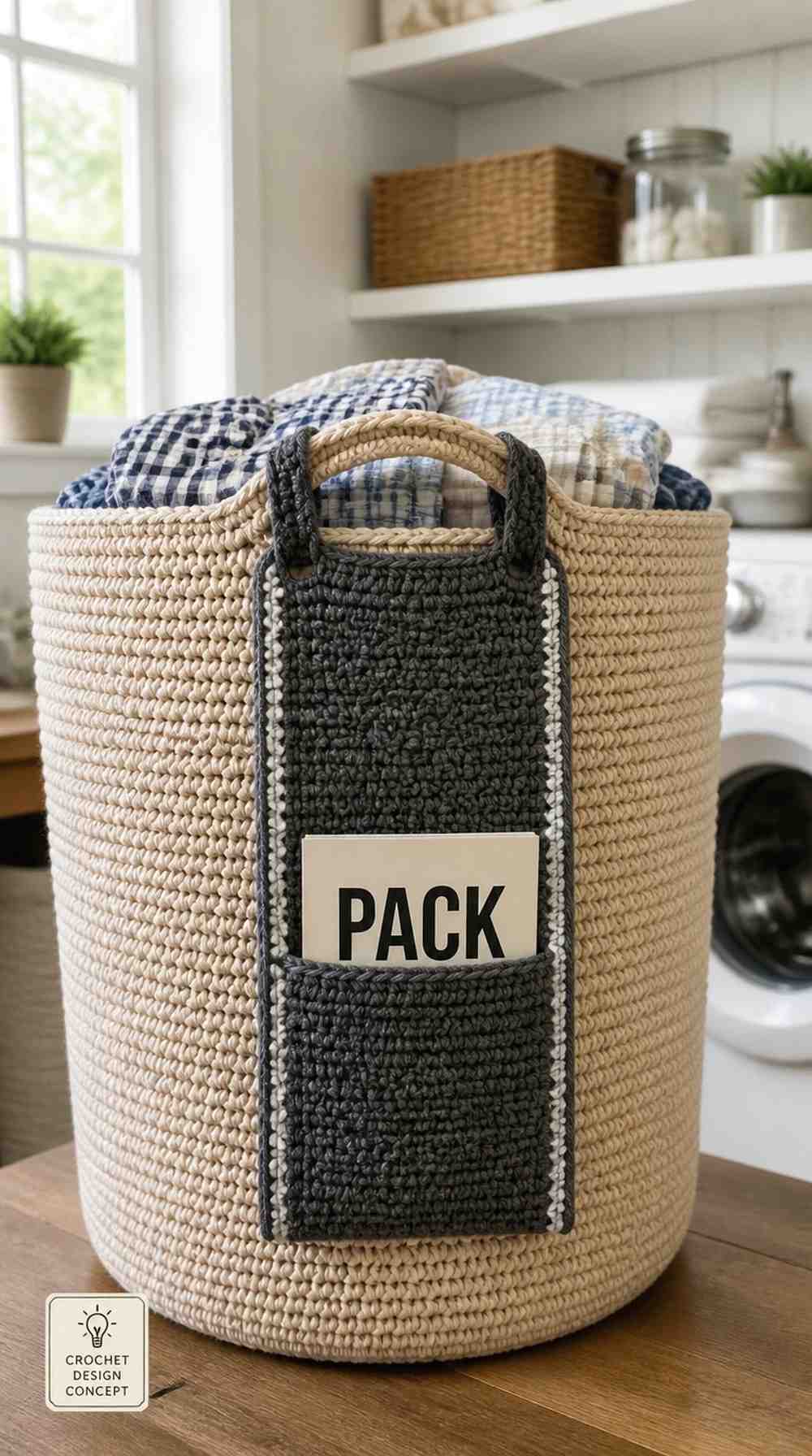
Charcoal-gray crochet creates a tall, narrow hanging label with pale-gray stripes along its long edges. A warm-white card marked “PACK” sits in the lower pocket, while two short upper tabs attach the panel to the fabric basket’s handle.
This slim design is intended for the stage when checked garments are ready to be arranged into bags or boxes for transport. It offers a clear reminder without requiring a large label panel across the entire bin.
- Packing-stage purpose: Use “PACK” for items awaiting final bagging, after confirming their condition and the intended organization’s current acceptance rules.
- Narrow panel proportions: Keep the tag wide enough for readable lettering but short enough to hang without folding against the floor or nearby furniture.
- Transport preparation: Remove or secure loose crochet labels before lifting and carrying a full bin so they do not catch on handles or surrounding objects.
16. Crochet Mustard Three-Step Donation Panel
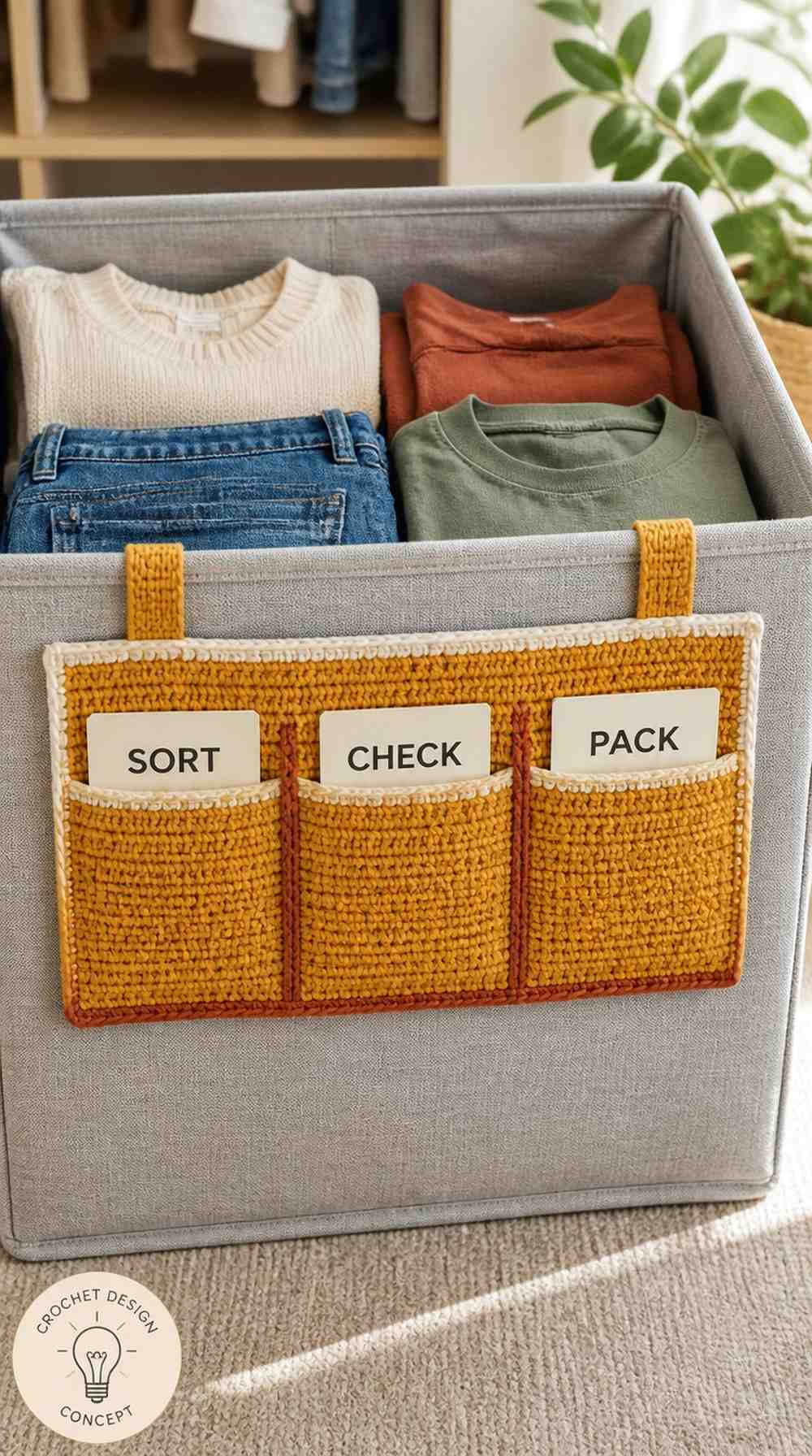
Golden-mustard crochet forms a wide rectangular panel with three side-by-side card pockets. Ivory edging outlines each compartment, and slim terracotta seams separate the labels marked “SORT,” “CHECK” and “PACK.”
The three-card arrangement turns the front of a donation bin into a small sorting reminder. Rather than describing three separate compartments inside the bin, the cards show possible stages in a household donation routine. It is especially useful when several people share the same collection area.
- Three-stage reminder: Use the cards as a simple workflow: separate unwanted clothes, review their condition and acceptance, then pack eligible items.
- Side-by-side spacing: Leave enough width for each word to be readable without crowding the cards or making the panel excessively wide.
- Family use: Explain the meaning of the three labels to everyone using the bin so unchecked clothing does not become mixed with prepared donations.
Practical Guide to Crochet Clothing Donation Bin Label Panels
Choose a label that people can read quickly. The main purpose is identification, so large, clear lettering matters more than complicated crochet decoration. High-contrast removable cards are often easier to update than words permanently stitched into the fabric. Use simple labels such as “DONATE,” “SORT,” “CHECK” or “READY” according to what is actually inside the bin.
Measure the bin before planning. Check the available front area, handle positions, lid movement and any raised plastic edges. A hanging panel should not cover the opening or interfere with carrying the bin. For rigid containers, removable clips or a wraparound strap may be worth considering; for fabric baskets, existing handle tabs may offer a suitable attachment point.
Use crochet that holds its shape. Smooth cotton yarn is one possible choice for a removable label panel. Closely worked stitches and reinforced borders can help keep the card pocket neat, but actual stretch depends on the yarn, stitch tension and how the piece is attached.
Keep donation clothes clean and dry. Clothing intended for reuse should be checked, cleaned and completely dried before packing. Look for damage, stains, missing fasteners and forgotten personal belongings in pockets. Different charities accept different types and conditions of clothing, so confirm the receiving organization’s rules before sending anything.
Avoid confusing donation and textile recycling. A home label marked “DONATE” should not imply that torn, contaminated or otherwise unsuitable garments will be accepted by a clothing charity. Check whether local textile recycling or repair programs take items that cannot be donated for reuse.
Make the panel removable. A crochet label may need washing, and the bin may change purposes. Buttoned straps, hanging loops, removable card sleeves or compatible clips make it easier to clean and reuse the panel. Allow the yarn to dry fully before putting it back on the container.
For related wardrobe storage inspiration, see 17 Crochet Folded T Shirt Shelf Separator Inspiration Ideas, which explores dividing and organizing folded clothing before deciding what to keep or donate.
Want to Make Something Similar?
These resources explain related crochet labeling and organizer construction techniques. They are not exact patterns for the 16 illustrated donation-bin label panels.
- Personalize Your Crochet: How to Add Labels and Tags — A Crocheted Simplicity — A photo tutorial covering attachment of wooden and leather labels to crochet projects. The techniques may help with firmly securing decorative tags, although a removable bin label requires its own design.
- Free Organizer Basket Crochet Pattern with Removable Dividers — Nicki’s Homemade Crafts — A free written pattern with a video tutorial illustrating crochet storage panels, joins and divider construction. Its full basket is a different project, but the panel-making ideas may be useful.
For another approach to organizing removable labels, explore 19 Crochet Plant Label Storage Book Inspiration Ideas. The subject is different, but its small pockets and interchangeable label arrangements offer related inspiration.
Which Crochet Donation Bin Label Panel Should You Choose?
| Main requirement | Designs to consider | Important trade-off |
|---|---|---|
| Large, readable single label | Terracotta Wide-Window, Teal Wraparound Belt | Needs suitable front space or bin circumference |
| Clothing categories | Butter Yellow Dual-Category | Categories must match the sorting system |
| Traditional crochet decoration | Raspberry Granny-Frame, Blush Daisy-Edge | More motifs and finishing work |
| A label for an existing handle | Oatmeal Handle-Hung, Moss Handle-Wrap | Can swing when the bin moves |
| Changeable label cards | Indigo Clear-Window, Lavender Diagonal-Slot | Paper and pocket care need attention |
| Textured crochet | Cocoa Basketweave Ready-Label | Raised stitches may collect dust |
| Two status options | Rust Reversible Donation Status | Must be turned to the correct status |
| Rigid plastic bins | Sky-Blue Clip-On | Clips must fit without damage |
| Narrow vertical label | Charcoal Packing-Status | Holds less information |
| Full donation workflow | Mustard Three-Step | Requires more panel width |
For a simple home donation basket, the Terracotta Wide-Window design offers a direct, easy-to-read label. If you prefer a tag that can be moved between baskets, the Moss Handle-Wrap or Oatmeal Handle-Hung versions may be more convenient.
For family wardrobe cleanouts, the Butter Yellow Dual-Category and Mustard Three-Step panels provide more detailed organization. The first separates clothing groups, while the second gives a reminder of what to do before packing items for donation.
If your basket changes purposes regularly, the Indigo Clear-Window or Rust Reversible design offers a way to change its visible message without replacing the entire crochet piece.
Conclusion
Crochet clothing donation bin label panels bring a small but useful handmade detail to wardrobe sorting and household organization. From simple terracotta card sleeves and navy foldover labels to granny-square frames, adjustable belts and three-step donation reminders, these 16 concepts explore different ways to keep a bin clearly identified. The best design is one that suits the container, displays an accurate label and can be removed when the bin needs cleaning or repurposing. Clear labeling can support a more organized donation routine, but checking the condition and acceptance of clothing remains the most important step.
Which design would you choose for your donation bin? Would you prefer a simple “DONATE” label, a reversible status tag, separate adult and children’s clothing labels or a three-step sorting reminder? Share your favorite design and how you usually organize clothes before donating them.
Frequently Asked Questions
1. What is a crochet clothing donation bin label panel?
It is a small crocheted panel, tag or pocket designed to display a label on a bin used for sorting clothing at home. The label might identify the contents as clothes for donation, indicate a sorting category or show that garments still need checking. It is a decorative organizational accessory, not an official charity collection sign.
2. What yarn is suitable for a crochet donation bin label?
Smooth cotton yarn is one option because it can produce clearly defined stitches and may be washable according to its care instructions. Closely worked crochet can help the label retain a neat outline, but it may still stretch. Choose a suitable yarn weight, reinforce attachment points and use removable paper or fabric labels when the wording needs to change.
3. Can I attach a crochet label without damaging the donation bin?
Possibly, depending on the container. Fabric bins with existing handles may accommodate hanging loops or ties, while rigid bins may suit compatible padded clips or a removable wraparound band. Check that the attachment does not obstruct the opening, lid or handles. Avoid cutting holes or using hardware that could damage the bin.
4. Can damaged or stained clothing go into a bin labeled for donation?
A household sorting bin can temporarily hold items awaiting inspection, but that does not mean every garment should be donated. Charities often ask for clean, dry clothing in wearable condition, and their acceptance policies vary. Damaged items may need repair or a separate textile-recycling route. Always check the receiving organization’s current requirements before dropping anything off.
5. Are these 16 crochet donation bin label panels available as patterns?
No. These are original crochet design visualizations intended to explore different label pockets, hanging methods, color combinations and decorative details. They are not tested finished items or complete patterns. The linked tutorials explain related labeling and crochet storage techniques, but they do not reproduce these exact illustrated concepts.