A laptop docking station can make a home-office desk more useful, but the small device may also collect dust when it is stored between work sessions. These 19 crochet docking station dust cover inspiration ideas explore decorative ways to cover a disconnected desktop dock while it is not in use. The collection includes fitted-looking rectangular hoods, granny-square cloches, reversible fabric designs, lined pouches and crochet-trimmed transparent domes in colors ranging from terracotta and plum to ivory and sky blue.
Some concepts are intended for a docking station stored on an open desk, while others explore removable cases or independent display frames. The important differences include cover shape, stitch density, ease of removal, available storage space and whether the textile touches the electronics. A crochet dust cover is not an accessory for an operating or charging dock: it should be considered only for equipment that has been fully disconnected and allowed to cool, and only where the manufacturer’s care instructions permit such storage.
These are AI-generated crochet design visualizations for inspiration, not photographs of tested handmade pieces or step-by-step patterns.
Quick Design Selection Guide
- For a simple desk cover: Crochet Terracotta Ribbed Docking Station Cover and Crochet Charcoal Minimal-style alternatives aren’t needed here; the closest simple option is Crochet Lavender Lift-Tab Dock Cover, which has a convenient top tab.
- For decorative crochet texture: Crochet Plum Granny Square Dock Cover, Crochet Rust Checkerboard Dock Cloche and Crochet Blush Daisy Shell Dock Cover bring recognizable motifs and stitch patterns.
- For a removable storage pouch: Crochet Oatmeal Drawstring Dock Storage Pouch and Crochet Denim Blue Zippered Dock Case are intended for fully disconnected devices stored away between uses.
- For less direct textile contact: Crochet Ivory Scalloped Dock Display Dome and Crochet Mocha Lattice Acrylic Dock Dome decorate independent clear covers rather than placing yarn directly on the electronics.
- For distinctive shapes: Crochet Coral Tent-Frame Dock Cover, Crochet Slate Folded-Roof Dock Cloche and Crochet Mint Pleated Dock Dust Cover use different supported silhouettes.
- For adaptable fabric finishes: Crochet Sage Buttoned Dock Dust Sleeve, Crochet Burgundy Accordion Dock Dust Shield and Crochet Butter Yellow Reversible Dock Cover offer different folding or layered constructions.
1. Crochet Terracotta Ribbed Docking Station Cover
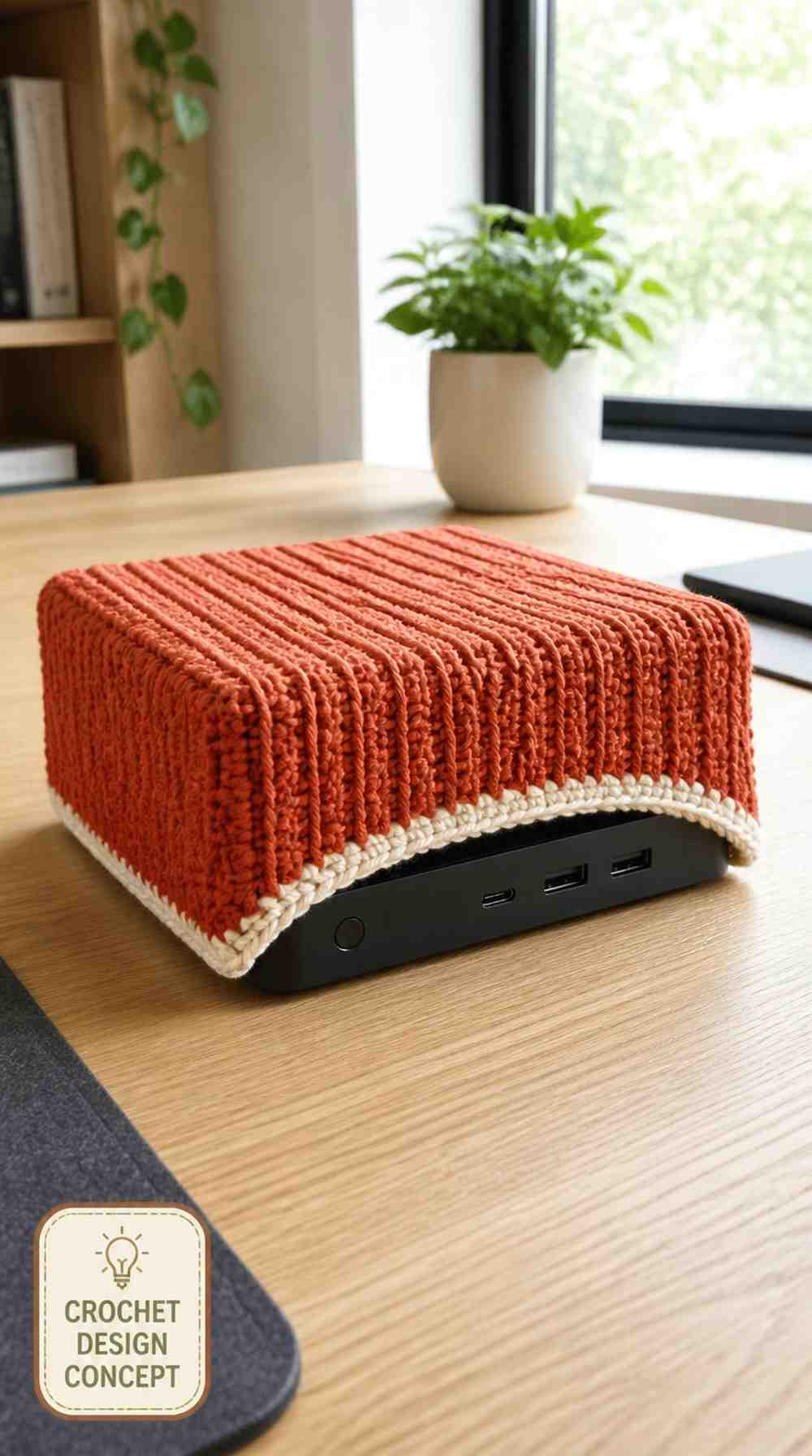
Warm terracotta crochet gives this small rectangular dust cover a neat, handcrafted appearance. Vertical ribs travel down its four sides, while a narrow ivory band finishes the lower edge. The flat top and gently squared corners create a shape that follows a compact desktop docking station.
The cover is shown with one corner lifted to reveal the black device underneath. Its close-textured crochet offers more visual coverage than open lace, although yarn is not an airtight dust barrier. This concept is intended only for a fully disconnected, cool dock.
- Ribbed Sidewalls: Keep the vertical ribs evenly worked so the rectangular cover hangs neatly rather than pulling into an uneven shape.
- Device Clearance: Allow a little room around the dock’s housing so the crochet can be lifted away without catching on connectors or edges.
- Ivory Border: The narrow cream edging defines the bottom of the terracotta hood without adding a large decorative fringe that could collect dust.
2. Crochet Navy Foldover Dock Dust Cover
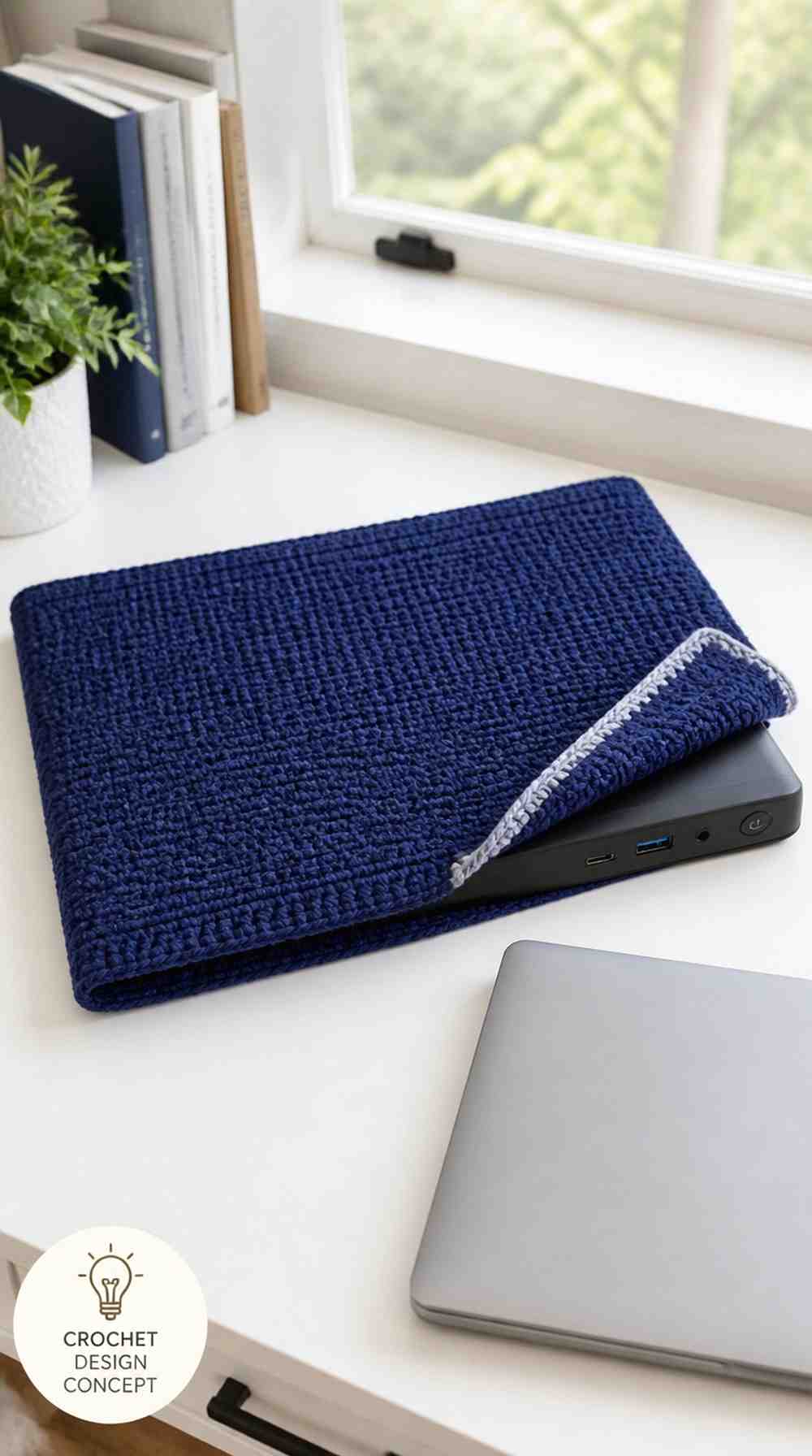
Deep navy crochet brings a tailored appearance to this rectangular docking station cover. A broad upper flap folds over its closely worked body, and a slim silver-grey border runs along the edge. The compact shape suits a clean white desk with simple office accessories.
The folded-back flap reveals a disconnected charcoal docking station beneath the cover. This arrangement differs from a one-piece cloche because the top section creates a visible overlapping layer. A real version would need careful shaping so the flap stays flat and can be removed without dragging across connection ports.
- Foldover Construction: Keep the navy flap broad enough to overlap the cover body, with smooth edges that do not curl upward.
- Layer Thickness: Two fabric layers may create a heavier top section, so avoid unnecessary bulk that could distort the rectangular silhouette.
- Easy Removal: The foldover design should lift clear of the dock rather than pulling against its ports or any remaining accessories.
3. Crochet Ivory Scalloped Dock Display Dome
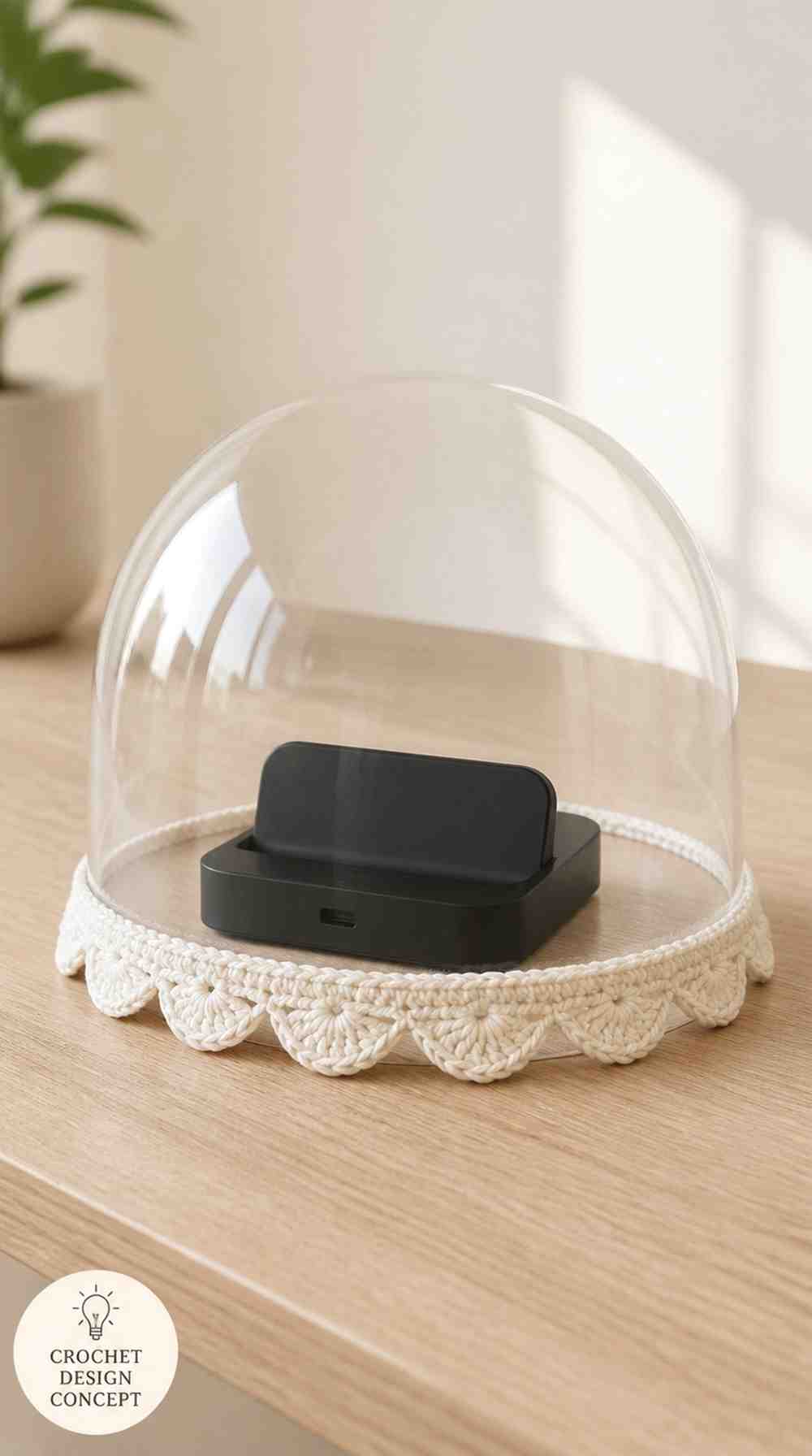
Warm-ivory crochet gives this transparent acrylic dust dome a delicate decorative finish. Eight small scallops run along the lower edge of the dome, attached to a removable crochet strip around its outside perimeter.
The docking station remains visible through the clear rigid cover, making this concept especially different from the opaque textile hoods. The acrylic structure provides the actual enclosure, while the crochet adds a soft border. The dome is intended to be placed over equipment that is disconnected and cool, never used as a cover during charging.
- Acrylic Fit: Choose a rigid cover with enough interior space to avoid pressing against the docking station or its delicate connection points.
- Scallop Placement: Keep all eight crochet scallops outside the clear dome, away from the device and its ventilation openings.
- Cleaning Materials: Clean acrylic according to its manufacturer’s instructions and remove the crochet strip separately when it needs washing.
4. Crochet Ochre Corner-Tie Dock Cover
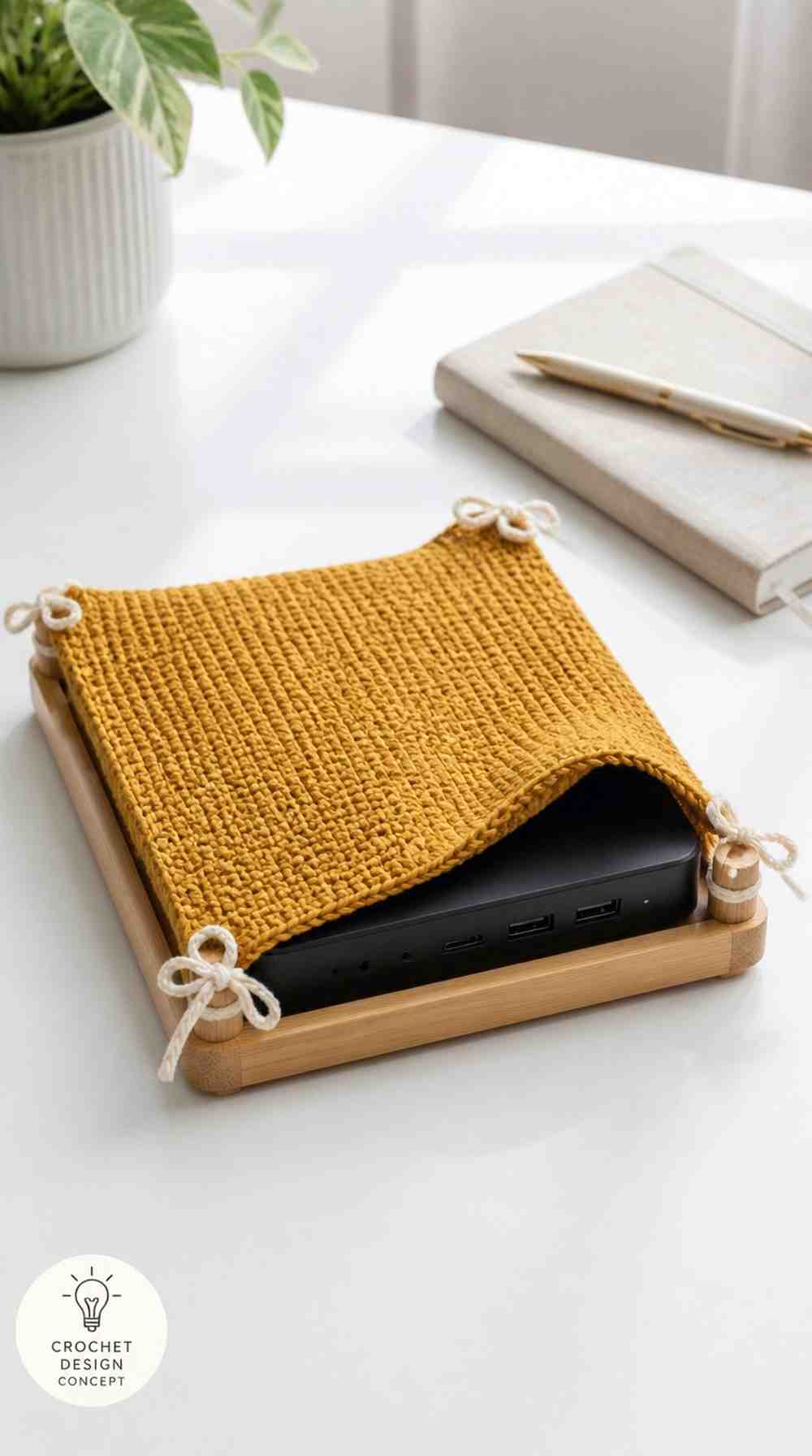
Ochre-gold crochet creates a flat rectangular dust cloth with four short cream ties at its rounded corners. The fabric drapes over an unplugged docking station placed inside a shallow wooden storage tray, with the ties fastened around the tray’s corner posts.
This design uses the tray as its attachment point rather than tying fabric directly to the electronic device. The arrangement has a warm, practical-looking appearance beside natural wood and neutral office accessories. However, it remains a storage cover that must be removed completely before the dock is connected.
- Corner Ties: Keep all four ties short and securely attached to the cloth so loose yarn cannot fall toward the dock’s ports.
- Wooden Tray: The tray should be large enough for the disconnected dock without forcing the cover tightly against its sides.
- Flat Fabric: A dense rectangular center provides a more continuous textile surface than open lace, although dust can still pass through crochet fibers.
5. Crochet Plum Granny Square Dock Cover
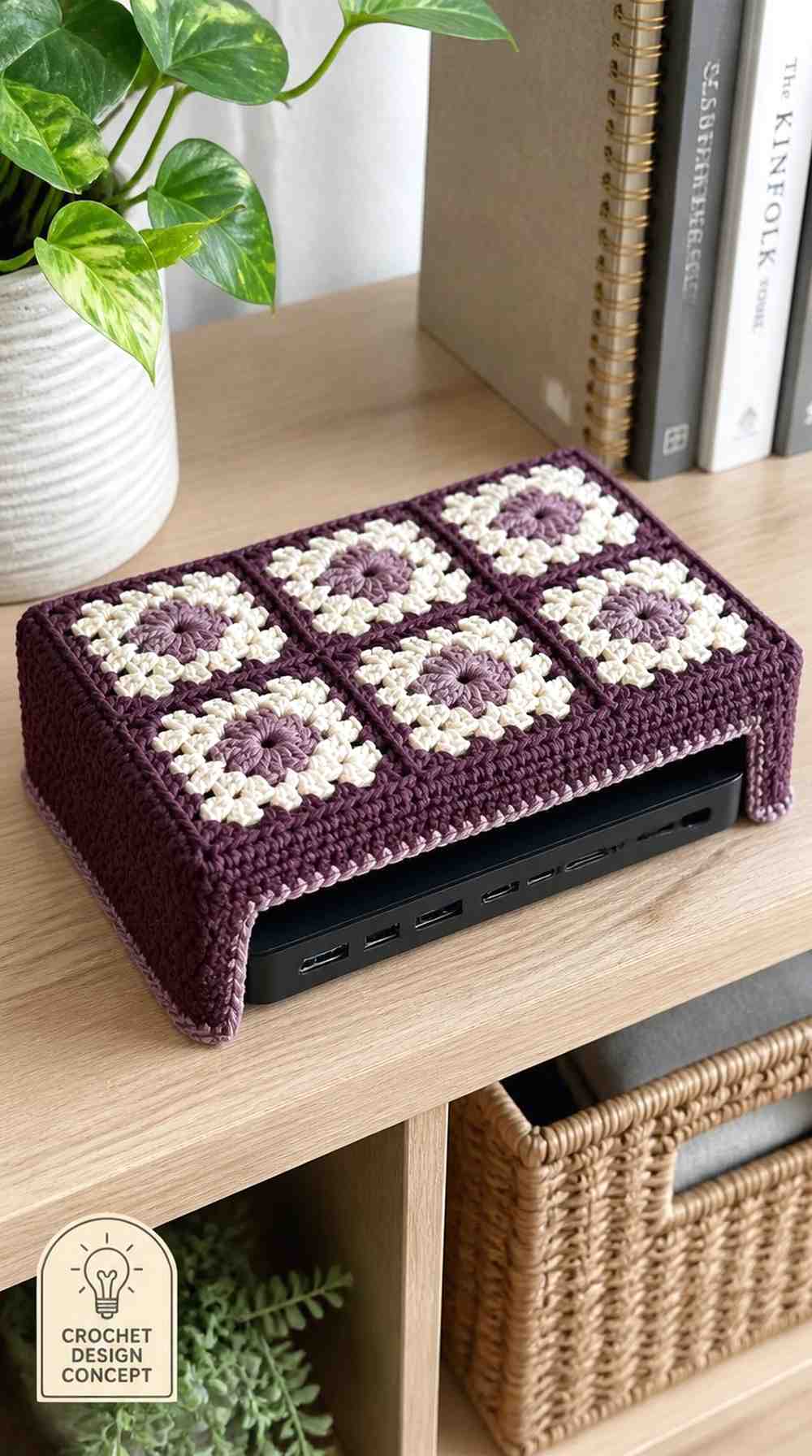
Six granny-square motifs bring traditional crochet texture to this plum-purple docking station dust cover. The top features a two-by-three arrangement of squares with dusty-lavender centers and ivory outer rounds, while plain plum side panels form the lower hood.
The cover sits loosely over a disconnected black USB-C dock, with the front hem lifted to reveal its inactive ports. The granny squares create a more decorative appearance than a simple rectangular sleeve, but their joining seams and stitch openings make this a less continuous dust barrier.
- Six-Square Arrangement: Keep the two-by-three top layout aligned so the joined motifs form a reasonably flat rectangular surface.
- Solid Side Panels: Plain plum crochet around the sides balances the busier granny-square top and avoids adding excessive openwork.
- Seam Finishing: Secure the joining ends carefully, as loose fibers and yarn tails are undesirable around electronic connection ports.
6. Crochet Sage Buttoned Dock Dust Sleeve
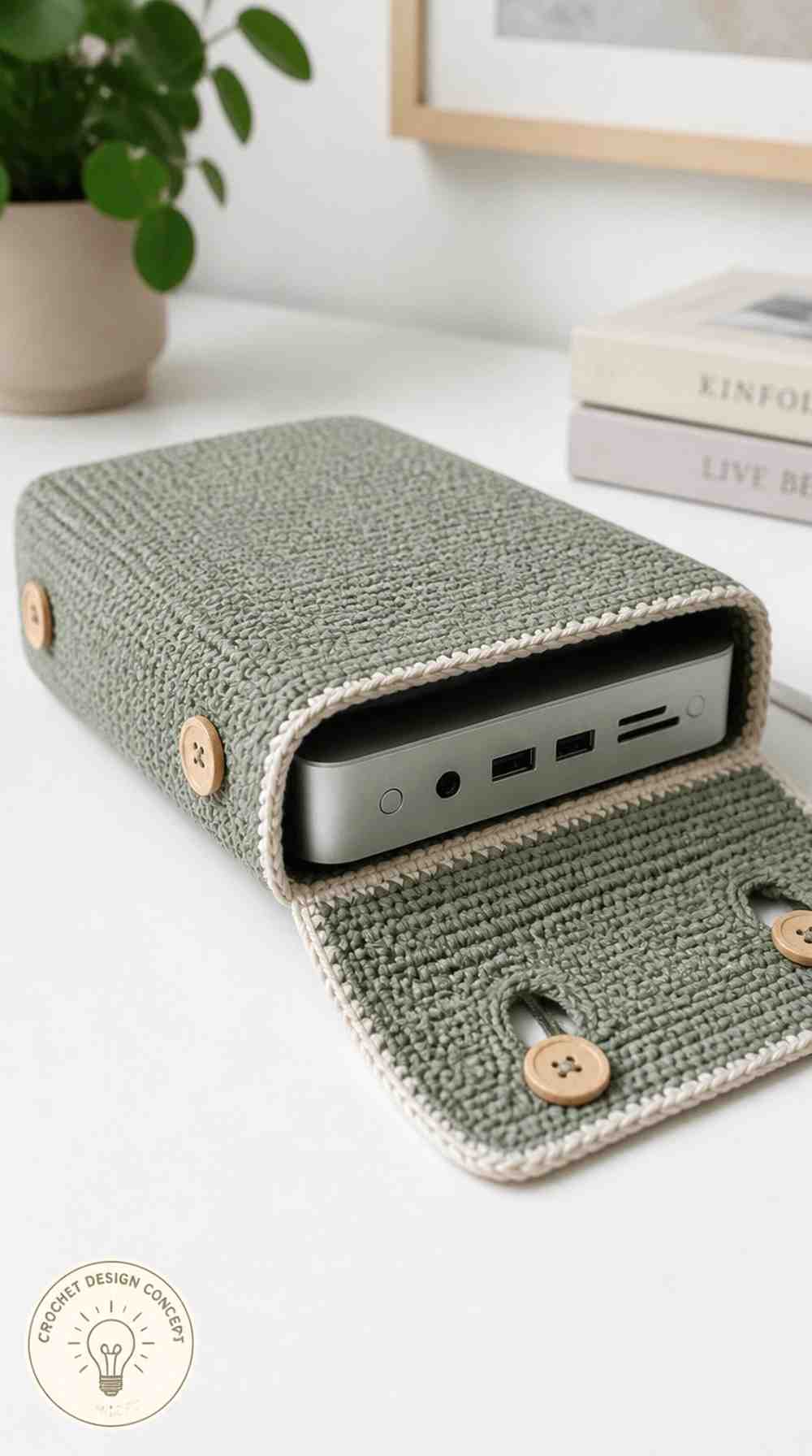
Muted sage-green crochet creates a softly rectangular dust sleeve with a broad side flap. Two small natural wooden buttons secure the flap, while a narrow cream border gives the opening a tidy finish.
The partially opened side reveals a silver laptop docking station stored underneath. This concept brings a familiar removable fastening detail to desk storage, rather than relying on a simple drop-over hood. The buttons are decorative hardware, and the sleeve should be completely removed before the dock is powered or connected to a laptop.
- Buttoned Side: Position the two wooden buttons where they can be reached without pressing the sleeve firmly against the docking station.
- Opening Clearance: The side flap should open wide enough for the device to be removed without scraping against its ports.
- Hardware Contact: Avoid exposed button backs, sharp sewing components or bulky knots on any interior surface that might touch the dock.
7. Crochet Coral Tent-Frame Dock Cover
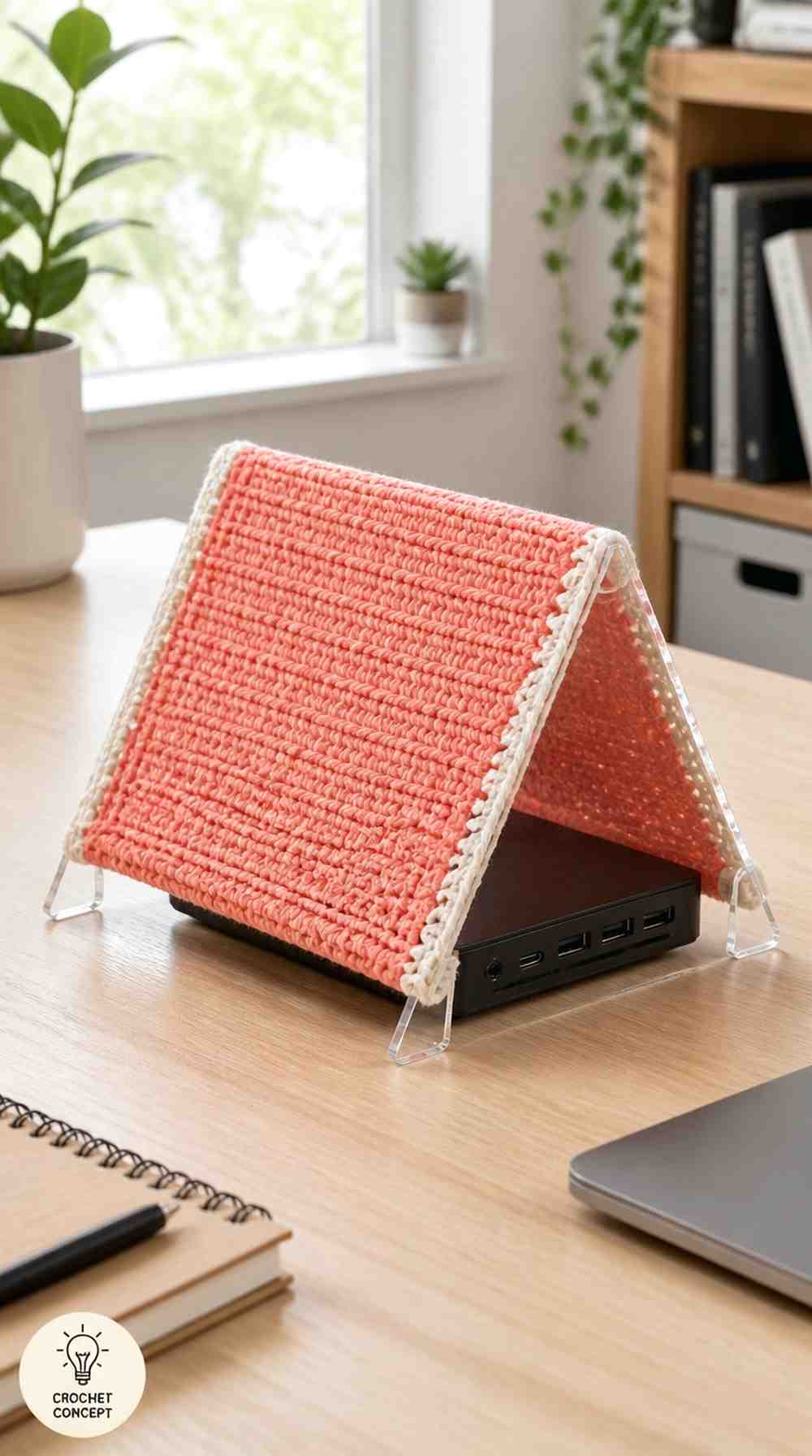
Coral-pink crochet gives this tabletop cover an unusual tent-shaped silhouette. The textile panel runs across a lightweight transparent acrylic frame, forming a gently peaked roof and two sloping sides. Both triangular ends remain open, showing the disconnected docking station beneath.
The independent frame distinguishes this concept from a fitted fabric cover. The crochet rests on the frame rather than directly on the dock, creating a soft desk decoration with a recognizable geometric shape. Because the ends are open, however, it offers less surrounding dust coverage than a closed dome.
- Independent Frame: The acrylic structure should stand securely on the desk without relying on the electronic device for support.
- Sloped Crochet Panel: Keep the coral fabric neatly positioned on both sides so it does not sag into the space beneath the frame.
- Open Ends: The exposed triangular sides improve visibility but also allow ordinary dust to enter, limiting the cover’s usefulness for long-term storage.
8. Crochet Slate Folded-Roof Dock Cloche
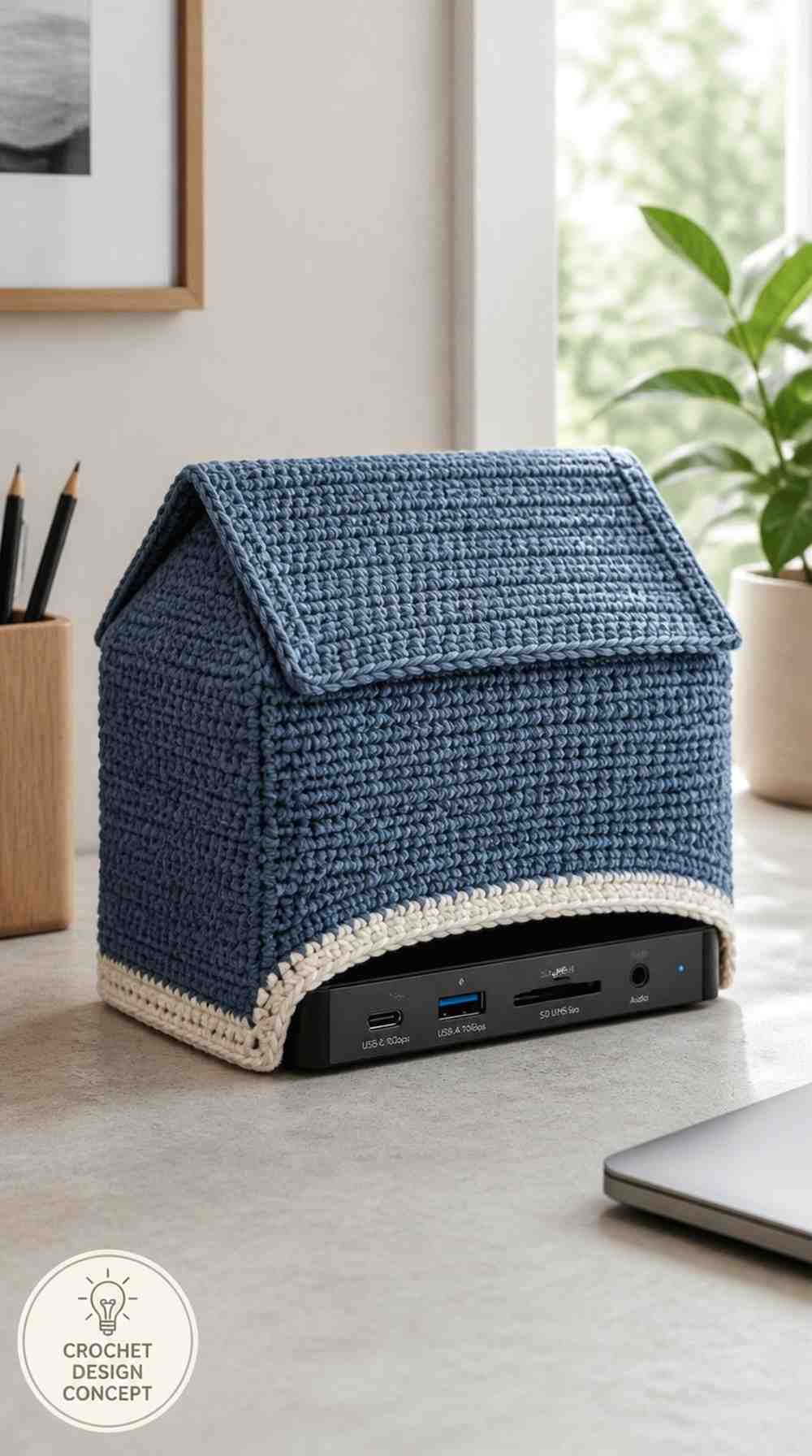
Slate-blue crochet creates a small freestanding cloche with a subtly peaked top. A lightweight internal frame supports the folded-roof shape, while two smooth rectangular side panels fall toward a narrow cream lower border.
The cool black docking station rests underneath, with its front edge partly revealed by the lifted cover. This design offers a more structured silhouette than a flat fabric drape, making it interesting for a minimalist office shelf. The frame should remain separate from the electronics and permit easy removal.
- Roof Shaping: Keep the folded peak symmetrical so the crochet does not collapse into a bulky ridge across the top.
- Frame Support: Any insert used to maintain the shape should have smooth, nonabrasive edges and be compatible with the cover construction.
- Storage Footprint: A peaked hood may need more vertical space than a flat cover, especially beneath low shelves or monitor stands.
9. Crochet Honeycomb Lined Dock Dust Cover
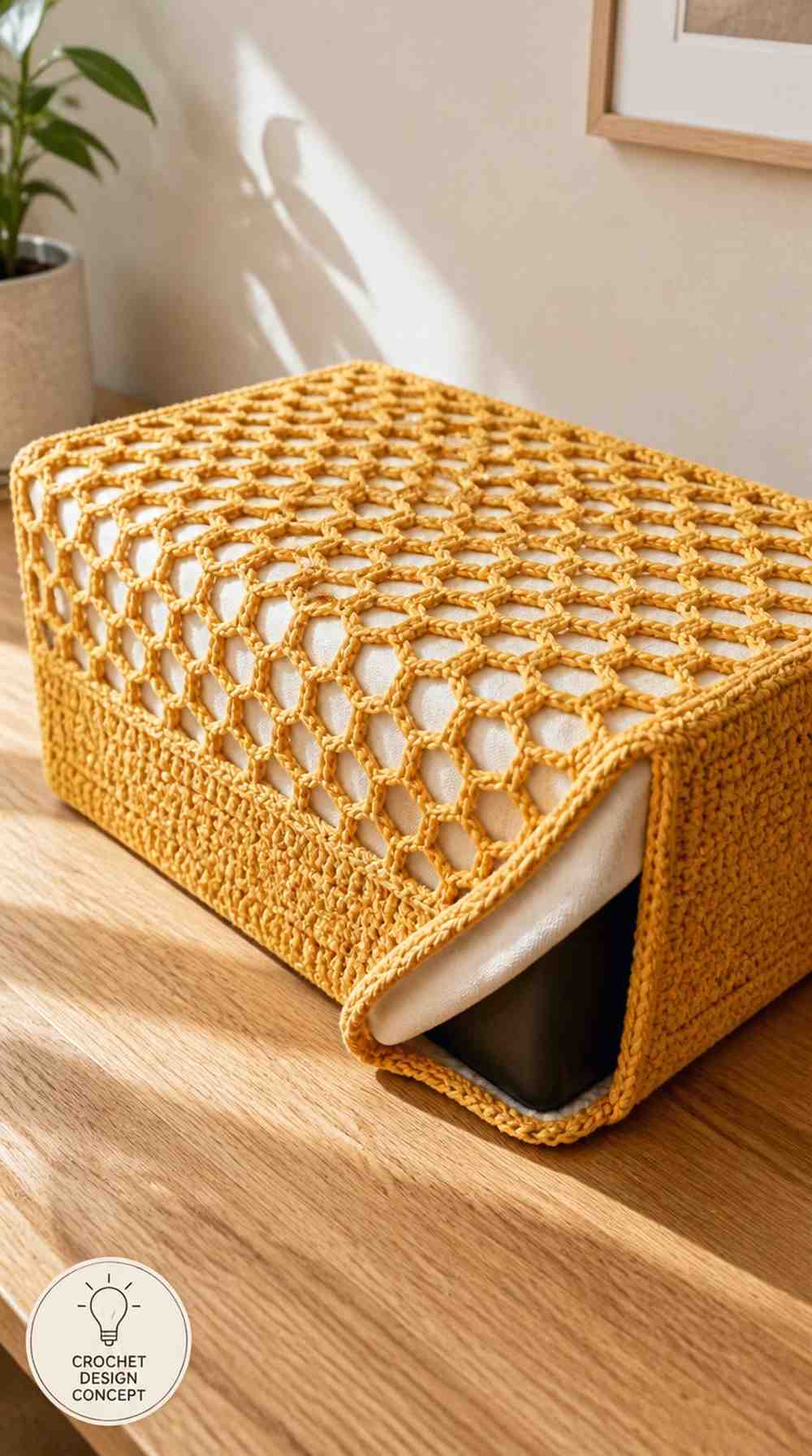
Golden honey-yellow crochet brings a bright geometric appearance to this rectangular dust hood. Orderly hexagonal mesh covers the upper section, while a closely worked lower band and smooth ivory cotton lining provide a more continuous fabric surface.
One folded corner reveals the lining and the disconnected black dock beneath. The contrast between open crochet and solid fabric makes this concept different from a plain mesh cover. Its lining may reduce visible gaps, although neither the crochet nor cotton fabric creates a sealed protective enclosure.
- Hexagon Connections: Keep the honeycomb openings evenly joined so the decorative upper fabric remains stable instead of forming loose loops.
- Cotton Lining: A smooth lining adds coverage beneath the mesh but should be checked for lint shedding and excessive thickness.
- Layer Care: The crochet and backing fabric may shrink differently when washed, so test compatible materials before joining them permanently.
10. Crochet Oatmeal Drawstring Dock Storage Pouch
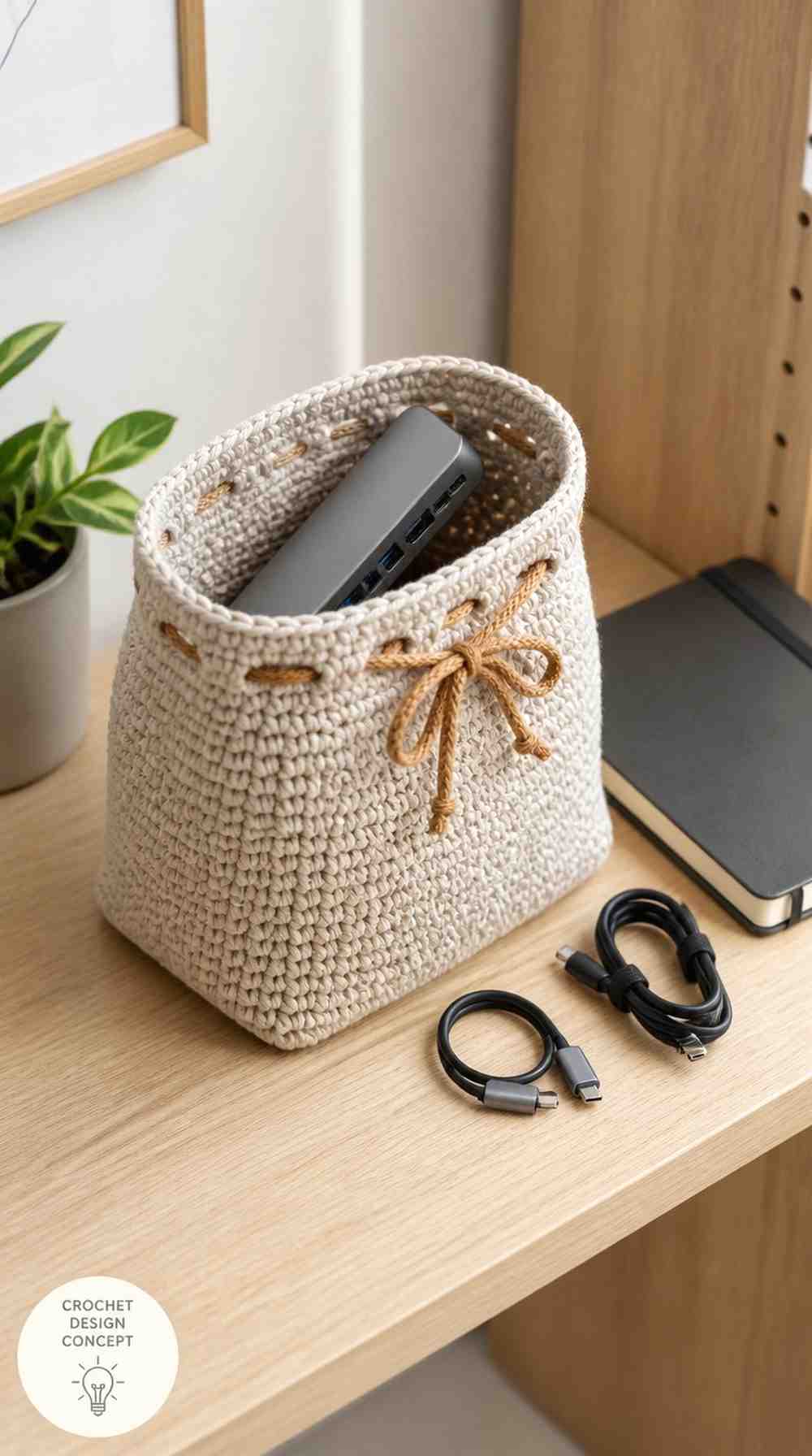
Oatmeal-beige crochet forms a soft rectangular storage pouch with a flat base, closely stitched sides and small eyelets around the upper opening. A short caramel drawcord gathers the top into a neat bow.
The pouch contains a compact disconnected docking station, with its cables removed and stored separately. Unlike a cover intended to remain over a device on the desk, this design explores storing an inactive dock on a shelf between uses. The drawstring should be opened fully before removing the device.
- Storage-Only Use: The pouch is intended for a cool, unplugged dock, never one connected to power or operating equipment.
- Drawcord Ends: Keep the caramel ties short and neatly secured so they cannot become tangled around the dock’s ports.
- Device Removal: Allow enough opening width to lift the dock without forcing its connectors against the crochet edge.
11. Crochet Denim Blue Zippered Dock Case
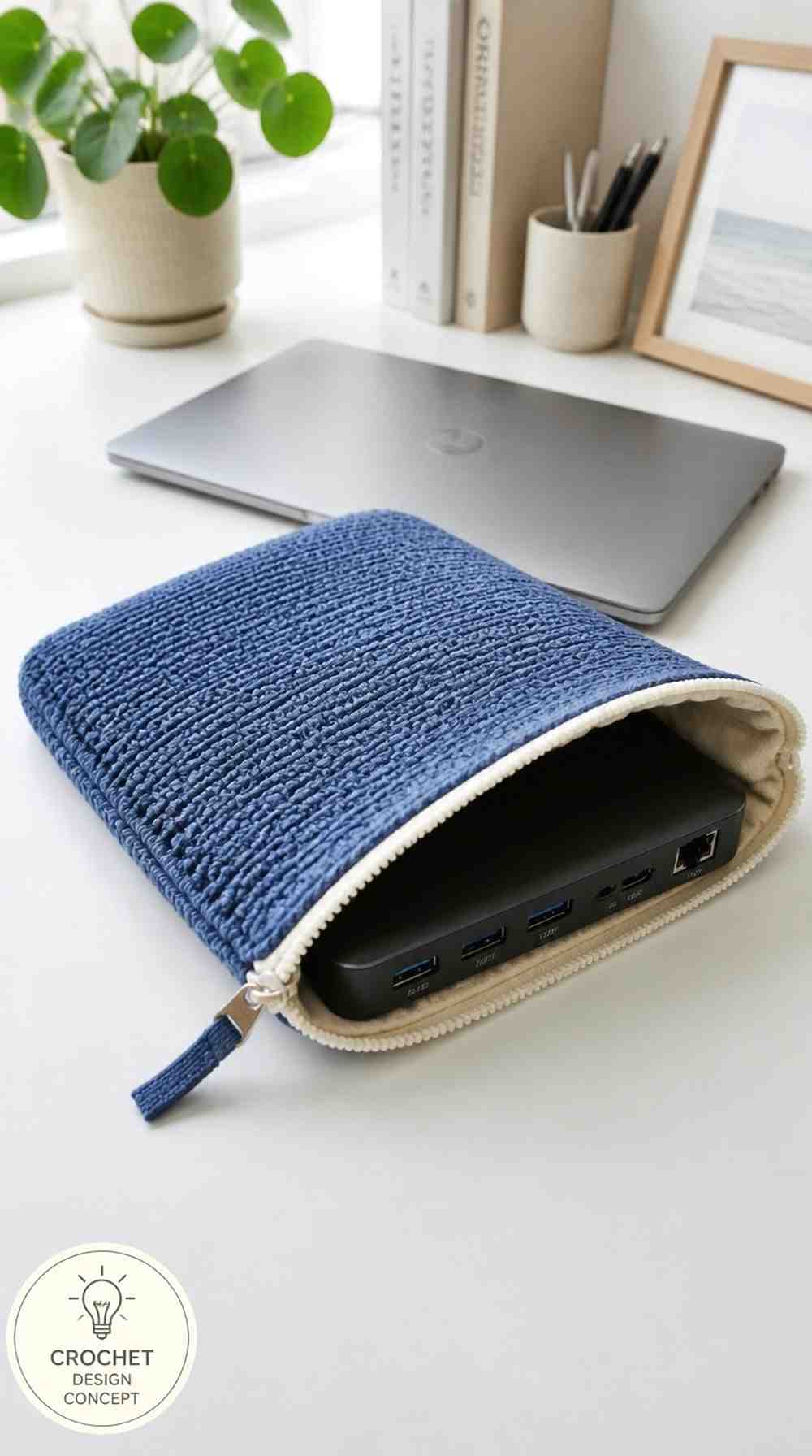
Denim-blue crochet gives this compact storage case a clean, everyday appearance. Closely worked horizontal rows form its rectangular body, while a cream zipper follows three sides. An ivory cotton lining covers the interior, with a short blue pull tab at one corner.
The partly open case reveals a small disconnected docking station stored inside. Its shape is closer to a removable electronics pouch than a loose desk cover. The zipper makes access straightforward in principle, but the device should be completely cool and unplugged before being enclosed.
- Three-Sided Opening: A broad zippered opening allows the dock to be placed inside without dragging its connection ports against the case.
- Zipper Protection: Keep the metal zipper teeth and pull away from the device with suitable fabric finishing to reduce scratching.
- Storage Limits: A soft crochet case is not impact protection, and it must not be used around a dock that is powered or charging.
12. Crochet Lavender Lift-Tab Dock Cover
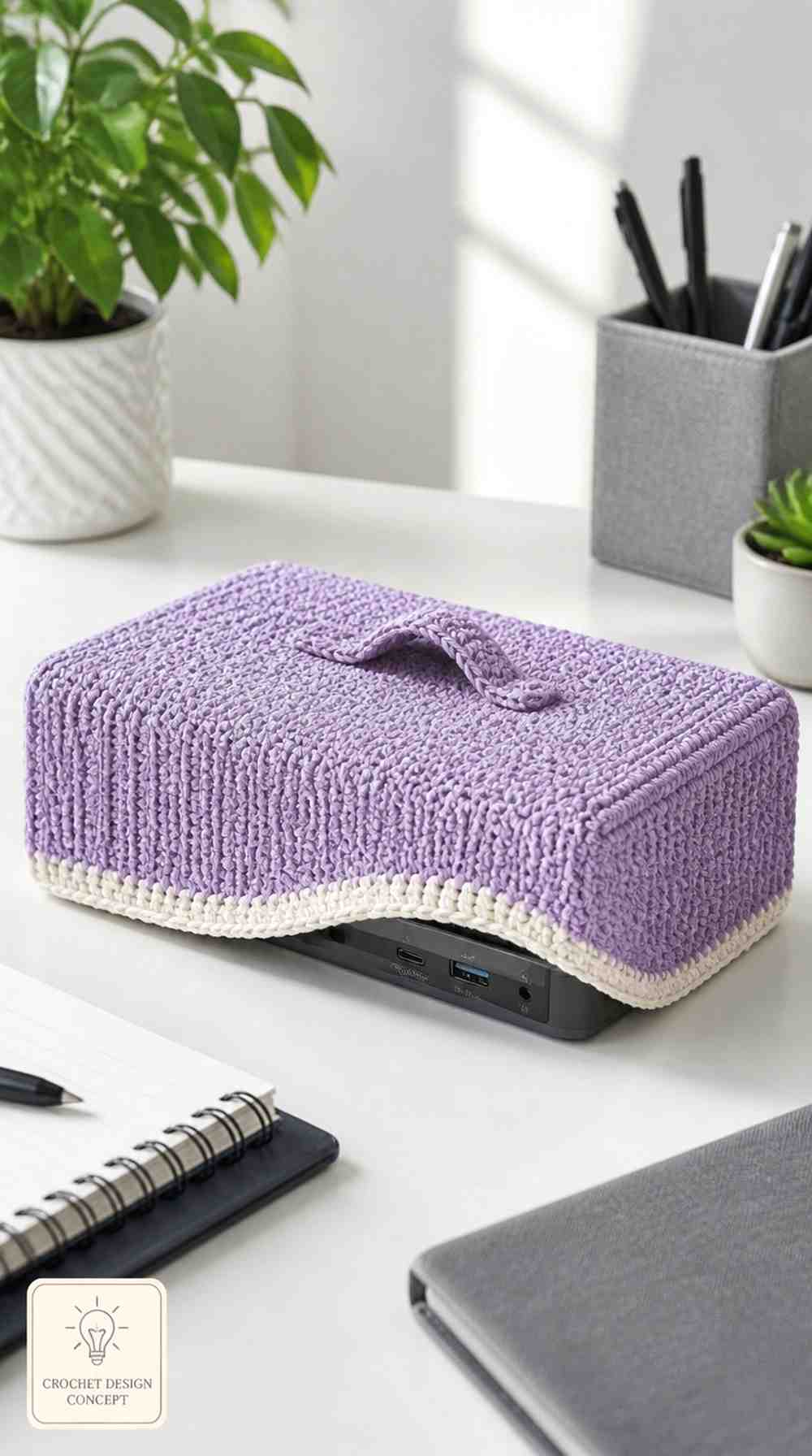
Pale-lavender crochet creates a simple rectangular dust hood with a broad lifting tab sewn at the center of its flat top. Narrow ivory edging follows the lower border, while small vertical stitch rows give the sides a neat finish.
The lift tab adds an identifiable handling detail to an otherwise plain cover. A corner is slightly raised to show the inactive black docking station below. This concept is suited to a desk where a cover will be placed and removed regularly, provided the tab is securely attached and the device is disconnected.
- Lift-Tab Placement: Center the lavender tab over the top panel so lifting does not twist the fabric excessively.
- Tab Reinforcement: Attach the tab through suitably supported crochet stitches rather than relying on a few loose loops.
- Cover Clearance: A slightly loose hood may be easier to lift away than a tightly fitted sleeve, especially around small USB-C port openings.
13. Crochet Mocha Lattice Acrylic Dock Dome
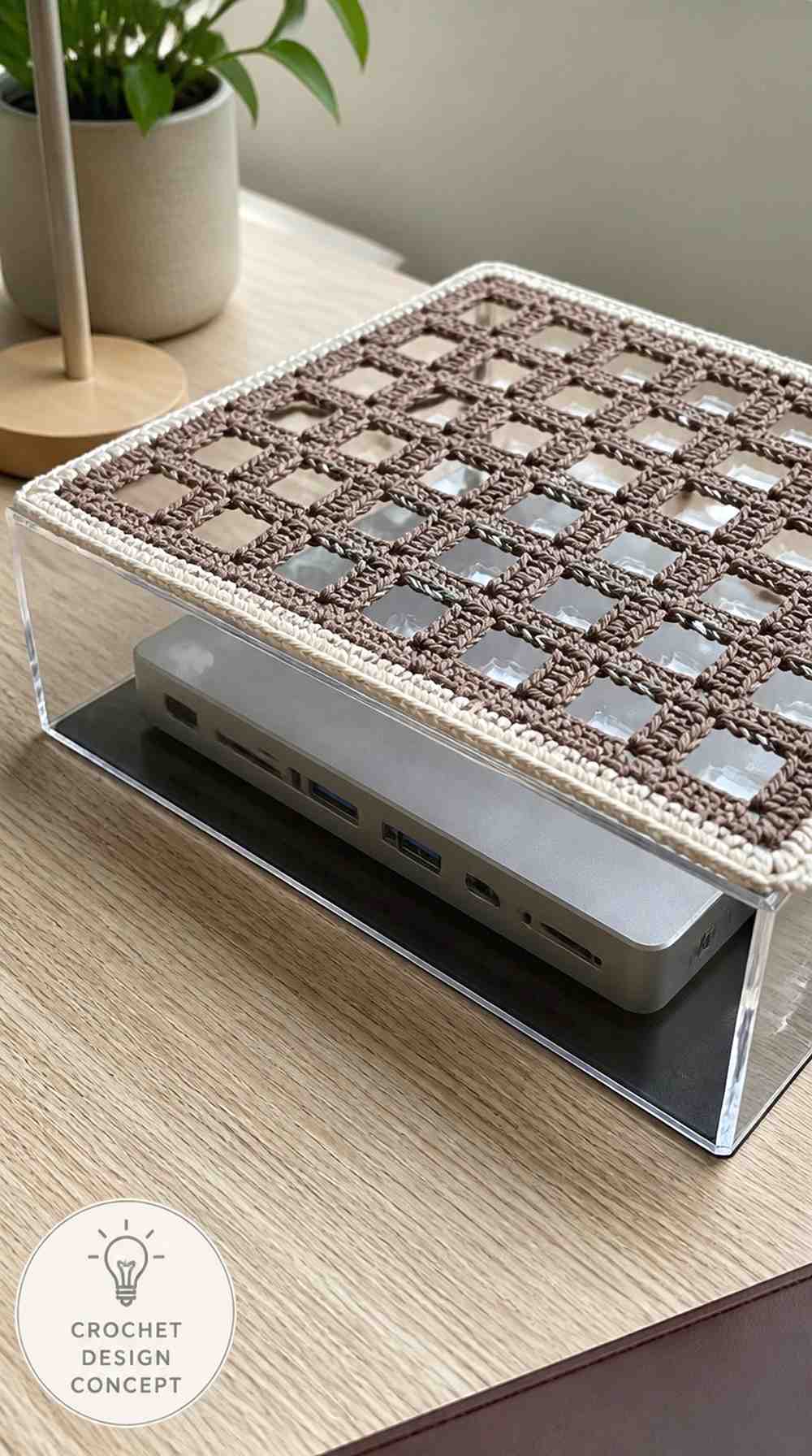
Mocha-brown crochet creates an orderly lattice pattern across the top and upper edges of this transparent acrylic docking station dome. A narrow ivory border frames the square openings, while the clear lower section reveals the disconnected silver dock underneath.
The crochet serves as an exterior decoration rather than the main dust enclosure. This is particularly useful for readers comparing textile covers with rigid storage options, since the acrylic dome provides a more continuous physical barrier. The entire dome must still be removed before the docking station is used.
- Lattice Placement: Keep the mocha crochet securely attached to the outside of the dome rather than allowing it to fall onto the electronics.
- Clear Lower Walls: Leaving the acrylic sides exposed maintains visibility of the stored docking station and preserves the light appearance.
- Dome Handling: Check that the rigid cover can be lifted without bumping the dock or catching its ports against the lower rim.
14. Crochet Mint Pleated Dock Dust Cover
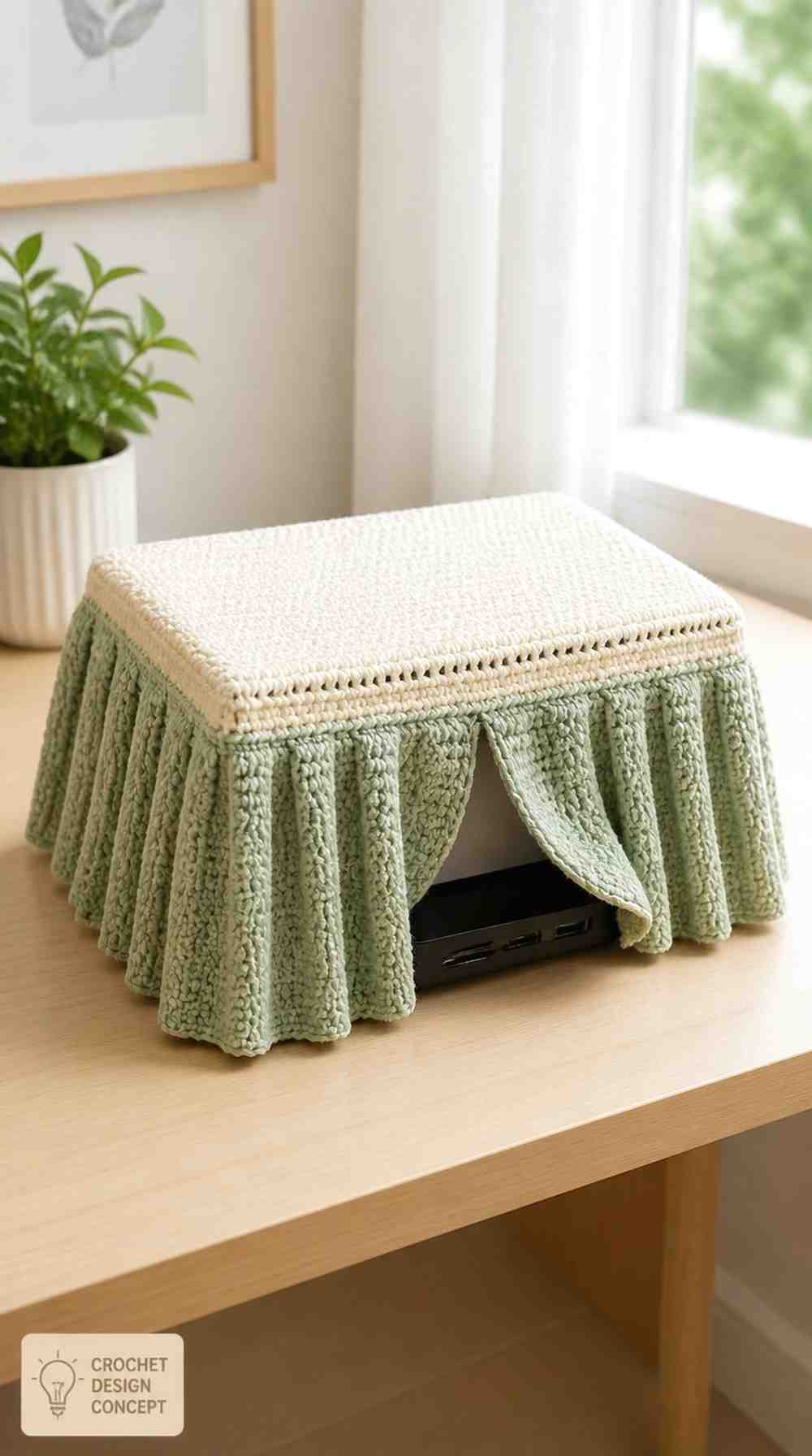
Mint-green crochet gives this small dust-cover hood a soft, gathered appearance. A smooth ivory top panel sits above an evenly folded mint skirt, with vertical pleats falling around all four sides of the independent inner frame.
The lower folds create a more decorative silhouette than straight rectangular panels. One front pleat is lifted slightly to reveal the disconnected docking station inside. The internal frame supports the shape, keeping the crochet from resting directly against the device. This design needs enough desk space for the pleats to hang naturally.
- Pleat Spacing: Arrange the vertical mint folds evenly so the cover retains its rectangular footprint instead of spreading irregularly.
- Top-to-Skirt Join: Keep the ivory upper panel securely joined to the pleated sides without thick seams that distort the frame.
- Extra Fabric: Pleated crochet has more folds that may collect dust, making regular removal and cleaning particularly important.
15. Crochet Burgundy Accordion Dock Dust Shield
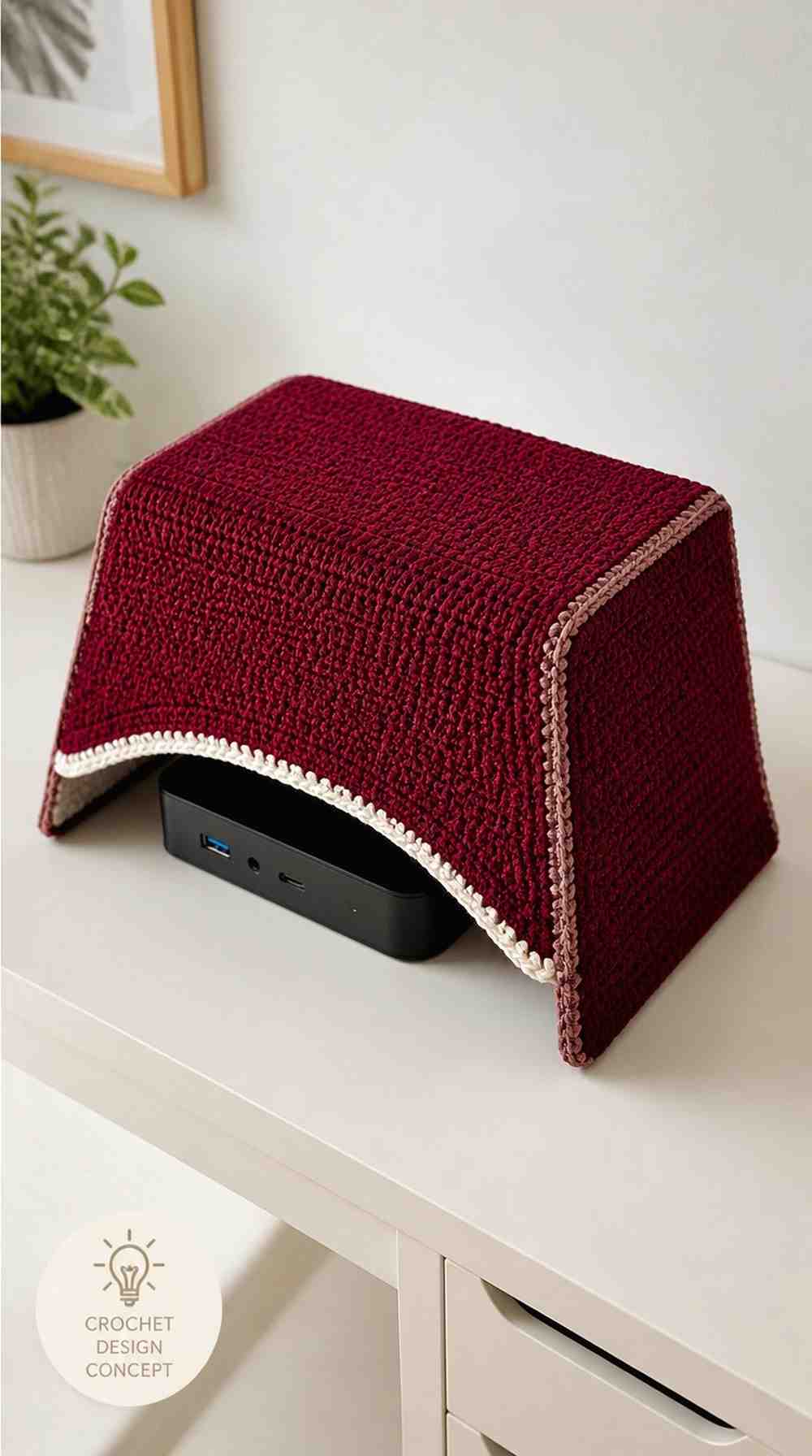
Burgundy crochet creates an unusual accordion-style cover with three broad, insert-supported panels. The center panel forms the flat top, while two folded side panels descend toward the desktop. Dusty-rose joining strips define the folds, and ivory edging finishes the front.
This structured hood stands independently over a disconnected black docking station. Its folded geometry offers an alternative to soft draping fabric, while the removable inserts help preserve the shape. Because the front and rear are comparatively open, the design is better viewed as a decorative dust shield than a fully enclosed storage cover.
- Accordion Folds: Keep the three panels connected by flexible crochet joining strips that allow the hood to retain its intended folded outline.
- Insert Edges: Use smooth, suitable support materials and ensure no sharp corners or exposed inserts can scratch the desktop or electronics.
- Open-Side Limitation: Dust can still enter from the exposed front and back, even when the cover’s top and side panels are in place.
16. Crochet Sky Blue Cloud Dock Cover
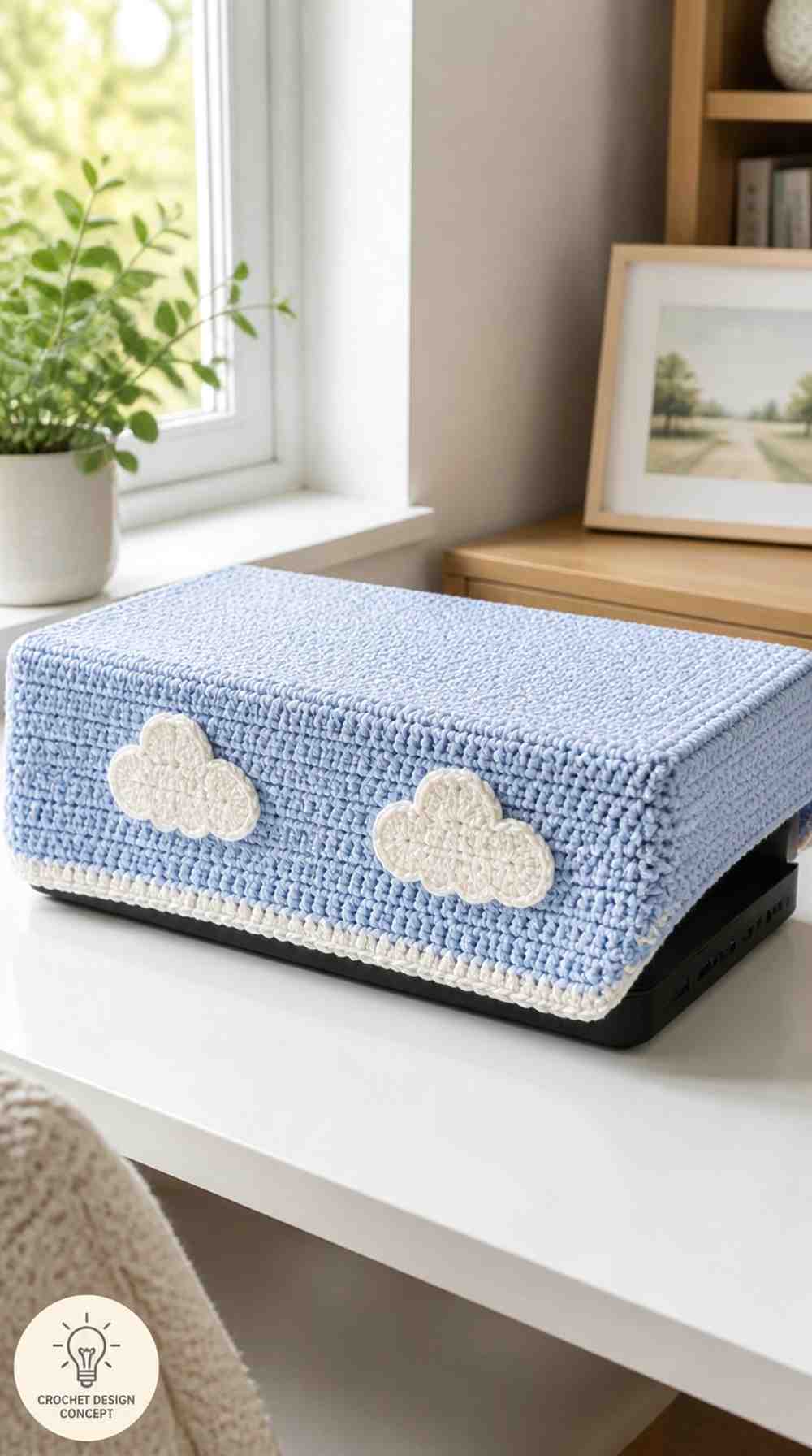
Powder sky-blue crochet creates a gentle, playful dust cover for a small desktop dock. Two flat ivory cloud appliqués decorate the front panel, with rounded lobes and closely joined edges. A clean white border finishes the lower hem.
The cover’s shape remains simple so the clouds become its main feature. A slightly lifted corner reveals the unplugged black docking station beneath the fabric. This concept could suit a bright study or creative desk, where small decorative details help soften the appearance of stored equipment without changing the dock itself.
- Cloud Placement: Keep both ivory motifs flat against the front panel so their edges cannot curl or catch during removal.
- Appliqué Joining: Secure the rounded cloud sections with tidy stitches, avoiding loose tails near the device.
- Desk Styling: The sky-blue and ivory palette works with light furniture, while the cover remains strictly for disconnected storage.
17. Crochet Rust Checkerboard Dock Cloche

Rust-orange and warm-cream crochet squares create a striking checkerboard pattern across the flat top of this small rectangular cloche. Eight solid-textured squares form a two-by-four layout, while plain rust-colored side panels and chocolate edging complete the hood.
The checkerboard provides more visual detail than a plain rectangular cover without introducing raised flowers or hanging decorations. Its front hem is folded upward to reveal the cool, inactive docking station beneath. The joined squares need even tension so the top does not twist into an uneven shape.
- Eight-Square Layout: Arrange the two-by-four color pattern before joining so the rust and cream blocks alternate consistently.
- Top Seams: Keep the square connections flat and secure to avoid raised ridges that distort the cloche’s rectangular top.
- Solid Side Panels: Plain rust crochet around the sides balances the checkerboard surface and avoids unnecessary open stitching.
18. Crochet Blush Daisy Shell Dock Cover
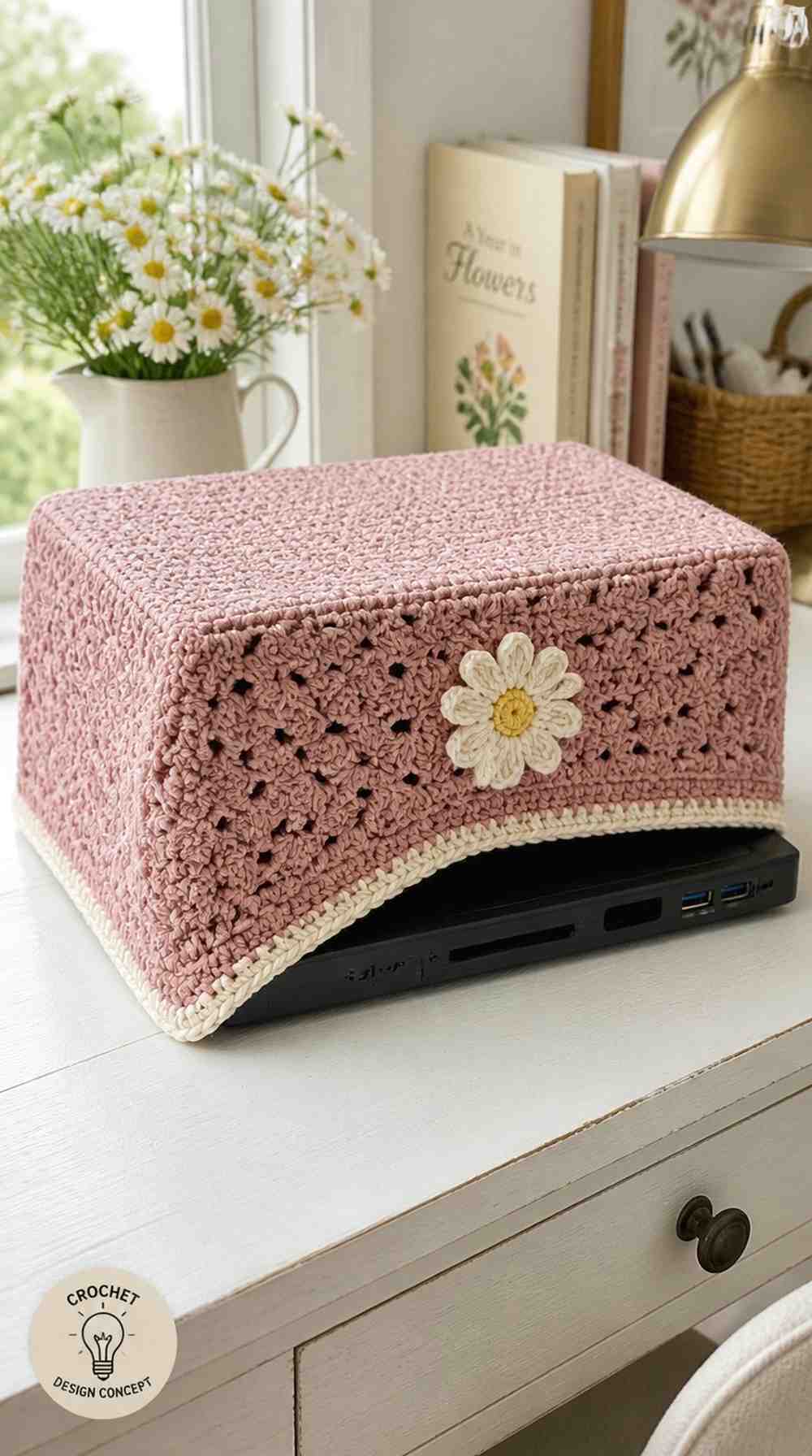
Dusty-blush crochet gives this rectangular docking station cover a soft cottage-inspired appearance. Fine shell-stitch rows decorate its sides, while a closely worked top panel keeps the upper surface visually simple. One small ivory daisy with a butter-yellow center sits flat on the front.
The floral motif adds a recognizable detail without making the cover bulky. A narrow cream lower border finishes the shape, and one corner lifts to reveal the disconnected charcoal dock underneath. This design is most suitable as decorative inspiration for a calm home-office space rather than a protective case for travel.
- Shell-Stitch Rows: Keep the repeating crochet shells evenly joined so the side panels hang neatly without excessive gaps.
- Daisy Attachment: Secure the ivory petals and yellow center flat against the front, keeping all yarn ends away from electronic ports.
- Decorative Use: The floral cover changes the appearance of stored equipment but provides no reliable protection against impacts, spills or heat.
19. Crochet Butter Yellow Reversible Dock Cover
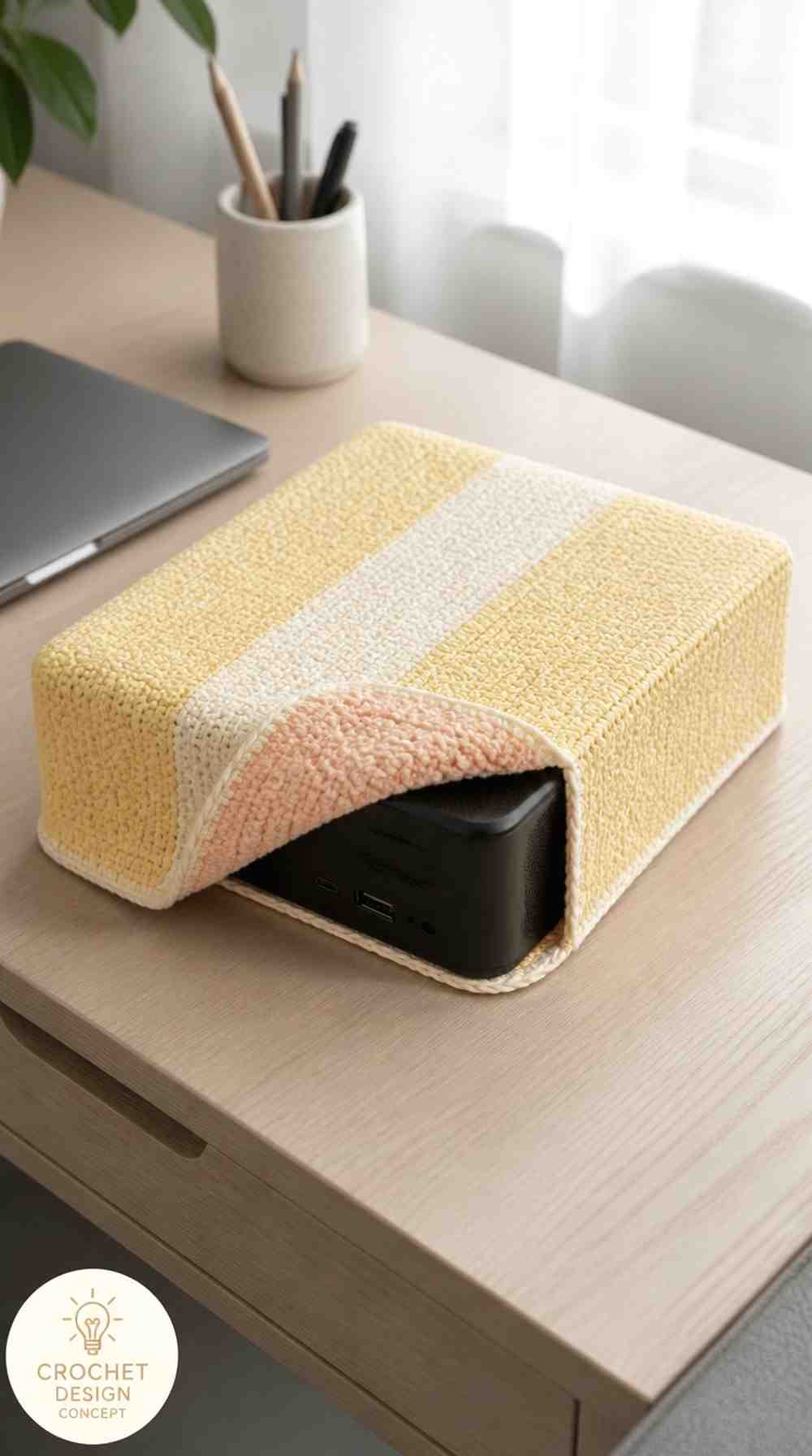
Butter-yellow crochet completes this collection with a bright two-sided dust-cover design. A broad ivory stripe crosses the outer surface, while a folded corner reveals pale-apricot crochet on the reverse side. Cream stitching outlines the rectangular edges.
The layered construction offers two color appearances within one removable cover. Its flat top and straight walls keep the silhouette simple, even with the extra fabric layer. The cover is shown over a fully unplugged black docking station, with the lifted corner allowing part of the inactive device to remain visible.
- Reversible Construction: Join the yellow and apricot layers carefully so neither side develops loose edges or exposed yarn tails.
- Ivory Stripe: Keep the central cream band evenly worked and aligned across the rectangular surface for a balanced appearance.
- Double-Layer Thickness: Two crochet surfaces can trap more dust and add bulk, so consider cleaning access and whether the extra layer is necessary.
Practical Guide to Crochet Docking Station Dust Covers
A crochet docking station cover is different from an ordinary decorative desk mat because the equipment underneath contains electronic components that may produce heat during operation. The safest approach is to treat these ideas as removable storage accessories for equipment that is fully disconnected, switched off where applicable, and cool.
1. Check the docking station manufacturer’s instructions. Some docks have ventilation openings, status lights, attached power supplies or connection ports positioned close to the top or sides. Never obstruct these features while the dock is powered or in use. Google’s charger safety guidance, for example, emphasizes ventilation and warns against covering a charger with fabric during operation.
Help
2. Measure the actual dock. Check its length, width, height and the position of its ports. Leave enough room to lift a storage cover away without scraping the connectors. A cover made for a slim USB-C hub may not fit a taller desktop docking station.
3. Choose a low-shedding material. Smooth, closely worked cotton yarn is worth considering for decorative covers, depending on the fiber-care instructions. Avoid highly fuzzy yarn, loose fibers and unfastened embellishments that might shed near electronic ports.
4. Consider the type of dust protection. Crochet naturally contains spaces between stitches, so it is not an airtight or dustproof seal. A suitable rigid storage enclosure may offer more complete coverage. Decorative open-frame designs are primarily visual accents.
5. Remove the cover before connecting anything. Disconnect and cool the dock before covering it. Remove every part of the textile or storage enclosure before reconnecting the power adapter, laptop, peripherals or charging cables. Never run a cable beneath a fitted crochet cover.
6. Keep everything dry. Do not place damp crochet on electronic equipment. Clean the textile separately, allow it to dry completely and check for loose yarn ends before returning it to storage.
For another approach to decorating stored electronics, see 17 Crochet Retro Record Player Dust Cover Inspiration Ideas. That collection explores removable decorative covers for a different type of electronic equipment.
Want to Make Something Similar?
These 19 designs are original visual concepts, not tested patterns for docking stations. The following resources can help with related crochet-cover construction techniques:
- Crochet Scout — 20 Free Crochet Laptop Sleeve Patterns brings together several crochet sleeve constructions, including folded rectangles, lined covers and different closure styles. These can help readers explore shaping, but they are not instructions for covering a powered dock. Crochet Scout
- Em Rose — Shell Laptop Cover offers a related shell-stitch electronics sleeve pattern. Its stitchwork may be useful for exploring the shell-textured blush design, although the dimensions and intended use differ. Ravelry
Anyone adapting these techniques should check the dimensions of the actual docking station and the manufacturer’s storage and ventilation guidance. A finished crochet cover must not be treated as tested electrical protection.
Which Crochet Docking Station Dust Cover Should You Choose?
| Your main preference | Design to consider | Important consideration |
|---|---|---|
| Simple textured covering | Terracotta Ribbed Cover | Requires accurate rectangular shaping |
| Foldover construction | Navy Foldover Cover | Extra fabric adds thickness |
| Clear protective enclosure | Ivory Scalloped Dome | Requires a correctly sized rigid dome |
| Tray-based arrangement | Ochre Corner-Tie Cover | Corner ties must stay secured to the tray |
| Traditional crochet motifs | Plum Granny Square Cover | Open motif gaps reduce dust coverage |
| Removable button closure | Sage Buttoned Sleeve | Buttons need careful placement |
| Geometric display frame | Coral Tent-Frame Cover | Open ends admit dust |
| Structured decorative hood | Slate Folded-Roof Cloche | Needs a smooth support frame |
| Honeycomb crochet texture | Honeycomb Lined Cover | Two layers require careful care |
| Shelf storage pouch | Oatmeal Drawstring Pouch | Only for disconnected equipment |
| Enclosed storage case | Denim Blue Zippered Case | Zipper must not scratch ports |
| Convenient lifting detail | Lavender Lift-Tab Cover | Tab needs secure joining |
| Transparent geometric decoration | Mocha Lattice Dome | Acrylic provides the main enclosure |
| Soft pleated styling | Mint Pleated Cover | Fabric folds may collect dust |
| Folded panel construction | Burgundy Accordion Shield | Front and back remain open |
| Playful cloud decoration | Sky Blue Cloud Cover | Appliqués need secure attachment |
| Checkerboard design | Rust Checkerboard Cloche | Multiple square joins |
| Floral shell-stitch styling | Blush Daisy Shell Cover | Decorative edges need finishing |
| Reversible colors | Butter Yellow Reversible Cover | Double layers add bulk |
For a simple removable textile concept, the Terracotta Ribbed, Navy Foldover and Lavender Lift-Tab designs are useful starting points. Their basic rectangular shapes are relatively straightforward to compare with the dimensions of a small docking station.
For decorative styling, the Plum Granny Square, Rust Checkerboard and Blush Daisy Shell covers provide more visual detail.
If you prefer a cover that does not rest directly on the stored device, the Ivory Scalloped Dock Display Dome and Mocha Lattice Acrylic Dock Dome are more relevant options to explore. Their rigid enclosures are separate from the crochet decoration, although they must still be removed before the dock is used.
Conclusion
These 19 crochet docking station dust cover inspiration ideas show how a small piece of home-office equipment can inspire a wide range of decorative storage concepts. Simple rectangular hoods, granny-square cloches, pleated covers, lined pouches and transparent domes each offer a different combination of texture, color and structure.
The most important consideration is keeping the electronics safe. Crochet is a decorative material, not a heat-resistant equipment enclosure. Choose a design that suits the actual docking station, follow its manufacturer’s instructions and remove every cover before reconnecting or operating the device.
Which crochet docking station cover would you choose for your desk? Do you prefer the Terracotta Ribbed Cover, Plum Granny Square Cloche, Mocha Lattice Dome or a simple Lavender Lift-Tab design? Share your favorite idea in the comments.
Frequently Asked Questions
1. Can I leave a crochet dust cover on my docking station while it is plugged in?
No. Do not leave a textile cover over a powered or operating docking station. Electronic equipment can generate heat and may require unobstructed airflow. Even if no laptop is currently connected, a powered dock may still contain active components. Remove the cover completely before connecting power, charging devices or using the docking station. Always follow the manufacturer’s instructions.
Help
2. Does crochet keep dust out of a docking station?
Crochet may reduce some direct dust settling when used as a loose cover over safely disconnected equipment, but it cannot provide complete dust protection. Small particles can pass through stitch openings, and yarn itself may shed fibers. A suitable rigid enclosure or manufacturer-recommended storage method may provide more reliable protection.
3. What type of yarn is suitable for a crochet docking station dust cover?
Smooth, low-shedding cotton yarn is one material worth considering for a decorative storage cover because it can produce clearly defined stitches. However, the suitability of any yarn depends on its fiber properties, construction and care requirements. No ordinary crochet yarn should be assumed heatproof, electrically protective or safe to place over operating electronics.
4. How should I measure my docking station before planning a crochet cover?
Measure the full length, width and height of the disconnected device, including any raised parts. Note the position of connection ports, ventilation openings and switches. Allow enough clearance for easy removal, and do not force a tight cover around delicate connectors. If choosing a framed or acrylic enclosure, confirm that its internal dimensions accommodate the entire device without pressure.
5. Are these 19 crochet docking station dust cover ideas available as patterns?
No. These are AI-generated crochet design concepts intended for inspiration, not tested patterns or approved accessories for particular docking stations. The visualized covers may require different stitches, supports, linings and dimensions if developed into real projects. A maker should verify the finished construction and the docking station’s storage requirements before using any textile cover.