Coat buttons can be surprisingly decorative, especially on wool overcoats, tailored winter jackets, and classic duffle coats. Large horn-look buttons, delicate shell finishes, polished metal details, and vintage-style fastenings all give outerwear a distinctive appearance. These 18 crochet coat button protection sleeve inspiration ideas explore small removable-looking covers, shaped button guards, tiny collars, and fitted crochet caps that could add a handmade touch during careful wardrobe storage.
The collection includes round and square button covers, elongated toggle sleeves, decorative scalloped edges, open-mesh details, and connected guards for multiple buttons. Some designs hide the button face completely, while others leave part of the original fastening visible. They are concepts for gentle, temporary storage use—not proven impact protection, replacements for coat buttons, or accessories intended to remain in place during washing, dry cleaning, or normal fastening.
These are AI-generated crochet design visualizations for inspiration, not photographs of tested handmade pieces or step-by-step patterns.
Quick Design Selection Guide
| Your button or storage preference | Design to explore |
|---|---|
| Large round horn-look buttons | Crochet Terracotta Ribbed Button Dome |
| Keep the original button face visible | Crochet Oatmeal Button Shank Collar |
| Cover two vertically aligned buttons | Crochet Indigo Twin-Button Guard Sleeve |
| Wooden duffle-coat toggle | Crochet Mustard Horn Toggle Tip Sleeve |
| Square metal coat buttons | Crochet Charcoal Square Button Guard |
| Decorative oval buttons | Crochet Burgundy Oval Scallop Button Sleeve |
| Three decorative cuff buttons | Crochet Olive Triple Cuff-Button Guard |
| A small removal tab | Crochet Cobalt Pull-Tab Button Cap |
| Soft coffee-inspired colors | Crochet Mocha Gradient Button Dome |
1. Crochet Terracotta Ribbed Button Dome
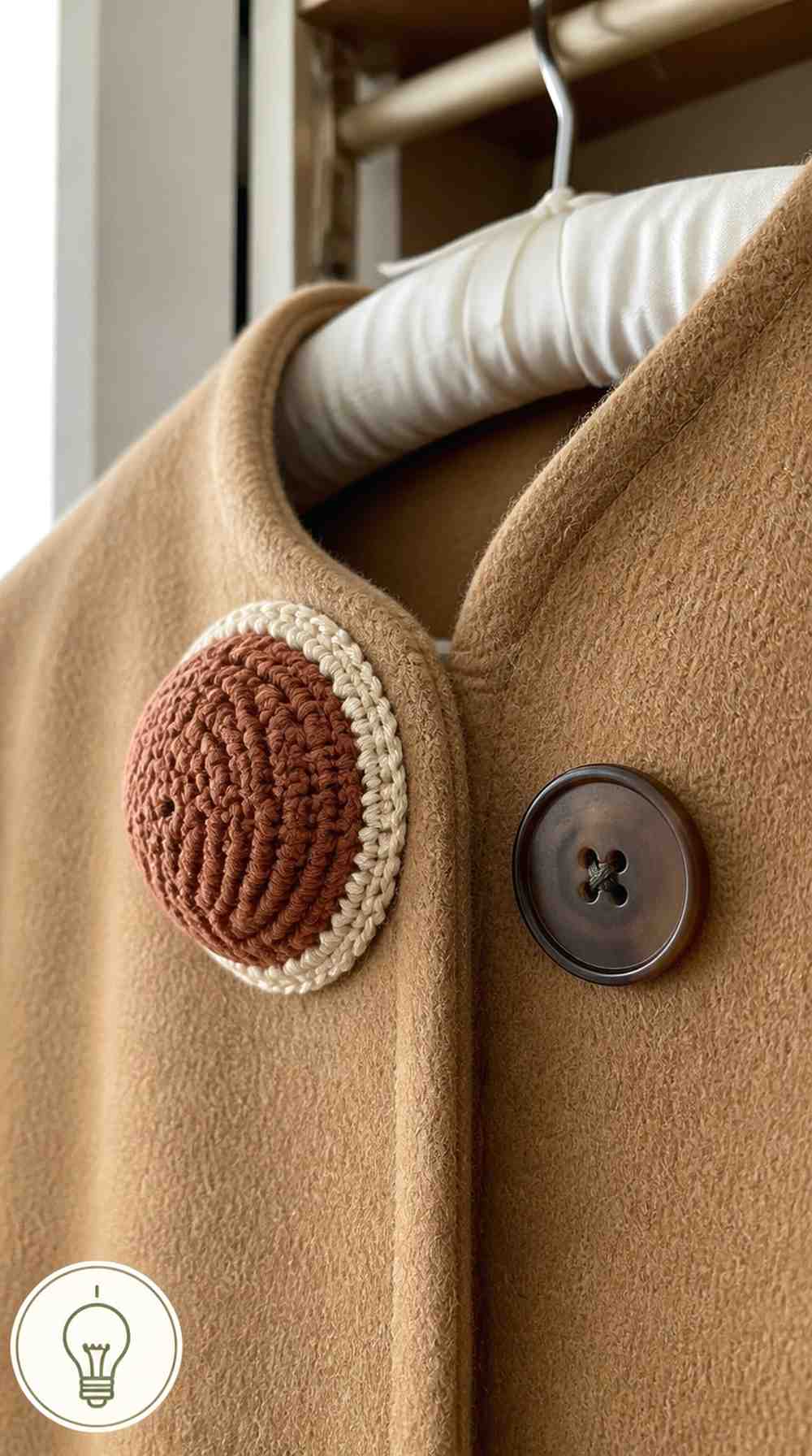
Warm terracotta crochet forms a small rounded dome over a large dark-brown horn-look button on a camel wool coat. Fine radial ribs spread across the covered face, while a thin ivory border defines the edge. A small rear opening leaves space around the original button attachment.
This concept keeps the crochet close to the button’s natural shape instead of using a loose pouch. The raised ribbing provides the main visual detail, while the cream edge adds contrast against the dark button and warm coat fabric.
- Round Dome Shape: The cap should follow the button’s diameter and depth without squeezing its edges or pulling against the stitching underneath.
- Radial Crochet Ribbing: Fine ribs can add texture across the rounded face, but excessive thickness may make the cover bulky.
- Shank Clearance: Leave room behind the button so the crochet does not place constant tension on the threads holding it to the coat.
2. Crochet Oatmeal Button Shank Collar
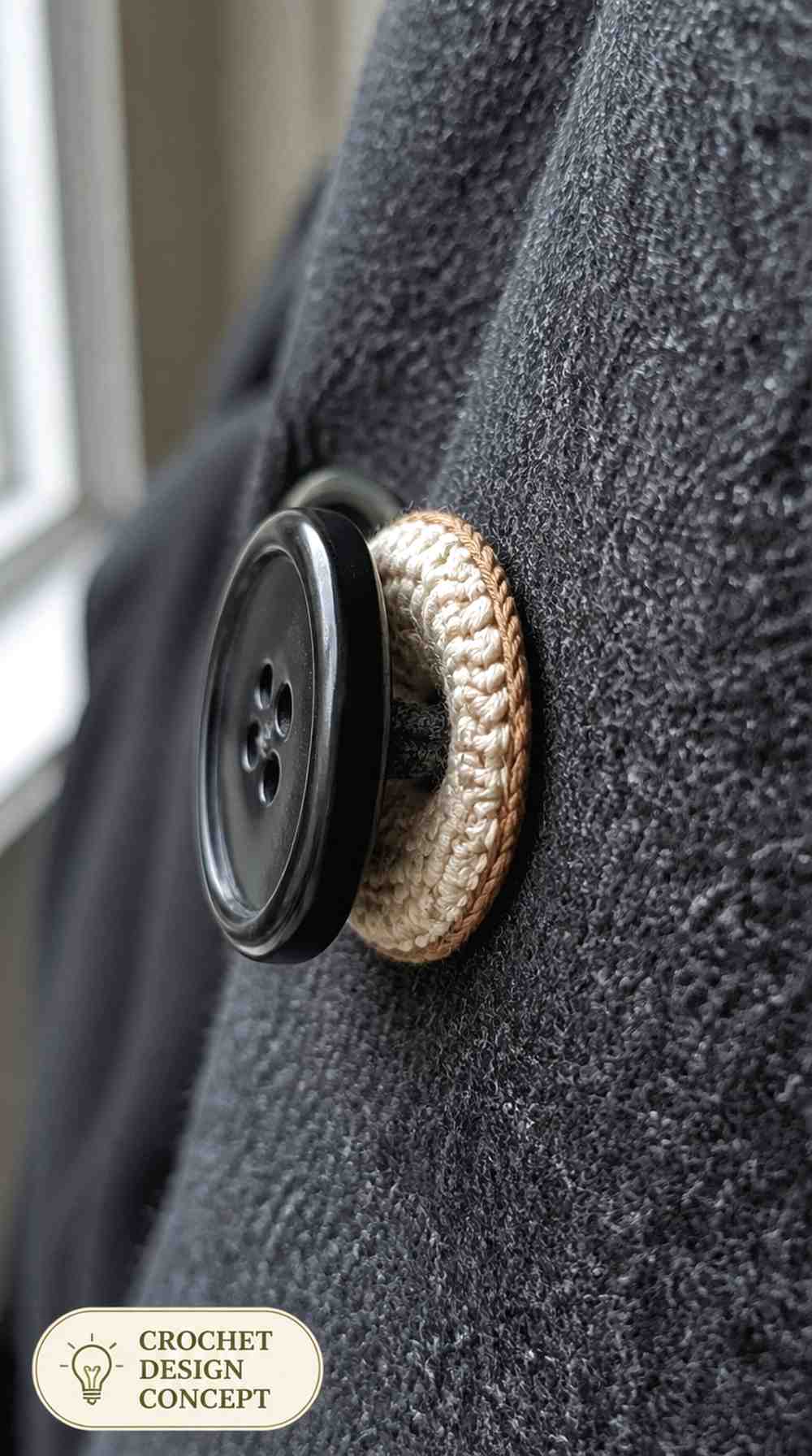
Instead of covering the entire button, this oatmeal crochet concept forms a tiny collar around the thread shank behind a large black coat button. The circular button face remains exposed, while a narrow cinnamon-colored border finishes the small crocheted ring.
The design is more understated than a full button dome. It focuses on the space between the coat fabric and the button rather than the button’s outer face. Its miniature construction makes accurate sizing particularly important, especially on buttons attached with short thread shanks.
- Shank-Only Coverage: This idea leaves the front of the button exposed and should not be treated as protection against impacts to its visible surface.
- Loose Collar Fit: Avoid tightening crochet around the thread stem. Pressure or friction could weaken the existing attachment.
- Small Side Join: A flat joining area may allow the collar to remain compact without creating a bulky knot beneath the button.
3. Crochet Indigo Twin-Button Guard Sleeve
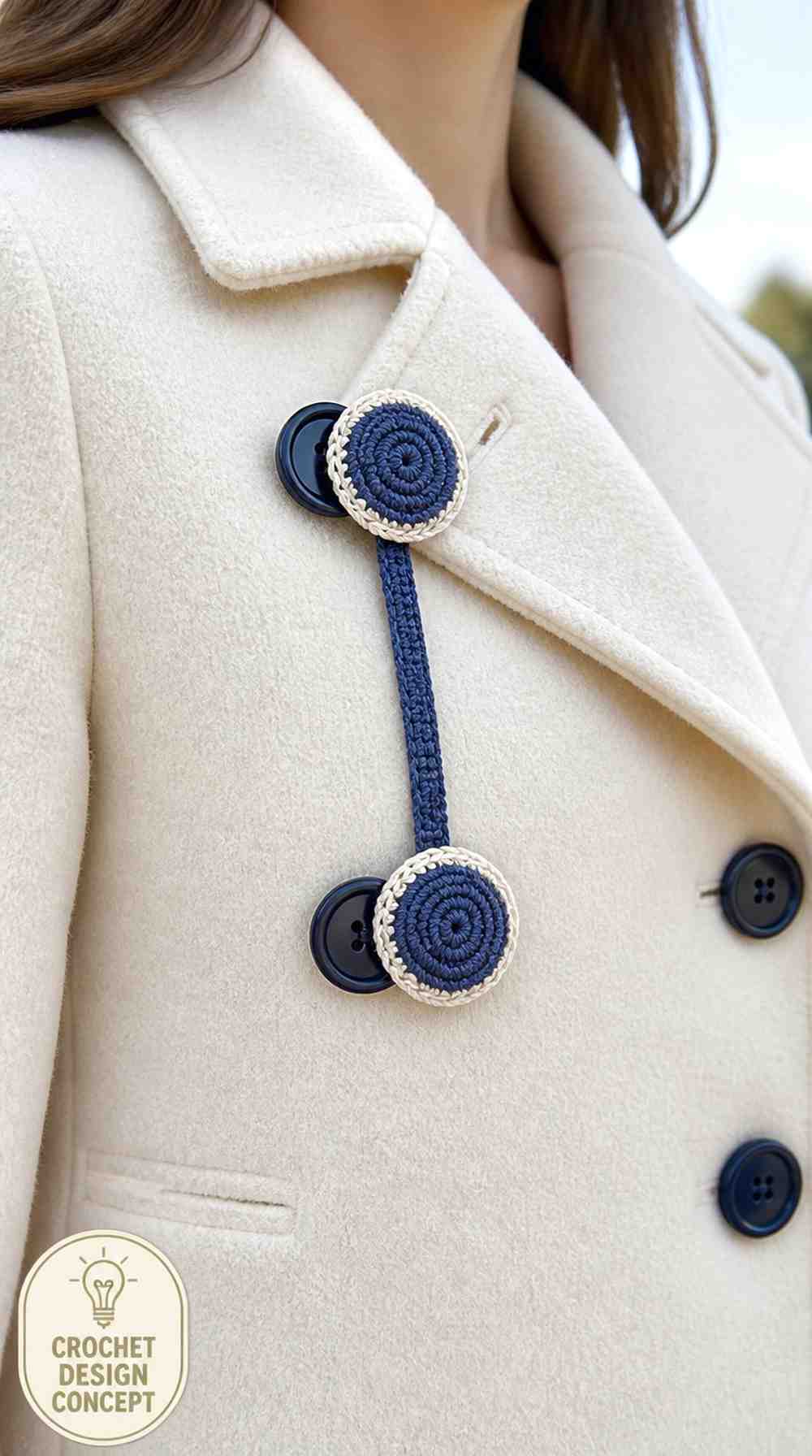
Two matching indigo crochet domes cover vertically aligned buttons on a cream double-breasted coat. A narrow flat crochet bridge connects the two covers, while ivory edging outlines each circular section.
The connected arrangement gives the pair a coordinated appearance instead of treating each button as a separate accessory. The bridge follows the coat’s front edge, leaving the opposite buttonhole placket clear. This makes the design an interesting example of how small crochet covers can form one removable-looking storage accessory.
- Button Spacing: Measure the distance between the two buttons before considering a connected cover. Incorrect spacing could pull against their attachments.
- Flat Connecting Bridge: The central strip should lie naturally on the coat without twisting or gathering the wool fabric.
- Double-Breasted Placement: Remove the entire guard before fastening or wearing the coat so it does not interfere with the original closure.
4. Crochet Mustard Horn Toggle Tip Sleeve
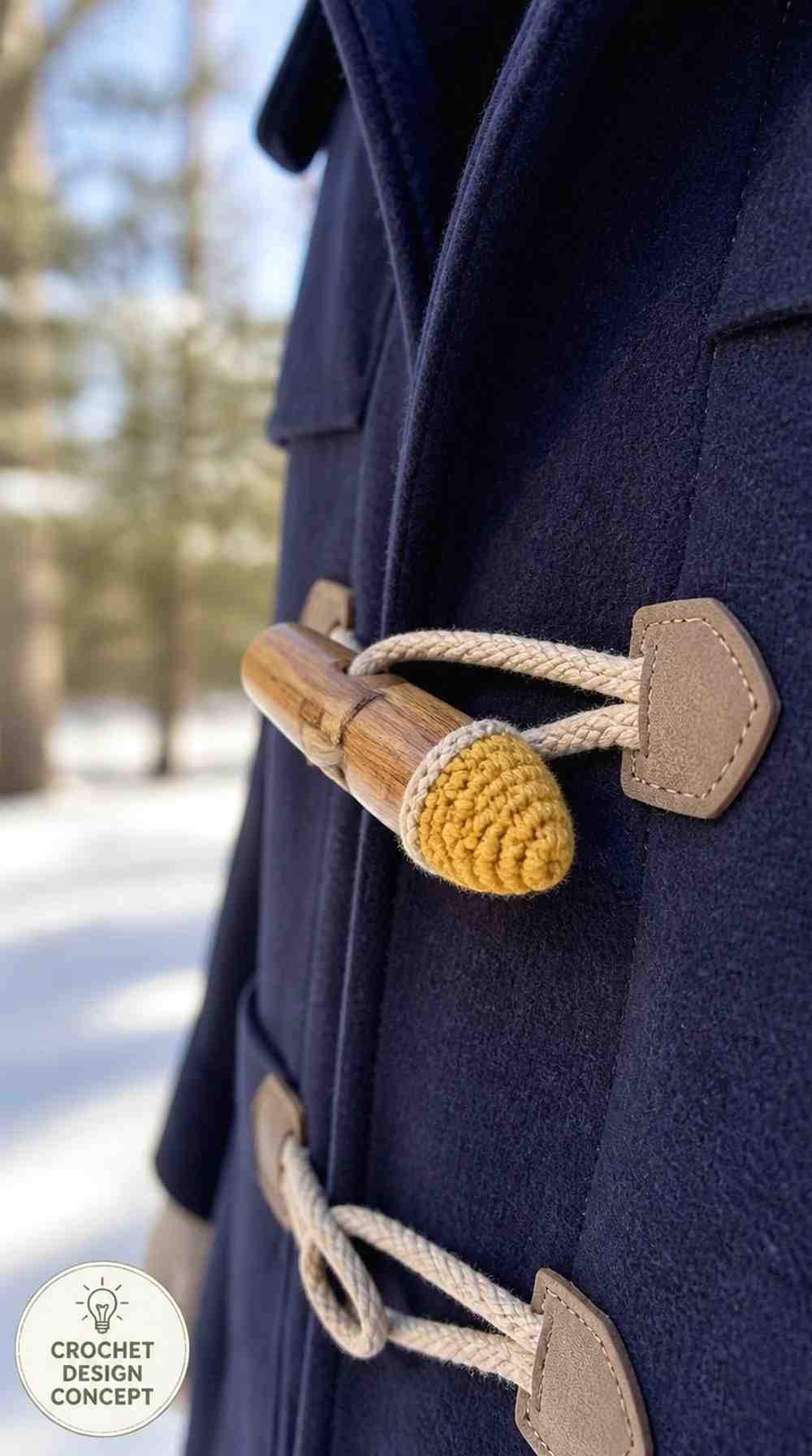
Muted-mustard crochet covers the rounded outer tip of a wooden toggle on a navy duffle coat. Fine horizontal rows create a closely textured sleeve, while a narrow cream border finishes its opening.
Unlike a conventional round button cover, this design follows the elongated shape of a toggle fastening. Most of the wood remains visible, and the original cord loop sits beside the crocheted tip. The contrast between mustard yarn, natural wood, and navy wool gives the small accessory a classic winter appearance.
- Toggle Tip Shape: A tapered wooden toggle needs a differently shaped sleeve from a flat round button. Compare its widest section with the outer tip.
- Original Cord Loop: Keep the fastening loop completely unobstructed, and remove the sleeve before operating the closure.
- Short Crochet Coverage: Covering only the tip preserves the original wooden appearance but does not establish that the toggle is protected against cracking or abrasion.
5. Crochet Espresso Checkerboard Button Cap
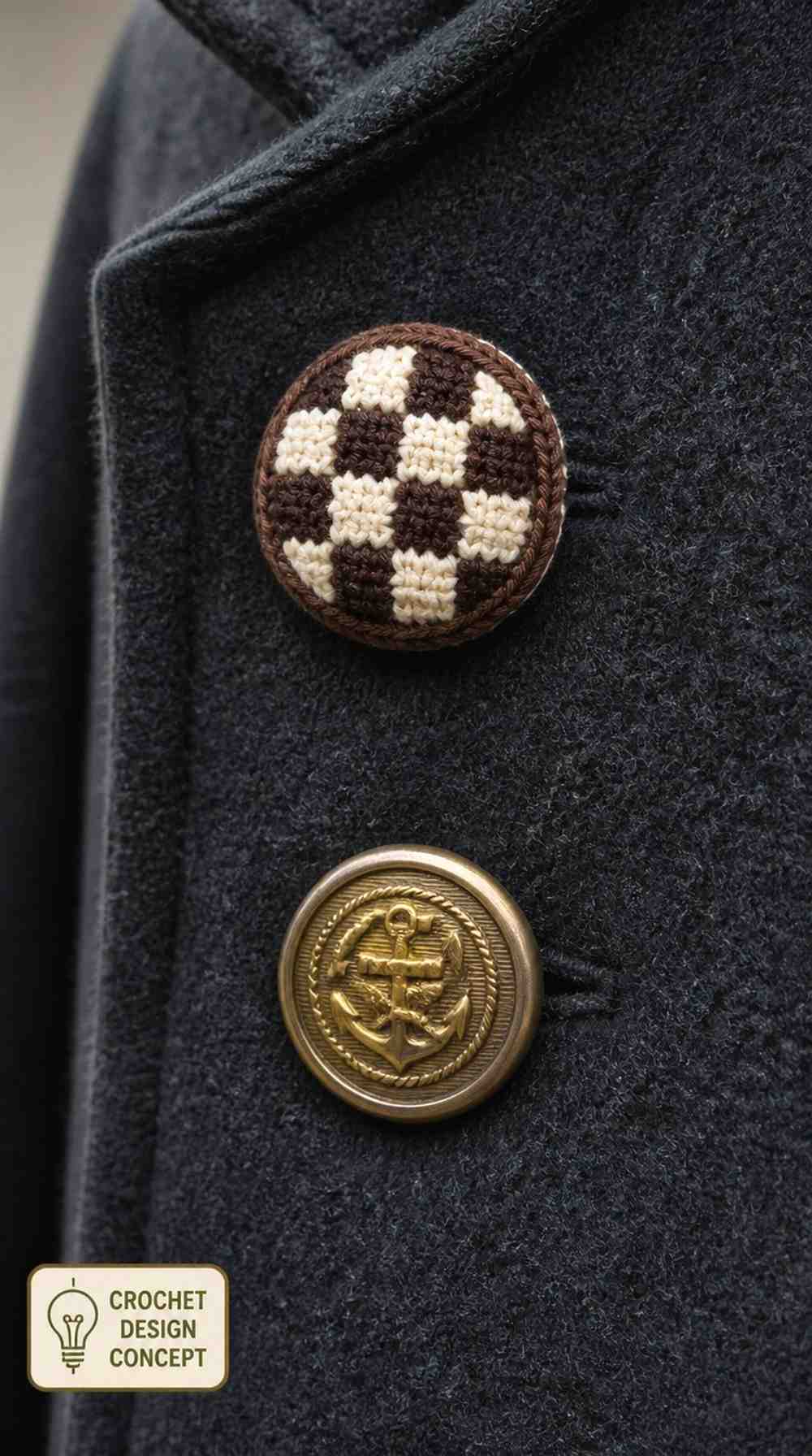
Miniature espresso-brown and vanilla-cream squares form the front of this rounded crochet button cap. A narrow mocha side wall follows the edge of the button, giving the cover a compact, slightly structured appearance.
The design is shown on a charcoal wool pea coat, where a neighboring uncovered brass-look button provides a useful comparison. Its visual character comes from closely worked tapestry crochet rather than raised decoration. The small checkerboard creates a clear pattern without requiring individual joined squares or additional embellishments.
- Miniature Colorwork: Keep the checks small enough to remain recognizable on a button-sized surface without adding bulky joins.
- Rounded Side Wall: A shallow outer wall can follow the button edge, but it must not force the button away from its original attachment.
- Light Yarn Sections: Cream stitches may show dust or handling marks, so consider how easily the cover can be cleaned separately.
6. Crochet Burgundy Oval Scallop Button Sleeve
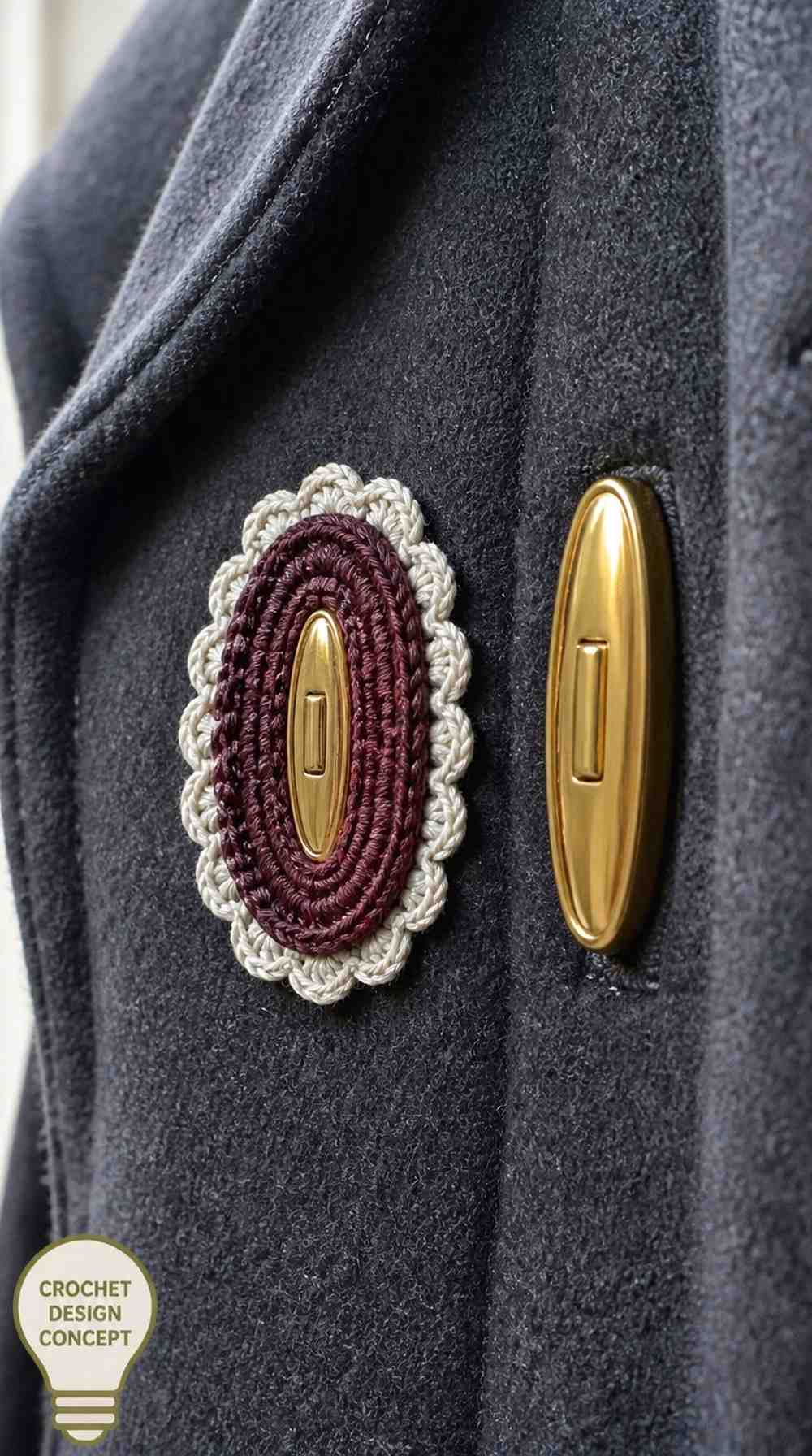
Deep-burgundy crochet forms an oval cap over an elongated antique-gold button. Tiny ivory scallops follow the outside edge, creating a decorative border around the densely stitched center.
The shape makes this design noticeably different from the round-button concepts. Instead of forcing a circular cover over an elongated fastening, the crochet follows the original oval outline. The small scallops soften the look without extending into large loops. It is an appealing option for exploring temporary decorative covers on formal winter coats.
- Oval Sizing: Measure both the button’s length and width. A cover shaped for a round button may distort an elongated fastening.
- Flat Scalloped Border: Keep the ivory shells small and closely connected to avoid catching on neighboring fabric.
- Metal Finish: Crochet should not be assumed to prevent scratches or tarnishing, especially if dirt becomes trapped between the yarn and button.
7. Crochet Pearl Spiral Button Cover
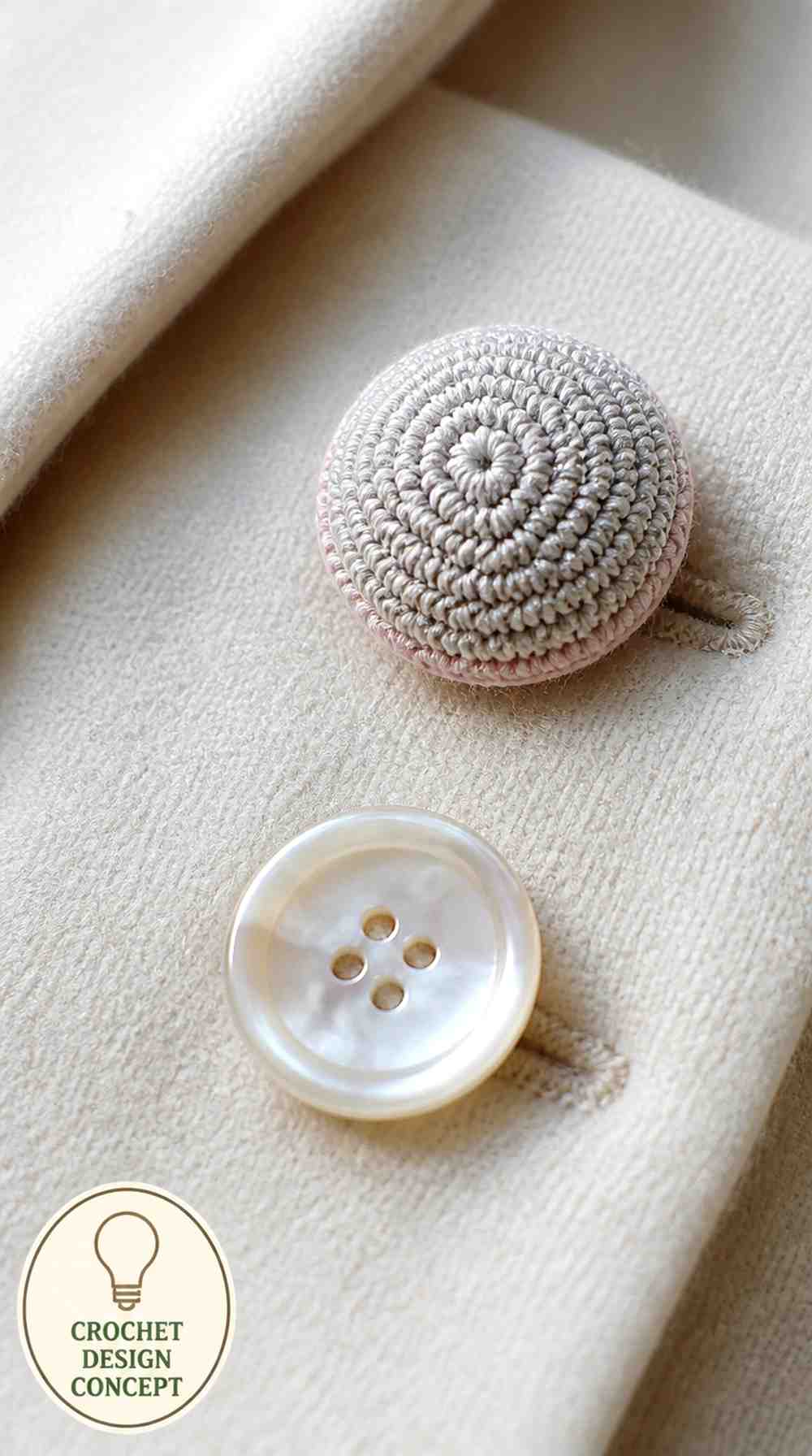
A delicate pearl-grey crochet spiral covers one large mother-of-pearl button on an ivory wool coat. Closely connected stitches move outward from the center, while a thin blush-pink rim adds subtle contrast.
The spiral creates a decorative surface without bulky raised motifs. A neighboring uncovered shell button shows the natural iridescent finish beneath the concept. This design focuses on refined stitch definition and gentle color coordination, making it especially interesting for coats with polished or delicate-looking fastenings.
- Spiral Stitch Structure: Keep the circular rounds even so the covering forms a shallow dome rather than a pointed cone.
- Shell Button Sensitivity: Avoid forcing a tight crochet cap over a fragile button or rubbing its surface during fitting.
- Blush Outer Rim: A narrow contrasting border can finish the spiral without introducing thick fabric layers around the button edge.
8. Crochet Charcoal Square Button Guard
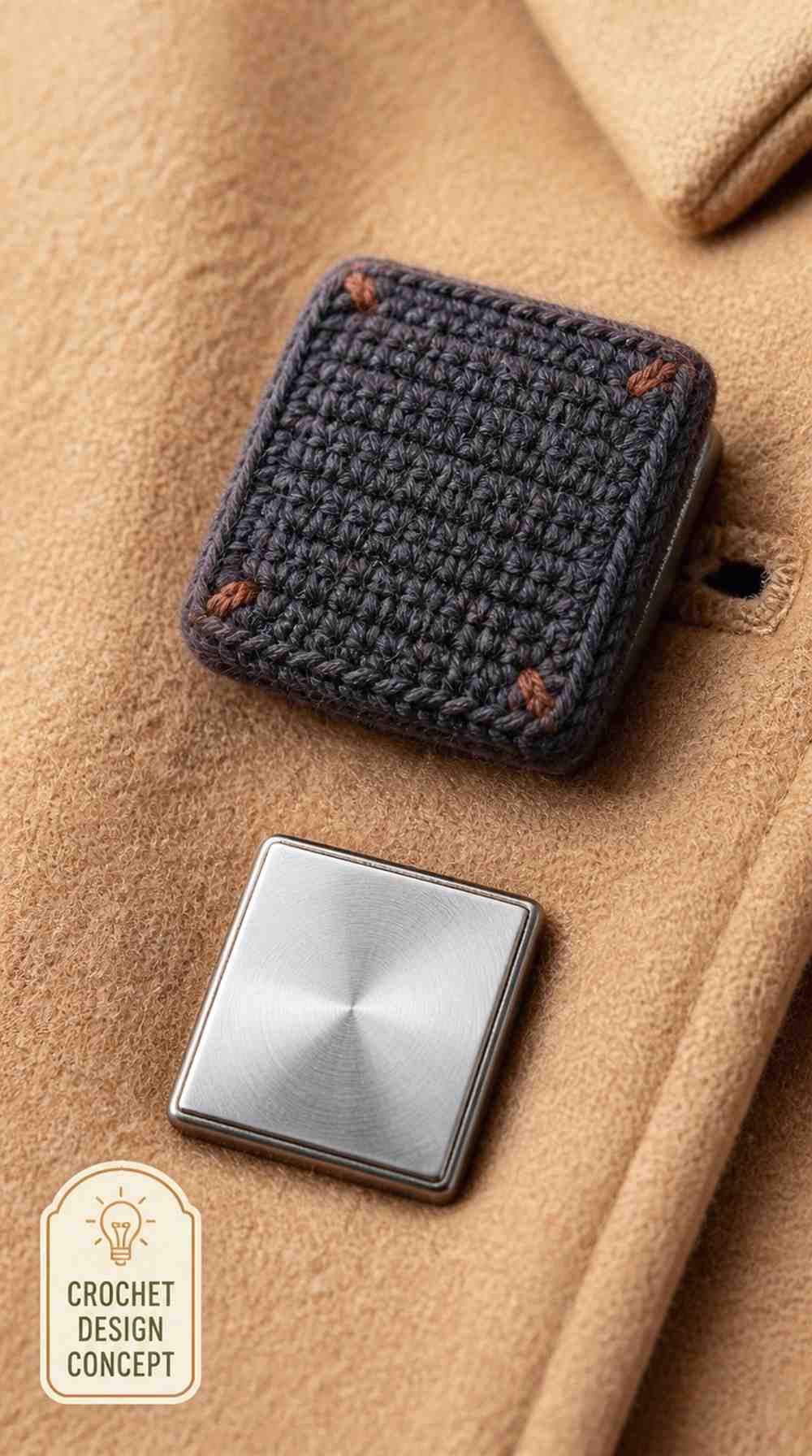
Charcoal-grey crochet forms a miniature square cover around a brushed-metal button on a warm tan coat. Straight single-crochet rows shape the front panel, while four neatly formed corners and tiny burnt-rust accent stitches emphasize its geometry.
Unlike rounded domes, this design uses shallow structured side walls to follow a square fastening. A neighboring uncovered button establishes the original shape. The contrast between charcoal yarn, rust corner details, and tan wool gives the accessory a tailored appearance without requiring large decorative motifs.
- Square Corner Shaping: The cover needs enough corner definition to follow the button without forcing the crochet into an awkward rounded shape.
- Flat Front Panel: Dense rows create a simple surface that allows the four burnt-rust corner accents to stand out.
- Metal Button Clearance: Avoid pushing the shallow side walls tightly around sharp or raised metal edges that could snag the yarn.
9. Crochet Sage U-Notch Button Guard
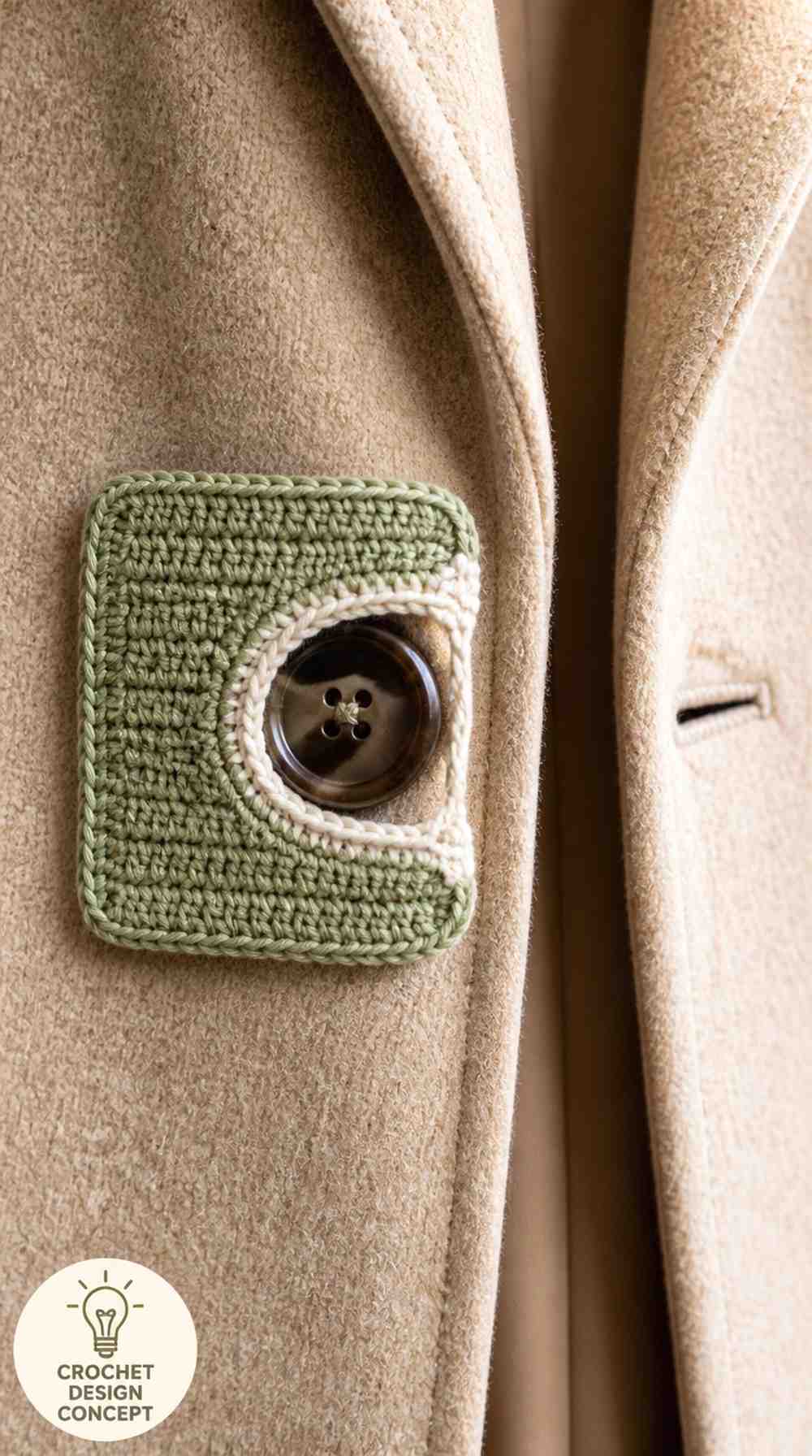
Muted-sage crochet surrounds the outer area of a large dark-horn button, with a deep U-shaped front notch leaving the center visible. A narrow cream border follows the curve, while two short side flaps define the guard’s open shape.
This concept differs from a full cover because part of the original button face remains exposed. Its rectangular outline and shaped opening make it suitable for exploring a more decorative storage guard. The small side sections create visual framing rather than a sealed protective pocket.
- U-Shaped Opening: Keep the cutout centered so the original button remains visible without the crochet pressing against its edges.
- Side Flap Clearance: Short fabric returns should lie neatly around the button area without trapping the coat’s front placket.
- Partial Coverage: The visible button center remains exposed, so this concept should not be presented as complete surface protection.
10. Crochet Coral Overlap Button Envelope
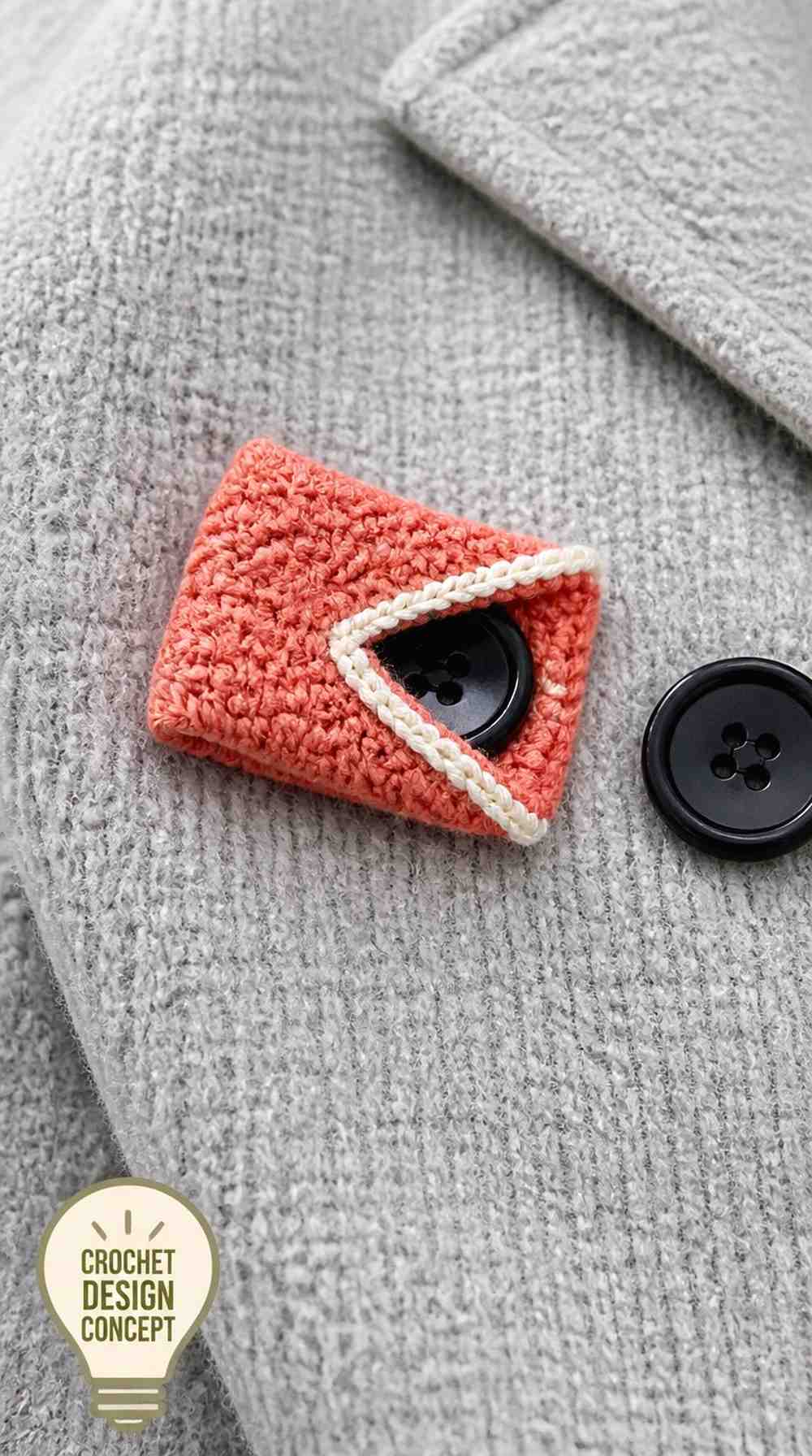
Two small overlapping crochet flaps distinguish this dusty-coral button envelope. The dense front panels meet diagonally, with a narrow cream border highlighting their layered edges. A broad black coat button sits beneath the overlapping fabric.
The envelope creates a more tailored appearance than a simple circular cap. Its rectangular backing and angled front construction are suited to exploring how a button could be temporarily covered during storage. Because the overlap has no separate fastening, its ability to stay in place would need checking.
- Diagonal Overlap: The two front flaps should lie flat without forming a bulky ridge against the button.
- Button Depth: Allow room inside the envelope for the button’s raised surface rather than pressing it tightly against the coat.
- Removable Construction: Without a separate closure, the sleeve could slip. Do not assume the layered design will remain secure during movement.
11. Crochet Dusty Blue Snap-Face Sleeve
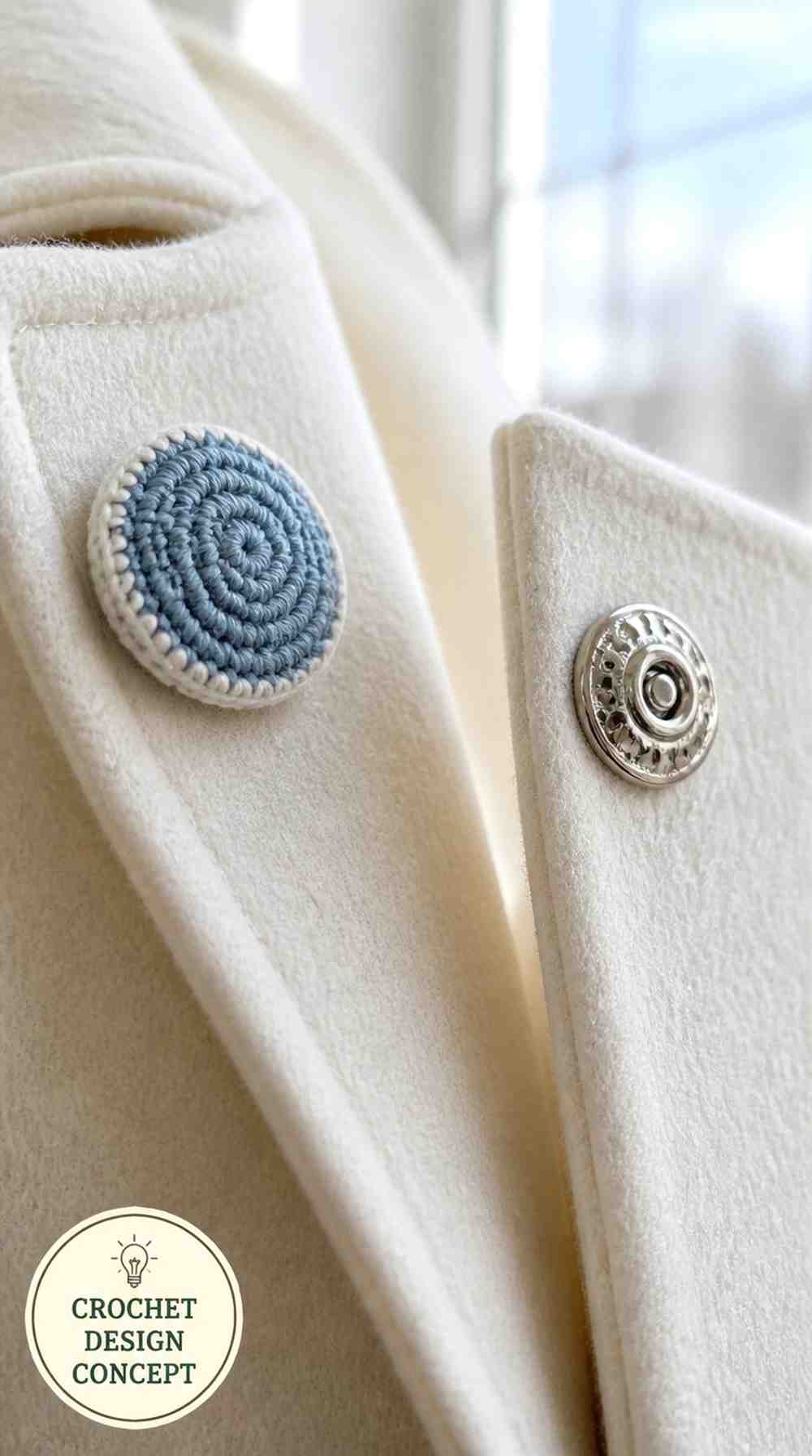
Dusty-blue crochet forms a shallow circular cap over a large decorative snap fastener on a cream wool coat. Dense concentric stitches cover the snap face, while a narrow ivory rim gives the little sleeve a finished outline.
The concept is photographed on an open coat flap, with another uncovered silver snap visible nearby. Unlike ordinary sewn buttons, snap fasteners depend on two components meeting correctly. This removable-looking crochet cover is therefore intended as a storage concept only, not something to leave attached while closing the coat.
- Snap-Face Shape: A circular cover should follow the visible metal face without entering the snap’s fastening mechanism.
- Closure Clearance: Remove the crochet before pressing the snap closed. Fabric caught between the components may interfere with their operation.
- Metal Surface Care: A soft-looking cover does not guarantee protection against moisture, tarnishing, or mechanical damage.
12. Crochet Olive Triple Cuff-Button Guard
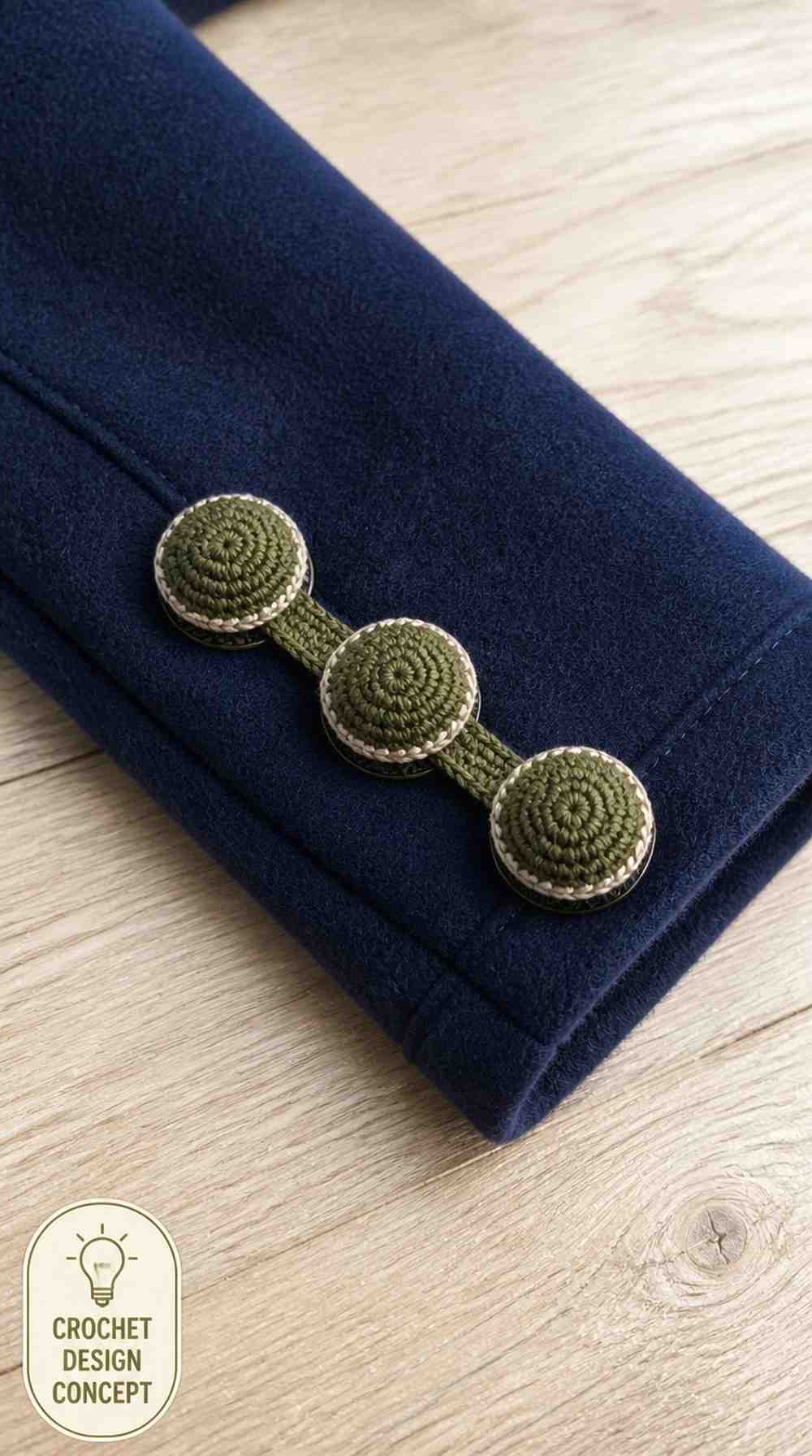
Three small olive-green crochet domes sit along the cuff of a navy wool coat. Each cover has a thin oatmeal border, while two short flat bridges connect the three buttons into one coordinated strip.
The design focuses on decorative cuff buttons rather than the larger fastenings along the coat front. Its repeated shapes create a neat, tailored appearance that follows the existing button arrangement. Because cuff buttons may sit close together, the small bridges must be proportioned carefully to avoid gathering the surrounding fabric.
- Three-Button Spacing: Check the distances between the original cuff buttons before planning a connected guard.
- Flat Joining Bridges: Keep both connecting strips shallow so the garment fabric does not bunch between the buttons.
- Cuff Storage Use: Remove the connected cover before wearing the coat, especially if it restricts sleeve movement or catches on other garments.
13. Crochet Rust Half-Shell Button Sleeve
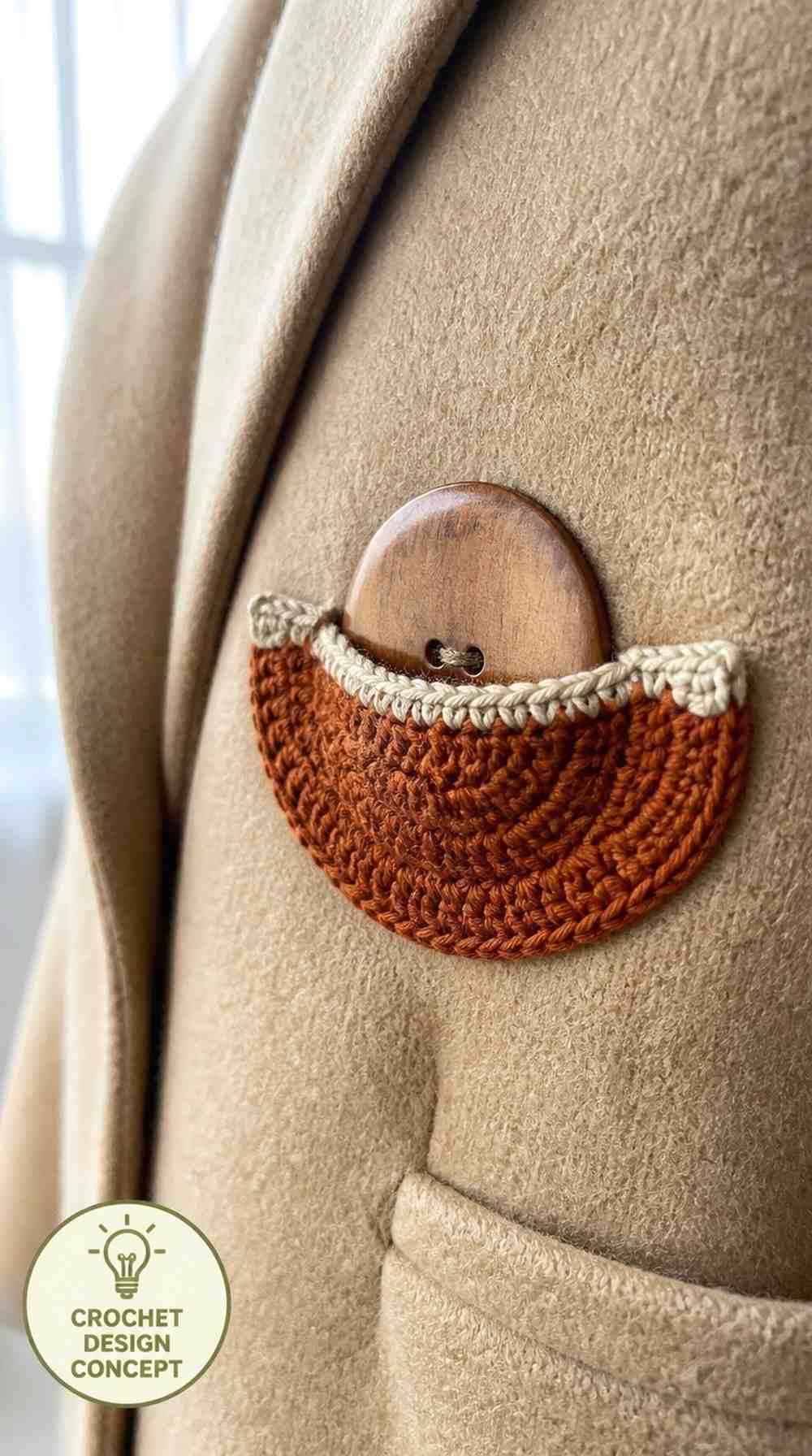
Burnt-rust crochet forms a shallow half-shell around the lower section of a large oval wooden button. The upper half of the polished wood remains visible, while a narrow oatmeal edge finishes the curved crochet opening.
The design combines the appearance of a miniature pocket with the shape of a button cover. Instead of surrounding the entire fastening, the semicircular fabric cups one side. This gives the accessory a distinct silhouette while allowing the original wooden button to remain part of the visual design.
- Half-Coverage Shape: The curved pocket needs to follow the lower edge of the button without forcing it upward.
- Wooden Surface: Ensure the crochet is clean and dry before placing it against wood. Damp fabric may be unsuitable for prolonged contact.
- Short Side Returns: The small side sections help define the half-shell shape but should not pull against the button’s thread shank.
14. Crochet Plum Double-Wall Button Cushion
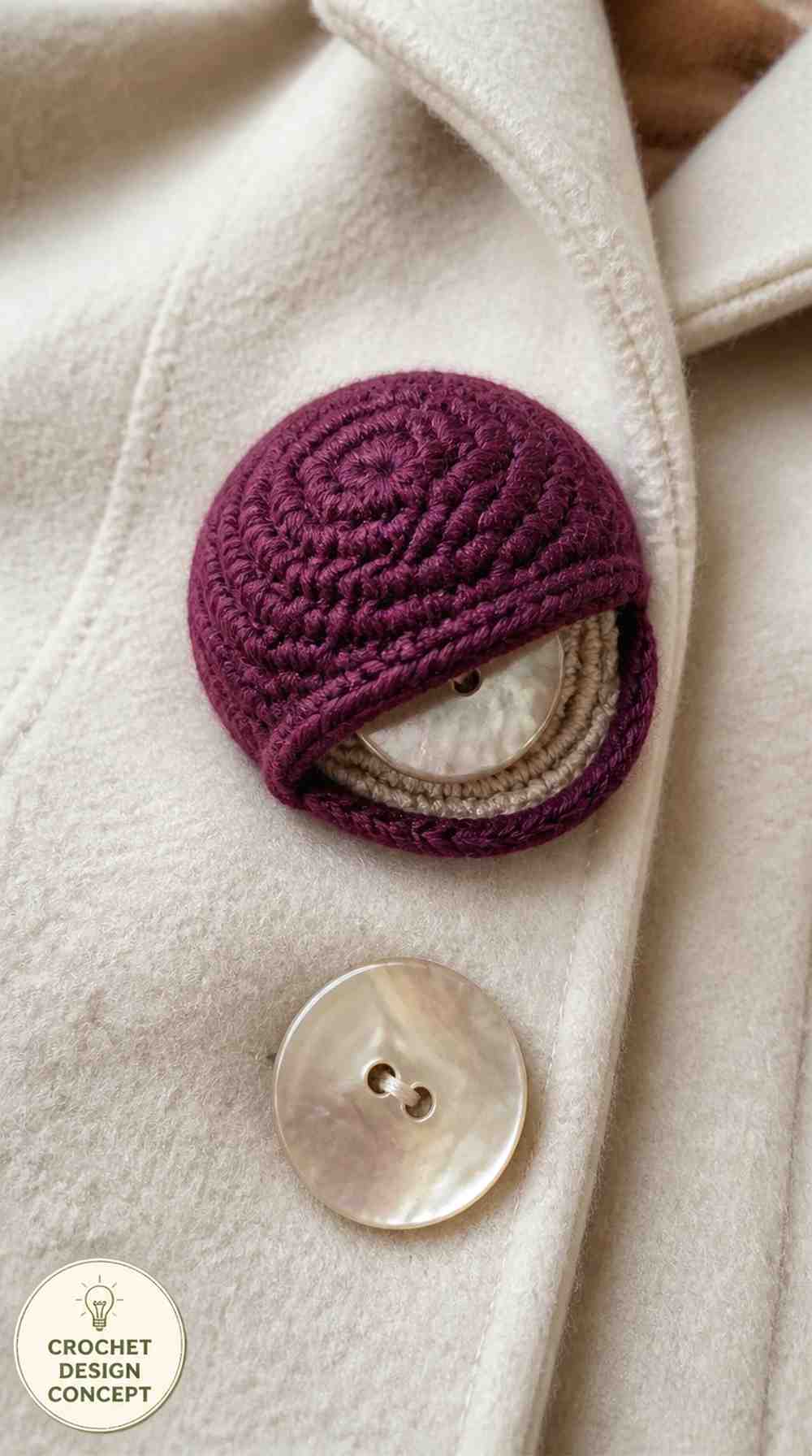
Deep-plum crochet creates a compact double-layered dome over a decorative shell button. A narrow rolled edge frames the outer cover, while one small folded-back section reveals a warm-beige inner crochet layer.
This design explores a cushioned appearance without showing loose stuffing or a bulky pillow-like shape. The contrast between the plum exterior and beige lining makes the layered construction visible. Although a double wall may look more substantial, the concept has not been tested for actual impact or scratch protection.
- Double Crochet Layer: Two fabric surfaces can add thickness around the button, so allow sufficient space without compressing the fastening.
- Folded-Back Detail: Keep the beige inner layer neatly attached and accessible for cleaning.
- Protection Limitation: Extra fabric is not proof of cushioning performance. Fragile shell buttons may need professional care during cleaning and storage.
15. Crochet Cobalt Pull-Tab Button Cap
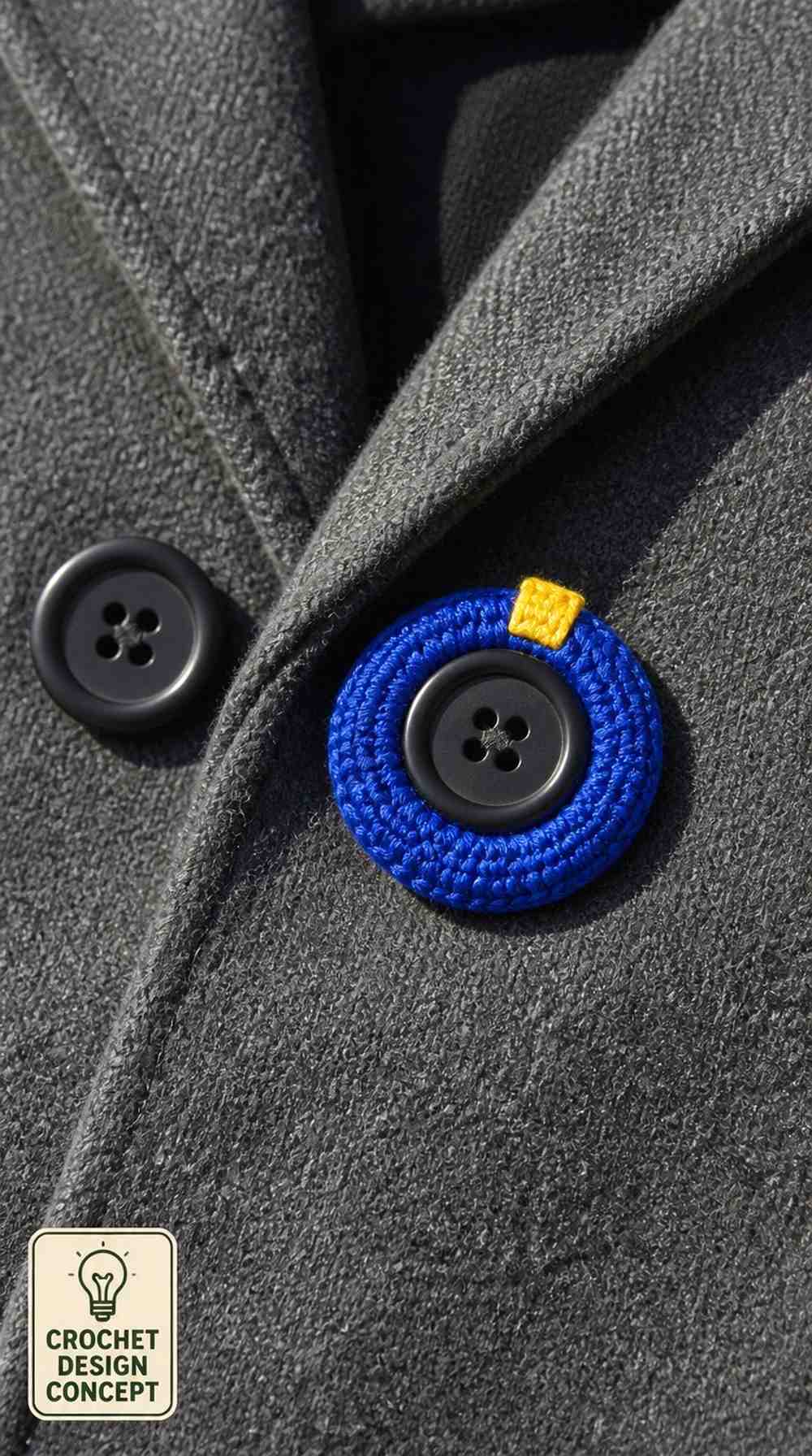
A vivid cobalt-blue crochet cap covers one large matte-black button on a charcoal wool coat. Dense circular stitches form the rounded face, while a tiny canary-yellow rectangular tab lies flat near the upper edge.
The contrast between the blue dome and yellow tab makes this small accessory easy to recognize. Unlike the plain circular covers, the design includes a visible place to grasp when removing it. The tab is decorative and should not be used to pull against the button’s attachment threads.
- Small Removal Tab: Keep the yellow extension flat and securely joined so it does not become a loose loop.
- Gentle Removal: Ease the cover off the button rather than tugging hard on the tab or coat fabric.
- Bold Color Contrast: Bright cobalt and yellow stand out against charcoal wool, making the covering easy to notice before wearing the coat.
16. Crochet Ivory Open-Mesh Button Cover
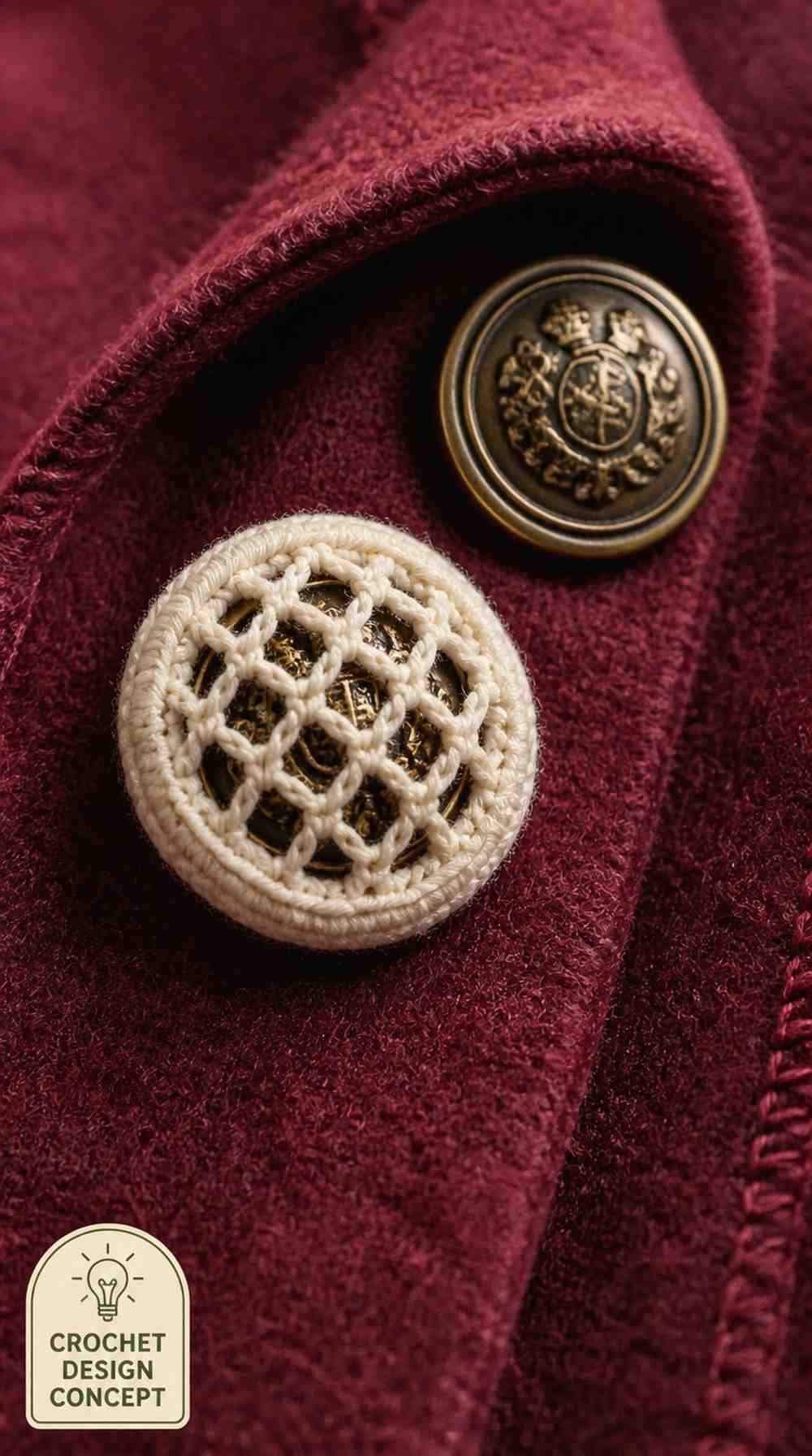
Warm-ivory crochet forms an airy dome around a dark-brass coat button. An orderly diamond-mesh front reveals the metal surface beneath, while a denser ivory ring finishes the outer edge.
This design uses negative space rather than complete coverage. The open crochet lets the original brass color remain visible, creating a softer decorative appearance without hiding the button entirely. Compared with the solid domes, the mesh introduces more small openings, which can catch on raised details or collect dust.
- Diamond-Mesh Openings: Keep the connected loops small and consistent so the mesh follows the button shape without stretching excessively.
- Visible Metal Face: The exposed brass remains vulnerable to contact, so this is primarily a decorative concept.
- Dense Outer Rim: The solid border gives the openwork a defined shape, although it must not grip the button too tightly.
17. Crochet Forest Side-Laced Button Sleeve
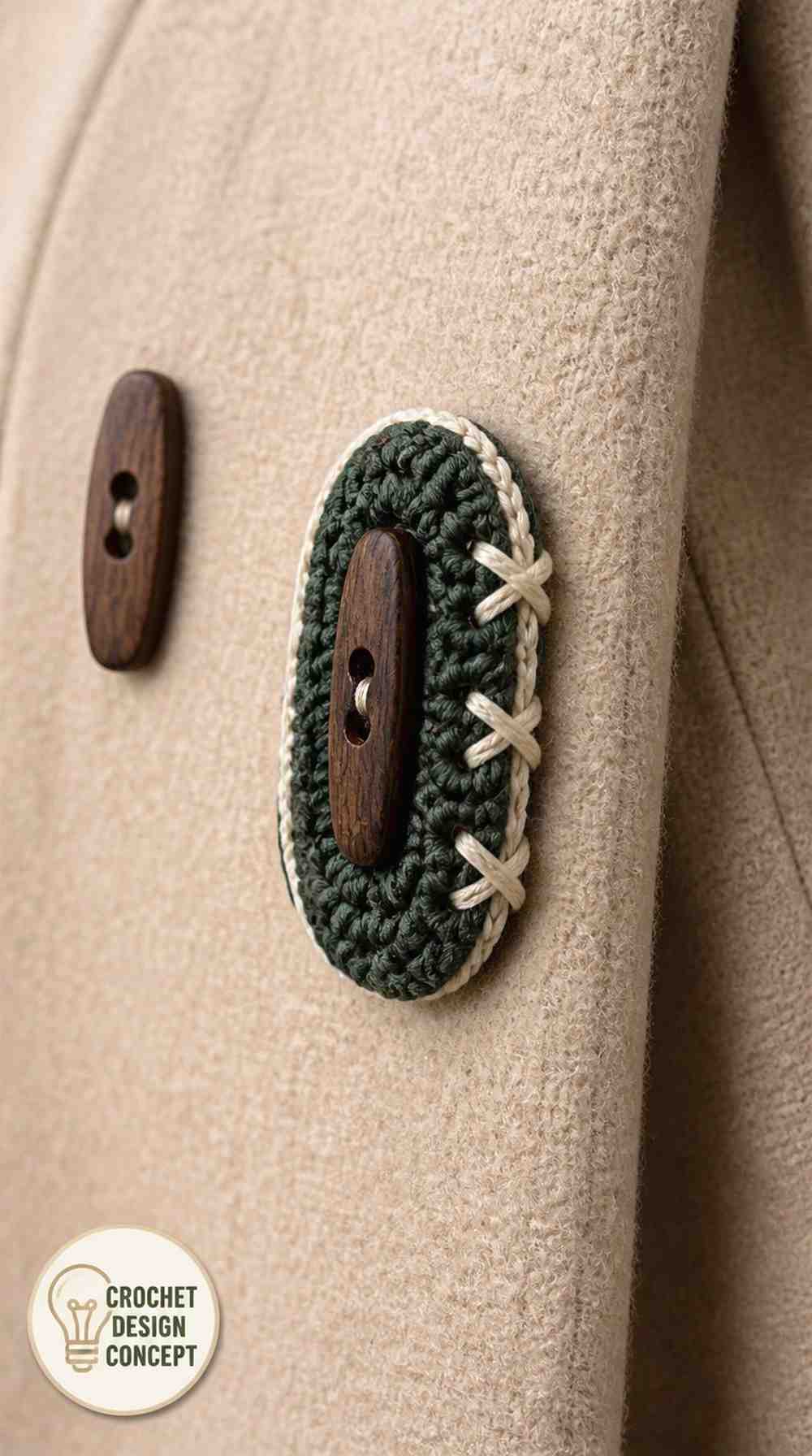
Forest-green crochet forms an elongated oval sleeve around a dark wooden coat button. Two closely stitched side panels meet along one outer edge, where three short cream cross-laces create a miniature fastening detail.
The cream front border gives the sleeve a tailored finish, while the small laced section becomes the main decorative feature. Unlike the buttoned overlap design, this concept uses crochet loops to connect the two sides. The short laces are shown secured without dangling ends, but their actual strength and reliability are untested.
- Side-Laced Opening: Keep the connecting loops short and tidy so they do not snag on the coat or nearby clothing.
- Elongated Button Fit: Match the oval sleeve to the actual button shape rather than forcing a round cover over the wooden fastening.
- Shank Clearance: Avoid tightening the laces so much that the sleeve presses against the button’s attachment point.
18. Crochet Mocha Gradient Button Dome
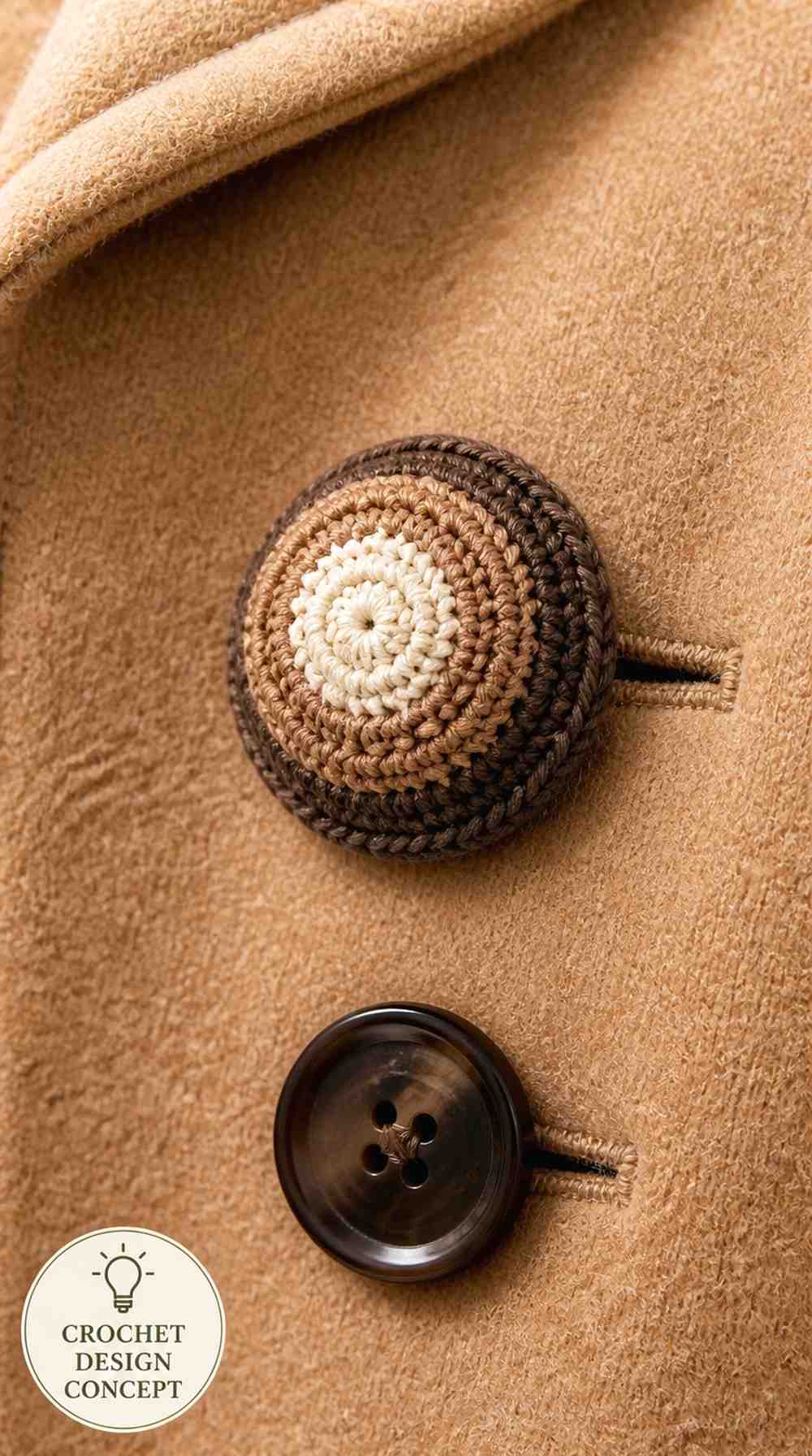
Three concentric color sections give this rounded crochet cover a warm coffee-inspired appearance. Cream stitches form the center, caramel creates the middle ring, and deep mocha finishes the outer dome and edge.
The cap covers a dark-horn button on a camel wool coat, with another uncovered button visible below. Its appearance depends on color transitions rather than raised motifs or unusual closures. The circular arrangement makes this a straightforward decorative concept for exploring how a tiny crochet surface can display several coordinated shades.
- Concentric Color Sections: Keep the cream, caramel, and mocha rings proportionate so each remains visible on the small button face.
- Smooth Circular Shape: Even stitch increases help the dome maintain a rounded outline without pointed or uneven sections.
- Back Opening: A shallow rear opening should leave room for the original button shank and permit gentle removal.
Practical Guide to Crochet Coat Button Protection Sleeves
Start with the button itself. Examine the button’s shape, diameter, depth, and attachment method. A round horn button, flat square button, elongated wooden toggle, and decorative snap need different crochet arrangements. Also inspect whether the button is loose before adding any covering.
Use these ideas for temporary, gentle storage decoration. They are not tested protective equipment. Crochet may introduce its own risks, including snagging, friction, retained moisture, and extra pressure on attachment threads. Remove the cover before fastening or wearing the coat.
Choose lightweight, smooth yarn. Fine cotton or another suitable soft yarn may help create clearly defined small stitches. Avoid heavy fibers, scratchy embellishments, loose sequins, and bulky decorative knots that could rub against the original button or coat fabric.
Take special care with dry cleaning. Do not leave homemade crochet covers attached during machine washing or professional dry cleaning unless a qualified garment-care professional has specifically approved them. Specialist cleaners may remove delicate buttons or use purpose-made protection. Jeeves New York advises discussing removal of irreplaceable buttons with the cleaner because even conventional coverings cannot prevent every type of damage.
Dry Cleaning Tips
Keep the coat and covers completely dry. Do not trap damp crochet against wooden, metal, shell, or horn buttons. Store coats according to their care labels, use appropriate hangers, and keep removable covers clean and separate when not needed.
For related outerwear inspiration, explore 18 Crochet Shearling-Look Toggle Coat Ideas for Winter 2026 on Yarn Nest Studio. The collection explores coat silhouettes and toggle closures, which can help illustrate why different buttons and fastenings require different shapes.
Want to Make Something Similar?
These 18 designs are inspiration concepts, not tested removable button protectors. The following resources explain genuine crochet button-cover construction techniques.
- How to Crochet a Button Cover — DROPS Design demonstrates making a small circular crochet covering around a button. The demonstrated method closes the cover with stitching, so it is not an exact removable storage sleeve. garnstudio.com
- Country Walk — DROPS 99-18 Free Crochet Pattern includes instructions for small crocheted button covers used on a garment. It provides a relevant construction reference, but its covers are intended to be secured in place rather than used as temporary protection. Free crochet patterns by DROPS Design
These lessons can help you understand circular shaping, stitch tension, and button-sized crochet. A removable protector would still require its own fitting and attachment approach.
Comparison: Which Crochet Coat Button Protection Sleeve Should You Choose?
| Design | Main feature | Important consideration |
|---|---|---|
| Terracotta Ribbed Dome | Rounded radial-ribbed cover | Must avoid pulling the shank |
| Oatmeal Shank Collar | Exposed button face | Little surface coverage |
| Indigo Twin-Button Guard | Two connected covers | May pull between buttons |
| Mustard Toggle Tip | Partial wooden toggle covering | Must clear fastening loop |
| Espresso Checkerboard | Miniature colorwork | Extra color-change ends |
| Burgundy Oval Scallop | Decorative oval border | Scallops may catch |
| Pearl Spiral | Fine circular stitches | Delicate shell surface |
| Charcoal Square Guard | Structured square silhouette | Corners need precise fitting |
| Sage U-Notch | Partly exposed button | Limited protection |
| Coral Overlap Envelope | Layered diagonal flaps | May slip without fastening |
| Dusty Blue Snap-Face | Cover for decorative snap | Must remove before fastening |
| Olive Triple Cuff Guard | Three connected cuff covers | Spacing and fabric tension |
| Rust Half-Shell | Partial wooden-button pocket | Open top leaves surface exposed |
| Plum Double-Wall | Layered cushion appearance | Added thickness |
| Cobalt Pull-Tab | Small removal detail | Tab should not be tugged |
| Ivory Open Mesh | Visible button through mesh | Openwork can snag |
| Forest Side-Laced | Decorative laced seam | Loose loops could catch |
| Mocha Gradient | Three concentric color rings | Small-scale colorwork |
For large round buttons, the Crochet Terracotta Ribbed Button Dome, Crochet Pearl Spiral Button Cover, and Crochet Mocha Gradient Button Dome offer three different decorative surfaces.
If you want to keep part of the original button visible, compare the Crochet Oatmeal Button Shank Collar, Crochet Sage U-Notch Button Guard, and Crochet Rust Half-Shell Button Sleeve.
For unusual shapes, the Crochet Charcoal Square Button Guard suits the visual proportions of square fastenings, while the Crochet Mustard Horn Toggle Tip Sleeve explores a narrow wooden toggle.
If several coat buttons need a coordinated appearance during storage, the Crochet Indigo Twin-Button Guard Sleeve and Crochet Olive Triple Cuff-Button Guard offer connected designs, though these may require extra caution to avoid tension between the original fastenings.
The best concept is one that can be placed and removed gently without compromising the button, its threads, or the surrounding coat fabric.
Conclusion
Crochet coat button protection sleeves offer an interesting way to explore tiny handmade details for winter wardrobe storage. From simple circular domes and oval covers to miniature collars, toggle-tip sleeves, connected cuff guards, and decorative colorwork, these 18 designs show how varied a small accessory can become.
The most important consideration is the original coat button. A delicate fastening may be more vulnerable to a tight or poorly fitted cover than to ordinary careful storage. Treat these concepts as removable decorative inspiration, follow the coat’s care instructions, and use professional garment-care advice for valuable or fragile buttons.
Which design would you choose for your winter coat? Would you prefer the terracotta ribbed dome, pearl spiral, square charcoal guard, or mocha gradient button cover? Share your favorite and whether your coat has round, oval, wooden, or metal buttons.
Frequently Asked Questions
1. Can crochet sleeves protect coat buttons from damage?
A crochet sleeve may provide a soft covering, but these concepts have not been tested for scratch, impact, or abrasion protection. Poorly fitted crochet could also create friction or pull against the button’s attachment. For delicate or expensive buttons, follow the coat’s care instructions and consult a qualified garment-care professional.
2. What yarn is suitable for a small coat button cover?
A smooth, lightweight cotton yarn or another suitably soft fiber may be worth exploring for decorative button covers. The appropriate choice depends on button size, surface material, stitch density, and cleaning needs. Avoid rough, heavy, or shedding yarns that could catch against delicate buttons or coat fabric.
3. Can crochet button covers stay attached when the coat is washed?
Do not assume so. Washing and dry cleaning may cause a removable crochet cover to shift, shrink, snag, or interfere with professional button protection methods. Follow the garment label and remove decorative sleeves before cleaning unless a qualified professional specifically approves them.
4. Are crochet button covers suitable for horn, shell, or wooden buttons?
Different button materials require different care. Horn, shell, and wooden finishes may be sensitive to moisture, friction, or cleaning treatments. A soft-looking crochet cover does not automatically make them safer. Check the button’s condition and choose gentle storage rather than adding tight or abrasive coverings.
5. Are these 18 crochet coat button protection sleeve ideas available as patterns?
No. These are original design visualizations, not tested protective accessories or complete crochet patterns. The linked DROPS resources explain related button-cover construction, but they are not exact removable protectors. Anyone adapting a concept would need to develop suitable sizing, attachment, removal, and garment-care methods independently.