Plaid crochet looks fancy but boils down to simple building blocks: stripes, tidy color changes, and smart finishing. This collection brings together tartan, buffalo check, gingham, and windowpane styles—some worked as colorwork “in the fabric,” others created by surface slip-stitching or quick weaving after you crochet the base. You’ll find big blanket scarves for maximum drama, everyday-length pieces for gift-making, and cozy cowls and Möbius loops when you want no-fuss warmth. Each idea links to a clear, photo-rich tutorial from a reputable site so you can follow along with confidence. Ready to master plaid? Pick one, practice neat tension, and enjoy the rhythmic colorwork.
Buffalo Check Classic Scarf

The timeless red-and-black buffalo check is a perfect gateway into plaid crochet. You’ll work easy stripes, carry yarn cleanly, and let simple color placement do the heavy lifting. The Whistle & Ivy pattern is written for beginners and includes helpful photos for the “plaid technique.” Aim for about 7–8″ wide and 60–70″ long, or adjust length by adding repeats. Tip: keep floats relaxed to prevent puckering. When your tension looks consistent over 4–5 rows, the checks will snap into place. Grab the free tutorial and make a gift-ready scarf in a weekend. Tutorial
Supplies: Worsted acrylic, 5.0 mm hook, yarn needle, scissors
Why it’s great: Iconic look with simple stitches.
Patons Big Tartan Super Scarf

Go oversized with a dramatic tartan super scarf: wide, long, and unbelievably cozy. This pattern uses chunky yarn to build fast horizontal stripes, then adds vertical lines for a woven tartan effect. Expect a statement piece ~18″+ wide with generous fringe. Tip: block lightly before adding surface slip stitches so your fabric stays flat and your vertical lines sit straight. If you’re making gifts, neutral tartans pair with everything. Follow the Yarnspirations write-up for yardage and color planning, then enjoy the instant-gratification speed of bulky yarn. Tutorial
Supplies: Chunky acrylic/wool blend, 6.0–6.5 mm hook, yarn needle, blocking pins
Why it’s great: Big impact, quick finish.
“Scotch on the Rocks” Moss Stitch Tartan
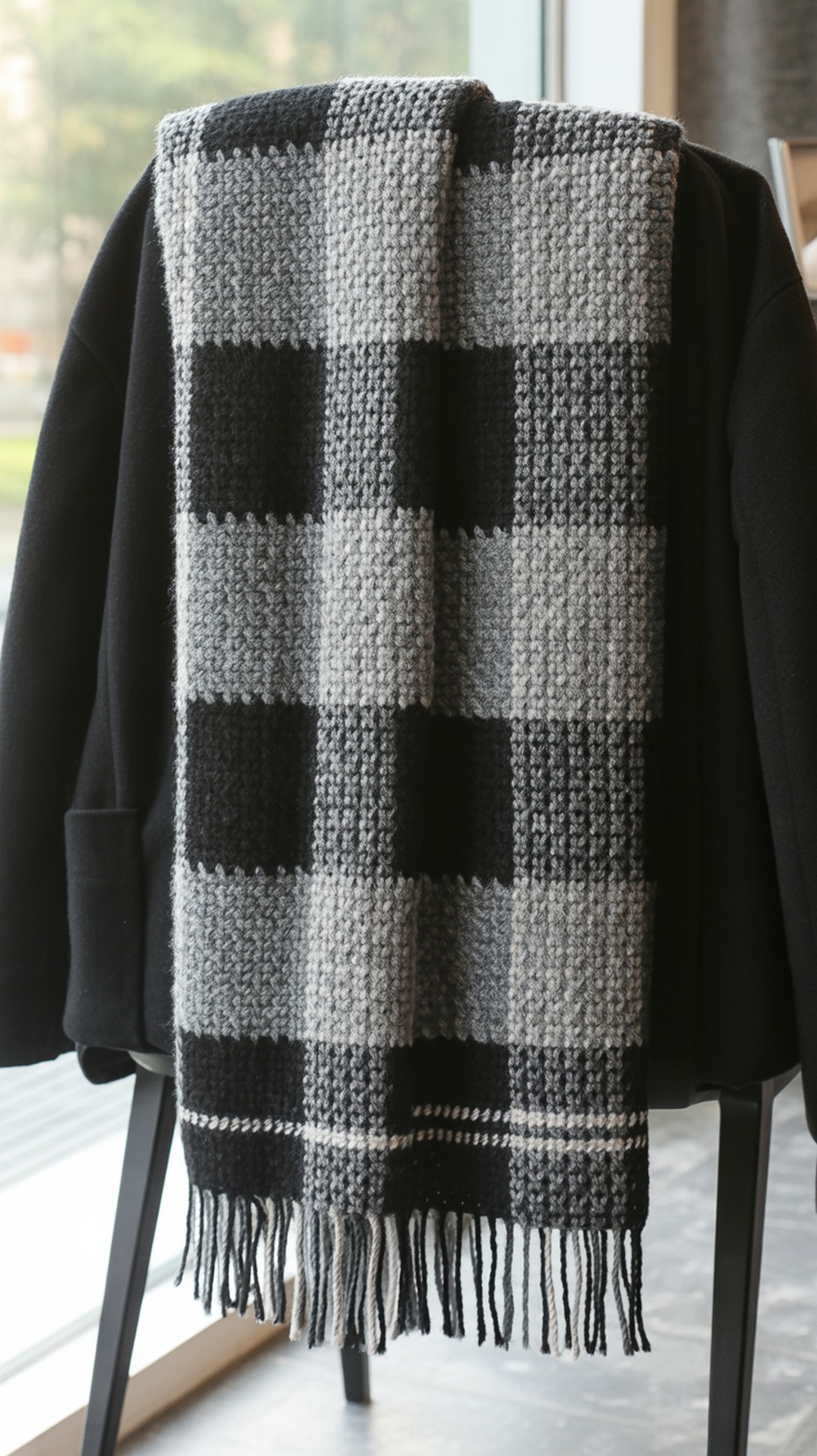
Love crisp, even texture? This scarf uses the moss (linen) stitch for neat squares and smooth color changes. You’ll work intarsia for clean edges, then add surface slip-stitch lines to complete the plaid. Finished width feels generous without being bulky, perfect for daily wear. Tip: place removable stitch markers vertically every 10 rows to keep your surface lines dead straight. The Yarnspirations pattern lays out stitch counts and color order so the motif repeats cleanly along the length. Tutorial
Supplies: Worsted acrylic, 5.0 mm hook, stitch markers, yarn needle
Why it’s great: Polished texture + tidy plaid.
Gray Shades Tartan
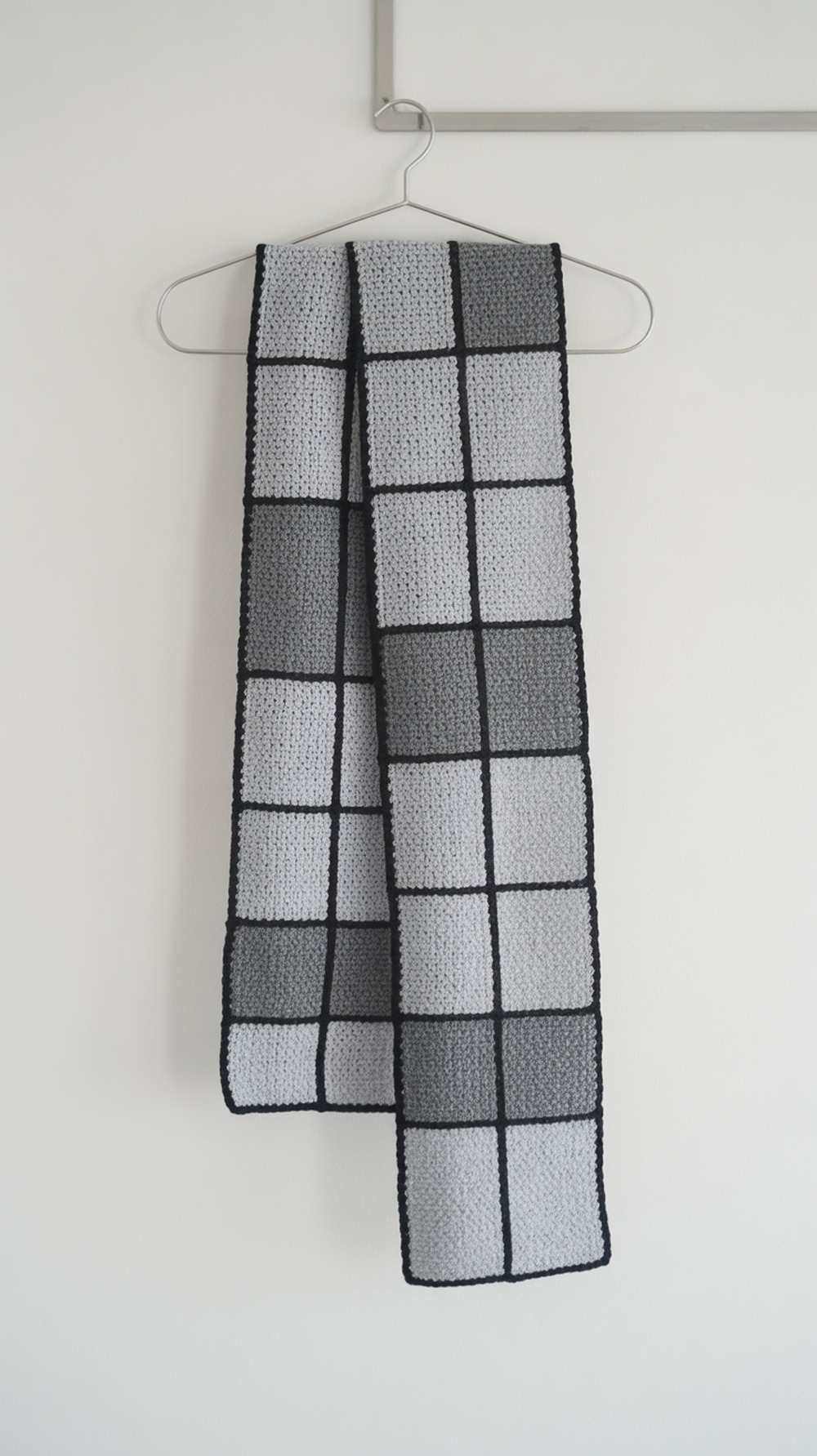
This tartan scarf was designed in Red Heart Heat Wave—fun if you like color play outdoors. Work easy stripes, then surface-stitch the verticals for a refined plaid in layered grays. The look is subtle, city-ready, and pairs well with structured coats. Tip: steam block on the wrong side to avoid flattening texture, then measure and add fringe evenly for a balanced finish. Yarnspirations’ page includes multiple photos so you can mirror spacing precisely. Tutorial
Supplies: Worsted acrylic (Heat Wave or similar), 5.0 mm hook, yarn needle, measuring tape
Why it’s great: Monochrome plaid that matches everything.
Buffalo Plaid Infinity Scarf
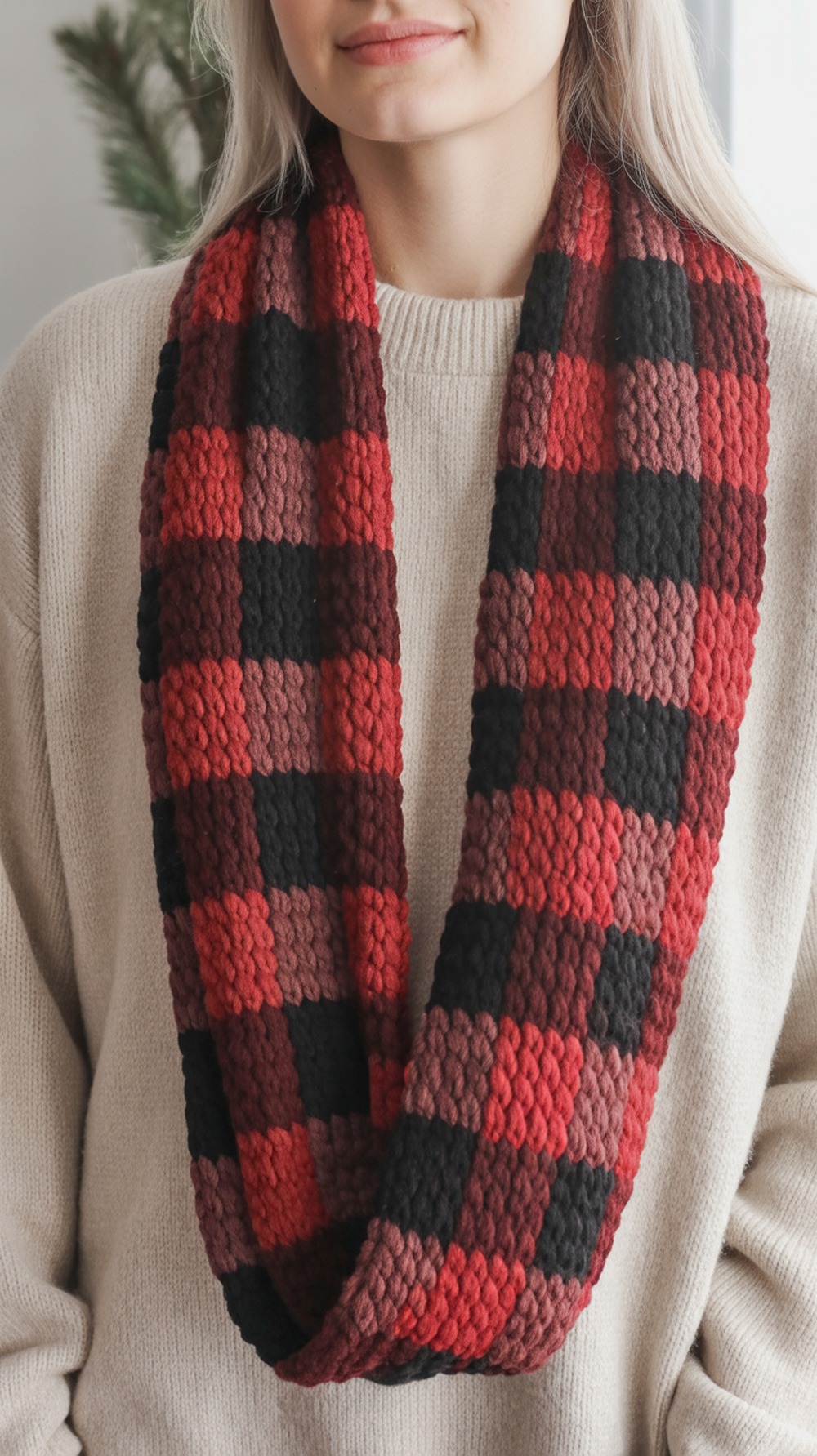
Prefer loop-and-go? Work a long rectangle in buffalo checks, seam the short ends, and you’ve got a cozy infinity scarf that never slips. Whistle & Ivy’s free pattern shows color placement and carries for smooth transitions. Customize the loop length for single or double wrap. Tip: seam with whip stitch through back loops only to keep checks aligned. Add a leather tag to finish. Tutorial
Supplies: Worsted acrylic, 5.0 mm hook, yarn needle, optional leather tag
Why it’s great: Hands-free warmth with classic checks.
Plaid Moose Scarf
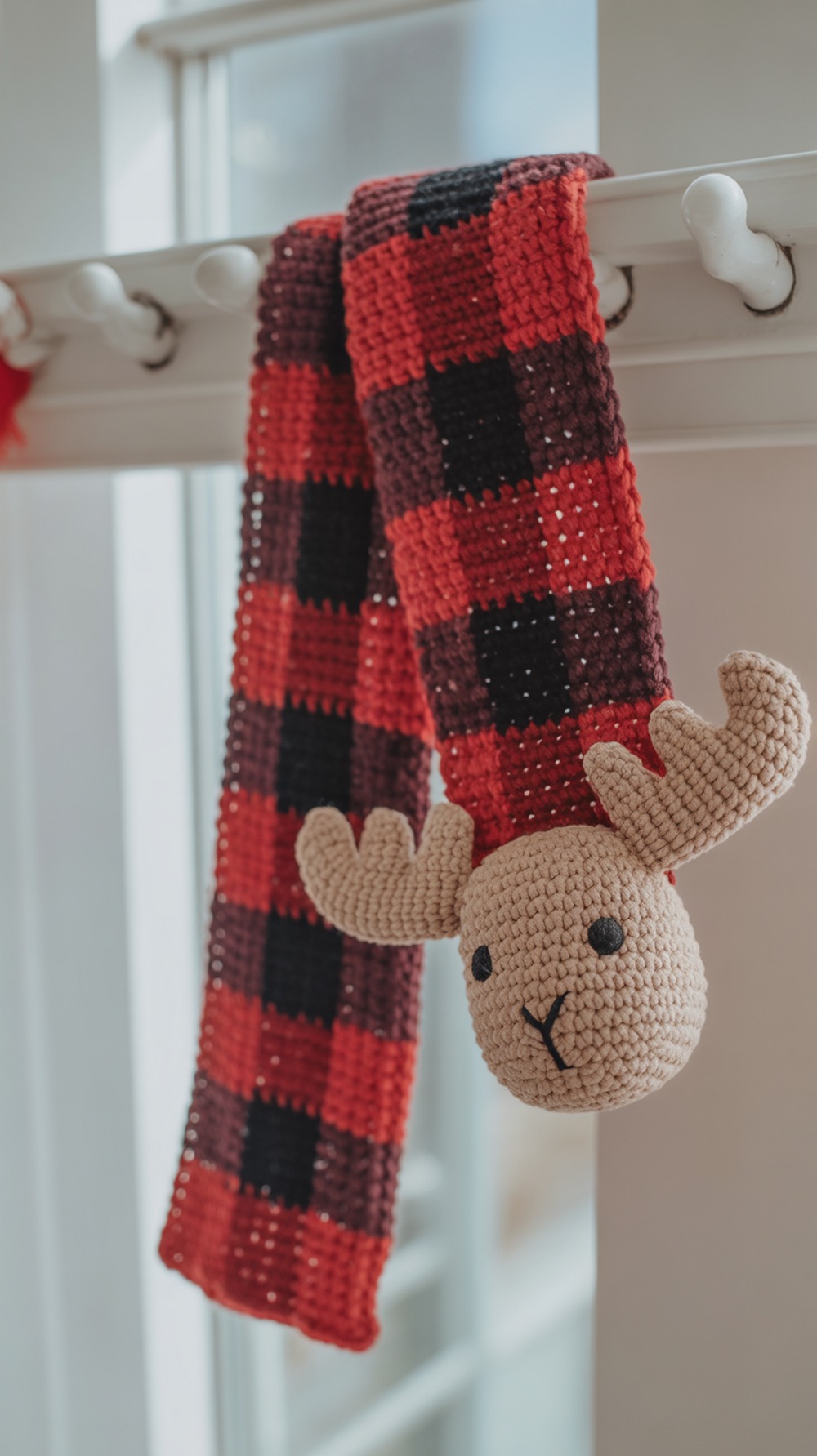
A playful twist: buffalo plaid ends with an adorable moose motif—great for kids or festive outfits. The Repeat Crafter Me tutorial details exactly which reds to pair with black for rich checks, then walks you through the moose face applique. Keep the main scarf adult-length and scale the applique to taste. Tip: use felt-backed safety eyes or embroidered eyes for washability on kids’ wear. Tutorial
Supplies: Worsted acrylic (reds + black), 5.0 mm hook, small scraps for applique, tapestry needle
Why it’s great: Whimsical gift with cozy plaid.
Beginner Plaid with Surface Lines
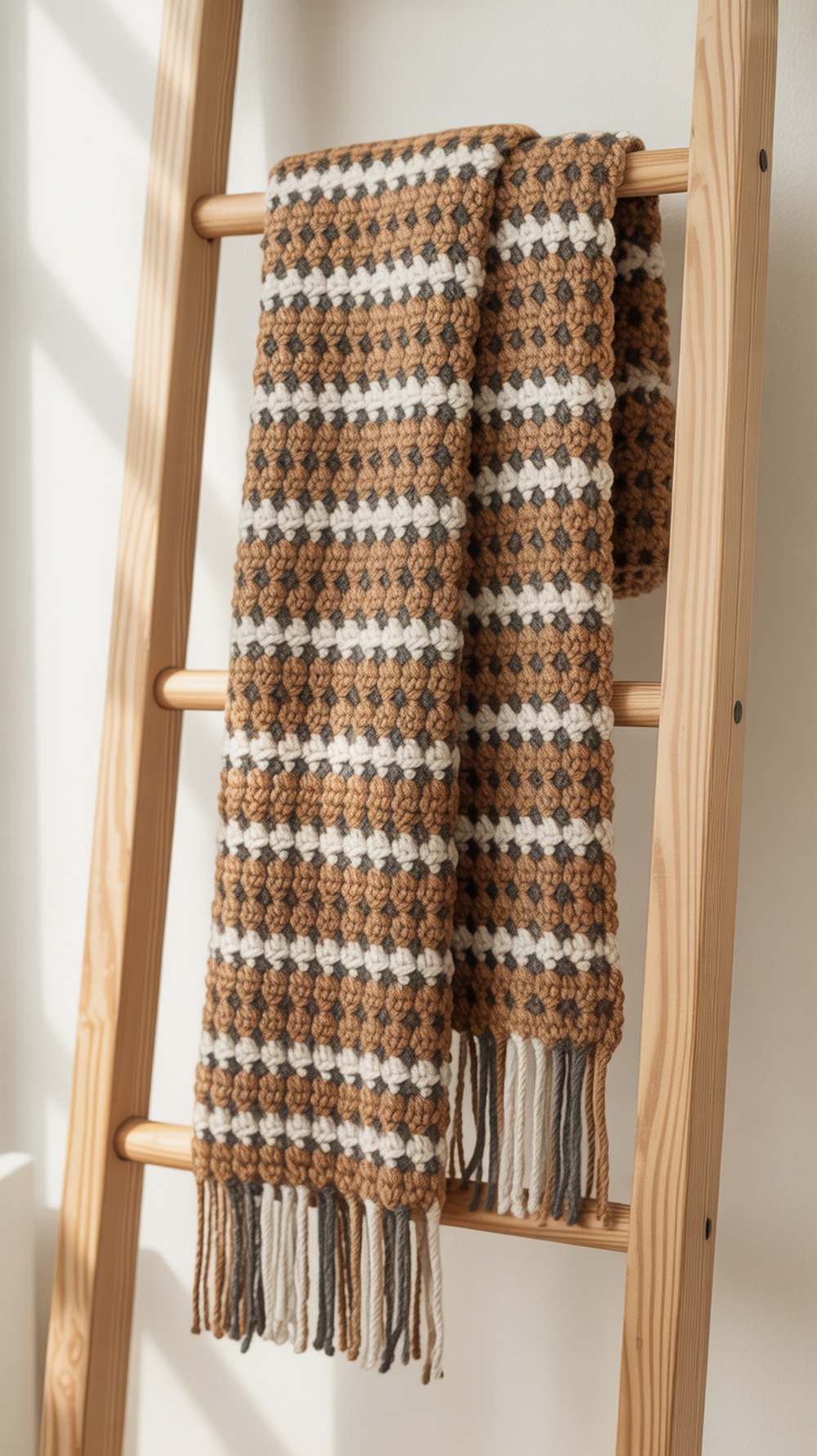
If colorwork feels intimidating, start here: crochet a striped base, then add vertical lines later using surface slip stitches. Crafting Happiness breaks the process into three short videos (base, verticals, fringe) with a classic plaid look at the end. Make it narrow for office wear or wide for a blanket scarf. Tip: use a ruler or blocking wires as a guide to keep verticals straight. Tutorial
Supplies: Worsted acrylic/wool, 5.0 mm hook, blocking mat, yarn needle
Why it’s great: Plaid look with minimal juggling.
Buffalo Plaid, Three Color Method

This approachable pattern uses a simple dc-and-chain fabric so the color from the next row peeks through to form checkerboards—no heavy carrying. The post explains three-color setup (e.g., black, red, gray) and how to tweak your color order. Size is easy to customize; just add or subtract block repeats. Tip: weave in as you go to avoid a big finishing session. Tutorial
Supplies: Worsted acrylic, 5.0 mm hook, yarn needle, clips for color changes
Why it’s great: Lightweight buffalo check without bulk.
Plaid Möbius Cowl
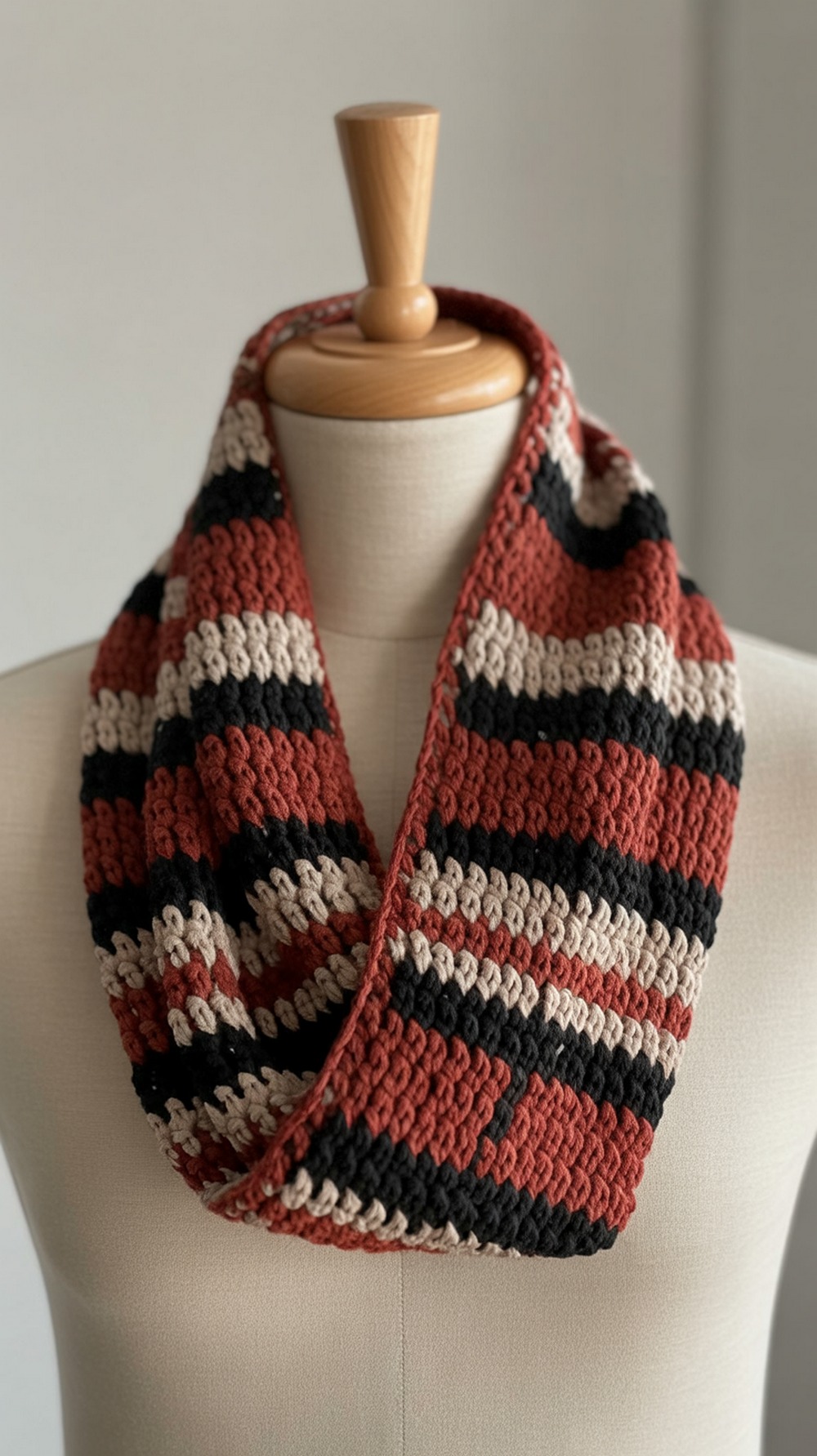
Swap a straight scarf for a twist-front Möbius you can wear doubled or long. Moogly’s pattern uses clever color placement to suggest tartan across a seamless loop. It’s a great stash buster since the plaid reads well even with heathers. Tip: count carefully around the foundation so the twist sits centered, then block with the loop laid flat to avoid skew. Tutorial
Supplies: Worsted acrylic/wool, 5.5 mm hook, stitch markers, yarn needle
Why it’s great: Cozy loop with sculptural twist.
Blush Tartan Wrap as Scarf
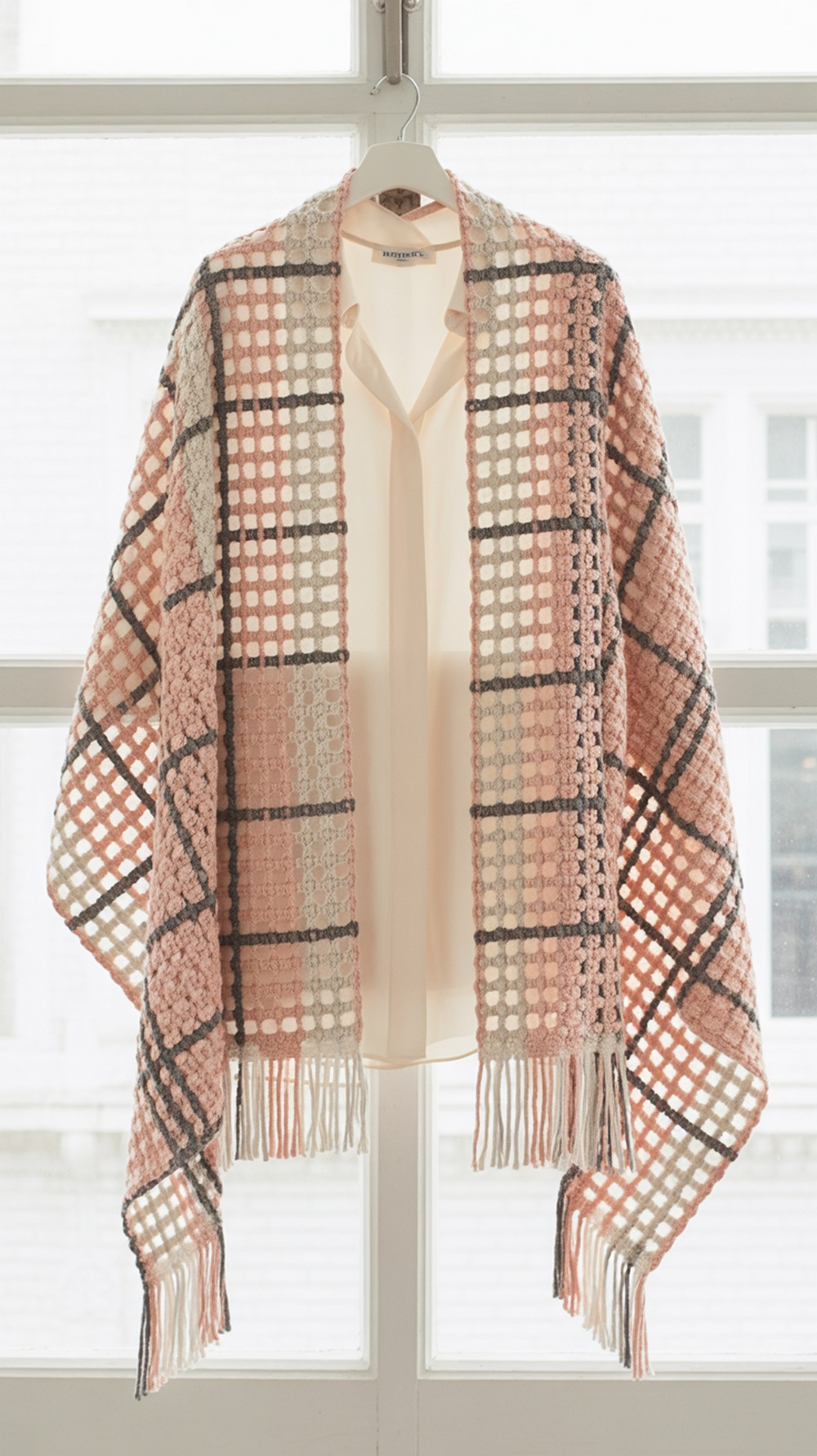
Prefer softer palettes? This blush-toned tartan wrap works as a wide scarf with feminine drape. You’ll crochet tidy dc rows and follow a clear color map to layer a subtle plaid. Wear it draped like a blanket scarf or folded lengthwise for a slimmer look. Tip: keep edges straight by chaining the same number each row and counting stitches every 10 rows. Tutorial
Supplies: DK/Worsted acrylic blend, 4.5–5.0 mm hook, yarn needle, blocking pins
Why it’s great: Gentle, modern plaid in blush/neutral tones.
Tartan Crochet Scarf
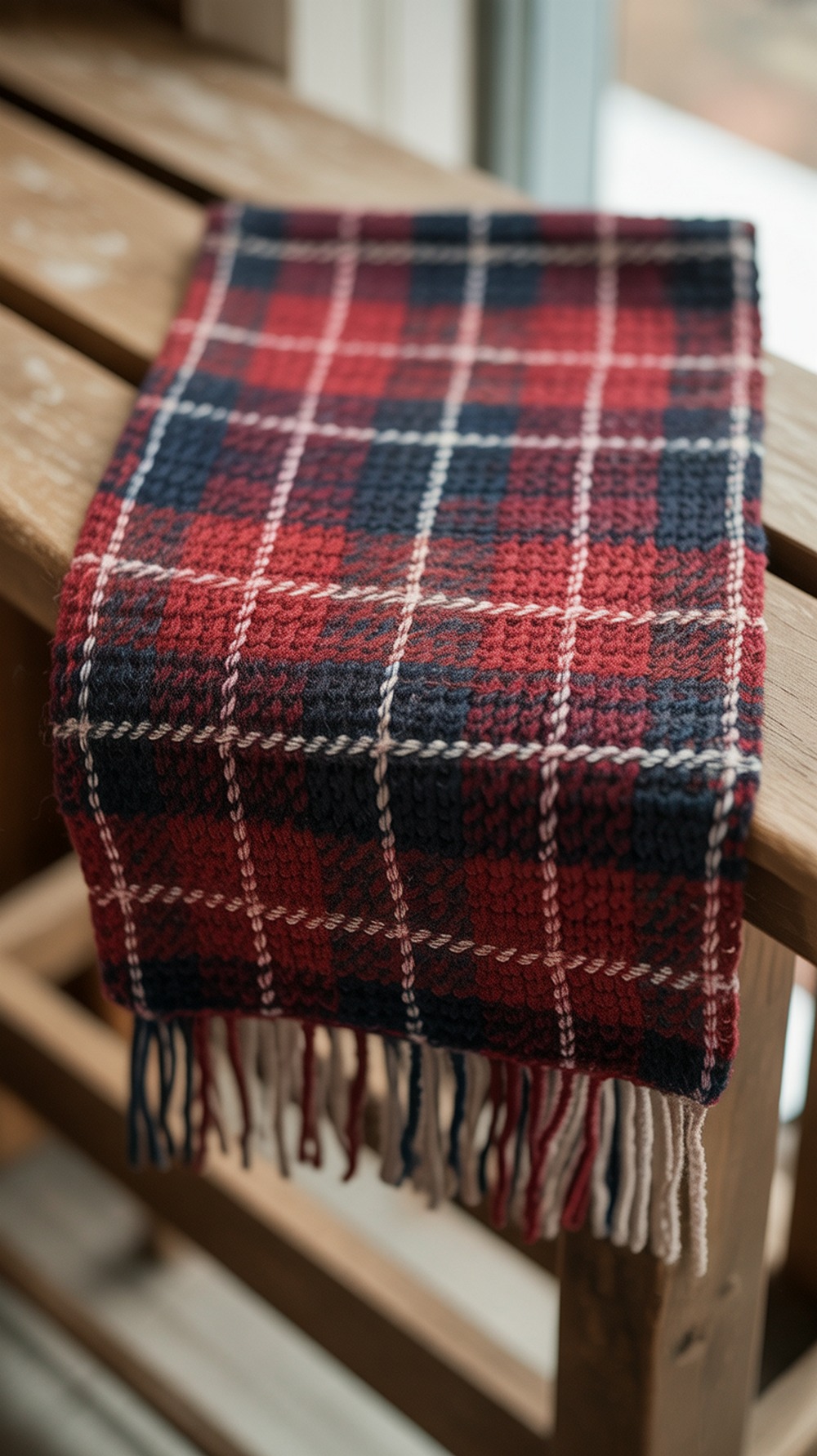
This rectangular tartan scarf balances eye-catching checks with a smooth, wearable fabric. Fosbas walks through color planning so your squares stay even and the repeat lands nicely at the ends. Adjust width by multiples given in the pattern, then add fringe for movement. Tip: choose two close shades and one dark contrast for a classic tartan feel. Tutorial
Supplies: Worsted acrylic/wool, 5.0 mm hook, yarn needle, tape measure
Why it’s great: Clear repeat that scales to any size.
Windowpane Plaid

For a sleek, minimalist take, try windowpane plaid. You’ll crochet a striped base (think camel and cream), then add bold dark verticals for a fashion-forward grid. It looks stunning over coats without overwhelming prints. The tutorial includes step photos so your surface slip-stitch lines sit beautifully on the fabric. Tip: practice your slip stitches on a swatch to nail tension before working on the scarf. Tutorial
Supplies: Worsted wool blend, 5.0 mm hook, yarn needle, ruler for straight lines
Why it’s great: Chic plaid with capsule-wardrobe colors.
Plaid Cowl in Pop Colors
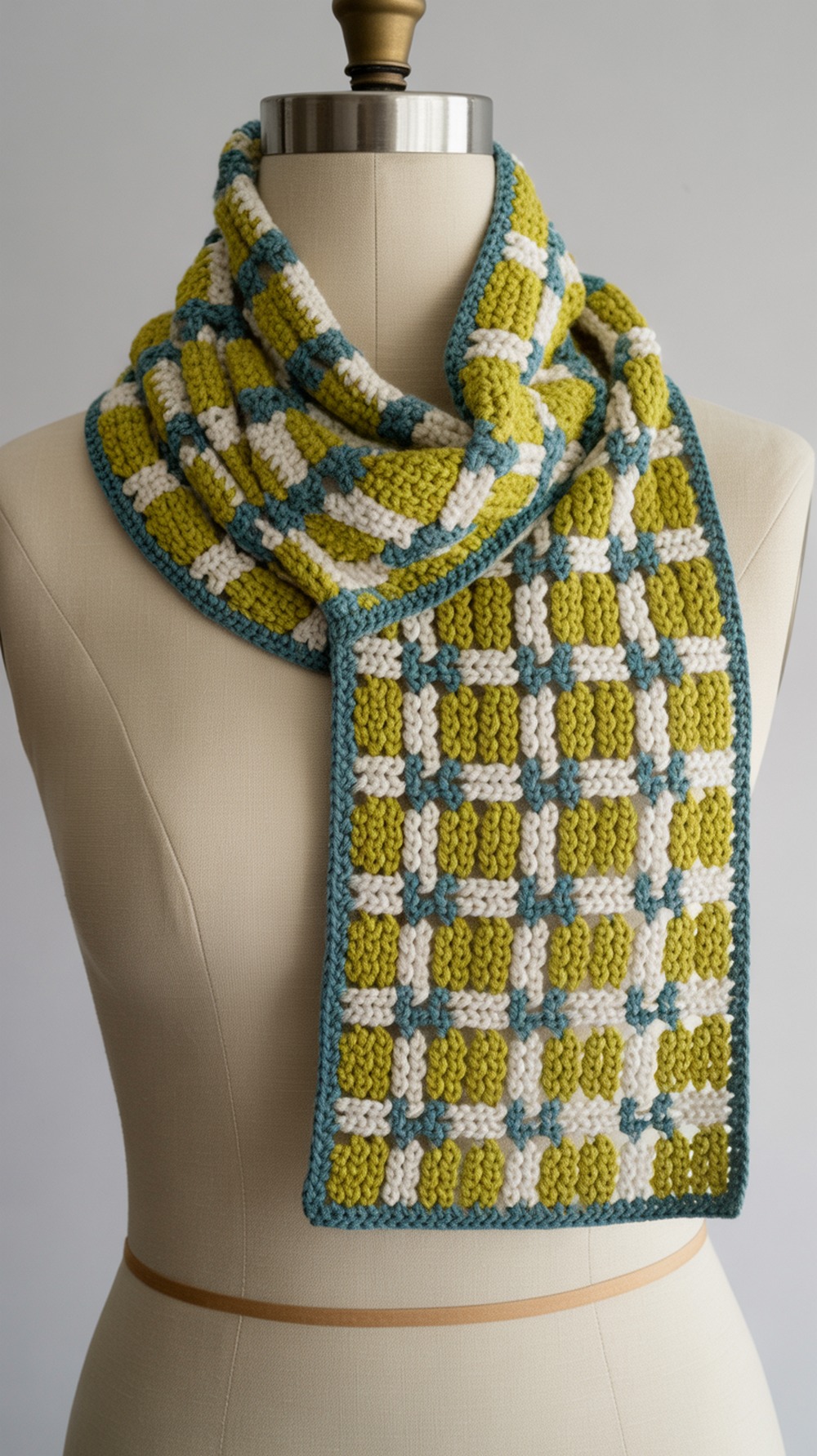
Plaid doesn’t have to be neutral. This cowl uses a striped base and surface slip-stitch lines, shown in chartreuse, cream, and blue for a fun color pop. Crocheted in the round, it’s quick and giftable. Tip: block the tube flat before adding verticals to keep the grid consistent all the way around. Finish with an invisible join for a seamless edge. Tutorial
Supplies: Aran acrylic/wool, 5.5 mm hook, stitch markers, yarn needle
Why it’s great: Fast cowl with playful palette.
Laura Gingham Cowl
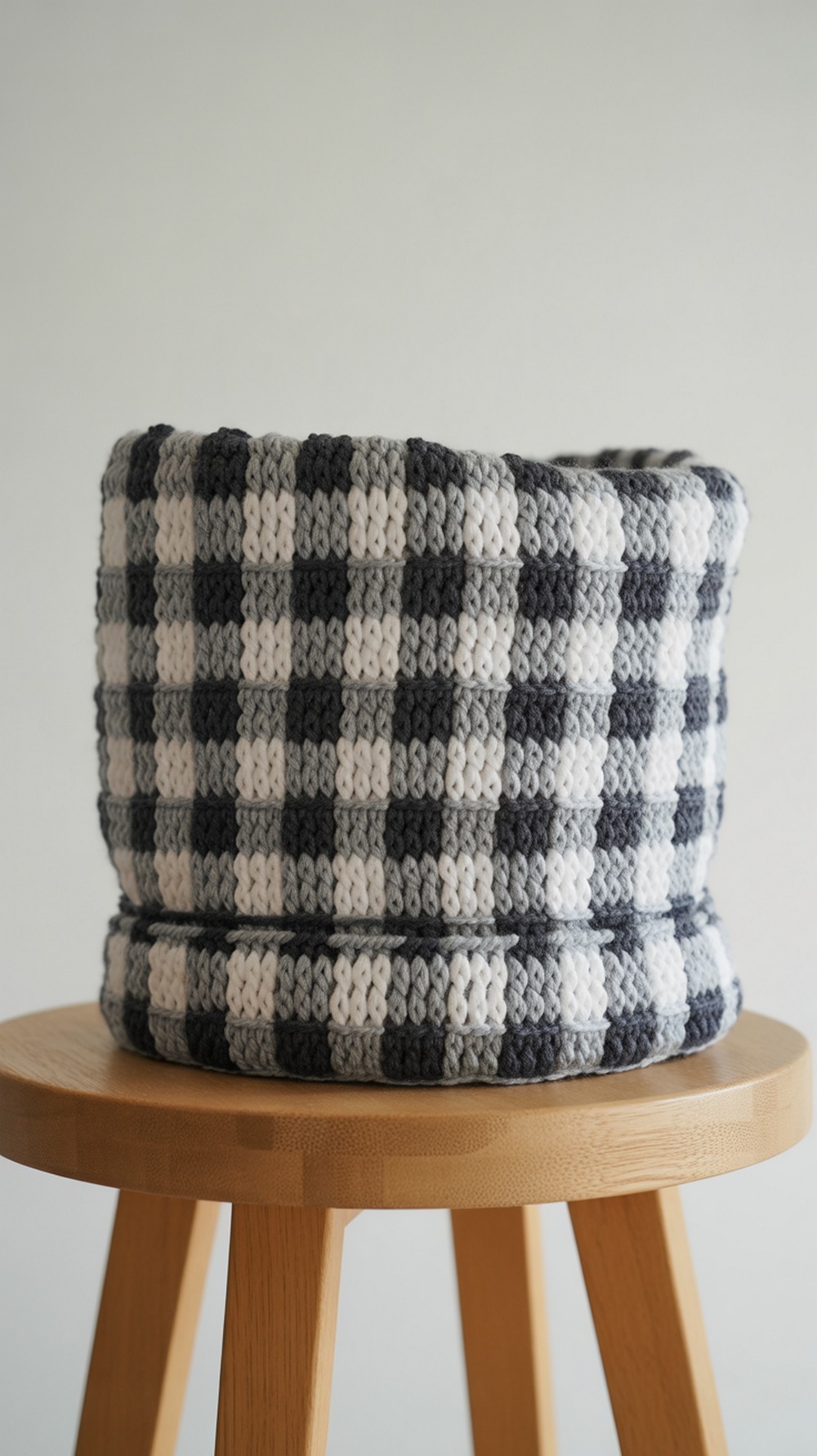
Gingham = instant cozy. This cowl uses two close shades plus a light contrast to create small checks that read crisp and graphic. It’s a neat intro to tapestry-style color changes on a manageable circumference. Adjust height by repeating the pattern section until it fits your style. Tip: carry the unused color cleanly and keep floats loose to avoid tight spots. Tutorial
Supplies: Worsted cotton or acrylic, 5.0 mm hook, yarn needle, blocking mat
Why it’s great: Bite-size plaid practice with stylish results.
Conclusion
Pick one technique—moss-stitch grids, DC blocks, weaving, or planned pooling—and make a fast win this weekend. Plaid reads classic, unisex, and giftable, and every tutorial above shows clear color placement so your checks stay sharp. Start with stash-friendly cowls if you want speed, then graduate to wide blanket scarves for drama. Bookmark this list, share it with your yarn buddies, and come back when you’re ready to try a new color palette. Your next cozy plaid is just a few rows away.
FAQs
What yarns work best for plaid scarves?
Worsted acrylic or wool blends hold shape and show crisp stitch definition. For luxe drape, try velvet or soft wool; for budget-friendly gifts, acrylic is perfect.
Machine wash or hand wash?
Most acrylics are machine washable; lay flat to dry to protect shape. Wool or velvet often prefer hand wash and flat dry—check ball-band care.
How do I scale a pattern?
Adjust width by adding/removing stitch multiples listed in the pattern; adjust length by repeating row sets. Keep color sequence consistent so the grid stays even.
Safe fibers for kitchen/bath or heat?
For any heat exposure (e.g., around hot mugs), choose cotton; avoid acrylic near high heat as it can melt. For general scarves, acrylic and wool are ideal.
Best joins/edgings for durability?
Use standing stitches or invisible joins; add a single crochet or ribbed border to stabilize edges. Weave ends back and forth for at least 3–4 inches.
Typical time and yardage?
Cowls: 2–4 hours, ~250–400 yds. Standard scarves: 6–10 hours, ~500–800 yds. Super scarves/blanket scarves: 10–16 hours, 900–1200+ yds.
Photo tips for your projects?
Shoot in natural light, neutral background, and get close to the stitch grid. Hang or drape to show drape and keep lines straight for satisfying checks.
Fixing curling, stretching, or wavy edges?
Light blocking solves most issues. If edges wave, you may have too many stitches—reduce by one multiple. If it curls, loosen tension or go up a hook size.