Checkerboard crochet is perfect for dice bags: tight, tidy, and eye-catching. Below you’ll find a dozen checkered pouches and techniques—most are drawstring or zipper pouches that convert easily to dice storage (aim for a dense fabric so your polyhedrals don’t peek through). Pick cotton or a sturdy acrylic, work color changes neatly (carry or float yarns evenly), and block lightly for crisp squares. I’ve included one direct tutorial link per idea—blogs or videos with clear photos and steps. Tip: if you love a zipper pouch but want a drawstring, simply omit the zipper and add an eyelet round with a chained cord. Ready to checker your game night?
FREE Checkerboard Crochet Pouch

A fast, tidy checkerboard pouch worked in single crochet tapestry—perfect for a small dice set. The pattern includes a color chart and clear steps, so your squares stay even and your floats behave. Make 2–3 extra rounds for a taller bag and cinch with a simple chain cord. Worsted cotton gives structure; acrylic softens with use. For bigger sets, widen the starting chain by two-square increments. When carrying the contrast color, keep tension consistent to avoid puckering. Finish with a steam block to sharpen those checks, then toss in your favorite dice. Tutorial.
Supplies: Worsted cotton, 4.0 mm (G) hook, yarn needle, scissors, optional lining, cord.
Why it’s great: Quick, charted, and already bag-shaped.
Checkered Crochet Case (Zipper Pouch)

Prefer zippers? This sleek tapestry-crochet pouch uses three greys for a modern checkboard and a sewn zipper for secure storage. The tutorial covers gauge, shaping the sides, and adding a fabric liner—great if you want dice protected from snags. Size up to 8–9″ wide for larger sets; keep single crochet tight. If skipping the zipper, work an eyelet round and add a drawstring. One actionable tip: when you don’t line, carry the idle color to avoid loose floats inside. Tutorial.
Supplies: Worsted acrylic or cotton (3 greys), 3.75–4.0 mm hook, 6–7″ zipper, needle & thread, yarn needle.
Why it’s great: Clear photos; teaches zipper/lining for durability.
C2C Checkerboard Game Bag

This clever corner-to-corner checkerboard plays double duty: use it flat as a travel board, then cinch the border cords to turn it into a roomy bag for game pieces and dice. The tutorial includes yardage, gauge, and the full written walkthrough. For a dice-only version, work fewer C2C pixels on each side to shrink the board and keep the border channel. Cotton yarn gives great stitch definition and durability. Tip: block the panel square before adding the casing so it cinches evenly. Tutorial.
Supplies: Worsted cotton (black & white), 3.75 mm hook, tapestry needle, steam/iron for blocking, cord.
Why it’s great: A bag and a board in one.
How to Crochet Checkered Drawstring Bag

A beginner-friendly video that builds a checkered drawstring pouch with simple colorwork. Follow along for panel construction, seaming, and adding a cord channel so your dice stay secure. Pause at each section to customize your pouch dimensions; keep your stitches snug for an opaque fabric. One actionable tip: weave in ends as you go along the color changes to avoid bulk at the seam.
Supplies: Worsted cotton or acrylic (2 colors), 4.0–5.0 mm hook, yarn needle, scissors, cord.
Why it’s great: Real-time demo of every step.
Easy Checkered Pouch

If you want crisp squares and a smooth zip, this tutorial focuses on two things dice pouches need: neat color changes and a secure zipper installation. Size the rectangle to fit your dice, then seam and insert the zipper; a quick fabric lining keeps edges hidden. For a drawstring alternative, skip the zip, add an eyelet row near the top, and thread a cord. Keep tension even on carried yarn to prevent shadowing through the light squares.
Supplies: Worsted cotton (2 colors), 4.0 mm hook, 6–8″ zipper, lining fabric, sewing needle/thread, yarn needle.
Why it’s great: Teaches pro-looking colorwork + zipper.
Travel Checkered Plain Pouch

This video shows a versatile pouch you can work in plain or checkered fabric. Choose the checkered option for a bold dice carrier; the construction is simple and easily scaled. Add a lining if you store metal dice to protect seams. Tip: when you switch to the contrast color, complete the last yarn-over of the previous stitch with the new color—your squares will look cleaner.
Supplies: Worsted acrylic or cotton (2 colors), 4.0–4.5 mm hook, zipper or cord, yarn needle, scissors.
Why it’s great: One method, multiple finishes.
Tapestry Crochet (Technique for a Black and White Dice Bag)

Master tapestry crochet and you can chart any checkerboard dice bag you like. This classic tutorial explains carrying yarn, working in the round, and managing color changes. It even references an improvised black-and-white dice bag as an example. Start with a tight single-crochet base, then follow a simple two-color grid up the sides. Tip: use a smaller hook than usual for a dense, spill-proof fabric. Tutorial.
Supplies: Size 10 thread or sport/worsted cotton (2 colors), appropriate hook (smaller for density), stitch markers, yarn needle, cord.
Why it’s great: Learn the skill once; design endlessly.
Making a Crocheted Checkered Pouch

Short and sweet, this video builds a checkered rectangle and turns it into a pouch with simple seaming—great for a compact dice carrier. Use cotton for structure, and keep your squares square by counting every color block. If you prefer a drawstring top, add 1–2 rounds of eyelets and a braided cord. One practical tip: lightly steam block before assembly to align rows and keep edges from biasing.
Supplies: Worsted cotton (2 colors), 4.0 mm hook, yarn needle, scissors, optional zipper or cord.
Why it’s great: Fast build; easy to resize.
How to Crochet a Checkered Purse with Zipper
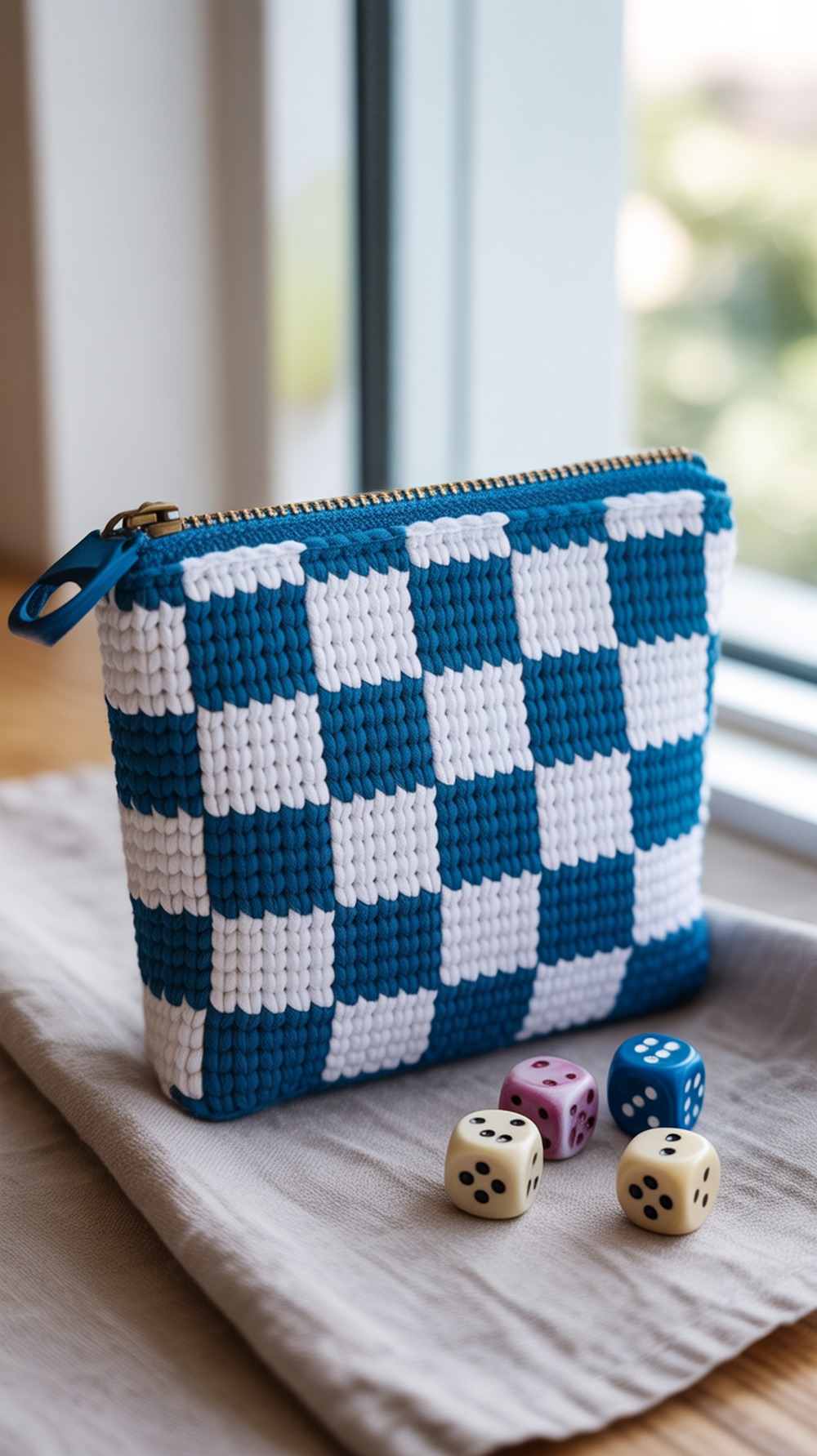
This tutorial shows a compact checkered purse with a zipper—adapt the size down for a dice pouch using the same stitch count logic. The methods for keeping color changes tidy, seaming, and setting a zipper are helpful for any structured checkered bag. Add a small wrist strap if you bring dice to game night. Tip: line with cotton lawn or poplin to reduce stretch and protect stitches from sharp dice edges.
Supplies: DK–worsted yarn (2 colors), 4.0–4.5 mm hook, zipper, lining fabric, sewing needle/thread, yarn needle.
Why it’s great: Teaches neat finishing for a premium look.
Happy Sack Checkered Zipper Pouch
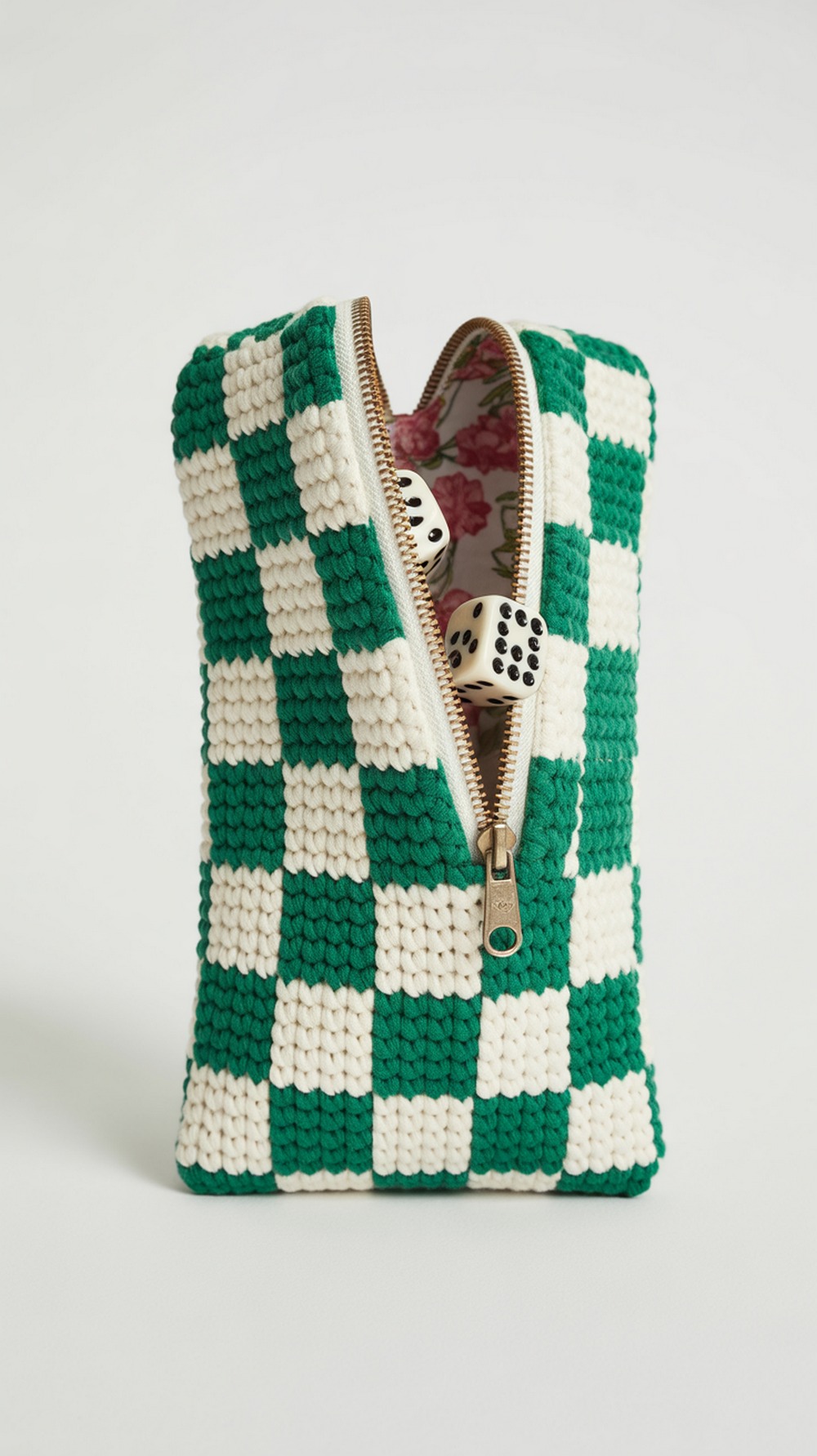
Want a polished, lined pouch? This PDF pattern features a checkered zip pouch with clear photos and optional lining instructions. Work it at dice-pouch scale for a snug, protective case. The squares pop best in high-contrast colors; keep tension firm and consistent. Actionable tip: baste the zipper by hand before machine or back-stitching—it prevents waviness across the checks. Tutorial.
Supplies: Worsted cotton (2 colors), 4.0–5.0 mm hook, zipper, lining fabric, sewing needle/thread, yarn needle, scissors.
Why it’s great: Clean, professional finish with lining guidance.
Checkered Drawstring Bag Menstrual Cup Pouch
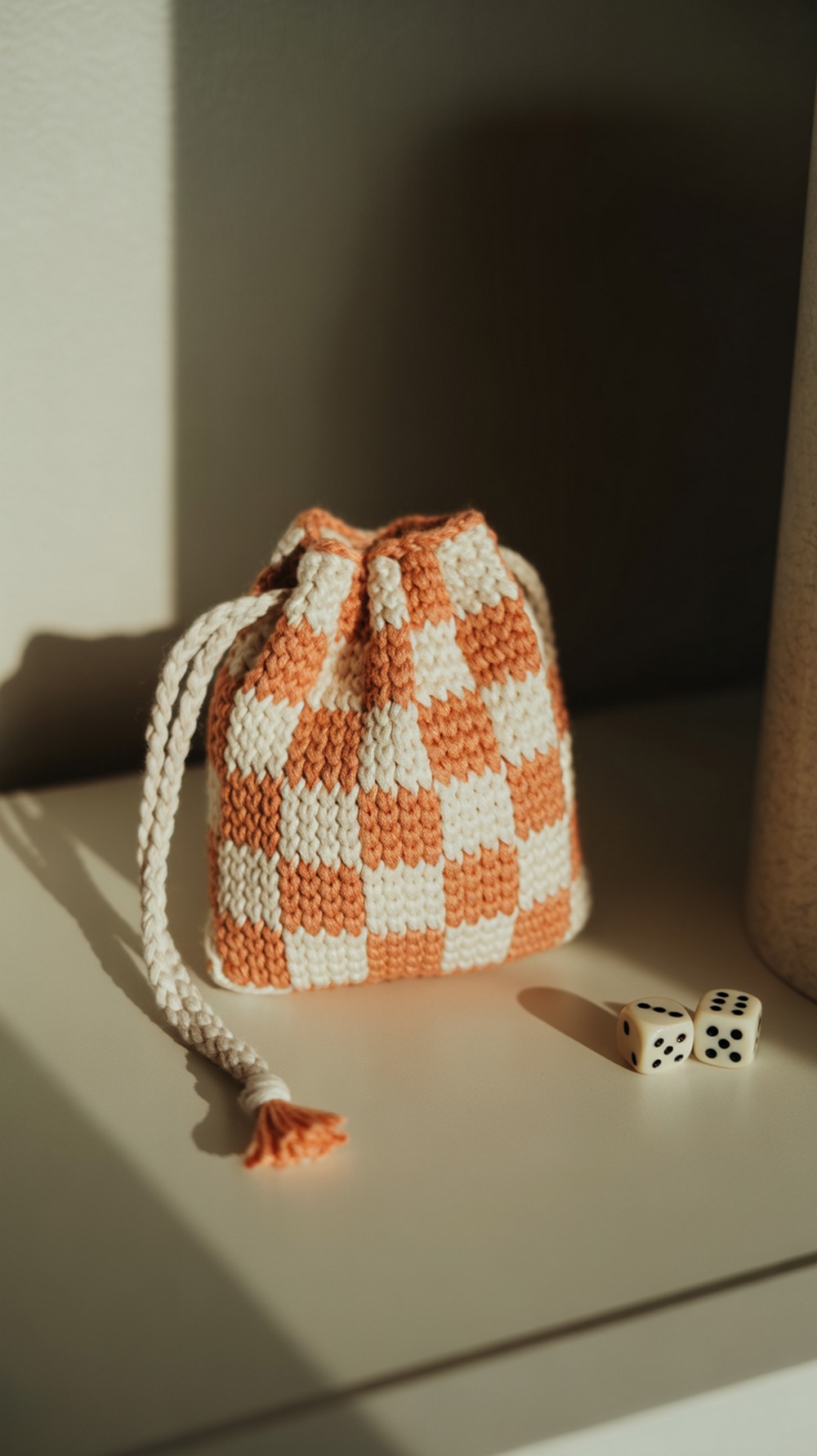
A miniature checkered drawstring pouch sized for a cup—perfect dimensions for a single dice set. The pattern page lists materials and links to purchase; follow the same construction to scale taller by adding repeat rows. Use cotton for shape retention and a smooth braided cord. Tip: to avoid color jogs at the join, finish rounds with an invisible join and start the next in a different square edge. Tutorial.
Supplies: Worsted cotton (2 colors), 4.0 mm hook, yarn needle, scissors, cord.
Why it’s great: Purpose-built small drawstring in checks—ideal dice size.
Crochet Drawstring Pouch Checkered Bag

A straightforward beginner video that builds a drawstring pouch and demonstrates a checkered variation, making it ideal for your first dice bag. Keep your hook one size smaller than the ball band suggests for a dense, no-gaps fabric. Practical tip: thread two chained cords in opposite directions through the eyelet round to create a double-pull closure that opens and closes smoothly.
Supplies: Worsted acrylic or cotton (2 colors), 4.0 mm hook (or smaller), yarn needle, scissors, 2 cords.
Why it’s great: Gentle pacing and adaptable sizing.
Conclusion
Pick one: if you’re new, start with the free Ribblr pouch or the beginner videos; if you want polish, try a lined zipper version. Checkerboard crochet shines when tension is even, yarn is sturdy, and finishing is neat—your dice will thank you. Bookmark this list for game-night gifts, and share it with your party so everyone can bring their own colorway. Happy crafting and critical hits ahead!
FAQs
What yarns work best for dice bags?
Cotton (e.g., 24/7 Cotton) keeps shape and shows stitches; sturdy acrylic is fine too. Avoid fuzzy yarns that obscure squares.
Machine wash or hand wash—what’s safest?
Cotton or acrylic can usually machine wash cold in a mesh bag; reshape and air-dry flat. Hand wash lined or zippered bags to protect hardware.
How do I scale a pattern for more dice?
Wider base or more rounds = more capacity. Add checker repeats in pairs to preserve the grid, and maintain a tight gauge.
Which fibers are safe for kitchens/baths or heat?
For hot surfaces, cotton only. For bags, cotton or acrylic are both good; wool can felt if washed hot.
Best joins/edgings for durability?
Work an eyelet round in single crochet with chain-spaces, then a firm crab stitch (reverse single crochet) edging. Use a braided or i-cord drawstring.
Typical time and yardage?
Small pouches: 60–150 yds and 1–3 hours. Larger cinch-bags or lined zipper pouches: 150–250 yds and 2–5 hours.
Photo tips for finished projects?
Shoot in diffused daylight, place a few dice for scale, and angle the bag slightly to show stitch texture. Keep backgrounds neutral.
How do I fix curling, stretching, or wavy edges?
Curling: block lightly and even out tension. Stretching: switch to a smaller hook or add a lining. Wavy edges: rip back and watch stitch counts at color transitions.