Short sleeve cardigans sit in a useful middle ground for fall. They add texture and coverage through the body without the bulk of a full-sleeve sweater, so they can work over tanks in early autumn or over fitted long sleeves as temperatures drop. The shape can vary far more than the name suggests, from waist-length buttoned cardigans and delicate boleros to roomy cocoon layers, lace kimonos, and oversized open fronts.
The 20 ideas below focus on those meaningful differences. Some prioritize drape, some offer more structure, and others make the sleeve treatment or construction method the main feature. Use the comparisons to think about layering room, garment length, front opening, yarn behavior, and how much visual weight you want before following the original creator’s tutorial.
Quick List
- Crochet Oversized Short Sleeve Layering Cardigan
- Crochet Contrast-Stitch Short Sleeve Cardigan
- Crochet Buttoned Cropped Short Sleeve Cardigan
- Crochet Belted Hip-Length Short Sleeve Cardigan
- Crochet Pocketed Rectangle Short Sleeve Cardigan
- Crochet Tassel-Trim Short Sleeve Cardigan
- Crochet Vertical One-Piece Short Sleeve Cardigan
- Crochet Clean-Line Short Sleeve Transitional Cardigan
- Crochet Ruffle-Sleeve Open Cardigan
- Crochet Classic Short Sleeve Everyday Cardigan
- Crochet Tie-Front Cropped Bolero Cardigan
- Crochet Shell-Lace Garden Cardigan
- Crochet Side-Panel Short Sleeve Cardigan
- Crochet Hairpin-Lace Short Sleeve Cardigan
- Crochet Poncho-Style Short Sleeve Cardigan
- Crochet Seamless Shell-Stitch Tie Cardigan
- Crochet Cocoon Short Sleeve Cardigan
- Crochet Top-Down Raglan Short Sleeve Cardigan
- Crochet One-Piece Lacy Short Sleeve Cardigan
- Crochet Full-Length Lace Short Sleeve Cardigan
Choose Fall Yarn by Drape, Not Just Warmth
A fall cardigan does not automatically need thicker yarn. In a short-sleeve garment, changing a light tutorial to a much heavier yarn can alter the armhole, shoulder line, length, and the way the front hangs. Dense yarn can be useful when you want more structure, but it can also make a wide cardigan feel heavy through the shoulders.
Instead, decide whether the finished layer should float over clothing or hold a stronger shape. Lightweight wool blends can add warmth without necessarily creating a bulky fabric, while cotton and plant-fiber blends often suit open stitches and transitional weather. Whatever you substitute, compare the creator’s gauge and fabric behavior rather than matching yarn by color alone. A washed or blocked swatch is especially useful because some fibers relax enough to change sleeve and body proportions.
Check the Shoulder and Armhole Before Adding Fall Layers
Short sleeves put extra attention on the shoulder and upper arm. A cardigan that feels comfortable over a tank may become restrictive when placed over a fitted tee or lightweight turtleneck, so choose your intended underlayer before deciding how much ease you want.
Look at the tutorial’s construction, too. A paneled cardigan gives you defined shoulder and side seams, while a cocoon or poncho shape distributes the fabric very differently. Top-down designs can provide useful try-on checkpoints because the upper body develops first. With made-to-measure projects, measure over the clothing you actually expect to wear underneath. Do not assume that making the entire cardigan larger is the best fix for a tight armhole; that can also change front coverage, neckline position, and overall length.
Match the Cardigan Shape to Your Fall Wardrobe
Cropped cardigans pair naturally with high-rise pants, skirts, and dresses because they keep the waist visible. Hip-length open cardigans give more torso coverage and can be easier to layer over longer tops. Boleros emphasize the shoulders and neckline, while poncho and cocoon shapes create more volume around the upper body.
Open lace is useful when the goal is texture rather than substantial warmth. A denser rectangle cardigan or an oversized sport-weight layer offers more fabric coverage while still keeping the arms relatively free. Closures matter as well. Buttons create a more defined front, ties offer adjustable styling, and fully open fronts are usually the least restrictive over layered clothing. Choosing by silhouette first will make yarn color and decorative details much easier to decide later.
1. Crochet Oversized Short Sleeve Layering Cardigan
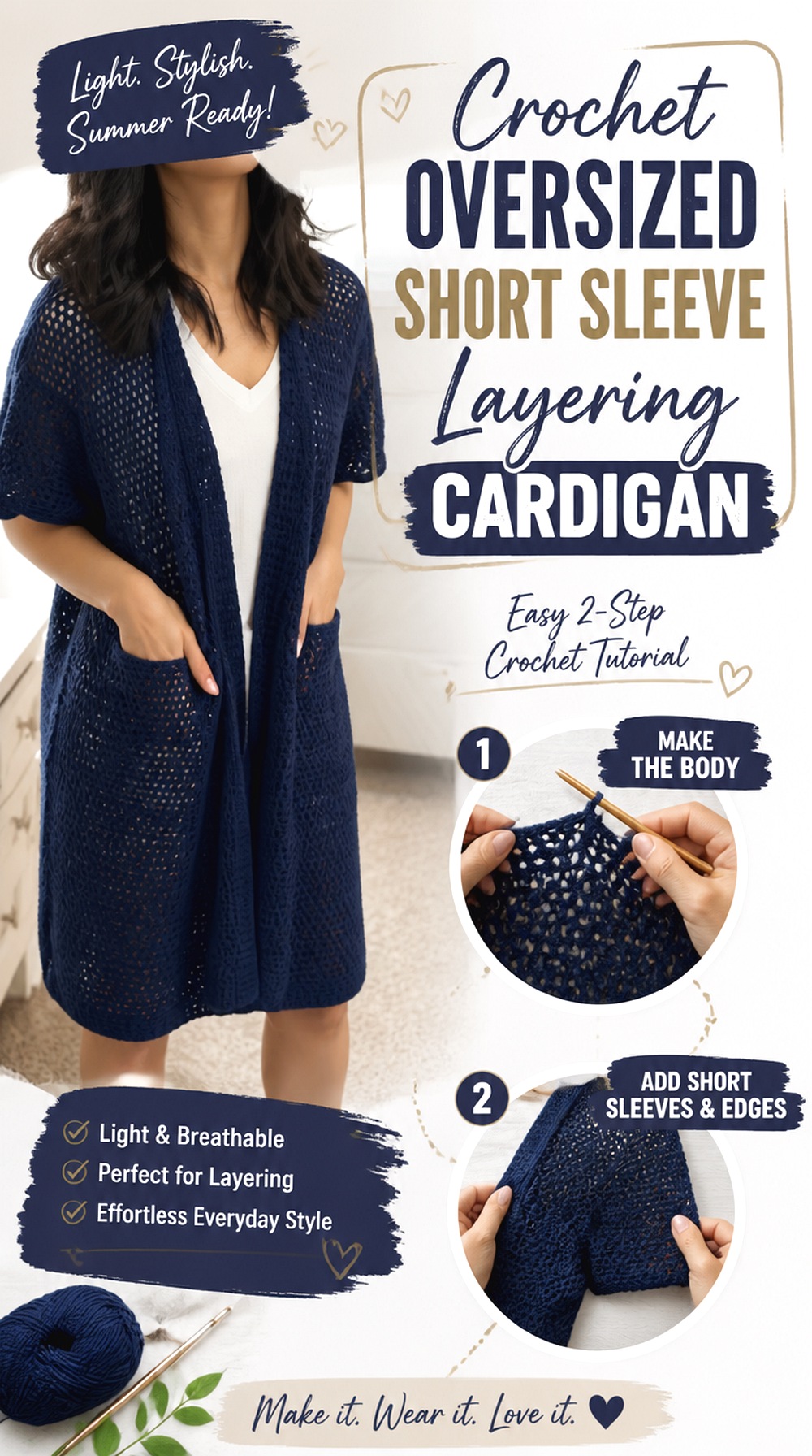
This relaxed cardigan has the roomy proportions that make short sleeves especially useful in early fall. Leelee Knits designed the source cardigan with sport-weight yarn and an oversized fit, giving the body plenty of movement without turning the sleeves into a heavy full-length layer. The broad open front makes it suitable over a simple tee, fitted knit, or dress, while the understated shape keeps the crochet texture from becoming too busy. It is a good direction if you prefer a cardigan that feels loose and casual rather than close-fitting.
Extra Ease Changes What Fits Underneath
An oversized body gives you more options for autumn layering, but the armholes still deserve attention. Decide whether you will mainly wear the cardigan over sleeveless tops or over garments with their own sleeves. If you plan for the latter, compare the tutorial’s finished proportions with your dressed measurement rather than your bare bust alone. Too much extra width can also shift the shoulder line downward, so aim for intentional ease instead of automatically choosing the roomiest possible size.
Let Lightweight Yarn Do the Layering Work
The original design uses sport-weight yarn, which helps keep a generous cardigan from becoming excessively heavy. If you want a warmer fall version, a fiber change may be more useful than a drastic increase in yarn thickness. Compare gauge, elasticity, and drape before substituting. A yarn that produces a stiff swatch can make an oversized front stand away from the body instead of hanging naturally.
Original Tutorial and Creator Credit
Creator: Leelee Knits
2. Crochet Contrast Stitch Short Sleeve Cardigan
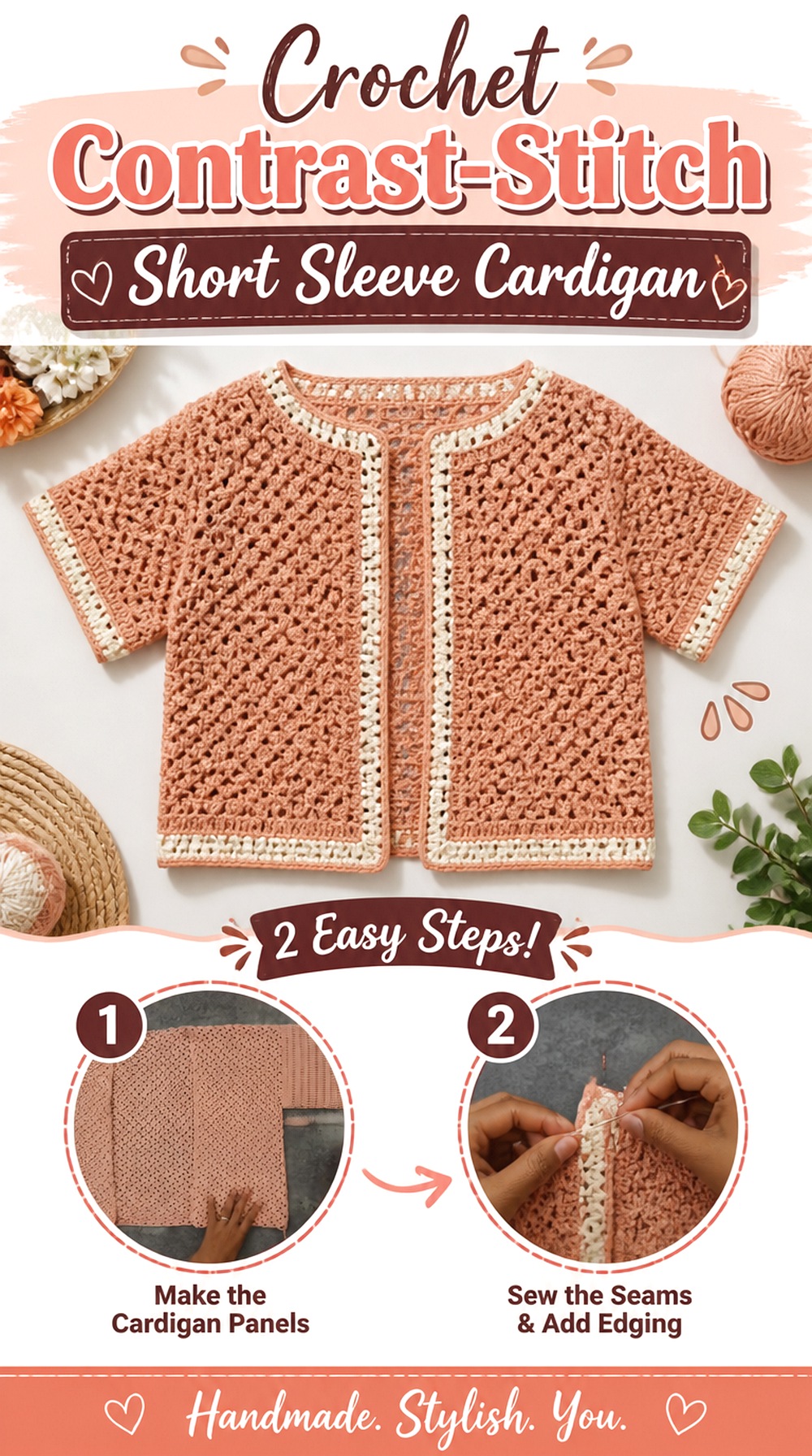
This cardigan separates the visual treatment of the body and sleeves instead of carrying one texture across the entire garment. KnitcroAddict’s source design uses a granny-style stitch through the main panels and a different treatment for the sleeves, giving the upper arm a cleaner contrast against the more patterned body. It is a useful fall idea when you want an open cardigan that still has enough surface detail to stand out over a plain base layer. The cardigan is assembled from separate flat pieces, so seam placement becomes part of achieving a clean finished shape.
Contrasting Texture Can Define the Sleeves
Using a different texture at the sleeve can prevent a patterned cardigan from looking visually dense from shoulder to hem. For fall, that lets you keep an interesting body while leaving the upper arm relatively clean. If you change either stitch treatment, compare how much the two fabrics stretch after blocking. A sleeve fabric that grows much more than the body can alter where the cuff lands and how the shoulder seam behaves.
Seamed Pieces Need Consistent Finished Dimensions
Separate panels give the garment a clear structure, but they also make mismatched dimensions easier to notice. Before final assembly, compare corresponding edges rather than relying only on row counts or visual estimates. If one piece has relaxed more than another, blocking and checking dimensions before seaming can prevent puckering at the shoulder or sleeve join.
Original Tutorial and Creator Credit
Creator: KnitcroAddict
3. Crochet Buttoned Cropped Short Sleeve Cardigan
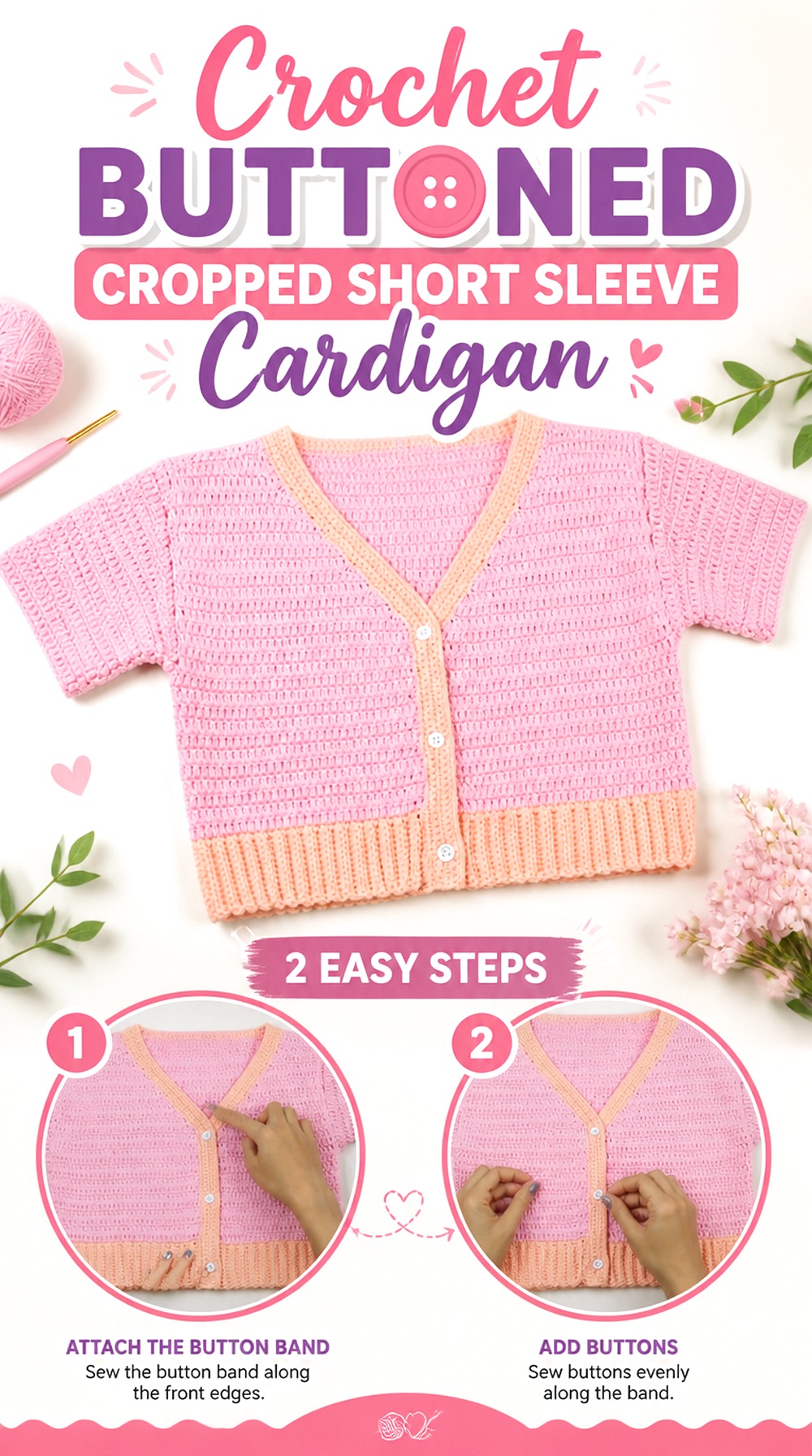
A cropped cardigan with a true front closure gives a very different fall look from a loose open-front layer. Chenda DIY’s Alanis tutorial shows a short-sleeve cropped cardigan assembled from front, back, and sleeve sections, followed by neckline and button finishing. Because the garment ends higher on the torso, it works well where a longer cardigan might hide the waist of high-rise jeans or a skirt. The button detail also lets the cardigan read more like a finished top when closed instead of functioning only as an outer layer.
Cropped Length Makes Hem Placement More Noticeable
With a short body, even a small change in length can alter the proportion of the whole outfit. Before committing to your final hem position, think about where your most-worn fall waistbands sit. A cardigan that ends directly at a high-rise waistband creates a different line from one that overlaps it. If customizing, preserve the tutorial’s shaping logic instead of shortening randomly through sections that affect the front or armhole.
Buttons Need a Stable Front Edge
A closure places more stress on the front edge than an open cardigan does. If you substitute a very stretchy yarn or looser fabric, check whether the button area remains firm enough to sit flat. The two fronts should also meet in the way the design intends before the buttons are positioned; using the closure to pull an undersized cardigan together can distort the neckline and front edges.
Original Tutorial and Creator Credit
Creator: Chenda DIY
4. Crochet Belted Hip Length Short Sleeve Cardigan
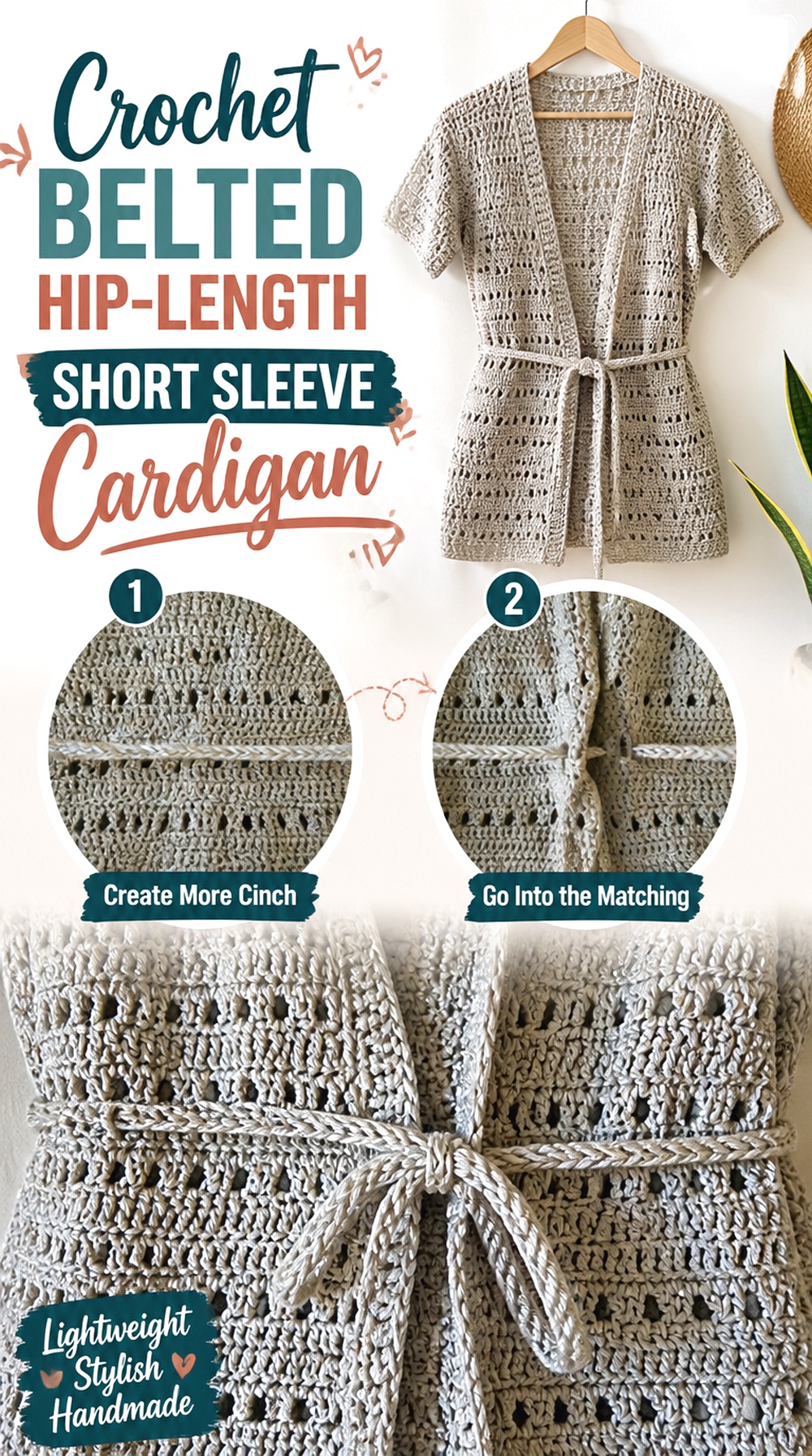
A longer short-sleeve cardigan offers more torso coverage without committing to full sleeves. ChristaCoDesign’s Summer’s End cardigan is designed as a lightweight hip-length layer and can be worn open or with a tie-style finish, making it well suited to the changeable temperatures of early fall. The extra body length gives it a softer vertical line than the cropped options in this collection, while the short sleeves keep it from feeling like a winter cardigan. It is especially useful for readers who want one handmade layer that can move from late summer into autumn.
A Tie Changes the Front From Loose to Defined
An open cardigan falls according to its own weight; a tied cardigan brings the front panels toward the waist and changes that drape. Check that you like both looks before choosing your size. If the fronts only sit correctly when pulled tightly together, the garment may not have enough room for the fall layers you intend to wear underneath.
Hip Length Adds Weight Below the Armhole
More length means more fabric hanging from the shoulders. This is where fiber choice matters. A yarn that grows noticeably after washing can pull the body lower and subtly change the sleeve opening. Swatch, wash, and let the sample dry as the finished garment will be dried before deciding whether your substitute has the right balance of drape and stability.
Original Tutorial and Creator Credit
Creator: ChristaCoDesign
5. Crochet Pocketed Rectangle Short Sleeve Cardigan
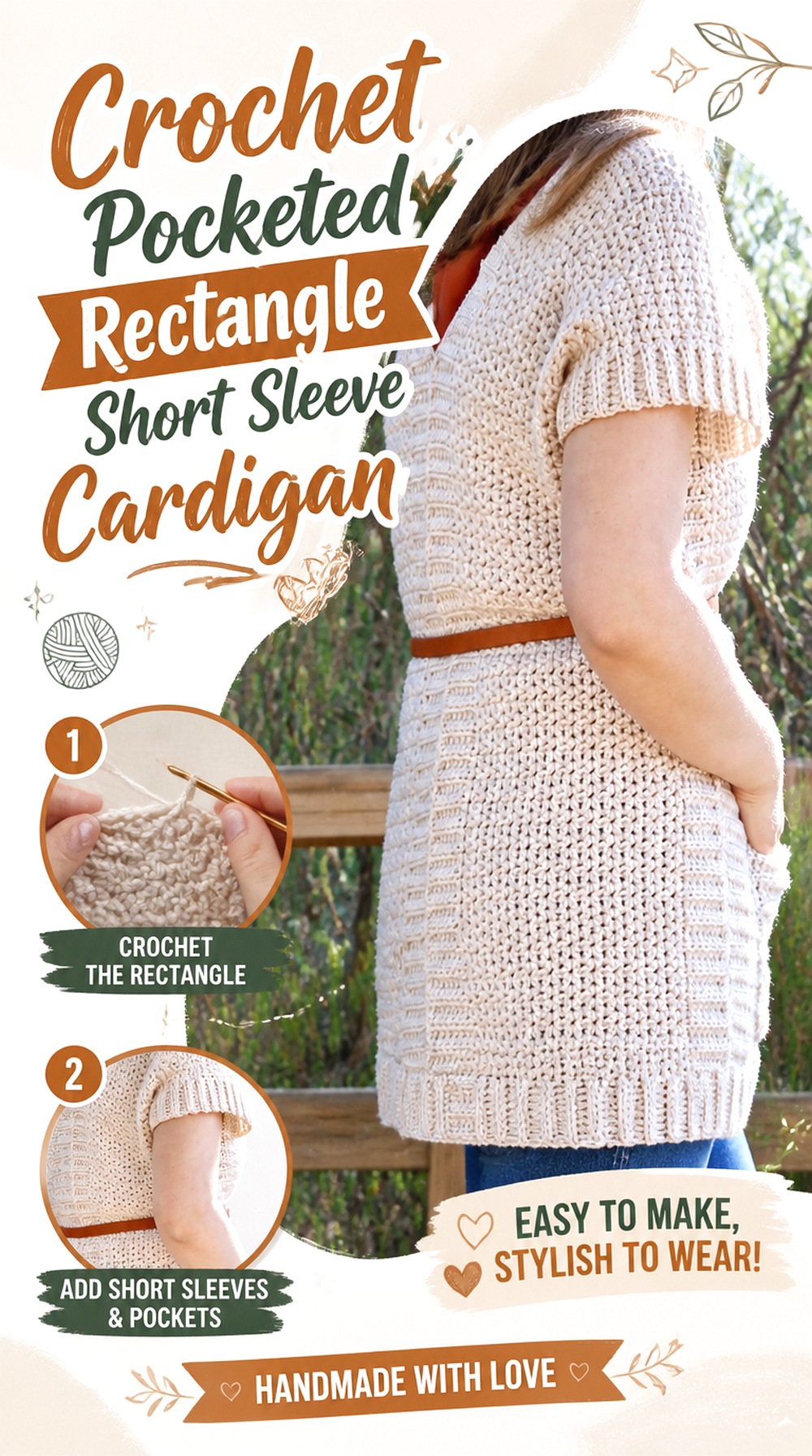
This rectangle-based cardigan leans into practical fall styling with a straightforward silhouette and pockets. Winding Road Crochet’s tutorial uses simple geometric pieces to create the cardigan shape, which makes the finished garment feel more relaxed than a heavily shaped jacket. Pockets add useful visual weight near the lower body and help distinguish this version from lighter summer cover-ups. Because the design is based on broad pieces rather than intricate tailoring, the important decisions are overall width, arm opening, pocket position, and how much drape you want through the front.
Pocket Placement Should Follow the Finished Garment
Do not judge pocket height only while the cardigan is lying flat. A pocket that looks centered on the table can sit too low or too far toward the side once the cardigan hangs from the shoulders. If you have flexibility in finishing, try the garment on and temporarily position the pockets before attaching them permanently.
Rectangles Still Need Fit Planning
Simple geometry does not mean fit is automatic. The width of the main pieces affects the front opening, back coverage, and where the shoulder drops. For fall layering, make sure the arm opening leaves room for your intended base layer without becoming so large that the sides gape excessively.
Original Tutorial and Creator Credit
Creator: Winding Road Crochet
6. Crochet Tassel Trim Short Sleeve Cardigan
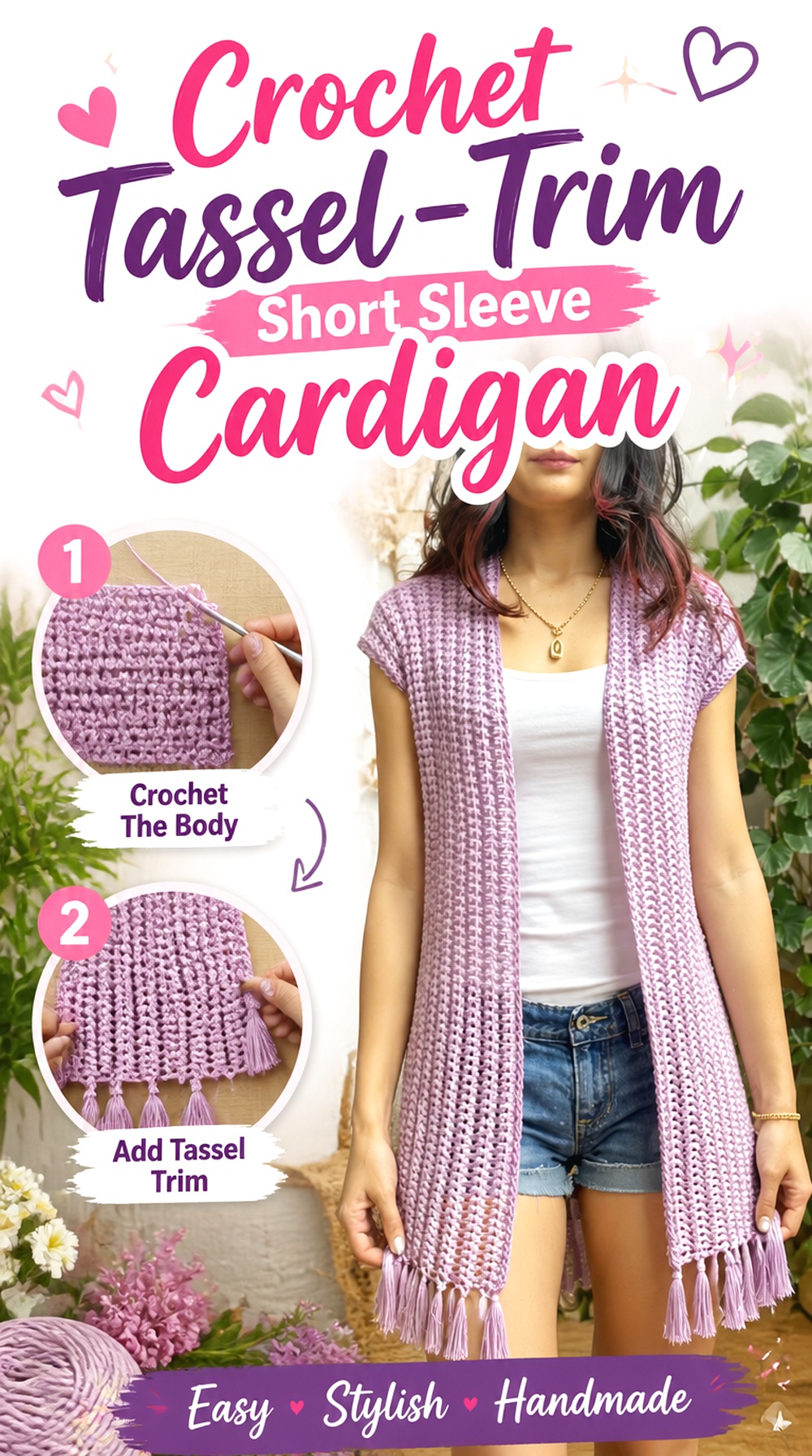
Granny Gaia’s two-panel cardigan makes decorative finishing part of the silhouette by adding tassels along the lower edge. The source tutorial is made-to-measure and shows how two broad panels form the cardigan, which gives the finished piece a relaxed, almost wrap-like quality rather than a tailored fit. For fall, tassels can add movement over simple jeans and boots without requiring complicated colorwork or motifs. The design is also adaptable in body length, so you can think about whether you want a cropped statement layer or more coverage through the hips.
Tassels Change the Visual Length
Fringe or tassels extend the eye below the crocheted hem, so judge the cardigan’s apparent length with the trim included. If you prefer a cleaner fall wardrobe, the same basic silhouette can also be considered without decorative fringe. What matters is deciding early enough that the body length still looks intentional once finishing is complete.
Made-to-Measure Does Not Mean Guesswork
A customizable tutorial is most useful when you measure systematically. Wear the base layer you expect to use in autumn, check the panel placement against your body, and keep both sides consistent. Recheck the arm opening before final joining because it controls much of the comfort in a two-panel short-sleeve construction.
Original Tutorial and Creator Credit
Creator: Granny Gaia
7. Crochet Vertical One Piece Short Sleeve Cardigan
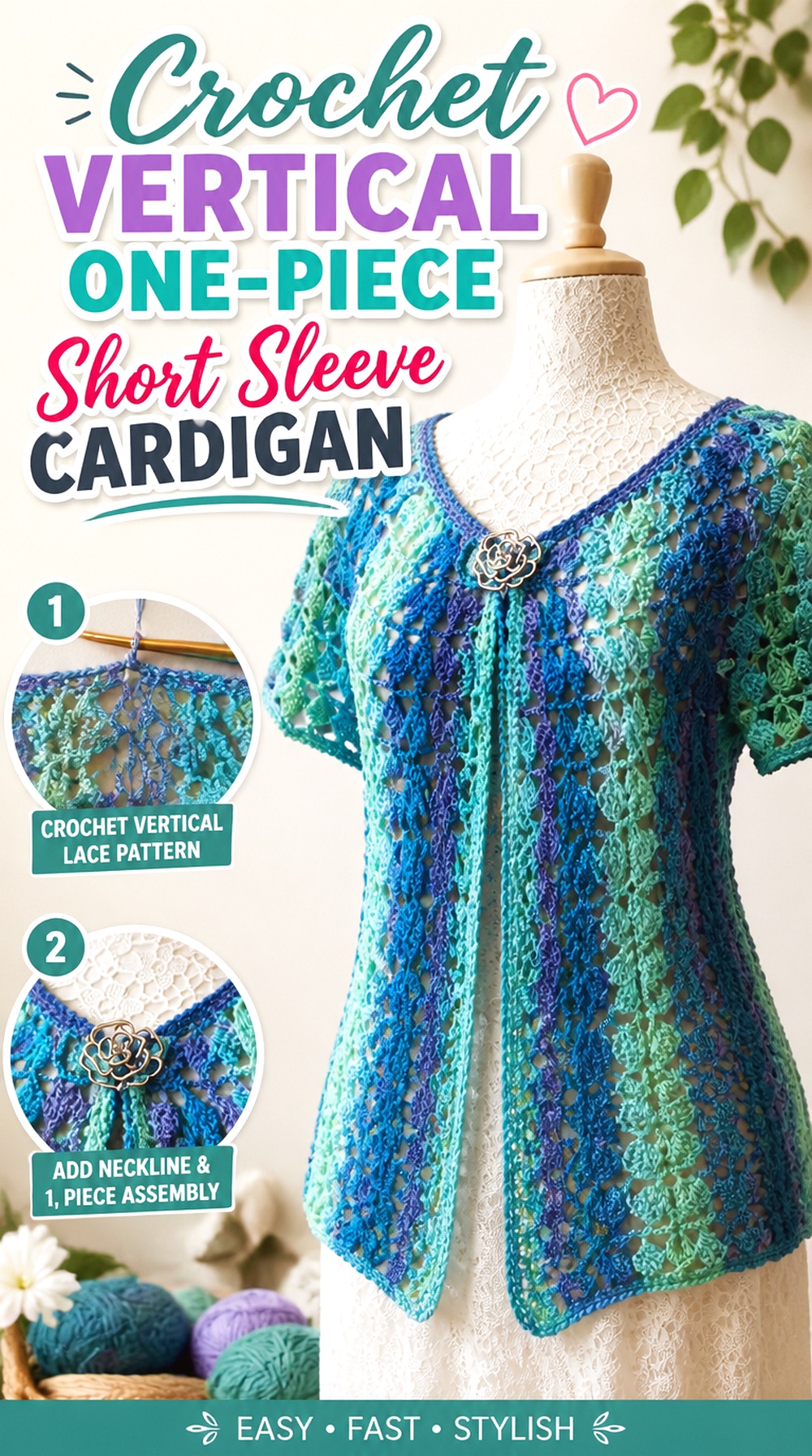
Laura Cepeda’s short-sleeve cardigan uses a one-piece, vertically worked approach, creating a different visual direction from cardigans crocheted from hem to shoulder. Vertical stitch orientation can emphasize the length of the body and make color changes or textured rows read differently across the garment. With fewer separate panels to manage, attention shifts toward maintaining consistent dimensions as the single main piece develops. For fall, this is a strong choice when you want a cardigan that feels streamlined and prefer a construction concept that reduces the number of major garment pieces.
Vertical Construction Changes Where You Adjust Width
In a vertically worked garment, adding or subtracting work may affect a different measurement than it would in a conventional bottom-up panel. That makes it important to understand which direction controls body width and which controls length before customizing. Follow the creator’s measurement logic rather than applying adjustment habits from a horizontal construction.
Keep the Front Opening Balanced
A one-piece cardigan can still look uneven if the two fronts do not hang at the same depth or if finishing tension varies from side to side. Lay the garment out, compare the front edges, and check it on the body before adding any optional decorative finish or closure.
Original Tutorial and Creator Credit
Creator: Laura Cepeda English
8. Crochet Clean Line Short Sleeve Transitional Cardigan
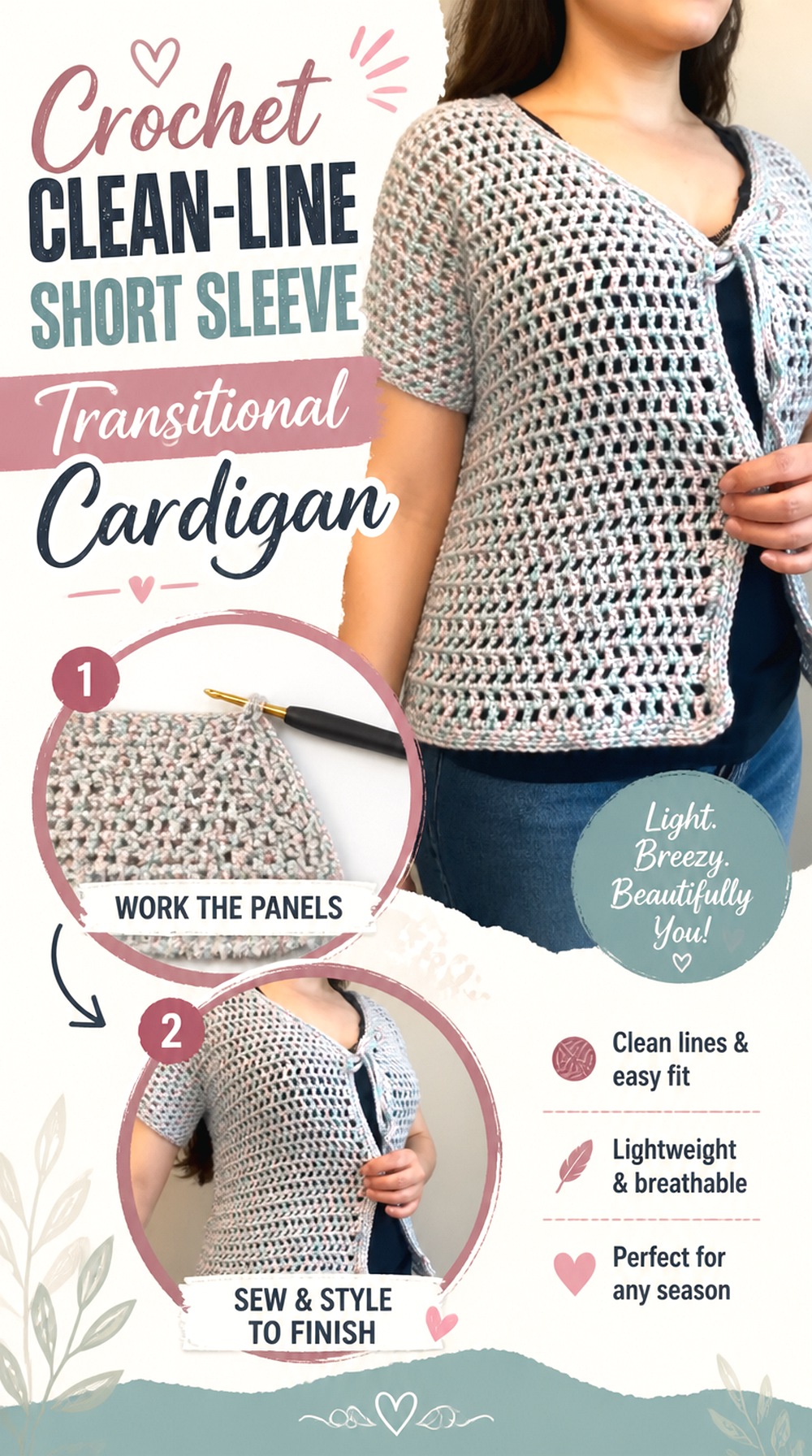
Karafty’s short-sleeve cardigan tutorial offers a straightforward garment option that can move beyond its summer-wardrobe framing when paired with fall basics. The appeal here is simplicity: rather than relying on fringe, ruffles, or a dramatic cocoon shape, this idea can serve as the quieter cardigan in a handmade wardrobe. That makes yarn color, fit, and finishing more noticeable. A solid neutral or autumn tone can emphasize the silhouette, while a more variegated yarn will make the crochet surface itself the focus.
Simpler Shapes Make Fit More Visible
When a cardigan has few decorative elements, uneven front edges, an awkward sleeve opening, or unwanted pulling will stand out more clearly. Check the garment against your intended fall outfit before finishing. Pay particular attention to whether the fronts hang freely and whether the shoulder placement looks deliberate rather than accidentally oversized.
Use Color to Support the Construction
A minimal cardigan does not need complicated colorwork to feel seasonal. If the stitch pattern already creates visible texture, a single warm neutral can make that texture easier to read. With highly variegated yarn, make a generous swatch first so you can see whether rapid color changes enhance or obscure the fabric.
Original Tutorial and Creator Credit
Creator: Karafty
9. Crochet Ruffle Sleeve Open Cardigan
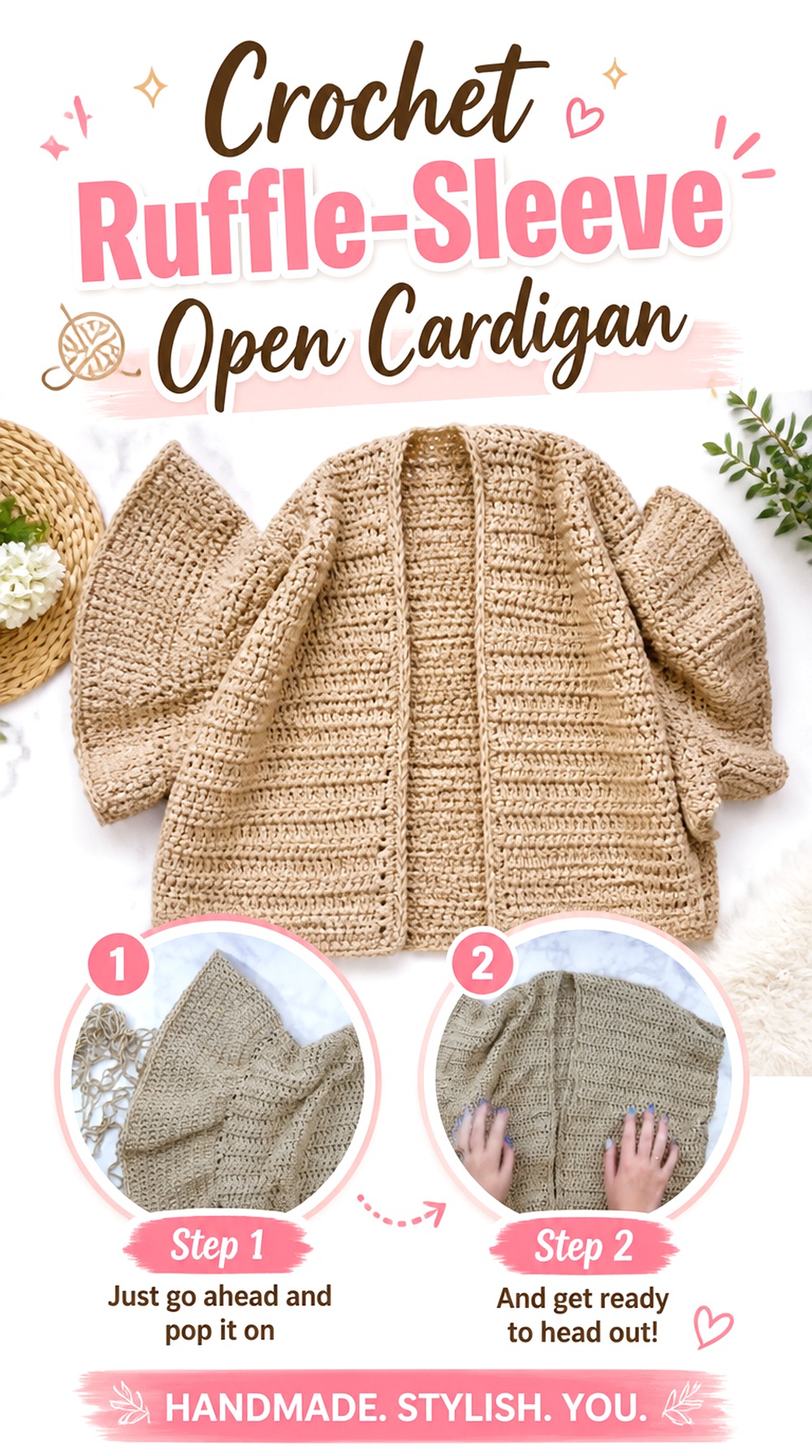
This Sewrella cardigan puts the emphasis exactly where many short-sleeve designs stay simple: at the sleeve edge. The ruffle creates more volume around the upper arm and gives the cardigan a softer, more decorative profile. That makes it a useful choice over fitted dresses, plain tops, or simple denim where the sleeve can remain the focal point. Because the ruffle adds visual width, the rest of the outfit can stay relatively streamlined. It is distinctly different from the oversized and rectangle cardigans because its impact comes from controlled sleeve detail rather than overall garment volume.
Ruffle Fullness Needs Room to Fall
A ruffled sleeve should have enough flexibility to move rather than sitting stiffly away from the arm. If substituting yarn, compare the drape of your swatch with the source fabric. A rigid fiber or much tighter gauge can turn a soft ruffle into a firm ledge, changing the intended silhouette.
Keep the Underlayer Slim at the Upper Arm
For fall styling, a ruffle cardigan can work over sleeves, but very bulky underlayers may compete with the sleeve volume. A fitted long-sleeve tee or smooth knit generally preserves the shape better than a top with its own puffed or gathered sleeve. Try the combination before deciding whether the cardigan needs extra armhole ease.
Original Tutorial and Creator Credit
Creator: Sewrella
10. Crochet Classic Short Sleeve Everyday Cardigan
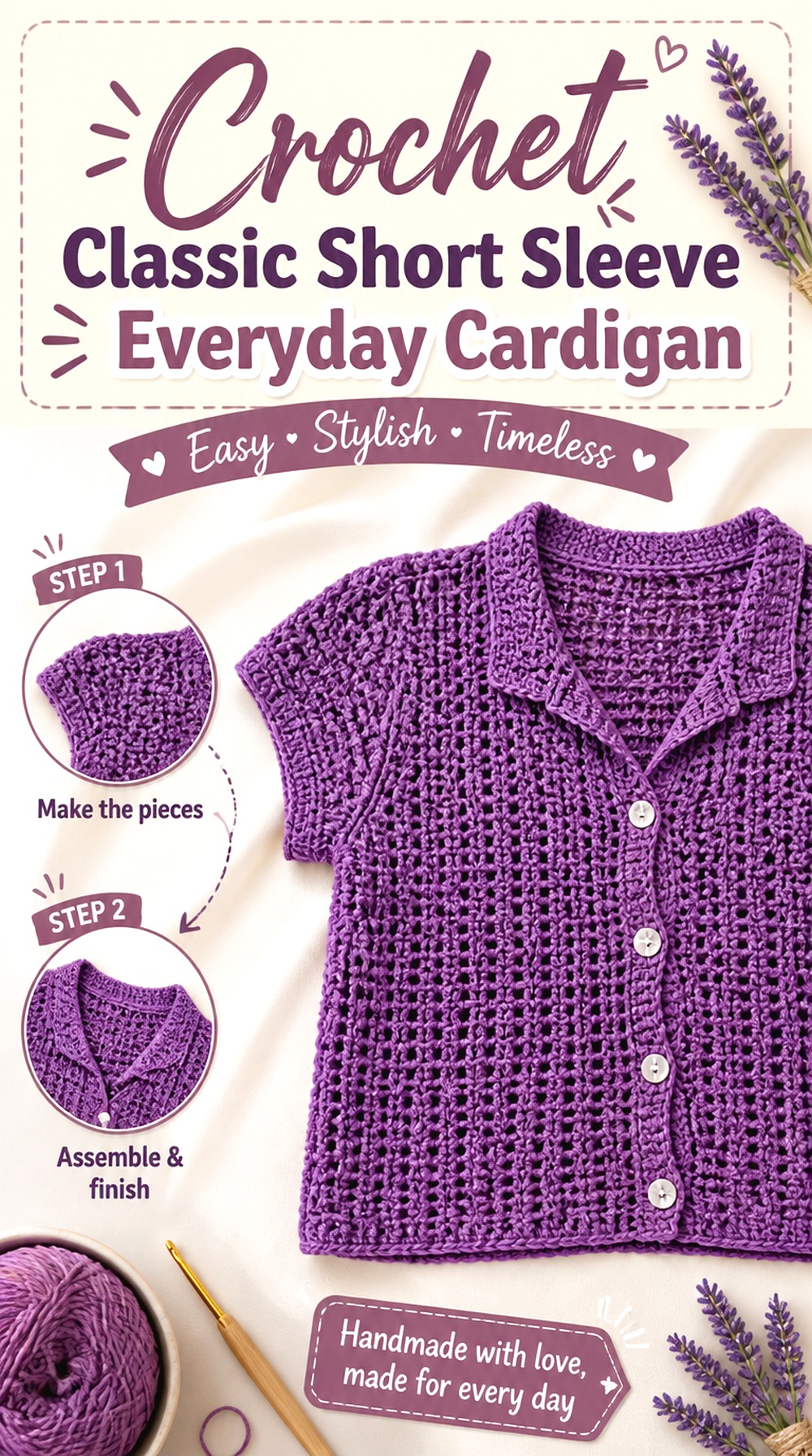
Crafting Shed’s dedicated short-sleeve cardigan tutorial is a useful reference for readers who want the project category without a highly specialized decorative concept. A classic open cardigan is easier to integrate into repeated fall outfits because it does not depend on one statement feature. That also makes it a good canvas for restrained color choices, contrasting edging, or subtle texture changes that do not alter the overall construction. Before customizing, concentrate on the fundamental fit points: shoulder placement, upper-arm comfort, body length, and how much of the front you want covered when the cardigan hangs naturally.
Start With the Outfit You Will Repeat Most
A versatile cardigan is only versatile if its proportions work with your actual clothes. Compare the intended body length with the tops, dresses, and waistlines you wear most often. A slightly longer everyday cardigan can offer more layering flexibility, while a shorter one may work better with high-waisted pieces.
Finish the Front Edge With Consistent Tension
The front opening becomes a strong vertical line, particularly in a plain cardigan. If edging tension is tighter than the body, the fronts may draw upward; if it is much looser, they may ripple. Follow the tutorial’s finishing method and check the edge while the garment is hanging, not only while it is flat.
Original Tutorial and Creator Credit
Creator: Crafting Shed
11. Crochet Tie Front Cropped Bolero Cardigan
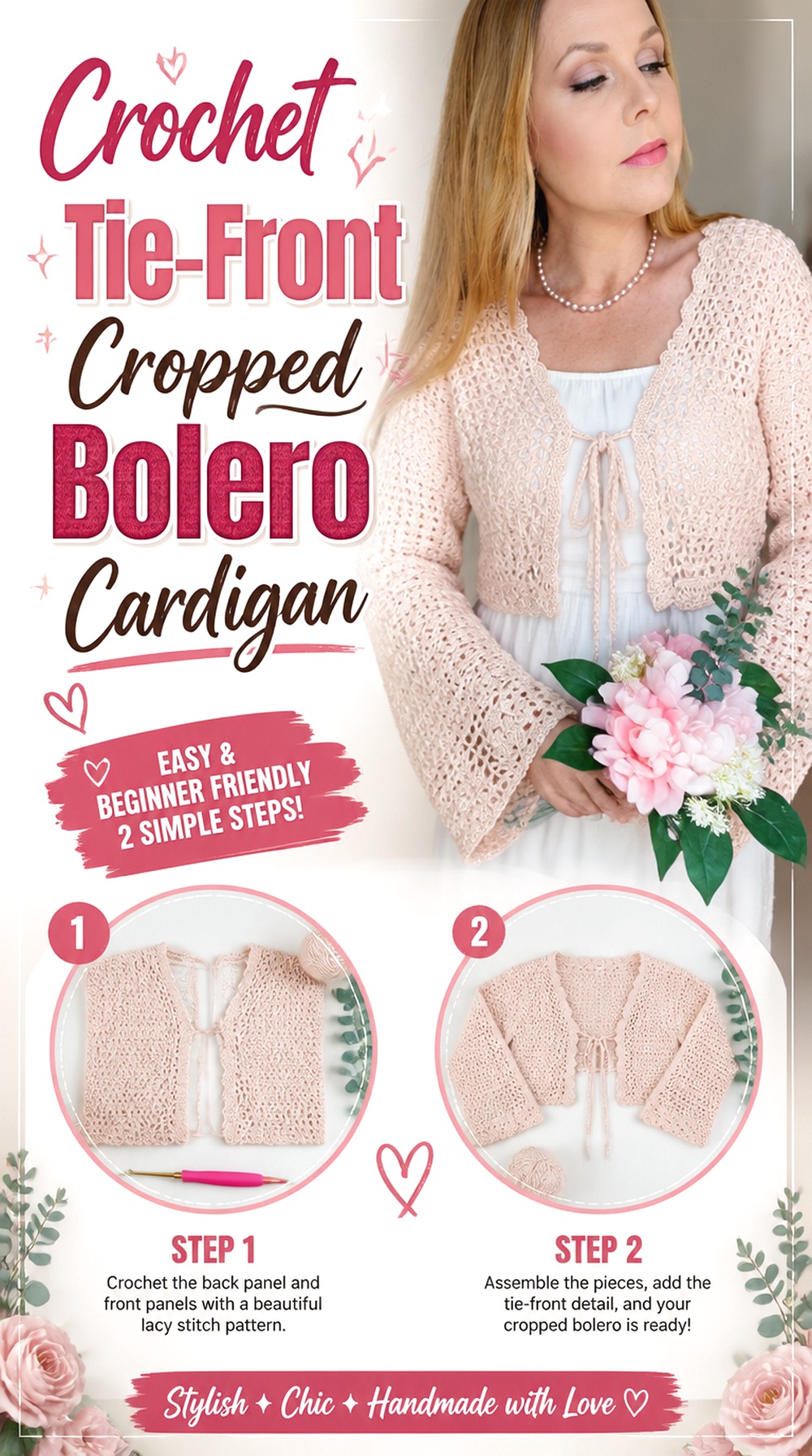
A tie-front bolero creates one of the most compact silhouettes in this collection. Selina Veronique Crochet’s source design combines a cropped body with ties, delicate V-stitch fabric, decorative sleeve cuffs, and shell-style edging. That mix gives the cardigan a more romantic finish than a plain cropped layer. For fall, it can sit over a fitted dress or high-waisted separates without covering much of the outfit underneath. Because the source uses a lightweight fabric and decorative cuff treatment, this idea is better for visual layering than for substantial cold-weather warmth.
Decorative Cuffs Deserve Their Own Fit Check
The cuff treatment creates a visible boundary around the sleeve, so its circumference and placement matter. Before final attachment, check that the sleeve sits comfortably without the cuff pulling the fabric inward more than intended. If adapting the design, compare the finished cuff dimensions with the sleeve opening rather than assuming decorative motifs will automatically fit.
Ties Work Best Without Distorting the Front
Front ties are meant to shape the opening, not rescue a cardigan that is too narrow. Put the garment on before deciding how tightly you want the ties to sit. A light tie can define the waist while keeping the V-shaped opening relaxed; pulling too firmly can drag the neckline and sleeve seams forward.
Original Tutorial and Creator Credit
Creator: Selina Veronique Crochet
12. Crochet Shell Lace Garden Cardigan
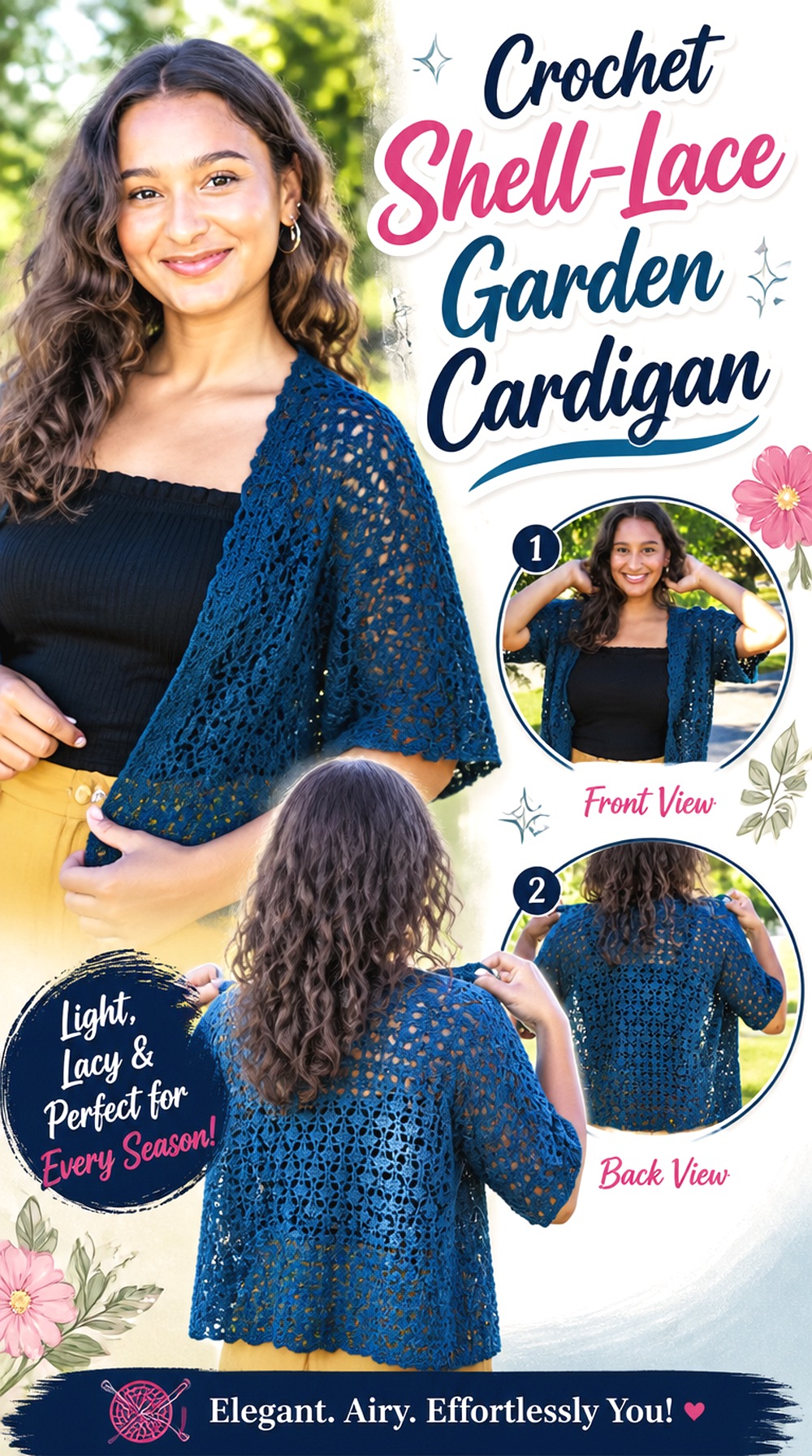
The Garden Party cardigan from Marly Bird brings shell lace and a scalloped front edge into a short-sleeve layering shape. Its surface is more decorative than a basic solid-fabric cardigan, so it can provide most of the texture in a simple fall outfit. The pattern has been expanded to a broad size range, and the source discusses different ease choices, making fit selection especially relevant. Because shell lace opens the fabric visually, a darker autumn shade can still feel lighter than an equally dark solid stitch.
Lace Lets the Underlayer Become Part of the Design
Open shell fabric shows more of the clothing underneath, so choose the base layer deliberately. High contrast will make every opening more visible; a close color match produces a subtler textured effect. This gives you a simple way to change the cardigan’s appearance across outfits without changing the crochet itself.
Decide on Ease Before You Read It as “Fall”
A short-sleeve lace cardigan can be worn close to the body or with more layering room, but those choices create very different silhouettes. Use the creator’s finished measurements and ease guidance rather than relying on your usual ready-to-wear size. If your fall plan includes a long-sleeve base, include that extra layer during the fit decision.
Original Tutorial and Creator Credit
Creator: Marly Bird
13. Crochet Side Panel Short Sleeve Cardigan
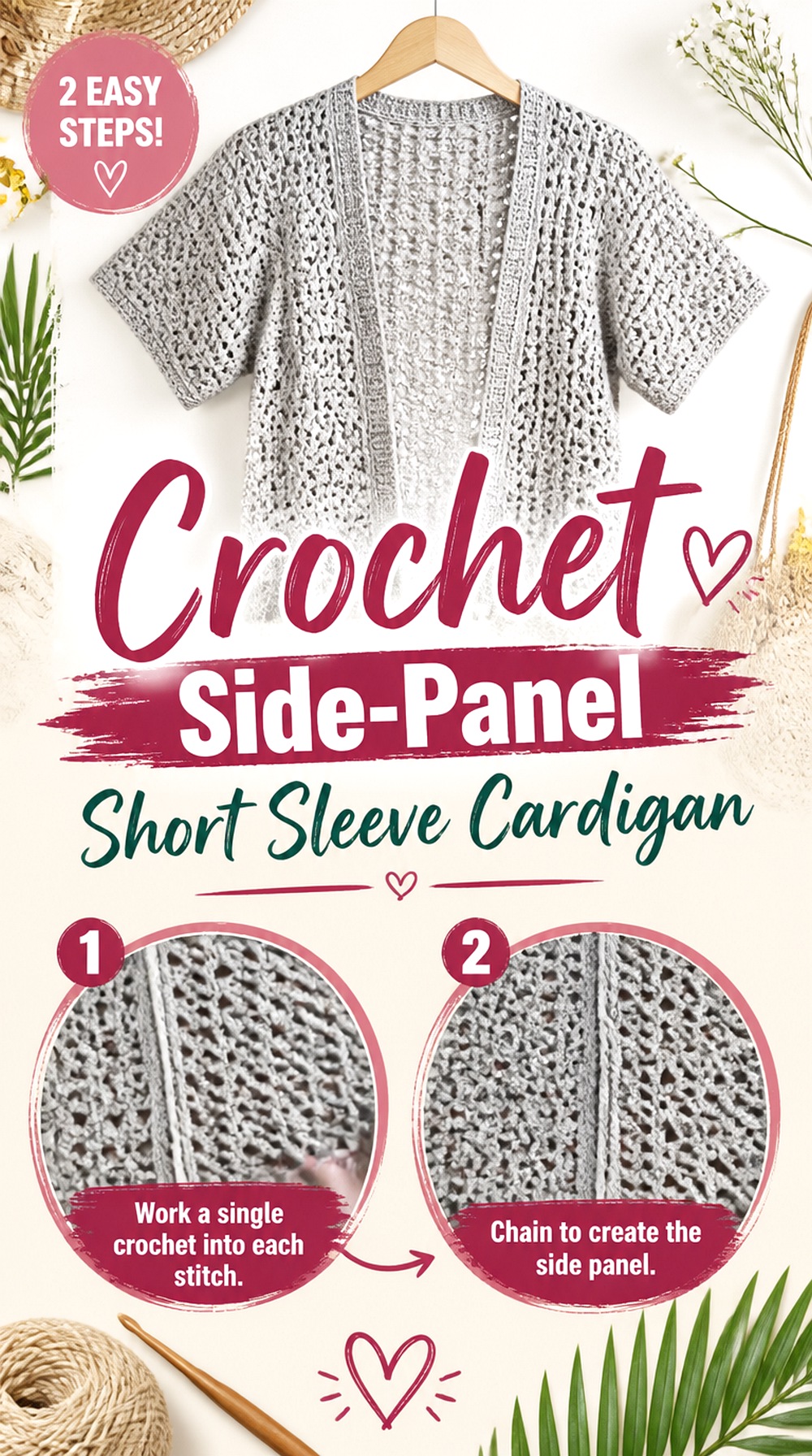
The Summer Path cardigan from EvelynAndPeter uses an airy stitch pattern and an unusual panel arrangement that gives the body a flowing shape without relying on a conventional fitted cardigan structure. The source construction includes a side-to-side element and a narrower back section, making the direction of the fabric part of the finished look. Short sleeve edging keeps the arm treatment light, while the broader body provides the visual coverage. This option works well for fall when you want texture over a fitted base layer but do not want the cardigan to look dense or heavy.
Panel Direction Can Change How Stripes Read
If you choose a self-striping or color-changing yarn, construction direction becomes especially visible. A color sequence running sideways across one section may meet a differently oriented section elsewhere. Decide whether you want that contrast to be a feature. With solid yarn, the change in stitch direction will be quieter but can still create subtle visual structure.
Check the Back Before Adjusting the Front
Unusual panel construction means one local adjustment can have wider consequences. If you want more front coverage, first understand which portion of the construction also controls back width or shoulder placement. Treat the tutorial’s schematic or assembly explanation as the guide rather than extending a panel based only on how it looks flat.
Original Tutorial and Creator Credit
Creator: EvelynAndPeter
14. Crochet Hairpin Lace Short Sleeve Cardigan
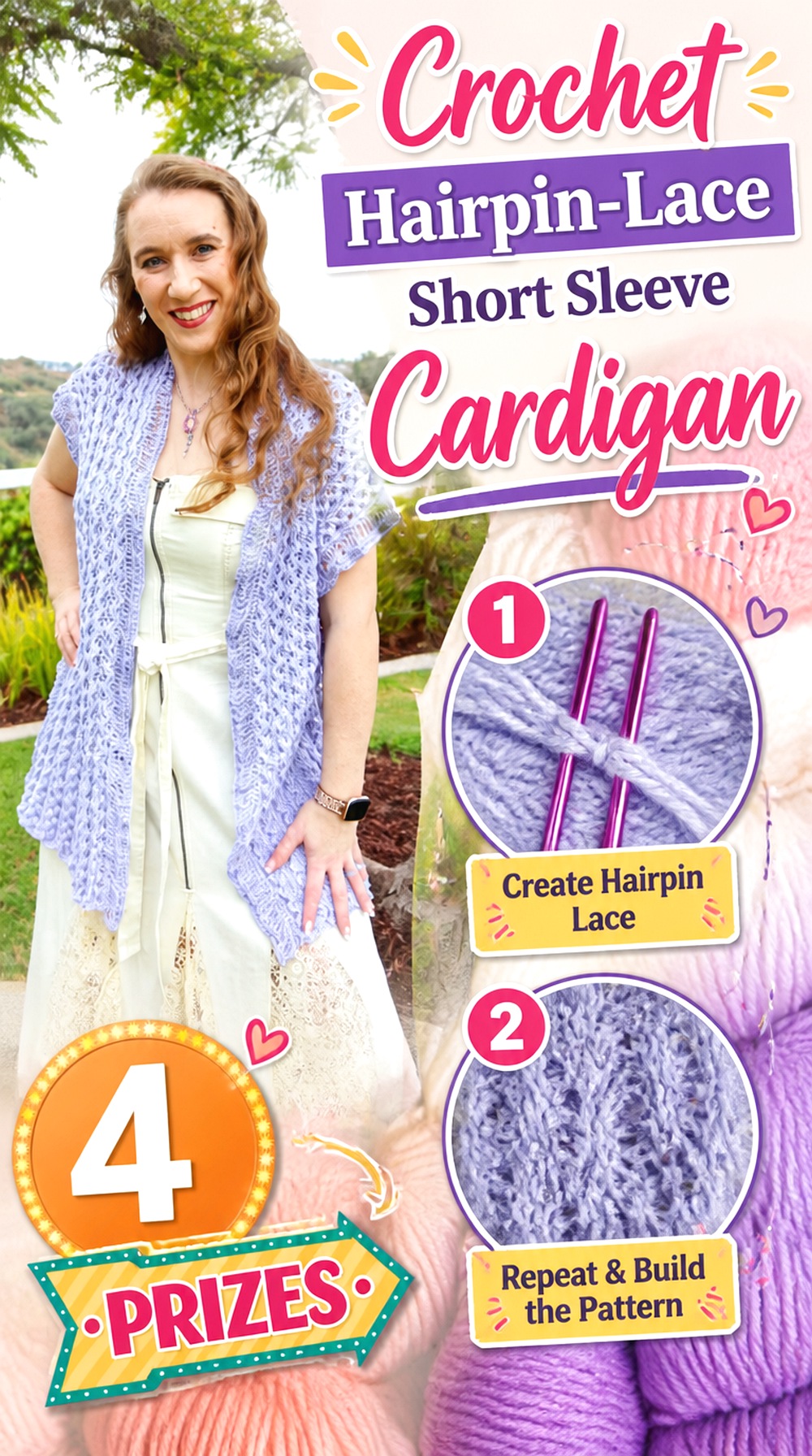
Hairpin lace makes this cardigan stand apart from every standard hook-built fabric in the roundup. Nicki’s Homemade Crafts uses the technique to create an open, lightweight short-sleeve cardigan with visible strip-based structure. The resulting fabric can feel vintage or modern depending on yarn and color, but the larger point is construction: the open spaces and joins become major design elements rather than background texture. For fall, this works best as a statement layer over a smooth, simple top where the lace structure remains easy to see.
The Open Structure Makes Join Quality Visible
Hairpin-lace strips draw attention to their connections. If the join tension varies, the inconsistency may be easier to see than it would be in a dense fabric. Before assembling a whole garment, make sure you are comfortable producing and handling the lace consistently and can keep corresponding sections similar in length.
Treat the Cardigan as a Texture Layer
This kind of fabric is visually open, so it should not be chosen for the same reason as a dense autumn sweater. Its fall value is in layering texture over another garment. A fitted long sleeve underneath can show the lace clearly while adding the warmth the cardigan itself does not provide.
Original Tutorial and Creator Credit
Creator: Nicki’s Homemade Crafts
15. Crochet Poncho Style Short Sleeve Cardigan
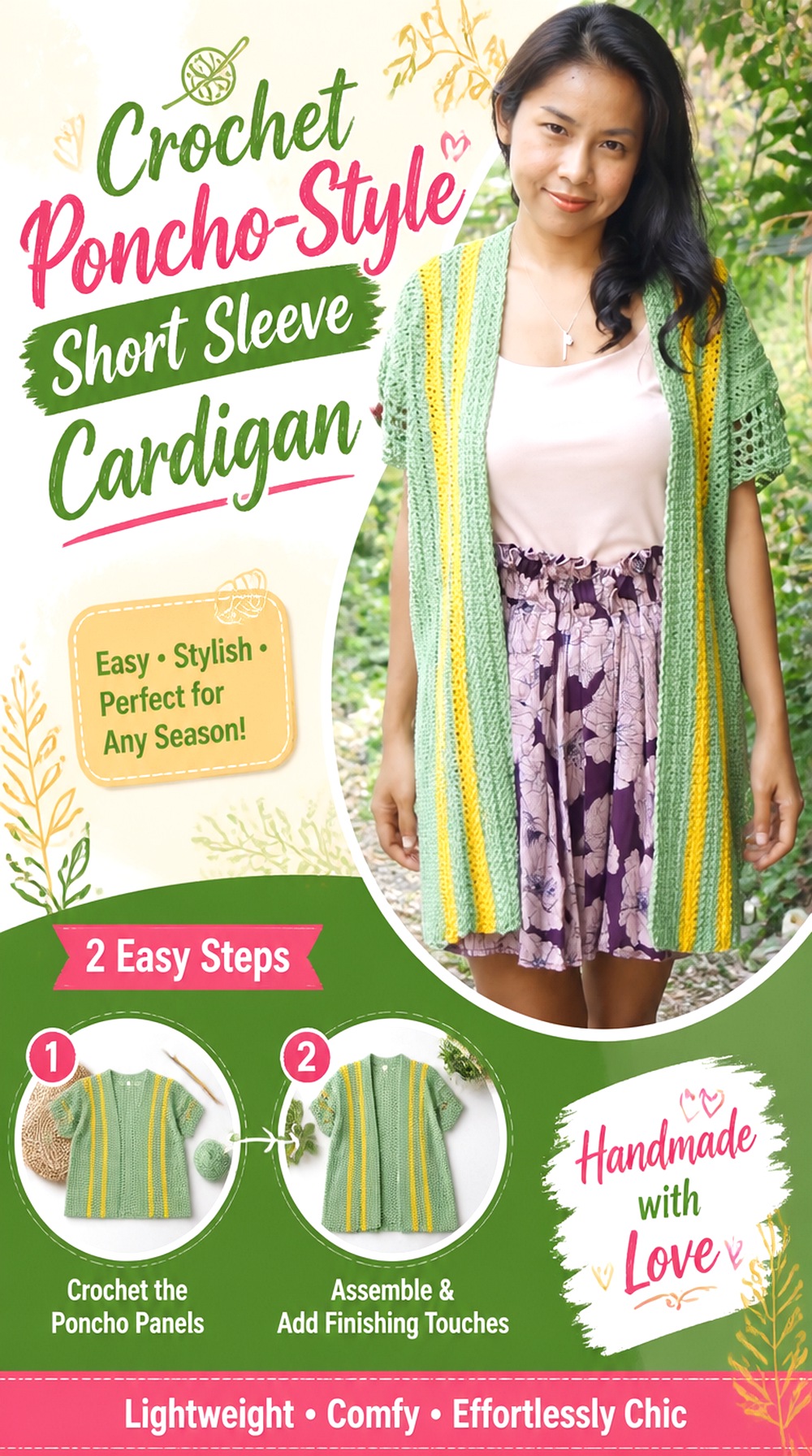
Jennyandteddy crochet’s tutorial blends the coverage of a poncho with the open-front convenience of a cardigan. The source design is built from rectangles, so the sleeve effect comes from the broader draped shape rather than a closely fitted set-in sleeve. This makes it a useful fall option when you want freedom through the upper arm and room for a long-sleeve base layer. Compared with a conventional cardigan, the silhouette is wider and more relaxed, so it works best when you actually want that movement rather than a tailored shoulder line.
Wide Upper-Body Volume Needs Balance
A poncho-cardigan adds width through the upper body. If you prefer a balanced fall outfit, pair it with a straighter or more fitted layer underneath and consider how the cardigan length interacts with the lower half of the outfit. The goal is not to minimize volume but to make the oversized line look deliberate.
Arm Openings Matter More Than Sleeve Length
In this construction, comfort often depends on the placement and depth of the side opening rather than on a separately shaped sleeve. Check whether you can lift and move your arms easily while wearing the intended underlayer. An opening that is too low may expose more of the side than you want; one that is too high can restrict movement.
Original Tutorial and Creator Credit
Creator: jennyandteddy crochet
16. Crochet Seamless Shell Stitch Tie Cardigan
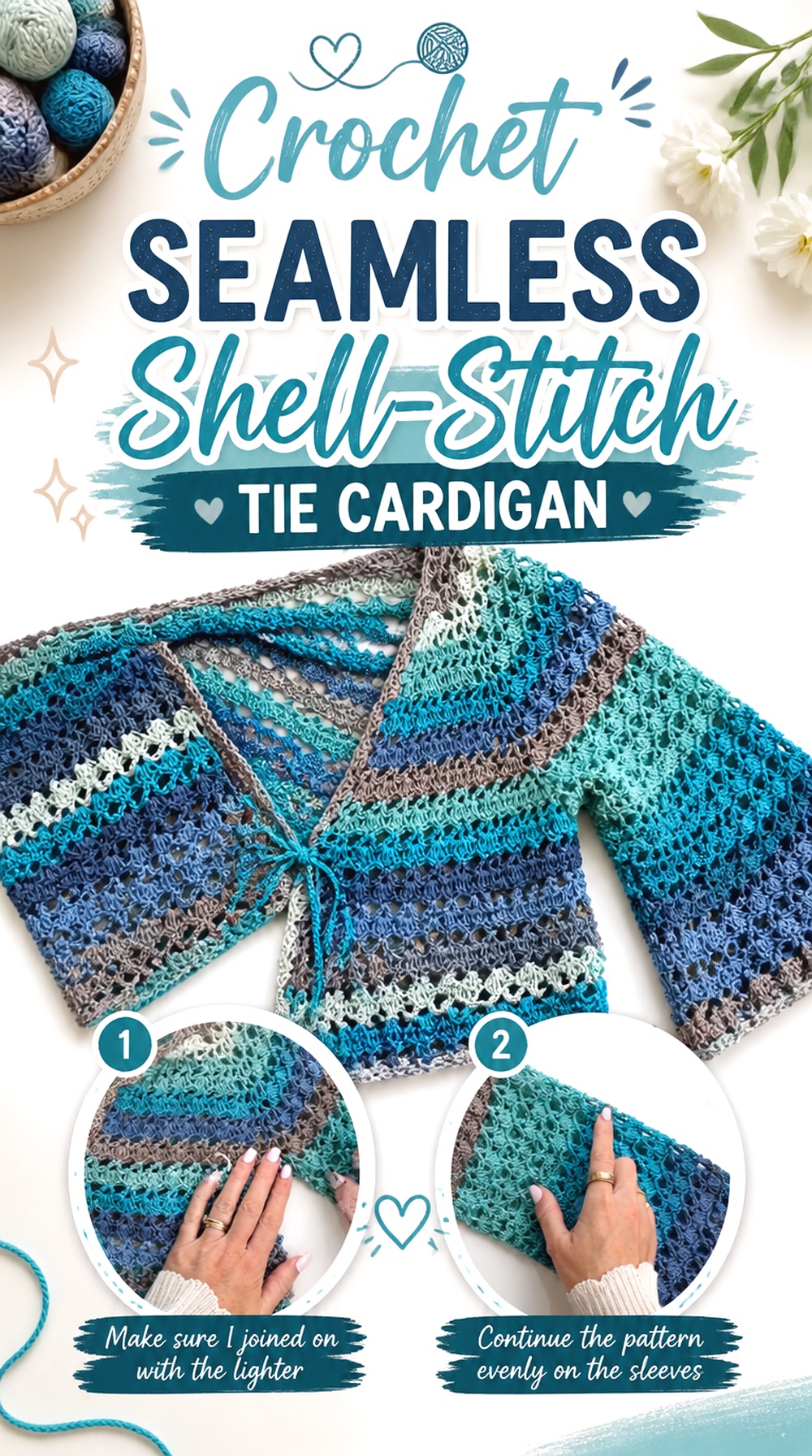
MJ’s Off The Hook Designs’ Solea cardigan offers a top-down, seamless route with shell-and-V-stitch texture, front ties, and a short-sleeve option. This is especially useful for readers who want to make fit decisions while the upper body is developing instead of assembling the major pieces at the end. The open lace, shaped yoke, and ties give it a more refined silhouette than a simple rectangle cardigan. For fall, it works as a light layer over tanks early in the season and can later be worn over fitted sleeves if the chosen fit allows.
Top-Down Construction Gives a Useful Try-On Point
A major advantage of a top-down cardigan is the ability to assess the upper body before committing to the entire length. Pay particular attention to yoke depth and underarm comfort. If the armhole already feels tight over your intended base layer, adding body length will not solve that problem.
Blocking Can Change Open Shell Fabric
The source specifically notes that the fabric relaxes after blocking, which is important when judging fit. Avoid making a sizing decision based only on a compact unblocked fabric. Swatch and finish the sample the way you intend to treat the cardigan so your choice reflects the final fabric rather than the hook-stage fabric alone.
Original Tutorial and Creator Credit
Creator: MJ’s Off The Hook Designs
17. Crochet Cocoon Short Sleeve Cardigan
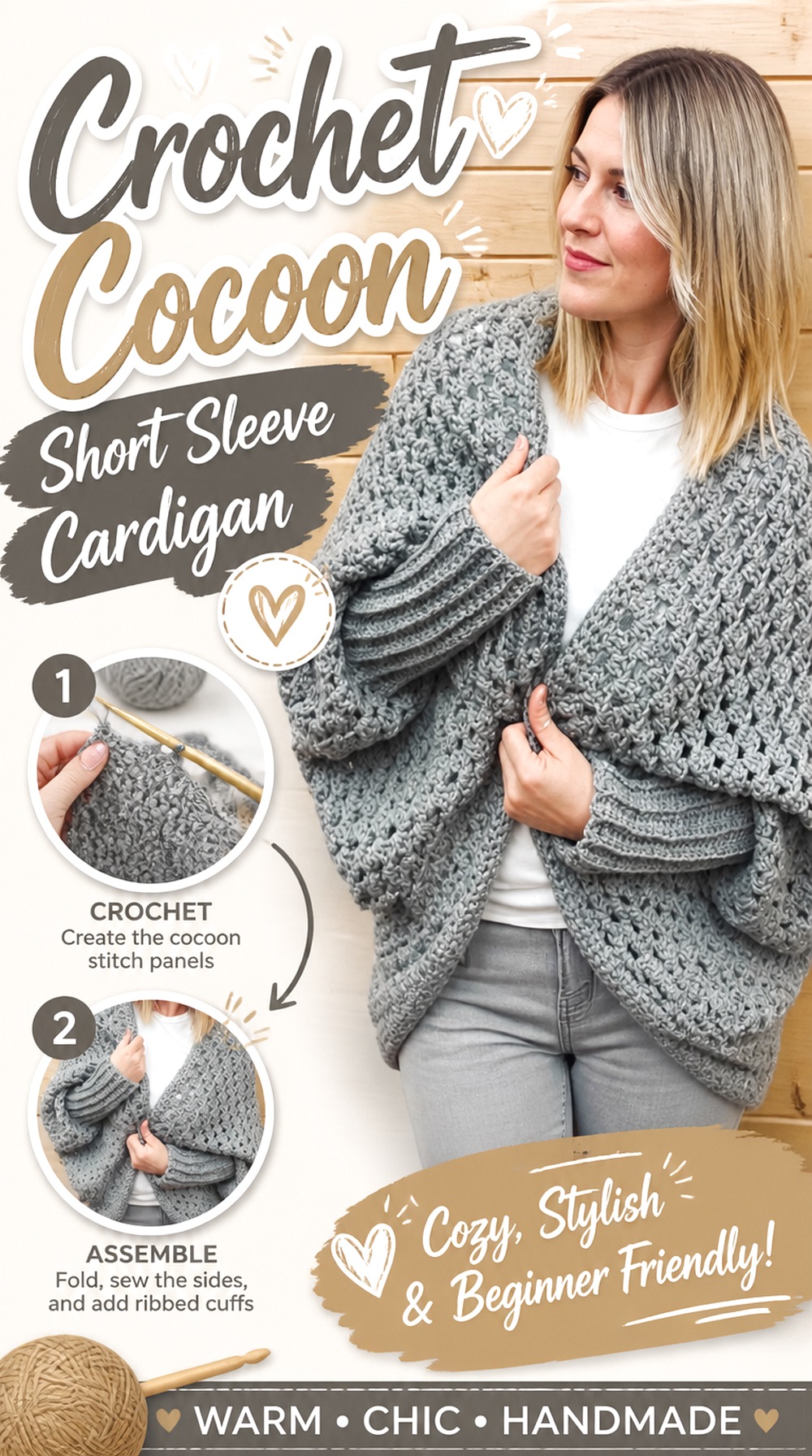
A cocoon cardigan shifts the focus away from fitted sleeves and toward a large draped body that folds around the wearer. Unique stitch designs’ tutorial demonstrates this roomy construction style, making it one of the most relaxed options in the collection. The short arm openings keep the hands and forearms free, while the back and sides supply most of the coverage. For fall, this silhouette works particularly well as an indoor layer or over a close-fitting long-sleeve top because the generous body already provides substantial visual volume.
Cocoon Width Controls More Than Back Coverage
Changing the main rectangle or body width can affect how deeply the cardigan wraps, where the armholes sit, and how much fabric gathers around the sides. If you adapt the size, evaluate the entire silhouette instead of changing one dimension simply to gain more front coverage. A wider cocoon is not automatically a better-fitting cocoon.
Choose Drape Before You Choose Warmth
A cocoon depends on fabric that can fold around the body. A very rigid heavy yarn may make the back stand away from the wearer and create bulky side folds. If you want extra autumn warmth, look for a yarn that adds insulation while still producing a flexible swatch.
Original Tutorial and Creator Credit
Creator: Unique stitch designs
18. Crochet Top Down Raglan Short Sleeve Cardigan
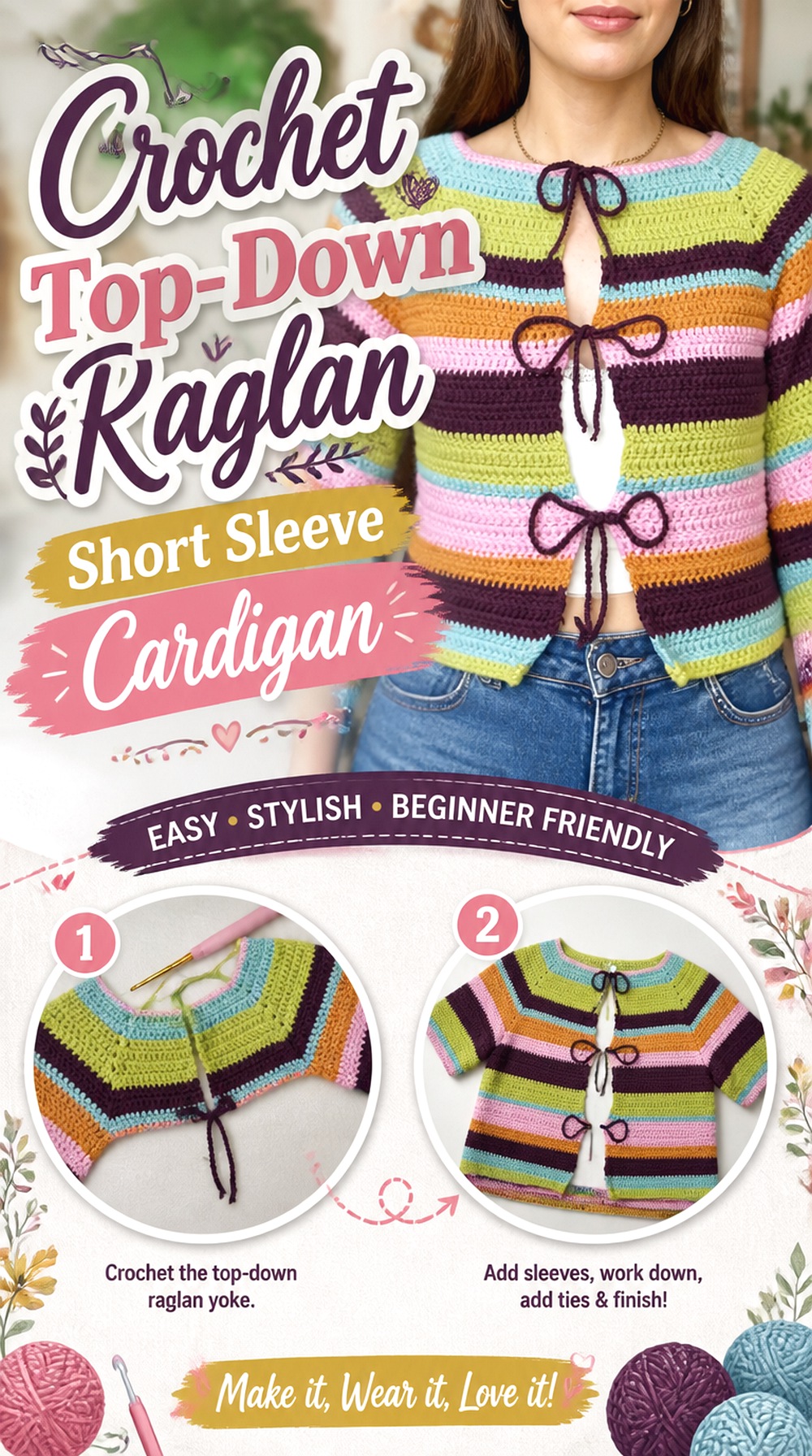
Hannah Drapinski’s raglan cardigan tutorial is one of the clearest adaptation choices for fall because the creator explicitly discusses changing sleeve length and yarn character for different seasons, and the video includes a short-sleeve cardigan result. The top-down raglan shape gives a smoother shoulder transition than a dropped rectangle construction, while the open front and ties keep the overall look relaxed. This option suits anyone who wants to make fit decisions gradually and prefers a cardigan whose sleeve and body lengths can be considered separately.
Raglan Depth Sets Up the Armhole
The upper-body shaping determines where the body and sleeves separate, so this is the stage to evaluate mobility and layering room. Try it with the type of shirt you expect to wear underneath. If the yoke is too shallow, the underarm can pull; if it becomes too deep, the upper body may look overly loose.
Short Sleeves Can Be a Planned Stopping Point
Because the source explicitly presents sleeve length as customizable, the short-sleeve version does not need to feel like an unfinished long cardigan. Decide on the intended proportion before finishing so the sleeve looks deliberate next to the body length. A longer torso with a very tiny sleeve and a cropped torso with a fuller short sleeve create noticeably different balances.
Original Tutorial and Creator Credit
Creator: Hannah Drapinski
19. Crochet One Piece Lacy Short Sleeve Cardigan
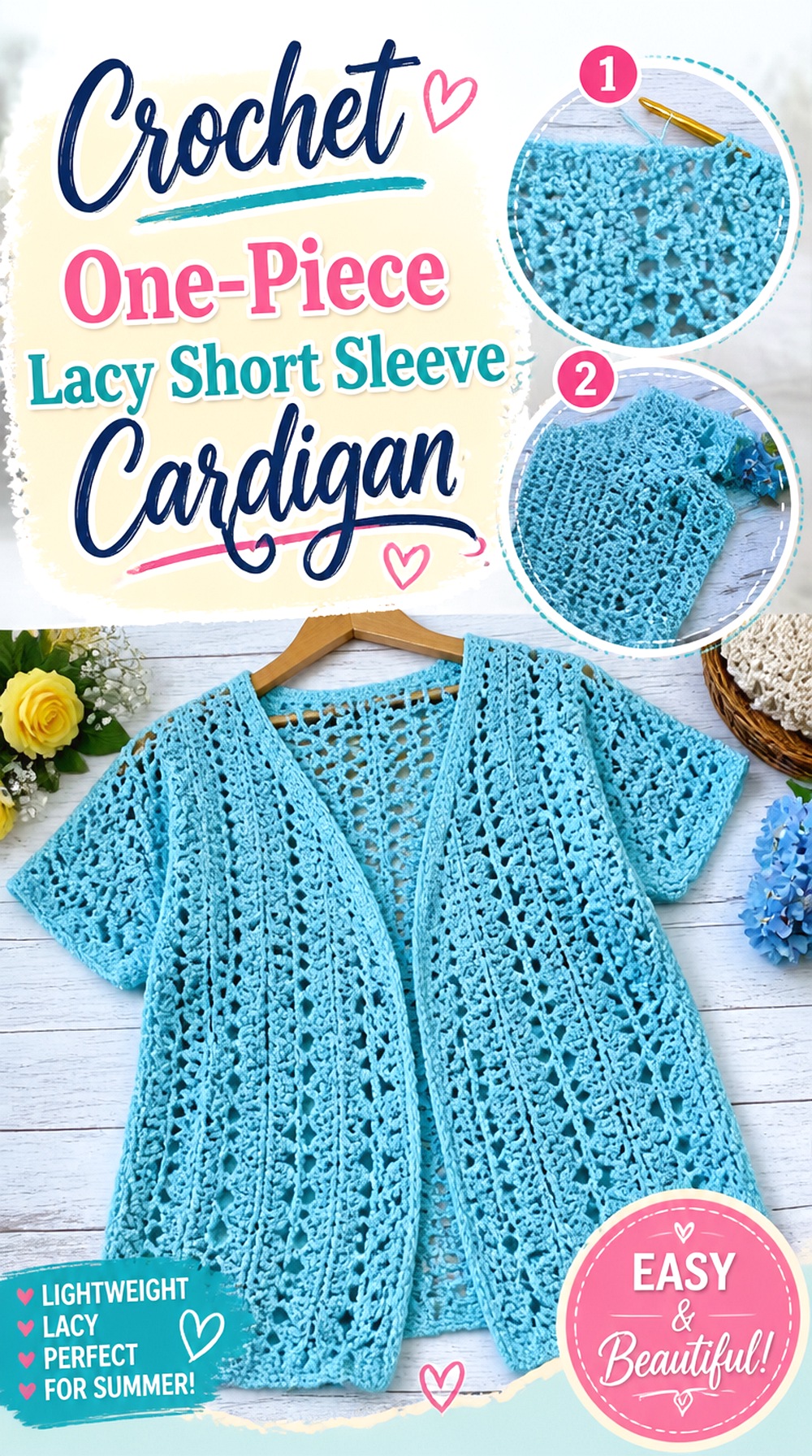
Olga Poltava’s lightweight lace cardigan uses a one-piece construction followed by two side seams, creating a streamlined alternative to multi-panel assembly. The source also explains how the design can be made to individual measurements, which makes proportion planning more important than selecting a standard size label. Visually, the lace creates vertical movement and a light cap-sleeve effect, so it works well over a contrasting long-sleeve top in fall. This is a particularly useful idea when you like open fabric but want the underlying garment shape to remain uncomplicated.
One Piece Reduces Seams, Not Measurement Decisions
Fewer seams can simplify finishing, but the initial dimensions become more consequential because several garment areas develop from the same piece. Follow the creator’s measurement approach carefully and confirm what each measurement controls before adding extra width or length. Custom sizing works best when every change has a defined purpose.
Light Lace Needs a Compatible Fall Underlayer
The cardigan itself is not intended to behave like a dense cold-weather jacket. For autumn, use the openness as a styling feature by pairing it with a smooth long-sleeve base layer. A high-contrast underlayer emphasizes every lace opening, while similar shades create a quieter, more textural effect.
Original Tutorial and Creator Credit
Creator: Olga Poltava
20. Crochet Full Length Lace Short Sleeve Cardigan
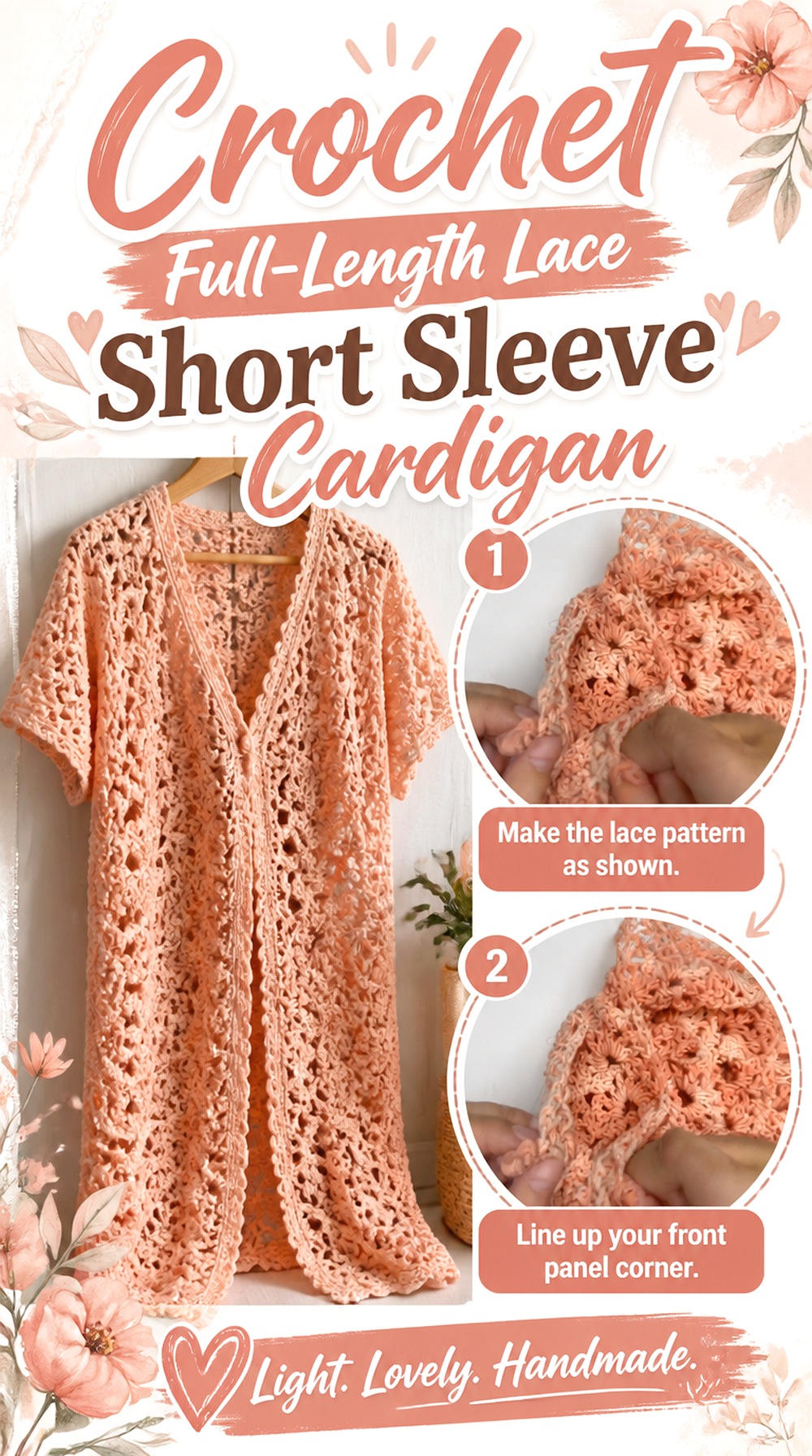
Sierra Fontaine’s Sunset cardigan gives lace more length, producing a flowing open layer that contrasts strongly with the cropped cardigans earlier in the list. The source tutorial covers the full-length version and uses cotton or cotton-blend yarn suggestions, so the finished piece is designed around drape rather than dense warmth. In a fall wardrobe, that longer lace panel can create a strong vertical line over jeans, dresses, or fitted trousers while leaving the arms relatively uncovered. It is a good final option for readers who want dramatic length without the visual heaviness of a thick long cardigan.
Longer Lace Amplifies Any Uneven Edge
The more length a panel has, the easier it is to notice inconsistent tension or a front edge that grows differently from its pair. Compare panel dimensions before assembly and allow the fabric to settle or block according to the creator’s guidance. Small discrepancies near the top can become much more noticeable by the hem.
Think About Hem Movement Around Real Outfits
A flowing lace cardigan interacts with the garments underneath. Check how the hem falls over wide-leg pants, skirts, or dresses and whether the length is practical for how you intend to wear it. If adapting the body length, preserve the repeat structure and make both fronts and back agree before finishing.
Original Tutorial and Creator Credit
Creator: Sierra Fontaine
Conclusion
For the most layering room, start with the oversized, rectangle, poncho, cocoon, or raglan cardigans. If you want a sharper waistline, the cropped buttoned and tie-front options keep the proportions compact. The ruffle, hairpin-lace, shell-lace, and tassel versions make texture or finishing the main attraction, while the classic and vertically worked cardigans are quieter choices for repeated everyday outfits.
Fall suitability comes less from the word “cardigan” than from fabric, fit, and what you plan to wear underneath. Check armhole room before adding heavier layers, and avoid changing yarn weight without considering gauge and drape. Use the original tutorials near the end of each idea for the creators’ exact construction details and project-specific instructions.
Frequently Asked Questions
Can a summer short sleeve crochet cardigan tutorial work for fall?
Yes. Many lightweight cardigan shapes translate well to early fall because the body adds a layer while the short sleeves prevent excessive bulk. The easiest seasonal change is often styling rather than reconstruction: wear the cardigan over a fitted long-sleeve tee, thin knit, or dress. If you change the yarn, confirm that the substitute can match the required gauge and produce a similar fabric instead of assuming a heavier yarn automatically makes the design better for autumn.
Is worsted-weight yarn always better for a fall short sleeve cardigan?
No. Yarn thickness affects far more than warmth. Moving from a lightweight yarn to a much heavier yarn can enlarge stitches, increase garment weight, stiffen lace, and change the shoulder and armhole proportions. A lightweight wool or blend may provide a warmer feel while staying closer to the intended drape. Follow the tutorial’s yarn category and gauge information, then evaluate substitutes with a washed swatch before committing to a garment-sized project.
How much ease should a crochet short sleeve cardigan have for layering?
There is no universal amount that works for every construction. A close-fitting cropped cardigan, oversized drop-shoulder design, and cocoon cardigan are intended to behave differently. Start with the creator’s finished measurements and intended fit, then compare them with your body while wearing the base layer you plan to use in fall. Pay special attention to the upper arm and armhole; adding width everywhere is not always the right solution to a localized fit problem.
How can I stop a short crochet sleeve from sticking outward?
First check whether the yarn and stitch pattern are producing a stiffer fabric than the source design. Tight edging can also pull or flare the sleeve in an unintended way. Blocking may relax some fibers, but it cannot correct every proportion problem. Before finishing both sleeves, inspect one on the body and compare its drape with the tutorial. If you substituted yarn or hook size, confirm that your gauge and fabric behavior still match what the garment expects.
Can I add buttons or ties to an open-front short sleeve cardigan?
Sometimes, but the front edge needs to support the added tension. A cardigan designed to hang open may not have enough front overlap for a functional closure, and pulling the fronts together can distort the neckline or shoulders. If you want a true closing cardigan, choosing a tutorial that already incorporates buttons or ties is usually more predictable. For decorative ties, first make sure the garment sits correctly without being pulled into position.
Which short sleeve cardigan shapes are easiest to layer over long sleeves?
Roomy raglan, rectangle, poncho, cocoon, and oversized dropped-shoulder cardigans generally give more space around the upper arm than close-fitting cropped styles, but actual comfort depends on the specific finished measurements. Smooth fitted base layers are easier to place under lace, ruffled, or decorative cuffs than bulky sleeves. Before finalizing armholes or sleeve edges, try the cardigan over the exact kind of long-sleeve top you expect to wear in fall.