An expensive-looking crochet cardigan is rarely about using the most expensive yarn. The polished effect usually comes from proportion, consistent fabric, intentional texture, clean borders, and finishing details that make the garment look designed rather than simply assembled. For Fall 2026, that leaves plenty of room for understated raglans, dramatic cables, longline layers, cropped button fronts, wrap shapes, and carefully planned granny construction. Current autumn fashion coverage is similarly treating cardigans as both minimal and highly textured pieces rather than one fixed silhouette.
The 25 ideas below focus on those meaningful differences. You can compare drape, shoulder construction, sleeve volume, closures, texture, length, and modular versus seamless construction before committing to a tutorial.
Quick List
- Crochet Sculpted Cable Panel Cardigan
- Crochet Soft-Halo V-Neck Cardigan
- Crochet Clean-Line Top-Down Raglan Cardigan
- Crochet Suzette Raglan Cardigan with Refined Ribbing
- Crochet Minimal Drop-Shoulder Ribbed Cardigan
- Crochet Longline Hooded Fall Cardigan
- Crochet Oversized Pocket Cardigan with Wide Sleeves
- Structured Tunisian Crochet Cardigan
- Crochet Shawl-Collar Cocoon Cardigan
- Crochet Modern Striped Button Cardigan
- Crochet Knit-Look Cropped Button Cardigan
- Crochet Ribbed Wrap Cardigan
- Crochet Moss-Stitch Autumn Cardigan
- Crochet Lightweight Tie-Front Cardigan
- Crochet Batwing Statement Cardigan
- Crochet Polished Cropped Ribbed Cardigan
- Crochet Subtle-Sparkle Custom-Length Cardigan
- Crochet Autumn Granny Square Tie Cardigan
- Crochet No-Sew Granny Hexagon Cardigan
- Crochet Long Granny Square Panel Cardigan
- Crochet Graphic Granny Jacket Cardigan
- Crochet Classic Paneled Band Cardigan
- Crochet Melange Yoke Cardigan with Wide Sleeves
- Crochet Plush Collared Bulky Cardigan
- Crochet Chunky Knit-Look Pocket Cardigan
What Makes a Crochet Cardigan Look More Polished?
Start with the edges. A neatly proportioned neckline, button band, cuff, hem, or collar frames the entire garment, so irregular tension there can be more noticeable than a small inconsistency in the body fabric. Texture also looks more deliberate when it has a clear role: cables can become a focal panel, ribbing can define an opening, and granny motifs can form a controlled layout instead of competing for attention everywhere.
Proportion matters just as much. A very wide sleeve can look intentional beside a restrained body, while oversized sleeves plus an oversized body plus heavy texture may create more bulk than expected. Before choosing a tutorial, compare the finished silhouette with the clothes you actually want to layer underneath it.
Choose Drape and Structure Before You Choose Color
Two cardigans in the same shade can look completely different when one falls fluidly and the other holds a firm shape. Smoother yarn can make ribbing and stitch geometry easier to see, while fuzzy or haloed fibers can soften transitions and give simple fabric visual depth. Bulky yarn can create strong sculptural volume, but it also adds physical and visual weight.
Treat the tutorial yarn as information rather than decoration. If you substitute, compare yarn category, fiber behavior, twist, and the fabric produced by your swatch. Block the swatch in a way that is appropriate for the yarn and see how much it relaxes before deciding on garment measurements. A substitution that reaches gauge can still produce a noticeably different drape.
Fit Checks That Make Handmade Cardigans Look Intentional
Do not choose a size from the label alone. Compare the tutorial or written pattern’s finished measurements with your own body measurements and decide how much room you want for fall layering. Pay particular attention to shoulder position, armhole depth, upper-arm room, sleeve length, and where the front opening sits when the cardigan is worn naturally.
Construction changes which adjustments are practical. A top-down raglan may provide useful try-on points, while a paneled cardigan rewards careful measurement before seaming. Modular granny cardigans introduce another variable because blocked motif dimensions influence the entire layout. If a video does not state the measurement you need, confirm it from the creator’s accompanying information instead of assuming that one sample will scale automatically.
1. Crochet Sculpted Cable Panel Cardigan
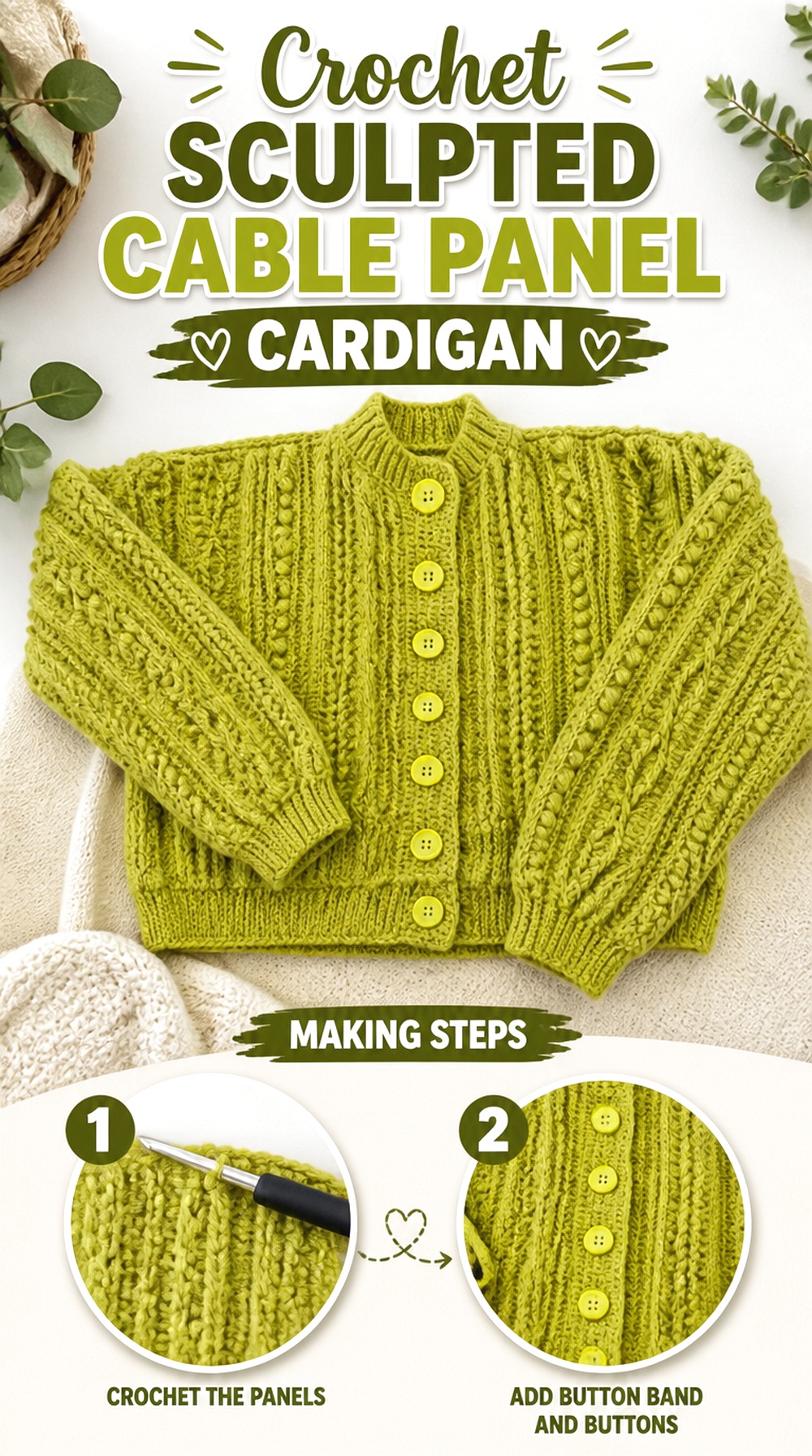
For a cardigan that looks deliberately tailored rather than casually textured, this cable-heavy option puts surface design at the center of the garment. Katie Joslin’s tutorial combines multiple raised panel treatments with ribbed areas and a buttoned finish, producing a cardigan where the architecture of the stitches becomes the decoration. The tutorial also uses a soft yarn combination in the demonstrated garment, which helps balance the amount of surface texture with drape.
This is a strong choice when you want a fall layer that can function as the focal point of a simple outfit. Solid or low-contrast colors let the relief work remain visible without adding another competing element.
Keep the Cable Panels Visually Balanced
Raised texture can add apparent width, so think about where the strongest panels land across the front, sleeves, and back. A symmetrical layout creates a more formal impression, while too many unrelated textures can make the surface look busy. Before changing the design, compare the visual weight on both sides of the opening.
Soft Drape Prevents the Texture from Becoming Rigid
A heavily textured cardigan does not necessarily need a stiff fabric. If substituting yarn, make a sufficiently large swatch to see how the raised sections behave after blocking. A replacement that is much firmer than the demonstrated fabric can change how the fronts hang and how easily the garment layers.
Button Placement Deserves a Final Fit Check
Buttons interrupt the vertical front edge, so their scale and placement influence the finished look. Finish enough of the band to evaluate how it sits before choosing decorative hardware. Large, heavy buttons can pull on a soft fabric, while very small buttons may disappear beside substantial cable texture.
Original Tutorial and Creator Credit
Creator: Katie Joslin
2. Crochet Soft Halo V Neck Cardigan
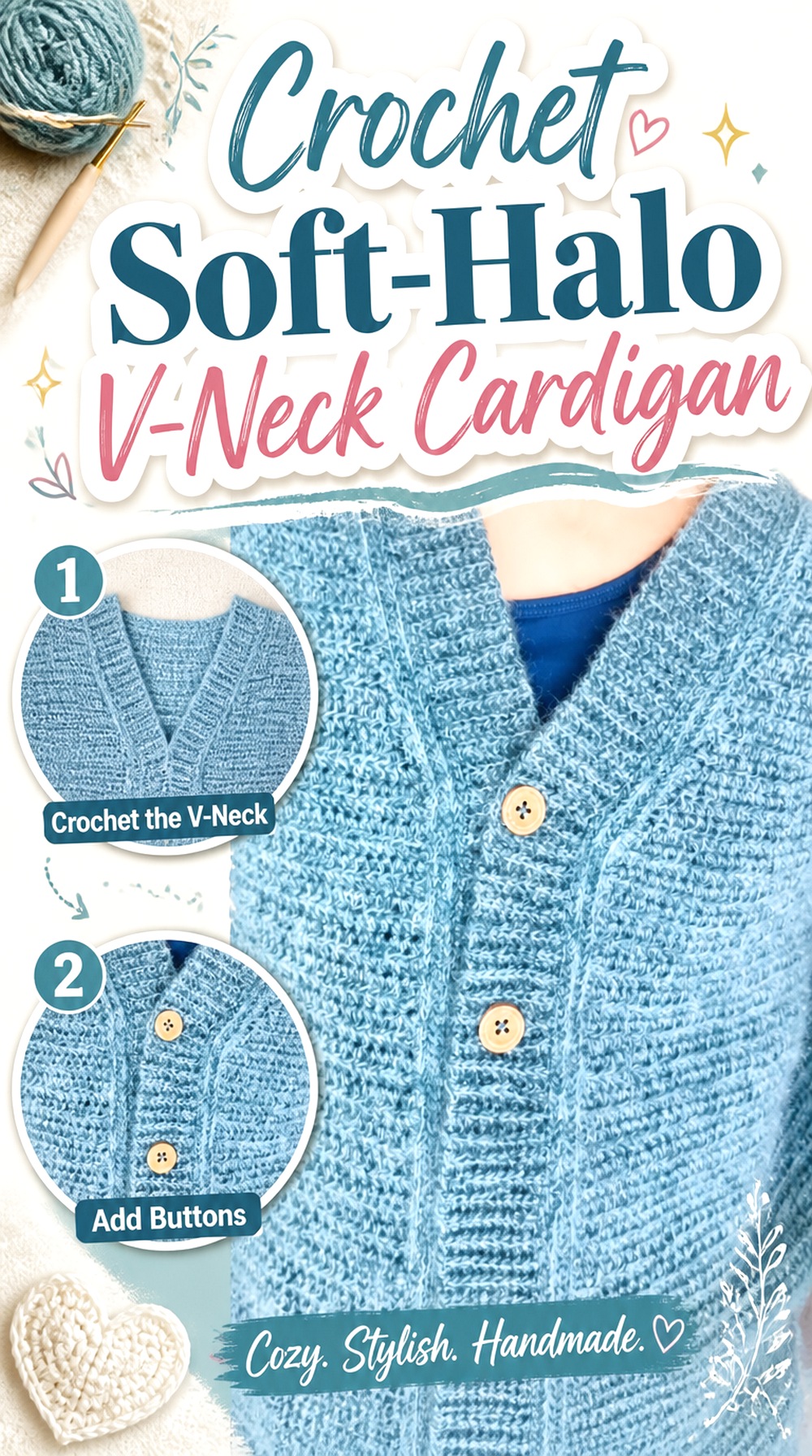
This relaxed V-neck cardigan takes almost the opposite approach: instead of relying on dense decorative texture, it gets its refinement from an understated silhouette, soft surface, drop shoulders, and a clean button band. ByKaterina Designs presents the garment with an oversized shape and a seamless construction approach, making it a useful reference for readers who prefer quiet, minimalist fall layers.
A fine or softly haloed fabric can make a simple cardigan feel visually richer because light catches the surface without requiring complicated stitch decoration. This style also works well over fitted tees, thin turtlenecks, or dresses when you want the cardigan to soften an outfit rather than dominate it.
Let the V-Neck Stay Clean
A V-neck draws attention directly to the front edging. Uneven tension, a rippled band, or a neckline that stretches out can therefore become highly visible. When adapting the length or width, keep checking that the two fronts still meet the neckline at matching angles.
Halo Can Soften Stitch Definition
A fuzzy companion yarn or naturally hairy fiber can create a soft, high-end visual effect, but it also blurs crisp stitch lines. That trade-off works well here because the silhouette is simple. If you want more visible texture, choose a smoother substitute rather than adding unnecessary decorative sections.
Oversized Should Not Mean Unmeasured
Drop shoulders are forgiving, but sleeve length and total body width still matter. Compare the finished garment measurements with a cardigan you already like wearing. That gives you a more useful target than simply moving up a size for extra room.
Original Tutorial and Creator Credit
Creator: ByKaterina Designs
3. Crochet Clean Line Top Down Raglan Cardigan
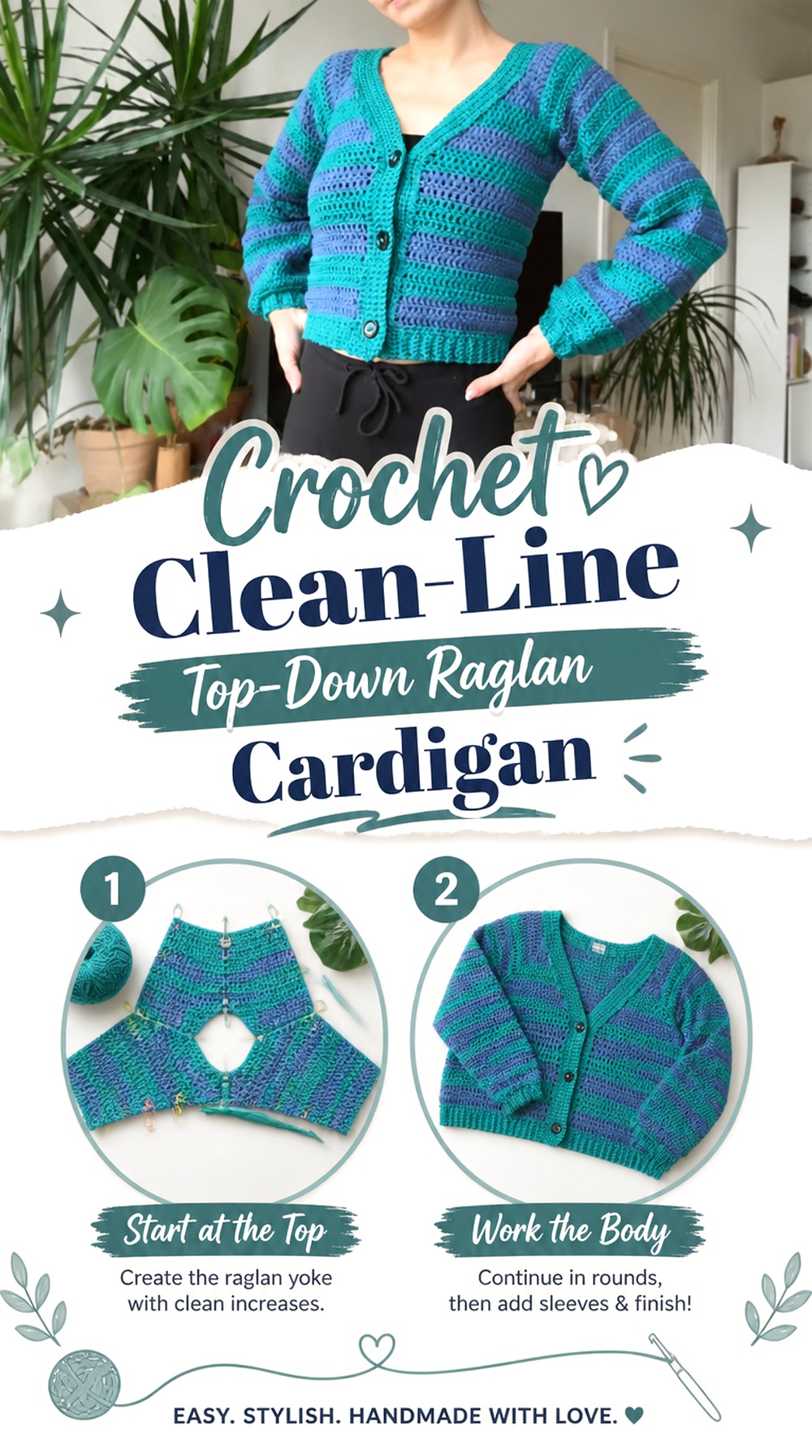
A top-down raglan gives this cardigan a continuous shoulder line rather than a separate set-in seam, which can create a particularly uncluttered upper body. By Kristine’s tutorial works from the top down and includes the body, sleeves, cuffs, hem, and button-front finishing in the instructional sequence.
The appeal for fall is adaptability. A streamlined raglan can sit under outerwear more comfortably than some dramatically dropped or balloon-sleeved designs, while the buttoned front still gives you several styling options. It is also a good direction when you prefer the cardigan itself to be a wardrobe basic and want the yarn color or buttons to supply most of the personality.
Raglan Depth Changes More Than Bust Room
The depth of the yoke influences where the underarm sits and how much mobility you have around the upper body. When choosing a size, do not compare bust measurements alone. Check the creator’s sizing information for the upper section as well.
Try-On Opportunities Are Valuable
Top-down construction can make it easier to assess body length or overall proportion during the project. Use those checkpoints thoughtfully rather than automatically extending every section. A longer body may require a different visual balance with the sleeves and button band.
Keep the Ribbing Consistent Across Every Edge
When the cuffs, hem, and front opening all use visually related edging, differences in tension become easier to spot. Compare the stretch and depth of each finished section before fastening off permanently.
Original Tutorial and Creator Credit
Creator: by Kristine
4. Crochet Suzette Raglan Cardigan with Refined Ribbing
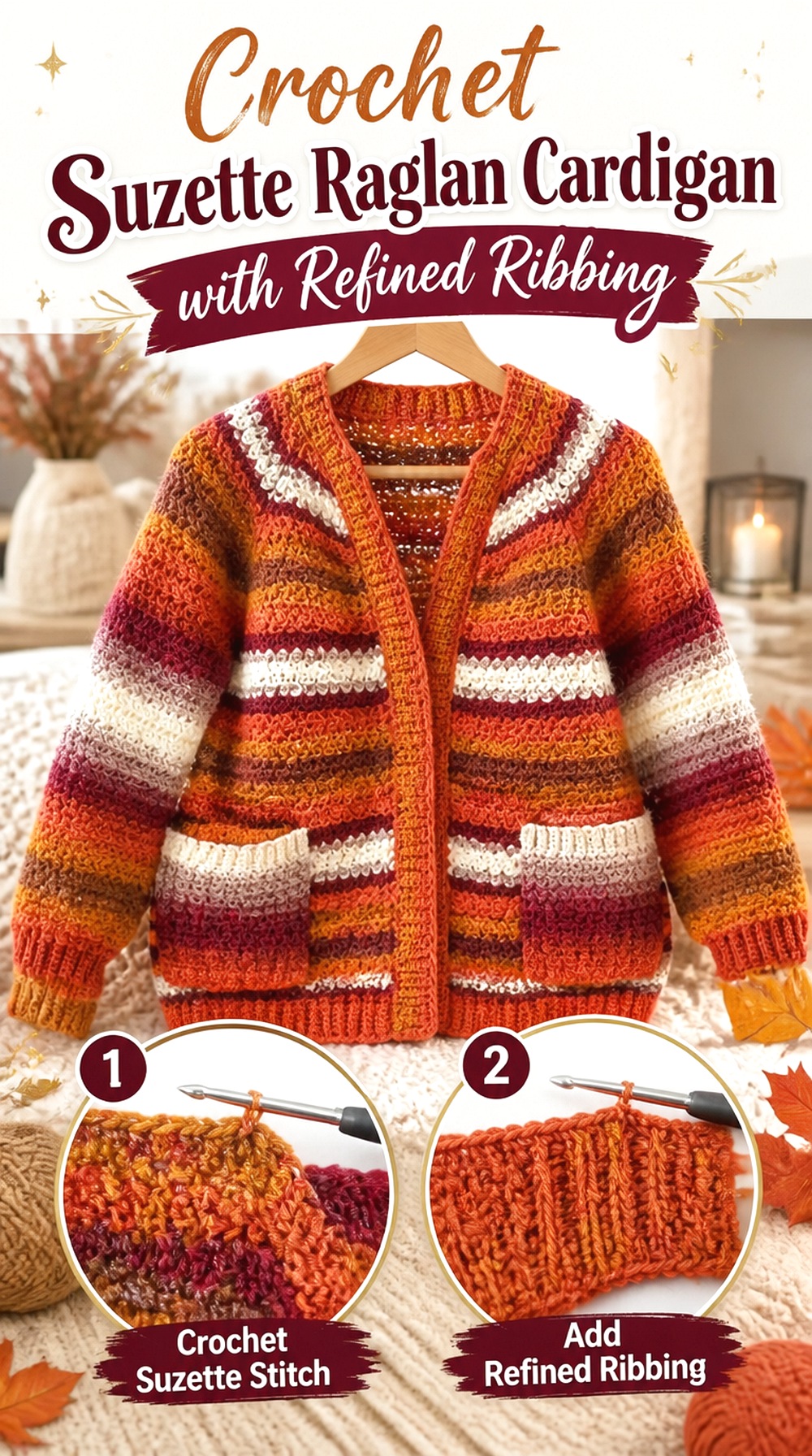
This raglan stands apart because the body texture plays a much stronger role. MJ’s Off The Hook Designs uses Suzette stitch in a seamless top-down cardigan and finishes the garment with ribbed edges; the tutorial also discusses optional styling directions such as a hood, pockets, or a shorter button-front version.
The result suits someone who likes a traditional fall-cardigan feeling but wants more surface interest than a plain fabric provides. Rather than adding multiple motifs, the repeating texture covers the garment consistently, allowing the silhouette and finishing to remain recognizable from a distance.
Repeated Texture Needs Even Tension
A small tension change can become visible when a textured repeat continues across a broad area. Work a useful swatch rather than a tiny sample, especially if substituting yarn, and inspect the fabric both flat and hanging.
Decide on Extra Features Before the Garment Feels Finished
A hood or pockets add more than function; they change visual weight. If your goal is a cleaner, dressier cardigan, a simpler button-front finish may suit the fabric better. For a casual outer layer, those extra elements can make sense.
Ribbing Creates a Necessary Visual Rest
With an all-over textured body, simpler ribbed cuffs and borders give the eye somewhere to rest. Preserve that contrast when customizing instead of adding another highly decorative edging.
Original Tutorial and Creator Credit
Creator: MJ’s Off The Hook Designs
5. Crochet Minimal Drop Shoulder Ribbed Cardigan
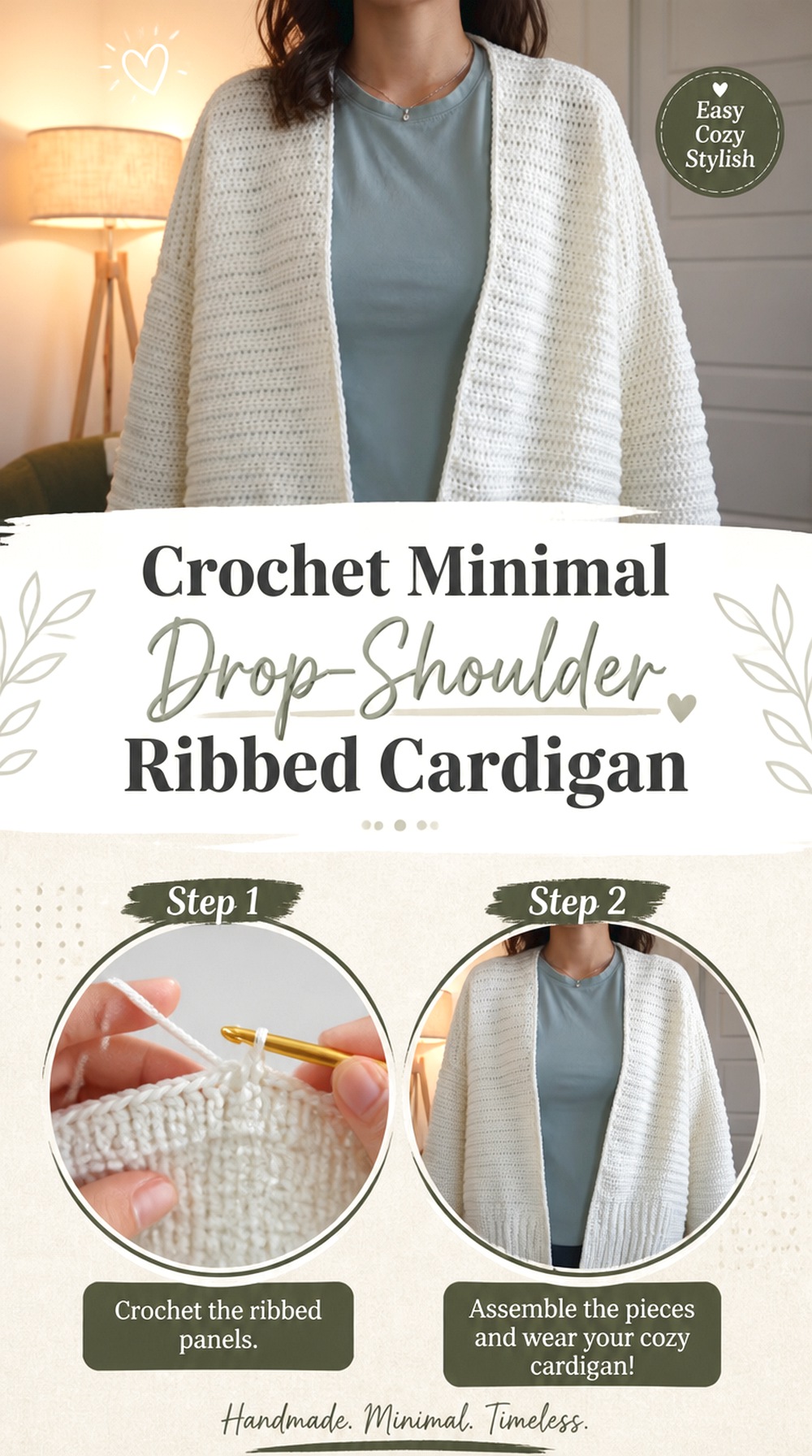
VivCrochets’ cardigan uses a timeless drop-shoulder form with ribbed finishing and a relatively simple three-piece construction. That restraint is exactly why it belongs in an expensive-looking collection: there is very little decoration to distract from proportion, fabric consistency, and tidy assembly.
This shape can work particularly well in camel, charcoal, cream, olive, espresso, or another restrained fall shade, but color is secondary to the fit. Because the shoulders are intentionally relaxed, the hem length and sleeve proportions become important in keeping the finished silhouette balanced rather than shapeless.
Shoulder Drop Should Look Deliberate
A drop shoulder sits beyond the natural shoulder point, but how far it drops changes the entire silhouette. Compare the tutorial’s sample with your preferred fit before increasing width solely for more ease.
Seams Become Part of the Finish
With only a few major pieces, alignment matters. Match edges carefully before permanent assembly so that the hem and shoulder lines stay level rather than shifting during seaming.
Original Tutorial and Creator Credit
Creator: VivCrochets
6. Crochet Longline Hooded Fall Cardigan
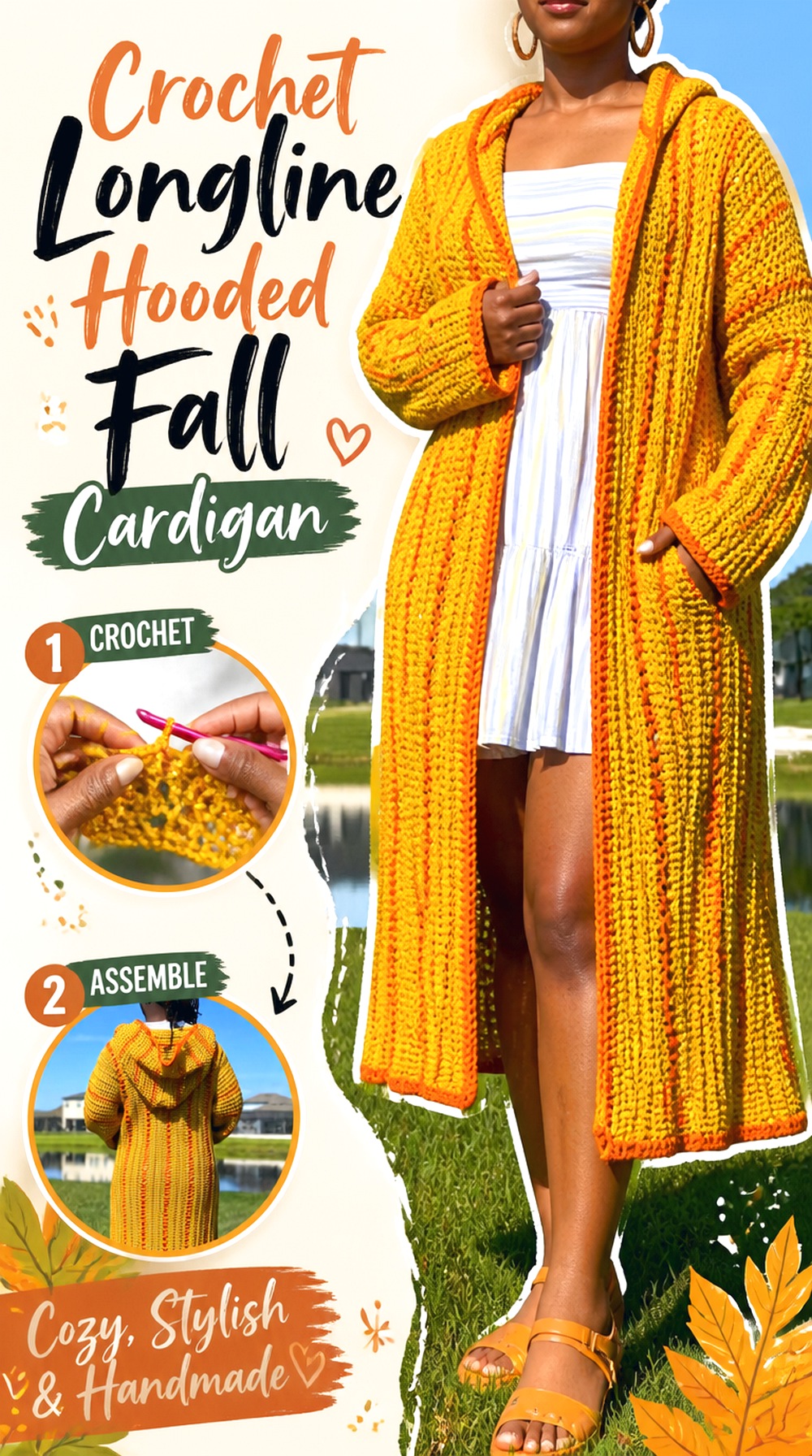
A long hooded cardigan can read more like a soft coat than a sweater, giving this idea a completely different role in a fall wardrobe. Crochet State of Mind’s tutorial demonstrates a made-to-measure long cardigan with the main body worked as one piece, followed by sleeves, hood, and border work. The shown sample extends well beyond the hip, emphasizing the long vertical line.
This is the option to consider when coverage and visual drama matter more than fitting beneath a tailored jacket. Keep the palette restrained if you want the silhouette itself to supply the statement.
Long Length Amplifies Garment Weight
Every added inch contributes yarn and weight. A fabric that feels pleasantly substantial in a swatch may feel very different when it hangs from the shoulders as a long cardigan. Consider that before extending the hem farther than the tutorial sample.
A Hood Changes the Neckline Balance
The hood adds fabric behind the neck and shoulders, so a front border that looks appropriately substantial on a standard cardigan may need to coexist with much more visual volume here. Evaluate the whole upper section together.
Check Side Length Before Final Finishing
Long garments make even small differences at the hem more obvious. Lay the cardigan flat or hang it evenly before completing the final border so you can catch any imbalance while corrections remain manageable.
Original Tutorial and Creator Credit
Creator: Crochet State of Mind
7. Crochet Oversized Pocket Cardigan with Wide Sleeves
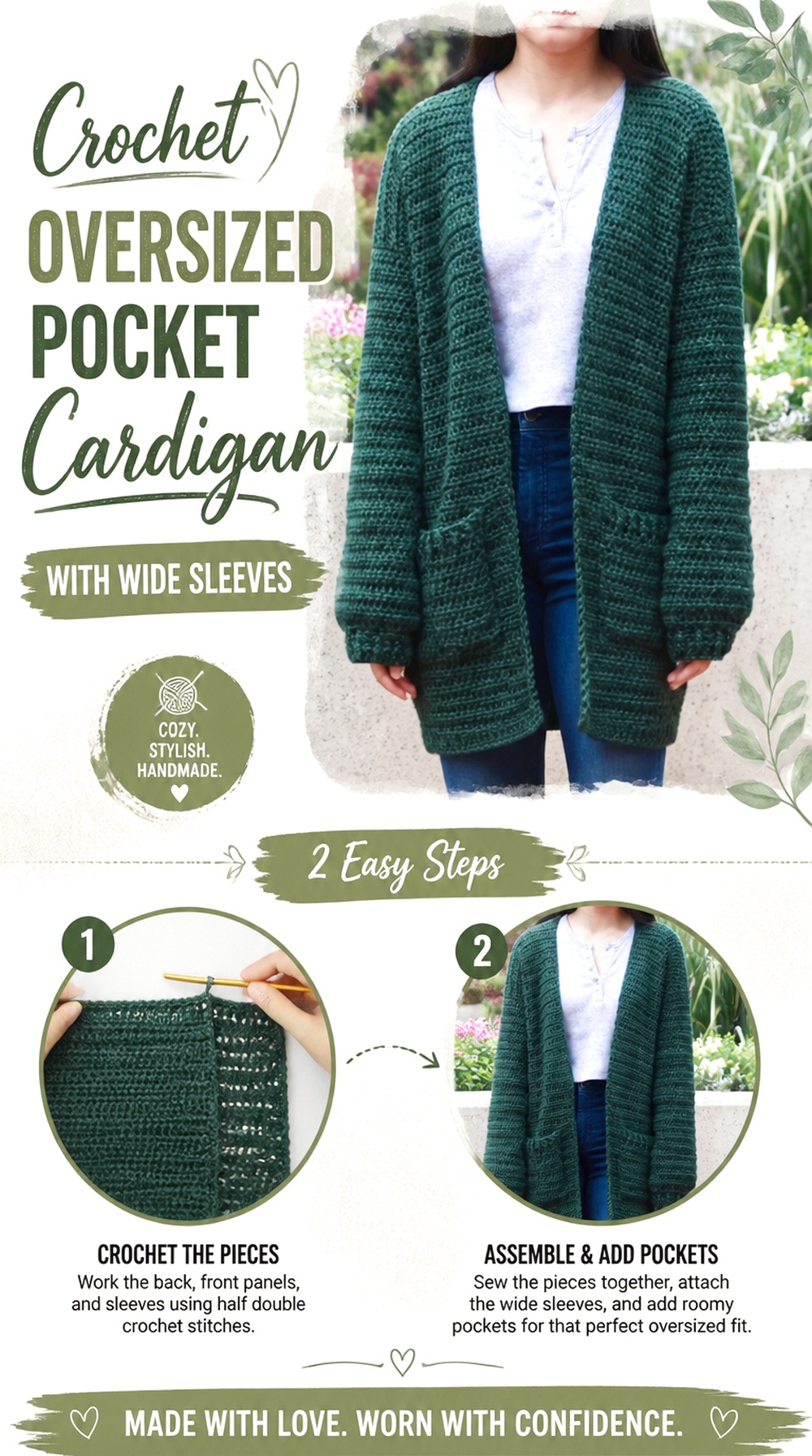
The Briar-style cardigan from forthefrills brings together an oversized body, loose wide sleeves, ribbed edging, and two front pockets. Those details give the finished piece an unmistakably cozy fall identity without relying on granny motifs or elaborate surface patterning.
This is a useful counterpoint to the slimmer raglans in the collection. The extra sleeve and body volume makes it ideal as a visible outer layer, especially over simpler fitted clothing. Because the silhouette already has several large-scale features, a consistent yarn and disciplined finishing can help keep the cardigan looking intentional.
Pocket Placement Can Change the Proportions
Pockets draw the eye and add another layer of fabric. Before attaching them permanently, pin or baste them in place and look at the cardigan while worn. Moving them slightly can affect both accessibility and the apparent length of the torso.
Wide Sleeves Need Room in Your Wardrobe
Generous sleeves look dramatic, but they may not fit comfortably under a narrow coat sleeve. Choose this silhouette if the cardigan itself will often act as your outermost layer.
Ribbing Helps Frame an Oversized Shape
Strong cuffs and hem details can make a roomy body feel finished rather than unfinished. If changing the sleeve length, preserve the intended relationship between the wide sleeve and its narrower cuff.
Original Tutorial and Creator Credit
Creator: forthefrills
8. Structured Tunisian Crochet Cardigan
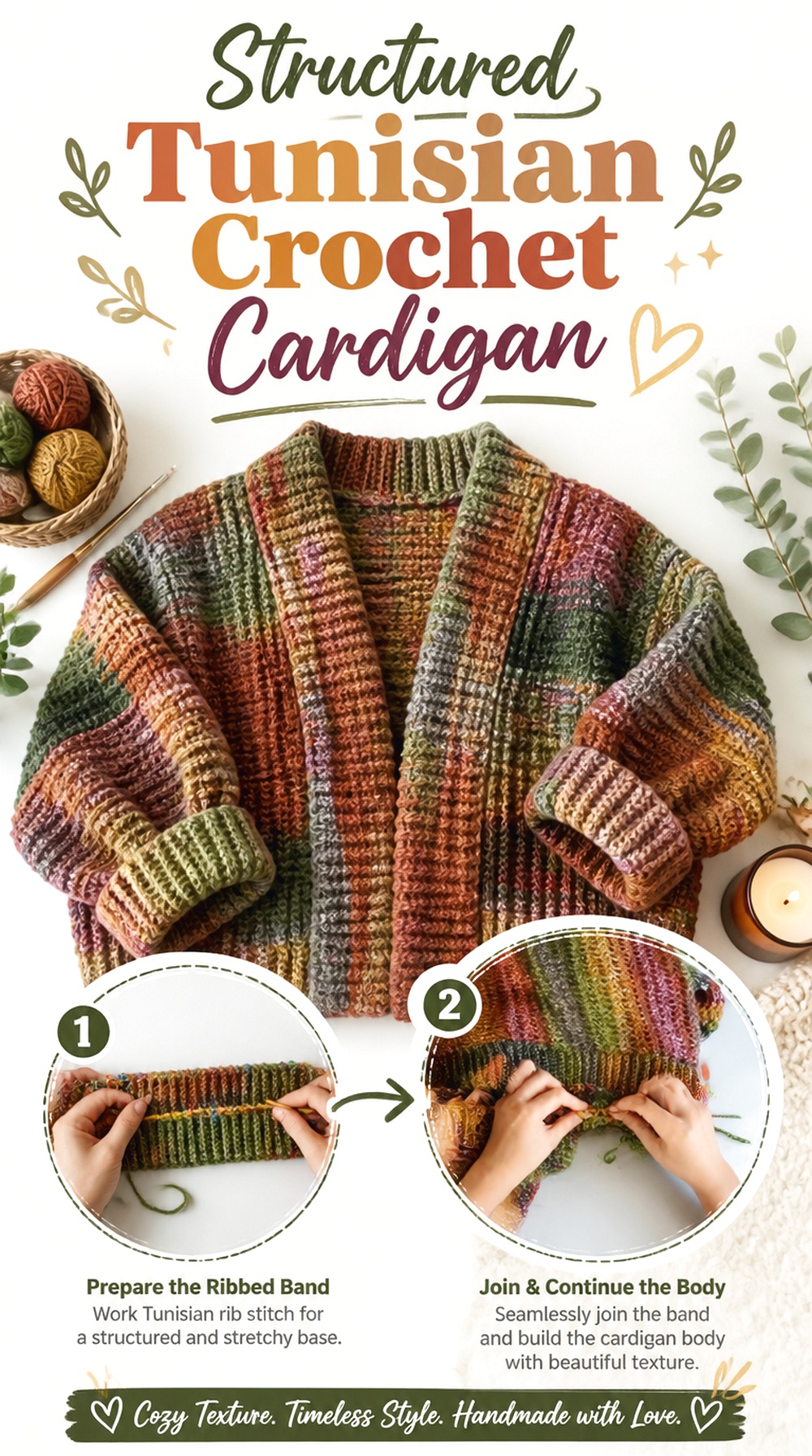
Tunisian crochet can produce fabric with a noticeably different visual character from standard crochet, making this Studio Crafti cardigan valuable for anyone chasing a clean, almost woven or knit-adjacent finish. The tutorial covers the cardigan itself along with sizing, shaping, customization, seaming, and finishing considerations.
The technique is the defining difference here. Rather than relying on added cables, stripes, or motifs, the fabric structure provides the refinement. That makes neutral shades especially effective, although the real priority is achieving a fabric that hangs appropriately for a garment rather than becoming overly dense.
Tunisian Fabric Needs a Drape Check
A beautiful stitch sample can still be too firm for the silhouette you want. Make enough fabric to evaluate movement, not just stitch appearance, and consider how your chosen yarn behaves after blocking.
Watch for Curl Before Judging the Finished Edge
Some Tunisian fabrics can curl while being worked. Do not assume an unfinished piece represents the final garment. Follow the tutorial’s finishing approach and evaluate how borders, seams, and blocking influence the completed shape.
Seams Should Support the Fabric, Not Stiffen It
Structured fabric already has presence, so bulky joins can create unwanted ridges. Take care with assembly tension and compare the seam flexibility with the surrounding fabric.
Original Tutorial and Creator Credit
Creator:Studio Crafti
9. Crochet Shawl Collar Cocoon Cardigan
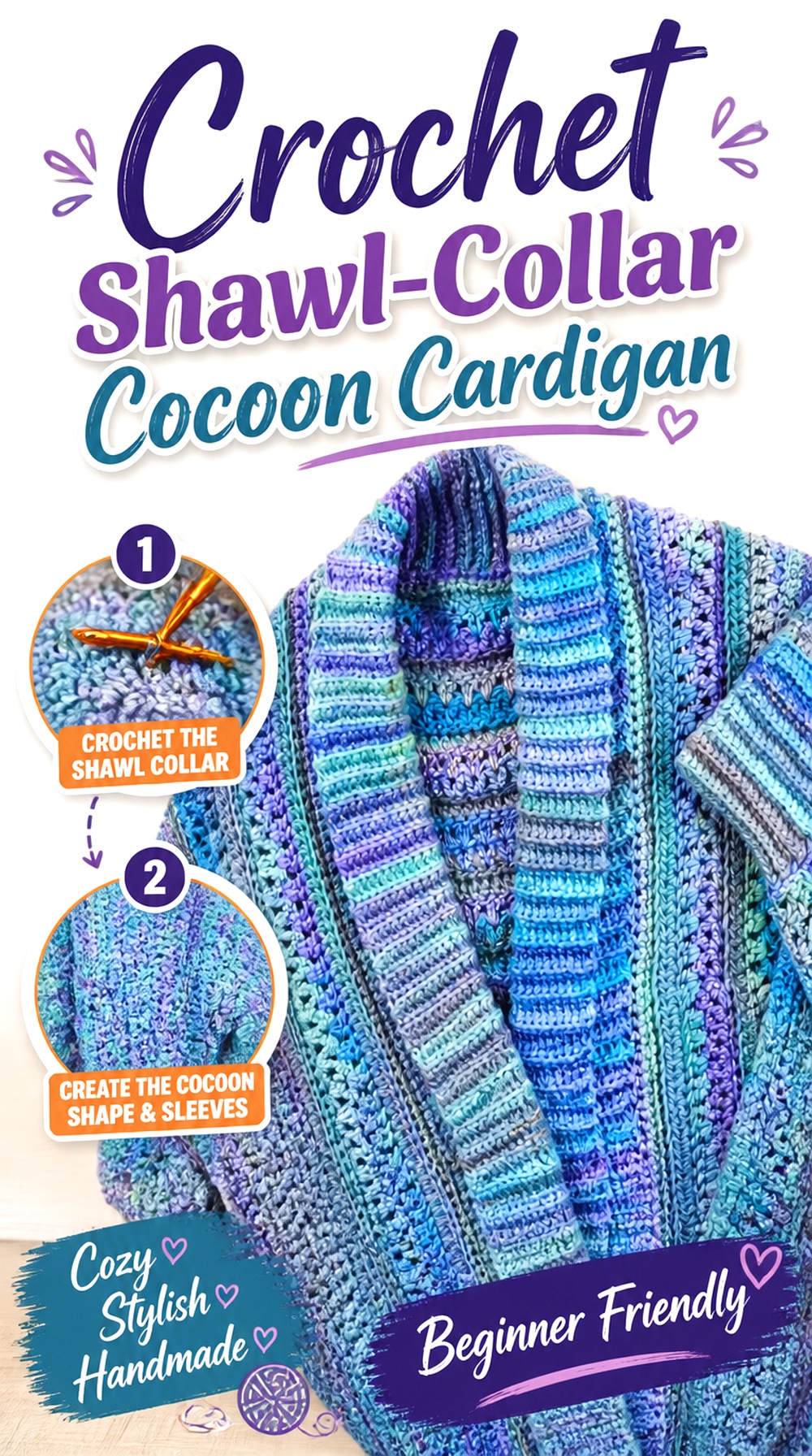
A cocoon cardigan creates its shape differently from a conventional front-and-back sweater. Marly Bird’s You Are Valued design combines a cocoon silhouette with lace texture and a shawl-style collar, producing a soft wraparound layer rather than a sharply tailored button front.
This is a good choice when you want elegance through drape and framing rather than precise waist shaping. The collar adds substance around the face, while the open body makes the cardigan easy to layer over simple outfits. Because the construction is roomy, focus on how the overall dimensions suit your height and arm placement instead of expecting a conventional shoulder fit.
The Collar Is the Main Visual Anchor
A shawl collar occupies a large portion of the front view. Keep its tension even and consider how your yarn behaves when folded or allowed to roll naturally.
Lace Benefits from Intentional Layering
Open fabric changes depending on what sits beneath it. A tonal underlayer gives a quieter effect, while strong contrast highlights every opening. Decide which result you want before choosing the final yarn color.
Original Tutorial and Creator Credit
Creator: Marly Bird
10. Crochet Modern Striped Button Cardigan
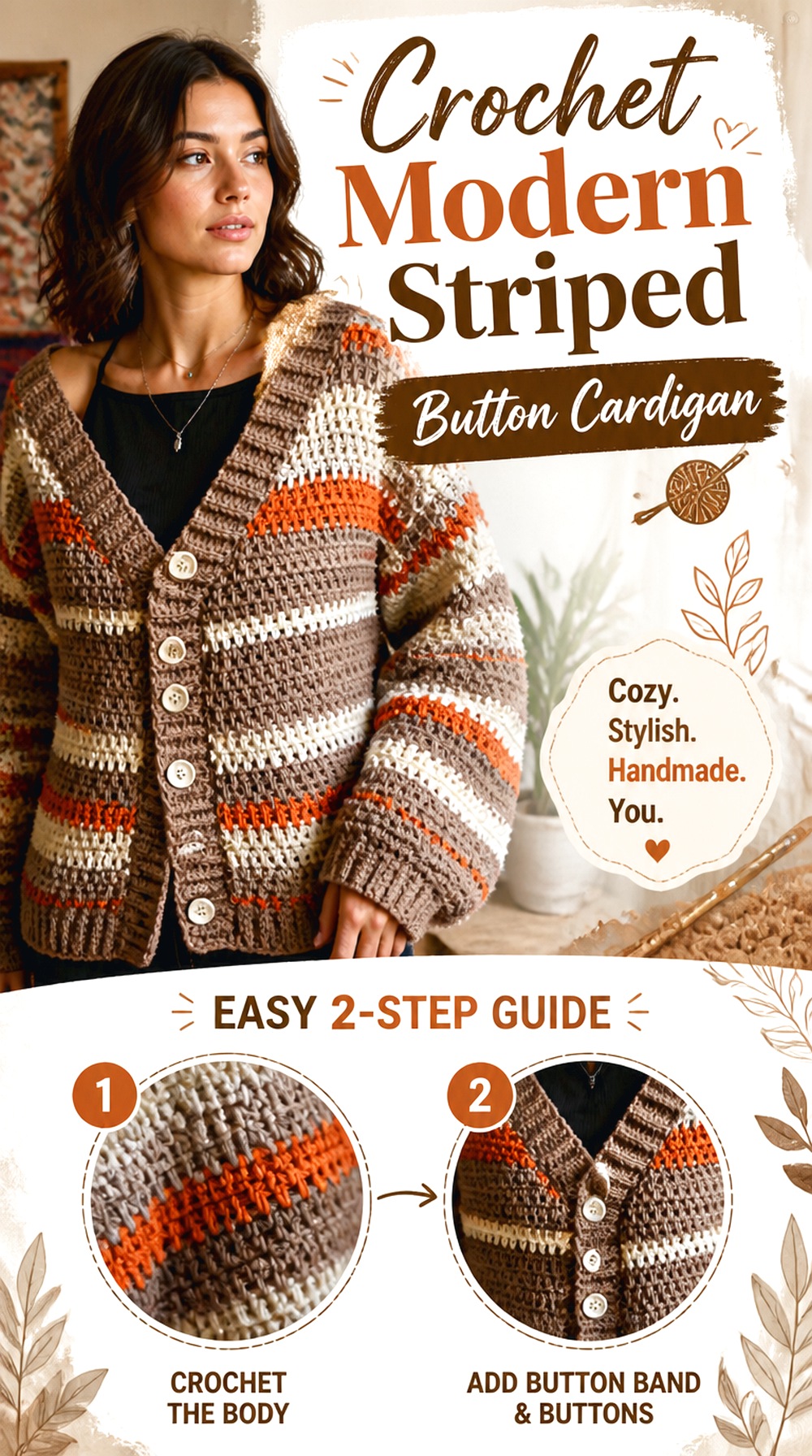
Stripes can look sophisticated when the palette feels planned and the color changes reinforce the garment’s proportions. Bloodimaryart Crochet’s oversized cardigan combines stripes, moss stitch, ribbed closure finishing, and buttons, with the tutorial walking through front panels, back, shoulder joining, sleeves, and closure ribbing.
The design fits Fall 2026 especially well because striped cardigans are part of the season’s broader fashion conversation. Instead of using many unrelated shades, consider a controlled two- or three-color palette, tonal browns, muted rust and cream, or another combination where one shade clearly leads.
Stripe Width Controls the Visual Rhythm
Frequent narrow changes create a busier surface, while broader blocks feel calmer. If altering the color sequence, sketch the order or arrange yarn strands together first so you can see whether one section becomes unexpectedly dominant.
Match Color Changes at Major Seams
When separate pieces meet, stripes that almost—but not quite—align can draw attention to the seam. Check panel lengths and color placement before final assembly if alignment matters to your preferred finish.
Buttons Should Complement, Not Compete
The stripes already provide several horizontal accents. Simple buttons often work better than highly decorative hardware because they allow the color pattern to remain the main feature.
Original Tutorial and Creator Credit
Creator: Bloodimaryart Crochet
11. Crochet Knit Look Cropped Button Cardigan
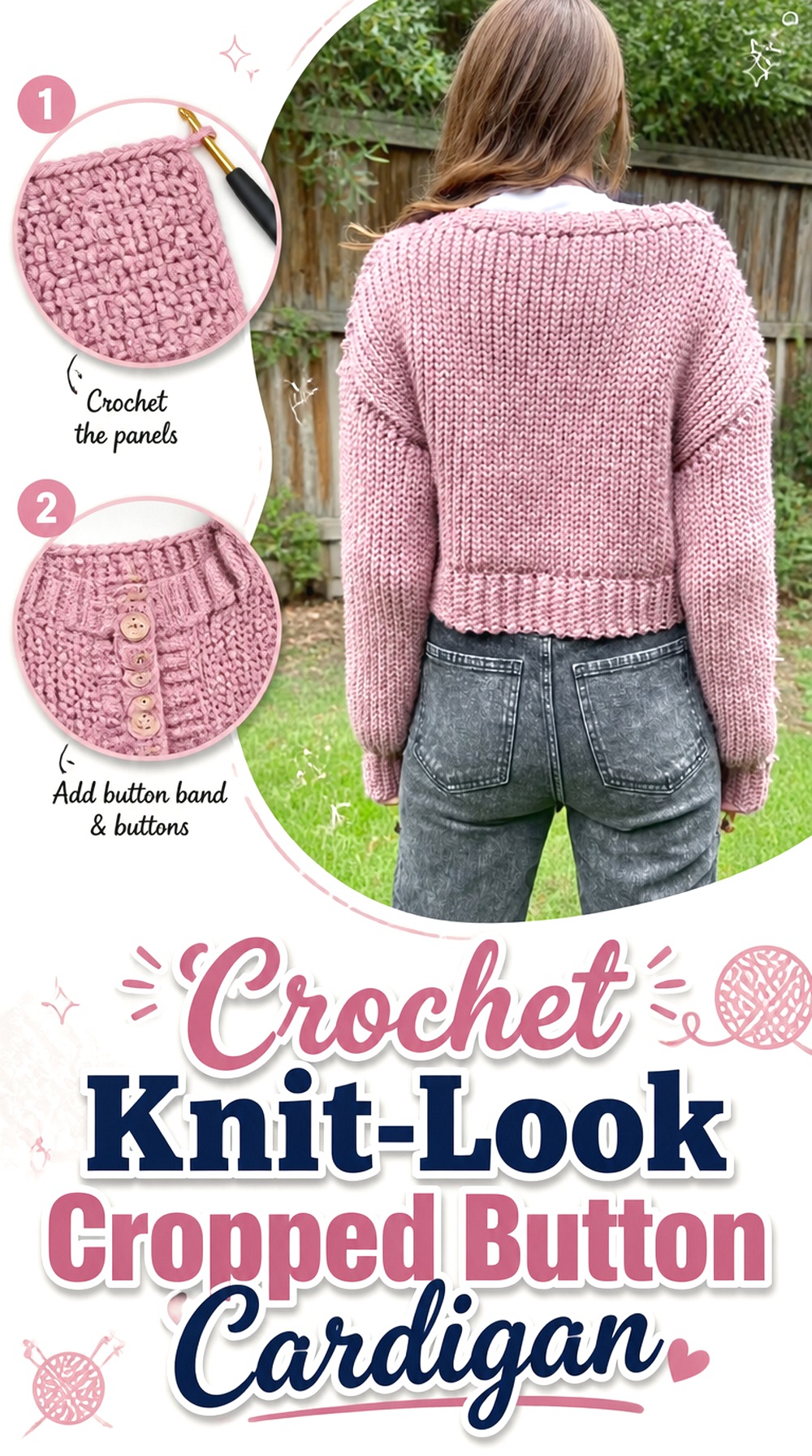
Stephanie Tashi’s cropped button cardigan uses ribbed, knit-look crochet fabric to create a compact silhouette that feels very different from open granny or lacy designs. Its short length and button-front treatment make it suitable for wearing as either a cardigan or a more top-like layer over a slim base.
This idea works especially well when you want a handmade garment to pair with high-rise trousers, skirts, or jeans. Because the fabric itself has strong linear texture, it does not need extra surface decoration. The polish comes from keeping those lines straight and the cropped hem purposeful.
Cropped Length Should Relate to Your Wardrobe
Before choosing the final body length, try on the unfinished piece with the bottoms you expect to wear most often. A hem that looks balanced with high-rise trousers may feel much shorter with mid-rise denim.
Ribbing Shows Tension Differences Quickly
Long vertical or horizontal ridges make unevenness easy to see. Maintain consistent tension and avoid stretching one panel more aggressively than another during assembly or finishing.
Button Spacing Defines the Front
On a short cardigan, each button occupies a larger proportion of the front. Check the whole garment rather than choosing spacing based only on one small section.
Original Tutorial and Creator Credit
Creator: Stephanie Tashi
12. Crochet Ribbed Wrap Cardigan
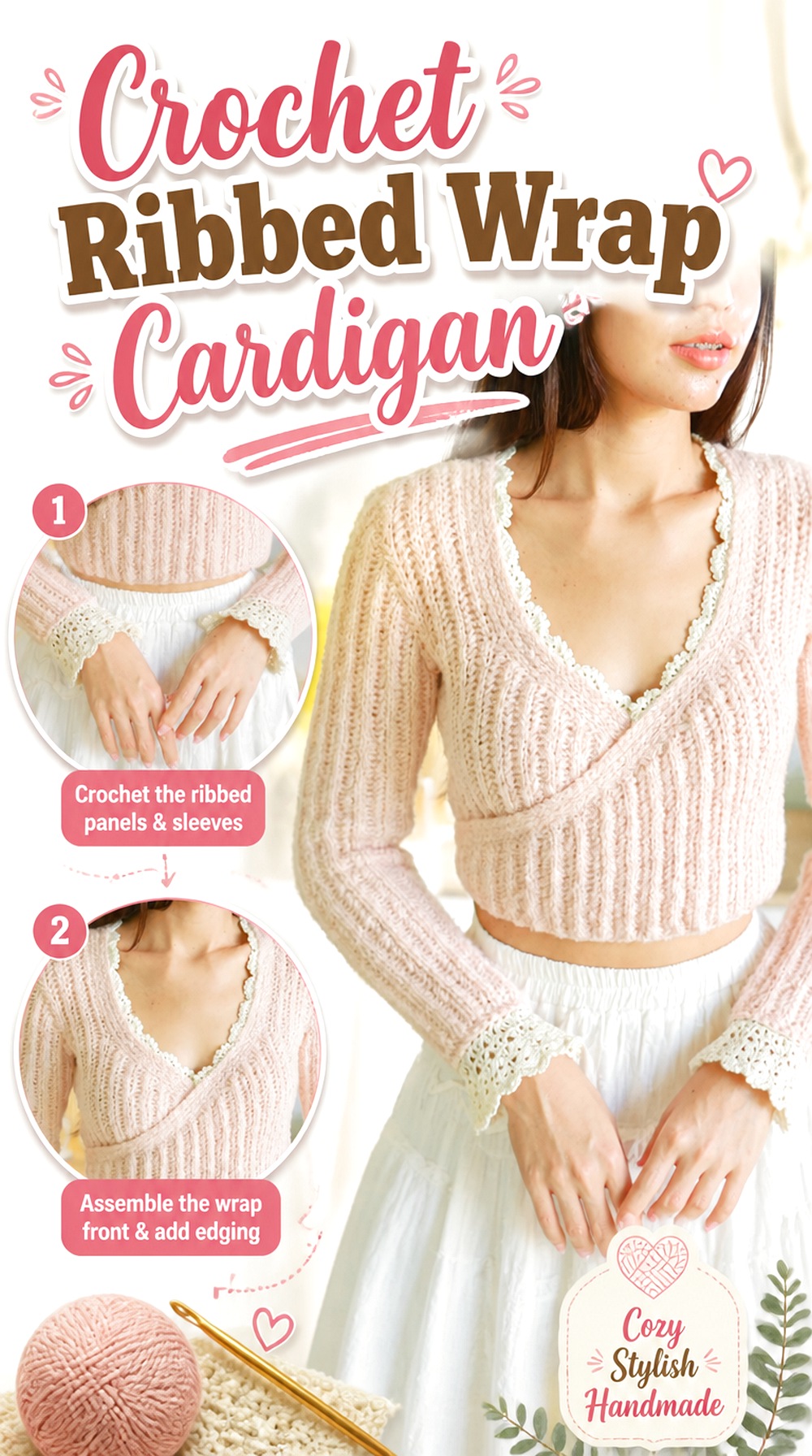
A wrap front changes the cardigan’s entire visual language. Instead of two edges meeting in a straight button band, the front overlaps diagonally and creates natural waist emphasis. Chenda DIY’s tutorial focuses specifically on a ribbed wrap cardigan, making it a useful option for readers who want something more shaped than a standard open-front layer.
This silhouette looks particularly polished when the overlap lies flat and the fabric has enough flexibility to follow the body without bunching. It can be styled over a camisole or thin knit for fall, but the wrap construction means closure placement deserves more attention than it would on a loose open cardigan.
Test the Overlap While Wearing the Cardigan
A wrap can look perfectly aligned when flat yet shift once it follows the body. Check the overlap at the bust, waist, and hem before finalizing any tie or closure position.
Rib Direction Can Emphasize Shape
Strong ribbing naturally directs the eye. Keep that in mind when combining the diagonal front with the rest of the garment so the lines look intentional rather than interrupted.
Original Tutorial and Creator Credit
Creator: Chenda DIY
13. Crochet Moss Stitch Autumn Cardigan
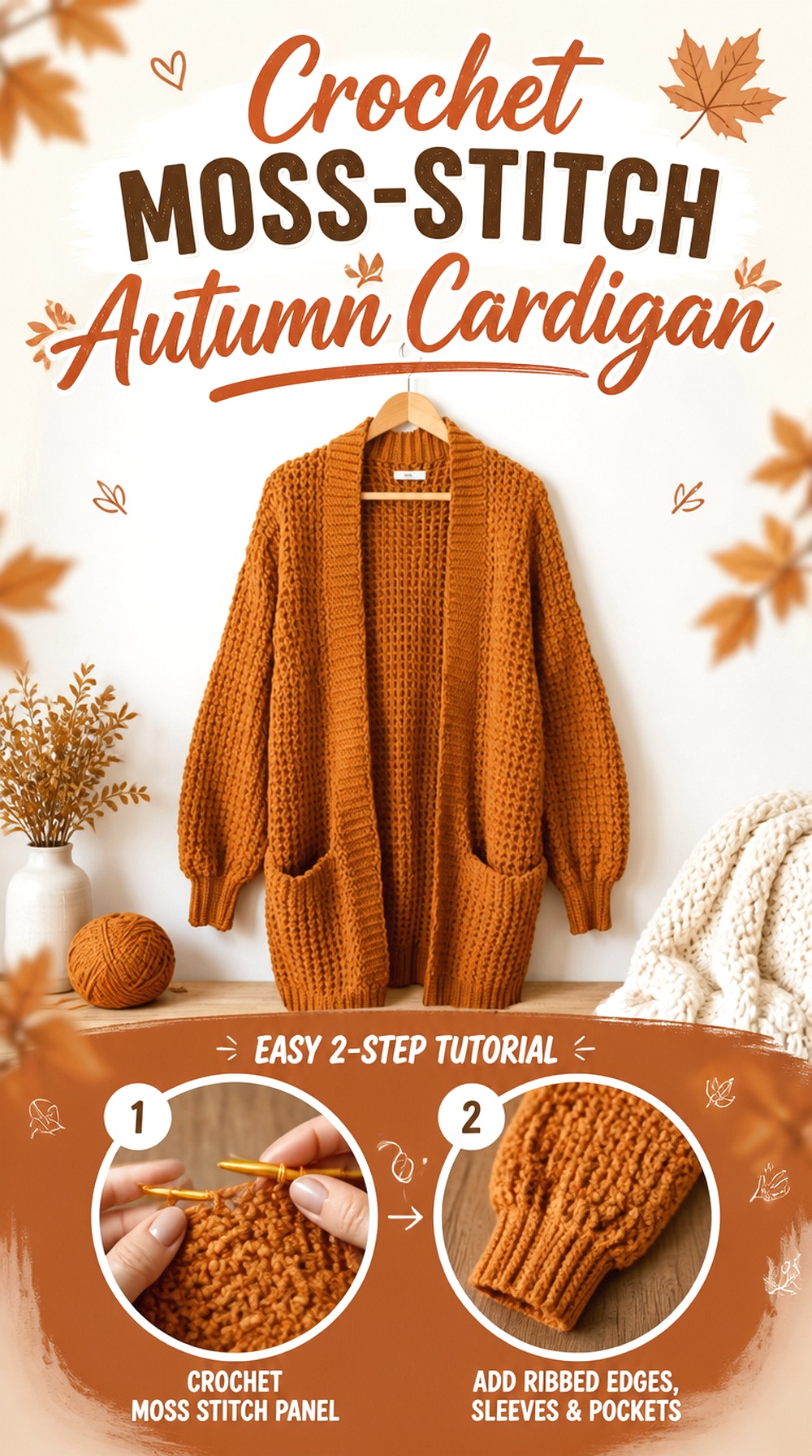
Moss stitch gives this cardigan a quieter texture than cables or bobbles, which makes it a good choice for readers who want visible handmade fabric without a highly decorative surface. That Crochet Girl’s tutorial is specifically presented as a fall moss-stitch cardigan, so the project sits naturally within a transitional-season wardrobe.
The stitch texture can work well with heathered, tweedy, tonal, or solid yarn because it creates subtle light-and-shadow changes across the body. This is the kind of cardigan where restraint can be an advantage: let the repeat stay consistent and use the silhouette, edging, and color to control the final mood.
Moss Stitch Rewards Consistent Spacing
The small openings are part of the fabric’s character. If tension changes significantly, those spaces can change size and make one area look looser than another. Compare sections as you work rather than waiting until assembly.
Tweed and Texture Can Either Cooperate or Compete
A highly speckled yarn adds another visual layer. If you want the stitch pattern itself to remain obvious, choose a quieter yarn; if you prefer a rustic fall surface, subtle flecks may complement it.
Original Tutorial and Creator Credit
Creator: That Crochet Girl
14. Crochet Lightweight Tie Front Cardigan
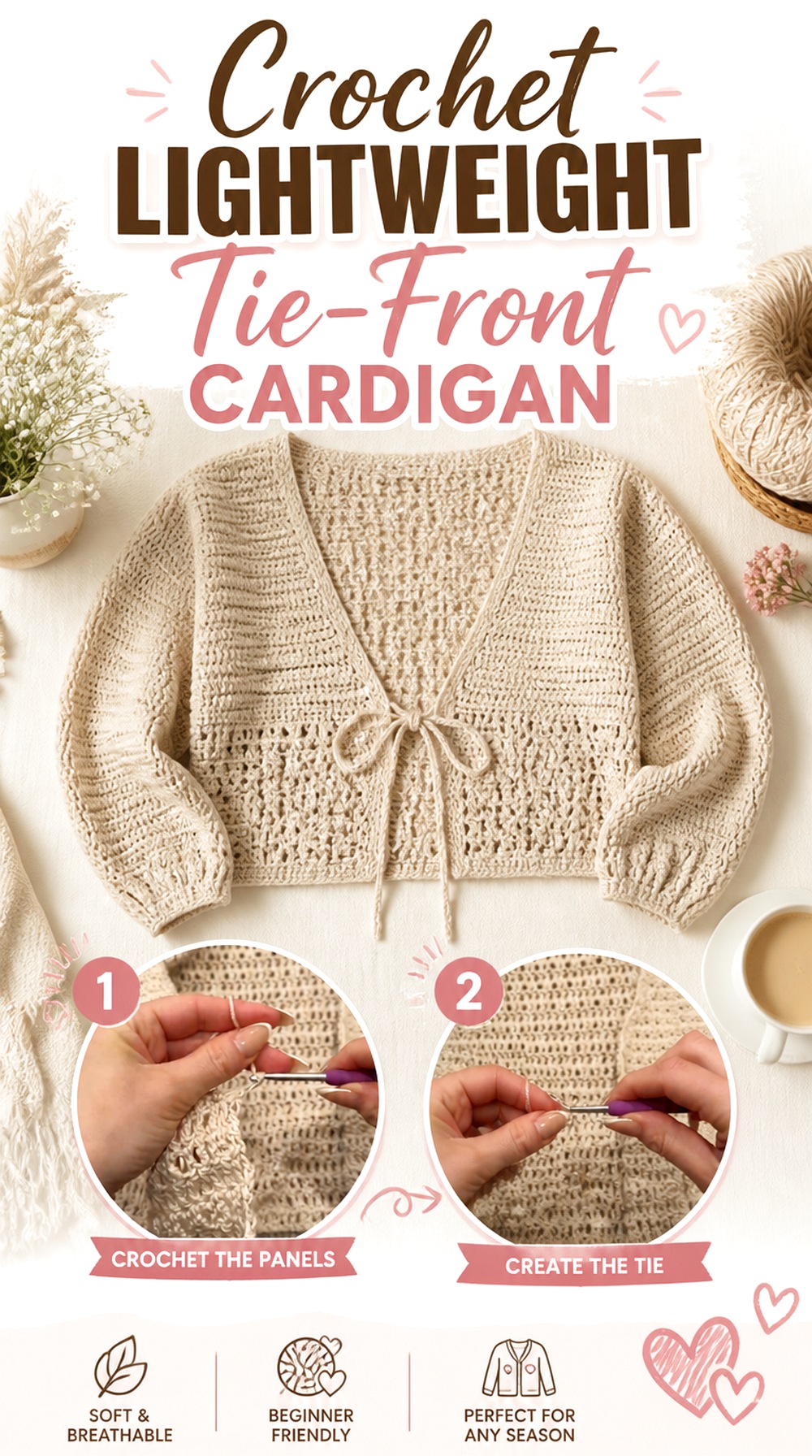
Dana B’s cardigan takes the collection in a lighter, more delicate direction with a cropped body and tie-front styling rather than a heavy button band. The smaller visual scale makes it useful as an early-fall layer or as a cardigan worn indoors beneath heavier outerwear.
A tie closure provides flexibility but also makes the center front an obvious focal point. Keep the ties proportionate to the cardigan rather than letting them become bulky cords. This design is especially appealing if you like the waist-defining effect of a cropped garment but want something softer than a structured button front.
Ties Need Enough Stability to Hang Neatly
A very stretchy yarn can cause long ties to lengthen during wear. Before making them more dramatic than the tutorial version, test how your fabric behaves under its own weight.
Light Fabric Makes Finishing More Visible
On an airy cardigan, bulky seams or thick woven-in ends may show through. Take extra care with finishing and avoid introducing unnecessary bulk around the opening.
Original Tutorial and Creator Credit
Creator: Dana B
15. Crochet Batwing Statement Cardigan
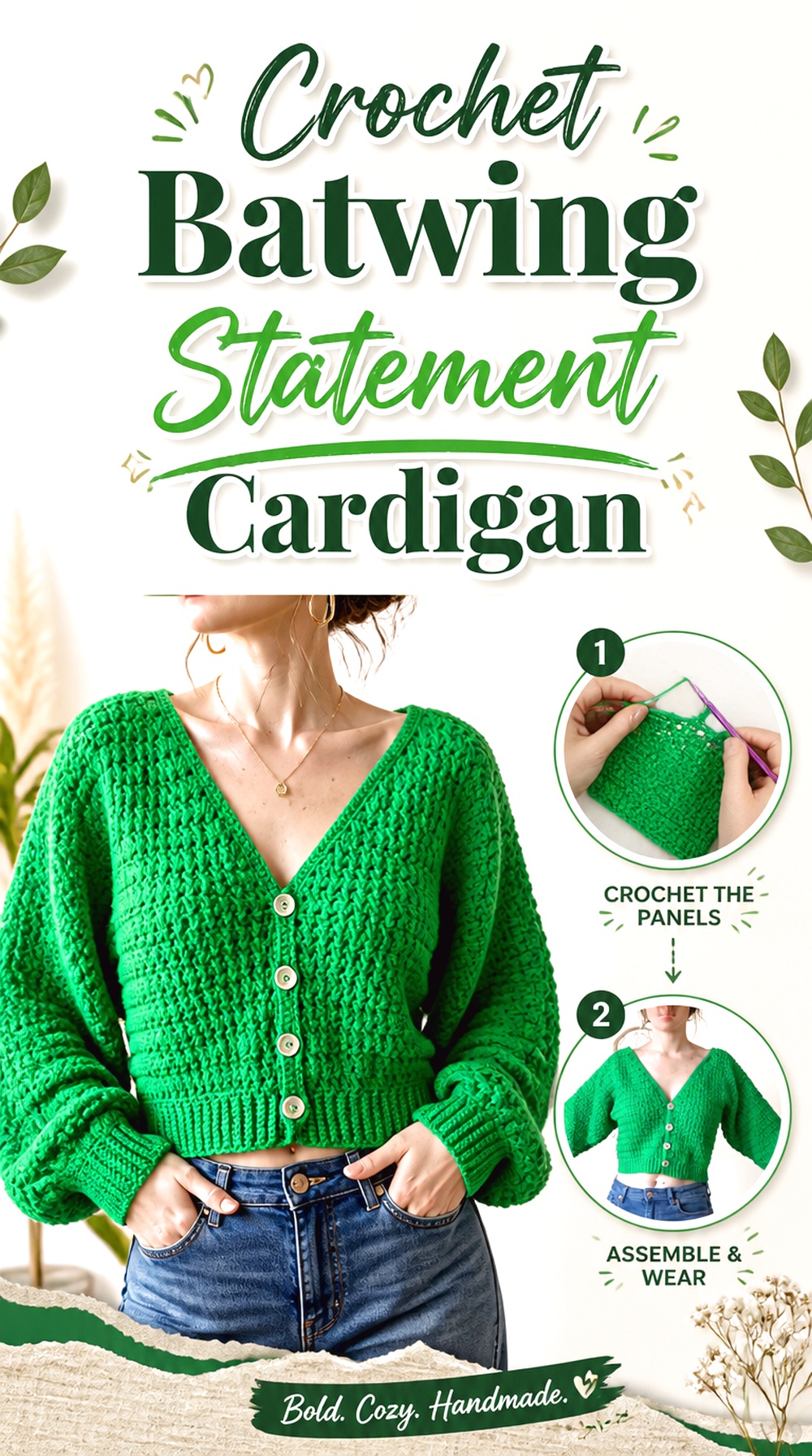
Madeleine Shirley’s chunky cardigan introduces a batwing-style sleeve and relaxed cropped shape, giving it a much more sculptural outline than a conventional straight-sleeved cardigan. The source tutorial emphasizes a chunky cardigan construction, and the finished shape makes sleeve volume one of the primary design features.
This works best as a visible statement layer rather than something you expect to disappear beneath fitted outerwear. The broad upper silhouette can look particularly polished with streamlined trousers, straight skirts, or simple denim that keeps the rest of the outfit visually calm.
Batwing Volume Needs a Clean Lower Edge
Because the upper body already carries substantial volume, a controlled hem prevents the cardigan from looking uniformly oversized. Resist adding unnecessary flare at the bottom unless you deliberately want a more dramatic silhouette.
Check Arm Movement Before Final Assembly
Wide sleeves can look generous when standing still but behave differently when reaching forward or lifting the arms. Use any available fitting checkpoint in the tutorial to confirm that the shape remains comfortable for your intended use.
Chunky Texture Benefits from Simple Styling
Large stitches and large sleeves create enough interest on their own. A solid or restrained color often lets the architecture read more clearly than a highly variegated yarn would.
Original Tutorial and Creator Credit
Creator: Madeleine Shirley
16. Crochet Polished Cropped Ribbed Cardigan
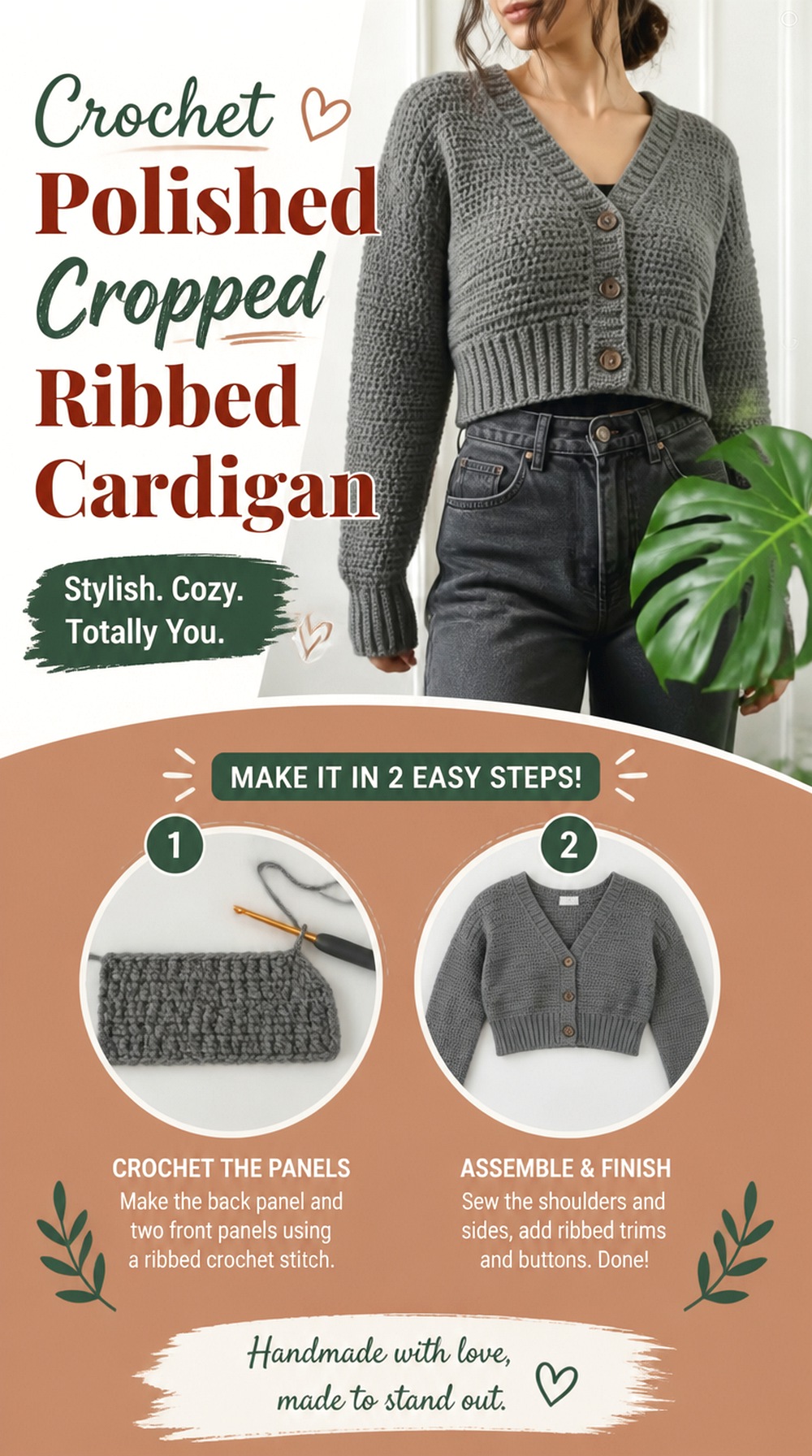
Rosa Ferns’ cropped cardigan is a straightforward way to focus on proportion and ribbed finishing without relying on novelty construction. The accompanying descriptions of the design emphasize the cropped shape, relaxed body, and defined ribbed areas, creating a practical base for a clean everyday cardigan.
This version fits neatly between the extremely chunky statement pieces and the lighter tie-front option. Choose it if you want a short cardigan that still feels substantial enough for fall layering. A single color keeps the silhouette sharp, while a carefully chosen button or border treatment can add personality without overwhelming it.
Make the Hem Look Intentional, Not Accidentally Short
Cropped garments are sensitive to even small length changes. Decide where you want the hem to meet your usual waistband before finishing the body rather than relying only on the sample’s proportions.
Keep Sleeve Ease in Proportion to the Body
A relaxed body can accommodate fuller sleeves, but the combination should still look balanced. If you reduce body width significantly, reconsider whether the original sleeve volume still suits the new silhouette.
Original Tutorial and Creator Credit
Creator: Rosa Ferns
17. Crochet Subtle Sparkle Custom Length Cardigan
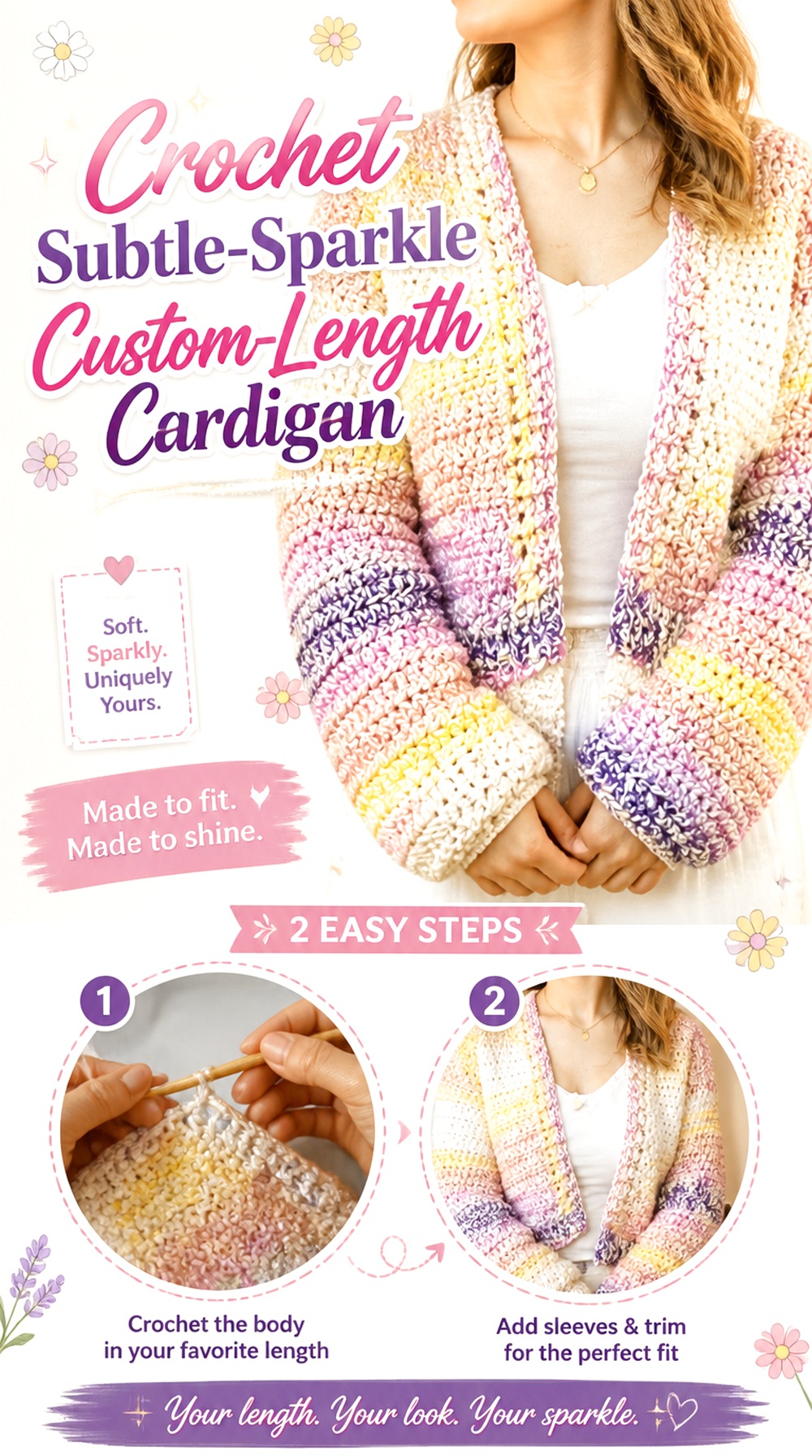
Katieree’s cardigan tutorial is built around adjustability in size and length and demonstrates the project with a yarn that includes visible sparkle. That makes it a useful direction when you want a fall cardigan that feels slightly dressed up without adding beads, appliqués, or elaborate motifs.
The key to making metallic or glitter effects look refined is restraint. A subtle thread running through a solid or tonal base can catch light without turning the garment into occasion wear. Because the length is adjustable, you can also decide whether the final cardigan should sit at the waist, hip, or lower depending on your wardrobe.
Sparkle Changes How Texture Reads
Reflective strands can visually interrupt stitch definition. If your yarn already has a noticeable glint, a simpler stitch surface often allows both elements to remain visible.
Adjust Length with the Whole Silhouette in Mind
Adding body length changes where the cardigan ends relative to the sleeves and front opening. Reassess those proportions together instead of treating length as an isolated measurement.
Original Tutorial and Creator Credit
Creator: Katieree
18. Crochet Autumn Granny Square Tie Cardigan
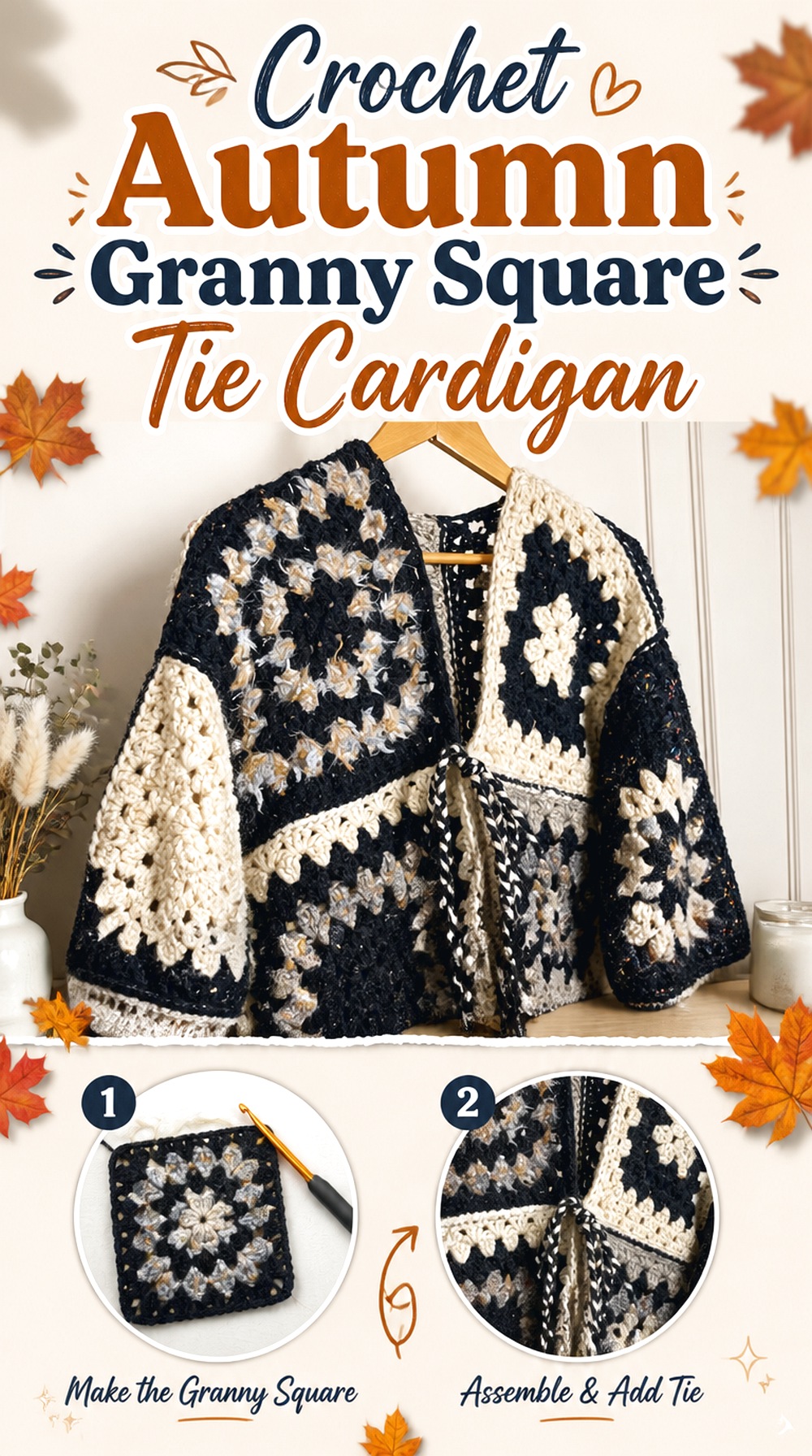
DIYGuru’s granny square cardigan offers a modular fall option with a front tie rather than a standard row of buttons. The tutorial covers granny squares, joining, neckline shaping, and the tie treatment, making the closure and motif layout both important parts of the finished design.
This is a good choice if you want obvious handcrafted character but still prefer a controlled, wearable silhouette. A limited autumn palette can make multiple motifs feel cohesive. Before substituting a different square, however, compare blocked dimensions because even visually similar motifs can produce different panel widths.
Block Motifs Before Committing to the Layout
Joining squares that vary noticeably in size can create puckering or uneven edges. Bring the motifs to consistent blocked dimensions before treating them as interchangeable garment units.
A Restricted Palette Can Make Motifs Feel More Tailored
Using every color available creates a playful result, but it is not the only approach. Repeating two or three shades in a planned sequence can emphasize geometry and make the overall cardigan read more cohesively.
Keep the Tie Proportional to the Opening
A narrow tie can look delicate beside a cropped granny body, while an overly thick tie may visually split the front. Test the scale against the finished neckline before committing to extra length or bulk.
Original Tutorial and Creator Credit
Creator: DIYGuru
19. Crochet No Sew Granny Hexagon Cardigan
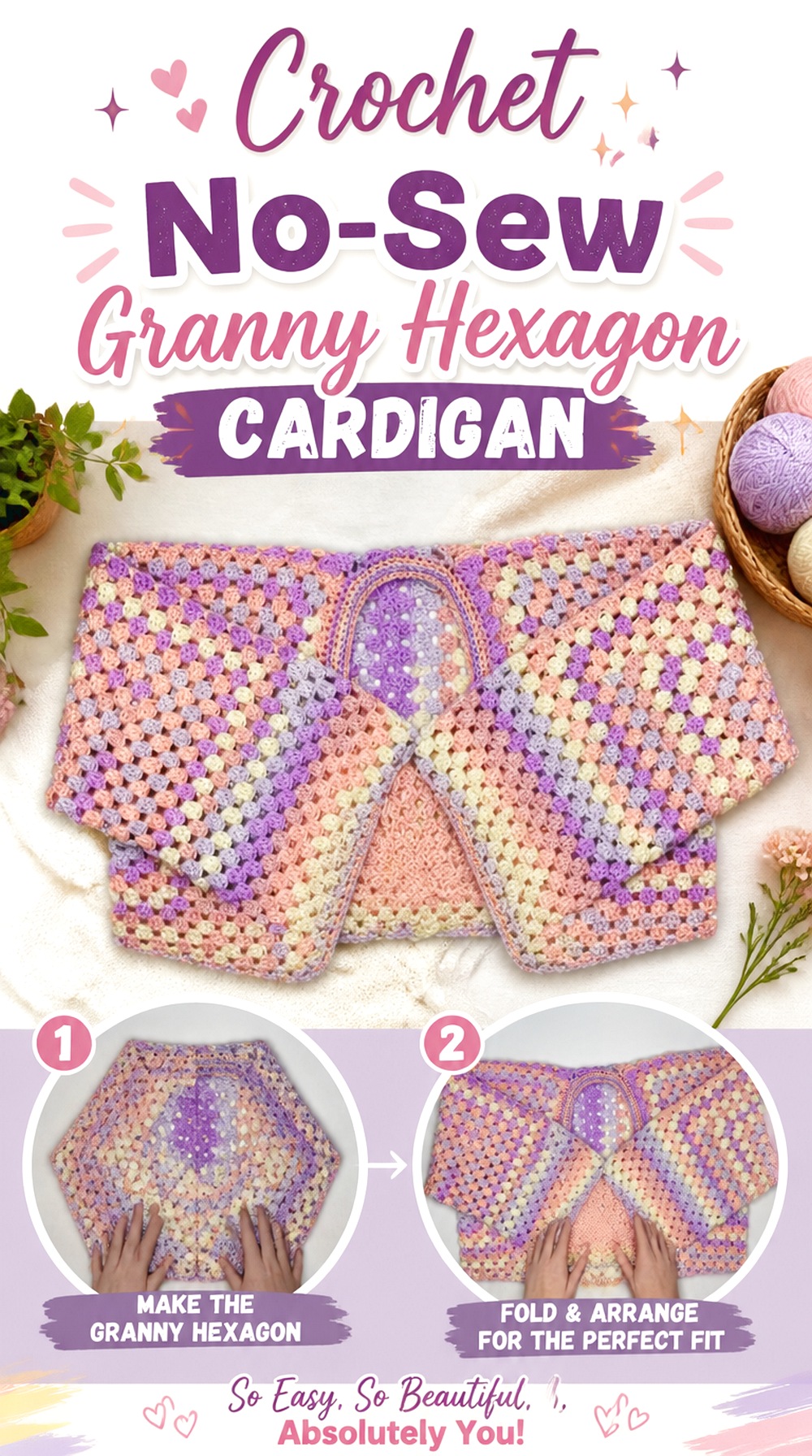
The granny hexagon cardigan uses geometry to create much of the garment shape, making it fundamentally different from square-panel patchwork. PassioKnit Kelsie’s tutorial covers the hexagon construction, sizing considerations, joining, arm length, cuffs, back extension, and border, while presenting the project as a no-sew approach.
Its appeal is the recognizable folded-hexagon transformation. For a more expensive-looking version, focus on controlled color placement and a border that visually unifies the two halves. Tonal combinations can make the construction feel more understated without hiding its distinctive shape.
Check the Folded Shape Early
A growing hexagon does not resemble a cardigan until it is folded. Periodically view the piece in its garment orientation so you understand how color bands and increases will appear on the body.
Back Width May Need More Attention Than Sleeve Length
A hexagon can reach a comfortable sleeve dimension before the two body halves provide the width you want. Follow the tutorial’s adjustment logic rather than continuing every part of the shape equally.
A Unifying Border Can Calm a Busy Palette
If the body contains several colors, using one repeated shade around cuffs and openings can visually connect the sections and give the garment a clearer frame.
Original Tutorial and Creator Credit
Creator: PassioKnit Kelsie
20. Crochet Long Granny Square Panel Cardigan
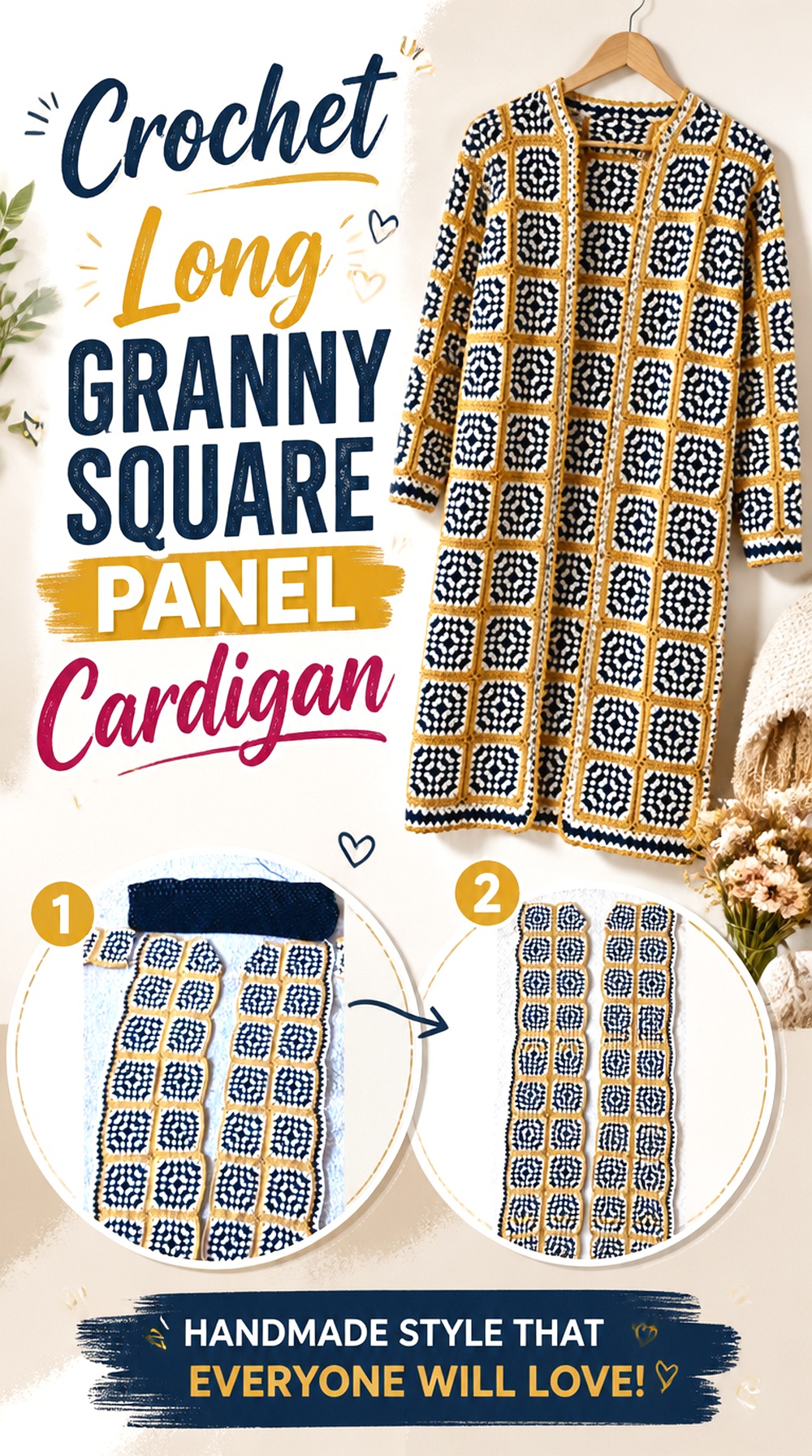
By StellaM’s cardigan takes granny construction into a longer, more dramatic direction. The referenced tutorial uses granny squares prominently across the fronts and sleeves while treating the back differently, creating contrast between obvious motifs and a broader continuous area.
That mixed construction is useful when full all-over patchwork feels too visually dense. The longer silhouette also changes how motifs are perceived: instead of reading as a short colorful jacket, they become repeated vertical elements along a substantial layer. For a fall wardrobe, muted earth tones or a dark grounding color can strengthen that lengthwise effect.
Use the Back as Visual Breathing Room
A quieter back panel can balance decorative sleeves and fronts. If adapting colors, keep enough repetition across the visible motif areas that the contrast looks intentional rather than like unrelated sections.
Long Motif Columns Magnify Size Differences
A small discrepancy between squares can become significant after several motifs are stacked. Measure blocked squares from multiple batches rather than assuming the first motif represents all of them.
Original Tutorial and Creator Credit
Creator: By StellaM
21. Crochet Graphic Granny Jacket Cardigan
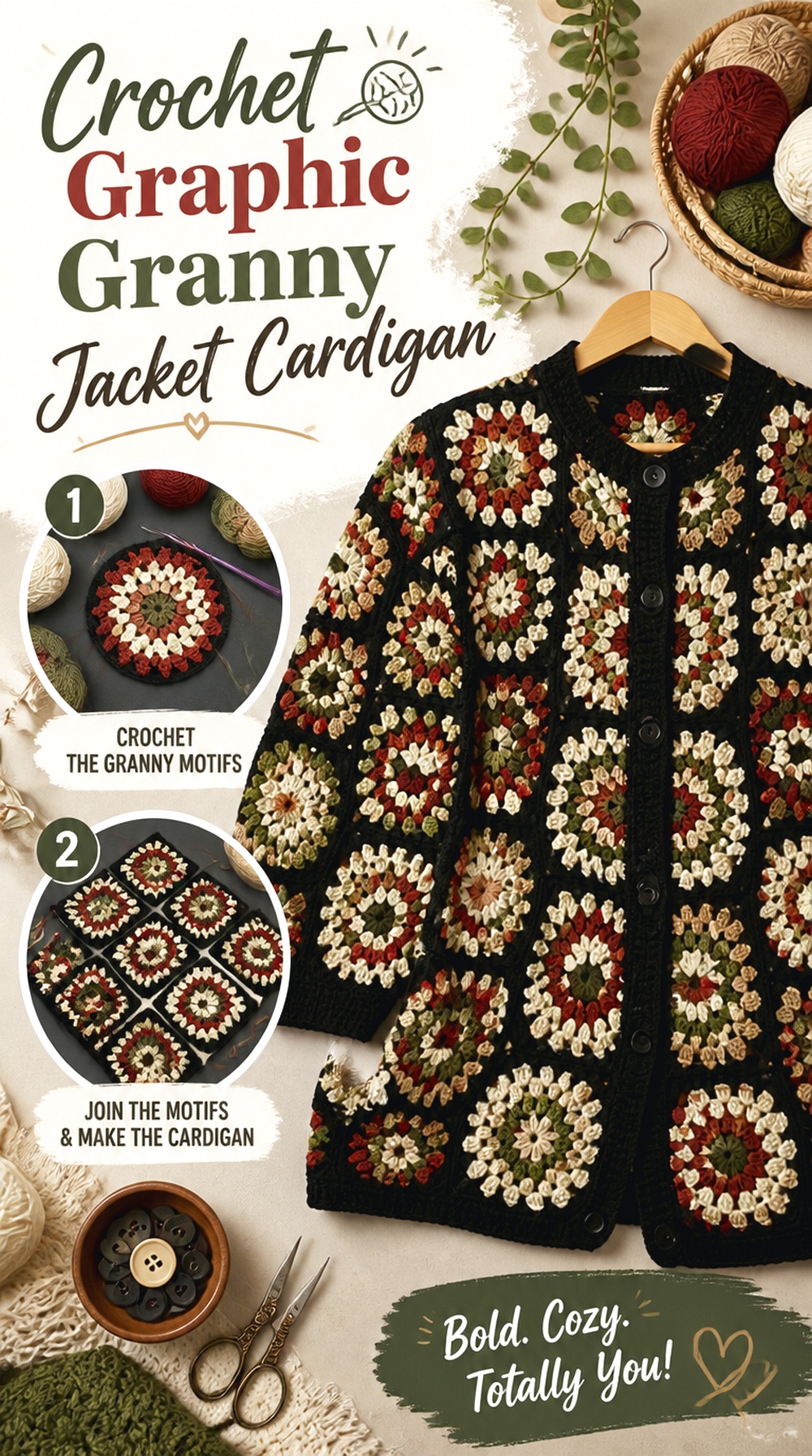
YARNutopia’s Gorgeous Gal cardigan is a statement-oriented granny design with strong color blocking and button-front styling. The original tutorial describes its fashion inspiration and provides a complete cardigan lesson rather than presenting the squares as isolated motifs.
This is the bold option in the collection. If you want the finished garment to look polished rather than chaotic, treat the palette as a composition: establish a dominant dark or neutral shade, then repeat accent colors rather than introducing a new one every time. The stronger the motif contrast, the more important clean joins and consistent edges become.
Establish a Dominant Color Before Choosing Accents
A grounding shade gives the eye a place to rest and helps repeated granny sections feel connected. Lay the yarns together before starting so you can judge their relative visual strength.
Buttons Add Another Graphic Element
On a colorful front, contrasting buttons may become one accent too many. Consider whether you want the hardware to disappear into the border or intentionally become part of the pattern.
Finish Joins as Carefully as the Motifs
Bright contrasts make alignment errors easier to see. Compare corners and edges during assembly instead of relying on the final border to conceal inconsistencies.
Original Tutorial and Creator Credit
Creator: Fuad Azmat / YARNutopia by Nadia
22. Crochet Classic Paneled Band Cardigan
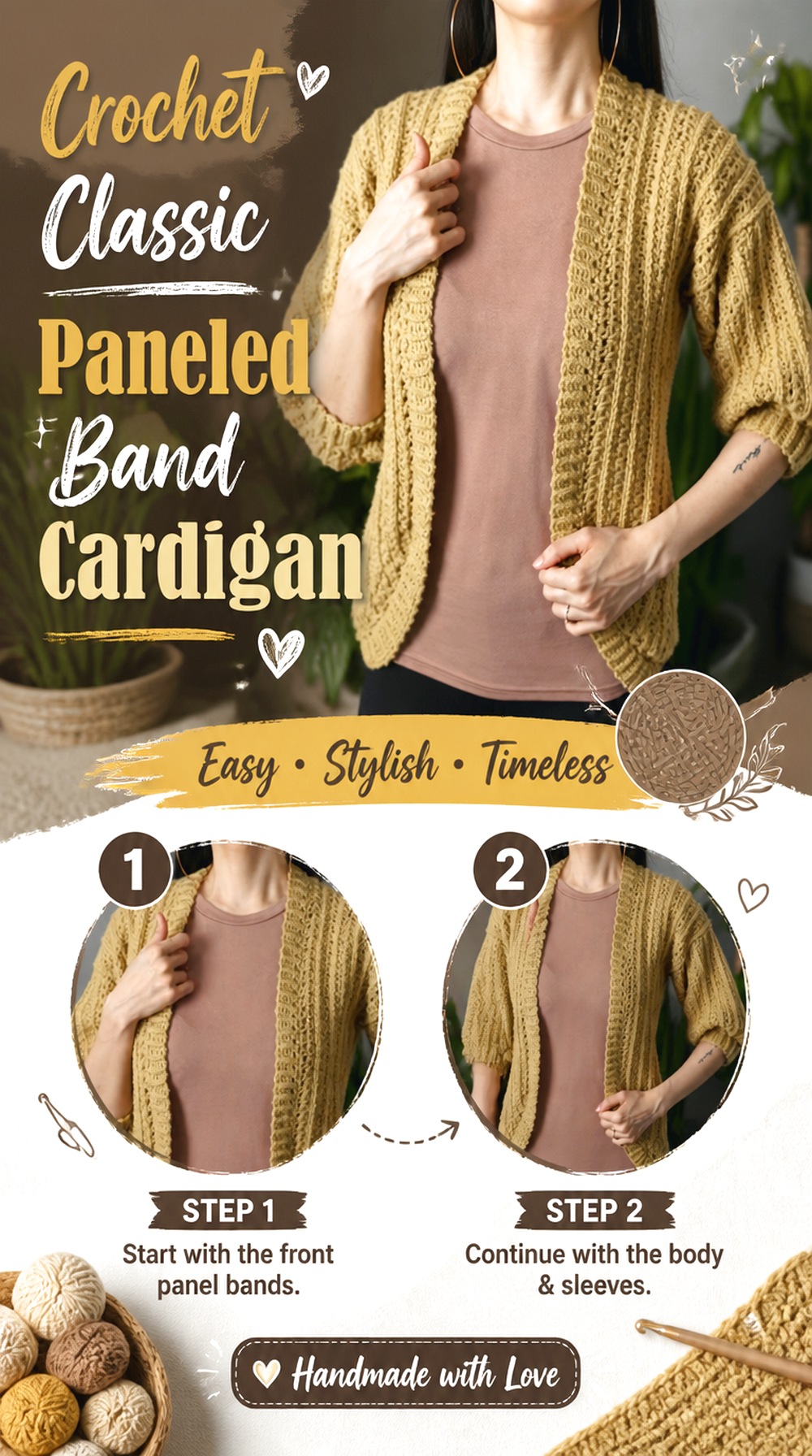
TCDDIY’s cardigan follows a recognizable paneled garment route, with separate front and back areas, sleeves, cuffs, and the final front band all addressed in the tutorial. That makes it useful for readers who prefer predictable garment architecture over unusual modular construction.
A classic paneled cardigan can look particularly refined because alterations can be considered piece by piece. The trade-off is that assembly accuracy matters more. If your panels reach slightly different lengths or your seams pull unevenly, the discrepancy can show along the hem and front opening.
Match Panel Lengths Before Seaming
Lay corresponding pieces together before assembly. Small differences are much easier to address before the shoulder and side seams lock the cardigan into its final shape.
Treat the Front Band as a Finishing Frame
The band runs through the most visible area of the garment. Work it with enough consistency that it lies flat without drawing the fronts inward or causing them to flare.
Original Tutorial and Creator Credit
Creator: TCDDIY
23. Crochet Melange Yoke Cardigan with Wide Sleeves
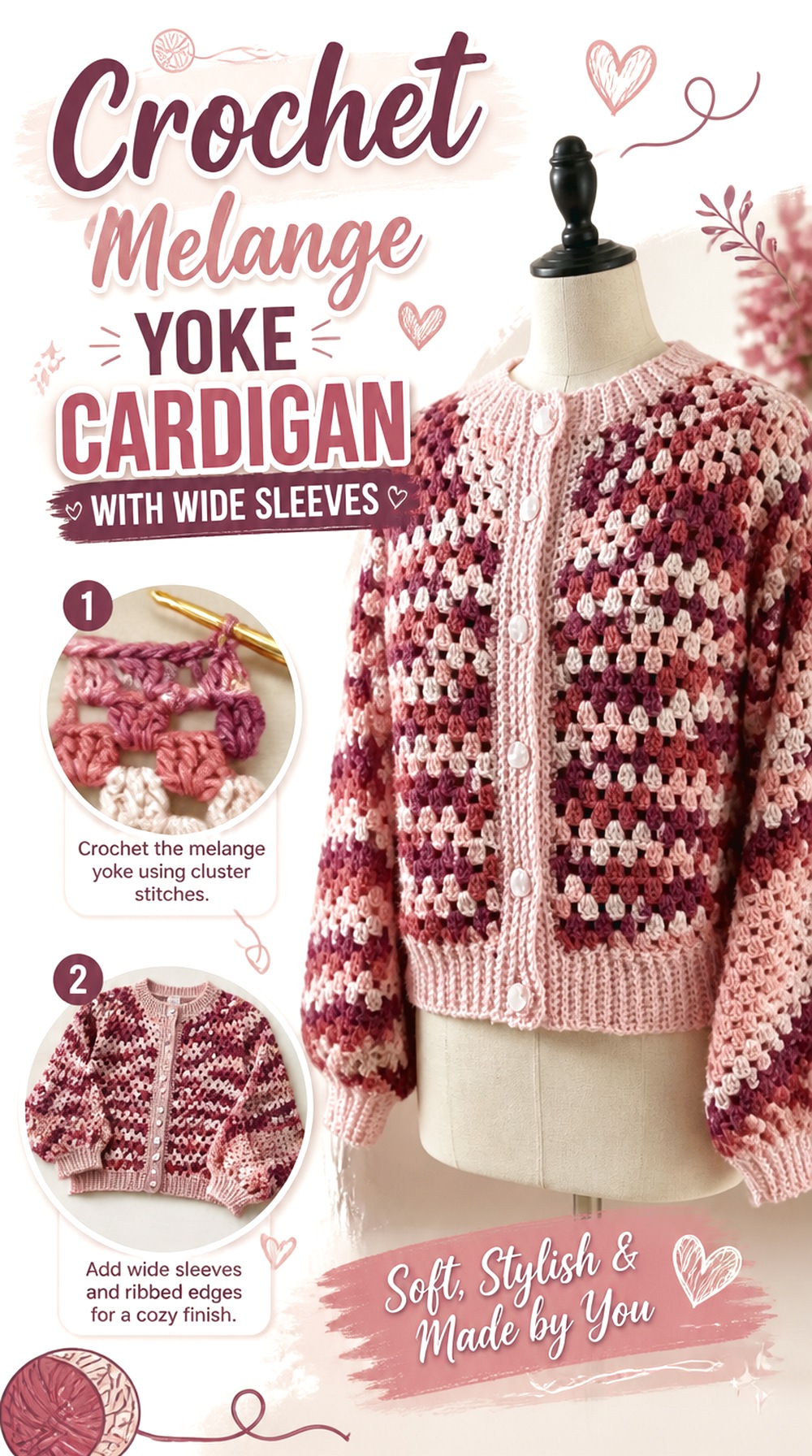
Needle&Crochet Escape’s cardigan combines a yoke-down approach, wide sleeves, and ribbing around the lower body and front/collar area. That combination creates a softer, more relaxed silhouette than the neat standard raglan while still using the finishing to give the garment definition.
A melange or heathered yarn can add depth without the hard visual divisions of stripes. This makes the project appealing when you want subtle color variation for fall but do not want to manage a multicolor motif layout. Let the sleeve volume remain the main shape statement and keep the rest of the styling relatively restrained.
Heathered Yarn Can Hide Minor Texture
Mixed-color fibers soften individual stitch outlines. That is useful if you prefer an atmospheric surface, but choose a more solid yarn if showing every ridge is central to your goal.
Wide Sleeves Need a Defined Cuff
A narrower cuff provides a clear endpoint to the sleeve and keeps the volume concentrated above the wrist. If extending the sleeves, check that the cuff still lands where you want it.
Collar Ribbing Should Sit Without Buckling
Because the ribbing continues around a curved upper opening, check frequently that it follows the neckline smoothly. Excess tightness can pull; excess looseness can ripple.
Original Tutorial and Creator Credit
Creator: Needle&Crochet Escape
24. Crochet Plush Collared Bulky Cardigan
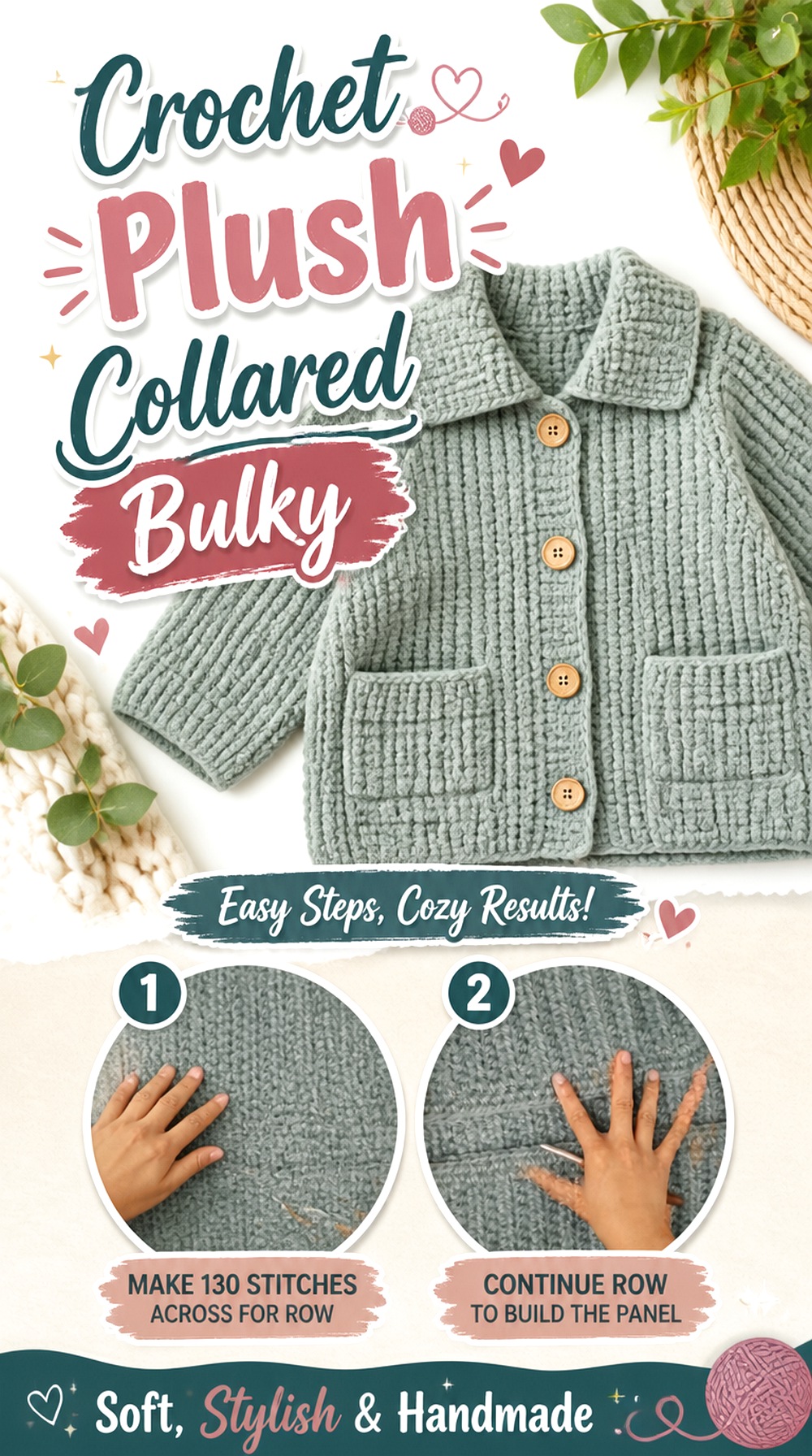
KnitcroAddict’s classic cardigan uses bulky yarn, five separate pieces, and an added collar, producing a substantial fall layer with a very different feel from the soft-halo and lightweight options earlier in the list. The creator’s tutorial specifically identifies the collared design and demonstrates the paneled assembly.
Bulky does not have to mean unfinished. The key is giving all that visual weight a clear structure. A calm color, controlled seams, and a collar that lies evenly can make a thick cardigan feel deliberate. This option is best when warmth and presence matter more than fitting beneath slim outerwear.
Let the Collar Carry the Detail
A plush bulky fabric already has strong texture. Keeping the collar shape simple can give the cardigan a clear focal point without needing additional cables, motifs, or colorwork.
Heavy Fabric Makes Seam Quality Important
Thick seams can become uncomfortable or visibly lumpy if every edge is joined too tightly. Match pieces accurately and follow the creator’s assembly guidance rather than compensating for mismatched dimensions during sewing.
Original Tutorial and Creator Credit
Creator: KnitcroAddict
25. Crochet Chunky Knit Look Pocket Cardigan
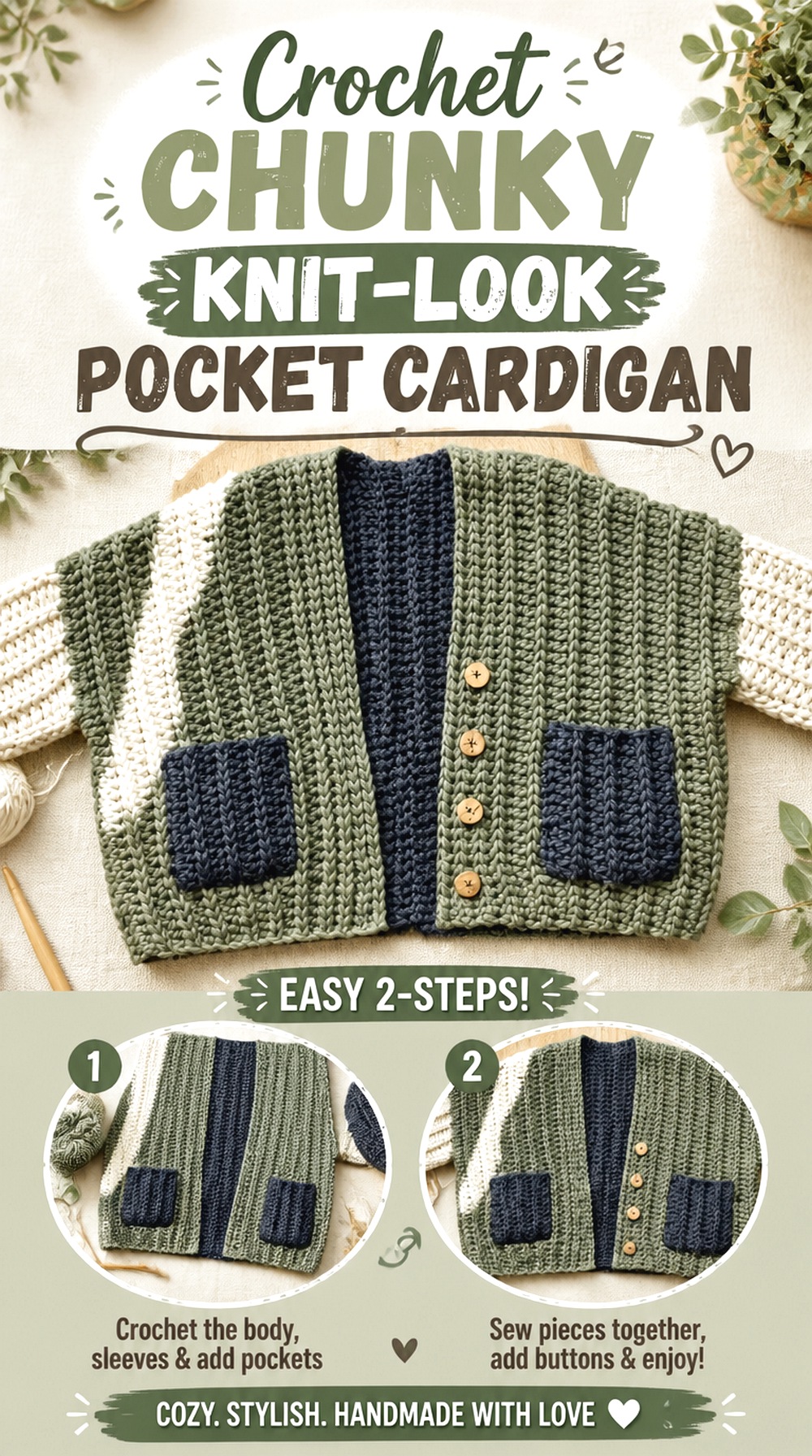
Make & Do Crew’s chunky cardigan closes the list with a deliberately substantial knit-look layer featuring an oversized fit, pockets, and buttons. The video tutorial covers the project from gauge and pockets through the body sections, sleeves, joins, and final finishing.
The strong yarn weight gives the cardigan immediate visual presence, but the pockets and button front keep it recognizable as a practical everyday layer rather than a novelty piece. Choose this direction if you like chunky fall sweaters but still want a relatively organized silhouette with clear finishing landmarks.
Super-Bulky Fabric Changes Proportions Fast
With thick yarn, a small change in width or length can create a substantial visual difference. Check the creator’s finished sizing carefully instead of casually adding extra rows or width for an oversized effect.
Pockets Should Sit Flat Against the Front
Chunky pockets already add thickness. Before securing them, position both while the cardigan is laid out evenly and check that they mirror each other rather than relying only on row counting.
Buttons Need Enough Presence for the Fabric
Very delicate hardware can disappear against thick stitches. Choose buttons only after seeing the finished band so their size and weight suit the actual fabric without pulling it out of shape.
Original Tutorial and Creator Credit
Creator: Make & Do Crew
Which Cardigan Style Gives the Most Polished Effect?
If your wardrobe is minimal, the Crochet Soft-Halo V-Neck Cardigan, Crochet Minimal Drop-Shoulder Ribbed Cardigan, or Crochet Classic Paneled Band Cardigan offer the quietest silhouettes. They rely on fit, fabric, and edges rather than obvious decoration.
For visible craftsmanship, look toward the Crochet Sculpted Cable Panel Cardigan, Structured Tunisian Crochet Cardigan, or Crochet Suzette Raglan Cardigan with Refined Ribbing. Their surface texture supplies the interest without requiring extensive color changes.
The granny options work differently. The autumn tie cardigan feels compact, the hexagon version emphasizes construction, and the long or graphic versions make the motifs the main event. For maximum cold-weather presence, the hooded longline, plush collared, oversized pocket, and chunky knit-look cardigans provide the most substantial silhouettes.
Conclusion
The most expensive-looking crochet cardigan is the one where the fabric, silhouette, and finishing all tell the same story. Choose cables or Tunisian texture when stitch definition is your priority; pick a V-neck, raglan, or classic paneled shape for a quieter wardrobe staple; use a cropped wrap or tie front for waist emphasis; and turn to longline, hooded, chunky, or granny constructions when you want the cardigan itself to become the outfit’s focal point.
Before buying yarn, compare finished measurements, sleeve volume, construction, and the behavior of your swatch. Then use the original tutorials linked above for each creator’s exact construction details rather than assuming that measurements or adjustments transfer between designs.
Frequently Asked Questions
What makes a crochet cardigan look polished instead of bulky?
A clear silhouette helps more than simply choosing thinner yarn. Keep the neckline, cuffs, hem, and front opening consistent, and avoid adding several competing features to the same cardigan. If the sleeves are very full, for example, a simpler body can balance them. Blocking and careful assembly can also improve alignment, but always use care methods appropriate for the particular yarn.
Does a thinner yarn automatically make a crochet cardigan look more expensive?
No. A thinner yarn can create lighter drape and smaller-scale stitches, but a bulky cardigan can look equally intentional when the proportions and finishing suit the fabric. Compare the intended silhouette first. A long fluid cardigan and a chunky cropped jacket need different fabric behavior, so choosing yarn only because it looks “luxurious” in the skein can produce the wrong result.
How much ease should a fall crochet cardigan have?
There is no universal amount. A fitted cardigan intended to sit beneath a coat needs different room from an oversized cardigan worn as the outer layer. Use the creator’s finished measurements and sizing guidance, compare them with your body measurements, and consider what you plan to wear underneath. Shoulder construction and upper-arm room can matter just as much as the bust measurement.
Can I substitute a different yarn and keep the same cardigan shape?
Possibly, but matching yarn weight alone does not guarantee the same fabric. Fiber content, twist, elasticity, halo, and your personal tension can change drape and dimensions. Crochet a useful swatch, measure it after appropriate blocking, and compare how it hangs with the fabric shown by the creator. If drape changes significantly, the finished silhouette may change even when gauge is close.
Should cardigan pieces be blocked before they are seamed?
That depends on the yarn, construction, and tutorial. For paneled or motif-based garments, bringing pieces to consistent dimensions before final assembly can make alignment easier. Some projects are better blocked after assembly or require only light shaping. Follow the yarn’s care information and the creator’s recommendations instead of applying one blocking method to every fiber.
Which crochet cardigan shapes are easiest to layer under a fall coat?
Streamlined raglans, moderate drop shoulders, and relatively close sleeves generally take up less space than batwing, balloon, or very wide sleeves. A long hood or bulky shawl collar can also compete with a fitted coat neckline. If outerwear compatibility matters, compare the cardigan sleeve and shoulder volume with the coat you expect to wear rather than judging the body width alone.