A crochet scarf neck sweater sits somewhere between an accessory and a full garment. Some designs begin with a long scarf-like body and add sleeves at the ends, while others use shaped panels, crossed fronts, shawl sections, or bolero construction to create more sweater-like coverage. Those differences affect much more than appearance: they change how much fabric gathers around the neck, how securely the piece stays on the shoulders, and how easily it layers over other clothing.
The 16 ideas below cover several distinct approaches, including simple sleeve scarves, textured wraps, a Tunisian version, shaped sleeves, a lacy bolero-scarf, and more structured wrap sweaters. Each section highlights practical points to check before choosing a tutorial so you can match the construction, drape, and fit to the way you actually want to wear the finished piece.
Quick List
- Crochet Pixel-Style Scarf Sweater With Sleeves
- Crochet Zigzag Cross-Sleeve Scarf Sweater
- Crochet Soft-Drape Wrap Sweater Scarf
- Crochet Panel-Built Wrap Neck Sweater
- Crochet Tunisian Color-Play Sweater Scarf
- Crochet Oversized One-Piece Sweater Scarf
- Crochet Wheat-Texture Cross-Front Scarf Sweater
- Crochet Two-in-One Scarf Wrap With Sleeves
- Crochet Shaped-Sleeve Sweater Wrap Scarf
- Crochet Lacy Bolero Scarf Wrap
- Crochet Colorful Shawl Scarf With Sleeves
- Crochet Lightweight Multi-Size Sleeve Scarf Sweater
- Crochet Dual-Construction Sweater Scarf
- Crochet Long Wrap Scarf With Sleeves
- Crochet Wide Scarf Sweater With Shaped Sleeves
- Crochet Pashmina-Style Scarf With Sleeves
Choose the Construction Before You Choose the Look
“Scarf sweater” can describe several constructions that behave quite differently. A long scarf with sleeves at both ends offers the clearest accessory-to-garment conversion: leave it hanging like a scarf, cross it around the torso, or pull the sleeves on for more security. It also means a considerable portion of the fabric may gather around the neck or upper body.
Panel-built wrap sweaters create a more recognizable garment shape. Front, back, neck, and sleeve areas can be controlled separately, but fit becomes more important. Bolero and shawl hybrids usually provide less torso coverage and place more emphasis on shoulder movement and drape.
Before committing, look at the tutorial’s finished piece from the front, back, and side. Decide whether you want a scarf that happens to have sleeves or a sweater whose neckline behaves like a scarf.
Check Neck Bulk, Shoulder Grip, and Sleeve Fit Together
A scarf neck sweater needs to work in three places at once. The sleeve must feel comfortable, the back or shoulder section must reach without pulling, and the scarf portion needs enough flexibility to wrap without becoming cumbersome. A design can look generously sized laid flat yet feel restrictive once both arms are in the sleeves and the center is crossed.
When a tutorial provides multiple sizes, compare its sizing method with the measurements that matter for your preferred styling rather than choosing only from a familiar ready-to-wear label. For adaptable designs, test the reach across your back and shoulders before committing to final finishing.
Also consider what you will wear underneath. A piece intended for a thin top does not need the same sleeve room as one you want to pull over a substantial winter layer.
Yarn Weight Changes Drape More Than Color Does
Drape has a major effect on this particular garment family because much of the fabric may sit near the neck, shoulders, or crossed front. A lighter, more flexible fabric generally folds into softer layers, while a thicker or denser fabric can create stronger structure along with more volume.
That does not make one option universally better. A structured sweater scarf can feel substantial and visually defined, while an open or finer fabric may be easier to wrap several ways. Texture matters too: raised stitches can make a simple rectangle visually interesting but can also increase surface thickness.
Before scaling a tutorial to a different yarn, make a useful swatch and handle it rather than judging it only while flat. Fold it, let it hang, and place it against your neck. Also check the yarn’s own care information and comfort against skin if the finished piece will sit directly around your neckline.
1. Crochet Pixel Style Scarf Sweater With Sleeves
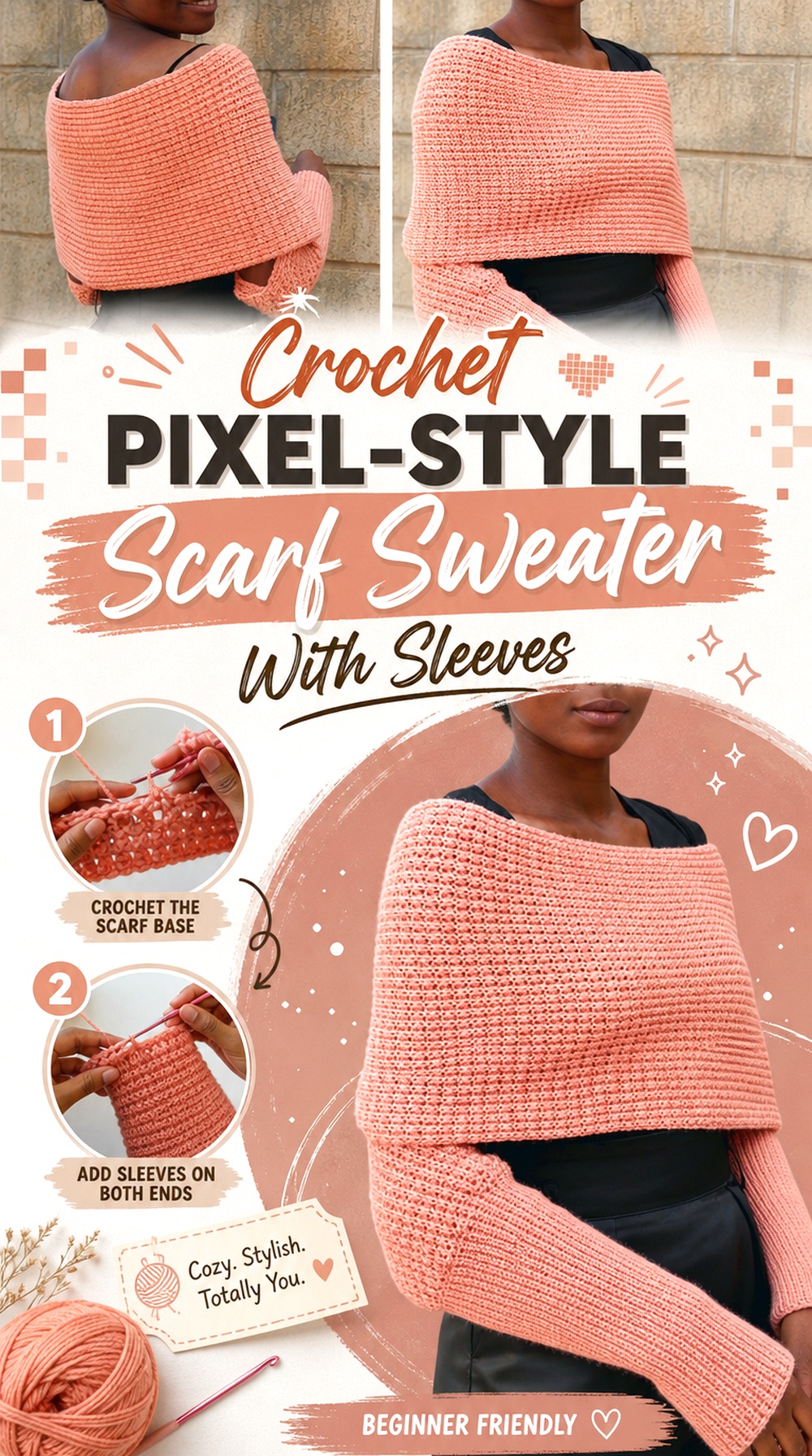
This design from Dreamcrochets uses the familiar scarf-with-sleeves concept but gives it a contemporary, streamlined appearance. The long center section keeps the front of an outfit comparatively open while the sleeve ends help anchor the wrap, making it useful when you want more presence than an ordinary scarf without covering the torso like a conventional cardigan.
The tutorial presents the project as a sweater scarf or “Pixel Wrap Sweater,” with the construction moving from the scarf body into sleeves and joining. That makes it especially relevant for readers who like continuous, convertible garments rather than separately assembled sweater panels.
Let the Center Section Drape Instead of Standing Stiff
The center band is doing two jobs: creating visual coverage and forming the portion that bends around the shoulders or neck. If your substituted yarn produces a noticeably firmer fabric than the tutorial’s result, the scarf may project outward rather than falling close to the body. Compare the movement of your swatch with the finished example before making the central section much wider or heavier.
Balance the Sleeve Ends Before Final Finishing
With sleeves on opposite ends of a long piece, small differences in sleeve length or joining tension can become obvious once both arms are extended. Lay the work out symmetrically and compare corresponding sections before finishing. This is particularly useful if you have modified the center length, because the changes can alter where each sleeve begins when the scarf is wrapped.
Original Tutorial and Creator Credit
Creator: Dreamcrochets
2. Crochet Zigzag Cross Sleeve Scarf Sweater
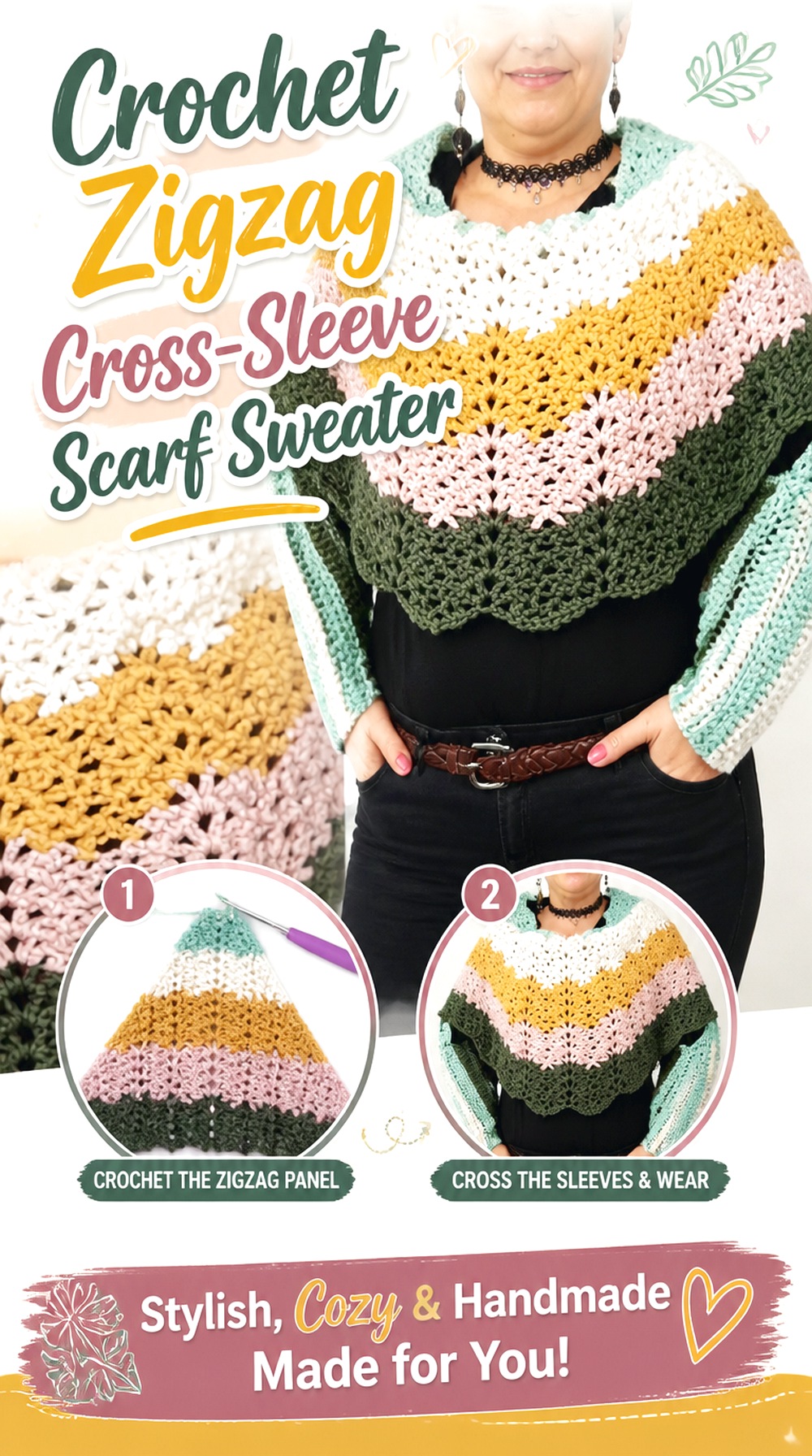
For a scarf sweater where the fabric itself becomes the statement, the DiMar DiMax Crochet version uses a pronounced zigzag surface and a cross-sleeve presentation. The change of direction gives the long silhouette more movement than a plain rectangular scarf and helps distinguish the crossed portion from the sleeve ends.
This is a useful choice to study if you want the scarf section to remain visually interesting even when it is worn simply rather than dramatically wrapped. The tutorial also shows cuffs incorporated into the broader project and uses color changes to emphasize the textured construction.
Zigzag Texture Makes Width Changes Easier to Notice
Strong peaks and valleys create visible horizontal landmarks. If one part gradually becomes narrower or wider because of changing tension, the discrepancy may show more clearly than it would in a subtle texture. Periodically compare the working width with an earlier section rather than waiting until the scarf is long enough to wrap.
Use Color Changes to Support the Crossing Line
A multicolor zigzag can direct attention toward the front cross, but too many competing transitions can make that construction harder to read. Before changing the tutorial’s palette, place your yarns in the order you expect to use them and consider where the strongest contrast will land when the scarf is crossed rather than only when it is flat.
Test the Cross-Body Reach Before Finishing
Crossing the scarf uses more effective length than letting both ends hang straight. Try the unfinished piece around the shoulders once the main span is established. The useful checkpoint is whether the sleeves can reach their intended positions without pulling the crossed section tightly against the back of the neck.
Original Tutorial and Creator Credit
Creator: DiMar DiMax Crochet
3. Crochet Soft Drape Wrap Sweater Scarf
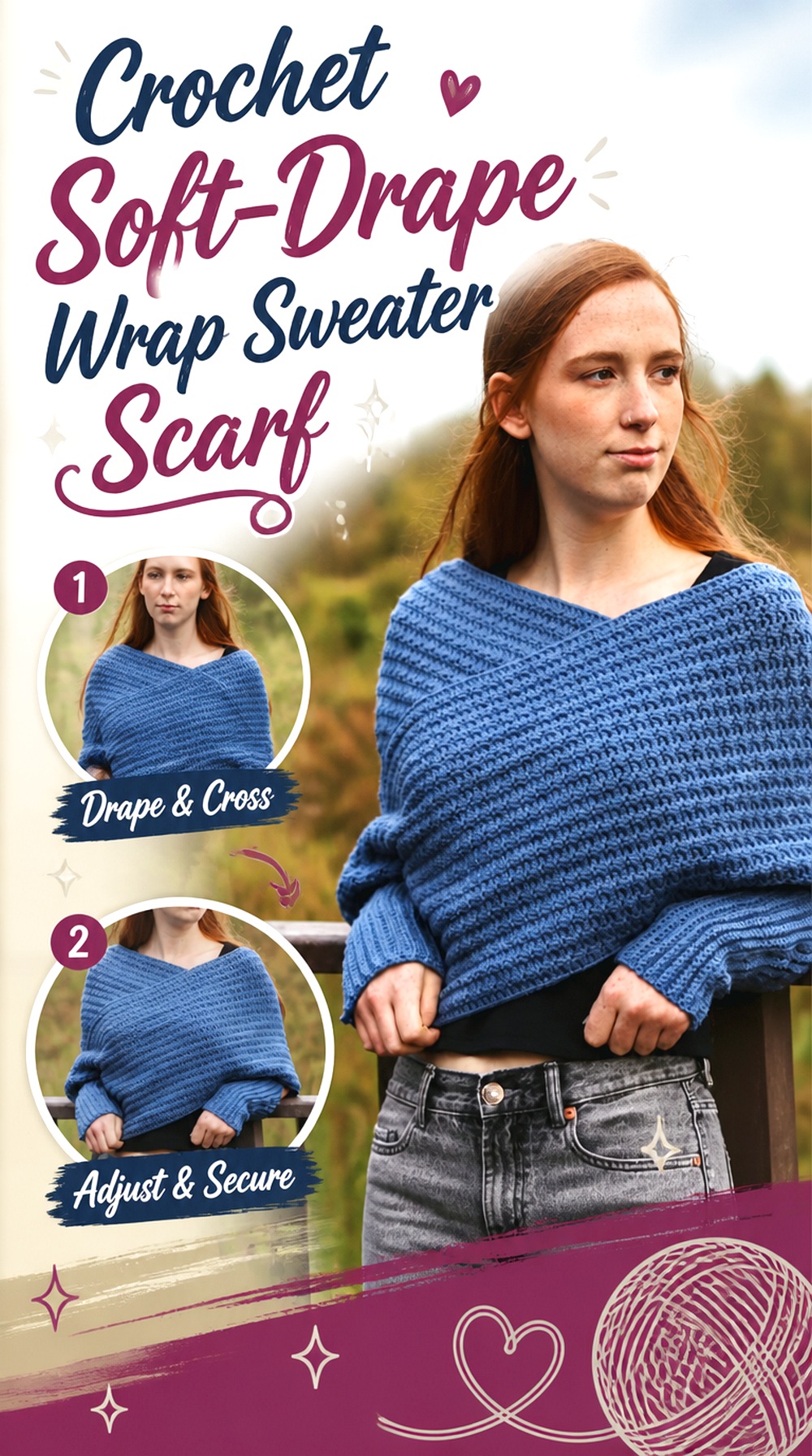
Hey Carrie’s wrap sweater moves toward the softer, sweater-like side of the sleeve-scarf category. The finished form is broad enough to create a substantial shoulder wrap while remaining open through the center, so it can add a layer without hiding an entire outfit beneath a cardigan front.
The creator describes the project as a crochet wrap sweater that is also known as a sleeve scarf and demonstrates it in DK-weight yarn. That combination makes this a helpful reference when your priority is a fabric that can fold around the torso rather than a very thick scarf that sits prominently around the neck.
Softer Fabric Keeps the Neckline More Flexible
A wrap that crosses near the chest or neck benefits from fabric that bends where you position it. If you substitute yarn, compare the resulting flexibility before increasing width for extra coverage. Adding width to a fabric that is already relatively firm can create more volume around the neckline than the photograph of the original design suggests.
Decide How You Prefer to Cross It
A long wrap can look quite different when the crossing point moves from the front toward the back. Try the main body over the clothing you expect to pair with it and check where the fabric naturally settles. That styling decision can tell you whether you actually want extra length or whether the existing reach already gives enough overlap.
Original Tutorial and Creator Credit
Creator: Hey Carrie
4. Crochet Panel Built Wrap Neck Sweater
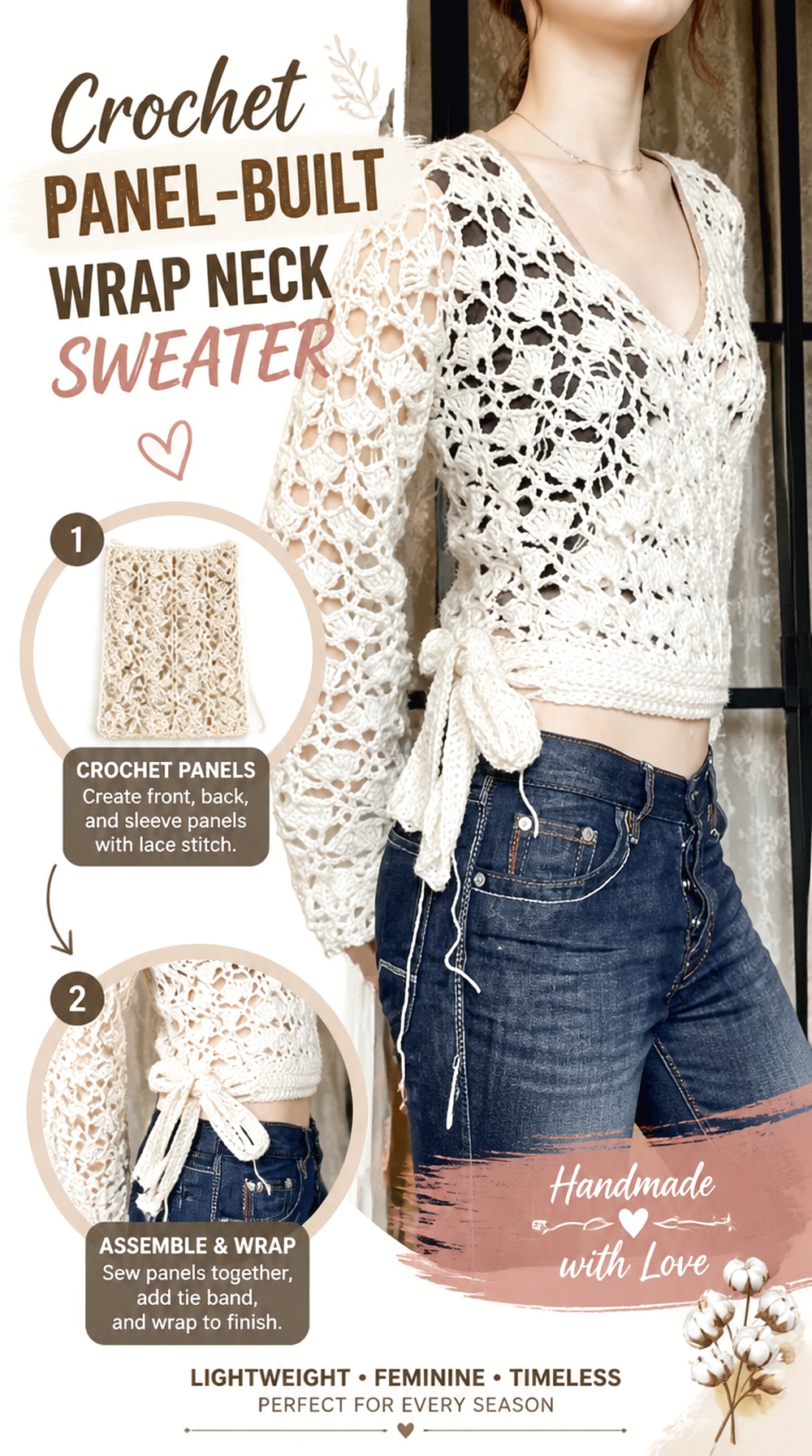
Twilescrochet offers one of the more garment-like choices in this collection. Rather than relying solely on one extended scarf strip, the tutorial identifies separate front panels, a back panel, neck work, sleeves, cuffs, attachments, and borders. The result is better suited to readers who want the wrapped neckline to sit on an identifiable sweater structure.
Because the body and neckline have defined areas, this option places more emphasis on garment proportions than the simplest sleeve-scarf designs. It is worth considering when torso coverage and a deliberate front shape matter more to you than being able to use the piece as an ordinary scarf.
Panel Width Matters More Than Scarf Length Here
On a classic sleeve scarf, adding central length mainly changes wrapping possibilities. In a paneled sweater, changing the width of one section can affect where the front sits relative to the back and sleeves. If adapting the size, compare the relevant panel dimensions to a garment with the amount of ease you like instead of simply extending every section.
The Neck Join Controls the Wrap Line
Where the neck section meets the body helps determine whether the front falls smoothly or bunches near the shoulder. Before securing finishing work, put the garment on and observe whether both sides settle at similar heights. Uneven attachment tension can make one side appear shorter even when the crochet pieces themselves match.
Border Weight Can Change How the Front Hangs
Borders add polish, but they also add yarn around the perimeter. A dense replacement edging may pull a lighter body downward or reduce the soft roll of the neckline. When customizing, treat edging as part of the garment’s structure rather than an isolated decorative choice.
Original Tutorial and Creator Credit
Creator: Twilescrochet
5. Crochet Tunisian Color Play Sweater Scarf
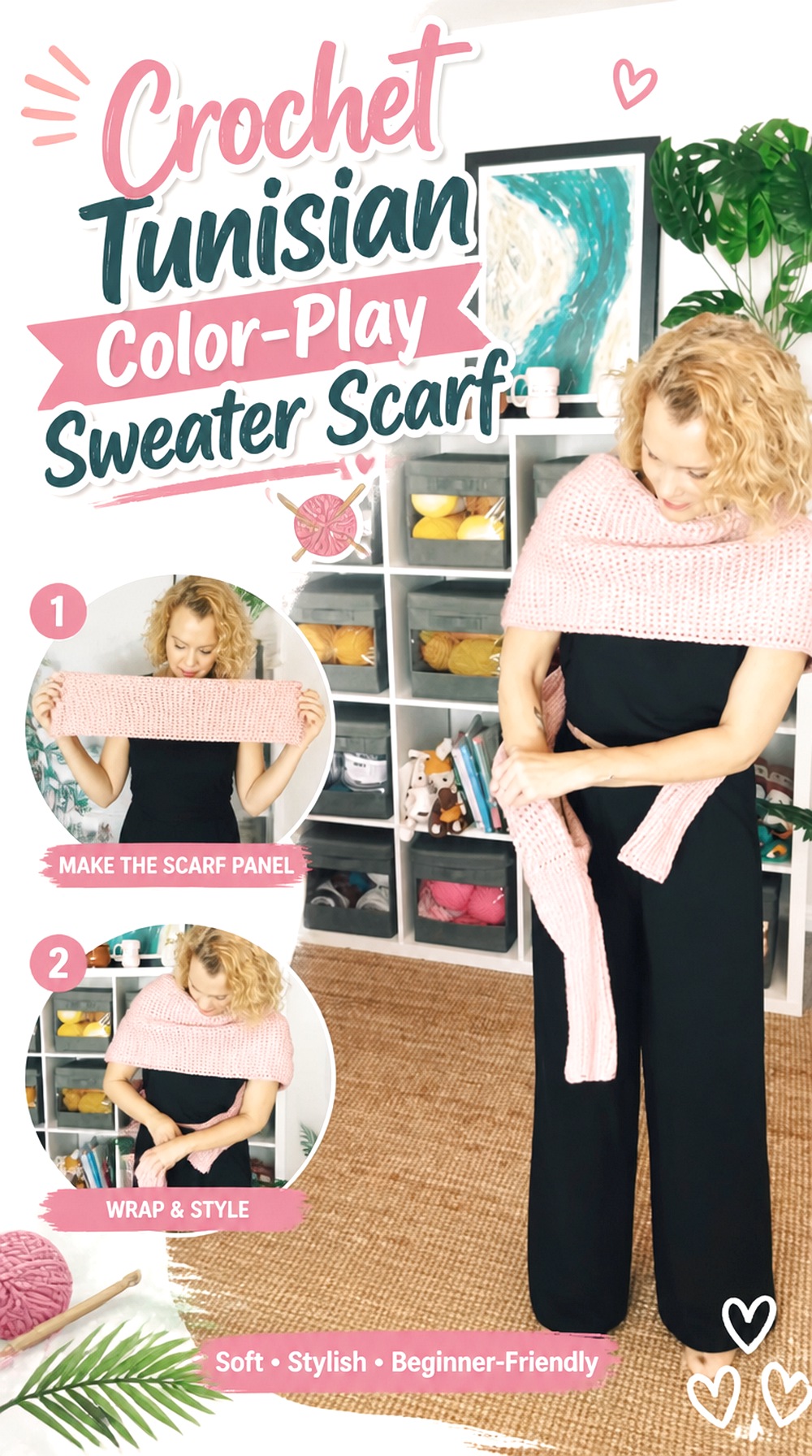
This I Can Crochet That design brings Tunisian crochet into the sweater-scarf format. The creator uses Tunisian half double crochet for the body, combines solid and variegated color effects, and builds sleeves onto the scarf section. That gives the finished piece a different surface character from the conventional crochet examples in this list.
It is a particularly useful direction if you enjoy the broad, orderly appearance of Tunisian fabric but still want a convertible sleeve scarf. The tutorial also specifically addresses producing a body that resists curling, which is an important consideration when long edges need to hang cleanly instead of rolling inward.
Tunisian Fabric Deserves an Early Drape Check
Tunisian crochet can produce a fabric that feels different from ordinary crochet even when the yarn appears comparable. Make enough of your swatch to judge how it folds, not just how the stitches look. For a sweater scarf, the important question is whether the fabric comfortably bends across the shoulders and through a wrap.
Color Changes Read Across a Large Surface
Solid and variegated yarn can create an effective contrast because the center section acts as a long visual field. If using your own color combination, look at several repeats together before deciding. A variegated yarn that seems subtle in the ball can produce a much busier effect once it stretches across the full scarf width.
Watch for Curl Before You Commit to Finishing
A long edge that curls can change both the apparent width and the way the scarf sits around the neck. If your yarn, hook choice, or tension differs from the tutorial, assess edge behavior early. Correcting the cause while the piece is still manageable is more useful than relying on finishing alone to force a reluctant fabric flat.
Original Tutorial and Creator Credit
Creator: I Can Crochet That
6. Crochet Oversized One Piece Sweater Scarf
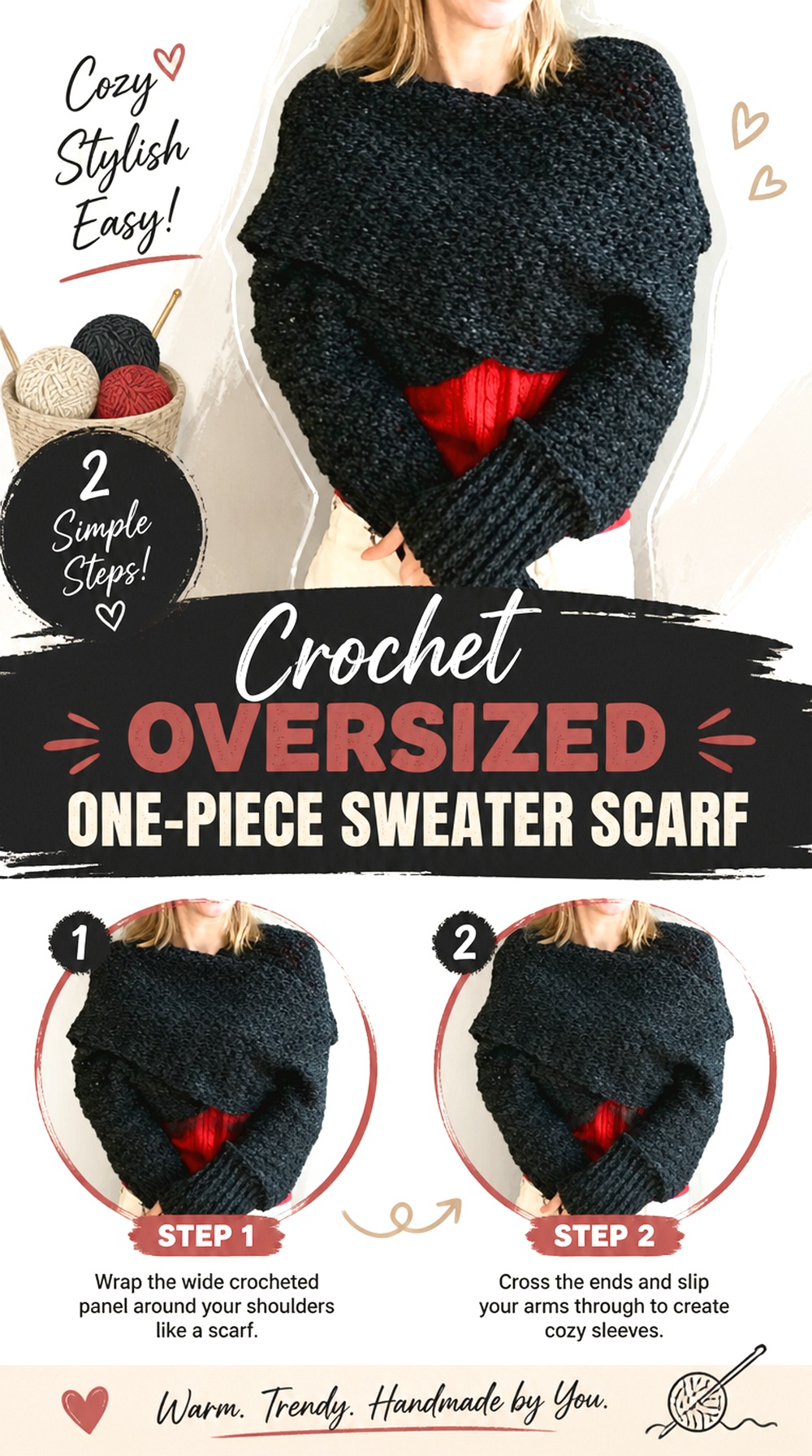
Wilma Westenberg’s version emphasizes the simplest appeal of this garment type: it can function as a scarf and then become a sleeved wrap when needed. The creator describes it as a one-piece sweater scarf, with the scarf made first and the sleeves added as part of the same overall project.
The generous finished look makes it a good reference for readers who want a substantial winter layer rather than a close-fitting wrap. Because the central section remains clearly scarf-like, the piece also demonstrates why width and length should be judged in a wrapped position rather than solely from flat measurements.
Oversized Length Still Needs Comfortable Neck Movement
More length creates extra wrapping options, but the benefit diminishes if several layers of dense fabric collect directly under the chin. When adapting the center, drape the work around yourself before adding substantially more length. Check whether you can turn your head comfortably and whether the wrap sits where you want without continual adjustment.
Sleeve Ends Need Enough Recovery for Repeated Wear
The sleeve ends help keep a large scarf anchored, so they experience more movement than the center. If you substitute a fiber or cuff treatment, watch whether the opening stretches noticeably after being pulled on several times. A cuff that immediately loses shape can make an otherwise successful oversized wrap feel less secure.
Original Tutorial and Creator Credit
Creator: Wilma Westenberg
7. Crochet Wheat Texture Cross Front Scarf Sweater
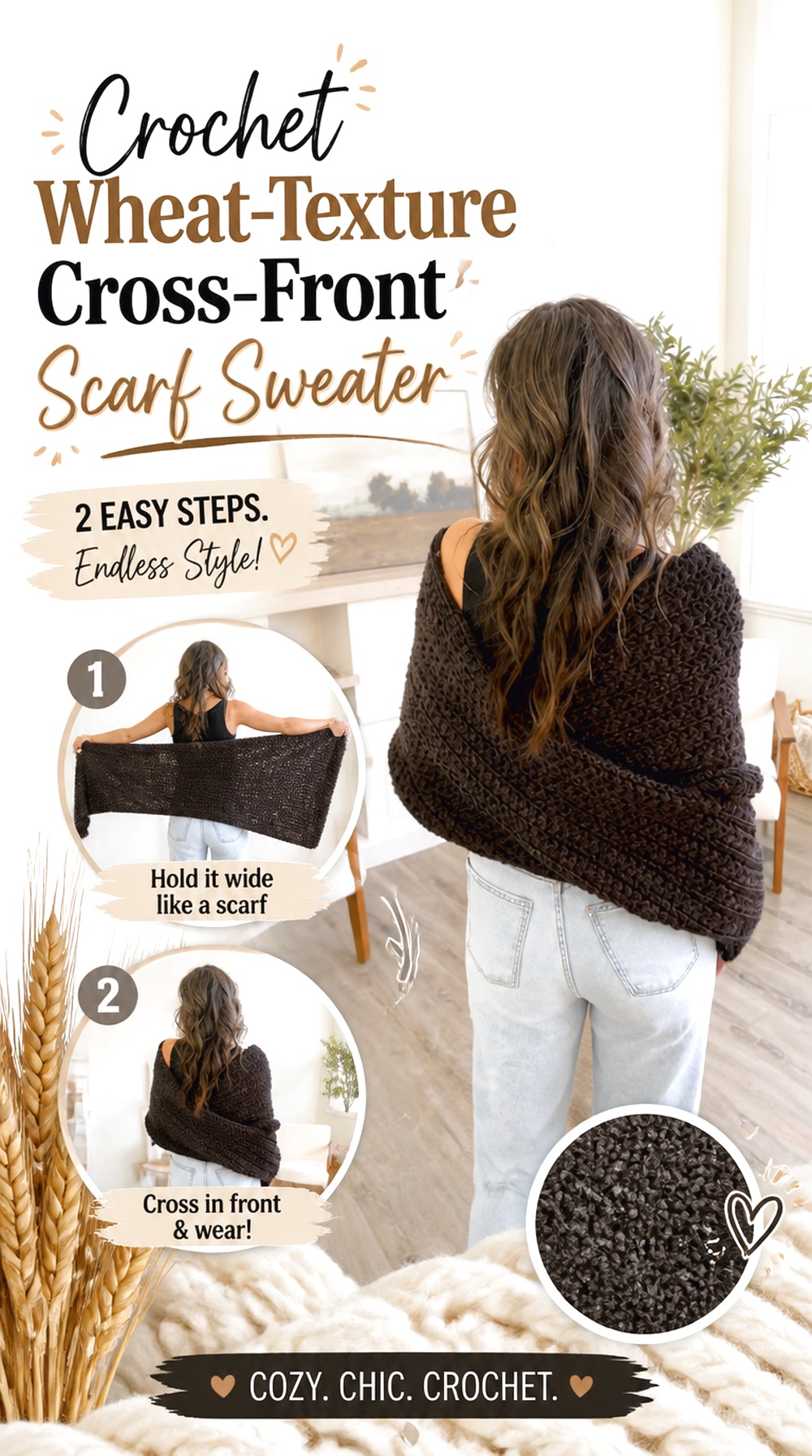
Briana K’s Winter Wheat design is a strong option when you want texture to carry the visual interest rather than stripes or complicated color placement. The long sweater-scarf shape uses a distinctive raised surface and is designed to cross around the body while ending in sleeves, giving a basic silhouette more definition.
The tutorial covers the Winter Wheat sweater scarf and is accompanied by sizing information for a broad size range. Its textured fabric makes it useful for comparing against smoother designs in this collection: even when two scarf sweaters have similar shapes, surface relief can significantly change how substantial the wrapped layers look and feel.
Raised Texture Adds Visual and Physical Bulk
Texture can make a single-color sweater scarf look detailed, but relief also changes how fabric stacks when wrapped. If you are sensitive to bulk near the neck or intend to cross the scarf several times, avoid assuming that a textured version will behave exactly like a smooth rectangle made to the same flat dimensions.
Keep the Wheat Texture Consistent Through the Wrap Zone
A repeating surface is most noticeable across the exposed center. Changes in tension or accidental distortion may therefore stand out where the scarf crosses the torso. Periodically spread the work flat without stretching it and look at the texture from a distance; that makes gradual inconsistencies easier to detect.
Sleeve Placement Deserves a Try-On Check
In any long textured piece, it is tempting to concentrate on completing the repeating fabric. Before the sleeve areas are fully committed, confirm that the transition points land comfortably when the scarf is arranged in your preferred wrap. A small change in where the arms enter can alter both shoulder tension and how the texture faces at the front.
Original Tutorial and Creator Credit
Creator: Briana K
8. Crochet Two in One Scarf Wrap With Sleeves
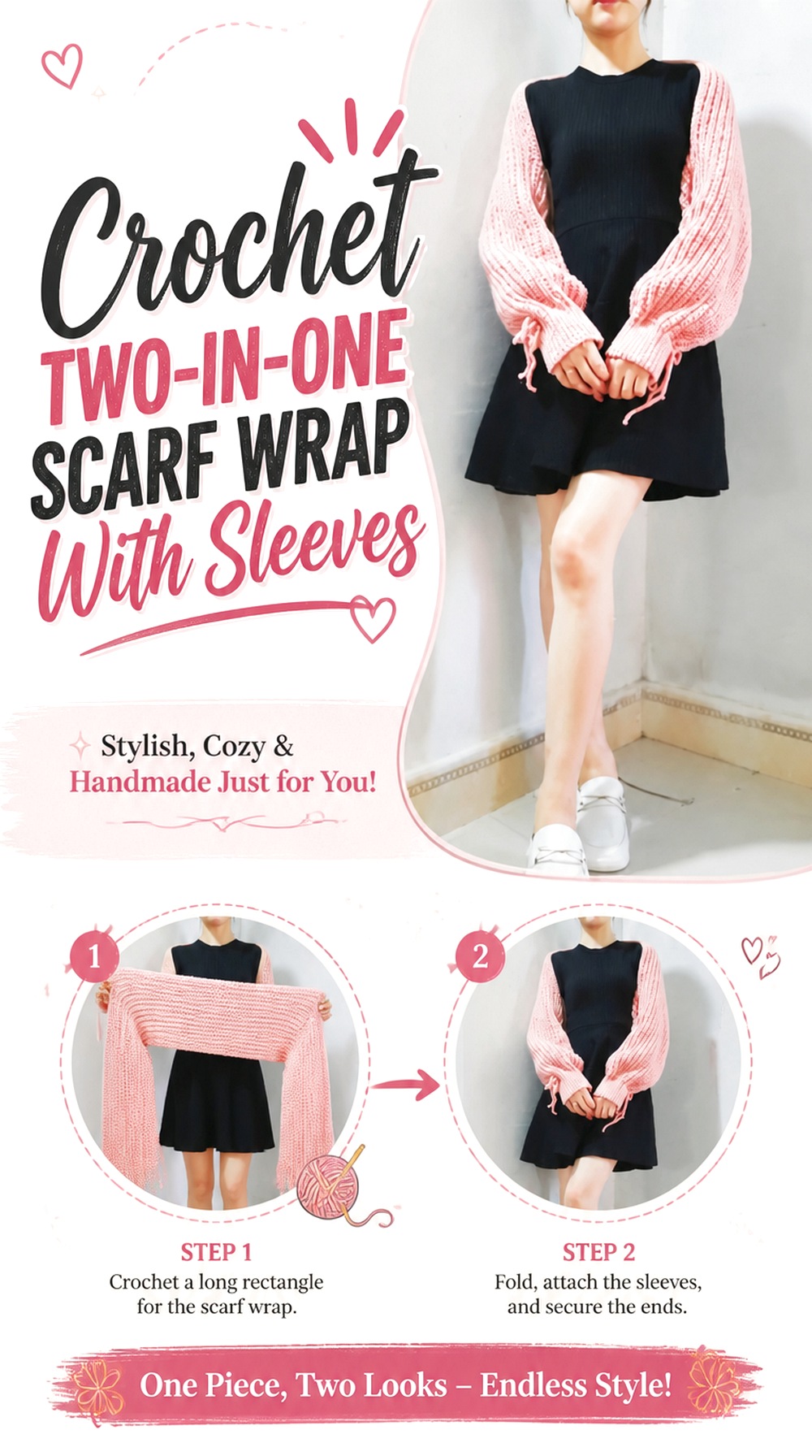
Móc Mê Mỏi presents this project specifically as a two-in-one scarf wrap with sleeves. That dual function gives it a clear place in the list: the idea is less about creating a traditional sweater body and more about making a long accessory that can gain additional stability and coverage when the sleeves are worn.
This style suits readers who value versatility and do not want a heavily structured garment. It also provides a useful planning lesson for any convertible scarf sweater—the length and sleeve placement must work in more than one configuration instead of being optimized for just a single front-crossed arrangement.
A Two-in-One Piece Needs Useful Length in Both Modes
Extra length may look attractive as a scarf but become awkward once both sleeves are on. Conversely, shortening the body too aggressively can reduce wrapping options. Before finalizing a modification, test the piece first as a hanging scarf and then with the ends positioned where the sleeves will sit.
Keep Sleeve Openings Comfortable When the Wrap Is Tensioned
The arms can feel different once the center section is pulled across the body. If the wrap is snug, some of that tension transfers toward the sleeve openings. Try the intended crossed position while wearing a typical base layer and check for pulling before assuming the sleeve fit is finished.
Original Tutorial and Creator Credit
Creator: Móc Mê Mỏi
9. Crochet Shaped Sleeve Sweater Wrap Scarf
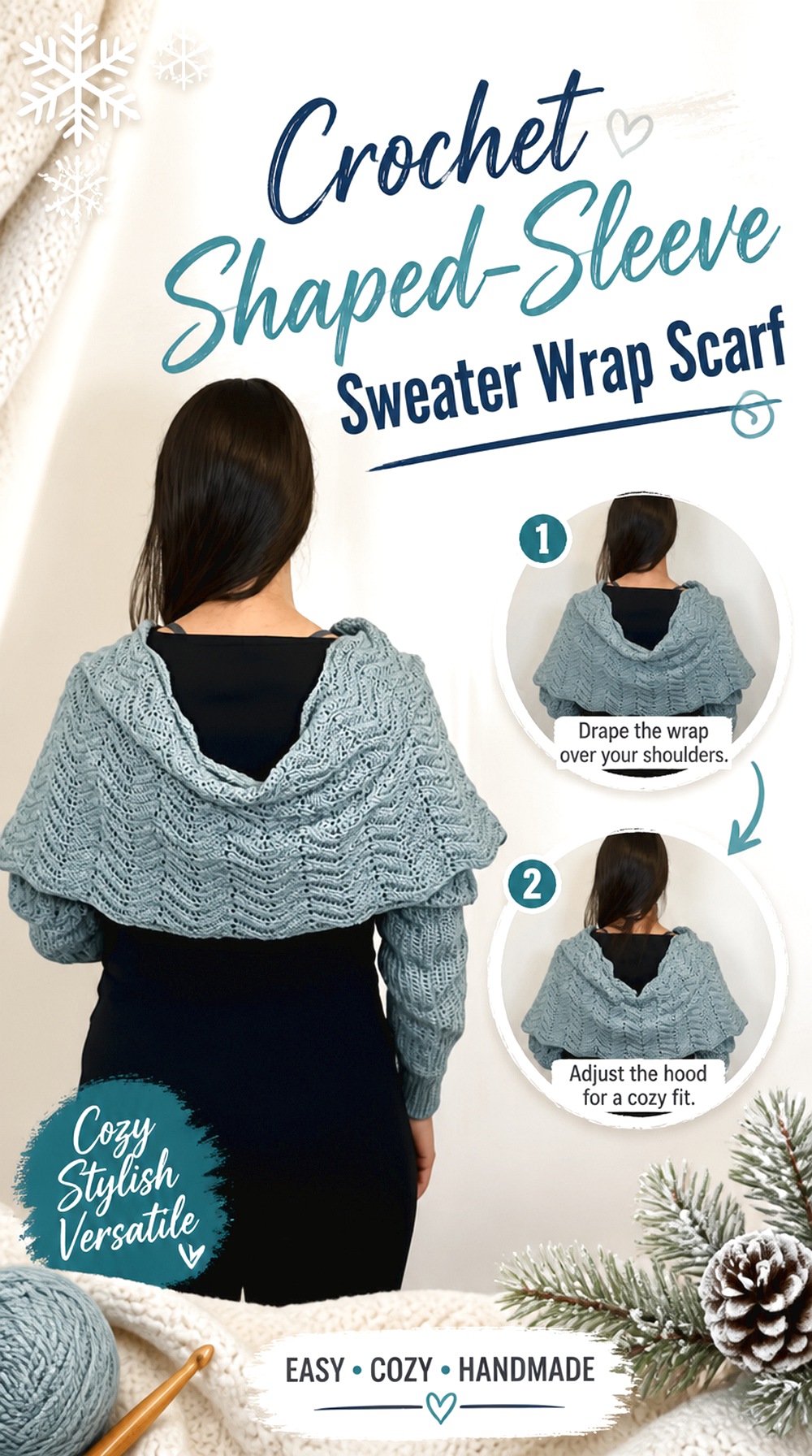
City Farmhouse Studio’s tutorial is useful for readers who want a scarf sweater with more deliberate sleeve shaping. The video separates the construction into sleeve chains, increases, straight sections, decreases, joining, scarf rows, and styling. That makes the finished piece feel less like sleeves simply attached to the ends of a rectangle.
Shaping can produce a neater transition around the arm while preserving the dramatic wrap portion through the center. The trade-off is that modifications require more attention: changing width or length in a shaped area is not as interchangeable as adding rows to an entirely straight scarf.
Shaped Sleeves Reduce the Rectangle-Like Feel
Gradual shaping can help the sleeve relate more closely to the arm rather than maintaining the full scarf width all the way to the cuff. When adapting the design, preserve the relationship between the shaped area and the central wrap. Widening only one part can change where the transition sits near the elbow or upper arm.
The Join Should Support the Wrap Without Twisting
A long piece can rotate slightly during assembly, particularly when the sleeve and scarf portions are worked in different directions. Before securing the join completely, lay the piece out and trace the same edge from one sleeve through the center to the other. This simple check can catch an unintended twist before it becomes difficult to correct.
Lightweight Fabric Makes Uneven Edges More Visible
A softer, less bulky scarf may drape beautifully, but its edges are also less likely to hide inconsistent shaping. When the project moves through increases and decreases, compare both sides periodically. The goal is not merely matching row counts from a source but making sure your actual fabric remains balanced after any personal adjustments.
Original Tutorial and Creator Credit
Creator: City Farmhouse Studio
10. Crochet Lacy Bolero Scarf Wrap
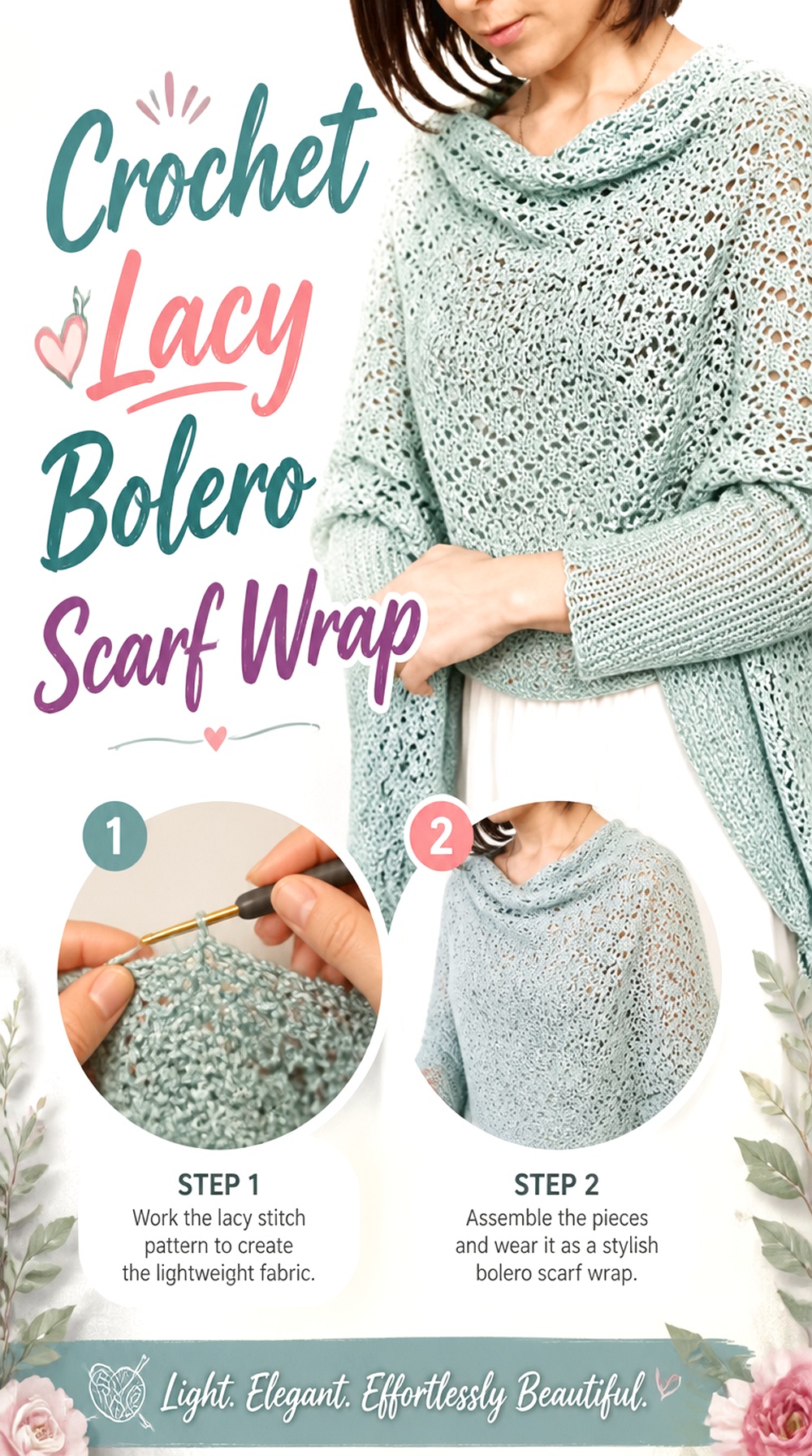
ExpressionFiberArts’ Embrasser design offers the lightest and most open interpretation in this collection. The creator presents the piece as a bolero or shrug that can also be styled as a wrap top, shawl, or scarf. Its lace fabric means the garment reads more like a delicate shoulder layer than a winter scarf with heavy sleeves.
That versatility is useful when you want a scarf-neck effect without a large amount of fabric around the neckline. The tutorial uses fingering-weight yarn and demonstrates the lacy construction, so it also provides a clear contrast with the denser sweater scarves elsewhere in the list.
Lace Needs Ease Without Losing Its Pattern
Open fabric usually changes visibly when pulled. Too little room through the back or arms may stretch the lace more than intended, while excessive width can make the bolero section slide. When assessing fit, look at whether the openings remain recognizable on the body rather than using only the garment’s unstretched dimensions.
Fine-Yarn Fabric Behaves More Like a Shawl
A fine lacy piece can settle closely against the shoulders and fold into smaller layers than a substantial sweater scarf. That makes it attractive for transitional weather or indoor styling, but it should not be evaluated as though it provides the same coverage or visual weight as a dense winter wrap.
Styling Options Depend on Arm Mobility
Because this hybrid can be twisted, wrapped, or repositioned, make sure the styling method does not force the sleeve or bolero section beyond a comfortable range. Raise and extend your arms after arranging it. A look that works perfectly while standing still may need a looser wrap for practical wear.
Original Tutorial and Creator Credit
Creator: ExpressionFiberArts
11. Crochet Colorful Shawl Scarf With Sleeves
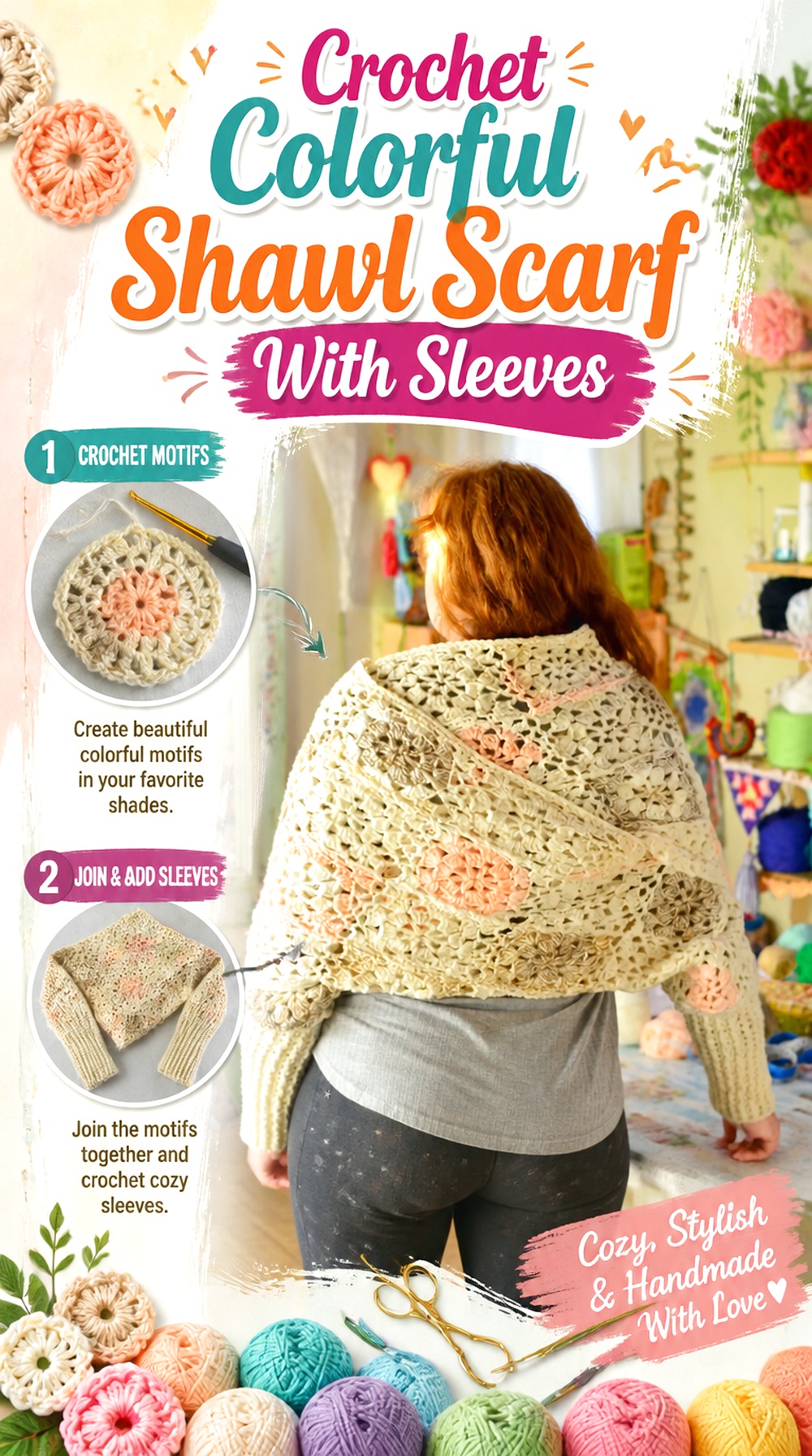
The Hablemos de Magia Crochet project leans toward a shawl silhouette rather than a narrow scarf. The added sleeves keep the draped fabric anchored while the larger shoulder area creates more visual coverage, making it a useful alternative for someone who wants the softness of a shawl without constantly repositioning loose ends.
The tutorial presents the piece as a shawl scarf with sleeves and emphasizes an adaptable, colorful result. Compared with a slim sweater scarf, this type of construction puts more fabric across the shoulders, so the depth of the central area matters just as much as the length available for wrapping.
Color Placement Can Emphasize the Shoulder Line
A multicolor shawl gives you a larger display area than narrow sleeves alone. Before introducing additional colors, consider whether you want the strongest contrast across the shoulders, near the edge, or around the sleeve area. The same palette can create very different visual proportions depending on where the transitions land.
Check Shawl Depth Before Extending the Sleeves
If adapting the size, first decide how far you want the central fabric to fall down the back. Increasing depth changes the character of the project more dramatically than merely lengthening the ends. Confirm that the shawl portion feels right before modifying the sleeves so both decisions work together.
Original Tutorial and Creator Credit
Creator: Hablemos de Magia Crochet
12. Crochet Lightweight Multi Size Sleeve Scarf Sweater
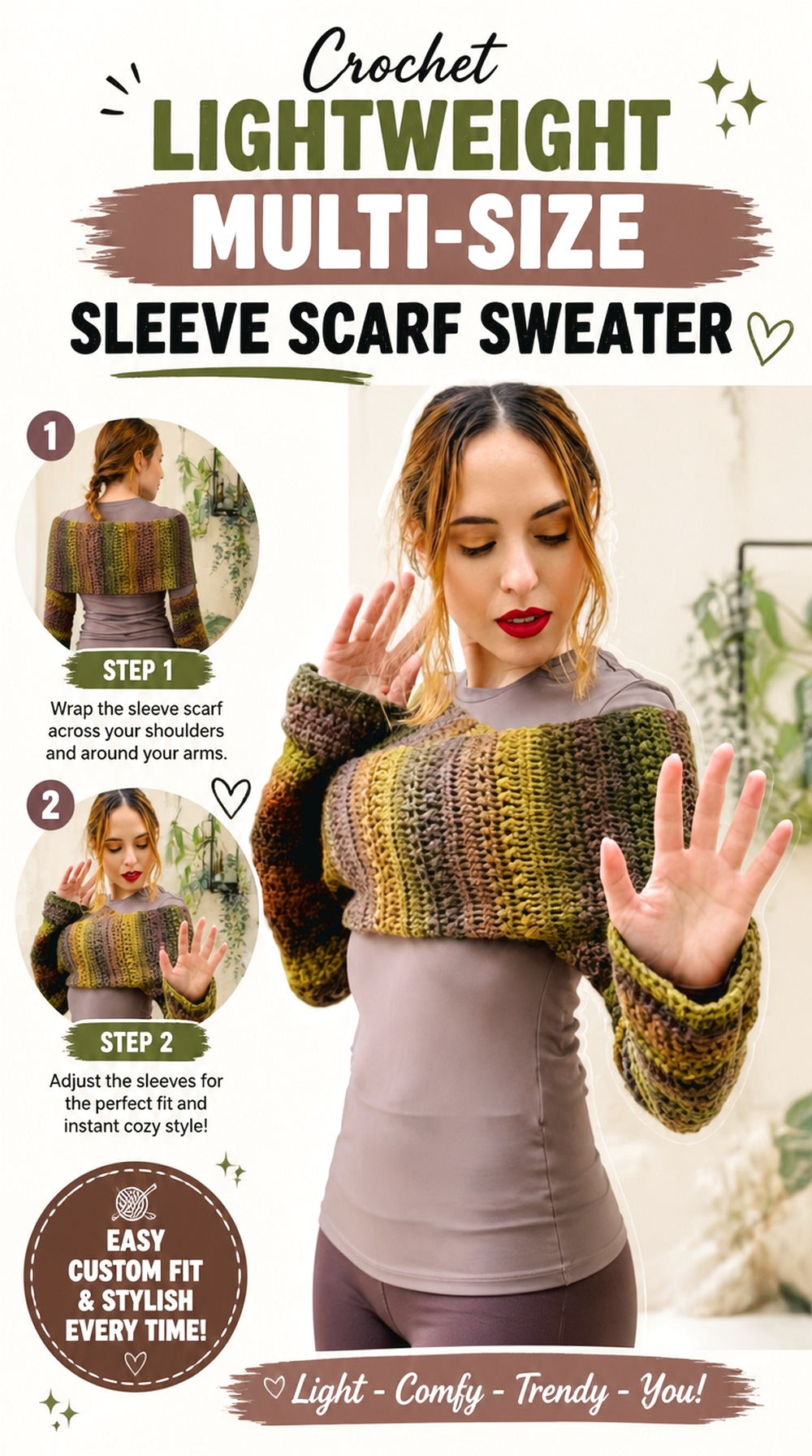
Le Crochet de Plume’s scarf-with-sleeves tutorial is useful when you want a relatively streamlined interpretation instead of an intentionally oversized wrap. The creator provides the project across a broad stated size range and uses a simple scarf-sweater silhouette with distinct sleeves at either end.
This kind of design keeps the focus on proportion and drape. Because there is less structural complexity than in a panel-built sweater, adjustments can appear deceptively straightforward, but sleeve comfort and center width still need to be considered together. The tutorial is also a good reference for seeing how a variegated yarn can distribute color naturally across a long garment.
A Size Range Does Not Replace a Sleeve Check
Even when a tutorial offers multiple garment sizes, people with similar bust measurements can prefer different sleeve ease. Compare the finished sleeve approach with a garment you already find comfortable. This is particularly important if you plan to wear the scarf sweater over more than a thin base layer.
Control Width if You Want a Softer Neckline
A very wide center creates greater shoulder coverage, but more material also has to fold when you use the piece as a scarf. Before increasing the depth for extra warmth, fold your swatch several times. That gives a more realistic sense of neck volume than judging the fabric from a single flat layer.
Variegated Yarn Can Shift the Visual Balance
Long scarf sections allow color repeats to travel across a large area. If the sleeve sections look dramatically different from one another in your chosen yarn, decide whether you enjoy that asymmetry before finishing. Alternating or manipulating yarn is a design choice, not automatically necessary; the key is recognizing the effect early enough to choose deliberately.
Original Tutorial and Creator Credit
Creator: Le Crochet de Plume
13. Crochet Dual Construction Sweater Scarf
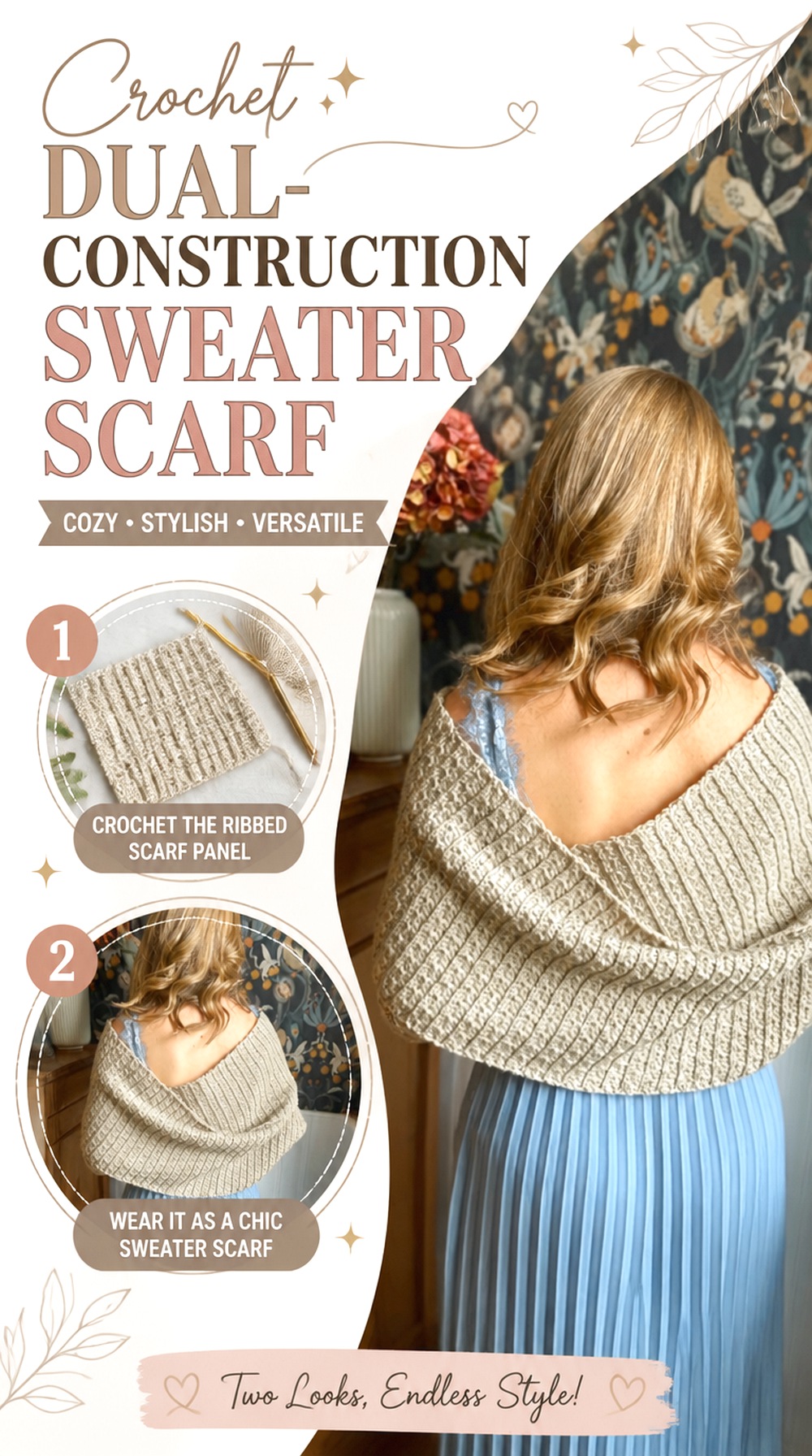
HanJan Crochet provides an especially useful comparison within a single concept because the design can be approached in two construction orientations. The accompanying project information describes both a long horizontal version and an alternative approach using a shorter vertical piece with sleeves incorporated differently. The resulting garment can also be styled in several sweater-scarf configurations.
This makes the project valuable for more than its finished appearance. It shows that two pieces with similar overall silhouettes may feel quite different to make—and may display stitch direction differently—depending on how the central fabric is oriented.
Horizontal and Vertical Construction Change the Surface Direction
If the stitch pattern has visible lines or texture, rotating the construction can change the direction those features travel across the body. Consider the finished appearance before choosing purely on which method seems simpler. A vertical texture may visually lengthen the wrap, while a horizontal direction can emphasize its width.
Pick the Method That Matches Your Likely Adjustments
Someone expecting to change the center length may find a different construction convenient from someone primarily concerned with sleeve fit or scarf depth. Review where the tutorial adds each dimension before choosing your route. The best method is the one that makes your most important adjustment straightforward without creating several new fit changes elsewhere.
Sleeve Attachment Is the Key Fit Check
Regardless of orientation, the sleeves turn the scarf into a garment. Before treating attachment as a finishing detail, put the central section across your shoulders and identify where the sleeves need to begin for comfortable reach. This reduces the chance of creating an attractive flat piece that pulls once both arms are inserted.
Original Tutorial and Creator Credit
Creator: HanJan Crochet
14. Crochet Long Wrap Scarf With Sleeves
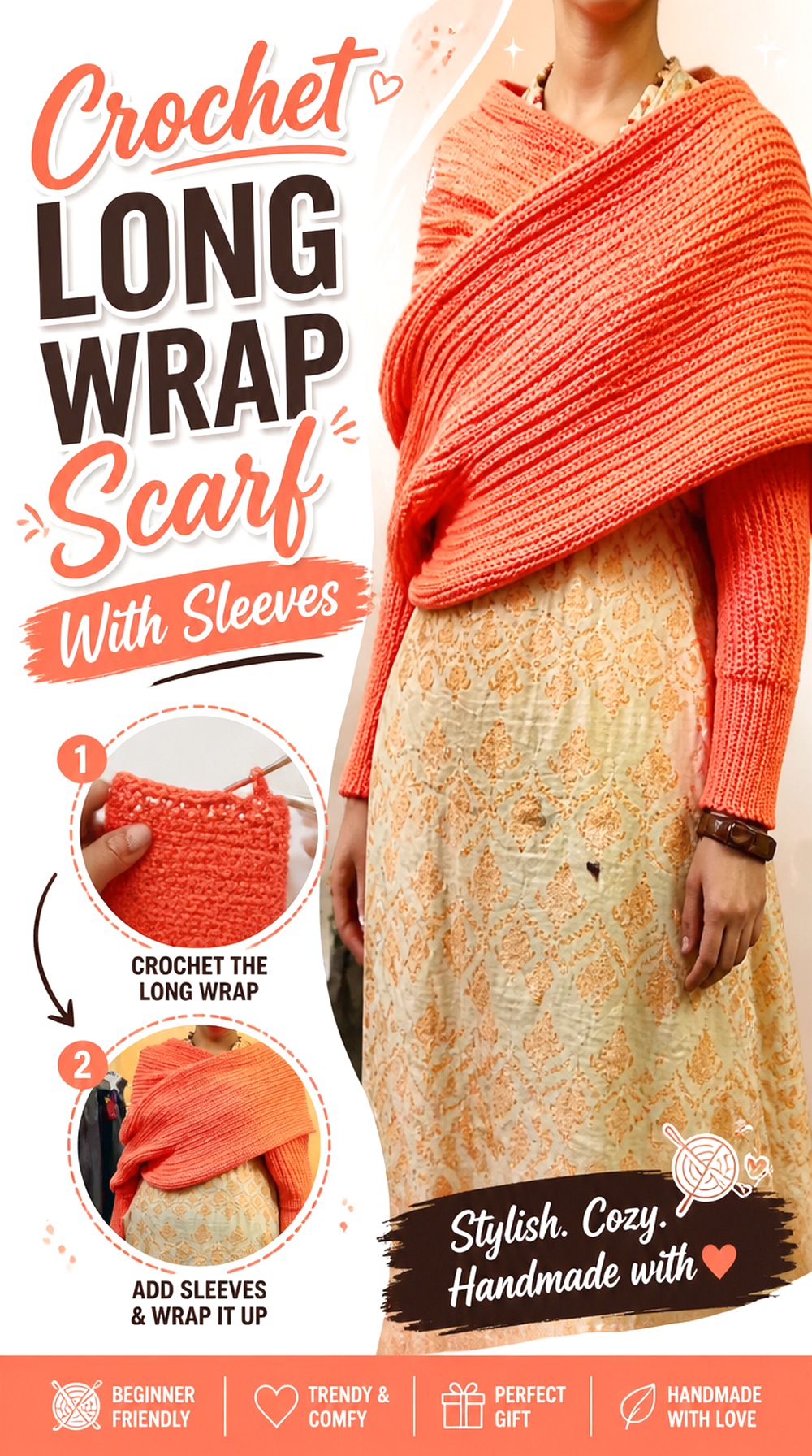
Rayduha Crochet’s project keeps the silhouette recognizably close to a long scarf while adding sleeves that allow it to be worn in several wrap arrangements. This makes it a strong choice for someone who wants styling flexibility rather than a fixed cardigan shape.
The tutorial is presented in Urdu with English subtitles, which can also make it useful for viewers comfortable following the visual demonstration while checking translated on-screen information. Because the project is intended to move between scarf and wrap styling, its main planning question is not simply overall size—it is whether the central length remains practical in every configuration you expect to use.
Styling Versatility Depends on Practical Wrap Length
A very long center may create dramatic crosses and folds, but it also leaves more fabric to manage when worn in a simpler position. Before extending the design, imitate your preferred styling with the unfinished piece. Look for enough overlap to stay secure without producing excess fabric that constantly needs rearranging.
Use the Subtitles to Confirm Important Details
Visual crochet demonstrations can communicate a great deal, but measurements, material notes, and modification comments may be easier to miss across languages. When you need a specific technical detail, pause at the relevant section and confirm the English subtitle rather than inferring a number from what appears on screen.
Original Tutorial and Creator Credit
Creator: Rayduha Crochet
15. Crochet Wide Scarf Sweater With Shaped Sleeves
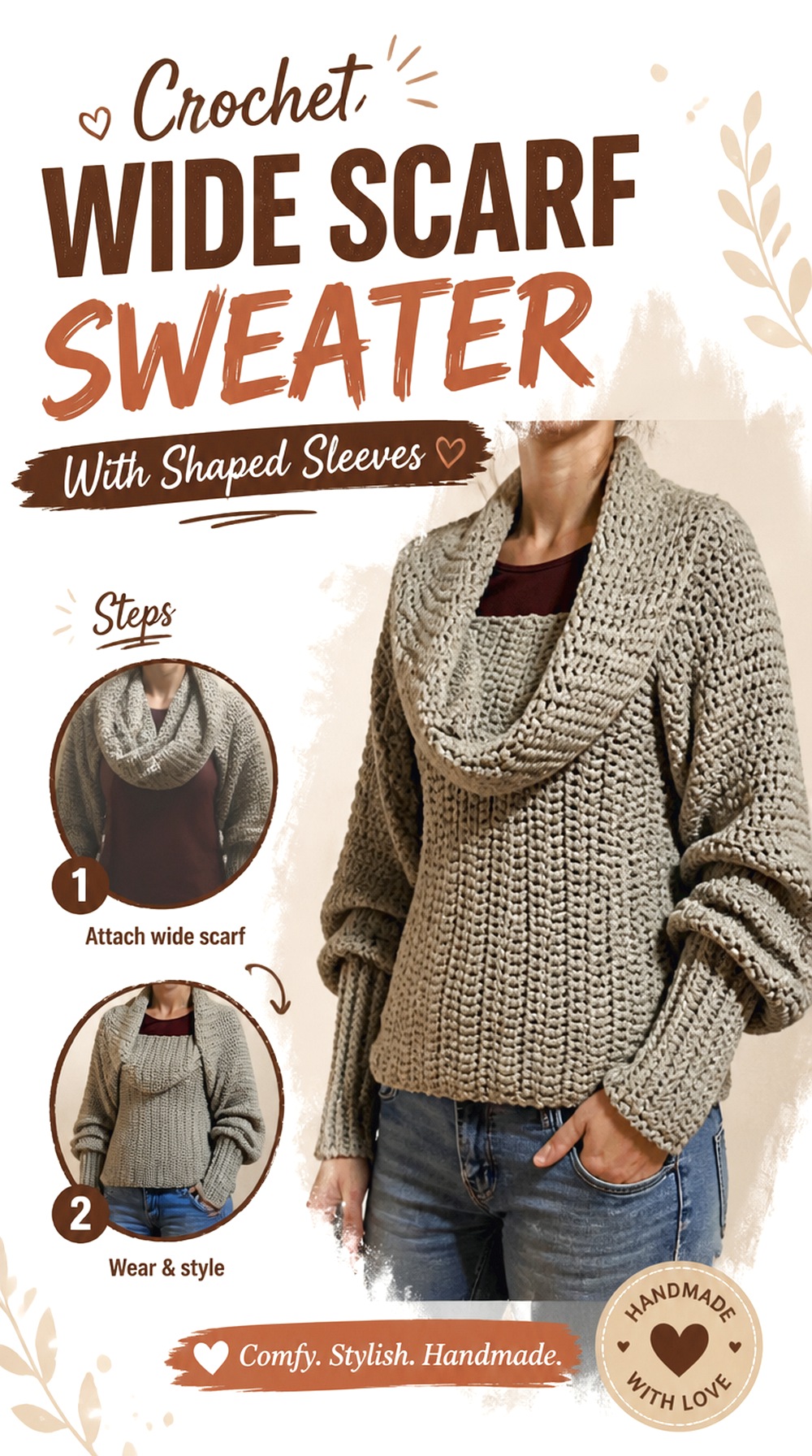
Alextitia Tuto Crochet’s wide scarf with sleeves provides a more engineered transition between accessory and garment. The tutorial includes a construction schematic and moves through cuff, sleeve shaping, a wide flat central body, and the corresponding second sleeve. Rather than treating the arms as an afterthought, the silhouette deliberately expands from the sleeve into the scarf section.
That makes this idea well suited to readers who like the uninterrupted look of a one-piece scarf sweater but want the arm areas to feel more garment-like. The broad center also gives more shoulder coverage than a conventional narrow scarf, so edge control becomes especially visible.
Sleeve Shaping Creates a More Garment-Like Transition
Shaping allows the fabric to change from arm width to scarf width gradually. If adjusting the design, avoid treating the central width and sleeve circumference as independent numbers. The transition has to connect them smoothly, so a major change at one end may require reconsidering how quickly the fabric expands or contracts.
A Wide Body Exposes Edge-Tension Changes
Long, straight outer edges frame much of this garment. If your turning tension changes during the project, the center can flare or draw inward even when the internal stitch pattern remains correct. Lay the fabric down periodically without stretching it and compare both edges before continuing far beyond a problem area.
Compare the Second Sleeve With the First
A mirrored garment makes differences easy to see once worn. Before finishing the second cuff, place both sleeve sections side by side and compare their relaxed shape and length. This is especially useful after any personal modification because written repetition alone cannot guarantee identical results if your tension changed during the long central section.
Original Tutorial and Creator Credit
Creator: Alextitia Tuto Crochet
16. Crochet Pashmina Style Scarf With Sleeves
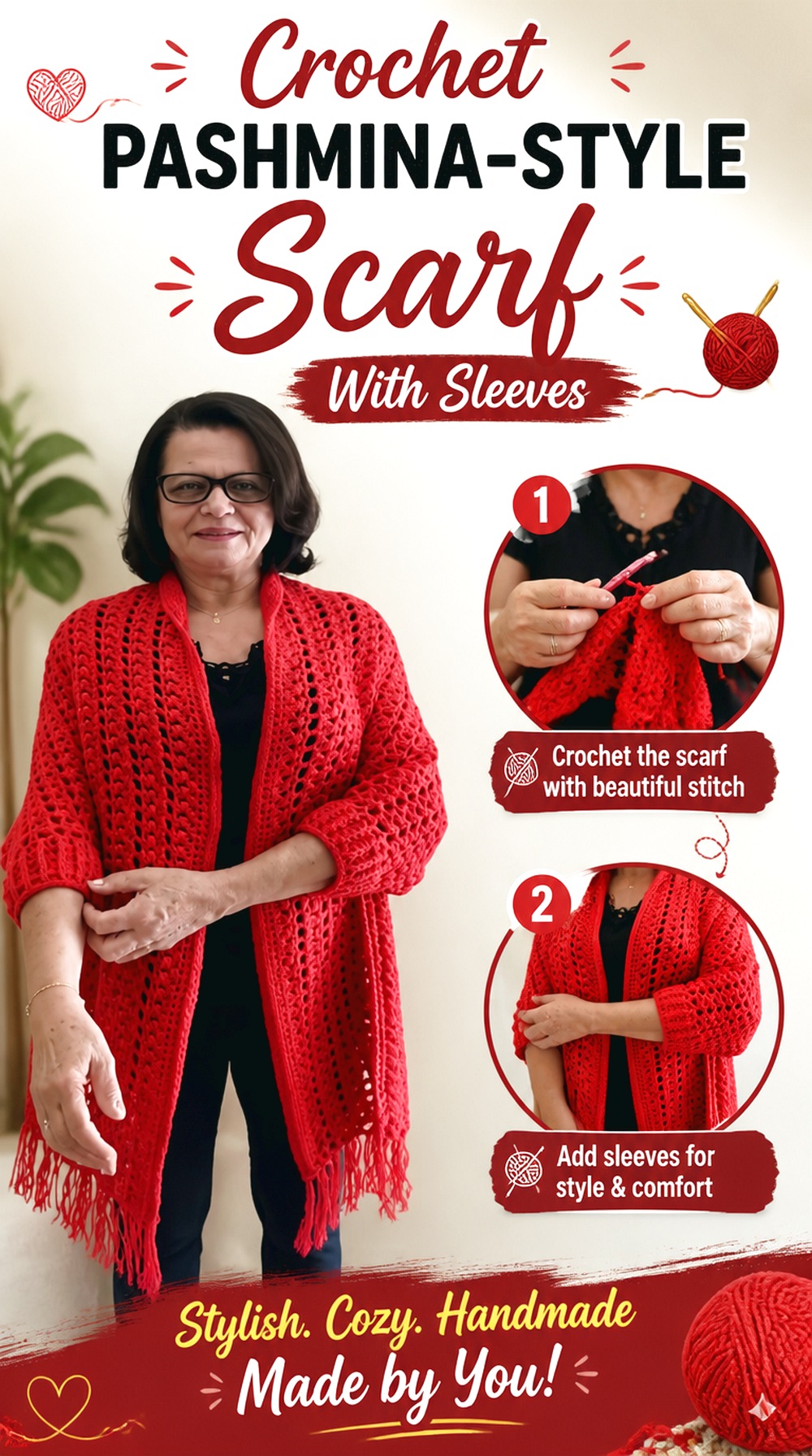
Cris Teles Artesanatos approaches the idea from the shawl and pashmina side, combining a broad decorative wrap with sleeves. The creator presents sleeve-length options and uses a more decorative stitch surface, giving the finished piece a dressier appearance than a basic winter sleeve scarf.
This is a useful final option because it shows how the concept changes when the central fabric is meant to behave like a pashmina rather than a narrow scarf. The larger decorative field puts more emphasis on stitch definition and drape, while the sleeves help keep that broader fabric positioned on the body.
Choose Sleeve Length Around Your Layering Plans
A shorter sleeve can leave more of an underlying garment visible and reduce fabric around the wrist, while a longer sleeve creates more continuous coverage. Think about the tops or dresses you expect to pair with the wrap. The most useful sleeve length is the one that complements those layers rather than simply maximizing coverage.
Decorative Stitching Needs Clear Definition Across a Large Area
A pashmina-style body offers plenty of space for the stitch pattern to show, so yarn character matters. A highly textured or fuzzy substitution may soften the definition that attracted you to the original design. Swatch enough fabric to view several repeats together and judge the surface from normal wearing distance, not only close up.
Original Tutorial and Creator Credit
Creator: Cris Teles Artesanatos
Which Crochet Scarf Neck Sweater Style Should You Choose?
| Style | Ideas to Compare | Useful When You Want | Main Checkpoint |
|---|---|---|---|
| Classic scarf with sleeves | 1, 6, 8, 12, 14 | Maximum scarf-to-wrap versatility | Neck bulk and usable wrap length |
| Cross-front textured scarf sweater | 2, 7 | A strong visual surface and defined front crossing | Cross-body reach and fabric thickness |
| More garment-like wrap | 3, 4, 9, 15 | Greater sweater structure or shaped arm areas | Shoulder, panel, and sleeve proportions together |
| Tunisian sweater scarf | 5 | A distinct fabric surface and color-play opportunity | Drape and edge curl |
| Shawl or bolero hybrid | 10, 11, 16 | Wider shoulder coverage or lighter wrap styling | Arm mobility and central depth |
| Construction-flexible sweater scarf | 13 | More control over orientation and customization | Choosing the method that suits your main adjustment |
Conclusion
The most useful way to choose among these 16 crochet scarf neck sweater ideas is to decide how much you want the finished piece to behave like a scarf. For maximum versatility, start with a long sleeve-scarf construction. Choose a paneled or shaped version when a more conventional sweater fit matters, a Tunisian design when fabric texture is the priority, or a bolero and shawl hybrid when you want lighter or broader shoulder coverage.
Whichever style you select, evaluate sleeve comfort, shoulder reach, wrap length, and neck bulk together before making major modifications. Use the original tutorials linked with each idea for the creator’s exact construction details, then make adaptations based on your own yarn, measurements, and preferred way of wearing the finished piece.
Frequently Asked Questions
What is a crochet scarf neck sweater?
A crochet scarf neck sweater is a hybrid wearable that combines features of a scarf, wrap, shrug, or sweater. A common version has a long scarf-like center with sleeves at both ends, allowing the fabric to be crossed around the torso while the sleeves hold it in place. Other versions use back panels, shawl sections, or bolero shaping. Because the term covers several constructions, the finished tutorial matters more than the label alone.
How can I keep a crochet scarf sweater from feeling bulky around my neck?
Pay attention to both fabric thickness and center width. A wide section made from dense or highly textured fabric can create considerable volume once it is folded or crossed. Before finishing a long wrap, place the work around your shoulders and neck in the actual position you plan to wear it. If you are substituting yarn, compare the drape of your swatch with the tutorial’s finished fabric rather than relying only on yarn-weight labeling.
Should I choose a scarf sweater size by bust measurement or sleeve fit?
Use the sizing method provided by the specific tutorial, but also check the areas that matter to the construction. A loose scarf-style center may not fit the torso like a conventional sweater, while sleeve circumference, shoulder reach, and back span can still determine comfort. If you are between options, compare the tutorial’s finished dimensions—when provided—with a similar garment you already wear comfortably instead of relying only on the size name.
What yarn weight works best for a crochet scarf sweater with sleeves?
There is no single ideal weight because different scarf sweaters are designed for very different fabrics. Lighter yarn can create softer folds and reduce neck bulk, while heavier or denser fabric can give a warmer, more structured appearance. The safest approach is to follow the tutorial’s yarn category when you want a similar result. If substituting, swatch for both size and drape and confirm that the resulting fabric still bends comfortably around the shoulders.
Can I turn a regular crochet scarf into a sweater scarf?
Conceptually, sleeves can turn an elongated wrap into a more secure wearable, but adding them to an arbitrary finished scarf is not automatically straightforward. The scarf must have suitable width, length, stretch, and fabric strength, and the sleeve attachment needs to work with the existing construction. Rather than improvising sleeves onto a completed scarf, compare it with a dedicated sweater-scarf tutorial and determine whether the proportions and stitch structure are genuinely compatible.
How do I choose between a one-piece sleeve scarf and a panel-built wrap sweater?
Choose a one-piece sleeve scarf when you value convertible styling and want the center to retain a recognizable scarf function. A panel-built design is usually the stronger direction when you want more controlled torso coverage, a defined neckline, or a garment-like front and back. The trade-off is fitting: panels create more areas whose proportions need to coordinate, while a simpler long scarf places more of the planning emphasis on wrap length, width, and sleeve placement.